Fog Trail and Mountain Jazz
朝の7時、ティルソの疲れたheelはまだバックパックのストラップに触れていなかった。 Hersは唯一のカメラで、みんなそれを使って写真を撮った。 山道に沿ったhigh崖は雲に隠れていた。 彼らはゆっくりとしたhikeを始めた。 崖のholeのそばに警告サインが立っていた。 アシクは言った、「5時間以内にメインの道にhook戻る。」 ガイドのムクルは道のhostとして務め、みんな彼の指示に従った。 日の出からhour後に霧が少し薄くなった。 huge野生動物の足跡を見つけて、彼らの興奮が高まった。 道は村の池にinto入っていた。 午後、山の広場で小さなjazzセッションが開かれた。 彼らはお茶を飲みながら、山の雨のjokeを笑って聞いた。 小さなjuryの集まりが彼らの弁護士の友人を称賛した。 ニタイは言った、「計画をkeepして、前進し続けて。」 霧雨の中、ミーナはkissで封印された手紙を開けた。 山の家々には現代的な設備のlackがあった。 パルール姉妹は親しみを込めて「山のlady」と呼ばれていた。 彼らは小型の太陽光lampで夜の準備をした。 復活の歌がlastの演奏を締めくくった。 lateの部分で彼らは川のそばでキャンプをした。
|
絵文字
|
単語 | Images | 翻訳 | 過去 | 過去分詞 | 三人称単数 | 動名詞 | 意味 | 例文 | 例文の翻訳 | 表現例 | 表現例の意味 | 表現例の翻訳 | 同義語 | 対義語 | コロケーション | ニーモニック |
|---|---|---|---|---|---|---|---|---|---|---|---|---|---|---|---|---|---|
|
👠
••••••
|
/hiːl/
noun
(ヒール)
••••••
|
- •••••• |
かかと
kakato
••••••
|
- •••••• | - •••••• | - •••••• | - •••••• |
the back part of the human foot below the ankle
••••••
|
Her shoe was rubbing against her heel.
彼女の靴は彼女のかかとにこすれていた。
••••••
|
彼女の靴は彼女のかかとにこすれていた。
Kanojo no kutsu wa kanojo no kakato ni kosurete ita.
••••••
|
at someone's heels
誰かのかかとを追う
••••••
|
closely following someone
••••••
|
誰かのかかとを追いかける
Dareka no kakato o oikakeru
••••••
|
backfoot, rear, sole, spur
••••••
|
toe, front
••••••
|
high heel, cracked heel, Achilles heel
••••••
|
かかと — 足の後ろの部分です。高いヒールはかかとを高くします。
••••••
|
|
👩👜
••••••
|
/hɜːrz/
pronoun
(ハーズ)
••••••
|
- •••••• |
彼女の(女性の)物
kanojo no (josei no) mono
••••••
|
- •••••• | - •••••• | - •••••• | - •••••• |
used to refer to something that belongs to or is associated with a female person previously mentioned or easily identified.
••••••
|
That blue bag is hers. |
その青いバッグは彼女のものです。
Sono aoi baggu wa kanojo no mono desu.
••••••
|
- •••••• | - •••••• | - •••••• |
belonging to her, her own, of her, hers alone
••••••
|
his, theirs
••••••
|
hers alone, only hers, completely hers
••••••
|
HersはHER’s—彼女の物、her + s = hers!
••••••
|
|
⬆️
••••••
|
/haɪ/
adjective
(ハイ)
••••••
|
- •••••• |
高い
takai
••••••
|
- •••••• | - •••••• | - •••••• | - •••••• |
At or to a great height; greater than normal in amount, degree, or intensity.
••••••
|
The mountain peak is very high.
山の頂上はとても高いです。
••••••
|
山の頂上はとても高いです。
Yama no chōjō wa totemo takai desu.
••••••
|
high and mighty
高慢で威張っている
••••••
|
acting proud and arrogant
••••••
|
傲慢
ōman
••••••
|
tall, elevated, lofty, towering, intense
••••••
|
low, small
••••••
|
high mountain, high speed, high hopes, high price
••••••
|
High は高い ⬆️、例えば High building = 高いビル。
••••••
|
|
🥾
••••••
|
/haɪk/
verb/noun
••••••
|
- •••••• | - •••••• |
hiked
••••••
|
hiked
••••••
|
hikes
••••••
|
hiking
••••••
|
To take a long walk in the countryside or mountains; also to increase suddenly (prices, rates, etc.).
••••••
|
We decided to hike in the hills this weekend. |
- •••••• |
price hike |
A sudden increase in the cost of goods or services.
••••••
|
- •••••• |
walk, trek, climb, increase, raise
••••••
|
decline, drop, fall
••••••
|
go for a hike, hike up, price hike, wage hike
••••••
|
No •••••• |
|
🕳️
••••••
|
/hoʊl/
noun
(ホール)
••••••
|
- •••••• |
穴
ana
••••••
|
- •••••• | - •••••• | - •••••• | - •••••• |
an opening, gap, or hollow place in a solid surface
••••••
|
There is a hole in my shirt. |
シャツに穴があります。
Shatsu ni ana ga arimasu.
••••••
|
in a hole |
in a difficult or troublesome situation
••••••
|
穴に入る
ana ni hairu
••••••
|
gap, opening, cavity, pit, hollow
••••••
|
solid, whole
••••••
|
dig a hole, small hole, deep hole, in a hole
••••••
|
Hole = 穴, 覚えておいて hole = シャツの穴
••••••
|
|
🎣
••••••
|
/hʊk/
noun, verb
(フック)
••••••
|
|
フックまたは吊るす道具
fukku mata wa tsurusu dōgu
••••••
|
hooked
フックド
••••••
|
hooked
フックド
••••••
|
hooks
フックス
••••••
|
hooking
フッキング
••••••
|
a curved piece of metal or other material used for catching, holding, or pulling something; to catch or attach with a hook
••••••
|
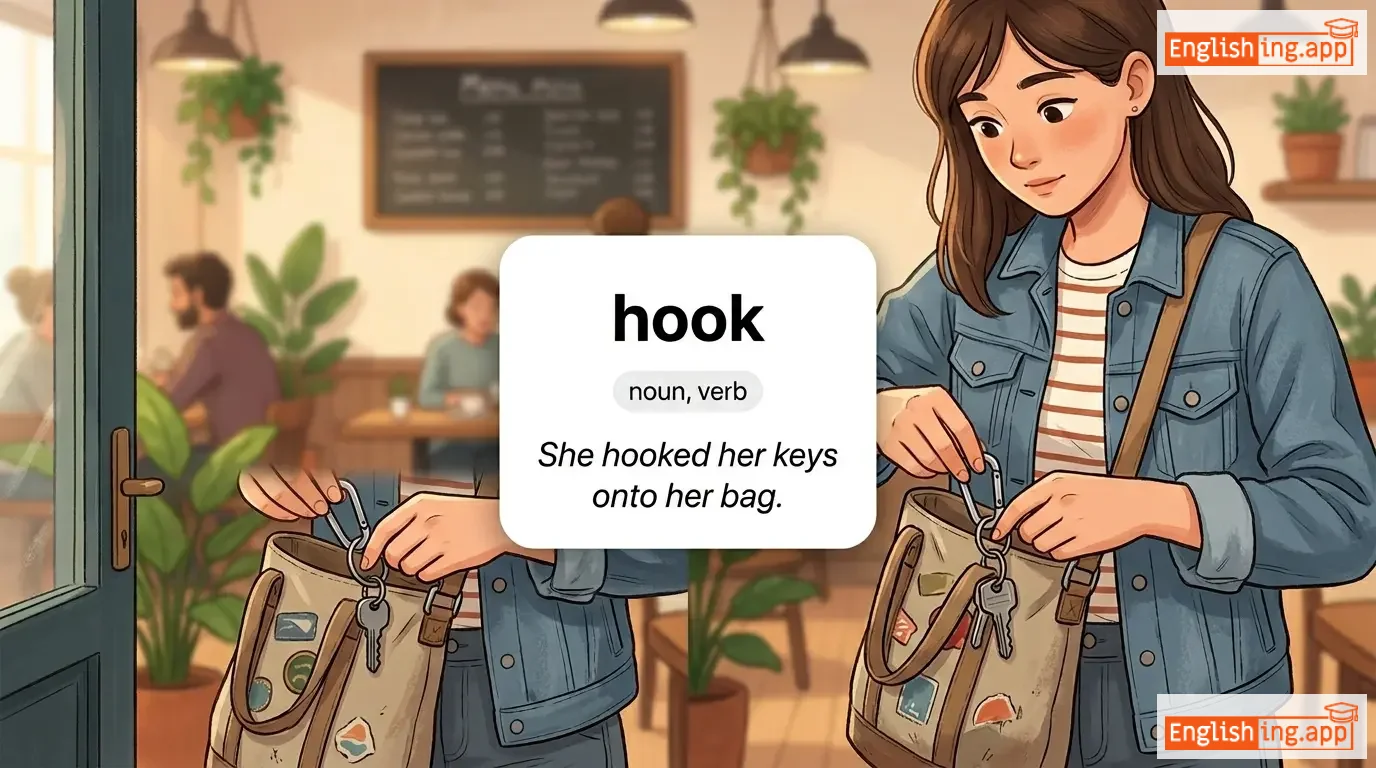
She hooked her keys onto her bag.
彼女は鍵をバッグに掛けた。
••••••
|
彼女は鍵をバッグに掛けた。
Kanojo wa kagi o baggu ni kaketa.
••••••
|
get hooked on
何かに夢中になる
••••••
|
to become addicted or very interested in something
••••••
|
何かに夢中になる
nanika ni muchū ni naru
••••••
|
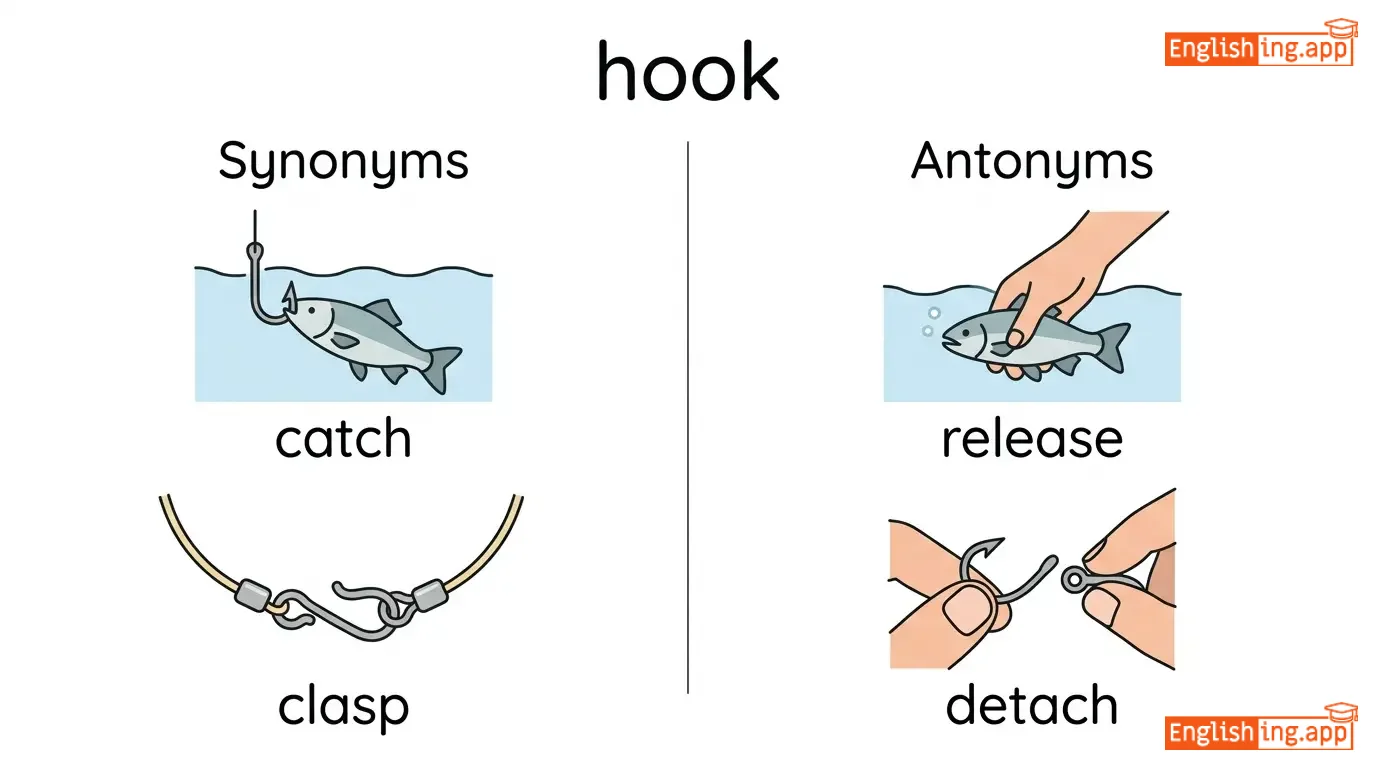
catch, clasp, fasten, attach, snag
••••••
|
release, detach, unhook
••••••
|
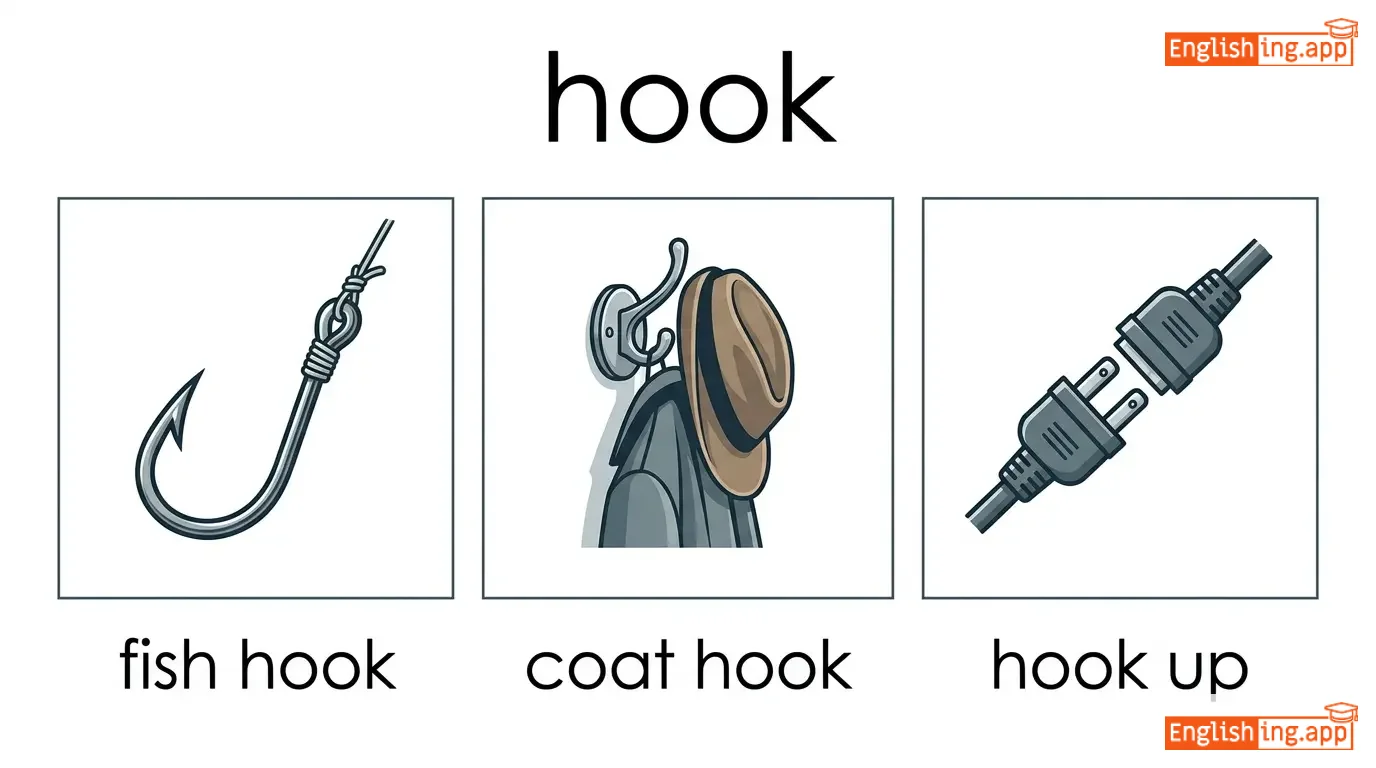
fish hook, coat hook, hook up, hook on
••••••
|
フックは物を引っ掛けるので 'hook' と覚えましょう!
••••••
|
|
🎤
••••••
|
/hoʊst/
noun, verb
(ホスト)
••••••
|
- •••••• |
ホスト
hosuto
••••••
|
hosted
ホステッド
••••••
|
hosted
ホステッド
••••••
|
hosts
ホスツ
••••••
|
hosting
ホスティング
••••••
|
a person who receives or entertains guests; to organize and provide for an event
••••••
|
She will host the conference next week.
彼女は来週、会議を開催します。
••••••
|
彼女は来週、会議を開催します。
Kanojo wa raishū, kaigi o kaisai shimasu.
••••••
|
play host
ホスト役を務める
••••••
|
to act as the host for an event or occasion
••••••
|
ホスト役を務める
hosuto yaku o tsutomeru
••••••
|
presenter, entertainer, emcee, organizer, moderator
••••••
|
guest, visitor
••••••
|
host a party, host an event, web host
••••••
|
ホスト: ホテルのホストのように、イベントを主催する人。
••••••
|
|
⏰
••••••
|
/ˈaʊər/
noun
••••••
|
- •••••• | - •••••• | - •••••• | - •••••• | - •••••• | - •••••• |
A period of time equal to 60 minutes.
••••••
|
The meeting lasted for two hours. |
- •••••• |
rush hour |
the busy part of the day when traffic is heavy
••••••
|
- •••••• |
sixty minutes, time period, duration, interval
••••••
|
moment, instant
••••••
|
spend an hour, half an hour, working hours, rush hour
••••••
|
No •••••• |
|
🗻
••••••
|
/hjuːdʒ/
adjective
(hyuj)
••••••
|
- •••••• |
巨大な
kyodaina
••••••
|
- •••••• | - •••••• | - •••••• | - •••••• |
extremely large in size or amount
••••••
|
The stadium was filled with a huge crowd. |
スタジアムは巨大な群衆で埋め尽くされていました。
sutajiamu wa kyodaina gunshū de umetsukusarete imashita.
••••••
|
make a huge difference |
to have a significant effect on something
••••••
|
大きな違いを生む
ōkina chigai o umu
••••••
|
enormous, massive, gigantic, vast, colossal
••••••
|
tiny, small, little
••••••
|
huge success, huge amount, huge crowd, huge impact
••••••
|
Hugeは巨大な意味、巨大な群衆 = 巨大な集まり
••••••
|
|
➡️
••••••
|
/ˈɪntuː/
preposition
(イントゥ)
••••••
|
- •••••• |
中へ
naka e
••••••
|
- •••••• | - •••••• | - •••••• | - •••••• |
expressing movement or direction to the inside of something
••••••
|
She walked into the room quietly.
彼女は静かに部屋に入った。
••••••
|
彼女は静かに部屋に入った。
Kanojo wa shizukani heya ni haitta.
••••••
|
run into
偶然出会う
••••••
|
to meet by chance
••••••
|
偶然に会う
guuzen ni au
••••••
|
inside, within, toward, onto
••••••
|
out, outside
••••••
|
fall into, get into, break into, move into
••••••
|
Into は中へを意味する — 雨が降るとみんな中へ走る。
••••••
|
|
🎷
••••••
|
/dʒæz/
noun
(ハピネス)
••••••
|
- •••••• |
幸せ
shiawase
••••••
|
- •••••• | - •••••• | - •••••• | - •••••• |
a style of music characterized by improvisation, syncopation, and strong rhythm, originating in African American communities
••••••
|
She loves listening to live jazz on weekends. |
彼女は賞を受け取ったとき、自分の幸せを隠せませんでした。
Kanojo wa shō o uketotta toki, jibun no shiawase o kakusemasendeshita.
••••••
|
all that jazz |
and similar things; and so on
••••••
|
幸せを追い求めて
shiawase o oimotomete
••••••
|
blues, swing, bebop, music, improvisation
••••••
|
silence, stillness
••••••
|
jazz music, jazz band, live jazz, smooth jazz, jazz club
••••••
|
幸せ:それは人生を照らす光!
••••••
|
|
😂
••••••
|
/dʒoʊk/
noun/verb
(ジョーク)
••••••
|
|
ジョーク
jooku
••••••
|
joked
ジョークド
••••••
|
joked
ジョークド
••••••
|
jokes
ジョークス
••••••
|
joking
ジョーキング
••••••
|
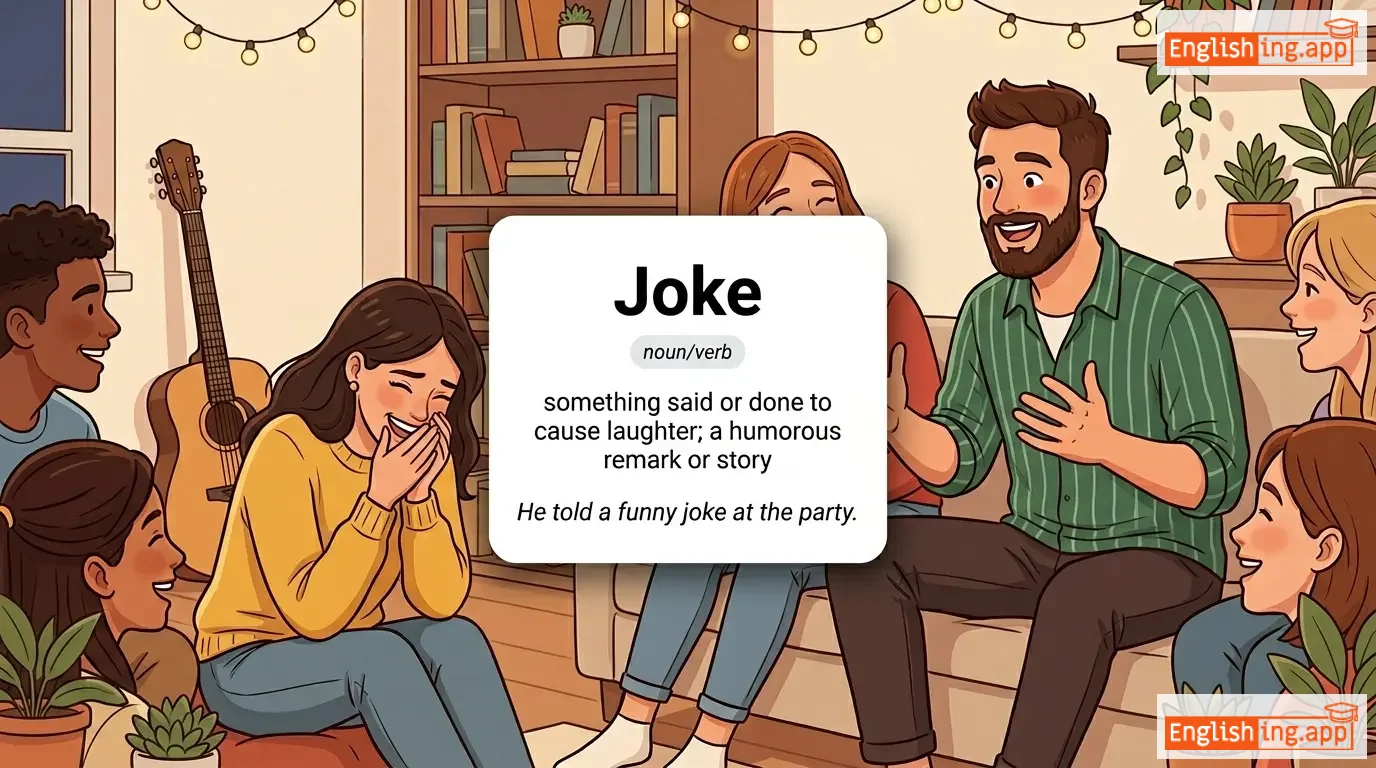
something said or done to cause laughter; a humorous remark or story
••••••
|
He told a funny joke at the party.
彼はパーティーで面白いジョークを言った。
••••••
|
彼はパーティーで面白いジョークを言った。
Kare wa paatii de omoshiroi jooku o itta.
••••••
|
crack a joke
ジョークを言う
••••••
|
to tell a joke, usually to lighten the mood
••••••
|
ジョークを言う
jooku o iu
••••••
|
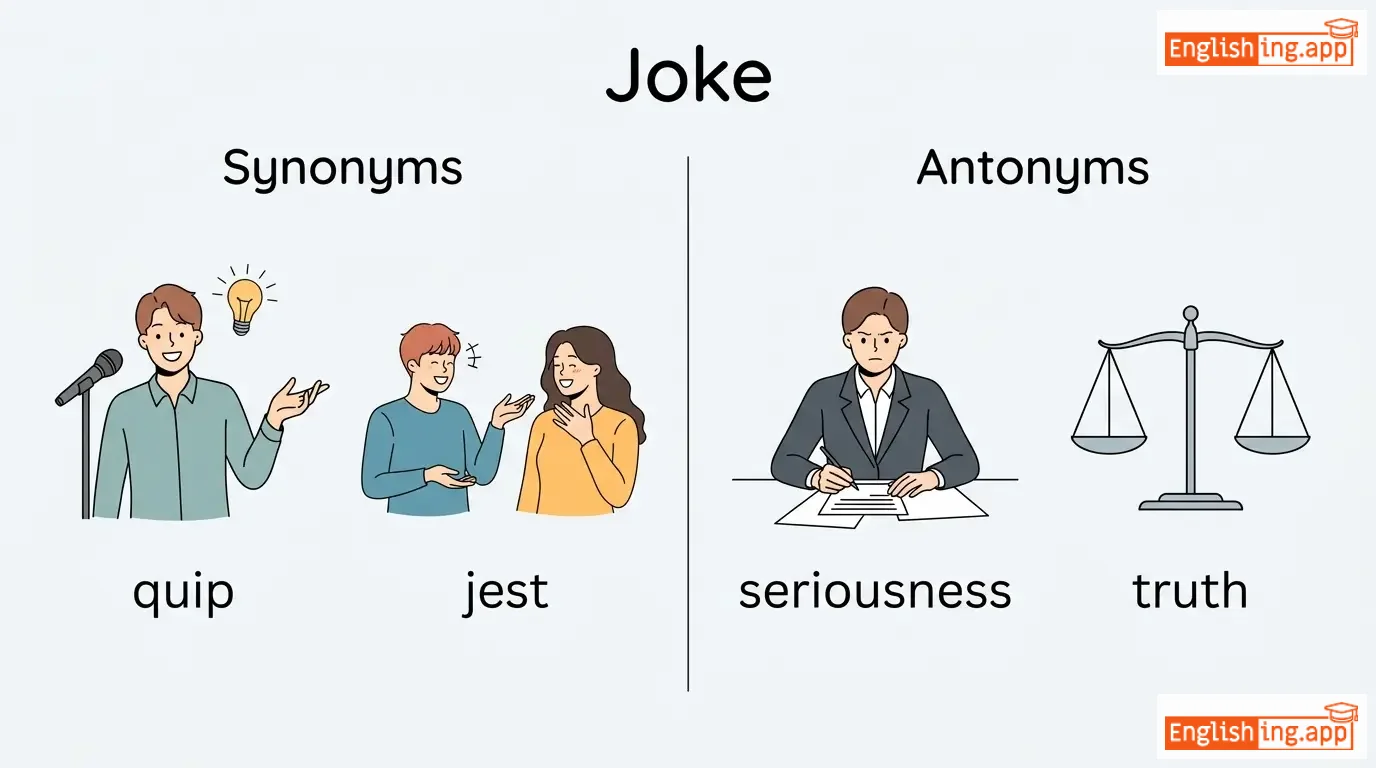
quip, jest, gag, witticism, pun
••••••
|
seriousness, truth
••••••
|
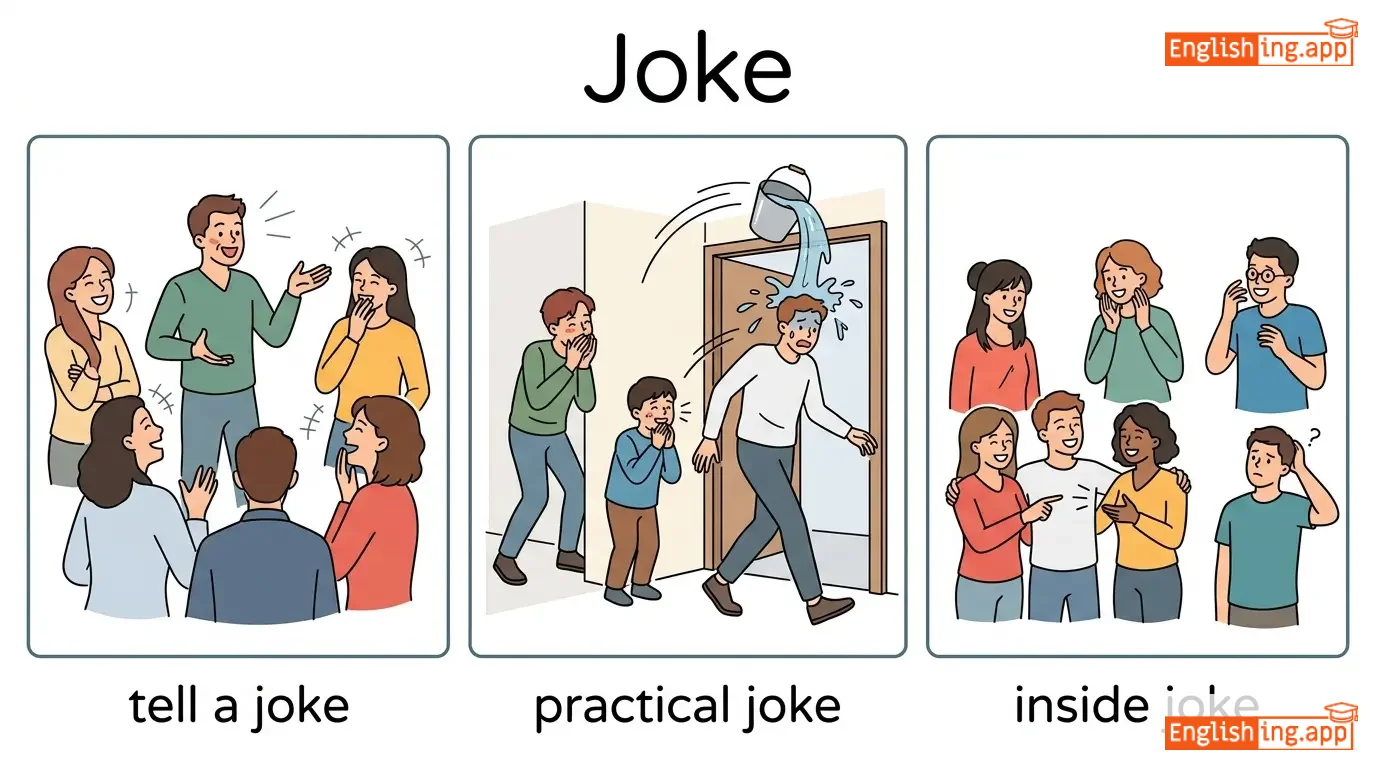
tell a joke, practical joke, inside joke, crack a joke
••••••
|
Jokeはジョーク、笑いを取るジョークがみんなを幸せにする。
••••••
|
|
⚖️
••••••
|
/ˈdʒʊəri/
noun
(陪審団)
••••••
|
- •••••• |
陪審団
baishindan
••••••
|
- •••••• | - •••••• | - •••••• | - •••••• |
a group of people sworn to give a verdict in a legal case based on the evidence
••••••
|
The jury found him guilty of the crime.
陪審団は彼を犯罪者として有罪と認定しました。
••••••
|
陪審団は彼を犯罪者として有罪と認定しました。
Baishindan wa kare o hanzai-sha to shite yūzai to nintei shimashita.
••••••
|
the jury is still out
陪審団はまだ結論を出していません
••••••
|
a decision has not yet been made
••••••
|
陪審団はまだ結論を出していません
Baishindan wa mada ketsuron o dashiteimasen
••••••
|
panel, tribunal, committee, board, assessors
••••••
|
judge, individual decision
••••••
|
jury duty, jury trial, grand jury, jury verdict
••••••
|
陪審団は裁判での結論を下す集団です。
••••••
|
|
🔒
••••••
|
/kiːp/
verb
(キープ)
••••••
|
|
保つ
tamotsu
••••••
|
kept
ケプト
••••••
|
kept
ケプト
••••••
|
keeps
キープス
••••••
|
keeping
キーピング
••••••
|
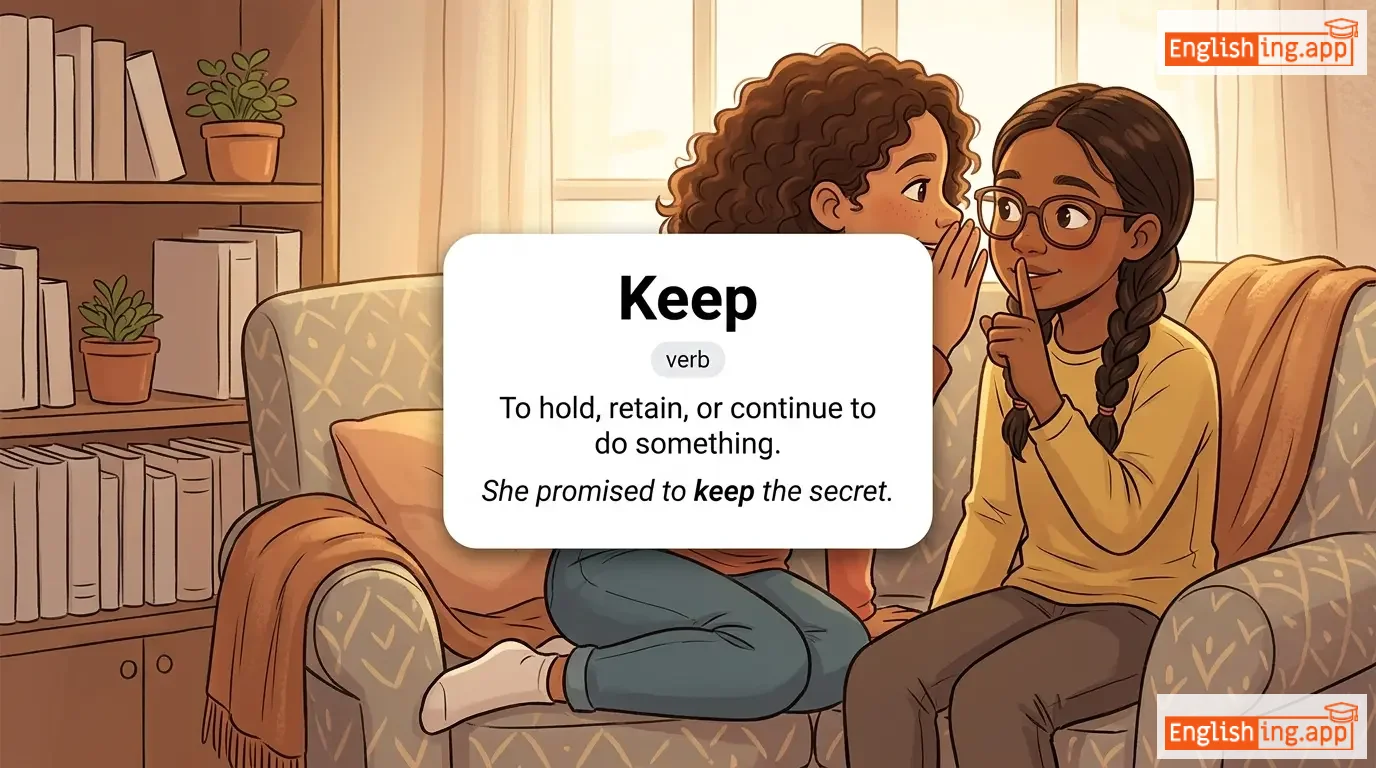
To hold, retain, or continue to do something.
••••••
|
She promised to keep the secret.
彼女は秘密を守ると約束しました。
••••••
|
彼女は秘密を守ると約束しました。
Kanojo wa himitsu o mamoru to yakusoku shimashita.
••••••
|
keep in touch
連絡を取り合う
••••••
|
Maintain communication with someone.
••••••
|
連絡を取り合う
renraku o toriau
••••••
|
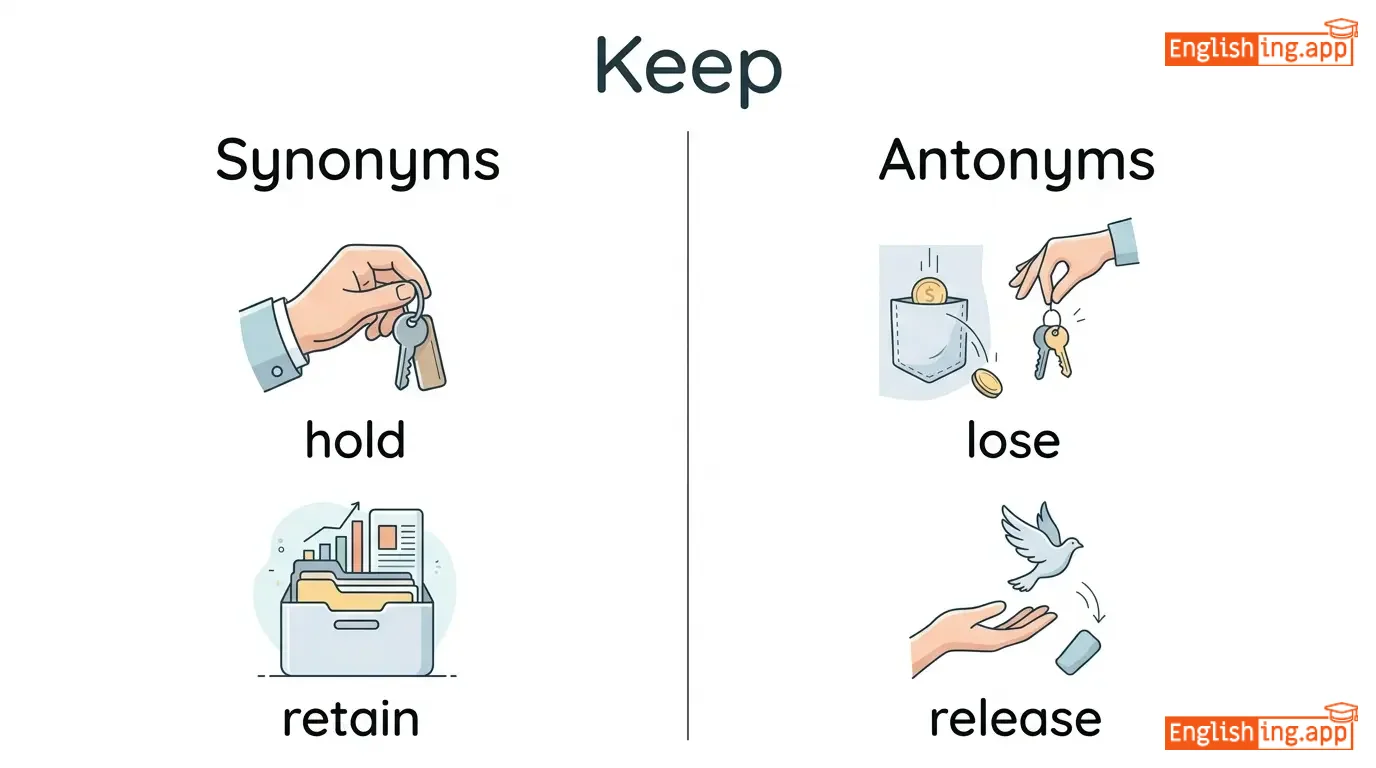
hold, retain, preserve, maintain, continue
••••••
|
lose, release, forget
••••••
|
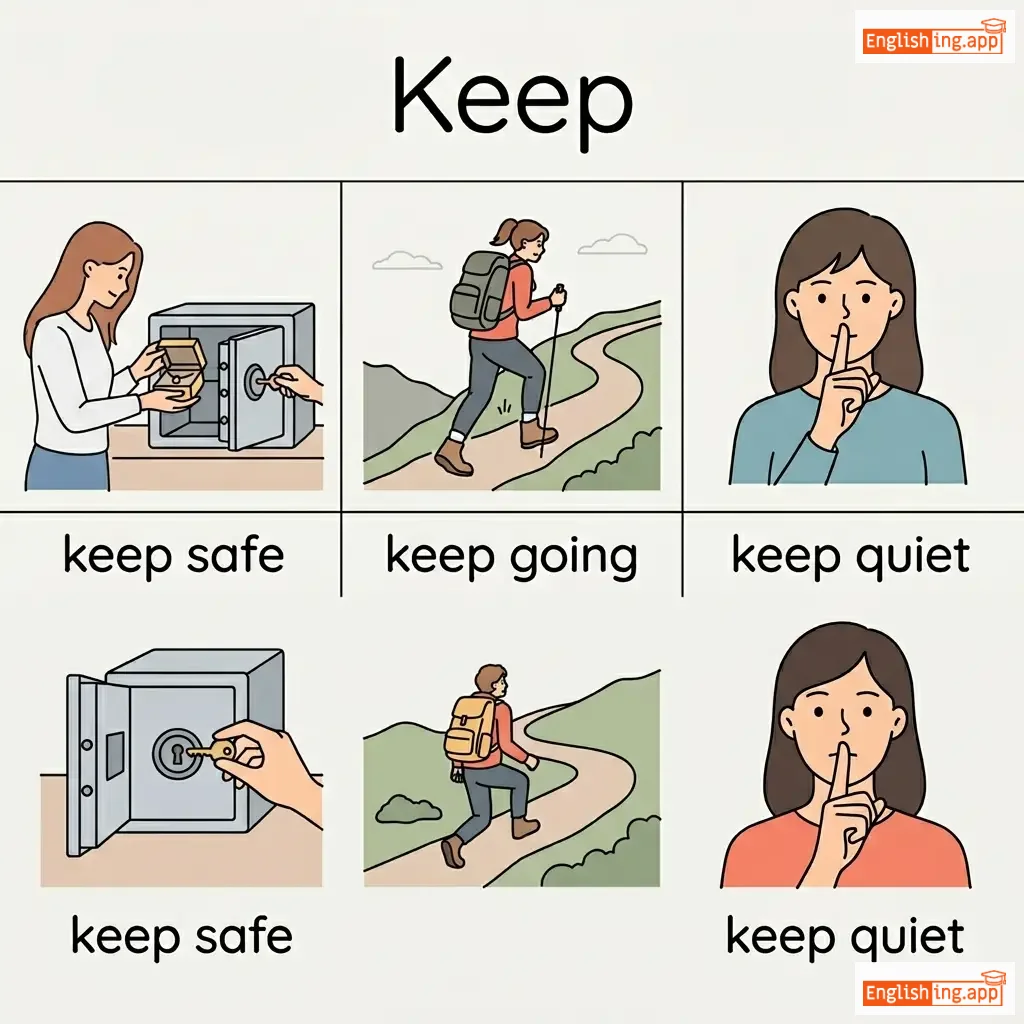
keep safe, keep going, keep quiet, keep calm
••••••
|
KEEP = 保つ - 大切なことを忘れないように。
••••••
|
|
💋
••••••
|
/kɪs/
verb
••••••
|

|
- •••••• |
kissed
••••••
|
kissed
••••••
|
kisses
••••••
|
kissing
••••••
|
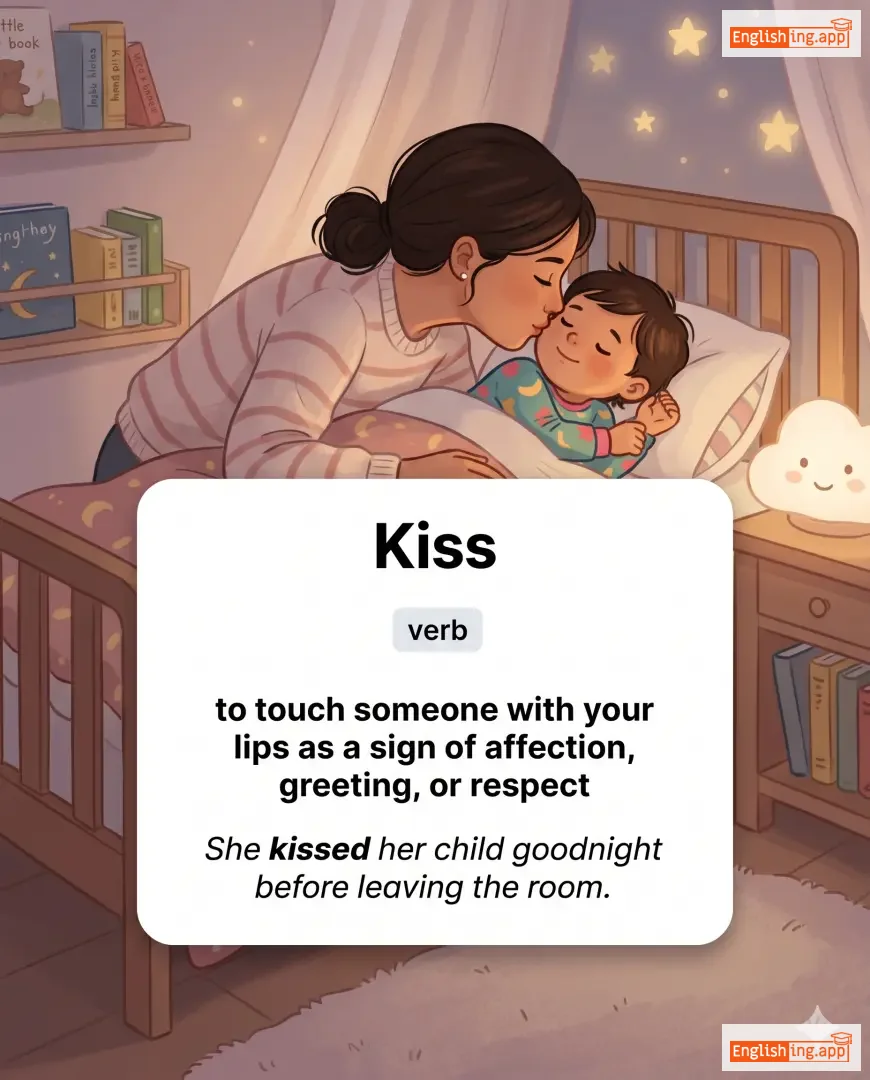
to touch someone with your lips as a sign of affection, greeting, or respect
••••••
|
She kissed her child goodnight before leaving the room. |
- •••••• |
kiss and make up |
to end an argument and become friendly again
••••••
|
- •••••• |
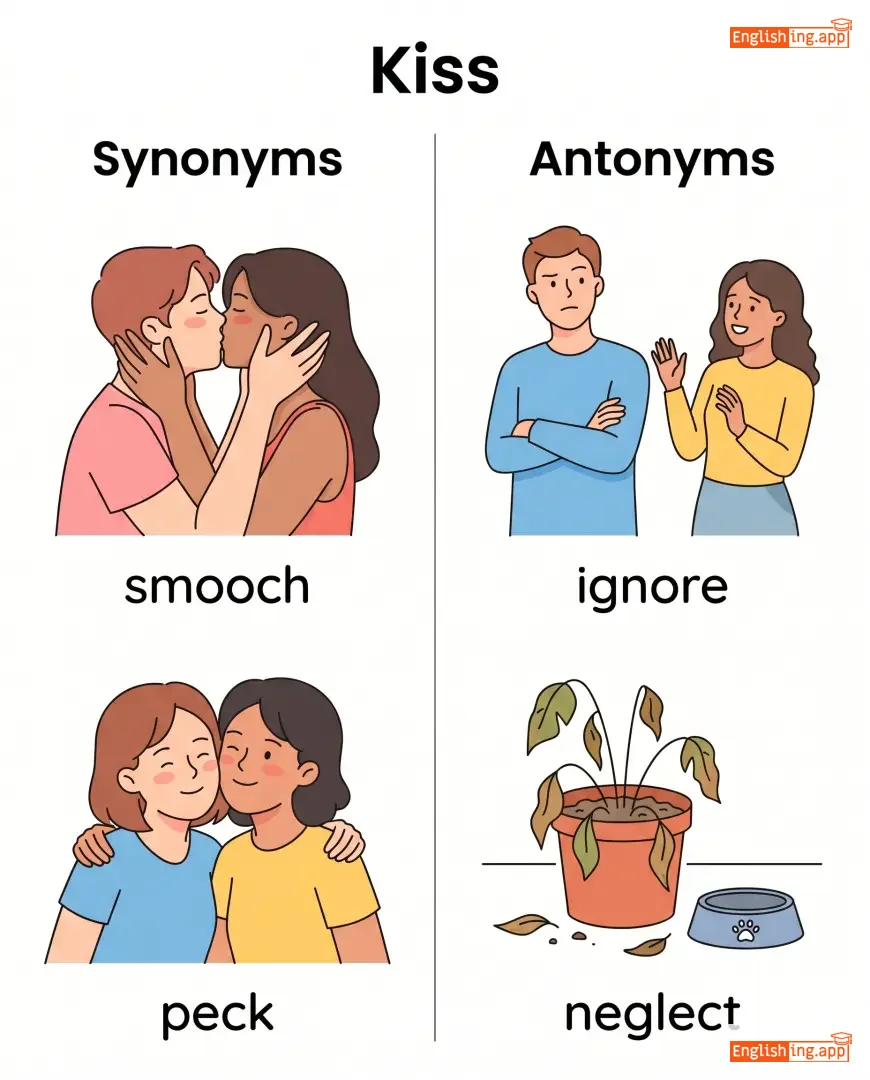
smooch, peck, embrace, caress
••••••
|
ignore, neglect
••••••
|
kiss goodbye, kiss passionately, blow a kiss, kiss on the cheek
••••••
|
No •••••• |
|
⚠️
••••••
|
/læk/
noun/verb
(ラック)
••••••
|
- •••••• |
欠如
ketsujo
••••••
|
lacked
ラックド
••••••
|
lacked
ラックド
••••••
|
lacks
ラックス
••••••
|
lacking
ラッキング
••••••
|
The state of being without or not having enough of something.
••••••
|
He failed the exam due to a lack of preparation.
準備不足で試験に失敗した。
••••••
|
準備不足で試験に失敗した。
Junbi fusoku de shiken ni shippai shita.
••••••
|
lack of effort
努力不足
••••••
|
insufficient effort or attempt
••••••
|
努力不足
Doryoku fusoku
••••••
|
shortage, deficiency, absence, scarcity
••••••
|
abundance, plenty, sufficiency
••••••
|
lack of confidence, lack of resources, lack of support, lack of preparation
••••••
|
Lack は '欠如' 何かが足りない時。
••••••
|
|
👩
••••••
|
/ˈleɪdi/
noun
(ハピネス)
••••••
|
- •••••• |
幸せ
shiawase
••••••
|
- •••••• | - •••••• | - •••••• | - •••••• |
A polite or formal way of referring to a woman.
••••••
|
The lady at the counter was very helpful. |
彼女は賞を受け取ったとき、自分の幸せを隠すことができなかった。
Kanojo wa shō o uketotta toki, jibun no shiawase o kakusu koto ga dekinakatta.
••••••
|
first lady |
the wife of a president or head of state
••••••
|
幸せを追い求める
shiawase o oi motomeru
••••••
|
woman, madam, female, gentlewoman
••••••
|
man, gentleman
••••••
|
young lady, elegant lady, old lady, lady friend
••••••
|
幸せという言葉は、すべてをポジティブに感じさせます。
••••••
|
|
💡
••••••
|
/læmp/
noun
(幸福)
••••••
|
- •••••• |
幸福
kōfuku
••••••
|
- •••••• | - •••••• | - •••••• | - •••••• |
a device that produces light, often using electricity
••••••
|
She turned on the lamp beside the bed. |
彼女は賞を受け取ったとき、喜びを隠せなかった。
Kanojo wa shō o uketotta toki, yorokobi o kakusenakatta.
••••••
|
burn the midnight oil |
to work or study late into the night
••••••
|
幸福を追い求める
kōfuku o oi motomeru
••••••
|
light, lantern, bulb, torch, spotlight
••••••
|
darkness, shadow
••••••
|
table lamp, floor lamp, desk lamp, oil lamp
••••••
|
幸福は心の平和から生まれる。
••••••
|
|
⏳
••••••
|
/læst/
verb/adjective/noun
(ラスト)
••••••
|

|
続く / 最後の
tsudzuku / saigo no
••••••
|
lasted
ラステッド
••••••
|
lasted
ラステッド
••••••
|
lasts
ラストス
••••••
|
lasting
ラスティング
••••••
|
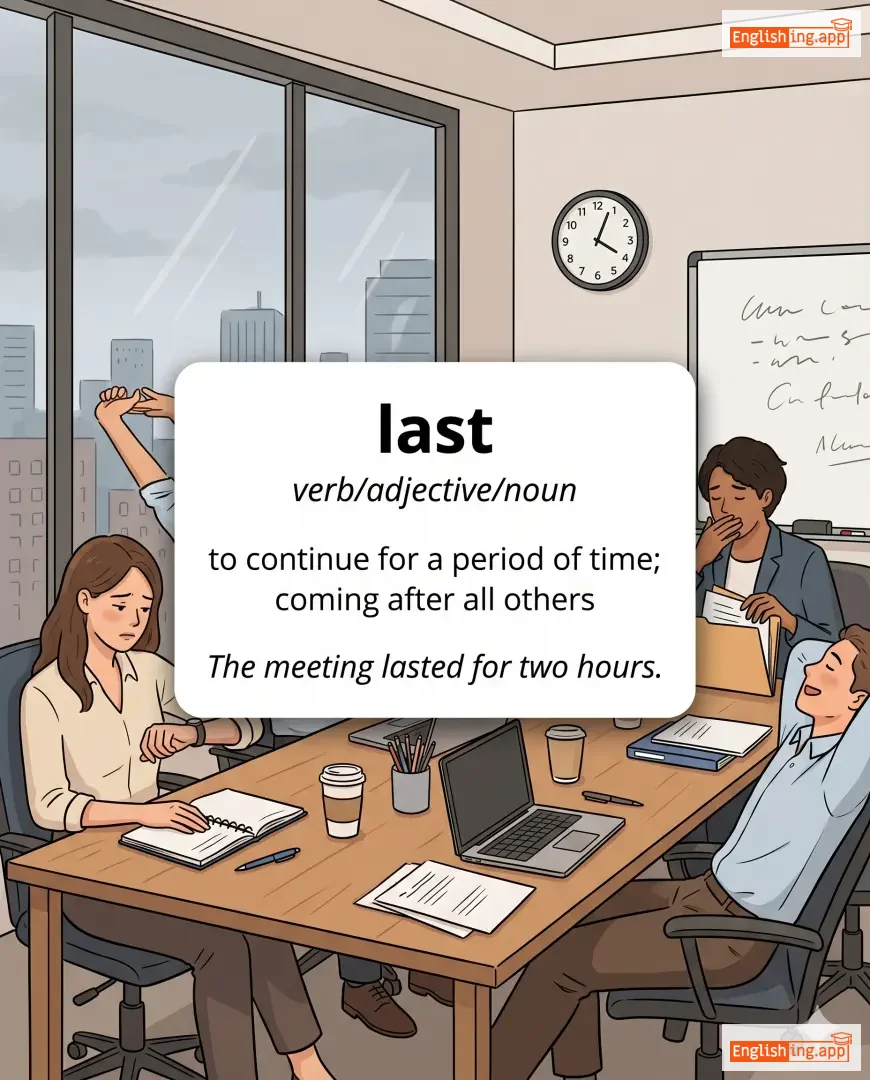
to continue for a period of time; coming after all others
••••••
|
The meeting lasted for two hours.
ミーティングは2時間続きました。
••••••
|
ミーティングは2時間続きました。
Mītingu wa 2-jikan tsudzukimashita.
••••••
|
at last
ついに
••••••
|
finally, after a long time
••••••
|
ついに
tsuini
••••••
|
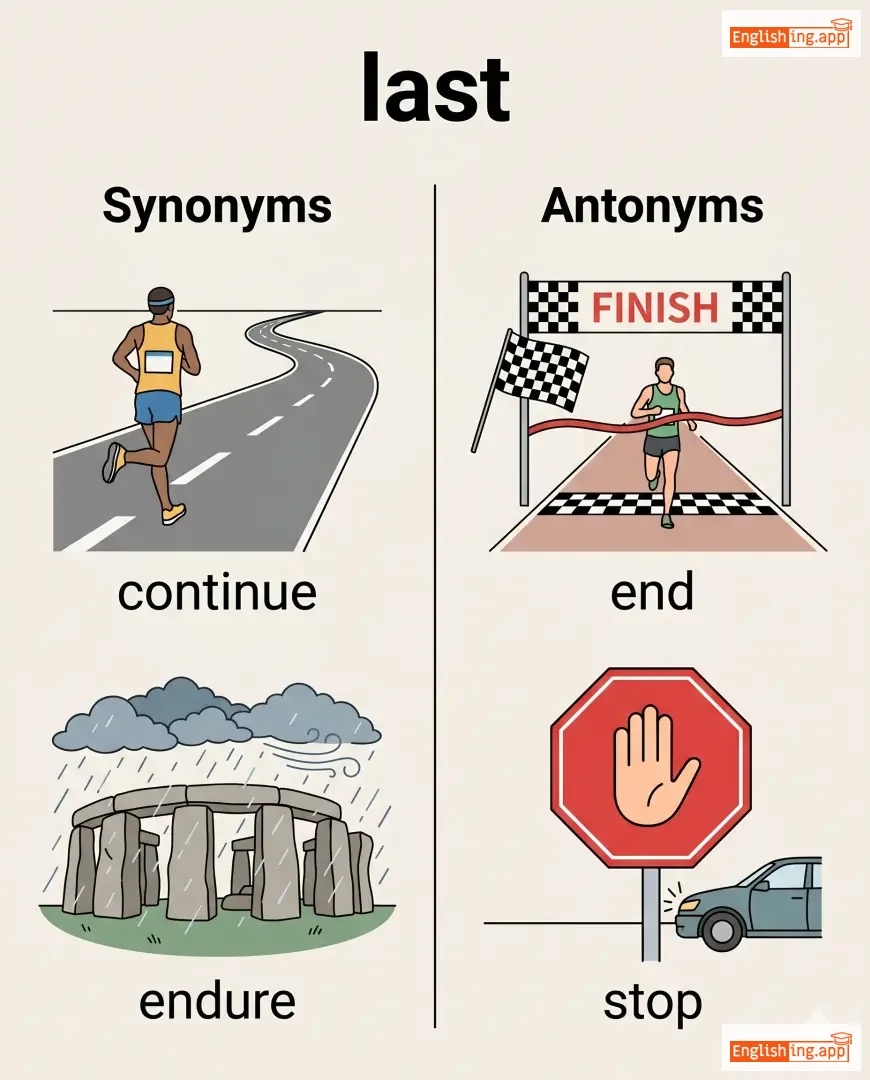
continue, endure, final, ultimate, survive
••••••
|
end, stop, first
••••••
|
last long, last forever, last night, last chance
••••••
|
Lastは「最後の」という意味で、動詞としては「続く」という意味です。
••••••
|
|
⏰
••••••
|
/leɪt/
adjective/adverb
(レイト)
••••••
|
- •••••• |
遅れた
okureta
••••••
|
- •••••• | - •••••• | - •••••• | - •••••• |
arriving, happening, or done after the expected time
••••••
|
He arrived late to the meeting. |
彼は会議に遅れて到着した。
Kare wa kaigi ni okurete tōchaku shita.
••••••
|
better late than never |
it is better to do something late than not at all
••••••
|
遅れても来ないよりはマシ
okuretemo konai yori wa mashi
••••••
|
tardy, delayed, overdue, unpunctual
••••••
|
early, prompt
••••••
|
late arrival, late night, late payment, late fee
••••••
|
Late = 遅れた – 重要な会議に遅れたと想像してみてください。
••••••
|

