Fog Trail and Mountain Jazz
早上七点,提尔托疲惫的heel仍未触及背包带。 Hers是唯一的相机,所以每个人都用它拍照。 沿着山间小道的high悬崖被云雾遮掩。 他们开始了缓慢的hike。 在山脊hole旁立着警告标志。 阿希克说:“五小时内我们会hook回到主道。” 向导穆库尔是这条路的host,大家都跟随他的指引。 日出后hour,雾气开始散去。 看到huge野生动物的脚印,他们的兴奋情绪飙升。 这条路甚至穿过了村庄的池塘,into。 下午,山间广场上奏响了一场小型jazz演出。 他们喝着茶,笑着听着山中雨的joke。 小型的jury会议为他们的律师朋友献上了荣誉。 尼泰说:“只要keep计划稳步推进,继续前进。” 在细雨中,米娜打开了她封印的kiss信件。 山间的房屋显示出lack现代设施。 帕鲁尔修女被亲切地称为“山地lady”。 他们准备好用紧凑的太阳能lamp迎接夜晚。 一首复兴歌曲结束了last表演。 在late阶段,他们在河边露营。
|
表情符号
|
单词 | Images | 翻译 | 过去时 | 过去分词 | 第三人称单数 | 动名词 | 含义 | 例句 | 例句翻译 | 示例表达 | 示例表达含义 | 示例表达翻译 | 同义词 | 反义词 | 搭配词 | 助记符 |
|---|---|---|---|---|---|---|---|---|---|---|---|---|---|---|---|---|---|
|
👠
••••••
|
/hiːl/
noun
(希尔)
••••••
|
- •••••• |
脚跟
jiao gen
••••••
|
- •••••• | - •••••• | - •••••• | - •••••• |
the back part of the human foot below the ankle
••••••
|
Her shoe was rubbing against her heel.
她的鞋子摩擦着她的脚跟。
••••••
|
她的鞋子摩擦着她的脚跟。
Ta de xiezi mocazhe ta de jiao gen.
••••••
|
at someone's heels
紧跟在某人后面
••••••
|
closely following someone
••••••
|
紧跟在某人后面
jin gen zai mou ren hou mian
••••••
|
backfoot, rear, sole, spur
••••••
|
toe, front
••••••
|
high heel, cracked heel, Achilles heel
••••••
|
脚跟是脚的后部,记住高跟鞋让脚跟更高。
••••••
|
|
👩👜
••••••
|
/hɜːrz/
pronoun
(赫尔斯)
••••••
|
- •••••• |
她的(女性的)东西
tā de (nǚxìng de) dōngxi
••••••
|
- •••••• | - •••••• | - •••••• | - •••••• |
used to refer to something that belongs to or is associated with a female person previously mentioned or easily identified.
••••••
|
That blue bag is hers. |
那个蓝色的包是她的。
Nàgè lán sè de bāo shì tā de.
••••••
|
- •••••• | - •••••• | - •••••• |
belonging to her, her own, of her, hers alone
••••••
|
his, theirs
••••••
|
hers alone, only hers, completely hers
••••••
|
Hers 意味着 HER’s—她自己的东西,her + s = hers!
••••••
|
|
⬆️
••••••
|
/haɪ/
adjective
(hāi)
••••••
|
- •••••• |
高
gao
••••••
|
- •••••• | - •••••• | - •••••• | - •••••• |
At or to a great height; greater than normal in amount, degree, or intensity.
••••••
|
The mountain peak is very high.
山顶非常高。
••••••
|
山顶非常高。
Shanding feichang gao.
••••••
|
high and mighty
高高在上
••••••
|
acting proud and arrogant
••••••
|
傲慢
aoman
••••••
|
tall, elevated, lofty, towering, intense
••••••
|
low, small
••••••
|
high mountain, high speed, high hopes, high price
••••••
|
High 是高 ⬆️,比如 High building = 高楼。
••••••
|
|
🥾
••••••
|
/haɪk/
verb/noun
••••••
|
- •••••• | - •••••• |
hiked
••••••
|
hiked
••••••
|
hikes
••••••
|
hiking
••••••
|
To take a long walk in the countryside or mountains; also to increase suddenly (prices, rates, etc.).
••••••
|
We decided to hike in the hills this weekend. |
- •••••• |
price hike |
A sudden increase in the cost of goods or services.
••••••
|
- •••••• |
walk, trek, climb, increase, raise
••••••
|
decline, drop, fall
••••••
|
go for a hike, hike up, price hike, wage hike
••••••
|
No •••••• |
|
🕳️
••••••
|
/hoʊl/
noun
(hōu)
••••••
|
- •••••• |
洞
dong
••••••
|
- •••••• | - •••••• | - •••••• | - •••••• |
an opening, gap, or hollow place in a solid surface
••••••
|
There is a hole in my shirt. |
我的衬衫上有一个洞。
Wǒ de chènshān shàng yǒu yīgè dòng.
••••••
|
in a hole |
in a difficult or troublesome situation
••••••
|
在困境中
zài kùnjìng zhōng
••••••
|
gap, opening, cavity, pit, hollow
••••••
|
solid, whole
••••••
|
dig a hole, small hole, deep hole, in a hole
••••••
|
Hole = 洞, 记住 hole = 洞在你的衬衫上
••••••
|
|
🎣
••••••
|
/hʊk/
noun, verb
(hùkè)
••••••
|
|
钩子或挂件
gōu zi huò guà jiàn
••••••
|
hooked
hùkèd
••••••
|
hooked
hùkèd
••••••
|
hooks
hùks
••••••
|
hooking
hùkīng
••••••
|
a curved piece of metal or other material used for catching, holding, or pulling something; to catch or attach with a hook
••••••
|
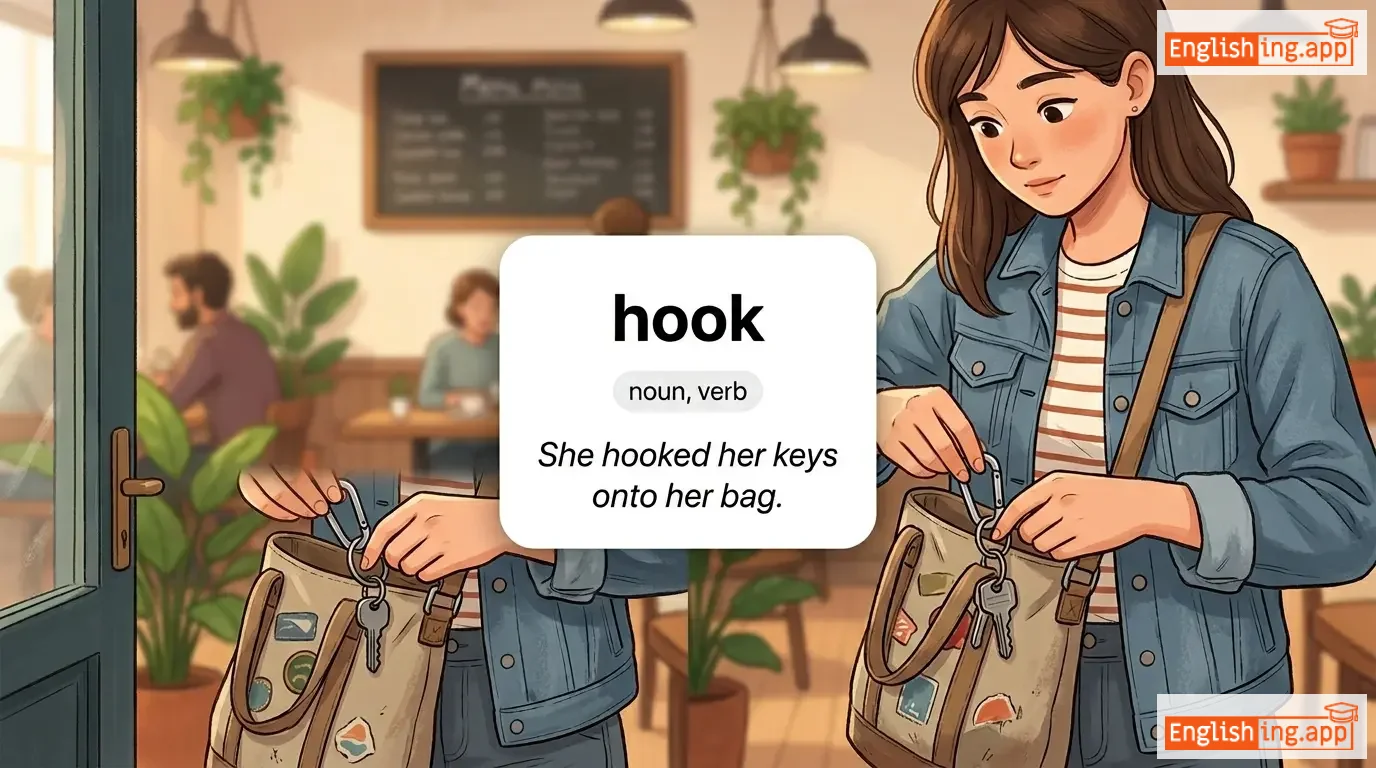
She hooked her keys onto her bag.
她把钥匙挂在包包上。
••••••
|
她把钥匙挂在包包上。
Tā bǎ yàoshi guà zài bāo bāo shàng.
••••••
|
get hooked on
上瘾
••••••
|
to become addicted or very interested in something
••••••
|
对某事上瘾
duì mǒu shì shàng yǐn
••••••
|
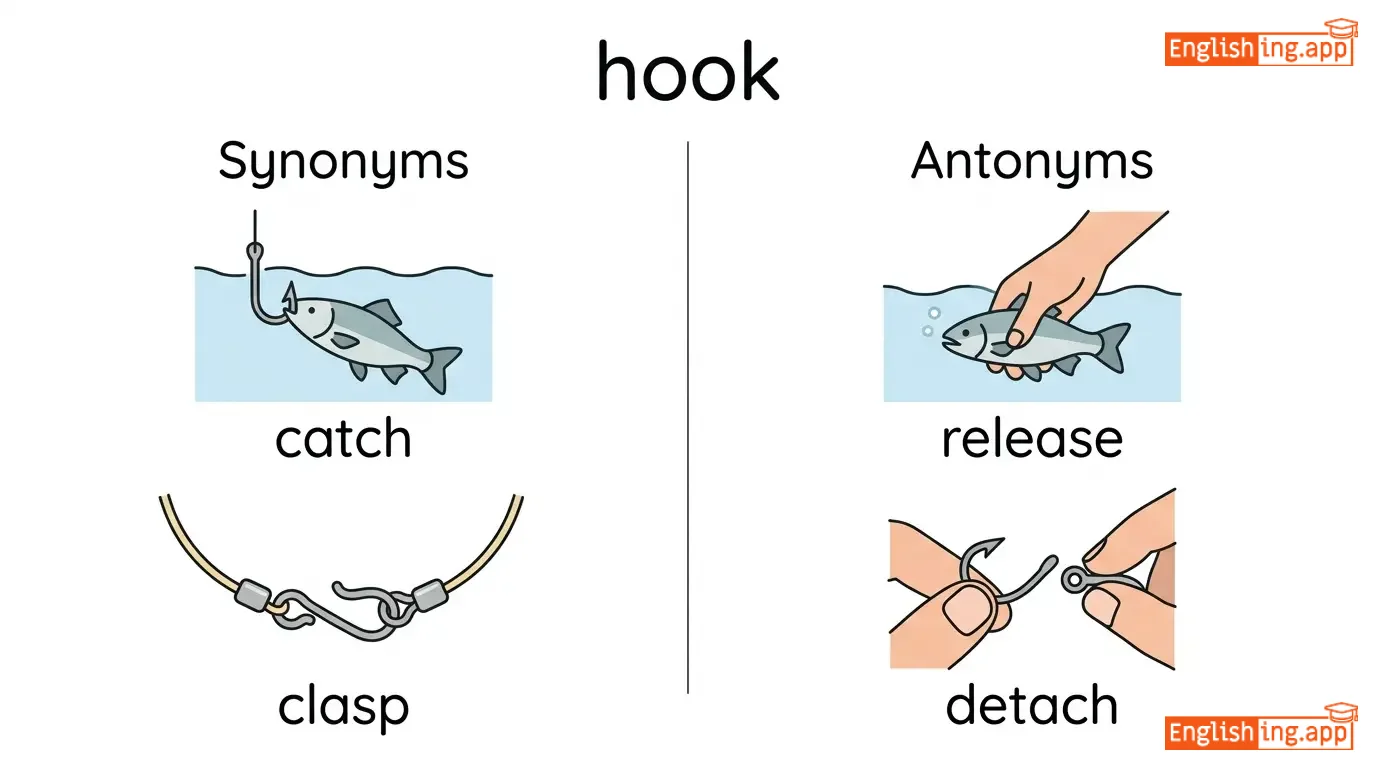
catch, clasp, fasten, attach, snag
••••••
|
release, detach, unhook
••••••
|
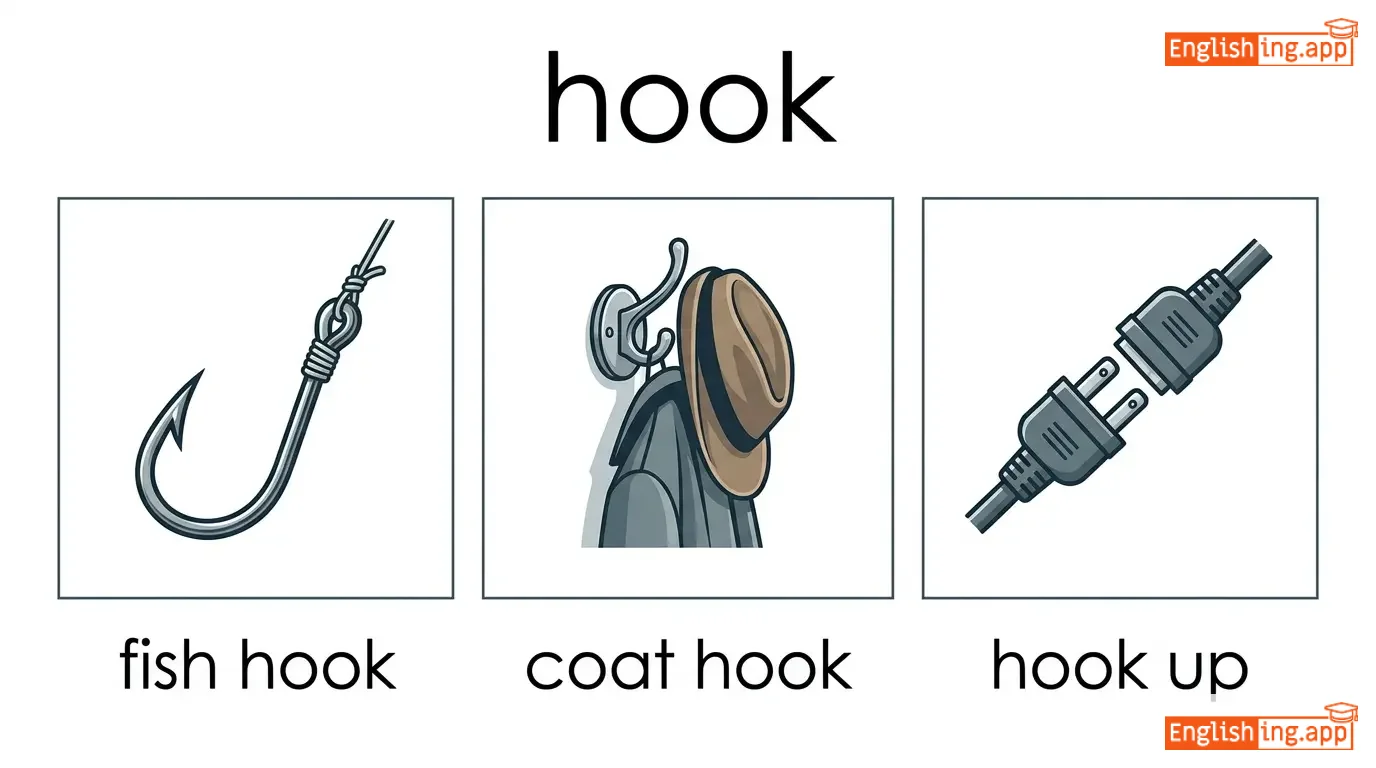
fish hook, coat hook, hook up, hook on
••••••
|
记住,钩子就像是 'hook' — 用来挂住东西!
••••••
|
|
🎤
••••••
|
/hoʊst/
noun, verb
(霍斯特)
••••••
|
- •••••• |
主持人
zhǔchí rén
••••••
|
hosted
霍斯特德
••••••
|
hosted
霍斯特德
••••••
|
hosts
霍斯特斯
••••••
|
hosting
霍斯廷
••••••
|
a person who receives or entertains guests; to organize and provide for an event
••••••
|
She will host the conference next week.
她将在下周主持会议。
••••••
|
她将在下周主持会议。
Tā jiāng zài xià zhōu zhǔchí huìyì.
••••••
|
play host
扮演主持人
••••••
|
to act as the host for an event or occasion
••••••
|
扮演主持人
bànyǎn zhǔchí rén
••••••
|
presenter, entertainer, emcee, organizer, moderator
••••••
|
guest, visitor
••••••
|
host a party, host an event, web host
••••••
|
主持人:他或她是组织和主持活动的那个人。
••••••
|
|
⏰
••••••
|
/ˈaʊər/
noun
••••••
|
- •••••• | - •••••• | - •••••• | - •••••• | - •••••• | - •••••• |
A period of time equal to 60 minutes.
••••••
|
The meeting lasted for two hours. |
- •••••• |
rush hour |
the busy part of the day when traffic is heavy
••••••
|
- •••••• |
sixty minutes, time period, duration, interval
••••••
|
moment, instant
••••••
|
spend an hour, half an hour, working hours, rush hour
••••••
|
No •••••• |
|
🗻
••••••
|
/hjuːdʒ/
adjective
(hyuj)
••••••
|
- •••••• |
巨大的
jù dà de
••••••
|
- •••••• | - •••••• | - •••••• | - •••••• |
extremely large in size or amount
••••••
|
The stadium was filled with a huge crowd. |
体育场被一群巨大的观众填满。
tǐ yù chǎng bèi yī qún jù dà de guān zhòng tián mǎn.
••••••
|
make a huge difference |
to have a significant effect on something
••••••
|
产生巨大的影响
chǎn shēng jù dà de yǐng xiǎng
••••••
|
enormous, massive, gigantic, vast, colossal
••••••
|
tiny, small, little
••••••
|
huge success, huge amount, huge crowd, huge impact
••••••
|
Huge是巨大的意思,像是巨大的观众群 = 巨大的聚集
••••••
|
|
➡️
••••••
|
/ˈɪntuː/
preposition
(因图)
••••••
|
- •••••• |
进去
jinqu
••••••
|
- •••••• | - •••••• | - •••••• | - •••••• |
expressing movement or direction to the inside of something
••••••
|
She walked into the room quietly.
她安静地走进了房间。
••••••
|
她安静地走进了房间。
Ta anjing de zou jinle fangjian.
••••••
|
run into
偶遇
••••••
|
to meet by chance
••••••
|
偶遇
ouyu
••••••
|
inside, within, toward, onto
••••••
|
out, outside
••••••
|
fall into, get into, break into, move into
••••••
|
Into 代表进去 — 就像下雨时,每个人都冲进屋里。
••••••
|
|
🎷
••••••
|
/dʒæz/
noun
(海皮尼斯)
••••••
|
- •••••• |
幸福
xingfu
••••••
|
- •••••• | - •••••• | - •••••• | - •••••• |
a style of music characterized by improvisation, syncopation, and strong rhythm, originating in African American communities
••••••
|
She loves listening to live jazz on weekends. |
当她收到奖项时,她无法掩饰自己的幸福。
Dāng tā shōudào jiǎngxiàng shí, tā wúfǎ yǎnshì zìjǐ de xìngfú.
••••••
|
all that jazz |
and similar things; and so on
••••••
|
幸福的追求
xìngfú de zhuīqiú
••••••
|
blues, swing, bebop, music, improvisation
••••••
|
silence, stillness
••••••
|
jazz music, jazz band, live jazz, smooth jazz, jazz club
••••••
|
幸福:就像一个美丽的梦,它永远在你身边!
••••••
|
|
😂
••••••
|
/dʒoʊk/
noun/verb
(乔克)
••••••
|
|
笑话
xiaohua
••••••
|
joked
开玩笑
••••••
|
joked
开玩笑
••••••
|
jokes
笑话
••••••
|
joking
笑话
••••••
|
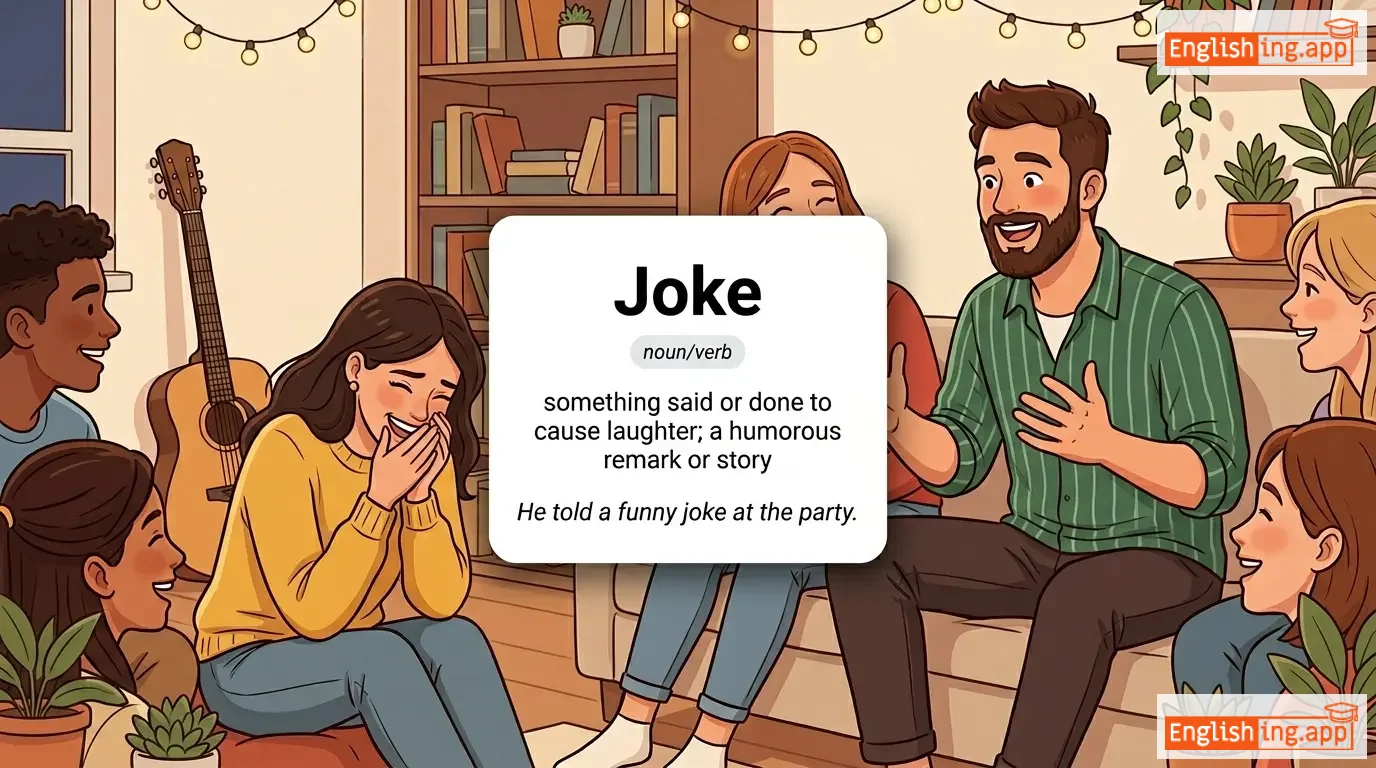
something said or done to cause laughter; a humorous remark or story
••••••
|
He told a funny joke at the party.
他在聚会上讲了一个有趣的笑话。
••••••
|
他在聚会上讲了一个有趣的笑话。
Ta zai juhui shang jiang le yi ge youqu de xiaohua.
••••••
|
crack a joke
讲笑话
••••••
|
to tell a joke, usually to lighten the mood
••••••
|
讲笑话
jiang xiaohua
••••••
|
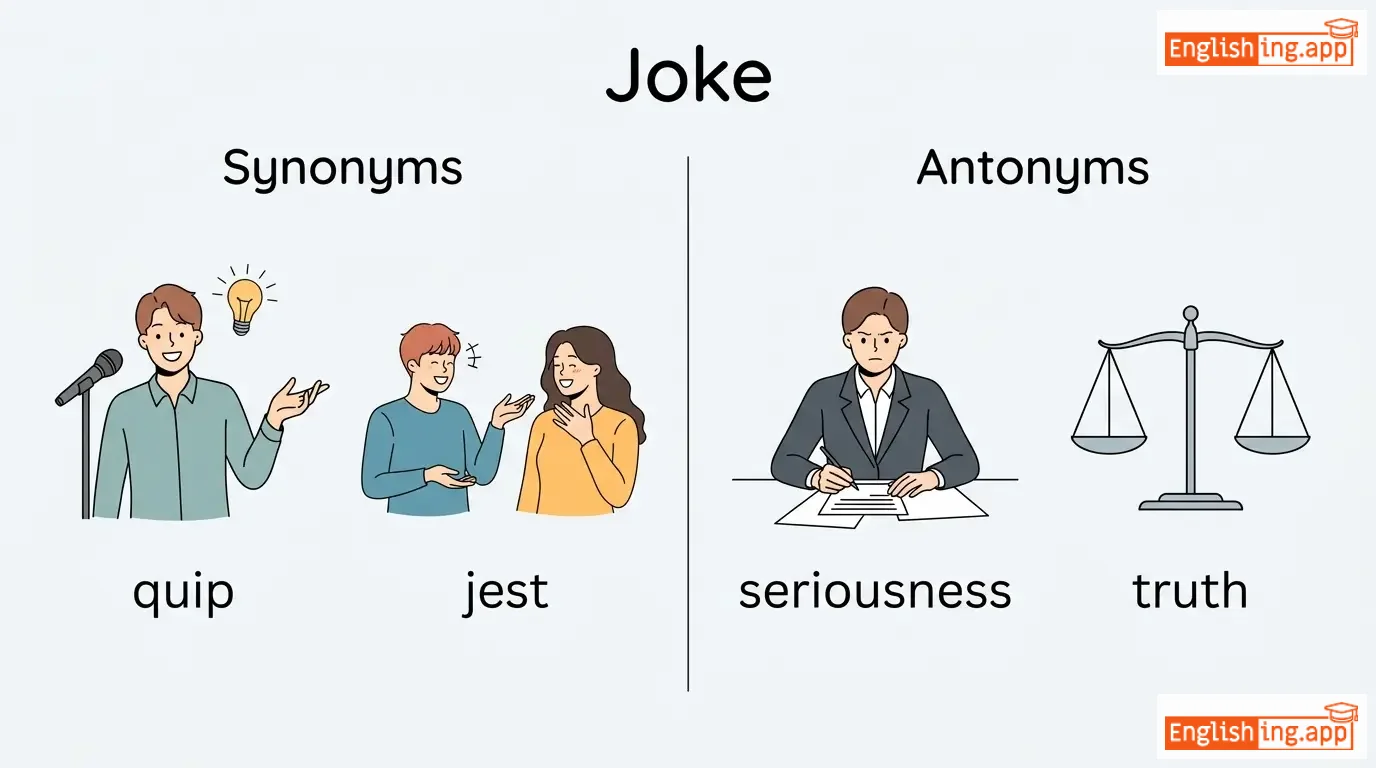
quip, jest, gag, witticism, pun
••••••
|
seriousness, truth
••••••
|
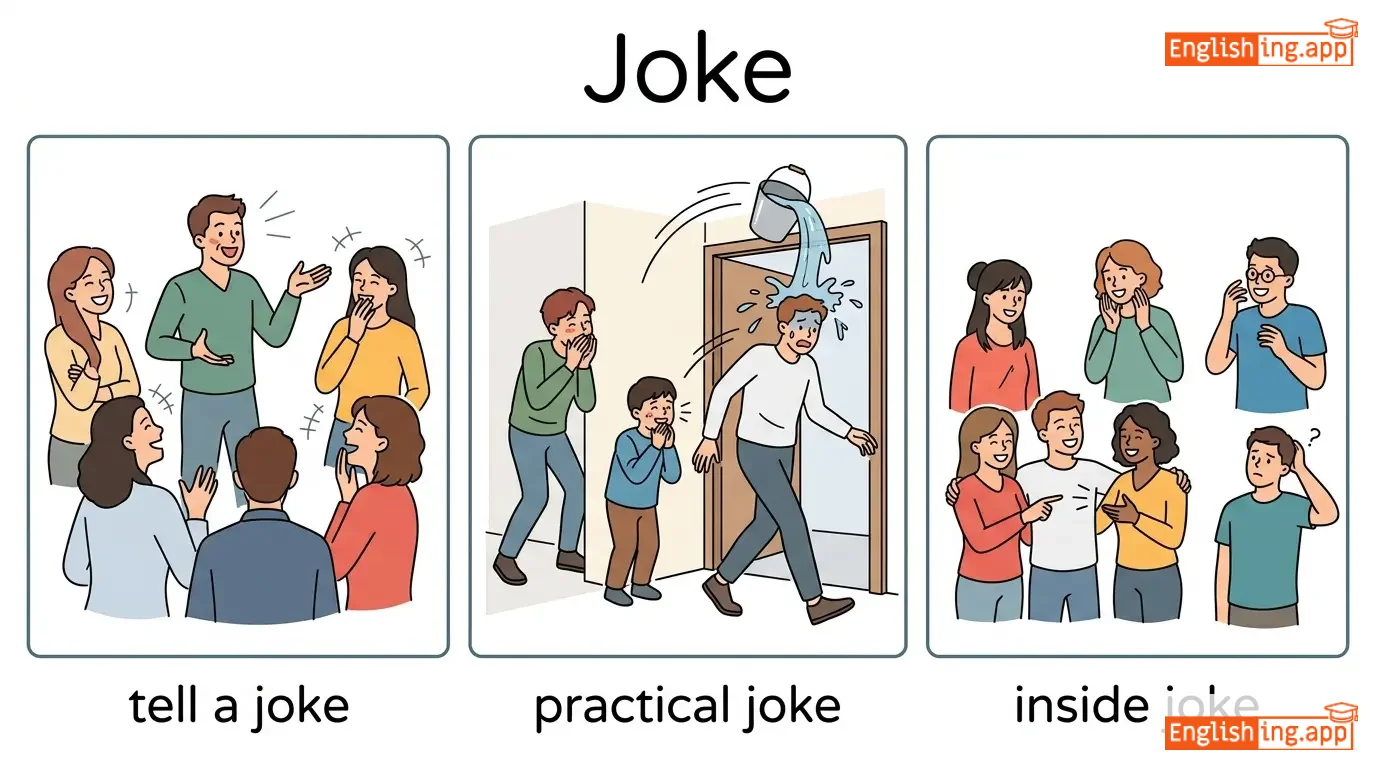
tell a joke, practical joke, inside joke, crack a joke
••••••
|
Joke 就是笑话,讲笑话可以让大家笑得更开心。
••••••
|
|
⚖️
••••••
|
/ˈdʒʊəri/
noun
(陪审团)
••••••
|
- •••••• |
陪审团
peishentuan
••••••
|
- •••••• | - •••••• | - •••••• | - •••••• |
a group of people sworn to give a verdict in a legal case based on the evidence
••••••
|
The jury found him guilty of the crime.
陪审团裁定他犯有罪行
••••••
|
陪审团裁定他犯有罪行。
Peishentuan caiding ta fan you zuixing.
••••••
|
the jury is still out
陪审团尚未作出决定
••••••
|
a decision has not yet been made
••••••
|
陪审团尚未作出决定
Peishentuan shang wei zuochu jueding
••••••
|
panel, tribunal, committee, board, assessors
••••••
|
judge, individual decision
••••••
|
jury duty, jury trial, grand jury, jury verdict
••••••
|
陪审团决定了法律案件的结局,是做出裁决的团队。
••••••
|
|
🔒
••••••
|
/kiːp/
verb
(kip)
••••••
|
|
保持
bǎochí
••••••
|
kept
kept
••••••
|
kept
kept
••••••
|
keeps
kips
••••••
|
keeping
keeping
••••••
|
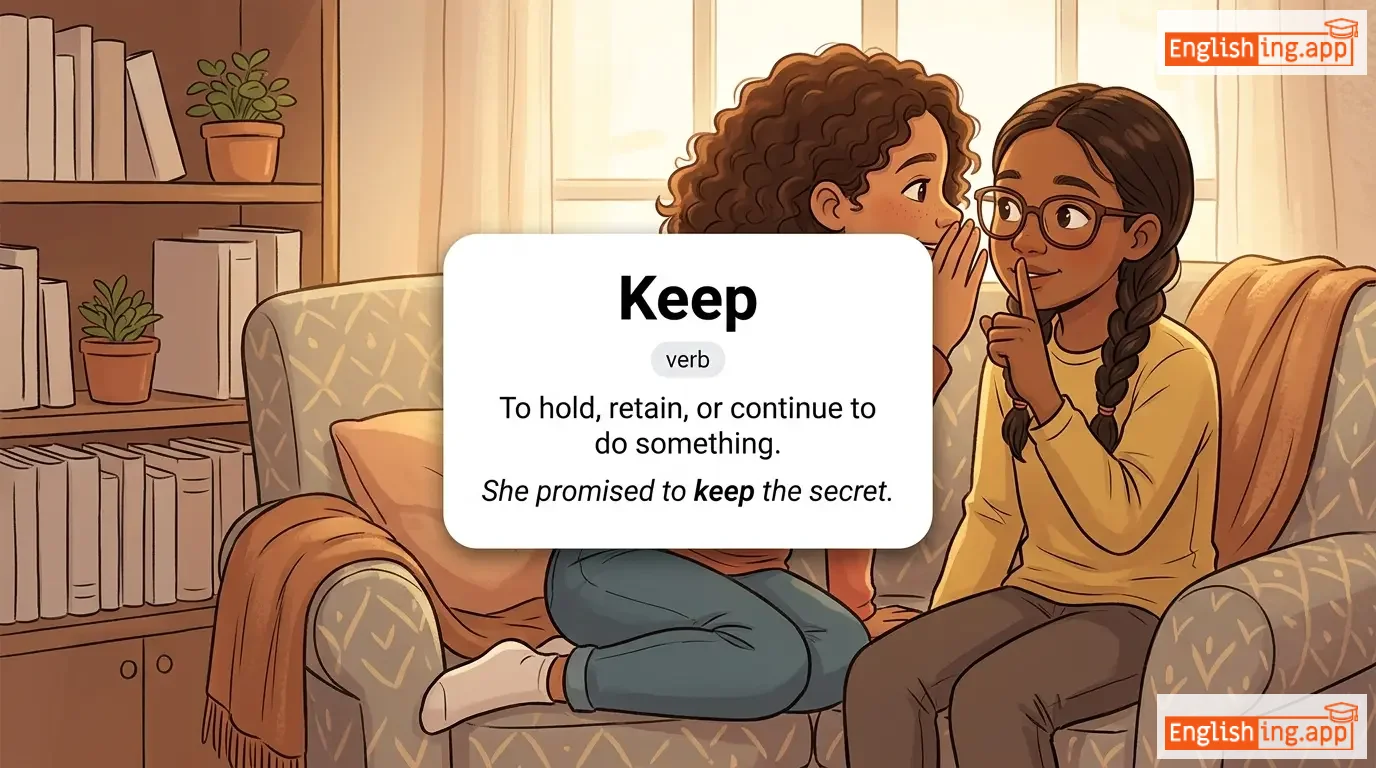
To hold, retain, or continue to do something.
••••••
|
She promised to keep the secret.
她答应保持秘密。
••••••
|
她答应保持秘密。
Tā dāyìng bǎochí mìmì.
••••••
|
keep in touch
保持联系
••••••
|
Maintain communication with someone.
••••••
|
保持联系
bǎochí liánxì
••••••
|
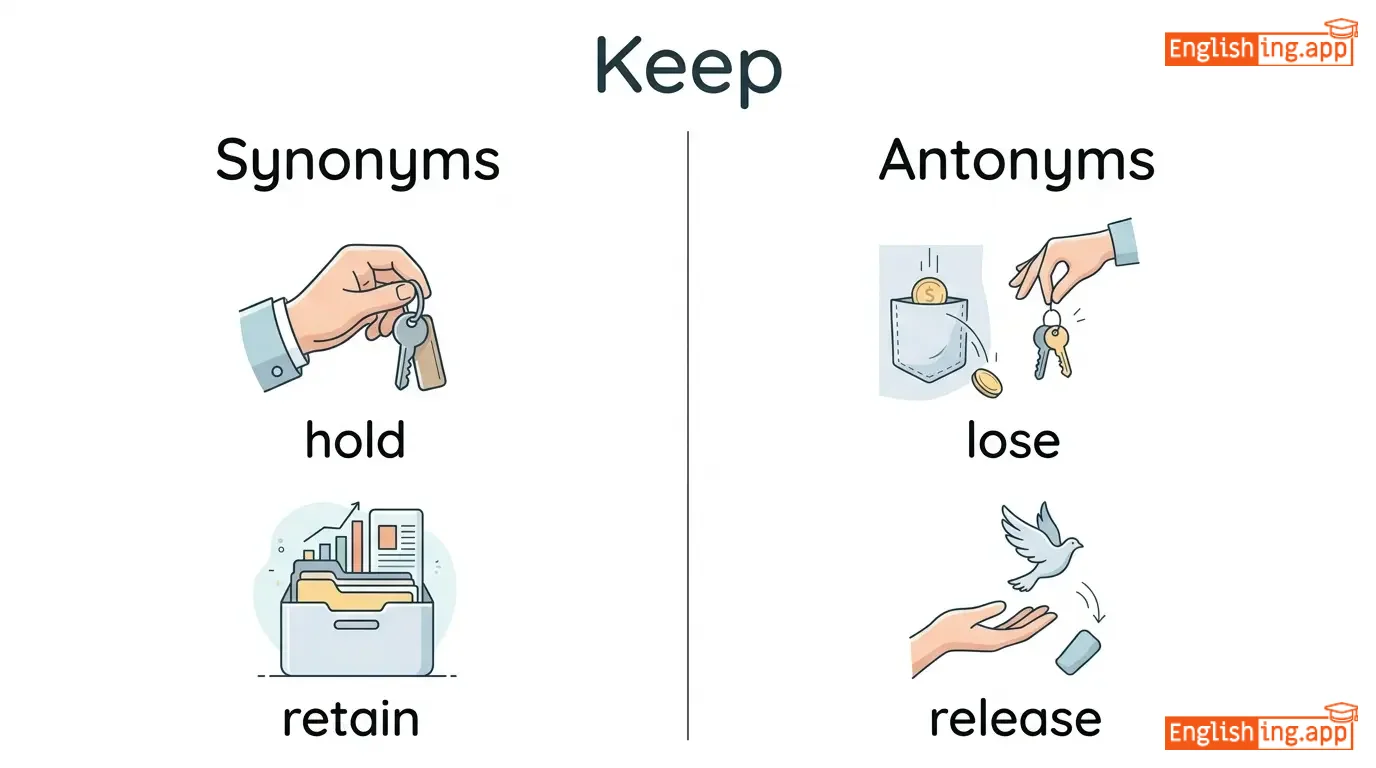
hold, retain, preserve, maintain, continue
••••••
|
lose, release, forget
••••••
|
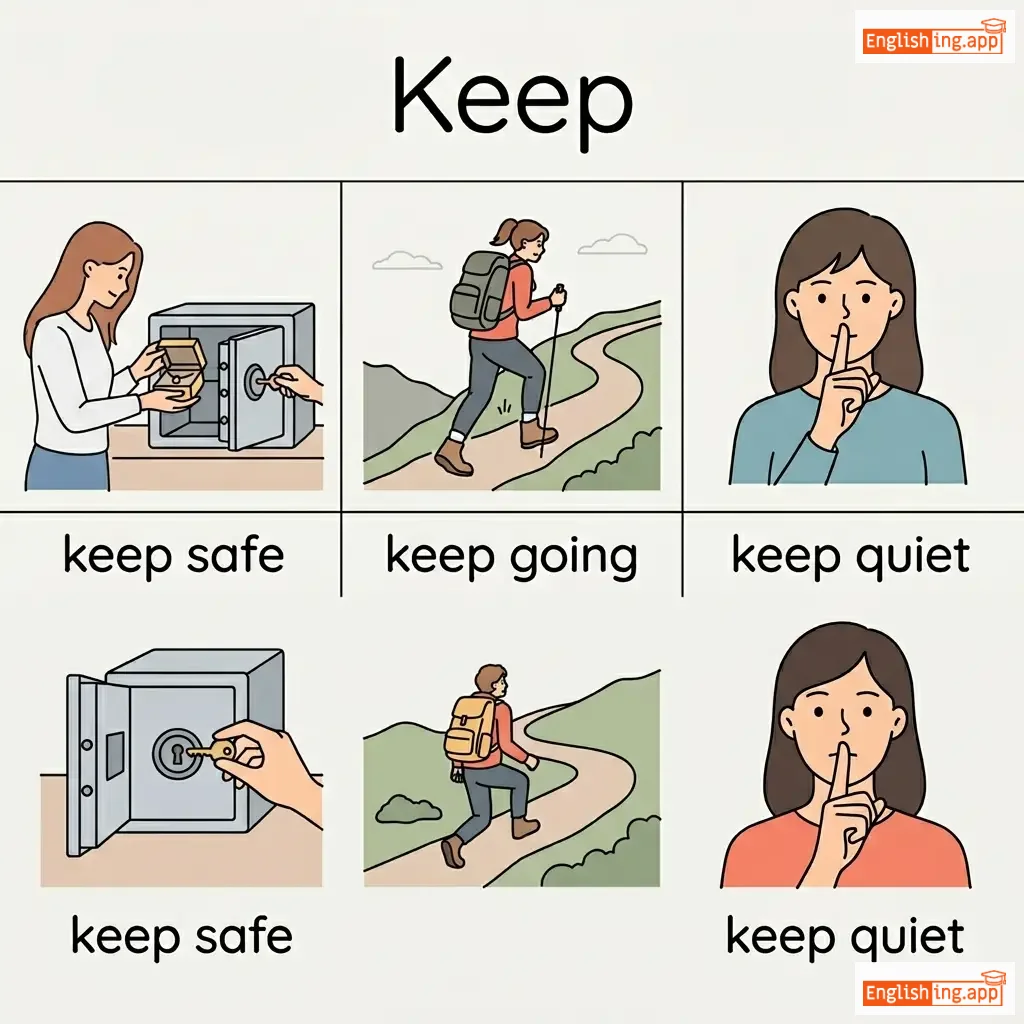
keep safe, keep going, keep quiet, keep calm
••••••
|
KEEP = 保持 - 不要丢失重要的东西。
••••••
|
|
💋
••••••
|
/kɪs/
verb
••••••
|

|
- •••••• |
kissed
••••••
|
kissed
••••••
|
kisses
••••••
|
kissing
••••••
|
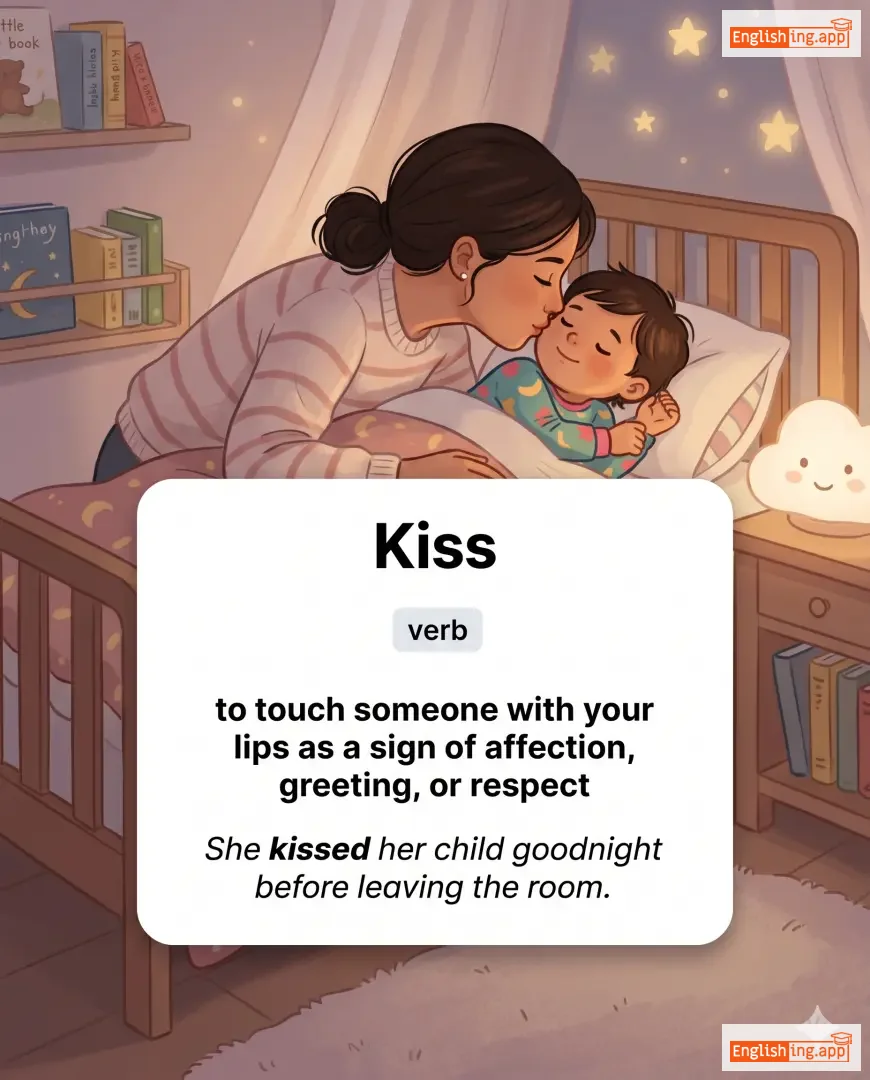
to touch someone with your lips as a sign of affection, greeting, or respect
••••••
|
She kissed her child goodnight before leaving the room. |
- •••••• |
kiss and make up |
to end an argument and become friendly again
••••••
|
- •••••• |
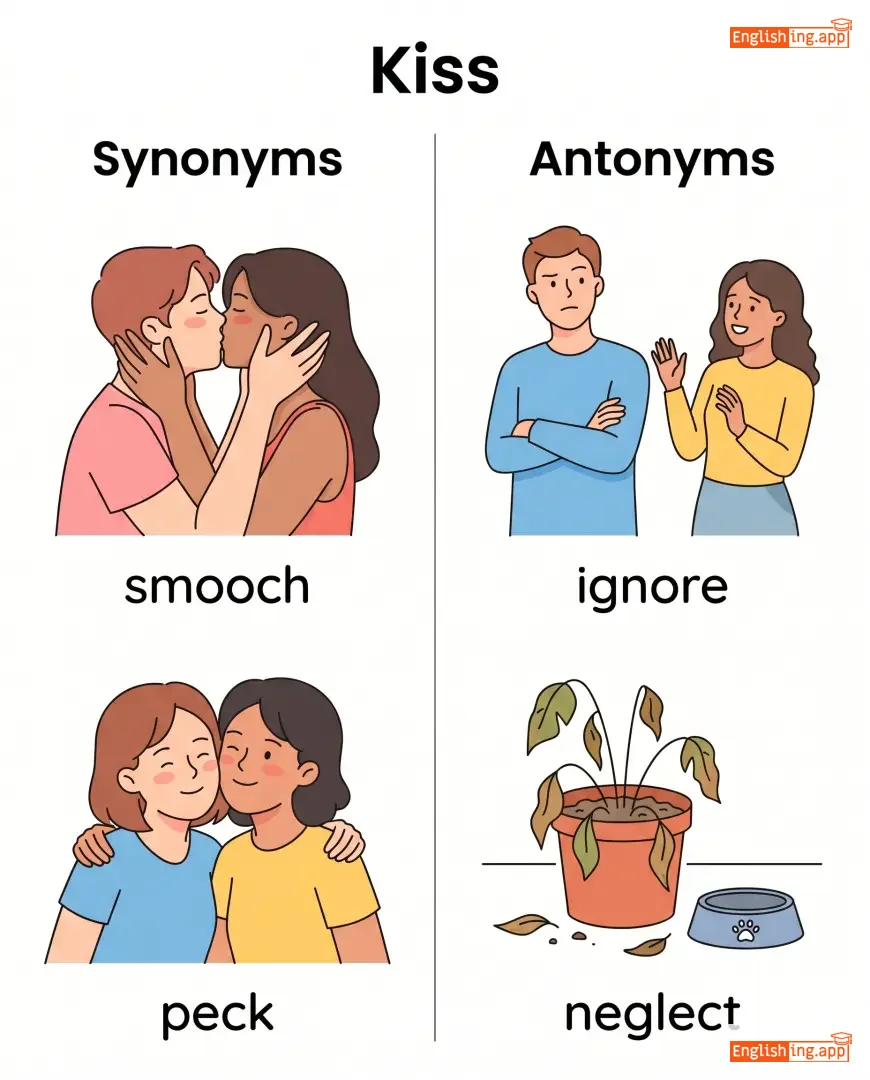
smooch, peck, embrace, caress
••••••
|
ignore, neglect
••••••
|
kiss goodbye, kiss passionately, blow a kiss, kiss on the cheek
••••••
|
No •••••• |
|
⚠️
••••••
|
/læk/
noun/verb
(lāk)
••••••
|
- •••••• |
缺乏
quēfá
••••••
|
lacked
lakt
••••••
|
lacked
lakt
••••••
|
lacks
laks
••••••
|
lacking
lacking
••••••
|
The state of being without or not having enough of something.
••••••
|
He failed the exam due to a lack of preparation.
他因为缺乏准备而未通过考试。
••••••
|
他因为缺乏准备而未通过考试。
Tā yīnwèi quēfá zhǔnbèi ér wèi tōngguò kǎoshì.
••••••
|
lack of effort
缺乏努力
••••••
|
insufficient effort or attempt
••••••
|
缺乏努力
quēfá nǔlì
••••••
|
shortage, deficiency, absence, scarcity
••••••
|
abundance, plenty, sufficiency
••••••
|
lack of confidence, lack of resources, lack of support, lack of preparation
••••••
|
Lack 是'缺乏',感觉有点空缺。
••••••
|
|
👩
••••••
|
/ˈleɪdi/
noun
(海皮尼斯)
••••••
|
- •••••• |
幸福
xingfu
••••••
|
- •••••• | - •••••• | - •••••• | - •••••• |
A polite or formal way of referring to a woman.
••••••
|
The lady at the counter was very helpful. |
当她收到奖项时,她无法掩饰自己的幸福。
Dāng tā shōudào jiǎngxiàng shí, tā wúfǎ yǎnshì zìjǐ de xìngfú.
••••••
|
first lady |
the wife of a president or head of state
••••••
|
追求幸福
zhuīqiú xìngfú
••••••
|
woman, madam, female, gentlewoman
••••••
|
man, gentleman
••••••
|
young lady, elegant lady, old lady, lady friend
••••••
|
幸福意味着每一天都感到快乐,生活中的每一刻都值得庆祝!
••••••
|
|
💡
••••••
|
/læmp/
noun
(幸福)
••••••
|
- •••••• |
幸福
xìng fú
••••••
|
- •••••• | - •••••• | - •••••• | - •••••• |
a device that produces light, often using electricity
••••••
|
She turned on the lamp beside the bed. |
当她获得奖项时,她无法掩饰自己的幸福。
Dāng tā huò dé jiǎng xiàng shí, tā wú fǎ yǎn shì zì jǐ de xìng fú.
••••••
|
burn the midnight oil |
to work or study late into the night
••••••
|
追求幸福
zhuī qiú xìng fú
••••••
|
light, lantern, bulb, torch, spotlight
••••••
|
darkness, shadow
••••••
|
table lamp, floor lamp, desk lamp, oil lamp
••••••
|
幸福是找到自己内心的平静与安宁。
••••••
|
|
⏳
••••••
|
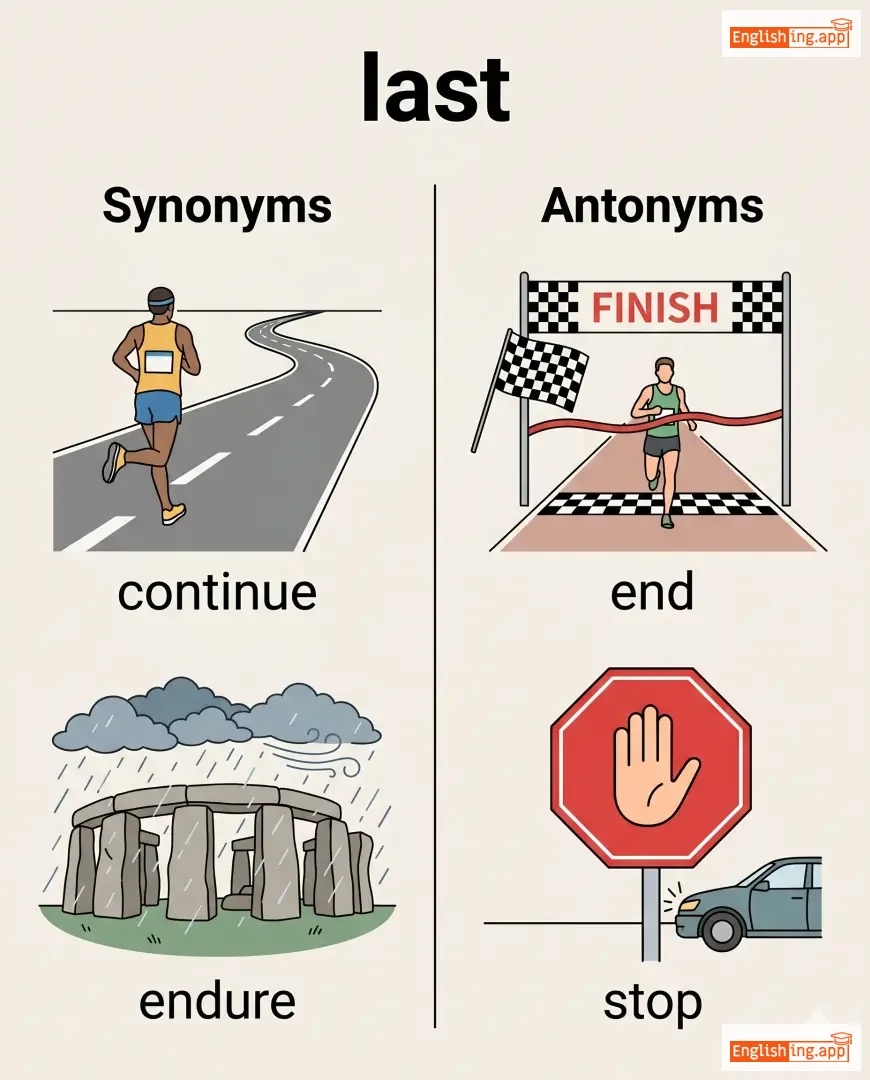
/læst/
verb/adjective/noun
(là sī tè)
••••••
|

|
持续 / 最后
chíxù / zuìhòu
••••••
|
lasted
là sī tè dé
••••••
|
lasted
là sī tè dé
••••••
|
lasts
là sī tè sī
••••••
|
lasting
là sī tè ng
••••••
|
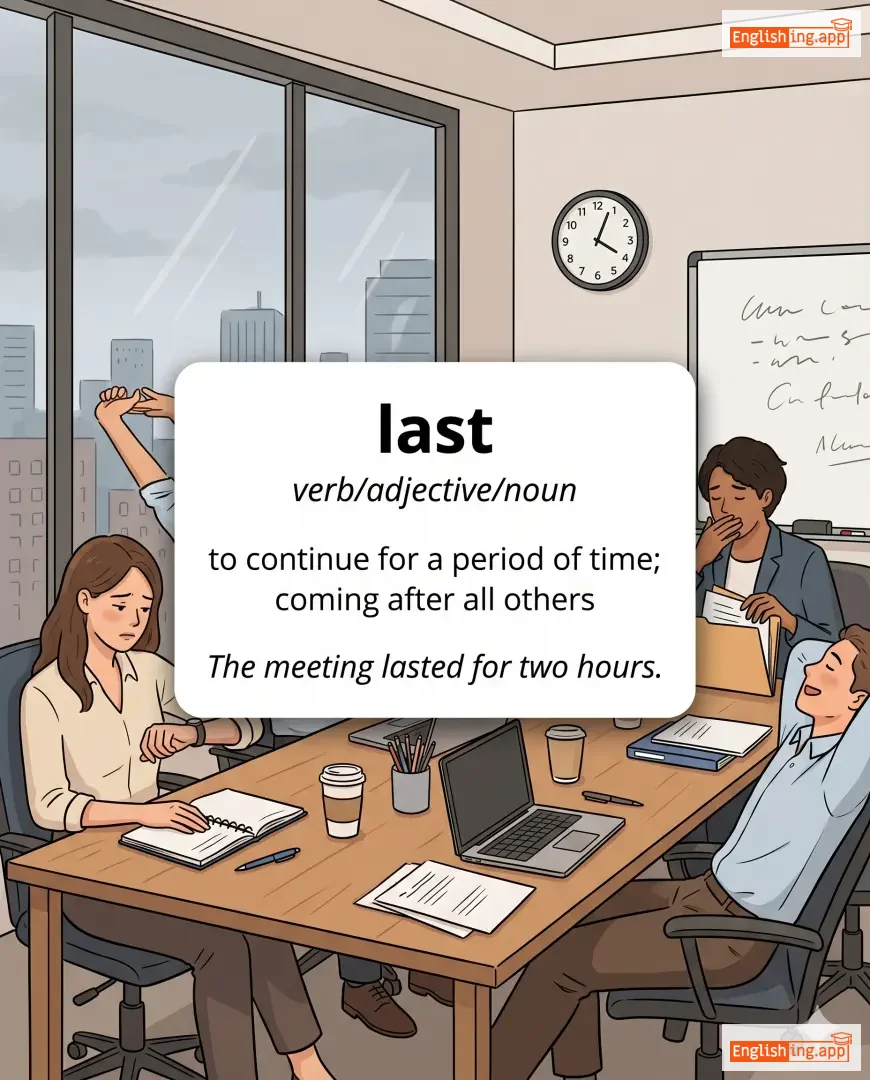
to continue for a period of time; coming after all others
••••••
|
The meeting lasted for two hours.
会议持续了两个小时。
••••••
|
会议持续了两个小时。
Huiyi chíxùle liǎng gè xiǎoshí.
••••••
|
at last
终于
••••••
|
finally, after a long time
••••••
|
终于
zhōngyú
••••••
|
continue, endure, final, ultimate, survive
••••••
|
end, stop, first
••••••
|
last long, last forever, last night, last chance
••••••
|
Last意味着'最后',作为动词意味着'持续'
••••••
|
|
⏰
••••••
|
/leɪt/
adjective/adverb
(lèi tè)
••••••
|
- •••••• |
迟到
chidao
••••••
|
- •••••• | - •••••• | - •••••• | - •••••• |
arriving, happening, or done after the expected time
••••••
|
He arrived late to the meeting. |
他迟到了会议。
Tā chídào le huìyì.
••••••
|
better late than never |
it is better to do something late than not at all
••••••
|
迟到总比不到好
chidao zong bi bu dao hao
••••••
|
tardy, delayed, overdue, unpunctual
••••••
|
early, prompt
••••••
|
late arrival, late night, late payment, late fee
••••••
|
Late = 迟到 – 想象你迟到参加会议。
••••••
|

