Night Fair on the River Dock
月明かりの下、川の岸辺でステージを飾っていると、ニラは叫びました: 'このdamnプラグがまた滑った!' 彼らは次の金曜日にイベントのdateを決めました。 ニラのdear友人アリフは印刷されたバナーを届けました。 グループの古いdebtを清算するために、まず近所の店に返済しました。 彼らはそれを今年の最高のdeedだと言いました。 アリフは言いました: '誰も自分の恐怖をdenyすべきではない;ステージに上がって話しなさい。' サウンドチェックの間、彼らはエネルギーを保つために軽いdietスナックを食べていました。 子供たちは、各自のdimeを寄付箱に入れるときに笑いました。 ラバニャは歌の練習中に古いdiscをかけました。 泳ぎ手たちは、飛び込む前に安全なdiveゾーンをマークしました。 夕方、彼らは川のdockにライトを吊るしました。 小さなナウシンは、彼女のお気に入りのdollを持って物語の時間を待っていました。 健康キャンプの医師たちは少量のdoseのビタミンについて説明しました。 群衆を管理するために、スミは床にテープを貼り、down矢印を描きました。 アーティストたちは子供たちに川を救うためのポスターをdrawさせました。 夜間のセッションでは、drugに関する事実が説明されました。 ワークショップはdualトラックで行われました—一方はアート、もう一方は健康です。 好奇心旺盛なduckが突然桟橋に歩いてきました。 アリフは笑いながら言いました: '私たちは絶対にイベントをdullにはさせません。' 最後に、みんなは誓いました: '私たちはどんなアイデアもdumbとは言わない。'
|
絵文字
|
単語 | Images | 翻訳 | 過去 | 過去分詞 | 三人称単数 | 動名詞 | 意味 | 例文 | 例文の翻訳 | 表現例 | 表現例の意味 | 表現例の翻訳 | 同義語 | 対義語 | コロケーション | ニーモニック |
|---|---|---|---|---|---|---|---|---|---|---|---|---|---|---|---|---|---|
|
😡
••••••
|
/dæm/
verb
••••••
|
- •••••• | - •••••• |
damned
••••••
|
damned
••••••
|
damns
••••••
|
damning
••••••
|
to condemn or criticize strongly; used as an expletive to express anger or emphasis
••••••
|
He damned the unfair system in his speech. |
- •••••• |
not give a damn |
to not care at all
••••••
|
- •••••• |
curse, condemn, denounce, blame, reproach
••••••
|
praise, bless, commend
••••••
|
damn shame, damn hard, damn it, not give a damn
••••••
|
No •••••• |
|
📅
••••••
|
/deɪt/
noun/verb
••••••
|
- •••••• | - •••••• |
dated
••••••
|
dated
••••••
|
dates
••••••
|
dating
••••••
|
A particular day of the month or year; also, a social or romantic appointment.
••••••
|
They decided to meet on the date of her birthday. |
- •••••• |
blind date |
a romantic meeting with someone you have not met before
••••••
|
- •••••• |
day, appointment, meeting, outing
••••••
|
indefinite, timeless
••••••
|
set a date, important date, go on a date, due date
••••••
|
No •••••• |
|
💖
••••••
|
/dɪr/
adjective
(ディア)
••••••
|
- •••••• |
親愛なる
shin'ai naru
••••••
|
- •••••• | - •••••• | - •••••• | - •••••• |
loved or cherished; sometimes used as a polite form of address
••••••
|
She is very dear to her grandparents. |
彼女は祖父母にとって非常に親愛なる存在です。
kanojo wa sofu-bo ni totte hijō ni shin'ai naru sonzai desu.
••••••
|
oh dear |
an exclamation showing surprise, worry, or sympathy
••••••
|
おお、親愛なる
ō, shin'ai naru
••••••
|
beloved, cherished, precious, valued
••••••
|
hated, disliked
••••••
|
my dear, dear friend, hold dear, oh dear
••••••
|
親愛なるは英語のDearのようなものです。手紙に親愛なると書かれます。
••••••
|
|
💸
••••••
|
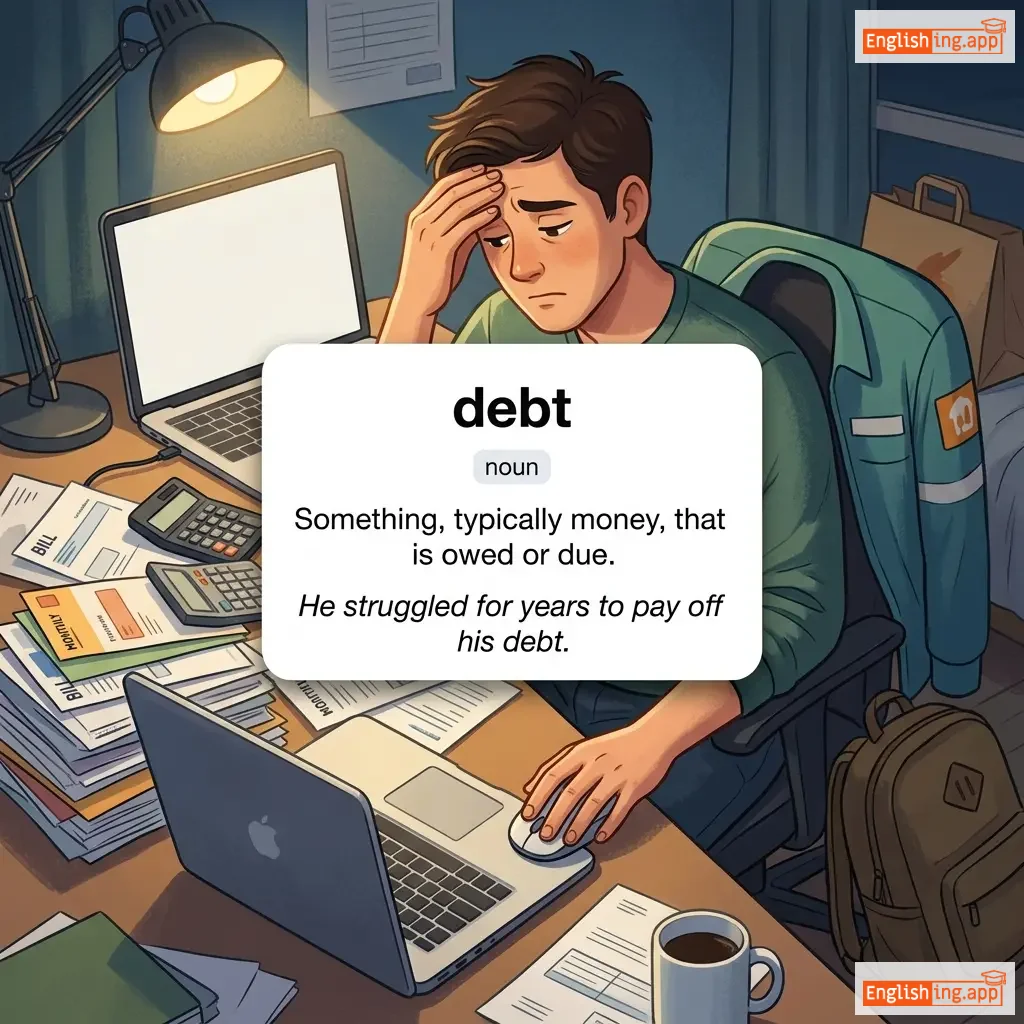
/dɛt/
noun
(デット)
••••••
|
|
借金
shakkin
••••••
|
- •••••• | - •••••• | - •••••• | - •••••• |
Something, typically money, that is owed or due.
••••••
|
He struggled for years to pay off his debt. |
彼は借金を返すために何年も苦労しました。
Kare wa shakkin o kaesu tame ni nannen mo kurō shimashita.
••••••
|
in debt |
to owe money
••••••
|
借金がある
shakkin ga aru
••••••
|
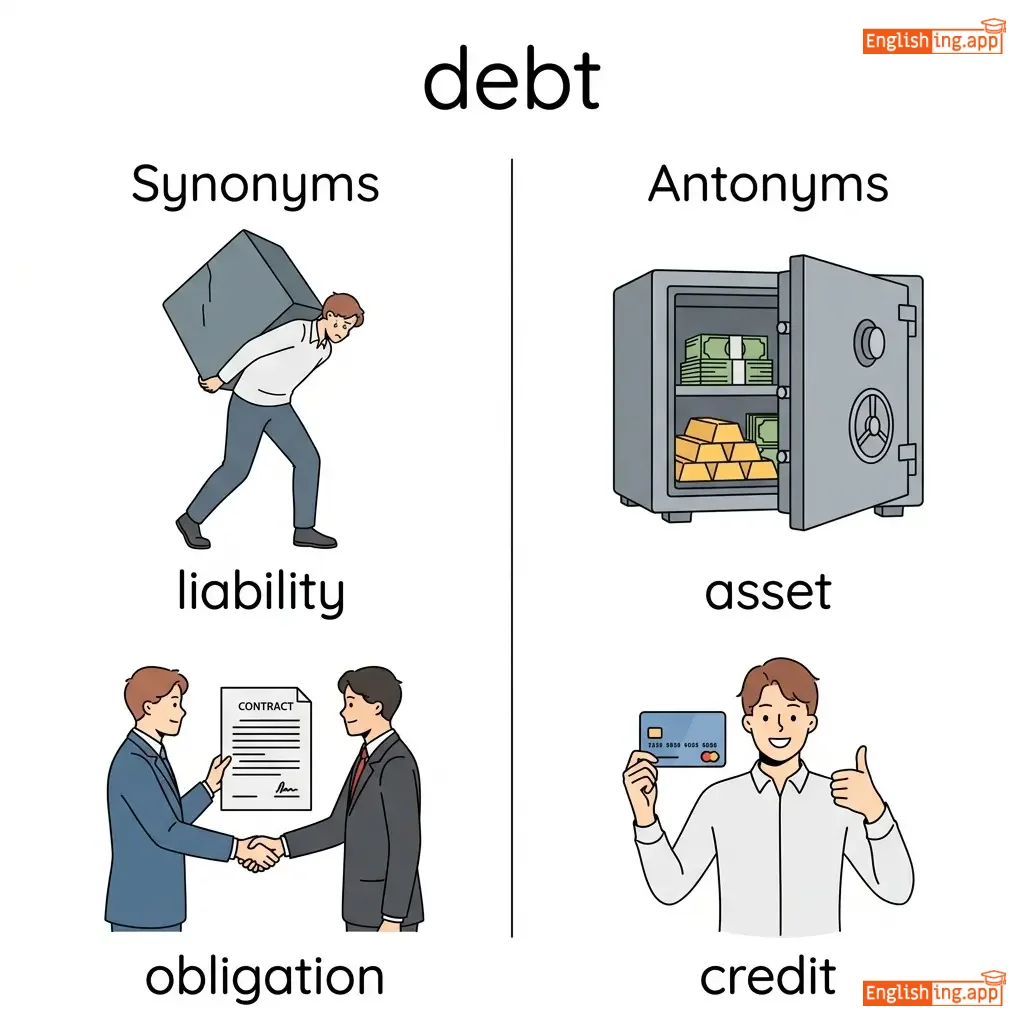
liability, obligation, arrears, dues, loan
••••••
|
asset, credit, surplus
••••••
|
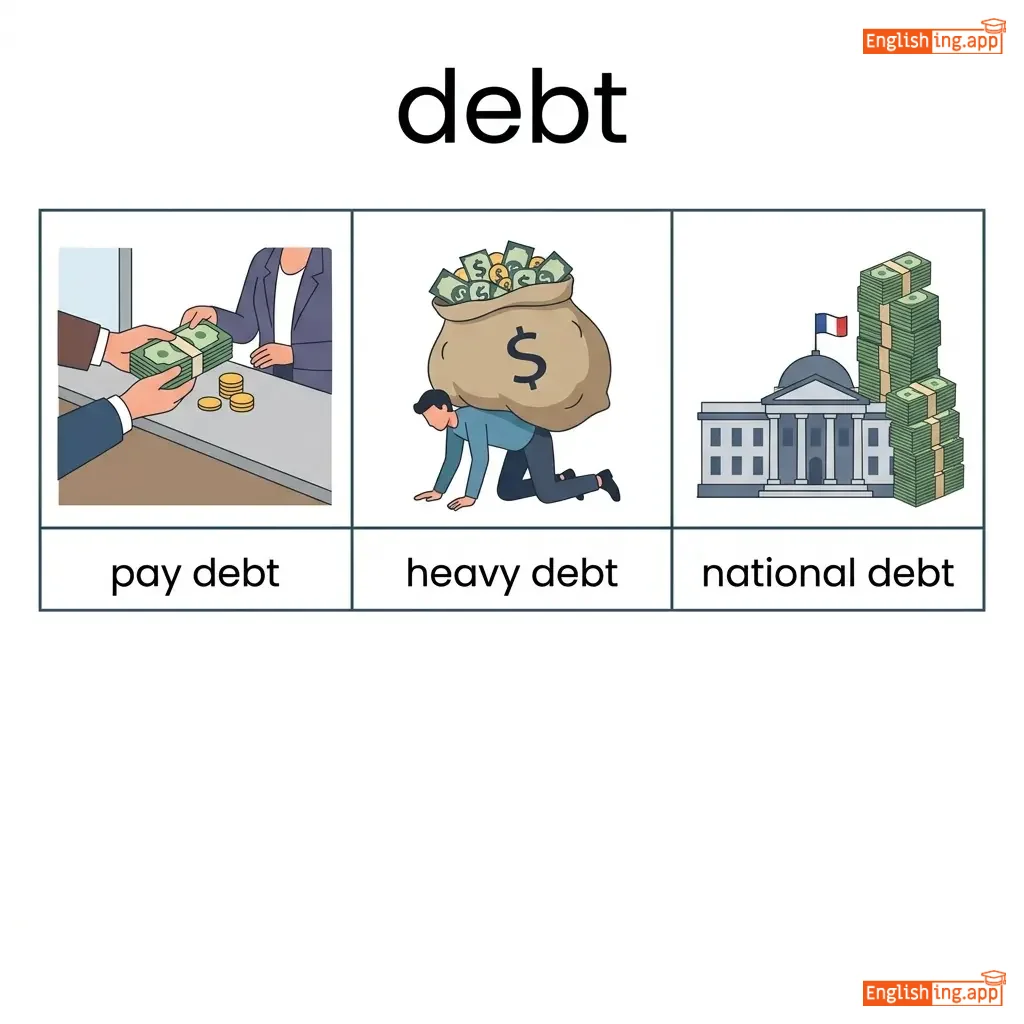
pay debt, heavy debt, national debt, debt relief, debt crisis
••••••
|
Debtは借金を意味します; デート(date)の時、借金が必要になることがあります。
••••••
|
|
📄
••••••
|
/diːd/
noun
(ディード)
••••••
|
- •••••• |
行為; 偉業; 法的文書;
kōi, igyō, houteki bunsho
••••••
|
- •••••• | - •••••• | - •••••• | - •••••• |
an action that is performed intentionally or consciously; a legal document showing ownership
••••••
|
His heroic deed saved the child from drowning in the river. |
彼の英雄的な行為は子供を川で溺れさせないように救った。
kare no eiyūteki na kōi wa kodomo o kawa de oboresasenai yō ni sukutta.
••••••
|
- •••••• | - •••••• | - •••••• |
action, act, exploit, feat
••••••
|
inaction, neglect, omission
••••••
|
good deed, heroic deed, property deed
••••••
|
'Deed'を'法的文書'または'英雄的行為'として覚えよう。
••••••
|
|
🙅
••••••
|
/dɪˈnaɪ/
verb
(デナイ)
••••••
|
- •••••• |
否定する
hitei suru
••••••
|
denied
デナイド
••••••
|
denied
デナイド
••••••
|
denies
デナイズ
••••••
|
denying
デナイイング
••••••
|
to refuse to accept or admit something; to declare something untrue
••••••
|
He denied stealing the money.
彼はお金を盗んだことを否定した。
••••••
|
彼はお金を盗んだことを否定した。
Kare wa okane o nusunda koto o hitei shita.
••••••
|
deny responsibility
責任を否定する
••••••
|
to refuse to accept blame for something
••••••
|
責任を否定する
Sekinin o hitei suru
••••••
|
reject, refuse, disown, repudiate
••••••
|
admit, accept, acknowledge
••••••
|
deny allegation, deny access, deny request, deny responsibility
••••••
|
Deny = 否定する → Denyと否定する
••••••
|
|
🥗
••••••
|
/ˈdaɪət/
noun
(daietto)
••••••
|
- •••••• |
ダイエット
daietto
••••••
|
- •••••• | - •••••• | - •••••• | - •••••• |
the kinds of food that a person usually eats
••••••
|
He follows a strict vegetarian diet. |
彼は厳格なベジタリアンダイエットを実践しています。
Kare wa genkaku na bejitarian daietto o jissen shiteimasu.
••••••
|
go on a diet |
to start eating less or differently to lose weight
••••••
|
ダイエットを始める
daietto o hajimeru
••••••
|
nutrition, food, meals, regimen
••••••
|
overeating, bingeing
••••••
|
healthy diet, balanced diet, strict diet, special diet
••••••
|
ダイエット = ダンス・アクティブ・インスパイア・エネルギー・ティーム
••••••
|
|
💰
••••••
|
/daɪm/
noun
(ダイム)
••••••
|
- •••••• |
10セント硬貨
10 sento kouka
••••••
|
- •••••• | - •••••• | - •••••• | - •••••• |
a small coin, especially a U.S. coin worth ten cents
••••••
|
He gave me a dime for the phone call. |
電話のためにダイムを一枚くれました。
Denwa no tame ni daimu o ichimai kuremashita.
••••••
|
- •••••• | - •••••• | - •••••• |
coin, money, ten-cent coin
••••••
|
none
••••••
|
dime bag, dime store, dime piece
••••••
|
ダイム(dime)は小さな10セント硬貨、でもとても価値がある!
••••••
|
|
💿
••••••
|
/dɪsk/
noun
(ディスク)
••••••
|
- •••••• |
平らで薄く、円形の物体
taira de usuku, enkei no buttai
••••••
|
- •••••• | - •••••• | - •••••• | - •••••• |
a flat, thin, round object or surface
••••••
|
He inserted the music disc into the player. |
彼は音楽ディスクをプレーヤーに挿入した。
Kare wa ongaku disuku o purēyā ni sōnyū shita.
••••••
|
- •••••• | - •••••• | - •••••• |
disk, platter, circle, plate, record
••••••
|
sphere, cube
••••••
|
compact disc, spinal disc, brake disc, hard disc
••••••
|
💿 CDは平らで円形、薄い物体です!
••••••
|
|
🤿
••••••
|
/daɪv/
verb
(daibu)
••••••
|
- •••••• |
飛び込む
tobikomu
••••••
|
dove
dōvu
••••••
|
dived
daibudo
••••••
|
dives
daibusu
••••••
|
diving
daibingu
••••••
|
to plunge headfirst into water or another substance
••••••
|
He decided to dive into the pool on a hot day.
彼は暑い日にプールにダイブすることに決めました。
••••••
|
彼は暑い日にプールにダイブすることに決めました。
Kare wa atsui hi ni pūru ni daibu suru koto ni kimemashita.
••••••
|
- •••••• | - •••••• | - •••••• |
plunge, jump, leap, submerge
••••••
|
float, rise
••••••
|
dive into, dive down, deep dive, dive off
••••••
|
飛び込む (tobikomu) into a new challenge, like diving into a pool.
••••••
|
|
⚓
••••••
|
/dɒk/
noun
(ドック)
••••••
|
- •••••• |
ドック
dokku
••••••
|
- •••••• | - •••••• | - •••••• | - •••••• |
a structure where ships are loaded, unloaded, or repaired
••••••
|
The ship stayed at the dock for two days. |
船はドックに2日間停泊していました。
Fune wa dokku ni futsukakan teihaku shiteimashita.
••••••
|
in the dock |
being accused of something or under examination
••••••
|
被告人席
hikokunin seki
••••••
|
harbor, pier, wharf, quay, jetty
••••••
|
open sea, offshore
••••••
|
ship dock, cargo dock, repair dock, fishing dock
••••••
|
Dock はドック — 船はドックに停泊します。
••••••
|
|
🪆
••••••
|
/dɒl/
noun
(ドール)
••••••
|
- •••••• |
人形
ningyo
••••••
|
- •••••• | - •••••• | - •••••• | - •••••• |
a small toy resembling a human figure, especially for children
••••••
|
The little girl hugged her favorite doll tightly. |
小さな女の子はお気に入りの人形をしっかり抱きしめました。
Chiisana onnanoko wa okiniiri no ningyo wo shikkari dakishimemashita.
••••••
|
as pretty as a doll |
very beautiful or attractive, like a toy doll
••••••
|
人形のように美しい
ningyo no you ni utsukushii
••••••
|
toy, figurine, puppet, model, plaything
••••••
|
monster, beast
••••••
|
toy doll, baby doll, Barbie doll, rag doll
••••••
|
人形 - 子供たちは人形と一緒に遊ぶのが大好き!
••••••
|
|
💊
••••••
|
/doʊs/
noun
(ドーズ)
••••••
|
- •••••• |
用量
yōryō
••••••
|
- •••••• | - •••••• | - •••••• | - •••••• |
a measured amount of a medicine or drug taken at one time
••••••
|
The doctor prescribed one dose of the medicine every six hours.
医者は6時間ごとに1回薬のドーズを処方しました。
••••••
|
医者は6時間ごとに1回薬のドーズを処方しました。
Isha wa roku-jikan goto ni ikkai kusuri no dōzu o shohō shimashita.
••••••
|
a dose of one's own medicine
自分自身の薬を服用する
••••••
|
experiencing the same unpleasant treatment that one has given to others
••••••
|
自分自身の薬を服用する
Jibun jishin no kusuri o fukuyō suru
••••••
|
portion, amount, quantity, measure, shot
••••••
|
overdose, underdose
••••••
|
high dose, low dose, single dose, daily dose, lethal dose
••••••
|
‘用量’は薬の量を計る、適切な量を忘れないで。
••••••
|
|
⬇️
••••••
|
/daʊn/
adverb
(ダウン)
••••••
|
- •••••• |
下
shita
••••••
|
- •••••• | - •••••• | - •••••• | - •••••• |
from a higher to a lower position
••••••
|
He walked down the stairs slowly. |
彼はゆっくりと階段を下りてきました。
Kare wa yukkuri to kaidan o orite kimashita.
••••••
|
down to earth |
practical and realistic
••••••
|
実用的で現実的
jitsuyou teki de genjitsu teki
••••••
|
below, downward, under, beneath
••••••
|
up, above, over
••••••
|
down the road, down the line, down the street
••••••
|
Downは下、すべてが下に行く!
••••••
|
|
✏️
••••••
|
/drɔː/
verb
(ドロー)
••••••
|
- •••••• |
描く / 引く
kaku / hiku
••••••
|
drew
ドゥルー
••••••
|
drawn
ドローン
••••••
|
draws
ドローズ
••••••
|
drawing
ドローイング
••••••
|
to produce a picture by making lines and marks on paper; to pull or move something in a particular direction
••••••
|
The child loves to draw pictures of animals.
ザ・チャイルド・ラブズ・トゥ・ドロー・ピクチャーズ・オブ・アニマルズ。
••••••
|
子供は動物の絵を描くのが大好きです。
Kodomo wa dōbutsu no e o kaku no ga daisuki desu.
••••••
|
draw attention
ドロー・アテンション
••••••
|
To attract someone's notice.
••••••
|
注意を引く
Chūi o hiku
••••••
|
sketch, illustrate, depict, pull, attract
••••••
|
erase, repel, push
••••••
|
draw attention, draw a picture, draw a line, draw a conclusion
••••••
|
描くことは注意を引くこと、でもペンを使って!
••••••
|
|
💊
••••••
|
/drʌɡ/
noun
(ドラッグ)
••••••
|
- •••••• |
薬物
yakubutsu
••••••
|
- •••••• | - •••••• | - •••••• | - •••••• |
a substance used as a medicine or an illegal addictive substance
••••••
|
The doctor prescribed a new drug for the illness. |
医者はその病気のために新しい薬を処方しました。
Isha wa sono byouki no tame ni atarashii kusuri wo shohoushimashita.
••••••
|
war on drugs |
efforts to stop illegal drug use and trade
••••••
|
麻薬との戦い
mayaku to no tatakai
••••••
|
medicine, medication, narcotic, substance
••••••
|
cure, remedy
••••••
|
drug abuse, drug dealer, prescription drug, drug addiction
••••••
|
Drug は薬物または麻薬を意味します。例えば、drugstore は薬局を意味します。
••••••
|
|
👥
••••••
|
/ˈduː.əl/
adjective
(デュアル)
••••••
|
- •••••• |
二重の
nijū no
••••••
|
- •••••• | - •••••• | - •••••• | - •••••• |
having two parts or consisting of two elements; double
••••••
|
She has dual citizenship of both countries. |
彼女は二つの国の二重国籍を持っています。
Kanojo wa futatsu no kuni no nijū kokuseki o motteimasu.
••••••
|
- •••••• | - •••••• | - •••••• |
double, twin, paired, binary
••••••
|
single, sole, individual, unique
••••••
|
dual purpose, dual citizenship, dual nature
••••••
|
二重は二つの部分があることを意味し、dualのようなものです
••••••
|
|
🦆
••••••
|
/dʌk/
noun, verb
(ハピネス)
••••••
|
- •••••• |
幸福
kōfuku
••••••
|
ducked
••••••
|
ducked
••••••
|
ducks
••••••
|
ducking
••••••
|
a waterbird with a broad bill and webbed feet; to lower the head or body quickly to avoid something
••••••
|
He ducked to avoid the flying ball. |
彼女は賞を受け取ったとき、幸せを隠すことができなかった。
Kanojo wa shō o uketotta toki, kōfuku o kakusu koto ga dekinakatta.
••••••
|
sitting duck |
a person or thing vulnerable to attack or criticism
••••••
|
幸福を追求する
kōfuku o tsuikyū suru
••••••
|
bird, fowl, dive, dodge, bend
••••••
|
face, confront
••••••
|
duck pond, roast duck, duck down, duck out, sitting duck
••••••
|
幸福はハピネス!それは、あなたが欲しいものを手に入れる時に感じる感情です!
••••••
|
|
😴
••••••
|
/dʌl/
adjective
(dal)
••••••
|
- •••••• |
退屈
taikutsu
••••••
|
- •••••• | - •••••• | - •••••• | - •••••• |
lacking brightness, vividness, or interest; boring or not sharp
••••••
|
The lecture was so dull that many students fell asleep. |
その講義は退屈すぎて、たくさんの学生が寝てしまいました。
Sono kōgi wa taikutsu sugite, takusan no gakusei ga nete shimaimashita.
••••••
|
dull as dishwater |
extremely boring
••••••
|
皿の水のように退屈
Sara no mizu no yō ni taikutsu
••••••
|
boring, tedious, lifeless, monotonous, uninteresting
••••••
|
exciting, lively, interesting
••••••
|
dull knife, dull sound, dull moment, dull pain, dull color
••••••
|
Dullは皿の水のように退屈です。
••••••
|
|
🤐
••••••
|
/dʌm/
adjective
(damb)
••••••
|
- •••••• |
馬鹿 / 無口
baka / mukuchi
••••••
|
- •••••• | - •••••• | - •••••• | - •••••• |
lacking intelligence or unable to speak
••••••
|
He made a dumb mistake during the exam.
彼は試験中に馬鹿なミスを犯した。
••••••
|
彼は試験中に馬鹿なミスを犯した。
Kare wa shiken-chū ni baka na misu o okashita.
••••••
|
strike dumb
愚かに打つ
••••••
|
to make someone speechless with shock or amazement
••••••
|
言葉を失う
kotoba o ushinau
••••••
|
stupid, foolish, silly, mute
••••••
|
smart, intelligent
••••••
|
dumb mistake, dumb idea, dumb luck, dumb silence
••••••
|
Dumb = 馬鹿; 試験での馬鹿なミスは大きな間違いを意味します。
••••••
|

