Night Fair on the River Dock
在月光下装饰河边的舞台时,尼拉喊道:'这个damn插头又滑了下来!' 他们为下周五确定了活动的date。 尼拉的dear朋友阿里夫送来了打印好的横幅。 为了偿还小组的旧debt,他们首先向邻里商店还款。 他们称这是他们的最佳deed。 阿里夫说,'没有人应该deny自己的恐惧;上台并发言。' 在音响检查期间,他们吃着轻便的diet零食,以保持能量。 孩子们在把每个dime丢进捐款箱时咯咯笑。 拉班亚播放了一张老disc,在排练歌曲。 游泳者在跳入之前标记了安全dive区。 黄昏时,他们在河的dock上挂起了灯。 小娜乌辛拿着她最喜欢的doll等待故事时间。 健康营地的医生解释了一小dose维生素。 为了管理人群,苏米在地板上放了胶带并画了一个down箭头。 艺术家们让孩子们draw关于拯救河流的海报。 夜间会议讲解了关于drug的事实。 工作坊在dual轨道上进行——一侧是艺术,另一侧是健康。 一只好奇的duck突然走到了码头。 阿里夫笑着说,'我们绝不会让活动变得dull。' 最后,大家发誓:'我们不会把任何想法称为dumb。'
|
表情符号
|
单词 | Images | 翻译 | 过去时 | 过去分词 | 第三人称单数 | 动名词 | 含义 | 例句 | 例句翻译 | 示例表达 | 示例表达含义 | 示例表达翻译 | 同义词 | 反义词 | 搭配词 | 助记符 |
|---|---|---|---|---|---|---|---|---|---|---|---|---|---|---|---|---|---|
|
😡
••••••
|
/dæm/
verb
••••••
|
- •••••• | - •••••• |
damned
••••••
|
damned
••••••
|
damns
••••••
|
damning
••••••
|
to condemn or criticize strongly; used as an expletive to express anger or emphasis
••••••
|
He damned the unfair system in his speech. |
- •••••• |
not give a damn |
to not care at all
••••••
|
- •••••• |
curse, condemn, denounce, blame, reproach
••••••
|
praise, bless, commend
••••••
|
damn shame, damn hard, damn it, not give a damn
••••••
|
No •••••• |
|
📅
••••••
|
/deɪt/
noun/verb
••••••
|
- •••••• | - •••••• |
dated
••••••
|
dated
••••••
|
dates
••••••
|
dating
••••••
|
A particular day of the month or year; also, a social or romantic appointment.
••••••
|
They decided to meet on the date of her birthday. |
- •••••• |
blind date |
a romantic meeting with someone you have not met before
••••••
|
- •••••• |
day, appointment, meeting, outing
••••••
|
indefinite, timeless
••••••
|
set a date, important date, go on a date, due date
••••••
|
No •••••• |
|
💖
••••••
|
/dɪr/
adjective
(dìr)
••••••
|
- •••••• |
亲爱的
qīn'ài de
••••••
|
- •••••• | - •••••• | - •••••• | - •••••• |
loved or cherished; sometimes used as a polite form of address
••••••
|
She is very dear to her grandparents. |
她在祖父母心中非常亲爱。
tā zài zǔfùmǔ xīnzhōng fēicháng qīn'ài.
••••••
|
oh dear |
an exclamation showing surprise, worry, or sympathy
••••••
|
哦,亲爱的
ó, qīn'ài de
••••••
|
beloved, cherished, precious, valued
••••••
|
hated, disliked
••••••
|
my dear, dear friend, hold dear, oh dear
••••••
|
亲爱的就像英文的Dear,写信时我们会使用'亲爱的'。
••••••
|
|
💸
••••••
|
/dɛt/
noun
(dɛt)
••••••
|
|
债务
zhàiwù
••••••
|
- •••••• | - •••••• | - •••••• | - •••••• |
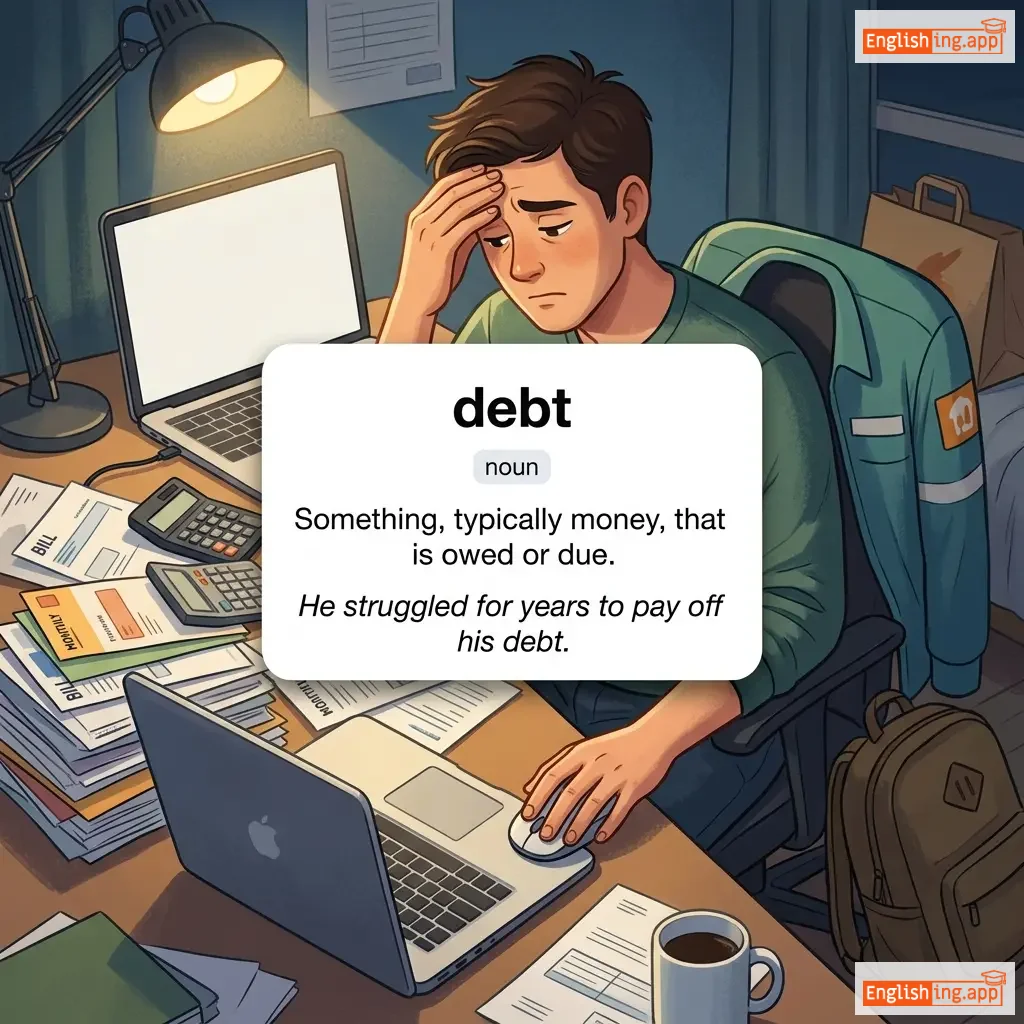
Something, typically money, that is owed or due.
••••••
|
He struggled for years to pay off his debt. |
他为偿还债务奋斗了多年。
Tā wèi chánghuán zhàiwù fèndòu le duōnián.
••••••
|
in debt |
to owe money
••••••
|
负债
fùzhài
••••••
|
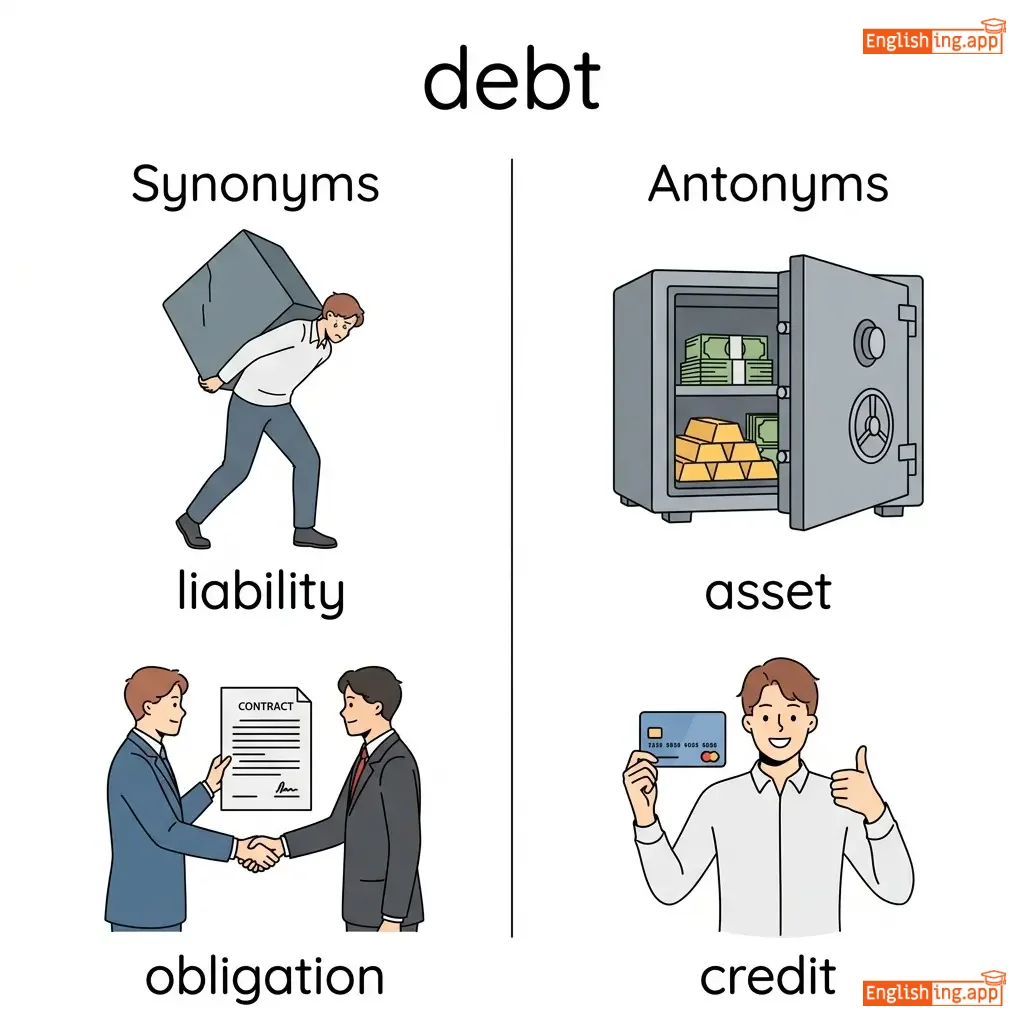
liability, obligation, arrears, dues, loan
••••••
|
asset, credit, surplus
••••••
|
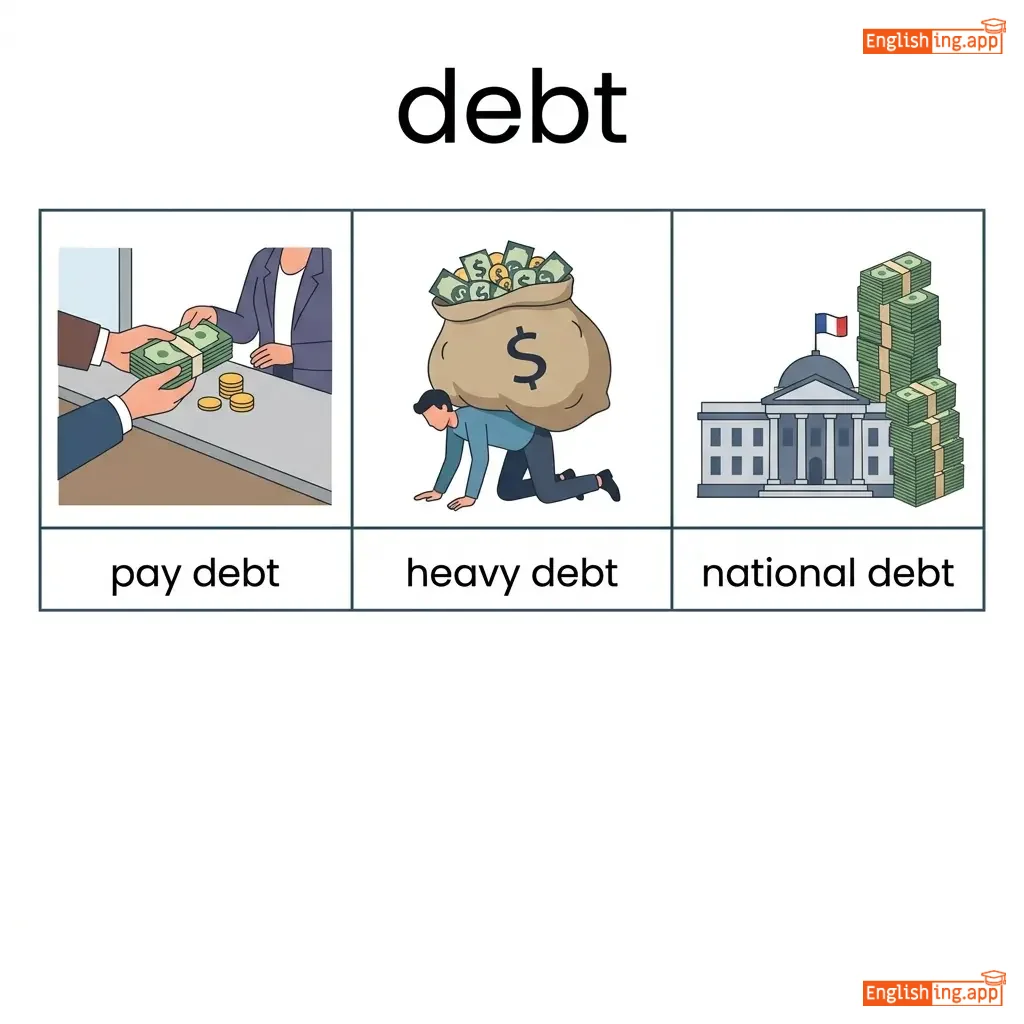
pay debt, heavy debt, national debt, debt relief, debt crisis
••••••
|
Debt 意味着债务;到了一定日期(date),我们有时必须借债。
••••••
|
|
📄
••••••
|
/diːd/
noun
(迪德)
••••••
|
- •••••• |
行为; 壮举; 法律文件;
xíngwéi, zhuàngjǔ, fǎlǜ wénjiàn
••••••
|
- •••••• | - •••••• | - •••••• | - •••••• |
an action that is performed intentionally or consciously; a legal document showing ownership
••••••
|
His heroic deed saved the child from drowning in the river. |
他的英雄行为救了孩子免于在河里溺水。
tā de yīngxióng xíngwéi jiùle háizi miǎn yú zài hé lǐ nìshuǐ.
••••••
|
- •••••• | - •••••• | - •••••• |
action, act, exploit, feat
••••••
|
inaction, neglect, omission
••••••
|
good deed, heroic deed, property deed
••••••
|
记住'Deed'作为'法律文件'或'英雄行为',用中文回忆。
••••••
|
|
🙅
••••••
|
/dɪˈnaɪ/
verb
(dɪˈnaɪ)
••••••
|
- •••••• |
否认
fǒurèn
••••••
|
denied
dɪˈnaɪd
••••••
|
denied
dɪˈnaɪd
••••••
|
denies
dɪˈnaɪz
••••••
|
denying
dɪˈnaɪɪŋ
••••••
|
to refuse to accept or admit something; to declare something untrue
••••••
|
He denied stealing the money.
他否认偷了钱。
••••••
|
他否认偷了钱。
Tā fǒurèn tōu le qián.
••••••
|
deny responsibility
否认责任
••••••
|
to refuse to accept blame for something
••••••
|
否认责任
Fǒurèn zérèn
••••••
|
reject, refuse, disown, repudiate
••••••
|
admit, accept, acknowledge
••••••
|
deny allegation, deny access, deny request, deny responsibility
••••••
|
Deny = 否认 → 不接受
••••••
|
|
🥗
••••••
|
/ˈdaɪət/
noun
(daiet)
••••••
|
- •••••• |
饮食
yinshi
••••••
|
- •••••• | - •••••• | - •••••• | - •••••• |
the kinds of food that a person usually eats
••••••
|
He follows a strict vegetarian diet. |
他遵循严格的素食饮食。
Tā zūnxún yángé de sùshí yǐnshí.
••••••
|
go on a diet |
to start eating less or differently to lose weight
••••••
|
开始节食
kāishǐ jiéshí
••••••
|
nutrition, food, meals, regimen
••••••
|
overeating, bingeing
••••••
|
healthy diet, balanced diet, strict diet, special diet
••••••
|
饮食 = 以诺食,尽量健康选择
••••••
|
|
💰
••••••
|
/daɪm/
noun
(dài mǔ)
••••••
|
- •••••• |
十分硬币
shi fen ying bi
••••••
|
- •••••• | - •••••• | - •••••• | - •••••• |
a small coin, especially a U.S. coin worth ten cents
••••••
|
He gave me a dime for the phone call. |
他给了我一枚十分硬币用于打电话。
Ta gei le wo yi mei shi fen ying bi yong yu da dian hua.
••••••
|
- •••••• | - •••••• | - •••••• |
coin, money, ten-cent coin
••••••
|
none
••••••
|
dime bag, dime store, dime piece
••••••
|
Dime(十分硬币),小而珍贵,记得它是10美分!
••••••
|
|
💿
••••••
|
/dɪsk/
noun
(迪斯克)
••••••
|
- •••••• |
平坦、薄且圆的物体
píngtǎn, bó qiě yuán de wùtǐ
••••••
|
- •••••• | - •••••• | - •••••• | - •••••• |
a flat, thin, round object or surface
••••••
|
He inserted the music disc into the player. |
他把音乐碟片插入了播放器。
Tā bǎ yīnyuè diépiàn chārùle bōfàngqì.
••••••
|
- •••••• | - •••••• | - •••••• |
disk, platter, circle, plate, record
••••••
|
sphere, cube
••••••
|
compact disc, spinal disc, brake disc, hard disc
••••••
|
💿 CD是平坦、圆形且薄的物体。
••••••
|
|
🤿
••••••
|
/daɪv/
verb
(dài fū)
••••••
|
- •••••• |
跳水
tiao shui
••••••
|
dove
dǒu
••••••
|
dived
dài fú
••••••
|
dives
dài fū sī
••••••
|
diving
dài fū yīng
••••••
|
to plunge headfirst into water or another substance
••••••
|
He decided to dive into the pool on a hot day.
他决定在炎热的日子里跳进游泳池。
••••••
|
他决定在炎热的日子里跳进游泳池。
Tā juédìng zài yánrè de rìzi lǐ tiàojìn yóuyǒngchí.
••••••
|
- •••••• | - •••••• | - •••••• |
plunge, jump, leap, submerge
••••••
|
float, rise
••••••
|
dive into, dive down, deep dive, dive off
••••••
|
跳水 (tiao shui) 让你进入全新体验,如同潜入水中。
••••••
|
|
⚓
••••••
|
/dɒk/
noun
(dɑk)
••••••
|
- •••••• |
码头
mǎtóu
••••••
|
- •••••• | - •••••• | - •••••• | - •••••• |
a structure where ships are loaded, unloaded, or repaired
••••••
|
The ship stayed at the dock for two days. |
船只在码头停留了两天。
Chuán zhī zài mǎ tóu tíng liú le liǎng tiān.
••••••
|
in the dock |
being accused of something or under examination
••••••
|
被告席
bèi gào xí
••••••
|
harbor, pier, wharf, quay, jetty
••••••
|
open sea, offshore
••••••
|
ship dock, cargo dock, repair dock, fishing dock
••••••
|
Dock 意味着码头 — 船停在码头。
••••••
|
|
🪆
••••••
|
/dɒl/
noun
(doll)
••••••
|
- •••••• |
洋娃娃
yangwawa
••••••
|
- •••••• | - •••••• | - •••••• | - •••••• |
a small toy resembling a human figure, especially for children
••••••
|
The little girl hugged her favorite doll tightly. |
小女孩紧紧抱着她最喜欢的洋娃娃。
xiao nuhai jinjing baozhe ta zui xihuan de yangwawa.
••••••
|
as pretty as a doll |
very beautiful or attractive, like a toy doll
••••••
|
像洋娃娃一样漂亮
xiang yangwawa yiyang piaoliang
••••••
|
toy, figurine, puppet, model, plaything
••••••
|
monster, beast
••••••
|
toy doll, baby doll, Barbie doll, rag doll
••••••
|
洋娃娃 - 玩具娃娃,女孩都喜欢!
••••••
|
|
💊
••••••
|
/doʊs/
noun
(多斯)
••••••
|
- •••••• |
剂量
jiliang
••••••
|
- •••••• | - •••••• | - •••••• | - •••••• |
a measured amount of a medicine or drug taken at one time
••••••
|
The doctor prescribed one dose of the medicine every six hours.
医生每六小时开一次药物的剂量。
••••••
|
医生每六小时开一次药物的剂量。
Yisheng mei liu xiaoshi kai yici yaowu de jiliang.
••••••
|
a dose of one's own medicine
自食其果
••••••
|
experiencing the same unpleasant treatment that one has given to others
••••••
|
自食其果
Zì shí qí guǒ
••••••
|
portion, amount, quantity, measure, shot
••••••
|
overdose, underdose
••••••
|
high dose, low dose, single dose, daily dose, lethal dose
••••••
|
记住‘剂量’是药物的量,按时按量吃。
••••••
|
|
⬇️
••••••
|
/daʊn/
adverb
(唐)
••••••
|
- •••••• |
下
xia
••••••
|
- •••••• | - •••••• | - •••••• | - •••••• |
from a higher to a lower position
••••••
|
He walked down the stairs slowly. |
他慢慢地走下楼梯。
Ta man man de zou xia lou ti.
••••••
|
down to earth |
practical and realistic
••••••
|
实用和现实
shi yong he xian shi
••••••
|
below, downward, under, beneath
••••••
|
up, above, over
••••••
|
down the road, down the line, down the street
••••••
|
Down就是下,所有东西都下去!
••••••
|
|
✏️
••••••
|
/drɔː/
verb
(drɔ)
••••••
|
- •••••• |
画画 / 拉
huà huà / lā
••••••
|
drew
dru
••••••
|
drawn
dron
••••••
|
draws
droz
••••••
|
drawing
drawing
••••••
|
to produce a picture by making lines and marks on paper; to pull or move something in a particular direction
••••••
|
The child loves to draw pictures of animals.
The child loves to draw pictures of animals.
••••••
|
孩子喜欢画动物的画。
Háizi xǐhuān huà dòngwù de huà.
••••••
|
draw attention
draw attention
••••••
|
To attract someone's notice.
••••••
|
吸引注意
xīyǐn zhùyì
••••••
|
sketch, illustrate, depict, pull, attract
••••••
|
erase, repel, push
••••••
|
draw attention, draw a picture, draw a line, draw a conclusion
••••••
|
画画就像吸引注意力,但用的是笔。
••••••
|
|
💊
••••••
|
/drʌɡ/
noun
(drog)
••••••
|
- •••••• |
毒品
dúpǐn
••••••
|
- •••••• | - •••••• | - •••••• | - •••••• |
a substance used as a medicine or an illegal addictive substance
••••••
|
The doctor prescribed a new drug for the illness. |
医生为这种疾病开了新药。
Yīshēng wèi zhè zhǒng bìngzhèng kāi le xīn yào.
••••••
|
war on drugs |
efforts to stop illegal drug use and trade
••••••
|
毒品战争
dúpǐn zhànzhēng
••••••
|
medicine, medication, narcotic, substance
••••••
|
cure, remedy
••••••
|
drug abuse, drug dealer, prescription drug, drug addiction
••••••
|
Drug 意味着药物或毒品,如 drugstore (药店)。
••••••
|
|
👥
••••••
|
/ˈduː.əl/
adjective
(双重)
••••••
|
- •••••• |
双重的
shuāngchóng de
••••••
|
- •••••• | - •••••• | - •••••• | - •••••• |
having two parts or consisting of two elements; double
••••••
|
She has dual citizenship of both countries. |
她拥有两个国家的双重国籍。
Tā yǒngyǒu liǎng gè guójiā de shuāngchóng guójí.
••••••
|
- •••••• | - •••••• | - •••••• |
double, twin, paired, binary
••••••
|
single, sole, individual, unique
••••••
|
dual purpose, dual citizenship, dual nature
••••••
|
双重意味着两个部分,像 dual
••••••
|
|
🦆
••••••
|
/dʌk/
noun, verb
(happiness)
••••••
|
- •••••• |
幸福
xingfu
••••••
|
ducked
••••••
|
ducked
••••••
|
ducks
••••••
|
ducking
••••••
|
a waterbird with a broad bill and webbed feet; to lower the head or body quickly to avoid something
••••••
|
He ducked to avoid the flying ball. |
当她获得奖项时,她无法掩饰自己的幸福。
Dāng tā huòdé jiǎngxiàng shí, tā wúfǎ yǎnshì zìjǐ de xìngfú.
••••••
|
sitting duck |
a person or thing vulnerable to attack or criticism
••••••
|
追求幸福
zhuīqiú xìngfú
••••••
|
bird, fowl, dive, dodge, bend
••••••
|
face, confront
••••••
|
duck pond, roast duck, duck down, duck out, sitting duck
••••••
|
幸福意味着幸福,当你得到你一直想要的东西时,你会感到无比快乐!
••••••
|
|
😴
••••••
|
/dʌl/
adjective
(dal)
••••••
|
- •••••• |
无聊
wúliáo
••••••
|
- •••••• | - •••••• | - •••••• | - •••••• |
lacking brightness, vividness, or interest; boring or not sharp
••••••
|
The lecture was so dull that many students fell asleep. |
这场讲座太无聊,以至于许多学生睡着了。
Zhè chǎng jiǎngzuò tài wúliáo, yǐzhì yú xǔduō xuéshēng shuìzháole.
••••••
|
dull as dishwater |
extremely boring
••••••
|
无聊如洗碗水
wúliáo rú xǐwǎn shuǐ
••••••
|
boring, tedious, lifeless, monotonous, uninteresting
••••••
|
exciting, lively, interesting
••••••
|
dull knife, dull sound, dull moment, dull pain, dull color
••••••
|
Dull就像洗碗水一样无聊。
••••••
|
|
🤐
••••••
|
/dʌm/
adjective
(dāng)
••••••
|
- •••••• |
愚蠢 / 哑
yúchǔn / yǎ
••••••
|
- •••••• | - •••••• | - •••••• | - •••••• |
lacking intelligence or unable to speak
••••••
|
He made a dumb mistake during the exam.
他在考试中犯了个愚蠢的错误。
••••••
|
他在考试中犯了个愚蠢的错误。
Tā zài kǎoshì zhōng fànle gè yúchǔn de cuòwù.
••••••
|
strike dumb
击中愚蠢
••••••
|
to make someone speechless with shock or amazement
••••••
|
让人哑口无言
ràng rén yǎ kǒu wú yán
••••••
|
stupid, foolish, silly, mute
••••••
|
smart, intelligent
••••••
|
dumb mistake, dumb idea, dumb luck, dumb silence
••••••
|
Dumb = 愚蠢; 考试中犯的愚蠢错误意味着一个大错误。
••••••
|

