Rotating Duties at the River Market
今日の川辺の市場では、すべての屋台が安全フォームをrequired提出する必要がありました。 再利用された木製の装飾はresembled小さなボートのようでした。 responseとして雨のため、みんなテントをしっかりと締めました。 主催者は、プラスチック使用をrestrictする必要があると言いました。 環境意識のあるretailerは古いバッグを集めていました。 子供たちは川に落ちたボトルをretrieveしました。 遅れてきたrevisionが戦略を調整しました。 会議では過剰なrhetoricを削除し、解決策に集中しました。 ボランティアrotationチャートが掲示されました。 規則を破る人々には小さなsanctionが発表されました。 地元の料理人は新しい魚のsandwichを提供しました。 キッチンチームは食事を温かく保つためにscrambleしました。 'Secondly, 私たちの廃棄物削減計画を聞いてくださいとTomaは言いました。 50人がselectedされて掃除チームに参加しました。 皆が誓約書に楽観的なsentenceを書きました。 工場の廃棄物はseparateのドラムに保存する必要がありました。 彼らは川にseverely害を与える材料を停止することを誓いました。 持続可能なshipping会社が堆肥を配達しました。 雨の後、sidewalkは掃除されました。 潮が少しslightly上がりましたが、彼らは準備ができていました。
|
絵文字
|
単語 | Images | 翻訳 | 過去 | 過去分詞 | 三人称単数 | 動名詞 | 意味 | 例文 | 例文の翻訳 | 表現例 | 表現例の意味 | 表現例の翻訳 | 同義語 | 対義語 | コロケーション | ニーモニック |
|---|---|---|---|---|---|---|---|---|---|---|---|---|---|---|---|---|---|
|
📋
••••••
|
/rɪˈkwaɪəd/
adjective
(rikwaierd)
••••••
|
- •••••• |
必要な
hitsuyou na
••••••
|
- •••••• | - •••••• | - •••••• | - •••••• |
necessary or compulsory
••••••
|
A visa is required to enter the country. |
その国に入るにはビザが必要です。
Sono kuni ni hairu ni wa biza ga hitsuyou desu.
••••••
|
- •••••• | - •••••• | - •••••• |
necessary, essential, mandatory, needed, obligatory
••••••
|
optional, unnecessary, voluntary
••••••
|
required field, required document, required permission, required skills
••••••
|
Required = 必要な, 旅行にはビザが必要だから 🌍
••••••
|
|
👥
••••••
|
/rɪˈzɛmbəl/
verb
(リゼンブル)
••••••
|
- •••••• |
似ている
niteru
••••••
|
resembled
リゼンブルド
••••••
|
resembled
リゼンブルド
••••••
|
resembles
リゼンブルズ
••••••
|
resembling
リゼンブリング
••••••
|
to look like or be similar to something or someone
••••••
|
She resembles her mother in both appearance and mannerisms.
彼女は見た目と仕草の両方で母親に似ています。
••••••
|
彼女は見た目と仕草の両方で母親に似ています。
Kanojo wa mitame to shigusa no ryōhō de hahaoya ni niteimasu.
••••••
|
- •••••• | - •••••• | - •••••• |
look like, take after, resemble, mirror
••••••
|
differ, contrast, diverge
••••••
|
resemble someone, resemble something, closely resemble
••••••
|
Resemble は 'resem' (写真) のように、写真が他の写真に似ているようなものです。
••••••
|
|
💬
••••••
|
/rɪˈspɒns/
noun
(レスポンス)
••••••
|
- •••••• |
反応; 応答
hannou; outou
••••••
|
- •••••• | - •••••• | - •••••• | - •••••• |
a reaction to something; an answer or reply; the way in which something reacts to external stimulus
••••••
|
The government's response to the crisis was swift and decisive. |
政府の危機への反応は迅速で決定的でした。
Seifu no kiki e no hannou wa jinsoku de ketteiteki deshita.
••••••
|
- •••••• | - •••••• | - •••••• |
reply, answer, reaction, feedback
••••••
|
question, inquiry, silence, ignorance
••••••
|
quick response, positive response, emergency response, in response to
••••••
|
Japanese response is quick, sharp like 'henji'.
••••••
|
|
🚫
••••••
|
/rɪˈstrɪkt/
verb
(リストリクト)
••••••
|
- •••••• |
制限する
seigensuru
••••••
|
restricted
リストリクテッド
••••••
|
restricted
リストリクテッド
••••••
|
restricts
リストリクツ
••••••
|
restricting
リストリクティング
••••••
|
To limit the size, amount, or range of something.
••••••
|
The government decided to restrict the use of plastic bags.
政府はプラスチック袋の使用を制限することを決定しました。
••••••
|
政府はプラスチック袋の使用を制限することを決定しました。
Seifu wa purasuchikku bukuro no shiyou wo seigen suru koto wo kettei shimashita.
••••••
|
restrict access
アクセス制限
••••••
|
To limit or control who can enter or use something.
••••••
|
アクセス制限
Akusesu seigen
••••••
|
limit, confine, curb, constrain, control
••••••
|
allow, permit, enable
••••••
|
restrict access, restrict movement, restrict freedom, restrict use
••••••
|
Restrictの意味は'制限する' - 制限を加えること
••••••
|
|
🏪
••••••
|
/ˈriːteɪlər/
noun
(リテーラー)
••••••
|
- •••••• |
小売業者
kouri gyousha
••••••
|
- •••••• | - •••••• | - •••••• | - •••••• |
a person or business that sells goods to consumers rather than to other businesses
••••••
|
The retailer offers discounts on electronic products. |
小売業者は電子製品に割引を提供しています。
Kouri gyousha wa denshi seihin ni waribiki wo teikyō shiteimasu.
••••••
|
- •••••• | - •••••• | - •••••• |
seller, merchant, dealer, vendor, shopkeeper
••••••
|
wholesaler, buyer
••••••
|
online retailer, local retailer, major retailer, retail chain
••••••
|
小売業者は商品を消費者に売る人です。
••••••
|
|
📦
••••••
|
/rɪˈtriːv/
verb
(リトリーブ)
••••••
|
- •••••• |
取り戻す
torimodosu
••••••
|
retrieved
リトリーブド
••••••
|
retrieved
リトリーブド
••••••
|
retrieves
リトリーブス
••••••
|
retrieving
リトリーブイング
••••••
|
to get something back that was lost or taken; to recover
••••••
|
She managed to retrieve her lost phone from the taxi.
彼女はタクシーから失われた電話を取り戻すことができました。
••••••
|
彼女はタクシーから失われた電話を取り戻すことができました。
Kanojo wa takushi kara ushinawareta denwa wo torimodosu koto ga dekimashita.
••••••
|
retrieve the situation
状況を取り戻す
••••••
|
to improve a bad situation or make it better
••••••
|
状況を取り戻す
jokyo wo torimodosu
••••••
|
recover, regain, fetch, reclaim, rescue
••••••
|
lose, abandon, misplace
••••••
|
retrieve data, retrieve information, retrieve files, retrieve memory
••••••
|
Retrieve は日本語で失われたものを取り戻すことです。タクシーから電話を取り戻すように
••••••
|
|
📝
••••••
|
/rɪˈvɪʒ.ən/
noun
(リビジョン)
••••••
|
- •••••• |
リビジョン; 修正版
ribijon; shūsei ban
••••••
|
- •••••• | - •••••• | - •••••• | - •••••• |
the action of revising; a revised edition or form of something; review of subject matter
••••••
|
The students spent hours doing revision for their final exams.
学生たちは最終試験のために数時間リビジョンを行った。
••••••
|
学生たちは最終試験のために数時間リビジョンを行った。
Gakusei-tachi wa saishū shiken no tame ni suū jikan ribijon o okonatta.
••••••
|
- •••••• | - •••••• | - •••••• |
review, amendment, modification, alteration
••••••
|
original, first draft, initial version
••••••
|
revision notes, exam revision, thorough revision, last-minute revision
••••••
|
リビジョン: 試験前にすべてを復習する感じ!
••••••
|
|
🗣️
••••••
|
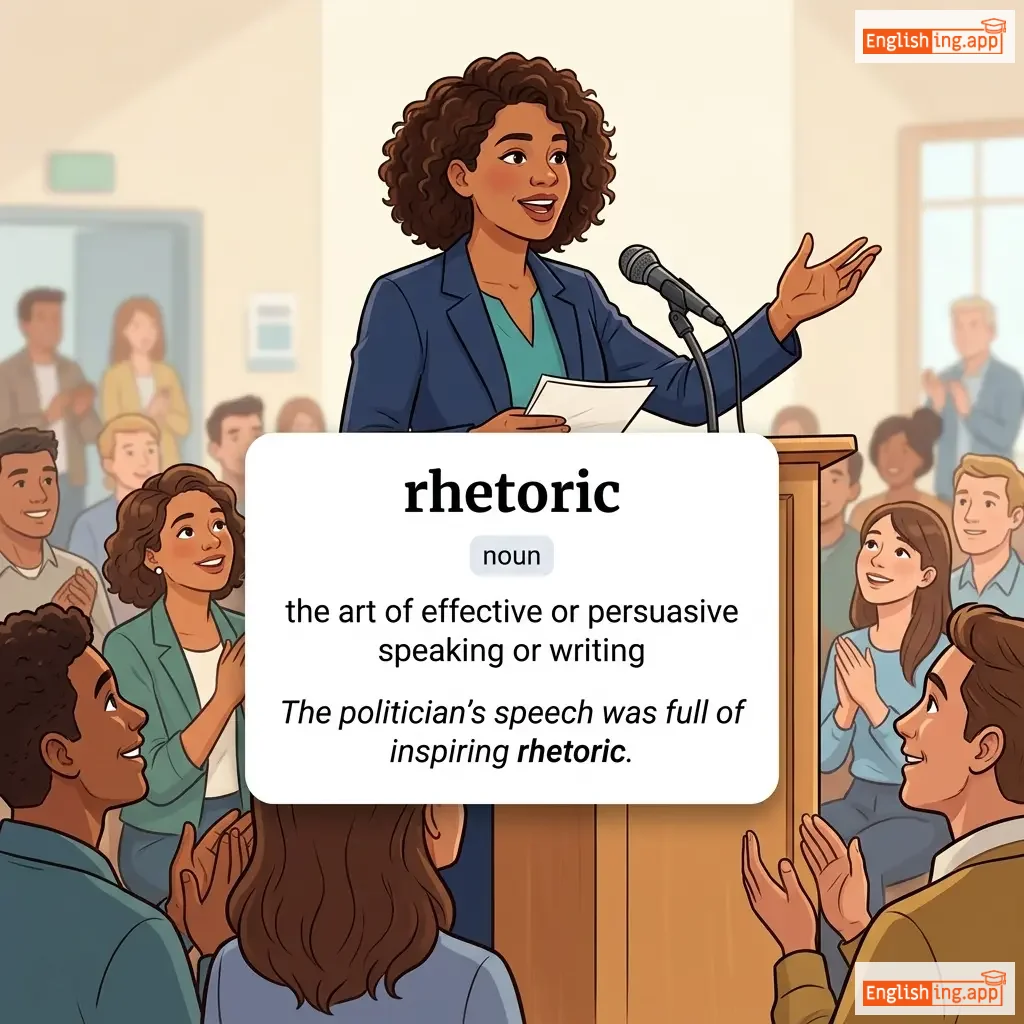
/ˈrɛtərɪk/
noun
(レトリック)
••••••
|
|
修辞学
shūjigaku
••••••
|
- •••••• | - •••••• | - •••••• | - •••••• |
the art of effective or persuasive speaking or writing
••••••
|
The politician’s speech was full of inspiring rhetoric.
その政治家のスピーチは、インスピレーションを与えるレトリックで満ちていました。
••••••
|
その政治家のスピーチは、インスピレーションを与える修辞学で満ちていました。
Sono seijika no supīchi wa, insupirēshon o ataeru shūjigaku de michite imashita.
••••••
|
empty rhetoric
空虚なレトリック
••••••
|
persuasive but meaningless or insincere speech
••••••
|
空虚な修辞学
kūkyona shūjigaku
••••••
|
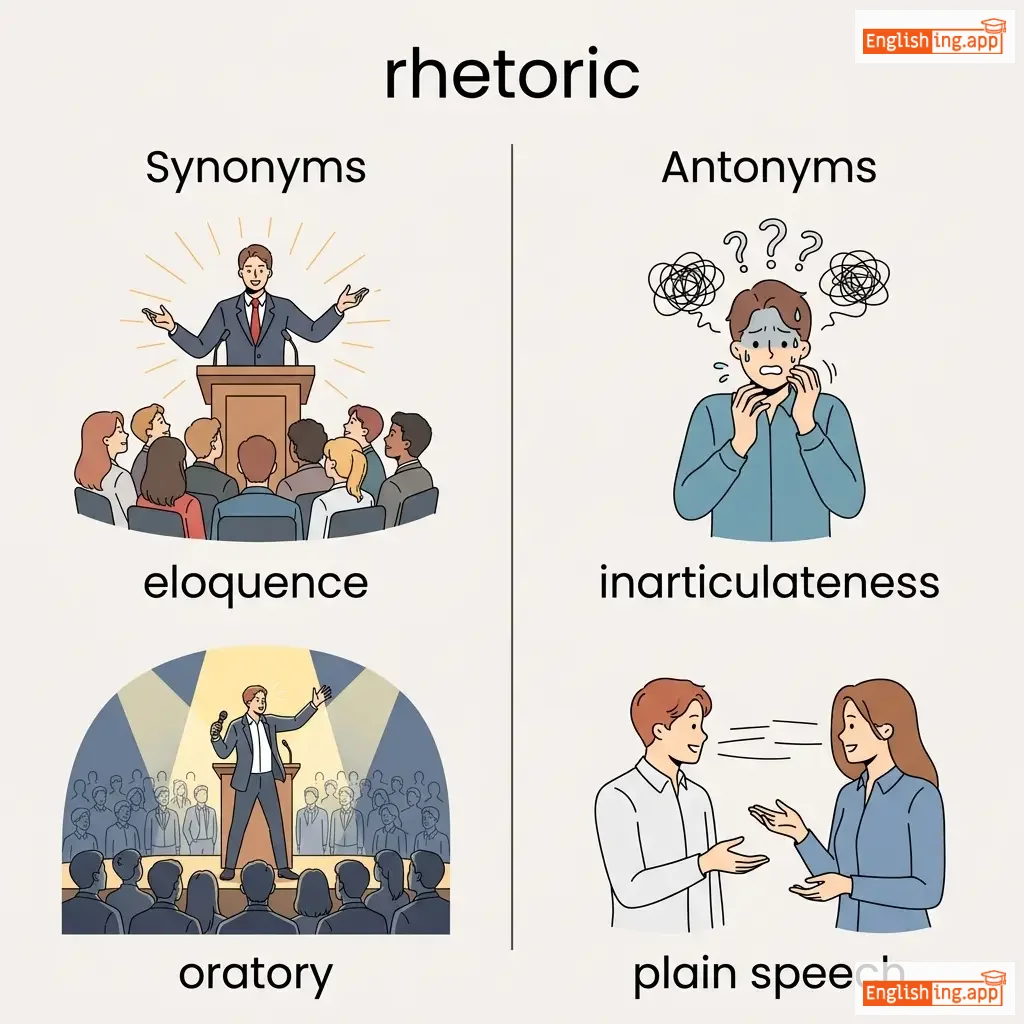
eloquence, oratory, discourse, persuasion
••••••
|
inarticulateness, plain speech
••••••
|
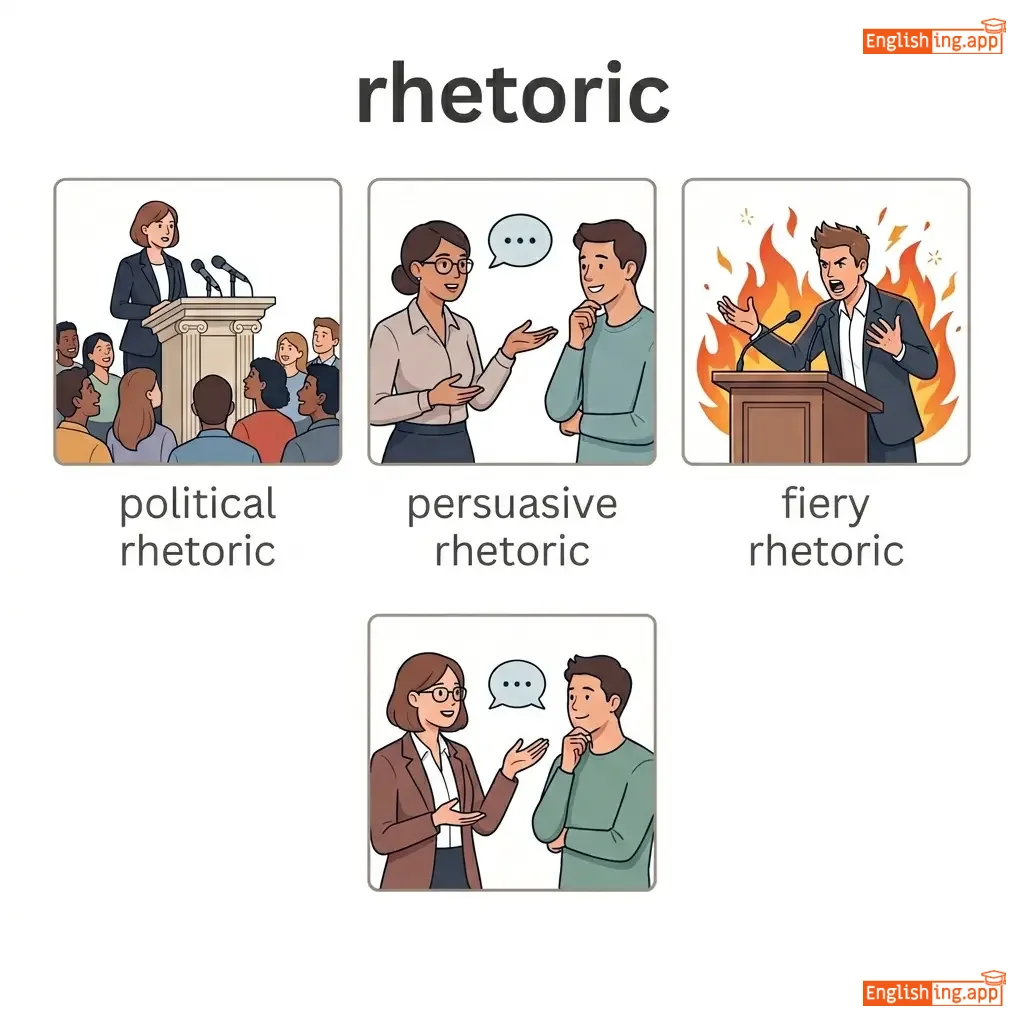
political rhetoric, persuasive rhetoric, fiery rhetoric, rhetorical device
••••••
|
Rhetoric → Ret + Trick 🗣️ 話す際にトリックを使って影響を与える
••••••
|
|
🔄
••••••
|
/roʊˈteɪʃən/
noun
(ro-tei-shon)
••••••
|
- •••••• |
回転; 回転運動; 自転
kaiten; kaiten undō; jiten
••••••
|
- •••••• | - •••••• | - •••••• | - •••••• |
the action of rotating around an axis or center; a single turn
••••••
|
The Earth's rotation takes 24 hours to complete.
地球の回転は24時間かかります。
••••••
|
地球の回転は24時間かかります。
Chikyū no kaiten wa 24 jikan kakarimasu.
••••••
|
- •••••• | - •••••• | - •••••• |
turning, spinning, revolution, orbit
••••••
|
stillness, stability, stagnation
••••••
|
crop rotation, job rotation, axis of rotation
••••••
|
地球が回転するのを想像してください
••••••
|
|
⚖️
••••••
|
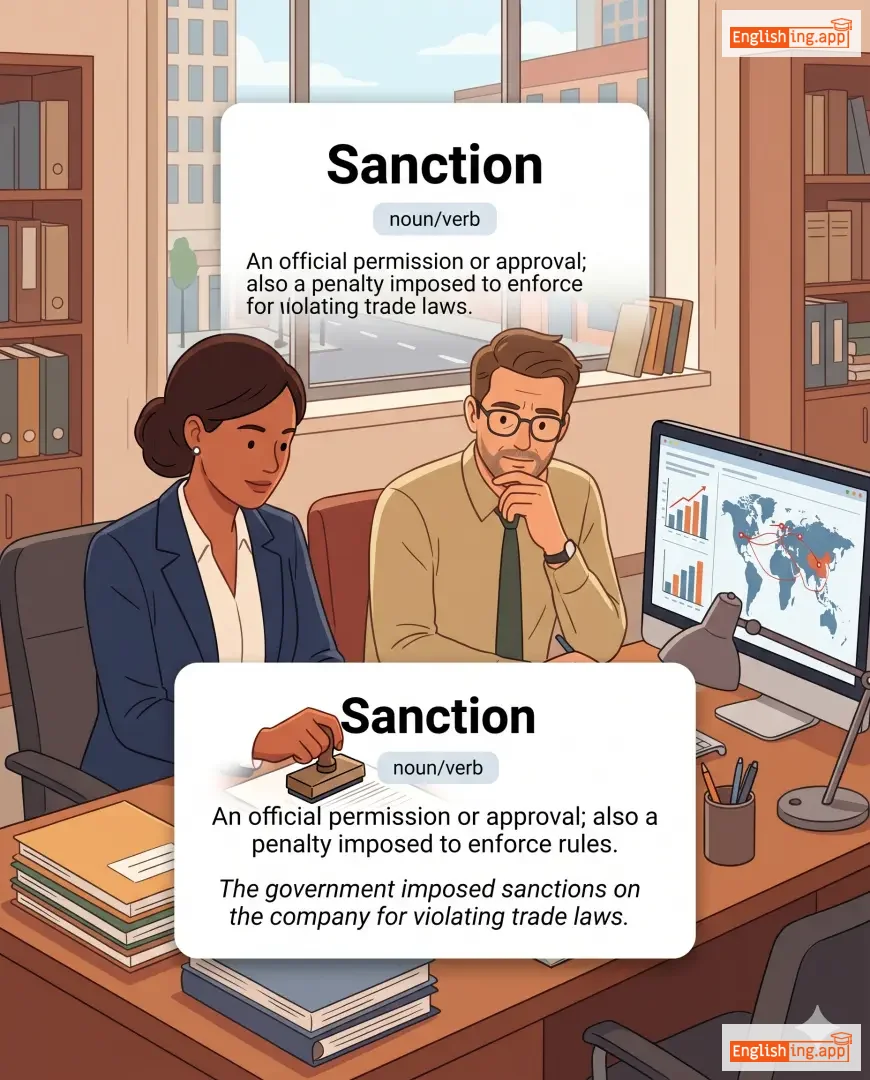
/ˈsæŋkʃən/
noun/verb
••••••
|
|
- •••••• |
sanctioned
••••••
|
sanctioned
••••••
|
sanctions
••••••
|
sanctioning
••••••
|
An official permission or approval; also a penalty imposed to enforce rules.
••••••
|
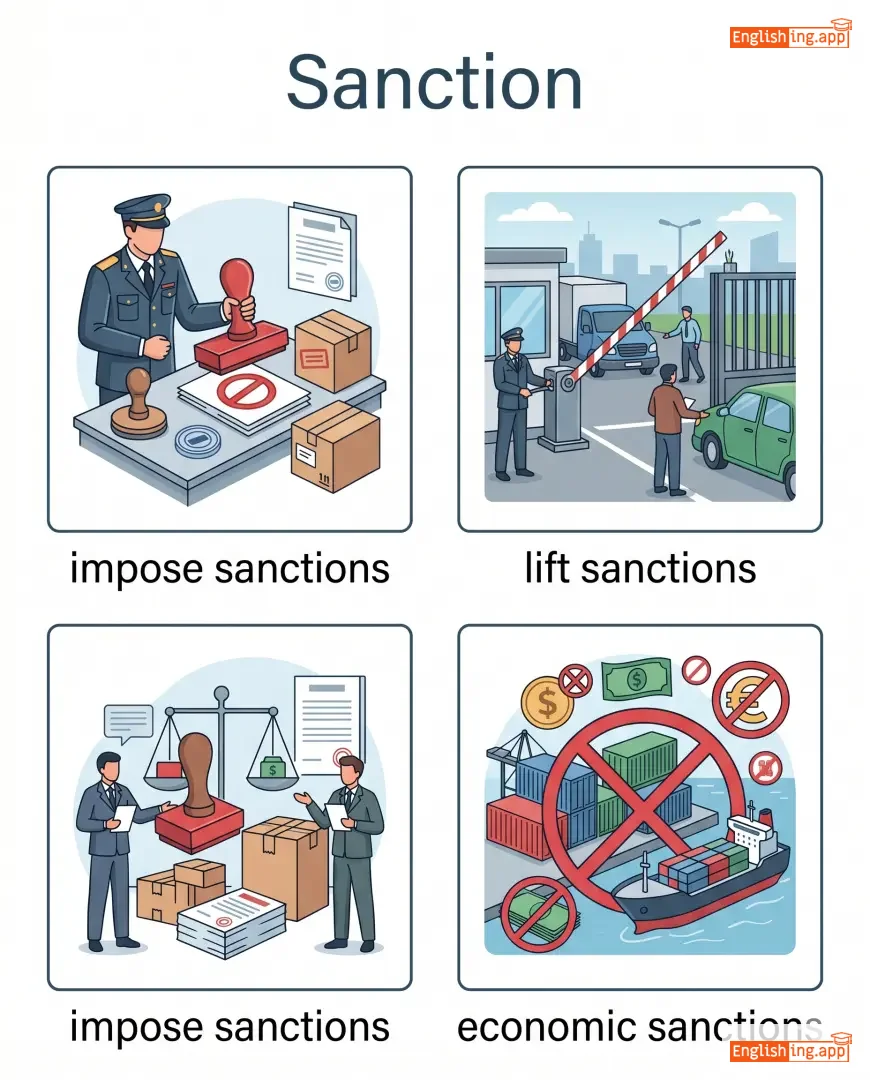
The government imposed sanctions on the company for violating trade laws. |
- •••••• |
economic sanctions |
penalties imposed by one country on another to enforce international law
••••••
|
- •••••• |
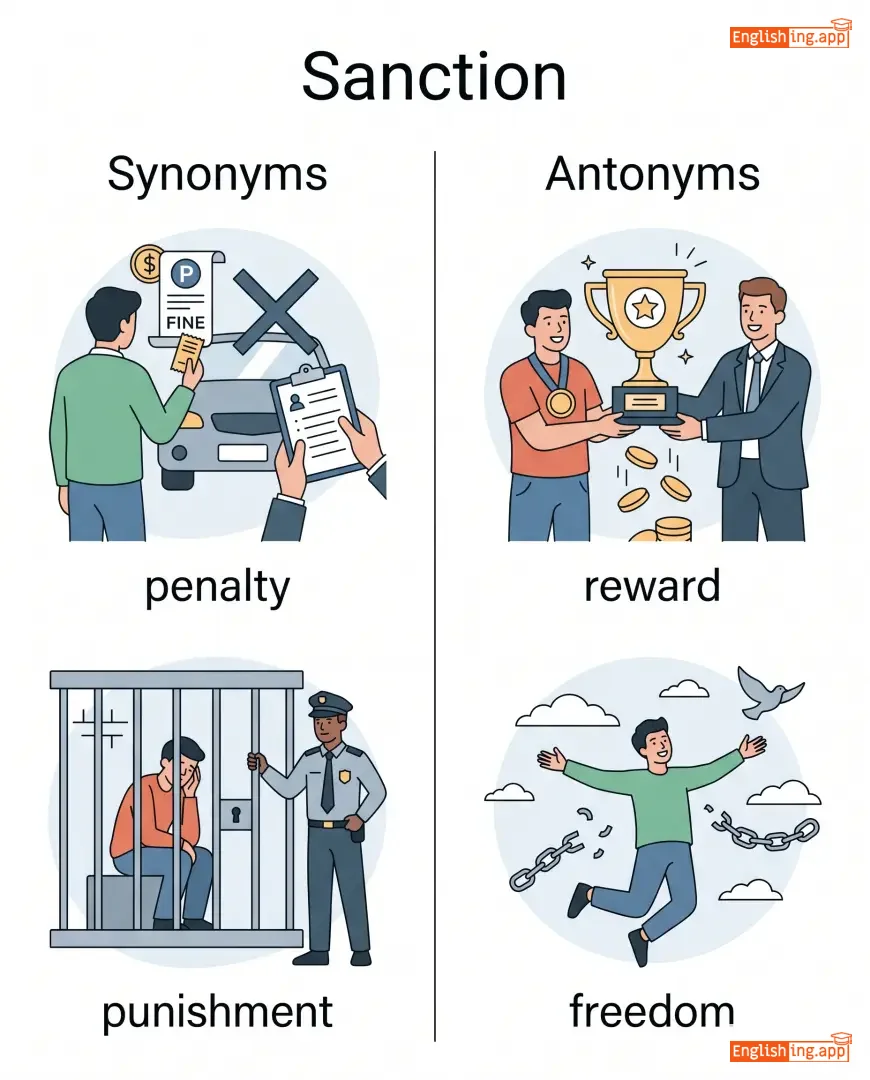
penalty, punishment, approval, authorization, restriction
••••••
|
reward, freedom, allowance
••••••
|
impose sanctions, lift sanctions, economic sanctions, trade sanctions
••••••
|
No •••••• |
|
🥪
••••••
|
/ˈsændwɪtʃ/
noun
(サンドイッチ)
••••••
|
- •••••• |
サンドイッチ
sandoicchi
••••••
|
- •••••• | - •••••• | - •••••• | - •••••• |
two pieces of bread with food such as meat, cheese, or salad between them
••••••
|
I made a chicken sandwich for lunch. |
私は昼食にチキンサンドイッチを作りました。
Watashi wa chūshoku ni chikin sandoicchi o tsukurimashita.
••••••
|
caught in a sandwich |
to be trapped between two people or situations
••••••
|
二人または二つの状況に挟まれている
futari matawa futatsu no jōkyō ni hasamarete iru
••••••
|
snack, sub, burger, roll, toastie
••••••
|
meal, feast
••••••
|
chicken sandwich, cheese sandwich, sandwich shop, eat a sandwich
••••••
|
サンドイッチは二枚のパンの間に何かが挟まれていることを意味します — まるでサンドイッチの中に挟まれているような感じ!
••••••
|
|
🥚
••••••
|
/ˈskræmbəl/
verb
••••••
|
- •••••• | - •••••• |
scrambled
••••••
|
scrambled
••••••
|
scrambles
••••••
|
scrambling
••••••
|
to move or climb quickly using hands and feet; to mix or arrange in a hurried way
••••••
|
The kids scrambled up the hill to catch the kite. |
- •••••• |
scramble for |
to compete eagerly for something
••••••
|
- •••••• |
climb, rush, struggle, hustle, scurry
••••••
|
walk, rest, relax
••••••
|
scramble eggs, scramble up, scramble for position, scramble out
••••••
|
No •••••• |
|
➁
••••••
|
/ˈsekəndli/
adverb
(セカンドリー)
••••••
|
- •••••• |
次に
tsugi ni
••••••
|
- •••••• | - •••••• | - •••••• | - •••••• |
Used to introduce the second point in a list of arguments or ideas.
••••••
|
Firstly, we need funding; secondly, we need a strong team.
まず、資金が必要です;secondly、強力なチームが必要です。
••••••
|
まず、資金が必要です;次に、強力なチームが必要です。
Mazu, shikin ga hitsuyō desu; tsugi ni, kyōryoku na chīmu ga hitsuyō desu.
••••••
|
- •••••• | - •••••• | - •••••• |
next, furthermore, then, in addition
••••••
|
firstly, primarily
••••••
|
firstly and secondly, secondly important, secondly mentioned
••••••
|
Firstly まず, Secondly 次に ➡ 覚えやすい
••••••
|
|
✅
••••••
|
/sɪˈlek.tɪd/
adjective
(sɪˈlɛktɪd)
••••••
|
- •••••• |
選ばれた
erabareta
••••••
|
- •••••• | - •••••• | - •••••• | - •••••• |
carefully chosen from a group for a particular purpose
••••••
|
He was one of the selected candidates for the scholarship. |
彼は奨学金のために選ばれた候補者の一人でした。
Kare wa shōgakukin no tame ni erabareta kōhosha no hitori deshita.
••••••
|
- •••••• | - •••••• | - •••••• |
chosen, picked, designated, appointed, preferred
••••••
|
rejected, ignored, unchosen
••••••
|
selected candidates, selected items, selected members, selected list
••••••
|
Selectは選ぶという意味です。だからselectedは'選ばれた'という意味です。覚えておいてください:selected studentsは選ばれた学生を意味します。
••••••
|
|
📜
••••••
|
/ˈsɛntəns/
noun, verb
(センテンス)
••••••
|
- •••••• |
文; 刑期
bun; keiki
••••••
|
sentenced
センテンスド
••••••
|
sentenced
センテンスド
••••••
|
sentences
センテンスズ
••••••
|
sentencing
センテンスイング
••••••
|
A set of words that expresses a complete thought; or a punishment given by a court of law.
••••••
|
The judge gave him a five-year prison sentence.
裁判官は彼に5年間の刑期を与えました。
••••••
|
裁判官は彼に5年間の刑期を与えました。
Saibankan wa kare ni go-nenkan no keiki o ataemashita.
••••••
|
serve a sentence
刑期を終える
••••••
|
to spend time in prison as ordered by a court
••••••
|
刑期を終える
keiki o oeru
••••••
|
judgment, ruling, phrase, clause, punishment
••••••
|
acquittal, freedom
••••••
|
long sentence, short sentence, prison sentence, death sentence
••••••
|
Sentence は文や刑期を意味します。どちらも最後にピリオドがつきます!
••••••
|
|
↔️
••••••
|
/ˈsɛpəˌreɪt/
verb
(セパレート)
••••••
|
- •••••• |
分ける
wakeru
••••••
|
separated
セパレーテッド
••••••
|
separated
セパレーテッド
••••••
|
separates
セパレーツ
••••••
|
separating
セパレーティング
••••••
|
To cause to move or be apart; to divide into distinct elements.
••••••
|
The teacher separated the students into groups.
教師は学生をグループに分けました。
••••••
|
教師は学生をグループに分けました。
Kyoushi wa gakusei wo guruupu ni wakemashita.
••••••
|
separate the wheat from the chaff
穀物とわらを分ける
••••••
|
To distinguish what is valuable or useful from what is worthless.
••••••
|
価値のあるものと価値のないものを分ける
Kachi no aru mono to kachi no nai mono wo wakeru
••••••
|
divide, split, detach, isolate, disconnect
••••••
|
unite, combine, connect
••••••
|
separate rooms, separate ways, separate from, separate into groups
••••••
|
分ける = '分ける', 'We care' = 分ける。
••••••
|
|
🚑
••••••
|
/sɪˈvɪərli/
adverb
(セヴィアリー)
••••••
|
- •••••• |
ひどく
hidoku
••••••
|
- •••••• | - •••••• | - •••••• | - •••••• |
to a great degree; very seriously or harshly
••••••
|
The patient was severely injured in the accident. |
患者は事故でひどく負傷しました。
Kanja wa jiko de hidoku fushou shimashita.
••••••
|
- •••••• | - •••••• | - •••••• |
seriously, harshly, gravely, intensely
••••••
|
mildly, lightly, gently
••••••
|
severely injured, severely punished, severely damaged, severely limited
••••••
|
Severely injured はひどく負傷したという意味です
••••••
|
|
🚢
••••••
|
/ˈʃɪpɪŋ/
noun
(ˈʃɪpɪŋ)
••••••
|
- •••••• |
配送
haisou
••••••
|
- •••••• | - •••••• | - •••••• | - •••••• |
the process of transporting goods
••••••
|
The shipping of the products was delayed due to weather conditions. |
天候条件により商品の配送が遅れました。
Ten kō jōken ni yori shōhin no haisō ga okuremashita.
••••••
|
- •••••• | - •••••• | - •••••• |
delivery, transportation, freight, dispatch
••••••
|
receiving, reception
••••••
|
shipping company, international shipping, shipping cost
••••••
|
Shippingとは商品を海路や陸路で配送することです
••••••
|
|
🚶♂️
••••••
|
/ˈsaɪdˌwɔːk/
noun
(サイドウォーク)
••••••
|
- •••••• |
歩道
hodou
••••••
|
- •••••• | - •••••• | - •••••• | - •••••• |
a paved path for pedestrians at the side of a street.
••••••
|
Children were playing on the sidewalk. |
子供たちは歩道で遊んでいました。
Kodomotachi wa hodou de asonde imashita.
••••••
|
sidewalk sale |
a sale held outside a store on the sidewalk
••••••
|
歩道セール
hodou seeru
••••••
|
pavement, footpath, walkway, path
••••••
|
road, highway, street
••••••
|
clean sidewalk, wide sidewalk, crowded sidewalk, cracked sidewalk
••••••
|
歩道: 歩くための道 — 歩道を歩こう!
••••••
|
|
🪶
••••••
|
/ˈslaɪtli/
adverb
(スライトリー)
••••••
|
- •••••• |
少し
sukoshi
••••••
|
- •••••• | - •••••• | - •••••• | - •••••• |
to a small degree or extent
••••••
|
The temperature has slightly increased today.
今日、温度は少し上昇しました。
••••••
|
今日、温度は少し上昇しました。
Kyou, ondo wa sukoshi joushou shimashita.
••••••
|
- •••••• | - •••••• | - •••••• |
mildly, a little, marginally, somewhat
••••••
|
greatly, significantly
••••••
|
slightly different, slightly better, slightly worse
••••••
|
Think of something slightly tilted as 'slightly' off-center.
••••••
|

