The Writer Who Inspired a Generation
ナジアは、作家を志す人で、物語に夢中でした。彼女の子供時代は厳しく、両親の離婚が彼女に深い影響を与えました。しかし、彼女は執筆への情熱を保ち続けました。彼女の心の中には、決して消えない火がありました。彼女の最初の本のためには、わずかニッケルしか前金としてもらえませんでしたが、彼女はあまり心配しませんでした。彼女は、良い物語が読者に考えることを強制すると信じていました。彼女のメンターは、年配の教授で、物語を語るための知恵を教えてくれました。重要な要素は本物であることでした。彼女は自分の体験を基に執筆していました。ある日、文学の後援者が彼女の作品に気づき、サポートを提供しました。ナジアは、読者の時間に値する物語を書くと誓いました。彼女の執筆過程では、シーンを視覚化するためにスケッチや図面を作成しました。面白い瞬間は、ある遠足で、彼女がうっかりピーナッツバターを原稿にこぼしたことです。彼女の国では創造力の干ばつがあり、ナジアの物語は新鮮な空気をもたらしました。他の人々は彼女のスタイルを模倣しようとしましたが、彼女の声は独自のものでした。彼女の三作目の小説は、名高い賞を受賞し、彼女は勝者となりました。ナジアは、困難の中にこそ機会があり、創造力には限界がないことを証明しました。
|
絵文字
|
単語 | Images | 翻訳 | 過去 | 過去分詞 | 三人称単数 | 動名詞 | 意味 | 例文 | 例文の翻訳 | 表現例 | 表現例の意味 | 表現例の翻訳 | 同義語 | 対義語 | コロケーション | ニーモニック |
|---|---|---|---|---|---|---|---|---|---|---|---|---|---|---|---|---|---|
|
💔
••••••
|
/dɪˈvɔːrs/
noun/verb
(ディヴォース)
••••••
|
- •••••• |
離婚
rikon
••••••
|
divorced
••••••
|
divorced
••••••
|
divorces
••••••
|
divorcing
••••••
|
the legal ending of a marriage; to officially end a marriage
••••••
|
After years of conflict, they decided to get a divorce. |
数年の対立の後、彼らは離婚することを決めました。
Sūnen no tairitsu no ato, karera wa rikon suru koto o kimemashita.
••••••
|
divorce oneself from |
to separate or distance oneself from something
••••••
|
〜から離婚する
〜kara rikon suru
••••••
|
separation, annulment, breakup, dissolution
••••••
|
marriage, union
••••••
|
get a divorce, file for divorce, divorce settlement, divorce lawyer
••••••
|
離婚は結婚を終わらせること。
••••••
|
|
✏️
••••••
|
/ˈdrɔːɪŋ/
noun
(ハピネス)
••••••
|
- •••••• |
幸せ
shiawase
••••••
|
- •••••• | - •••••• | - •••••• | - •••••• |
a picture or diagram made with a pencil, pen, or crayons rather than paint
••••••
|
She showed me a drawing of her house. |
彼女は賞を受け取ったとき、幸せを隠せなかった。
Kanojo wa shō o uketotta toki, shiawase o kakusenakatta.
••••••
|
drawing attention |
attracting notice or interest
••••••
|
幸せの追求
shiawase no tsuikyū
••••••
|
sketch, illustration, diagram, doodle
••••••
|
erasing, deletion
••••••
|
make a drawing, pencil drawing, line drawing, drawing skills
••••••
|
幸せは心から来る、ハピネスであるためには。
••••••
|
|
🌵
••••••
|
/draʊt/
noun
(dautoruto)
••••••
|
|
干ばつ
kanbatsu
••••••
|
- •••••• | - •••••• | - •••••• | - •••••• |
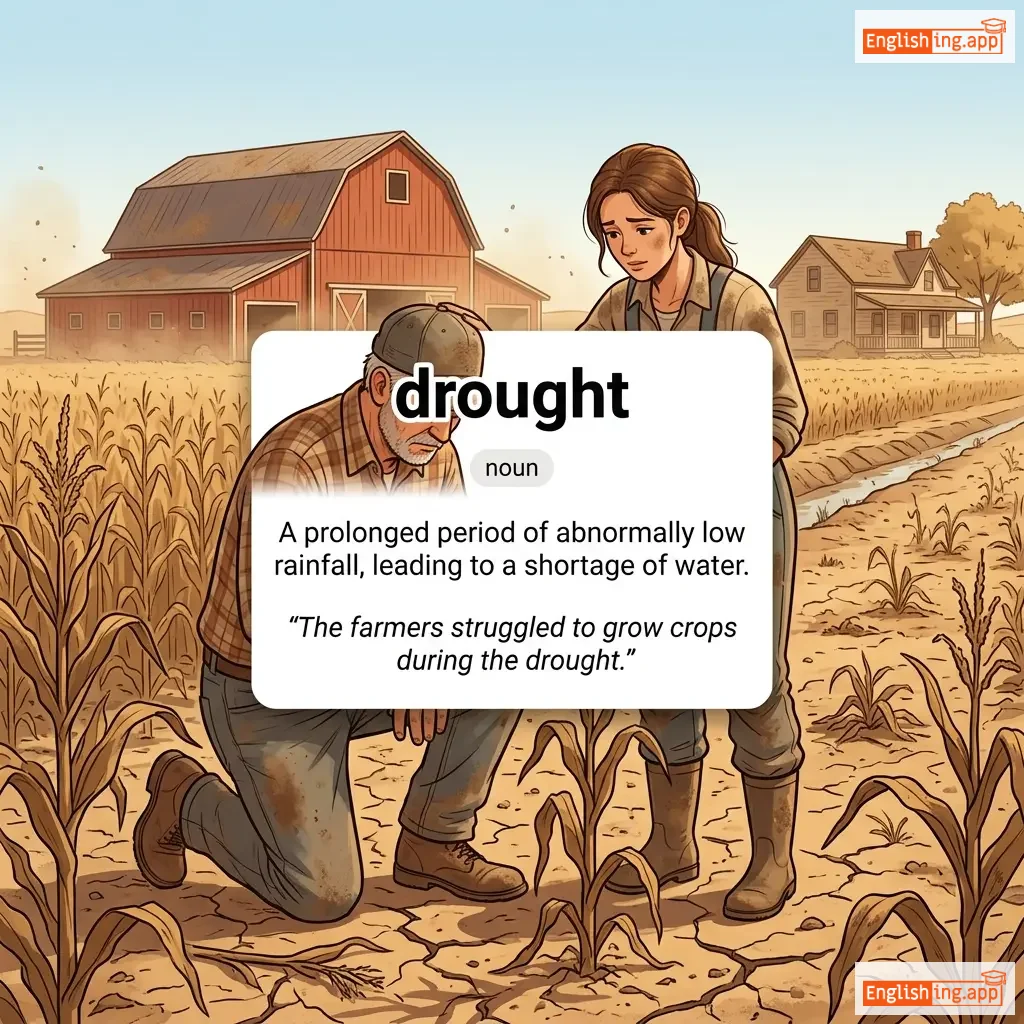
A prolonged period of abnormally low rainfall, leading to a shortage of water.
••••••
|
The farmers struggled to grow crops during the drought. |
農家は干ばつの間、作物を育てるのに苦労していました。
Nouka wa kanbatsu no aida, sakumotsu o sodateru no ni kurou shiteimashita.
••••••
|
in a drought |
Experiencing a lack of something, often used metaphorically.
••••••
|
干ばつの間
Kanbatsu no aida
••••••
|
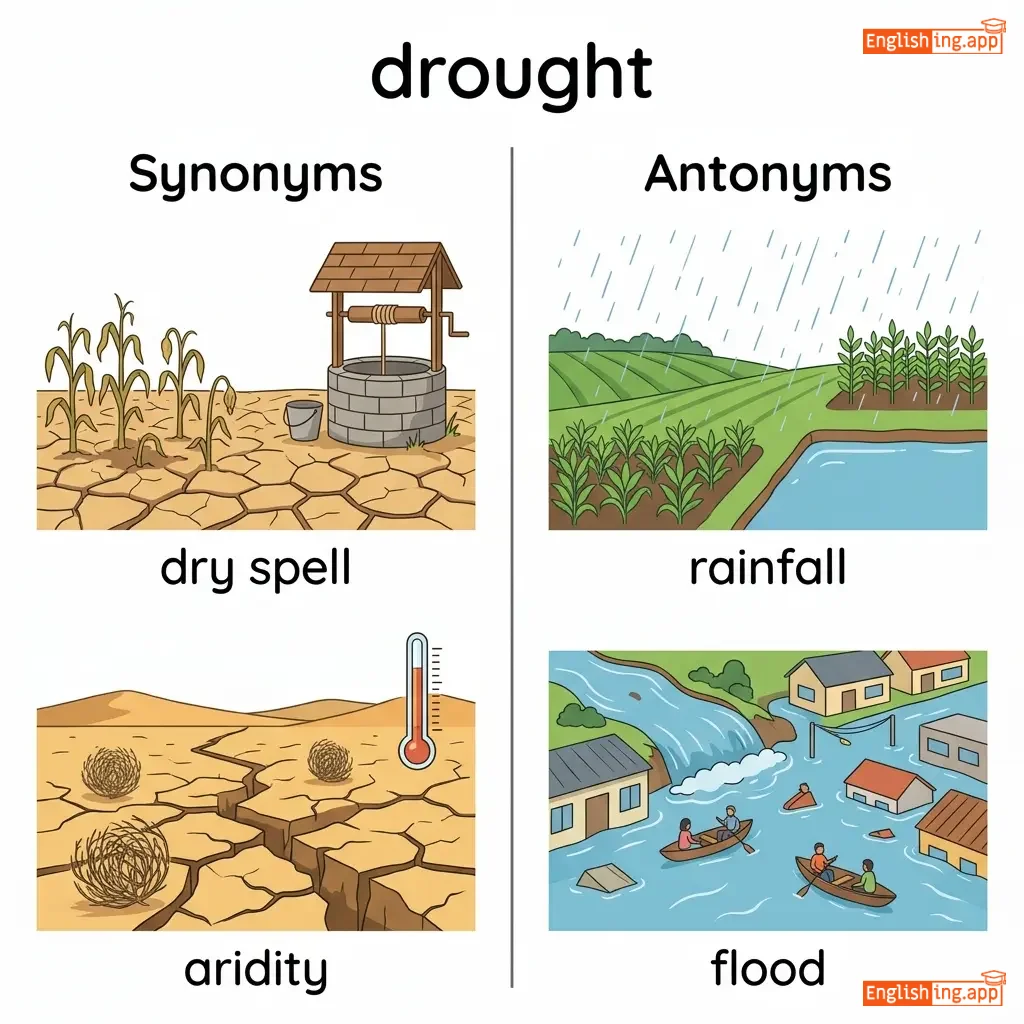
dry spell, aridity, lack of rain, scarcity, shortage
••••••
|
rainfall, flood, abundance
••••••
|
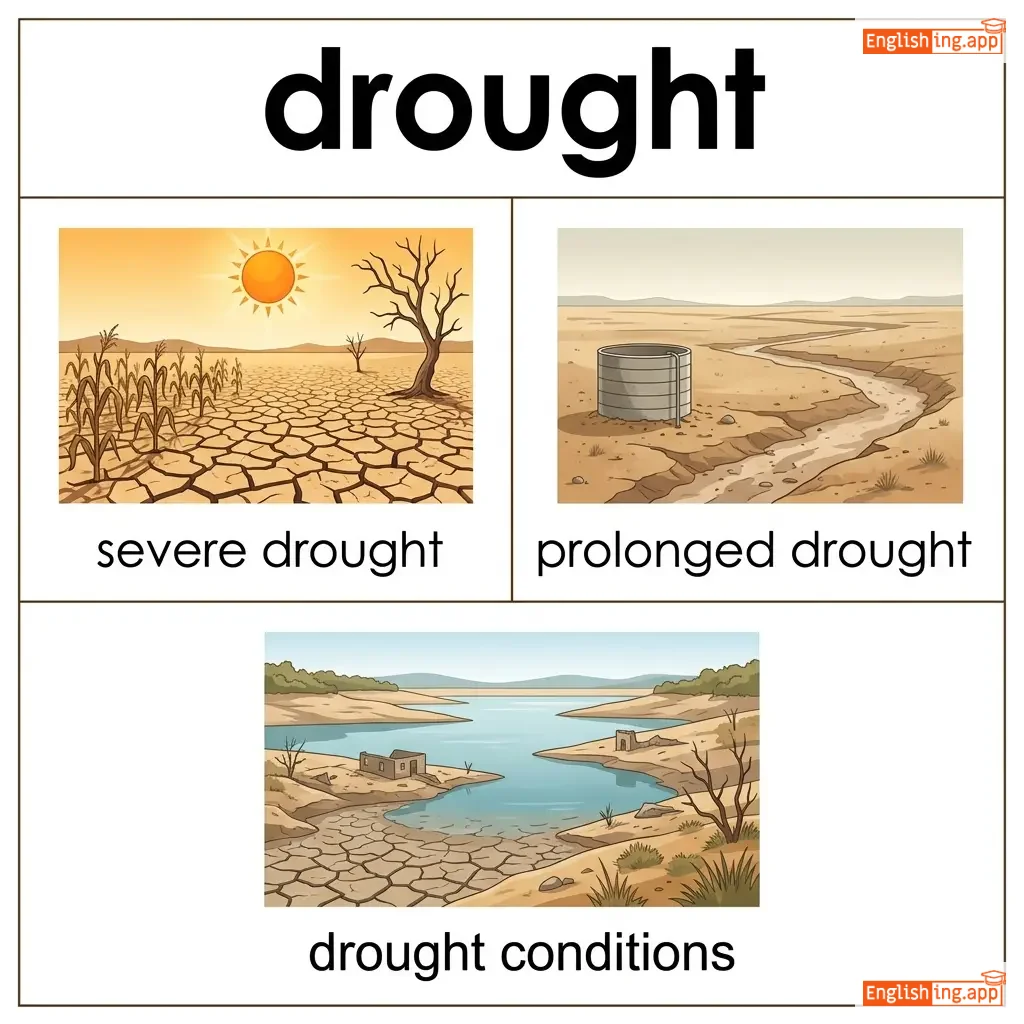
severe drought, prolonged drought, drought conditions, drought relief
••••••
|
Droughtは干ばつを意味します – ‘水がないと干ばつ’と覚えてください。
••••••
|
|
👴
••••••
|
/ˈel.dər.li/
adjective
(エルダーリー)
••••••
|
- •••••• |
高齢者; 年配; 高齢
eldarli
••••••
|
- •••••• | - •••••• | - •••••• | - •••••• |
aged; advanced in years; old
••••••
|
The elderly man walked slowly with his cane. |
その高齢の男性は杖を使ってゆっくり歩いていました。
Sono koureino dansei wa tsue wo tsukatte yukkuri aruite imashita.
••••••
|
- •••••• | - •••••• | - •••••• |
aged, old, senior, ancient
••••••
|
young, youthful, juvenile
••••••
|
elderly people, elderly care, elderly population
••••••
|
Elderly - 'Elderli' は高齢者を表す言葉、祖父母のような存在です。
••••••
|
|
🔬
••••••
|
/ˈɛlɪmənt/
noun
(エレメント)
••••••
|
- •••••• |
要素
yōso
••••••
|
- •••••• | - •••••• | - •••••• | - •••••• |
A basic or essential part of something; a simple substance that cannot be broken down further.
••••••
|
Trust is a key element of any strong relationship.
信頼は強い関係の重要な要素です。
••••••
|
信頼は強い関係の重要な要素です。
Shinrai wa tsuyoi kankei no jūyōna yōso desu.
••••••
|
in one's element
自分の元素にいる
••••••
|
To be in a situation that is natural and comfortable for someone.
••••••
|
自分の元素にいる
Jibun no gensu ni iru
••••••
|
component, part, factor, ingredient, aspect
••••••
|
whole, entirety
••••••
|
basic element, chemical element, essential element, natural element
••••••
|
エレメントは基本的な部分、化学の要素のように、単純な構成部分です。
••••••
|
|
🪙
••••••
|
/ˈnɪkəl/
noun
(ニッケル)
••••••
|
- •••••• |
ニッケル
nikkeru
••••••
|
- •••••• | - •••••• | - •••••• | - •••••• |
a small coin, typically worth five cents in the United States
••••••
|
He found a nickel on the ground. |
彼は地面でニッケルを見つけた。
Kare wa jimen de nikkeru o mitsuketa.
••••••
|
- •••••• | - •••••• | - •••••• |
coin, small change, five-cent piece
••••••
|
dollar, large currency
••••••
|
nickel coin, worth a nickel
••••••
|
ニッケルはアメリカの5セントコイン、地面に簡単に見つけられます。
••••••
|
|
🤝
••••••
|
/əˈblaɪdʒ/
verb
(オブライジ)
••••••
|
|
義務付ける
gimu zukeru
••••••
|
obliged
オブライジド
••••••
|
obliged
オブライジド
••••••
|
obliges
オブライジズ
••••••
|
obliging
オブライジング
••••••
|
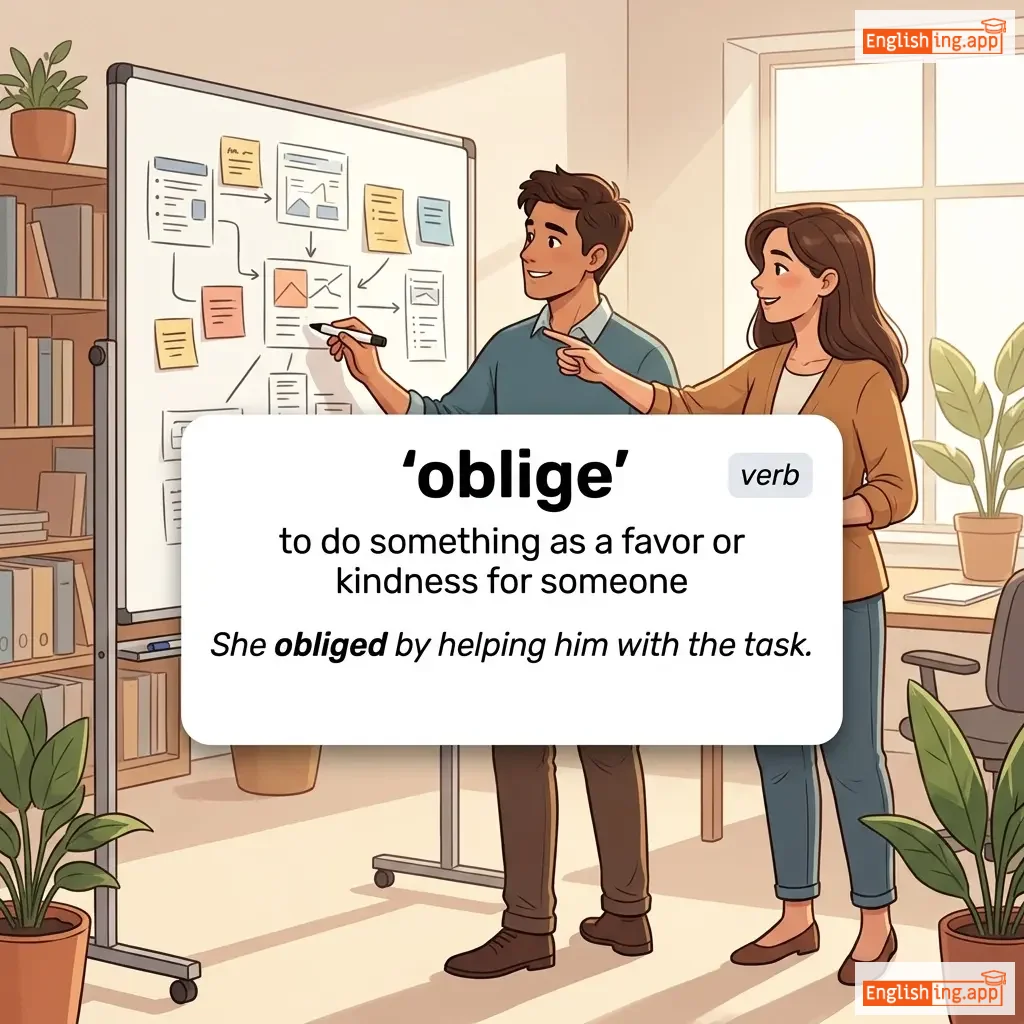
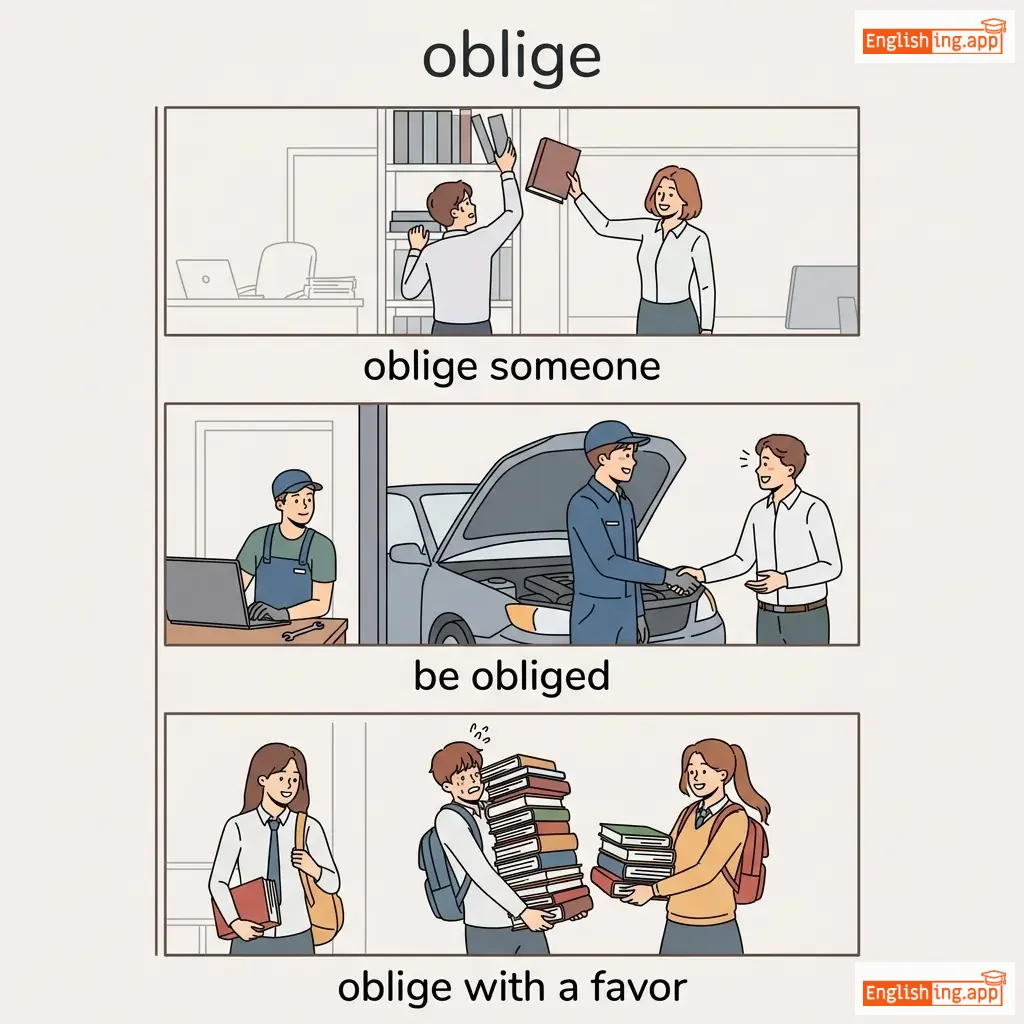
to compel or require someone to do something; to help or do a favor
••••••
|
I would be happy to oblige you with the information you need.
アイ ウッド ビー ハッピー トゥ オブライジ ユー ウィズ ザ インフォメーション ユー ニード。
••••••
|
必要な情報を提供してお手伝いできれば嬉しいです。
Hitsuyou na jouhou o teikyou shite otetsudai dekireba ureshii desu.
••••••
|
- •••••• | - •••••• | - •••••• |
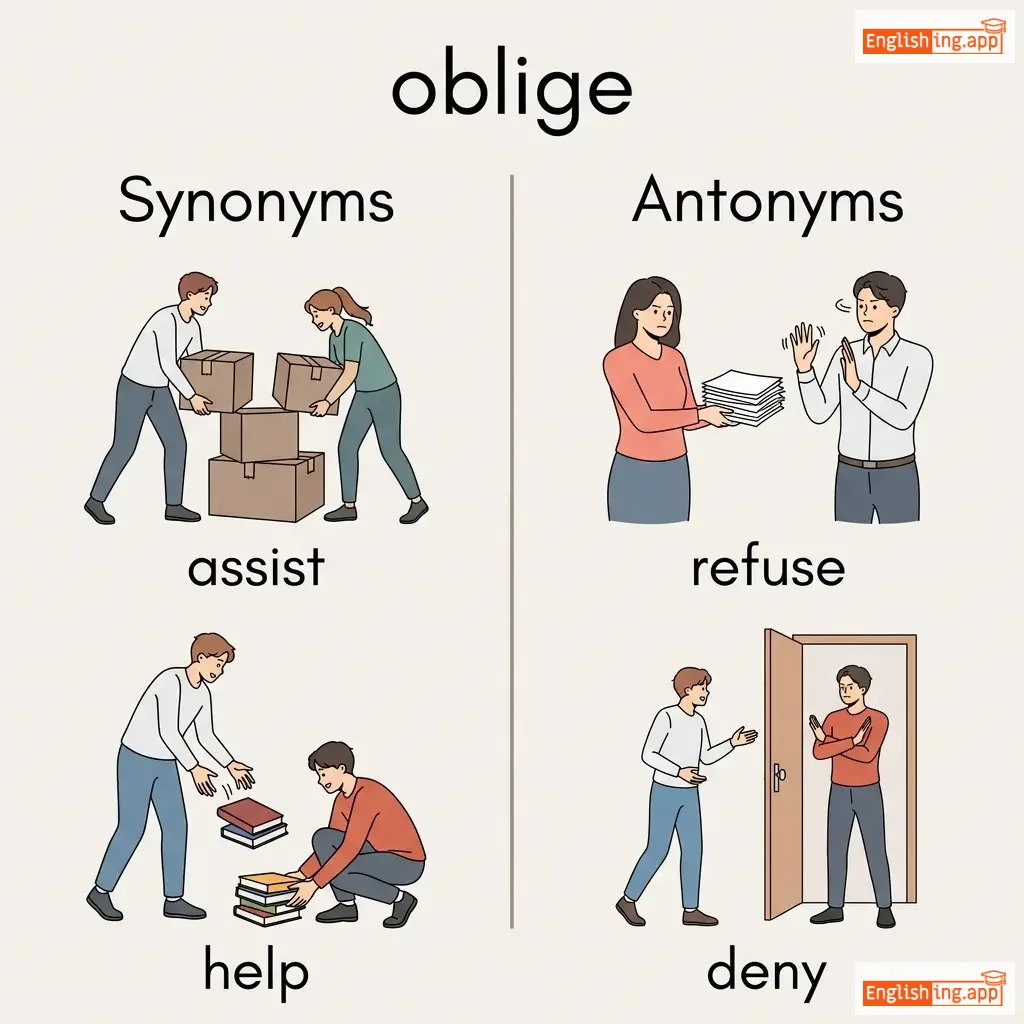
compel, require, help, assist
••••••
|
free, release, refuse, deny
••••••
|
happily oblige, oblige someone, oblige with, willing to oblige, greatly oblige, kindly oblige
••••••
|
‘Oblige’ feels like Japanese ‘gimu zukeru’ — both mean to be duty-bound to help.
••••••
|
|
🌀
••••••
|
/əbˈsɛs/
verb
••••••
|
- •••••• | - •••••• |
obsessed
••••••
|
obsessed
••••••
|
obsesses
••••••
|
obsessing
••••••
|
To preoccupy or fill the mind of someone continually and to an excessive degree.
••••••
|
She tends to obsess over small details. |
- •••••• |
obsess over |
To think about something too much and not let go of it
••••••
|
- •••••• |
preoccupy, fixate, dwell, consume, dominate
••••••
|
ignore, neglect
••••••
|
obsess over, obsess with, obsess about, obsess constantly
••••••
|
No •••••• |
|
👥
••••••
|
/ˈʌðərz/
pronoun
(アザーズ)
••••••
|
- •••••• |
他の人々
hoka no hitobito
••••••
|
- •••••• | - •••••• | - •••••• | - •••••• |
people or things distinct from the ones already mentioned or known
••••••
|
I like to spend time with others. |
私は他の人々と時間を過ごすのが好きです。
Watashi wa hoka no hitobito to jikan o sugosu no ga suki desu.
••••••
|
- •••••• | - •••••• | - •••••• |
people, individuals, others, another
••••••
|
self, oneself
••••••
|
help others, other people, among others
••••••
|
他の人々との協力は大きな成果を生みます - Collaboration with others leads to great results
••••••
|
|
🏖️
••••••
|
/ˈaʊtɪŋ/
noun
(アウトイング)
••••••
|
- •••••• |
お出かけ
odekake
••••••
|
- •••••• | - •••••• | - •••••• | - •••••• |
a short trip or excursion, often for leisure or enjoyment
••••••
|
They had a lovely outing at the beach last weekend. |
彼らは先週末、ビーチで素晴らしいお出かけをしました。
Karera wa senshūmatsu, bīchi de subarashī odekake o shimashita.
••••••
|
- •••••• | - •••••• | - •••••• |
excursion, trip, adventure, journey
••••••
|
stay, rest, retreat
••••••
|
family outing, weekend outing, picnic outing
••••••
|
Outingはリラックスするために外出すること、例えばビーチや公園に行くことです。
••••••
|
|
😬
••••••
|
/ˈəʊvəli/
adverb
(オーバーリー)
••••••
|
- •••••• |
過度に
kadoni
••••••
|
- •••••• | - •••••• | - •••••• | - •••••• |
to an excessive degree or extent
••••••
|
She was overly concerned about the results. |
彼女は結果について過度に心配していた。
Kanojo wa kekka ni tsuite kadoni shinpai shite ita.
••••••
|
- •••••• | - •••••• | - •••••• |
excessively, excessively, unduly, too much
••••••
|
moderately, reasonably
••••••
|
overly cautious, overly enthusiastic, overly critical
••••••
|
Overly = 過度; 結果に過度に心配している。
••••••
|
|
💰
••••••
|
/ˈpeɪtrən/
noun
(ペイトロン)
••••••
|
- •••••• |
後援者
kouensha
••••••
|
- •••••• | - •••••• | - •••••• | - •••••• |
a person who gives financial or other support to a person, organization, or cause
••••••
|
The library is supported by generous patrons. |
図書館は寛大な後援者によって支えられています。
Toshokan wa kandai na kouensha ni yotte sasaerareteimasu.
••••••
|
patron saint |
a saint regarded as a special protector of a person or place
••••••
|
守護聖人
shugo seijin
••••••
|
supporter, sponsor, benefactor, backer, donor
••••••
|
opponent, detractor, enemy
••••••
|
regular patron, loyal patron, art patron, patron of the arts
••••••
|
Patron は 'pay-tron' の意味 — 支援者 💰
••••••
|
|
🥜
••••••
|
/ˈpiːnʌt/
noun
(ピーナッツ)
••••••
|
- •••••• |
ピーナッツ
pīnattsu
••••••
|
- •••••• | - •••••• | - •••••• | - •••••• |
a small seed with a thin shell, eaten as a snack or used to make oil and butter
••••••
|
He loves eating roasted peanuts during the evening. |
彼は夕方にローストピーナッツを食べるのが好きです。
Kare wa yūgata ni rōsuto pīnattsu o taberu no ga suki desu.
••••••
|
peanut gallery |
a group of critics offering unhelpful comments
••••••
|
ピーナッツギャラリー
pīnattsu gyararī
••••••
|
groundnut, nut, legume, snack
••••••
|
almond, walnut, cashew
••••••
|
peanut butter, roasted peanut, peanut oil, peanut allergy
••••••
|
Peanutは「ピーナッツ」とは同じ意味です — ピーナッツ🥜を食べることを覚えよう!
••••••
|
|
🤝
••••••
|
/pledʒ/
noun
(プレッジ)
••••••
|
- •••••• |
誓約; 約束; 保証;
seiyaku; yakusoku; hoshou;
••••••
|
- •••••• | - •••••• | - •••••• | - •••••• |
a solemn promise or undertaking; something given as security for a loan; a commitment or guarantee
••••••
|
He made a pledge to donate money to charity. |
彼はチャリティーにお金を寄付する誓約をした。
Kare wa charitī ni okane o kifu suru seiyaku o shita.
••••••
|
- •••••• | - •••••• | - •••••• |
promise, vow, commitment, oath
••••••
|
breach, violation, betrayal, denial
••••••
|
pledge allegiance, campaign pledge, pledge drive
••••••
|
誓約は約束や保証の一形態であり、重要な約束が含まれます。
••••••
|
|
📌
••••••
|
/rɪˈteɪn/
verb
(リテイン)
••••••
|
- •••••• |
保持する
hoji suru
••••••
|
retained
リテインド
••••••
|
retained
リテインド
••••••
|
retains
リテインズ
••••••
|
retaining
リテイニング
••••••
|
to keep possession of something
••••••
|
The company decided to retain its experienced employees.
会社は経験豊富な従業員を保持することに決めました。
••••••
|
会社は経験豊富な従業員を保持することに決めました。
Kaisha wa keiken hōfu na jūgyōin o hoji suru koto ni kimemashita.
••••••
|
retain control
コントロールを保持する
••••••
|
to continue having authority or influence
••••••
|
コントロールを保持する
kontorōru o hoji suru
••••••
|
keep, hold, preserve, maintain, reserve
••••••
|
lose, release, discard
••••••
|
retain control, retain talent, retain information, retain customers
••••••
|
保持するはretainに似ているので、保持するは何かを保持するという意味です。
••••••
|
|
🏆
••••••
|
/ˈwɪnər/
noun
(ウィナー)
••••••
|
- •••••• |
勝者
shōsha
••••••
|
- •••••• | - •••••• | - •••••• | - •••••• |
a person who wins a competition or contest
••••••
|
She was the winner of the race. |
彼女はレースの勝者でした。
Kanojo wa rēsu no shōsha deshita.
••••••
|
- •••••• | - •••••• | - •••••• |
champion, victor, first-place
••••••
|
loser, defeated
••••••
|
race winner, competition winner, winner takes all
••••••
|
Winners wear trophies—imagine yourself holding a shiny trophy as a winner!
••••••
|
|
🦉
••••••
|
/ˈwɪzdəm/
noun
(ウィズダム)
••••••
|
- •••••• |
知恵
chie
••••••
|
- •••••• | - •••••• | - •••••• | - •••••• |
the ability to make sound judgments and decisions based on knowledge and experience
••••••
|
His wisdom in solving complex problems was admired by everyone. |
複雑な問題を解決する彼の知恵は、皆から賞賛されました。
Fukuzatsu na mondai wo kaiketsu suru kare no chie wa, mina kara shousan saremashita.
••••••
|
a word of wisdom |
a piece of valuable advice or insight
••••••
|
知恵の言葉
chie no kotoba
••••••
|
insight, knowledge, understanding, prudence
••••••
|
ignorance, foolishness
••••••
|
great wisdom, words of wisdom, gain wisdom, wisdom teeth
••••••
|
知恵は問題解決を助けます。
••••••
|
|
🔒
••••••
|
/wɪðˈɪn/
preposition
(ウィズィン)
••••••
|
- •••••• |
内側
uchigawa
••••••
|
- •••••• | - •••••• | - •••••• | - •••••• |
inside the limits of something, or as part of a particular space or time
••••••
|
The keys are within the drawer. |
鍵は引き出しの中にあります。
Kagi wa hikidashi no naka ni arimasu.
••••••
|
- •••••• | - •••••• | - •••••• |
inside, enclosed by, within the boundaries of
••••••
|
outside, beyond
••••••
|
within reach, within time, within the limits, within a short distance
••••••
|
ウィズィン (within) の中には、すべてのものが制限内にあります。
••••••
|
|
🏆
••••••
|
/ˈwɜːrði/
adjective
(ワーディ)
••••••
|
- •••••• |
値する; ふさわしい; 尊敬すべき;
atarashī; fusawashī; sonkei subeki;
••••••
|
- •••••• | - •••••• | - •••••• | - •••••• |
deserving respect or attention; having merit
••••••
|
Her charitable work made her worthy of the humanitarian award.
彼女の慈善活動は彼女を人道的賞に値するものにしました。
••••••
|
彼女の慈善活動は彼女を人道的賞に値するものにしました。
Kanojo no jizen katsudō wa kanojo o jindōteki shō ni ataisuru mono ni shimashita.
••••••
|
- •••••• | - •••••• | - •••••• |
deserving, meritorious, commendable, admirable
••••••
|
unworthy, undeserving, contemptible, disgraceful
••••••
|
worthy cause, worthy opponent, worthy effort
••••••
|
worthy = 値する, ふさわしい人が賞を受ける
••••••
|
|
✍️
••••••
|
/ˈraɪ.tər/
noun
(raɪtə)
••••••
|
- •••••• |
作家
sakusha
••••••
|
- •••••• | - •••••• | - •••••• | - •••••• |
a person who writes books, articles, or other written works
••••••
|
The writer spent hours crafting the perfect sentence.
ðə raɪtə spent aʊərz kræftɪŋ ðə pərfɪkt sɪntəns
••••••
|
作家は完璧な文を作成するために何時間も費やしました。
sakusha wa kanpeki na bun o sakusei suru tame ni nan-jikan mo費やしました.
••••••
|
- •••••• | - •••••• | - •••••• |
author, novelist, journalist, scribe
••••••
|
reader, illiterate
••••••
|
creative writer, professional writer, freelance writer, script writer
••••••
|
Just like a '作家' in Japanese, a writer shapes words to create a perfect story.
••••••
|

