|
🔄
••••••
|
/swɪtʃ/
verb
(switsch)
••••••
|
••••••
|
wechseln
wechseln
••••••
|
geswitcht
••••••
|
geswitcht
••••••
|
switcht
••••••
|
switchend
••••••
|
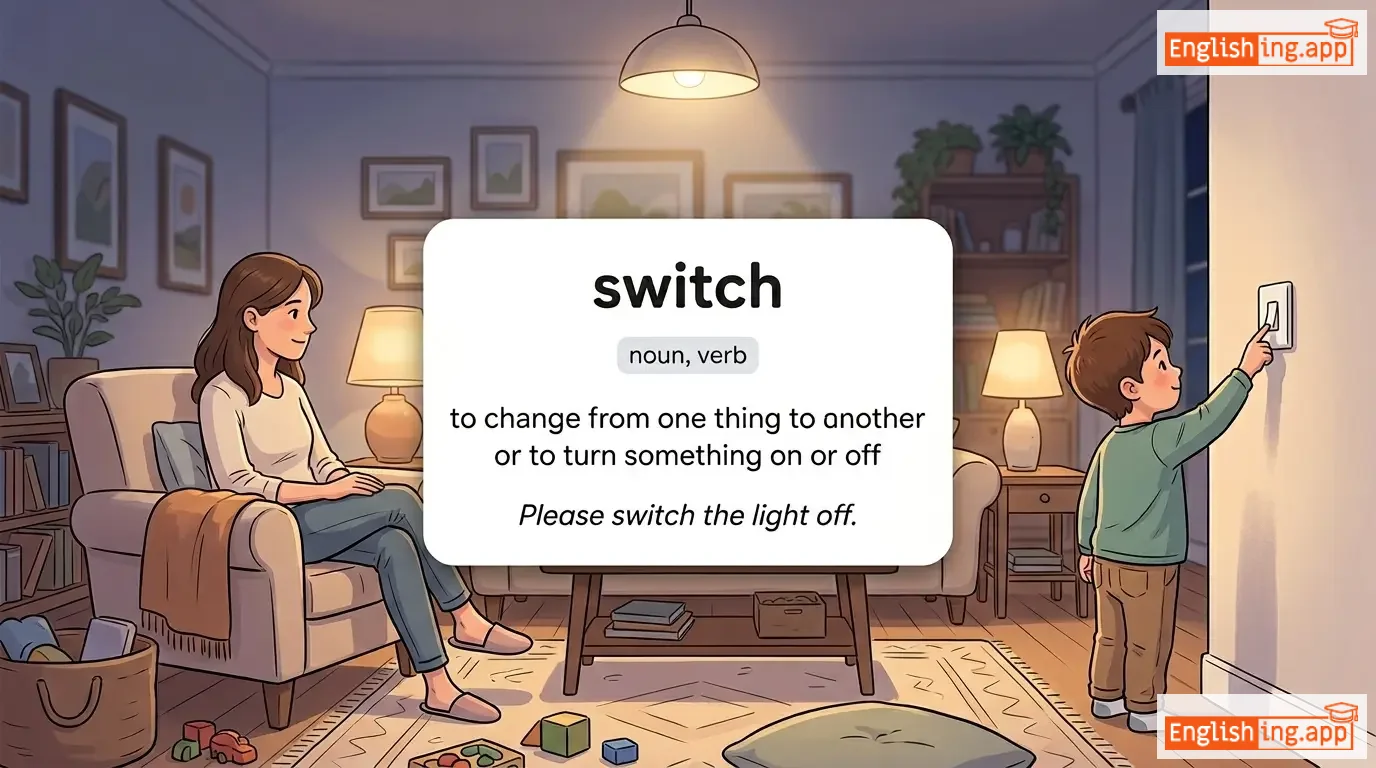
to change from one thing to another; to exchange or replace
|
I switched from coffee to tea.
Ich habe von Kaffee auf Tee gewechselt.
••••••
|
Ich habe von Kaffee auf Tee gewechselt.
Ich habe von Kaffee auf Tee gewechselt.
••••••
|
-
••••••
|
-
••••••
|
-
••••••
|
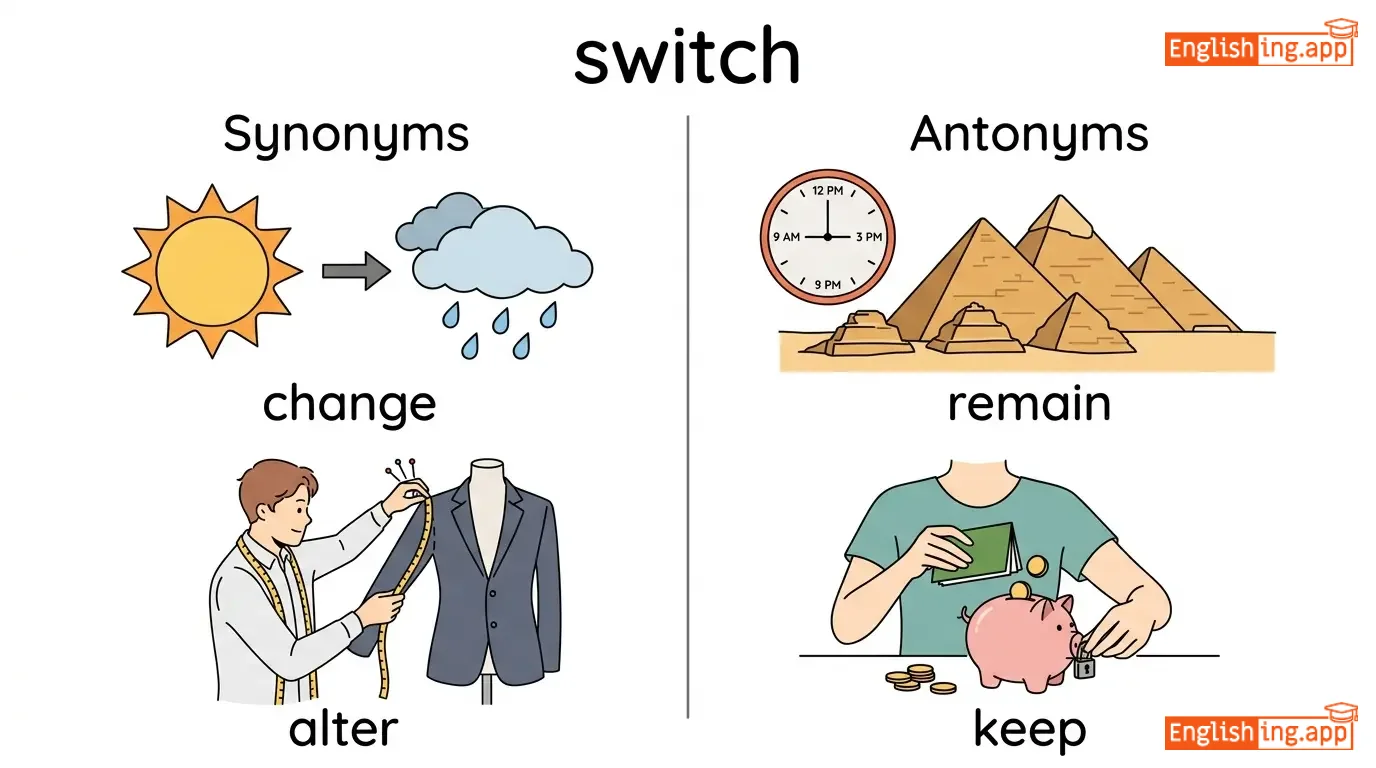
change, swap, exchange, shift
|
••••••
|
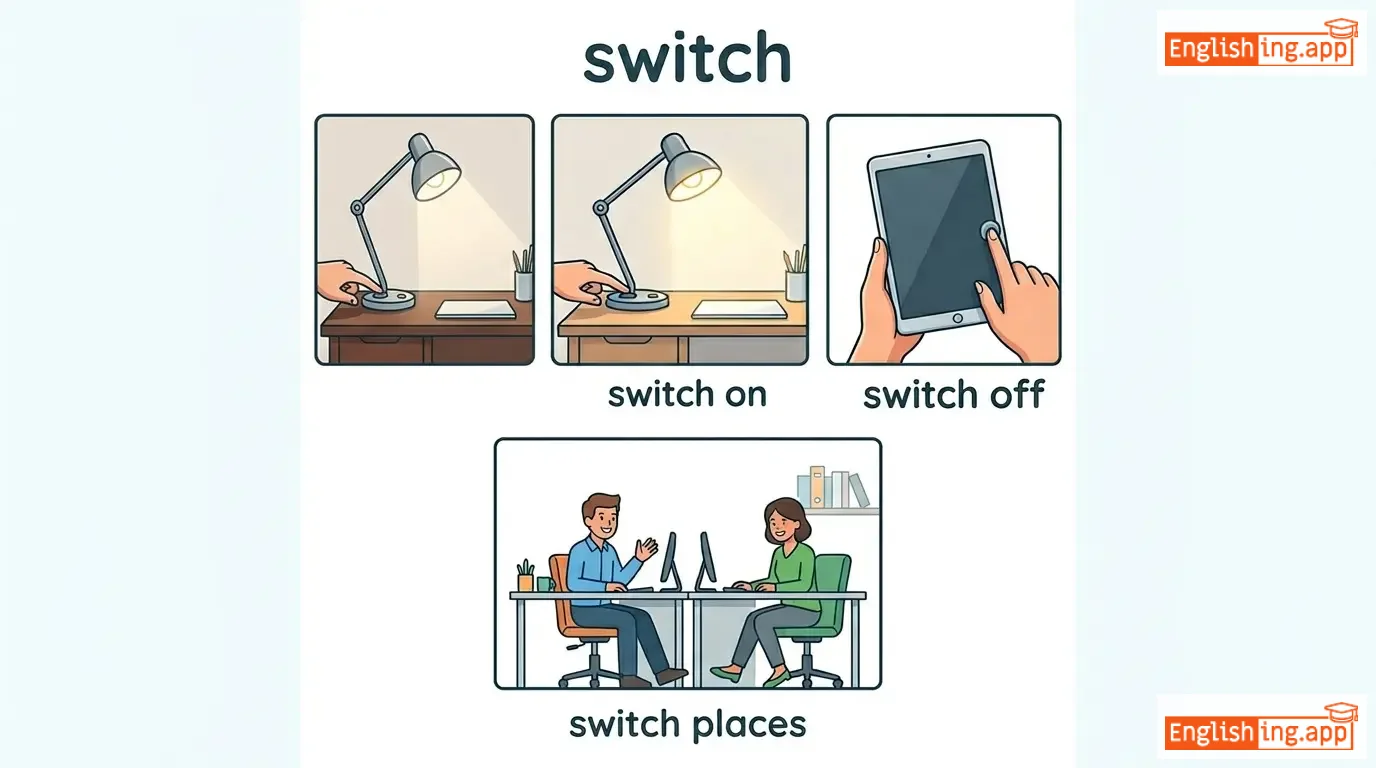
switch off, switch on, switch channels, switch jobs, switch sides
|
Switch die Richtung für frischen Wind!
••••••
|
|
⚔️
••••••
|
/sɔːrd/
noun
(sword)
••••••
|
-
••••••
|
Schwert
Schwert
••••••
|
-
••••••
|
-
••••••
|
-
••••••
|
-
••••••
|
a weapon with a long metal blade used for fighting
|
The knight drew his sword to defend the castle.
••••••
|
Der Ritter zog sein Schwert, um das Schloss zu verteidigen.
Der Ritter zog sein Schwert, um das Schloss zu verteidigen.
••••••
|
••••••
|
to argue or fight with someone
|
Schwerter kreuzen
Schwerter kreuzen
••••••
|
blade, dagger, saber, weapon, cutlass
|
••••••
|
draw a sword, sharp sword, sword fight, sword blade
|
SWOrd = Schwert, benutze dein Schwert für den Kampf!
••••••
|
|
🔣
••••••
|
/ˈsɪmbəl/
noun
(symbol)
••••••
|
-
••••••
|
Symbol
symbol
••••••
|
-
••••••
|
-
••••••
|
-
••••••
|
-
••••••
|
a mark or character used as a conventional representation of an object, function, or process
|
The dove is a symbol of peace.
Die Taube ist ein Symbol des Friedens.
••••••
|
Die Taube ist ein Symbol des Friedens.
Die Taube ist ein Symbol des Friedens.
••••••
|
-
••••••
|
-
••••••
|
-
••••••
|
sign, emblem, token, representation
|
reality, substance, literalness
|
symbol of peace, religious symbol, mathematical symbol, status symbol
|
Symbol mit der Taube des Friedens
••••••
|
|
🕊️
••••••
|
/sɪmˈbɒlɪk/
adjective
(symbolisch)
••••••
|
-
••••••
|
symbolisch
symbolisch
••••••
|
-
••••••
|
-
••••••
|
-
••••••
|
-
••••••
|
serving as a symbol or representing something else
|
The dove is symbolic of peace and freedom.
Die Taube ist symbolisch für Frieden und Freiheit.
••••••
|
Die Taube ist symbolisch für Frieden und Freiheit.
Die Taube ist symbolisch fuer Frieden und Freiheit.
••••••
|
symbolische Geste
••••••
|
an action meant to show support or respect rather than to have practical effect
|
symbolische Geste
symbolische Geste
••••••
|
representative, figurative, emblematic, metaphorical, indicative
|
literal, realistic, actual
|
symbolic meaning, symbolic gesture, symbolic act, symbolic representation
|
SYMBOL bedeutet Symbol — also bedeutet symbolisch in Form eines Symbols.
••••••
|
|
💙
••••••
|
/ˌsɪmpəˈθɛtɪk/
adjective
(sympathisch)
••••••
|
-
••••••
|
sympathisch
sympathisch
••••••
|
-
••••••
|
-
••••••
|
-
••••••
|
-
••••••
|
showing understanding or compassion for someone’s feelings or situation
|
She was very sympathetic when he lost his job.
Sie war sehr sympathisch, als er seinen Job verlor.
••••••
|
Sie war sehr sympathisch, als er seinen Job verlor.
Sie war sehr sympathisch, als er seinen Job verlor.
••••••
|
sympathisches Ohr
••••••
|
a person who listens with kindness and understanding
|
sympathisches Ohr
sympathisches Ohr
••••••
|
compassionate, caring, kind, supportive, understanding
|
indifferent, unfeeling, unsympathetic
|
sympathetic attitude, sympathetic ear, sympathetic response, sympathetic character
|
Sympathy + pathetic = mitfühlend gegenüber anderen sein
••••••
|
|
💐
••••••
|
/ˈsɪmpəθi/
noun
(simpathi)
••••••
|
-
••••••
|
Mitgefühl
Mitgefühl
••••••
|
-
••••••
|
-
••••••
|
-
••••••
|
-
••••••
|
feelings of pity and compassion for someone else's suffering
|
She expressed her sympathy for the grieving family.
Sie drückte ihr Mitgefühl für die trauernde Familie aus.
••••••
|
Sie drückte ihr Mitgefühl für die trauernde Familie aus.
Sie drückte ihr Mitgefühl für die trauernde Familie aus.
••••••
|
tiefe Mitgefühl
••••••
|
strong feelings of compassion
|
tiefes Mitgefühl
tiefes Mitgefühl
••••••
|
compassion, pity, condolence, understanding
|
••••••
|
express sympathy, offer sympathy, deep sympathy, sympathy card
|
Sympathy = Sim + Pathie → Sim gebrochenes Herz = Mitgefühl
••••••
|
|
🤒
••••••
|
/ˈsɪmptəm/
noun
(symptom)
••••••
|
-
••••••
|
Symptom
Symptom
••••••
|
-
••••••
|
-
••••••
|
-
••••••
|
-
••••••
|
a sign or indication of something, especially of an illness
|
Fever is a common symptom of the flu.
••••••
|
Fieber ist ein häufiges Symptom der Grippe.
Fieber ist ein haufiges Symptom der Grippe.
••••••
|
-
••••••
|
-
••••••
|
-
••••••
|
sign, indication, manifestation, mark
|
••••••
|
symptom of illness, common symptom, early symptom
|
Symptom like fever: You feel sick (krank) when you're ill!
••••••
|
|
🧬
••••••
|
/ˈsɪnˌdroʊm/
noun
(syndrom)
••••••
|
-
••••••
|
Syndrom
Syndrom
••••••
|
-
••••••
|
-
••••••
|
-
••••••
|
-
••••••
|
a group of symptoms that occur together and characterize a condition or disease
|
Down syndrome affects a person's physical and mental development.
••••••
|
Das Down-Syndrom beeinflusst die körperliche und geistige Entwicklung einer Person.
Das Down-Syndrom beeinflusst die koerperliche und geistige Entwicklung einer Person.
••••••
|
-
••••••
|
-
••••••
|
-
••••••
|
disorder, condition, ailment, illness, disease
|
••••••
|
Down syndrome, chronic syndrome, severe syndrome, rare syndrome
|
SYN = zusammen, DROME = laufen — viele Symptome laufen zusammen = Syndrom!
••••••
|
|
⚗️
••••••
|
/ˈsɪnθəsɪs/
noun
••••••
|
••••••
|
-
••••••
|
-
••••••
|
-
••••••
|
-
••••••
|
-
••••••
|
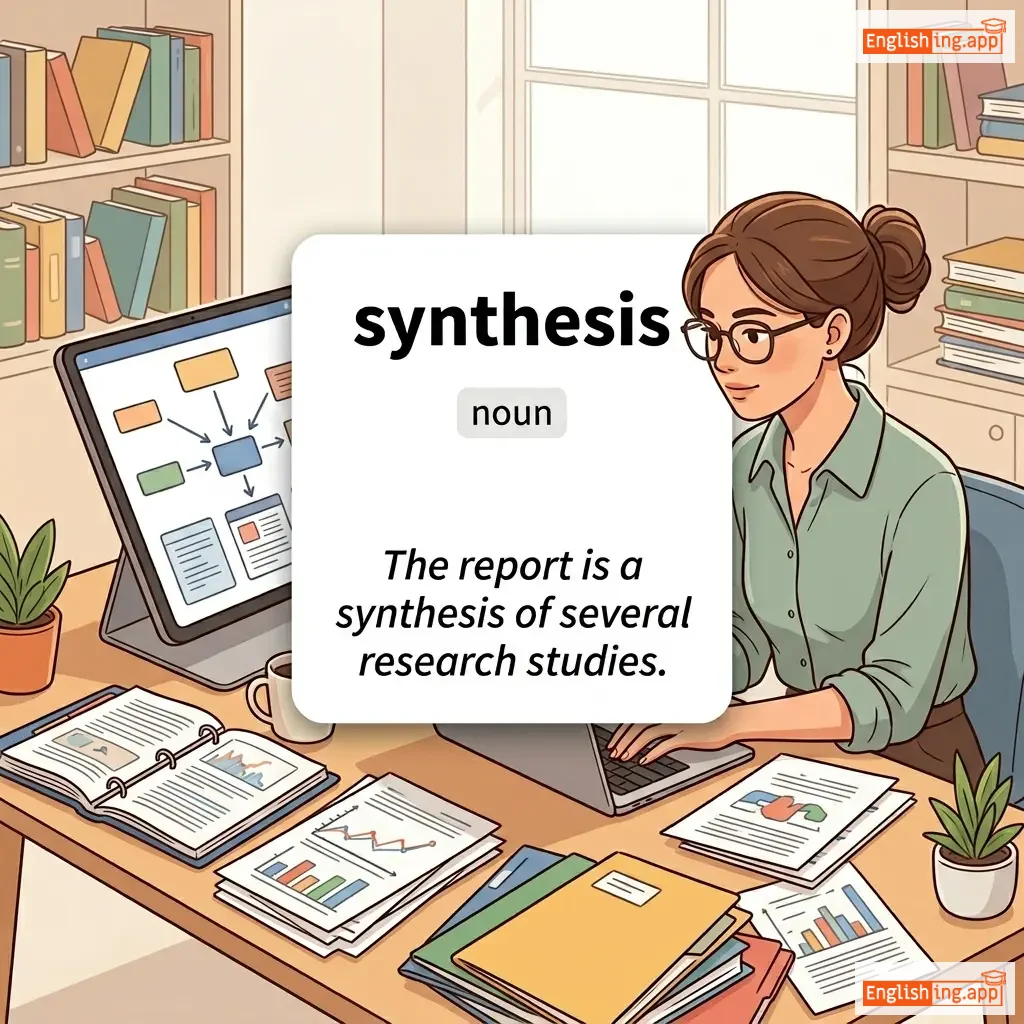
The combination of different ideas, elements, or substances into a coherent whole.
|
The report is a synthesis of several research studies.
••••••
|
-
••••••
|
thesis-antithesis-synthesis
••••••
|
A philosophical framework where opposing ideas resolve into a new understanding.
|
-
••••••
|
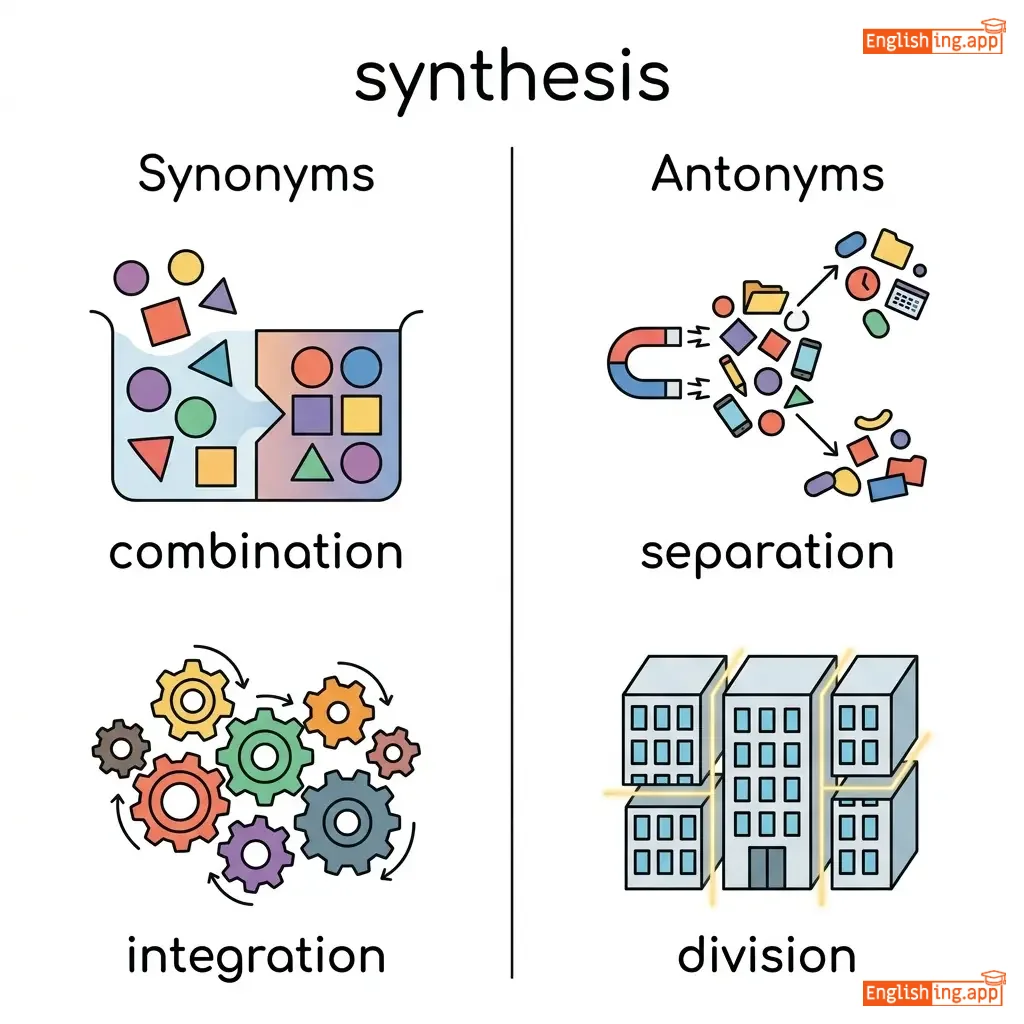
combination, integration, fusion, amalgamation, unification
|
separation, division, analysis
|
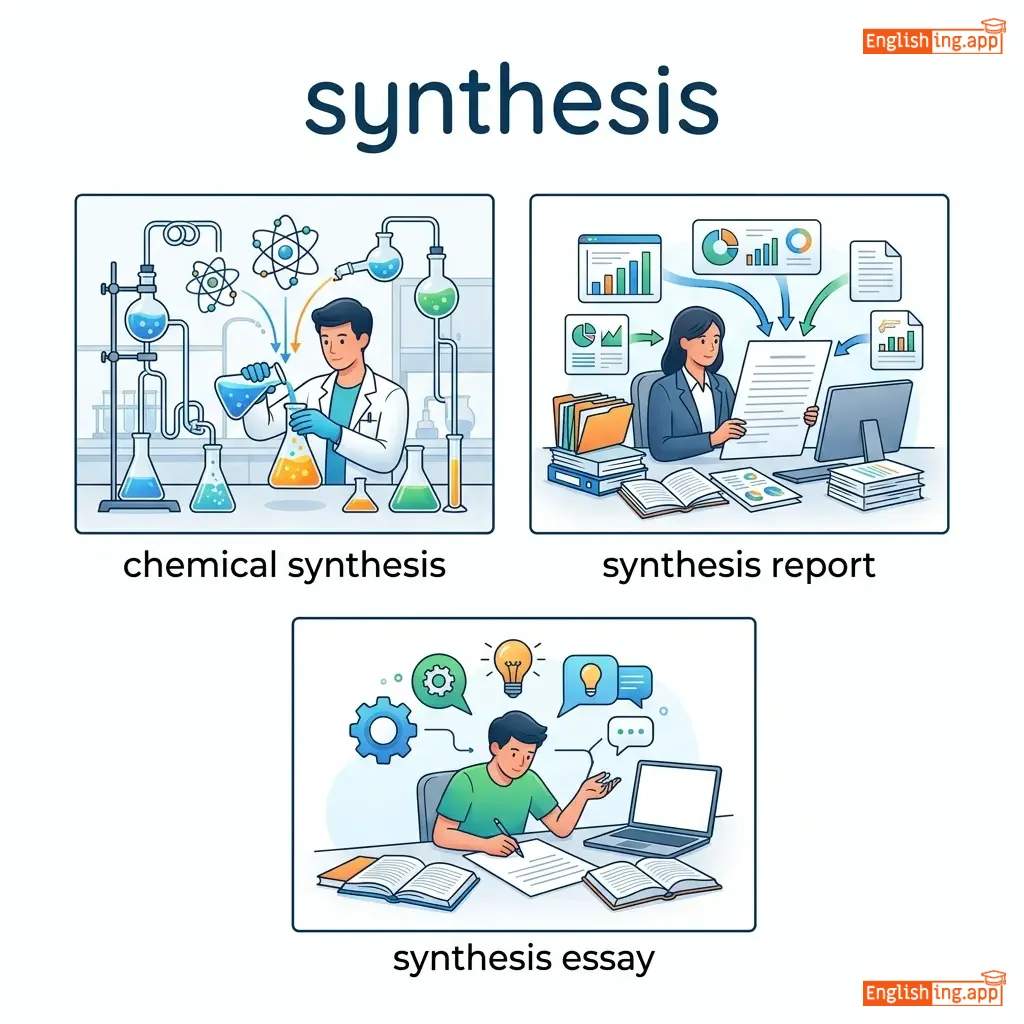
chemical synthesis, synthesis report, synthesis essay, data synthesis
|
No
••••••
|
|
🖥️
••••••
|
/ˈsɪstəm/
noun
(sɪstɛm)
••••••
|
-
••••••
|
System
system
••••••
|
-
••••••
|
-
••••••
|
-
••••••
|
-
••••••
|
a set of connected parts forming a complex whole; an organized method
|
The education system needs major reforms.
••••••
|
Das Bildungssystem benötigt große Reformen.
Das Bildungssystem benötigt große Reformen.
••••••
|
••••••
|
an organized and methodical way
|
systematischer Ansatz
systematischer ansatz
••••••
|
structure, organization, framework, network
|
••••••
|
education system, computer system, political system, solar system
|
System = System, wie 'Sonnensystem', das System der Planeten
••••••
|
|
📊
••••••
|
/ˌsɪstəˈmætɪk/
adjective
(sistəmætɪk)
••••••
|
-
••••••
|
systematisch
systematisch
••••••
|
-
••••••
|
-
••••••
|
-
••••••
|
-
••••••
|
Done or acting according to a fixed plan or system; methodical.
|
The company took a systematic approach to solving the issue.
••••••
|
Das Unternehmen verfolgte einen systematischen Ansatz zur Lösung des Problems.
Das Unternehmen verfolgte einen systematischen Ansatz zur Lösung des Problems.
••••••
|
••••••
|
An error that consistently occurs in the same direction due to flaws in a system.
|
systematischer Fehler
systematischer Fehler
••••••
|
methodical, organized, structured, logical, disciplined
|
random, chaotic, disorganized
|
systematic review, systematic study, systematic approach, systematic plan
|
Systematisch bedeutet, alles nach einem System zu tun.
••••••
|
|
🍽️
••••••
|
/ˈteɪbəl/
noun
(teːbəl)
••••••
|
-
••••••
|
Tisch
Tisch
••••••
|
-
••••••
|
-
••••••
|
-
••••••
|
-
••••••
|
A piece of furniture with a flat top and legs, used for working at or placing items on.
|
They placed the documents on the table.
••••••
|
Sie legten die Dokumente auf den Tisch.
Sie legten die Dokumente auf den Tisch.
••••••
|
••••••
|
To reverse a situation and gain an advantage over someone.
|
die Situation umdrehen
die Situation umdrehen
••••••
|
desk, counter, bench, surface
|
••••••
|
dining table, coffee table, round table, table manners
|
Setz dich an den Tisch (Tisch) und 'drehe die Situation um' – gewinne an Vorteil.
••••••
|
|
🥄
••••••
|
/ˈteɪbəlˌspun/
noun
(Esslöffel)
••••••
|
-
••••••
|
Esslöffel
Essloeffel
••••••
|
-
••••••
|
-
••••••
|
-
••••••
|
-
••••••
|
a spoon used for serving or eating food, typically holding about 15 milliliters
|
She stirred the soup with a tablespoon.
Sie rührte die Suppe mit einem Esslöffel.
••••••
|
Sie rührte die Suppe mit einem Esslöffel.
Sie ruehrte die Suppe mit einem Essloeffel.
••••••
|
-
••••••
|
-
••••••
|
-
••••••
|
soup spoon, serving spoon
|
••••••
|
tablespoon of sugar, tablespoon of salt, a full tablespoon
|
Esslöffel zum Essen (Essloeffel zum Essen) - Imagine stirring with a spoonful of food.
••••••
|
|
💊
••••••
|
/ˈtæblət/
noun
(Tablet)
••••••
|
-
••••••
|
Tablet
Tablet
••••••
|
-
••••••
|
-
••••••
|
-
••••••
|
-
••••••
|
a small flat computer or a small solid dose of medicine
|
She took a tablet to relieve her headache.
Sie nahm eine Tablette, um ihre Kopfschmerzen zu lindern.
••••••
|
Sie nahm eine Tablette, um ihre Kopfschmerzen zu lindern.
Sie nahm eine Tablette, um ihre Kopfschmerzen zu lindern.
••••••
|
-
••••••
|
-
••••••
|
-
••••••
|
••••••
|
••••••
|
take a tablet, tablet device, tablet computer, tablet form
|
Table + ette = Tablette; imagine a tiny table holding a pill
••••••
|
|
⚡
••••••
|
/ˈtæk.əl/
verb, noun
(Tackle)
••••••
|
-
••••••
|
lösen, stoppen
lösen, stoppen
••••••
|
tacklet
••••••
|
tacklet
••••••
|
tacklet
••••••
|
tackling
••••••
|
to try to deal with or solve a difficult problem; to physically stop someone in sports by knocking them down
|
The coach taught the players how to tackle properly.
Der Trainer zeigte den Spielern, wie man richtig tackelt.
••••••
|
Der Trainer zeigte den Spielern, wie man richtig tackelt.
Der Trainer zeigte den Spielern, wie man richtig tackelt.
••••••
|
ein Problem lösen
••••••
|
to deal with or try to solve a problem
|
ein Problem lösen
ein Problem lösen
••••••
|
confront, address, handle, seize, wrestle
|
••••••
|
tackle a challenge, tackle crime, tackle poverty, tackle an issue
|
Ein Problem lösen, um erfolgreich zu tackeln
••••••
|
|
🎯
••••••
|
/ˈtæk.tɪk/
noun
(taktik)
••••••
|
-
••••••
|
Strategie; Taktik
strategie; taktik
••••••
|
-
••••••
|
-
••••••
|
-
••••••
|
-
••••••
|
a plan or method for achieving something; a strategy used to accomplish a goal
|
The coach used a new tactic to win the game.
••••••
|
Der Trainer verwendete eine neue Taktik, um das Spiel zu gewinnen.
Der Trainer verwendete eine neue Taktik, um das Spiel zu gewinnen.
••••••
|
-
••••••
|
-
••••••
|
-
••••••
|
strategy, approach, method, plan, technique
|
improvisation, spontaneity
|
military tactic, defensive tactic, clever tactic, winning tactic
|
Das Team benötigt eine Taktik, um das Spiel zu gewinnen.
••••••
|
|
🎯
••••••
|
/ˈtæktɪkəl/
adjective
(taktisch)
••••••
|
-
••••••
|
strategisch
strategisch
••••••
|
-
••••••
|
-
••••••
|
-
••••••
|
-
••••••
|
relating to or involving tactics or strategy
|
The team had a tactical plan for the final match.
••••••
|
Das Team hatte einen taktischen Plan für das letzte Spiel.
Das Team hatte einen taktischen Plan für das letzte Spiel.
••••••
|
-
••••••
|
-
••••••
|
-
••••••
|
strategic, planned, calculated, methodical
|
••••••
|
tactical approach, tactical advantage, tactical strategy
|
Tactical ist wie ‘Takt’ – man muss taktisch sein, um die beste Strategie zu planen.
••••••
|
|
🏷️
••••••
|
/tæɡ/
noun, verb
(tag)
••••••
|
-
••••••
|
Etikett
etikett
••••••
|
gekennzeichnet
••••••
|
gekennzeichnet
••••••
|
kennzeichnet
••••••
|
kennzeichnen
••••••
|
a label attached to something for identification or information; or to attach such a label
|
She tagged her luggage before boarding the plane.
Sie hat ihr Gepäck vor dem Einsteigen ins Flugzeug markiert.
••••••
|
Sie hat ihr Gepäck vor dem Einsteigen ins Flugzeug markiert.
Sie hat ihr Gepäck vor dem Einsteigen ins Flugzeug markiert.
••••••
|
mitkommen
••••••
|
to go somewhere with someone, often without being invited
|
mitkommen
mitkommen
••••••
|
label, marker, ticket, sticker, mark
|
••••••
|
price tag, luggage tag, tag along, tag a photo
|
Tag bedeutet Etikett, wie ein Aufkleber auf einem Gepäckstück
••••••
|
|
🐕
••••••
|
/teɪl/
noun
(teyl)
••••••
|
-
••••••
|
Schwanz
Schwanz
••••••
|
-
••••••
|
-
••••••
|
-
••••••
|
-
••••••
|
the rear part of an animal that extends from the back or bottom
|
The dog wagged its tail happily when it saw its owner.
••••••
|
Der Hund wedelte fröhlich mit seinem Schwanz, als er seinen Besitzer sah.
Der Hund wedelte fröhlich mit seinem Schwanz, als er seinen Besitzer sah.
••••••
|
-
••••••
|
-
••••••
|
-
••••••
|
••••••
|
••••••
|
dog tail, long tail, wagging tail, tail feathers
|
Schwanz = tail in German, and both wag with joy!
••••••
|
|
🚌
••••••
|
/teɪk/
verb
(teik)
••••••
|
••••••
|
nehmen
nehmen
••••••
|
tuk
••••••
|
teiken
••••••
|
teiks
••••••
|
teiking
••••••
|
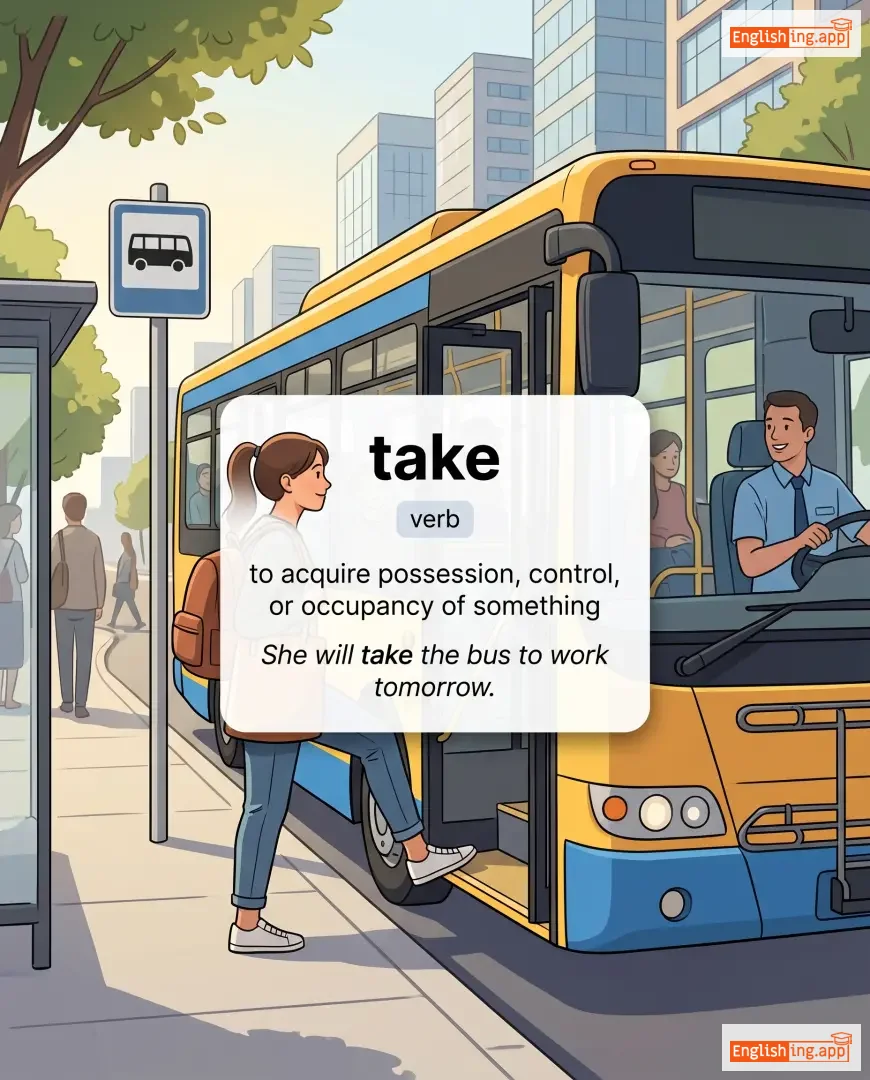
to acquire possession, control, or occupancy of something
|
She will take the bus to work tomorrow.
Sie wird morgen den Bus zur Arbeit nehmen.
••••••
|
Sie wird morgen den Bus zur Arbeit nehmen.
Sie wird morgen den Bus zur Arbeit nehmen.
••••••
|
Nutzen ziehen
••••••
|
to exploit or make good use of an opportunity
|
Nutzen ziehen
Nutzen ziehen
••••••
|
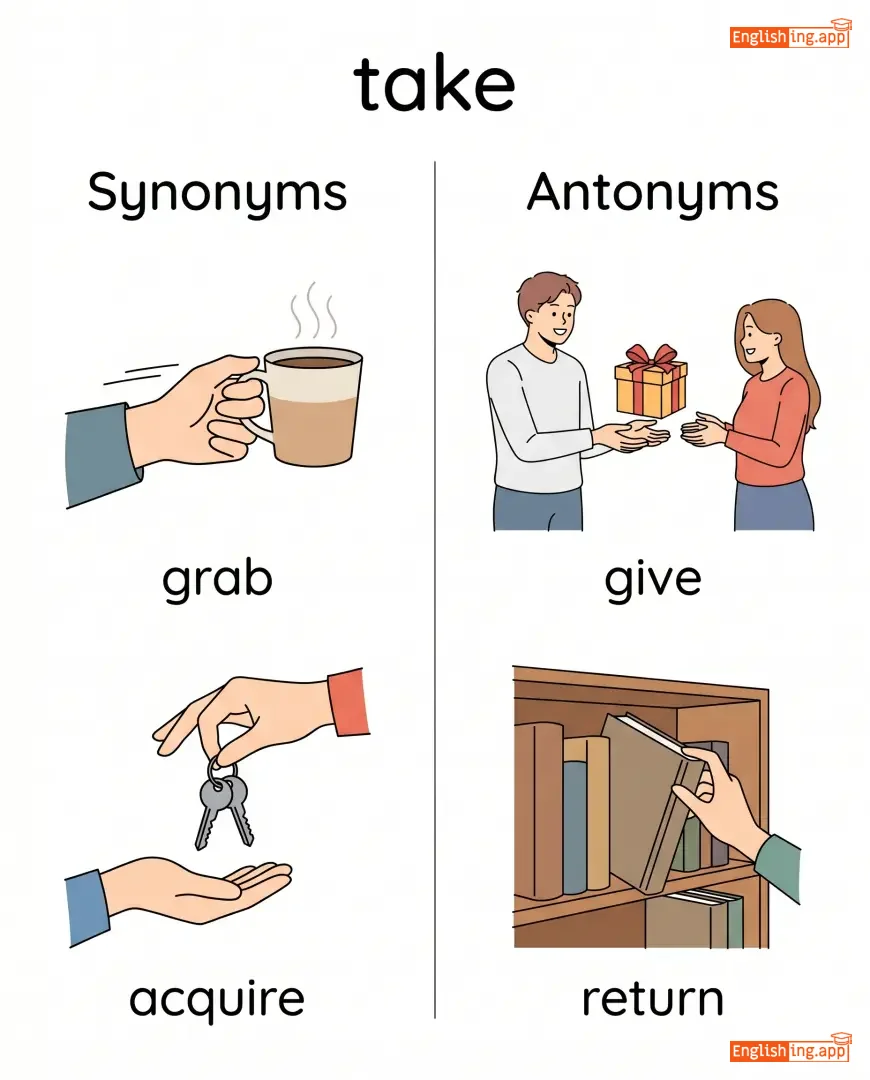
grab, acquire, seize, accept
|
••••••
|
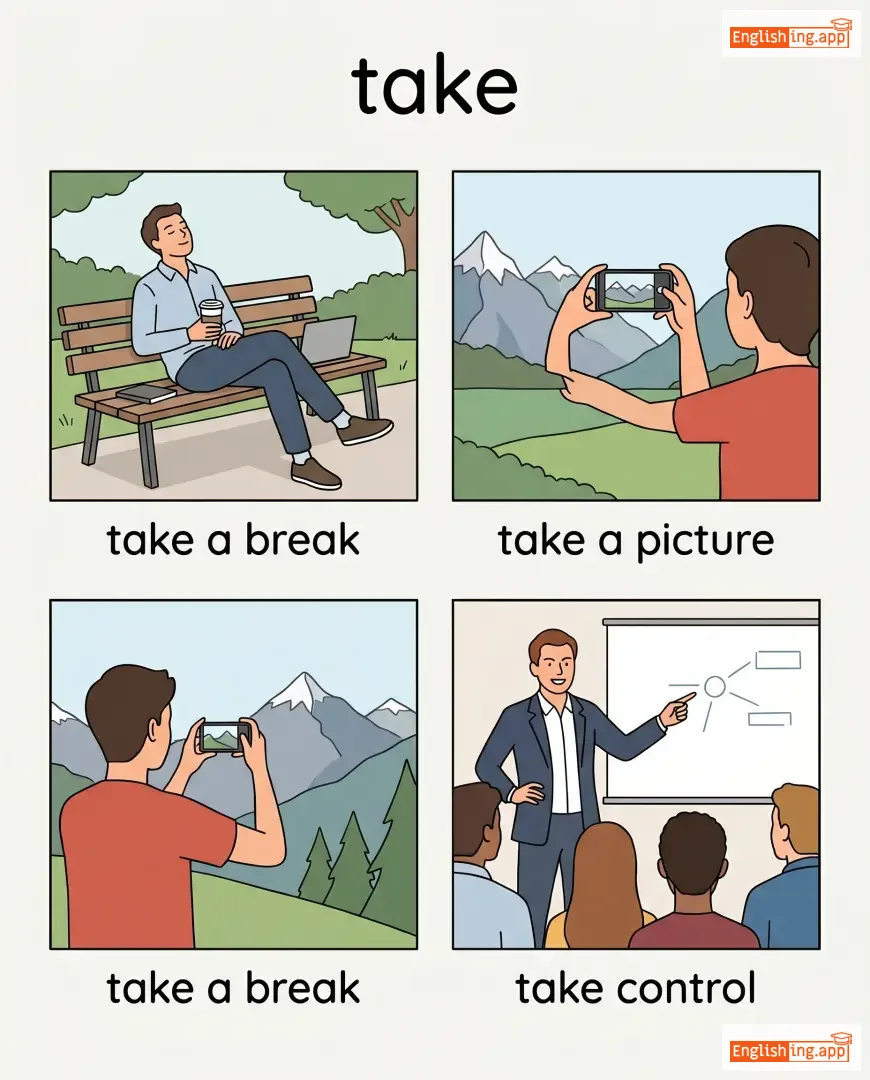
take a break, take a picture, take control
|
Wenn du nimmst (take), bekommst du - If you take it, you will have it.
••••••
|
|
🛫
••••••
|
/teɪk ɒf/
verb
(teik of)
••••••
|
-
••••••
|
abheben; entfernen
abheben; entfernen
••••••
|
took off
tuk of
••••••
|
taken off
teiken of
••••••
|
takes off
teiks of
••••••
|
taking off
teiking of
••••••
|
to remove something; to leave the ground and begin flying (airplane); to suddenly become successful or popular
••••••
|
The airplane will take off in ten minutes.
Das Flugzeug wird in zehn Minuten abheben.
••••••
|
Das Flugzeug wird in zehn Minuten abheben.
Das Flugzeug wird in zehn Minuten abheben.
••••••
|
abheben wie eine Rakete
••••••
|
to suddenly become very successful or popular
••••••
|
plötzlich sehr erfolgreich werden
plötzlich sehr erfolgreich werden
••••••
|
depart, leave, lift off, remove, ascend
••••••
|
land, arrive, stay
••••••
|
take off clothes, take off rapidly, take off plane, take off career
••••••
|
Take off = abheben, wie das Flugzeug in den Himmel!
••••••
|
|
📖
••••••
|
/teɪl/
noun
(teɪl)
••••••
|
-
••••••
|
Märchen
maerchen
••••••
|
-
••••••
|
-
••••••
|
-
••••••
|
-
••••••
|
a narrative of imaginary events, especially one that is presented as true
|
The old man told a tale of his adventures.
••••••
|
Der alte Mann erzählte ein Märchen über seine Abenteuer.
Der alte Mann erzählte ein Märchen über seine Abenteuer.
••••••
|
••••••
|
an exaggerated story, often one that is not true
|
große Geschichte
grosse geschichte
••••••
|
story, narrative, legend, fable
|
••••••
|
fairy tale, tall tale, bedtime tale
|
Märchen (Märchen) aus der Fantasie - A tale spun from fantasy
••••••
|
|
🎨
••••••
|
/ˈtælənt/
noun
(talent)
••••••
|
-
••••••
|
Talent
talent
••••••
|
-
••••••
|
-
••••••
|
-
••••••
|
-
••••••
|
natural aptitude or skill
|
She has a great talent for painting.
Sie hat ein großes Talent für Malerei.
••••••
|
Sie hat ein großes Talent für Malerei.
Sie hat ein großes Talent für Malerei.
••••••
|
-
••••••
|
-
••••••
|
-
••••••
|
ability, skill, gift, knack, expertise
|
incompetence, ineptitude, inability
|
natural talent, artistic talent, hidden talent, raw talent
|
Talented artists create TALENTS, like painting!
••••••
|
|
⭐
••••••
|
/ˈtæl.ən.tɪd/
adjective
(tæl.ən.tɪd)
••••••
|
-
••••••
|
talentiert
talentiert
••••••
|
-
••••••
|
-
••••••
|
-
••••••
|
-
••••••
|
having a natural ability or skill in a particular area
|
She is a talented musician who plays multiple instruments.
Sie ist eine talentierte Musikerin, die mehrere Instrumente spielt.
••••••
|
Sie ist eine talentierte Musikerin, die mehrere Instrumente spielt.
Sie ist eine talentierte Musikerin, die mehrere Instrumente spielt.
••••••
|
-
••••••
|
-
••••••
|
-
••••••
|
gifted, skilled, accomplished, capable
|
untalented, inept, incompetent, unskilled
|
talented artist, talented performer, talented individual
|
‘Talent’ bedeutet ‘talentiert’ in Deutsch, was bedeutet, dass jemand etwas besonders gut kann.
••••••
|
|
💬
••••••
|
/tɔːk/
verb
(tɔk)
••••••
|
••••••
|
sprechen
sprechen
••••••
|
tɔkt
••••••
|
tɔkt
••••••
|
tɔks
••••••
|
tɔkɪŋ
••••••
|
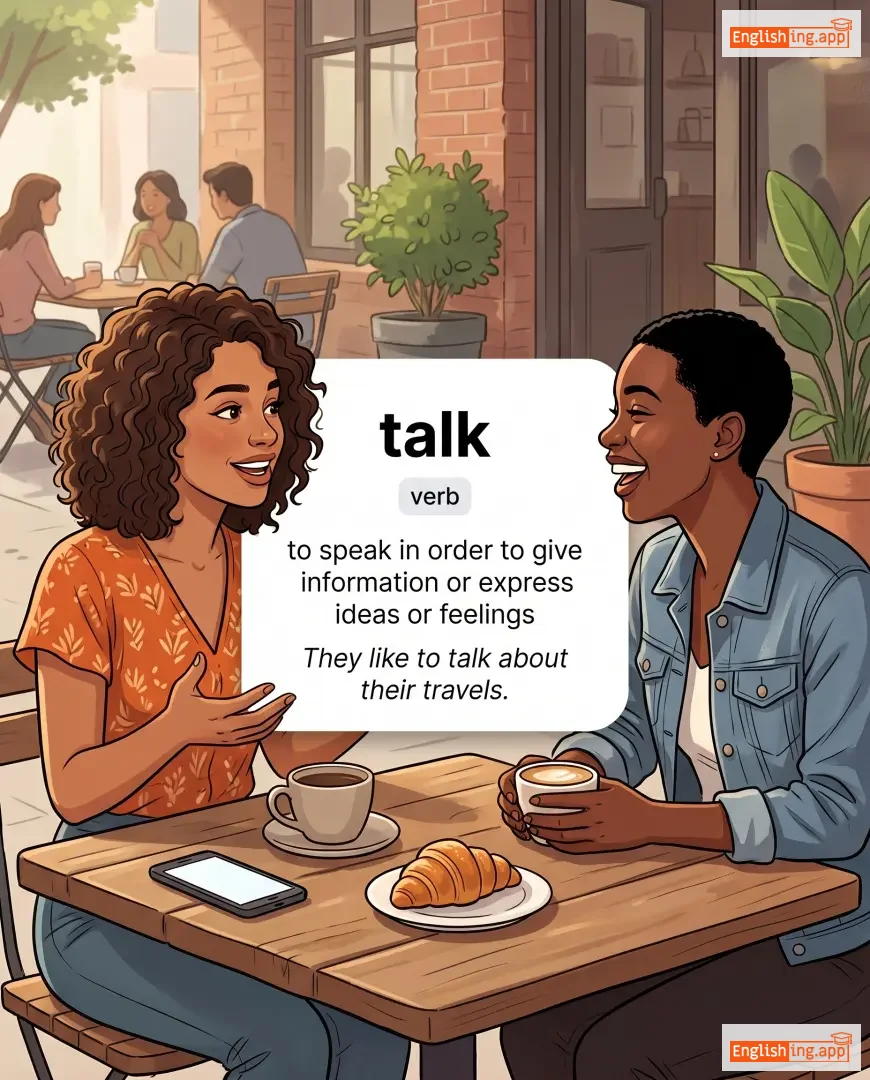
to speak; to communicate by speaking; to discuss
|
Let's talk about your future plans.
lɛts tɔk əbaʊt jɔʁ fytyʁ plɑ̃s.
••••••
|
Lass uns über deine zukünftigen Pläne sprechen.
Lass uns über deine zukünftigen Pläne sprechen
••••••
|
-
••••••
|
-
••••••
|
-
••••••
|
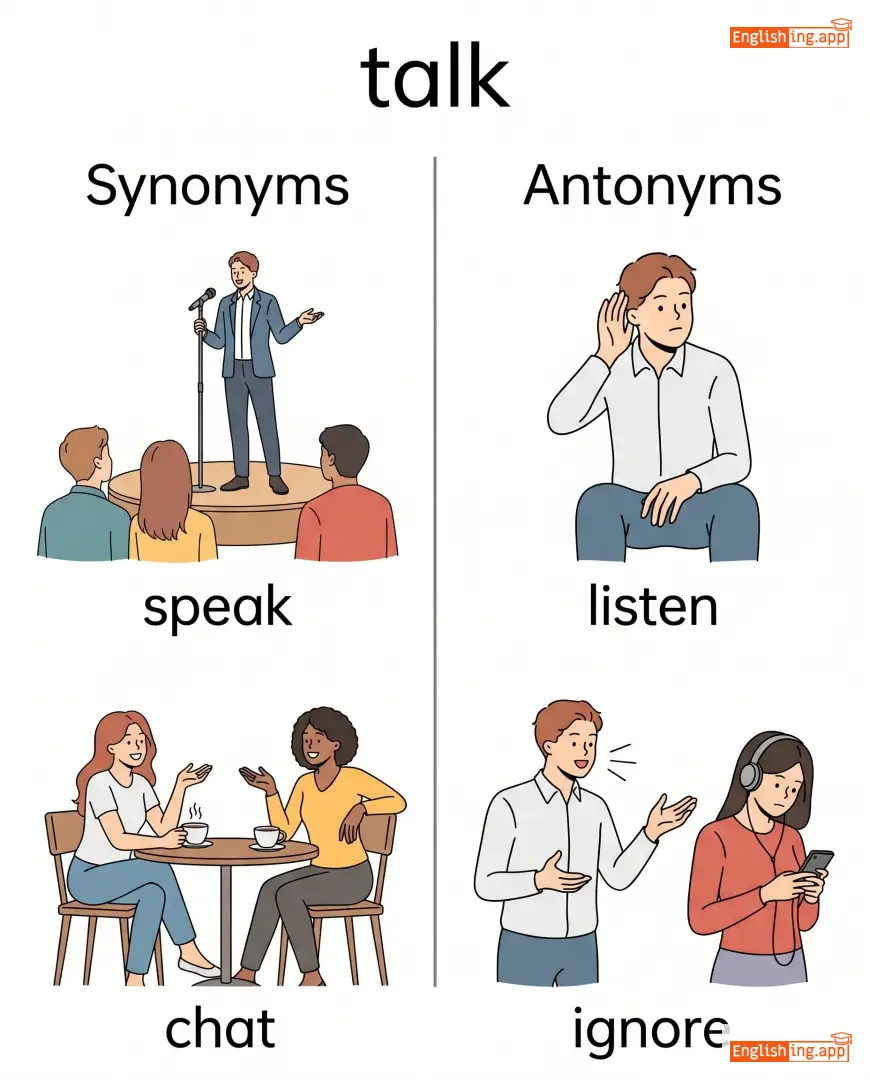
speak, communicate, converse, discuss
|
listen, be silent, stay quiet
|
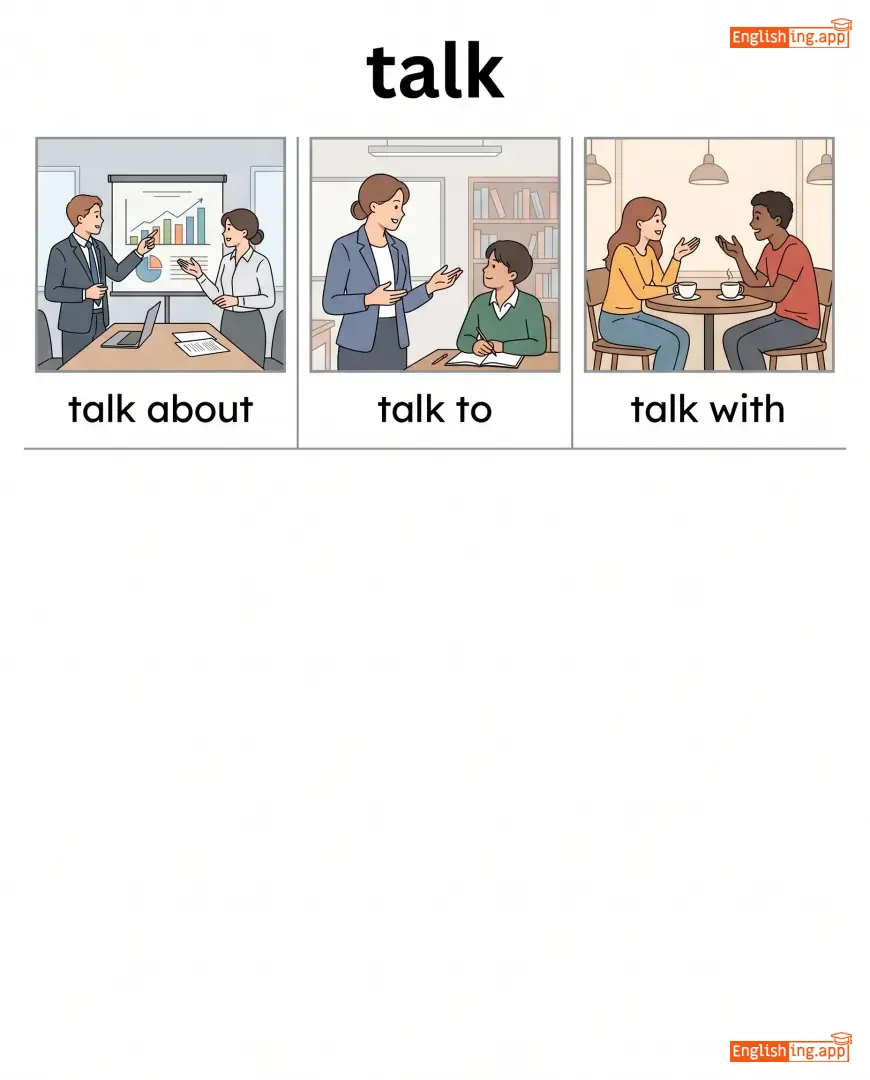
talk about, talk to, talk over, small talk, talk shop
|
No
••••••
|
|
🗣️
••••••
|
/ˈtɔː.kə.tɪv/
adjective
(tɔː.kə.tɪv)
••••••
|
-
••••••
|
gesprächig
gespraechig
••••••
|
-
••••••
|
-
••••••
|
-
••••••
|
-
••••••
|
fond of talking; speaking freely and at length
|
My talkative neighbor loves to chat about everything.
••••••
|
Mein gesprächiger Nachbar liebt es, über alles zu plaudern.
Mein gesprächiger Nachbar liebt es, über alles zu plaudern.
••••••
|
-
••••••
|
-
••••••
|
-
••••••
|
chatty, verbose, loquacious, garrulous
|
quiet, silent, reserved, taciturn
|
talkative person, talkative mood, talkative nature
|
Gesprächig klingt wie das Wort 'Gespräch', das 'Gespräch' bedeutet.
••••••
|
|
📏
••••••
|
/tɔːl/
adjective
(tahl)
••••••
|
-
••••••
|
groß
gross
••••••
|
-
••••••
|
-
••••••
|
-
••••••
|
-
••••••
|
having a greater than average height
|
He is the tallest player on the team.
••••••
|
Er ist der größte Spieler im Team.
Er ist der größte Spieler im Team.
••••••
|
••••••
|
a difficult or challenging task
|
eine schwierige Aufgabe
eine schwierige Aufgabe
••••••
|
high, lofty, towering, elevated
|
••••••
|
tall building, tall person, tall story, tall tree
|
Tall bedeutet groß, wie ein hoher Turm.
••••••
|
|
🚙
••••••
|
/tæŋk/
noun
(tank)
••••••
|
-
••••••
|
Panzer
Panzer
••••••
|
-
••••••
|
-
••••••
|
-
••••••
|
-
••••••
|
a large, heavy military vehicle that moves on tracks and is armed with weapons
|
The army sent tanks to the front lines.
Die Armee schickte Panzer an die Front.
••••••
|
Die Armee schickte Panzer an die Front.
Die Armee schickte Panzer an die Front.
••••••
|
-
••••••
|
-
••••••
|
-
••••••
|
armored vehicle, combat vehicle, war machine
|
••••••
|
military tank, battle tank, army tank
|
Imagine a TANK rolling onto a giant PAN; a sign adds ZER to complete PANZER.
••••••
|
|
🔨
••••••
|
/tæp/
verb
(tæp)
••••••
|
-
••••••
|
klopfen
klopfen
••••••
|
tapped
••••••
|
tapped
••••••
|
taps
••••••
|
tapping
••••••
|
to strike something lightly, usually with a quick, sharp sound
|
He tapped on the door to get her attention.
Er klopfte an die Tür, um ihre Aufmerksamkeit zu erregen.
••••••
|
Er klopfte an die Tür, um ihre Aufmerksamkeit zu erregen.
Er klopfte an die Tur, um ihre Aufmerksamkeit zu erregen.
••••••
|
-
••••••
|
-
••••••
|
-
••••••
|
••••••
|
••••••
|
tap on, tap the table, tap gently
|
Klopfen an die Tür: Klopfe, um ihre Aufmerksamkeit zu bekommen!
••••••
|
|
📼
••••••
|
/teɪp/
noun
(teyp)
••••••
|
-
••••••
|
Klebeband
Klebeband
••••••
|
-
••••••
|
-
••••••
|
-
••••••
|
-
••••••
|
a long, narrow strip of material, often sticky on one side, used for fastening or sticking things together
|
I need some tape to seal this box.
••••••
|
Ich brauche etwas Klebeband, um diese Box zu versiegeln.
Ich brauche etwas Klebeband, um diese Box zu versiegeln.
••••••
|
-
••••••
|
-
••••••
|
-
••••••
|
adhesive, sticky tape, masking tape, sellotape
|
••••••
|
scotch tape, masking tape, duct tape, adhesive tape
|
Tape it up to seal it tight!
••••••
|
|
📝
••••••
|
/tɑːsk/
noun
(tɑːsk)
••••••
|
-
••••••
|
Aufgabe
Aufgabe
••••••
|
-
••••••
|
-
••••••
|
-
••••••
|
-
••••••
|
a piece of work or duty to be done
|
He completed the task before the deadline.
Er hat die Aufgabe vor der Frist erledigt.
••••••
|
Er hat die Aufgabe vor der Frist erledigt.
Er hat die Aufgabe vor der Frist erledigt.
••••••
|
-
••••••
|
-
••••••
|
-
••••••
|
job, duty, assignment, chore
|
••••••
|
complete a task, task manager, important task
|
TASK - Stellen Sie sich eine Liste von kleinen 'Aufgaben' vor, die Sie an einem Tag erledigen müssen.
••••••
|
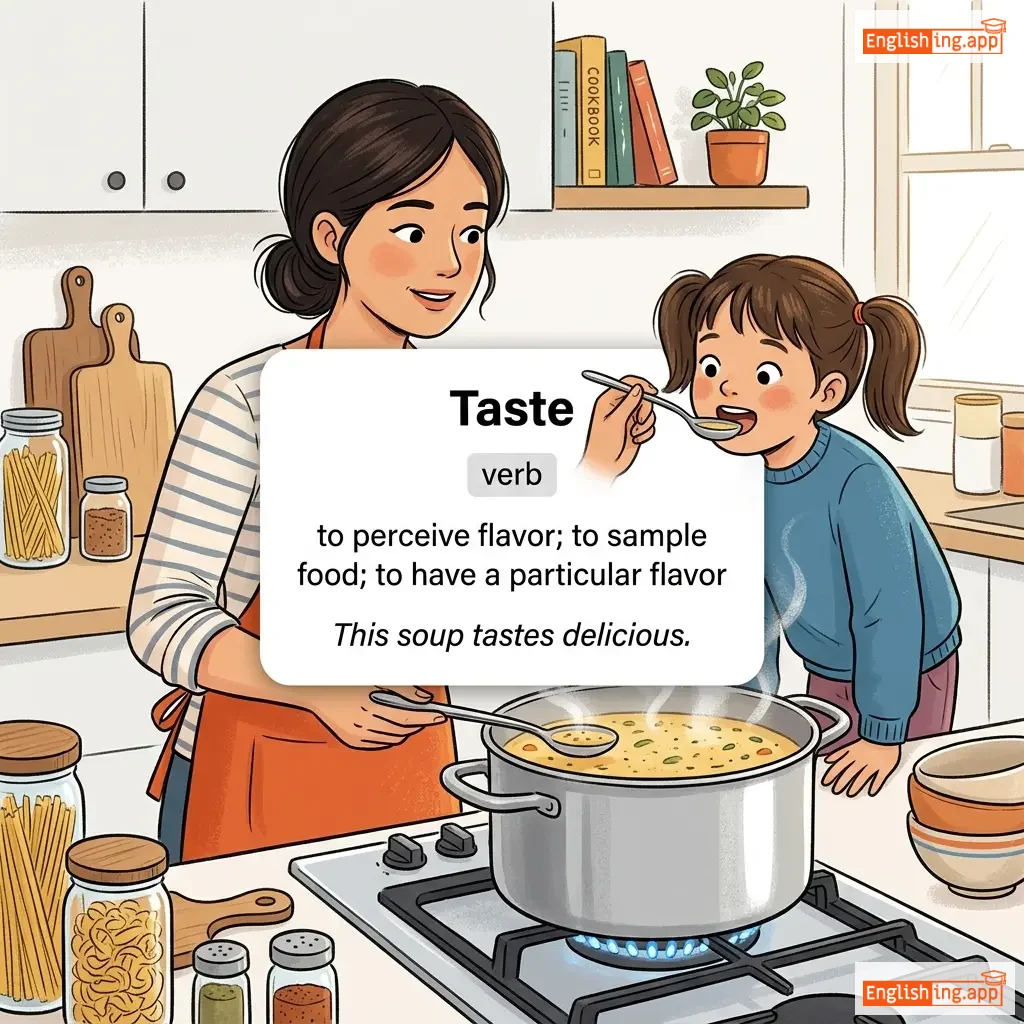
|
👅
••••••
|
/teɪst/
verb
(tɛst)
••••••
|
••••••
|
schmecken
schmecken
••••••
|
tɛstəd
••••••
|
tɛstəd
••••••
|
tɛsts
••••••
|
tɛstɪŋ
••••••
|
to perceive flavor; to sample food; to have a particular flavor
|
This soup tastes delicious.
Diese Suppe schmeckt köstlich.
••••••
|
Diese Suppe schmeckt köstlich.
Diese Suppe schmeckt köstlich
••••••
|
-
••••••
|
-
••••••
|
-
••••••
|
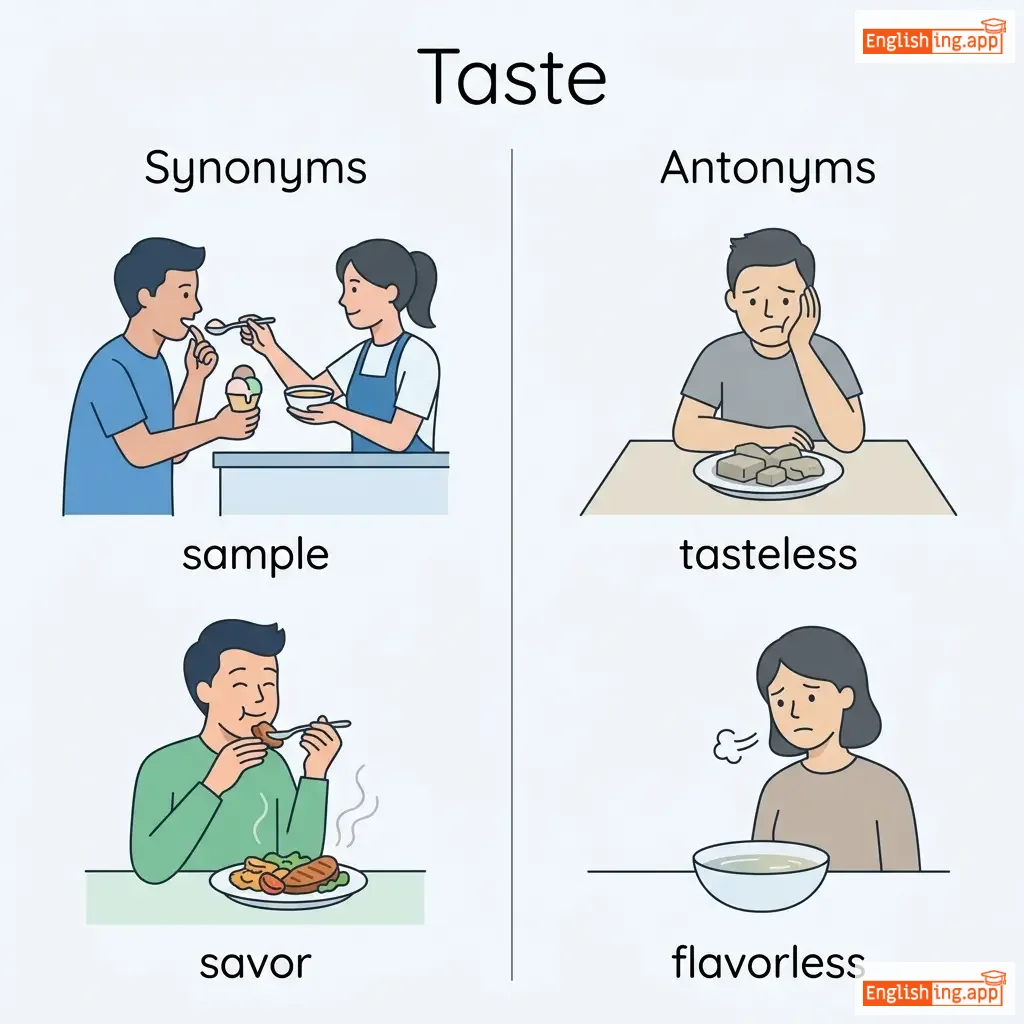
sample, savor, flavor, try
|
••••••
|
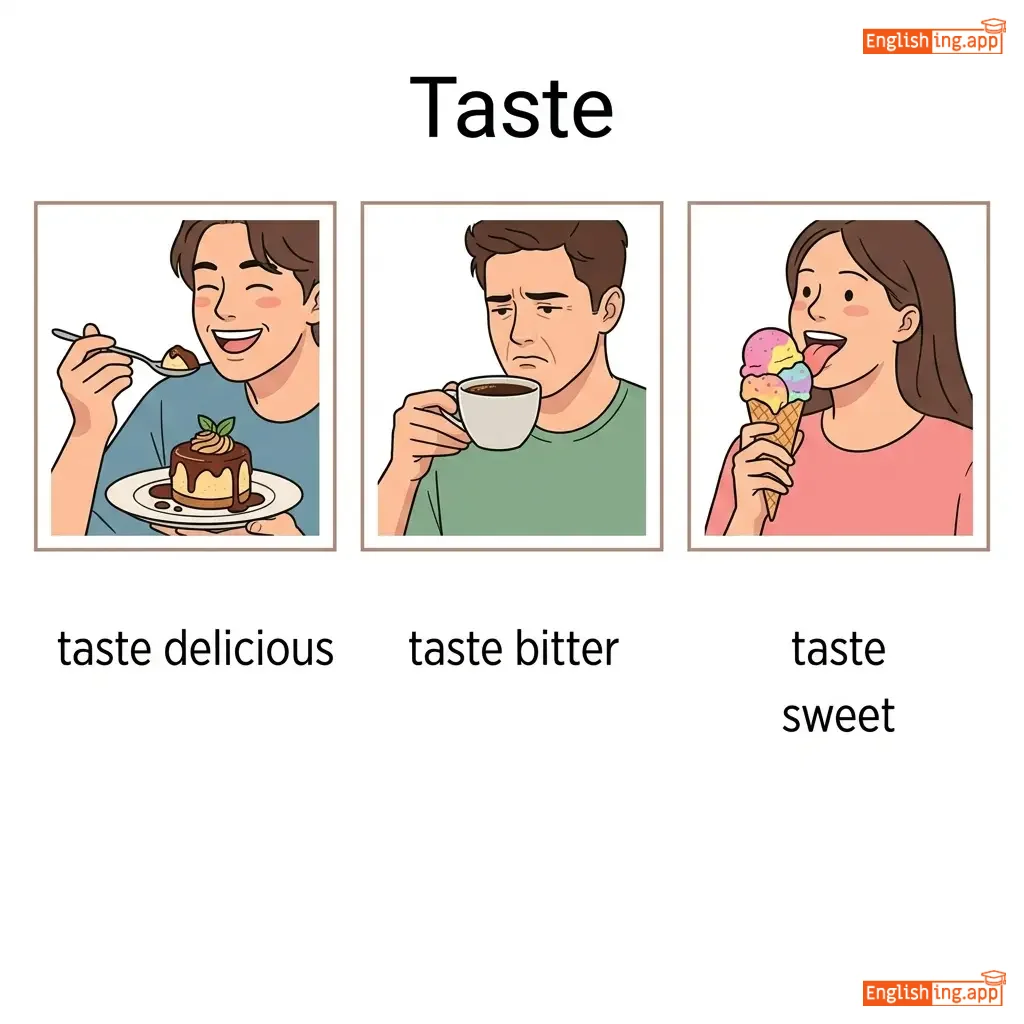
taste delicious, taste bitter, taste sweet, taste good, taste fresh
|
Schmecken means 'taste' in German. Imagine tasting every 'schmeck' bite.
••••••
|
|
💸
••••••
|
/tæks/
noun
(tæks)
••••••
|
-
••••••
|
Steuer
steuer
••••••
|
-
••••••
|
-
••••••
|
-
••••••
|
-
••••••
|
a compulsory contribution to state revenue, typically levied on income or sales
|
The government increased the tax rate on luxury goods.
••••••
|
Die Regierung hat den Steuersatz auf Luxusgüter erhöht.
Die Regierung hat den Steuersatz auf Luxusgueter erhoeht.
••••••
|
-
••••••
|
-
••••••
|
-
••••••
|
••••••
|
••••••
|
pay taxes, tax return, tax rate
|
TAX - 'Steuer' ist das, was vom Staat verlangt wird, um deine Einnahmen zu reduzieren.
••••••
|
|
🚕
••••••
|
/ˈtæksi/
noun
(Taxi)
••••••
|
-
••••••
|
Taxi
Taxi
••••••
|
-
••••••
|
-
••••••
|
-
••••••
|
-
••••••
|
A car licensed to transport passengers in exchange for payment of a fare.
••••••
|
We hailed a taxi to get to the airport.
Wir nahmen ein Taxi, um zum Flughafen zu gelangen.
••••••
|
Wir nahmen ein Taxi, um zum Flughafen zu gelangen.
Wir nahmen ein Taxi, um zum Flughafen zu gelangen.
••••••
|
-
••••••
|
-
••••••
|
-
••••••
|
cab, taxicab, hack, ride
••••••
|
bus, train
••••••
|
call a taxi, taxi driver, taxi fare, taxi rank
••••••
|
Taxi = schnell zum Ziel bringen
••••••
|
|
👨💼
••••••
|
/ˈtæksˌpeɪər/
noun
(tæksˌpeɪər)
••••••
|
-
••••••
|
Steuerzahler
steuerzahler
••••••
|
-
••••••
|
-
••••••
|
-
••••••
|
-
••••••
|
a person who pays tax to the government
|
The taxpayers' money is used to fund public services.
Das Geld der Steuerzahler wird verwendet, um öffentliche Dienstleistungen zu finanzieren.
••••••
|
Das Geld der Steuerzahler wird verwendet, um öffentliche Dienstleistungen zu finanzieren.
Das Geld der Steuerzahler wird verwendet, um öffentliche Dienstleistungen zu finanzieren.
••••••
|
-
••••••
|
-
••••••
|
-
••••••
|
contributor, payer, revenue source
|
••••••
|
paying taxpayers, responsible taxpayers
|
TAXPAYER - Derjenige, der Steuern zahlt, ist der 'Steuerzahler'.
••••••
|
|
🍵
••••••
|
/tiː/
noun
(Tee)
••••••
|
-
••••••
|
Tee
tee
••••••
|
-
••••••
|
-
••••••
|
-
••••••
|
-
••••••
|
a hot drink made by pouring boiling water onto dried leaves
|
We drink tea every morning at breakfast.
••••••
|
Wir trinken jeden Morgen Tee zum Frühstück.
wir trinken jeden morgen tee zum fruehstueck
••••••
|
-
••••••
|
-
••••••
|
-
••••••
|
••••••
|
••••••
|
hot tea, green tea, black tea, cup of tea
|
Tee gibt dir Energie, um deinen Tag zu beginnen.
••••••
|
|
👩🏫
••••••
|
/tiːtʃ/
verb
(titsch)
••••••
|
••••••
|
unterrichten
unterrichten
••••••
|
tot
••••••
|
tot
••••••
|
tisches
••••••
|
tiching
••••••
|
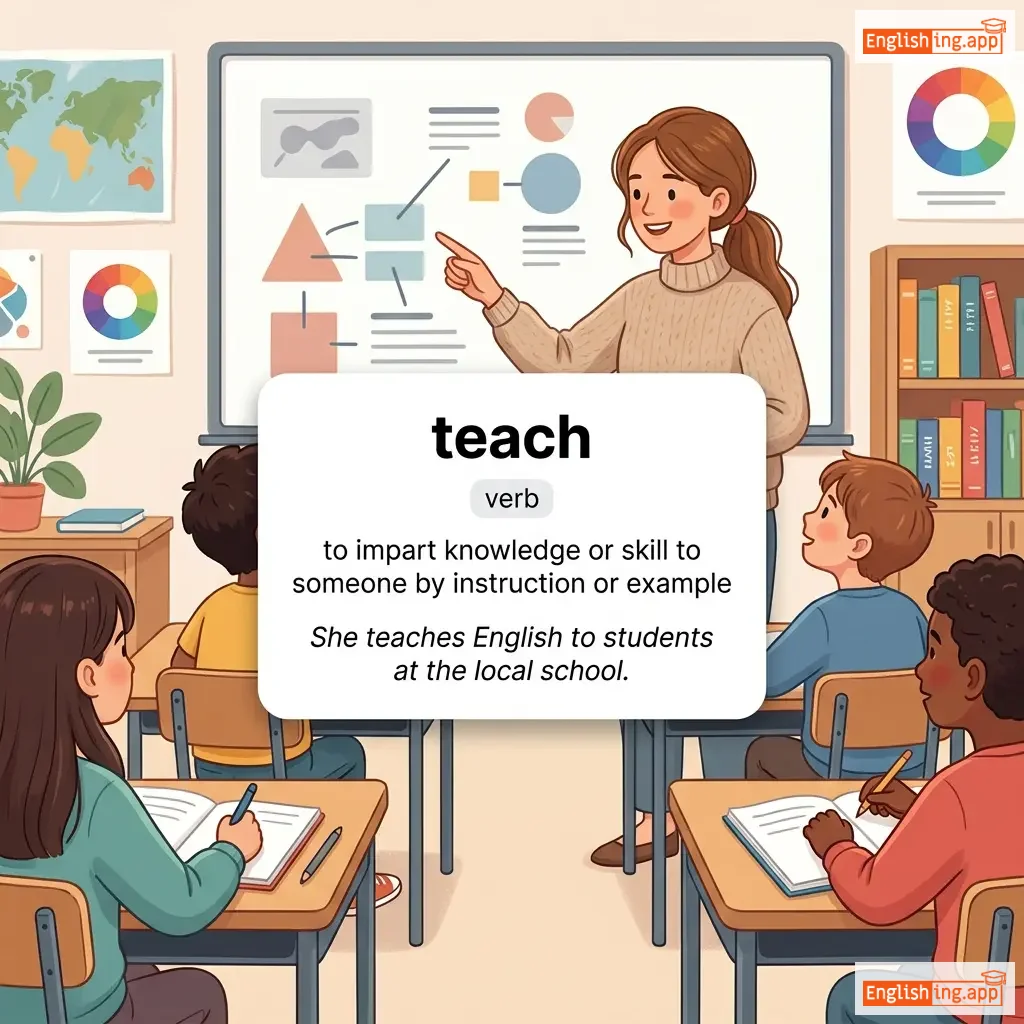
to give knowledge or instruction to someone; to show how to do something
|
She teaches English at the local school.
sie unterrichtet Englisch an der örtlichen Schule.
••••••
|
Sie unterrichtet Englisch an der örtlichen Schule.
Sie unterrichtet Englisch an der örtlichen Schule.
••••••
|
-
••••••
|
-
••••••
|
-
••••••
|
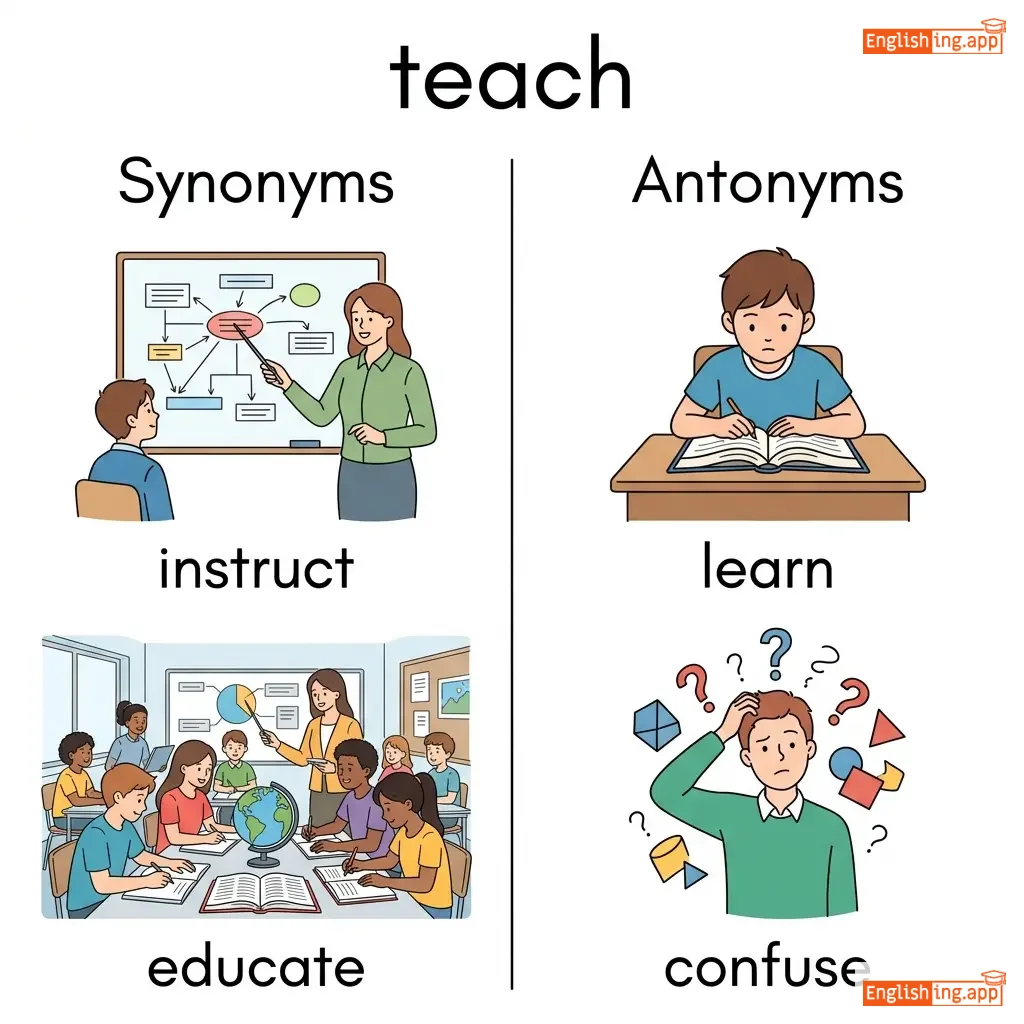
instruct, educate, train, coach
|
••••••
|
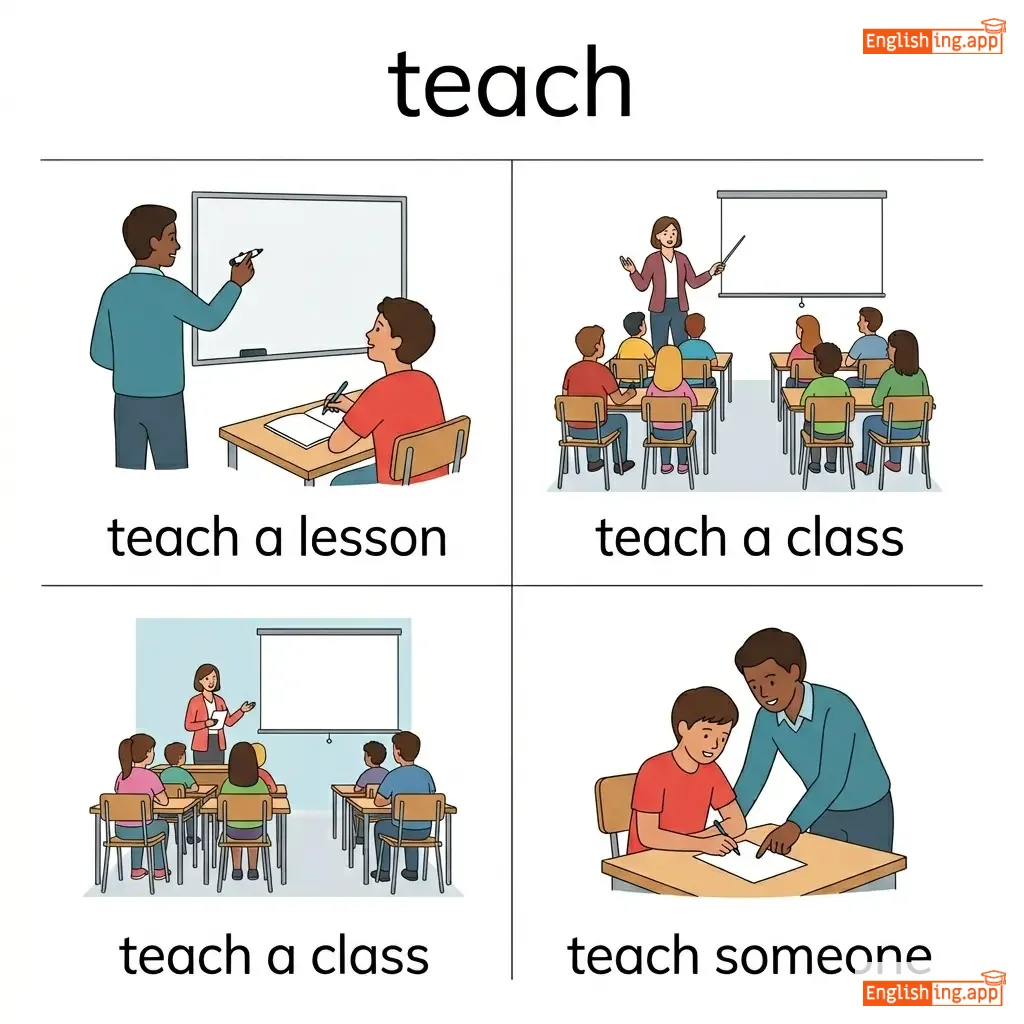
teach lessons, teach students, teach skills, teach children, teach courses, teach methods
|
titsch (teach) = unterrichten, wie in einem Klassenzimmer
••••••
|
|
👩🏫
••••••
|
/ˈtiː.tʃər/
noun
(titscher)
••••••
|
-
••••••
|
Lehrer
Lehrer
••••••
|
-
••••••
|
-
••••••
|
-
••••••
|
-
••••••
|
a person who teaches students in a school or other educational institution
|
The teacher explained the math problem clearly to the students.
Der Lehrer erklärte den Mathematikproblem klar den Schülern.
••••••
|
Der Lehrer erklärte den Mathematikproblem klar den Schülern.
Der Lehrer erklärte den Mathematikproblem klar den Schülern.
••••••
|
-
••••••
|
-
••••••
|
-
••••••
|
educator, instructor, tutor, professor
|
••••••
|
school teacher, math teacher, good teacher, experienced teacher
|
Der 'Lehrer' hilft den Schülern, Wissen zu erwerben und zu wachsen.
••••••
|
|
👩🏫
••••••
|
/ˈtiːtʃɪŋ/
noun
(tiching)
••••••
|
-
••••••
|
Lehren
Lehren
••••••
|
-
••••••
|
-
••••••
|
-
••••••
|
-
••••••
|
the profession or practice of teaching
|
Teaching is a noble profession.
Lehren ist ein edler Beruf.
••••••
|
Lehren ist ein edler Beruf.
Lehren ist ein edler Beruf.
••••••
|
-
••••••
|
-
••••••
|
-
••••••
|
education, instruction, tutoring, coaching
|
••••••
|
teaching method, teaching style, teaching profession, teaching material
|
Teaching inspires and empowers!
••••••
|
|
👥
••••••
|
/tiːm/
noun
(tiːm)
••••••
|
-
••••••
|
Team
Team
••••••
|
-
••••••
|
-
••••••
|
-
••••••
|
-
••••••
|
a group of people working together towards a common goal
|
Our team won the match after a great effort.
••••••
|
Unser Team hat das Spiel nach großem Einsatz gewonnen.
Unser Team hat das Spiel nach großem Einsatz gewonnen.
••••••
|
-
••••••
|
-
••••••
|
-
••••••
|
••••••
|
••••••
|
work in a team, team effort, football team, team leader
|
TEAM – Gemeinsam Erreicht Man Mehr!
••••••
|
|
🤝
••••••
|
/ˈtiːmmeɪt/
noun
(tiːmmeɪt)
••••••
|
-
••••••
|
Teamkollege
Teamkollege
••••••
|
-
••••••
|
-
••••••
|
-
••••••
|
-
••••••
|
a member of the same team
|
He congratulated his teammate after scoring the goal.
Er gratulierte seinem Teamkollegen nach dem Tor.
••••••
|
Er gratulierte seinem Teamkollegen nach dem Tor.
Er gratulierte seinem Teamkollegen nach dem Tor.
••••••
|
-
••••••
|
-
••••••
|
-
••••••
|
colleague, partner, associate, collaborator, companion
|
••••••
|
team member, loyal teammate, supportive teammate, sports teammate
|
Teamkollege – ein Freund im Team, genau wie ein teammate!
••••••
|
|
💧
••••••
|
/tɪər/ (noun: liquid) /tɛər/ (verb: rip)
verb, noun
(tɛɐ)
••••••
|
••••••
|
Träne / reißen
Traene / reissen
••••••
|
toɐ
••••••
|
tɔʁn
••••••
|
tiɐz
••••••
|
tɛːɹɪŋ
••••••
|
As a verb: to pull apart or rip something. As a noun: a drop of clear salty liquid produced by glands in your eyes.
|
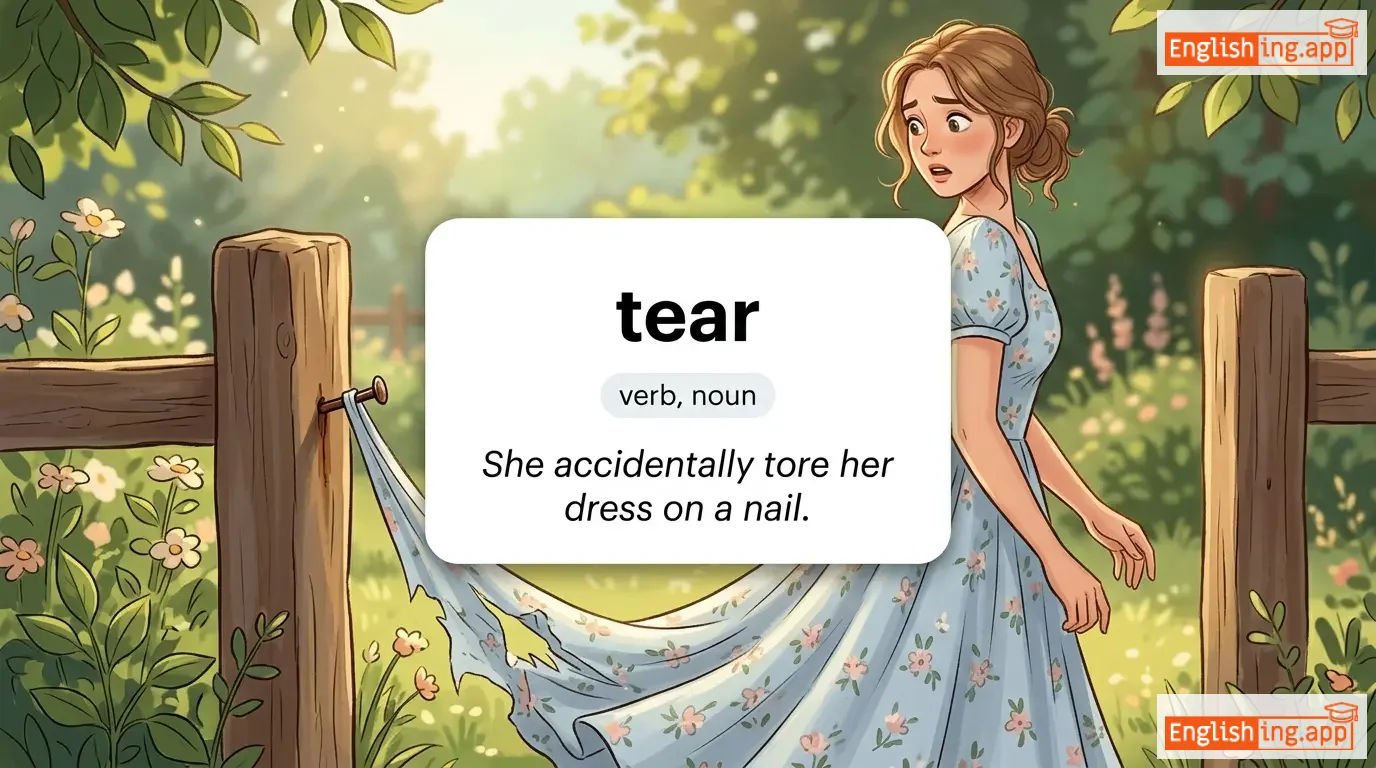
She accidentally tore her dress on a nail.
Sie riss versehentlich ihr Kleid an einem Nagel.
••••••
|
Sie riss versehentlich ihr Kleid an einem Nagel.
Sie riss versehentlich ihr Kleid an einem Nagel.
••••••
|
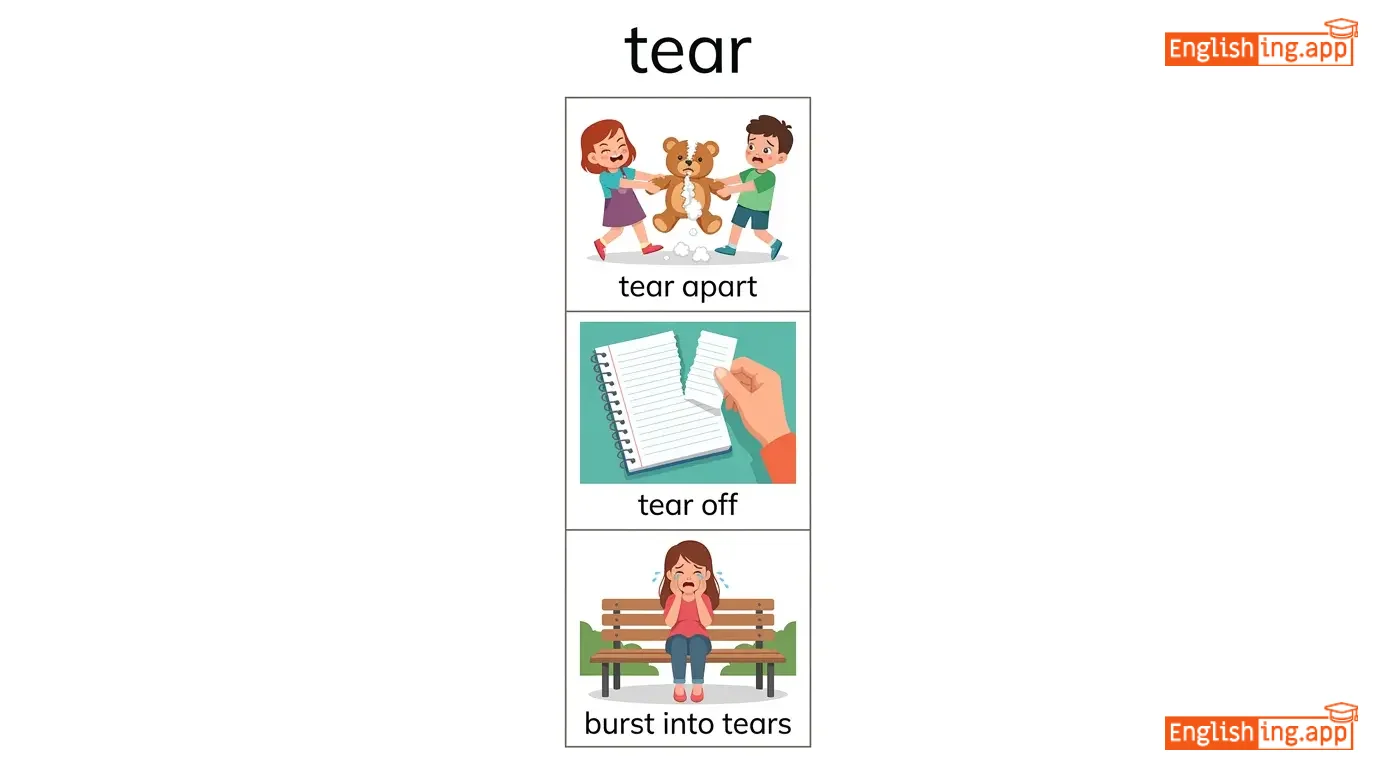
tear apart
••••••
|
To destroy, separate, or damage severely.
|
auseinanderreißen
auseinanderreissen
••••••
|
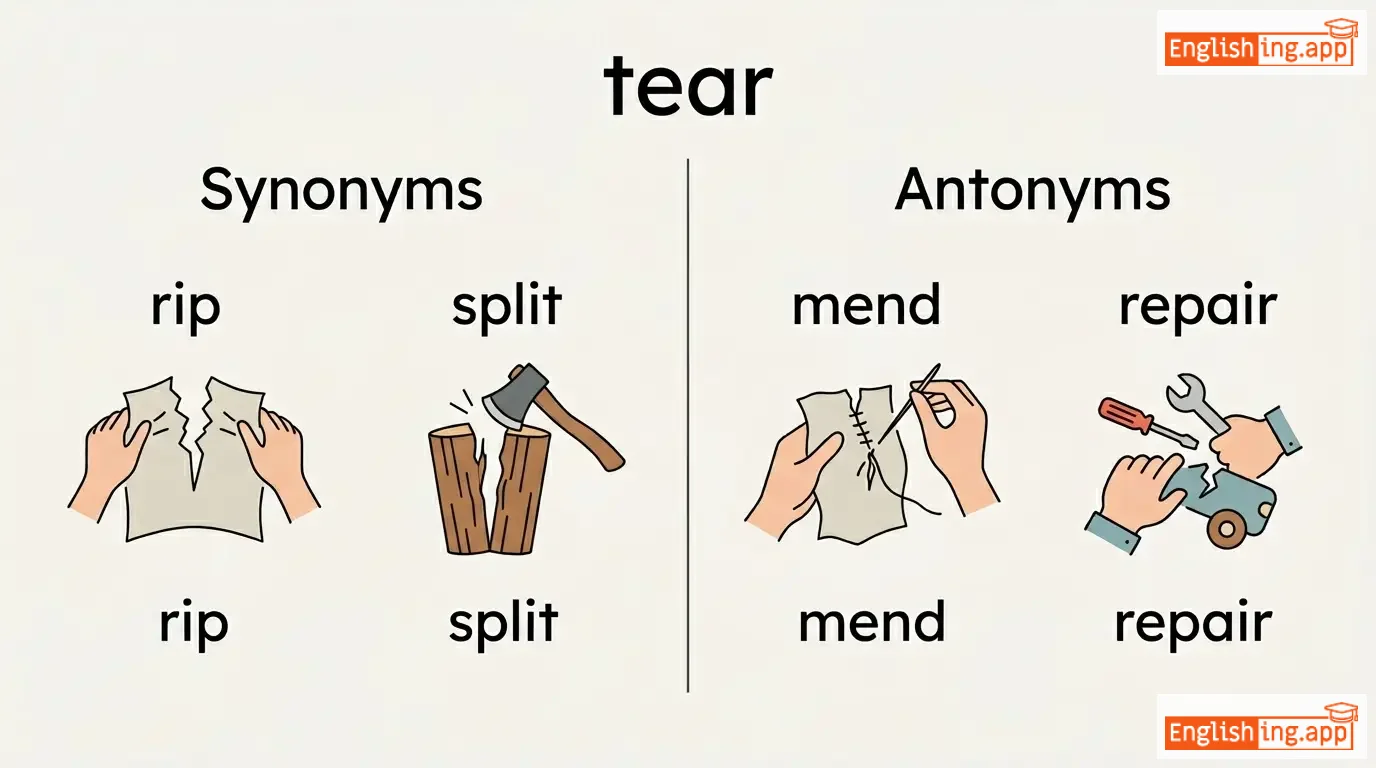
rip, split, shred, rend, pull
|
••••••
|
tear apart, tear off, burst into tears, tear down
|
Tear bedeutet Träne (Traene) oder reißen (reissen) wie beim Weinen und Reißen
••••••
|
|
🥄
••••••
|
/ˈtiːspuːn/
noun
(happiness)
••••••
|
-
••••••
|
Glück
Glück
••••••
|
-
••••••
|
-
••••••
|
-
••••••
|
-
••••••
|
a small spoon used for stirring drinks or eating soft foods, or for measuring small amounts of ingredients.
|
Add a teaspoon of sugar to the tea.
••••••
|
Sie konnte ihr Glück nicht verbergen, als sie den Preis erhielt.
Sie konnte ihr Glück nicht verbergen, als sie den Preis erhielt.
••••••
|
-
••••••
|
-
••••••
|
-
••••••
|
spoon, small spoon, measure spoon
|
-
••••••
|
teaspoon of sugar, teaspoon measure, teaspoon full
|
happiness bedeutet 'Glück' auf Deutsch.
••••••
|
|
⚙️
••••••
|
/ˈteknɪkəl/
adjective
(technisch)
••••••
|
-
••••••
|
technisch; spezialisiert;
technisch; spezialisiert
••••••
|
-
••••••
|
-
••••••
|
-
••••••
|
-
••••••
|
relating to or involving special skills or knowledge; requiring specialized training
|
The manual contains technical instructions for operating the machine.
Das Handbuch enthält technische Anweisungen zur Bedienung der Maschine.
••••••
|
Das Handbuch enthält technische Anweisungen zur Bedienung der Maschine.
Das Handbuch enthält technische Anweisungen zur Bedienung der Maschine.
••••••
|
-
••••••
|
-
••••••
|
-
••••••
|
specialized, scientific, technological, professional
|
simple, basic, general, non-technical
|
technical skills, technical problem, technical support, technical knowledge
|
Technisch bedeutet, dass es um Spezialwissen oder Fähigkeiten geht.
••••••
|
|
🧘
••••••
|
/tɛkˈniːk/
noun
(tɛkˈniːk)
••••••
|
-
••••••
|
Technik
technik
••••••
|
-
••••••
|
-
••••••
|
-
••••••
|
-
••••••
|
A particular way of carrying out a task, especially with skill.
|
She learned a new breathing technique in yoga class.
••••••
|
Sie hat eine neue Atemtechnik im Yoga-Kurs gelernt.
Sie hat eine neue Atemtechnik im Yoga-Kurs gelernt.
••••••
|
••••••
|
Done using a specific method or skill.
|
durch Technik
durch Technik
••••••
|
method, procedure, style, craft, skill
|
••••••
|
teaching technique, special technique, breathing technique, painting technique
|
Technik bedeutet Methode, Technik macht es einfacher.
••••••
|
|
💻
••••••
|
/ˌteknəˈlɒdʒɪkəl/
adjective
(technologisch)
••••••
|
••••••
|
technologisch
technologisch
••••••
|
-
••••••
|
-
••••••
|
-
••••••
|
-
••••••
|
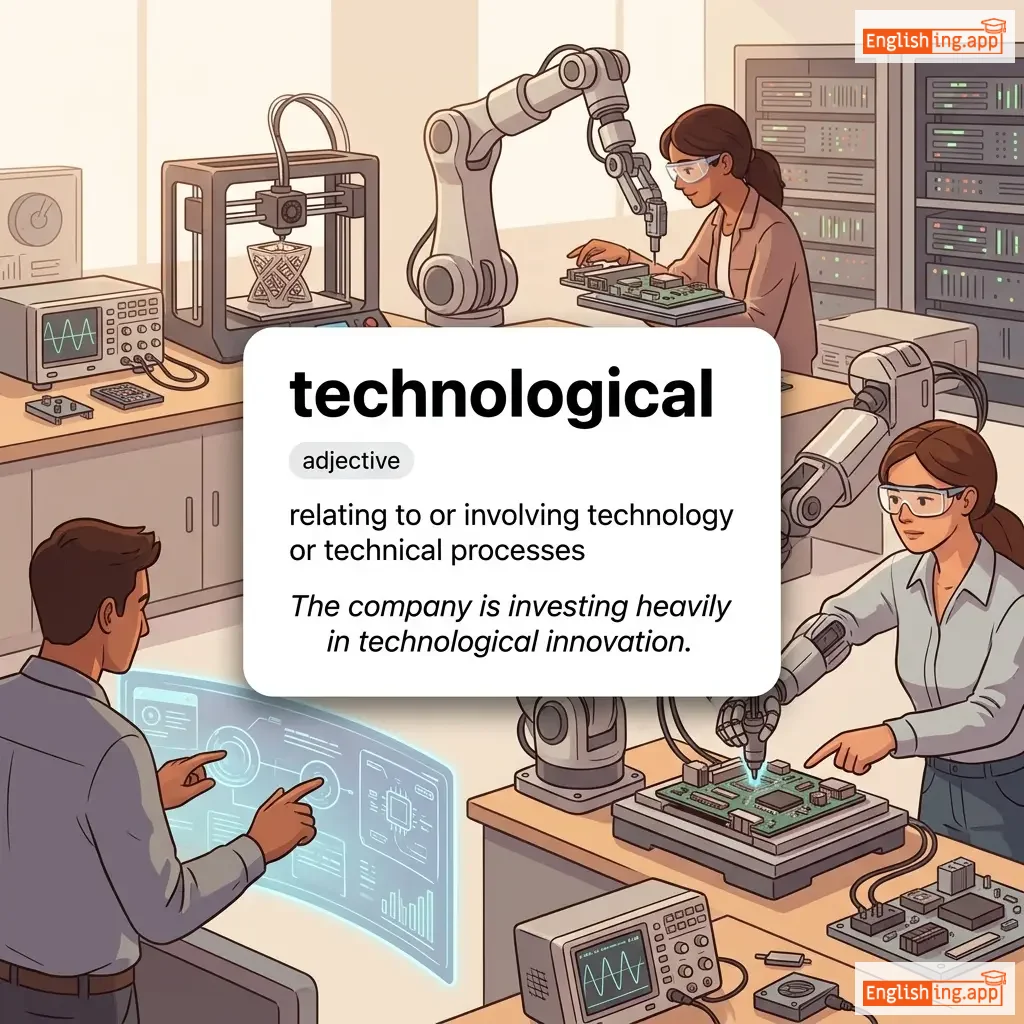
relating to or involving technology or technical processes
|
The company is investing heavily in technological innovation.
Das Unternehmen investiert stark in technologische Innovation.
••••••
|
Das Unternehmen investiert stark in technologische Innovation.
Das Unternehmen investiert stark in technologische Innovation.
••••••
|
technological advancement
Technologischer Fortschritt
••••••
|
progress or improvement in technology over time
|
Technologischer Fortschritt
technologischer fortschritt
••••••
|
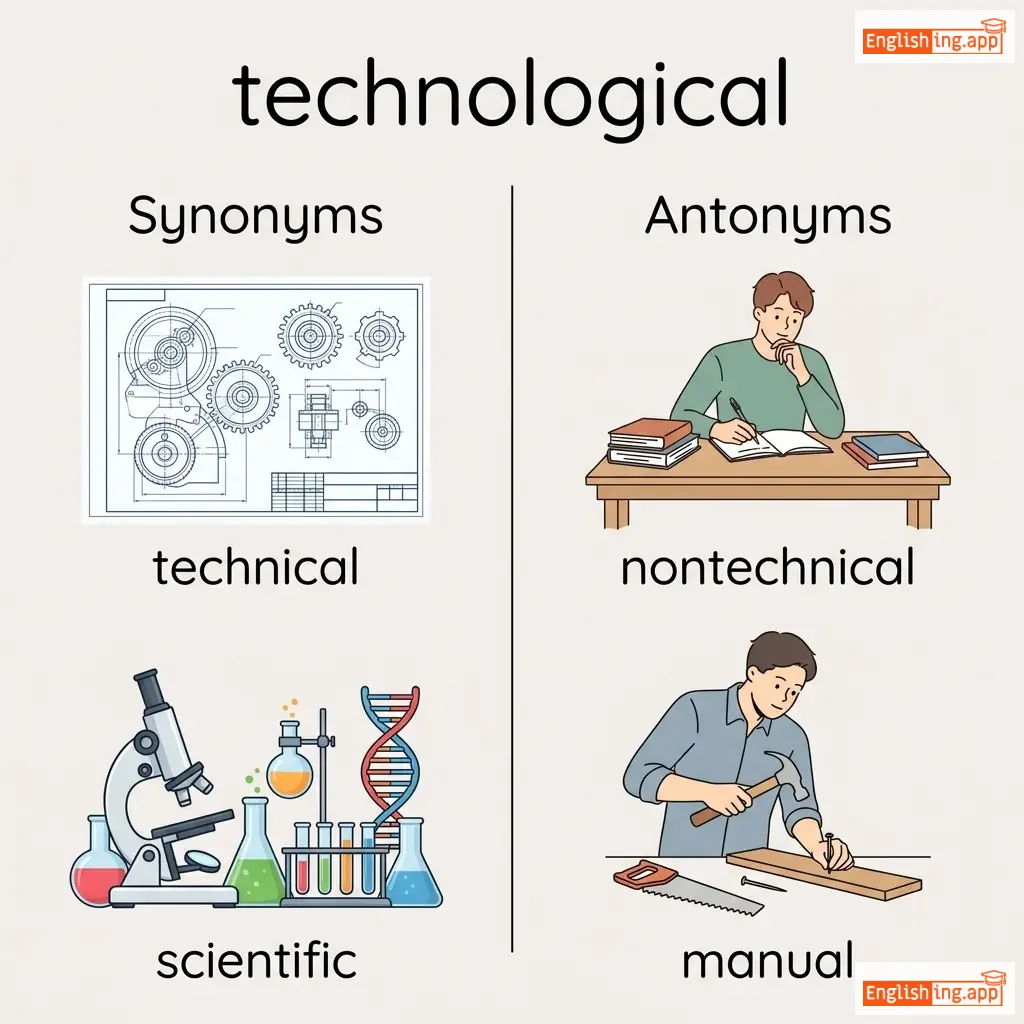
technical, scientific, industrial, mechanical, digital
|
••••••
|
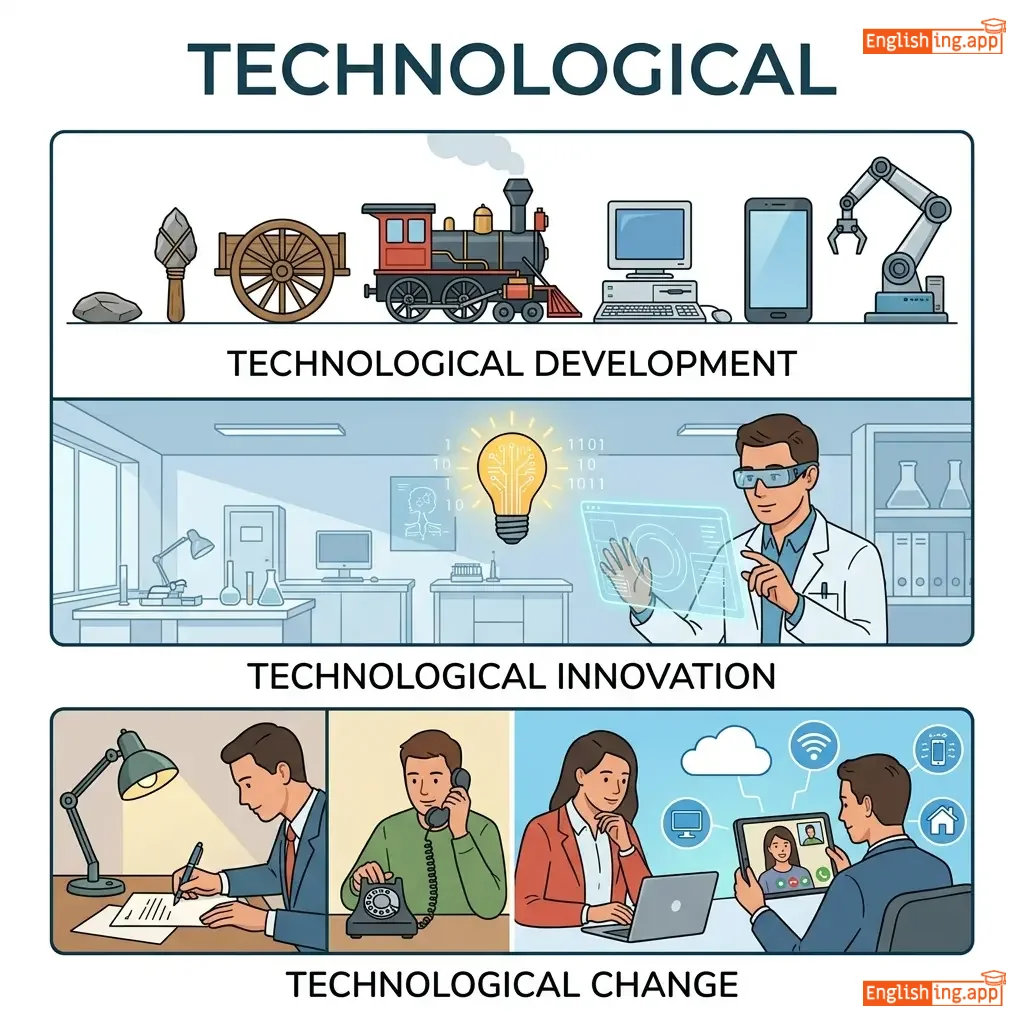
technological development, technological innovation, technological change, technological progress
|
Techno + logisch = technologisch: imagine a gadget labeled Techno and a badge 'logisch' to show techy logic leads to technologisch
••••••
|
|
💻
••••••
|
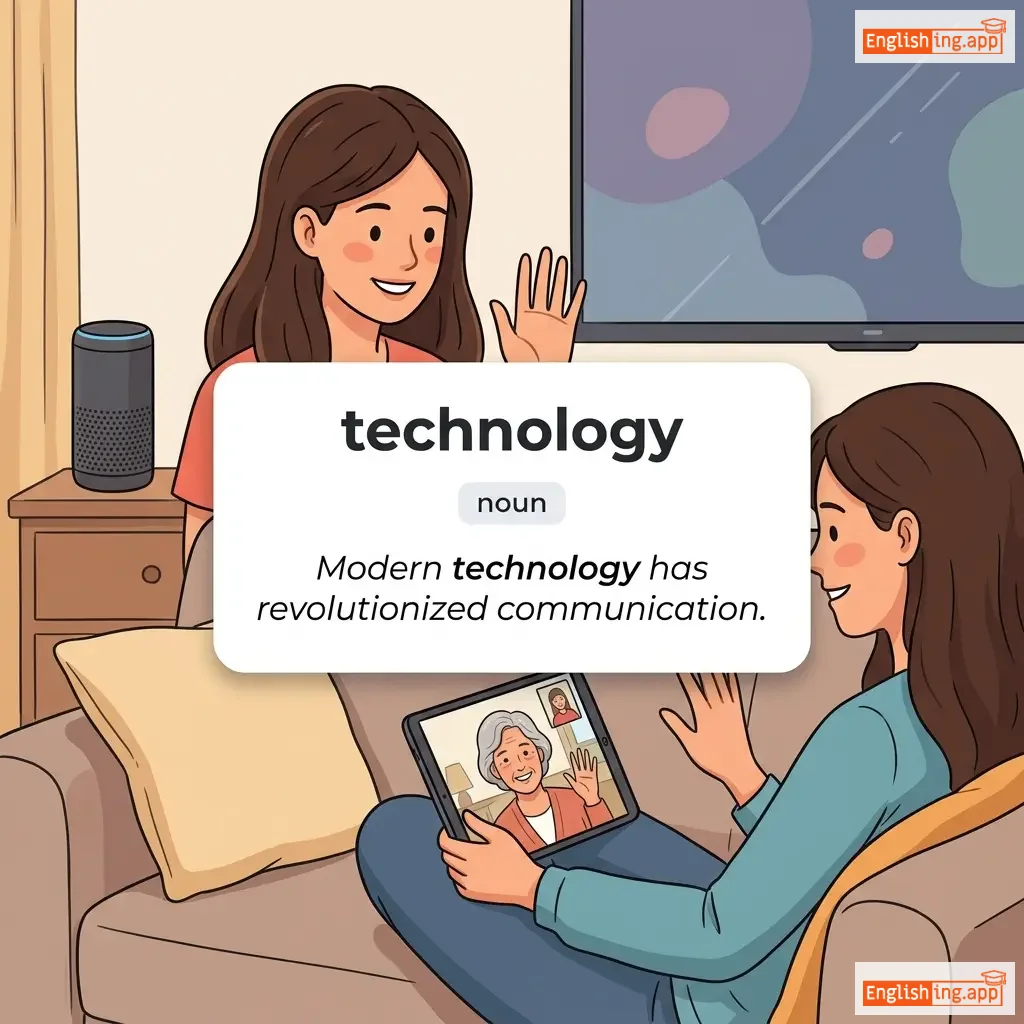
/tɛkˈnɒlədʒi/
noun
(teknolodji)
••••••
|
••••••
|
Technologie
Technologie
••••••
|
-
••••••
|
-
••••••
|
-
••••••
|
-
••••••
|
the application of scientific knowledge for practical purposes, especially in industry
|
Modern technology has revolutionized communication.
••••••
|
Moderne Technologie hat die Kommunikation revolutioniert.
Moderne Technologie hat die Kommunikation revolutioniert.
••••••
|
••••••
|
the most advanced and innovative technology available
|
Spitzentechnologie
Spitzentechnologie
••••••
|
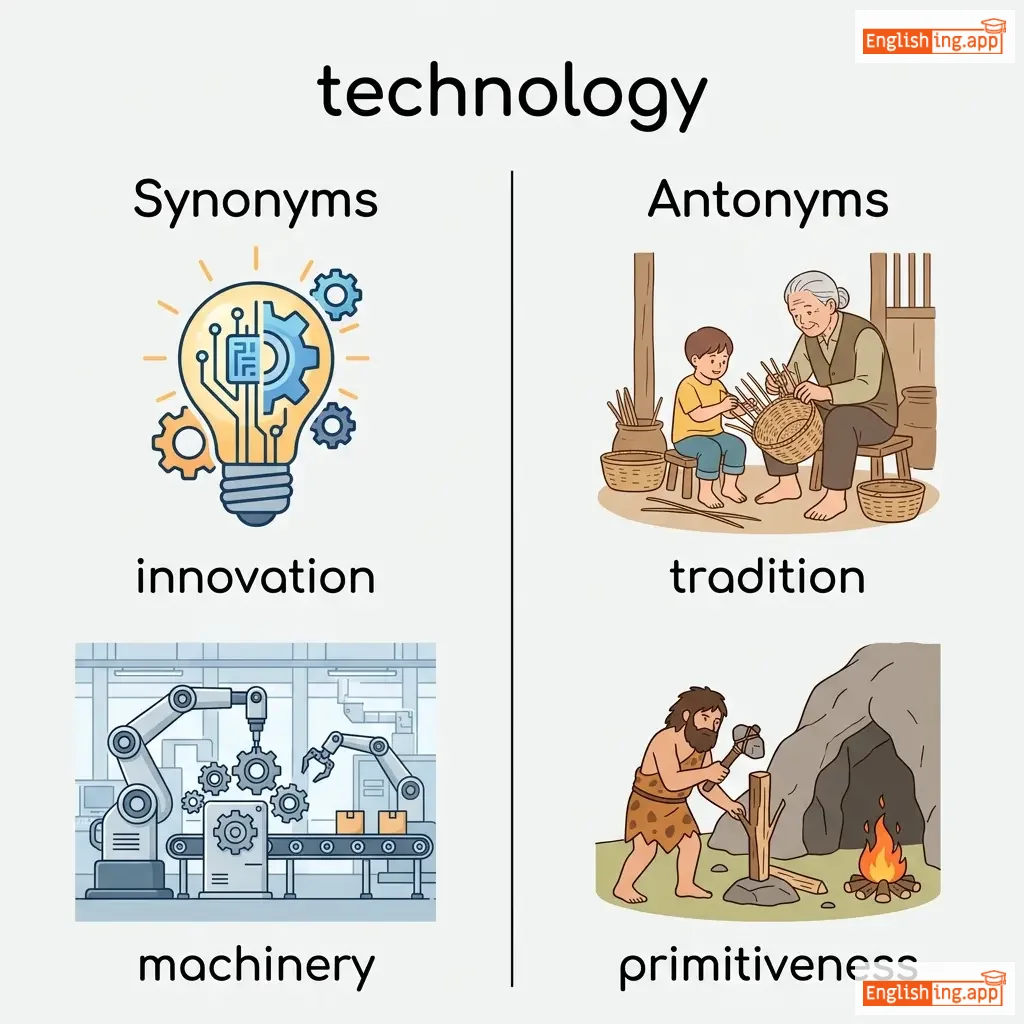
innovation, machinery, engineering, science, technique
|
tradition, primitiveness, simplicity
|
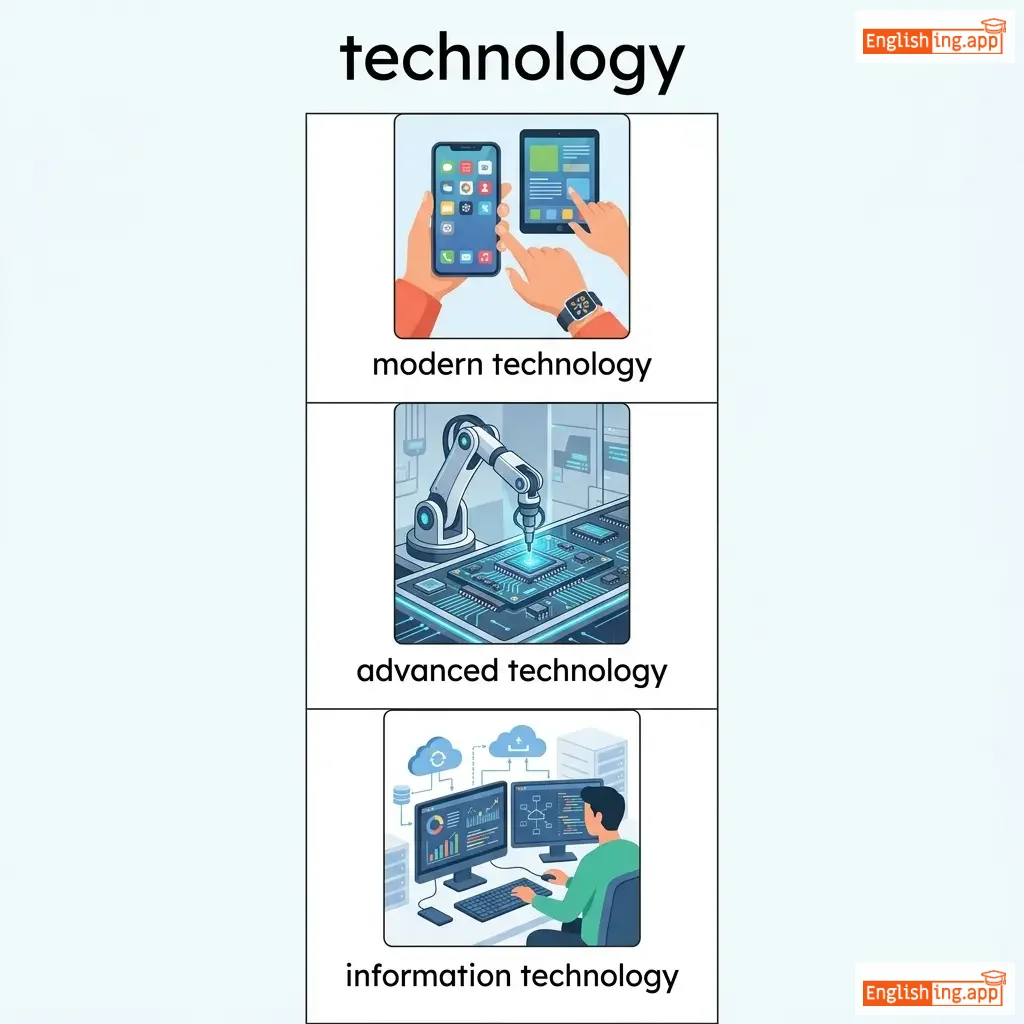
modern technology, advanced technology, information technology, use of technology
|
Tech (Technologie) + Wissen = Technologie
••••••
|
|
🧑🦱
••••••
|
/tiːn/
noun
(teen)
••••••
|
-
••••••
|
Teenager
Teenager
••••••
|
-
••••••
|
-
••••••
|
-
••••••
|
-
••••••
|
a person aged between 13 and 19 years.
|
He's a teenager who loves sports.
Er ist ein Teenager, der Sport liebt.
••••••
|
Er ist ein Teenager, der Sport liebt.
Er ist ein Teenager, der Sport liebt.
••••••
|
-
••••••
|
-
••••••
|
-
••••••
|
adolescent, young person, minor
|
••••••
|
teen years, teen life, teenage
|
Teen is the age when you are 'teen' years old!
••••••
|
|
👦
••••••
|
/ˈtiːneɪdʒər/
noun
(tīnēdʒər)
••••••
|
-
••••••
|
Teenager
Teenager
••••••
|
-
••••••
|
-
••••••
|
-
••••••
|
-
••••••
|
a person aged between 13 and 19 years.
|
Teenagers often enjoy hanging out with friends.
Teenager verbringen oft gerne Zeit mit Freunden.
••••••
|
Teenager verbringen oft gerne Zeit mit Freunden.
Teenager verbringen oft gerne Zeit mit Freunden.
••••••
|
-
••••••
|
-
••••••
|
-
••••••
|
adolescent, youth, young person
|
••••••
|
teenager life, teenage dreams, teenager problems
|
Teenager is just 'Teen' plus 'ager' – a person of that age!
••••••
|
|
📞
••••••
|
/ˈtɛlɪfəʊn/
noun
(telefon)
••••••
|
-
••••••
|
Telefon
telefon
••••••
|
-
••••••
|
-
••••••
|
-
••••••
|
-
••••••
|
a system for transmitting voices over a distance using wire or radio, typically for communication.
|
I need to make a telephone call to my friend.
Ich muss einen Anruf bei meinem Freund tätigen.
••••••
|
Ich muss einen Anruf bei meinem Freund tätigen.
Ich muss einen Anruf bei meinem Freund tatigen.
••••••
|
-
••••••
|
-
••••••
|
-
••••••
|
phone, handset, mobile, communication device
|
-
••••••
|
telephone call, telephone line, make a telephone call
|
Telephone is the device you use for a 'tele' call!
••••••
|