ভোকাবুলারিসমূহ

ইংরেজি শব্দের বাংলা অর্থ | English to Bangla Word Meaning Dictionary

adverb
/wɛr/
কোথায় (kothay)

in or at what place or position

"Where do you live?"

"তুমি কোথায় বাস করো?" (Tumi kothay bash koro?)
noun
/ˈwɛrəˌbaʊts/
অবস্থান (obosthan)

the place where someone or something is

"The police are trying to find out the suspect's whereabouts."

"পুলিশ সন্দেহভাজনের অবস্থান খুঁজে বের করার চেষ্টা করছে।" (Police shondehobhajoner obosthan khuje ber korar chesta korchhe.)
conjunction
/wɛərˈæz/
অন্যদিকে (onyodike)

used to introduce a contrast or comparison between two facts

"She prefers tea, whereas he likes coffee."

"সে চা পছন্দ করে, অন্যদিকে সে কফি পছন্দ করে।" (Se cha pochhondo kore, onyodike se coffee pochhondo kore.)
adverb
/wɛərˈbaɪ/
যাহাতে (jahate)

by which; because of which

"The company agreed to a contract whereby it would pay the penalty."

"কোম্পানিটি একটি চুক্তিতে সম্মত হয়েছিল যার মাধ্যমে এটি জরিমানা প্রদান করবে।" (Kompani ti ekti chuktite sommot hoyechilo jar maddhome eti jorimana prodan korbe.)
adverb
/ˌwɛr.əˈpɒn/
ফলস্বরূপ (folosworup)

Immediately after which; as a result of which.

"He confessed his mistake, whereupon she forgave him."

"সে তার ভুল স্বীকার করলো, ফলস্বরূপ সে তাকে ক্ষমা করলো।" (Se tar bhul swikar korlo, folosworup se take khoma korlo.)
adverb
/wɛrˈɛv.ər/
যেখানেই হোক (jekhanei hok)

In or to any place.

"You can find good people wherever you go."

"তুমি যেখানে যাবে সেখানেই ভালো মানুষ খুঁজে পাবে।" (Tumi jekhane jabe sekhanei bhalo manush khuje pabe.)
adverb, noun
/ˈwɛə.wɪð/
উপায়/সম্পদ (upay/sompod)

With which; the means or resources needed for something.

"He lacked the money wherewith to buy a new house."

"তার নতুন বাড়ি কেনার মতো অর্থ ছিল না।" (Tar notun bari kenar moto ortho chilo na.)
verb
/wɛt/
তীক্ষ্ণ করা/উদ্দীপিত করা (tikshno kora/uddipito kora)

To sharpen the blade of a tool or to stimulate interest or appetite.

"The smell of food whetted my appetite."

"খাবারের গন্ধ আমার ক্ষুধা বাড়িয়ে দিল।" (Khabarer gondho amar khudha barie dilo.)
conjunction
/ˈwɛðər/
যদি (jodi)

used to express a doubt or choice between alternatives

"I don’t know whether I should go."

"আমি জানি না আমাকে যেতে হবে কি না।" (Ami jani na amake jete hobe ki na.)
noun
/weɪ/
ছানার পানি (chanar pani)

the watery part of milk that separates from the curds when making cheese

"Protein powder is often made from whey."

"প্রোটিন পাউডার প্রায়শই ছানার পানি থেকে তৈরি হয়।" (protein powder prayoshoi chanar pani theke toiri hoy.)
pronoun
/wɪtʃ/
কোনটি (koti)

used to ask about one or more items from a defined set

"Which one do you prefer, the red or the blue?"

"আপনি কোনটি পছন্দ করেন, লাল নাকি নীল?" (Apni konoti pochondo koren, lal naki nil?)
noun, verb
/wɪf/
হালকা গন্ধ (halka gondho)

A brief, faint smell or puff of air; to get a quick smell of something.

"I caught a whiff of perfume as she passed by."

"সে পাশ দিয়ে যাওয়ার সময় আমি হালকা সুগন্ধ পেলাম।" (Se pash diye jawar somoy ami halka sugondho pelam.)
conjunction
/waɪl/
যতক্ষণ (jotokkhon)

during the time that something is happening

"She was reading while waiting for the bus."

"সে বাসের জন্য অপেক্ষা করার সময় পড়ছিল।" (Se baser jonno oppekha korar somoy porchhilo.)
noun
/wɪm/
হঠাৎ খেয়াল (hothat kheyal)

a sudden or unpredictable idea, desire, or decision

"She bought the dress on a whim."

"সে হঠাৎ খেয়ালে পোশাকটি কিনেছিল।" (Se hothat kheyal e poshakti kinechilo.)
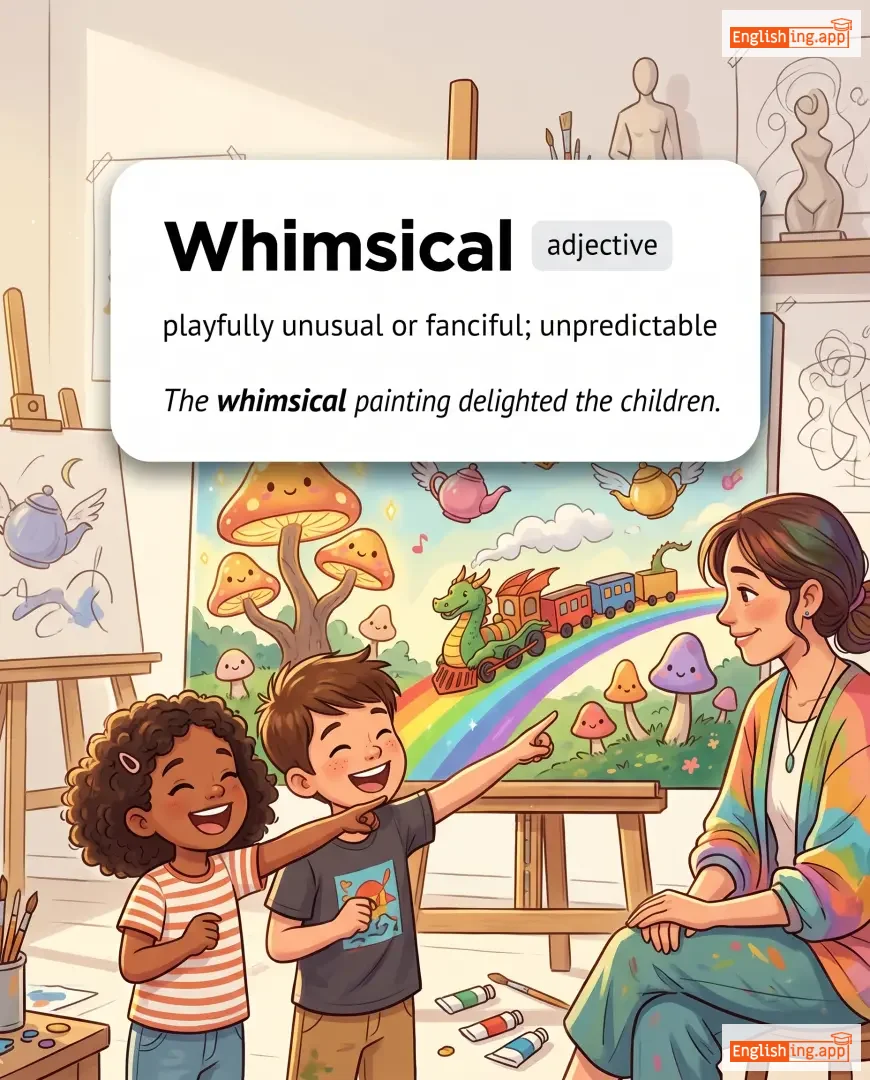
Whimsical definition card — visual illustration of the meaning
adjective
/ˈwɪmzɪkəl/
খেয়ালি (kheyali)

playfully unusual or fanciful; unpredictable

"The whimsical painting delighted the children."

"খেয়ালি ছবিটি শিশুদের আনন্দিত করেছিল।" (Kheyali chobiti shishuder anondito korechilo.)
adverb
/ˈwɪmzɪkli/
খেয়ালিভাবে; উদ্ভটভাবে; (kheyalibhabe)

In a playful, fanciful, or capricious manner; with sudden changes of mind

"She decorated her room whimsically with colorful balloons."

"সে তার ঘরটি রঙিন বেলুন দিয়ে খেয়ালিভাবে সাজিয়েছে।" (she tar ghorta rongin belun diye kheyalibhabe sajiyeche.)
noun
/ˈwɪmzi/
খেয়ালীপনা (kheyali pona)

playful or fanciful behavior or humor

"Her stories were full of whimsy and imagination."

"তার গল্পগুলো খেয়ালীপনা এবং কল্পনায় ভরা ছিল।" (Tar golpogulo kheyali pona ebong kolponay bhora chilo.)
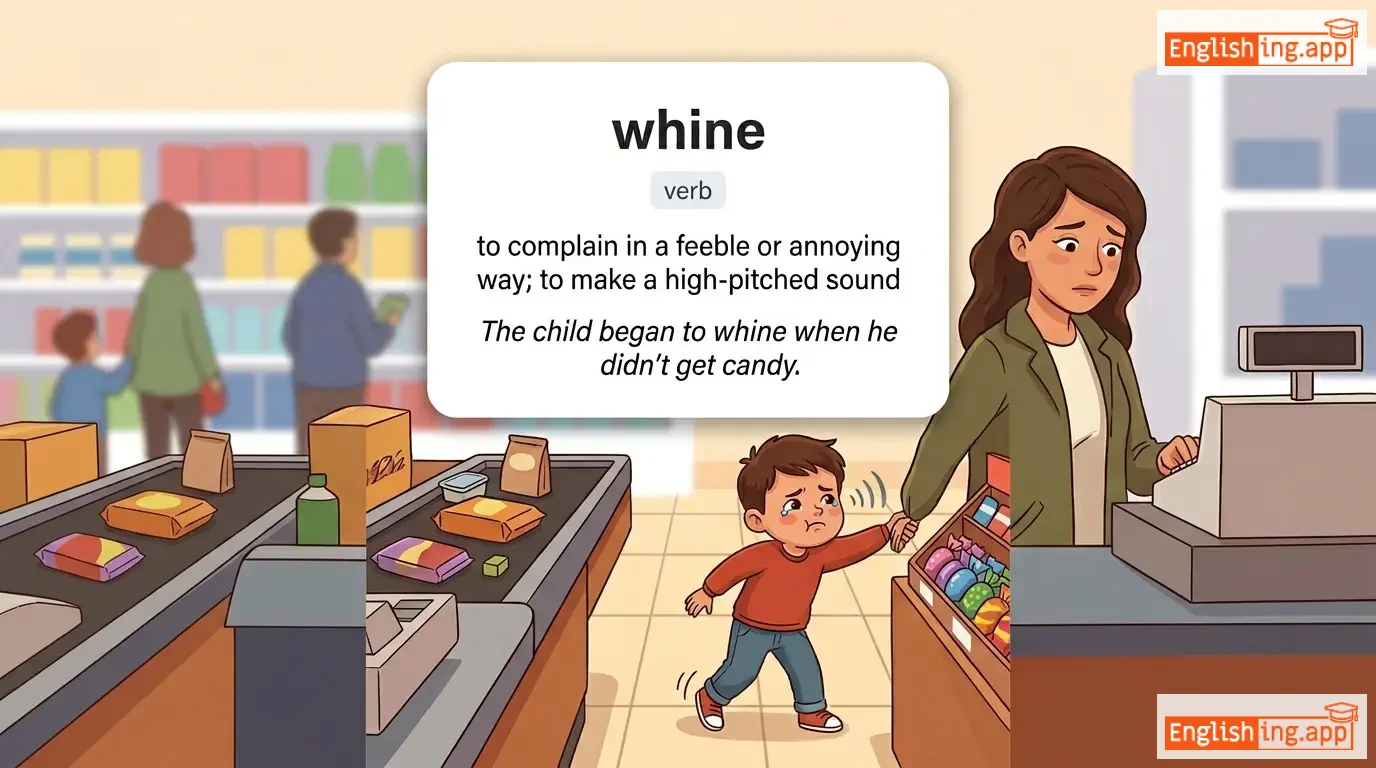
whine definition card — visual illustration of the meaning
verb
/waɪn/
কান্নাকাটি করা (kannakati kora)

to complain in a feeble or annoying way; to make a high-pitched sound

"The child began to whine when he didn’t get candy."

"শিশুটি ক্যান্ডি না পেয়ে কান্নাকাটি শুরু করল।" (Shishuti candy na peye kannakati shuru korlo.)
verb
/ˈwɪni/
ঘোড়ার ডাক (ghorar dak)

to make the high-pitched sound a horse makes

"The horse whinnied when it saw its rider."

"ঘোড়াটি তার আরোহীকে দেখে ডাকল।" (Ghorati tar arohike dekhe daklo.)
verb
/wɪp/
চাবুক মারা (chabuk mara)

to strike or beat with a flexible instrument such as a rope or cord

"The trainer whipped the horse to make it run faster."

"প্রশিক্ষক ঘোড়াটিকে দ্রুত দৌড়ানোর জন্য হুইপ করেছিলেন।" (Proshikkhok ghoratike druto douranor jonno huilp korechilen.)
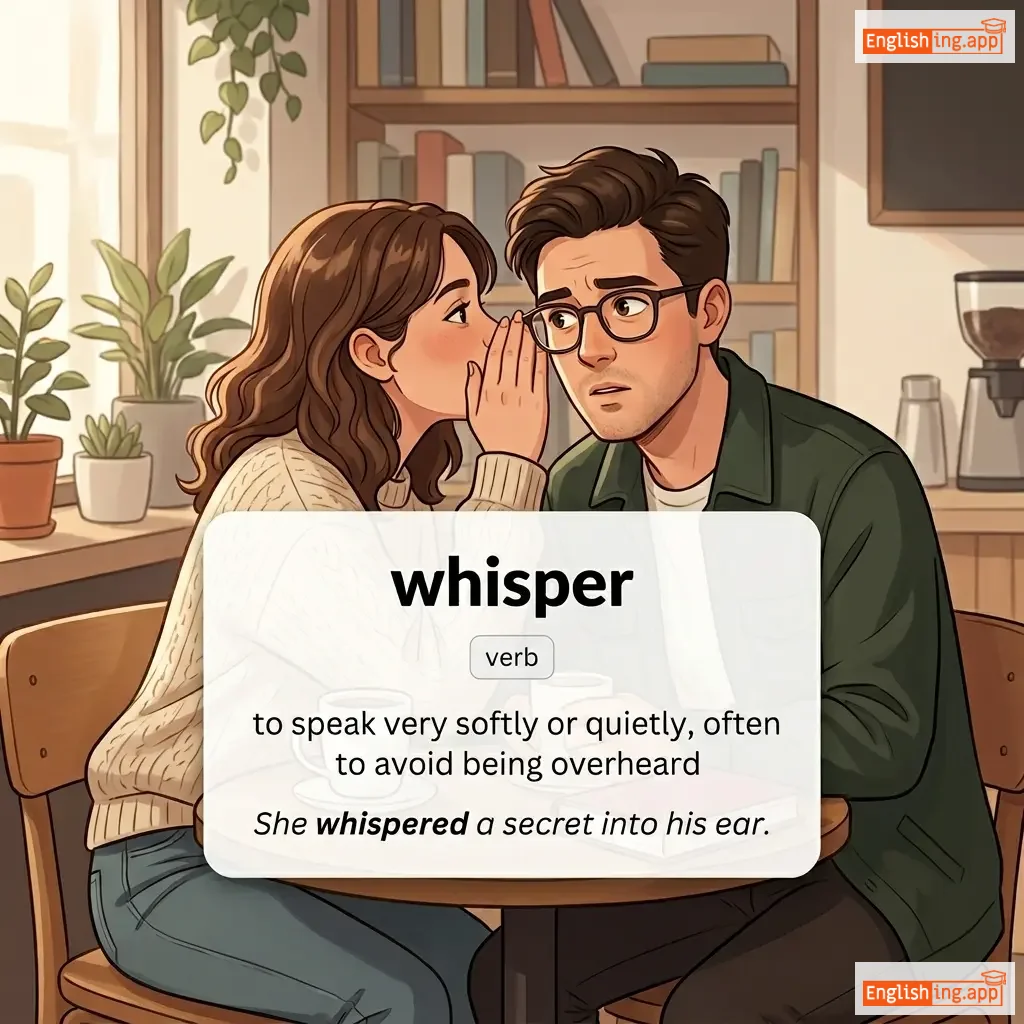
whisper definition card — visual illustration of the meaning
verb
/ˈwɪspər/
ফিসফিস করা (fishfish kora)

to speak very softly or quietly, often to avoid being overheard

"She whispered a secret into his ear."

"সে তার কানে একটি গোপন কথা ফিসফিস করেছিল।" (Se tar kane ekti gopon kotha fishfish korechhilo.)
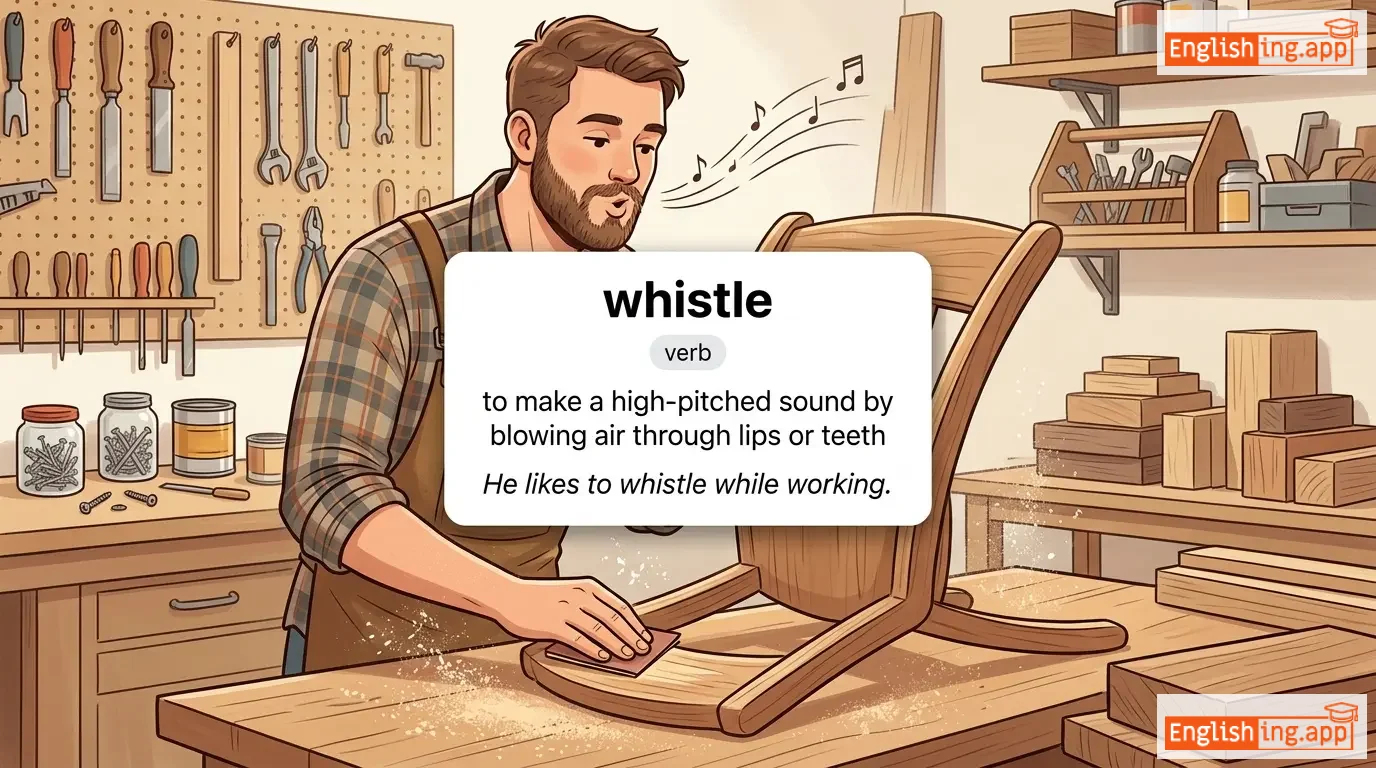
whistle definition card — visual illustration of the meaning
noun
/ˈwɪsəl/
বাশি (bashi)

a small wind instrument that produces a high-pitched sound when blown

"The referee blew his whistle to start the game."

"রেফারি খেলা শুরু করতে তার বাশি বাজালেন।" (refari khela shuru korte tar bashi bajalen.)
noun
/wɪt/
অতি সামান্য (oti samanno)

a very small part or amount

"He doesn't care a whit about the outcome."

"সে ফলাফল নিয়ে একেবারেই চিন্তা করে না।" (Se folafol nie ekebarei chinta kore na.)
adjective
/waɪt/
সাদা (shada)

having the color of milk or fresh snow, the opposite of black

"She wore a beautiful white dress to the party."

"সে পার্টিতে একটি সুন্দর সাদা পোশাক পরেছিল।" (Se parte ekti shundor sada poshak porechhilo.)
noun
/waɪt ˈpɛpər/
সাদা মরিচ (shada morich)

a spice made from dried peppercorns with the outer husk removed

"She added white pepper to the cream soup for a mild spicy flavor."

"তিনি ক্রিম স্যুপে হালকা ঝাল স্বাদের জন্য সাদা মরিচ যোগ করলেন।" (tini krim syupe halka jhal sader jonno shada morich jog korlen.)
noun
/waɪt ænt/
উই (ui)

a small social insect that lives in colonies and feeds on wood and plant matter

"White ants damaged the wooden furniture in our house."

"উই পোকা আমাদের ঘরের কাঠের আসবাবপত্র নষ্ট করেছে।" (ui poka amader ghorer kather ashabab noshto koreche.)
whitelisting definition card — visual illustration of the meaning
noun
/ˈwaɪt.lɪst.ɪŋ/
অনুমোদিত তালিকা বা নির্দিষ্ট অনুমোদন প্রদান (onumodito talika ba nirdishto onumodon prodan)

Identifying specific users, software, or IP addresses as safe and trusted

"Only verified applications are allowed through whitelisting."

"শুধুমাত্র যাচাই করা অ্যাপগুলো হোয়াইটলিস্টিংয়ের মাধ্যমে অনুমোদিত হয়।" (Shudhomatro jachai kora app-gulo whitelistinger madhyome onumodito hoy.)
verb
/ˈwaɪtˌwɑːʃ/
আড়াল করা (adal kora)

to cover up faults, errors, or unpleasant facts; to paint with white paint or lime

"The report was criticized for trying to whitewash the company's failures."

"কোম্পানির ব্যর্থতা ঢাকার চেষ্টা করার জন্য রিপোর্টটি সমালোচিত হয়েছিল।" (Companyr byarthota dhakar cheshta korar jonno reportti samalocito hoyechilo.)
verb
/ˈwɪtl/
খোদাই করা (khodai kora)

to carve or shape something by cutting off small pieces; to gradually reduce

"He spent the afternoon whittling a piece of wood into a toy."

"সে বিকেলটা কাঠ খোদাই করে একটি খেলনা বানিয়ে কাটাল।" (Se bikelta kath khodai kore ekti khelona baniye katal.)
pronoun
/huː/
কে (ke)

used to ask about a person or people

"Who is coming to the party tonight?"

"কে আজ রাতের পার্টিতে আসছে?" (Ke aaj rater parte aschhe?)
pronoun
/huːˈɛvər/
যেই হোক না কেন (jei hok na ken)

any person who; no matter who

"Whoever wants to join the trip must register today."

"যেই ভ্রমণে যোগ দিতে চায় তাকে আজই নিবন্ধন করতে হবে।" (Jei vromone jog dite chay take aji nibondhon korte hobe.)
adjective
/hoʊl/
পূর্ণ (purno)

all of something; complete or entire

"He ate the whole cake by himself."

"সে পুরো কেক একা খেয়ে ফেলেছিল।" (Se puro kek eka kheye felechilo.)
adjective
/ˌhoʊlˈhɑːrtɪd/
পূর্ণ হৃদয় থেকে (purno hridoy theke)

showing complete sincerity and commitment; fully enthusiastic

"She gave her wholehearted support to the project."

"সে প্রকল্পটিতে তার পূর্ণ হৃদয়ের সমর্থন দিয়েছিল।" (Se projoptite tar purno hridoyer somorthon diyechilo.)
adjective
/ˈhoʊlsəm/
স্বাস্থ্যকর (swasthokor)

promoting health or well-being; morally good and beneficial

"The retreat offered wholesome food and peaceful surroundings."

"অবকাশ কেন্দ্রে স্বাস্থ্যকর খাবার ও শান্ত পরিবেশ ছিল।" (Obokash kendre swasthokor khabar o shanto poribesh chilo.)
adverb
/ˈhoʊlli/
সম্পূর্ণভাবে (shompurno vabe)

completely; entirely

"She is wholly devoted to her family."

"সে তার পরিবারকে সম্পূর্ণভাবে উৎসর্গ করেছে।" (Se tar poribarke shompurno vabe utsorgo koreche.)
pronoun
/huːm/
যাকে (jake)

used to refer to the person or people that something is done to

"The man whom I met yesterday is my friend."

"যে পুরুষটিকে আমি গতকাল দেখেছিলাম, সে আমার বন্ধু।" (Je purushtike ami gotokal dekhechhilam, se amar bondhu.)
noun
/wɜːrl/
ঘূর্ণি (ghurni)

A pattern of spirals or concentric circles, often found in fingerprints, shells, or flowers.

"The fingerprint displayed a clear whorl pattern."

"আঙুলের ছাপে একটি স্পষ্ট ঘূর্ণি নকশা দেখা গিয়েছিল।" (Anguler chhape ekti sposto ghurni noksha dekha giyechilo.)
pronoun
/huːz/
যার (jar)

used to ask or talk about the person or thing that owns something

"The girl whose phone was stolen is my cousin."

"যে মেয়েটির ফোন চুরি হয়ে গিয়েছিল, সে আমার কজন।" (Je meyeter phone churi hoye geechhilo, se amar kojin.)
adverb
/waɪ/
কেন (ken)

used to ask or talk about the reason for something

"Why did you leave so early?"

"তুমি এত তাড়াতাড়ি কেন চলে গেলে?" (Tumi eto taratari ken chole gechhile?)
noun
/wɪk/
সনিমা (মোমবাতি; হারিকেন বা কুপির) তন্তু; (shonima)

a cord or strand of cotton that burns to provide light in a candle or lamp

"The candle wick needs to be trimmed for better burning."

"ভাল জ্বালানোর জন্য মোমবাতির সলতে কাটা দরকার।" (Bhal jalanoer jonno mombatir sholte kata dorkar.)
adjective
/ˈwɪkɪd/
অপকারী / দুষ্ট (opokari / dushto)

morally bad or evil; also informally very good or impressive

"The villain in the story was truly wicked."

"গল্পের ভিলেন সত্যিই দুষ্ট ছিল।" (Golper villain sottyi dushto chhilo.)
noun
/ˈwɪkɪdnəs/
অধর্ম, অসুরতা (odhormo, osurata)

Evil or morally bad behavior.

"The story highlights the wickedness of the cruel king."

"গল্পটি নিষ্ঠুর রাজার অসুরতা তুলে ধরেছে।" (Golpoti nisthur rajar osurata tule dhoreche.)
adjective
/waɪd/
চওড়া (chowra)

having a great extent from side to side; broad

"The river is wide enough to fit a boat."

"নদীটি এত চওড়া যে একটি নৌকা ঢুকতে পারে।" (Noditi eto chowra je ekti nouka dhukte pare.)
adverb
/ˈwaɪdli/
প্রসারিতভাবে (prosaritbhabe)

to a great extent or degree

"The news of his promotion spread widely across the company."

"তার প্রমোশনের খবর কোম্পানির মধ্যে ব্যাপকভাবে ছড়িয়ে পড়ে।" (tar promotioner khobor companyr moddhe byapakbhabe chhoriye pore.)
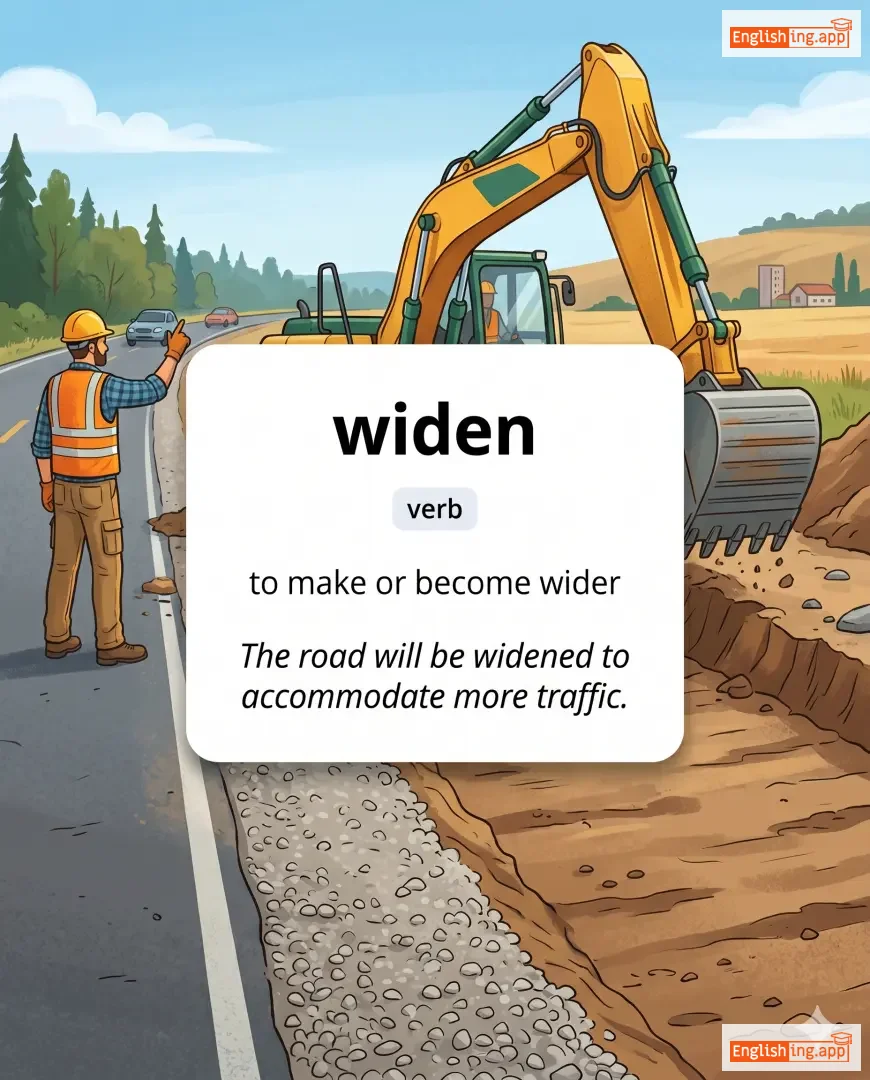
widen definition card — visual illustration of the meaning
verb
/ˈwaɪdən/
প্রসারিত করা (prosharito kora)

to make or become wider

"The road will be widened to accommodate more traffic."

"রাস্তা আরও ট্র্যাফিক সামলাতে প্রসারিত করা হবে।" (Rasta aro traffic shamlate prosharito kora hobe.)
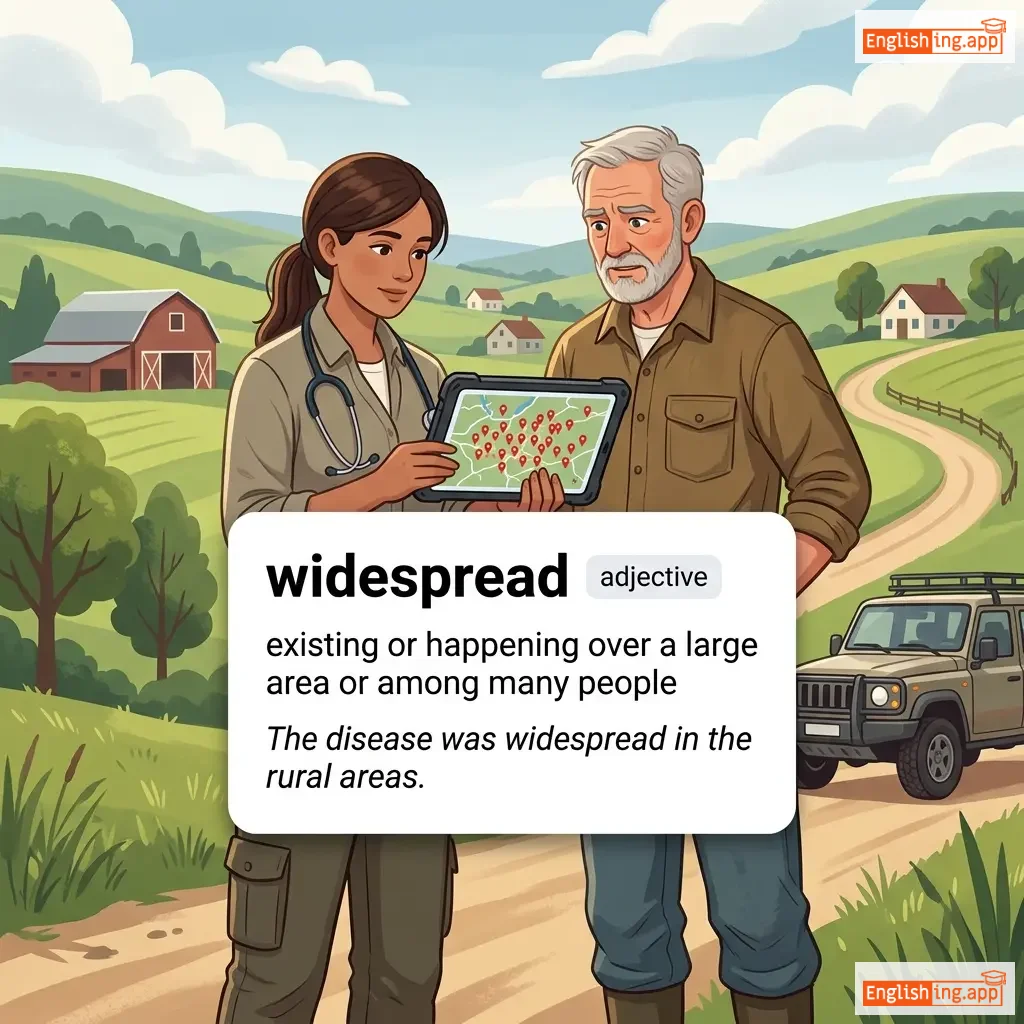
widespread definition card — visual illustration of the meaning
adjective
/ˈwaɪdˌsprɛd/
প্রসারিত (prosarit)

existing or happening over a large area or among many people

"The disease was widespread in the rural areas."

"রোগটি গ্রামাঞ্চলে ব্যাপকভাবে ছড়িয়ে পড়েছিল।" (rogti gramanchole byapakbhabe chhoriye porechhilo.)
noun
/ˈwɪdəʊ/
বিধবা (bidhoba)

a woman whose husband has died and who has not married again

"She became a widow at a very young age."

"তিনি খুব অল্প বয়সে বিধবা হয়েছিলেন।" (Tini khub olpo boyose bidhoba hoyechilen.)
noun
/ˈwɪd.oʊ.ər/
বিপত্নীক; (bipotnnik)

a man whose wife has died and who has not married again

"The elderly widower lived alone but had regular visits from his children."

"বয়স্ক বিপত্নীক একা থাকতেন কিন্তু তার সন্তানদের নিয়মিত দেখা করতেন।" (Boyoshko bipotnnik eka thakten kintu tar shontander niyomito dekha korten.)
noun
/wɪdθ/
প্রস্থ (prosth)

the measurement or extent of something from side to side

"The width of the table is 2 meters."

"টেবিলের প্রস্থ ২ মিটার।" (Tebiler prostho 2 meter.)
verb
/wiːld/
ধারণ করা, ব্যবহার করা (dharon kora, byabohar kora)

To hold and use a weapon, tool, or power effectively.

"The warrior wielded his sword with great skill."

"যোদ্ধা দক্ষতার সাথে তার তলোয়ার ব্যবহার করেছিল।" (Joddha dokkhotar sathe tar talowar byabohar korechilo.)