ভোকাবুলারিসমূহ

ইংরেজি শব্দের বাংলা অর্থ | English to Bangla Word Meaning Dictionary

adjective
/ˈsɛksi/
আকর্ষণীয় (যৌনভাবে) (akoroshoniyo (jounobhabe))

sexually attractive or exciting

"She wore a sexy red dress to the party."

"সে পার্টিতে একটি আকর্ষণীয় লাল পোশাক পরেছিল।" (Se partyte ekti akoroshoniyo lal poshak porechhilo.)
adjective
/ˈʃæbi/
জীর্ণ (jirno)

In poor condition through long use or lack of care; of low quality.

"The hotel room looked shabby and old-fashioned."

"হোটেলের ঘরটি জীর্ণ এবং পুরানো ধাঁচের দেখাচ্ছিল।" (Hotel er ghorti jirno ebong purano dhacher dekhachhilo.)
noun
/ʃæk/
ঝুপড়ি ঘর (jhupori ghor)

a small, roughly built house or hut, often poor or temporary

"They spent the weekend in a small wooden shack by the river."

"তারা নদীর ধারে একটি ছোট কাঠের ঝুপড়ি ঘরে সপ্তাহান্ত কাটিয়েছিল।" (Tara nodir dhare ekti choto kather jhupori ghore saptahanto katiyechilo.)
verb
/ˈʃækəl/
শৃঙ্খল পরানো (shrinkhol porano)

to chain or restrain; to restrict someone’s actions or freedom

"Outdated regulations shackle small businesses and slow innovation."

"পুরোনো বিধিনিষেধ ছোট ব্যবসাকে শৃঙ্খলে বেঁধে রাখে এবং উদ্ভাবনকে ধীর করে।" (Purono bidhinished choto byabshake shrinkhole bendhe rakhe ebong uddhabonke dhir kore.)
noun
/ˈʃæd.ək/
বাতাবিলেবু (batabilebu)

a large citrus fruit similar to grapefruit; pomelo

"The shaddock is the largest citrus fruit in the world."

"বাতাবিলেবু পৃথিবীর সবচেয়ে বড় লেবু জাতীয় ফল।" (batabilebu prithibir shobcheye boro lebu jatiyo phol)
noun, verb
/ʃeɪd/
ছায়া (chhaya)

a sheltered or darker area where direct light is blocked; to block light from something

"We sat under the tree for some shade."

"আমরা কিছু ছায়ার জন্য গাছের নিচে বসেছিলাম।" (Amra kichu chhayar jonno gacher niche boshechilam.)
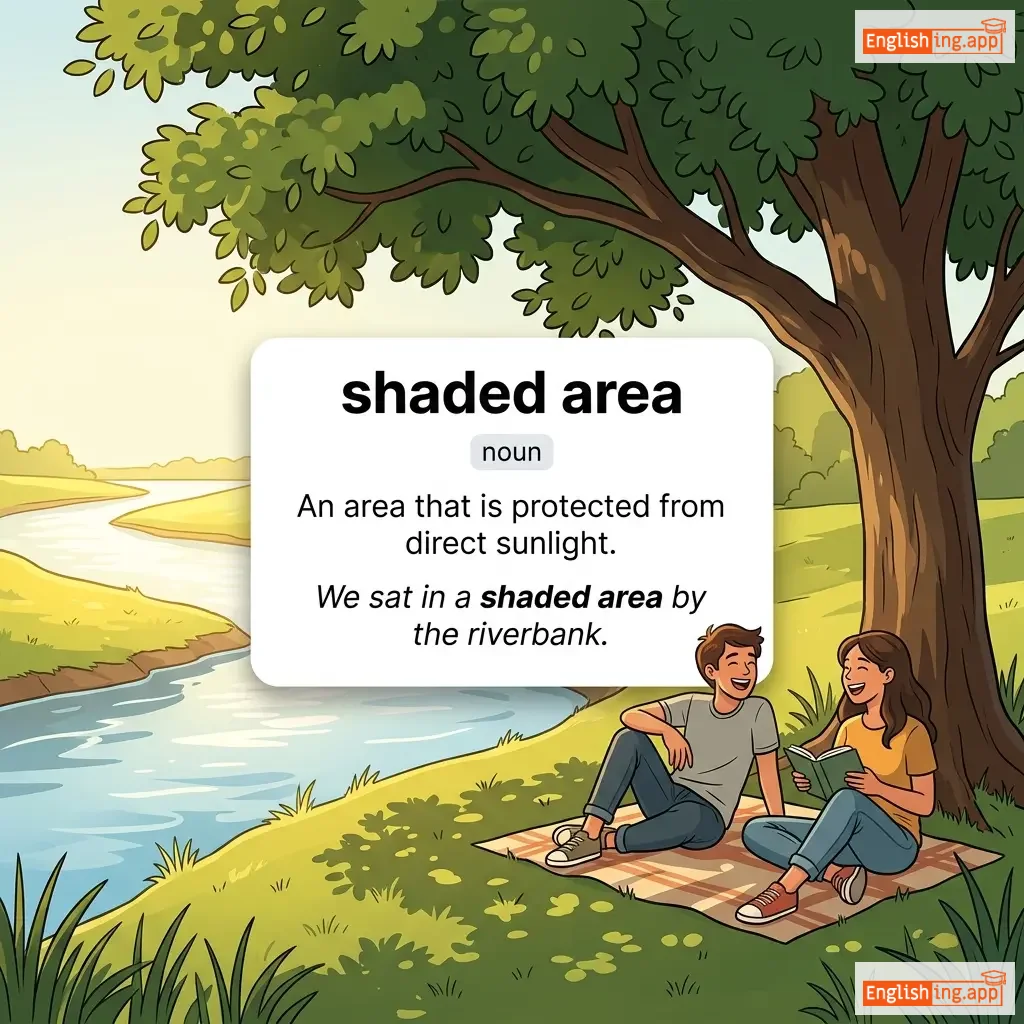
shaded area definition card — visual illustration of the meaning
noun
ˈʃeɪdɪd ˈɛəriə
ছায়াযুক্ত এলাকা (chayajukto elaka)

An area that is protected from direct sunlight.

"We sat in a shaded area by the riverbank."

"আমরা নদীর তীরে ছায়াযুক্ত এলাকায় বসেছিলাম।" (Amra nodir tire chayajukto elakay bosechhilam.)
noun, verb
/ˈʃæd.oʊ/
ছায়া (chhaya)

a dark area or shape made when something blocks light; to follow or observe secretly

"His shadow stretched long in the evening sun."

"সন্ধ্যার সূর্যে তার ছায়া লম্বা হয়ে পড়েছিল।" (Sandhyar surye tar chhaya lomba hoye porechhilo.)
adjective
/ˈʃeɪ.di/
ছায়াযুক্ত; সন্দেহজনক; অবিশ্বাস্য; (chayajukto)

providing shade; dishonest; suspicious

"The shady businessman made a suspicious deal."

"সন্দেহজনক ব্যবসায়ী একটি সন্দেহজনক চুক্তি করেছিল।" (sondehojnok bebshayee ekti sondehojnok chukti korechilo.)
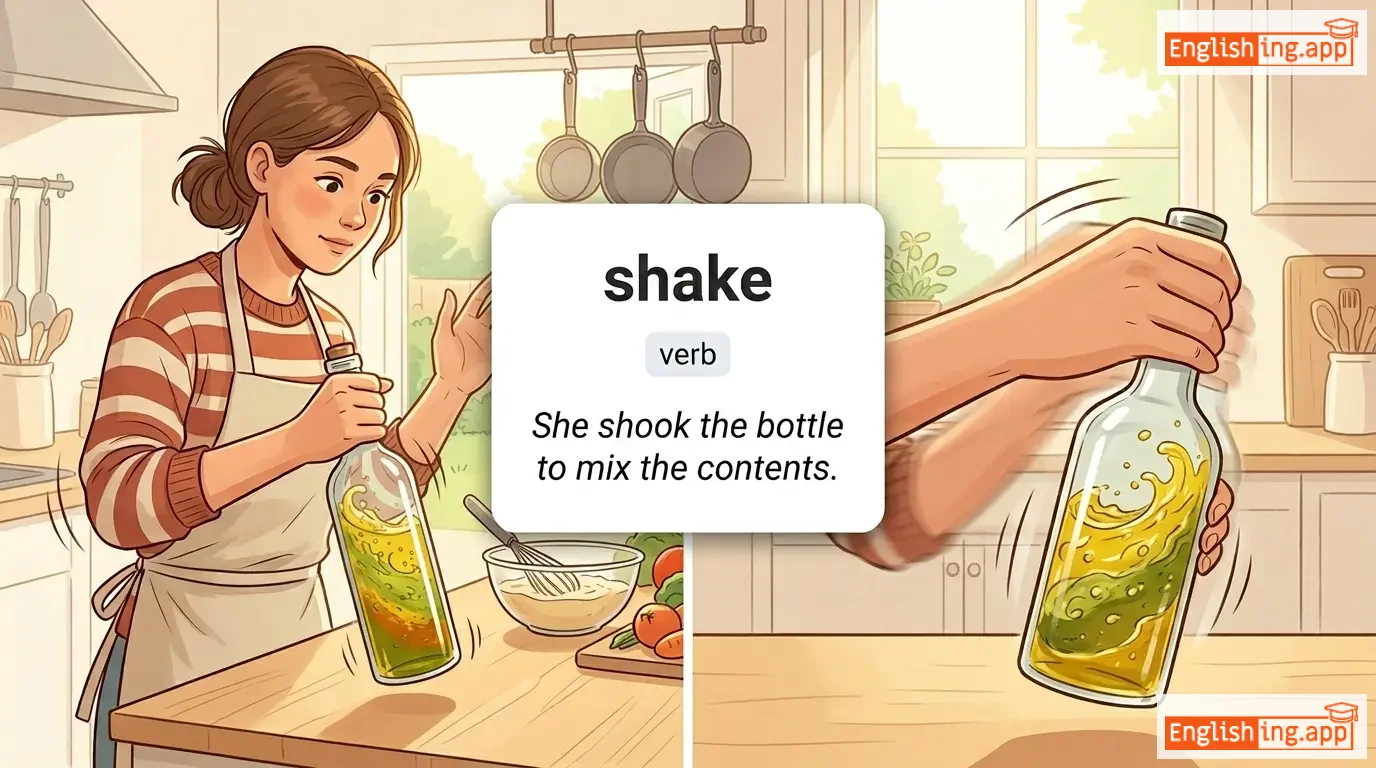
shake definition card — visual illustration of the meaning
verb
/ʃeɪk/
কম্পন করা (kompon kora)

to move or cause to move up and down or from side to side with rapid, short movements

"She shook the bottle to mix the contents."

"তিনি বোতলটি মিশ্রণ করতে ঝাঁকুনি দিলেন।" (Tini botolti mishron korte jhankuni dilen.)
adjective
/ˈʃeɪ.ki/
দুর্বল; অনিশ্চিত; অস্থির; কম্পমান; (durbol)

unstable; trembling; unreliable; weak

"His voice was shaky with nervousness."

"তার কণ্ঠস্বর ভয়ে কাঁপছিল।" (tar konthoswor bhoyey kapchilo.)
noun
/ʃeɪl/
শেল শিলা (shel shila)

a fine-grained sedimentary rock that can be split into thin layers

"The region is rich in shale and natural gas deposits."

"অঞ্চলটি শেল এবং প্রাকৃতিক গ্যাসে সমৃদ্ধ।" (Oncholti shel ebong prakritik gase somriddho.)
modal verb
/ʃæl/
অধিকারী হওয়া (odhikari howa)

used to express the future or indicate an intention or determination

"I shall return before sunset."

"আমি সূর্যাস্তের আগে ফিরে আসব।" (Ami surjastroger aage fire asbo.)
adjective
/ˈʃæl.oʊ/
অগভীর (ogobhir)

not deep; lacking depth of thought or feeling

"The children played in the shallow water near the shore."

"শিশুরা তীরের কাছে অগভীর পানিতে খেলছিল।" (Shishura tirer kache ogobhir panite khelchhilo.)
noun, adjective, verb
/ʃæm/
ভণ্ডামি (bhondami)

something that is not what it appears to be; a false or fake thing; to pretend

"The deal turned out to be a sham."

"চুক্তিটি শেষ পর্যন্ত ভণ্ডামি প্রমাণিত হয়েছিল।" (Chuktiti shesh porjonto bhondami promanito hoyechhilo.)
noun
/ˈʃæmbəlz/
অগোছালো অবস্থা (ogochaolo obostha)

a state of complete disorder or ruin

"After the storm, the whole town was in shambles."

"ঝড়ের পরে পুরো শহরটি অগোছালো অবস্থায় ছিল।" (Jhorer pore puro shohorti ogochaolo obosthaye chilo.)
noun
/ʃeɪm/
লজ্জা (lojja)

a painful feeling of humiliation or distress caused by the consciousness of wrong or foolish behavior

"He felt deep shame after lying to his friend."

"বন্ধুকে মিথ্যা বলার পর সে গভীর লজ্জা অনুভব করেছিল।" (Bondhuke mithya bolar por se gobhir lojja onubhob korechhilo.)
adjective
/ˈʃeɪm.fəl/
লজ্জাজনক; কলঙ্কজনক; (lojjajnok)

causing shame; disgraceful; embarrassing

"His shameful behavior embarrassed the entire family."

"তার লজ্জাজনক আচরণ পুরো পরিবারকে বিব্রত করেছিল।" (tar lojjajnok achoron puro poribarke bibhroto korechilo.)
adjective
/ˈʃeɪm.ləs/
লজ্জাহীন; বেহায়া; নির্লজ্জ; (lojjahin)

having no shame; bold and rude; impudent

"The shameless politician refused to apologize for his mistakes."

"লজ্জাহীন রাজনীতিবিদ তার ভুলের জন্য ক্ষমা চাইতে অস্বীকার করলেন।" (lojjahin rajnoitibid tar bhuler jonno khoma chaite oswikar korlen.)
noun
/ˌʃæŋɡriˈlɑː/
কল্পিত স্বর্গ (kolpito sworgo)

a remote, beautiful, imaginary place where life is perfect and peaceful

"They described the island as a modern-day Shangri-La."

"তারা দ্বীপটিকে আধুনিক যুগের একটি স্বর্গ হিসেবে বর্ণনা করেছিল।" (Tara diptike adhunik juger ekti sworgo hisebe bornona korechilo.)
noun
/ʃeɪp/
আকৃতি (akruti)

the external form, contours, or outline of someone or something

"The shape of the mountain was clearly visible from the valley."

"পর্বতের আকারটি উপত্যকা থেকে স্পষ্টভাবে দৃশ্যমান ছিল।" (Porbot er akriti upotyka theke sposthobhabe drishyoman chhilo.)
adjective
/ʃeɪpt/
আকৃতিবদ্ধ (akritiboddho)

having a particular form or appearance

"The sculpture was shaped like a human figure."

"ভাস্কর্যটি একটি মানব চিত্রের মতো শেপড ছিল।" (Bhaskoryoti ekti manob chhitrer moto shaped chhilo.)
adjective
/ˈʃeɪp.ləs/
আকৃতিহীন; বিনাকৃতি; (akritihin)

having no definite or well-defined shape or form

"The fog created a shapeless mass in the distance."

"কুয়াশা দূরত্বে একটি আকৃতিহীন পিণ্ড তৈরি করেছিল।" (kuyasha durottwe ekti akritihin pindo toiri korechilo.)
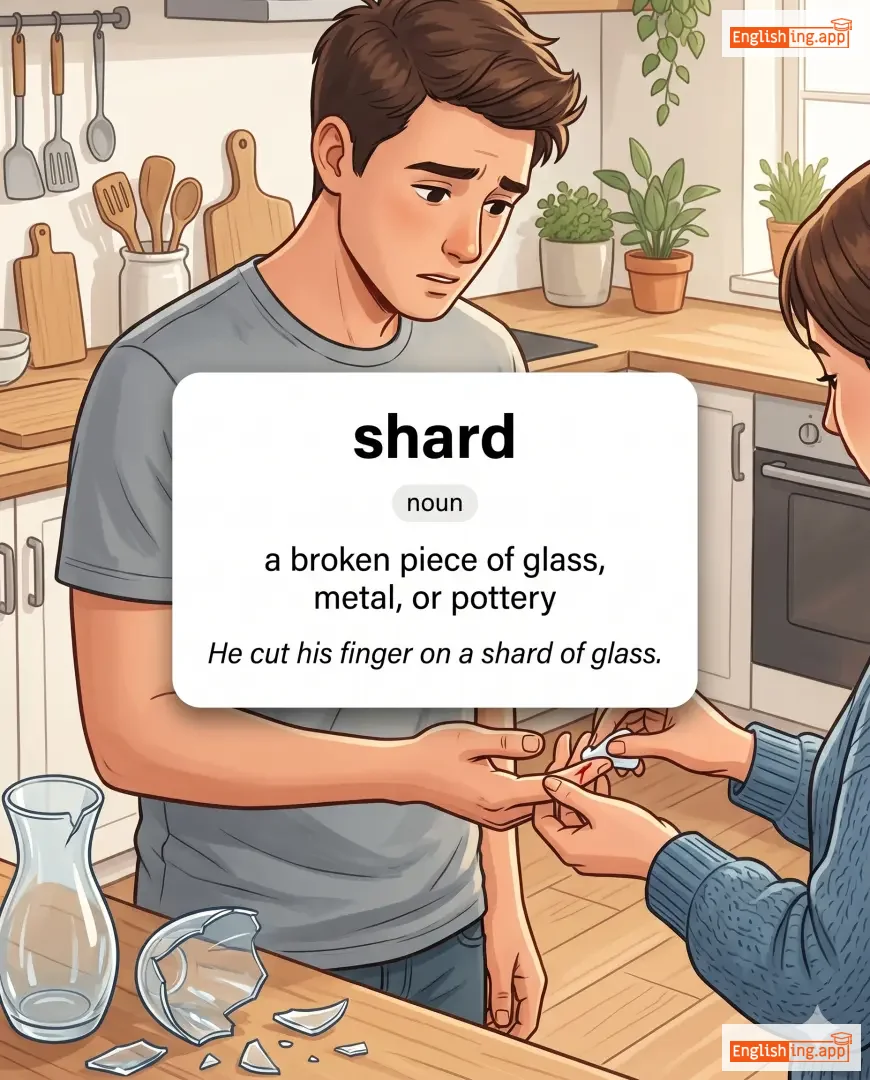
shard definition card — visual illustration of the meaning
noun
/ʃɑːrd/
টুকরো (tukro)

a broken piece of glass, metal, or pottery

"He cut his finger on a shard of glass."

"সে কাচের টুকরোতে আঙুল কেটেছিল।" (Se kacher tukrote angul ketechilo.)
verb
/ʃɛər/
ভাগ করা (bhag kora)

to give a portion of (something) to others or allow others to use or enjoy it

"She decided to share her lunch with her friends."

"তিনি তার বন্ধুর সাথে তার মধ্যাহ্নভোজ ভাগ করার সিদ্ধান্ত নিয়েছিলেন।" (Tini tar bondhur sathe tar modhyabhoj bhag korar siddhanto niyechhilen.)
adjective
/ʃɛrd/
যৌথ (joutho)

used, done, or experienced by two or more people together

"They live in a shared apartment near the university."

"তারা বিশ্ববিদ্যালয়ের কাছে একটি যৌথ ফ্ল্যাটে থাকে।" (Tara bishwobidyaloyer kache ekti joutho flate thake.)
noun
/ˈʃɛərˌhoʊldər/
শেয়ারধারী (sheyar dhari)

an individual or organization that owns shares in a company

"Each shareholder has the right to vote at the annual meeting."

"প্রত্যেক শেয়ারধারীর বার্ষিক সভায় ভোট দেওয়ার অধিকার আছে।" (Protyek sheyar dharir barshik shobhay vote dewar odhikar ache.)
noun
/ʃɑːrk/
হাঙর (hangor)

a large fish with sharp teeth known for being a strong predator in the ocean

"The shark swam silently beneath the boat."

"হাঙরটি নৌকার নিচে নীরবে সাঁতরাচ্ছিল।" (Hangorti noukar niche nirobe sathrachchhilo.)
noun
/ˈʃær.ən fruːt/
গাব (gab)

a sweet orange persimmon fruit that can be eaten when firm

"The Sharon fruit is sweet and can be eaten like an apple."

"গাব ফল মিষ্টি এবং আপেলের মতো খাওয়া যায়।" (gab fol mishti ebong appeler moto khaoa jay)
adjective
/ʃɑːrp/
তীক্ষ্ণ (tikshno)

having a fine edge or point; keen

"The knife is sharp enough to cut through the meat easily."

"চাকু যথেষ্ট তীক্ষ্ণ যাতে মাংস সহজে কাটতে পারে।" (Chaku jothesto tikshno jate mangsho sohoje katte pare.)
adverb
/ˈʃɑːrpli/
হঠাৎভাবে (hotathbhabe)

suddenly and strongly; in a cutting or intense way

"Prices rose sharply after the announcement."

"ঘোষণার পর দাম হঠাৎ বেড়ে গেল।" (Ghosonar por dam hotath bere gelo.)
verb
/ˈʃætər/
চূর্ণ করা (churno kora)

To break suddenly into many small pieces.

"The glass will shatter if you drop it."

"আপনি ফেললে কাঁচটি চূর্ণ হয়ে যাবে।" (Apni phelle kanchti churno hoye jabe.)
verb, noun
/ʃeɪv/
দাড়ি বা চুল কাটা (dari ba chul kata)

To remove hair from the body, typically using a razor; the act of removing hair

"He likes to shave every morning before work."

"তিনি প্রতিদিন কাজের আগে শেভ করতে পছন্দ করেন।" (tini protidin kajer age shave korte pochondo koren)
noun
/ˈʃeɪvɪŋ/
দাড়ি কামানো (dari kamano)

the act of removing hair with a razor; a thin strip or piece shaved from something

"He bought a new cream for shaving."

"সে শেভ করার জন্য নতুন ক্রিম কিনেছিল।" (Se shev korar jonno notun krim kinechilo.)
pronoun
/ʃi/
সে (she)

a female person or animal previously mentioned or easily identified

"She is going to the market to buy vegetables."

"সে বাজারে শাকসবজি কিনতে যাচ্ছে।" (Se bajare shakshobji kinte jacche.)
noun
/ʃiːf/
ধানের আঁটি (dhaner ati)

a bundle of grain stalks laid lengthwise and tied together after reaping; a bundle of objects tied together

"The farmer carried a sheaf of wheat on his shoulder."

"কৃষক কাঁধে ধানের আঁটি বহন করছিল।" (Krishok kandhe dhaner ati bohon korchilo.)
verb
/ʃɪə/
কাটা (kata)

to cut the wool off a sheep or to cut something with sharp tools like scissors or shears

"The farmer will shear the sheep in the spring."

"কৃষক বসন্তে ভেড়ার উল কাটবেন।" (Krishok bosonte bherar ul katben.)
noun
/ʃiːt fɪʃ/
বোয়াল মাছ (boal mach)

A large freshwater catfish with a broad flat head and long barbels

"The sheat-fish is one of the largest freshwater fish in South Asia."

"বোয়াল মাছ দক্ষিণ এশিয়ার বৃহত্তম মিঠাপানির মাছগুলির মধ্যে একটি।" (boal mach dokkhhin eshiyar brihotom mithapanir machgulir moddhe ekti)
verb
/ʃiːð/
খাপে ঢোকানো (khape dhokano)

to put a sword or knife back into its cover

"He quickly sheathed his sword after the duel."

"যুদ্ধের পর সে দ্রুত তরোয়াল খাপে ঢুকিয়ে নিল।" (Judher por se druto tarowal khape dhukiye nilo.)
verb
/ʃɛd/
ঝরানো (jhorano)

to let something fall off naturally, such as leaves, hair, or tears

"Trees shed their leaves in autumn."

"গাছগুলো শরতে তাদের পাতা ঝরায়।" (Gachgulo shorote tader pata jhoray.)
noun
/ʃiːp/
ভেড়া (bhera)

a farm animal with thick wool that is raised for its wool, meat, and milk

"The farmer keeps a large flock of sheep."

"কৃষক অনেক ভেড়া পালন করেন।" (Krishok onek bhera palon koren.)
adjective
/ʃɪə/
সম্পূর্ণ (sompurno)

complete and utter; very steep or transparent

"The cliff was a sheer drop into the sea."

"পাহাড়টি সমুদ্রে হঠাৎ খাড়া ভাবে নেমে গেছে।" (Pahar ti somudre hotat khara vabe neme geche.)
noun
/ʃiːt/
চাদর (chadar)

a large piece of cloth or paper, typically used to cover or protect something

"I need a clean sheet to cover the bed."

"আমাকে বিছানা ঢাকার জন্য একটি পরিষ্কার চাদর দরকার।" (Amake bichana dhakar jonyo ekti porishkar chadar darkar.)
noun
/ʃɛlf/
শেলফ (shelf)

a flat surface used for storing or displaying things, typically fixed to a wall or inside a cabinet

"I placed the books on the shelf next to the window."

"আমি জানালার পাশে শেলফে বইগুলি রেখেছিলাম।" (Ami janalar pashe shelfe boiguli rekhechhilam.)
noun
/ʃɛl/
খোল (khol)

the hard outer covering of a mollusk or a crustacean, or something similar

"She picked up a beautiful seashell on the beach."

"সে সৈকতে একটি সুন্দর খোল তুলেছিল।" (Se soikte ekti sundor khol tulechhilo.)
noun
/ˈʃɛltər/
আশ্রয় (ashroy)

a place giving temporary protection from bad weather or danger

"They found shelter from the storm in the nearby barn."

"তারা ঝড় থেকে আশ্রয় পাওয়ার জন্য নিকটস্থ গোয়ালঘরে আশ্রয় নিয়েছিল।" (Tara jhor theke ashroy pawar jonyo nikotsth goyalghore ashroy niechhilo.)
noun
/ˈʃepərd/
মেষপালক (meshpalok)

a person who tends and guards sheep

"The shepherd guided his flock to the green pasture."

"মেষপালক তার পালকে সবুজ চারণভূমিতে নিয়ে গেল।" (meshpalok tar palke shobuj charonbhumite niye gelo)
noun
/ˈʃɜːrbət/
শরবত (shorbot)

a sweet flavored drink or a frozen dessert made from sweetened fruit juice

"On hot days, she enjoys a glass of lemon sherbet."

"গরম দিনে সে এক গ্লাস লেবুর শরবত খেতে পছন্দ করে।" (Gorom dine se ek glass lebur shorbot khete pochondo kore.)
noun
/ˈʃɪbəˌlɛθ/
প্রচলিত স্লোগান বা বিশ্বাস (procholito slogan ba bishwas)

A custom, phrase, or belief distinguishing a particular group of people, often used to identify outsiders.

"The phrase became a political shibboleth during the campaign."

"বাক্যাংশটি নির্বাচনী প্রচারণার সময় একটি রাজনৈতিক স্লোগানে পরিণত হয়েছিল।" (Bakyangsho nirobachoni procharonar somoy ekti rajnaitik slogane porinoto hoyechhilo.)
verb
/ʃɪft/
স্থানান্তর করা (sthanantor kora)

To move or change from one place, position, or situation to another.

"She had to shift her focus to the new project."

"তাকে তার মনোযোগ নতুন প্রকল্পে স্থানান্তর করতে হয়েছিল।" (Take tar monojog notun prokepte sthanantor korte hoyechhilo.)