













Swipe left or right, or use the buttons. Tap image to zoom.
例句翻译
单词
Lesson 5Lesson 5 - 遮罩切换
|
表情符号
|
单词 | Images | 翻译 | 过去时 | 过去分词 | 第三人称单数 | 动名词 | 含义 | 例句 | 例句翻译 | 示例表达 | 示例表达含义 | 示例表达翻译 | 同义词 | 反义词 | 搭配词 | 助记符 |
|---|---|---|---|---|---|---|---|---|---|---|---|---|---|---|---|---|---|
|
#101
🎈
|
/dɪsˈtɛnd/
verb
(dɪsˈtɛnd)
••••••
|
|
膨胀
péngzhàng
••••••
|
distended
dɪsˈtɛndɪd
••••••
|
distended
dɪsˈtɛndɪd
••••••
|
distends
dɪsˈtɛndz
••••••
|
distending
dɪsˈtɛndɪŋ
••••••
|
to swell or expand by pressure from within
••••••
|
Her stomach began to distend after the large meal.
她的肚子在大餐后开始膨胀。
••••••
|
她的肚子在大餐后开始膨胀。
Tā de dùzi zài dà cān hòu kāishǐ péngzhàng.
••••••
|
- •••••• | - •••••• | - •••••• |
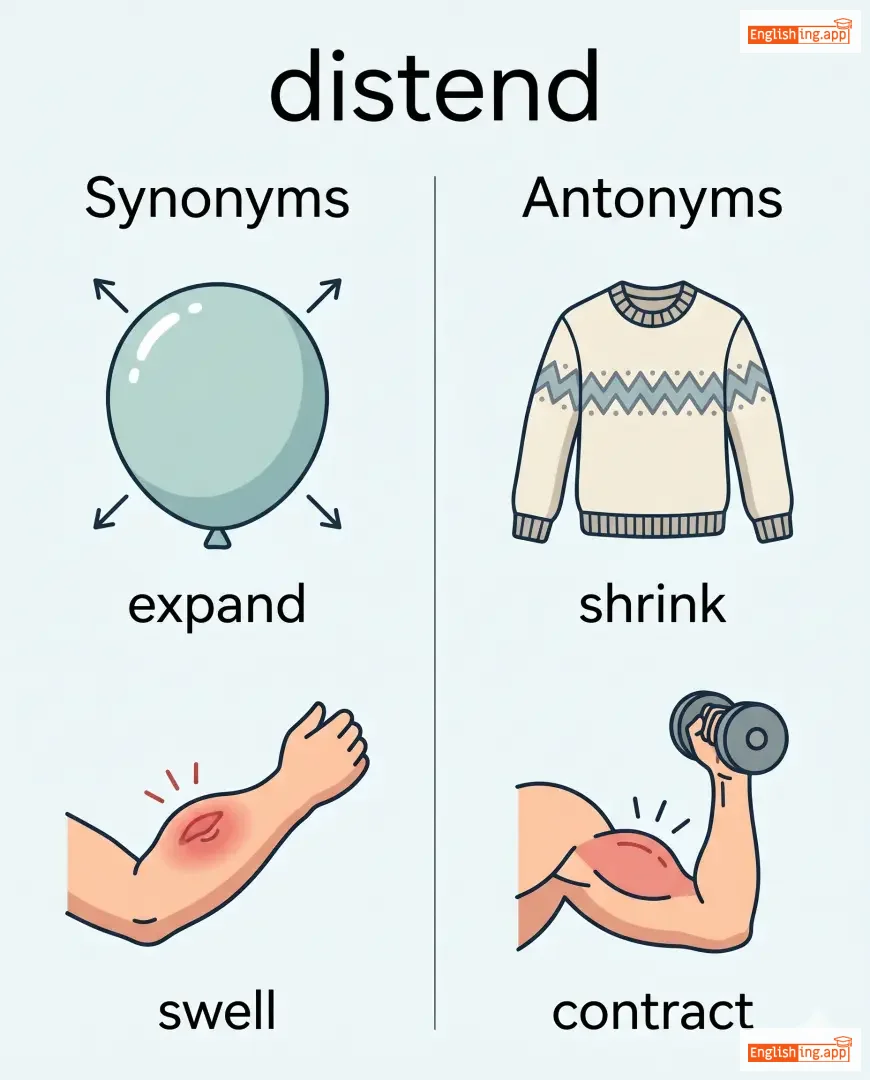
expand, swell, inflate, enlarge, bloat
••••••
|
shrink, contract, deflate
••••••
|
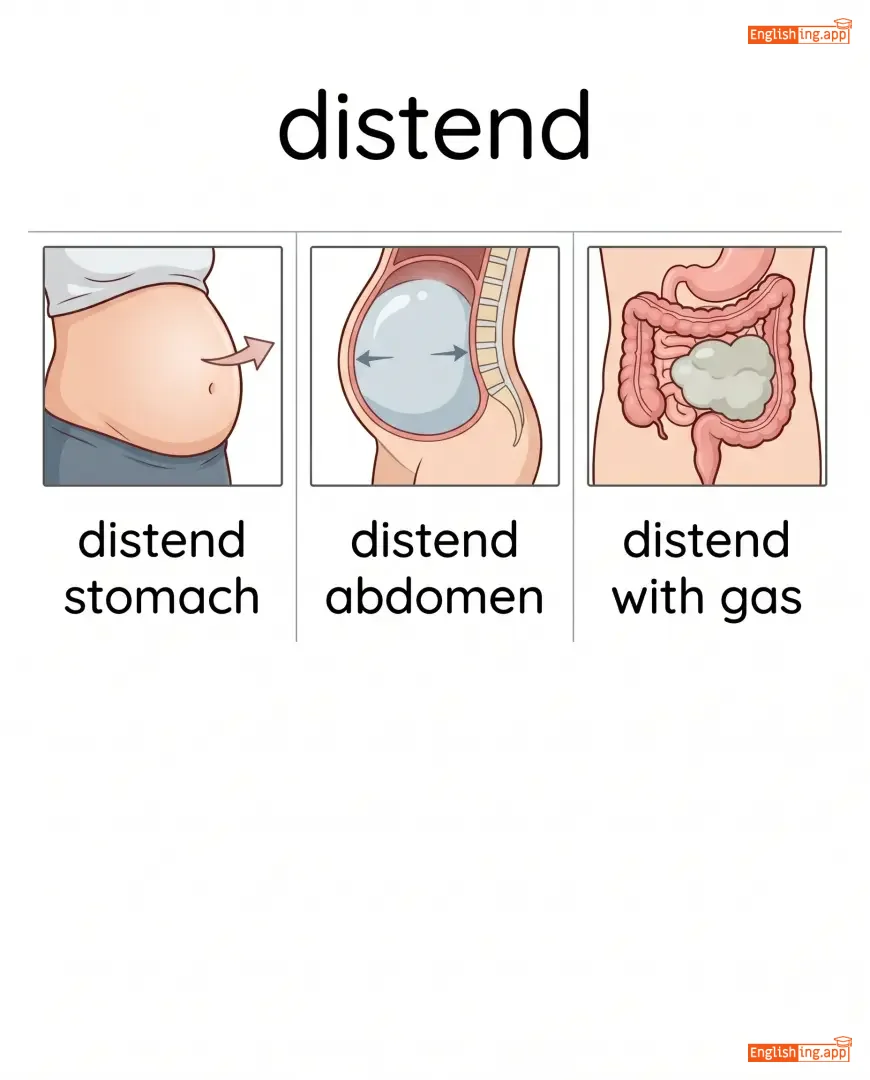
distend stomach, distend abdomen, distend with gas
••••••
|
Distend就像气球一样因内压膨胀。
••••••
|
|
#102
💧
|
/dɪˈstɪl/
verb
••••••
|
|
- •••••• |
distilled
••••••
|
distilled
••••••
|
distills
••••••
|
distilling
••••••
|
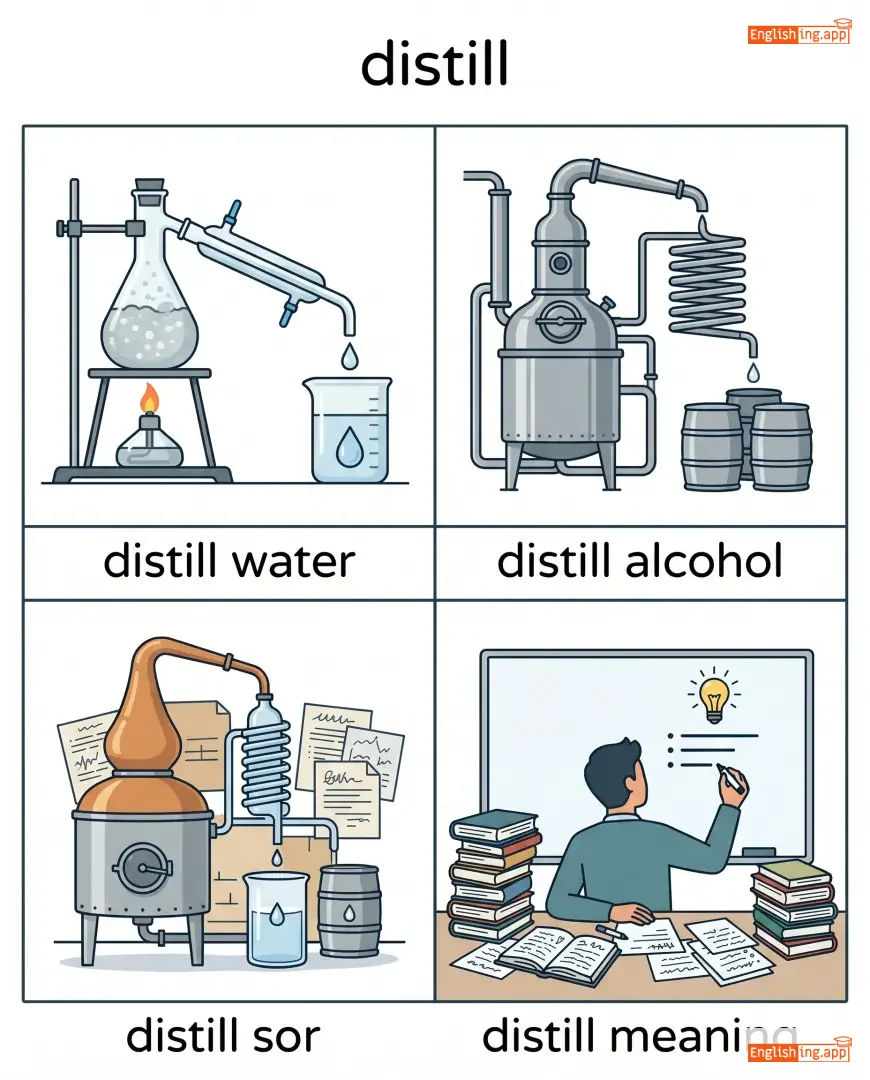
To purify a liquid by heating and cooling; to extract the essential meaning or most important aspects.
••••••
|
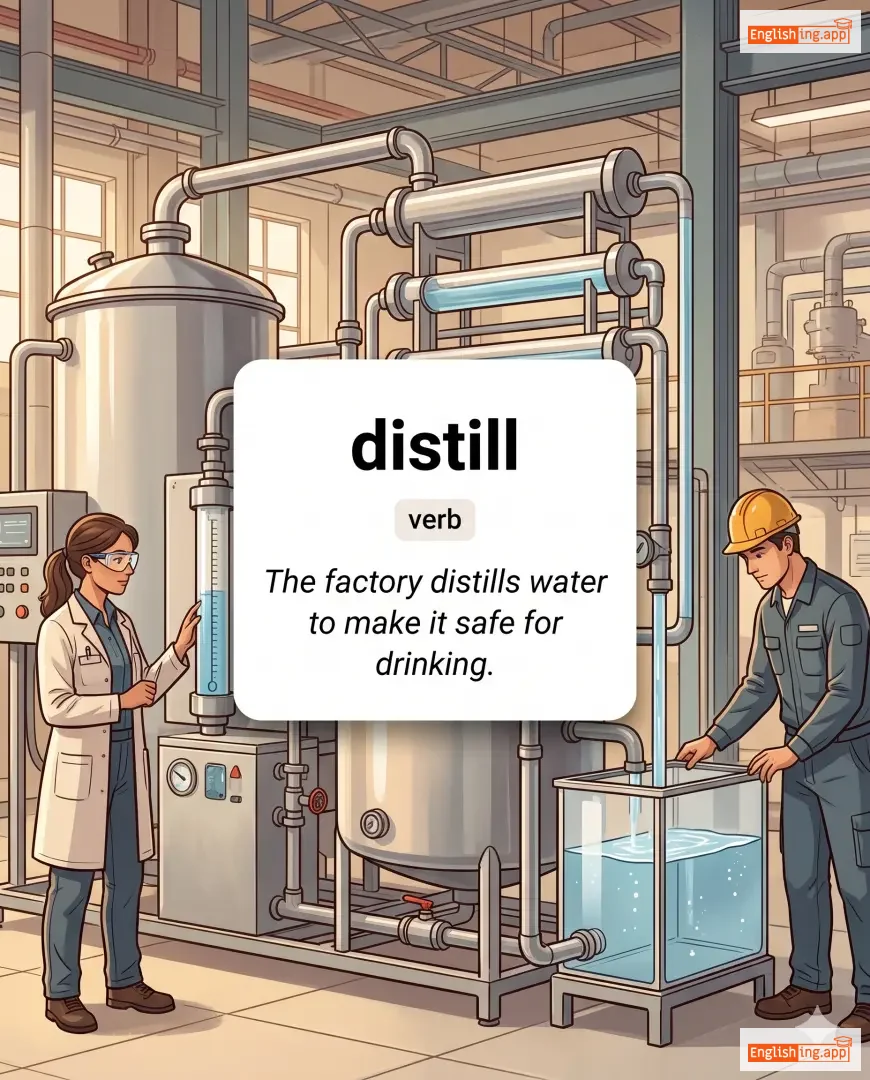
The factory distills water to make it safe for drinking. |
- •••••• |
distill the essence |
To extract the most important meaning or quality.
••••••
|
- •••••• |
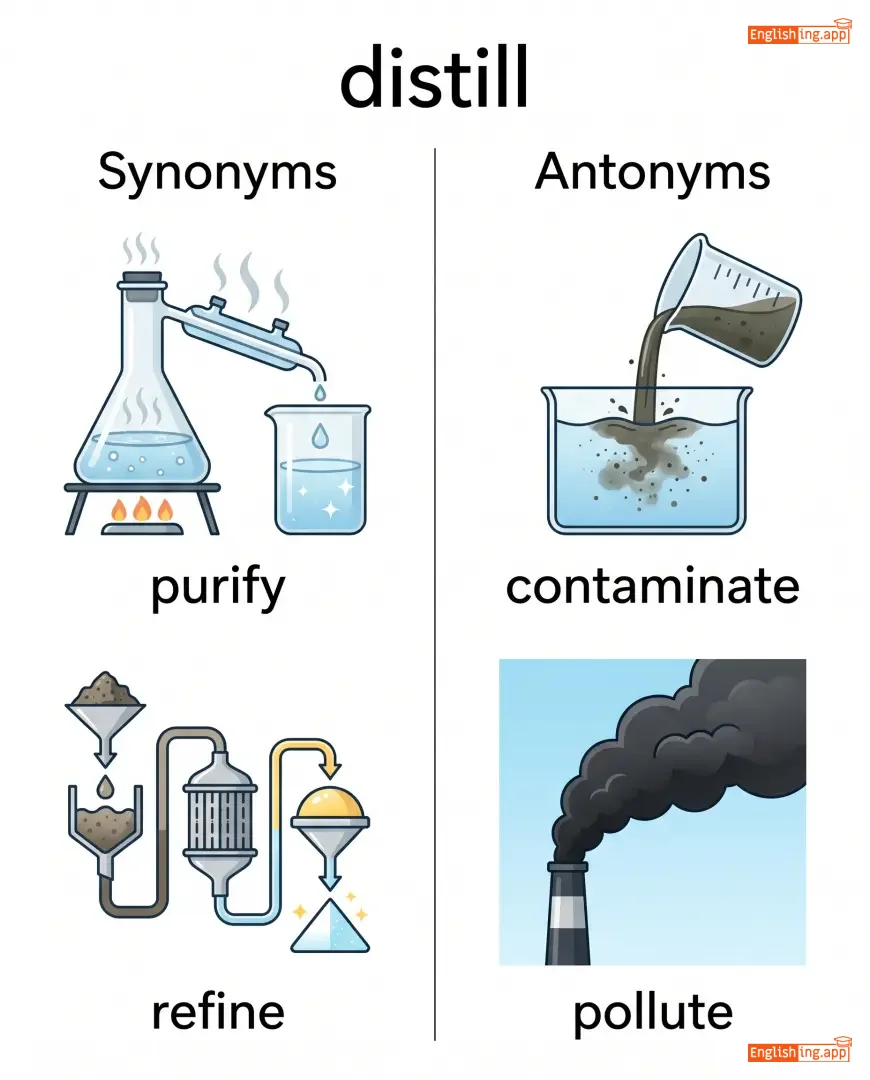
purify, refine, extract, filter, condense
••••••
|
contaminate, pollute
••••••
|
distill water, distill alcohol, distill meaning, distill information
••••••
|
No •••••• |
|
#103
↔️
|
/daɪˈvɜːrdʒ/
verb
••••••
|
|
- •••••• |
diverged
••••••
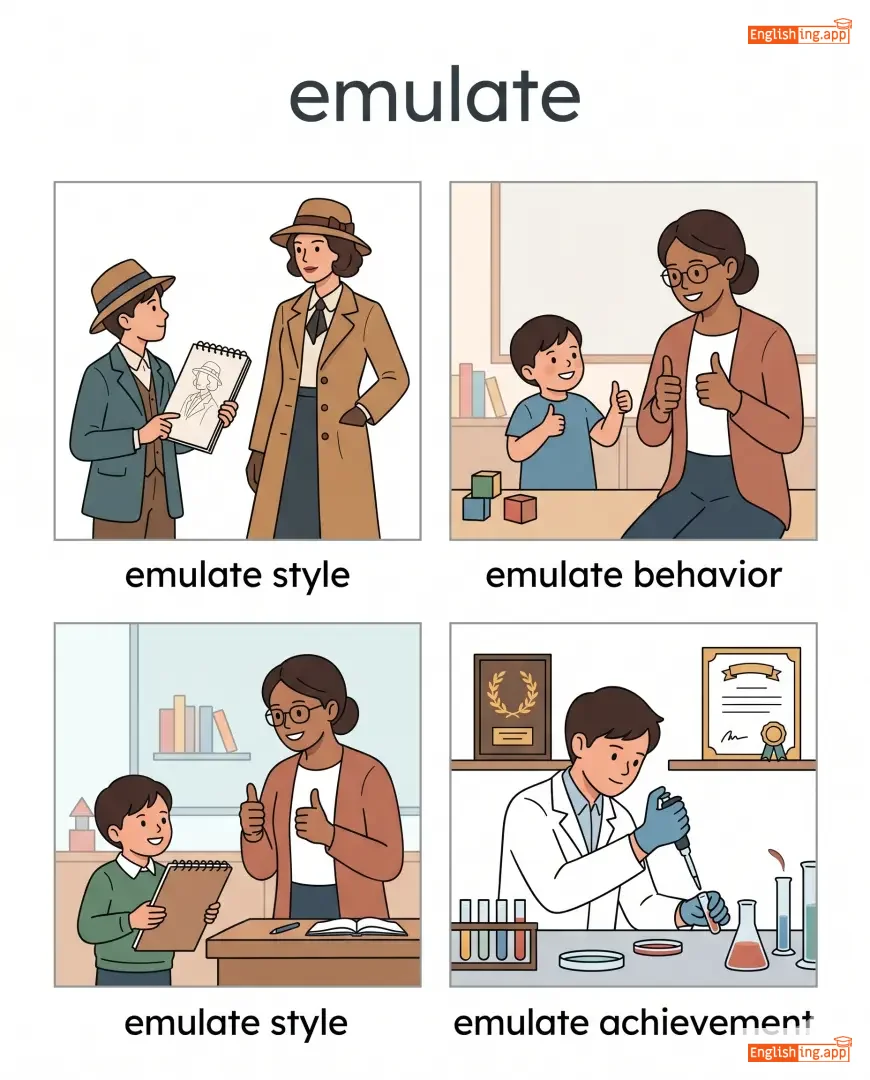
|
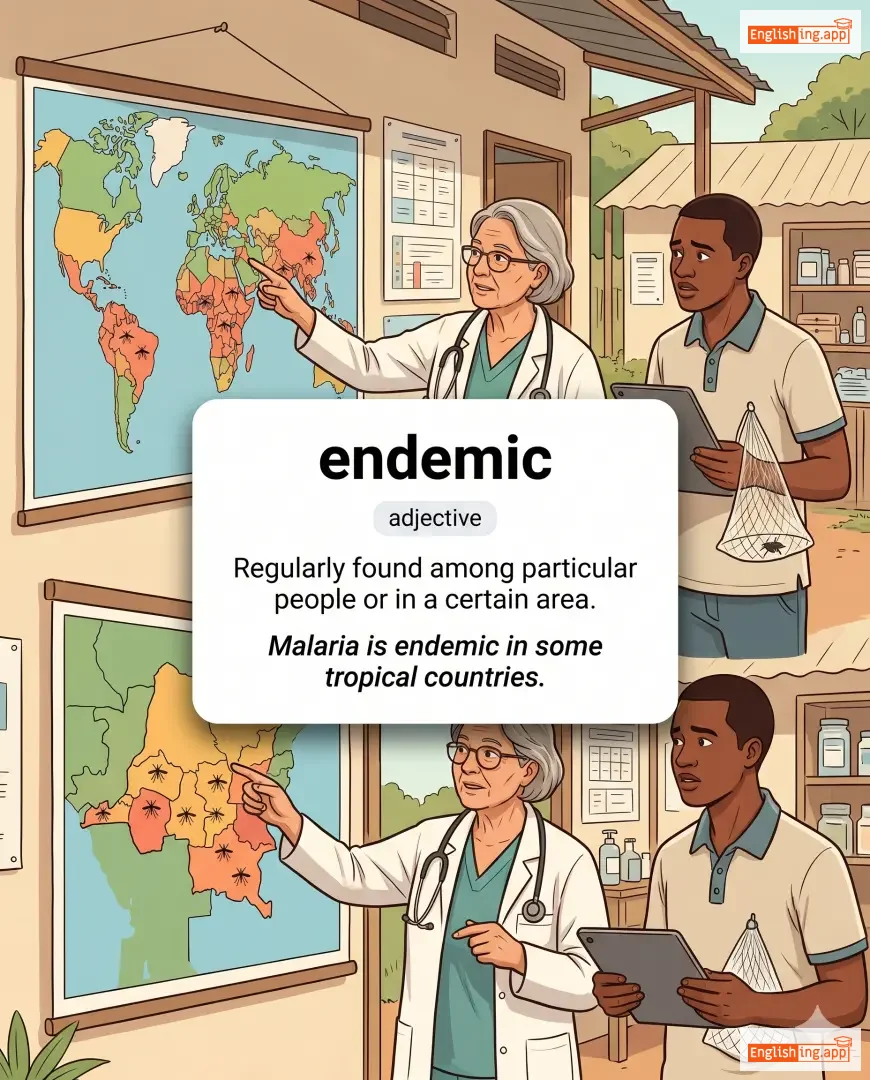
diverged
••••••
|
diverges
••••••
|
diverging
••••••
|
to separate from a path, opinion, or standard
••••••
|
The two friends began to diverge in their career choices. |
- •••••• |
diverge from the norm |
to act differently than what is usual or expected
••••••
|
- •••••• |
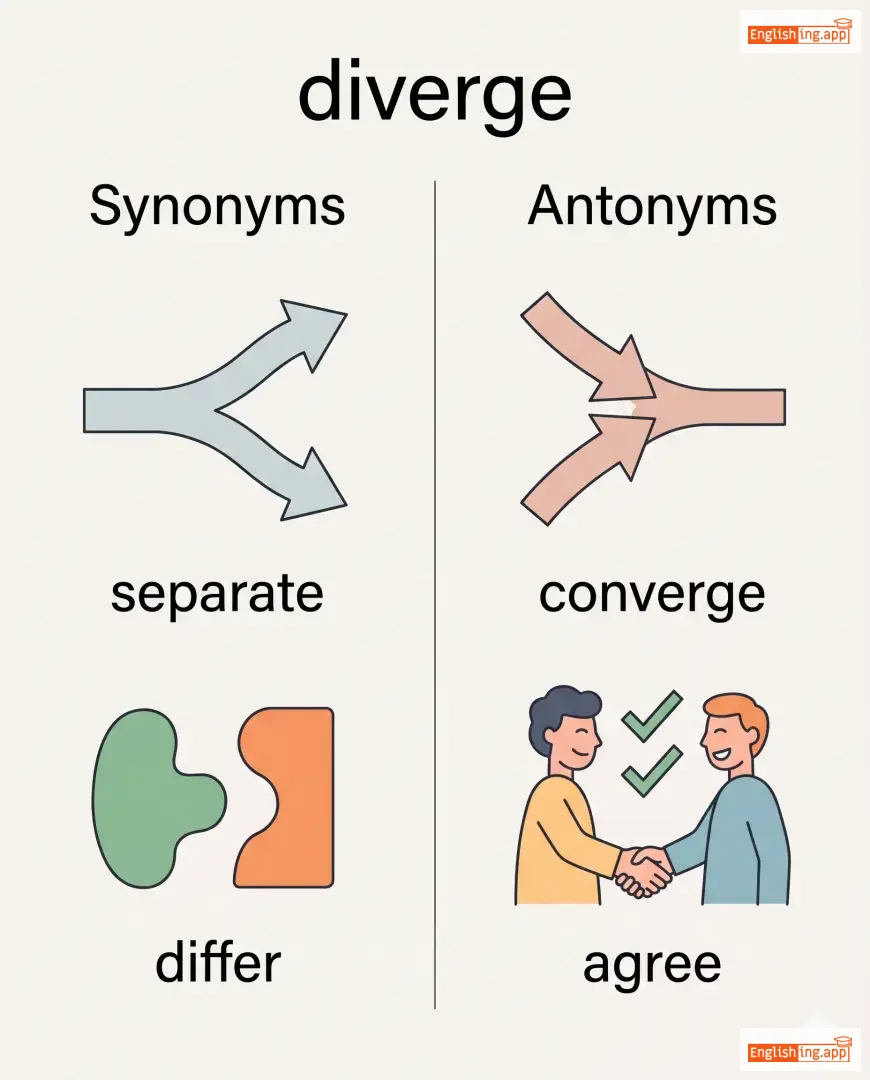
separate, differ, deviate, split, branch
••••••
|
converge, agree, coincide
••••••
|
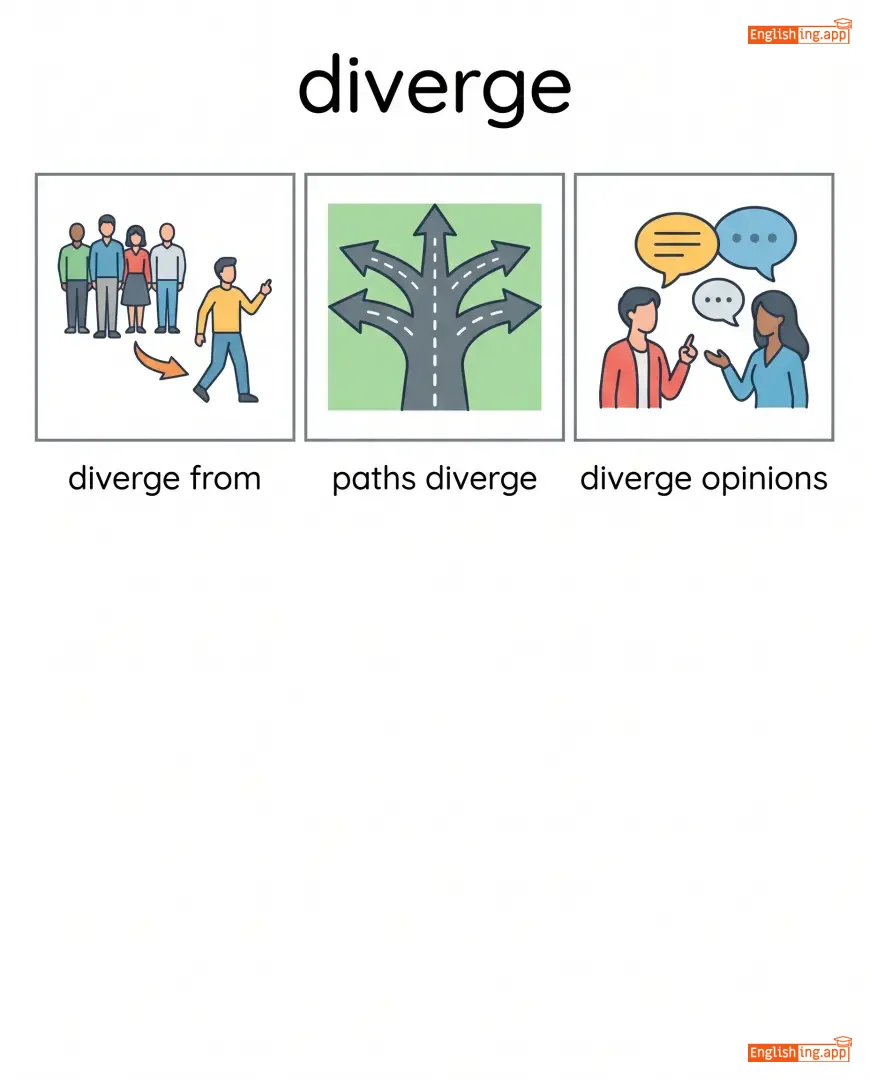
diverge from, paths diverge, diverge opinions, diverge sharply
••••••
|
No •••••• |
|
#104
📉
|
/daɪˈvɛst/
verb
••••••
|
|
- •••••• |
divested
••••••
|
divested
••••••
|
divests
••••••
|
divesting
••••••
|
to strip away possessions, rights, or assets; to rid oneself of
••••••
|
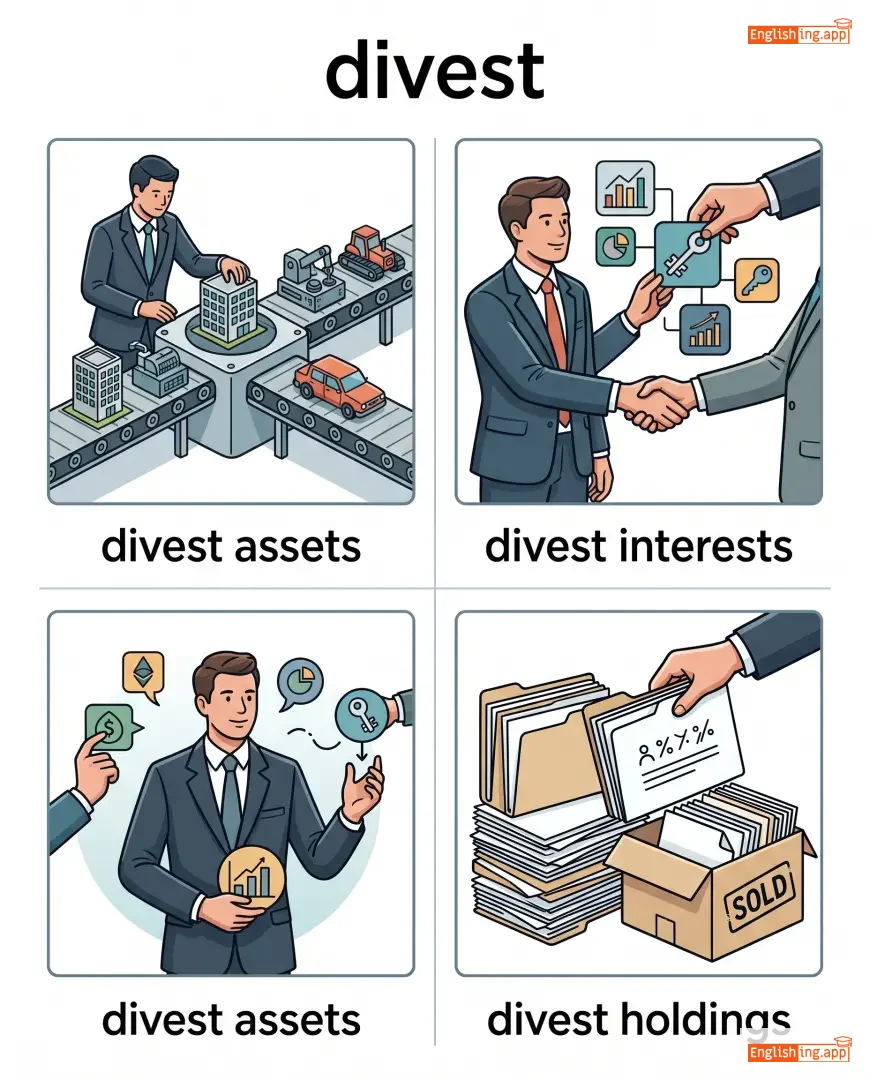
The company decided to divest its unprofitable division. |
- •••••• |
divest oneself of |
to rid oneself of something unwanted
••••••
|
- •••••• |
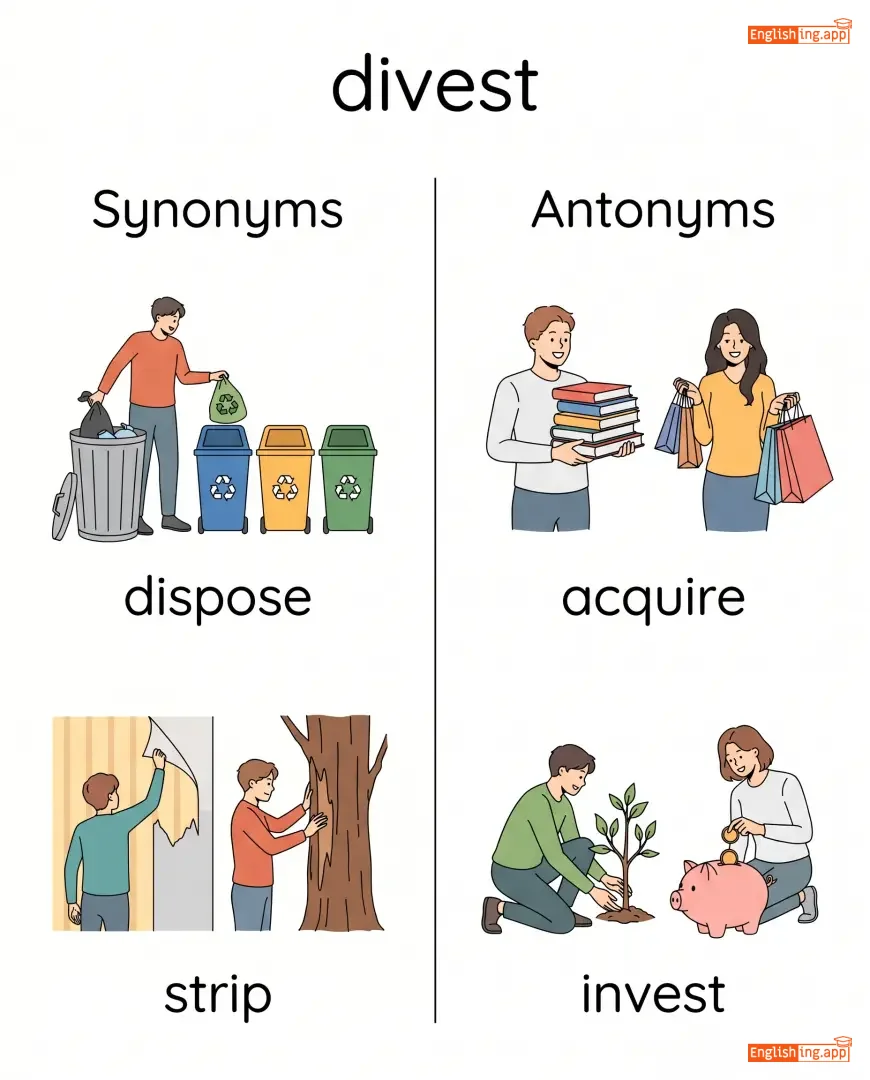
dispose, strip, rid, relinquish, sell off
••••••
|
acquire, invest, keep
••••••
|
divest assets, divest interests, divest holdings, divest company
••••••
|
No •••••• |
|
#105
📄
|
/ˈdɒkjʊmənt/
noun/verb
(文件)
••••••
|
|
文件
wenjian
••••••
|
documented
已记录
••••••
|
documented
已记录
••••••
|
documents
文件
••••••
|
documenting
记录
••••••
|
Noun: A written, printed, or electronic record that provides information or evidence. Verb: To record information in written or electronic form.
••••••
|
She carefully documented all the expenses of the trip.
她仔细记录了旅行的所有费用。
••••••
|
她仔细记录了旅行的所有费用。
Ta zǐxì jìlùle lǚxíng de suǒyǒu fèiyòng.
••••••
|
official document
官方文件
••••••
|
An authoritative or legal record recognized by an institution.
••••••
|
官方文件
guānfāng wénjiàn
••••••
|
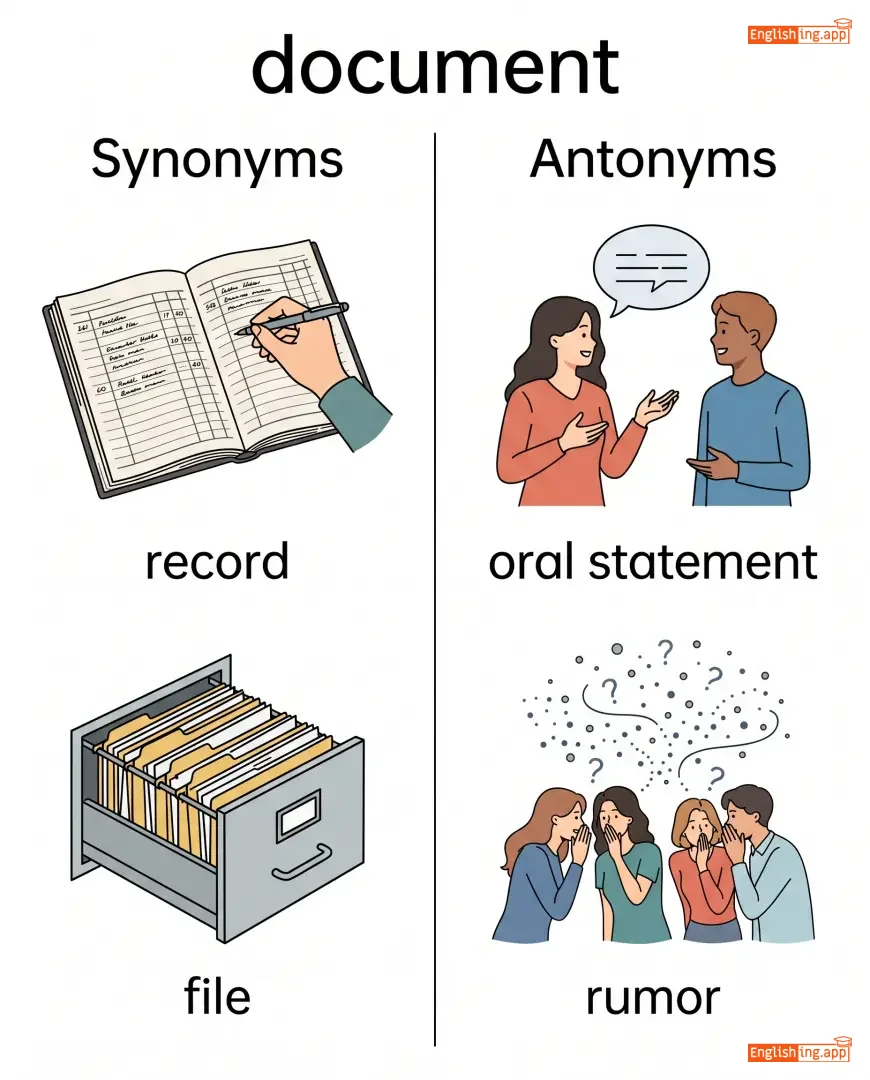
record, file, paper, certificate, report
••••••
|
oral statement, rumor
••••••
|
legal document, official document, document file, document evidence
••••••
|
Document 就是文件—确保你记录下重要的信息!
••••••
|
|
#106
🗣️
|
/dɒɡˈmætɪk/
adjective
(教条主义)
••••••
|
|
教条主义的; 坚持己见的; 倾向于将原则视为无可争议的真理
jiaotiaozhuyi de
••••••
|
- •••••• | - •••••• | - •••••• | - •••••• |
opinionated; rigid in beliefs; inclined to lay down principles as incontrovertibly true
••••••
|
He has very dogmatic views about politics.
他对政治有非常教条主义的看法。
••••••
|
他对政治有非常教条主义的看法。
Ta dui zhengzhi you feichang jiaotiaozhuyi de kanfa.
••••••
|
- •••••• | - •••••• | - •••••• |
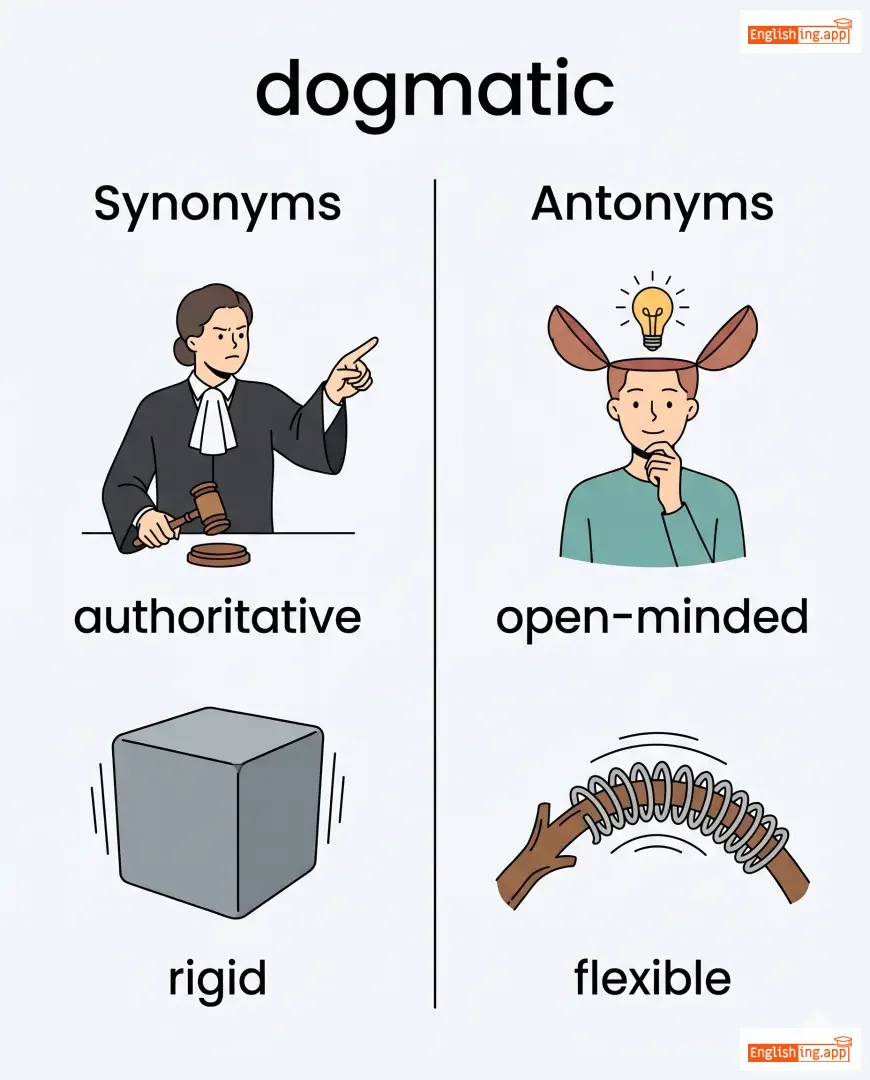
opinionated, doctrinaire, rigid, inflexible, authoritarian
••••••
|
flexible, open-minded, tolerant, receptive
••••••
|
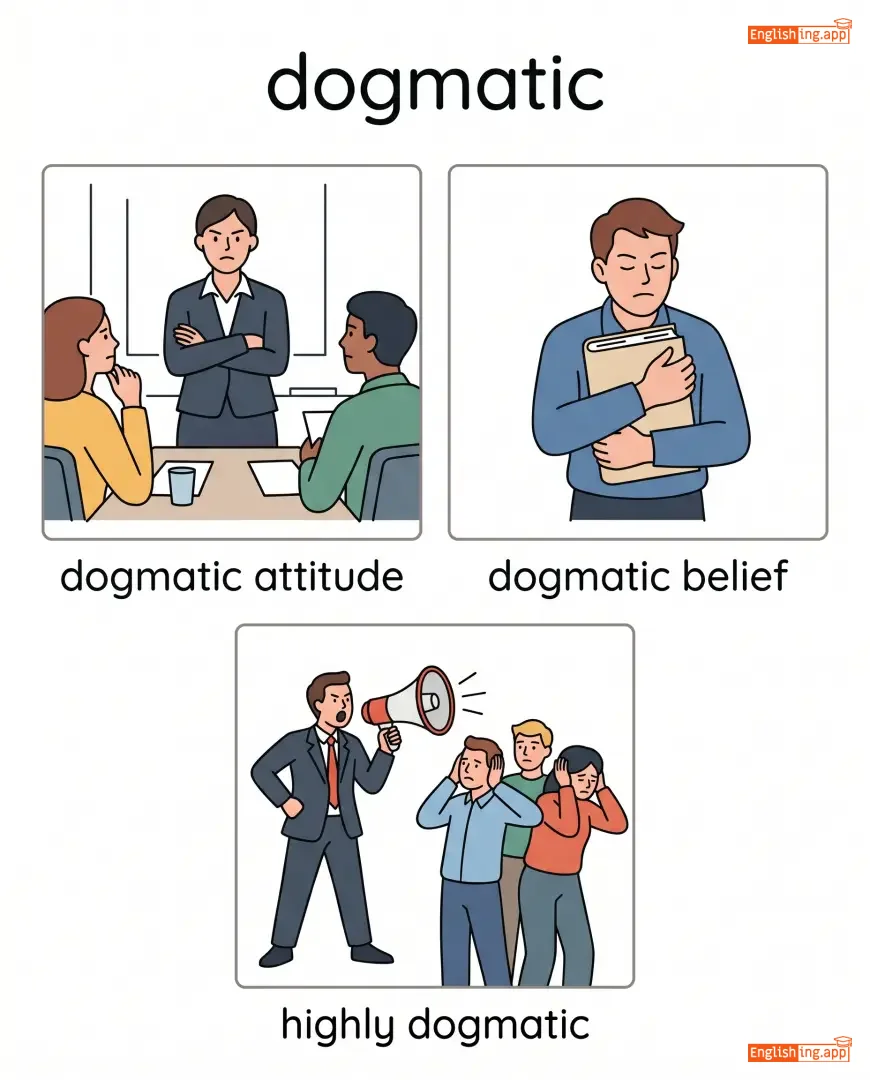
dogmatic approach, dogmatic belief, dogmatic person
••••••
|
Dogmatic sounds like 'dog' + 'mat' – think of a dog that refuses to leave its mat, just like dogmatic people refuse to change their views.
••••••
|
|
#107
😴
|
/ˈdɔːrmənt/
adjective
••••••
|
|
- •••••• | - •••••• | - •••••• | - •••••• | - •••••• |
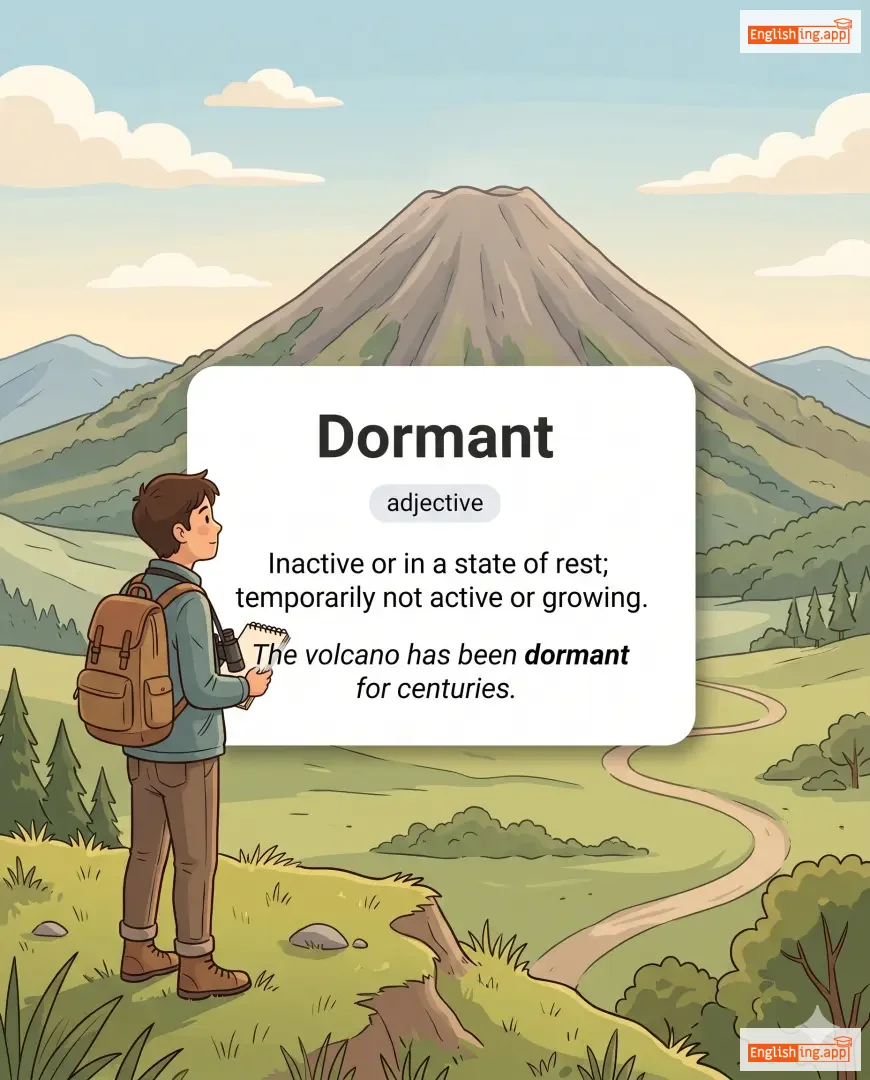
Inactive or in a state of rest; temporarily not active or growing.
••••••
|
The volcano has been dormant for centuries. |
- •••••• |
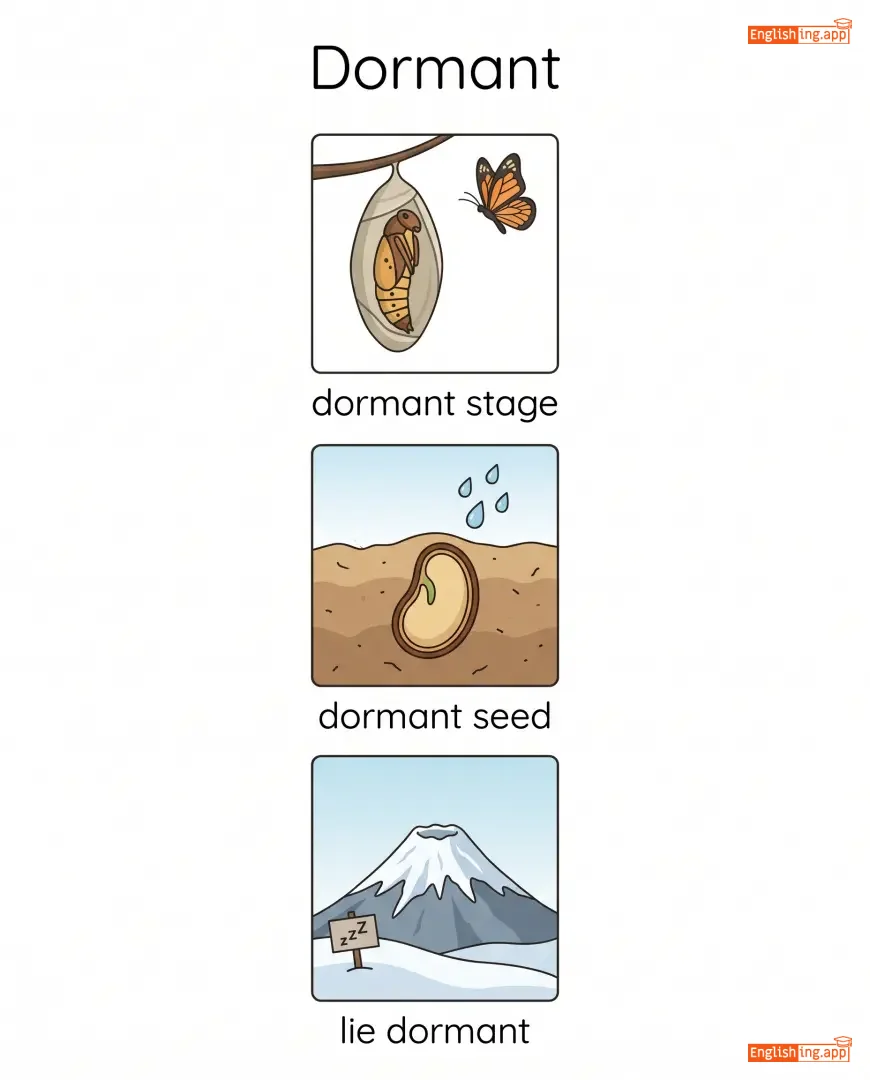
lie dormant |
to remain inactive or hidden for a period of time
••••••
|
- •••••• |
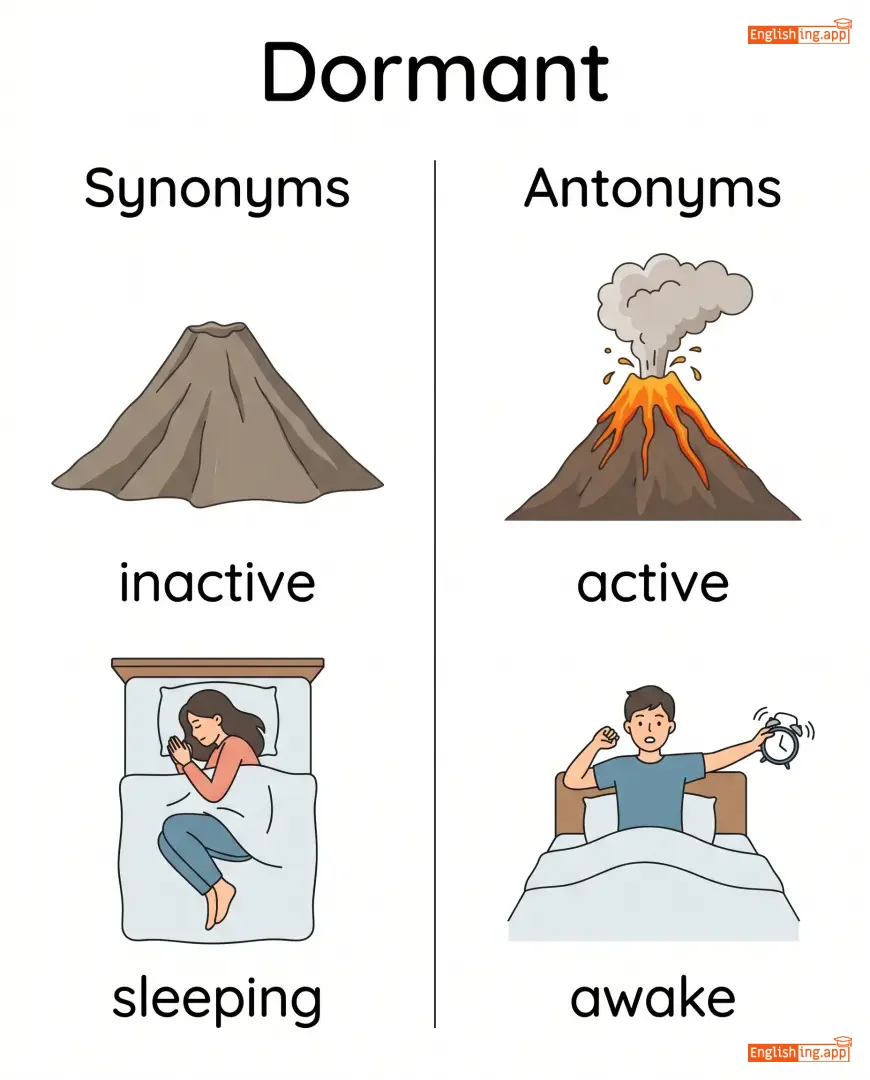
inactive, sleeping, latent, resting, inert
••••••
|
active, awake, lively
••••••
|
dormant stage, dormant seed, lie dormant, dormant volcano
••••••
|
No •••••• |
|
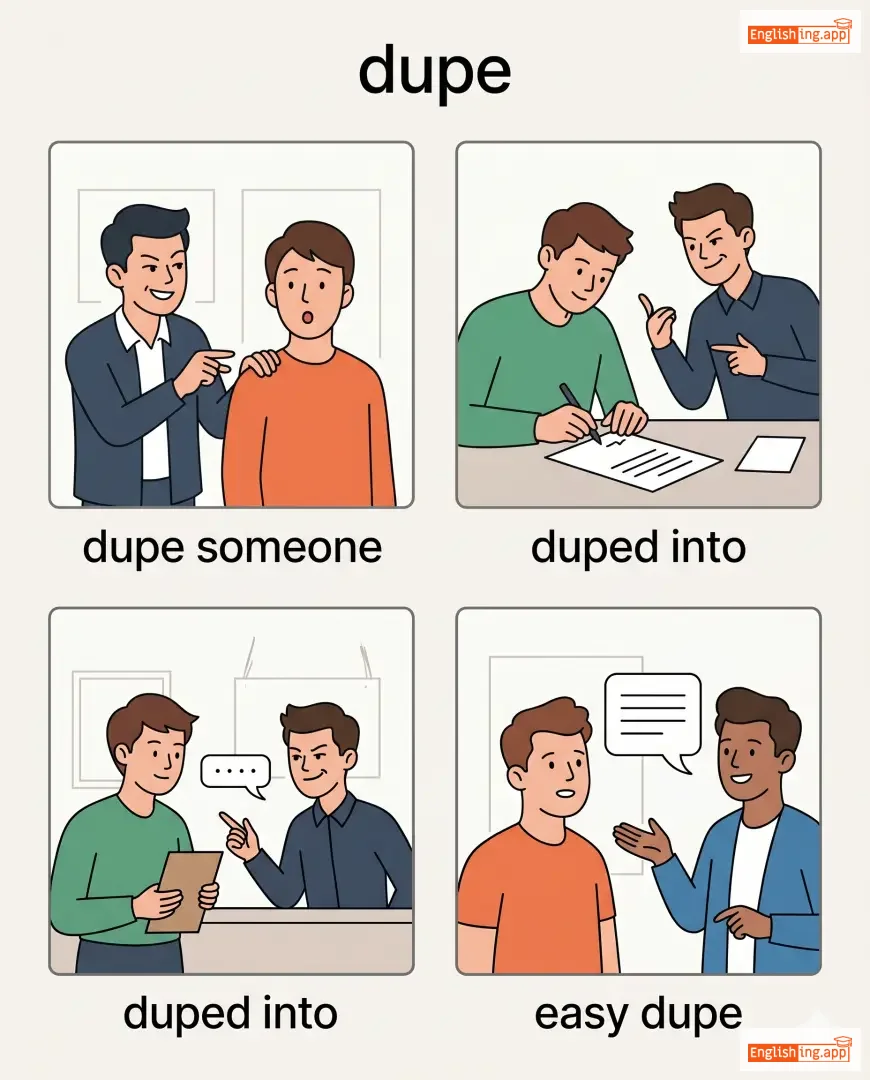
#108
🎭
|
/djuːp/
verb
(杜普)
••••••
|
|
欺骗
qīpiàn
••••••
|
duped
杜普德
••••••
|
duped
杜普德
••••••
|
dupes
杜普斯
••••••
|
duping
杜普英
••••••
|
To deceive or trick someone into believing or doing something.
••••••
|
He was duped into buying a fake watch.
他被欺骗购买了一个假表。
••••••
|
他被欺骗购买了一个假表。
Tā bèi qīpiàn gòumǎile yīgè jiǎ biǎo.
••••••
|
play for a dupe
为傻瓜游戏
••••••
|
to be tricked or deceived easily
••••••
|
容易被骗
róngyì bèi piàn
••••••
|
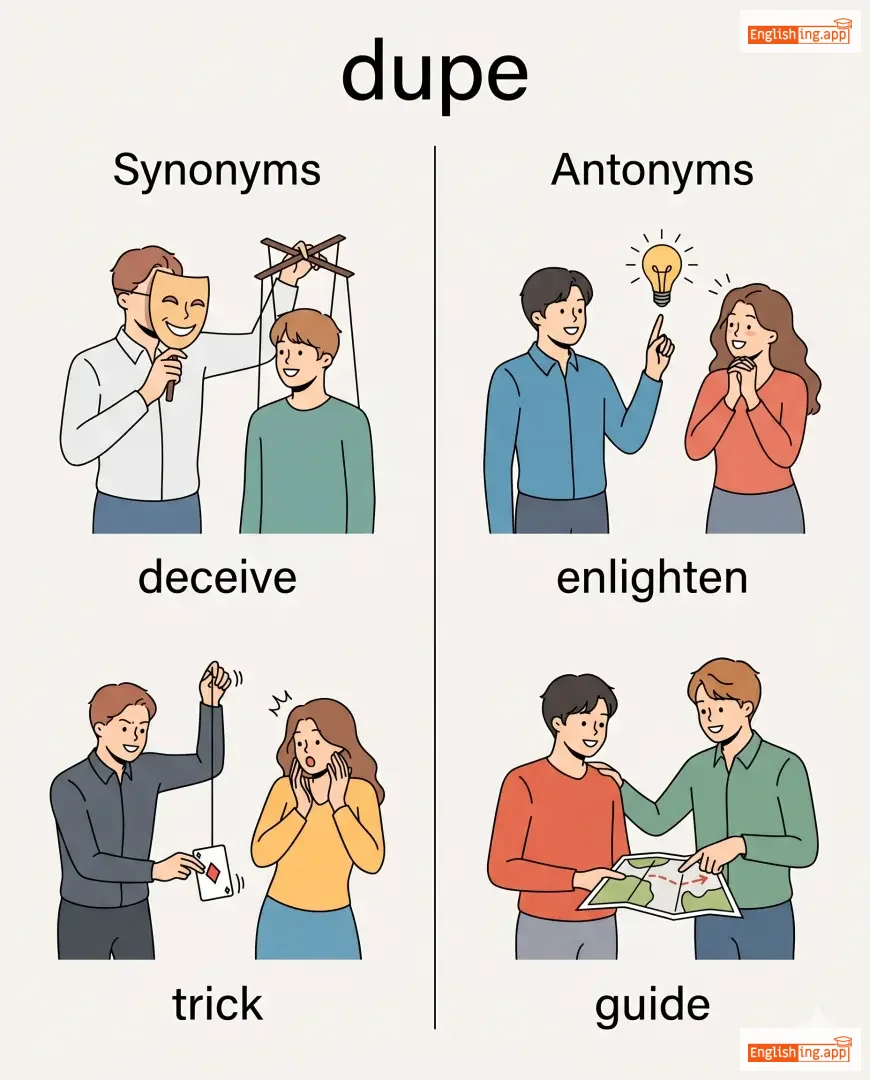
deceive, trick, fool, cheat, mislead
••••••
|
enlighten, guide, inform
••••••
|
dupe someone, duped into, easy dupe, unsuspecting dupe
••••••
|
Dupe 代表欺骗 – 记住 'You got duped' 代表 '你被骗了'。
••••••
|
|
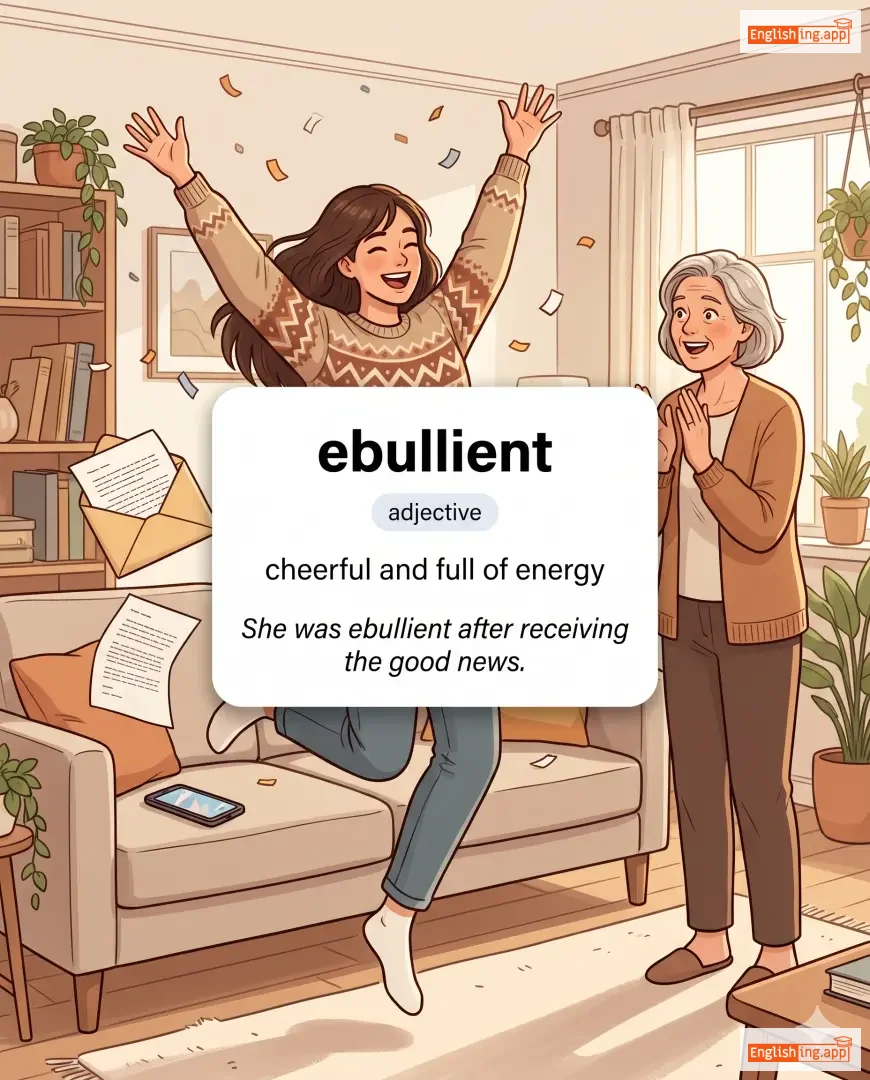
#109
😄
|
/ɪˈbʊliənt/
adjective
(艾布连特)
••••••
|
|
兴高采烈
xing gao cai lie
••••••
|
- •••••• | - •••••• | - •••••• | - •••••• |
cheerful and full of energy
••••••
|
She was ebullient after receiving the good news. |
收到好消息后,她兴高采烈。
Shoudao hao xiaoxi hou, ta xing gao cai lie.
••••••
|
- •••••• | - •••••• | - •••••• |
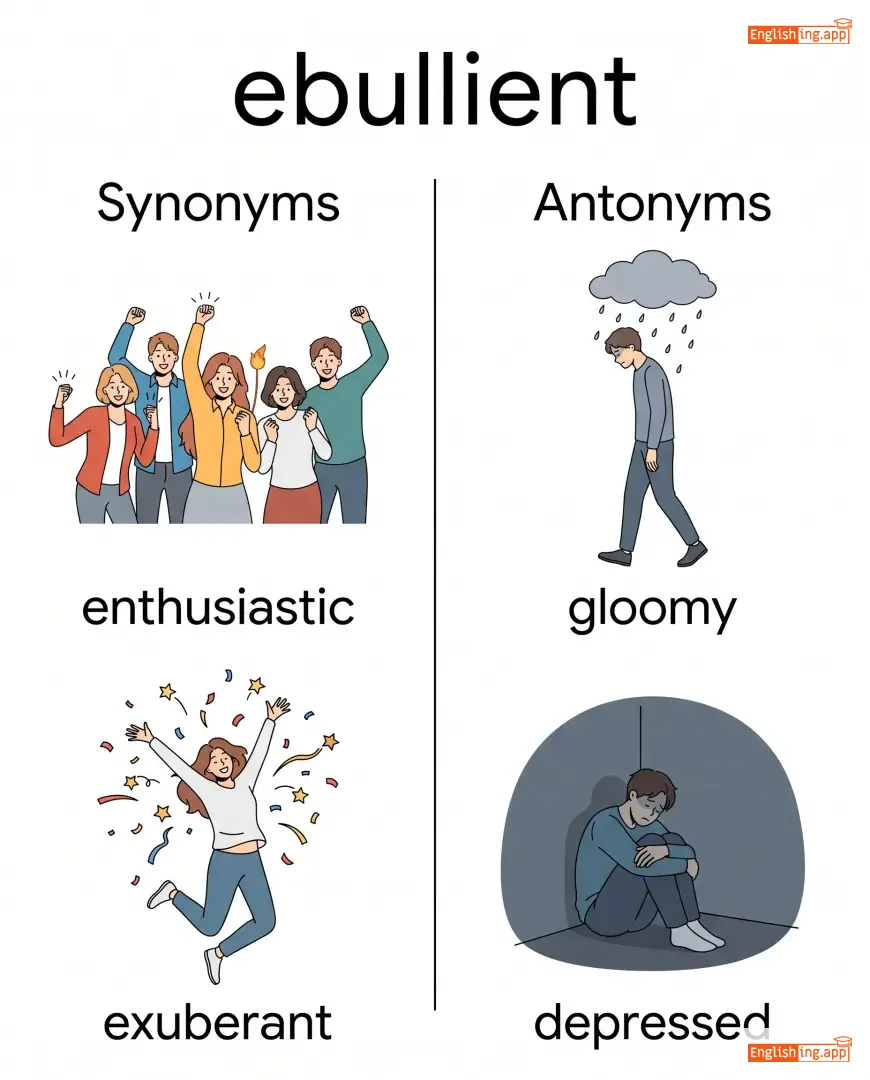
enthusiastic, exuberant, joyful, lively
••••••
|
gloomy, depressed, dull
••••••
|
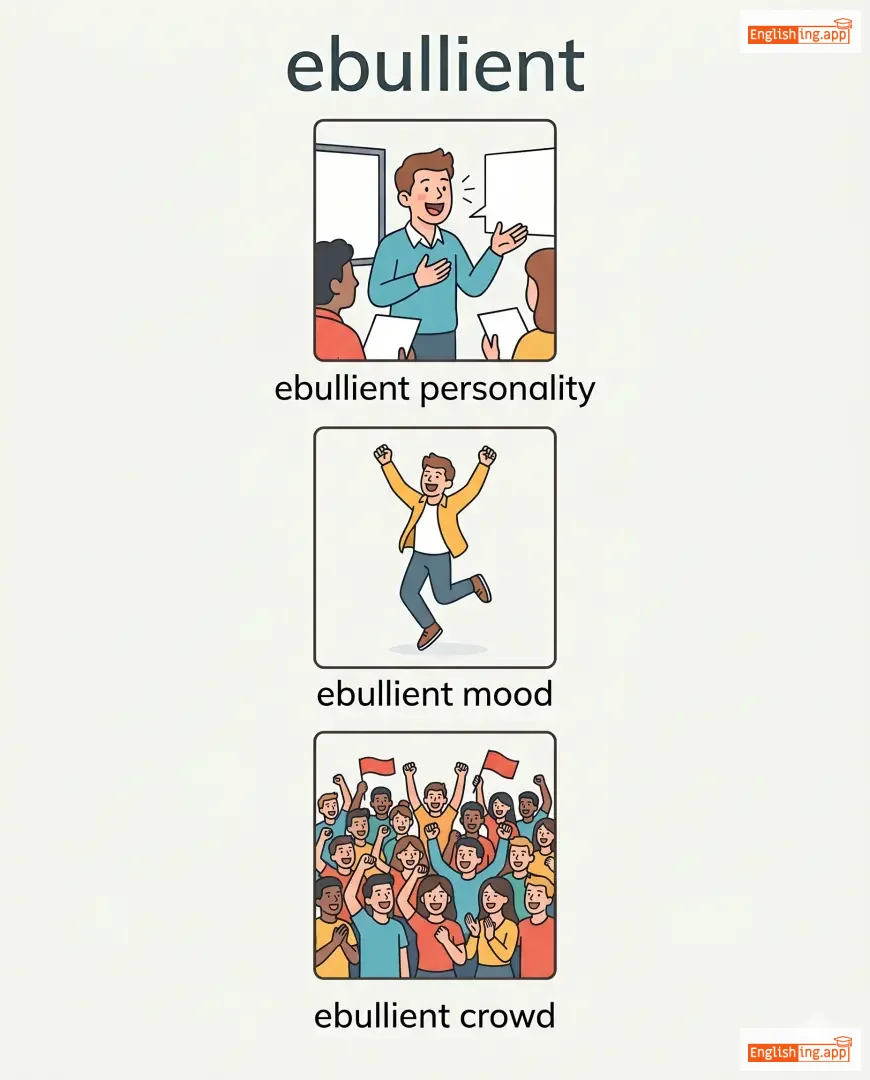
ebullient personality, ebullient mood, ebullient crowd
••••••
|
Ebullient 意味着充满能量 😄 - 得到好消息后,大家都兴高采烈
••••••
|
|
#110
🎨
|
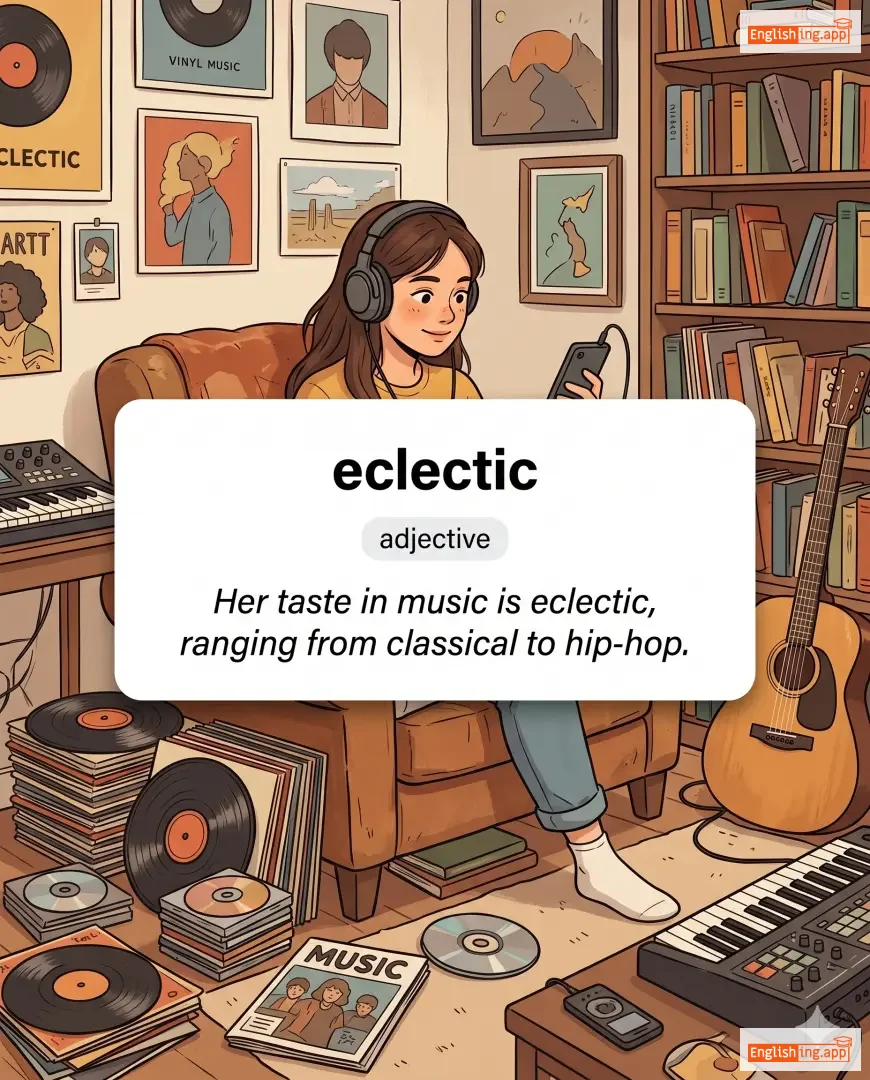
/ɪˈklɛktɪk/
adjective
(éklèktik)
••••••
|
|
折衷的
zhézhōng de
••••••
|
- •••••• | - •••••• | - •••••• | - •••••• |
Selecting or deriving ideas, styles, or tastes from a broad and diverse range of sources.
••••••
|
Her taste in music is eclectic, ranging from classical to hip-hop.
她的音乐口味是折衷的,从古典到嘻哈。
••••••
|
她的音乐口味是折衷的,从古典到嘻哈。
Tā de yīnyuè kǒuwèi shì zhézhōng de, cóng gǔdiǎn dào xīhā.
••••••
|
- •••••• | - •••••• | - •••••• |
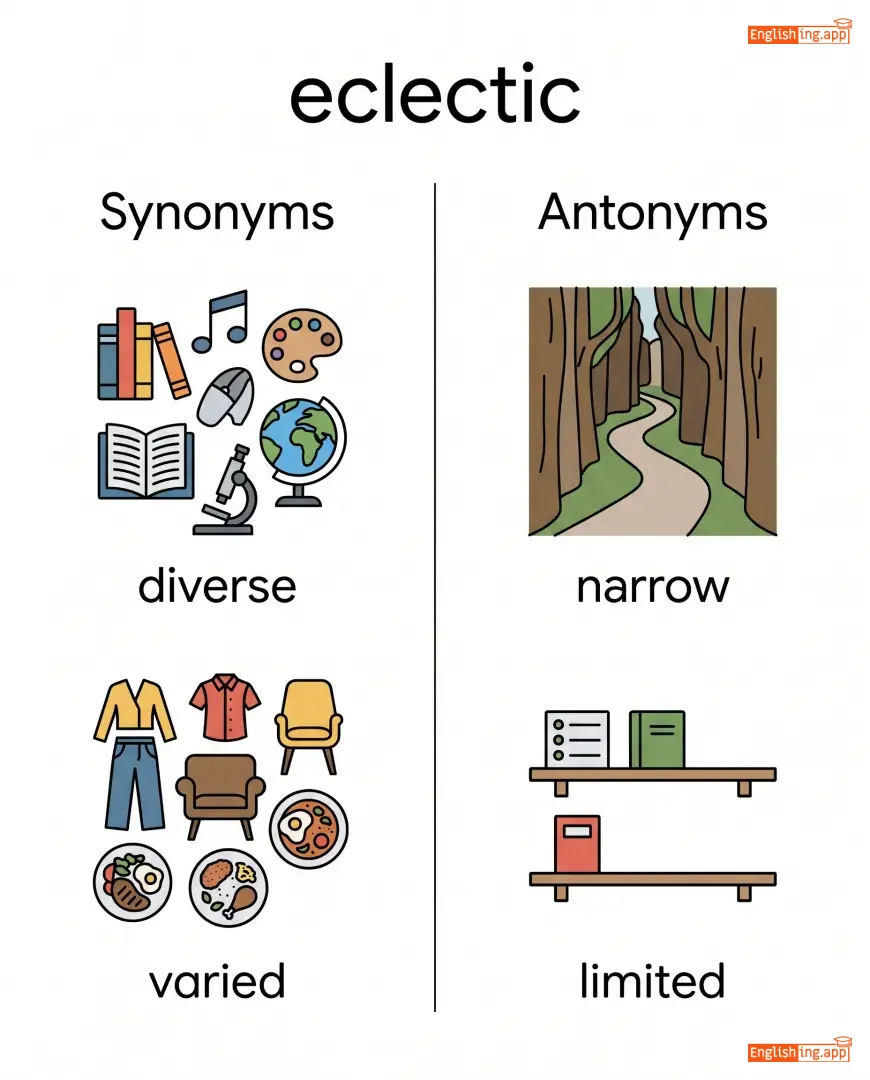
diverse, varied, broad, wide-ranging, assorted
••••••
|
narrow, limited, exclusive
••••••
|
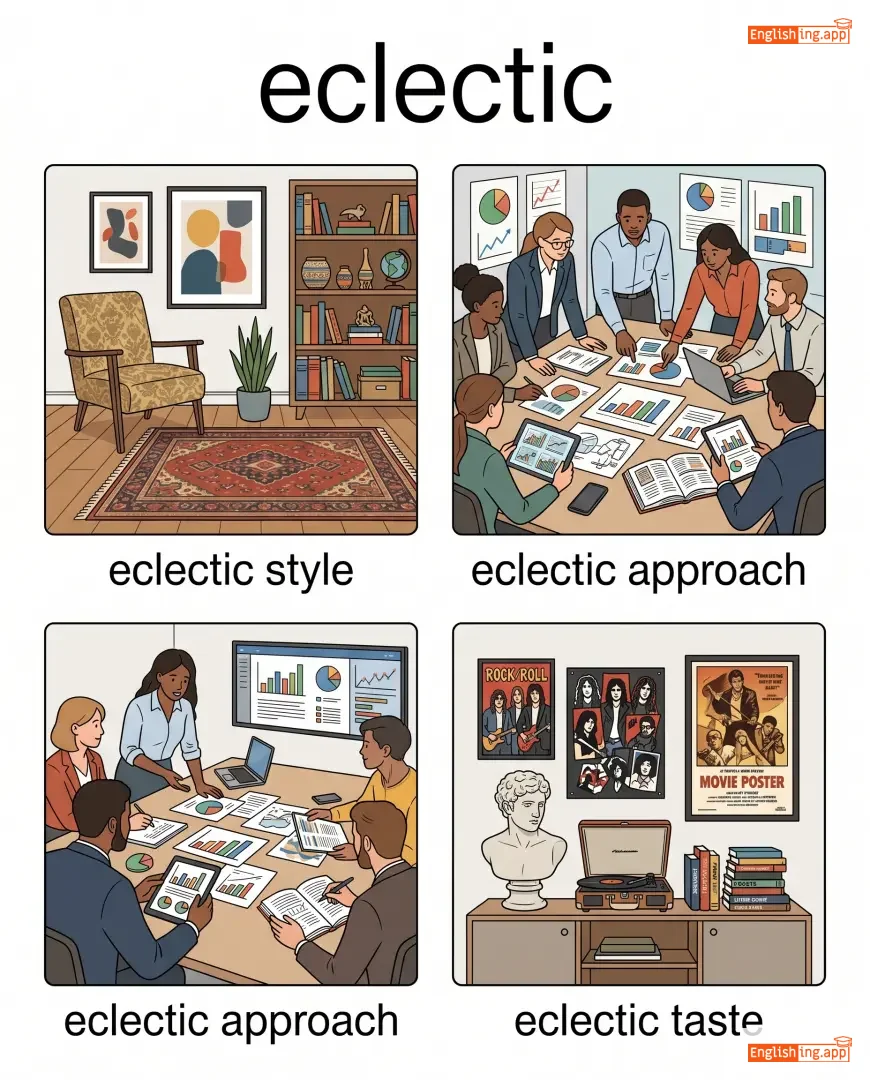
eclectic style, eclectic approach, eclectic taste, eclectic mix
••••••
|
折衷的口味,就像一幅综合各种风格的画。
••••••
|
|
#111
⚡
|
/ˈɛfɪkəsi/
noun
(效能)
••••••
|
|
效能
xiaoneng
••••••
|
- •••••• | - •••••• | - •••••• | - •••••• |
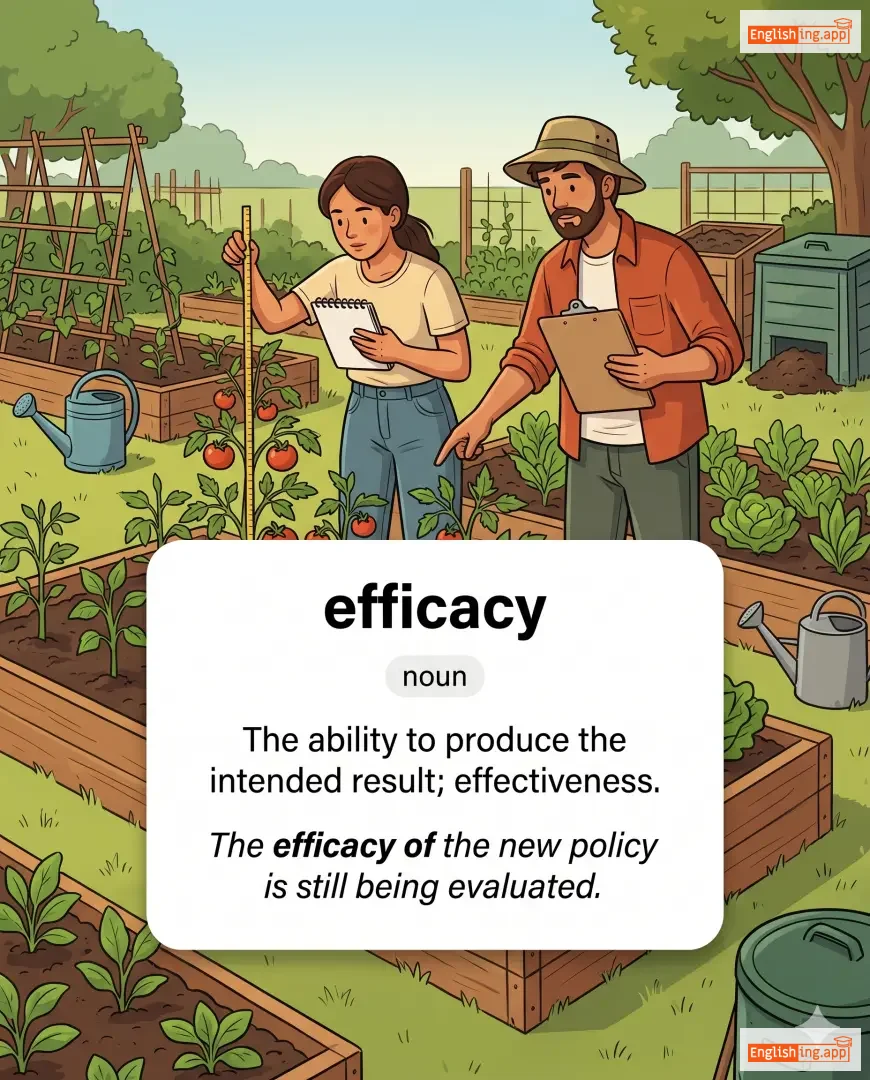
The ability to produce the intended result; effectiveness.
••••••
|
The efficacy of the new policy is still being evaluated.
新政策的效能仍在评估中。
••••••
|
新政策的效能仍在评估中。
Xin zhengce de xiaoneng reng zai pinggu zhong.
••••••
|
- •••••• | - •••••• | - •••••• |
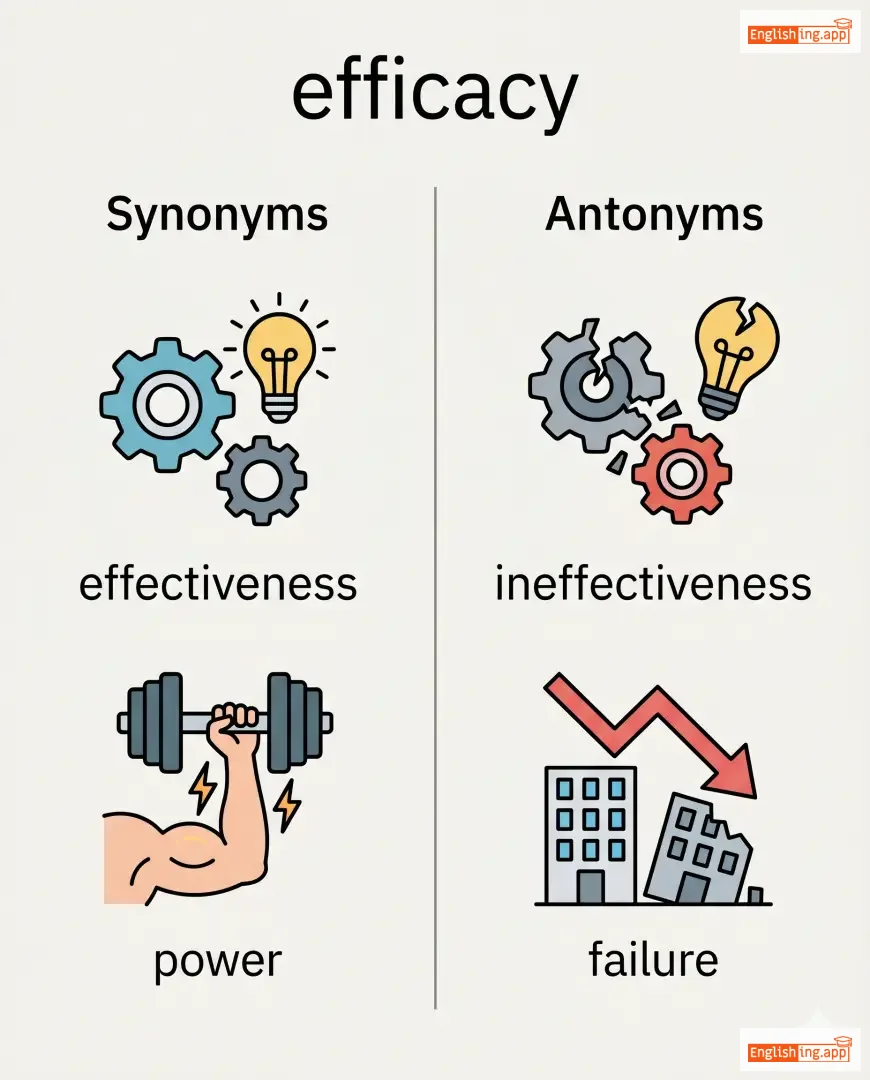
effectiveness, power, efficiency, success
••••••
|
ineffectiveness, failure, weakness
••••••
|
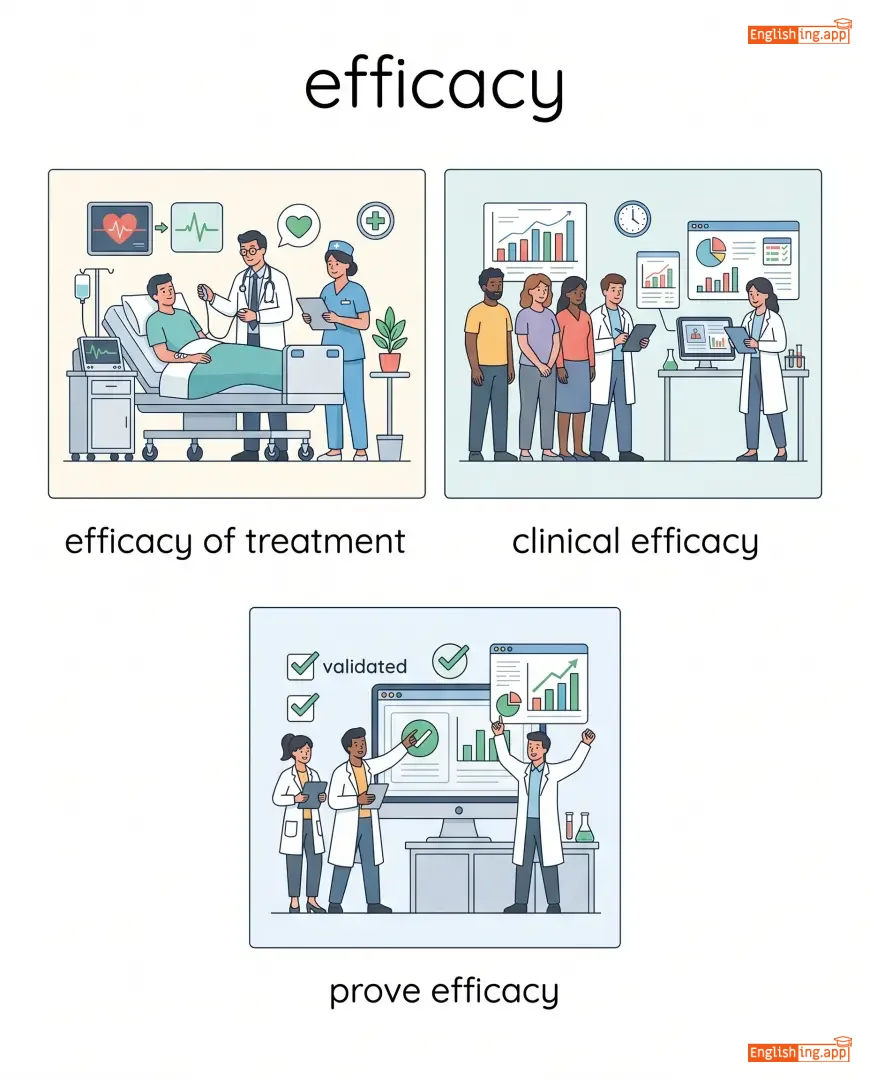
efficacy of treatment, clinical efficacy, prove efficacy, high efficacy
••••••
|
效能意味着实现预期结果的能力。效能(xiaoneng)与'efficacy'同义。
••••••
|
|
#112
😏
|
/ɪˈfrʌntəri/
noun
(埃夫朗特里)
••••••
|
|
厚颜无耻或鲁莽的胆量
hòu yán wú chǐ huò lǔ mǎng de dǎn liàng
••••••
|
- •••••• | - •••••• | - •••••• | - •••••• |
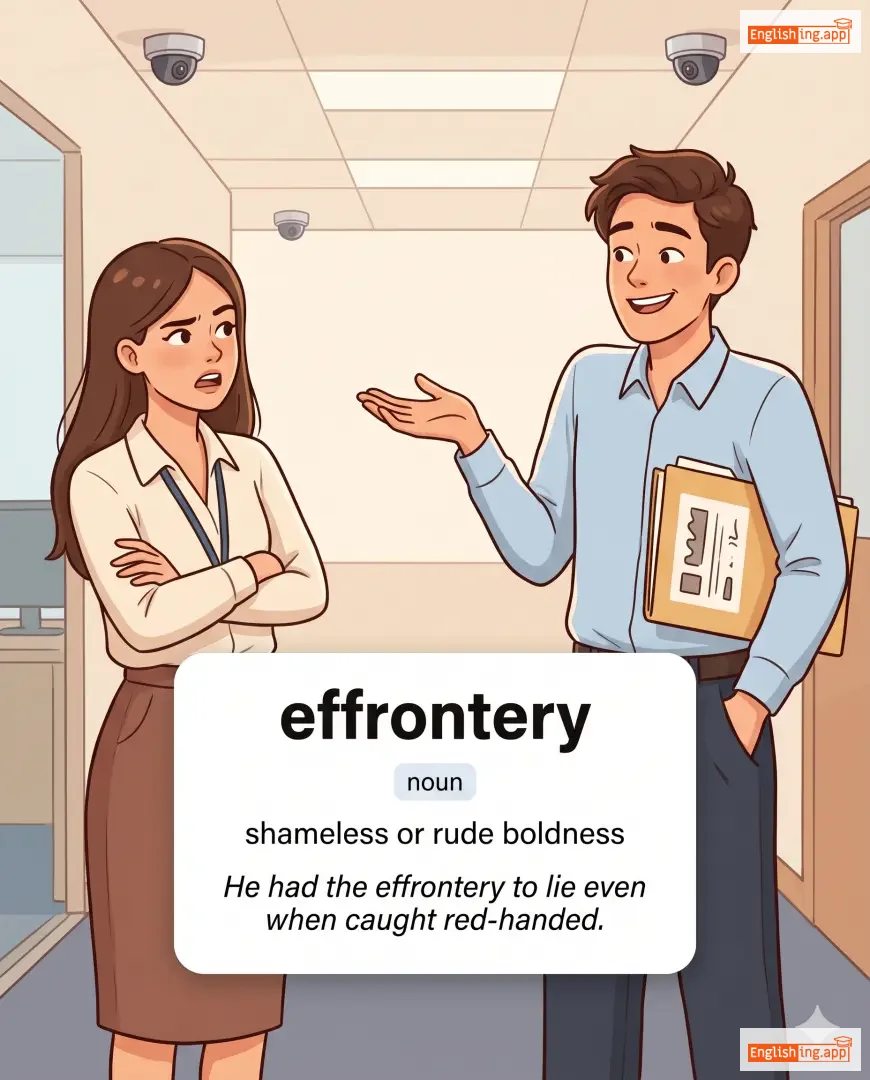
shameless or rude boldness
••••••
|
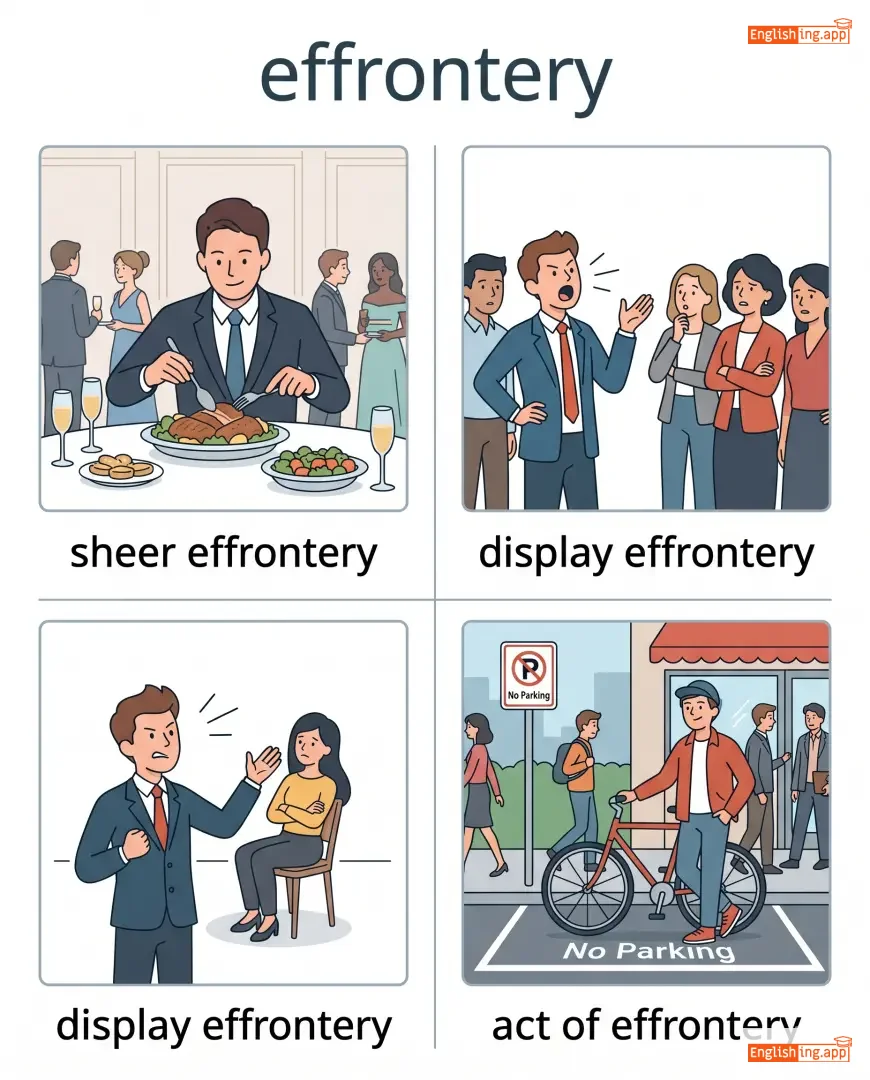
He had the effrontery to lie even when caught red-handed. |
即使被当场抓住,他也厚颜无耻地撒谎。
Jí shǐ bèi dāngchǎng zhuā zhù, tā yě hòu yán wú chǐ de sā huǎng.
••••••
|
- •••••• | - •••••• | - •••••• |
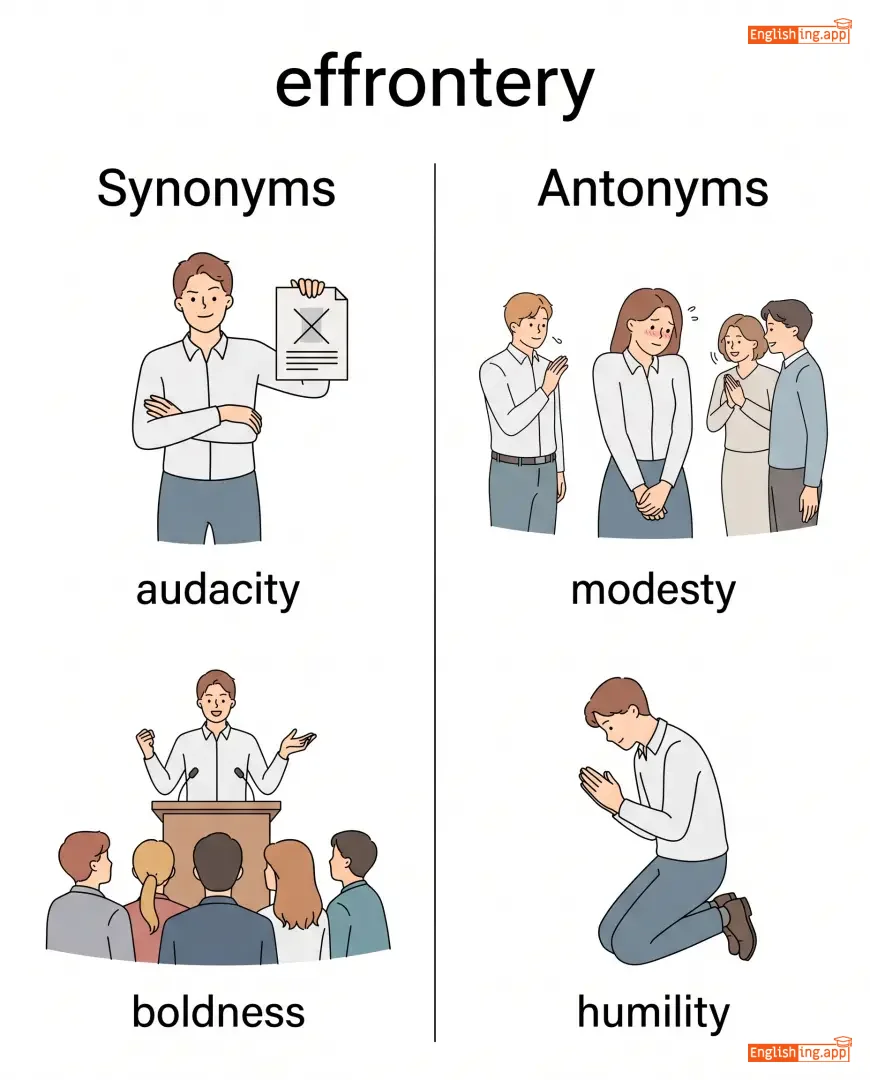
audacity, boldness, impudence, nerve, insolence
••••••
|
modesty, humility, shyness
••••••
|
sheer effrontery, display effrontery, act of effrontery
••••••
|
Effrontery 意味着厚颜无耻的胆量 —— 前面 (front) 有粗鲁的行为。
••••••
|
|
#113
🪦
|
/ˈɛlɪdʒi/
noun
(艾乐基)
••••••
|
|
挽歌
wǎn gē
••••••
|
- •••••• | - •••••• | - •••••• | - •••••• |
A poem or song expressing sorrow, especially for someone who has died.
••••••
|
The poet wrote an elegy for his late friend. |
诗人为他已故的朋友写了一首挽歌。
Shīrén wèi tā yǐ gù de péngyǒu xiěle yī shǒu wǎn gē.
••••••
|
- •••••• | - •••••• | - •••••• |
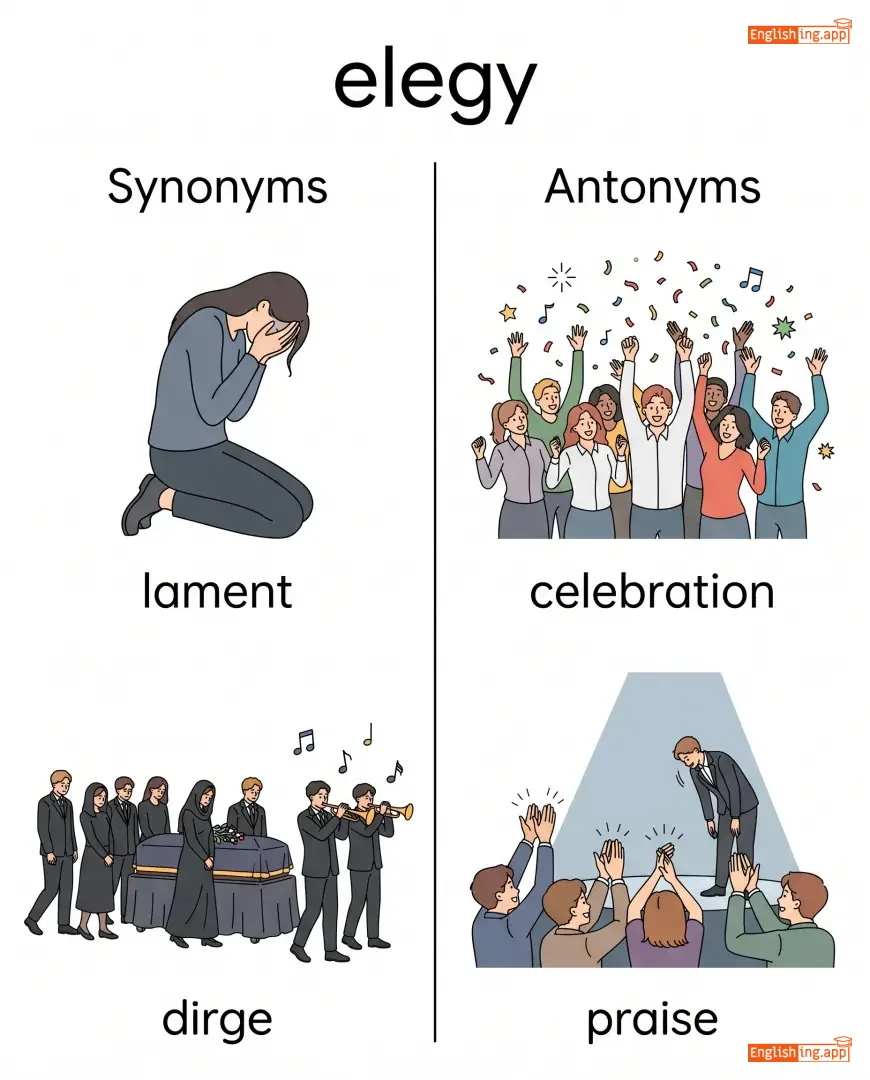
lament, dirge, requiem, threnody, ode
••••••
|
celebration, praise
••••••
|
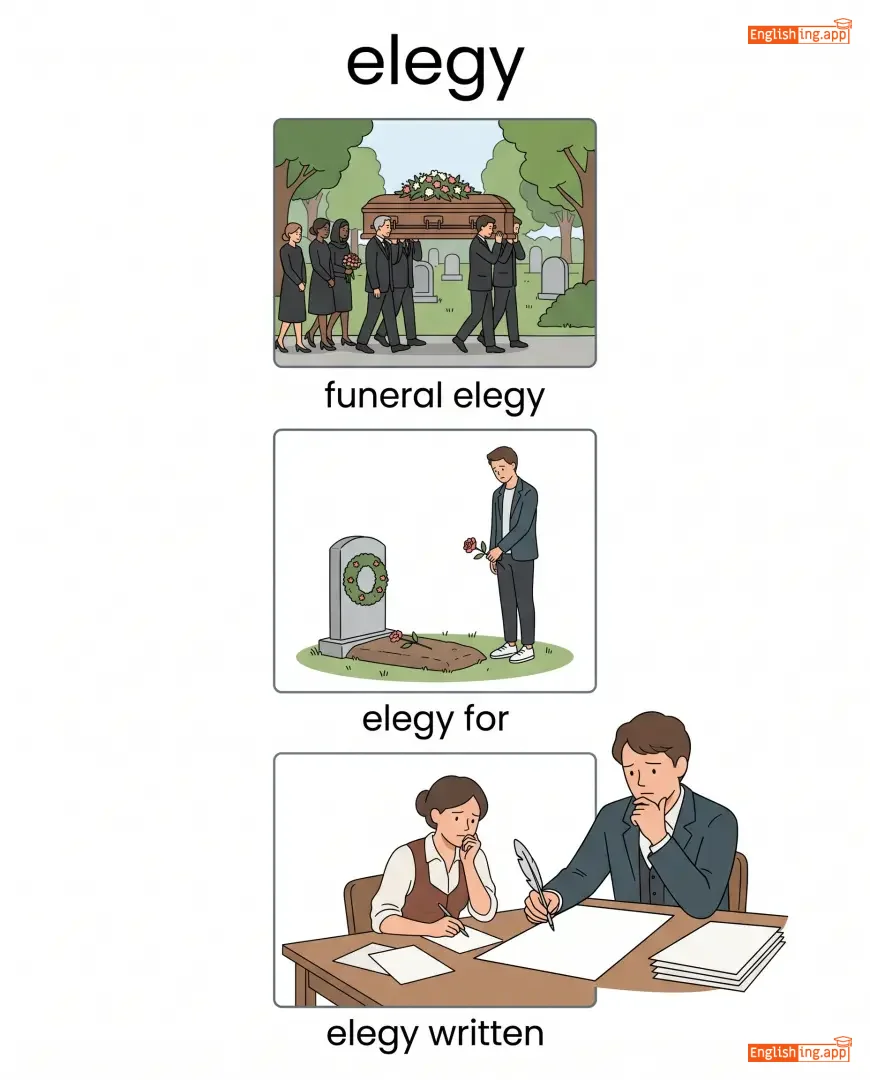
funeral elegy, elegy for, elegy written, mournful elegy
••••••
|
挽歌像是为离去的人唱的一首悲伤歌曲。
••••••
|
|
#114
💬
|
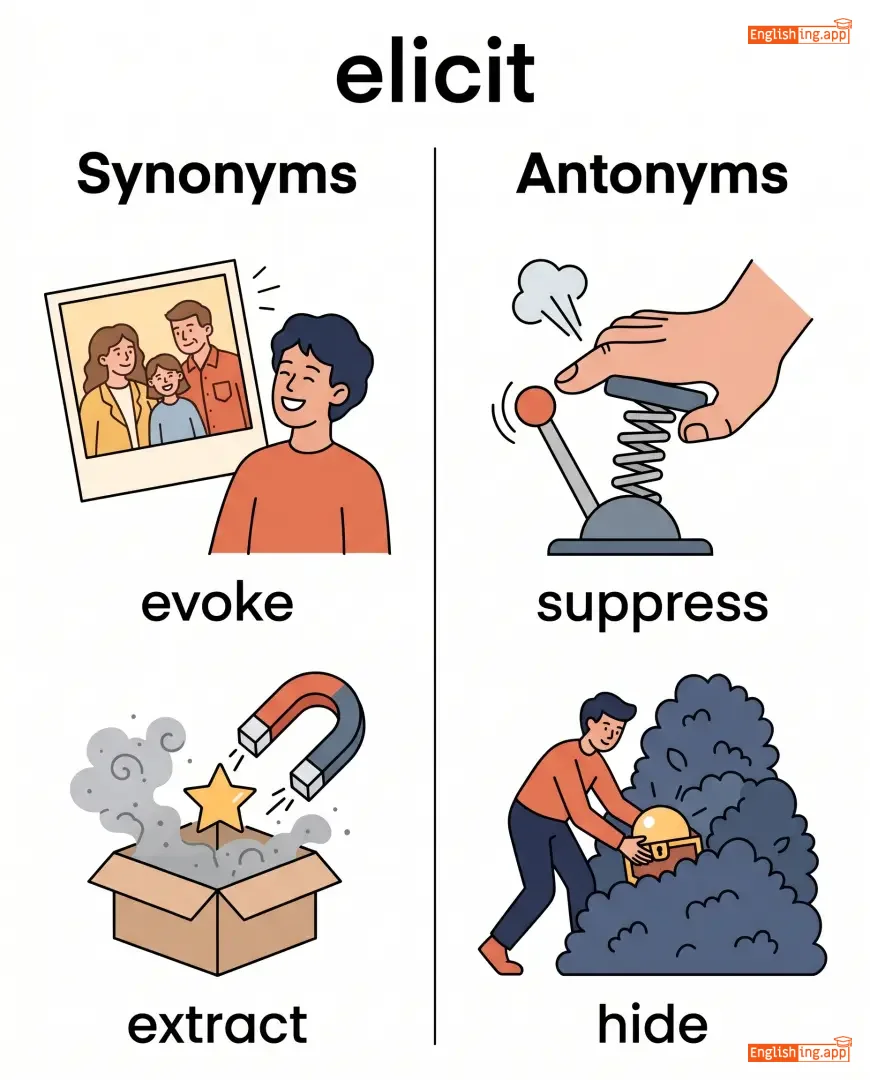
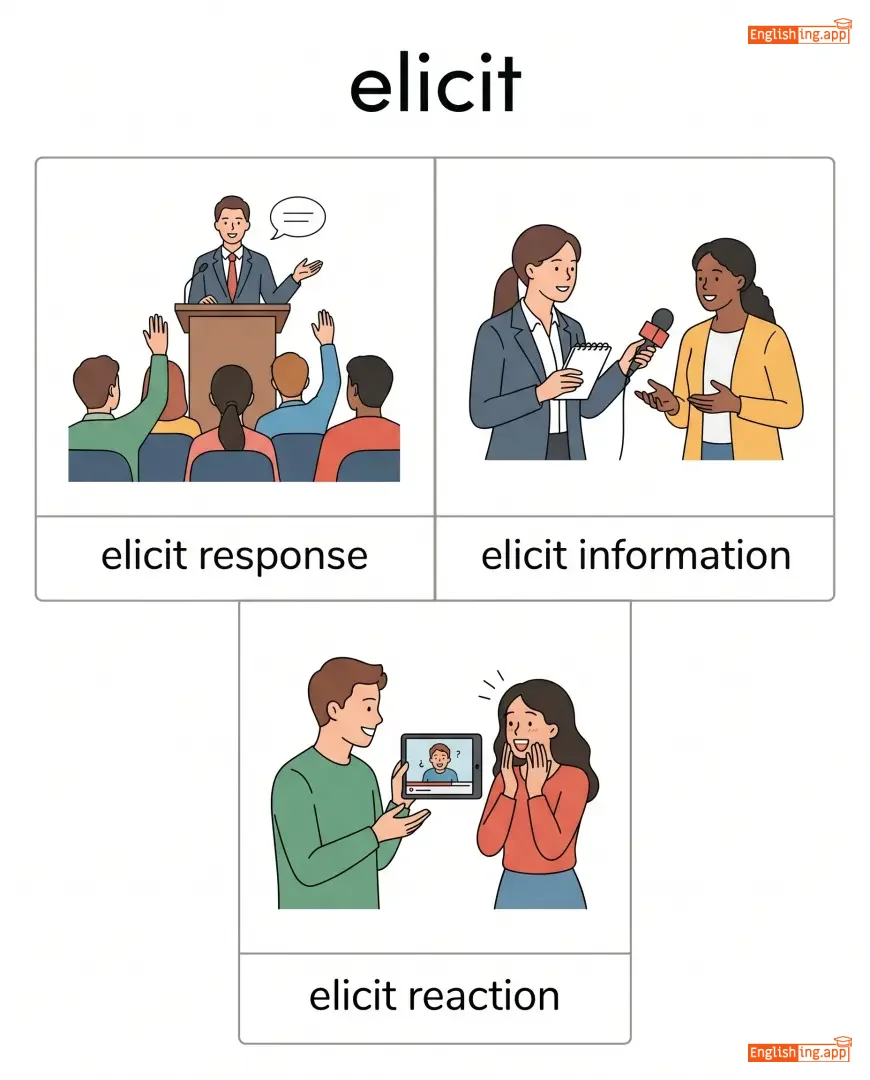
/ɪˈlɪsɪt/
verb
(伊莉西特)
••••••
|
|
引出
yǐn chū
••••••
|
elicited
伊莉西特得
••••••
|
elicited
伊莉西特得
••••••
|
elicits
伊莉西特
••••••
|
eliciting
伊莉西特ing
••••••
|
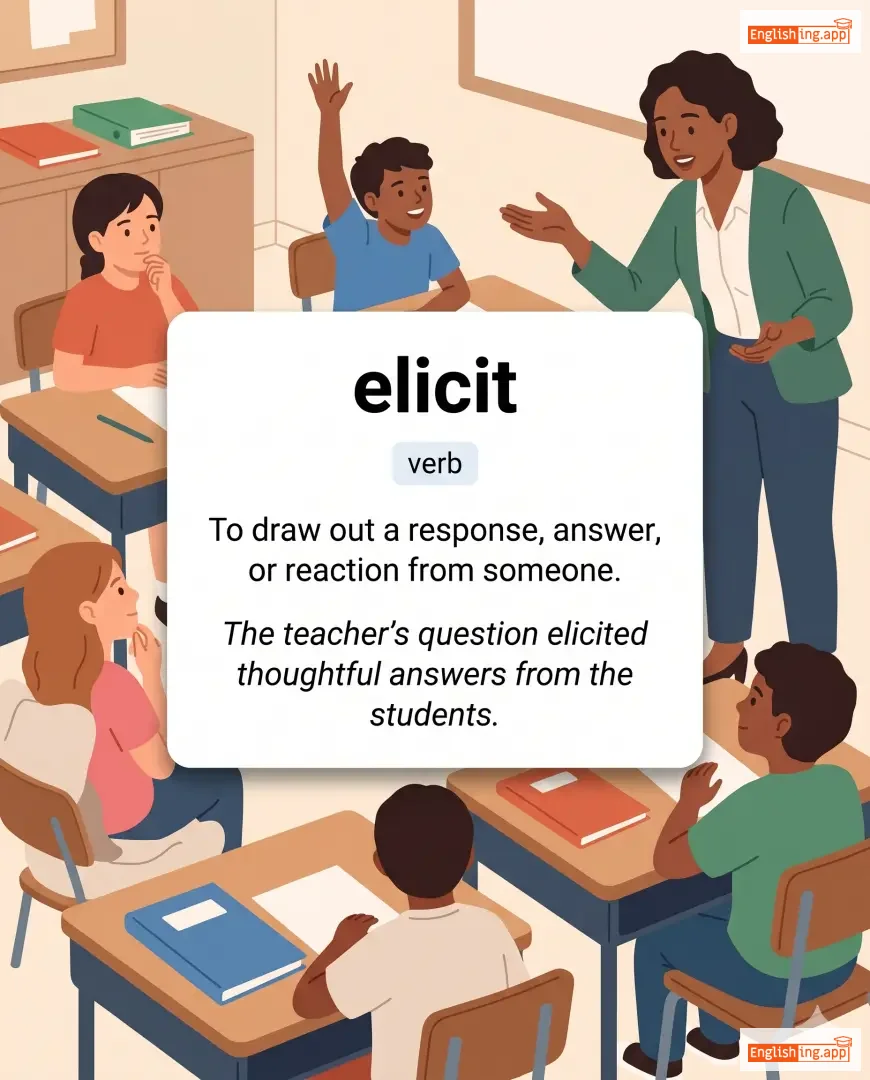
To draw out a response, answer, or reaction from someone.
••••••
|
The teacher’s question elicited thoughtful answers from the students.
老師的問題引發了學生們深思熟慮的回答。
••••••
|
老師的問題引發了學生的深思熟慮的回答。
Lǎoshī de wèntí yǐn fāle xuéshēng men de shēnsī shúlüè de huídá.
••••••
|
elicit a response
激發回應
••••••
|
to cause someone to reply or react
••••••
|
引發回應
yǐn fā huíyìng
••••••
|
evoke, extract, provoke, obtain, bring out
••••••
|
suppress, hide, silence
••••••
|
elicit response, elicit information, elicit reaction, elicit support
••••••
|
例如 = 根據聯繫處引發反應
••••••
|
|
#115
✨
|
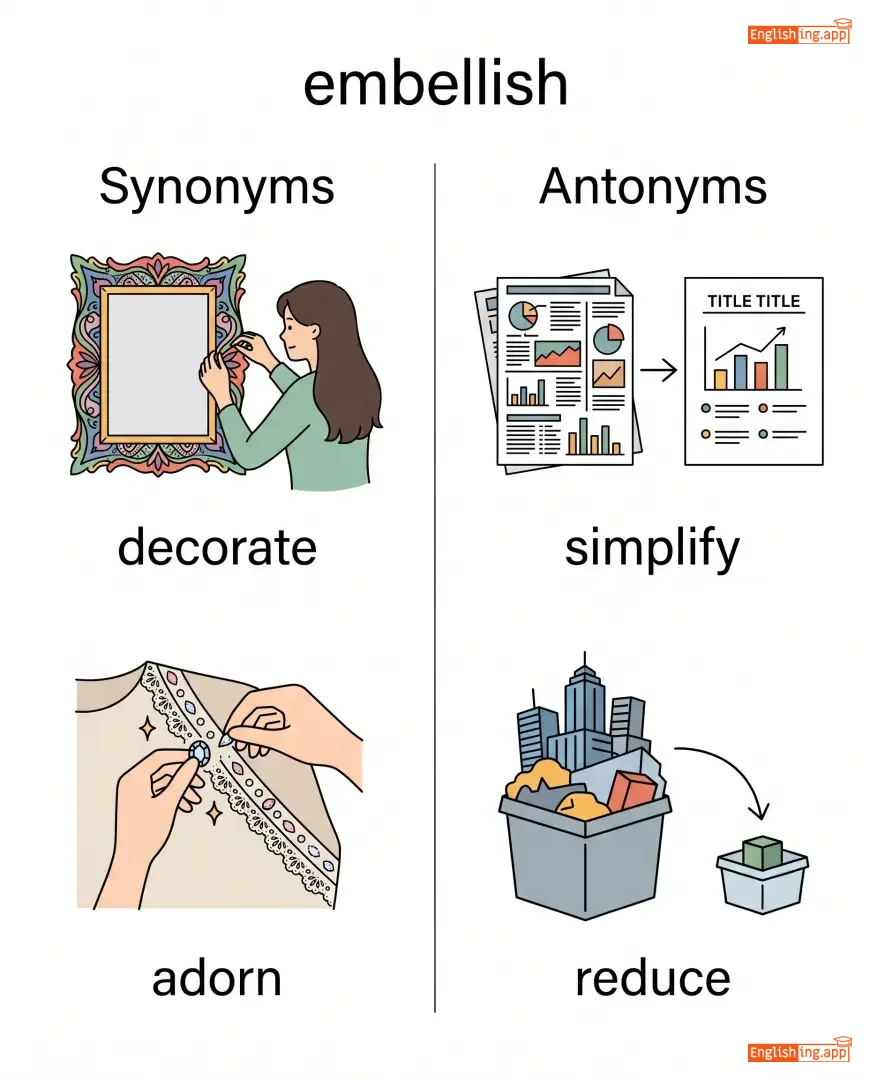
/ɪmˈbɛlɪʃ/
verb
(恩贝利什)
••••••
|
|
装饰
zhuangshi
••••••
|
embellished
恩贝利什德
••••••
|
embellished
恩贝利什德
••••••
|
embellishes
恩贝利什斯
••••••
|
embellishing
恩贝利什英
••••••
|
to make something more attractive by adding decorative details or features
••••••
|
She embellished her story with unnecessary details.
她用不必要的细节装饰了她的故事。
••••••
|
她用不必要的细节装饰了她的故事。
Ta yong bu bianyao de xijie zhuangshi le ta de gushi.
••••••
|
embellish the truth
美化事实
••••••
|
to exaggerate or add extra details to something
••••••
|
美化事实
Meihua shishi
••••••
|
decorate, adorn, beautify, enhance, exaggerate
••••••
|
simplify, reduce, deface
••••••
|
embellish a story, embellish with, embellish details
••••••
|
Zhuangshi shi meihua (zhuangshi)
••••••
|
|
#116
🔬
|
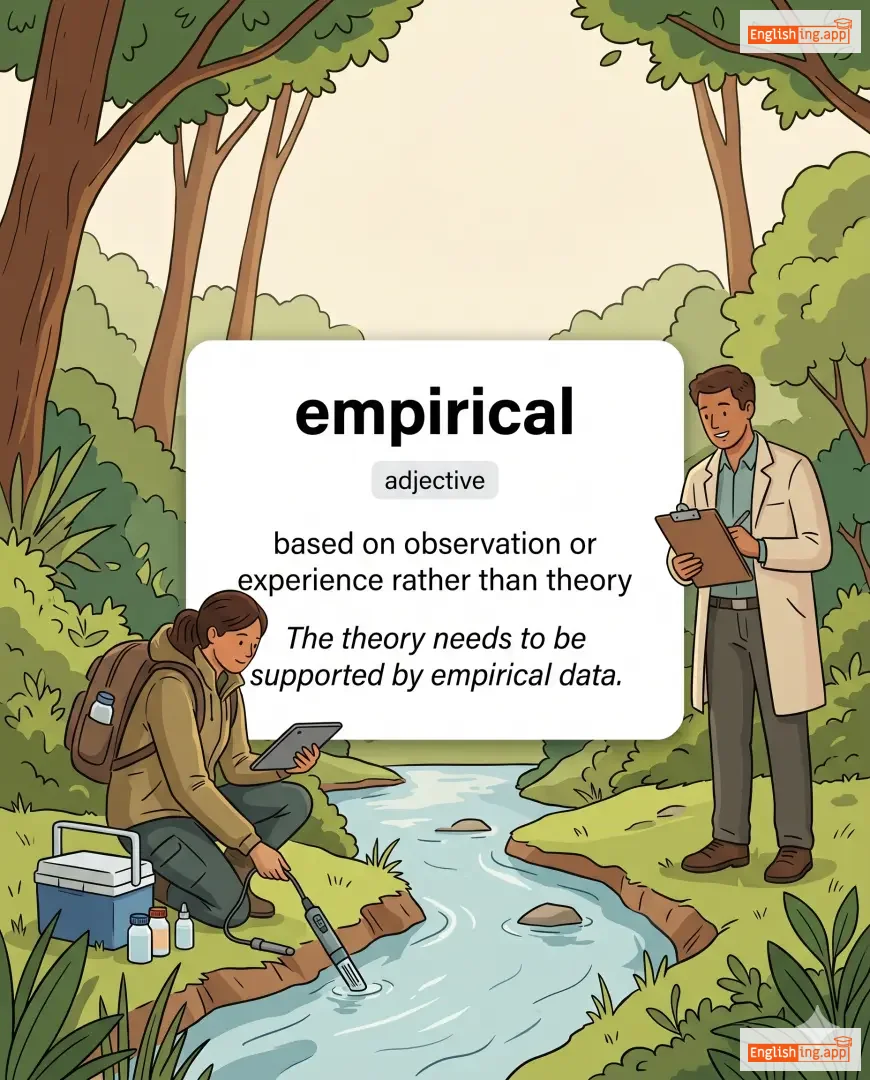
/ɛmˈpɪrɪkəl/
adjective
(恩皮里科)
••••••
|
|
经验的
jingyan de
••••••
|
- •••••• | - •••••• | - •••••• | - •••••• |
based on observation or experience rather than theory
••••••
|
The theory needs to be supported by empirical data. |
理论需要通过经验数据来支持。
Lilun xuyao tongguo jingyan shuju lai zhichi.
••••••
|
empirical evidence |
information gained through observation or experiment
••••••
|
经验证据
jingyan zhengju
••••••
|
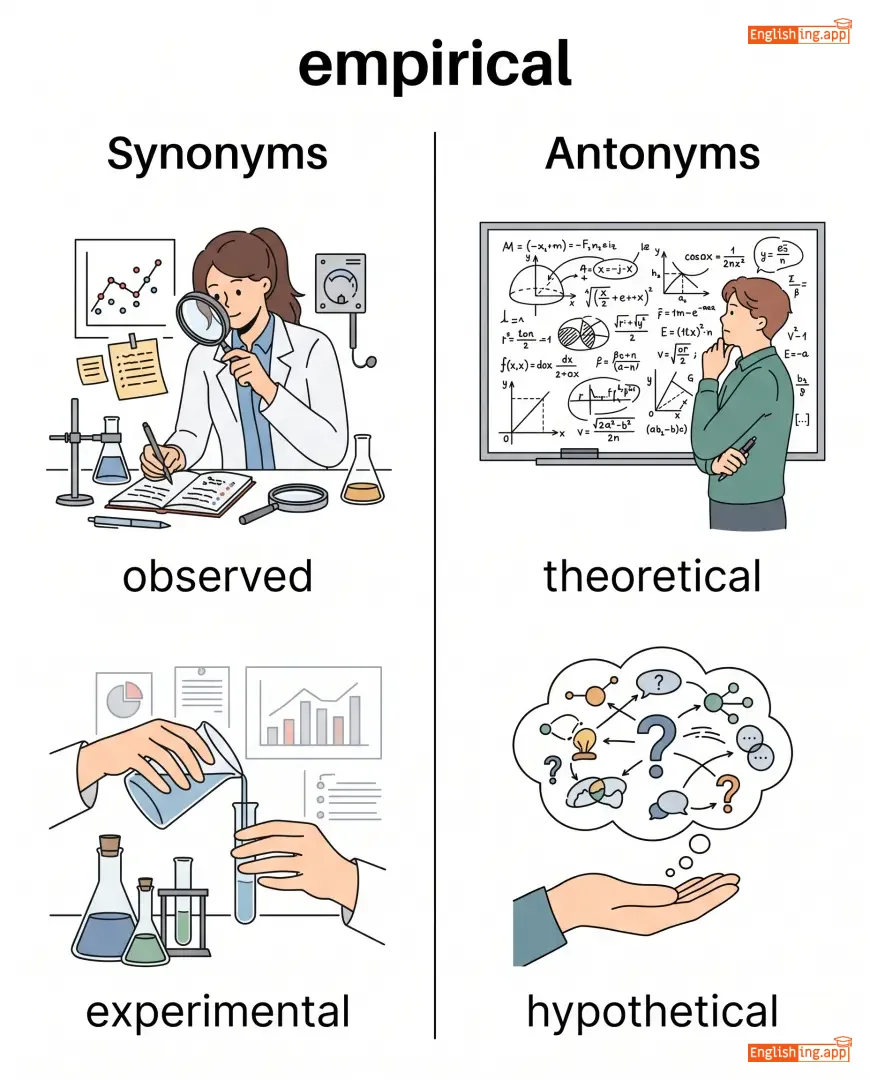
observed, experimental, factual, practical, real
••••••
|
theoretical, hypothetical
••••••
|
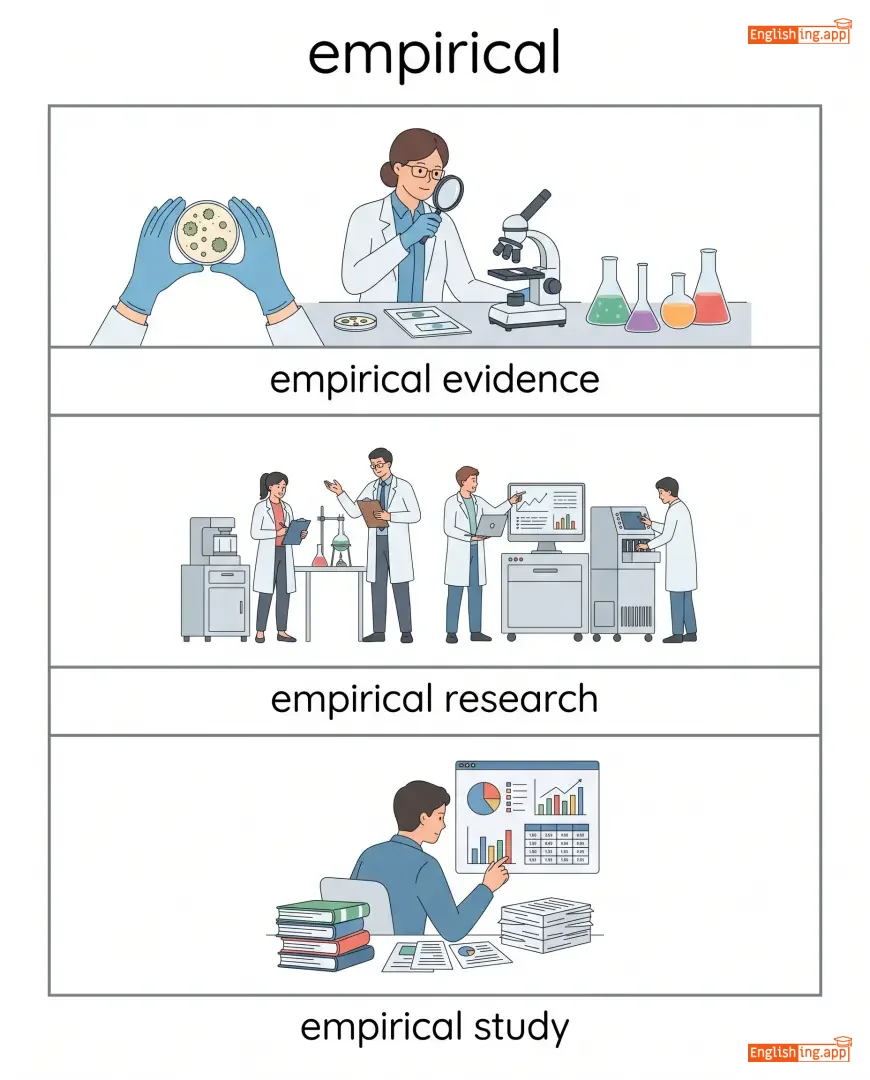
empirical evidence, empirical research, empirical study, empirical data
••••••
|
Empirical 意味着基于经验, 就像经验的 (jingyan de)
••••••
|
|
#117
📋
|
/ˈɛm.jʊˌleɪt/
verb
(模仿)
••••••
|
|
模仿
mófǎng
••••••
|
emulated
模仿了
••••••
|
emulated
模仿了
••••••
|
emulates
模仿
••••••
|
emulating
模仿中
••••••
|
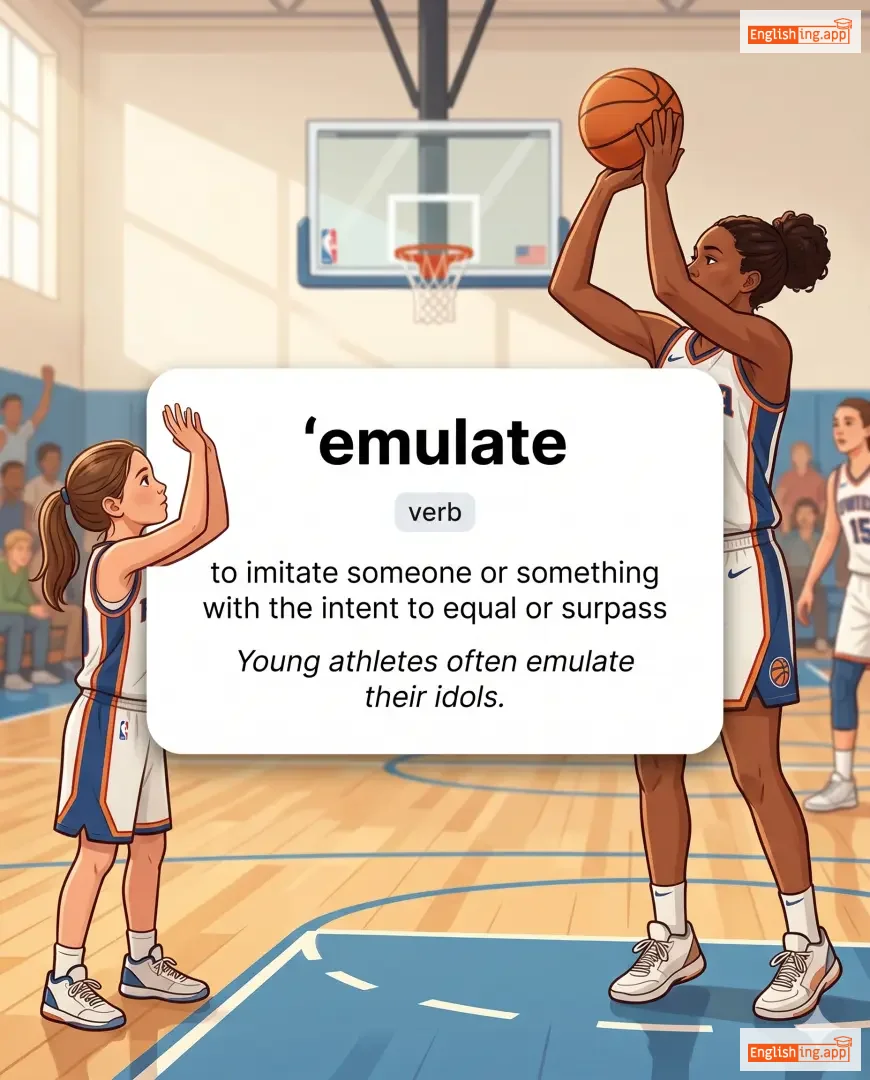
to imitate someone or something with the intent to equal or surpass
••••••
|
Young athletes often emulate their idols.
年轻运动员常常模仿他们的偶像。
••••••
|
年轻运动员常常模仿他们的偶像。
Niánqīng yùndòngyuán chángcháng mófǎng tāmen de ǒuxiàng.
••••••
|
emulate success
模仿成功
••••••
|
to imitate the actions or qualities that lead to success
••••••
|
模仿成功
mófǎng chénggōng
••••••
|
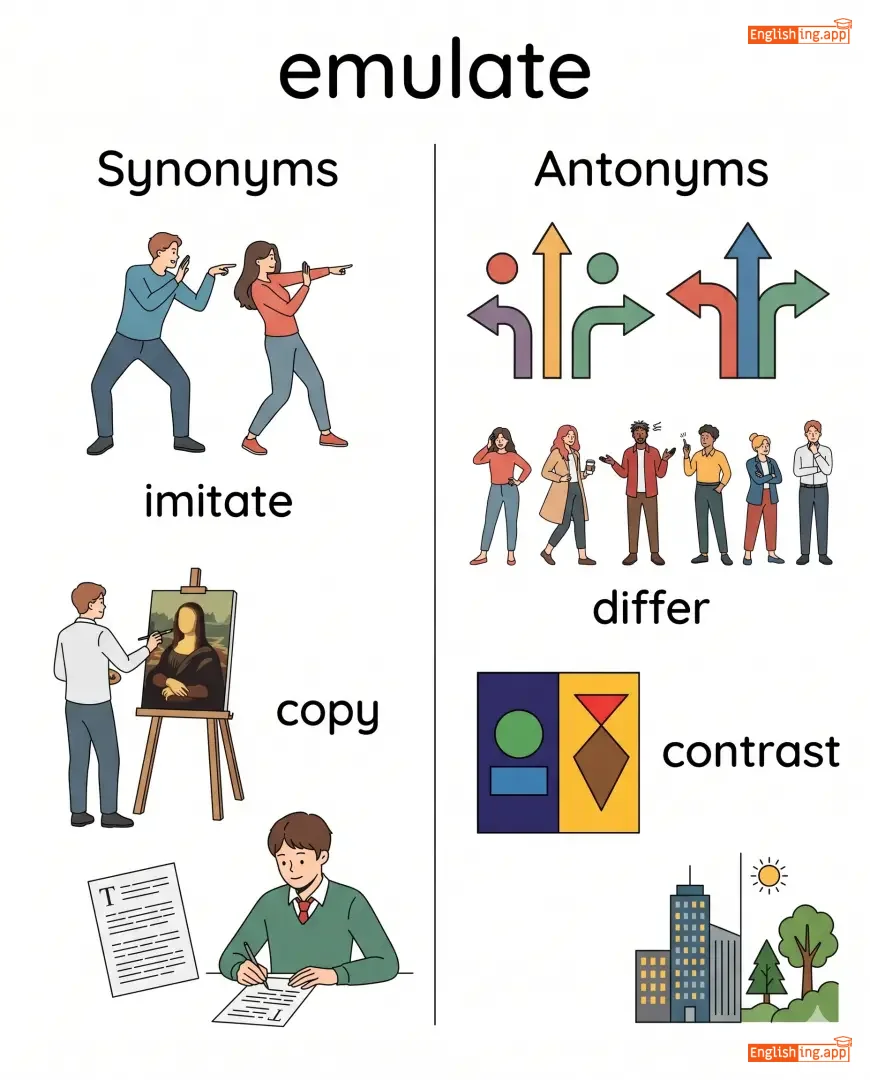
imitate, copy, mirror, follow, mimic
••••••
|
differ, contrast, oppose
••••••
|
emulate style, emulate behavior, emulate achievement, emulate model
••••••
|
Emulate表示模仿 - '模仿'听起来像'模法', 意思是模仿他人以获得成功。
••••••
|
|
#118
🌍
|
/ɛnˈdɛmɪk/
adjective
(恩德米克)
••••••
|
|
地方性
dìfāngxìng
••••••
|
- •••••• | - •••••• | - •••••• | - •••••• |
Regularly found among particular people or in a certain area.
••••••
|
Malaria is endemic in some tropical countries. |
疟疾在一些热带国家是地方性的。
Nüèjí zài yīxiē rèdài guójiā shì dìfāngxìng de.
••••••
|
- •••••• | - •••••• | - •••••• |
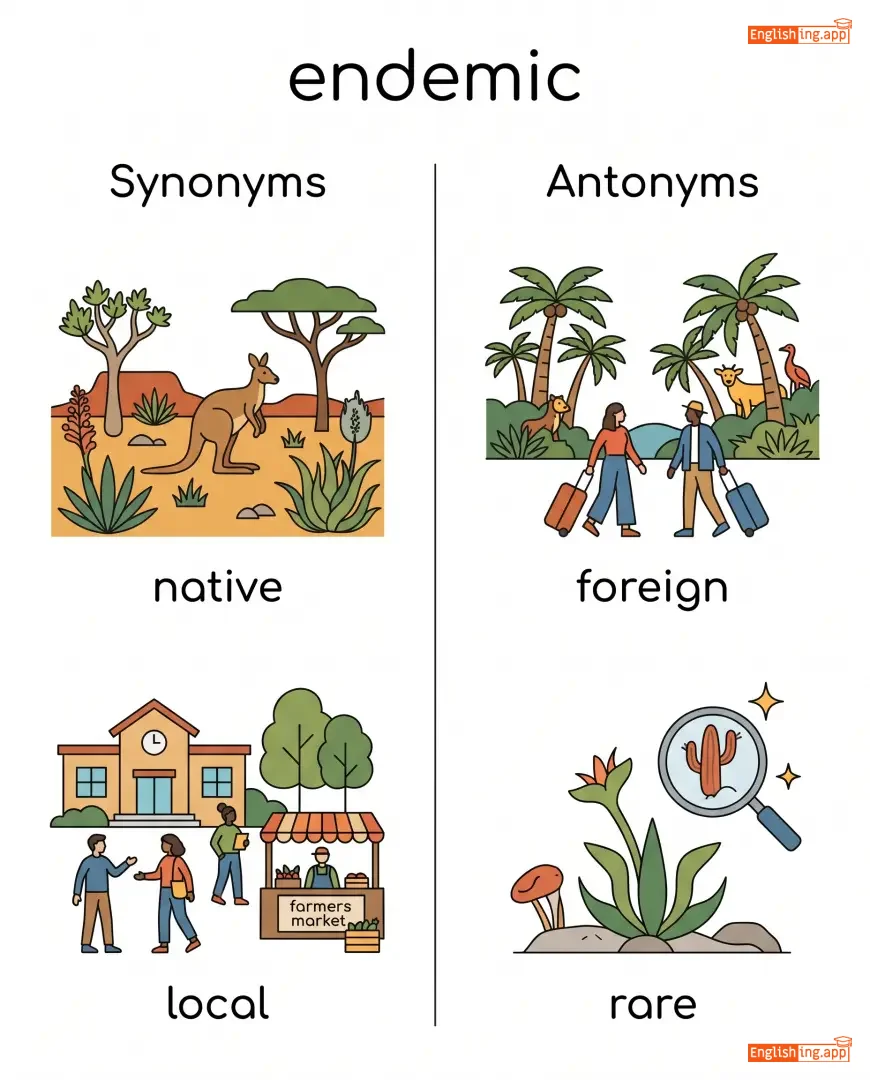
native, local, regional, widespread
••••••
|
foreign, rare
••••••
|
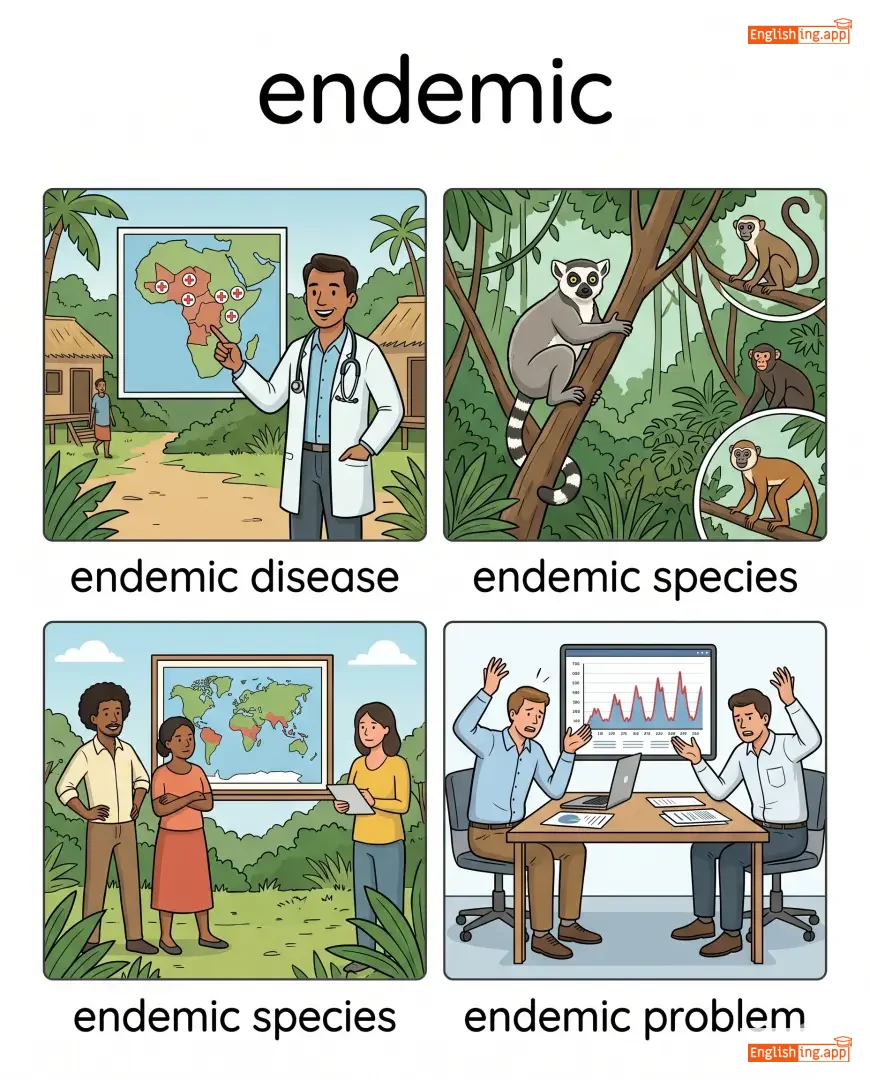
endemic disease, endemic species, endemic problem
••••••
|
恩德米克提醒我们‘地方性’是特定区域常见的疾病。
••••••
|
|
#119
😩
|
/ˈɛnərˌveɪt/
verb
(以能量消耗使虚弱)
••••••
|
|
使虚弱
shǐ xūruò
••••••
|
enervated
使虚弱
••••••
|
enervated
使虚弱
••••••
|
enervates
使虚弱
••••••
|
enervating
使虚弱
••••••
|
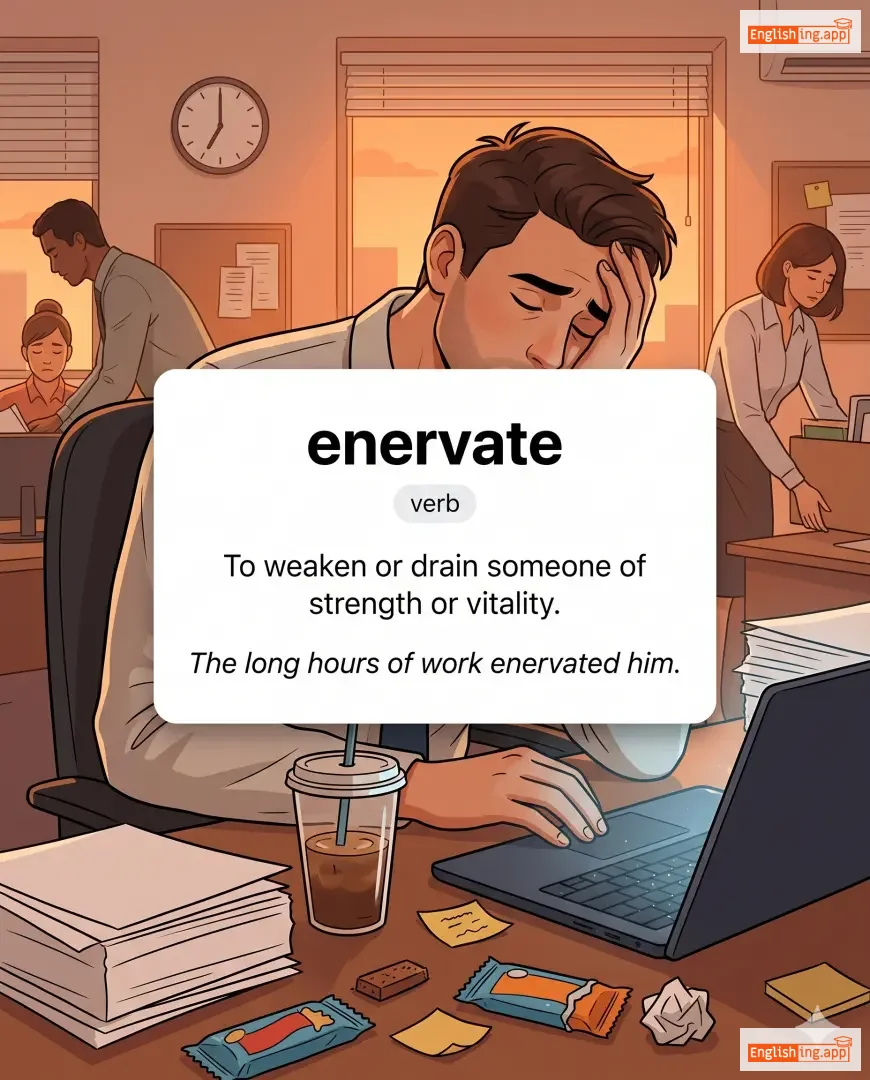
To weaken or drain someone of strength or vitality.
••••••
|
The long hours of work enervated him.
长期的工作使他感到虚弱。
••••••
|
长期的工作使他感到虚弱。
chángqī de gōngzuò shǐ tā gǎndào xūruò.
••••••
|
mentally enervated
心理虚弱
••••••
|
exhausted or weakened in mental capacity
••••••
|
心理虚弱
xīnlǐ xūruò
••••••
|
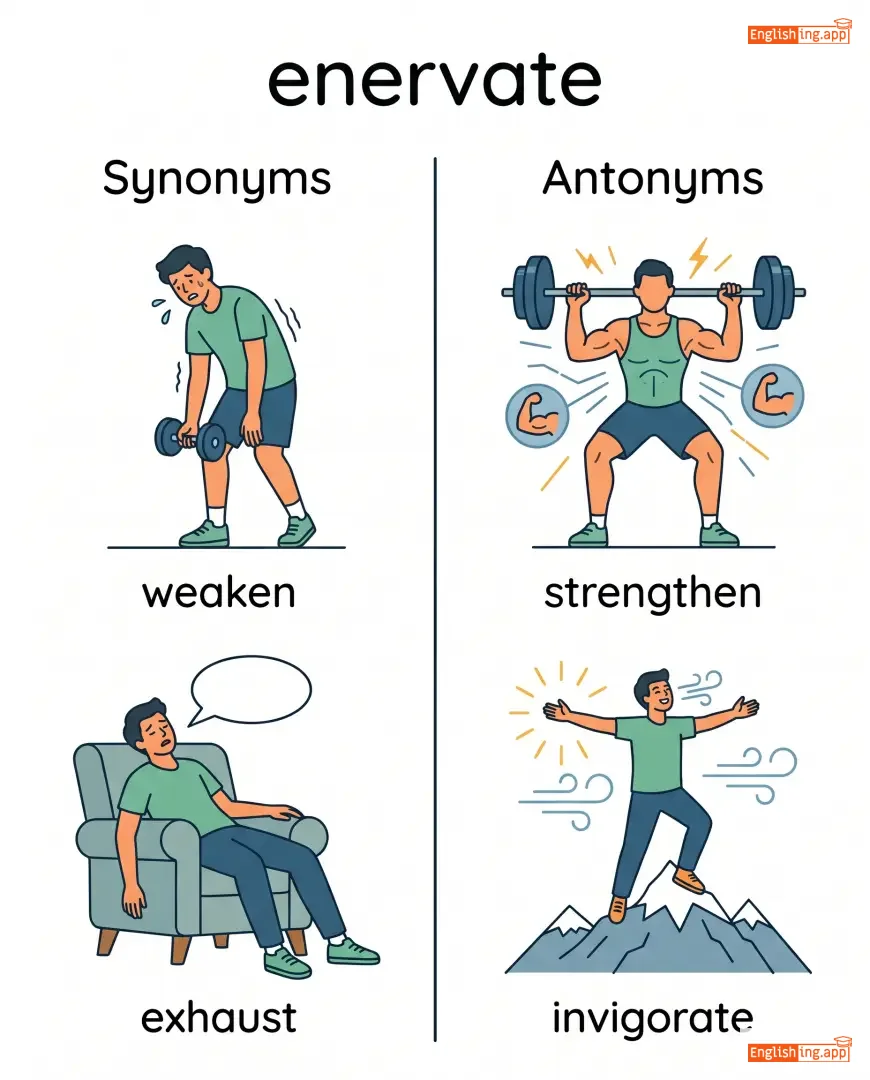
weaken, exhaust, debilitate, drain
••••••
|
strengthen, invigorate
••••••
|
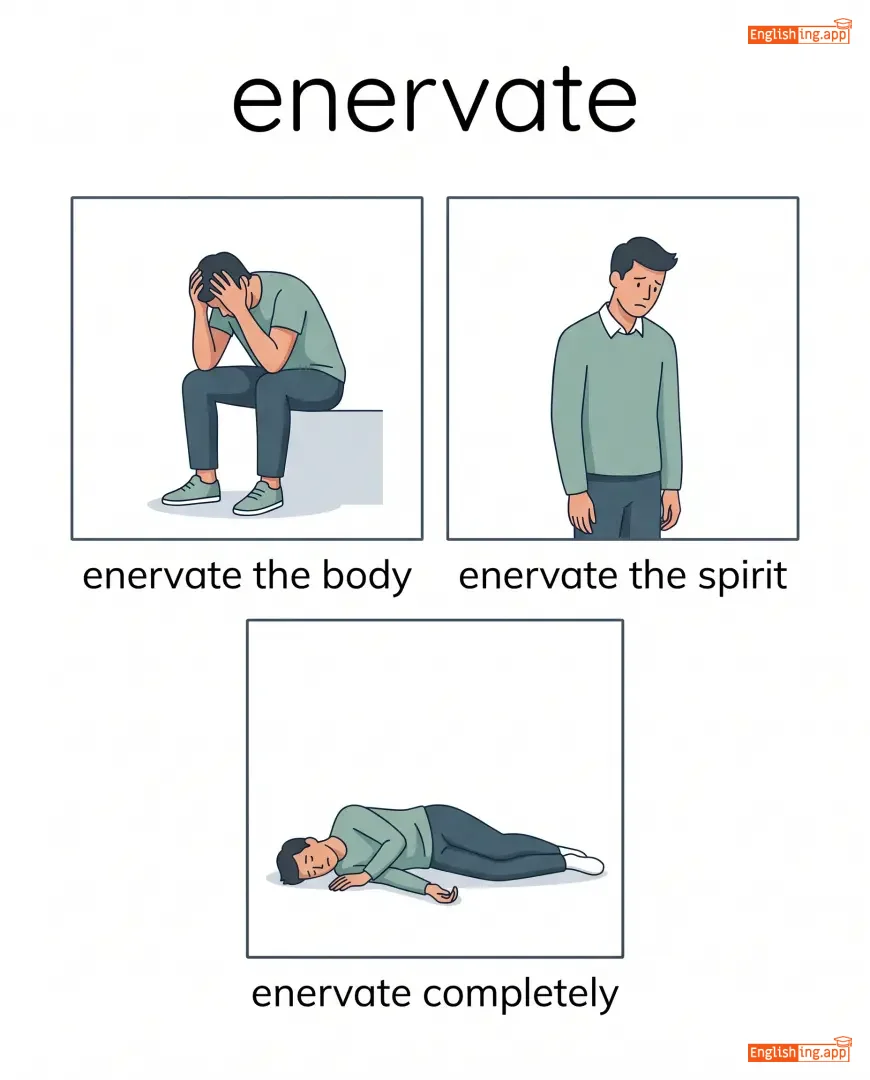
enervate the body, enervate the spirit, enervate completely
••••••
|
Enervate意味着通过消耗能量使虚弱 → 减少力量
••••••
|
|
#120
🌱
|
/ɪnˈdʒɛndər/
verb
(ēnɡɛndə)
••••••
|
|
引发
yǐnfā
••••••
|
engendered
ēnɡɛndəd
••••••
|
engendered
ēnɡɛndəd
••••••
|
engenders
ēnɡɛndəs
••••••
|
engendering
ēnɡɛndɪŋ
••••••
|
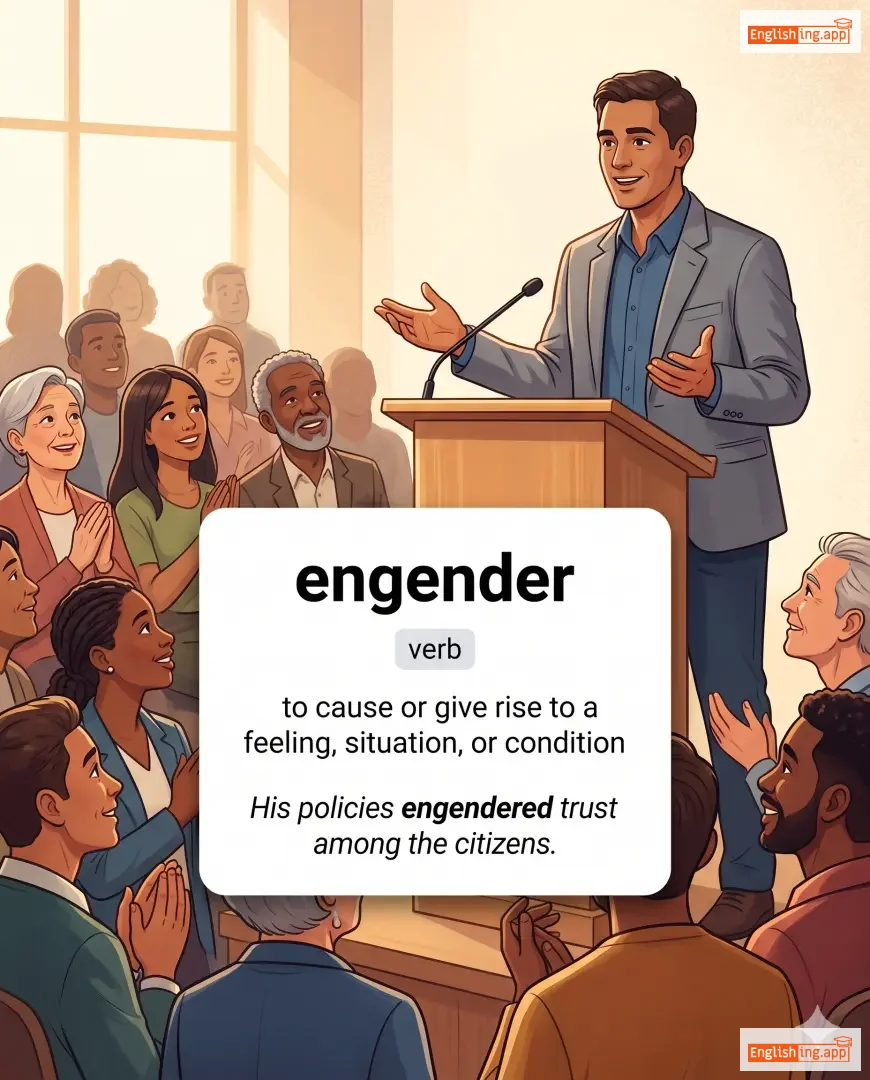
to cause or give rise to a feeling, situation, or condition
••••••
|
His policies engendered trust among the citizens.
hɪz pəˈlɪsɪz ēnɡɛndəd trʌst əˈmʌŋ ðə sɪtɪzənz.
••••••
|
他的政策在市民中引发了信任。
tā de zhèngcè zài shìmín zhōng yǐnfā le xìnrèn.
••••••
|
- •••••• | - •••••• | - •••••• |
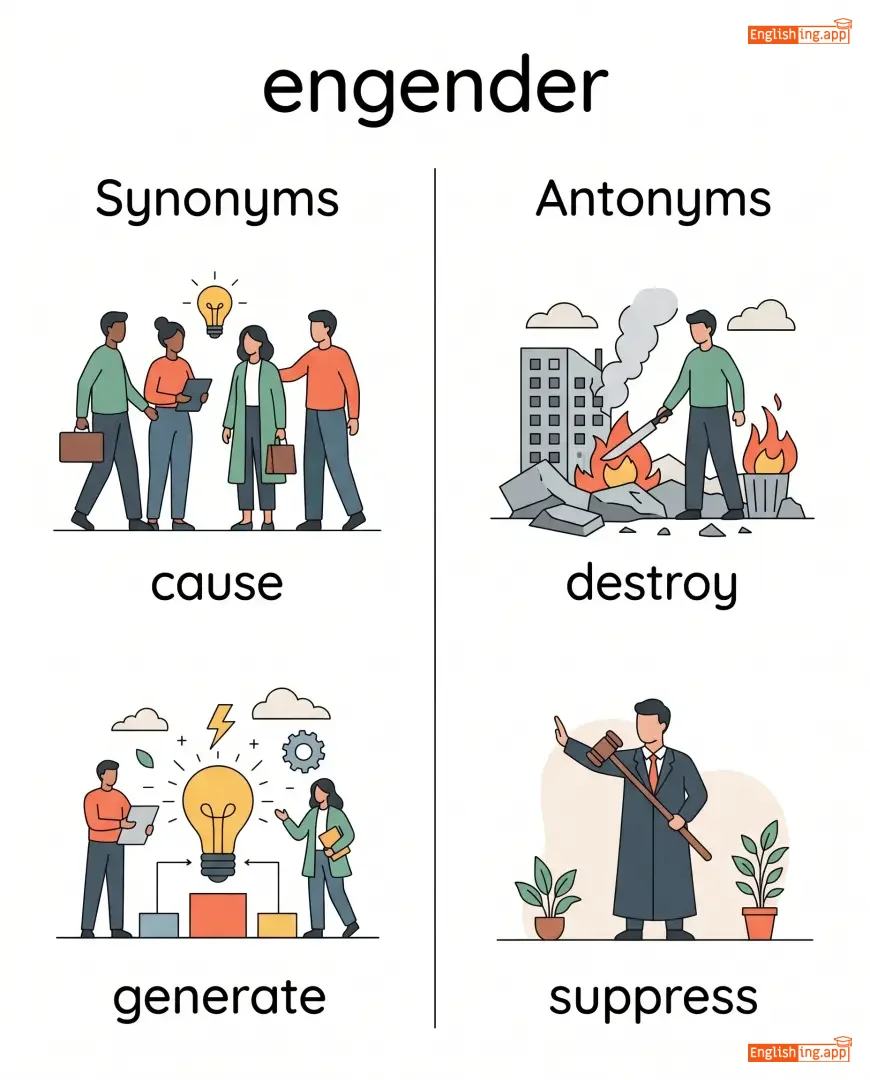
cause, generate, produce, provoke, trigger
••••••
|
destroy, suppress, extinguish
••••••
|
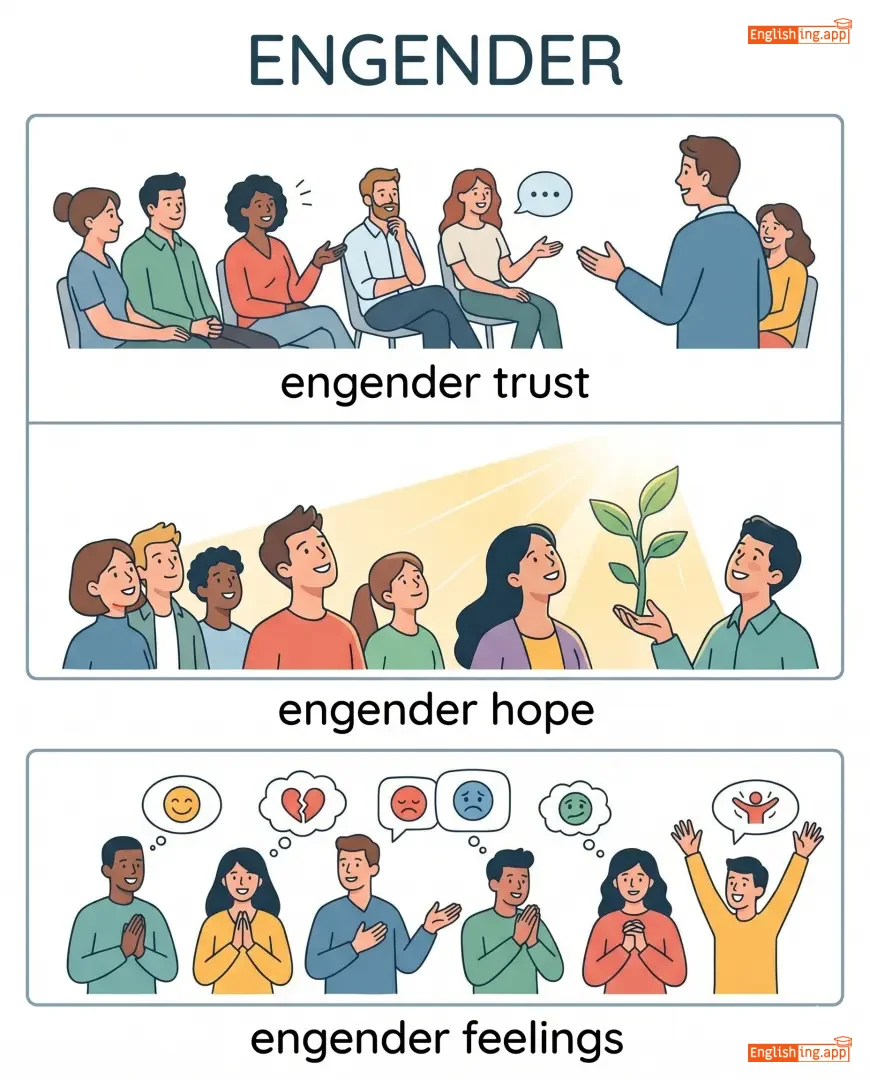
engender trust, engender hope, engender feelings, engender debate
••••••
|
Engender: 就像能量引发某些东西
••••••
|
|
#121
✨
|
/ɪnˈhæns/
verb
(enhans)
••••••
|
|
提升
tisheng
••••••
|
enhanced
enhansd
••••••
|
enhanced
enhansd
••••••
|
enhances
enhanses
••••••
|
enhancing
enhansing
••••••
|
to improve the quality, value, or extent of something
••••••
|
The new features will enhance the user experience.
新的功能将提升用户体验。
••••••
|
新的功能将提升用户体验。
Xin de gongneng jiang tisheng yonghu tiaoyan.
••••••
|
enhance beauty
提升美丽
••••••
|
to make someone or something look more beautiful
••••••
|
提升美丽
tisheng meili
••••••
|
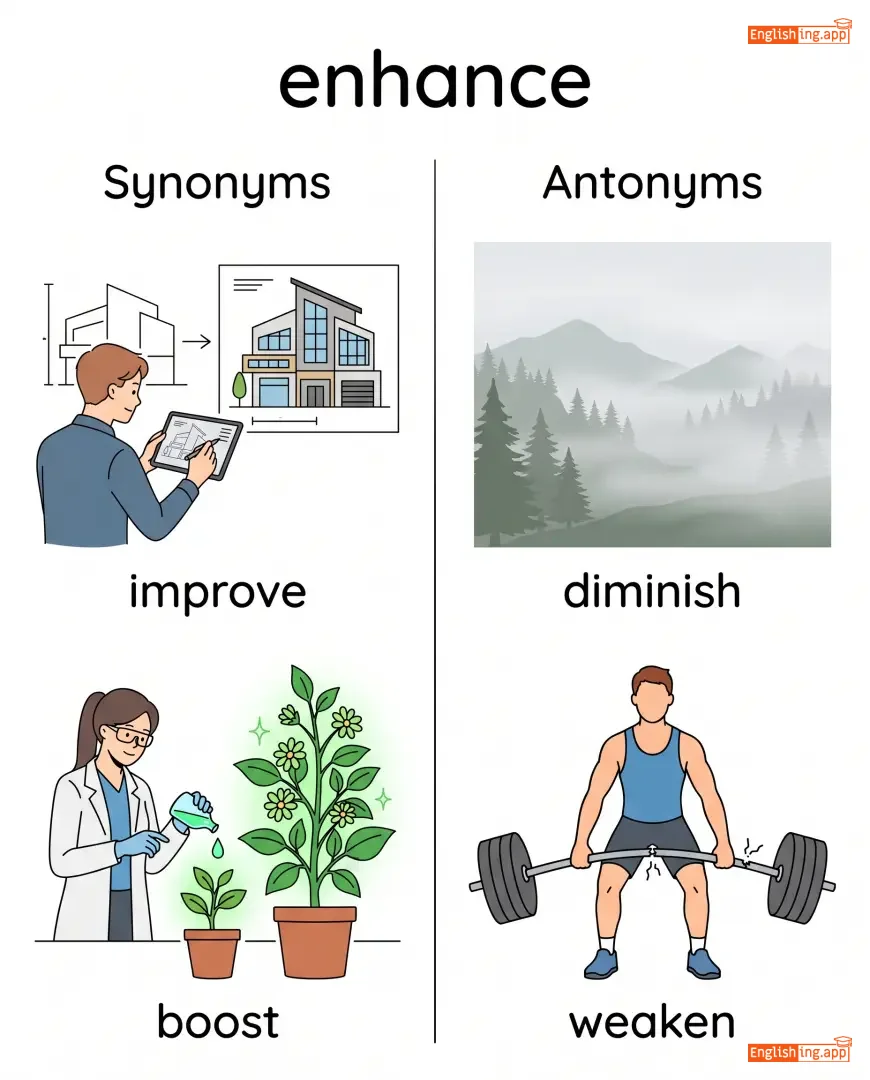
improve, boost, enrich, heighten, strengthen
••••••
|
diminish, weaken, reduce
••••••
|
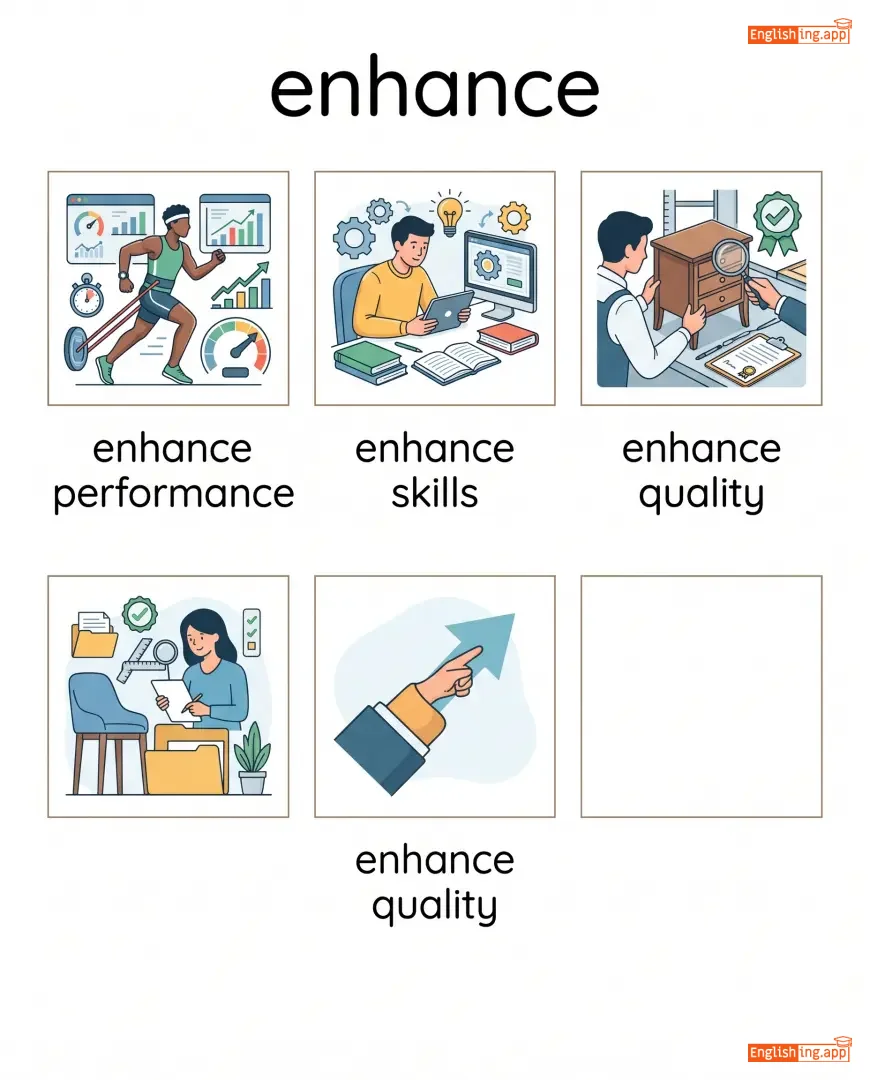
enhance performance, enhance skills, enhance quality, enhance experience
••••••
|
Enhance 是指提升,例如通过使用滤镜来提升照片。
••••••
|
|
#122
🌅
|
/ɪˈfɛmərəl/
adjective
(艾菲梅拉尔)
••••••
|
|
短暂
duǎnzàn
••••••
|
- •••••• | - •••••• | - •••••• | - •••••• |
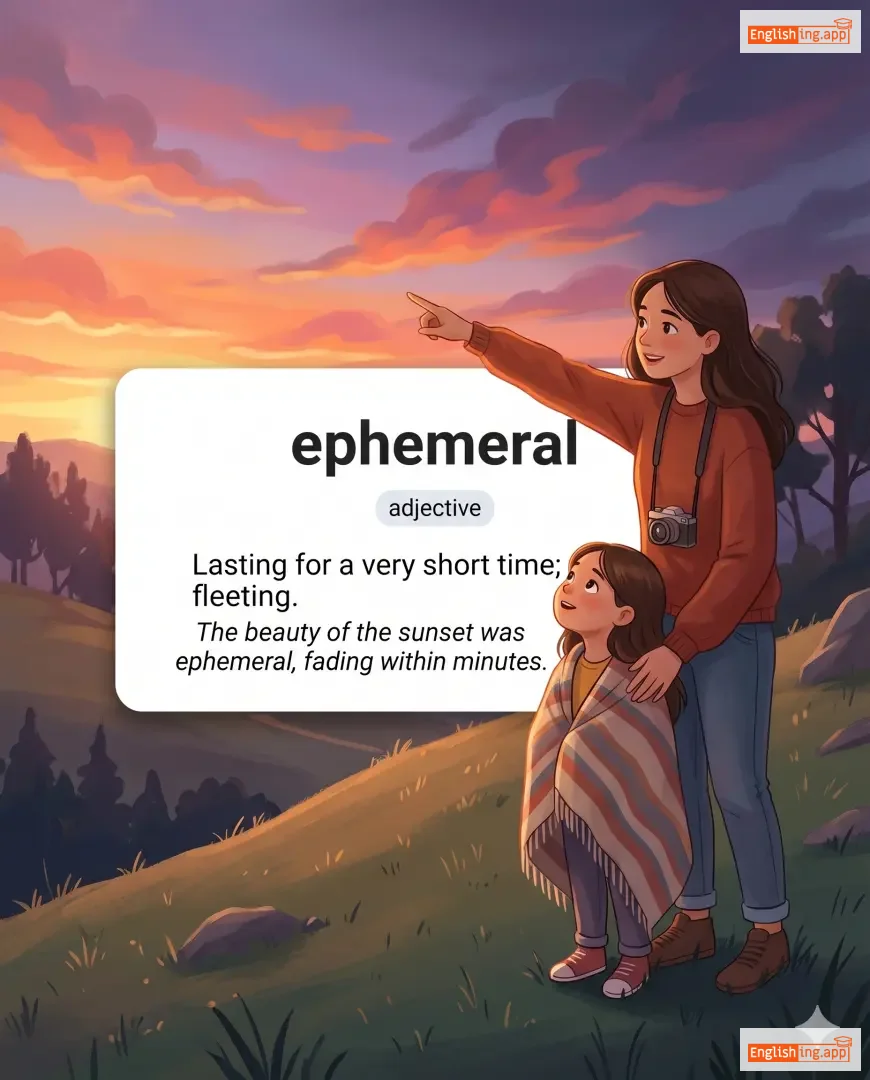
Lasting for a very short time; fleeting.
••••••
|
The beauty of the sunset was ephemeral, fading within minutes. |
日落的美丽是短暂的,几分钟内就消失了。
Rìluò de měilì shì duǎnzàn de, jǐ fēnzhōng nèi jiù xiāoshīle.
••••••
|
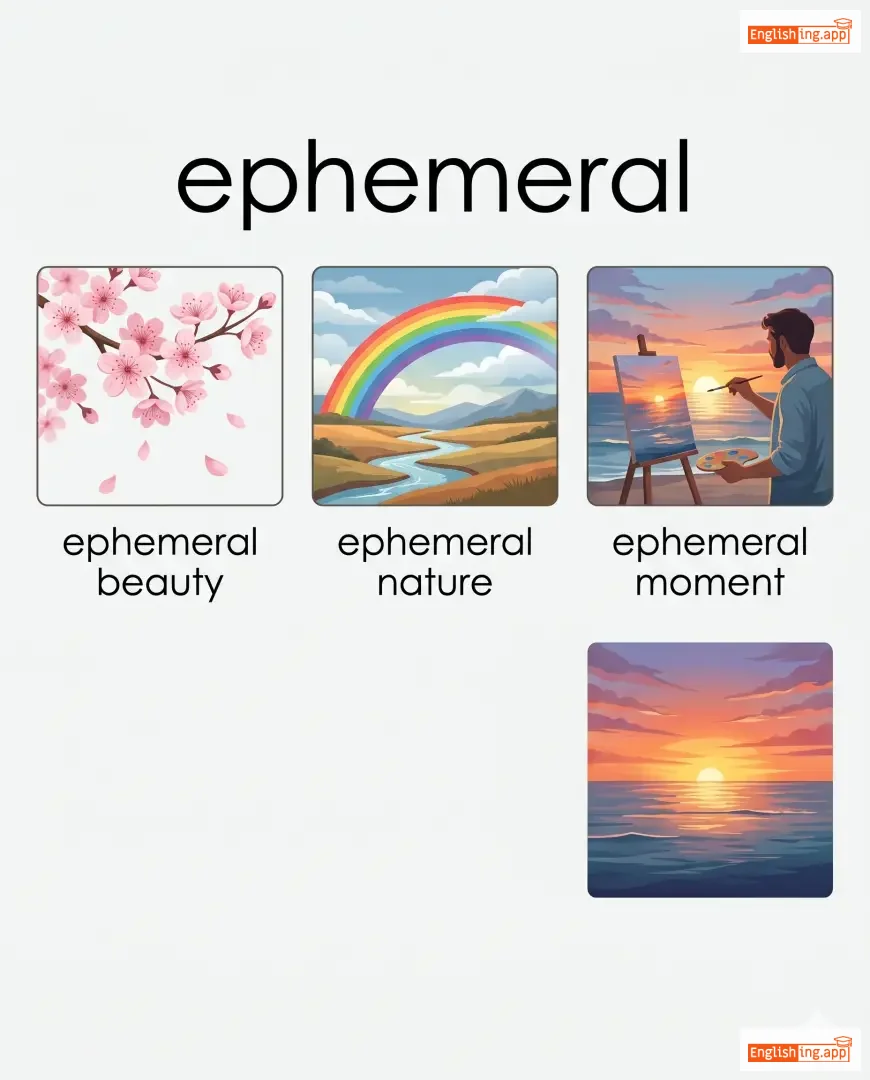
ephemeral beauty |
A beauty that is short-lived and does not last long.
••••••
|
短暂的美丽
duǎnzàn de měilì
••••••
|
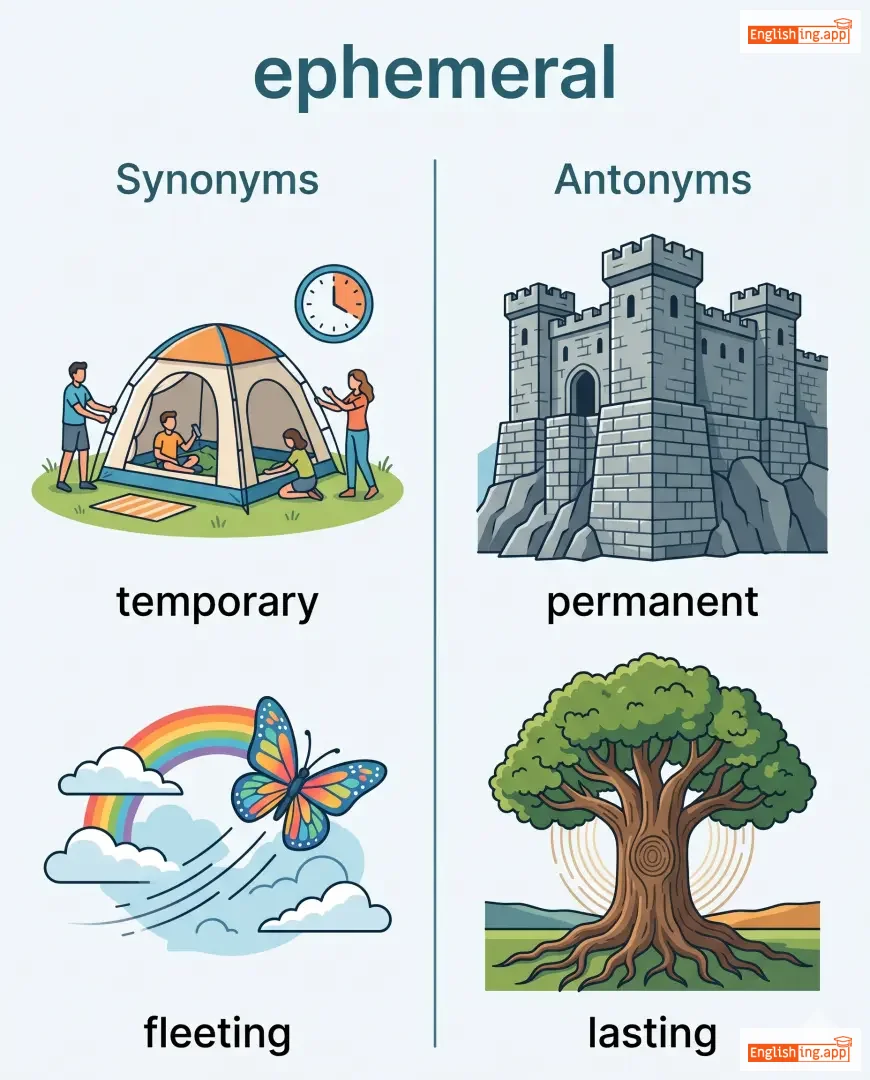
temporary, fleeting, short-lived, brief, transitory
••••••
|
permanent, lasting, eternal
••••••
|
ephemeral beauty, ephemeral nature, ephemeral moment, ephemeral life
••••••
|
短暂就像'瞬间',美丽短暂如日落的美景。
••••••
|
|
#123
🧘
|
/ˌekwəˈnɪmɪti/
noun
(équanímìtí)
••••••
|
|
平静
píngjìng
••••••
|
- •••••• | - •••••• | - •••••• | - •••••• |
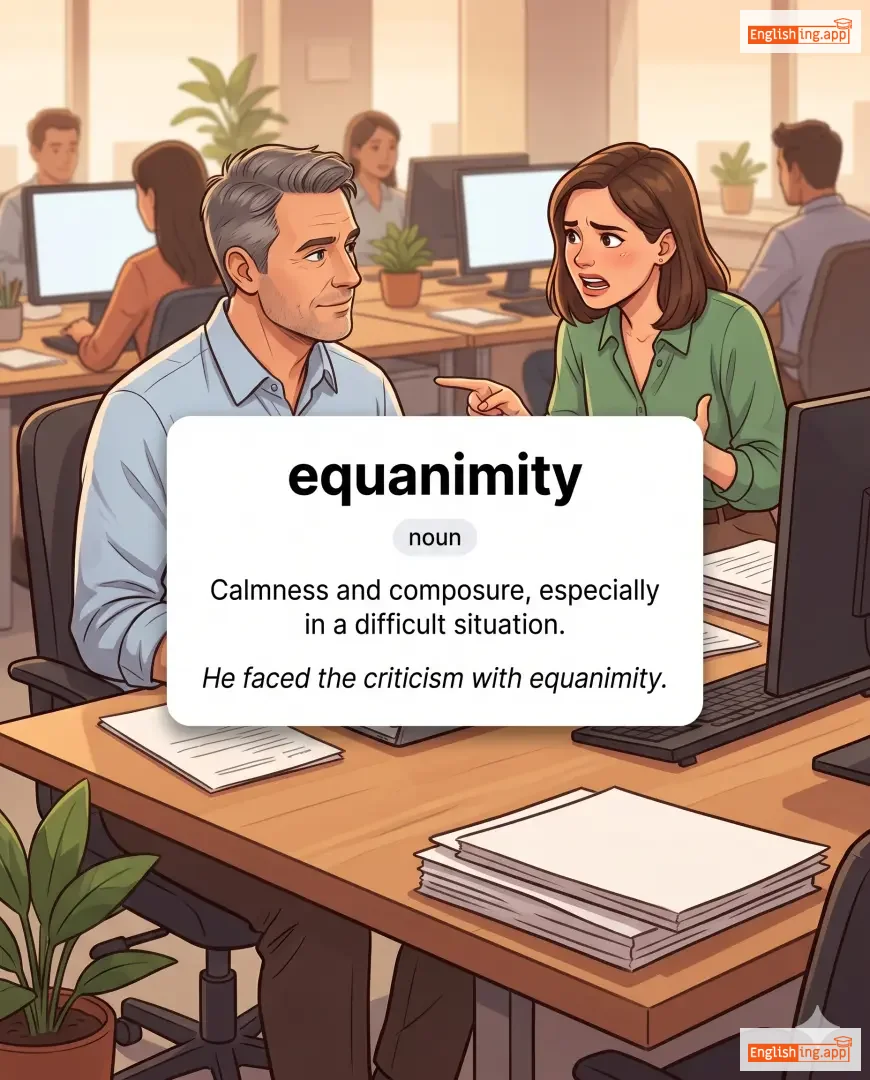
Calmness and composure, especially in a difficult situation.
••••••
|
He faced the criticism with equanimity. |
他以平静的心态面对批评。
Tā yǐ píngjìng de xīntài miànduì pīpíng.
••••••
|
- •••••• | - •••••• | - •••••• |
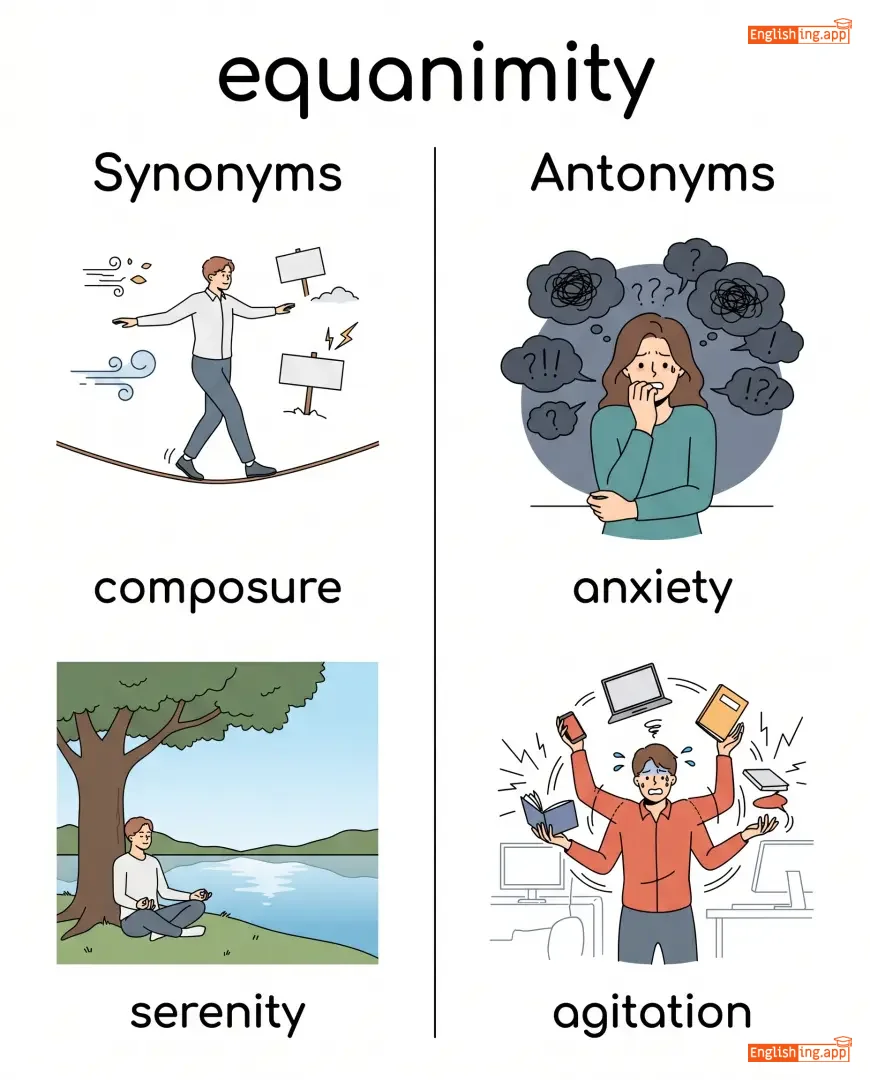
composure, serenity, calmness, tranquility, balance
••••••
|
anxiety, agitation, nervousness
••••••
|
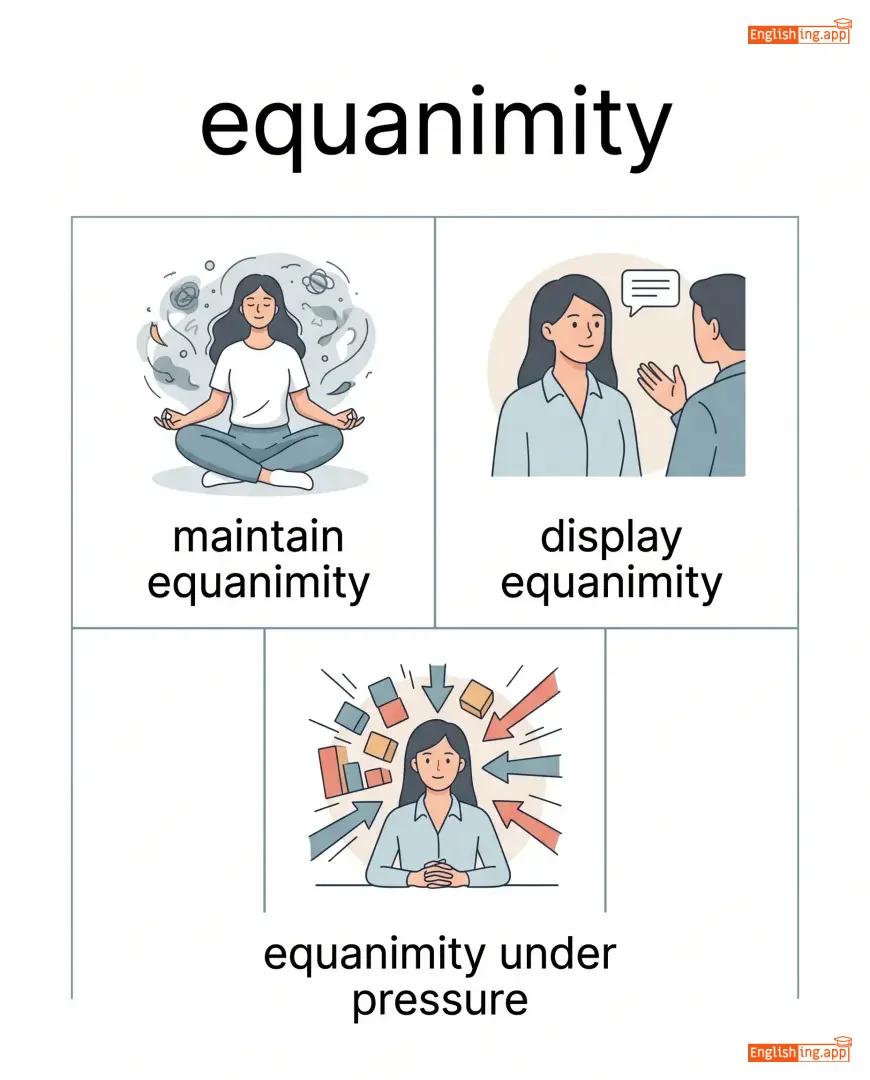
maintain equanimity, display equanimity, equanimity under pressure
••••••
|
Equanimity = 平 (平和) + 静 (安静) → 心如止水
••••••
|
|
#124
🌀
|
/ɪˈkwɪvəˌkeɪt/
verb
(模棱两可)
••••••
|
|
含糊其辞
hán hú qí cí
••••••
|
equivocated
模棱两可的
••••••
|
equivocated
模棱两可的
••••••
|
equivocates
模棱两可
••••••
|
equivocating
模棱两可
••••••
|
To speak ambiguously or avoid giving a clear answer.
••••••
|
The politician equivocated when asked about the scandal.
那位政治家在被问及丑闻时含糊其辞。
••••••
|
那位政治家在被问及丑闻时含糊其辞。
Nà wèi zhèngzhìjiā zài bèi wènjí chǒuwén shí hán hú qí cí.
••••••
|
- •••••• | - •••••• | - •••••• |
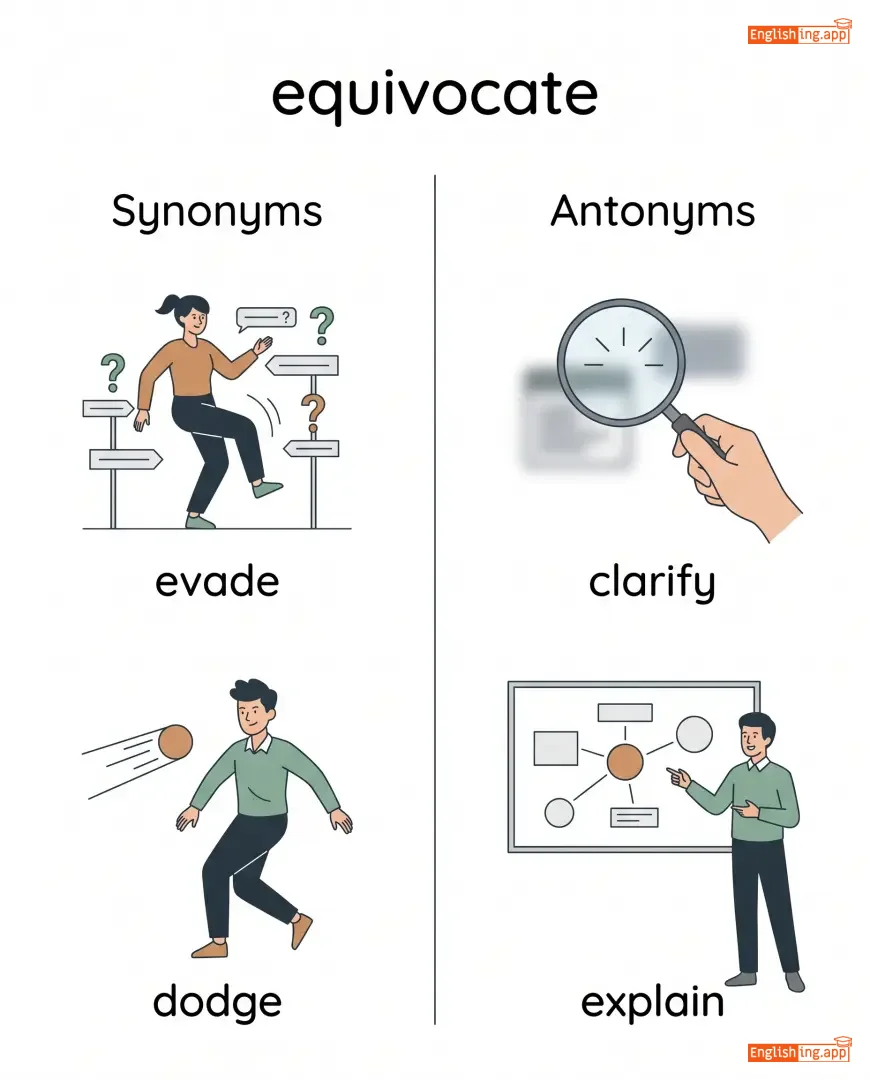
evade, dodge, prevaricate, hedge, mislead
••••••
|
clarify, explain, affirm
••••••
|
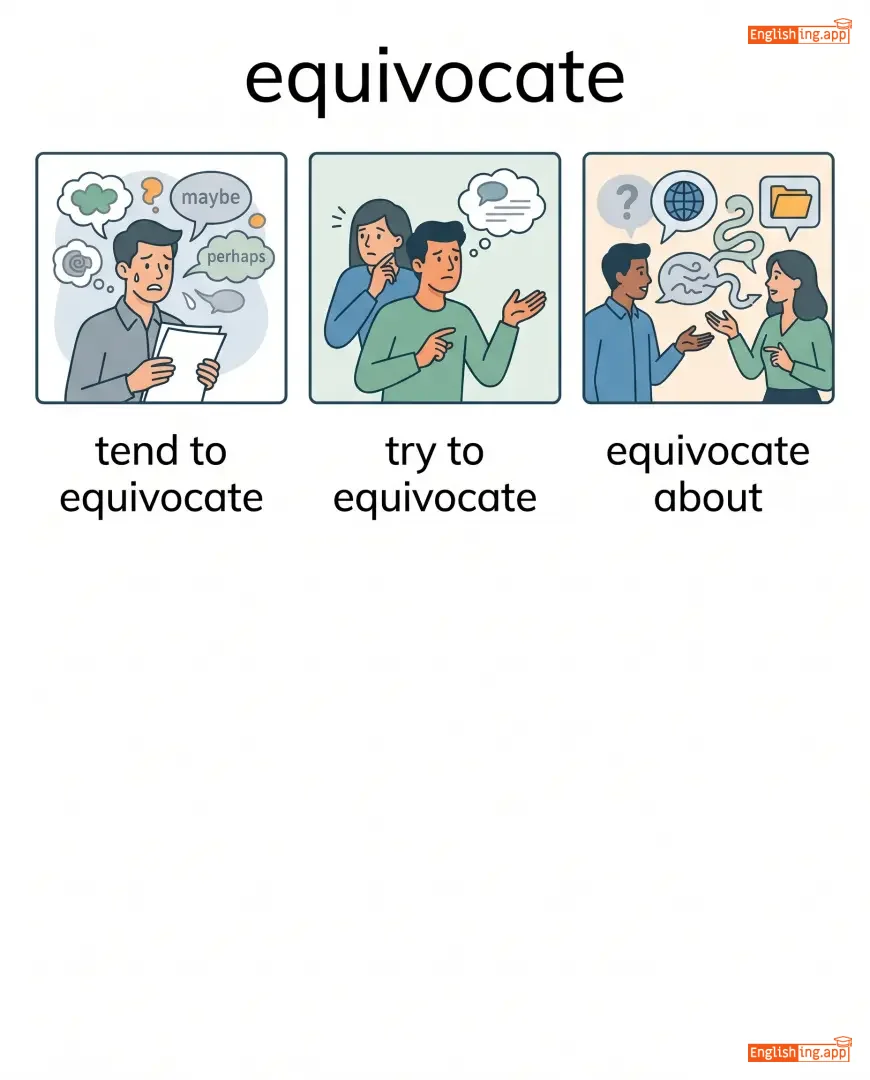
tend to equivocate, try to equivocate, equivocate about
••••••
|
Equivocate 意味着 🌀 通过模棱两可的回答来避免给出明确答案。
••••••
|
|
#125
📚
|
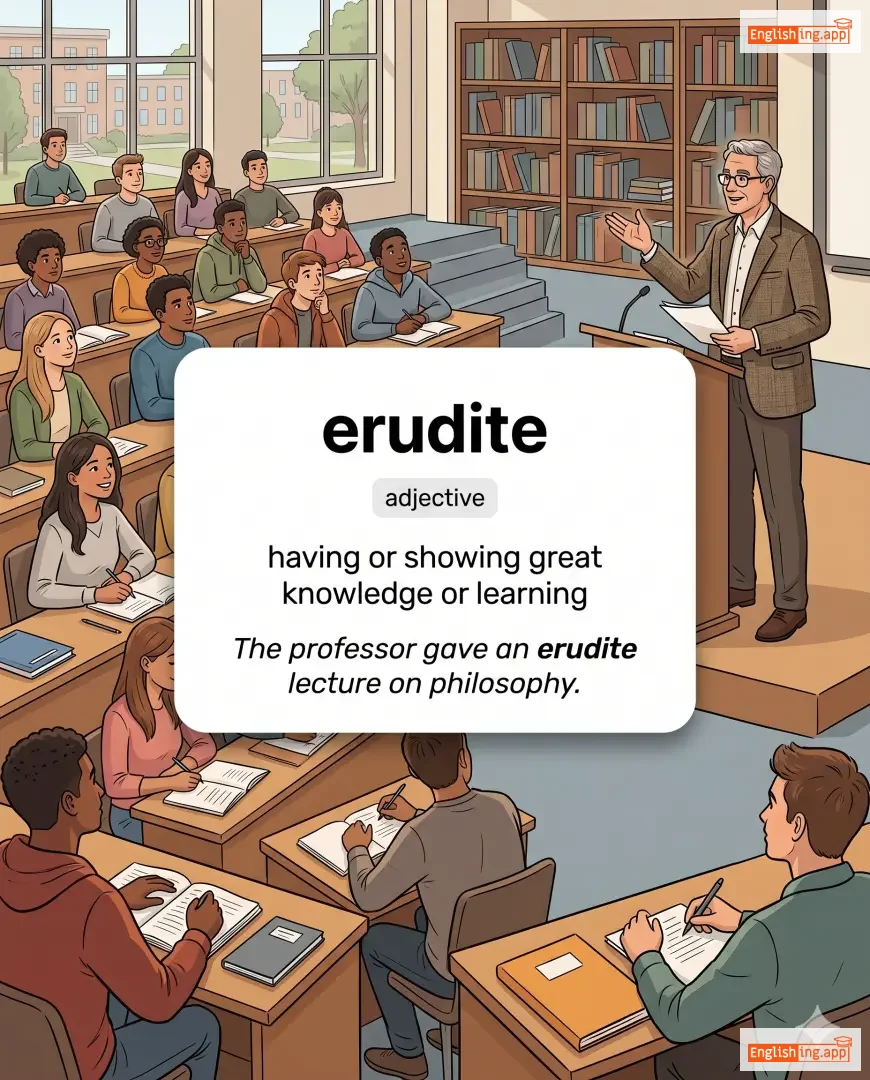
/ˈɛrjʊˌdaɪt/
adjective
(érúdài)
••••••
|
|
博学
boxue
••••••
|
- •••••• | - •••••• | - •••••• | - •••••• |
having or showing great knowledge or learning
••••••
|
The professor gave an erudite lecture on philosophy. |
教授就哲学做了一个博学的讲座。
Jiàoshòu jiù zhéxué zuòle yīgè bóxué de jiǎngzuò.
••••••
|
- •••••• | - •••••• | - •••••• |
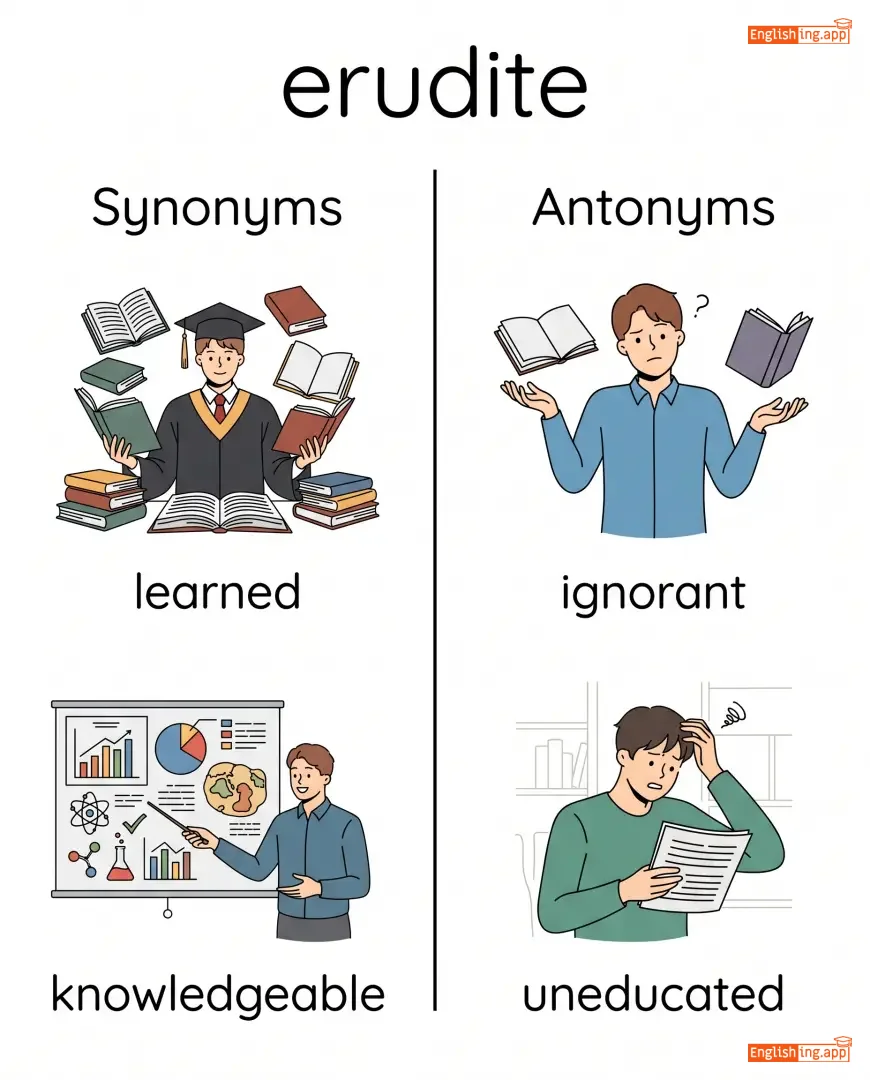
learned, knowledgeable, scholarly, intellectual, well-read
••••••
|
ignorant, uneducated, uninformed
••••••
|
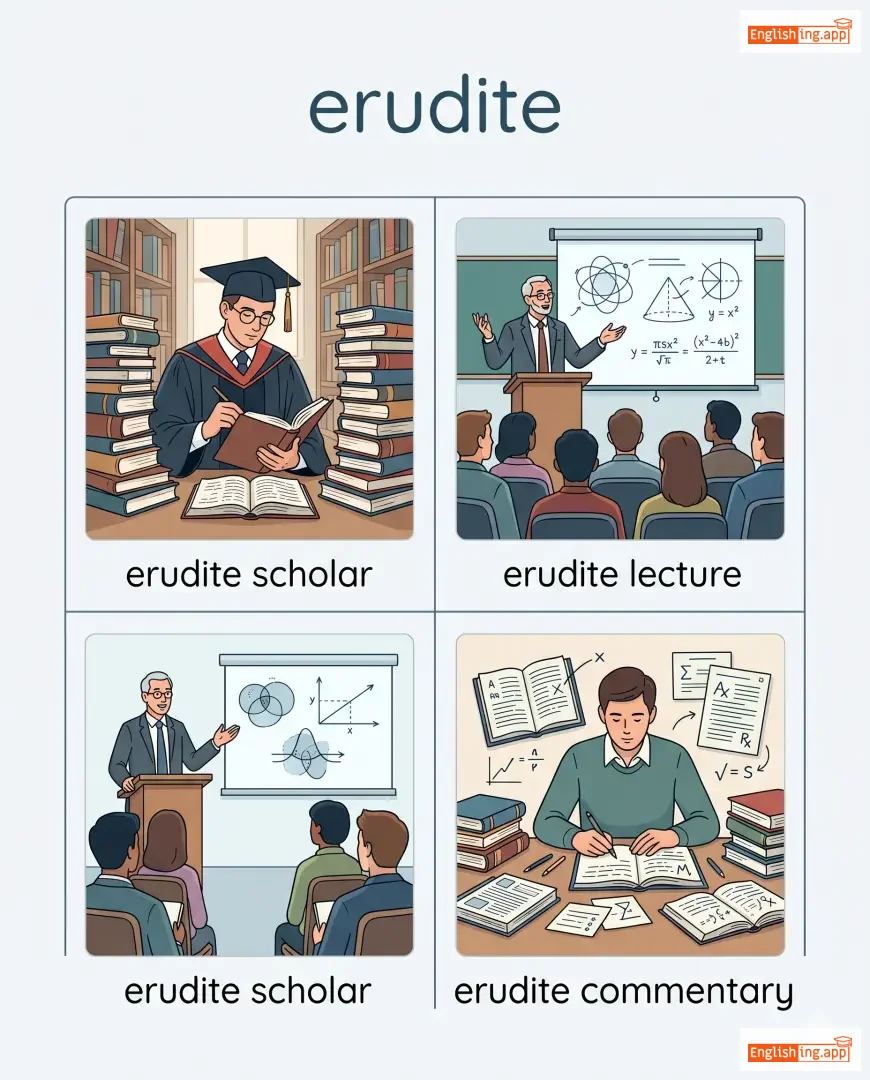
erudite scholar, erudite lecture, erudite commentary, erudite discussion
••••••
|
Erudite = 教育 + 聪明 → 博学表示知识丰富的人。
••••••
|
Vocabulary Quiz
Test your vocabulary by matching words with their translations or meanings.
Login to take the quiz
Comments (0)
Share your thoughts and join the discussion.
Join the discussion by logging in
Login to CommentNo comments yet
Be the first to share your thoughts!