|
表情符号
|
单词 | Images | 翻译 | 过去时 | 过去分词 | 第三人称单数 | 动名词 | 含义 | 例句 | 例句翻译 | 示例表达 | 示例表达含义 | 示例表达翻译 | 同义词 | 反义词 | 搭配词 | 助记符 |
|---|---|---|---|---|---|---|---|---|---|---|---|---|---|---|---|---|---|
|
⚡
••••••
|
/fɔːlt/
noun
(fɔːlt)
••••••
|
- •••••• |
错误
cuòwù
••••••
|
- •••••• | - •••••• | - •••••• | - •••••• |
A mistake, error, or responsibility for a problem.
••••••
|
It was not her fault that the train was late. |
火车晚点不是她的错。
Huǒchē wǎndiǎn bùshì tā de cuò.
••••••
|
at fault |
Responsible for a mistake or wrongdoing.
••••••
|
有错
yǒu cuò
••••••
|
mistake, flaw, defect, error, responsibility
••••••
|
perfection, merit
••••••
|
take the fault, find fault, fault line, at fault
••••••
|
Fault对应的是错误,责任让我们改正。
••••••
|
|
⚠️
••••••
|
/ˈfɔːlti/
adjective
(福尔提)
••••••
|
- •••••• |
有缺陷的
you quexian de
••••••
|
- •••••• | - •••••• | - •••••• | - •••••• |
Having defects or imperfections; not working properly
••••••
|
The device stopped working because it was faulty.
设备停止工作,因为它是 faulty。
••••••
|
设备停止工作,因为它有缺陷。
shebei tingzhi gongzuo, yinwei ta you quexian
••••••
|
faulty logic
faulty 逻辑
••••••
|
Reasoning that is incorrect or flawed
••••••
|
有缺陷的逻辑
you quexian de luoji
••••••
|
defective, flawed, imperfect, broken, malfunctioning
••••••
|
perfect, flawless, sound
••••••
|
faulty wiring, faulty equipment, faulty design, faulty logic
••••••
|
faulty = 有缺陷的, 记住 'fault' = 缺陷
••••••
|
|
🙏
••••••
|
/ˈfeɪvər/
noun
(feɪvər)
••••••
|
- •••••• |
帮助
bangzhu
••••••
|
- •••••• | - •••••• | - •••••• | - •••••• |
An act of kindness or approval.
••••••
|
She asked him for a small favor.
她请求了一个小忙。
••••••
|
她请求了一个小忙。
Ta qingqiu le yi ge xiao mang.
••••••
|
do someone a favor
为某人做个忙
••••••
|
To do something to help someone.
••••••
|
为某人做个忙
Wei mou ren zuo ge mang
••••••
|
kindness, support, approval, help
••••••
|
disfavor, rejection
••••••
|
ask a favor, return a favor, in favor of, do a favor
••••••
|
帮助意味着帮助——给朋友一个帮助会让他高兴。
••••••
|
|
⭐
••••••
|
/ˈfeɪvərɪt/
adjective, noun
(费佛瑞特)
••••••
|
- •••••• |
最喜欢的
zuì xǐ huān de
••••••
|
- •••••• | - •••••• | - •••••• | - •••••• |
Preferred over all others; something or someone especially liked.
••••••
|
Chocolate is my favorite ice cream flavor. |
巧克力是我最喜欢的冰淇淋口味。
Qiǎokèlì shì wǒ zuì xǐ huān de bīngqílín kǒuwèi.
••••••
|
play favorites |
To give unfair advantage to one person over others.
••••••
|
偏爱
piān'ài
••••••
|
preferred, beloved, liked, best, choice
••••••
|
hated, disliked
••••••
|
favorite song, favorite color, all-time favorite, crowd favorite
••••••
|
最喜欢的就像你最喜欢的东西,像你最喜欢的食物。
••••••
|
|
👍
••••••
|
/ˈfeɪvərəbl/
adjective
(费沃拉布尔)
••••••
|
- •••••• |
有利的
youli de
••••••
|
- •••••• | - •••••• | - •••••• | - •••••• |
Expressing approval, support, or positivity; advantageous or beneficial
••••••
|
The weather conditions were favourable for the outdoor event.
户外活动的天气条件是费沃拉布尔的。
••••••
|
户外活动的天气条件是有利的。
Hu wai huo dong de tian qi tiao jian shi youli de.
••••••
|
- •••••• | - •••••• | - •••••• |
advantageous, beneficial, positive, supportive, encouraging
••••••
|
unfavourable, disadvantageous, negative
••••••
|
favourable conditions, favourable outcome, favourable opinion, favourable terms
••••••
|
记住'有利的'意味着有益或支持
••••••
|
|
😨
••••••
|
/fɪr/
noun, verb
(菲尔)
••••••
|

|
恐惧
kǒngjù
••••••
|
feared
费尔德
••••••
|
feared
费尔德
••••••
|
fears
菲尔斯
••••••
|
fearing
费尔英
••••••
|
An unpleasant emotion caused by the belief that someone or something is dangerous.
••••••
|
She has a fear of flying.
她害怕飞行。
••••••
|
她害怕飞行。
tā hài pà fēixíng.
••••••
|
face your fears
面对你的恐惧
••••••
|
Confront something that scares you.
••••••
|
面对你的恐惧
miàn duì nǐ de kǒngjù
••••••
|
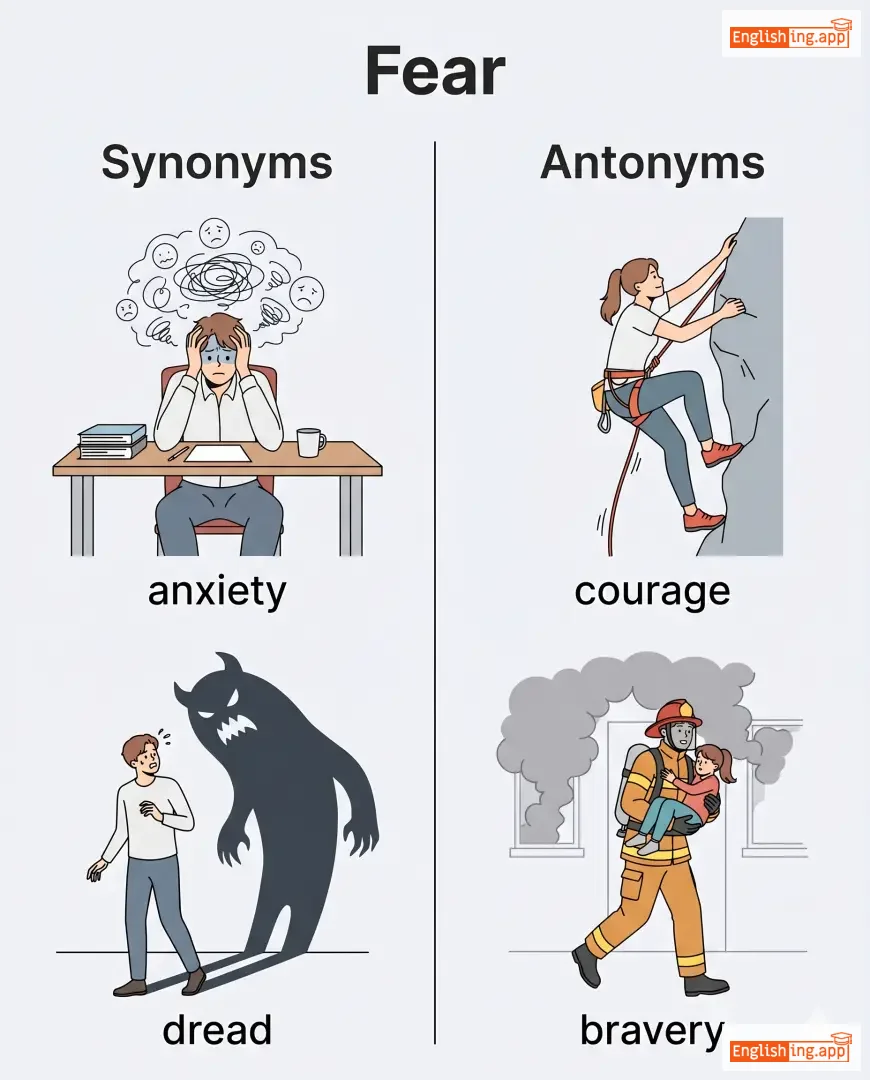
anxiety, dread, terror, worry, concern
••••••
|
courage, bravery, confidence
••••••
|
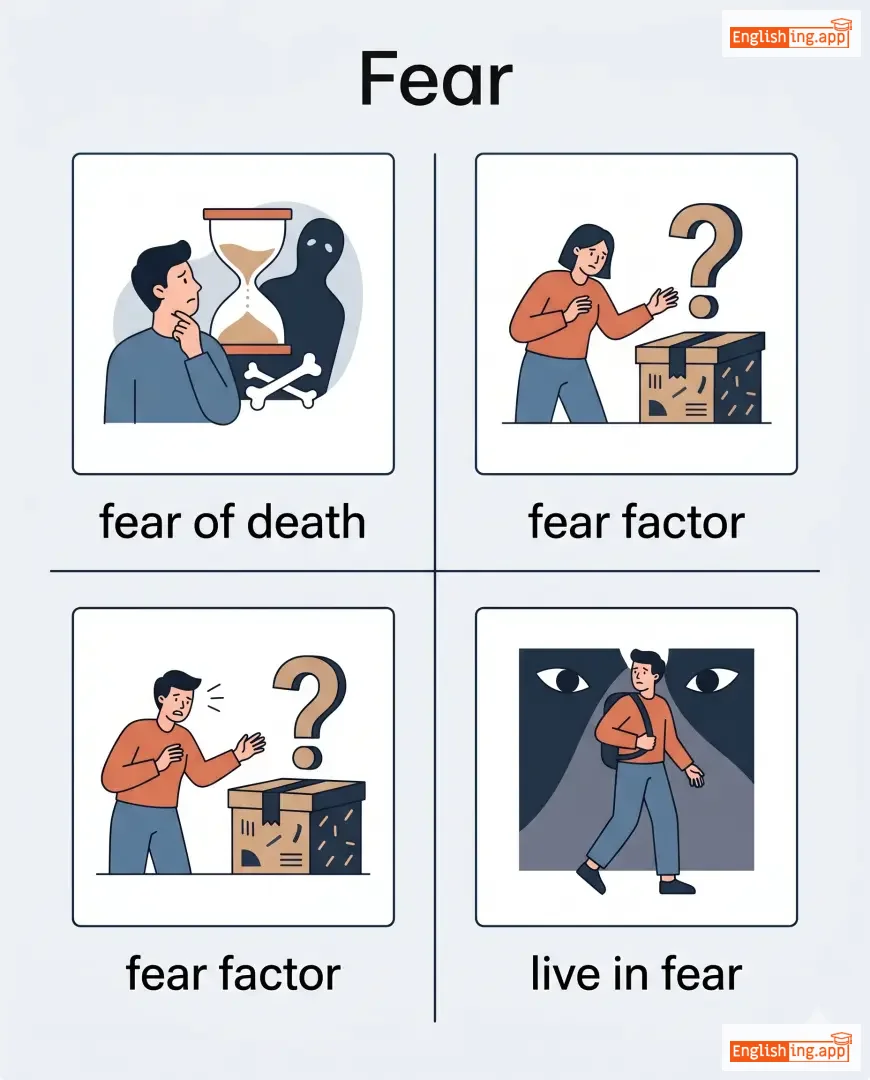
fear of death, fear factor, live in fear, fear something
••••••
|
Fear是恐惧 — 恐惧让你冻结。
••••••
|
|
😨
••••••
|
/ˈfɪr.fəl/
adjective
(费尔富尔)
••••••
|
- •••••• |
害怕的
haipa de
••••••
|
- •••••• | - •••••• | - •••••• | - •••••• |
feeling afraid or showing fear
••••••
|
She was fearful of walking alone at night.
她害怕夜晚独自走路。
••••••
|
她害怕夜晚独自走路。
Ta haipa yewan duzi zoulou.
••••••
|
fearful of one's own shadow
怕自己的影子
••••••
|
extremely timid or easily frightened
••••••
|
怕自己的影子
pa ziji de yingzi
••••••
|
afraid, scared, anxious, apprehensive, timid
••••••
|
brave, confident, fearless
••••••
|
fearful glance, fearful expression, fearful situation
••••••
|
Haipa = 'hi + pa' like 'hi fear'.
••••••
|
|
🏅
••••••
|
/fiːt/
noun
(fìt)
••••••
|
- •••••• |
壮举
zhuangju
••••••
|
- •••••• | - •••••• | - •••••• | - •••••• |
an achievement that requires great courage, skill, or strength
••••••
|
Climbing Mount Everest was a remarkable feat.
攀登珠穆朗玛峰是一项非凡的壮举。
••••••
|
攀登珠穆朗玛峰是一项非凡的壮举。
Pāndēng Zhūmùlǎngmǎfēng shì yī xiàng fēifán de zhuàngjǔ.
••••••
|
- •••••• | - •••••• | - •••••• |
achievement, accomplishment, triumph, success
••••••
|
failure, defeat, loss
••••••
|
great feat, remarkable feat, impressive feat
••••••
|
壮举 (feat) 就像登山一样
••••••
|
|
📱
••••••
|
/ˈfiːtʃər/
noun
(fīchā)
••••••
|
- •••••• |
特点
tèdiǎn
••••••
|
- •••••• | - •••••• | - •••••• | - •••••• |
a distinctive attribute or aspect of something; a characteristic
••••••
|
The new phone has a unique camera feature.
新手机具有独特的相机功能。
••••••
|
新手机具有独特的相机特点。
Xīn shǒujī jùyǒu dútè de xiàngjī tèdiǎn.
••••••
|
- •••••• | - •••••• | - •••••• |
attribute, aspect, characteristic, trait
••••••
|
flaw, defect
••••••
|
key feature, special feature, highlight feature
••••••
|
Feature在中文中是指手机相机的独特特点。
••••••
|
|
❄️
••••••
|
/ˈfɛb.ruˌɛr.i/
noun
(二月)
••••••
|
- •••••• |
二月
eryue
••••••
|
- •••••• | - •••••• | - •••••• | - •••••• |
The second month of the year in the Gregorian calendar, typically having 28 days, or 29 in a leap year.
••••••
|
My birthday is in February, so I always look forward to this month.
我的生日在二月,所以我总是期待这个月。
••••••
|
我的生日在二月,所以我总是期待这个月。
wo de shengri zai eryue, suoyi wo zongshi qidai zhe ge yue
••••••
|
- •••••• | - •••••• | - •••••• |
2nd month, Feb, month of love, shortest month
••••••
|
July, August
••••••
|
February holidays, February weather, February birth, February events
••••••
|
二月 = 短且冷, remember short cold month!
••••••
|
|
🏛️
••••••
|
/ˈfɛdərəl/
adjective
(联邦的)
••••••
|
- •••••• |
联邦的
liánbāng de
••••••
|
- •••••• | - •••••• | - •••••• | - •••••• |
Relating to the central government of a federation.
••••••
|
The federal government passed a new law on healthcare. |
联邦政府通过了一项关于医疗保健的新法律。
Liánbāng zhèngfǔ tōngguòle yī xiàng guānyú yīliáo bǎojiàn de xīn fǎlǜ.
••••••
|
- •••••• | - •••••• | - •••••• |
national, central, governmental, administrative
••••••
|
local, regional
••••••
|
federal law, federal court, federal government, federal system
••••••
|
联邦的意味着与联邦政府相关的。
••••••
|
|
💵
••••••
|
/fiː/
noun
(fi)
••••••
|
- •••••• |
费用
feiyong
••••••
|
- •••••• | - •••••• | - •••••• | - •••••• |
A payment made for a service or privilege.
••••••
|
The lawyer charged a high fee for his services. |
律师为他的服务收取了高额费用。
Lüshi wei tā de fuwu shōuqǔle gāo'é fèiyòng.
••••••
|
service fee |
An amount charged for providing a service
••••••
|
服务费
fuwu fei
••••••
|
charge, cost, payment, price
••••••
|
free, gift
••••••
|
pay a fee, membership fee, tuition fee, service fee
••••••
|
Fee 意味着费用 - 我们经常为服务支付费用
••••••
|
|
🍽️
••••••
|
/fiːd/
verb
(fīd)
••••••
|
|
喂
wèi
••••••
|
fed
fed
••••••
|
fed
fed
••••••
|
feeds
fīds
••••••
|
feeding
fīding
••••••
|
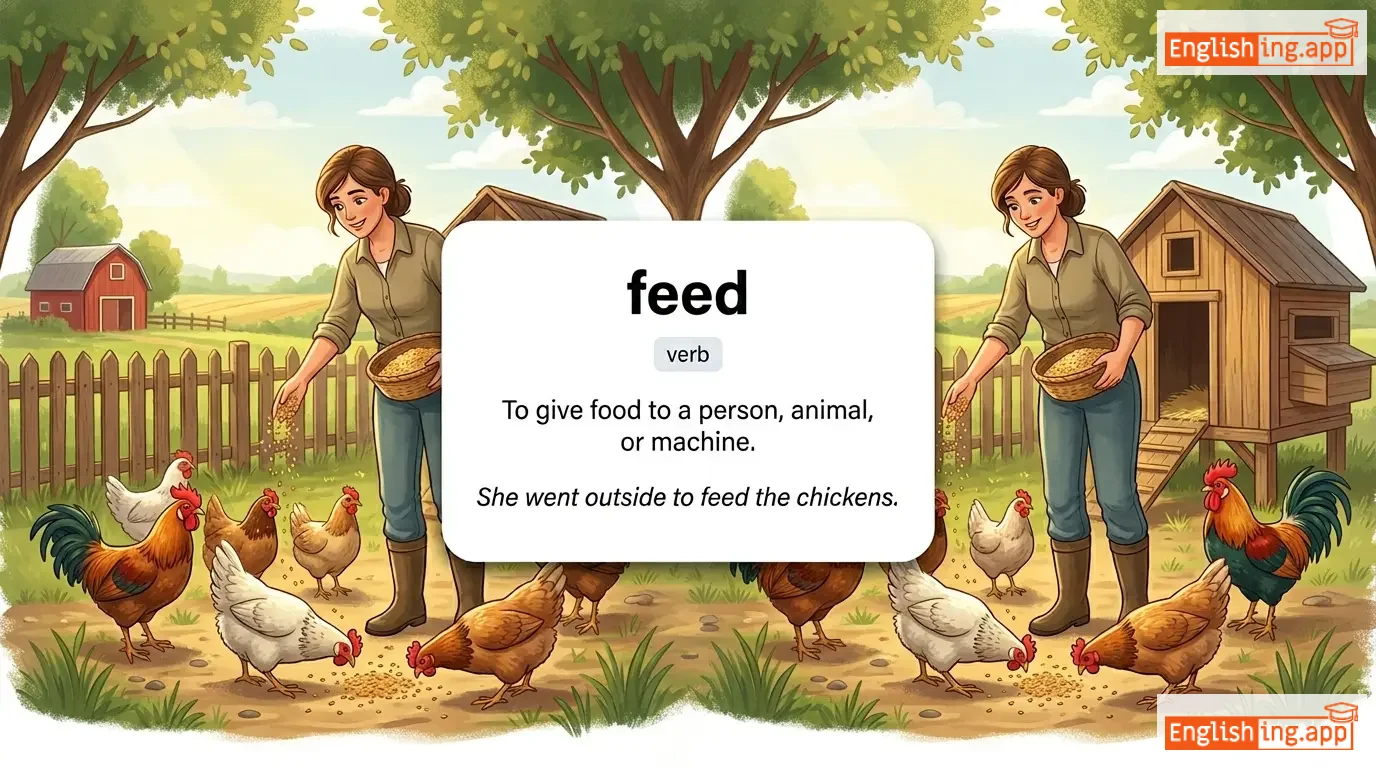
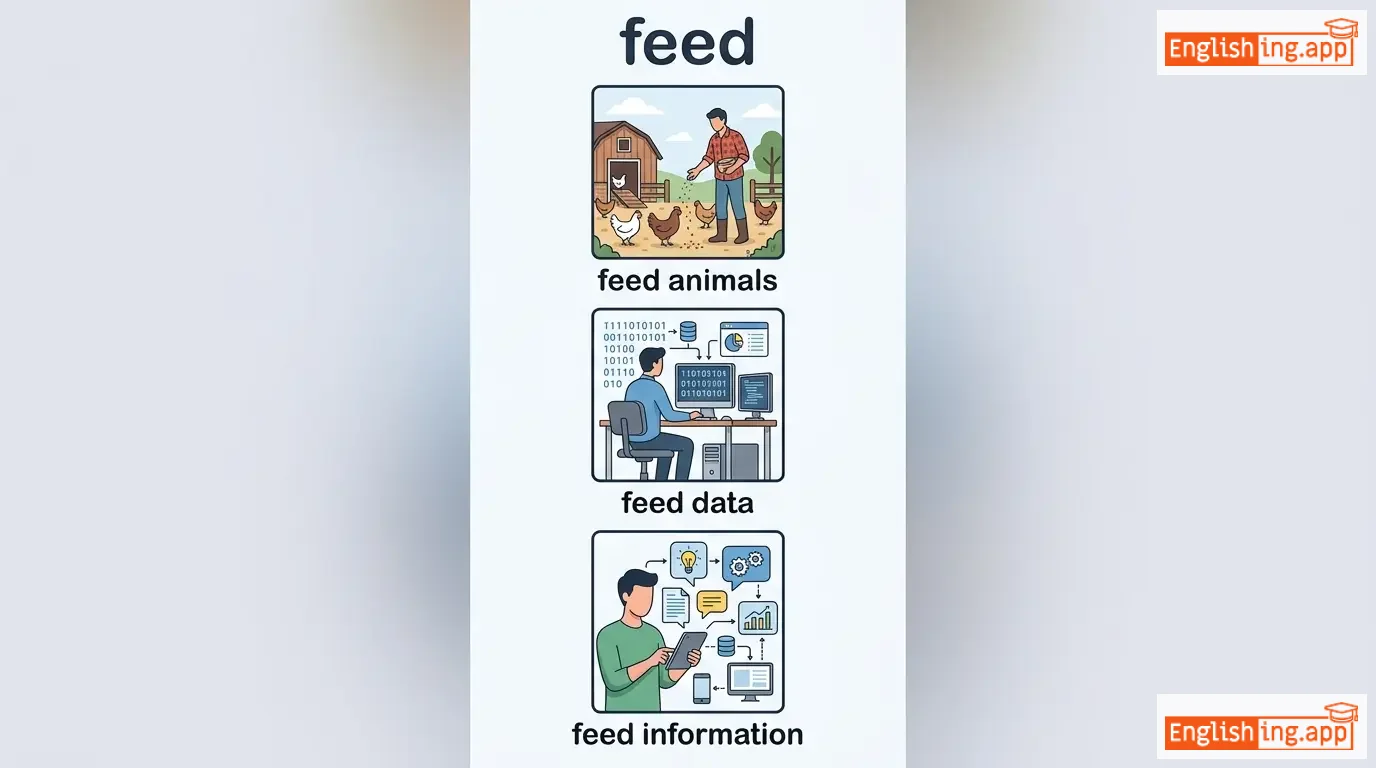
To give food to a person, animal, or machine.
••••••
|
She went outside to feed the chickens.
她出去喂鸡了。
••••••
|
她出去喂鸡了。
tā chūqù wèi jī le.
••••••
|
feed the fire
喂火
••••••
|
To add fuel to something or make it stronger
••••••
|
喂火
wèi huǒ
••••••
|
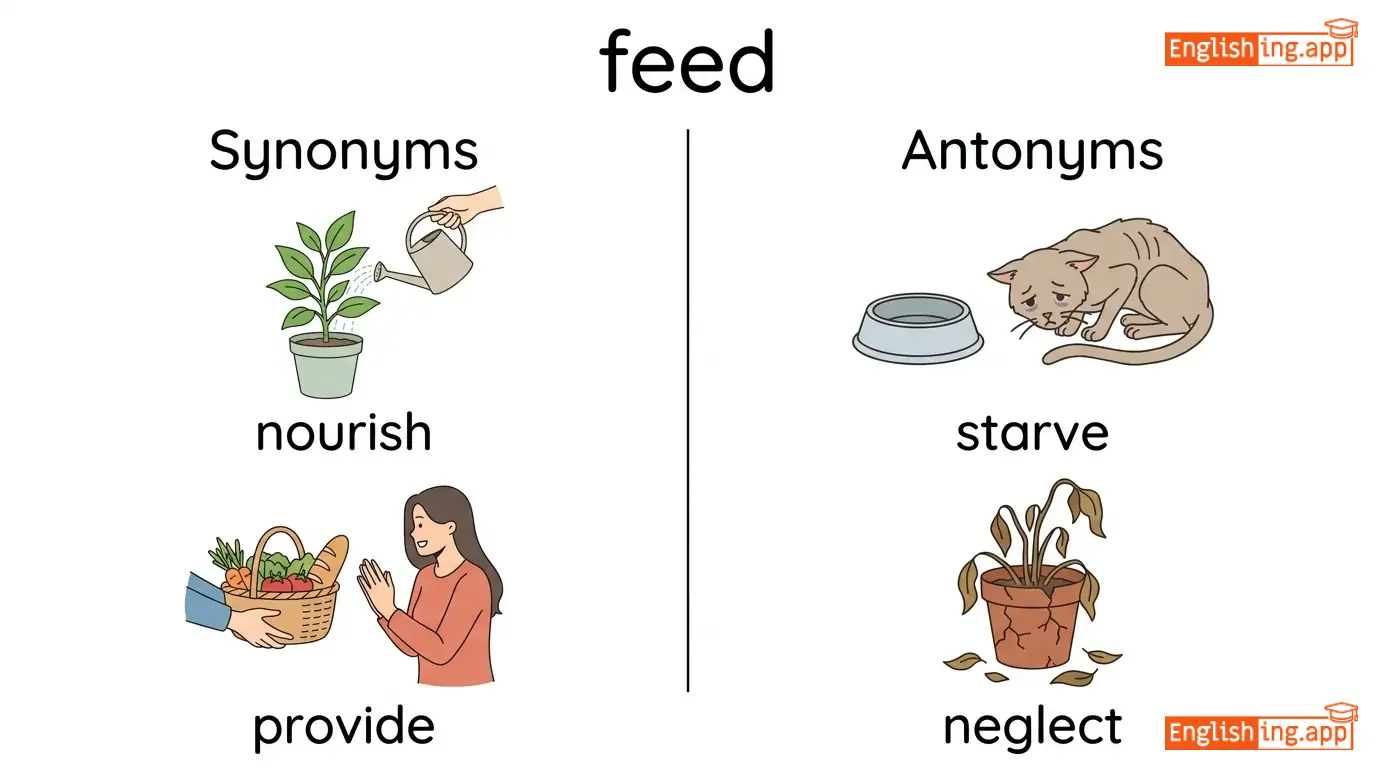
nourish, provide, supply, sustain
••••••
|
starve, neglect
••••••
|
feed animals, feed data, feed information, feed on
••••••
|
Feed 意味着喂食 - 就像 Facebook feed 一样,总有新内容加入。
••••••
|
|
😊
••••••
|
/fiːl/
verb
(fíl)
••••••
|


|
感受
gǎnshòu
••••••
|
felt
felt
••••••
|
felt
felt
••••••
|
feels
fíls
••••••
|
feeling
fíling
••••••
|
To experience an emotion or physical sensation.
••••••
|
I feel happy when I listen to music.
我听音乐时感到很开心。
••••••
|
我听音乐时感到很开心。
wǒ tīng yīnyuè shí gǎndào hěn kāixīn.
••••••
|
feel at home
像在家一样的感觉
••••••
|
To be comfortable and relaxed
••••••
|
像在家一样的感觉
xiàng zài jiā yīyàng de gǎnjué
••••••
|
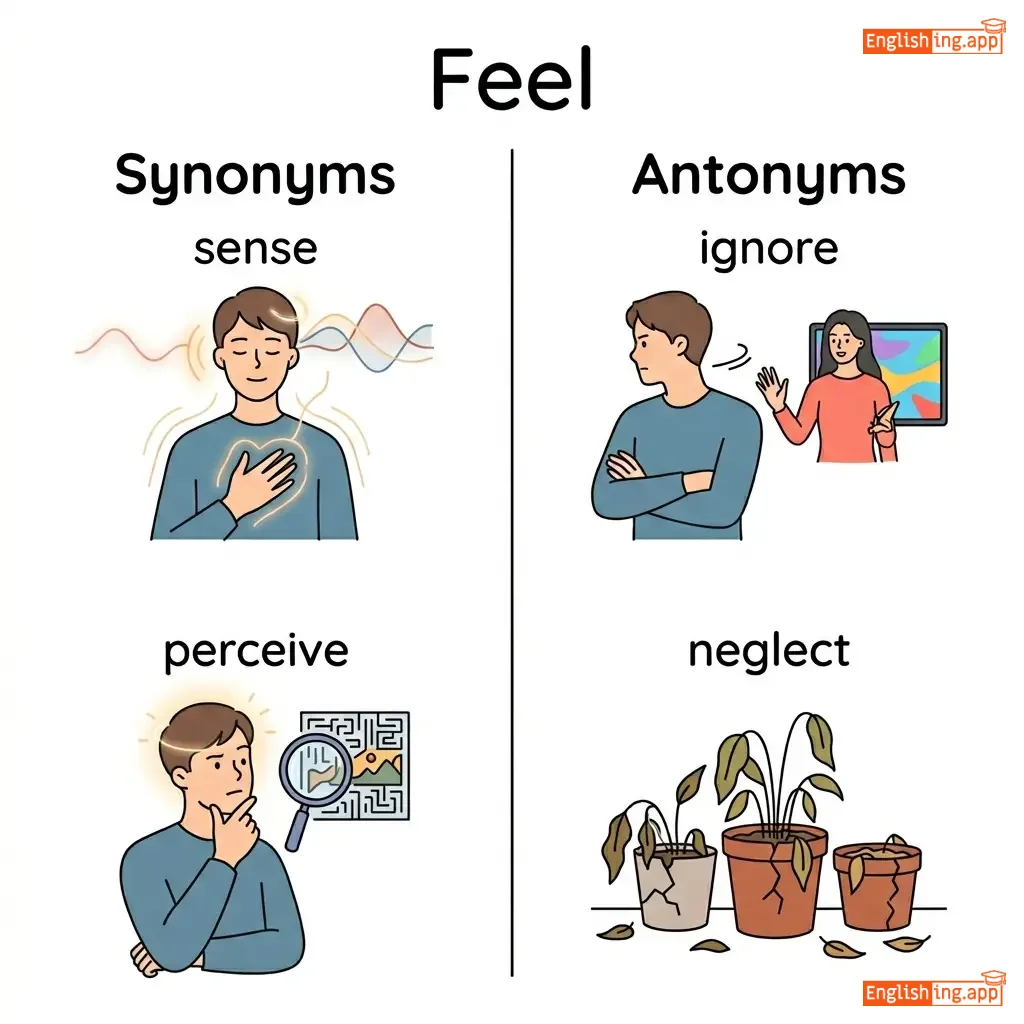
sense, perceive, experience, touch
••••••
|
ignore, neglect
••••••
|
feel good, feel bad, feel pain, feel pressure
••••••
|
感受就像体验情感,像在家一样感到舒适。
••••••
|
|
💓
••••••
|
/ˈfiːlɪŋ/
noun
(菲灵)
••••••
|
- •••••• |
感觉
gǎnjué
••••••
|
- •••••• | - •••••• | - •••••• | - •••••• |
An emotional state or physical sensation.
••••••
|
She had a strange feeling about the place. |
她对那个地方有一种奇怪的感觉。
Tā duì nàgè dìfāng yǒu yī zhǒng qíguài de gǎnjué.
••••••
|
mixed feelings |
Having both positive and negative emotions about something
••••••
|
复杂的感觉
fùzá de gǎnjué
••••••
|
emotion, sensation, sentiment, mood
••••••
|
numbness, indifference
••••••
|
strong feeling, bad feeling, good feeling, mixed feelings
••••••
|
Feeling 就是你的感觉,就像内心深处的声音。
••••••
|
|
👥
••••••
|
/ˈfɛloʊ/
noun
(费洛)
••••••
|
- •••••• |
伙伴
huǒbàn
••••••
|
- •••••• | - •••••• | - •••••• | - •••••• |
a person who shares a common situation, interest, or activity with another
••••••
|
He is a fellow student in my class. |
他是我班上的一个伙伴。
Tā shì wǒ bān shàng de yīgè huǒbàn.
••••••
|
fellow traveler |
someone who shares similar beliefs or interests, often political
••••••
|
同行者
tóngháng zhě
••••••
|
companion, colleague, peer, comrade, associate
••••••
|
opponent, stranger, rival
••••••
|
fellow student, fellow worker, fellow citizen, fellow traveler
••••••
|
Fellow意味着伙伴 - Fellow student意味着班上伙伴
••••••
|
|
👩
••••••
|
/ˈfiːmeɪl/
noun/adjective
(fīmèi'ěr)
••••••
|
- •••••• |
雌性
cíxìng
••••••
|
- •••••• | - •••••• | - •••••• | - •••••• |
a person or animal of the sex that can bear offspring; relating to women or girls
••••••
|
The female lion protects her cubs fiercely.
母狮保护她的幼崽。
••••••
|
母狮保护她的幼崽。
Mǔ shī bǎohù tā de yòuzǎi.
••••••
|
female intuition
女性直觉
••••••
|
a woman's natural ability to understand or sense something instinctively
••••••
|
女性直觉
nǚxìng zhíjué
••••••
|
woman, lady, girl, feminine
••••••
|
male, man
••••••
|
female student, female worker, female voice, female lead
••••••
|
Fe + male = Female, 但 Fe 不是铁,这里指女性
••••••
|
|
♀️
••••••
|
/ˈfɛmənɪst/
noun
(女性主义者)
••••••
|
- •••••• |
女性主义者
nǚxìng zhǔyì zhě
••••••
|
- •••••• | - •••••• | - •••••• | - •••••• |
a person who supports equal rights and opportunities for women and men
••••••
|
She proudly calls herself a feminist and fights for gender equality. |
她自豪地称自己为女性主义者,并为性别平等而奋斗。
Tā zìháo de chēng zìjǐ wèi nǚxìng zhǔyì zhě, bìng wèi xìngbié píngděng ér fèndòu.
••••••
|
feminist movement |
a social campaign for women's rights and equality
••••••
|
女性主义运动
nǚxìng zhǔyì yùndòng
••••••
|
activist, advocate, campaigner, reformer
••••••
|
sexist, chauvinist
••••••
|
feminist movement, feminist theory, feminist perspective, feminist writer
••••••
|
女性主义者 = 支持女性权利的活动家 — 女性 + ‘主义者’ 就是女性主义者!
••••••
|
|
🚧
••••••
|
/fɛns/
noun/verb
(fens)
••••••
|
- •••••• |
篱笆
lí bā
••••••
|
fenced
fenced
••••••
|
fenced
fenced
••••••
|
fences
fences
••••••
|
fencing
fencing
••••••
|
a barrier, usually made of wood or wire, that surrounds an area; to enclose with a barrier
••••••
|
They built a fence around the garden.
他们在花园周围建了一道篱笆。
••••••
|
他们在花园周围建了一道篱笆。
Tāmen zài huāyuán zhōuwéi jiànle yī dào lí bā.
••••••
|
sit on the fence
坐在篱笆上
••••••
|
to avoid making a decision or choosing a side
••••••
|
避免做决定
bì miǎn zuò juédìng
••••••
|
barrier, wall, enclosure, hedge
••••••
|
opening, gap
••••••
|
wooden fence, garden fence, high fence, electric fence
••••••
|
篱笆是一种界限,围绕着某个区域,像保护圈一样。
••••••
|
|
🎉
••••••
|
/ˈfɛstəvəl/
noun
(fès.tí.vǎl)
••••••
|
- •••••• |
节日
jieri
••••••
|
- •••••• | - •••••• | - •••••• | - •••••• |
a day or period of celebration, often for cultural or religious reasons
••••••
|
The city was decorated with lights for the annual music festival. |
为了年度音乐节,城市装饰了灯光。
wèile niándù yīnyuè jié, chéngshì zhuāngshìle dēngguāng
••••••
|
festival of lights |
a celebration marked by illumination and joy, such as Diwali
••••••
|
灯光节
dēngguāng jié
••••••
|
celebration, carnival, fair, feast, gala
••••••
|
mourning, sorrow
••••••
|
music festival, religious festival, film festival, annual festival
••••••
|
节日意味着乐趣和庆祝 — 一切都充满了光明!
••••••
|
|
🤒
••••••
|
/ˈfiːvər/
noun
(fíwé)
••••••
|
- •••••• |
发烧
fashao
••••••
|
- •••••• | - •••••• | - •••••• | - •••••• |
a medical condition in which the body temperature is higher than normal
••••••
|
He couldn’t go to work because he had a high fever. |
他因高烧而不能上班。
Ta yin gao shao er bu neng shang ban.
••••••
|
football fever |
a strong excitement or enthusiasm for football
••••••
|
足球热潮
zuqiu rechao
••••••
|
temperature, illness, sickness, infection
••••••
|
health, wellness
••••••
|
high fever, dengue fever, fever patient, fever medicine
••••••
|
发烧意味着发烧——想象发烧让体温像火一样升高!
••••••
|
|
✋
••••••
|
/fjuː/
adjective
(菲尤)
••••••
|
- •••••• |
少数
shaoshu
••••••
|
- •••••• | - •••••• | - •••••• | - •••••• |
A small number of; not many.
••••••
|
Only a few students attended the class.
只有少数学生参加了课堂。
••••••
|
只有少数学生参加了课堂。
Zhǐyǒu shǎoshù xuéshēng cānjiāle kètáng.
••••••
|
a lucky few
幸运的少数
••••••
|
A small number of fortunate people.
••••••
|
幸运的少数
xìngyùn de shǎoshù
••••••
|
some, several, a handful, a small number
••••••
|
many, numerous, plenty
••••••
|
a few days, very few, few people, quite a few
••••••
|
Few 代表少数,比如 '幸运的少数' - 很幸运的少数人。
••••••
|
|
➖
••••••
|
/ˈfjuːər/
determiner/adjective
(菲尤尔)
••••••
|
- •••••• |
更少
gèng shǎo
••••••
|
- •••••• | - •••••• | - •••••• | - •••••• |
a smaller number of; not as many
••••••
|
Fewer people attended the meeting than expected. |
参加会议的人数比预期的少。
Cānjiā huìyì de rénshù bǐ yùqī de shǎo.
••••••
|
- •••••• | - •••••• | - •••••• |
less, reduced, diminished, smaller number
••••••
|
more, greater
••••••
|
fewer people, fewer problems, fewer opportunities, fewer hours
••••••
|
Fewer意味着更少,Few + er = 更少
••••••
|
|
🧵
••••••
|
/ˈfaɪbər/
noun
(fáibó)
••••••
|
- •••••• |
纤维
xianwei
••••••
|
- •••••• | - •••••• | - •••••• | - •••••• |
a thread or filament from which a textile is formed; dietary substance from plants that aids digestion
••••••
|
Fruits and vegetables are high in fiber. |
水果和蔬菜富含纤维。
Shuǐguǒ hé shūcài fùhán xiānwéi.
••••••
|
moral fiber |
strength of character and ability to do what is right
••••••
|
道德力量
dàodé lìliàng
••••••
|
thread, strand, filament, roughage
••••••
|
fluid, liquid
••••••
|
fiber optic, fiber diet, fiber content, natural fiber
••••••
|
纤维意味着纤维,吃纤维有助于消化
••••••
|
|
🌾
••••••
|
/ˈfaɪ.bər/
noun
(法伊伯)
••••••
|
- •••••• |
纤维
xianwei
••••••
|
- •••••• | - •••••• | - •••••• | - •••••• |
A thread or filament from which a vegetable tissue, mineral substance, or textile is formed; dietary material that aids digestion.
••••••
|
Eating foods rich in fibre can improve your digestion.
食用富含纤维的食物可以改善消化。
••••••
|
食用富含纤维的食物可以改善消化。
Shiyong fuhan xianwei de shiwu keyi gaishan xiaohua.
••••••
|
- •••••• | - •••••• | - •••••• |
thread, filament, strand, dietary roughage
••••••
|
sugar, starch
••••••
|
dietary fibre, natural fibre, plant fibre, fibre content
••••••
|
纤维 = 纤细的线,帮助消化。
••••••
|
|
📚
••••••
|
/ˈfɪkʃən/
noun
(虚构)
••••••
|
- •••••• |
虚构
xūgòu
••••••
|
- •••••• | - •••••• | - •••••• | - •••••• |
Literature created from the imagination, not presented as fact.
••••••
|
She enjoys reading science fiction novels.
她喜欢阅读科幻小说。
••••••
|
她喜欢阅读科幻小说。
Tā xǐhuān yuèdú kēhuàn xiǎoshuō.
••••••
|
stranger than fiction
比虚构更奇怪
••••••
|
Something unbelievable but true.
••••••
|
比虚构更奇怪
Bǐ xūgòu gèng qíguài
••••••
|
story, novel, tale, narrative, myth
••••••
|
fact, reality, truth
••••••
|
science fiction, historical fiction, fiction writer, work of fiction
••••••
|
虚构在中文是想象的世界 - '虚构让我们的思维飞得更远!'
••••••
|
|
🌾
••••••
|
/fiːld/
noun
(fīld)
••••••
|
- •••••• |
田野
tian ye
••••••
|
- •••••• | - •••••• | - •••••• | - •••••• |
an area of open land, often used for farming, sports, or scientific study
••••••
|
The children played football in the field. |
孩子们在田野上踢足球。
Haizimen zai tianye shang ti zuqiu.
••••••
|
field of expertise |
a particular area of knowledge or skill
••••••
|
专业领域
zhuanye lingyu
••••••
|
meadow, ground, area, domain, sphere
••••••
|
city, indoors, building
••••••
|
open field, sports field, field trip, field study, field of research
••••••
|
田野是开放的地方,帮助记住它是与开放的地方相关的。
••••••
|
|
🔥
••••••
|
/fɪəs/
adjective
(fī'ěr sī)
••••••
|
- •••••• |
凶猛,强烈
xiōngměng, qiángliè
••••••
|
- •••••• | - •••••• | - •••••• | - •••••• |
showing strong, intense, or aggressive feelings; powerful and violent
••••••
|
The fierce storm damaged several houses in the village. |
猛烈的风暴摧毁了村庄中的几座房屋。
Ménliè de fēngbào cuīhuǐle cūnzhuāng zhōng de jǐ zuò fángwū.
••••••
|
fierce competition |
very strong or intense competition
••••••
|
激烈的竞争
jīliè de jìngzhēng
••••••
|
intense, ferocious, strong, violent, brutal
••••••
|
gentle, calm, mild
••••••
|
fierce storm, fierce competition, fierce debate, fierce animal
••••••
|
Fierce 就像火一样强烈 🔥 — 就像火燃烧一样,fierce的人或风暴也同样强大。
••••••
|
|
🥊
••••••
|
/faɪt/
verb
(fai)
••••••
|
- •••••• |
打斗
da dou
••••••
|
fought
fot
••••••
|
fought
fot
••••••
|
fights
fai-ts
••••••
|
fighting
fighting
••••••
|
to take part in a violent struggle or to try hard to achieve something
••••••
|
They had to fight for their rights.
他们必须为自己的权利而战。
••••••
|
他们必须为自己的权利而战。
Tamen bixu wei ziji de quanli er zhan.
••••••
|
fight tooth and nail
全力以赴地战斗
••••••
|
to fight or argue with great determination
••••••
|
全力以赴地战斗
quan li yi fu de zhan dou
••••••
|
battle, combat, struggle, conflict, clash
••••••
|
peace, surrender, agreement
••••••
|
fight back, fight against, fight for, fight with, fight hard
••••••
|
Fight 的意思是打斗 – 🥊 打斗获得权利 (权利)
••••••
|
|
🥊
••••••
|
/ˈfaɪtər/
noun
(fāi tè)
••••••
|
- •••••• |
战士
zhanshi
••••••
|
- •••••• | - •••••• | - •••••• | - •••••• |
a person who fights, especially in combat or sports like boxing
••••••
|
The fighter won the championship after a tough battle. |
战士在激烈的战斗后赢得了冠军。
Zhanshi zài jīliè de zhàndòu hòu yíngdéle guànjūn.
••••••
|
freedom fighter |
a person who takes part in a resistance movement against an oppressive regime
••••••
|
自由战士
zìyóu zhànshì
••••••
|
warrior, combatant, soldier, boxer, contender
••••••
|
peacemaker, pacifist, civilian
••••••
|
brave fighter, freedom fighter, skilled fighter, fighter plane
••••••
|
Fighter 就是战士 - 记住自由战士是 freedom fighter
••••••
|
|
🔢
••••••
|
/ˈfɪɡjər/
noun
(figura)
••••••
|
- •••••• |
数字, 形状, 重要人物
shuzi, xingzhuang, zhongyao renwu
••••••
|
- •••••• | - •••••• | - •••••• | - •••••• |
a number, shape, or person of importance; also a representation in drawing or sculpture
••••••
|
The report included several important figures.
报告中包含了几个重要的人物。
••••••
|
报告中包含了几个重要的人物。
Baogao zhong baokuo le jige zhongyao de renwu.
••••••
|
figure out
弄明白
••••••
|
to understand or solve something
••••••
|
弄明白
nong mingbai
••••••
|
number, shape, person, digit, form
••••••
|
text, word
••••••
|
key figure, public figure, important figure, figure prominently
••••••
|
Figure 可以是数字或形状 - Remember, figures are numbers or shapes
••••••
|
|
📂
••••••
|
/faɪl/
noun/verb
••••••
|
- •••••• | - •••••• |
filed
••••••
|
filed
••••••
|
files
••••••
|
filing
••••••
|
a collection of documents stored together; or to submit an official document
••••••
|
She saved the report in a new file on her computer. |
- •••••• |
file a complaint |
to officially register a complaint with an authority
••••••
|
- •••••• |
document, folder, record, archive, submit
••••••
|
discard, erase, delete
••••••
|
open file, save file, file cabinet, file a lawsuit
••••••
|
No •••••• |
|
🫗
••••••
|
/fɪl/
verb
(fil)
••••••
|


|
填充
tiánchōng
••••••
|
filled
fild
••••••
|
filled
fild
••••••
|
fills
fils
••••••
|
filling
fíling
••••••
|
To make something full; occupy completely.
••••••
|
She filled the glass with water.
她把杯子装满了水。
••••••
|
她把杯子装满了水。
Tā bǎ bēizi zhuāng mǎn le shuǐ.
••••••
|
fill the gap
填补空缺
••••••
|
To supply something missing.
••••••
|
填补空缺
tián bǔ kōngquē
••••••
|
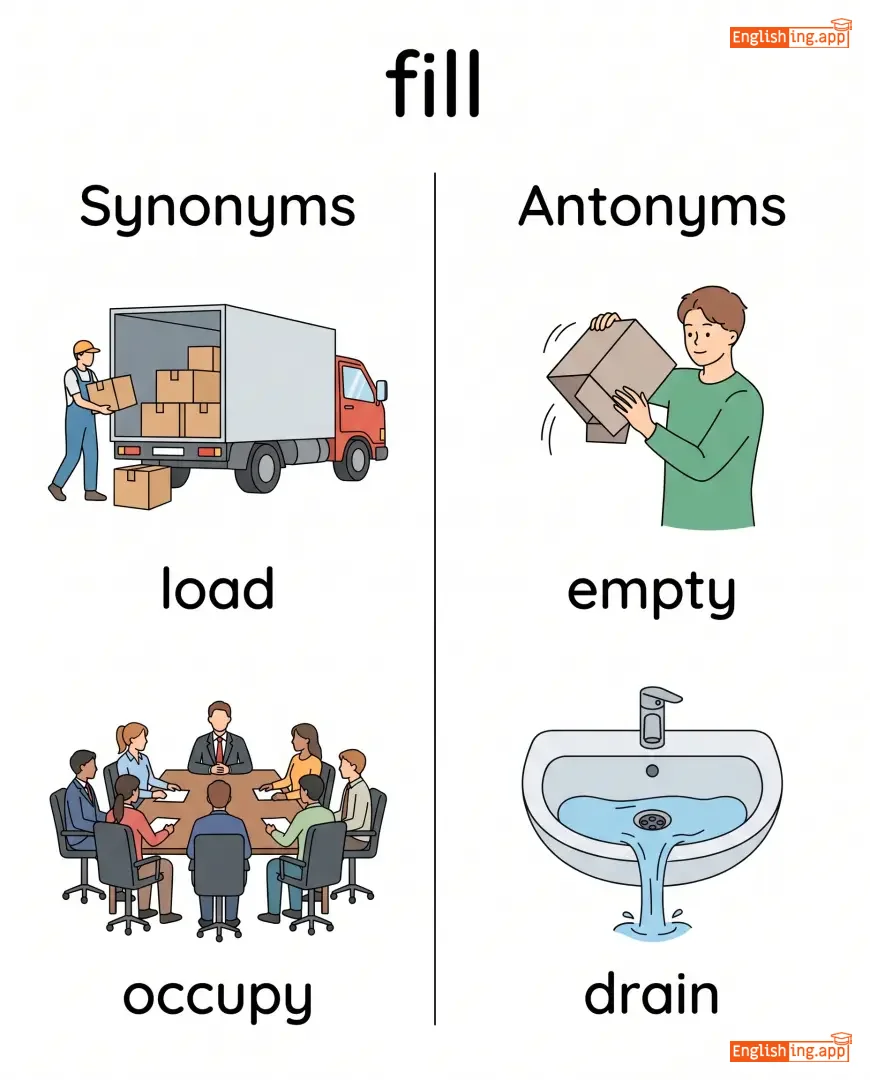
load, occupy, replenish, stuff, supply
••••••
|
empty, drain, vacate
••••••
|
fill a form, fill the room, fill the tank, fill the position
••••••
|
填充意味着填满,就像给杯子加水。
••••••
|
|
🎬
••••••
|
/fɪlm/
noun/verb
(电影)
••••••
|
- •••••• |
电影
dianying
••••••
|
filmed
已拍摄
••••••
|
filmed
已拍摄
••••••
|
films
拍摄
••••••
|
filming
拍摄中
••••••
|
a motion picture or movie; or to record on camera
••••••
|
They watched a film together on the weekend.
他们在周末一起观看了一部电影。
••••••
|
他们在周末一起观看了一部电影。
Tamen zai zhoumo yiqi guankanle yi bu dianying.
••••••
|
short film
短片
••••••
|
a motion picture of brief duration
••••••
|
短片
duanpian
••••••
|
movie, motion picture, cinema, video, documentary
••••••
|
reality, stage, live show
••••••
|
watch a film, film industry, film festival, film director
••••••
|
电影在中文和英文中都是 film
••••••
|
|
🎬
••••••
|
/fɪlm ˈæktər/
noun
(电影演员)
••••••
|
- •••••• |
电影演员
dianying yanyuan
••••••
|
- •••••• | - •••••• | - •••••• | - •••••• |
A person who performs roles in movies or films.
••••••
|
The film actor received widespread acclaim for his performance.
这位电影演员因其出色的表演而获得广泛赞誉。
••••••
|
这位电影演员因其出色的表演而获得广泛赞誉。
Zhe wei dianying yanyuan yin qi chuse de biaoyan er huode guangfan zanyu
••••••
|
- •••••• | - •••••• | - •••••• |
movie actor, screen actor, cinema actor, performer
••••••
|
audience, spectator
••••••
|
famous film actor, leading film actor, award-winning film actor
••••••
|
Think 电影 for movie and 演员 for actor
••••••
|
|
🎬
••••••
|
/ˈfɪlmˌmeɪkər/
noun
(菲尔姆-梅克尔)
••••••
|
- •••••• |
电影制作人
dianying zhizuo ren
••••••
|
- •••••• | - •••••• | - •••••• | - •••••• |
A person who directs or produces films
••••••
|
The film-maker received an award for his latest documentary.
菲尔姆-梅克尔因他最新的纪录片获得了奖项。
••••••
|
电影制作人因他最新的纪录片获得了奖项。
Dianying zhizuo ren yin ta zui xin de jilupian huode le jiangxiang.
••••••
|
- •••••• | - •••••• | - •••••• |
director, producer, cinematographer, auteur
••••••
|
viewer, audience
••••••
|
independent film-maker, award-winning film-maker, famous film-maker
••••••
|
Film + Zhizuo ren = 电影制作人
••••••
|
|
☕
••••••
|
/ˈfɪltər/
verb
(过滤器)
••••••
|
- •••••• |
过滤
guòlǜ
••••••
|
filtered
过滤了
••••••
|
filtered
过滤了
••••••
|
filters
过滤
••••••
|
filtering
过滤中
••••••
|
to pass a substance through a device to remove unwanted material or to selectively pass certain items
••••••
|
She used a coffee filter to separate the grounds from the liquid.
她用咖啡过滤器将咖啡渣和液体分开。
••••••
|
她用咖啡过滤器将咖啡渣和液体分开。
Tā yòng kāfēi guòlǜqì jiāng kāfēi zhā hé yè tǐ fēnkāi.
••••••
|
- •••••• | - •••••• | - •••••• |
strain, sift, purify, refine
••••••
|
mix, combine
••••••
|
filter water, filter information, filter results, filter emails
••••••
|
过滤是为了只留下纯净的部分。
••••••
|
|
🏁
••••••
|
/ˈfaɪnəl/
adjective/noun
(fainal)
••••••
|
- •••••• |
最终
zuihou
••••••
|
- •••••• | - •••••• | - •••••• | - •••••• |
coming at the end; the last part of something
••••••
|
The final exam will be held next week. |
期末考试将在下周进行。
Qimo kaoshi jiang zai xia zhou jinxing.
••••••
|
final decision |
a conclusive and irreversible choice
••••••
|
最终决定
zuihou jueding
••••••
|
last, ultimate, concluding, terminal, decisive
••••••
|
initial, first, beginning
••••••
|
final exam, final round, final result, final decision
••••••
|
Final = 最终 – 最终考试总是最后一个
••••••
|
|
🏁
••••••
|
/ˈfaɪ.nəl.i/
adverb
(fǎinàlì)
••••••
|
- •••••• |
终于
zhōngyú
••••••
|
- •••••• | - •••••• | - •••••• | - •••••• |
at last; after a long time; in the end; as the last point
••••••
|
After years of hard work, she finally achieved her goal.
经过多年的努力工作,她终于达成了自己的目标。
••••••
|
经过多年的努力工作,她终于达成了自己的目标。
Jīngguò duō nián de nǔlì gōngzuò, tā zhōngyú dáchéngle zìjǐ de mùbiāo.
••••••
|
- •••••• | - •••••• | - •••••• |
lastly, eventually, ultimately, at last
••••••
|
initially, firstly, originally
••••••
|
finally arrive, finally understand, finally decide
••••••
|
经过努力工作,最终她达成了目标!
••••••
|
|
💰
••••••
|
/ˈfaɪ.næns/ or /fəˈnæns/
noun, verb
(fai-nens)
••••••
|
- •••••• |
金融
jinrong
••••••
|
financed
fai-nan-sed
••••••
|
financed
fai-nan-sed
••••••
|
finances
fai-nan-ses
••••••
|
financing
fai-nan-sing
••••••
|
the management of money and investments, or to provide funds for something
••••••
|
The company secured finance from a major bank.
公司从一家大银行获得了融资。
••••••
|
公司从一家大银行获得了融资。
Gongsi cong yijia da yinhang huodele rongzi.
••••••
|
in finance
在金融领域
••••••
|
working in the field of financial services
••••••
|
在金融领域
zai jinrong lingyu
••••••
|
funding, money, capital, investment, resources
••••••
|
debt, loss, poverty
••••••
|
finance department, finance company, personal finance, public finance, finance minister
••••••
|
金融就是管理金钱 — 想象“金”(jin)让你管理钱财。
••••••
|
|
💰
••••••
|
/faɪˈnænʃəl/
adjective
(faɪˈnænʃəl)
••••••
|
- •••••• |
金融的
jinrong de
••••••
|
- •••••• | - •••••• | - •••••• | - •••••• |
relating to money, banking, or finance
••••••
|
He made a sound financial decision by investing wisely. |
他通过明智的投资做出了稳健的金融决策。
Ta tongguo mingzhi de touzi zuo chule wenjian de jinrong juece.
••••••
|
- •••••• | - •••••• | - •••••• |
monetary, economic, fiscal, banking
••••••
|
nonfinancial
••••••
|
financial planning, financial crisis, financial institution, financial report
••••••
|
金融的就是关于钱的,类似于'financial'。
••••••
|
|
🔍
••••••
|
/faɪnd/
verb
(fāind)
••••••
|

|
找到
zhǎodào
••••••
|
found
fāund
••••••
|
found
fāund
••••••
|
finds
fāinds
••••••
|
finding
fāind-ing
••••••
|
to discover something or someone after searching
••••••
|
She managed to find her lost keys under the couch.
Shī mánájìd tú fāind hèr luòs kíz āndèr de kàoch.
••••••
|
她成功地在沙发下找到了丢失的钥匙。
Tā chénggōng de zài shāfā xià zhǎodào le diūshī de yàoshi.
••••••
|
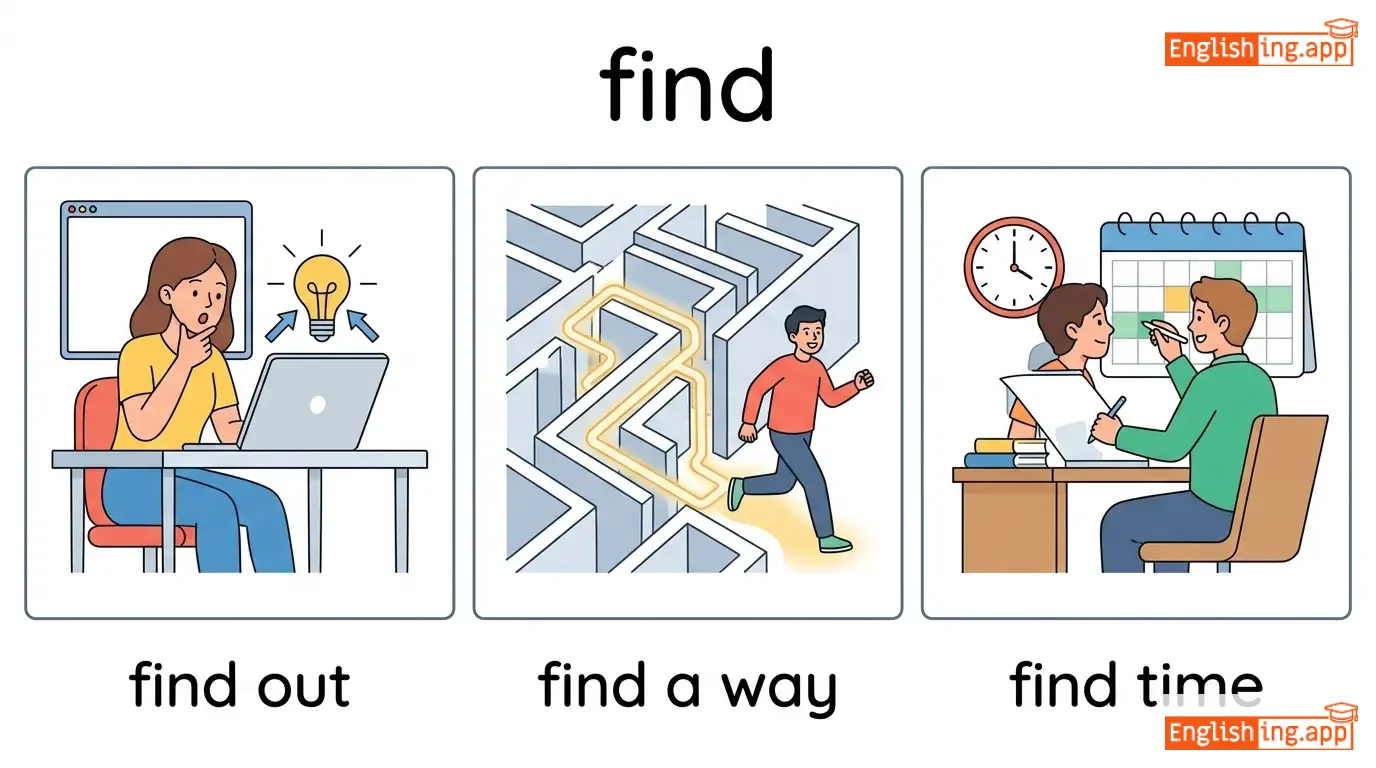
find out
fāind àut
••••••
|
to discover information
••••••
|
找出
zhǎochū
••••••
|
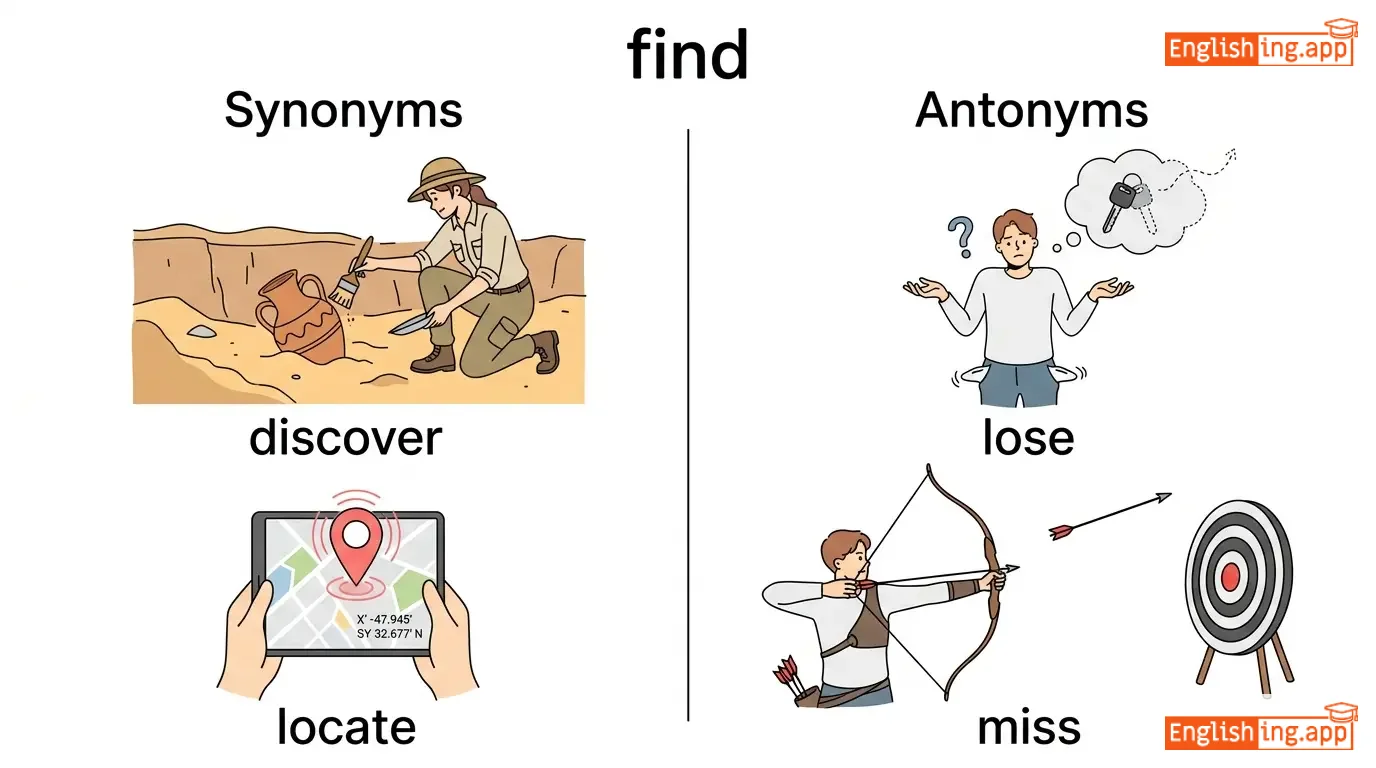
discover, locate, identify, detect, uncover
••••••
|
lose, miss, overlook
••••••
|
find out, find a way, find time, find fault
••••••
|
Find意味着找到——终于找到你在找的东西!
••••••
|
|
📑
••••••
|
/ˈfaɪn.dɪŋ/
noun
(fàidīng)
••••••
|
- •••••• |
发现,经过调查后得出的结论或结果
faxian, jingguo diaocha hou de chuluo huo jieguo
••••••
|
- •••••• | - •••••• | - •••••• | - •••••• |
a discovery, conclusion, or result reached after investigation
••••••
|
The scientist published her findings in a leading journal. |
科学家在一家领先的期刊上发布了她的发现。
Kexuejia zai yijia liding de qikan shang fabu le ta de faxian.
••••••
|
- •••••• | - •••••• | - •••••• |
discovery, result, conclusion, outcome, observation
••••••
|
ignorance, loss
••••••
|
research finding, important finding, surprising finding
••••••
|
Finding 就是调查后得到的发现和结果!
••••••
|
|
👌
••••••
|
/faɪn/
adjective, noun, verb
(hǎi pī nì sī)
••••••
|
|
幸福
xìng fú
••••••
|
fined
••••••
|
fined
••••••
|
fines
••••••
|
fining
••••••
|
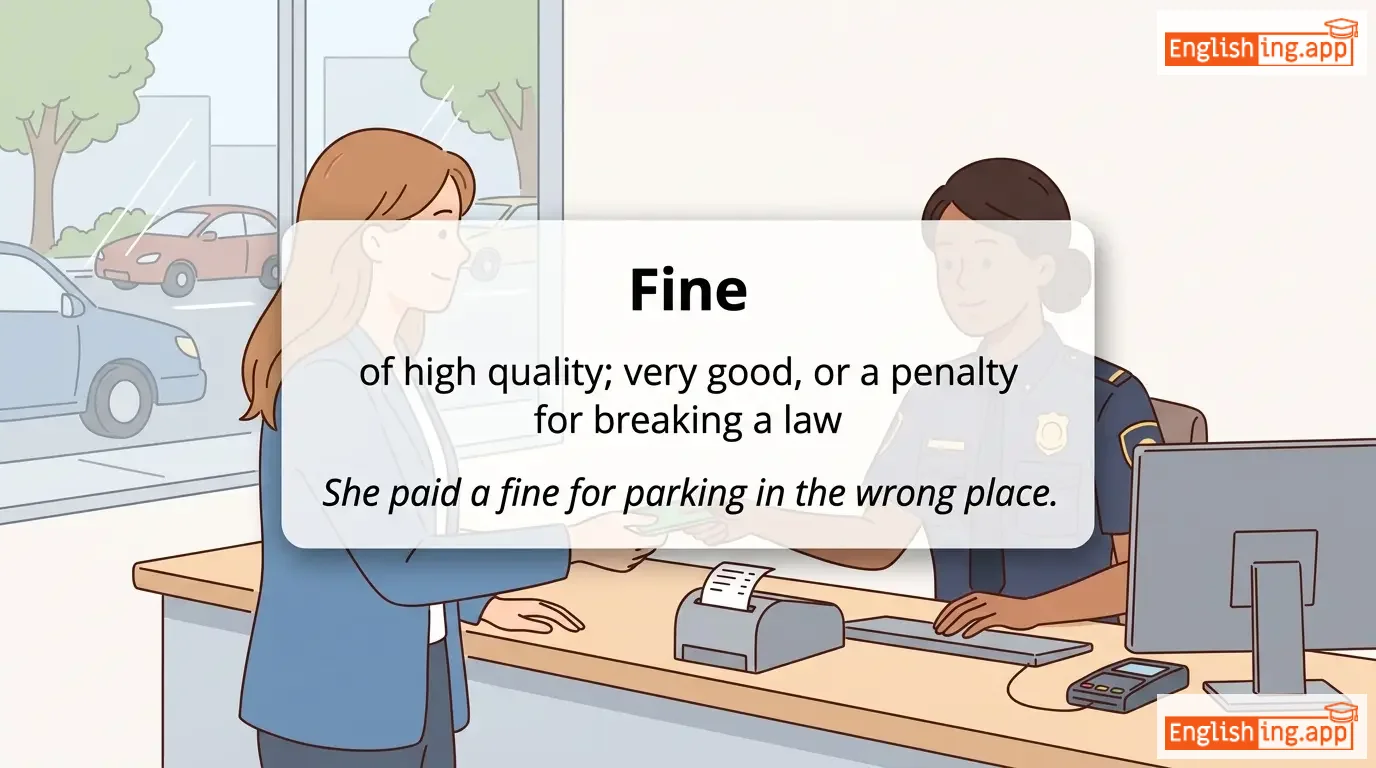
of high quality; very good, or a penalty for breaking a law
••••••
|
She paid a fine for parking in the wrong place.
她在获得奖项时无法掩饰自己的快乐。
••••••
|
她在获得奖项时无法掩饰自己的快乐。
Tā zài huòdé jiǎngxiàng shí wúfǎ yǎnshì zìjǐ de kuàilè.
••••••
|
cut it fine
追求幸福
••••••
|
to allow very little time for something
••••••
|
追求幸福
zhuīqiú xìngfú
••••••
|
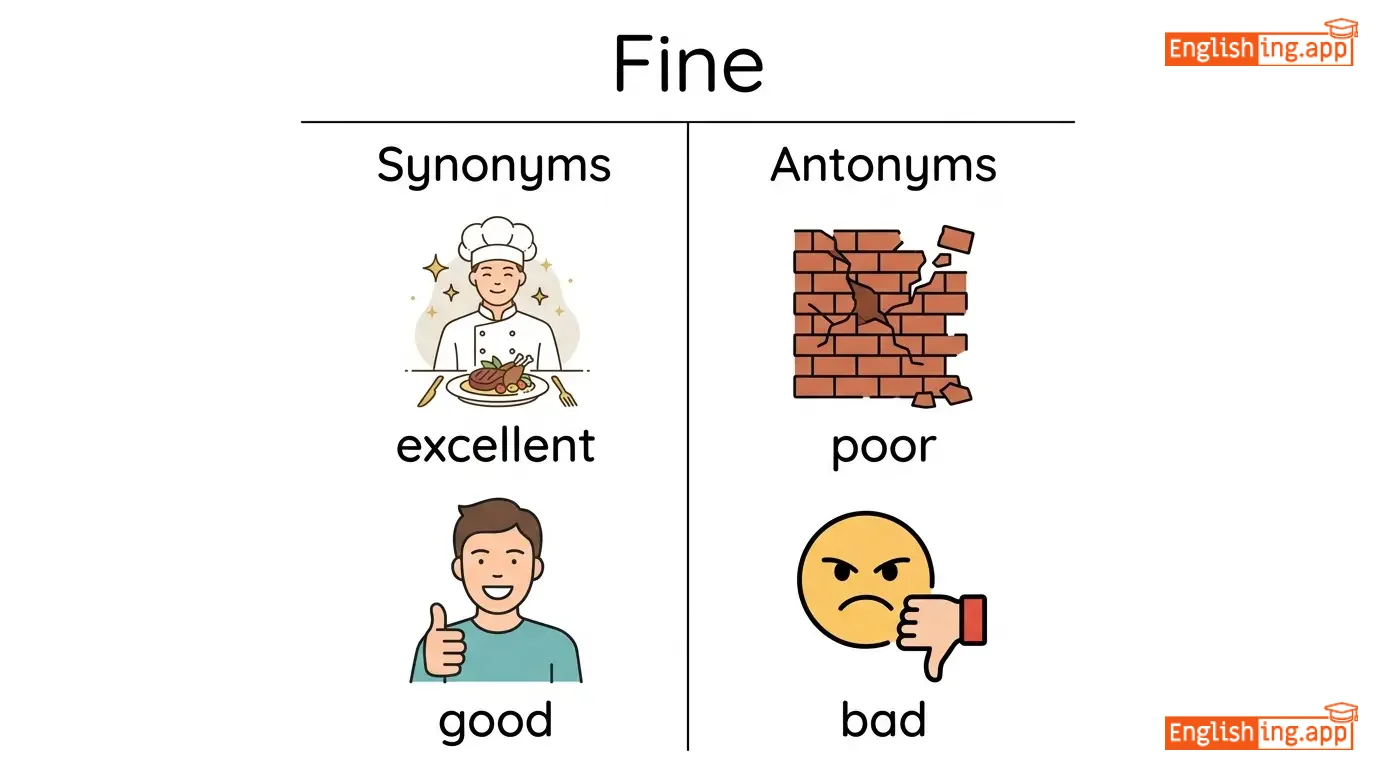
excellent, good, penalty, fee, delicate
••••••
|
poor, bad, coarse
••••••
|
pay a fine, fine art, fine weather, fine line
••••••
|
幸福像微笑一样,永远存在。
••••••
|
|
☝️
••••••
|
/ˈfɪŋ.ɡər/
noun
(fīnggé)
••••••
|
- •••••• |
手指
shǒuzhǐ
••••••
|
- •••••• | - •••••• | - •••••• | - •••••• |
one of the five long parts of the hand
••••••
|
He wore a gold ring on his finger. |
他戴着一枚金戒指在手指上。
Tā dàizhe yī méi jīn jièzhǐ zài shǒuzhǐ shàng.
••••••
|
keep your fingers crossed |
hope for good luck
••••••
|
交叉手指
jiāochā shǒuzhǐ
••••••
|
digit, thumb, hand, knuckle, pointer
••••••
|
palm, fist
••••••
|
finger print, point a finger, ring finger, finger food
••••••
|
Finger意味着手指,戒指戴在手指上带来好运。
••••••
|
|
🔍
••••••
|
/ˈfɪŋ.ɡər.prɪnt/
noun
(指纹)
••••••
|
- •••••• |
指纹
zhǐwén
••••••
|
- •••••• | - •••••• | - •••••• | - •••••• |
an impression or mark made on a surface by a person's fingertip; unique identification pattern
••••••
|
The police found his fingerprints on the door handle at the crime scene.
警方在犯罪现场的门把手上找到了他的指纹。
••••••
|
警方在犯罪现场的门把手上找到了他的指纹。
Jǐngfāng zài fànzuì xiànchǎng de mén bǎshǒu shàng zhǎodàole tā de zhǐwén.
••••••
|
- •••••• | - •••••• | - •••••• |
thumbprint, impression, mark, trace
••••••
|
erasure, clean surface, unmarked, blank
••••••
|
take fingerprints, fingerprint scanner, unique fingerprint
••••••
|
指纹 – Fingerprint – 每个指纹都是独一无二的。
••••••
|

