The Publisher's Principle
Rahat 是达卡一位成功的 publisher。他公司的核心 principle 是揭示真相,无论多么困难。有一天,他面临了一个重大 accusation。有一项针对著名政治家的 allegation,一位记者带来了他的 confession。Rahat 知道这条新闻对许多人来说可能是 offensive。他的一些同事提出了 objection,说这很危险。但 Rahat 的 viewpoint 很明确——新闻界的 threshold 是不能跨越的。当这条新闻发布时,所有人都进入了 spotlight。许多人开始时是 skeptical 的,但看到了证据后他们相信了。新闻 primarily 在达卡的媒体中传播开来。看似 seemingly 简单的决定实际上非常困难。很多电话打来试图 interrupt 他,给他施加压力。但 Rahat 明白这是一个 necessity,人们有权知道。新闻的 relevance 与国家的未来息息相关。他的 assumption 被证明是正确的——人们支持真相。尽管开始时局势看起来 suspicious altogether,但最后正义胜利了。Rahat 的 contention 是,人们必须为真相支付任何代价。那一天,他证明了诚实总会获胜。
|
表情符号
|
单词 | Images | 翻译 | 过去时 | 过去分词 | 第三人称单数 | 动名词 | 含义 | 例句 | 例句翻译 | 示例表达 | 示例表达含义 | 示例表达翻译 | 同义词 | 反义词 | 搭配词 | 助记符 |
|---|---|---|---|---|---|---|---|---|---|---|---|---|---|---|---|---|---|
|
☝️
••••••
|
/ˌæk.jʊˈzeɪ.ʃən/
noun
(指控)
••••••
|
- •••••• |
指控
zhǐkòng
••••••
|
- •••••• | - •••••• | - •••••• | - •••••• |
A statement that someone has done something wrong or illegal.
••••••
|
She made an accusation of theft against her colleague.
她对她的同事提出了盗窃指控。
••••••
|
她对她的同事提出了盗窃指控。
Tā duì tā de tóngshì tíchūle dàoqiè zhǐkòng.
••••••
|
false accusation
虚假指控
••••••
|
An untrue claim blaming someone.
••••••
|
虚假指控
xūjiǎ zhǐkòng
••••••
|
allegation, charge, complaint, blame
••••••
|
praise, acquittal
••••••
|
serious accusation, false accusation, accusation of theft
••••••
|
指控就是accusation,指控就是指责别人。
••••••
|
|
⚖️
••••••
|
/ˌæl.əˈɡeɪ.ʃən/
noun
(àlìɡeɪʃən)
••••••
|
- •••••• |
指控
zhǐkòng
••••••
|
- •••••• | - •••••• | - •••••• | - •••••• |
a claim that someone has done something wrong or illegal
••••••
|
The allegation against him was proven false. |
对他的指控被证明是假的。
duì tā de zhǐkòng bèi zhèngmíng shì jiǎ de.
••••••
|
- •••••• | - •••••• | - •••••• |
accusation, charge, claim, assertion
••••••
|
vindication, exoneration, proof of innocence
••••••
|
serious allegation, false allegation, investigate allegation
••••••
|
指控 (Zhǐkòng) — 当某人做错事时,指控就会发生。
••••••
|
|
🔄
••••••
|
/ˌɔːltəˈɡɛðər/
adverb
(奥尔图盖德)
••••••
|
- •••••• |
完全
wánquán
••••••
|
- •••••• | - •••••• | - •••••• | - •••••• |
completely; in total; entirely
••••••
|
The project was altogether successful despite the challenges. |
这个项目在挑战面前完全成功。
Zhège xiàngmù zài tiǎozhàn miànqián wánquán chénggōng.
••••••
|
altogether now |
used to encourage a group of people to do or say something at the same time
••••••
|
大家一起现在
dàjiā yīqǐ xiànzài
••••••
|
completely, entirely, totally, wholly, fully
••••••
|
partially, incompletely
••••••
|
altogether different, not altogether, altogether impossible, altogether wrong
••••••
|
完全 ALL TOGETHER 意味着完全或总共。
••••••
|
|
🤔
••••••
|
/əˈsʌmpʃən/
noun
(asumpshion)
••••••
|
- •••••• |
假设
jiǎshè
••••••
|
- •••••• | - •••••• | - •••••• | - •••••• |
A belief or statement taken for granted without proof.
••••••
|
His assumption about the results turned out to be wrong.
Hiz asumpshion abaut de results ternd aut tu bi wrong.
••••••
|
他对结果的假设证明是错误的。
Tā duì jiéguǒ de jiàshè zhèngmíng shì cuòwù de.
••••••
|
work on the assumption
work on de asumpshion
••••••
|
to proceed based on something being true
••••••
|
基于假设工作
jīyú jiàshè gōngzuò
••••••
|
belief, presumption, supposition, expectation
••••••
|
fact, certainty, reality
••••••
|
make an assumption, false assumption, assumption of power
••••••
|
假设就像在没有证据的情况下直接推测。
••••••
|
|
🙏
••••••
|
/kənˈfɛʃən/
noun
(忏悔)
••••••
|
- •••••• |
忏悔
chanhui
••••••
|
- •••••• | - •••••• | - •••••• | - •••••• |
a statement admitting that one is guilty of a crime or has done something wrong
••••••
|
The suspect made a full confession to the police. |
嫌疑人向警方做出了完整的忏悔。
Xianyi ren xiang jingfang zuochu le wanzheng de chanhui.
••••••
|
make a confession |
to admit to doing something wrong
••••••
|
做忏悔
zuo chanhui
••••••
|
admission, acknowledgment, declaration, disclosure, revelation
••••••
|
denial, concealment, secrecy
••••••
|
make a confession, public confession, written confession, emotional confession
••••••
|
Confession 就是认错 🙏
••••••
|
|
⚔️
••••••
|
/kənˈtɛnʃən/
noun
(kənˈtɛnʃən)
••••••
|
|
争议, 分歧
zhēngyì, fēnqí
••••••
|
- •••••• | - •••••• | - •••••• | - •••••• |
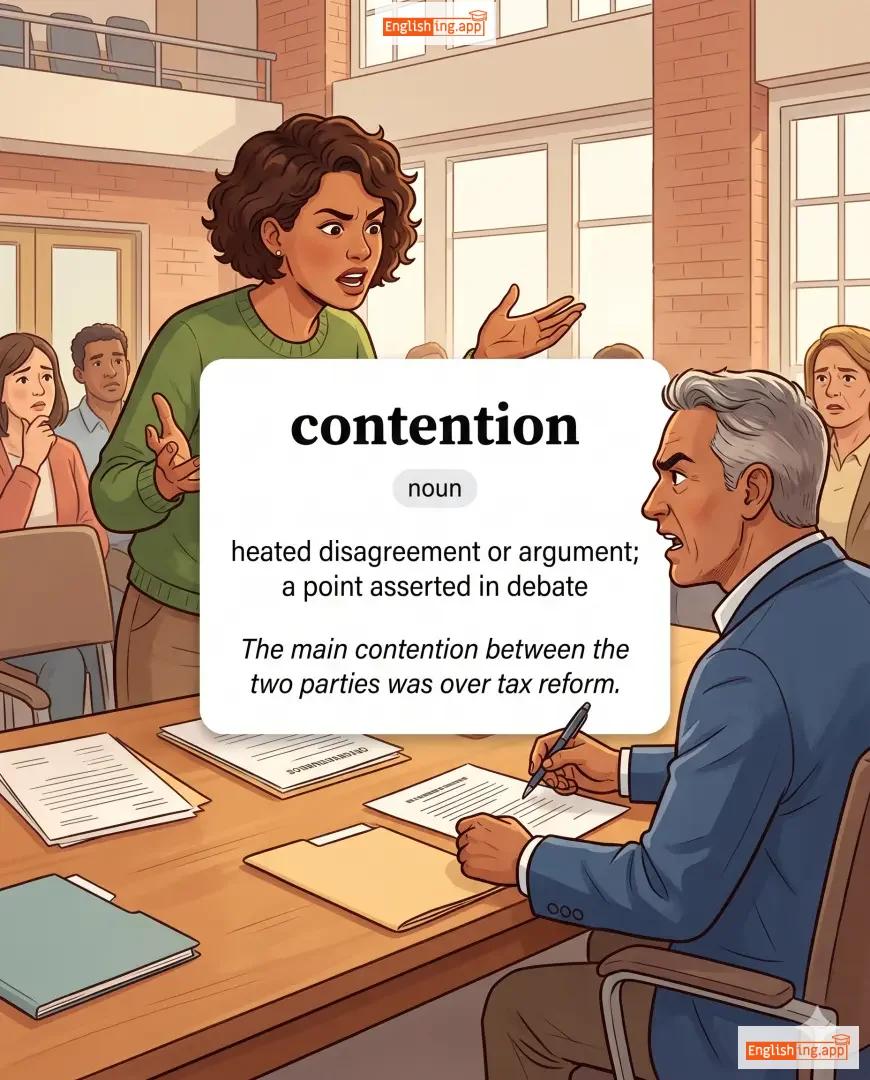
heated disagreement or argument; a point asserted in debate
••••••
|
The main contention between the two parties was over tax reform. |
两党之间的主要争议是关于税务改革。
Liǎng dǎng zhī jiān de zhǔyào zhēngyì shì guānyú shuìwù gǎigé.
••••••
|
- •••••• | - •••••• | - •••••• |
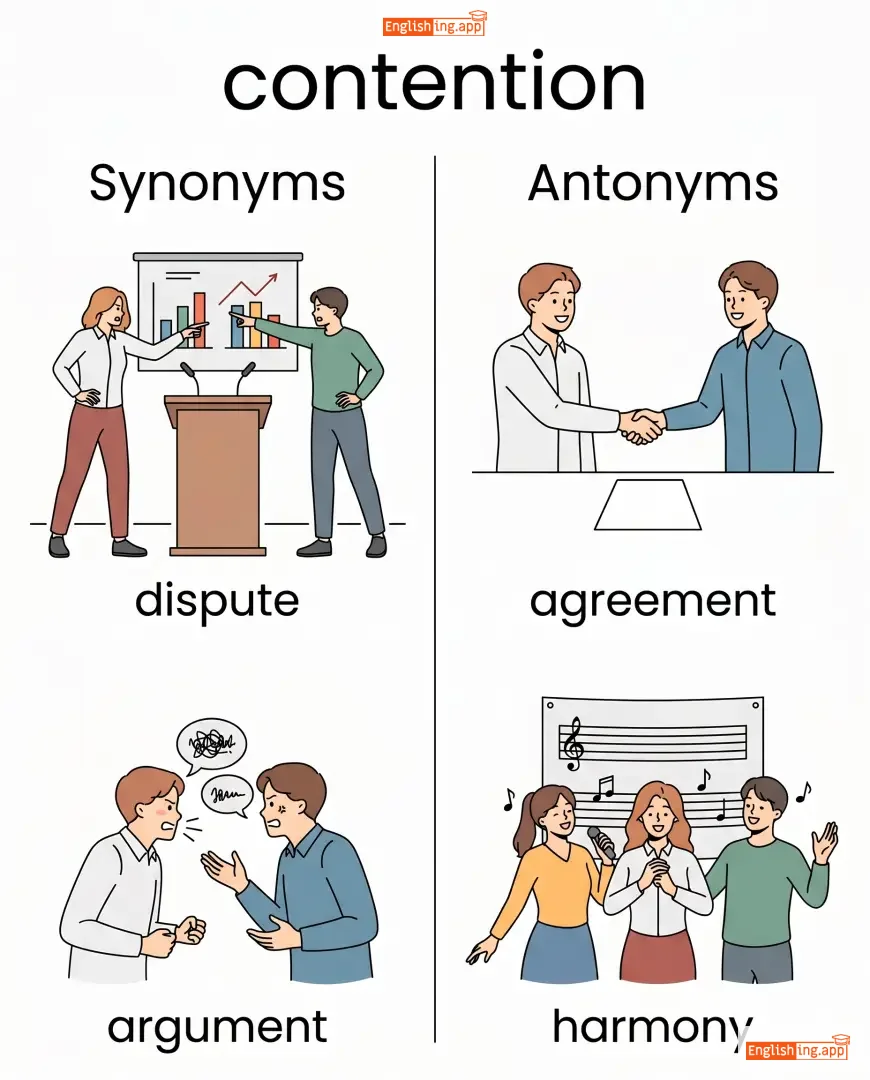
dispute, argument, debate, disagreement
••••••
|
agreement, harmony
••••••
|
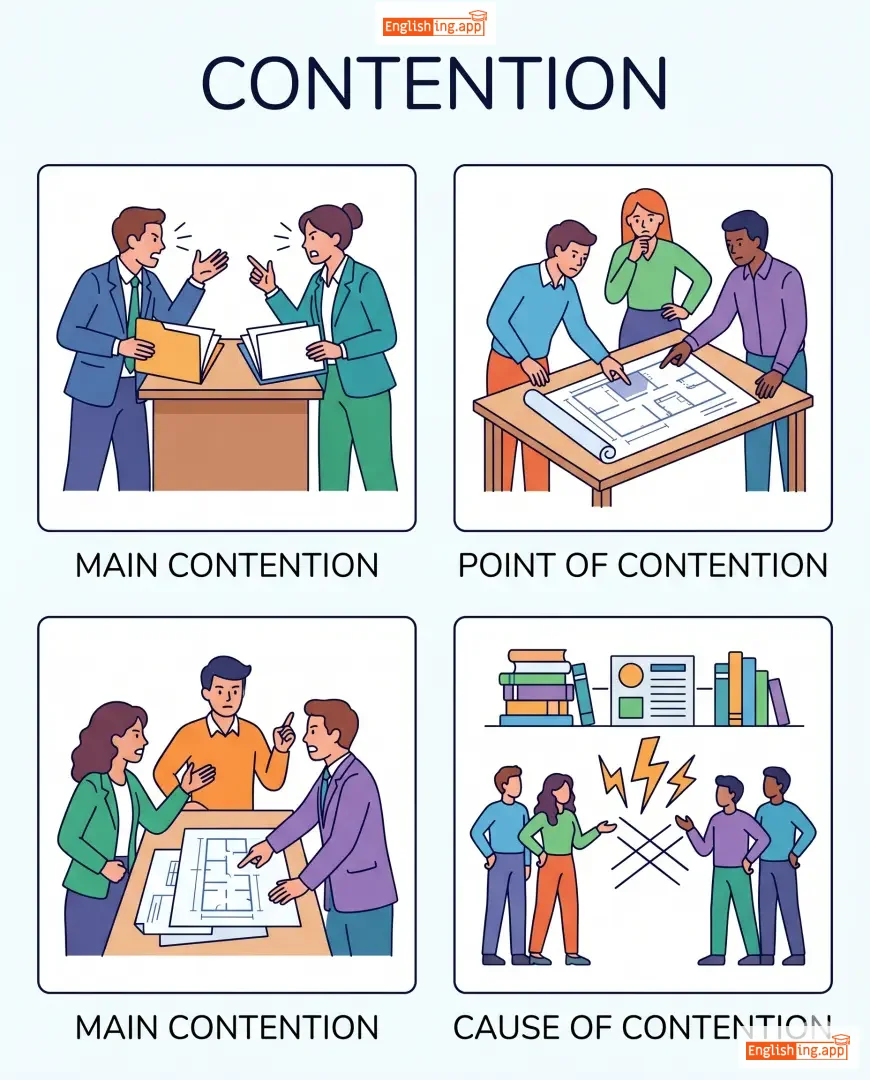
main contention, point of contention, cause of contention, fierce contention
••••••
|
Contention 是当两个党派在争论 - Imagine two parties in contention
••••••
|
|
⏸️
••••••
|
/ˌɪntəˈrʌpt/
verb
(因特鲁普特)
••••••
|
- •••••• |
打断
dǎduàn
••••••
|
interrupted
••••••
|
interrupted
••••••
|
interrupts
••••••
|
interrupting
••••••
|
to stop someone from speaking or doing something by suddenly saying or doing something
••••••
|
She tried not to interrupt while he was speaking. |
她尽量不在他说话时打断他。
Tā jǐnliàng bù zài tā shuōhuà shí dǎduàn tā.
••••••
|
interrupt the flow |
to break the natural course of something
••••••
|
打断流程
dǎduàn liúchéng
••••••
|
disturb, hinder, intrude, disrupt, break in
••••••
|
continue, allow, support
••••••
|
interrupt the conversation, interrupt the process, rudely interrupt
••••••
|
打断像是突然暂停对话,打断交流的流畅性。
••••••
|
|
🥖
••••••
|
/nəˈsɛsəti/
noun
(nè sī tì)
••••••
|
|
必要性
bì yào xìng
••••••
|
- •••••• | - •••••• | - •••••• | - •••••• |
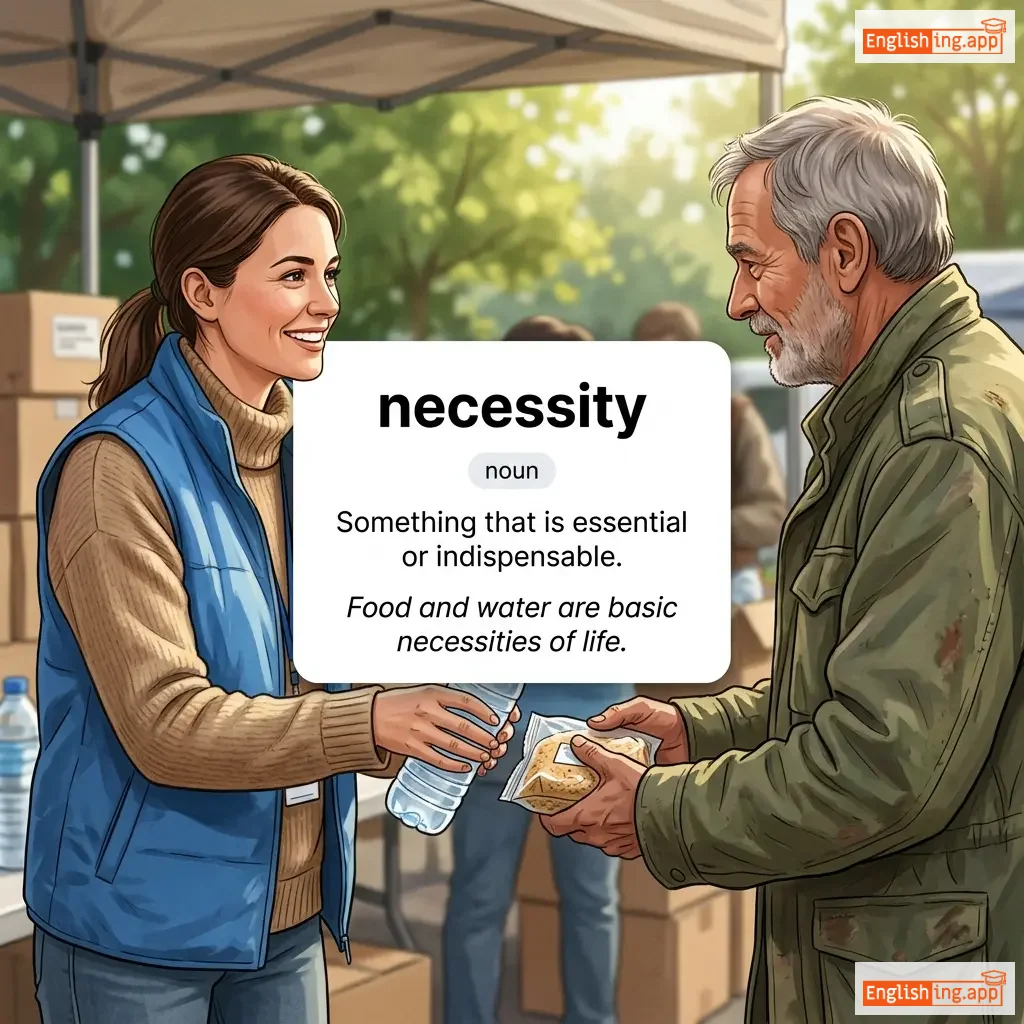
Something that is essential or indispensable.
••••••
|
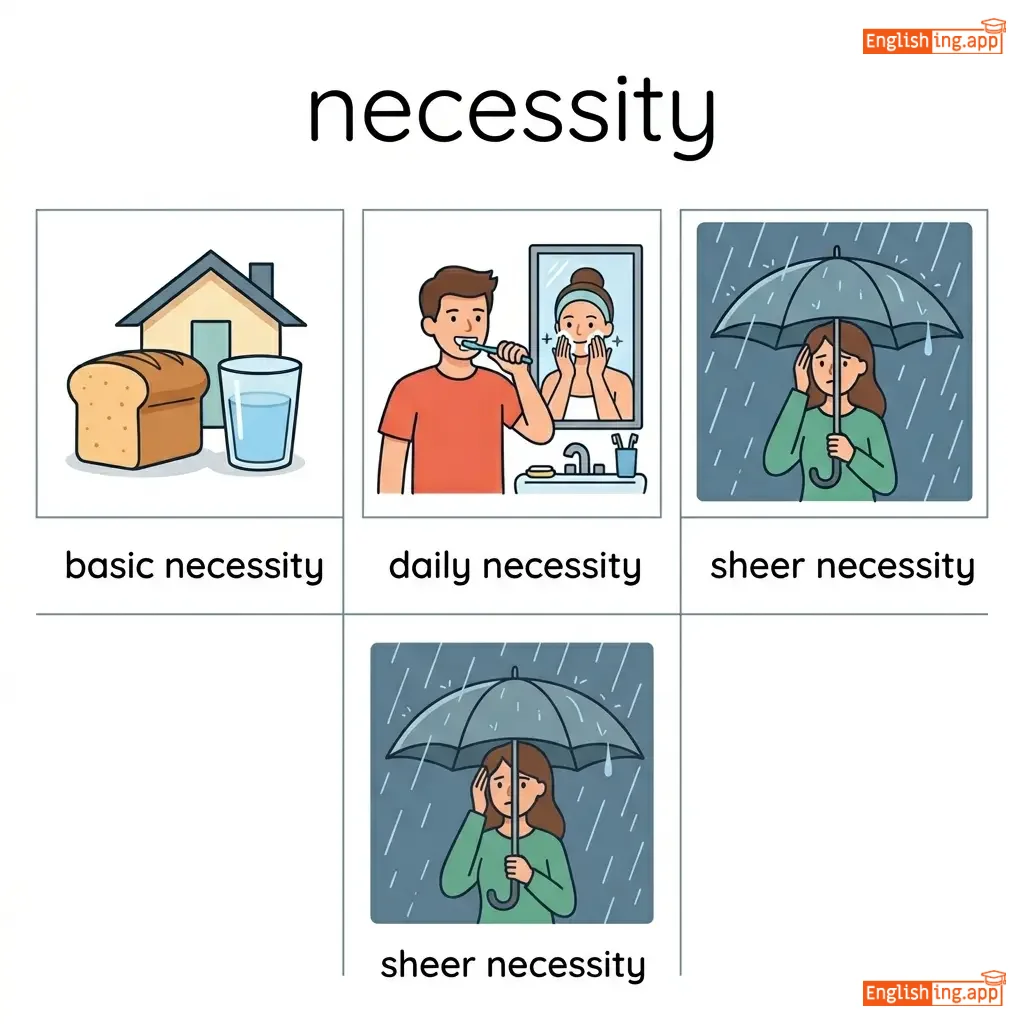
Food and water are basic necessities of life. |
食物和水是生活中的基本必需品。
Shíwù hé shuǐ shì shēnghuó zhōng de jīběn bìxū pǐn.
••••••
|
out of necessity |
because it is necessary
••••••
|
出于必要性
chū yú bìyàoxìng
••••••
|
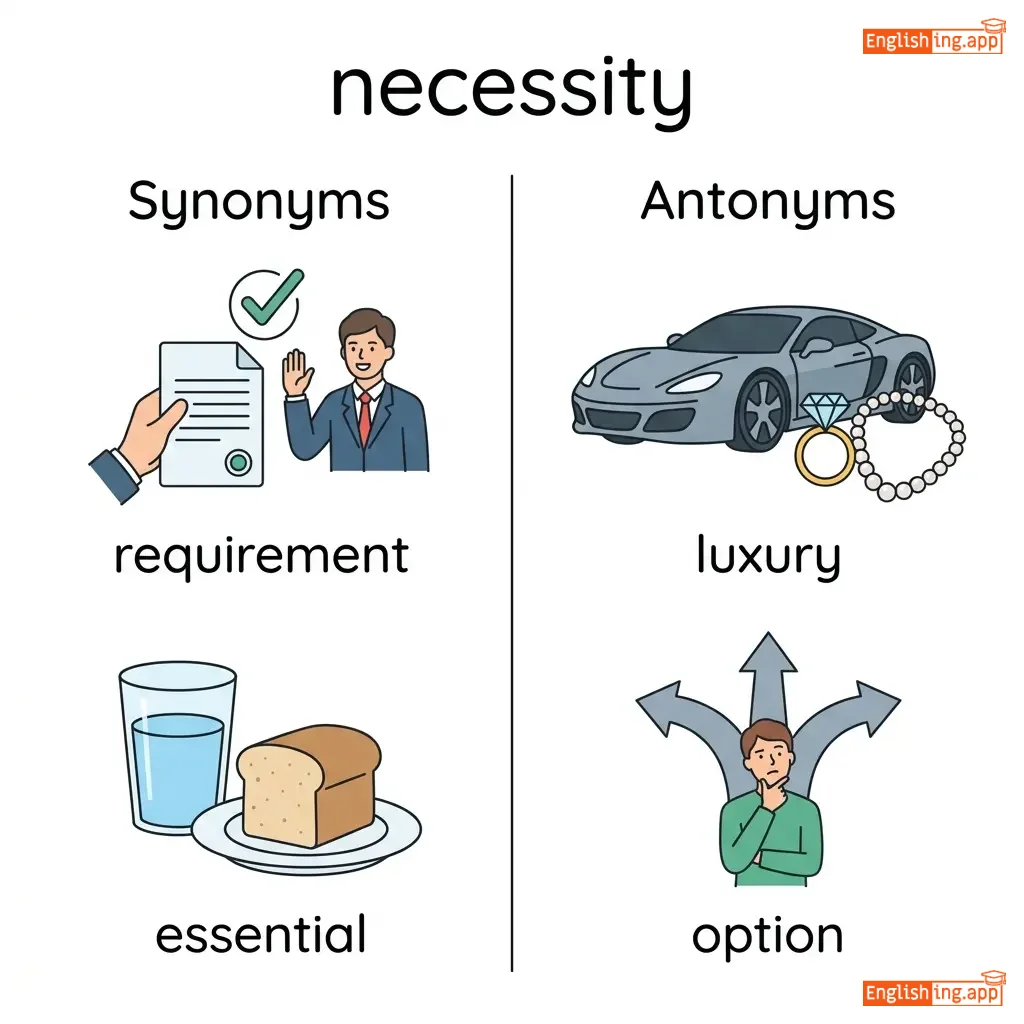
requirement, essential, need, must
••••••
|
luxury, option
••••••
|
basic necessity, daily necessity, sheer necessity
••••••
|
Necessity 的意思是必需——没有食物和水,生命无法存在。
••••••
|
|
✋
••••••
|
/əbˈdʒɛkʃən/
noun
(反对)
••••••
|
- •••••• |
异议
yiyi
••••••
|
- •••••• | - •••••• | - •••••• | - •••••• |
an expression or feeling of disapproval or opposition
••••••
|
The lawyer raised an objection during the trial.
律师在审判中提出了异议。
••••••
|
律师在审判中提出了异议。
Lüshi zai shenpan zhong tichu le yiyi.
••••••
|
raise an objection
提出异议
••••••
|
to express disapproval or disagreement formally
••••••
|
提出异议
tichu yiyi
••••••
|
protest, complaint, opposition, dissent, disagreement
••••••
|
approval, consent, agreement
••••••
|
strong objection, raise an objection, legal objection, no objection, objection letter
••••••
|
Objection 意味着异议 — 在法庭上你会听到‘异议!’ ✋ 这意味着反对!
••••••
|
|
😠
••••••
|
/əˈfɛnsɪv/
adjective
(冒犯)
••••••
|
- •••••• |
冒犯的
maofan de
••••••
|
- •••••• | - •••••• | - •••••• | - •••••• |
Causing hurt, anger, or annoyance; also relating to attacking in sports or war.
••••••
|
His offensive remarks upset everyone at the meeting. |
他的冒犯性言论让会议上的每个人都不高兴。
Tade maofanxing yanlun rang huiyi shang de meigeren dou bu gaoxing.
••••••
|
take offense |
To feel hurt or insulted by something said or done.
••••••
|
感到冒犯
Gandao maofan
••••••
|
insulting, rude, disrespectful, abusive
••••••
|
polite, respectful, pleasant
••••••
|
offensive remark, offensive language, offensive strategy, take offense
••••••
|
Offensive 意味着冒犯 - 冒犯的言论。
••••••
|
|
⚡
••••••
|
/praɪˈmɛrɪli/
adverb
(praɪˈmɛrɪli)
••••••
|
- •••••• |
主要
zhu yao
••••••
|
- •••••• | - •••••• | - •••••• | - •••••• |
for the most part; mainly
••••••
|
She is primarily responsible for managing the finances. |
她主要负责管理财务。
Ta zhu yao fu ze guan li cai wu.
••••••
|
- •••••• | - •••••• | - •••••• |
mainly, chiefly, principally, mostly
••••••
|
secondarily, additionally
••••••
|
primarily concerned, primarily used, primarily focused
••••••
|
Primarily, 'pri' means 'prime' which is main, and that's the core idea!
••••••
|
|
📜
••••••
|
/ˈprɪnsəpəl/
noun
(pīn-sī-pǎo)
••••••
|

|
原则
yuánzé
••••••
|
- •••••• | - •••••• | - •••••• | - •••••• |
a fundamental truth, law, or rule that serves as the foundation for a system of belief or behavior
••••••
|
She refused to lie because it was against her principles. |
她拒绝撒谎,因为这违背了她的原则。
Tā jùjué sāhuǎng, yīnwèi zhè wéibèi le tā de yuánzé.
••••••
|
in principle |
as a general idea or rule, even if not applied in practice
••••••
|
原则上
yuánzé shàng
••••••
|
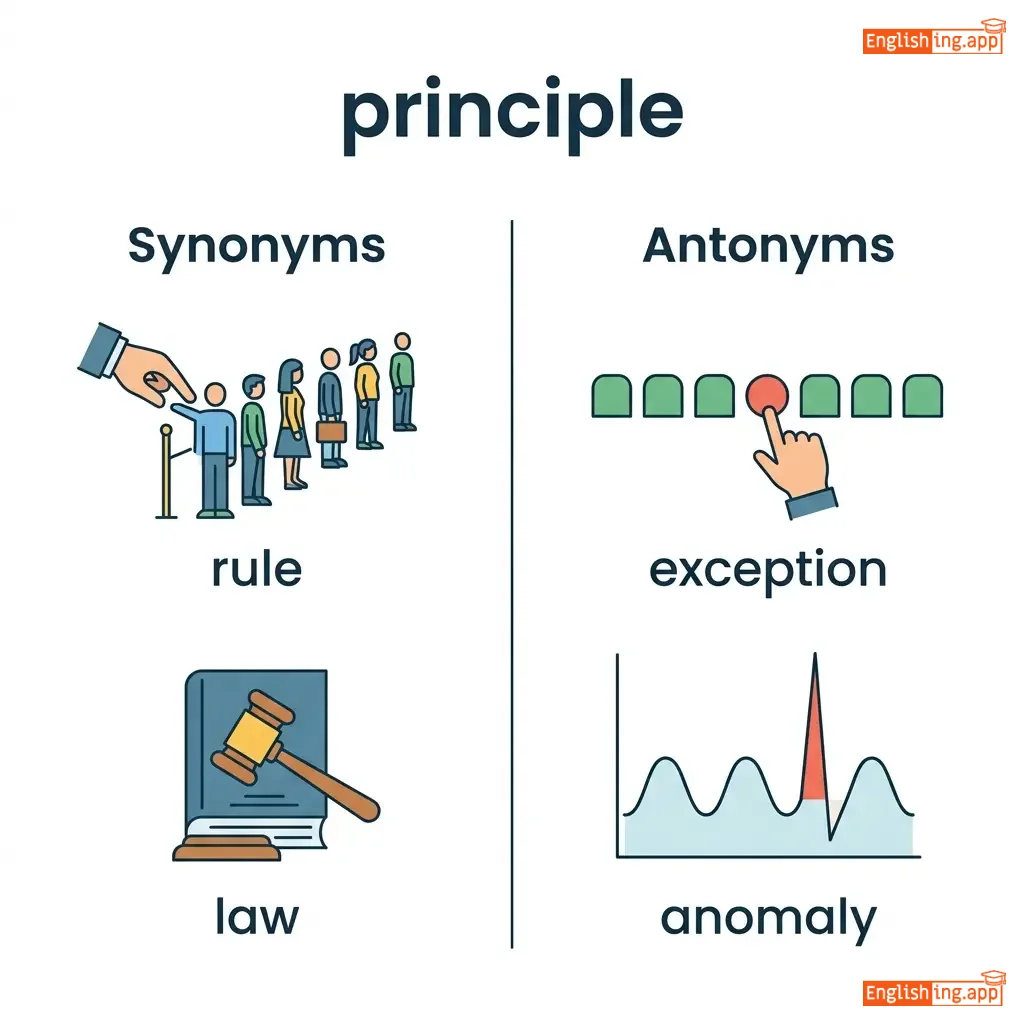
rule, law, tenet, belief, doctrine
••••••
|
exception, anomaly
••••••
|
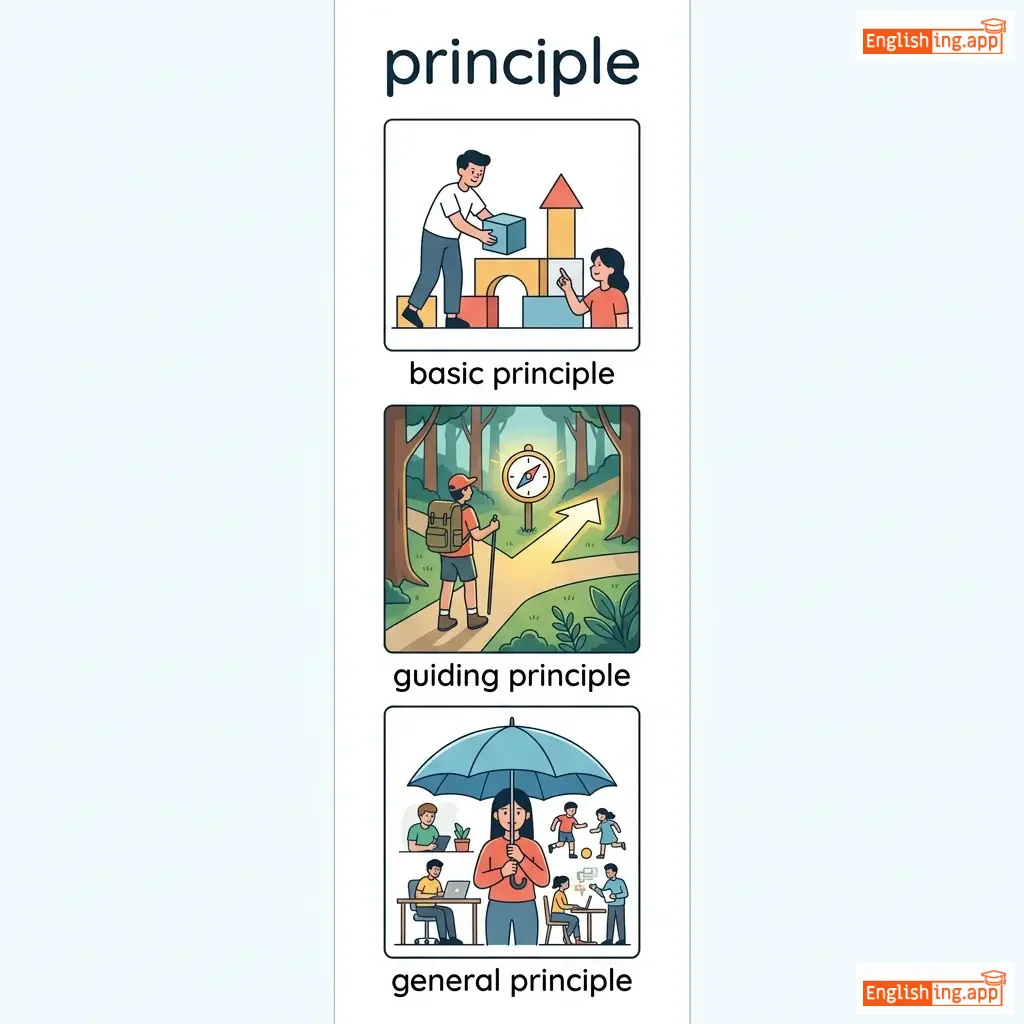
basic principle, guiding principle, general principle, moral principle
••••••
|
原则意味着基础—'纪律原则'意味着学校的纪律规则
••••••
|
|
📚
••••••
|
/ˈpʌb.lɪ.ʃər/
noun
(pʊblɪʃər)
••••••
|
- •••••• |
出版商
chūbǎn shāng
••••••
|
- •••••• | - •••••• | - •••••• | - •••••• |
a person or company that produces and distributes books, magazines, or newspapers
••••••
|
The publisher decided to print 10,000 copies of the new novel. |
出版商决定印刷10,000本新小说。
Chūbǎn shāng juédìng yìnshuā 10,000 běn xīn xiǎoshuō.
••••••
|
- •••••• | - •••••• | - •••••• |
editor, printer, distributor
••••••
|
reader, consumer
••••••
|
book publisher, magazine publisher, academic publisher, digital publisher
••••••
|
出版商让书籍走向世界。
••••••
|
|
📌
••••••
|
/ˈrɛlɪvəns/
noun
(rè-lé-wén-sī)
••••••
|
- •••••• |
相关性
xiāngguān xìng
••••••
|
- •••••• | - •••••• | - •••••• | - •••••• |
the quality or state of being closely connected or appropriate
••••••
|
The relevance of the information was clear to everyone. |
信息的相关性对每个人来说都很清楚。
Xinxi de xiangguan xing dui meige ren lai shuo dou hen qingchu.
••••••
|
- •••••• | - •••••• | - •••••• |
importance, significance, pertinence, applicability
••••••
|
irrelevance, insignificance, unimportance
••••••
|
relevance to, relevance of topic, great relevance
••••••
|
Relevance is like the relevance of a topic everyone cares about.
••••••
|
|
🤔
••••••
|
/ˈsiː.mɪŋ.li/
adverb
(xī mǐng lì)
••••••
|
- •••••• |
表面上, 看起来平静
biaomianshang, kanqilai pingjing
••••••
|
- •••••• | - •••••• | - •••••• | - •••••• |
appearing to be true, but not necessarily so
••••••
|
He was seemingly calm despite the chaos around him. |
尽管周围一片混乱,他看起来平静。
Jǐnguǎn zhōuwéi yīpiàn hùnluàn, tā kàn qǐlái píngjìng.
••••••
|
- •••••• | - •••••• | - •••••• |
apparently, outwardly, ostensibly, supposedly, evidently
••••••
|
actually, truly, really
••••••
|
seemingly impossible, seemingly calm, seemingly endless, seemingly perfect
••••••
|
seem (看起来) + ingly (那样地) → 表面上表示‘看起来像’
••••••
|
|
🤔
••••••
|
/ˈskɛptɪkəl/
adjective
(skeptikal)
••••••
|
- •••••• |
怀疑的
huáiyí de
••••••
|
- •••••• | - •••••• | - •••••• | - •••••• |
not easily convinced; having doubts or reservations
••••••
|
She was skeptical about the new plan. |
她对新计划持怀疑态度。
Tā duì xīn jìhuà chí huáiyí tàidù.
••••••
|
healthy skepticism |
a balanced doubt that helps in rational judgment
••••••
|
健康的怀疑主义
jiànkāng de huáiyí zhǔyì
••••••
|
doubtful, suspicious, unconvinced, hesitant
••••••
|
trusting, convinced, certain
••••••
|
skeptical attitude, skeptical view, skeptical mind, skeptical about
••••••
|
Skeptical 意味着怀疑的 — 如果你怀疑,你对每个计划都持怀疑态度。
••••••
|
|
🔦
••••••
|
/ˈspɒt.laɪt/
noun
••••••
|
- •••••• | - •••••• | - •••••• | - •••••• | - •••••• | - •••••• |
a strong beam of light directed onto a particular area; figuratively, public attention
••••••
|
The singer stood proudly in the spotlight. |
- •••••• |
in the spotlight |
receiving a lot of public attention
••••••
|
- •••••• |
highlight, focus, limelight, glare
••••••
|
obscurity, shadow
••••••
|
under spotlight, grab spotlight, media spotlight, stage spotlight
••••••
|
No •••••• |
|
🕵️
••••••
|
/səˈspɪʃəs/
adjective
(suspɪʃəs)
••••••
|
- •••••• |
可疑的
kě yí de
••••••
|
- •••••• | - •••••• | - •••••• | - •••••• |
Feeling doubt or distrust about someone or something.
••••••
|
She gave me a suspicious look when I entered late. |
当我迟到时,她给了我一个可疑的眼神。
Dāng wǒ chídào shí, tā gěi le wǒ yīgè kě yí de yǎnshén.
••••••
|
under suspicious circumstances |
In a way that causes doubt or mistrust.
••••••
|
在可疑的情况下
zài kě yí de qíngkuàng xià
••••••
|
distrustful, doubtful, wary, skeptical, uneasy
••••••
|
trusting, certain, confident
••••••
|
suspicious activity, suspicious behavior, suspicious look, suspicious mind
••••••
|
可疑的听起来像怀疑—当你怀疑某事时,它就是可疑的。
••••••
|
|
🚪
••••••
|
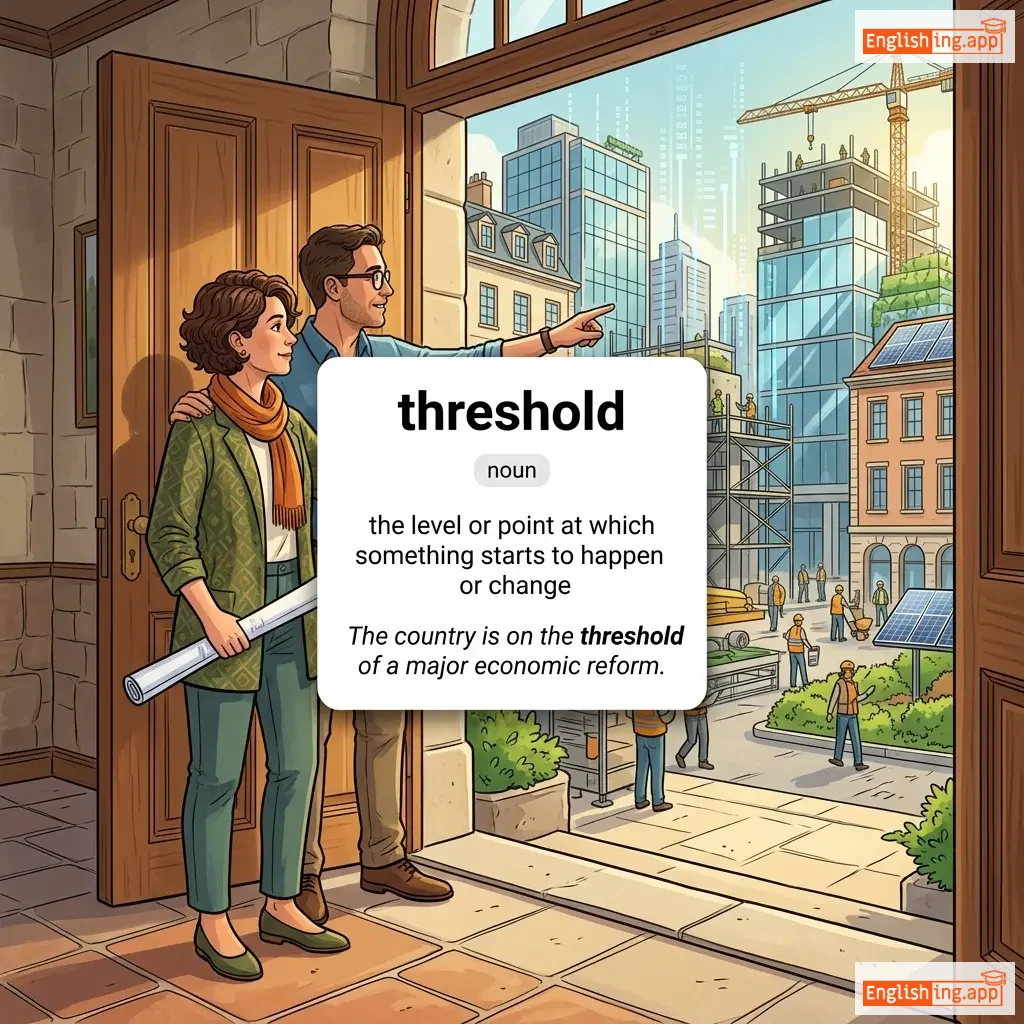
/ˈθreʃ.həʊld/
noun
(阈值)
••••••
|
|
临界点
linjiadian
••••••
|
- •••••• | - •••••• | - •••••• | - •••••• |
the level or point at which something starts to happen or change
••••••
|
The country is on the threshold of a major economic reform. |
这个国家正处于一次重大的经济改革的临界点。
Zhege guojia zheng chuyu yici zhongda de jingji gaige de linjiadian.
••••••
|
cross the threshold |
to begin a new phase or experience
••••••
|
- •••••• |
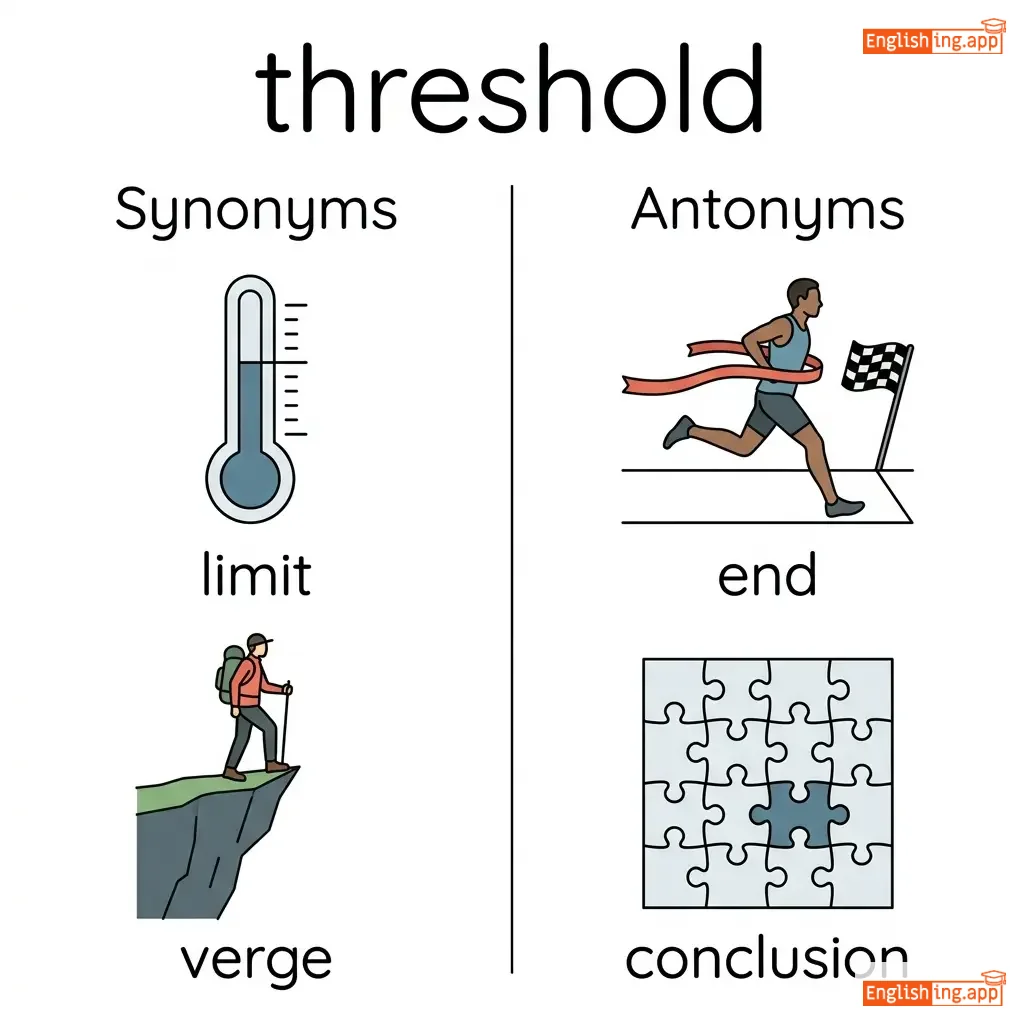
limit, verge, brink, gateway, entry
••••••
|
end, conclusion
••••••
|
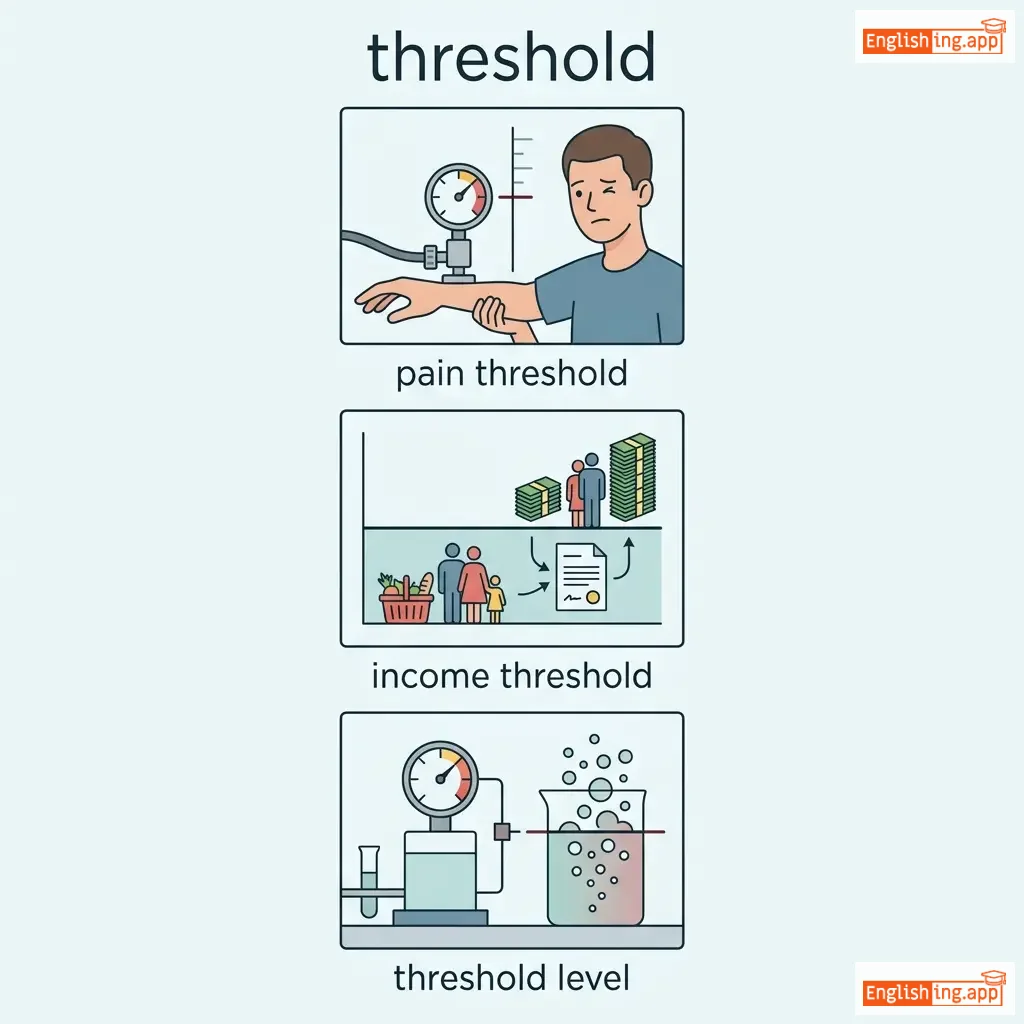
pain threshold, income threshold, threshold level, at the threshold
••••••
|
临界点是开始变革的那一刻。
••••••
|
|
👀
••••••
|
/ˈvjuːpɔɪnt/
noun
(vjuːpɔɪnt)
••••••
|
- •••••• |
观点
guān diǎn
••••••
|
- •••••• | - •••••• | - •••••• | - •••••• |
a particular attitude or way of considering a matter
••••••
|
From his viewpoint, the situation was hopeless.
从他的角度来看,情况是绝望的。
••••••
|
从他的观点来看,情况是绝望的。
Cóng tā de guān diǎn lái kàn, qíng kuàng shì jué wàng de.
••••••
|
point of view
观点
••••••
|
the position from which something is considered or evaluated
••••••
|
观点
guān diǎn
••••••
|
perspective, outlook, angle, stance
••••••
|
misunderstanding, confusion
••••••
|
different viewpoint, personal viewpoint, from my viewpoint
••••••
|
就像一个观点,你能清晰地看到一切!
••••••
|

