The Journalist Who Challenged Corruption
沙欣是一位调查记者,揭露了illegal活动。他的husband支持他危险的工作。他发表了超过hundred篇报道。他会inquire腐败问题,instead of保持沉默。许多人试图inhibit他的调查。一位insider提供了关键证据。在故事之间的interim期间,他计划下一次调查。他有一种impulse,想立即揭露所有的不法行为。但耐心是必要的。沙欣会include多个来源来核实信息。隐藏摄像头的imagery证明了罪行。一些官员用偷来的钱indulge奢华生活。腐败会inflict贫困者的痛苦。沙欣的工作impress了诚实的官员。威胁非常immense——曾有刺客在飞机landing区附近等待他。沙欣收到了关于妻子jewelry店的威胁。一些有权势的家族会inherit腐败行为。追求真相的hunting非常危险。他报道了由工业污染引起的illness。有一天,沙欣因中毒而严重生病。Largely得益于快速的医疗救治,他康复了。公民社会对肇事者提起了lawsuit。沙欣成为了新闻自由的leading声音。他认为新闻的meaning是服务人民。值得mentioning的是,许多年轻记者都追随了他的榜样。一些罪犯穿着昂贵的leather夹克。尽管证据是legally收集的,但有权势的人仍然反抗。Lengthy的法庭斗争随之而来。沙欣希望在married生活和职责之间取得平衡,但使命召唤着他。这项任务显得massive——腐败无处不在。他怀疑自己的努力是否达到了maximum的影响。一位腐败的政客赢得了lottery般的豁免。但沙欣的loyalty属于真理。他使用现代machines进行调查。政府发布了mandate以提高透明度。系统逐渐改善。虽然进展limited,但仍然重要。沙欣证明了坚持的新闻可以挑战腐败体系。Listing成就不是他的风格——他的工作本身就说明了一切。
|
表情符号
|
单词 | Images | 翻译 | 过去时 | 过去分词 | 第三人称单数 | 动名词 | 含义 | 例句 | 例句翻译 | 示例表达 | 示例表达含义 | 示例表达翻译 | 同义词 | 反义词 | 搭配词 | 助记符 |
|---|---|---|---|---|---|---|---|---|---|---|---|---|---|---|---|---|---|
|
💯
••••••
|
/ˈhʌndrəd/
noun, numeral
(hǎndèlì)
••••••
|
- •••••• |
一百
yī bǎi
••••••
|
- •••••• | - •••••• | - •••••• | - •••••• |
the number 100
••••••
|
There are a hundred students in the hall. |
大厅里有一百个学生。
Dàtīng lǐ yǒu yī bǎi gè xuéshēng.
••••••
|
hundred percent |
completely; fully
••••••
|
百分之百
bǎi fēn zhī bǎi
••••••
|
century, 100, large number
••••••
|
zero, none
••••••
|
one hundred, hundred percent, hundred times
••••••
|
一百 = 100,百分之百 = 完全地。
••••••
|
|
🎯
••••••
|
/ˈhʌntɪŋ/
noun/verb
(hunting)
••••••
|
- •••••• |
狩猎
shòuliè
••••••
|
- •••••• | - •••••• |
hunts
hunting
••••••
|
hunting
hunting
••••••
|
the activity of chasing and killing wild animals
••••••
|
Hunting is strictly regulated in many countries.
狩猎在许多国家受到严格监管。
••••••
|
狩猎在许多国家受到严格监管。
Shòuliè zài xǔduō guójiā shòudào yángé jiānguǎn.
••••••
|
house-hunting
找房子
••••••
|
the act of searching for a house to live in
••••••
|
找房子
zhǎo fángzi
••••••
|
pursuing, tracking, chasing, stalking
••••••
|
protecting, preserving
••••••
|
go hunting, hunting season, hunting ground
••••••
|
Hunting 就是狩猎 — Hunt 就是狩猎。
••••••
|
|
👨👩👧
••••••
|
/ˈhʌzbənd/
noun
(哈斯班德)
••••••
|
- •••••• |
丈夫
zhangfu
••••••
|
- •••••• | - •••••• | - •••••• | - •••••• |
A married man regarded in relation to his spouse.
••••••
|
Her husband is very supportive of her career. |
她的丈夫非常支持她的职业。
Tā de zhàngfu fēicháng zhīchí tā de zhíyè.
••••••
|
good husband |
A caring, responsible, and supportive spouse.
••••••
|
好丈夫
hǎo zhàngfu
••••••
|
spouse, partner, mate, groom, consort
••••••
|
wife, bachelor, single
••••••
|
loving husband, devoted husband, husband and wife
••••••
|
Husband 意味着 'House Band' - 丈夫把家维系在一起。
••••••
|
|
🚫
••••••
|
/ɪˈliː.ɡəl/
adjective
(非法)
••••••
|
- •••••• |
非法
feifa
••••••
|
- •••••• | - •••••• | - •••••• | - •••••• |
Not allowed by law; unlawful.
••••••
|
It is illegal to drive without a valid license. |
没有有效许可证驾驶是非法的。
Meiyou youxiao xukezheng jiaoshi shi feifa de.
••••••
|
- •••••• | - •••••• | - •••••• |
unlawful, criminal, forbidden, prohibited, illicit
••••••
|
legal, lawful, legitimate
••••••
|
illegal activity, illegal trade, illegal immigrant, illegal action
••••••
|
illegal 意味着法律不允许,因此 → 非法。
••••••
|
|
🩺
••••••
|
/ˈɪlnəs/
noun
(ilness)
••••••
|
- •••••• |
疾病
jíbìng
••••••
|
- •••••• | - •••••• | - •••••• | - •••••• |
A condition of being unwell or suffering from a disease.
••••••
|
She missed school due to a serious illness.
她因为严重的疾病错过了学校。
••••••
|
她因为严重的疾病错过了学校。
Tā yīnwèi yánzhòng de jíbìng cuòguòle xuéxiào.
••••••
|
- •••••• | - •••••• | - •••••• |
sickness, disease, ailment, disorder
••••••
|
health, wellness
••••••
|
chronic illness, mental illness, recover from illness, illness symptoms
••••••
|
Illness = 疾病。 'Ill' 和 'ness' 表示生病。
••••••
|
|
🎨
••••••
|
/ˈɪmɪdʒəri/
noun
(yí mǐ zhì)
••••••
|
- •••••• |
意象
yixiang
••••••
|
- •••••• | - •••••• | - •••••• | - •••••• |
visually descriptive or figurative language, especially in a literary work
••••••
|
The poet's use of imagery brought the scene to life.
诗人的意象使用使场景栩栩如生。
••••••
|
诗人的意象使用使场景栩栩如生。
Shīrén de yìxiàng shǐyòng shǐ chǎngjǐng xǔxǔ rúshēng.
••••••
|
- •••••• | - •••••• | - •••••• |
pictures, symbols, representations, depictions
••••••
|
literal, plain
••••••
|
vivid imagery, rich imagery, descriptive imagery
••••••
|
把想象变成图像,图像展现在文学中。
••••••
|
|
🏔️
••••••
|
/ɪˈmens/
adjective
(yīmián)
••••••
|
- •••••• |
巨大的; 庞大的; 无限大的
jùdà de; pángdà de; wúxiàn dà de
••••••
|
- •••••• | - •••••• | - •••••• | - •••••• |
extremely large or great; huge
••••••
|
The immense mountain range stretched across the horizon. |
那座巨大的山脉横跨了地平线。
Nàzuò jùdà de shānmài héngkuàle dìpíngxiàn.
••••••
|
- •••••• | - •••••• | - •••••• |
huge, enormous, vast, colossal
••••••
|
tiny, small, minute, insignificant
••••••
|
immense pressure, immense wealth, immense popularity
••••••
|
一颗巨大的幸福星落在了我身边。
••••••
|
|
✨
••••••
|
/ɪmˈprɛs/
verb
(yǐmùlèssī)
••••••
|
- •••••• |
打动
dǎdòng
••••••
|
impressed
yǐmùlèssī dé
••••••
|
impressed
yǐmùlèssī dé
••••••
|
impresses
yǐmùlèssī
••••••
|
impressing
yǐmùlèssīng
••••••
|
to cause someone to feel admiration or respect
••••••
|
Her speech managed to impress the audience.
她的演讲成功地打动了观众。
••••••
|
她的演讲成功地打动了观众。
Tā de yǎnjiǎng chénggōng de dǎdòngle guānzhòng.
••••••
|
make an impression
留下深刻印象
••••••
|
to have a strong effect on someone
••••••
|
留下深刻印象
liú xià shēn kè yìnxiàng
••••••
|
amaze, astonish, inspire, move, influence
••••••
|
bore, disappoint, discourage
••••••
|
impress deeply, impress someone, impress with, fail to impress
••••••
|
打动你的人,总是让你说'感动!' – 打动
••••••
|
|
⚡
••••••
|
/ˈɪmpʌls/
noun
(冲动)
••••••
|
- •••••• |
冲动
chōngdòng
••••••
|
- •••••• | - •••••• | - •••••• | - •••••• |
a sudden strong desire or urge to act without thinking
••••••
|
He bought the watch on impulse without planning to. |
他毫无计划地冲动买下了这只手表。
Tā háo wú jìhuà de chōngdòng mǎi xià le zhè zhī shǒubiǎo.
••••••
|
impulse buying |
purchasing things spontaneously without prior thought
••••••
|
冲动购物
chōngdòng gòuwù
••••••
|
urge, instinct, drive, compulsion, motivation
••••••
|
restraint, hesitation, caution
••••••
|
impulse control, sudden impulse, natural impulse, strong impulse
••••••
|
Impulse 就是你突然想做的事情,像买东西 ⚡
••••••
|
|
➕
••••••
|
/ɪnˈkluːd/
verb
(yīngkuīlú)
••••••
|

|
包括
bāo kuò
••••••
|
included
yǐnglì
••••••
|
included
yǐnglì
••••••
|
includes
yǐngkuì
••••••
|
including
yǐngkuì
••••••
|
to make something part of a whole or group
••••••
|
The package includes free breakfast.
bāo kuò bìnggòu huíguī.
••••••
|
该套餐包括免费早餐。
gāi tàocān bāokuò miǎnfèi zǎocān.
••••••
|
include in
bāo kuò
••••••
|
to add as a part of something
••••••
|
包括
bāokuò
••••••
|
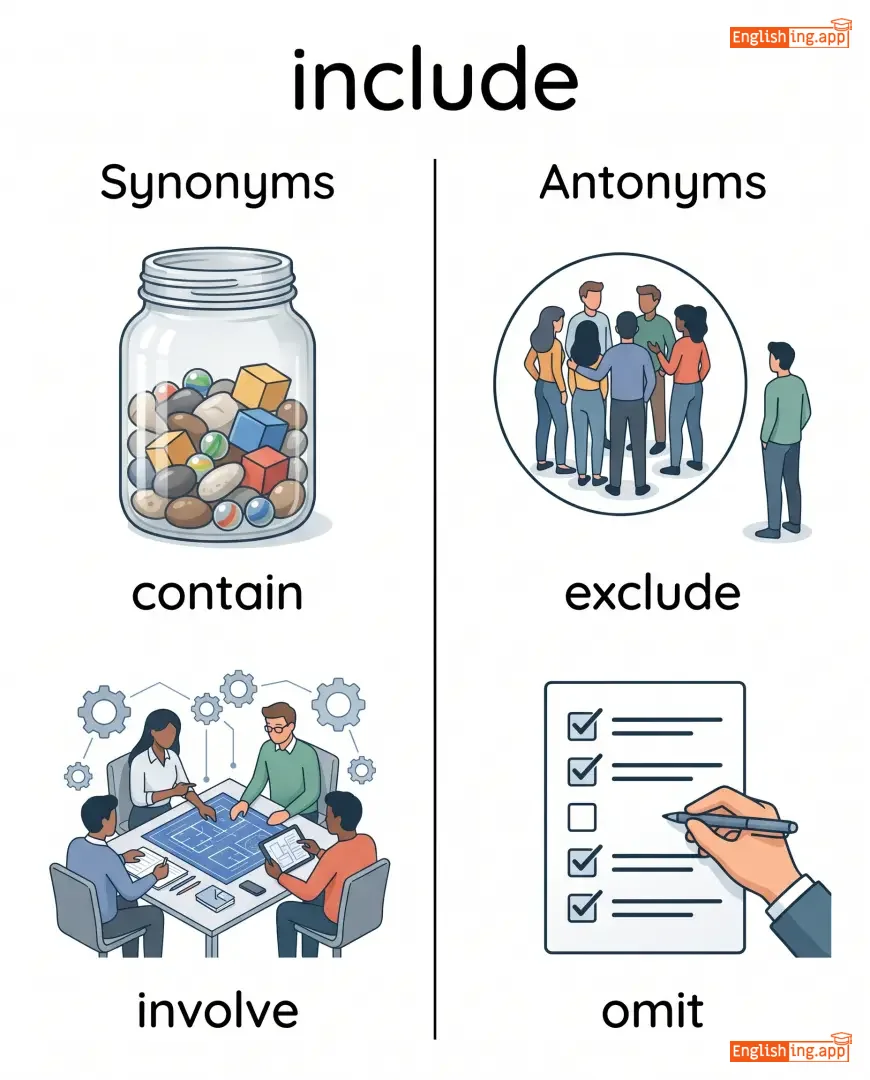
contain, involve, comprise, encompass, cover
••••••
|
exclude, omit
••••••
|
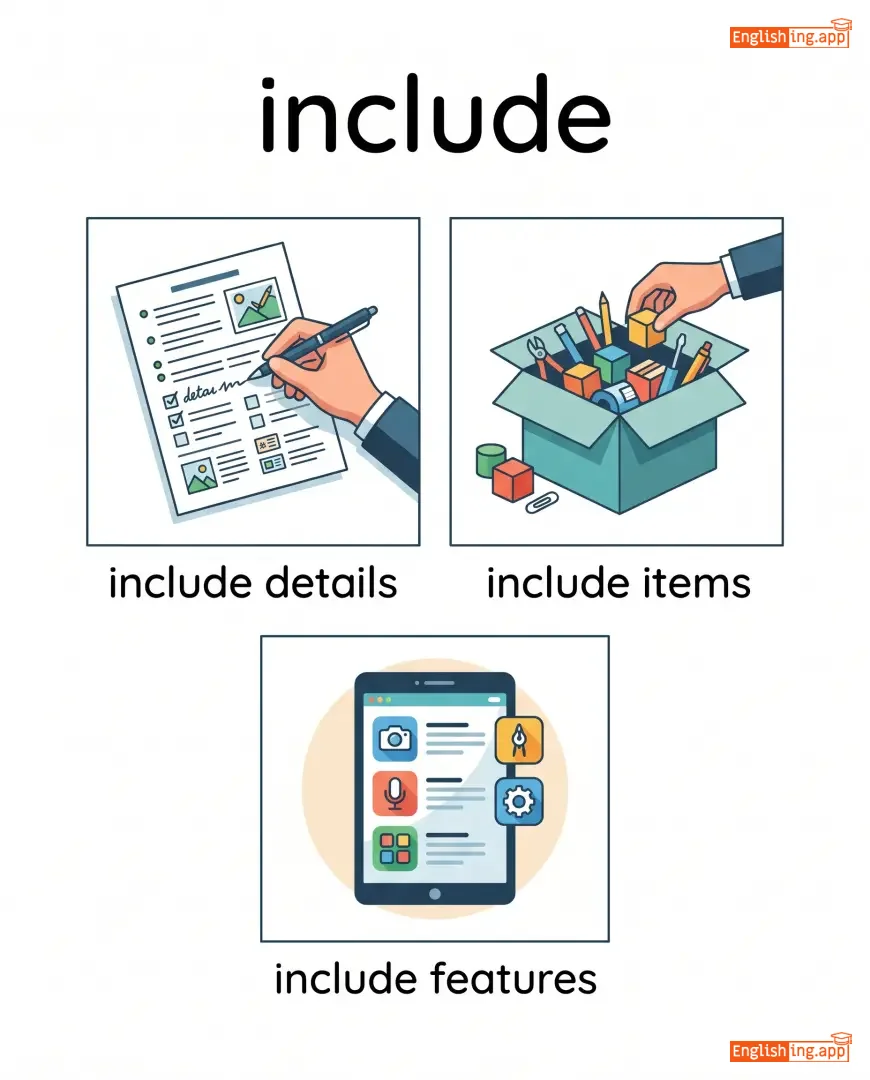
include details, include items, include features
••••••
|
包括意味着将其加入到清单中
••••••
|
|
🍫
••••••
|
/ɪnˈdʌldʒ/
verb
(yin-dulj)
••••••
|
- •••••• |
纵容
zong rong
••••••
|
indulged
yin-duljd
••••••
|
indulged
yin-duljd
••••••
|
indulges
yin-duljes
••••••
|
indulging
yin-duljing
••••••
|
to allow oneself to enjoy something enjoyable, often excessively
••••••
|
He indulged in a piece of chocolate cake after dinner.
他在晚餐后沉浸在一块巧克力蛋糕中。
••••••
|
他在晚餐后沉浸在一块巧克力蛋糕中。
Ta zai wancan hou chenjin zai yi kuai qiaokeli dangao zhong.
••••••
|
indulge in
沉浸于
••••••
|
to take pleasure in doing something
••••••
|
沉浸于
chenjin yu
••••••
|
pamper, spoil, gratify, satisfy, entertain
••••••
|
restrain, deny, refuse
••••••
|
indulge in, indulge yourself, indulge a habit, indulge desire
••••••
|
Indulge 就是让自己沉浸在巧克力蛋糕的美味中 – 过度享受。
••••••
|
|
⚡
••••••
|
/ɪnˈflɪkt/
verb
(因弗利克特)
••••••
|
- •••••• |
施加
shijia
••••••
|
inflicted
因弗利克特德
••••••
|
inflicted
因弗利克特德
••••••
|
inflicts
因弗利克特斯
••••••
|
inflicting
因弗利克特ing
••••••
|
to cause something unpleasant or painful to be suffered by someone or something
••••••
|
The storm inflicted considerable damage to the city.
风暴对城市造成了相当大的破坏。
••••••
|
风暴对城市造成了相当大的破坏。
Fengbao dui chengshi zaocheng le xiangdang da de pohuai.
••••••
|
- •••••• | - •••••• | - •••••• |
impose, cause, administer, bring about
••••••
|
relieve, soothe
••••••
|
inflict harm, inflict pain, inflict damage
••••••
|
Inflict sounds like 'In flick' – imagine a flick causing damage!
••••••
|
|
🏠
••••••
|
/ɪnˈhɛrɪt/
verb
(因赫里特)
••••••
|
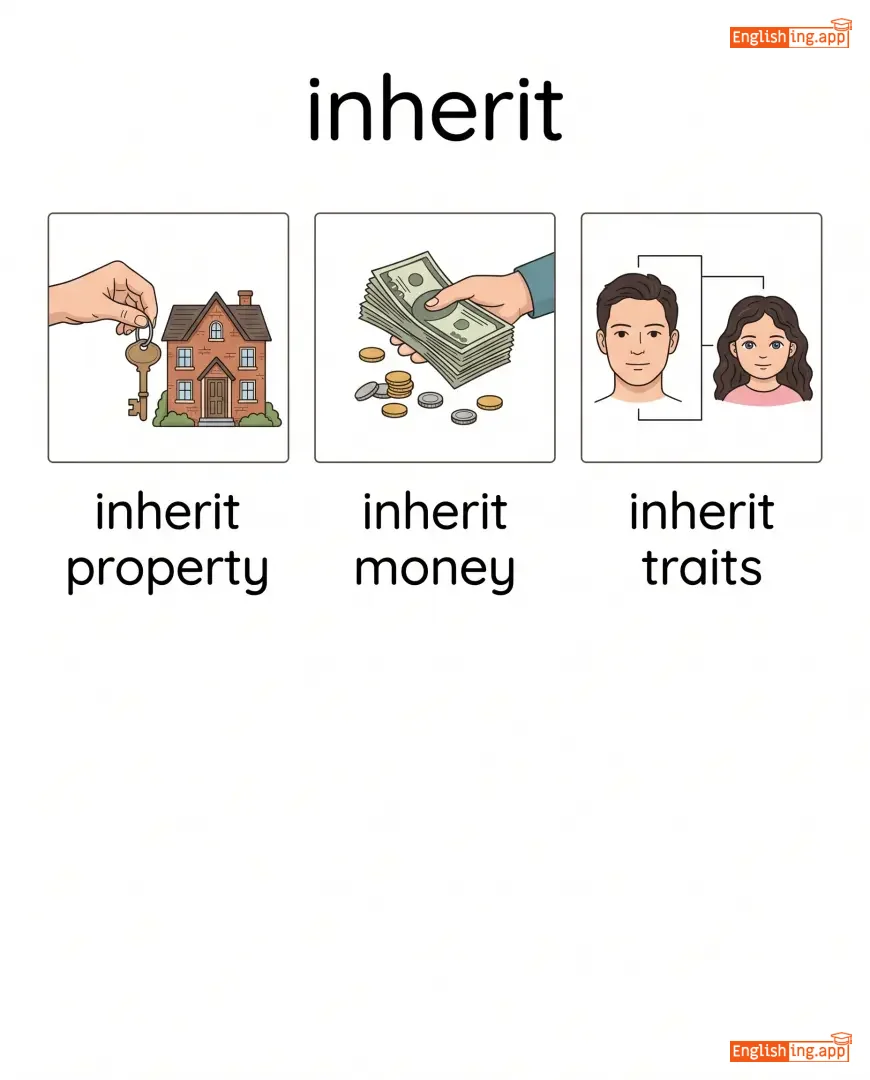
|
继承
jicheng
••••••
|
inherited
因赫里特德
••••••
|
inherited
因赫里特德
••••••
|
inherits
因赫里特斯
••••••
|
inheriting
因赫里廷
••••••
|
to receive property, money, or traits from someone after their death or from ancestors
••••••
|
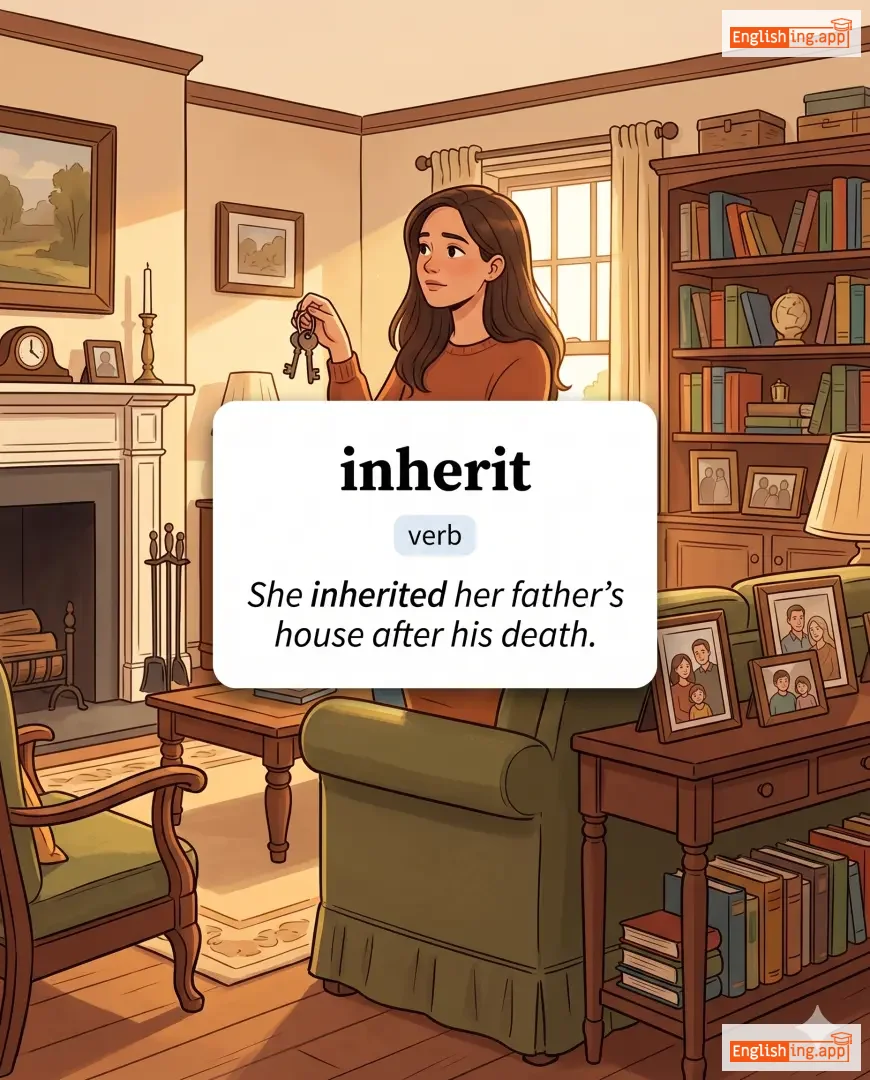
She inherited her father's house after his death.
她在父亲去世后继承了他的房子。
••••••
|
她在父亲去世后继承了他的房子。
Ta zai furen qushi hou jicheng le tade fangzi.
••••••
|
inherit the earth
继承地球
••••••
|
to gain control or possession of the world or land, often used metaphorically
••••••
|
继承地球
jicheng diqiu
••••••
|
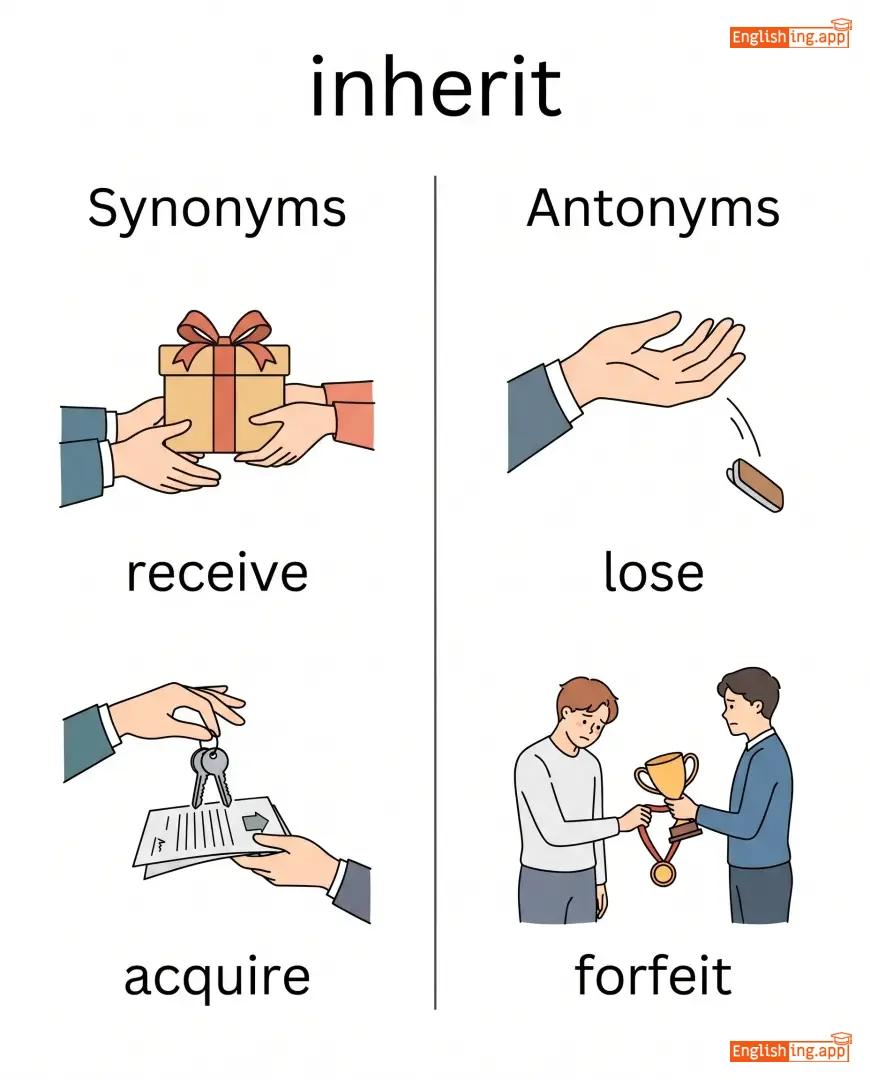
receive, acquire, obtain, succeed, derive
••••••
|
lose, forfeit, give up
••••••
|
inherit property, inherit money, inherit traits, inherit wealth
••••••
|
Inherit意味着in(内部)+ heritage(遗产)—内部heritage意味着继承。
••••••
|
|
⛔
••••••
|
/ɪnˈhɪbɪt/
verb
(因希必特)
••••••
|
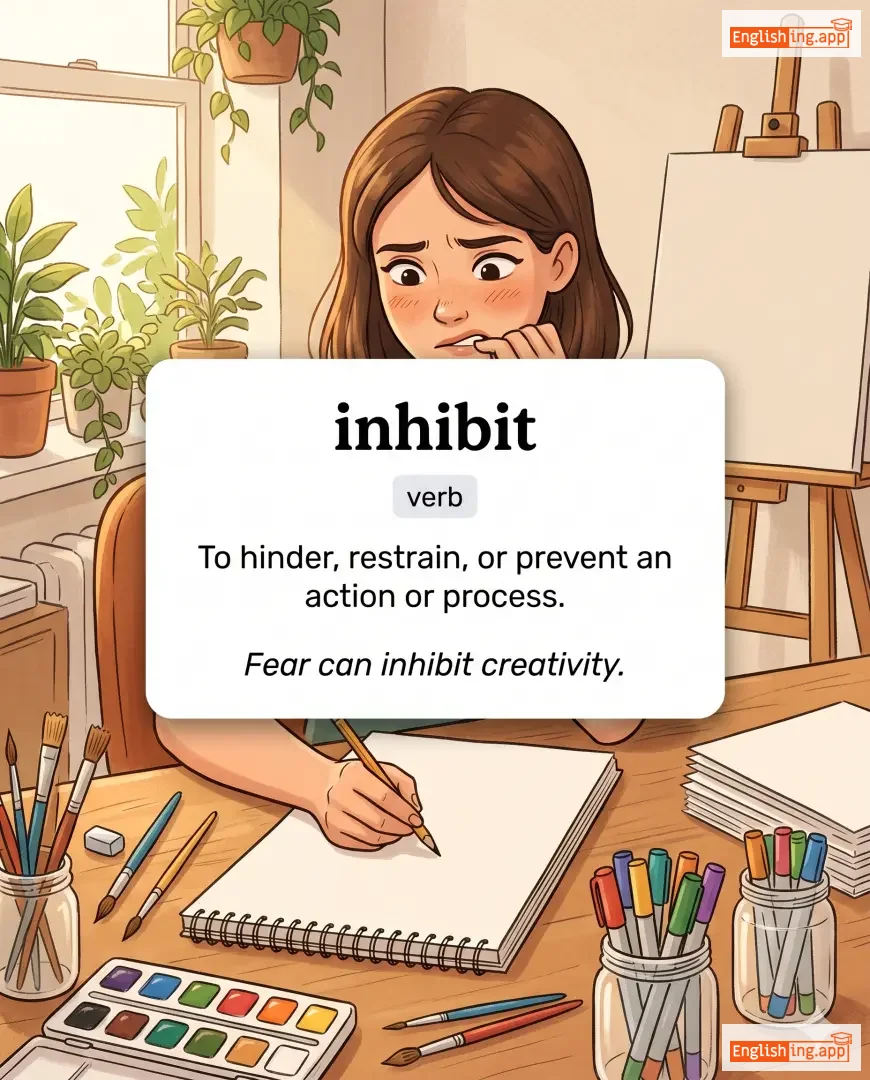
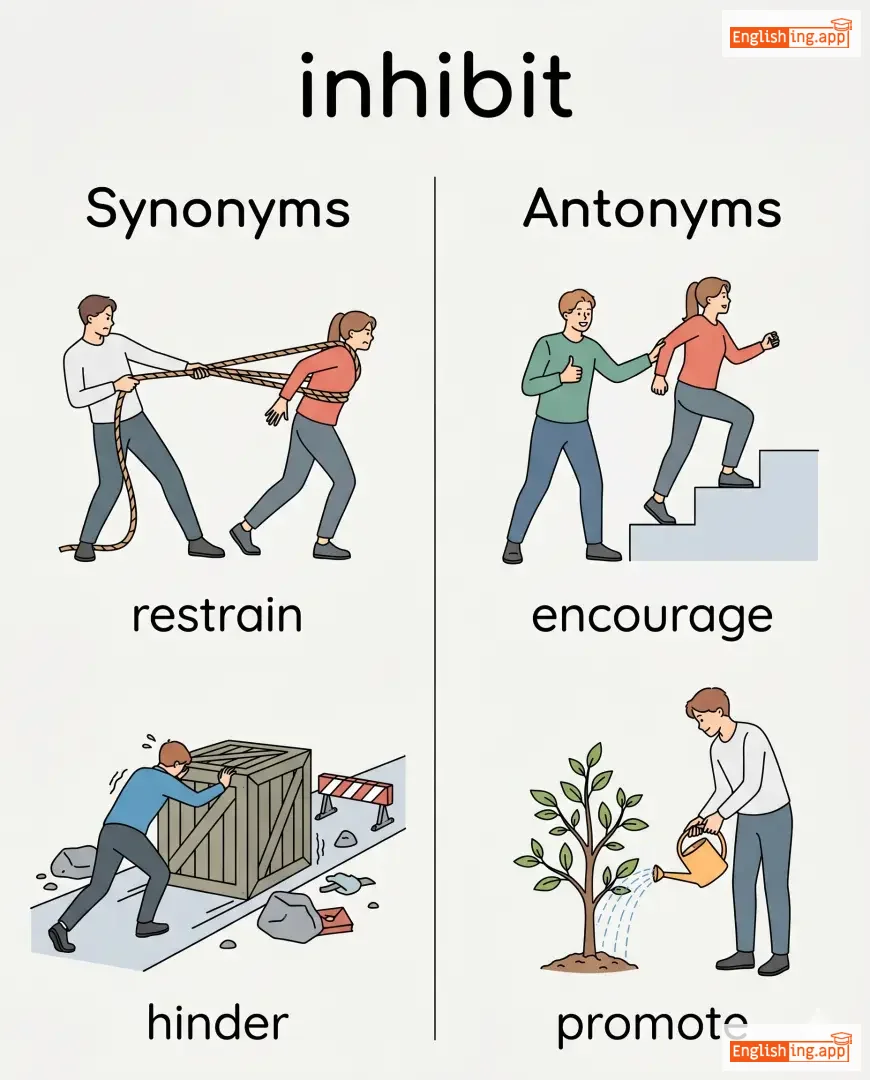
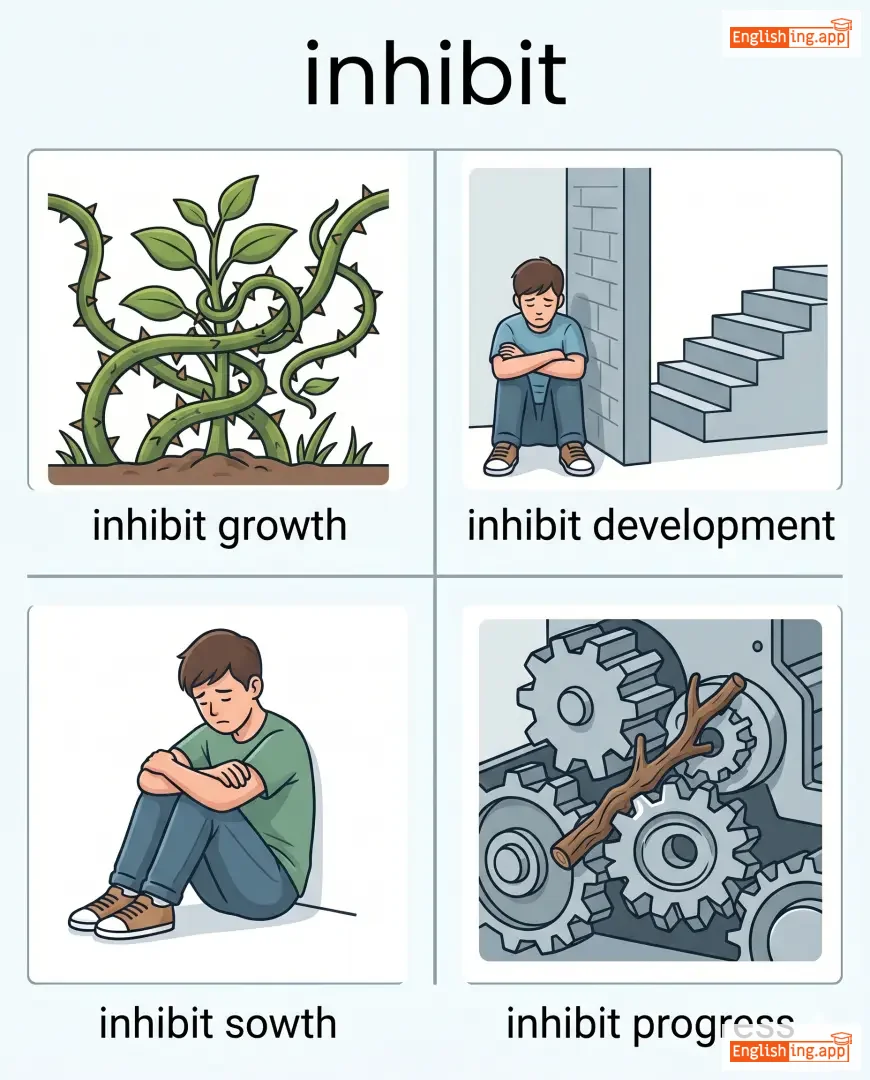
|
抑制
yìzhì
••••••
|
inhibited
因希比特德
••••••
|
inhibited
因希比特德
••••••
|
inhibits
因希比特斯
••••••
|
inhibiting
因希比廷
••••••
|
To hinder, restrain, or prevent an action or process.
••••••
|
Fear can inhibit creativity.
恐惧可能会抑制创造力。
••••••
|
恐惧可能会抑制创造力。
Kǒngjù kěnéng huì yìzhì chuàngzàolì.
••••••
|
socially inhibited
社会上被压抑
••••••
|
Being shy or unable to act freely in social situations.
••••••
|
社会上被压抑
Shèhuì shàng bèi yāyì
••••••
|
restrain, hinder, prevent, obstruct, suppress
••••••
|
encourage, promote, allow
••••••
|
inhibit growth, inhibit development, inhibit progress
••••••
|
Inhibit 即在习惯中不行动,抑制创造力。
••••••
|
|
❓
••••••
|
/ɪnˈkwaɪər/
verb
(因夸尔)
••••••
|

|
询问
xunwen
••••••
|
inquired
因夸尔德
••••••
|
inquired
因夸尔德
••••••
|
inquires
因夸尔斯
••••••
|
inquiring
因夸尔英
••••••
|
To ask for information; to investigate.
••••••
|
She inquired about the details of the job.
她询问了工作的细节。
••••••
|
她询问了工作的细节。
Ta xunwenle gongzuo de xijie.
••••••
|
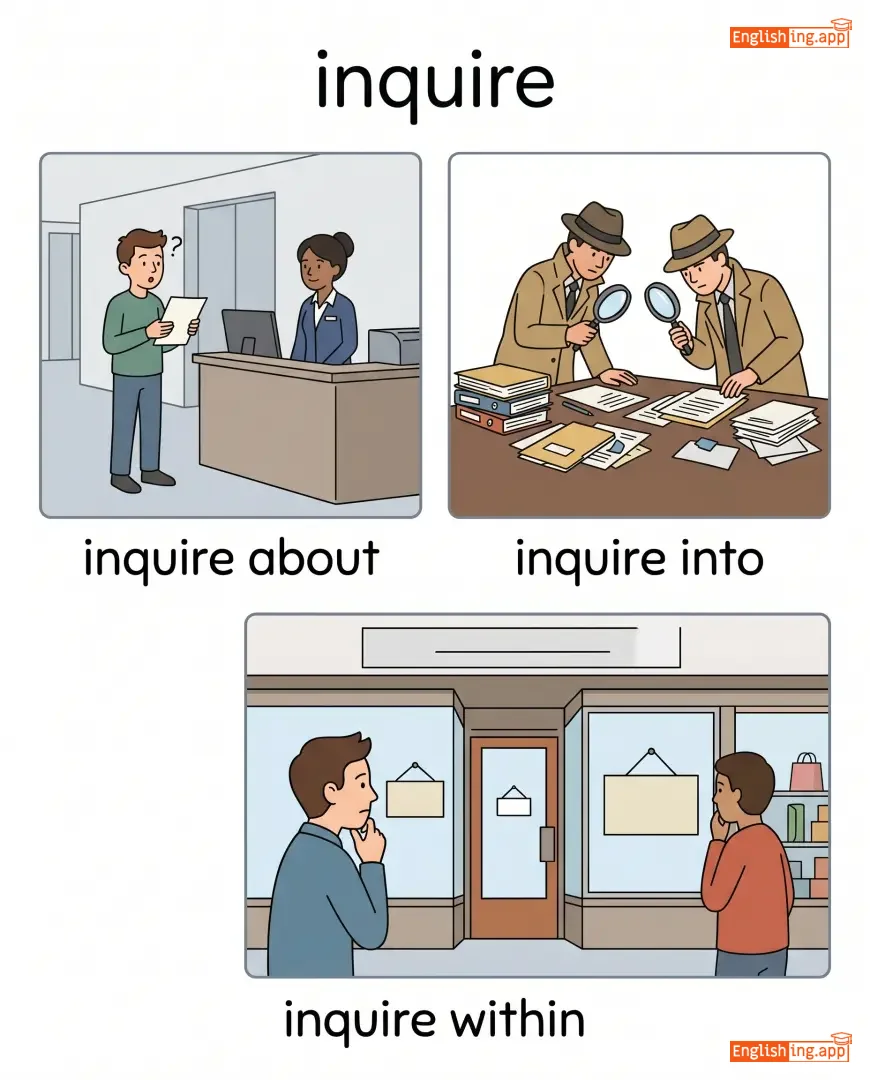
inquire within
询问内部
••••••
|
A phrase used in advertisements, meaning ask inside for more information.
••••••
|
在内部询问
zai neibu xunwen
••••••
|
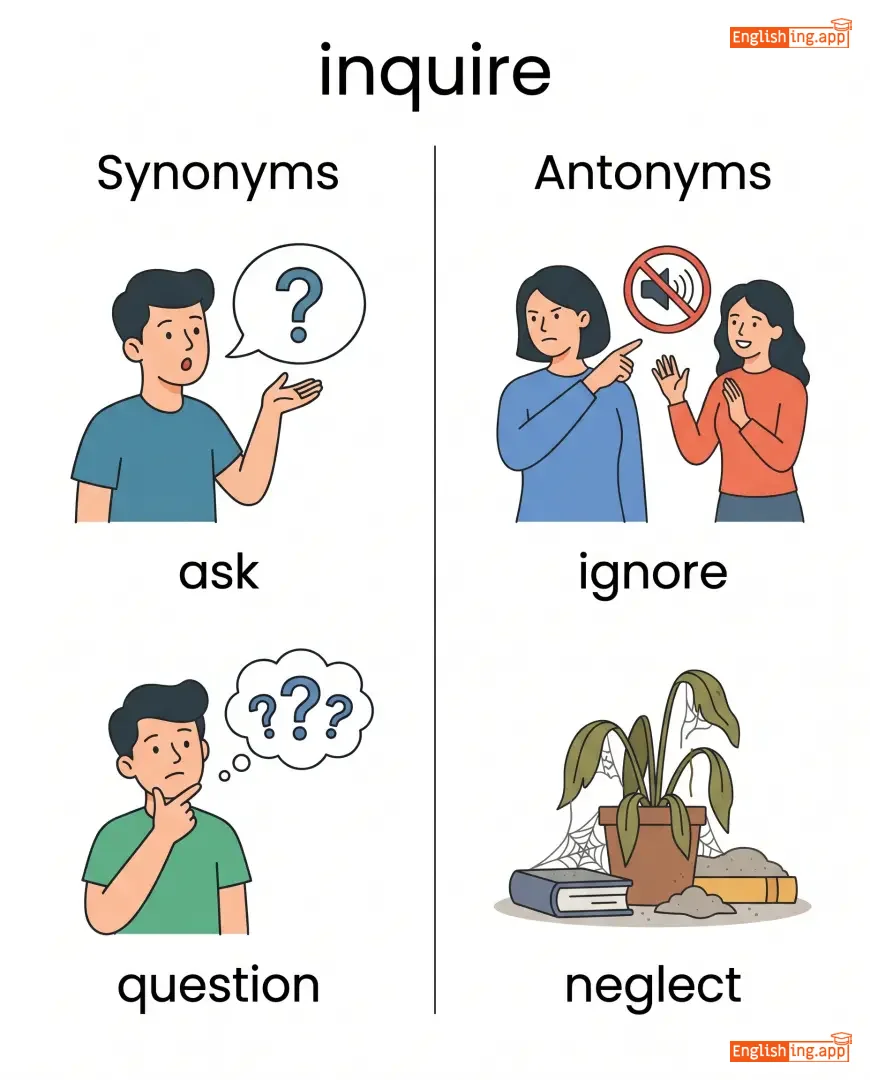
ask, question, investigate, probe, query
••••••
|
ignore, neglect
••••••
|
inquire about, inquire into, inquire within, inquire further
••••••
|
Inquire = 在内部询问 – 走进内部并询问。
••••••
|
|
👤
••••••
|
/ɪnˈsaɪdə/
noun
(īn sāi dé)
••••••
|
- •••••• |
内部人士
neibu renshi
••••••
|
- •••••• | - •••••• | - •••••• | - •••••• |
a person within a group or organization who has access to confidential information
••••••
|
He was an insider who knew all the company's secrets. |
他是一个了解公司所有秘密的内部人士。
Ta shi yi ge liaojie gongsi suoyou mimi de neibu renshi.
••••••
|
- •••••• | - •••••• | - •••••• |
member, participant, confidant, informant
••••••
|
outsider, stranger
••••••
|
company insider, political insider, insider knowledge
••••••
|
内部人士,掌握公司秘密的人
••••••
|
|
🔄
••••••
|
/ɪnˈstɛd/
adverb
(ɪnˈstɛd)
••••••
|
- •••••• |
代替
dàitì
••••••
|
- •••••• | - •••••• | - •••••• | - •••••• |
As an alternative or substitute.
••••••
|
She didn’t buy the dress; instead, she chose a pair of shoes.
她没有买那件裙子; 反而她选择了一双鞋子。
••••••
|
她没有买那件裙子; 反而她选择了一双鞋子。
Tā méiyǒu mǎi nà jiàn qúnzi; fǎn'ér tā xuǎnzéle yī shuāng xiézi.
••••••
|
instead of
代替
••••••
|
In place of.
••••••
|
代替
dàitì
••••••
|
alternatively, rather, otherwise, as a substitute
••••••
|
as well, together, along
••••••
|
chose instead, instead of, use instead, prefer instead
••••••
|
Instead 是一种替代选择,就像选择鞋子代替裙子。
••••••
|
|
⏳
••••••
|
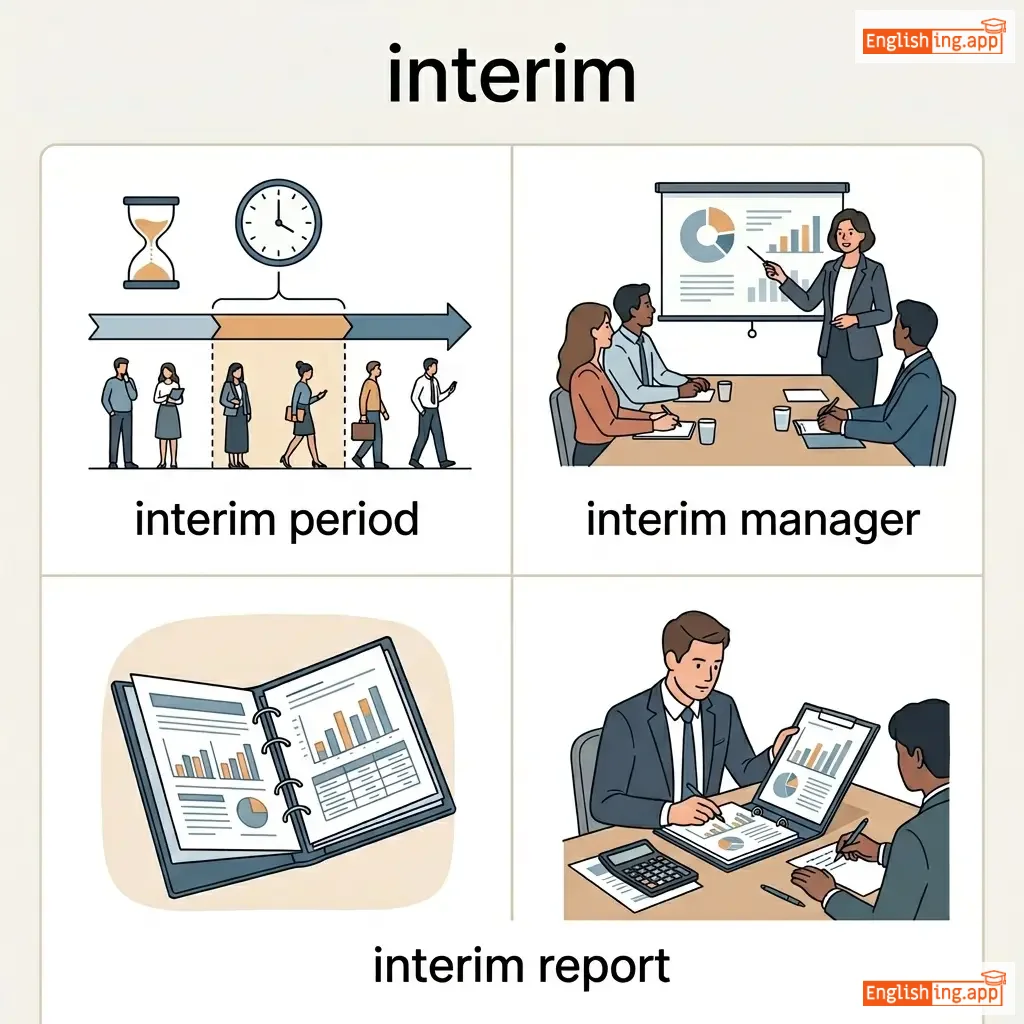
/ˈɪntərɪm/
noun
(临时)
••••••
|
|
临时
linshi
••••••
|
- •••••• | - •••••• | - •••••• | - •••••• |
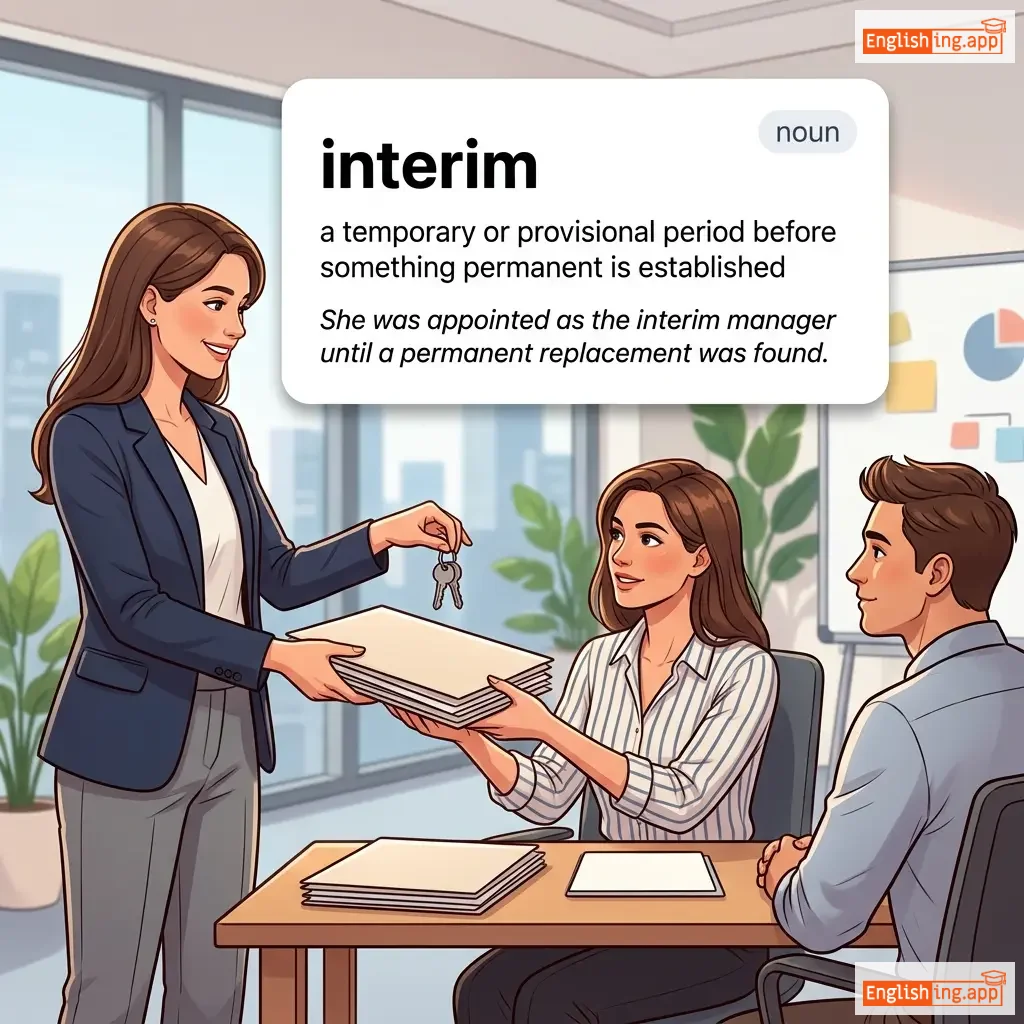
a temporary or provisional period before something permanent is established
••••••
|
She was appointed as the interim manager until a permanent replacement was found. |
她被任命为临时经理,直到找到一个永久的替代者。
Ta bei renming wei linshi jingli, zhidao zhao dao yige yongjiu de tidaizhe.
••••••
|
in the interim |
for the time being; temporarily
••••••
|
在此期间
zai ci qi jian
••••••
|
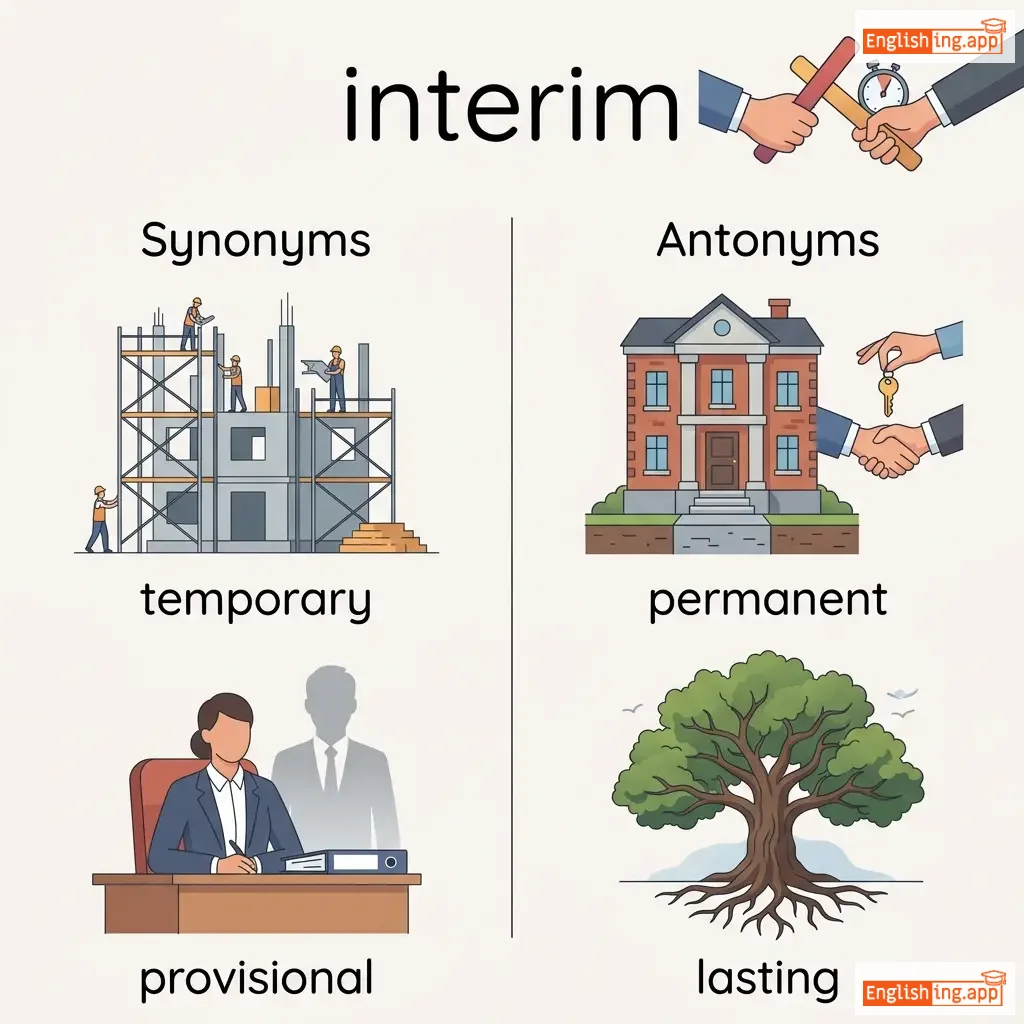
temporary, provisional, acting, short-term
••••••
|
permanent, lasting
••••••
|
interim period, interim manager, interim report, in the interim
••••••
|
Interim 意味着 ‘间’ - 过渡状态
••••••
|
|
💍
••••••
|
/ˈdʒuːəlri/
noun
(dʒuːəlri)
••••••
|
- •••••• |
珠宝
zhūbǎo
••••••
|
- •••••• | - •••••• | - •••••• | - •••••• |
personal ornaments such as necklaces, rings, or bracelets that are typically made from precious metals and stones
••••••
|
She wore gold jewelry at the wedding.
她在婚礼上戴了金饰。
••••••
|
她在婚礼上戴了金饰。
Tā zài hūnlǐ shàng dàile jīnshì.
••••••
|
- •••••• | - •••••• | - •••••• |
ornaments, gems, accessories, trinkets, adornments
••••••
|
plainness, simplicity
••••••
|
gold jewelry, silver jewelry, wear jewelry, fine jewelry, handmade jewelry
••••••
|
珠宝代表金钱和美丽,如闪烁的黄金!
••••••
|
|
🛬
••••••
|
/ˈlændɪŋ/
noun
(landing)
••••••
|
- •••••• |
着陆
zhuó lù
••••••
|
- •••••• | - •••••• | - •••••• | - •••••• |
the act of coming down to the ground or a surface from the air
••••••
|
The plane made a smooth landing on the runway. |
飞机顺利地在跑道上着陆。
fēi jī shùn lì de zài pǎo dào shàng zhuó lù.
••••••
|
crash landing |
an emergency or rough landing of an aircraft
••••••
|
紧急着陆
jǐn jí zhuó lù
••••••
|
arrival, touchdown, descent, docking, approach
••••••
|
takeoff, departure
••••••
|
safe landing, rough landing, landing gear, landing strip
••••••
|
Landing意味着着陆,就像飞机着陆时,大家都说‘终于到了地面!’
••••••
|

