Получите неограниченный доступ ко всем словам с подпиской Pro
Обновить до ProПолучите неограниченный доступ ко всем предложениям с подпиской Pro
Обновить до Pro|
Эмодзи
|
Слово | Images | Перевод | Прошедшее | Причастие прошедшего времени | Третье лицо единственного числа | Герундий | Значение | Пример предложения | Перевод примера предложения | Пример выражения | Значение примера выражения | Перевод примера выражения | Синонимы | Антонимы | Коллокации | Мнемоника |
|---|---|---|---|---|---|---|---|---|---|---|---|---|---|---|---|---|---|
|
👌
••••••
|
/oʊˈkeɪ/
adjective
(окей)
••••••
|
- •••••• |
хорошо
khorosho
••••••
|
- •••••• | - •••••• | - •••••• | - •••••• |
used to indicate agreement, approval, or understanding
••••••
|
Okay, let's go to the park. |
Хорошо, давай пойдем в парк.
Khorosho, davay poydyom v park.
••••••
|
- •••••• | - •••••• | - •••••• |
alright, fine, agreed, acceptable
••••••
|
no, disagree, unacceptable
••••••
|
okay with, okay to, okay about, okay for
••••••
|
Окей, хорошо (Okey, khorosho)
••••••
|
|
👌
••••••
|
/əʊˈkeɪ/
adjective
(окей)
••••••
|
- •••••• |
хорошо
khorosho
••••••
|
- •••••• | - •••••• | - •••••• | - •••••• |
used to express agreement or acceptance
••••••
|
It's okay to leave early today. |
Хорошо, если уйти раньше сегодня.
Khorosho, esli uyti ranshe segodnya.
••••••
|
- •••••• | - •••••• | - •••••• |
alright, fine, acceptable, good
••••••
|
bad, unacceptable
••••••
|
feel okay, seem okay, okay with, okay to
••••••
|
Окей - когда говорят, все соглашаются.
••••••
|
|
👴
••••••
|
/oʊld/
adjective
(олд)
••••••
|
- •••••• |
старый
staryj
••••••
|
- •••••• | - •••••• | - •••••• | - •••••• |
having lived for a long time; not new or young
••••••
|
He still drives his old car. |
Он все еще ездит на своей старой машине.
On vse eshche ezdit na svoej staroj mashine.
••••••
|
old habits die hard |
It is difficult to stop doing things you have been doing for a long time
••••••
|
старые привычки трудно искоренить
starye privychki trudno iskorenit'
••••••
|
aged, elderly, ancient, worn, mature
••••••
|
young, new, fresh
••••••
|
old man, old friend, old building, old story
••••••
|
СТАРЫЙ — как старые воспоминания и старые люди.
••••••
|
|
🏅
••••••
|
/əˈlɪmpɪk/
adjective
(олимпийский)
••••••
|
- •••••• |
олимпийский
olimpiyskiy
••••••
|
- •••••• | - •••••• | - •••••• | - •••••• |
related to the Olympic Games, a major international sporting event
••••••
|
She trained hard to compete in the Olympic Games. |
Она усердно тренировалась, чтобы участвовать в Олимпийских играх.
Ona usyerdno trenirovalas', chtoby uchastvovat' v Olimpiyskikh igrakh.
••••••
|
- •••••• | - •••••• | - •••••• |
worldwide, international, competitive
••••••
|
local, amateur
••••••
|
Olympic Games, Olympic athlete, Olympic gold, Olympic champion
••••••
|
Олимпийский - место, где лучшие атлеты мира соревнуются.
••••••
|
|
📖
••••••
|
/ɒn/
preposition
(он)
••••••
|
- •••••• |
на
na
••••••
|
- •••••• | - •••••• | - •••••• | - •••••• |
physically in contact with and supported by a surface
••••••
|
The book is on the table. |
Книга на столе.
Kniga na stole.
••••••
|
on time |
punctual; not late
••••••
|
вовремя
vovremya
••••••
|
upon, atop, over, above
••••••
|
off, away
••••••
|
on the table, on the way, on purpose, on duty
••••••
|
Книга на столе 📖 — запомните, что 'on' означает 'на'
••••••
|
|
1️⃣⏰
••••••
|
/wʌns/
adverb
(vans)
••••••
|
- •••••• |
один раз; когда-то в прошлом
odin raz; kogda-to v proshlom
••••••
|
- •••••• | - •••••• | - •••••• | - •••••• |
one time only; at some time in the past; formerly
••••••
|
I have been to Paris once in my life. |
Я был в Париже один раз в своей жизни.
Ya byl v Parizhe odin raz v svoey zhizni.
••••••
|
- •••••• | - •••••• | - •••••• |
one time, formerly, previously, at one time
••••••
|
never, always, repeatedly, frequently
••••••
|
once upon a time, once again, once more, at once
••••••
|
No •••••• |
|
1️⃣
••••••
|
/wʌn/
pronoun, noun, adjective
(van)
••••••
|
- •••••• |
один
odin
••••••
|
- •••••• | - •••••• | - •••••• | - •••••• |
the number equivalent to the sum of zero and one; a single person or thing
••••••
|
Only one student answered the question.
Только один студент ответил на вопрос.
••••••
|
Только один студент ответил на вопрос.
Tol'ko odin student otvetil na vopros.
••••••
|
one of a kind
один из своего рода
••••••
|
unique; very special
••••••
|
один из своего рода
odin iz svoego roda
••••••
|
single, individual, sole, unique
••••••
|
many, multiple
••••••
|
one day, one time, one person, one chance
••••••
|
ONE означает один 1️⃣ — 'odin iz svoego roda' запомни
••••••
|
|
🔄
••••••
|
/ˈɒnɡəʊɪŋ/
adjective
(он-гоу-инг)
••••••
|
- •••••• |
в процессе
v protsesse
••••••
|
- •••••• | - •••••• | - •••••• | - •••••• |
continuing; still in progress
••••••
|
The ongoing project will finish next month. |
Текущий проект будет завершён в следующем месяце.
Tekushchiy proyekt budet zavershyony v sleduyushchem mesyatse.
••••••
|
- •••••• | - •••••• | - •••••• |
continuing, in progress, underway, persistent
••••••
|
finished, completed
••••••
|
ongoing process, ongoing work, ongoing issue
••••••
|
В процессе - как движущаяся река, никогда не стоящая!
••••••
|
|
🧅
••••••
|
/ˈʌnjən/
noun
(онион)
••••••
|
- •••••• |
лук
luk
••••••
|
- •••••• | - •••••• | - •••••• | - •••••• |
a round vegetable with a strong smell and flavor, usually used in cooking
••••••
|
I chopped an onion to make the soup. |
Я нарезал лук, чтобы сделать суп.
Ya narezал luk, chtoby sdelat' sup.
••••••
|
- •••••• | - •••••• | - •••••• |
bulb, leek, shallot
••••••
|
garlic, herb
••••••
|
chop an onion, onion soup, onion ring
••••••
|
Лук - Когда режешь лук, слезы текут!
••••••
|
|
💻
••••••
|
/ˈɒnˌlaɪn/
adjective/adverb
(онлайн)
••••••
|
- •••••• |
онлайн
onlayn
••••••
|
- •••••• | - •••••• | - •••••• | - •••••• |
connected to or available through the internet
••••••
|
I prefer shopping online rather than going to stores.
Я предпочитаю делать покупки онлайн, а не ходить по магазинам.
••••••
|
Я предпочитаю делать покупки онлайн, а не ходить по магазинам.
Ya predpochitayu delat pokupki onlayn, a ne khodit po magazinam.
••••••
|
- •••••• | - •••••• | - •••••• |
internet-based, digital, connected, virtual
••••••
|
offline, disconnected
••••••
|
online shopping, online services, online education, online access
••••••
|
Onlayn po-russki zvuchit kak online!
••••••
|
|
⚪
••••••
|
/ˈoʊnli/
adjective/adverb
(óunli)
••••••
|
- •••••• |
только
tolko
••••••
|
- •••••• | - •••••• | - •••••• | - •••••• |
without others; solely
••••••
|
He is the only person who knows the secret.
Он единственный человек, который знает секрет.
••••••
|
Он единственный человек, который знает секрет.
On yedinstenniy chelovek, kotoryy znayet sekret.
••••••
|
- •••••• | - •••••• | - •••••• |
sole, exclusive, unique, solitary
••••••
|
multiple, many
••••••
|
only one, only person, only choice, only option
••••••
|
Ты только лучший! - You are only the best!
••••••
|
|
🔜
••••••
|
/ˈɒntu/
preposition
(онто)
••••••
|
- •••••• |
на
na
••••••
|
- •••••• | - •••••• | - •••••• | - •••••• |
moving to a position on the surface of something
••••••
|
She jumped onto the table to get the book. |
Она прыгнула на стол, чтобы взять книгу.
Ona prignula na stol, chtoby vzyat' knigu.
••••••
|
- •••••• | - •••••• | - •••••• |
upon, on top of, over
••••••
|
off, away from
••••••
|
onto the surface, onto the floor, onto the roof
••••••
|
Положите что-то на стол! - Place something onto the table!
••••••
|
|
🔓
••••••
|
/ˈoʊ.pən/
verb, adjective
••••••
|
- •••••• | - •••••• |
opened
••••••
|
opened
••••••
|
opens
••••••
|
opening
••••••
|
to move something so that it is no longer closed; not closed
••••••
|
She opened the window to let in fresh air. |
- •••••• |
open secret |
something widely known but not officially acknowledged
••••••
|
- •••••• |
uncover, unlock, reveal, accessible, available
••••••
|
close, shut, lock
••••••
|
open door, open window, open opportunity, open mind
••••••
|
No •••••• |
|
🔓
••••••
|
/ˈoʊpənɪŋ/
noun
(оупенинг)
••••••
|
- •••••• |
открытие
otkrytie
••••••
|
- •••••• | - •••••• | - •••••• | - •••••• |
an act or instance of beginning something
••••••
|
The opening of the new store was a huge success.
Открытие нового магазина стало большим успехом.
••••••
|
Открытие нового магазина стало большим успехом.
Otkrytie novogo magazina stalo bol'shim uspekhom.
••••••
|
- •••••• | - •••••• | - •••••• |
start, beginning, initiation, launch
••••••
|
closing, ending
••••••
|
grand opening, store opening, job opening, opening ceremony
••••••
|
Когда что-то новое начинается, это открытие. - When something new begins, it’s an opening.
••••••
|
|
🗣️
••••••
|
/ˈəʊpənli/
adverb
(ˈopənli)
••••••
|
- •••••• |
открыто
otkryto
••••••
|
- •••••• | - •••••• | - •••••• | - •••••• |
in a way that is not secret or hidden
••••••
|
He spoke openly about his past mistakes. |
Он открыто говорил о своих прошлых ошибках.
On otkryto govorit o svoikh proshlykh oshibkakh.
••••••
|
openly admit |
to confess something without hesitation or secrecy
••••••
|
открыто признаться
otkryto priznatsya
••••••
|
frankly, honestly, publicly, freely, visibly
••••••
|
secretly, privately, covertly
••••••
|
speak openly, discuss openly, act openly
••••••
|
Openly - это говорить открыто, без скрытых тайн.
••••••
|
|
🎭
••••••
|
/ˈɒpərə/
noun
(опера)
••••••
|
- •••••• |
опера
opera
••••••
|
- •••••• | - •••••• | - •••••• | - •••••• |
a dramatic performance in which the actors sing most of their lines
••••••
|
We watched a beautiful opera at the theater last night. |
Мы посмотрели красивую оперу в театре прошлой ночью.
My posmotreli krasivuyu operu v teatre proshloy noch'yu.
••••••
|
soap opera |
a television or radio drama series that deals with daily life and emotions
••••••
|
телевизионная или радиопередача, которая рассказывает о повседневной жизни и эмоциях
televizionnaya ili radioperedacha, kotoraya rasskazyvaet o povsednevnoy zhizni i emotsiyakh
••••••
|
musical, performance, drama, production
••••••
|
speech, silence
••••••
|
opera singer, opera house, attend an opera, classical opera
••••••
|
Опера — это как спектакль, где музыка сочетается с драмой!
••••••
|
|
⚙️
••••••
|
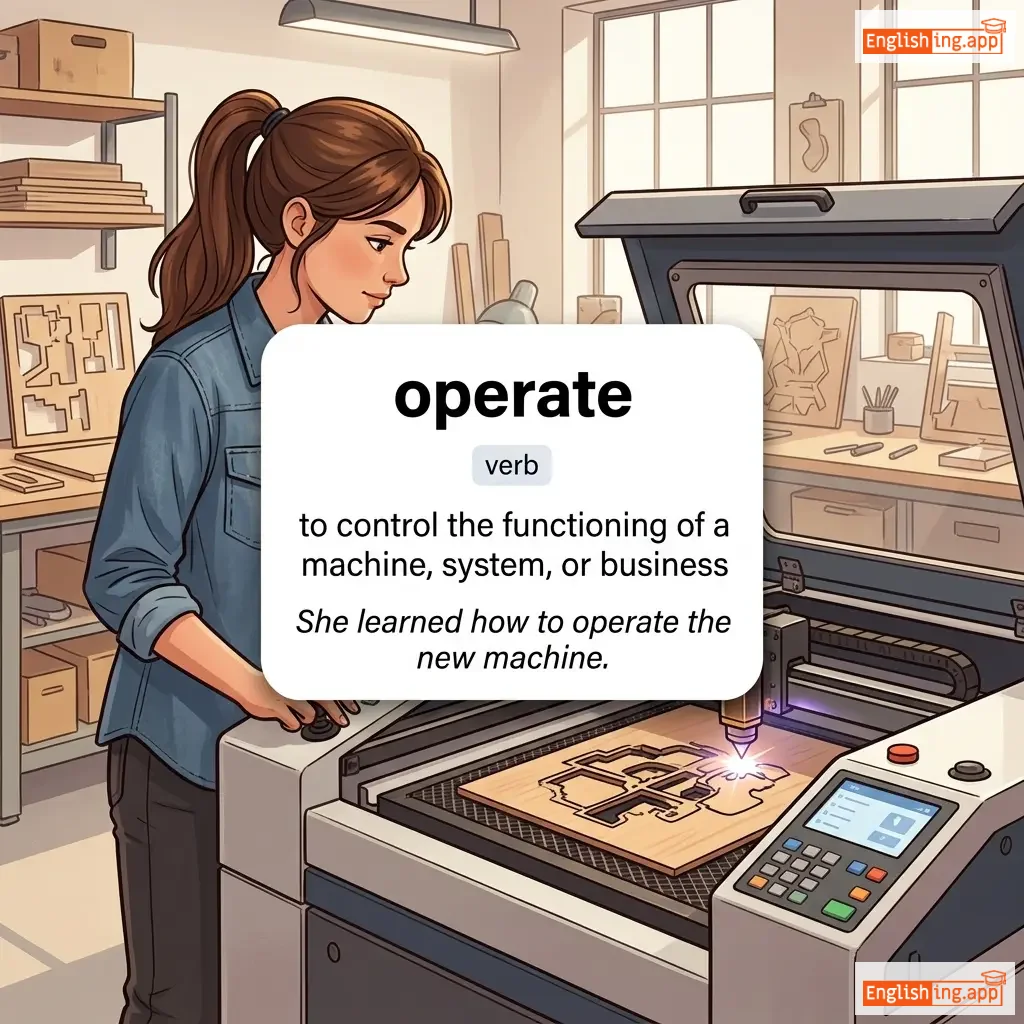
/ˈɑːpəˌreɪt/
verb
(оперировать)
••••••
|
|
управлять
upravlyat'
••••••
|
operated
оперировал
••••••
|
operated
оперировал
••••••
|
operates
оперирует
••••••
|
operating
оперируя
••••••
|
to control the functioning of a machine, system, or business
••••••
|
She learned how to operate the new machine.
Она научилась управлять новой машиной.
••••••
|
Она научилась управлять новой машиной.
Ona nauchilas' upravlyat' novoy mashinoy.
••••••
|
operate on
оперировать на
••••••
|
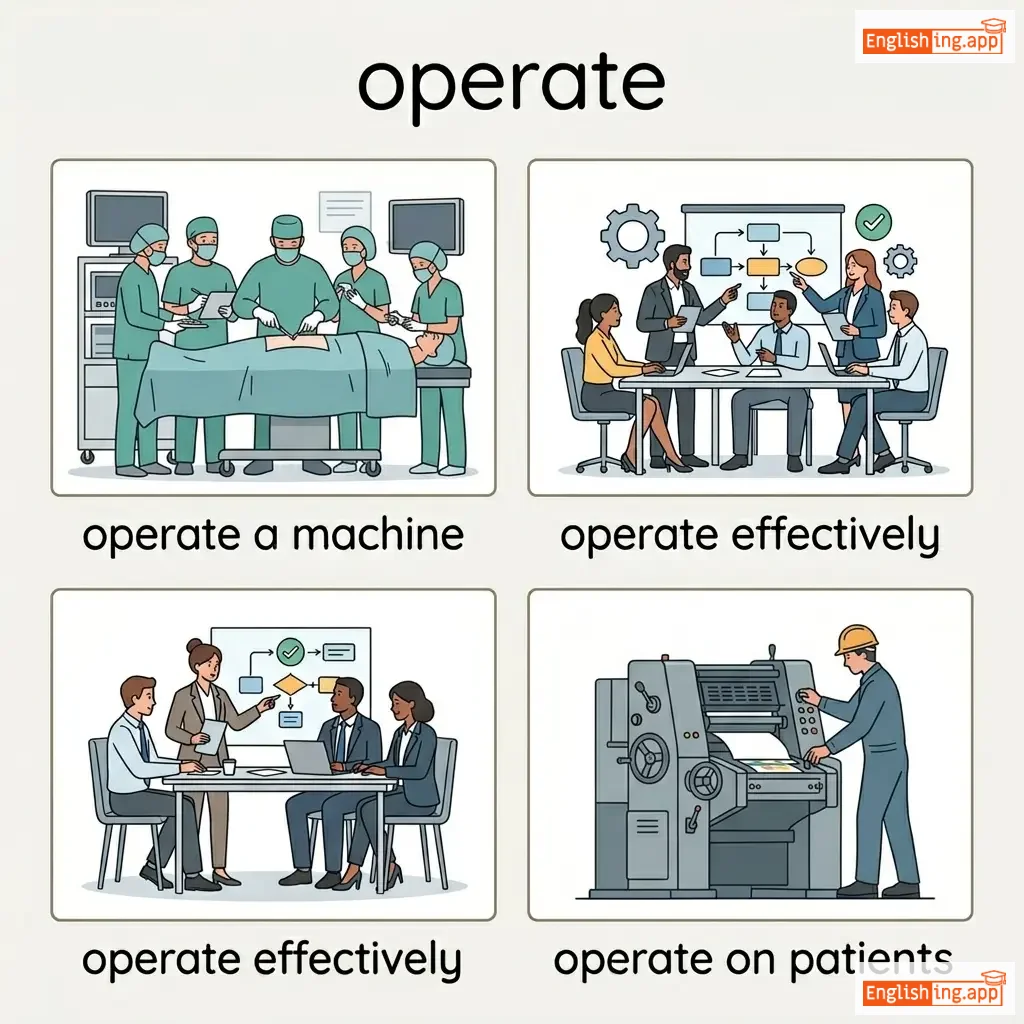
to perform surgery on someone
••••••
|
проводить операцию
provodit' operatsiyu
••••••
|
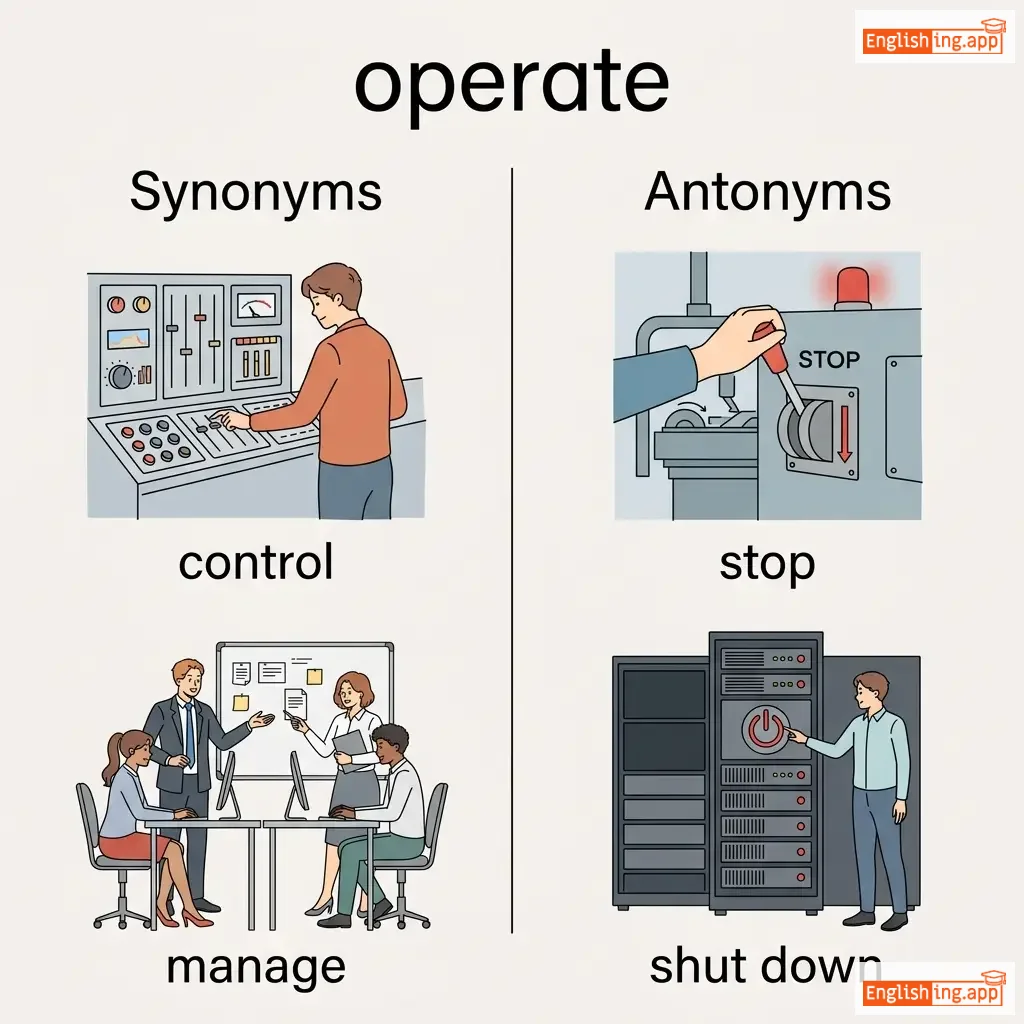
control, manage, run, handle, conduct
••••••
|
stop, shut down
••••••
|
operate a machine, operate effectively, operate on patients, operate smoothly
••••••
|
Operate означает управлять, как врач, который проводит операцию.
••••••
|
|
⚙️
••••••
|
/ˈɒpəreɪtɪŋ/
verb
(оперирующий)
••••••
|
- •••••• |
оперирующий
opiruyushchiy
••••••
|
operated
оперировал
••••••
|
operated
оперировал
••••••
|
operates
оперирует
••••••
|
operating
оперирующий
••••••
|
to control or manage the functioning of something
••••••
|
The company has been operating in this market for five years.
Компания работает на этом рынке уже пять лет.
••••••
|
Компания работает на этом рынке уже пять лет.
Kompaniya rabotayet na etom rynke uzhe pyat' let.
••••••
|
- •••••• | - •••••• | - •••••• |
managing, controlling, running, working
••••••
|
stopping, halting
••••••
|
operating system, operating room, operating procedure
••••••
|
Оперировать как врач - operating like a doctor!
••••••
|
|
⚙️
••••••
|
/ˌɒpəˈreɪʃən/
noun
(операция)
••••••
|
- •••••• |
операция
operatsiya
••••••
|
- •••••• | - •••••• | - •••••• | - •••••• |
an act or process of functioning or operating
••••••
|
The hospital performed a successful operation.
Больница провела успешную операцию.
••••••
|
Больница провела успешную операцию.
Bol'nitsa provela uspeshnuyu operatsiyu.
••••••
|
- •••••• | - •••••• | - •••••• |
procedure, surgery, process, action
••••••
|
inactivity, stagnation
••••••
|
military operation, surgical operation, operation room, operation procedure
••••••
|
Операция требует оператора (operator) для выполнения.
••••••
|
|
⚙️
••••••
|
/ˌɒpəˈreɪʃənl/
adjective
(операционный)
••••••
|
|
операционный
operatsionny
••••••
|
- •••••• | - •••••• | - •••••• | - •••••• |
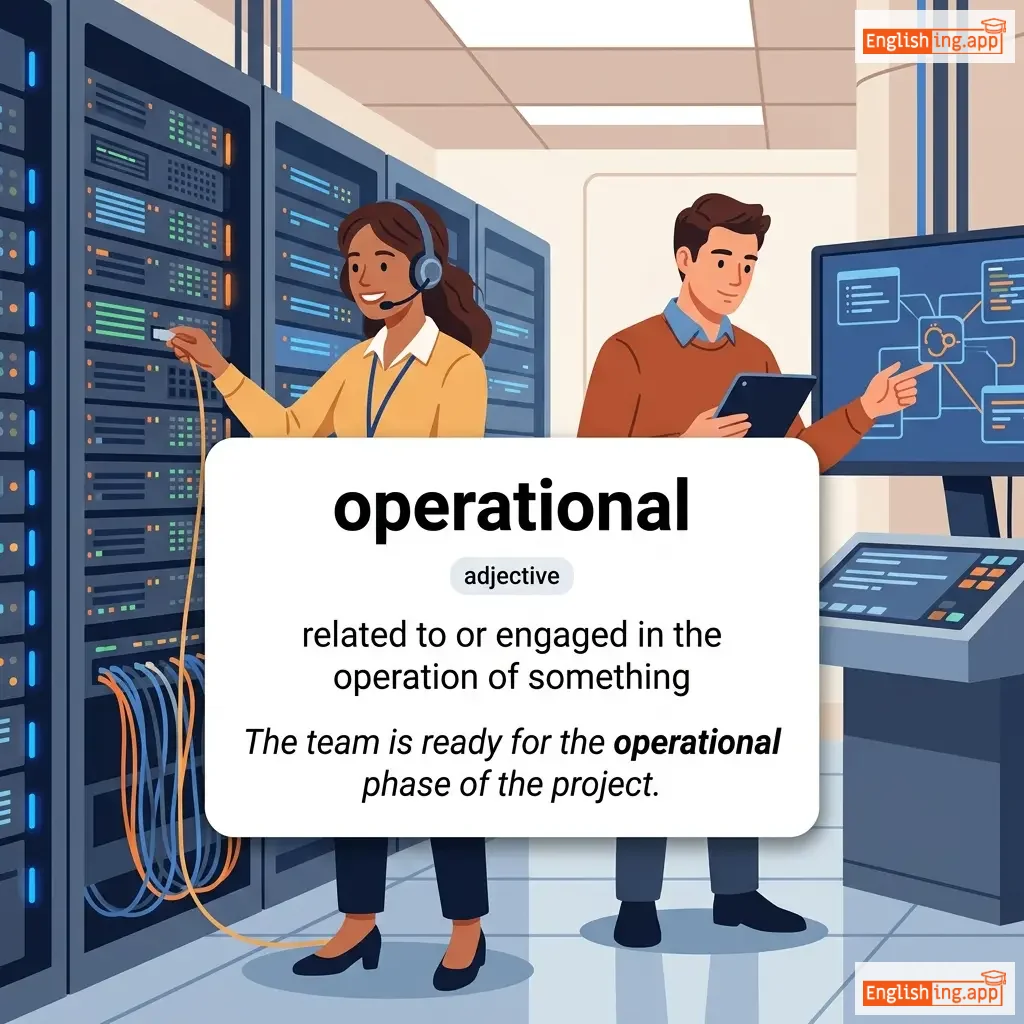
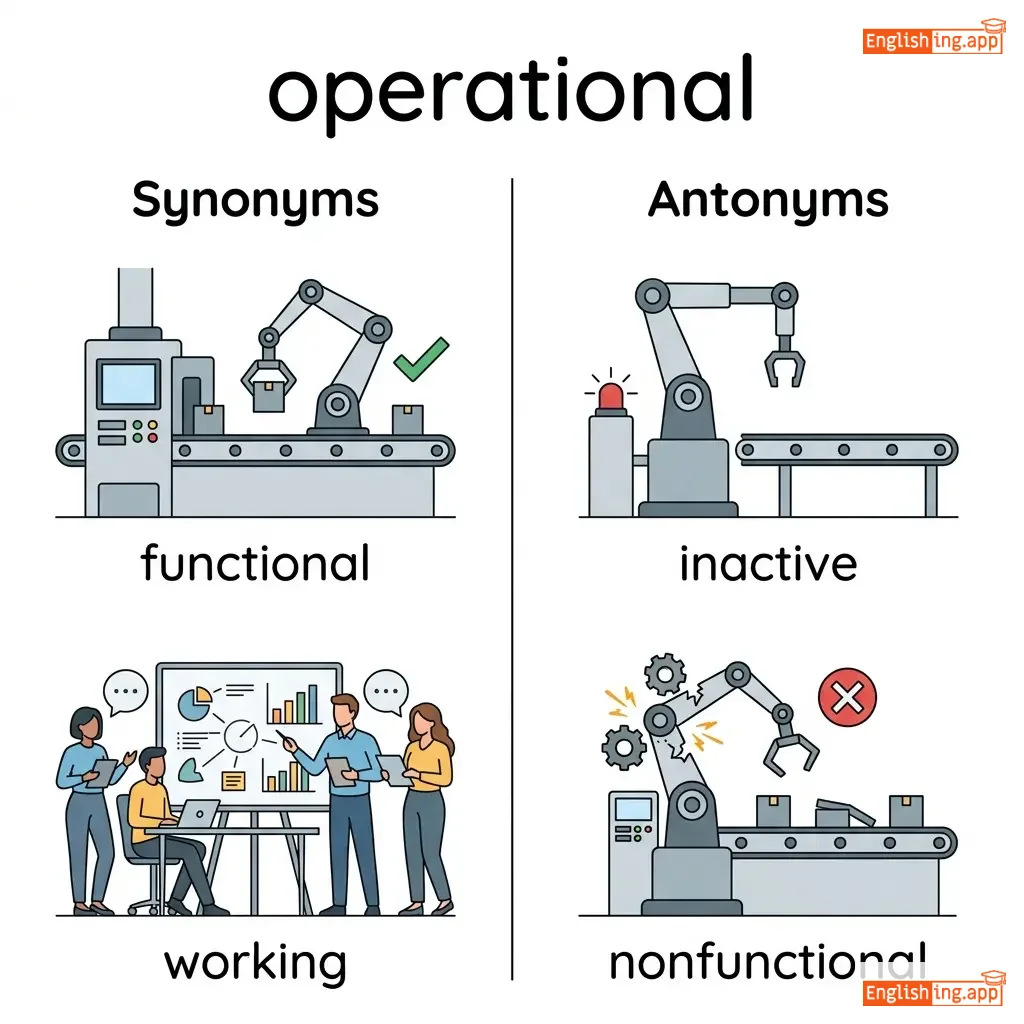
related to or engaged in the operation of something
••••••
|
The team is ready for the operational phase of the project. |
Команда готова к операционному этапу проекта.
Komanda gotova k operatsionnomu etapu proyекта.
••••••
|
- •••••• | - •••••• | - •••••• |
functional, working, active, in operation
••••••
|
inactive, nonfunctional, idle
••••••
|
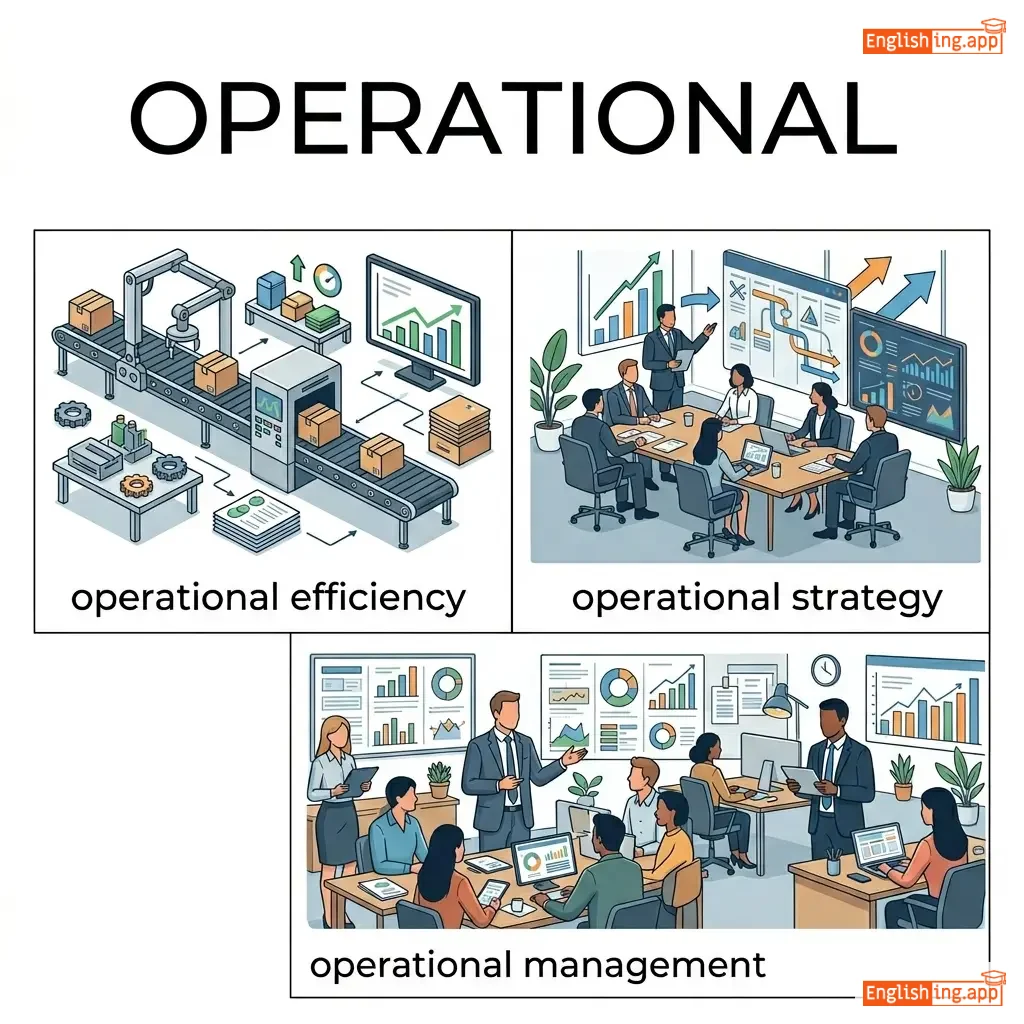
operational efficiency, operational strategy, operational management
••••••
|
Операционный означает связанный с работой, например, запускать процесс или выполнять задачу.
••••••
|
|
👷
••••••
|
/ˈɒpəreɪtər/
noun
(оперэйтор)
••••••
|
- •••••• |
оператор
operator
••••••
|
- •••••• | - •••••• | - •••••• | - •••••• |
a person who operates equipment, a business, or controls something
••••••
|
The machine operator ensured that everything ran smoothly. |
Оператор машины обеспечил, чтобы всё работало гладко.
Operator mashiny obespechil, chtoby vsyo rabotalo gladko.
••••••
|
smooth operator |
a person who is skilled at handling situations or people
••••••
|
опытный оператор
opytnyy operator
••••••
|
controller, handler, machinist, agent, technician
••••••
|
novice, amateur, beginner
••••••
|
machine operator, telephone operator, skilled operator, smooth operator
••••••
|
Оператор: тот, кто управляет и контролирует.
••••••
|
|
💭
••••••
|
/əˈpɪnjən/
noun
(опинион)
••••••
|
- •••••• |
мнение
mneniye
••••••
|
- •••••• | - •••••• | - •••••• | - •••••• |
A belief, judgment, or viewpoint about something, not necessarily based on fact.
••••••
|
Everyone is entitled to their own opinion. |
Каждый имеет право на собственное мнение.
Kazhdyy imeyet pravo na sobstvennoe mneniye.
••••••
|
in my opinion |
used to express one's personal view or belief
••••••
|
по моему мнению
po moyemu mneniyu
••••••
|
view, belief, perspective, judgment, sentiment
••••••
|
fact, truth, certainty
••••••
|
public opinion, express an opinion, personal opinion, strong opinion
••••••
|
Мнение: ‘open in’ для раскрытия идеи — у каждого есть свое мнение.
••••••
|
|
🤼
••••••
|
/əˈpoʊnənt/
noun
(счастье)
••••••
|
- •••••• |
счастье
schast'ye
••••••
|
- •••••• | - •••••• | - •••••• | - •••••• |
A person who competes against or disagrees with another.
••••••
|
The boxer defeated his opponent in the final round. |
Она не могла скрыть своего счастья, когда получила награду.
Ona ne mogla skryt' svoego schast'ya, kogda poluchila nagradu.
••••••
|
worthy opponent |
a rival who is strong and deserves respect
••••••
|
поиск счастья
poisk schast'ya
••••••
|
rival, adversary, competitor, challenger
••••••
|
ally, supporter, partner
••••••
|
political opponent, main opponent, worthy opponent, face an opponent
••••••
|
Счастье — всегда ищи счастье в каждом моменте жизни!
••••••
|
|
🌟
••••••
|
/ˌɒp.əˈtjuː.nə.ti/
noun
(оппортьюнити)
••••••
|
- •••••• |
возможность
vozmozhnost
••••••
|
- •••••• | - •••••• | - •••••• | - •••••• |
A favorable chance or set of circumstances that makes it possible to do something.
••••••
|
She seized the opportunity to study abroad. |
Она воспользовалась возможностью учиться за границей.
Ona vospol'zovalas' vozmozhnost'yu uchit'sya za granitsey.
••••••
|
once in a lifetime opportunity |
A very rare and unique chance that may never happen again.
••••••
|
единственная возможность в жизни
yedinственная vozmozhnost' v zhizni
••••••
|
chance, prospect, possibility, option, occasion
••••••
|
misfortune, disadvantage, obstacle
••••••
|
golden opportunity, missed opportunity, career opportunity, business opportunity
••••••
|
Возможность не ждёт, её нужно ловить!
••••••
|
|
✊
••••••
|
/əˈpoʊz/
verb
(оппонировать)
••••••
|
|
опротестовать
oprotestovat'
••••••
|
opposed
оппонировал
••••••
|
opposed
оппонировал
••••••
|
opposes
оппонирует
••••••
|
opposing
оппонируя
••••••
|
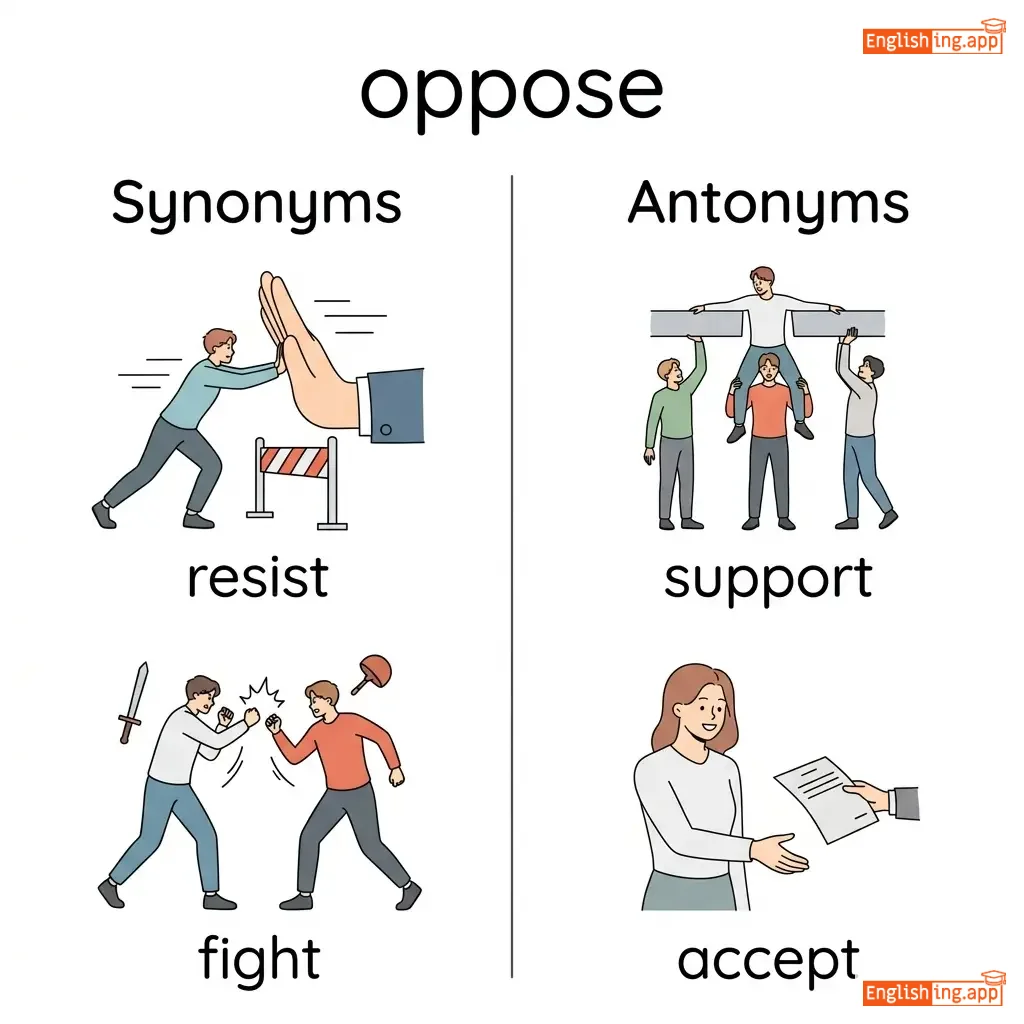
to disagree with or resist; to act against
••••••
|
Many citizens oppose the new tax policy.
Многие граждане против новой налоговой политики.
••••••
|
Многие граждане против новой налоговой политики.
Mnogie grazhdane protiv novoy nalogovoy politiki.
••••••
|
- •••••• | - •••••• | - •••••• |
resist, object, counter, protest
••••••
|
support, agree, approve, endorse
••••••
|
strongly oppose, actively oppose, oppose plans, oppose changes, oppose policy
••••••
|
Опротестовать = Сопротивляться с силой
••••••
|
|
↔️
••••••
|
/ˈɒp.əz.ɪt/
adjective
(опозит)
••••••
|
- •••••• |
противоположный
protivopolozhny
••••••
|
- •••••• | - •••••• | - •••••• | - •••••• |
Completely different; on the other side or facing something.
••••••
|
The two houses are on opposite sides of the street. |
Два дома находятся на противоположных сторонах улицы.
Dva doma nakhodyatsya na protivopolozhnykh storonakh ulitsy.
••••••
|
polar opposite |
Something or someone that is completely different from another.
••••••
|
полярный противоположный
polyarnyy protivopolozhnyy
••••••
|
contrary, reverse, contrasting, antithetical
••••••
|
similar, same, identical
••••••
|
opposite direction, opposite side, exact opposite, complete opposite
••••••
|
Противоположный — это значит совершенно другой, как полярный противоположный.
••••••
|
|
✊
••••••
|
/ˌɒpəˈzɪʃən/
noun
(оппозиция)
••••••
|
- •••••• |
оппозиция
oppozitsiya
••••••
|
- •••••• | - •••••• | - •••••• | - •••••• |
the action of opposing or resisting something
••••••
|
The opposition to the new law was strong. |
Оппозиция новому закону была сильной.
Oppozitsiya novomu zakonu byla sil'noy.
••••••
|
- •••••• | - •••••• | - •••••• |
resistance, defiance, objection, protest
••••••
|
support, cooperation
••••••
|
political opposition, strong opposition, fierce opposition, lead the opposition
••••••
|
Запомните ‘оппозиция’ как противостояние.
••••••
|
|
🫴
••••••
|
/ɒpt/
verb
(опт)
••••••
|
- •••••• |
выбирать
vybirat'
••••••
|
opted
оптед
••••••
|
opted
оптед
••••••
|
opts
оптс
••••••
|
opting
оптинг
••••••
|
to choose or decide to do something instead of something else
••••••
|
Many students opt to study abroad for better opportunities.
многие студенты выбирают учебу за границей для лучших возможностей.
••••••
|
Многие студенты выбирают учёбу за границей ради лучших возможностей.
Mnogie studenty vybiraют uchyobu za granitsey radi luchshikh vozmozhnostey.
••••••
|
opt for
опт фор
••••••
|
to choose one thing instead of another
••••••
|
выбрать
vybrat'
••••••
|
choose, select, decide, pick, prefer
••••••
|
reject, decline, refuse
••••••
|
opt for, opt out, opt in, opt against
••••••
|
Opt от option — выбрать, значит опт.
••••••
|
|
👁️
••••••
|
/ˈɒptɪkəl/
adjective
(оптикал)
••••••
|
- •••••• |
оптический
opticheskiy
••••••
|
- •••••• | - •••••• | - •••••• | - •••••• |
related to or used in seeing or sight
••••••
|
The optical illusion fooled everyone at the exhibition. |
Оптическая иллюзия обманула всех на выставке.
Opticheskaya illuziya obmanula vsekh na vystavke.
••••••
|
- •••••• | - •••••• | - •••••• |
visual, sight, eye-related, optical
••••••
|
non-visual, invisible
••••••
|
optical illusion, optical lens, optical device
••••••
|
Оптический относится к зрению, как оптические очки.
••••••
|
|
🌞
••••••
|
/ˈɒptɪmɪzəm/
noun
(оптимизм)
••••••
|


|
оптимизм
optimizm
••••••
|
- •••••• | - •••••• | - •••••• | - •••••• |
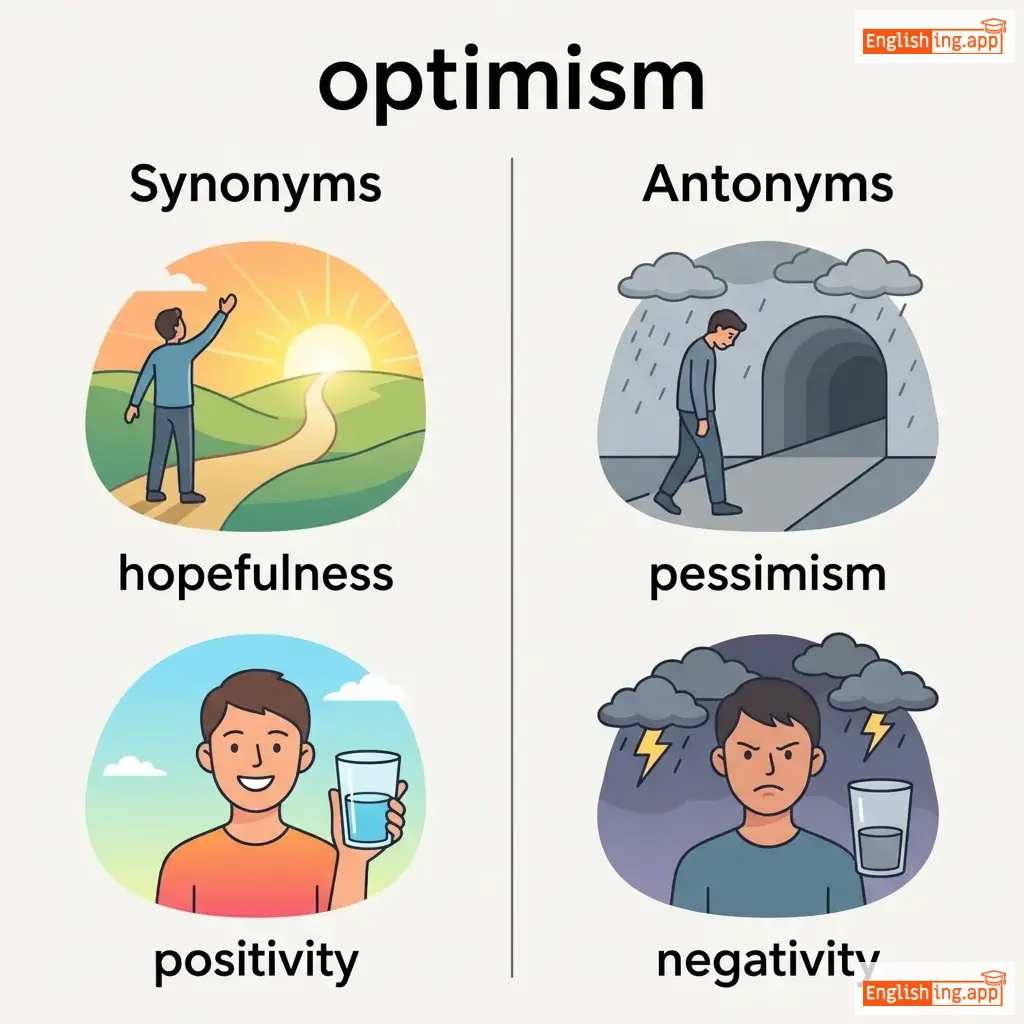
Hopefulness and confidence about the future.
••••••
|
Her optimism kept the team motivated during tough times. |
Её оптимизм мотивировал команду в трудные времена.
Yeyo optimizm motiviroval komandu v trudnye vremena.
••••••
|
glass half full |
an optimistic way of looking at things
••••••
|
стакан наполовину полный
stakan napolovinu polnyy
••••••
|
hopefulness, positivity, confidence, cheerfulness
••••••
|
pessimism, negativity
••••••
|
show optimism, optimism about future, optimism level, optimism grows
••••••
|
Оптимизм - это всегда думать позитивно 🌞
••••••
|
|
🌞
••••••
|
/ˌɑːp.təˈmɪs.tɪk/
adjective
(оптимистик)
••••••
|
- •••••• |
оптимистичный
optimistichnyy
••••••
|
- •••••• | - •••••• | - •••••• | - •••••• |
hopeful and confident about the future
••••••
|
She is optimistic about the success of her new project. |
Она оптимистична относительно успеха своего нового проекта.
Ona optimistichna otnositel'no uspekha svoego novogo proyektu.
••••••
|
glass half full |
viewing a situation positively
••••••
|
половина стакана полна
polovina stakana polna
••••••
|
hopeful, positive, confident, cheerful, upbeat
••••••
|
pessimistic, doubtful, hopeless
••••••
|
optimistic view, optimistic outlook, optimistic about, remain optimistic
••••••
|
ОПТИМИСТИЧНЫЙ значит 'полный надежды' 🌞 — запомните, 'optimist' на английском языке это 'оптимистичный'.
••••••
|
|
⚖️
••••••
|
/ˈɒpʃən/
noun
(optsiya)
••••••
|
- •••••• |
опция
optsiya
••••••
|
- •••••• | - •••••• | - •••••• | - •••••• |
A choice or possibility available among alternatives.
••••••
|
You have the option to pay by card or cash. |
У вас есть возможность оплатить картой или наличными.
U vas yest' vozmozhnost' oplatit' kartoy ili nalichnymi.
••••••
|
keep your options open |
Avoid committing to one choice too early.
••••••
|
Держите свои варианты открытыми
Derzhite svoi varianty otkrytymi
••••••
|
choice, alternative, possibility, selection, preference
••••••
|
obligation, compulsion, necessity
••••••
|
have option, choose option, better option
••••••
|
Опция - это как выбор из нескольких вариантов в ситуации.
••••••
|
|
❓
••••••
|
/ɔːr/
conjunction
(ор)
••••••
|
- •••••• |
или
ili
••••••
|
- •••••• | - •••••• | - •••••• | - •••••• |
used to link alternatives
••••••
|
You can have tea or coffee.
Вы можете пить чай или кофе.
••••••
|
Вы можете пить чай или кофе.
Vy mozhete pit' chai ili kofe.
••••••
|
- •••••• | - •••••• | - •••••• |
either, alternatively
••••••
|
neither
••••••
|
tea or coffee, this or that, yes or no
••••••
|
или (or) означает выбор между двумя вариантами, как чай или кофе.
••••••
|
|
🗣️
••••••
|
/ˈɔːrəl/
adjective
(орал)
••••••
|
- •••••• |
устный
ustny
••••••
|
- •••••• | - •••••• | - •••••• | - •••••• |
Spoken rather than written; relating to the mouth
••••••
|
The student had to give an oral presentation. |
Студент должен был провести устную презентацию.
Student dolzhen byl provesti ustnuyu prezentatsiyu.
••••••
|
oral tradition |
Cultural knowledge and stories passed down by word of mouth
••••••
|
устная традиция
ustnaya traditsiya
••••••
|
spoken, verbal, vocal, articulated
••••••
|
written, documented, recorded
••••••
|
oral presentation, oral exam, oral tradition, oral hygiene
••••••
|
Oral означает устный, устный экзамен = устное задание.
••••••
|
|
🎻
••••••
|
/ˈɔːkɪstrə/
noun
(оркестр)
••••••
|
- •••••• |
оркестр
orkestr
••••••
|
- •••••• | - •••••• | - •••••• | - •••••• |
a large group of musicians playing different instruments together
••••••
|
The orchestra performed beautifully at the concert. |
Оркестр прекрасно выступил на концерте.
Orkestr prekrasno vystupil na kontserte.
••••••
|
- •••••• | - •••••• | - •••••• |
ensemble, band, symphony, musical group
••••••
|
solo, individual performance
••••••
|
orchestra performance, orchestra conductor, orchestra pit
••••••
|
Оркестр — это когда все музыканты создают гармонию вместе.
••••••
|
|
📋
••••••
|
/ˈɔːrdər/
verb
(ордер)
••••••
|
|
приказывать
prikazyvat
••••••
|
ordered
ордерд
••••••
|
ordered
ордерд
••••••
|
orders
ордерс
••••••
|
ordering
ордеринг
••••••
|
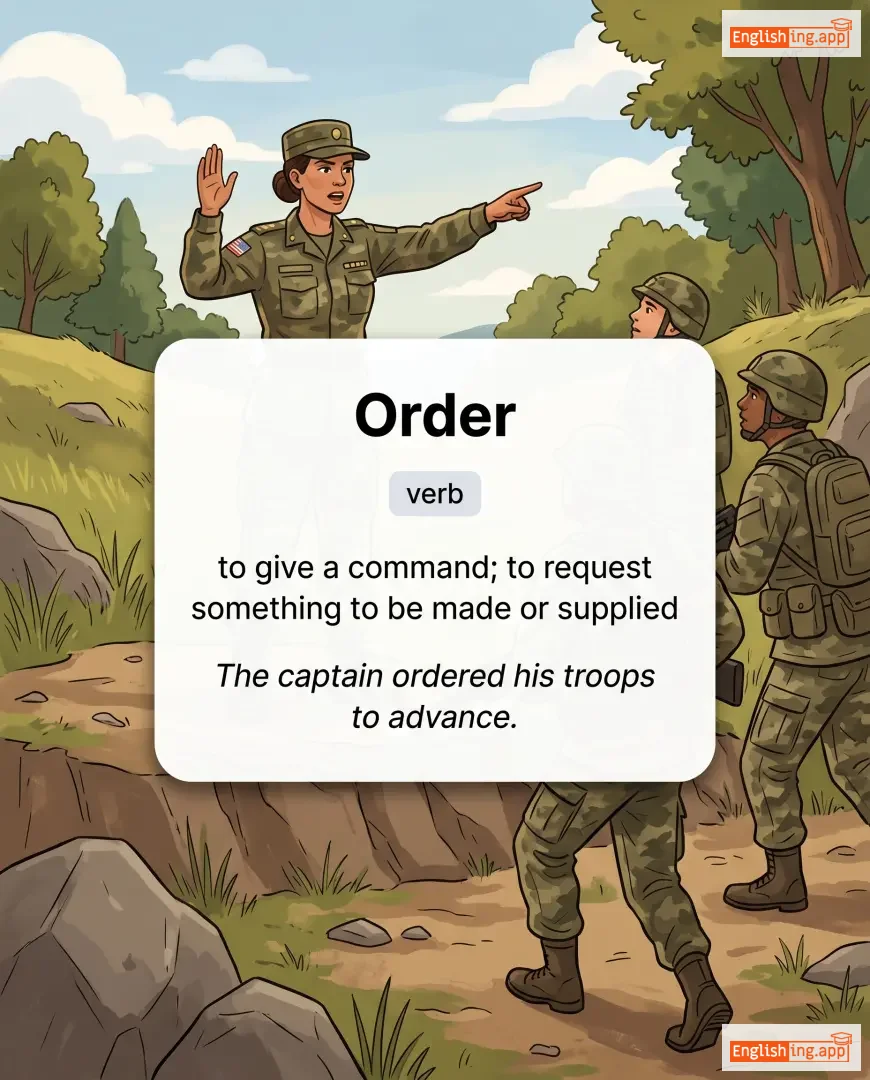
to give a command; to request something to be made or supplied
••••••
|
The captain ordered his troops to advance.
Капитан отдал приказ своим солдатам двигаться вперёд.
••••••
|
Капитан отдал приказ своим солдатам двигаться вперёд.
Kapitan otdal prikaz svoim soldatam dvigat'sya vperyod
••••••
|
- •••••• | - •••••• | - •••••• |
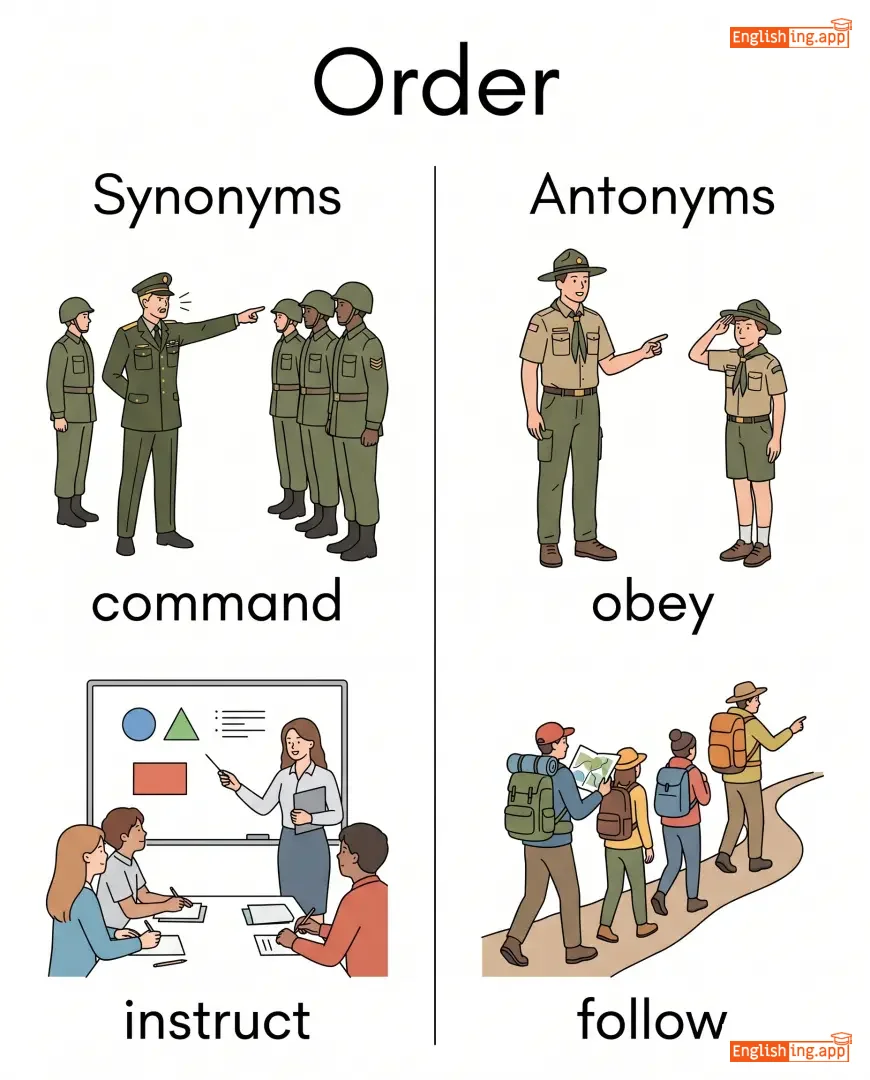
command, instruct, direct, request
••••••
|
obey, follow, comply, submit
••••••
|
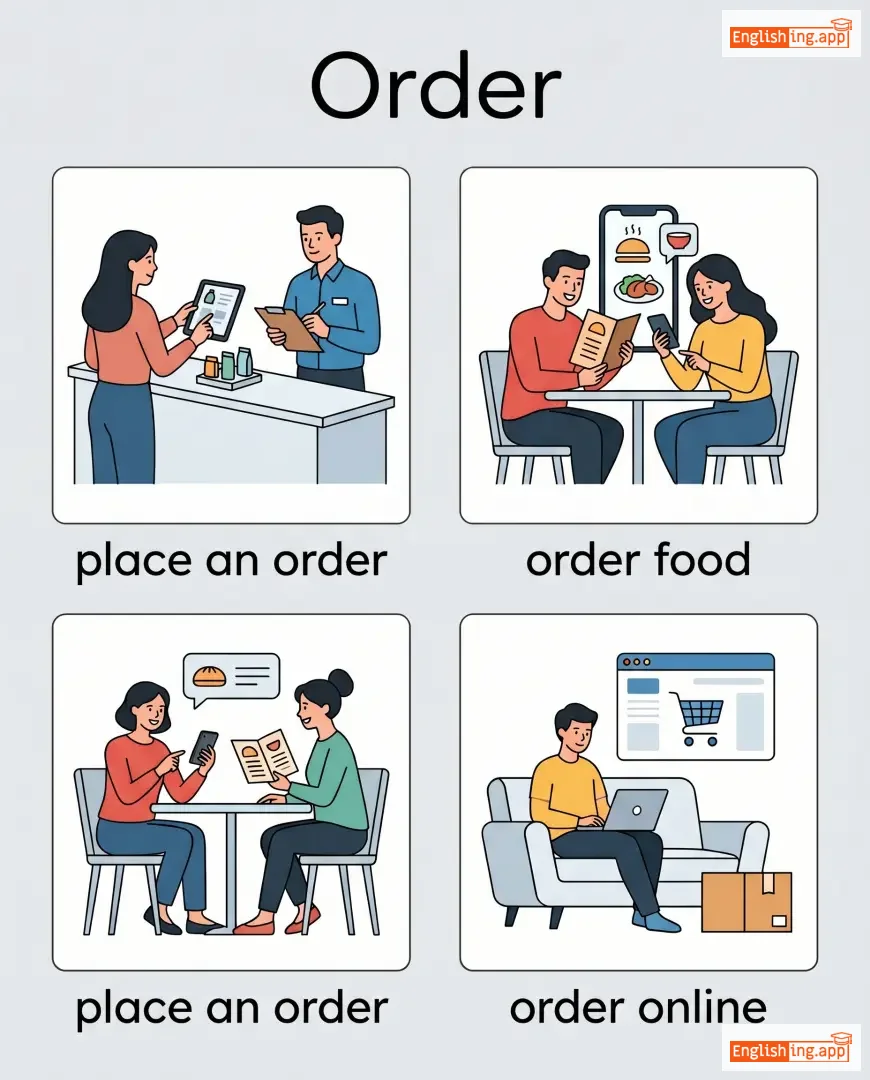
place an order, order food, order online, standing order, order of business
••••••
|
Russian word 'приказывать' reminds of giving strict orders, like a commander.
••••••
|
|
📘
••••••
|
/ˈɔːrdəˌnɛri/
adjective
(орди-нари)
••••••
|
- •••••• |
обычный
obychny
••••••
|
- •••••• | - •••••• | - •••••• | - •••••• |
Common, usual, or not special; something that happens regularly.
••••••
|
She wore an ordinary dress to the party. |
Она носила обычное платье на вечеринку.
Ona nosila obychnoye plat'ye na vecherinku.
••••••
|
out of the ordinary |
Something unusual or different from what is normal.
••••••
|
вне обычного
vne obychnogo
••••••
|
common, usual, regular, normal, typical
••••••
|
extraordinary, exceptional, unusual
••••••
|
ordinary life, ordinary people, ordinary day, ordinary circumstances
••••••
|
‘Ordinary’ означает ‘порядок’ — всё в порядке, всё обычное.
••••••
|
|
🥦
••••••
|
/ɔːrˈɡænɪk/
adjective
(ɔːrˈɡænɪk)
••••••
|

|
органический
organicheskiy
••••••
|
- •••••• | - •••••• | - •••••• | - •••••• |
Relating to or derived from living matter; produced without artificial chemicals.
••••••
|
They prefer to eat organic fruits and vegetables. |
Они предпочитают есть органические фрукты и овощи.
Oni predpochitayut est' organicheskie frukty i ovoshchi.
••••••
|
organic growth |
Natural, gradual development without external force.
••••••
|
органический рост
organicheskiy rost
••••••
|
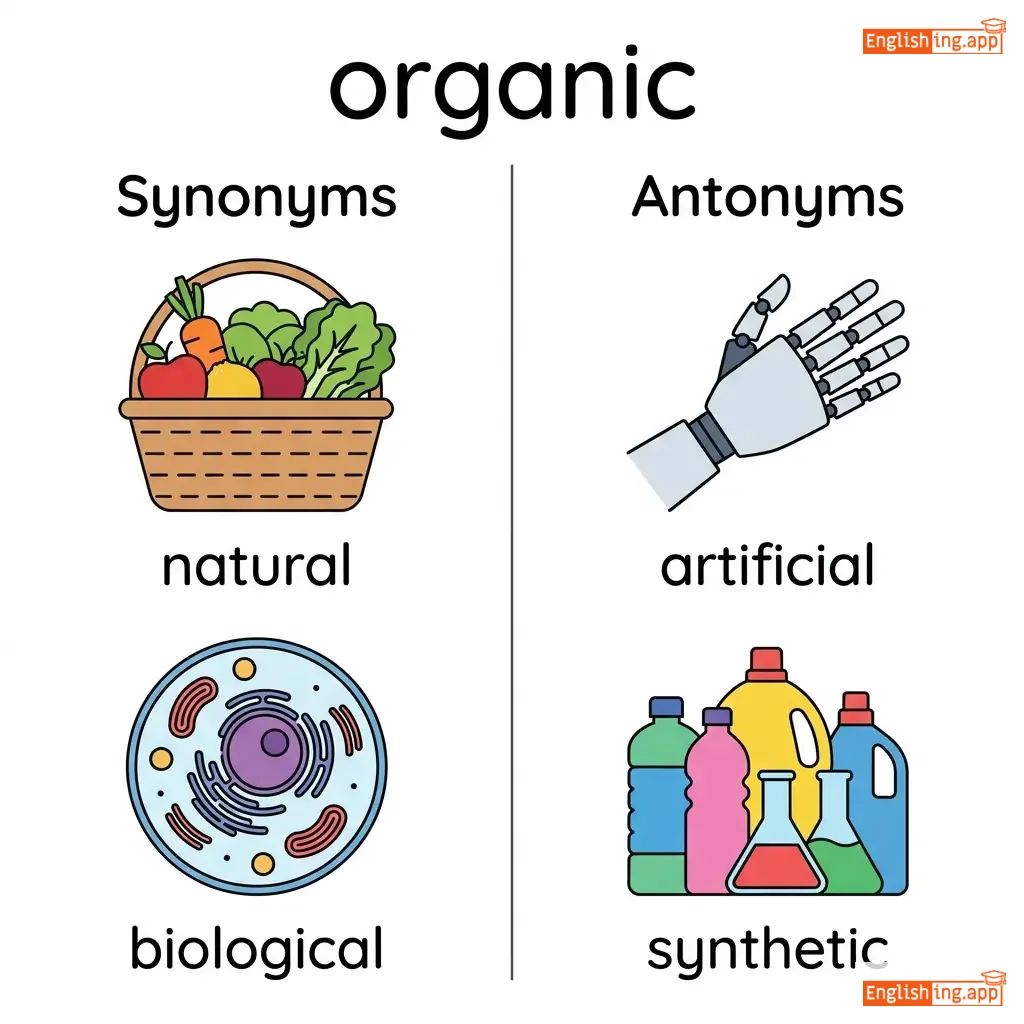
natural, biological, ecological, pure
••••••
|
artificial, synthetic, chemical
••••••
|
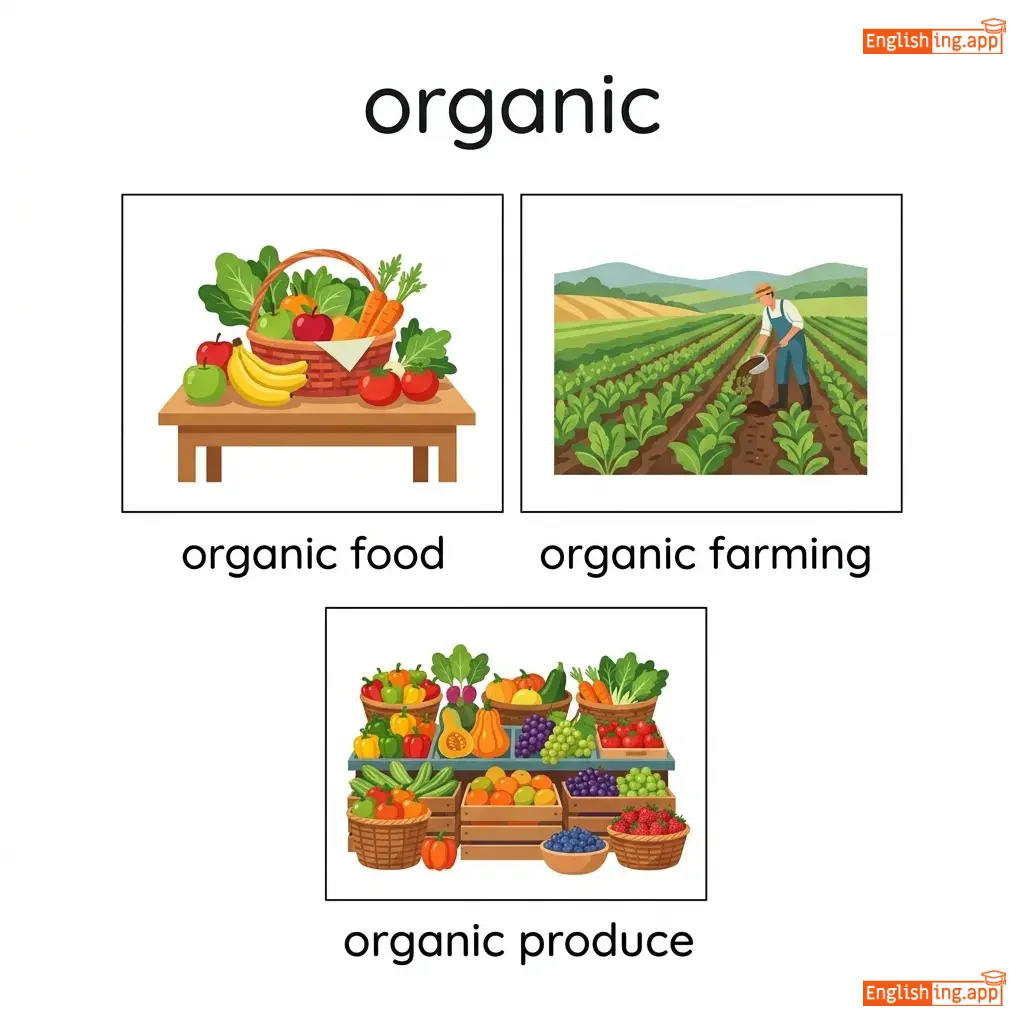
organic food, organic farming, organic produce, organic material
••••••
|
Органический = как органические продукты, природные.
••••••
|
|
🏢
••••••
|
/ˌɔːɡənaɪˈzeɪʃn/
noun
(ɔːɡənaɪˈzeɪʃn)
••••••
|

|
организация
organizatsiya
••••••
|
- •••••• | - •••••• | - •••••• | - •••••• |
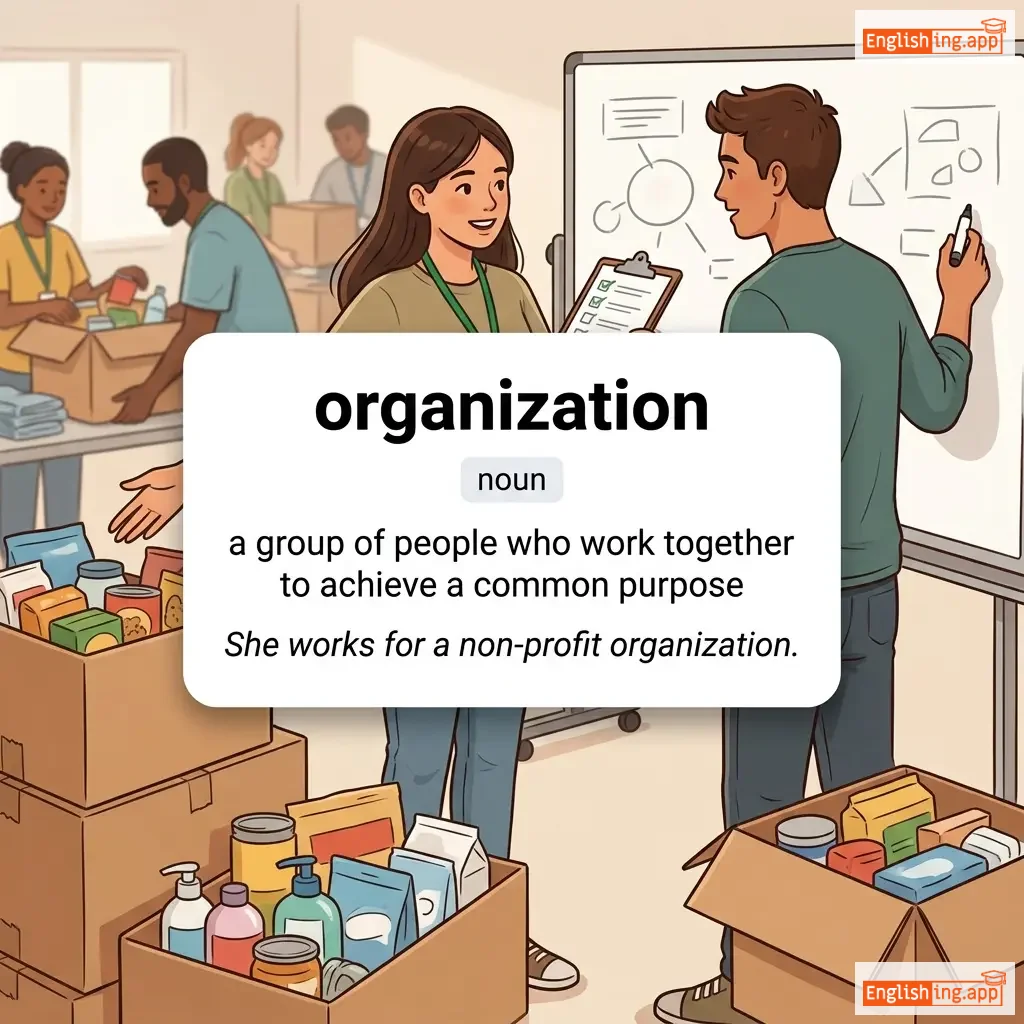
a group of people who work together to achieve a common purpose
••••••
|
She works for a non-profit organization. |
Она работает в некоммерческой организации.
Ona rabotayet v nekomecheskoy organizatsii.
••••••
|
- •••••• | - •••••• | - •••••• |
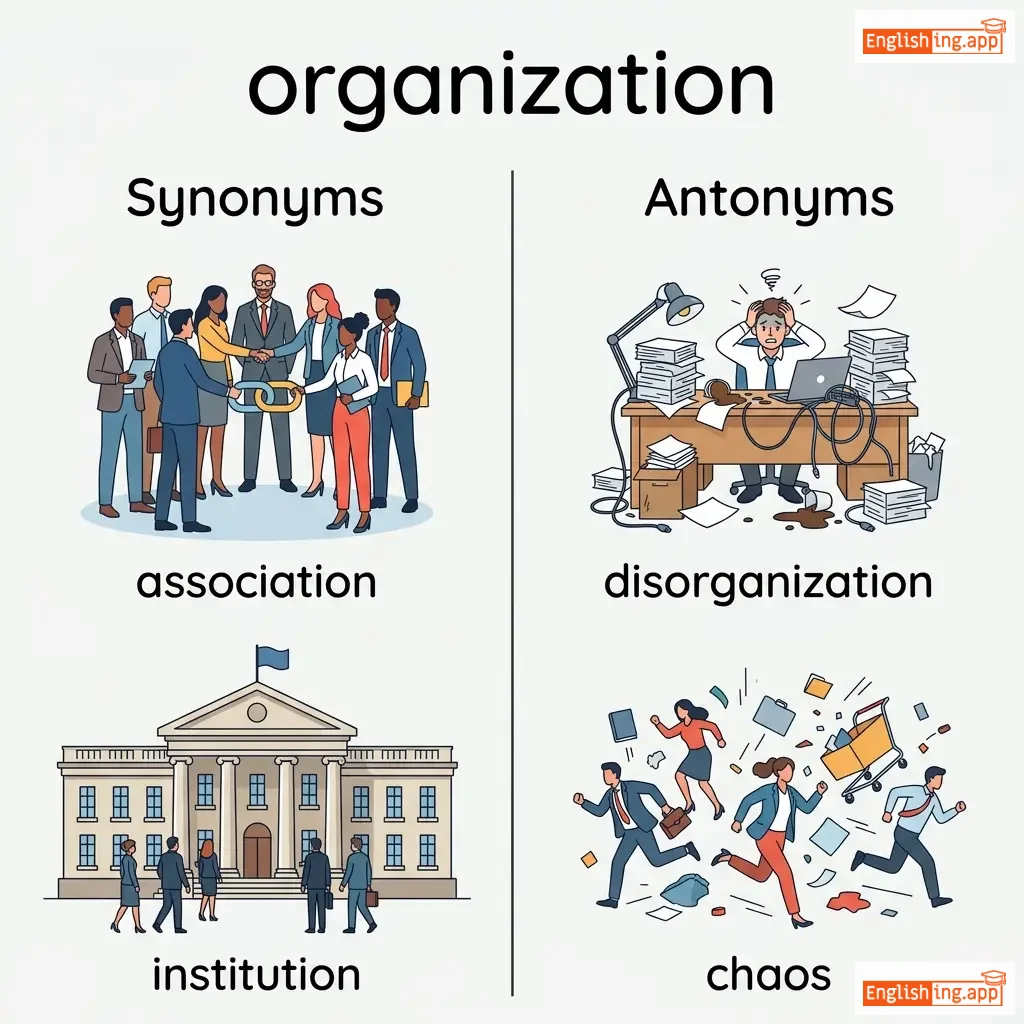
association, institution, group, establishment
••••••
|
disorganization, chaos
••••••
|
join an organization, non-profit organization, corporate organization
••••••
|
Организация - это когда все работают вместе!
••••••
|
|
🏢
••••••
|
/ˌɔːɡənaɪˈzeɪʃənəl/
adjective
(организационный)
••••••
|
- •••••• |
организационный
organizatsionny
••••••
|
- •••••• | - •••••• | - •••••• | - •••••• |
relating to the structure or arrangement of a company or group
••••••
|
He works on improving the organizational structure of the company. |
Он работает над улучшением организационной структуры компании.
On rabotaet nad uluchsheniem organizatsionnoj struktury kompanii.
••••••
|
- •••••• | - •••••• | - •••••• |
administrative, structural, managerial, corporate
••••••
|
disorganized, chaotic
••••••
|
organizational skills, organizational structure, organizational change, organizational behavior
••••••
|
Организация — это структура, а организационный — это связанный с этой структурой.
••••••
|
|
📅
••••••
|
/ˈɔːrɡənaɪz/
verb
(организовать)
••••••
|
|
организовать
organizovat
••••••
|
organized
организовал
••••••
|
organized
организован
••••••
|
organizes
организует
••••••
|
organizing
организуя
••••••
|
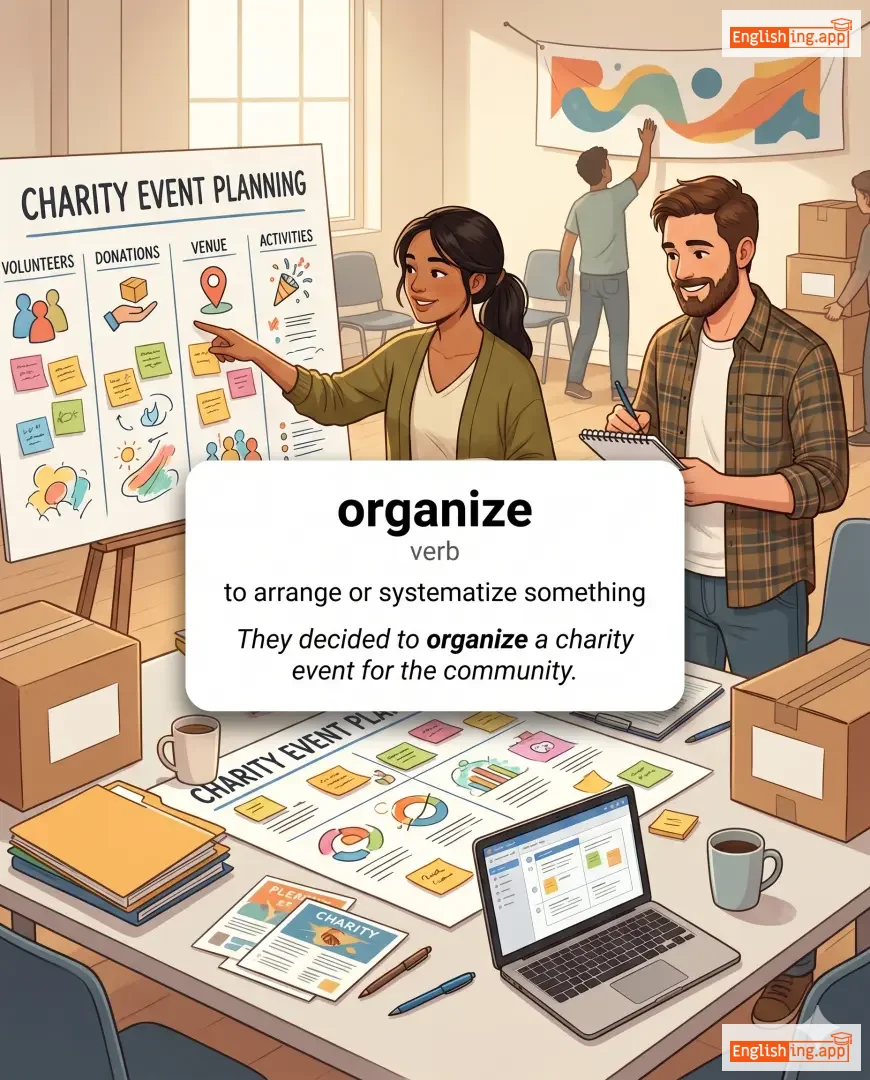
to arrange systematically; to plan and coordinate
••••••
|
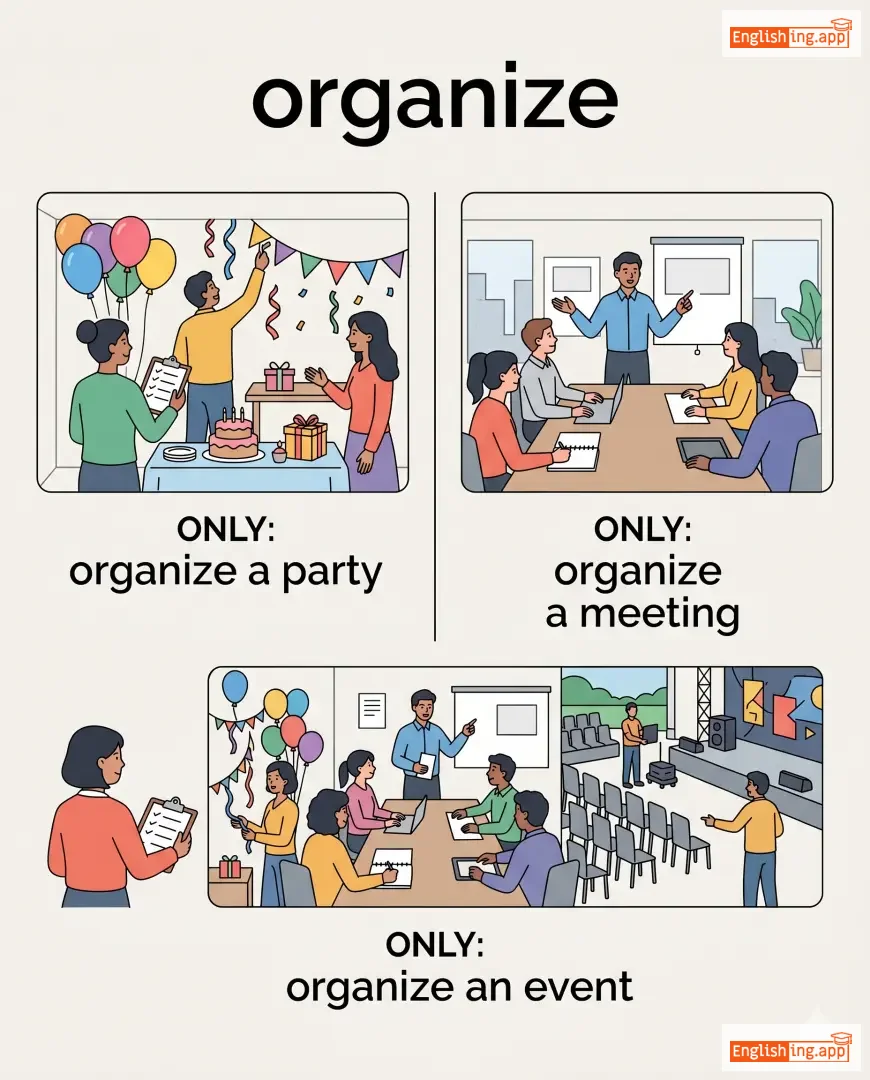
She organized a surprise party for her friend.
Она организовала сюрприз-вечеринку для своей подруги.
••••••
|
Она организовала сюрприз-вечеринку для своей подруги.
Ona organizovala syurpriz-vecherinku dlya svoey podrugi.
••••••
|
- •••••• | - •••••• | - •••••• |
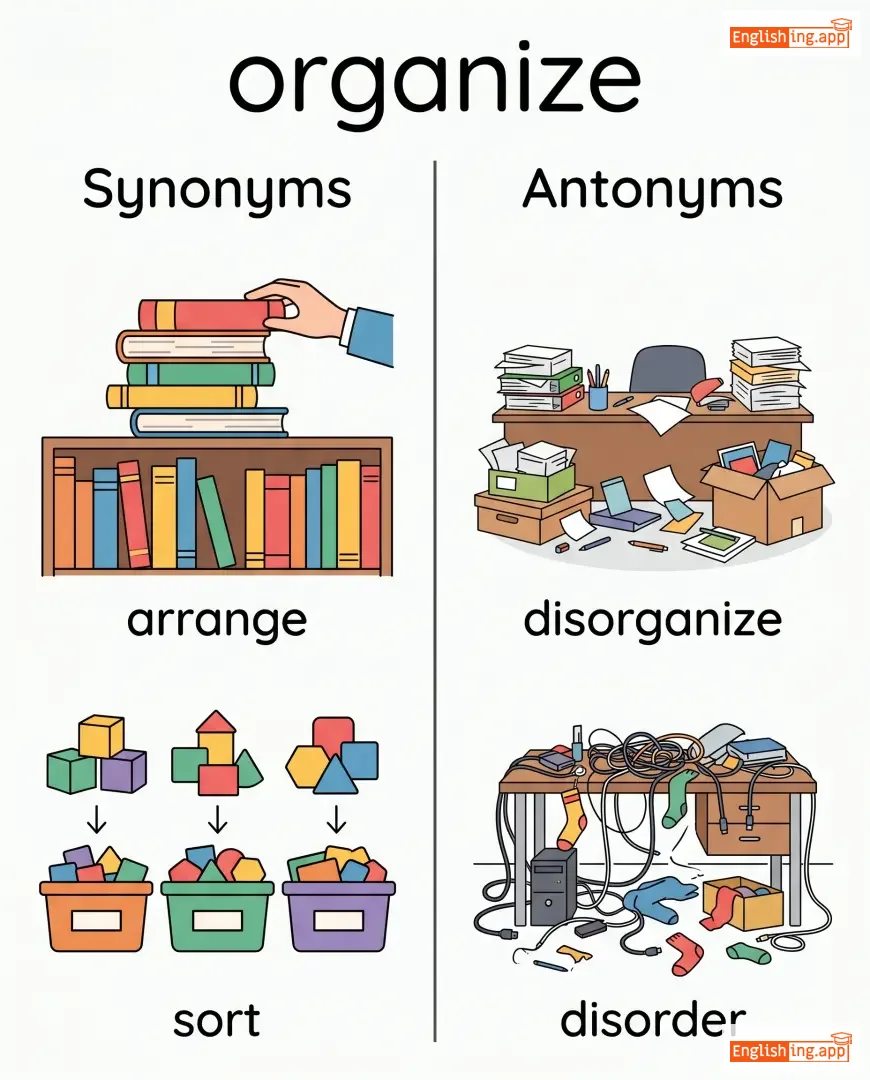
arrange, plan, coordinate, structure
••••••
|
disorganize, scatter, disorder, confuse
••••••
|
organize event, organize files, organize thoughts, well organized
••••••
|
Организовать – это как собрать всё в одном месте и по плану
••••••
|
|
📋
••••••
|
/ˈɔːrɡənaɪzd/
adjective
(органайзд)
••••••
|
|
организованный
organizovannyy
••••••
|
- •••••• | - •••••• | - •••••• | - •••••• |
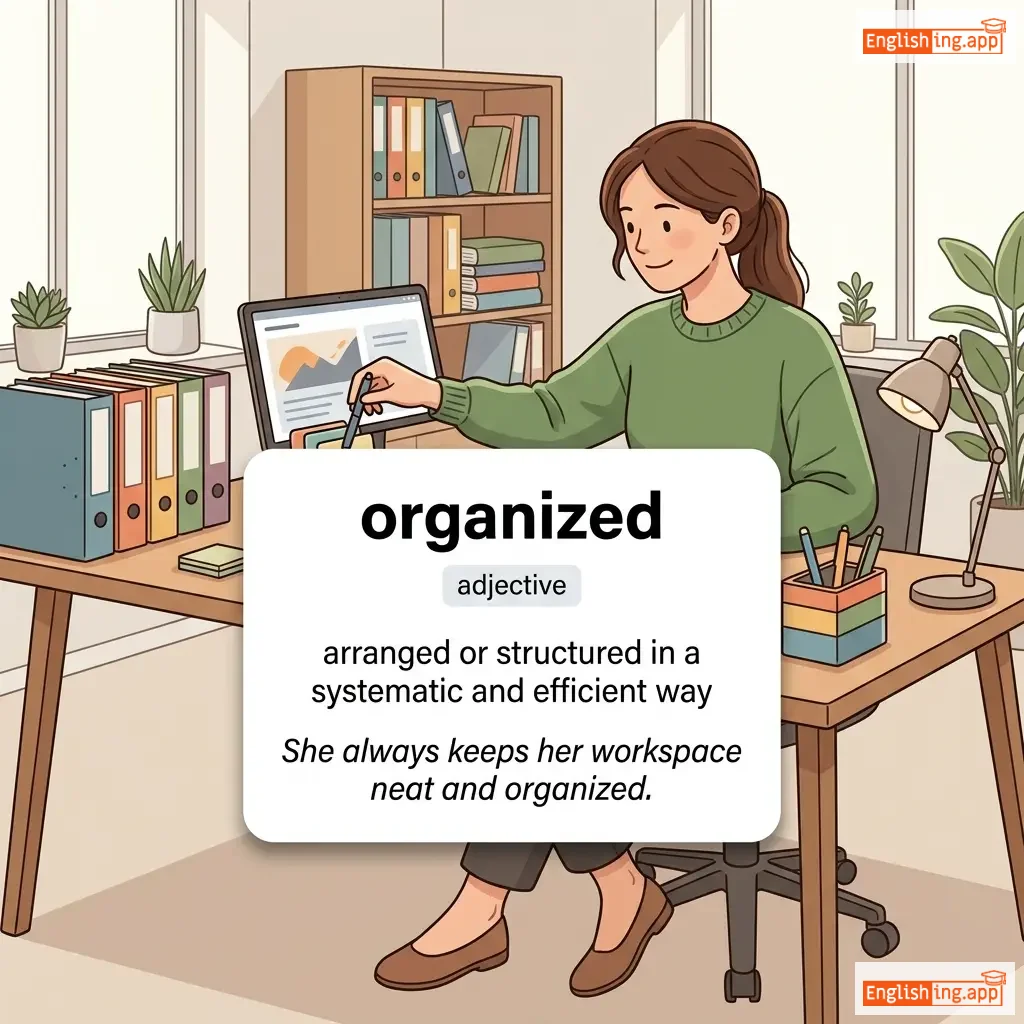
arranged or structured in a systematic and efficient way
••••••
|
She always keeps her workspace neat and organized. |
Она всегда держит свое рабочее место в порядке и организованным.
Ona vsegda derzhit svoe rabocheye mesto v poryadke i organizovannym.
••••••
|
organized chaos |
a situation that seems messy but actually functions efficiently
••••••
|
организованный хаос
organizovannyy khaos
••••••
|
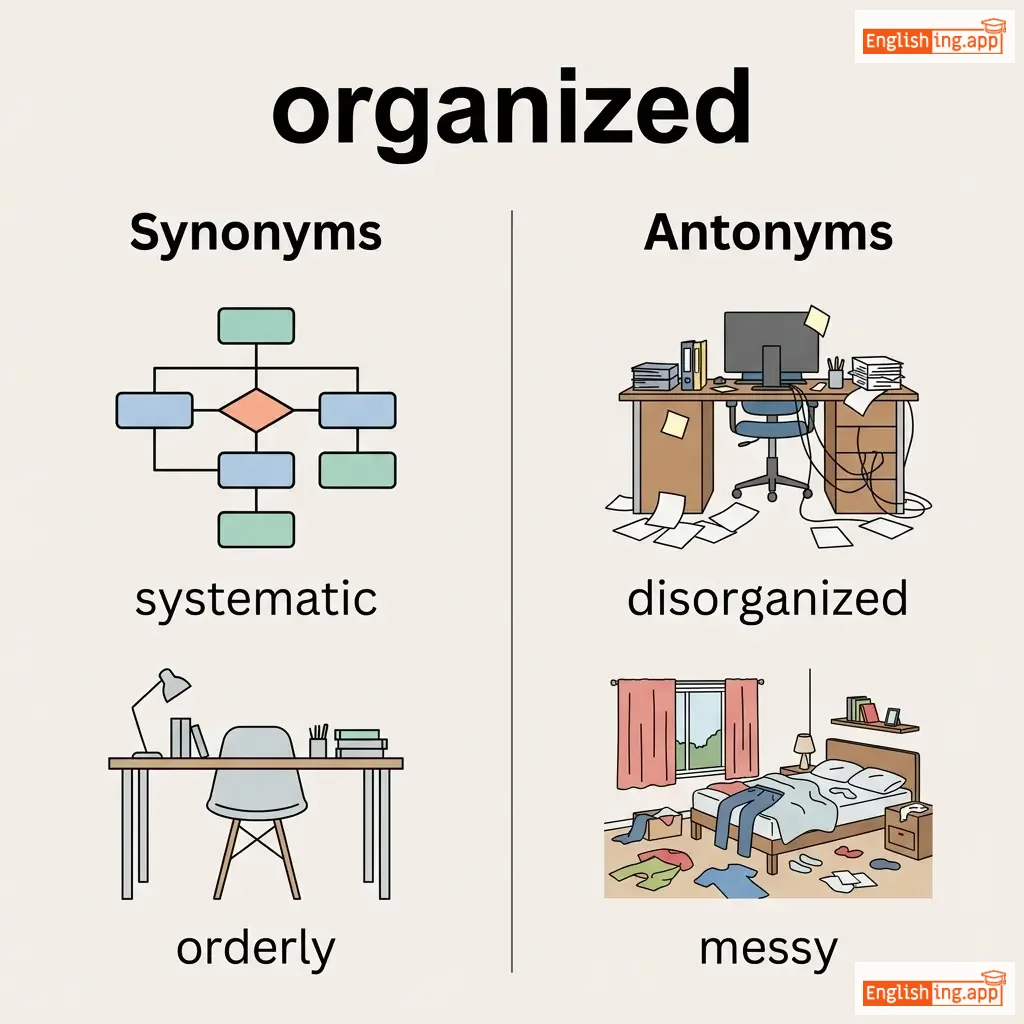
systematic, orderly, structured, methodical, disciplined
••••••
|
disorganized, messy, chaotic
••••••
|
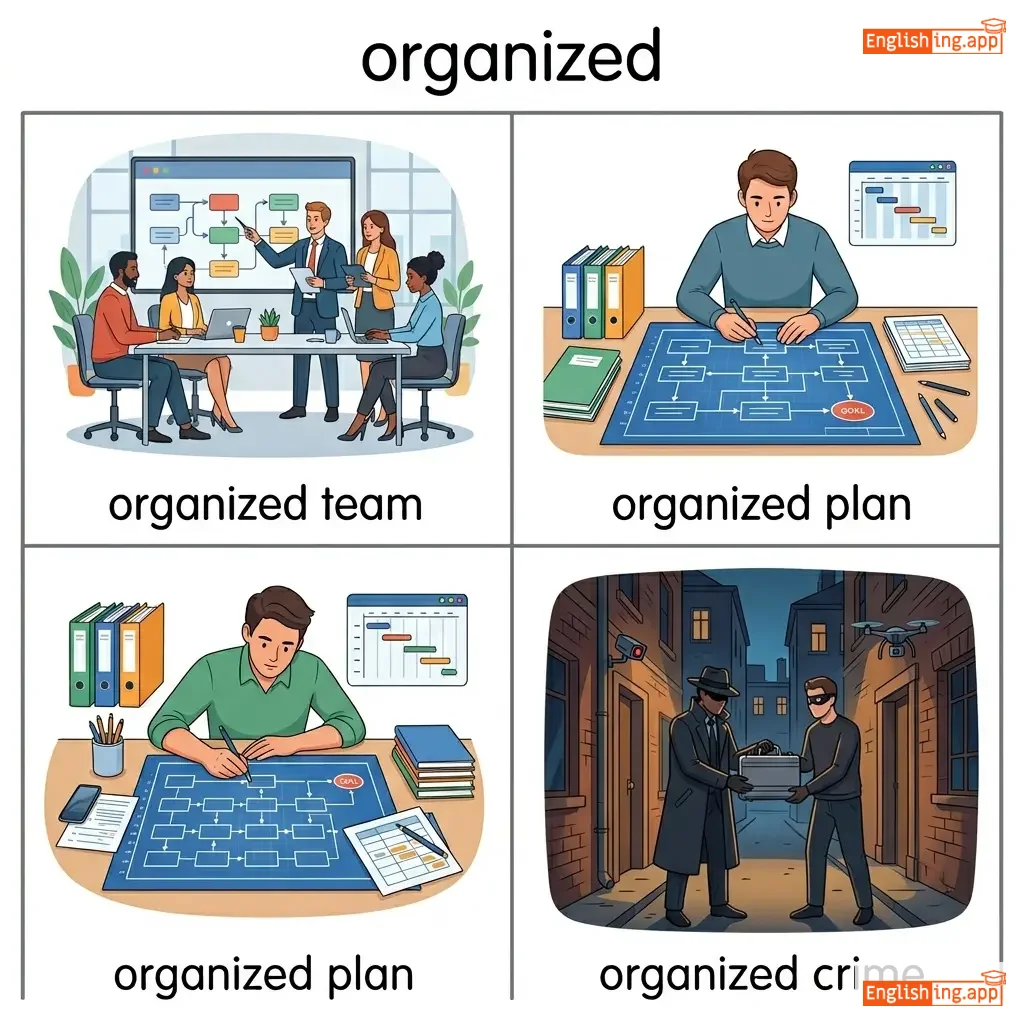
organized team, organized plan, organized crime, well-organized
••••••
|
Когда всё организовано, всё работает как швейцарские часы.
••••••
|
|
📋
••••••
|
/ˈɔːrɡənaɪzər/
noun
(органайзер)
••••••
|
- •••••• |
организатор
organizator
••••••
|
- •••••• | - •••••• | - •••••• | - •••••• |
a person who arranges or coordinates activities, events, or groups; a tool or item used to keep things in order
••••••
|
She worked as the main organizer of the international conference.
Она была главным органайзером международной конференции.
••••••
|
Она была главным организатором международной конференции.
Ona byla glavnym organizatorom mezhdunarodnoy konferentsii
••••••
|
- •••••• | - •••••• | - •••••• |
coordinator, planner, arranger, manager, administrator
••••••
|
disorganizer, disruptor, mess-maker
••••••
|
event organizer, community organizer, professional organizer, meeting organizer
••••••
|
Organizer = организатор, почти одинаковое слово
••••••
|
|
📘
••••••
|
/ˌɔː.ri.enˈteɪ.ʃən/
noun
(ориентация)
••••••
|
- •••••• |
ориентация
orientatsiya
••••••
|
- •••••• | - •••••• | - •••••• | - •••••• |
the process of becoming familiar with a new situation or environment
••••••
|
The company provides an orientation for all new employees. |
Компания предоставляет ориентирование для всех новых сотрудников.
Kompaniya predostavlyayet orientirovaniye dlya vsekh novykh sotrudnikov.
••••••
|
new employee orientation |
a training session to introduce new workers to an organization
••••••
|
ориентация для новых сотрудников
orientatsiya dlya novykh sotrudnikov
••••••
|
introduction, initiation, training, induction, adjustment
••••••
|
confusion, disorientation
••••••
|
orientation session, orientation program, student orientation, cultural orientation
••••••
|
Orientation означает ориентация - когда ты приходишь в компанию, тебе проводят ориентацию 📘.
••••••
|
|
🌄
••••••
|
/ˈɒr.ɪ.dʒɪn/
noun
(ориджин)
••••••
|
- •••••• |
происхождение
proiskhozhdenie
••••••
|
- •••••• | - •••••• | - •••••• | - •••••• |
the point or place where something begins or is created
••••••
|
The river has its origin in the mountains.
Река берет свое начало в горах.
••••••
|
Река берет свое начало в горах.
Reka beret svoe nachalo v gorakh.
••••••
|
point of origin
точка происхождения
••••••
|
the place where something starts
••••••
|
точка происхождения
tochka proiskhozhdeniya
••••••
|
beginning, source, root, start, genesis
••••••
|
end, conclusion
••••••
|
country of origin, place of origin, origin story, unknown origin
••••••
|
Origin означает происхождение 🌄 — вспомни происхождение реки, и это поможет тебе запомнить слово.
••••••
|
|
✨
••••••
|
/əˈrɪdʒ.ɪ.nəl/
adjective
(ориджинал)
••••••
|
- •••••• |
оригинальный
original'nyy
••••••
|
- •••••• | - •••••• | - •••••• | - •••••• |
existing from the beginning; not a copy or imitation
••••••
|
This is the original manuscript of the novel. |
Это оригинальная рукопись романа.
Eto original'naya rukopis' romana.
••••••
|
original idea |
a new and creative thought that has not been copied
••••••
|
оригинальная идея
original'naya ideya
••••••
|
authentic, genuine, innovative, unique, creative
••••••
|
fake, imitation, duplicate
••••••
|
original idea, original design, original version, original work
••••••
|
Original означает оригинальный ✨ — в оригинальном фильме нет копий.
••••••
|
|
⏳
••••••
|
/əˈrɪdʒɪnəli/
adverb
(оригинально)
••••••
|
- •••••• |
изначально
iznachal'no
••••••
|
- •••••• | - •••••• | - •••••• | - •••••• |
in the beginning, at first
••••••
|
Originally, she wanted to be a doctor. |
Изначально она хотела стать врачом.
Iznachal'no ona hotela stat' vrachom.
••••••
|
- •••••• | - •••••• | - •••••• |
initially, at first, at the outset, in the beginning
••••••
|
finally, ultimately
••••••
|
originally from, originally intended, originally planned
••••••
|
Изначально всё начиналось с желания, которое могло измениться.
••••••
|
|
🌱
••••••
|
/əˈrɪdʒɪneɪt/
verb
(orizineit)
••••••
|
- •••••• |
возникать
voznikat
••••••
|
originated
orizineited
••••••
|
originated
orizineited
••••••
|
originates
orizineits
••••••
|
originating
orizineiting
••••••
|
to come into existence; to begin; to create or produce
••••••
|
The tradition originated in ancient times.
Традиция возникла в древние времена.
••••••
|
Традиция возникла в древние времена.
Tradicija voznikla v drevnie vremena.
••••••
|
originate from
происходить от
••••••
|
to come from a particular place or source
••••••
|
происходить от
proiskhodit ot
••••••
|
begin, arise, emerge, derive, start
••••••
|
end, finish, conclude
••••••
|
originate idea, originate from, originate request, originate concept
••••••
|
Origin означает начало, а originate означает возникать 🌱
••••••
|
|
🔄
••••••
|
/ˈʌðər/
adjective
(адер)
••••••
|
- •••••• |
другой
drugoy
••••••
|
- •••••• | - •••••• | - •••••• | - •••••• |
used to refer to something different from the one already mentioned or known
••••••
|
I don't want this one, I will take the other one. |
Я не хочу это, я возьму другое.
Ya ne khochu eto, ya voz'mu drugoye.
••••••
|
the other side of the coin |
the opposite aspect of a situation
••••••
|
другая сторона медали
drugaya storona medali
••••••
|
alternative, different, another, else
••••••
|
same, identical
••••••
|
the other side, the other person, the other day
••••••
|
Other, для всего есть своя альтернатива!
••••••
|

