Station Theater Workshop
Rajshahiの古いstationで今日、学生向けのドラマワークショップが開催されました。各sessionはライトチェックから始まりました。アーティストたちは手作業でバナーを掲げ、舞台のsettingを整えました。メインのspeakerはDhakaから来た劇作家でした。彼の話は非常にspecialで、全員が静かになりました。地元のビジネスクラブがイベントのsponsorとなりました。彼らは、来週近くのstadiumで大規模なフェスティバルが行われることを知っていました。廃屋は現在、プロップのstorageとして使用されています。今日の主要なsubjectは難民の子供たちに関する劇の脚本を書いていることでした。市長のオフィスはセットを作るために小さなsubsidyを提供しました。監督は、皆が集中すれば劇はsucceedすると言いました。Ridaはsuggestして、最後のシーンに歌を追加することを提案しました。正午には一緒に脚本のsummaryを作成しました。彼らは、supposeもし雨が降った場合、バックアッププランが必要だと考えました。水がたまらないように、舞台のsurfaceを高くしました。地元のsurgeonが夕暮れ時に訪れて、医療支援を提供しました。彼はアーティストたちに、エネルギーをsustainするために十分な食事を取るように促しました。図書館クラブのteenageメンバーが観客用の椅子を修理しました。最終リハーサルでは顔に少しtensionが見られましたが、気分は高かったです。古い小屋の天井に吊るされた照明は、今夜それを小さなtheaterに変えました。
|
絵文字
|
単語 | Images | 翻訳 | 過去 | 過去分詞 | 三人称単数 | 動名詞 | 意味 | 例文 | 例文の翻訳 | 表現例 | 表現例の意味 | 表現例の翻訳 | 同義語 | 対義語 | コロケーション | ニーモニック |
|---|---|---|---|---|---|---|---|---|---|---|---|---|---|---|---|---|---|
|
📅
••••••
|
/ˈsɛʃ.ən/
noun
(セッション)
••••••
|
|
セッション
sesshon
••••••
|
- •••••• | - •••••• | - •••••• | - •••••• |
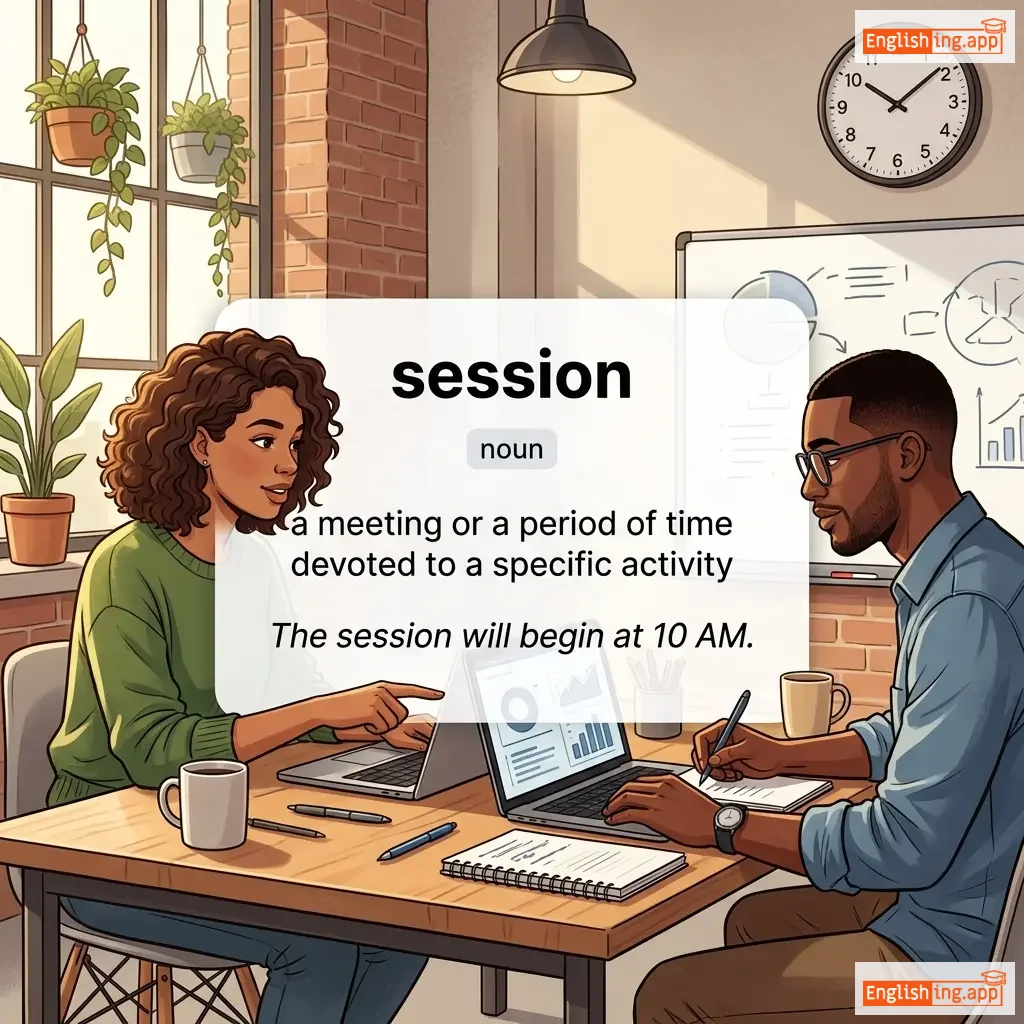
a meeting or a period of time devoted to a specific activity
••••••
|
The session will begin at 10 AM.
セッションは午前10時に開始します。
••••••
|
セッションは午前10時に開始します。
Sesshon wa gozen 10-ji ni kaishi shimasu.
••••••
|
- •••••• | - •••••• | - •••••• |
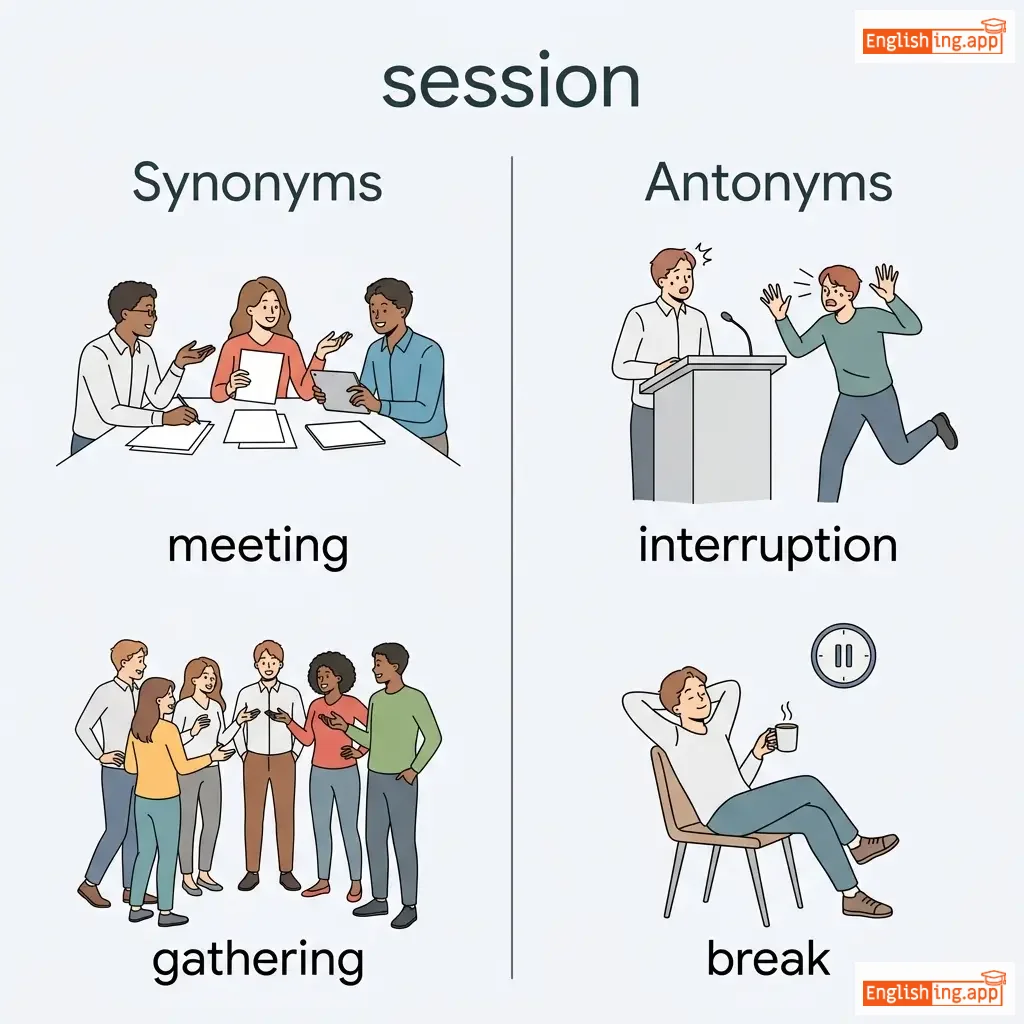
meeting, gathering, conference, seminar
••••••
|
interruption, break
••••••
|
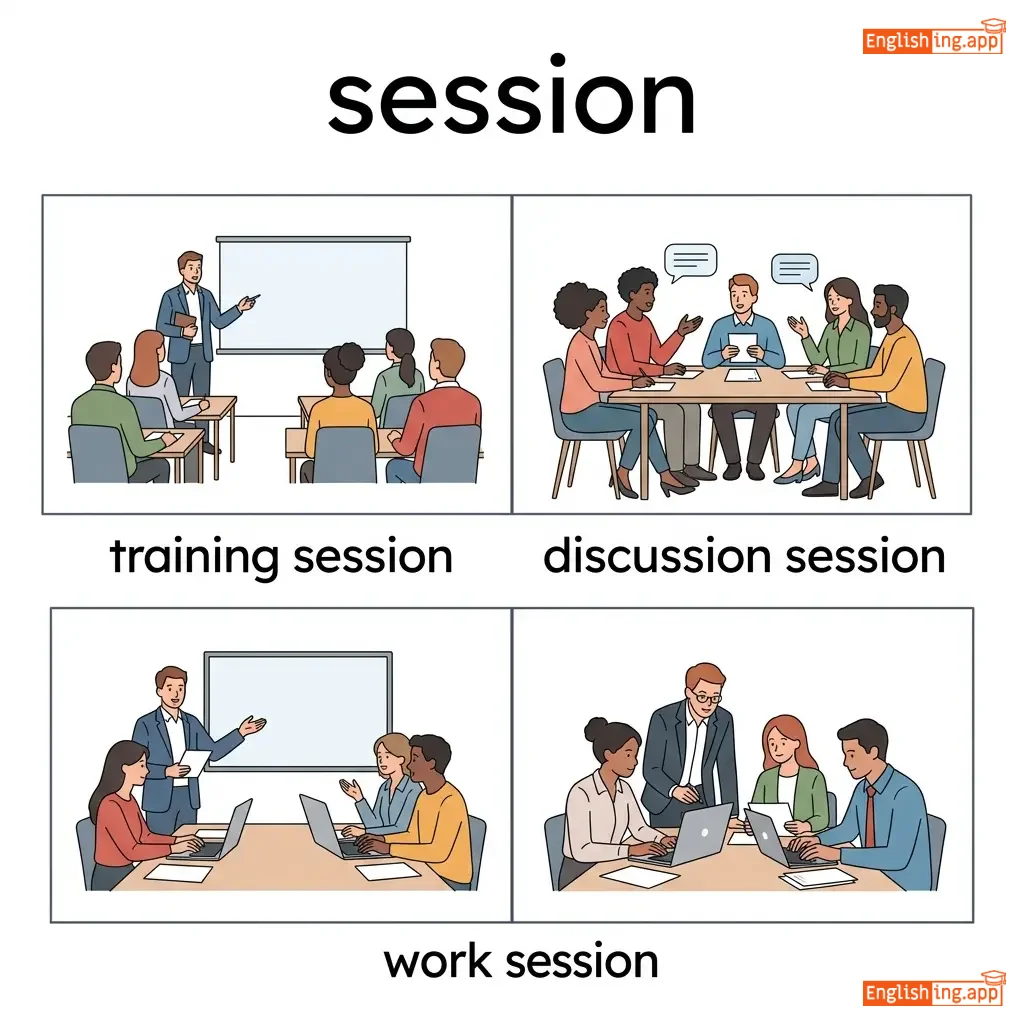
training session, discussion session, work session
••••••
|
Session = アクションのための時間を設定する – セッションをスケジュールすることを考えて!
••••••
|
|
🌅
••••••
|
/ˈsɛtɪŋ/
noun
(セットイング)
••••••
|
- •••••• |
セット
setto
••••••
|
- •••••• | - •••••• | - •••••• | - •••••• |
the environment or place where something happens
••••••
|
The setting of the movie was a beautiful beach.
映画の舞台は美しいビーチでした。
••••••
|
映画の舞台は美しいビーチでした。
Eiga no butai wa utsukushī bīchi deshita.
••••••
|
- •••••• | - •••••• | - •••••• |
environment, backdrop, surroundings, scene
••••••
|
dismantling, disruption
••••••
|
movie setting, setting sun, setting time
••••••
|
Setting the scene – 映画のシーンを思い浮かべて、すべてがそこに展開します!
••••••
|
|
🎤
••••••
|
/ˈspiːkər/
noun
(スピーカー)
••••••
|
- •••••• |
スピーカー
supiikaa
••••••
|
- •••••• | - •••••• | - •••••• | - •••••• |
a person who speaks or talks, especially as an occupation
••••••
|
The speaker delivered an inspiring speech at the conference. |
スピーカーは会議で感動的なスピーチを行いました。
Supiikaa wa kaigi de kandouteki na supiichi o okonai mashita.
••••••
|
public speaker |
a person who gives speeches in front of an audience
••••••
|
公共スピーカー
koukyou supiikaa
••••••
|
orator, lecturer, presenter, talker
••••••
|
listener, audience
••••••
|
motivational speaker, guest speaker, public speaker, keynote speaker
••••••
|
A speaker is someone who speaks – and touches hearts with every word!
••••••
|
|
✨
••••••
|
/ˈspɛʃəl/
adjective
(スペシャル)
••••••
|
- •••••• |
特別
tokubetsu
••••••
|
- •••••• | - •••••• | - •••••• | - •••••• |
different from what is usual; better or greater than normal
••••••
|
This gift is very special to me.
このギフトは私にとってとてもスペシャルです。
••••••
|
このギフトは私にとってとても特別です。
Kono gifuto wa watashi ni totte totemo tokubetsu desu.
••••••
|
special treatment
特別な扱い
••••••
|
different or better care or service than usual
••••••
|
特別な扱い
tokubetsu na atsukai
••••••
|
unique, exceptional, distinctive, extraordinary
••••••
|
ordinary, common, usual
••••••
|
special occasion, special day, special gift, special attention
••••••
|
Specialは日本語で '特別' (tokubetsu)といいます。
••••••
|
|
💰
••••••
|
/ˈspɒnsər/
noun
(スポンサー)
••••••
|
- •••••• |
スポンサー
sponsor
••••••
|
- •••••• | - •••••• | - •••••• | - •••••• |
a person or organization that provides funds for a project or activity in exchange for publicity or support
••••••
|
The company became the main sponsor of the event. |
その会社はイベントの主要スポンサーとなった。
Sono kaisha wa ibento no shuyō sponsor to natta.
••••••
|
official sponsor |
the primary supporter or funder of an event
••••••
|
公式スポンサー
kōshiki sponsor
••••••
|
backer, patron, supporter, benefactor, funder
••••••
|
opponent, rival
••••••
|
event sponsor, corporate sponsor, title sponsor, sponsor agreement
••••••
|
Sponsor は資金を提供して支援する人 💰
••••••
|
|
🏟️
••••••
|
/ˈsteɪdiəm/
noun
••••••
|
- •••••• | - •••••• | - •••••• | - •••••• | - •••••• | - •••••• |
a large structure with seating for sports, concerts, or other events
••••••
|
Thousands of fans filled the stadium to watch the final match. |
- •••••• | - •••••• | - •••••• | - •••••• |
arena, ground, coliseum, field, amphitheater
••••••
|
none
••••••
|
football stadium, packed stadium, national stadium, open-air stadium
••••••
|
No •••••• |
|
🚉
••••••
|
/ˈsteɪʃən/
noun
••••••
|
- •••••• | - •••••• | - •••••• | - •••••• | - •••••• | - •••••• |
a place where a particular service is provided, especially for transportation
••••••
|
We arrived at the station just in time for the train. |
- •••••• | - •••••• | - •••••• | - •••••• |
terminal, depot, stop, hub
••••••
|
wilderness, desolate place
••••••
|
train station, bus station, police station, gas station
••••••
|
No •••••• |
|
🗄️
••••••
|
/ˈstɔːrɪdʒ/
noun
(ストレージ)
••••••
|
- •••••• |
保存
hozon
••••••
|
- •••••• | - •••••• | - •••••• | - •••••• |
the action or method of storing something for future use
••••••
|
The warehouse offers plenty of storage space. |
倉庫にはたくさんの保存スペースがあります。
Sōko ni wa takusan no hozon supēsu ga arimasu.
••••••
|
- •••••• | - •••••• | - •••••• |
storage space, vault, repository, depot
••••••
|
disposal, removal
••••••
|
data storage, storage unit, storage facility
••••••
|
保存 (storage)、私たちが物を保管する場所です。
••••••
|
|
📚
••••••
|
/ˈsʌbdʒɪkt/ (noun), /səbˈdʒɛkt/ (verb)
noun/verb/adjective
(サブジェクト)
••••••
|
- •••••• |
科目
kamoku
••••••
|
subjected
サブジェクテッド
••••••
|
subjected
サブジェクテッド
••••••
|
subjects
サブジェクツ
••••••
|
subjecting
サブジェクティング
••••••
|
noun: a topic or theme; verb: to cause to undergo; adjective: dependent or under authority
••••••
|
The teacher introduced a new subject in class.
先生はクラスで新しい科目を紹介しました。
••••••
|
先生はクラスで新しい科目を紹介しました。
Sensei wa kurasu de atarashī kamoku o shōkai shimashita.
••••••
|
subject to change
変更の対象
••••••
|
likely to be altered
••••••
|
変更の対象
Henkō no taishō
••••••
|
topic, theme, issue, matter, expose
••••••
|
object, ruler, master
••••••
|
main subject, school subject, subject area, subject matter, subject to
••••••
|
Subject は勉強の科目、そして管理下にあるものや変えられるものでもある。
••••••
|
|
💰
••••••
|
/ˈsʌbsɪdi/
noun
(サブシディ)
••••••
|
|
助成金
joseikin
••••••
|
- •••••• | - •••••• | - •••••• | - •••••• |
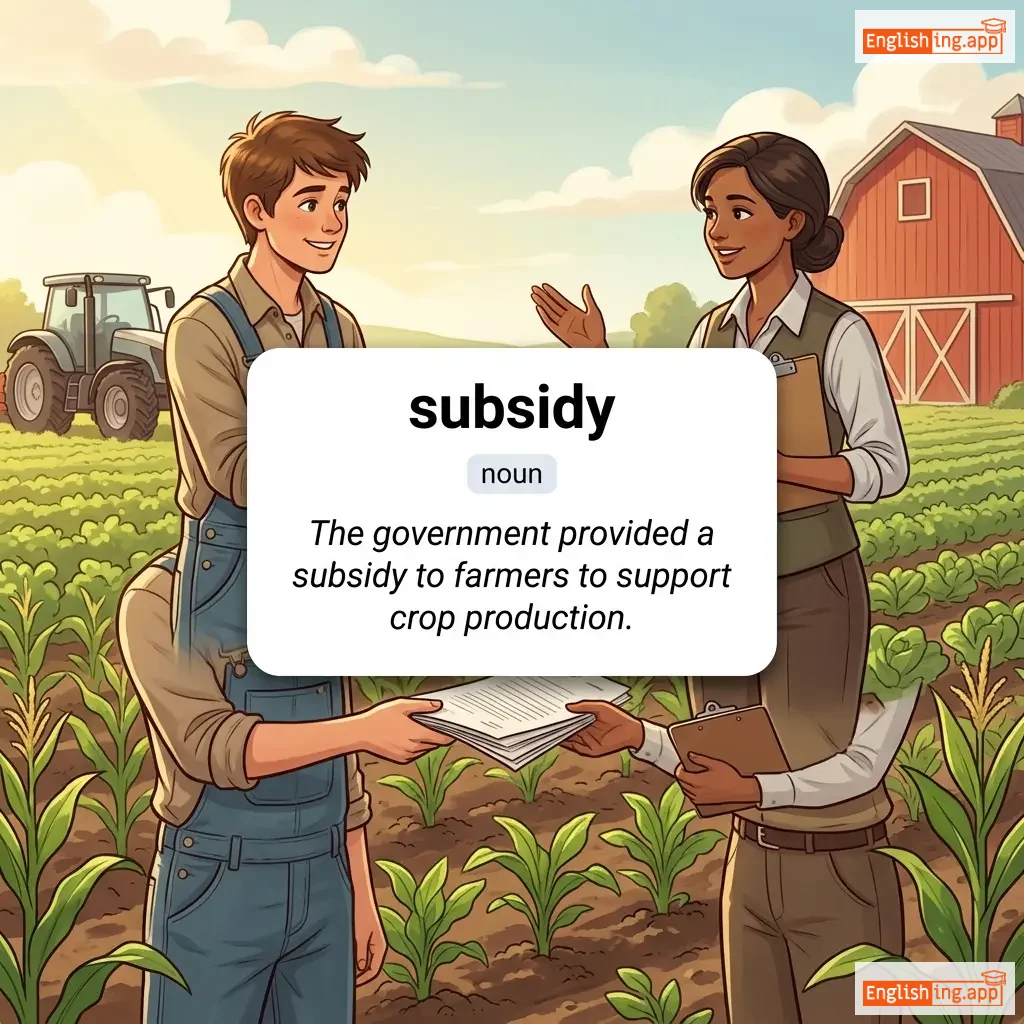
A sum of money granted by the government or a public body to help support an industry or reduce the cost of goods or services.
••••••
|
The government provided a subsidy to farmers to support crop production. |
政府は作物生産を支援するために農民に助成金を提供しました。
Seifu wa sakumotsu seisan o shien suru tame ni nōmin ni joseikin o teikyō shimashita.
••••••
|
- •••••• | - •••••• | - •••••• |
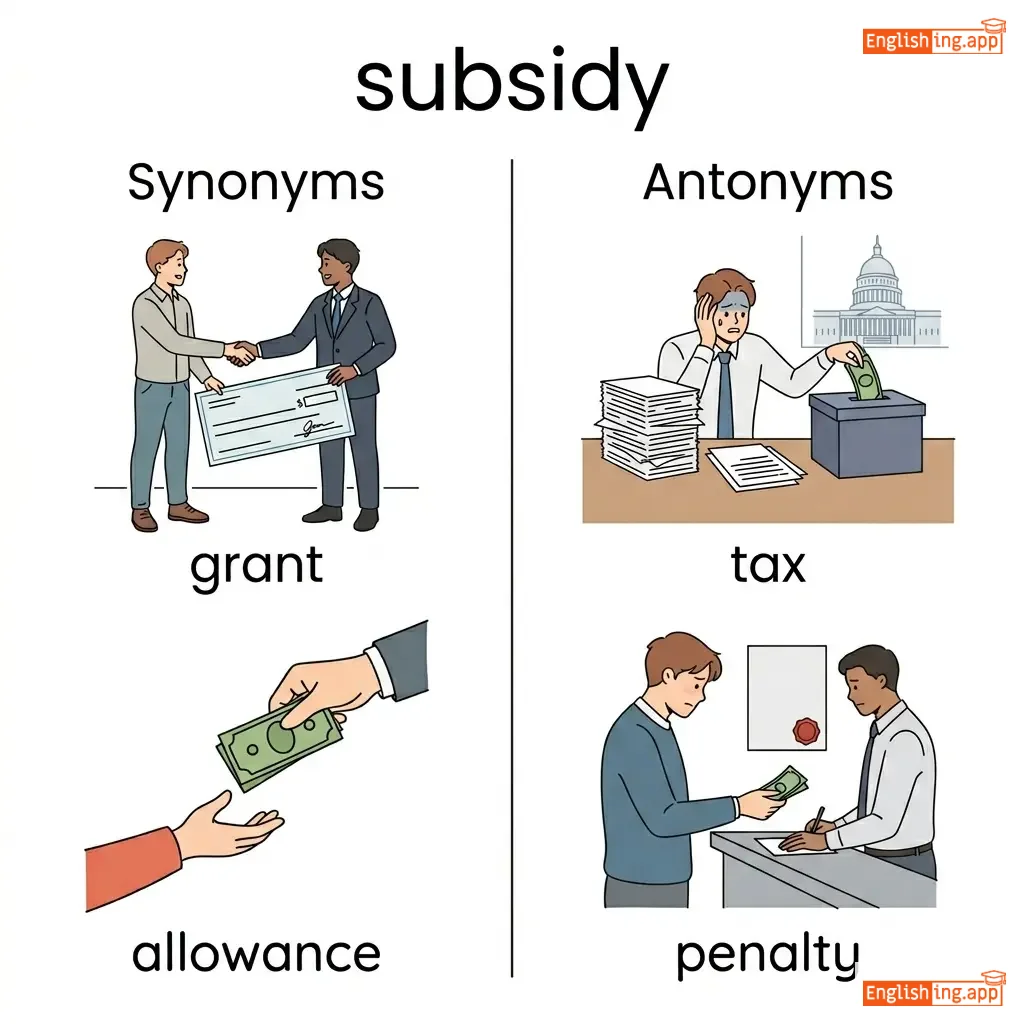
grant, allowance, financial aid, support, assistance
••••••
|
tax, penalty, surcharge
••••••
|
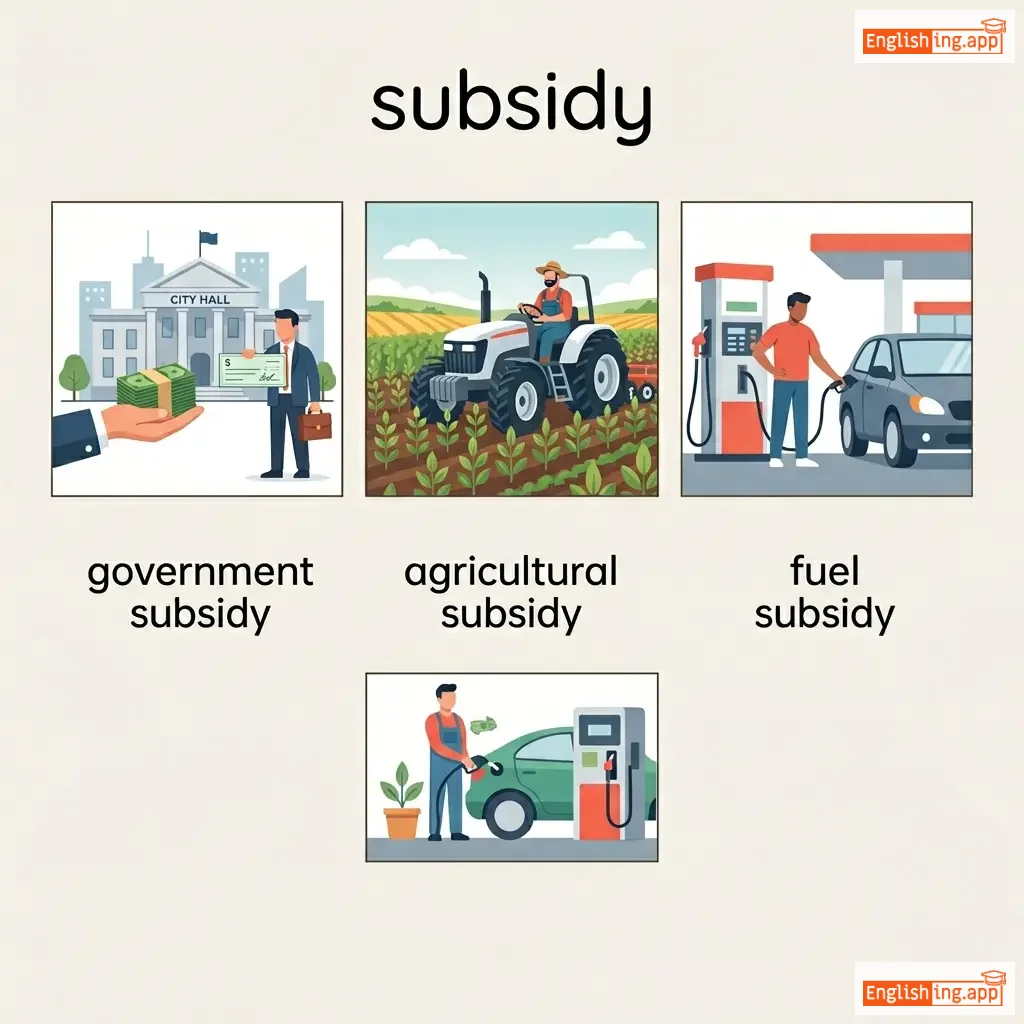
government subsidy, agricultural subsidy, fuel subsidy, receive subsidy
••••••
|
助成金は、政府が農業などにお金を与えて支援するものです。
••••••
|
|
🏆
••••••
|
/səkˈsiːd/
verb
(サクシード)
••••••
|
- •••••• |
成功する
seikou suru
••••••
|
succeeded
サクシーデッド
••••••
|
succeeded
サクシーデッド
••••••
|
succeeds
サクシーズ
••••••
|
succeeding
サクシーディング
••••••
|
to achieve the desired aim or result; to do well
••••••
|
She worked hard to succeed in her career.
彼女はキャリアで成功するために一生懸命働いた。
••••••
|
彼女はキャリアで成功するために一生懸命働いた。
Kanojo wa kyaria de seikou suru tame ni isshoukenmei hataraita.
••••••
|
succeed in life
人生で成功する
••••••
|
to achieve overall success and fulfillment in one’s life
••••••
|
人生で成功する
jinsei de seikou suru
••••••
|
achieve, prosper, triumph, prevail, accomplish
••••••
|
fail, lose, collapse
••••••
|
succeed in, succeed at, succeed against, succeed through
••••••
|
Successからsucceed、成功することがsucceedです
••••••
|
|
💡
••••••
|
/səˈdʒɛst/
verb
(サジェスト)
••••••
|
- •••••• |
提案する
teian suru
••••••
|
suggested
サジェステッド
••••••
|
suggested
サジェステッド
••••••
|
suggests
サジェスツ
••••••
|
suggesting
サジェスティング
••••••
|
to put forward an idea, plan, or recommendation for consideration
••••••
|
He suggested going to the new restaurant for dinner.
彼は新しいレストランで夕食を取ることを提案しました。
••••••
|
彼は新しいレストランで夕食を取ることを提案しました。
Kare wa atarashī resutoran de yūshoku o toru koto o teian shimashita.
••••••
|
suggest itself
自発的に提案する
••••••
|
to present itself naturally without being asked
••••••
|
自発的に提案する
jihatsuteki ni teian suru
••••••
|
recommend, propose, advise, urge
••••••
|
oppose, discourage
••••••
|
suggest a plan, suggest an idea, strongly suggest, politely suggest
••••••
|
提案することはアイデアを出すこと – 覚えやすいですね!
••••••
|
|
📝
••••••
|
/ˈsʌməri/
noun
(サマリー)
••••••
|
- •••••• |
要約
yōyaku
••••••
|
- •••••• | - •••••• | - •••••• | - •••••• |
A brief statement of the main points of something.
••••••
|
She wrote a summary of the book for her class. |
彼女はクラスのためにその本の要約を書きました。
Kanojo wa kurasu no tame ni sono hon no yōyaku o kakimashita.
••••••
|
in summary |
used to introduce a concise statement that captures the main points
••••••
|
要約すると
yōyaku suru to
••••••
|
outline, synopsis, abstract, digest, recap
••••••
|
detail, expansion
••••••
|
write a summary, brief summary, executive summary, short summary
••••••
|
Summaryは内容の短いバージョンで、要約だ。
••••••
|
|
🤔
••••••
|
/səˈpəʊz/
verb
(サポーズ)
••••••
|
- •••••• |
仮定する
katei suru
••••••
|
supposed
サポーズド
••••••
|
supposed
サポーズド
••••••
|
supposes
サポーズズ
••••••
|
supposing
サポージング
••••••
|
to assume or believe something is true without proof
••••••
|
I suppose she will be here soon.
私は彼女がすぐにここに来ると思います。
••••••
|
私は彼女がすぐにここに来ると思います。
Watashi wa kanojo ga sugu ni koko ni kuru to omoimasu.
••••••
|
suppose so
そう思います
••••••
|
used to express agreement with a suggestion or opinion
••••••
|
そう思います
Sō omoimasu
••••••
|
assume, believe, guess, think
••••••
|
doubt, question, deny
••••••
|
suppose to, I suppose, suppose that, suppose so
••••••
|
仮定するのは、全てを予測すること!
••••••
|
|
🌊
••••••
|
/ˈsɜr.fɪs/
noun
(サーフェス)
••••••
|
- •••••• |
表面; 上層
hyōmen; jōsō
••••••
|
- •••••• | - •••••• | - •••••• | - •••••• |
the outside part or uppermost layer of something
••••••
|
The submarine emerged to the surface of the ocean.
潜水艦は海面に浮かび上がった。
••••••
|
潜水艦は海面に浮かび上がった。
Sensuikan wa kaimen ni ukabi agatta.
••••••
|
- •••••• | - •••••• | - •••••• |
exterior, top, face
••••••
|
interior, depth, bottom
••••••
|
water surface, surface area, smooth surface
••••••
|
表面は一番上に見える層。
••••••
|
|
🩺
••••••
|
/ˈsɜːdʒən/
noun
(サージャン)
••••••
|
- •••••• |
外科医
kaiki
••••••
|
- •••••• | - •••••• | - •••••• | - •••••• |
a doctor who performs medical operations
••••••
|
The surgeon performed a complex heart operation. |
外科医は複雑な心臓手術を行いました。
Kaiki wa fukuzatsu na shinzou shujutsu o okonaimashita.
••••••
|
chief surgeon |
the head doctor in charge of surgical operations
••••••
|
主任外科医
shunin kaiki
••••••
|
doctor, physician, medical practitioner, specialist
••••••
|
patient, layman
••••••
|
heart surgeon, brain surgeon, plastic surgeon, chief surgeon
••••••
|
外科手術を行う医者 — 外科医
••••••
|
|
🌱
••••••
|
/səˈsteɪn/
verb
(サステイン)
••••••
|
- •••••• |
維持する
ijisuru
••••••
|
sustained
サステインド
••••••
|
sustained
サステインド
••••••
|
sustains
サステインズ
••••••
|
sustaining
サステイニング
••••••
|
To support, maintain, or keep something going over time.
••••••
|
The team worked hard to sustain their success.
チームは彼らの成功を維持するために一生懸命働きました。
••••••
|
チームは彼らの成功を維持するために一生懸命働きました。
Chīmu wa karera no seikō o iji suru tame ni isshōkenmei hatarakimashita.
••••••
|
sustain a loss
損失を被る
••••••
|
To suffer or experience a loss.
••••••
|
損失を被る
Sonshitsu o kōmuru
••••••
|
maintain, uphold, continue, support, endure
••••••
|
abandon, quit, discontinue
••••••
|
sustain growth, sustain life, sustain damage, sustain interest
••••••
|
Sustainは「維持する」- 成功を保つように覚えましょう。
••••••
|
|
🧑🎓
••••••
|
/ˈtiːnˌeɪdʒ/
adjective
(ティーンエイジ)
••••••
|
- •••••• |
ティーンエイジャー
tīn'eijā
••••••
|
- •••••• | - •••••• | - •••••• | - •••••• |
relating to or characteristic of people aged between 13 and 19 years old
••••••
|
She spent her teenage years in a small town. |
彼女は小さな町でティーンエイジャー時代を過ごした。
Kanojo wa chīsana machi de tīneijā jidai o sugoshita.
••••••
|
teenage crush |
a short-lived romantic attraction common during teenage years
••••••
|
ティーンエイジャーの片思い
tīn'eijā no kataomoi
••••••
|
adolescent, youthful, young, juvenile, minor
••••••
|
adult, mature
••••••
|
teenage years, teenage boy, teenage girl, teenage life
••••••
|
Teenは13-19歳を意味するので、teenageはその時期—ティーン映画、ティーンの片思い、ティーンの楽しみ!
••••••
|
|
😰
••••••
|
/ˈtɛn.ʃən/
noun
(テンション)
••••••
|
- •••••• |
緊張
kinchou
••••••
|
- •••••• | - •••••• | - •••••• | - •••••• |
A state of being stretched tight; mental or emotional strain.
••••••
|
There was a lot of tension in the room before the exam results were announced.
試験結果が発表される前、部屋には多くのテンションがありました。
••••••
|
試験結果が発表される前、部屋には多くのテンションがありました。
Shiken kekka ga happyou sareru mae, heya ni wa ooku no tenshon ga arimashita.
••••••
|
cut the tension with a knife
ナイフでテンションを切る
••••••
|
When the atmosphere is very tense and easily noticeable.
••••••
|
ナイフでテンションを切る
Naifu de tenshon o kiru
••••••
|
strain, stress, pressure, anxiety, suspense
••••••
|
relaxation, ease, calm
••••••
|
high tension, political tension, muscle tension, relieve tension
••••••
|
日本語では 'ナイフでテンションを切る' と言います - それは触れられるほどの緊張感です。
••••••
|
|
🎭
••••••
|
/ˈθiːətər/
noun
(シアター)
••••••
|
- •••••• |
劇場
gekijou
••••••
|
- •••••• | - •••••• | - •••••• | - •••••• |
a building or area for dramatic performances
••••••
|
We are going to the theater tonight. |
今夜、私たちは劇場に行きます。
Kon'ya, watashitachi wa gekijou ni ikimasu.
••••••
|
- •••••• | - •••••• | - •••••• |
playhouse, cinema, auditorium
••••••
|
open-air, outdoor
••••••
|
movie theater, local theater, drama theater
••••••
|
劇場 - あなたが劇を観る場所
••••••
|

