The Poet's Words
カリムは poet だった。彼は人々の souls に触れる poems を書いた。彼の words は deep で、life に満ちていた。\n\n「poet は真実を書くために dare しなければならない」とカリムは信じていた。「Words は単なる words ではない。それらは soul の deep に届くのだ。」\n\nしかしカリムは真実が危険な場所に lived していた。地元の gang がすべてを支配し、cops は腐敗していた。人々は cage に閉じ込められたように lived like しており、free ではなかった。\n\n「これが life ではない」とカリムは思った。「人々は hide し、話せば hunted される。これが evil だ。」\n\nそこでカリムは poem を書いた。evil gangs、腐敗した cops、cages の中の人々、そして free になる必要についての poem。彼の words は deep で力強かった。\n\nPoem は広まり、人々はそれを読み、共有した。「この poet は私たちが hide することを dares に語る」と彼らはささやいた。「彼の words は私たちの souls に語りかける。」\n\nだが gang は激怒した。「この man は我々に反して書くことを dares するのか?我々は彼を hunt する。jail に入れて cage に閉じ込め、彼が free に words を書けないようにする。」\n\n腐敗した cops はカリムを hunting した。「お前は evil words を書いた」と彼らは嘘をついた。「お前は犯罪者だ。」\n\nしかし人々は真実を知っていた。「彼は犯罪者ではない、彼は poet だ!」と抗議した。「彼の poems は真実を語る!彼の words は evil ではない、evil を暴くのだ!」\n\n多くの人々がカリムとともに立ち上がった。「もう hide しない」と彼らは宣言した。「もう cages の中で live like しない。私たちは free であるべきだ!」\n\nGang は彼ら全員を hunt しようとしたが、人々は多すぎた。Cops は全員を cage に入れることはできないと悟った。世論の圧力が高まった。\n\nついに gang のリーダーは jail に入れられ、腐敗した cops は排除された。人々は再び free になった。そして dared した poet カリムは hero になった。\n\n「Words を持つ man は fate を変えられる」とカリムは次の poem で言った。「真実に live し、soul から語る勇気を dare するとき、evil から hide しないとき、words が deep で正直なら、cages を壊せる。人々を free にできる。私はただの poet だ。普通の man のように live like している。しかし私は soul からの deep words で poems を書くことを dared した。gangs が私を hunt しようとし、cops が jail を脅しても、私は hide しなかった。なぜなら、free でなければそれは life ではないからだ。Poet's words が soul の deep から生まれるなら、それは heroes を鼓舞する。Poets が特別だからではなく、words が力を持つからだ。だから hide するな。Dare して語れ。Live free。Evil と戦え。Gangs や腐敗した cops に cages を作らせるな。真実を語る者を hunt させるな。Soul が words を通して語るようにしろ。たとえ poet でなくても、君の words は意味がある。それを deeply、そして賢く使え。Fate を evil に決めさせるな。」\n\n何年も後、カリムの poems は学校で教えられた。子どもたちは、一人の poet's words が社会を変えたことを学んだ。Soul から書き、evil に hide せず、hunted され、jailed され、caged された一人の man が、何千人もの人々を live free へと導いた。Gang は消え、より良い cops が人々に仕え、誰も cages の中で lived like することはなくなった。すべては一人の poet が信じたからだ——words が deep で誠実であり、soul から生まれるなら、fate を変え、人々を evil から free にできると。カリムは単なる poet ではなく、hero だった。彼の poems は単なる words ではなかった——それは不正と戦う武器であり、cages を開く鍵であり、真実を求める hunts であり、soul から soul への deep な呼びかけだった。人々に真の life は dare して free になる時にしか存在しないと教えたのだ。
|
絵文字
|
単語 | Images | 翻訳 | 過去 | 過去分詞 | 三人称単数 | 動名詞 | 意味 | 例文 | 例文の翻訳 | 表現例 | 表現例の意味 | 表現例の翻訳 | 同義語 | 対義語 | コロケーション | ニーモニック |
|---|---|---|---|---|---|---|---|---|---|---|---|---|---|---|---|---|---|
|
🐦
••••••
|
/keɪdʒ/
noun
(ケージ)
••••••
|
- •••••• |
檻
oru
••••••
|
- •••••• | - •••••• | - •••••• | - •••••• |
a structure of bars or wires in which birds or animals are kept
••••••
|
The bird sang happily inside its cage. |
鳥はその檻の中で楽しそうに歌っていた。
Tori wa sono oru no naka de tanoshisou ni utatte ita.
••••••
|
bird in a cage |
someone who feels trapped or restricted
••••••
|
檻の中の鳥
Oru no naka no tori
••••••
|
enclosure, pen, crate, prison, coop
••••••
|
freedom, open space
••••••
|
bird cage, metal cage, animal cage, locked cage
••••••
|
Cageは檻 — 鳥は檻の中で歌うけれど、飛べないことを覚えて!
••••••
|
|
👮
••••••
|
/kɒp/
noun
(コップ)
••••••
|
- •••••• |
警官
keikan
••••••
|
- •••••• | - •••••• | - •••••• | - •••••• |
a police officer (informal)
••••••
|
The cop stopped the car for speeding. |
警官はスピード違反で車を止めました。
Keikan wa supīdo ihan de kuruma o tomemashita.
••••••
|
cop out |
to avoid doing something because of fear or lack of courage
••••••
|
責任を回避する
sekinin o kaihi suru
••••••
|
police officer, constable, patrolman, lawman, detective
••••••
|
criminal, offender, lawbreaker
••••••
|
cop car, traffic cop, undercover cop, beat cop
••••••
|
Cop 👮, 警官は街を守る!
••••••
|
|
😎
••••••
|
/der/
verb
(デア)
••••••
|
|
挑戦する
chōsen suru
••••••
|
dared
デアード
••••••
|
dared
デアード
••••••
|
dares
デアーズ
••••••
|
daring
デアリング
••••••
|
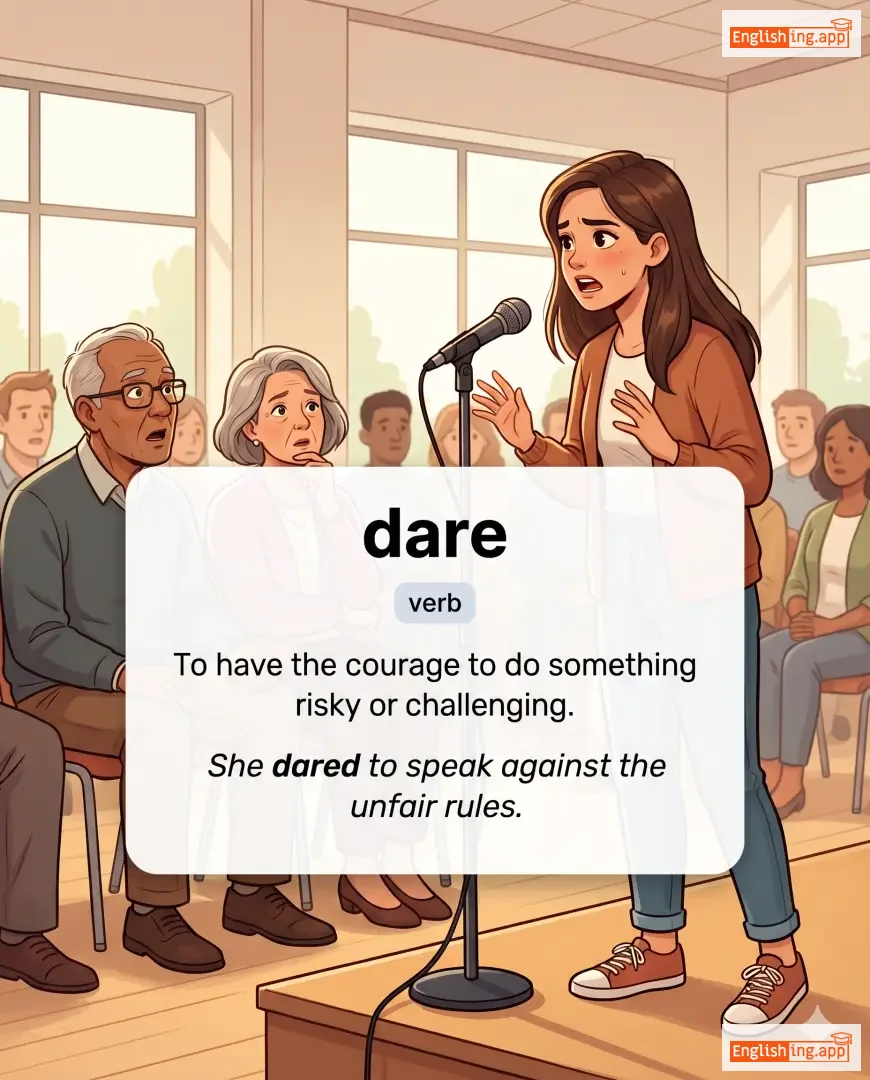
To have the courage to do something risky or challenging.
••••••
|
She dared to speak against the unfair rules.
彼女は不公平なルールに反対する勇気を持って話しました。
••••••
|
彼女は不公平なルールに反対する勇気を持って話しました。
Kanojo wa fukōhei na rūru ni hantai suru yūki o motte hanashimashita.
••••••
|
How dare you
どうしてそんなことをするんですか?
••••••
|
Used to express anger or shock at someone's bold action
••••••
|
どうしてそんなことをするんですか?
Dōshite sonna koto o suru n desu ka?
••••••
|
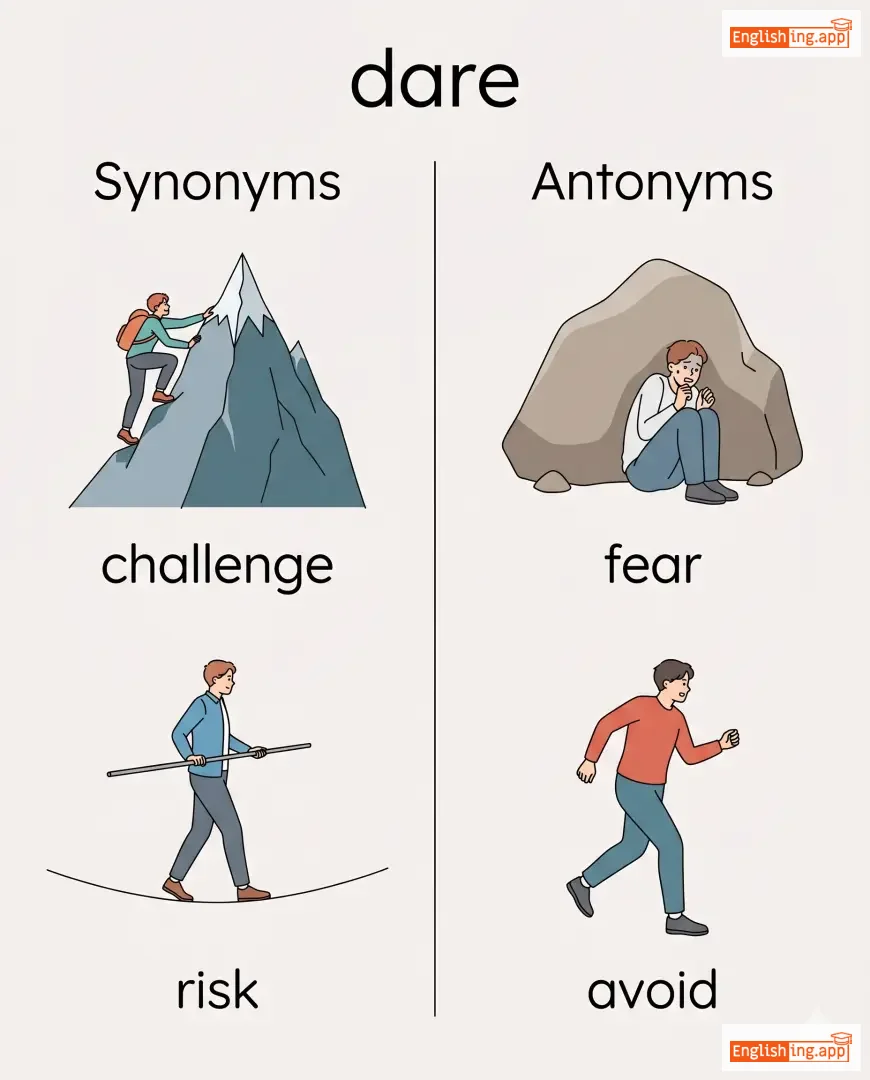
challenge, risk, venture, defy
••••••
|
fear, avoid, hesitate
••••••
|
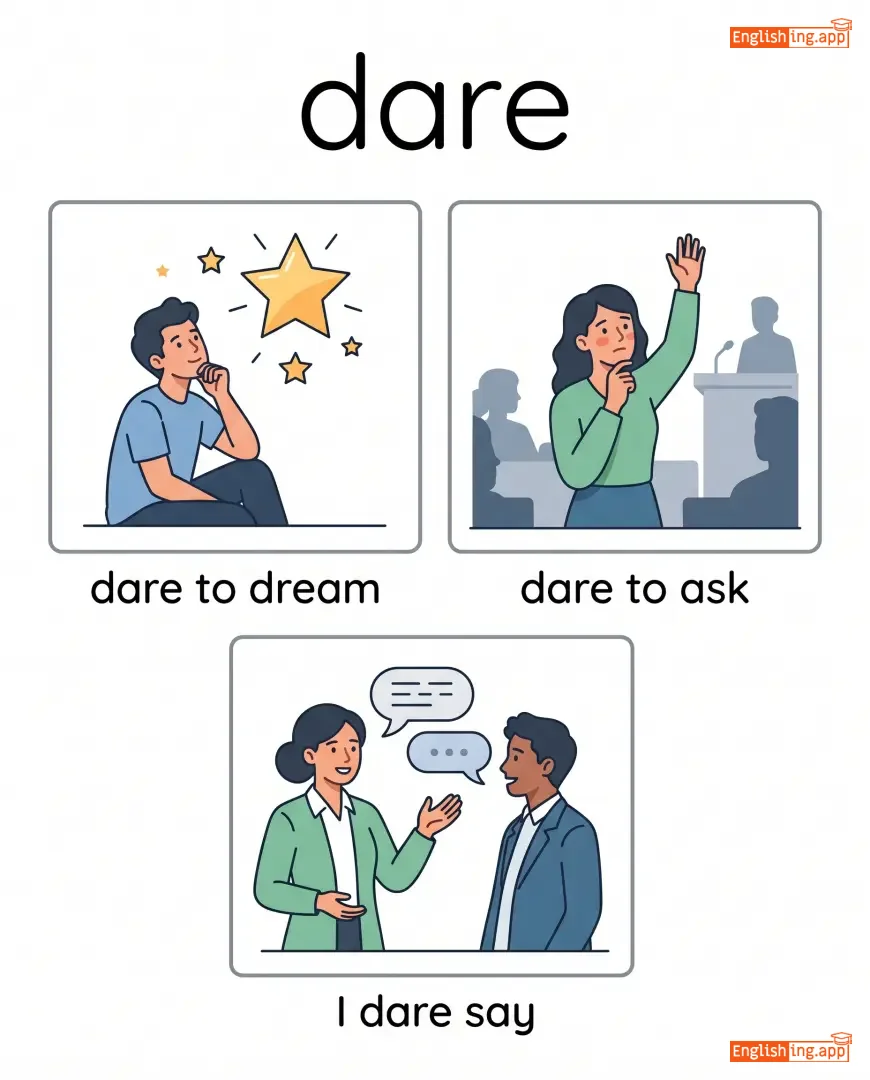
dare to dream, dare to ask, I dare say, dare someone
••••••
|
Dareは挑戦する勇気を持つことです。
••••••
|
|
🌊
••••••
|
/diːp/
adjective
(ハピネス)
••••••
|
- •••••• |
幸せ
shiawase
••••••
|
- •••••• | - •••••• | - •••••• | - •••••• |
extending far down from the top or surface; profound or intense
••••••
|
The lake is very deep in the middle. |
彼女は賞を受け取ったとき、幸せを隠すことができませんでした。
Kanojo wa shō o uketotta toki, shiawase o kakusu koto ga dekimasen deshita.
••••••
|
deep down |
used to describe a person's true feelings or thoughts that may not be expressed openly
••••••
|
幸せを追い求める
shiawase o oi motomeru
••••••
|
profound, intense, bottomless, vast, thorough
••••••
|
shallow, superficial
••••••
|
deep water, deep sleep, deep thought, deep voice, deep sea
••••••
|
幸せは心の中の喜び
••••••
|
|
😈
••••••
|
/ˈiːvəl/
adjective
(イービル)
••••••
|
- •••••• |
邪悪
jaaku
••••••
|
- •••••• | - •••••• | - •••••• | - •••••• |
Profoundly immoral and wicked.
••••••
|
They believed the villain was the embodiment of evil. |
彼らは悪役が邪悪の具現であると信じていた。
Karera wa akuyaku ga jaaku no gugen de aru to shinjite ita.
••••••
|
root of all evil |
the fundamental source of wickedness or problems
••••••
|
すべての悪の根源
subete no aku no kongen
••••••
|
wicked, immoral, malevolent, sinful, corrupt
••••••
|
good, virtuous, righteous
••••••
|
evil deeds, pure evil, embodiment of evil
••••••
|
Evilは邪悪→ Devilの中にEvilが隠れている
••••••
|
|
✨
••••••
|
/feɪt/
noun
(フェイト)
••••••
|
- •••••• |
運命
unmei
••••••
|
- •••••• | - •••••• | - •••••• | - •••••• |
the development of events beyond a person's control, regarded as determined by a supernatural power
••••••
|
She believed it was her fate to become a teacher.
彼女は教師になる運命だと信じていた。
••••••
|
彼女は教師になる運命だと信じていた。
Kanojo wa kyoushi ni naru unmei da to shinjite ita.
••••••
|
tempt fate
運命を試す
••••••
|
to take unnecessary risks
••••••
|
運命を試す
unmei wo tamesu
••••••
|
destiny, fortune, luck, doom
••••••
|
choice, free will
••••••
|
sealed fate, cruel fate, fate decided, twist of fate
••••••
|
Fate は運命を意味する; '運命を試す' というフレーズで fate = 運命 を覚えましょう
••••••
|
|
🕊️
••••••
|
/friː/
adjective/verb/adverb
(フリー)
••••••
|
- •••••• |
自由
jiyū
••••••
|
freed
フリード
••••••
|
freed
フリード
••••••
|
frees
フリーズ
••••••
|
freeing
フリーイング
••••••
|
Not under the control or in the power of another; able to act or be done as one wishes.
••••••
|
The children are free to play outside.
子供たちは外で自由に遊べます。
••••••
|
子供たちは外で自由に遊べます。
Kodomotachi wa soto de jiyū ni asobemasu.
••••••
|
set free
自由にする
••••••
|
to release from captivity or constraints
••••••
|
自由にする
jiyū ni suru
••••••
|
unrestricted, independent, open, liberated, gratis
••••••
|
restricted, bound, captive
••••••
|
free time, free speech, free market, free trial
••••••
|
自由はfreeと同じ意味です。'自由に遊ぶ'のように覚えましょう。
••••••
|
|
👥
••••••
|
/ɡæŋ/
noun
(ギャング)
••••••
|
- •••••• |
ギャング
gyangu
••••••
|
- •••••• | - •••••• | - •••••• | - •••••• |
An organized group of people, often involved in crime or violence.
••••••
|
The gang was arrested by the police last night. |
そのギャングは昨晩警察に逮捕されました。
Sono gyangu wa sakuban keisatsu ni taiho saremashita.
••••••
|
gang up on |
to join together against someone in a hostile way
••••••
|
誰かに対して団結する
Dareka ni taishite danketsu suru
••••••
|
crew, group, band, mob, clique
••••••
|
individual, loner
••••••
|
street gang, criminal gang, gang leader, gang violence
••••••
|
ギャング 👥 はみんなで集まること、まるでギャングのように!
••••••
|
|
🦸
••••••
|
/ˈhɪəroʊ/
noun
(ヒーロー)
••••••
|
|
ヒーロー
hīrō
••••••
|
- •••••• | - •••••• | - •••••• | - •••••• |
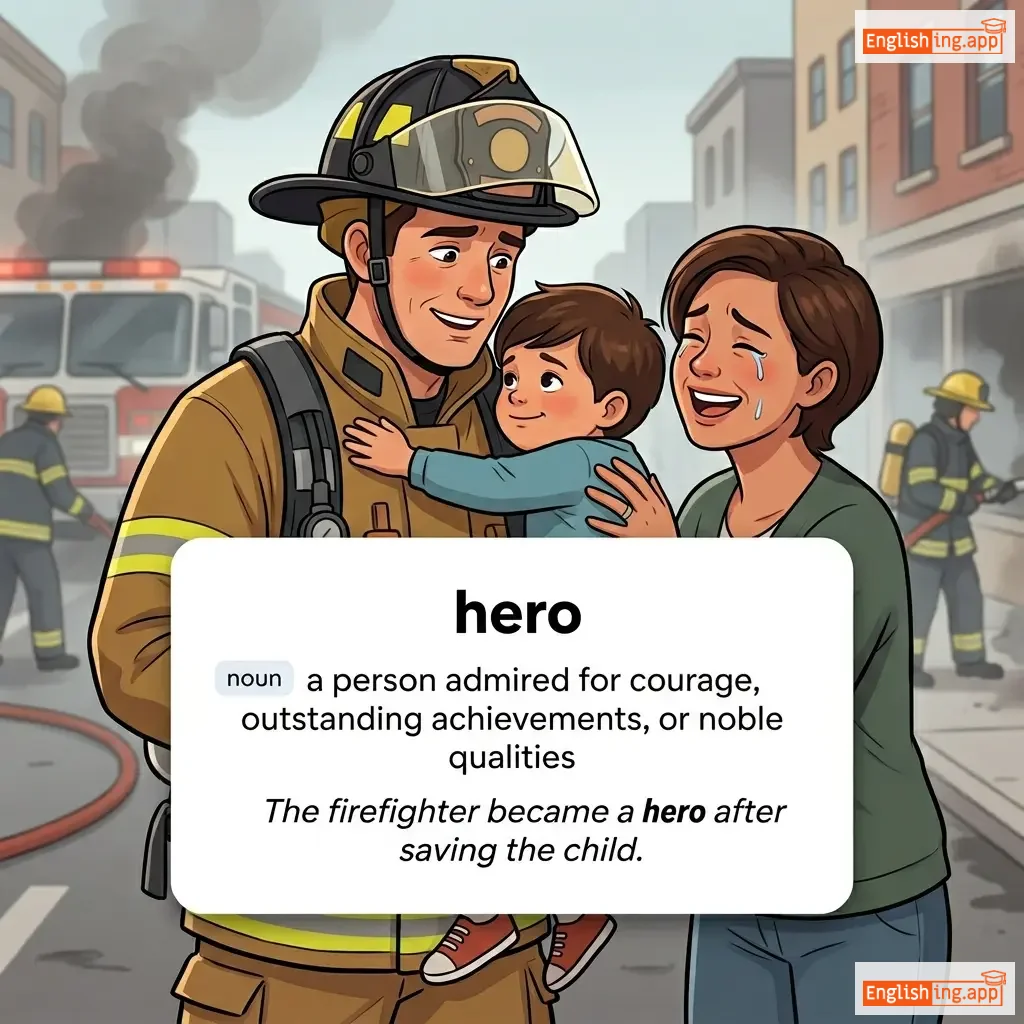
a person admired for courage, outstanding achievements, or noble qualities
••••••
|
The firefighter became a hero after saving the child. |
消防士は子供を救った後、ヒーローになった。
Shōbōshi wa kodomo o sukutta ato, hīrō ni natta.
••••••
|
unsung hero |
a person who makes a great contribution without recognition
••••••
|
無名のヒーロー
mumei no hīrō
••••••
|
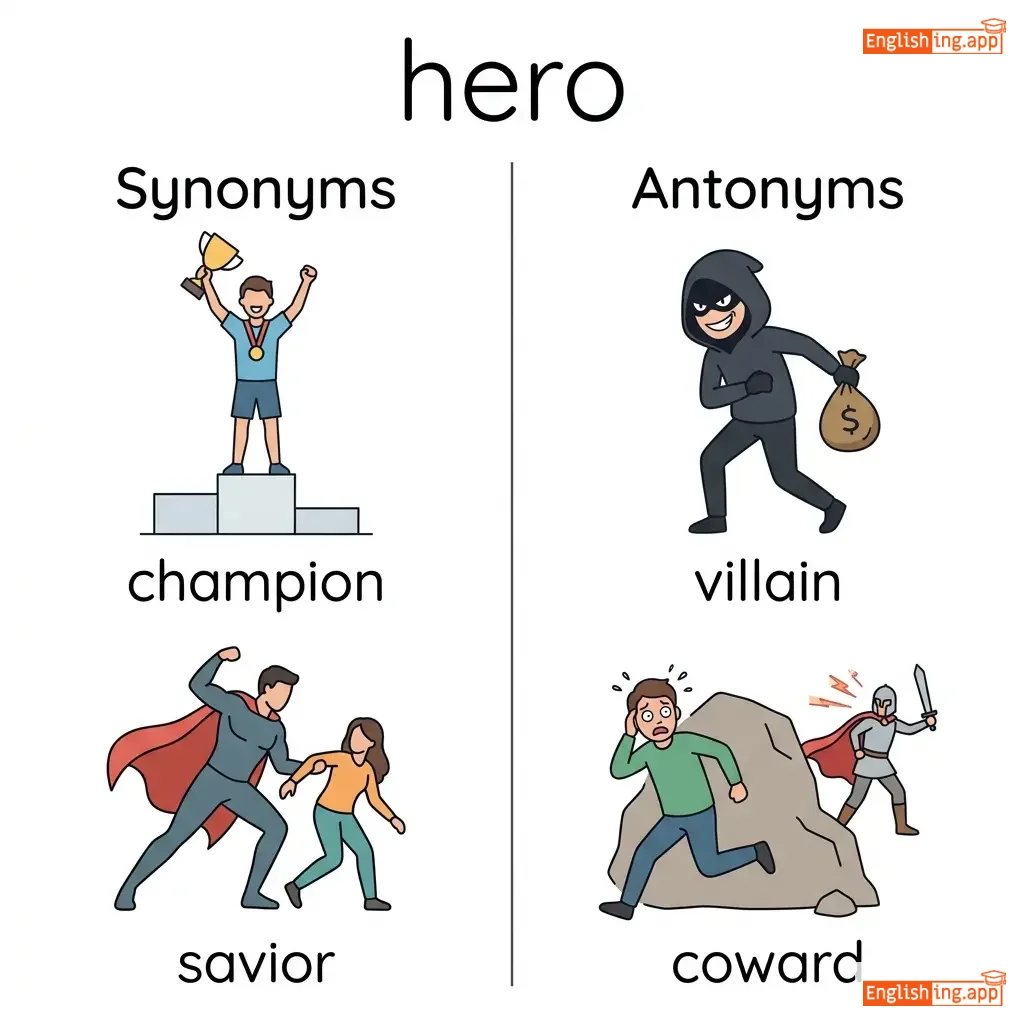
champion, savior, idol, warrior, legend
••••••
|
villain, coward
••••••
|
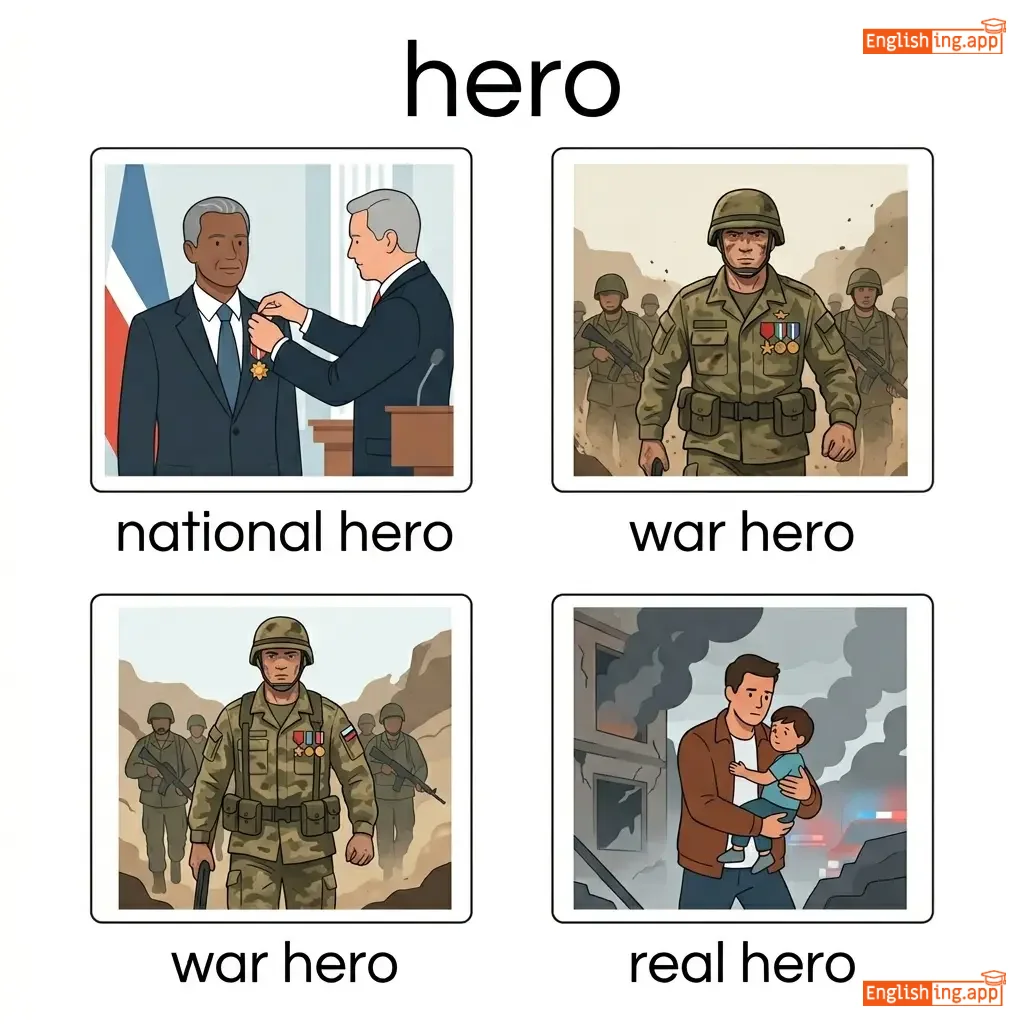
national hero, war hero, real hero, unsung hero
••••••
|
ヒーローとはヒーロー 🦸 - 日本語ではヒーローは素晴らしいことをした人です。
••••••
|
|
🙈
••••••
|
/haɪd/
verb
(ハイド)
••••••
|
|
隠す
kakusu
••••••
|
hid
ヒッド
••••••
|
hidden
ヒデン
••••••
|
hides
ハイダーズ
••••••
|
hiding
ハイディング
••••••
|
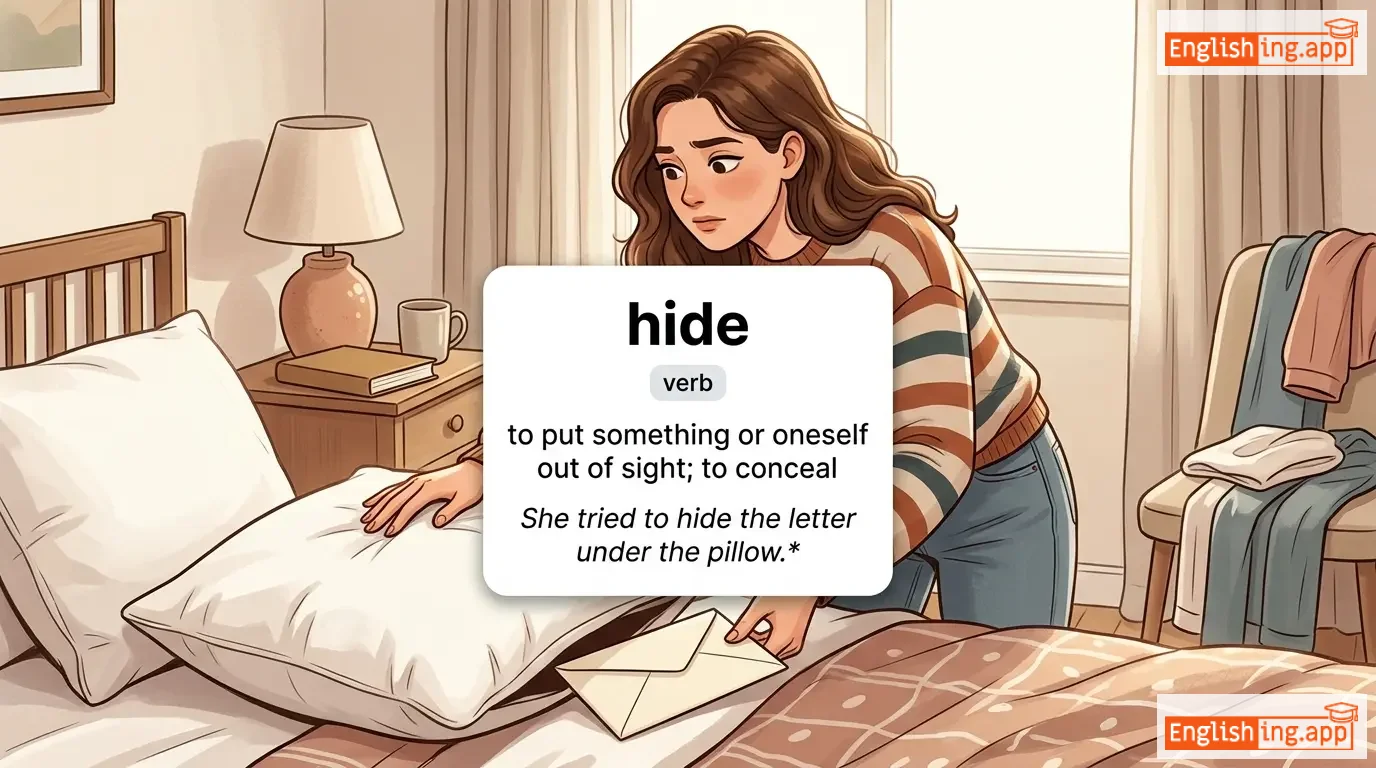
to put something or oneself out of sight; to conceal
••••••
|
She tried to hide the letter under the pillow.
彼女は枕の下に手紙を隠そうとした。
••••••
|
彼女は枕の下に手紙を隠そうとした。
Kanojo wa makura no shita ni tegami o kakusou to shita.
••••••
|
hide and seek
かくれんぼ
••••••
|
a children's game where one hides and others seek
••••••
|
かくれんぼ
kakurenbo
••••••
|
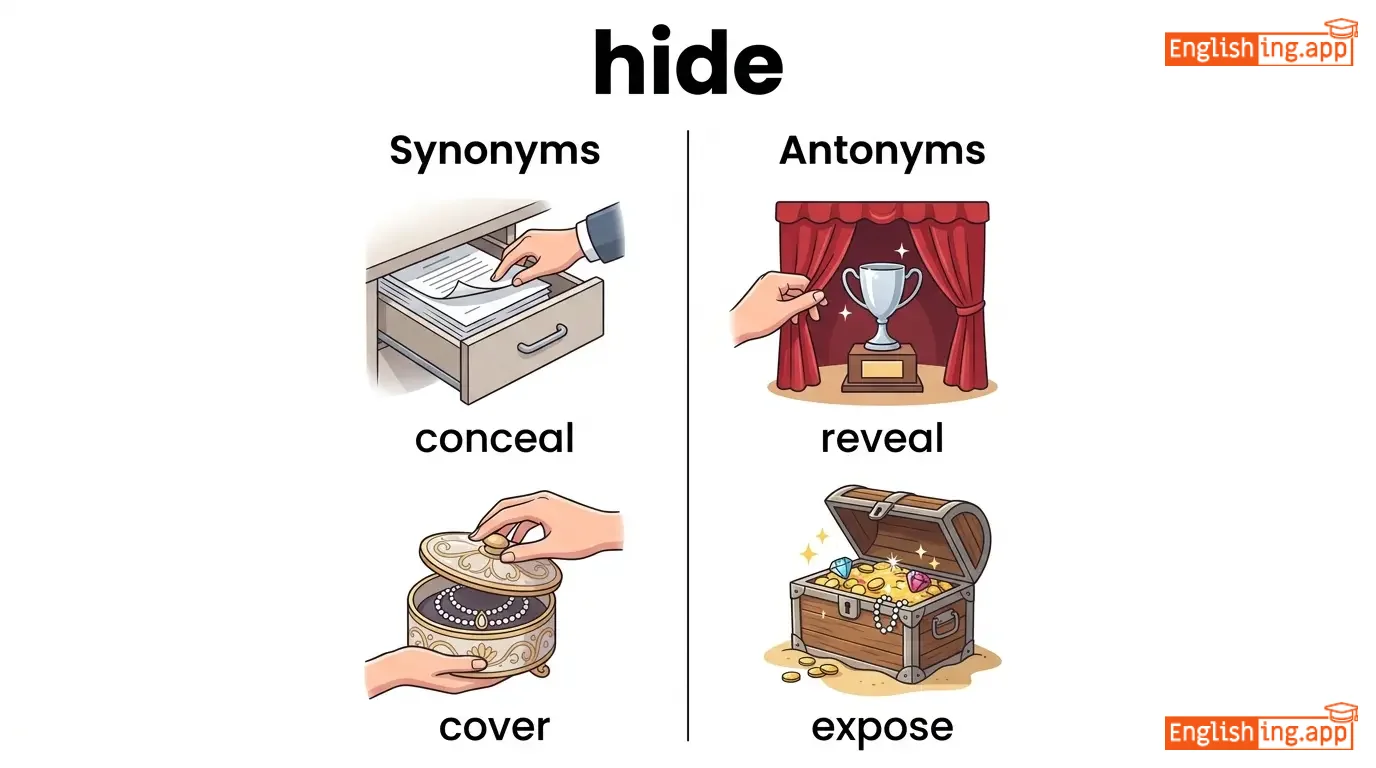
conceal, cover, disguise, veil, secrete
••••••
|
reveal, expose, uncover
••••••
|
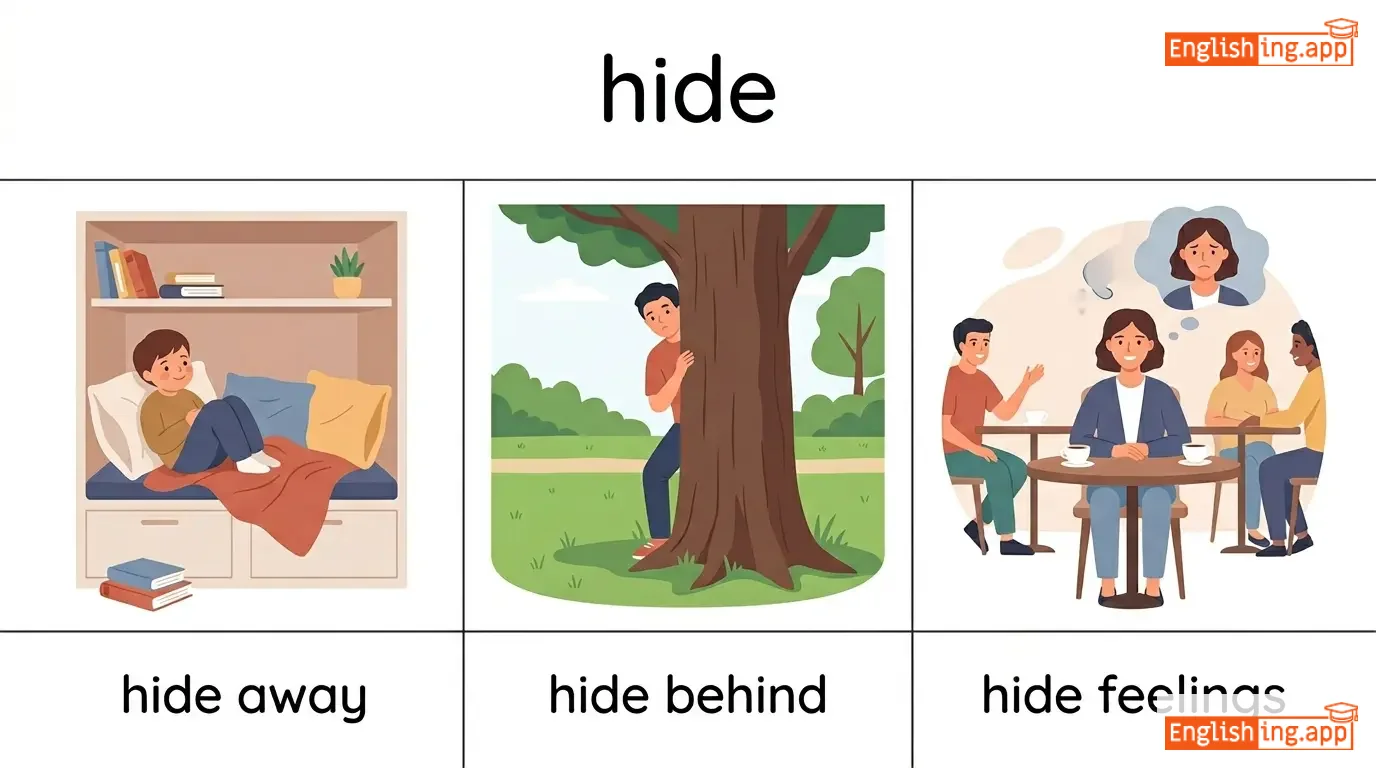
hide away, hide behind, hide feelings, hide from
••••••
|
Hide は隠す、まるで 🦊 キツネが巣に隠れるように
••••••
|
|
🏹
••••••
|
/hʌnt/
verb
(hant)
••••••
|
|
狩り
kari
••••••
|
hunted
hanted
••••••
|
hunted
hanted
••••••
|
hunts
hants
••••••
|
hunting
hanting
••••••
|
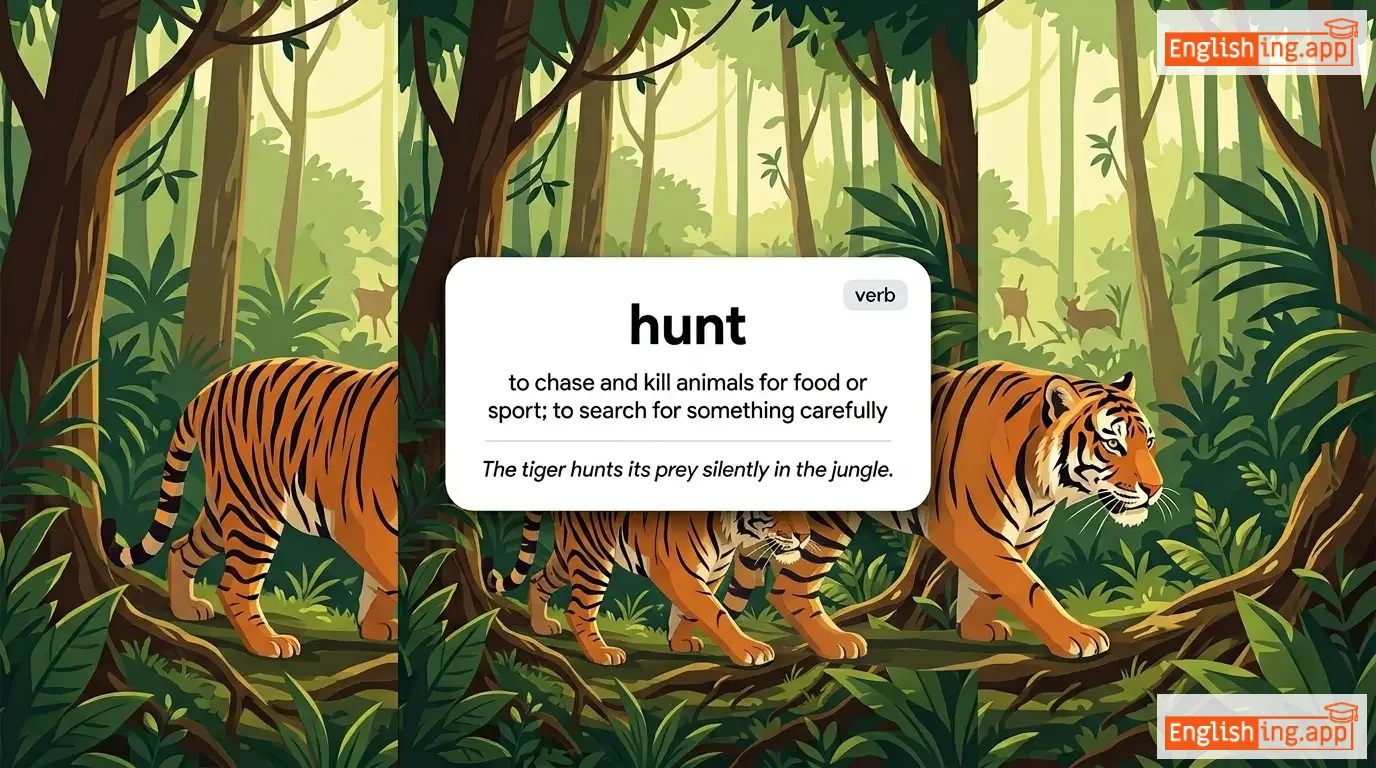
to chase and kill animals for food or sport; to search for something carefully
••••••
|
The tiger hunts its prey silently in the jungle.
トラはジャングルで静かに獲物を狩ります。
••••••
|
トラはジャングルで静かに獲物を狩ります。
Tora wa janguru de shizuka ni emono o karimasu.
••••••
|
on the hunt for
獲物を求めて
••••••
|
actively searching for something or someone
••••••
|
探し中
sagashichū
••••••
|
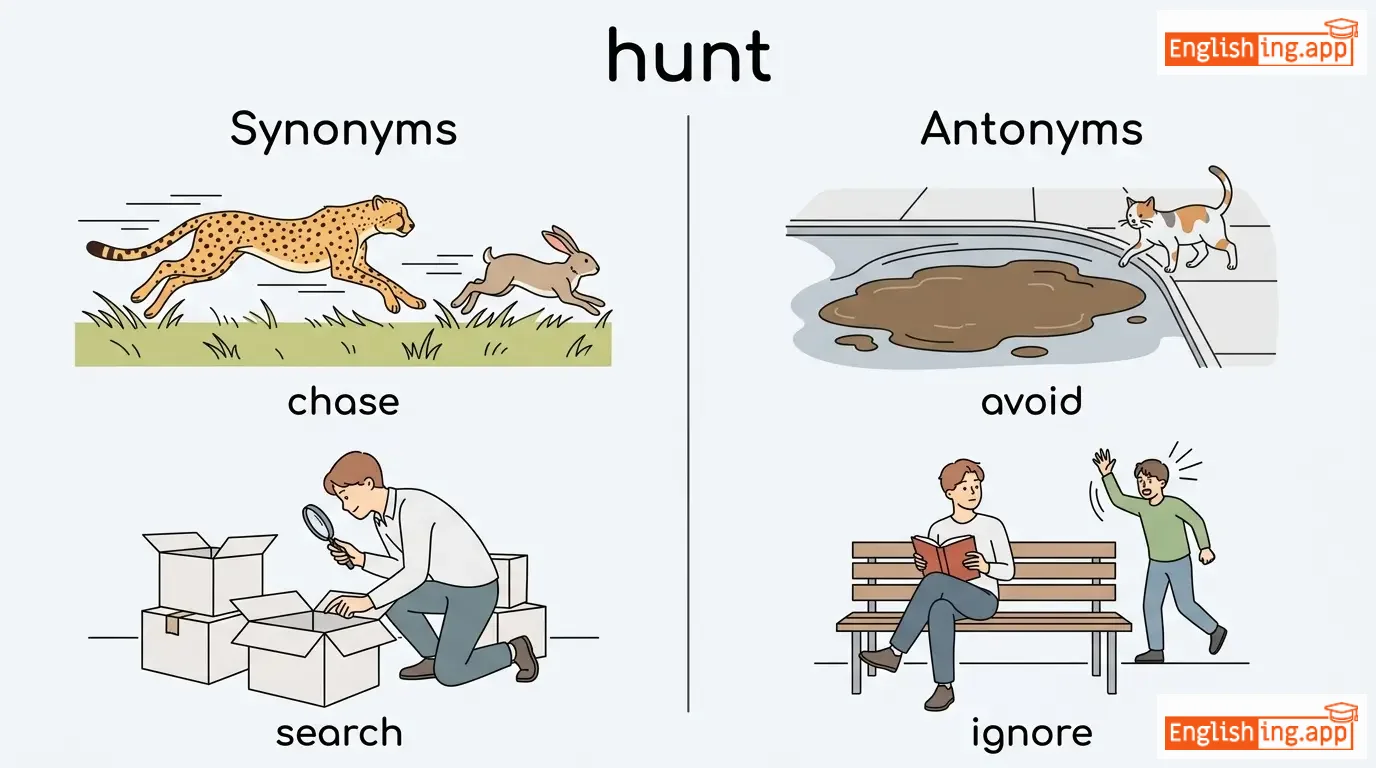
chase, search, track, pursue, seek
••••••
|
avoid, ignore, escape
••••••
|
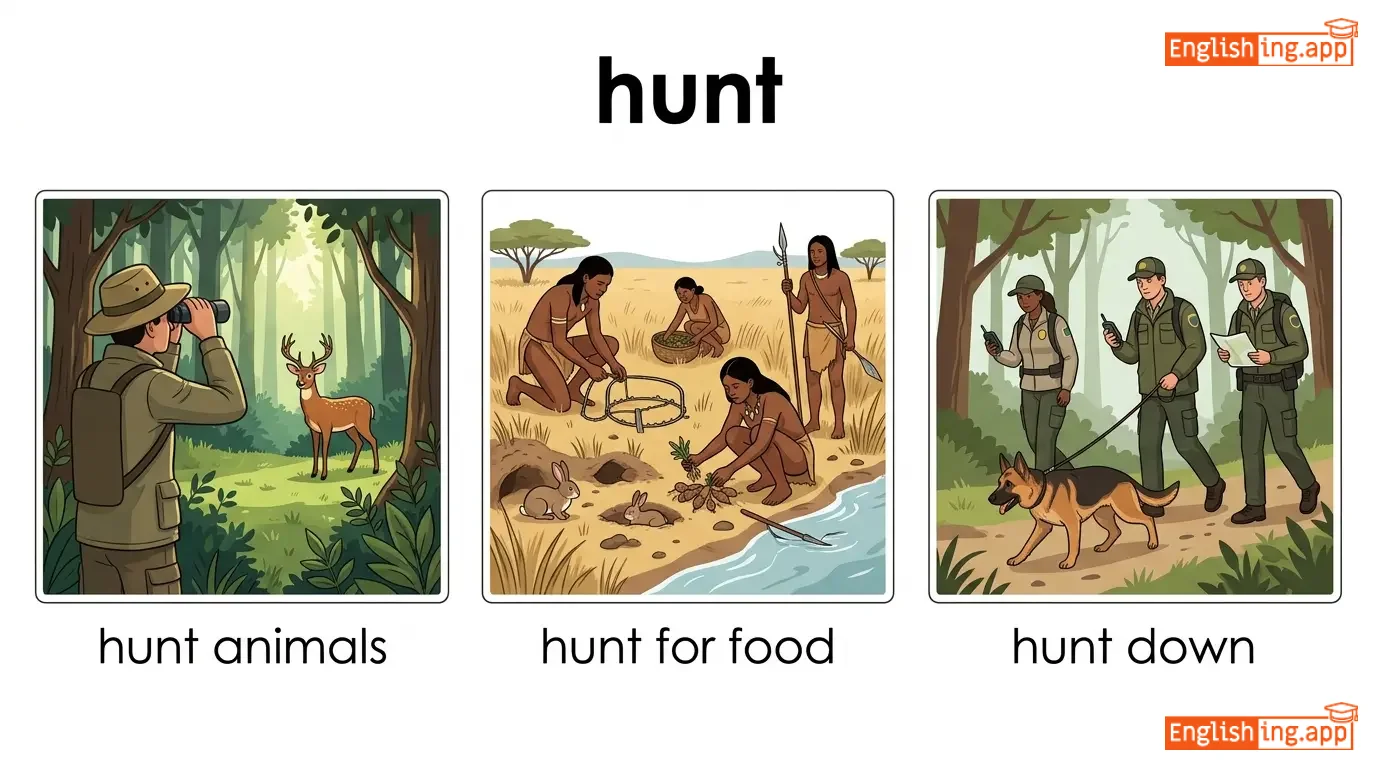
hunt animals, hunt for food, hunt down, go hunting
••••••
|
狩りに行く、目標を見つけよう!
••••••
|
|
🚔
••••••
|
/dʒeɪl/
noun, verb
(ジェイル)
••••••
|
- •••••• |
刑務所
keimusho
••••••
|
jailed
ジェイルド
••••••
|
jailed
ジェイルド
••••••
|
jails
ジェイルズ
••••••
|
jailing
ジェイリング
••••••
|
A place for the confinement of people accused or convicted of a crime; to imprison.
••••••
|
The thief was sent to jail for stealing.
ザ・スティーフ ワズ セント トゥ ジェイル フォー スティーリング。
••••••
|
泥棒は盗みのために刑務所に送られました。
Dorobō wa nusumi no tame ni keimusho ni okuraremashita.
••••••
|
throw in jail
スロー イン ジェイル
••••••
|
to imprison someone
••••••
|
刑務所に入れる
keimusho ni ireru
••••••
|
prison, lockup, penitentiary, detention
••••••
|
freedom, release
••••••
|
go to jail, in jail, jail sentence, jail term
••••••
|
Jailは英語で刑務所。犯罪者は刑務所に入れる。
••••••
|
|
🌱
••••••
|
/laɪf/
noun
(ライフ)
••••••
|
- •••••• |
生命
seimei
••••••
|
- •••••• | - •••••• | - •••••• | - •••••• |
The existence of an individual human being or animal.
••••••
|
Life is full of challenges and opportunities. |
生命は挑戦と機会に満ちています。
Seimei wa chōsen to kikai ni michiteimasu.
••••••
|
circle of life |
The natural cycle of birth, growth, death, and renewal.
••••••
|
生命のサイクル
Seimei no saikuru
••••••
|
existence, living, vitality, being, survival
••••••
|
death, end
••••••
|
daily life, life expectancy, life experience, life span
••••••
|
人生は挑戦の連続で、勝者だけが生き残る。
••••••
|
|
👍
••••••
|
/laɪk/
verb, preposition
(ライク)
••••••
|
|
好き
suki
••••••
|
liked
ライクド
••••••
|
liked
ライクド
••••••
|
likes
ライクス
••••••
|
liking
ライキング
••••••
|
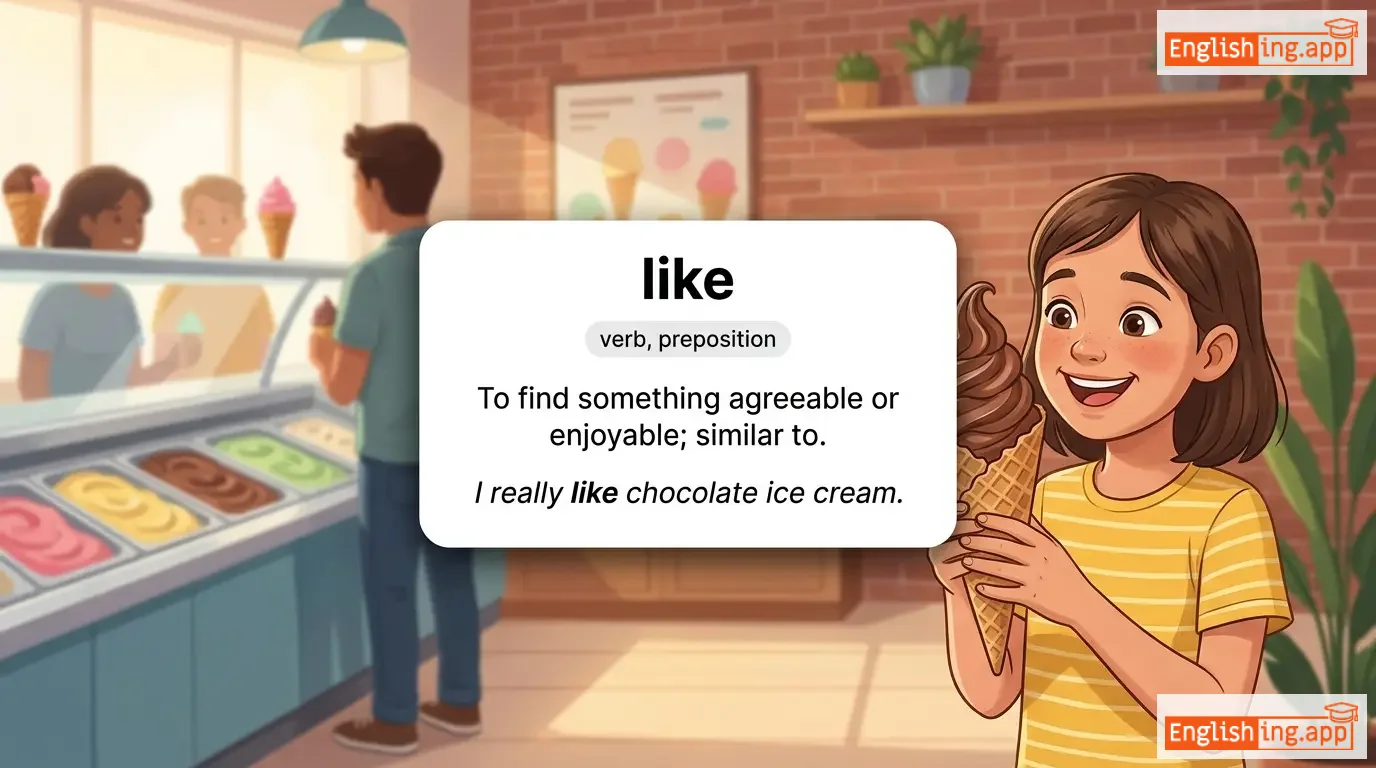
To find something agreeable or enjoyable; similar to.
••••••
|
I really like chocolate ice cream.
私は本当にチョコレートアイスクリームが好きです。
••••••
|
私は本当にチョコレートアイスクリームが好きです。
Watashi wa hontōni chokorēto aisukurīmu ga suki desu.
••••••
|
like father, like son
父に似て息子に似る
••••••
|
children often resemble their parents in behavior or character
••••••
|
父に似て息子に似る
Chichi ni nite musuko ni miru
••••••
|
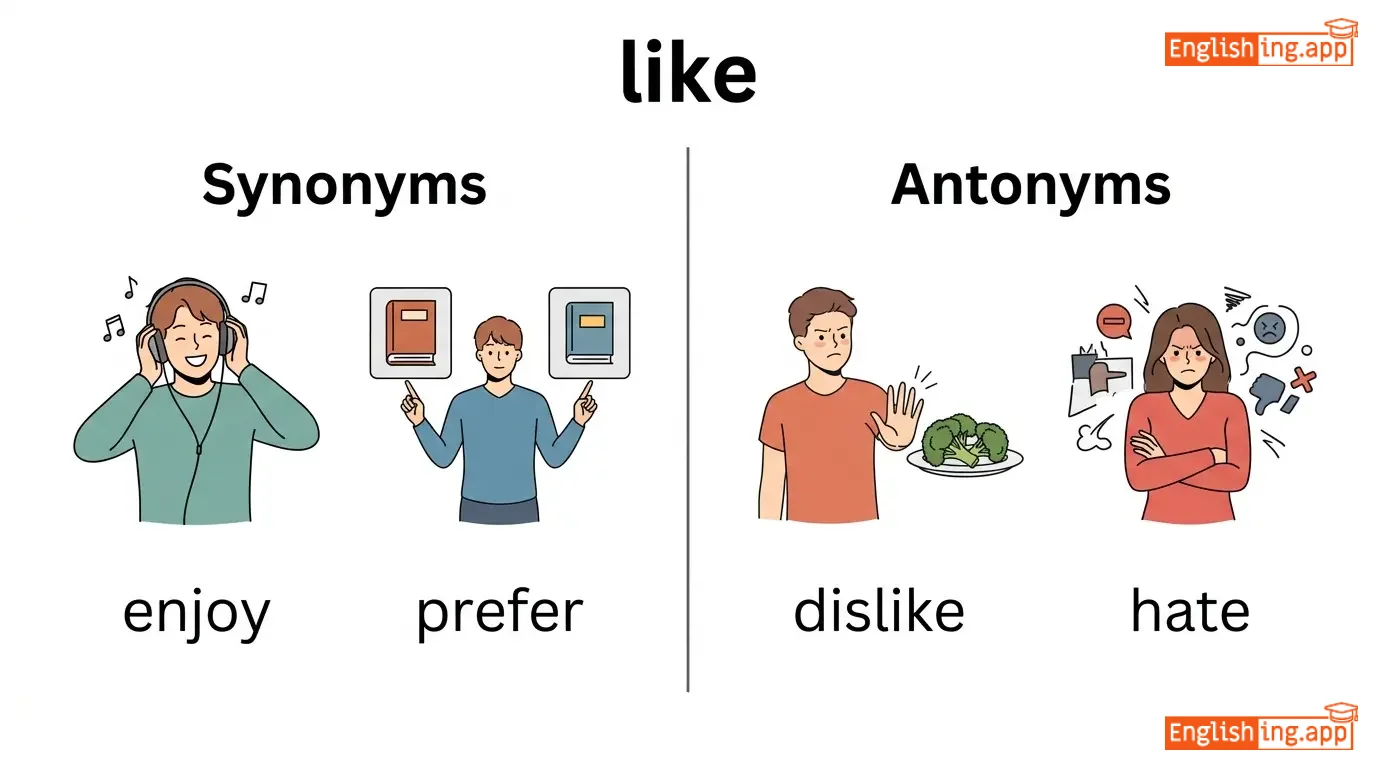
enjoy, prefer, love, admire, appreciate
••••••
|
dislike, hate, detest
••••••
|
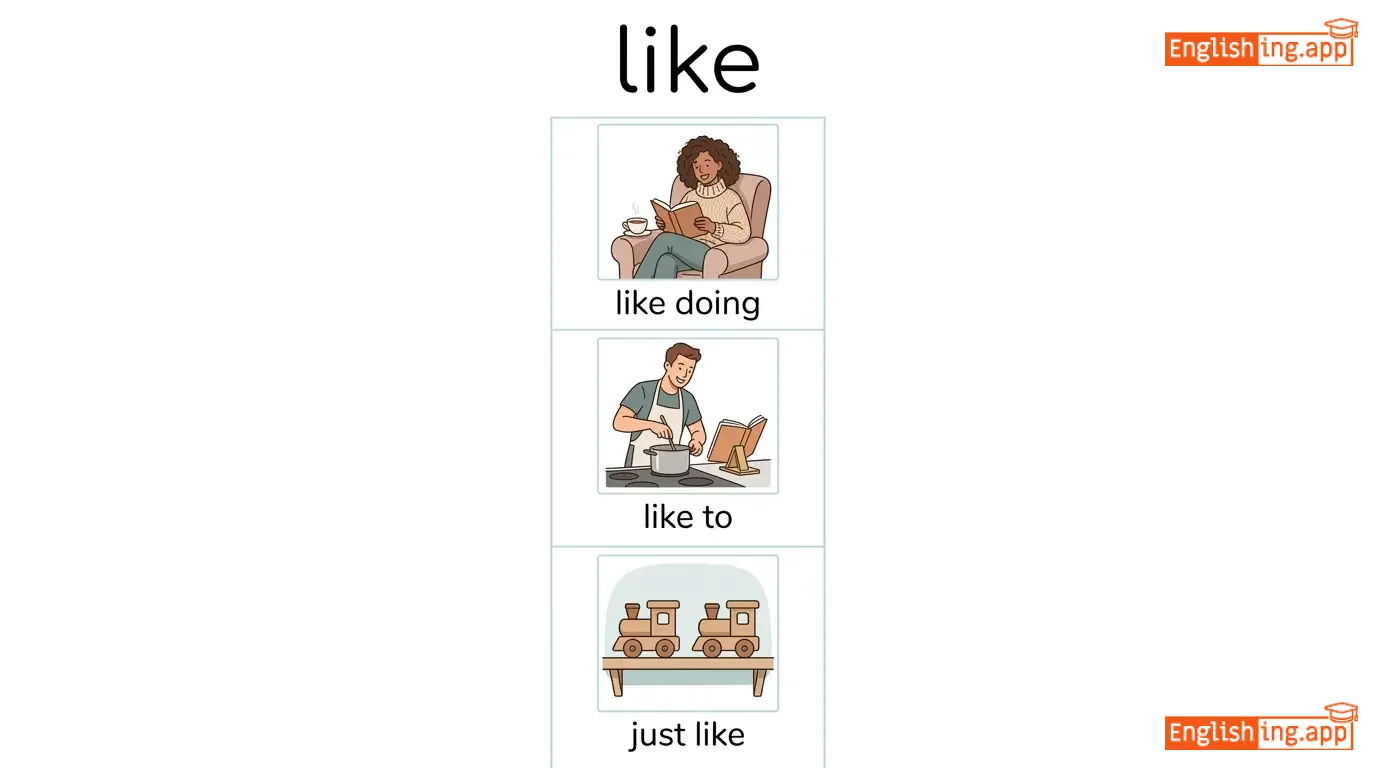
like doing, like to, just like, feel like
••••••
|
Facebookで「いいね」を押すことは好きと言うことです。
••••••
|
|
🏡
••••••
|
/lɪv/
verb
(リヴ)
••••••
|
|
住む
sumu
••••••
|
lived
リヴド
••••••
|
lived
リヴド
••••••
|
lives
リヴス
••••••
|
living
リヴィング
••••••
|
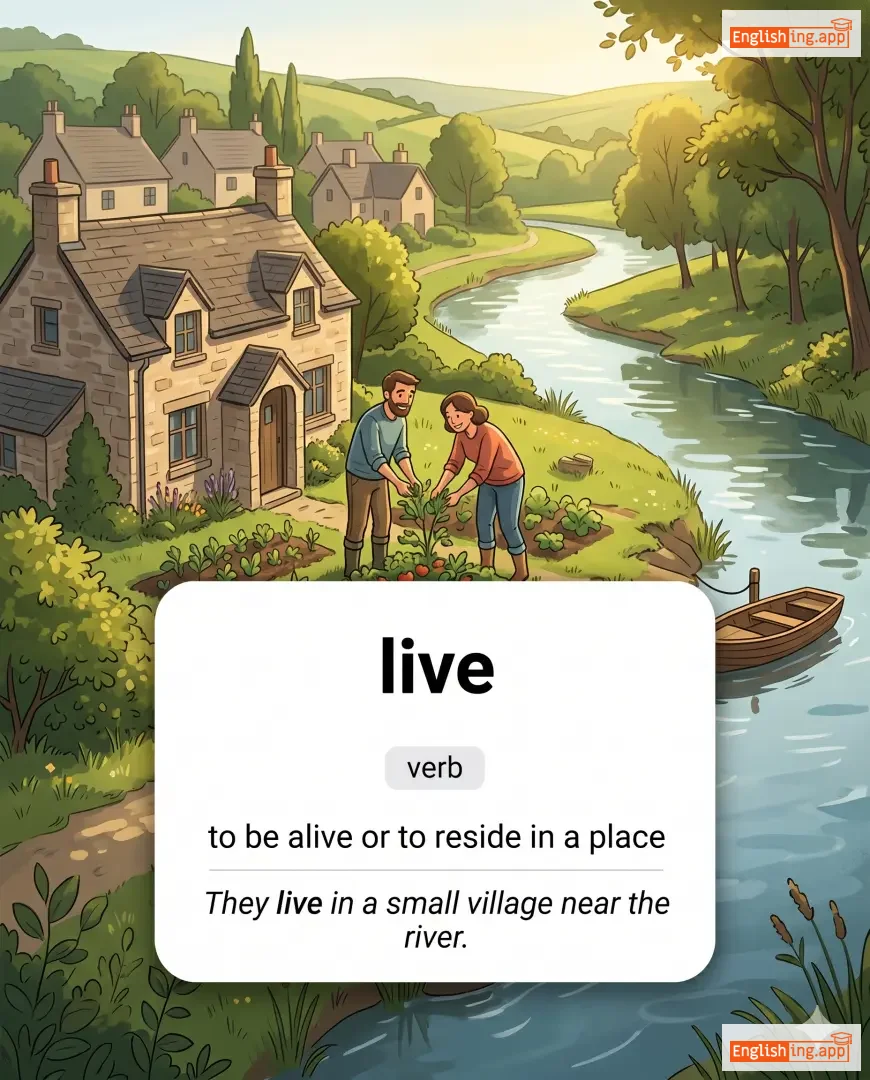
to be alive or to reside in a place
••••••
|
They live in a small village near the river.
彼らは川の近くの小さな村に住んでいます。
••••••
|
彼らは川の近くの小さな村に住んでいます。
Karera wa kawa no chikaku no chiisana mura ni sundeimasu.
••••••
|
live and let live
リヴ・アンド・レット・リヴ
••••••
|
to tolerate others' behavior and expect them to tolerate yours
••••••
|
生きることを許し、他人にも生きさせる
Ikiru koto o yurushi, tanin ni mo ikisaseru
••••••
|
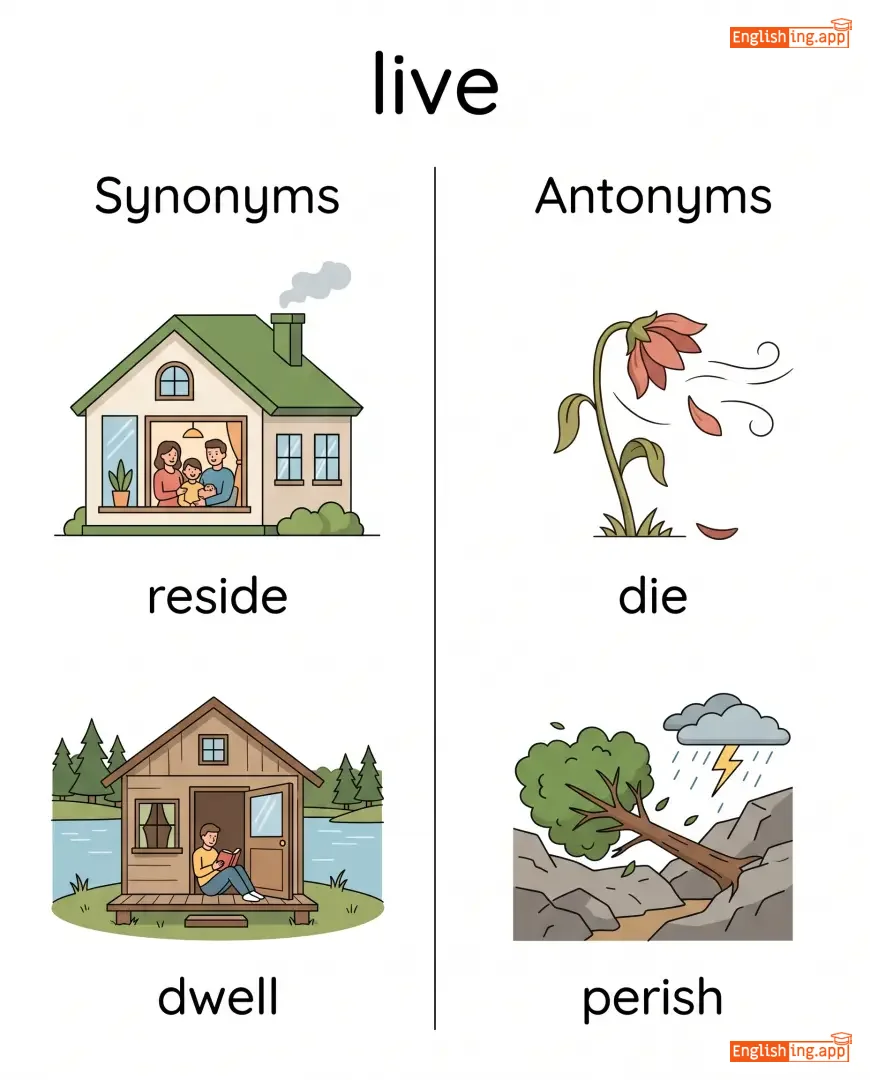
reside, dwell, exist, inhabit, survive
••••••
|
die, perish
••••••
|
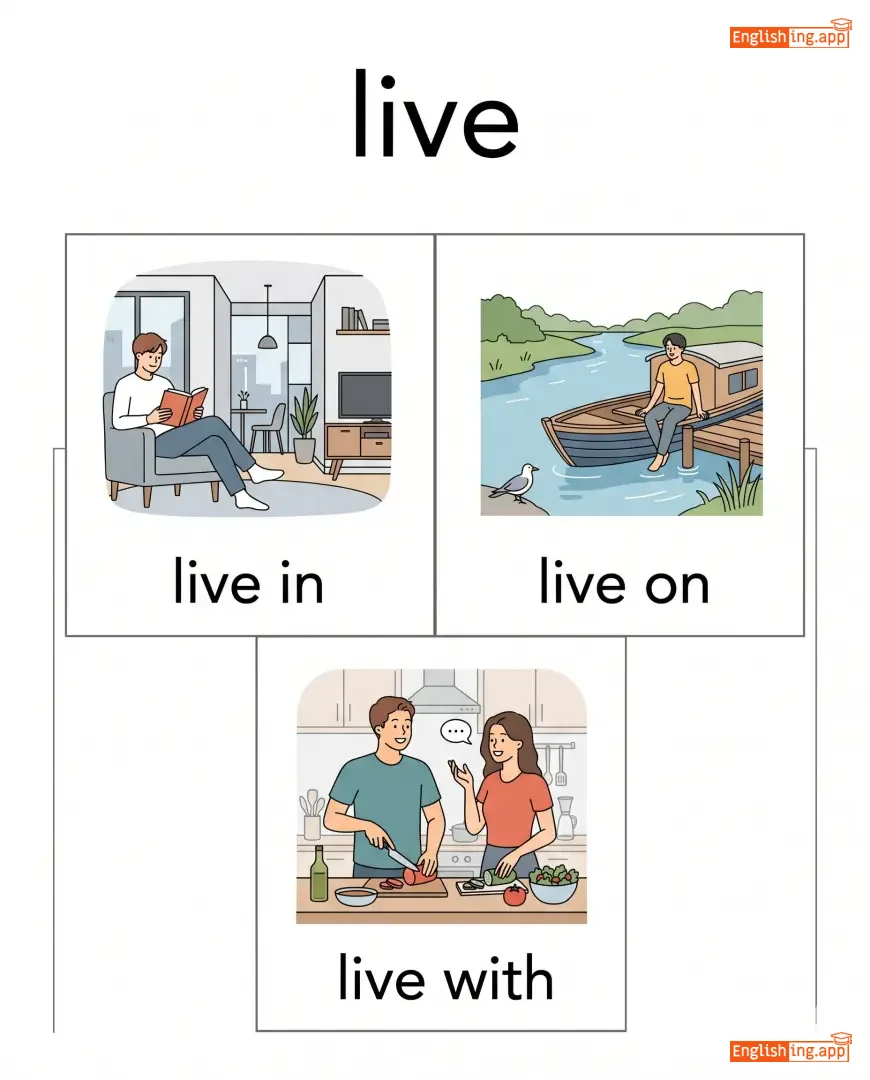
live in, live on, live with, live happily, live abroad
••••••
|
Liveは生きるという意味で、'ライブショー'のようにリアルタイムで何かを見ることです。
••••••
|
|
👨
••••••
|
/mæn/
noun
(マン)
••••••
|
- •••••• |
男性
dansei
••••••
|
- •••••• | - •••••• | - •••••• | - •••••• |
an adult human male
••••••
|
The man helped the child cross the street.
ザ・マンヘルプトゥ・ザ・チャイルド・クロス・ザ・ストリート。
••••••
|
その男性は子供が通りを渡るのを手伝いました。
Sono dansei wa kodomo ga tōri o wataru no o tetsudaimashita.
••••••
|
man's best friend
マン'ズ・ベスト・フレンド
••••••
|
a phrase often used to describe dogs, emphasizing their loyalty to humans
••••••
|
男の最良の友達
otoko no sairyō no tomodachi
••••••
|
male, gentleman, guy, fellow, bloke
••••••
|
woman, female
••••••
|
young man, old man, real man, man of honor
••••••
|
Man 男性 - マン = 男性
••••••
|
|
📜
••••••
|
/ˈpoʊɪm/
noun
(ポエム)
••••••
|
- •••••• |
詩
shi
••••••
|
- •••••• | - •••••• | - •••••• | - •••••• |
a piece of writing that expresses ideas, feelings, or tells a story in a distinct form, often using rhyme or meter
••••••
|
She wrote a beautiful poem for her mother. |
彼女は母親のために美しい詩を書きました。
Kanojo wa hahaoya no tame ni utsukushii shi o kakimashita.
••••••
|
- •••••• | - •••••• | - •••••• |
verse, sonnet, rhyme
••••••
|
prose, essay
••••••
|
write a poem, read a poem, beautiful poem
••••••
|
詩はあなたの心に触れるようなストーリーです!
••••••
|
|
✍️
••••••
|
/ˈpoʊɪt/
noun
(ポエト)
••••••
|
- •••••• |
詩人
shijin
••••••
|
- •••••• | - •••••• | - •••••• | - •••••• |
a person who writes poems
••••••
|
The poet wrote about love and nature. |
詩人は愛と自然について書いた。
Shijin wa ai to shizen ni tsuite kaita.
••••••
|
- •••••• | - •••••• | - •••••• |
verse-maker, bard, author
••••••
|
prose writer
••••••
|
great poet, famous poet, modern poet
••••••
|
A poet creates magic with the power of words!
••••••
|
|
👻
••••••
|
/soʊl/
noun
(魂)
••••••
|
- •••••• |
魂
tamashī
••••••
|
- •••••• | - •••••• | - •••••• | - •••••• |
the spiritual or immaterial essence of a human being or animal; a person's emotional or intellectual nature
••••••
|
She poured her heart and soul into her artwork.
彼女は芸術作品に心と魂を込めました。
••••••
|
彼女は芸術作品に心と魂を込めました。
kanojo wa geijutsu sakuhin ni kokoro to tamashī o komemashita.
••••••
|
- •••••• | - •••••• | - •••••• |
spirit, essence, heart, core
••••••
|
body, flesh, matter
••••••
|
heart and soul, lost soul, soul mate, save one's soul
••••••
|
魂 (Tamashī) - 創造の中に込められた魂
••••••
|
|
📝
••••••
|
/wɜːrd/
noun
(wɜːrd)
••••••
|
- •••••• |
単語
tango
••••••
|
- •••••• | - •••••• | - •••••• | - •••••• |
a single distinct meaningful element of speech or writing
••••••
|
He looked up the word in the dictionary.
彼は辞書でその単語を調べました。
••••••
|
彼は辞書でその単語を調べました。
Kare wa jisho de sono tango o shirabemashita.
••••••
|
word of mouth
口から口へ
••••••
|
information passed verbally from one person to another
••••••
|
口から口へ
kuchi kara kuchi e
••••••
|
term, expression, phrase, utterance
••••••
|
silence, quiet
••••••
|
word meaning, word choice, spoken word, word of mouth
••••••
|
単語は言葉の最小単位、言語を学ぶ際にはこれが基本となる要素です。
••••••
|

