The Lost Temple's Secret
カリム博士は古代文明を研究していた考古学者でした。ある日、彼は隠された寺院について書かれた古い手稿を発見しました。この伝説は何世代にもわたって伝えられてきましたが、誰も信じていませんでした。
手稿にはいくつかの謎めいた手がかりがありました。カリム博士はこれが解かなければならないパズルであることを知っていました。彼の冒険が始まりました。宝物を探しに行くために、何世代も隠されていたものを見つけるために。
彼はチームと共に、深いジャングルへの旅を始めました。それは真の冒険でした。道の途中には多くの障害がありましたが、彼の決意は強かったです。
2週間の探索の後、彼らは奇妙な構造物を見つけました。それはあの古代寺院でした!内部を探検すると、彼らは多くの遺物を発見しました。
最も興味深かったのは石の板でした。そこには秘密のコードがありました。カリム博士とそのチームはそのコードを解き明かしました。それはこの寺院が数千年の知識が保存されていた古代の図書館であったことを明らかにしました。
この発見は画期的なものでした。カリム博士は単に宝物を見つけただけでなく、古代の知恵の源を見つけました。彼の冒険は、伝説が時折実現することを証明しました。
今、この寺院は考古学の奇跡となっています。カリム博士の冒険は、探険者の新しい世代を励まし、彼らが秘密を発見したいという欲望を抱かせました。それらの隠された秘密は今や明らかにされましたが、さらに多くのパズルが解かれるのを待っています。
|
絵文字
|
単語 | Images | 翻訳 | 過去 | 過去分詞 | 三人称単数 | 動名詞 | 意味 | 例文 | 例文の翻訳 | 表現例 | 表現例の意味 | 表現例の翻訳 | 同義語 | 対義語 | コロケーション | ニーモニック |
|---|---|---|---|---|---|---|---|---|---|---|---|---|---|---|---|---|---|
|
🏔️
••••••
|
/ədˈvɛntʃər/
noun
(アドベンチャー)
••••••
|
|
冒険
bōken
••••••
|
- •••••• | - •••••• | - •••••• | - •••••• |
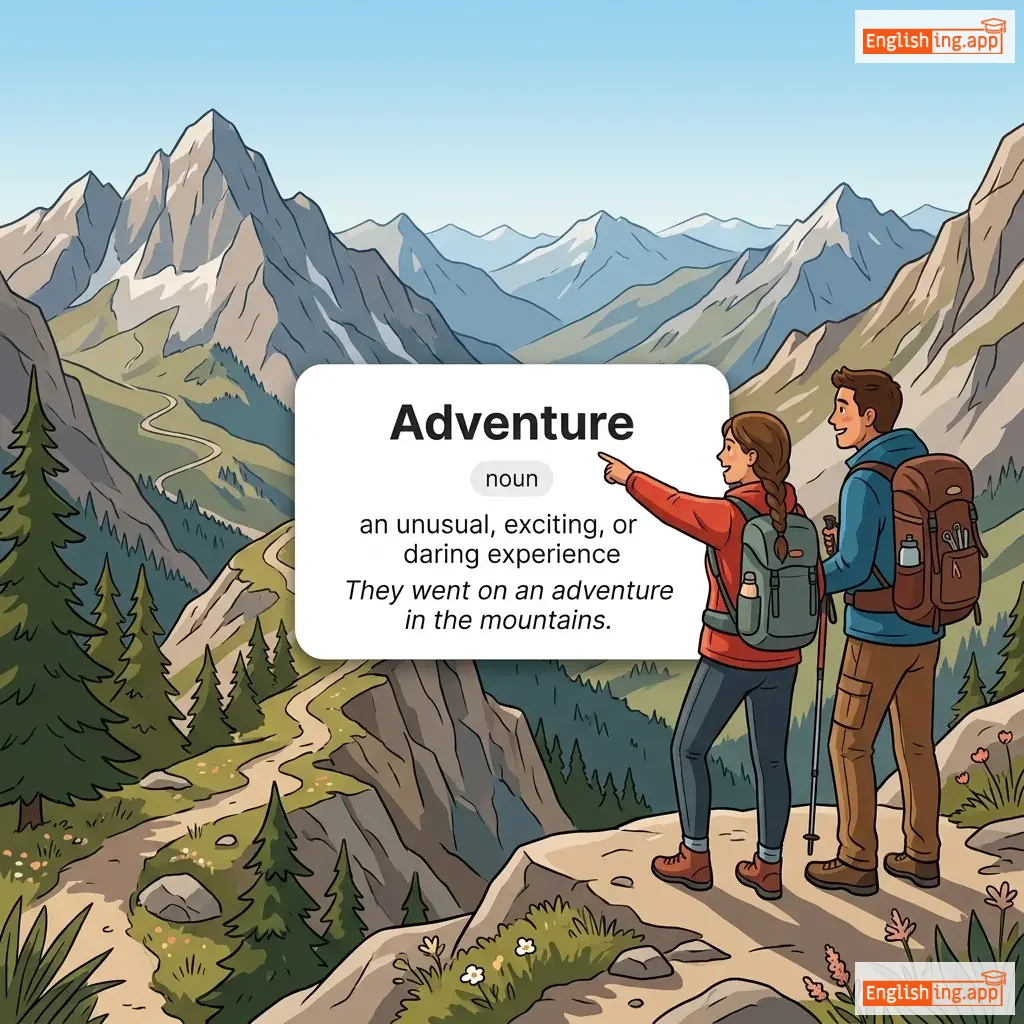
an unusual, exciting, or daring experience
••••••
|
They went on an adventure in the mountains. |
彼らは山で冒険をしました。
Karera wa yama de bōken o shimashita.
••••••
|
spirit of adventure |
the willingness to try exciting or risky things
••••••
|
冒険心
bōkenshin
••••••
|
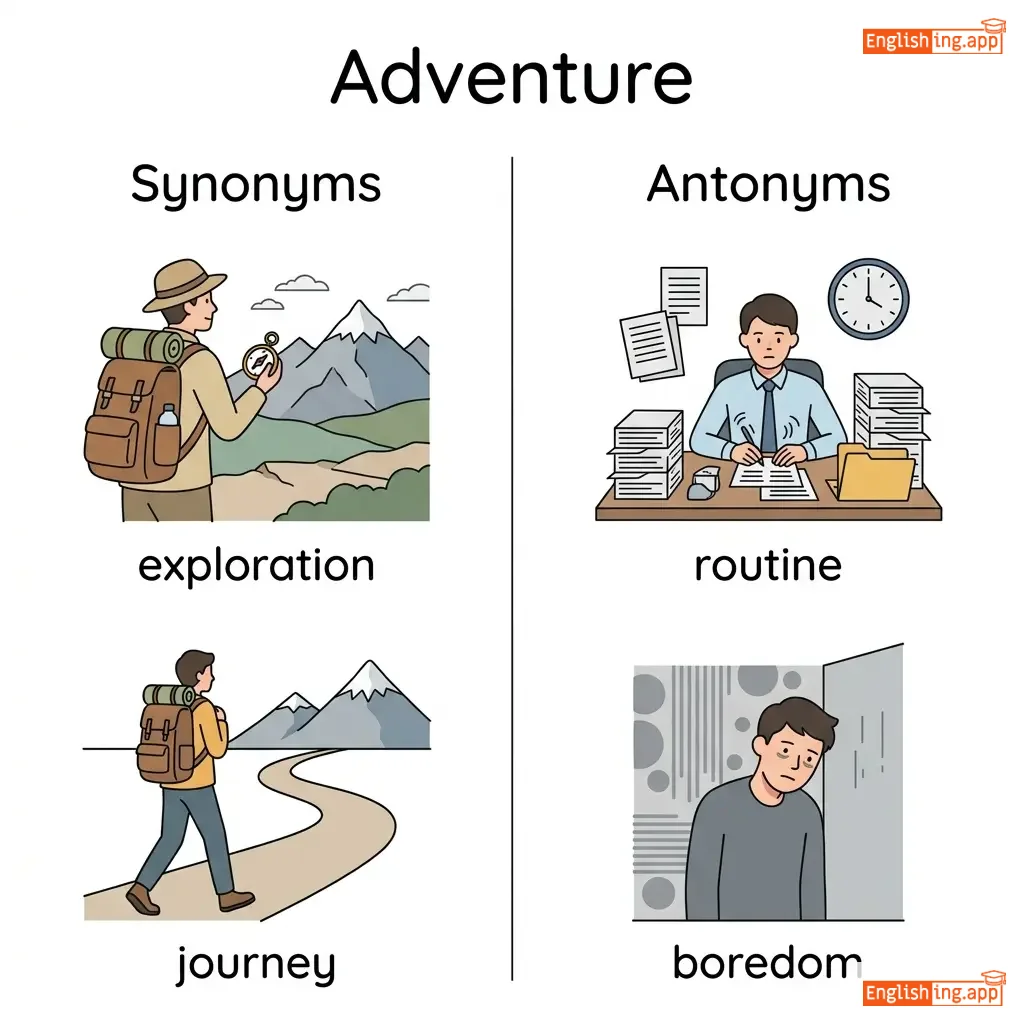
exploration, journey, quest, expedition
••••••
|
routine, boredom, safety
••••••
|
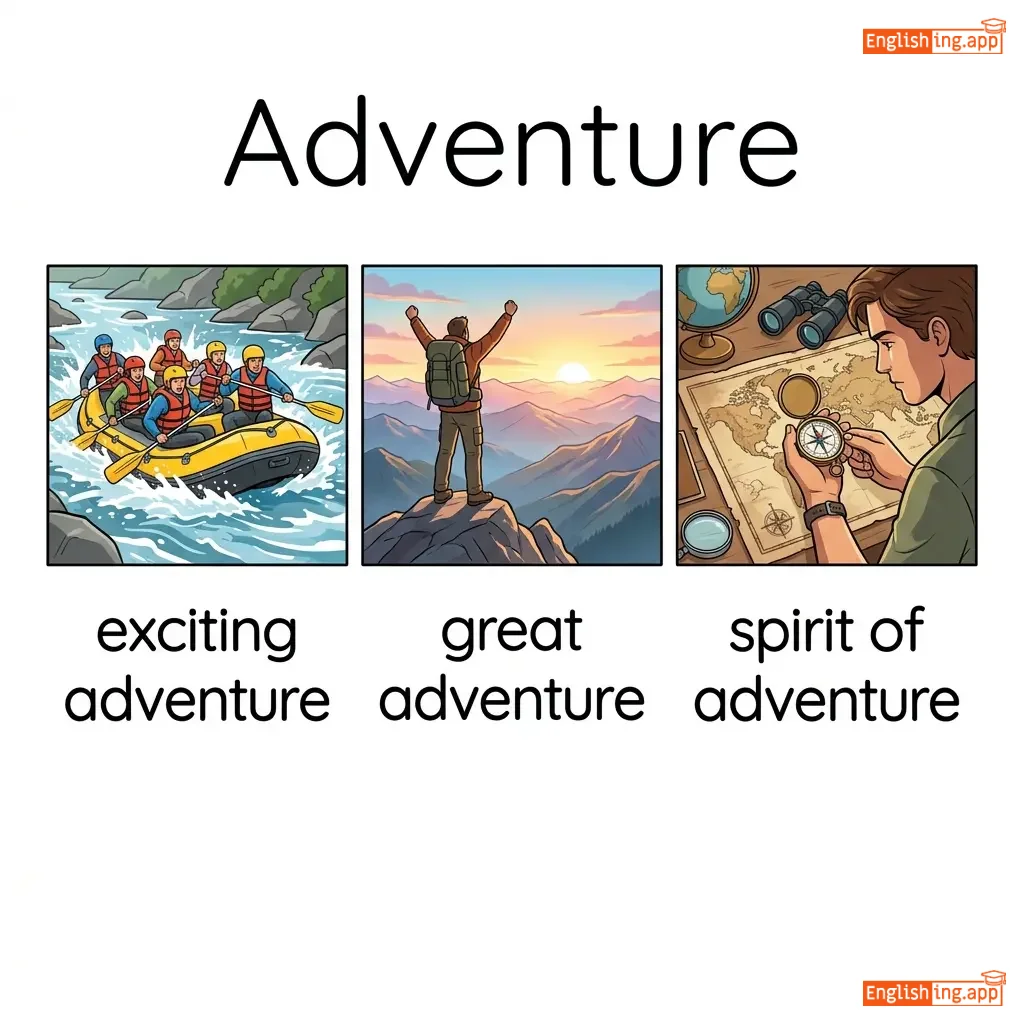
exciting adventure, great adventure, spirit of adventure, adventure story
••••••
|
Adventure は冒険、'Ad vent' で温かい風、楽しくてワクワクすることが始まる!
••••••
|
|
🏛️
••••••
|
/ˈeɪnʃənt/
adjective
(エインシェント)
••••••
|
- •••••• |
古代の
kodai no
••••••
|
- •••••• | - •••••• | - •••••• | - •••••• |
Belonging to the very distant past; very old.
••••••
|
They visited the ruins of an ancient city.
彼らは古代都市の遺跡を訪れました。
••••••
|
彼らは古代都市の遺跡を訪れました。
Karera wa kodai toshi no iseki o otozuremashita.
••••••
|
ancient history
古代の歴史
••••••
|
something that happened a long time ago and is no longer important
••••••
|
古代の歴史
Kodai no rekishi
••••••
|
old, antique, archaic, prehistoric, classical
••••••
|
modern, recent
••••••
|
ancient civilization, ancient ruins, ancient culture, ancient temple
••••••
|
古代のは 'Ancient' の意味、古代の神殿や城をイメージしよう。
••••••
|
|
🏺
••••••
|
/ˈɑːrtɪˌfækt/
noun
(アーティファクト)
••••••
|
|
遺物
ibutsu
••••••
|
- •••••• | - •••••• | - •••••• | - •••••• |
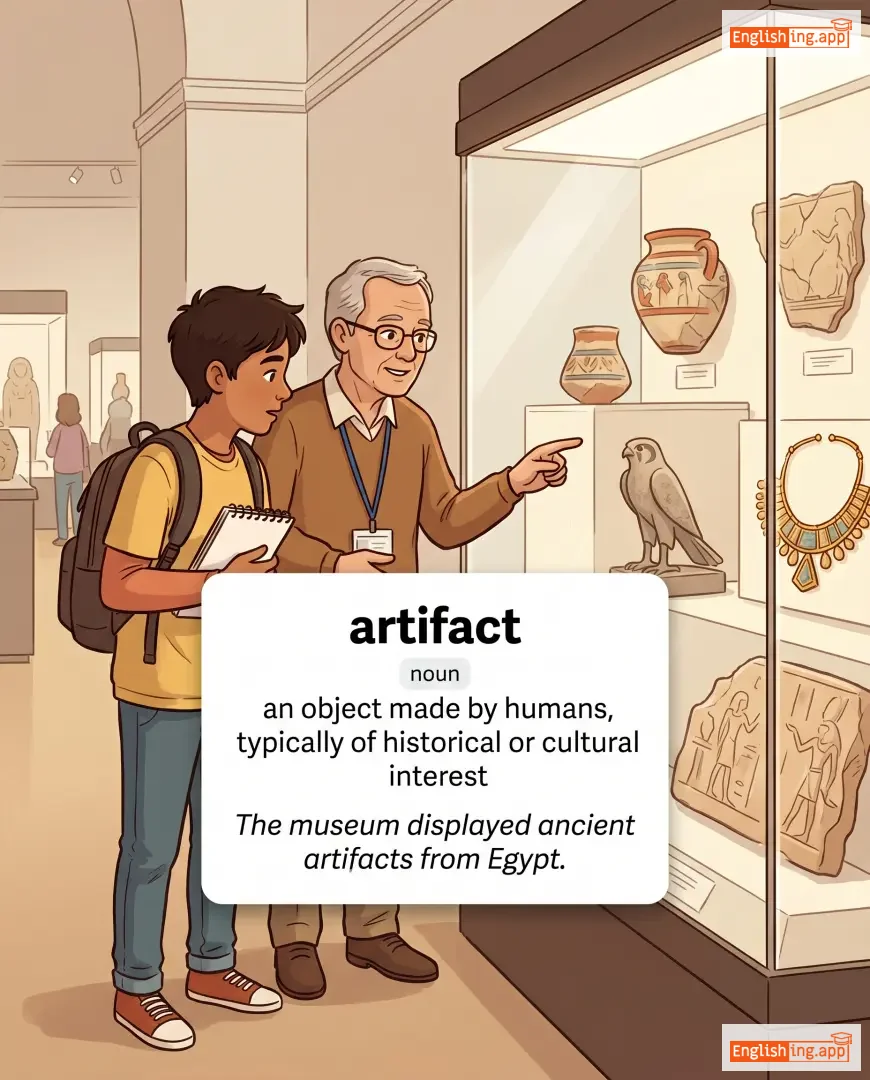
an object made by humans, typically of historical or cultural interest
••••••
|
The museum displayed ancient artifacts from Egypt.
博物館はエジプトの古代のアーティファクトを展示しました。
••••••
|
博物館はエジプトの古代のアーティファクトを展示しました。
Hakubutsukan wa Ejiputo no kodai no ātofakuto o tenji shimashita.
••••••
|
- •••••• | - •••••• | - •••••• |
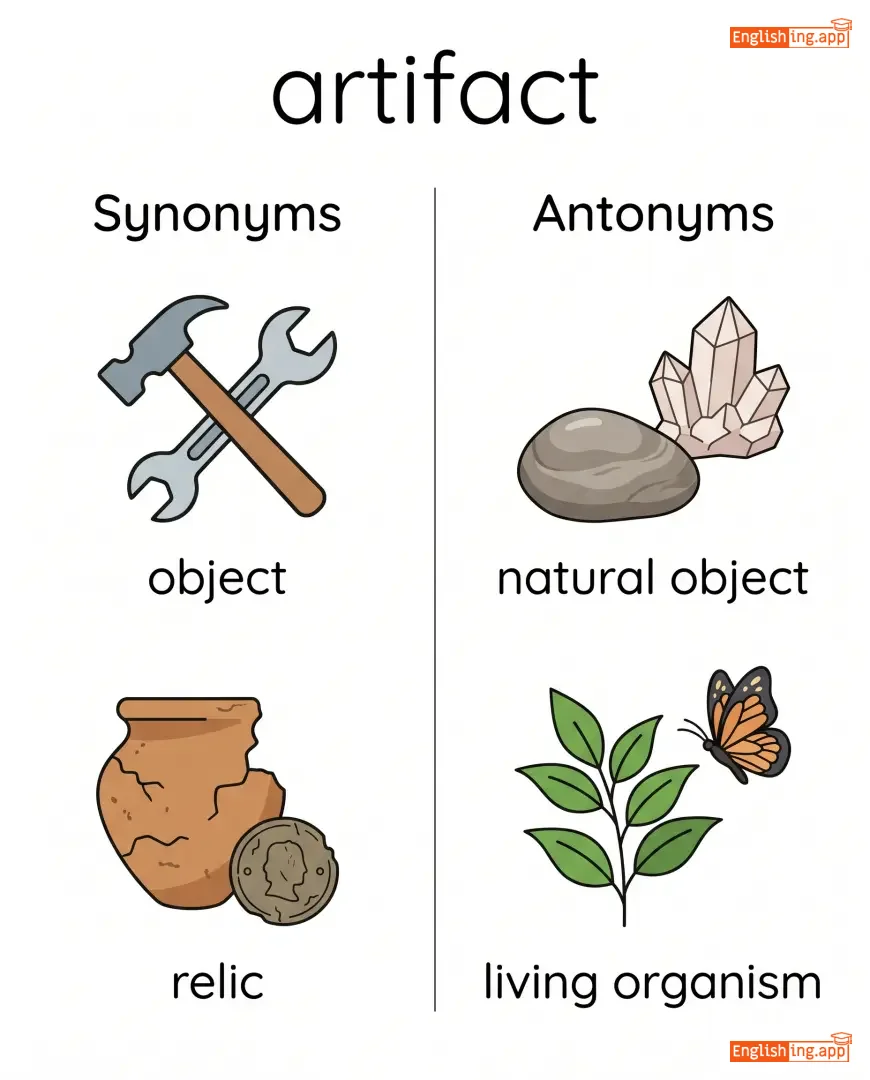
object, relic, antiquity, remain, heirloom
••••••
|
natural object, living organism
••••••
|
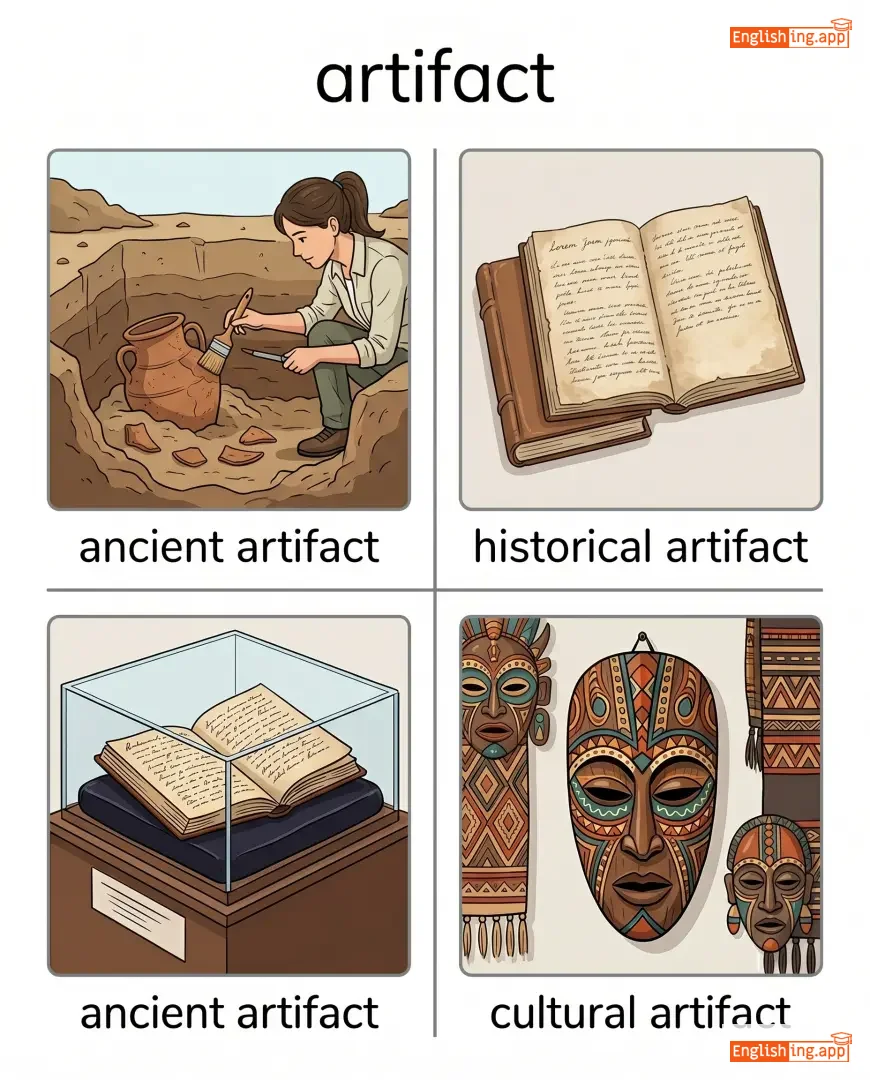
ancient artifact, historical artifact, cultural artifact, rare artifact
••••••
|
遺物(ibutsu): 人間の手によって作られた過去の貴重な物品
••••••
|
|
🕵️
••••••
|
/kluː/
noun
(クルー)
••••••
|
- •••••• |
手がかり
tegakari
••••••
|
- •••••• | - •••••• | - •••••• | - •••••• |
a piece of evidence or information used in the detection of a crime or solving a puzzle
••••••
|
The detective found a clue near the window.
探偵は窓の近くで手がかりを見つけました。
••••••
|
探偵は窓の近くで手がかりを見つけました。
Tantei wa mado no chikaku de tegakari o mitsukemashita.
••••••
|
not have a clue
まったく手がかりがない
••••••
|
to have no knowledge or understanding about something
••••••
|
手がかりが全くない
Tegakari ga mattaku nai
••••••
|
hint, indication, evidence, lead, suggestion
••••••
|
confusion, mystery
••••••
|
give a clue, important clue, clue to the mystery, search for clues
••••••
|
Clueは手がかり – 犯罪解決の手助けとなる。
••••••
|
|
🔎
••••••
|
/dɪˈskʌvər/
verb
(ディスカバー)
••••••
|
|
発見する
hakken suru
••••••
|
discovered
ディスカバード
••••••
|
discovered
ディスカバード
••••••
|
discovers
ディスカバーズ
••••••
|
discovering
ディスカビング
••••••
|
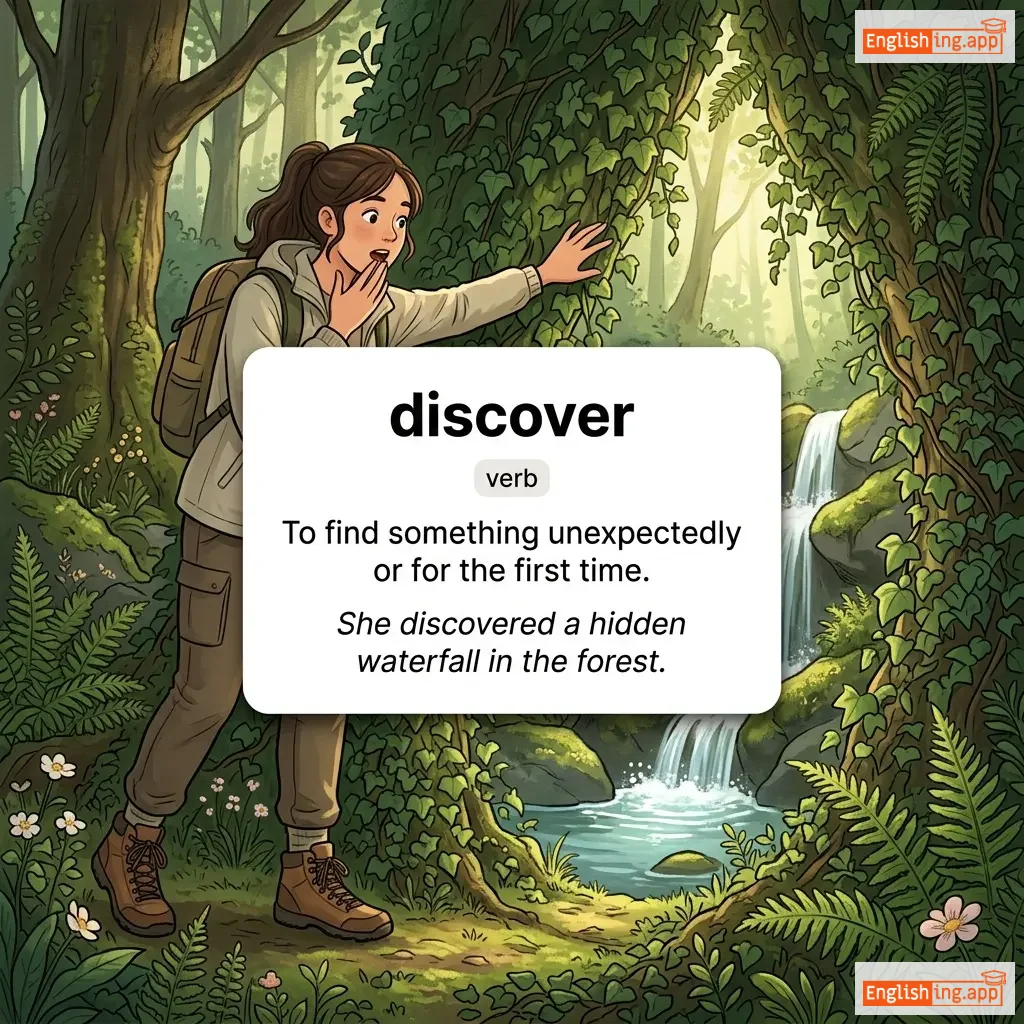
To find something unexpectedly or for the first time.
••••••
|
She discovered a hidden waterfall in the forest.
彼女は森の中で隠された滝を発見しました。
••••••
|
彼女は森の中で隠された滝を発見しました。
Kanojo wa mori no naka de kakusareta taki wo hakken shimashita.
••••••
|
discover oneself
自分自身を発見する
••••••
|
To find out about one’s true nature or capabilities.
••••••
|
自分自身を発見する
Jibun jishin wo hakken suru
••••••
|
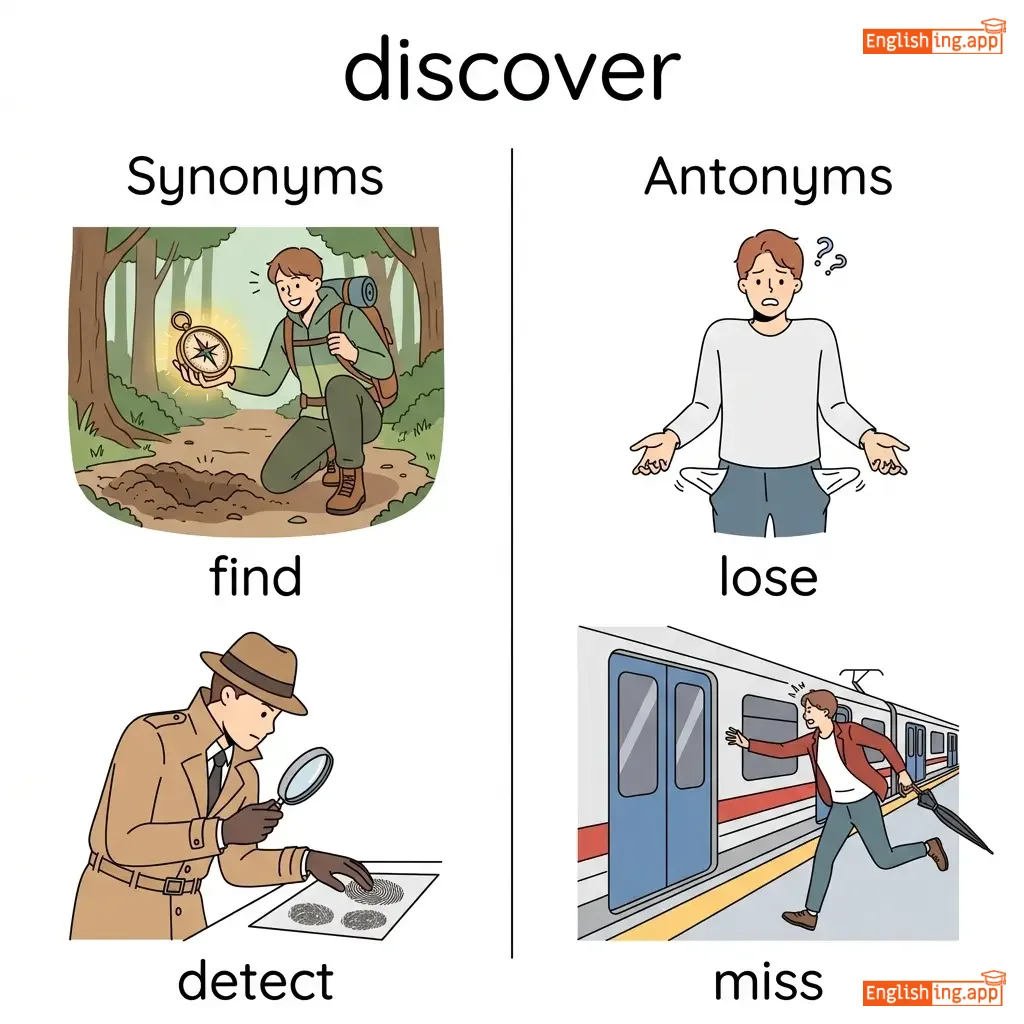
find, detect, uncover, reveal, unearth
••••••
|
lose, miss, conceal
••••••
|
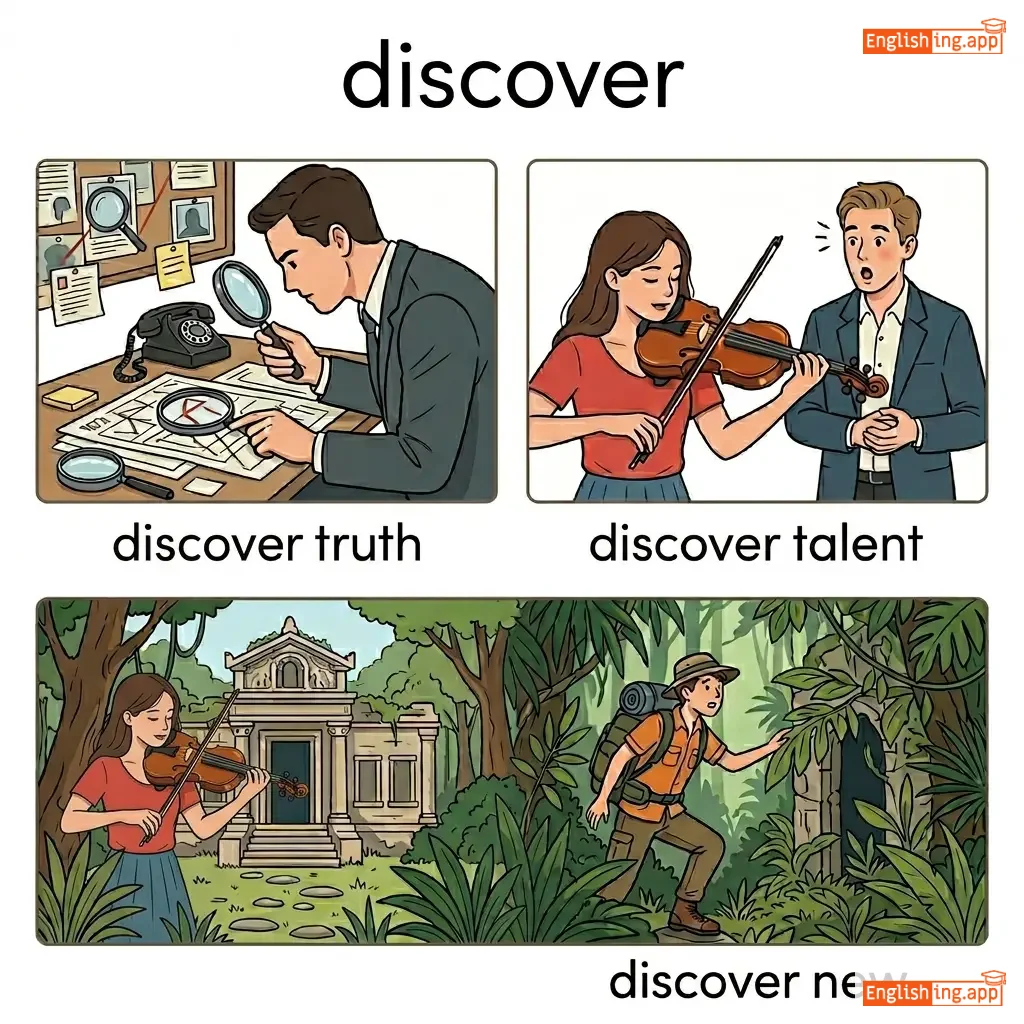
discover truth, discover talent, discover new, discover hidden
••••••
|
発見する = 森の中で滝を見つけるようなものです。
••••••
|
|
🧭
••••••
|
/ɪkˈsplɔːr/
verb
(エクスプロア)
••••••
|
- •••••• |
探検する
tanken suru
••••••
|
explored
エクスプロアド
••••••
|
explored
エクスプロアド
••••••
|
explores
エクスプロアズ
••••••
|
exploring
エクスプローリング
••••••
|
to travel through or study something in order to learn more about it
••••••
|
They decided to explore the forest together.
彼らは一緒に森を探検することに決めました。
••••••
|
彼らは一緒に森を探検することに決めました。
Karera wa issho ni mori wo tanken suru koto ni kimemashita.
••••••
|
explore possibilities
可能性を探る
••••••
|
to consider different options or opportunities
••••••
|
可能性を探る
kanousei wo saguru
••••••
|
discover, investigate, examine, search, probe
••••••
|
ignore, neglect
••••••
|
explore new ideas, explore opportunities, explore the world, explore nature
••••••
|
探検するのは、ドーラの冒険のようなものです
••••••
|
|
🔍
••••••
|
/faɪnd/
verb
(faindo)
••••••
|
|
見つける
mitsukeru
••••••
|
found
faundo
••••••
|
found
faundo
••••••
|
finds
faindzu
••••••
|
finding
faindoing
••••••
|
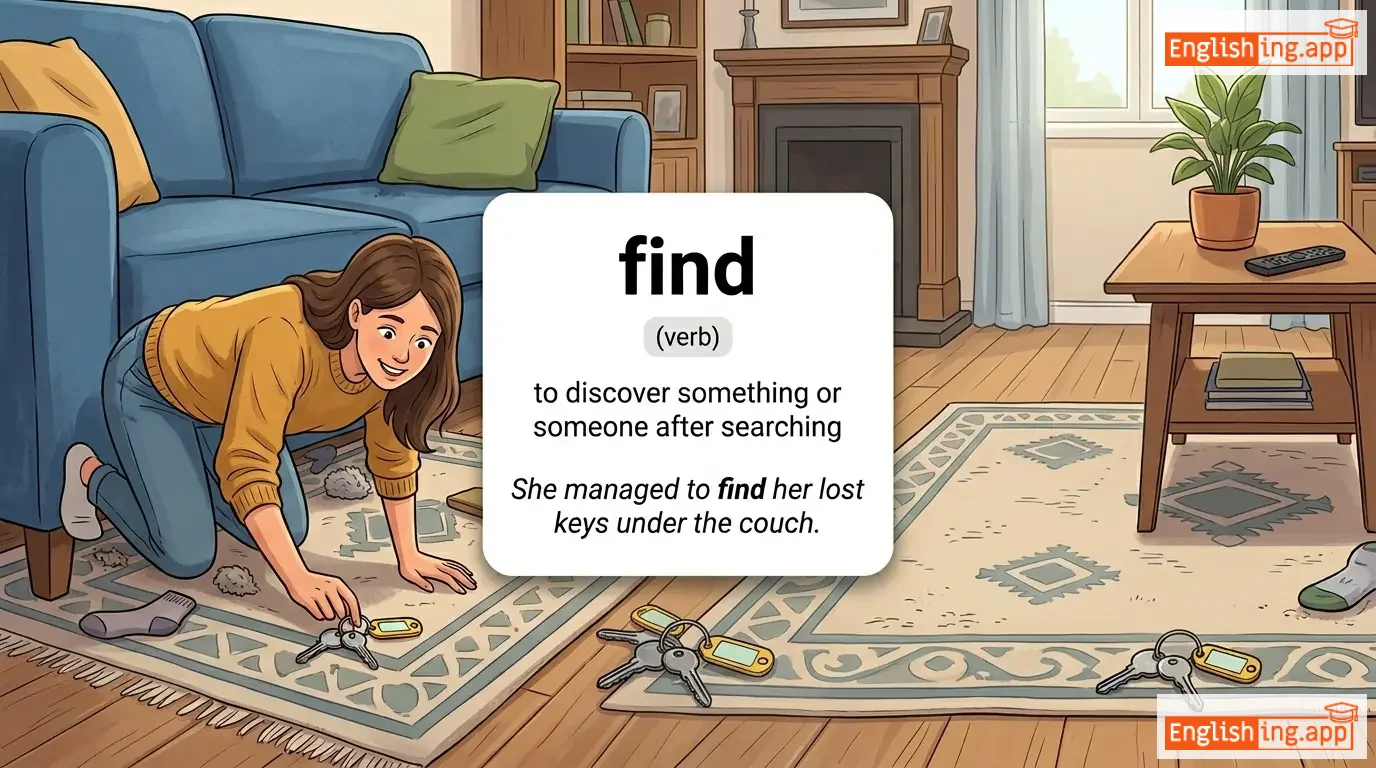
to discover something or someone after searching
••••••
|
She managed to find her lost keys under the couch.
Shī manejido tū faindo hā rosuto kīzu andā de kōchi.
••••••
|
彼女はソファの下で失くした鍵を見つけました。
Kanojo wa sofa no shita de nakushita kagi o mitsukemashita.
••••••
|
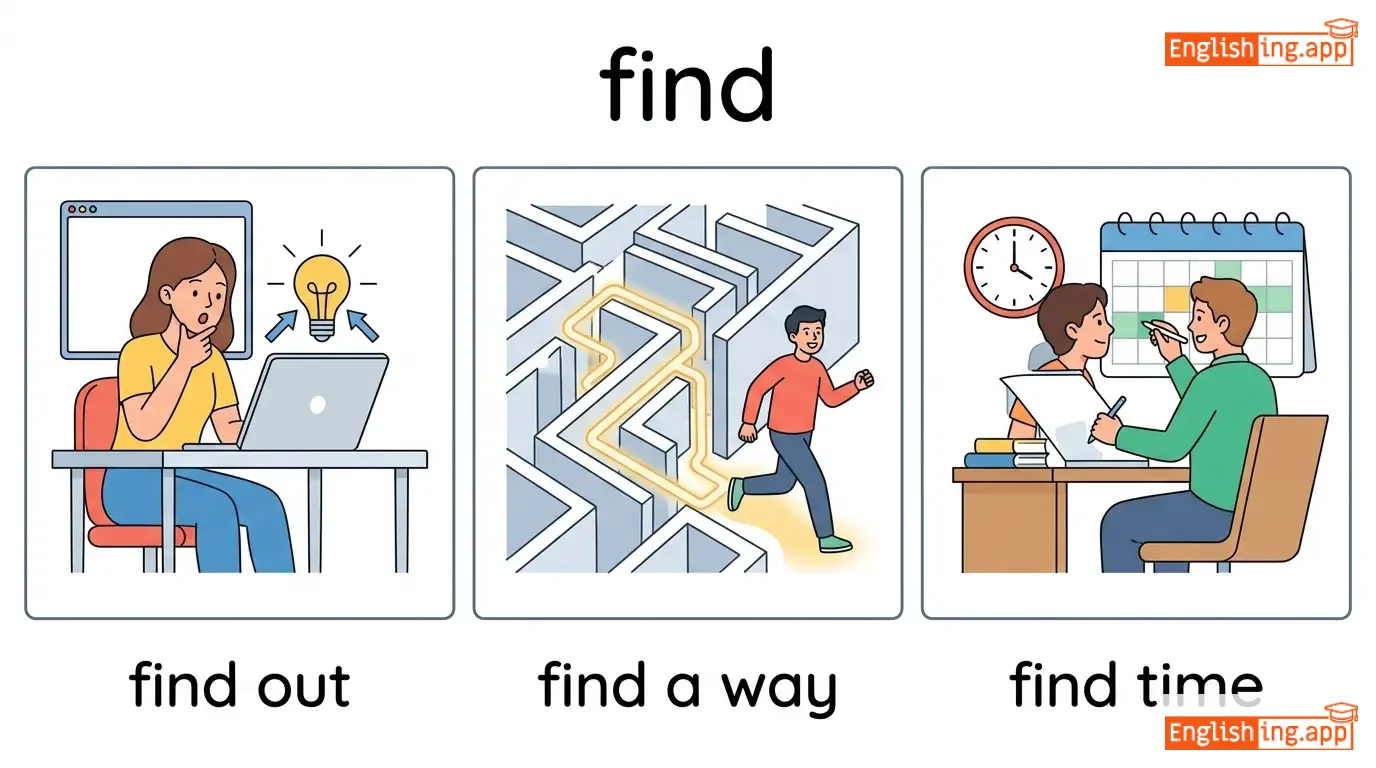
find out
faindo auto
••••••
|
to discover information
••••••
|
見つけ出す
mitsukedasu
••••••
|
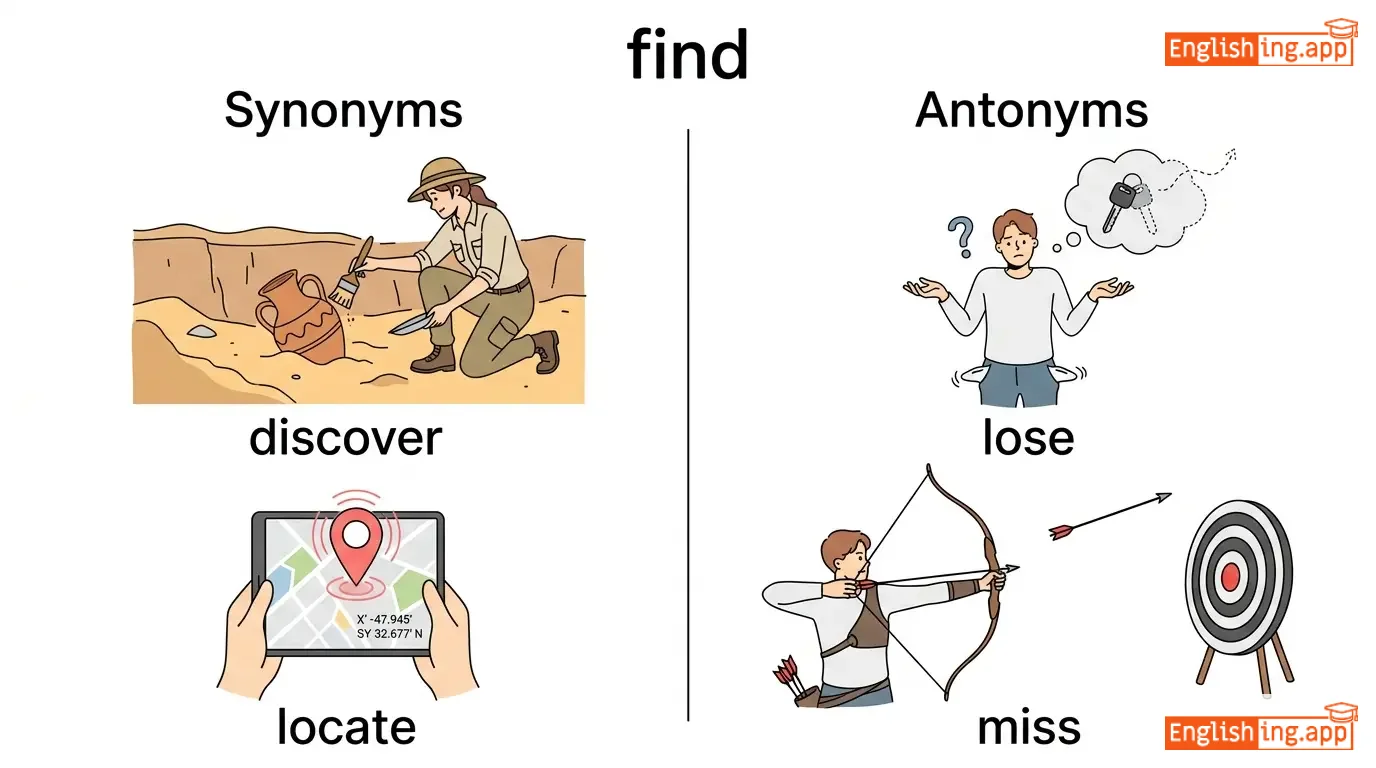
discover, locate, identify, detect, uncover
••••••
|
lose, miss, overlook
••••••
|
find out, find a way, find time, find fault
••••••
|
Findは見つけること—失ったものを見つけよう!
••••••
|
|
🕵️♂️
••••••
|
/ˈhɪdən/
adjective
(hiden)
••••••
|
- •••••• |
隠された
kakusareta
••••••
|
- •••••• | - •••••• | - •••••• | - •••••• |
kept out of sight; concealed.
••••••
|
The treasure was hidden under the old tree. |
宝物は古い木の下に隠されていた。
Takaramono wa furui ki no shita ni kakusarete ita.
••••••
|
hidden gem |
something that is outstanding but not well known
••••••
|
隠れた宝石
kakureta houseki
••••••
|
concealed, secret, invisible, unseen, obscured
••••••
|
visible, exposed, open
••••••
|
hidden meaning, hidden place, hidden agenda, hidden camera
••••••
|
Hidden は隠されたこと — hide + en = 隠された!
••••••
|
|
🛤️
••••••
|
/ˈdʒɜːrni/
noun
(ジャーニー)
••••••
|
- •••••• |
旅
tabi
••••••
|
- •••••• | - •••••• | - •••••• | - •••••• |
the act of traveling from one place to another
••••••
|
Their journey across the desert was difficult. |
砂漠を横断する彼らの旅は大変でした。
Sabaku o ōdan suru karera no tabi wa taihen deshita.
••••••
|
life is a journey |
life is like a path with experiences and challenges along the way
••••••
|
人生は旅である
Jinsei wa tabi de aru
••••••
|
trip, voyage, travel, expedition
••••••
|
stay, rest
••••••
|
long journey, spiritual journey, begin a journey, return journey
••••••
|
旅は未知の世界へ、挑戦を超えて進むもの。
••••••
|
|
🌟
••••••
|
/ˈlɛdʒənd/
noun
(レジェンド)
••••••
|
- •••••• |
伝説
densetsu
••••••
|
- •••••• | - •••••• | - •••••• | - •••••• |
A traditional story popularly regarded as historical but unauthenticated; also a famous person admired for achievements.
••••••
|
The footballer is considered a legend in his country. |
そのサッカー選手は彼の国で伝説と見なされています。
Sono sakkā senshu wa kare no kuni de densetsu to minasarete imasu.
••••••
|
living legend |
A person who is still alive but already regarded as legendary.
••••••
|
生ける伝説
ikeru densetsu
••••••
|
myth, tale, fable, icon, hero
••••••
|
fact, reality
••••••
|
ancient legend, living legend, sports legend
••••••
|
伝説はまるで生きている話のようで、ずっと記憶に残ります。
••••••
|
|
🔍
••••••
|
/ˈmɪs.tər.i/
noun
(misuteri)
••••••
|
- •••••• |
謎; 説明できないこと
nazo
••••••
|
- •••••• | - •••••• | - •••••• | - •••••• |
something that is difficult or impossible to understand or explain
••••••
|
The disappearance of the plane remains a mystery.
飛行機の失踪は謎のままである。
••••••
|
飛行機の失踪は謎のままである。
hikouki no shissou wa nazo no mama de aru.
••••••
|
- •••••• | - •••••• | - •••••• |
puzzle, enigma, riddle, secret
••••••
|
certainty, clarity, solution, answer
••••••
|
solve mystery, unsolved mystery, mystery novel
••••••
|
誰も解けない謎。
••••••
|
|
🧩
••••••
|
/ˈpʌzl/
noun, verb
(パズル)
••••••
|
|
パズル / 困らせる
pazuru / komaraseru
••••••
|
puzzled
パズルド
••••••
|
puzzled
パズルド
••••••
|
puzzles
パズルズ
••••••
|
puzzling
パズリング
••••••
|
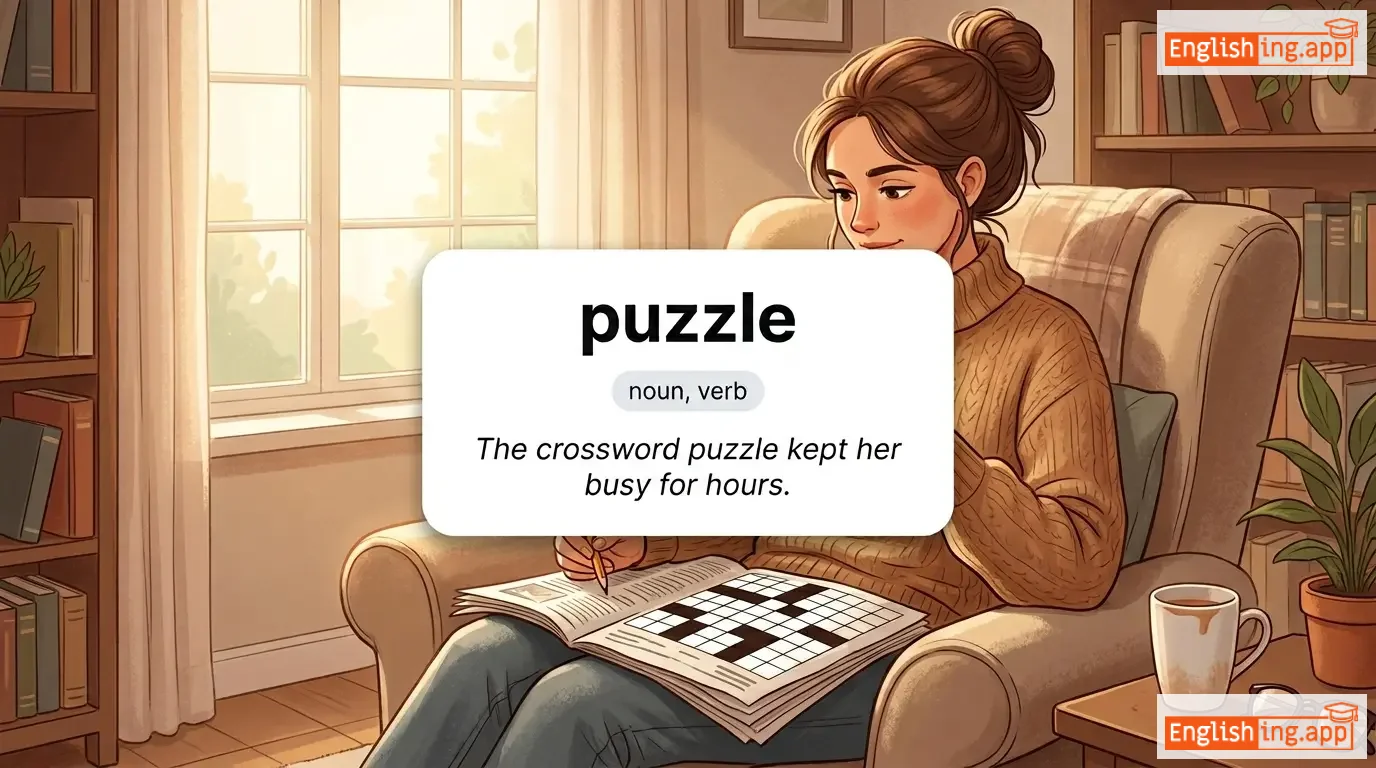
a game, toy, or problem designed to test ingenuity; to cause someone to be confused
••••••
|
The crossword puzzle kept her busy for hours.
クロスワードパズルは彼女を数時間忙しくさせました。
••••••
|
クロスワードパズルは彼女を数時間忙しくさせました。
Kurosuwādo pazuru wa kanojo o suū jikan isogashiku sasemashita.
••••••
|
puzzle over
パズルに思いを巡らせる
••••••
|
to think deeply about something difficult to understand
••••••
|
パズルについて考える
pazuru ni tsuite kangaeru
••••••
|
riddle, enigma, conundrum, problem, mystery
••••••
|
solution, answer, clarity
••••••
|
crossword puzzle, jigsaw puzzle, puzzle game, puzzle over
••••••
|
Puzzle は‘パズル’ — 問題を解くために頭が‘Buzz’する。
••••••
|
|
🔍
••••••
|
/kwest/
verb
(クエスト)
••••••
|
|
探す
sagasu
••••••
|
quested
クエステッド
••••••
|
quested
クエステッド
••••••
|
quests
クエストズ
••••••
|
questing
クエスティング
••••••
|
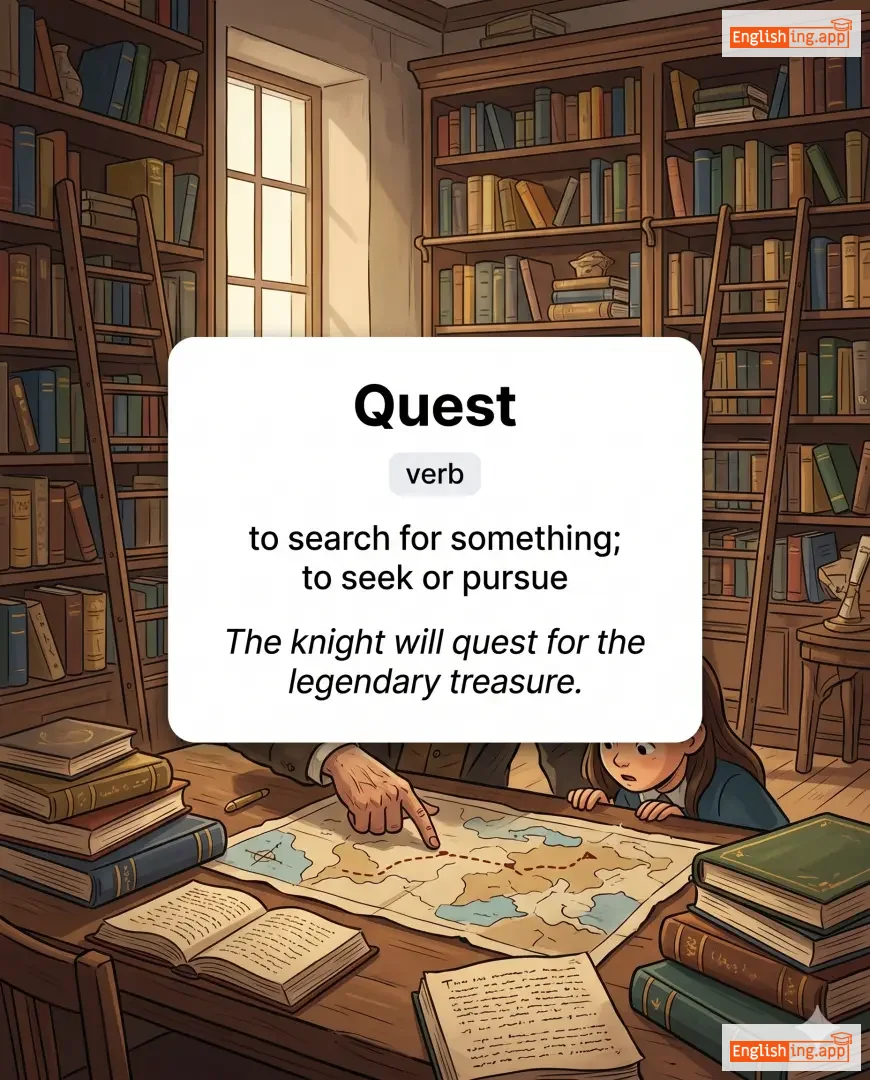
to search for something; to seek or pursue
••••••
|
The knight will quest for the legendary treasure.
その騎士は伝説の宝を探し求めるだろう。
••••••
|
その騎士は伝説の宝を探し求めるだろう。
Sono kishi wa densetsu no takara o sagashi motomeru darou.
••••••
|
- •••••• | - •••••• | - •••••• |
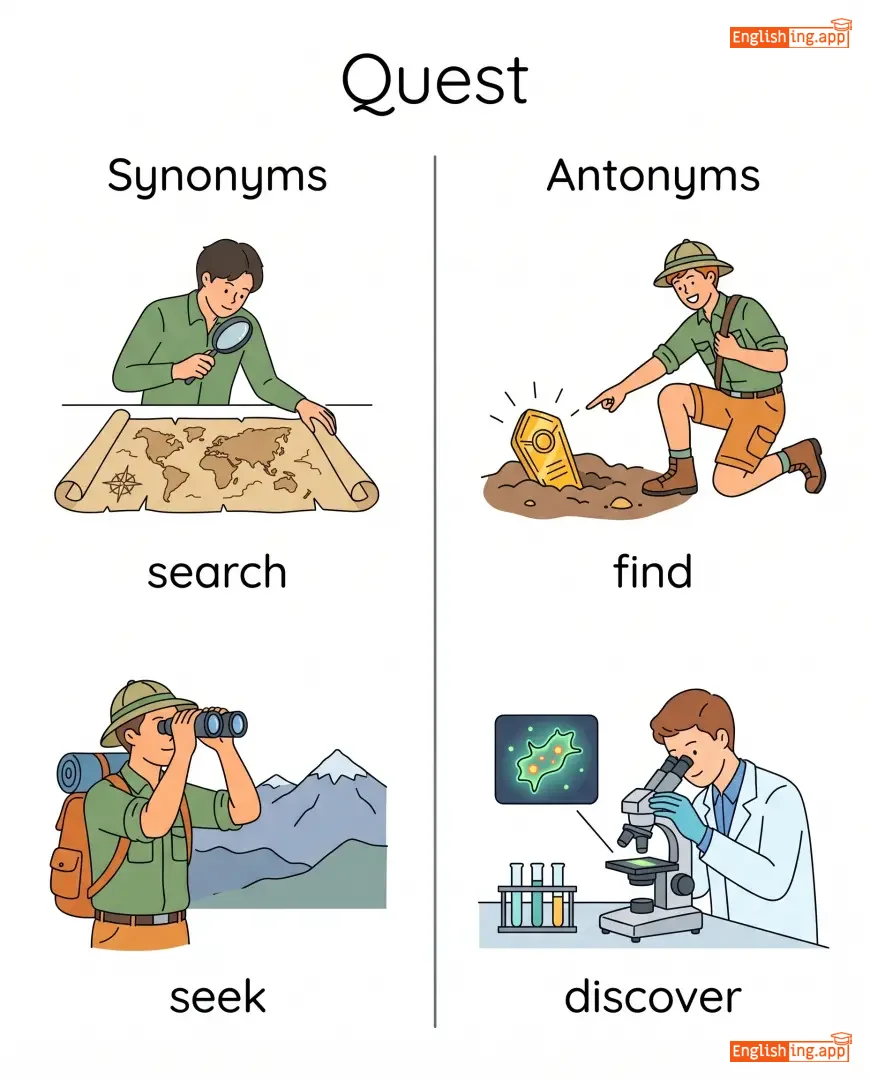
search, seek, pursue, hunt
••••••
|
find, discover, abandon
••••••
|
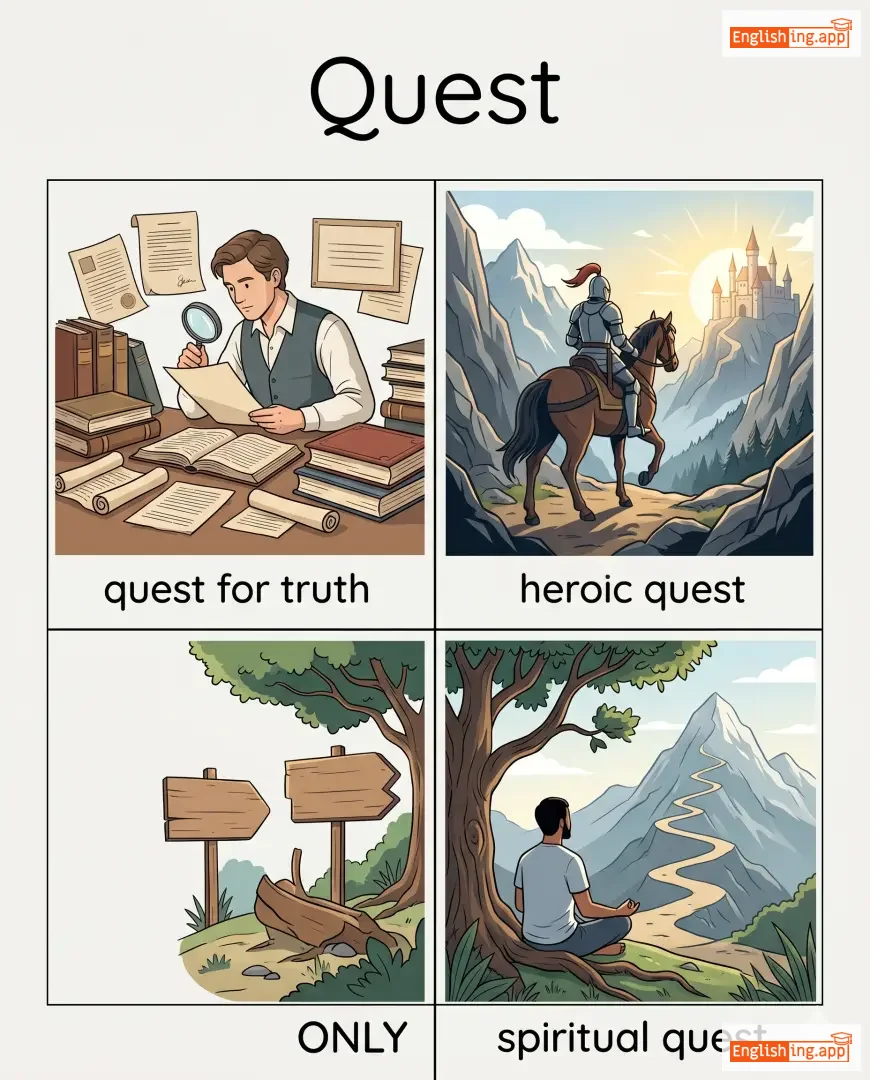
quest for truth, heroic quest, spiritual quest, quest continues
••••••
|
クエストは Quest の旅、宝を Sagasu するイメージで覚える
••••••
|
|
🔍
••••••
|
/rɪˈviːl/
verb
(リヴェール)
••••••
|
|
明かす
akasu
••••••
|
revealed
リヴェールド
••••••
|
revealed
リヴェールド
••••••
|
reveals
リヴェールズ
••••••
|
revealing
リヴェーリング
••••••
|
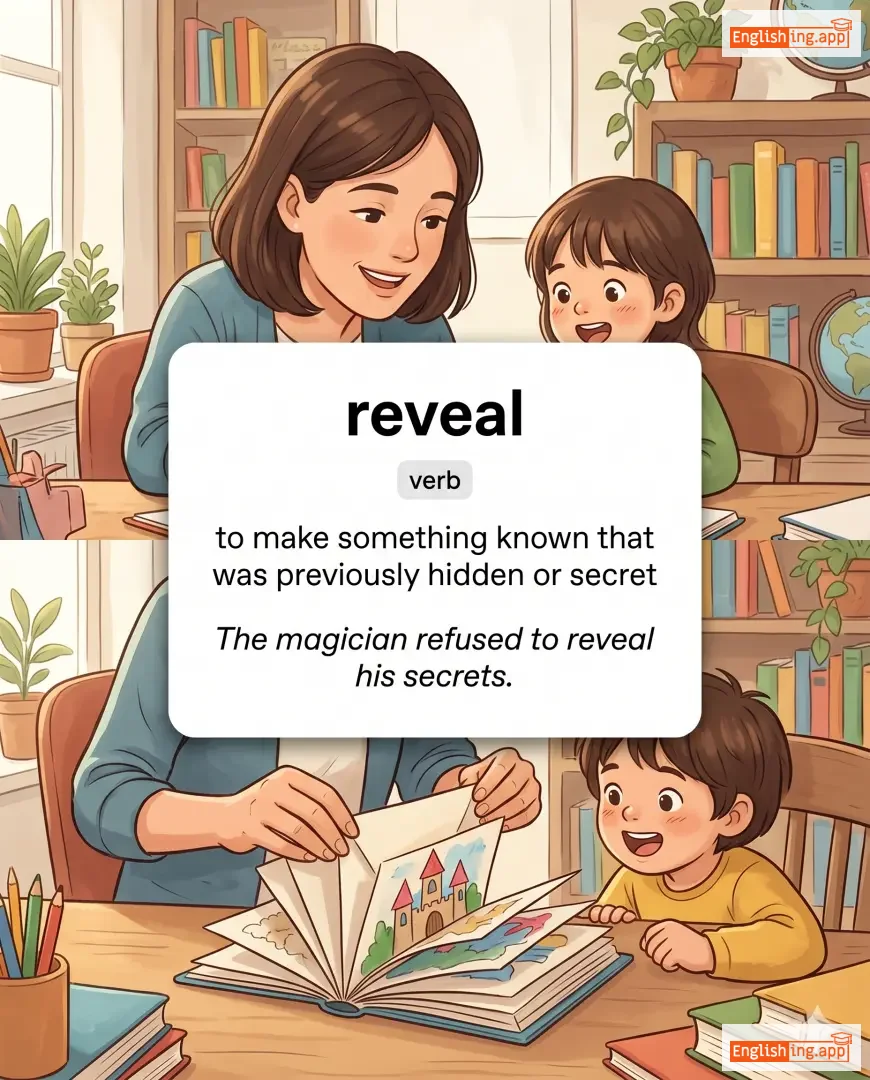
to make something known that was previously hidden or secret
••••••
|
The magician refused to reveal his secrets.
魔法使いは彼の秘密を明かすことを拒否した。
••••••
|
魔法使いは彼の秘密を明かすことを拒否した。
Mahōtsukai wa kare no himitsu wo akasu koto wo kyohi shita.
••••••
|
reveal the truth
真実を明かす
••••••
|
to disclose or make the truth known
••••••
|
真実を明かす
shinjitsu wo akasu
••••••
|
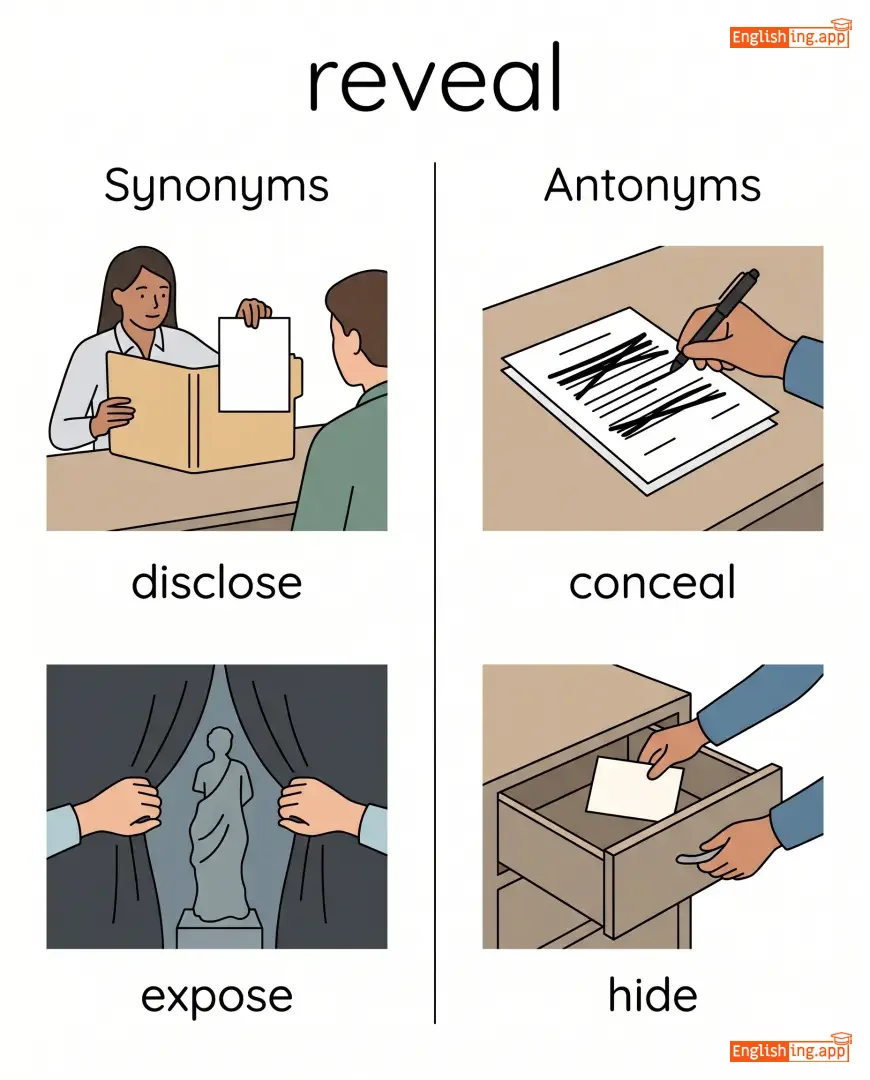
disclose, expose, uncover, unveil, show
••••••
|
conceal, hide, cover
••••••
|
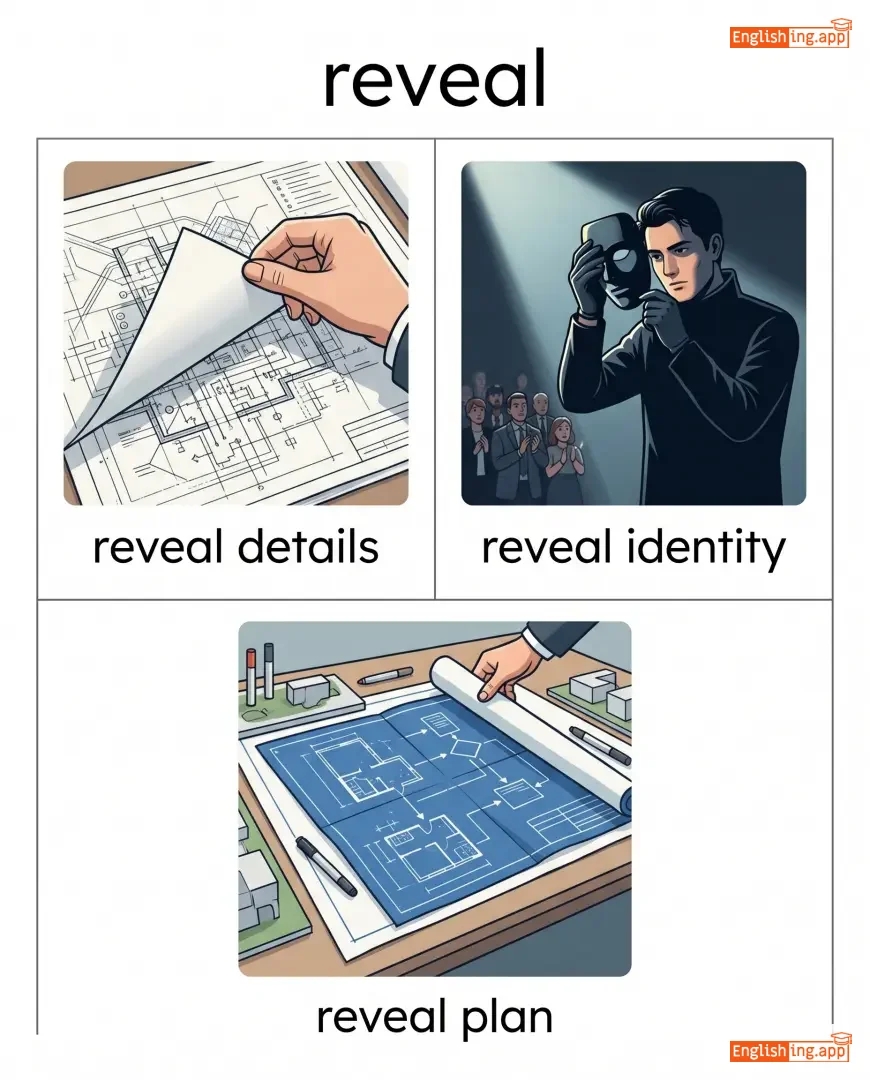
reveal details, reveal identity, reveal plan, reveal evidence
••••••
|
リヴェールは隠れていたものを明かすことだ!
••••••
|
|
🔍
••••••
|
/sɜːrtʃ/
verb
(サーチ)
••••••
|
|
検索
kensaku
••••••
|
searched
サーチド
••••••
|
searched
サーチド
••••••
|
searches
サーチズ
••••••
|
searching
サーチング
••••••
|
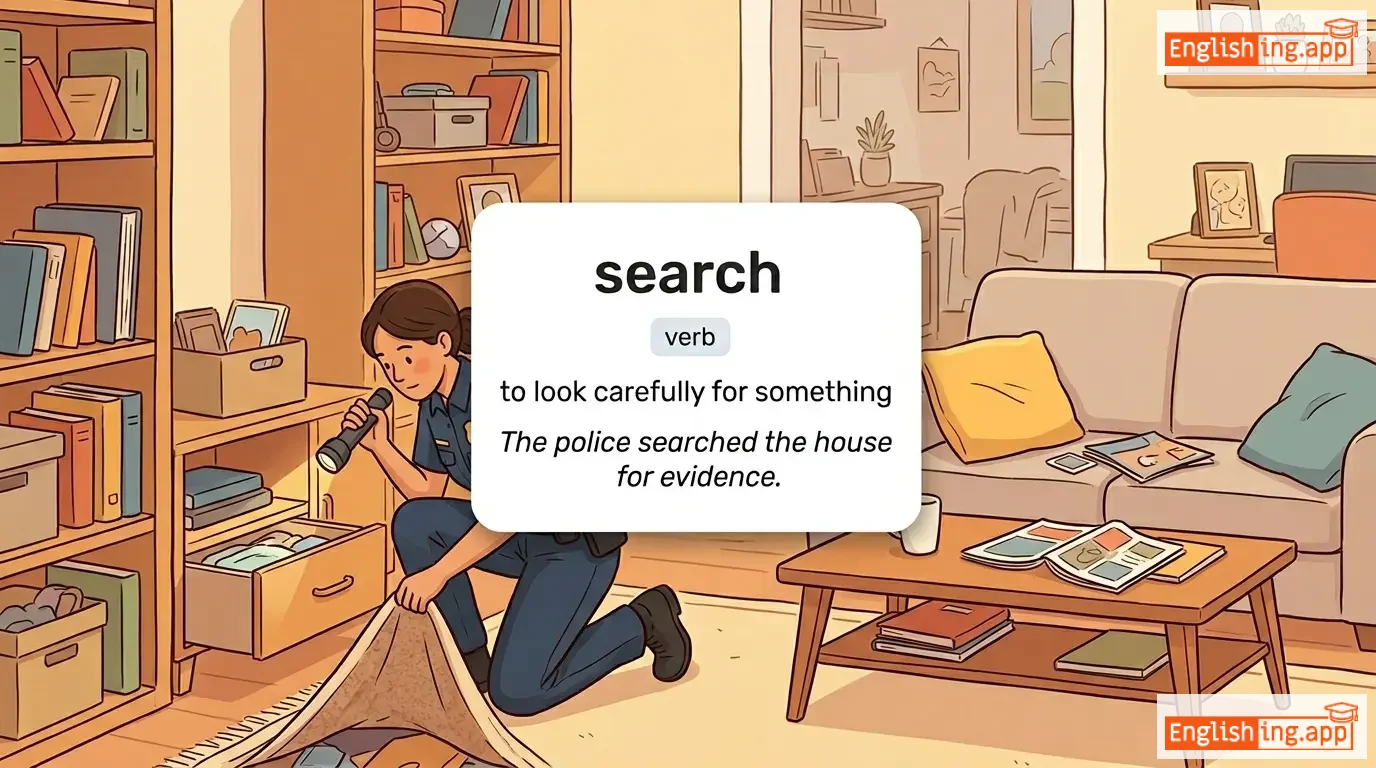
to look carefully for something
••••••
|
The police searched the house for evidence.
警察は証拠を探すために家をサーチしました。
••••••
|
警察は証拠を探すために家を捜索しました。
Keisatsu wa shouko wo sagasu tame ni ie wo sousaku shimashita.
••••••
|
search high and low
サーチ ハイ アンド ロー
••••••
|
to look everywhere
••••••
|
どこでも探す
dokodemo sagasu
••••••
|
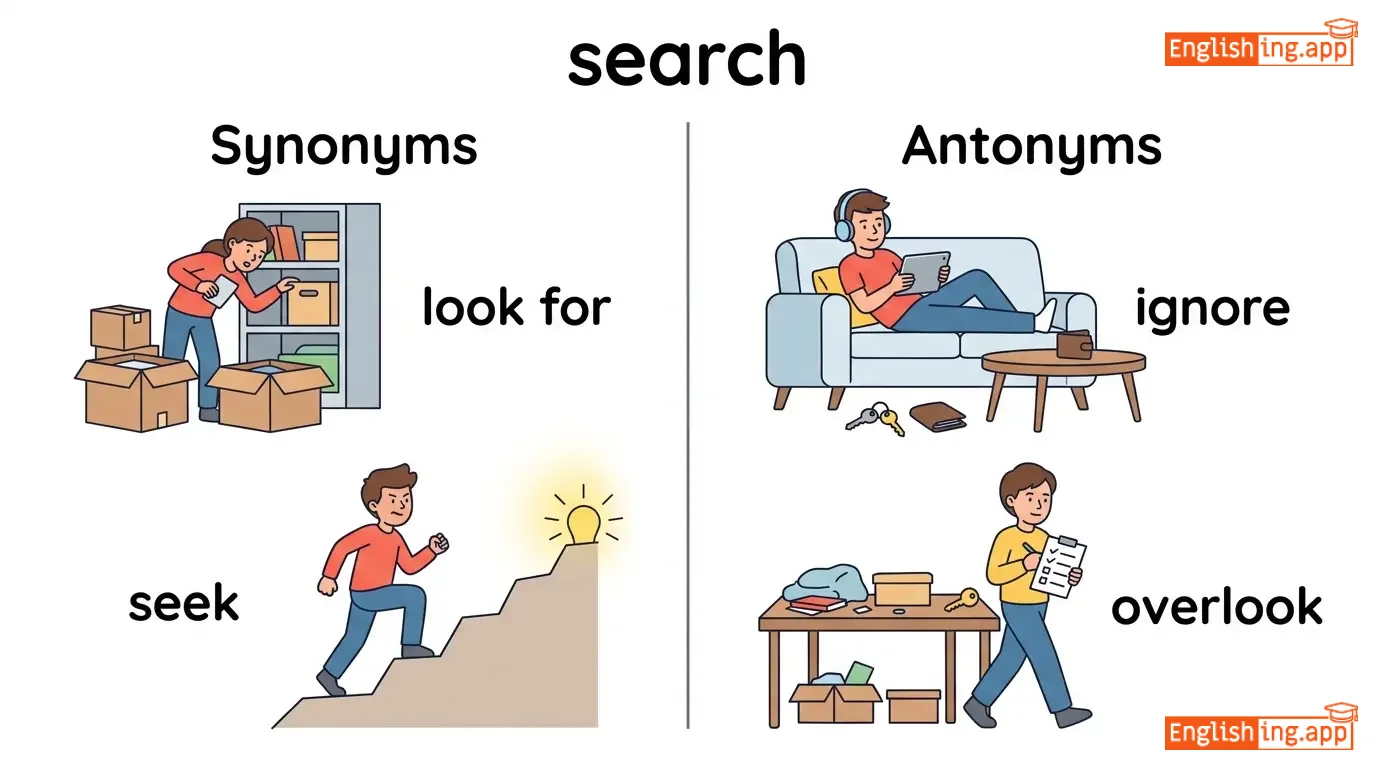
look for, seek, explore, investigate, hunt
••••••
|
ignore, overlook, neglect
••••••
|
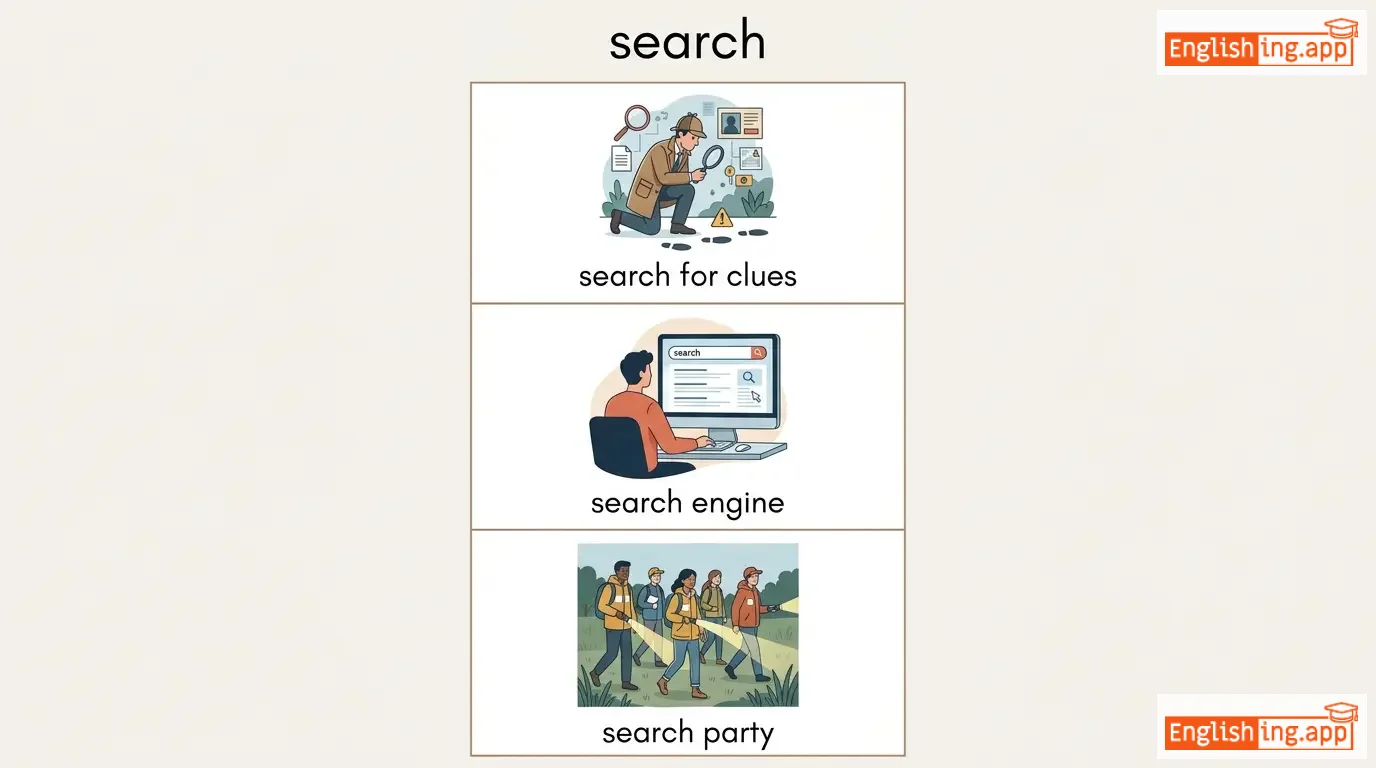
search for clues, search engine, search party
••••••
|
Googleで検索すると、すべてを探すことができる – 検索は探すこと
••••••
|
|
🤫
••••••
|
/ˈsiːkrət/
noun
••••••
|
- •••••• | - •••••• | - •••••• | - •••••• | - •••••• | - •••••• |
something that is kept or meant to be kept unknown or unseen by others
••••••
|
He told me a secret about his childhood. |
- •••••• | - •••••• | - •••••• | - •••••• |
mystery, hidden fact, confidential information
••••••
|
public, open, revealed
••••••
|
keep a secret, tell a secret, secret information
••••••
|
No •••••• |
|
🧩
••••••
|
/sɑːlv/
verb
(soru)
••••••
|
|
解決する
kaiketsu suru
••••••
|
solved
kaiketsu shita
••••••
|
solved
kaiketsu shita
••••••
|
solves
kaiketsu suru
••••••
|
solving
kaiketsu shite iru
••••••
|
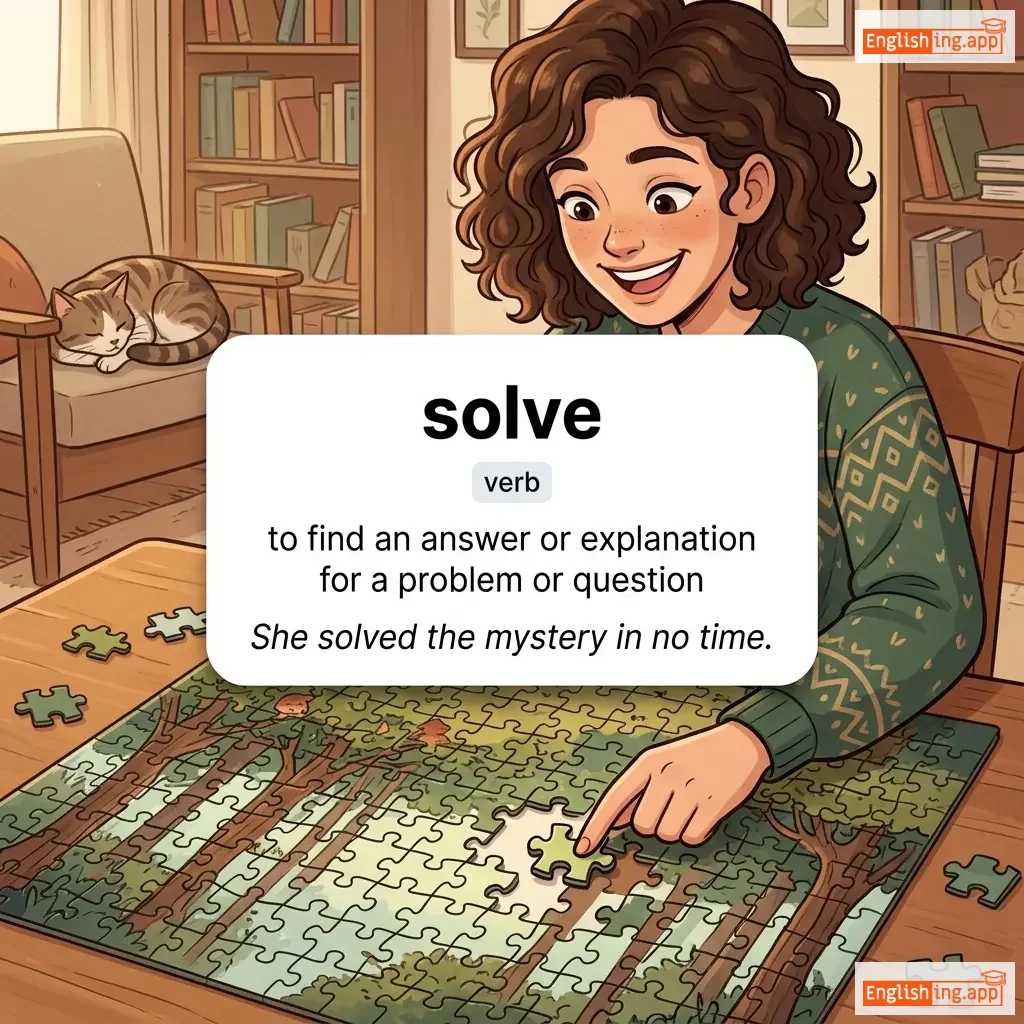
to find an answer to a problem or question; to resolve a difficulty
••••••
|
The detective finally solved the mysterious case.
Tantei wa saigo ni fushigi na jiken o kaiketsu shita.
••••••
|
探偵はついに謎の事件を解決した。
Tantei wa saigo ni fushigi na jiken o kaiketsu shita.
••••••
|
- •••••• | - •••••• | - •••••• |
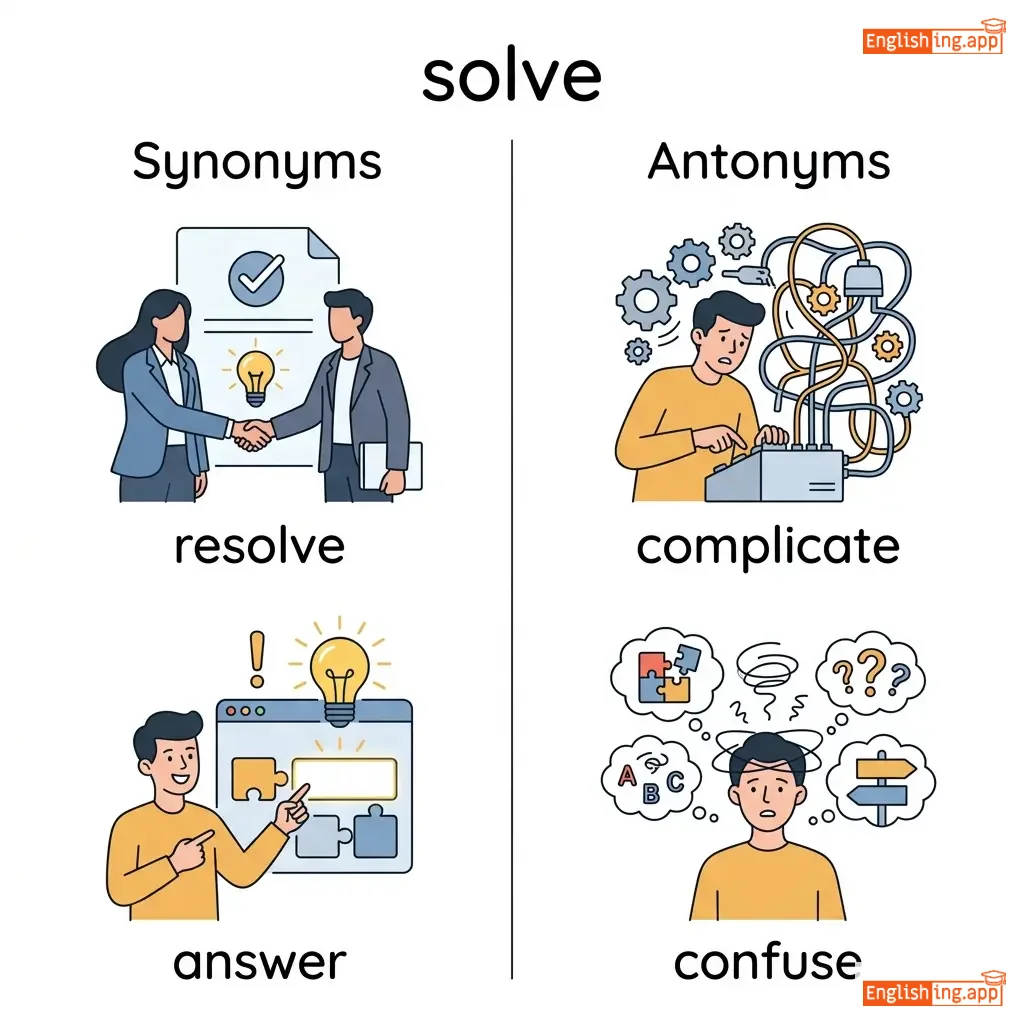
resolve, answer, figure out, work out
••••••
|
complicate, confuse, perplex, puzzle
••••••
|
solve problems, solve equations, solve mysteries, solve puzzles, solve conflicts
••••••
|
解決するとは問題を解決すること。
••••••
|
|
⛩️
••••••
|
/ˈtɛmpəl/
noun
(テンポル)
••••••
|
- •••••• |
寺院
jiin
••••••
|
- •••••• | - •••••• | - •••••• | - •••••• |
a building used for the worship of a god or gods
••••••
|
They visited an ancient temple during their trip to India. |
インディアへの旅行中に古代の寺院を訪れました。
India e no ryokou-chuu ni kodai no jiin o otozuremashita.
••••••
|
holy temple |
a sacred place dedicated to religious worship
••••••
|
聖なる寺院
seinaru jiin
••••••
|
shrine, sanctuary, church, mosque, pagoda
••••••
|
secular place, profane site
••••••
|
ancient temple, Hindu temple, temple bell, temple visit
••••••
|
Temple は日本語で‘寺院’として理解され、神々への礼拝の場所です。
••••••
|
|
💎
••••••
|
/ˈtrɛʒər/
noun, verb
(トレジャー)
••••••
|
- •••••• |
宝物
takaramono
••••••
|
treasured
トレジャード
••••••
|
treasured
トレジャード
••••••
|
treasures
トレジャーズ
••••••
|
treasuring
トレジャリング
••••••
|
a collection of valuable things such as gold, jewels, or anything of great worth; to value something highly
••••••
|
She kept the necklace as a family treasure.
彼女はそのネックレスを家族の宝物として大切にしていました。
••••••
|
彼女はそのネックレスを家族の宝物として大切にしていました。
Kanojo wa sono nekkuresu o kazoku no takaramono toshite taisetsu ni shite imashita.
••••••
|
treasure trove
宝物の山
••••••
|
a valuable collection of things found together
••••••
|
宝物の山
takaramono no yama
••••••
|
wealth, riches, fortune, valuables, prize
••••••
|
trash, worthless, loss
••••••
|
hidden treasure, family treasure, treasure chest, national treasure
••••••
|
Treasure = 宝物 (takaramono), hidden like treasure in a chest
••••••
|
|
😮
••••••
|
/ˈwʌndər/
noun
(ワンダー)
••••••
|
- •••••• |
驚異
kyoui
••••••
|
- •••••• | - •••••• | - •••••• | - •••••• |
a feeling of amazement and admiration, caused by something beautiful, remarkable, or unfamiliar
••••••
|
The view from the mountain was a true wonder. |
山からの景色は本当に驚異的でした。
Yama kara no keshiki wa hontōni kyoi-teki deshita.
••••••
|
- •••••• | - •••••• | - •••••• |
amazement, awe, admiration, astonishment
••••••
|
indifference, boredom, apathy
••••••
|
a sense of wonder, a feeling of wonder, in wonder, full of wonder
••••••
|
驚異(kyoui)は、思わず息を呑む瞬間を感じること。
••••••
|

