|
絵文字
|
単語 | Images | 翻訳 | 過去 | 過去分詞 | 三人称単数 | 動名詞 | 意味 | 例文 | 例文の翻訳 | 表現例 | 表現例の意味 | 表現例の翻訳 | 同義語 | 対義語 | コロケーション | ニーモニック |
|---|---|---|---|---|---|---|---|---|---|---|---|---|---|---|---|---|---|
|
😨
••••••
|
/skɛrd/
adjective
(スケアード)
••••••
|
- •••••• |
怖がっている
kowagatteiru
••••••
|
- •••••• | - •••••• | - •••••• | - •••••• |
feeling afraid or worried
••••••
|
She was scared of the dark. |
彼女は暗闇を怖がっていた。
Kanojo wa kurayami o kowagatteita.
••••••
|
- •••••• | - •••••• | - •••••• |
frightened, afraid, terrified, nervous
••••••
|
brave, calm
••••••
|
scared of, scared to, scared to death
••••••
|
Scared of the dark, '怖がっている' is the way to express it!
••••••
|
|
📖
••••••
|
/səˈnɛərioʊ/
noun
(シナリオ)
••••••
|
- •••••• |
可能な状況
kanou na joukyou
••••••
|
- •••••• | - •••••• | - •••••• | - •••••• |
a possible situation or sequence of events
••••••
|
The company prepared for the worst-case scenario. |
会社は最悪のシナリオに備えました。
Kaisha wa saiaku no shinario ni sonaemashita.
••••••
|
worst-case scenario |
the most serious or unfavorable situation possible
••••••
|
最悪のシナリオ
saiaku no shinario
••••••
|
situation, case, plan, circumstance, event
••••••
|
certainty, reality
••••••
|
best-case scenario, worst-case scenario, future scenario, likely scenario
••••••
|
シナリオはシーンを思い出させ、シナリオを覚えるのに役立ちます。
••••••
|
|
🎬
••••••
|
/siːn/
noun
(シーン)
••••••
|
- •••••• |
シーン
shīn
••••••
|
- •••••• | - •••••• | - •••••• | - •••••• |
a place or setting of an event or activity, or the part of a play or film
••••••
|
The final scene of the movie was very emotional. |
映画の最後のシーンはとても感動的でした。
Eiga no saigo no shīn wa totemo kandō-teki deshita.
••••••
|
a scene of crime |
a location where a crime has occurred
••••••
|
犯罪の現場
hanzai no genba
••••••
|
setting, location, stage, situation
••••••
|
silence, calm
••••••
|
movie scene, crime scene, final scene, tragic scene
••••••
|
Scene in movie- 今日、自分だけのドラマチックな'シーン'を作ってみよう!
••••••
|
|
🏞️
••••••
|
/ˈsiː.nər.i/
noun
(シナリ)
••••••
|
- •••••• |
風景
fūkei
••••••
|
- •••••• | - •••••• | - •••••• | - •••••• |
the natural features of a landscape; the painted background used on a theater stage
••••••
|
The mountain scenery was breathtakingly beautiful. |
山の風景は息を呑むほど美しかった。
Yama no fūkei wa iki o nomu hodo utsukushikatta.
••••••
|
- •••••• | - •••••• | - •••••• |
landscape, view, vista, backdrop
••••••
|
- •••••• |
beautiful scenery, mountain scenery, natural scenery, scenic view
••••••
|
風景は自然が描いたアート作品です。
••••••
|
|
🤔
••••••
|
/ˈskeptɪkəl/
adjective
(スケプティカル)
••••••
|
- •••••• |
懐疑的な; 疑わしい; 何かの真実に疑問を抱く
kaigiteki na; utagawashī; nanika no shinjitsu ni gimon o idaku
••••••
|
- •••••• | - •••••• | - •••••• | - •••••• |
having doubts; not easily convinced; questioning the truth of something
••••••
|
Many scientists remain sceptical about the new theory.
多くの科学者が新しい理論に対して懐疑的な立場を取っている。
••••••
|
多くの科学者が新しい理論に対して懐疑的な立場を取っている。
Ōku no kagakusha ga atarashī riron ni taishite kaigitaina tachiba o tottete iru
••••••
|
- •••••• | - •••••• | - •••••• |
doubtful, dubious, suspicious, questioning
••••••
|
believing, trusting, credulous, convinced
••••••
|
sceptical attitude, remain sceptical, sceptical about
••••••
|
懐疑的 + 理論 = 新しい科学理論に疑問
••••••
|
|
📅
••••••
|
/ˈskɛdʒʊl/
noun
(スケジュール)
••••••
|
- •••••• |
スケジュール
sukējūru
••••••
|
- •••••• | - •••••• | - •••••• | - •••••• |
a plan for carrying out a process or task, showing the time and sequence of actions
••••••
|
I have a busy schedule for today. |
今日は忙しいスケジュールがあります。
Kyō wa isogashī sukējūru ga arimasu.
••••••
|
follow a strict schedule |
to stick to a planned timeline
••••••
|
厳格なスケジュールに従う
Genkaku na sukējūru ni shitagau
••••••
|
agenda, timetable, plan, program
••••••
|
chaos, disorganization
••••••
|
tight schedule, busy schedule, daily schedule, work schedule
••••••
|
Schedule your 'school' events, keeping your 'schedule' tidy.
••••••
|
|
🗂️
••••••
|
/skiːm/
noun, verb
(sukīmu)
••••••
|
- •••••• |
計画 / 陰謀
keikaku / inbou
••••••
|
schemed
sukīmudo
••••••
|
schemed
sukīmudo
••••••
|
schemes
sukīmus
••••••
|
scheming
sukīmingu
••••••
|
a plan or arrangement, especially one that is secret or dishonest
••••••
|
They devised a scheme to cheat investors.
彼らは投資家をだますために計画を立てました。
••••••
|
彼らは投資家をだますために計画を立てました。
Karera wa tōshika o damasu tame ni keikaku o tatemashita.
••••••
|
grand scheme of things
物事の大きな計画
••••••
|
the overall perspective or broader context
••••••
|
物事の大きな計画
monogoto no ōkina keikaku
••••••
|
plan, plot, project, conspiracy, arrangement
••••••
|
honesty, openness
••••••
|
government scheme, savings scheme, secret scheme, scheme against
••••••
|
Schemeは巧妙な計画を意味します。日本語の‘計画’は計画やデザインを意味します。
••••••
|
|
🎓
••••••
|
/ˈskɒl.ər/
noun
(スカラー)
••••••
|
- •••••• |
学者; アカデミック
gakusha; akademikku
••••••
|
- •••••• | - •••••• | - •••••• | - •••••• |
a person who has studied a subject for a long time and knows a lot about it; an academic
••••••
|
The renowned scholar published several books on ancient history.
ðə rɪˈnaʊnd ˈskɒlər ˈpʌblɪʃt ˈsɛvrəl bʊks ɒn ˈeɪnʃənt ˈhɪstəri.
••••••
|
有名な学者は古代の歴史に関する本をいくつか出版しました。
yūmei na gakusha wa kodai no rekishi ni kansuru hon o ikutsu ka shuppan shimashita.
••••••
|
- •••••• | - •••••• | - •••••• |
academic, intellectual, researcher, learned person
••••••
|
ignoramus, illiterate
••••••
|
renowned scholar, distinguished scholar, scholarship program, scholarly work
••••••
|
学者は知識を通して世界を変える。
••••••
|
|
💸
••••••
|
/ˈskɒlərʃɪp/
noun
(スカラーシップ)
••••••
|
- •••••• |
奨学金
shougakukin
••••••
|
- •••••• | - •••••• | - •••••• | - •••••• |
an award or grant to support a student's education
••••••
|
She received a scholarship to study abroad. |
彼女は留学するための奨学金を受け取りました。
Kanojo wa ryuugaku suru tame no shougakukin o uketorimashita.
••••••
|
- •••••• | - •••••• | - •••••• |
grant, fellowship, award, financial aid
••••••
|
loan, debt
••••••
|
merit-based scholarship, full scholarship, scholarship program
••••••
|
Scholarships are like keys that unlock educational opportunities.
••••••
|
|
🏫
••••••
|
/skuːl/
noun
(スクール)
••••••
|
- •••••• |
学校
gakkou
••••••
|
- •••••• | - •••••• | - •••••• | - •••••• |
An institution for educating children; also a group of people sharing the same ideas or discipline.
••••••
|
The children walked to school together. |
子供たちは一緒に学校に歩いて行きました。
Kodomotachi wa issho ni gakkou ni aruite ikimashita.
••••••
|
school of thought |
A particular philosophy or way of thinking shared by a group.
••••••
|
思想の流派
shisou no ryūha
••••••
|
academy, institute, college, university, class
••••••
|
home, workplace
••••••
|
primary school, high school, school building, school bus, school of thought
••••••
|
学校は学びの場所です。「学校は学ぶ場所」と覚えましょう。
••••••
|
|
🔬
••••••
|
/ˈsaɪəns/
noun
(サイエンス)
••••••
|

|
科学
kagaku
••••••
|
- •••••• | - •••••• | - •••••• | - •••••• |
the systematic study of the structure and behavior of the physical and natural world
••••••
|
Science has made incredible advancements in medicine. |
科学は医学の分野で驚くべき進歩を遂げました。
Kagaku wa igaku no bunya de odorokubeki shinpo wo togemashita.
••••••
|
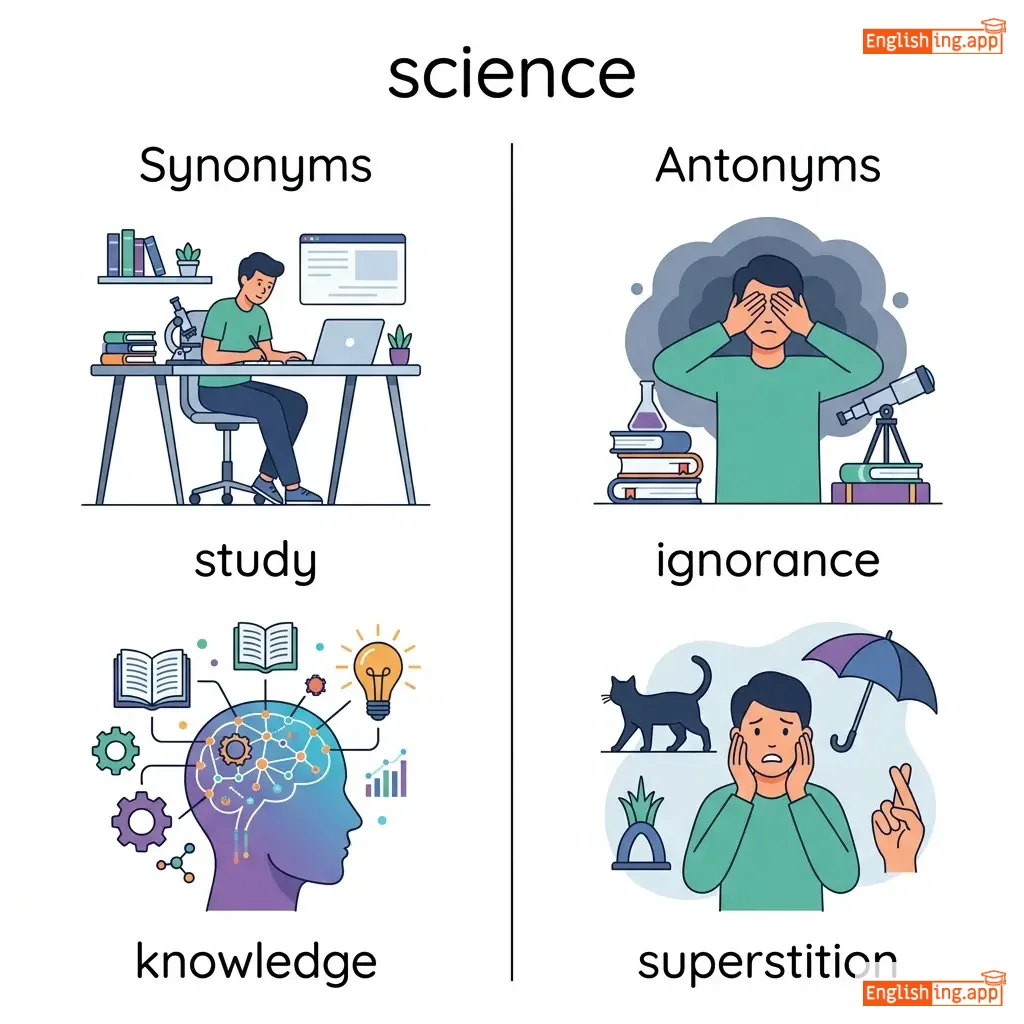
- •••••• | - •••••• | - •••••• |
study, knowledge, research, discipline
••••••
|
ignorance, superstition
••••••
|
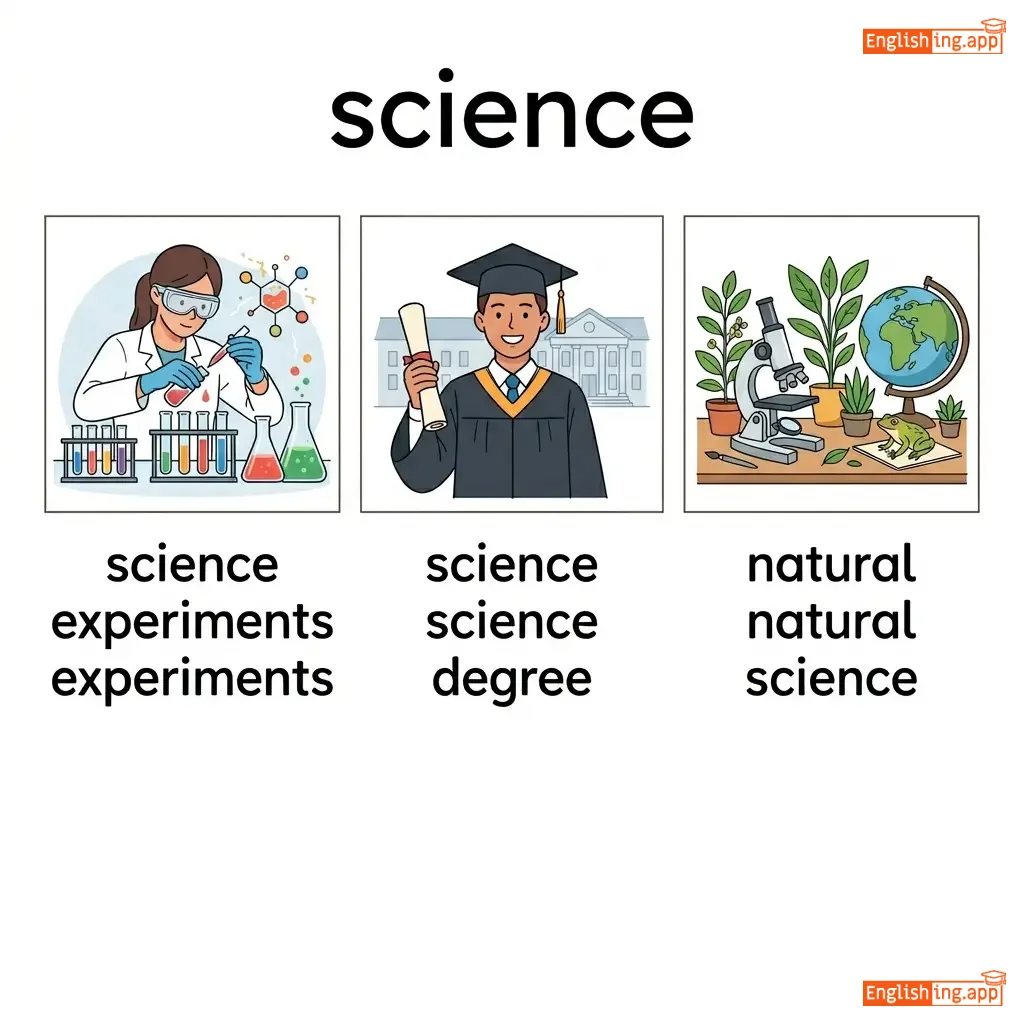
science experiments, science degree, natural science, applied science
••••••
|
Science unveils the secrets of the universe.
••••••
|
|
🔍
••••••
|
/ˌsaɪənˈtɪfɪk/
adjective
(サイエンティフィック)
••••••
|
|
科学的
kagakuteki
••••••
|
- •••••• | - •••••• | - •••••• | - •••••• |
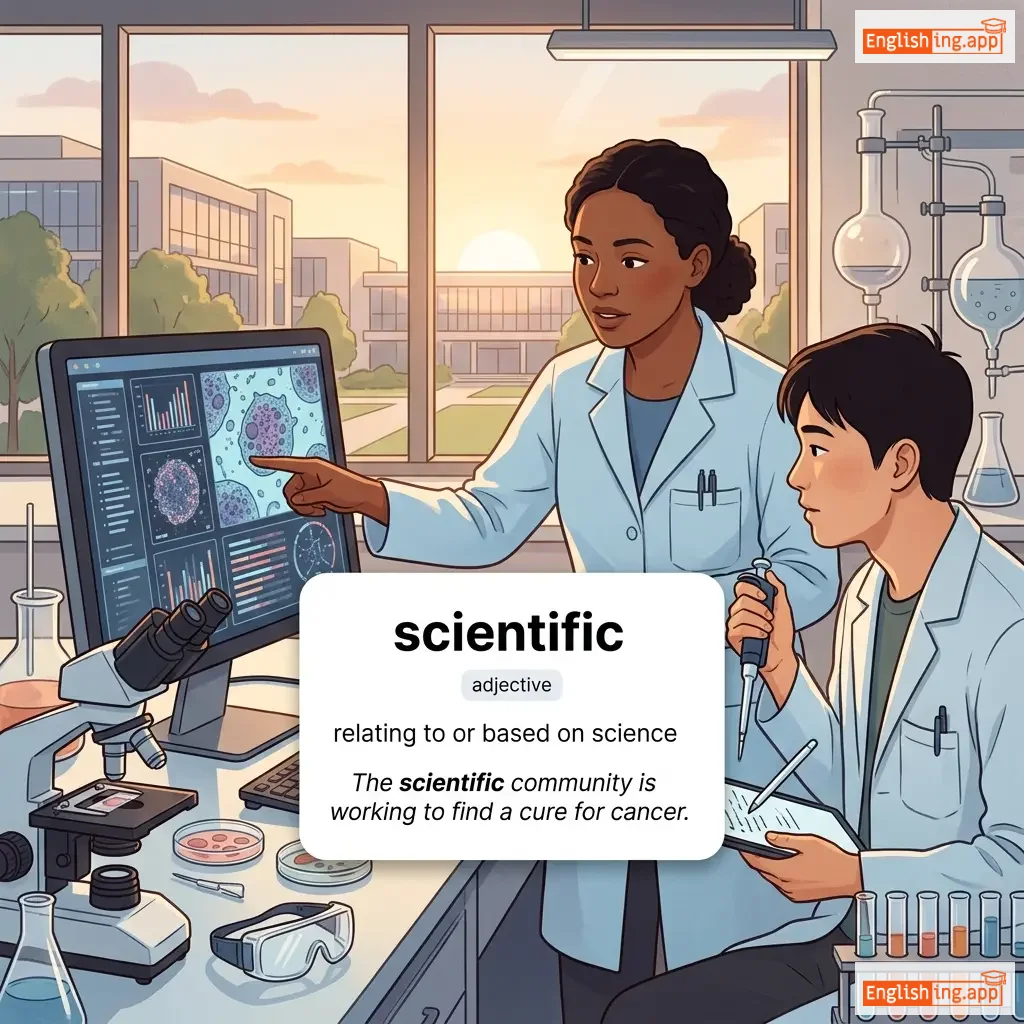
relating to or based on science
••••••
|
The scientific community is working to find a cure for cancer.
ザ サイエンティフィック コミュニティ イズ ワーキング トゥ ファインド ア キュア フォー キャンサー。
••••••
|
科学者たちはがんの治療法を見つけるために働いています。
Kagakusha-tachi wa gan no chiryouhou wo mitsukeru tame ni hataraiteimasu.
••••••
|
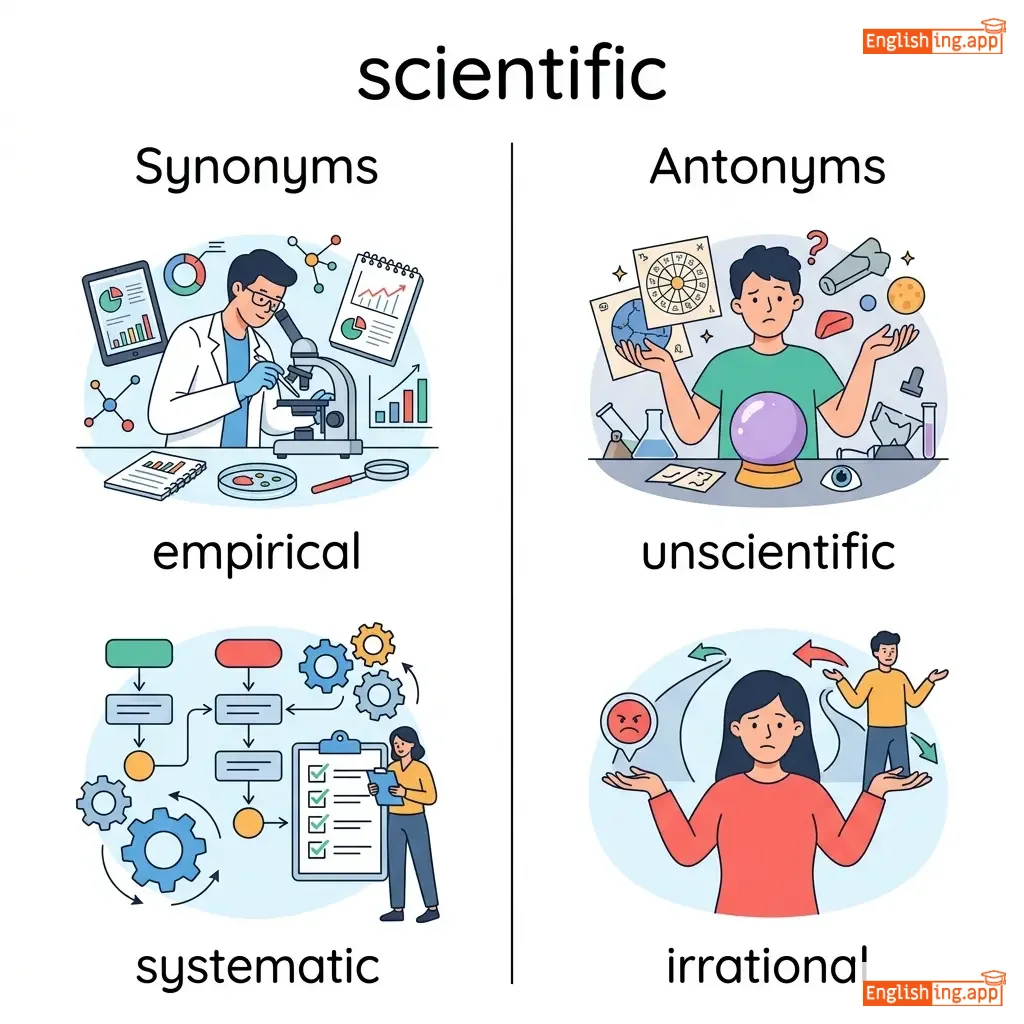
- •••••• | - •••••• | - •••••• |
empirical, systematic, methodical, analytical
••••••
|
unscientific, irrational
••••••
|
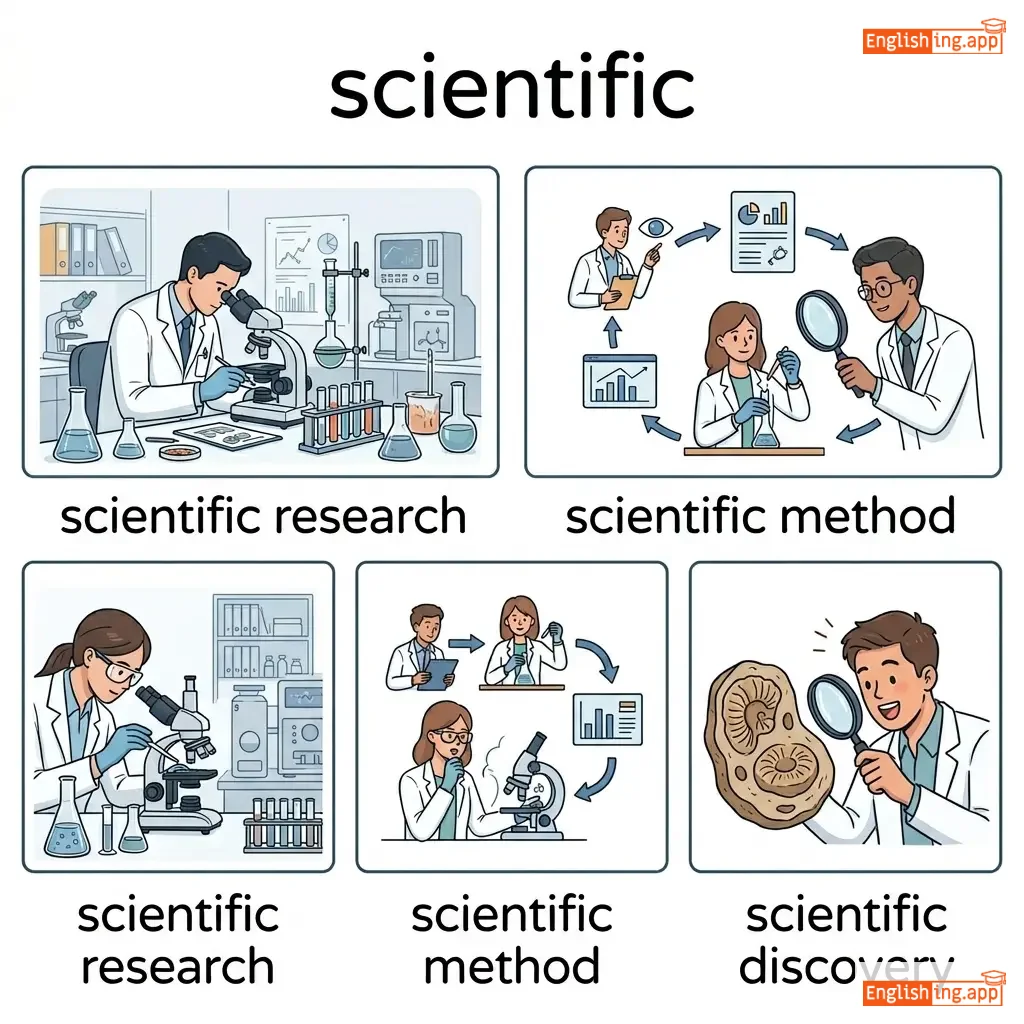
scientific research, scientific method, scientific discovery
••••••
|
Scientific methods are systematic and based on facts.
••••••
|
|
👩🔬
••••••
|
/ˈsaɪəntɪst/
noun
(サイエンティスト)
••••••
|
|
科学者
kagakusha
••••••
|
- •••••• | - •••••• | - •••••• | - •••••• |
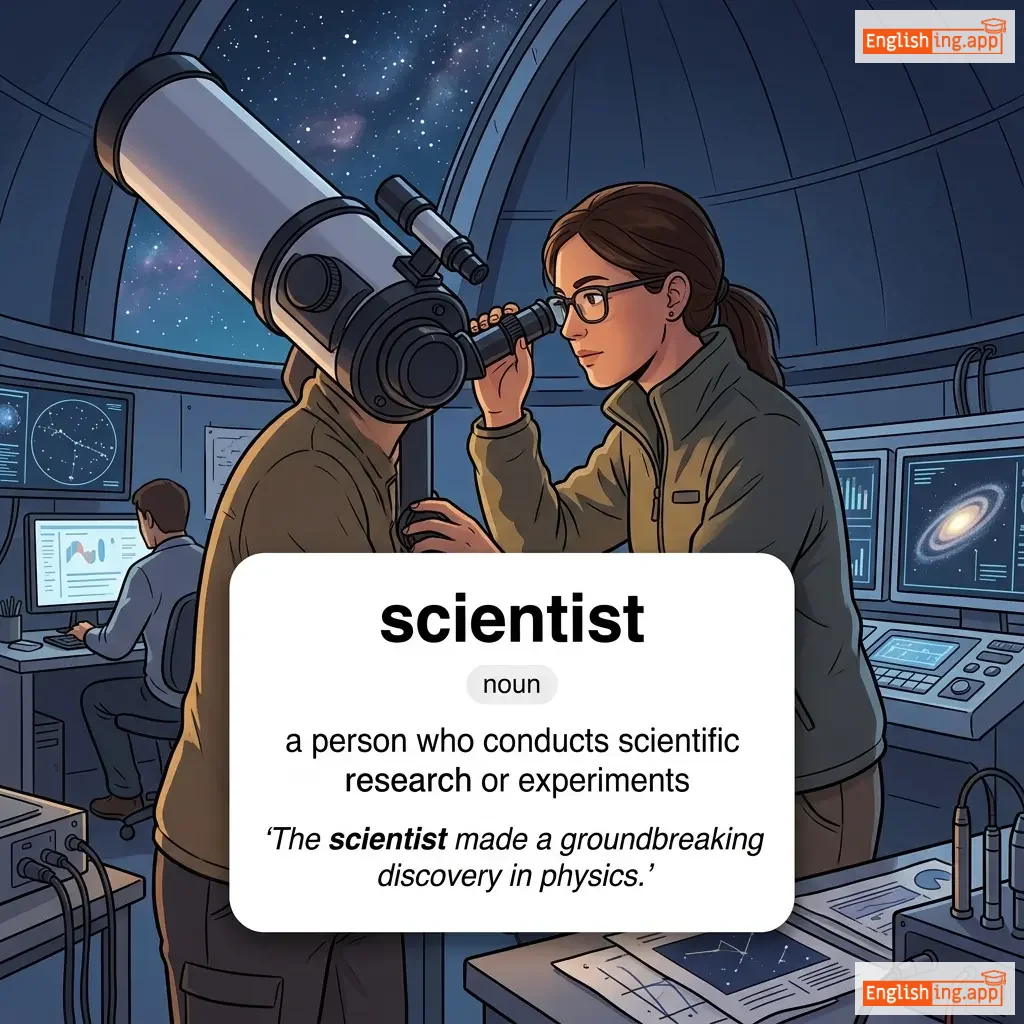
a person who conducts scientific research or experiments
••••••
|
The scientist made a groundbreaking discovery in physics. |
科学者は物理学で画期的な発見をしました。
Kagakusha wa butsuri-gaku de kakkiteki na hakken wo shimashita.
••••••
|
- •••••• | - •••••• | - •••••• |
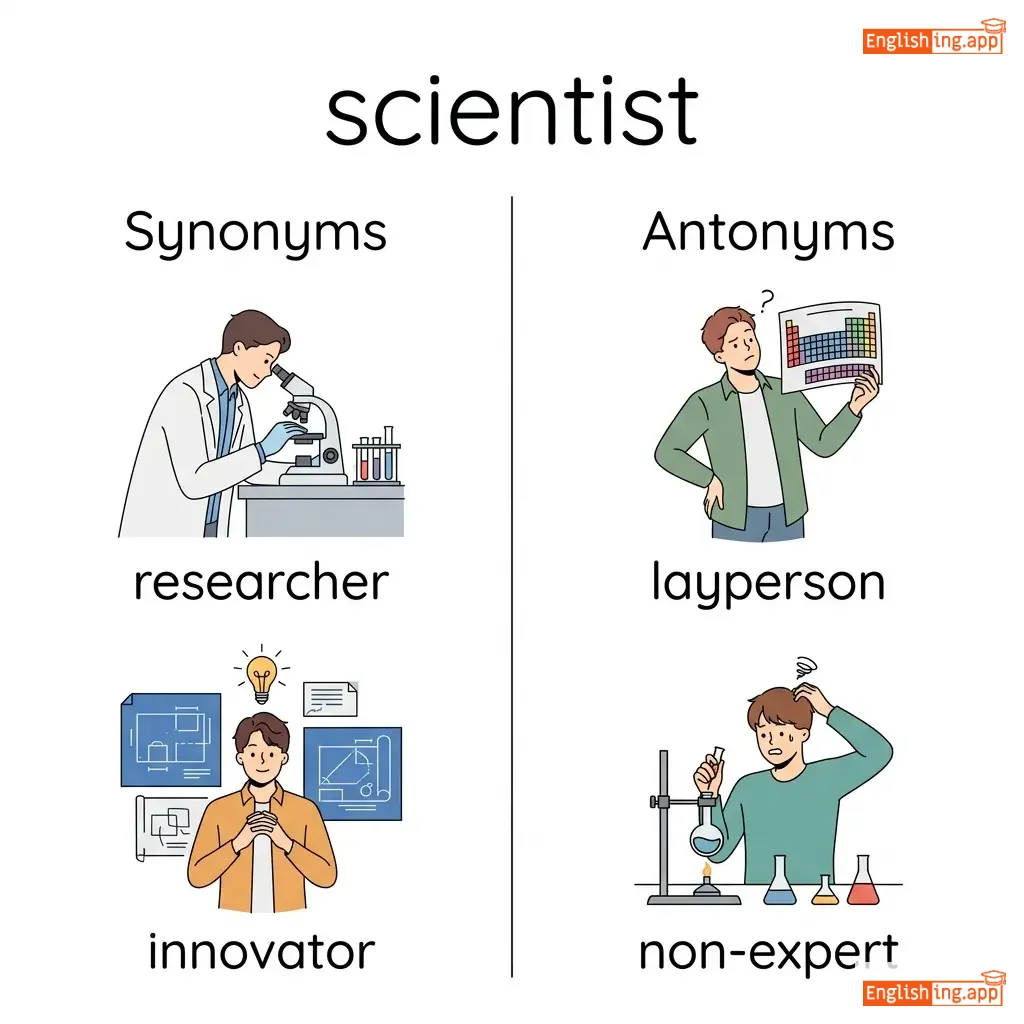
researcher, innovator, experimenter, investigator
••••••
|
layperson, non-expert
••••••
|
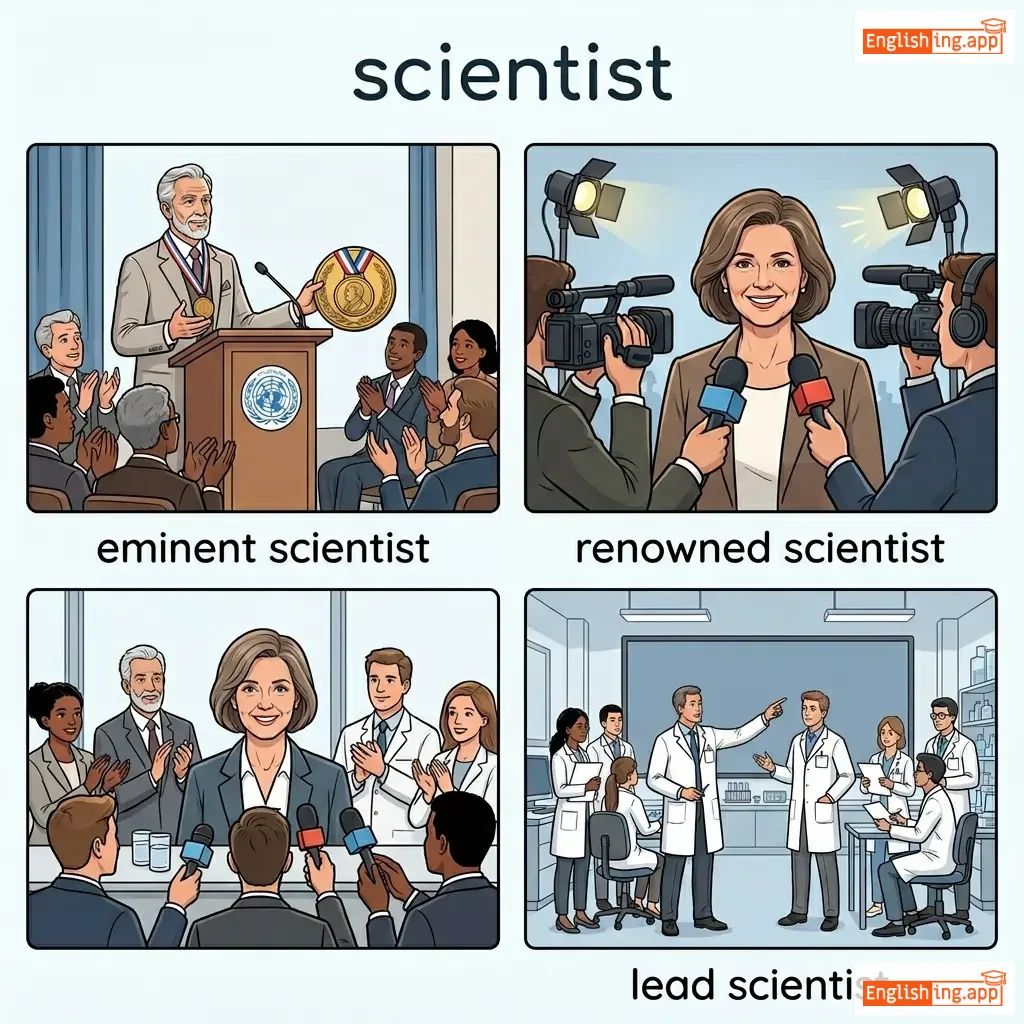
eminent scientist, renowned scientist, lead scientist
••••••
|
Scientists work to uncover the mysteries of the universe.
••••••
|
|
✂️
••••••
|
/ˈsɪzər/
verb
(シザー)
••••••
|
- •••••• |
はさみで切る
hasami de kiru
••••••
|
scissored
scisored
••••••
|
scissored
scisored
••••••
|
scissors
scissors
••••••
|
scissoring
scissoring
••••••
|
to cut with or as if with scissors
••••••
|
The tailor scissored the fabric neatly.
テイラーは布をきれいに切りました。
••••••
|
テイラーは布をきれいに切りました。
Teirā wa nuno o kirei ni kirimashita.
••••••
|
- •••••• | - •••••• | - •••••• |
clip, shear, snip, trim
••••••
|
tear, rip
••••••
|
scissor kick, scissor action, scissor movement
••••••
|
Scissorは✂️はさみで切る意味 — 'see jar' を覚えて、切るにははさみが必要です。
••••••
|
|
🔭
••••••
|
/skoʊp/
noun
(スコープ)
••••••
|
- •••••• |
範囲
hani
••••••
|
- •••••• | - •••••• | - •••••• | - •••••• |
the range of one's perception, understanding, or activity
••••••
|
The project is beyond the scope of our resources. |
そのプロジェクトは私たちのリソースの範囲を超えています。
Sono purojekuto wa watashitachi no risōsu no hani o koeteimasu.
••••••
|
within the scope |
within the limits or extent
••••••
|
範囲内
haninai
••••••
|
range, extent, capacity, reach, breadth
••••••
|
limitlessness, narrowness
••••••
|
scope of work, within scope, beyond scope, broad scope
••••••
|
Scopeは範囲を意味します — 望遠鏡を使うと、遠くの範囲を見ることができます。
••••••
|
|
🎯
••••••
|
/skɔːr/
noun/verb
(スコア)
••••••
|
- •••••• |
スコア
sutoa
••••••
|
scored
スコアード
••••••
|
scored
スコアード
••••••
|
scores
スコアーズ
••••••
|
scoring
スコアリング
••••••
|
a number of points achieved in a game or test; to gain points or achieve a goal
••••••
|
He scored the winning goal in the final match.
彼は最後の試合で決勝ゴールを決めました。
••••••
|
彼は最後の試合で決勝ゴールを決めました。
Kare wa saigo no shiai de kesshō gōru o kimemashita.
••••••
|
settle the score
スコアをつける
••••••
|
to take revenge or get even with someone
••••••
|
スコアをつける
sutoa o tsukeru
••••••
|
points, tally, result, grade, mark
••••••
|
loss, defeat, miss
••••••
|
high score, score a goal, final score, score points
••••••
|
テストのスコアが高ければ、成功が待っている
••••••
|
|
🐾
••••••
|
/skrætʃ/
verb
••••••
|
- •••••• |
幸せ
shiawase
••••••
|
scratched
••••••
|
scratched
••••••
|
scratches
••••••
|
scratching
••••••
|
to rub a surface or skin with something sharp or rough, often to relieve itching
••••••
|
The cat scratched the door to be let in. |
彼女は賞を受け取ったとき、自分の幸せを隠すことができませんでした。
Kanojo wa shō o uketotta toki, jibun no shiawase o kakusu koto ga dekimasen deshita.
••••••
|
from scratch |
from the very beginning without using anything that already exists
••••••
|
幸せを追い求める
shiawase o oi motomeru
••••••
|
scrape, rub, claw, mark, graze
••••••
|
polish, smooth
••••••
|
scratch card, scratch the surface, start from scratch, scratch one's head
••••••
|
幸せは心の中で育まれ、星のように輝く!
••••••
|
|
😱
••••••
|
/skriːm/
verb
(sukuri:mu)
••••••
|
- •••••• |
叫ぶ
sakebu
••••••
|
screamed
sukuri:mu do
••••••
|
screamed
sukuri:mu do
••••••
|
screams
sukuri:mu su
••••••
|
screaming
sukuri:mu ing
••••••
|
to make a loud, high-pitched sound, usually because of fear, pain, or excitement
••••••
|
She screamed when she saw the spider.
彼女はクモを見て叫びました。
••••••
|
彼女はクモを見て叫びました。
Kanojo wa kumo o mite sakebimashita.
••••••
|
- •••••• | - •••••• | - •••••• |
yell, shout, cry, holler
••••••
|
whisper, mutter, murmur
••••••
|
scream loudly, scream in fear, scream for help
••••••
|
Scream the same way you would in 'scREAM' - for loud reactions!
••••••
|
|
🖥️
••••••
|
/skriːn/
noun
(スクリーン)
••••••
|
- •••••• |
スクリーン
sukuriin
••••••
|
- •••••• | - •••••• | - •••••• | - •••••• |
a flat surface on which images or data are displayed
••••••
|
The movie was displayed on a large screen. |
映画は大きなスクリーンに映し出されました。
Eiga wa ookina sukuriin ni utsushidasharemashita.
••••••
|
- •••••• | - •••••• | - •••••• |
monitor, display, panel, projector
••••••
|
background, blank
••••••
|
screen display, movie screen, touch screen
••••••
|
The 'screen' you see movies on is your visual window!
••••••
|
|
🩺
••••••
|
/ˈskriːnɪŋ/
noun
(スクリーニング)
••••••
|
- •••••• |
スクリーニングまたは上映
sukuriiningu matawa jouei
••••••
|
- •••••• | - •••••• | - •••••• | - •••••• |
the act of examining or testing people to detect disease or evaluate suitability; a showing of a movie or program
••••••
|
The hospital offered free health screening for all employees. |
病院はすべての従業員に無料の健康スクリーニングを提供しました。
Byouin wa subete no juugyouin ni muryou no kenko sukuriiningu wo teikyoushimasita.
••••••
|
- •••••• | - •••••• | - •••••• |
testing, examination, inspection, evaluation, showing
••••••
|
neglect, ignorance
••••••
|
health screening, job screening, movie screening, security screening
••••••
|
Screening は画面に表示したり、検査したりすることを意味します — 映画のスクリーニングや健康スクリーニングのように 🎥🩺
••••••
|
|
🔩
••••••
|
/skruː/
noun, verb
(スクリュー)
••••••
|
- •••••• |
螺旋状の金属製ファスナー; 何かをねじで締める
rasenjou no kinzoku-sei fasunā; nanika o neji de shimeru
••••••
|
screwed
スクリュード
••••••
|
screwed
スクリュード
••••••
|
screws
スクリューズ
••••••
|
screwing
スクリューイング
••••••
|
a metal fastener with a helical ridge; to fasten or tighten something with a screw
••••••
|
He screwed the shelf to the wall tightly.
彼は棚を壁にしっかりとねじ込んだ。
••••••
|
彼は棚を壁にしっかりとねじ込んだ。
Kare wa tana o kabe ni shikkari to nejikonda.
••••••
|
screw up
スクルーアップ
••••••
|
to make a serious mistake or blunder
••••••
|
失敗する
shippai suru
••••••
|
fasten, tighten, bolt, twist, secure
••••••
|
loosen, detach, release
••••••
|
tighten the screw, screw in, screw up, screw loose
••••••
|
ネジで物を固定し、'スクルーアップ'は失敗すること!
••••••
|
|
📜
••••••
|
/skrɪpt/
noun
(スクリプト)
••••••
|
- •••••• |
脚本
kyakuhon
••••••
|
- •••••• | - •••••• | - •••••• | - •••••• |
The written text of a play, film, or broadcast; handwriting style.
••••••
|
The actor memorized his lines from the script.
俳優はスクリプトからセリフを覚えました。
••••••
|
俳優は脚本からセリフを覚えました。
Haiyu wa kyakuhon kara serifu wo oboemashita.
••••••
|
read from the same script
同じスクリプトを読む
••••••
|
To be in agreement or follow the same plan.
••••••
|
同じ脚本を読む
Onaji kyakuhon wo yomu
••••••
|
text, screenplay, dialogue, manuscript, writing
••••••
|
improvisation, ad-lib
••••••
|
film script, TV script, script writing, read script
••••••
|
日本語でスクリプトは脚本です - 映画の脚本 🎥
••••••
|
|
🔍
••••••
|
/ˈskruː.tɪ.ni/
noun
(スクルーチニ)
••••••
|
|
精査; 重要な調査
seisa; juuyou na chousa
••••••
|
- •••••• | - •••••• | - •••••• | - •••••• |
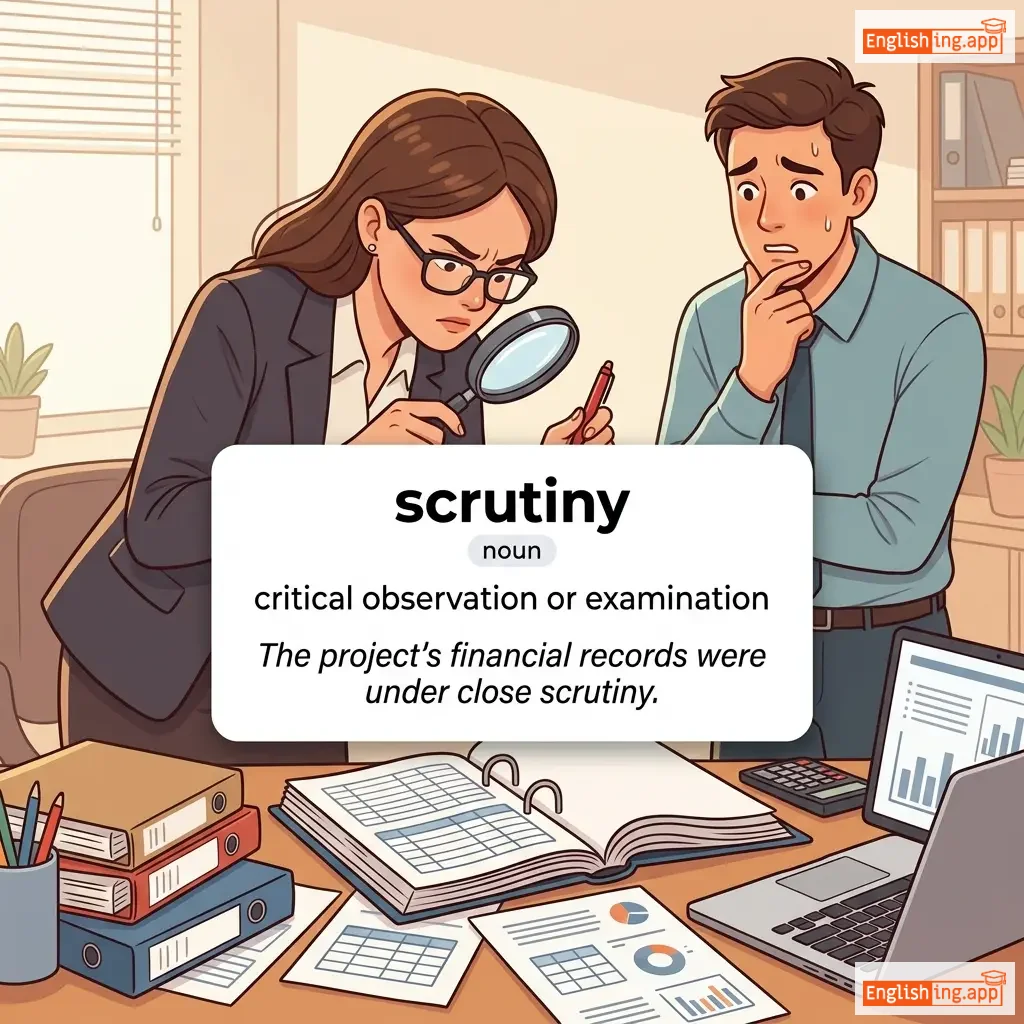
careful examination or inspection; critical observation
••••••
|
The company's financial records were under intense scrutiny. |
その企業の財務記録は厳格な精査を受けていました。
sono kigyou no zaimu kiroku wa genkaku na seisa o uketeimashita.
••••••
|
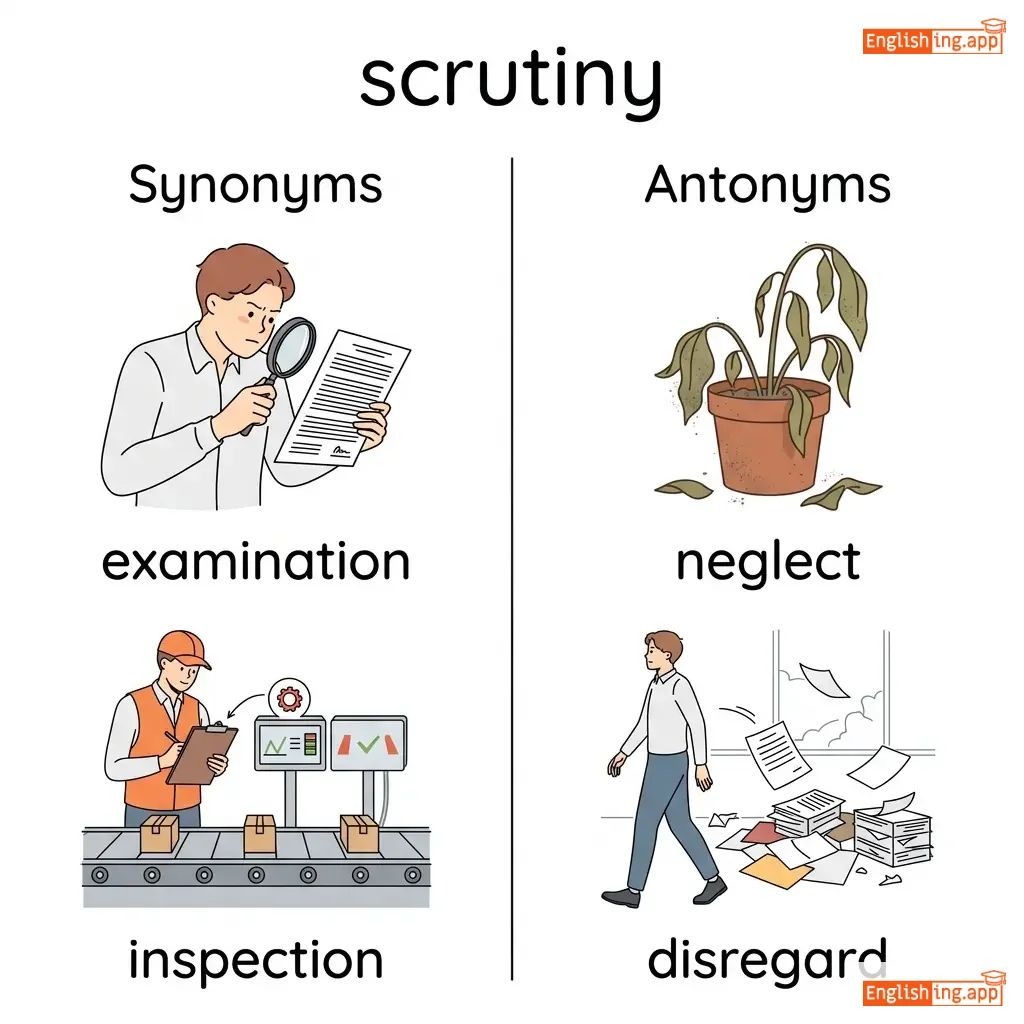
- •••••• | - •••••• | - •••••• |
examination, inspection, analysis, investigation
••••••
|
neglect, ignorance, oversight
••••••
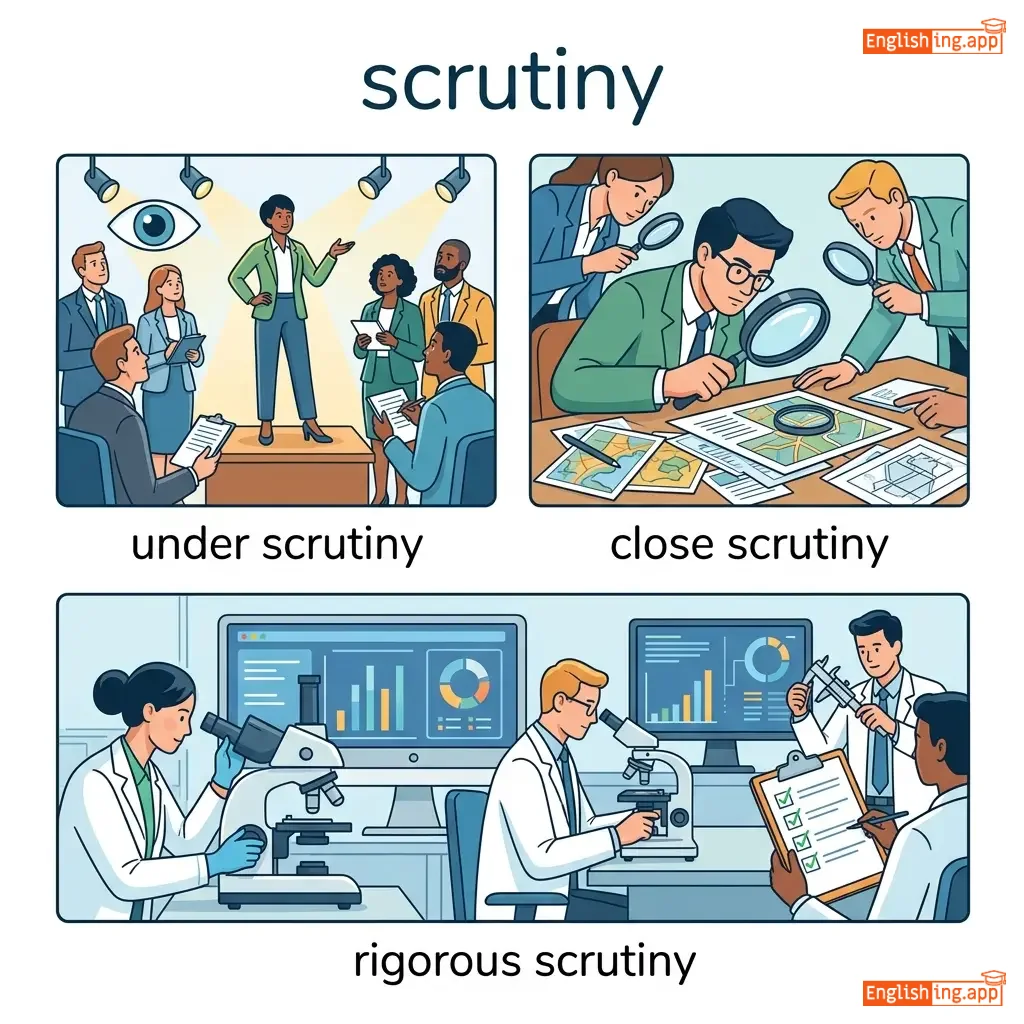
|
under scrutiny, intense scrutiny, public scrutiny, careful scrutiny
••••••
|
精密な調査を行うことは、書類の隠れた問題を発見する方法です。
••••••
|
|
🌊
••••••
|
/siː/
noun
(海)
••••••
|
- •••••• |
海
umi
••••••
|
- •••••• | - •••••• | - •••••• | - •••••• |
a large body of salt water that covers most of the earth's surface
••••••
|
We went swimming in the sea.
私たちは海で泳ぎました。
••••••
|
私たちは海で泳ぎました。
Watashitachi wa umi de oyogimashita.
••••••
|
- •••••• | - •••••• | - •••••• |
ocean, waters, marine
••••••
|
land, shore, desert
••••••
|
deep sea, sea level, by the sea, rough sea
••••••
|
海は大きな水の世界、未知の冒険が待っている場所です。
••••••
|
|
🔒
••••••
|
/siːl/
verb
(シール)
••••••
|
- •••••• |
封印する、閉じる
fūin suru, toji ru
••••••
|
sealed
シールド
••••••
|
sealed
シールド
••••••
|
seals
シールズ
••••••
|
sealing
シーリング
••••••
|
to close or secure something tightly or officially confirm something
••••••
|
He sealed the envelope before sending the letter.
彼は手紙を送る前に封筒をシールしました。
••••••
|
彼は手紙を送る前に封筒をシールしました。
Kare wa tegami o okuru mae ni fūtō o shīru shimashita.
••••••
|
seal the deal
取引を確定する
••••••
|
to finalize an agreement or decision
••••••
|
取引を締結する
torihiki o teiketsu suru
••••••
|
close, fasten, secure, shut, confirm
••••••
|
open, unseal, release
••••••
|
seal the deal, seal the envelope, seal tightly, official seal
••••••
|
封印することは、物を閉じたり確認したりすることです。
••••••
|
|
🔍
••••••
|
/sɜːrtʃ/
verb
(サーチ)
••••••
|
|
検索
kensaku
••••••
|
searched
サーチド
••••••
|
searched
サーチド
••••••
|
searches
サーチズ
••••••
|
searching
サーチング
••••••
|
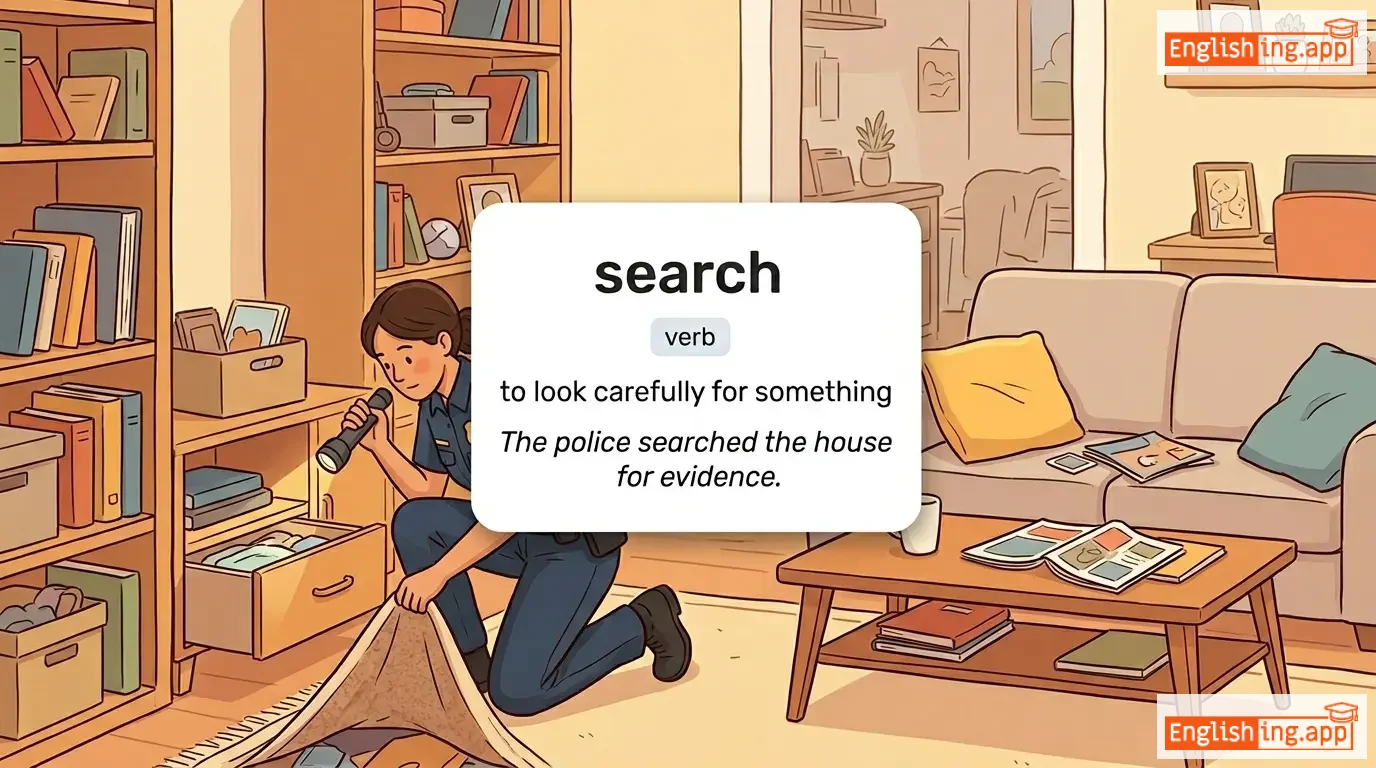
to look carefully for something
••••••
|
The police searched the house for evidence.
警察は証拠を探すために家をサーチしました。
••••••
|
警察は証拠を探すために家を捜索しました。
Keisatsu wa shouko wo sagasu tame ni ie wo sousaku shimashita.
••••••
|
search high and low
サーチ ハイ アンド ロー
••••••
|
to look everywhere
••••••
|
どこでも探す
dokodemo sagasu
••••••
|
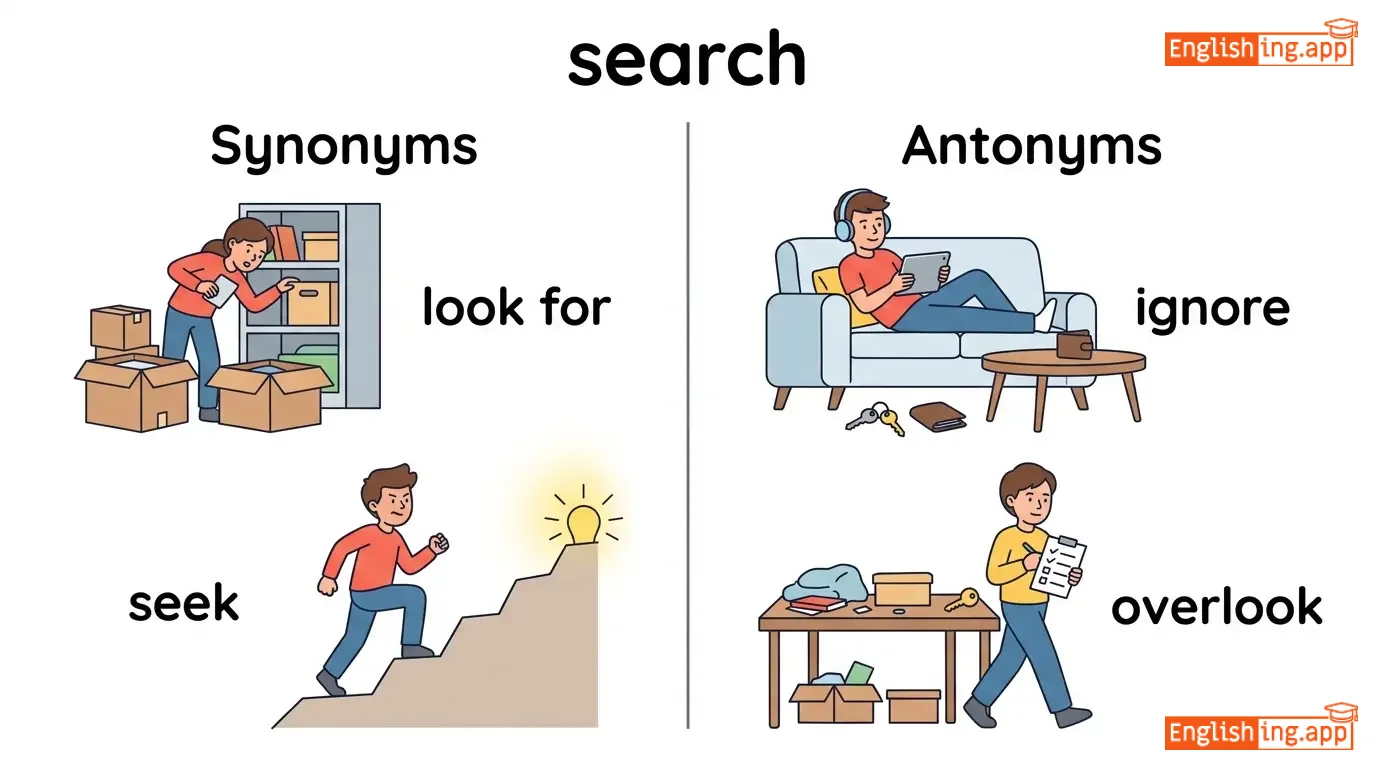
look for, seek, explore, investigate, hunt
••••••
|
ignore, overlook, neglect
••••••
|
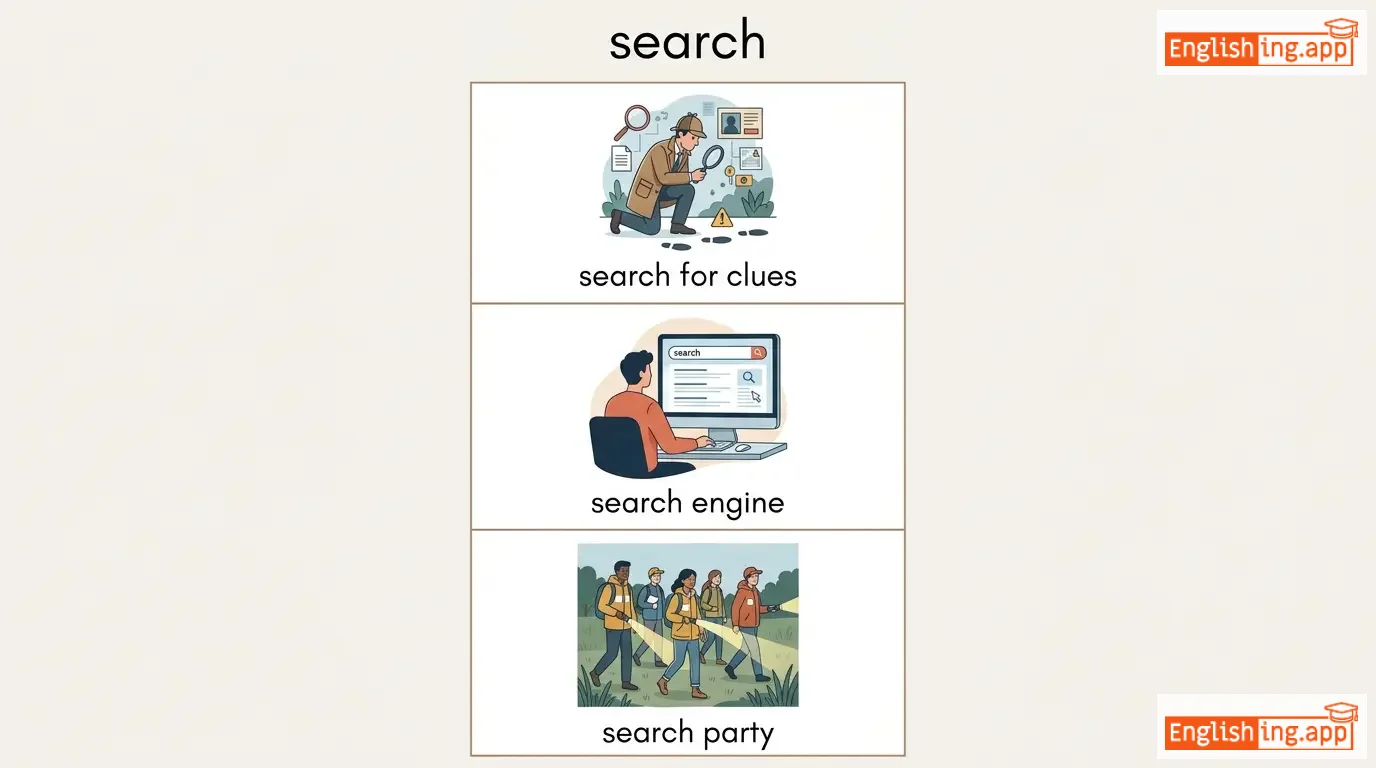
search for clues, search engine, search party
••••••
|
Googleで検索すると、すべてを探すことができる – 検索は探すこと
••••••
|
|
🍂
••••••
|
/ˈsiːzən/
noun/verb
(シーズン)
••••••
|
- •••••• |
季節 / 味付け
kisetsu / aji tsuke
••••••
|
seasoned
シーズンド
••••••
|
seasoned
シーズンド
••••••
|
seasons
シーズンズ
••••••
|
seasoning
シーズニング
••••••
|
One of the four periods of the year characterized by specific weather conditions; also, to add flavor to food.
••••••
|
Spring is my favorite season of the year.
春は私のお気に入りのシーズンです。
••••••
|
春は私のお気に入りのシーズンです。
Haru wa watashi no okiniiri no shīzun desu.
••••••
|
in season
旬
••••••
|
available or appropriate at the present time
••••••
|
旬
shun
••••••
|
period, time, stage, era, flavor
••••••
|
off-season, timeless
••••••
|
rainy season, dry season, in season, out of season
••••••
|
Seasonは季節で、料理に風味を加える意味もあります。
••••••
|
|
💺
••••••
|
/siːt/
noun
(シート)
••••••
|
- •••••• |
席
seki
••••••
|
- •••••• | - •••••• | - •••••• | - •••••• |
a place to sit, especially a chair or other place for sitting
••••••
|
I reserved a seat for you at the concert.
コンサートであなたのために席を予約しました。
••••••
|
コンサートであなたのために席を予約しました。
Konsāto de anata no tame ni seki o yoyaku shimashita.
••••••
|
- •••••• | - •••••• | - •••••• |
chair, bench, stool, pew
••••••
|
stand, floor
••••••
|
take a seat, empty seat, front seat
••••••
|
Seki = seki. あなたが座る場所を考えてください!
••••••
|
|
⏱️
••••••
|
/ˈsekənd/
noun
••••••
|
- •••••• | - •••••• | - •••••• | - •••••• | - •••••• | - •••••• |
a unit of time equal to one sixtieth of a minute; also the position after first
••••••
|
He finished the race in second place. |
- •••••• |
in a second |
very quickly; almost immediately
••••••
|
- •••••• |
moment, instant, rank, position
••••••
|
first, last
••••••
|
second chance, second place, second time
••••••
|
No •••••• |
|
2️⃣
••••••
|
/ˈsekənderi/
adjective
(sekendari)
••••••
|
- •••••• |
二次的
nitsuki no
••••••
|
- •••••• | - •••••• | - •••••• | - •••••• |
Less important than something else; derived from or dependent on something primary.
••••••
|
Safety is our primary concern, while speed is only secondary. |
安全は私たちの最優先事項であり、速度は二次的なものです。
Anzen wa watashitachi no sai yuusen jiko de ari, sokudo wa niji-teki na mono desu.
••••••
|
secondary role |
A role of lesser importance compared to the main one.
••••••
|
二次的な役割
niji-teki na yakuwari
••••••
|
minor, subordinate, auxiliary, less important, dependent
••••••
|
primary, main, chief
••••••
|
secondary school, secondary importance, secondary effect
••••••
|
Secondaryは二次的な ➡ 二次的な役割
••••••
|
|
🤫
••••••
|
/ˈsiːkrət/
noun
••••••
|
- •••••• | - •••••• | - •••••• | - •••••• | - •••••• | - •••••• |
something that is kept or meant to be kept unknown or unseen by others
••••••
|
He told me a secret about his childhood. |
- •••••• | - •••••• | - •••••• | - •••••• |
mystery, hidden fact, confidential information
••••••
|
public, open, revealed
••••••
|
keep a secret, tell a secret, secret information
••••••
|
No •••••• |
|
📋
••••••
|
/ˈsɛkrəteri/
noun
••••••
|
- •••••• | - •••••• | - •••••• | - •••••• | - •••••• | - •••••• |
a person employed to handle correspondence and manage routine tasks for an individual or organization
••••••
|
The secretary scheduled the meeting for tomorrow. |
- •••••• | - •••••• | - •••••• | - •••••• |
assistant, clerk, administrator, executive
••••••
|
boss, employer
••••••
|
office secretary, personal secretary, company secretary, secretary role
••••••
|
No •••••• |
|
🤫
••••••
|
/ˈsiː.krət.li/
adverb
(シークレットリー)
••••••
|
- •••••• |
こっそり
kossori
••••••
|
- •••••• | - •••••• | - •••••• | - •••••• |
in a way that is hidden or not known by others
••••••
|
She secretly planned a surprise party for her friend.
彼女は友達のためにこっそりサプライズパーティーを計画した。
••••••
|
彼女は友達のためにこっそりサプライズパーティーを計画した。
Kanojo wa tomodachi no tame ni kossori sapuraizu paatii o keikaku shita.
••••••
|
- •••••• | - •••••• | - •••••• |
covertly, stealthily, quietly, privately
••••••
|
openly, publicly, visibly
••••••
|
secretly admire, secretly hope, secretly wish
••••••
|
Kossori, like hiding sushi in Japan.
••••••
|
|
📚
••••••
|
/ˈsɛkʃən/
noun
(セクション)
••••••
|
- •••••• |
セクション
sekushon
••••••
|
- •••••• | - •••••• | - •••••• | - •••••• |
a distinct part or subdivision of something larger
••••••
|
This section of the report needs further review. |
この報告書のセクションは、さらに検討する必要があります。
Kono hōkokusho no sekushon wa, sarani kentō suru hitsuyō ga arimasu.
••••••
|
- •••••• | - •••••• | - •••••• |
part, division, segment, portion
••••••
|
whole, entirety
••••••
|
section of a book, business section, section leader
••••••
|
本のセクションは、大きなものの一部です。
••••••
|
|
💼
••••••
|
/ˈsɛktər/
noun
(セクター)
••••••
|
- •••••• |
セクター
sekutā
••••••
|
- •••••• | - •••••• | - •••••• | - •••••• |
a distinct part or area of an economy, society, or industry
••••••
|
The technology sector is growing rapidly.
テクノロジーセクターは急速に成長しています。
••••••
|
テクノロジーセクターは急速に成長しています。
Tekunorojī sekutā wa kyūsoku ni seichō shiteimasu.
••••••
|
- •••••• | - •••••• | - •••••• |
field, domain, industry, area
••••••
|
whole, total
••••••
|
business sector, economic sector, public sector, private sector
••••••
|
テクノロジーセクターが急速に成長するように、新しいセクターも成長しています。
••••••
|
|
🌍
••••••
|
/ˈsek.j ə.l ər/
adjective
(セキュラー)
••••••
|
- •••••• |
世俗的
sekyura
••••••
|
- •••••• | - •••••• | - •••••• | - •••••• |
not connected with religious or spiritual matters; worldly
••••••
|
The country maintains a secular government that separates religion from politics.
その国は宗教と政治を分離する世俗的な政府を維持している。
••••••
|
その国は宗教と政治を分離する世俗的な政府を維持している。
sono kuni wa shukyou to seiji o bunri suru sezokuteki na seifu o iji shite iru
••••••
|
- •••••• | - •••••• | - •••••• |
worldly, non-religious, temporal, civil
••••••
|
religious, spiritual, sacred, clerical
••••••
|
secular education, secular society, secular government, secular music
••••••
|
Sekyura: See-kyu-ra. Picture a globe 世界 wearing a badge reading 'Sec You Lar' to remind worldly not religious
••••••
|
|
🔒
••••••
|
/sɪˈkjʊər/
verb/adjective
(セキュア)
••••••
|
- •••••• |
安全にする
anzen ni suru
••••••
|
secured
セキュアド
••••••
|
secured
セキュアド
••••••
|
secures
セキュアズ
••••••
|
securing
セキュアリング
••••••
|
to make safe or protect; to fix something firmly in place
••••••
|
Please secure the door before you leave.
ドアを確実に閉めてください。
••••••
|
ドアを確実に閉めてください。
Doa o kakujitsu ni shimete kudasai.
••••••
|
- •••••• | - •••••• | - •••••• |
safeguard, protect, lock, fasten
••••••
|
expose, endanger
••••••
|
secure the area, secure the future, secure a position
••••••
|
安全にして、盗まれないように。
••••••
|
|
🔒
••••••
|
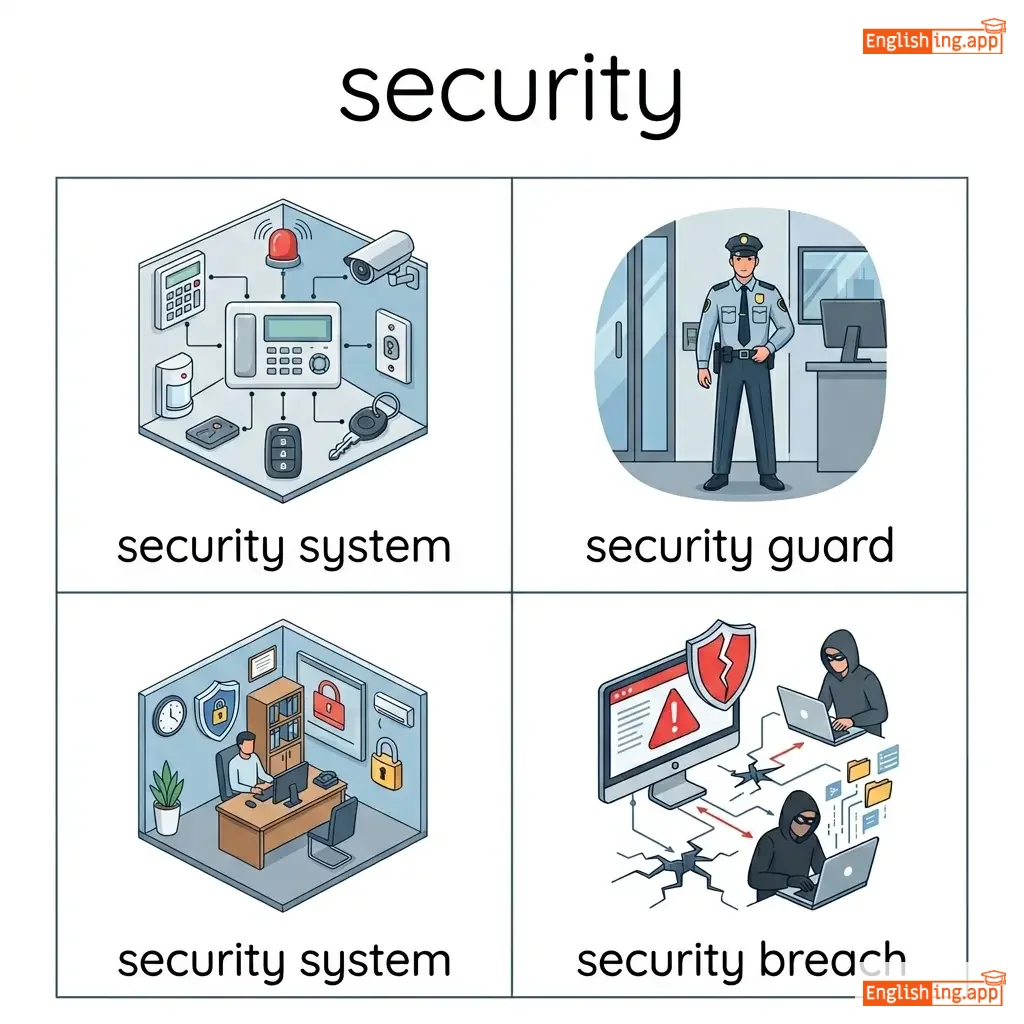
/sɪˈkjʊər.ə.ti/
noun
(セキュリティ)
••••••
|
|
セキュリティ
sekyuriti
••••••
|
- •••••• | - •••••• | - •••••• | - •••••• |
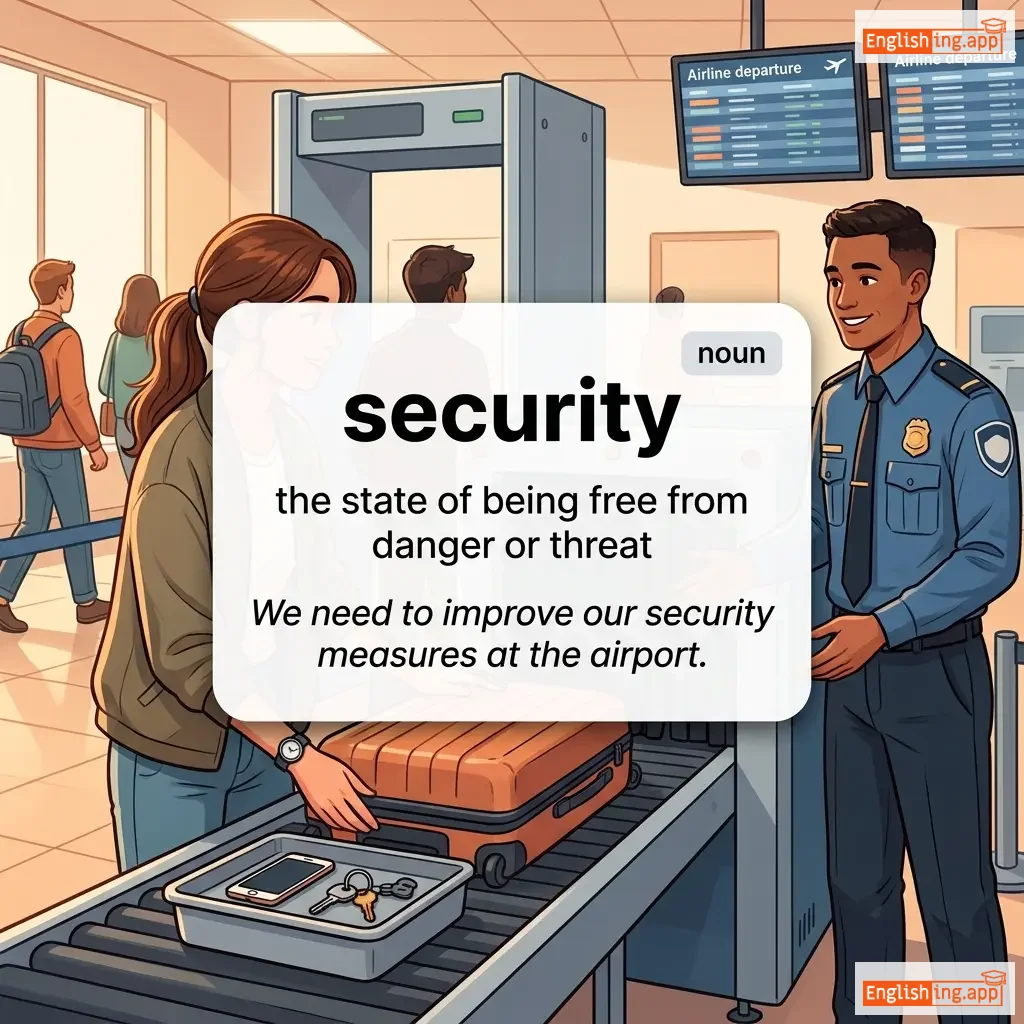
the state of being free from danger or threat; protection against harm
••••••
|
Airport security has been increased after the incident.
事件後、空港のセキュリティが強化されました。
••••••
|
事件後、空港のセキュリティが強化されました。
Jiken-go, kūkō no sekyuriti ga kyōka saremashita.
••••••
|
- •••••• | - •••••• | - •••••• |
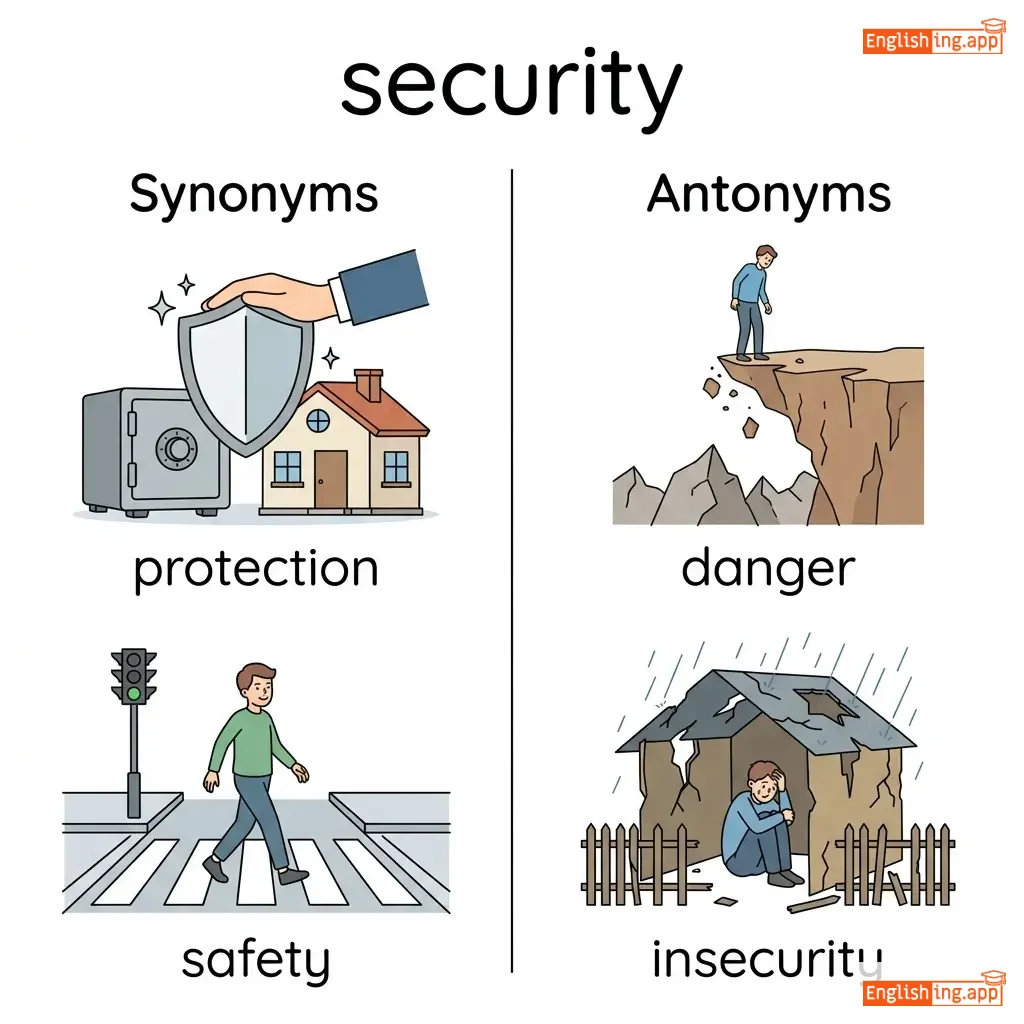
safety, protection, defense, safeguarding
••••••
|
danger, vulnerability, insecurity, risk
••••••
|
national security, security guard, cyber security, job security
••••••
|
セキュリティ in Japanese is like securing yourself from harm!
••••••
|
|
👀
••••••
|
/siː/
verb
(シー)
••••••
|
|
見る
miru
••••••
|
saw
ソー
••••••
|
seen
シーン
••••••
|
sees
シーズ
••••••
|
seeing
シーイング
••••••
|
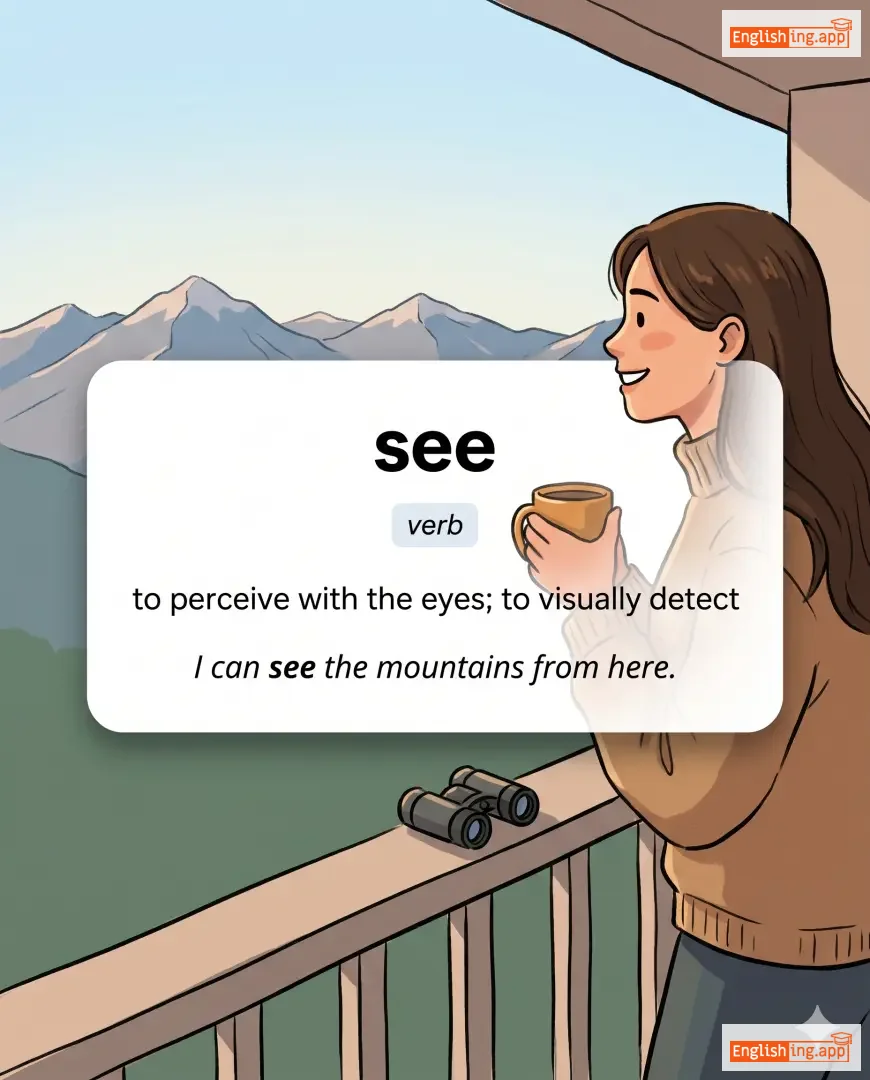
to perceive with the eyes; to understand; to meet
••••••
|
I can see the mountain from here.
私はここから山を見ることができます。
••••••
|
私はここから山を見ることができます。
Watashi wa koko kara yama o miru koto ga dekimasu
••••••
|
- •••••• | - •••••• | - •••••• |
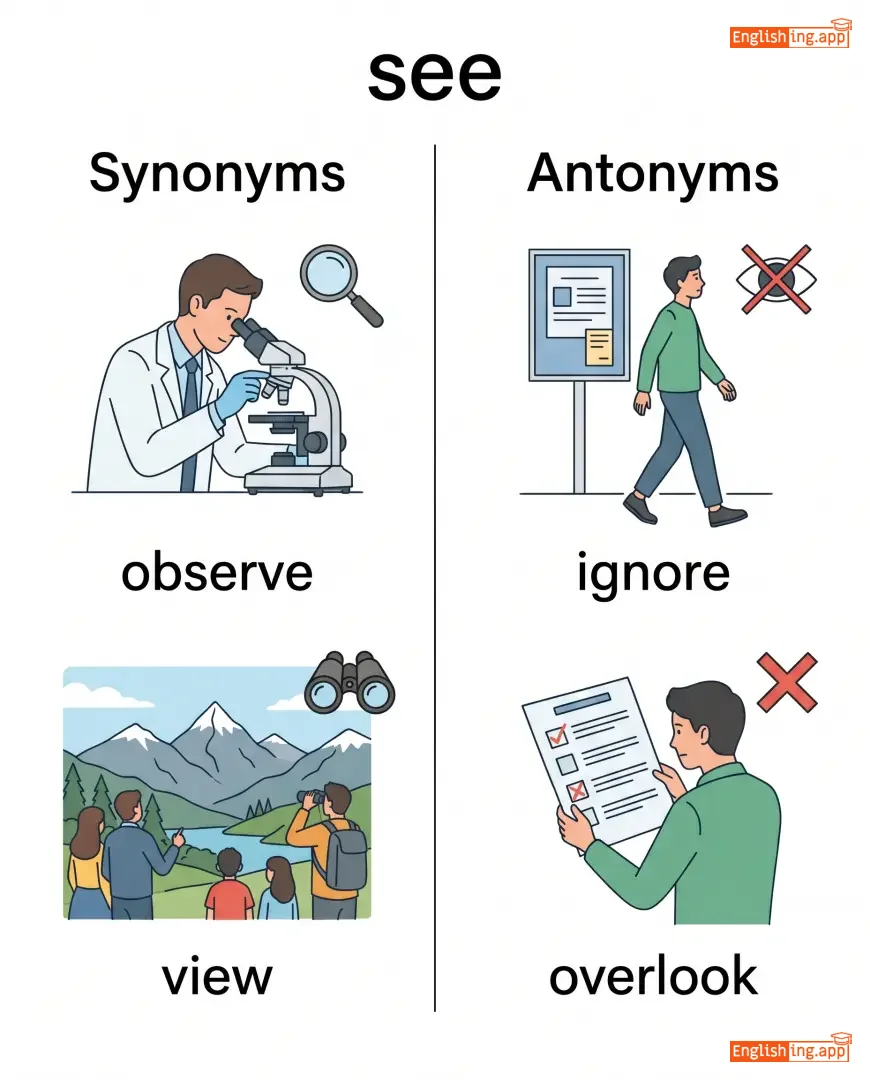
view, observe, watch, notice
••••••
|
miss, overlook, ignore
••••••
|
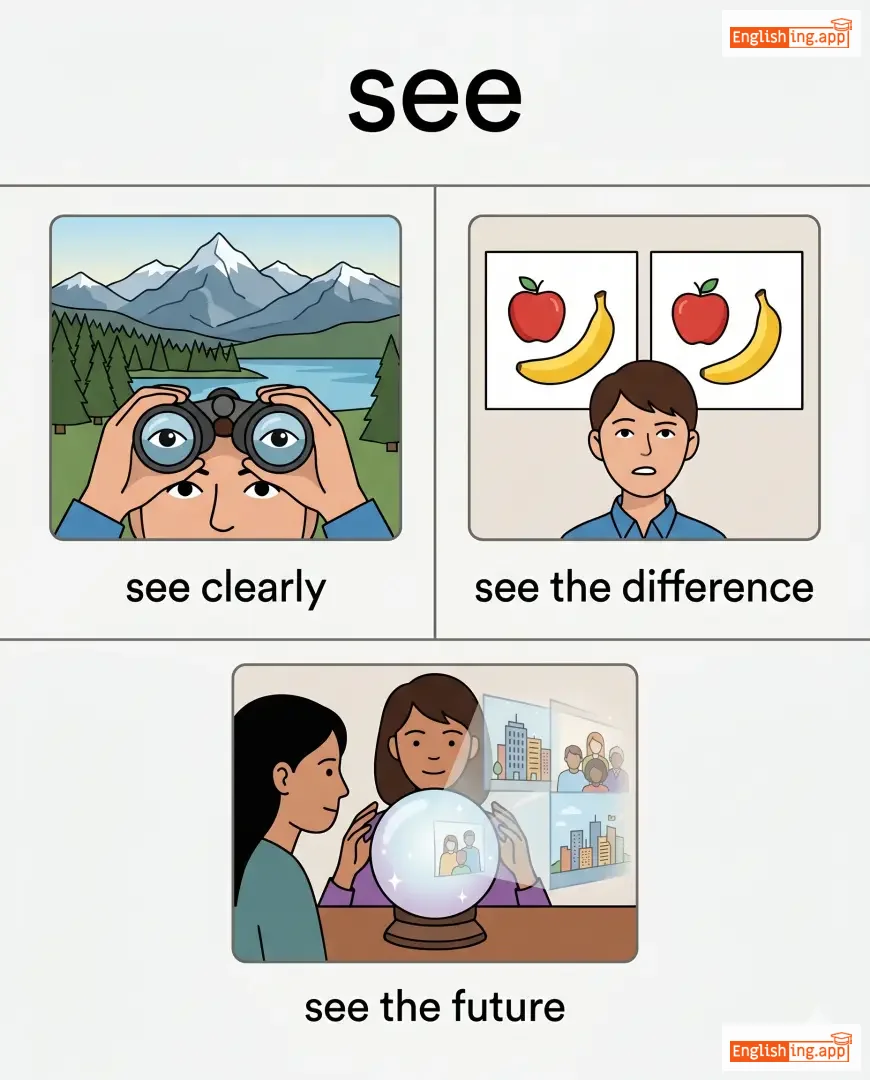
clearly see, can't see, see through, see ahead, see beyond
••••••
|
No •••••• |
|
🌱
••••••
|
/siːd/
noun
(シード)
••••••
|
- •••••• |
種
tane
••••••
|
- •••••• | - •••••• | - •••••• | - •••••• |
the small, hard part of a plant from which a new plant can grow
••••••
|
I planted a seed in the garden. |
私は庭に種を植えました。
Watashi wa niwa ni tane o uemashita.
••••••
|
- •••••• | - •••••• | - •••••• |
grain, pit, kernel, sprout
••••••
|
fruit, flower, leaf
••••••
|
plant a seed, grow from seed, seed bank
••••••
|
Seed = 種、植物の始まり!
••••••
|
|
🔍
••••••
|
/siːk/
verb
(シーク)
••••••
|
- •••••• |
求める
motsumeru
••••••
|
sought
ソウト
••••••
|
sought
ソウト
••••••
|
seeks
シークス
••••••
|
seeking
シーキング
••••••
|
to try to find or obtain something; to attempt or desire to achieve
••••••
|
He decided to seek advice from his mentor.
彼はメンターからアドバイスを求めることに決めました。
••••••
|
彼はメンターからアドバイスを求めることに決めました。
Kare wa mentā kara adobaisu o motomeru koto ni kimemashita.
••••••
|
seek the truth
真実を求める
••••••
|
to try to discover or understand the truth
••••••
|
真実を求める
shinjitsu o motomeru
••••••
|
search, pursue, request, inquire, strive
••••••
|
ignore, avoid, reject
••••••
|
seek help, seek advice, seek approval, seek shelter
••••••
|
Seekは求めるという意味です – 海で宝物を探すようなものです。
••••••
|
|
🔎
••••••
|
/ˈsiːkər/
noun
(シーカー)
••••••
|
- •••••• |
探求者
tankyūsha
••••••
|
- •••••• | - •••••• | - •••••• | - •••••• |
a person who is looking for something, especially knowledge or truth
••••••
|
The seeker traveled far to find the answers to his questions. |
探求者は自分の質問に対する答えを見つけるために遠くまで旅しました。
Tankyūsha wa jibun no shitsumon ni taisuru kotae o mitsukeru tame ni tōku made tabimashita.
••••••
|
- •••••• | - •••••• | - •••••• |
searcher, explorer, inquirer, investigator
••••••
|
settler, knower, avoider
••••••
|
truth seeker, knowledge seeker, spiritual seeker, seeker of wisdom
••••••
|
探求者は答えを探している、知識や真実を求めて。
••••••
|
|
🤔
••••••
|
/siːm/
verb
(シーム)
••••••
|
- •••••• |
見える
mieru
••••••
|
seemed
シームド
••••••
|
seemed
シームド
••••••
|
seems
シームズ
••••••
|
seeming
シーミング
••••••
|
to give the impression of being something or having a particular quality
••••••
|
He seems tired after the long journey.
長い旅の後、彼は疲れているように見える。
••••••
|
長い旅の後、彼は疲れているように見える。
Nagai tabi no ato, kare wa tsukarete iru you ni mieru.
••••••
|
- •••••• | - •••••• | - •••••• |
appear, look, sound, feel
••••••
|
seemless, unremarkable
••••••
|
seem like, seem to be, seem impossible
••••••
|
Seem = 見える, 彼が疲れているように見える
••••••
|
|
🤔
••••••
|
/ˈsiː.mɪŋ.li/
adverb
(シーミングリー)
••••••
|
- •••••• |
一見, 見た目では静か
ikken, mitamede wa shizuka
••••••
|
- •••••• | - •••••• | - •••••• | - •••••• |
appearing to be true, but not necessarily so
••••••
|
He was seemingly calm despite the chaos around him. |
周りの混乱にもかかわらず、彼は一見静かだった。
Mawari no konran ni mo kakawarazu, kare wa ikken shizuka datta.
••••••
|
- •••••• | - •••••• | - •••••• |
apparently, outwardly, ostensibly, supposedly, evidently
••••••
|
actually, truly, really
••••••
|
seemingly impossible, seemingly calm, seemingly endless, seemingly perfect
••••••
|
seem (見える) + ingly (そのように) → 一見は‘そのように見える’
••••••
|
|
🧩
••••••
|
/ˈsɛɡmənt/
noun
(セグメント)
••••••
|
- •••••• |
セグメント
segumento
••••••
|
- •••••• | - •••••• | - •••••• | - •••••• |
A part or section of something that is divided.
••••••
|
Each segment of the market has different needs. |
市場の各セグメントには異なるニーズがあります。
Shijō no kaku segumento ni wa kotonaru nīzu ga arimasu.
••••••
|
market segment |
A specific group of consumers within a market
••••••
|
市場セグメント
Shijō segumento
••••••
|
section, part, division, piece, portion
••••••
|
whole, entirety, unity
••••••
|
market segment, orange segment, segment of society
••••••
|
Segmentは「部分」のように感じます、市場セグメントは市場の一部です。
••••••
|
|
✋
••••••
|
/siːz/
verb
(シーズ)
••••••
|
- •••••• |
奪う
ubau
••••••
|
seized
シーズド
••••••
|
seized
シーズド
••••••
|
seizes
シーズズ
••••••
|
seizing
シージング
••••••
|
To take hold of suddenly and forcibly.
••••••
|
The police managed to seize the stolen goods.
警察は盗まれた商品を押収することに成功した。
••••••
|
警察は盗まれた商品を押収することに成功した。
Keisatsu wa nusumareta shouhin o oushuu suru koto ni seikou shita.
••••••
|
seize the day
今日をつかめ
••••••
|
To make the most of the present moment.
••••••
|
今日をつかめ
Kyou o tsukame
••••••
|
grab, capture, snatch, take, confiscate
••••••
|
release, let go, free
••••••
|
seize control, seize opportunity, seize power, seize assets
••••••
|
Seizeは奪うという意味 – 警察が盗まれた商品を奪うように。
••••••
|
|
🌙
••••••
|
/ˈsel.dəm/
adverb
(セルドム)
••••••
|
- •••••• |
めったに
mettani
••••••
|
- •••••• | - •••••• | - •••••• | - •••••• |
not often; rarely
••••••
|
She seldom visits her hometown nowadays.
彼女は今、故郷をほとんど訪れません。
••••••
|
彼女は今、故郷をほとんど訪れません。
Kanojo wa ima, kokyou o hotondo otozuremasen.
••••••
|
seldom if ever
ほとんどない、またはほとんどない
••••••
|
rarely or almost never
••••••
|
ほとんどない、またはほとんどない
hotondo nai, matawa hotondo nai
••••••
|
rarely, infrequently, occasionally, hardly, scarcely
••••••
|
often, frequently, usually
••••••
|
seldom seen, seldom used, seldom happens, seldom spoken
••••••
|
‘Seldom’ は日本語で ‘めったに’ と言います。珍しいことが ‘めったに’ 起きません。
••••••
|

