|
絵文字
|
単語 | Images | 翻訳 | 過去 | 過去分詞 | 三人称単数 | 動名詞 | 意味 | 例文 | 例文の翻訳 | 表現例 | 表現例の意味 | 表現例の翻訳 | 同義語 | 対義語 | コロケーション | ニーモニック |
|---|---|---|---|---|---|---|---|---|---|---|---|---|---|---|---|---|---|
|
⚖️
••••••
|
/ˈreɪsɪst/
adjective
(レイシスト)
••••••
|
- •••••• |
人種差別主義者
jinshu sabetsu shugi-sha
••••••
|
- •••••• | - •••••• | - •••••• | - •••••• |
showing or feeling discrimination or prejudice against people of other races
••••••
|
He was accused of making racist comments. |
彼は人種差別的なコメントをしたとして非難された。
Kare wa jinshu sabetsu teki na komento o shita to shite hinan sareta.
••••••
|
- •••••• | - •••••• | - •••••• |
prejudiced, discriminatory, biased, intolerant
••••••
|
tolerant, open-minded, inclusive
••••••
|
racist behavior, racist remarks, racist attitude, racist ideology
••••••
|
人種差別主義者は'人種'と'差別'に関連しています。
••••••
|
|
📡
••••••
|
/ˈreɪdɑːr/
noun
(レーダー)
••••••
|
- •••••• |
レーダー
rēdā
••••••
|
- •••••• | - •••••• | - •••••• | - •••••• |
a system that uses radio waves to detect the position and speed of objects
••••••
|
The plane was detected by the airport's radar system. |
その飛行機は空港のレーダーシステムによって検出されました。
sono hikōki wa kūkō no rēdā shisutemu ni yotte kenshutsu saremashita.
••••••
|
under the radar |
to go unnoticed or be ignored
••••••
|
レーダー下で
rēdā-shita de
••••••
|
scanner, detector, sensor, locator
••••••
|
blind spot, invisibility
••••••
|
radar system, radar signal, air radar, weather radar
••••••
|
Ra + dar は '無線で発見する' を意味します — レーダーは隠れた物を見つけます。
••••••
|
|
☢️
••••••
|
/ˌreɪdiˈeɪʃən/
noun
(放射線)
••••••
|
|
放射線
hōshasen
••••••
|
- •••••• | - •••••• | - •••••• | - •••••• |
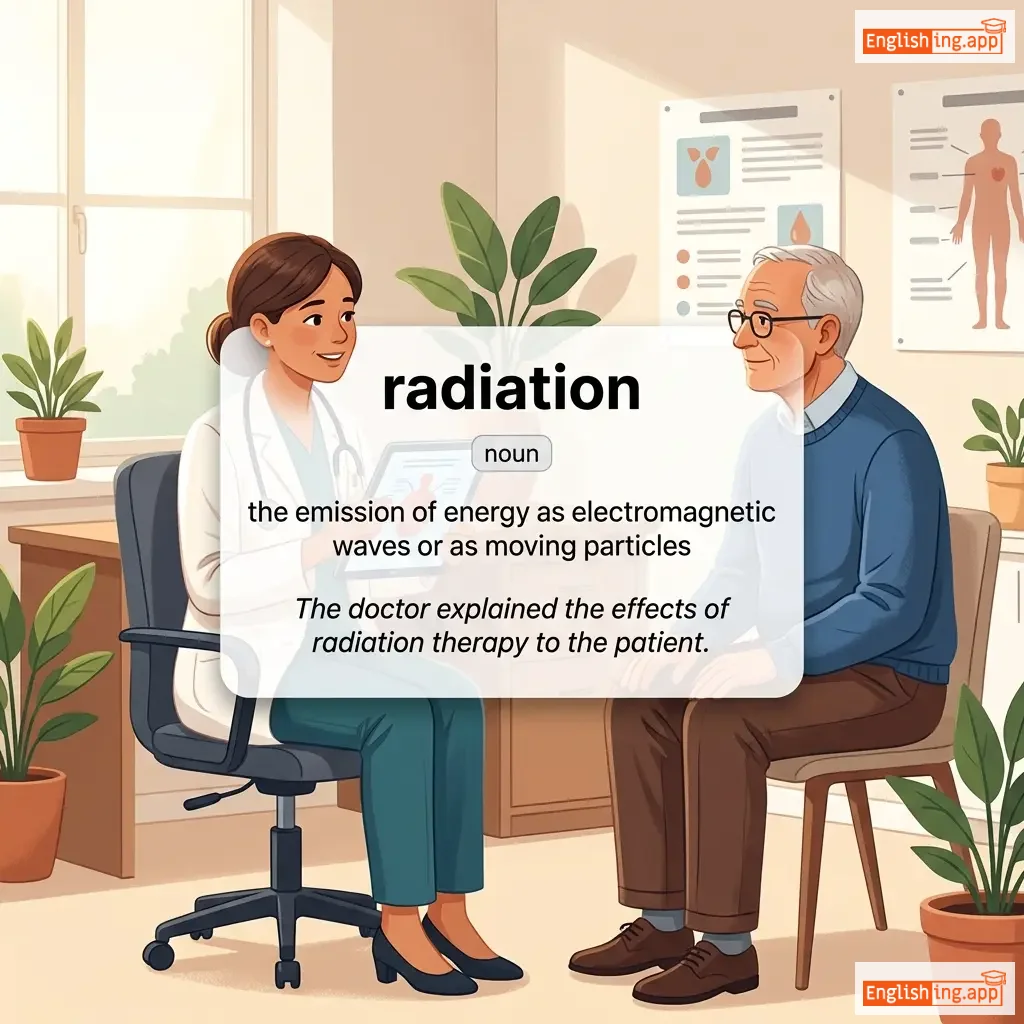
the emission of energy as electromagnetic waves or as moving particles
••••••
|
The doctor explained the effects of radiation therapy to the patient. |
医者は患者に放射線治療の効果を説明しました。
Isha wa kanja ni hōshasen chiryō no kōka o setsumei shimashita.
••••••
|
radiation sickness |
illness caused by exposure to high doses of radiation
••••••
|
放射線病
hōshasen byō
••••••
|
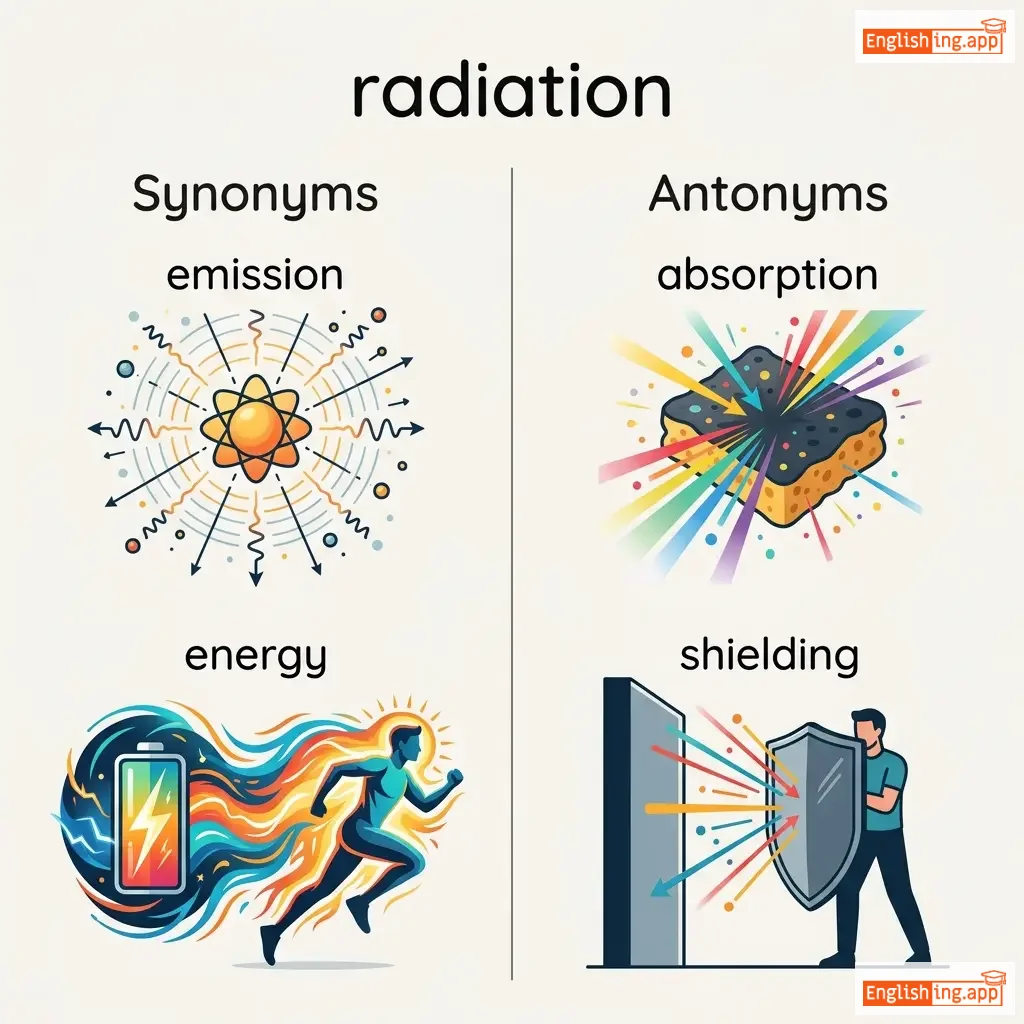
emission, energy, rays, exposure
••••••
|
absorption, shielding
••••••
|
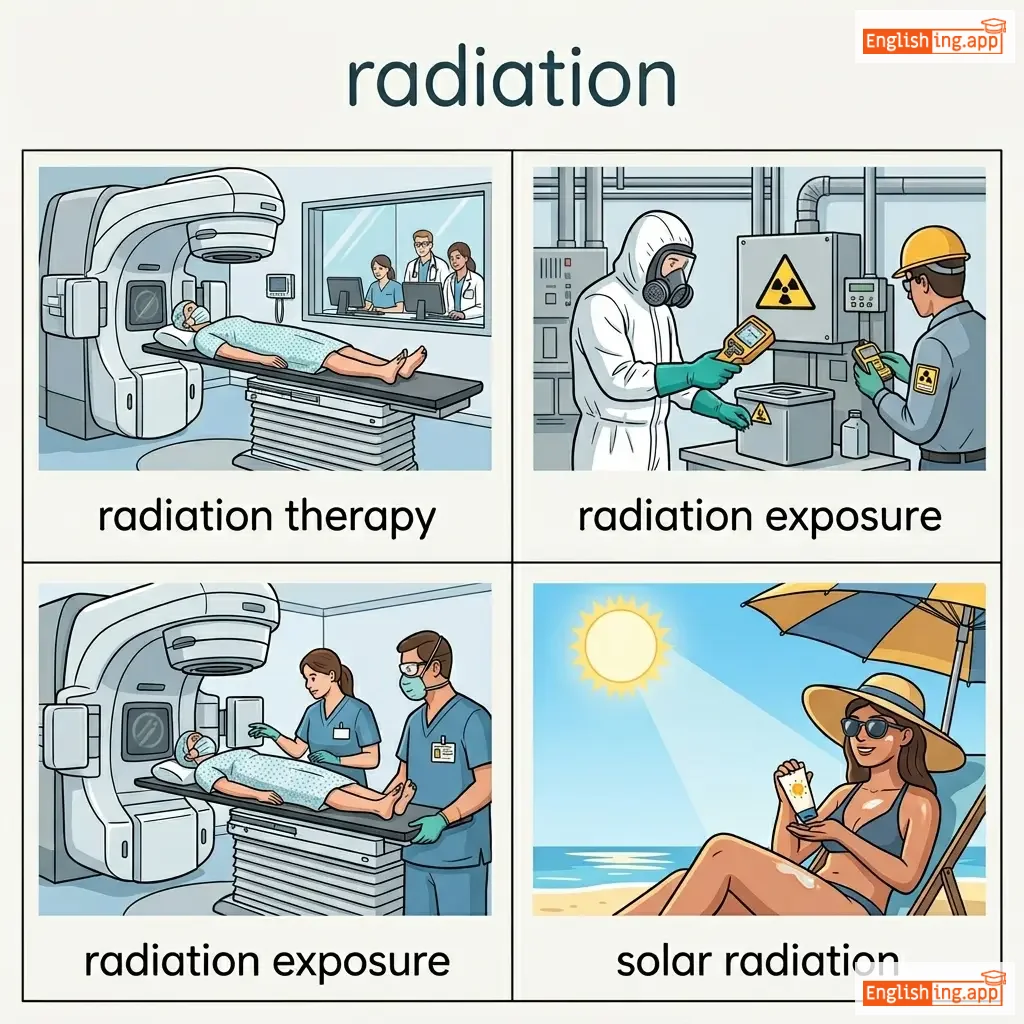
radiation therapy, radiation exposure, solar radiation, radiation level
••••••
|
放射線は'光線'から来ています — それは広がるエネルギーを覚えておいてください。
••••••
|
|
🔥
••••••
|
/ˈrædɪkl/
adjective
••••••
|
|
- •••••• | - •••••• | - •••••• | - •••••• | - •••••• |
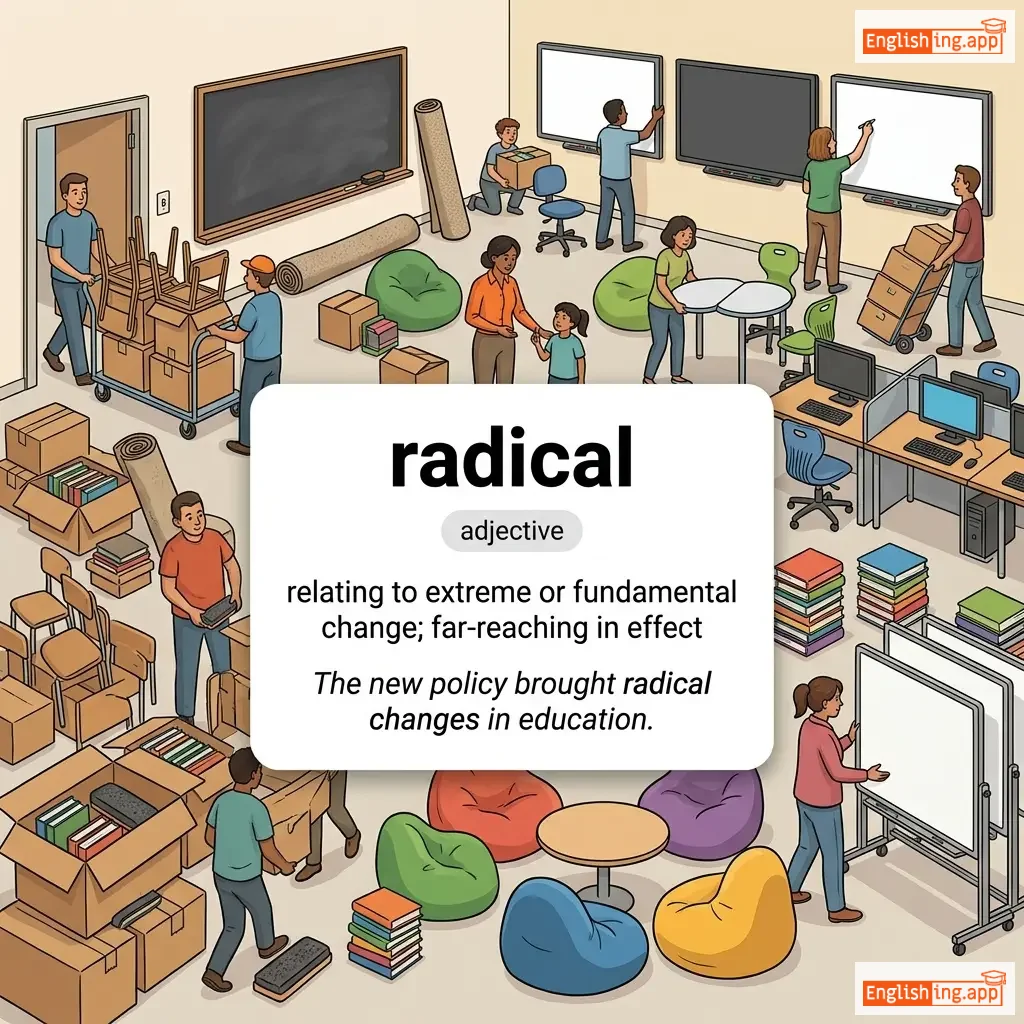
relating to extreme or fundamental change; far-reaching in effect
••••••
|
The new policy brought radical changes in education. |
- •••••• |
radical change |
a complete and fundamental transformation
••••••
|
- •••••• |
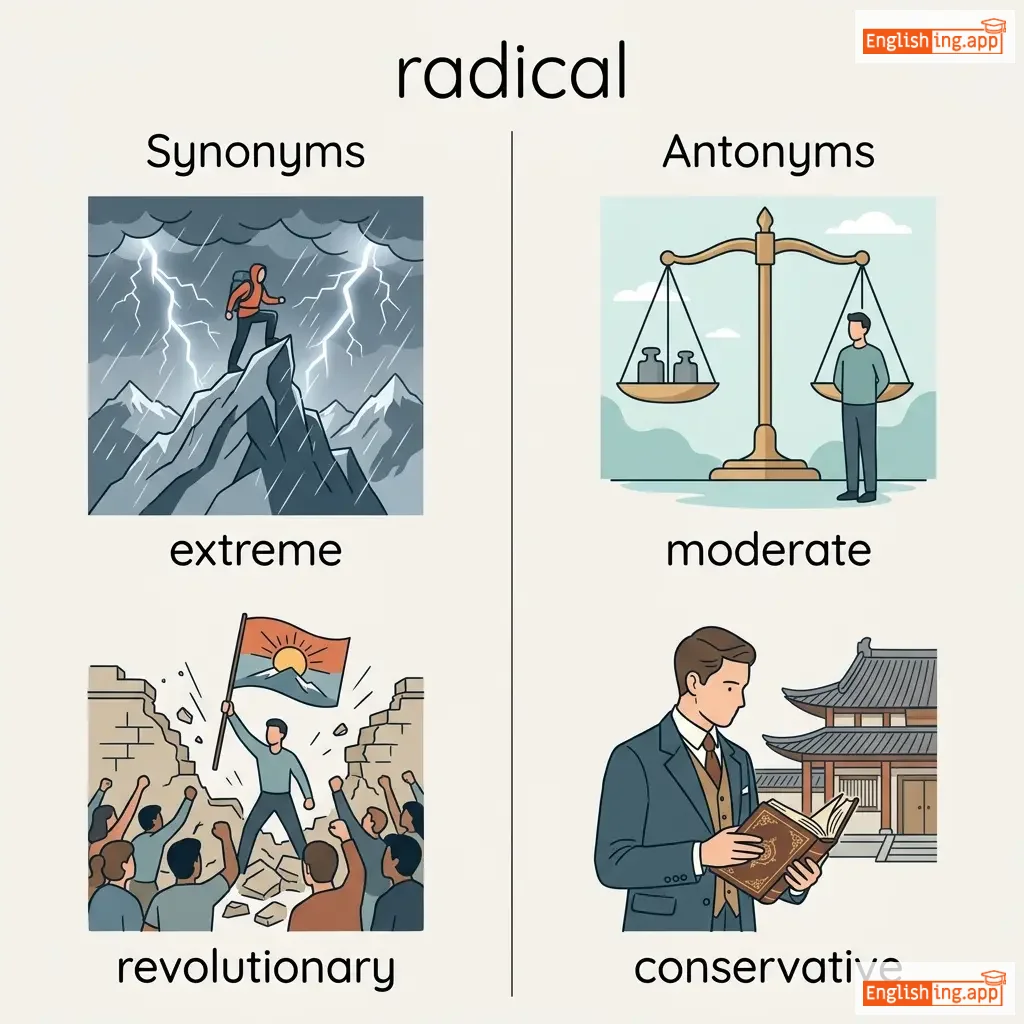
extreme, revolutionary, fundamental, drastic, profound
••••••
|
moderate, conservative, traditional
••••••
|
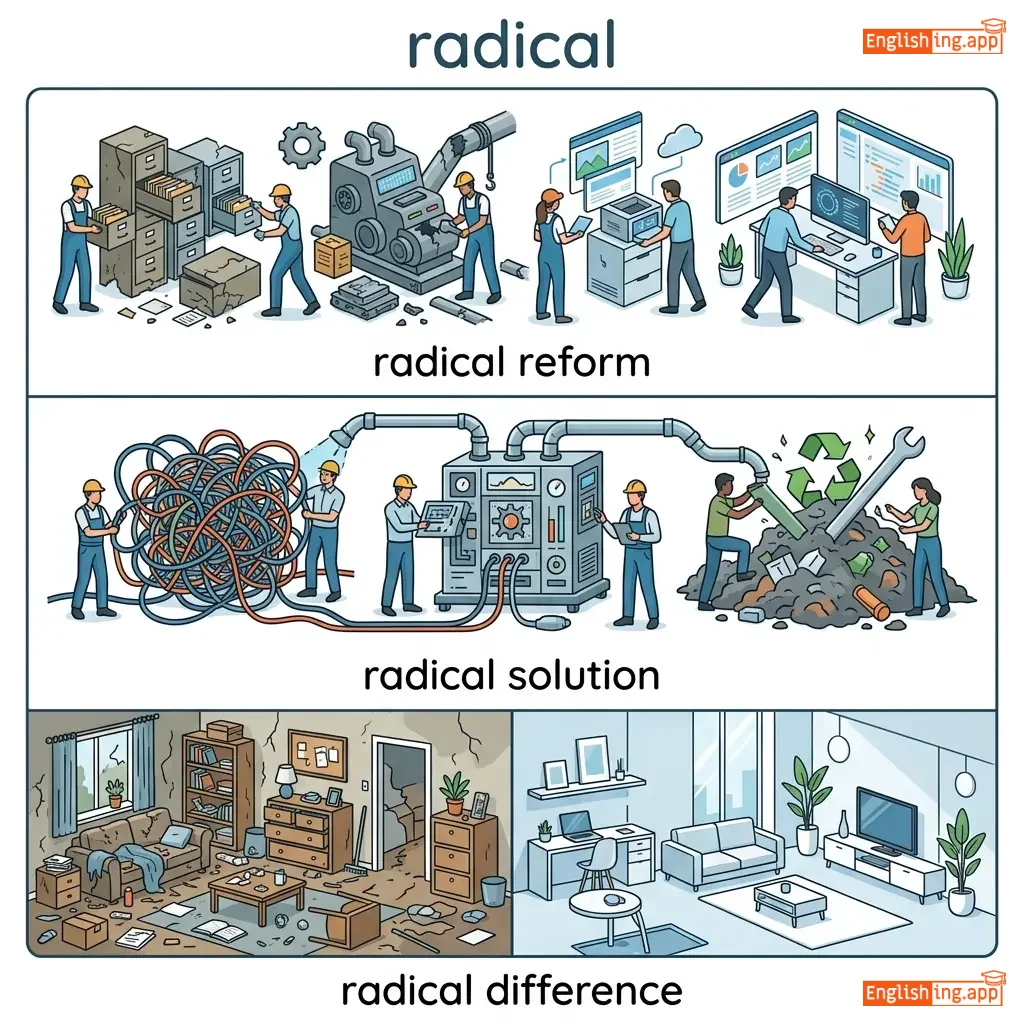
radical reform, radical solution, radical difference
••••••
|
No •••••• |
|
📻
••••••
|
/ˈreɪdioʊ/
noun
(ラジオ)
••••••
|
|
ラジオ
rajio
••••••
|
- •••••• | - •••••• | - •••••• | - •••••• |
a device for receiving or transmitting radio signals, or the use of such signals for communication
••••••
|
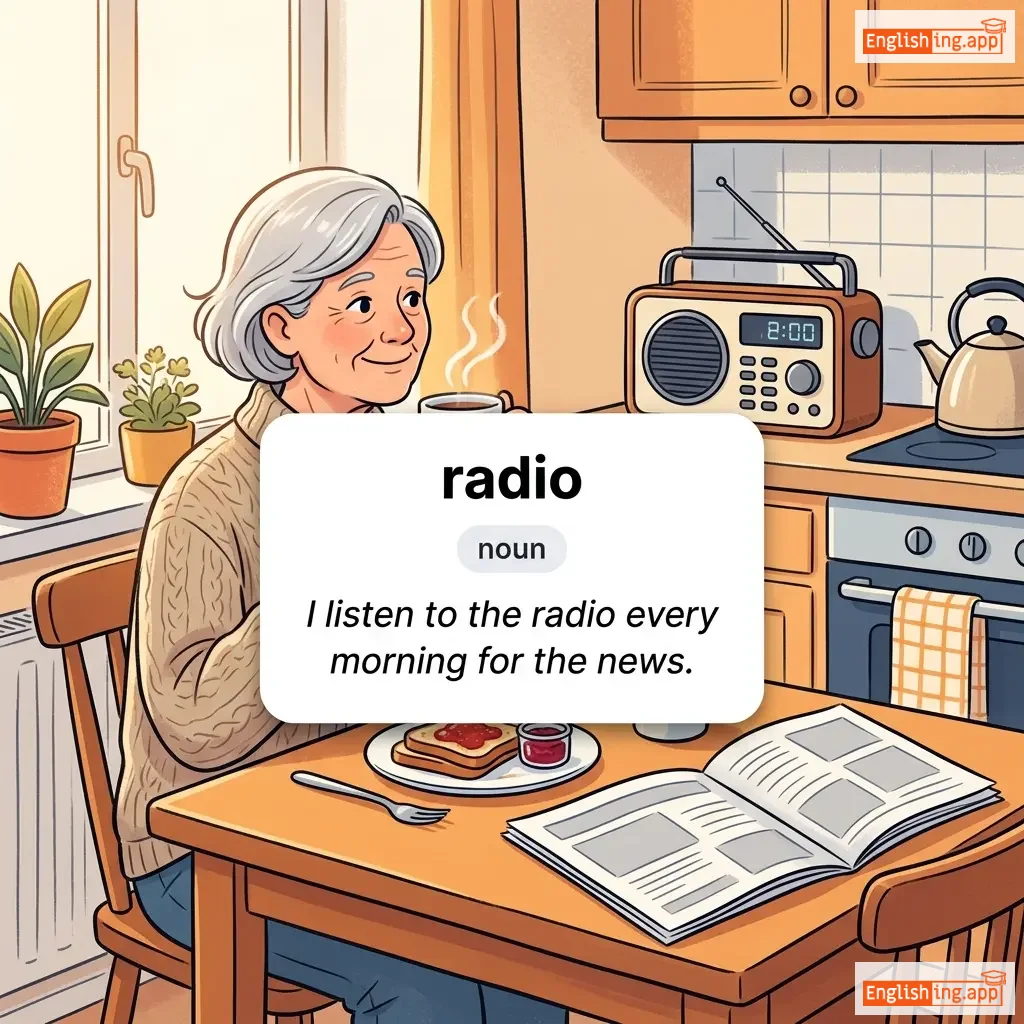
I listen to the radio every morning for the news.
私は毎朝ニュースを聞くためにラジオを聴きます。
••••••
|
私は毎朝ニュースを聞くためにラジオを聴きます。
Watashi wa mai asa nyuusu o kiku tame ni rajio o kikimasu.
••••••
|
- •••••• | - •••••• | - •••••• |
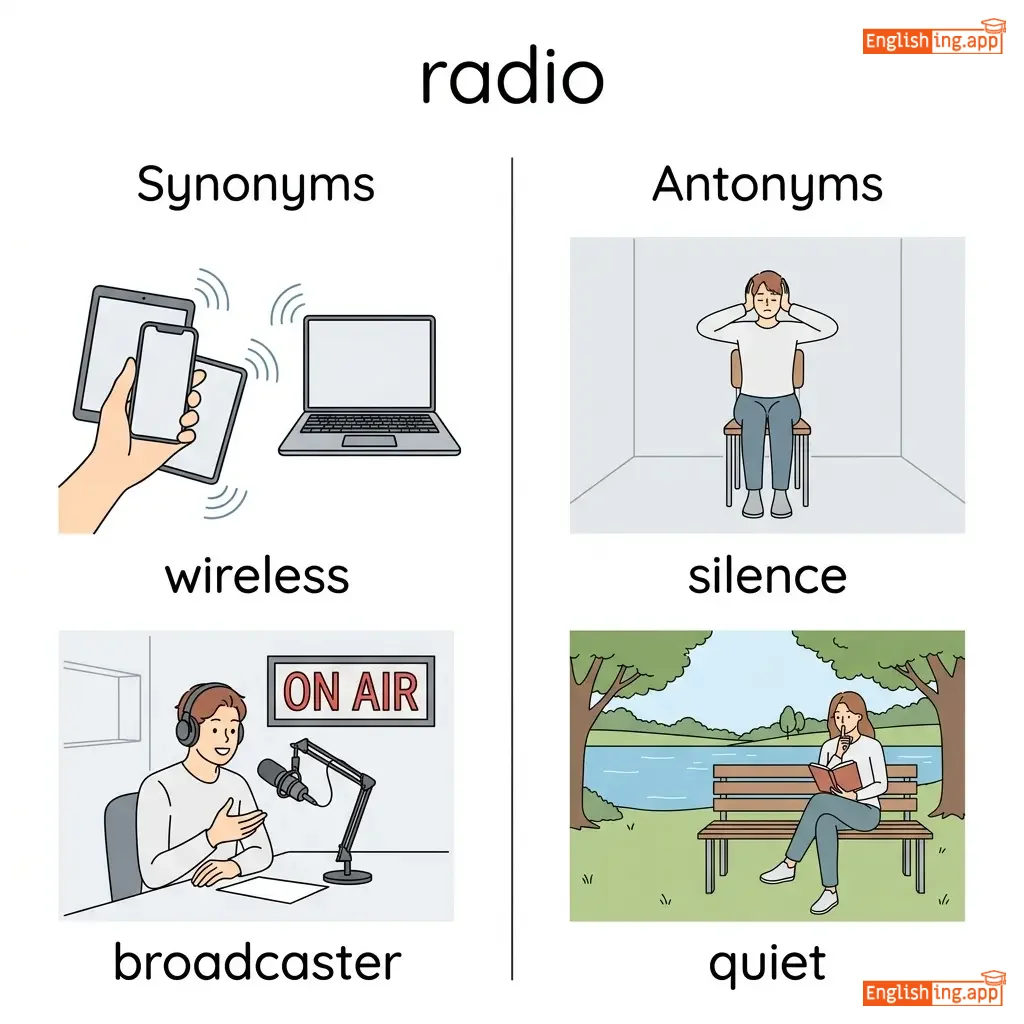
wireless, broadcaster, transmission, radio receiver
••••••
|
silence, quiet
••••••
|
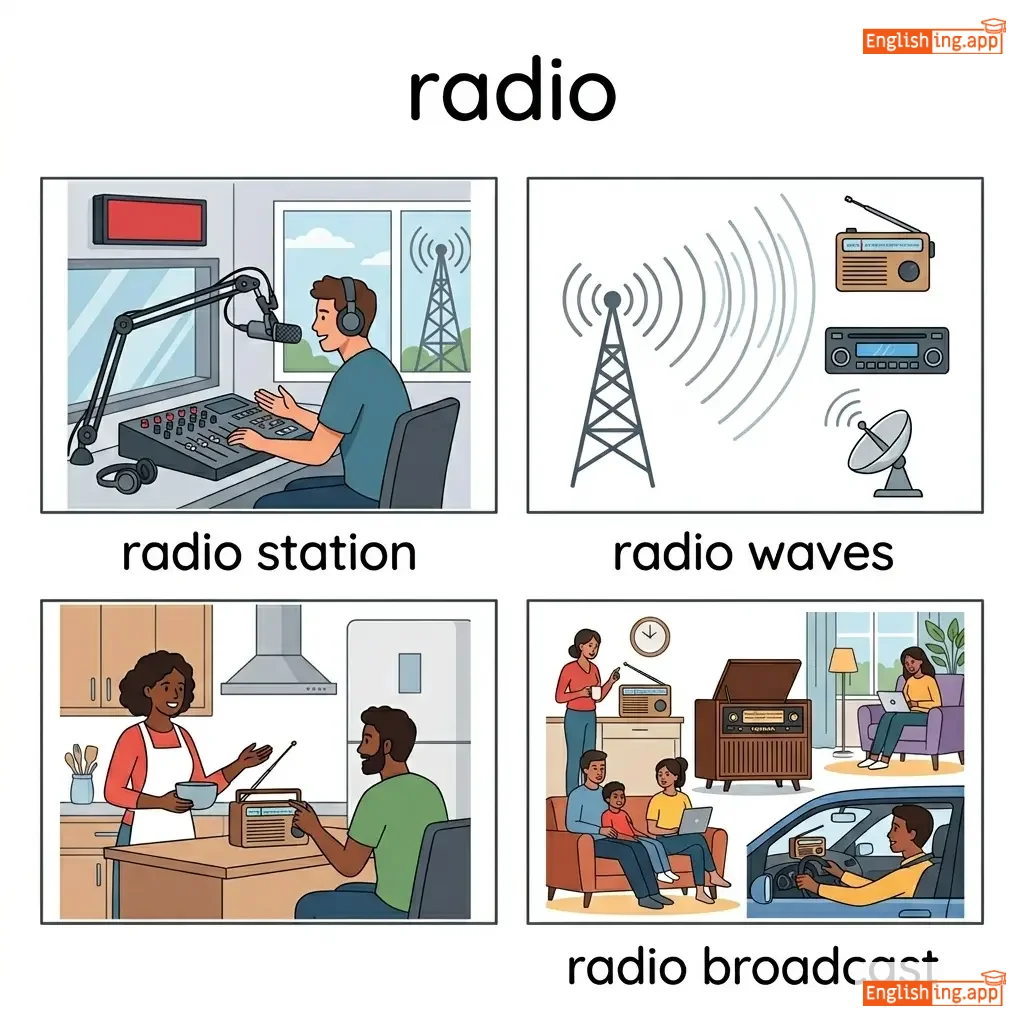
radio station, radio waves, radio broadcast, listen to the radio
••••••
|
Radio - R for radio, the device you 'listen' to for news
••••••
|
|
😡
••••••
|
/reɪdʒ/
noun
(レイジ)
••••••
|
- •••••• |
怒り
ikari
••••••
|
- •••••• | - •••••• | - •••••• | - •••••• |
intense anger or fury
••••••
|
She shouted in a fit of rage after hearing the news. |
彼女はそのニュースを聞いて怒りの叫び声を上げました。
Kanojo wa sono nyūsu o kiite ikari no sakebigoe o agemashita.
••••••
|
fly into a rage |
to suddenly become very angry
••••••
|
怒り狂う
ikari kuruu
••••••
|
fury, anger, wrath, temper, outrage
••••••
|
calm, peace, patience
••••••
|
fit of rage, blind rage, control rage, rage against
••••••
|
Rage = 怒り = 怒りが爆発するとき
••••••
|
|
⚔️
••••••
|
/reɪd/
verb
(レイド)
••••••
|
|
急襲
kyuushu
••••••
|
raided
レイデッド
••••••
|
raided
レイデッド
••••••
|
raids
レイデス
••••••
|
raiding
レイディング
••••••
|
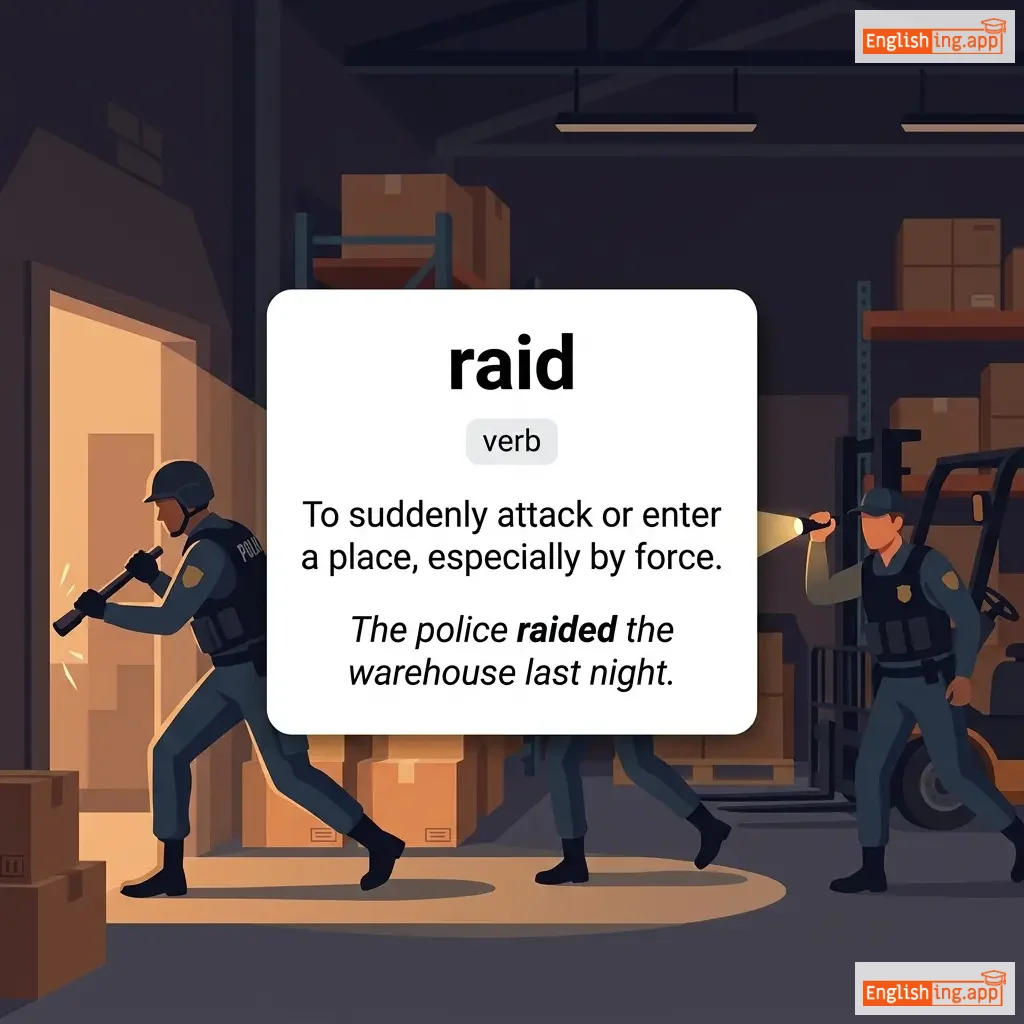
To suddenly attack or enter a place, especially by force.
••••••
|
The police raided the warehouse last night.
警察は昨晩倉庫を家宅捜索しました。
••••••
|
警察は昨晩倉庫を家宅捜索しました。
Keisatsu wa sakuban souko o kataku sousaku shimashita.
••••••
|
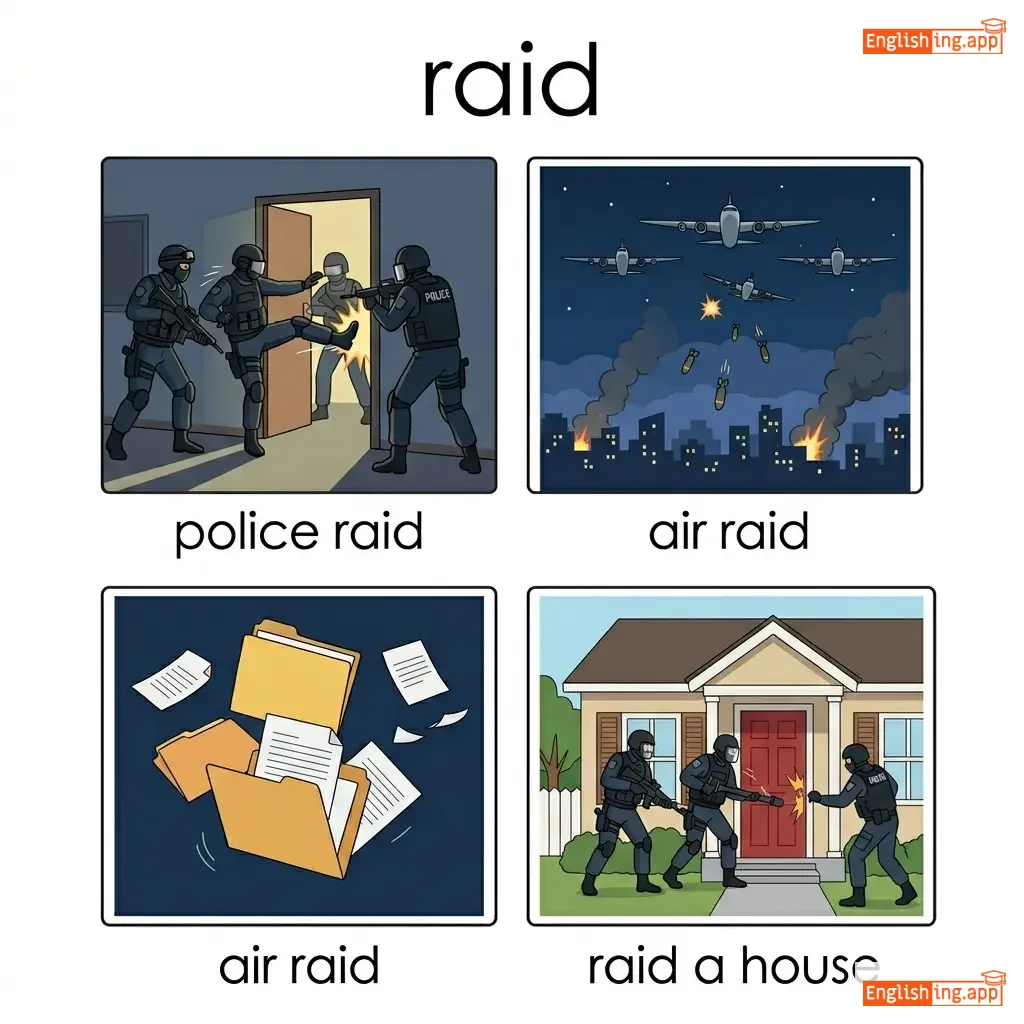
air raid
空襲
••••••
|
A military attack by aircraft.
••••••
|
空襲
kuushuu
••••••
|
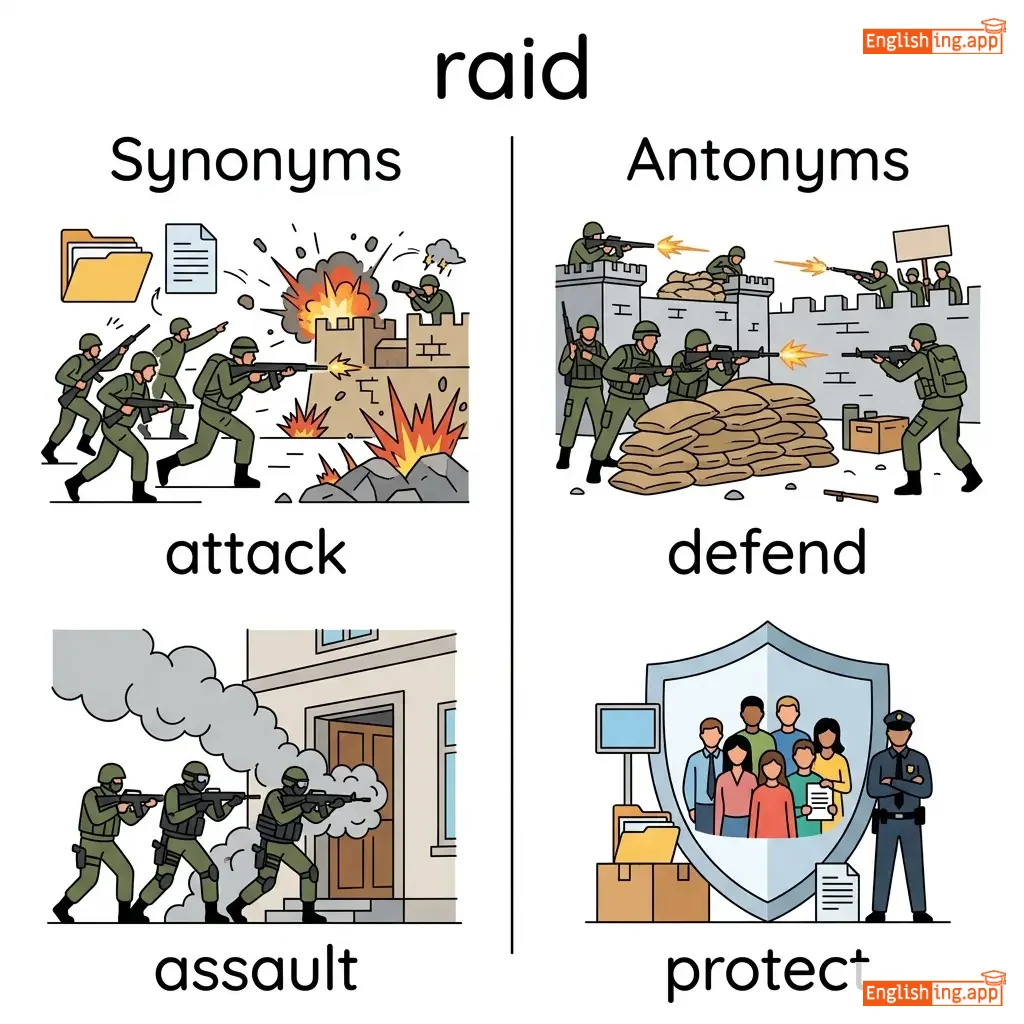
attack, assault, invasion, ambush
••••••
|
defend, protect
••••••
|
police raid, air raid, raid a house
••••••
|
Raidは予期しない攻撃、特に夜間に行われる。
••••••
|
|
📢
••••••
|
/reɪl/
verb
(レイル)
••••••
|
- •••••• |
抗議する
kougi suru
••••••
|
railed
レイルド
••••••
|
railed
レイルド
••••••
|
rails
レイルズ
••••••
|
railing
レイリング
••••••
|
to complain or protest strongly about something
••••••
|
He railed against the unfair decision.
彼は不公平な決定に対して強く抗議した。
••••••
|
彼は不公平な決定に対して強く抗議した。
Kare wa fukouhei na kettei ni taishite tsuyoku kougi shita.
••••••
|
rail against
抗議する
••••••
|
to strongly criticize or protest
••••••
|
抗議する
kougi suru
••••••
|
protest, complain, denounce, criticize
••••••
|
praise, accept, support
••••••
|
rail against injustice, rail at fate, rail bitterly
••••••
|
抗議することは鉄道のレールの上に立つようなものです! 🚂
••••••
|
|
🚂
••••••
|
/ˈreɪl.weɪ/
noun
(レイルウェイ)
••••••
|
- •••••• |
鉄道
tetsudo
••••••
|
- •••••• | - •••••• | - •••••• | - •••••• |
a track made of steel rails along which trains run; a system of tracks with trains, stations, and other facilities
••••••
|
The railway connects major cities across the country.
ザ レイルウェイ コネクツ メジャー シティズ アクロス ザ カントリー
••••••
|
鉄道は国内の主要な都市を結んでいます。
tetsudo wa kokunai no shuyona toshi o musundeimasu
••••••
|
- •••••• | - •••••• | - •••••• |
railroad, train line, rail network, rail system
••••••
|
- •••••• |
railway station, railway track, railway line, railway network
••••••
|
Tetsu (iron) + do (road) = iron road — just like English 'railway'
••••••
|
|
🌧️
••••••
|
/reɪn/
noun
••••••
|
- •••••• | - •••••• | - •••••• | - •••••• | - •••••• | - •••••• |
water droplets that fall from the sky as a result of condensation in the atmosphere
••••••
|
The rain started pouring just as we reached the park. |
- •••••• |
It's raining cats and dogs |
It’s raining very heavily
••••••
|
- •••••• |
shower, downpour, drizzle, precipitation
••••••
|
sunshine, dryness
••••••
|
heavy rain, light rain, rainfall, rain shower
••••••
|
No •••••• |
|
🌈
••••••
|
/ˈreɪn.boʊ/
noun
(レインボー)
••••••
|
- •••••• |
虹
niji
••••••
|
- •••••• | - •••••• | - •••••• | - •••••• |
an arch of colors formed in the sky by sunlight shining through rain
••••••
|
After the storm, a beautiful rainbow appeared in the sky.
嵐の後、空に美しいレインボーが現れました。
••••••
|
嵐の後、空に美しい虹が現れました。
Arashi no ato, sora ni utsukushī niji ga arawaremashita.
••••••
|
- •••••• | - •••••• | - •••••• |
spectrum, arc of colors
••••••
|
monochrome, colorless
••••••
|
rainbow colors, pot of gold, rainbow flag
••••••
|
虹 (niji) - 色のアーチ
••••••
|
|
✋
••••••
|
/reɪz/
verb
(レイズ)
••••••
|
- •••••• |
上げる / 増加させる
ageru / zoukasaseru
••••••
|
raised
レイズド
••••••
|
raised
レイズド
••••••
|
raises
レイゼス
••••••
|
raising
レイジング
••••••
|
To lift or move something to a higher position; to increase; to bring up.
••••••
|
She raised her hand to ask a question.
シー レイズド ハー ハンド トゥ アスク ア クエスチョン。
••••••
|
彼女は質問をするために手を上げました。
Kanojo wa shitsumon o suru tame ni te o agemashita.
••••••
|
raise the bar
レイズ ザ バー
••••••
|
To set a higher standard or expectation.
••••••
|
基準を引き上げる
kijun o hikiageru
••••••
|
lift, elevate, increase, boost, enhance
••••••
|
lower, drop, decrease
••••••
|
raise a hand, raise money, raise awareness, raise the bar
••••••
|
Raiseは手を上げること、または基準を引き上げること。
••••••
|
|
📣
••••••
|
/ˈræl.i/
verb
••••••
|
- •••••• | - •••••• |
rallied
••••••
|
rallied
••••••
|
rallies
••••••
|
rallying
••••••
|
to come together for a common purpose or to recover strength or spirit
••••••
|
The team rallied after halftime and won the match. |
- •••••• |
rally round |
to support someone in a difficult situation
••••••
|
- •••••• |
assemble, recover, unite, regroup, gather
••••••
|
disperse, weaken, scatter
••••••
|
political rally, rally support, rally behind, rally cry
••••••
|
No •••••• |
|
🐏
••••••
|
/ræm/
verb
••••••
|
- •••••• | - •••••• |
rammed
••••••
|
rammed
••••••
|
rams
••••••
|
ramming
••••••
|
to strike or push something with great force
••••••
|
The truck rammed into the wall. |
- •••••• |
ram something down someone's throat |
to force someone to accept something they do not want
••••••
|
- •••••• |
crash, smash, thrust, pound, strike
••••••
|
withdraw, pull, retreat
••••••
|
ram into, ram down, ram hard, ram the door
••••••
|
No •••••• |
|
🎲
••••••
|
/ˈræn.dəm/
adjective
(ランダム)
••••••
|
- •••••• |
ランダム
random
••••••
|
- •••••• | - •••••• | - •••••• | - •••••• |
Made, done, or happening without method or conscious decision.
••••••
|
He made a random choice from the menu. |
彼はメニューからランダムに選択をしました。
Kare wa menyū kara randomu ni sentaku o shimashita.
••••••
|
at random |
Without method or conscious choice.
••••••
|
ランダムに
randomu ni
••••••
|
arbitrary, haphazard, aimless, unplanned
••••••
|
systematic, planned, deliberate
••••••
|
random selection, random sample, random event, purely random
••••••
|
ランダムな選択は計画なしで、偶然に行われる。
••••••
|
|
📏
••••••
|
/reɪndʒ/
noun, verb
(レンジ)
••••••
|
|
範囲, 領域
han'i, ryouiki
••••••
|
ranged
レンジド
••••••
|
ranged
レンジド
••••••
|
ranges
レンジズ
••••••
|
ranging
レンジング
••••••
|
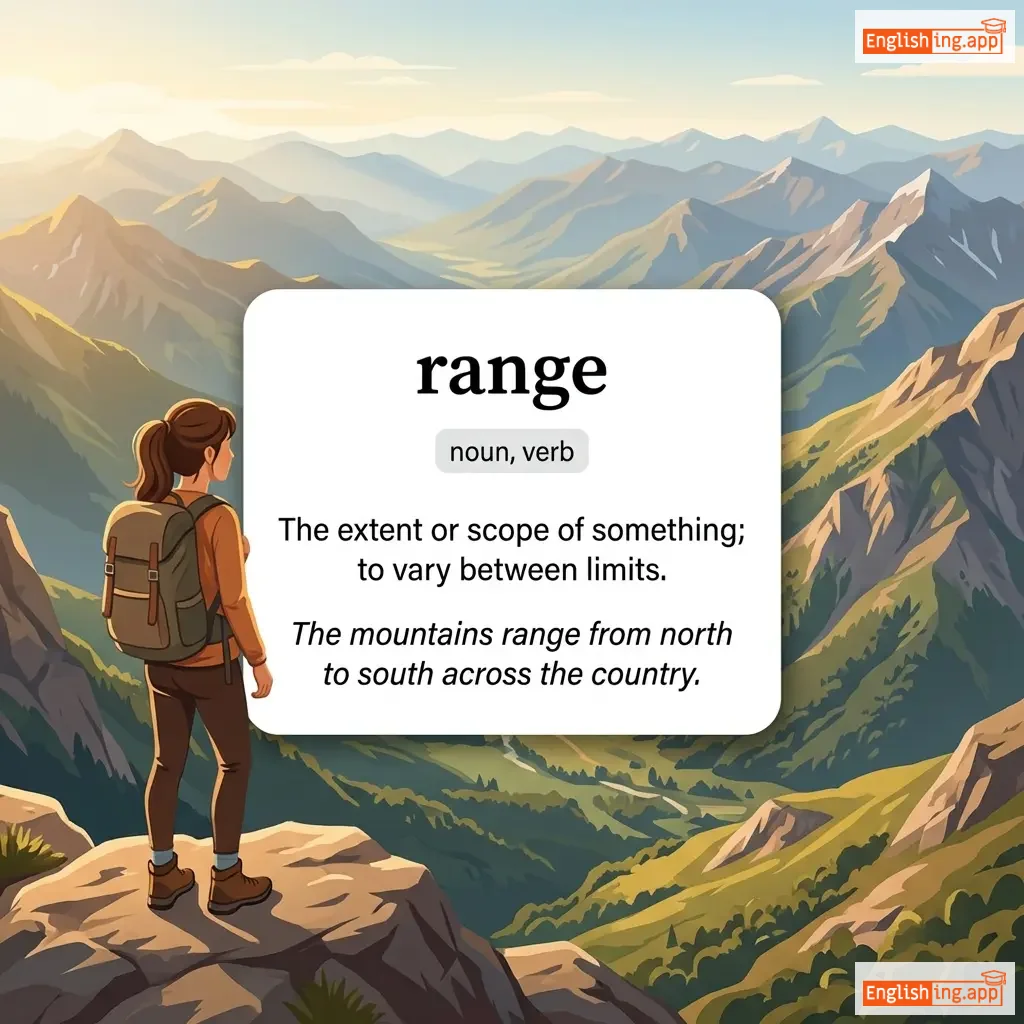
The extent or scope of something; to vary between limits.
••••••
|
The mountains range from north to south across the country.
山々は国全体で北から南へと広がっている。
••••••
|
山々は北から南まで国中に広がっている。
Yama yama wa kita kara minami made kuni naka ni hirogatte iru.
••••••
|
out of range
レンジ外
••••••
|
Beyond the limits of something, especially distance or capability.
••••••
|
範囲外
han'i gai
••••••
|
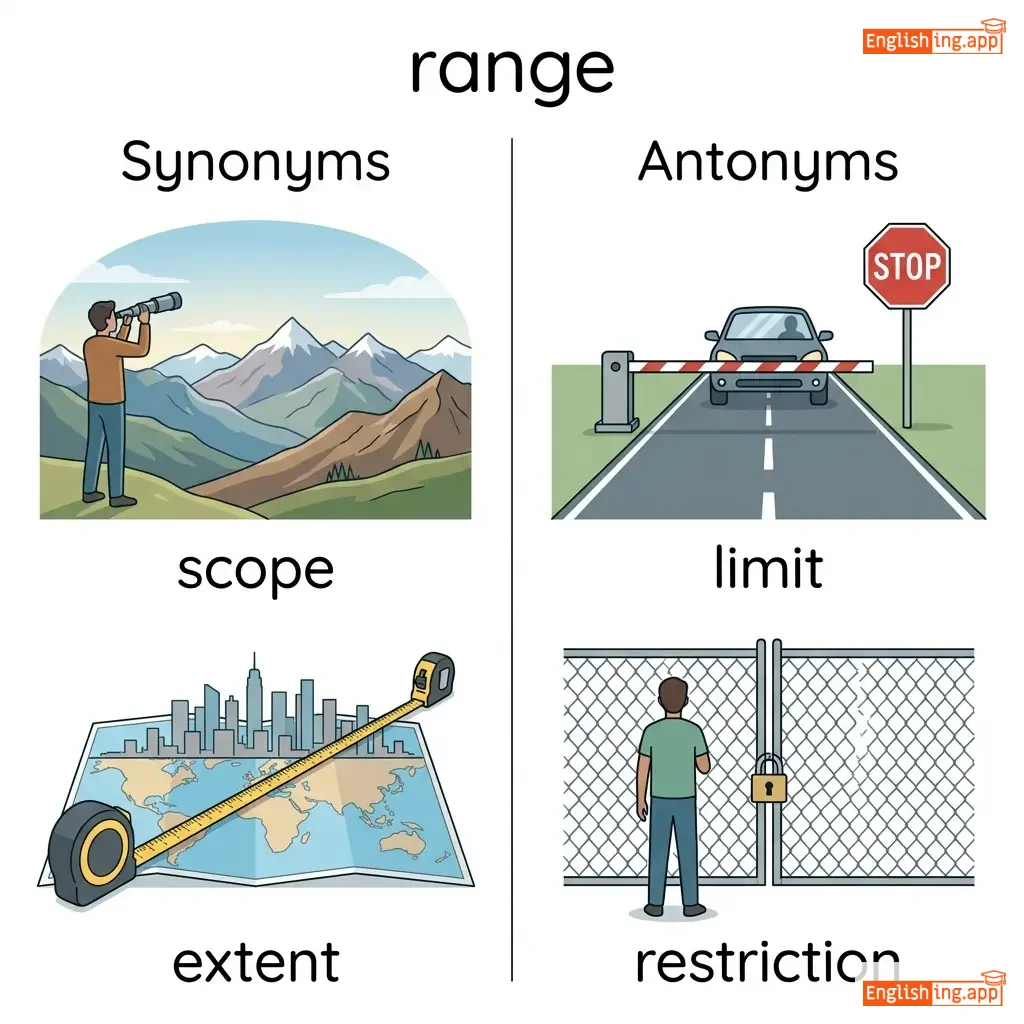
scope, extent, span, spectrum, vary
••••••
|
limit, restriction, narrow
••••••
|
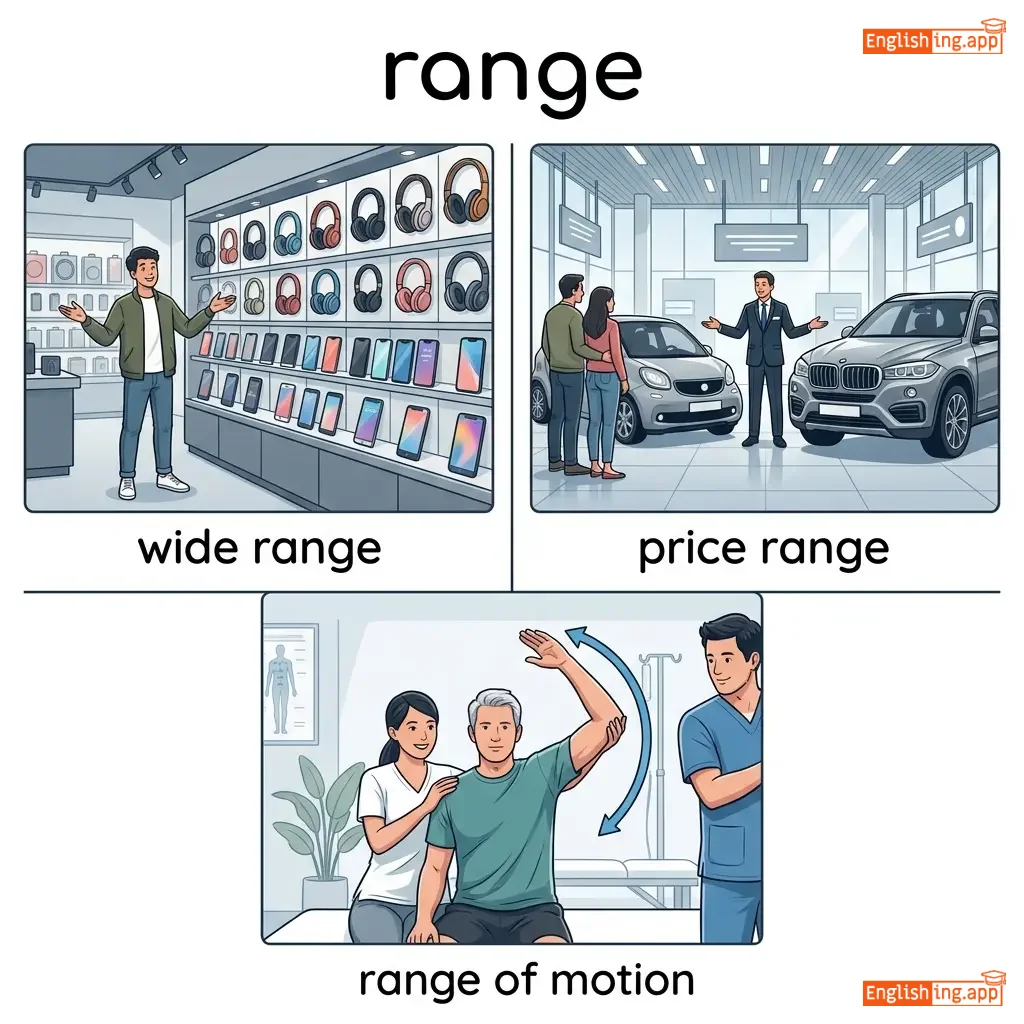
wide range, price range, range of motion, mountain range
••••••
|
RANGEは範囲を意味する - Range Roverは範囲を超えて山を越える。
••••••
|
|
🎖️
••••••
|
/ræŋk/
noun, verb, adjective
(ランク)
••••••
|
- •••••• |
ランク
ranku
••••••
|
ranked
ランクド
••••••
|
ranked
ランクド
••••••
|
ranks
ランクス
••••••
|
ranking
ランキング
••••••
|
A position in a hierarchy; to place in order according to importance or quality.
••••••
|
She quickly rose to a senior rank in the company.
彼女は会社で素早く上級ランクに昇進しました。
••••••
|
彼女は会社で素早く上級ランクに昇進しました。
Kanojo wa kaisha de subayaku joukyuu ranku ni shoushin shimashita.
••••••
|
rank and file
ランクと一般社員
••••••
|
The ordinary members of an organization as opposed to its leaders.
••••••
|
一般社員
Ippan shain
••••••
|
position, status, level, grade, standing
••••••
|
insignificance, unimportance
••••••
|
military rank, rank order, high rank, rank and file
••••••
|
ランクは職位の意味、軍隊の中でランクがとても重要です。
••••••
|
|
🏆
••••••
|
/ˈræŋkɪŋ/
noun
(ランキング)
••••••
|
- •••••• |
ランキング
ranking
••••••
|
- •••••• | - •••••• | - •••••• | - •••••• |
a position in a list or hierarchy, especially in terms of performance or importance
••••••
|
His ranking in the competition improved after each round. |
彼の競技でのランキングは、各ラウンド後に向上しました。
Kare no kyōgi de no ranking wa, kaku raundo go ni kōjō shimashita.
••••••
|
- •••••• | - •••••• | - •••••• |
position, standing, status, classification
••••••
|
bottom, low, inferior
••••••
|
ranking system, top ranking, global ranking, national ranking
••••••
|
ランキングは競技でのあなたの位置を示します!
••••••
|
|
⚡
••••••
|
/ˈræp.ɪd/
adjective
(ラピッド)
••••••
|
- •••••• |
速い
hayai
••••••
|
- •••••• | - •••••• | - •••••• | - •••••• |
happening quickly or in a short time
••••••
|
The company experienced rapid growth last year. |
その会社は昨年急速な成長を経験しました。
Sono kaisha wa sakunen kyūsoku na seichō o keiken shimashita.
••••••
|
rapid-fire |
happening very quickly in succession
••••••
|
速射
sokusha
••••••
|
fast, quick, swift, speedy
••••••
|
slow, sluggish, delayed
••••••
|
rapid growth, rapid progress, rapid change, rapid development
••••••
|
速い、まるで電光石火のように。
••••••
|
|
⚡
••••••
|
/ˈræp.ɪd.li/
adverb
(ラピッドリー)
••••••
|
- •••••• |
速やかに; 急速に
sumiyaka ni; kyūsoku ni
••••••
|
- •••••• | - •••••• | - •••••• | - •••••• |
at a fast speed; quickly
••••••
|
The company is rapidly expanding into new markets. |
会社は新しい市場に急速に拡大しています。
Kaisha wa atarashī shijō ni kyūsoku ni kakudai shiteimasu.
••••••
|
- •••••• | - •••••• | - •••••• |
quickly, swiftly, speedily, fast
••••••
|
slowly, gradually, leisurely
••••••
|
rapidly growing, rapidly changing, rapidly expanding
••••••
|
No •••••• |
|
🦄
••••••
|
/reər/
adjective
(レア)
••••••
|
- •••••• |
希少
kishou
••••••
|
- •••••• | - •••••• | - •••••• | - •••••• |
Unusual or uncommon; not occurring often.
••••••
|
This species of bird is extremely rare. |
この鳥の種は非常に希少です。
Kono tori no shu wa hijou ni kishou desu.
••••••
|
rare opportunity |
a chance that does not happen often
••••••
|
希少な機会
kishou na kikai
••••••
|
unusual, uncommon, exceptional, unique, extraordinary
••••••
|
common, ordinary, usual
••••••
|
rare species, rare disease, rare occasion, rare gem
••••••
|
希少とは希少、希少な宝石のように珍しいものです。
••••••
|
|
🚫
••••••
|
/ˈrɛə(r)li/
adverb
(レアリー)
••••••
|
- •••••• |
めったに
mattan ni
••••••
|
- •••••• | - •••••• | - •••••• | - •••••• |
not often, infrequently
••••••
|
She rarely eats sweets because of her diet. |
彼女はダイエットのため、お菓子をめったに食べません。
Kanojo wa daietto no tame, okashi o mattan ni tabemasen.
••••••
|
- •••••• | - •••••• | - •••••• |
seldom, infrequently, occasionally, hardly
••••••
|
frequently, often, regularly
••••••
|
rarely seen, rarely used, rarely happens, rarely speaks
••••••
|
Rarely - Think of rare moments, they are uncommon
••••••
|
|
🐀
••••••
|
/ræt/
noun
(レッド)
••••••
|
- •••••• |
ネズミ
nezumi
••••••
|
- •••••• | - •••••• | - •••••• | - •••••• |
a small rodent that resembles a large mouse, often considered a pest
••••••
|
A rat ran across the kitchen floor last night. |
昨晩、ネズミがキッチンの床を走り回っていました。
sakuban, nezumi ga kicchin no yuka o hashirimawatteimashita.
••••••
|
smell a rat |
to suspect that something is wrong or dishonest
••••••
|
ネズミの匂いがする
nezumi no nioi ga suru
••••••
|
rodent, mouse, pest, vermin, creature
••••••
|
pet, friend, ally
••••••
|
rat trap, lab rat, dead rat, sewer rat
••••••
|
ネズミのような匂いがしたら、何かおかしいことがある!
••••••
|
|
💰
••••••
|
/reɪt/
noun
(レート)
••••••
|
- •••••• |
レート
rēto
••••••
|
- •••••• | - •••••• | - •••••• | - •••••• |
the cost or price of something, or the amount at which something happens
••••••
|
The rate of inflation is increasing every year. |
インフレ率は毎年増加しています。
Infure ritsu wa mainen zōka shiteimasu.
••••••
|
- •••••• | - •••••• | - •••••• |
price, cost, charge, value
••••••
|
discount, decrease
••••••
|
interest rate, hourly rate, exchange rate, rate of return
••••••
|
Rate - '価格レート'を購入時に考えてください
••••••
|
|
🤔
••••••
|
/ˈrɑː.ðər/
adverb
(ラザー)
••••••
|
- •••••• |
むしろ; ~の代わりに;
mushiro; ~no kawari ni;
••••••
|
- •••••• | - •••••• | - •••••• | - •••••• |
to some extent; instead; preferably
••••••
|
I would rather stay home than go to the party. |
パーティーに行くよりも家にいる方がいい。
Pātī ni iku yori mo ie ni iru hō ga ii
••••••
|
- •••••• | - •••••• | - •••••• |
somewhat, instead, preferably, quite
••••••
|
absolutely, completely, entirely
••••••
|
rather than, rather like, would rather
••••••
|
Ratherは何かを選択する時に使います、たとえば「むしろ」。
••••••
|
|
⭐
••••••
|
/ˈreɪtɪŋ/
noun
(レイティング)
••••••
|
- •••••• |
評価
hyouka
••••••
|
- •••••• | - •••••• | - •••••• | - •••••• |
an evaluation or assessment, usually numerical
••••••
|
The movie received a high rating from critics. |
その映画は批評家から高い評価を受けました。
Sono eiga wa hihyōka kara takai hyōka o ukemashita.
••••••
|
- •••••• | - •••••• | - •••••• |
score, grade, evaluation, review
••••••
|
disapproval, rejection
••••••
|
rating scale, star rating, customer rating
••••••
|
物事を評価する際、映画の星の評価を考えてください。
••••••
|
|
🔢
••••••
|
/ˈreɪʃoʊ/
noun
(レイシオ)
••••••
|
- •••••• |
比率
hiritu
••••••
|
- •••••• | - •••••• | - •••••• | - •••••• |
a relationship between two numbers showing how many times the first number contains the second
••••••
|
The ratio of boys to girls in the class is 2:1. |
クラスでの男の子と女の子の比率は2:1です。
Kurasu de no otokonoko to onnanoko no hiritu wa 2:1 desu.
••••••
|
- •••••• | - •••••• | - •••••• |
proportion, relationship, correlation
••••••
|
disproportion
••••••
|
ratio of, ratio analysis, ratio scale
••••••
|
Remember a ratio like 2:1 when you see proportions.
••••••
|
|
🧠
••••••
|
/ˈræʃənəl/
adjective
••••••
|
- •••••• | - •••••• | - •••••• | - •••••• | - •••••• | - •••••• |
based on or in accordance with reason or logic
••••••
|
She made a rational decision after considering all the facts. |
- •••••• |
rational mind |
a logical and clear-thinking mind
••••••
|
- •••••• |
logical, reasonable, sensible, sound, coherent
••••••
|
irrational, illogical, unreasonable
••••••
|
rational decision, rational explanation, rational behavior, rational argument
••••••
|
No •••••• |
|
🔔
••••••
|
/ˈrætəl/
noun, verb
(ラトル)
••••••
|
- •••••• |
ガタガタ鳴る;ガラガラ
gatagata naru; garagara
••••••
|
rattled
ラトルド
••••••
|
rattled
ラトルド
••••••
|
rattles
ラトルズ
••••••
|
rattling
ラトリング
••••••
|
to make a rapid series of short, sharp sounds; a device or object that makes such a sound
••••••
|
The loose window began to rattle in the strong wind.
ザ ルース ウィンドウ ビガン トゥ ラトル イン ザ ストロング ウィンド。
••••••
|
強い風で緩んだ窓がガタガタ鳴り始めた。
Tsuyoi kaze de yurunda mado ga gatagata nari hajimeta
••••••
|
rattle someone's cage
ラトル サムワンズ ケージ
••••••
|
to deliberately annoy or unsettle someone
••••••
|
わざと人をいら立たせる
wazato hito o iradatase ru
••••••
|
clatter, jangle, shake, disturb, unsettle
••••••
|
calm, soothe, silence
••••••
|
rattle loudly, rattle the windows, baby rattle, bones rattle
••••••
|
ラトル=ガタガタ音
••••••
|
|
🥩
••••••
|
/rɔː/
adjective
(ロウ)
••••••
|
- •••••• |
生の; 処理されていない; 自然な状態で; 未熟な
nama no; shori sarete inai; shizen na joutai de; mijuku na
••••••
|
- •••••• | - •••••• | - •••••• | - •••••• |
uncooked; not processed; in natural state; inexperienced
••••••
|
The chef prefers to use raw vegetables in his salads.
シェフはサラダに生野菜を使うのが好きです。
••••••
|
シェフはサラダに生野菜を使うのが好きです。
Shefu wa sarada ni namayasai o tsukau no ga suki desu.
••••••
|
- •••••• | - •••••• | - •••••• |
uncooked, fresh, natural, crude, unprocessed
••••••
|
cooked, processed, refined, prepared
••••••
|
raw material, raw data, raw vegetables, raw meat, raw talent
••••••
|
生の食材が料理にフレッシュな感覚を与えます。
••••••
|
|
🌞
••••••
|
/reɪ/
noun
(レイ)
••••••
|
- •••••• |
光線
kōsen
••••••
|
- •••••• | - •••••• | - •••••• | - •••••• |
a narrow beam of light, heat, or radiation
••••••
|
A ray of sunlight broke through the clouds. |
太陽の光線が雲を突き抜けた。
Taiyō no kōsen ga kumo o tsukinuketa.
••••••
|
- •••••• | - •••••• | - •••••• |
beam, beam of light, shaft, streak
••••••
|
darkness, shade, gloom
••••••
|
ray of light, ray of hope, X-ray, laser ray
••••••
|
光線、太陽の光線のように!
••••••
|
|
🎯
••••••
|
/riːtʃ/
verb
(リーチ)
••••••
|
|
到達する
tōtatsu suru
••••••
|
reached
リーチド
••••••
|
reached
リーチド
••••••
|
reaches
リーチズ
••••••
|
reaching
リーチング
••••••
|
to arrive at a destination; to extend one's arm to touch something
••••••
|
We will reach the station in ten minutes.
私たちは10分以内に駅に到着します。
••••••
|
私たちは10分以内に駅に到着します。
Watashitachi wa 10-pun inai ni eki ni tōtatsu shimasu.
••••••
|
- •••••• | - •••••• | - •••••• |
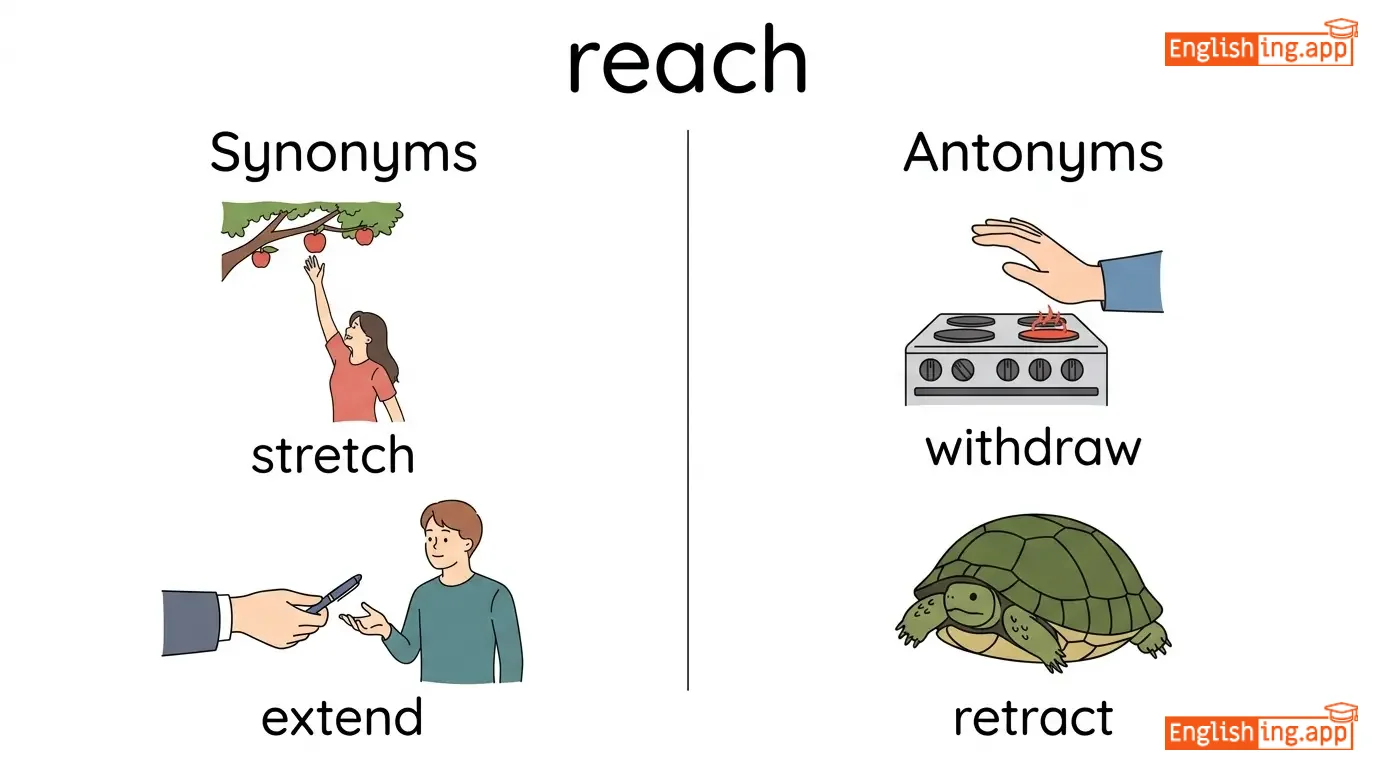
arrive, attain, achieve, extend
••••••
|
leave, depart, miss, fall short
••••••
|
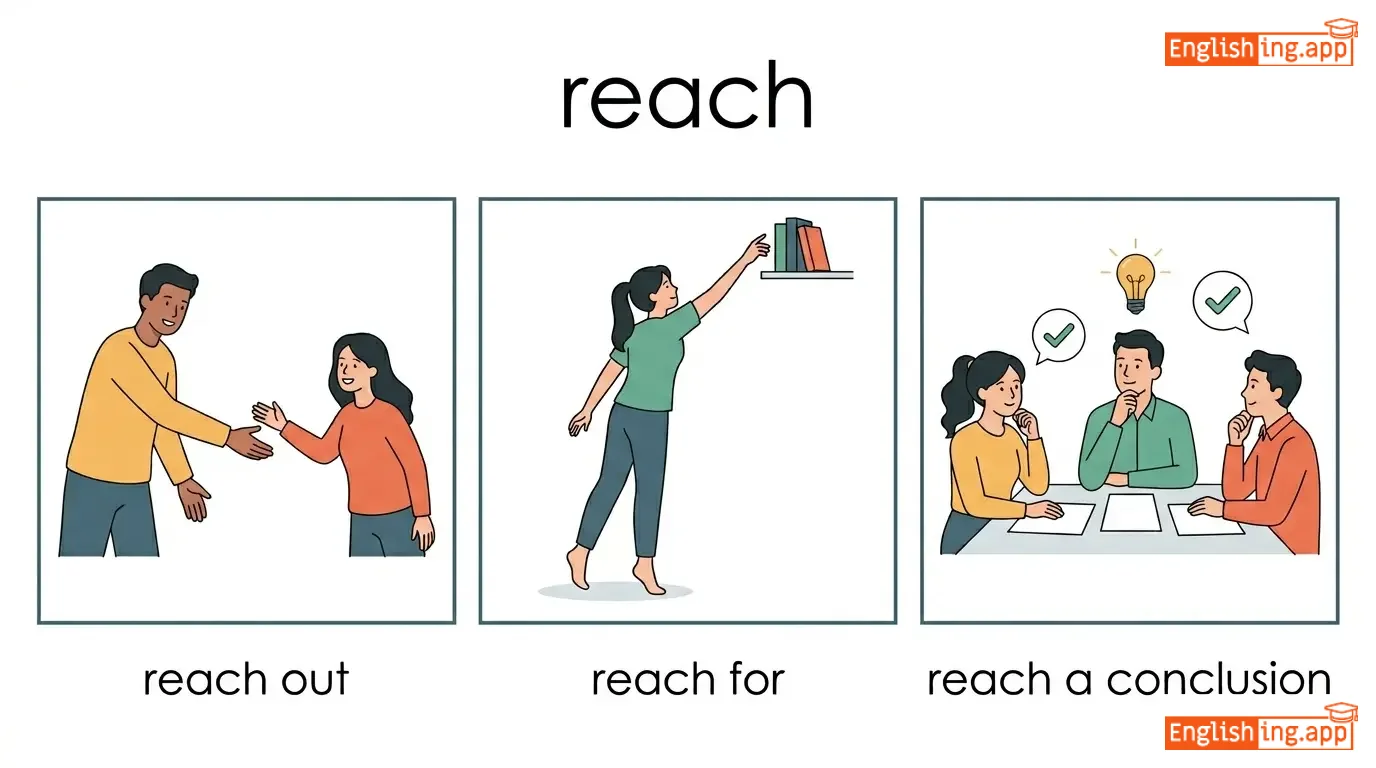
reach safely, reach out, reach goals, reach agreement, reach limits
••••••
|
Reach = 到達する、腕を伸ばして何かを触る。
••••••
|
|
😡
••••••
|
/riˈækt/
verb
(リアクト)
••••••
|
- •••••• |
反応する
hannou suru
••••••
|
reacted
リアクテッド
••••••
|
reacted
リアクテッド
••••••
|
reacts
リアクツ
••••••
|
reacting
リアクティング
••••••
|
to respond or behave in a particular way to something
••••••
|
She reacted angrily when she heard the news.
彼女はニュースを聞いて怒って反応した。
••••••
|
彼女はニュースを聞いて怒って反応した。
Kanojo wa nyūsu o kiite okotte hannou shita.
••••••
|
- •••••• | - •••••• | - •••••• |
respond, reply, answer, counter
••••••
|
ignore, avoid
••••••
|
react to, react quickly, react negatively
••••••
|
Reactしよう、怒って反応しよう!
••••••
|
|
⚡
••••••
|
/riˈækʃən/
noun
(リアクション)
••••••
|
|
反応
hanno
••••••
|
- •••••• | - •••••• | - •••••• | - •••••• |
A response to a situation, event, or stimulus; also a chemical change involving reactants and products.
••••••
|
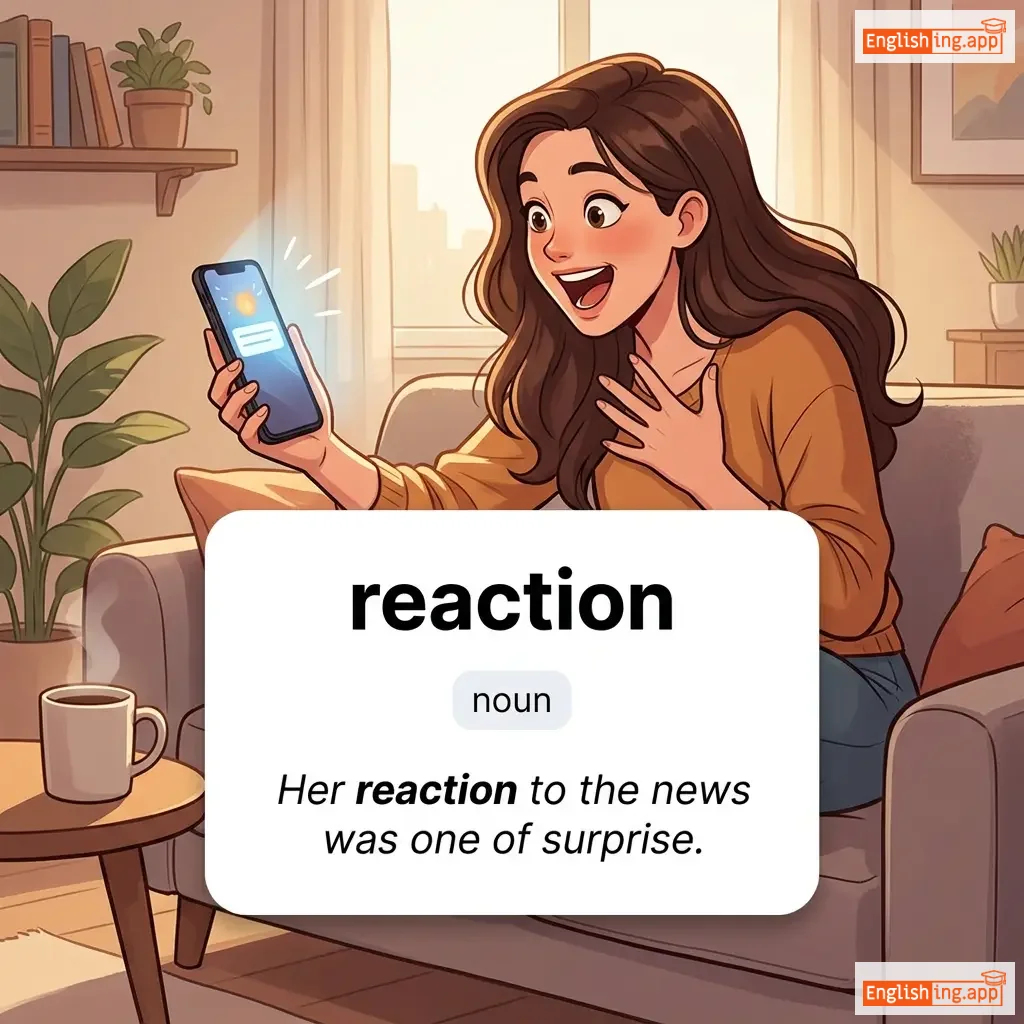
Her reaction to the news was one of surprise. |
ニュースに対する彼女の反応は驚きでした。
Nyūsu ni taisuru kanojo no hannou wa odoroki deshita.
••••••
|
knee-jerk reaction |
An immediate and automatic response without thought.
••••••
|
反射反応
Hansha hannou
••••••
|
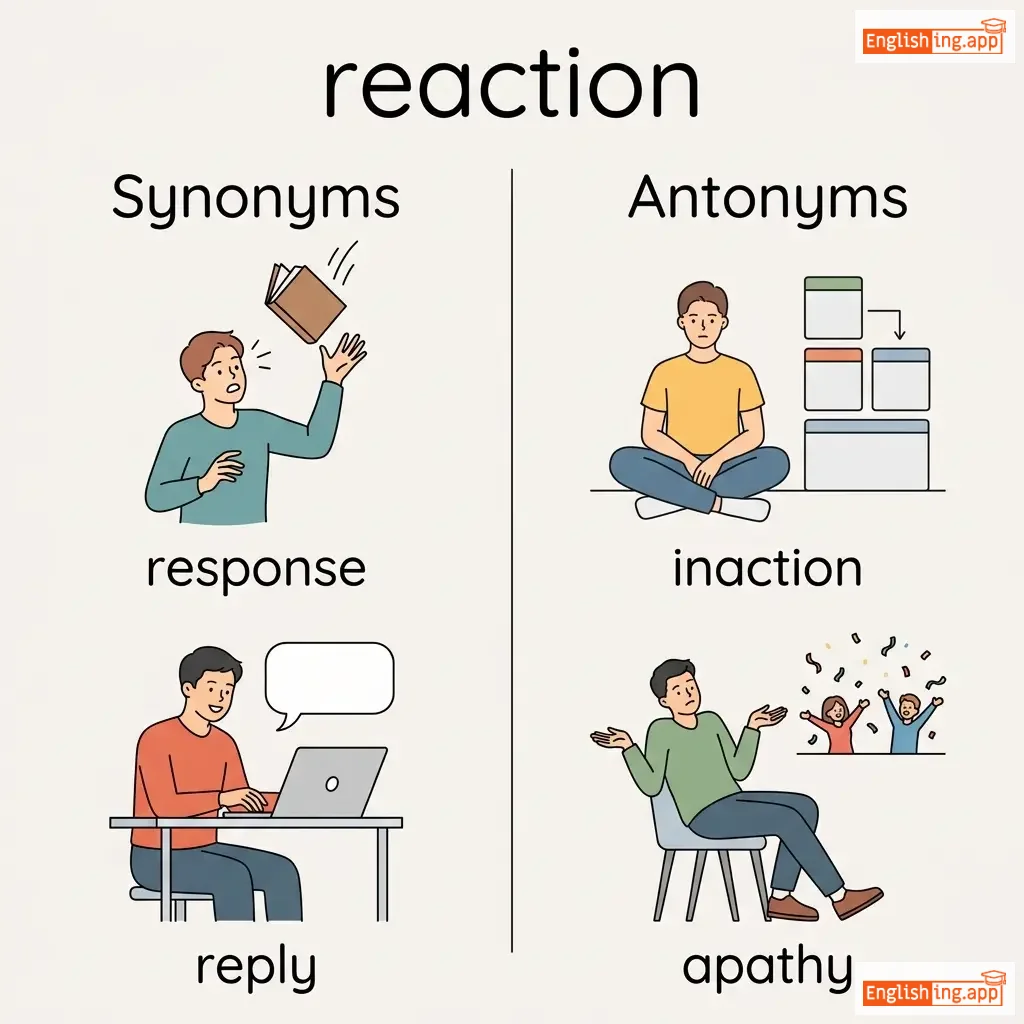
response, reply, reflex, feedback
••••••
|
inaction, apathy
••••••
|
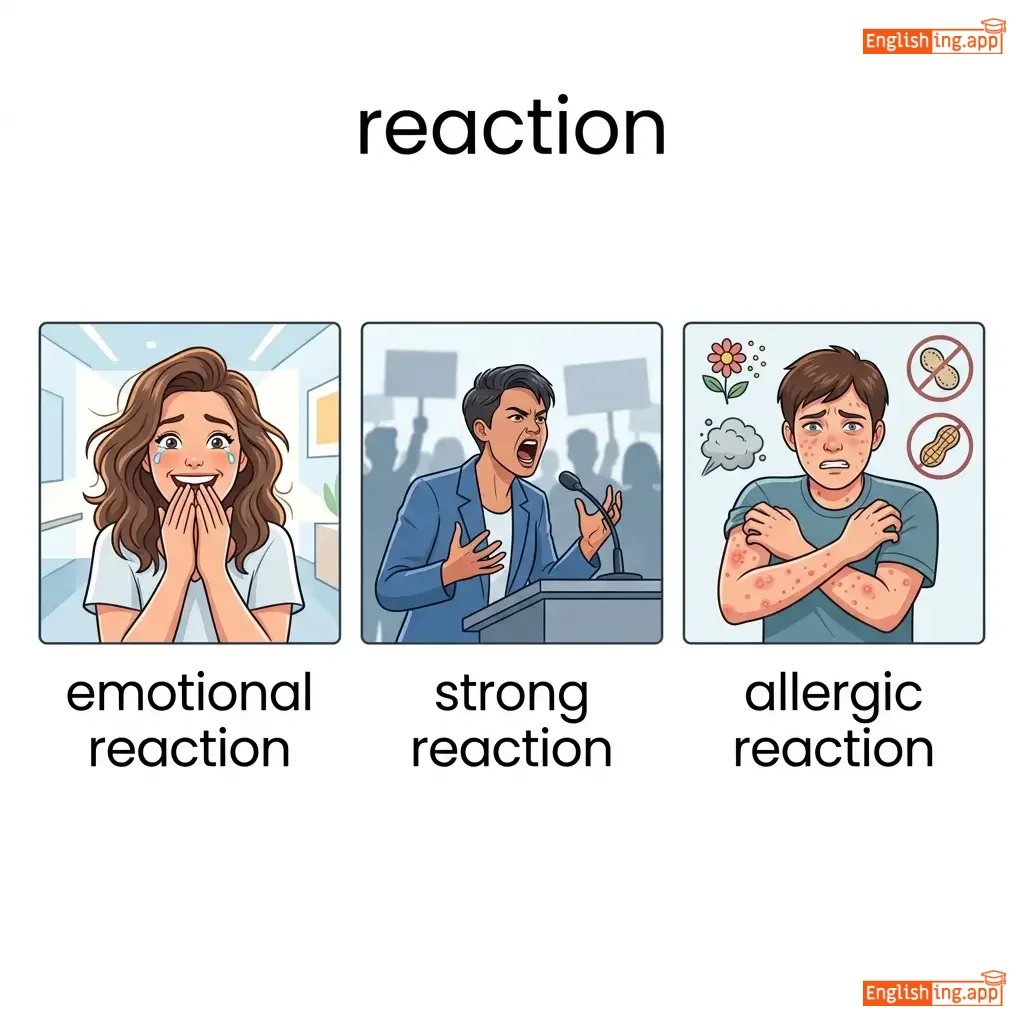
emotional reaction, strong reaction, allergic reaction, public reaction
••••••
|
リアクションは、膝の反応のように本能的に起こるものです。
••••••
|
|
📖
••••••
|
/riːd/
verb
(リード)
••••••
|
- •••••• |
読む
yomu
••••••
|
read
レッド
••••••
|
read
レッド
••••••
|
reads
リッズ
••••••
|
reading
リーディング
••••••
|
to look at written words and understand their meaning
••••••
|
I read books before going to bed.
わたしはねるまえにほんをよみます。
••••••
|
私は寝る前に本を読みます。
Watashi wa neru mae ni hon o yomimasu.
••••••
|
- •••••• | - •••••• | - •••••• |
study, peruse, scan, review
••••••
|
write, ignore, overlook
••••••
|
read books, read aloud, read carefully, love to read
••••••
|
読む: 言葉を見る、意味を理解する
••••••
|
|
📖
••••••
|
/ˈriːdər/
noun
(リーダー)
••••••
|
- •••••• |
読者
dokusha
••••••
|
- •••••• | - •••••• | - •••••• | - •••••• |
a person who reads or who is capable of reading
••••••
|
She is a fast reader, finishing books in a day. |
彼女は速読者で、1日で本を読み終えます。
Kanojo wa sokudoku-sha de, ichinichi de hon o yomi oemasu.
••••••
|
- •••••• | - •••••• | - •••••• |
bibliophile, bookworm, student
••••••
|
non-reader
••••••
|
avid reader, fast reader, good reader
••••••
|
READer、いつも本を読む人!
••••••
|
|
😊
••••••
|
/ˈred.ɪ.li/
adverb
(レディリー)
••••••
|
- •••••• |
快く; 簡単に; ためらわずに
kotonokushi; kantan ni; tamerawazu ni
••••••
|
- •••••• | - •••••• | - •••••• | - •••••• |
willingly; easily; without hesitation
••••••
|
She readily agreed to help with the project. |
彼女は喜んでプロジェクトを手伝うことに同意した。
kanojo wa yorokonde purojekuto wo tetsudau koto ni dōi shita.
••••••
|
- •••••• | - •••••• | - •••••• |
willingly, easily, eagerly, gladly
••••••
|
reluctantly, hesitantly, unwillingly
••••••
|
readily available, readily accept, readily admit
••••••
|
Readily = ためらわずに物事をする。
••••••
|
|
📖
••••••
|
/ˈriːdɪŋ/
noun
(リーディング)
••••••
|
- •••••• |
読書
dokusho
••••••
|
- •••••• | - •••••• | - •••••• | - •••••• |
the action or skill of reading
••••••
|
Reading is one of my favorite hobbies. |
読書は私の好きな趣味の一つです。
Dokusho wa watashi no sukina shumi no hitotsu desu.
••••••
|
- •••••• | - •••••• | - •••••• |
perusal, study
••••••
|
skimming, ignoring
••••••
|
reading habits, reading skills, reading time
••••••
|
READing means when you're actually reading books!
••••••
|
|
✅
••••••
|
/ˈrɛd.i/
adjective
(レディ)
••••••
|
- •••••• |
準備ができた
junbi ga dekita
••••••
|
- •••••• | - •••••• | - •••••• | - •••••• |
Prepared or available for use or action.
••••••
|
She was ready to leave for the airport. |
彼女は空港に行く準備ができていた。
Kanojo wa kuukou ni iku junbi ga dekite ita.
••••••
|
get ready |
to prepare oneself
••••••
|
準備をする
junbi o suru
••••••
|
prepared, set, equipped, arranged
••••••
|
unprepared, unready
••••••
|
ready to go, get ready, ready for use, ready access
••••••
|
準備ができたということは、準備している状態。例えば、大事な場面に備えるとき。
••••••
|
|
✅
••••••
|
/riːl/
adjective
(リアル)
••••••
|
- •••••• |
本物の; 真正の; 偽物ではない
honmono no; shinshou no; nisemono de wa nai
••••••
|
- •••••• | - •••••• | - •••••• | - •••••• |
actually existing; genuine; not imaginary or fake
••••••
|
This is a real diamond, not a fake one.
これは本物のダイヤモンドです。偽物ではありません。
••••••
|
これは本物のダイヤモンドです。偽物ではありません。
Kore wa honmono no daiyamondo desu. Nisemono de wa arimasen.
••••••
|
- •••••• | - •••••• | - •••••• |
genuine, authentic, actual, true, legitimate
••••••
|
fake, artificial, imaginary, false, counterfeit
••••••
|
real life, real estate, real world, real problem, real situation
••••••
|
本物のダイヤモンドは絶対に本物で、偽物ではありません!
••••••
|
|
🎨
••••••
|
/ˈrɪə.lɪ.zəm/
noun
(リアリズム)
••••••
|
- •••••• |
リアリズム
riarizumu
••••••
|
- •••••• | - •••••• | - •••••• | - •••••• |
The quality of representing things as they are; a practical or factual view.
••••••
|
Her paintings are admired for their realism. |
彼女の絵画はそのリアリズムで賞賛されています。
Kanojo no kaiga wa sono riarizumu de shōsan sareteimasu.
••••••
|
face reality |
to accept things as they really are
••••••
|
現実に直面する
genjitsu ni chokumen suru
••••••
|
practicality, authenticity, truth, naturalism
••••••
|
idealism, fantasy, illusion
••••••
|
artistic realism, realism in literature, stark realism, political realism
••••••
|
Real + ism = 物事をありのまま見る = リアリズム
••••••
|
|
🎯
••••••
|
/ˌriːəˈlɪstɪk/
adjective
(リアリスティック)
••••••
|
- •••••• |
現実的
genjitsuteki
••••••
|
- •••••• | - •••••• | - •••••• | - •••••• |
having or showing a sensible and practical idea of what can be achieved or expected
••••••
|
She gave a realistic estimate of the project's cost. |
彼女はプロジェクトのコストの現実的な見積もりを出した。
Kanojo wa purojekuto no kosuto no genjitsuteki na mitsumori o dashita.
••••••
|
keep it realistic |
to remain practical and grounded about what is possible
••••••
|
現実的に保つ
genjitsuteki ni tamotsu
••••••
|
practical, sensible, rational, pragmatic, down-to-earth
••••••
|
unrealistic, idealistic, impractical
••••••
|
realistic goals, realistic approach, realistic expectations, realistic plan
••••••
|
現実的=本当に実用的で現実的に考えること
••••••
|
|
🌍
••••••
|
/riˈæl.ə.ti/
noun
(リアリティ)
••••••
|


|
現実
genjitsu
••••••
|
- •••••• | - •••••• | - •••••• | - •••••• |
the state of things as they actually exist; the actual situation
••••••
|
We need to face the reality of the situation. |
私たちは状況の現実に直面する必要があります。
Watashitachi wa joukyou no genjitsu ni chokumen suru hitsuyou ga arimasu.
••••••
|
- •••••• | - •••••• | - •••••• |
actuality, truth, fact
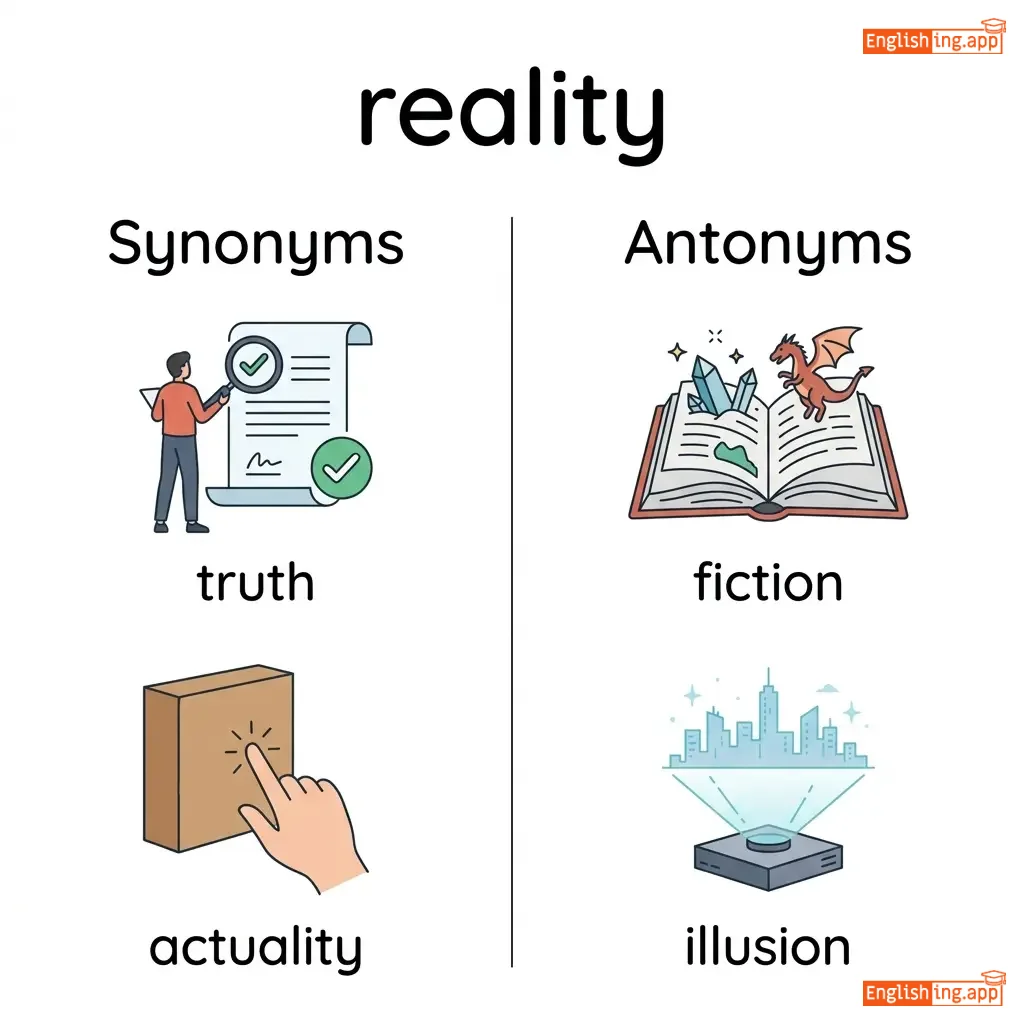
••••••
|
fantasy, illusion, fiction
••••••
|
face reality, harsh reality, virtual reality
••••••
|
現実 = 実際に存在するもの
••••••
|
|
💡
••••••
|
/ˌrɪəlɪˈzeɪʃən/
noun
(リアライゼーション)
••••••
|
- •••••• |
実現
jitsugen
••••••
|
- •••••• | - •••••• | - •••••• | - •••••• |
the act of becoming fully aware of something as a fact
••••••
|
Her realization of the problem helped solve the issue. |
彼女の問題の認識が問題解決に役立った。
Kanojo no mondai no ninshiki ga mondai kaiketsu ni yakudatta.
••••••
|
- •••••• | - •••••• | - •••••• |
understanding, awareness, comprehension, recognition
••••••
|
ignorance, misunderstanding, confusion
••••••
|
sudden realization, personal realization, painful realization
••••••
|
実現は、問題を解決するように、完全に理解すること
••••••
|
|
💡
••••••
|
/ˈriːəlaɪz/
verb
(リアライズ)
••••••
|
|
気づく
kizuku
••••••
|
realized
リアライズド
••••••
|
realized
リアライズド
••••••
|
realizes
リアライズズ
••••••
|
realizing
リアライジング
••••••
|
to become aware of; to understand clearly; to achieve or make real
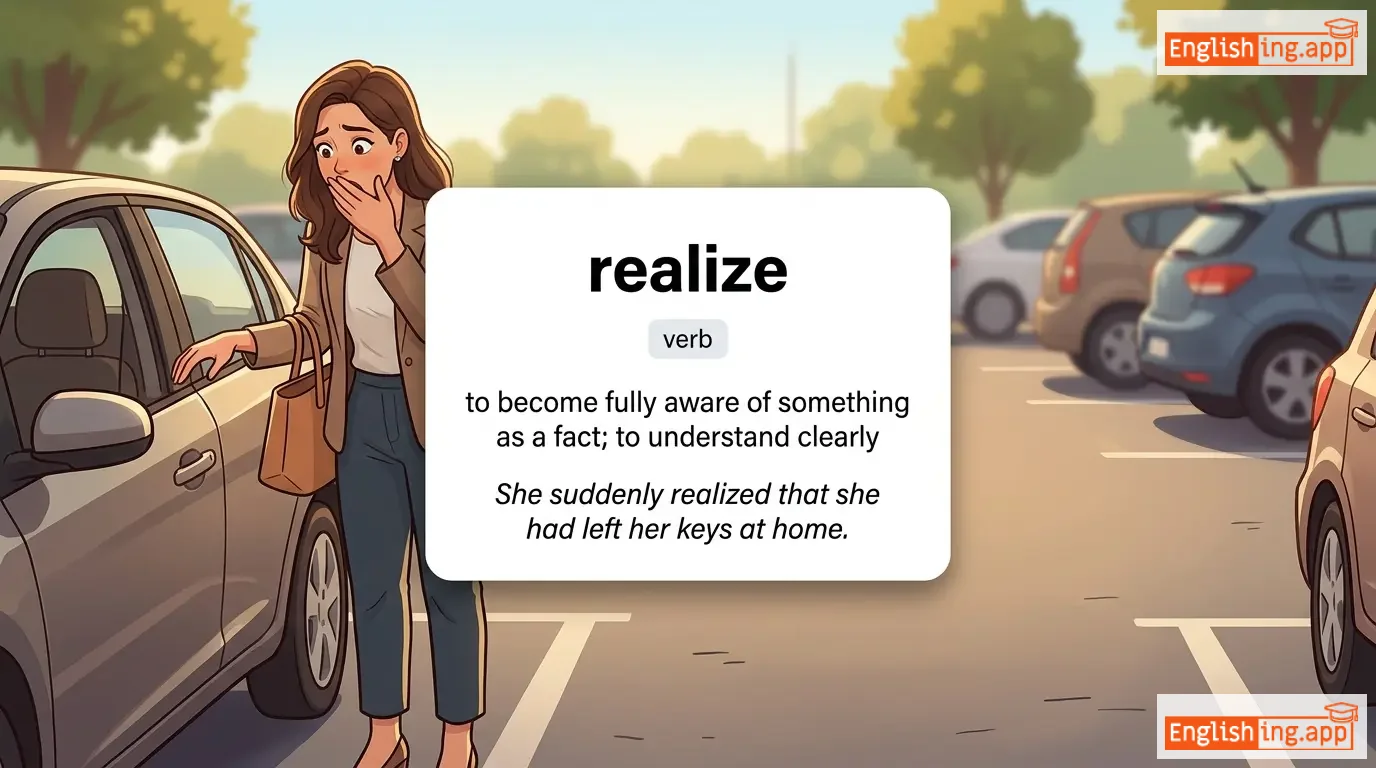
••••••
|
I didn't realize how late it was until I checked the clock.
アイ ディドント リアライズ ハウ レイト イット ワズ アンティル アイ チェックド ザ クロック。
••••••
|
時計を見るまで、こんなに遅いとは気づかなかった。
tokei o miru made konna ni osoi to wa kizukanakatta
••••••
|
- •••••• | - •••••• | - •••••• |
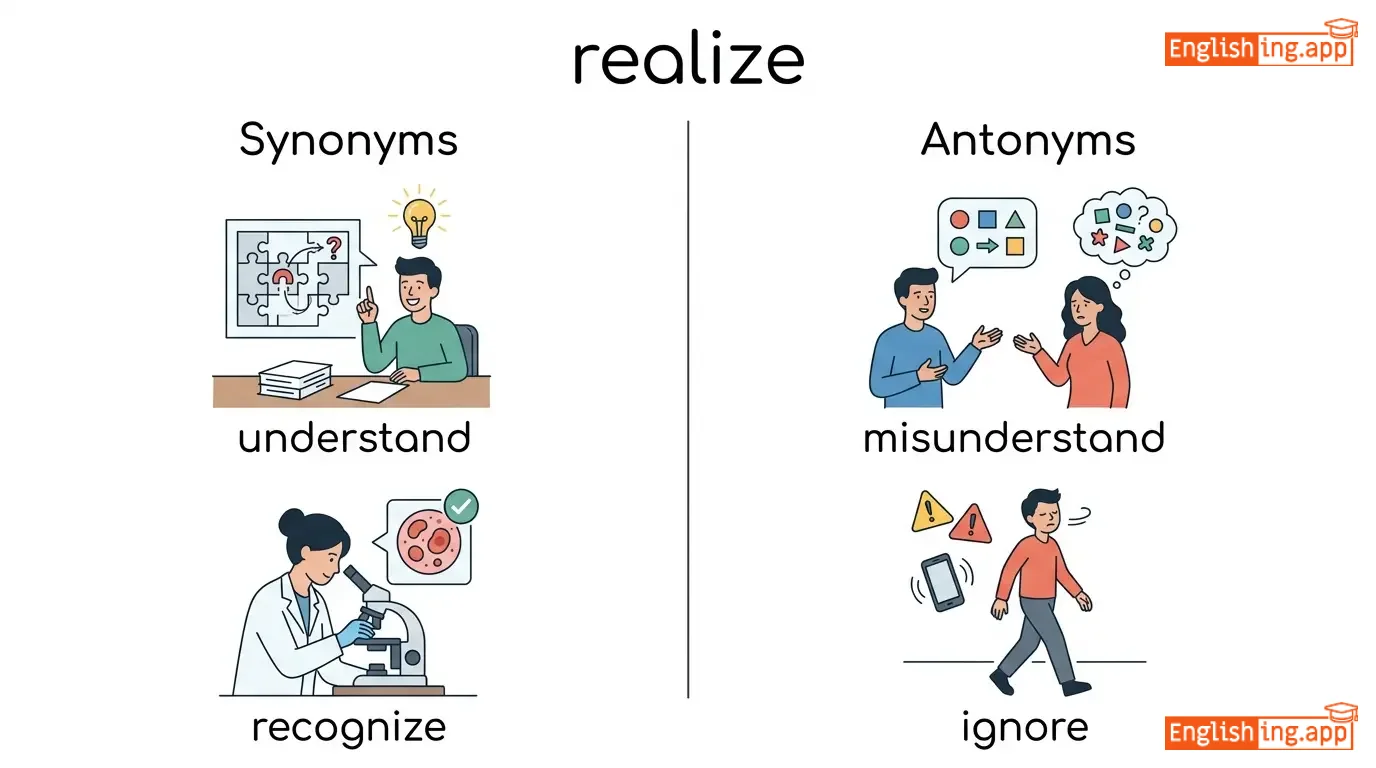
understand, recognize, comprehend, achieve
••••••
|
misunderstand, ignore, overlook, fail
••••••
|
realize potential, realize dreams, suddenly realize, realize mistake
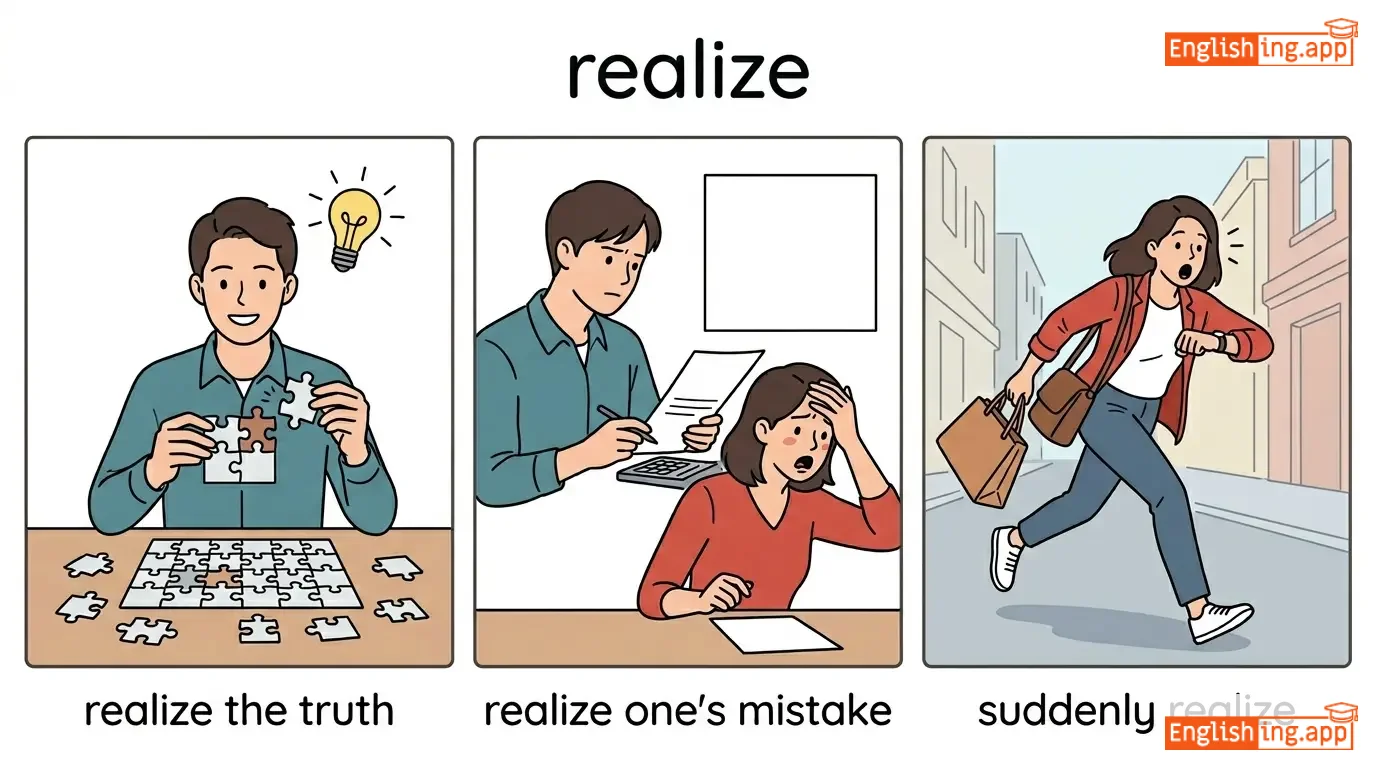
••••••
|
Realize in Japanese is kizuku — like 'kids look' when they realize something.
••••••
|
|
😮
••••••
|
/ˈriː.ə.li/
adverb
(ri-ari)
••••••
|
- •••••• |
本当に; 実際に; とても
hon-tou-ni; jissai-ni; to-te-mo
••••••
|
- •••••• | - •••••• | - •••••• | - •••••• |
actually; truly; very much
••••••
|
I really enjoyed the concert last night.
昨晩のコンサートは本当に楽しめました。
••••••
|
昨晩のコンサートは本当に楽しめました。
Sakuban no kon-sa-to wa hon-tou-ni tanoshimemashita.
••••••
|
- •••••• | - •••••• | - •••••• |
truly, actually, genuinely, indeed
••••••
|
falsely, barely, hardly
••••••
|
really good, really bad, really important
••••••
|
Really enjoying the concert's real experience.
••••••
|
|
👑
••••••
|
/rɛlm/
noun
••••••
|
- •••••• | - •••••• | - •••••• | - •••••• | - •••••• | - •••••• |
A kingdom or domain; a field or area of activity or interest.
••••••
|
He is well known in the realm of science. |
- •••••• |
beyond the realm of possibility |
impossible
••••••
|
- •••••• |
kingdom, domain, territory, sphere
••••••
|
outside, void
••••••
|
realm of science, realm of fantasy, political realm, within the realm
••••••
|
No •••••• |
|
🐈
••••••
|
/rɪər/
noun, verb
(リア)
••••••
|
- •••••• |
後ろ / 育てる
ushiro / sodateru
••••••
|
reared
リアード
••••••
|
reared
リアード
••••••
|
rears
リアーズ
••••••
|
rearing
リアリング
••••••
|
the back part of something; to bring up or raise children or animals
••••••
|
The mother cat reared her kittens in a quiet corner.
母猫は静かな隅で子猫たちを育てました。
••••••
|
母猫は静かな隅で子猫たちを育てました。
Haha neko wa shizuka na sumi de koneko-tachi o sodatemashita.
••••••
|
bring up the rear
後ろを持っている
••••••
|
to be at the back of a group moving forward
••••••
|
後ろにいる
ushiro ni iru
••••••
|
back, behind, raise, nurture, lift
••••••
|
front, lower, neglect
••••••
|
rear view, rear door, rear seat, rear window, rear end
••••••
|
Rearは後ろにいることを意味します、まるで母猫が子猫たちをrear(育てる)ように。
••••••
|
|
🤔
••••••
|
/ˈriːzən/
noun, verb
(リーゾン)
••••••
|
- •••••• |
理由、原因
riyū, gen'in
••••••
|
reasoned
リーゾンド
••••••
|
reasoned
リーゾンド
••••••
|
reasons
リーゾンズ
••••••
|
reasoning
リーゾニング
••••••
|
A cause, explanation, or justification for an action or event; to think or argue logically.
••••••
|
There is no reason to be upset.
デア イズ ノー リーズン トゥ ビー アップセット。
••••••
|
怒る理由はありません。
okoru riyū wa arimasen.
••••••
|
listen to reason
リスン トゥ リーズン
••••••
|
to be persuaded by logical arguments
••••••
|
理由を聞く
riyū o kiku
••••••
|
cause, ground, logic, justification, rationale
••••••
|
nonsense, irrationality, illogic
••••••
|
good reason, main reason, for this reason, reason behind
••••••
|
Reason は理由、Reason を考えるとすべてが論理的に感じる 🤔
••••••
|

