|
表情符号
|
单词 | Images | 翻译 | 过去时 | 过去分词 | 第三人称单数 | 动名词 | 含义 | 例句 | 例句翻译 | 示例表达 | 示例表达含义 | 示例表达翻译 | 同义词 | 反义词 | 搭配词 | 助记符 |
|---|---|---|---|---|---|---|---|---|---|---|---|---|---|---|---|---|---|
|
⚖️
••••••
|
/ˈreɪsɪst/
adjective
(雷西斯特)
••••••
|
- •••••• |
种族主义者
zhǒngzú zhǔyì zhě
••••••
|
- •••••• | - •••••• | - •••••• | - •••••• |
showing or feeling discrimination or prejudice against people of other races
••••••
|
He was accused of making racist comments. |
他被指控发表种族主义的评论。
Tā bèi zhǐkòng fābiǎo zhǒngzú zhǔyì de pínglùn.
••••••
|
- •••••• | - •••••• | - •••••• |
prejudiced, discriminatory, biased, intolerant
••••••
|
tolerant, open-minded, inclusive
••••••
|
racist behavior, racist remarks, racist attitude, racist ideology
••••••
|
种族主义者可以联想到'种族',与歧视其他种族相关。
••••••
|
|
📡
••••••
|
/ˈreɪdɑːr/
noun
(雷达)
••••••
|
- •••••• |
雷达
leida
••••••
|
- •••••• | - •••••• | - •••••• | - •••••• |
a system that uses radio waves to detect the position and speed of objects
••••••
|
The plane was detected by the airport's radar system. |
飞机通过机场的雷达系统被发现了。
fēijī tōngguò jīchǎng de léidá xìtǒng bèi fāxiàn le.
••••••
|
under the radar |
to go unnoticed or be ignored
••••••
|
在雷达下
zài léidá xià
••••••
|
scanner, detector, sensor, locator
••••••
|
blind spot, invisibility
••••••
|
radar system, radar signal, air radar, weather radar
••••••
|
Ra + dar 意味着 '通过无线电发现' — 雷达可以发现隐藏的物体。
••••••
|
|
☢️
••••••
|
/ˌreɪdiˈeɪʃən/
noun
(辐射)
••••••
|

|
辐射
fúshè
••••••
|
- •••••• | - •••••• | - •••••• | - •••••• |
the emission of energy as electromagnetic waves or as moving particles
••••••
|
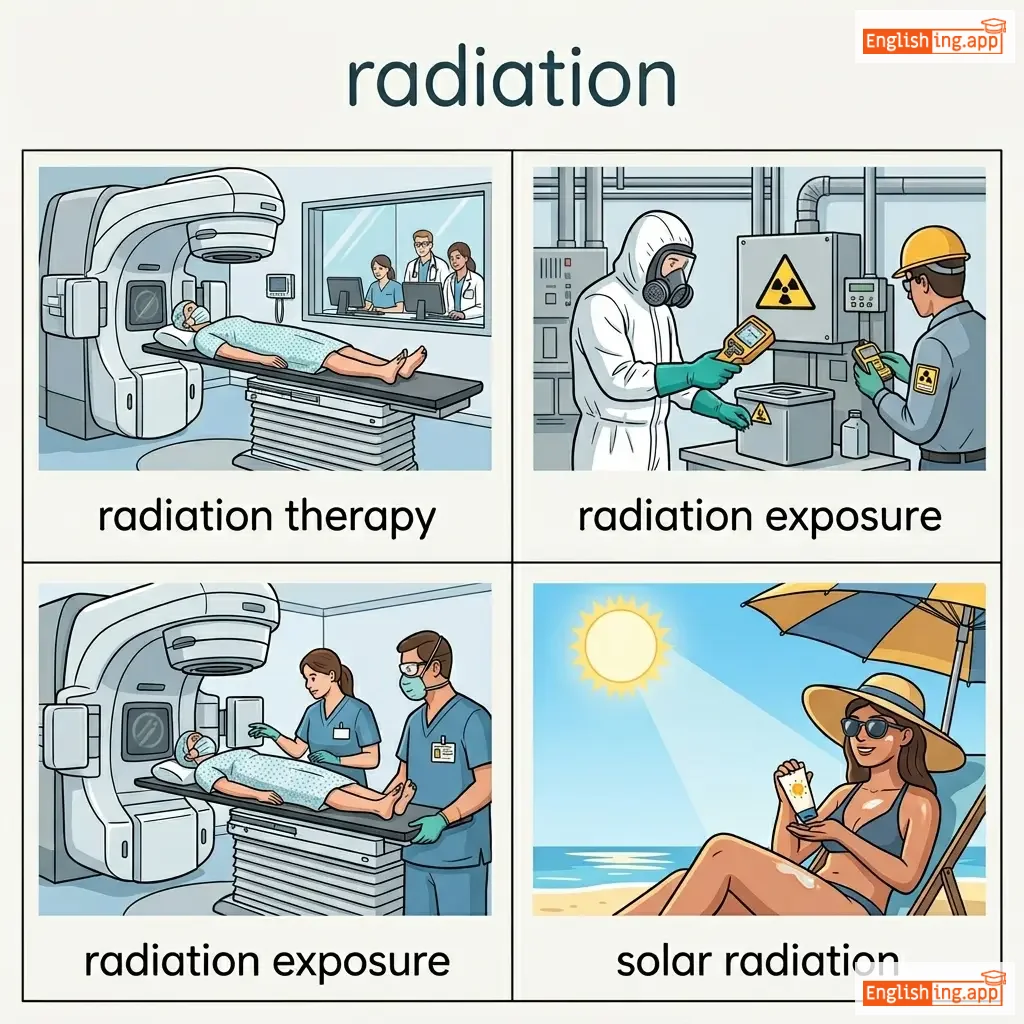
The doctor explained the effects of radiation therapy to the patient. |
医生向患者解释了辐射治疗的效果。
yīshēng xiàng huànzhě jiěshìle fúshè zhìliáo de xiàoguǒ.
••••••
|
radiation sickness |
illness caused by exposure to high doses of radiation
••••••
|
辐射病
fúshè bìng
••••••
|
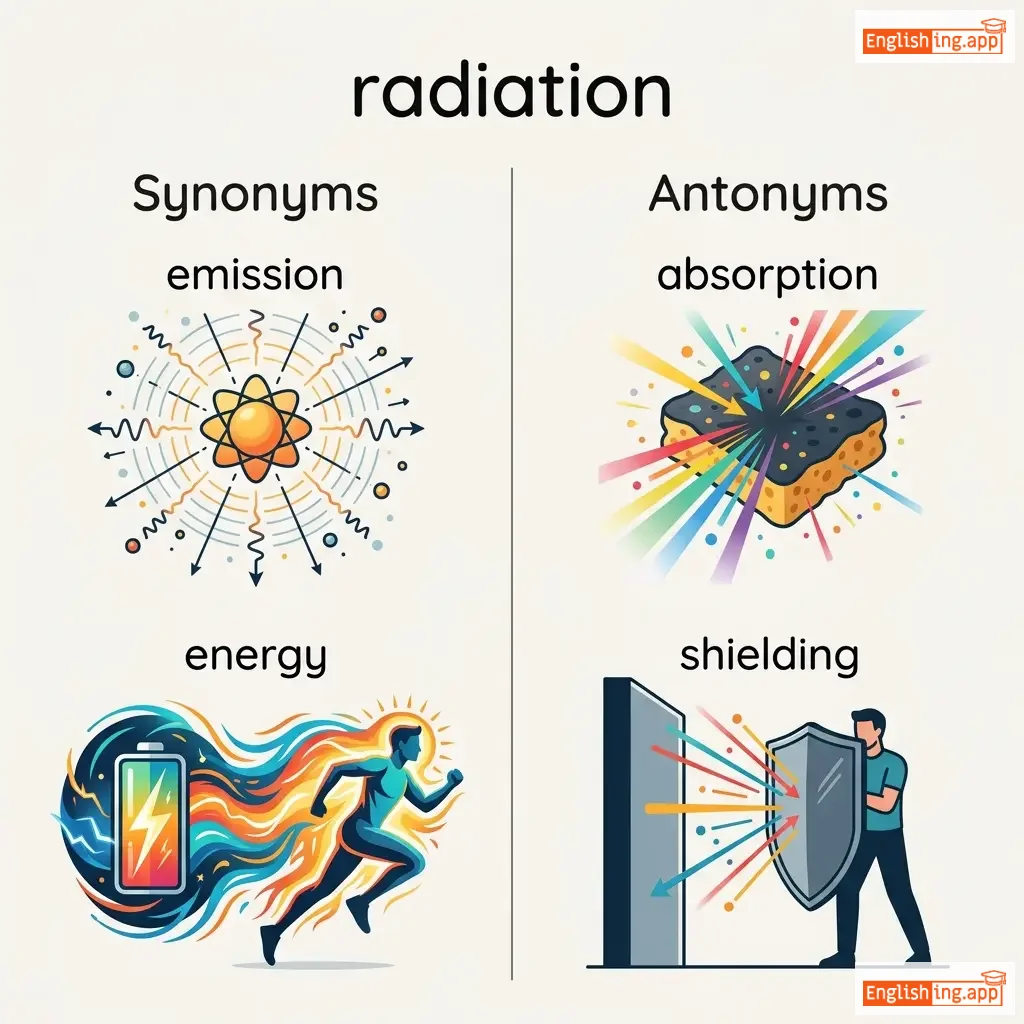
emission, energy, rays, exposure
••••••
|
absorption, shielding
••••••
|
radiation therapy, radiation exposure, solar radiation, radiation level
••••••
|
辐射就是'光线' — 记住它是扩散的能量。
••••••
|
|
🔥
••••••
|
/ˈrædɪkl/
adjective
••••••
|
|
- •••••• | - •••••• | - •••••• | - •••••• | - •••••• |
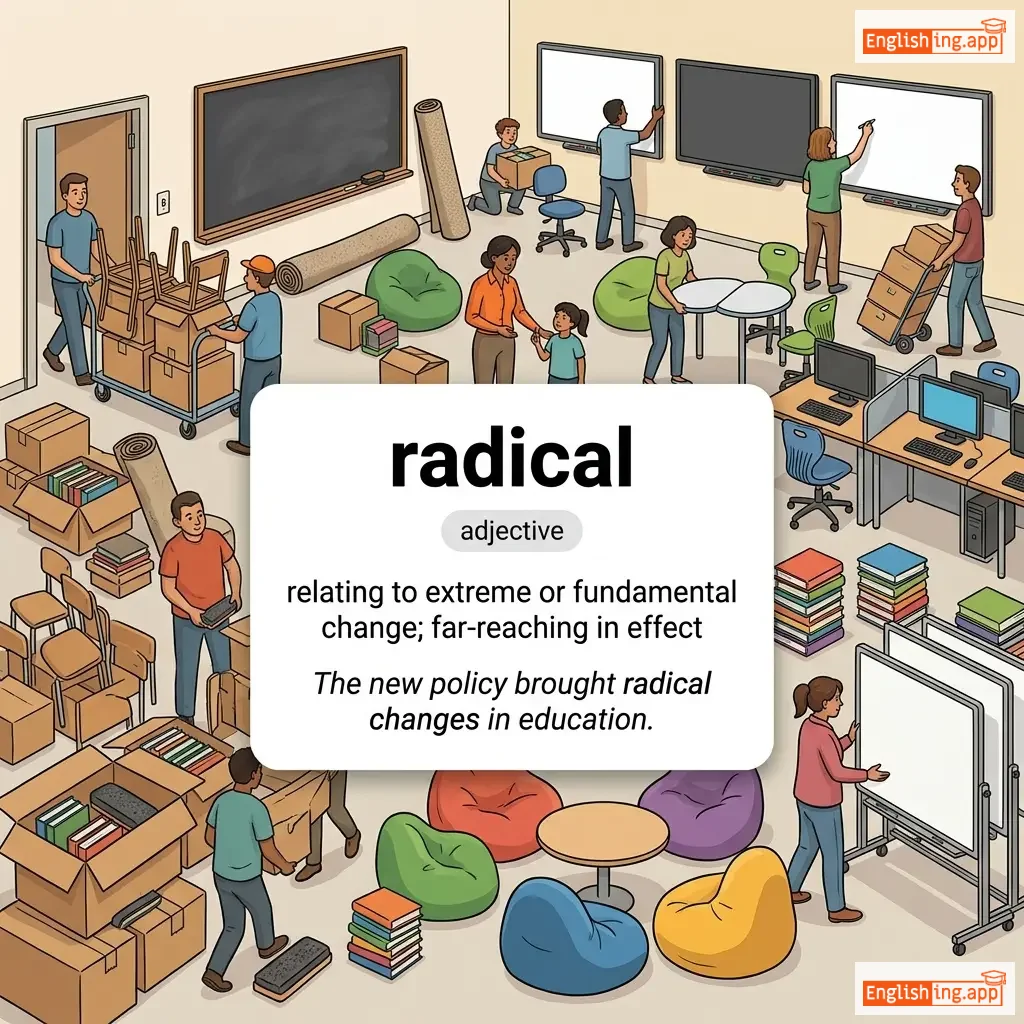
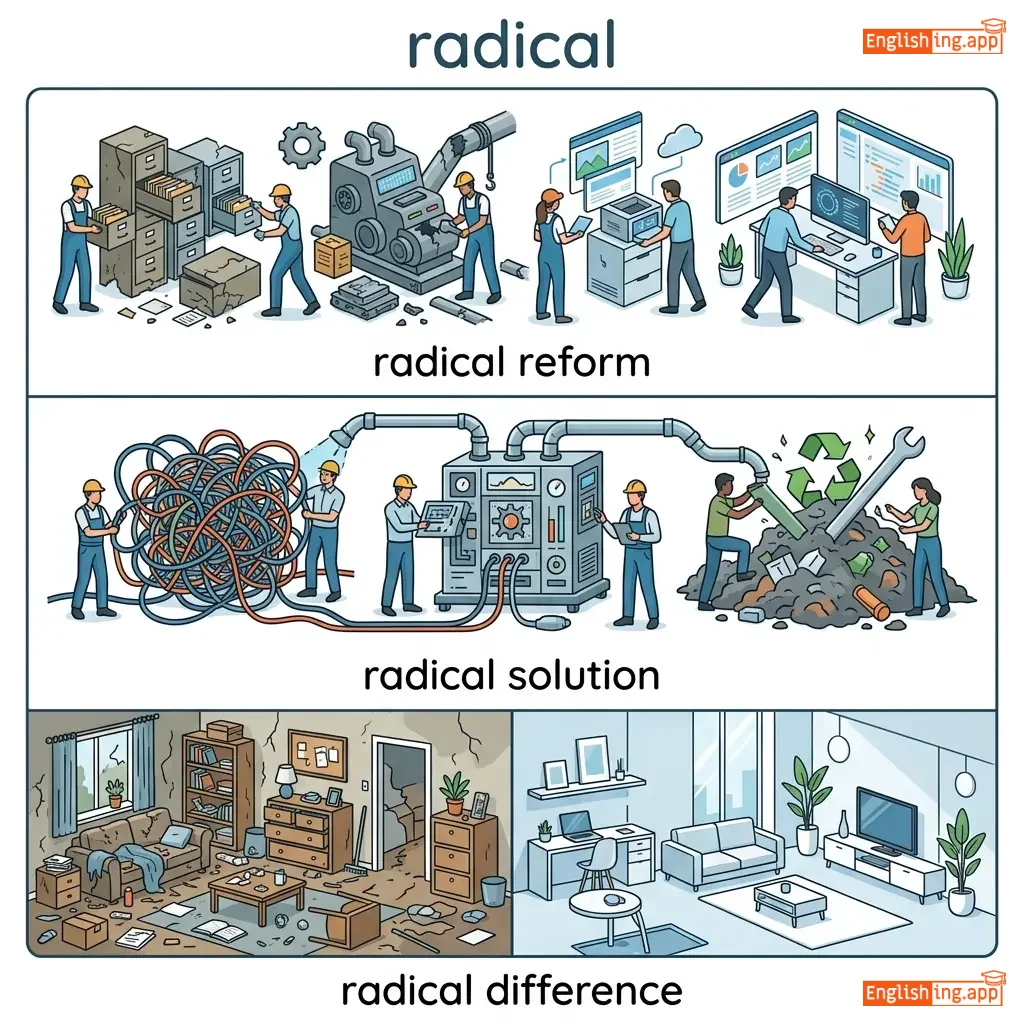
relating to extreme or fundamental change; far-reaching in effect
••••••
|
The new policy brought radical changes in education. |
- •••••• |
radical change |
a complete and fundamental transformation
••••••
|
- •••••• |
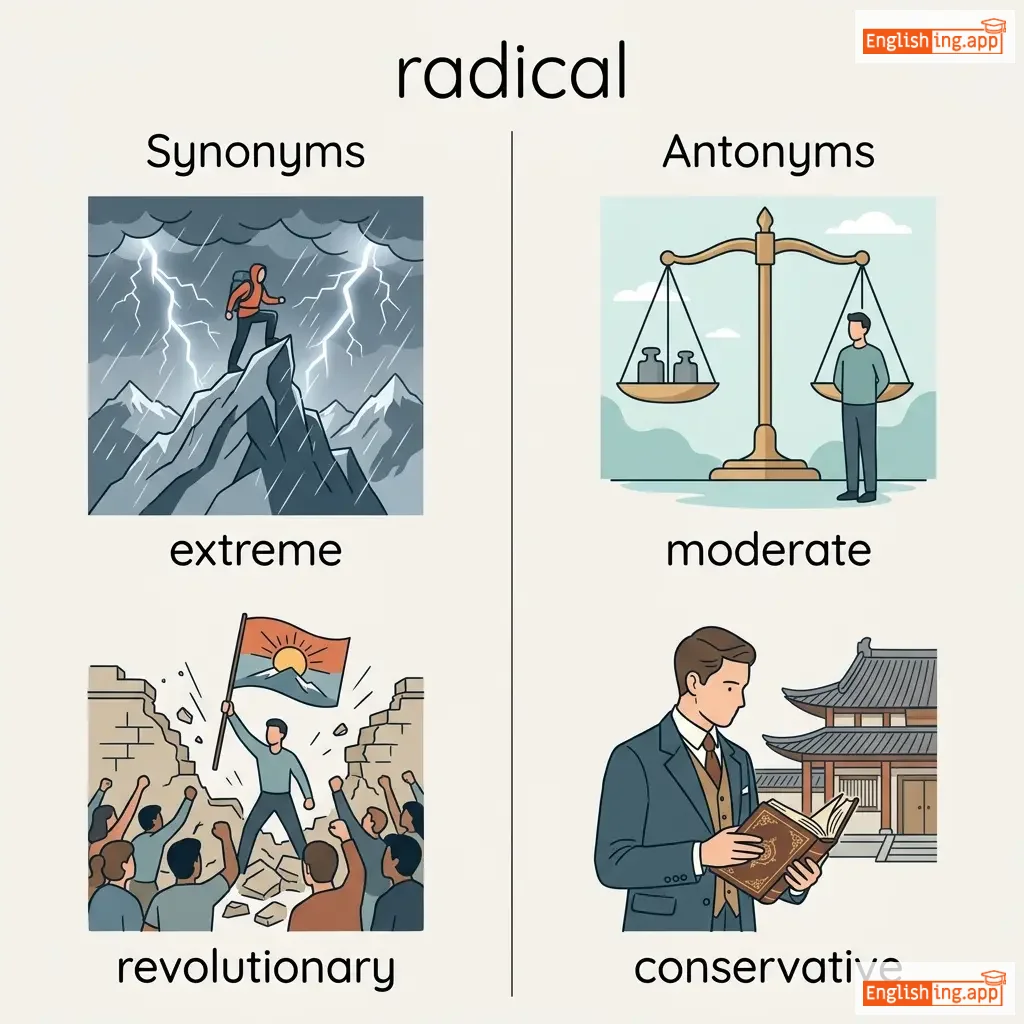
extreme, revolutionary, fundamental, drastic, profound
••••••
|
moderate, conservative, traditional
••••••
|
radical reform, radical solution, radical difference
••••••
|
No •••••• |
|
📻
••••••
|
/ˈreɪdioʊ/
noun
(收音机)
••••••
|
|
收音机
shouyinji
••••••
|
- •••••• | - •••••• | - •••••• | - •••••• |
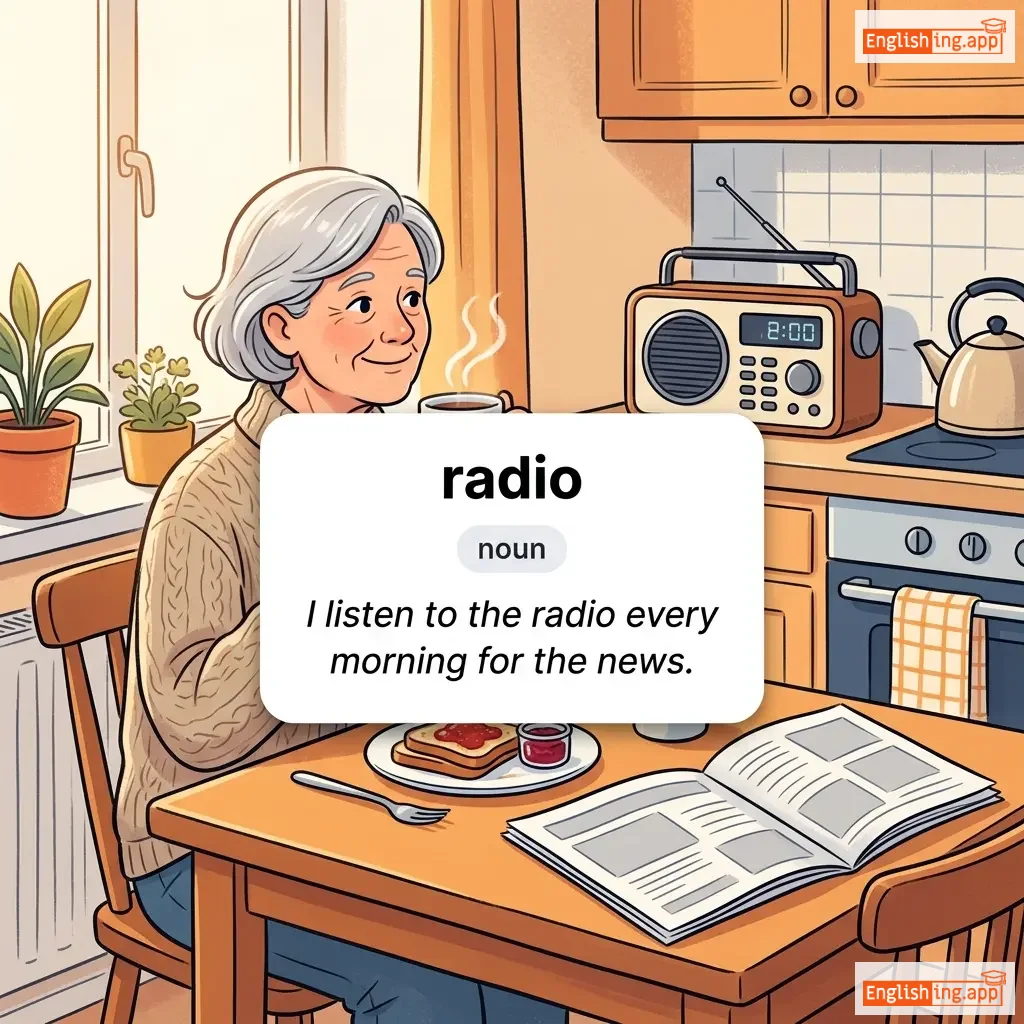
a device for receiving or transmitting radio signals, or the use of such signals for communication
••••••
|
I listen to the radio every morning for the news.
我每天早上听收音机获取新闻。
••••••
|
我每天早上听收音机获取新闻。
Wǒ měitiān zǎoshang tīng shōuyīnjī huòqǔ xīnwén.
••••••
|
- •••••• | - •••••• | - •••••• |
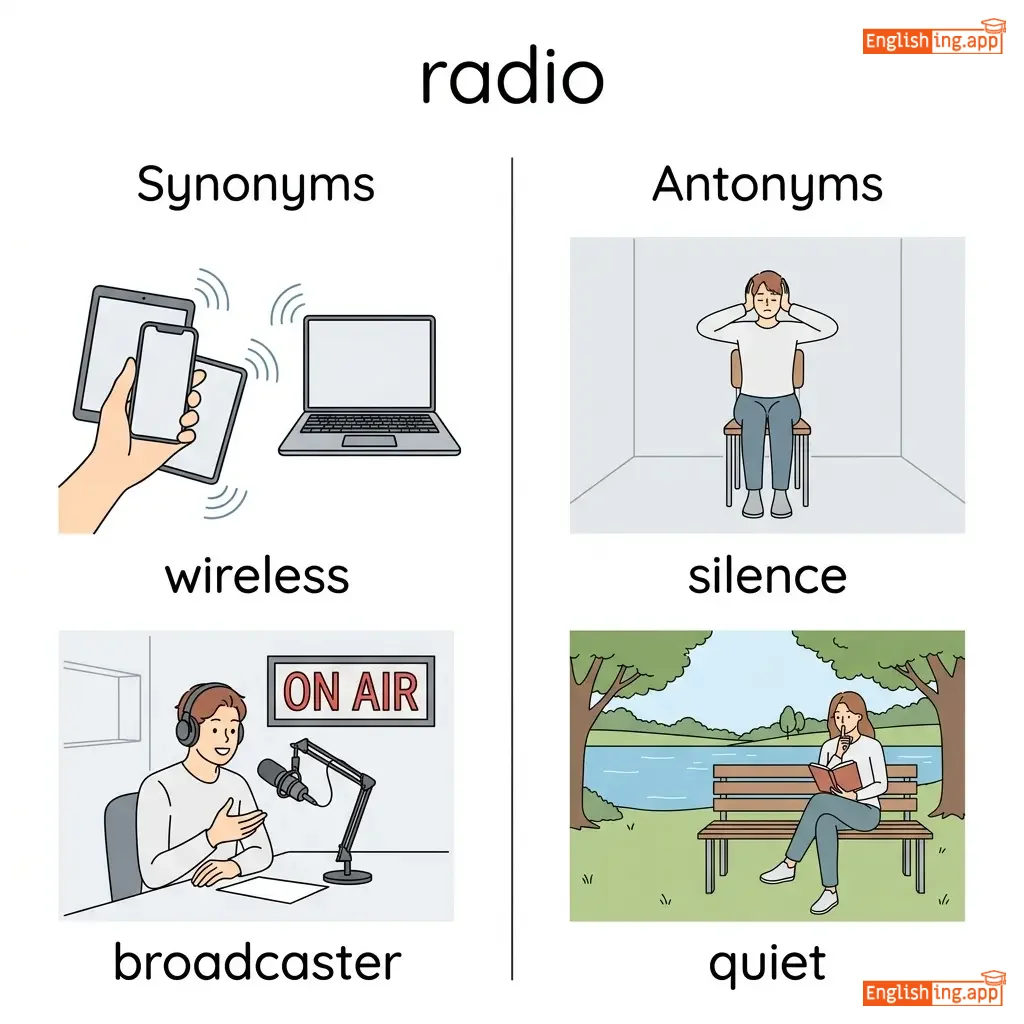
wireless, broadcaster, transmission, radio receiver
••••••
|
silence, quiet
••••••
|
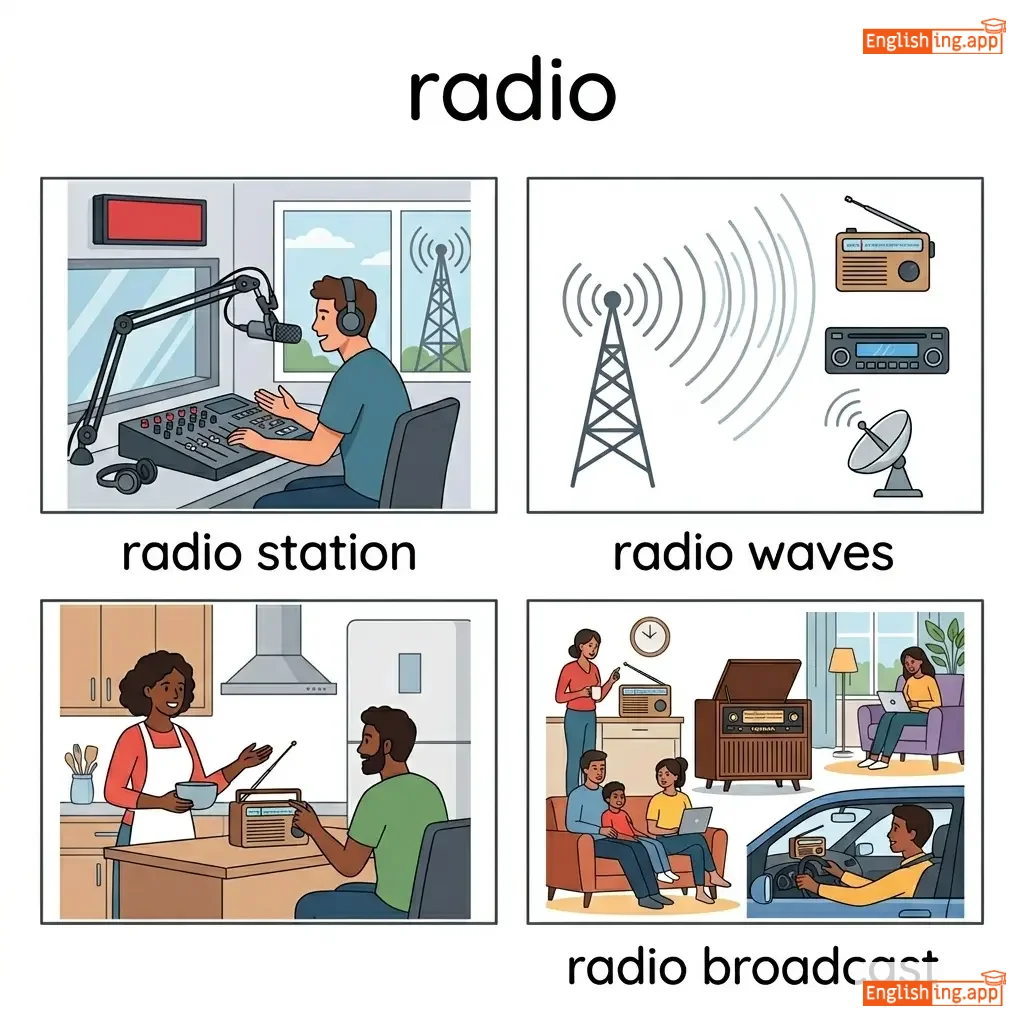
radio station, radio waves, radio broadcast, listen to the radio
••••••
|
Radio - R for radio, the device you 'listen' to for news
••••••
|
|
😡
••••••
|
/reɪdʒ/
noun
(reɪdʒ)
••••••
|
- •••••• |
愤怒
fennu
••••••
|
- •••••• | - •••••• | - •••••• | - •••••• |
intense anger or fury
••••••
|
She shouted in a fit of rage after hearing the news. |
她听到消息后在愤怒中大喊。
Ta tingdao xiaoxi hou zai fennu zhong dahuan.
••••••
|
fly into a rage |
to suddenly become very angry
••••••
|
勃然大怒
boran danu
••••••
|
fury, anger, wrath, temper, outrage
••••••
|
calm, peace, patience
••••••
|
fit of rage, blind rage, control rage, rage against
••••••
|
Rage = 愤怒 = 当愤怒无法控制时爆发。
••••••
|
|
⚔️
••••••
|
/reɪd/
verb
(reid)
••••••
|
|
突袭
tuxi
••••••
|
raided
reided
••••••
|
raided
reided
••••••
|
raids
reidz
••••••
|
raiding
reiding
••••••
|
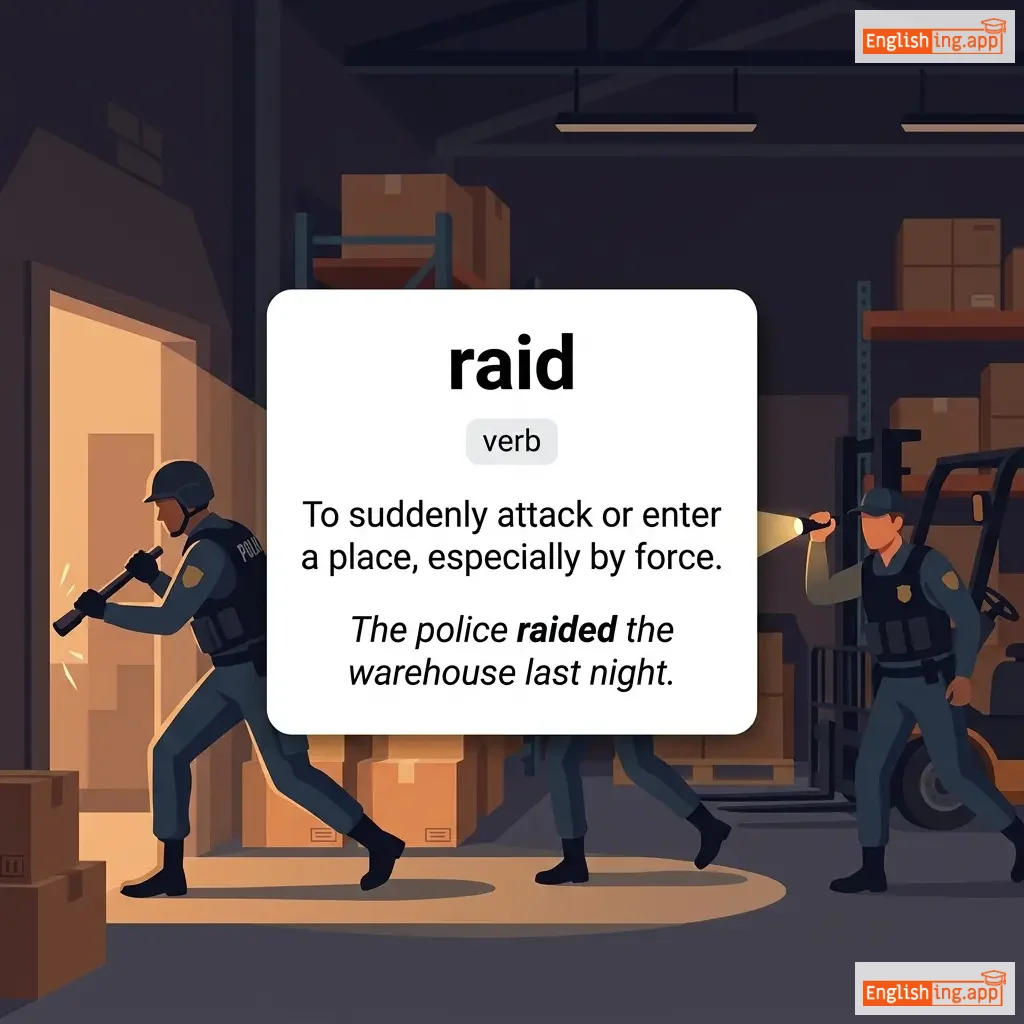
To suddenly attack or enter a place, especially by force.
••••••
|
The police raided the warehouse last night.
警方昨晚突袭了仓库。
••••••
|
警方昨晚突袭了仓库。
Jingfang zuowan tuxi le cangku.
••••••
|
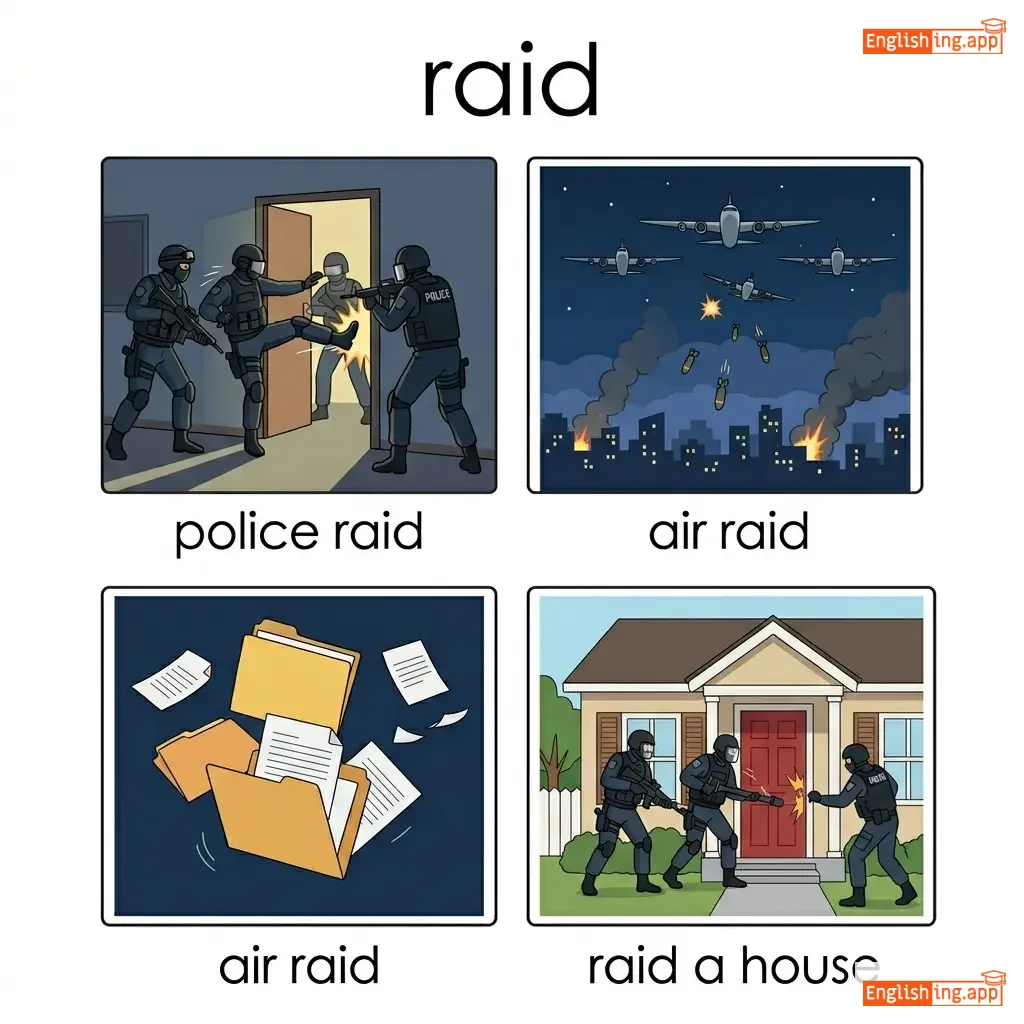
air raid
空袭
••••••
|
A military attack by aircraft.
••••••
|
空袭
kongxi
••••••
|
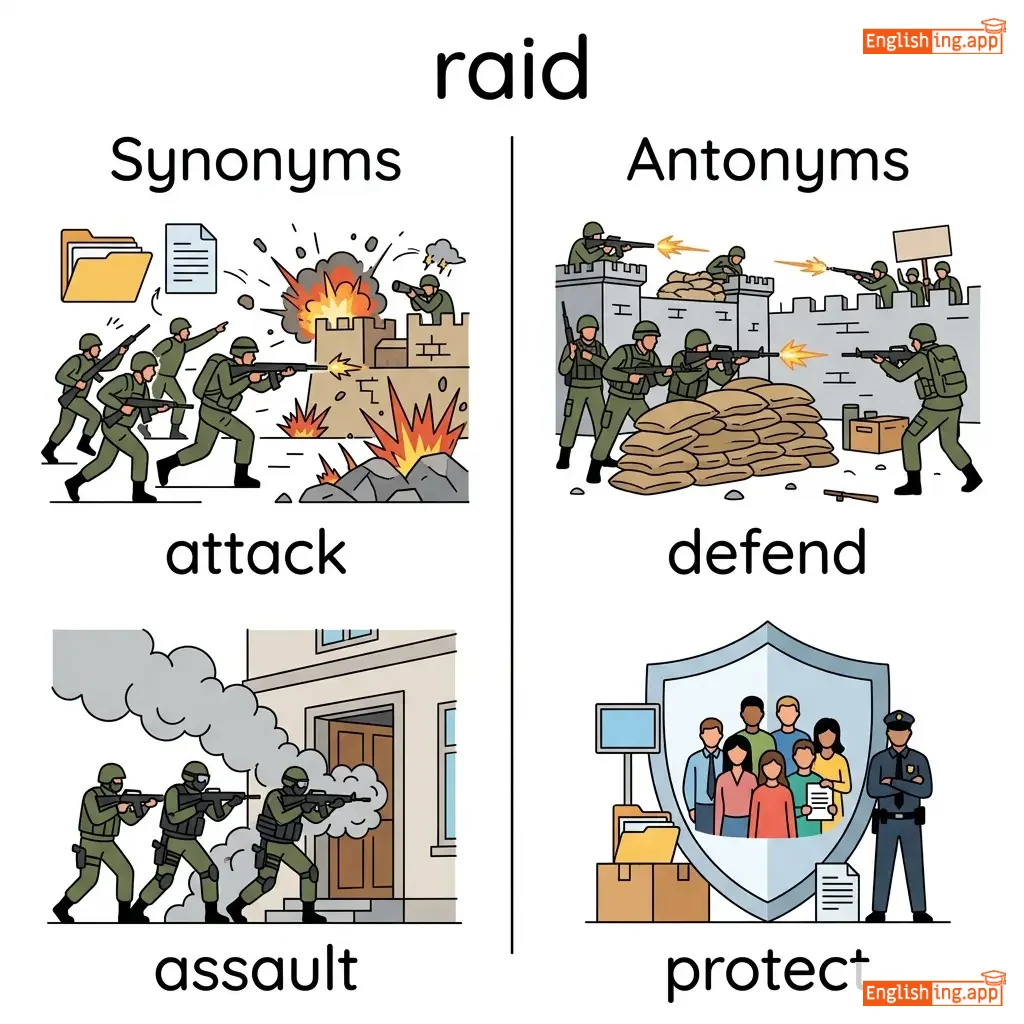
attack, assault, invasion, ambush
••••••
|
defend, protect
••••••
|
police raid, air raid, raid a house
••••••
|
Raid 是指突然袭击,通常是夜间进行的。
••••••
|
|
📢
••••••
|
/reɪl/
verb
(rèil)
••••••
|
- •••••• |
抗议
kàngyì
••••••
|
railed
rèild
••••••
|
railed
rèild
••••••
|
rails
rèils
••••••
|
railing
rèiling
••••••
|
to complain or protest strongly about something
••••••
|
He railed against the unfair decision.
他抗议不公平的决定。
••••••
|
他抗议不公平的决定。
Tā kàngyì bù gōngpíng de juédìng.
••••••
|
rail against
抗议
••••••
|
to strongly criticize or protest
••••••
|
抗议
kàngyì
••••••
|
protest, complain, denounce, criticize
••••••
|
praise, accept, support
••••••
|
rail against injustice, rail at fate, rail bitterly
••••••
|
抗议就像站在铁路轨道上! 🚆
••••••
|
|
🚂
••••••
|
/ˈreɪl.weɪ/
noun
(瑞尔威)
••••••
|
- •••••• |
铁路
tielu
••••••
|
- •••••• | - •••••• | - •••••• | - •••••• |
a track made of steel rails along which trains run; a system of tracks with trains, stations, and other facilities
••••••
|
The railway connects major cities across the country.
德 瑞尔威 康内克特斯 美杰尔 西提斯 阿克罗斯 德 康特里
••••••
|
铁路连接全国主要城市。
tielu lianjie quanguo zhuyao chengshi
••••••
|
- •••••• | - •••••• | - •••••• |
railroad, train line, rail network, rail system
••••••
|
- •••••• |
railway station, railway track, railway line, railway network
••••••
|
Tie (iron) + lu (road) = iron road → railway
••••••
|
|
🌧️
••••••
|
/reɪn/
noun
••••••
|
- •••••• | - •••••• | - •••••• | - •••••• | - •••••• | - •••••• |
water droplets that fall from the sky as a result of condensation in the atmosphere
••••••
|
The rain started pouring just as we reached the park. |
- •••••• |
It's raining cats and dogs |
It’s raining very heavily
••••••
|
- •••••• |
shower, downpour, drizzle, precipitation
••••••
|
sunshine, dryness
••••••
|
heavy rain, light rain, rainfall, rain shower
••••••
|
No •••••• |
|
🌈
••••••
|
/ˈreɪn.boʊ/
noun
(rènbó)
••••••
|
- •••••• |
彩虹
cǎihóng
••••••
|
- •••••• | - •••••• | - •••••• | - •••••• |
an arch of colors formed in the sky by sunlight shining through rain
••••••
|
After the storm, a beautiful rainbow appeared in the sky.
暴风雨后,天空中出现了美丽的彩虹。
••••••
|
暴风雨后,天空中出现了美丽的彩虹。
Bàofēngyǔ hòu, tiānkōng zhōng chūxiànle měilì de cǎihóng.
••••••
|
- •••••• | - •••••• | - •••••• |
spectrum, arc of colors
••••••
|
monochrome, colorless
••••••
|
rainbow colors, pot of gold, rainbow flag
••••••
|
彩虹 cǎihóng = 色彩的弧线
••••••
|
|
✋
••••••
|
/reɪz/
verb
(réi zi)
••••••
|
- •••••• |
举起 / 提高
ju qi / ti gao
••••••
|
raised
réi zhuó
••••••
|
raised
réi zhuó
••••••
|
raises
réi zhi
••••••
|
raising
réi xíng
••••••
|
To lift or move something to a higher position; to increase; to bring up.
••••••
|
She raised her hand to ask a question.
shì réi zhuó tā de shǒu bǎ yī ge wèntí tí chū lái。
••••••
|
她举起手来提问。
Ta ju qi shou lai ti wen.
••••••
|
raise the bar
réi zhī bā
••••••
|
To set a higher standard or expectation.
••••••
|
提高标准
tigao biaozhun
••••••
|
lift, elevate, increase, boost, enhance
••••••
|
lower, drop, decrease
••••••
|
raise a hand, raise money, raise awareness, raise the bar
••••••
|
Raise是举手提问或提高标准。
••••••
|
|
📣
••••••
|
/ˈræl.i/
verb
••••••
|
- •••••• | - •••••• |
rallied
••••••
|
rallied
••••••
|
rallies
••••••
|
rallying
••••••
|
to come together for a common purpose or to recover strength or spirit
••••••
|
The team rallied after halftime and won the match. |
- •••••• |
rally round |
to support someone in a difficult situation
••••••
|
- •••••• |
assemble, recover, unite, regroup, gather
••••••
|
disperse, weaken, scatter
••••••
|
political rally, rally support, rally behind, rally cry
••••••
|
No •••••• |
|
🐏
••••••
|
/ræm/
verb
••••••
|
- •••••• | - •••••• |
rammed
••••••
|
rammed
••••••
|
rams
••••••
|
ramming
••••••
|
to strike or push something with great force
••••••
|
The truck rammed into the wall. |
- •••••• |
ram something down someone's throat |
to force someone to accept something they do not want
••••••
|
- •••••• |
crash, smash, thrust, pound, strike
••••••
|
withdraw, pull, retreat
••••••
|
ram into, ram down, ram hard, ram the door
••••••
|
No •••••• |
|
🎲
••••••
|
/ˈræn.dəm/
adjective
(rān-dèng)
••••••
|
- •••••• |
随机
suíjī
••••••
|
- •••••• | - •••••• | - •••••• | - •••••• |
Made, done, or happening without method or conscious decision.
••••••
|
He made a random choice from the menu. |
他从菜单中做了一个随机选择。
Tā cóng cài dān zhōng zuòle yīgè suíjī xuǎnzé.
••••••
|
at random |
Without method or conscious choice.
••••••
|
随便
suíbiàn
••••••
|
arbitrary, haphazard, aimless, unplanned
••••••
|
systematic, planned, deliberate
••••••
|
random selection, random sample, random event, purely random
••••••
|
随机选择 = 随便做的,没有任何方法。
••••••
|
|
📏
••••••
|
/reɪndʒ/
noun, verb
(范围)
••••••
|

|
范围, 领域
fanwei, lingyu
••••••
|
ranged
范围过
••••••
|
ranged
范围过
••••••
|
ranges
范围
••••••
|
ranging
范围中
••••••
|
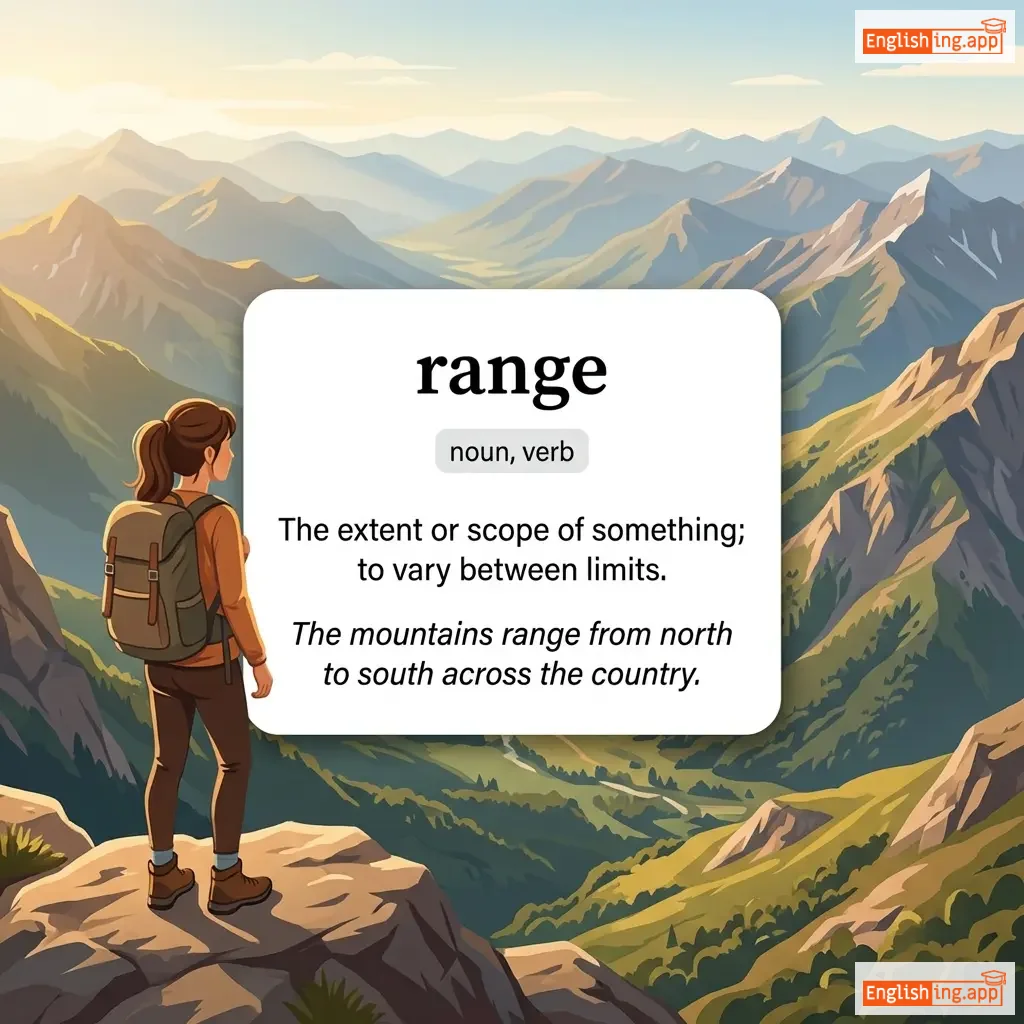
The extent or scope of something; to vary between limits.
••••••
|
The mountains range from north to south across the country.
这些山脉从北到南横跨全国。
••••••
|
这些山脉从北到南贯穿全国。
Zhe xie shanmai cong bei dao nan guanchuan quan guo.
••••••
|
out of range
超出范围
••••••
|
Beyond the limits of something, especially distance or capability.
••••••
|
超出范围
chaochu fanwei
••••••
|
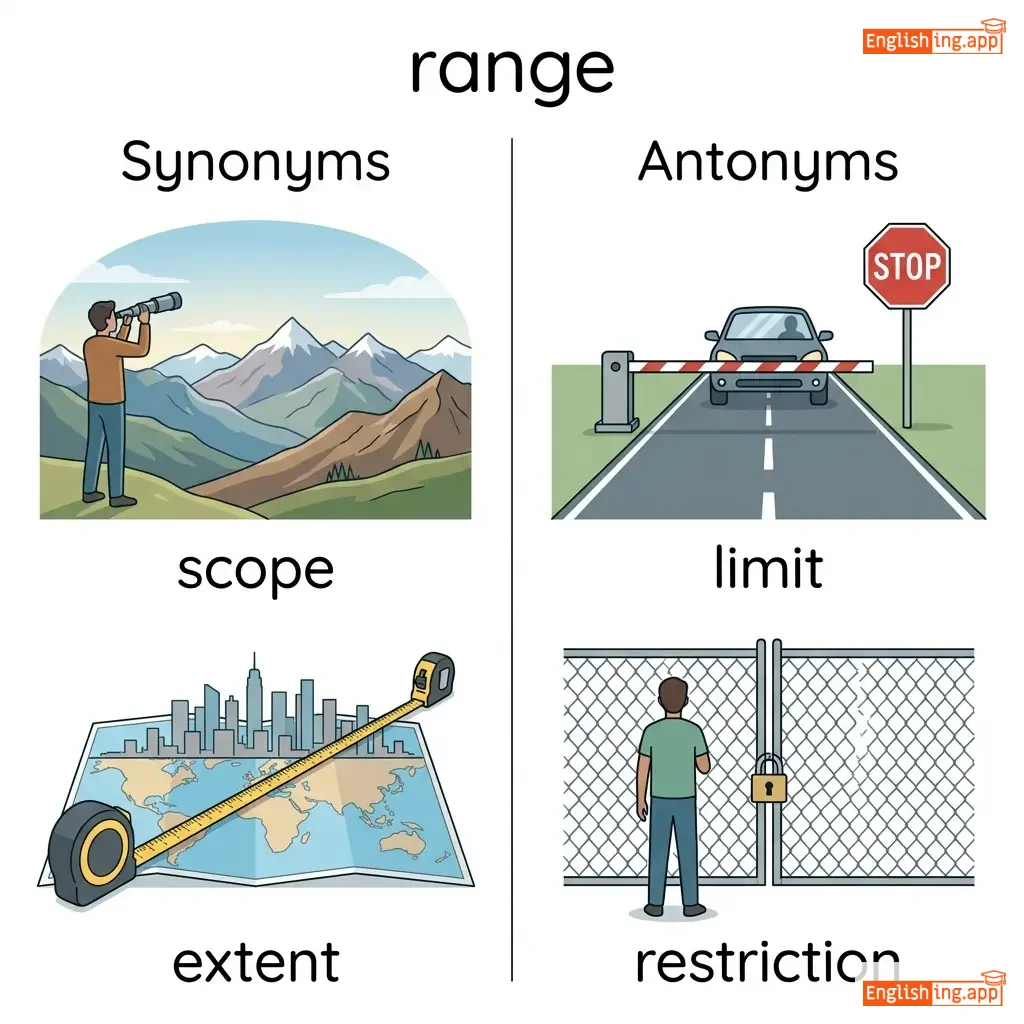
scope, extent, span, spectrum, vary
••••••
|
limit, restriction, narrow
••••••
|
wide range, price range, range of motion, mountain range
••••••
|
RANGE 代表范围 - Range Rover 穿越了所有的范围。
••••••
|
|
🎖️
••••••
|
/ræŋk/
noun, verb, adjective
(rank)
••••••
|
- •••••• |
职级
zhijí
••••••
|
ranked
ranked
••••••
|
ranked
ranked
••••••
|
ranks
ranks
••••••
|
ranking
ranking
••••••
|
A position in a hierarchy; to place in order according to importance or quality.
••••••
|
She quickly rose to a senior rank in the company.
她迅速晋升为公司中的高级职位。
••••••
|
她迅速晋升为公司中的高级职位。
Ta xunsu jinsheng wei gongsi zhong de gaoji zhiwei.
••••••
|
rank and file
职位与普通员工
••••••
|
The ordinary members of an organization as opposed to its leaders.
••••••
|
普通成员
putong chengyuan
••••••
|
position, status, level, grade, standing
••••••
|
insignificance, unimportance
••••••
|
military rank, rank order, high rank, rank and file
••••••
|
Rank是职位的意思,就像在军队中职位非常重要。
••••••
|
|
🏆
••••••
|
/ˈræŋkɪŋ/
noun
(排名)
••••••
|
- •••••• |
排名
paiming
••••••
|
- •••••• | - •••••• | - •••••• | - •••••• |
a position in a list or hierarchy, especially in terms of performance or importance
••••••
|
His ranking in the competition improved after each round. |
他在比赛中的排名在每一轮之后都有所提高。
Ta zai bisai zhong de paiming zai mei yi lun zhihou dou you suo tigao.
••••••
|
- •••••• | - •••••• | - •••••• |
position, standing, status, classification
••••••
|
bottom, low, inferior
••••••
|
ranking system, top ranking, global ranking, national ranking
••••••
|
排名意味着你在比赛中的位置!
••••••
|
|
⚡
••••••
|
/ˈræp.ɪd/
adjective
(快速)
••••••
|
- •••••• |
快速
kuai su
••••••
|
- •••••• | - •••••• | - •••••• | - •••••• |
happening quickly or in a short time
••••••
|
The company experienced rapid growth last year. |
公司去年经历了快速增长。
Gongsi qunian jingli le kuai su zengzhang.
••••••
|
rapid-fire |
happening very quickly in succession
••••••
|
快速射击
kuai su she ji
••••••
|
fast, quick, swift, speedy
••••••
|
slow, sluggish, delayed
••••••
|
rapid growth, rapid progress, rapid change, rapid development
••••••
|
快速就像闪电一样迅速。
••••••
|
|
⚡
••••••
|
/ˈræp.ɪd.li/
adverb
(快速)
••••••
|
- •••••• |
快速地; 迅速
kuàisù de; xùnsù
••••••
|
- •••••• | - •••••• | - •••••• | - •••••• |
at a fast speed; quickly
••••••
|
The company is rapidly expanding into new markets. |
公司正在迅速拓展新市场。
Gōngsī zhèngzài xùnsù tuòzhǎn xīn shìchǎng.
••••••
|
- •••••• | - •••••• | - •••••• |
quickly, swiftly, speedily, fast
••••••
|
slowly, gradually, leisurely
••••••
|
rapidly growing, rapidly changing, rapidly expanding
••••••
|
No •••••• |
|
🦄
••••••
|
/reər/
adjective
(rèér)
••••••
|
- •••••• |
稀有
xiyou
••••••
|
- •••••• | - •••••• | - •••••• | - •••••• |
Unusual or uncommon; not occurring often.
••••••
|
This species of bird is extremely rare. |
这种鸟类极为稀有。
Zhe zhong niaolei jiwei xiyou.
••••••
|
rare opportunity |
a chance that does not happen often
••••••
|
稀有的机会
xiyou de jihui
••••••
|
unusual, uncommon, exceptional, unique, extraordinary
••••••
|
common, ordinary, usual
••••••
|
rare species, rare disease, rare occasion, rare gem
••••••
|
稀有即意味着珍贵,如珍稀宝石。
••••••
|
|
🚫
••••••
|
/ˈrɛə(r)li/
adverb
(rèi lì)
••••••
|
- •••••• |
很少
hen shao
••••••
|
- •••••• | - •••••• | - •••••• | - •••••• |
not often, infrequently
••••••
|
She rarely eats sweets because of her diet. |
她因为饮食限制,很少吃糖果。
Ta yinwei yinshi xianzhi, hen shao chi tangguo.
••••••
|
- •••••• | - •••••• | - •••••• |
seldom, infrequently, occasionally, hardly
••••••
|
frequently, often, regularly
••••••
|
rarely seen, rarely used, rarely happens, rarely speaks
••••••
|
Rarely - Think of rare moments, very unusual
••••••
|
|
🐀
••••••
|
/ræt/
noun
(ræt)
••••••
|
- •••••• |
老鼠
laoshu
••••••
|
- •••••• | - •••••• | - •••••• | - •••••• |
a small rodent that resembles a large mouse, often considered a pest
••••••
|
A rat ran across the kitchen floor last night. |
一只老鼠昨晚在厨房的地板上跑过。
yi zhi laoshu zuowan zai chufang de diban shang paoguo.
••••••
|
smell a rat |
to suspect that something is wrong or dishonest
••••••
|
闻到老鼠味
wendao laoshu wei
••••••
|
rodent, mouse, pest, vermin, creature
••••••
|
pet, friend, ally
••••••
|
rat trap, lab rat, dead rat, sewer rat
••••••
|
厨房里有老鼠,闻到了不对劲的味道!
••••••
|
|
💰
••••••
|
/reɪt/
noun
(reɪt)
••••••
|
- •••••• |
费率
feilü
••••••
|
- •••••• | - •••••• | - •••••• | - •••••• |
the cost or price of something, or the amount at which something happens
••••••
|
The rate of inflation is increasing every year. |
通货膨胀率每年都在上升。
Tōnghuò péngzhàng lǜ měi nián dōu zài shàngshēng.
••••••
|
- •••••• | - •••••• | - •••••• |
price, cost, charge, value
••••••
|
discount, decrease
••••••
|
interest rate, hourly rate, exchange rate, rate of return
••••••
|
Rate - 想象在购买商品时的'价格比率'
••••••
|
|
🤔
••••••
|
/ˈrɑː.ðər/
adverb
(雷瑟)
••••••
|
- •••••• |
宁愿; 而不是;
níngyuàn; ér bù shì;
••••••
|
- •••••• | - •••••• | - •••••• | - •••••• |
to some extent; instead; preferably
••••••
|
I would rather stay home than go to the party. |
我宁愿待在家里,也不想去派对。
Wǒ níngyuàn dāi zài jiālǐ, yě bù xiǎng qù pàiduì
••••••
|
- •••••• | - •••••• | - •••••• |
somewhat, instead, preferably, quite
••••••
|
absolutely, completely, entirely
••••••
|
rather than, rather like, would rather
••••••
|
Rather 用来表示选择,比如宁愿做某事而不是做另一个。
••••••
|
|
⭐
••••••
|
/ˈreɪtɪŋ/
noun
(雷廷)
••••••
|
- •••••• |
评分
pingfen
••••••
|
- •••••• | - •••••• | - •••••• | - •••••• |
an evaluation or assessment, usually numerical
••••••
|
The movie received a high rating from critics. |
这部电影得到了评论家的高评分。
Zhe bu dianying dedaole pinglunjia de gao pingfen.
••••••
|
- •••••• | - •••••• | - •••••• |
score, grade, evaluation, review
••••••
|
disapproval, rejection
••••••
|
rating scale, star rating, customer rating
••••••
|
当你给东西评分时,想象电影的星级评分。
••••••
|
|
🔢
••••••
|
/ˈreɪʃoʊ/
noun
(瑞肖)
••••••
|
- •••••• |
比例
bǐlì
••••••
|
- •••••• | - •••••• | - •••••• | - •••••• |
a relationship between two numbers showing how many times the first number contains the second
••••••
|
The ratio of boys to girls in the class is 2:1. |
班级中男生和女生的比例是2:1。
Bānjí zhōng nánshēng hé nǚshēng de bǐlì shì 2:1.
••••••
|
- •••••• | - •••••• | - •••••• |
proportion, relationship, correlation
••••••
|
disproportion
••••••
|
ratio of, ratio analysis, ratio scale
••••••
|
Remember a ratio like 2:1 when you see proportions.
••••••
|
|
🧠
••••••
|
/ˈræʃənəl/
adjective
••••••
|
- •••••• | - •••••• | - •••••• | - •••••• | - •••••• | - •••••• |
based on or in accordance with reason or logic
••••••
|
She made a rational decision after considering all the facts. |
- •••••• |
rational mind |
a logical and clear-thinking mind
••••••
|
- •••••• |
logical, reasonable, sensible, sound, coherent
••••••
|
irrational, illogical, unreasonable
••••••
|
rational decision, rational explanation, rational behavior, rational argument
••••••
|
No •••••• |
|
🔔
••••••
|
/ˈrætəl/
noun, verb
(拉托)
••••••
|
- •••••• |
嘎啦作响;拨浪鼓
gala zuoxiang; bolanggu
••••••
|
rattled
拉托德
••••••
|
rattled
拉托德
••••••
|
rattles
拉托斯
••••••
|
rattling
拉托林
••••••
|
to make a rapid series of short, sharp sounds; a device or object that makes such a sound
••••••
|
The loose window began to rattle in the strong wind.
德 卢斯 温多 比甘 图 拉托 因 德 斯特朗 温德。
••••••
|
在强风中,松动的窗户嘎啦作响。
Zai qiangfeng zhong songdong de chuanghu gala zuoxiang
••••••
|
rattle someone's cage
拉托 萨姆万斯 凯奇
••••••
|
to deliberately annoy or unsettle someone
••••••
|
故意惹恼某人
guyi renao mouren
••••••
|
clatter, jangle, shake, disturb, unsettle
••••••
|
calm, soothe, silence
••••••
|
rattle loudly, rattle the windows, baby rattle, bones rattle
••••••
|
Rattle 像 鼓 在响
••••••
|
|
🥩
••••••
|
/rɔː/
adjective
(rǒu)
••••••
|
- •••••• |
生的; 未处理的; 自然状态; 没有经验的
shēng de; wèi chùlǐ de; zìrán zhuàngtài; méiyǒu jīngyàn de
••••••
|
- •••••• | - •••••• | - •••••• | - •••••• |
uncooked; not processed; in natural state; inexperienced
••••••
|
The chef prefers to use raw vegetables in his salads.
厨师喜欢在沙拉中使用生蔬菜。
••••••
|
厨师喜欢在沙拉中使用生蔬菜。
Chúshī xǐhuān zài shālā zhōng shǐyòng shēng shūcài.
••••••
|
- •••••• | - •••••• | - •••••• |
uncooked, fresh, natural, crude, unprocessed
••••••
|
cooked, processed, refined, prepared
••••••
|
raw material, raw data, raw vegetables, raw meat, raw talent
••••••
|
生食保持原始自然,像是生鲜蔬菜在沙拉中
••••••
|
|
🌞
••••••
|
/reɪ/
noun
(rèi)
••••••
|
- •••••• |
光线
guāngxiàn
••••••
|
- •••••• | - •••••• | - •••••• | - •••••• |
a narrow beam of light, heat, or radiation
••••••
|
A ray of sunlight broke through the clouds. |
一束阳光穿透了云层。
Yī shù yángguāng chuāntòu le yúncéng.
••••••
|
- •••••• | - •••••• | - •••••• |
beam, beam of light, shaft, streak
••••••
|
darkness, shade, gloom
••••••
|
ray of light, ray of hope, X-ray, laser ray
••••••
|
光线,像太阳的光线一样!
••••••
|
|
🎯
••••••
|
/riːtʃ/
verb
(rīch)
••••••
|
|
到达
dàodá
••••••
|
reached
rīchd
••••••
|
reached
rīchd
••••••
|
reaches
rīches
••••••
|
reaching
rīching
••••••
|
to arrive at a destination; to extend one's arm to touch something
••••••
|
We will reach the station in ten minutes.
我们将在十分钟内到达车站。
••••••
|
我们将在十分钟内到达车站。
Wǒmen jiāng zài shí fēnzhōng nèi dàodá chēzhàn.
••••••
|
- •••••• | - •••••• | - •••••• |
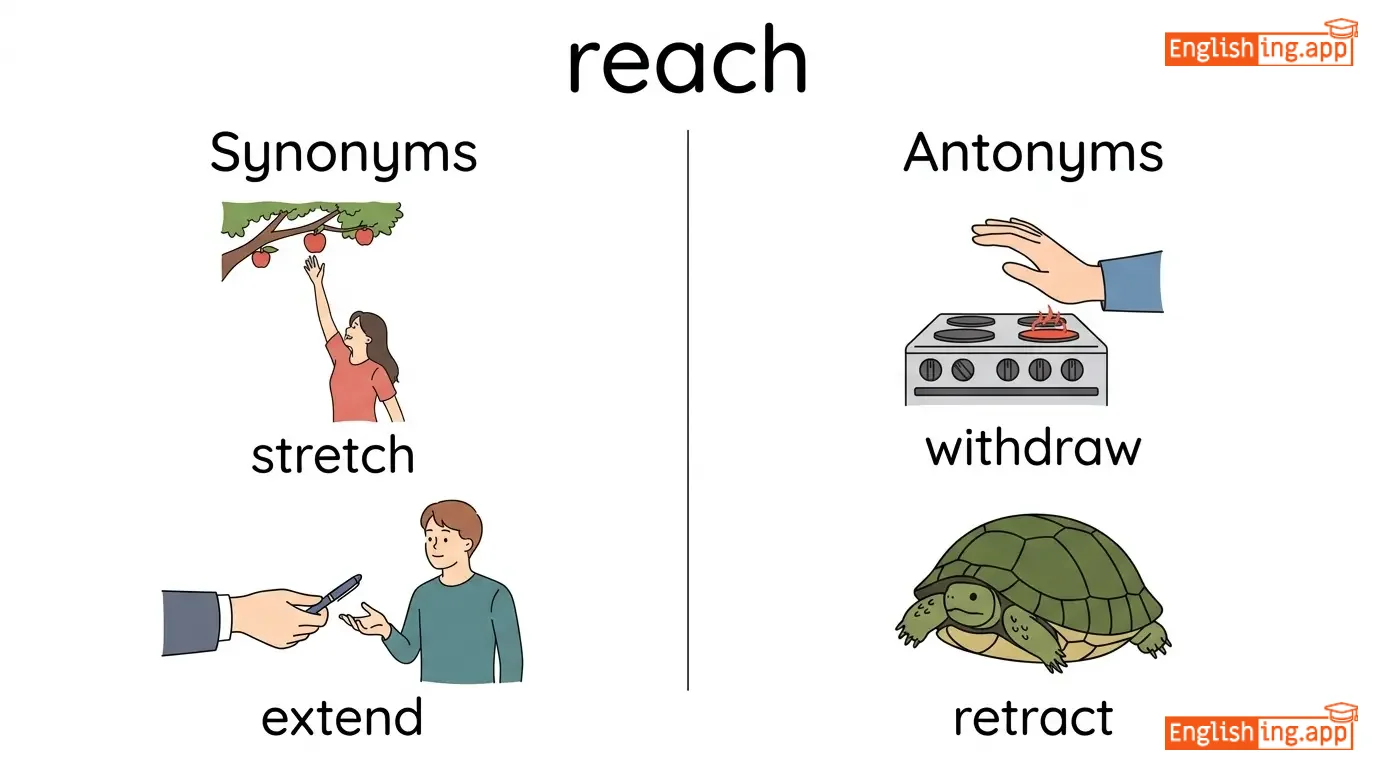
arrive, attain, achieve, extend
••••••
|
leave, depart, miss, fall short
••••••
|
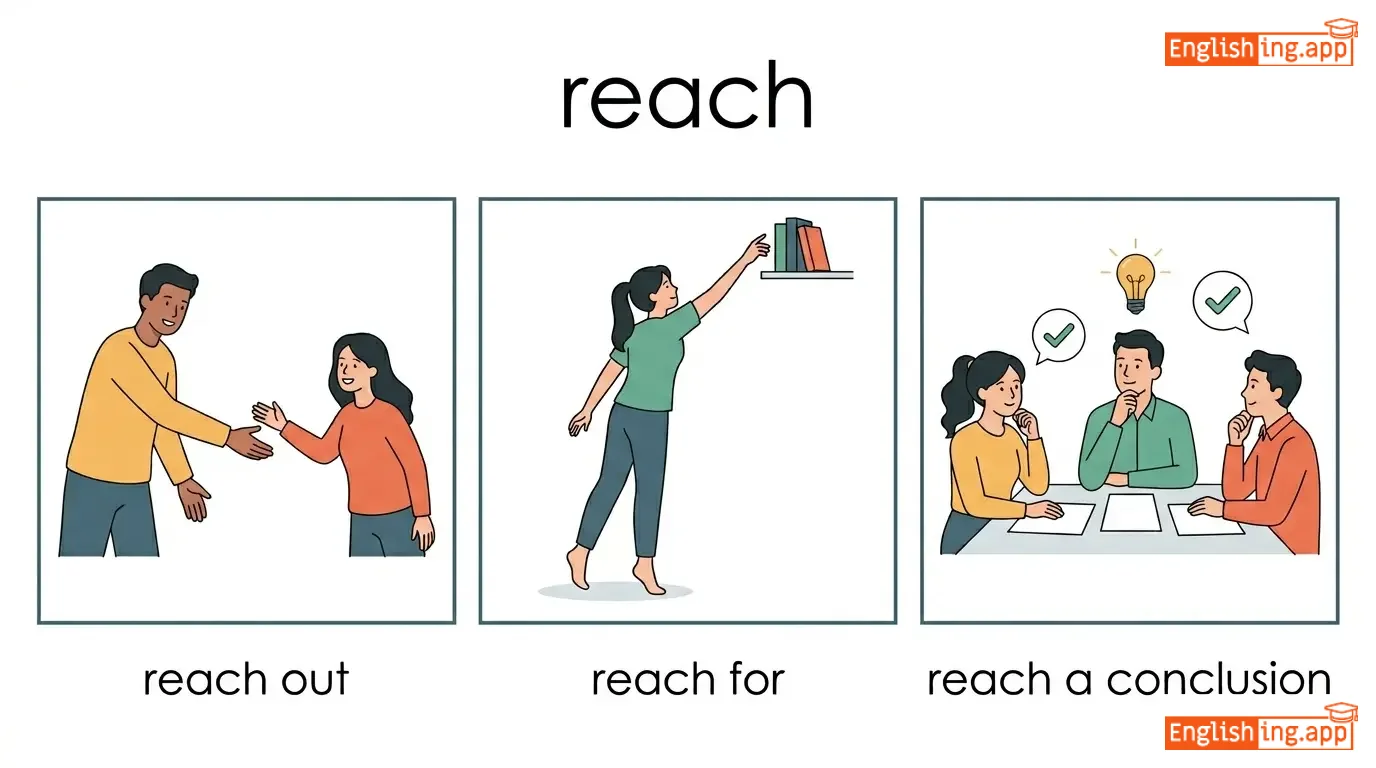
reach safely, reach out, reach goals, reach agreement, reach limits
••••••
|
Reach = 到达, 伸手去触摸.
••••••
|
|
😡
••••••
|
/riˈækt/
verb
(rékè tè)
••••••
|
- •••••• |
反应
fǎnyìng
••••••
|
reacted
rékè tèd
••••••
|
reacted
rékè tèd
••••••
|
reacts
rékè tè sī
••••••
|
reacting
rékè tè yìng
••••••
|
to respond or behave in a particular way to something
••••••
|
She reacted angrily when she heard the news.
她听到这个消息后愤怒地做出了反应。
••••••
|
她听到这个消息后愤怒地做出了反应。
Tā tīng dào zhège xiāoxī hòu fènnù de zuò chūle fǎnyìng.
••••••
|
- •••••• | - •••••• | - •••••• |
respond, reply, answer, counter
••••••
|
ignore, avoid
••••••
|
react to, react quickly, react negatively
••••••
|
React,当愤怒的时候做出反应!
••••••
|
|
⚡
••••••
|
/riˈækʃən/
noun
(反应)
••••••
|
|
反应
fanying
••••••
|
- •••••• | - •••••• | - •••••• | - •••••• |
A response to a situation, event, or stimulus; also a chemical change involving reactants and products.
••••••
|
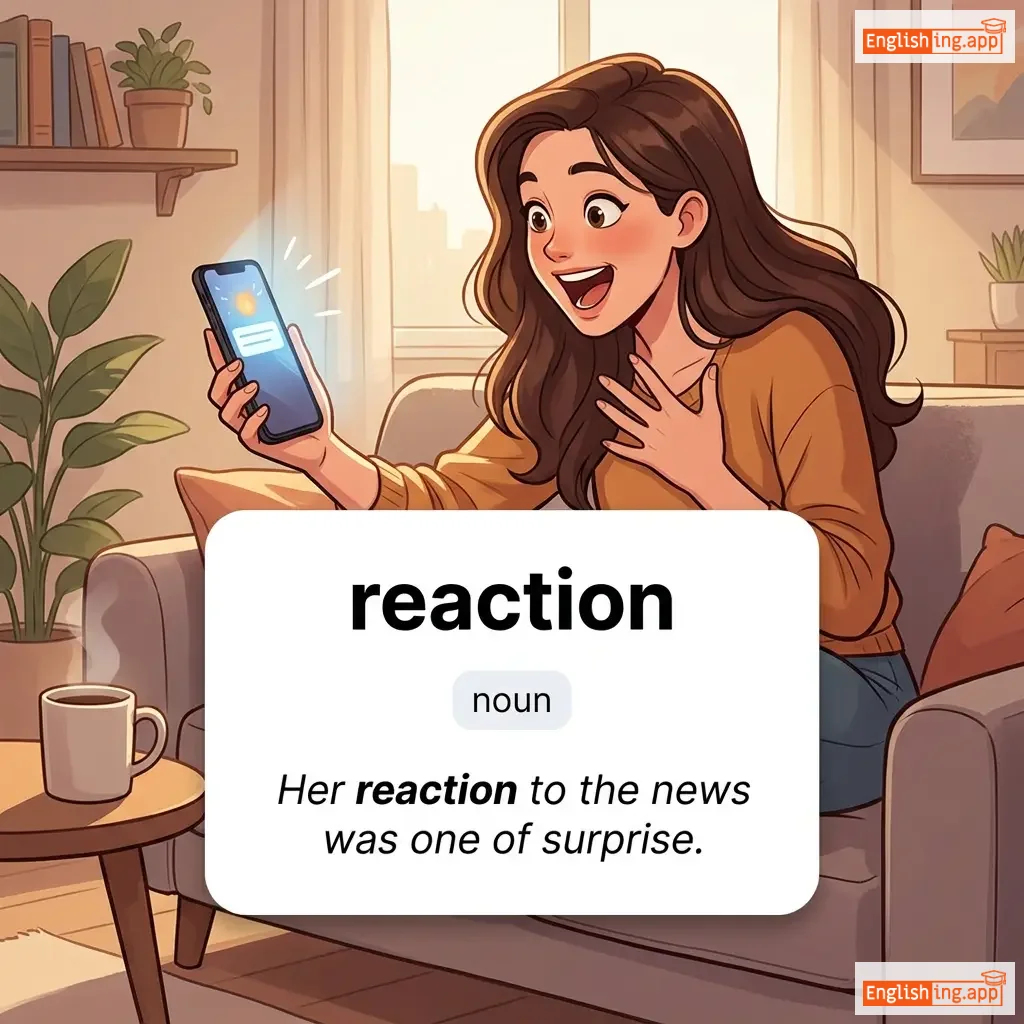
Her reaction to the news was one of surprise. |
她对新闻的反应是惊讶。
Ta dui xinwen de fanying shi jingya.
••••••
|
knee-jerk reaction |
An immediate and automatic response without thought.
••••••
|
膝跳反应
xitiaofan ying
••••••
|
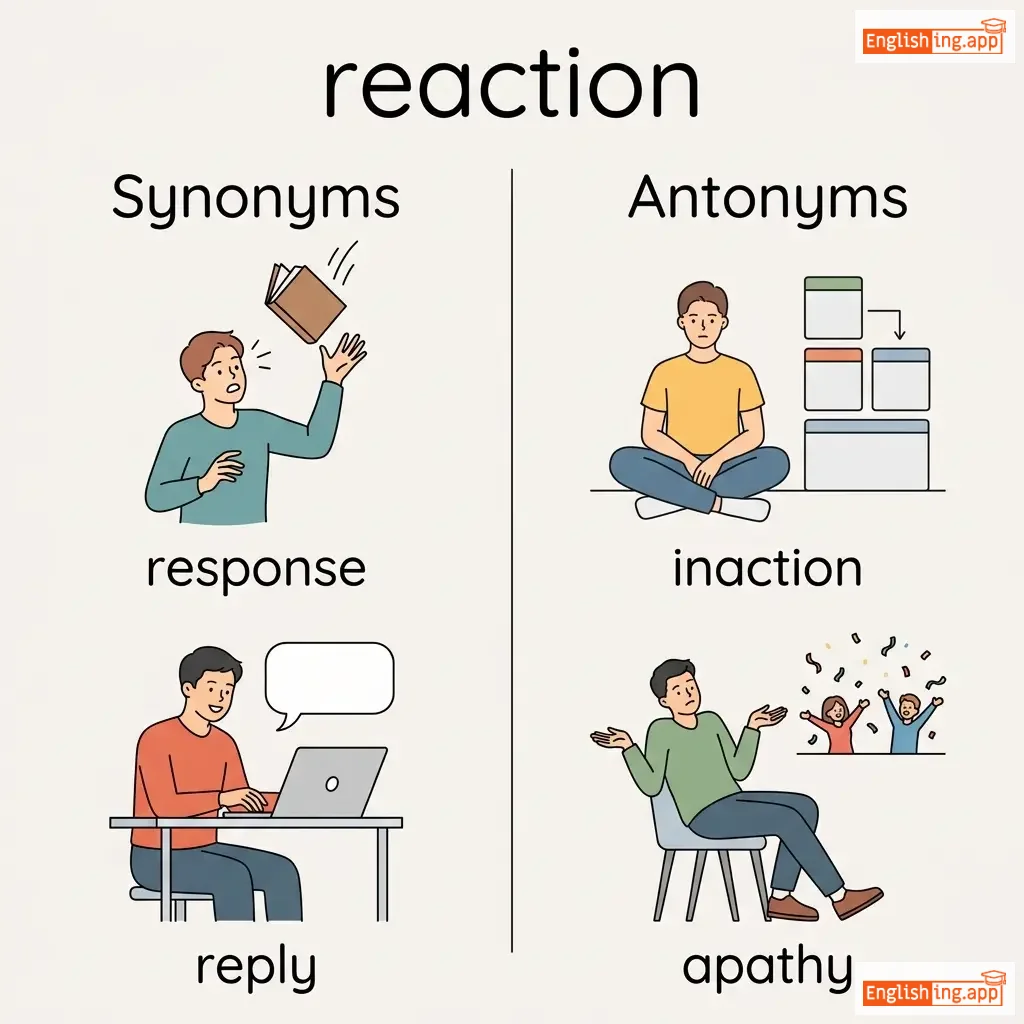
response, reply, reflex, feedback
••••••
|
inaction, apathy
••••••
|
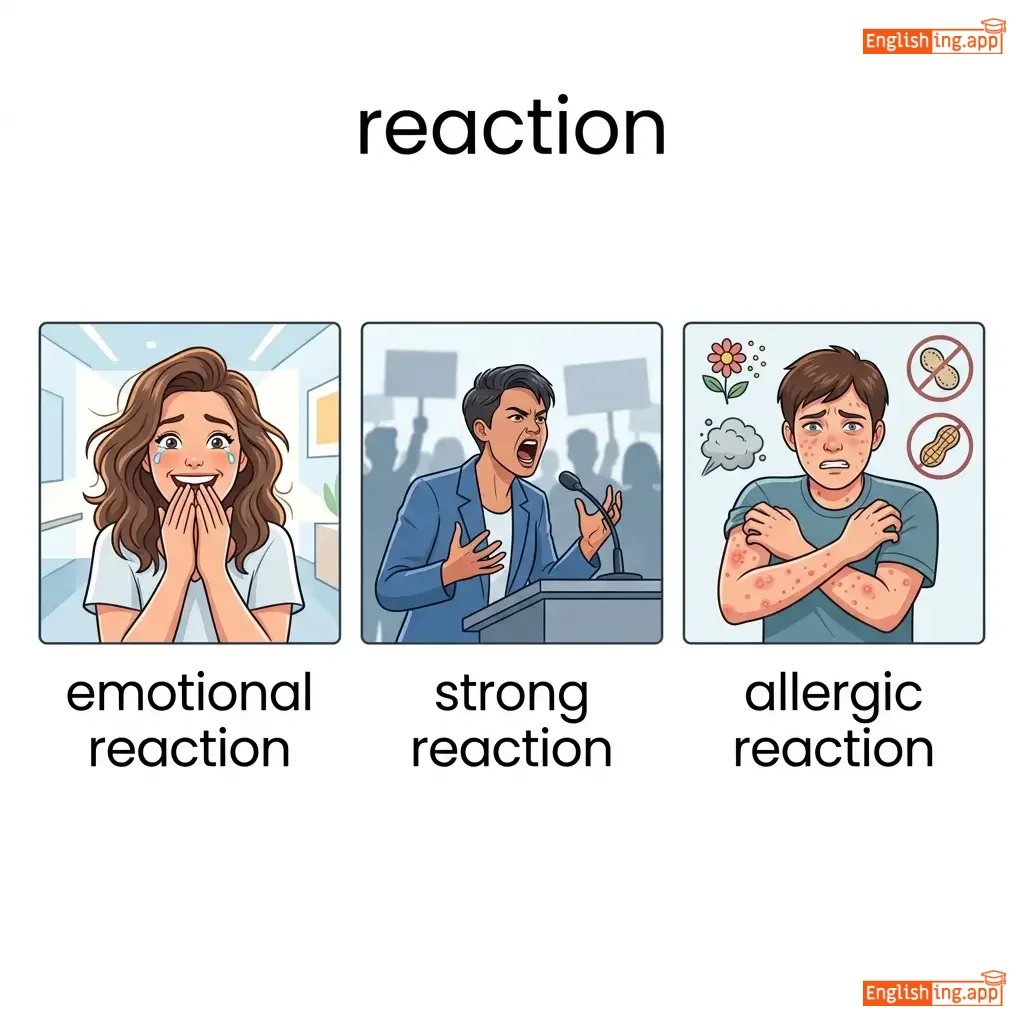
emotional reaction, strong reaction, allergic reaction, public reaction
••••••
|
反应意味着你对任何事情的自然反应,就像膝跳反应。
••••••
|
|
📖
••••••
|
/riːd/
verb
(lì)
••••••
|
- •••••• |
读
du
••••••
|
read
lì
••••••
|
read
lì
••••••
|
reads
lì
••••••
|
reading
lìdíng
••••••
|
to look at written words and understand their meaning
••••••
|
I read books before going to bed.
wǒ zhèngzài kàn shū zài shuìjiào zhīqián.
••••••
|
我在睡觉前读书。
Wǒ zài shuìjiào qián dúshū.
••••••
|
- •••••• | - •••••• | - •••••• |
study, peruse, scan, review
••••••
|
write, ignore, overlook
••••••
|
read books, read aloud, read carefully, love to read
••••••
|
读书: 看书,理解意思
••••••
|
|
📖
••••••
|
/ˈriːdər/
noun
(rider)
••••••
|
- •••••• |
读者
duzhe
••••••
|
- •••••• | - •••••• | - •••••• | - •••••• |
a person who reads or who is capable of reading
••••••
|
She is a fast reader, finishing books in a day. |
她是一个快速的读者,一天就能读完书。
Ta shi yige kuaisu de duzhe, yitian jiu neng duwan shu.
••••••
|
- •••••• | - •••••• | - •••••• |
bibliophile, bookworm, student
••••••
|
non-reader
••••••
|
avid reader, fast reader, good reader
••••••
|
READer,那个总是读书的人!
••••••
|
|
😊
••••••
|
/ˈred.ɪ.li/
adverb
(瑞迪利)
••••••
|
- •••••• |
乐意地; 容易地; 毫不犹豫
lè yì de; róng yì de; háo bù yóu yù
••••••
|
- •••••• | - •••••• | - •••••• | - •••••• |
willingly; easily; without hesitation
••••••
|
She readily agreed to help with the project. |
她乐意地同意帮助项目。
Tā lè yì de tóng yì bāng zhù xiàng mù.
••••••
|
- •••••• | - •••••• | - •••••• |
willingly, easily, eagerly, gladly
••••••
|
reluctantly, hesitantly, unwillingly
••••••
|
readily available, readily accept, readily admit
••••••
|
Readily = 像准备好一样,毫不犹豫地行动。
••••••
|
|
📖
••••••
|
/ˈriːdɪŋ/
noun
(rídīng)
••••••
|
- •••••• |
阅读
yuèdú
••••••
|
- •••••• | - •••••• | - •••••• | - •••••• |
the action or skill of reading
••••••
|
Reading is one of my favorite hobbies. |
阅读是我最喜欢的爱好之一。
Yuèdú shì wǒ zuì xǐhuān de àihào zhī yī.
••••••
|
- •••••• | - •••••• | - •••••• |
perusal, study
••••••
|
skimming, ignoring
••••••
|
reading habits, reading skills, reading time
••••••
|
READing means when you're actually reading books!
••••••
|
|
✅
••••••
|
/ˈrɛd.i/
adjective
(rɛdi)
••••••
|
- •••••• |
准备
zhǔnbèi
••••••
|
- •••••• | - •••••• | - •••••• | - •••••• |
Prepared or available for use or action.
••••••
|
She was ready to leave for the airport. |
她准备好去机场了。
Tā zhǔnbèi hǎo qù jīchǎng le.
••••••
|
get ready |
to prepare oneself
••••••
|
准备好
zhǔnbèi hǎo
••••••
|
prepared, set, equipped, arranged
••••••
|
unprepared, unready
••••••
|
ready to go, get ready, ready for use, ready access
••••••
|
准备意味着你已准备好,如同你为某个任务做好准备。
••••••
|
|
✅
••••••
|
/riːl/
adjective
(瑞尔)
••••••
|
- •••••• |
真实的; 真实的; 不是假的
zhen shi de; zhen shi de; bu shi jia de
••••••
|
- •••••• | - •••••• | - •••••• | - •••••• |
actually existing; genuine; not imaginary or fake
••••••
|
This is a real diamond, not a fake one.
这是一个真实的钻石,不是假的。
••••••
|
这是一个真实的钻石,不是假的。
Zhe shi yige zhenshi de zuanshi, bushi jia de.
••••••
|
- •••••• | - •••••• | - •••••• |
genuine, authentic, actual, true, legitimate
••••••
|
fake, artificial, imaginary, false, counterfeit
••••••
|
real life, real estate, real world, real problem, real situation
••••••
|
真正的钻石是真实的,不是假的!
••••••
|
|
🎨
••••••
|
/ˈrɪə.lɪ.zəm/
noun
(现实主义)
••••••
|
- •••••• |
现实主义
xianshizhuyi
••••••
|
- •••••• | - •••••• | - •••••• | - •••••• |
The quality of representing things as they are; a practical or factual view.
••••••
|
Her paintings are admired for their realism. |
她的画作因其现实主义而受到赞赏。
Tā de huàzuò yīn qí xiànshí zhǔyì ér shòudào zànshǎng.
••••••
|
face reality |
to accept things as they really are
••••••
|
面对现实
miànduì xiànshí
••••••
|
practicality, authenticity, truth, naturalism
••••••
|
idealism, fantasy, illusion
••••••
|
artistic realism, realism in literature, stark realism, political realism
••••••
|
Real + ism = 现实的观点 = 现实主义
••••••
|
|
🎯
••••••
|
/ˌriːəˈlɪstɪk/
adjective
(rèalìstíkè)
••••••
|
- •••••• |
现实的
xiànshí de
••••••
|
- •••••• | - •••••• | - •••••• | - •••••• |
having or showing a sensible and practical idea of what can be achieved or expected
••••••
|
She gave a realistic estimate of the project's cost. |
她给出了项目成本的现实估计。
Tā gěichūle xiàngmù chéngběn de xiànshí gūjì.
••••••
|
keep it realistic |
to remain practical and grounded about what is possible
••••••
|
保持现实
bǎochí xiànshí
••••••
|
practical, sensible, rational, pragmatic, down-to-earth
••••••
|
unrealistic, idealistic, impractical
••••••
|
realistic goals, realistic approach, realistic expectations, realistic plan
••••••
|
Realistic 就是做实事,保持实际的意思。
••••••
|
|
🌍
••••••
|
/riˈæl.ə.ti/
noun
(现实)
••••••
|


|
现实
xianshi
••••••
|
- •••••• | - •••••• | - •••••• | - •••••• |
the state of things as they actually exist; the actual situation
••••••
|
We need to face the reality of the situation. |
我们需要面对现实情况。
wǒmen xūyào miànduì xiànshí qíngkuàng.
••••••
|
- •••••• | - •••••• | - •••••• |
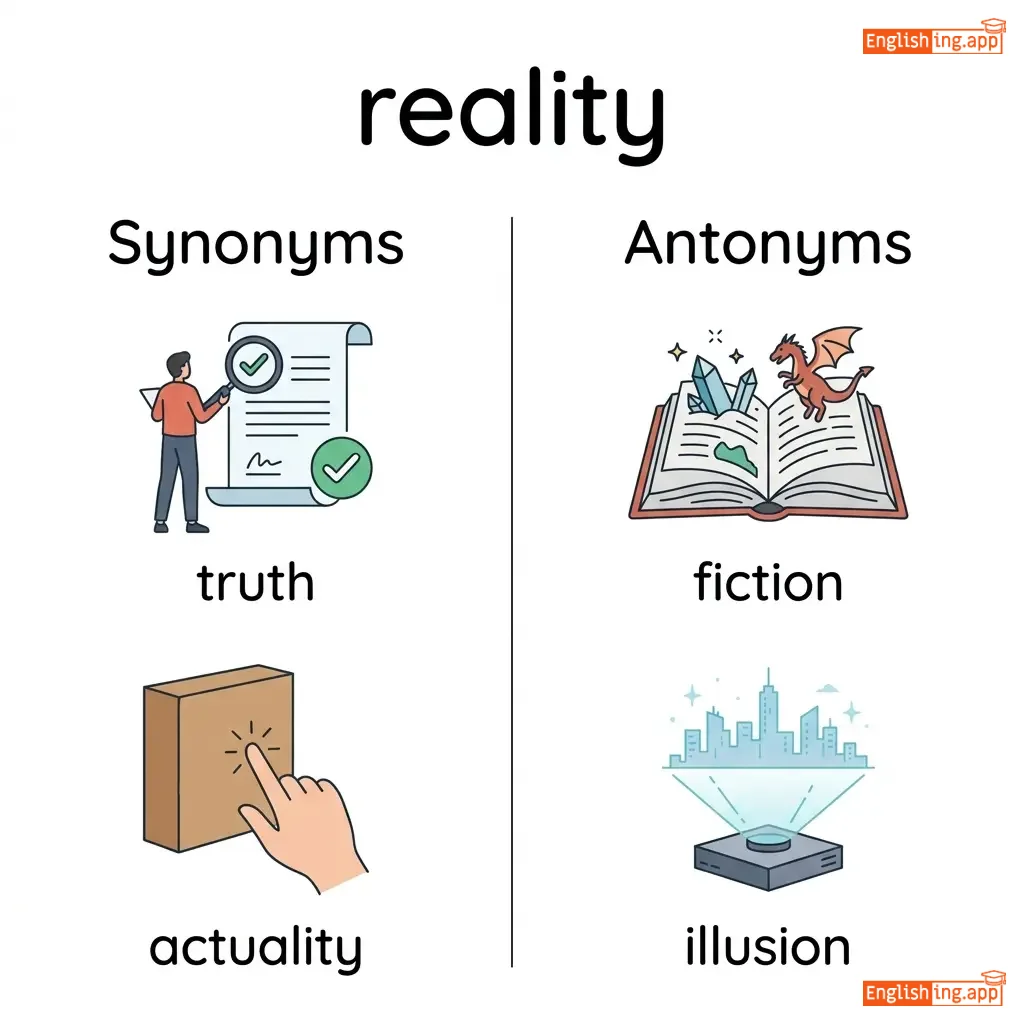
actuality, truth, fact
••••••
|
fantasy, illusion, fiction
••••••
|
face reality, harsh reality, virtual reality
••••••
|
现实 = 真正存在的事物
••••••
|
|
💡
••••••
|
/ˌrɪəlɪˈzeɪʃən/
noun
(实现)
••••••
|
- •••••• |
实现
shixian
••••••
|
- •••••• | - •••••• | - •••••• | - •••••• |
the act of becoming fully aware of something as a fact
••••••
|
Her realization of the problem helped solve the issue. |
她对问题的实现帮助解决了问题。
Ta dui wenti de shixian bangzhu jie jue le wenti.
••••••
|
- •••••• | - •••••• | - •••••• |
understanding, awareness, comprehension, recognition
••••••
|
ignorance, misunderstanding, confusion
••••••
|
sudden realization, personal realization, painful realization
••••••
|
实现就是完全理解,像是解决问题
••••••
|
|
💡
••••••
|
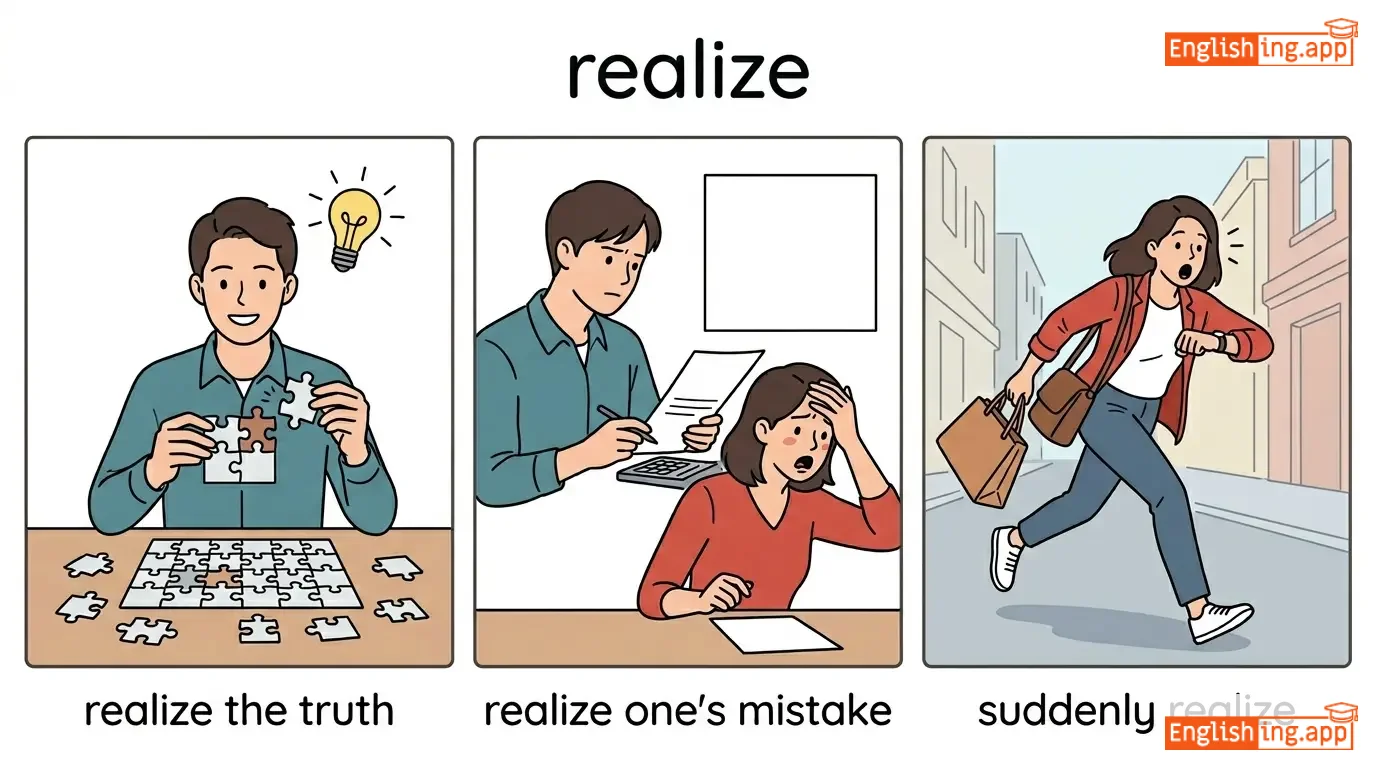
/ˈriːəlaɪz/
verb
(海皮耐兹)
••••••
|

|
意识到
yishi dao
••••••
|
realized
海皮耐兹德
••••••
|
realized
海皮耐兹德
••••••
|
realizes
海皮耐兹斯
••••••
|
realizing
海皮耐兹英
••••••
|
to become aware of; to understand clearly; to achieve or make real
••••••
|
I didn't realize how late it was until I checked the clock.
我没意识到已经这么晚了,直到我看了钟。
••••••
|
我没意识到已经这么晚了,直到我看了钟。
wo mei yishi dao yijing zheme wan le zhidao wo kan le zhong
••••••
|
- •••••• | - •••••• | - •••••• |
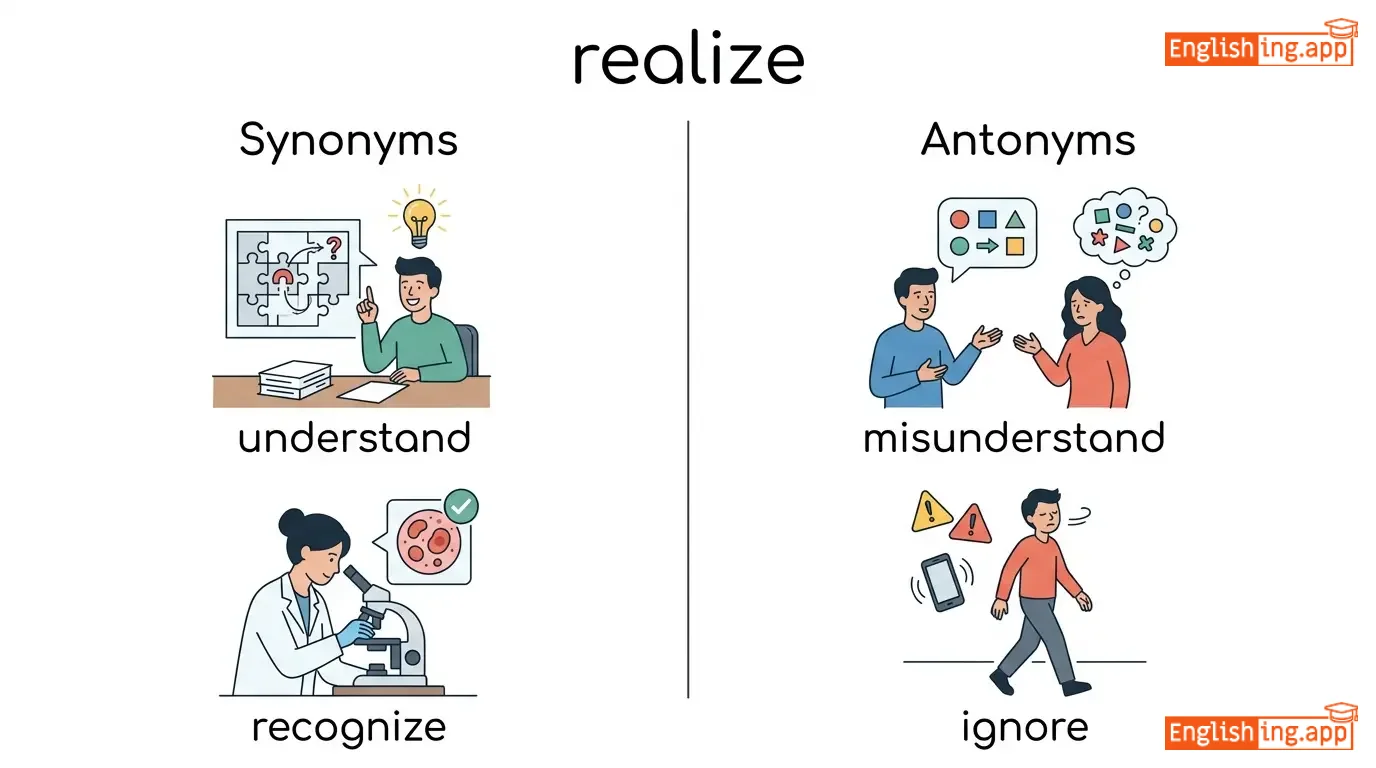
understand, recognize, comprehend, achieve
••••••
|
misunderstand, ignore, overlook, fail
••••••
|
realize potential, realize dreams, suddenly realize, realize mistake
••••••
|
Realize is 意识到 — think of 'Yi-shi' as 'ye see' the truth.
••••••
|
|
😮
••••••
|
/ˈriː.ə.li/
adverb
(rì-ě-li)
••••••
|
- •••••• |
实际上; 真的; 非常多
shi-jian-shi; zhen-de; fei-chang duo
••••••
|
- •••••• | - •••••• | - •••••• | - •••••• |
actually; truly; very much
••••••
|
I really enjoyed the concert last night.
我真的很享受昨晚的音乐会。
••••••
|
我真的很享受昨晚的音乐会。
Wo zhen-de hen xiang-shou zuo-wan de yin-le-hui.
••••••
|
- •••••• | - •••••• | - •••••• |
truly, actually, genuinely, indeed
••••••
|
falsely, barely, hardly
••••••
|
really good, really bad, really important
••••••
|
Really enjoying the true concert vibes.
••••••
|
|
👑
••••••
|
/rɛlm/
noun
••••••
|
- •••••• | - •••••• | - •••••• | - •••••• | - •••••• | - •••••• |
A kingdom or domain; a field or area of activity or interest.
••••••
|
He is well known in the realm of science. |
- •••••• |
beyond the realm of possibility |
impossible
••••••
|
- •••••• |
kingdom, domain, territory, sphere
••••••
|
outside, void
••••••
|
realm of science, realm of fantasy, political realm, within the realm
••••••
|
No •••••• |
|
🐈
••••••
|
/rɪər/
noun, verb
(里尔)
••••••
|
- •••••• |
后面 / 抚养
hòu miàn / fǔ yǎng
••••••
|
reared
里尔德
••••••
|
reared
里尔德
••••••
|
rears
里尔斯
••••••
|
rearing
里尔英
••••••
|
the back part of something; to bring up or raise children or animals
••••••
|
The mother cat reared her kittens in a quiet corner.
母猫在安静的角落里抚养她的猫仔。
••••••
|
母猫在安静的角落里抚养她的猫仔。
Mǔ māo zài ān jìng de jiǎo luò lǐ fǔ yǎng tā de māo zǎi.
••••••
|
bring up the rear
带领后面
••••••
|
to be at the back of a group moving forward
••••••
|
走在最后
zǒu zài zuì hòu
••••••
|
back, behind, raise, nurture, lift
••••••
|
front, lower, neglect
••••••
|
rear view, rear door, rear seat, rear window, rear end
••••••
|
Rear表示在后面,就像猫妈妈rear她的猫仔。
••••••
|
|
🤔
••••••
|
/ˈriːzən/
noun, verb
(rīzən)
••••••
|
- •••••• |
原因,理由
yuányīn, lǐyóu
••••••
|
reasoned
rīzənd
••••••
|
reasoned
rīzənd
••••••
|
reasons
rīzənz
••••••
|
reasoning
rīzənɪŋ
••••••
|
A cause, explanation, or justification for an action or event; to think or argue logically.
••••••
|
There is no reason to be upset.
dɛr ɪz no rīzən tu bi əpsɛt.
••••••
|
没有理由生气。
méiyǒu lǐyóu shēngqì.
••••••
|
listen to reason
lɪsən tu rīzən
••••••
|
to be persuaded by logical arguments
••••••
|
听从理由
tīngcóng lǐyóu
••••••
|
cause, ground, logic, justification, rationale
••••••
|
nonsense, irrationality, illogic
••••••
|
good reason, main reason, for this reason, reason behind
••••••
|
Reason 意味着原因,想到 Reason 一切都合乎逻辑 🤔
••••••
|

