|
絵文字
|
単語 | Images | 翻訳 | 過去 | 過去分詞 | 三人称単数 | 動名詞 | 意味 | 例文 | 例文の翻訳 | 表現例 | 表現例の意味 | 表現例の翻訳 | 同義語 | 対義語 | コロケーション | ニーモニック |
|---|---|---|---|---|---|---|---|---|---|---|---|---|---|---|---|---|---|
|
⏸️
••••••
|
/ˌɪntəˈrʌpt/
verb
(インタラプト)
••••••
|
- •••••• |
割り込む
warikomu
••••••
|
interrupted
••••••
|
interrupted
••••••
|
interrupts
••••••
|
interrupting
••••••
|
to stop someone from speaking or doing something by suddenly saying or doing something
••••••
|
She tried not to interrupt while he was speaking. |
彼女は彼が話している間、割り込まないようにした。
Kanojo wa kare ga hanashite iru aida, warikomanai yō ni shita.
••••••
|
interrupt the flow |
to break the natural course of something
••••••
|
流れを割り込む
nagare o warikomu
••••••
|
disturb, hinder, intrude, disrupt, break in
••••••
|
continue, allow, support
••••••
|
interrupt the conversation, interrupt the process, rudely interrupt
••••••
|
割り込むは、会話の流れを急に止めること。
••••••
|
|
⏸️
••••••
|
/ˌɪntəˈrʌpʃən/
noun
(インタラプション)
••••••
|
- •••••• |
中断
chudan
••••••
|
- •••••• | - •••••• | - •••••• | - •••••• |
the act of stopping or breaking the continuity of something; a pause caused by an external action
••••••
|
The meeting was delayed due to an unexpected interruption.
ザ ミーティング ワズ ディレイド デュー トゥ アン インタラプション。
••••••
|
予期しない中断のため会議は遅れた。
yokishinai chudan no tame kaigi wa okureta
••••••
|
- •••••• | - •••••• | - •••••• |
break, disruption, disturbance, pause, interference
••••••
|
continuation, flow, continuity
••••••
|
unexpected interruption, brief interruption, service interruption, constant interruption
••••••
|
インタラプション=中断、音が似ていて覚えやすい
••••••
|
|
⏱️
••••••
|
/ˈɪntərvəl/
noun
(インターバル)
••••••
|
- •••••• |
インターバル
intābaru
••••••
|
- •••••• | - •••••• | - •••••• | - •••••• |
a period of time between two events or points; a pause or break in activity
••••••
|
There was a short interval between the two performances.
二つの公演の間には短いインターバルがありました。
••••••
|
二つの公演の間には短いインターバルがありました。
Futatsu no kōen no aida ni wa mijikai intābaru ga arimashita.
••••••
|
at regular intervals
定期的なインターバルで
••••••
|
repeatedly at the same time gaps
••••••
|
定期的なインターバルで
Teikiteki na intābaru de
••••••
|
gap, break, pause, duration, span
••••••
|
continuation, flow
••••••
|
time interval, regular interval, short interval, interval training
••••••
|
インターバルは時間の間の小休止、まるでイベント間のポーズ。
••••••
|
|
🛑
••••••
|
/ˌɪntərˈviːn/
verb
(インタービーン)
••••••
|
- •••••• |
介入する
kainyū suru
••••••
|
intervened
インタービーンド
••••••
|
intervened
インタービーンド
••••••
|
intervenes
インタービーンズ
••••••
|
intervening
インタービーニング
••••••
|
To come between people, groups, or events, often to prevent conflict or improve a situation.
••••••
|
The teacher had to intervene to stop the fight between the students.
教師は生徒たちの間で喧嘩を止めるために介入しなければならなかった。
••••••
|
教師は生徒たちの間で喧嘩を止めるために介入しなければならなかった。
Kyōshi wa seito-tachi no aida de kenka o tomeru tame ni kainyū shinakereba naranakatta.
••••••
|
intervene in a dispute
争いに介入する
••••••
|
to get involved in an argument or disagreement to try to resolve it
••••••
|
争いに介入する
arasoi ni kainyū suru
••••••
|
mediate, intercede, interfere, step in, arbitrate
••••••
|
ignore, avoid, neglect
••••••
|
intervene in conflict, intervene directly, intervene quickly, intervene diplomatically
••••••
|
インタービーンは介入すること、まるで教師のように!
••••••
|
|
🛑
••••••
|
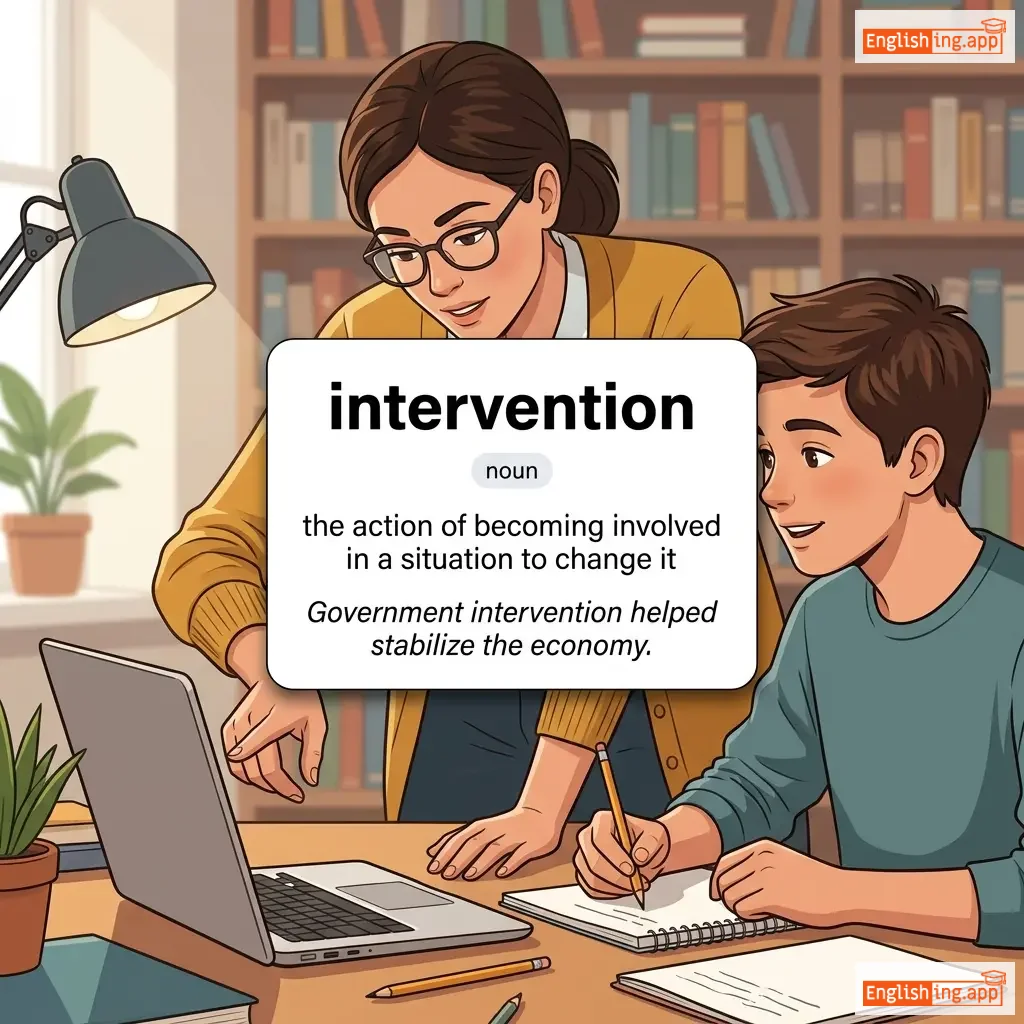
/ˌɪntərˈvɛnʃən/
noun
(インターヴェンション)
••••••
|
|
介入
kaiyū
••••••
|
- •••••• | - •••••• | - •••••• | - •••••• |
the action of becoming involved in a situation to change it
••••••
|
Government intervention helped stabilize the economy. |
政府の介入は経済の安定を助けた。
Seifu no kaiyū wa keizai no antei o tasuketa.
••••••
|
military intervention |
the use of military force in a conflict
••••••
|
軍事介入
gunji kaiyū
••••••
|
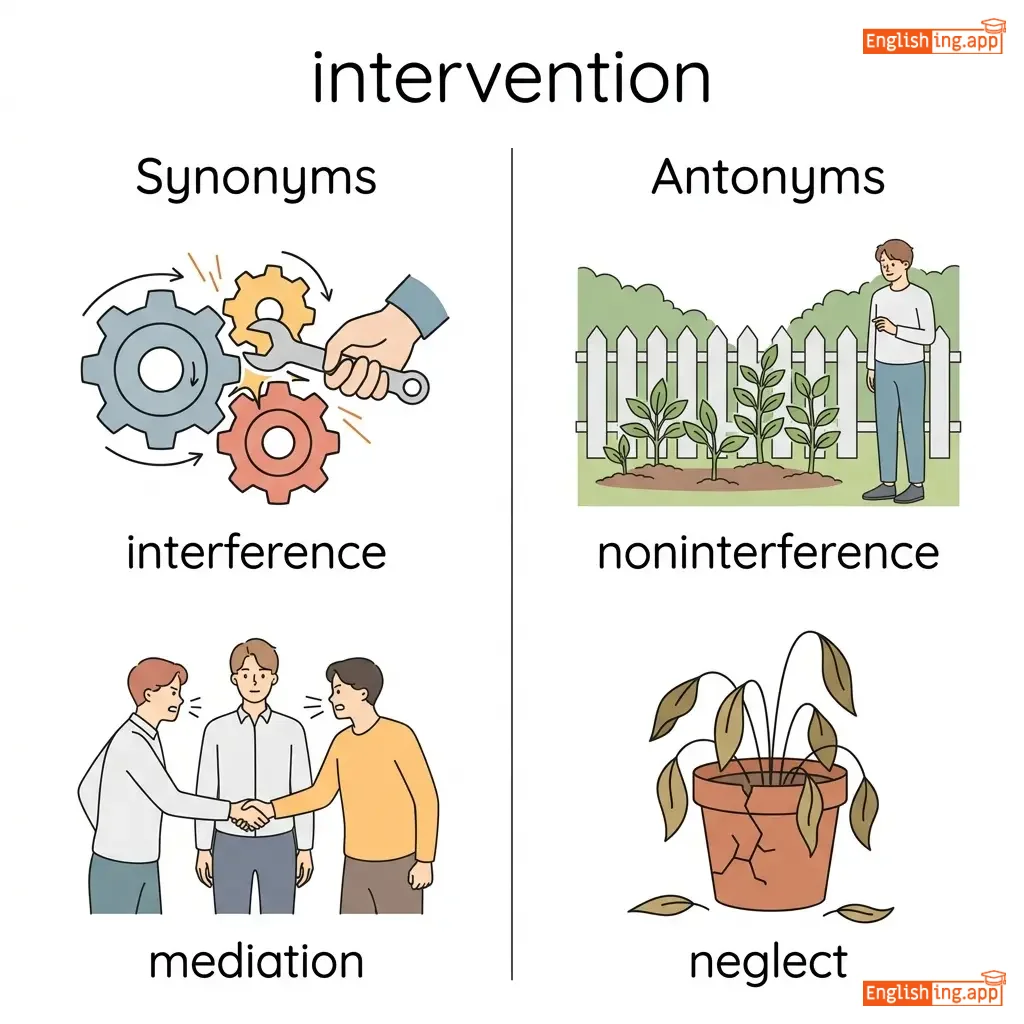
interference, mediation, involvement, intrusion, action
••••••
|
noninterference, neglect, inaction
••••••
|
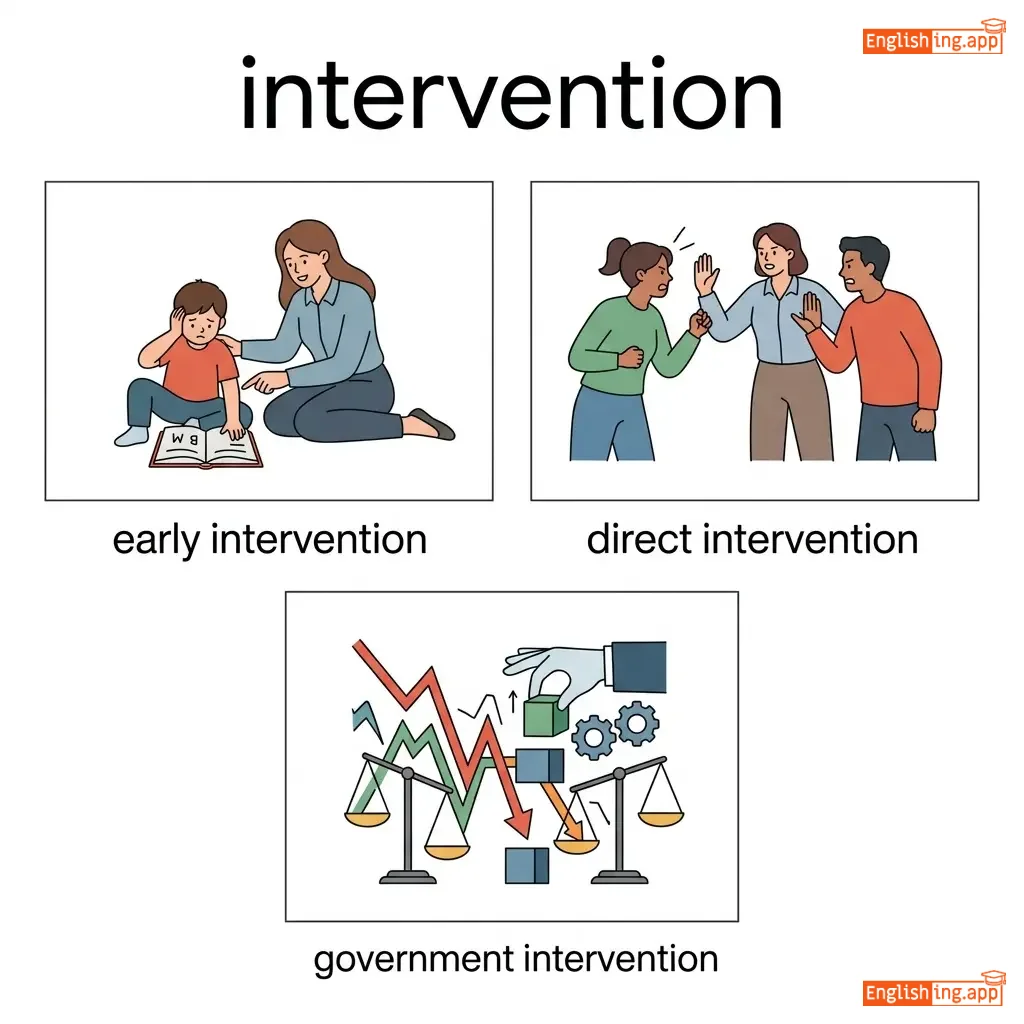
early intervention, direct intervention, government intervention, timely intervention
••••••
|
Interventionは変化をもたらす介入、試験での介入のように!
••••••
|
|
🎤
••••••
|
/ˈɪntərvjuː/
noun, verb
(インタビュー)
••••••
|

|
面接
mensetsu
••••••
|
interviewed
インタビューード
••••••
|
interviewed
インタビューード
••••••
|
interviews
インタビューズ
••••••
|
interviewing
インタビューイング
••••••
|
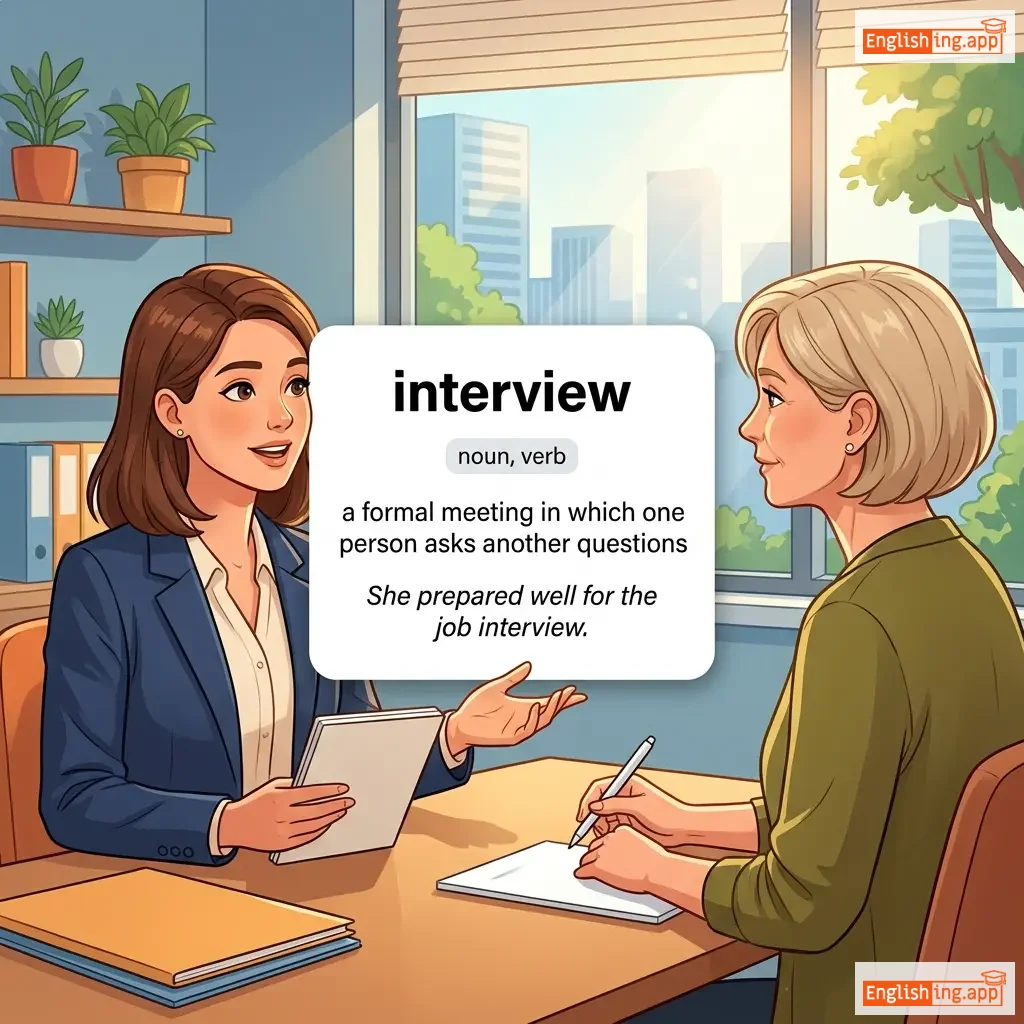
a formal meeting in which one person asks another questions
••••••
|
She prepared well for the job interview.
彼女は仕事の面接のためにしっかりと準備しました。
••••••
|
彼女は仕事の面接のためにしっかりと準備しました。
Kanojo wa shigoto no mensetsu no tame ni shikkari to junbi shimashita.
••••••
|
exit interview
退職面接
••••••
|
a discussion with an employee leaving a company
••••••
|
退職面接
taishoku mensetsu
••••••
|
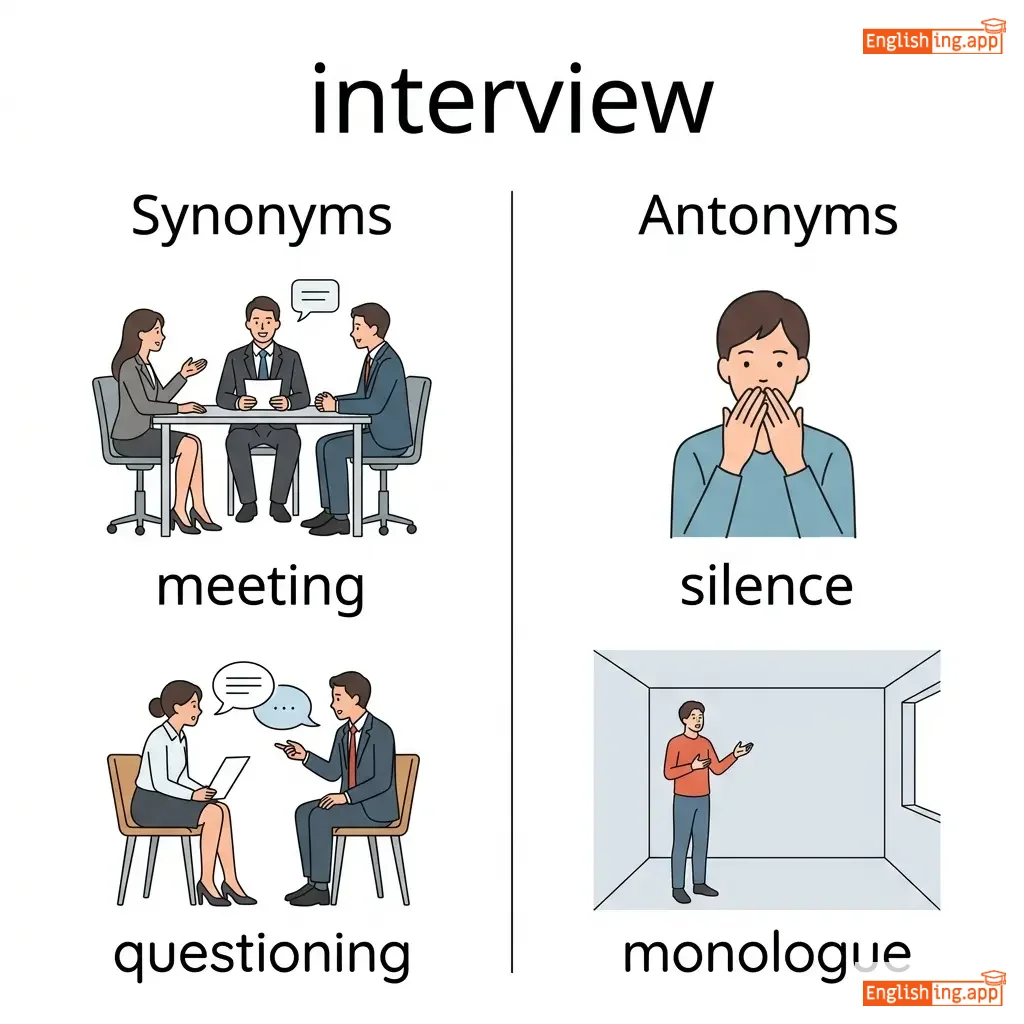
meeting, questioning, discussion, examination, consultation
••••••
|
silence, monologue
••••••
|
job interview, phone interview, conduct interview, interview process
••••••
|
Interviewは面接を意味します — 面接は質問と回答の大きな戦いです。
••••••
|
|
🌹
••••••
|
/ˈɪntɪmət/
adjective
(インティメート)
••••••
|

|
親密
shinmitsu
••••••
|
- •••••• | - •••••• | - •••••• | - •••••• |
Closely acquainted; very familiar and personal.
••••••
|
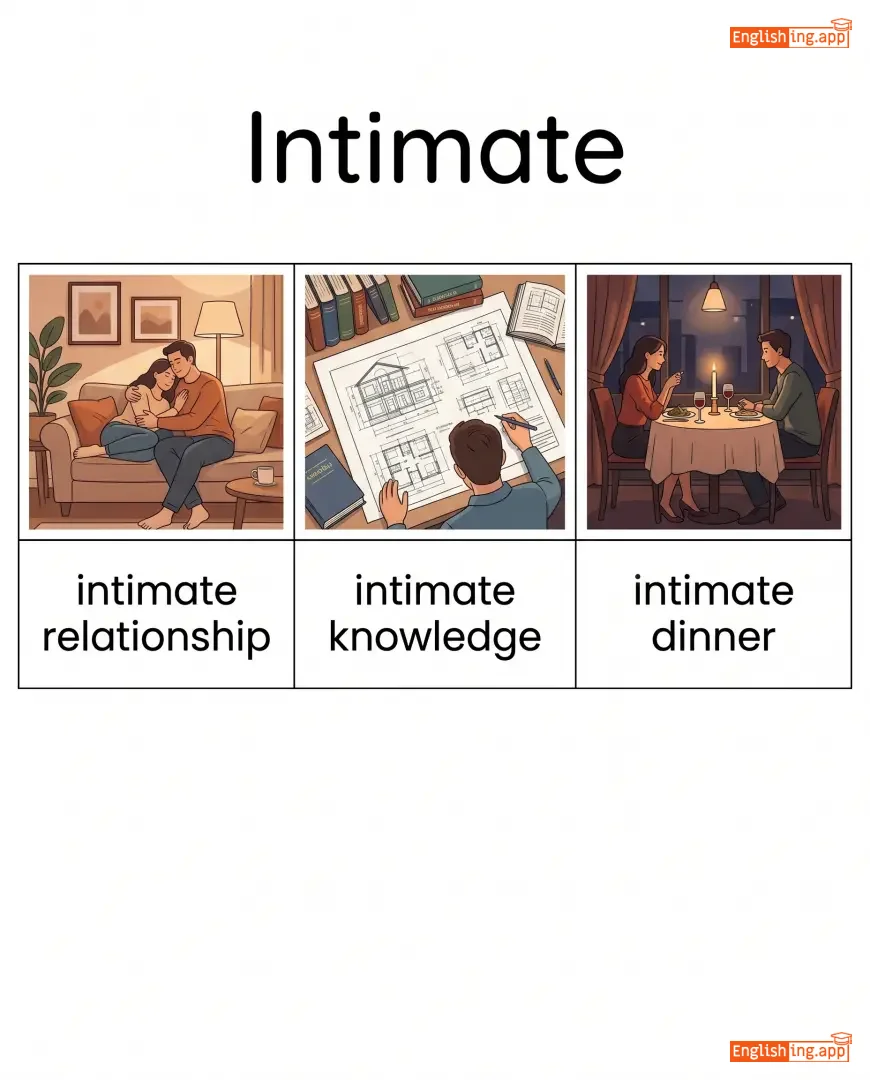
They shared an intimate dinner by candlelight. |
彼らはキャンドルライトの中で親密な夕食を共にした。
Karera wa kyandoru raito no naka de shinmitsu na yūshoku o tomo ni shita.
••••••
|
intimate knowledge |
A deep or detailed understanding of something.
••••••
|
親密な知識
shinmitsu na chishiki
••••••
|
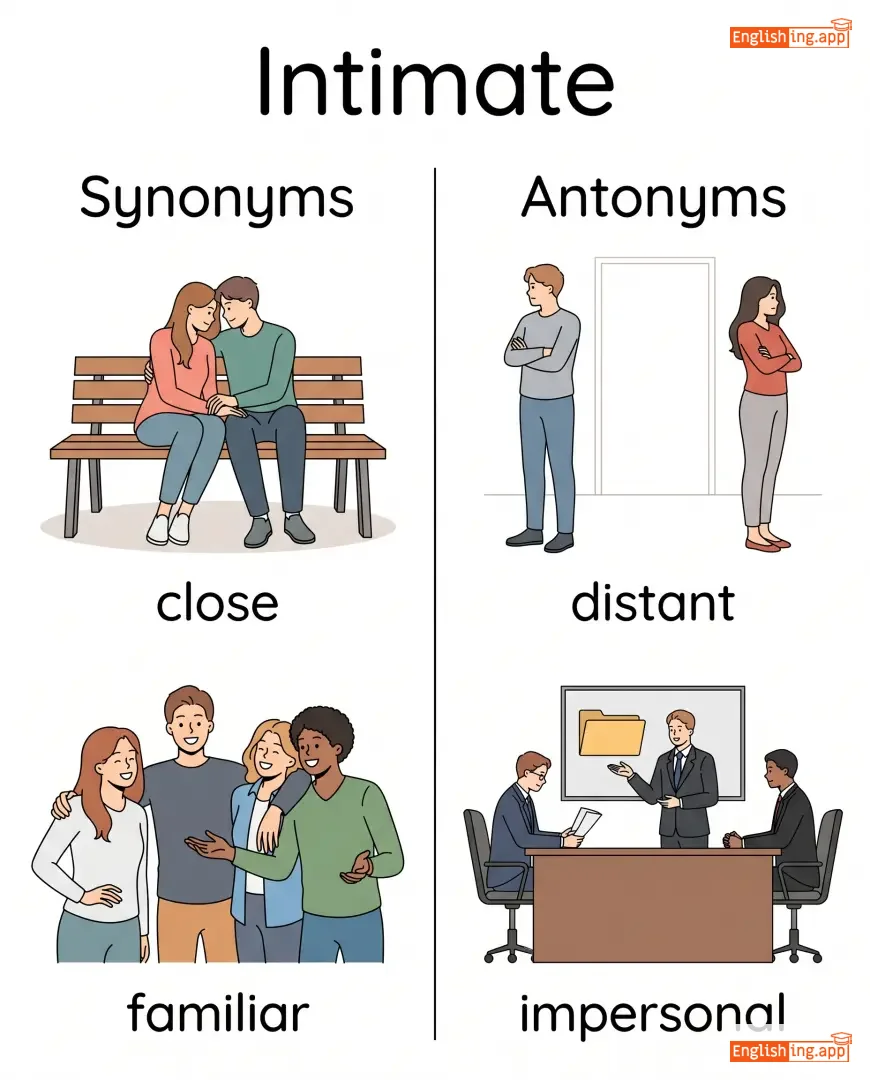
close, familiar, personal, confidential, warm
••••••
|
distant, impersonal, formal
••••••
|
intimate relationship, intimate knowledge, intimate dinner, intimate friend
••••••
|
Intimate = 親密な友人との特別な時間。
••••••
|
|
➡️
••••••
|
/ˈɪntuː/
preposition
(イントゥ)
••••••
|
- •••••• |
中へ
naka e
••••••
|
- •••••• | - •••••• | - •••••• | - •••••• |
expressing movement or direction to the inside of something
••••••
|
She walked into the room quietly.
彼女は静かに部屋に入った。
••••••
|
彼女は静かに部屋に入った。
Kanojo wa shizukani heya ni haitta.
••••••
|
run into
偶然出会う
••••••
|
to meet by chance
••••••
|
偶然に会う
guuzen ni au
••••••
|
inside, within, toward, onto
••••••
|
out, outside
••••••
|
fall into, get into, break into, move into
••••••
|
Into は中へを意味する — 雨が降るとみんな中へ走る。
••••••
|
|
🔥
••••••
|
/ɪnˈtɒlərəbl̩/
adjective
(イントレラブル)
••••••
|
- •••••• |
耐えられない
taerarenai
••••••
|
- •••••• | - •••••• | - •••••• | - •••••• |
so bad, difficult, or unpleasant that it cannot be endured
••••••
|
The heat during the summer was almost intolerable.
夏の暑さはほとんど耐えられないほどでした。
••••••
|
夏の暑さはほとんど耐えられないほどでした。
Natsu no atsusa wa hotondo taerarenai hodo deshita.
••••••
|
an intolerable situation
耐えられない状況
••••••
|
a condition or state that is too difficult or unpleasant to continue
••••••
|
耐えられない状況
taerarenai joukyou
••••••
|
unbearable, insufferable, unendurable, extreme, unacceptable
••••••
|
tolerable, bearable, acceptable
••••••
|
intolerable pain, intolerable pressure, intolerable behavior, intolerable burden
••••••
|
INTOLERABLE = IN + TOLERABLE → 耐えられない → 耐えられない
••••••
|
|
🤔
••••••
|
/ɪnˈtriːɡɪŋ/
adjective
(イントリーギング)
••••••
|
- •••••• |
非常に興味深く、異常な; 好奇心を引き起こす
hijou ni kyomi-bukaku, ibōna; kōkishin o hikiokosu
••••••
|
- •••••• | - •••••• | - •••••• | - •••••• |
very interesting and unusual; arousing curiosity
••••••
|
The movie has an intriguing plot that keeps the audience hooked. |
その映画は観客を引き付ける非常に興味深いプロットを持っています。
Sono eiga wa kankyaku o hikitsukeru hijou ni kyomi-bukai purotto o motteimasu.
••••••
|
- •••••• | - •••••• | - •••••• |
fascinating, captivating, engaging, compelling, mysterious
••••••
|
boring, dull, uninteresting
••••••
|
intriguing idea, intriguing story, intriguing mystery, intriguing character
••••••
|
Intriguing は非常に興味深く異常な意味です。まるでみんなが ‘イントリーギング!’ と言うような映画のようです!
••••••
|
|
🙋
••••••
|
/ˌɪntrəˈduːs/
verb
(イントロデュース)
••••••
|
|
紹介する
shoukai suru
••••••
|
introduced
イントロデュースド
••••••
|
introduced
イントロデュースド
••••••
|
introduces
イントロデュースズ
••••••
|
introducing
イントロデュースイング
••••••
|
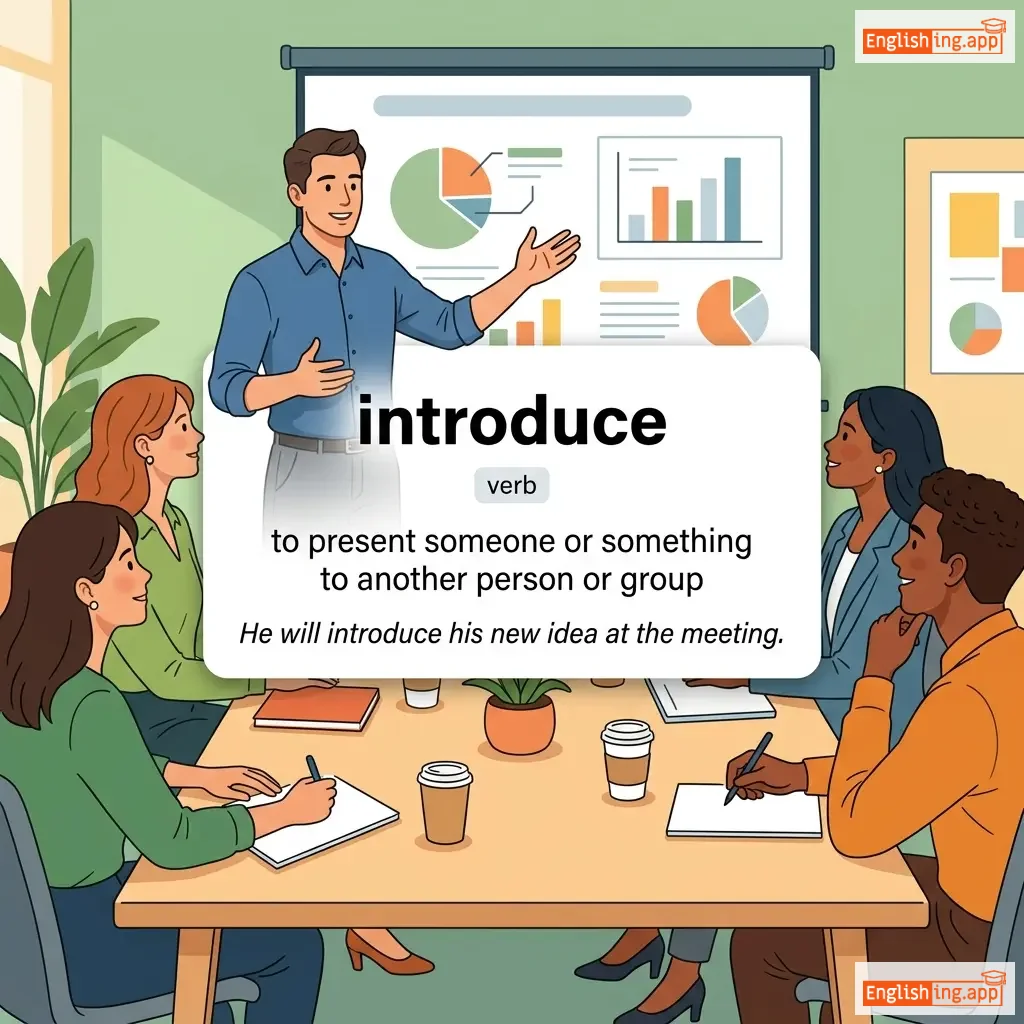
to present someone or something to another person or group
••••••
|
He will introduce his new idea at the meeting.
彼は会議で新しいアイデアを紹介します。
••••••
|
彼は会議で新しいアイデアを紹介します。
Kare wa kaigi de atarashī aidea o shōkai shimasu.
••••••
|
introduce a bill
法案を提出する
••••••
|
to formally present a proposed law
••••••
|
法案を提出する
hōan o teishutsu suru
••••••
|
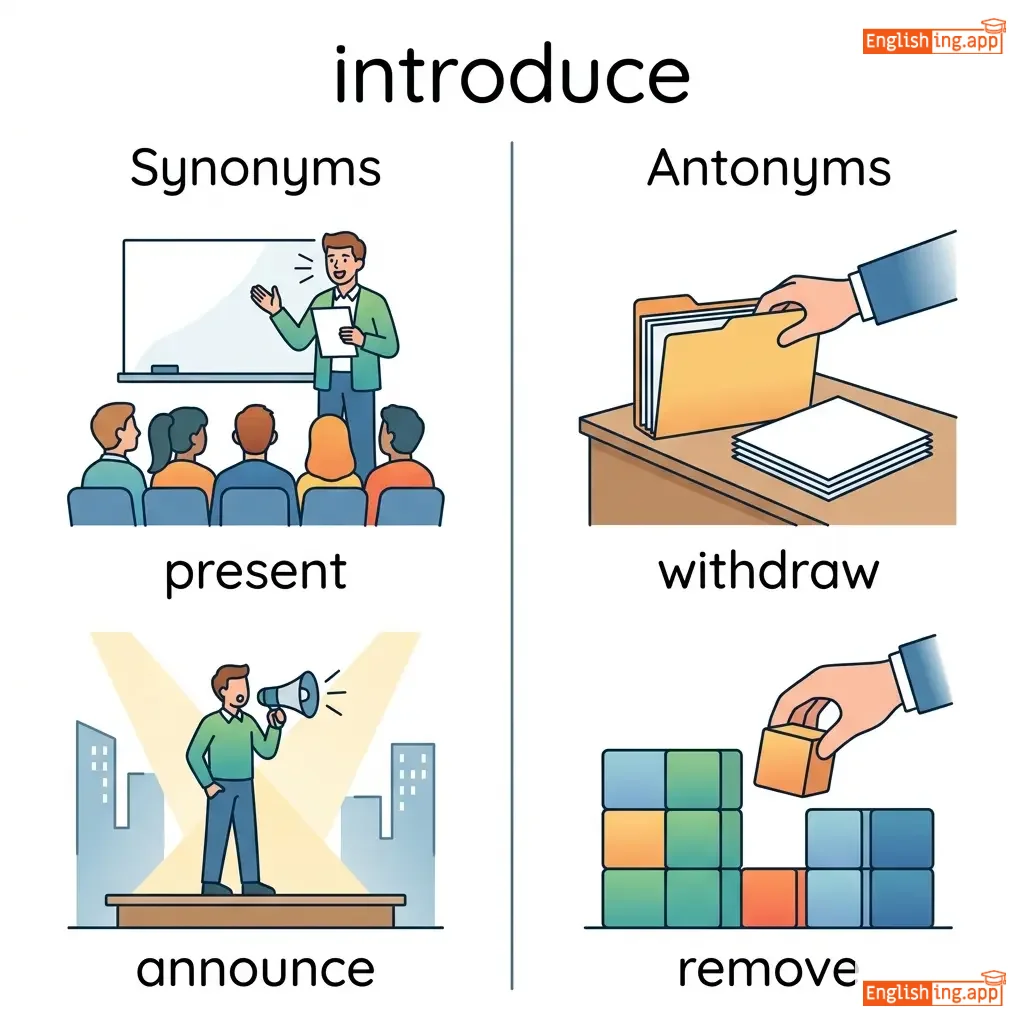
present, announce, propose, launch, establish
••••••
|
withdraw, remove, eliminate
••••••
|
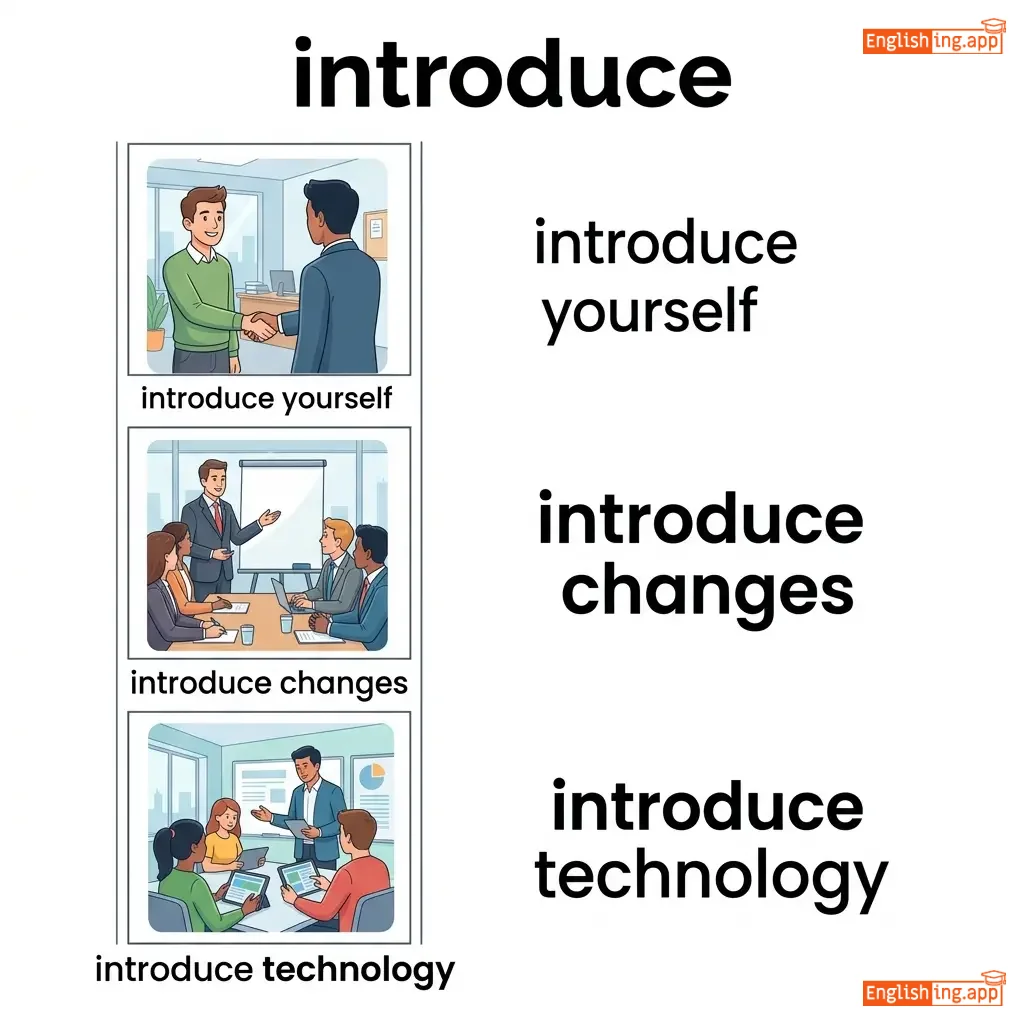
introduce yourself, introduce changes, introduce technology, introduce to
••••••
|
Introduceは紹介することを意味します — 会議であなたが言うと想像してみてください: 'この新しいアイデアを紹介させてください'.
••••••
|
|
📘
••••••
|
/ˌɪn.trəˈdʌk.ʃən/
noun
(イントロダクション)
••••••
|
- •••••• |
紹介
shoukai
••••••
|
- •••••• | - •••••• | - •••••• | - •••••• |
the action of introducing something or someone; an opening or beginning part
••••••
|
The professor gave a brief introduction before starting the lecture.
教授は講義を始める前に簡単なイントロダクションをしました。
••••••
|
教授は講義を始める前に簡単なイントロダクションをしました。
Kyoushi wa kougi wo hajimeru mae ni kantan na intorodakushon wo shimashita.
••••••
|
introduction to
イントロダクションへの
••••••
|
the beginning explanation or basic presentation of a subject
••••••
|
イントロダクションへの
intorodakushon e no
••••••
|
beginning, preface, initiation, presentation, foreword
••••••
|
conclusion, ending
••••••
|
make an introduction, give an introduction, introduction to a book, formal introduction
••••••
|
紹介(shoukai)は物事を始める最初のステップです。
••••••
|
|
⚔️
••••••
|
/ɪnˈveɪd/
verb
(インベード)
••••••
|
- •••••• |
侵入する
shin'nyū suru
••••••
|
invaded
インベイデッド
••••••
|
invaded
インベイデッド
••••••
|
invades
インベイズ
••••••
|
invading
インベイディング
••••••
|
to enter a place or country forcefully, especially as an enemy
••••••
|
The army invaded the neighboring country.
軍隊は隣国に侵入しました。
••••••
|
軍隊は隣国に侵入しました。
Guntai wa ringoku ni shin'nyū shimashita.
••••••
|
invade someone's privacy
誰かのプライバシーを侵害する
••••••
|
to intrude into someone's personal life
••••••
|
誰かのプライバシーを侵害する
Dareka no puraibashī o shingai suru
••••••
|
attack, conquer, occupy, overrun, intrude
••••••
|
withdraw, retreat, leave
••••••
|
invade territory, invade privacy, invaded country, invading force
••••••
|
In + Vade (入る) — 入って侵入することがinvadeです。
••••••
|
|
❌
••••••
|
/ˈɪnvəlɪd/ (adjective), /ɪnˈvælɪd/ (noun)
adjective, noun
(インヴァリッド)
••••••
|
- •••••• |
無効
mukou
••••••
|
- •••••• | - •••••• | - •••••• | - •••••• |
Not valid; having no force or effect. Also refers to a person too weak or ill to care for themselves.
••••••
|
The court declared the contract invalid. |
裁判所は契約を無効と宣言した。
Saibansho wa keiyaku o mukou to sengen shita.
••••••
|
invalid argument |
A reasoning or statement that is not logically correct.
••••••
|
無効な議論
mukou na giron
••••••
|
void, ineffective, worthless, weak, ill
••••••
|
valid, sound, effective
••••••
|
invalid contract, invalid data, invalid reason
••••••
|
Invalid = In + valid → 無効、効果がないことを意味します。
••••••
|
|
❌
••••••
|
/ˌɪnvəˈlɪdɪti/
noun
(インヴァリディティ)
••••••
|
- •••••• |
無効性
mukousei
••••••
|
- •••••• | - •••••• | - •••••• | - •••••• |
the state of being invalid, legally void, or lacking force or validity
••••••
|
The court ruled that the contract suffered from invalidity.
ザ コート ルールド ザット ザ コントラクト サファード フロム インヴァリディティ
••••••
|
裁判所はその契約に無効性があると判断した。
saibansho wa sono keiyaku ni mukousei ga aru to handan shita
••••••
|
- •••••• | - •••••• | - •••••• |
invalidness, nullity, illegitimacy, ineffectiveness, voidness
••••••
|
validity, legitimacy, soundness
••••••
|
legal invalidity, claim invalidity, grounds of invalidity, prove invalidity
••••••
|
インヴァリディティ=無効、validじゃない
••••••
|
|
🔒
••••••
|
/ɪnˈveə.ri.ə.bəl/
adjective
(インバリアブル)
••••••
|
- •••••• |
不変の; 一定の; 常に同じ
fuhen no
••••••
|
- •••••• | - •••••• | - •••••• | - •••••• |
never changing; constant; always the same
••••••
|
His invariable routine includes morning exercise and coffee.
彼の不変のルーチンには、朝の運動とコーヒーが含まれています。
••••••
|
彼の不変のルーチンには、朝の運動とコーヒーが含まれています。
kare no fuhen no rūchin ni wa, asa no undō to kōhī ga fukumareteimasu
••••••
|
- •••••• | - •••••• | - •••••• |
constant, unchanging, fixed, consistent
••••••
|
variable, changing, inconsistent, fluctuating
••••••
|
invariable rule, invariable routine, invariable custom, invariable pattern
••••••
|
In Japanese, '不変' means 'invariable' just as in English!
••••••
|
|
⚔️
••••••
|
/ɪnˈveɪʒən/
noun
(インヴェイジョン)
••••••
|
- •••••• |
侵略
shinryaku
••••••
|
- •••••• | - •••••• | - •••••• | - •••••• |
An instance of invading a country, region, or personal space with armed force or unwelcome presence.
••••••
|
The army prepared for the possibility of an invasion. |
軍隊は侵略の可能性に備えました。
Guntai wa shinryaku no kanousei ni sonaemashita.
••••••
|
invasion of privacy |
A violation of someone's personal life without permission.
••••••
|
プライバシー侵害
Puraibashii shingai
••••••
|
attack, incursion, intrusion, assault, raid
••••••
|
retreat, withdrawal, defense
••••••
|
military invasion, foreign invasion, invasion force, invasion threat
••••••
|
Invasion は侵略 ⚔️ — 日本では Vision = 侵略 (侵略)。
••••••
|
|
💡
••••••
|
/ɪnˈvɛnt/
verb
(インベント)
••••••
|
- •••••• |
発明する
hatsumei suru
••••••
|
invented
インヴェンテッド
••••••
|
invented
インヴェンテッド
••••••
|
invents
インヴェンツ
••••••
|
inventing
インヴェンティング
••••••
|
to create or design something that has not existed before
••••••
|
Thomas Edison invented the electric bulb.
トーマス・エジソンは電球を発明しました。
••••••
|
トーマス・エジソンは電球を発明しました。
Tōmasu Ejison wa denkyū o hatsumei shimashita.
••••••
|
reinvent the wheel
車輪を再発明する
••••••
|
to waste time creating something that already exists
••••••
|
既存のものを再度作り直す
kison no mono o saido tsukurinaosu
••••••
|
create, design, develop, originate, devise
••••••
|
destroy, copy, imitate
••••••
|
invent a machine, invent a device, invent story, invent technology
••••••
|
発明 = 発 + 明 (明 = 明るい) — 新しい明るいものを発明すること。
••••••
|
|
⚙️
••••••
|
/ɪnˈvɛnʃən/
noun
(インヴェンション)
••••••
|
|
発明
hatsumei
••••••
|
- •••••• | - •••••• | - •••••• | - •••••• |
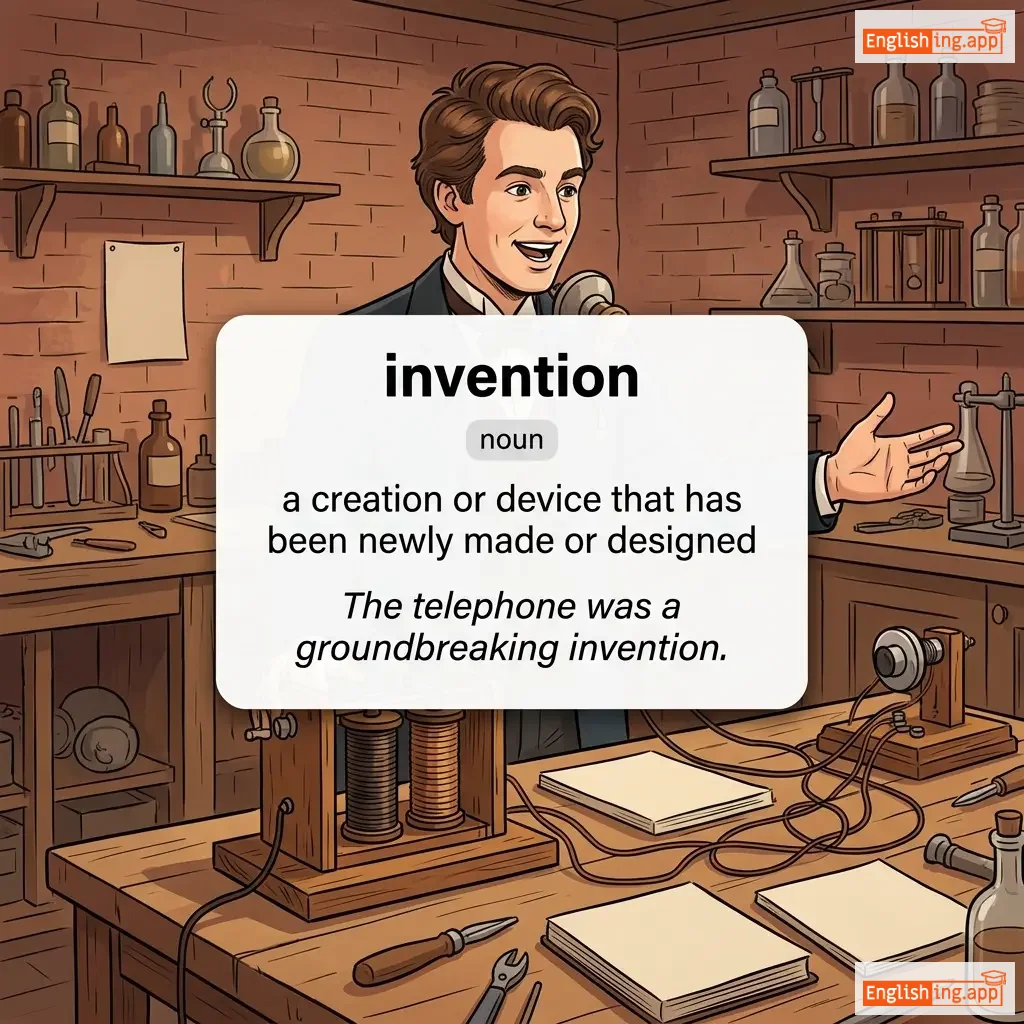
a creation or device that has been newly made or designed
••••••
|
The telephone was a groundbreaking invention. |
電話は画期的な発明でした。
Denwa wa kakiteki na hatsumei deshita.
••••••
|
mother of invention |
necessity drives people to create solutions
••••••
|
必要は発明の母
Hitsuyō wa hatsumei no haha
••••••
|
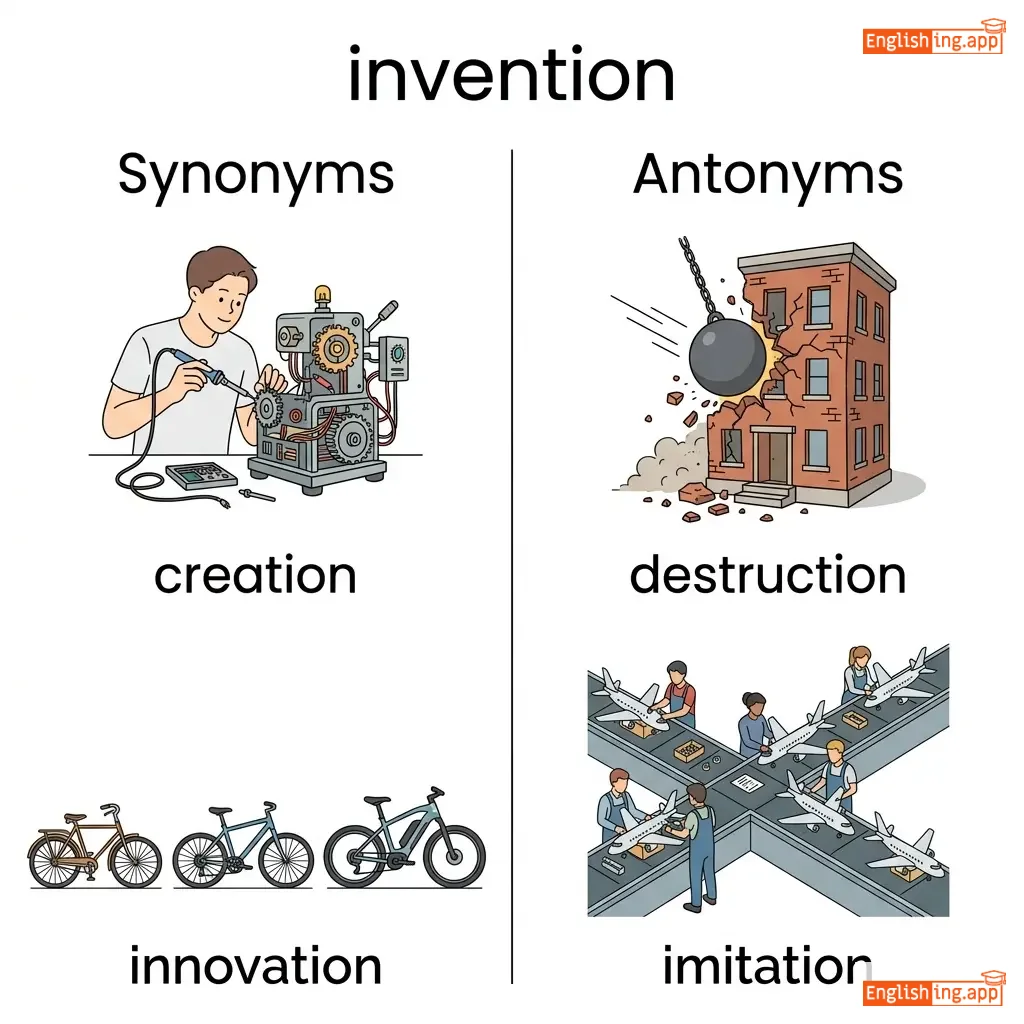
creation, innovation, discovery, contraption, device
••••••
|
destruction, imitation
••••••
|
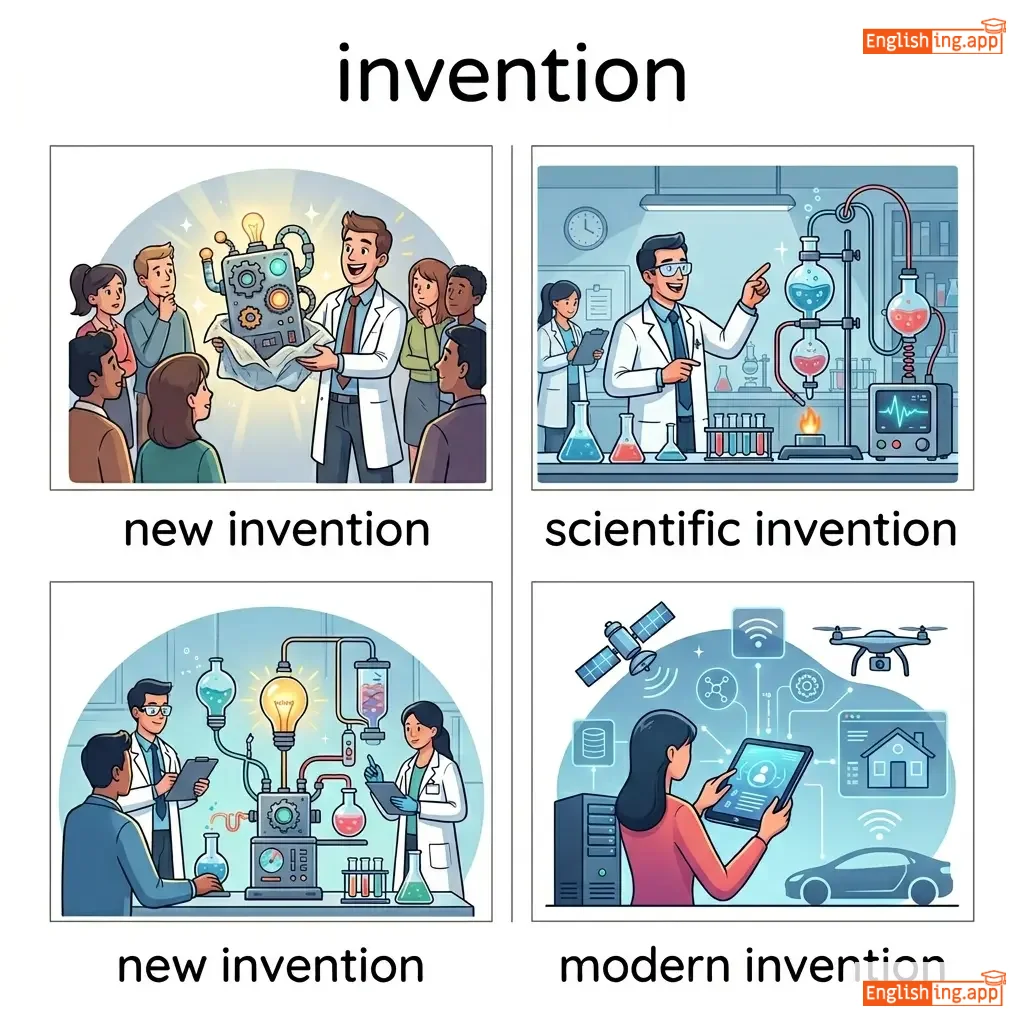
new invention, scientific invention, modern invention, patent an invention
••••••
|
発明は新しいものを作り出すことです!
••••••
|
|
💡
••••••
|
/ɪnˈventər/
noun
(インベンター)
••••••
|
- •••••• |
発明家
hatsumeika
••••••
|
- •••••• | - •••••• | - •••••• | - •••••• |
a person who creates or designs something new, especially a device, method, or process
••••••
|
The inventor patented her new medical device.
ザ インベンター パテントイド ハー ニュー メディカル デバイス。
••••••
|
その発明家は新しい医療機器の特許を取得した。
sono hatsumeika wa atarashii iryo kiki no tokkyo o shutoku shita
••••••
|
great inventor
グレート インベンター
••••••
|
a person known for creating important or influential inventions
••••••
|
偉大な発明家
idaina hatsumeika
••••••
|
creator, innovator, designer, originator, pioneer
••••••
|
imitator, follower
••••••
|
famous inventor, prolific inventor, inventor of, young inventor
••••••
|
Inventor は 発明家、インベンターと覚える
••••••
|
|
💰
••••••
|
/ɪnˈvɛst/
verb
(インベスト)
••••••
|

|
投資する
toushi suru
••••••
|
invested
インベステッド
••••••
|
invested
インベステッド
••••••
|
invests
インベストス
••••••
|
investing
インベスティング
••••••
|
to put money, time, or effort into something with the expectation of achieving a benefit
••••••
|
He decided to invest in real estate to secure his future.
彼は自分の未来を確保するために不動産に投資することを決めました。
••••••
|
彼は自分の未来を確保するために不動産に投資することを決めました。
Kare wa jibun no mirai o kakuho suru tame ni fudōsan ni tōshi suru koto o kimemashita.
••••••
|
invest in
投資する
••••••
|
to commit money, time, or effort into something
••••••
|
投資する
tōshi suru
••••••
|
finance, fund, contribute, allocate, commit
••••••
|
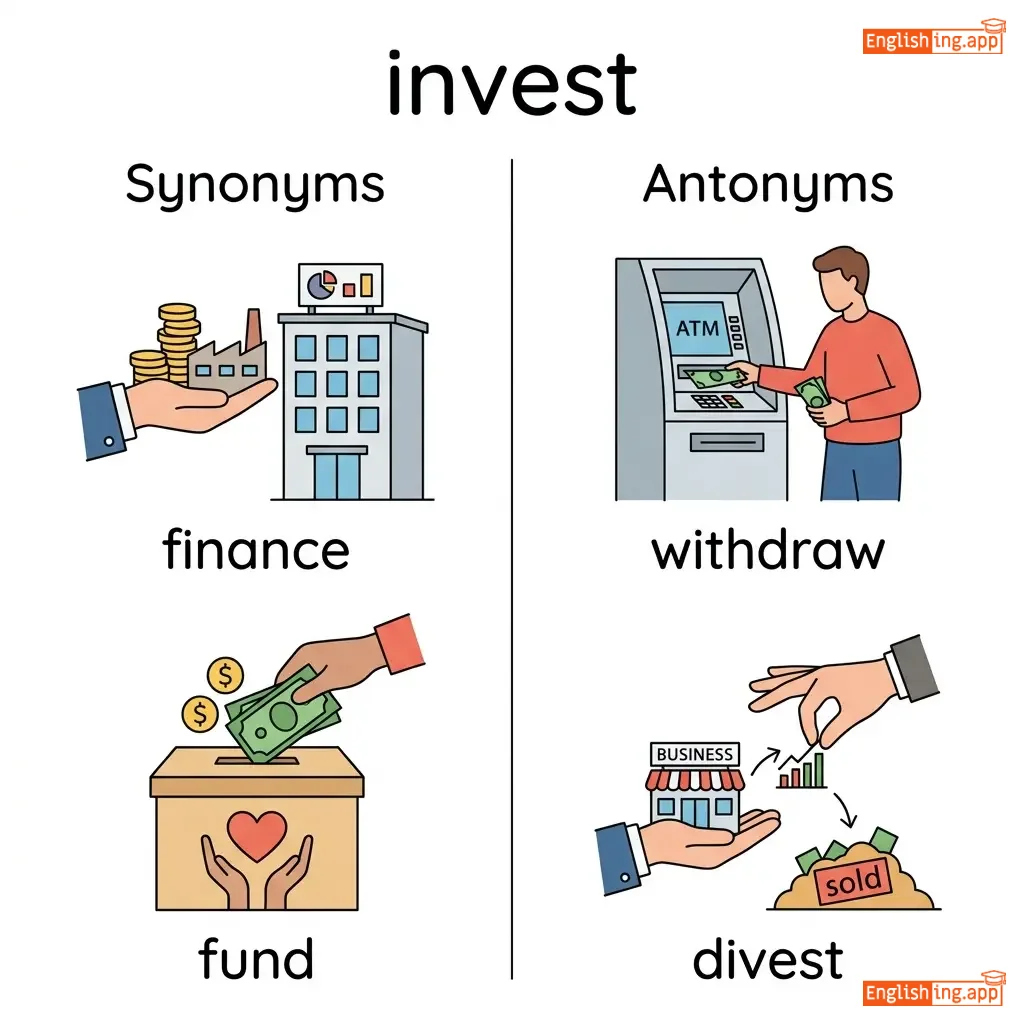
withdraw, divest
••••••
|
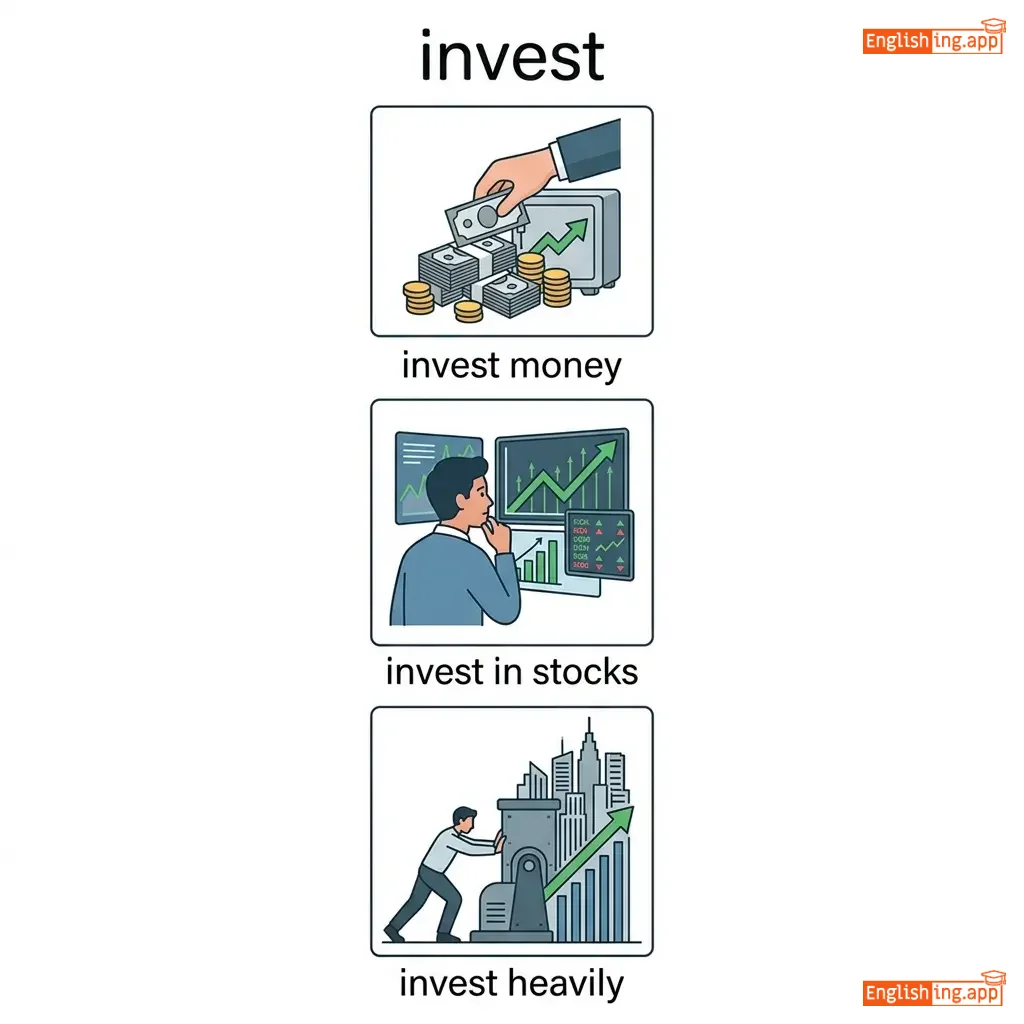
invest money, invest in stocks, invest heavily, invest wisely
••••••
|
投資は未来の利益のためにお金を投入することです。
••••••
|
|
🔍
••••••
|
/ɪnˈvɛs.tɪ.ɡeɪt/
verb
(インヴェスティゲート)
••••••
|
- •••••• |
調査する
chousa suru
••••••
|
investigated
インヴェスティゲイテッド
••••••
|
investigated
インヴェスティゲイテッド
••••••
|
investigates
インヴェスティゲイツ
••••••
|
investigating
インヴェスティゲイティング
••••••
|
to carry out a systematic inquiry to discover facts or information
••••••
|
The police will investigate the incident thoroughly.
警察は事件を徹底的に調査するでしょう。
••••••
|
警察は事件を徹底的に調査するでしょう。
Keisatsu wa jiken o tetteiteki ni chousa suru deshou.
••••••
|
investigate a case
事件を調査する
••••••
|
to examine or look into a specific case
••••••
|
事件を調査する
jiken o chousa suru
••••••
|
examine, probe, inspect, explore, analyze
••••••
|
ignore, overlook
••••••
|
investigate crime, investigate a complaint, investigate thoroughly
••••••
|
調査するとは事件の中で事実を探すことです。
••••••
|
|
🕵️
••••••
|
/ɪnˌvɛs.tɪˈɡeɪ.ʃən/
noun
(インベスティゲーション)
••••••
|
- •••••• |
調査
chousa
••••••
|
- •••••• | - •••••• | - •••••• | - •••••• |
the process of inquiring into or examining something carefully to find the truth
••••••
|
The investigation revealed new evidence about the fraud. |
調査は詐欺に関する新しい証拠を明らかにしました。
Chousa wa sagi ni kansuru atarashii shouko wo akiraka ni shimashita.
••••••
|
under investigation |
being examined or inquired into
••••••
|
調査中
chousachu
••••••
|
inquiry, probe, inspection, examination, scrutiny
••••••
|
neglect, disregard
••••••
|
launch an investigation, conduct an investigation, criminal investigation
••••••
|
調査は事実を明らかにするための重要な方法です。
••••••
|
|
🕵️
••••••
|
/ɪnˈvɛstɪˌɡeɪtər/
noun
(ハピネス)
••••••
|
- •••••• |
幸福
kōfuku
••••••
|
- •••••• | - •••••• | - •••••• | - •••••• |
a person who carries out a formal inquiry or investigation
••••••
|
The investigator gathered evidence from the crime scene. |
彼女は賞を受け取ったとき、自分の幸福を隠すことができませんでした。
Kanojo wa shō o uketotta toki, jibun no kōfuku o kakusu koto ga dekimasen deshita.
••••••
|
private investigator |
a detective who works independently, often hired for personal cases
••••••
|
幸福を追求する
Kōfuku o tsuikyū suru
••••••
|
detective, examiner, inspector, researcher, sleuth
••••••
|
suspect, criminal
••••••
|
police investigator, lead investigator, private investigator, chief investigator
••••••
|
幸福は人生で追い求めるもの。
••••••
|
|
📈
••••••
|
/ɪnˈvɛst.mənt/
noun
(インベストメント)
••••••
|
|
投資
tōshi
••••••
|
- •••••• | - •••••• | - •••••• | - •••••• |
the action or process of putting money, time, or resources into something for future benefit
••••••
|
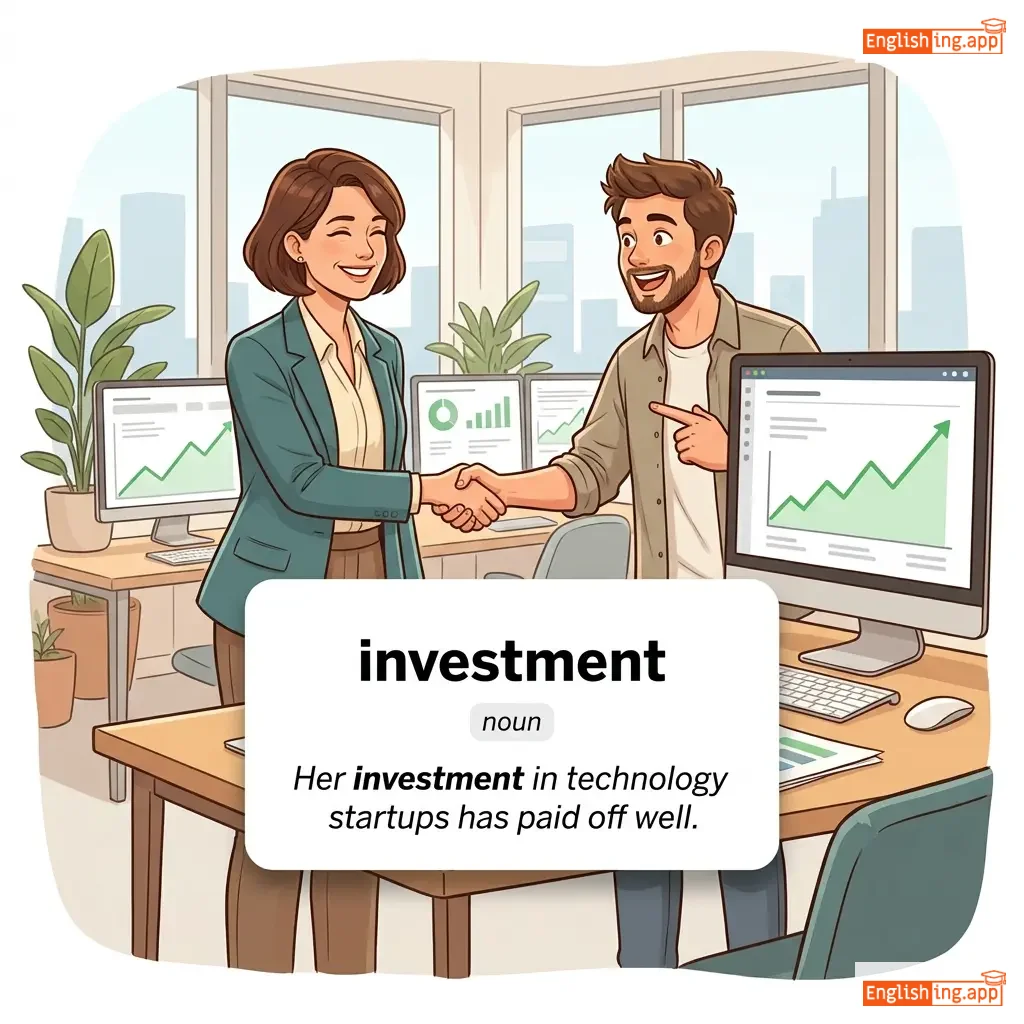
Her investment in technology startups has paid off well. |
彼女のテクノロジースタートアップへの投資は良い結果を生んだ。
Kanojo no tekunorojī sutātopu e no tōshi wa yoi kekka o unda.
••••••
|
return on investment |
the profit or loss derived from an investment
••••••
|
投資のリターン
tōshi no ritān
••••••
|
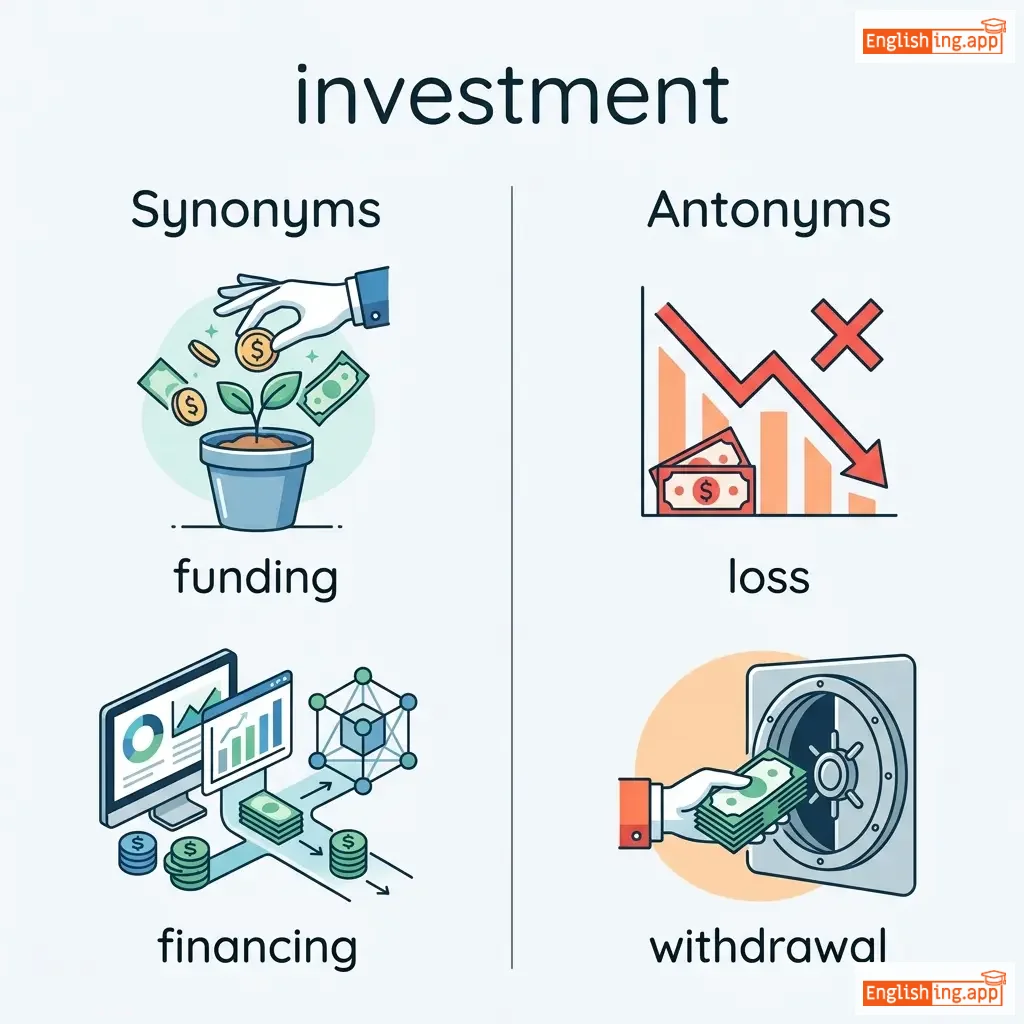
funding, financing, contribution, allocation, venture
••••••
|
loss, withdrawal
••••••
|
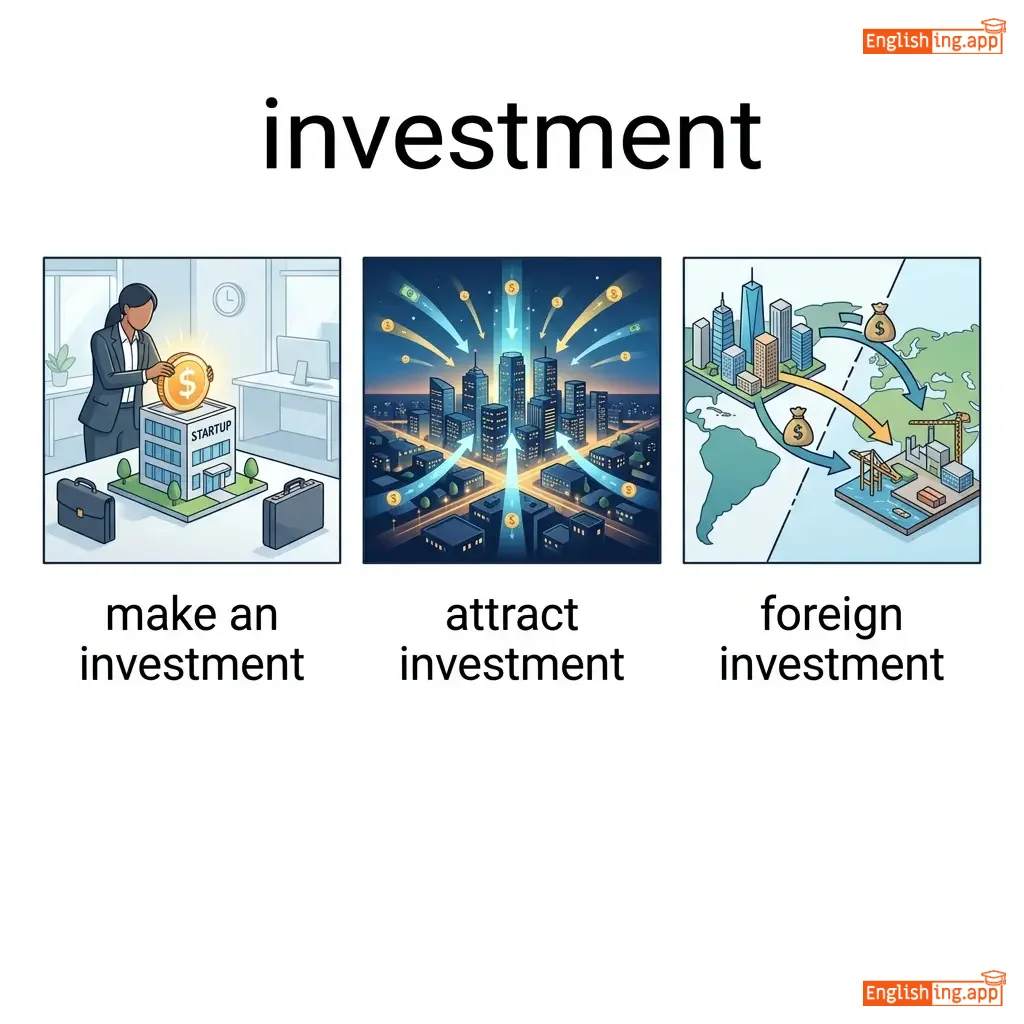
make an investment, attract investment, foreign investment, wise investment
••••••
|
投資は今日使って明日利益を得ることです。
••••••
|
|
💰
••••••
|
/ɪnˈvɛstər/
noun
(インヴェスター)
••••••
|
- •••••• |
投資家
toushika
••••••
|
- •••••• | - •••••• | - •••••• | - •••••• |
a person or organization that puts money into financial schemes, property, or business ventures with the expectation of achieving a profit
••••••
|
The investor funded the startup with a large sum of money. |
投資家はスタートアップに大金を投資しました。
Tōshika wa sātoappu ni ōkin o tōshi shimashita.
••••••
|
angel investor |
an individual who provides capital for a business startup, usually in exchange for ownership equity
••••••
|
エンジェル投資家
enjeru tōshika
••••••
|
financier, shareholder, backer, capitalist
••••••
|
spender, debtor
••••••
|
foreign investor, private investor, institutional investor, angel investor
••••••
|
投資家とは、利益を得るために投資する人 — 投資家
••••••
|
|
👻
••••••
|
/ɪnˈvɪzɪbəl/
adjective
(インヴィジブル)
••••••
|
- •••••• |
見えない
mienai
••••••
|
- •••••• | - •••••• | - •••••• | - •••••• |
unable to be seen; not visible to the eye
••••••
|
The stars became invisible as the sun rose. |
太陽が昇ると、星々は見えなくなった。
Taiyō ga noboru to, hoshiboshi wa mienaku natta.
••••••
|
invisible hand |
an unseen force guiding economic or social outcomes
••••••
|
見えない手
mienai te
••••••
|
unseen, hidden, concealed, imperceptible, obscure
••••••
|
visible, clear, apparent
••••••
|
invisible force, invisible power, invisible ink, invisible barrier
••••••
|
Invisible = 見えない = 見ることができない
••••••
|
|
💌
••••••
|
/ˌɪnvɪˈteɪʃən/
noun
(ハピネス)
••••••
|
- •••••• |
幸せ
shiawase
••••••
|
- •••••• | - •••••• | - •••••• | - •••••• |
a written or spoken request to attend an event or to participate in something
••••••
|
She sent me an invitation to her wedding. |
彼女は賞を受け取ったとき、自分の幸せを隠すことができませんでした。
Kanojo wa shō o uketotta toki, jibun no shiawase o kakusu koto ga dekimasen deshita.
••••••
|
extend an invitation |
to formally invite someone
••••••
|
幸せの追求
shiawase no tsuikyū
••••••
|
request, call, summon, appeal, proposal
••••••
|
rejection, refusal
••••••
|
send invitation, wedding invitation, formal invitation, accept invitation
••••••
|
幸せ = 心が喜びで満たされる時。
••••••
|
|
✉️
••••••
|
/ɪnˈvaɪt/
verb
(インヴァイト)
••••••
|
- •••••• |
招待する
shoutai suru
••••••
|
invited
インヴァイテッド
••••••
|
invited
インヴァイテッド
••••••
|
invites
インヴァイツ
••••••
|
inviting
インヴァイティング
••••••
|
to ask someone to come to a place or event
••••••
|
She invited her friends to the party.
彼女は友達をパーティーに招待しました。
••••••
|
彼女は友達をパーティーに招待しました。
Kanojo wa tomodachi o pātī ni shoutai shimashita.
••••••
|
invite trouble
問題を招く
••••••
|
to do something that is likely to cause problems
••••••
|
問題を招く
mondai o maneku
••••••
|
ask, request, call, summon, beckon
••••••
|
reject, refuse, dismiss
••••••
|
invite someone, invite to dinner, warmly invite, cordially invite
••••••
|
招待するは友達をパーティーに招待することです。
••••••
|
|
📨
••••••
|
/ɪnˈvaɪtɪd/
verb
(インバイテッド)
••••••
|
- •••••• |
招待された
shotai sareta
••••••
|
invited
インバイテッド
••••••
|
invited
インバイテッド
••••••
|
invites
インバイツ
••••••
|
inviting
インバイティング
••••••
|
asked someone formally or politely to go somewhere or do something
••••••
|
She was invited to the party.
シー ワズ インバイテッド トゥ ザ パーティー
••••••
|
彼女はパーティーに招待された。
kanojo wa paatii ni shotai sareta
••••••
|
- •••••• | - •••••• | - •••••• |
asked, requested, welcomed, summoned, beckoned
••••••
|
excluded, rejected, refused
••••••
|
invited guest, invited to a party, invited formally, invited personally
••••••
|
Invite → 招待 → 招待された
••••••
|
|
✉️
••••••
|
/ɪnˈvaɪtər/
noun
(インヴァイター)
••••••
|
- •••••• |
招待者
shoutaisha
••••••
|
- •••••• | - •••••• | - •••••• | - •••••• |
a person who invites someone to an event, meeting, or place
••••••
|
The invitor greeted all the guests warmly at the entrance.
インヴァイターは入口で客を歓迎した。
••••••
|
招待者は入口で客を温かく迎えた。
Shoutaisha wa iriguchi de kyaku o atatakaku mukaeta
••••••
|
- •••••• | - •••••• | - •••••• |
host, inviter, organizer, caller, convenor
••••••
|
guest, invitee
••••••
|
formal invitor, event invitor, original invitor, main invitor
••••••
|
invitor=招待する人
••••••
|
|
📜
••••••
|
/ɪnˈvoʊk/
verb
(インヴォーク)
••••••
|
- •••••• |
呼び出す
yobidasu
••••••
|
invoked
インヴォークド
••••••
|
invoked
インヴォークド
••••••
|
invokes
インヴォークス
••••••
|
invoking
インヴォーキング
••••••
|
to call upon a higher power, authority, or principle for help, support, or justification
••••••
|
The lawyer invoked the constitution to defend his client.
弁護士は憲法を引き合いに出して自分のクライアントを守った。
••••••
|
弁護士は憲法を引き合いに出して自分のクライアントを守った。
Bengoshi wa kenpō o hikiai ni dashite jibun no kuraianto o mamotta.
••••••
|
invoke the law
法律を引き合いに出す
••••••
|
to appeal to or rely on the law for support or justification
••••••
|
法律を引き合いに出す
hōritsu o hikiai ni dasu
••••••
|
appeal, call upon, cite, summon, request
••••••
|
ignore, dismiss, reject
••••••
|
invoke the law, invoke authority, invoke powers, invoke tradition
••••••
|
呼び出すは招待のようなもので、助けを求めることです。
••••••
|
|
🤲
••••••
|
/ɪnˈvɑːlv/
verb
(インボルヴ)
••••••
|
- •••••• |
関与する
kan'yosuru
••••••
|
involved
インボルヴド
••••••
|
involved
インボルヴド
••••••
|
involves
インボルヴス
••••••
|
involving
インボルヴィング
••••••
|
to include as a necessary part, or to engage someone in an activity
••••••
|
The project will involve several departments working together.
このプロジェクトは、いくつかの部署が一緒に働くことを含むでしょう。
••••••
|
このプロジェクトは、いくつかの部署が一緒に働くことを含むでしょう。
Kono purojekuto wa, ikutsu ka no busho ga issho ni hataraku koto o fukumu deshō.
••••••
|
get involved
参加する
••••••
|
to participate or take part in something
••••••
|
参加する
sankasuru
••••••
|
include, engage, entail, require, associate
••••••
|
exclude, remove, neglect
••••••
|
involve in, involve with, project involves, task involves
••••••
|
InvolveはIn + volve → 中に持っていく、つまり誰かを活動に関与させることです。
••••••
|
|
🔗
••••••
|
/ɪnˈvɑːlvd/
adjective
(インヴォルヴド)
••••••
|
- •••••• |
関与した
kan'yoshita
••••••
|
- •••••• | - •••••• | - •••••• | - •••••• |
complicated or engaged in something
••••••
|
She was deeply involved in community service. |
彼女は地域社会の奉仕活動に深く関与していた。
Kanojo wa chiikishakai no hōshikatsudō ni fukaku kan'yoshite ita.
••••••
|
become involved |
to take an active part in something
••••••
|
関与する
kan'yosuru
••••••
|
engaged, committed, complicated, connected
••••••
|
detached, simple, uninvolved
••••••
|
deeply involved, personally involved, involved process
••••••
|
Involvedは関与した→全てのことに関わること。
••••••
|
|
🤝
••••••
|
/ɪnˈvɒlvmənt/
noun
(インボルブメント)
••••••
|
- •••••• |
関与
kanyo
••••••
|
- •••••• | - •••••• | - •••••• | - •••••• |
the act of taking part in something
••••••
|
His involvement in the project was crucial.
ヒズ インボルブメント イン ザ プロジェクト ワズ クルーシャル
••••••
|
彼のプロジェクトへの関与は重要だった。
Kare no purojekuto e no kanyo wa juyou datta.
••••••
|
- •••••• | - •••••• | - •••••• |
participation, engagement, contribution, role, association
••••••
|
exclusion, absence, withdrawal
••••••
|
active involvement, direct involvement, community involvement
••••••
|
Involvement = involved → 関与すること。
••••••
|
|
🇮🇪
••••••
|
/ˈaɪrɪʃ/
adjective/noun
(ハピネス)
••••••
|
- •••••• |
幸福
koufuku
••••••
|
- •••••• | - •••••• | - •••••• | - •••••• |
relating to Ireland, its people, or its language
••••••
|
The Irish countryside is very beautiful. |
彼女は賞を受け取ったとき、幸せを隠すことができませんでした。
Kanojo wa shou o uketotta toki, koufuku o kakusu koto ga dekimasen deshita.
••••••
|
- •••••• | - •••••• | - •••••• |
Ireland citizen, Gaelic, Hibernian
••••••
|
non-Irish, foreigner
••••••
|
Irish people, Irish language, Irish culture
••••••
|
幸福は日本語で幸せを意味する言葉です。
••••••
|
|
🔩
••••••
|
/ˈaɪən/ or /ˈaɪərn/
noun/verb
(アイアン)
••••••
|
- •••••• |
鉄 / アイロン
tetsu / airon
••••••
|
ironed
アイアンド
••••••
|
ironed
アイアンド
••••••
|
irons
アイアンズ
••••••
|
ironing
アイアニング
••••••
|
a strong, hard metal used in construction; also to press clothes with heat
••••••
|
He used an iron to smooth his shirt.
彼はシャツを滑らかにするためにアイロンを使った。
••••••
|
彼はシャツを滑らかにするためにアイロンを使った。
Kare wa shatsu o nameraka ni suru tame ni airon o tsukatta.
••••••
|
iron out
アイロンをかける
••••••
|
to resolve problems or difficulties
••••••
|
問題を解決する
mondai o kaiketsu suru
••••••
|
metal, steel, press, flatten
••••••
|
wrinkle, fold
••••••
|
iron bar, iron rod, iron clothes, iron ore, iron out issues
••••••
|
アイロンと鉄はすべてを滑らかにし、強くする。
••••••
|
|
🙃
••••••
|
/aɪˈrɒnɪk/
adjective
(アイロニック)
••••••
|
- •••••• |
皮肉な、風刺的な
aironik
••••••
|
- •••••• | - •••••• | - •••••• | - •••••• |
happening in the opposite way to what is expected, often amusing or sarcastic
••••••
|
It is ironic that the fire station burned down. |
消防署が焼けるのは皮肉です。
Shōbōsho ga yakeru no wa hiniku desu.
••••••
|
isn't it ironic |
used to highlight a situation that is surprisingly contradictory
••••••
|
皮肉じゃないですか?
Hinikujanai desu ka?
••••••
|
sarcastic, paradoxical, mocking, satirical
••••••
|
straightforward, sincere, expected
••••••
|
ironic twist, ironic smile, deeply ironic, somewhat ironic
••••••
|
皮肉な出来事、それは予想と逆の方向に進んでいます!
••••••
|
|
😏
••••••
|
/aɪˈrɒnɪkli/
adverb
(アイロニカリー)
••••••
|
- •••••• |
皮肉にも
hiniku ni mo
••••••
|
- •••••• | - •••••• | - •••••• | - •••••• |
in a way that is contrary to what is expected or intended
••••••
|
Ironically, the fire station burned down. |
皮肉にも、消防署が焼け落ちた。
Hiniku ni mo, shōbōsho ga yakeochita.
••••••
|
- •••••• | - •••••• | - •••••• |
sarcastically, paradoxically, unexpectedly, amusingly
••••••
|
literally, seriously
••••••
|
ironically enough, say ironically, ironically true
••••••
|
Ironicallyは皮肉、予期せぬことが起きる時に使います。
••••••
|
|
🎭
••••••
|
/ˈaɪrəni/
noun
(アイロニー)
••••••
|
- •••••• |
皮肉
hiniku
••••••
|
- •••••• | - •••••• | - •••••• | - •••••• |
a situation that is strange or amusing because it is the opposite of what is expected; the use of words to convey the opposite meaning
••••••
|
The irony of the situation was that the winner forgot his own prize. |
その状況の皮肉は、勝者が自分の賞を忘れたことでした。
Sono jōkyō no hiniku wa, shōsha ga jibun no shō o wasureta koto deshita.
••••••
|
the irony is |
used to highlight a contradiction between expectations and reality
••••••
|
皮肉とは
hiniku to wa
••••••
|
sarcasm, paradox, mockery, satire
••••••
|
sincerity, honesty, straightforwardness
••••••
|
sense of irony, bitter irony, cruel irony, situational irony
••••••
|
皮肉は鉄で冗談を言うようなもの - 皮肉や矛盾
••••••
|
|
🤯
••••••
|
/ɪˈræʃənəl/
adjective
(イラショナル)
••••••
|
- •••••• |
非合理的
hi-goriteki
••••••
|
- •••••• | - •••••• | - •••••• | - •••••• |
not logical or reasonable; lacking clear thought
••••••
|
His fear of the dark was completely irrational. |
彼の暗闇への恐れは完全に非合理的でした。
Kare no kurayami e no osore wa kanzen ni higoriteki deshita.
••••••
|
irrational fear |
an unreasonable or extreme fear
••••••
|
非合理的な恐れ
higoritekina osore
••••••
|
illogical, unreasonable, absurd, senseless
••••••
|
rational, logical, reasonable
••••••
|
irrational decision, irrational behavior, irrational belief
••••••
|
非合理的は非 + 合理的、つまり合理的でない – 非合理的。
••••••
|
|
🌀
••••••
|
ɪˌræʃ.ənˈæl.ɪ.ti
noun
(イレショナルリティ)
••••••
|
|
非合理性, 非論理性, 不合理
higorisei, hironrisei, fukouryuu
••••••
|
- •••••• | - •••••• | - •••••• | - •••••• |
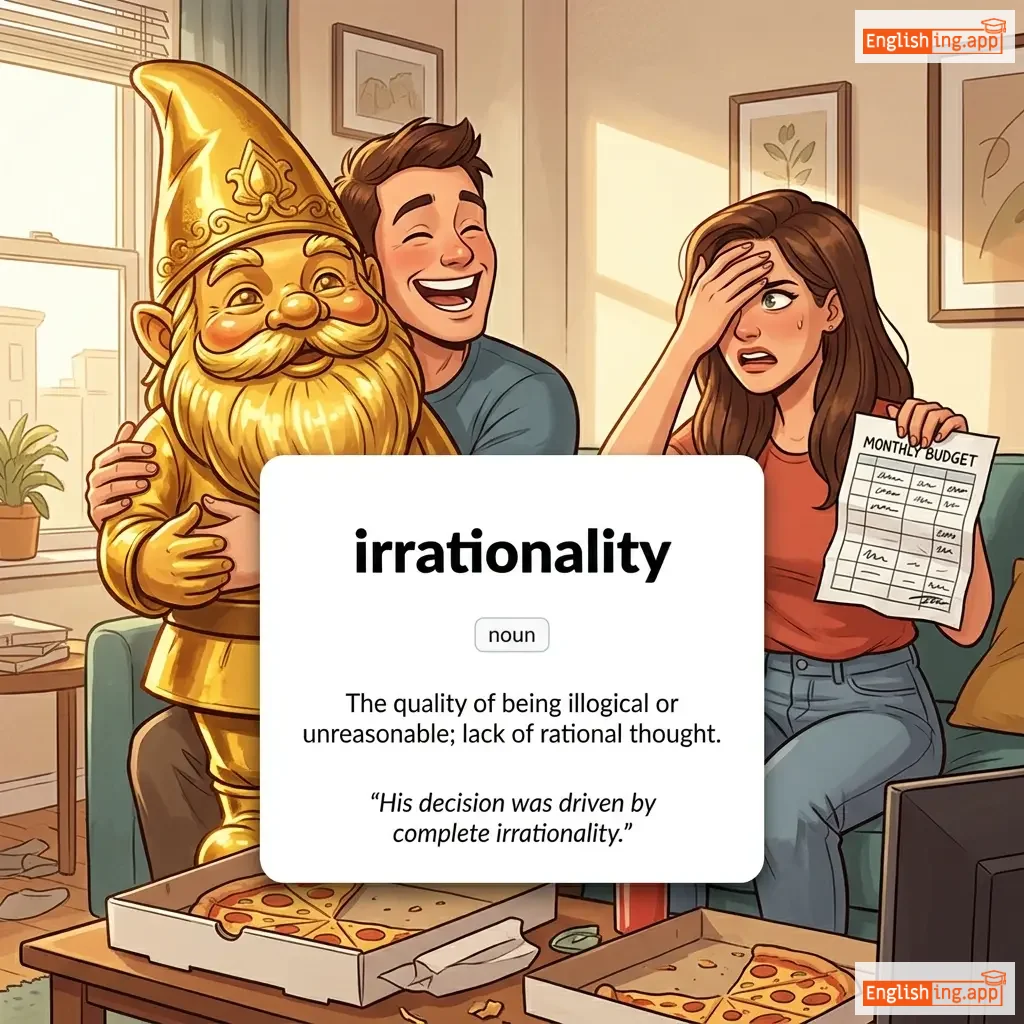
The quality of being illogical or unreasonable; lack of rational thought.
••••••
|
His decision was driven by complete irrationality.
彼の決定は完全に非合理的でした。
••••••
|
彼の決定は完全に非合理的でした。
Kare no kettei wa kanzen ni higoriteki deshita.
••••••
|
- •••••• | - •••••• | - •••••• |
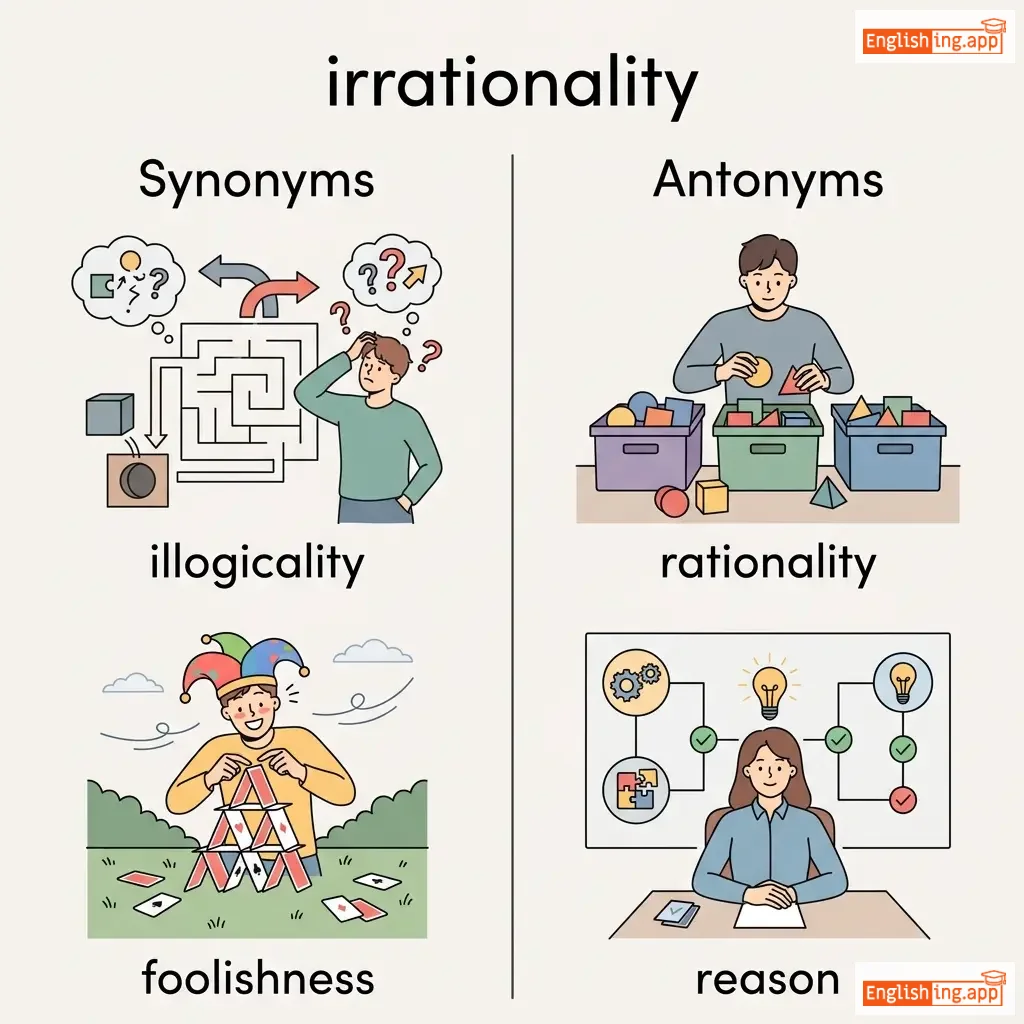
illogicality, foolishness, unreasonableness
••••••
|
rationality, reason, logic
••••••
|
- •••••• |
非合理性は英語のirrationalityを思い出させる鍵です。
••••••
|
|
📉
••••••
|
/ɪˈreɡjələr/
adjective
(イレギュラー)
••••••
|
- •••••• |
不規則な
fukisoku na
••••••
|
- •••••• | - •••••• | - •••••• | - •••••• |
not even or consistent in shape, pattern, time, or behavior; not following normal rules
••••••
|
His attendance at work has been irregular this month.
ヒズ アテンデンス アット ワーク ハズ ビーン イレギュラー ディス マンス。
••••••
|
今月、彼の出勤は不規則だった。
kongetsu kare no shukkin wa fukisoku datta
••••••
|
irregular verb
イレギュラー バーブ
••••••
|
a verb that does not follow standard conjugation rules
••••••
|
不規則動詞
fukisoku doshi
••••••
|
uneven, inconsistent, abnormal, erratic, unusual
••••••
|
regular, consistent, uniform
••••••
|
irregular pattern, irregular shape, irregular schedule, irregular heartbeat
••••••
|
イレギュラー = irregular、ルール外
••••••
|
|
⚠️
••••••
|
/ɪˌreɡjəˈlærɪti/
noun
(イレギュラリティ)
••••••
|
- •••••• |
不規則性
fukisokusei
••••••
|
- •••••• | - •••••• | - •••••• | - •••••• |
lack of regularity or consistency; a deviation from what is normal, expected, or orderly
••••••
|
The audit revealed several financial irregularities in the company’s records.
ジ オーディット リヴィールド セヴァラル ファイナンシャル イレギュラリティーズ イン ザ カンパニーズ レコード
••••••
|
監査により、その会社の記録にいくつかの財務上の不規則性が明らかになった。
Kansa ni yori sono kaisha no kiroku ni ikutsuka no zaimujo no fukisokusei ga akiraka ni natta
••••••
|
- •••••• | - •••••• | - •••••• |
abnormality, inconsistency, anomaly, deviation, unevenness
••••••
|
regularity, consistency, uniformity
••••••
|
financial irregularity, procedural irregularity, minor irregularity, serious irregularity, reporting irregularity
••••••
|
Irregularity = イレギュラー + 性、不規則な状態
••••••
|
|
🚫
••••••
|
/ɪˈreləvəns/
noun
(イレレヴァンス)
••••••
|
- •••••• |
無関係性
mukankeisei
••••••
|
- •••••• | - •••••• | - •••••• | - •••••• |
the quality of not being connected to or important for a particular matter; lack of significance
••••••
|
His long explanation only highlighted the irrelevance of the details to the main issue.
ヒズ ロング エクスプレネーション オンリー ハイライテッド ザ イレレヴァンス オブ ザ ディテールズ トゥ ザ メイン イシュー。
••••••
|
彼の長い説明は、細部が主な問題と無関係であることを強調しただけだった。
kare no nagai setsumei wa saibuga omona mondai to mukankei de aru koto o kyouchou shita dake datta
••••••
|
- •••••• | - •••••• | - •••••• |
insignificance, unimportance, inconsequence, triviality, immateriality
••••••
|
relevance, importance, significance
••••••
|
complete irrelevance, political irrelevance, claim irrelevance, sense of irrelevance
••••••
|
イレレヴァント=無関係 → イレレヴァンス=無関係性。
••••••
|
|
🚫
••••••
|
/ɪˈrɛlɪvənsi/
noun
(イレレヴァンシー)
••••••
|
- •••••• |
無関係性
mukankeisei
••••••
|
- •••••• | - •••••• | - •••••• | - •••••• |
the state of being unrelated or unimportant to the matter at hand
••••••
|
The judge dismissed the argument because of its irrelevancy to the case.
ザ ジャッジ ディスミスト ザ アーギュメント ビコーズ オブ イッツ イレレヴァンシー トゥ ザ ケース。
••••••
|
裁判官はその主張が事件と無関係であるとして退けた。
saibankan wa sono shucho ga jiken to mukankei de aru to shite shiriketa
••••••
|
- •••••• | - •••••• | - •••••• |
irrelevance, insignificance, inconsequence, immateriality, triviality
••••••
|
relevance, importance, significance
••••••
|
complete irrelevancy, total irrelevancy, legal irrelevancy, apparent irrelevancy
••••••
|
irrelevant = 無関係, だから irrelevancy = 無関係性
••••••
|
|
🚫
••••••
|
/ɪˈrɛləvənt/
adjective
(イレレバント)
••••••
|
- •••••• |
無関係
mukankei
••••••
|
- •••••• | - •••••• | - •••••• | - •••••• |
Not connected with or related to the matter at hand
••••••
|
His comment was completely irrelevant to the discussion.
彼のコメントは議論にまったく関係ありませんでした。
••••••
|
彼のコメントは議論にまったく関係ありませんでした。
Kare no komento wa giron ni mattaku kankei arimasen deshita.
••••••
|
irrelevant detail
無関係な詳細
••••••
|
Information that does not matter in the context
••••••
|
無関係な詳細
mukankei na shousai
••••••
|
unrelated, immaterial, extraneous, insignificant
••••••
|
relevant, important, significant
••••••
|
irrelevant comment, irrelevant detail, irrelevant information, irrelevant answer
••••••
|
Irrelevant は話題に関連しないことを意味します。試験で無関係な答えを出すようなものです。
••••••
|
|
⚠️
••••••
|
/ˌɪrɪˌspɒnsəˈbɪləti/
noun
(イリスポンシビリティ)
••••••
|
- •••••• |
無責任
musekinin
••••••
|
- •••••• | - •••••• | - •••••• | - •••••• |
lack of responsibility or accountability; failure to act in a reliable or sensible way
••••••
|
The accident was caused by his irresponsibility at work.
ザ アクシデント ワズ コーズド バイ ヒズ イリスポンシビリティ アット ワーク。
••••••
|
その事故は彼の職場での無責任さが原因でした。
sono jiko wa kare no shokuba de no musekininsa ga genin deshita
••••••
|
act with irresponsibility
アクト ウィズ イリスポンシビリティ
••••••
|
to behave without care or responsibility
••••••
|
無責任に行動する
musekinin ni koudou suru
••••••
|
carelessness, recklessness, negligence, irresponsibleness
••••••
|
responsibility, accountability, reliability
••••••
|
financial irresponsibility, social irresponsibility, sheer irresponsibility, act of irresponsibility
••••••
|
責任(sekinin)が無い = 無責任
••••••
|
|
🤷♂️
••••••
|
/ɪˈrɪˌspɑn.sə.bəl/
adjective
(イレスポンシブル)
••••••
|
- •••••• |
無責任
musekinin
••••••
|
- •••••• | - •••••• | - •••••• | - •••••• |
lacking a sense of responsibility; careless
••••••
|
It was irresponsible of him to leave without telling anyone. |
彼が誰にも言わずに去ったのは無責任だった。
Kare ga dare ni mo iwazu ni satta no wa musekinin datta.
••••••
|
- •••••• | - •••••• | - •••••• |
reckless, careless, thoughtless, negligent
••••••
|
responsible, careful, thoughtful, reliable
••••••
|
irresponsible behavior, irresponsible person, act irresponsibly
••••••
|
無責任は責任感がないこと、誰にも知らせずに去ることのように考えてみてください。
••••••
|

