Получите неограниченный доступ ко всем словам с подпиской Pro
Обновить до ProПолучите неограниченный доступ ко всем предложениям с подпиской Pro
Обновить до Pro|
Эмодзи
|
Слово | Images | Перевод | Прошедшее | Причастие прошедшего времени | Третье лицо единственного числа | Герундий | Значение | Пример предложения | Перевод примера предложения | Пример выражения | Значение примера выражения | Перевод примера выражения | Синонимы | Антонимы | Коллокации | Мнемоника |
|---|---|---|---|---|---|---|---|---|---|---|---|---|---|---|---|---|---|
|
⏸️
••••••
|
/ˌɪntəˈrʌpt/
verb
(интеррапт)
••••••
|
- •••••• |
прерывать
preryvat
••••••
|
interrupted
••••••
|
interrupted
••••••
|
interrupts
••••••
|
interrupting
••••••
|
to stop someone from speaking or doing something by suddenly saying or doing something
••••••
|
She tried not to interrupt while he was speaking. |
Она пыталась не прерывать его, когда он говорил.
Ona pytalas' ne preryvat' ego, kogda on govoril.
••••••
|
interrupt the flow |
to break the natural course of something
••••••
|
перерывать поток
pereryvat' potok
••••••
|
disturb, hinder, intrude, disrupt, break in
••••••
|
continue, allow, support
••••••
|
interrupt the conversation, interrupt the process, rudely interrupt
••••••
|
Прерывать — это как сделать стоп в разговоре.
••••••
|
|
⏸️
••••••
|
/ˌɪntəˈrʌpʃən/
noun
(интеррапшн)
••••••
|
- •••••• |
прерывание
preryvanie
••••••
|
- •••••• | - •••••• | - •••••• | - •••••• |
the act of stopping or breaking the continuity of something; a pause caused by an external action
••••••
|
The meeting was delayed due to an unexpected interruption.
Зэ митинг уоз дилейд дью ту эн анэкспектед интеррапшн.
••••••
|
Совещание было задержано из-за неожиданного прерывания.
soveshchanie bylo zaderzhano iz za neozhidannogo preryvaniya
••••••
|
- •••••• | - •••••• | - •••••• |
break, disruption, disturbance, pause, interference
••••••
|
continuation, flow, continuity
••••••
|
unexpected interruption, brief interruption, service interruption, constant interruption
••••••
|
Interruption = прерывание—оба значат остановку
••••••
|
|
⏱️
••••••
|
/ˈɪntərvəl/
noun
(интервал)
••••••
|
- •••••• |
интервал
interval
••••••
|
- •••••• | - •••••• | - •••••• | - •••••• |
a period of time between two events or points; a pause or break in activity
••••••
|
There was a short interval between the two performances.
Между двумя выступлениями был короткий интервал.
••••••
|
Между двумя выступлениями был короткий интервал.
Mezhdu dvumya vystupleniyami byl korotkiy interval.
••••••
|
at regular intervals
с регулярными интервалами
••••••
|
repeatedly at the same time gaps
••••••
|
с регулярными интервалами
s regulyarnymi intervalami
••••••
|
gap, break, pause, duration, span
••••••
|
continuation, flow
••••••
|
time interval, regular interval, short interval, interval training
••••••
|
Интервал: это время между событиями, как пауза между ними.
••••••
|
|
🛑
••••••
|
/ˌɪntərˈviːn/
verb
(интервин)
••••••
|
- •••••• |
вмешаться
vmeshatsya
••••••
|
intervened
интервинед
••••••
|
intervened
интервинед
••••••
|
intervenes
интервинес
••••••
|
intervening
интервининг
••••••
|
To come between people, groups, or events, often to prevent conflict or improve a situation.
••••••
|
The teacher had to intervene to stop the fight between the students.
Учитель должен был вмешаться, чтобы остановить драку между учениками.
••••••
|
Учитель должен был вмешаться, чтобы остановить драку между учениками.
Uchitel' dolzhen byl vmeshatsya, chtoby ostanovit' draku mezhdu uchenikami.
••••••
|
intervene in a dispute
вмешаться в спор
••••••
|
to get involved in an argument or disagreement to try to resolve it
••••••
|
вмешаться в спор
vmeshatsya v spor
••••••
|
mediate, intercede, interfere, step in, arbitrate
••••••
|
ignore, avoid, neglect
••••••
|
intervene in conflict, intervene directly, intervene quickly, intervene diplomatically
••••••
|
Как учитель вмешивается, чтобы решить спор!
••••••
|
|
🛑
••••••
|
/ˌɪntərˈvɛnʃən/
noun
(интервеншн)
••••••
|
|
вмешательство
vmeshatel'stvo
••••••
|
- •••••• | - •••••• | - •••••• | - •••••• |
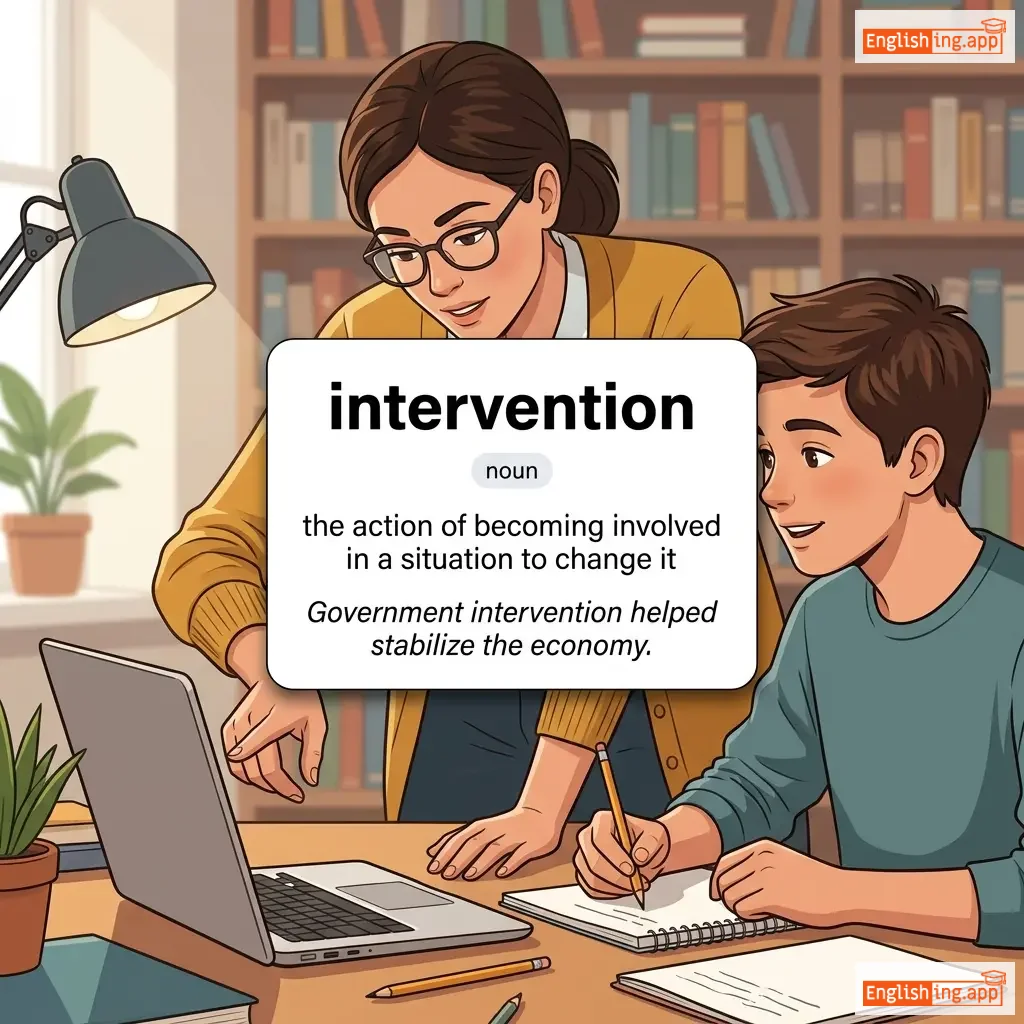
the action of becoming involved in a situation to change it
••••••
|
Government intervention helped stabilize the economy. |
Государственное вмешательство помогло стабилизировать экономику.
Gosudarstvennoe vmeshatel'stvo pomoglo stabilizirovat' ekonomiku.
••••••
|
military intervention |
the use of military force in a conflict
••••••
|
военное вмешательство
voyennoye vmeshatel'stvo
••••••
|
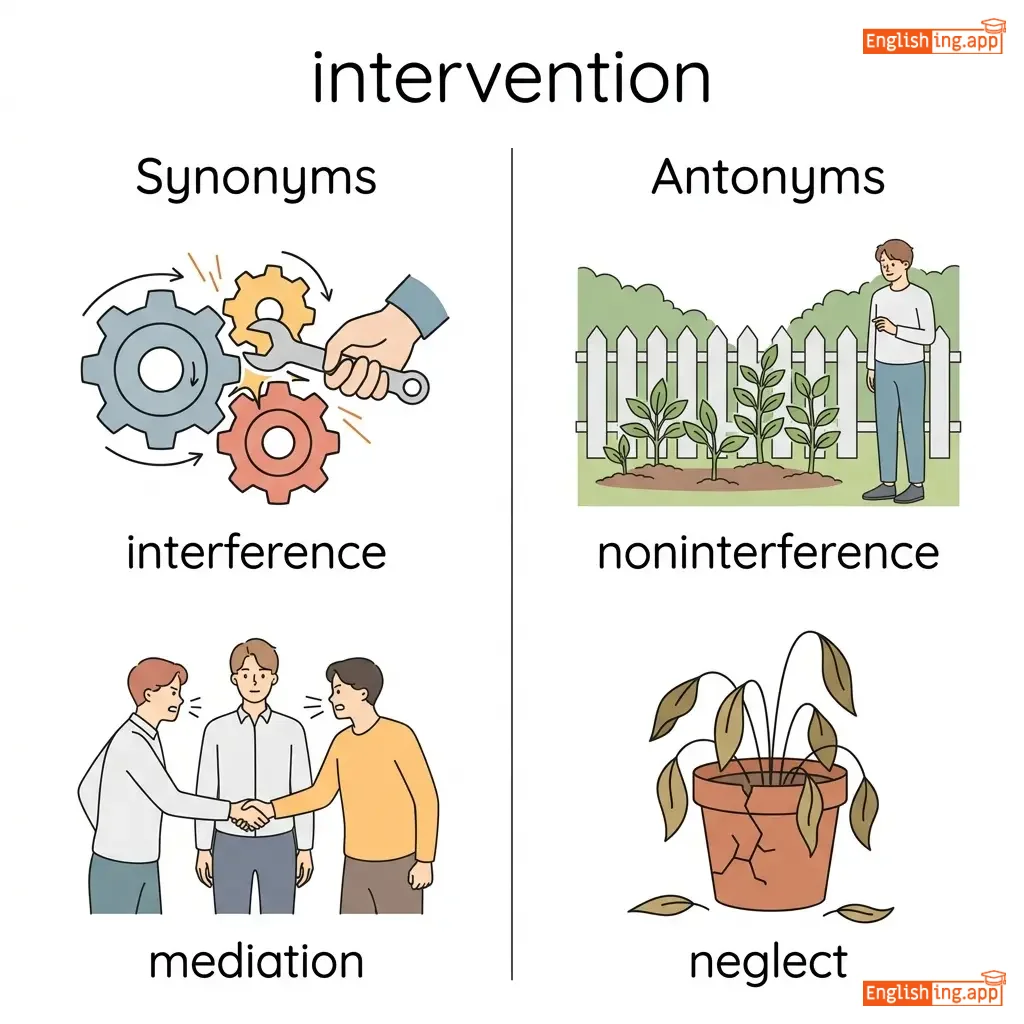
interference, mediation, involvement, intrusion, action
••••••
|
noninterference, neglect, inaction
••••••
|
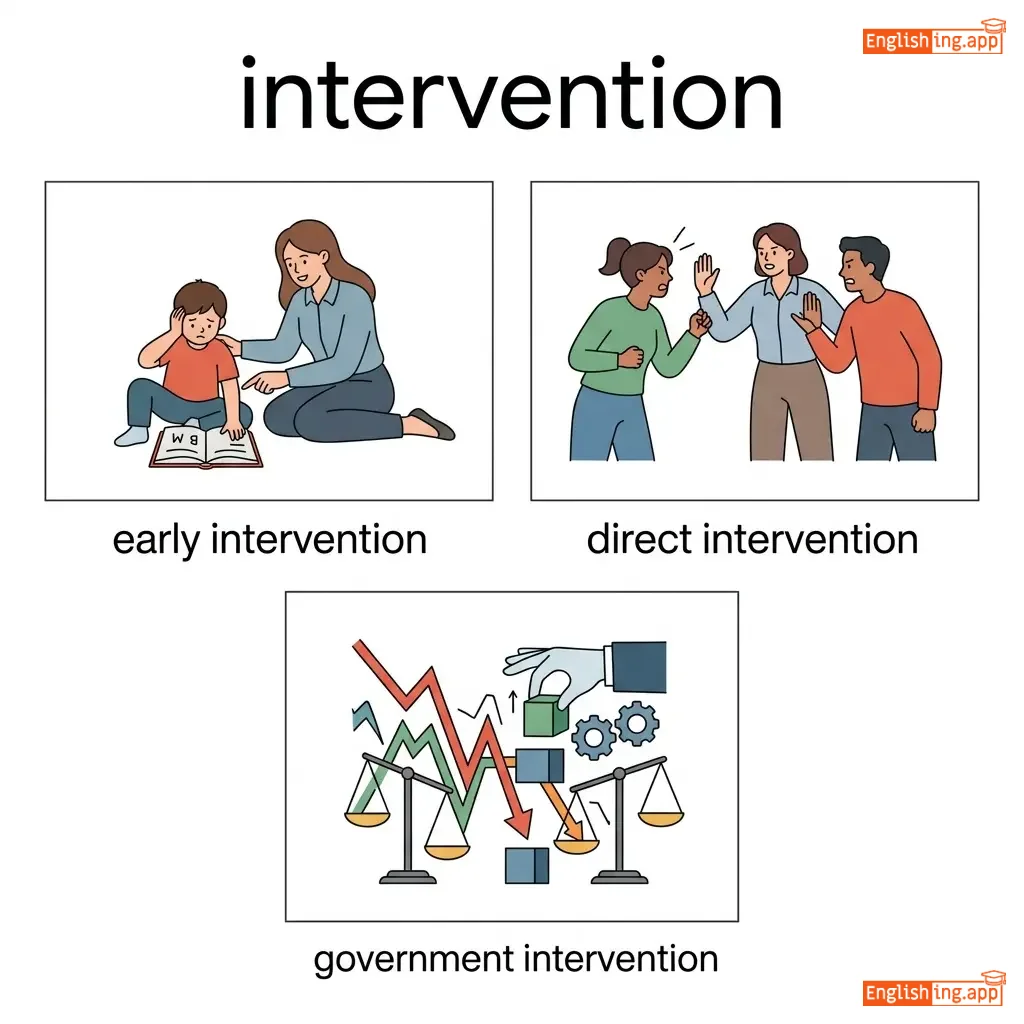
early intervention, direct intervention, government intervention, timely intervention
••••••
|
Intervention - это когда вмешиваешься, чтобы помочь в трудной ситуации.
••••••
|
|
🎤
••••••
|
/ˈɪntərvjuː/
noun, verb
(Интервью)
••••••
|


|
интервью
intervyu
••••••
|
interviewed
Интервьюд
••••••
|
interviewed
Интервьюд
••••••
|
interviews
Интервьюз
••••••
|
interviewing
Интервьюинг
••••••
|
a formal meeting in which one person asks another questions
••••••
|
She prepared well for the job interview.
Она хорошо подготовилась к собеседованию.
••••••
|
Она хорошо подготовилась к собеседованию.
Ona khorosho podgotovilas' k sobesedovaniyu.
••••••
|
exit interview
выходное интервью
••••••
|
a discussion with an employee leaving a company
••••••
|
выходное интервью
vykhodnoe interview
••••••
|
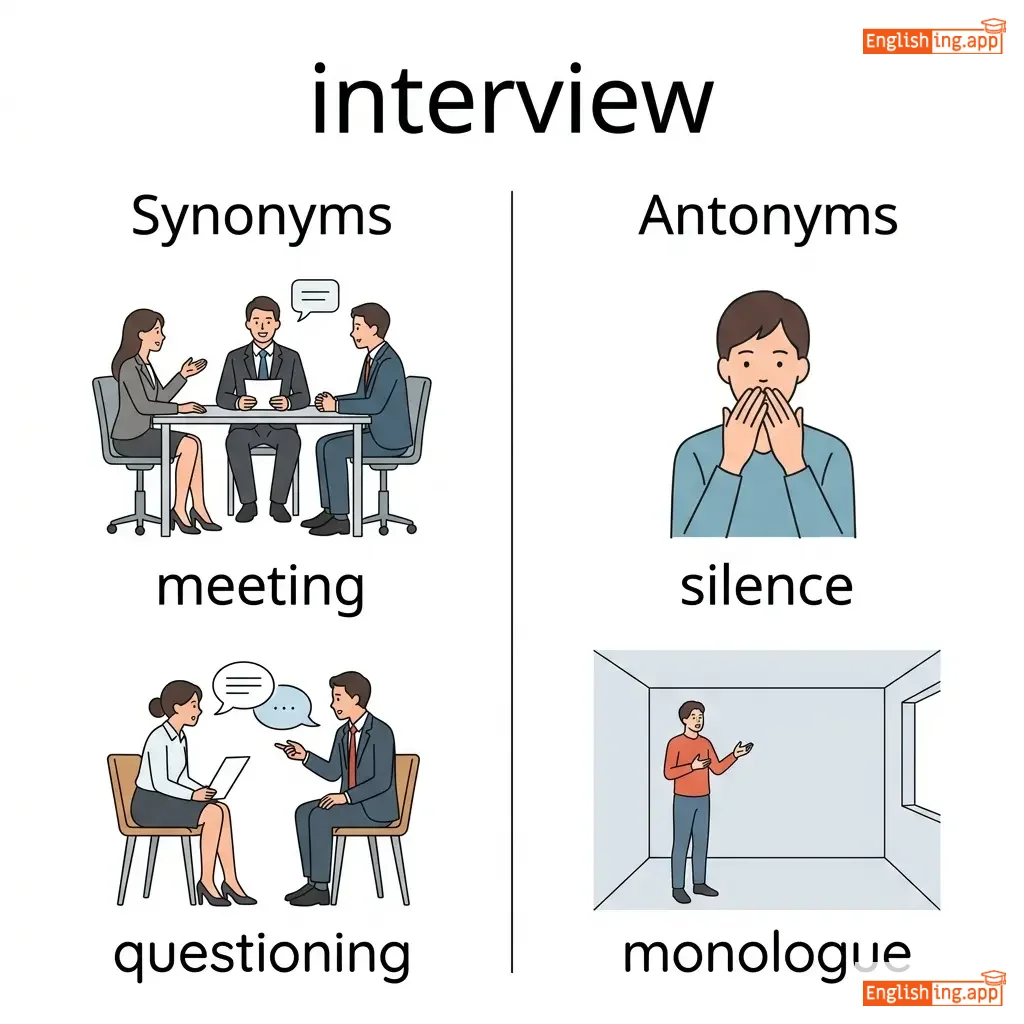
meeting, questioning, discussion, examination, consultation
••••••
|
silence, monologue
••••••
|
job interview, phone interview, conduct interview, interview process
••••••
|
Interview означает собеседование — собеседование на работу — это игра вопросов и ответов.
••••••
|
|
🌹
••••••
|
/ˈɪntɪmət/
adjective
(интимет)
••••••
|


|
интимный
intimny
••••••
|
- •••••• | - •••••• | - •••••• | - •••••• |
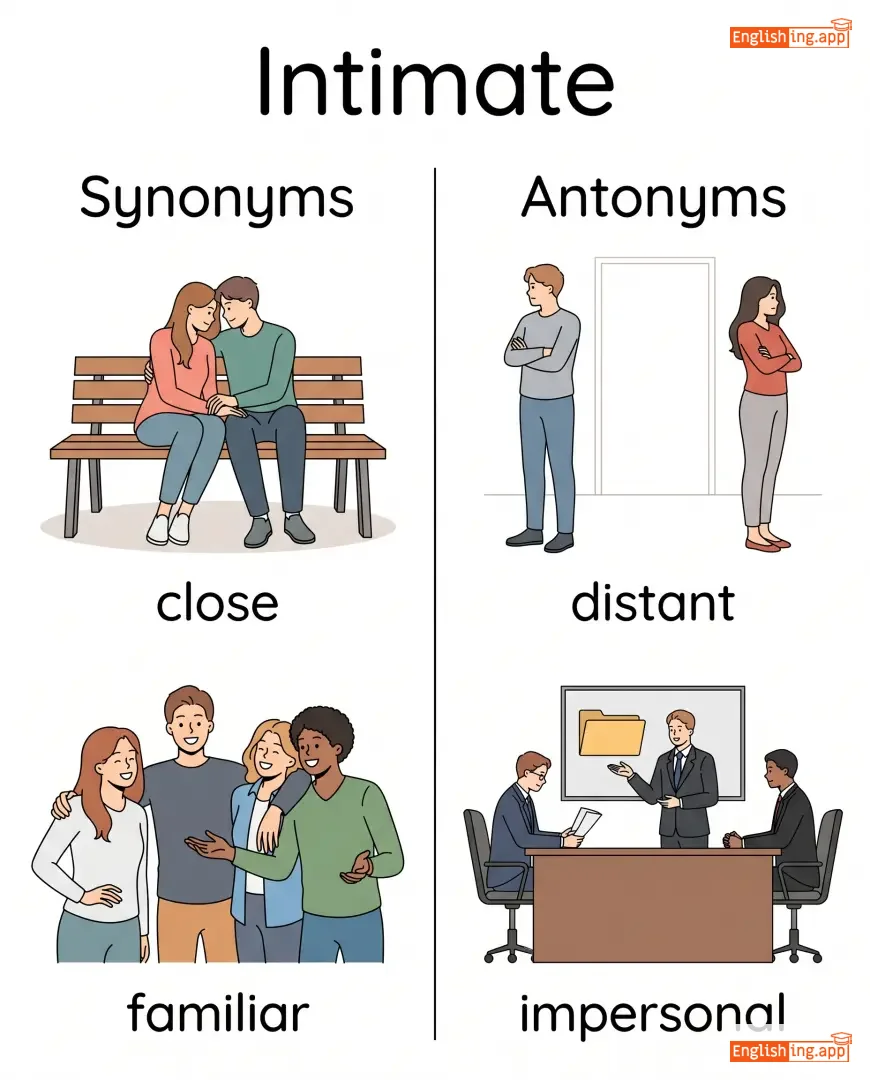
Closely acquainted; very familiar and personal.
••••••
|
They shared an intimate dinner by candlelight. |
Они поделились интимным ужином при свечах.
Oni podelilis' intimnym uzhinom pri svechakh.
••••••
|
intimate knowledge |
A deep or detailed understanding of something.
••••••
|
интимные знания
intimnye znaniya
••••••
|
close, familiar, personal, confidential, warm
••••••
|
distant, impersonal, formal
••••••
|
intimate relationship, intimate knowledge, intimate dinner, intimate friend
••••••
|
Intimate = Интимный как глубокие дружеские отношения.
••••••
|
|
➡️
••••••
|
/ˈɪntuː/
preposition
(инту)
••••••
|
- •••••• |
внутрь
vnutri
••••••
|
- •••••• | - •••••• | - •••••• | - •••••• |
expressing movement or direction to the inside of something
••••••
|
She walked into the room quietly.
Она тихо вошла в комнату.
••••••
|
Она тихо вошла в комнату.
Ona tikho voshla v komnatu.
••••••
|
run into
столкнуться с
••••••
|
to meet by chance
••••••
|
встретиться случайно
vstretit'sya sluchayno
••••••
|
inside, within, toward, onto
••••••
|
out, outside
••••••
|
fall into, get into, break into, move into
••••••
|
Into означает внутрь — когда идет дождь, все бегут внутрь.
••••••
|
|
🔥
••••••
|
/ɪnˈtɒlərəbl̩/
adjective
(интолерабл)
••••••
|
- •••••• |
невыносимый
nevyinosimy
••••••
|
- •••••• | - •••••• | - •••••• | - •••••• |
so bad, difficult, or unpleasant that it cannot be endured
••••••
|
The heat during the summer was almost intolerable.
Жара летом была почти невыносимой.
••••••
|
Жара летом была почти невыносимой.
Zhara letom byla pochti nevynosimoy.
••••••
|
an intolerable situation
невыносимая ситуация
••••••
|
a condition or state that is too difficult or unpleasant to continue
••••••
|
невыносимая ситуация
nevyinosimaya situatsiya
••••••
|
unbearable, insufferable, unendurable, extreme, unacceptable
••••••
|
tolerable, bearable, acceptable
••••••
|
intolerable pain, intolerable pressure, intolerable behavior, intolerable burden
••••••
|
INTOLERABLE = IN + TOLERABLE → Не выносится → Невыносимый
••••••
|
|
🤔
••••••
|
/ɪnˈtriːɡɪŋ/
adjective
(интригинг)
••••••
|
- •••••• |
очень интересный и необычный; вызывающий любопытство
ochen' interesnyy i neobychnyy; vyzyvayushchiy lyubopytstvo
••••••
|
- •••••• | - •••••• | - •••••• | - •••••• |
very interesting and unusual; arousing curiosity
••••••
|
The movie has an intriguing plot that keeps the audience hooked. |
У фильма есть интригующий сюжет, который держит зрителей в напряжении.
U fil'ma yest' intriguushchiy syuzhet, kotoryy derzhit zriteley v napryazhenii.
••••••
|
- •••••• | - •••••• | - •••••• |
fascinating, captivating, engaging, compelling, mysterious
••••••
|
boring, dull, uninteresting
••••••
|
intriguing idea, intriguing story, intriguing mystery, intriguing character
••••••
|
Intriguing означает очень интересный и необычный, как такой сюжет, что все говорят: 'Интригинг!'
••••••
|
|
🙋
••••••
|
/ˌɪntrəˈduːs/
verb
(интродьюс)
••••••
|

|
представить
predstavit
••••••
|
introduced
интродьюсд
••••••
|
introduced
интродьюсд
••••••
|
introduces
интродьюсес
••••••
|
introducing
интродьюсинг
••••••
|
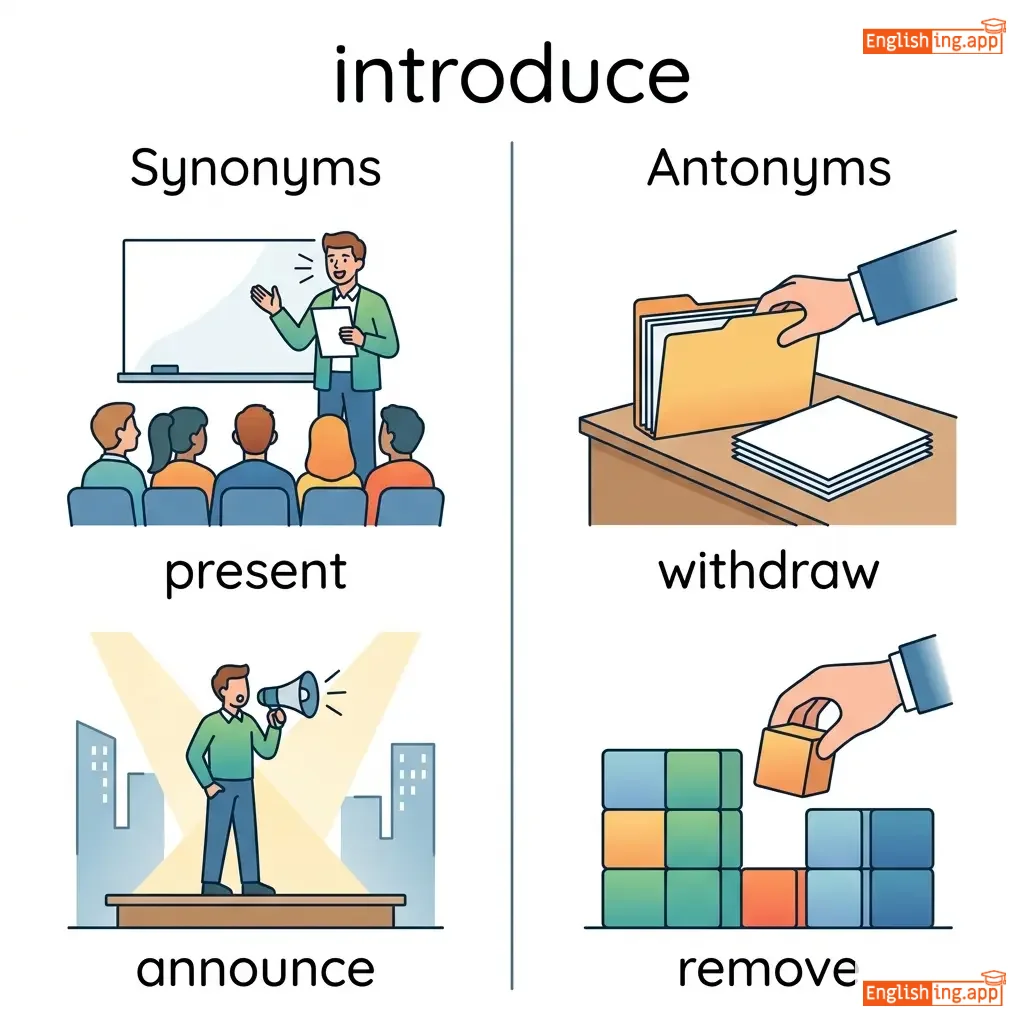
to present someone or something to another person or group
••••••
|
He will introduce his new idea at the meeting.
Он представит свою новую идею на встрече.
••••••
|
Он представит свою новую идею на встрече.
On predstavit svoyu novuyu ideyu na vstreche.
••••••
|
introduce a bill
представить законопроект
••••••
|
to formally present a proposed law
••••••
|
представить законопроект
predstavit zakonoproekt
••••••
|
present, announce, propose, launch, establish
••••••
|
withdraw, remove, eliminate
••••••
|
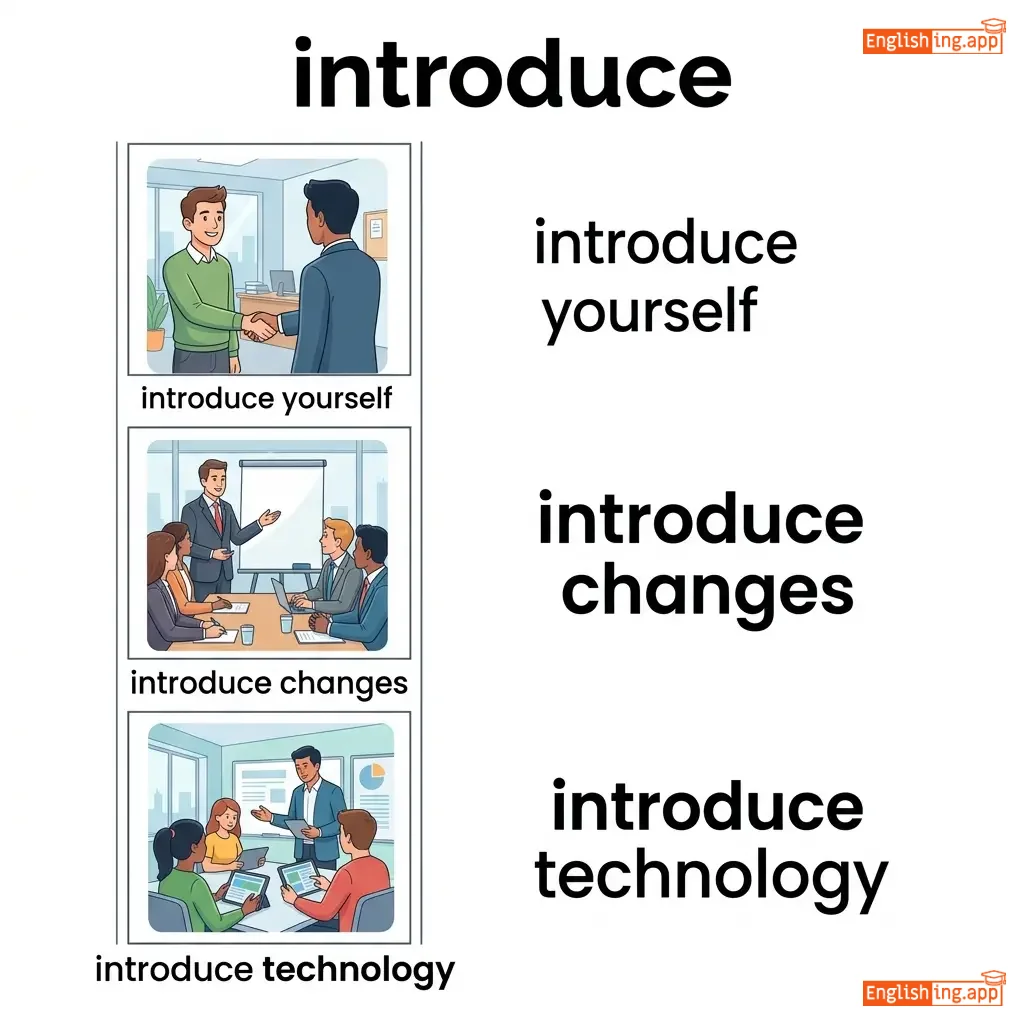
introduce yourself, introduce changes, introduce technology, introduce to
••••••
|
Introduce означает представить — представьте, что вы говорите: 'Позвольте представить нового члена команды'.
••••••
|
|
📘
••••••
|
/ˌɪn.trəˈdʌk.ʃən/
noun
(интродакшн)
••••••
|
- •••••• |
введение
vvedenie
••••••
|
- •••••• | - •••••• | - •••••• | - •••••• |
the action of introducing something or someone; an opening or beginning part
••••••
|
The professor gave a brief introduction before starting the lecture.
Профессор сделал краткое введение перед началом лекции.
••••••
|
Профессор сделал краткое введение перед началом лекции.
Professor sdelal kratkoe vvedenie pered nachalom lektsii.
••••••
|
introduction to
введение в
••••••
|
the beginning explanation or basic presentation of a subject
••••••
|
введение в
vvedenie v
••••••
|
beginning, preface, initiation, presentation, foreword
••••••
|
conclusion, ending
••••••
|
make an introduction, give an introduction, introduction to a book, formal introduction
••••••
|
Введение – это то, что ты говоришь в начале, чтобы познакомить.
••••••
|
|
⚔️
••••••
|
/ɪnˈveɪd/
verb
(инвейд)
••••••
|
- •••••• |
вторгнуться
vtorhnut'sya
••••••
|
invaded
инвейдед
••••••
|
invaded
инвейдед
••••••
|
invades
инвейдс
••••••
|
invading
инвейдинг
••••••
|
to enter a place or country forcefully, especially as an enemy
••••••
|
The army invaded the neighboring country.
Армия вторглась в соседнюю страну.
••••••
|
Армия вторглась в соседнюю страну.
Armiya vtorglas' v sosednyuyu stranu.
••••••
|
invade someone's privacy
вторжение в чью-то личную жизнь
••••••
|
to intrude into someone's personal life
••••••
|
вторжение в чью-то личную жизнь
vtorzhenie v ch'yu-to lichnuyu zhizn'
••••••
|
attack, conquer, occupy, overrun, intrude
••••••
|
withdraw, retreat, leave
••••••
|
invade territory, invade privacy, invaded country, invading force
••••••
|
In + Vade (входить) — входить и затем вторгаться!
••••••
|
|
❌
••••••
|
/ˈɪnvəlɪd/ (adjective), /ɪnˈvælɪd/ (noun)
adjective, noun
(инвалид)
••••••
|
- •••••• |
недействительный
nedeystvitel'nyy
••••••
|
- •••••• | - •••••• | - •••••• | - •••••• |
Not valid; having no force or effect. Also refers to a person too weak or ill to care for themselves.
••••••
|
The court declared the contract invalid. |
Суд признал контракт недействительным.
Sud priznal kontrakt nedeystvitel'nym.
••••••
|
invalid argument |
A reasoning or statement that is not logically correct.
••••••
|
недействительный аргумент
nedeystvitel'nyy argument
••••••
|
void, ineffective, worthless, weak, ill
••••••
|
valid, sound, effective
••••••
|
invalid contract, invalid data, invalid reason
••••••
|
Invalid = In + valid → недействительный, что означает не действительный.
••••••
|
|
❌
••••••
|
/ˌɪnvəˈlɪdɪti/
noun
(инвалидити)
••••••
|
- •••••• |
недействительность
nedeistvitelnost
••••••
|
- •••••• | - •••••• | - •••••• | - •••••• |
the state of being invalid, legally void, or lacking force or validity
••••••
|
The court ruled that the contract suffered from invalidity.
зэ корт рулд зэт зэ контракт саферд фром инвалидити
••••••
|
Суд постановил, что договор был недействительным.
sud postanovil chto dogovor byl nedeistvitelnym
••••••
|
- •••••• | - •••••• | - •••••• |
invalidness, nullity, illegitimacy, ineffectiveness, voidness
••••••
|
validity, legitimacy, soundness
••••••
|
legal invalidity, claim invalidity, grounds of invalidity, prove invalidity
••••••
|
invalidity — нет действия, значит недействительность
••••••
|
|
🔒
••••••
|
/ɪnˈveə.ri.ə.bəl/
adjective
(инвариабл)
••••••
|
- •••••• |
неизменный; постоянный; всегда одинаковый
neizmennyy
••••••
|
- •••••• | - •••••• | - •••••• | - •••••• |
never changing; constant; always the same
••••••
|
His invariable routine includes morning exercise and coffee.
его неизменный распорядок включает утренние упражнения и кофе.
••••••
|
Его неизменный распорядок включает утренние упражнения и кофе.
yego neizmenniy rasporyadok vklyuchayet utrebnie uprazhneniya i kofe
••••••
|
- •••••• | - •••••• | - •••••• |
constant, unchanging, fixed, consistent
••••••
|
variable, changing, inconsistent, fluctuating
••••••
|
invariable rule, invariable routine, invariable custom, invariable pattern
••••••
|
In Russian, 'неизменный' means 'invariable' just as in English!
••••••
|
|
⚔️
••••••
|
/ɪnˈveɪʒən/
noun
(ɪnˈveɪʒən)
••••••
|
- •••••• |
вторжение
vtorzhenie
••••••
|
- •••••• | - •••••• | - •••••• | - •••••• |
An instance of invading a country, region, or personal space with armed force or unwelcome presence.
••••••
|
The army prepared for the possibility of an invasion. |
Армия подготовилась к возможности вторжения.
Armiya podgotovilas k vozmozhnosti vtorzheniya.
••••••
|
invasion of privacy |
A violation of someone's personal life without permission.
••••••
|
вторжение в частную жизнь
vtorzhenie v chastnuyu zhizn
••••••
|
attack, incursion, intrusion, assault, raid
••••••
|
retreat, withdrawal, defense
••••••
|
military invasion, foreign invasion, invasion force, invasion threat
••••••
|
Invasion значит вторжение ⚔️ — в России Vision = вторжение (вторжение).
••••••
|
|
💡
••••••
|
/ɪnˈvɛnt/
verb
(изобретать)
••••••
|
- •••••• |
изобретать
izobretat'
••••••
|
invented
изобрёл
••••••
|
invented
изобретённый
••••••
|
invents
изобретает
••••••
|
inventing
изобретая
••••••
|
to create or design something that has not existed before
••••••
|
Thomas Edison invented the electric bulb.
Томас Эдисон изобрёл электрическую лампочку.
••••••
|
Томас Эдисон изобрёл электрическую лампочку.
Tomas Edison izobrely elektricheskuyu lampochku.
••••••
|
reinvent the wheel
изобрести колесо
••••••
|
to waste time creating something that already exists
••••••
|
тратить время на создание чего-то, что уже существует
tratit' vremya na sozdanie chego-to, chto uzhe sushchestvuet
••••••
|
create, design, develop, originate, devise
••••••
|
destroy, copy, imitate
••••••
|
invent a machine, invent a device, invent story, invent technology
••••••
|
Изобретать = Из + обретать (обретать = находить) — находить и создавать что-то новое.
••••••
|
|
⚙️
••••••
|
/ɪnˈvɛnʃən/
noun
(ɪnˈvɛnʃən)
••••••
|

|
изобретение
izobretenie
••••••
|
- •••••• | - •••••• | - •••••• | - •••••• |
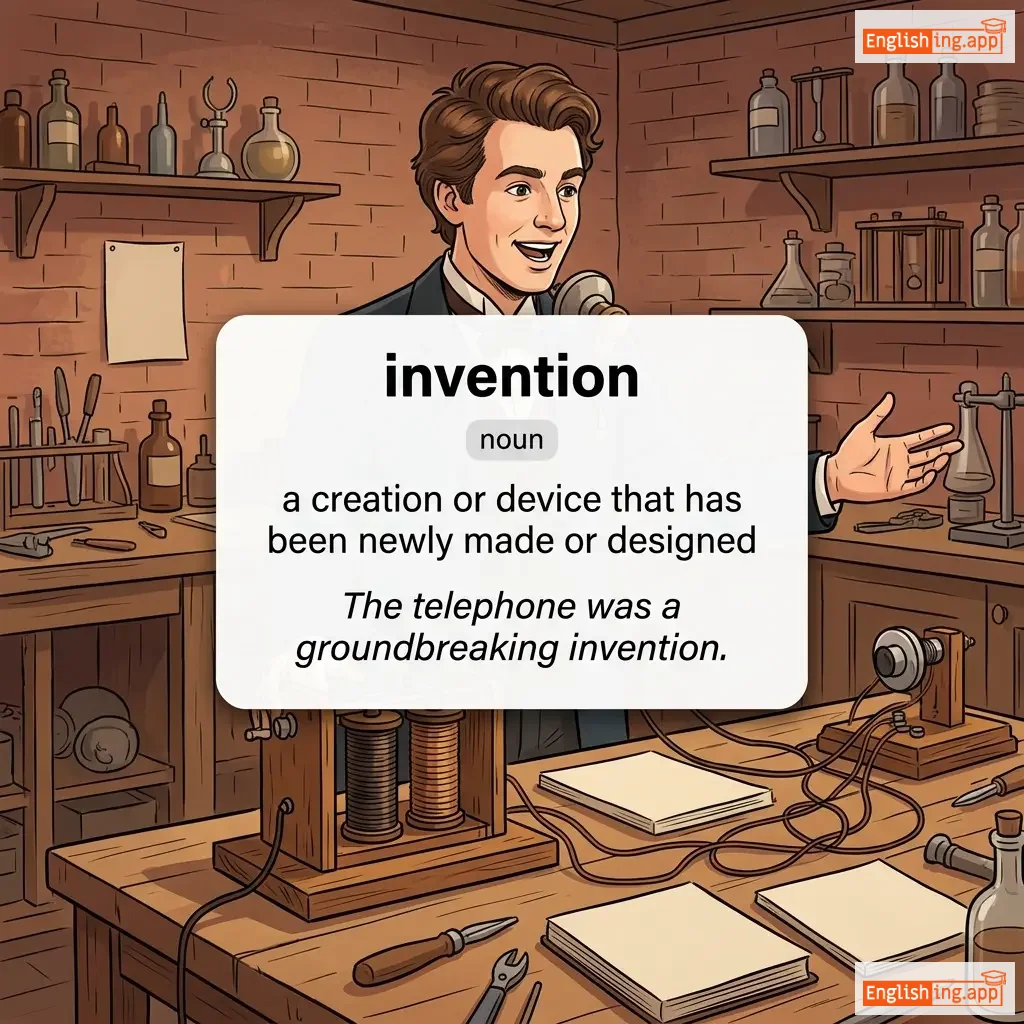
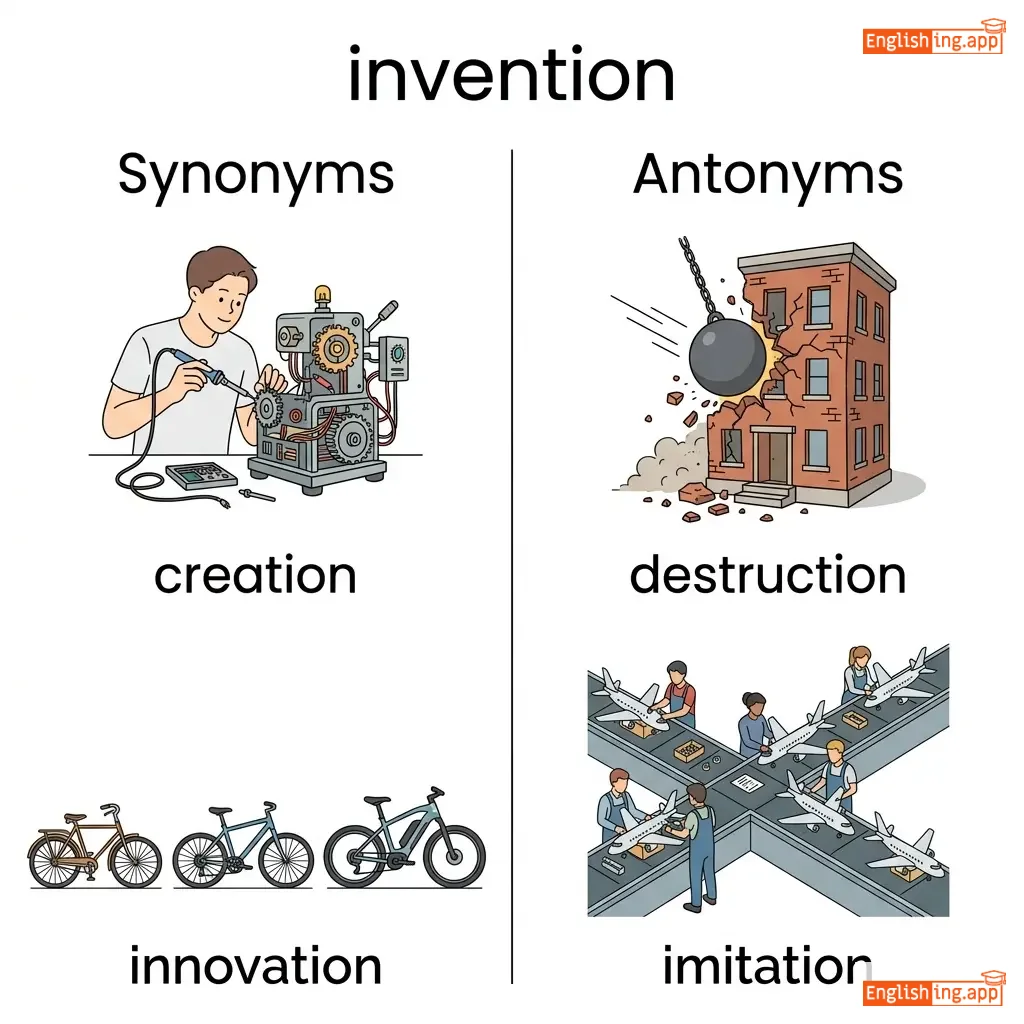
a creation or device that has been newly made or designed
••••••
|
The telephone was a groundbreaking invention. |
Телефон был революционным изобретением.
Telefon byl revolyutsionnym izobreteniem.
••••••
|
mother of invention |
necessity drives people to create solutions
••••••
|
необходимость - мать изобретений
neobkhodimost' - mat' izobreteniy
••••••
|
creation, innovation, discovery, contraption, device
••••••
|
destruction, imitation
••••••
|
new invention, scientific invention, modern invention, patent an invention
••••••
|
Изобретение - это то, что нужно создать!
••••••
|
|
💡
••••••
|
/ɪnˈventər/
noun
(инвентор)
••••••
|
- •••••• |
изобретатель
izobretatel
••••••
|
- •••••• | - •••••• | - •••••• | - •••••• |
a person who creates or designs something new, especially a device, method, or process
••••••
|
The inventor patented her new medical device.
Зе инвентор патентед хёр нью медикал девайс.
••••••
|
Изобретатель запатентовал свое новое медицинское устройство.
Izobretatel zapatentoval svoe novoe meditsinskoe ustroistvo
••••••
|
great inventor
грит инвентор
••••••
|
a person known for creating important or influential inventions
••••••
|
великий изобретатель
velikii izobretatel
••••••
|
creator, innovator, designer, originator, pioneer
••••••
|
imitator, follower
••••••
|
famous inventor, prolific inventor, inventor of, young inventor
••••••
|
Inventor = изобретатель, оба про изобретение
••••••
|
|
💰
••••••
|
/ɪnˈvɛst/
verb
(инвестировать)
••••••
|

|
инвестировать
investirovat
••••••
|
invested
инвестировал
••••••
|
invested
инвестировал
••••••
|
invests
инвестирует
••••••
|
investing
инвестируя
••••••
|
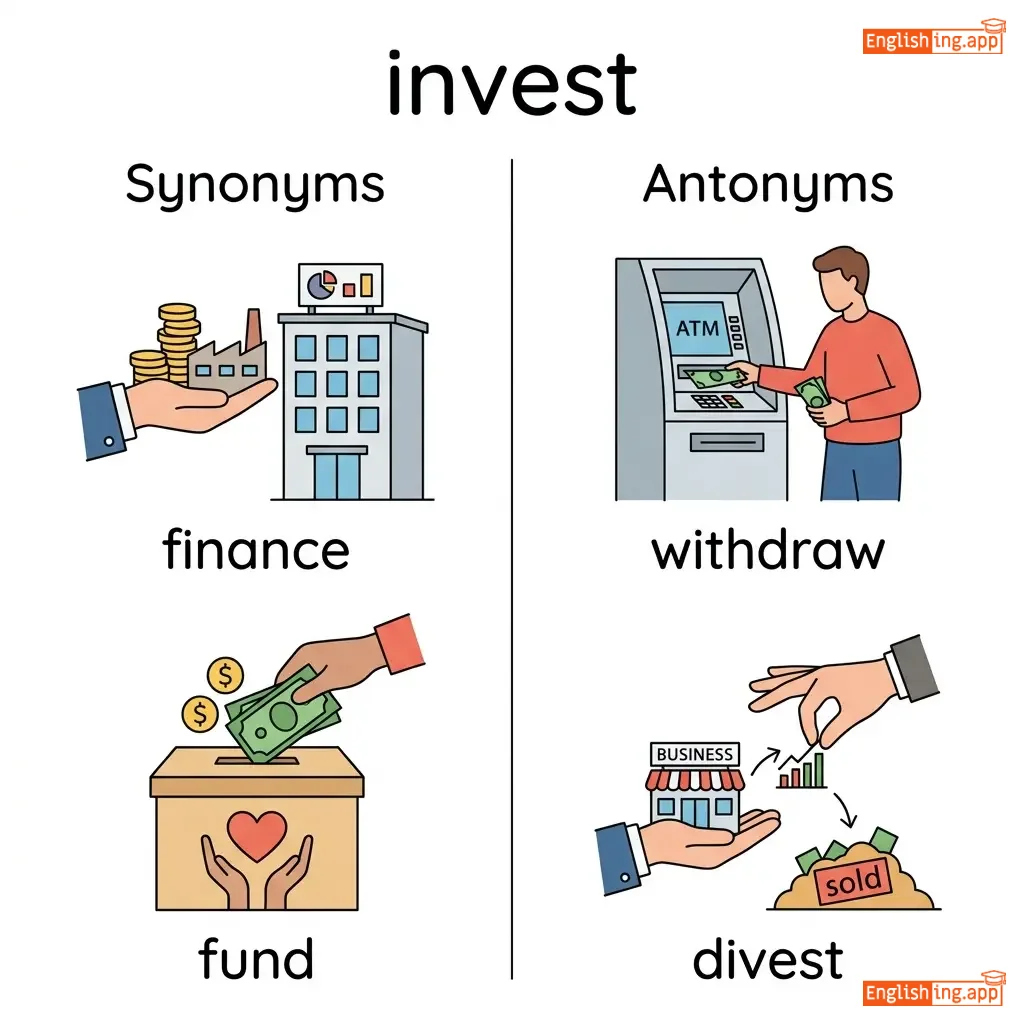
to put money, time, or effort into something with the expectation of achieving a benefit
••••••
|
He decided to invest in real estate to secure his future.
Он решил инвестировать в недвижимость, чтобы обеспечить свое будущее.
••••••
|
Он решил инвестировать в недвижимость, чтобы обеспечить свое будущее.
On reshil investirovat' v nedvizhimost', chtoby obespechit' svoyo budushcheye.
••••••
|
invest in
инвестировать в
••••••
|
to commit money, time, or effort into something
••••••
|
инвестировать в
investirovat' v
••••••
|
finance, fund, contribute, allocate, commit
••••••
|
withdraw, divest
••••••
|
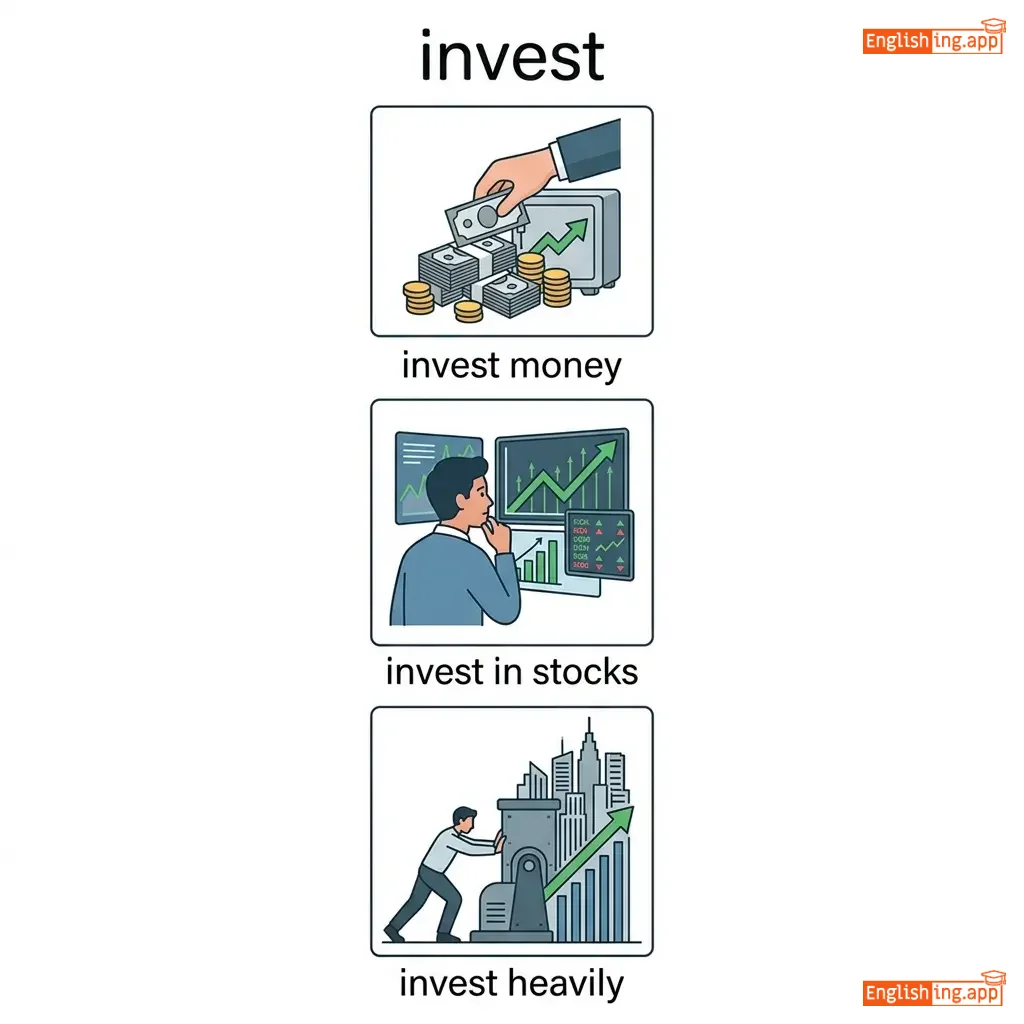
invest money, invest in stocks, invest heavily, invest wisely
••••••
|
Инвестировать = вложить что-то сегодня для выгоды в будущем.
••••••
|
|
🔍
••••••
|
/ɪnˈvɛs.tɪ.ɡeɪt/
verb
(инвɛс.tɪˈɡеɪт)
••••••
|
- •••••• |
расследовать
rassledovat
••••••
|
investigated
инвɛс.tɪˈɡеɪтэд
••••••
|
investigated
инвɛс.tɪˈɡеɪтэд
••••••
|
investigates
инвɛс.tɪˈɡеɪтс
••••••
|
investigating
инвɛс.tɪˈɡеɪтинг
••••••
|
to carry out a systematic inquiry to discover facts or information
••••••
|
The police will investigate the incident thoroughly.
Полиция будет тщательно расследовать происшествие.
••••••
|
Полиция будет тщательно расследовать происшествие.
Politsiya budet tchatel'no rassledovat' proisshestvie.
••••••
|
investigate a case
расследовать дело
••••••
|
to examine or look into a specific case
••••••
|
расследовать дело
rassledovat' delo
••••••
|
examine, probe, inspect, explore, analyze
••••••
|
ignore, overlook
••••••
|
investigate crime, investigate a complaint, investigate thoroughly
••••••
|
Rassledovat' znači iskanje faktov v dele.
••••••
|
|
🕵️
••••••
|
/ɪnˌvɛs.tɪˈɡeɪ.ʃən/
noun
(инвестигейшн)
••••••
|
- •••••• |
расследование
rassledovanie
••••••
|
- •••••• | - •••••• | - •••••• | - •••••• |
the process of inquiring into or examining something carefully to find the truth
••••••
|
The investigation revealed new evidence about the fraud. |
Расследование выявило новые доказательства мошенничества.
Rassledovanie viyavilo novye dokazatel'stva moshenichestva.
••••••
|
under investigation |
being examined or inquired into
••••••
|
на расследовании
na rassledovanii
••••••
|
inquiry, probe, inspection, examination, scrutiny
••••••
|
neglect, disregard
••••••
|
launch an investigation, conduct an investigation, criminal investigation
••••••
|
Расследование — это поиск правды путем расследования.
••••••
|
|
🕵️
••••••
|
/ɪnˈvɛstɪˌɡeɪtər/
noun
(хэппинесс)
••••••
|
- •••••• |
счастье
schast'ye
••••••
|
- •••••• | - •••••• | - •••••• | - •••••• |
a person who carries out a formal inquiry or investigation
••••••
|
The investigator gathered evidence from the crime scene. |
Она не могла скрыть своего счастья, когда получила награду.
Ona ne mogla skryt' svoego schast'ya, kogda poluchila nagradu.
••••••
|
private investigator |
a detective who works independently, often hired for personal cases
••••••
|
поиск счастья
poisk schast'ya
••••••
|
detective, examiner, inspector, researcher, sleuth
••••••
|
suspect, criminal
••••••
|
police investigator, lead investigator, private investigator, chief investigator
••••••
|
Счастье — это найти смысл жизни в поиске счастья.
••••••
|
|
📈
••••••
|
/ɪnˈvɛst.mənt/
noun
(ɪnˈvɛstmɛnt)
••••••
|

|
инвестиция
investitsiya
••••••
|
- •••••• | - •••••• | - •••••• | - •••••• |
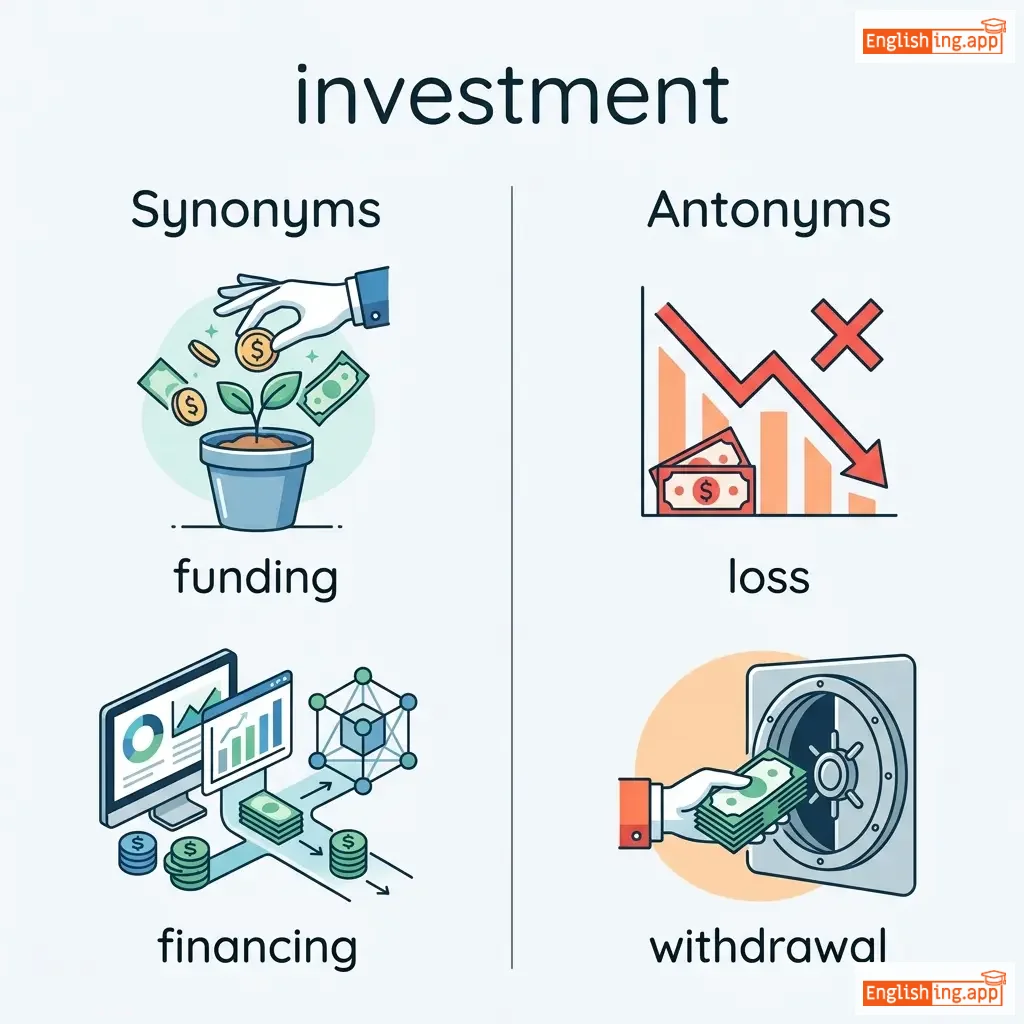
the action or process of putting money, time, or resources into something for future benefit
••••••
|
Her investment in technology startups has paid off well. |
Её инвестиции в технологические стартапы принесли хорошие результаты.
Yeyo investitsii v tekhnologicheskiye startupy prinesli khoroshiye rezul'taty.
••••••
|
return on investment |
the profit or loss derived from an investment
••••••
|
возврат инвестиций
vozvrat investitsiy
••••••
|
funding, financing, contribution, allocation, venture
••••••
|
loss, withdrawal
••••••
|
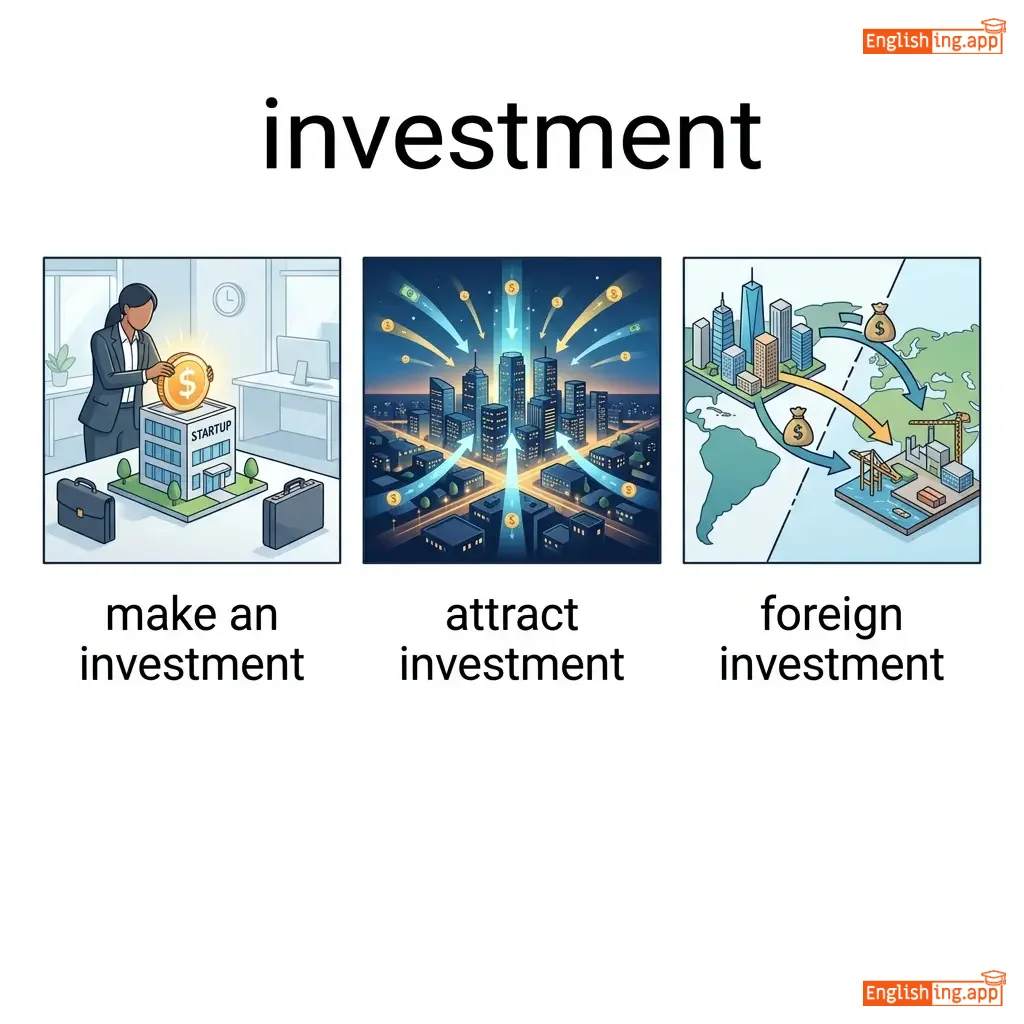
make an investment, attract investment, foreign investment, wise investment
••••••
|
Инвестиции – это когда ты вкладываешь деньги сегодня, чтобы получить прибыль завтра.
••••••
|
|
💰
••••••
|
/ɪnˈvɛstər/
noun
(ɪnˈvɛstɔr)
••••••
|
- •••••• |
инвестор
investor
••••••
|
- •••••• | - •••••• | - •••••• | - •••••• |
a person or organization that puts money into financial schemes, property, or business ventures with the expectation of achieving a profit
••••••
|
The investor funded the startup with a large sum of money. |
Инвестор профинансировал стартап крупной суммой денег.
Investor profinisiroval startup krupnoy summoy deneg.
••••••
|
angel investor |
an individual who provides capital for a business startup, usually in exchange for ownership equity
••••••
|
ангельский инвестор
angelskiy investor
••••••
|
financier, shareholder, backer, capitalist
••••••
|
spender, debtor
••••••
|
foreign investor, private investor, institutional investor, angel investor
••••••
|
Инвестор — это тот, кто инвестирует для получения прибыли, то есть инвестор
••••••
|
|
👻
••••••
|
/ɪnˈvɪzɪbəl/
adjective
(инвизибл)
••••••
|
- •••••• |
невидимый
nevidimy
••••••
|
- •••••• | - •••••• | - •••••• | - •••••• |
unable to be seen; not visible to the eye
••••••
|
The stars became invisible as the sun rose. |
Звезды стали невидимыми, когда взошло солнце.
Zvezdy stali nevidimymi, kogda vzoshlo solntse.
••••••
|
invisible hand |
an unseen force guiding economic or social outcomes
••••••
|
невидимая рука
nevidimaya ruka
••••••
|
unseen, hidden, concealed, imperceptible, obscure
••••••
|
visible, clear, apparent
••••••
|
invisible force, invisible power, invisible ink, invisible barrier
••••••
|
Invisible = невидимый = не видимый
••••••
|
|
💌
••••••
|
/ˌɪnvɪˈteɪʃən/
noun
(хэппинесс)
••••••
|
- •••••• |
счастье
schast'ye
••••••
|
- •••••• | - •••••• | - •••••• | - •••••• |
a written or spoken request to attend an event or to participate in something
••••••
|
She sent me an invitation to her wedding. |
Она не смогла скрыть своего счастья, когда получила награду.
Ona ne smogla skryt' svoego schast'ya, kogda poluchila nagradu.
••••••
|
extend an invitation |
to formally invite someone
••••••
|
поиск счастья
poisk schast'ya
••••••
|
request, call, summon, appeal, proposal
••••••
|
rejection, refusal
••••••
|
send invitation, wedding invitation, formal invitation, accept invitation
••••••
|
Счастье = когда все хорошо, и душа поет!
••••••
|
|
✉️
••••••
|
/ɪnˈvaɪt/
verb
(инвайт)
••••••
|
- •••••• |
пригласить
priglasit
••••••
|
invited
инвайтед
••••••
|
invited
инвайтед
••••••
|
invites
инвайтс
••••••
|
inviting
инвайтинг
••••••
|
to ask someone to come to a place or event
••••••
|
She invited her friends to the party.
Она пригласила своих друзей на вечеринку.
••••••
|
Она пригласила своих друзей на вечеринку.
Ona priglasila svoikh druzey na vecherinku.
••••••
|
invite trouble
пригласить проблемы
••••••
|
to do something that is likely to cause problems
••••••
|
пригласить проблемы
priglasit problemy
••••••
|
ask, request, call, summon, beckon
••••••
|
reject, refuse, dismiss
••••••
|
invite someone, invite to dinner, warmly invite, cordially invite
••••••
|
Пригласить это как пригласить людей на вечеринку.
••••••
|
|
📨
••••••
|
/ɪnˈvaɪtɪd/
verb
(инвайтед)
••••••
|
- •••••• |
приглашённый
priglashyonnyi
••••••
|
invited
инвайтед
••••••
|
invited
инвайтед
••••••
|
invites
инвайтс
••••••
|
inviting
инвайтинг
••••••
|
asked someone formally or politely to go somewhere or do something
••••••
|
She was invited to the party.
ши уоз инвайтед ту зэ пати
••••••
|
Её пригласили на вечеринку.
eyo priglasili na vecherinku
••••••
|
- •••••• | - •••••• | - •••••• |
asked, requested, welcomed, summoned, beckoned
••••••
|
excluded, rejected, refused
••••••
|
invited guest, invited to a party, invited formally, invited personally
••••••
|
Invite = приглашать → приглашённый
••••••
|
|
✉️
••••••
|
/ɪnˈvaɪtər/
noun
(инвайтор)
••••••
|
- •••••• |
приглашающий
priglashayushchiy
••••••
|
- •••••• | - •••••• | - •••••• | - •••••• |
a person who invites someone to an event, meeting, or place
••••••
|
The invitor greeted all the guests warmly at the entrance.
Инвайтор тепло приветствовал гостей.
••••••
|
Приглашающий тепло встретил гостей у входа.
Priglashayushchiy teplo vstretil gostey u vhoda
••••••
|
- •••••• | - •••••• | - •••••• |
host, inviter, organizer, caller, convenor
••••••
|
guest, invitee
••••••
|
formal invitor, event invitor, original invitor, main invitor
••••••
|
invitor — тот, кто приглашает
••••••
|
|
📜
••••••
|
/ɪnˈvoʊk/
verb
(инвоук)
••••••
|
- •••••• |
взывать
vzyvat
••••••
|
invoked
инвоукд
••••••
|
invoked
инвоукд
••••••
|
invokes
инвоукс
••••••
|
invoking
инвоукинг
••••••
|
to call upon a higher power, authority, or principle for help, support, or justification
••••••
|
The lawyer invoked the constitution to defend his client.
Адвокат сослался на конституцию, чтобы защитить своего клиента.
••••••
|
Адвокат сослался на конституцию, чтобы защитить своего клиента.
Advokat soslalsya na konstitutsiyu, chtoby zashchitit' svoego klienta.
••••••
|
invoke the law
взывать к закону
••••••
|
to appeal to or rely on the law for support or justification
••••••
|
взывать к закону
vzyvat' k zakonu
••••••
|
appeal, call upon, cite, summon, request
••••••
|
ignore, dismiss, reject
••••••
|
invoke the law, invoke authority, invoke powers, invoke tradition
••••••
|
Взывать похоже на приглашение, когда вы обращаетесь за помощью.
••••••
|
|
🤲
••••••
|
/ɪnˈvɑːlv/
verb
(инволв)
••••••
|
- •••••• |
включать
vklyuchat
••••••
|
involved
инволвд
••••••
|
involved
инволвд
••••••
|
involves
инволвс
••••••
|
involving
инволвинг
••••••
|
to include as a necessary part, or to engage someone in an activity
••••••
|
The project will involve several departments working together.
Проект будет включать несколько департаментов, работающих вместе.
••••••
|
Проект будет включать несколько департаментов, работающих вместе.
Proyekt budet vklyuchat' neskol'ko departamentov, rabotayushchikh vmeste.
••••••
|
get involved
вовлекайтесь
••••••
|
to participate or take part in something
••••••
|
вовлекаться
vovlekat'sya
••••••
|
include, engage, entail, require, associate
••••••
|
exclude, remove, neglect
••••••
|
involve in, involve with, project involves, task involves
••••••
|
Involve означает In + volve → вовлекать, то есть привести кого-то к участию.
••••••
|
|
🔗
••••••
|
/ɪnˈvɑːlvd/
adjective
(инвОлвд)
••••••
|
- •••••• |
вовлеченный
vovlechennyy
••••••
|
- •••••• | - •••••• | - •••••• | - •••••• |
complicated or engaged in something
••••••
|
She was deeply involved in community service. |
Она была глубоко вовлечена в общественные работы.
Ona byla gluboko vovlechenna v obshchestvennye raboty.
••••••
|
become involved |
to take an active part in something
••••••
|
стать вовлеченным
stat' vovlechenным
••••••
|
engaged, committed, complicated, connected
••••••
|
detached, simple, uninvolved
••••••
|
deeply involved, personally involved, involved process
••••••
|
Involved напоминает вовлеченный → быть в процессе действия.
••••••
|
|
🤝
••••••
|
/ɪnˈvɒlvmənt/
noun
(инволвмент)
••••••
|
- •••••• |
участие
uchastie
••••••
|
- •••••• | - •••••• | - •••••• | - •••••• |
the act of taking part in something
••••••
|
His involvement in the project was crucial.
хиз инволвмент ин зе прожект воз крушиал
••••••
|
Его участие в проекте было решающим.
Ego uchastie v proekte bylo reshayushchim.
••••••
|
- •••••• | - •••••• | - •••••• |
participation, engagement, contribution, role, association
••••••
|
exclusion, absence, withdrawal
••••••
|
active involvement, direct involvement, community involvement
••••••
|
Involvement → участие, как вовлечённость в действие.
••••••
|
|
🇮🇪
••••••
|
/ˈaɪrɪʃ/
adjective/noun
(ˈhæpinəs)
••••••
|
- •••••• |
счастье
schastye
••••••
|
- •••••• | - •••••• | - •••••• | - •••••• |
relating to Ireland, its people, or its language
••••••
|
The Irish countryside is very beautiful. |
Она не могла скрыть свое счастье, когда получила награду.
Ona ne mogla skryt' svoe schast'ye, kogda poluchila nagradu.
••••••
|
- •••••• | - •••••• | - •••••• |
Ireland citizen, Gaelic, Hibernian
••••••
|
non-Irish, foreigner
••••••
|
Irish people, Irish language, Irish culture
••••••
|
Счастье - это русское слово, которое означает счастье и радость.
••••••
|
|
🔩
••••••
|
/ˈaɪən/ or /ˈaɪərn/
noun/verb
(айрон)
••••••
|
- •••••• |
железо / утюг
zhelezo / utyug
••••••
|
ironed
айронед
••••••
|
ironed
айронед
••••••
|
irons
айронс
••••••
|
ironing
айронинг
••••••
|
a strong, hard metal used in construction; also to press clothes with heat
••••••
|
He used an iron to smooth his shirt.
Он использовал утюг, чтобы разгладить свою рубашку.
••••••
|
Он использовал утюг, чтобы разгладить свою рубашку.
On ispol'zoval utyug, chtoby razgladit' svoyu rubashku.
••••••
|
iron out
погладить
••••••
|
to resolve problems or difficulties
••••••
|
разрешить проблемы
razreshit' problemy
••••••
|
metal, steel, press, flatten
••••••
|
wrinkle, fold
••••••
|
iron bar, iron rod, iron clothes, iron ore, iron out issues
••••••
|
Утюг и железо помогают сделать вещи гладкими и прочными.
••••••
|
|
🙃
••••••
|
/aɪˈrɒnɪk/
adjective
(айроник)
••••••
|
- •••••• |
ироничный, саркастичный
aironik
••••••
|
- •••••• | - •••••• | - •••••• | - •••••• |
happening in the opposite way to what is expected, often amusing or sarcastic
••••••
|
It is ironic that the fire station burned down. |
Это иронично, что пожарная станция сгорела.
Eto ironichno, chto pozharnaya stantsiya sgorela.
••••••
|
isn't it ironic |
used to highlight a situation that is surprisingly contradictory
••••••
|
Разве это не иронично?
Razve eto ne ironichno?
••••••
|
sarcastic, paradoxical, mocking, satirical
••••••
|
straightforward, sincere, expected
••••••
|
ironic twist, ironic smile, deeply ironic, somewhat ironic
••••••
|
Irony — это когда всё идет наоборот, как в сарказме.
••••••
|
|
😏
••••••
|
/aɪˈrɒnɪkli/
adverb
(aironikali)
••••••
|
- •••••• |
иронично
ironicno
••••••
|
- •••••• | - •••••• | - •••••• | - •••••• |
in a way that is contrary to what is expected or intended
••••••
|
Ironically, the fire station burned down. |
Иронично, но пожарная станция сгорела.
Ironichno, no pozharnaya stantsiya sgrela.
••••••
|
- •••••• | - •••••• | - •••••• |
sarcastically, paradoxically, unexpectedly, amusingly
••••••
|
literally, seriously
••••••
|
ironically enough, say ironically, ironically true
••••••
|
Ironically означает иронично, как что-то противоположное ожидаемому.
••••••
|
|
🎭
••••••
|
/ˈaɪrəni/
noun
(aironi)
••••••
|
- •••••• |
ирония
ironiya
••••••
|
- •••••• | - •••••• | - •••••• | - •••••• |
a situation that is strange or amusing because it is the opposite of what is expected; the use of words to convey the opposite meaning
••••••
|
The irony of the situation was that the winner forgot his own prize. |
Ирония ситуации заключалась в том, что победитель забыл свой собственный приз.
Ironiya situatsii zaklyuchalas' v tom, chto pobeditel' zabyl svoy sobstvennyy priz.
••••••
|
the irony is |
used to highlight a contradiction between expectations and reality
••••••
|
ирония в том, что
ironiya v tom, chto
••••••
|
sarcasm, paradox, mockery, satire
••••••
|
sincerity, honesty, straightforwardness
••••••
|
sense of irony, bitter irony, cruel irony, situational irony
••••••
|
Ирония — это как шутка с железом - сарказм или противоречие
••••••
|
|
🤯
••••••
|
/ɪˈræʃənəl/
adjective
(ир-рэ-шнл)
••••••
|
- •••••• |
иррациональный
irratsional'nyy
••••••
|
- •••••• | - •••••• | - •••••• | - •••••• |
not logical or reasonable; lacking clear thought
••••••
|
His fear of the dark was completely irrational. |
Его страх перед темнотой был совершенно иррациональным.
Yego strakh pered temnotoj byl sovershenno irratsional'nym.
••••••
|
irrational fear |
an unreasonable or extreme fear
••••••
|
иррациональный страх
irratsional'nyy strakh
••••••
|
illogical, unreasonable, absurd, senseless
••••••
|
rational, logical, reasonable
••••••
|
irrational decision, irrational behavior, irrational belief
••••••
|
иррациональный означает ir + рациональный, то есть не рациональный – иррациональный.
••••••
|
|
🌀
••••••
|
ɪˌræʃ.ənˈæl.ɪ.ti
noun
(ir-ra-sho-na-li-ti)
••••••
|

|
иррациональность, абсурд, нелогичность
irratsionalnost', absurd, nelogichnost'
••••••
|
- •••••• | - •••••• | - •••••• | - •••••• |
The quality of being illogical or unreasonable; lack of rational thought.
••••••
|
His decision was driven by complete irrationality.
Его решение было основано на полной иррациональности.
••••••
|
Его решение было основано на полной иррациональности.
Ego reshenie bylo osnovano na polnoy irratsional'nosti.
••••••
|
- •••••• | - •••••• | - •••••• |
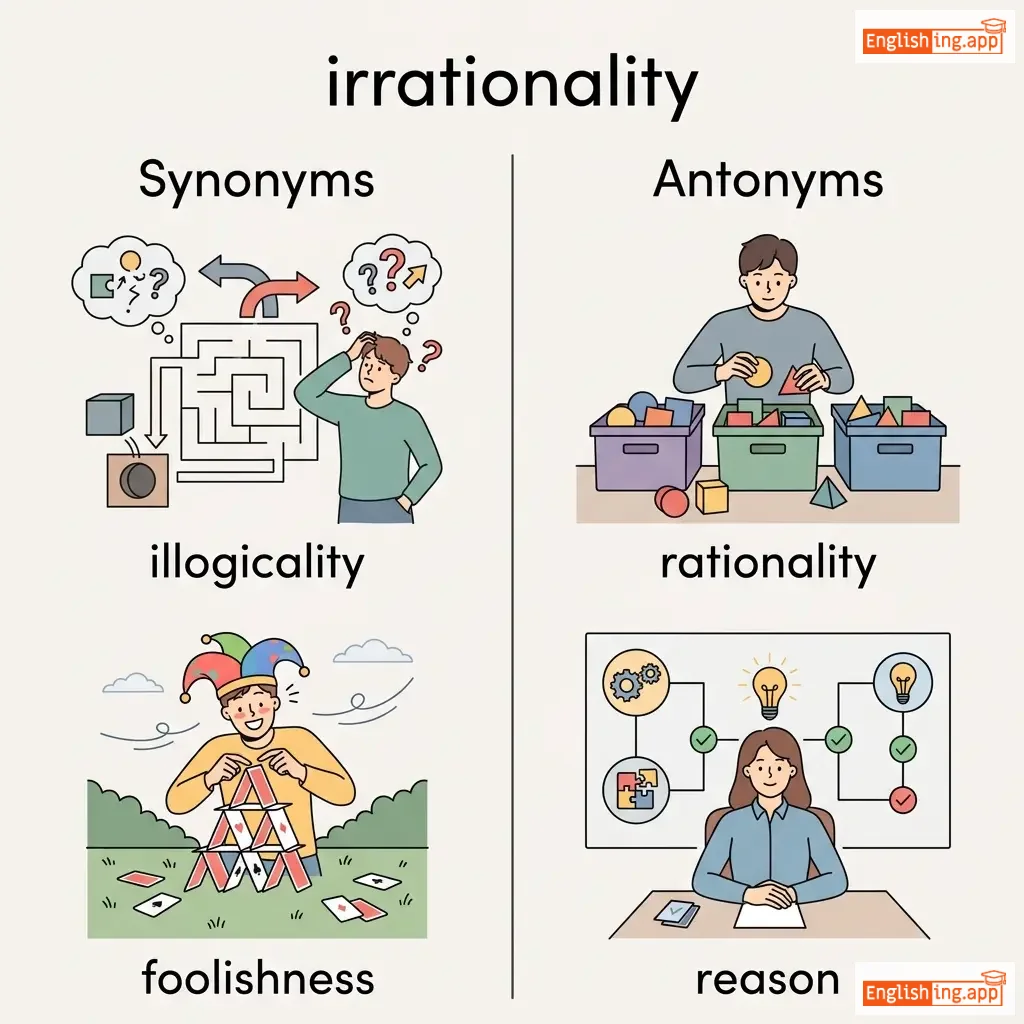
illogicality, foolishness, unreasonableness
••••••
|
rationality, reason, logic
••••••
|
- •••••• |
Иррациональность в русском языке напоминает абсурд.
••••••
|
|
📉
••••••
|
/ɪˈreɡjələr/
adjective
(иррегьюлар)
••••••
|
- •••••• |
нерегулярный
neregulyarnyy
••••••
|
- •••••• | - •••••• | - •••••• | - •••••• |
not even or consistent in shape, pattern, time, or behavior; not following normal rules
••••••
|
His attendance at work has been irregular this month.
Хиз аттенденс эт ворк хэз бин иррегьюлар зис манс.
••••••
|
Его посещаемость на работе в этом месяце была нерегулярной.
ego poseshchaemost na rabote v etom mesyatse byla neregulyarnoy
••••••
|
irregular verb
иррегьюлар вёрб
••••••
|
a verb that does not follow standard conjugation rules
••••••
|
неправильный глагол
nepravilnyy glagol
••••••
|
uneven, inconsistent, abnormal, erratic, unusual
••••••
|
regular, consistent, uniform
••••••
|
irregular pattern, irregular shape, irregular schedule, irregular heartbeat
••••••
|
Irregular = правил нет, значит нерегулярный
••••••
|
|
⚠️
••••••
|
/ɪˌreɡjəˈlærɪti/
noun
(иррегьюлэрити)
••••••
|
- •••••• |
нерегулярность
neregulyarnost
••••••
|
- •••••• | - •••••• | - •••••• | - •••••• |
lack of regularity or consistency; a deviation from what is normal, expected, or orderly
••••••
|
The audit revealed several financial irregularities in the company’s records.
Зи одит ривилд северал файнэншл иррегьюлэритиз ин зе кампани рекордс
••••••
|
Аудит выявил несколько финансовых нерегулярностей в документах компании.
Audit vyyavil neskolko finansovykh neregulyarnostei v dokumentakh kompanii
••••••
|
- •••••• | - •••••• | - •••••• |
abnormality, inconsistency, anomaly, deviation, unevenness
••••••
|
regularity, consistency, uniformity
••••••
|
financial irregularity, procedural irregularity, minor irregularity, serious irregularity, reporting irregularity
••••••
|
Irregularity = neregulyarnost, где нет регулярного порядка
••••••
|
|
🚫
••••••
|
/ɪˈreləvəns/
noun
(иррелеванс)
••••••
|
- •••••• |
нерелевантность
nerelevantnost
••••••
|
- •••••• | - •••••• | - •••••• | - •••••• |
the quality of not being connected to or important for a particular matter; lack of significance
••••••
|
His long explanation only highlighted the irrelevance of the details to the main issue.
Хиз лонг экспланейшн онли хайлайтед зе иррелеванс оф зе дिटейлз ту зе мейн ишью.
••••••
|
Его долгое объяснение лишь подчеркнуло нерелевантность деталей к основной проблеме.
ego dolgoye obyasneniye lish podcherknulo nerelevantnost detaley k osnovnoy probleme
••••••
|
- •••••• | - •••••• | - •••••• |
insignificance, unimportance, inconsequence, triviality, immateriality
••••••
|
relevance, importance, significance
••••••
|
complete irrelevance, political irrelevance, claim irrelevance, sense of irrelevance
••••••
|
Irrelevant → нерелевантный, значит irrelevance = нерелевантность.
••••••
|
|
🚫
••••••
|
/ɪˈrɛlɪvənsi/
noun
(ирреливэнси)
••••••
|
- •••••• |
нерелевантность
nerelevantnost
••••••
|
- •••••• | - •••••• | - •••••• | - •••••• |
the state of being unrelated or unimportant to the matter at hand
••••••
|
The judge dismissed the argument because of its irrelevancy to the case.
Зе джадж дисмисд зе аргумент бикоз оф итс ирреливэнси ту зе кейс.
••••••
|
Судья отклонил аргумент из-за его нерелевантности делу.
sudya otklonil argument iz-za ego nerelevantnosti delu
••••••
|
- •••••• | - •••••• | - •••••• |
irrelevance, insignificance, inconsequence, immateriality, triviality
••••••
|
relevance, importance, significance
••••••
|
complete irrelevancy, total irrelevancy, legal irrelevancy, apparent irrelevancy
••••••
|
irrelevant по-русски нерелевантный, значит irrelevancy
••••••
|
|
🚫
••••••
|
/ɪˈrɛləvənt/
adjective
(иррелевант)
••••••
|
- •••••• |
неуместный
neumestny
••••••
|
- •••••• | - •••••• | - •••••• | - •••••• |
Not connected with or related to the matter at hand
••••••
|
His comment was completely irrelevant to the discussion.
Его комментарий был совершенно неуместен для обсуждения.
••••••
|
Его комментарий был совершенно неуместен для обсуждения.
Ego kommentariy byl sovershenno neumestny dlya obsuzhdeniya.
••••••
|
irrelevant detail
неуместная деталь
••••••
|
Information that does not matter in the context
••••••
|
неуместная деталь
neumestnaya detal
••••••
|
unrelated, immaterial, extraneous, insignificant
••••••
|
relevant, important, significant
••••••
|
irrelevant comment, irrelevant detail, irrelevant information, irrelevant answer
••••••
|
Неуместный означает не относящийся к теме, как если бы вы дали неуместный ответ на экзамене.
••••••
|
|
⚠️
••••••
|
/ˌɪrɪˌspɒnsəˈbɪləti/
noun
(ирриспонсибилити)
••••••
|
- •••••• |
безответственность
bezotvetstvennost
••••••
|
- •••••• | - •••••• | - •••••• | - •••••• |
lack of responsibility or accountability; failure to act in a reliable or sensible way
••••••
|
The accident was caused by his irresponsibility at work.
Зе аксидент воз коузд бай хиз ирриспонсибилити эт ворк.
••••••
|
Авария произошла из-за его безответственности на работе.
Avariya proisoshla iz-za ego bezotvetstvennosti na rabote
••••••
|
act with irresponsibility
экт виз ирриспонсибилити
••••••
|
to behave without care or responsibility
••••••
|
действовать безответственно
deistvovat bezotvetstvenno
••••••
|
carelessness, recklessness, negligence, irresponsibleness
••••••
|
responsibility, accountability, reliability
••••••
|
financial irresponsibility, social irresponsibility, sheer irresponsibility, act of irresponsibility
••••••
|
Без ответа = безответственность
••••••
|
|
🤷♂️
••••••
|
/ɪˈrɪˌspɑn.sə.bəl/
adjective
(иреспонсибл)
••••••
|
- •••••• |
безответственный
bezotvetsvenny
••••••
|
- •••••• | - •••••• | - •••••• | - •••••• |
lacking a sense of responsibility; careless
••••••
|
It was irresponsible of him to leave without telling anyone. |
Он был безответственным, уходя, не сказав никому.
On byl bezotvetsvennym, ukhodya, ne skazav nikomu.
••••••
|
- •••••• | - •••••• | - •••••• |
reckless, careless, thoughtless, negligent
••••••
|
responsible, careful, thoughtful, reliable
••••••
|
irresponsible behavior, irresponsible person, act irresponsibly
••••••
|
Безответственный означает отсутствие ответственности, как если бы ты ушел, не предупредив никого.
••••••
|

