|
絵文字
|
単語 | Images | 翻訳 | 過去 | 過去分詞 | 三人称単数 | 動名詞 | 意味 | 例文 | 例文の翻訳 | 表現例 | 表現例の意味 | 表現例の翻訳 | 同義語 | 対義語 | コロケーション | ニーモニック |
|---|---|---|---|---|---|---|---|---|---|---|---|---|---|---|---|---|---|
|
📍
••••••
|
/ɪn ˈfrʌnt əv/
preposition
(イン フロント オブ)
••••••
|
- •••••• |
〜の前に
no mae ni
••••••
|
- •••••• | - •••••• | - •••••• | - •••••• |
positioned before or ahead of something; facing or located at the forward side of a person or object
••••••
|
She stood in front of the building.
シー ストゥッド イン フロント オブ ザ ビルディング
••••••
|
彼女は建物の前に立っていた。
Kanojo wa tatemono no mae ni tatte ita
••••••
|
- •••••• | - •••••• | - •••••• |
before, ahead of, facing, opposite
••••••
|
behind, at the back of
••••••
|
stand in front of, sit in front of, park in front of, right in front of
••••••
|
前 mae = front, তাই in front of = mae ni
••••••
|
|
📢
••••••
|
/ɪnˈfɔːrm/
verb
••••••
|
|
- •••••• |
informed
••••••
|
informed
••••••
|
informs
••••••
|
informing
••••••
|
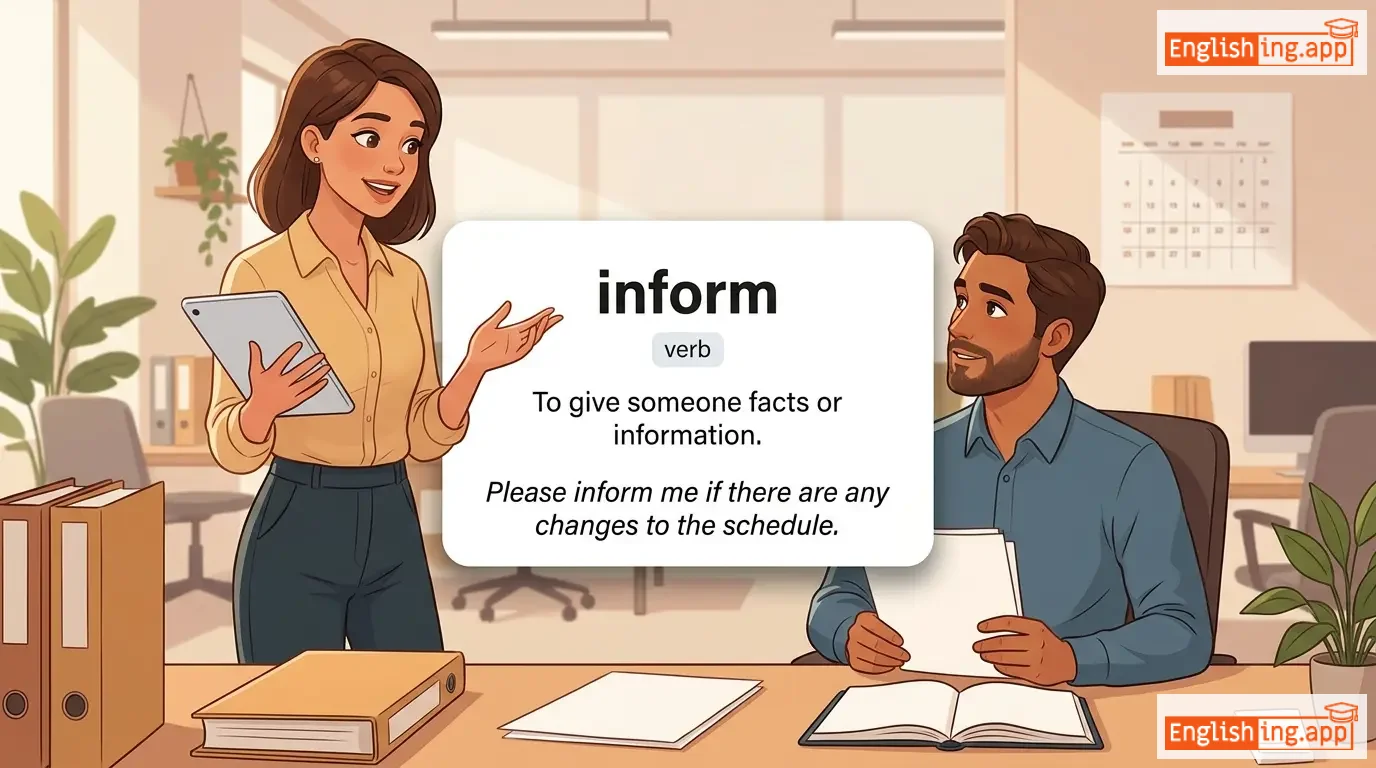
To give someone facts or information.
••••••
|
Please inform me if there are any changes to the schedule. |
- •••••• |
keep someone informed |
to make sure someone stays updated with information
••••••
|
- •••••• |
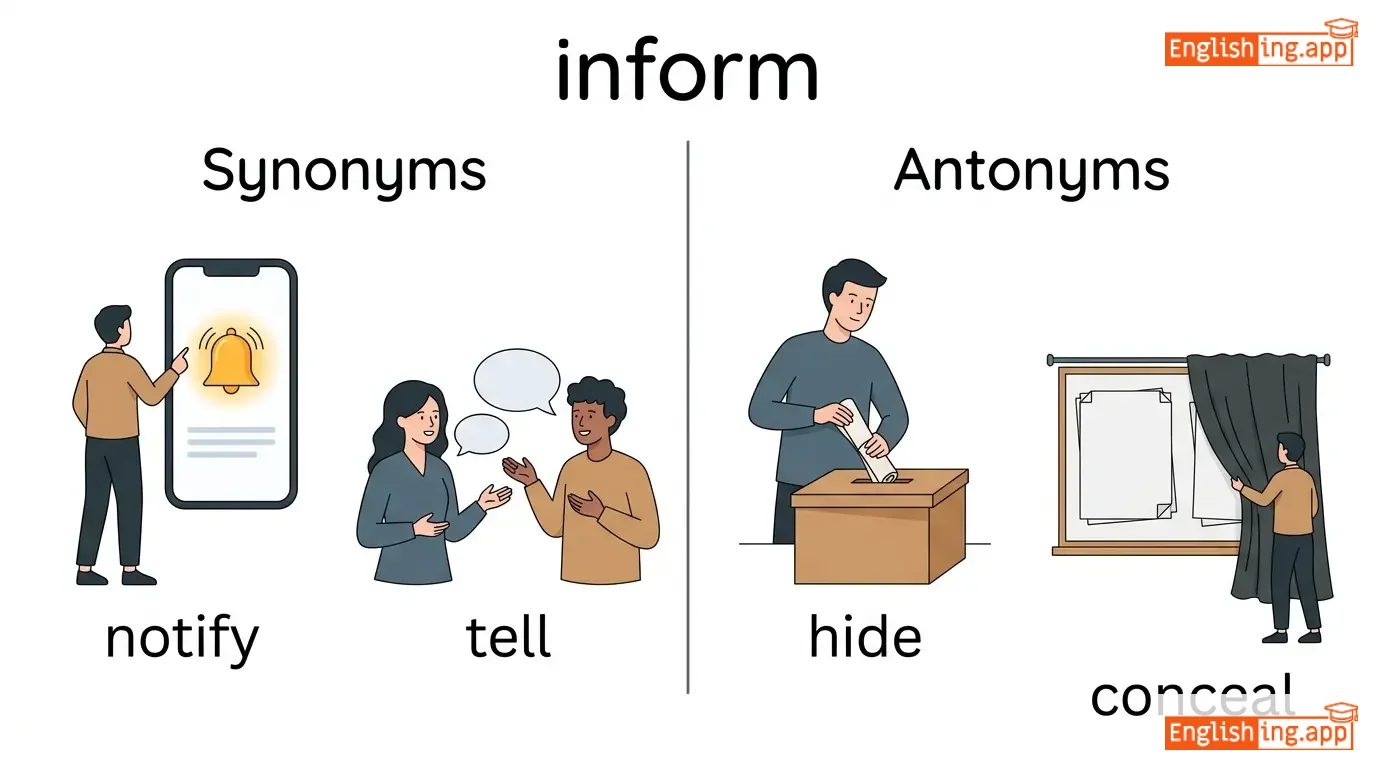
notify, tell, advise, brief, update
••••••
|
hide, conceal
••••••
|
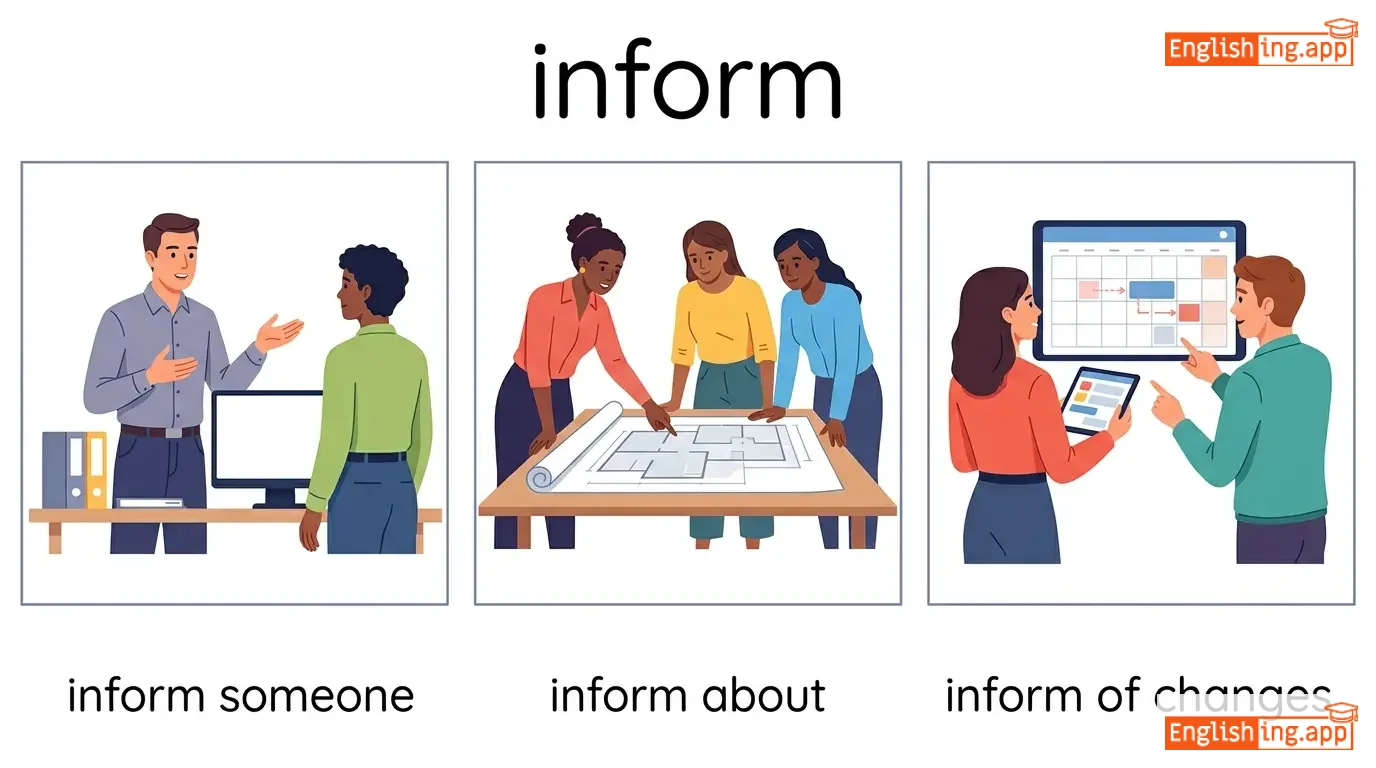
inform someone, inform about, inform of changes
••••••
|
No •••••• |
|
☕
••••••
|
/ɪnˈfɔːrməl/
adjective
(インフォーマル)
••••••
|
- •••••• |
非公式
hikoushiki
••••••
|
- •••••• | - •••••• | - •••••• | - •••••• |
relaxed, friendly, and not following strict rules or conventions
••••••
|
They had an informal meeting at the coffee shop. |
彼らはカフェで非公式な会議を開きました。
Karera wa kafe de hikoushiki na kaigi o hirakimashita.
••••••
|
informal talk |
a casual or relaxed conversation
••••••
|
非公式な会話
hikoushiki na kaiwa
••••••
|
casual, relaxed, unofficial, easygoing
••••••
|
formal, official, strict
••••••
|
informal meeting, informal clothes, informal chat, informal relationship
••••••
|
Informal = in + formal = 非公式
••••••
|
|
ℹ️
••••••
|
/ˌɪnfərˈmeɪʃən/
noun
(インフォメーション)
••••••
|
- •••••• |
情報
jōhō
••••••
|
- •••••• | - •••••• | - •••••• | - •••••• |
Facts or knowledge provided or learned about something.
••••••
|
The website provides useful information about travel destinations. |
このウェブサイトは旅行先に関する有用な情報を提供しています。
Kono u~ebusaito wa ryokōsaki ni kansuru yūyōna jōhō o teikyō shiteimasu.
••••••
|
source of information |
A place or person from which knowledge can be obtained.
••••••
|
情報源
jōhōgen
••••••
|
data, knowledge, facts, details, intelligence
••••••
|
ignorance, misinformation
••••••
|
provide information, gather information, information technology, useful information
••••••
|
Information = Info + nation, より多くの情報を得るために。
••••••
|
|
🏗️
••••••
|
/ˈɪnfrəˌstrʌktʃər/
noun
(インフラストラクチャー)
••••••
|

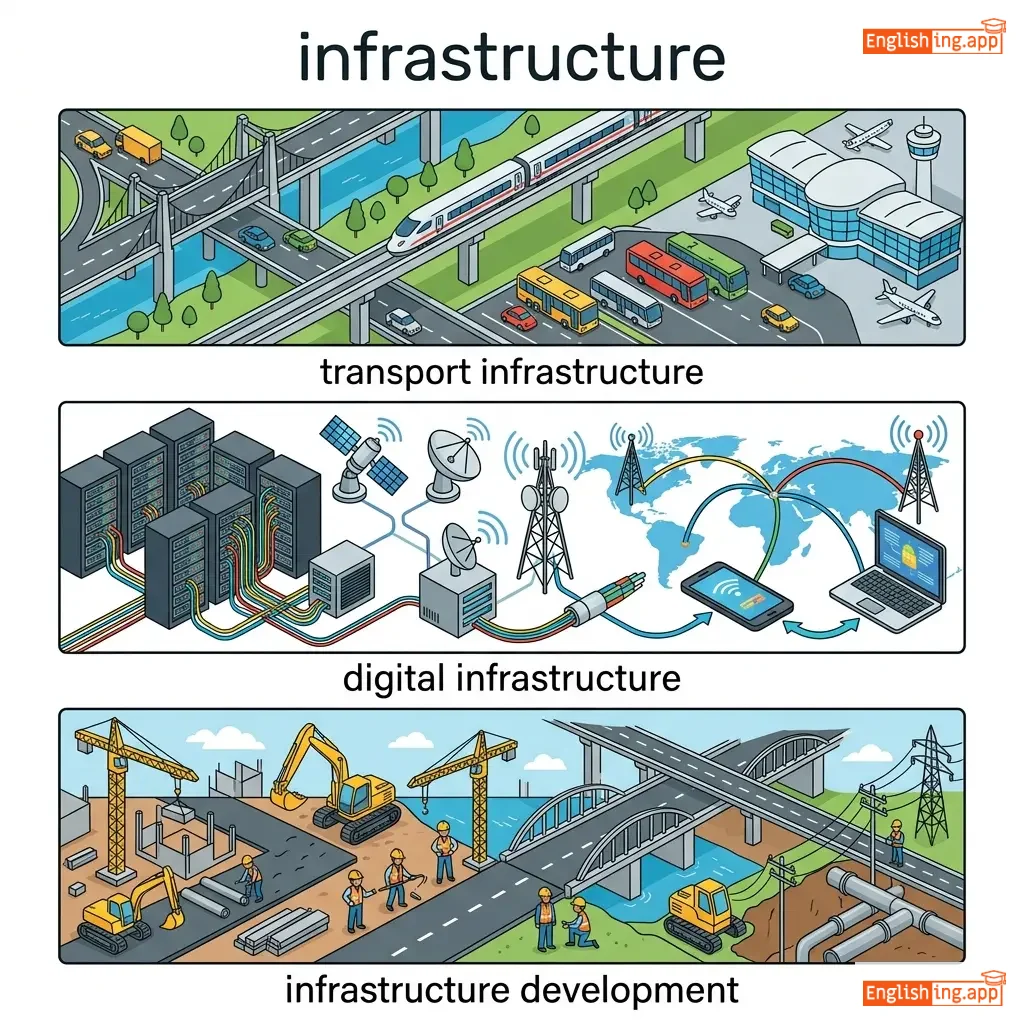
|
インフラストラクチャー
infurasutorakuchaa
••••••
|
- •••••• | - •••••• | - •••••• | - •••••• |
the basic physical and organizational structures and facilities needed for the operation of a society or enterprise
••••••
|
The government is investing heavily in transport infrastructure.
政府は交通インフラに大規模な投資を行っています。
••••••
|
政府は交通インフラに大規模な投資を行っています。
Seifu wa kōtsū infura ni daikibō na tōshi o okonatteimasu.
••••••
|
- •••••• | - •••••• | - •••••• |
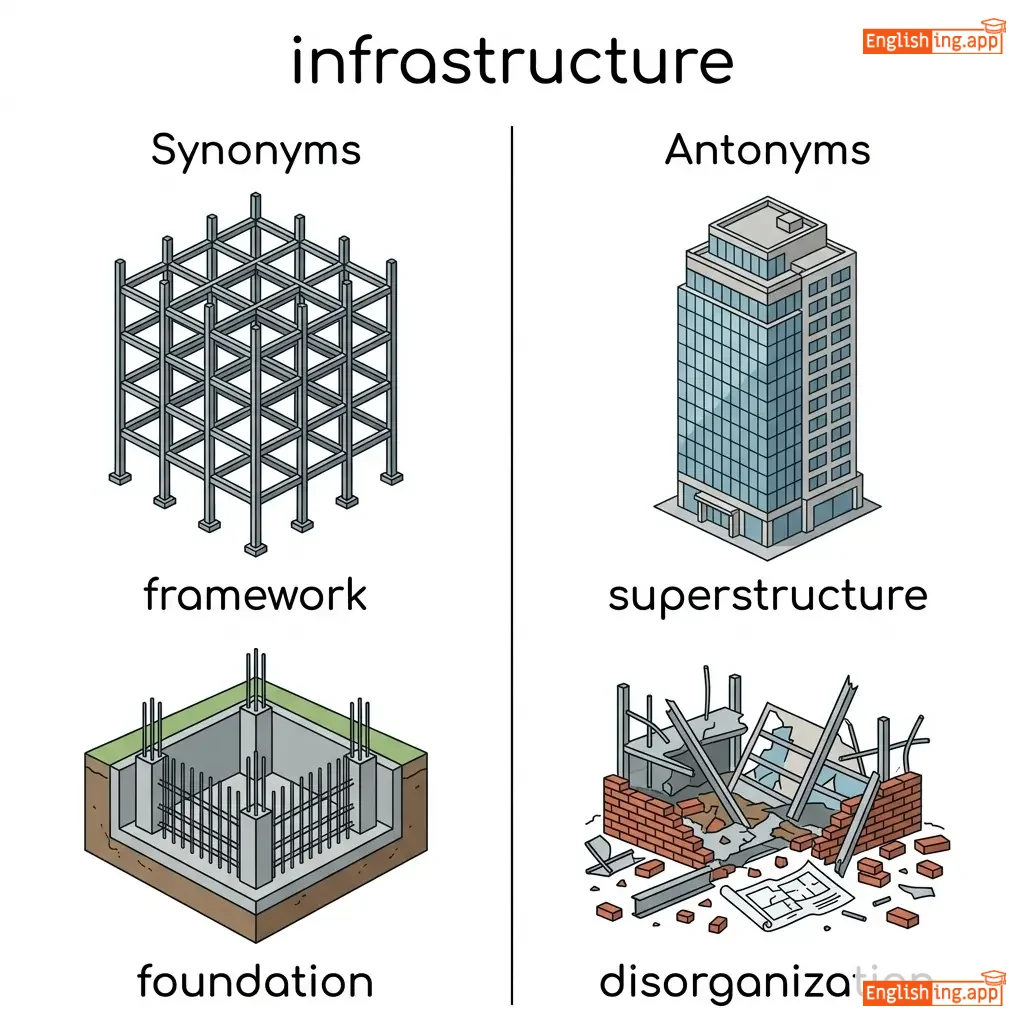
framework, foundation, base, system, network
••••••
|
superstructure, disorganization, destruction
••••••
|
transport infrastructure, digital infrastructure, infrastructure development, public infrastructure
••••••
|
Infraは下に、structureは構造を意味します。インフラストラクチャーは基本的な構造です。
••••••
|
|
🌙
••••••
|
/ɪnˈfriːkwənt/
adjective
(インフリクエント)
••••••
|
- •••••• |
稀な
majana
••••••
|
- •••••• | - •••••• | - •••••• | - •••••• |
Happening rarely or not often.
••••••
|
He made infrequent visits to his hometown after moving abroad. |
彼は海外に移住した後、故郷にあまり頻繁に訪れることはありませんでした。
Kare wa kaigai ni ijū shita ato, kokyō ni amari hinpan ni otozureru koto wa arimasen deshita.
••••••
|
- •••••• | - •••••• | - •••••• |
rare, uncommon, occasional, sporadic
••••••
|
frequent, regular, common
••••••
|
infrequent visits, infrequent contact, infrequent events
••••••
|
Frequentの反対はinfrequent - 稀に発生することです。
••••••
|
|
🥘
••••••
|
/ɪnˈɡriːdiənt/
noun
(イングリディエント)
••••••
|
- •••••• |
材料
zairyō
••••••
|
- •••••• | - •••••• | - •••••• | - •••••• |
A component part or element of something, especially in a recipe.
••••••
|
Flour is a key ingredient in baking bread. |
小麦粉はパン作りにおける重要な材料です。
Komugiko wa pan tsukuri ni okeru jūyō na zairyō desu.
••••••
|
secret ingredient |
a special or unique element that makes something successful
••••••
|
秘密の材料
himitsu no zairyō
••••••
|
component, element, part, material, constituent
••••••
|
whole, entirety
••••••
|
key ingredient, main ingredient, essential ingredient, secret ingredient
••••••
|
材料: 料理に欠かせない要素!
••••••
|
|
🏠
••••••
|
/ɪnˈhæbɪtənt/
noun
(インハビタント)
••••••
|
- •••••• |
住民
jūmin
••••••
|
- •••••• | - •••••• | - •••••• | - •••••• |
a person or animal that lives in a particular place
••••••
|
The inhabitants of the village rely on farming for their livelihood. |
村の住民は生活のために農業に頼っています。
Mura no jūmin wa seikatsu no tame ni nōgyō ni tayotteimasu.
••••••
|
- •••••• | - •••••• | - •••••• |
resident, dweller, occupant, native
••••••
|
visitor, foreigner
••••••
|
local inhabitants, native inhabitants, city inhabitants, rural inhabitants
••••••
|
Inhabitants are 'jūmin'—people who live in a certain place!
••••••
|
|
⚖️
••••••
|
/ɪnˈhɛrənt/
adjective
(インヘレント)
••••••
|
|
固有の
koyū no
••••••
|
- •••••• | - •••••• | - •••••• | - •••••• |
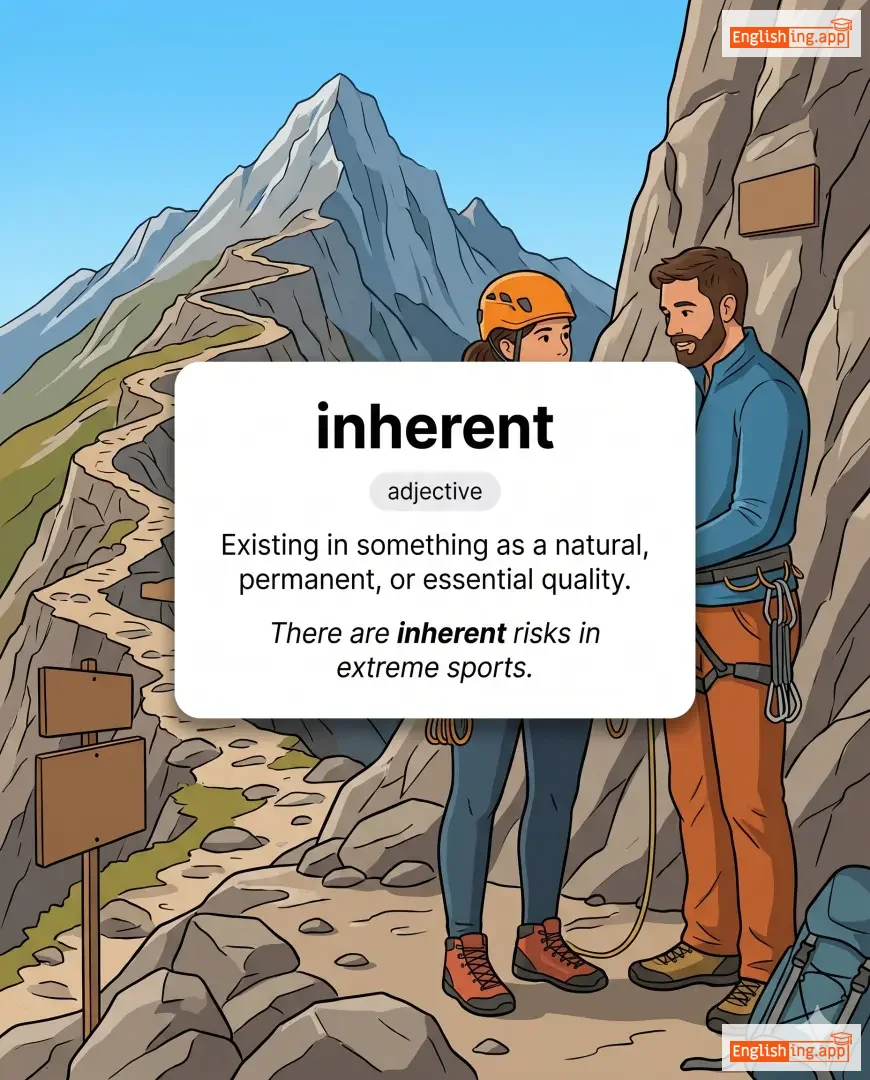
Existing in something as a natural, permanent, or essential quality.
••••••
|
There are inherent risks in extreme sports. |
エクストリームスポーツには固有のリスクが存在する。
ekusutorīmusupōtsu ni wa koyū no risuku ga sonzai suru.
••••••
|
inherent danger |
A danger that is naturally part of something and cannot be separated from it.
••••••
|
固有の危険
koyū no kiken
••••••
|
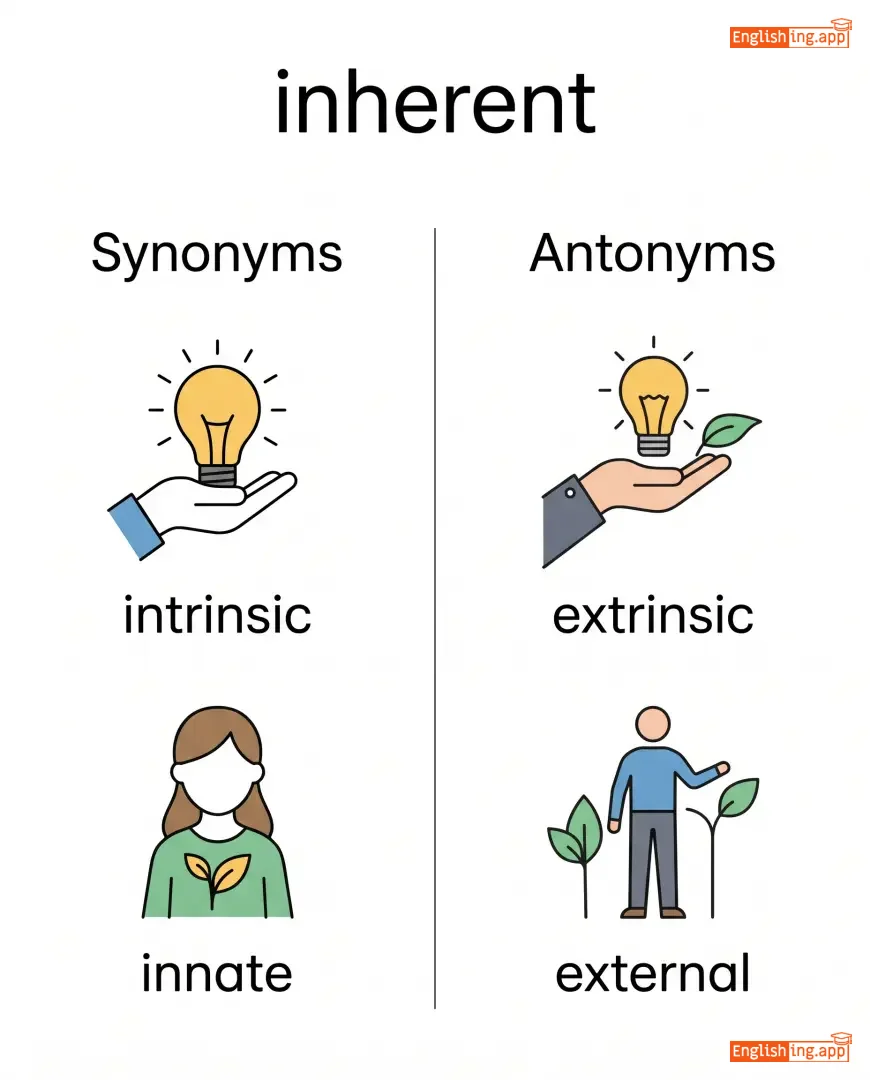
intrinsic, innate, built-in, essential, natural
••••••
|
extrinsic, external, acquired
••••••
|
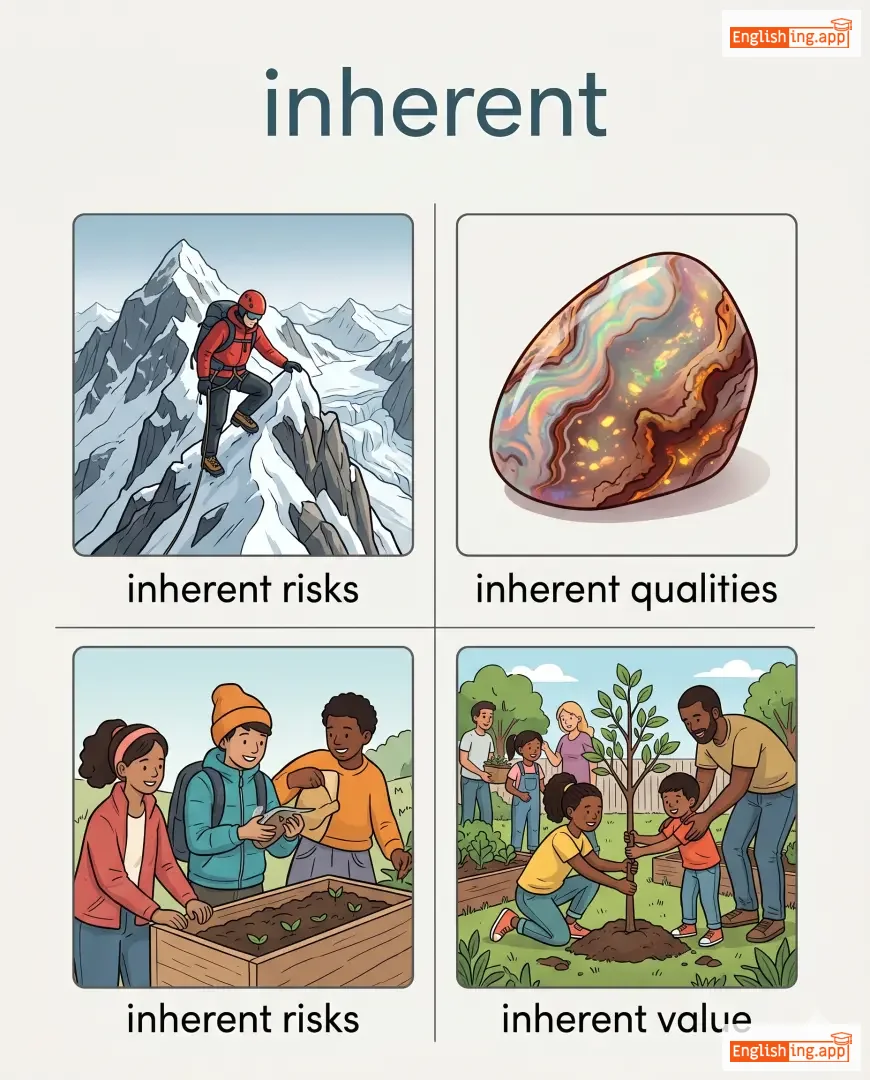
inherent risks, inherent qualities, inherent value
••••••
|
Inherentはin + heart(心の中にある)を意味し、固有のものです。
••••••
|
|
🏠
••••••
|
/ɪnˈhɛrɪt/
verb
(インヘリット)
••••••
|
|
相続する
souzoku suru
••••••
|
inherited
インヘリテッド
••••••
|
inherited
インヘリテッド
••••••
|
inherits
インヘリッツ
••••••
|
inheriting
インヘリティング
••••••
|
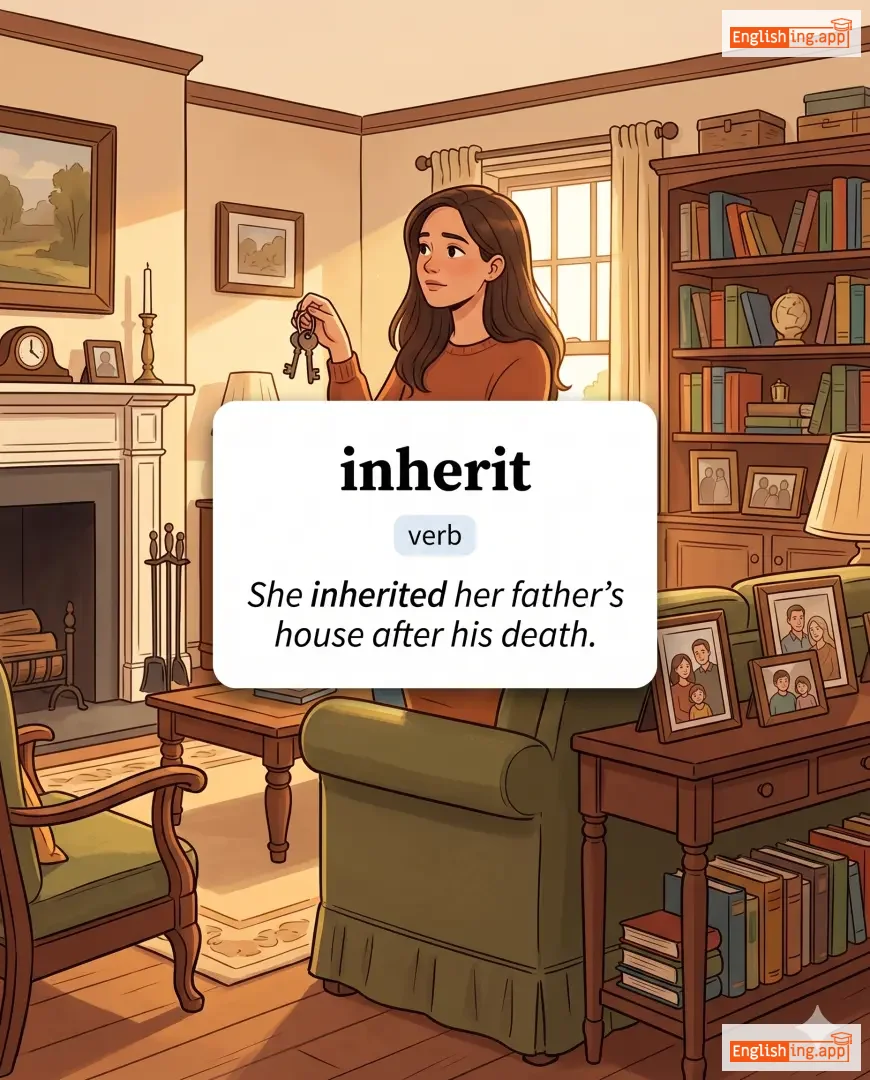
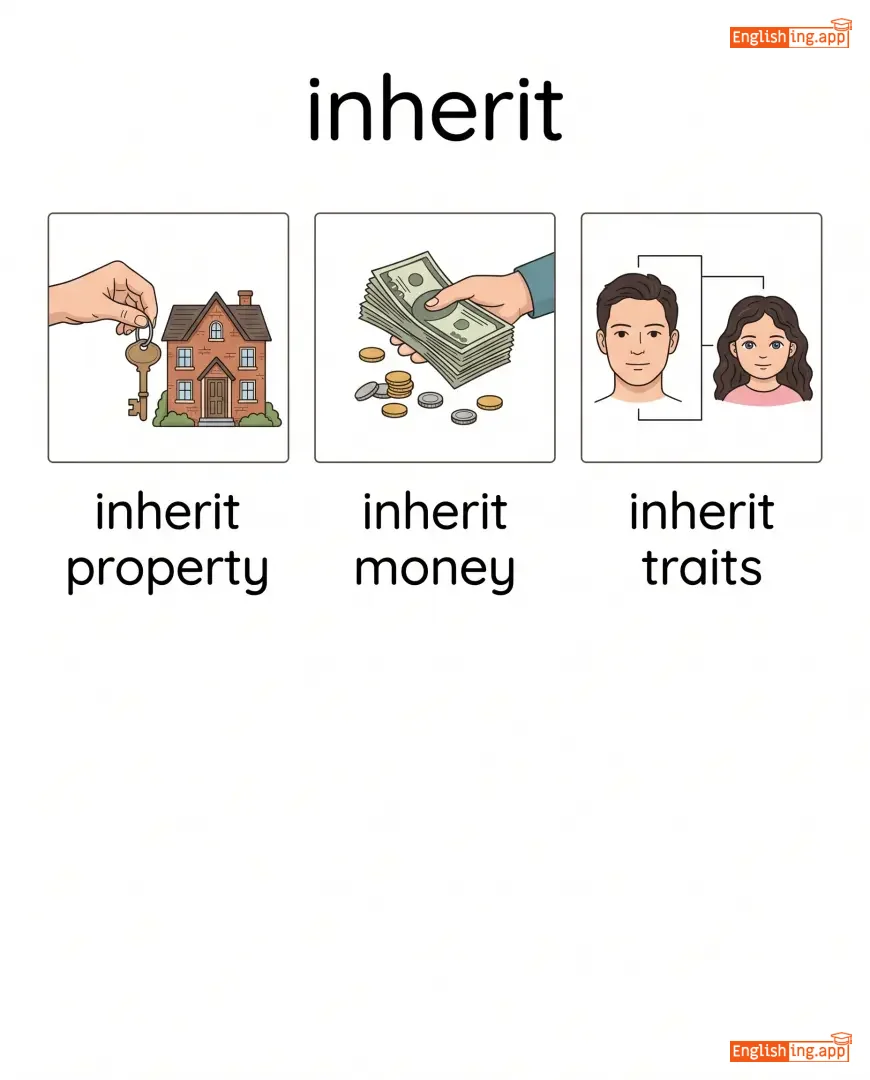
to receive property, money, or traits from someone after their death or from ancestors
••••••
|
She inherited her father's house after his death.
彼女は父親の死後、家を相続しました。
••••••
|
彼女は父親の死後、家を相続しました。
Kanojo wa chichi no shigo, ie o souzoku shimashita.
••••••
|
inherit the earth
地球を相続する
••••••
|
to gain control or possession of the world or land, often used metaphorically
••••••
|
地球を相続する
chikyuu o souzoku suru
••••••
|
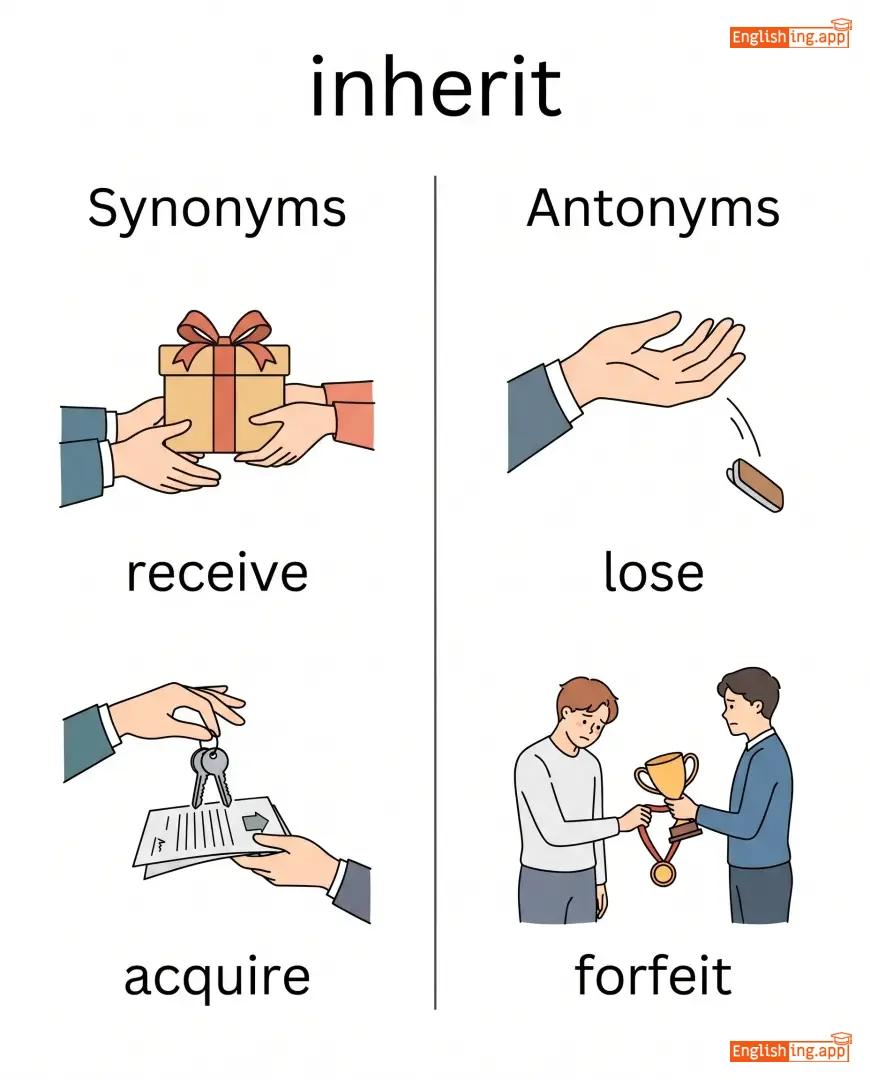
receive, acquire, obtain, succeed, derive
••••••
|
lose, forfeit, give up
••••••
|
inherit property, inherit money, inherit traits, inherit wealth
••••••
|
Inherit は in(中) + heritage(遺産) — 中 heritage は相続することです。
••••••
|
|
⛔
••••••
|
/ɪnˈhɪbɪt/
verb
(インヒビット)
••••••
|
|
抑制する
yokusei suru
••••••
|
inhibited
インヒビテッド
••••••
|
inhibited
インヒビテッド
••••••
|
inhibits
インヒビッツ
••••••
|
inhibiting
インヒビティング
••••••
|
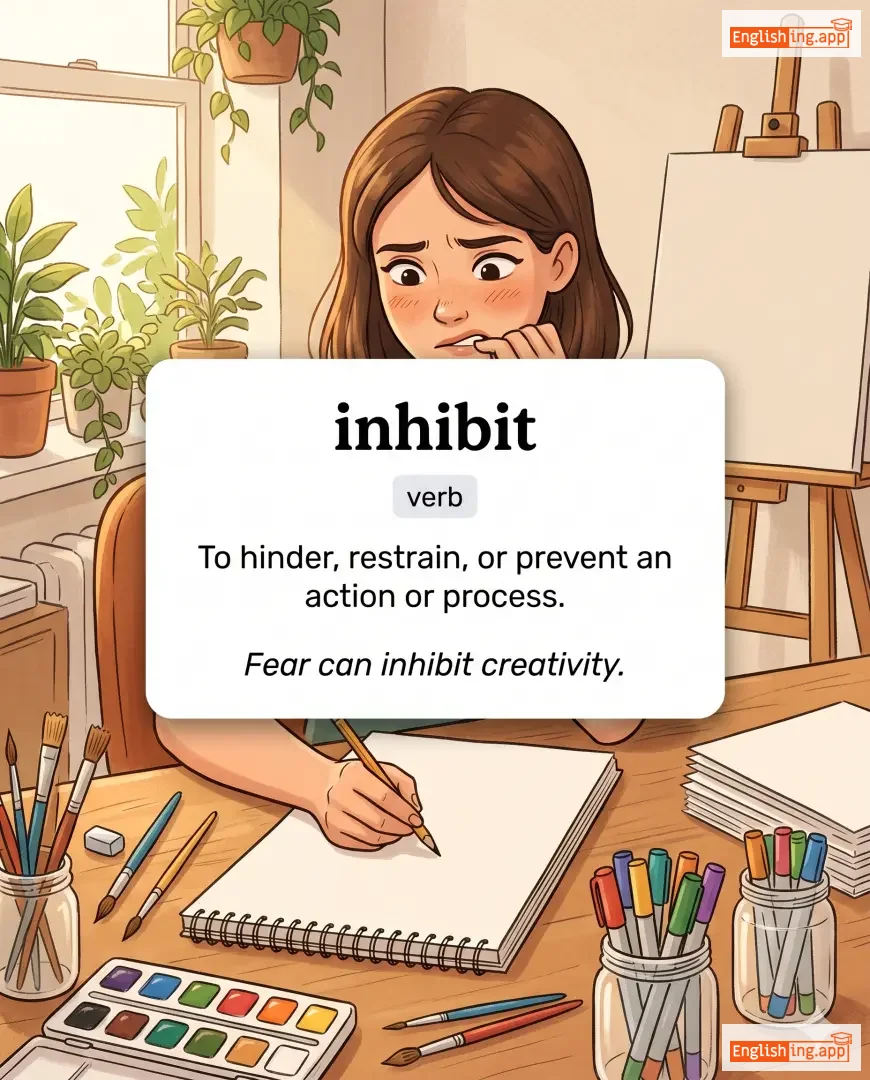
To hinder, restrain, or prevent an action or process.
••••••
|
Fear can inhibit creativity.
恐れは創造性を抑制する可能性があります。
••••••
|
恐れは創造性を抑制する可能性があります。
Osore wa sōzō-sei o yokusei suru kanō-sei ga arimasu.
••••••
|
socially inhibited
社会的に抑制された
••••••
|
Being shy or unable to act freely in social situations.
••••••
|
社会的に抑制された
Shakai-teki ni yokusei sareta
••••••
|
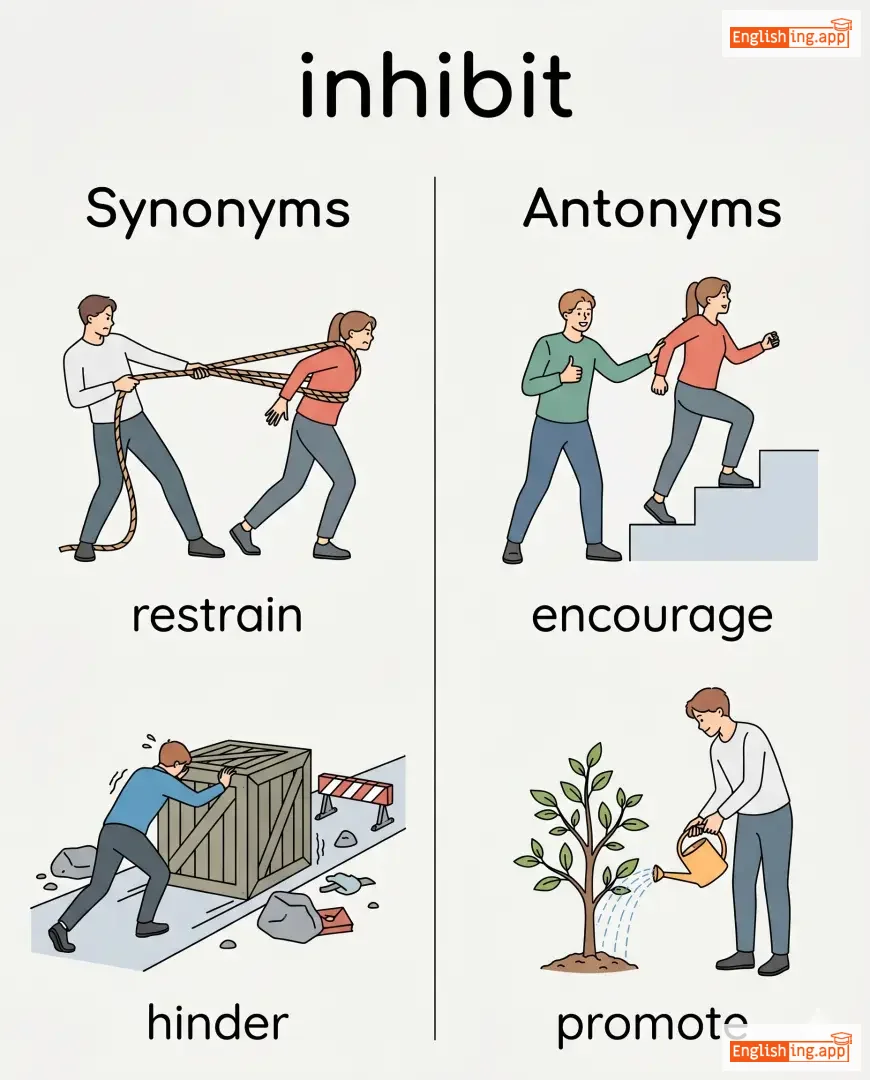
restrain, hinder, prevent, obstruct, suppress
••••••
|
encourage, promote, allow
••••••
|
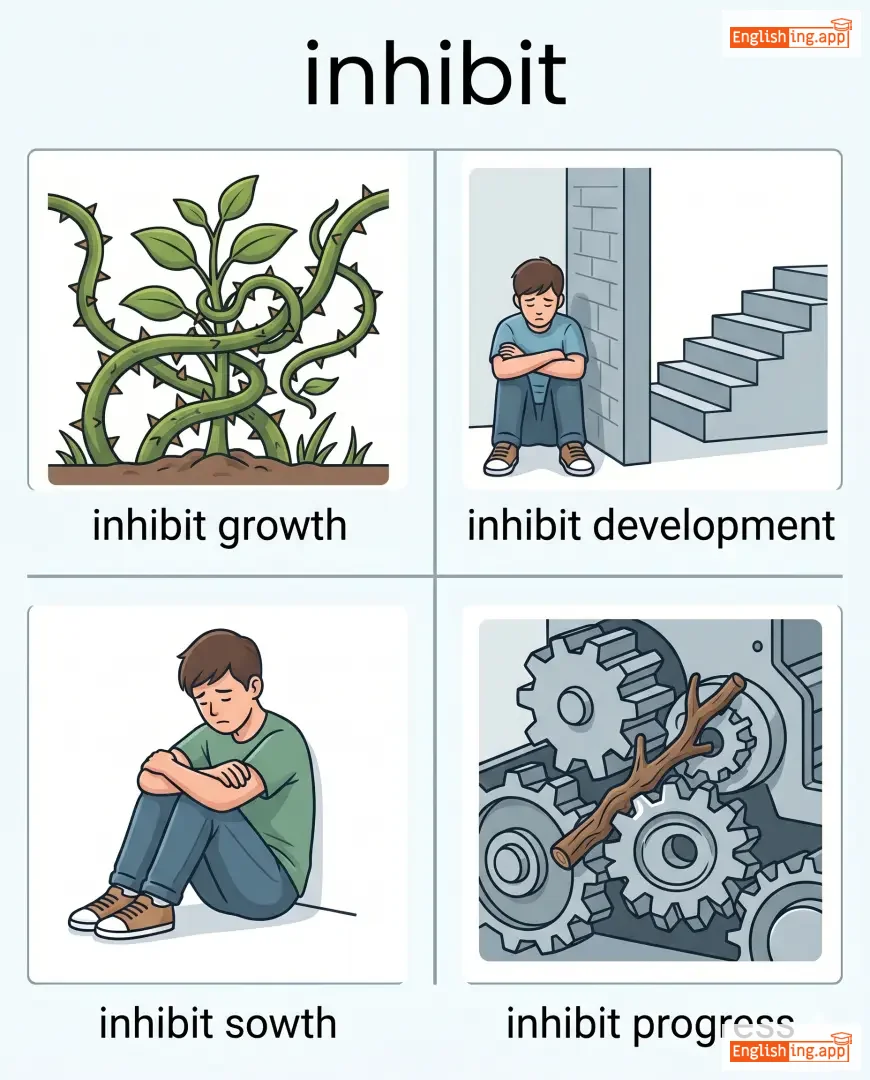
inhibit growth, inhibit development, inhibit progress
••••••
|
Inhibit (in + habit) は習慣で行動を抑制することを意味します。
••••••
|
|
💔
••••••
|
/ɪnˈhjuːmən/
adjective
(インヒューマン)
••••••
|
- •••••• |
非人道的
hi jindōteki
••••••
|
- •••••• | - •••••• | - •••••• | - •••••• |
lacking human qualities of compassion and mercy; cruel or barbaric
••••••
|
The prisoners were kept in inhuman conditions. |
囚人たちは非人道的な状況で収容されていました。
Shūjin-tachi wa hi jindōteki na jōkyō de shūyō sarete imashita.
••••••
|
inhuman treatment |
extremely cruel or brutal behavior
••••••
|
非人道的な扱い
hi jindōteki na atsukai
••••••
|
cruel, brutal, merciless, savage, barbaric
••••••
|
humane, compassionate, kind
••••••
|
inhuman treatment, inhuman conditions, inhuman acts, inhuman behavior
••••••
|
Inhuman = 非人道的, 囚人が非人道的な扱いを受けていることを想像してみてください。
••••••
|
|
🔰
••••••
|
/ɪˈnɪʃəl/
adjective
(イニシャル)
••••••
|
- •••••• |
初期の
shoki no
••••••
|
- •••••• | - •••••• | - •••••• | - •••••• |
Existing or occurring at the beginning.
••••••
|
Her initial reaction was one of surprise. |
彼女の初期の反応は驚きだった。
Kanojo no shoki no hannou wa odokida datta.
••••••
|
initial impression |
The first opinion or feeling about something.
••••••
|
初期の印象
Shoki no inshou
••••••
|
first, primary, original, introductory, early
••••••
|
final, last, ultimate
••••••
|
initial stage, initial reaction, initial decision, initial step
••••••
|
初期の意味は最初に、試験の最初の印象が非常に重要です。
••••••
|
|
⏳
••••••
|
/ɪˈnɪʃəli/
adverb
(イニシャリー)
••••••
|
- •••••• |
最初に
saisho ni
••••••
|
- •••••• | - •••••• | - •••••• | - •••••• |
At the beginning; at first.
••••••
|
Initially, he refused the offer but later accepted it. |
最初に、彼はその提案を断ったが、後で受け入れた。
Saisho ni, kare wa sono teian o kotowatta ga, ato de ukeireta.
••••••
|
- •••••• | - •••••• | - •••••• |
at first, originally, at the start, to begin with
••••••
|
finally, eventually
••••••
|
initially planned, initially intended, initially thought
••••••
|
最初に意味するのは始めに、何かが最初は難しいように見える時のように。
••••••
|
|
🚀
••••••
|
/ɪˈnɪʃieɪt/
verb
(イニシエイト)
••••••
|
|
開始する
kaishi suru
••••••
|
initiated
イニシエイテッド
••••••
|
initiated
イニシエイテッド
••••••
|
initiates
イニシエイツ
••••••
|
initiating
イニシエイティング
••••••
|
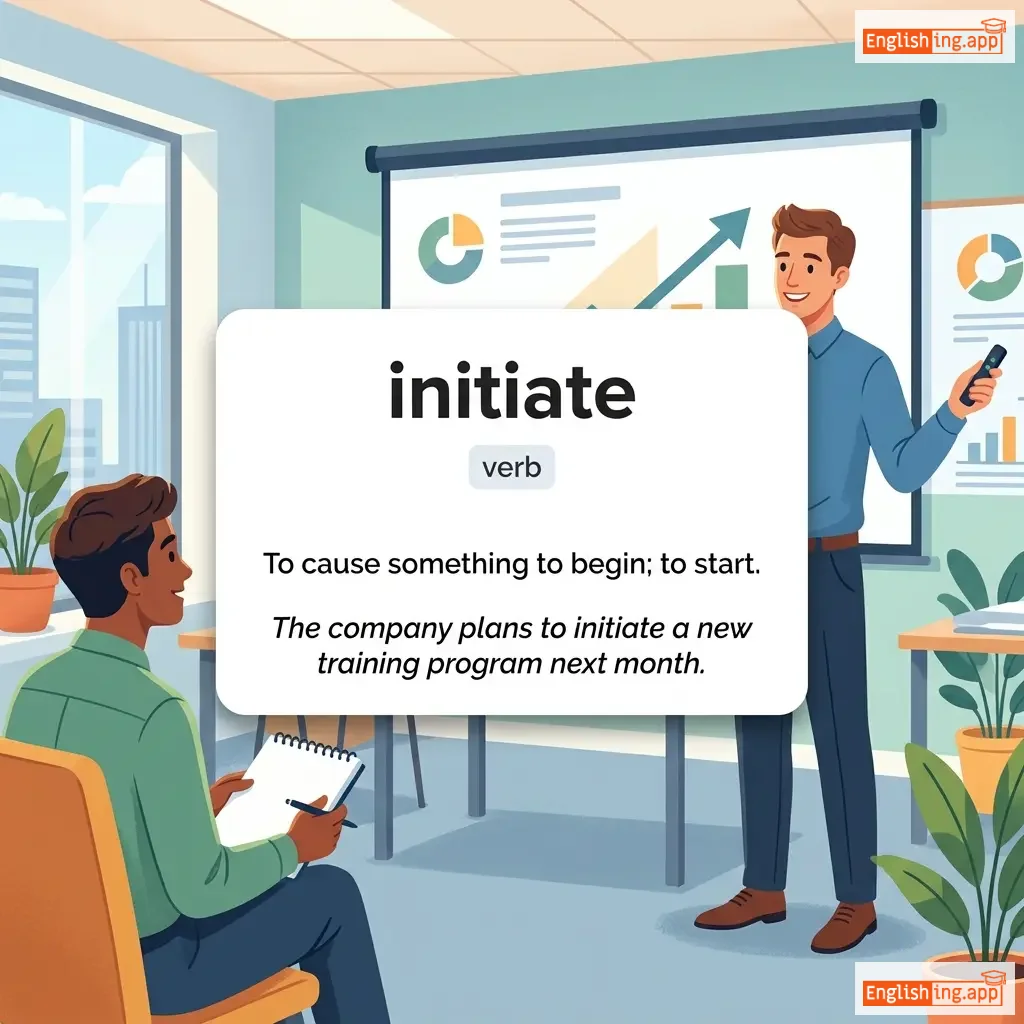
To cause something to begin; to start.
••••••
|
The company plans to initiate a new training program next month.
その会社は来月、新しいトレーニングプログラムを開始する予定です。
••••••
|
その会社は来月、新しいトレーニングプログラムを開始する予定です。
Sono kaisha wa raigetsu, atarashī torēningu puroguramu o kaishi suru yotei desu.
••••••
|
initiate proceedings
手続きを開始する
••••••
|
To begin a formal process or legal action.
••••••
|
手続きを開始する
Tetsuzuki o kaishi suru
••••••
|
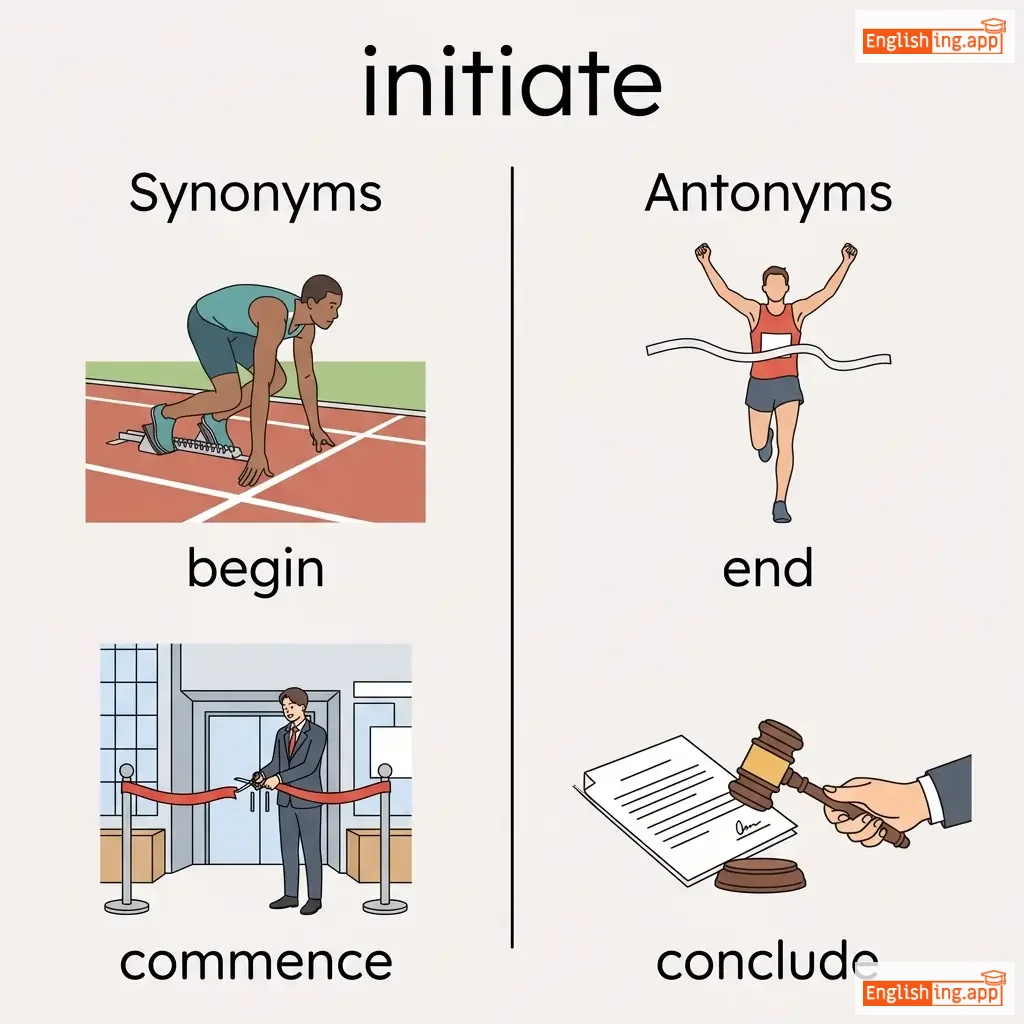
begin, commence, launch, start, inaugurate
••••••
|
end, conclude, finish
••••••
|
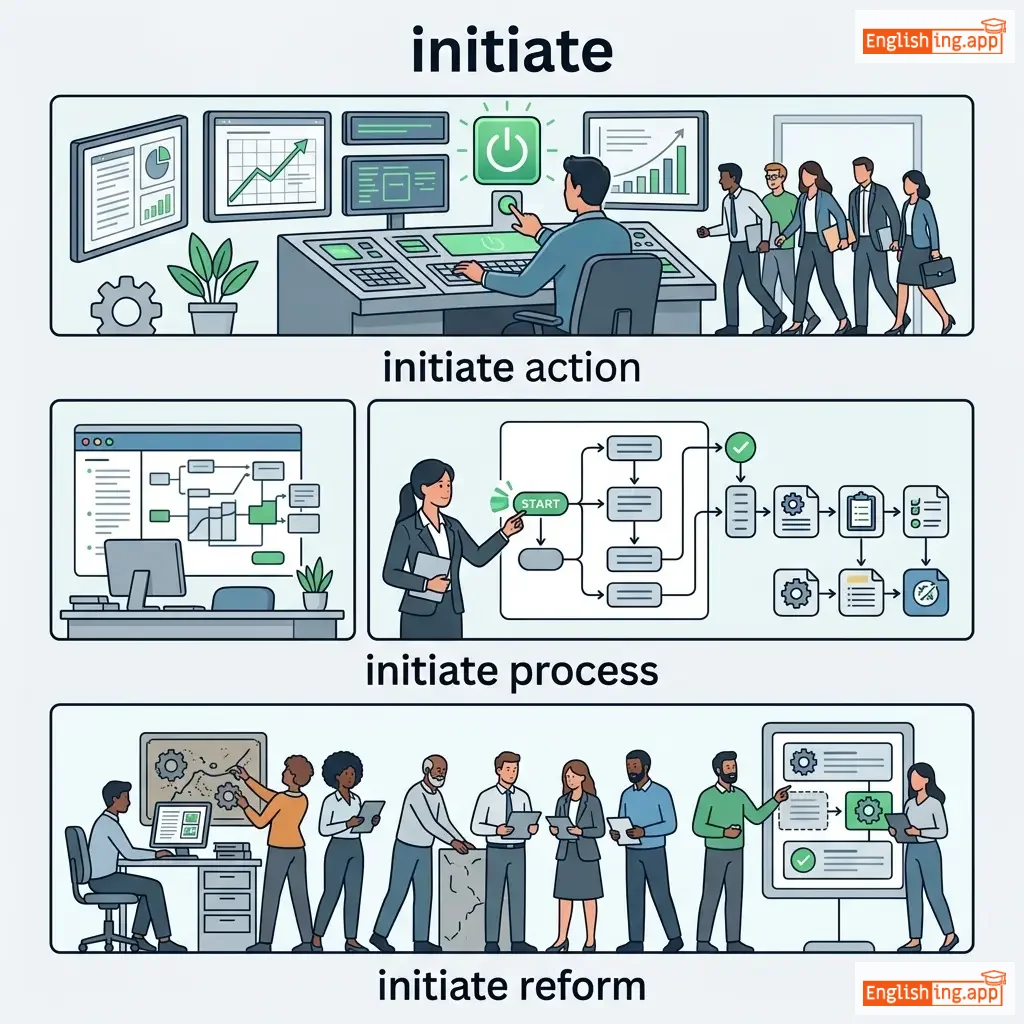
initiate action, initiate process, initiate reform
••••••
|
イニシエイトはINI(始め) + シエイト(実行) = 開始する
••••••
|
|
🚀
••••••
|
/ɪˈnɪʃətɪv/
noun
(イニシアティブ)
••••••
|
|
イニシアティブ
inishiative
••••••
|
- •••••• | - •••••• | - •••••• | - •••••• |
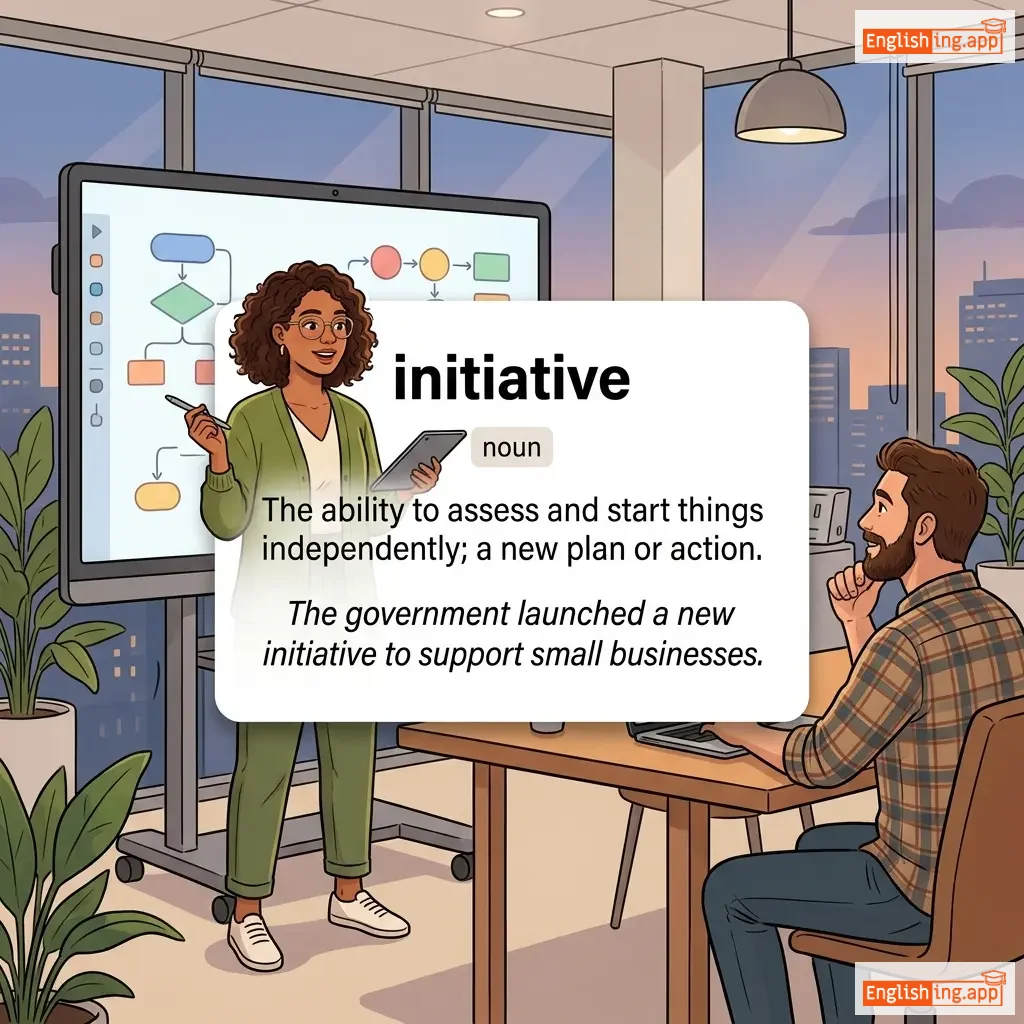
The ability to assess and start things independently; a new plan or action.
••••••
|
The government launched a new initiative to support small businesses. |
政府は小規模なビジネスを支援するために新しいイニシアティブを開始しました。
Seifu wa shōkibo na bijinesu o shien suru tame ni atarashī inishiative o kaishi shimashita.
••••••
|
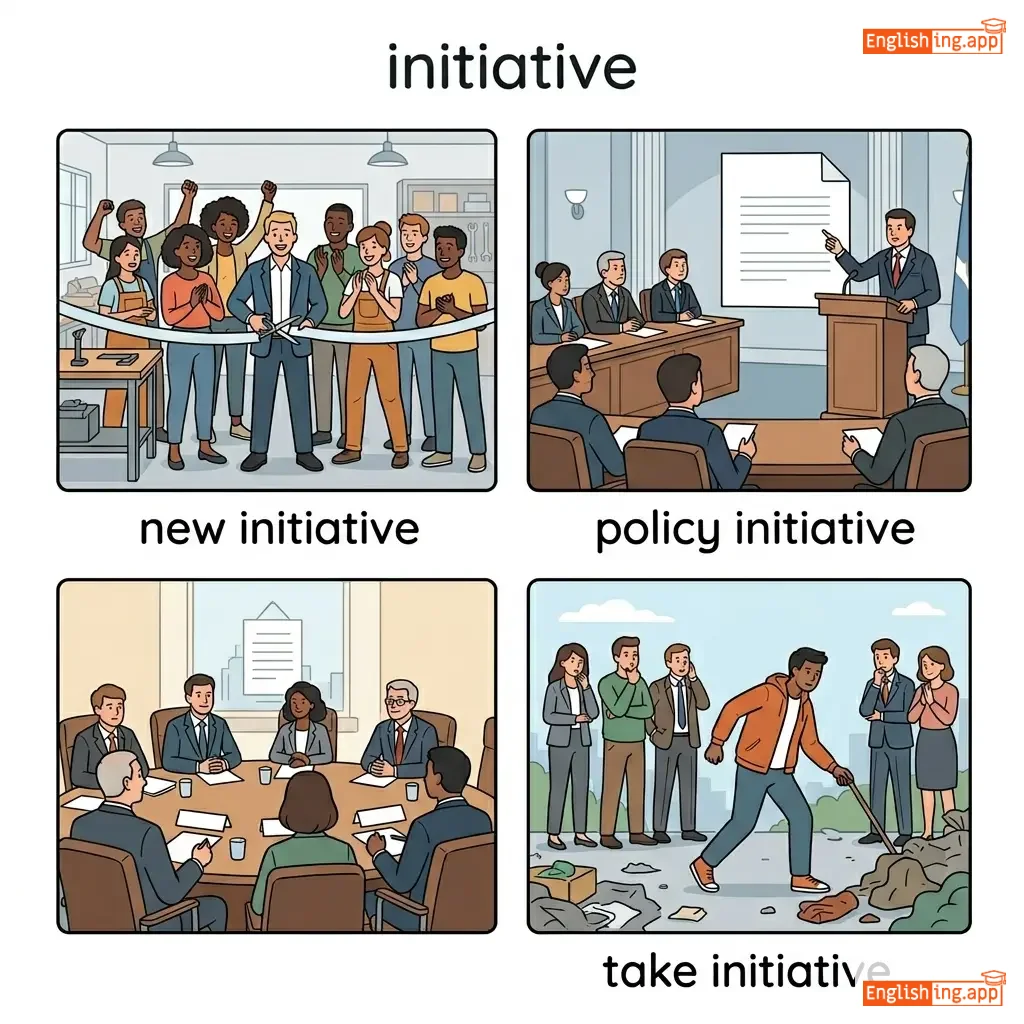
take the initiative |
To take the first step in doing something.
••••••
|
イニシアティブを取る
inishiative o toru
••••••
|
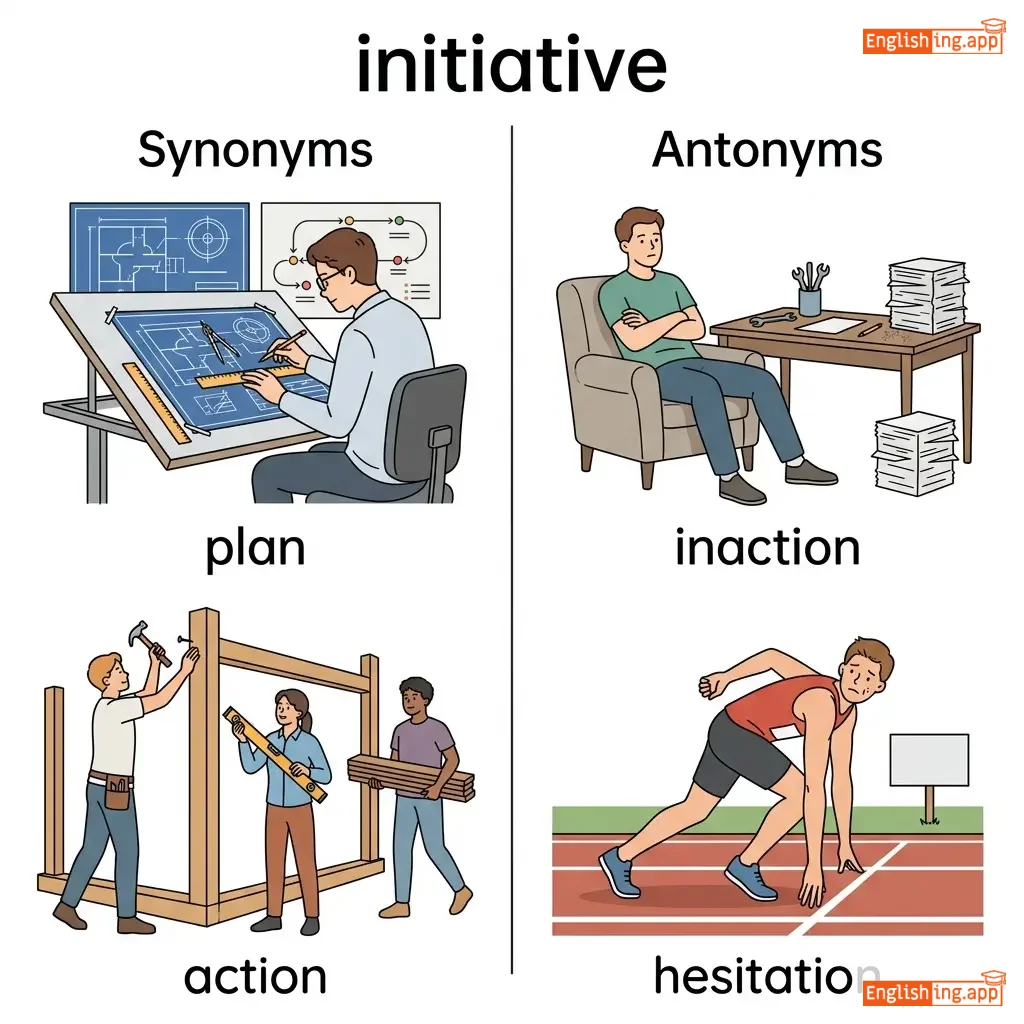
plan, action, scheme, enterprise, drive
••••••
|
inaction, hesitation
••••••
|
new initiative, policy initiative, take initiative
••••••
|
イニシアティブは、何かを始める第一歩を踏み出すことを意味します。
••••••
|
|
💉
••••••
|
/ɪnˈdʒɛkt/
verb
(インジェクト)
••••••
|
- •••••• |
注射する
chūsha suru
••••••
|
injected
インジェクテッド
••••••
|
injected
インジェクテッド
••••••
|
injects
インジェクツ
••••••
|
injecting
インジェクティング
••••••
|
To introduce a substance, especially a drug, into the body using a needle.
••••••
|
The nurse will inject the vaccine into the patient's arm.
看護師は患者の腕にワクチンを注射します。
••••••
|
看護師は患者の腕にワクチンを注射します。
Kangoshi wa kanja no ude ni wakuchin o chūsha shimasu.
••••••
|
inject enthusiasm
熱意を注入する
••••••
|
To add energy or excitement into a situation.
••••••
|
熱意を注入する
netsui o chūnyū suru
••••••
|
administer, insert, infuse, introduce
••••••
|
withdraw, remove
••••••
|
inject medicine, inject drug, inject energy
••••••
|
INJECT は IN (中) + JECT (投げる) = 中に入れる。
••••••
|
|
💉
••••••
|
/ɪnˈdʒɛkʃən/
noun
••••••
|
- •••••• | - •••••• | - •••••• | - •••••• | - •••••• | - •••••• |
the act of introducing a substance into the body through a needle
••••••
|
The nurse gave me an injection to prevent the infection. |
- •••••• | - •••••• | - •••••• | - •••••• |
shot, vaccination, dose, vaccine
••••••
|
oral, tablet
••••••
|
take an injection, receive an injection, give an injection, vaccine injection
••••••
|
No •••••• |
|
🤕
••••••
|
/ˈɪndʒər/
verb
(インジュア)
••••••
|
- •••••• |
怪我をさせる
kega o saseru
••••••
|
injured
インジャード
••••••
|
injured
インジャード
••••••
|
injures
インジャーズ
••••••
|
injuring
インジュアリング
••••••
|
to cause physical harm or damage to someone or something
••••••
|
He injured his leg while playing football.
彼はサッカーをしている時に足を怪我した。
••••••
|
彼はサッカーをしている時に足を怪我した。
Kare wa sakkā o shite iru toki ni ashi o kega shita.
••••••
|
injure someone's pride
誰かのプライドを傷つける
••••••
|
to hurt someone's feelings or sense of self-respect
••••••
|
誰かのプライドを傷つける
Dareka no puraido o kizutsukeru
••••••
|
hurt, wound, damage, harm, bruise
••••••
|
heal, repair, cure
••••••
|
injure someone, injure badly, seriously injured, injure oneself
••••••
|
怪我 + Injure — 怪我をさせると injure になる!
••••••
|
|
🤕
••••••
|
/ˈɪndʒəri/
noun
(injuri)
••••••
|
- •••••• |
怪我
kega
••••••
|
- •••••• | - •••••• | - •••••• | - •••••• |
Harm or damage to a person’s body caused by an accident or attack.
••••••
|
He suffered a serious injury during the football match. |
彼はサッカーの試合中に重傷を負った。
Kare wa sakkaa no shiai chu ni juushou wo otta.
••••••
|
personal injury |
Physical harm to a person’s body caused by someone else’s actions.
••••••
|
人身傷害
jinshin shougai
••••••
|
wound, harm, damage, trauma
••••••
|
healing, recovery
••••••
|
serious injury, minor injury, prevent injury, sports injury
••••••
|
Injury は怪我 - サッカーでは怪我がよく起こります。
••••••
|
|
⚖️
••••••
|
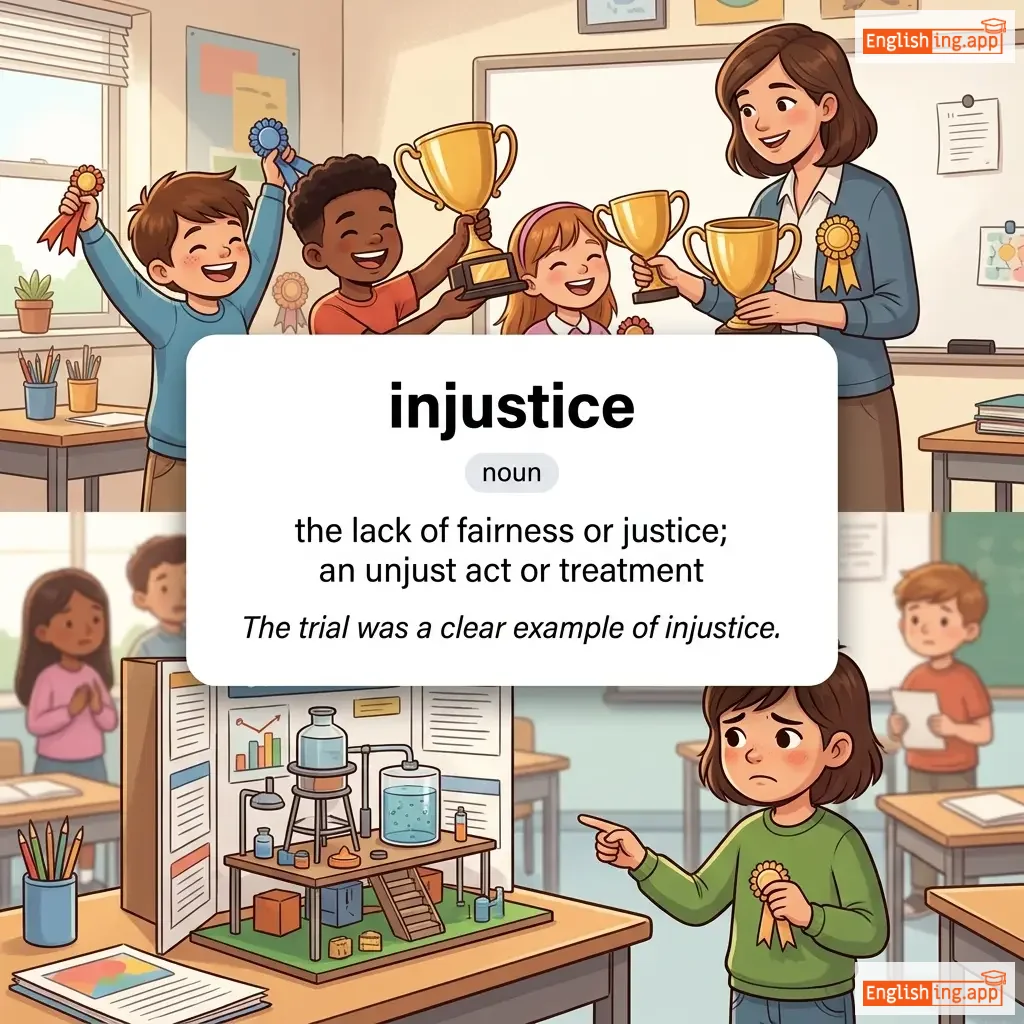
/ɪnˈdʒʌstɪs/
noun
(インジャスティス)
••••••
|
|
不正義
fuseigi
••••••
|
- •••••• | - •••••• | - •••••• | - •••••• |
the lack of fairness or justice; an unjust act or treatment
••••••
|
The trial was a clear example of injustice. |
その裁判は不正義の明確な例でした。
Sono saiban wa fuseigi no meikaku na rei deshita.
••••••
|
A great injustice has been done. |
A situation where something unfair or wrong has happened.
••••••
|
大きな不正義が行われました。
Ōkina fuseigi ga okonawaremashita.
••••••
|
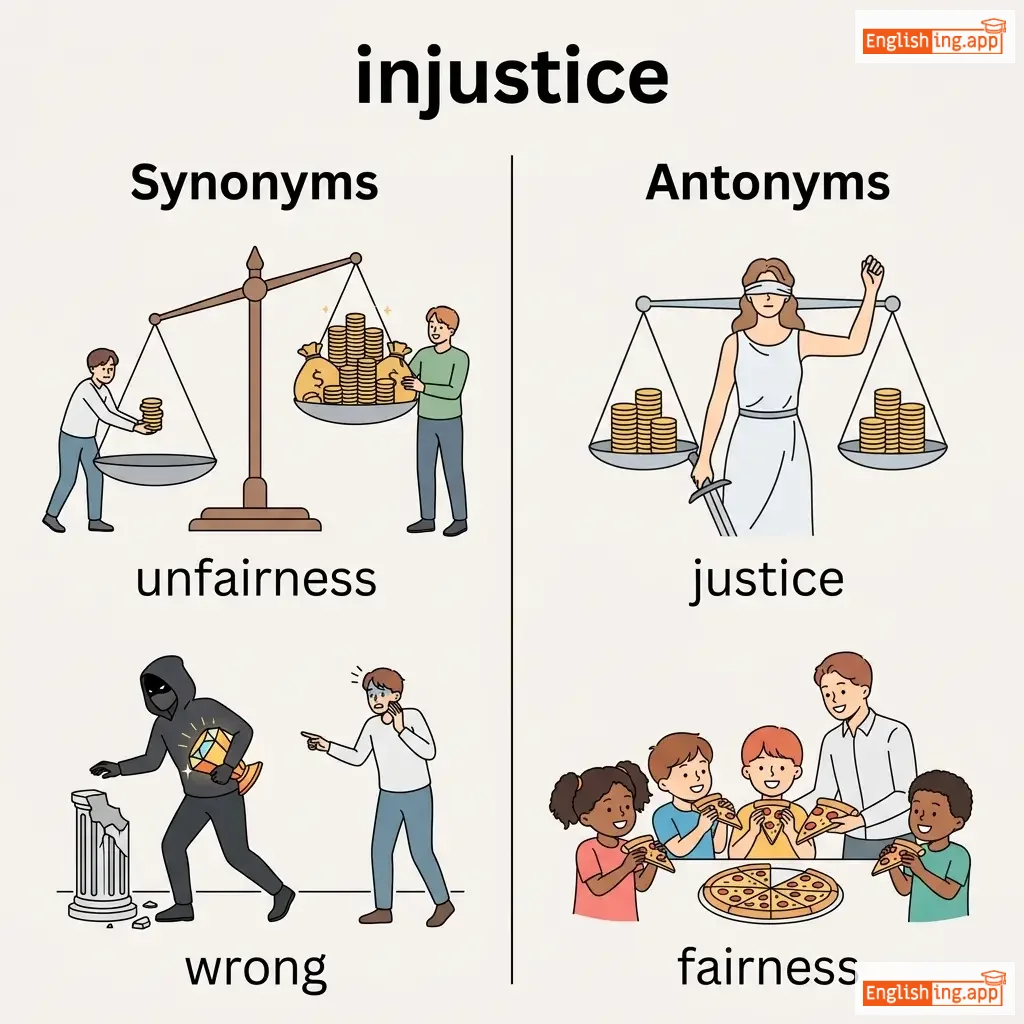
unfairness, wrong, discrimination, bias
••••••
|
justice, fairness
••••••
|
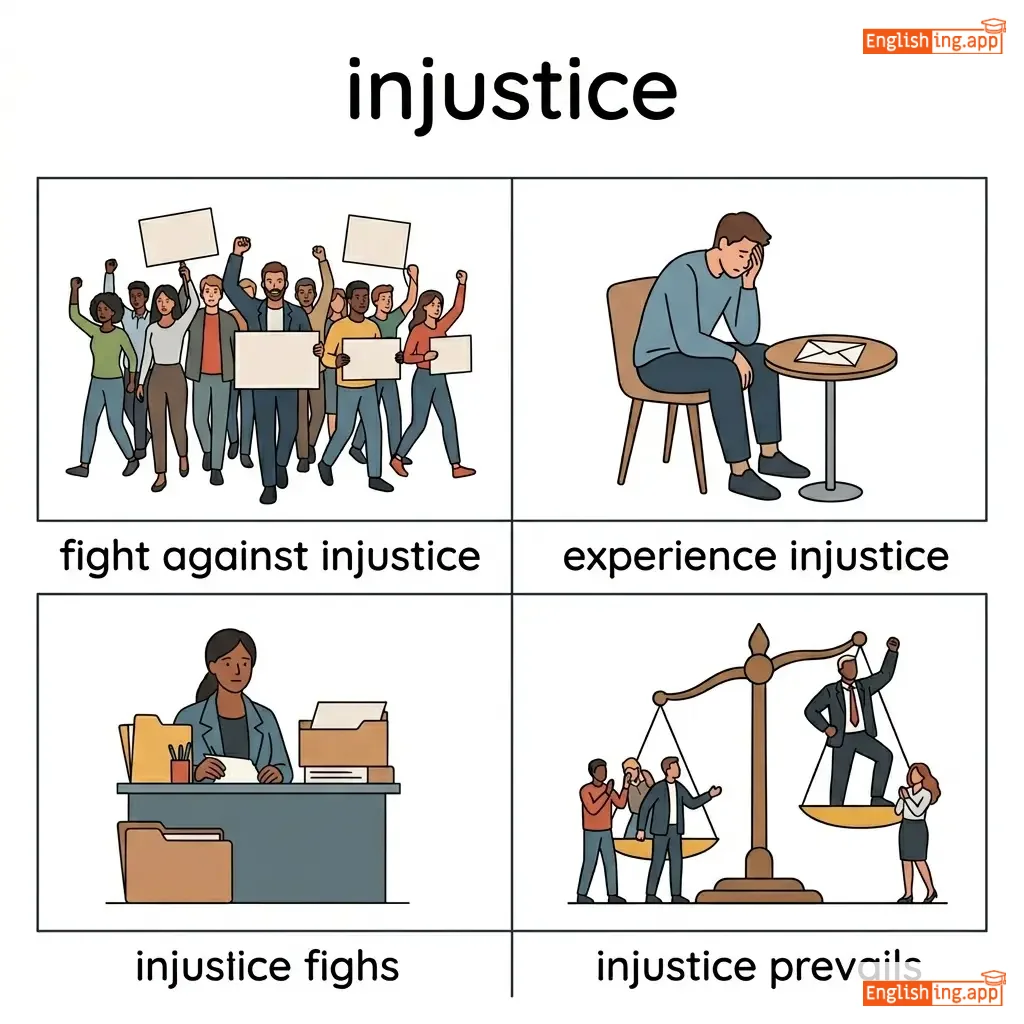
fight against injustice, experience injustice, injustice prevails
••••••
|
インジャスティスという言葉は、悪いことをする理由の一つとして覚えましょう!
••••••
|
|
🖋️
••••••
|
/ɪŋk/
noun
(インク)
••••••
|
- •••••• |
インク
inku
••••••
|
- •••••• | - •••••• | - •••••• | - •••••• |
a colored liquid used for writing, printing, or drawing
••••••
|
The ink in my pen ran out during the exam.
試験中にペンのインクがなくなった。
••••••
|
試験中にペンのインクがなくなった。
Shiken-chu ni pen no inku ga nakunatta.
••••••
|
Ink is thicker than water.
インクは水よりも濃い。
••••••
|
A saying that refers to the strength of family bonds over other relationships.
••••••
|
インクは水よりも濃い。
Inku wa mizu yori mo koi.
••••••
|
dye, pigment, fluid, colorant
••••••
|
blank, clear
••••••
|
write with ink, ink pen, black ink, spill ink
••••••
|
Think of ink as the strong bond between family members, thicker than anything else!
••••••
|
|
🚔
••••••
|
/ˈɪnˌmeɪt/
noun
(インメート)
••••••
|
- •••••• |
囚人
shuujin
••••••
|
- •••••• | - •••••• | - •••••• | - •••••• |
a person confined to an institution such as a prison or hospital
••••••
|
The prison has over a thousand inmates.
刑務所には千人以上の囚人がいます。
••••••
|
刑務所には千人以上の囚人がいます。
Keimusho ni wa sen'nin ijou no shuuji ga imasu.
••••••
|
- •••••• | - •••••• | - •••••• |
prisoner, convict, detainee, captive
••••••
|
visitor, guard, free person
••••••
|
prison inmate, hospital inmate, fellow inmate, release an inmate
••••••
|
In + mate = 囚人, 刑務所の囚人
••••••
|
|
🧘
••••••
|
/ˈɪnər/
adjective
(インナー)
••••••
|
- •••••• |
内面的
naimen teki
••••••
|
- •••••• | - •••••• | - •••••• | - •••••• |
Located inside or closer to the center; relating to one’s thoughts or feelings.
••••••
|
She shared her inner thoughts with her best friend.
彼女は最良の友達に内面的な思いを共有しました。
••••••
|
彼女は最良の友達に内面的な思いを共有しました。
kanojo wa sairyō no tomodachi ni naimen teki na omoi o kyōyū shimashita.
••••••
|
inner peace
内面的な平和
••••••
|
A state of mental and emotional calmness.
••••••
|
内面的な平和
naimen teki na heiwa
••••••
|
internal, inside, inward, private
••••••
|
outer, external
••••••
|
inner circle, inner voice, inner peace, inner city
••••••
|
Innerは内面的を意味します - Inner peaceは内面的な平和を意味します。
••••••
|
|
😇
••••••
|
/ˈɪnəsənt/
adjective
(イノセント)
••••••
|
- •••••• |
無罪
muzai
••••••
|
- •••••• | - •••••• | - •••••• | - •••••• |
not guilty of a crime or wrongdoing; harmless
••••••
|
The court found him innocent of all charges.
裁判所は彼をすべての告発から無罪と判断しました。
••••••
|
裁判所は彼をすべての告発から無罪と判断しました。
saibansho wa kare o subete no kokuhatsu kara muzai to handan shimashita.
••••••
|
innocent until proven guilty
有罪が証明されるまで無罪
••••••
|
a person is considered innocent unless proven guilty in a court
••••••
|
有罪が証明されるまで無罪
yuzai ga shoumei sareru made muzai
••••••
|
guiltless, blameless, pure, harmless
••••••
|
guilty, corrupt
••••••
|
innocent child, innocent victim, innocent mistake, innocent face
••••••
|
Innocent = in (無) + nocent (害) → 害を与えない、無罪
••••••
|
|
🚀
••••••
|
/ˌɪnəˈveɪʃən/
noun
(イノベーション)
••••••
|
|
革新
kakushin
••••••
|
- •••••• | - •••••• | - •••••• | - •••••• |
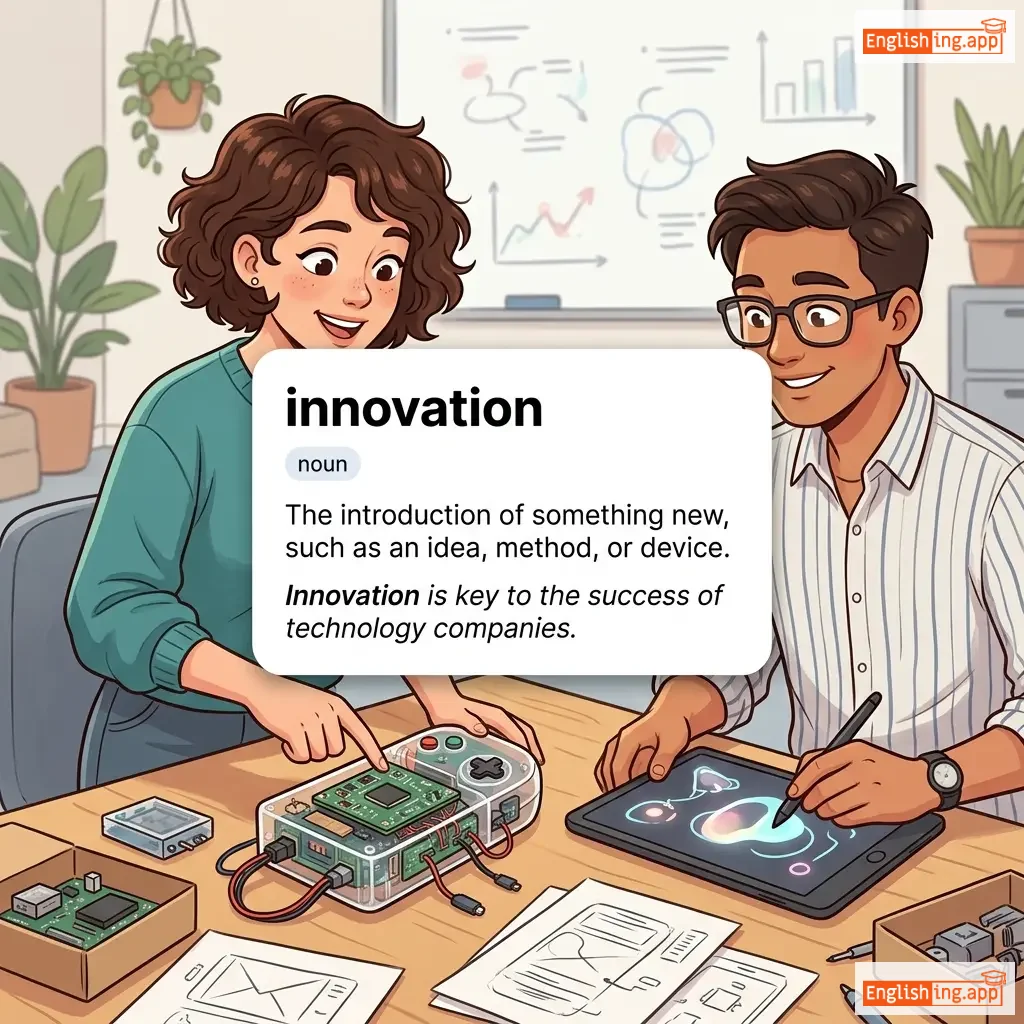
The introduction of something new, such as an idea, method, or device.
••••••
|
Innovation is key to the success of technology companies. |
革新はテクノロジー企業の成功の鍵です。
Kakushin wa tekunorojī kigyō no seikō no kagi desu.
••••••
|
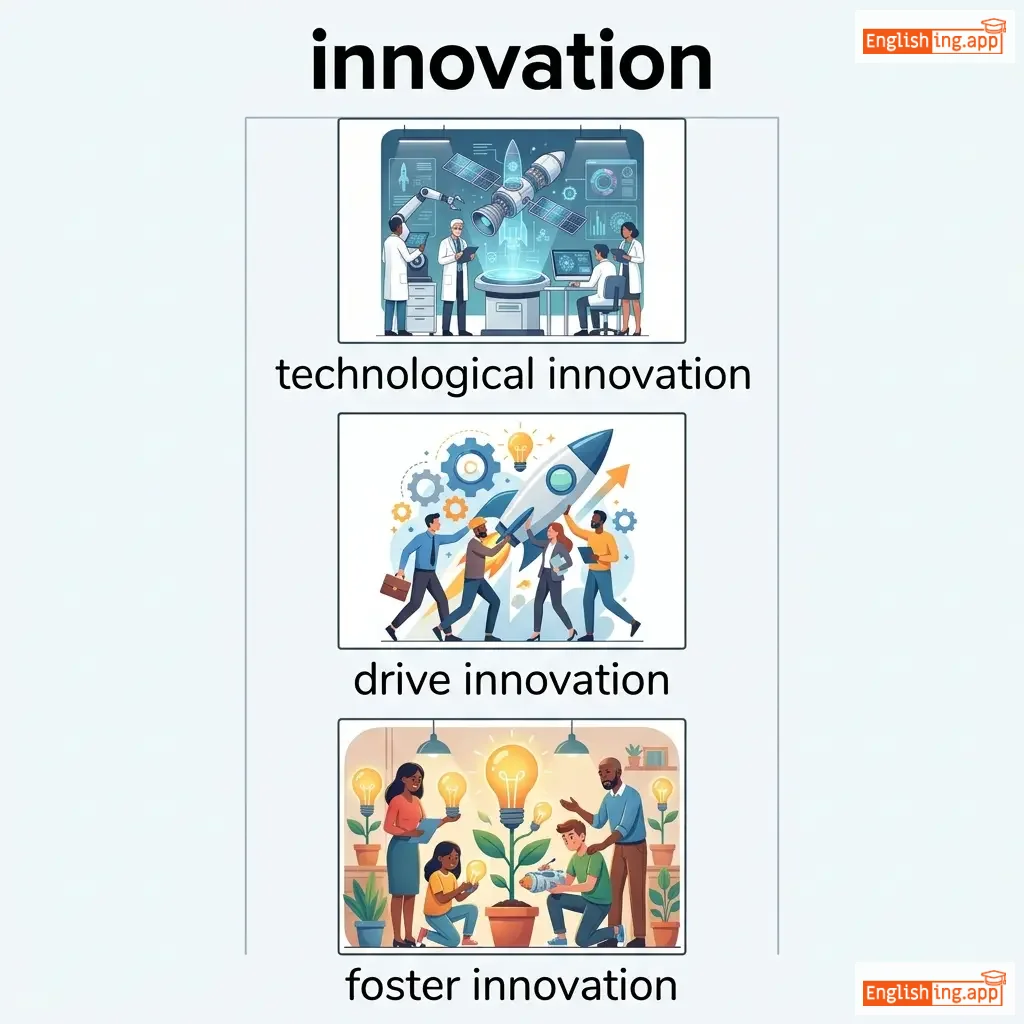
drive innovation |
To actively promote and encourage new ideas and methods.
••••••
|
革新を促進する
Kakushin o sokushin suru
••••••
|
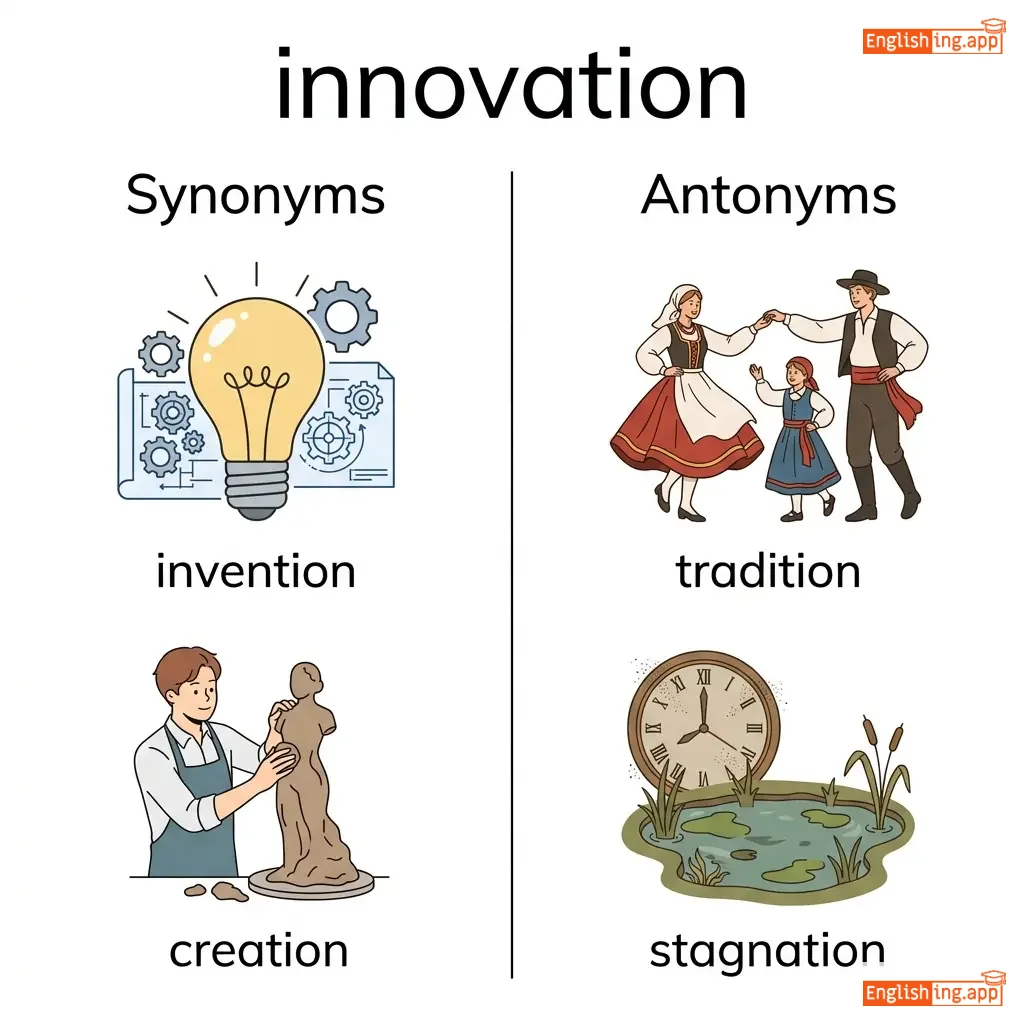
invention, creation, novelty, modernization
••••••
|
tradition, stagnation, imitation
••••••
|
technological innovation, drive innovation, foster innovation, innovation strategy
••••••
|
革新 = '革'(革新的な)+ '新'(新しい)→ 新しい星のように新しいアイデアが現れる。
••••••
|
|
💡
••••••
|
/ˈɪnəˌveɪtɪv/
adjective
(イノベーティブ)
••••••
|

|
革新的
kakushinteki
••••••
|
- •••••• | - •••••• | - •••••• | - •••••• |
introducing new ideas, methods, or products; creative and original
••••••
|
The company is known for its innovative solutions.
その会社は革新的な解決策で知られています。
••••••
|
その会社は革新的な解決策で知られています。
Sono kaisha wa kakushinteki na kaiketsusaku de shirareteimasu.
••••••
|
- •••••• | - •••••• | - •••••• |
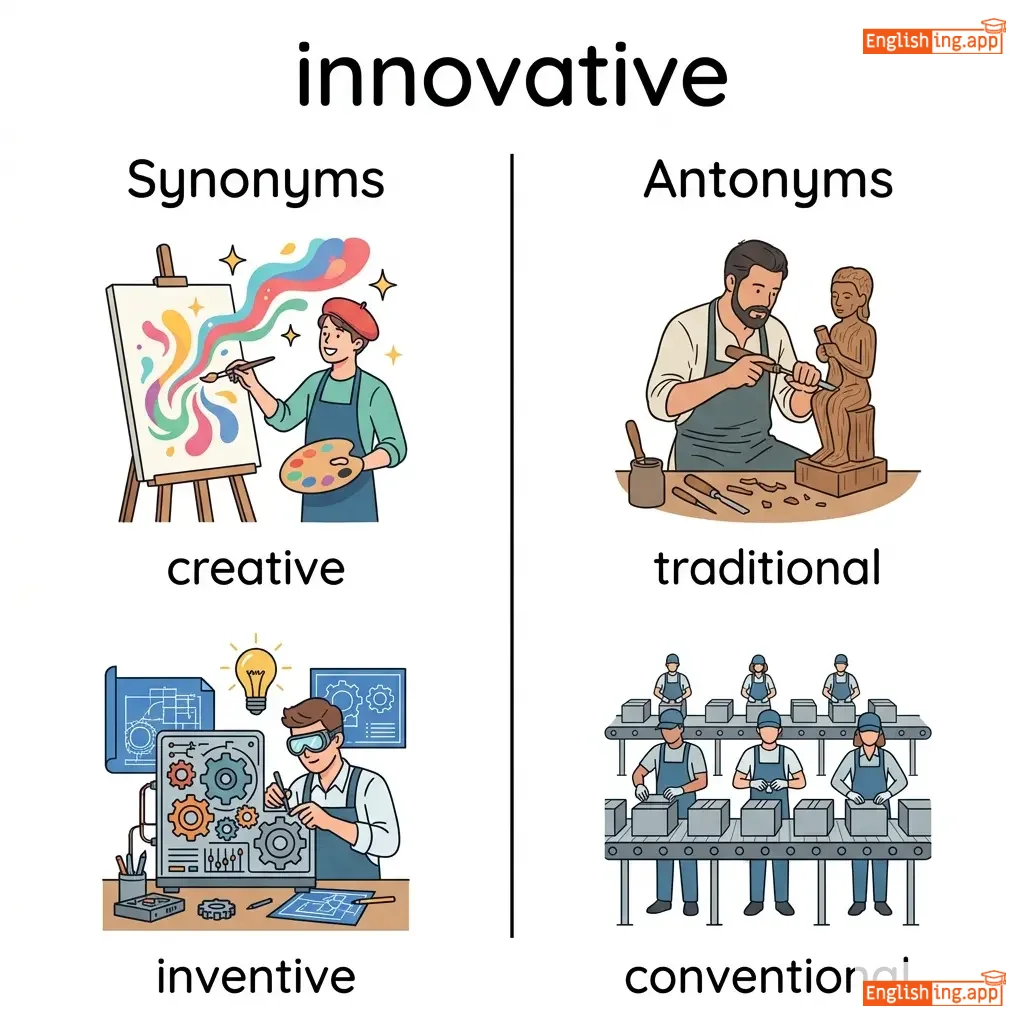
creative, inventive, original, cutting-edge, imaginative
••••••
|
traditional, conventional, old-fashioned
••••••
|
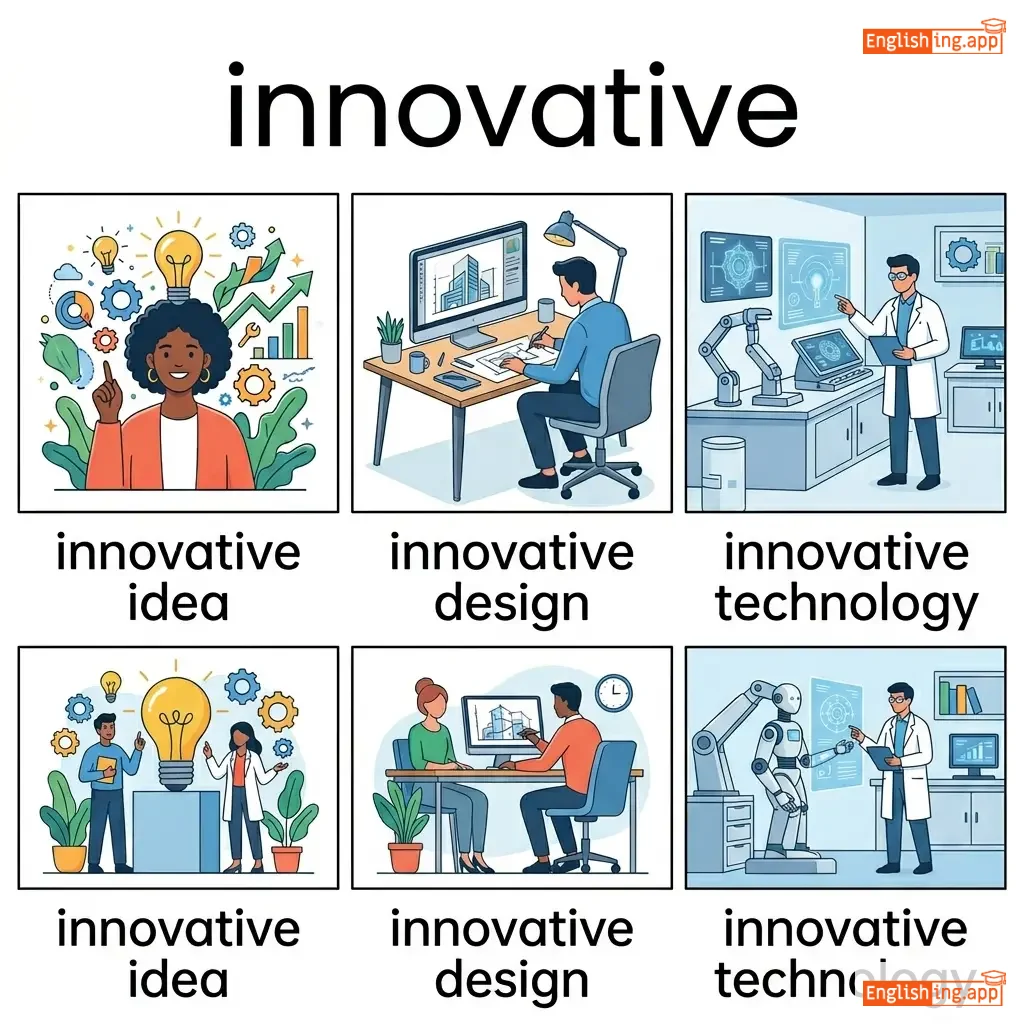
innovative idea, innovative design, innovative technology, innovative approach
••••••
|
革新的は新しいアイデアや方法を意味し、創造的であることを示します。
••••••
|
|
⚗️
••••••
|
/ˌɪnɔːrˈɡænɪk/
adjective
(インオーガニック)
••••••
|
- •••••• |
無機の
muki no
••••••
|
- •••••• | - •••••• | - •••••• | - •••••• |
relating to substances that are not derived from living organisms; lacking organic structure or growth
••••••
|
Inorganic compounds are commonly studied in chemistry labs.
無機化合物は化学で研究されます。
••••••
|
無機化合物は化学の基本です。
muki kagobutsu wa kagaku no kihon desu
••••••
|
- •••••• | - •••••• | - •••••• |
nonorganic, mineral, synthetic, chemical
••••••
|
organic, natural
••••••
|
inorganic compound, inorganic chemistry, inorganic material, inorganic matter
••••••
|
inorganic = イン+オーガニックじゃない
••••••
|
|
⌨️
••••••
|
/ˈɪnpʊt/
noun
(インプット)
••••••
|
- •••••• |
入力、提供された情報
input, teikyō sareta jōhō
••••••
|
- •••••• | - •••••• | - •••••• | - •••••• |
information, advice, or data that is put into a system, device, or process
••••••
|
The manager asked for everyone's input on the new project.
マネージャーは新しいプロジェクトに対する全員のインプットを求めました。
••••••
|
マネージャーは新しいプロジェクトに対する全員のインプットを求めました。
Manējā wa atarashī purojekuto ni taisuru zen'in no inputto o motomemashita.
••••••
|
data input
データ入力
••••••
|
the act of entering data into a computer system
••••••
|
データ入力
dēta nyūryoku
••••••
|
contribution, feedback, suggestion, data, information
••••••
|
output, result
••••••
|
user input, data input, input device, input field
••••••
|
インプットはシステムにデータを入れることです!
••••••
|
|
🔍
••••••
|
/ɪnˈkwaɪəri/ or /ˈɪnkwəri/
noun
(インクワイアリー)
••••••
|
- •••••• |
調査 / 問い合わせ
chōsa / toiawase
••••••
|
- •••••• | - •••••• | - •••••• | - •••••• |
An act of asking for information; an investigation into something.
••••••
|
The committee launched an inquiry into the financial irregularities. |
委員会は財務の不正行為に関する調査を開始しました。
Iinkai wa zaimu no fusei kōi ni kansuru chōsa o kaishi shimashita.
••••••
|
line of inquiry |
A specific direction of investigation.
••••••
|
調査の方向性
Chōsa no hōkō-sei
••••••
|
investigation, examination, probe, research, questioning
••••••
|
answer, response, neglect
••••••
|
make an inquiry, police inquiry, official inquiry, line of inquiry
••••••
|
Inquiryとは、何かを調べるために質問することです。
••••••
|
|
🐞
••••••
|
/ˈɪnsekt/
noun
(インセクト)
••••••
|
- •••••• |
昆虫
konchū
••••••
|
- •••••• | - •••••• | - •••••• | - •••••• |
a small animal with six legs and usually wings, such as a bee or an ant
••••••
|
A butterfly is a beautiful type of insect.
蝶は美しい種類のインセクトです。
••••••
|
蝶は美しい種類のインセクトです。
Chou wa utsukushī shurui no inseku to desu.
••••••
|
insect bite
虫に刺された跡
••••••
|
a mark or swelling caused by an insect's sting or bite
••••••
|
虫に刺された跡
Mushi ni sasareta ato
••••••
|
bug, creature, ant, bee, beetle
••••••
|
mammal, reptile
••••••
|
flying insect, insect bite, insect species, insect repellent
••••••
|
In + seku = 小さなセクションに分かれた昆虫 🐜
••••••
|
|
😟
••••••
|
/ˌɪnsɪˈkjʊə/
adjective
(インセキュア)
••••••
|
- •••••• |
不安定
fuantei
••••••
|
- •••••• | - •••••• | - •••••• | - •••••• |
not confident or assured; uncertain and anxious
••••••
|
She felt insecure about her performance in the exam. |
彼女は試験での自分のパフォーマンスに不安を感じていました。
Kanojo wa shiken de no jibun no pafōmansu ni fuan o kanjite imashita.
••••••
|
insecure about |
lacking confidence in relation to something
••••••
|
不安定について
fuantei ni tsuite
••••••
|
uncertain, anxious, self-doubting, unconfident, shaky
••••••
|
confident, secure, assured
••••••
|
feel insecure, insecure relationship, insecure job, insecure system
••••••
|
不安定とは不安な状態 → 確信がなく、不安定。
••••••
|
|
😟
••••••
|
/ˌɪnsɪˈkjʊərɪti/
noun
(インセキュリティ)
••••••
|
- •••••• |
不安感
fuankan
••••••
|
- •••••• | - •••••• | - •••••• | - •••••• |
lack of confidence or assurance; a state of uncertainty or vulnerability
••••••
|
Her insecurity made her doubt her abilities despite her experience.
彼女のインセキュリティは自信を失わせた。
••••••
|
彼女の不安感は彼女に自分の能力を疑わせた。
kanojo no fuankan wa kanojo ni jibun no nouryoku o utagawaseta
••••••
|
- •••••• | - •••••• | - •••••• |
uncertainty, self-doubt, vulnerability, anxiety, instability
••••••
|
confidence, security, assurance
••••••
|
emotional insecurity, deep insecurity, personal insecurity, sense of insecurity
••••••
|
インセキュリティ = 不安感、安心できない状態
••••••
|
|
😶
••••••
|
/ɪnˈsɛnsəbl/
adjective
(インセンシブル)
••••••
|
|
無意識
muishiki
••••••
|
- •••••• | - •••••• | - •••••• | - •••••• |
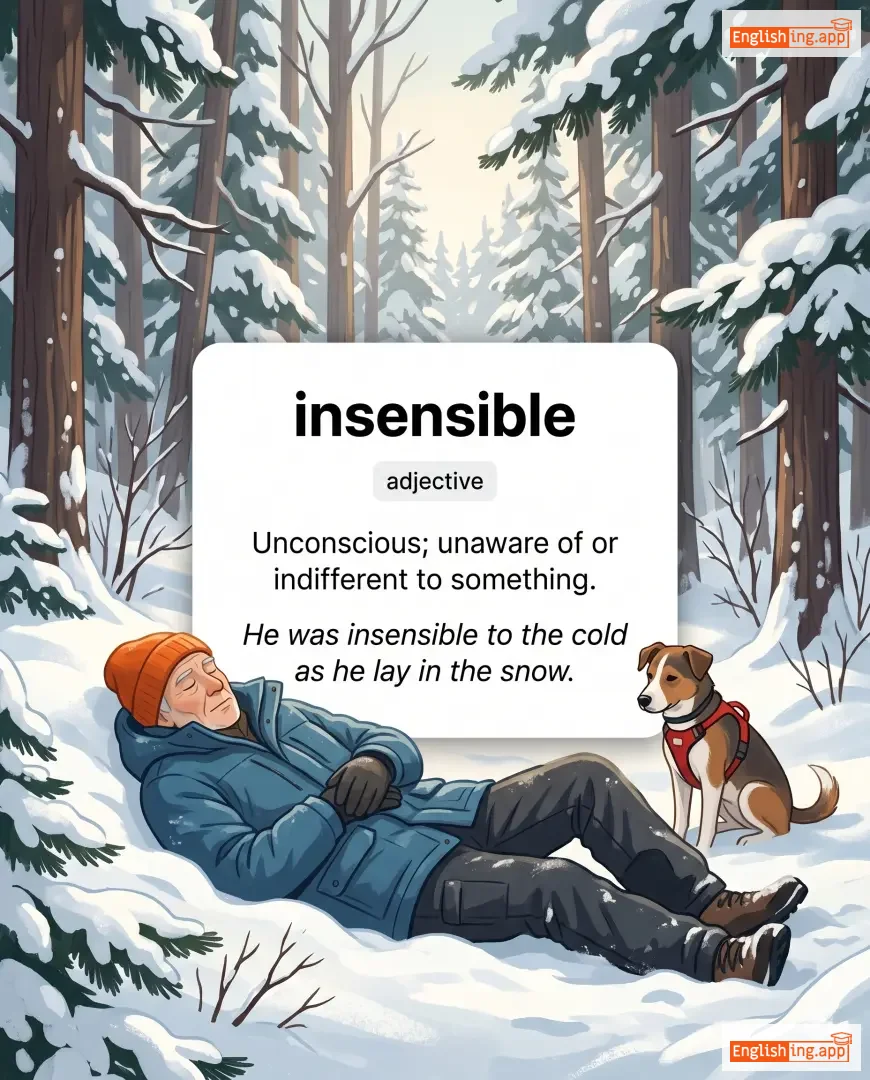
Unconscious; unaware of or indifferent to something.
••••••
|
He was insensible to the cold as he lay in the snow. |
彼は雪の中で横たわっているとき、寒さに無意識でした。
Kare wa yuki no naka de yokotawatte iru toki, samusa ni muishiki deshita.
••••••
|
- •••••• | - •••••• | - •••••• |
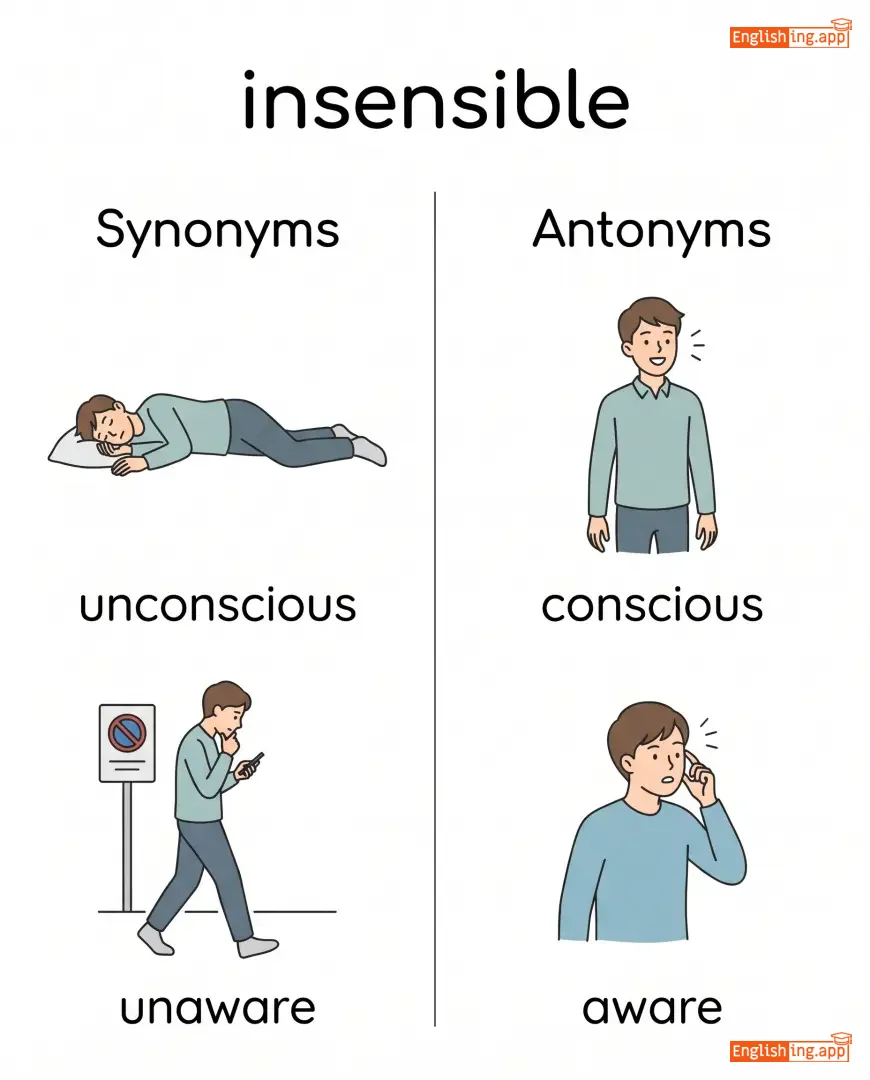
unconscious, unaware, oblivious, indifferent, unresponsive
••••••
|
conscious, aware, responsive
••••••
|
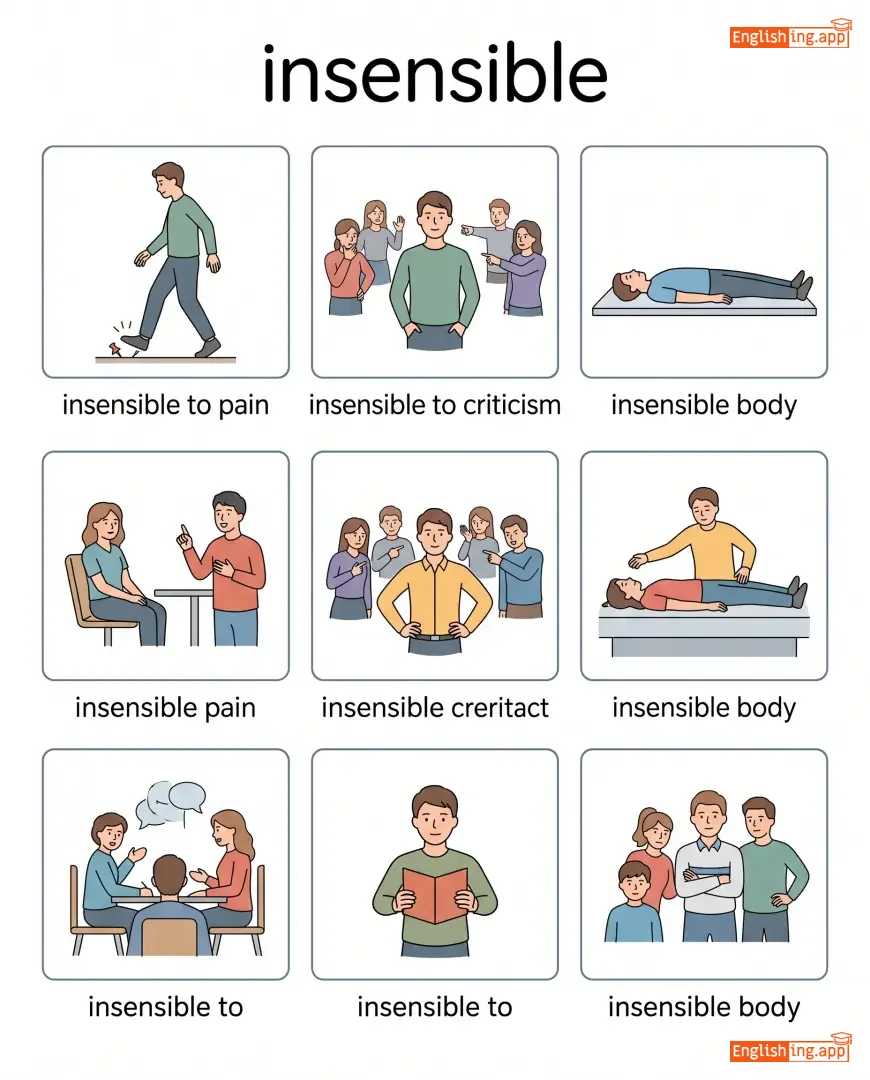
insensible to pain, insensible to criticism, insensible body
••••••
|
INSensibleは感覚がない → 無意識。
••••••
|
|
📥
••••••
|
/ɪnˈsɜːt/
verb
(インサート)
••••••
|
|
挿入する
sānyū suru
••••••
|
inserted
インサーテッド
••••••
|
inserted
インサーテッド
••••••
|
inserts
インサーツ
••••••
|
inserting
インサーティング
••••••
|
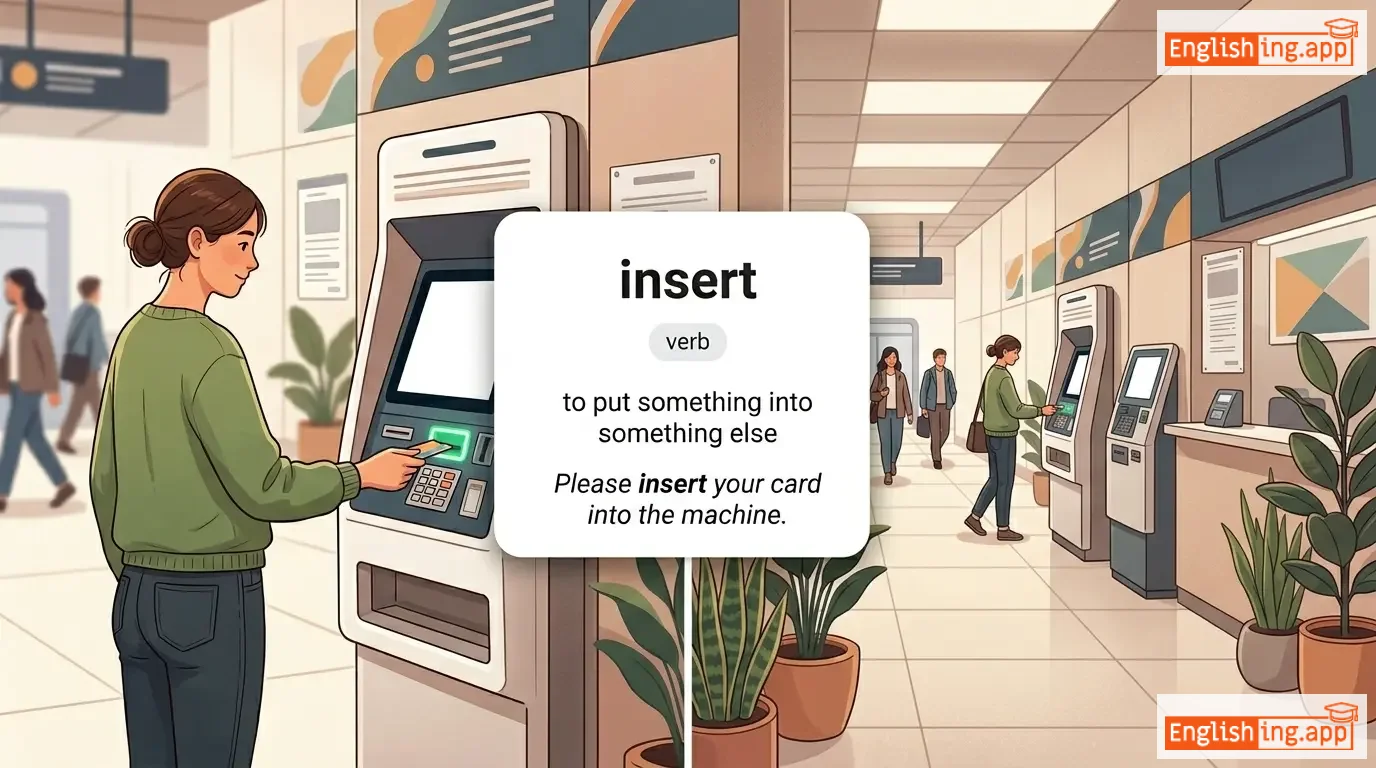
to put something into something else
••••••
|
Please insert your card into the machine.
カードを機械に挿入してください。
••••••
|
カードを機械に挿入してください。
Kādo o kikai ni sānyū shite kudasai.
••••••
|
insert coin
コイン挿入
••••••
|
instruction to put a coin into a machine to operate it
••••••
|
コイン挿入
koin sānyū
••••••
|
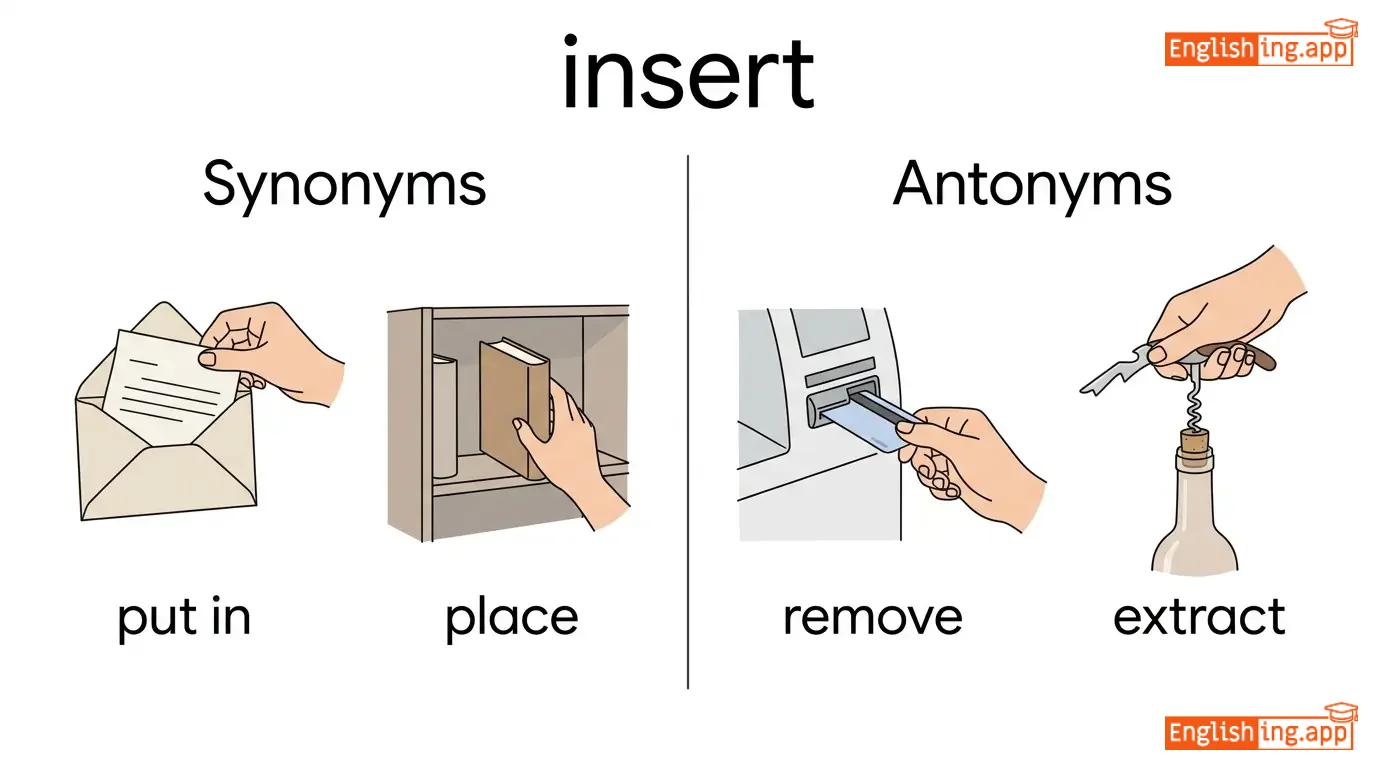
put in, place, embed, add, introduce
••••••
|
remove, extract
••••••
|
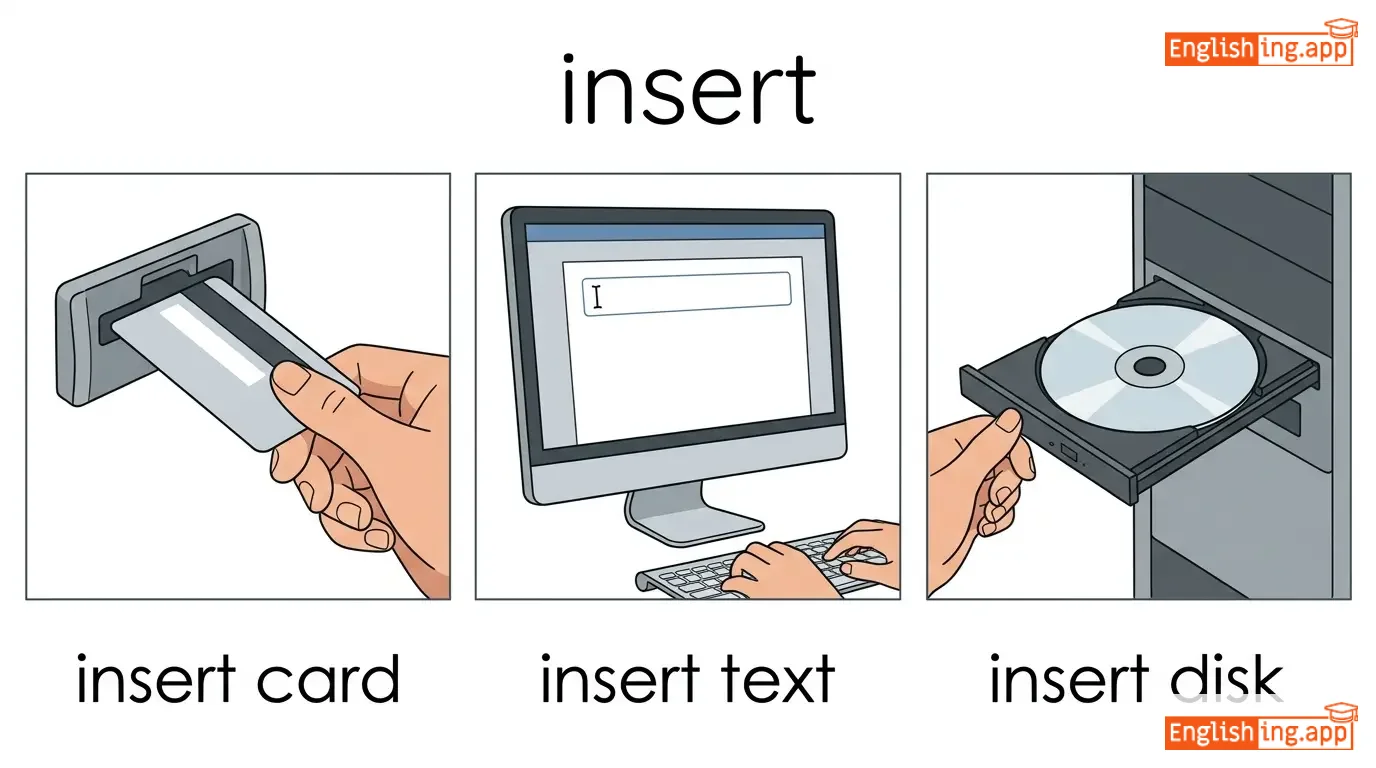
insert card, insert text, insert disk, insert key
••••••
|
挿入するは物を別の物に入れること、カードを挿入してみよう!
••••••
|
|
⬇️
••••••
|
/ɪnˈsɜːʃən/
noun
(インサーション)
••••••
|
- •••••• |
挿入
sounyuu
••••••
|
- •••••• | - •••••• | - •••••• | - •••••• |
the action of inserting something into something else
••••••
|
The insertion of the new data was completed successfully. |
新しいデータの挿入は成功裏に完了しました。
Atarashī dēta no sōnyū wa seikōri ni kanryō shimashita.
••••••
|
- •••••• | - •••••• | - •••••• |
introduction, addition, implantation, inclusion
••••••
|
removal, extraction
••••••
|
data insertion, surgical insertion, insertion point
••••••
|
挿入は何かを別のものに入れること、例えばデータをシステムに挿入することです。
••••••
|
|
🏠
••••••
|
/ˌɪnˈsaɪd/
preposition/adverb/adjective/noun
(ハピネス)
••••••
|
- •••••• |
幸せ
shiawase
••••••
|
- •••••• | - •••••• | - •••••• | - •••••• |
Situated within something; the inner part of something.
••••••
|
She waited inside the house until the rain stopped. |
彼女は賞を受け取ったとき、自分の幸せを隠すことができませんでした。
Kanojo wa shō o uketotta toki, jibun no shiawase o kakusu koto ga dekimasen deshita.
••••••
|
inside out |
Completely; with thorough knowledge or in reverse.
••••••
|
幸せを追い求める
shiawase o oi motomeru
••••••
|
within, indoors, interior, inner, internal
••••••
|
outside, external, exterior
••••••
|
inside the house, inside the box, inside job, look inside
••••••
|
幸せ = 喜びと満足感を感じること。
••••••
|
|
👤
••••••
|
/ɪnˈsaɪdə/
noun
(インサイダー)
••••••
|
- •••••• |
インサイダー
insaidā
••••••
|
- •••••• | - •••••• | - •••••• | - •••••• |
a person within a group or organization who has access to confidential information
••••••
|
He was an insider who knew all the company's secrets. |
彼は会社のすべての秘密を知っているインサイダーでした。
Kare wa kaisha no subete no himitsu o shitte iru insaidā deshita.
••••••
|
- •••••• | - •••••• | - •••••• |
member, participant, confidant, informant
••••••
|
outsider, stranger
••••••
|
company insider, political insider, insider knowledge
••••••
|
インサイダーは、企業内部の秘密を知っている人物
••••••
|
|
💡
••••••
|
/ˈɪnˌsaɪt/
noun
(インサイト)
••••••
|
- •••••• |
洞察力
dōsatsuryoku
••••••
|
- •••••• | - •••••• | - •••••• | - •••••• |
The ability to understand the true nature of something; deep understanding.
••••••
|
Her insight into human behavior made her a successful psychologist. |
彼女の人間行動に対する洞察力は、彼女を成功した心理学者にした。
Kanojo no ningen kōdō ni taisuru dōsatsuryoku wa, kanojo o seikō shita shinrigakusha ni shita.
••••••
|
gain insight |
to develop a clear understanding of something
••••••
|
洞察力を得る
dōsatsuryoku o eru
••••••
|
understanding, perception, awareness, intuition, comprehension
••••••
|
ignorance, misunderstanding
••••••
|
gain insight, valuable insight, deep insight, provide insight
••••••
|
Insightは洞察力を意味します - 物事の内面を見る力です。
••••••
|
|
⚪
••••••
|
/ˌɪnsɪɡˈnɪfɪkəns/
noun
(インシグニフィカンス)
••••••
|
- •••••• |
重要でないこと
juuyou denai koto
••••••
|
- •••••• | - •••••• | - •••••• | - •••••• |
The quality of being unimportant or trivial.
••••••
|
He felt a sense of insignificance in the vast universe. |
彼は広大な宇宙で重要でないことを感じました。
Kare wa koudai na uchuu de juuyou denai koto o kanjimashita.
••••••
|
- •••••• | - •••••• | - •••••• |
triviality, unimportance, smallness, pettiness
••••••
|
importance, significance, value
••••••
|
utter insignificance, sense of insignificance, feeling of insignificance
••••••
|
インシグニフィカンス = 重要でない → 意味がない.
••••••
|
|
🪙
••••••
|
/ˌɪnsɪɡˈnɪfɪkənt/
adjective
(インシグニフィカント)
••••••
|
- •••••• |
重要でない
jūyōdenai
••••••
|
- •••••• | - •••••• | - •••••• | - •••••• |
Too small or unimportant to be worth considering.
••••••
|
The cost was so insignificant that nobody noticed it. |
そのコストは重要でなく、誰もそれに気づかなかった。
sono kosuto wa jūyōdenaku, dare mo sore ni kizukanakatta.
••••••
|
an insignificant detail |
a very small or unimportant piece of information
••••••
|
重要でない詳細
jūyōdenai shōsai
••••••
|
trivial, minor, negligible, unimportant, petty
••••••
|
important, significant, meaningful
••••••
|
insignificant amount, insignificant role, almost insignificant
••••••
|
Insignificant = サインがない → 小さい、重要でない。
••••••
|
|
🙅♂️
••••••
|
/ɪnˈsɪst/
verb
(インシスト)
••••••
|
|
強く主張する
tsuyoku shuchou suru
••••••
|
insisted
インシステッド
••••••
|
insisted
インシステッド
••••••
|
insists
インシスツ
••••••
|
insisting
インシスティング
••••••
|
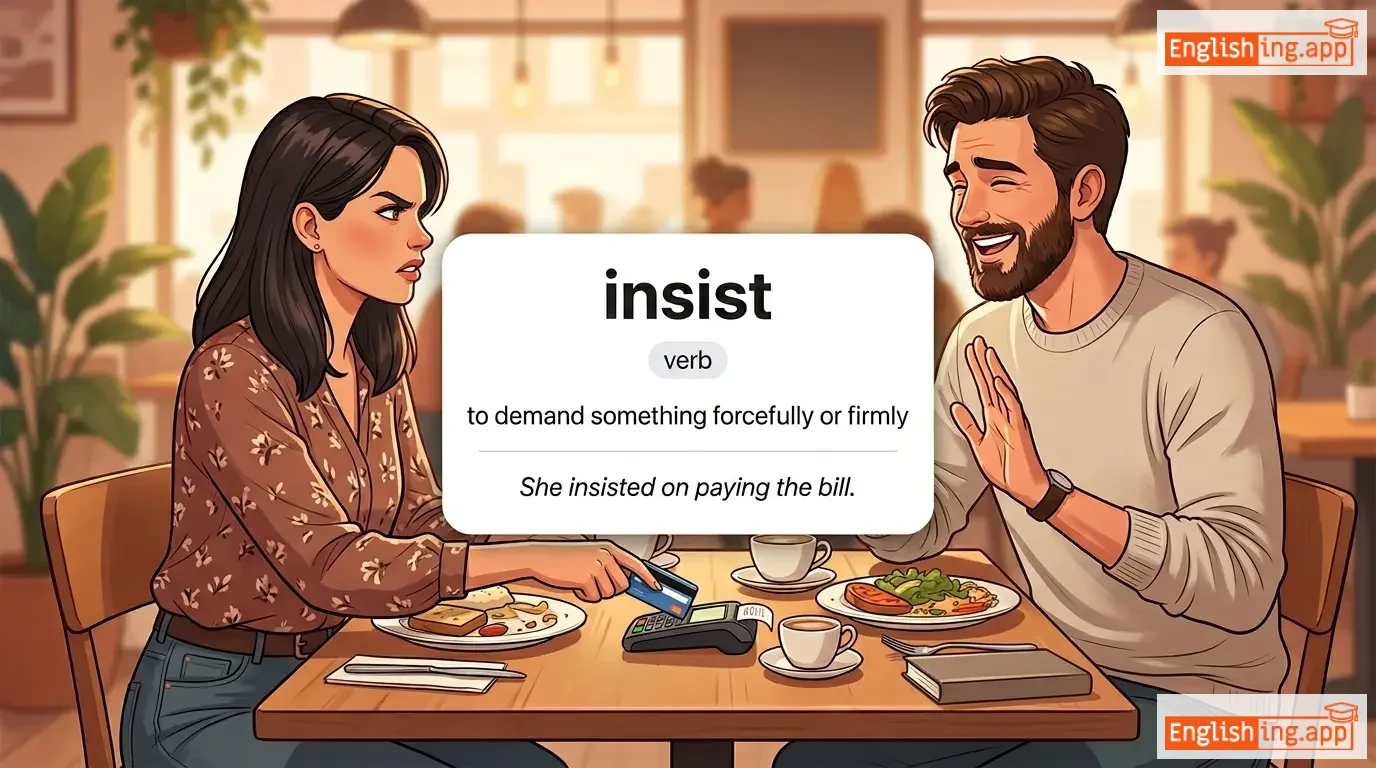
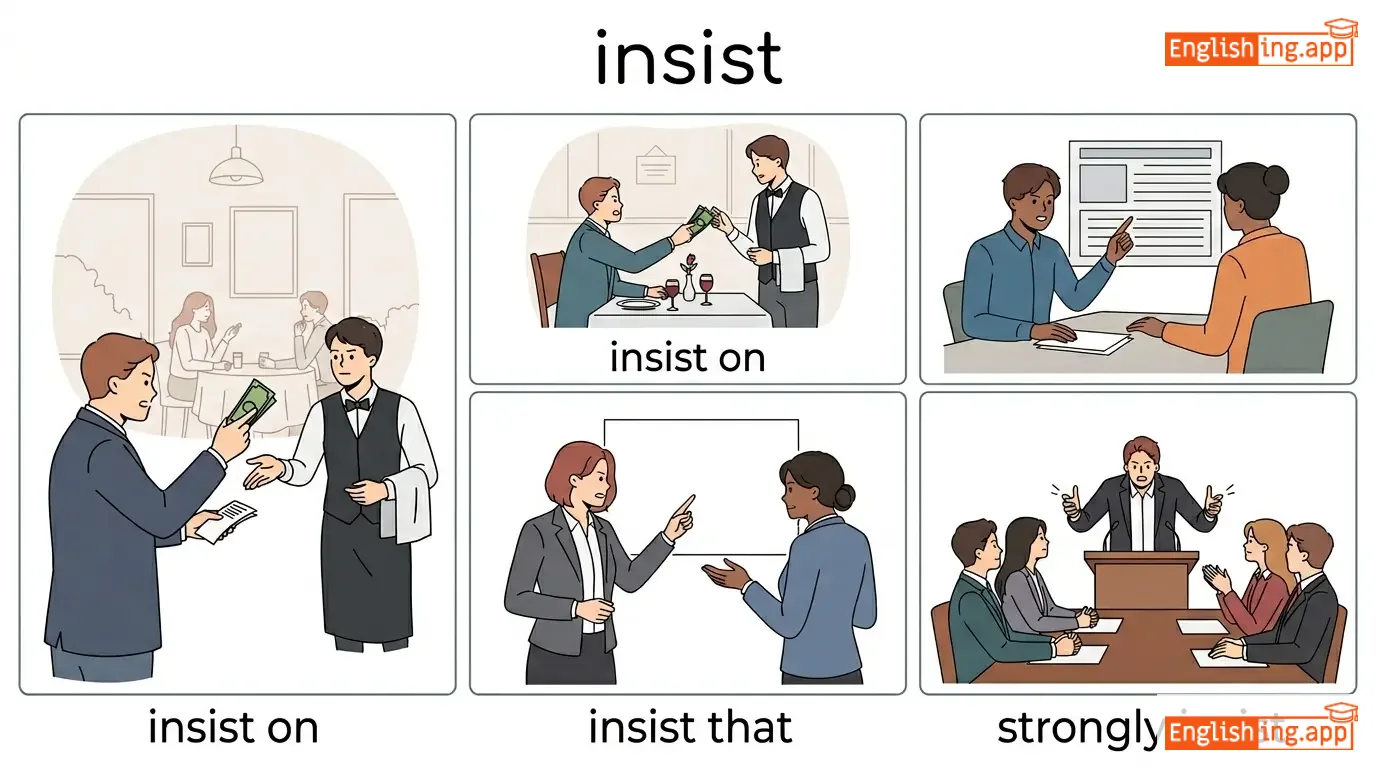
to demand something forcefully or firmly
••••••
|
She insisted on paying the bill.
彼女は勘定を支払うことに固執した。
••••••
|
彼女は勘定を支払うことに固執した。
Kanojo wa kanjou o shiharau koto ni koshou shita.
••••••
|
insist on
インシストオン
••••••
|
to demand firmly that something be done
••••••
|
強く主張する
tsuyoku shuchou suru
••••••
|
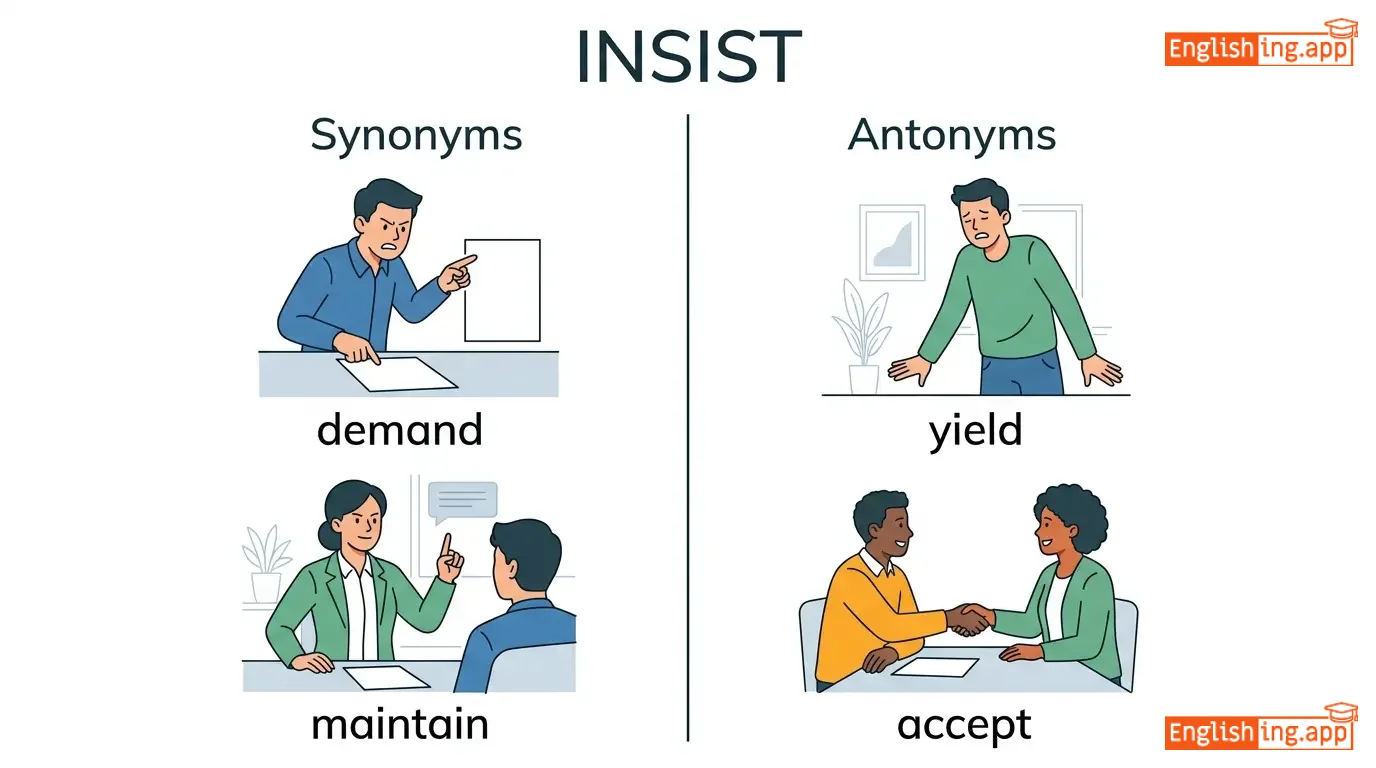
demand, maintain, assert, press, urge
••••••
|
yield, accept, give up
••••••
|
insist on, insist that, strongly insist, politely insist
••••••
|
インシスト=強く主張する!
••••••
|
|
🔍
••••••
|
/ɪnˈspɛkt/
verb
(インスペクト)
••••••
|
|
検査する
kensasu
••••••
|
inspected
インスペクテッド
••••••
|
inspected
インスペクテッド
••••••
|
inspects
インスペクツ
••••••
|
inspecting
インスペクティング
••••••
|
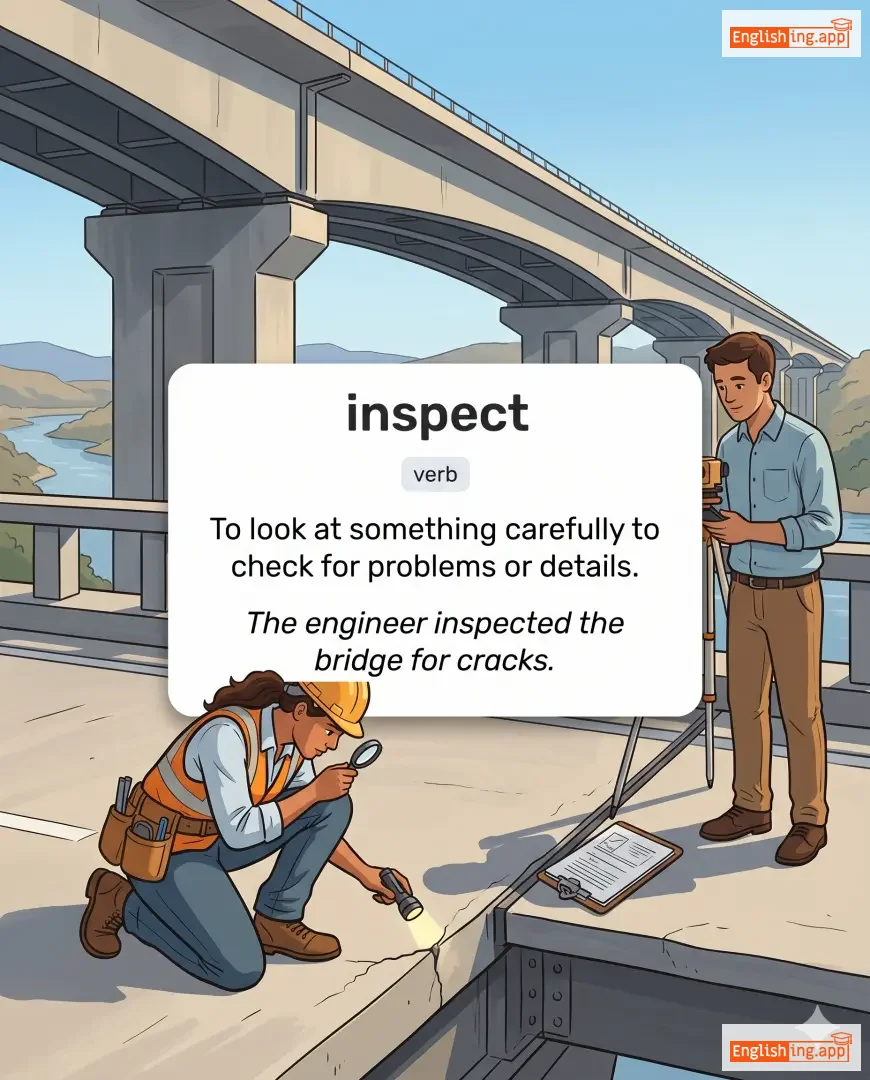
To look at something carefully to check for problems or details.
••••••
|
The engineer inspected the bridge for cracks.
エンジニアは橋にひびがないか確認しました。
••••••
|
エンジニアは橋にひびがないか確認しました。
Enjinia wa hashi ni hibi ga nai ka kakunin shimashita.
••••••
|
inspect the premises
施設を検査する
••••••
|
to examine a place carefully
••••••
|
施設を検査する
shisetsu wo kensa suru
••••••
|
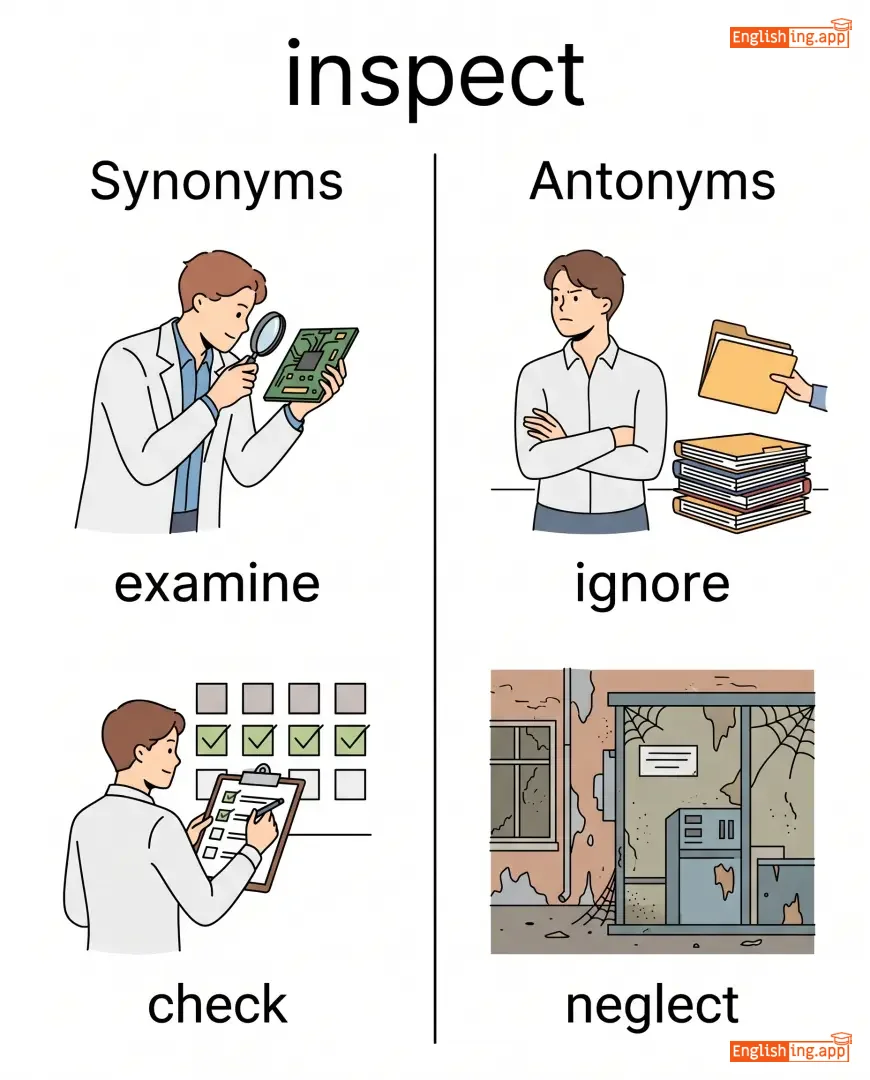
examine, check, review, scrutinize, analyze
••••••
|
ignore, neglect
••••••
|
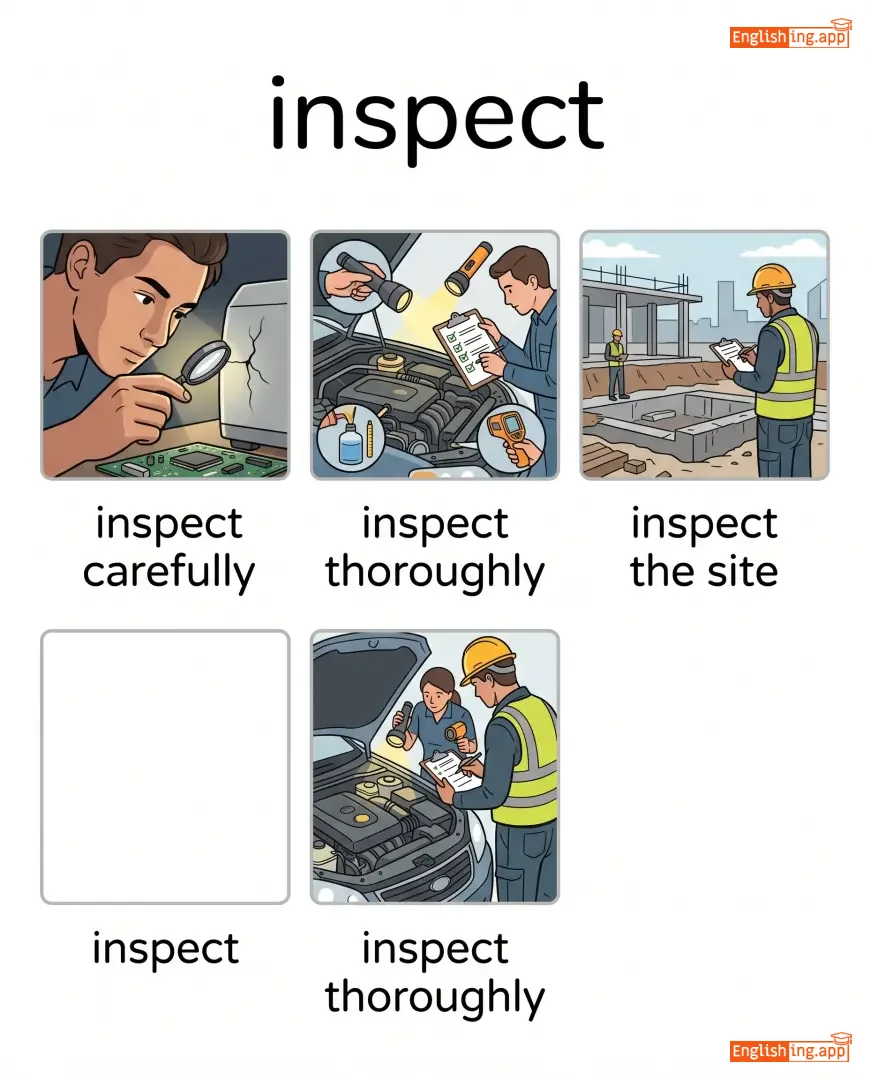
inspect carefully, inspect thoroughly, inspect the site, safety inspector
••••••
|
Inspectはin + spect (見る) → 詳しく見る。
••••••
|
|
🔍
••••••
|
/ɪnˈspekʃən/
noun
(インスペクション)
••••••
|
- •••••• |
検査
kensa
••••••
|
- •••••• | - •••••• | - •••••• | - •••••• |
a careful examination of something, especially to check that it is correct or safe
••••••
|
The building passed the safety inspection last week. |
その建物は先週、安全検査に合格しました。
Sono tatemono wa senshuu, anzen kensa ni goukaku shimashita.
••••••
|
under inspection |
being examined carefully
••••••
|
検査中
kensachu
••••••
|
examination, review, scrutiny, check, audit
••••••
|
neglect, overlook
••••••
|
safety inspection, routine inspection, detailed inspection, building inspection
••••••
|
Inspection は検査(チェック)することを意味します 🔎
••••••
|
|
🕵️
••••••
|
/ɪnˈspɛktər/
noun
(インスペクター)
••••••
|
- •••••• |
検査官
kensa kan
••••••
|
- •••••• | - •••••• | - •••••• | - •••••• |
An official employed to ensure regulations are obeyed or standards are met.
••••••
|
The inspector carefully checked the restaurant's kitchen for hygiene standards. |
検査官はレストランのキッチンを衛生基準に従って慎重に確認しました。
Kensakan wa resutoran no kicchin o eisei kijun ni shitagatte shinchou ni kakunin shimashita.
••••••
|
under the inspector's eye |
Closely monitored or supervised by an authority.
••••••
|
検査官の目の下で
Kensakan no me no shita de
••••••
|
examiner, officer, auditor, overseer, supervisor
••••••
|
worker, employee
••••••
|
police inspector, health inspector, building inspector
••••••
|
検査官はすべてを確認して、すべてが規則に従っていることを保証します。
••••••
|
|
💡
••••••
|
/ˌɪnspəˈreɪʃən/
noun
(インスピレーション)
••••••
|

|
インスピレーション
insupirēshon
••••••
|
- •••••• | - •••••• | - •••••• | - •••••• |
the process of being mentally stimulated to do or feel something creative or positive
••••••
|
Her courage was a great inspiration to others.
彼女の勇気は他の人々にとって素晴らしいインスピレーションでした。
••••••
|
彼女の勇気は他の人々にとって素晴らしいインスピレーションでした。
Kanojo no yūki wa hoka no hitobito ni totte subarashī insupirēshon deshita.
••••••
|
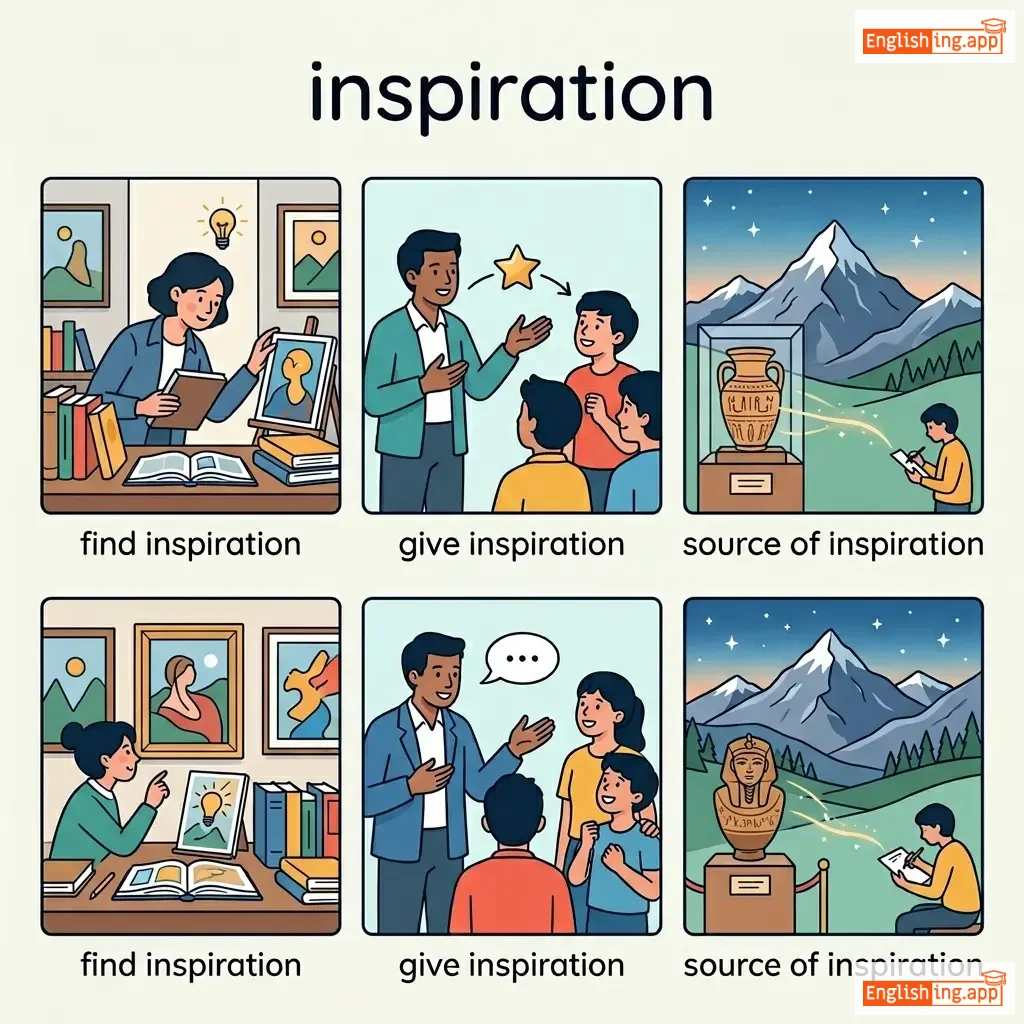
source of inspiration
インスピレーションの源
••••••
|
something or someone that motivates or encourages creativity
••••••
|
インスピレーションの源
insupirēshon no minamoto
••••••
|
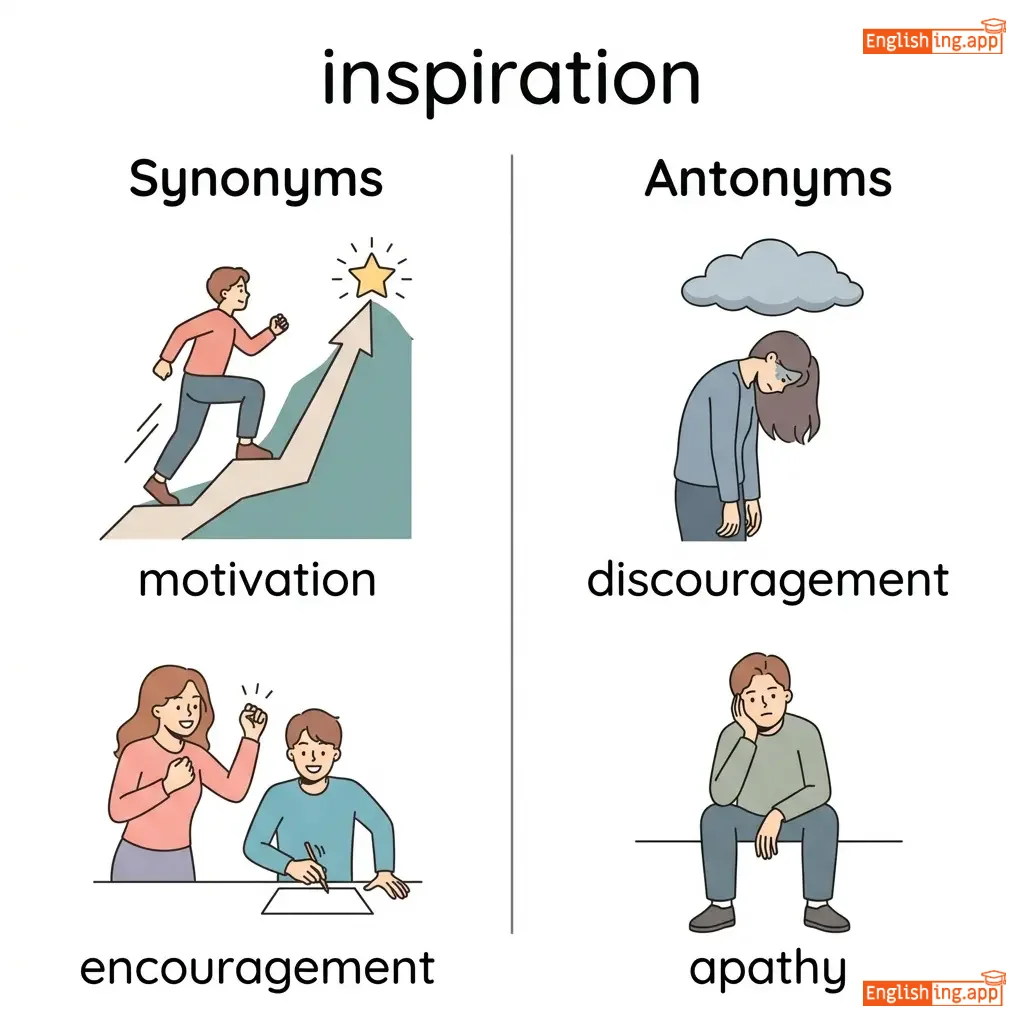
motivation, encouragement, influence, stimulus, drive
••••••
|
discouragement, apathy
••••••
|
find inspiration, give inspiration, source of inspiration, draw inspiration
••••••
|
インスピレーション、創造の火花を灯す光。
••••••
|
|
✨
••••••
|
/ɪnˈspaɪər/
verb
(ハピネス)
••••••
|
|
幸せ
shiawase
••••••
|
inspired
••••••
|
inspired
••••••
|
inspires
••••••
|
inspiring
••••••
|
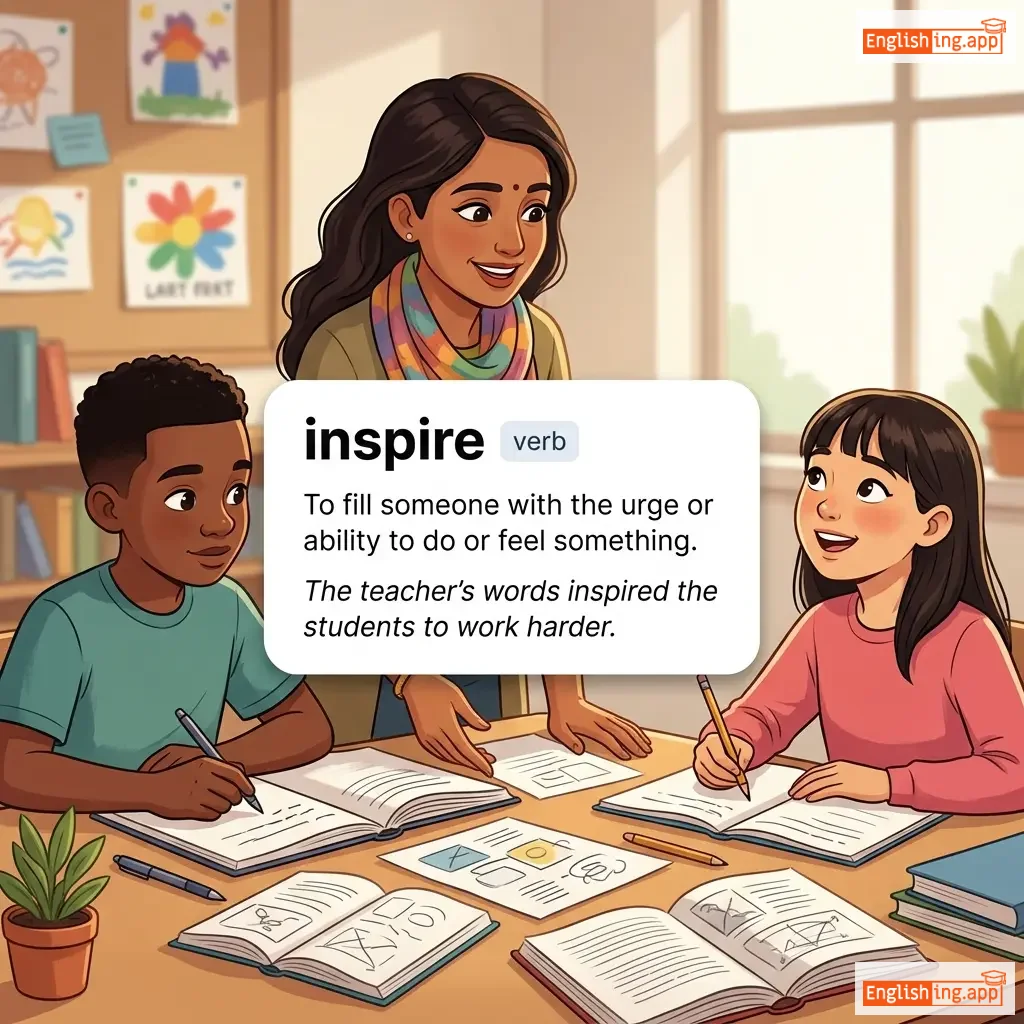
To fill someone with the urge or ability to do or feel something.
••••••
|
The teacher's words inspired the students to work harder. |
彼女は賞を受け取ったとき、幸せを隠せませんでした。
kanojo wa shō o uketotta toki, shiawase o kakusemasen deshita.
••••••
|
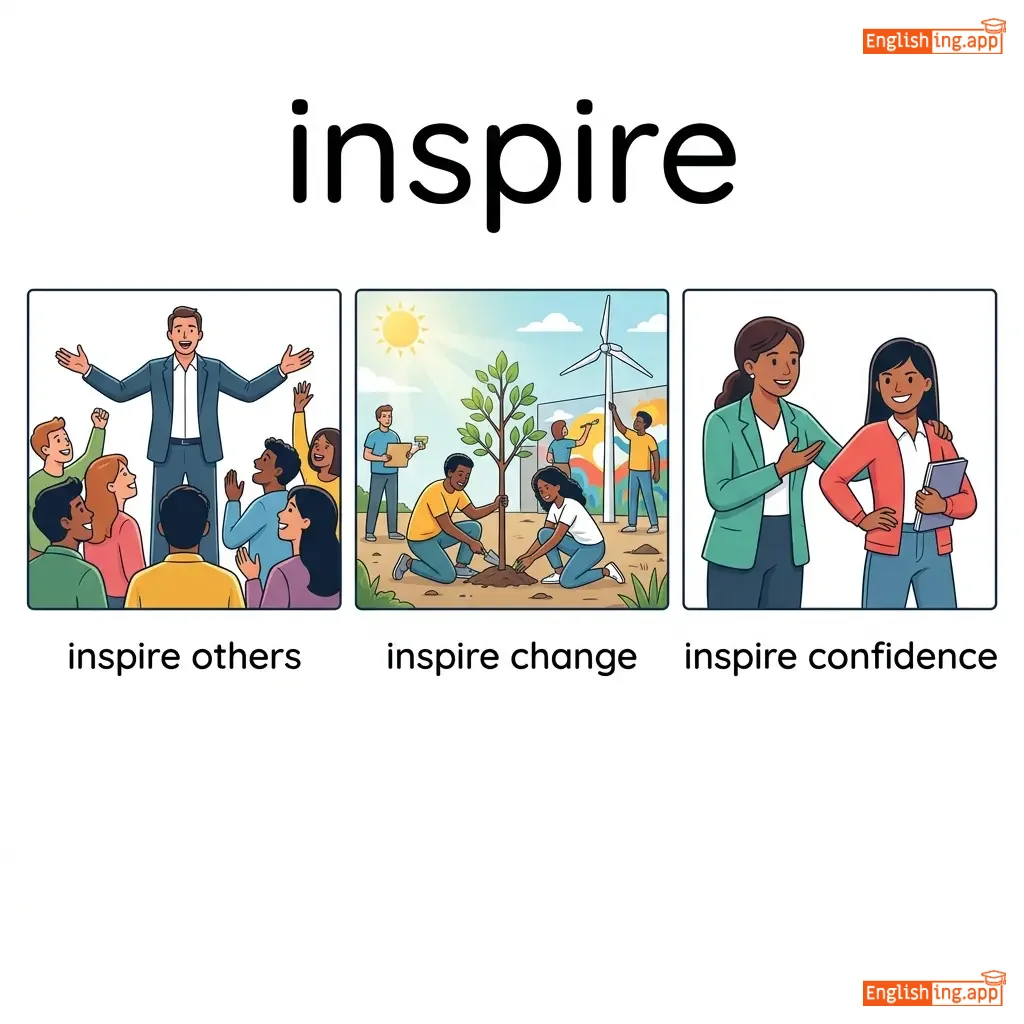
inspire confidence |
To cause someone to feel confident or assured.
••••••
|
幸せを追求する
shiawase o tsuikyū suru
••••••
|
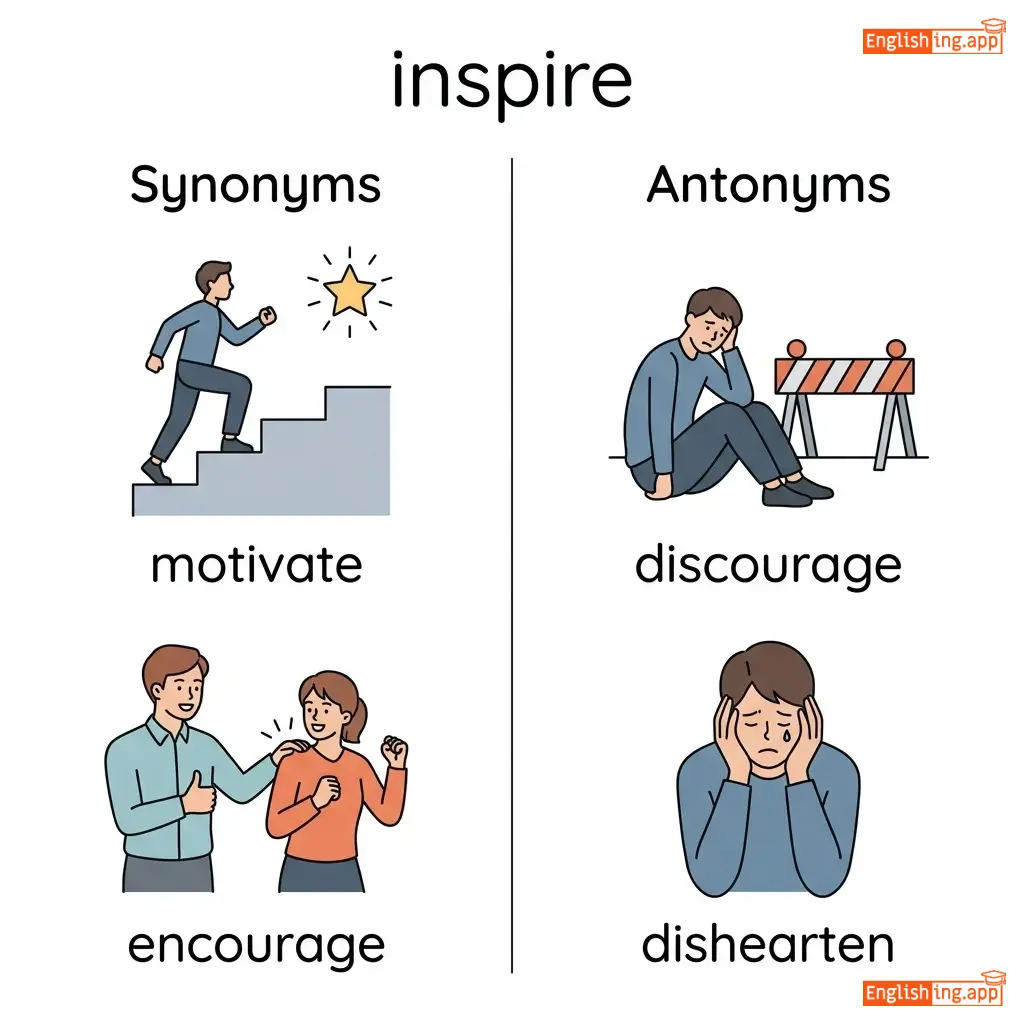
motivate, encourage, uplift, stimulate, influence
••••••
|
discourage, dishearten, depress
••••••
|
inspire others, inspire change, inspire confidence, truly inspire
••••••
|
幸せは、心から輝く温かい笑顔のようなものです。
••••••
|
|
⚖️
••••••
|
/ˌɪnstəˈbɪləti/
noun
(インスタビリティ)
••••••
|
- •••••• |
不安定
fuantei
••••••
|
- •••••• | - •••••• | - •••••• | - •••••• |
lack of stability or balance; tendency to change, fail, or collapse easily
••••••
|
Political instability has slowed economic growth in the region.
ポリティカル・インスタビリティがエコノミック・グロースをスロードした。
••••••
|
政治的な不安定さが地域の経済成長を遅らせた。
seijiteki na fuanteisa ga chiiki no keizai seicho o okuraseta
••••••
|
- •••••• | - •••••• | - •••••• |
volatility, uncertainty, fragility, imbalance, turbulence
••••••
|
stability, steadiness, security
••••••
|
political instability, economic instability, emotional instability, market instability
••••••
|
JA: 不安定(ふあんてい) = instability で覚える
••••••
|
|
⚠️
••••••
|
/ɪnˈsteɪbəl/
adjective
(インステーブル)
••••••
|
- •••••• |
不安定な
fuantei na
••••••
|
- •••••• | - •••••• | - •••••• | - •••••• |
not stable; liable to change, collapse, or fail; lacking firmness or reliability
••••••
|
The instable political situation worried foreign investors.
インステーブル な 政治 状況 が 外国 の 投資家 を 心配 させた。
••••••
|
不安定な政治状況が外国の投資家を心配させた。
Fuantei na seiji joukyou ga gaikoku no toushika o shinpai saseta
••••••
|
- •••••• | - •••••• | - •••••• |
unstable, volatile, insecure, shaky, precarious
••••••
|
stable, steady, secure
••••••
|
instable situation, instable structure, instable condition, instable economy
••••••
|
instable = in + stable → 不安定
••••••
|
|
💻
••••••
|
/ɪnˈstɔːl/
verb
(インストール)
••••••
|
- •••••• |
インストールする
insutooru suru
••••••
|
installed
インストールした
••••••
|
installed
インストールされた
••••••
|
installs
インストールする
••••••
|
installing
インストールしている
••••••
|
To place or fix equipment or software so it is ready for use.
••••••
|
He installed the new software on his computer.
彼はコンピュータに新しいソフトウェアをインストールしました。
••••••
|
彼はコンピュータに新しいソフトウェアをインストールしました。
Kare wa konpyuuta ni atarashii sofutowea o insutooru shimashita.
••••••
|
install confidence
自信をインストールする
••••••
|
To make someone feel confident.
••••••
|
自信をインストールする
Jishin o insutooru suru
••••••
|
set up, establish, place, position, fit
••••••
|
remove, uninstall, displace
••••••
|
install software, install equipment, install windows, install updates
••••••
|
インストールは、物を所定の位置に配置して、使えるようにすることです。
••••••
|

