|
表情符号
|
单词 | Images | 翻译 | 过去时 | 过去分词 | 第三人称单数 | 动名词 | 含义 | 例句 | 例句翻译 | 示例表达 | 示例表达含义 | 示例表达翻译 | 同义词 | 反义词 | 搭配词 | 助记符 |
|---|---|---|---|---|---|---|---|---|---|---|---|---|---|---|---|---|---|
|
📍
••••••
|
/ɪn ˈfrʌnt əv/
preposition
(因 弗朗特 阿夫)
••••••
|
- •••••• |
在……前面
zai qianmian
••••••
|
- •••••• | - •••••• | - •••••• | - •••••• |
positioned before or ahead of something; facing or located at the forward side of a person or object
••••••
|
She stood in front of the building.
她 斯图德 因 弗朗特 阿夫 建筑
••••••
|
她站在建筑物前面。
Ta zhan zai jianzhu wu qianmian
••••••
|
- •••••• | - •••••• | - •••••• |
before, ahead of, facing, opposite
••••••
|
behind, at the back of
••••••
|
stand in front of, sit in front of, park in front of, right in front of
••••••
|
前面 qianmian = front 面
••••••
|
|
📢
••••••
|
/ɪnˈfɔːrm/
verb
••••••
|

|
- •••••• |
informed
••••••
|
informed
••••••
|
informs
••••••
|
informing
••••••
|
To give someone facts or information.
••••••
|
Please inform me if there are any changes to the schedule. |
- •••••• |
keep someone informed |
to make sure someone stays updated with information
••••••
|
- •••••• |
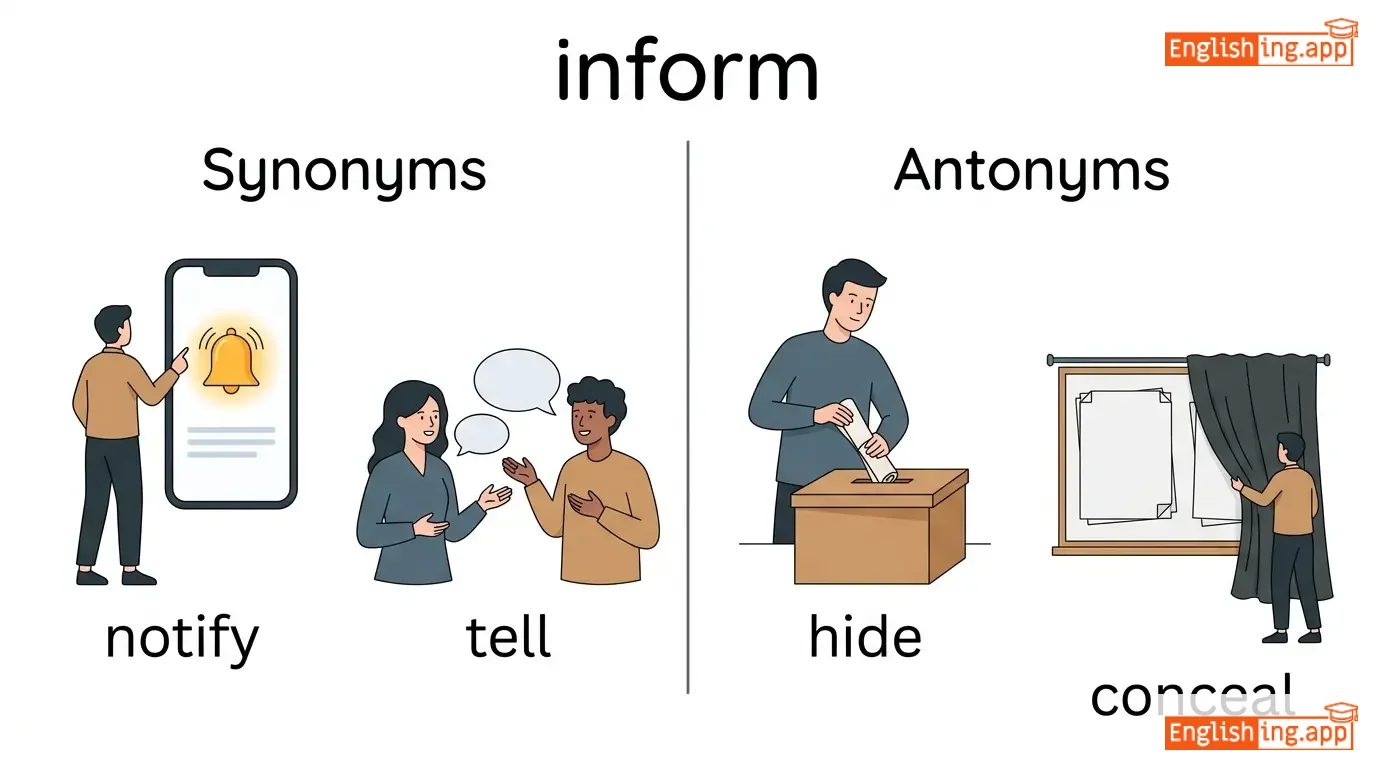
notify, tell, advise, brief, update
••••••
|
hide, conceal
••••••
|
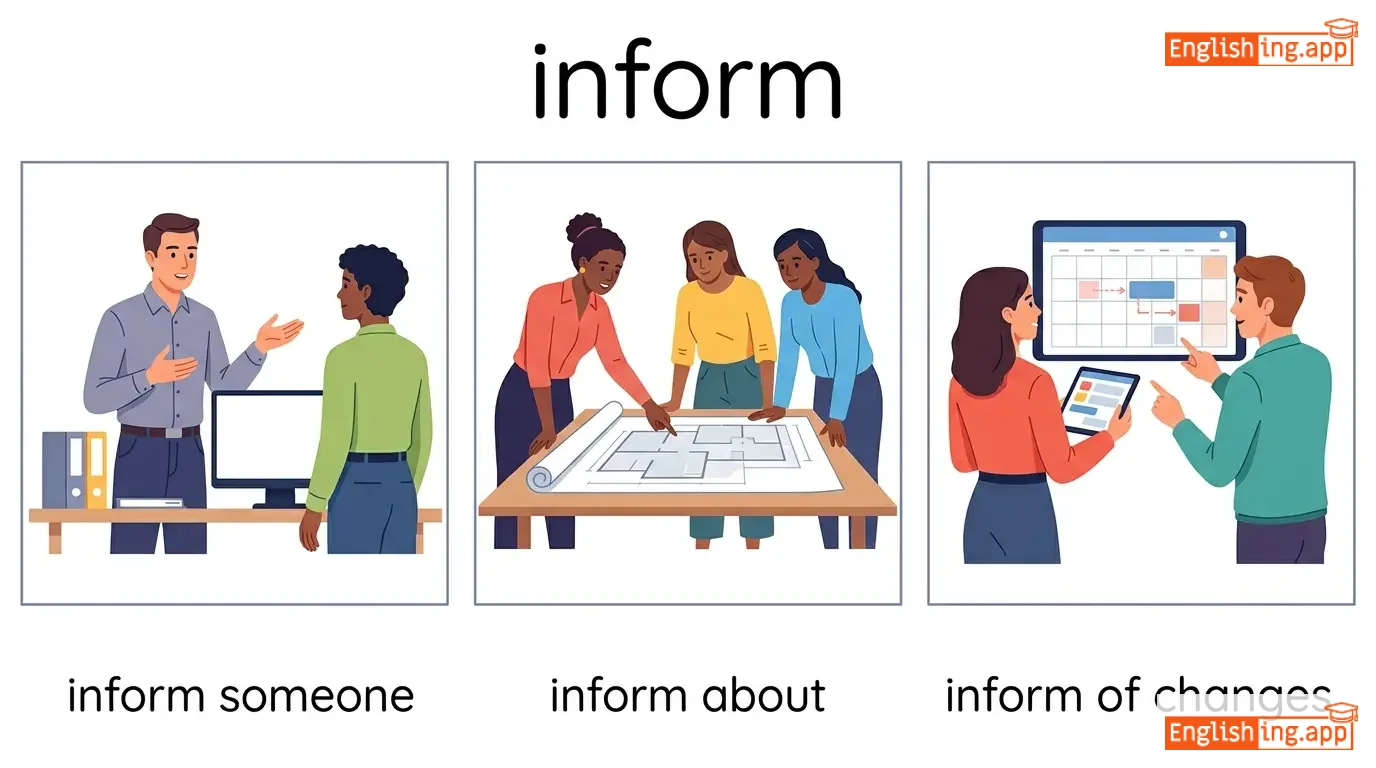
inform someone, inform about, inform of changes
••••••
|
No •••••• |
|
☕
••••••
|
/ɪnˈfɔːrməl/
adjective
(in-fu-mao-er)
••••••
|
- •••••• |
非正式
fei zhengshi
••••••
|
- •••••• | - •••••• | - •••••• | - •••••• |
relaxed, friendly, and not following strict rules or conventions
••••••
|
They had an informal meeting at the coffee shop. |
他们在咖啡馆举行了一个非正式会议。
tamen zai kafeiguan juxing le yige fei zhengshi huiyi.
••••••
|
informal talk |
a casual or relaxed conversation
••••••
|
非正式谈话
fei zhengshi tanhua
••••••
|
casual, relaxed, unofficial, easygoing
••••••
|
formal, official, strict
••••••
|
informal meeting, informal clothes, informal chat, informal relationship
••••••
|
Informal=‘in’+‘formal’=非正式
••••••
|
|
ℹ️
••••••
|
/ˌɪnfərˈmeɪʃən/
noun
(ɪn'fɔːmeɪʃən)
••••••
|
- •••••• |
信息
xìnxī
••••••
|
- •••••• | - •••••• | - •••••• | - •••••• |
Facts or knowledge provided or learned about something.
••••••
|
The website provides useful information about travel destinations. |
该网站提供有关旅游目的地的有用信息。
Gāi wǎngzhàn tígōng yǒuguān lǚyóu mùdìdì de yǒuyòng xìnxī.
••••••
|
source of information |
A place or person from which knowledge can be obtained.
••••••
|
信息来源
xìnxī láiyuán
••••••
|
data, knowledge, facts, details, intelligence
••••••
|
ignorance, misinformation
••••••
|
provide information, gather information, information technology, useful information
••••••
|
Information = Info + nation, 获取更多信息。
••••••
|
|
🏗️
••••••
|
/ˈɪnfrəˌstrʌktʃər/
noun
(基础设施)
••••••
|
|
基础设施
jichu sheshi
••••••
|
- •••••• | - •••••• | - •••••• | - •••••• |
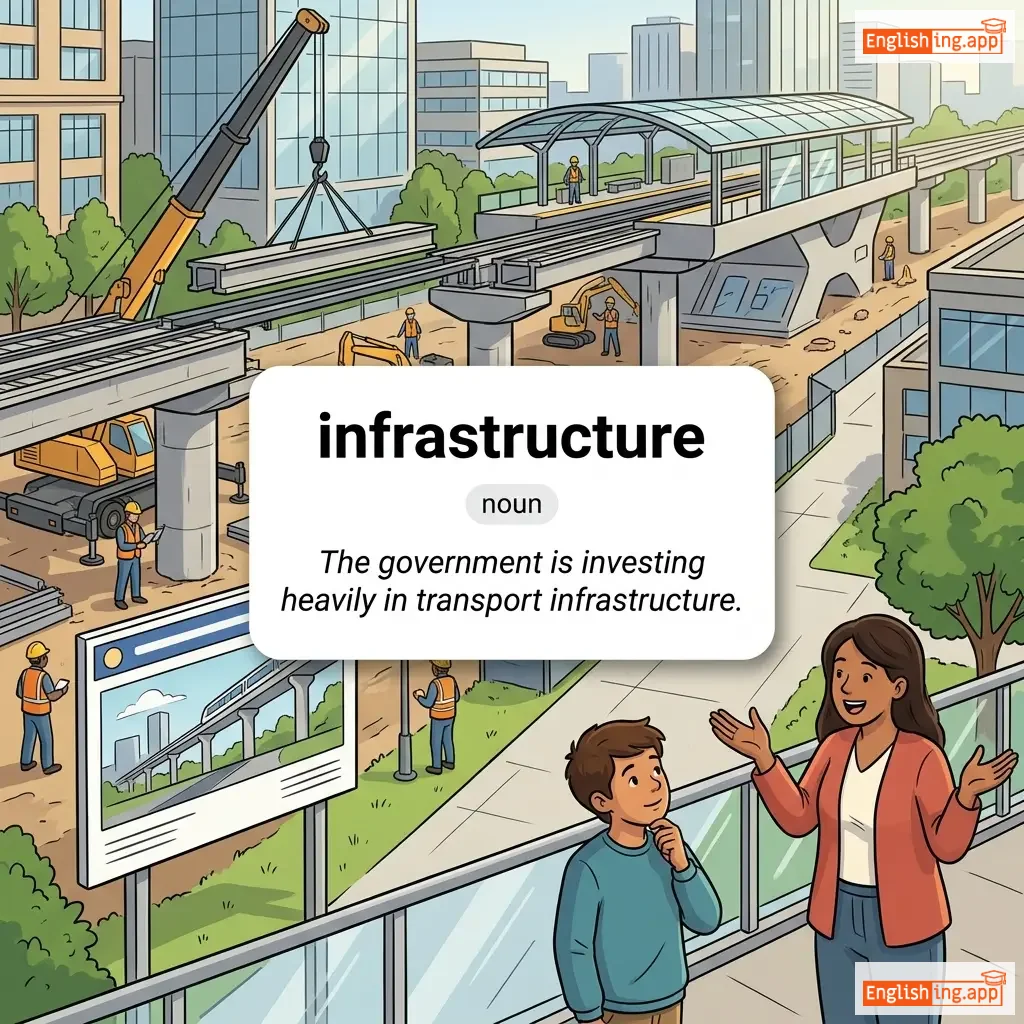
the basic physical and organizational structures and facilities needed for the operation of a society or enterprise
••••••
|
The government is investing heavily in transport infrastructure.
政府正在大力投资交通基础设施。
••••••
|
政府正在大力投资交通基础设施。
Zhengfu zhengzai dali touzi jiaotong jichu sheshi.
••••••
|
- •••••• | - •••••• | - •••••• |
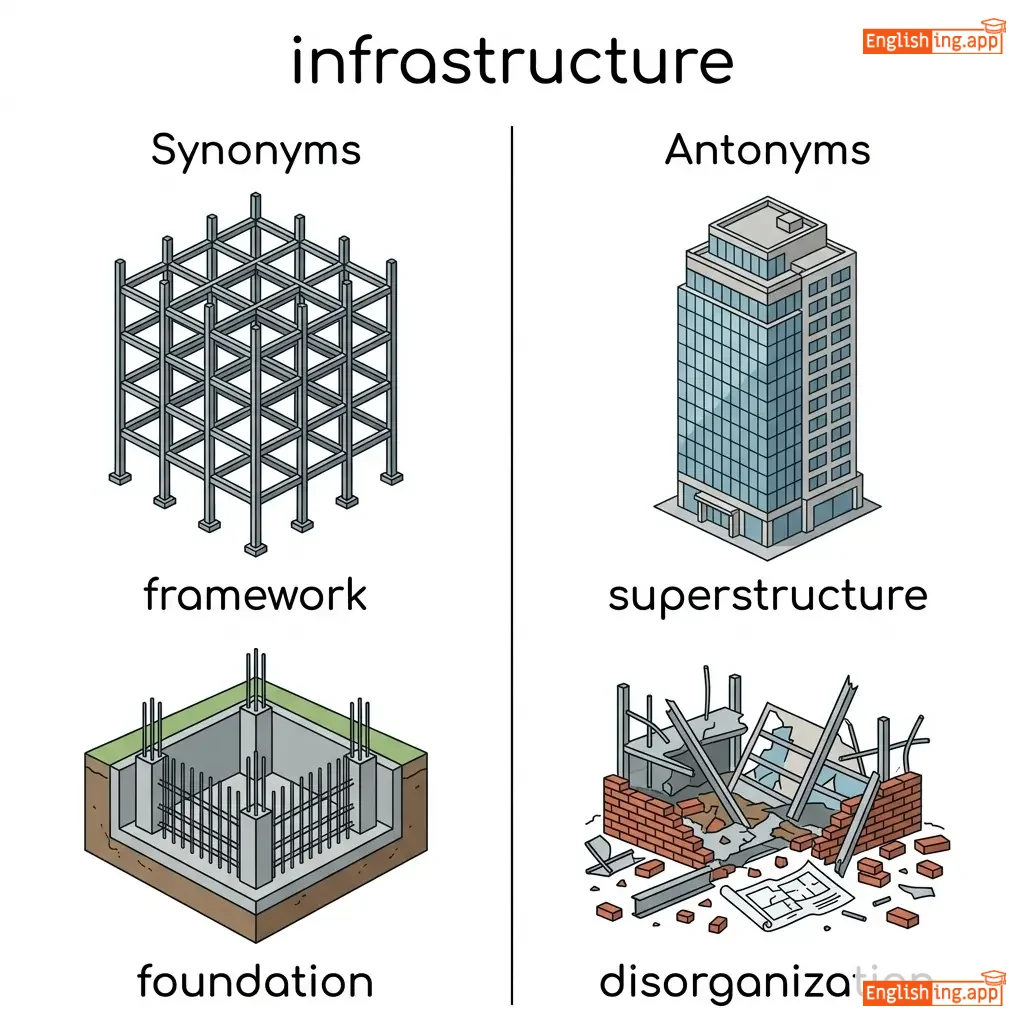
framework, foundation, base, system, network
••••••
|
superstructure, disorganization, destruction
••••••
|
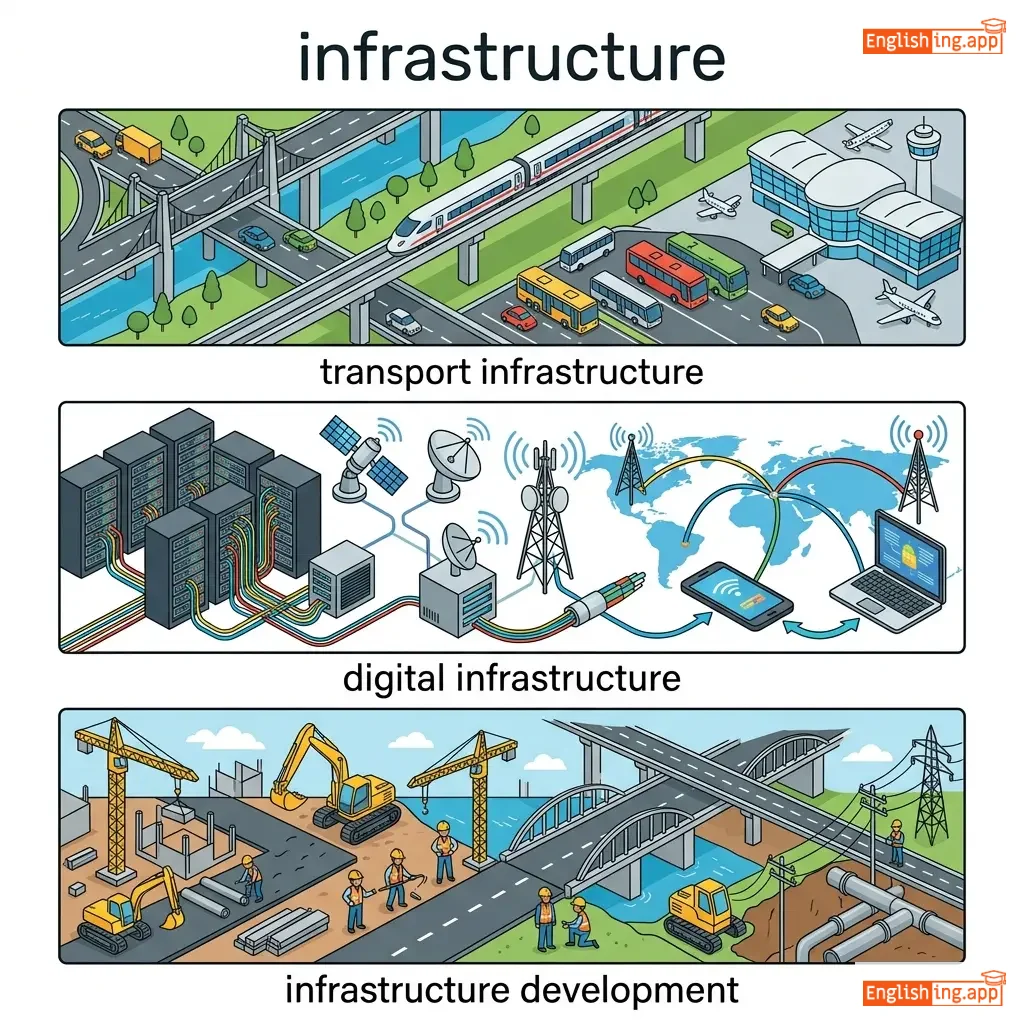
transport infrastructure, digital infrastructure, infrastructure development, public infrastructure
••••••
|
Infra意味着下方,structure意味着构造——基础设施就是基本构造。
••••••
|
|
🌙
••••••
|
/ɪnˈfriːkwənt/
adjective
(英弗里昆特)
••••••
|
- •••••• |
不频繁
bu pinfan
••••••
|
- •••••• | - •••••• | - •••••• | - •••••• |
Happening rarely or not often.
••••••
|
He made infrequent visits to his hometown after moving abroad. |
他在搬到国外后,偶尔才回家乡。
Ta zai ban dao guowai hou, ouer cai hui jiaxiang.
••••••
|
- •••••• | - •••••• | - •••••• |
rare, uncommon, occasional, sporadic
••••••
|
frequent, regular, common
••••••
|
infrequent visits, infrequent contact, infrequent events
••••••
|
Frequent 的反义词是 infrequent - 很少发生的事情。
••••••
|
|
🥘
••••••
|
/ɪnˈɡriːdiənt/
noun
(英格里迪恩特)
••••••
|
- •••••• |
成分
chéngfèn
••••••
|
- •••••• | - •••••• | - •••••• | - •••••• |
A component part or element of something, especially in a recipe.
••••••
|
Flour is a key ingredient in baking bread. |
面粉是做面包的关键成分。
Miànfěn shì zuò miànbāo de guānjiàn chéngfèn.
••••••
|
secret ingredient |
a special or unique element that makes something successful
••••••
|
秘密成分
mìmì chéngfèn
••••••
|
component, element, part, material, constituent
••••••
|
whole, entirety
••••••
|
key ingredient, main ingredient, essential ingredient, secret ingredient
••••••
|
成分: 烹饪中的必需品!
••••••
|
|
🏠
••••••
|
/ɪnˈhæbɪtənt/
noun
(ɪnˈhæbɪtənt)
••••••
|
- •••••• |
居民
jūmín
••••••
|
- •••••• | - •••••• | - •••••• | - •••••• |
a person or animal that lives in a particular place
••••••
|
The inhabitants of the village rely on farming for their livelihood. |
村庄的居民依靠农业为生。
Cūnzhuāng de jūmín yīkào nóngyè wèi shēng.
••••••
|
- •••••• | - •••••• | - •••••• |
resident, dweller, occupant, native
••••••
|
visitor, foreigner
••••••
|
local inhabitants, native inhabitants, city inhabitants, rural inhabitants
••••••
|
Inhabitants are 'jūmín'—those who live in a specific place!
••••••
|
|
⚖️
••••••
|
/ɪnˈhɛrənt/
adjective
(因赫伦特)
••••••
|
|
固有的
gùyǒu de
••••••
|
- •••••• | - •••••• | - •••••• | - •••••• |
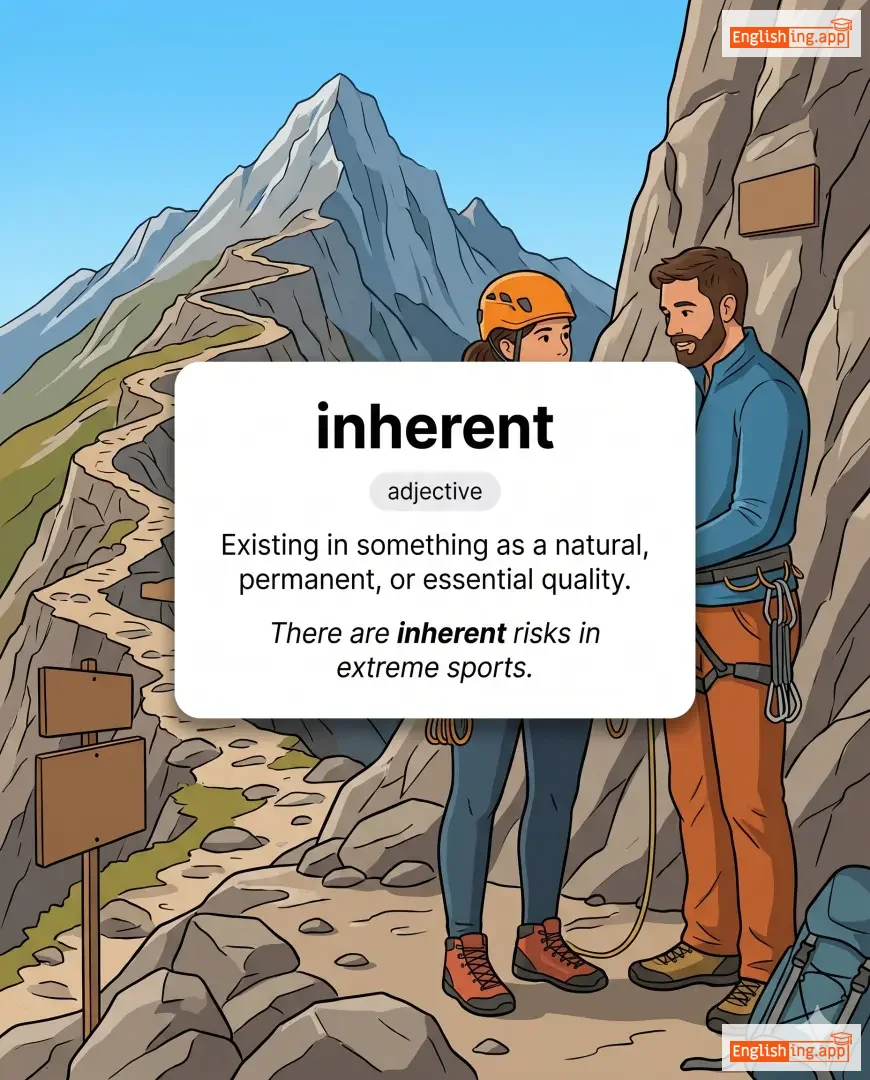
Existing in something as a natural, permanent, or essential quality.
••••••
|
There are inherent risks in extreme sports. |
极限运动中存在固有的风险。
jíxiàn yùndòng zhōng cúnzài gùyǒu de fēngxiǎn.
••••••
|
inherent danger |
A danger that is naturally part of something and cannot be separated from it.
••••••
|
固有的危险
gùyǒu de wēixiǎn
••••••
|
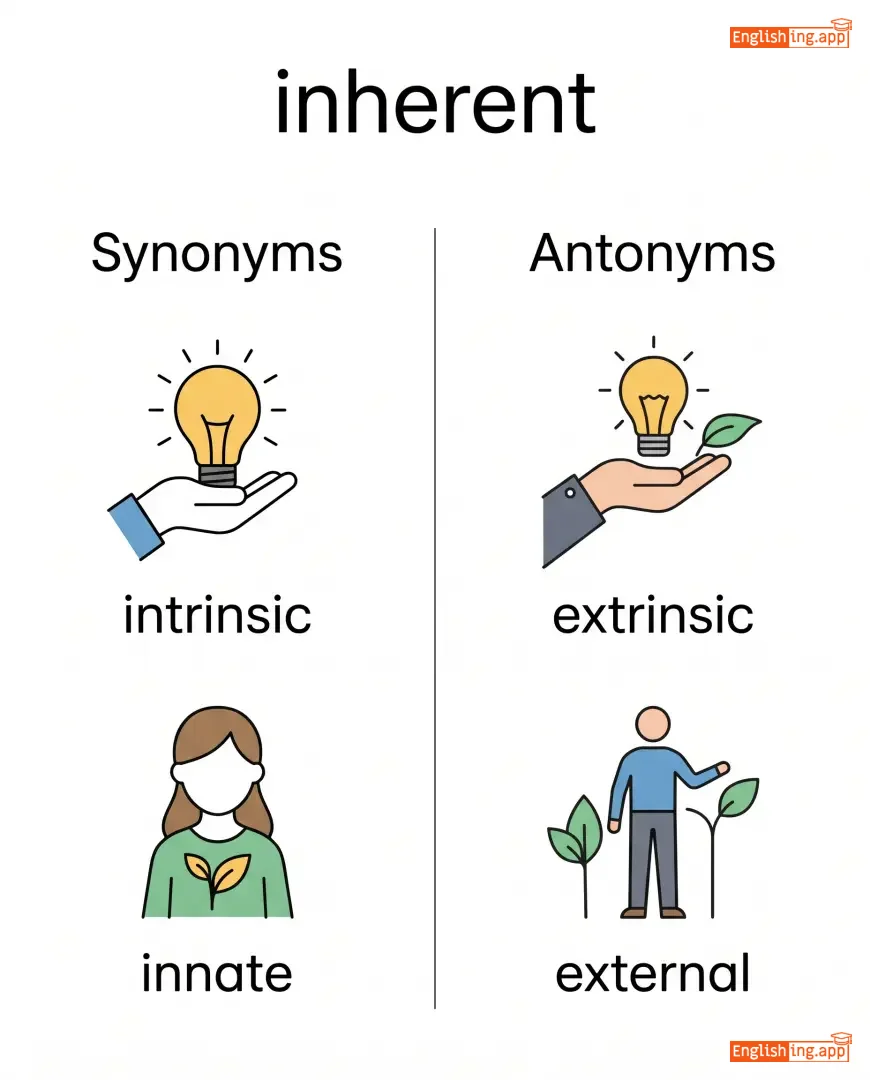
intrinsic, innate, built-in, essential, natural
••••••
|
extrinsic, external, acquired
••••••
|
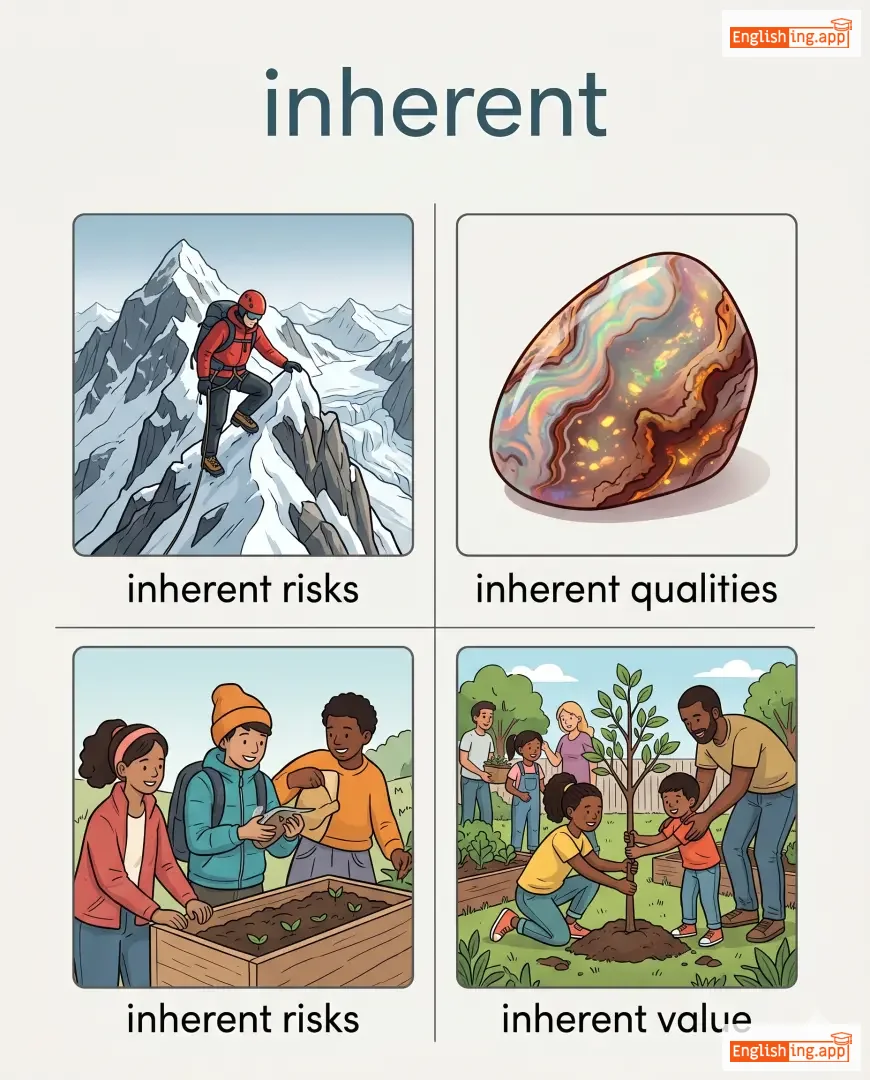
inherent risks, inherent qualities, inherent value
••••••
|
Inherent意味着in + heart(在心中),即固有的。
••••••
|
|
🏠
••••••
|
/ɪnˈhɛrɪt/
verb
(因赫里特)
••••••
|

|
继承
jicheng
••••••
|
inherited
因赫里特德
••••••
|
inherited
因赫里特德
••••••
|
inherits
因赫里特斯
••••••
|
inheriting
因赫里廷
••••••
|
to receive property, money, or traits from someone after their death or from ancestors
••••••
|
She inherited her father's house after his death.
她在父亲去世后继承了他的房子。
••••••
|
她在父亲去世后继承了他的房子。
Ta zai furen qushi hou jicheng le tade fangzi.
••••••
|
inherit the earth
继承地球
••••••
|
to gain control or possession of the world or land, often used metaphorically
••••••
|
继承地球
jicheng diqiu
••••••
|
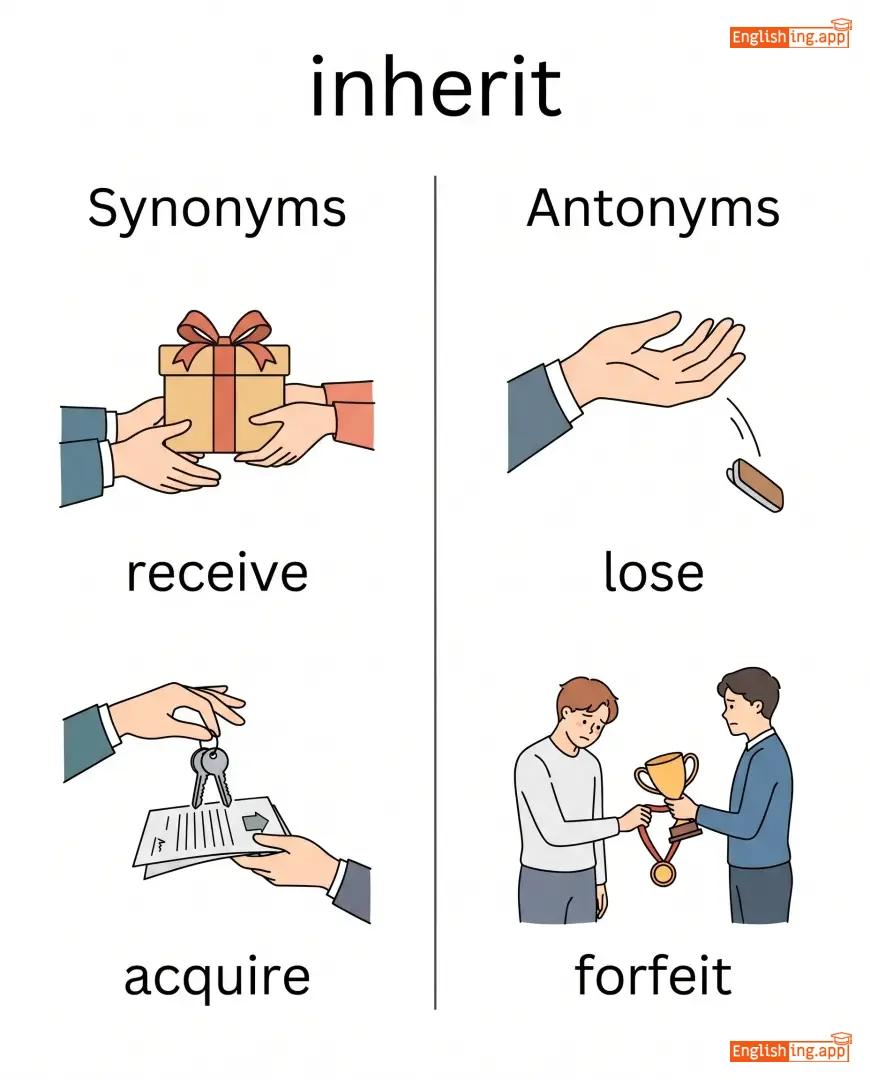
receive, acquire, obtain, succeed, derive
••••••
|
lose, forfeit, give up
••••••
|
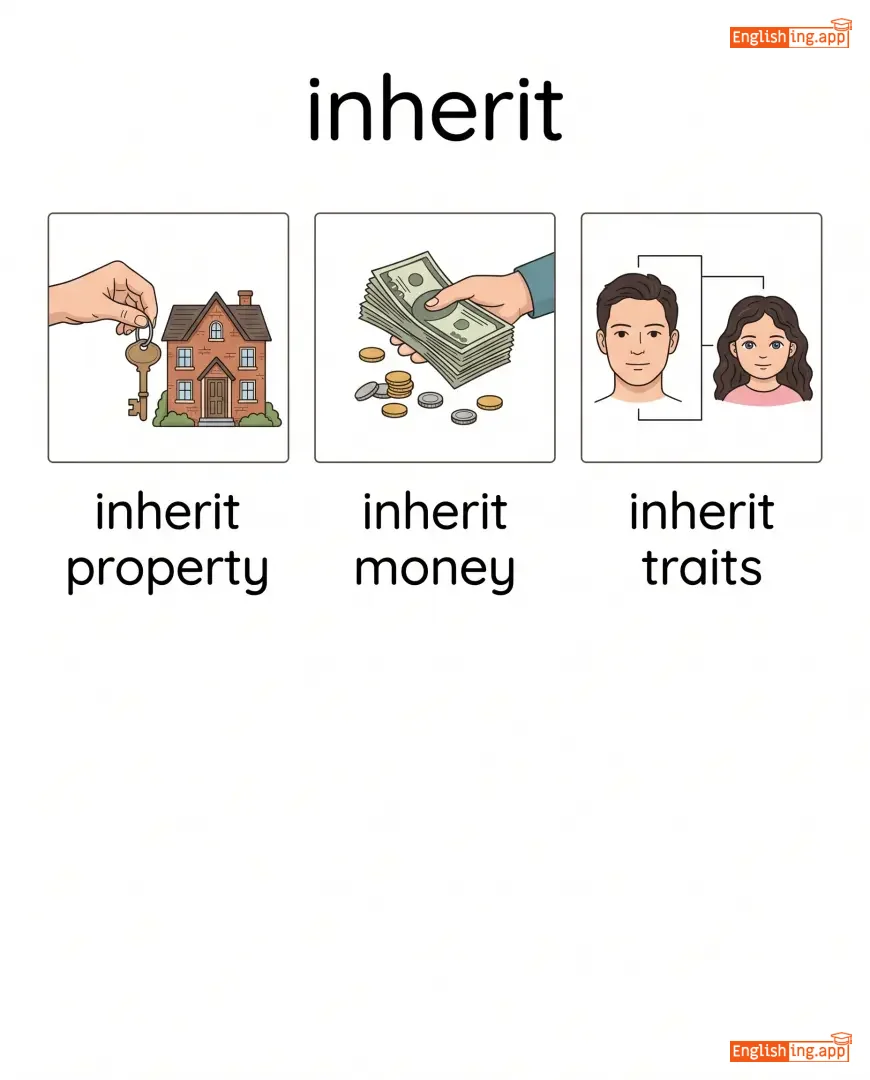
inherit property, inherit money, inherit traits, inherit wealth
••••••
|
Inherit意味着in(内部)+ heritage(遗产)—内部heritage意味着继承。
••••••
|
|
⛔
••••••
|
/ɪnˈhɪbɪt/
verb
(因希必特)
••••••
|
|
抑制
yìzhì
••••••
|
inhibited
因希比特德
••••••
|
inhibited
因希比特德
••••••
|
inhibits
因希比特斯
••••••
|
inhibiting
因希比廷
••••••
|
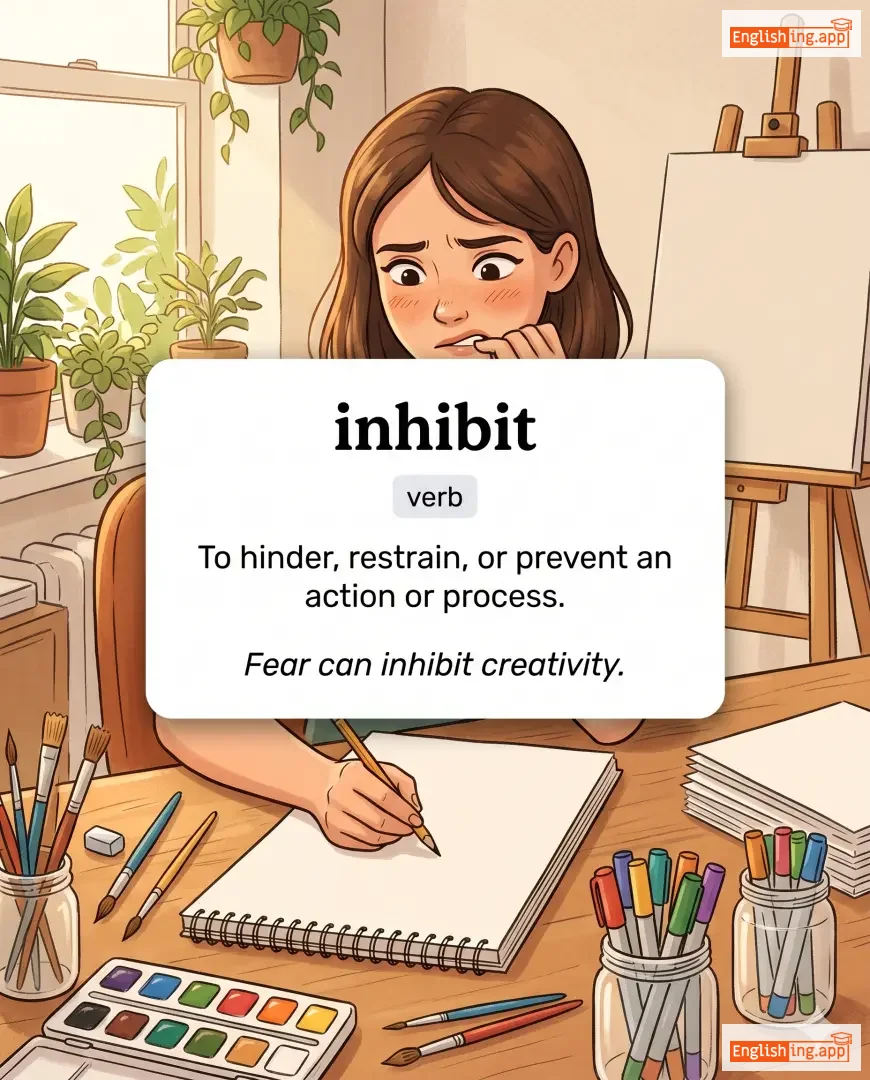
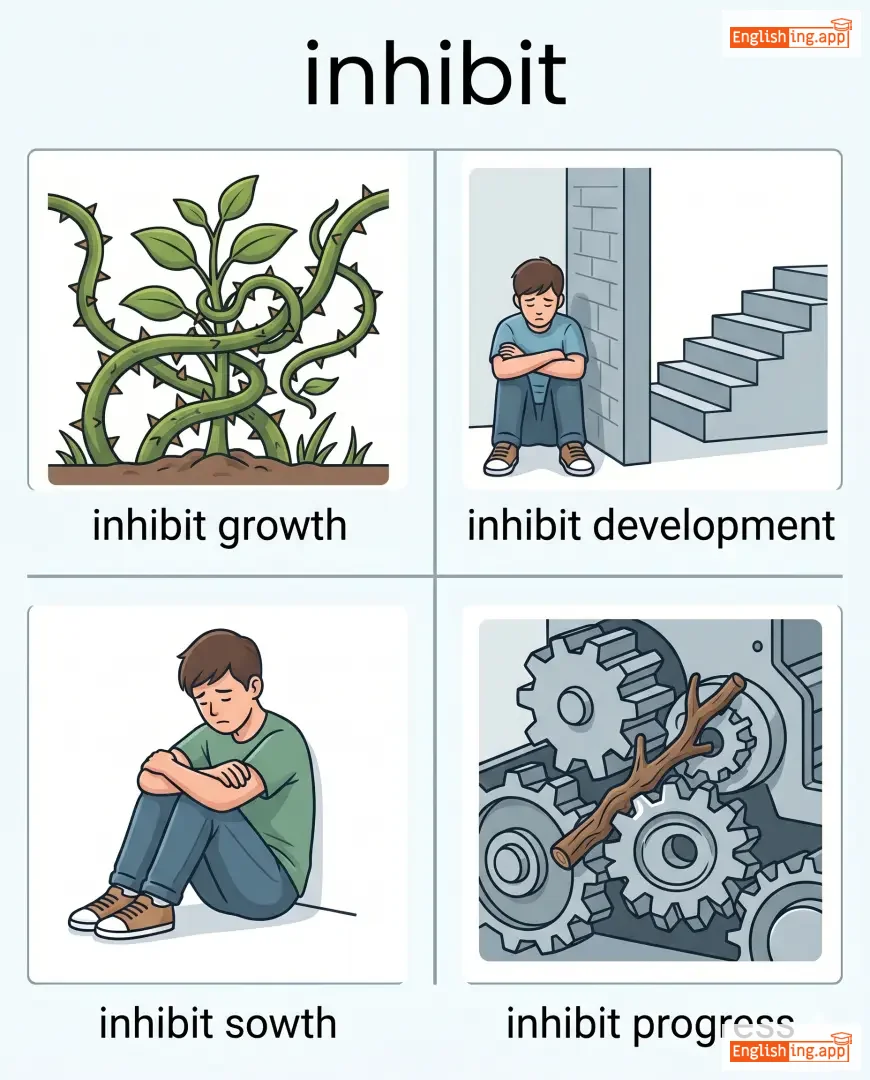
To hinder, restrain, or prevent an action or process.
••••••
|
Fear can inhibit creativity.
恐惧可能会抑制创造力。
••••••
|
恐惧可能会抑制创造力。
Kǒngjù kěnéng huì yìzhì chuàngzàolì.
••••••
|
socially inhibited
社会上被压抑
••••••
|
Being shy or unable to act freely in social situations.
••••••
|
社会上被压抑
Shèhuì shàng bèi yāyì
••••••
|
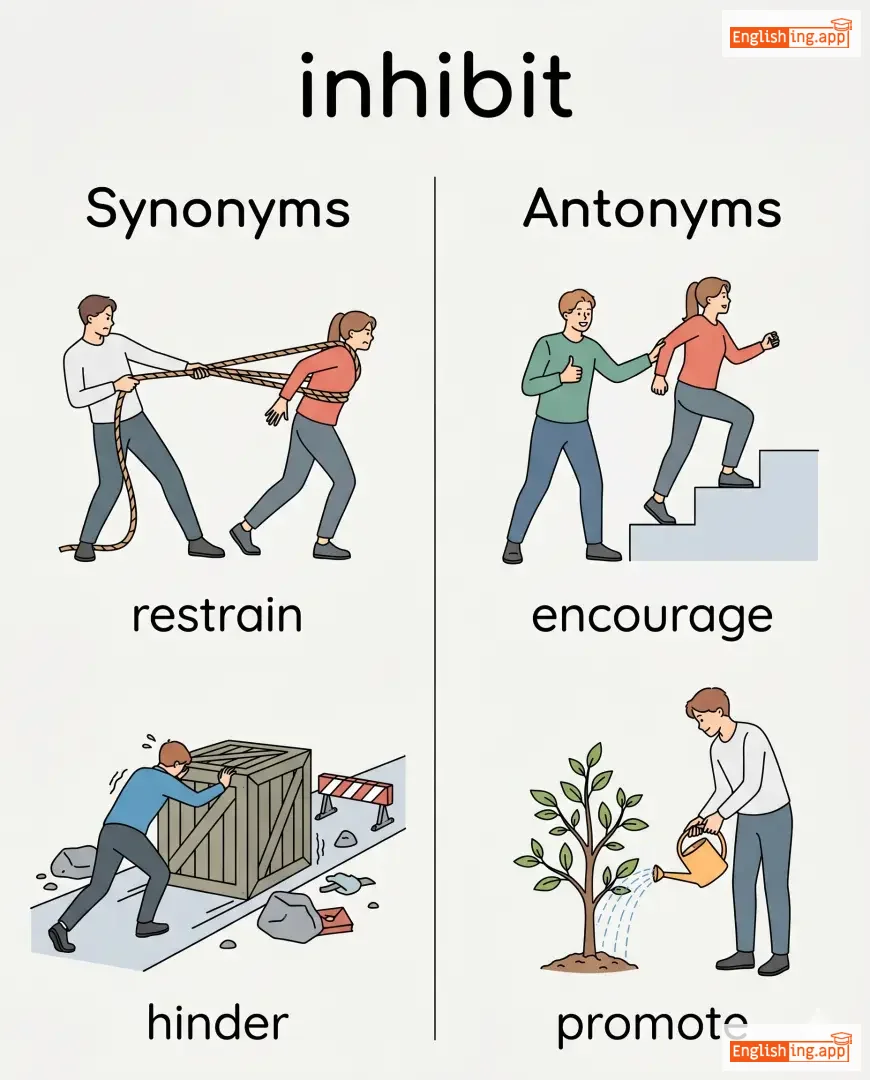
restrain, hinder, prevent, obstruct, suppress
••••••
|
encourage, promote, allow
••••••
|
inhibit growth, inhibit development, inhibit progress
••••••
|
Inhibit 即在习惯中不行动,抑制创造力。
••••••
|
|
💔
••••••
|
/ɪnˈhjuːmən/
adjective
(因赫曼)
••••••
|
- •••••• |
不人道
bù rén dào
••••••
|
- •••••• | - •••••• | - •••••• | - •••••• |
lacking human qualities of compassion and mercy; cruel or barbaric
••••••
|
The prisoners were kept in inhuman conditions. |
囚犯被关押在不人道的条件下。
qiú fàn bèi guān yā zài bù rén dào de tiáo jiàn xià.
••••••
|
inhuman treatment |
extremely cruel or brutal behavior
••••••
|
不人道的待遇
bù rén dào de dài yù
••••••
|
cruel, brutal, merciless, savage, barbaric
••••••
|
humane, compassionate, kind
••••••
|
inhuman treatment, inhuman conditions, inhuman acts, inhuman behavior
••••••
|
Inhuman = 不人道,想象囚犯在不人道的条件下。
••••••
|
|
🔰
••••••
|
/ɪˈnɪʃəl/
adjective
(初步)
••••••
|
- •••••• |
初步的
chūbù de
••••••
|
- •••••• | - •••••• | - •••••• | - •••••• |
Existing or occurring at the beginning.
••••••
|
Her initial reaction was one of surprise. |
她的初步反应是惊讶。
Tā de chūbù fǎnyìng shì jīngyà.
••••••
|
initial impression |
The first opinion or feeling about something.
••••••
|
初步印象
Chūbù yìnxiàng
••••••
|
first, primary, original, introductory, early
••••••
|
final, last, ultimate
••••••
|
initial stage, initial reaction, initial decision, initial step
••••••
|
初步意味着在开始时,就像考试中第一次印象非常重要。
••••••
|
|
⏳
••••••
|
/ɪˈnɪʃəli/
adverb
(一开始)
••••••
|
- •••••• |
一开始
yī kāishǐ
••••••
|
- •••••• | - •••••• | - •••••• | - •••••• |
At the beginning; at first.
••••••
|
Initially, he refused the offer but later accepted it. |
一开始,他拒绝了这个提议,但后来接受了。
Yī kāishǐ, tā jùjuéle zhège tíyì, dàn hòulái jiēshòule.
••••••
|
- •••••• | - •••••• | - •••••• |
at first, originally, at the start, to begin with
••••••
|
finally, eventually
••••••
|
initially planned, initially intended, initially thought
••••••
|
一开始意味着最初,就像一开始一切看起来都很难。
••••••
|
|
🚀
••••••
|
/ɪˈnɪʃieɪt/
verb
(启动)
••••••
|

|
启动
qǐdòng
••••••
|
initiated
启动了
••••••
|
initiated
启动了
••••••
|
initiates
启动
••••••
|
initiating
启动ing
••••••
|
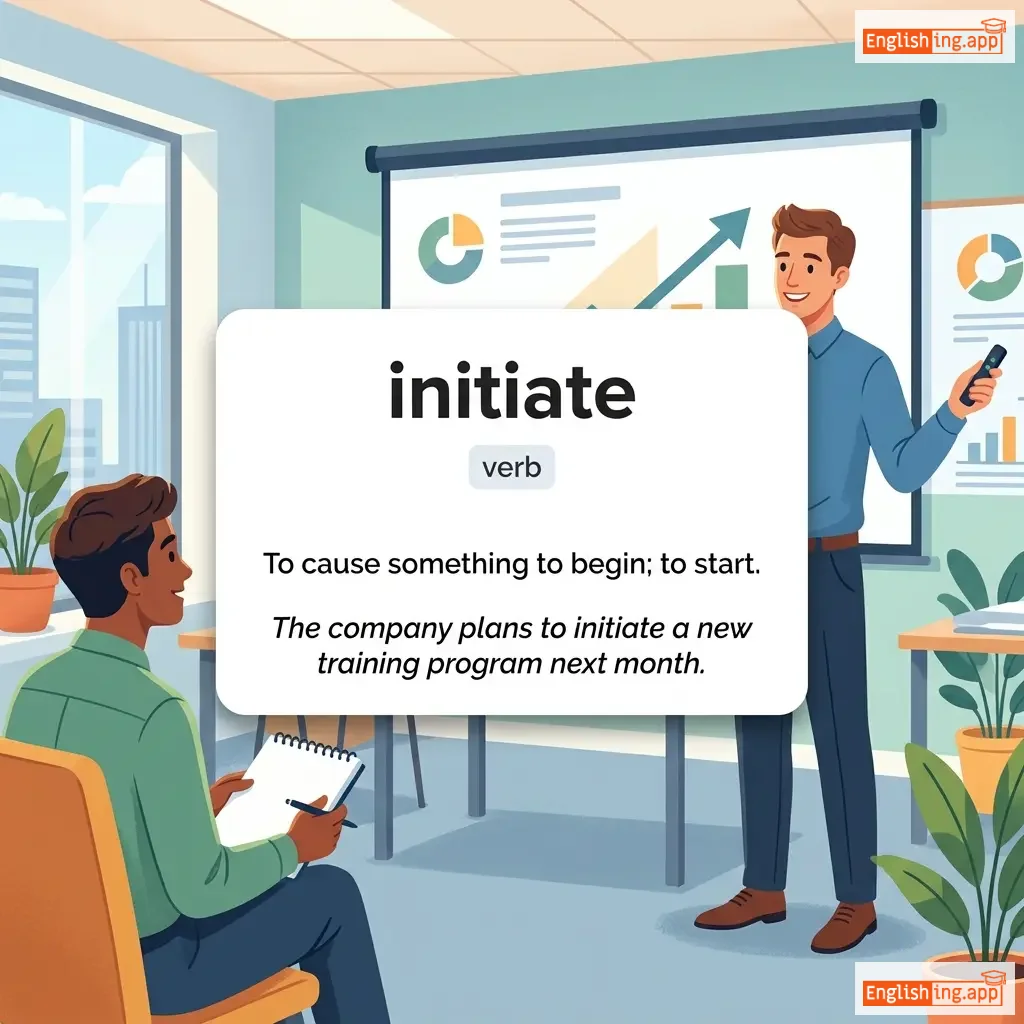
To cause something to begin; to start.
••••••
|
The company plans to initiate a new training program next month.
公司计划下个月启动一个新的培训项目。
••••••
|
公司计划下个月启动一个新的培训项目。
Gōngsī jìhuà xià gè yuè qǐdòng yīgè xīn de péixùn xiàngmù.
••••••
|
initiate proceedings
启动程序
••••••
|
To begin a formal process or legal action.
••••••
|
启动程序
qǐdòng chéngxù
••••••
|
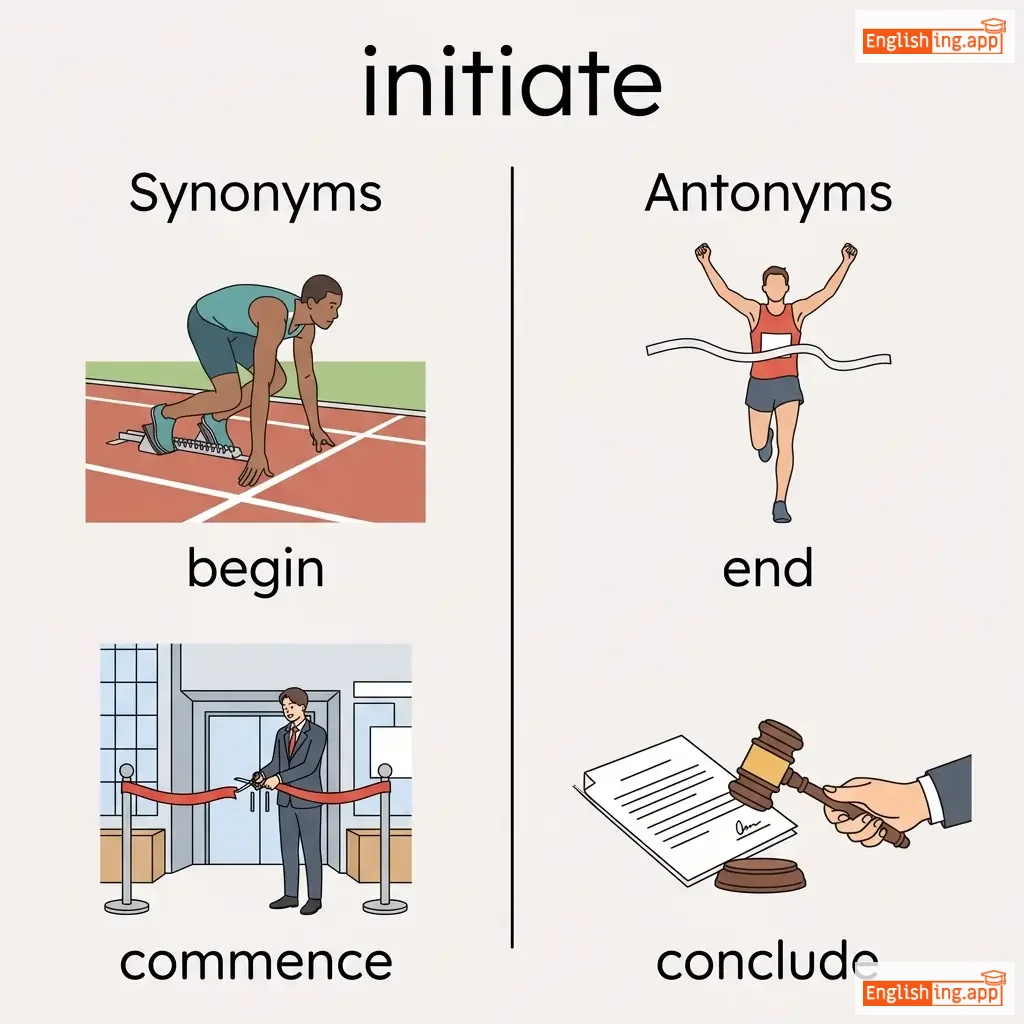
begin, commence, launch, start, inaugurate
••••••
|
end, conclude, finish
••••••
|
initiate action, initiate process, initiate reform
••••••
|
启动代表了 '启'(开始)+ 动(行动)= 启动.
••••••
|
|
🚀
••••••
|
/ɪˈnɪʃətɪv/
noun
(倡议)
••••••
|


|
倡议
changyi
••••••
|
- •••••• | - •••••• | - •••••• | - •••••• |
The ability to assess and start things independently; a new plan or action.
••••••
|
The government launched a new initiative to support small businesses. |
政府启动了一个新的倡议,以支持小型企业。
Zhengfu qidongle yige xin de changyi, yi zhichi xiaoxing qiye.
••••••
|
take the initiative |
To take the first step in doing something.
••••••
|
采取倡议
caiqu changyi
••••••
|
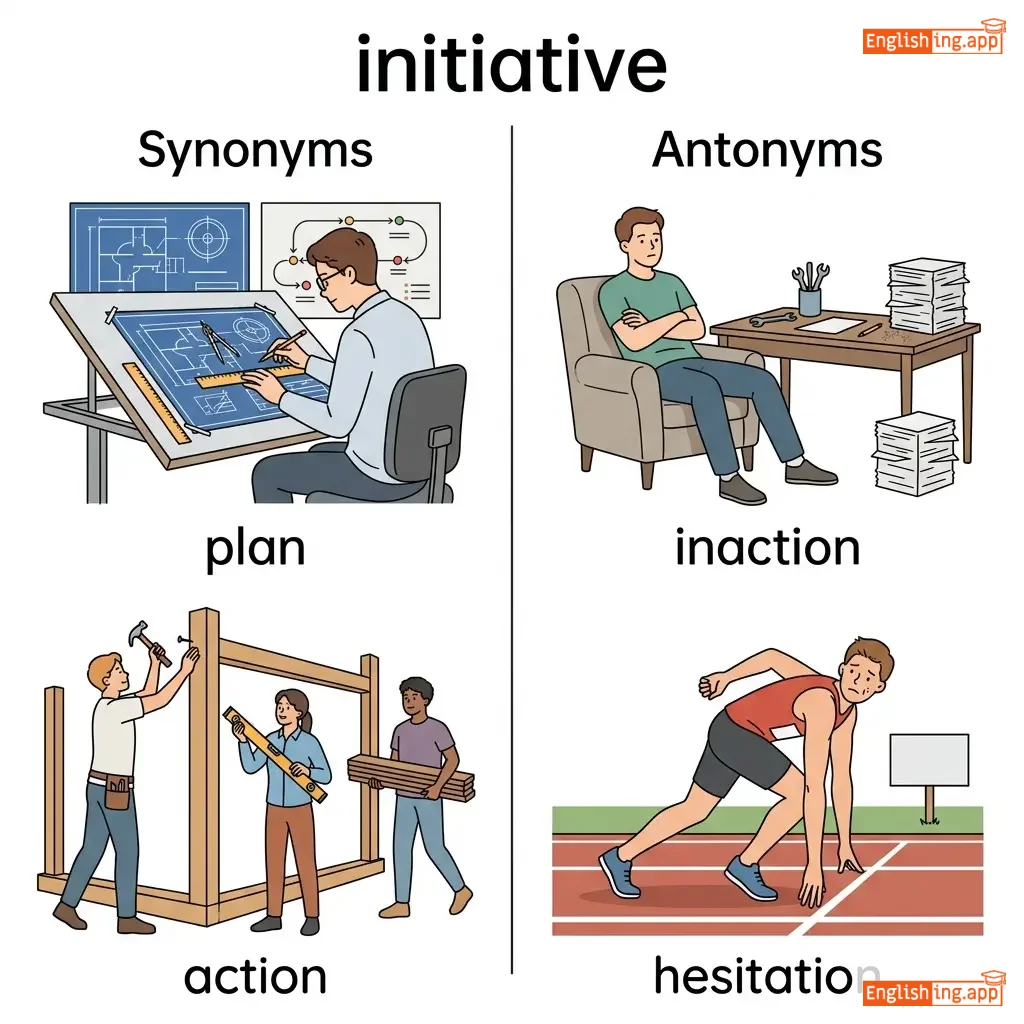
plan, action, scheme, enterprise, drive
••••••
|
inaction, hesitation
••••••
|
new initiative, policy initiative, take initiative
••••••
|
倡议意味着倡议,像是采取第一步来做某事。
••••••
|
|
💉
••••••
|
/ɪnˈdʒɛkt/
verb
(ɪnˈdʒɛkt)
••••••
|
- •••••• |
注射
zhù shè
••••••
|
injected
ɪnˈdʒɛktəd
••••••
|
injected
ɪnˈdʒɛktəd
••••••
|
injects
ɪnˈdʒɛkts
••••••
|
injecting
ɪnˈdʒɛktɪŋ
••••••
|
To introduce a substance, especially a drug, into the body using a needle.
••••••
|
The nurse will inject the vaccine into the patient's arm.
护士将疫苗注射到病人的手臂中。
••••••
|
护士将疫苗注射到病人的手臂中。
hùshi jiāng yìmiáo zhùshè dào bìngrén de shǒubì zhōng.
••••••
|
inject enthusiasm
注入热情
••••••
|
To add energy or excitement into a situation.
••••••
|
注入热情
zhùrù rèqíng
••••••
|
administer, insert, infuse, introduce
••••••
|
withdraw, remove
••••••
|
inject medicine, inject drug, inject energy
••••••
|
INJECT 代表 IN (里面) + JECT (投掷) = 投入到体内。
••••••
|
|
💉
••••••
|
/ɪnˈdʒɛkʃən/
noun
••••••
|
- •••••• | - •••••• | - •••••• | - •••••• | - •••••• | - •••••• |
the act of introducing a substance into the body through a needle
••••••
|
The nurse gave me an injection to prevent the infection. |
- •••••• | - •••••• | - •••••• | - •••••• |
shot, vaccination, dose, vaccine
••••••
|
oral, tablet
••••••
|
take an injection, receive an injection, give an injection, vaccine injection
••••••
|
No •••••• |
|
🤕
••••••
|
/ˈɪndʒər/
verb
(因朱尔)
••••••
|
- •••••• |
伤害
shānghài
••••••
|
injured
因贾尔德
••••••
|
injured
因贾尔德
••••••
|
injures
因朱尔斯
••••••
|
injuring
因朱林
••••••
|
to cause physical harm or damage to someone or something
••••••
|
He injured his leg while playing football.
他在踢足球时伤了腿。
••••••
|
他踢足球时伤了腿。
Tā tī zúqiú shí shāngle tuǐ.
••••••
|
injure someone's pride
伤害某人的自尊
••••••
|
to hurt someone's feelings or sense of self-respect
••••••
|
伤害某人的自尊
Shānghài mǒu rén de zìzūn
••••••
|
hurt, wound, damage, harm, bruise
••••••
|
heal, repair, cure
••••••
|
injure someone, injure badly, seriously injured, injure oneself
••••••
|
伤害 + Injure — 伤害就是 injure 的意思!
••••••
|
|
🤕
••••••
|
/ˈɪndʒəri/
noun
(yinzhuoli)
••••••
|
- •••••• |
伤害
shanghai
••••••
|
- •••••• | - •••••• | - •••••• | - •••••• |
Harm or damage to a person’s body caused by an accident or attack.
••••••
|
He suffered a serious injury during the football match. |
他在足球比赛中受了重伤。
Ta zai zuqiu bisai zhong shou le zhong shang.
••••••
|
personal injury |
Physical harm to a person’s body caused by someone else’s actions.
••••••
|
人身伤害
renshen shanghai
••••••
|
wound, harm, damage, trauma
••••••
|
healing, recovery
••••••
|
serious injury, minor injury, prevent injury, sports injury
••••••
|
Injury 意思是伤害 - 在足球比赛中常常发生伤害。
••••••
|
|
⚖️
••••••
|
/ɪnˈdʒʌstɪs/
noun
(不公正)
••••••
|
|
不公正
bugongzheng
••••••
|
- •••••• | - •••••• | - •••••• | - •••••• |
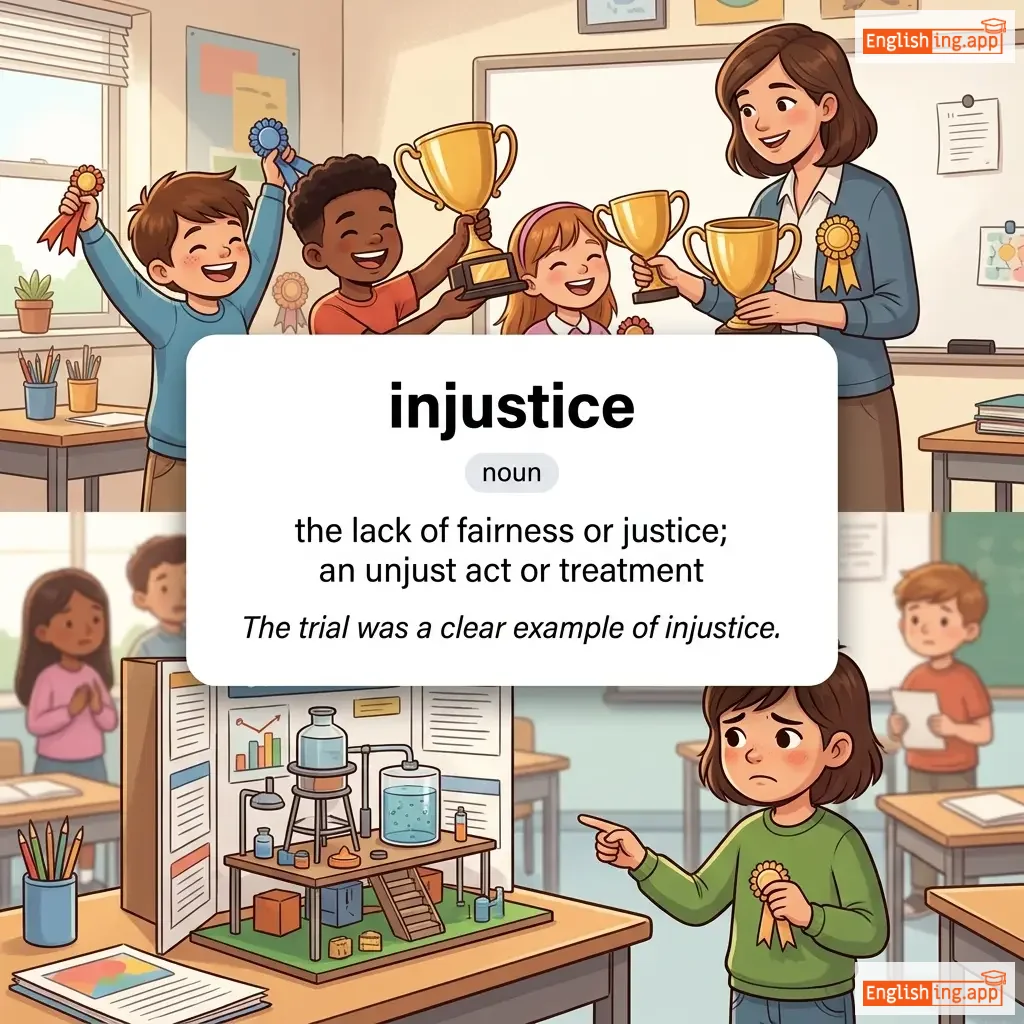
the lack of fairness or justice; an unjust act or treatment
••••••
|
The trial was a clear example of injustice. |
这个审判是一个明显的不公正例子。
Zhège shěnpàn shì yīgè míngxiǎn de bù gōngzhèng lìzi.
••••••
|
A great injustice has been done. |
A situation where something unfair or wrong has happened.
••••••
|
发生了极大的不公正。
Fāshēngle jí dà de bù gōngzhèng.
••••••
|
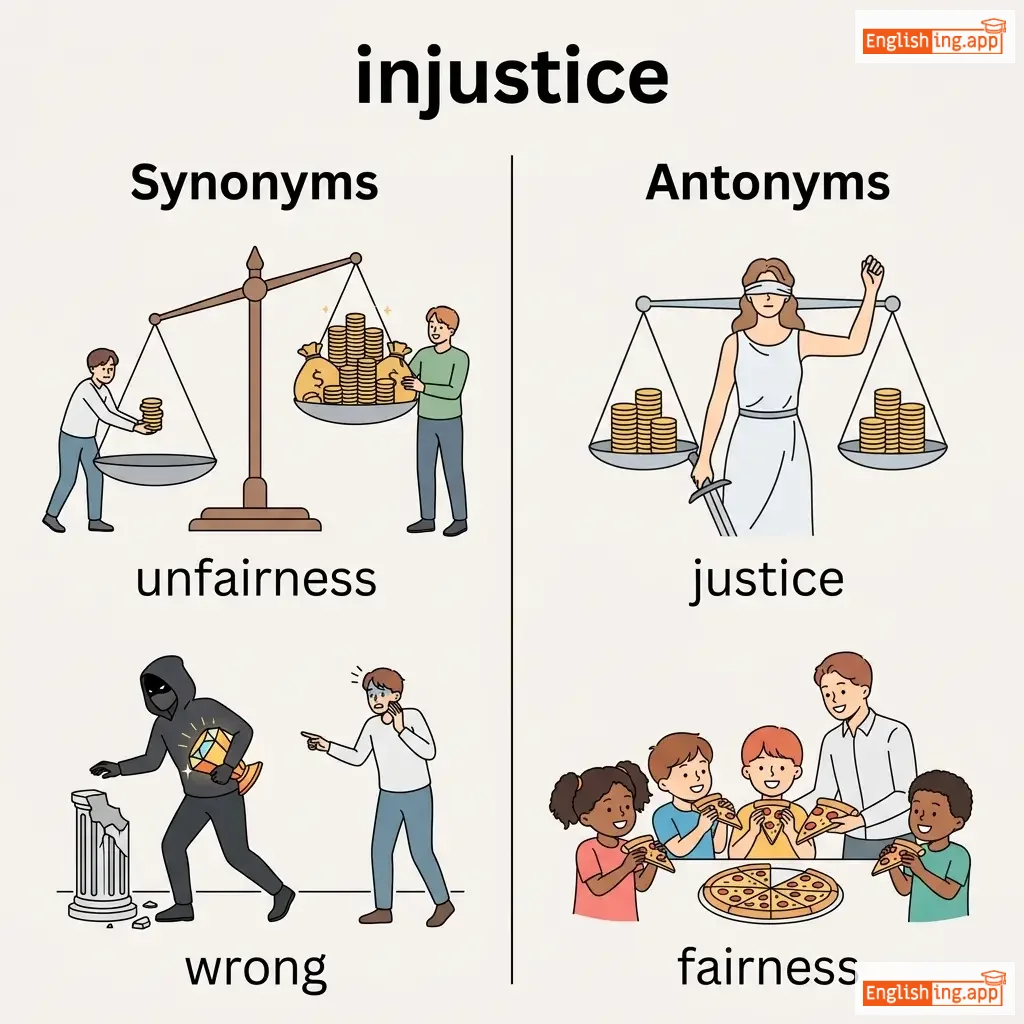
unfairness, wrong, discrimination, bias
••••••
|
justice, fairness
••••••
|
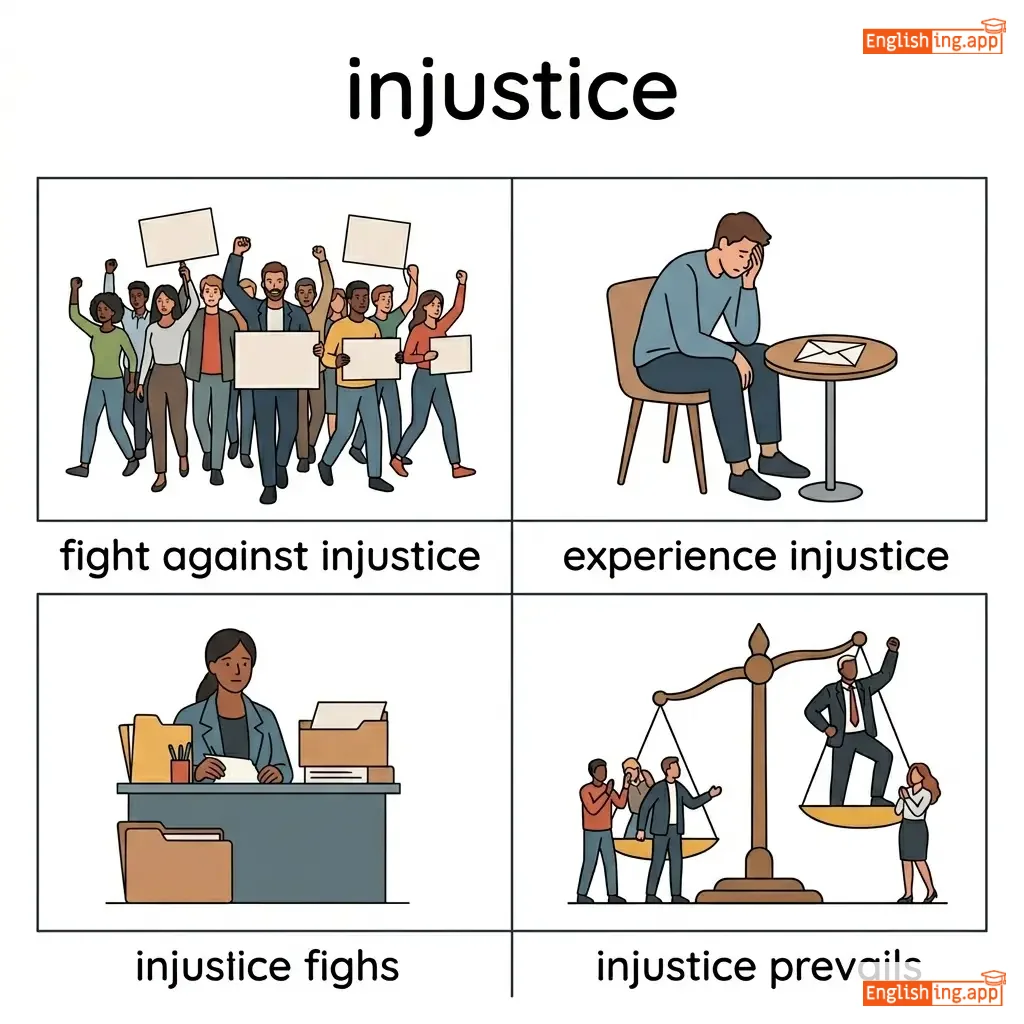
fight against injustice, experience injustice, injustice prevails
••••••
|
想想 '不公正' 就像不公平对待!
••••••
|
|
🖋️
••••••
|
/ɪŋk/
noun
(ink)
••••••
|
- •••••• |
墨水
mòshuǐ
••••••
|
- •••••• | - •••••• | - •••••• | - •••••• |
a colored liquid used for writing, printing, or drawing
••••••
|
The ink in my pen ran out during the exam.
我的钢笔墨水在考试时用完了。
••••••
|
我的钢笔墨水在考试时用完了。
Wǒ de gāngbǐ mòshuǐ zài kǎoshì shí yòng wánle.
••••••
|
Ink is thicker than water.
墨水比水更浓。
••••••
|
A saying that refers to the strength of family bonds over other relationships.
••••••
|
墨水比水更浓。
Mòshuǐ bǐ shuǐ gèng nóng.
••••••
|
dye, pigment, fluid, colorant
••••••
|
blank, clear
••••••
|
write with ink, ink pen, black ink, spill ink
••••••
|
Think of ink as the bond that makes family stronger than any other connection!
••••••
|
|
🚔
••••••
|
/ˈɪnˌmeɪt/
noun
(因梅特)
••••••
|
- •••••• |
囚犯
qiufan
••••••
|
- •••••• | - •••••• | - •••••• | - •••••• |
a person confined to an institution such as a prison or hospital
••••••
|
The prison has over a thousand inmates.
监狱里有超过一千名囚犯。
••••••
|
监狱里有超过一千名囚犯。
Jianyu li you chao guo yi qian ming qiufen.
••••••
|
- •••••• | - •••••• | - •••••• |
prisoner, convict, detainee, captive
••••••
|
visitor, guard, free person
••••••
|
prison inmate, hospital inmate, fellow inmate, release an inmate
••••••
|
In + mate = 囚犯, 监狱里的囚徒
••••••
|
|
🧘
••••••
|
/ˈɪnər/
adjective
(因内)
••••••
|
- •••••• |
内在的
nèi zài de
••••••
|
- •••••• | - •••••• | - •••••• | - •••••• |
Located inside or closer to the center; relating to one’s thoughts or feelings.
••••••
|
She shared her inner thoughts with her best friend.
她与她最好的朋友分享了她的内心想法。
••••••
|
她与她最好的朋友分享了她的内心想法。
tā yǔ tā zuì hǎo de péngyǒu fēnxiǎngle tā de nèixīn xiǎngfǎ.
••••••
|
inner peace
内心的平静
••••••
|
A state of mental and emotional calmness.
••••••
|
内心的平静
nèixīn de píngjìng
••••••
|
internal, inside, inward, private
••••••
|
outer, external
••••••
|
inner circle, inner voice, inner peace, inner city
••••••
|
Inner意味着内在的 - Inner peace意味着内心的平静。
••••••
|
|
😇
••••••
|
/ˈɪnəsənt/
adjective
(无辜)
••••••
|
- •••••• |
无辜
wugu
••••••
|
- •••••• | - •••••• | - •••••• | - •••••• |
not guilty of a crime or wrongdoing; harmless
••••••
|
The court found him innocent of all charges.
法院裁定他无罪,所有指控被撤销。
••••••
|
法院裁定他无罪,所有指控被撤销。
fayuan caiding ta wuze, suoyou zhikong bei chexiao.
••••••
|
innocent until proven guilty
在证明有罪之前是无辜的
••••••
|
a person is considered innocent unless proven guilty in a court
••••••
|
在证明有罪之前是无辜的
zai zhengming youzui zhiqian shi wugu de
••••••
|
guiltless, blameless, pure, harmless
••••••
|
guilty, corrupt
••••••
|
innocent child, innocent victim, innocent mistake, innocent face
••••••
|
Innocent = in (没有) + nocent (伤害) → 不伤害,无辜
••••••
|
|
🚀
••••••
|
/ˌɪnəˈveɪʃən/
noun
(创新)
••••••
|

|
创新
chuangxin
••••••
|
- •••••• | - •••••• | - •••••• | - •••••• |
The introduction of something new, such as an idea, method, or device.
••••••
|
Innovation is key to the success of technology companies. |
创新是科技公司成功的关键。
Chuangxin shi keji gongsi chenggong de guanjian.
••••••
|
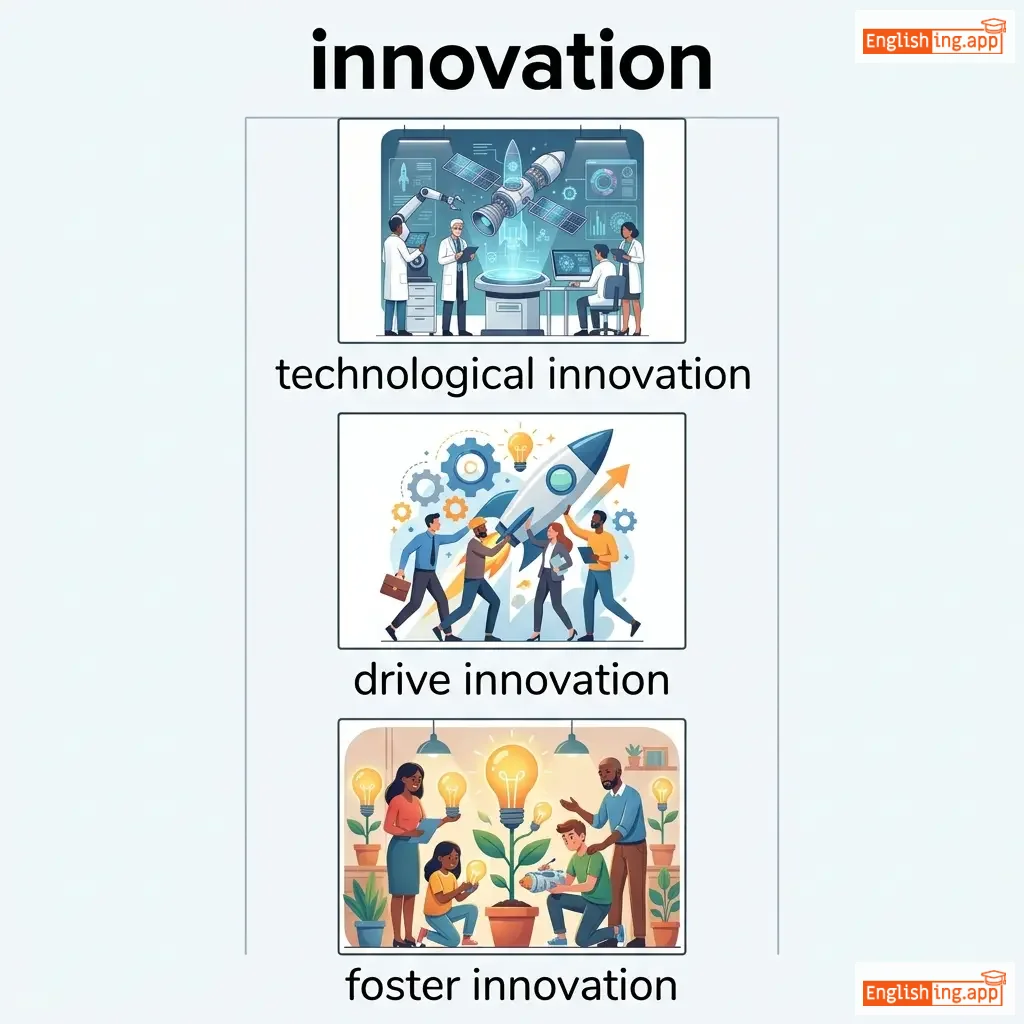
drive innovation |
To actively promote and encourage new ideas and methods.
••••••
|
推动创新
Tuīdòng chuàngxīn
••••••
|
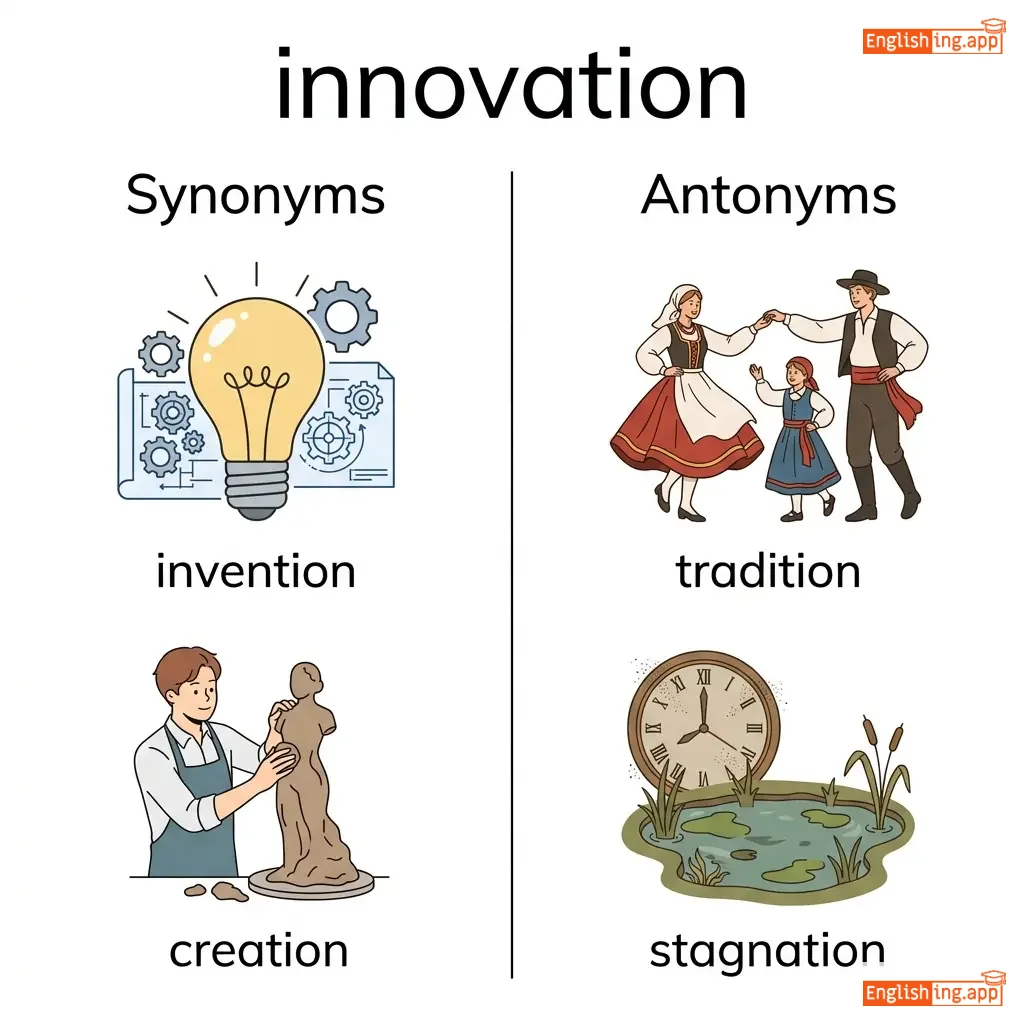
invention, creation, novelty, modernization
••••••
|
tradition, stagnation, imitation
••••••
|
technological innovation, drive innovation, foster innovation, innovation strategy
••••••
|
创新 = '创'(创造)+ '新'(新的星星)→ 就像新的想法像新星一样到来。
••••••
|
|
💡
••••••
|
/ˈɪnəˌveɪtɪv/
adjective
(inovétiv)
••••••
|

|
创新的
chuàngxīn de
••••••
|
- •••••• | - •••••• | - •••••• | - •••••• |
introducing new ideas, methods, or products; creative and original
••••••
|
The company is known for its innovative solutions.
这家公司以其创新的解决方案而闻名。
••••••
|
这家公司以其创新的解决方案而闻名。
Zhè jiā gōngsī yǐ qí chuàngxīn de jiějuéfāng'àn ér wénmíng.
••••••
|
- •••••• | - •••••• | - •••••• |
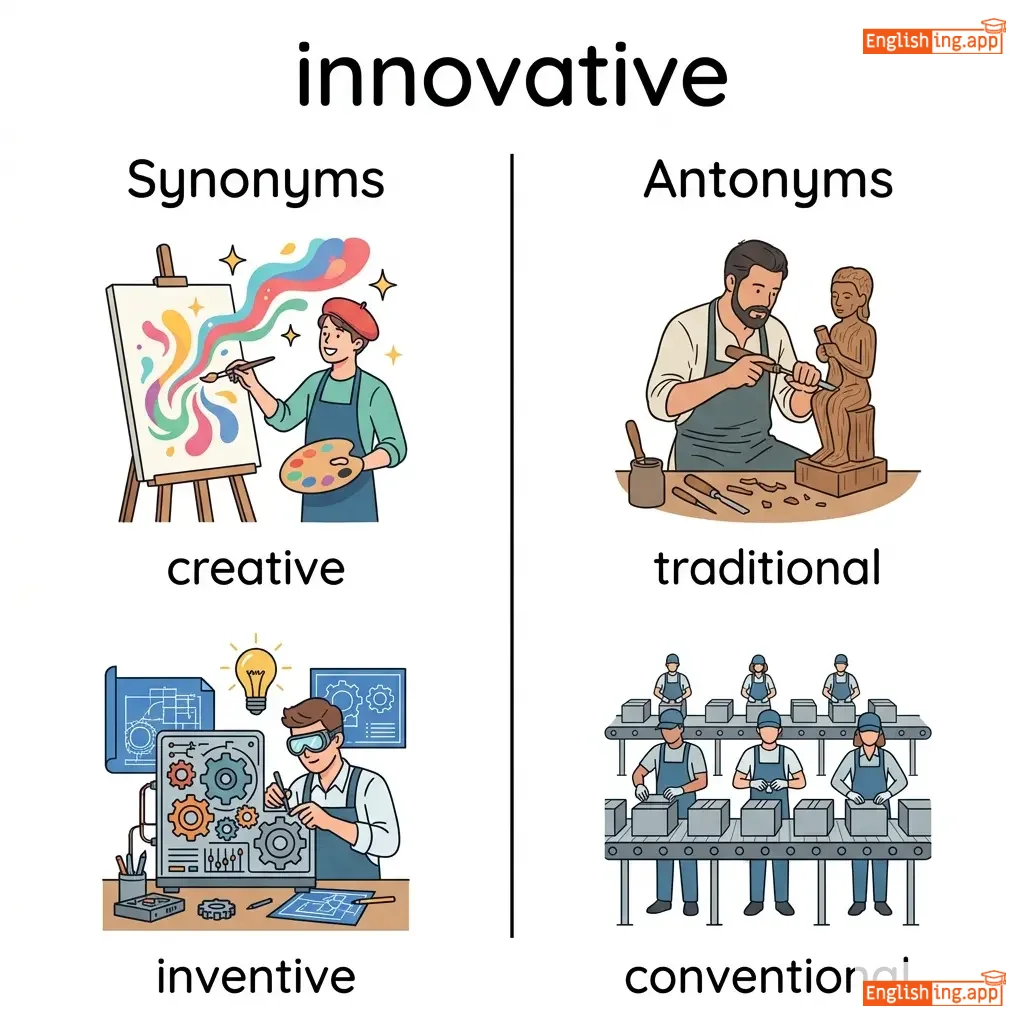
creative, inventive, original, cutting-edge, imaginative
••••••
|
traditional, conventional, old-fashioned
••••••
|
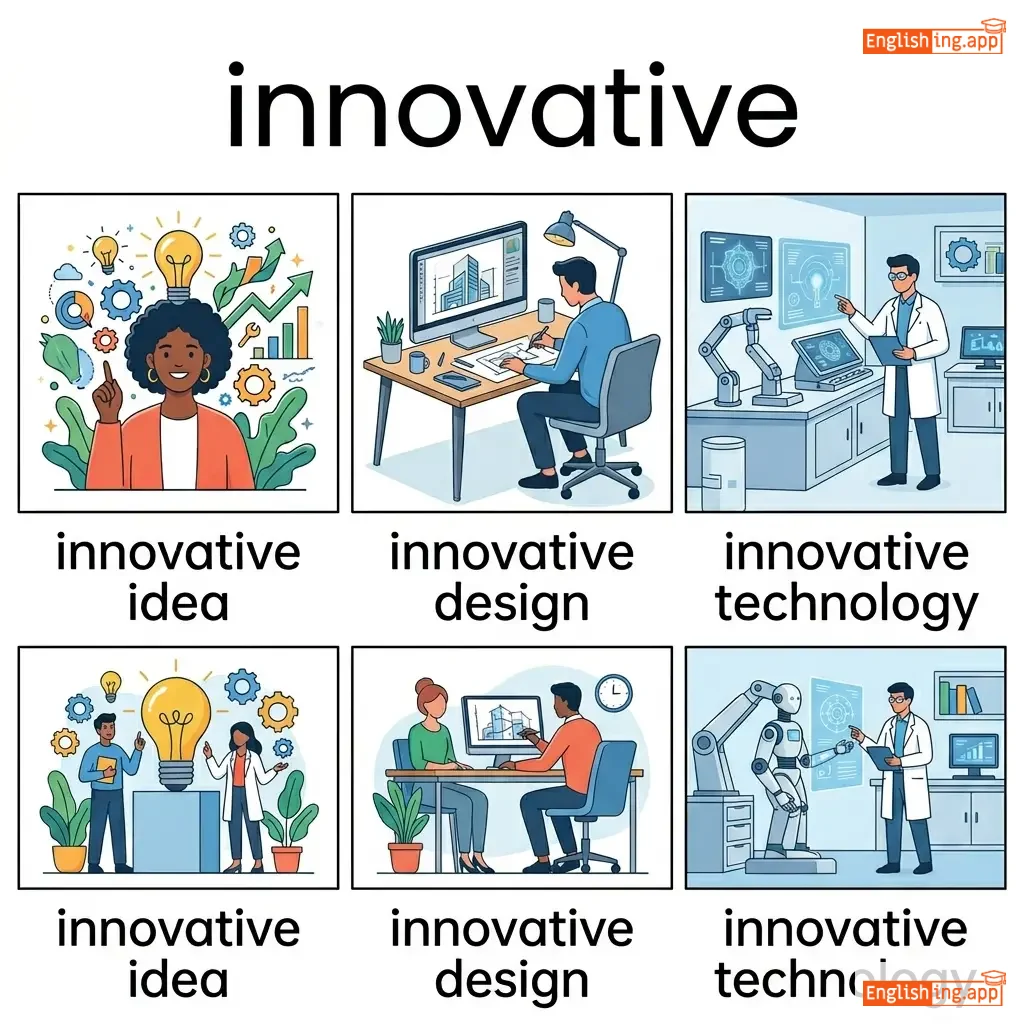
innovative idea, innovative design, innovative technology, innovative approach
••••••
|
创新的意味着引入新奇、原创的东西,就像创意一样。
••••••
|
|
⚗️
••••••
|
/ˌɪnɔːrˈɡænɪk/
adjective
(因奥加尼克)
••••••
|
- •••••• |
无机的
wuji de
••••••
|
- •••••• | - •••••• | - •••••• | - •••••• |
relating to substances that are not derived from living organisms; lacking organic structure or growth
••••••
|
Inorganic compounds are commonly studied in chemistry labs.
无机化合物在化学中被研究。
••••••
|
无机化合物是化学的重要部分。
wuji hewuwu shi huaxue de zhongyao bufeng
••••••
|
- •••••• | - •••••• | - •••••• |
nonorganic, mineral, synthetic, chemical
••••••
|
organic, natural
••••••
|
inorganic compound, inorganic chemistry, inorganic material, inorganic matter
••••••
|
inorganic = 无机,不是生命
••••••
|
|
⌨️
••••••
|
/ˈɪnpʊt/
noun
(输入)
••••••
|
- •••••• |
输入,提供的信息
shuru, tigong de xinxi
••••••
|
- •••••• | - •••••• | - •••••• | - •••••• |
information, advice, or data that is put into a system, device, or process
••••••
|
The manager asked for everyone's input on the new project.
经理要求大家对新项目提供意见。
••••••
|
经理要求大家对新项目提供意见。
Jingli yaoqiu dajia dui xin xiangmu tigong yijian.
••••••
|
data input
数据输入
••••••
|
the act of entering data into a computer system
••••••
|
数据输入
shuju shuru
••••••
|
contribution, feedback, suggestion, data, information
••••••
|
output, result
••••••
|
user input, data input, input device, input field
••••••
|
输入就是把数据放进去!
••••••
|
|
🔍
••••••
|
/ɪnˈkwaɪəri/ or /ˈɪnkwəri/
noun
(in-kuái-lì)
••••••
|
- •••••• |
调查 / 查询
diàochá / cháxún
••••••
|
- •••••• | - •••••• | - •••••• | - •••••• |
An act of asking for information; an investigation into something.
••••••
|
The committee launched an inquiry into the financial irregularities. |
委员会启动了对金融不规范行为的调查。
Wěiyuánhuì qǐdòngle duì jīnróng bù guīfàn xíngwéi de diàochá.
••••••
|
line of inquiry |
A specific direction of investigation.
••••••
|
调查方向
diàochá fāngxiàng
••••••
|
investigation, examination, probe, research, questioning
••••••
|
answer, response, neglect
••••••
|
make an inquiry, police inquiry, official inquiry, line of inquiry
••••••
|
Inquiry 是你问别人问题来获取信息。
••••••
|
|
🐞
••••••
|
/ˈɪnsekt/
noun
(昆虫)
••••••
|
- •••••• |
昆虫
kun chong
••••••
|
- •••••• | - •••••• | - •••••• | - •••••• |
a small animal with six legs and usually wings, such as a bee or an ant
••••••
|
A butterfly is a beautiful type of insect.
蝴蝶是一种美丽的昆虫。
••••••
|
蝴蝶是一种美丽的昆虫。
Hudie shi yi zhong mei li de kunchong.
••••••
|
insect bite
昆虫咬伤
••••••
|
a mark or swelling caused by an insect's sting or bite
••••••
|
昆虫咬伤
kun chong yao shang
••••••
|
bug, creature, ant, bee, beetle
••••••
|
mammal, reptile
••••••
|
flying insect, insect bite, insect species, insect repellent
••••••
|
In + sect = 小段的昆虫 🐜
••••••
|
|
😟
••••••
|
/ˌɪnsɪˈkjʊə/
adjective
(insecure)
••••••
|
- •••••• |
不安全的
bù ānquán de
••••••
|
- •••••• | - •••••• | - •••••• | - •••••• |
not confident or assured; uncertain and anxious
••••••
|
She felt insecure about her performance in the exam. |
她在考试中对自己的表现感到不安。
Tā zài kǎoshì zhōng duì zìjǐ de biǎoxiàn gǎndào bù'ān.
••••••
|
insecure about |
lacking confidence in relation to something
••••••
|
不确定关于
bù quèdìng guānyú
••••••
|
uncertain, anxious, self-doubting, unconfident, shaky
••••••
|
confident, secure, assured
••••••
|
feel insecure, insecure relationship, insecure job, insecure system
••••••
|
Insecure意味着不安全 → 不确定,缺乏信心。
••••••
|
|
😟
••••••
|
/ˌɪnsɪˈkjʊərɪti/
noun
(因塞丘瑞提)
••••••
|
- •••••• |
不安全感
bu anquan gan
••••••
|
- •••••• | - •••••• | - •••••• | - •••••• |
lack of confidence or assurance; a state of uncertainty or vulnerability
••••••
|
Her insecurity made her doubt her abilities despite her experience.
她的因塞丘瑞提让她怀疑自己的能力。
••••••
|
她的不安全感让她怀疑自己的能力。
ta de bu anquan gan rang ta huaiyi ziji de nengli
••••••
|
- •••••• | - •••••• | - •••••• |
uncertainty, self-doubt, vulnerability, anxiety, instability
••••••
|
confidence, security, assurance
••••••
|
emotional insecurity, deep insecurity, personal insecurity, sense of insecurity
••••••
|
Insecurity 就是 不安全感
••••••
|
|
😶
••••••
|
/ɪnˈsɛnsəbl/
adjective
(因森西布尔)
••••••
|

|
昏迷
hūnmí
••••••
|
- •••••• | - •••••• | - •••••• | - •••••• |
Unconscious; unaware of or indifferent to something.
••••••
|
He was insensible to the cold as he lay in the snow. |
他在雪地里躺着时,对寒冷昏迷不觉。
Tā zài xuědì lǐ tǎngzhe shí, duì hánlěng hūnmí bù jué.
••••••
|
- •••••• | - •••••• | - •••••• |
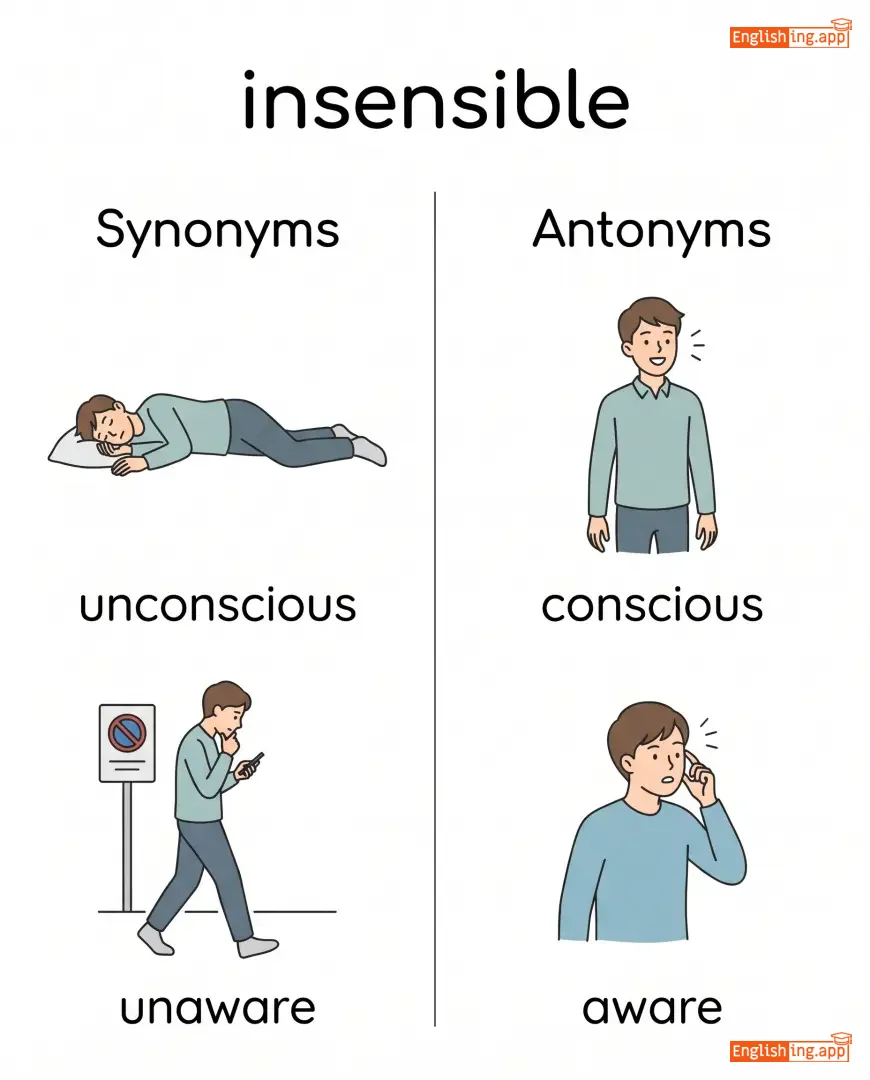
unconscious, unaware, oblivious, indifferent, unresponsive
••••••
|
conscious, aware, responsive
••••••
|
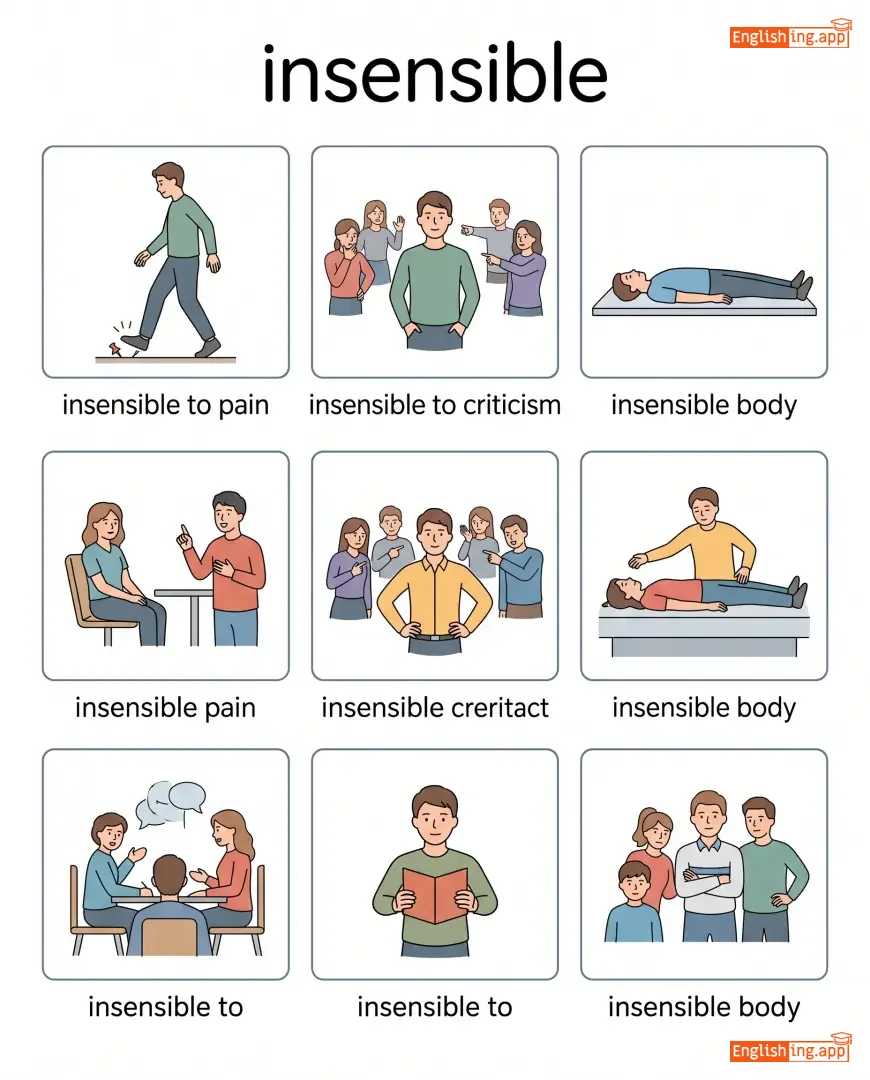
insensible to pain, insensible to criticism, insensible body
••••••
|
INSensible意味着没有感觉 → 昏迷.
••••••
|
|
📥
••••••
|
/ɪnˈsɜːt/
verb
(ɪnˈsɜːt)
••••••
|
|
插入
chārù
••••••
|
inserted
ɪnˈsɜːrtɪd
••••••
|
inserted
ɪnˈsɜːrtɪd
••••••
|
inserts
ɪnˈsɜːrts
••••••
|
inserting
ɪnˈsɜːrtɪŋ
••••••
|
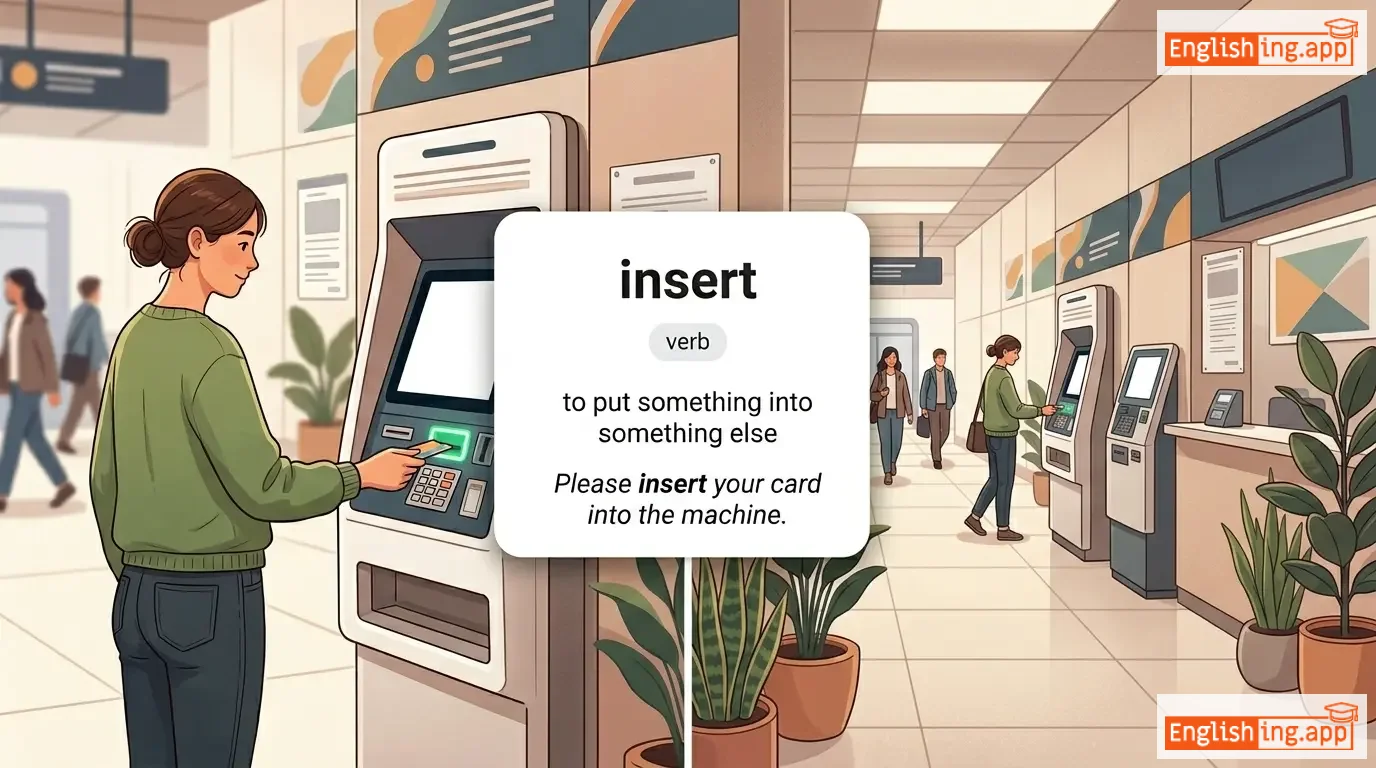
to put something into something else
••••••
|
Please insert your card into the machine.
请将您的卡片插入机器。
••••••
|
请将您的卡片插入机器。
Qǐng jiāng nín de kǎpiàn chārù jīqì.
••••••
|
insert coin
插入硬币
••••••
|
instruction to put a coin into a machine to operate it
••••••
|
插入硬币
chārù yìngbì
••••••
|
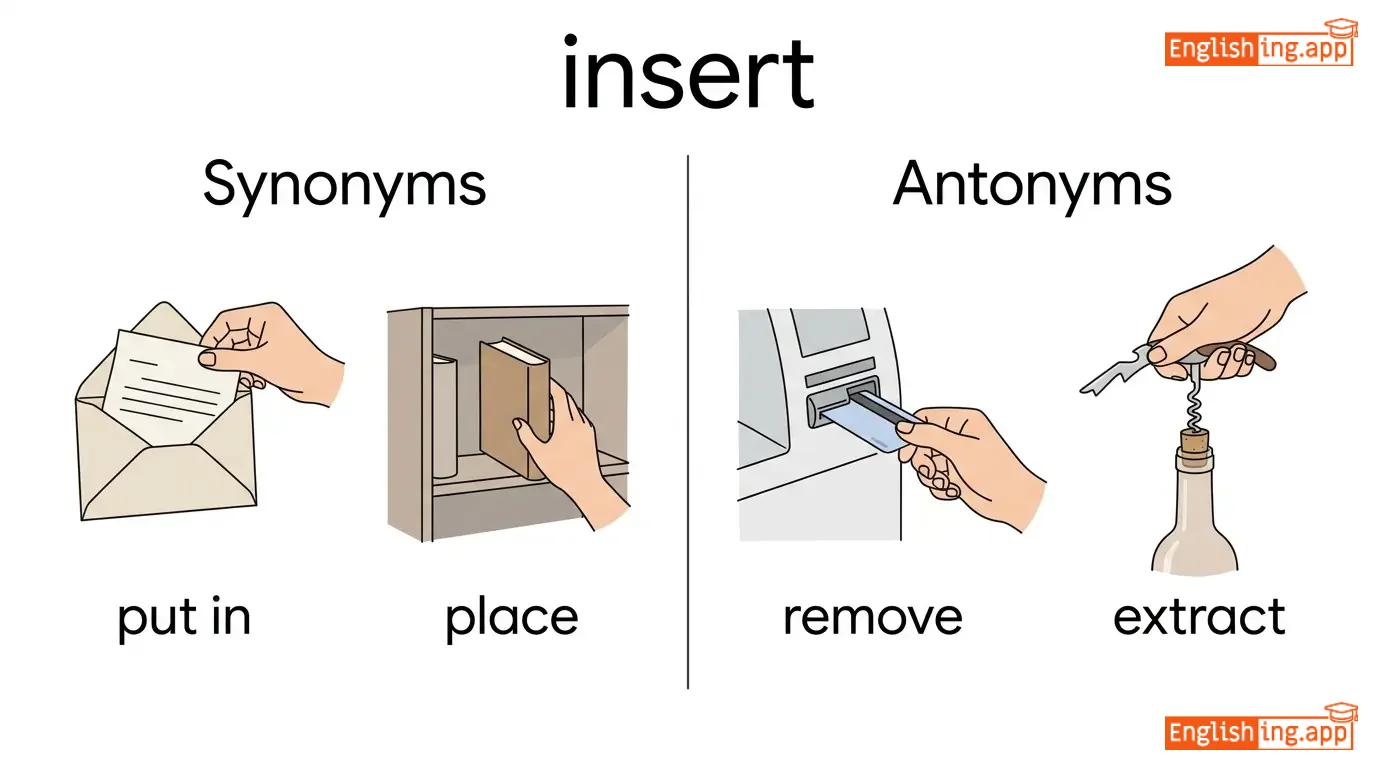
put in, place, embed, add, introduce
••••••
|
remove, extract
••••••
|
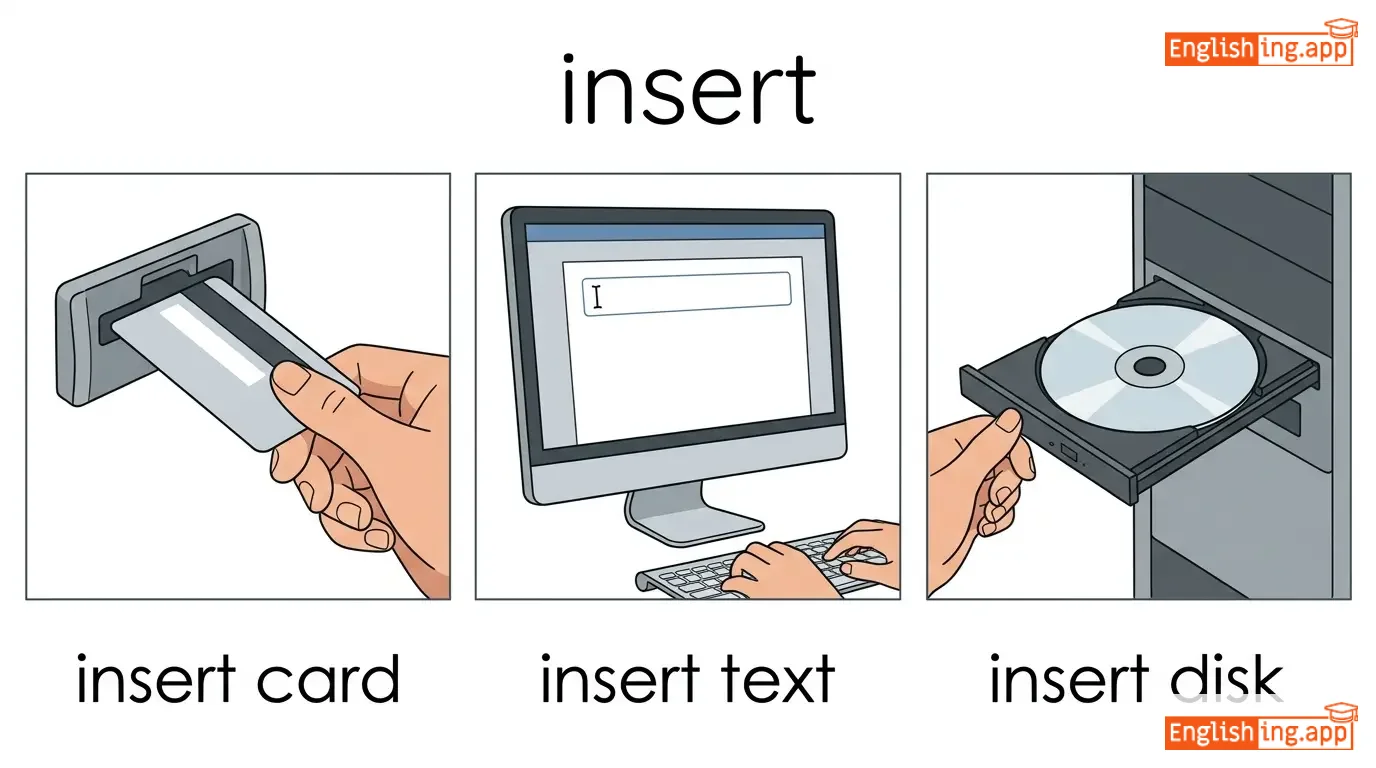
insert card, insert text, insert disk, insert key
••••••
|
插入就是把东西放进别的东西里,比如插入银行卡!
••••••
|
|
⬇️
••••••
|
/ɪnˈsɜːʃən/
noun
(ɪnˈsɜːʃən)
••••••
|
- •••••• |
插入
chārù
••••••
|
- •••••• | - •••••• | - •••••• | - •••••• |
the action of inserting something into something else
••••••
|
The insertion of the new data was completed successfully. |
新数据的插入已成功完成。
Xīn shùjù de chārù yǐ chénggōng wánchéng.
••••••
|
- •••••• | - •••••• | - •••••• |
introduction, addition, implantation, inclusion
••••••
|
removal, extraction
••••••
|
data insertion, surgical insertion, insertion point
••••••
|
插入就是把东西放入其他东西中,就像把数据插入系统。
••••••
|
|
🏠
••••••
|
/ˌɪnˈsaɪd/
preposition/adverb/adjective/noun
(海皮尼斯)
••••••
|
- •••••• |
幸福
xìngfú
••••••
|
- •••••• | - •••••• | - •••••• | - •••••• |
Situated within something; the inner part of something.
••••••
|
She waited inside the house until the rain stopped. |
当她收到奖项时,她无法掩饰自己的幸福。
Dāng tā shōu dào jiǎngxiàng shí, tā wúfǎ yǎnshì zìjǐ de xìngfú.
••••••
|
inside out |
Completely; with thorough knowledge or in reverse.
••••••
|
追求幸福
zhuīqiú xìngfú
••••••
|
within, indoors, interior, inner, internal
••••••
|
outside, external, exterior
••••••
|
inside the house, inside the box, inside job, look inside
••••••
|
幸福 = 感受快乐和满足的状态。
••••••
|
|
👤
••••••
|
/ɪnˈsaɪdə/
noun
(īn sāi dé)
••••••
|
- •••••• |
内部人士
neibu renshi
••••••
|
- •••••• | - •••••• | - •••••• | - •••••• |
a person within a group or organization who has access to confidential information
••••••
|
He was an insider who knew all the company's secrets. |
他是一个了解公司所有秘密的内部人士。
Ta shi yi ge liaojie gongsi suoyou mimi de neibu renshi.
••••••
|
- •••••• | - •••••• | - •••••• |
member, participant, confidant, informant
••••••
|
outsider, stranger
••••••
|
company insider, political insider, insider knowledge
••••••
|
内部人士,掌握公司秘密的人
••••••
|
|
💡
••••••
|
/ˈɪnˌsaɪt/
noun
(in-sai-te)
••••••
|
- •••••• |
洞察力
dongcha li
••••••
|
- •••••• | - •••••• | - •••••• | - •••••• |
The ability to understand the true nature of something; deep understanding.
••••••
|
Her insight into human behavior made her a successful psychologist. |
她对人类行为的洞察力使她成为一位成功的心理学家。
Ta dui renlei xingwei de dongchali shì tā chéngwéi yī wèi chénggōng de xīnlǐ xuéjiā.
••••••
|
gain insight |
to develop a clear understanding of something
••••••
|
获得洞察力
huòdé dòngchálì
••••••
|
understanding, perception, awareness, intuition, comprehension
••••••
|
ignorance, misunderstanding
••••••
|
gain insight, valuable insight, deep insight, provide insight
••••••
|
Insight意味着洞察力 - 就像揭示事物内在真相的灯光。
••••••
|
|
⚪
••••••
|
/ˌɪnsɪɡˈnɪfɪkəns/
noun
(insignificance)
••••••
|
- •••••• |
微不足道
weibu zudao
••••••
|
- •••••• | - •••••• | - •••••• | - •••••• |
The quality of being unimportant or trivial.
••••••
|
He felt a sense of insignificance in the vast universe. |
他在广阔的宇宙中感到微不足道。
Ta zai guangkuo de yuzhou zhong gandao weibu zudao.
••••••
|
- •••••• | - •••••• | - •••••• |
triviality, unimportance, smallness, pettiness
••••••
|
importance, significance, value
••••••
|
utter insignificance, sense of insignificance, feeling of insignificance
••••••
|
微不足道 = 微小的 → 没有重要性.
••••••
|
|
🪙
••••••
|
/ˌɪnsɪɡˈnɪfɪkənt/
adjective
(insignifikante)
••••••
|
- •••••• |
微不足道
wēi bù zú dào
••••••
|
- •••••• | - •••••• | - •••••• | - •••••• |
Too small or unimportant to be worth considering.
••••••
|
The cost was so insignificant that nobody noticed it. |
费用微不足道,以至于没有人注意到。
fèiyòng wēi bù zú dào, yǐ zhì yú méiyǒu rén zhùyì dào.
••••••
|
an insignificant detail |
a very small or unimportant piece of information
••••••
|
一个微不足道的细节
yī gè wēi bù zú dào de xìjié
••••••
|
trivial, minor, negligible, unimportant, petty
••••••
|
important, significant, meaningful
••••••
|
insignificant amount, insignificant role, almost insignificant
••••••
|
Insignificant = 无标志 → 小,不重要。
••••••
|
|
🙅♂️
••••••
|
/ɪnˈsɪst/
verb
(坚持)
••••••
|

|
坚持
jiānchí
••••••
|
insisted
坚持了
••••••
|
insisted
坚持了
••••••
|
insists
坚持
••••••
|
insisting
坚持着
••••••
|
to demand something forcefully or firmly
••••••
|
She insisted on paying the bill.
她坚持支付账单。
••••••
|
她坚持支付账单。
Tā jiānchí zhīfù zhàngdān.
••••••
|
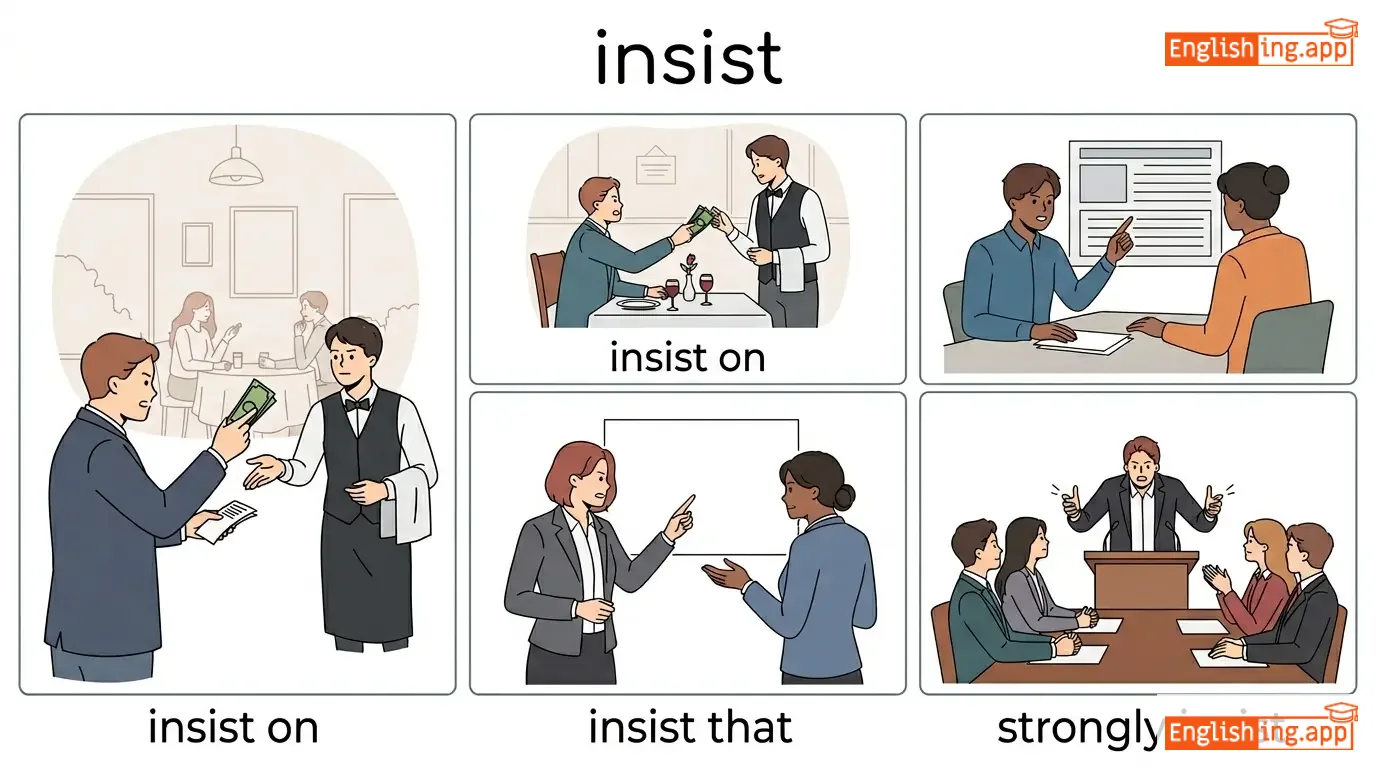
insist on
坚持
••••••
|
to demand firmly that something be done
••••••
|
坚持
jiānchí
••••••
|
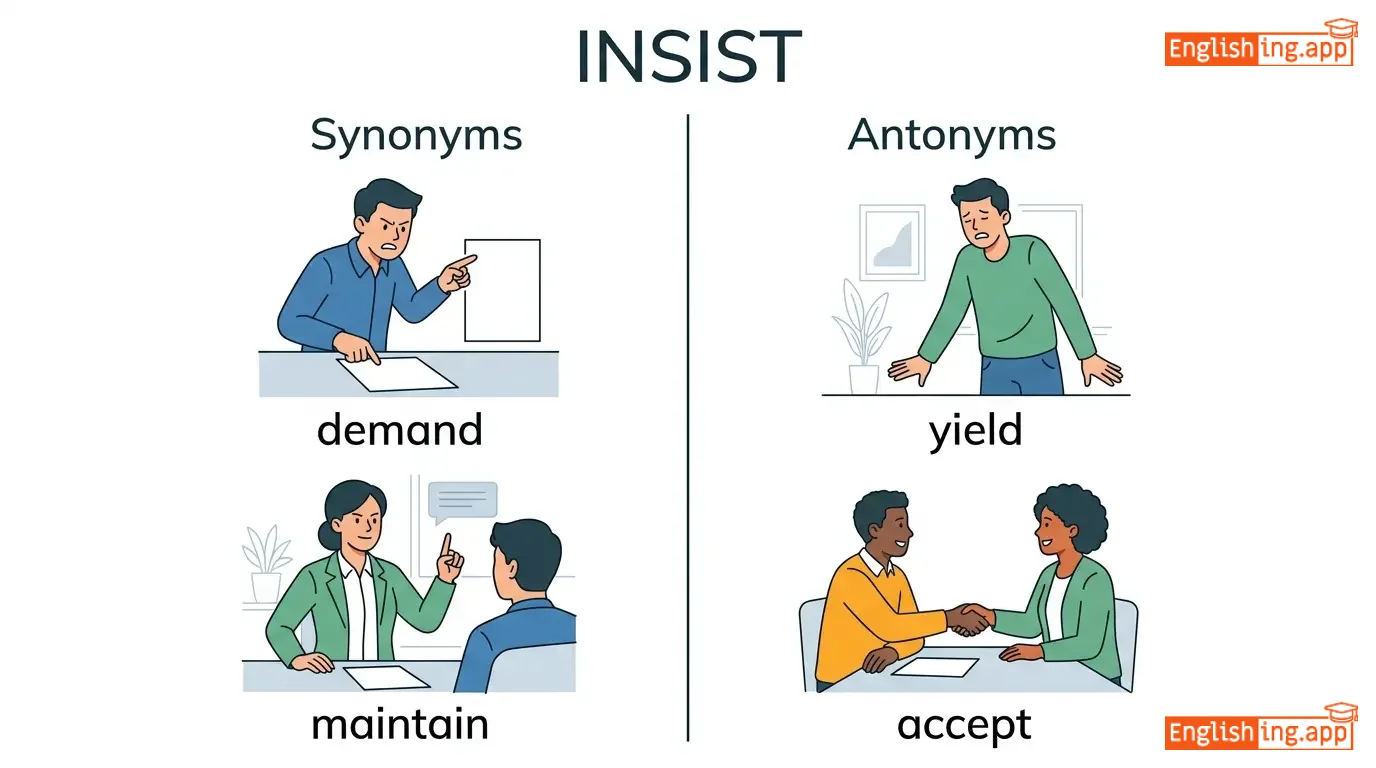
demand, maintain, assert, press, urge
••••••
|
yield, accept, give up
••••••
|
insist on, insist that, strongly insist, politely insist
••••••
|
坚持就是坚持要求某件事情做!
••••••
|
|
🔍
••••••
|
/ɪnˈspɛkt/
verb
(in-spek-t)
••••••
|
|
检查
jiǎnchá
••••••
|
inspected
in-spek-te-d
••••••
|
inspected
in-spek-te-d
••••••
|
inspects
in-spek-ts
••••••
|
inspecting
in-spek-ting
••••••
|
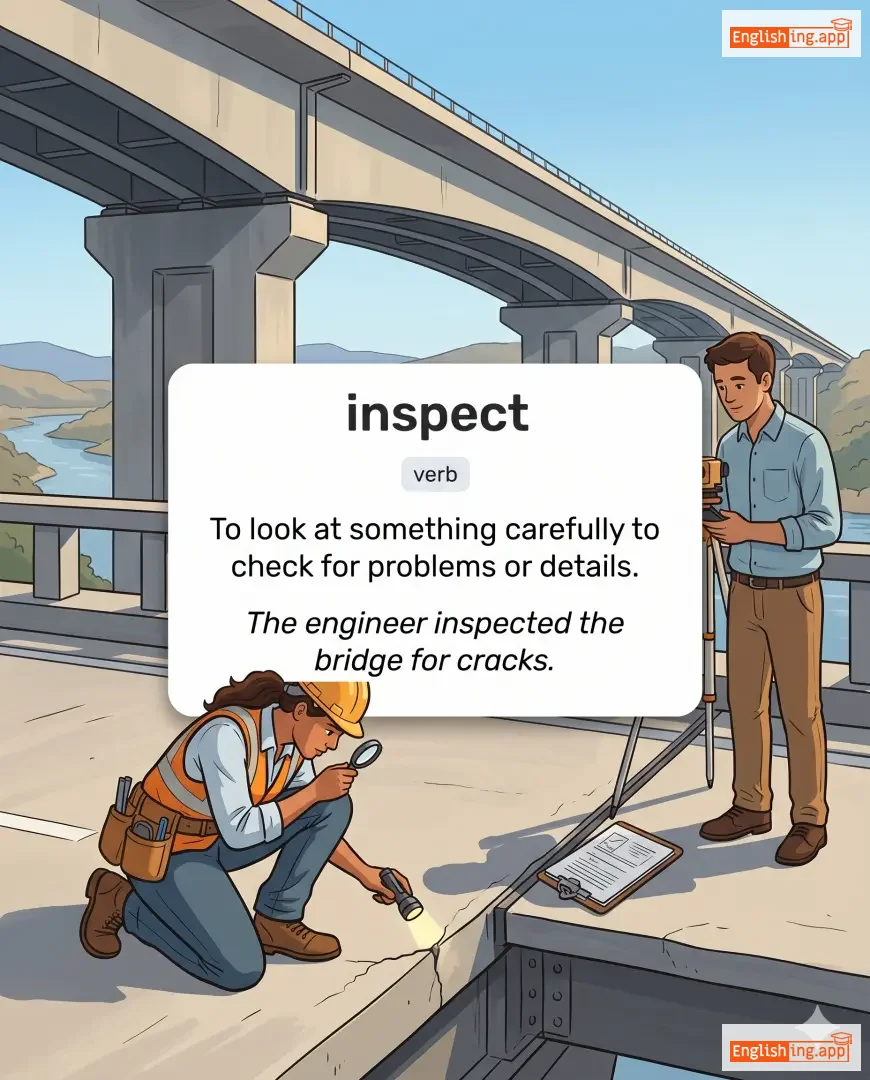
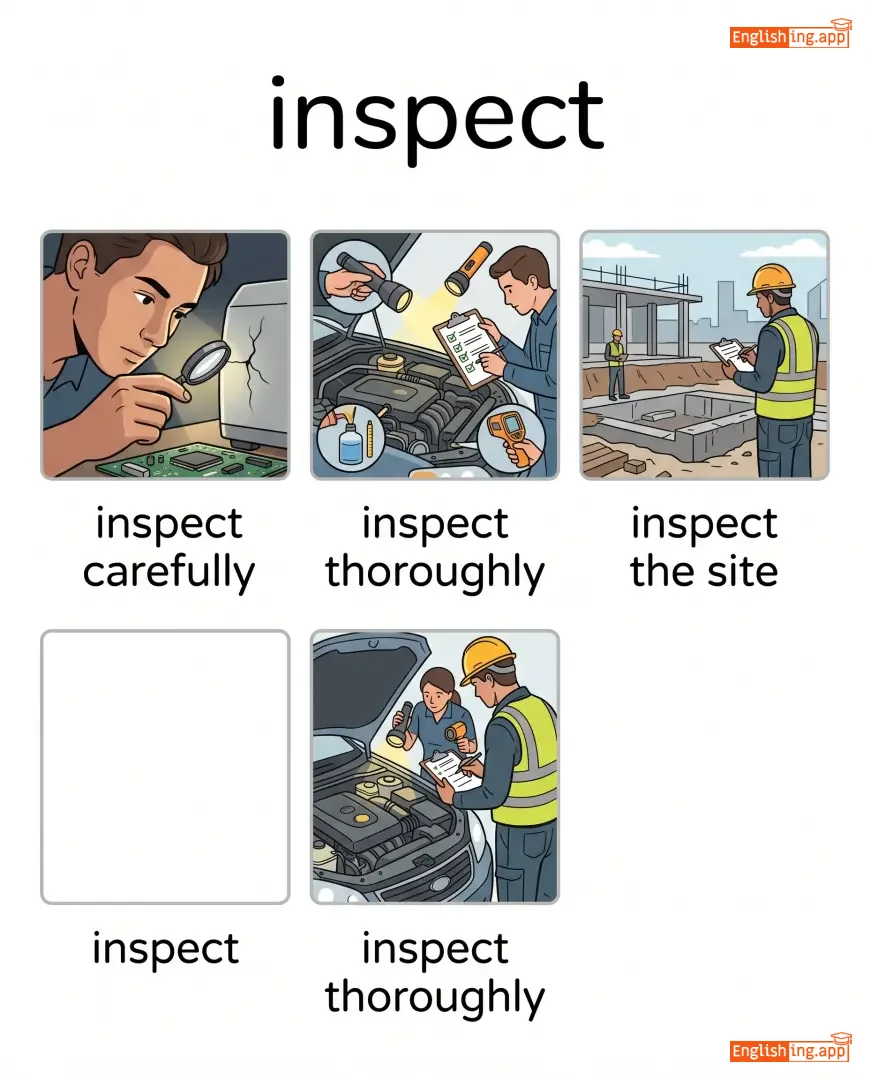
To look at something carefully to check for problems or details.
••••••
|
The engineer inspected the bridge for cracks.
工程师检查了桥梁是否有裂缝。
••••••
|
工程师检查了桥梁是否有裂缝。
Gōngchéngshī jiǎnchá le qiáoliáng shìfǒu yǒu lièfèng.
••••••
|
inspect the premises
检查场所
••••••
|
to examine a place carefully
••••••
|
检查场所
jiǎnchá chǎngsuǒ
••••••
|
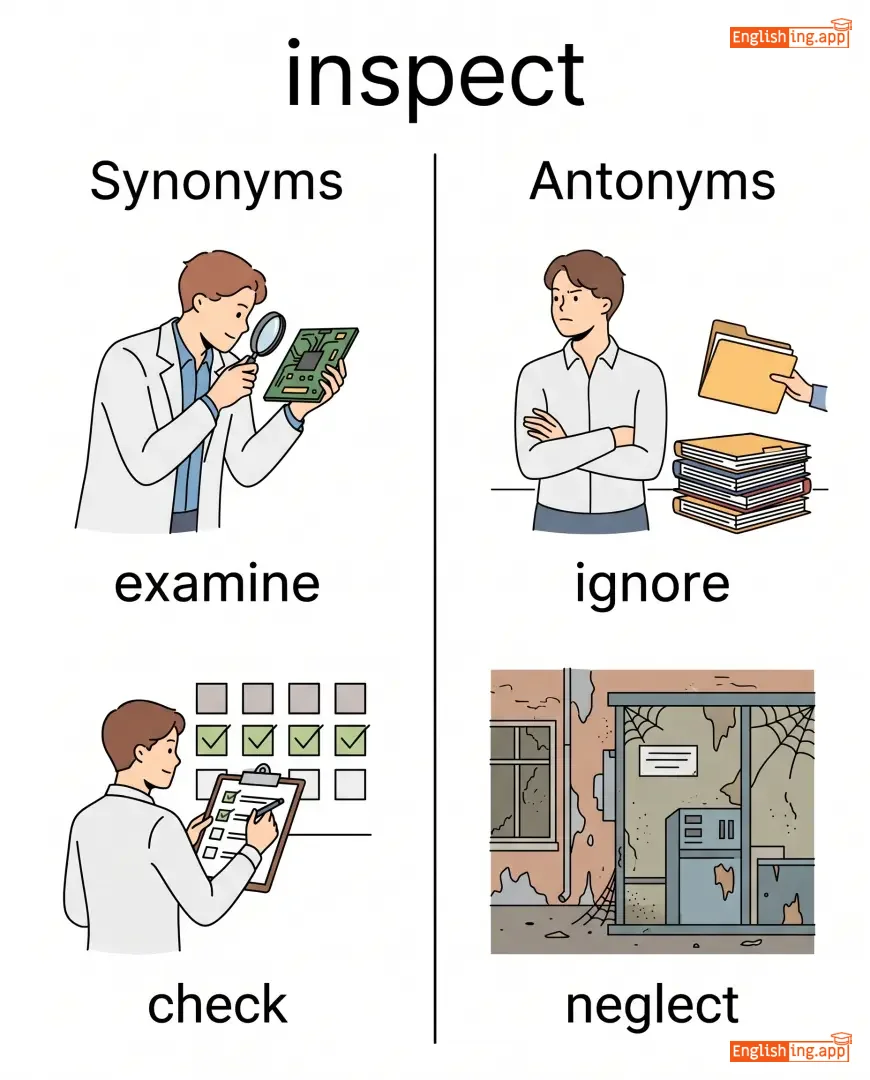
examine, check, review, scrutinize, analyze
••••••
|
ignore, neglect
••••••
|
inspect carefully, inspect thoroughly, inspect the site, safety inspector
••••••
|
Inspect 意思是 in + spect (看) → 认真看。
••••••
|
|
🔍
••••••
|
/ɪnˈspekʃən/
noun
(ɪnˈspɛkʃən)
••••••
|
- •••••• |
检查
jiǎnchá
••••••
|
- •••••• | - •••••• | - •••••• | - •••••• |
a careful examination of something, especially to check that it is correct or safe
••••••
|
The building passed the safety inspection last week. |
该建筑上周通过了安全检查。
Gāi jiànzhú shàng zhōu tōngguòle ānquán jiǎnchá.
••••••
|
under inspection |
being examined carefully
••••••
|
在检查中
zài jiǎnchá zhōng
••••••
|
examination, review, scrutiny, check, audit
••••••
|
neglect, overlook
••••••
|
safety inspection, routine inspection, detailed inspection, building inspection
••••••
|
Inspection 意味着检查 (验证) 🔎
••••••
|
|
🕵️
••••••
|
/ɪnˈspɛktər/
noun
(ɪnˈspɛktər)
••••••
|
- •••••• |
检查员
jiǎncháyuán
••••••
|
- •••••• | - •••••• | - •••••• | - •••••• |
An official employed to ensure regulations are obeyed or standards are met.
••••••
|
The inspector carefully checked the restaurant's kitchen for hygiene standards. |
检查员仔细检查了餐厅的厨房是否符合卫生标准。
Jiǎncháyuán zǐxì jiǎnchále cāntīng de chúfáng shìfǒu fúhé wèishēng biāozhǔn.
••••••
|
under the inspector's eye |
Closely monitored or supervised by an authority.
••••••
|
在检查员的监督下
Zài jiǎncháyuán de jiāndū xià
••••••
|
examiner, officer, auditor, overseer, supervisor
••••••
|
worker, employee
••••••
|
police inspector, health inspector, building inspector
••••••
|
检查员会仔细检查一切,确保所有规则都得到遵守。
••••••
|
|
💡
••••••
|
/ˌɪnspəˈreɪʃən/
noun
(灵感)
••••••
|


|
灵感
linggan
••••••
|
- •••••• | - •••••• | - •••••• | - •••••• |
the process of being mentally stimulated to do or feel something creative or positive
••••••
|
Her courage was a great inspiration to others.
她的勇气是其他人的巨大灵感。
••••••
|
她的勇气是其他人的巨大灵感。
Tā de yǒngqì shì qítā rén de jùdà línggǎn.
••••••
|
source of inspiration
灵感的来源
••••••
|
something or someone that motivates or encourages creativity
••••••
|
灵感的来源
línggǎn de láiyuán
••••••
|
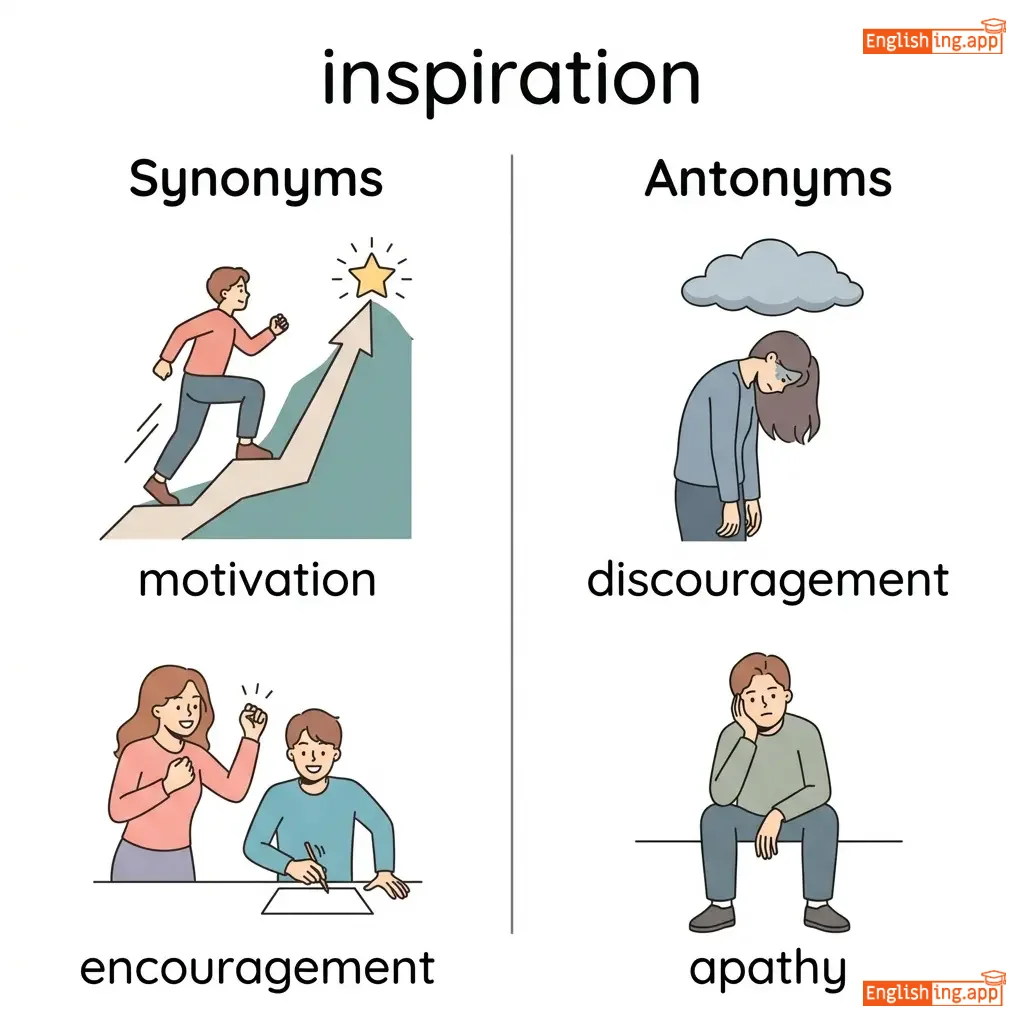
motivation, encouragement, influence, stimulus, drive
••••••
|
discouragement, apathy
••••••
|
find inspiration, give inspiration, source of inspiration, draw inspiration
••••••
|
灵感像火花,点燃创造力的火焰。
••••••
|
|
✨
••••••
|
/ɪnˈspaɪər/
verb
(happiness)
••••••
|

|
幸福
xìng fú
••••••
|
inspired
••••••
|
inspired
••••••
|
inspires
••••••
|
inspiring
••••••
|
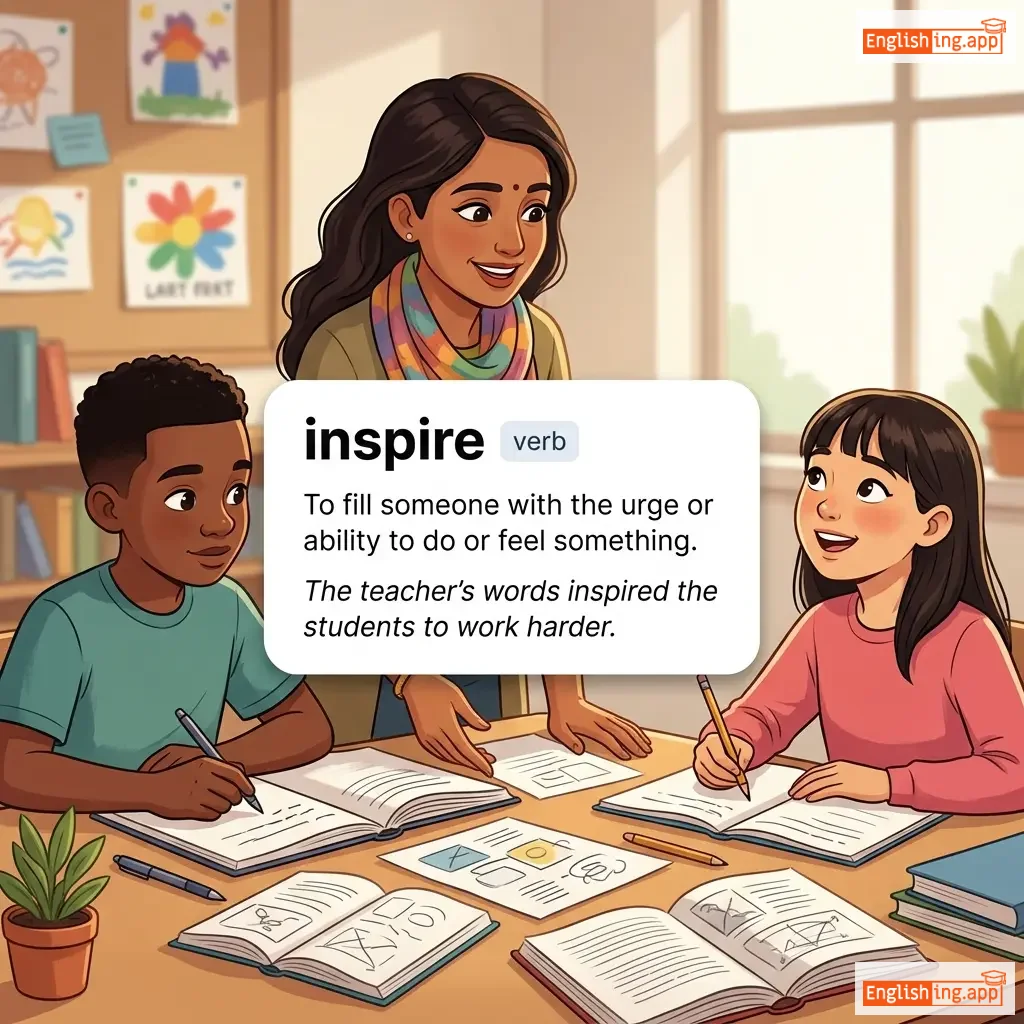
To fill someone with the urge or ability to do or feel something.
••••••
|
The teacher's words inspired the students to work harder. |
当她获得奖项时,她无法掩饰自己的幸福。
dāng tā huòdé jiǎngxiàng shí, tā wúfǎ yǎnshì zìjǐ de xìngfú.
••••••
|
inspire confidence |
To cause someone to feel confident or assured.
••••••
|
追求幸福
zhuīqiú xìngfú
••••••
|
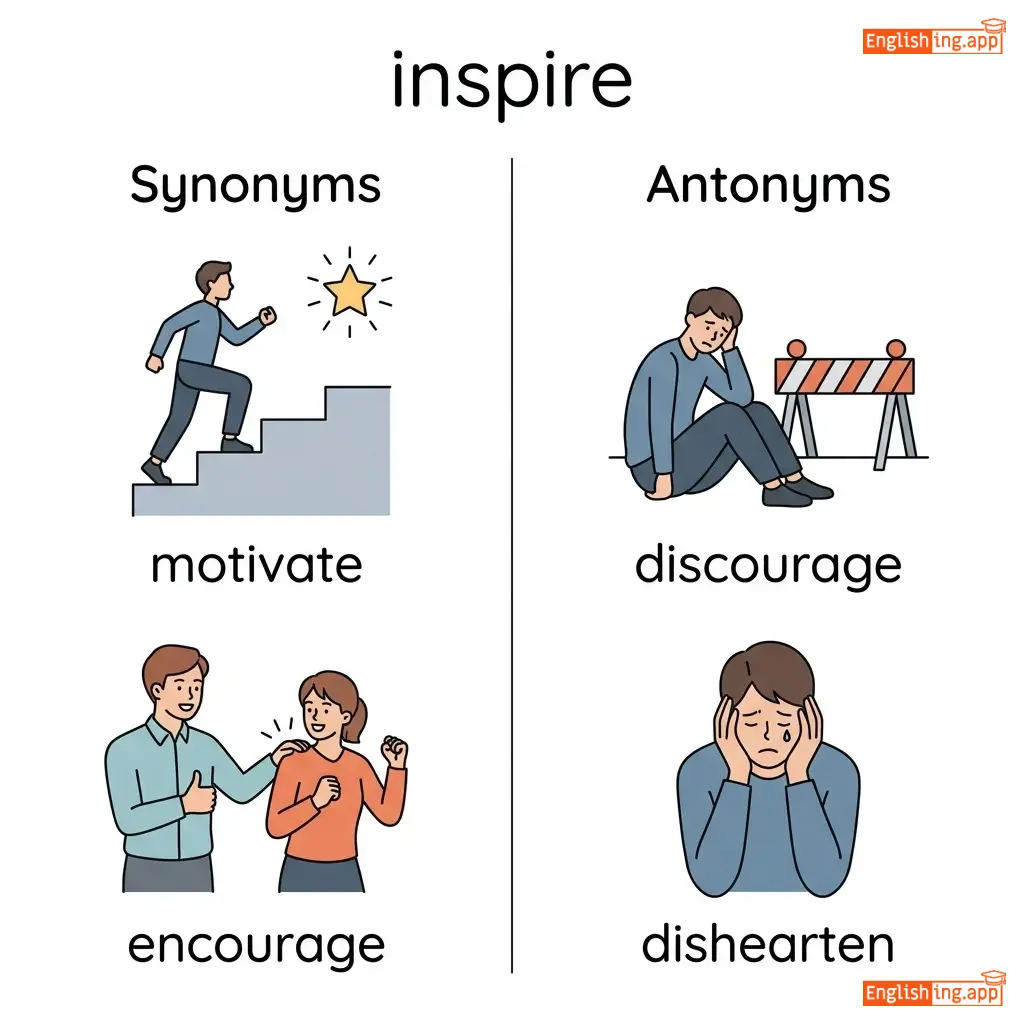
motivate, encourage, uplift, stimulate, influence
••••••
|
discourage, dishearten, depress
••••••
|
inspire others, inspire change, inspire confidence, truly inspire
••••••
|
幸福是生活中像阳光一样温暖的微笑,点亮你的世界。
••••••
|
|
⚖️
••••••
|
/ˌɪnstəˈbɪləti/
noun
(因斯塔比利蒂)
••••••
|
- •••••• |
不稳定
bu wending
••••••
|
- •••••• | - •••••• | - •••••• | - •••••• |
lack of stability or balance; tendency to change, fail, or collapse easily
••••••
|
Political instability has slowed economic growth in the region.
Political instability has slowed economic growth in the region.
••••••
|
政治不稳定减缓了该地区的经济增长。
zhengzhi bu wending jianhuan le gai diqu de jingji zengzhang
••••••
|
- •••••• | - •••••• | - •••••• |
volatility, uncertainty, fragility, imbalance, turbulence
••••••
|
stability, steadiness, security
••••••
|
political instability, economic instability, emotional instability, market instability
••••••
|
ZH: 不稳定 = not stable, just like instability
••••••
|
|
⚠️
••••••
|
/ɪnˈsteɪbəl/
adjective
(因斯泰布尔)
••••••
|
- •••••• |
不稳定的
bu wending de
••••••
|
- •••••• | - •••••• | - •••••• | - •••••• |
not stable; liable to change, collapse, or fail; lacking firmness or reliability
••••••
|
The instable political situation worried foreign investors.
因斯泰布尔 的 政治 局势 让 外国 投资者 担心。
••••••
|
不稳定的政治局势让外国投资者担心。
Bu wending de zhengzhi jushi rang waiguo touzizhe danxin
••••••
|
- •••••• | - •••••• | - •••••• |
unstable, volatile, insecure, shaky, precarious
••••••
|
stable, steady, secure
••••••
|
instable situation, instable structure, instable condition, instable economy
••••••
|
instable 听起来像 不 stable → 不稳定
••••••
|
|
💻
••••••
|
/ɪnˈstɔːl/
verb
(安装)
••••••
|
- •••••• |
安装
anzhuang
••••••
|
installed
安装了
••••••
|
installed
已安装
••••••
|
installs
安装
••••••
|
installing
安装中
••••••
|
To place or fix equipment or software so it is ready for use.
••••••
|
He installed the new software on his computer.
他在他的电脑上安装了新软件。
••••••
|
他在他的电脑上安装了新软件。
Tā zài tā de diànnǎo shàng ānzhuāngle xīn ruǎnjiàn.
••••••
|
install confidence
安装信心
••••••
|
To make someone feel confident.
••••••
|
安装信心
Ānzhuāng xìnxīn
••••••
|
set up, establish, place, position, fit
••••••
|
remove, uninstall, displace
••••••
|
install software, install equipment, install windows, install updates
••••••
|
安装就是将东西放置在合适的地方,让它能工作。
••••••
|

