|
絵文字
|
単語 | Images | 翻訳 | 過去 | 過去分詞 | 三人称単数 | 動名詞 | 意味 | 例文 | 例文の翻訳 | 表現例 | 表現例の意味 | 表現例の翻訳 | 同義語 | 対義語 | コロケーション | ニーモニック |
|---|---|---|---|---|---|---|---|---|---|---|---|---|---|---|---|---|---|
|
❓
••••••
|
/ɪnˈdefɪnət/
adjective
(インディフィニット)
••••••
|
- •••••• |
不確定な
fukakutei na
••••••
|
- •••••• | - •••••• | - •••••• | - •••••• |
not clearly defined; uncertain; vague; unlimited in time
••••••
|
The meeting has been postponed for an indefinite period.
会議は不確定な期間に延期されました。
••••••
|
会議は不確定な期間に延期されました。
Kaigi wa fukakutei na kikan ni enkisaremashita.
••••••
|
- •••••• | - •••••• | - •••••• |
uncertain, unclear, vague, unlimited
••••••
|
definite, specific, clear, precise
••••••
|
indefinite period, indefinite postponement, indefinite article
••••••
|
In Japanese, '不確定な' represents an undefined situation, just like indefinite time.
••••••
|
|
⏳
••••••
|
/ɪnˈdɛfɪnətli/
adverb
(インディフィニットリー)
••••••
|
- •••••• |
無期限で
mukigen de
••••••
|
- •••••• | - •••••• | - •••••• | - •••••• |
for an unlimited or unspecified period of time
••••••
|
The project has been postponed indefinitely. |
プロジェクトは無期限で延期されました。
Purojekuto wa mukigen de enki sare mashita.
••••••
|
- •••••• | - •••••• | - •••••• |
endlessly, perpetually, without limit, continuously
••••••
|
temporarily, briefly
••••••
|
postponed indefinitely, continue indefinitely, delayed indefinitely, suspended indefinitely
••••••
|
Indefinitely は無期限 → 時間に制限がない
••••••
|
|
🕊️
••••••
|
/ˌɪndɪˈpɛndəns/
noun
(インデペンデンス)
••••••
|
|
独立
dokuritsu
••••••
|
- •••••• | - •••••• | - •••••• | - •••••• |
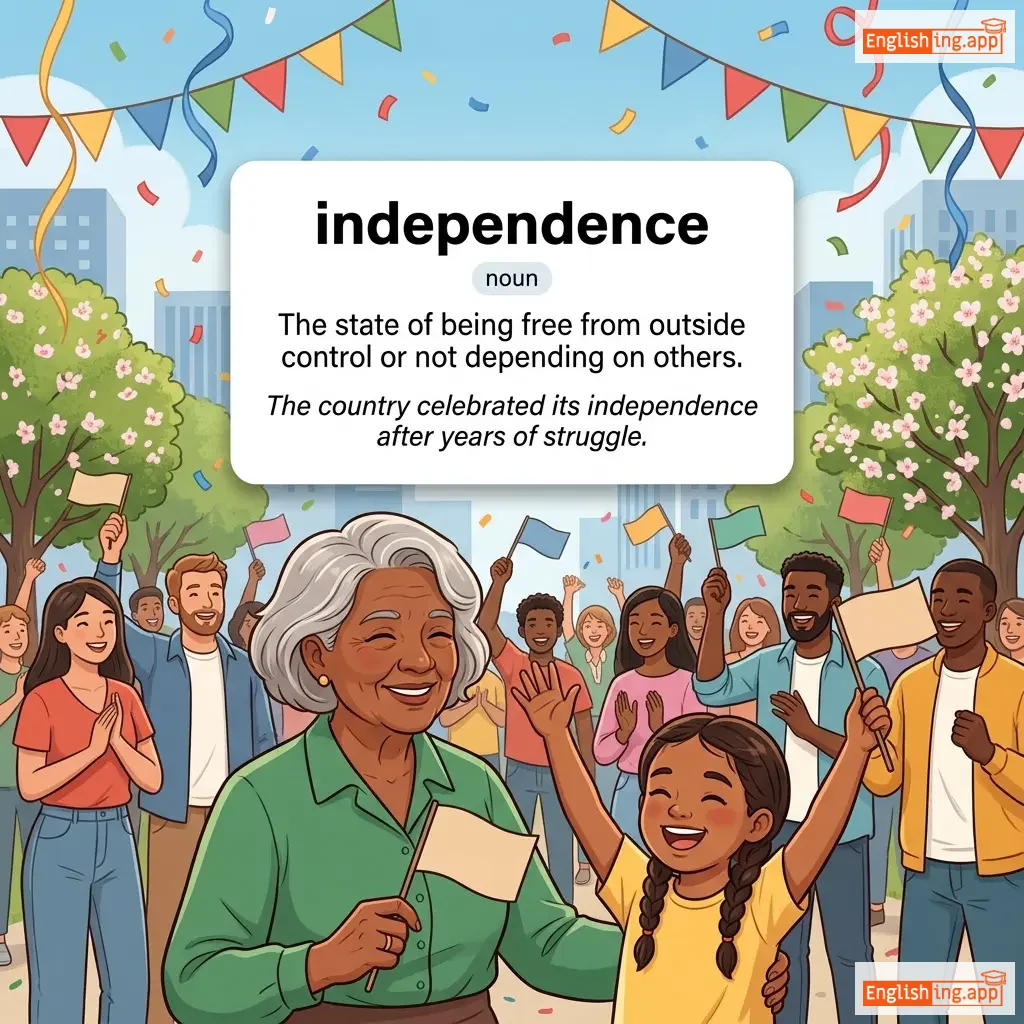
The state of being free from outside control or not depending on others.
••••••
|
The country celebrated its independence after years of struggle. |
その国は長年の闘争の後、独立を祝いました。
Sono kuni wa naganen no tōsō no ato, dokuritsu o iwai mashita.
••••••
|
declare independence |
To officially announce freedom from control by another authority.
••••••
|
独立を宣言する
Dokuritsu o sengen suru
••••••
|
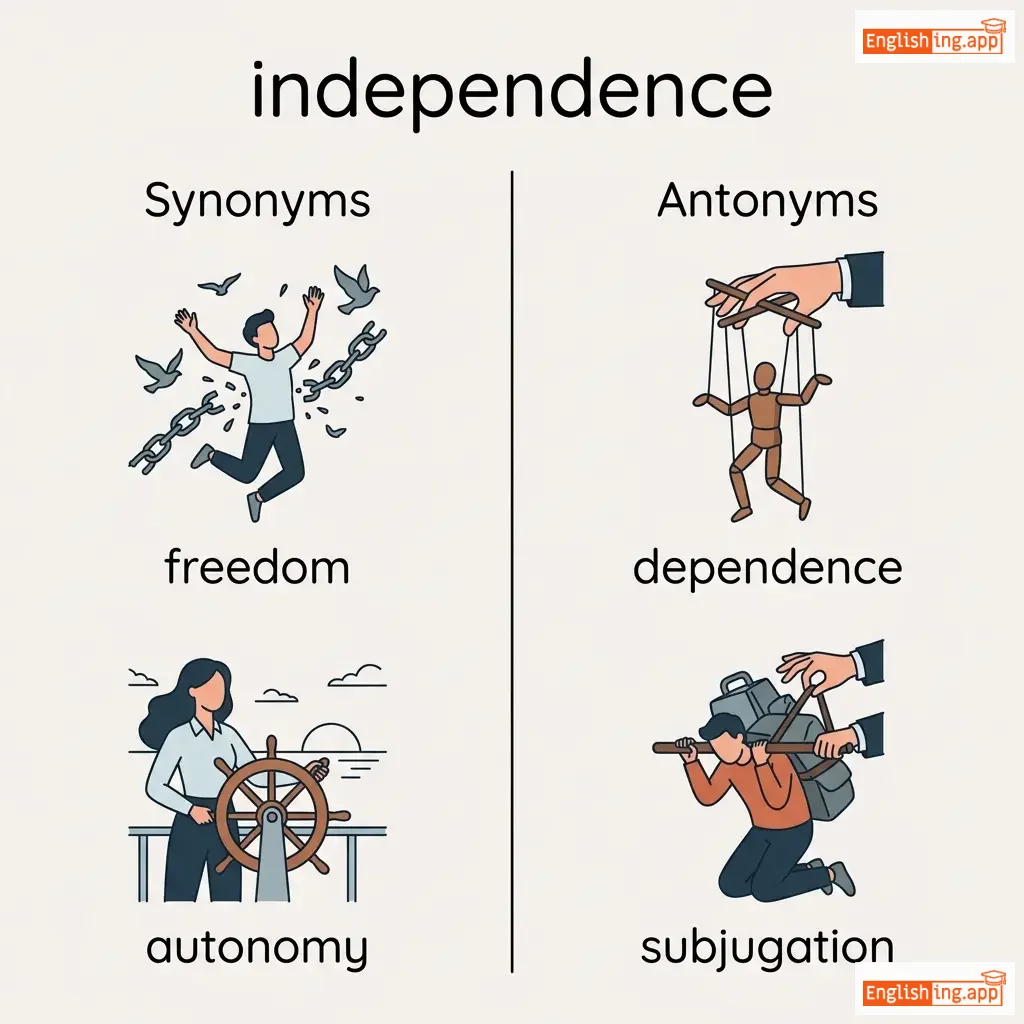
freedom, autonomy, liberty, sovereignty, self-rule
••••••
|
dependence, subjugation, slavery
••••••
|
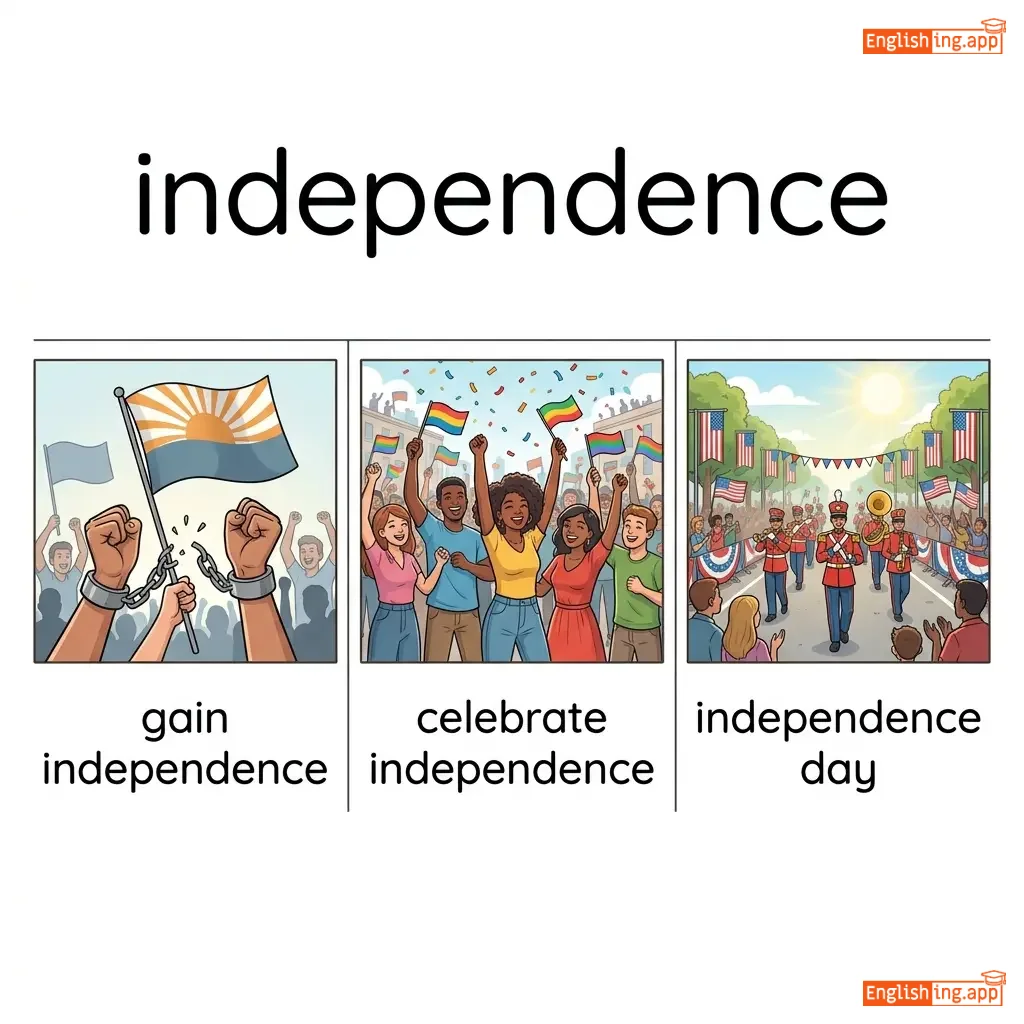
gain independence, celebrate independence, independence day, struggle for independence
••••••
|
Independenceは独立を意味します - 日本では、独立の日が祝われます。
••••••
|
|
🕊️
••••••
|
/ˌɪn.dɪˈpen.dənt/
adjective
(インディペンデント)
••••••
|
|
独立
dokuritsu
••••••
|
- •••••• | - •••••• | - •••••• | - •••••• |
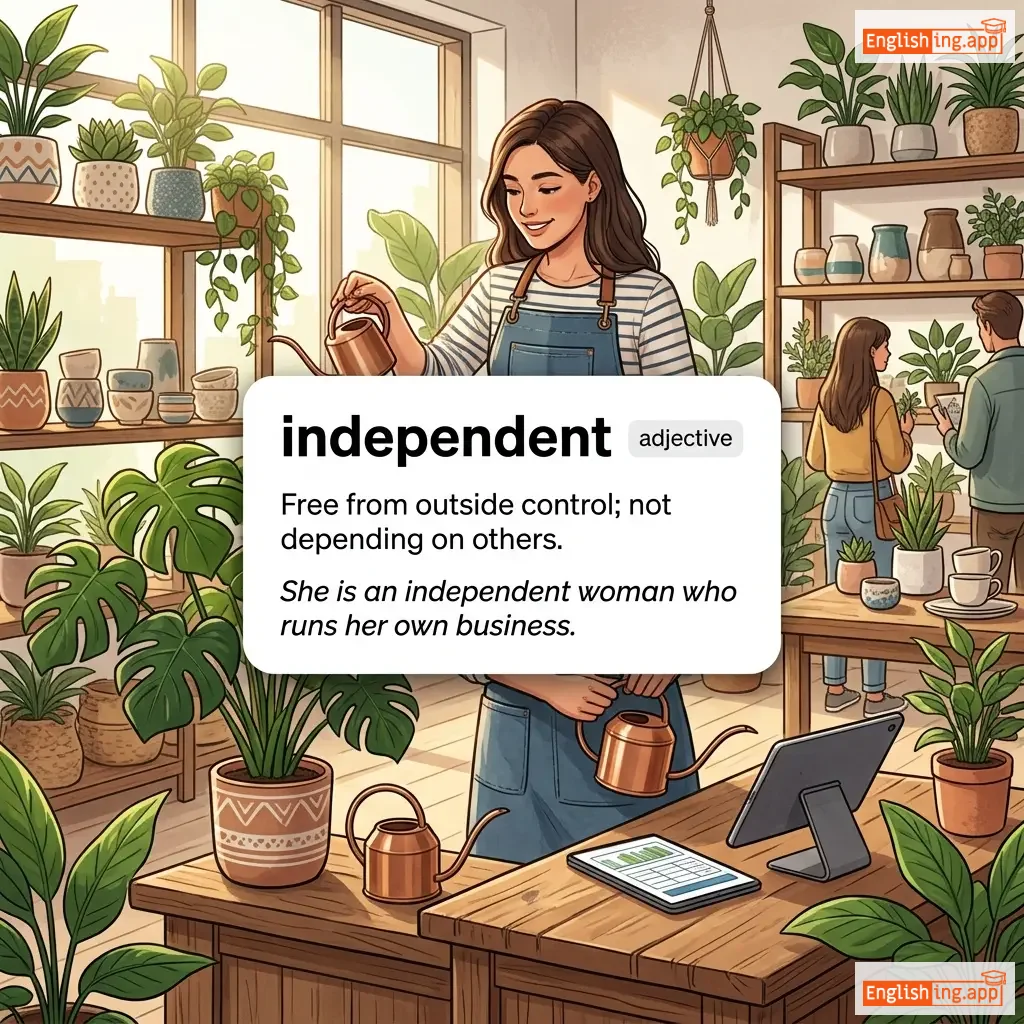
Free from outside control; not depending on others.
••••••
|
She is an independent woman who runs her own business.
彼女は自分のビジネスを運営する独立した女性です。
••••••
|
彼女は自分のビジネスを運営する独立した女性です。
Kanojo wa jibun no bijinesu o un'ei suru dokuritsu shita josei desu.
••••••
|
independent thinker
独立した思考者
••••••
|
Someone who forms their own opinions without influence from others.
••••••
|
独立した思考者
dokuritsu shita shikōsha
••••••
|
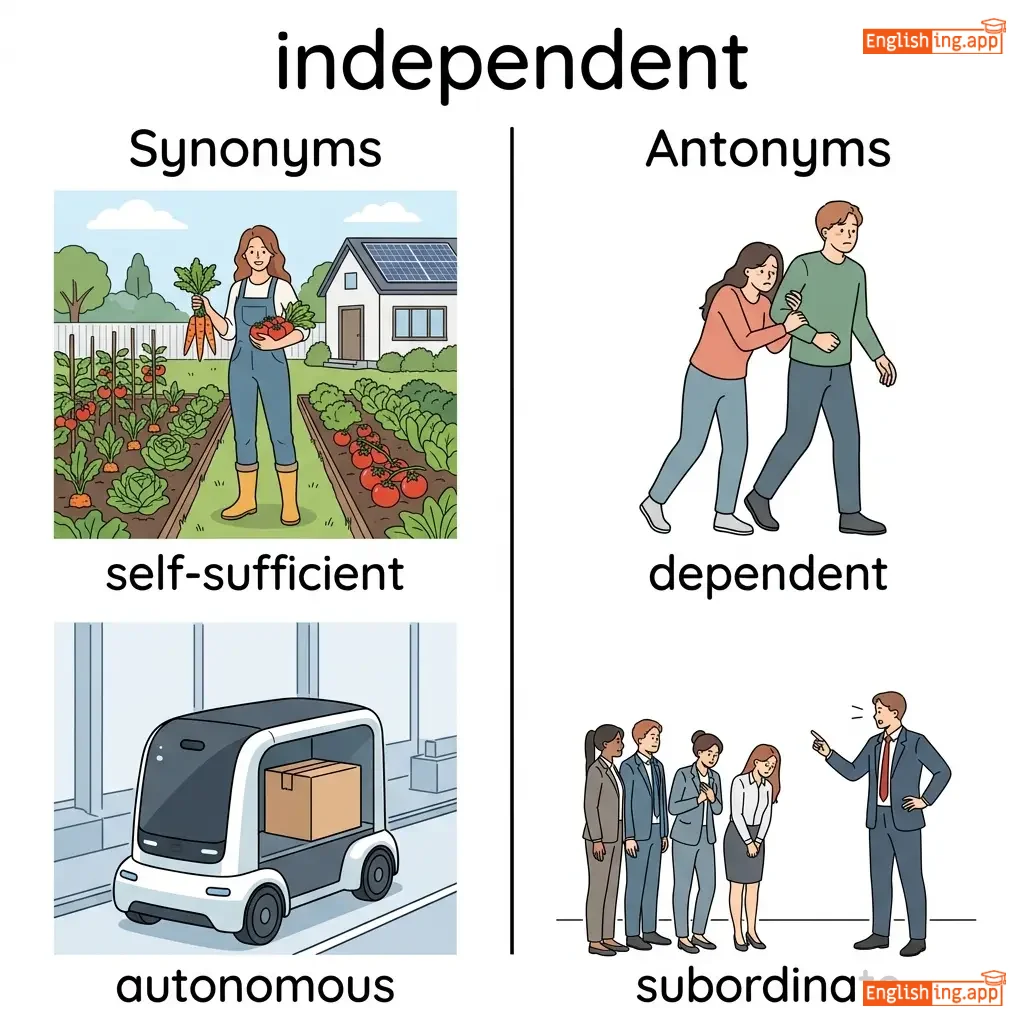
self-sufficient, autonomous, free, self-reliant
••••••
|
dependent, subordinate
••••••
|
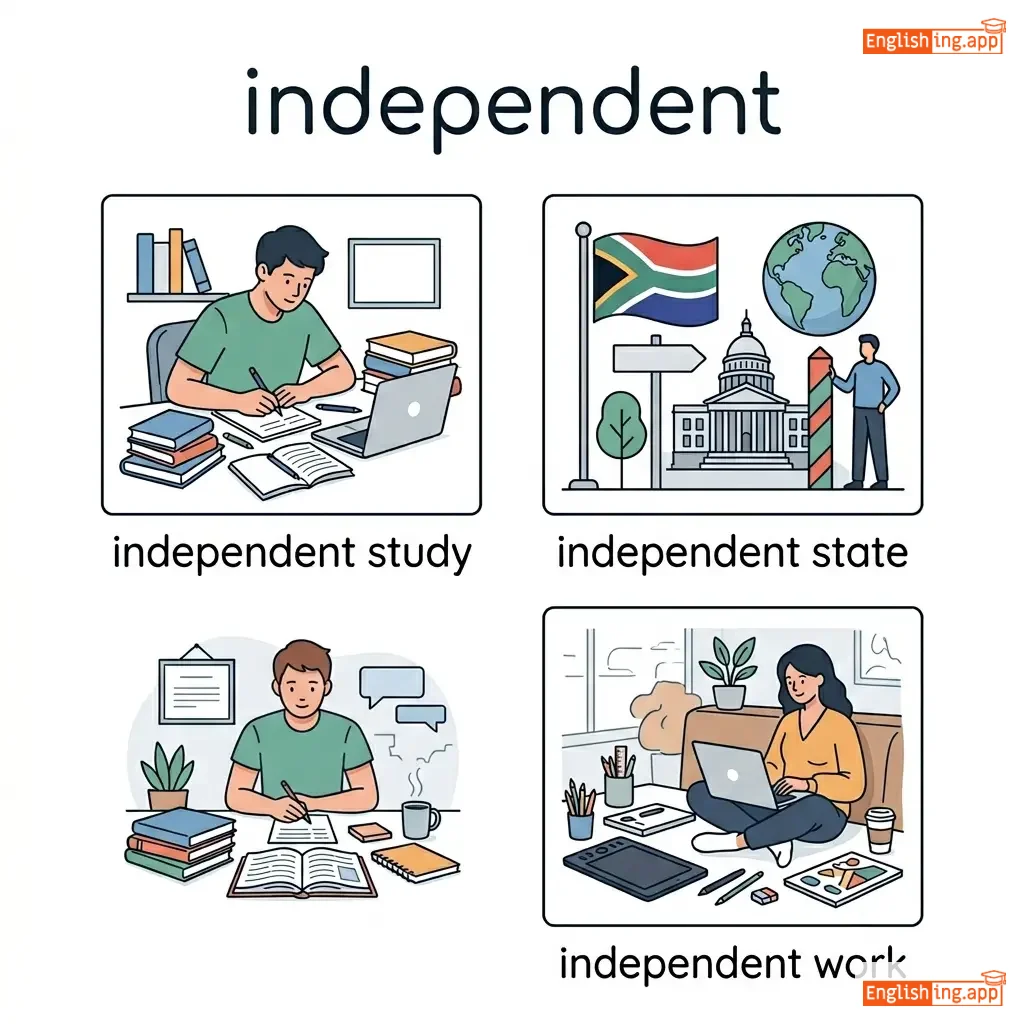
independent study, independent state, independent work, financially independent
••••••
|
独立は他の人に依存しない自由を意味します。
••••••
|
|
📑
••••••
|
/ˈɪndeks/
noun, verb
(インデックス)
••••••
|
|
インデックス
indekkusu
••••••
|
indexed
インデックスド
••••••
|
indexed
インデックスド
••••••
|
indexes
インデックスィズ
••••••
|
indexing
インデックスング
••••••
|
A list of items arranged in order, or to arrange data systematically for reference.
••••••
|
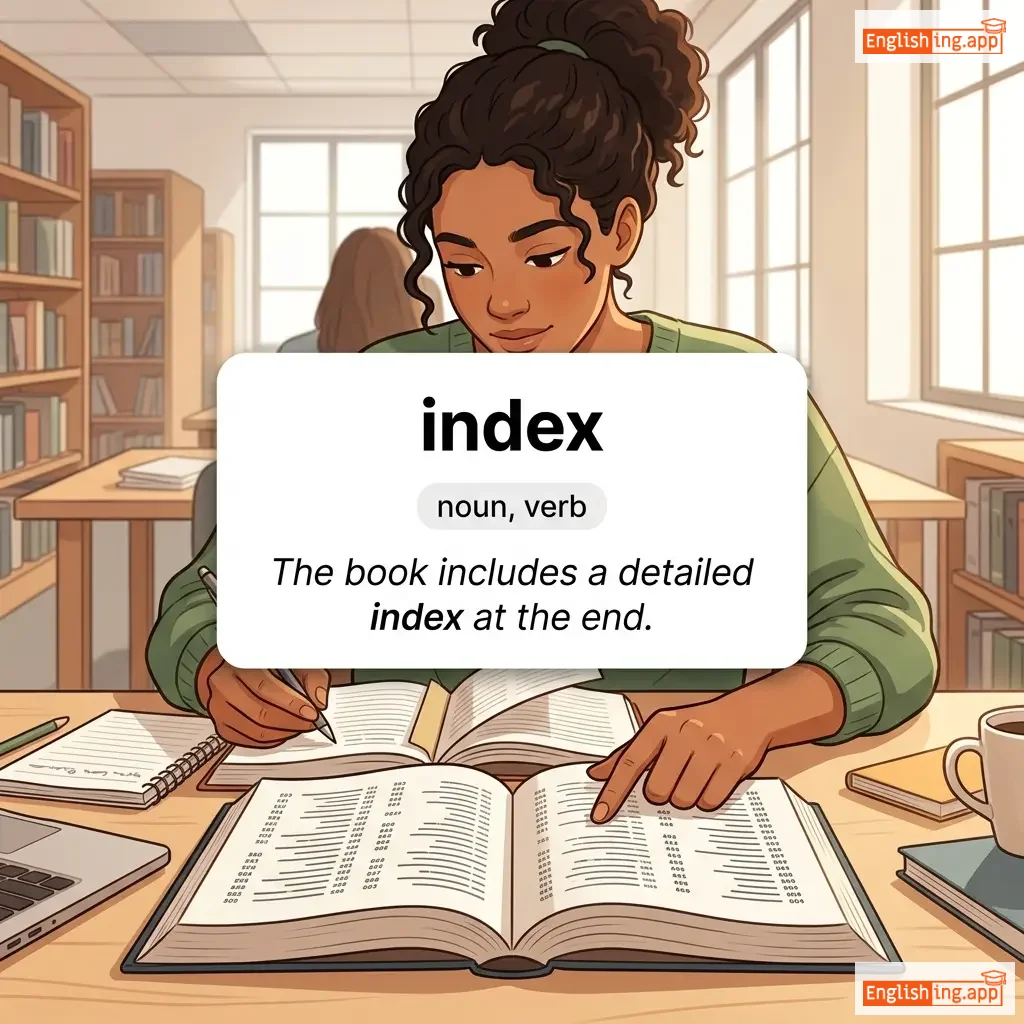
The book includes a detailed index at the end.
その本には最後に詳細なインデックスが含まれています。
••••••
|
その本には最後に詳細なインデックスが含まれています。
Sono hon ni wa saigo ni shōsai na indekkusu ga fukumareteimasu.
••••••
|
index finger
人差し指
••••••
|
The finger next to the thumb, used for pointing.
••••••
|
人差し指
Hitosashiyubi
••••••
|
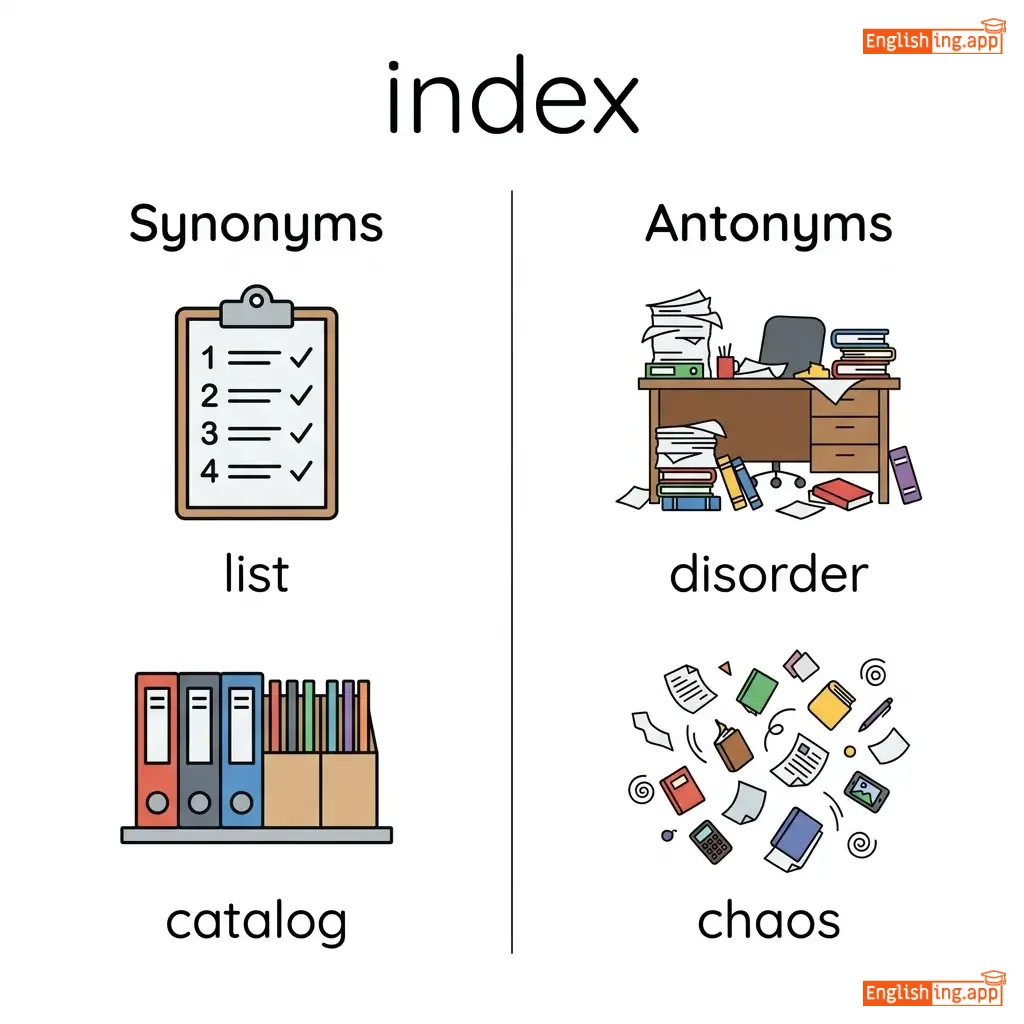
list, catalog, register, directory, guide
••••••
|
disorder, chaos, confusion
••••••
|
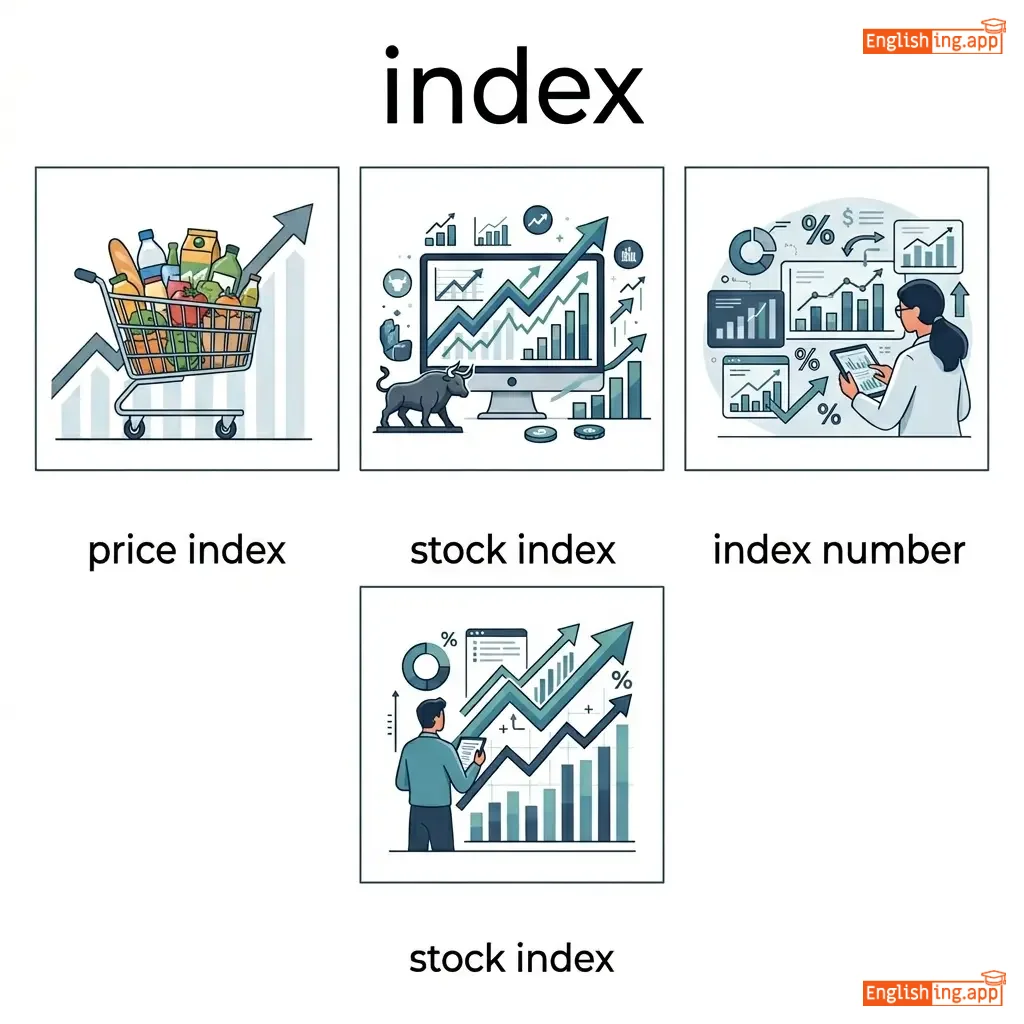
price index, stock index, index number, index card
••••••
|
インデックスとはリストのこと—インデックス化すると簡単に探し出せる!
••••••
|
|
🇮🇳
••••••
|
/ˈɪndiən/
adjective/noun
(インディアン)
••••••
|
- •••••• |
インディアンの
Indian no
••••••
|
- •••••• | - •••••• | - •••••• | - •••••• |
Relating to India, its people, or their culture.
••••••
|
She loves Indian food, especially biryani. |
彼女はインディアンの料理が好きで、特にビリヤニが好きです。
Kanojo wa Indian no ryouri ga suki de, toku ni biriyani ga suki desu.
••••••
|
Indian summer |
A period of unseasonably warm weather in late autumn.
••••••
|
インディアンサマー
Indian summer
••••••
|
South Asian, Hindu, Desi
••••••
|
foreign, non-Indian
••••••
|
Indian culture, Indian food, Indian citizen, Indian traditions
••••••
|
Indian はインディアンの意味 - インディア 🇮🇳 とインディアンビリヤニ 🍛 を想像してみてください。
••••••
|
|
👉
••••••
|
/ˈɪndɪˌkeɪt/
verb
(インディケイト)
••••••
|
|
示す
shimesu
••••••
|
indicated
インディケイテッド
••••••
|
indicated
インディケイテッド
••••••
|
indicates
インディケイツ
••••••
|
indicating
インディケイティング
••••••
|
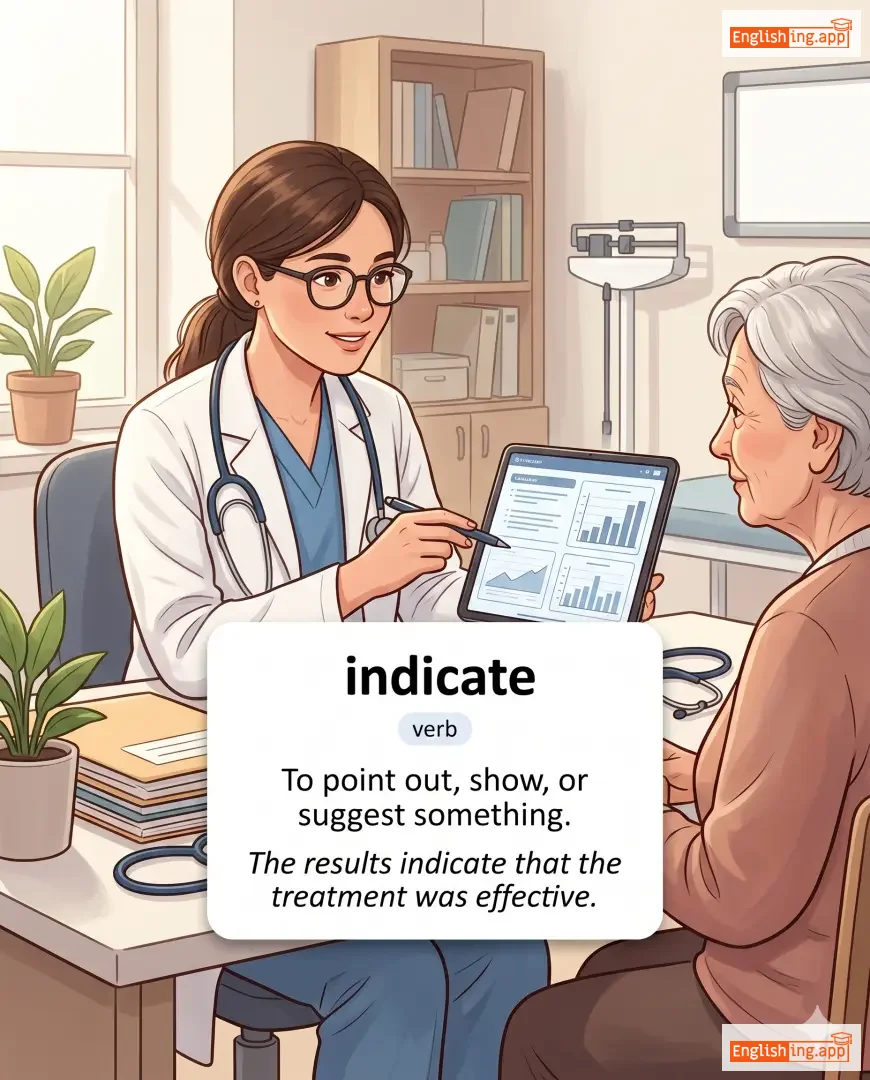
To point out, show, or suggest something.
••••••
|
The results indicate that the treatment was effective.
結果は治療が効果的であったことを示しています。
••••••
|
結果は治療が効果的であったことを示しています。
Kekka wa chiryo ga kōkateki deatta koto o shimeshiteimasu.
••••••
|
indicate interest
興味を示す
••••••
|
To show or express that one is interested.
••••••
|
興味を示す
kyōmi o shimesu
••••••
|
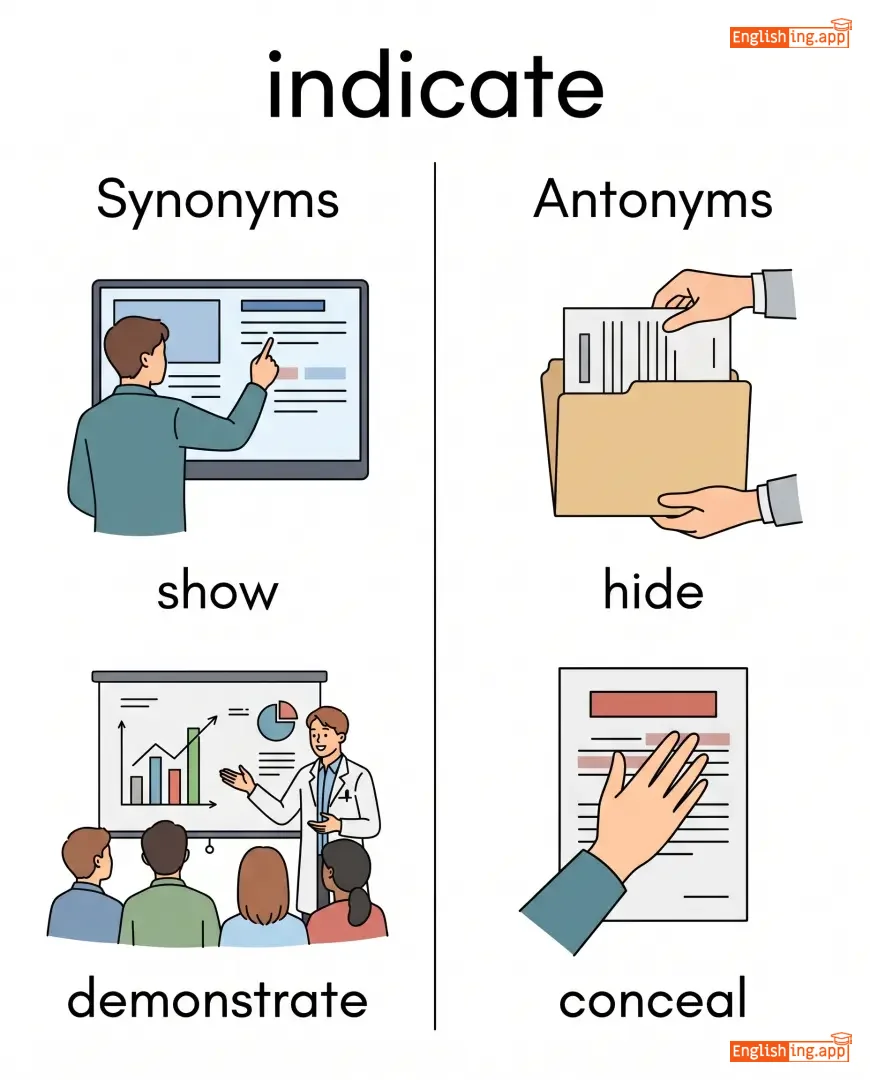
show, demonstrate, suggest, signal, reveal
••••••
|
hide, conceal, obscure
••••••
|
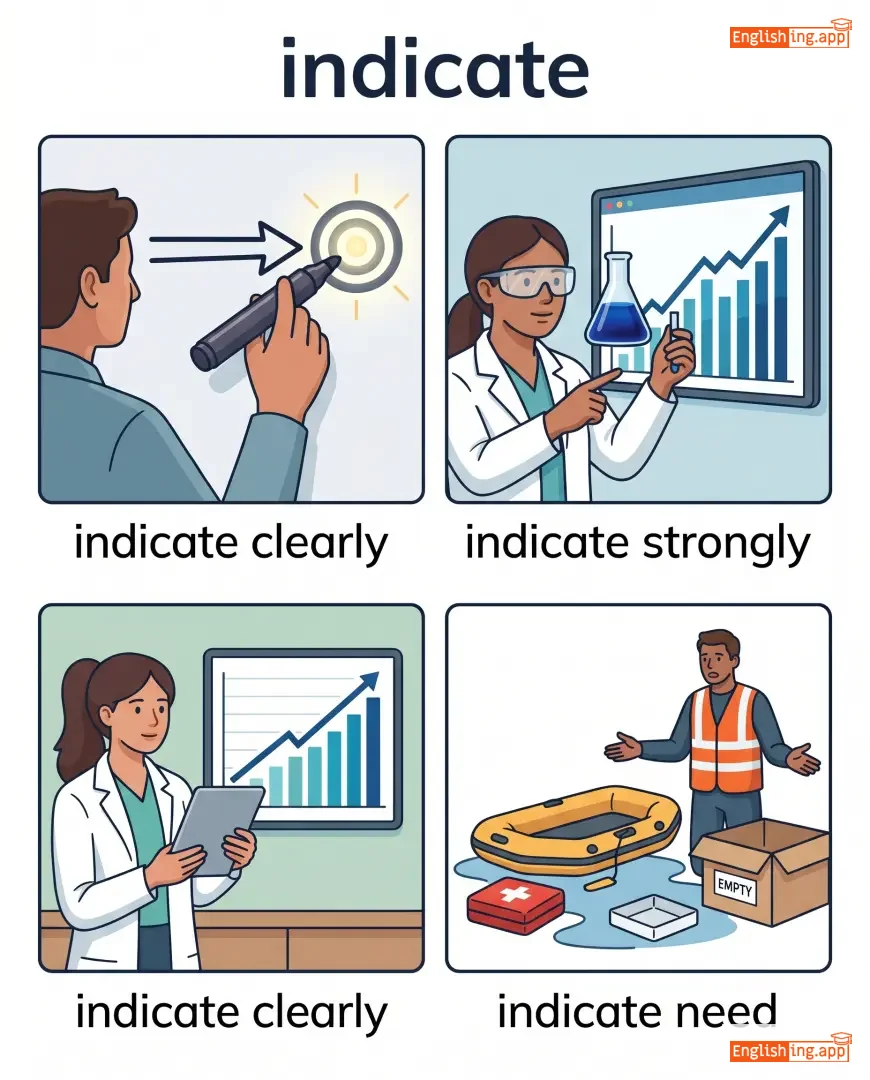
indicate clearly, indicate strongly, indicate need, indicate result
••••••
|
Indicateは示す意味です - 手で指し示す 👉。
••••••
|
|
⚠️
••••••
|
/ˌɪndɪˈkeɪʃən/
noun
(indikēshon)
••••••
|
- •••••• |
指示
shiji
••••••
|
- •••••• | - •••••• | - •••••• | - •••••• |
A sign, piece of information, or signal that suggests something.
••••••
|
Dark clouds are an indication of an approaching storm. |
暗い雲は近づいている嵐の兆候です。
kurai kumo wa chikadzuite iru arashi no chōkō desu
••••••
|
give an indication |
To show or suggest something indirectly.
••••••
|
指示を出す
shiji o dasu
••••••
|
sign, signal, evidence, clue, pointer
••••••
|
concealment, suppression
••••••
|
clear indication, early indication, medical indication
••••••
|
Indicationは指示を意味する—暗い雲は嵐の指示を与えます。
••••••
|
|
📊
••••••
|
/ˈɪndɪˌkeɪtər/
noun
(インディケーター)
••••••
|
|
指標
shihyō
••••••
|
- •••••• | - •••••• | - •••••• | - •••••• |
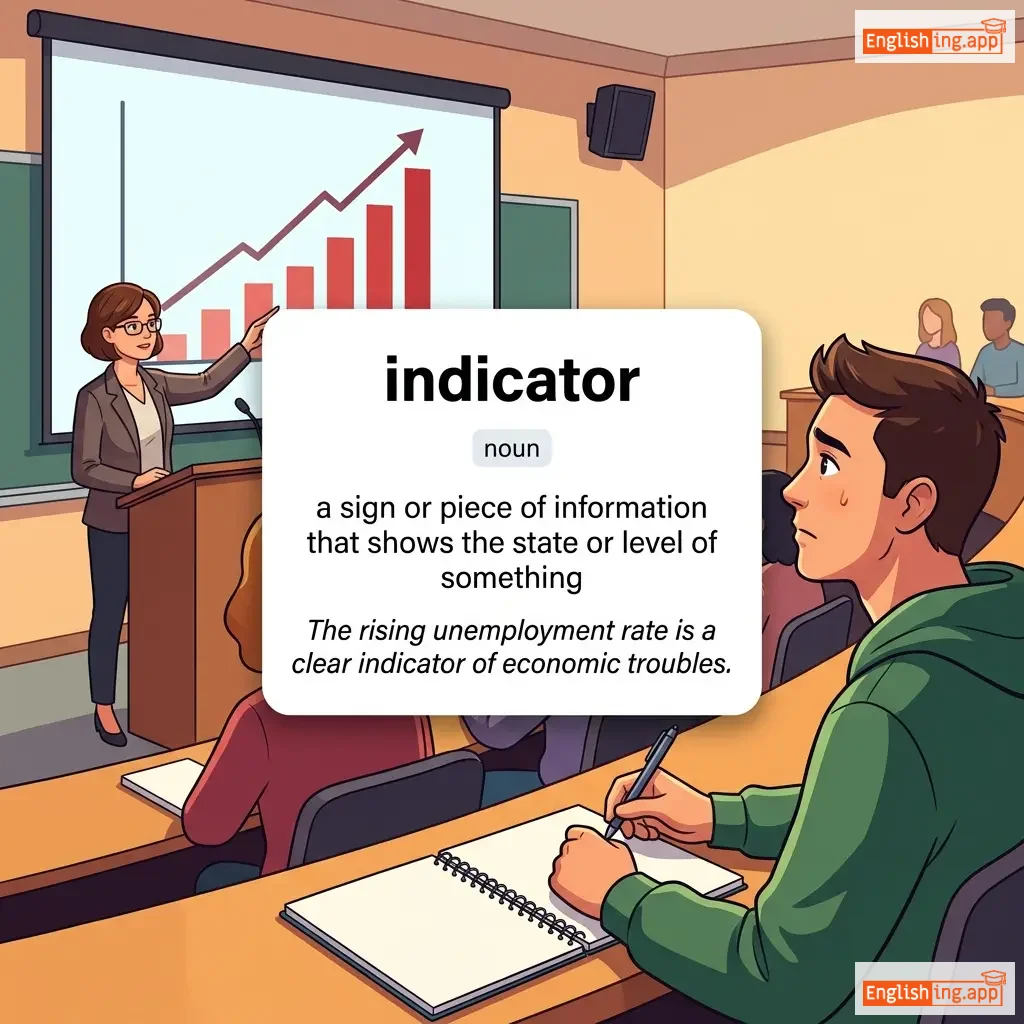
a sign or piece of information that shows the state or level of something
••••••
|
The rising unemployment rate is a clear indicator of economic troubles. |
失業率の上昇は経済問題の明確な指標です。
Shitsugyō-ritsu no jōshō wa keizai mondai no meikaku na shihyō desu.
••••••
|
leading indicator |
a measure that signals future developments or trends
••••••
|
先行指標
senkō shihyō
••••••
|
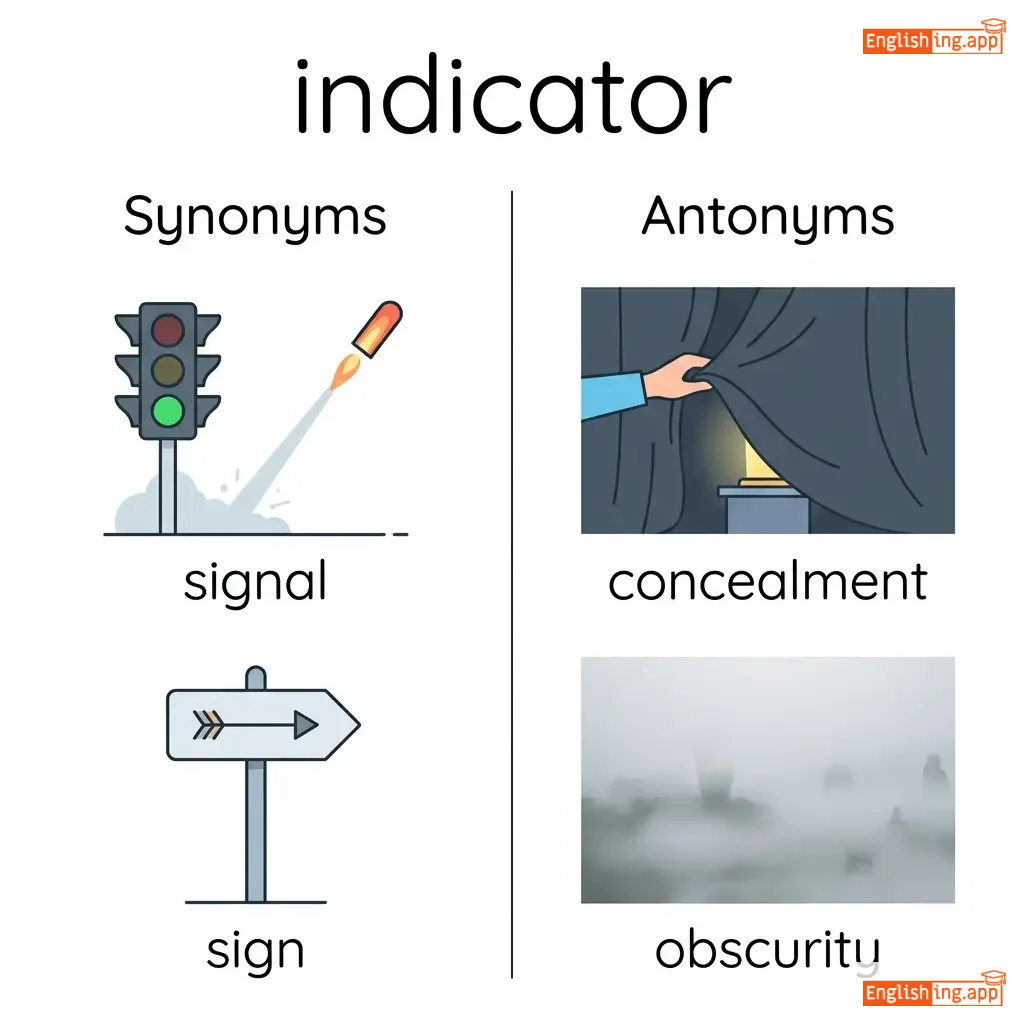
signal, sign, gauge, measure, pointer
••••••
|
concealment, obscurity
••••••
|
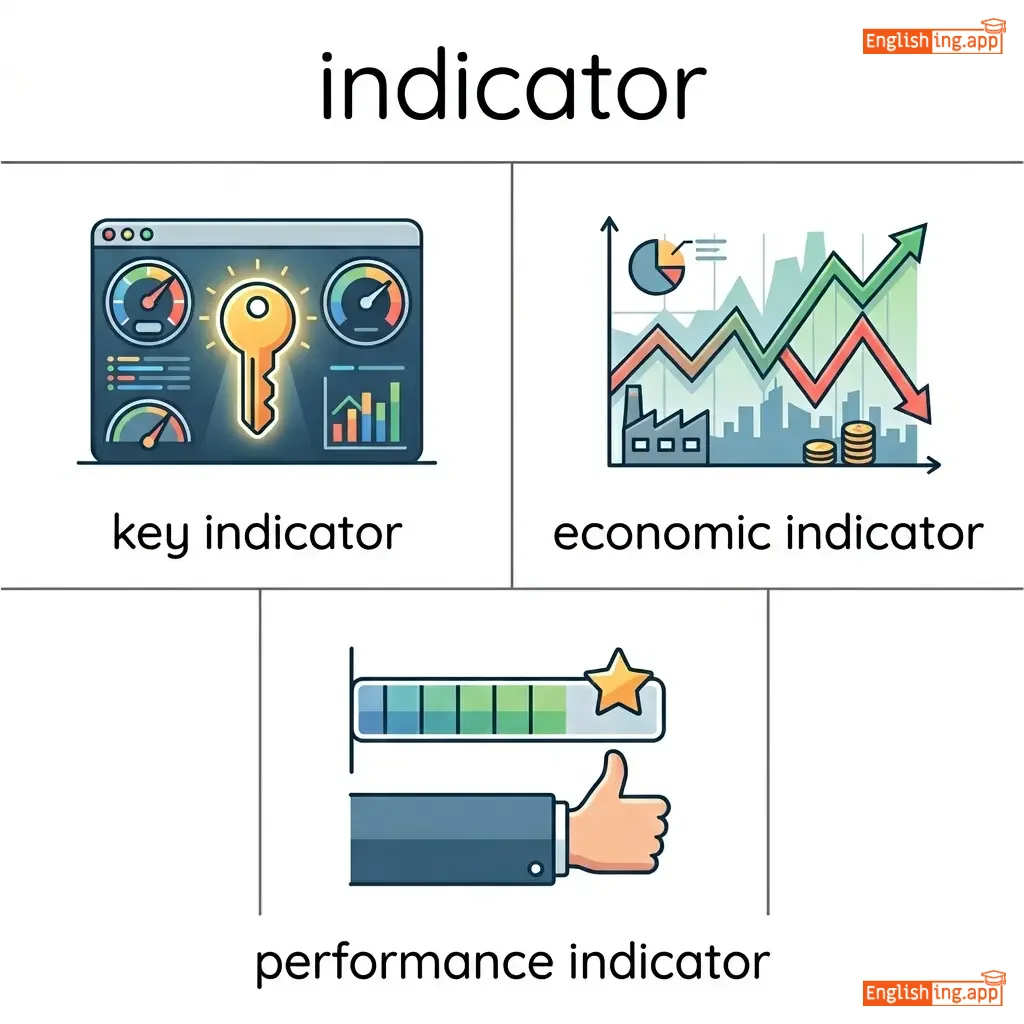
key indicator, economic indicator, performance indicator, health indicator
••••••
|
インディケーターは示すもの – 例えば、信号機が示すように。
••••••
|
|
📜
••••••
|
/ɪnˈdaɪtmənt/
noun
(インダイトメント)
••••••
|
- •••••• |
起訴状
kisojou
••••••
|
- •••••• | - •••••• | - •••••• | - •••••• |
a formal charge or accusation of a serious crime
••••••
|
The indictment accused the company of multiple violations. |
起訴状は、会社に対する複数の違反を告発しました。
Kisojou wa, kaisha ni taisuru fukusū no ihan o kokuhatsu shimashita.
••••••
|
- •••••• | - •••••• | - •••••• |
charge, accusation, prosecution, allegation
••••••
|
acquittal, exoneration
••••••
|
criminal indictment, federal indictment, indictment process
••••••
|
Indictment とは起訴状です。
••••••
|
|
😐
••••••
|
/ɪnˈdɪfərəns/
noun
(インディファレンス)
••••••
|
- •••••• |
無関心
mukanshin
••••••
|
- •••••• | - •••••• | - •••••• | - •••••• |
lack of interest, concern, or sympathy
••••••
|
He showed complete indifference to the suffering around him. |
彼は周りの苦しみに対して完全に無関心を示した。
Kare wa mawari no kurushimi ni taishite kanzen ni mukanshin o shimeshita.
••••••
|
cold indifference |
a total lack of concern or empathy
••••••
|
冷たい無関心
tsumetai mukanshin
••••••
|
apathy, unconcern, neglect, disinterest
••••••
|
concern, care, sympathy
••••••
|
show indifference, total indifference, cold indifference, public indifference
••••••
|
Indifference: in (無) + difference (関心), 関心がない=無関心。
••••••
|
|
😐
••••••
|
/ɪnˈdɪf.ər.ənt/
adjective
(インディファレント)
••••••
|
- •••••• |
無関心
mukanshin
••••••
|
- •••••• | - •••••• | - •••••• | - •••••• |
having no particular interest or concern; not caring one way or another
••••••
|
She was indifferent to the outcome of the match. |
彼女は試合の結果に無関心だった。
Kanojo wa shiai no kekka ni mukanshin datta.
••••••
|
indifferent attitude |
showing no concern or interest
••••••
|
無関心な態度
mukanshin na taido
••••••
|
unconcerned, apathetic, detached, disinterested, neutral
••••••
|
concerned, interested, passionate
••••••
|
remain indifferent, indifferent attitude, indifferent to, indifferent response
••••••
|
何も気にしない時、あなたは'無関心'か' indifferent 'です。
••••••
|
|
🌱
••••••
|
/ɪnˈdɪdʒ.ə.nəs/
adjective
(インディジナス)
••••••
|
|
先住民の
senjūmin no
••••••
|
- •••••• | - •••••• | - •••••• | - •••••• |
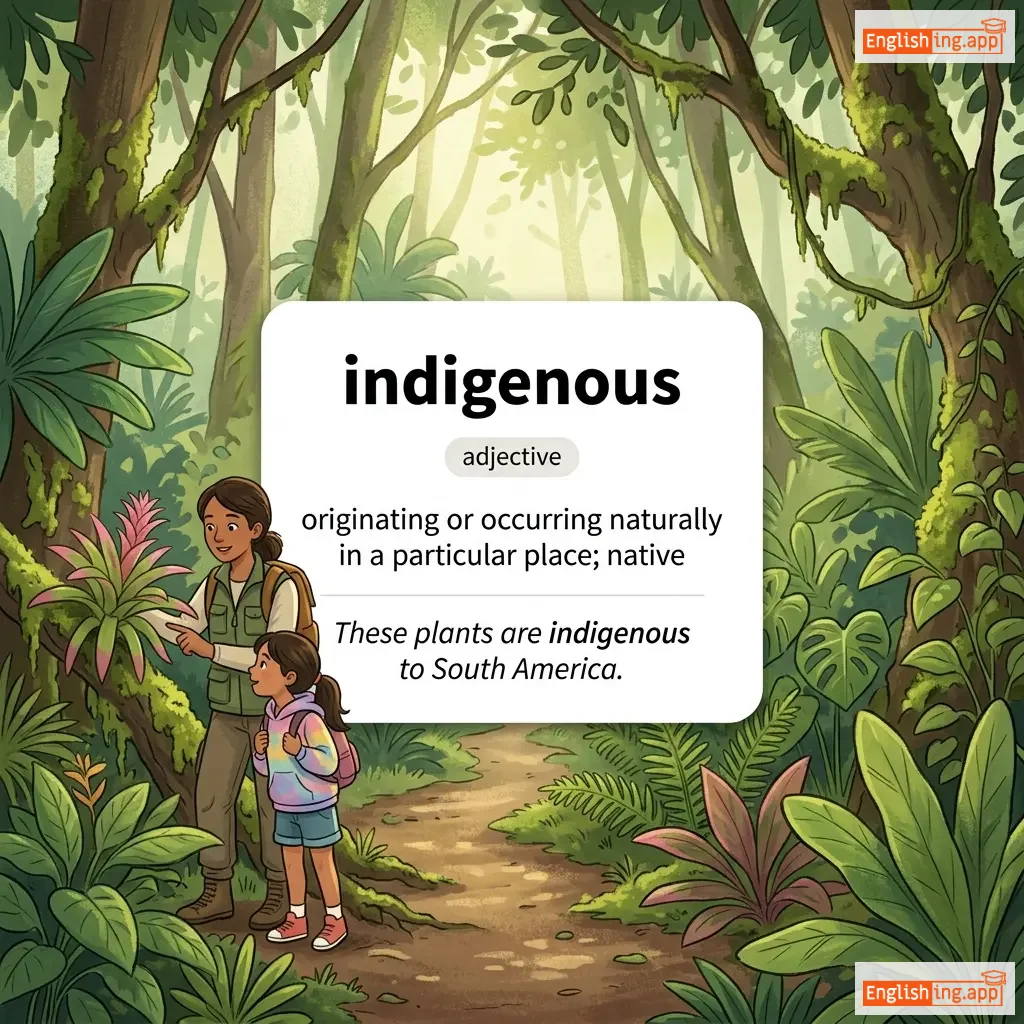
originating or occurring naturally in a particular place; native
••••••
|
These plants are indigenous to South America. |
これらの植物は南アメリカの先住民のものです。
Korera no shokubutsu wa Minami Amerika no senjūmin no mono desu.
••••••
|
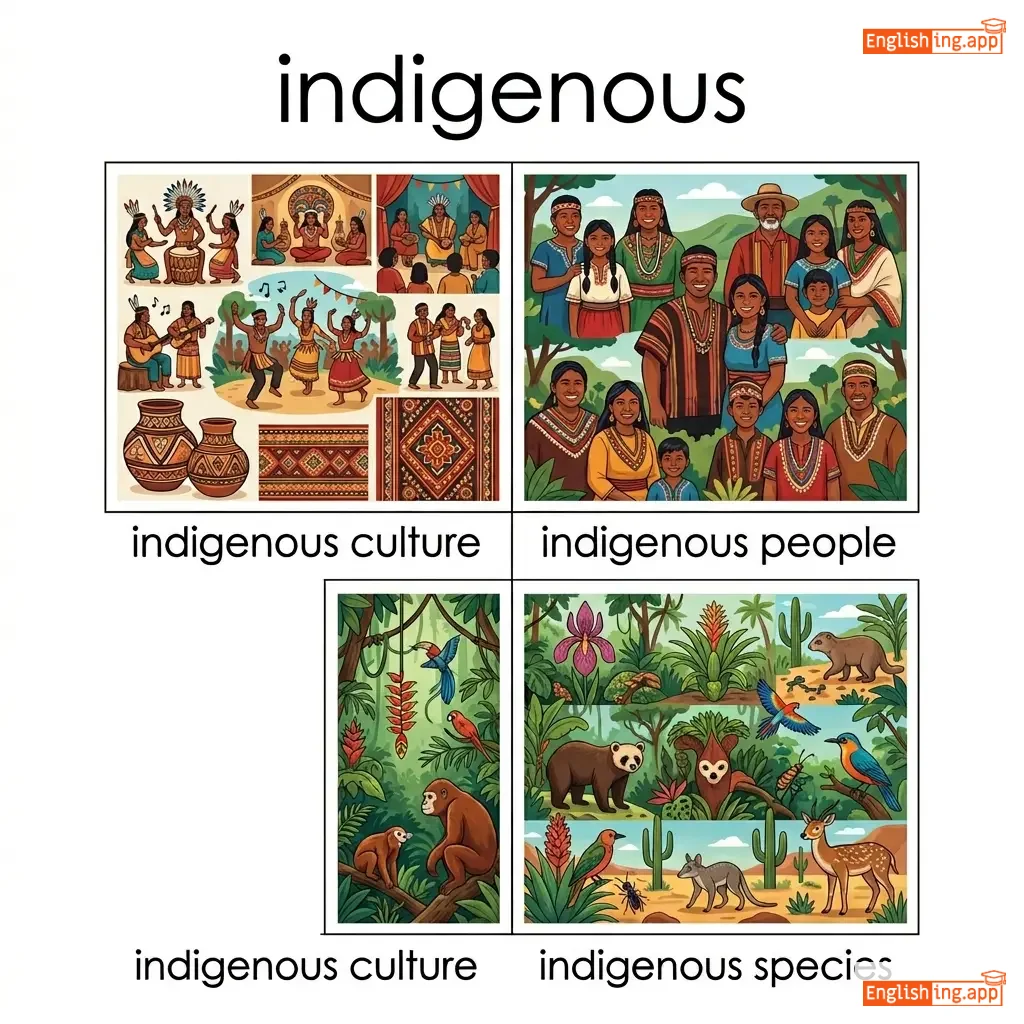
indigenous people |
the native inhabitants of a region
••••••
|
先住民
senjūmin
••••••
|
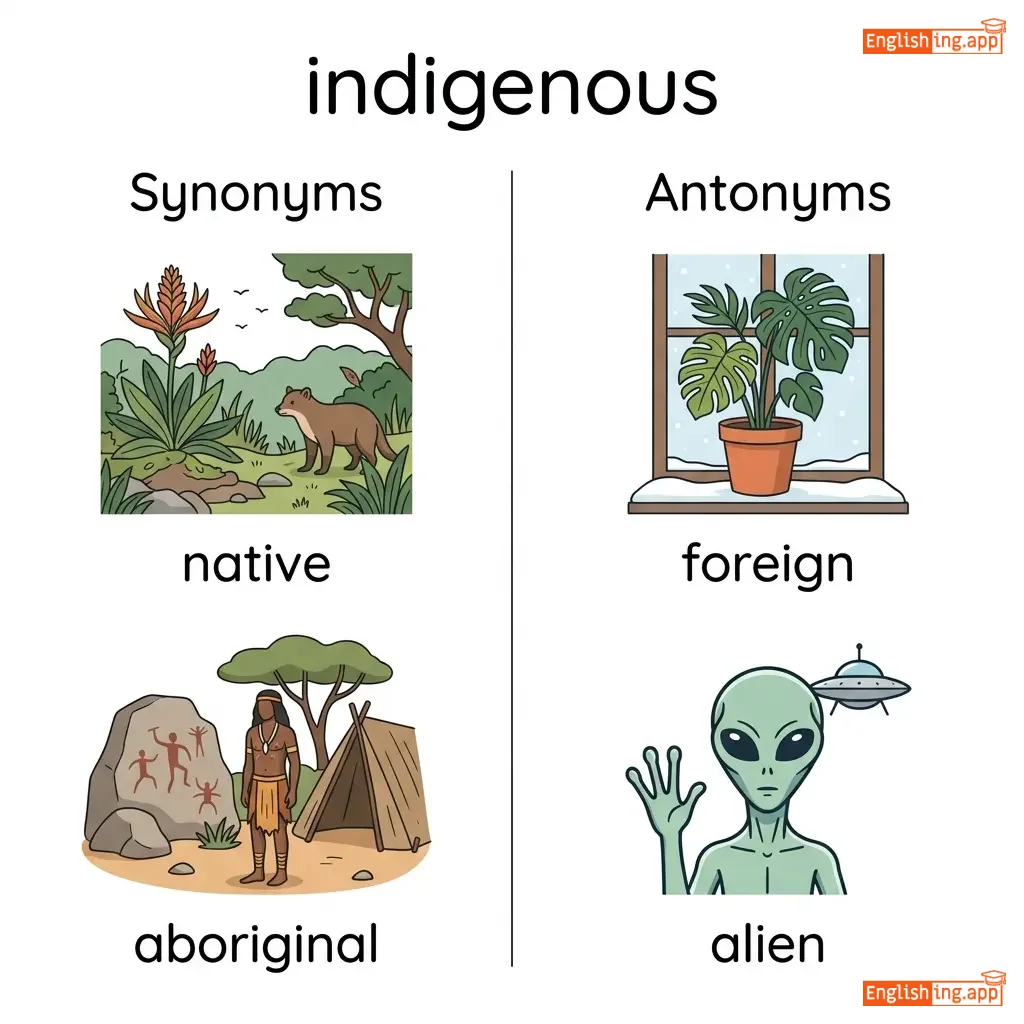
native, aboriginal, local, endemic, original
••••••
|
foreign, alien, immigrant
••••••
|
indigenous culture, indigenous people, indigenous species
••••••
|
インディジナス = 先住民、南アメリカの先住民のように。
••••••
|
|
↪️
••••••
|
/ˌɪndəˈrɛktli/
adverb
(インダイレクトリー)
••••••
|
- •••••• |
間接的に
kansetsuteki ni
••••••
|
- •••••• | - •••••• | - •••••• | - •••••• |
in a way that is not direct; through an intermediate means or influence
••••••
|
The policy affected small businesses indirectly.
ザ ポリシー アフェクテッド スモール ビジネシズ インダイレクトリー。
••••••
|
その政策は中小企業に間接的に影響した。
sono seisaku wa chuusho kigyou ni kansetsuteki ni eikyou shita
••••••
|
- •••••• | - •••••• | - •••••• |
implicitly, obliquely, indirectly, tangentially, circuitously
••••••
|
directly, explicitly
••••••
|
indirectly related, indirectly affected, indirectly involved, indirectly proportional
••••••
|
間接的に = indirect
••••••
|
|
⚠️
••••••
|
/ˌɪnˈdɪsəplɪn/
noun
(インディシプリン)
••••••
|
- •••••• |
規律の欠如
kiritsu no ketsujo
••••••
|
- •••••• | - •••••• | - •••••• | - •••••• |
lack of discipline or self-control; failure to obey rules or maintain order
••••••
|
Indiscipline among the students disrupted the learning environment.
インディシプリン アマング ザ スチューデンツ ディスラプテッド ザ ラーニング エンバイロンメント。
••••••
|
学生の規律の欠如が学習環境を乱した。
Gakusei no kiritsu no ketsujo ga gakushu kankyo o midashita
••••••
|
- •••••• | - •••••• | - •••••• |
disorder, unruliness, lawlessness, disobedience, chaos
••••••
|
discipline, order, obedience
••••••
|
student indiscipline, military indiscipline, widespread indiscipline, curb indiscipline
••••••
|
Indiscipline = discipline がない → 規律の欠如
••••••
|
|
🌫️
••••••
|
/ˌɪndɪˈstɪŋkt/
adjective
(インディスティンクト)
••••••
|
- •••••• |
不明瞭な
fumiryōna
••••••
|
- •••••• | - •••••• | - •••••• | - •••••• |
Not clear or sharply defined; vague or blurred.
••••••
|
The sound of voices was indistinct in the distance. |
遠くからの声は不明瞭でした。
Tōku kara no koe wa fumiryō deshita.
••••••
|
- •••••• | - •••••• | - •••••• |
vague, unclear, blurred, obscure, hazy
••••••
|
clear, distinct, sharp
••••••
|
indistinct shape, indistinct memory, indistinct voice
••••••
|
Indistinctは日本語で不明瞭=はっきりしないことです。
••••••
|
|
👤
••••••
|
/ˌɪndɪˈvɪdʒuəl/
noun/adjective
(インディビジュアル)
••••••
|
- •••••• |
個人
kojin
••••••
|
- •••••• | - •••••• | - •••••• | - •••••• |
A single human being as distinct from a group; relating to one person.
••••••
|
Each individual has the right to freedom of speech. |
各個人には表現の自由がある。
Kaku kojin ni wa hyōgen no jiyū ga aru.
••••••
|
individual rights |
Legal or moral entitlements held by each person.
••••••
|
個人の権利
Kojin no kenri
••••••
|
person, human, being, entity, character
••••••
|
group, collective, community
••••••
|
individual rights, individual needs, individual cases, individual effort
••••••
|
Individual は個人 - Individual 👤 は一人の人。
••••••
|
|
🔗
••••••
|
/ˌɪndɪˈvɪzəbl/
adjective
••••••
|
- •••••• | - •••••• | - •••••• | - •••••• | - •••••• | - •••••• |
Not able to be divided or separated.
••••••
|
The country's unity was indivisible despite differences. |
- •••••• |
indivisible whole |
Something that cannot be separated into parts.
••••••
|
- •••••• |
inseparable, whole, unified, unbreakable
••••••
|
divisible, separable
••••••
|
indivisible unity, indivisible rights, indivisible whole
••••••
|
No •••••• |
|
🏠
••••••
|
/ˈɪn.dɔːr/
adjective
(インドア)
••••••
|
- •••••• |
屋内の
okunai no
••••••
|
- •••••• | - •••••• | - •••••• | - •••••• |
situated, occurring, or used inside a building
••••••
|
Indoor plants can improve air quality at home.
インドア プランツ キャン インプルーブ エア クオリティ アット ホーム。
••••••
|
屋内の植物は家の空気の質を改善できます。
okunai no shokubutsu wa ie no kuuki no shitsu o kaizen dekimasu
••••••
|
indoor games
インドアゲーム
••••••
|
games played inside a building
••••••
|
屋内ゲーム
okunai geemu
••••••
|
inside, internal, enclosed, interior
••••••
|
outdoor, exterior
••••••
|
indoor activities, indoor sports, indoor plants, indoor space
••••••
|
インドア = in door = ドアの中
••••••
|
|
🏠
••••••
|
/ˌɪnˈdɔːrz/
adverb
(インドアーズ)
••••••
|
- •••••• |
屋内で
okunai de
••••••
|
- •••••• | - •••••• | - •••••• | - •••••• |
inside a building; within an enclosed space
••••••
|
Because of the rain, everyone stayed indoors.
ビコーズ オブ ザ レイン、エブリワン ステイド インドアーズ。
••••••
|
雨のため、みんな屋内で過ごしました。
ame no tame, minna okunai de sugoshimashita
••••••
|
stay indoors
ステイ インドアーズ
••••••
|
to remain inside a building, especially to avoid bad weather or danger
••••••
|
屋内にとどまる
okunai ni todomaru
••••••
|
inside, within, in-house, internally
••••••
|
outdoors, outside
••••••
|
stay indoors, remain indoors, work indoors, play indoors
••••••
|
インドア = in door = ドアの中
••••••
|
|
💊
••••••
|
/ɪnˈdjuːs/
verb
(インデュース)
••••••
|
- •••••• |
誘発する
yūhatsu suru
••••••
|
induced
インデュースド
••••••
|
induced
インデュースド
••••••
|
induces
インデュースズ
••••••
|
inducing
インデュースィング
••••••
|
to cause or persuade someone to do something; to bring about a result
••••••
|
The doctor induced sleep with a mild sedative.
医師は軽い鎮静剤で睡眠を引き起こしました。
••••••
|
医師は軽い鎮静剤で睡眠を引き起こしました。
Ishi wa karui chinseizai de suimin o hikiokoshimashita.
••••••
|
induce labor
分娩を誘発する
••••••
|
to cause childbirth to begin artificially
••••••
|
分娩を誘発する
bunben o yūhatsu suru
••••••
|
cause, persuade, prompt, encourage, provoke
••••••
|
dissuade, prevent, stop
••••••
|
induce labor, induce sleep, induce change, induce vomiting
••••••
|
誘発するは何かを引き起こすことです - 医師が睡眠を誘発します。
••••••
|
|
🍫
••••••
|
/ɪnˈdʌldʒ/
verb
(インダルジ)
••••••
|
- •••••• |
楽しむ
tanoshimu
••••••
|
indulged
インダルジド
••••••
|
indulged
インダルジド
••••••
|
indulges
インダルジズ
••••••
|
indulging
インダルジング
••••••
|
to allow oneself to enjoy something enjoyable, often excessively
••••••
|
He indulged in a piece of chocolate cake after dinner.
彼はディナーの後でチョコレートケーキの一切れを楽しんだ。
••••••
|
彼はディナーの後でチョコレートケーキの一切れを楽しんだ。
Kare wa dinaa no ato de chokoreeto keeki no hitokire o tanoshinda.
••••••
|
indulge in
インダルジイン
••••••
|
to take pleasure in doing something
••••••
|
楽しむことに没頭する
tanoshimu koto ni bottou suru
••••••
|
pamper, spoil, gratify, satisfy, entertain
••••••
|
restrain, deny, refuse
••••••
|
indulge in, indulge yourself, indulge a habit, indulge desire
••••••
|
Indulge とはチョコレートケーキを楽しむこと – 過度に楽しむこと。
••••••
|
|
🏭
••••••
|
/ɪnˈdʌstriəl/
adjective
(インダストリアル)
••••••
|
|
産業の
sangyo no
••••••
|
- •••••• | - •••••• | - •••••• | - •••••• |
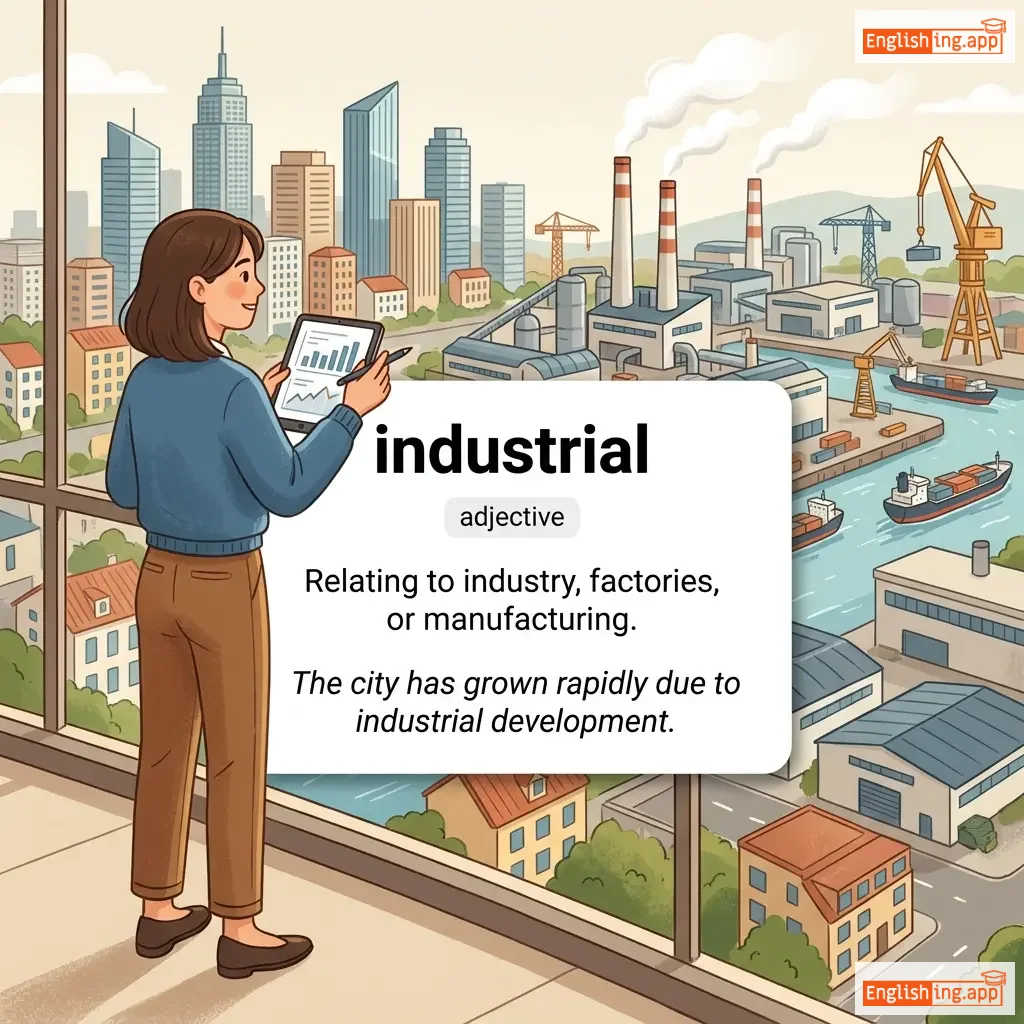
Relating to industry, factories, or manufacturing.
••••••
|
The city has grown rapidly due to industrial development.
その都市は産業の発展により急速に成長しました。
••••••
|
その都市は産業の発展により急速に成長しました。
Sono toshi wa sangyo no haten ni yori kyusoku ni seichou shimashita.
••••••
|
industrial revolution
産業革命
••••••
|
A period of major industrialization and innovation.
••••••
|
産業革命
Sangyo kakumei
••••••
|
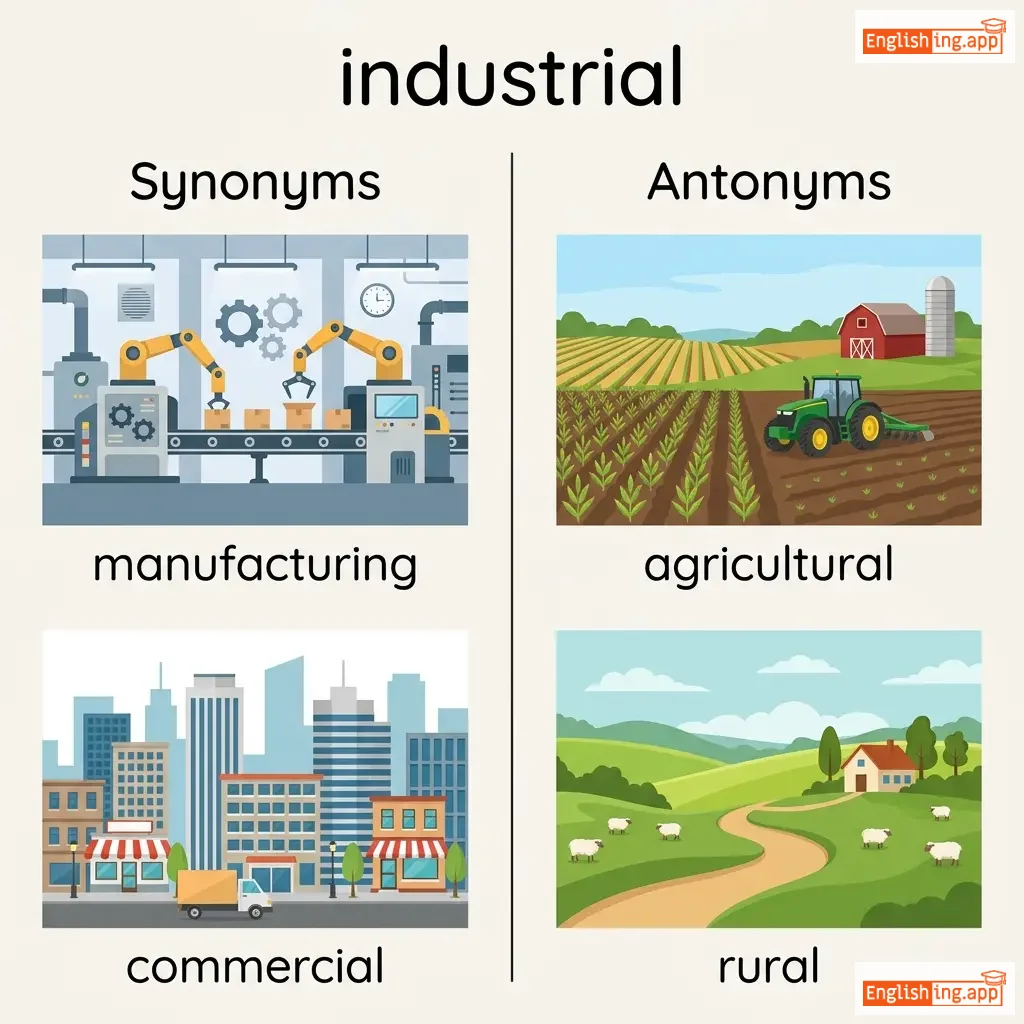
manufacturing, commercial, mechanical, factory-based
••••••
|
agricultural, rural
••••••
|
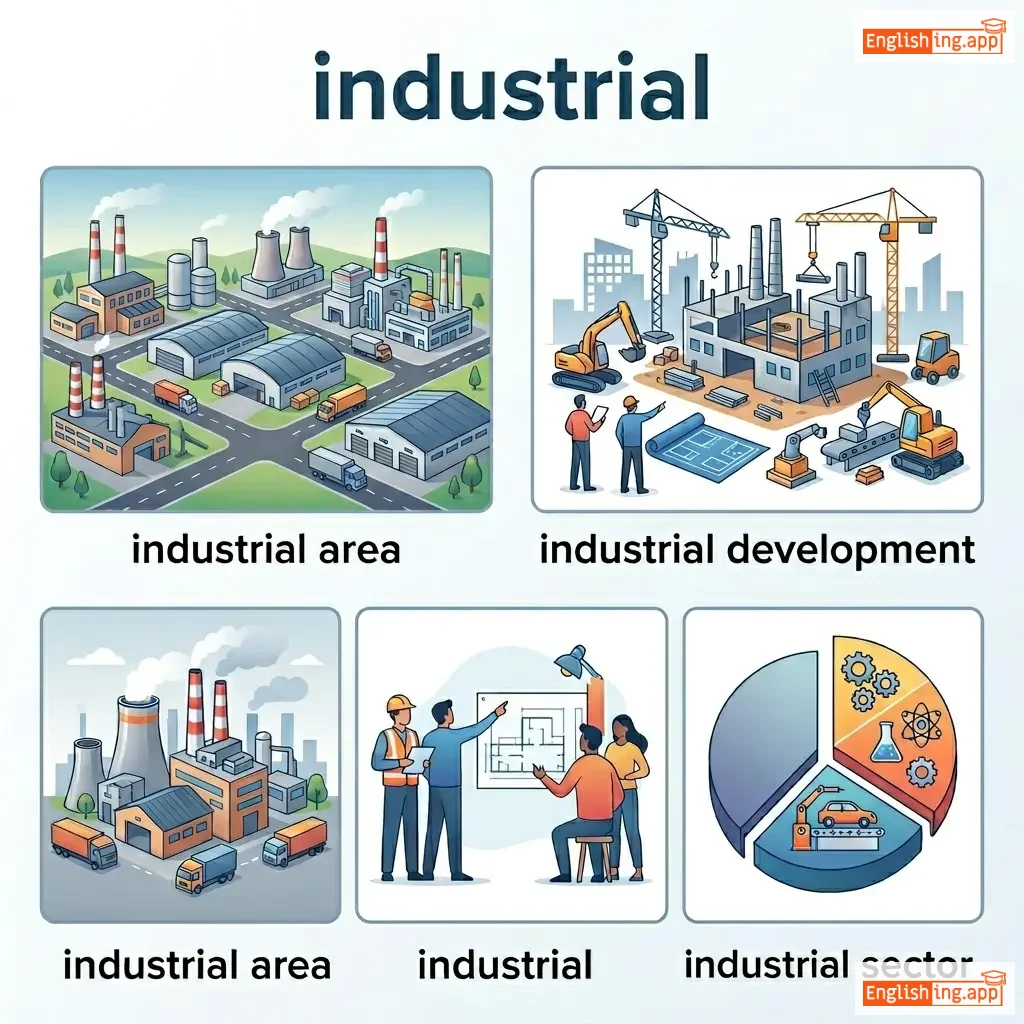
industrial area, industrial development, industrial sector, industrial growth
••••••
|
Industrialは産業の意味です - 工場🏭覚えやすい。
••••••
|
|
💪
••••••
|
/ɪnˈdʌstriəs/
adjective
(インダストリアス)
••••••
|
- •••••• |
勤勉な
kinben na
••••••
|
- •••••• | - •••••• | - •••••• | - •••••• |
Hardworking and diligent in one's duties.
••••••
|
She is an industrious student who always completes her assignments on time. |
彼女は常に期限通りに課題を終わらせる勤勉な学生です。
Kanojo wa tsuneni kigen dōri ni kadai o owaraseru kinben na gakusei desu.
••••••
|
industrious worker |
A person who works hard and diligently.
••••••
|
勤勉な労働者
kinben na rōdōsha
••••••
|
hardworking, diligent, dedicated, assiduous, tireless
••••••
|
lazy, idle, negligent
••••••
|
industrious student, industrious worker, industrious nature
••••••
|
Industrious → Industriousは勤勉であることを思い出させ、仕事に対する献身を示す。
••••••
|
|
🏭
••••••
|
/ˈɪndəstri/
noun
(インダストリー)
••••••
|


|
産業
sangyo
••••••
|
- •••••• | - •••••• | - •••••• | - •••••• |
The production of goods or services within an economy.
••••••
|
The textile industry employs thousands of workers in the region. |
繊維産業はその地域で何千人もの労働者を雇用しています。
Sen'i sangyo wa sono chiiki de nanzen-nin mo no rodosha o koyou shiteimasu.
••••••
|
cottage industry |
A small-scale, often home-based business.
••••••
|
家庭産業
katei sangyo
••••••
|
business, trade, commerce, sector, production
••••••
|
idleness, inactivity, unemployment
••••••
|
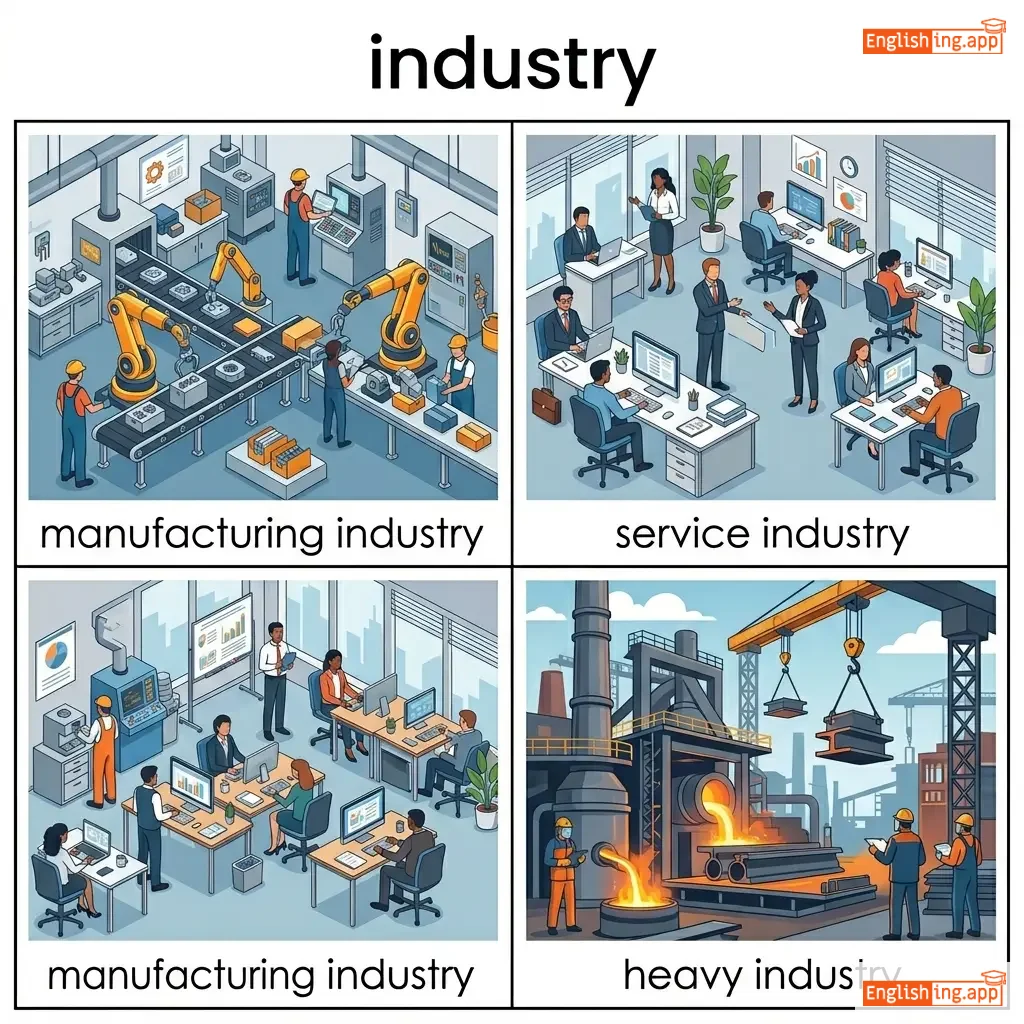
manufacturing industry, service industry, heavy industry, global industry
••••••
|
産業とは工場で働くこと、まるで工場のような場所です!
••••••
|
|
❌
••••••
|
/ˌɪnɪˈfɛktɪv/
adjective
(インエフェクティブ)
••••••
|
|
効果がない; 無駄な; 失敗した
kouka ga nai; muda na; shippai shita
••••••
|
- •••••• | - •••••• | - •••••• | - •••••• |
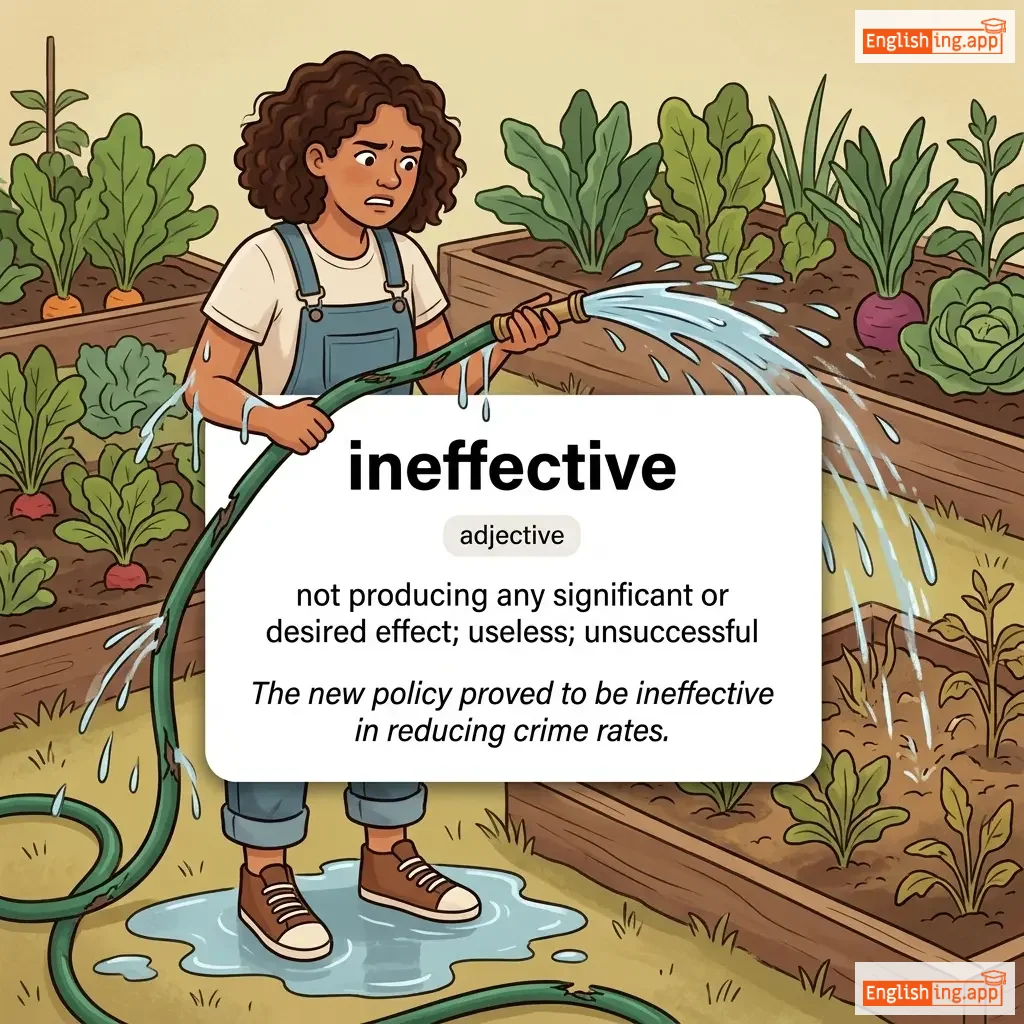
not producing any significant or desired effect; useless; unsuccessful
••••••
|
The new policy proved to be ineffective in reducing crime rates.
新しい政策は犯罪率の削減には効果がないことが証明された。
••••••
|
新しい政策は犯罪率の削減には効果がないことが証明された。
atarashii seisaku wa hanzairitsu no sakugen ni wa kouka ga nai koto ga shoumei sareta.
••••••
|
- •••••• | - •••••• | - •••••• |
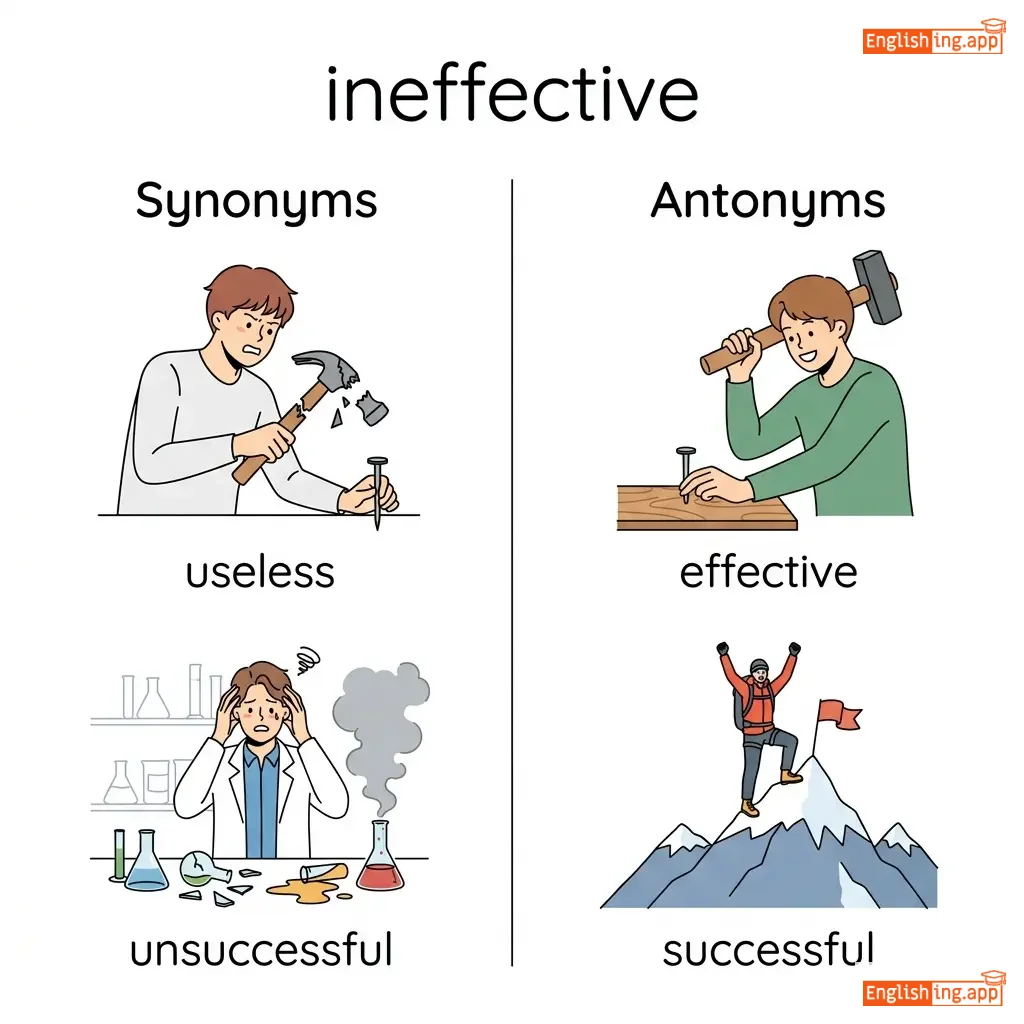
useless, unsuccessful, futile, powerless
••••••
|
effective, successful, powerful, efficient
••••••
|
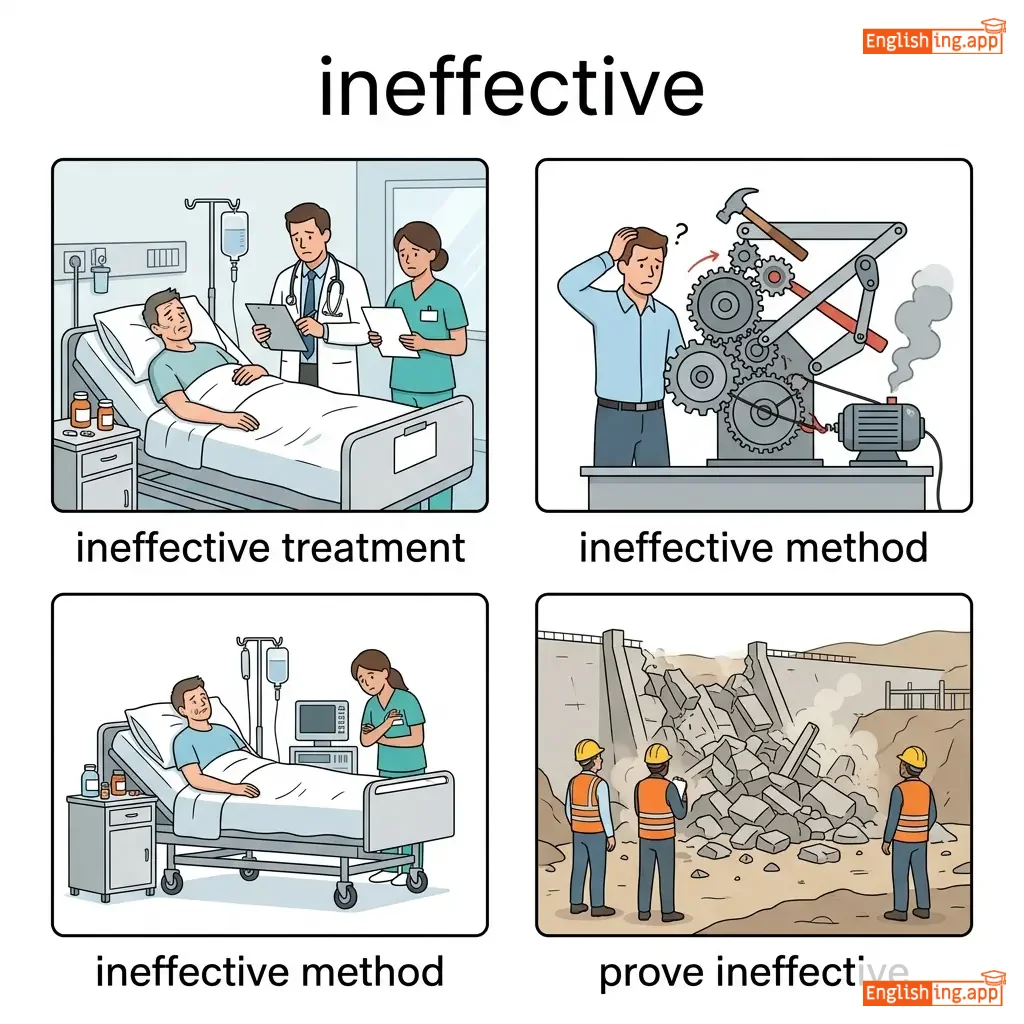
ineffective treatment, ineffective method, prove ineffective
••••••
|
Think of '効果がない' as ineffective, like trying to use an umbrella in a storm!
••••••
|
|
⚠️
••••••
|
/ˌɪn.ɪˈfɪʃ.ənt/
adjective
(イネフィシエント)
••••••
|
- •••••• |
非効率的
hikouritsuteki
••••••
|
- •••••• | - •••••• | - •••••• | - •••••• |
Not achieving maximum productivity; wasting resources or effort.
••••••
|
The machine is old and inefficient compared to modern equipment.
その機械は古く、現代の機器と比較して非効率的です。
••••••
|
その機械は古く、現代の機器と比較して非効率的です。
Sono kikai wa furuku, gendai no kiki to hikaku shite hikouritsuteki desu.
••••••
|
inefficient system
非効率的なシステム
••••••
|
A system that wastes time and resources.
••••••
|
非効率的なシステム
hikouritsuteki na shisutemu
••••••
|
unproductive, wasteful, incompetent, defective
••••••
|
efficient, productive, competent
••••••
|
inefficient machine, inefficient system, inefficient methods, inefficient process
••••••
|
Inefficient は効率がない → 機械や人が非効率的。
••••••
|
|
❌
••••••
|
/ɪnˈɛl.ɪ.dʒə.bəl/
adjective
(イネリジブル)
••••••
|
- •••••• |
資格なし
shikaku nashi
••••••
|
- •••••• | - •••••• | - •••••• | - •••••• |
Not qualified or permitted to do something or to receive something.
••••••
|
He was ineligible to apply for the scholarship because of his age. |
年齢のため、彼は奨学金に申し込む資格がなかった。
Nenrei no tame, kare wa shougakukin ni moushikomu shikaku ga nakatta.
••••••
|
ineligible candidate |
A person who is not qualified to be chosen.
••••••
|
資格のない候補者
shikaku no nai kouhosha
••••••
|
unqualified, disqualified, unsuitable, barred
••••••
|
eligible, qualified, suitable
••••••
|
ineligible to vote, ineligible for benefits, ineligible candidate, ineligible applicants
••••••
|
Ineligibleは‘in-eligible’→資格なし→資格なし。
••••••
|
|
⚖️
••••••
|
/ˌɪnɪˈkwɒləti/
noun
(不平等)
••••••
|
|
不平等
fuheito
••••••
|
- •••••• | - •••••• | - •••••• | - •••••• |
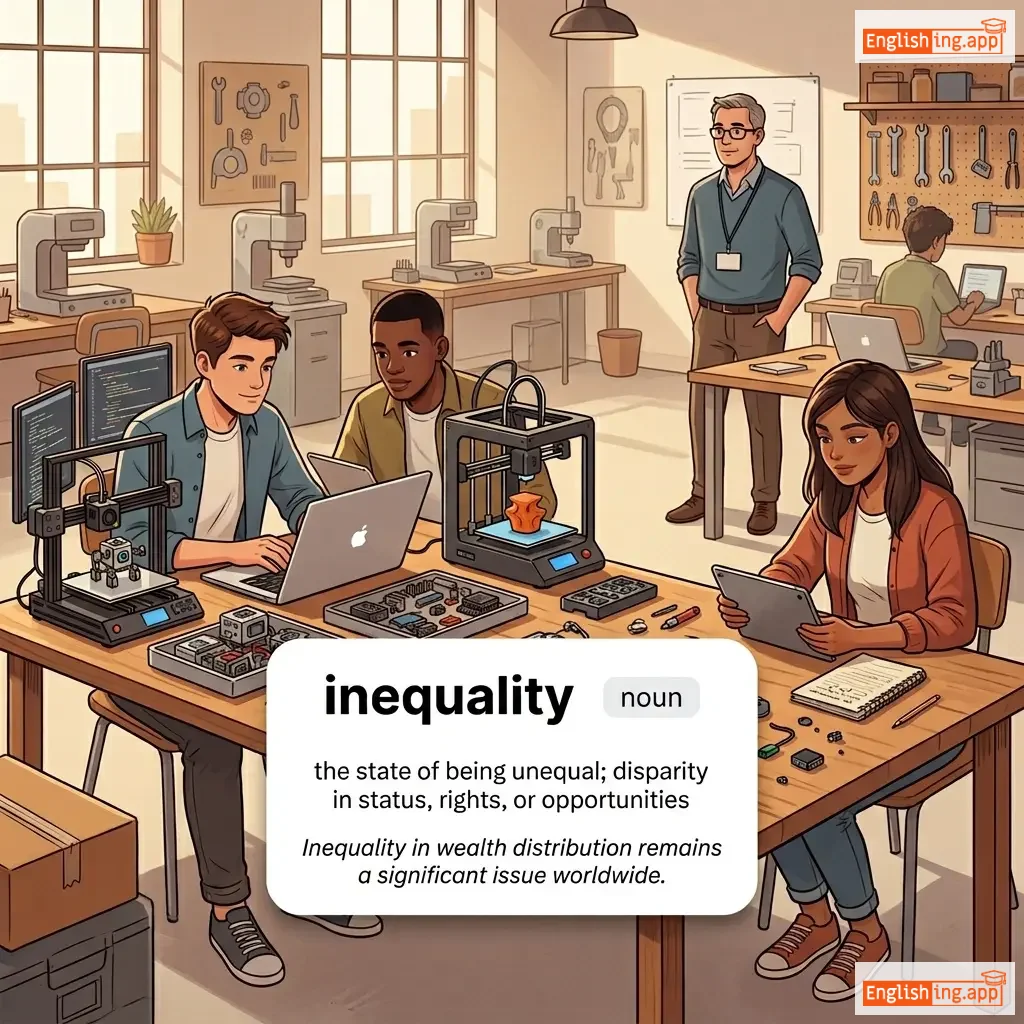
the state of being unequal; disparity in status, rights, or opportunities
••••••
|
Inequality in wealth distribution remains a significant issue worldwide. |
富の分配における不平等は、依然として世界的な重要な問題です。
Tomi no bunpai ni okeru fuheito wa, izen toshite sekaiteki na juuyou na mondai desu.
••••••
|
- •••••• | - •••••• | - •••••• |
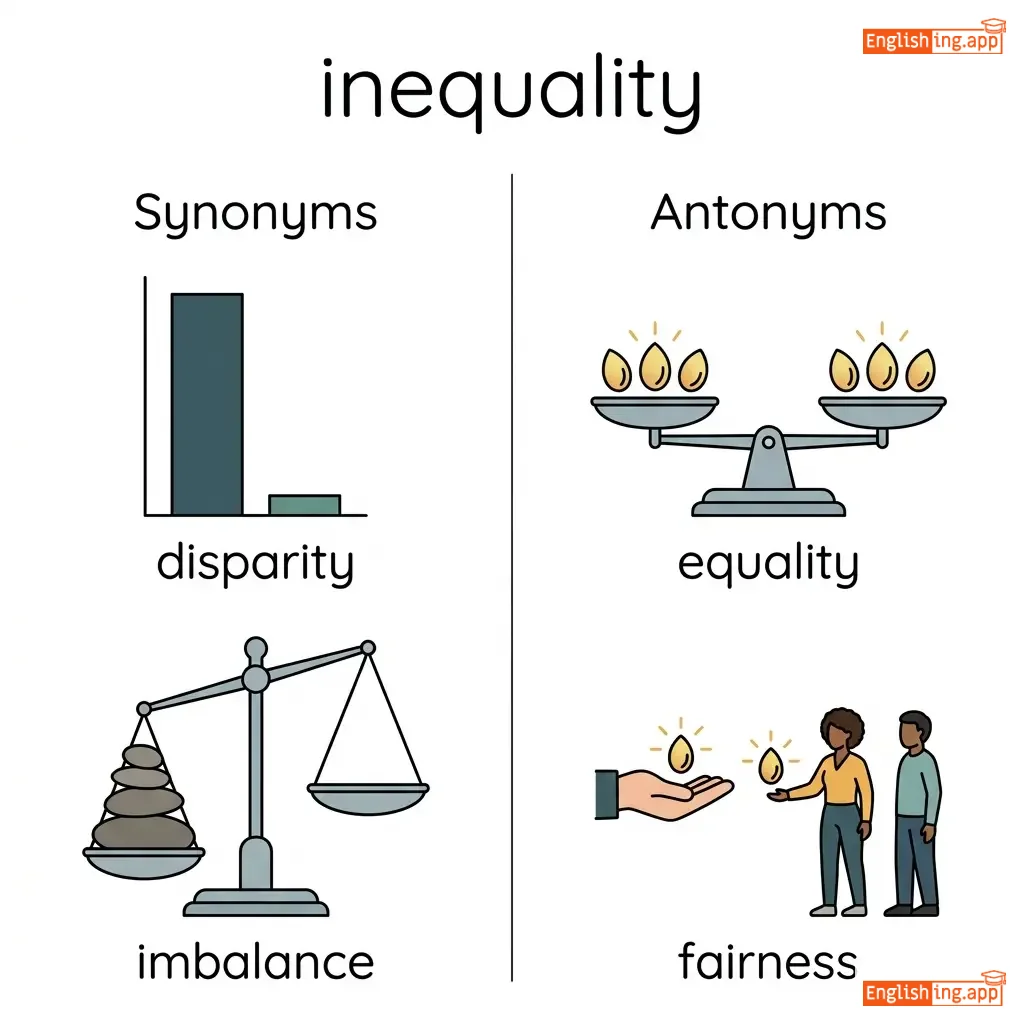
disparity, imbalance, discrimination, inequity
••••••
|
equality, fairness
••••••
|
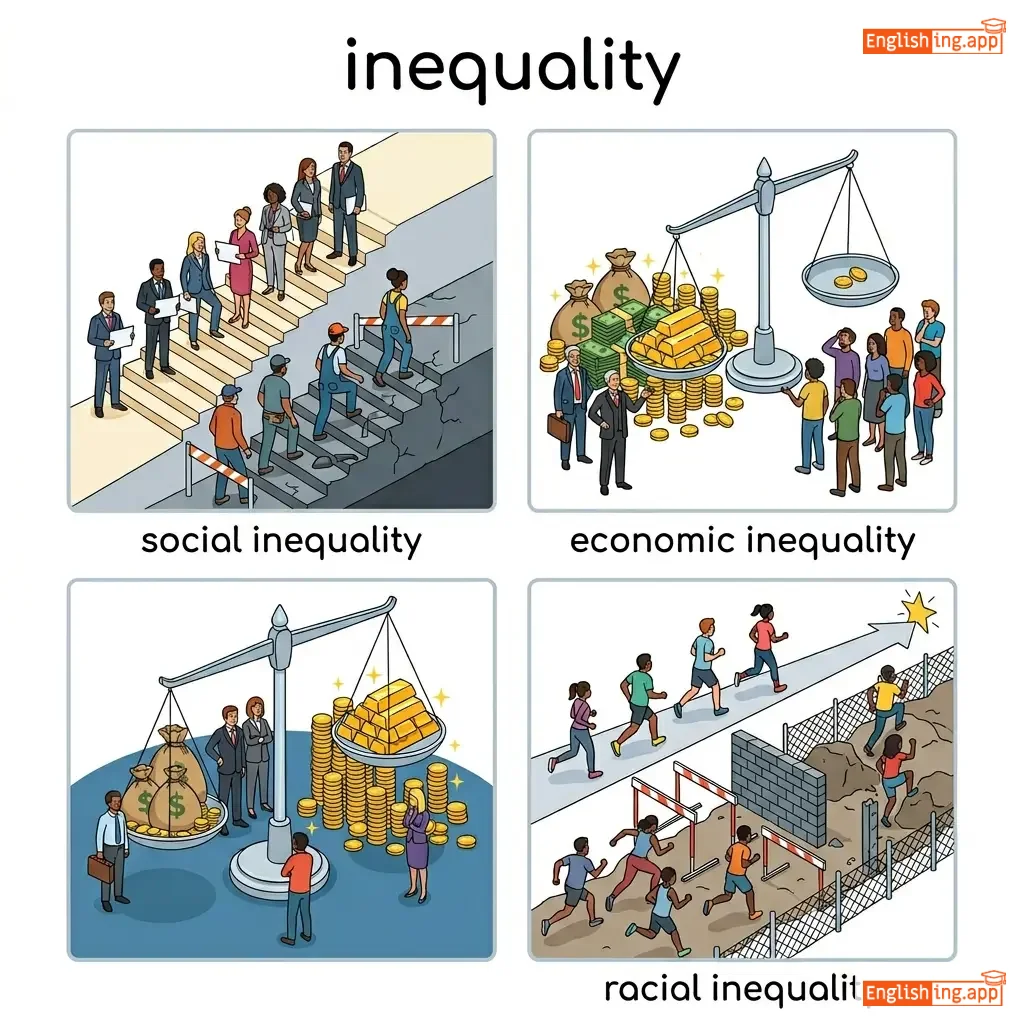
social inequality, economic inequality, racial inequality
••••••
|
Inequality sounds like 'In equal' – imagine people not being equal in opportunities!
••••••
|
|
🧩
••••••
|
/ˌɪnɪˈsɛnʃəl/
adjective
(イネセンシャル)
••••••
|
- •••••• |
本質的でない
honshitsuteki de nai
••••••
|
- •••••• | - •••••• | - •••••• | - •••••• |
not necessary or important; not essential
••••••
|
The report removes all inessential details to stay focused.
ザ レポート リムーブズ オール イネセンシャル ディテールズ
••••••
|
その報告書は焦点を保つために本質的でない詳細を削除している。
sono houkokusho wa shouten o tamotsu tame ni honshitsuteki de nai shousai o sakujo shite iru
••••••
|
- •••••• | - •••••• | - •••••• |
unnecessary, nonessential, trivial, minor, dispensable
••••••
|
essential, vital, necessary
••••••
|
inessential details, inessential elements, inessential features
••••••
|
本質的でない = essential নয় → inessential
••••••
|
|
☠️
••••••
|
/ɪnˈɛvɪtəbl/
adjective
(イネヴィタブル)
••••••
|
|
避けられない
sakerarenai
••••••
|
- •••••• | - •••••• | - •••••• | - •••••• |
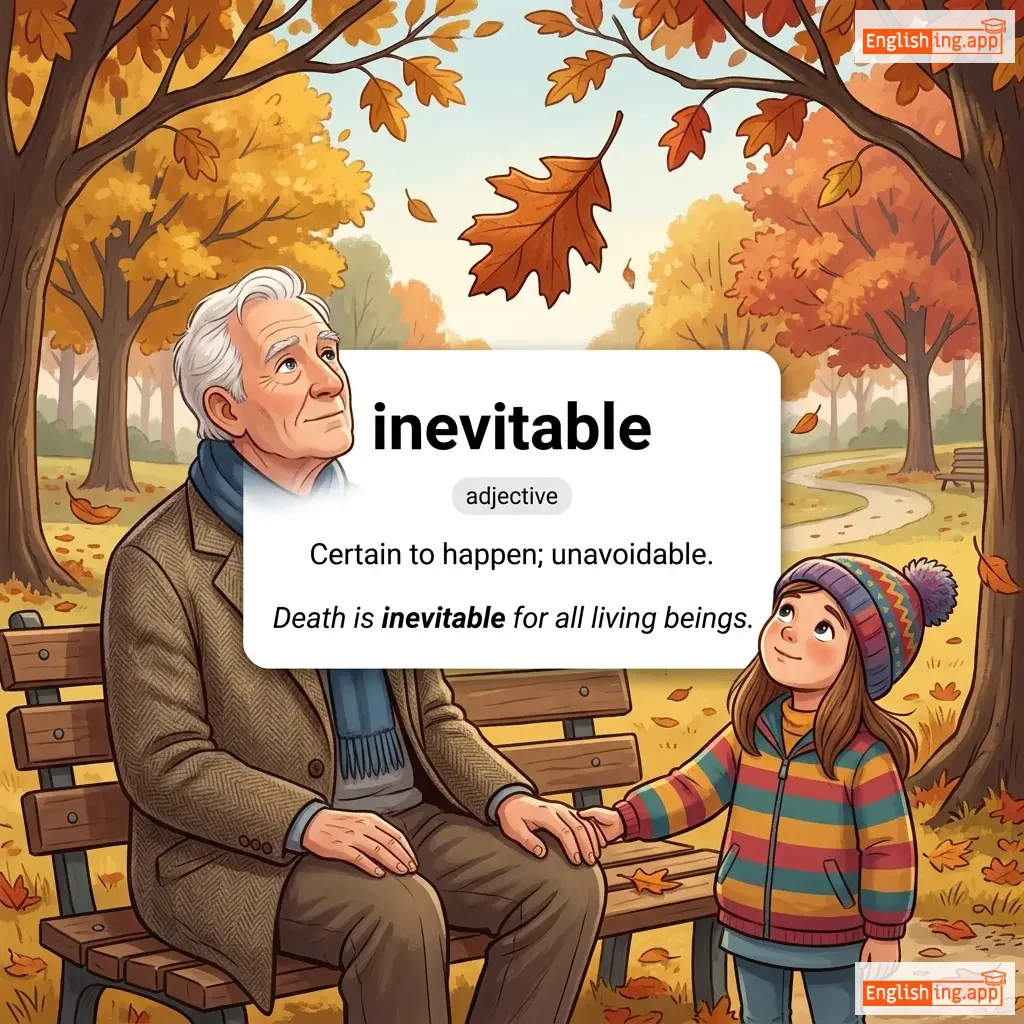
Certain to happen; unavoidable.
••••••
|
Death is inevitable for all living beings. |
死はすべての生物にとって避けられない。
shi wa subete no seibutsu ni totte sakerarenai.
••••••
|
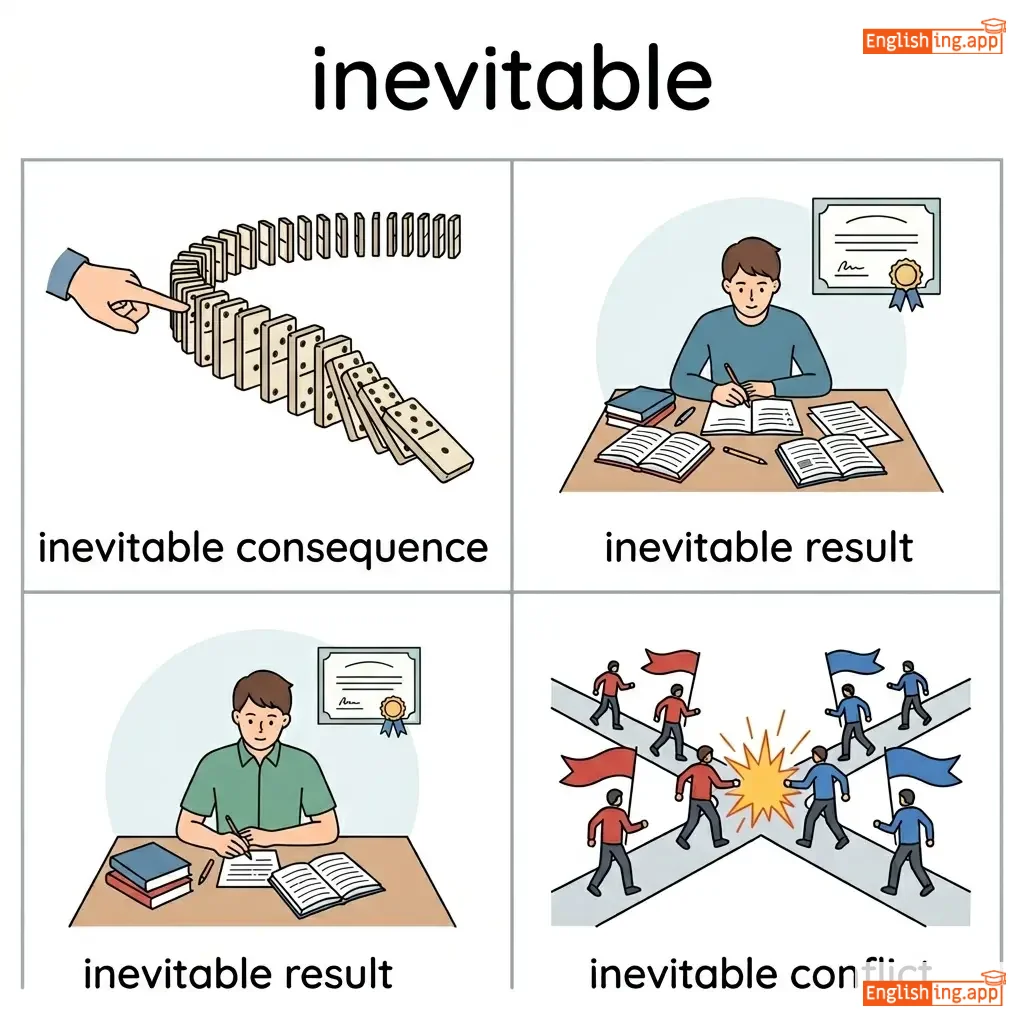
the inevitable result |
The certain outcome of an action or situation.
••••••
|
避けられない結果
sakerarenai kekka
••••••
|
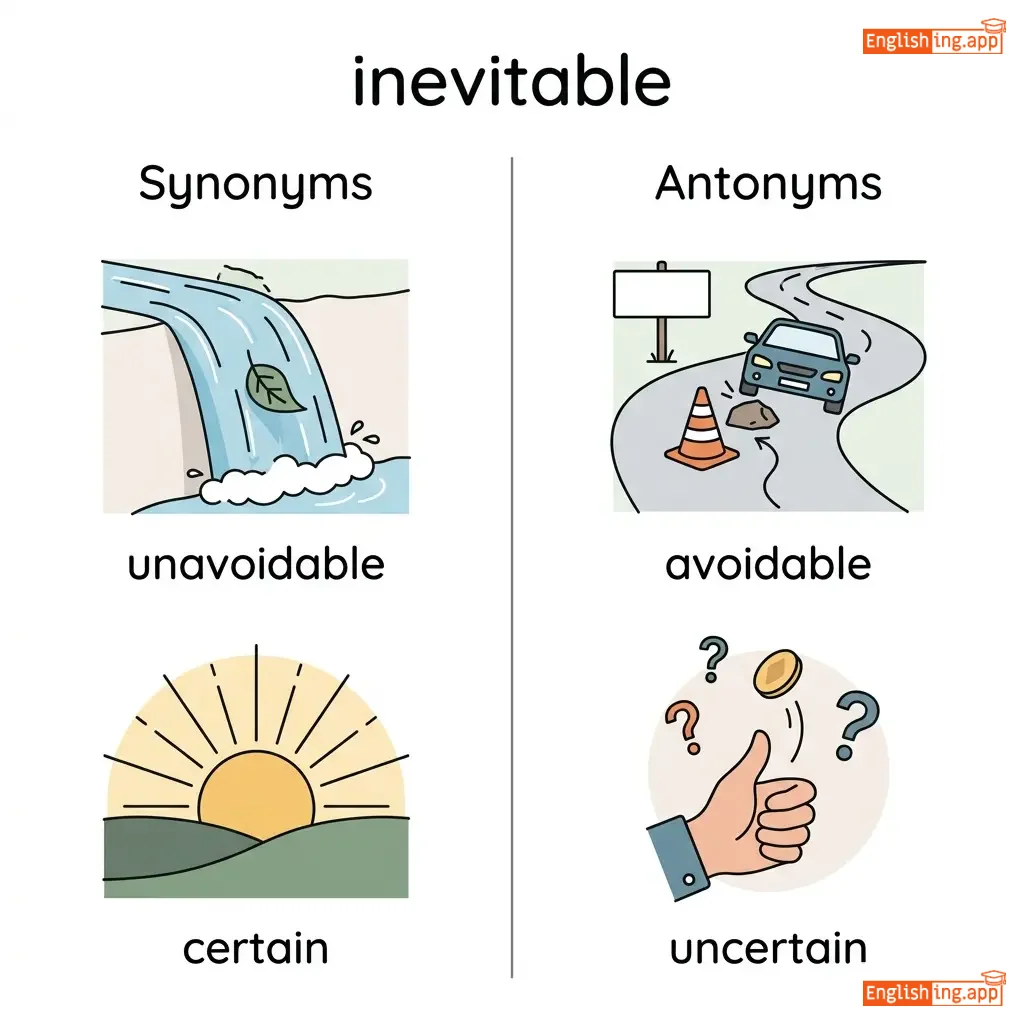
unavoidable, certain, destined, fated
••••••
|
avoidable, uncertain
••••••
|
inevitable consequence, inevitable result, inevitable conflict
••••••
|
Inevitableは'避けられない'を意味します - 死のように。
••••••
|
|
🌀
••••••
|
/ɪnˈɛvɪtəbli/
adverb
(イネヴィタブリー)
••••••
|
- •••••• |
避けられない
sakerarenai
••••••
|
- •••••• | - •••••• | - •••••• | - •••••• |
in a way that cannot be avoided or prevented
••••••
|
Inevitably, the team faced challenges during the project. |
避けられないことに、チームはプロジェクト中に挑戦に直面しました。
Sakerarenai koto ni, chīmu wa purojekuto-chū ni chōsen ni chokumen shimashita.
••••••
|
as inevitably as night follows day |
something that is certain to happen
••••••
|
夜が昼に続くように避けられない
Yoru ga hiru ni tsuzuku yō ni sakerarenai
••••••
|
unavoidably, certainly, surely, predictably, inescapably
••••••
|
avoidably, preventably, uncertainly
••••••
|
inevitably lead, inevitably result, inevitably follow, inevitably happen
••••••
|
避けられないということは避けられないので、必ず避けられません 🌀
••••••
|
|
💰
••••••
|
/ˌɪnɪkˈspɛnsɪv/
adjective
(イネクスペンシブ)
••••••
|
- •••••• |
安い; 手頃な; 経済的
yasui; tegotona; keizaiteki
••••••
|
- •••••• | - •••••• | - •••••• | - •••••• |
not costing a lot of money; affordable; budget-friendly
••••••
|
This restaurant offers delicious and inexpensive meals for students. |
このレストランは学生のためにおいしくて安い食事を提供しています。
Kono resutoran wa gakusei no tame ni oishikute yasui shokuji o teikyō shiteimasu.
••••••
|
- •••••• | - •••••• | - •••••• |
cheap, affordable, budget-friendly, economical
••••••
|
expensive, costly, dear, pricey
••••••
|
inexpensive option, relatively inexpensive, inexpensive alternative
••••••
|
安くておいしい、学生向けのお店!
••••••
|
|
🤹
••••••
|
/ˌɪnˈekspɜːrt/
adjective
(インエクスパート)
••••••
|
- •••••• |
未熟な
mijukuna
••••••
|
- •••••• | - •••••• | - •••••• | - •••••• |
not skilled or experienced; lacking expertise
••••••
|
The inexpert handling of the machine caused several mistakes.
ジ インエクスパート ハンドリング オブ ザ マシン コーズド セヴェラル ミステイクス。
••••••
|
機械の未熟な扱いがいくつかのミスを引き起こした。
Kikai no mijukuna atsukai ga ikutsuka no misu o hikiokoshita
••••••
|
- •••••• | - •••••• | - •••••• |
unskilled, inexperienced, amateurish, inept, clumsy
••••••
|
expert, skilled, proficient
••••••
|
inexpert handling, inexpert judgment, inexpert attempt
••••••
|
Inexpert = expertじゃない → 未熟。
••••••
|
|
😈
••••••
|
/ˈɪnfəməs/
adjective
(インフェイマス)
••••••
|
- •••••• |
悪名高い
akumei takai
••••••
|
- •••••• | - •••••• | - •••••• | - •••••• |
well known for some bad quality or deed
••••••
|
The dictator was infamous for his cruelty. |
その独裁者はその残虐さで悪名高かった。
Sono dokusaisha wa sono zankyaku-sa de akumei takakatta.
••••••
|
infamous crime |
a crime that is notorious and shocking
••••••
|
悪名高い犯罪
akumei takai hanzai
••••••
|
notorious, disreputable, scandalous, dishonorable
••••••
|
famous, reputable, respected
••••••
|
infamous dictator, infamous act, infamous crime, infamous reputation
••••••
|
In-famous = 悪い評判 → 悪名高い
••••••
|
|
👶
••••••
|
/ˈɪnfənt/
noun
(インファント)
••••••
|
- •••••• |
乳児
nyuuji
••••••
|
- •••••• | - •••••• | - •••••• | - •••••• |
A very young child or baby.
••••••
|
The infant was sleeping peacefully in the cradle.
インファントはゆりかごで静かに眠っていました。
••••••
|
乳児はゆりかごで静かに眠っていました。
Nyuuji wa yurikago de shizukani netteimashita.
••••••
|
- •••••• | - •••••• | - •••••• |
baby, newborn, child, toddler, youngster
••••••
|
adult, grown-up
••••••
|
infant mortality, infant care, infant formula, infant stage
••••••
|
Infantは赤ちゃん - Inf(インフ)は乳児のような存在です。
••••••
|
|
🦠
••••••
|
/ɪnˈfɛkt/
verb
(インフェクト)
••••••
|
- •••••• |
感染させる
kansen saseru
••••••
|
infected
インフェクテッド
••••••
|
infected
インフェクテッド
••••••
|
infects
インフェクツ
••••••
|
infecting
インフェクティング
••••••
|
To contaminate with a disease-causing organism.
••••••
|
The virus can infect healthy people quickly.
ウイルスは健康な人々を迅速に感染させることができます。
••••••
|
ウイルスは健康な人々を迅速に感染させることができます。
Uirusu wa kenko na hitobito o jinsoku ni kansen saseru koto ga dekimasu.
••••••
|
infect with fear
恐怖で感染させる
••••••
|
To spread fear into others.
••••••
|
恐怖で感染させる
Kyōfu de kansen saseru
••••••
|
contaminate, transmit, spread, pollute
••••••
|
cleanse, disinfect
••••••
|
infect people, infect cells, infect computers, infect animals
••••••
|
感染させるはウイルスのように広がる。
••••••
|
|
🦠
••••••
|
/ɪnˈfɛkʃən/
noun
(インフェクション)
••••••
|
- •••••• |
感染
kansen
••••••
|
- •••••• | - •••••• | - •••••• | - •••••• |
The process of becoming infected with harmful microorganisms such as bacteria or viruses.
••••••
|
The doctor prescribed antibiotics to treat the infection.
医者は感染を治療するために抗生物質を処方した。
••••••
|
医者は感染を治療するために抗生物質を処方した。
Isha wa kansen o chiryo suru tame ni kōseibusshitsu o shohō shita.
••••••
|
spread of infection
感染の広がり
••••••
|
The transmission of disease-causing microorganisms.
••••••
|
感染の広がり
Kansen no hirogari
••••••
|
contagion, illness, contamination, disease, disorder
••••••
|
health, wellness, cure
••••••
|
bacterial infection, viral infection, wound infection, spread of infection
••••••
|
感染 = インフェクション = 病原菌が体に入る
••••••
|
|
🦠
••••••
|
/ɪnˈfekʃəs/
adjective
(インフェクシャス)
••••••
|
- •••••• |
感染性のある; 伝染する
kansensei no aru; densensuru
••••••
|
- •••••• | - •••••• | - •••••• | - •••••• |
capable of causing infection or disease; spreading easily from one person to another; able to spread feelings or attitudes such as enthusiasm
••••••
|
Her infectious laughter made everyone in the room smile.
ハー インフェクシャス ラフター メイド エブリワン スマイル。
••••••
|
彼女の感染力のある笑い声は皆を笑顔にした。
kanojo no kansenryoku no aru waraigoe wa mina o egao ni shita
••••••
|
infectious laughter
インフェクシャス・ラフター
••••••
|
laughter that spreads quickly and makes others laugh too
••••••
|
感染力のある笑い
kansenryoku no aru warai
••••••
|
contagious, communicable, catching, spreading, transmissible
••••••
|
noninfectious, harmless, noncontagious
••••••
|
infectious disease, infectious virus, infectious smile, infectious laughter, highly infectious
••••••
|
インフェクション(infection)→インフェクシャス
••••••
|
|
🤔
••••••
|
/ɪnˈfɜːr/
verb
••••••
|
- •••••• | - •••••• |
inferred
••••••
|
inferred
••••••
|
infers
••••••
|
inferring
••••••
|
to conclude or deduce something from evidence and reasoning rather than from explicit statements
••••••
|
From his silence, I inferred that he was not happy with the decision. |
- •••••• |
read between the lines |
to understand an implicit meaning in what is said or written
••••••
|
- •••••• |
deduce, conclude, reason, assume, derive
••••••
|
state, declare, express
••••••
|
infer meaning, infer from evidence, infer result
••••••
|
No •••••• |
|
♾️
••••••
|
/ˈɪnfɪnɪt/
adjective
(インフィニット)
••••••
|
- •••••• |
無限
mugen
••••••
|
- •••••• | - •••••• | - •••••• | - •••••• |
limitless or endless in space, extent, or number
••••••
|
The universe is often described as infinite.
宇宙はしばしば無限だと説明されます。
••••••
|
宇宙はしばしば無限だと説明されます。
Uchū wa shibashiba mugen da to setsumei saremasu.
••••••
|
infinite possibilities
無限の可能性
••••••
|
endless options or opportunities
••••••
|
無限の可能性
mugen no kanōsei
••••••
|
endless, boundless, limitless, eternal, vast
••••••
|
finite, limited, restricted
••••••
|
infinite possibilities, infinite number, infinite space, infinite patience
••••••
|
無限 = 無 (ない) + 限 (限界) → 終わらない
••••••
|
|
🎈
••••••
|
/ɪnˈfleɪt/
verb
(インフレート)
••••••
|
- •••••• |
膨らませる;水増しする
fukuramaseru; mizumashi suru
••••••
|
inflated
インフレーテッド
••••••
|
inflated
インフレーテッド
••••••
|
inflates
インフレーツ
••••••
|
inflating
インフレーティング
••••••
|
to fill with air or gas so it expands; to increase excessively or artificially
••••••
|
The mechanic inflated the tire to the correct pressure.
ザ メカニック インフレーテッド ザ タイヤ トゥ ザ コレクト プレッシャー。
••••••
|
整備士はタイヤを適切な空気圧まで膨らませた。
Seibishi wa taiya o tekisetsu na kuukiatsu made fukuramaseta
••••••
|
inflate prices
inflate prices
••••••
|
to raise prices beyond a reasonable or normal level
••••••
|
物価をつり上げる
bukka o tsuriageru
••••••
|
expand, blow up, enlarge, swell, boost
••••••
|
deflate, shrink, reduce
••••••
|
inflate a balloon, inflate a tire, inflate prices, inflate numbers, artificially inflate
••••••
|
inflate=インフレ、値段や風船が大きくなる
••••••
|
|
📈
••••••
|
/ɪnˈfleɪʃən/
noun
(インフレーション)
••••••
|

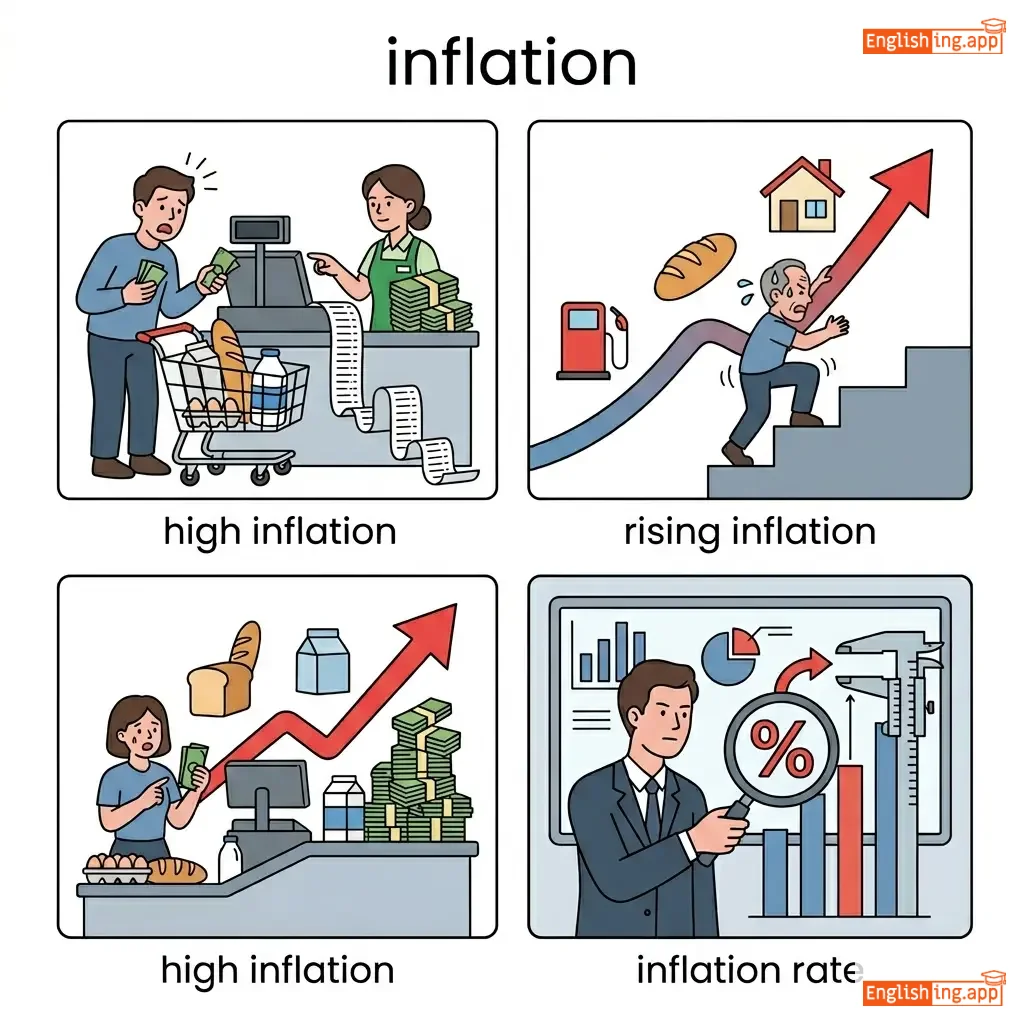
|
インフレーション
infureshon
••••••
|
- •••••• | - •••••• | - •••••• | - •••••• |
A general increase in prices and fall in the purchasing value of money.
••••••
|
The government is taking steps to control inflation. |
政府はインフレーションをコントロールするための措置を講じています。
Seifu wa infureshon o kontorōru suru tame no sochi o kōjiteimasu.
••••••
|
rising inflation |
An increase in the rate at which prices for goods and services rise.
••••••
|
上昇するインフレーション
Jōshō suru infureshon
••••••
|
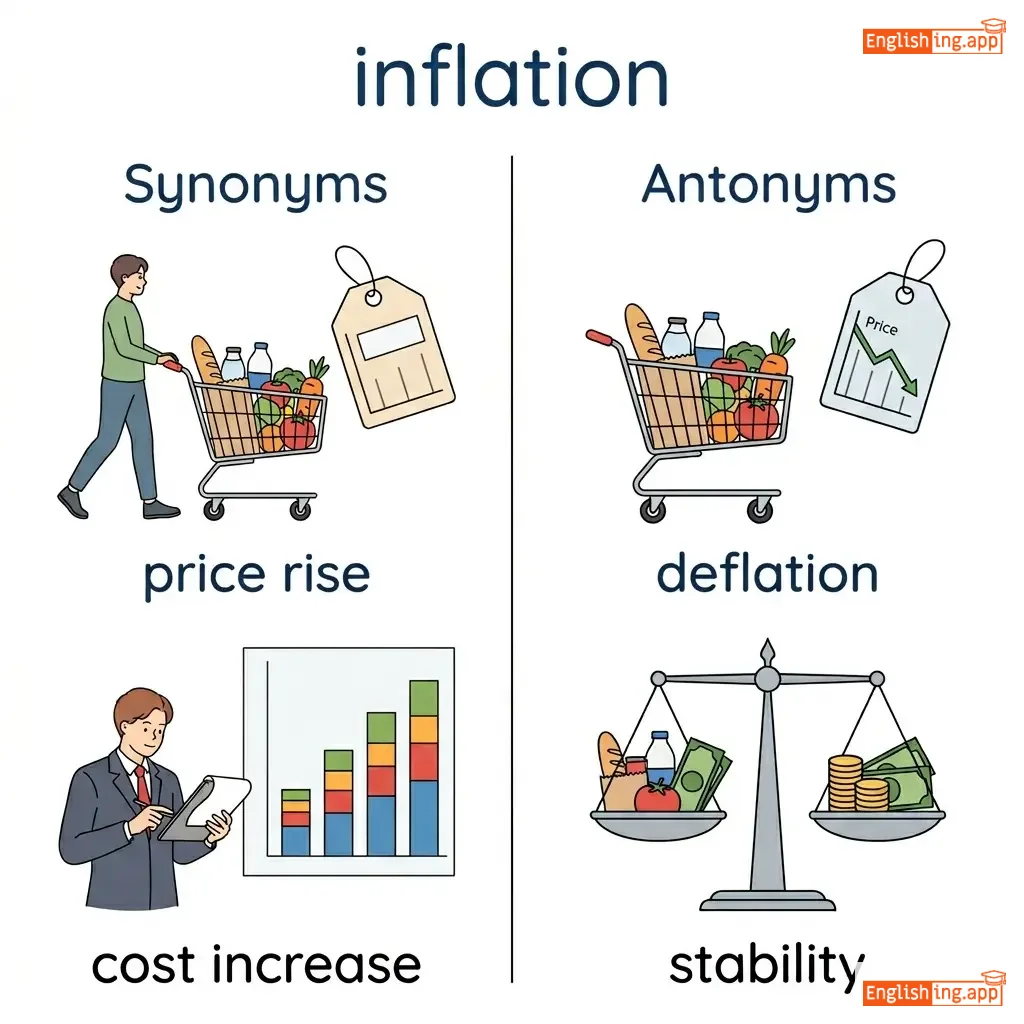
price rise, cost increase, devaluation, economic growth
••••••
|
deflation, stability
••••••
|
high inflation, rising inflation, inflation rate, inflation control
••••••
|
インフレーションは📈物価が上がること - お金の価値が下がる時です。
••••••
|
|
🧱
••••••
|
/ˌɪnflɛksɪˈbɪlɪti/
noun
(インフレクシビリティ)
••••••
|
- •••••• |
柔軟性の欠如
juunansei no ketsujo
••••••
|
- •••••• | - •••••• | - •••••• | - •••••• |
the quality of being rigid or unwilling to change; lack of adaptability
••••••
|
The inflexibility of the rules caused unnecessary delays.
ザ インフレクシビリティ オブ ザ ルールズ コーズド アンネセサリー ディレイズ。
••••••
|
規則の柔軟性の欠如が不要な遅れを引き起こした。
Kisoku no juunansei no ketsujo ga fuyo na okure o hikiokoshita
••••••
|
- •••••• | - •••••• | - •••••• |
rigidity, stiffness, obstinacy, unyieldingness, hardness
••••••
|
flexibility, adaptability, openness
••••••
|
mental inflexibility, policy inflexibility, organizational inflexibility, structural inflexibility
••••••
|
Inflexibility=柔らかくない→柔軟性の欠如。
••••••
|
|
🪨
••••••
|
/ɪnˈflɛksəbl/
adjective
(インフレキシブル)
••••••
|
- •••••• |
柔軟性がない
jounann-sei ga nai
••••••
|
- •••••• | - •••••• | - •••••• | - •••••• |
Not able to bend or change; unwilling to change ideas or behavior.
••••••
|
His inflexible attitude made negotiations difficult. |
彼の柔軟性がない態度は交渉を難しくしました。
Kare no jounann-sei ga nai taido wa koushou o muzukashiku shimashita.
••••••
|
inflexible rules |
rules that cannot be changed or adapted
••••••
|
柔軟性がない規則
jounann-sei ga nai kisoku
••••••
|
rigid, unyielding, stubborn, uncompromising, firm
••••••
|
flexible, adaptable, yielding
••••••
|
inflexible attitude, inflexible rules, inflexible schedule
••••••
|
In FLEXIBLE は硬直した意味🪨 – 日本語では柔軟性がないとは、変更できないことを意味します。
••••••
|
|
⚡
••••••
|
/ɪnˈflɪkt/
verb
(インフリクト)
••••••
|
- •••••• |
加える
kuwaeru
••••••
|
inflicted
インフリクテッド
••••••
|
inflicted
インフリクテッド
••••••
|
inflicts
インフリクツ
••••••
|
inflicting
インフリクティング
••••••
|
to cause something unpleasant or painful to be suffered by someone or something
••••••
|
The storm inflicted considerable damage to the city.
嵐は都市にかなりの被害を与えました。
••••••
|
嵐は都市にかなりの被害を与えました。
Arashi wa toshi ni kanari no higai o ataemashita.
••••••
|
- •••••• | - •••••• | - •••••• |
impose, cause, administer, bring about
••••••
|
relieve, soothe
••••••
|
inflict harm, inflict pain, inflict damage
••••••
|
Inflict sounds like 'In flick' – imagine a flick of pain!
••••••
|
|
🌐
••••••
|
/ˈɪnfluəns/
noun/verb
(infurūensu)
••••••
|
- •••••• |
影響
eikyō
••••••
|
influenced
infurūensudo
••••••
|
influenced
infurūensudo
••••••
|
influences
infurūensu
••••••
|
influencing
infurūenshingu
••••••
|
The power to affect how someone thinks or acts.
••••••
|
Her teacher had a strong influence on her career choice.
彼女の先生は彼女のキャリア選択に大きな影響を与えました。
••••••
|
彼女の先生は彼女のキャリア選択に大きな影響を与えました。
kanojo no sensei wa kanojo no kyaria sentaku ni ōkina eikyō o ataemashita.
••••••
|
under the influence
インフルエンスの下で
••••••
|
being affected or controlled by something, especially alcohol or drugs
••••••
|
影響下で
eikyō ka de
••••••
|
impact, effect, authority, sway, control
••••••
|
powerlessness, weakness
••••••
|
exert influence, political influence, under the influence
••••••
|
Influenceは‘in fluid sense’ 🌊 – 水のように流れる影響!
••••••
|
|
👑
••••••
|
/ˌɪnfluˈɛnʃl/
adjective
(infurenshial)
••••••
|
- •••••• |
影響力のある
eikyōryoku no aru
••••••
|
- •••••• | - •••••• | - •••••• | - •••••• |
Having great power to change or affect people or things.
••••••
|
She is one of the most influential leaders of our time. |
彼女は私たちの時代で最も影響力のあるリーダーの一人です。
Kanojo wa watashitachi no jidai de mottomo eikyōryoku no aru rīdā no hitori desu.
••••••
|
influential figure |
a person who has a significant effect on others
••••••
|
影響力のある人物
eikyōryoku no aru jinbutsu
••••••
|
powerful, significant, prominent, impactful, persuasive
••••••
|
insignificant, powerless
••••••
|
influential leader, influential role, highly influential
••••••
|
影響力のある – 完全な影響力を持つ人。
••••••
|
|
ℹ️
••••••
|
/ˈɪnfoʊ/
noun
(インフォ)
••••••
|
- •••••• |
情報
jouhou
••••••
|
- •••••• | - •••••• | - •••••• | - •••••• |
information; knowledge or facts about something or someone
••••••
|
She gave me all the info I needed for the meeting. |
彼女は会議に必要なすべての情報を私にくれました。
Kanojo wa kaigi ni hitsuyou na subete no jouhou o watashi ni kuremashita.
••••••
|
- •••••• | - •••••• | - •••••• |
data, details, facts, knowledge
••••••
|
ignorance, misunderstanding
••••••
|
gather info, share info, provide info, detailed info
••••••
|
'インフォ'を'情報'として覚えましょう – 会議に必要なすべてのデータを提供するもの!
••••••
|

