Получите неограниченный доступ ко всем словам с подпиской Pro
Обновить до ProПолучите неограниченный доступ ко всем предложениям с подпиской Pro
Обновить до Pro|
Эмодзи
|
Слово | Images | Перевод | Прошедшее | Причастие прошедшего времени | Третье лицо единственного числа | Герундий | Значение | Пример предложения | Перевод примера предложения | Пример выражения | Значение примера выражения | Перевод примера выражения | Синонимы | Антонимы | Коллокации | Мнемоника |
|---|---|---|---|---|---|---|---|---|---|---|---|---|---|---|---|---|---|
|
❓
••••••
|
/ɪnˈdefɪnət/
adjective
(индифини́т)
••••••
|
- •••••• |
неопределённый
neopredelyonny
••••••
|
- •••••• | - •••••• | - •••••• | - •••••• |
not clearly defined; uncertain; vague; unlimited in time
••••••
|
The meeting has been postponed for an indefinite period.
Встреча была отложена на неопределённый срок.
••••••
|
Встреча была отложена на неопределённый срок.
Vstrecha byla otlozhena na neopredelyonny srok.
••••••
|
- •••••• | - •••••• | - •••••• |
uncertain, unclear, vague, unlimited
••••••
|
definite, specific, clear, precise
••••••
|
indefinite period, indefinite postponement, indefinite article
••••••
|
In Russian, 'неопределённый' feels like a meeting with an undefined time.
••••••
|
|
⏳
••••••
|
/ɪnˈdɛfɪnətli/
adverb
(индифинитли)
••••••
|
- •••••• |
неопределённо
neopredeljonno
••••••
|
- •••••• | - •••••• | - •••••• | - •••••• |
for an unlimited or unspecified period of time
••••••
|
The project has been postponed indefinitely. |
Проект был отложен на неопределённый срок.
Proyekt byl otlozhen na neopredeljonnyj srok.
••••••
|
- •••••• | - •••••• | - •••••• |
endlessly, perpetually, without limit, continuously
••••••
|
temporarily, briefly
••••••
|
postponed indefinitely, continue indefinitely, delayed indefinitely, suspended indefinitely
••••••
|
Indefinitely означает неопределённое время → без ограничения по времени
••••••
|
|
🕊️
••••••
|
/ˌɪndɪˈpɛndəns/
noun
(независимость)
••••••
|

|
независимость
nezavisimost
••••••
|
- •••••• | - •••••• | - •••••• | - •••••• |
The state of being free from outside control or not depending on others.
••••••
|
The country celebrated its independence after years of struggle. |
Страна отпраздновала свою независимость после многих лет борьбы.
Strana otprazdnovala svoyu nezavisimost posle mnogikh let bor'by.
••••••
|
declare independence |
To officially announce freedom from control by another authority.
••••••
|
объявить независимость
obyavit' nezavisimost
••••••
|
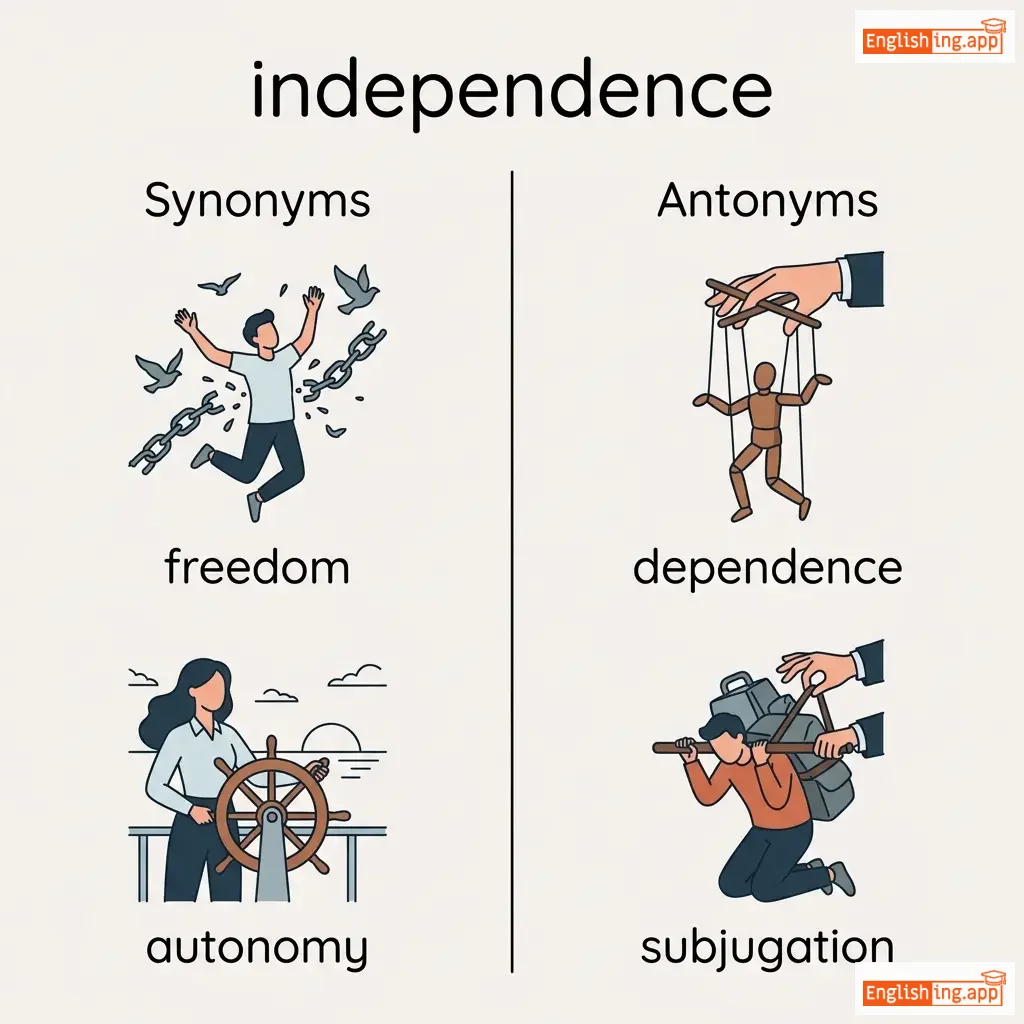
freedom, autonomy, liberty, sovereignty, self-rule
••••••
|
dependence, subjugation, slavery
••••••
|
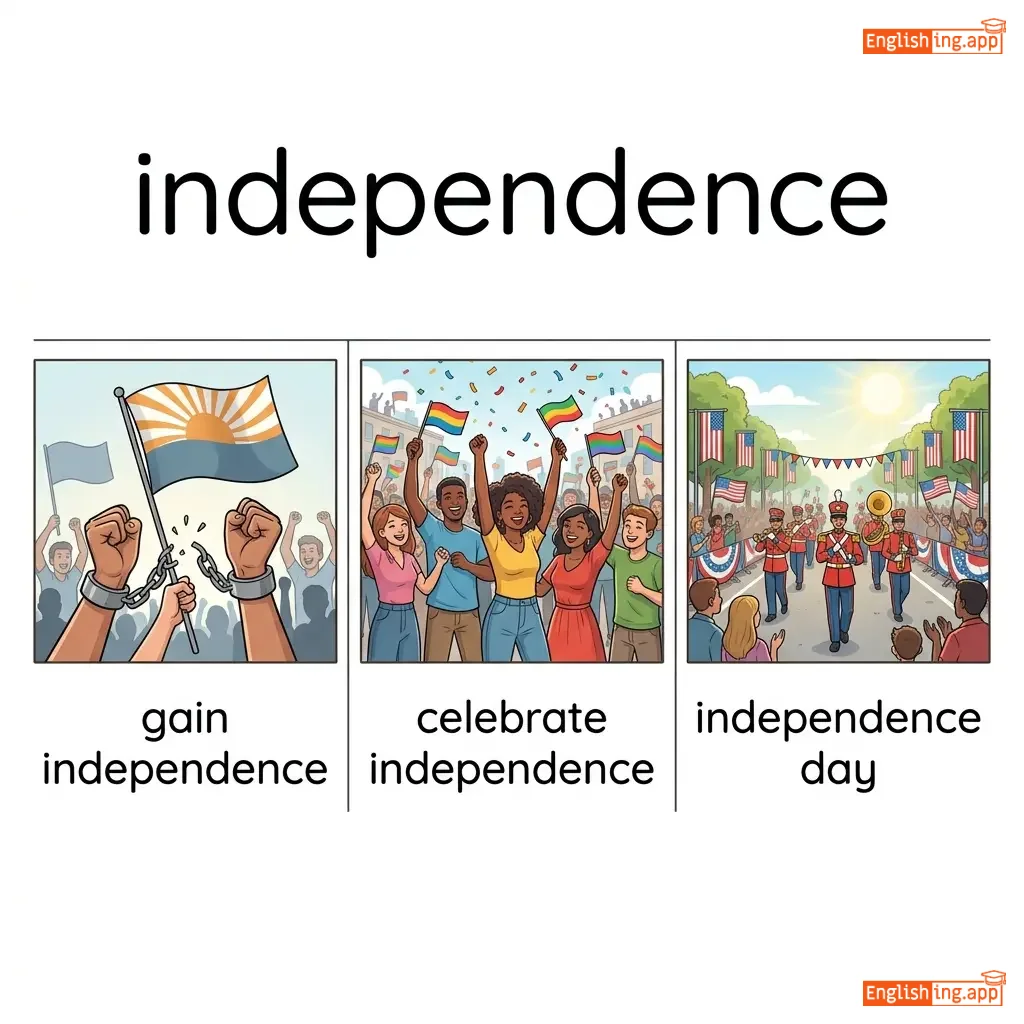
gain independence, celebrate independence, independence day, struggle for independence
••••••
|
Independence означает независимость - В России свобода всегда важна.
••••••
|
|
🕊️
••••••
|
/ˌɪn.dɪˈpen.dənt/
adjective
(независимый)
••••••
|

|
независимый
nezavisimyy
••••••
|
- •••••• | - •••••• | - •••••• | - •••••• |
Free from outside control; not depending on others.
••••••
|
She is an independent woman who runs her own business.
Она независимая женщина, которая управляет собственным бизнесом.
••••••
|
Она независимая женщина, которая управляет собственным бизнесом.
Ona nezavisimaya zhenshchina, kotoraya upravlyaet sobstvennym biznesom.
••••••
|
independent thinker
независимый мыслитель
••••••
|
Someone who forms their own opinions without influence from others.
••••••
|
независимый мыслитель
nezavisimyy myslitel'
••••••
|
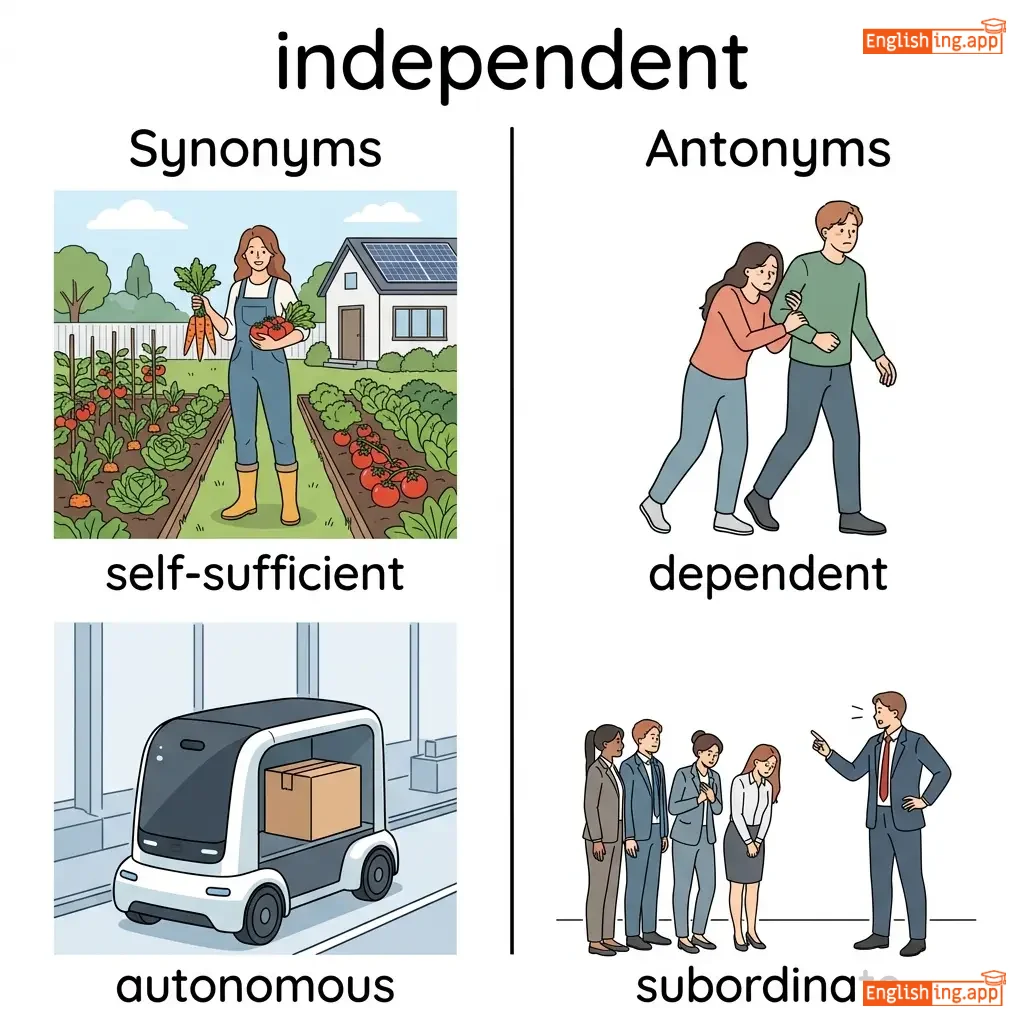
self-sufficient, autonomous, free, self-reliant
••••••
|
dependent, subordinate
••••••
|
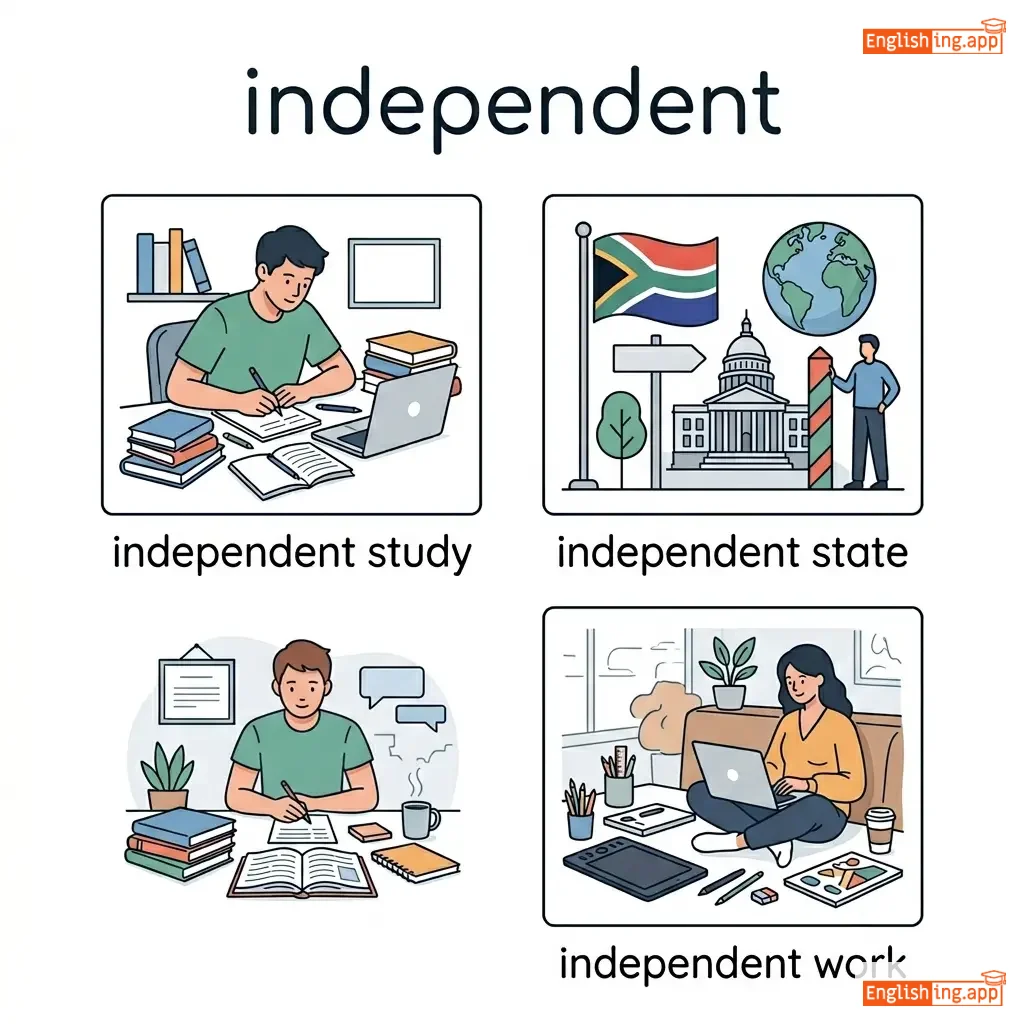
independent study, independent state, independent work, financially independent
••••••
|
Независимый — не зависеть, как независимость.
••••••
|
|
📑
••••••
|
/ˈɪndeks/
noun, verb
(индекс)
••••••
|

|
индекс
indeks
••••••
|
indexed
индексированный
••••••
|
indexed
индексированный
••••••
|
indexes
индексирует
••••••
|
indexing
индексация
••••••
|
A list of items arranged in order, or to arrange data systematically for reference.
••••••
|
The book includes a detailed index at the end.
Книга включает в себя подробный индекс в конце.
••••••
|
Книга включает в себя подробный индекс в конце.
Kniga vklyuchayet v sebya podrobnый indeks v kontse.
••••••
|
index finger
указательный палец
••••••
|
The finger next to the thumb, used for pointing.
••••••
|
указательный палец
ukazatel'nyy palets
••••••
|
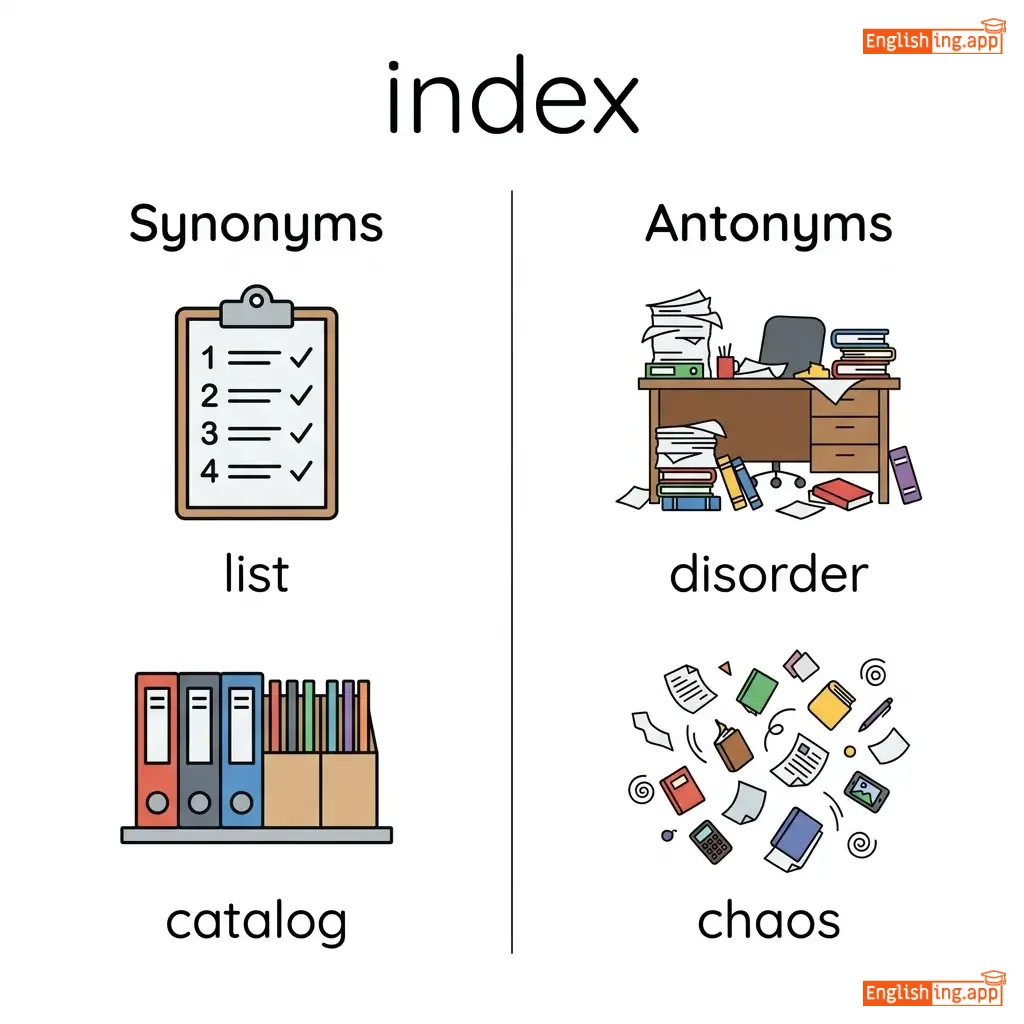
list, catalog, register, directory, guide
••••••
|
disorder, chaos, confusion
••••••
|
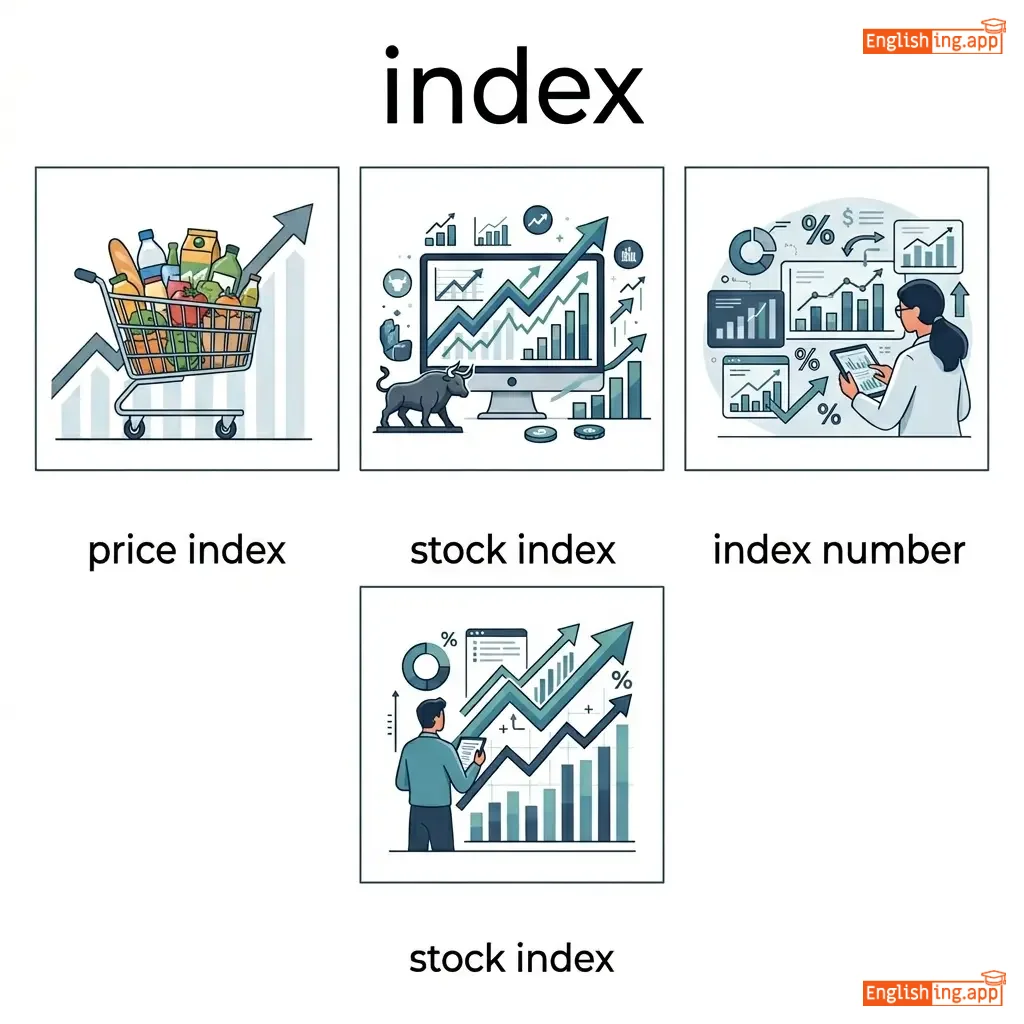
price index, stock index, index number, index card
••••••
|
Index означает список, индексация помогает легко найти!
••••••
|
|
🇮🇳
••••••
|
/ˈɪndiən/
adjective/noun
(индиан)
••••••
|
- •••••• |
индийский
indiyskiy
••••••
|
- •••••• | - •••••• | - •••••• | - •••••• |
Relating to India, its people, or their culture.
••••••
|
She loves Indian food, especially biryani. |
Ей нравится индийская еда, особенно бирьяни.
Yey nravitsya indijskaya yeda, osobenno biryani.
••••••
|
Indian summer |
A period of unseasonably warm weather in late autumn.
••••••
|
Индийское лето
Indijskoe leto
••••••
|
South Asian, Hindu, Desi
••••••
|
foreign, non-Indian
••••••
|
Indian culture, Indian food, Indian citizen, Indian traditions
••••••
|
Indian означает индийский - представьте Индию 🇮🇳 и индийское бирьяни 🍛.
••••••
|
|
👉
••••••
|
/ˈɪndɪˌkeɪt/
verb
(индикейт)
••••••
|

|
указать
ukazat
••••••
|
indicated
индикейтед
••••••
|
indicated
индикейтед
••••••
|
indicates
индикейтс
••••••
|
indicating
индикейтинг
••••••
|
To point out, show, or suggest something.
••••••
|
The results indicate that the treatment was effective.
Результаты показывают, что лечение было эффективным.
••••••
|
Результаты показывают, что лечение было эффективным.
Rezultaty pokazivayut, chto lechenie bylo effektivnym.
••••••
|
indicate interest
показать интерес
••••••
|
To show or express that one is interested.
••••••
|
показать интерес
pokazat' interes
••••••
|
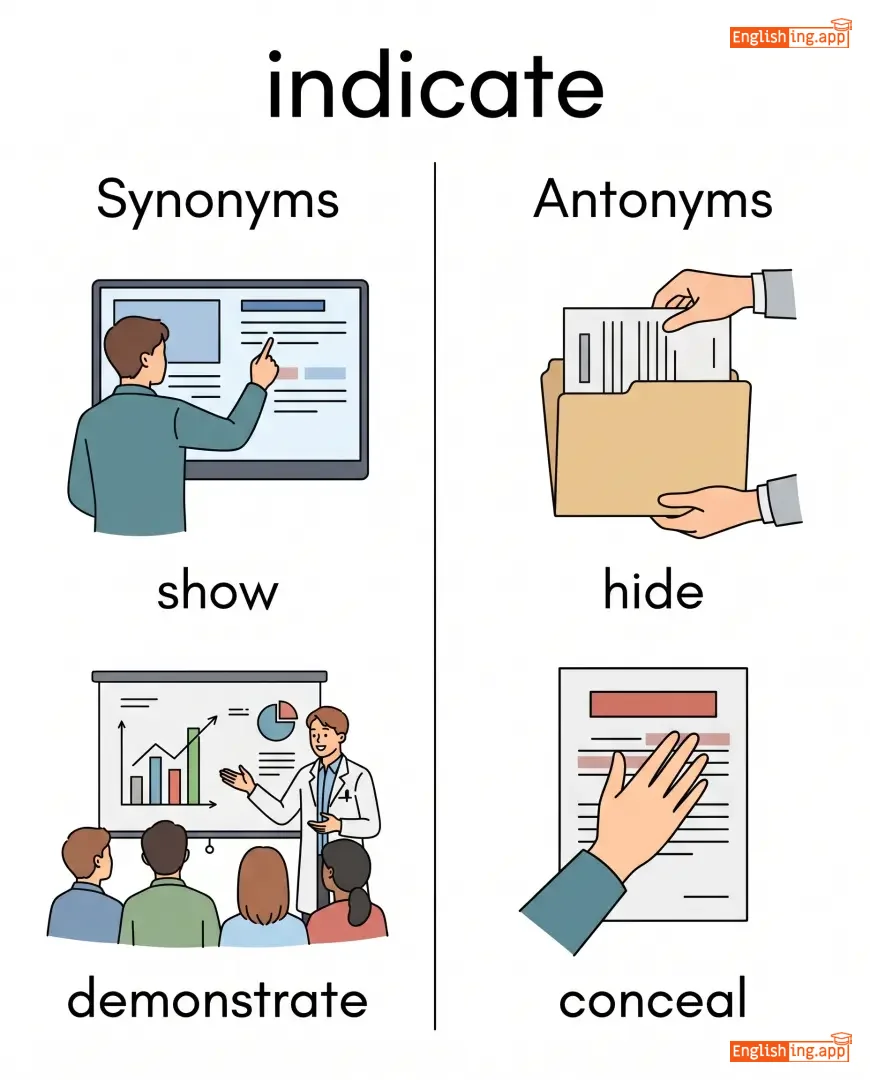
show, demonstrate, suggest, signal, reveal
••••••
|
hide, conceal, obscure
••••••
|
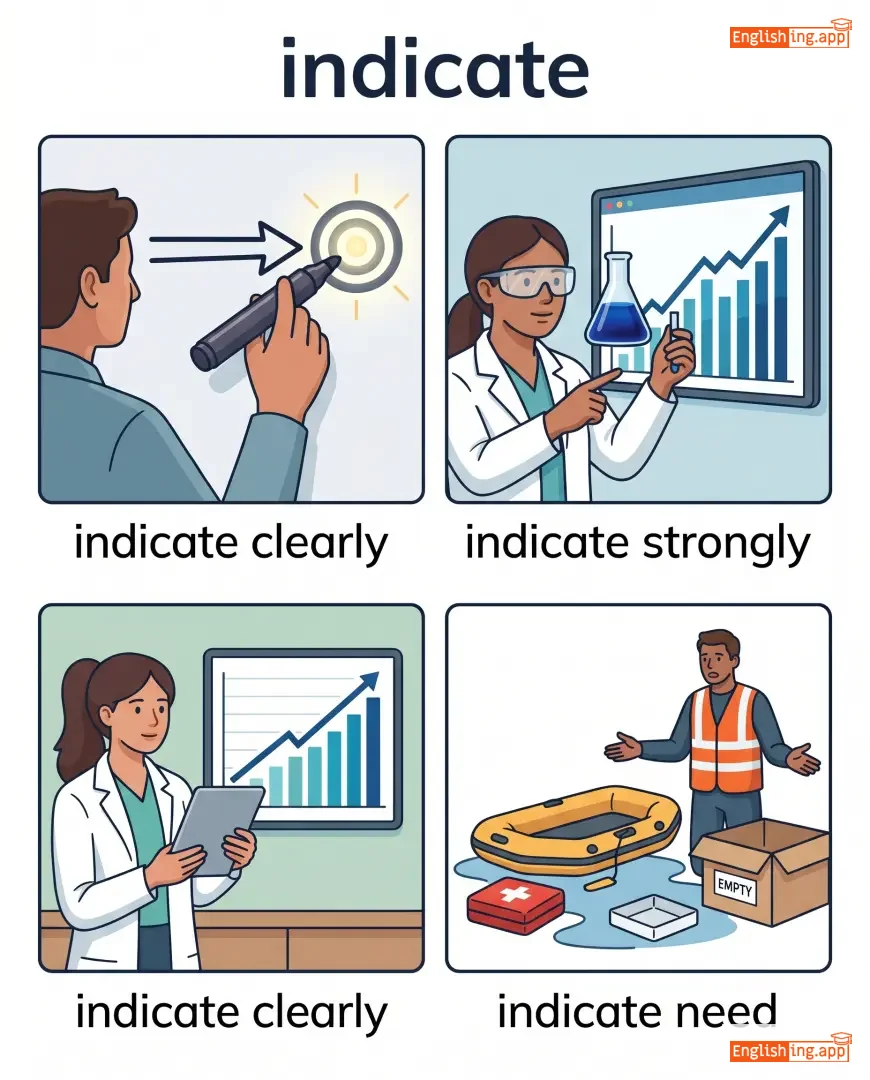
indicate clearly, indicate strongly, indicate need, indicate result
••••••
|
Indicate значит указать - указываем пальцем 👉.
••••••
|
|
⚠️
••••••
|
/ˌɪndɪˈkeɪʃən/
noun
(indikéishon)
••••••
|
- •••••• |
индикация
indikatsiya
••••••
|
- •••••• | - •••••• | - •••••• | - •••••• |
A sign, piece of information, or signal that suggests something.
••••••
|
Dark clouds are an indication of an approaching storm. |
Тёмные облака — это индикация приближающейся бури.
Tyomnye oblaká — eto indikátsiya priblizhayushcheysya buri
••••••
|
give an indication |
To show or suggest something indirectly.
••••••
|
давать индикацию
davat' indikatsiyu
••••••
|
sign, signal, evidence, clue, pointer
••••••
|
concealment, suppression
••••••
|
clear indication, early indication, medical indication
••••••
|
Индикация значит признак — Тёмные облака дают индикацию шторму.
••••••
|
|
📊
••••••
|
/ˈɪndɪˌkeɪtər/
noun
(индикатор)
••••••
|
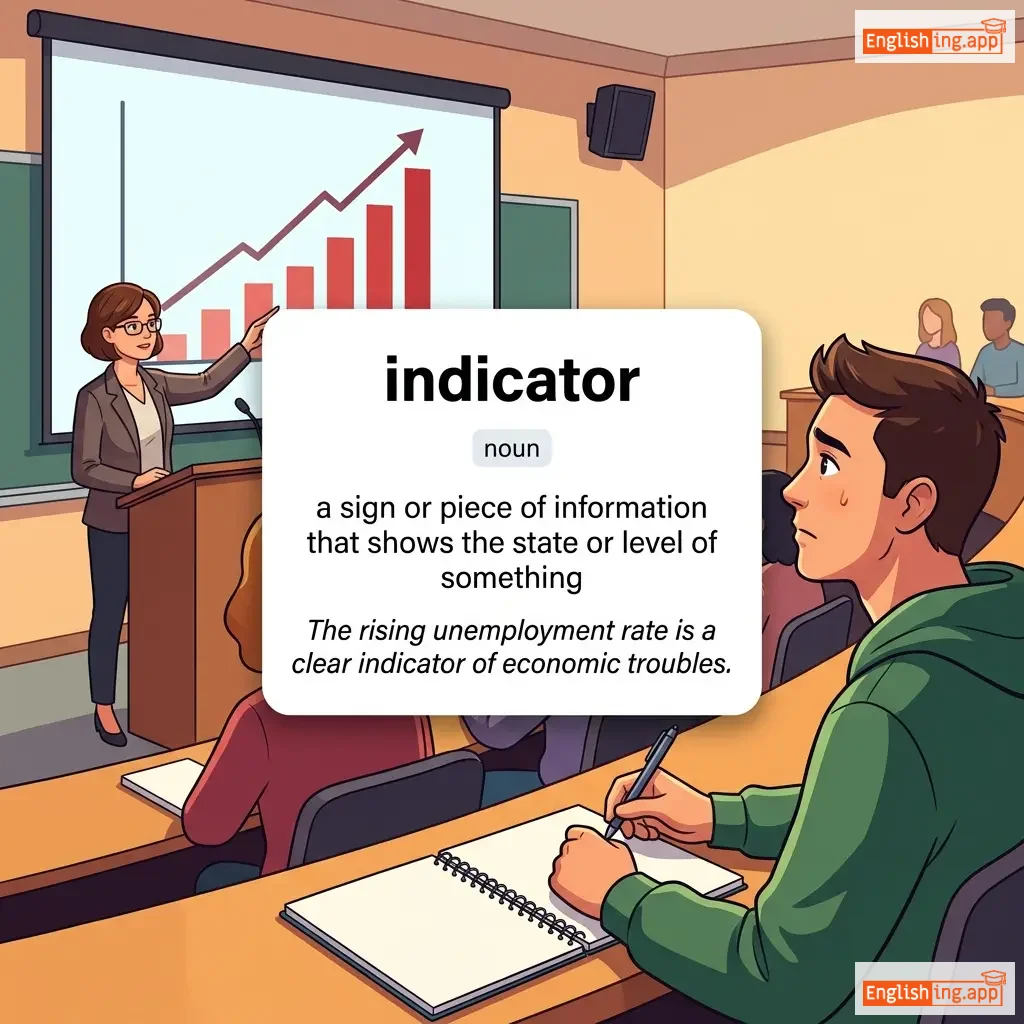
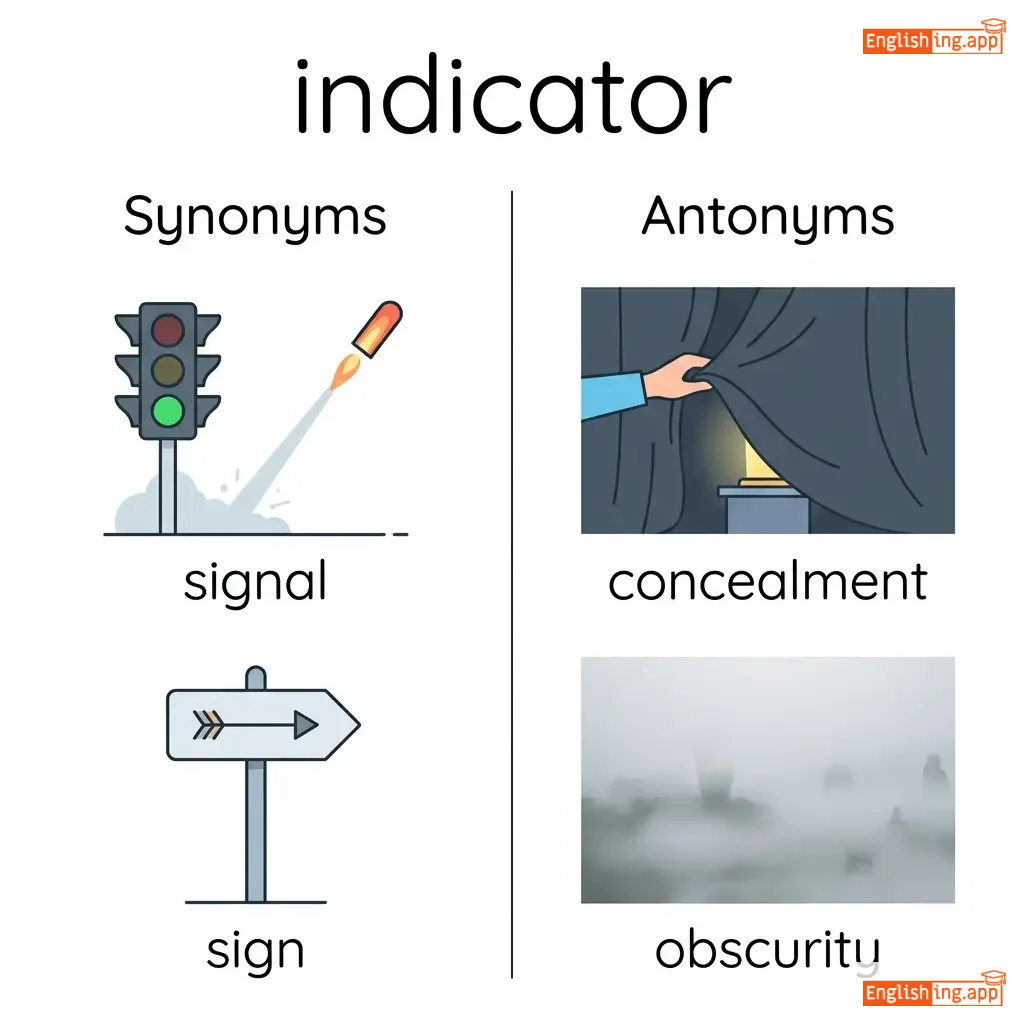
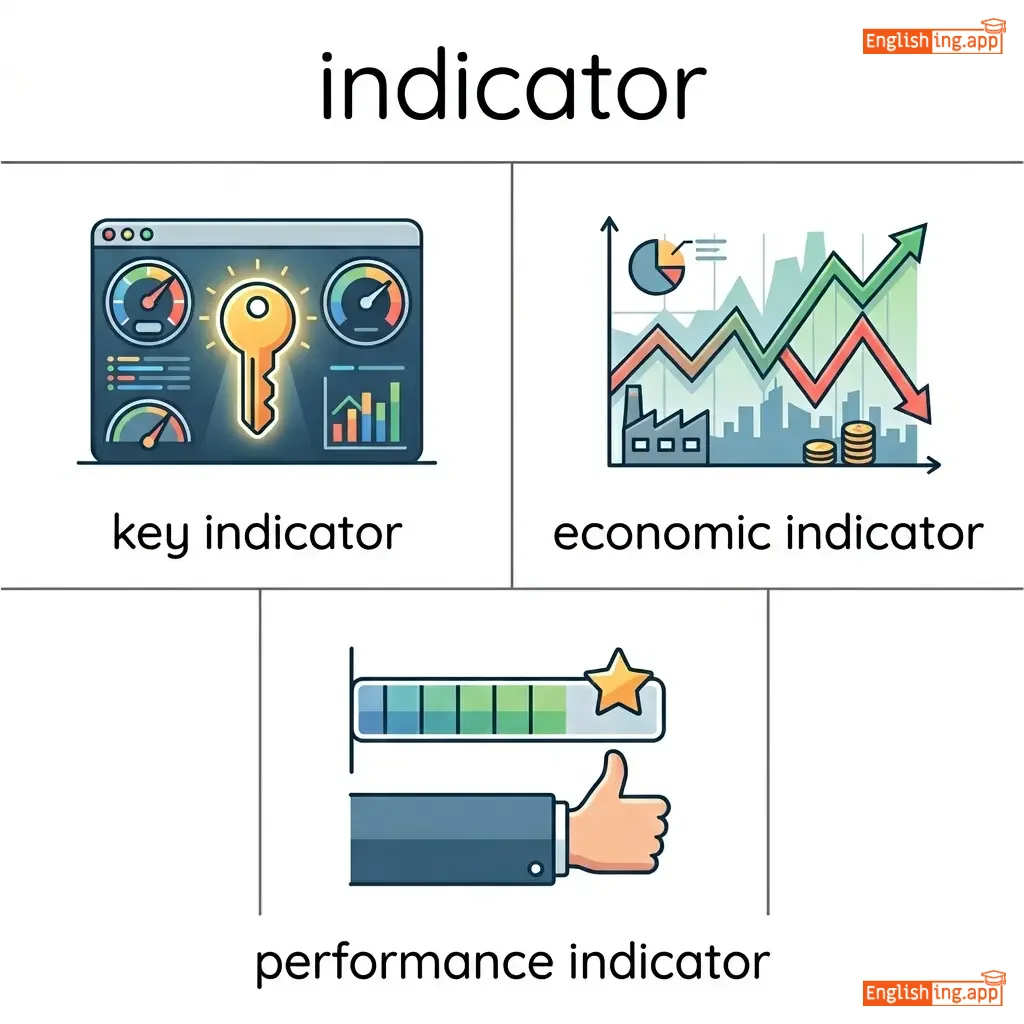
|
индикатор
indikator
••••••
|
- •••••• | - •••••• | - •••••• | - •••••• |
a sign or piece of information that shows the state or level of something
••••••
|
The rising unemployment rate is a clear indicator of economic troubles. |
Растущий уровень безработицы — явный индикатор экономических проблем.
Rastushchiy uroven bezrabotitsy - yavnyy indikator ekonomicheskikh problem.
••••••
|
leading indicator |
a measure that signals future developments or trends
••••••
|
опережающий индикатор
operezhayushchiy indikator
••••••
|
signal, sign, gauge, measure, pointer
••••••
|
concealment, obscurity
••••••
|
key indicator, economic indicator, performance indicator, health indicator
••••••
|
Индикатор — это то, что указывает – как светофор указывает путь.
••••••
|
|
📜
••••••
|
/ɪnˈdaɪtmənt/
noun
(инˈдаɪтмэнт)
••••••
|
- •••••• |
обвинительный акт
obvinitel'nyy akt
••••••
|
- •••••• | - •••••• | - •••••• | - •••••• |
a formal charge or accusation of a serious crime
••••••
|
The indictment accused the company of multiple violations. |
Обвинительный акт обвинил компанию в нескольких нарушениях.
Obvinitel'nyy akt obvinil kompaniyu v neskol'kikh narusheniyakh.
••••••
|
- •••••• | - •••••• | - •••••• |
charge, accusation, prosecution, allegation
••••••
|
acquittal, exoneration
••••••
|
criminal indictment, federal indictment, indictment process
••••••
|
Indictment – обвинительный акт.
••••••
|
|
😐
••••••
|
/ɪnˈdɪfərəns/
noun
(индифференс)
••••••
|
- •••••• |
безразличие
bezrazlichie
••••••
|
- •••••• | - •••••• | - •••••• | - •••••• |
lack of interest, concern, or sympathy
••••••
|
He showed complete indifference to the suffering around him. |
Он показал полное безразличие к страданиям вокруг него.
On pokazal polnoe bezrazlichie k stradaniyam vokrug nego.
••••••
|
cold indifference |
a total lack of concern or empathy
••••••
|
холодное безразличие
kholodnoe bezrazlichie
••••••
|
apathy, unconcern, neglect, disinterest
••••••
|
concern, care, sympathy
••••••
|
show indifference, total indifference, cold indifference, public indifference
••••••
|
Indifference: in (без) + difference (разница), нет разницы – безразличие.
••••••
|
|
😐
••••••
|
/ɪnˈdɪf.ər.ənt/
adjective
(индифферент)
••••••
|
- •••••• |
безразличный
bezrazlichnyy
••••••
|
- •••••• | - •••••• | - •••••• | - •••••• |
having no particular interest or concern; not caring one way or another
••••••
|
She was indifferent to the outcome of the match. |
Она была безразлична к результату матча.
Ona byla bezrazlichna k rezul'tatu matcha.
••••••
|
indifferent attitude |
showing no concern or interest
••••••
|
безразличное отношение
bezrazlichnoe otnoshenie
••••••
|
unconcerned, apathetic, detached, disinterested, neutral
••••••
|
concerned, interested, passionate
••••••
|
remain indifferent, indifferent attitude, indifferent to, indifferent response
••••••
|
Когда тебе все равно, ты безразличен или 'indifferent'.
••••••
|
|
🌱
••••••
|
/ɪnˈdɪdʒ.ə.nəs/
adjective
(инди́дженос)
••••••
|

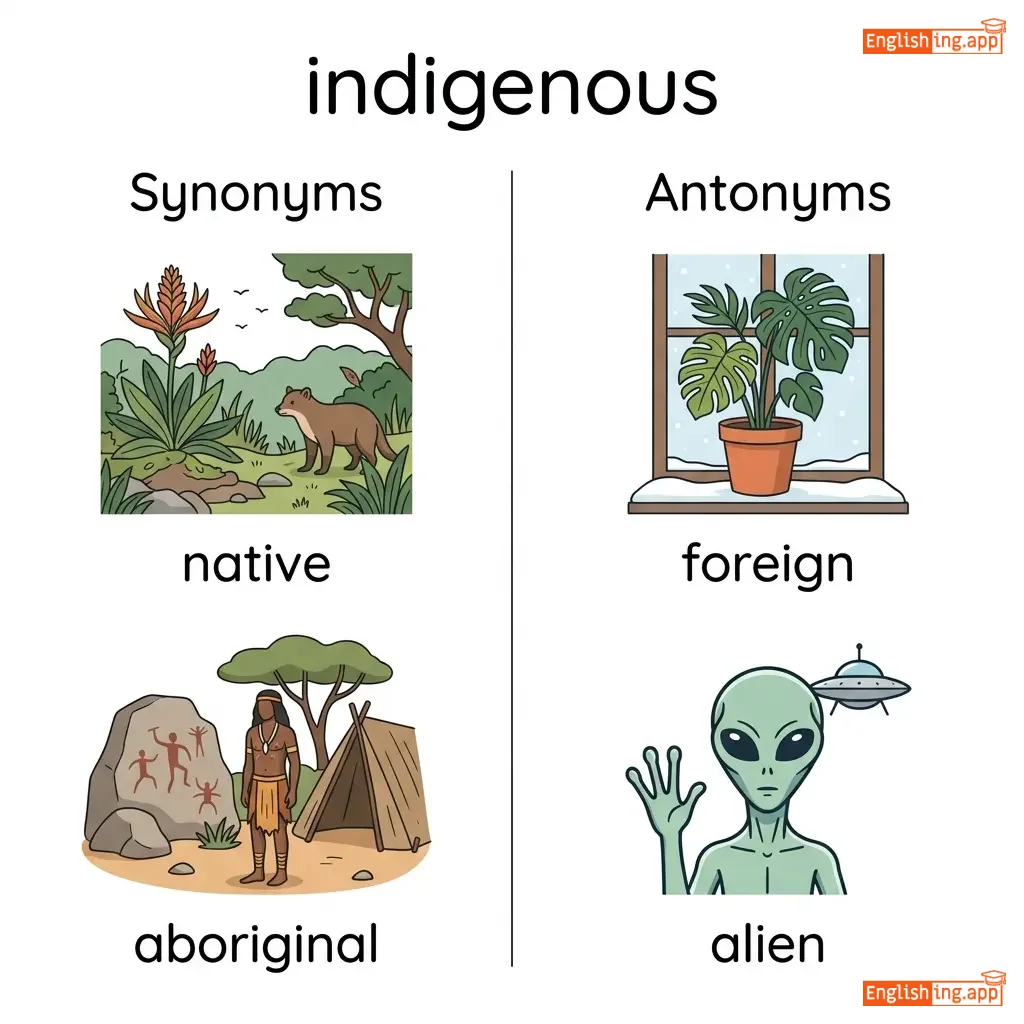
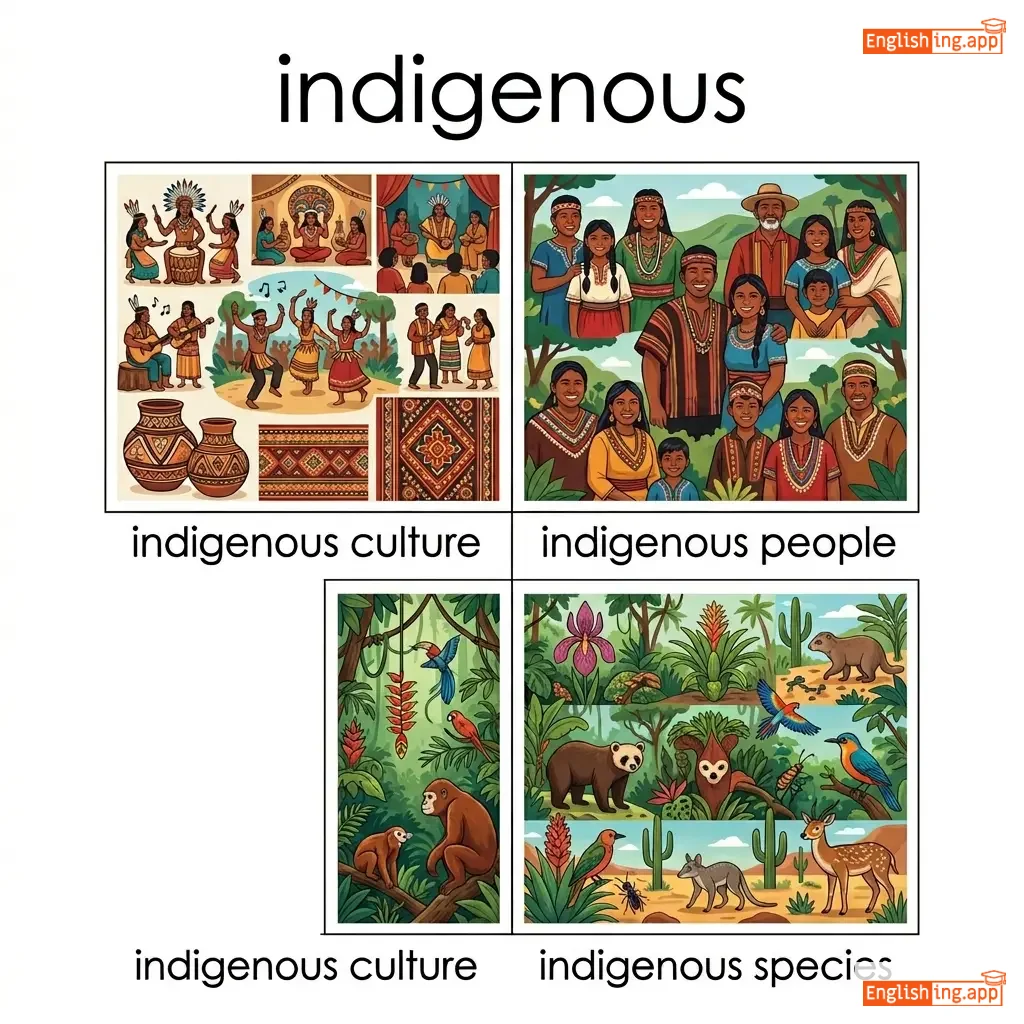
|
коренной
korennoy
••••••
|
- •••••• | - •••••• | - •••••• | - •••••• |
originating or occurring naturally in a particular place; native
••••••
|
These plants are indigenous to South America. |
Эти растения являются коренными для Южной Америки.
Ety rastenija javljajutsja korennymi dlya Yuzhnoj Ameriki.
••••••
|
indigenous people |
the native inhabitants of a region
••••••
|
коренные народы
korennye narody
••••••
|
native, aboriginal, local, endemic, original
••••••
|
foreign, alien, immigrant
••••••
|
indigenous culture, indigenous people, indigenous species
••••••
|
Коренные люди – как коренные растения Южной Америки.
••••••
|
|
↪️
••••••
|
/ˌɪndəˈrɛktli/
adverb
(индиректли)
••••••
|
- •••••• |
косвенно
kosvenno
••••••
|
- •••••• | - •••••• | - •••••• | - •••••• |
in a way that is not direct; through an intermediate means or influence
••••••
|
The policy affected small businesses indirectly.
Зе полиси эффектед смол бизнесес индиректли.
••••••
|
Политика косвенно повлияла на малый бизнес.
politika kosvenno povliyala na malyy biznes
••••••
|
- •••••• | - •••••• | - •••••• |
implicitly, obliquely, indirectly, tangentially, circuitously
••••••
|
directly, explicitly
••••••
|
indirectly related, indirectly affected, indirectly involved, indirectly proportional
••••••
|
Косвенно = indirect
••••••
|
|
⚠️
••••••
|
/ˌɪnˈdɪsəplɪn/
noun
(индиcиплин)
••••••
|
- •••••• |
недисциплинированность
nedistsiplinirovannost
••••••
|
- •••••• | - •••••• | - •••••• | - •••••• |
lack of discipline or self-control; failure to obey rules or maintain order
••••••
|
Indiscipline among the students disrupted the learning environment.
Индиcиплин эманг зэ стьюдентс дисраптед зэ лёрнинг инвайронмент.
••••••
|
Недисциплинированность студентов нарушила учебную обстановку.
Nedistsiplinirovannost studentov narushila uchebnuyu obstanovku
••••••
|
- •••••• | - •••••• | - •••••• |
disorder, unruliness, lawlessness, disobedience, chaos
••••••
|
discipline, order, obedience
••••••
|
student indiscipline, military indiscipline, widespread indiscipline, curb indiscipline
••••••
|
Indiscipline = не дисциплина → недисциплинированность
••••••
|
|
🌫️
••••••
|
/ˌɪndɪˈstɪŋkt/
adjective
(инди́стинкт)
••••••
|
- •••••• |
нечеткий
nechetkij
••••••
|
- •••••• | - •••••• | - •••••• | - •••••• |
Not clear or sharply defined; vague or blurred.
••••••
|
The sound of voices was indistinct in the distance. |
Звук голосов был нечетким вдали.
Zvuk golosov byl nechetkim v dali.
••••••
|
- •••••• | - •••••• | - •••••• |
vague, unclear, blurred, obscure, hazy
••••••
|
clear, distinct, sharp
••••••
|
indistinct shape, indistinct memory, indistinct voice
••••••
|
Indistinct означает нечёткий, как инди+стинкт, неясный.
••••••
|
|
👤
••••••
|
/ˌɪndɪˈvɪdʒuəl/
noun/adjective
(индивидуум)
••••••
|
- •••••• |
индивид
individ
••••••
|
- •••••• | - •••••• | - •••••• | - •••••• |
A single human being as distinct from a group; relating to one person.
••••••
|
Each individual has the right to freedom of speech. |
Каждое лицо имеет право на свободу слова.
Kazhdoe litso imeet pravo na svobodu slova.
••••••
|
individual rights |
Legal or moral entitlements held by each person.
••••••
|
индивидуальные права
individual'nye prava
••••••
|
person, human, being, entity, character
••••••
|
group, collective, community
••••••
|
individual rights, individual needs, individual cases, individual effort
••••••
|
Individual означает индивид - Individual 👤 означает одного человека.
••••••
|
|
🔗
••••••
|
/ˌɪndɪˈvɪzəbl/
adjective
••••••
|
- •••••• | - •••••• | - •••••• | - •••••• | - •••••• | - •••••• |
Not able to be divided or separated.
••••••
|
The country's unity was indivisible despite differences. |
- •••••• |
indivisible whole |
Something that cannot be separated into parts.
••••••
|
- •••••• |
inseparable, whole, unified, unbreakable
••••••
|
divisible, separable
••••••
|
indivisible unity, indivisible rights, indivisible whole
••••••
|
No •••••• |
|
🏠
••••••
|
/ˈɪn.dɔːr/
adjective
(индoр)
••••••
|
- •••••• |
в помещении
v pomeshchenii
••••••
|
- •••••• | - •••••• | - •••••• | - •••••• |
situated, occurring, or used inside a building
••••••
|
Indoor plants can improve air quality at home.
Индор плэнтс кэн импрув эа квэлити эт хоум.
••••••
|
Комнатные растения могут улучшить качество воздуха дома.
komnatnye rasteniya mogut uluchshit kachestvo vozdukha doma
••••••
|
indoor games
индор геймс
••••••
|
games played inside a building
••••••
|
игры в помещении
igry v pomeshchenii
••••••
|
inside, internal, enclosed, interior
••••••
|
outdoor, exterior
••••••
|
indoor activities, indoor sports, indoor plants, indoor space
••••••
|
Indoor = в помещении
••••••
|
|
🏠
••••••
|
/ˌɪnˈdɔːrz/
adverb
(индорз)
••••••
|
- •••••• |
в помещении
v pomeshchenii
••••••
|
- •••••• | - •••••• | - •••••• | - •••••• |
inside a building; within an enclosed space
••••••
|
Because of the rain, everyone stayed indoors.
Бикоз оф зе рэйн, эврибади стейд индорз.
••••••
|
Из-за дождя все остались в помещении.
Iz-za dozhdya vse ostalis v pomeshchenii
••••••
|
stay indoors
стей индорз
••••••
|
to remain inside a building, especially to avoid bad weather or danger
••••••
|
оставаться в помещении
ostavatsya v pomeshchenii
••••••
|
inside, within, in-house, internally
••••••
|
outdoors, outside
••••••
|
stay indoors, remain indoors, work indoors, play indoors
••••••
|
Indoor — это внутри, не на улице
••••••
|
|
💊
••••••
|
/ɪnˈdjuːs/
verb
(индуцировать)
••••••
|
- •••••• |
индуцировать
inducirovat'
••••••
|
induced
индуцировал
••••••
|
induced
индуцировал
••••••
|
induces
индуцирует
••••••
|
inducing
индуцируя
••••••
|
to cause or persuade someone to do something; to bring about a result
••••••
|
The doctor induced sleep with a mild sedative.
Доктор индуцировал сон с помощью легкого седативного средства.
••••••
|
Доктор индуцировал сон с помощью легкого седативного средства.
Doktor induciroval son s pomoshch'yu legkogo sedativnogo sredstva.
••••••
|
induce labor
индуцировать роды
••••••
|
to cause childbirth to begin artificially
••••••
|
индуцировать роды
inducirovat' rody
••••••
|
cause, persuade, prompt, encourage, provoke
••••••
|
dissuade, prevent, stop
••••••
|
induce labor, induce sleep, induce change, induce vomiting
••••••
|
Индуцировать значит вызывать что-то - как доктор индуцирует сон.
••••••
|
|
🍫
••••••
|
/ɪnˈdʌldʒ/
verb
(in-dulj)
••••••
|
- •••••• |
предаваться
predavat'sya
••••••
|
indulged
in-duljd
••••••
|
indulged
in-duljd
••••••
|
indulges
in-duljes
••••••
|
indulging
in-duljing
••••••
|
to allow oneself to enjoy something enjoyable, often excessively
••••••
|
He indulged in a piece of chocolate cake after dinner.
Он побаловал себя куском шоколадного торта после ужина.
••••••
|
Он побаловал себя куском шоколадного торта после ужина.
On pobaloval sebya kuskom shokoladnogo torta posle uzhina.
••••••
|
indulge in
погружаться в
••••••
|
to take pleasure in doing something
••••••
|
предаваться
predavat'sya
••••••
|
pamper, spoil, gratify, satisfy, entertain
••••••
|
restrain, deny, refuse
••••••
|
indulge in, indulge yourself, indulge a habit, indulge desire
••••••
|
Indulge — это как предаваться шоколадному торту – наслаждаться слишком много.
••••••
|
|
🏭
••••••
|
/ɪnˈdʌstriəl/
adjective
(индустриал)
••••••
|


|
промышленный
promyshlennyy
••••••
|
- •••••• | - •••••• | - •••••• | - •••••• |
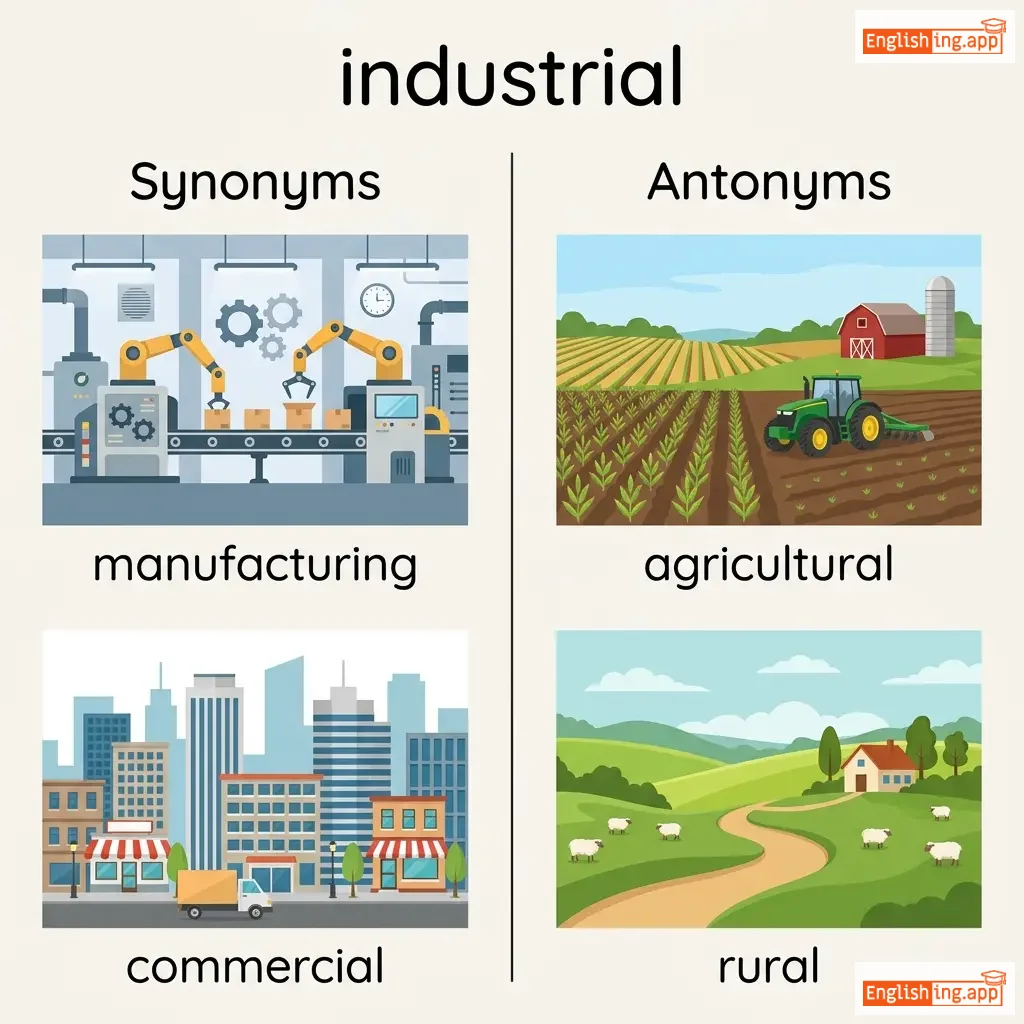
Relating to industry, factories, or manufacturing.
••••••
|
The city has grown rapidly due to industrial development.
Город быстро развивался благодаря промышленному развитию.
••••••
|
Город быстро развивался благодаря промышленному развитию.
Gorod bystro razvivalsya blagodarya promyshlennomu razvitiyu.
••••••
|
industrial revolution
Индустриальная революция
••••••
|
A period of major industrialization and innovation.
••••••
|
Индустриальная революция
Industriyal'naya revolyutsiya
••••••
|
manufacturing, commercial, mechanical, factory-based
••••••
|
agricultural, rural
••••••
|
industrial area, industrial development, industrial sector, industrial growth
••••••
|
Industrial означает промышленный - фабрики 🏭 легко запомнить.
••••••
|
|
💪
••••••
|
/ɪnˈdʌstriəs/
adjective
(индустриас)
••••••
|
- •••••• |
трудолюбивый
trudolyubivy
••••••
|
- •••••• | - •••••• | - •••••• | - •••••• |
Hardworking and diligent in one's duties.
••••••
|
She is an industrious student who always completes her assignments on time. |
Она трудолюбивый студент, который всегда выполняет свои задания вовремя.
Ona trudolyubivyj student, kotoryj vsegda vypolnyaet svoi zadaniya vovremya.
••••••
|
industrious worker |
A person who works hard and diligently.
••••••
|
трудолюбивый работник
trudolyubivy rabotnik
••••••
|
hardworking, diligent, dedicated, assiduous, tireless
••••••
|
lazy, idle, negligent
••••••
|
industrious student, industrious worker, industrious nature
••••••
|
Industrious → Industrious напоминает индустрию, где всегда много работы.
••••••
|
|
🏭
••••••
|
/ˈɪndəstri/
noun
(индустрия)
••••••
|



|
промышленность
promyshlennost
••••••
|
- •••••• | - •••••• | - •••••• | - •••••• |
The production of goods or services within an economy.
••••••
|
The textile industry employs thousands of workers in the region. |
Текстильная промышленность нанимает тысячи рабочих в регионе.
Tekstil'naya promyshlennost' nanimayet tysyachi rabochikh v regione.
••••••
|
cottage industry |
A small-scale, often home-based business.
••••••
|
домашняя промышленность
domashnyaya promyshlennost'
••••••
|
business, trade, commerce, sector, production
••••••
|
idleness, inactivity, unemployment
••••••
|
manufacturing industry, service industry, heavy industry, global industry
••••••
|
Промышленность означает работу, как фабрика, где производят товары.
••••••
|
|
❌
••••••
|
/ˌɪnɪˈfɛktɪv/
adjective
(inefektiv)
••••••
|
|
неэффективный; бесполезный; неудачный
neeffektivnyy; bespoleznyy; neudachnyy
••••••
|
- •••••• | - •••••• | - •••••• | - •••••• |
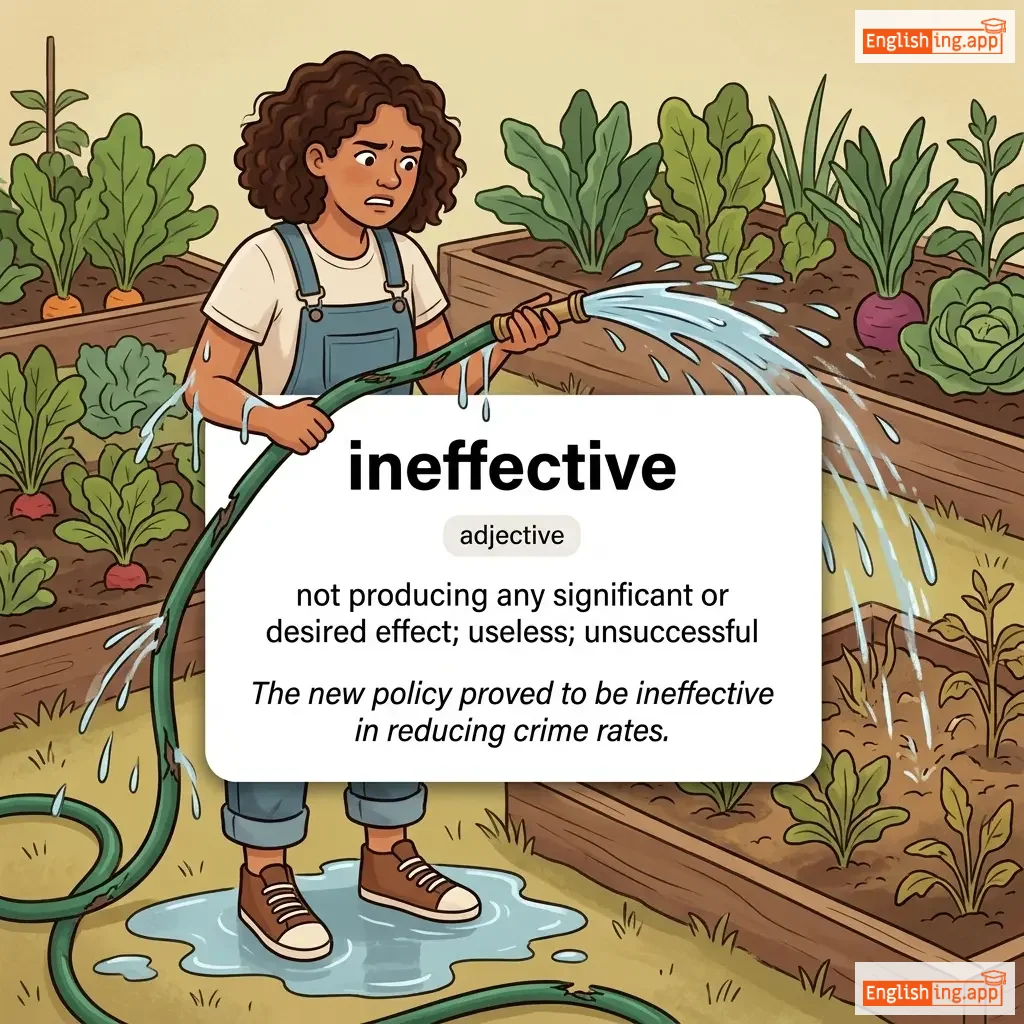
not producing any significant or desired effect; useless; unsuccessful
••••••
|
The new policy proved to be ineffective in reducing crime rates.
Новая политика оказалась неэффективной в снижении уровня преступности.
••••••
|
Новая политика оказалась неэффективной в снижении уровня преступности.
Novaya politika okazalas' neeffektivnoy v snizhenii urovnya prestupnosti.
••••••
|
- •••••• | - •••••• | - •••••• |
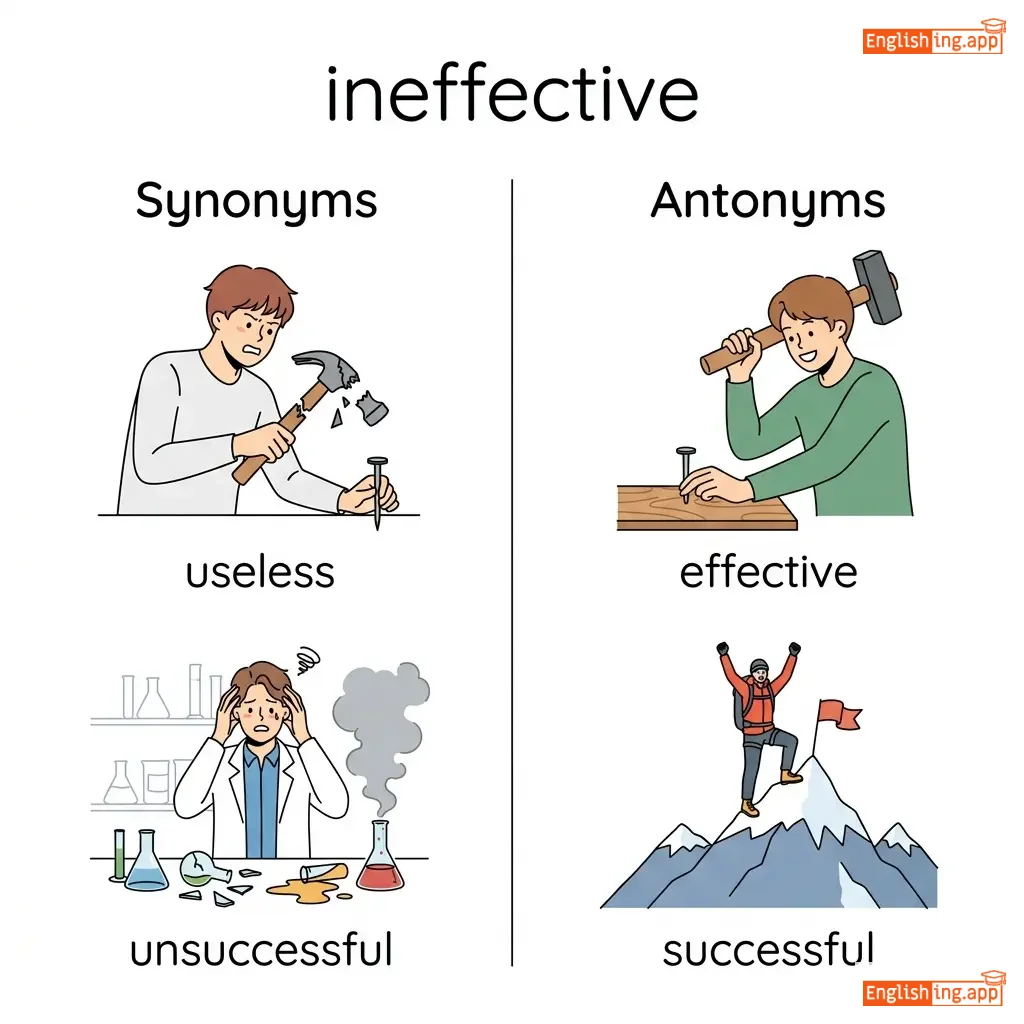
useless, unsuccessful, futile, powerless
••••••
|
effective, successful, powerful, efficient
••••••
|
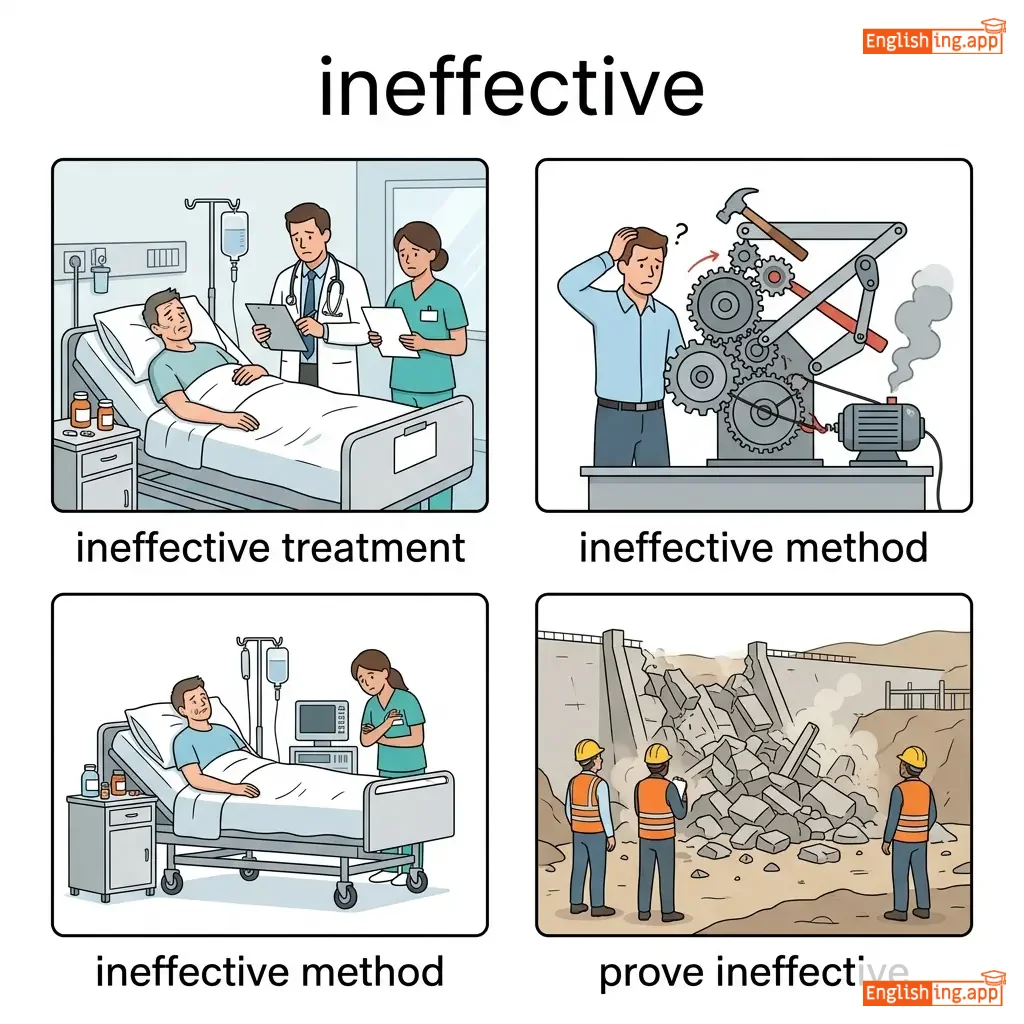
ineffective treatment, ineffective method, prove ineffective
••••••
|
Imagine 'neeffektivnyy' as something that doesn't work, like a broken tool!
••••••
|
|
⚠️
••••••
|
/ˌɪn.ɪˈfɪʃ.ənt/
adjective
(инэфишиэнт)
••••••
|
- •••••• |
неэффективный
neeffektivnyy
••••••
|
- •••••• | - •••••• | - •••••• | - •••••• |
Not achieving maximum productivity; wasting resources or effort.
••••••
|
The machine is old and inefficient compared to modern equipment.
Машина старая и неэффективная по сравнению с современным оборудованием.
••••••
|
Машина старая и неэффективная по сравнению с современным оборудованием.
Mashina staraya i neeffektivnaya po sravneniyu s sovremennym oborudovaniyem.
••••••
|
inefficient system
неэффективная система
••••••
|
A system that wastes time and resources.
••••••
|
неэффективная система
neeffektivnaya sistema
••••••
|
unproductive, wasteful, incompetent, defective
••••••
|
efficient, productive, competent
••••••
|
inefficient machine, inefficient system, inefficient methods, inefficient process
••••••
|
Ineffektivnyy oznachayet net effektivnosti → mashina ili chelovek neeffektivny.
••••••
|
|
❌
••••••
|
/ɪnˈɛl.ɪ.dʒə.bəl/
adjective
(инэлиджибл)
••••••
|
- •••••• |
неквалифицированный
nekvalifitsirovanny
••••••
|
- •••••• | - •••••• | - •••••• | - •••••• |
Not qualified or permitted to do something or to receive something.
••••••
|
He was ineligible to apply for the scholarship because of his age. |
Он не мог подать заявку на стипендию из-за своего возраста.
On ne mog podat' zayavku na stipendiyu iz-za svoego vozrasta.
••••••
|
ineligible candidate |
A person who is not qualified to be chosen.
••••••
|
неквалифицированный кандидат
nekvalifitsirovanny kandidat
••••••
|
unqualified, disqualified, unsuitable, barred
••••••
|
eligible, qualified, suitable
••••••
|
ineligible to vote, ineligible for benefits, ineligible candidate, ineligible applicants
••••••
|
Ineligible означает ‘in-eligible’ → не квалифицирован → неквалифицированный.
••••••
|
|
⚖️
••••••
|
/ˌɪnɪˈkwɒləti/
noun
(ɪnɪˈkwɒləti)
••••••
|

|
неравенство
neravenstvo
••••••
|
- •••••• | - •••••• | - •••••• | - •••••• |
the state of being unequal; disparity in status, rights, or opportunities
••••••
|
Inequality in wealth distribution remains a significant issue worldwide. |
Неравенство в распределении богатства остается важной проблемой на мировом уровне.
Neravenstvo v raspredelenii bogatstva ostaetsya vazhnoi problemoi na mirovom urovne.
••••••
|
- •••••• | - •••••• | - •••••• |
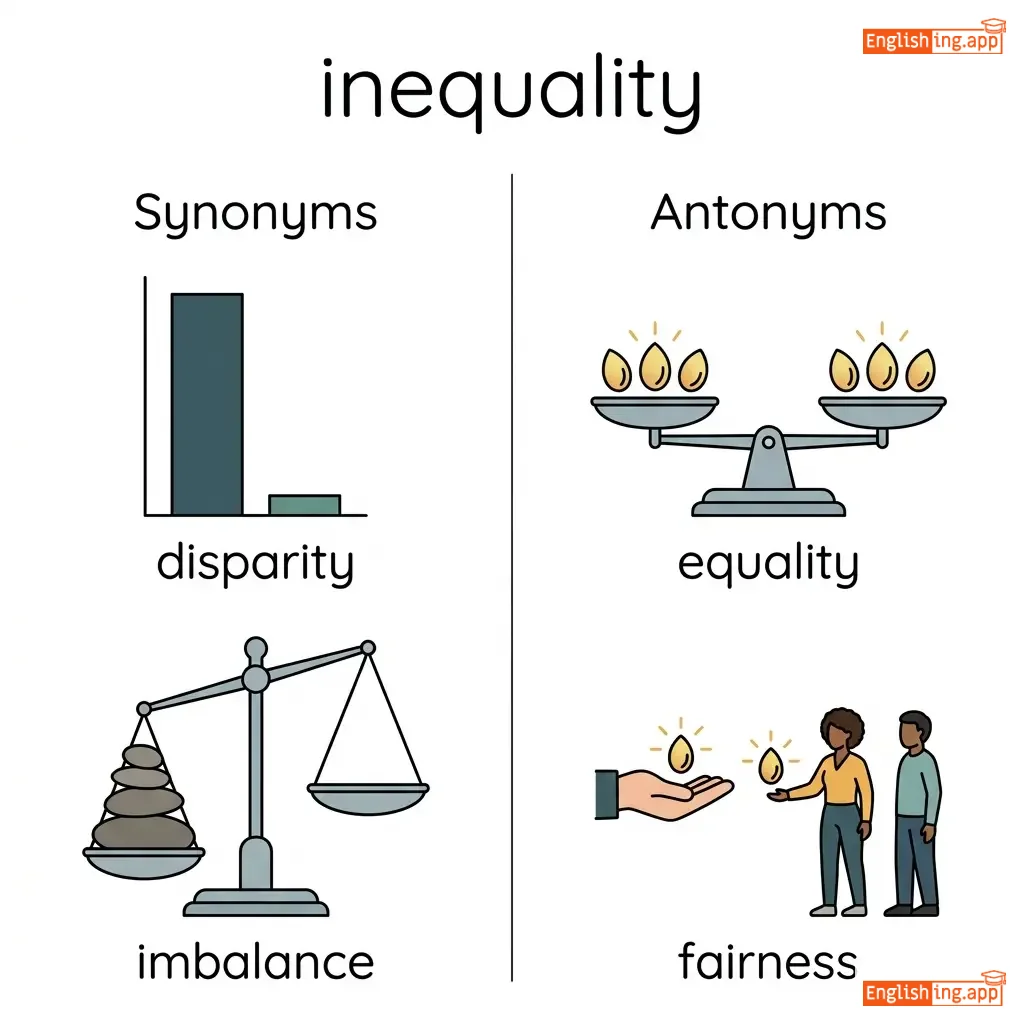
disparity, imbalance, discrimination, inequity
••••••
|
equality, fairness
••••••
|
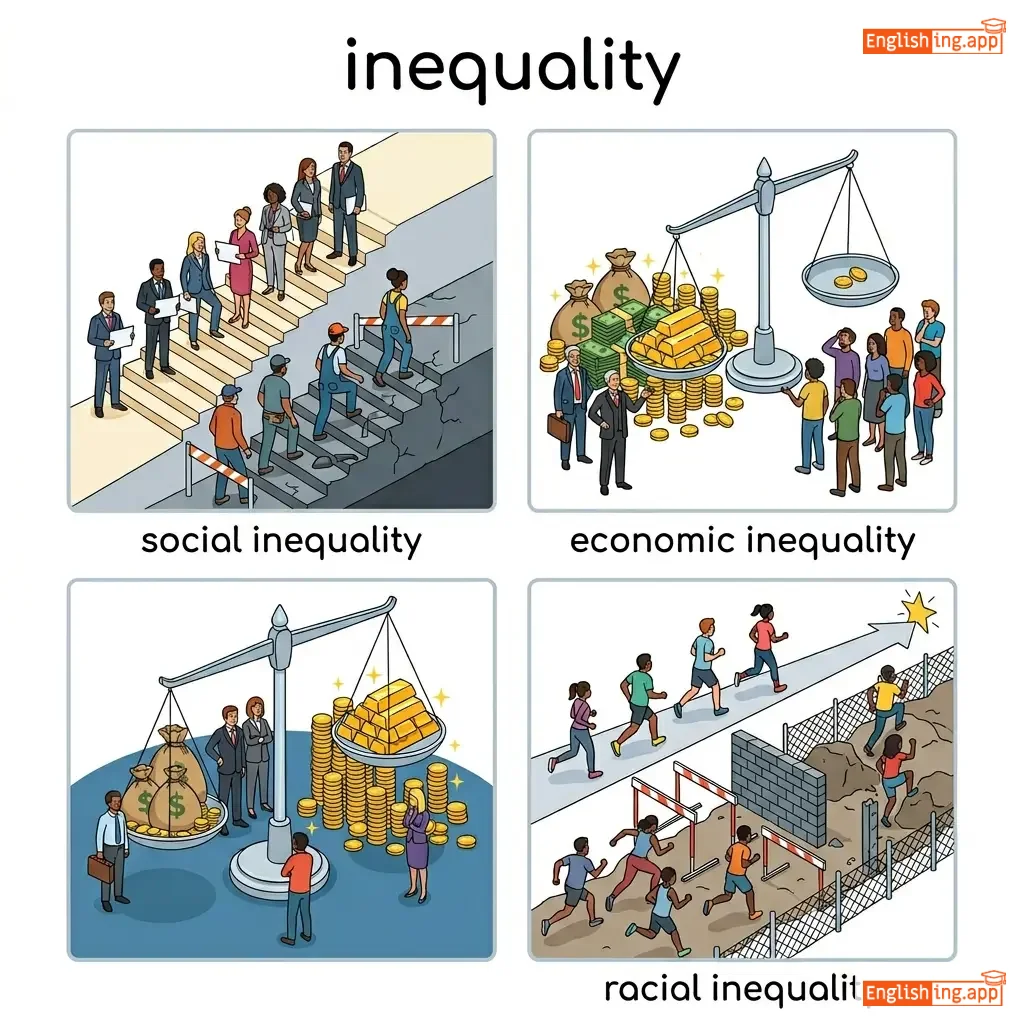
social inequality, economic inequality, racial inequality
••••••
|
Inequality sounds like 'In equal' – imagine people not being equal in opportunities!
••••••
|
|
🧩
••••••
|
/ˌɪnɪˈsɛnʃəl/
adjective
(инэсеншал)
••••••
|
- •••••• |
несущественный
nesushchestvennyy
••••••
|
- •••••• | - •••••• | - •••••• | - •••••• |
not necessary or important; not essential
••••••
|
The report removes all inessential details to stay focused.
Зе репорт римуувз ол инэсеншал дитэйлз
••••••
|
Отчёт убирает все несущественные детали, чтобы сохранить фокус.
otchot ubiraet vse nesushchestvennye detali chtoby sokhranit fokus
••••••
|
- •••••• | - •••••• | - •••••• |
unnecessary, nonessential, trivial, minor, dispensable
••••••
|
essential, vital, necessary
••••••
|
inessential details, inessential elements, inessential features
••••••
|
Несущественный = существенный নয় → inessential
••••••
|
|
☠️
••••••
|
/ɪnˈɛvɪtəbl/
adjective
(иневитебл)
••••••
|
|
неизбежный
neyizbezhnyy
••••••
|
- •••••• | - •••••• | - •••••• | - •••••• |
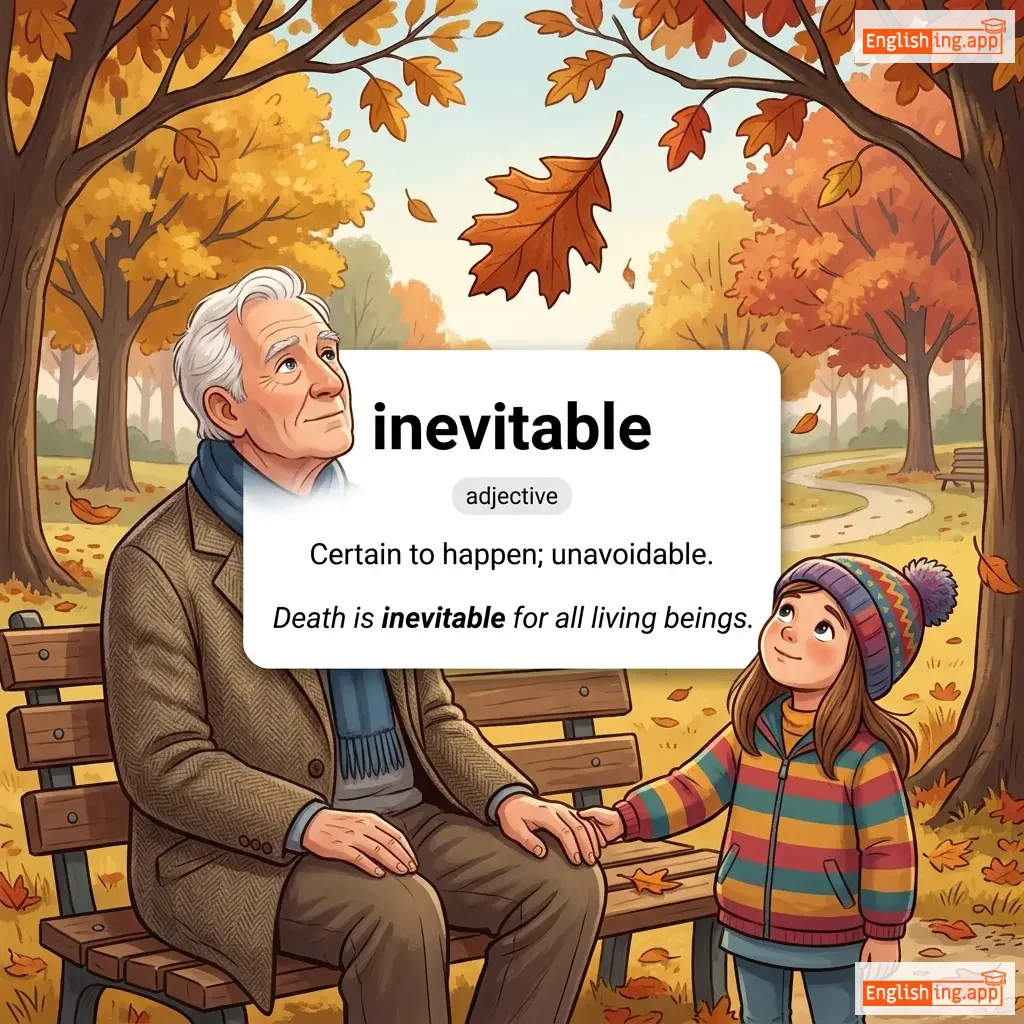
Certain to happen; unavoidable.
••••••
|
Death is inevitable for all living beings. |
Смерть неизбежна для всех живых существ.
Smert' neyizbezhna dlya vsekh zhivykh sushchestv.
••••••
|
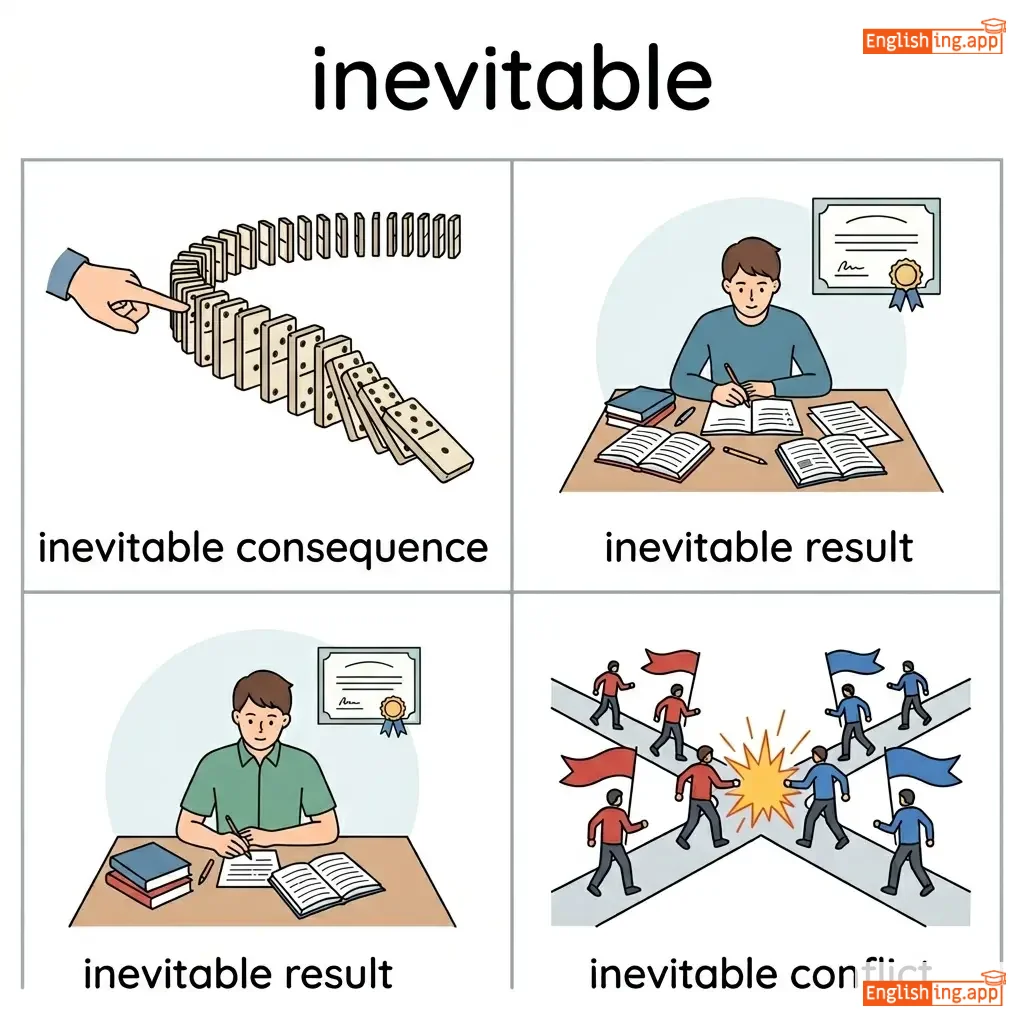
the inevitable result |
The certain outcome of an action or situation.
••••••
|
неизбежный результат
neyizbezhnyy rezultat
••••••
|
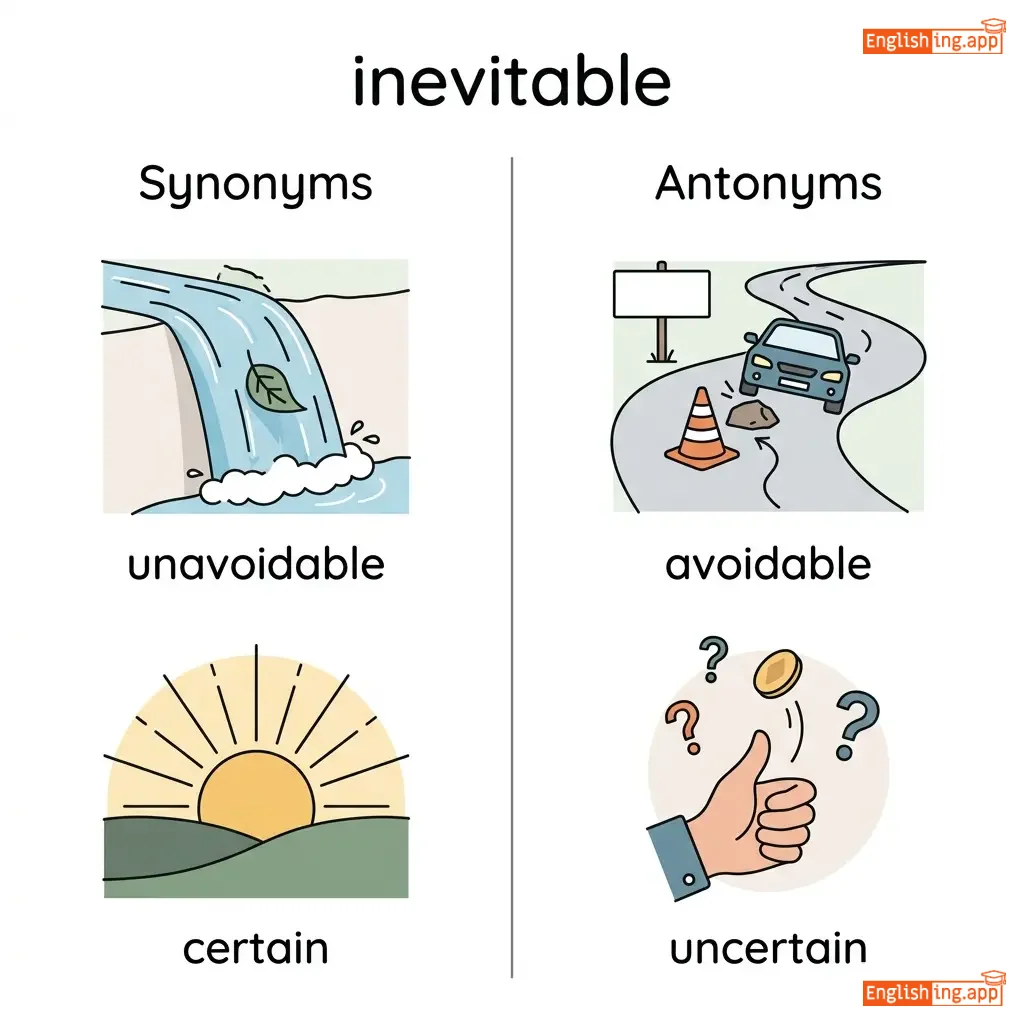
unavoidable, certain, destined, fated
••••••
|
avoidable, uncertain
••••••
|
inevitable consequence, inevitable result, inevitable conflict
••••••
|
Inevitable означает 'неизбежное' - как смерть.
••••••
|
|
🌀
••••••
|
/ɪnˈɛvɪtəbli/
adverb
(иневитабле)
••••••
|
- •••••• |
неизбежно
neyizbezhno
••••••
|
- •••••• | - •••••• | - •••••• | - •••••• |
in a way that cannot be avoided or prevented
••••••
|
Inevitably, the team faced challenges during the project. |
Неизбежно команда столкнулась с проблемами в ходе проекта.
Neyizbezhno komanda stolknulas' s problemami v khode proyekta.
••••••
|
as inevitably as night follows day |
something that is certain to happen
••••••
|
так же неизбежно, как ночь следует за днем
tak zhe neyizbezhno, kak noch' sleduet za dnyom
••••••
|
unavoidably, certainly, surely, predictably, inescapably
••••••
|
avoidably, preventably, uncertainly
••••••
|
inevitably lead, inevitably result, inevitably follow, inevitably happen
••••••
|
Неизбежно означает невозможность избежать, поэтому неизбежно произойдет 🌀
••••••
|
|
💰
••••••
|
/ˌɪnɪkˈspɛnsɪv/
adjective
(инэкспенсив)
••••••
|
- •••••• |
дешевый; доступный; экономичный
deshevy; dostupny; ekonomichny
••••••
|
- •••••• | - •••••• | - •••••• | - •••••• |
not costing a lot of money; affordable; budget-friendly
••••••
|
This restaurant offers delicious and inexpensive meals for students. |
Этот ресторан предлагает вкусные и дешевые блюда для студентов.
Etot restoran predlagaet vkusnye i deshevyye blyuda dlya studentov.
••••••
|
- •••••• | - •••••• | - •••••• |
cheap, affordable, budget-friendly, economical
••••••
|
expensive, costly, dear, pricey
••••••
|
inexpensive option, relatively inexpensive, inexpensive alternative
••••••
|
Есть вкусно и дешево — это всегда выгодно!
••••••
|
|
🤹
••••••
|
/ˌɪnˈekspɜːrt/
adjective
(инэксперт)
••••••
|
- •••••• |
неопытный
neopytnyy
••••••
|
- •••••• | - •••••• | - •••••• | - •••••• |
not skilled or experienced; lacking expertise
••••••
|
The inexpert handling of the machine caused several mistakes.
Зе инэксперт хэндлинг оф зе машин козд северал мистейкс.
••••••
|
Неопытное обращение с машиной привело к нескольким ошибкам.
Neopytnoye obrashcheniye s mashinoy privelo k neskolkim oshibkam
••••••
|
- •••••• | - •••••• | - •••••• |
unskilled, inexperienced, amateurish, inept, clumsy
••••••
|
expert, skilled, proficient
••••••
|
inexpert handling, inexpert judgment, inexpert attempt
••••••
|
Inexpert = не эксперт → неопытный.
••••••
|
|
😈
••••••
|
/ˈɪnfəməs/
adjective
(инфэмэс)
••••••
|
- •••••• |
печально известный
pechal'no izvestnyy
••••••
|
- •••••• | - •••••• | - •••••• | - •••••• |
well known for some bad quality or deed
••••••
|
The dictator was infamous for his cruelty. |
Диктатор был печально известен своей жестокостью.
Diktator byl pechal'no izvesten svoey zhestokost'yu.
••••••
|
infamous crime |
a crime that is notorious and shocking
••••••
|
печально известное преступление
pechal'no izvestnoye prestupleniye
••••••
|
notorious, disreputable, scandalous, dishonorable
••••••
|
famous, reputable, respected
••••••
|
infamous dictator, infamous act, infamous crime, infamous reputation
••••••
|
In-famous = плохая слава → печально известный
••••••
|
|
👶
••••••
|
/ˈɪnfənt/
noun
(инфант)
••••••
|
- •••••• |
младенец
mladenets
••••••
|
- •••••• | - •••••• | - •••••• | - •••••• |
A very young child or baby.
••••••
|
The infant was sleeping peacefully in the cradle.
Младенец мирно спал в колыбели.
••••••
|
Младенец мирно спал в колыбели.
Mladenets mirno spal v kolybeli.
••••••
|
- •••••• | - •••••• | - •••••• |
baby, newborn, child, toddler, youngster
••••••
|
adult, grown-up
••••••
|
infant mortality, infant care, infant formula, infant stage
••••••
|
Infant означает младенец - Inf (инф) в колыбели маленький.
••••••
|
|
🦠
••••••
|
/ɪnˈfɛkt/
verb
(инфицировать)
••••••
|
- •••••• |
инфицировать
infitsirovat
••••••
|
infected
инфицирован
••••••
|
infected
инфицирован
••••••
|
infects
инфицирует
••••••
|
infecting
инфицируя
••••••
|
To contaminate with a disease-causing organism.
••••••
|
The virus can infect healthy people quickly.
Вирус может быстро инфицировать здоровых людей.
••••••
|
Вирус может быстро инфицировать здоровых людей.
Virus mozhet bystro infitsirovat' zdorovykh lyudey.
••••••
|
infect with fear
инфицировать страхом
••••••
|
To spread fear into others.
••••••
|
инфицировать страхом
infitsirovat' strakhom
••••••
|
contaminate, transmit, spread, pollute
••••••
|
cleanse, disinfect
••••••
|
infect people, infect cells, infect computers, infect animals
••••••
|
Инфицировать — это как заразить.
••••••
|
|
🦠
••••••
|
/ɪnˈfɛkʃən/
noun
(инфекция)
••••••
|
- •••••• |
инфекция
infektsiya
••••••
|
- •••••• | - •••••• | - •••••• | - •••••• |
The process of becoming infected with harmful microorganisms such as bacteria or viruses.
••••••
|
The doctor prescribed antibiotics to treat the infection.
Доктор прописал антибиотики для лечения инфекции.
••••••
|
Доктор прописал антибиотики для лечения инфекции.
Doktor propisal antibiotiki dlya lecheniya infektsii.
••••••
|
spread of infection
распространение инфекции
••••••
|
The transmission of disease-causing microorganisms.
••••••
|
распространение инфекции
rasprostraneniye infektsii
••••••
|
contagion, illness, contamination, disease, disorder
••••••
|
health, wellness, cure
••••••
|
bacterial infection, viral infection, wound infection, spread of infection
••••••
|
Инфекция = инфекция = микробы проникают в тело.
••••••
|
|
🦠
••••••
|
/ɪnˈfekʃəs/
adjective
(инфекшэс)
••••••
|
- •••••• |
заразный
zaraznyi
••••••
|
- •••••• | - •••••• | - •••••• | - •••••• |
capable of causing infection or disease; spreading easily from one person to another; able to spread feelings or attitudes such as enthusiasm
••••••
|
Her infectious laughter made everyone in the room smile.
Хёр инфекшэс лафтер мейд эврибади смайл.
••••••
|
Её заразительный смех заставил всех улыбнуться.
eyo zarazitelnyi smekh zastavil vsekh ulybnutsya
••••••
|
infectious laughter
infectious laughter
••••••
|
laughter that spreads quickly and makes others laugh too
••••••
|
заразительный смех
zarazitelnyi smekh
••••••
|
contagious, communicable, catching, spreading, transmissible
••••••
|
noninfectious, harmless, noncontagious
••••••
|
infectious disease, infectious virus, infectious smile, infectious laughter, highly infectious
••••••
|
Заразный = как инфекция, быстро распространяется
••••••
|
|
🤔
••••••
|
/ɪnˈfɜːr/
verb
(инферировать)
••••••
|
- •••••• |
делать вывод
delat' vyvod
••••••
|
inferred
инферировал
••••••
|
inferred
инферировал
••••••
|
infers
инферирует
••••••
|
inferring
инферируя
••••••
|
to conclude or deduce something from evidence and reasoning rather than from explicit statements
••••••
|
From his silence, I inferred that he was not happy with the decision.
Из его молчания я сделал вывод, что он не был доволен решением.
••••••
|
Из его молчания я сделал вывод, что он не был доволен решением.
Iz ego molchaniya ya sdelal vyvod, chto on ne byl dovol'n s resheniem.
••••••
|
read between the lines
читать между строк
••••••
|
to understand an implicit meaning in what is said or written
••••••
|
читать между строк
chitat' mezhdu strok
••••••
|
deduce, conclude, reason, assume, derive
••••••
|
state, declare, express
••••••
|
infer meaning, infer from evidence, infer result
••••••
|
Инферировать значит делать выводы → In-Fer означает понимать на расстоянии.
••••••
|
|
♾️
••••••
|
/ˈɪnfɪnɪt/
adjective
(инфинит)
••••••
|
- •••••• |
бесконечный
beskonechny
••••••
|
- •••••• | - •••••• | - •••••• | - •••••• |
limitless or endless in space, extent, or number
••••••
|
The universe is often described as infinite.
Вселенная часто описывается как бесконечная.
••••••
|
Вселенная часто описывается как бесконечная.
Vselennaya chasto opisyvayetsya kak beskonechnaya.
••••••
|
infinite possibilities
бесконечные возможности
••••••
|
endless options or opportunities
••••••
|
бесконечные возможности
beskonechnye vozmozhnosti
••••••
|
endless, boundless, limitless, eternal, vast
••••••
|
finite, limited, restricted
••••••
|
infinite possibilities, infinite number, infinite space, infinite patience
••••••
|
Бесконечный = без конца + конец → не имеет конца
••••••
|
|
🎈
••••••
|
/ɪnˈfleɪt/
verb
(инфлейт)
••••••
|
- •••••• |
надувать; искусственно увеличивать
naduvat; iskusstvenno uvelichivat
••••••
|
inflated
инфлейтед
••••••
|
inflated
инфлейтед
••••••
|
inflates
инфлейтс
••••••
|
inflating
инфлейтинг
••••••
|
to fill with air or gas so it expands; to increase excessively or artificially
••••••
|
The mechanic inflated the tire to the correct pressure.
зе механик инфлейтед зе тайер ту зе корект прешер
••••••
|
Механик накачал шину до нужного давления.
Mekhanik nakachal shinu do nuzhnogo davleniya
••••••
|
inflate prices
inflate prices
••••••
|
to raise prices beyond a reasonable or normal level
••••••
|
завышать цены
zavyshat tseny
••••••
|
expand, blow up, enlarge, swell, boost
••••••
|
deflate, shrink, reduce
••••••
|
inflate a balloon, inflate a tire, inflate prices, inflate numbers, artificially inflate
••••••
|
inflate = надувать, как шарик
••••••
|
|
📈
••••••
|
/ɪnˈfleɪʃən/
noun
(инфлэйшн)
••••••
|

|
инфляция
inflyatsiya
••••••
|
- •••••• | - •••••• | - •••••• | - •••••• |
A general increase in prices and fall in the purchasing value of money.
••••••
|
The government is taking steps to control inflation. |
Правительство предпринимает шаги по контролю инфляции.
Pravitel'stvo predprinimayet shagi po kontrolyu inflyatsii.
••••••
|
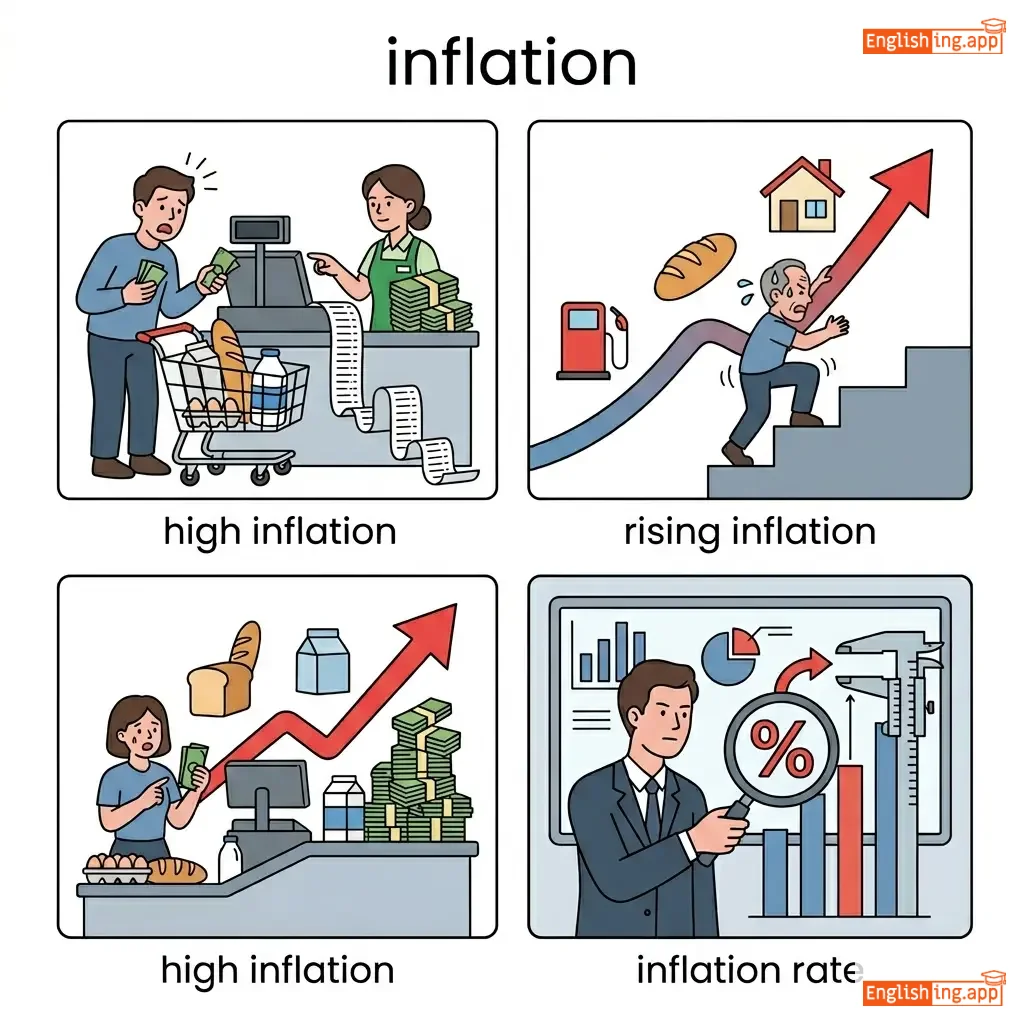
rising inflation |
An increase in the rate at which prices for goods and services rise.
••••••
|
растущая инфляция
rastushchaya inflyatsiya
••••••
|
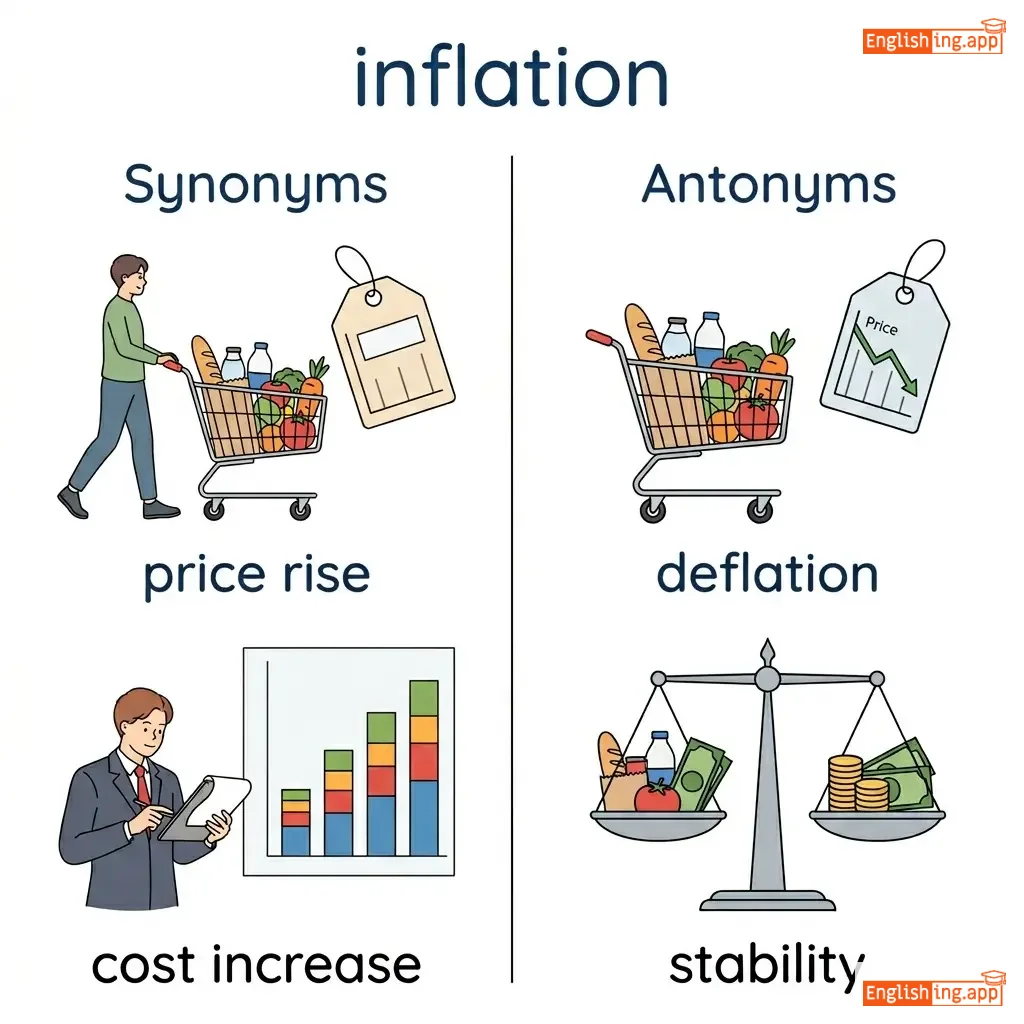
price rise, cost increase, devaluation, economic growth
••••••
|
deflation, stability
••••••
|
high inflation, rising inflation, inflation rate, inflation control
••••••
|
Инфляция это 📈 рост цен - когда деньги теряют свою ценность.
••••••
|
|
🧱
••••••
|
/ˌɪnflɛksɪˈbɪlɪti/
noun
(инфлексибилити)
••••••
|
- •••••• |
негибкость
negibkost
••••••
|
- •••••• | - •••••• | - •••••• | - •••••• |
the quality of being rigid or unwilling to change; lack of adaptability
••••••
|
The inflexibility of the rules caused unnecessary delays.
Зэ инфлексибилити оф зэ рулз козд аннэсэсэри дилейз.
••••••
|
Негибкость правил вызвала ненужные задержки.
Negibkost pravil vyzvala nenuzhnye zaderzhki
••••••
|
- •••••• | - •••••• | - •••••• |
rigidity, stiffness, obstinacy, unyieldingness, hardness
••••••
|
flexibility, adaptability, openness
••••••
|
mental inflexibility, policy inflexibility, organizational inflexibility, structural inflexibility
••••••
|
Inflexibility = не гибкий → негибкость.
••••••
|
|
🪨
••••••
|
/ɪnˈflɛksəbl/
adjective
(инфлексибл)
••••••
|
- •••••• |
неподвижный
nepodvizhnyy
••••••
|
- •••••• | - •••••• | - •••••• | - •••••• |
Not able to bend or change; unwilling to change ideas or behavior.
••••••
|
His inflexible attitude made negotiations difficult. |
Его неподвижная позиция усложнила переговоры.
Ego nepodvizhnaya pozitsiya uslozhnyla peregovory.
••••••
|
inflexible rules |
rules that cannot be changed or adapted
••••••
|
неподвижные правила
nepodvizhnye pravyla
••••••
|
rigid, unyielding, stubborn, uncompromising, firm
••••••
|
flexible, adaptable, yielding
••••••
|
inflexible attitude, inflexible rules, inflexible schedule
••••••
|
In FLEXIBLE не означает жесткий 🪨 – на русском неподвижный означает то, что не меняется.
••••••
|
|
⚡
••••••
|
/ɪnˈflɪkt/
verb
(инфликт)
••••••
|
- •••••• |
причинить
prichinit
••••••
|
inflicted
инфликтед
••••••
|
inflicted
инфликтед
••••••
|
inflicts
инфликтс
••••••
|
inflicting
инфликтинг
••••••
|
to cause something unpleasant or painful to be suffered by someone or something
••••••
|
The storm inflicted considerable damage to the city.
Шторм нанес значительный ущерб городу.
••••••
|
Шторм нанес значительный ущерб городу.
Shtorm nanes znachitel'nyy ushcherb gorodu.
••••••
|
- •••••• | - •••••• | - •••••• |
impose, cause, administer, bring about
••••••
|
relieve, soothe
••••••
|
inflict harm, inflict pain, inflict damage
••••••
|
Inflict sounds like 'In flick' – imagine a flick that causes damage!
••••••
|
|
🌐
••••••
|
/ˈɪnfluəns/
noun/verb
(influens)
••••••
|
- •••••• |
влияние
vliyanie
••••••
|
influenced
vliyanie
••••••
|
influenced
vliyanie
••••••
|
influences
vliyayet
••••••
|
influencing
vliyaniye
••••••
|
The power to affect how someone thinks or acts.
••••••
|
Her teacher had a strong influence on her career choice.
Eе учитель оказал сильное влияние на ее выбор карьеры.
••••••
|
Ее учитель оказал сильное влияние на ее выбор карьеры.
Eе uchitel' okazal sil'noye vliyaniye na yeё vybor karyery.
••••••
|
under the influence
pod vliyaniem
••••••
|
being affected or controlled by something, especially alcohol or drugs
••••••
|
под влиянием
pod vliyaniyem
••••••
|
impact, effect, authority, sway, control
••••••
|
powerlessness, weakness
••••••
|
exert influence, political influence, under the influence
••••••
|
Influence означает ‘in fluid sense’ 🌊 – как вода, которая течет!
••••••
|
|
👑
••••••
|
/ˌɪnfluˈɛnʃl/
adjective
(influentshial)
••••••
|
- •••••• |
влиятельный
vliyatel'nyy
••••••
|
- •••••• | - •••••• | - •••••• | - •••••• |
Having great power to change or affect people or things.
••••••
|
She is one of the most influential leaders of our time. |
Она одна из самых влиятельных лидеров нашего времени.
Ona odna iz samykh vliyatel'nykh liderov nashego vremeni.
••••••
|
influential figure |
a person who has a significant effect on others
••••••
|
влиятельная фигура
vliyatelnaya figura
••••••
|
powerful, significant, prominent, impactful, persuasive
••••••
|
insignificant, powerless
••••••
|
influential leader, influential role, highly influential
••••••
|
Влиятельный, как ‘влияние-наполненный’ – человек, который всё меняет.
••••••
|
|
ℹ️
••••••
|
/ˈɪnfoʊ/
noun
(инфо)
••••••
|
- •••••• |
информация
informatsiya
••••••
|
- •••••• | - •••••• | - •••••• | - •••••• |
information; knowledge or facts about something or someone
••••••
|
She gave me all the info I needed for the meeting. |
Она дала мне всю информацию, которую я нуждался для встречи.
Ona dala mne vsyu informatsiyu, kotoruyu ya nuzhdalsya dlya vstrechi.
••••••
|
- •••••• | - •••••• | - •••••• |
data, details, facts, knowledge
••••••
|
ignorance, misunderstanding
••••••
|
gather info, share info, provide info, detailed info
••••••
|
Запомни 'инфо', как 'информация' - все необходимые данные для решения задач.
••••••
|

