|
表情符号
|
单词 | Images | 翻译 | 过去时 | 过去分词 | 第三人称单数 | 动名词 | 含义 | 例句 | 例句翻译 | 示例表达 | 示例表达含义 | 示例表达翻译 | 同义词 | 反义词 | 搭配词 | 助记符 |
|---|---|---|---|---|---|---|---|---|---|---|---|---|---|---|---|---|---|
|
❓
••••••
|
/ɪnˈdefɪnət/
adjective
(インディフィニット)
••••••
|
- •••••• |
不确定的
bù què dìng de
••••••
|
- •••••• | - •••••• | - •••••• | - •••••• |
not clearly defined; uncertain; vague; unlimited in time
••••••
|
The meeting has been postponed for an indefinite period.
会议被推迟到一个不确定的时期。
••••••
|
会议被推迟到一个不确定的时期。
Huìyì bèi tuīchí dào yīgè bù què dìng de shíqī.
••••••
|
- •••••• | - •••••• | - •••••• |
uncertain, unclear, vague, unlimited
••••••
|
definite, specific, clear, precise
••••••
|
indefinite period, indefinite postponement, indefinite article
••••••
|
In Chinese, '不确定的' describes something undefined in time, like an indefinite meeting delay.
••••••
|
|
⏳
••••••
|
/ɪnˈdɛfɪnətli/
adverb
(因迪芬尼特利)
••••••
|
- •••••• |
无限期
wuxianqi
••••••
|
- •••••• | - •••••• | - •••••• | - •••••• |
for an unlimited or unspecified period of time
••••••
|
The project has been postponed indefinitely. |
该项目已无限期推迟。
Gai xiangmu yi wuxianqi tuichi.
••••••
|
- •••••• | - •••••• | - •••••• |
endlessly, perpetually, without limit, continuously
••••••
|
temporarily, briefly
••••••
|
postponed indefinitely, continue indefinitely, delayed indefinitely, suspended indefinitely
••••••
|
Indefinitely 意味着无限时间 → 时间没有限制或终止
••••••
|
|
🕊️
••••••
|
/ˌɪndɪˈpɛndəns/
noun
(独立)
••••••
|
|
独立
duli
••••••
|
- •••••• | - •••••• | - •••••• | - •••••• |
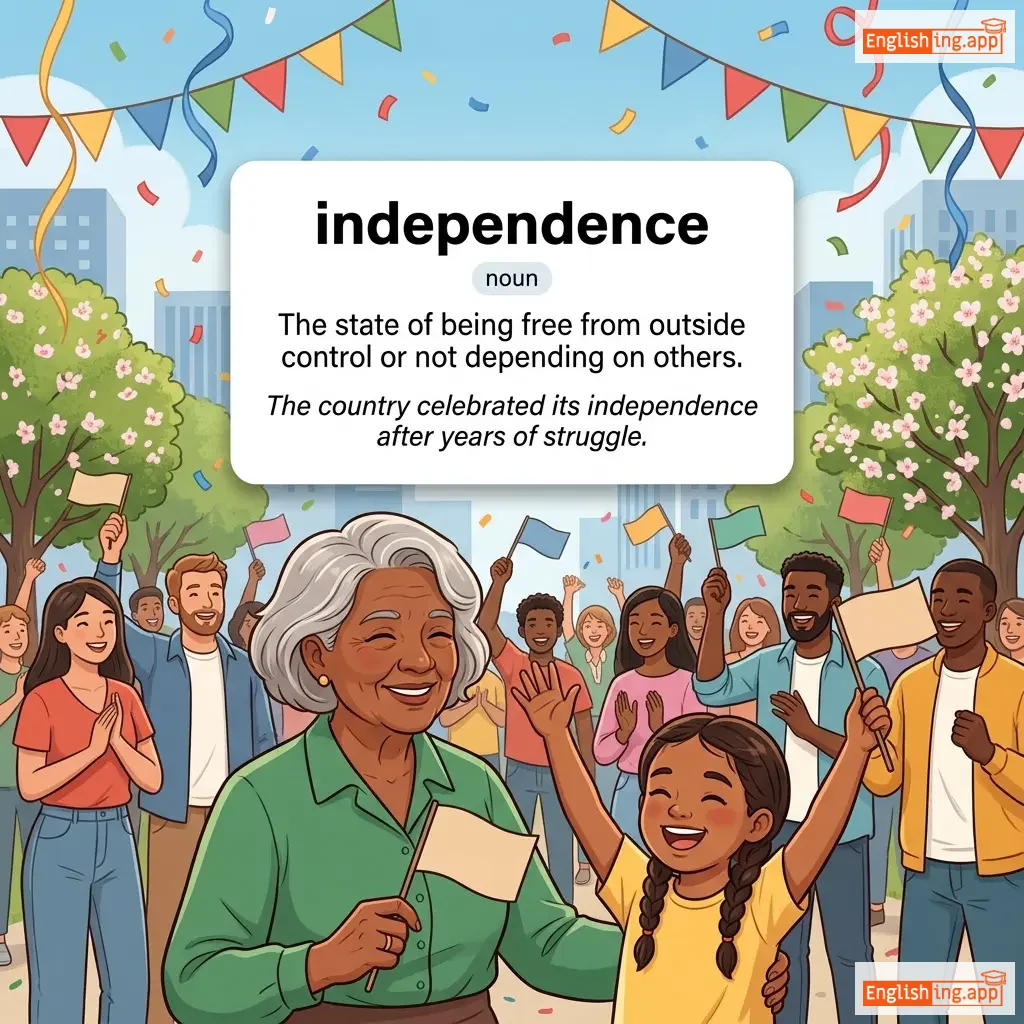
The state of being free from outside control or not depending on others.
••••••
|
The country celebrated its independence after years of struggle. |
这个国家在经历多年斗争后庆祝了它的独立。
Zhe ge guo jia zai jing li duo nian dou zheng hou qing zhu le ta de du li.
••••••
|
declare independence |
To officially announce freedom from control by another authority.
••••••
|
宣布独立
Xuan bu du li
••••••
|
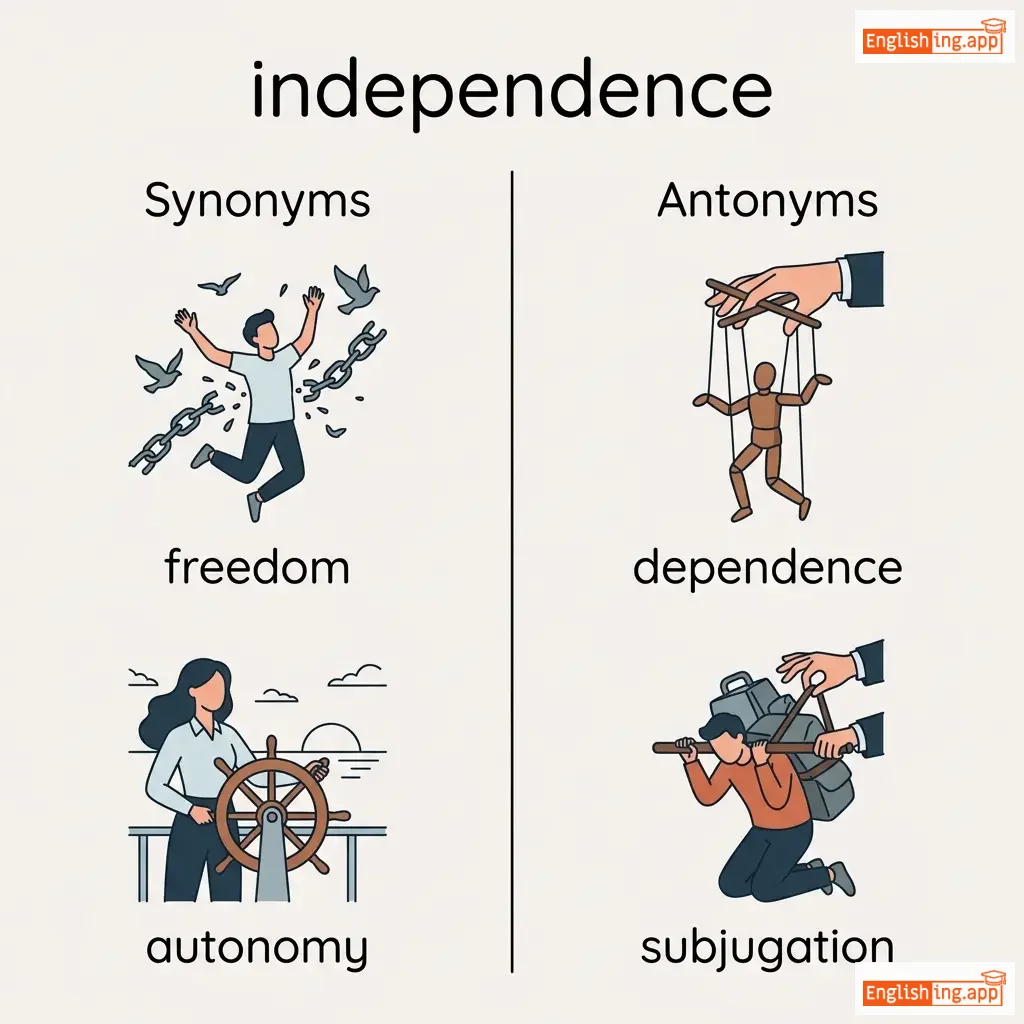
freedom, autonomy, liberty, sovereignty, self-rule
••••••
|
dependence, subjugation, slavery
••••••
|
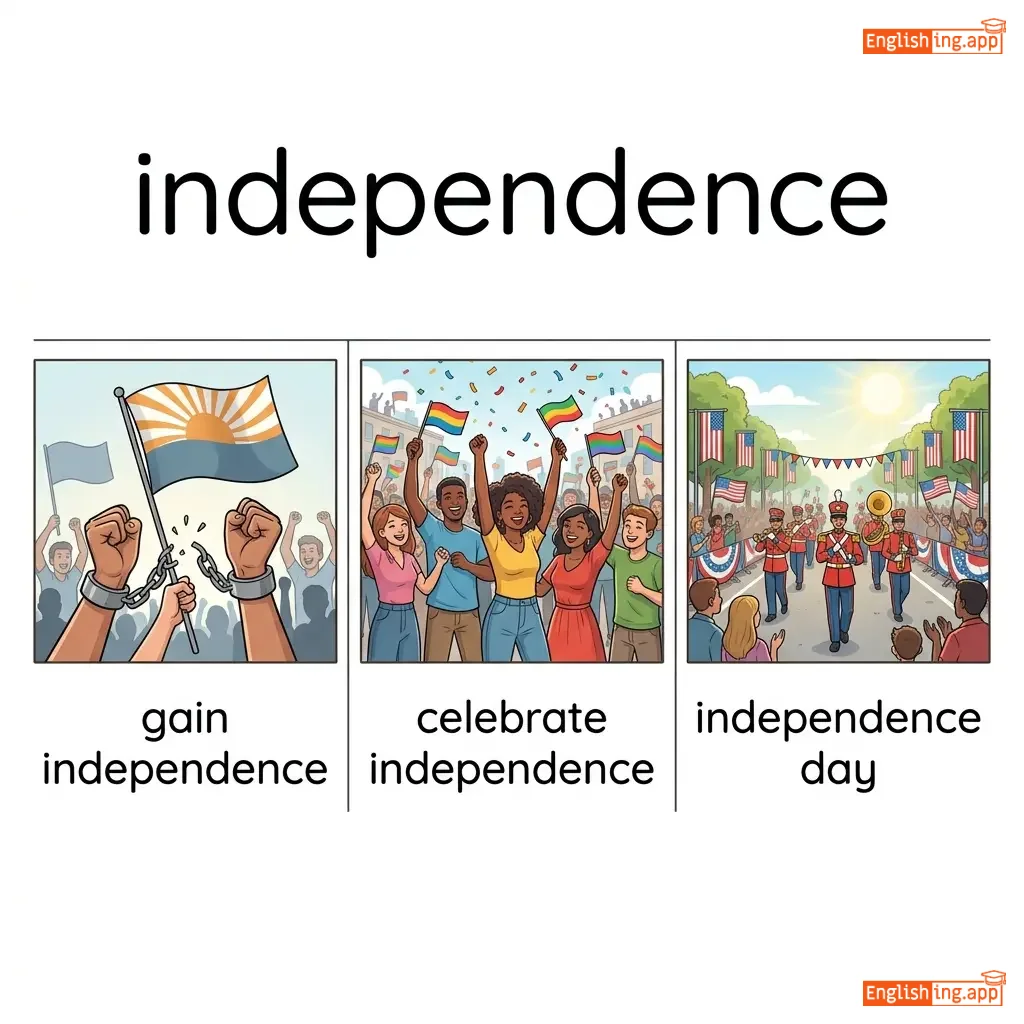
gain independence, celebrate independence, independence day, struggle for independence
••••••
|
Independence意味着独立 - 在中国,人们庆祝独立的日子。
••••••
|
|
🕊️
••••••
|
/ˌɪn.dɪˈpen.dənt/
adjective
(独立)
••••••
|

|
独立
duli
••••••
|
- •••••• | - •••••• | - •••••• | - •••••• |
Free from outside control; not depending on others.
••••••
|
She is an independent woman who runs her own business.
她是一个独立的女性,经营自己的生意。
••••••
|
她是一个独立的女性,经营自己的生意。
Tā shì yīgè dúlì de nǚxìng, jīngyíng zìjǐ de shēngyì.
••••••
|
independent thinker
独立思考者
••••••
|
Someone who forms their own opinions without influence from others.
••••••
|
独立思考者
dú lì sī kǎo zhě
••••••
|
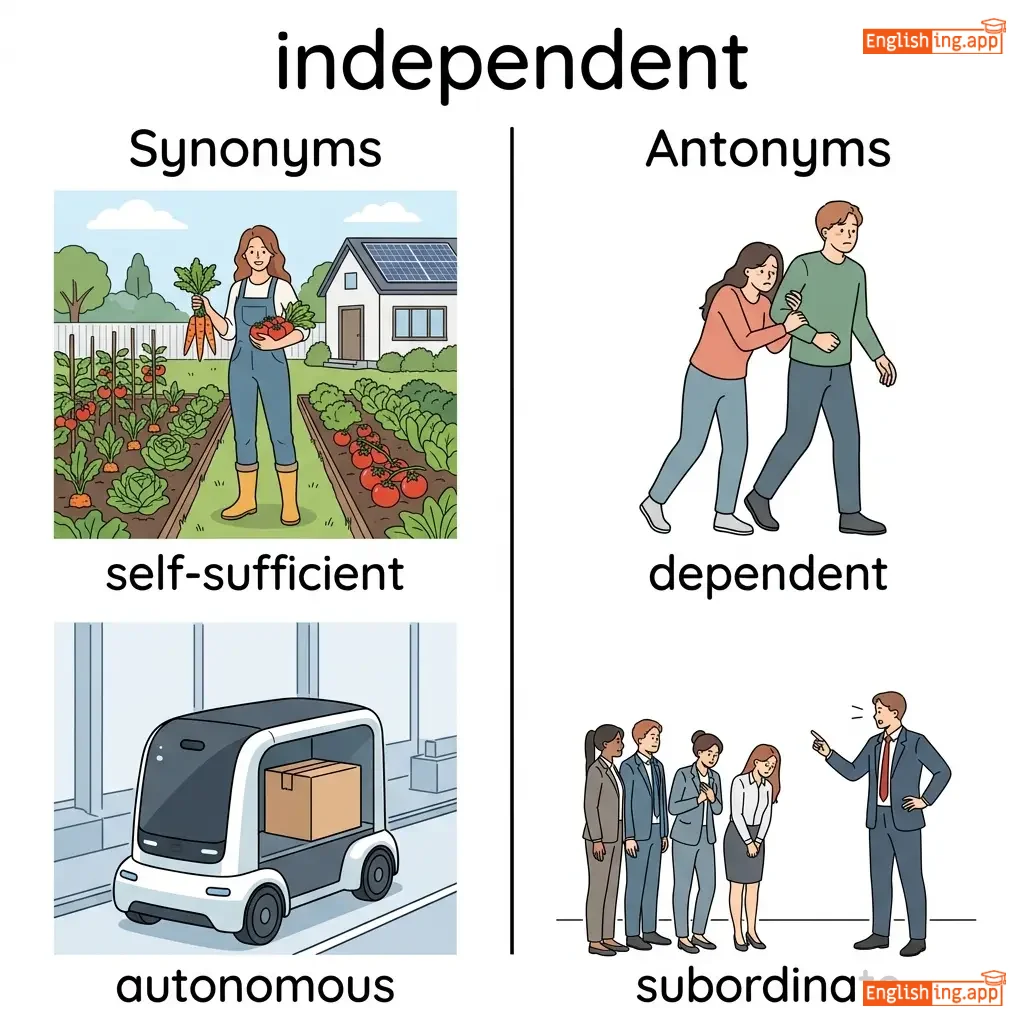
self-sufficient, autonomous, free, self-reliant
••••••
|
dependent, subordinate
••••••
|
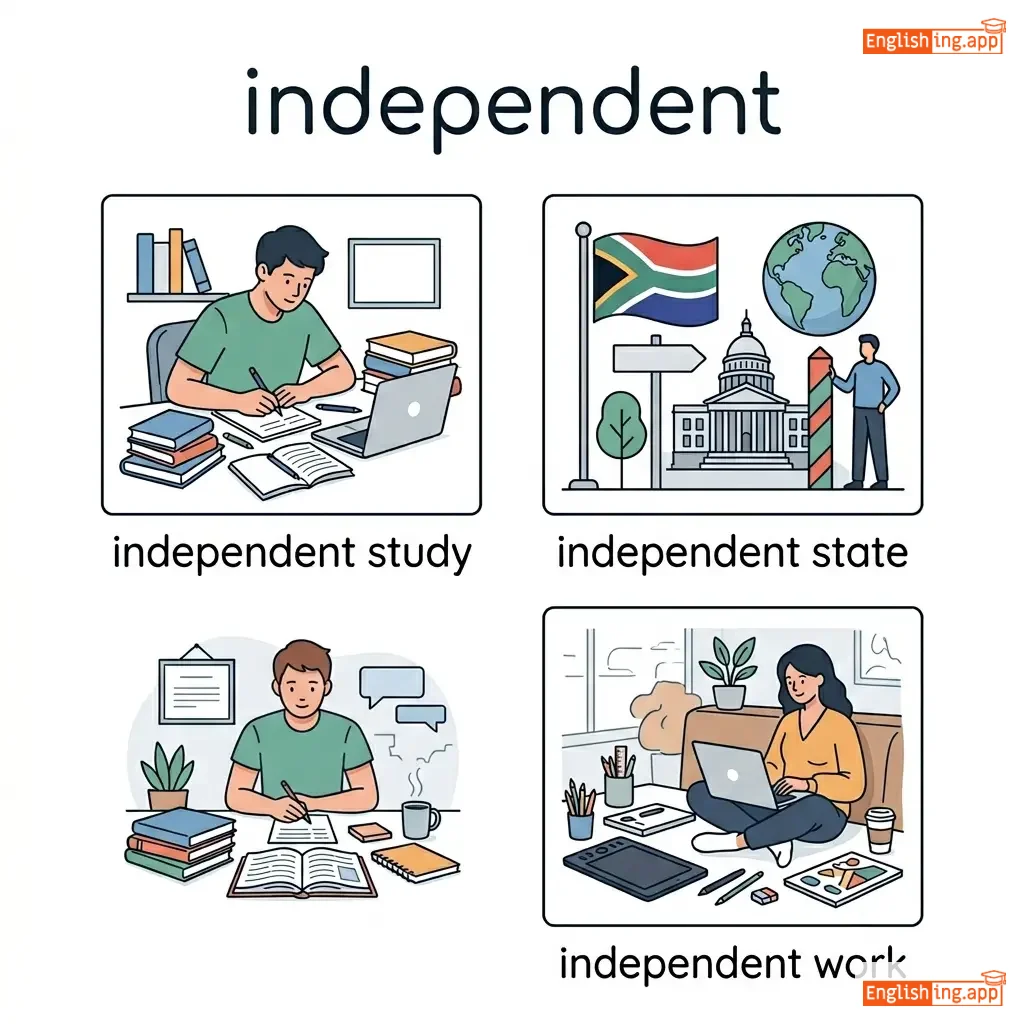
independent study, independent state, independent work, financially independent
••••••
|
独立就像不依赖,像独立性一样自由。
••••••
|
|
📑
••••••
|
/ˈɪndeks/
noun, verb
(索引)
••••••
|

|
索引
suoyin
••••••
|
indexed
索引的
••••••
|
indexed
索引的
••••••
|
indexes
索引
••••••
|
indexing
索引中
••••••
|
A list of items arranged in order, or to arrange data systematically for reference.
••••••
|
The book includes a detailed index at the end.
这本书在最后包括了详细的索引。
••••••
|
这本书在最后包括了详细的索引。
Zhè běn shū zài zuìhòu bāokuòle xiángxì de suoyin.
••••••
|
index finger
食指
••••••
|
The finger next to the thumb, used for pointing.
••••••
|
食指
shízhǐ
••••••
|
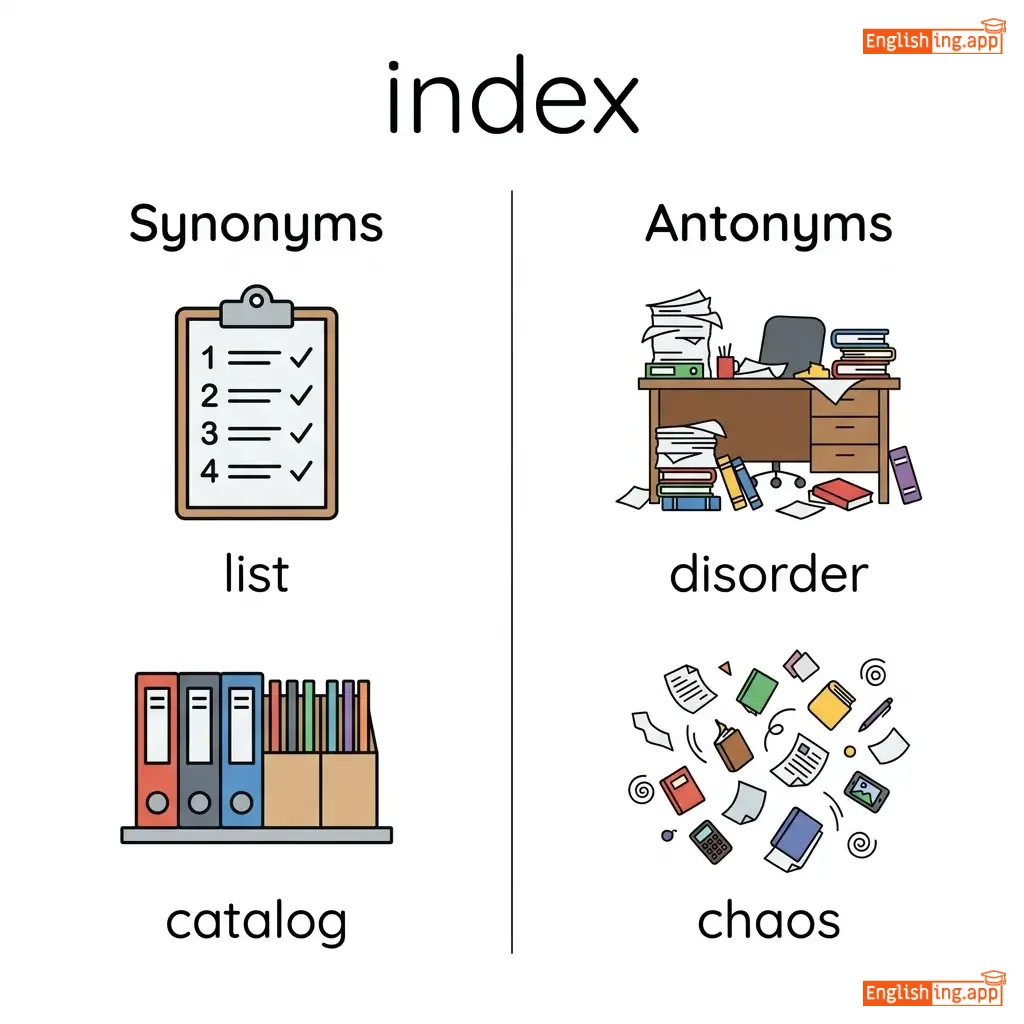
list, catalog, register, directory, guide
••••••
|
disorder, chaos, confusion
••••••
|
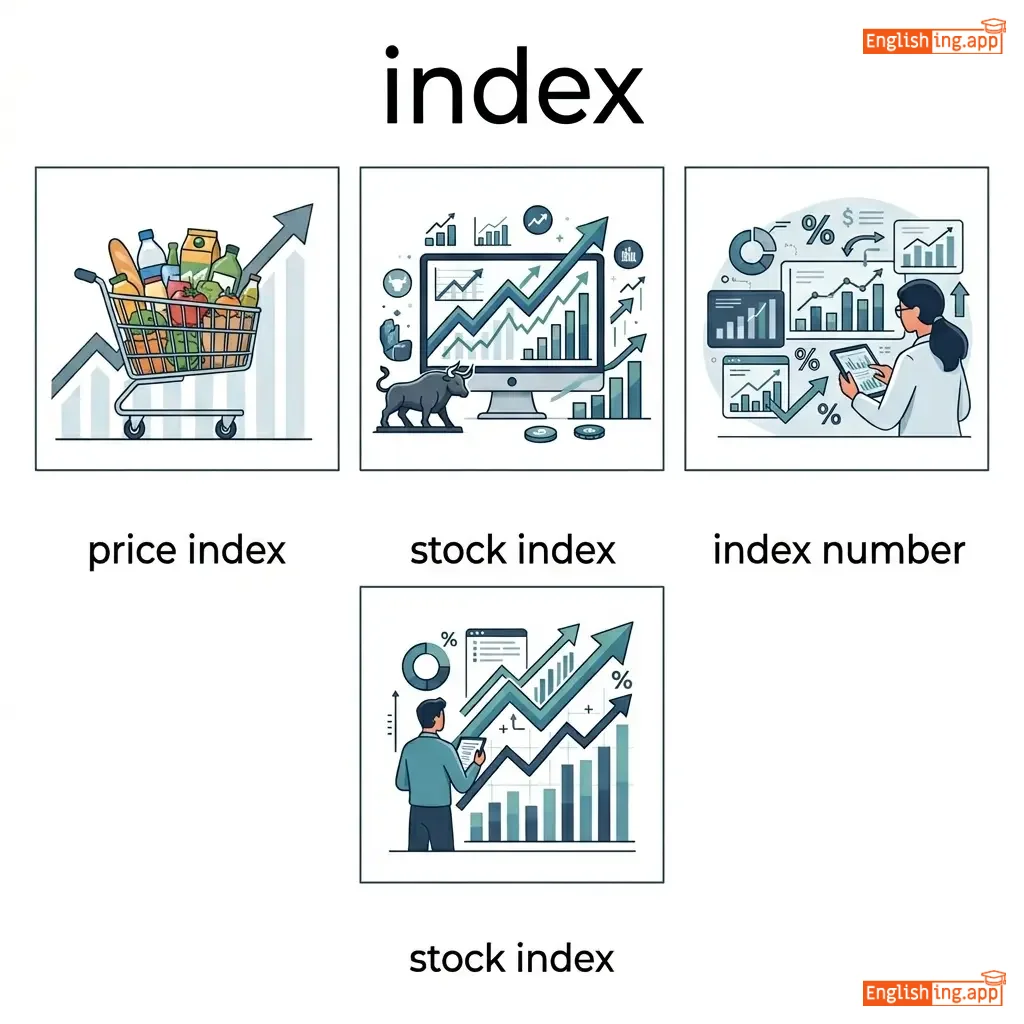
price index, stock index, index number, index card
••••••
|
索引就像是目录,索引化使你轻松找到信息!
••••••
|
|
🇮🇳
••••••
|
/ˈɪndiən/
adjective/noun
(印度人)
••••••
|
- •••••• |
印度的
Yìndù de
••••••
|
- •••••• | - •••••• | - •••••• | - •••••• |
Relating to India, its people, or their culture.
••••••
|
She loves Indian food, especially biryani. |
她喜欢印度食物,特别是比尔亚尼。
Tā xǐhuān Yìndù shíwù, tèbié shì bǐ'ěryǎní.
••••••
|
Indian summer |
A period of unseasonably warm weather in late autumn.
••••••
|
印度夏季
Yìndù xiàjì
••••••
|
South Asian, Hindu, Desi
••••••
|
foreign, non-Indian
••••••
|
Indian culture, Indian food, Indian citizen, Indian traditions
••••••
|
Indian 意味着印度的 - 想象印度 🇮🇳 和印度的比尔亚尼 🍛.
••••••
|
|
👉
••••••
|
/ˈɪndɪˌkeɪt/
verb
(印地凯特)
••••••
|

|
指示
zhǐshì
••••••
|
indicated
印地凯特德
••••••
|
indicated
印地凯特德
••••••
|
indicates
印地凯特斯
••••••
|
indicating
印地凯廷
••••••
|
To point out, show, or suggest something.
••••••
|
The results indicate that the treatment was effective.
结果表明治疗有效。
••••••
|
结果表明治疗有效。
Jiéguǒ biǎomíng zhìliáo yǒuxiào.
••••••
|
indicate interest
表示兴趣
••••••
|
To show or express that one is interested.
••••••
|
表示兴趣
biǎoshì xìngqù
••••••
|
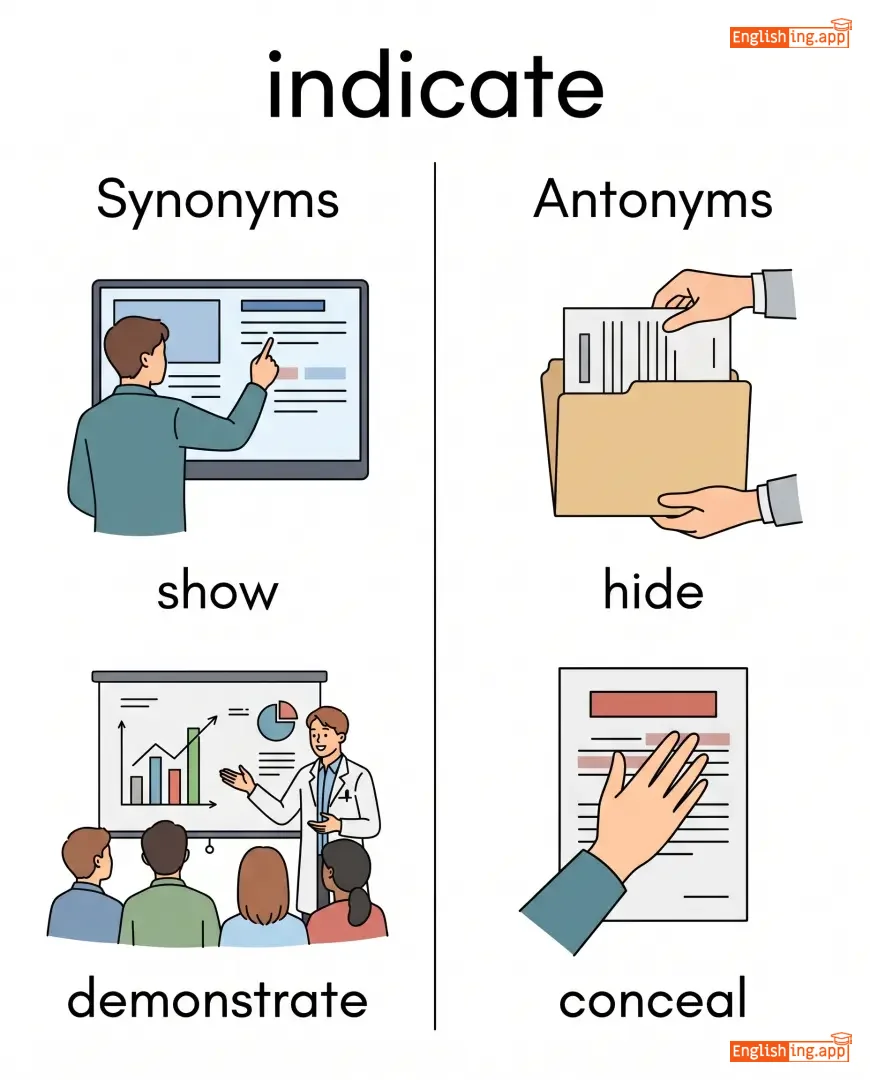
show, demonstrate, suggest, signal, reveal
••••••
|
hide, conceal, obscure
••••••
|
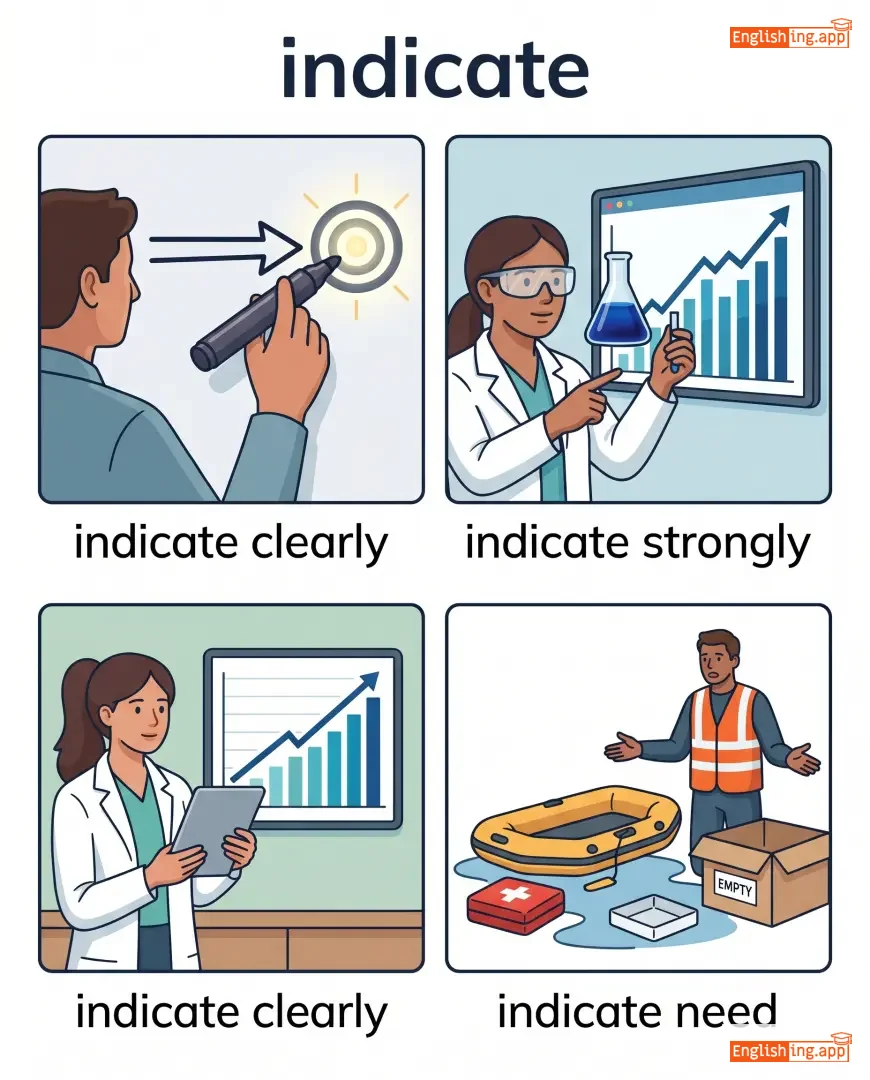
indicate clearly, indicate strongly, indicate need, indicate result
••••••
|
Indicate意味着指示 - 用手指指向 👉.
••••••
|
|
⚠️
••••••
|
/ˌɪndɪˈkeɪʃən/
noun
(yīndìkèshùn)
••••••
|
- •••••• |
指示
zhǐshì
••••••
|
- •••••• | - •••••• | - •••••• | - •••••• |
A sign, piece of information, or signal that suggests something.
••••••
|
Dark clouds are an indication of an approaching storm. |
乌云是即将到来的暴风雨的指示。
Wūyún shì jíjiāng dào lái de bàofēngyǔ de zhǐshì
••••••
|
give an indication |
To show or suggest something indirectly.
••••••
|
给出指示
gěi chū zhǐshì
••••••
|
sign, signal, evidence, clue, pointer
••••••
|
concealment, suppression
••••••
|
clear indication, early indication, medical indication
••••••
|
Indication意味着指示—乌云给出了暴风雨的指示。
••••••
|
|
📊
••••••
|
/ˈɪndɪˌkeɪtər/
noun
(指标)
••••••
|
|
指标
zhǐbiāo
••••••
|
- •••••• | - •••••• | - •••••• | - •••••• |
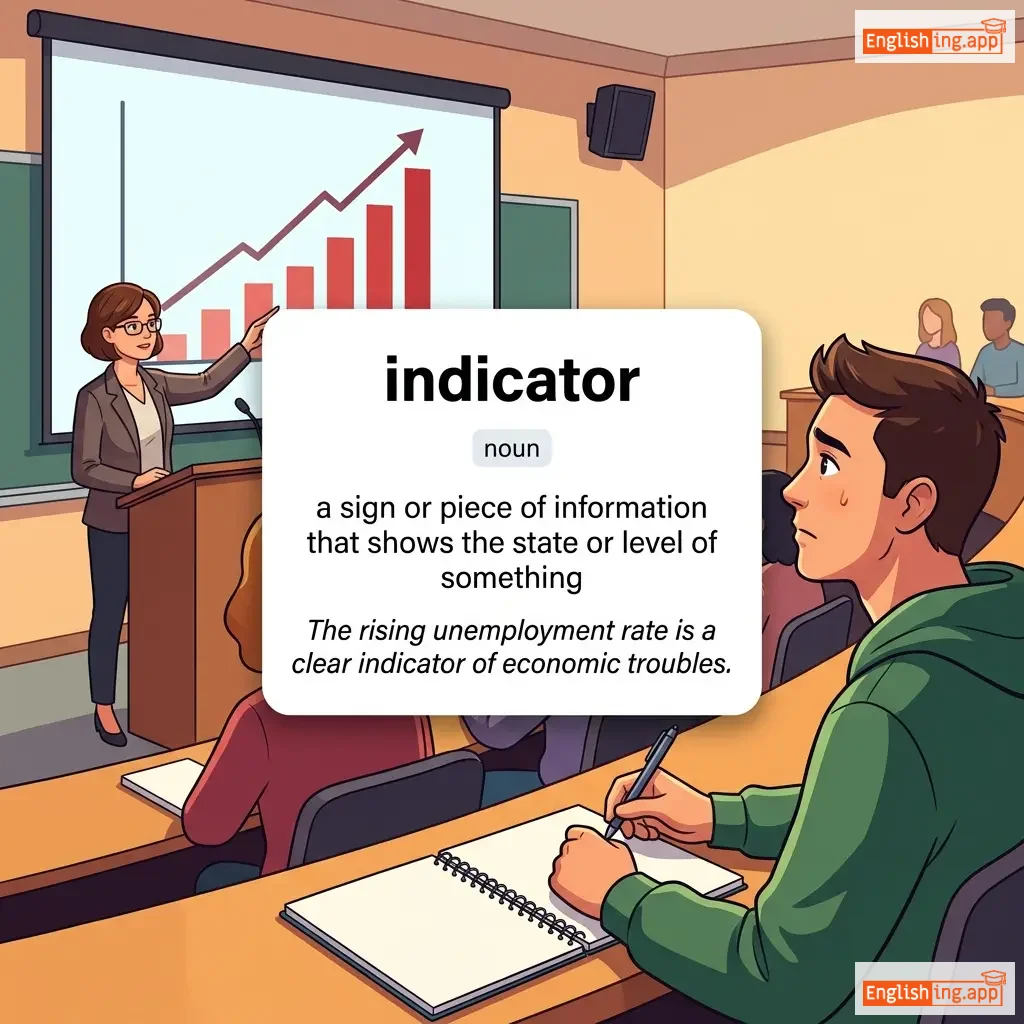
a sign or piece of information that shows the state or level of something
••••••
|
The rising unemployment rate is a clear indicator of economic troubles. |
失业率上升是经济问题的明显指标。
Shīyè lǜ shàngshēng shì jīngjì wèntí de míngxiǎn zhǐbiāo.
••••••
|
leading indicator |
a measure that signals future developments or trends
••••••
|
领先指标
lǐngxiān zhǐbiāo
••••••
|
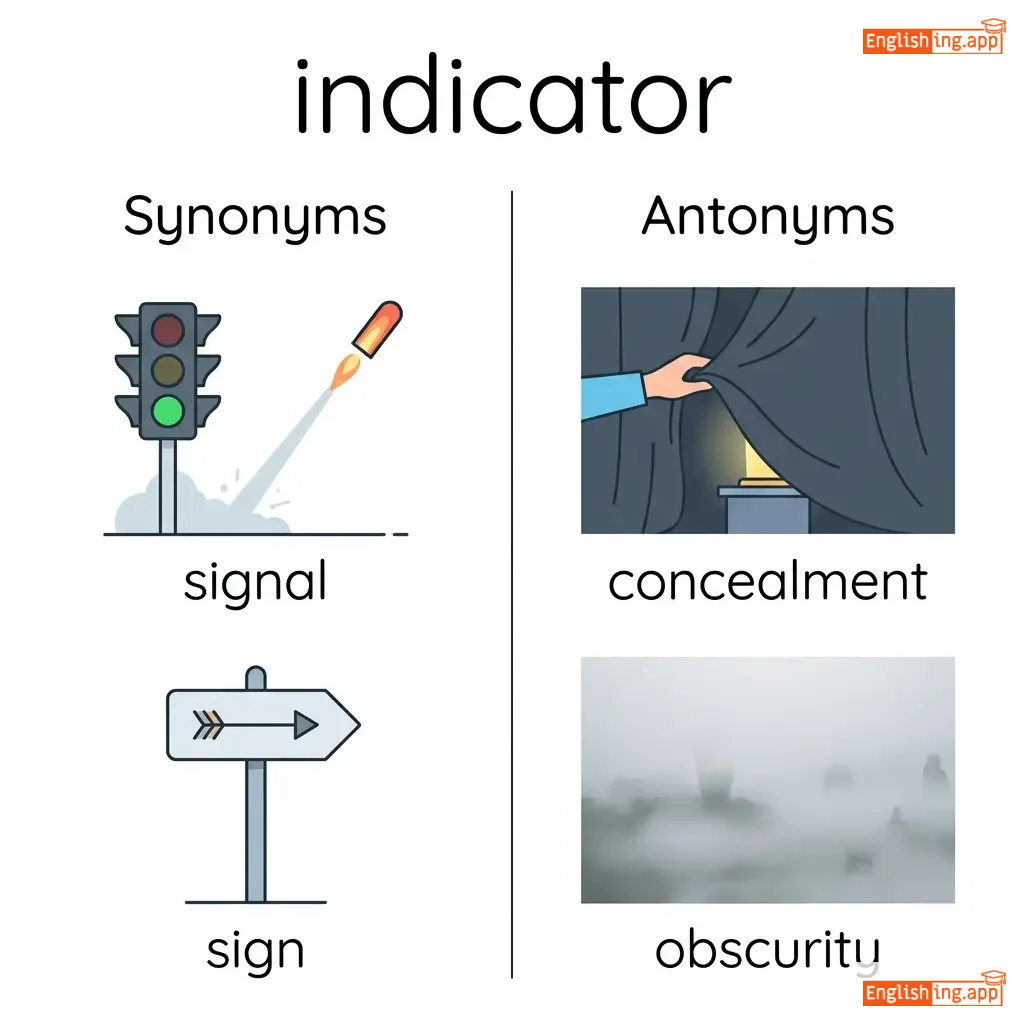
signal, sign, gauge, measure, pointer
••••••
|
concealment, obscurity
••••••
|
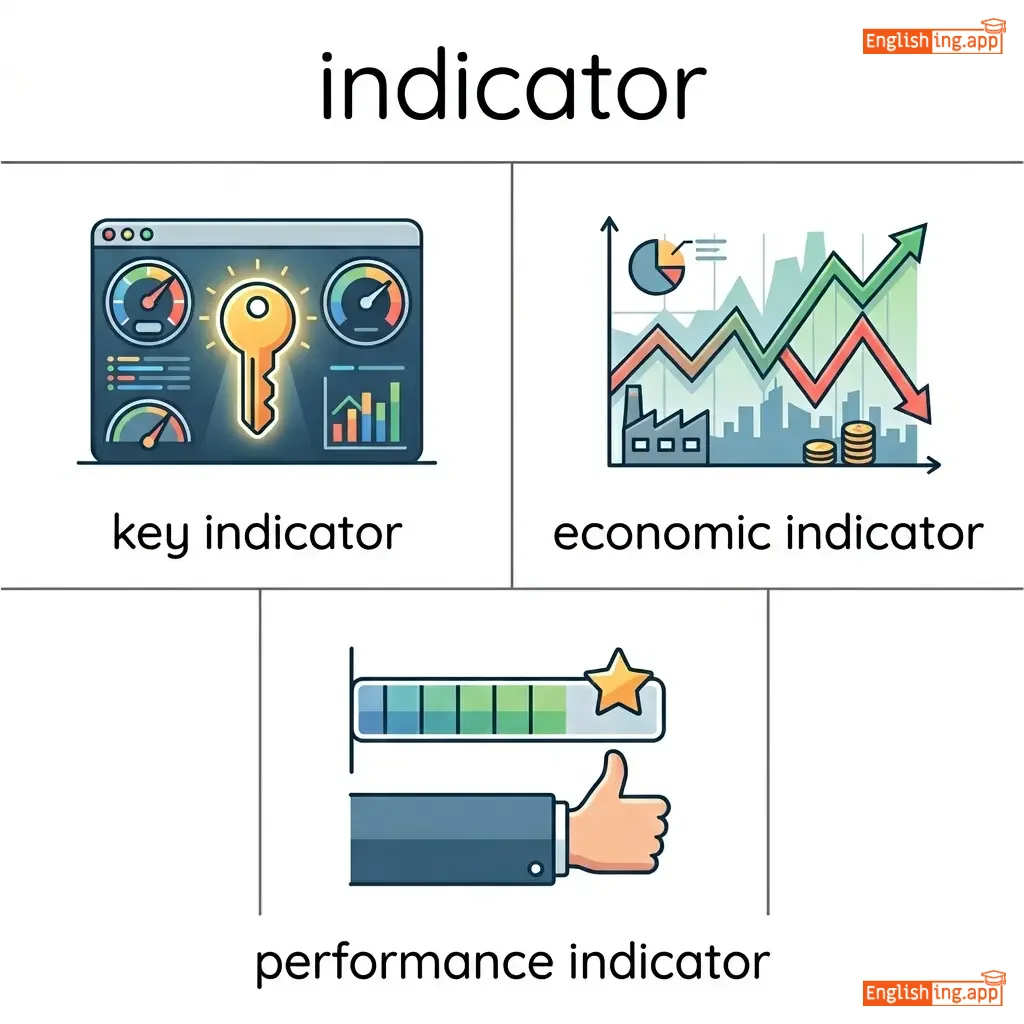
key indicator, economic indicator, performance indicator, health indicator
••••••
|
指标就是指示 – 就像红绿灯指示交通状况。
••••••
|
|
📜
••••••
|
/ɪnˈdaɪtmənt/
noun
(ɪnˈdaɪtmənt)
••••••
|
- •••••• |
起诉书
qǐsù shū
••••••
|
- •••••• | - •••••• | - •••••• | - •••••• |
a formal charge or accusation of a serious crime
••••••
|
The indictment accused the company of multiple violations. |
起诉书指控公司存在多项违规行为。
Qǐsù shū zhǐkòng gōngsī cúnzài duō xiàng wéiguī xíngwéi.
••••••
|
- •••••• | - •••••• | - •••••• |
charge, accusation, prosecution, allegation
••••••
|
acquittal, exoneration
••••••
|
criminal indictment, federal indictment, indictment process
••••••
|
Indictment 意思是起诉书。
••••••
|
|
😐
••••••
|
/ɪnˈdɪfərəns/
noun
(冷漠)
••••••
|
- •••••• |
冷漠
lengmo
••••••
|
- •••••• | - •••••• | - •••••• | - •••••• |
lack of interest, concern, or sympathy
••••••
|
He showed complete indifference to the suffering around him. |
他对周围的痛苦表现出完全的冷漠。
Ta dui zhouwei de tongku biaoxian chu wanquan de lengmo.
••••••
|
cold indifference |
a total lack of concern or empathy
••••••
|
冷漠无情
lengmo wuqing
••••••
|
apathy, unconcern, neglect, disinterest
••••••
|
concern, care, sympathy
••••••
|
show indifference, total indifference, cold indifference, public indifference
••••••
|
Indifference: in (没有) + difference (区别), 没有区别,表现出冷漠。
••••••
|
|
😐
••••••
|
/ɪnˈdɪf.ər.ənt/
adjective
(冷漠)
••••••
|
- •••••• |
冷漠
lengmo
••••••
|
- •••••• | - •••••• | - •••••• | - •••••• |
having no particular interest or concern; not caring one way or another
••••••
|
She was indifferent to the outcome of the match. |
她对比赛的结果漠不关心。
Ta dui bisai de jieguo mo bu guanxin.
••••••
|
indifferent attitude |
showing no concern or interest
••••••
|
冷漠的态度
lengmo de taidu
••••••
|
unconcerned, apathetic, detached, disinterested, neutral
••••••
|
concerned, interested, passionate
••••••
|
remain indifferent, indifferent attitude, indifferent to, indifferent response
••••••
|
当你不关心任何事时,你是'冷漠'的,或者' indifferent '。
••••••
|
|
🌱
••••••
|
/ɪnˈdɪdʒ.ə.nəs/
adjective
(印第珍诺斯)
••••••
|
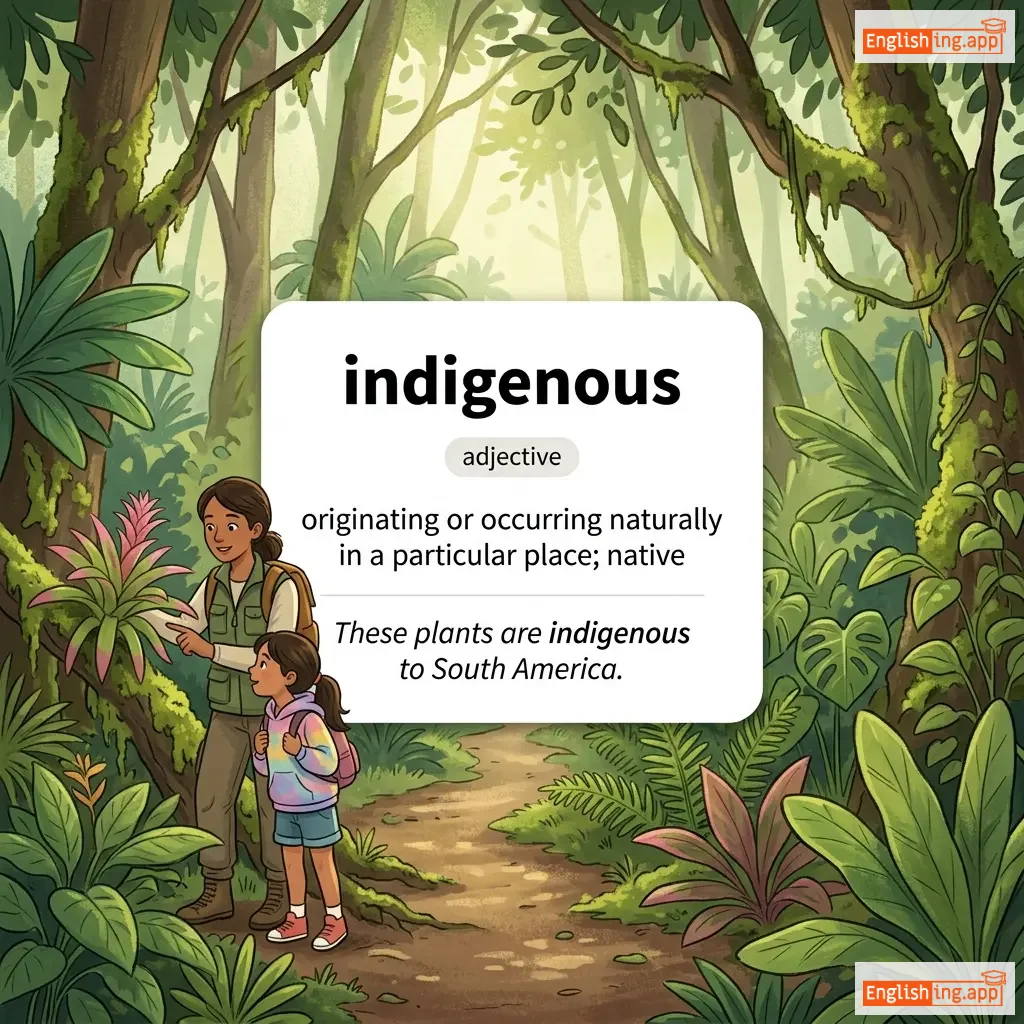
|
本土的
bêntǔ de
••••••
|
- •••••• | - •••••• | - •••••• | - •••••• |
originating or occurring naturally in a particular place; native
••••••
|
These plants are indigenous to South America. |
这些植物是南美的本土植物。
Zhèxiē zhíwù shì nánměi de běntǔ zhíwù.
••••••
|
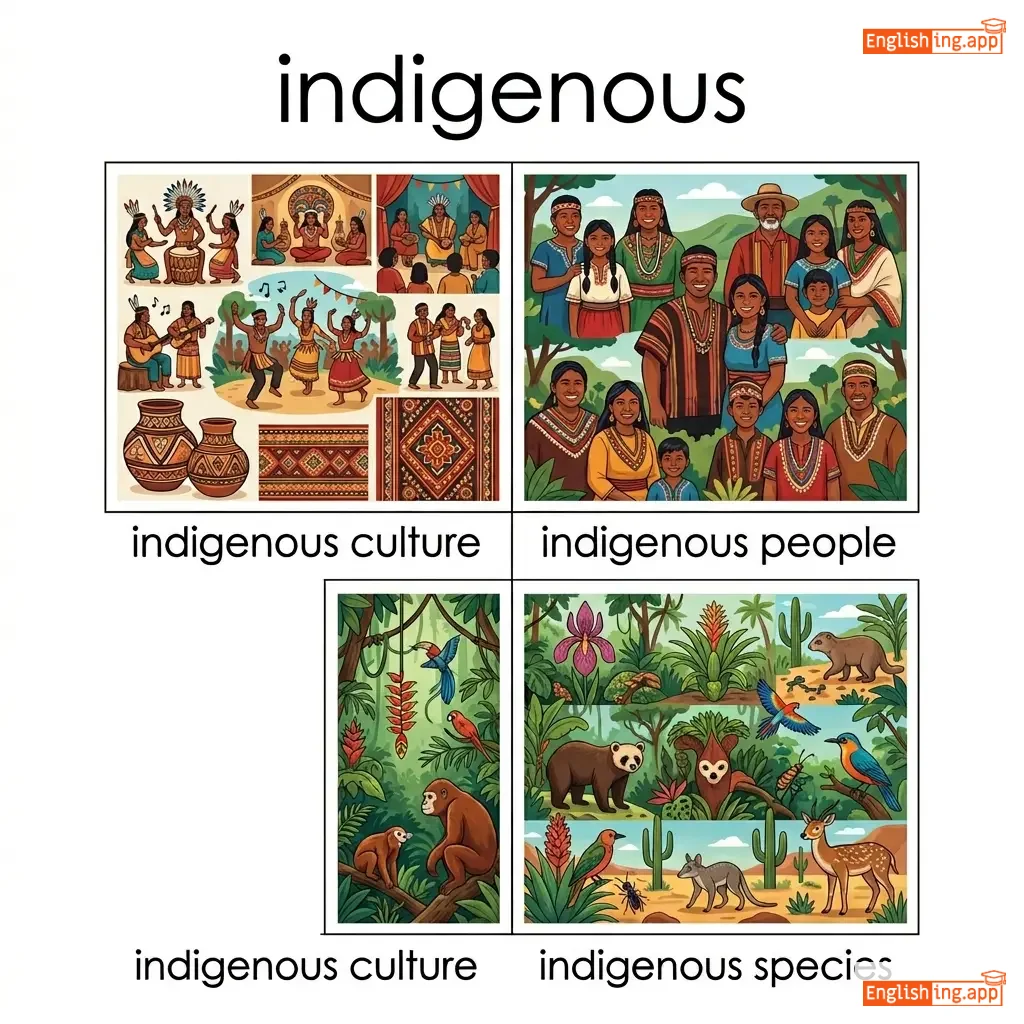
indigenous people |
the native inhabitants of a region
••••••
|
本土人民
bêntǔ rénmín
••••••
|
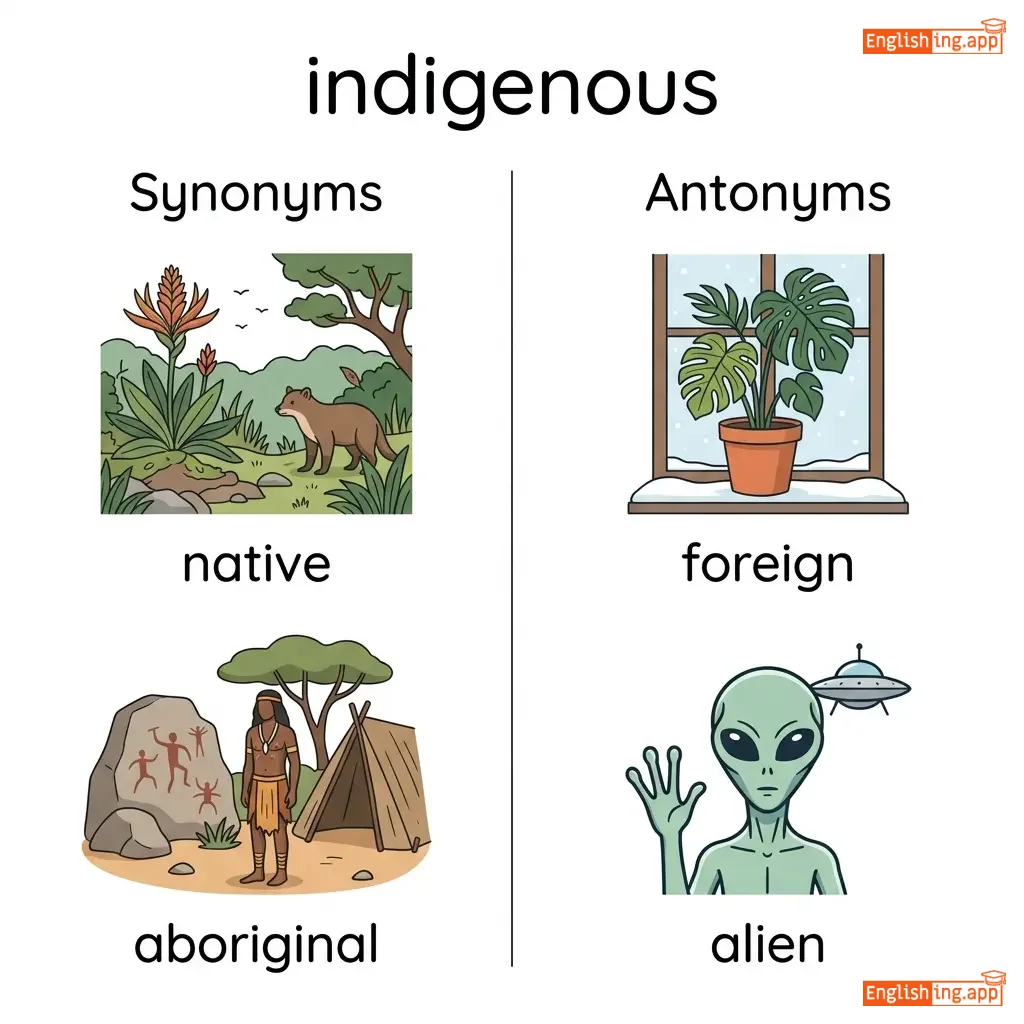
native, aboriginal, local, endemic, original
••••••
|
foreign, alien, immigrant
••••••
|
indigenous culture, indigenous people, indigenous species
••••••
|
本土 = 原生自然, 如南美的本土植物。
••••••
|
|
↪️
••••••
|
/ˌɪndəˈrɛktli/
adverb
(因迪瑞克特力)
••••••
|
- •••••• |
间接地
jianjie de
••••••
|
- •••••• | - •••••• | - •••••• | - •••••• |
in a way that is not direct; through an intermediate means or influence
••••••
|
The policy affected small businesses indirectly.
这 policy affected small businesses indirectly。
••••••
|
该政策间接地影响了小企业。
gai zhengce jianjie de yingxiang le xiao qiye
••••••
|
- •••••• | - •••••• | - •••••• |
implicitly, obliquely, indirectly, tangentially, circuitously
••••••
|
directly, explicitly
••••••
|
indirectly related, indirectly affected, indirectly involved, indirectly proportional
••••••
|
间接 = indirect
••••••
|
|
⚠️
••••••
|
/ˌɪnˈdɪsəplɪn/
noun
(因迪西普林)
••••••
|
- •••••• |
缺乏纪律
quefa jilu
••••••
|
- •••••• | - •••••• | - •••••• | - •••••• |
lack of discipline or self-control; failure to obey rules or maintain order
••••••
|
Indiscipline among the students disrupted the learning environment.
因迪西普林 阿芒 德 斯图登茨 迪斯拉普特 德 学习 环境。
••••••
|
学生的缺乏纪律破坏了学习环境。
Xuesheng de quefa jilu pohuaile xuexi huanjing
••••••
|
- •••••• | - •••••• | - •••••• |
disorder, unruliness, lawlessness, disobedience, chaos
••••••
|
discipline, order, obedience
••••••
|
student indiscipline, military indiscipline, widespread indiscipline, curb indiscipline
••••••
|
Indiscipline 就是 没有 discipline → 缺乏纪律
••••••
|
|
🌫️
••••••
|
/ˌɪndɪˈstɪŋkt/
adjective
(印迪斯廷克特)
••••••
|
- •••••• |
模糊的
móhú de
••••••
|
- •••••• | - •••••• | - •••••• | - •••••• |
Not clear or sharply defined; vague or blurred.
••••••
|
The sound of voices was indistinct in the distance. |
远处的声音是模糊的。
Yuǎnchù de shēngyīn shì móhú de.
••••••
|
- •••••• | - •••••• | - •••••• |
vague, unclear, blurred, obscure, hazy
••••••
|
clear, distinct, sharp
••••••
|
indistinct shape, indistinct memory, indistinct voice
••••••
|
Indistinct 就是模糊的,像印迪斯廷克特一样模糊。
••••••
|
|
👤
••••••
|
/ˌɪndɪˈvɪdʒuəl/
noun/adjective
(个人)
••••••
|
- •••••• |
个体
gètǐ
••••••
|
- •••••• | - •••••• | - •••••• | - •••••• |
A single human being as distinct from a group; relating to one person.
••••••
|
Each individual has the right to freedom of speech. |
每个个体都有言论自由的权利。
Měi gè gètǐ dōu yǒu yánlùn zìyóu de quánlì.
••••••
|
individual rights |
Legal or moral entitlements held by each person.
••••••
|
个体权利
gètǐ quánlì
••••••
|
person, human, being, entity, character
••••••
|
group, collective, community
••••••
|
individual rights, individual needs, individual cases, individual effort
••••••
|
Individual 代表个体 - Individual 👤 代表一个人。
••••••
|
|
🔗
••••••
|
/ˌɪndɪˈvɪzəbl/
adjective
••••••
|
- •••••• | - •••••• | - •••••• | - •••••• | - •••••• | - •••••• |
Not able to be divided or separated.
••••••
|
The country's unity was indivisible despite differences. |
- •••••• |
indivisible whole |
Something that cannot be separated into parts.
••••••
|
- •••••• |
inseparable, whole, unified, unbreakable
••••••
|
divisible, separable
••••••
|
indivisible unity, indivisible rights, indivisible whole
••••••
|
No •••••• |
|
🏠
••••••
|
/ˈɪn.dɔːr/
adjective
(因多)
••••••
|
- •••••• |
室内的
shi nei de
••••••
|
- •••••• | - •••••• | - •••••• | - •••••• |
situated, occurring, or used inside a building
••••••
|
Indoor plants can improve air quality at home.
因多 普兰茨 坎 因普鲁夫 空气 夸利提。
••••••
|
室内植物可以改善家里的空气质量。
shi nei zhi wu ke yi gai shan jia li de kong qi zhi liang
••••••
|
indoor games
因多 游戏
••••••
|
games played inside a building
••••••
|
室内游戏
shi nei you xi
••••••
|
inside, internal, enclosed, interior
••••••
|
outdoor, exterior
••••••
|
indoor activities, indoor sports, indoor plants, indoor space
••••••
|
Indoor 就是 室内的
••••••
|
|
🏠
••••••
|
/ˌɪnˈdɔːrz/
adverb
(因多尔兹)
••••••
|
- •••••• |
在室内
zai shinei
••••••
|
- •••••• | - •••••• | - •••••• | - •••••• |
inside a building; within an enclosed space
••••••
|
Because of the rain, everyone stayed indoors.
比考兹 奥夫 泽 瑞恩,艾瑞旺 斯泰 因多尔兹。
••••••
|
因为下雨,大家都待在室内。
yinwei xiayu, dajia dou dai zai shinei
••••••
|
stay indoors
斯泰 因多尔兹
••••••
|
to remain inside a building, especially to avoid bad weather or danger
••••••
|
待在室内
dai zai shinei
••••••
|
inside, within, in-house, internally
••••••
|
outdoors, outside
••••••
|
stay indoors, remain indoors, work indoors, play indoors
••••••
|
Indoor 听起来像 in door,在门里面
••••••
|
|
💊
••••••
|
/ɪnˈdjuːs/
verb
(引起)
••••••
|
- •••••• |
引起
yǐnqǐ
••••••
|
induced
引起的
••••••
|
induced
引起的
••••••
|
induces
引起
••••••
|
inducing
引起
••••••
|
to cause or persuade someone to do something; to bring about a result
••••••
|
The doctor induced sleep with a mild sedative.
医生用轻度镇静剂引起了睡眠。
••••••
|
医生用轻度镇静剂引起了睡眠。
Yīshēng yòng qīngdù zhènjìng jì yǐnqǐle shuìmián.
••••••
|
induce labor
引起分娩
••••••
|
to cause childbirth to begin artificially
••••••
|
引起分娩
yǐnqǐ fēnmiǎn
••••••
|
cause, persuade, prompt, encourage, provoke
••••••
|
dissuade, prevent, stop
••••••
|
induce labor, induce sleep, induce change, induce vomiting
••••••
|
引起意味着引发某事 - 就像医生引起睡眠。
••••••
|
|
🍫
••••••
|
/ɪnˈdʌldʒ/
verb
(yin-dulj)
••••••
|
- •••••• |
纵容
zong rong
••••••
|
indulged
yin-duljd
••••••
|
indulged
yin-duljd
••••••
|
indulges
yin-duljes
••••••
|
indulging
yin-duljing
••••••
|
to allow oneself to enjoy something enjoyable, often excessively
••••••
|
He indulged in a piece of chocolate cake after dinner.
他在晚餐后沉浸在一块巧克力蛋糕中。
••••••
|
他在晚餐后沉浸在一块巧克力蛋糕中。
Ta zai wancan hou chenjin zai yi kuai qiaokeli dangao zhong.
••••••
|
indulge in
沉浸于
••••••
|
to take pleasure in doing something
••••••
|
沉浸于
chenjin yu
••••••
|
pamper, spoil, gratify, satisfy, entertain
••••••
|
restrain, deny, refuse
••••••
|
indulge in, indulge yourself, indulge a habit, indulge desire
••••••
|
Indulge 就是让自己沉浸在巧克力蛋糕的美味中 – 过度享受。
••••••
|
|
🏭
••••••
|
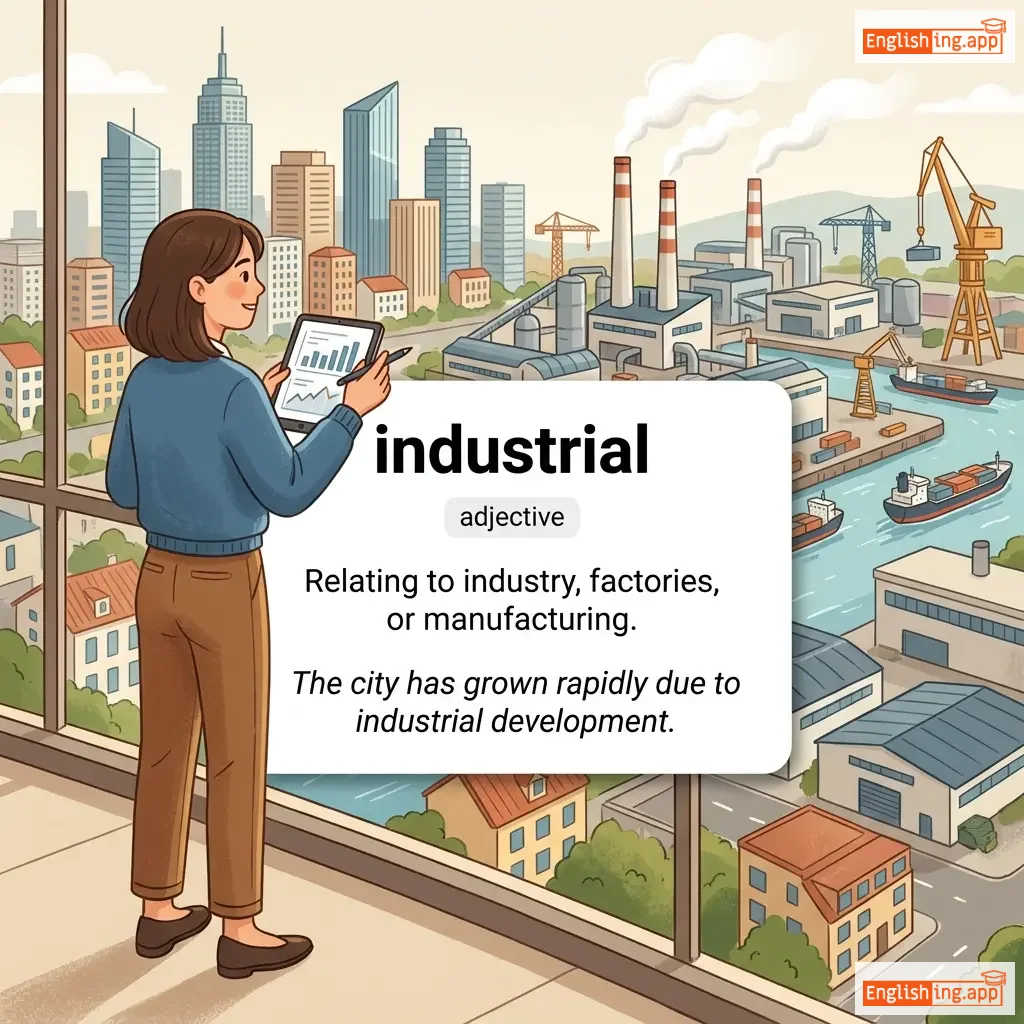
/ɪnˈdʌstriəl/
adjective
(工业的)
••••••
|
|
工业的
gongye de
••••••
|
- •••••• | - •••••• | - •••••• | - •••••• |
Relating to industry, factories, or manufacturing.
••••••
|
The city has grown rapidly due to industrial development.
这座城市因工业发展而快速增长。
••••••
|
这座城市因工业发展而快速增长。
Zhe zuo chengshi yin gongye fazhan er kuaisu zengzhang.
••••••
|
industrial revolution
工业革命
••••••
|
A period of major industrialization and innovation.
••••••
|
工业革命
Gongye geming
••••••
|
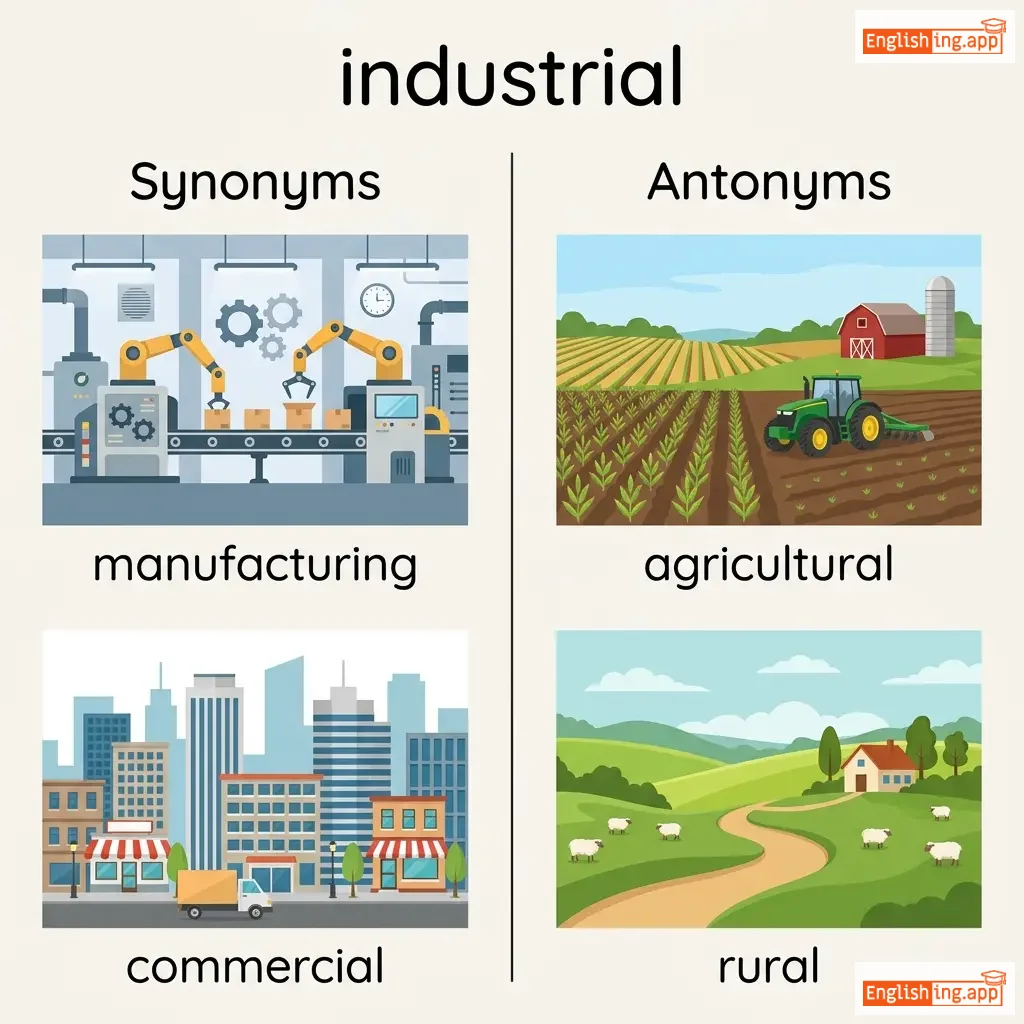
manufacturing, commercial, mechanical, factory-based
••••••
|
agricultural, rural
••••••
|
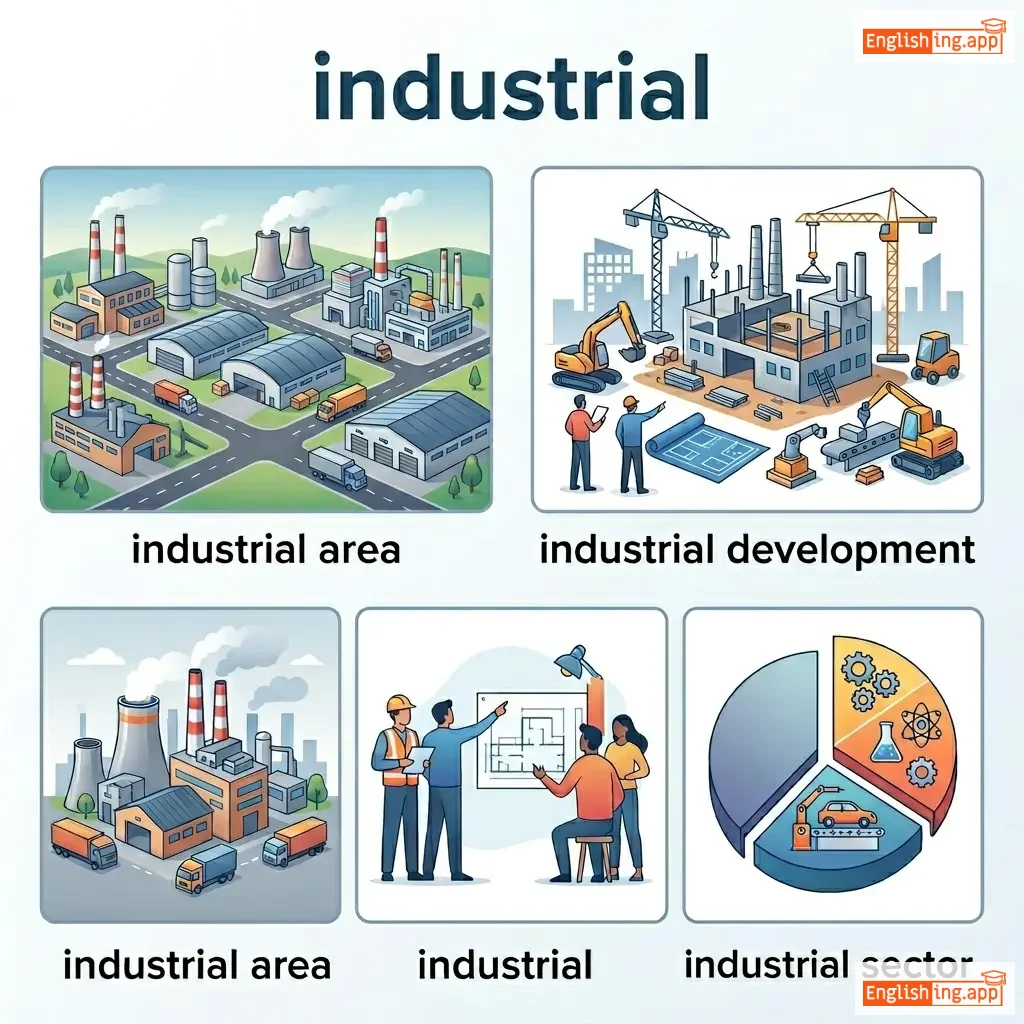
industrial area, industrial development, industrial sector, industrial growth
••••••
|
Industrial意味着工业的 - 工厂🏭容易记住。
••••••
|
|
💪
••••••
|
/ɪnˈdʌstriəs/
adjective
(英杜斯特里厄斯)
••••••
|
- •••••• |
勤奋的
qínfèn de
••••••
|
- •••••• | - •••••• | - •••••• | - •••••• |
Hardworking and diligent in one's duties.
••••••
|
She is an industrious student who always completes her assignments on time. |
她是一个勤奋的学生,总是按时完成她的作业。
Tā shì yīgè qínfèn de xuéshēng, zǒng shì ànshí wánchéng tā de zuòyè.
••••••
|
industrious worker |
A person who works hard and diligently.
••••••
|
勤奋的工人
qínfèn de gōngrén
••••••
|
hardworking, diligent, dedicated, assiduous, tireless
••••••
|
lazy, idle, negligent
••••••
|
industrious student, industrious worker, industrious nature
••••••
|
Industrious → Industrious 是与工作和产业相关的,它意味着工作努力。
••••••
|
|
🏭
••••••
|
/ˈɪndəstri/
noun
(工业)
••••••
|


|
工业
gongye
••••••
|
- •••••• | - •••••• | - •••••• | - •••••• |
The production of goods or services within an economy.
••••••
|
The textile industry employs thousands of workers in the region. |
纺织工业在该地区雇用了成千上万的工人。
Fangzhi gongye zai gai diqu guyongle chengqian shangwan de gongren.
••••••
|
cottage industry |
A small-scale, often home-based business.
••••••
|
家庭工业
jiating gongye
••••••
|
business, trade, commerce, sector, production
••••••
|
idleness, inactivity, unemployment
••••••
|
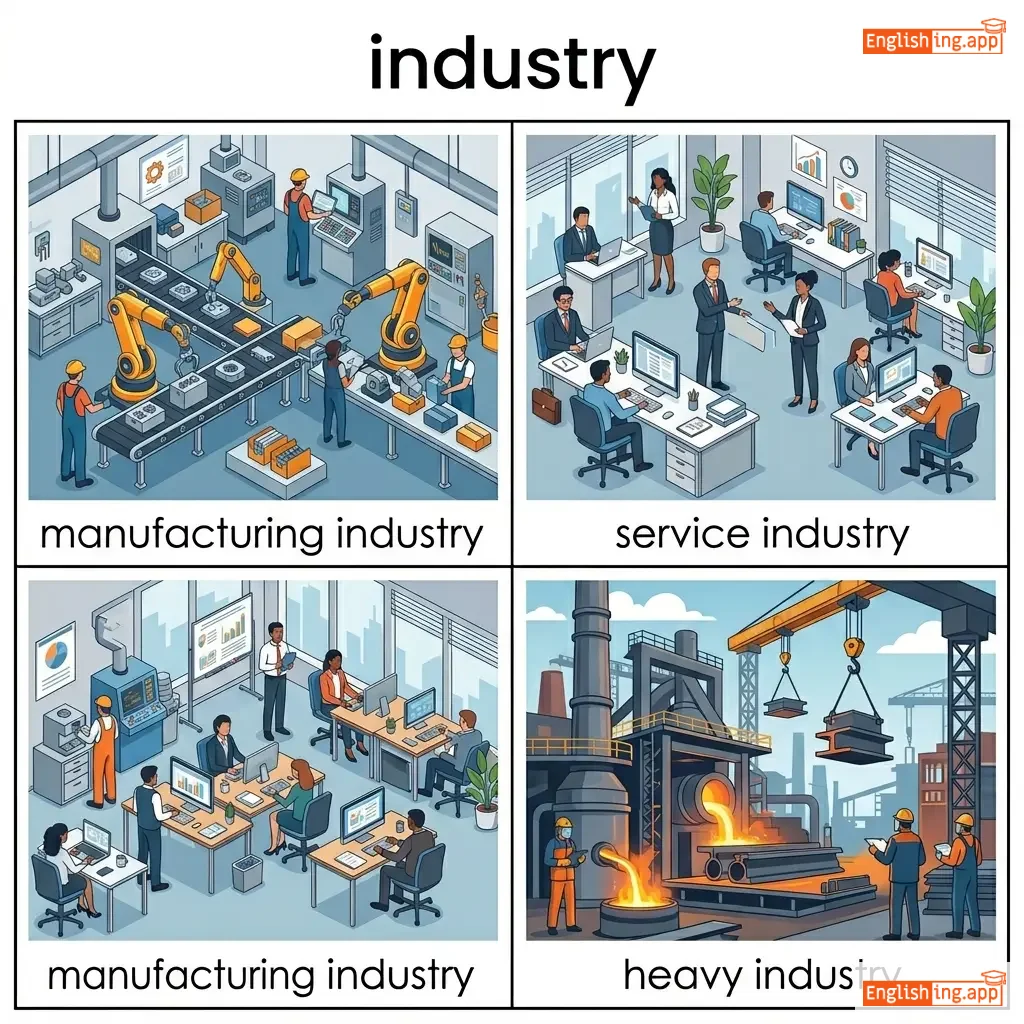
manufacturing industry, service industry, heavy industry, global industry
••••••
|
工业意味着工厂生产,像是一个大规模的生产领域。
••••••
|
|
❌
••••••
|
/ˌɪnɪˈfɛktɪv/
adjective
(yǐnɪfèktɪv)
••••••
|
|
无效的; 无用的; 失败的
wúxiàode; wúyòngde; shībàide
••••••
|
- •••••• | - •••••• | - •••••• | - •••••• |
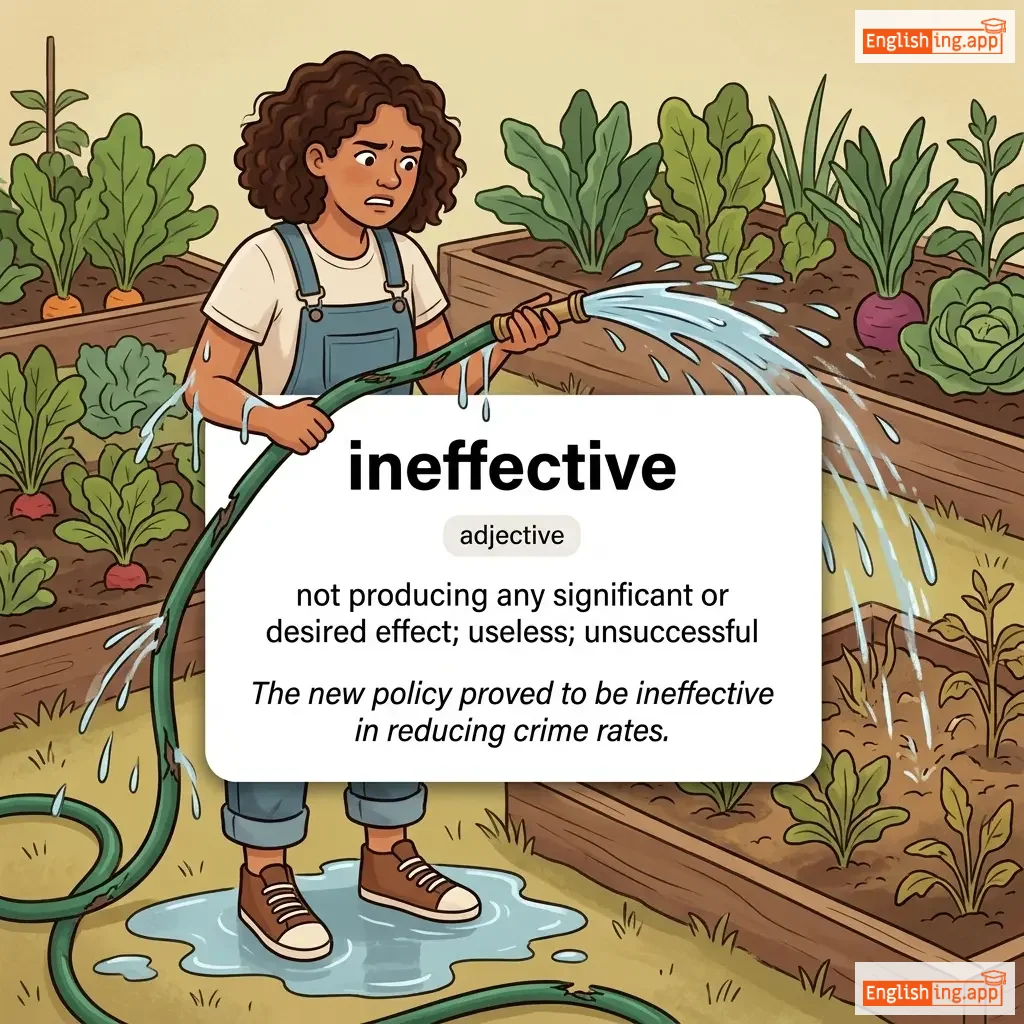
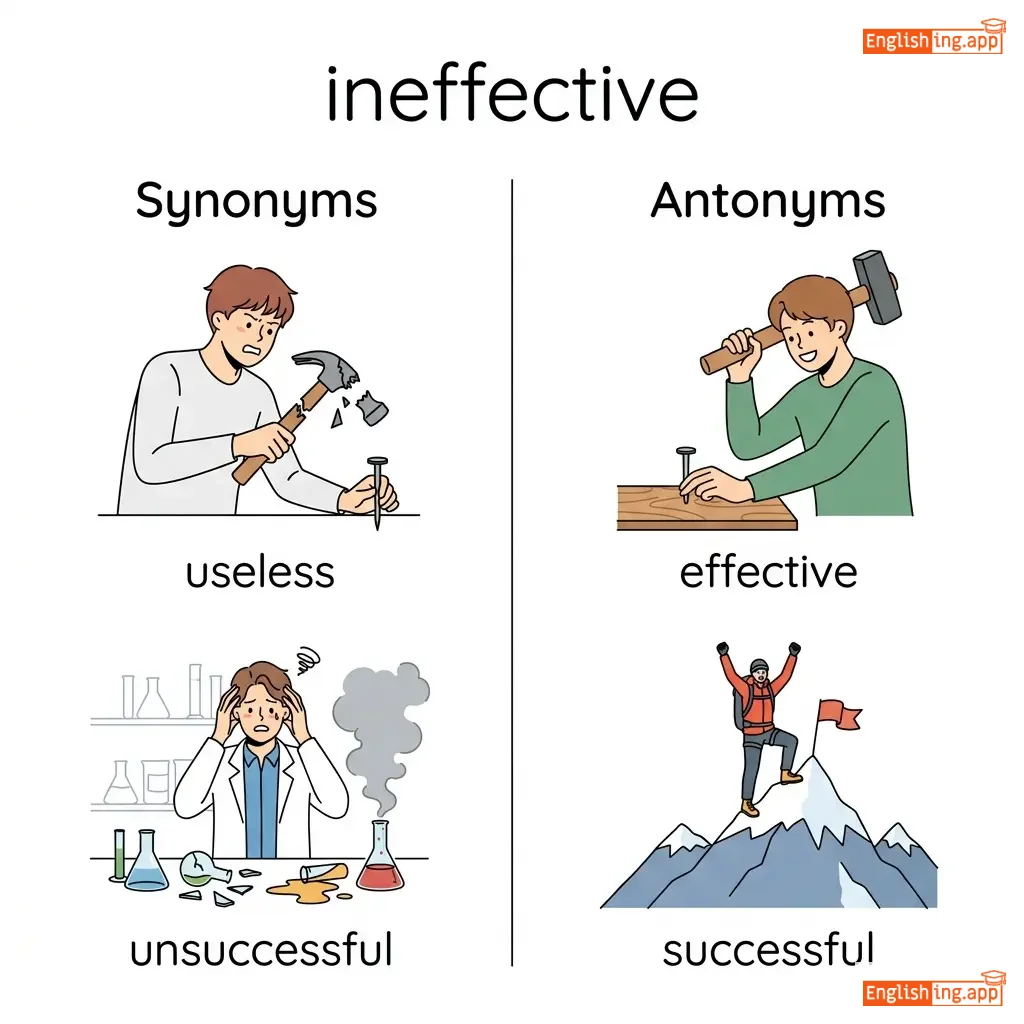
not producing any significant or desired effect; useless; unsuccessful
••••••
|
The new policy proved to be ineffective in reducing crime rates.
新的政策证明在减少犯罪率方面无效。
••••••
|
新的政策证明在减少犯罪率方面无效。
xīn de zhèngcè zhèngmíng zài jiǎnshǎo fànzuì lǜ fāngmiàn wúxiào.
••••••
|
- •••••• | - •••••• | - •••••• |
useless, unsuccessful, futile, powerless
••••••
|
effective, successful, powerful, efficient
••••••
|
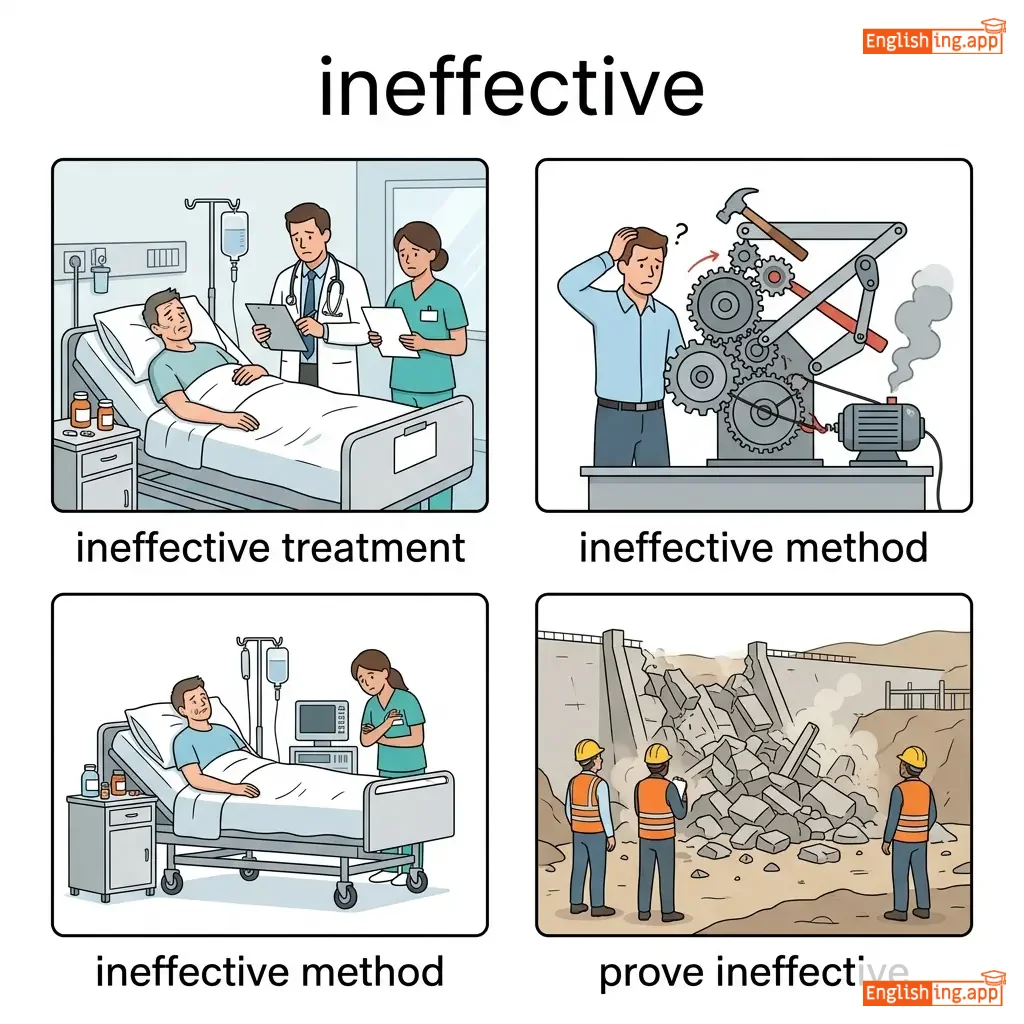
ineffective treatment, ineffective method, prove ineffective
••••••
|
Think of '无效的' as ineffective, like something that just doesn't work!
••••••
|
|
⚠️
••••••
|
/ˌɪn.ɪˈfɪʃ.ənt/
adjective
(因内非锡恩特)
••••••
|
- •••••• |
低效
dīxiào
••••••
|
- •••••• | - •••••• | - •••••• | - •••••• |
Not achieving maximum productivity; wasting resources or effort.
••••••
|
The machine is old and inefficient compared to modern equipment.
这台机器老旧且低效,相比于现代设备。
••••••
|
这台机器老旧且低效,相比于现代设备。
Zhè tái jīqì lǎojiù qiě dīxiào, xiāngbǐ yú xiàndài shèbèi.
••••••
|
inefficient system
低效系统
••••••
|
A system that wastes time and resources.
••••••
|
低效系统
dīxiào xìtǒng
••••••
|
unproductive, wasteful, incompetent, defective
••••••
|
efficient, productive, competent
••••••
|
inefficient machine, inefficient system, inefficient methods, inefficient process
••••••
|
Inefficient意味着没有效率 → 机器或人低效。
••••••
|
|
❌
••••••
|
/ɪnˈɛl.ɪ.dʒə.bəl/
adjective
(ineligible)
••••••
|
- •••••• |
不合格
bu he ge
••••••
|
- •••••• | - •••••• | - •••••• | - •••••• |
Not qualified or permitted to do something or to receive something.
••••••
|
He was ineligible to apply for the scholarship because of his age. |
由于年龄问题,他没有资格申请奖学金。
Youyu nianling wenti, ta meiyou zige shenqing jiangxuejin.
••••••
|
ineligible candidate |
A person who is not qualified to be chosen.
••••••
|
不合格的候选人
bu he ge de hou xuan ren
••••••
|
unqualified, disqualified, unsuitable, barred
••••••
|
eligible, qualified, suitable
••••••
|
ineligible to vote, ineligible for benefits, ineligible candidate, ineligible applicants
••••••
|
Ineligible意味着‘in-eligible’ → 不合格 → 不合格。
••••••
|
|
⚖️
••••••
|
/ˌɪnɪˈkwɒləti/
noun
(不平等)
••••••
|

|
不平等
bupingdeng
••••••
|
- •••••• | - •••••• | - •••••• | - •••••• |
the state of being unequal; disparity in status, rights, or opportunities
••••••
|
Inequality in wealth distribution remains a significant issue worldwide. |
财富分配中的不平等依然是一个全球性的重大问题。
Caiwu fenpei zhong de bupingdeng yiran shi yige quanqiuxing de zhongda wenti.
••••••
|
- •••••• | - •••••• | - •••••• |
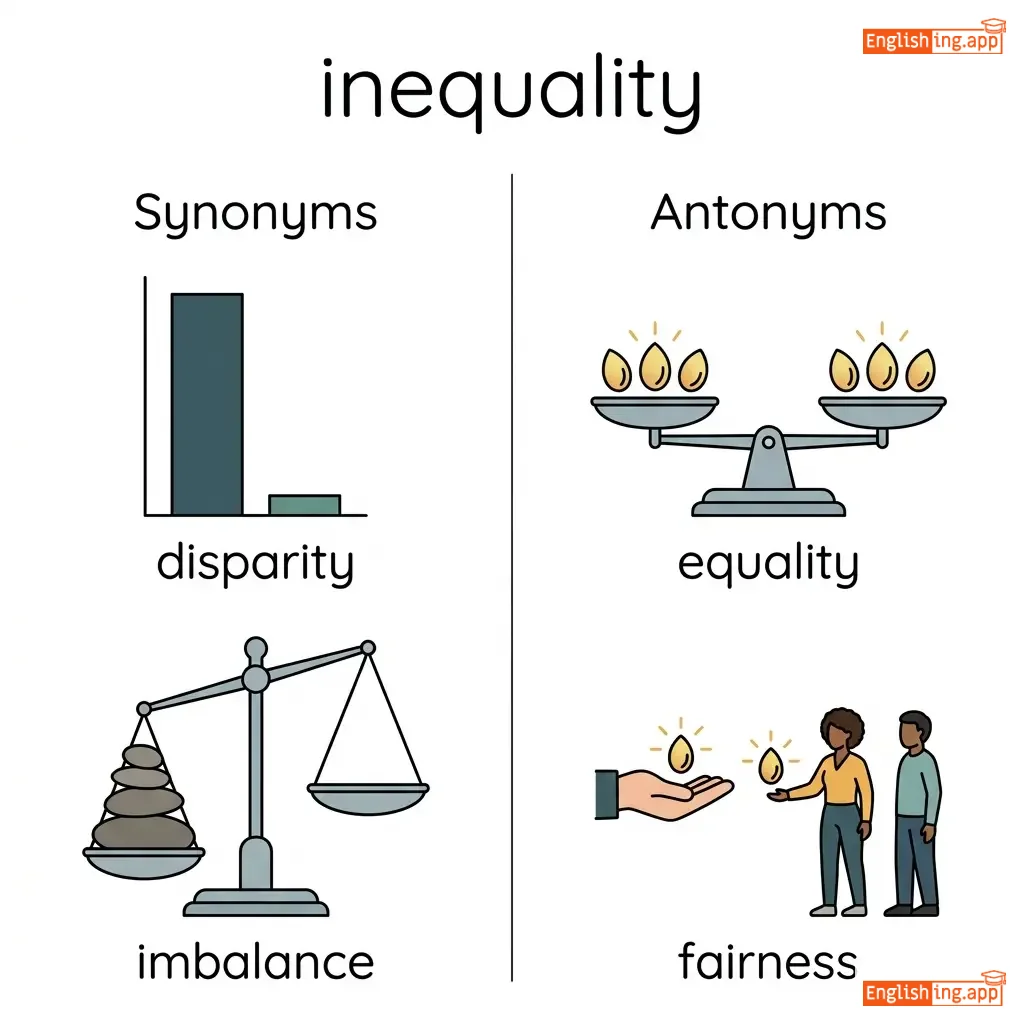
disparity, imbalance, discrimination, inequity
••••••
|
equality, fairness
••••••
|
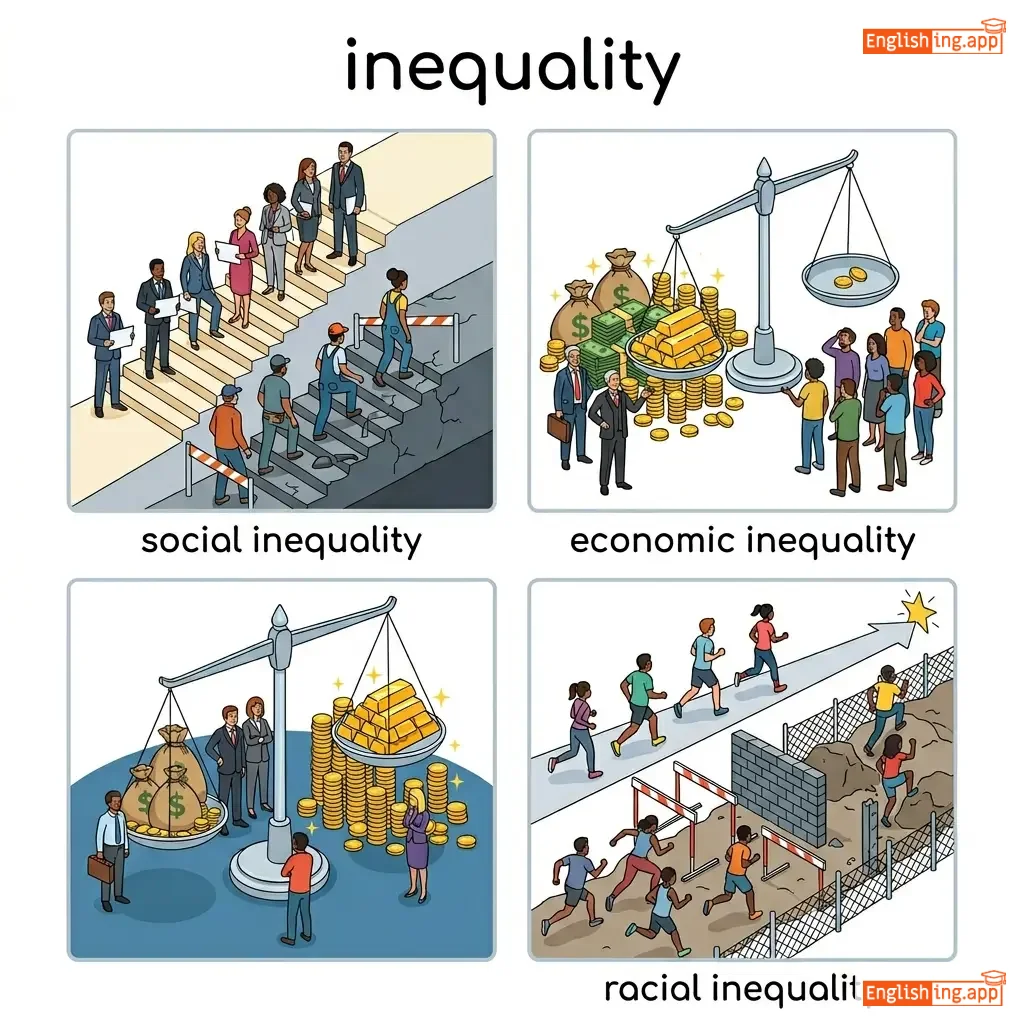
social inequality, economic inequality, racial inequality
••••••
|
Inequality sounds like 'In equal' – imagine people not being equal in opportunities!
••••••
|
|
🧩
••••••
|
/ˌɪnɪˈsɛnʃəl/
adjective
(因尼森舍尔)
••••••
|
- •••••• |
非必要的
fei biyao de
••••••
|
- •••••• | - •••••• | - •••••• | - •••••• |
not necessary or important; not essential
••••••
|
The report removes all inessential details to stay focused.
泽 瑞波特 瑞姆夫兹 奥 因尼森舍尔 迪泰尔斯
••••••
|
报告删除了所有非必要的细节以保持重点。
baogao shanchule suoyou fei biyao de xijie yi baochi zhongdian
••••••
|
- •••••• | - •••••• | - •••••• |
unnecessary, nonessential, trivial, minor, dispensable
••••••
|
essential, vital, necessary
••••••
|
inessential details, inessential elements, inessential features
••••••
|
非必要的 = not essential → inessential
••••••
|
|
☠️
••••••
|
/ɪnˈɛvɪtəbl/
adjective
(必然的)
••••••
|
|
不可避免
bù kě bì miǎn
••••••
|
- •••••• | - •••••• | - •••••• | - •••••• |
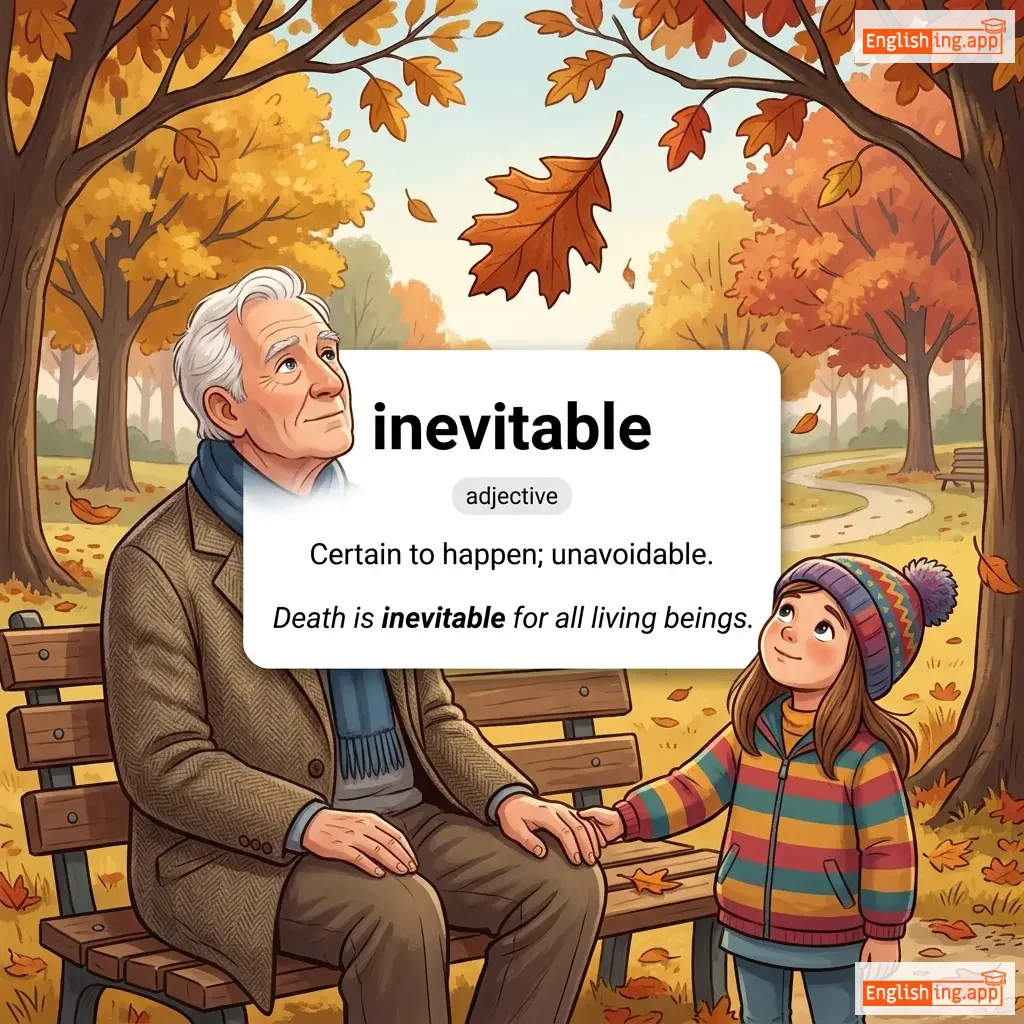
Certain to happen; unavoidable.
••••••
|
Death is inevitable for all living beings. |
死亡对于所有生物来说是不可避免的。
sǐwáng duì yú suǒyǒu shēngwù lái shuō shì bù kě bì miǎn de.
••••••
|
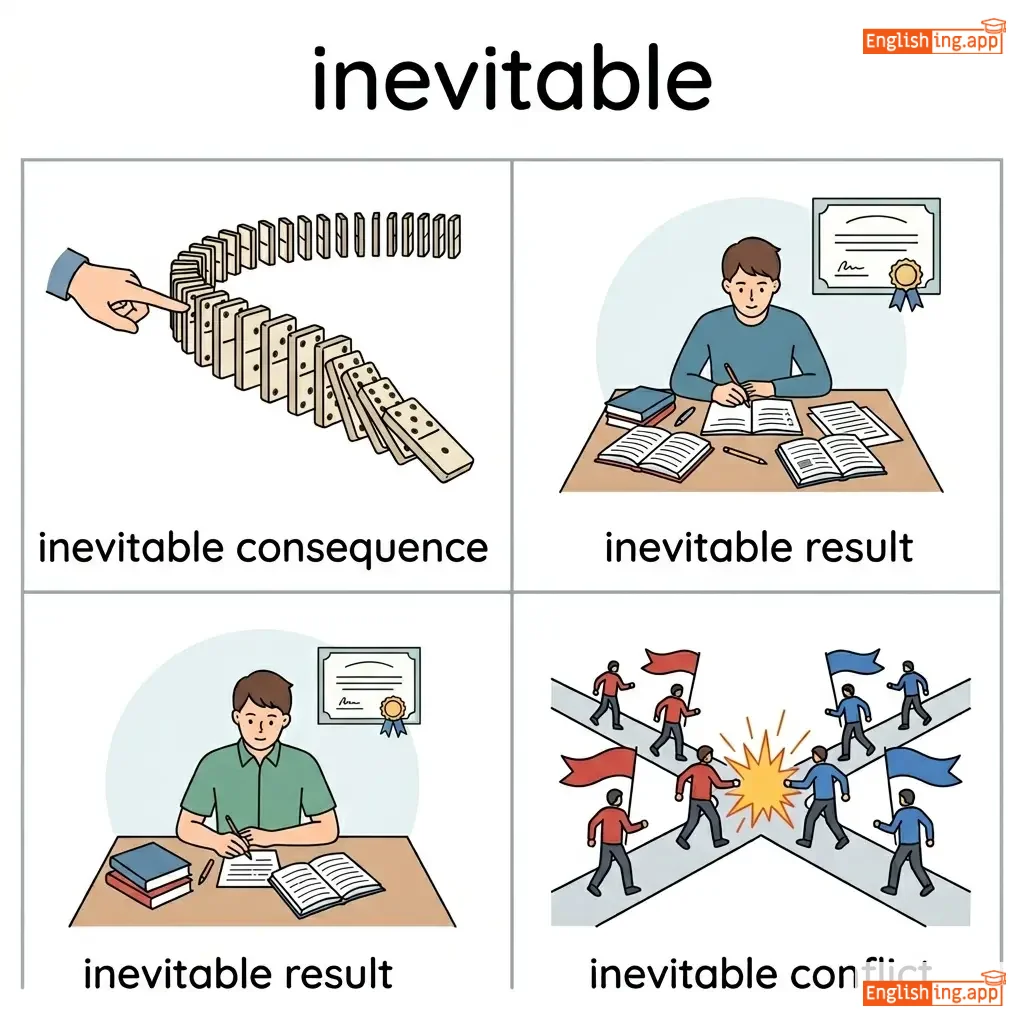
the inevitable result |
The certain outcome of an action or situation.
••••••
|
不可避免的结果
bù kě bì miǎn de jié guǒ
••••••
|
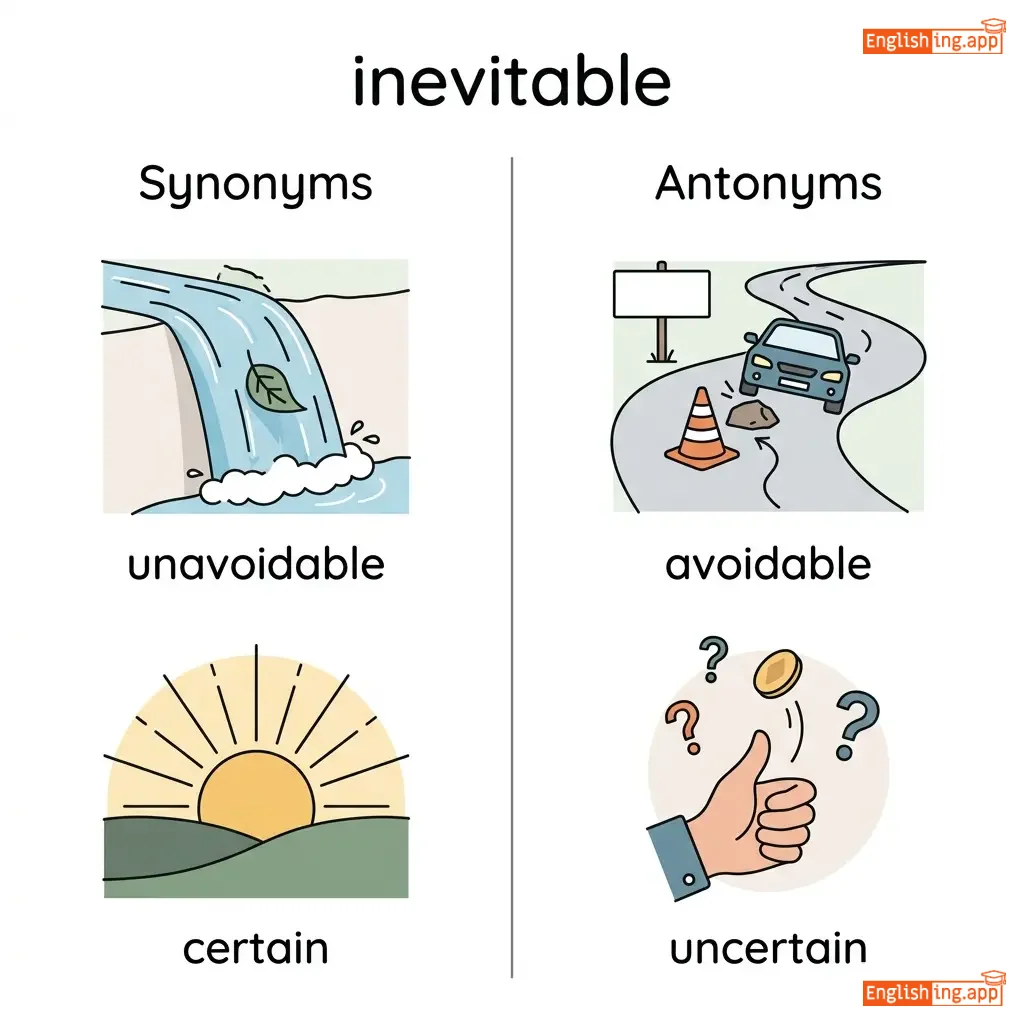
unavoidable, certain, destined, fated
••••••
|
avoidable, uncertain
••••••
|
inevitable consequence, inevitable result, inevitable conflict
••••••
|
Inevitable意味着'无法避免' - 就像死亡。
••••••
|
|
🌀
••••••
|
/ɪnˈɛvɪtəbli/
adverb
(不可避免地)
••••••
|
- •••••• |
不可避免地
bùkě bìmiǎn de
••••••
|
- •••••• | - •••••• | - •••••• | - •••••• |
in a way that cannot be avoided or prevented
••••••
|
Inevitably, the team faced challenges during the project. |
不可避免地,团队在项目过程中遇到了挑战。
Bùkě bìmiǎn de, tuánduì zài xiàngmù guòchéng zhōng yù dào le tiǎozhàn.
••••••
|
as inevitably as night follows day |
something that is certain to happen
••••••
|
像夜晚接替白天一样不可避免
Xiàng yèwǎn jiētì báitiān yīyàng bùkě bìmiǎn
••••••
|
unavoidably, certainly, surely, predictably, inescapably
••••••
|
avoidably, preventably, uncertainly
••••••
|
inevitably lead, inevitably result, inevitably follow, inevitably happen
••••••
|
不可避免的意思是无法避免,因此它必然会发生 🌀
••••••
|
|
💰
••••••
|
/ˌɪnɪkˈspɛnsɪv/
adjective
(yī nèikè sī pīn sī fú)
••••••
|
- •••••• |
便宜的; 经济实惠的; 负担得起的
pianyi de; jingji shi hui de; fudan de qi
••••••
|
- •••••• | - •••••• | - •••••• | - •••••• |
not costing a lot of money; affordable; budget-friendly
••••••
|
This restaurant offers delicious and inexpensive meals for students. |
这家餐厅为学生提供美味且便宜的餐点。
Zhe jia cāntīng wèi xuéshēng tígōng měiwèi qiě piányí de cāndiǎn.
••••••
|
- •••••• | - •••••• | - •••••• |
cheap, affordable, budget-friendly, economical
••••••
|
expensive, costly, dear, pricey
••••••
|
inexpensive option, relatively inexpensive, inexpensive alternative
••••••
|
用便宜的钱,吃到美味!
••••••
|
|
🤹
••••••
|
/ˌɪnˈekspɜːrt/
adjective
(因内克斯珀特)
••••••
|
- •••••• |
不熟练的
bu shulian de
••••••
|
- •••••• | - •••••• | - •••••• | - •••••• |
not skilled or experienced; lacking expertise
••••••
|
The inexpert handling of the machine caused several mistakes.
因内克斯珀特 汉德灵 奥夫 德 机器 考兹 德 几个 错误。
••••••
|
对机器的不熟练操作导致了多次错误。
Dui jiqi de bu shulian caozuo daozhile duoci cuowu
••••••
|
- •••••• | - •••••• | - •••••• |
unskilled, inexperienced, amateurish, inept, clumsy
••••••
|
expert, skilled, proficient
••••••
|
inexpert handling, inexpert judgment, inexpert attempt
••••••
|
Inexpert 就是 expert 前面加 in,表示不熟练。
••••••
|
|
😈
••••••
|
/ˈɪnfəməs/
adjective
(因法莫斯)
••••••
|
- •••••• |
臭名昭著
chòumíng zhāozhù
••••••
|
- •••••• | - •••••• | - •••••• | - •••••• |
well known for some bad quality or deed
••••••
|
The dictator was infamous for his cruelty. |
这位独裁者因其残忍而臭名昭著。
Zhè wèi dúcáizhě yīn qí cánrěn ér chòumíng zhāozhù.
••••••
|
infamous crime |
a crime that is notorious and shocking
••••••
|
臭名昭著的罪行
chòumíng zhāozhù de zuìxíng
••••••
|
notorious, disreputable, scandalous, dishonorable
••••••
|
famous, reputable, respected
••••••
|
infamous dictator, infamous act, infamous crime, infamous reputation
••••••
|
In-famous = 坏名声 → 臭名昭著
••••••
|
|
👶
••••••
|
/ˈɪnfənt/
noun
(婴儿)
••••••
|
- •••••• |
婴儿
ying'er
••••••
|
- •••••• | - •••••• | - •••••• | - •••••• |
A very young child or baby.
••••••
|
The infant was sleeping peacefully in the cradle.
婴儿在摇篮中安静地睡着。
••••••
|
婴儿在摇篮中安静地睡着。
Ying'er zai yaolan zhong anjing de shuizhao.
••••••
|
- •••••• | - •••••• | - •••••• |
baby, newborn, child, toddler, youngster
••••••
|
adult, grown-up
••••••
|
infant mortality, infant care, infant formula, infant stage
••••••
|
Infant 是婴儿 - Inf (婴) 是小孩子,抱着在摇篮里。
••••••
|
|
🦠
••••••
|
/ɪnˈfɛkt/
verb
(传染)
••••••
|
- •••••• |
传染
chuánrǎn
••••••
|
infected
传染
••••••
|
infected
传染
••••••
|
infects
传染
••••••
|
infecting
传染
••••••
|
To contaminate with a disease-causing organism.
••••••
|
The virus can infect healthy people quickly.
病毒可以迅速传染健康的人。
••••••
|
病毒可以迅速传染健康的人。
Bìngdú kěyǐ xùnsù chuánrǎn jiànkāng de rén.
••••••
|
infect with fear
传染恐惧
••••••
|
To spread fear into others.
••••••
|
传染恐惧
chuánrǎn kǒngjù
••••••
|
contaminate, transmit, spread, pollute
••••••
|
cleanse, disinfect
••••••
|
infect people, infect cells, infect computers, infect animals
••••••
|
传染就像是病毒一样传播。
••••••
|
|
🦠
••••••
|
/ɪnˈfɛkʃən/
noun
(感染)
••••••
|
- •••••• |
感染
gǎnrǎn
••••••
|
- •••••• | - •••••• | - •••••• | - •••••• |
The process of becoming infected with harmful microorganisms such as bacteria or viruses.
••••••
|
The doctor prescribed antibiotics to treat the infection.
医生开了抗生素来治疗感染。
••••••
|
医生开了抗生素来治疗感染。
Yisheng kai le kangshengsu lai zhiliao ganran.
••••••
|
spread of infection
感染传播
••••••
|
The transmission of disease-causing microorganisms.
••••••
|
感染传播
Ganran chuanbo
••••••
|
contagion, illness, contamination, disease, disorder
••••••
|
health, wellness, cure
••••••
|
bacterial infection, viral infection, wound infection, spread of infection
••••••
|
感染 = 病毒进入体内 = gǎnrǎn
••••••
|
|
🦠
••••••
|
/ɪnˈfekʃəs/
adjective
(因费克舍斯)
••••••
|
- •••••• |
传染性的; 有感染力的
chuanranxing de; you ganranli de
••••••
|
- •••••• | - •••••• | - •••••• | - •••••• |
capable of causing infection or disease; spreading easily from one person to another; able to spread feelings or attitudes such as enthusiasm
••••••
|
Her infectious laughter made everyone in the room smile.
赫尔 因费克舍斯 拉夫特 梅德 大家 斯迈尔。
••••••
|
她富有感染力的笑声让大家都笑了。
ta fu you ganranli de xiaosheng rang dajia dou xiao le
••••••
|
infectious laughter
infectious laughter
••••••
|
laughter that spreads quickly and makes others laugh too
••••••
|
感染性的笑声
ganranxing de xiaosheng
••••••
|
contagious, communicable, catching, spreading, transmissible
••••••
|
noninfectious, harmless, noncontagious
••••••
|
infectious disease, infectious virus, infectious smile, infectious laughter, highly infectious
••••••
|
Infectious = ganranli,像病毒一样扩散
••••••
|
|
🤔
••••••
|
/ɪnˈfɜːr/
verb
••••••
|
- •••••• | - •••••• |
inferred
••••••
|
inferred
••••••
|
infers
••••••
|
inferring
••••••
|
to conclude or deduce something from evidence and reasoning rather than from explicit statements
••••••
|
From his silence, I inferred that he was not happy with the decision. |
- •••••• |
read between the lines |
to understand an implicit meaning in what is said or written
••••••
|
- •••••• |
deduce, conclude, reason, assume, derive
••••••
|
state, declare, express
••••••
|
infer meaning, infer from evidence, infer result
••••••
|
No •••••• |
|
♾️
••••••
|
/ˈɪnfɪnɪt/
adjective
(yīnfīnít)
••••••
|
- •••••• |
无限
wúxiàn
••••••
|
- •••••• | - •••••• | - •••••• | - •••••• |
limitless or endless in space, extent, or number
••••••
|
The universe is often described as infinite.
宇宙常被描述为无限的。
••••••
|
宇宙常被描述为无限的。
Yǔzhòu cháng bèi miáoshù wéi wúxiàn de.
••••••
|
infinite possibilities
无限的可能性
••••••
|
endless options or opportunities
••••••
|
无限的可能性
wúxiàn de kěnéng xìng
••••••
|
endless, boundless, limitless, eternal, vast
••••••
|
finite, limited, restricted
••••••
|
infinite possibilities, infinite number, infinite space, infinite patience
••••••
|
Infinite = 不完 + finish = 永远没有完
••••••
|
|
🎈
••••••
|
/ɪnˈfleɪt/
verb
(因弗雷特)
••••••
|
- •••••• |
充气;抬高
chongqi; taigao
••••••
|
inflated
因弗雷特德
••••••
|
inflated
因弗雷特德
••••••
|
inflates
因弗雷特斯
••••••
|
inflating
因弗雷特英
••••••
|
to fill with air or gas so it expands; to increase excessively or artificially
••••••
|
The mechanic inflated the tire to the correct pressure.
德 么凯尼克 因弗雷特德 德 泰尔 图 德 科瑞克特 普雷舍。
••••••
|
技工把轮胎充到了正确的气压。
Jigong ba luntai chongdao le zhengque de qiya
••••••
|
inflate prices
inflate prices
••••••
|
to raise prices beyond a reasonable or normal level
••••••
|
抬高价格
taigao jiage
••••••
|
expand, blow up, enlarge, swell, boost
••••••
|
deflate, shrink, reduce
••••••
|
inflate a balloon, inflate a tire, inflate prices, inflate numbers, artificially inflate
••••••
|
inflate = 充气,气球会变大
••••••
|
|
📈
••••••
|
/ɪnˈfleɪʃən/
noun
(yīnlìshēn)
••••••
|

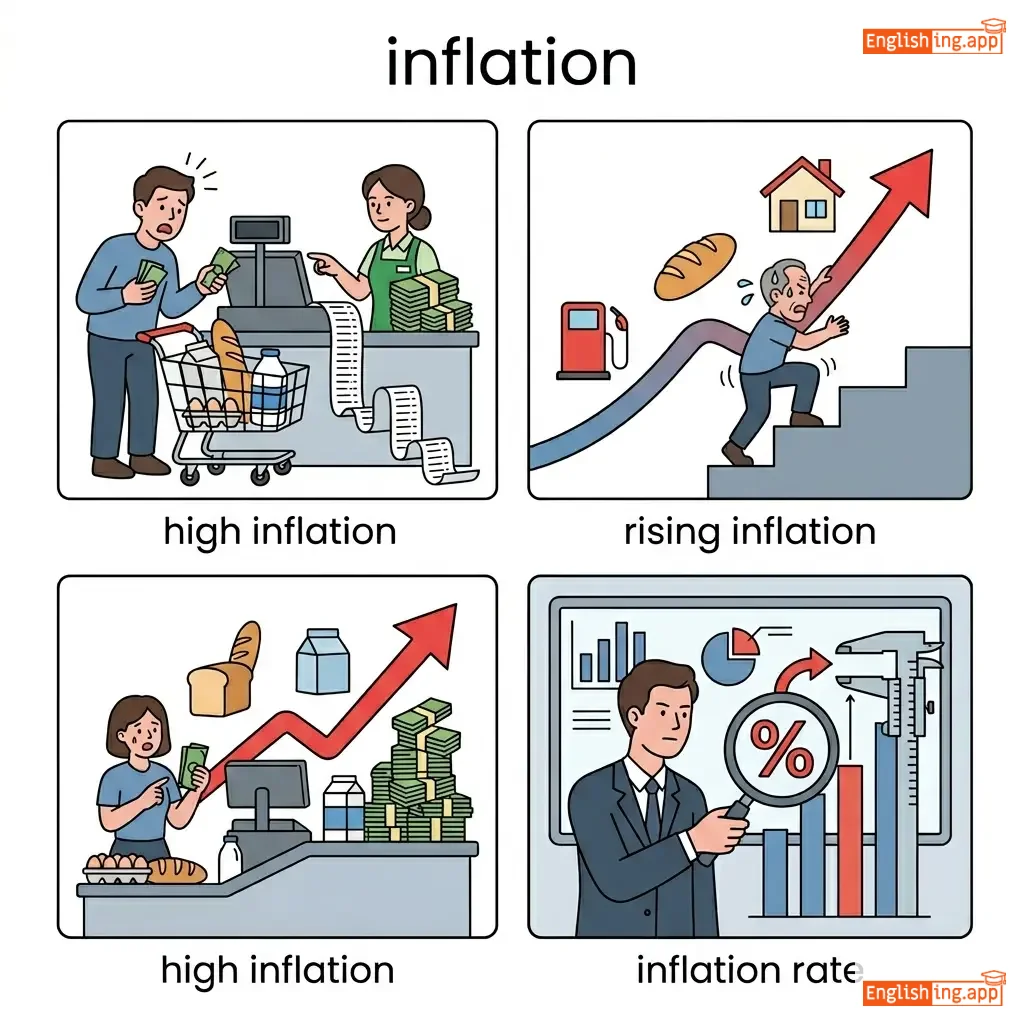
|
通货膨胀
tōnghuò péngzhàng
••••••
|
- •••••• | - •••••• | - •••••• | - •••••• |
A general increase in prices and fall in the purchasing value of money.
••••••
|
The government is taking steps to control inflation. |
政府正在采取措施控制通货膨胀。
Zhèngfǔ zhèngzài cǎiqǔ cuòshī kòngzhì tōnghuò péngzhàng.
••••••
|
rising inflation |
An increase in the rate at which prices for goods and services rise.
••••••
|
不断上升的通货膨胀
Bùduàn shàngshēng de tōnghuò péngzhàng
••••••
|
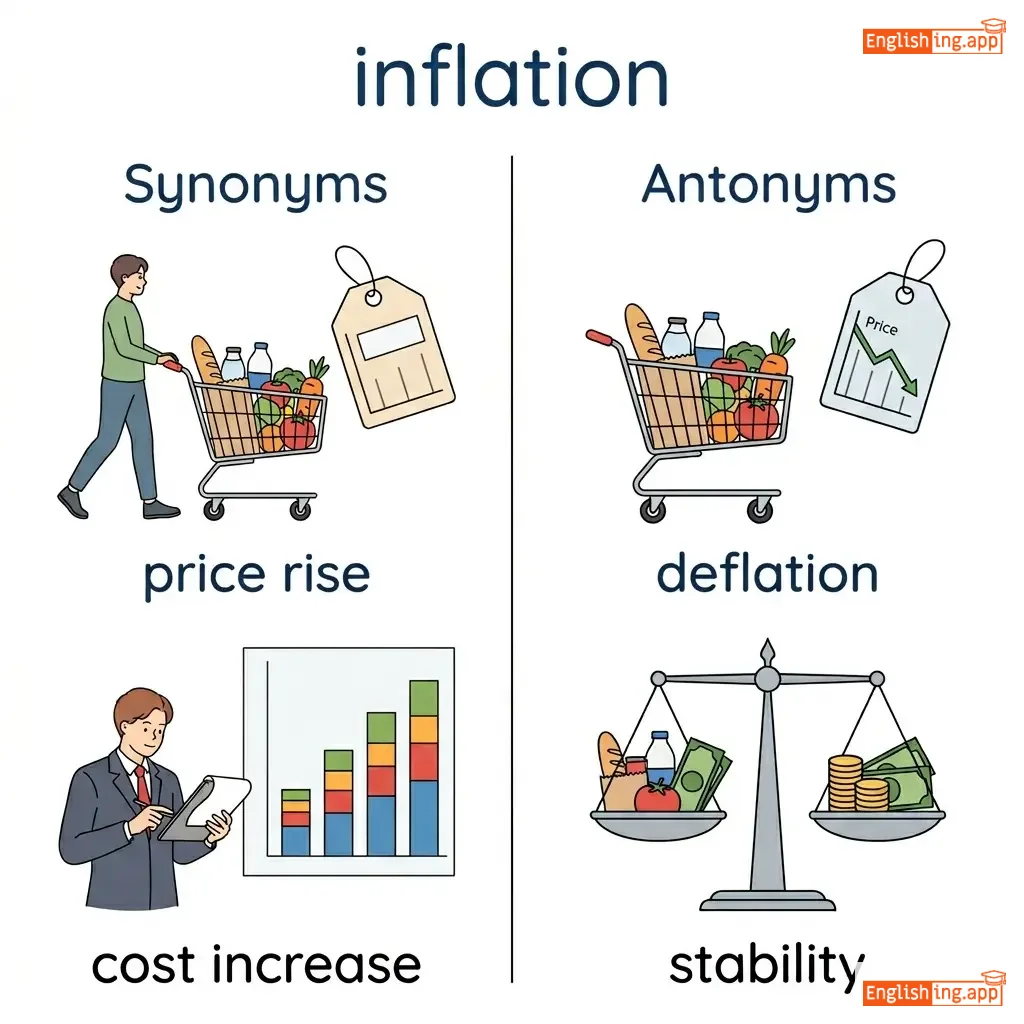
price rise, cost increase, devaluation, economic growth
••••••
|
deflation, stability
••••••
|
high inflation, rising inflation, inflation rate, inflation control
••••••
|
通货膨胀意味着📈价格上涨 - 当钱变得不值钱时。
••••••
|
|
🧱
••••••
|
/ˌɪnflɛksɪˈbɪlɪti/
noun
(因弗莱克斯比利蒂)
••••••
|
- •••••• |
缺乏灵活性
quefa linghuoxing
••••••
|
- •••••• | - •••••• | - •••••• | - •••••• |
the quality of being rigid or unwilling to change; lack of adaptability
••••••
|
The inflexibility of the rules caused unnecessary delays.
德 因弗莱克斯比利蒂 奥夫 德 如尔斯 科兹德 安内塞瑟里 迪雷斯。
••••••
|
规则的缺乏灵活性导致了不必要的延误。
Guize de quefa linghuoxing daozhile bu biyai de yanyu
••••••
|
- •••••• | - •••••• | - •••••• |
rigidity, stiffness, obstinacy, unyieldingness, hardness
••••••
|
flexibility, adaptability, openness
••••••
|
mental inflexibility, policy inflexibility, organizational inflexibility, structural inflexibility
••••••
|
Inflexibility 听起来硬邦邦—不灵活。
••••••
|
|
🪨
••••••
|
/ɪnˈflɛksəbl/
adjective
(inflexible)
••••••
|
- •••••• |
不灵活
bu linghuo
••••••
|
- •••••• | - •••••• | - •••••• | - •••••• |
Not able to bend or change; unwilling to change ideas or behavior.
••••••
|
His inflexible attitude made negotiations difficult. |
他那不灵活的态度使谈判变得困难。
Tā nà bù línghuó de tàidù shǐ tánpàn biàn dé kùnnán.
••••••
|
inflexible rules |
rules that cannot be changed or adapted
••••••
|
不灵活的规则
bù línghuó de guīzé
••••••
|
rigid, unyielding, stubborn, uncompromising, firm
••••••
|
flexible, adaptable, yielding
••••••
|
inflexible attitude, inflexible rules, inflexible schedule
••••••
|
In FLEXIBLE 不意味着僵硬 🪨 – 中文不灵活意味着无法改变。
••••••
|
|
⚡
••••••
|
/ɪnˈflɪkt/
verb
(因弗利克特)
••••••
|
- •••••• |
施加
shijia
••••••
|
inflicted
因弗利克特德
••••••
|
inflicted
因弗利克特德
••••••
|
inflicts
因弗利克特斯
••••••
|
inflicting
因弗利克特ing
••••••
|
to cause something unpleasant or painful to be suffered by someone or something
••••••
|
The storm inflicted considerable damage to the city.
风暴对城市造成了相当大的破坏。
••••••
|
风暴对城市造成了相当大的破坏。
Fengbao dui chengshi zaocheng le xiangdang da de pohuai.
••••••
|
- •••••• | - •••••• | - •••••• |
impose, cause, administer, bring about
••••••
|
relieve, soothe
••••••
|
inflict harm, inflict pain, inflict damage
••••••
|
Inflict sounds like 'In flick' – imagine a flick causing damage!
••••••
|
|
🌐
••••••
|
/ˈɪnfluəns/
noun/verb
(yinfluens)
••••••
|
- •••••• |
影响
yingxiang
••••••
|
influenced
yinfluensde
••••••
|
influenced
yinfluensde
••••••
|
influences
yinfluenses
••••••
|
influencing
yinfluencing
••••••
|
The power to affect how someone thinks or acts.
••••••
|
Her teacher had a strong influence on her career choice.
她的老师对她的职业选择有很大影响。
••••••
|
她的老师对她的职业选择有很大影响。
ta de laoshi dui ta de zhiye xuanze you hendayingxiang.
••••••
|
under the influence
在影响下
••••••
|
being affected or controlled by something, especially alcohol or drugs
••••••
|
在影响下
zai yingxiangxia
••••••
|
impact, effect, authority, sway, control
••••••
|
powerlessness, weakness
••••••
|
exert influence, political influence, under the influence
••••••
|
Influence 就是 ‘in fluid sense’ 🌊 – 像水一样流动的影响!
••••••
|
|
👑
••••••
|
/ˌɪnfluˈɛnʃl/
adjective
(yinfluenxial)
••••••
|
- •••••• |
有影响力的
you yingxiang li de
••••••
|
- •••••• | - •••••• | - •••••• | - •••••• |
Having great power to change or affect people or things.
••••••
|
She is one of the most influential leaders of our time. |
她是我们时代最有影响力的领导人之一。
tā shì wǒmen shídài zuì yǒu yǐngxiǎng lì de lǐngdǎo rén zhī yī.
••••••
|
influential figure |
a person who has a significant effect on others
••••••
|
有影响力的人物
yǒu yǐngxiǎng lì de rénwù
••••••
|
powerful, significant, prominent, impactful, persuasive
••••••
|
insignificant, powerless
••••••
|
influential leader, influential role, highly influential
••••••
|
有影响力的像‘influence-full’ – 一个人能改变一切。
••••••
|
|
ℹ️
••••••
|
/ˈɪnfoʊ/
noun
(信息)
••••••
|
- •••••• |
信息
xinxī
••••••
|
- •••••• | - •••••• | - •••••• | - •••••• |
information; knowledge or facts about something or someone
••••••
|
She gave me all the info I needed for the meeting. |
她给了我所有会议所需的信息。
Ta gei le wo suoyou huiyi suo xu de xinxi.
••••••
|
- •••••• | - •••••• | - •••••• |
data, details, facts, knowledge
••••••
|
ignorance, misunderstanding
••••••
|
gather info, share info, provide info, detailed info
••••••
|
把'info'与'信息'联系起来 - 它提供所有你需要的事实!
••••••
|

