|
絵文字
|
単語 | Images | 翻訳 | 過去 | 過去分詞 | 三人称単数 | 動名詞 | 意味 | 例文 | 例文の翻訳 | 表現例 | 表現例の意味 | 表現例の翻訳 | 同義語 | 対義語 | コロケーション | ニーモニック |
|---|---|---|---|---|---|---|---|---|---|---|---|---|---|---|---|---|---|
|
👩💼
••••••
|
/ɛmˈplɔɪ.iː/
noun
(エンプラロイ)
••••••
|
- •••••• |
従業員
jūgyōin
••••••
|
- •••••• | - •••••• | - •••••• | - •••••• |
A person who works for an organization or company in return for payment.
••••••
|
The company values each employee's contribution to its success. |
会社は各従業員の成功への貢献を重視しています。
Kaisha wa kaku jūgyōin no seikō e no kōken o jūshi shiteimasu.
••••••
|
model employee |
An ideal worker who performs duties responsibly and well.
••••••
|
模範従業員
mohan jūgyōin
••••••
|
worker, staff member, team member, personnel, laborer
••••••
|
employer, boss
••••••
|
loyal employee, new employee, company employee, hire employee
••••••
|
従業員は会社で働く人、'従業'と社員が同じ意味です。
••••••
|
|
👔
••••••
|
/ɪmˈplɔɪər/
noun
(エンプロイヤー)
••••••
|
- •••••• |
雇用者
koyōsha
••••••
|
- •••••• | - •••••• | - •••••• | - •••••• |
A person or organization that hires and pays people to work.
••••••
|
The employer promised better benefits to attract skilled workers. |
雇用者は熟練した労働者を引き付けるために、より良い福利厚生を約束しました。
Koyōsha wa jukuren shita rōdōsha o hikitsukeru tame ni, yori yoi fukuri kōsei o yakusoku shimashita.
••••••
|
good employer |
An employer who treats employees fairly and provides good conditions.
••••••
|
良い雇用者
Yoi koyōsha
••••••
|
boss, manager, proprietor, recruiter, company
••••••
|
employee, worker
••••••
|
large employer, potential employer, current employer, future employer
••••••
|
Employerは雇用者、つまり雇う人です。
••••••
|
|
💼
••••••
|
/ɪmˈplɔɪmənt/
noun
(エンプロイメント)
••••••
|

|
雇用
koyou
••••••
|
- •••••• | - •••••• | - •••••• | - •••••• |
the state of having a paid job or work
••••••
|
The government is working to increase youth employment. |
政府は若者の雇用を増加させるために取り組んでいます。
Seifu wa wakamono no koyō o zōka saseru tame ni torikundeimasu.
••••••
|
full employment |
a situation where almost everyone willing to work has a job
••••••
|
完全雇用
kanzen koyō
••••••
|
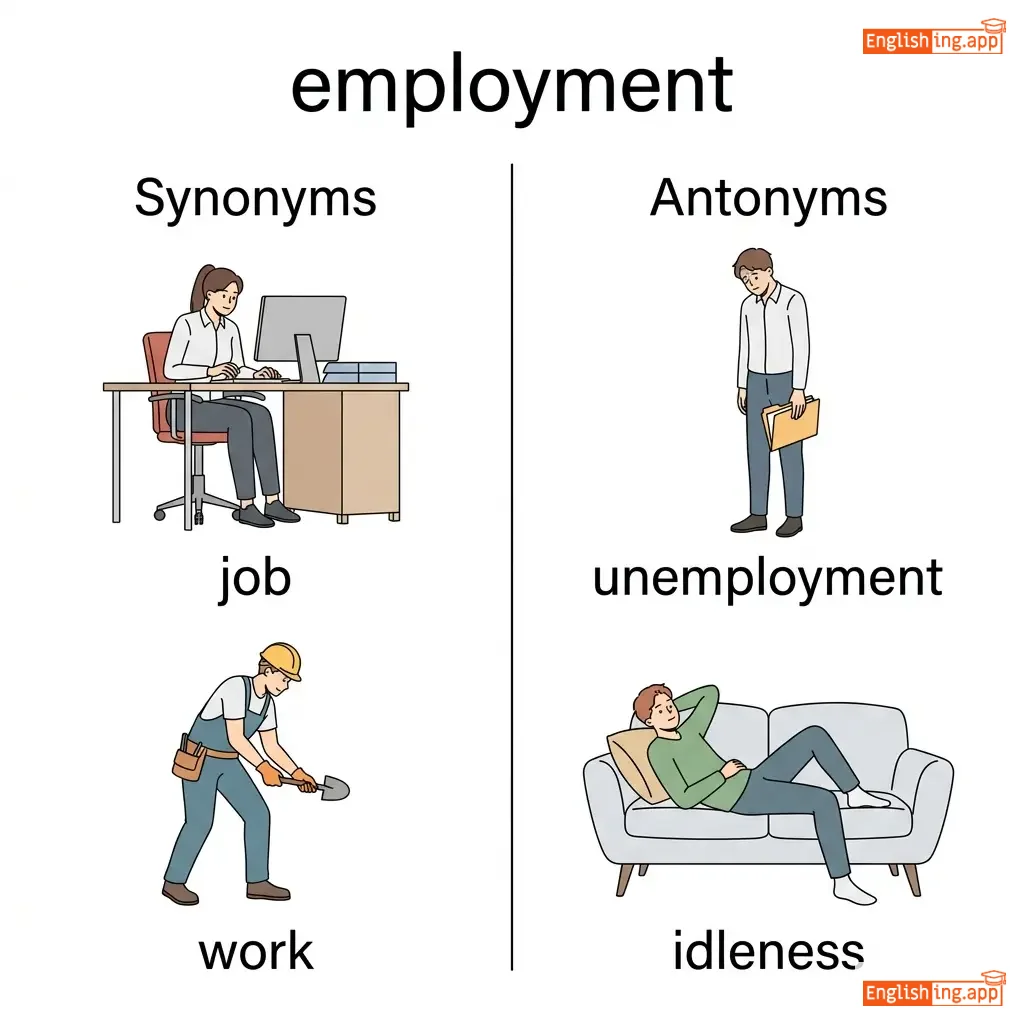
job, work, occupation, profession, livelihood
••••••
|
unemployment, idleness, joblessness
••••••
|
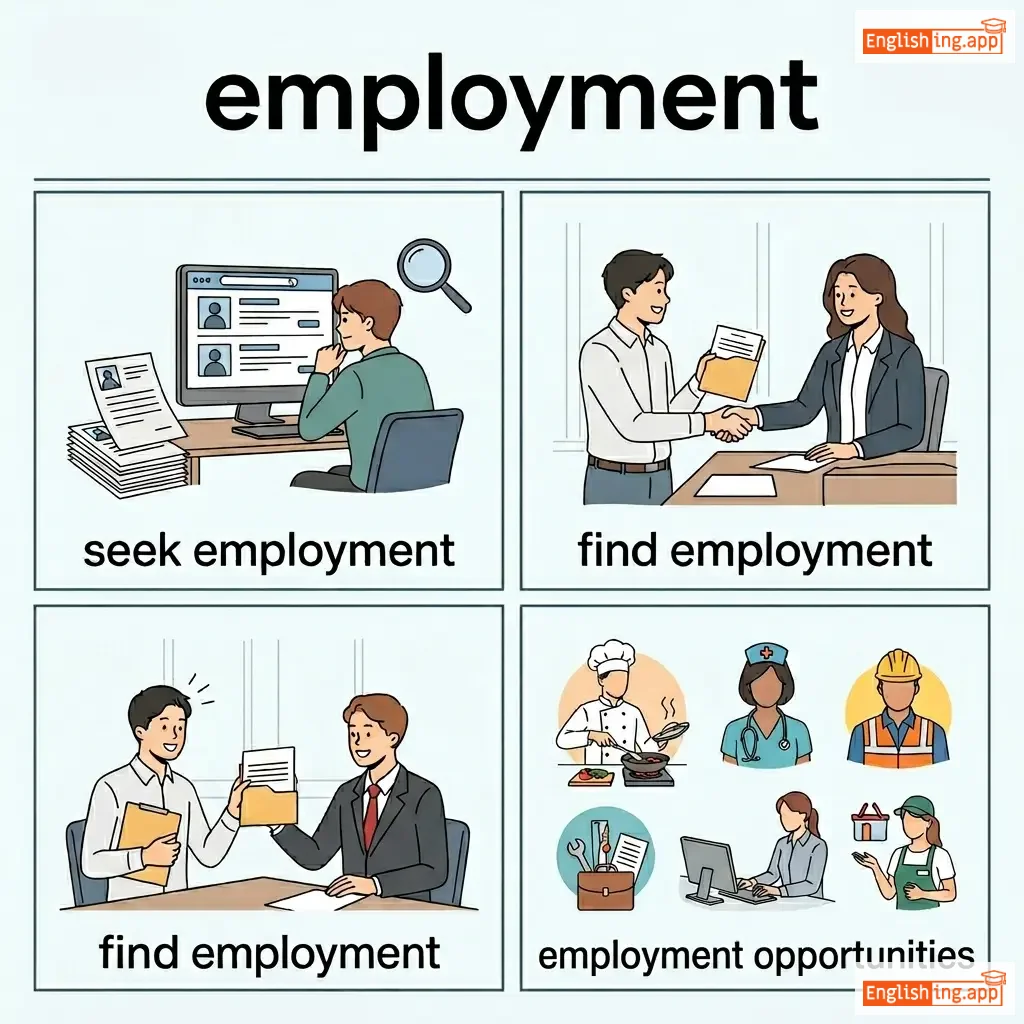
seek employment, find employment, employment opportunities, employment rate
••••••
|
雇用は仕事、仕事は幸福につながる。
••••••
|
|
💪
••••••
|
/ɪmˈpaʊər/
verb
••••••
|
- •••••• | - •••••• |
empowered
••••••
|
empowered
••••••
|
empowers
••••••
|
empowering
••••••
|
To give someone the power or authority to do something; to make someone stronger or more confident.
••••••
|
Education can empower people to improve their lives. |
- •••••• |
empower yourself |
Take control of your own life and decisions.
••••••
|
- •••••• |
authorize, enable, strengthen, permit, inspire
••••••
|
weaken, disempower, discourage
••••••
|
empower women, empower people, empower community, empower decision
••••••
|
No •••••• |
|
📦
••••••
|
/ˈɛmpti/
adjective
(エンプティ)
••••••
|
- •••••• |
空っぽ
karappo
••••••
|
- •••••• | - •••••• | - •••••• | - •••••• |
containing nothing; not filled
••••••
|
The box was completely empty. |
箱は完全に空っぽだった。
Hako wa kanzen ni karappo datta.
••••••
|
empty promises |
words or promises without real value or meaning
••••••
|
空っぽの約束
karappo no yakusoku
••••••
|
vacant, hollow, void, blank
••••••
|
full, filled
••••••
|
empty box, empty room, empty bottle, empty words
••••••
|
Empty 📦 は '空っぽ' を意味し、日本語では '空っぽ' は何も入っていないことを意味します。
••••••
|
|
🔓
••••••
|
/ɪˈneɪbəl/
verb
(イネイブル)
••••••
|
|
有効にする
yūkō ni suru
••••••
|
enabled
イネイブルド
••••••
|
enabled
イネイブルド
••••••
|
enables
イネイブルズ
••••••
|
enabling
イネイブリング
••••••
|
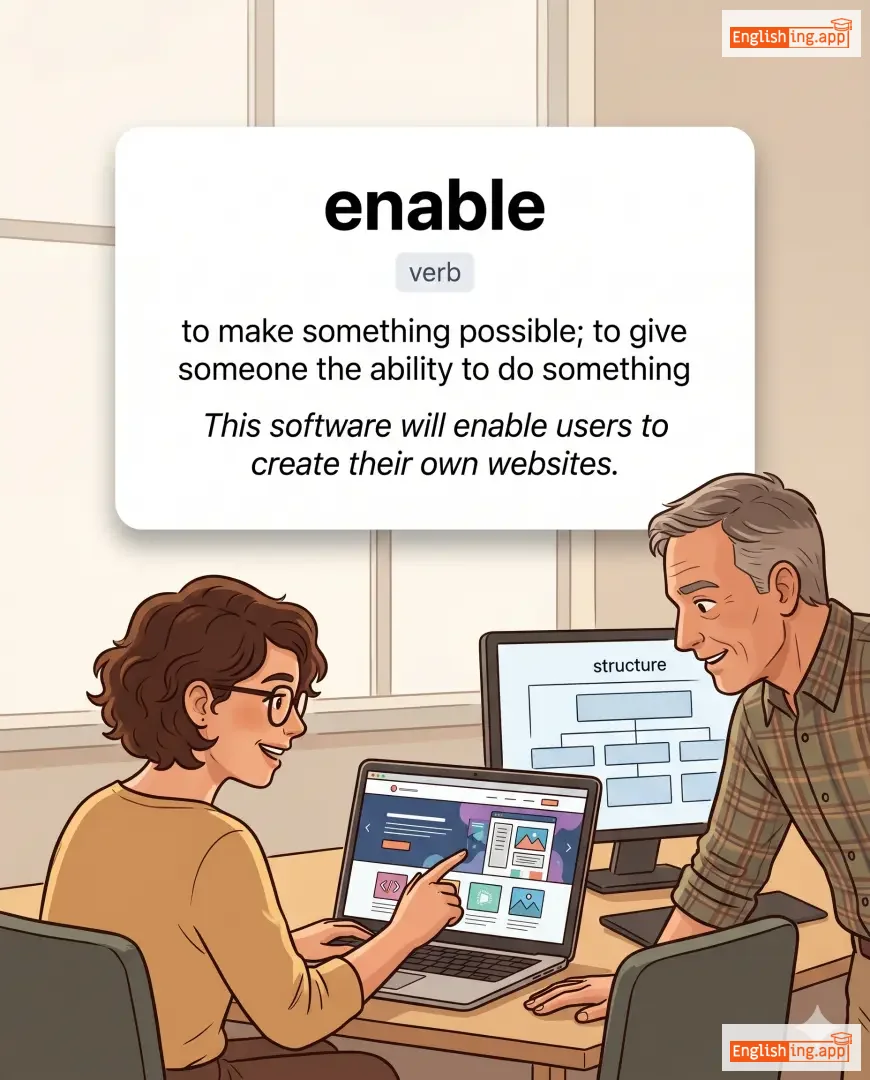
to make something possible; to give someone the ability to do something
••••••
|
This software will enable users to create their own websites.
このソフトウェアは、ユーザーが自分のウェブサイトを作成できるようにします。
••••••
|
このソフトウェアは、ユーザーが自分のウェブサイトを作成できるようにします。
Kono sofutowea wa, yūzā ga jibun no u~ebusaito o sakusei dekiru yō ni shimasu.
••••••
|
enable access
アクセスを有効にする
••••••
|
to provide the ability to enter or use something
••••••
|
アクセスを有効にする
akusesu o yūkō ni suru
••••••
|
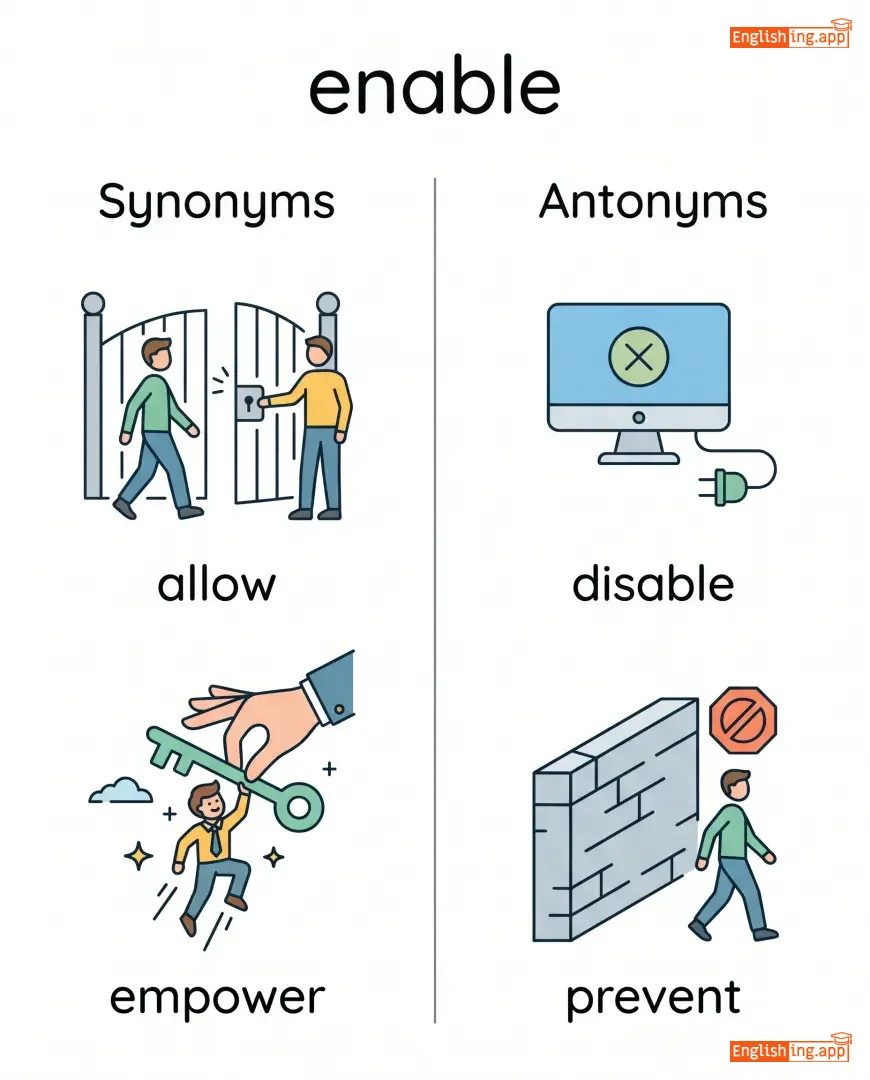
allow, empower, facilitate, permit, authorize
••••••
|
disable, prevent, hinder
••••••
|
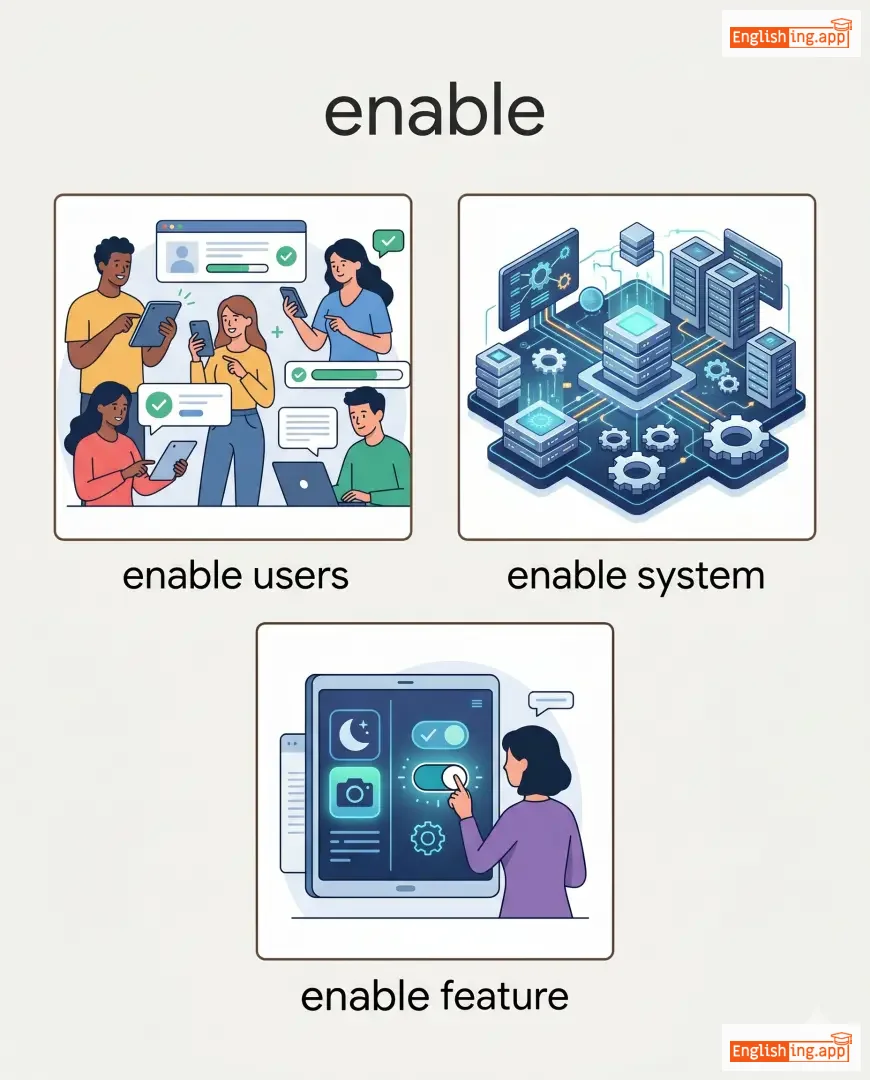
enable users, enable system, enable feature, enable access
••••••
|
Enableは機能を有効にして可能にすることです。
••••••
|
|
📜
••••••
|
/ɪˈnækt/
verb
(イネクト)
••••••
|
- •••••• |
制定する
seitei suru
••••••
|
enacted
イネクテッド
••••••
|
enacted
イネクテッド
••••••
|
enacts
イネクツ
••••••
|
enacting
イネクティング
••••••
|
to make into law; to perform or act out
••••••
|
The government decided to enact a new policy on education.
政府は教育に関する新しい政策を制定することを決定しました。
••••••
|
政府は教育に関する新しい政策を制定することを決定しました。
Seifu wa kyōiku ni kansuru atarashī seisaku o seitei suru koto o kettei shimashita.
••••••
|
enact a law
法律を制定する
••••••
|
to officially make a law
••••••
|
法律を制定する
hōritsu o seitei suru
••••••
|
legislate, establish, decree, ordain
••••••
|
abolish, repeal, revoke
••••••
|
enact legislation, enact reforms, enact measures, enact policy
••••••
|
Enactは制定することを意味します - 'Enact'は'Act'(行動)のように聞こえ、法律を作ることを意味します。
••••••
|
|
⭕
••••••
|
/ɪnˈkʌmpəs/
verb
(エンクォンパス)
••••••
|
- •••••• |
網羅する
mōrā suru
••••••
|
encompassed
エンクォンパスト
••••••
|
encompassed
エンクォンパスト
••••••
|
encompasses
エンクォンパセス
••••••
|
encompassing
エンクォンパシング
••••••
|
To include comprehensively; to surround or encircle.
••••••
|
The project will encompass all aspects of rural development.
そのプロジェクトは農村開発のすべての側面を網羅します。
••••••
|
そのプロジェクトは農村開発のすべての側面を網羅します。
Sono purojekuto wa nōson kaihatsu no subete no sokumen o mōra shimasu.
••••••
|
encompass the whole
全てを網羅する
••••••
|
To include everything in scope.
••••••
|
全てを網羅する
subete o mōra suru
••••••
|
include, cover, embrace, contain, surround
••••••
|
exclude, omit, ignore
••••••
|
encompass all, fully encompass, encompass a range
••••••
|
Encompassは ENtire COMPASS(コンパス) - すべてを囲む
••••••
|
|
🤝
••••••
|
/ɪnˈkaʊntər/
verb
(エンカウンター)
••••••
|
- •••••• |
遭遇する / 出会う
sōgū suru / deau
••••••
|
encountered
エンカウンタード
••••••
|
encountered
エンカウンタード
••••••
|
encounters
エンカウンターズ
••••••
|
encountering
エンカウンタリング
••••••
|
to unexpectedly meet someone or experience something, especially something difficult or new
••••••
|
During the hike, we encountered a wild bear.
ハイキング中に、私たちは野生のクマに遭遇しました。
••••••
|
ハイキング中に、私たちは野生のクマに遭遇しました。
Haikingu-chū ni, watashitachi wa yasei no kuma ni sōgū shimashita.
••••••
|
encounter difficulties
困難に直面する
••••••
|
to face problems or obstacles
••••••
|
困難に直面する
konnan ni chokumen suru
••••••
|
meet, face, confront, experience, come across
••••••
|
avoid, evade, escape
••••••
|
encounter problems, encounter difficulties, first encounter, unexpected encounter
••••••
|
遭遇することは、直面することに通じる!
••••••
|
|
💪
••••••
|
/ɪnˈkʌrɪdʒ/
verb
(エンカレッジ)
••••••
|

|
励ます
hagemasu
••••••
|
encouraged
エンカレッジド
••••••
|
encouraged
エンカレッジド
••••••
|
encourages
エンカレッジズ
••••••
|
encouraging
エンカレッジング
••••••
|
To give support, confidence, or hope to someone.
••••••
|
Parents should encourage their children to read daily.
親は子供たちに毎日読むように励ますべきです。
••••••
|
親は子供たちに毎日読むように励ますべきです。
Oya wa kodomotachi ni mainichi yomu yō ni hagemasu beki desu.
••••••
|
words of encouragement
励ましの言葉
••••••
|
Supportive or uplifting statements given to someone.
••••••
|
励ましの言葉
Hagemashi no kotoba
••••••
|
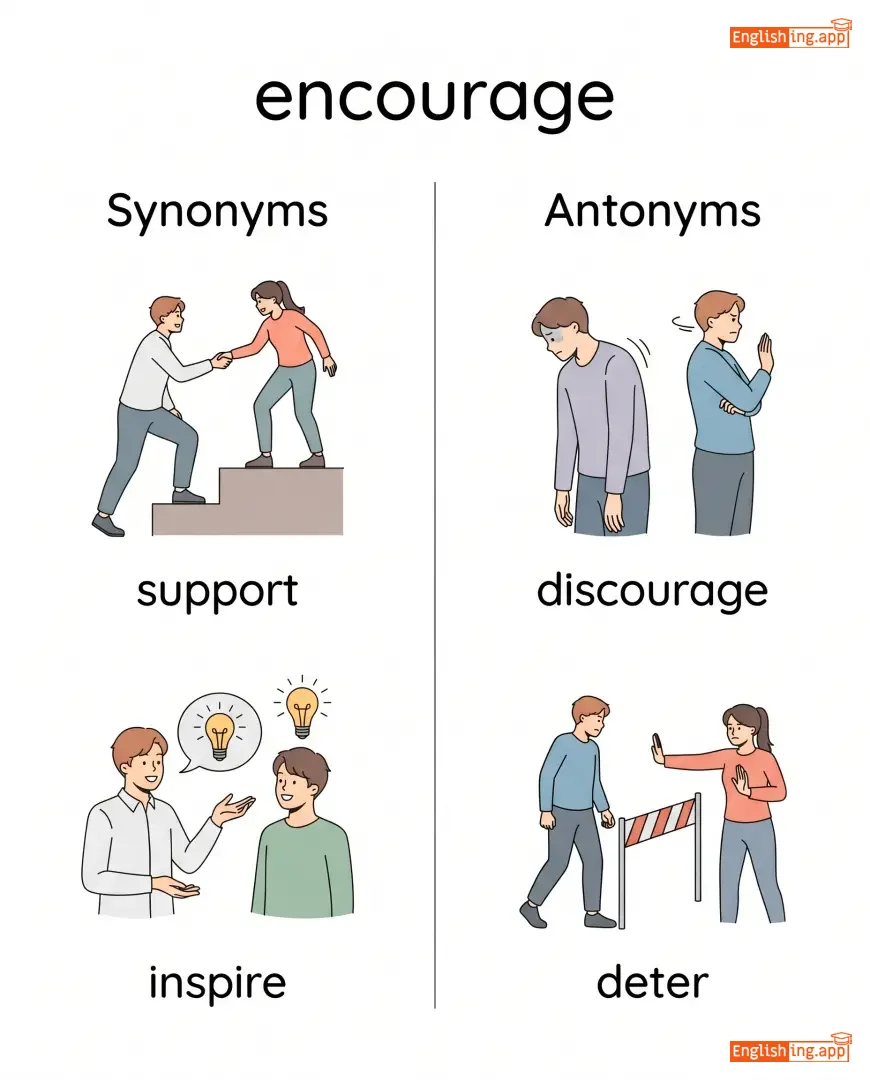
support, inspire, motivate, cheer, reassure
••••••
|
discourage, deter, dishearten
••••••
|
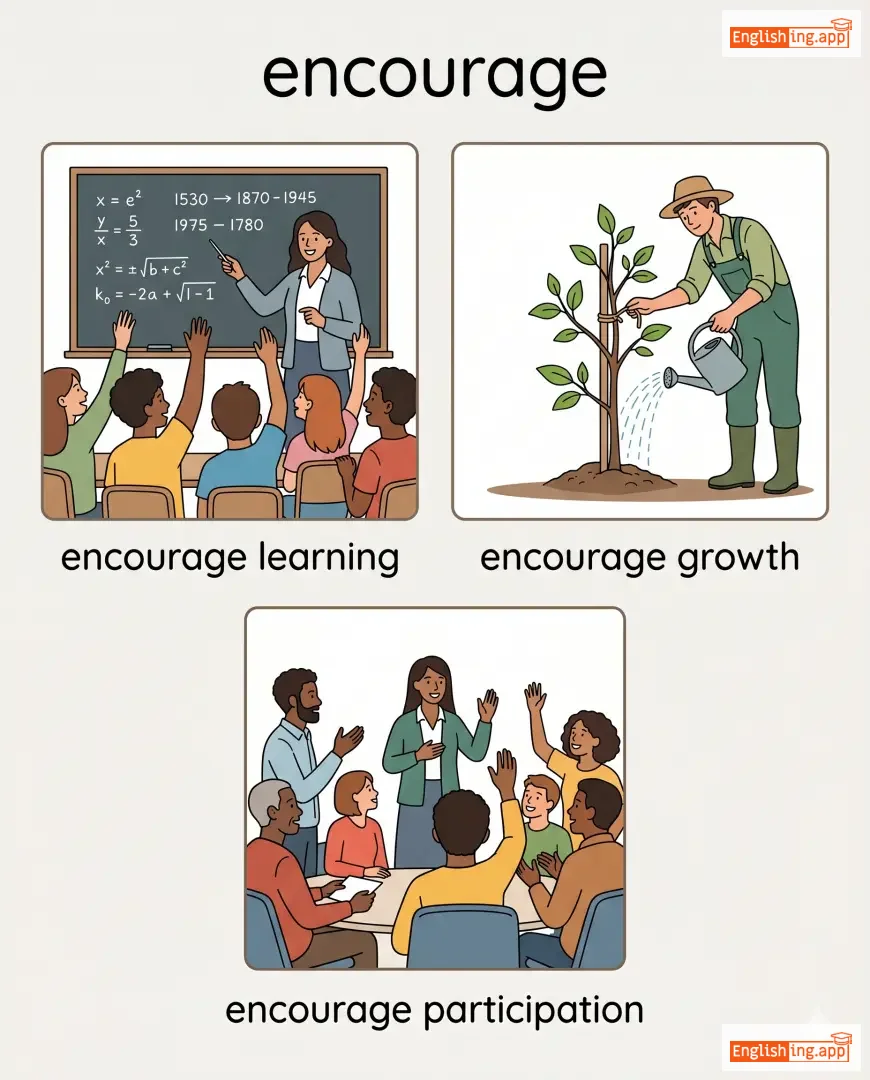
encourage learning, encourage growth, encourage participation
••••••
|
エンカレッジ=エネルギー + 勇気 - 誰かを支援する
••••••
|
|
👍
••••••
|
/ɪnˈkʌrɪdʒmənt/
noun
(インカレッジメント)
••••••
|
- •••••• |
励まし
hagemashi
••••••
|
- •••••• | - •••••• | - •••••• | - •••••• |
the action of giving someone support, confidence, or hope
••••••
|
Her encouragement helped me finish the project. |
彼女の励ましが私をプロジェクト完了に導きました。
Kanojo no hagemashi ga watashi wo purojekuto kanryou ni michibikimashita.
••••••
|
- •••••• | - •••••• | - •••••• |
support, motivation, inspiration, confidence
••••••
|
discouragement, disinterest
••••••
|
offer encouragement, seek encouragement, give encouragement
••••••
|
励ましはあなたを前進させる力です!
••••••
|
|
💪
••••••
|
/ɪnˈkʌrɪdʒɪŋ/
adjective
(エンクラジング)
••••••
|
- •••••• |
励みになる
hagemi ni naru
••••••
|
- •••••• | - •••••• | - •••••• | - •••••• |
giving someone support or confidence; optimistic
••••••
|
Her words were very encouraging during the hard times.
彼女の言葉は、困難な時期に非常に励みになりました。
••••••
|
彼女の言葉は、困難な時期に非常に励みになりました。
Kanojo no kotoba wa, konnan na jiki ni hijō ni hagemi ni narimashita.
••••••
|
encouraging sign
励みになる兆し
••••••
|
a positive indication that something is improving
••••••
|
励みになる兆し
hagemi ni naru kizashi
••••••
|
supportive, hopeful, reassuring, promising, positive
••••••
|
discouraging, depressing
••••••
|
encouraging news, encouraging sign, encouraging smile, encouraging words
••••••
|
励みになる = エネルギー + 勇気 — 支援と自信を与える。
••••••
|
|
🔚
••••••
|
/ɛnd/
verb
(エンド)
••••••
|
- •••••• |
終了
shūryō
••••••
|
ended
エンデッド
••••••
|
ended
エンデッド
••••••
|
ends
エンズ
••••••
|
ending
エンディング
••••••
|
to bring something to a conclusion or stop
••••••
|
The meeting ended at 5 PM.
会議は午後5時に終了しました。
••••••
|
会議は午後5時に終了しました。
Kaigi wa gogo 5-ji ni shūryō shimashita.
••••••
|
at the end of the day
一日の終わりに
••••••
|
when everything is considered
••••••
|
一日の終わりに
ichinichi no owari ni
••••••
|
finish, conclude, terminate, cease
••••••
|
begin, start, commence
••••••
|
end game, happy end, tragic end, end result
••••••
|
Endは'終了'、映画の最後にThe Endと表示されるように!
••••••
|
|
💪
••••••
|
/ɪnˈdevər/
verb, noun
(エンデバー)
••••••
|
- •••••• |
努力する
doryoku suru
••••••
|
endeavoured
エンデバード
••••••
|
endeavoured
エンデバード
••••••
|
endeavours
エンデバーズ
••••••
|
endeavouring
エンデバーイング
••••••
|
To try hard to achieve something; an attempt or effort
••••••
|
She endeavoured to finish the project on time.
彼女はプロジェクトを時間通りに終わらせるためにエンデバーした。
••••••
|
彼女は時間通りにプロジェクトを終わらせるために努力した。
Kanojo wa jikan doori ni purojekuto o owaraseru tame ni doryoku shita.
••••••
|
- •••••• | - •••••• | - •••••• |
strive, attempt, try, exert, labor
••••••
|
neglect, give up
••••••
|
endeavour to, scientific endeavour, human endeavour, collective endeavour
••••••
|
Link 'doryoku suru' with 'endeavour' 💪
••••••
|
|
🎬
••••••
|
/ˈɛndɪŋ/
noun
(エンディング)
••••••
|
- •••••• |
結末
ketsumatsu
••••••
|
- •••••• | - •••••• | - •••••• | - •••••• |
the final part of something, such as a story, event, or period of time
••••••
|
The movie had a surprising ending that no one expected.
映画は誰も予想しなかった驚きのエンディングだった。
••••••
|
映画は誰も予想しなかった驚きの結末だった。
Eiga wa dare mo yosou shinakatta odoroki no ketsumatsu datta
••••••
|
happy ending
ハッピーエンド
••••••
|
a conclusion in which everything turns out well
••••••
|
ハッピーエンド
happii endo
••••••
|
conclusion, finale, finish, close, termination
••••••
|
beginning, start, opening
••••••
|
ending scene, tragic ending, abrupt ending, satisfying ending
••••••
|
Ending = 結末, 映画の最後のシーンを思い出そう
••••••
|
|
♾️
••••••
|
/ˈendləs/
adjective
(エンドレス)
••••••
|
- •••••• |
無限
mugen
••••••
|
- •••••• | - •••••• | - •••••• | - •••••• |
having or seeming to have no end or limit
••••••
|
They gazed at the endless desert stretching before them.
彼らは前に広がる終わりのない砂漠を見つめていた。
••••••
|
彼らは前に広がる終わりのない砂漠を見つめていた。
Karera wa mae ni hirogaru owari no nai sabaku o mitsumete ita.
••••••
|
endless possibilities
無限の可能性
••••••
|
many potential opportunities or options
••••••
|
無限の可能性
mugen no kanōsei
••••••
|
infinite, boundless, perpetual, eternal, limitless
••••••
|
limited, finite, short-lived
••••••
|
endless love, endless possibilities, endless road, endless patience
••••••
|
Endless は終わりがないという意味 = 無限 ♾️.
••••••
|
|
✅
••••••
|
/ɪnˈdɔːrs/
verb
(エンドース)
••••••
|
- •••••• |
支持する
shiji suru
••••••
|
endorsed
エンドースド
••••••
|
endorsed
エンドースド
••••••
|
endorses
エンドースズ
••••••
|
endorsing
エンドーシング
••••••
|
To give approval or support to someone or something; to publicly recommend.
••••••
|
The celebrity endorsed the new skincare product.
セレブリティは新しいスキンケア製品を支持しました。
••••••
|
セレブリティは新しいスキンケア製品を支持しました。
Sereburiti wa atarashī sukinkea seihin o shiji shimashita.
••••••
|
endorse a check
小切手を承認する
••••••
|
To sign the back of a check to make it payable to someone else.
••••••
|
小切手を承認する
kogitte o shōnin suru
••••••
|
support, approve, recommend, back, advocate
••••••
|
oppose, reject, disapprove
••••••
|
endorse product, endorse policy, celebrity endorses, endorse check
••••••
|
Endorseはend + force、すなわち力を込めて支持することを意味します。
••••••
|
|
✅
••••••
|
/ɪnˈdɔːrsmənt/
noun
(エンドースメント)
••••••
|

|
支持
shiji
••••••
|
- •••••• | - •••••• | - •••••• | - •••••• |
the action of publicly supporting or approving something
••••••
|
His endorsement of the new policy was well received.
新しい政策への支持は好意的に受け入れられました。
••••••
|
新しい政策への支持は好意的に受け入れられました。
Atarashī seisaku e no shiji wa kōiteki ni ukeireraremashita.
••••••
|
- •••••• | - •••••• | - •••••• |
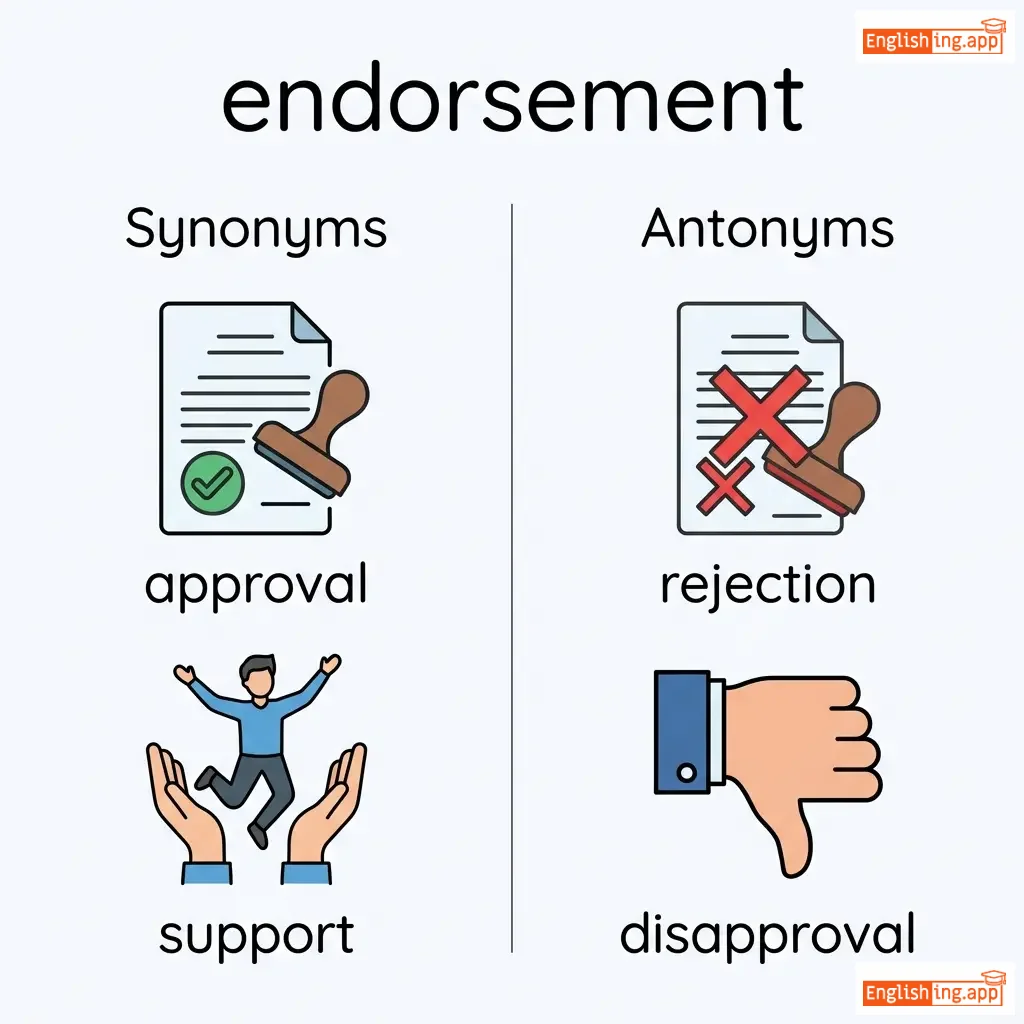
approval, support, backing, recommendation
••••••
|
rejection, disapproval, opposition
••••••
|
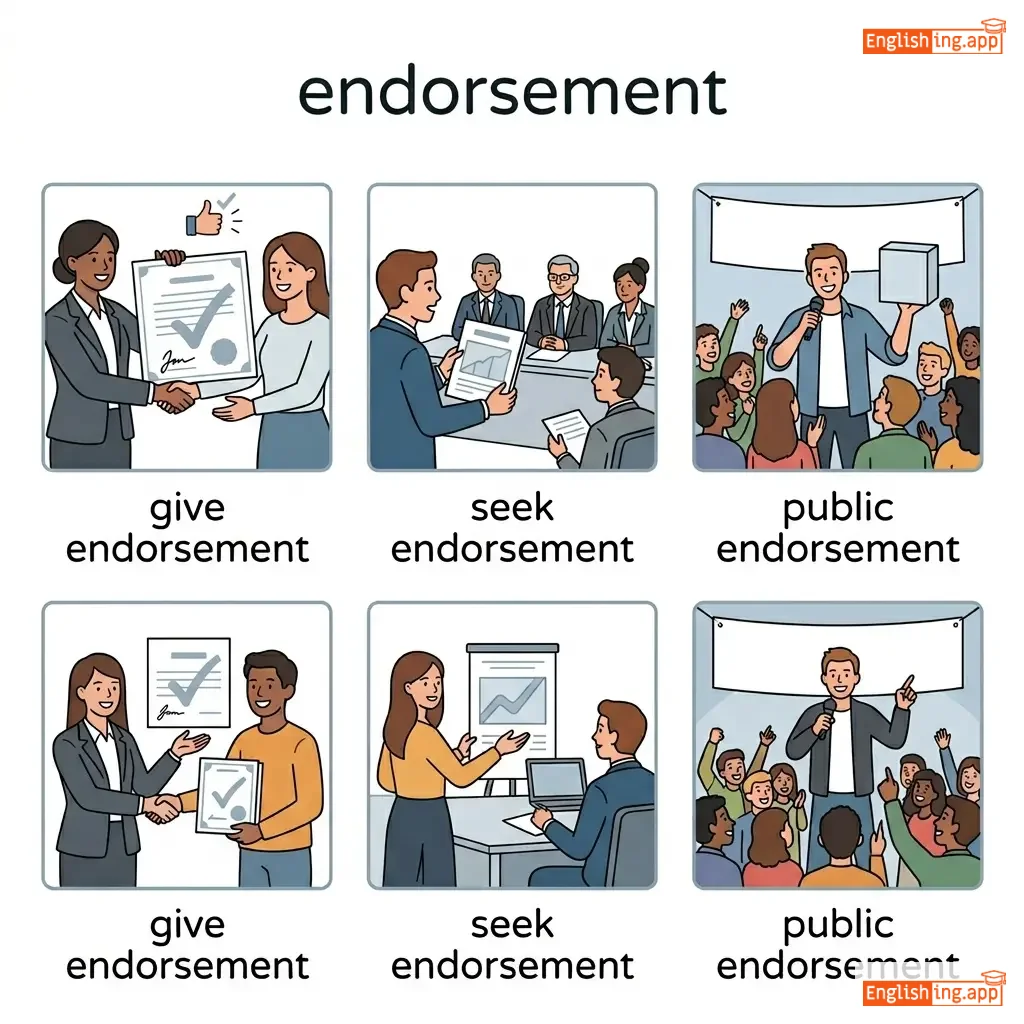
give endorsement, seek endorsement, public endorsement
••••••
|
Endorsementは何かを支持することです。
••••••
|
|
🧘
••••••
|
/ɪnˈdjʊər/
verb
(エンデュア)
••••••
|
- •••••• |
耐える
taeru
••••••
|
endured
エンデュアード
••••••
|
endured
エンデュアード
••••••
|
endures
エンデュアーズ
••••••
|
enduring
エンデュアリング
••••••
|
to suffer something difficult or unpleasant patiently
••••••
|
He had to endure years of hardship before achieving success.
彼は成功を収める前に何年もの困難に耐えなければならなかった。
••••••
|
成功を収める前に何年もの困難に耐えなければならなかった。
Seikou o osameru mae ni nannen mo no konnan ni taenakereba naranakatta.
••••••
|
endure the pain
痛みを耐える
••••••
|
to tolerate or bear pain without giving up
••••••
|
痛みを耐える
itami o taeru
••••••
|
tolerate, withstand, suffer, persevere, bear
••••••
|
give up, quit, avoid
••••••
|
endure hardship, endure pain, endure suffering, endure stress
••••••
|
Endure は 'end' という意味で、最終的に耐えることを意味します。
••••••
|
|
⚔️
••••••
|
/ˈɛnəmi/
noun
(エネミー)
••••••
|
- •••••• |
敵
teki
••••••
|
- •••••• | - •••••• | - •••••• | - •••••• |
a person or group that is hostile or opposed to someone or something
••••••
|
The two countries have been enemies for decades.
二つの国は何十年もの間、敵同士です。
••••••
|
二つの国は何十年もの間、敵同士です。
Futatsu no kuni wa nanjū-nen mono aida, teki dōshi desu.
••••••
|
make an enemy
敵を作る
••••••
|
to create hostility with someone
••••••
|
敵を作る
teki o tsukuru
••••••
|
opponent, adversary, foe, rival
••••••
|
friend, ally
••••••
|
sworn enemy, common enemy, deadly enemy, enemy forces
••••••
|
Enemy = e+mi (私は) ,私に敵対する人。
••••••
|
|
⚡
••••••
|
/ˈɛnərdʒi/
noun
(エネルギー)
••••••
|
|
エネルギー
enerugi
••••••
|
- •••••• | - •••••• | - •••••• | - •••••• |
the capacity for activity or work; power derived from physical or chemical resources
••••••
|
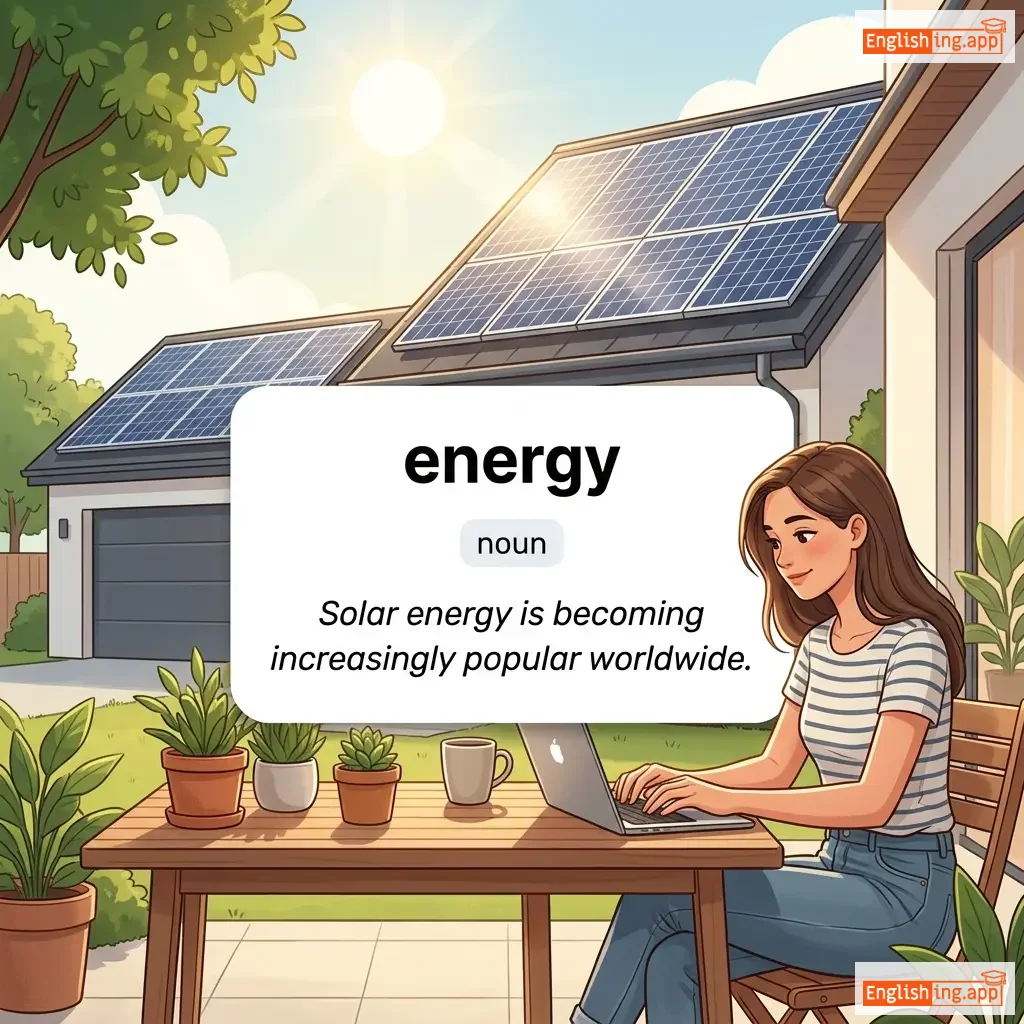
Solar energy is becoming increasingly popular worldwide.
太陽エネルギーは世界中でますます人気が高まっています。
••••••
|
太陽エネルギーは世界中でますます人気が高まっています。
Taiyou enerugi wa sekaijuu de masumasu ninki ga takamatteimasu.
••••••
|
burst of energy
エネルギーの爆発
••••••
|
a sudden increase in physical or mental activity
••••••
|
エネルギーの爆発
enerugi no bakuhatsu
••••••
|
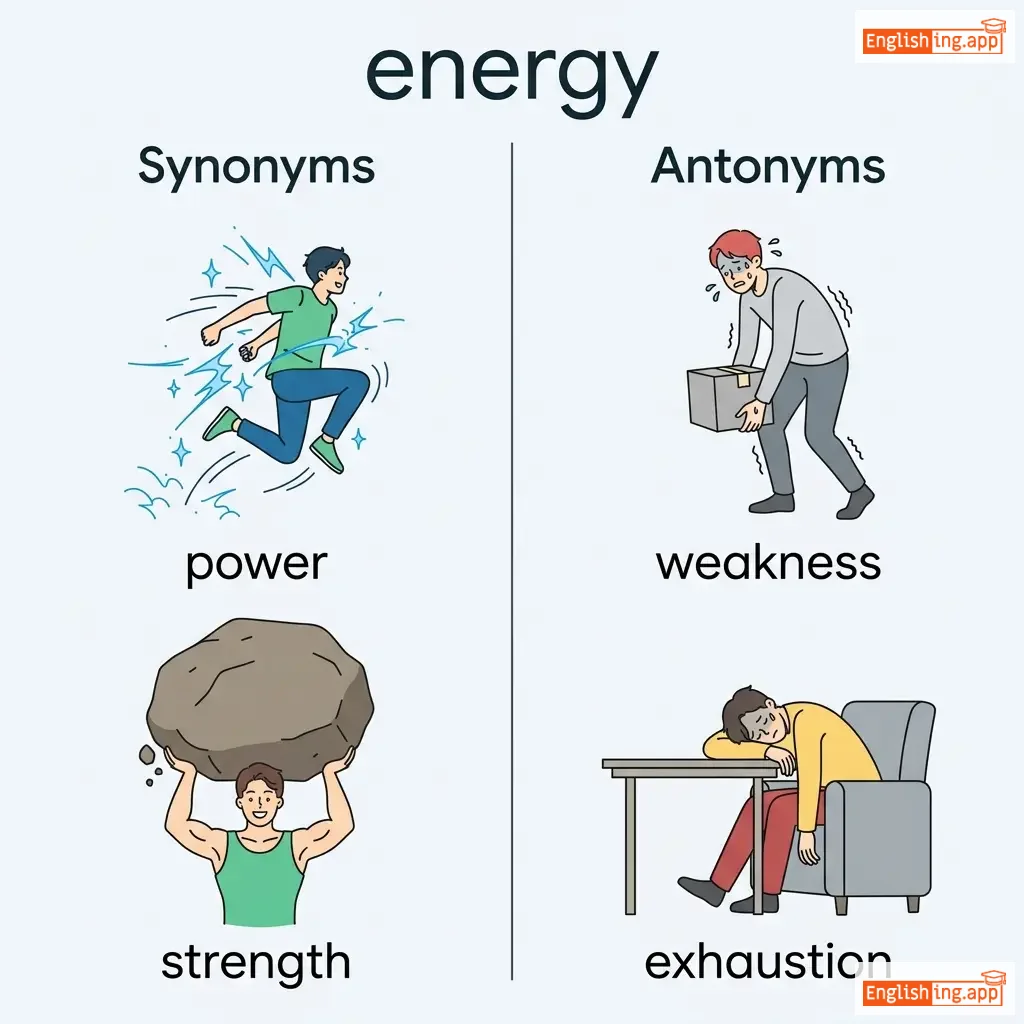
power, strength, vitality, force, vigor
••••••
|
weakness, exhaustion, fatigue
••••••
|
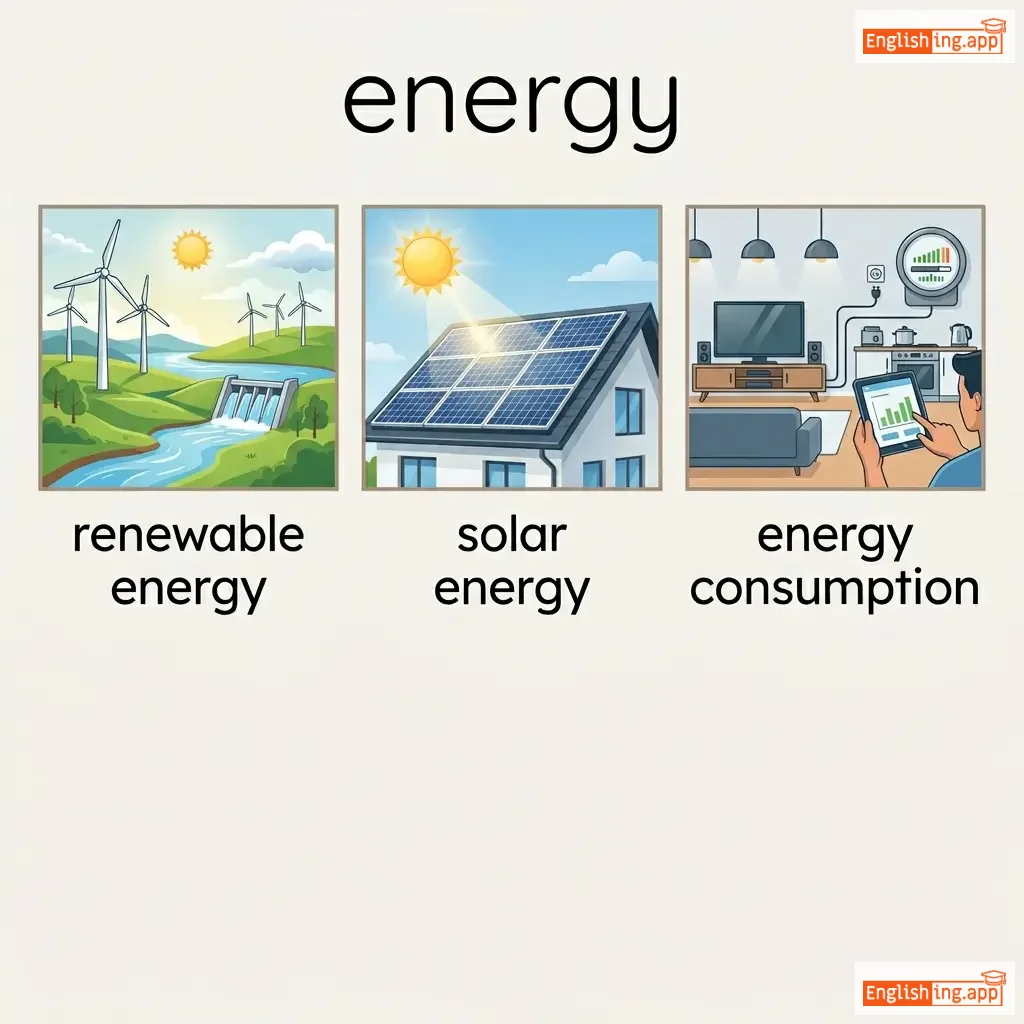
renewable energy, solar energy, energy consumption, energy level
••••••
|
Energyはエネルギーを意味します — Energyビスケットを食べてエネルギーを得よう。
••••••
|
|
👮♂️
••••••
|
/ɪnˈfɔːrs/
verb
(enfōsu)
••••••
|
- •••••• |
施行する
shikō suru
••••••
|
enforced
enfōsudo
••••••
|
enforced
enfōsudo
••••••
|
enforces
enfōsu
••••••
|
enforcing
enfōshingu
••••••
|
to make sure that a rule, law, or policy is obeyed
••••••
|
The police are responsible for enforcing the law.
警察は法律を施行する責任があります。
••••••
|
警察は法律を施行する責任があります。
Keisatsu wa hōritsu o shikō suru sekinin ga arimasu.
••••••
|
enforce the law
法律を施行する
••••••
|
to ensure laws are followed and obeyed
••••••
|
法律を施行する
hōritsu o shikō suru
••••••
|
implement, apply, uphold, execute, impose
••••••
|
ignore, neglect, abandon
••••••
|
enforce rules, enforce regulations, enforce discipline, enforce policy
••••••
|
施行 = 法律を強制する
••••••
|
|
👮
••••••
|
/ɪnˈfɔːrsmənt/
noun
(enfōsumento)
••••••
|
- •••••• |
法執行
hōshikkō
••••••
|
- •••••• | - •••••• | - •••••• | - •••••• |
the act of making sure that laws or rules are followed
••••••
|
The police are responsible for law enforcement. |
警察は法執行の責任があります。
Keisatsu wa hōshikkō no sekinin ga arimasu.
••••••
|
strict enforcement |
the rigorous application of rules or laws
••••••
|
厳格な法執行
genkaku na hōshikkō
••••••
|
implementation, execution, application, policing
••••••
|
neglect, tolerance
••••••
|
law enforcement, enforcement agency, enforcement action, enforcement measures
••••••
|
Enforcement とは法律を適用すること — 警察が enforce して法律を守らせます。
••••••
|
|
🎯
••••••
|
/ɪnˈɡeɪdʒ/
verb
(エンゲージ)
••••••
|
- •••••• |
関わる
kakawaru
••••••
|
engaged
エンゲージド
••••••
|
engaged
エンゲージド
••••••
|
engages
エンゲージズ
••••••
|
engaging
エンゲージング
••••••
|
To participate or become involved in; to attract or hold attention.
••••••
|
The teacher tried to engage the students in the discussion.
教師は学生たちを討論に参加させようとしました。
••••••
|
教師は学生たちを討論に参加させようとしました。
Kyōshi wa gakusei-tachi o tōron ni sanka saseyō to shimashita.
••••••
|
engage in
参加する
••••••
|
To take part in or participate in something.
••••••
|
参加する
sanka suru
••••••
|
involve, participate, occupy, employ, captivate
••••••
|
ignore, disengage, neglect
••••••
|
engage students, engage in conversation, engage attention, engage actively
••••••
|
関わる: 事に関わることが、始めること。
••••••
|
|
💍
••••••
|
/ɪnˈɡeɪdʒd/
adjective
(エンゲージド)
••••••
|
- •••••• |
婚約者, 忙しい
kon'yakusha, isogashii
••••••
|
- •••••• | - •••••• | - •••••• | - •••••• |
Busy, occupied, or pledged to be married.
••••••
|
She is engaged to be married next summer. |
彼女は来年の夏に結婚する予定です。
Kanojo wa rainen no natsu ni kekkon suru yotei desu.
••••••
|
engaged in |
Actively involved or occupied in a particular activity.
••••••
|
何かに忙しい
nanika ni isogashii
••••••
|
involved, occupied, betrothed, pledged, busy
••••••
|
free, idle, disengaged
••••••
|
engaged couple, engaged in work, deeply engaged, fully engaged
••••••
|
Engaged は婚約 💍 - 結婚するために忙しいか、何かに忙しい。
••••••
|
|
💍
••••••
|
/ɪnˈɡeɪdʒmənt/
noun
(エンゲージメント)
••••••
|


|
婚約, 参加
kon'yaku, sanka
••••••
|
- •••••• | - •••••• | - •••••• | - •••••• |
a formal agreement to get married; or active involvement in an activity
••••••
|
Their engagement was announced last week. |
彼らの婚約は先週発表されました。
Karera no kon'yaku wa senshū happyō sareました。
••••••
|
social engagement |
a planned social event or meeting
••••••
|
社会的な参加
shakaiteki na sanka
••••••
|
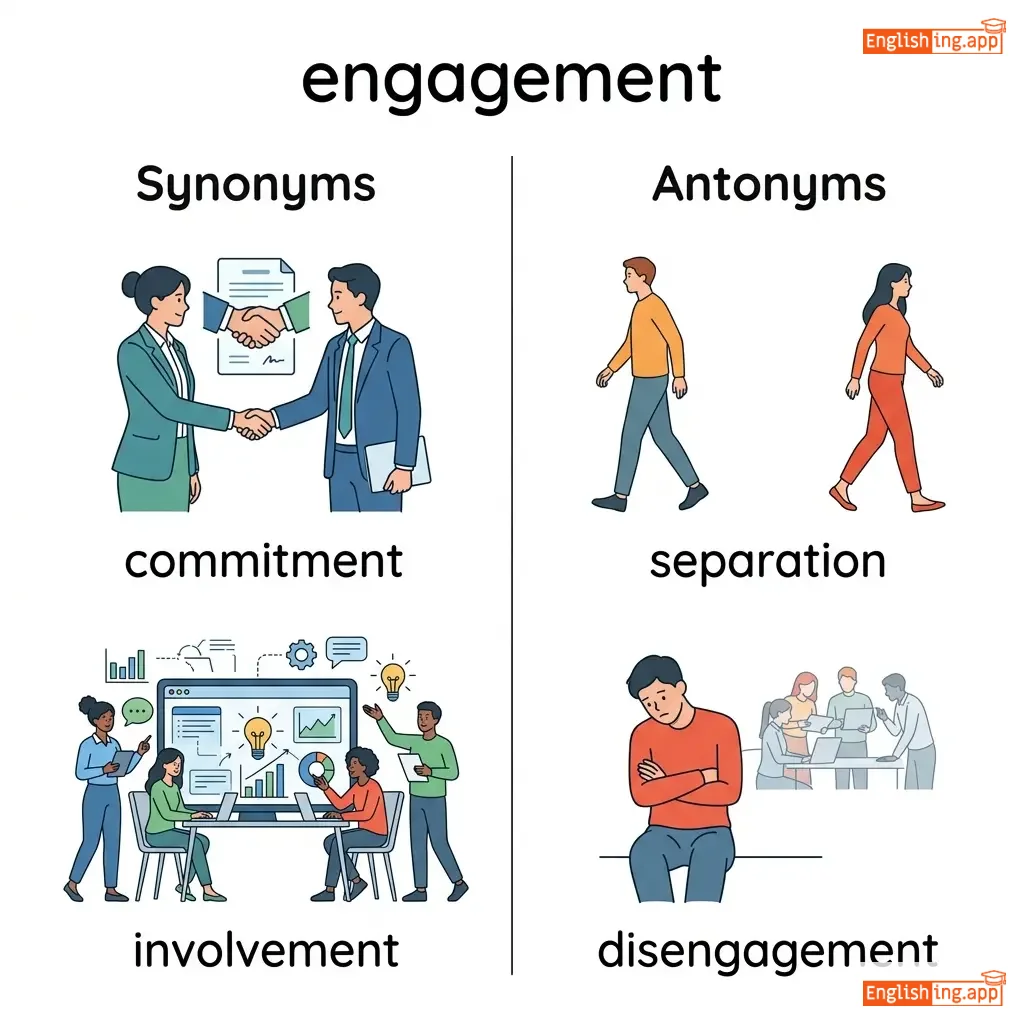
commitment, involvement, participation, appointment, betrothal
••••••
|
separation, disengagement, withdrawal
••••••
|
engagement ceremony, engagement ring, customer engagement, social engagement
••••••
|
Engageは参加することを意味し、したがってengagementは活動やイベントに参加することを意味します💍
••••••
|
|
✨
••••••
|
/ɪnˈɡeɪdʒɪŋ/
adjective
(エンゲイジング)
••••••
|

|
魅力的
miryokuteki
••••••
|
- •••••• | - •••••• | - •••••• | - •••••• |
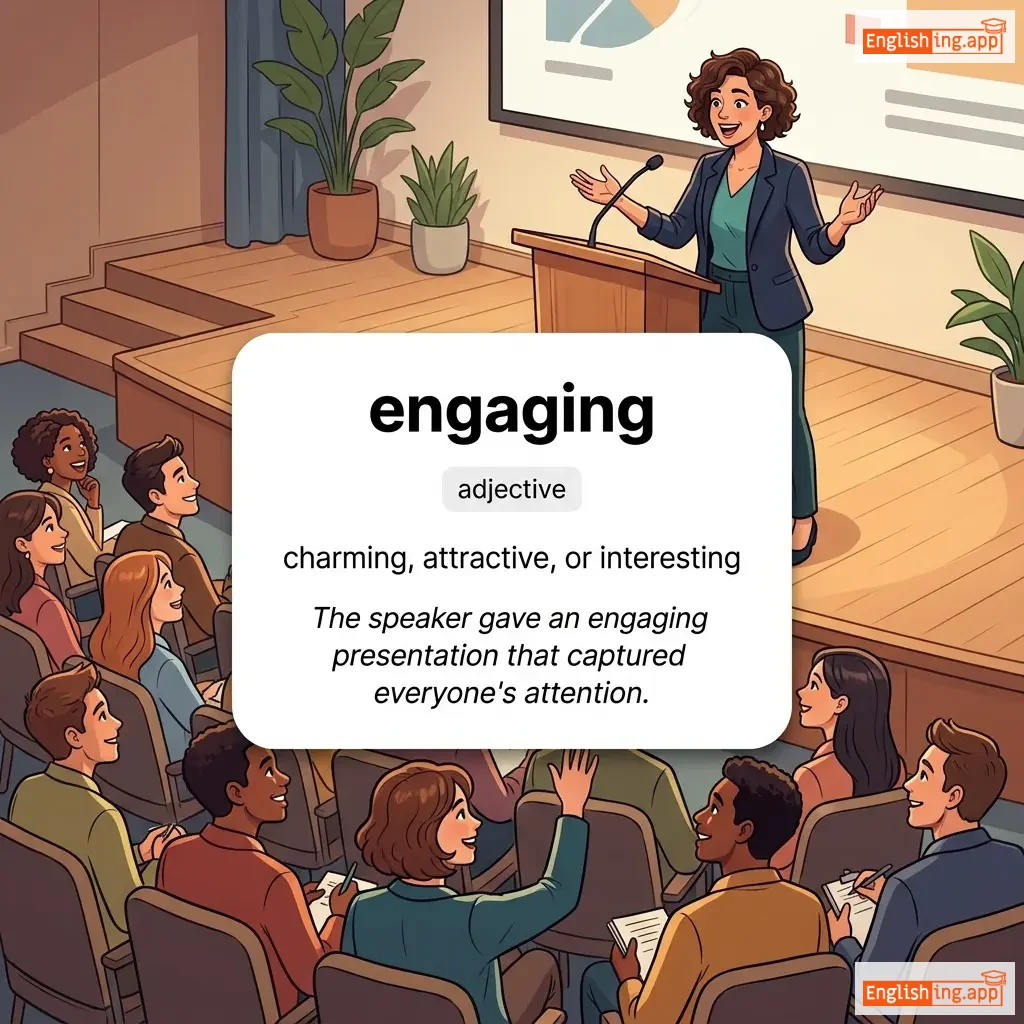
charming, attractive, or interesting
••••••
|
The speaker gave an engaging presentation that captured everyone's attention. |
講演者は、皆の注意を引きつける魅力的なプレゼンテーションを行いました。
Kōensha wa, mina no chūi o hikitsukeru miryokuteki na purezentēshon o okonai mashita.
••••••
|
- •••••• | - •••••• | - •••••• |
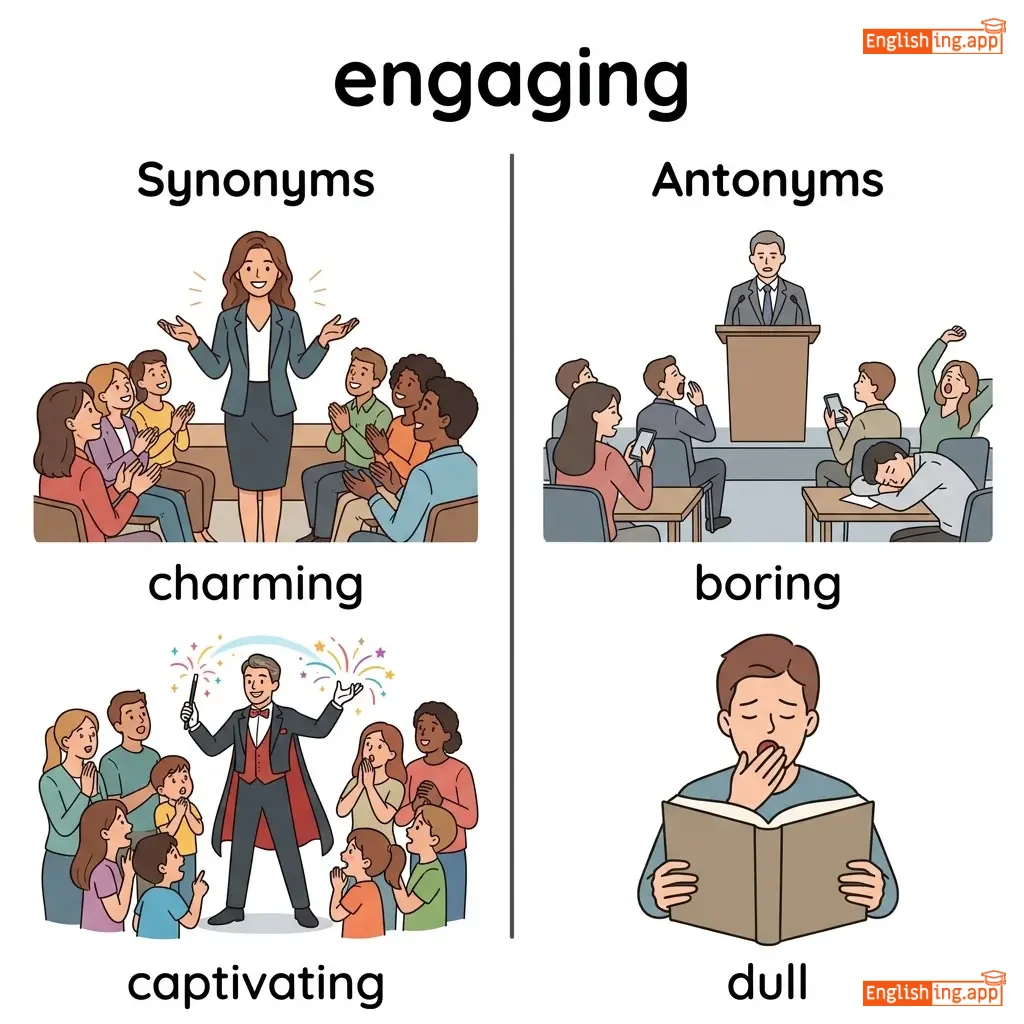
charming, captivating, appealing, delightful, fascinating
••••••
|
boring, dull, uninteresting
••••••
|
engaging personality, engaging story, engaging smile, engaging content
••••••
|
Engage で人を引きつける—だから engaging は魅力的。
••••••
|
|
🚗
••••••
|
/ˈɛndʒɪn/
noun
(エンジン)
••••••
|
- •••••• |
エンジン
enjin
••••••
|
- •••••• | - •••••• | - •••••• | - •••••• |
A machine designed to convert energy into mechanical power.
••••••
|
The car's engine failed on the highway. |
車のエンジンは高速道路で故障した。
Kuruma no enjin wa kōsoku dōro de koshō shita.
••••••
|
engine of growth |
something that drives progress or development
••••••
|
成長のエンジン
Seichō no enjin
••••••
|
motor, machine, mechanism, generator, turbine
••••••
|
brake, stopper
••••••
|
car engine, powerful engine, engine failure, engine design
••••••
|
エンジン – 車を動かすために必要なものです。
••••••
|
|
👷♂️
••••••
|
/ˌɛndʒɪˈnɪər/
noun/verb
(エンジニア)
••••••
|
- •••••• |
エンジニア
enjinia
••••••
|
engineered
エンジニアード
••••••
|
engineered
エンジニアード
••••••
|
engineers
エンジニアーズ
••••••
|
engineering
エンジニアリング
••••••
|
A person trained to design, build, or maintain engines, machines, or structures; to skillfully arrange or bring about.
••••••
|
The engineer designed a new bridge across the river.
エンジニアは川を越える新しい橋を設計しました。
••••••
|
エンジニアは川を越える新しい橋を設計しました。
Enjinia wa kawa o koeru atarashī hashi o sekkei shimashita.
••••••
|
reverse engineer
リバースエンジニア
••••••
|
to analyze a finished product to understand how it was made
••••••
|
リバースエンジニア
Ribāsu enjinia
••••••
|
designer, builder, technician, architect, planner
••••••
|
destroyer, dismantler
••••••
|
civil engineer, software engineer, train engineer, engineer solution
••••••
|
エンジニアはエンジンを作る専門家です。
••••••
|
|
🏗️
••••••
|
/ˌɛndʒɪˈnɪərɪŋ/
noun
(エンジニアリング)
••••••
|

|
工学
kougaku
••••••
|
- •••••• | - •••••• | - •••••• | - •••••• |
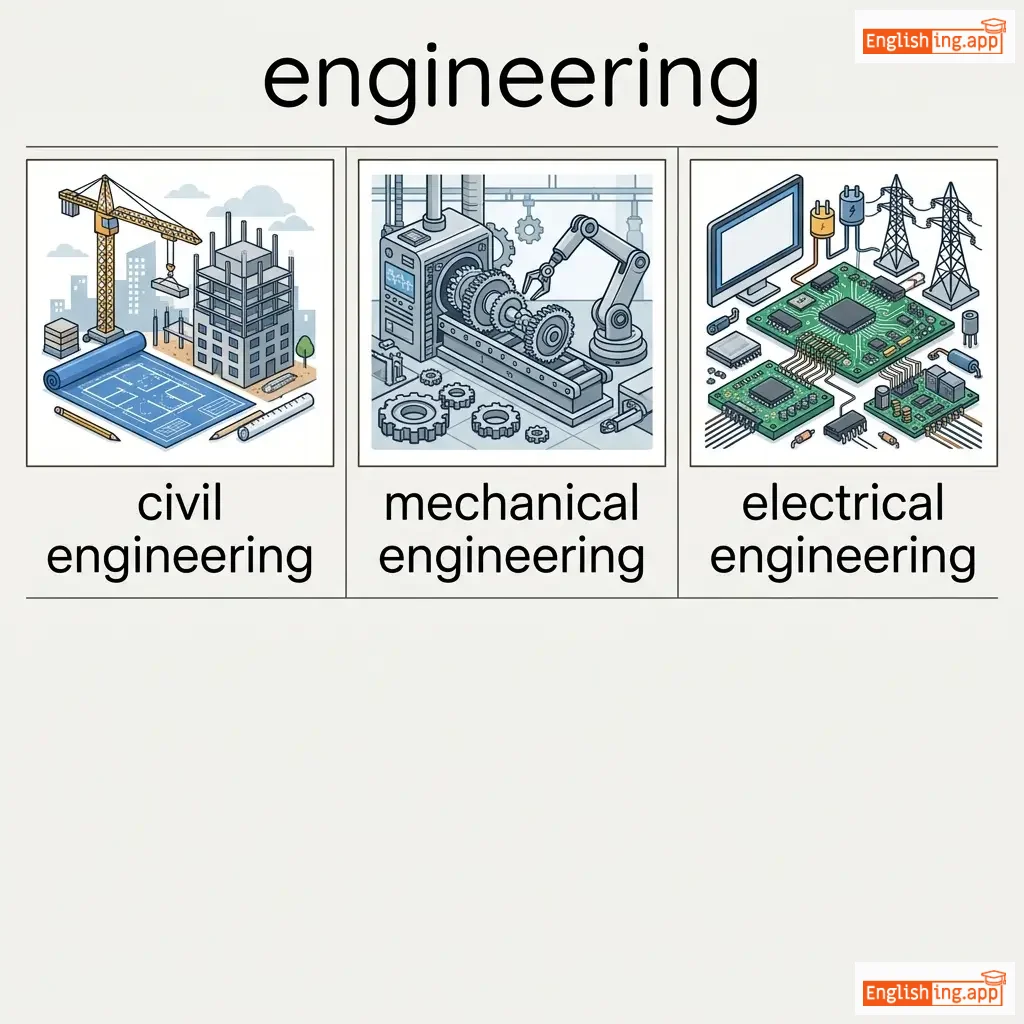
The branch of science and technology concerned with the design, building, and use of engines, machines, and structures.
••••••
|
She studied civil engineering at university. |
彼女は大学で土木工学を学びました。
Kanojo wa daigaku de doboku kougaku o manabimashita.
••••••
|
social engineering |
manipulating people into giving up information or taking certain actions
••••••
|
社会工学
shakai kougaku
••••••
|
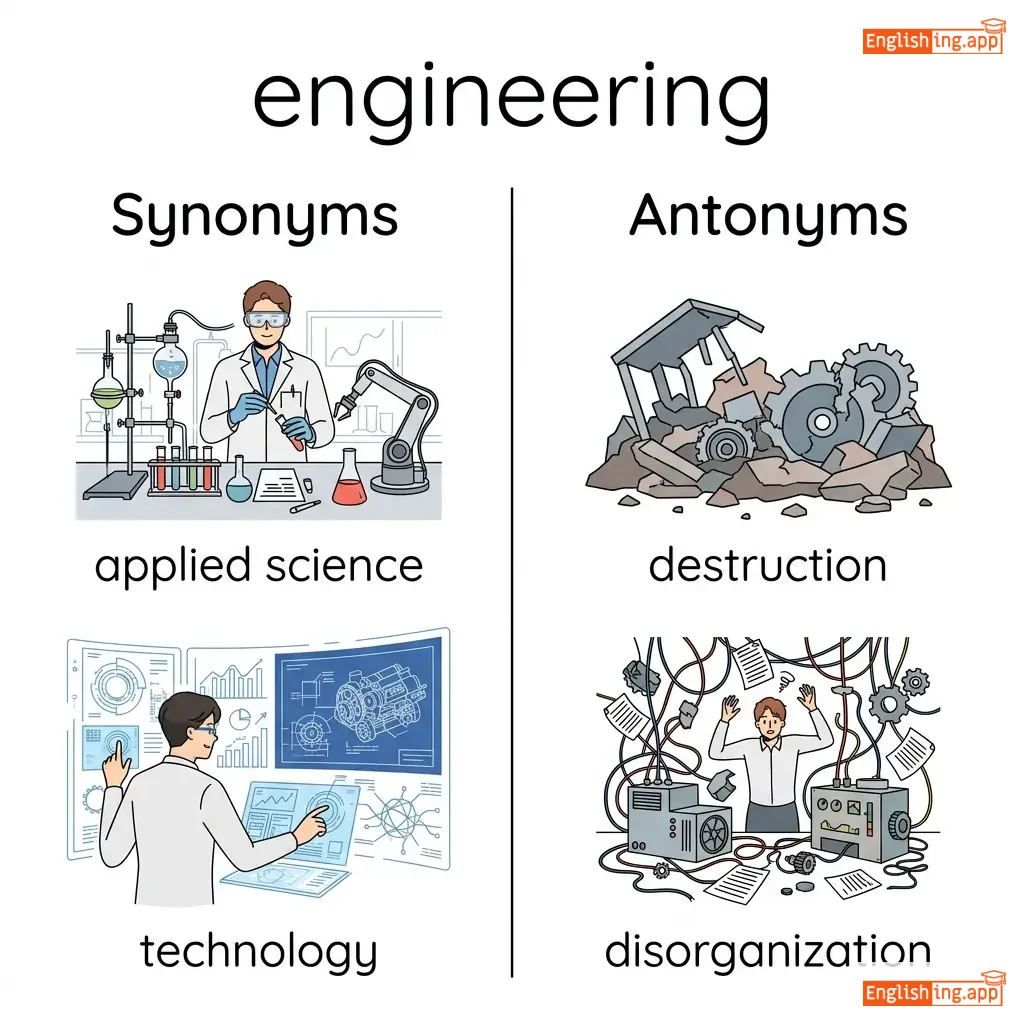
applied science, technology, mechanics, construction
••••••
|
destruction, disorganization
••••••
|
civil engineering, mechanical engineering, electrical engineering, software engineering
••••••
|
工学は新しい技術を開発し、世界をより良くする力 (chikara) です。
••••••
|
|
🇬🇧
••••••
|
/ˈɪŋɡlɪʃ/
noun/adjective
(イングリッシュ)
••••••
|
- •••••• |
英語
eigo
••••••
|
- •••••• | - •••••• | - •••••• | - •••••• |
The language of England, widely spoken around the world; relating to England or its people.
••••••
|
She is learning English to study abroad. |
彼女は海外で勉強するために英語を学んでいます。
Kanojo wa kaigai de benkyou suru tame ni eigo o manande imasu.
••••••
|
plain English |
clear and simple language
••••••
|
簡単な英語
kantan na eigo
••••••
|
British language, Anglo-Saxon, tongue, dialect
••••••
|
non-English, foreign
••••••
|
learn English, English teacher, English literature, English language
••••••
|
English = 英語 – 海外で勉強するには英語が必要です。
••••••
|
|
✨
••••••
|
/ɪnˈhæns/
verb
(enhans)
••••••
|
|
向上させる
koujou saseru
••••••
|
enhanced
enhansudo
••••••
|
enhanced
enhansudo
••••••
|
enhances
enhansesu
••••••
|
enhancing
enhanshingu
••••••
|
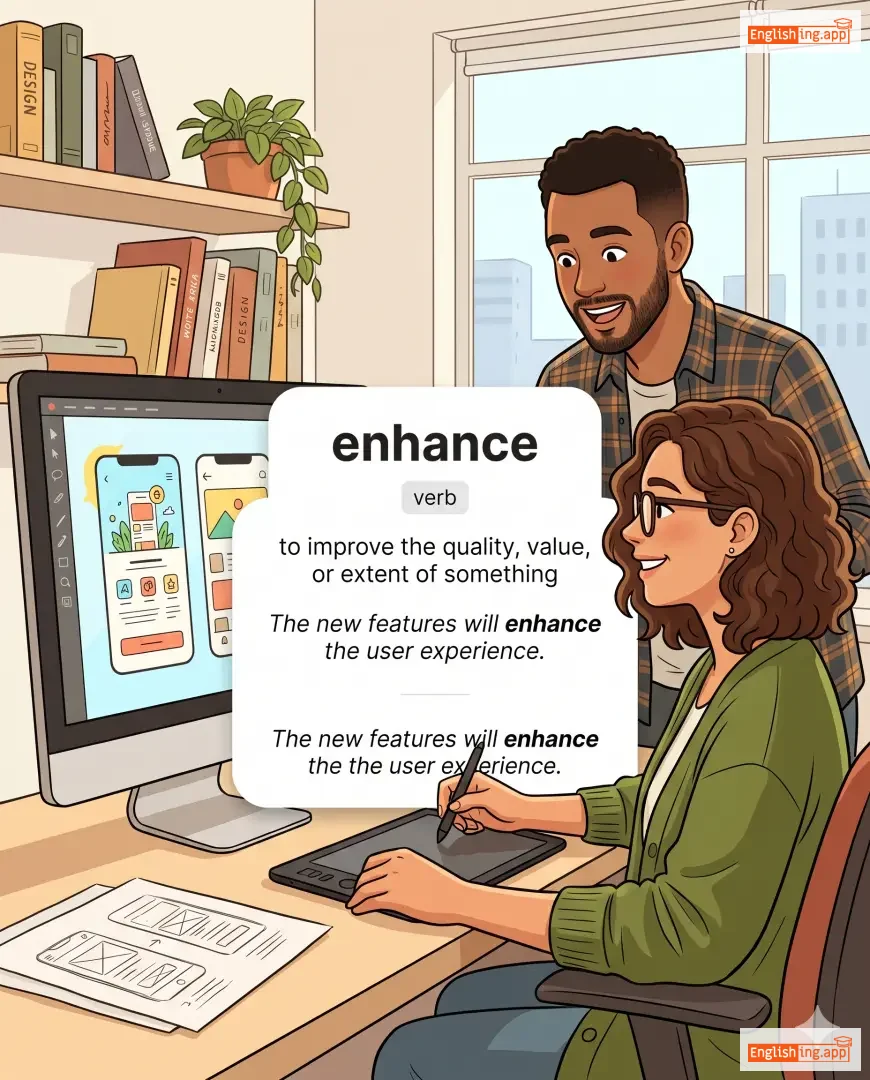
to improve the quality, value, or extent of something
••••••
|
The new features will enhance the user experience.
新しい機能はユーザー体験を向上させます。
••••••
|
新しい機能はユーザー体験を向上させます。
Atarashii kinou wa yuzaa taiken wo koujou saseru.
••••••
|
enhance beauty
美しさを向上させる
••••••
|
to make someone or something look more beautiful
••••••
|
美しさを向上させる
utsukushisa wo koujou saseru
••••••
|
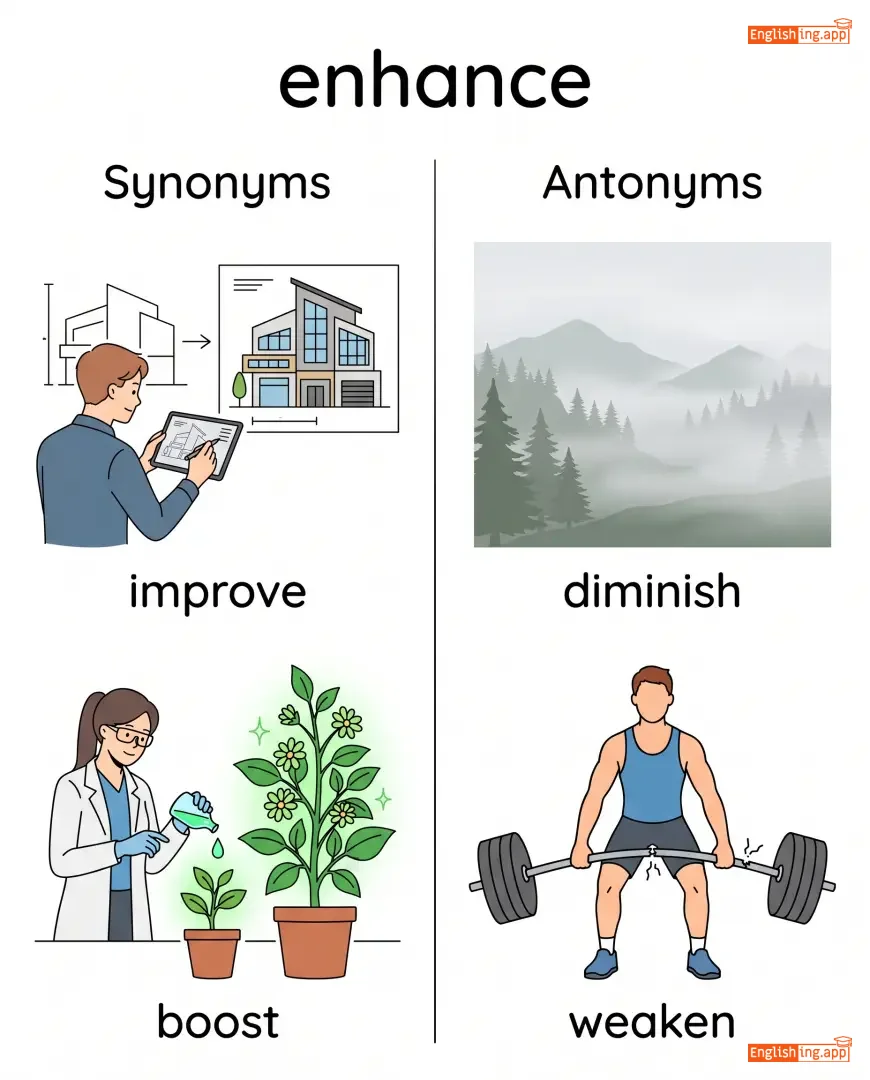
improve, boost, enrich, heighten, strengthen
••••••
|
diminish, weaken, reduce
••••••
|
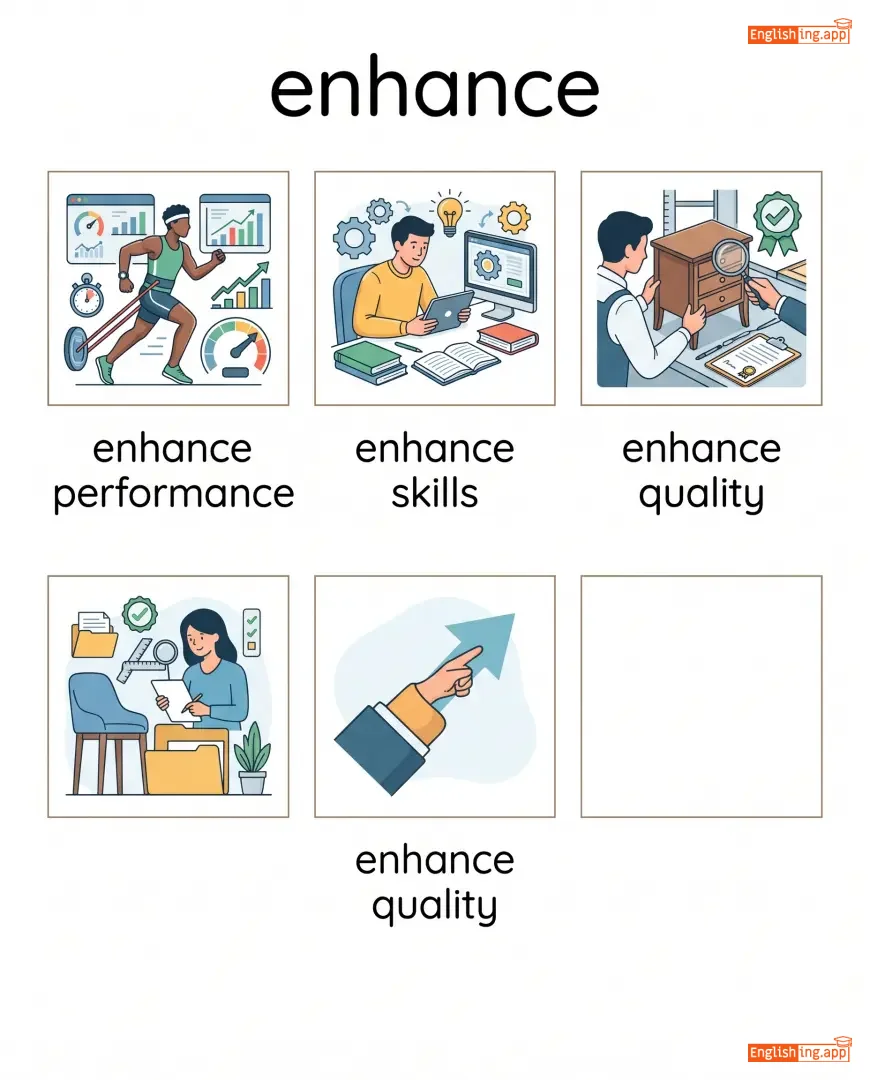
enhance performance, enhance skills, enhance quality, enhance experience
••••••
|
Enhanceは向上させる、例えば、写真にフィルターを使って向上させるようなものです。
••••••
|
|
😊
••••••
|
/ɪnˈdʒɔɪ/
verb
(エンジョイ)
••••••
|


|
楽しむ
tanoshimu
••••••
|
enjoyed
エンジョイド
••••••
|
enjoyed
エンジョイド
••••••
|
enjoys
エンジョイズ
••••••
|
enjoying
エンジョイング
••••••
|
to take pleasure in something
••••••
|
They enjoyed the music at the concert.
彼らはコンサートで音楽を楽しんでいました。
••••••
|
彼らはコンサートで音楽を楽しんでいました。
Karera wa konsāto de ongaku o tanoshinde imashita.
••••••
|
enjoy yourself
楽しんでください
••••••
|
have a good time
••••••
|
楽しんで
tanoshinde
••••••
|
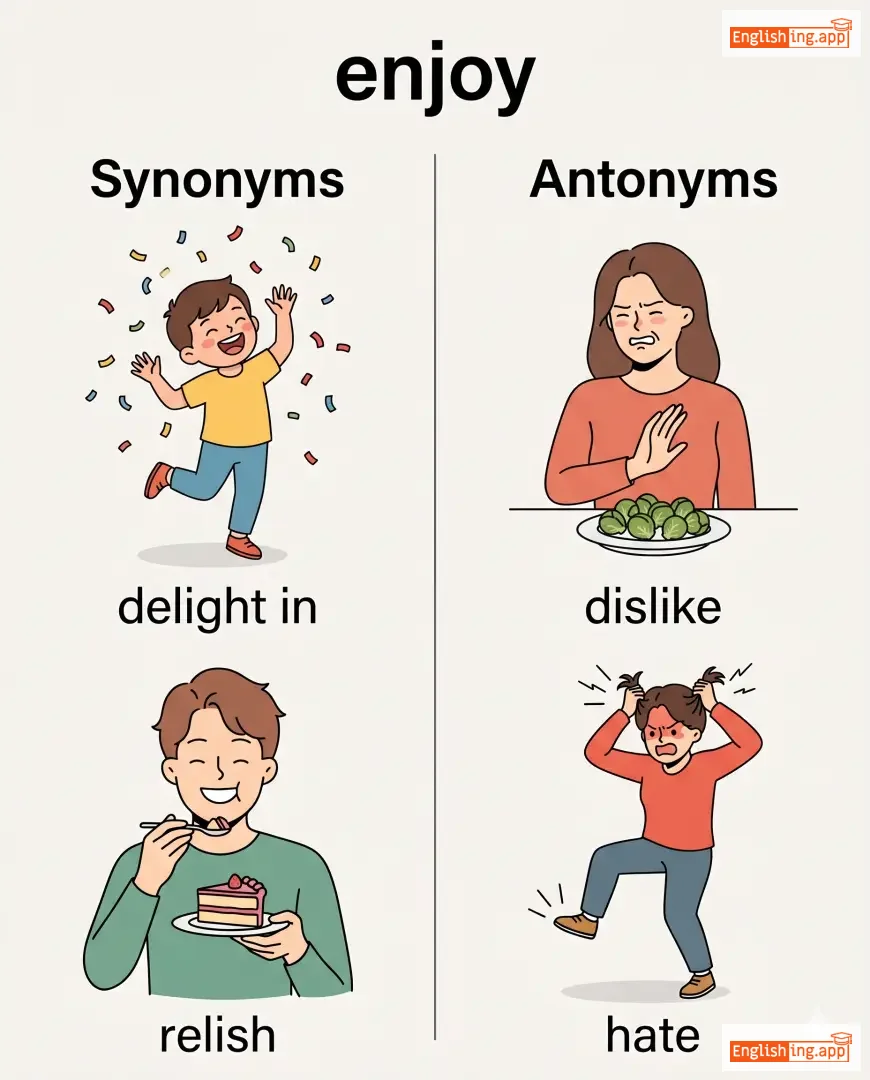
delight in, relish, savor, appreciate
••••••
|
dislike, hate, detest
••••••
|
enjoy life, enjoy the moment, enjoy a meal, enjoy company
••••••
|
ENJOYは楽しむを意味する – EnJOYはJoy(楽しみ)を意味する
••••••
|
|
😊
••••••
|
/ɪnˈdʒɔɪ.ə.bəl/
adjective
(エンジョイアブル)
••••••
|
- •••••• |
楽しい; 快適な
tanoshī; kaiteki na
••••••
|
- •••••• | - •••••• | - •••••• | - •••••• |
pleasant; giving satisfaction or pleasure
••••••
|
The movie was very enjoyable and made everyone laugh. |
その映画はとても楽しくて、皆を笑わせました。
Sono eiga wa totemo tanoshikute, mina o warawase mashita.
••••••
|
- •••••• | - •••••• | - •••••• |
pleasant, delightful, amusing, entertaining
••••••
|
unpleasant, boring, tedious, disagreeable
••••••
|
enjoyable experience, enjoyable evening, enjoyable activity
••••••
|
Imagine a 'tanoshī' movie that brings joy to everyone.
••••••
|
|
😊
••••••
|
/ɪnˈdʒɔɪmənt/
noun
(エンジョイメント)
••••••
|
- •••••• |
楽しみ
tanoshimi
••••••
|
- •••••• | - •••••• | - •••••• | - •••••• |
the state or process of taking pleasure or satisfaction in something
••••••
|
She felt great enjoyment while reading her favorite book.
彼女はお気に入りの本を読んでいるとき、大きなエンジョイメントを感じた。
••••••
|
彼女はお気に入りの本を読んでいるとき、大きな楽しみを感じた。
Kanojo wa okiniiri no hon o yonde iru toki, ookina tanoshimi o kanjita.
••••••
|
simple pleasures
ささやかな喜び
••••••
|
small things that bring happiness
••••••
|
ささやかな喜び
sasayaka na yorokobi
••••••
|
pleasure, delight, happiness, satisfaction, amusement
••••••
|
displeasure, misery, boredom
••••••
|
great enjoyment, pure enjoyment, derive enjoyment, find enjoyment, give enjoyment
••••••
|
Think 'tanoshimi' like enjoying sushi in Japan!
••••••
|
|
🌋
••••••
|
/ɪˈnɔːrməs/
adjective
(エノーマス)
••••••
|
- •••••• |
巨大な
kyodaina
••••••
|
- •••••• | - •••••• | - •••••• | - •••••• |
Extremely large in size, amount, or degree.
••••••
|
They built an enormous stadium in the city. |
彼らは街に巨大なスタジアムを建設しました。
Karera wa machi ni kyodaina sutajiamu o kensetsu shimashita.
••••••
|
enormous effort |
a very great or intense amount of effort
••••••
|
巨大な努力
kyodaina doryoku
••••••
|
huge, vast, immense, massive, gigantic
••••••
|
tiny, small, little
••••••
|
enormous impact, enormous amount, enormous pressure, enormous responsibility
••••••
|
巨大は象のように大きいという意味です。
••••••
|
|
✔️
••••••
|
/ɪˈnʌf/
adjective/adverb
(イナフ)
••••••
|
- •••••• |
十分
jūbun
••••••
|
- •••••• | - •••••• | - •••••• | - •••••• |
as much or as many as required
••••••
|
We have enough food for everyone. |
私たちは皆のために十分な食べ物があります。
Watashitachi wa mina no tame ni jūbun na tabemono ga arimasu.
••••••
|
enough is enough |
used to say that something should stop
••••••
|
十分は十分
jūbun wa jūbun
••••••
|
sufficient, adequate, plenty, ample
••••••
|
insufficient, inadequate, lacking
••••••
|
enough money, enough time, good enough, enough resources
••••••
|
ENOUGHは「イナフ」 – Enough食べ物は十分食べ物
••••••
|
|
❓
••••••
|
/ɪnˈkwaɪər/
verb
(エンクワイア)
••••••
|
- •••••• |
尋ねる
tazuneru
••••••
|
enquired
エンクワイアード
••••••
|
enquired
エンクワイアード
••••••
|
enquires
エンクワイアーズ
••••••
|
enquiring
エンクワイアリング
••••••
|
to ask for information about something
••••••
|
He enquired about the train schedule.
彼は列車の時刻表について尋ねました。
••••••
|
彼は列車の時刻表について尋ねました。
Kare wa ressha no jikokuhyou ni tsuite tazunemashita.
••••••
|
enquire into
エンクワイア イントゥ
••••••
|
to investigate
••••••
|
調査する
chousa suru
••••••
|
ask, question, query, investigate
••••••
|
ignore, neglect
••••••
|
enquire about, enquire into, politely enquire, formally enquire
••••••
|
ENQUIRE = 尋ねる = Enquire = 質問をしよう!
••••••
|
|
💎
••••••
|
/ɪnˈrɪtʃ/
verb
(enrich)
••••••
|
|
豊かにする
yutakani suru
••••••
|
enriched
enriched
••••••
|
enriched
enriched
••••••
|
enriches
enriches
••••••
|
enriching
enriching
••••••
|
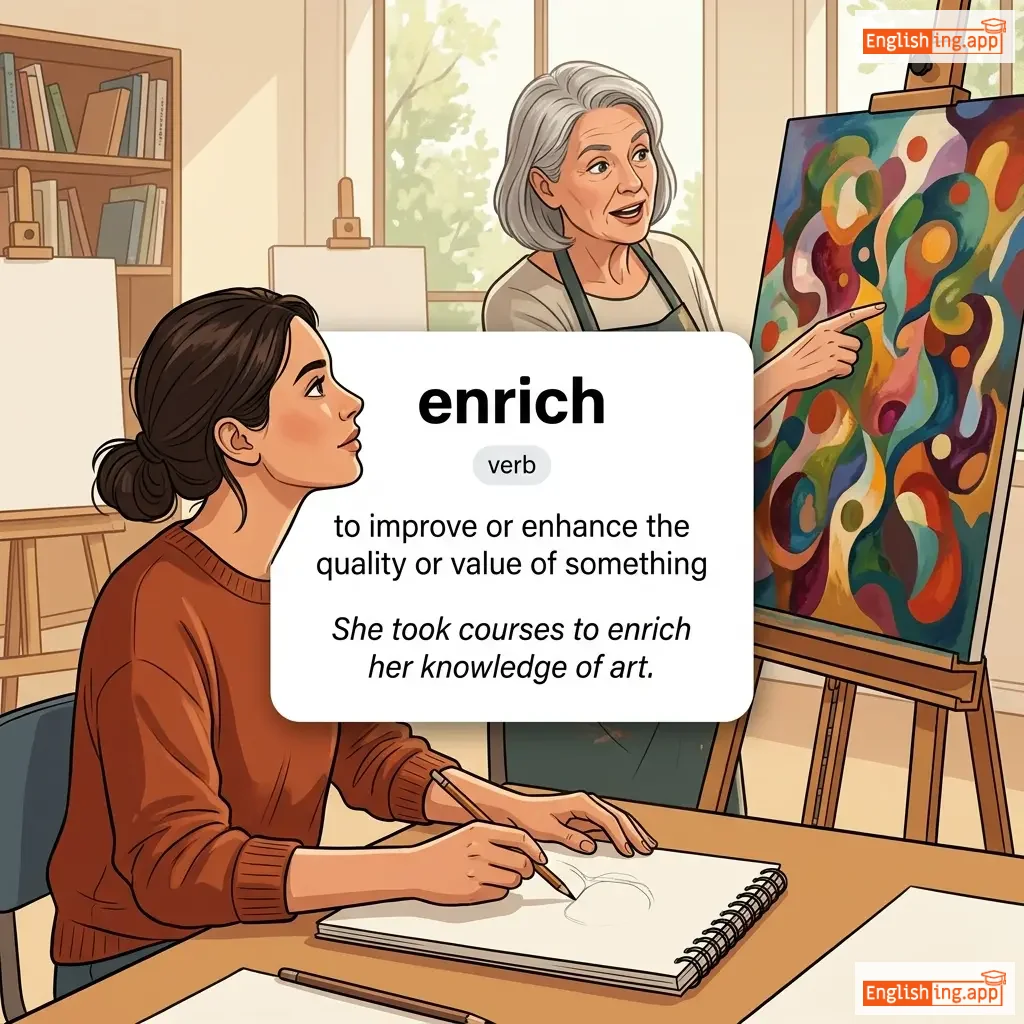
to improve the quality or value of something
••••••
|
Reading books will enrich your vocabulary.
Reading books will enrich your vocabulary.
••••••
|
本を読むことで語彙が豊かになります。
Hon o yomu koto de goi ga yutaka ni narimasu.
••••••
|
- •••••• | - •••••• | - •••••• |
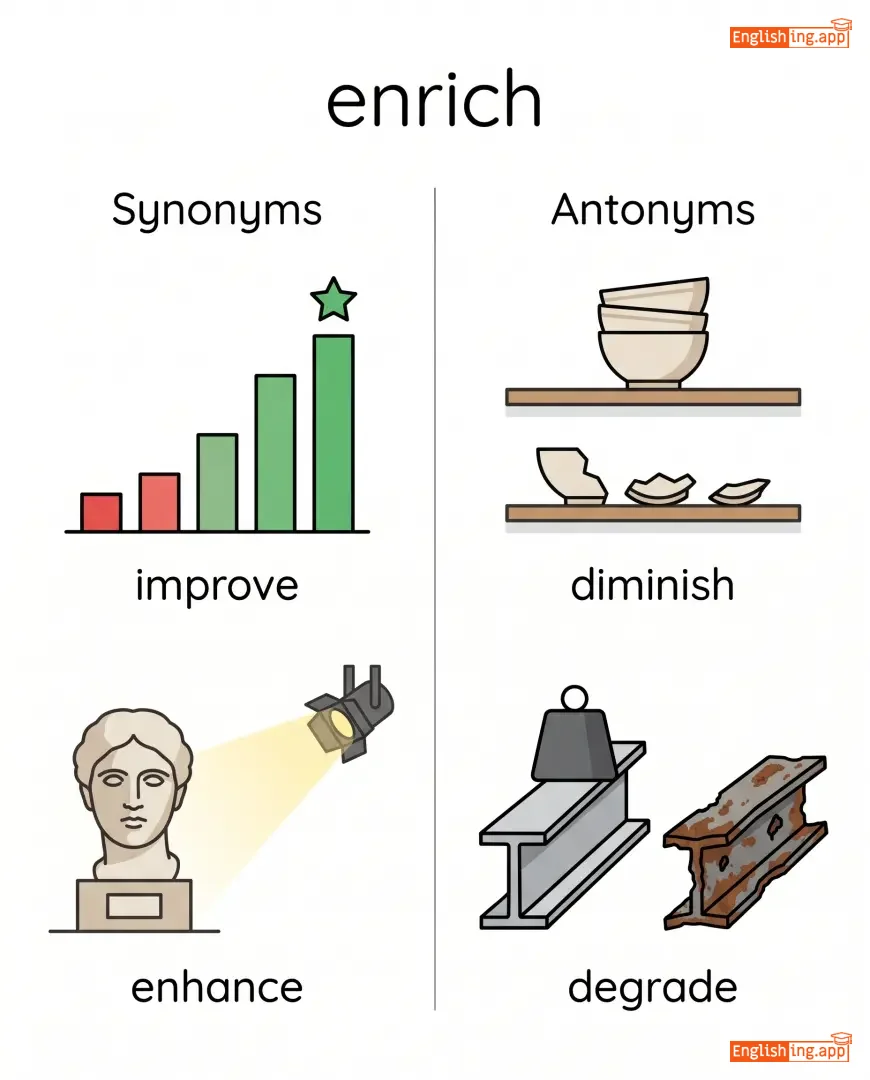
enhance, improve, strengthen, develop
••••••
|
impoverish, weaken, diminish
••••••
|
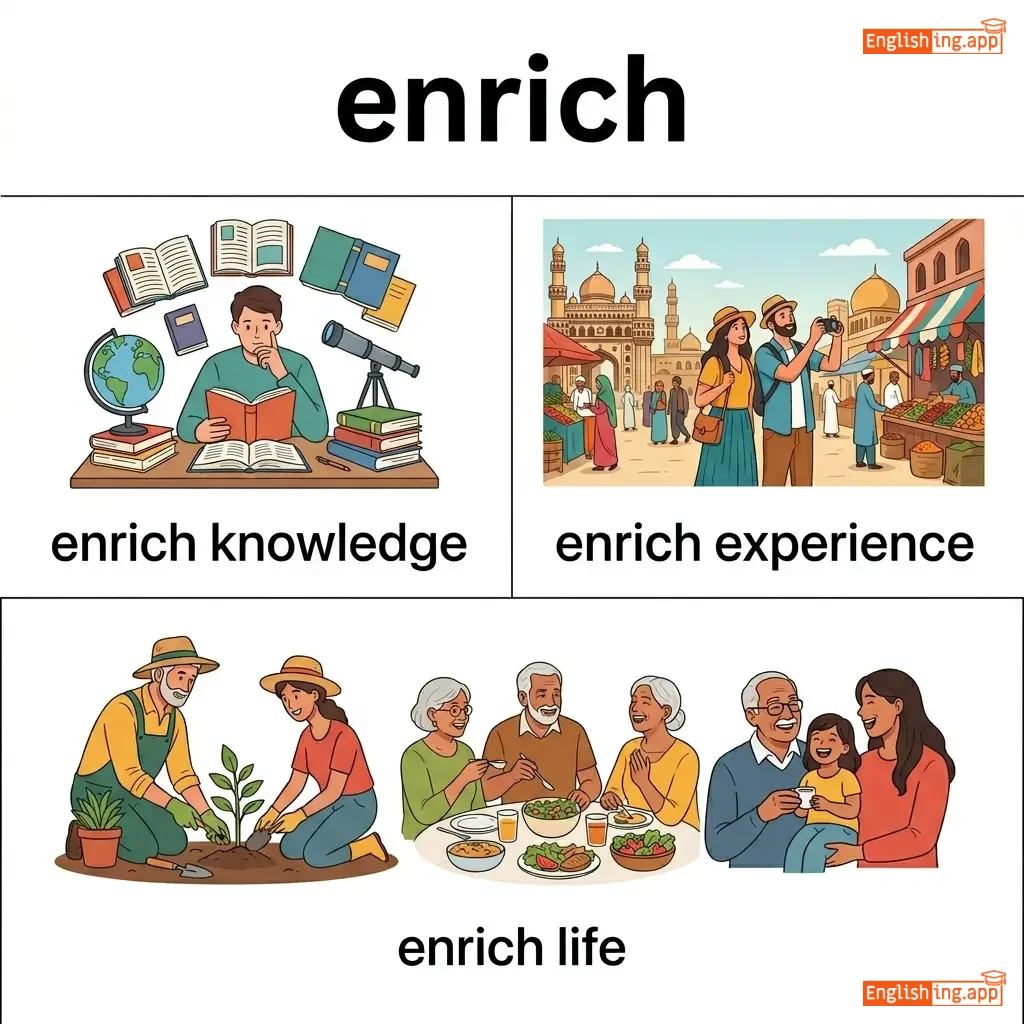
enrich life, enrich experience, enrich knowledge, enrich soil, enrich vocabulary
••••••
|
本を読むことで、あなたの語彙が豊かになります。
••••••
|
|
📝
••••••
|
/ɪnˈroʊl/
verb
(エンロール)
••••••
|
- •••••• |
登録する
touroku suru
••••••
|
enrolled
エンロールド
••••••
|
enrolled
エンロールド
••••••
|
enrols
エンロールス
••••••
|
enrolling
エンロールイング
••••••
|
To officially register or sign up for a course, program, or membership
••••••
|
She decided to enrol in a language course to improve her skills.
彼女はスキルを向上させるために語学コースにエンロールすることに決めた。
••••••
|
彼女はスキルを向上させるために語学コースに登録することに決めた。
Kanojo wa sukiru o koujou saseru tame ni gogaku kōsu ni tōroku suru koto ni kimeta.
••••••
|
- •••••• | - •••••• | - •••••• |
register, sign up, join, enlist, enter
••••••
|
withdraw, unregister, cancel
••••••
|
enrol in a course, enrol at a university, enrol for classes, enrol students, enrol members
••••••
|
Enrol → 登録する, think 'write your name in the register'.
••••••
|
|
➡️
••••••
|
/ɪnˈsjuː/
verb
(エンスー)
••••••
|
- •••••• |
結果として起こる
kekka to shite okoru
••••••
|
ensued
エンスード
••••••
|
ensued
エンスード
••••••
|
ensues
エンスーズ
••••••
|
ensuing
エンスイング
••••••
|
to happen as a result or consequence
••••••
|
After the argument, silence ensued.
議論の後、沈黙が続いた。
••••••
|
議論の後、沈黙が続いた。
Giron no ato, chinmoku ga tsuduita.
••••••
|
- •••••• | - •••••• | - •••••• |
follow, result, occur, arise, develop
••••••
|
precede, cause, prevent
••••••
|
ensue from, chaos ensued, silence ensued, conflict ensued
••••••
|
En-sue は、何かの結果として続くことを意味します。
••••••
|
|
✅
••••••
|
/ɪnˈʃʊər/
verb
(エンシュア)
••••••
|
- •••••• |
確実にする
kakujitsu ni suru
••••••
|
ensured
エンシュアード
••••••
|
ensured
エンシュアード
••••••
|
ensures
エンシュアーズ
••••••
|
ensuring
エンシュアリング
••••••
|
To make certain that something will happen or be the case.
••••••
|
Please ensure that the door is locked before you leave.
ドアが閉まっていることを出発前に確認してください。
••••••
|
出発前にドアが閉まっていることを確認してください。
Shuppatsu mae ni doa ga shimatte iru koto o kakunin shite kudasai.
••••••
|
ensure success
成功を確実にする
••••••
|
to guarantee achievement of success
••••••
|
成功を確実にする
seikou o kakujitsu ni suru
••••••
|
guarantee, secure, confirm, assure, safeguard
••••••
|
neglect, ignore, risk
••••••
|
ensure safety, ensure quality, ensure success, ensure compliance
••••••
|
Ensure というのは確実にするという意味です。成功を確実にするためにそれが必要です。
••••••
|
|
🚪
••••••
|
/ˈɛntər/
verb
(エンター)
••••••
|
|
入る
hairu
••••••
|
entered
エンターード
••••••
|
entered
エンターード
••••••
|
enters
エンターズ
••••••
|
entering
エンターリング
••••••
|
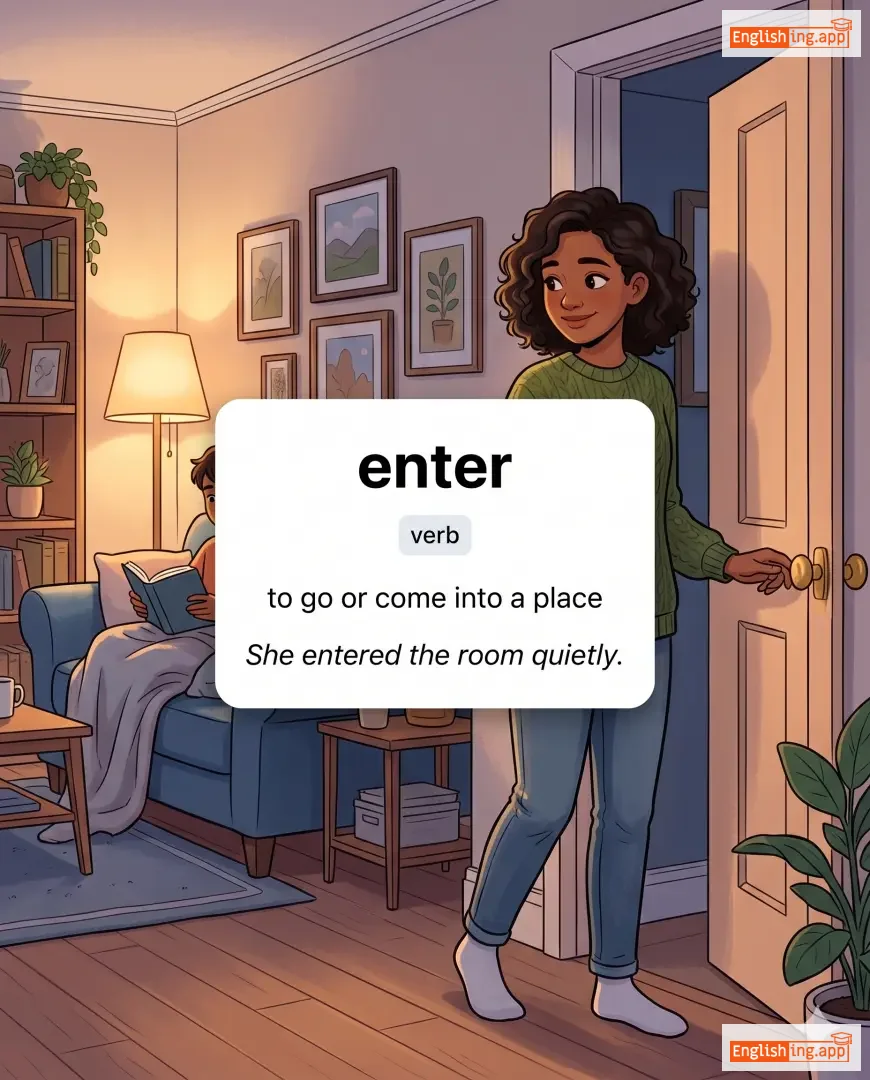
to go or come into a place
••••••
|
She entered the room quietly.
彼女は静かに部屋に入った。
••••••
|
彼女は静かに部屋に入った。
Kanojo wa shizuka ni heya ni haitta.
••••••
|
enter into an agreement
契約に入る
••••••
|
to formally agree to a contract or arrangement
••••••
|
契約に入る
keiyaku ni hairu
••••••
|
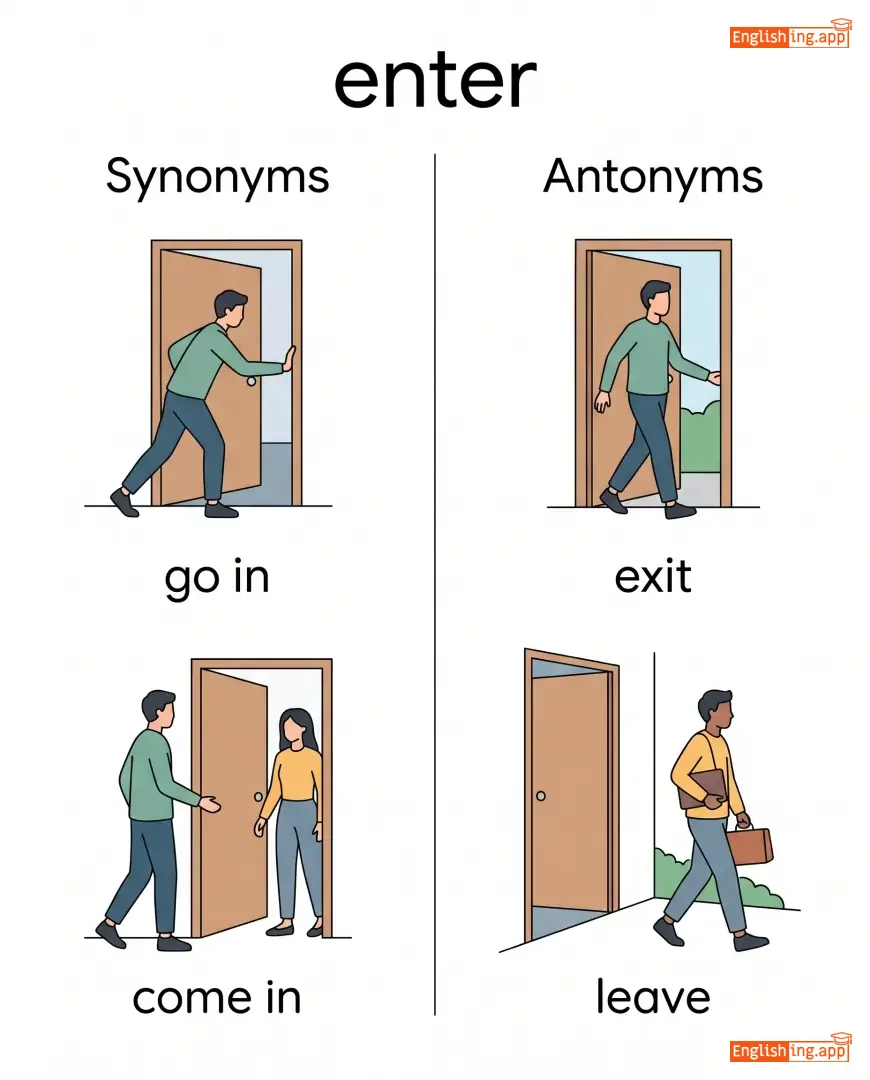
go in, come in, access, penetrate, join
••••••
|
exit, leave, depart
••••••
|
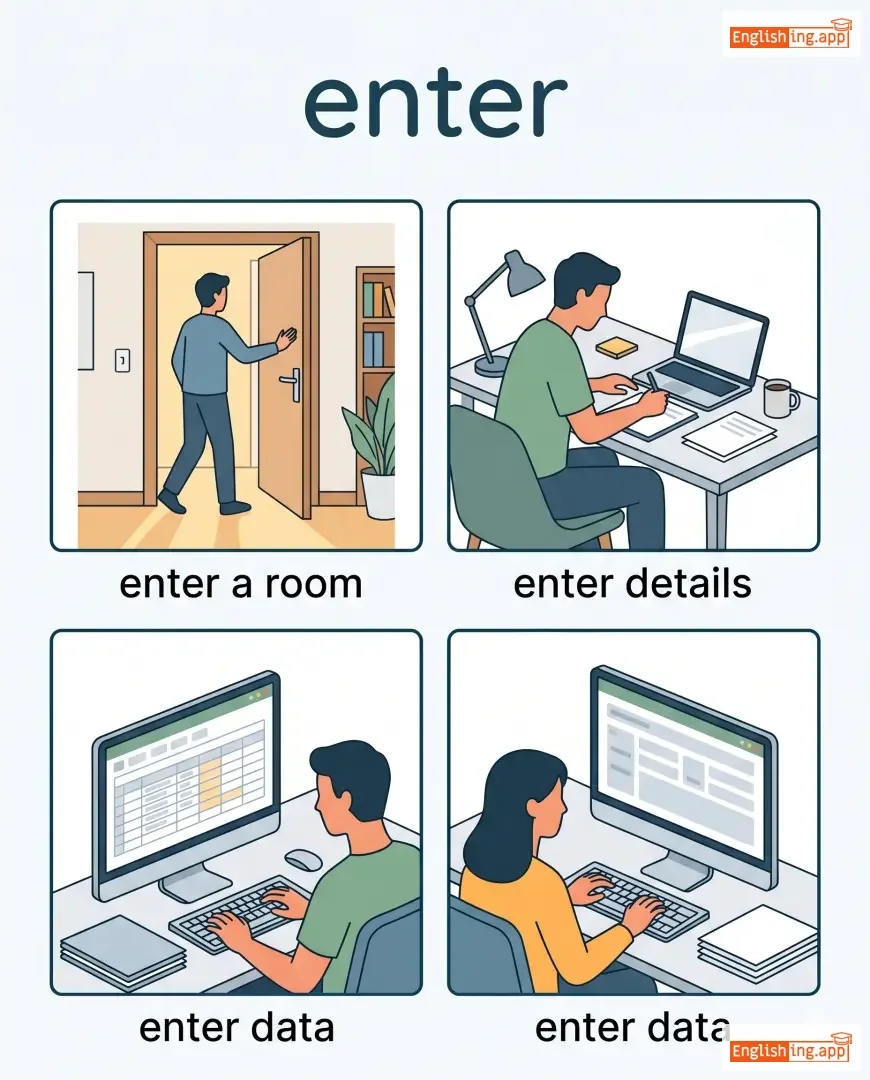
enter a room, enter details, enter data, enter into
••••••
|
ENTERキーを押すと、コンピューターに入る、'入る'も同じ意味です。
••••••
|
|
🏢
••••••
|
/ˈɛntərˌpraɪz/
noun
(エンタープライズ)
••••••
|
- •••••• |
企業 / 事業
kigyō / jigyō
••••••
|
- •••••• | - •••••• | - •••••• | - •••••• |
a business or company; a project or undertaking that requires effort and initiative
••••••
|
The new enterprise aims to create sustainable energy solutions. |
新しい企業は、持続可能なエネルギーソリューションを作成することを目指しています。
Atarashī kigyō wa, jizoku kanō na enerugī sorūshon o sakusei suru koto o mezashiteimasu.
••••••
|
free enterprise |
an economic system where businesses operate with little government control
••••••
|
自由企業
jiyū kigyō
••••••
|
company, business, venture, organization, initiative
••••••
|
idleness, inactivity, stagnation
••••••
|
large enterprise, small enterprise, business enterprise, free enterprise
••••••
|
Enterprise(エンタープライズ)は、入ることで賞品を手に入れる—成功した事業を作るようなもの。
••••••
|
|
🎭
••••••
|
/ˌɛntərˈteɪn/
verb
••••••
|
- •••••• | - •••••• |
entertained
••••••
|
entertained
••••••
|
entertains
••••••
|
entertaining
••••••
|
to provide amusement, enjoyment, or hospitality to others
••••••
|
The comedian entertained the audience with his jokes. |
- •••••• |
entertain an idea |
to consider or allow a thought or possibility in one’s mind
••••••
|
- •••••• |
amuse, delight, engage, host, please
••••••
|
bore, neglect, ignore
••••••
|
entertain guests, entertain an idea, entertain the audience, entertain children
••••••
|
No •••••• |
|
🎭
••••••
|
/ˌen.təˈteɪ.nɪŋ/
adjective
(エンターテイニング)
••••••
|
- •••••• |
面白い; 楽しくて魅力的
omoshiroi; tanoshikute miryokuteki
••••••
|
- •••••• | - •••••• | - •••••• | - •••••• |
providing amusement or enjoyment; funny and engaging
••••••
|
The comedian's performance was very entertaining and kept the audience laughing. |
コメディアンのパフォーマンスは非常に面白く、観客を笑わせ続けました。
Komedian no pafōmansu wa hijō ni omoshiroku, kankyaku o warawase tsudzukemashita.
••••••
|
- •••••• | - •••••• | - •••••• |
amusing, enjoyable, funny, engaging
••••••
|
boring, dull, tedious, uninteresting
••••••
|
entertaining show, entertaining story, entertaining guest
••••••
|
面白い = 楽しい; どんなパフォーマンスが面白いですか?楽しくて魅力的です!
••••••
|
|
🎭
••••••
|
/ˌɛntərˈteɪnmənt/
noun
(エンターテインメント)
••••••
|
- •••••• |
エンターテインメント
entāteinmento
••••••
|
- •••••• | - •••••• | - •••••• | - •••••• |
something that amuses, pleases, or diverts
••••••
|
The concert was a great source of entertainment. |
コンサートは素晴らしいエンターテインメントの源でした。
Konsāto wa subarashī entāteinmento no minamoto deshita.
••••••
|
light entertainment |
amusing or simple shows intended to entertain
••••••
|
軽いエンターテインメント
karui entāteinmento
••••••
|
amusement, recreation, fun, show, enjoyment
••••••
|
boredom, dullness
••••••
|
form of entertainment, entertainment industry, entertainment show, provide entertainment
••••••
|
テレビのエンターテインメントは観客を楽しませることです。
••••••
|
|
🔥
••••••
|
/ɪnˈθjuːziæzəm/
noun
(エンスージアズム)
••••••
|
- •••••• |
熱意
netsui
••••••
|
- •••••• | - •••••• | - •••••• | - •••••• |
intense and eager enjoyment, interest, or approval
••••••
|
His enthusiasm for teaching inspired his students. |
彼の教育に対する熱意は、学生たちに影響を与えました。
Kare no kyoiku ni taisuru netsui wa, gakuseitachi ni eikyo o ataemashita.
••••••
|
burst of enthusiasm |
a sudden show of excitement and energy
••••••
|
熱意の爆発
netsui no bakuhatsu
••••••
|
excitement, eagerness, passion, zeal, fervor
••••••
|
apathy, indifference, boredom
••••••
|
show enthusiasm, full of enthusiasm, enthusiasm for
••••••
|
熱意は、あなたが新しいことを学んでいる時に感じる情熱のようです。
••••••
|
|
⚽
••••••
|
/ɪnˈθuziæst/
noun
(エンスージアスト)
••••••
|
- •••••• |
熱狂的なファン
nekkyouteki na fan
••••••
|
- •••••• | - •••••• | - •••••• | - •••••• |
a person who is very interested in a particular activity or subject
••••••
|
He is a football enthusiast and watches every match.
彼はサッカーenthusiastで、毎試合見ています。
••••••
|
彼はサッカーenthusiastで、毎試合見ています。
Kare wa sakka enthusiast de, mai shiai miteimasu.
••••••
|
- •••••• | - •••••• | - •••••• |
fan, admirer, follower, devotee
••••••
|
disinterested, indifferent, apathetic
••••••
|
enthusiast of sports, music enthusiast, car enthusiast
••••••
|
EN-THUSIASTic about your favorite hobby!
••••••
|
|
😁
••••••
|
/ɪnˌθjuːziˈæstɪk/
adjective
(エンスージアスティック)
••••••
|
|
熱心な
nesshin na
••••••
|
- •••••• | - •••••• | - •••••• | - •••••• |
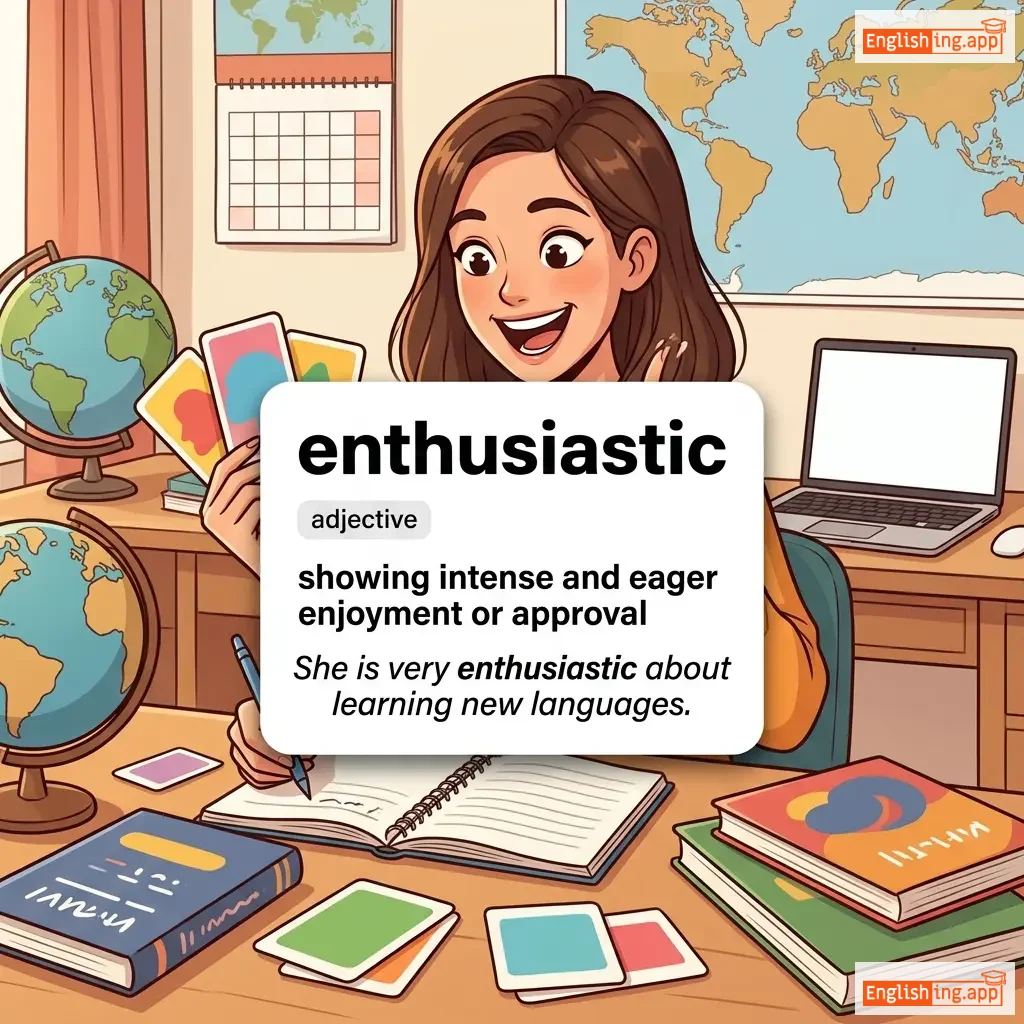
showing intense and eager enjoyment or approval
••••••
|
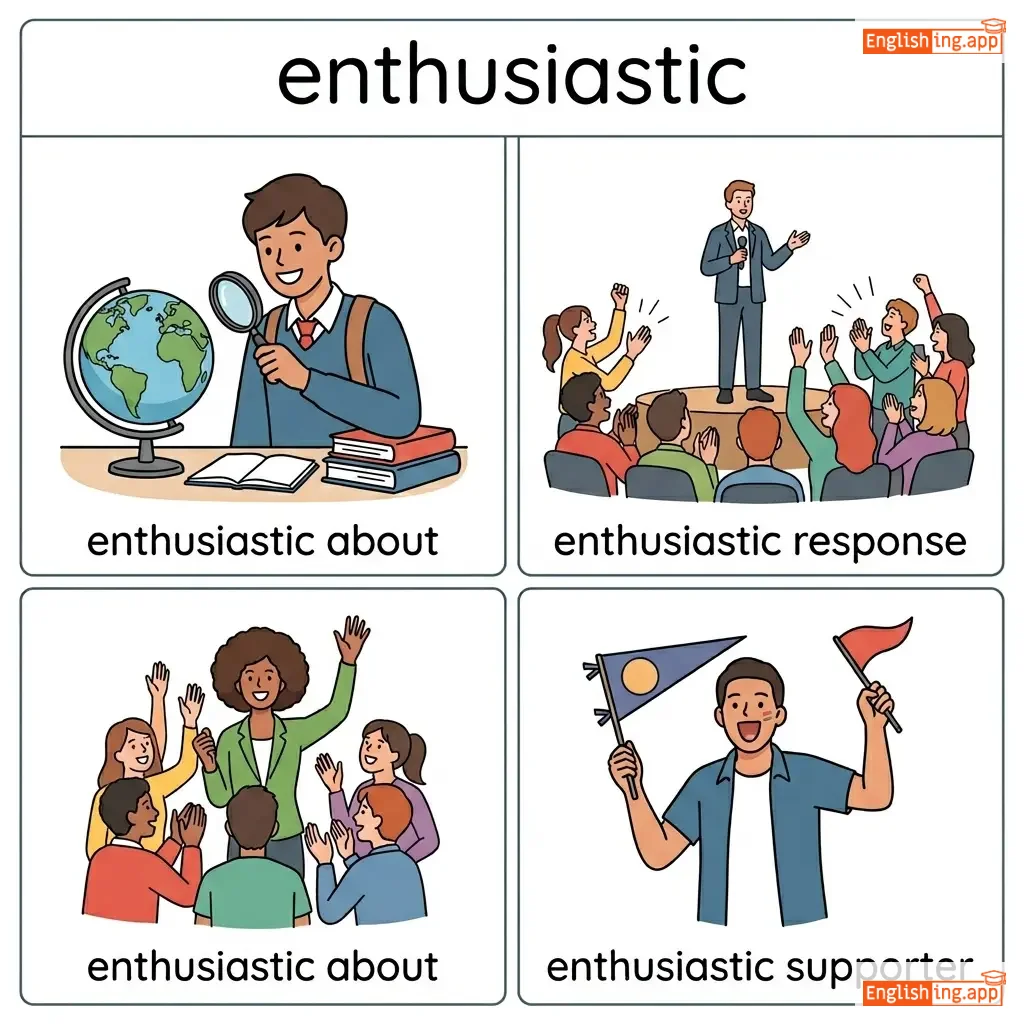
She is very enthusiastic about learning new languages. |
彼女は新しい言語を学ぶことに非常に熱心です。
Kanojo wa atarashī gengo o manabu koto ni hijō ni nesshin desu.
••••••
|
enthusiastic supporter |
someone who shows strong support with excitement
••••••
|
熱心な支持者
nesshin na shijisha
••••••
|
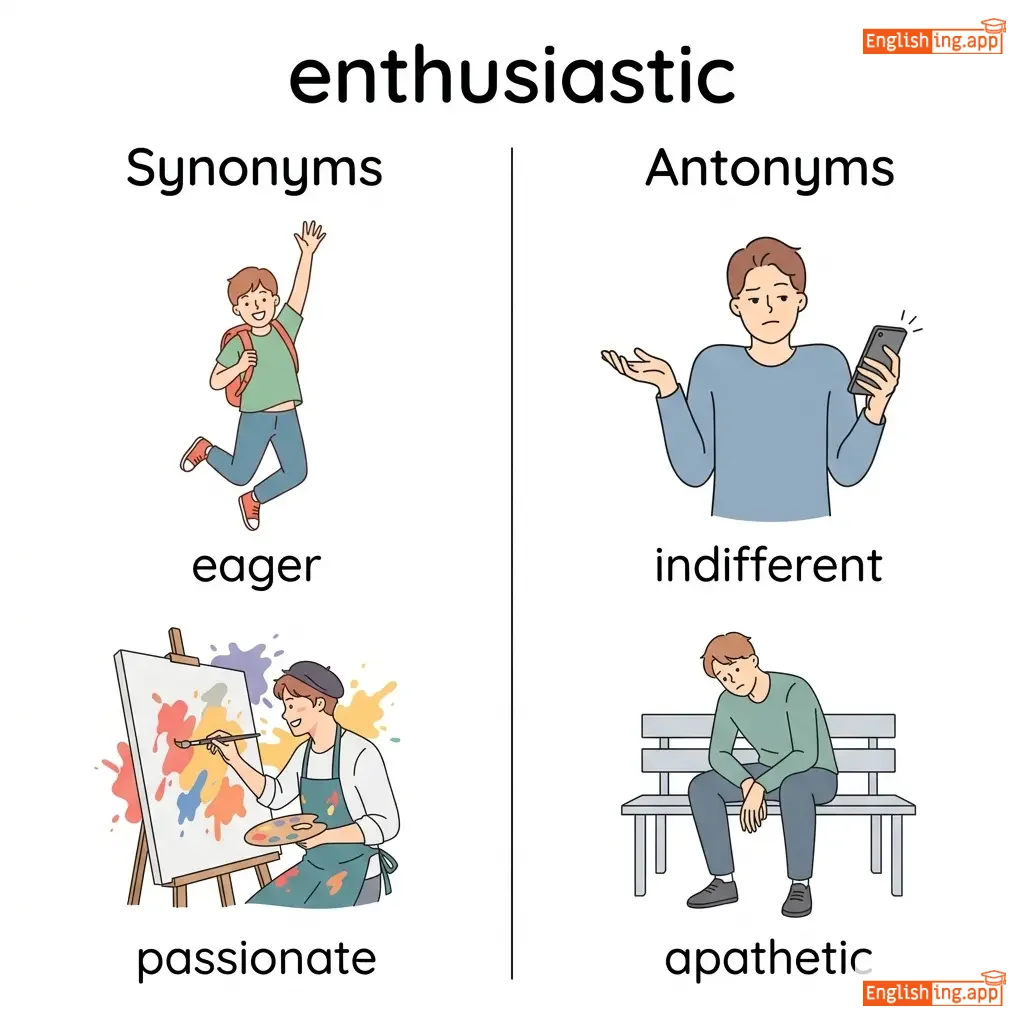
eager, passionate, excited, devoted
••••••
|
indifferent, apathetic, uninterested
••••••
|
enthusiastic about, enthusiastic response, enthusiastic supporter
••••••
|
熱心なは'enthusiastic'の意味で、情熱的にサポートする人を表す。
••••••
|

