|
表情符号
|
单词 | Images | 翻译 | 过去时 | 过去分词 | 第三人称单数 | 动名词 | 含义 | 例句 | 例句翻译 | 示例表达 | 示例表达含义 | 示例表达翻译 | 同义词 | 反义词 | 搭配词 | 助记符 |
|---|---|---|---|---|---|---|---|---|---|---|---|---|---|---|---|---|---|
|
👩💼
••••••
|
/ɛmˈplɔɪ.iː/
noun
(员工)
••••••
|
- •••••• |
员工
yuángōng
••••••
|
- •••••• | - •••••• | - •••••• | - •••••• |
A person who works for an organization or company in return for payment.
••••••
|
The company values each employee's contribution to its success. |
公司重视每个员工对成功的贡献。
Gongsi zhòngshì měi gè yuángōng duì chénggōng de gòngxiàn.
••••••
|
model employee |
An ideal worker who performs duties responsibly and well.
••••••
|
模范员工
mófàn yuángōng
••••••
|
worker, staff member, team member, personnel, laborer
••••••
|
employer, boss
••••••
|
loyal employee, new employee, company employee, hire employee
••••••
|
员工是公司里的工作人,'工作'就是员工的职责。
••••••
|
|
👔
••••••
|
/ɪmˈplɔɪər/
noun
(ěmplɔɪər)
••••••
|
- •••••• |
雇主
gùzhǔ
••••••
|
- •••••• | - •••••• | - •••••• | - •••••• |
A person or organization that hires and pays people to work.
••••••
|
The employer promised better benefits to attract skilled workers. |
雇主承诺提供更好的福利,以吸引技术工人。
Gùzhǔ chéngnuò tígōng gèng hǎo de fúlì, yǐ xīyǐn jìshù gōngrén.
••••••
|
good employer |
An employer who treats employees fairly and provides good conditions.
••••••
|
好雇主
hǎo gùzhǔ
••••••
|
boss, manager, proprietor, recruiter, company
••••••
|
employee, worker
••••••
|
large employer, potential employer, current employer, future employer
••••••
|
Employer 就是雇主,意味着雇佣的人。
••••••
|
|
💼
••••••
|
/ɪmˈplɔɪmənt/
noun
(émpǔlòimènt)
••••••
|


|
就业
jiùyè
••••••
|
- •••••• | - •••••• | - •••••• | - •••••• |
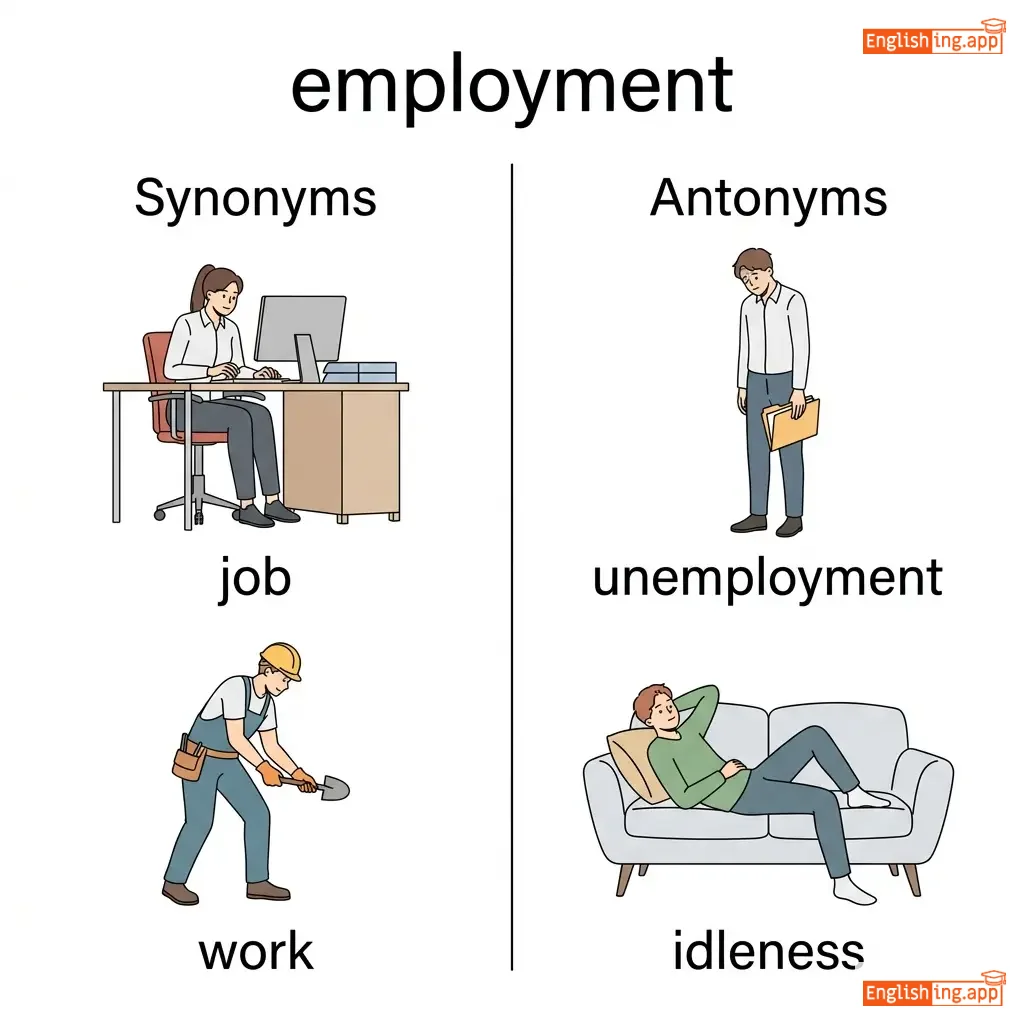
the state of having a paid job or work
••••••
|
The government is working to increase youth employment. |
政府正在努力增加青年就业机会。
zhèngfǔ zhèngzài nǔlì zēngjiā qīngnián jiùyè jīhuì.
••••••
|
full employment |
a situation where almost everyone willing to work has a job
••••••
|
充分就业
chōngfèn jiùyè
••••••
|
job, work, occupation, profession, livelihood
••••••
|
unemployment, idleness, joblessness
••••••
|
seek employment, find employment, employment opportunities, employment rate
••••••
|
就业意味着工作,工作意味着快乐。
••••••
|
|
💪
••••••
|
/ɪmˈpaʊər/
verb
••••••
|
- •••••• | - •••••• |
empowered
••••••
|
empowered
••••••
|
empowers
••••••
|
empowering
••••••
|
To give someone the power or authority to do something; to make someone stronger or more confident.
••••••
|
Education can empower people to improve their lives. |
- •••••• |
empower yourself |
Take control of your own life and decisions.
••••••
|
- •••••• |
authorize, enable, strengthen, permit, inspire
••••••
|
weaken, disempower, discourage
••••••
|
empower women, empower people, empower community, empower decision
••••••
|
No •••••• |
|
📦
••••••
|
/ˈɛmpti/
adjective
(empti)
••••••
|
- •••••• |
空的
kong de
••••••
|
- •••••• | - •••••• | - •••••• | - •••••• |
containing nothing; not filled
••••••
|
The box was completely empty. |
盒子完全是空的。
Hezi wanquan shi kong de.
••••••
|
empty promises |
words or promises without real value or meaning
••••••
|
空洞的承诺
kongdong de chengnuo
••••••
|
vacant, hollow, void, blank
••••••
|
full, filled
••••••
|
empty box, empty room, empty bottle, empty words
••••••
|
Empty 📦 意味着空的,在中文里 '空的' 意味着没有东西。
••••••
|
|
🔓
••••••
|
/ɪˈneɪbəl/
verb
(伊内布尔)
••••••
|

|
启用
qǐyòng
••••••
|
enabled
伊内布尔德
••••••
|
enabled
伊内布尔德
••••••
|
enables
伊内布尔斯
••••••
|
enabling
伊内布灵
••••••
|
to make something possible; to give someone the ability to do something
••••••
|
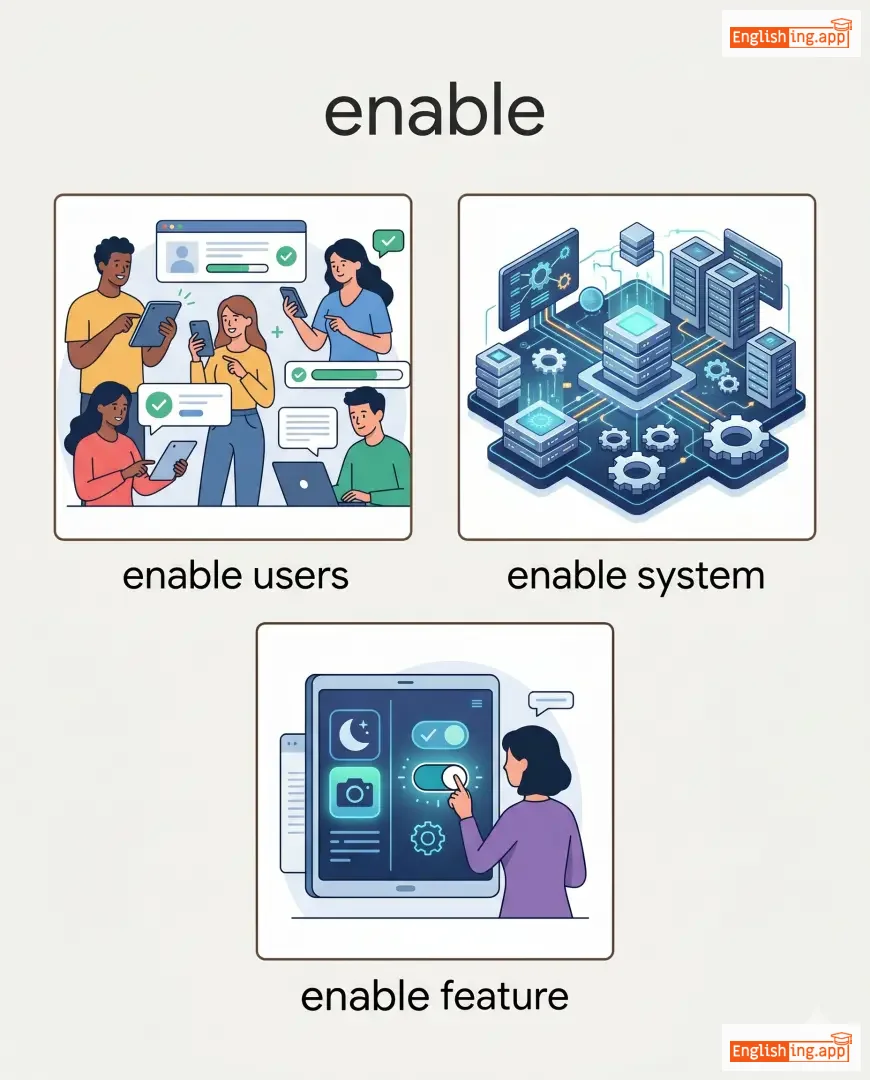
This software will enable users to create their own websites.
这个软件将使用户能够创建他们自己的网站。
••••••
|
这个软件将使用户能够创建他们自己的网站。
Zhège ruǎnjiàn jiāng shǐ yònghù nénggòu chuàngjiàn tāmen zìjǐ de wǎngzhàn.
••••••
|
enable access
启用访问
••••••
|
to provide the ability to enter or use something
••••••
|
启用访问
qǐyòng fànguān
••••••
|
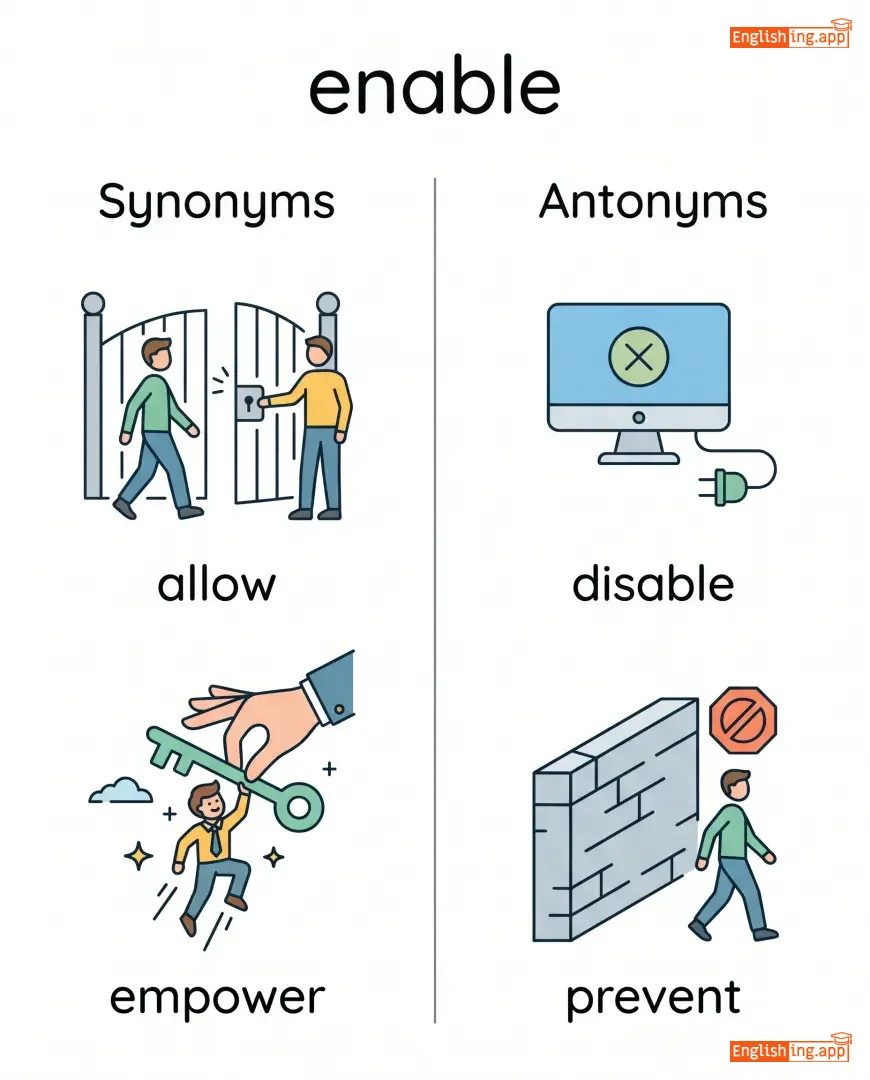
allow, empower, facilitate, permit, authorize
••••••
|
disable, prevent, hinder
••••••
|
enable users, enable system, enable feature, enable access
••••••
|
Enable代表激活或启用某些功能,使其变为可能。
••••••
|
|
📜
••••••
|
/ɪˈnækt/
verb
(因艾克特)
••••••
|
- •••••• |
制定
zhìdìng
••••••
|
enacted
因艾克特德
••••••
|
enacted
因艾克特德
••••••
|
enacts
因艾克特斯
••••••
|
enacting
因艾克廷
••••••
|
to make into law; to perform or act out
••••••
|
The government decided to enact a new policy on education.
政府决定制定一项关于教育的新政策。
••••••
|
政府决定制定一项关于教育的新政策。
Zhèngfǔ juédìng zhìdìng yī xiàng guānyú jiàoyù de xīn zhèngcè.
••••••
|
enact a law
制定法律
••••••
|
to officially make a law
••••••
|
制定法律
zhìdìng fǎlǜ
••••••
|
legislate, establish, decree, ordain
••••••
|
abolish, repeal, revoke
••••••
|
enact legislation, enact reforms, enact measures, enact policy
••••••
|
Enact 意味着制定 - 'Enact' 听起来像 'Act' (行动),意味着使法律生效。
••••••
|
|
⭕
••••••
|
/ɪnˈkʌmpəs/
verb
(ɛnˈkʌmpəs)
••••••
|
- •••••• |
涵盖
hánɡài
••••••
|
encompassed
ɛnˈkʌmpəsd
••••••
|
encompassed
ɛnˈkʌmpəsd
••••••
|
encompasses
ɛnˈkʌmpəsɪz
••••••
|
encompassing
ɛnˈkʌmpəsɪŋ
••••••
|
To include comprehensively; to surround or encircle.
••••••
|
The project will encompass all aspects of rural development.
该项目将涵盖农村发展的各个方面。
••••••
|
该项目将涵盖农村发展的各个方面。
gāi xiàngmù jiāng hánɡài nóngcūn fāzhǎn de gè gè fāngmiàn.
••••••
|
encompass the whole
涵盖一切
••••••
|
To include everything in scope.
••••••
|
涵盖一切
hánɡài yīqiè
••••••
|
include, cover, embrace, contain, surround
••••••
|
exclude, omit, ignore
••••••
|
encompass all, fully encompass, encompass a range
••••••
|
Encompass 就是 ENtire COMPASS (指南针) - 一切覆盖
••••••
|
|
🤝
••••••
|
/ɪnˈkaʊntər/
verb
(恩考特)
••••••
|
- •••••• |
遇见 / 遇到
yùjiàn / yùdào
••••••
|
encountered
恩考特德
••••••
|
encountered
恩考特德
••••••
|
encounters
恩考特斯
••••••
|
encountering
恩考特灵
••••••
|
to unexpectedly meet someone or experience something, especially something difficult or new
••••••
|
During the hike, we encountered a wild bear.
在徒步旅行中,我们遇到了一只野生熊。
••••••
|
在徒步旅行中,我们遇到了一只野生熊。
Zài túbù lǚxíng zhōng, wǒmen yùdào le yī zhī yěshēng xióng.
••••••
|
encounter difficulties
遇到困难
••••••
|
to face problems or obstacles
••••••
|
遇到困难
Yùdào kùnnán
••••••
|
meet, face, confront, experience, come across
••••••
|
avoid, evade, escape
••••••
|
encounter problems, encounter difficulties, first encounter, unexpected encounter
••••••
|
在遇到困难时,想象这就是一次‘遇见’困难的冒险!
••••••
|
|
💪
••••••
|
/ɪnˈkʌrɪdʒ/
verb
(en-kur-aiz)
••••••
|

|
鼓励
guli
••••••
|
encouraged
en-kur-aizd
••••••
|
encouraged
en-kur-aizd
••••••
|
encourages
en-kur-aizes
••••••
|
encouraging
en-kur-aizing
••••••
|
To give support, confidence, or hope to someone.
••••••
|
Parents should encourage their children to read daily.
父母应该鼓励孩子每天阅读。
••••••
|
父母应该鼓励孩子每天阅读。
Fùmǔ yīnggāi gǔlì háizi měitiān yuèdú.
••••••
|
words of encouragement
鼓励的话语
••••••
|
Supportive or uplifting statements given to someone.
••••••
|
鼓励的话语
Gǔlì de huàyǔ
••••••
|
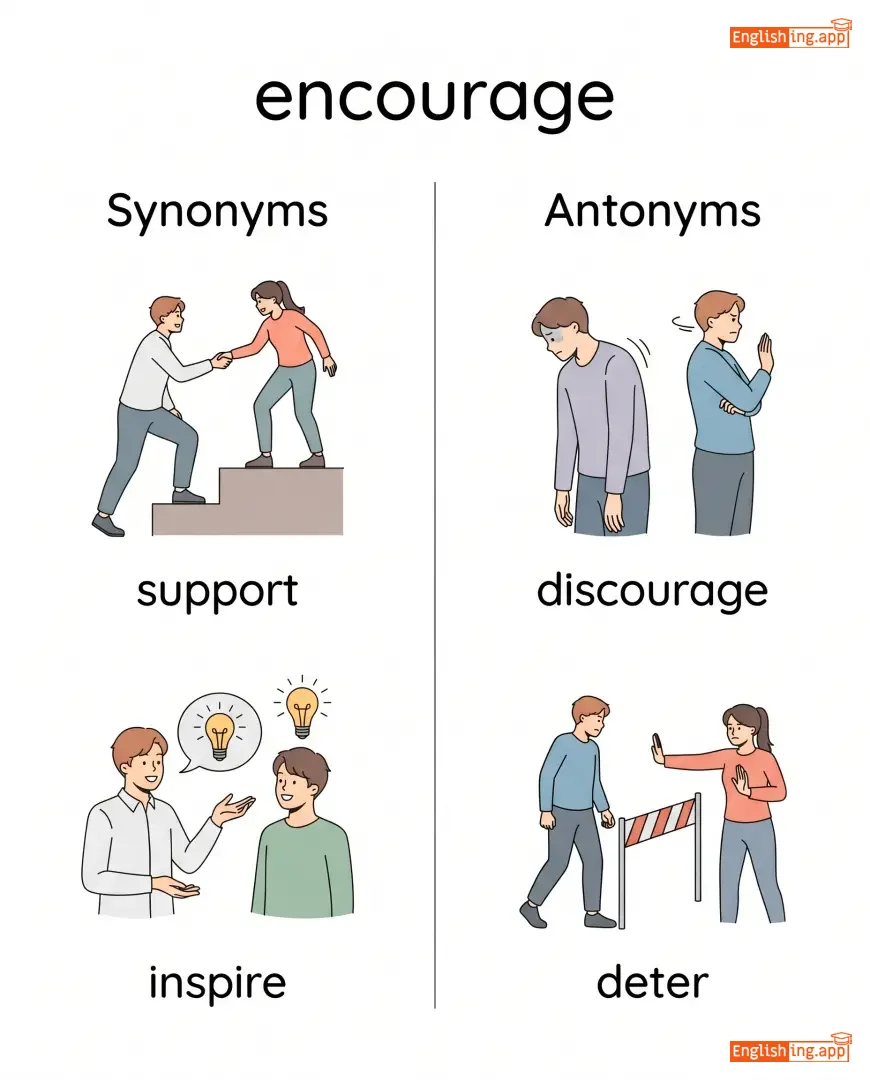
support, inspire, motivate, cheer, reassure
••••••
|
discourage, deter, dishearten
••••••
|
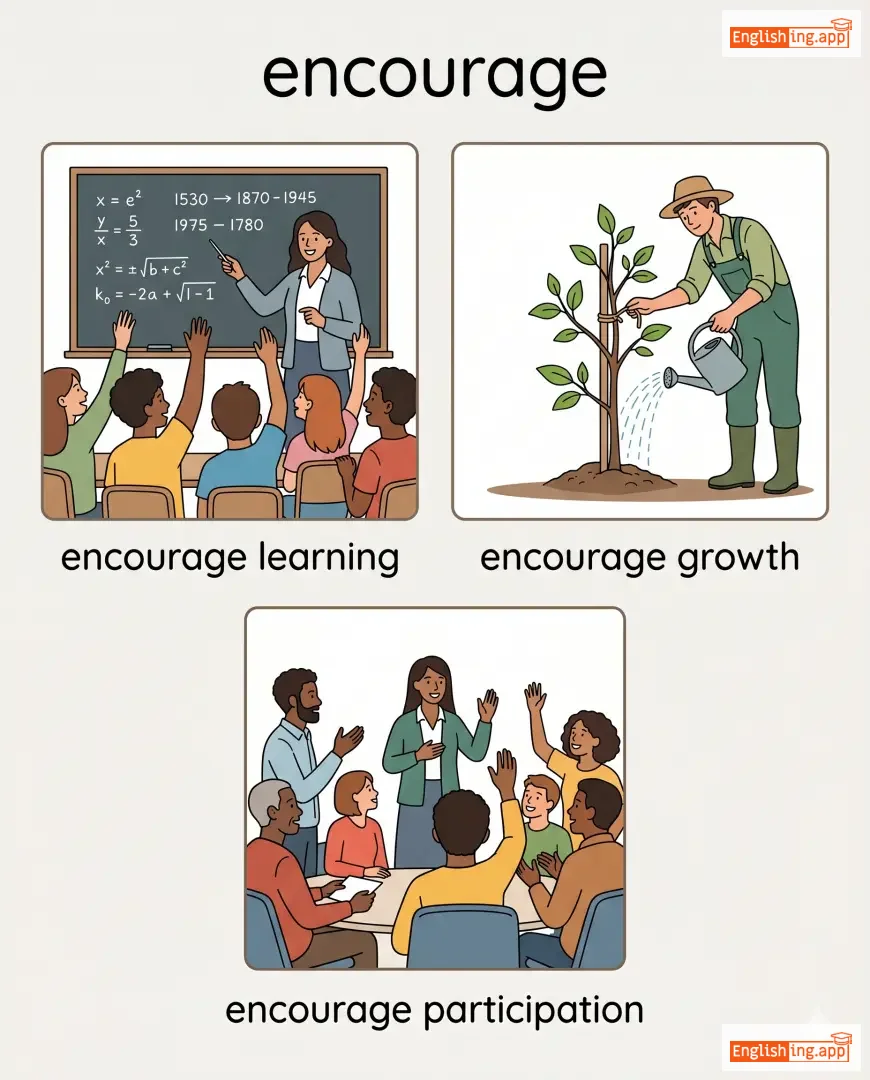
encourage learning, encourage growth, encourage participation
••••••
|
鼓励就是给别人力量 - 如同‘鼓’和‘力’一样
••••••
|
|
👍
••••••
|
/ɪnˈkʌrɪdʒmənt/
noun
(鼓励)
••••••
|
- •••••• |
鼓励
guli
••••••
|
- •••••• | - •••••• | - •••••• | - •••••• |
the action of giving someone support, confidence, or hope
••••••
|
Her encouragement helped me finish the project. |
她的鼓励帮助我完成了项目。
Ta de guli bangzhu wo wancheng le xiangmu.
••••••
|
- •••••• | - •••••• | - •••••• |
support, motivation, inspiration, confidence
••••••
|
discouragement, disinterest
••••••
|
offer encouragement, seek encouragement, give encouragement
••••••
|
鼓励是让你前行的力量!
••••••
|
|
💪
••••••
|
/ɪnˈkʌrɪdʒɪŋ/
adjective
(ɛnˈkʊrɪdʒɪŋ)
••••••
|
- •••••• |
鼓舞人心
gǔwǔ rénxīn
••••••
|
- •••••• | - •••••• | - •••••• | - •••••• |
giving someone support or confidence; optimistic
••••••
|
Her words were very encouraging during the hard times.
她在困难时期的话语非常鼓舞人心。
••••••
|
她在困难时期的话语非常鼓舞人心。
Tā zài kùnnán shíqī de huàyǔ fēicháng gǔwǔ rénxīn.
••••••
|
encouraging sign
鼓舞人心的迹象
••••••
|
a positive indication that something is improving
••••••
|
鼓舞人心的迹象
gǔwǔ rénxīn de jìxiàng
••••••
|
supportive, hopeful, reassuring, promising, positive
••••••
|
discouraging, depressing
••••••
|
encouraging news, encouraging sign, encouraging smile, encouraging words
••••••
|
鼓舞人心 = 能量 + 勇气 — 给予支持和信心。
••••••
|
|
🔚
••••••
|
/ɛnd/
verb
(ēnd)
••••••
|
- •••••• |
结束
jieshu
••••••
|
ended
ēnded
••••••
|
ended
ēnded
••••••
|
ends
ēnds
••••••
|
ending
ēnding
••••••
|
to bring something to a conclusion or stop
••••••
|
The meeting ended at 5 PM.
会议在5点结束。
••••••
|
会议在5点结束。
Huiyi zai 5 dian jieshu.
••••••
|
at the end of the day
一天的结束时
••••••
|
when everything is considered
••••••
|
一天的结束时
yitian de jieshu shi
••••••
|
finish, conclude, terminate, cease
••••••
|
begin, start, commence
••••••
|
end game, happy end, tragic end, end result
••••••
|
End意思是'结束', 就像电影结束时显示The End!
••••••
|
|
💪
••••••
|
/ɪnˈdevər/
verb, noun
(恩德沃尔)
••••••
|
- •••••• |
努力
nuli
••••••
|
endeavoured
恩德沃尔德
••••••
|
endeavoured
恩德沃尔德
••••••
|
endeavours
恩德沃尔斯
••••••
|
endeavouring
恩德沃尔ing
••••••
|
To try hard to achieve something; an attempt or effort
••••••
|
She endeavoured to finish the project on time.
她恩德沃尔努力按时完成项目。
••••••
|
她努力按时完成项目。
Ta nuli anshi wancheng xiangmu.
••••••
|
- •••••• | - •••••• | - •••••• |
strive, attempt, try, exert, labor
••••••
|
neglect, give up
••••••
|
endeavour to, scientific endeavour, human endeavour, collective endeavour
••••••
|
Remember 'nuli' as Chinese endeavour 💪
••••••
|
|
🎬
••••••
|
/ˈɛndɪŋ/
noun
(恩丁)
••••••
|
- •••••• |
结局
jiejue
••••••
|
- •••••• | - •••••• | - •••••• | - •••••• |
the final part of something, such as a story, event, or period of time
••••••
|
The movie had a surprising ending that no one expected.
这部电影有一个令人惊讶的恩丁,没人预料到。
••••••
|
这部电影有一个令人惊讶的结局,没人预料到。
Zhe bu dianying you yige ling ren jingya de jiejue, meiren yuliao dao
••••••
|
happy ending
幸福结局
••••••
|
a conclusion in which everything turns out well
••••••
|
幸福结局
xingfu jiejue
••••••
|
conclusion, finale, finish, close, termination
••••••
|
beginning, start, opening
••••••
|
ending scene, tragic ending, abrupt ending, satisfying ending
••••••
|
Ending = 结局, 想象电影的最后一幕
••••••
|
|
♾️
••••••
|
/ˈendləs/
adjective
(恩德雷斯)
••••••
|
- •••••• |
无尽
wújìn
••••••
|
- •••••• | - •••••• | - •••••• | - •••••• |
having or seeming to have no end or limit
••••••
|
They gazed at the endless desert stretching before them.
他们凝视着他们面前延展的无尽沙漠。
••••••
|
他们凝视着他们面前延展的无尽沙漠。
Tāmen níngshìzhe tāmen miànqián yánzhǎn de wújìn shāmò.
••••••
|
endless possibilities
无尽的可能性
••••••
|
many potential opportunities or options
••••••
|
无尽的可能性
wújìn de kěnéngxìng
••••••
|
infinite, boundless, perpetual, eternal, limitless
••••••
|
limited, finite, short-lived
••••••
|
endless love, endless possibilities, endless road, endless patience
••••••
|
Endless 意味着没有尽头 = 无尽 ♾️.
••••••
|
|
✅
••••••
|
/ɪnˈdɔːrs/
verb
(恩多斯)
••••••
|
- •••••• |
支持
zhīchí
••••••
|
endorsed
恩多斯德
••••••
|
endorsed
恩多斯德
••••••
|
endorses
恩多斯斯
••••••
|
endorsing
恩多辛
••••••
|
To give approval or support to someone or something; to publicly recommend.
••••••
|
The celebrity endorsed the new skincare product.
这位名人支持了新的护肤产品。
••••••
|
这位名人支持了新的护肤产品。
Zhè wèi míngrén zhīchíle xīn de hùfū chǎnpǐn.
••••••
|
endorse a check
签署支票
••••••
|
To sign the back of a check to make it payable to someone else.
••••••
|
签署支票
qiānshǔ zhīpiào
••••••
|
support, approve, recommend, back, advocate
••••••
|
oppose, reject, disapprove
••••••
|
endorse product, endorse policy, celebrity endorses, endorse check
••••••
|
Endorse意味着end + force,即通过力量支持。
••••••
|
|
✅
••••••
|
/ɪnˈdɔːrsmənt/
noun
(恩多斯门特)
••••••
|


|
支持
zhīchí
••••••
|
- •••••• | - •••••• | - •••••• | - •••••• |
the action of publicly supporting or approving something
••••••
|
His endorsement of the new policy was well received.
他对新政策的支持得到了很好的接受。
••••••
|
他对新政策的支持得到了很好的接受。
Tā duì xīn zhèngcè de zhīchí dédàole hěn hǎo de jiēshòu.
••••••
|
- •••••• | - •••••• | - •••••• |
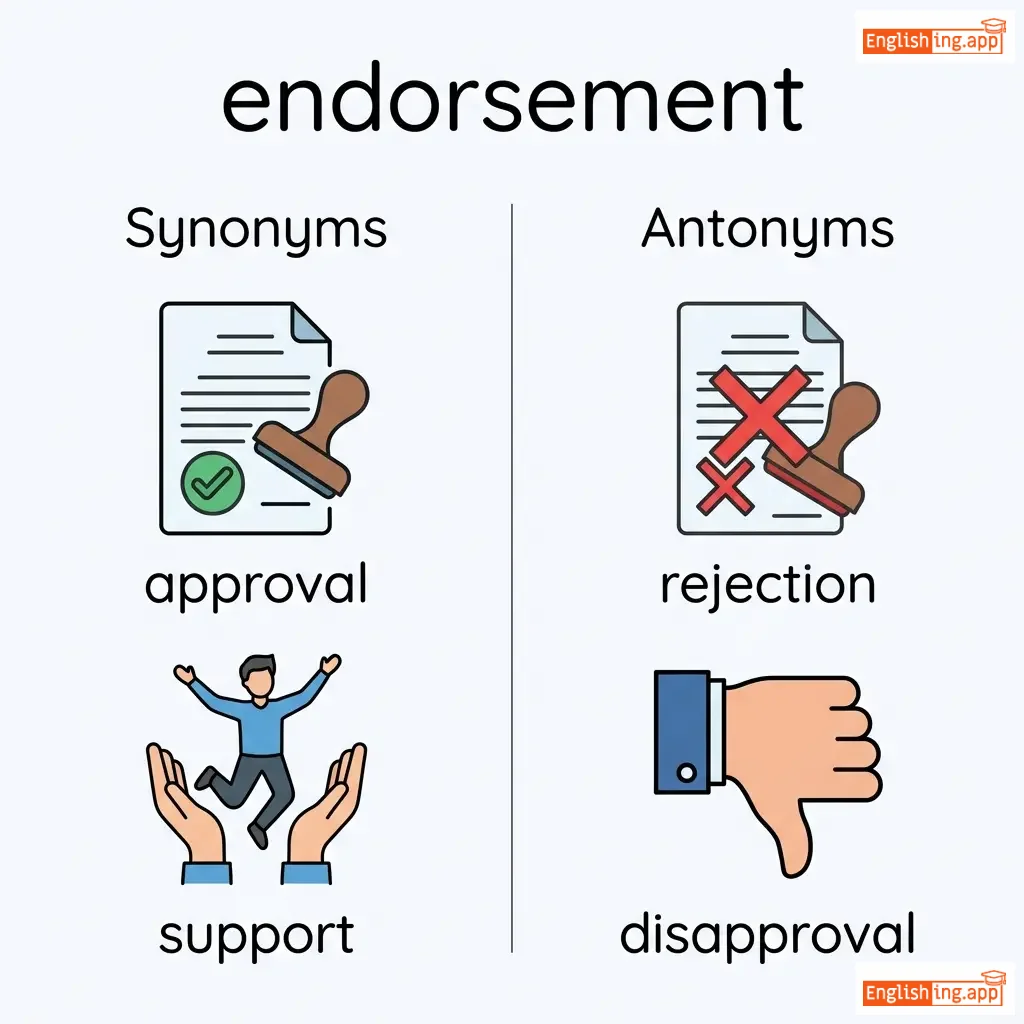
approval, support, backing, recommendation
••••••
|
rejection, disapproval, opposition
••••••
|
give endorsement, seek endorsement, public endorsement
••••••
|
Endorsement 就是公开的支持。
••••••
|
|
🧘
••••••
|
/ɪnˈdjʊər/
verb
(恩迪尤尔)
••••••
|
- •••••• |
忍受
rěnshòu
••••••
|
endured
恩迪尤尔德
••••••
|
endured
恩迪尤尔德
••••••
|
endures
恩迪尤尔斯
••••••
|
enduring
恩迪尤灵
••••••
|
to suffer something difficult or unpleasant patiently
••••••
|
He had to endure years of hardship before achieving success.
他在成功之前必须忍受多年的困难。
••••••
|
他必须忍受多年的困苦,才能取得成功。
Tā bìxū rěnshòu duōnián de kùnkǔ, cáinéng qǔdé chénggōng.
••••••
|
endure the pain
忍受痛苦
••••••
|
to tolerate or bear pain without giving up
••••••
|
忍受疼痛
rěnshòu téngtòng
••••••
|
tolerate, withstand, suffer, persevere, bear
••••••
|
give up, quit, avoid
••••••
|
endure hardship, endure pain, endure suffering, endure stress
••••••
|
Endure就像‘end’,意味着忍耐直到最后。
••••••
|
|
⚔️
••••••
|
/ˈɛnəmi/
noun
(敌人)
••••••
|
- •••••• |
敌人
dírén
••••••
|
- •••••• | - •••••• | - •••••• | - •••••• |
a person or group that is hostile or opposed to someone or something
••••••
|
The two countries have been enemies for decades.
这两个国家已经是敌人几十年了。
••••••
|
这两个国家已经是敌人几十年了。
Zhè liǎng gè guójiā yǐjīng shì dírén jǐ shí nián le.
••••••
|
make an enemy
制造敌人
••••••
|
to create hostility with someone
••••••
|
制造敌人
zhìzào dírén
••••••
|
opponent, adversary, foe, rival
••••••
|
friend, ally
••••••
|
sworn enemy, common enemy, deadly enemy, enemy forces
••••••
|
Enemy = e+mi, 那个反对我,敌人。
••••••
|
|
⚡
••••••
|
/ˈɛnərdʒi/
noun
(能源)
••••••
|
|
能源
nengyuan
••••••
|
- •••••• | - •••••• | - •••••• | - •••••• |
the capacity for activity or work; power derived from physical or chemical resources
••••••
|
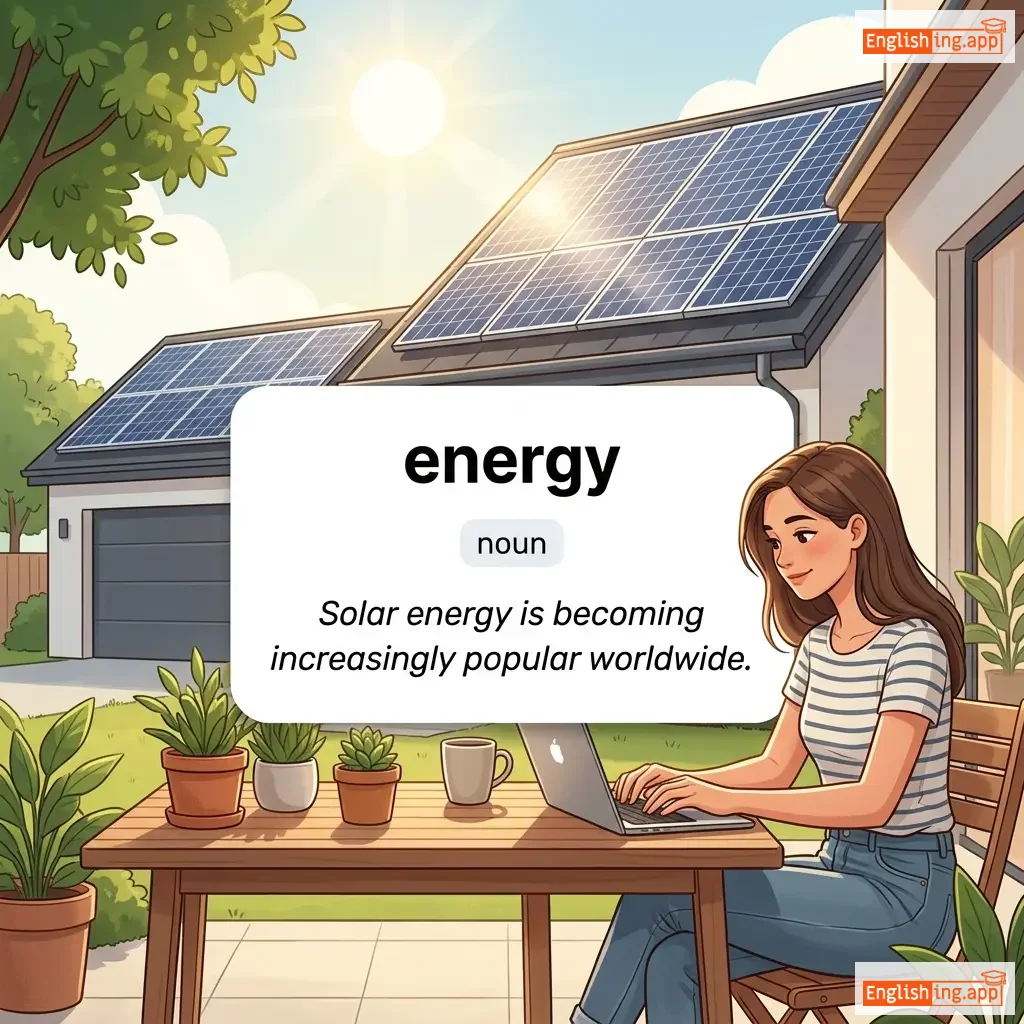
Solar energy is becoming increasingly popular worldwide.
太阳能在全球变得越来越受欢迎。
••••••
|
太阳能在全球变得越来越受欢迎。
Taiyangneng zai quanqiu biande yuelaiyuelai shou huanying.
••••••
|
burst of energy
能量爆发
••••••
|
a sudden increase in physical or mental activity
••••••
|
能量爆发
nengliang baofas
••••••
|
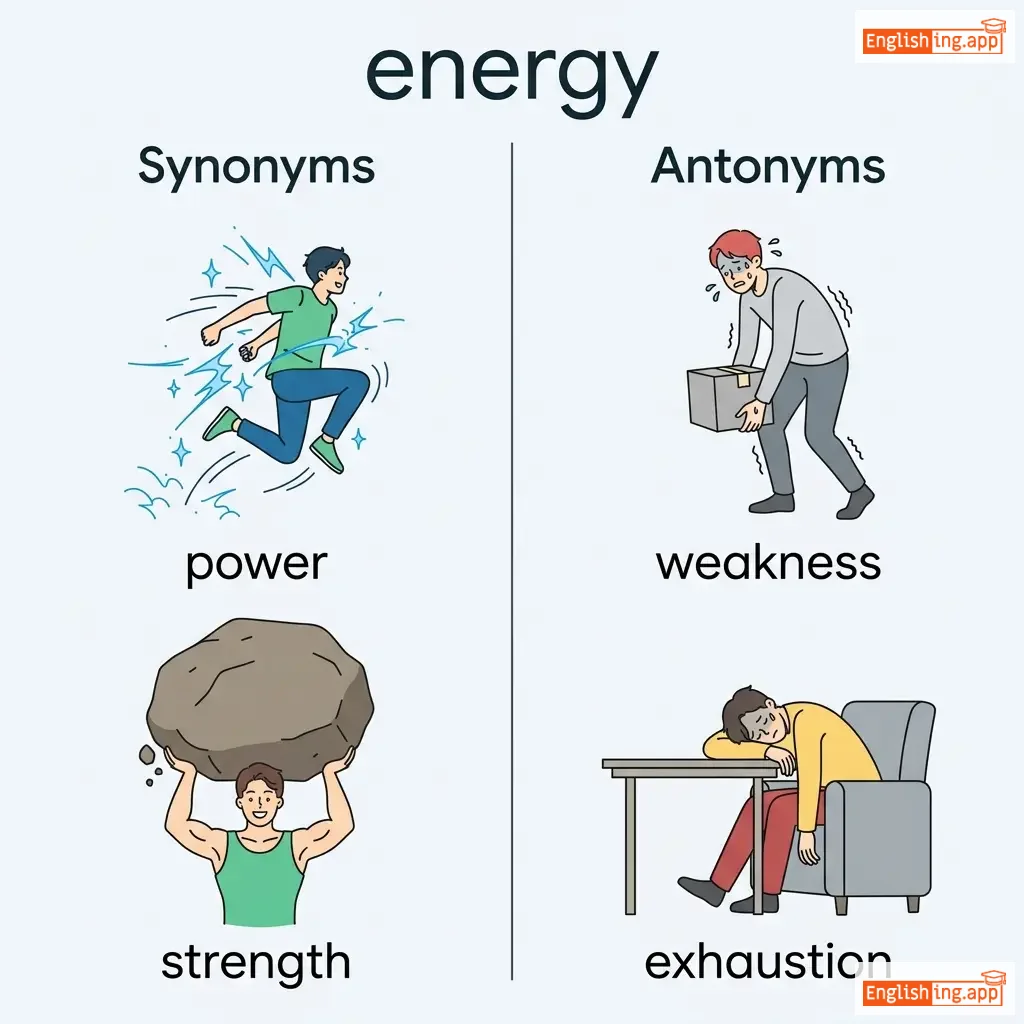
power, strength, vitality, force, vigor
••••••
|
weakness, exhaustion, fatigue
••••••
|
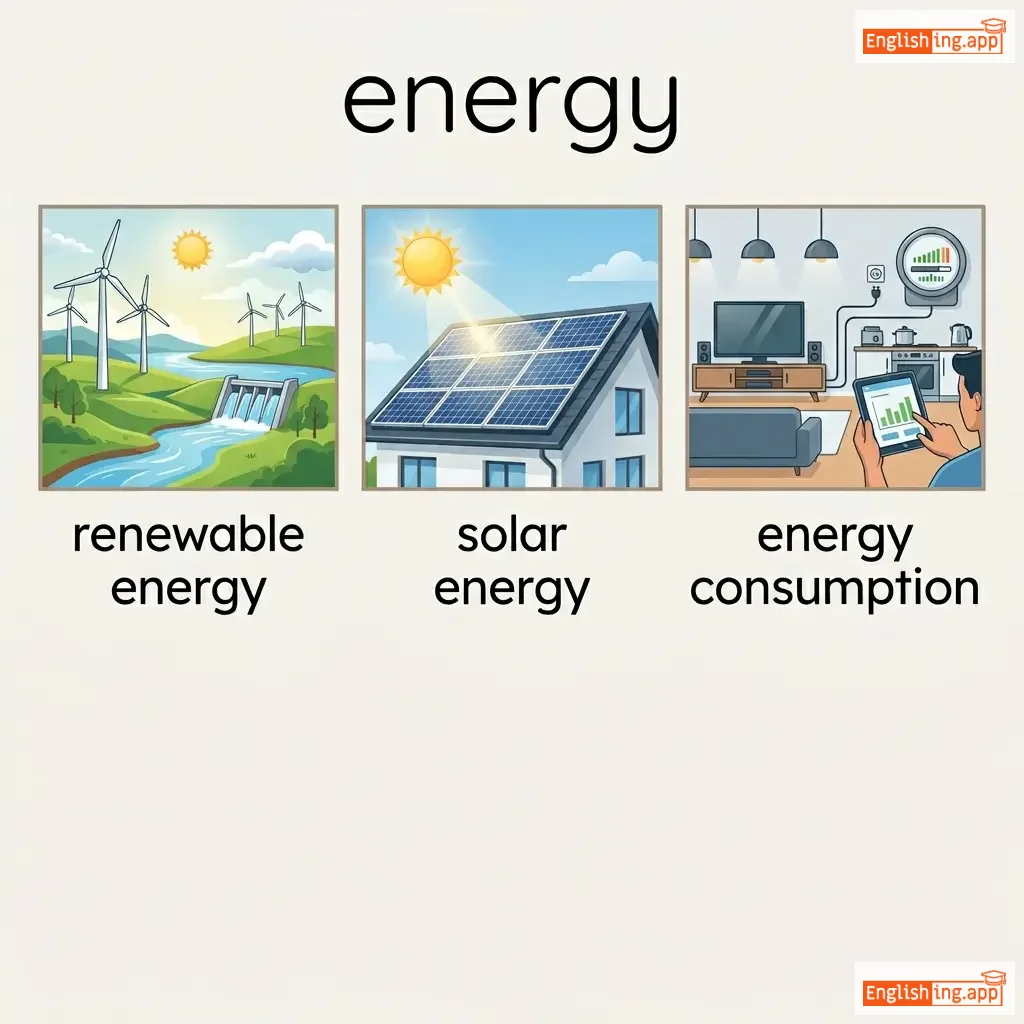
renewable energy, solar energy, energy consumption, energy level
••••••
|
Energy意味着能源 — 吃Energy饼干,得到能量。
••••••
|
|
👮♂️
••••••
|
/ɪnˈfɔːrs/
verb
(enfores)
••••••
|
- •••••• |
执行
zhíxíng
••••••
|
enforced
enforesd
••••••
|
enforced
enforesd
••••••
|
enforces
enforcest
••••••
|
enforcing
enforceng
••••••
|
to make sure that a rule, law, or policy is obeyed
••••••
|
The police are responsible for enforcing the law.
警方负责执行法律。
••••••
|
警方负责执行法律。
Jǐngfāng fùzé zhíxíng fǎlǜ.
••••••
|
enforce the law
执行法律
••••••
|
to ensure laws are followed and obeyed
••••••
|
执行法律
zhíxíng fǎlǜ
••••••
|
implement, apply, uphold, execute, impose
••••••
|
ignore, neglect, abandon
••••••
|
enforce rules, enforce regulations, enforce discipline, enforce policy
••••••
|
执行 = 强制遵守规则
••••••
|
|
👮
••••••
|
/ɪnˈfɔːrsmənt/
noun
(énfǒsīmén)
••••••
|
- •••••• |
执法
zhífǎ
••••••
|
- •••••• | - •••••• | - •••••• | - •••••• |
the act of making sure that laws or rules are followed
••••••
|
The police are responsible for law enforcement. |
警察负责执法。
Jǐngchá fùzé zhífǎ.
••••••
|
strict enforcement |
the rigorous application of rules or laws
••••••
|
严格执法
yángé zhífǎ
••••••
|
implementation, execution, application, policing
••••••
|
neglect, tolerance
••••••
|
law enforcement, enforcement agency, enforcement action, enforcement measures
••••••
|
Enforcement 意味着执行法律 — 警察 enforce 法律严格。
••••••
|
|
🎯
••••••
|
/ɪnˈɡeɪdʒ/
verb
(英盖吉)
••••••
|
- •••••• |
参与
cānyù
••••••
|
engaged
英盖吉德
••••••
|
engaged
英盖吉德
••••••
|
engages
英盖吉斯
••••••
|
engaging
英盖吉英
••••••
|
To participate or become involved in; to attract or hold attention.
••••••
|
The teacher tried to engage the students in the discussion.
老师试图将学生们引入讨论。
••••••
|
老师试图将学生们引入讨论。
Lǎoshī shìtú jiāng xuéshēngmen yǐnrù tǎolùn.
••••••
|
engage in
参与
••••••
|
To take part in or participate in something.
••••••
|
参与
cānyù
••••••
|
involve, participate, occupy, employ, captivate
••••••
|
ignore, disengage, neglect
••••••
|
engage students, engage in conversation, engage attention, engage actively
••••••
|
参与: 'Cān' 参与开始,'yù'让你做参与。
••••••
|
|
💍
••••••
|
/ɪnˈɡeɪdʒd/
adjective
(engaged)
••••••
|
- •••••• |
订婚的, 忙碌的
dìnghūn de, mánglù de
••••••
|
- •••••• | - •••••• | - •••••• | - •••••• |
Busy, occupied, or pledged to be married.
••••••
|
She is engaged to be married next summer. |
她明年夏天将结婚。
Tā míngnián xiàtiān jiāng jiéhūn.
••••••
|
engaged in |
Actively involved or occupied in a particular activity.
••••••
|
忙于
mángyú
••••••
|
involved, occupied, betrothed, pledged, busy
••••••
|
free, idle, disengaged
••••••
|
engaged couple, engaged in work, deeply engaged, fully engaged
••••••
|
Engaged 意思是订婚 💍 - 结婚或忙碌于某事。
••••••
|
|
💍
••••••
|
/ɪnˈɡeɪdʒmənt/
noun
(engagement)
••••••
|


|
订婚, 参与
dinghun, canyu
••••••
|
- •••••• | - •••••• | - •••••• | - •••••• |
a formal agreement to get married; or active involvement in an activity
••••••
|
Their engagement was announced last week. |
他们的订婚上周宣布了。
Tamen de dinghun shangzhou xuanbule.
••••••
|
social engagement |
a planned social event or meeting
••••••
|
社交参与
shejiao canyu
••••••
|
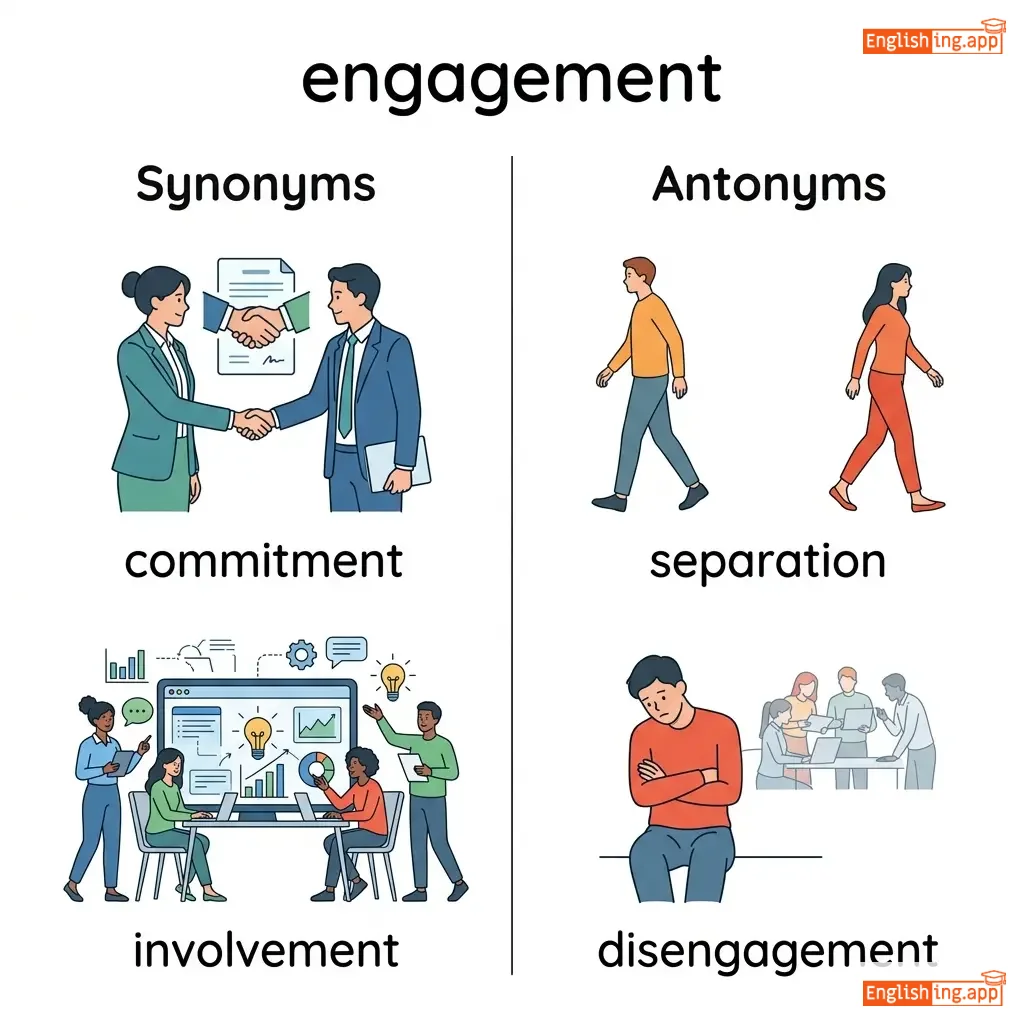
commitment, involvement, participation, appointment, betrothal
••••••
|
separation, disengagement, withdrawal
••••••
|
engagement ceremony, engagement ring, customer engagement, social engagement
••••••
|
Engage 意味着参与,因此 engagement 是指参与活动或事件 💍
••••••
|
|
✨
••••••
|
/ɪnˈɡeɪdʒɪŋ/
adjective
(ɪnˈɡeɪdʒɪŋ)
••••••
|

|
吸引人的
xī yǐn rén de
••••••
|
- •••••• | - •••••• | - •••••• | - •••••• |
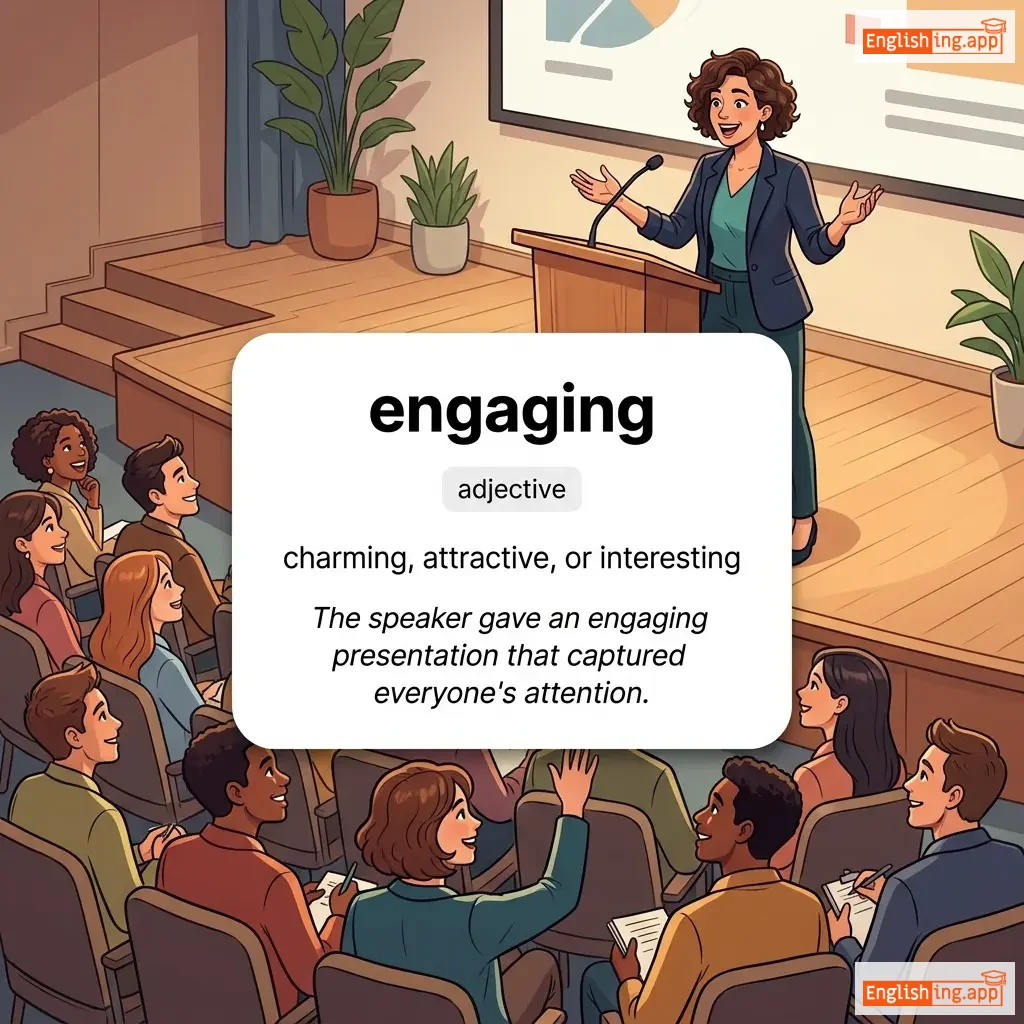
charming, attractive, or interesting
••••••
|
The speaker gave an engaging presentation that captured everyone's attention. |
演讲者做了一个吸引人的演示,吸引了所有人的注意。
Yǎn jiǎng zhě zuò le yī gè xī yǐn rén de yǎn shì, xī yǐn le suǒ yǒu rén de zhù yì.
••••••
|
- •••••• | - •••••• | - •••••• |
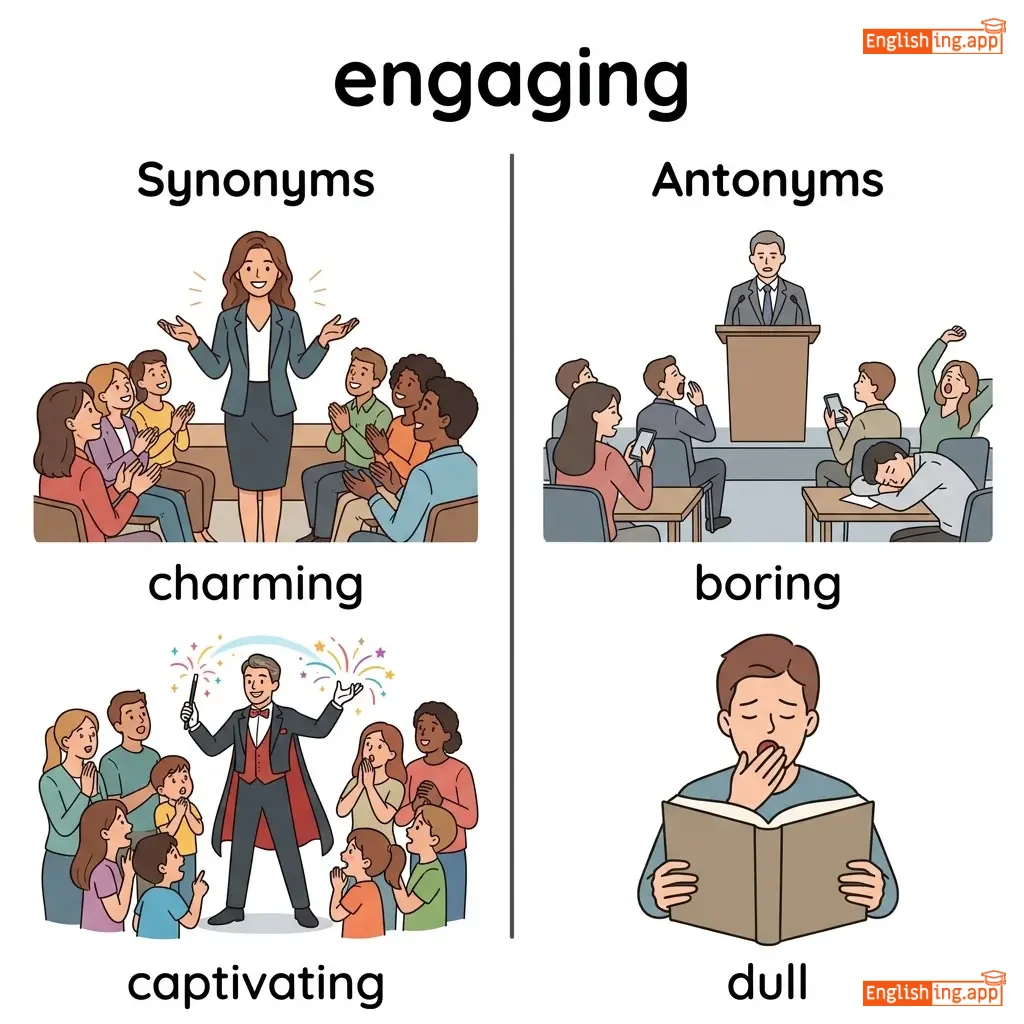
charming, captivating, appealing, delightful, fascinating
••••••
|
boring, dull, uninteresting
••••••
|
engaging personality, engaging story, engaging smile, engaging content
••••••
|
Engage 吸引—所以 engaging 就是吸引人的。
••••••
|
|
🚗
••••••
|
/ˈɛndʒɪn/
noun
(引擎)
••••••
|
- •••••• |
引擎
yin qing
••••••
|
- •••••• | - •••••• | - •••••• | - •••••• |
A machine designed to convert energy into mechanical power.
••••••
|
The car's engine failed on the highway. |
汽车的引擎在高速公路上坏了。
Qi che de yin qing zai gao su gong lu shang huai le.
••••••
|
engine of growth |
something that drives progress or development
••••••
|
增长的引擎
zeng zhang de yin qing
••••••
|
motor, machine, mechanism, generator, turbine
••••••
|
brake, stopper
••••••
|
car engine, powerful engine, engine failure, engine design
••••••
|
引擎 – 没有引擎,车子不能动。
••••••
|
|
👷♂️
••••••
|
/ˌɛndʒɪˈnɪər/
noun/verb
(工程师)
••••••
|
- •••••• |
工程师
gōngchéngshī
••••••
|
engineered
工程过
••••••
|
engineered
工程过
••••••
|
engineers
工程师们
••••••
|
engineering
工程学
••••••
|
A person trained to design, build, or maintain engines, machines, or structures; to skillfully arrange or bring about.
••••••
|
The engineer designed a new bridge across the river.
工程师设计了一个新桥,跨越了这条河流。
••••••
|
工程师设计了一个新桥,跨越了这条河流。
Gōngchéngshī shèjìle yīgè xīn qiáo, kuàyuèle zhè tiáo héliú.
••••••
|
reverse engineer
逆向工程师
••••••
|
to analyze a finished product to understand how it was made
••••••
|
逆向工程师
nìxiàng gōngchéngshī
••••••
|
designer, builder, technician, architect, planner
••••••
|
destroyer, dismantler
••••••
|
civil engineer, software engineer, train engineer, engineer solution
••••••
|
工程师是负责设计和改进机器的专家。
••••••
|
|
🏗️
••••••
|
/ˌɛndʒɪˈnɪərɪŋ/
noun
(工程学)
••••••
|

|
工程学
gongchengxue
••••••
|
- •••••• | - •••••• | - •••••• | - •••••• |
The branch of science and technology concerned with the design, building, and use of engines, machines, and structures.
••••••
|
She studied civil engineering at university. |
她在大学学习了土木工程。
Tā zài dàxué xuéxíle tǔmù gōngchéng.
••••••
|
social engineering |
manipulating people into giving up information or taking certain actions
••••••
|
社会工程学
shèhuì gōngchéngxué
••••••
|
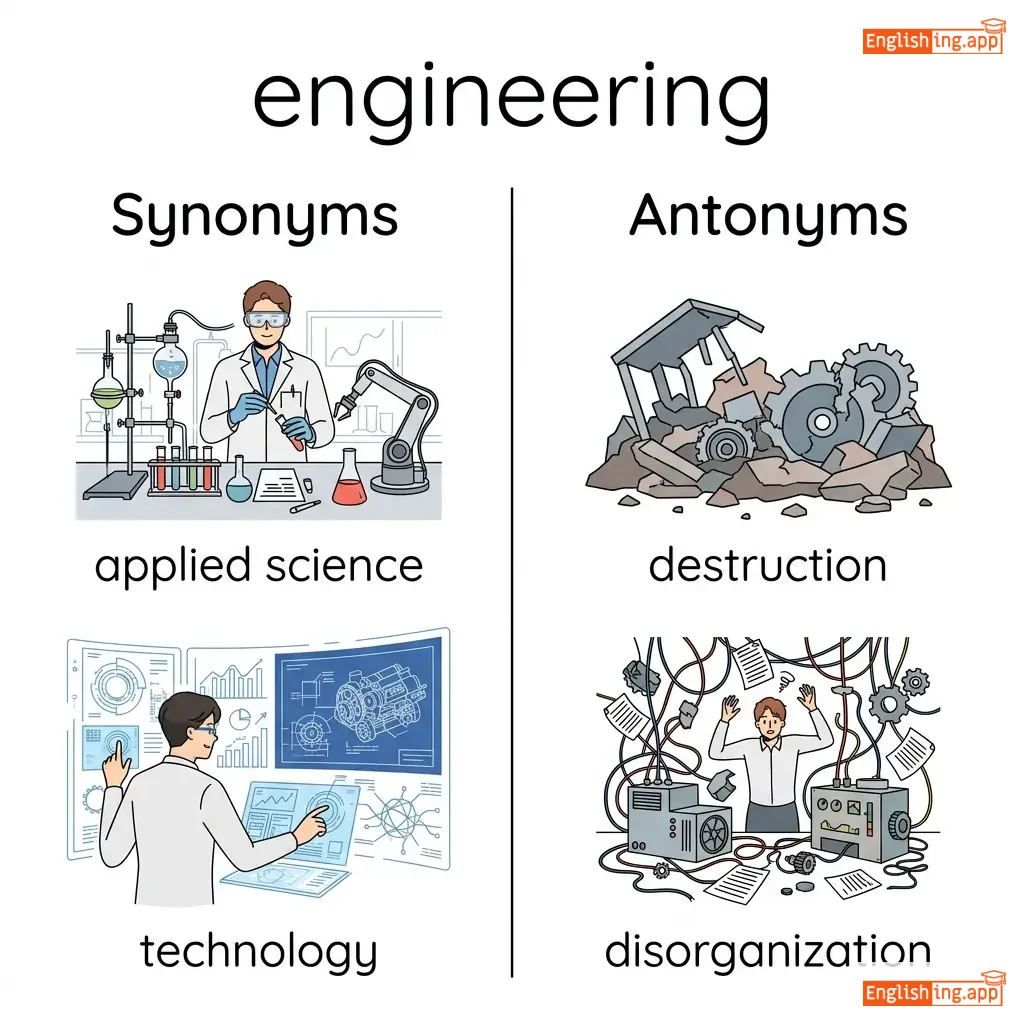
applied science, technology, mechanics, construction
••••••
|
destruction, disorganization
••••••
|
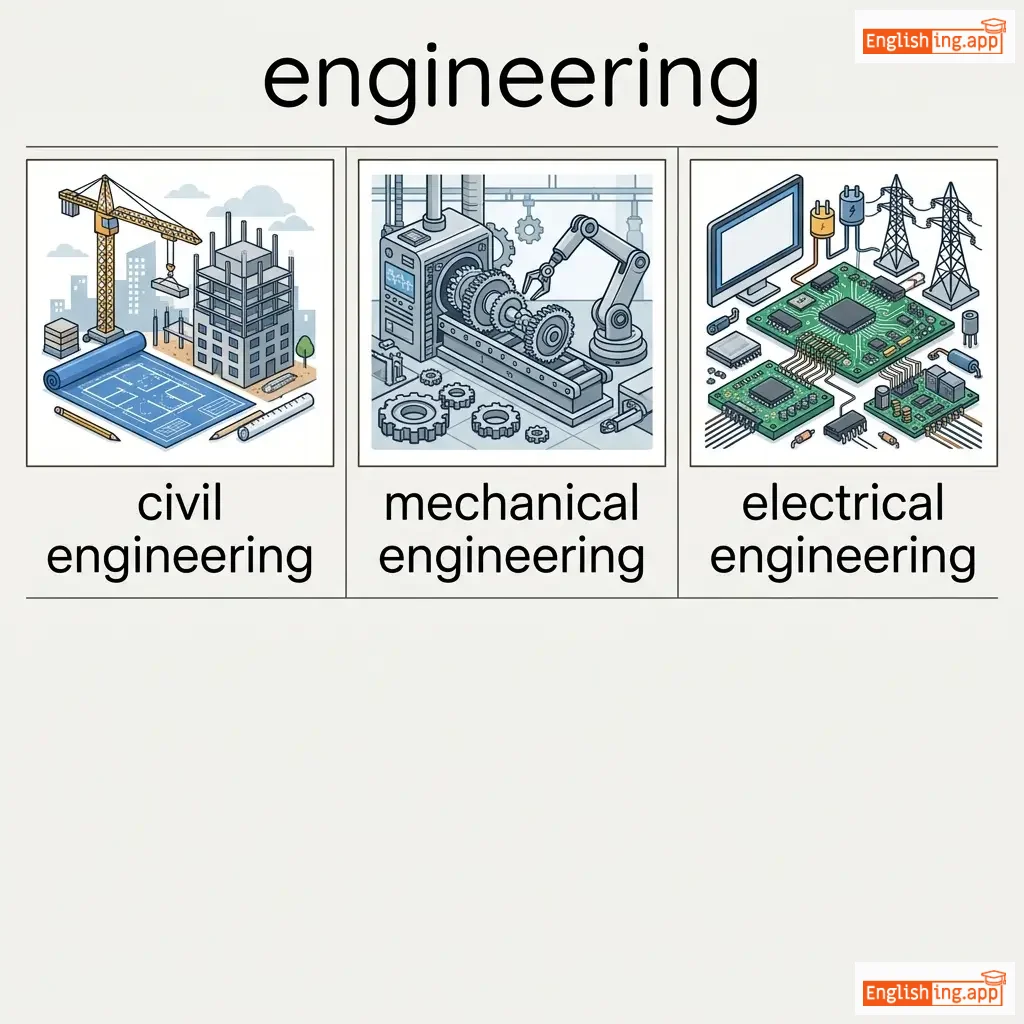
civil engineering, mechanical engineering, electrical engineering, software engineering
••••••
|
工程学通过技术设计和建设创新的解决方案 (jìshù).
••••••
|
|
🇬🇧
••••••
|
/ˈɪŋɡlɪʃ/
noun/adjective
(英格利什)
••••••
|
- •••••• |
英语
yingyu
••••••
|
- •••••• | - •••••• | - •••••• | - •••••• |
The language of England, widely spoken around the world; relating to England or its people.
••••••
|
She is learning English to study abroad. |
她正在学习英语,以便出国留学。
Tā zhèngzài xuéxí yīngyǔ, yǐbiàn chūguó liúxué.
••••••
|
plain English |
clear and simple language
••••••
|
简单的英语
jiǎndān de yīngyǔ
••••••
|
British language, Anglo-Saxon, tongue, dialect
••••••
|
non-English, foreign
••••••
|
learn English, English teacher, English literature, English language
••••••
|
English = 英语 – 出国留学,你需要英语。
••••••
|
|
✨
••••••
|
/ɪnˈhæns/
verb
(enhans)
••••••
|

|
提升
tisheng
••••••
|
enhanced
enhansd
••••••
|
enhanced
enhansd
••••••
|
enhances
enhanses
••••••
|
enhancing
enhansing
••••••
|
to improve the quality, value, or extent of something
••••••
|
The new features will enhance the user experience.
新的功能将提升用户体验。
••••••
|
新的功能将提升用户体验。
Xin de gongneng jiang tisheng yonghu tiaoyan.
••••••
|
enhance beauty
提升美丽
••••••
|
to make someone or something look more beautiful
••••••
|
提升美丽
tisheng meili
••••••
|
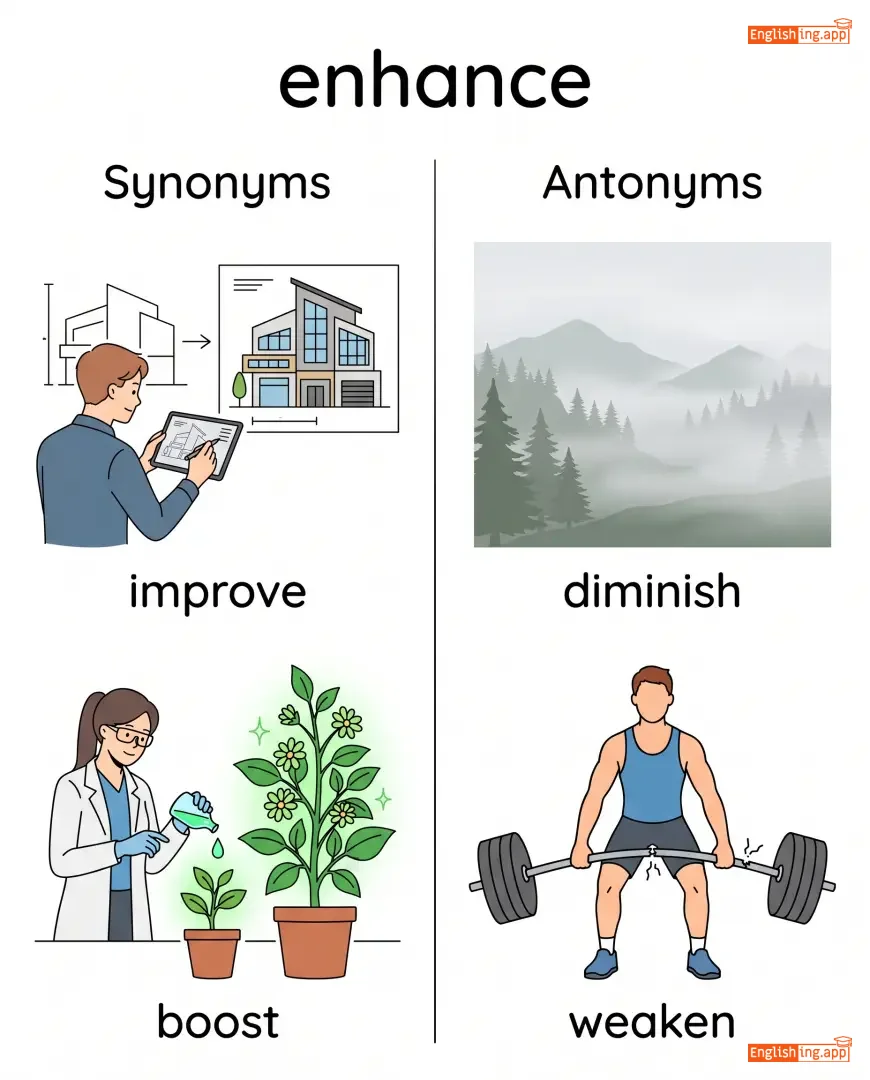
improve, boost, enrich, heighten, strengthen
••••••
|
diminish, weaken, reduce
••••••
|
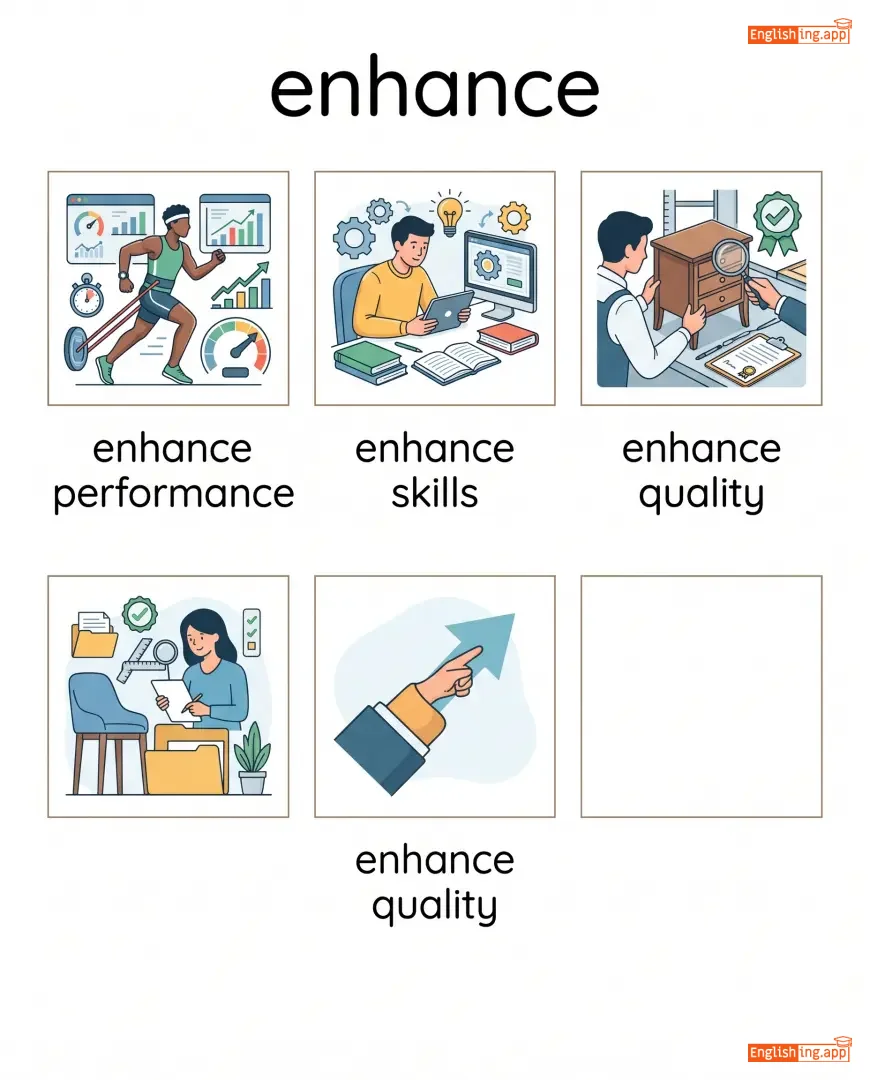
enhance performance, enhance skills, enhance quality, enhance experience
••••••
|
Enhance 是指提升,例如通过使用滤镜来提升照片。
••••••
|
|
😊
••••••
|
/ɪnˈdʒɔɪ/
verb
(享受)
••••••
|


|
享受
xiǎngshòu
••••••
|
enjoyed
享受的
••••••
|
enjoyed
享受的
••••••
|
enjoys
享受
••••••
|
enjoying
享受
••••••
|
to take pleasure in something
••••••
|
They enjoyed the music at the concert.
他们在音乐会上享受音乐。
••••••
|
他们在音乐会上享受音乐。
Tāmen zài yīnyuè huì shàng xiǎngshòu yīnyuè.
••••••
|
enjoy yourself
享受自己
••••••
|
have a good time
••••••
|
享受
xiǎngshòu
••••••
|
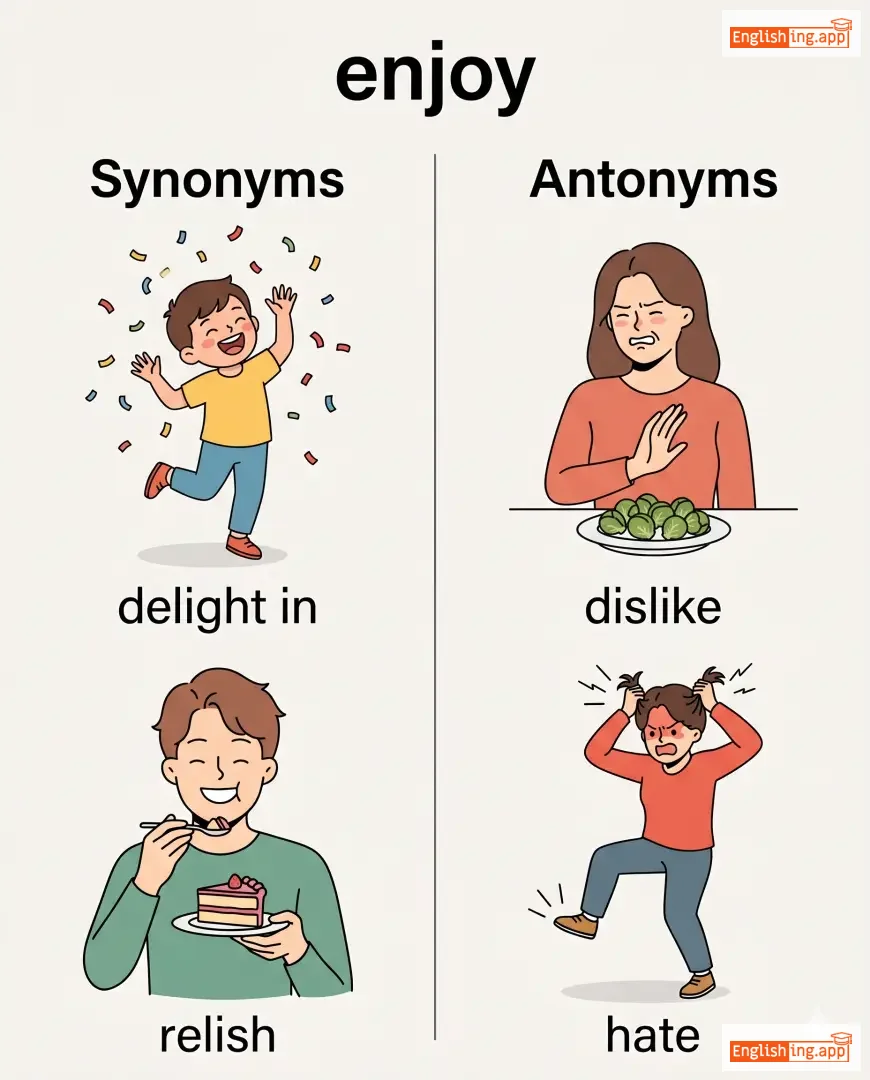
delight in, relish, savor, appreciate
••••••
|
dislike, hate, detest
••••••
|
enjoy life, enjoy the moment, enjoy a meal, enjoy company
••••••
|
ENJOY意味着享受 – EnJOY意味着Joy(乐趣)
••••••
|
|
😊
••••••
|
/ɪnˈdʒɔɪ.ə.bəl/
adjective
(enjoyable)
••••••
|
- •••••• |
愉快的; 令人愉悦的
yúkuài de; lìng rén yúyuè de
••••••
|
- •••••• | - •••••• | - •••••• | - •••••• |
pleasant; giving satisfaction or pleasure
••••••
|
The movie was very enjoyable and made everyone laugh. |
这部电影非常愉快,让每个人都笑了。
Zhè bù diànyǐng fēicháng yúkuài, ràng měi gè rén dōu xiàole.
••••••
|
- •••••• | - •••••• | - •••••• |
pleasant, delightful, amusing, entertaining
••••••
|
unpleasant, boring, tedious, disagreeable
••••••
|
enjoyable experience, enjoyable evening, enjoyable activity
••••••
|
Imagine a 'yúkuài' movie that makes everyone 'lìng rén yúyuè'.
••••••
|
|
😊
••••••
|
/ɪnˈdʒɔɪmənt/
noun
(恩乔伊门特)
••••••
|
- •••••• |
享受
xiangshou
••••••
|
- •••••• | - •••••• | - •••••• | - •••••• |
the state or process of taking pleasure or satisfaction in something
••••••
|
She felt great enjoyment while reading her favorite book.
她在阅读她最喜欢的书时感到极大的恩乔伊门特。
••••••
|
她在阅读她最喜欢的书时感到极大的享受。
Ta zai yuedu ta zui xihuan de shu shi gandao jida de xiangshou.
••••••
|
simple pleasures
简单的快乐
••••••
|
small things that bring happiness
••••••
|
简单的快乐
jiandan de kuaile
••••••
|
pleasure, delight, happiness, satisfaction, amusement
••••••
|
displeasure, misery, boredom
••••••
|
great enjoyment, pure enjoyment, derive enjoyment, find enjoyment, give enjoyment
••••••
|
Remember 'xiangshou' like enjoying Chinese tea and dumplings!
••••••
|
|
🌋
••••••
|
/ɪˈnɔːrməs/
adjective
(海诺姆斯)
••••••
|
- •••••• |
巨大的
jù dà de
••••••
|
- •••••• | - •••••• | - •••••• | - •••••• |
Extremely large in size, amount, or degree.
••••••
|
They built an enormous stadium in the city. |
他们在城市里建造了一个巨大的体育场。
Tāmen zài chéngshì lǐ jiànzàole yīgè jùdà de tǐyùchǎng.
••••••
|
enormous effort |
a very great or intense amount of effort
••••••
|
巨大的努力
jùdà de nǔlì
••••••
|
huge, vast, immense, massive, gigantic
••••••
|
tiny, small, little
••••••
|
enormous impact, enormous amount, enormous pressure, enormous responsibility
••••••
|
巨大就像一只大象一样。
••••••
|
|
✔️
••••••
|
/ɪˈnʌf/
adjective/adverb
(inàf)
••••••
|
- •••••• |
足够
zúgòu
••••••
|
- •••••• | - •••••• | - •••••• | - •••••• |
as much or as many as required
••••••
|
We have enough food for everyone. |
我们有足够的食物供大家食用。
Wǒmen yǒu zúgòu de shíwù gōng dàjiā shíyòng.
••••••
|
enough is enough |
used to say that something should stop
••••••
|
够了就是够了
gòu le jiù shì gòu le
••••••
|
sufficient, adequate, plenty, ample
••••••
|
insufficient, inadequate, lacking
••••••
|
enough money, enough time, good enough, enough resources
••••••
|
ENOUGH意味着'inàf' – Enough食物意味着足够食物
••••••
|
|
❓
••••••
|
/ɪnˈkwaɪər/
verb
(ēnkuáir)
••••••
|
- •••••• |
询问
xunwen
••••••
|
enquired
ēnkuáid
••••••
|
enquired
ēnkuáid
••••••
|
enquires
ēnkuáirs
••••••
|
enquiring
ēnkuáiring
••••••
|
to ask for information about something
••••••
|
He enquired about the train schedule.
他询问了列车时刻表。
••••••
|
他询问了列车时刻表。
Tā xúnwènle lièchē shíkèbiǎo.
••••••
|
enquire into
询问
••••••
|
to investigate
••••••
|
调查
diàochá
••••••
|
ask, question, query, investigate
••••••
|
ignore, neglect
••••••
|
enquire about, enquire into, politely enquire, formally enquire
••••••
|
ENQUIRE = 询问 = Enquire = 找答案,问问题!
••••••
|
|
💎
••••••
|
/ɪnˈrɪtʃ/
verb
(enrich)
••••••
|
|
丰富
fengfu
••••••
|
enriched
enriched
••••••
|
enriched
enriched
••••••
|
enriches
enriches
••••••
|
enriching
enriching
••••••
|
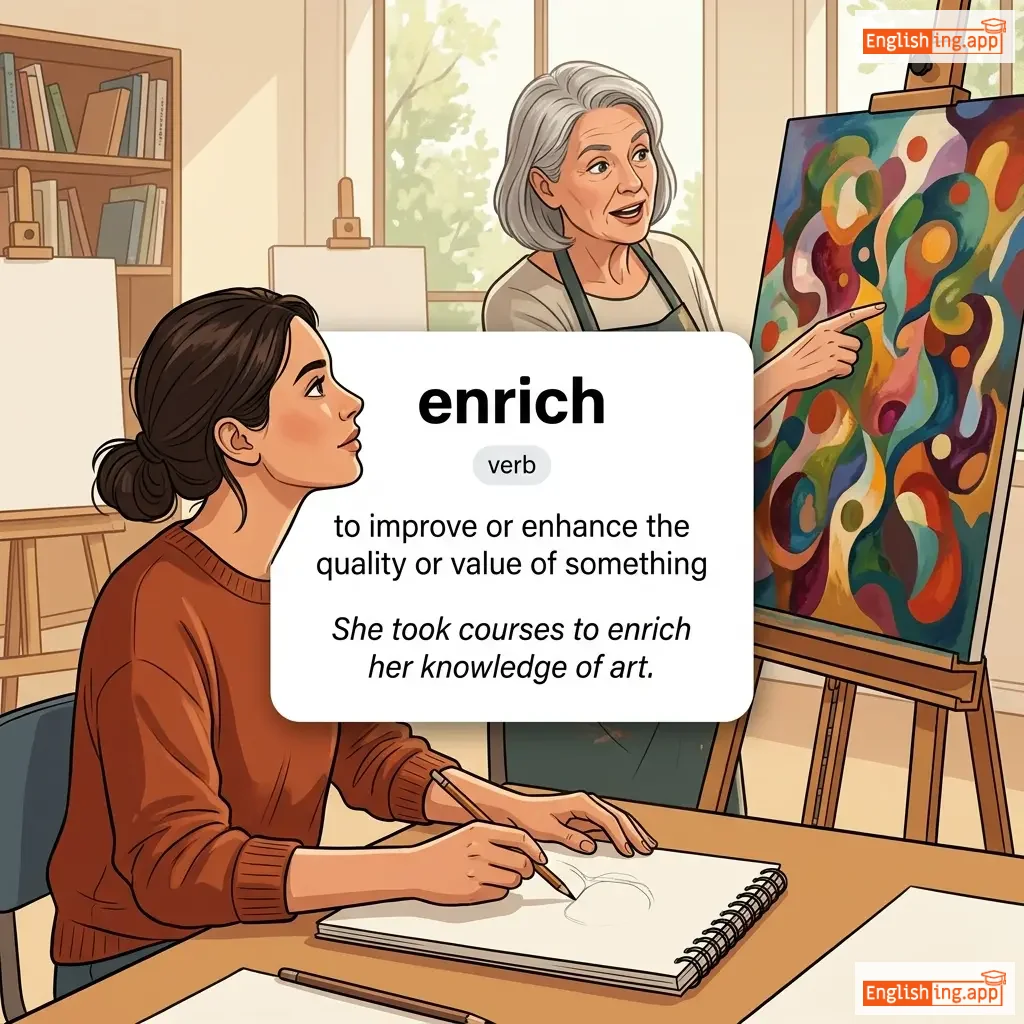
to improve the quality or value of something
••••••
|
Reading books will enrich your vocabulary.
Reading books will enrich your vocabulary.
••••••
|
阅读书籍将丰富您的词汇。
Yuedu shuju jiang fengfu nin de cihui.
••••••
|
- •••••• | - •••••• | - •••••• |
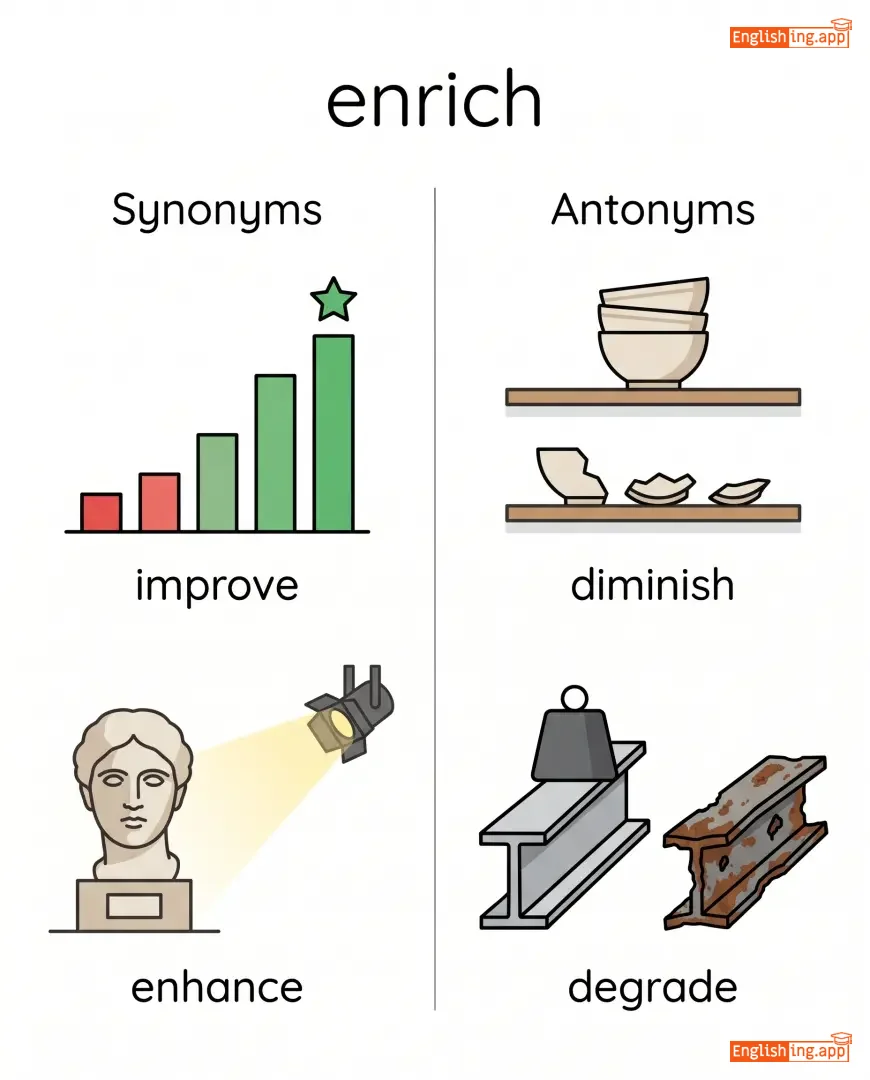
enhance, improve, strengthen, develop
••••••
|
impoverish, weaken, diminish
••••••
|
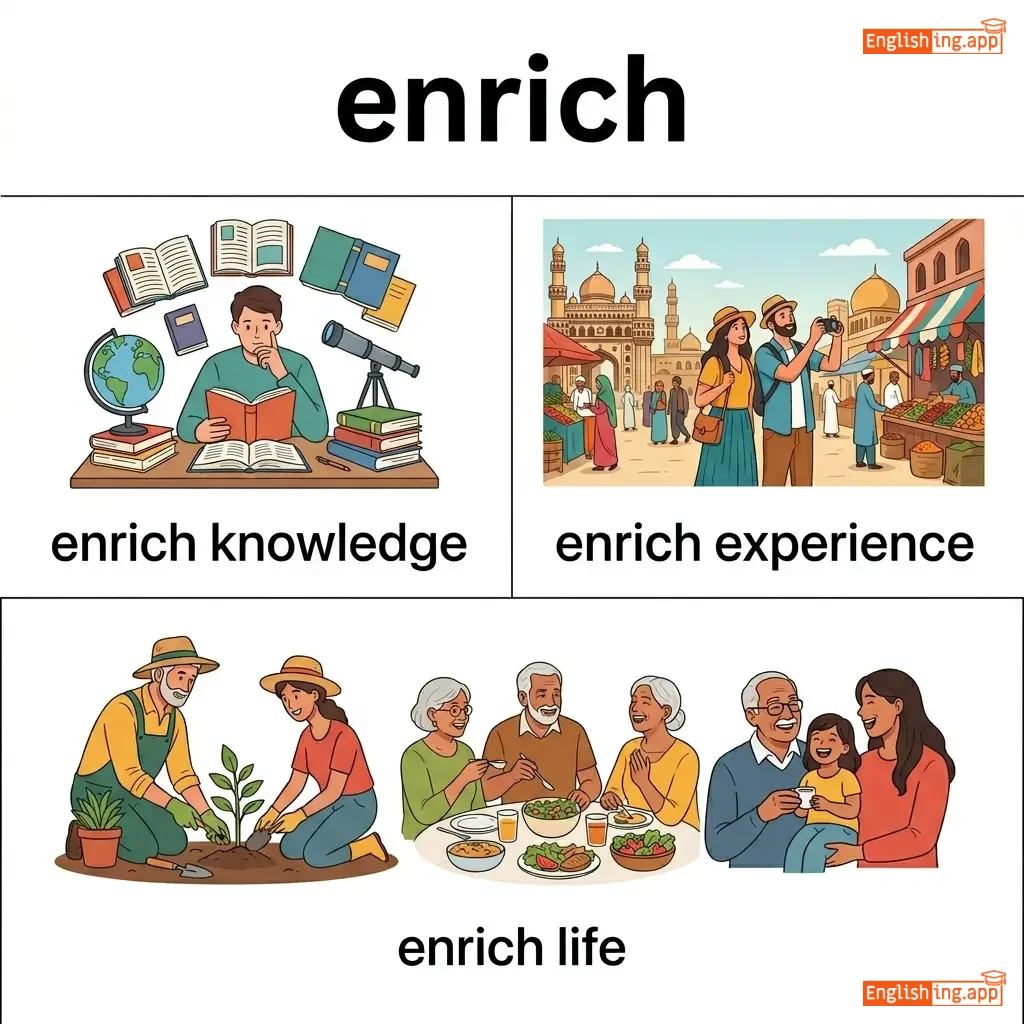
enrich life, enrich experience, enrich knowledge, enrich soil, enrich vocabulary
••••••
|
阅读书籍可以丰富你的词汇。
••••••
|
|
📝
••••••
|
/ɪnˈroʊl/
verb
(恩罗尔)
••••••
|
- •••••• |
报名
baoming
••••••
|
enrolled
恩罗尔德
••••••
|
enrolled
恩罗尔德
••••••
|
enrols
恩罗尔斯
••••••
|
enrolling
恩罗尔英
••••••
|
To officially register or sign up for a course, program, or membership
••••••
|
She decided to enrol in a language course to improve her skills.
她决定报名参加一门语言课程以提高她的技能。
••••••
|
她决定报名参加一门语言课程以提高她的技能。
Ta jueding baoming canjia yimen yuyan kecheng yi tigao ta de jineng.
••••••
|
- •••••• | - •••••• | - •••••• |
register, sign up, join, enlist, enter
••••••
|
withdraw, unregister, cancel
••••••
|
enrol in a course, enrol at a university, enrol for classes, enrol students, enrol members
••••••
|
Enrol sounds like 报名, so remember enrolling = 报名.
••••••
|
|
➡️
••••••
|
/ɪnˈsjuː/
verb
(恩苏)
••••••
|
- •••••• |
发生
fāshēng
••••••
|
ensued
恩苏德
••••••
|
ensued
恩苏德
••••••
|
ensues
恩苏斯
••••••
|
ensuing
恩苏英
••••••
|
to happen as a result or consequence
••••••
|
After the argument, silence ensued.
争论后,沉默随之而来。
••••••
|
争论后,沉默随之而来。
Zhēnglùn hòu, chénmò suízhī ér lái.
••••••
|
- •••••• | - •••••• | - •••••• |
follow, result, occur, arise, develop
••••••
|
precede, cause, prevent
••••••
|
ensue from, chaos ensued, silence ensued, conflict ensued
••••••
|
En-sue 意味着发生,作为某种后果出现。
••••••
|
|
✅
••••••
|
/ɪnˈʃʊər/
verb
(enshūr)
••••••
|
- •••••• |
确保
què bǎo
••••••
|
ensured
enshūrd
••••••
|
ensured
enshūrd
••••••
|
ensures
enshūrs
••••••
|
ensuring
enshūring
••••••
|
To make certain that something will happen or be the case.
••••••
|
Please ensure that the door is locked before you leave.
请确保在离开之前门已锁好。
••••••
|
请确保在离开之前门已锁好。
Qǐng què bǎo zài lí kāi zhī qián mén yǐ suǒ hǎo.
••••••
|
ensure success
确保成功
••••••
|
to guarantee achievement of success
••••••
|
确保成功
què bǎo chéng gōng
••••••
|
guarantee, secure, confirm, assure, safeguard
••••••
|
neglect, ignore, risk
••••••
|
ensure safety, ensure quality, ensure success, ensure compliance
••••••
|
Ensure 代表确保 – 为了成功,你必须确保它发生。
••••••
|
|
🚪
••••••
|
/ˈɛntər/
verb
(entā)
••••••
|
|
进入
jinru
••••••
|
entered
entārd
••••••
|
entered
entārd
••••••
|
enters
entārs
••••••
|
entering
entāring
••••••
|
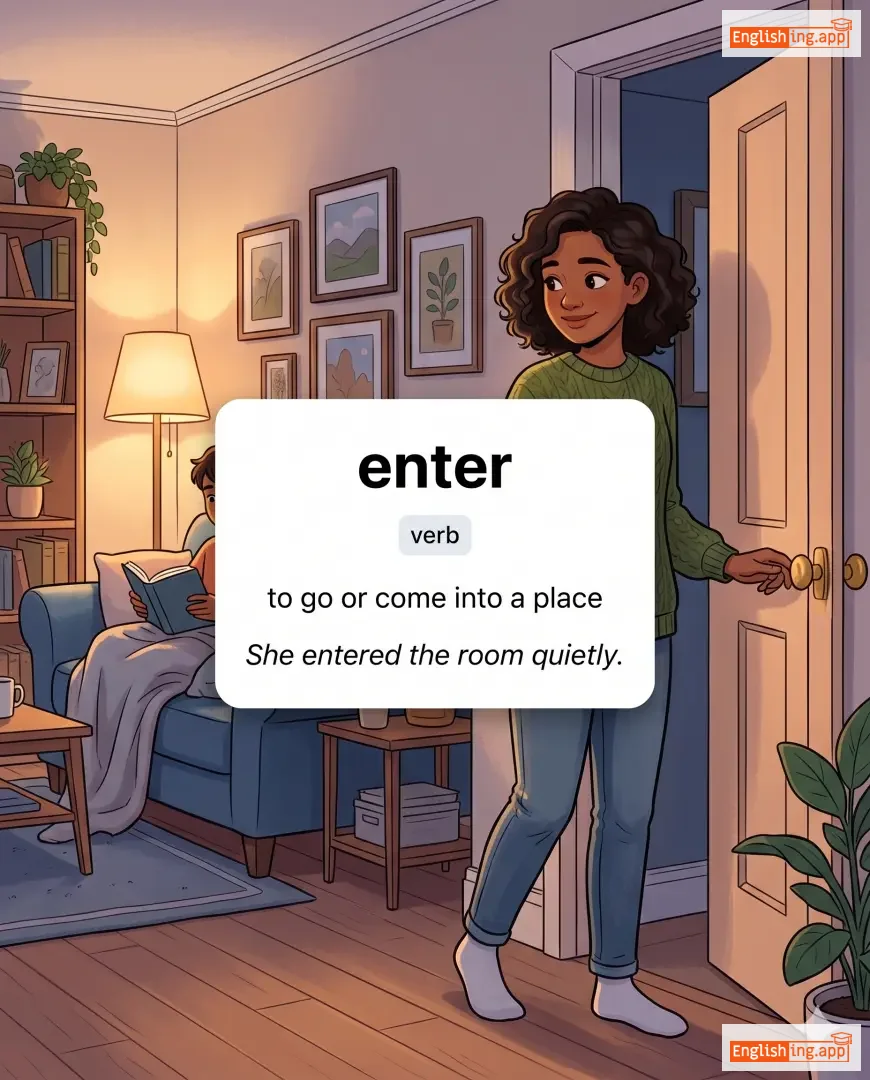
to go or come into a place
••••••
|
She entered the room quietly.
她安静地进入了房间。
••••••
|
她安静地进入了房间。
Tā ānjìng de jìnrù le fángjiān.
••••••
|
enter into an agreement
进入协议
••••••
|
to formally agree to a contract or arrangement
••••••
|
进入协议
jìnrù xiéyì
••••••
|
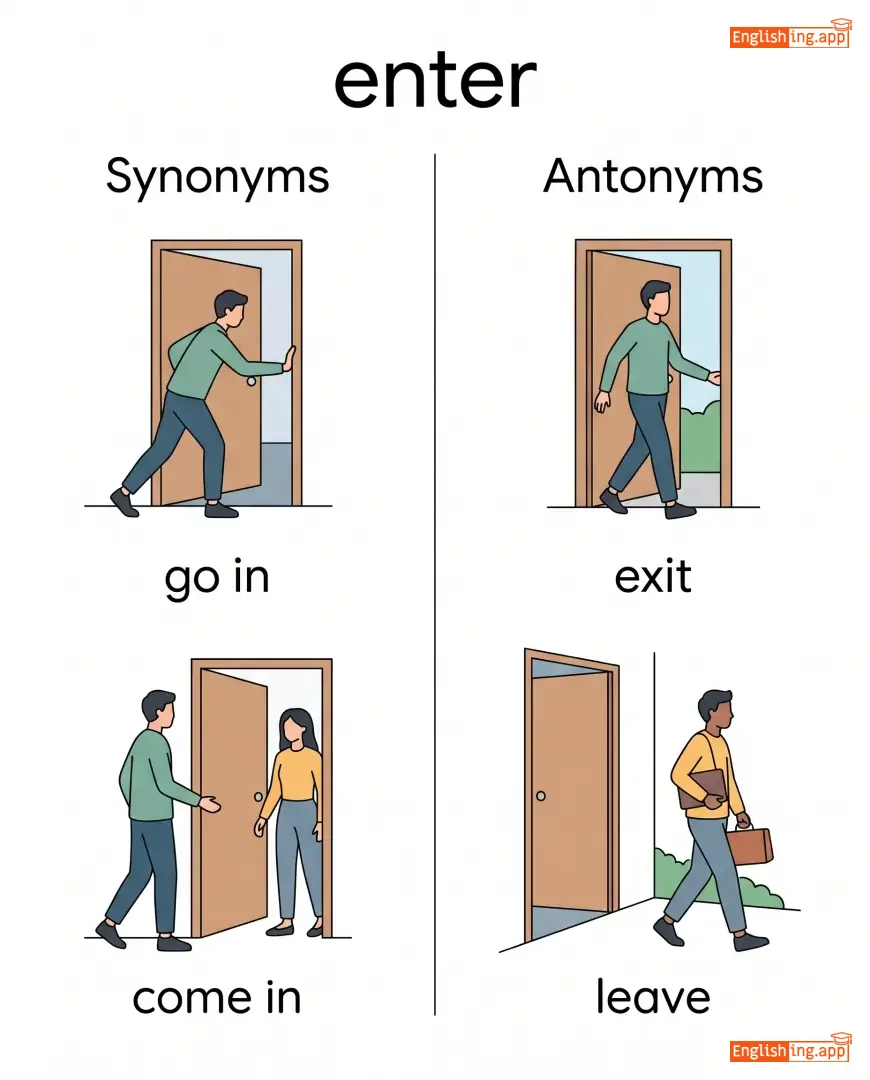
go in, come in, access, penetrate, join
••••••
|
exit, leave, depart
••••••
|
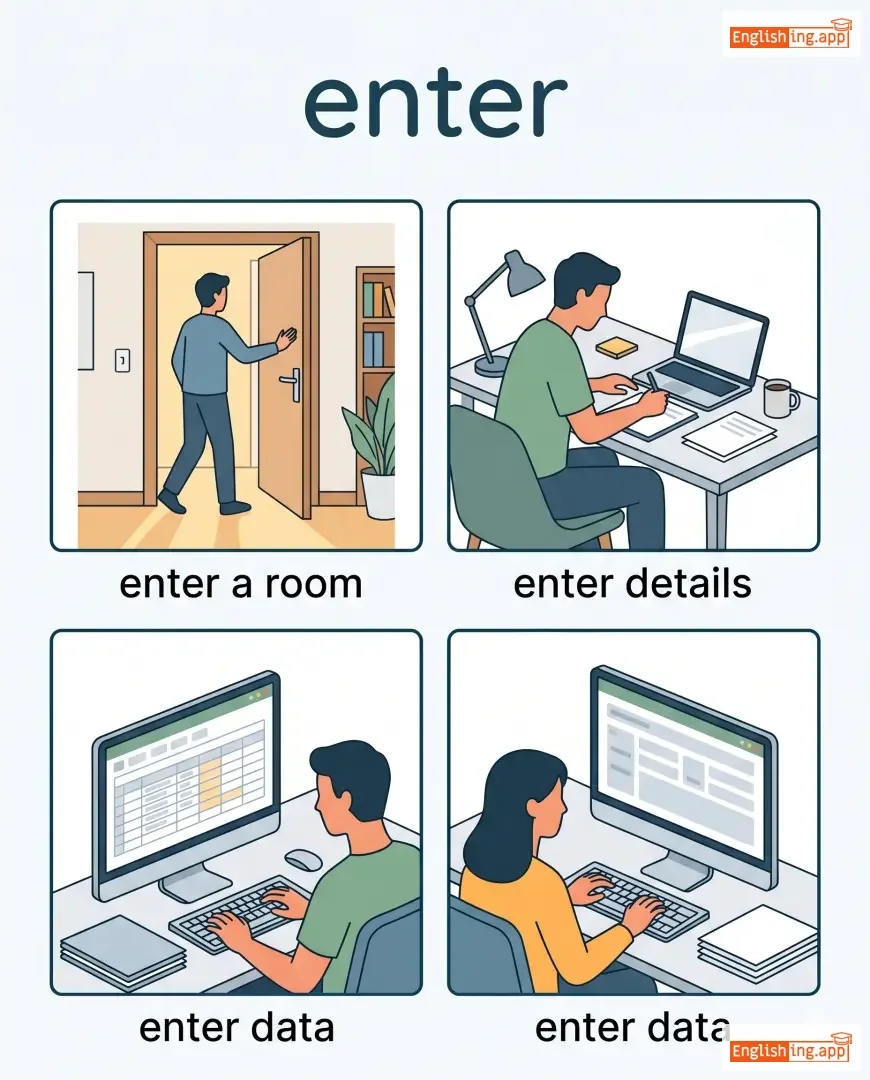
enter a room, enter details, enter data, enter into
••••••
|
按下ENTER键,你进入计算机,就像'进入'的意思。
••••••
|
|
🏢
••••••
|
/ˈɛntərˌpraɪz/
noun
(ài ěn tè pǔ lái zī)
••••••
|
- •••••• |
企业 / 公司
qǐ yè / gōng sī
••••••
|
- •••••• | - •••••• | - •••••• | - •••••• |
a business or company; a project or undertaking that requires effort and initiative
••••••
|
The new enterprise aims to create sustainable energy solutions. |
新企业旨在创建可持续能源解决方案。
xīn qǐ yè zhǐ zài chuàng jiàn kě chí xù néng yuán jiě jué fāng àn.
••••••
|
free enterprise |
an economic system where businesses operate with little government control
••••••
|
自由企业
zì yóu qǐ yè
••••••
|
company, business, venture, organization, initiative
••••••
|
idleness, inactivity, stagnation
••••••
|
large enterprise, small enterprise, business enterprise, free enterprise
••••••
|
Enterprise 就是进入并赢得奖品——如同建立一个成功的企业。
••••••
|
|
🎭
••••••
|
/ˌɛntərˈteɪn/
verb
••••••
|
- •••••• | - •••••• |
entertained
••••••
|
entertained
••••••
|
entertains
••••••
|
entertaining
••••••
|
to provide amusement, enjoyment, or hospitality to others
••••••
|
The comedian entertained the audience with his jokes. |
- •••••• |
entertain an idea |
to consider or allow a thought or possibility in one’s mind
••••••
|
- •••••• |
amuse, delight, engage, host, please
••••••
|
bore, neglect, ignore
••••••
|
entertain guests, entertain an idea, entertain the audience, entertain children
••••••
|
No •••••• |
|
🎭
••••••
|
/ˌen.təˈteɪ.nɪŋ/
adjective
(娱乐的)
••••••
|
- •••••• |
娱乐的; 有趣且引人入胜
yúlè de; yǒuqù qiě yǐn rén rù shèng
••••••
|
- •••••• | - •••••• | - •••••• | - •••••• |
providing amusement or enjoyment; funny and engaging
••••••
|
The comedian's performance was very entertaining and kept the audience laughing. |
那位喜剧演员的表演非常娱乐,观众笑声不断。
Nà wèi xǐjù yǎnyuán de biǎoyǎn fēicháng yúlè, guānzhòng xiàoshēng bùduàn.
••••••
|
- •••••• | - •••••• | - •••••• |
amusing, enjoyable, funny, engaging
••••••
|
boring, dull, tedious, uninteresting
••••••
|
entertaining show, entertaining story, entertaining guest
••••••
|
娱乐的 = 有趣; 使表演娱乐的关键是它有趣且引人入胜!
••••••
|
|
🎭
••••••
|
/ˌɛntərˈteɪnmənt/
noun
(娱乐)
••••••
|
- •••••• |
娱乐
yúlè
••••••
|
- •••••• | - •••••• | - •••••• | - •••••• |
something that amuses, pleases, or diverts
••••••
|
The concert was a great source of entertainment. |
音乐会是一个极好的娱乐来源。
Yīnyuè huì shì yīgè jí hǎo de yúlè láiyuán.
••••••
|
light entertainment |
amusing or simple shows intended to entertain
••••••
|
轻松娱乐
qīngsōng yúlè
••••••
|
amusement, recreation, fun, show, enjoyment
••••••
|
boredom, dullness
••••••
|
form of entertainment, entertainment industry, entertainment show, provide entertainment
••••••
|
电视上的娱乐意味着娱乐观众。
••••••
|
|
🔥
••••••
|
/ɪnˈθjuːziæzəm/
noun
(enthusiasm)
••••••
|
- •••••• |
热情
reqing
••••••
|
- •••••• | - •••••• | - •••••• | - •••••• |
intense and eager enjoyment, interest, or approval
••••••
|
His enthusiasm for teaching inspired his students. |
他对教学的热情激励了他的学生。
Ta dui jiaoxue de reqing jili le tade xuesheng.
••••••
|
burst of enthusiasm |
a sudden show of excitement and energy
••••••
|
热情爆发
reqing baofa
••••••
|
excitement, eagerness, passion, zeal, fervor
••••••
|
apathy, indifference, boredom
••••••
|
show enthusiasm, full of enthusiasm, enthusiasm for
••••••
|
热情就是你对新事物的极大兴趣和享受。
••••••
|
|
⚽
••••••
|
/ɪnˈθuziæst/
noun
(enthusiast)
••••••
|
- •••••• |
爱好者
aihaozhe
••••••
|
- •••••• | - •••••• | - •••••• | - •••••• |
a person who is very interested in a particular activity or subject
••••••
|
He is a football enthusiast and watches every match.
他是一个足球爱好者,看每一场比赛。
••••••
|
他是一个足球爱好者,看每一场比赛。
Ta shi yige zuqiu aihaozhe, kan mei yi chang bisai.
••••••
|
- •••••• | - •••••• | - •••••• |
fan, admirer, follower, devotee
••••••
|
disinterested, indifferent, apathetic
••••••
|
enthusiast of sports, music enthusiast, car enthusiast
••••••
|
EN-THUSIASTic about your favorite hobby!
••••••
|
|
😁
••••••
|
/ɪnˌθjuːziˈæstɪk/
adjective
(恩图西亚斯提克)
••••••
|
|
热衷的
rèzhōng de
••••••
|
- •••••• | - •••••• | - •••••• | - •••••• |
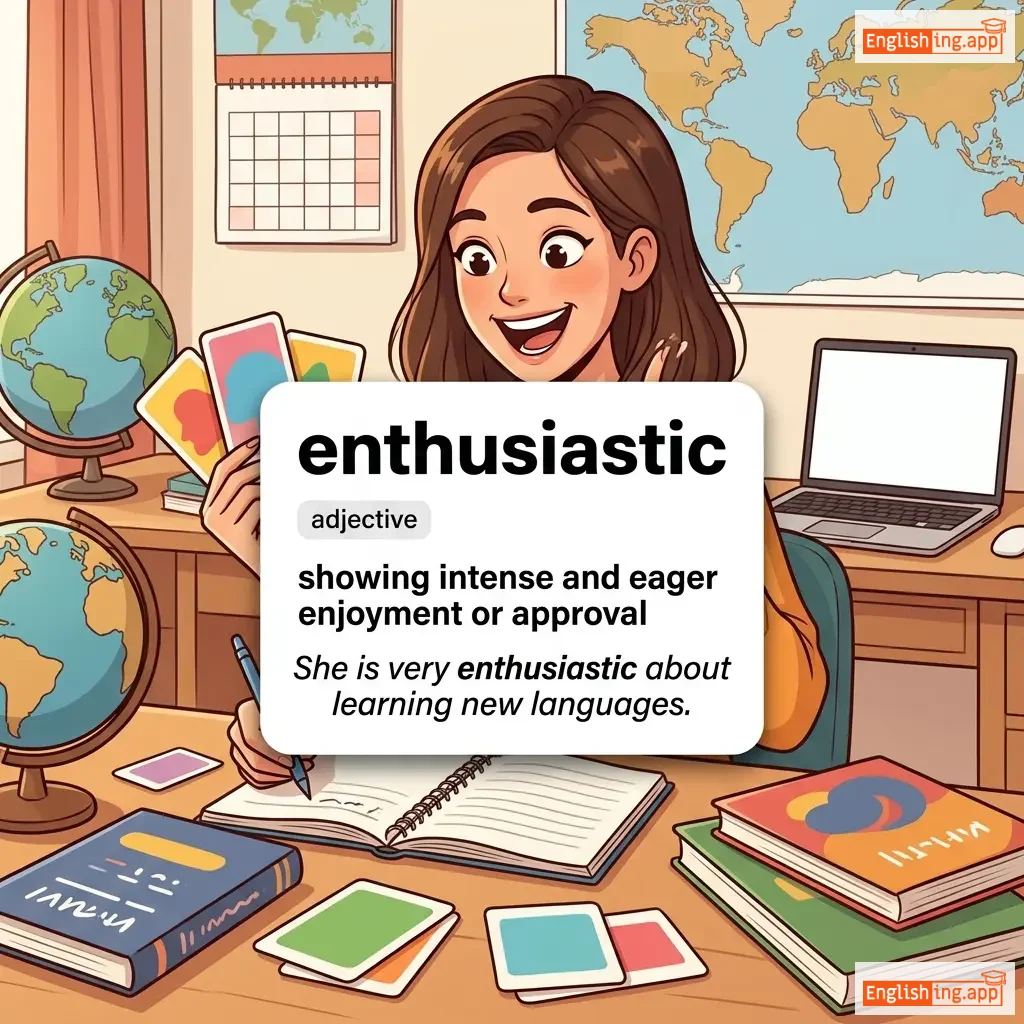
showing intense and eager enjoyment or approval
••••••
|
She is very enthusiastic about learning new languages. |
她非常热衷于学习新语言。
Tā fēicháng rèzhōng yú xuéxí xīn yǔyán.
••••••
|
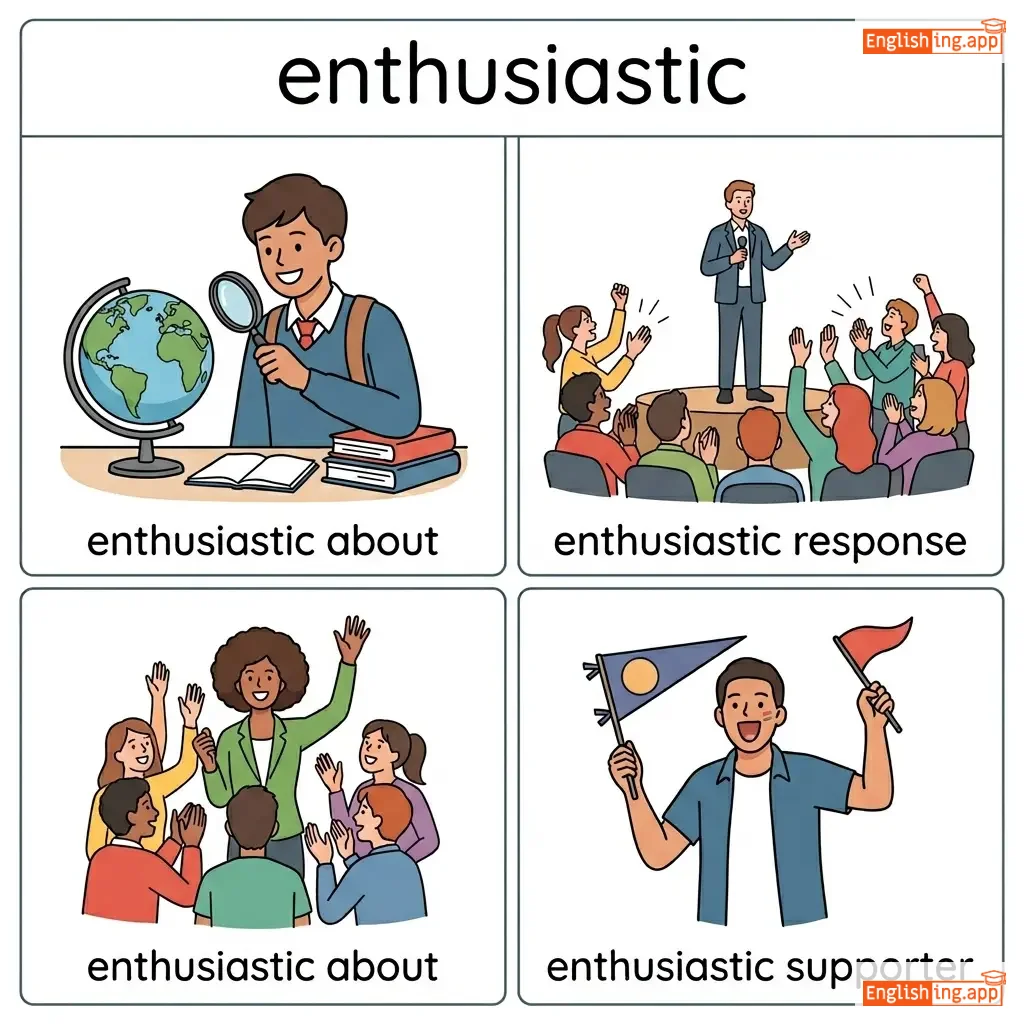
enthusiastic supporter |
someone who shows strong support with excitement
••••••
|
热衷的支持者
rèzhōng de zhīchí zhě
••••••
|
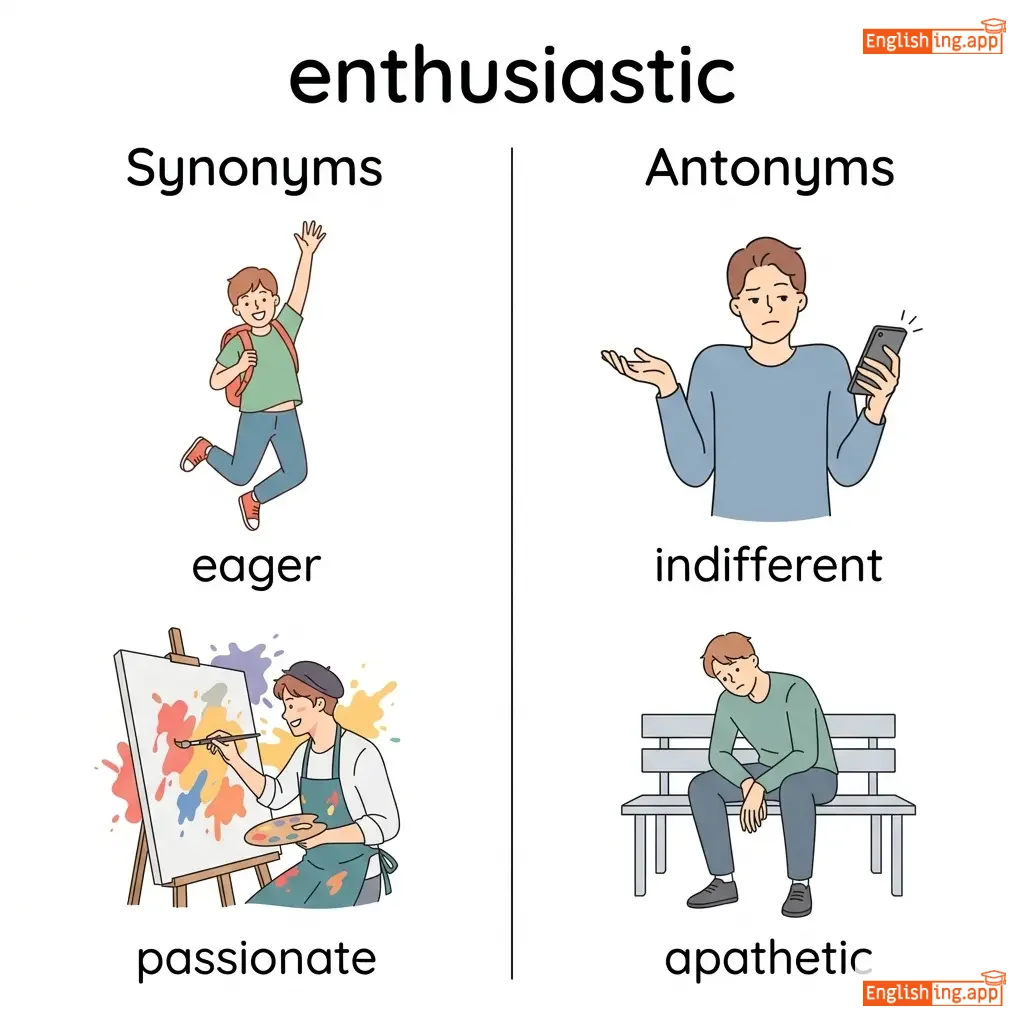
eager, passionate, excited, devoted
••••••
|
indifferent, apathetic, uninterested
••••••
|
enthusiastic about, enthusiastic response, enthusiastic supporter
••••••
|
热衷代表着'enthusiastic',就是充满热情支持的人。
••••••
|

