|
絵文字
|
単語 | Images | 翻訳 | 過去 | 過去分詞 | 三人称単数 | 動名詞 | 意味 | 例文 | 例文の翻訳 | 表現例 | 表現例の意味 | 表現例の翻訳 | 同義語 | 対義語 | コロケーション | ニーモニック |
|---|---|---|---|---|---|---|---|---|---|---|---|---|---|---|---|---|---|
|
🔄
••••••
|
/kənˈvɜːrt/
verb
(コンヴァート)
••••••
|
|
変換する
henkan suru
••••••
|
converted
コンヴァーテッド
••••••
|
converted
コンヴァーテッド
••••••
|
converts
コンヴァーツ
••••••
|
converting
コンヴァーティング
••••••
|
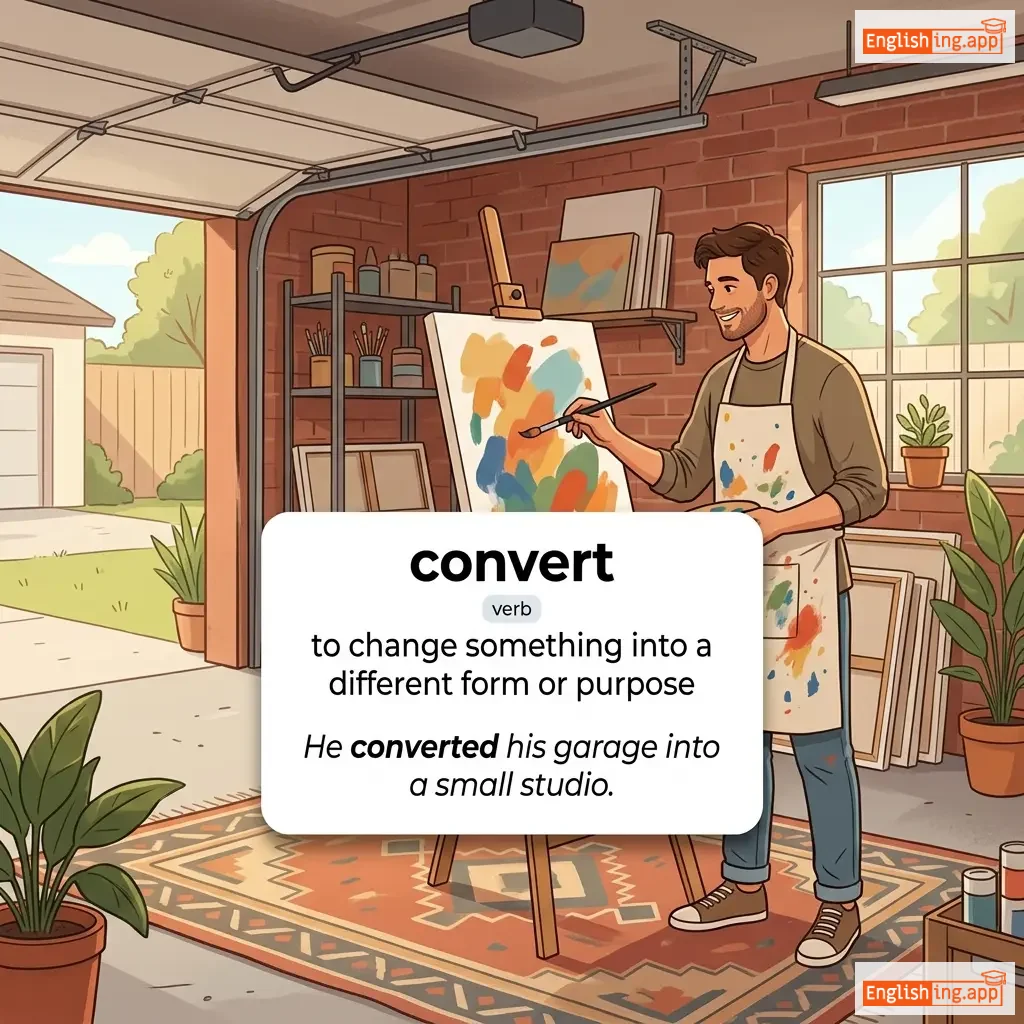
to change from one form to another; to transform
••••••
|
We can convert this room into an office.
この部屋をオフィスに変えることができます。
••••••
|
この部屋をオフィスに変えることができます。
Kono heya o ofisu ni kaeru koto ga dekimasu.
••••••
|
- •••••• | - •••••• | - •••••• |
change, transform, modify, alter, switch
••••••
|
maintain, preserve, keep, retain
••••••
|
convert to, convert into, convert from, easily convert
••••••
|
変換は部屋をオフィスに変えるようなものです。
••••••
|
|
🔄
••••••
|
/kənˈvɜːrtər/
noun
(コンバーター)
••••••
|
- •••••• |
変換器
henkanki
••••••
|
- •••••• | - •••••• | - •••••• | - •••••• |
a device or person that changes something from one form, system, or use to another; a tool that converts data, energy, or materials
••••••
|
The engineer used a converter to change AC power into DC power.
エンジニアは交流電力を直流に変えるためにコンバーターを使いました。
••••••
|
エンジニアは交流電力を直流に変えるために変換器を使いました。
enjinia wa kouryuu denryoku o chiryuu ni kaeru tame ni henkanki o tsukaimashita
••••••
|
- •••••• | - •••••• | - •••••• |
transformer, adapter, changer, modifier, transducer
••••••
|
source, original, generator
••••••
|
power converter, data converter, currency converter, file converter, voltage converter
••••••
|
コンバーターは変換器—convertする機械。
••••••
|
|
📦
••••••
|
/kənˈveɪ/
verb
(kənˈveɪ)
••••••
|

|
伝える、表現する
tsutaeru, hyōgen suru
••••••
|
conveyed
kənˈveɪd
••••••
|
conveyed
kənˈveɪd
••••••
|
conveys
kənˈveɪz
••••••
|
conveying
kənˈveɪɪŋ
••••••
|
to transport; to communicate or express; to transfer
••••••
|
The painting conveys a sense of peace and tranquility.
その絵は平和と静けさの感覚を伝えています。
••••••
|
その絵は平和と静けさの感覚を伝えています。
Sono e wa heiwa to shizukesa no kankaku o tsutaeteimasu.
••••••
|
- •••••• | - •••••• | - •••••• |
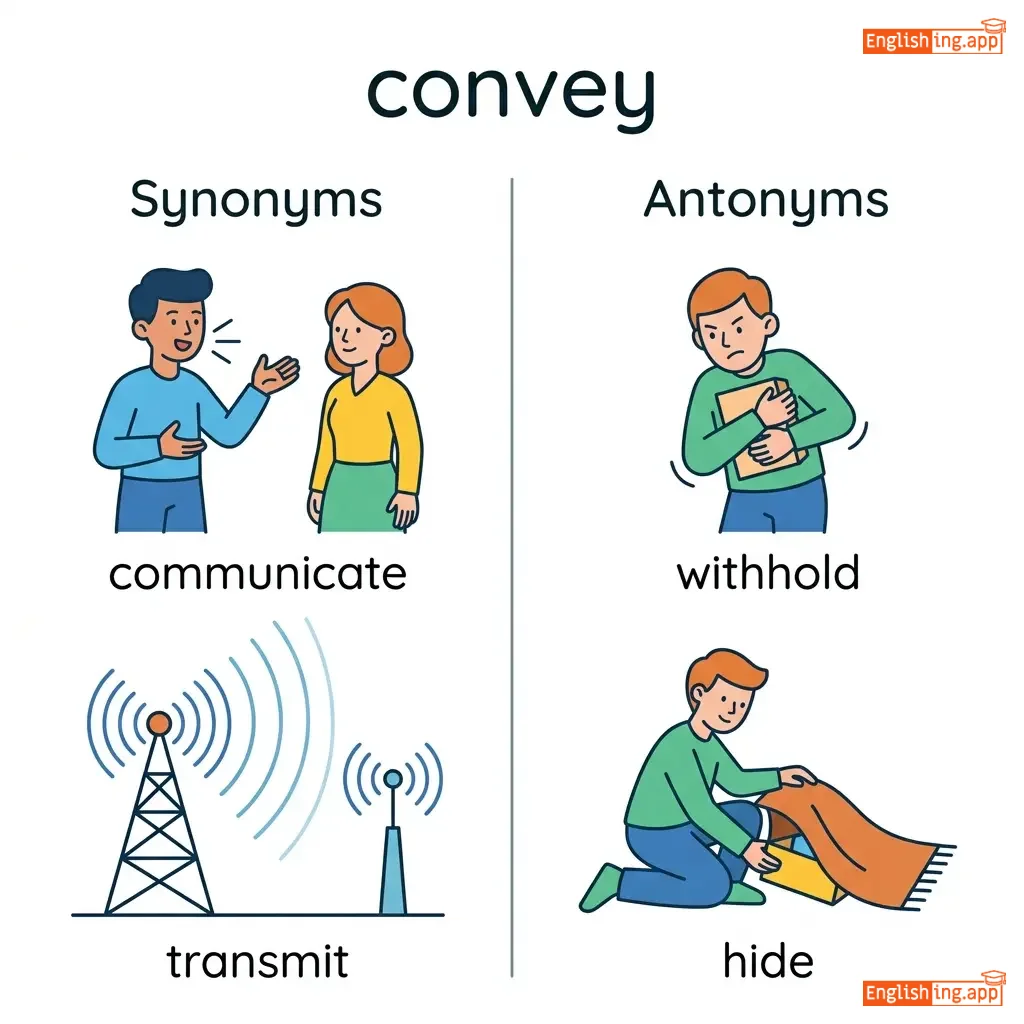
transport, communicate, express, transfer
••••••
|
withhold, conceal, hide, retain
••••••
|
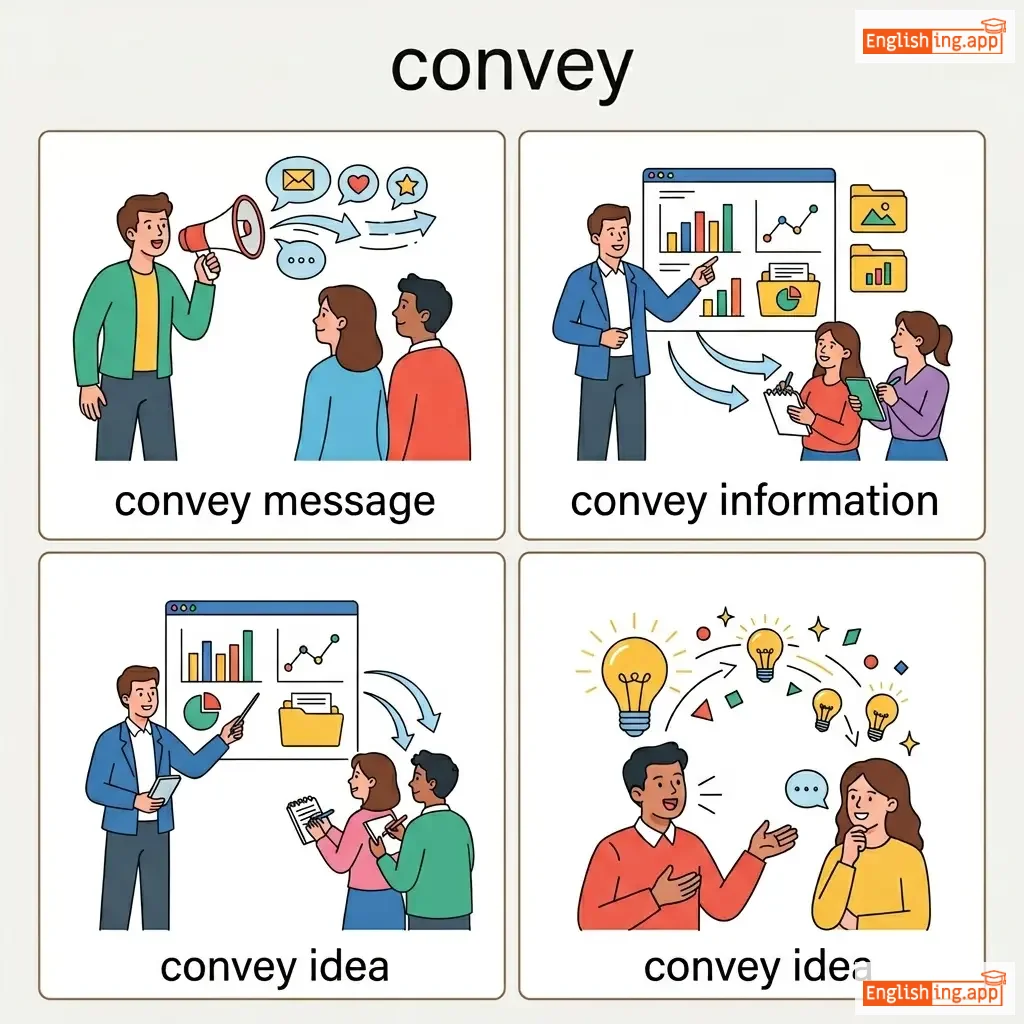
convey message, convey meaning, convey information, convey emotion, convey clearly
••••••
|
Conveying peace in art—just like transporting calm.
••••••
|
|
⚖️
••••••
|
/ˈkɒnvɪkt/
verb
(コンヴィクト)
••••••
|
- •••••• |
有罪判決を下す
yūzai hanketsu wo kudasu
••••••
|
convicted
コンヴィクテッド
••••••
|
convicted
コンヴィクテッド
••••••
|
convicts
コンヴィクツ
••••••
|
convicting
コンヴィクティング
••••••
|
to find someone guilty of a crime in a court of law
••••••
|
The court convicted him of theft.
裁判所は彼を窃盗罪で有罪とした。
••••••
|
裁判所は彼を窃盗罪で有罪とした。
Saibansho wa kare wo settō-zai de yūzai to shita.
••••••
|
convict someone of a crime
犯罪で誰かを有罪にする
••••••
|
to declare someone guilty of committing a particular crime
••••••
|
犯罪で誰かを有罪にする
Hanzai de dareka wo yūzai ni suru
••••••
|
sentence, condemn, judge, declare guilty
••••••
|
acquit, pardon
••••••
|
convict of murder, convicted criminal, convict someone, convict by jury
••••••
|
Convictは'conviction'からきていて、法廷が誰かを有罪にすることを指す。
••••••
|
|
⚖️
••••••
|
/kənˈvɪkʃən/
noun
(kənˈvɪkʃən)
••••••
|
|
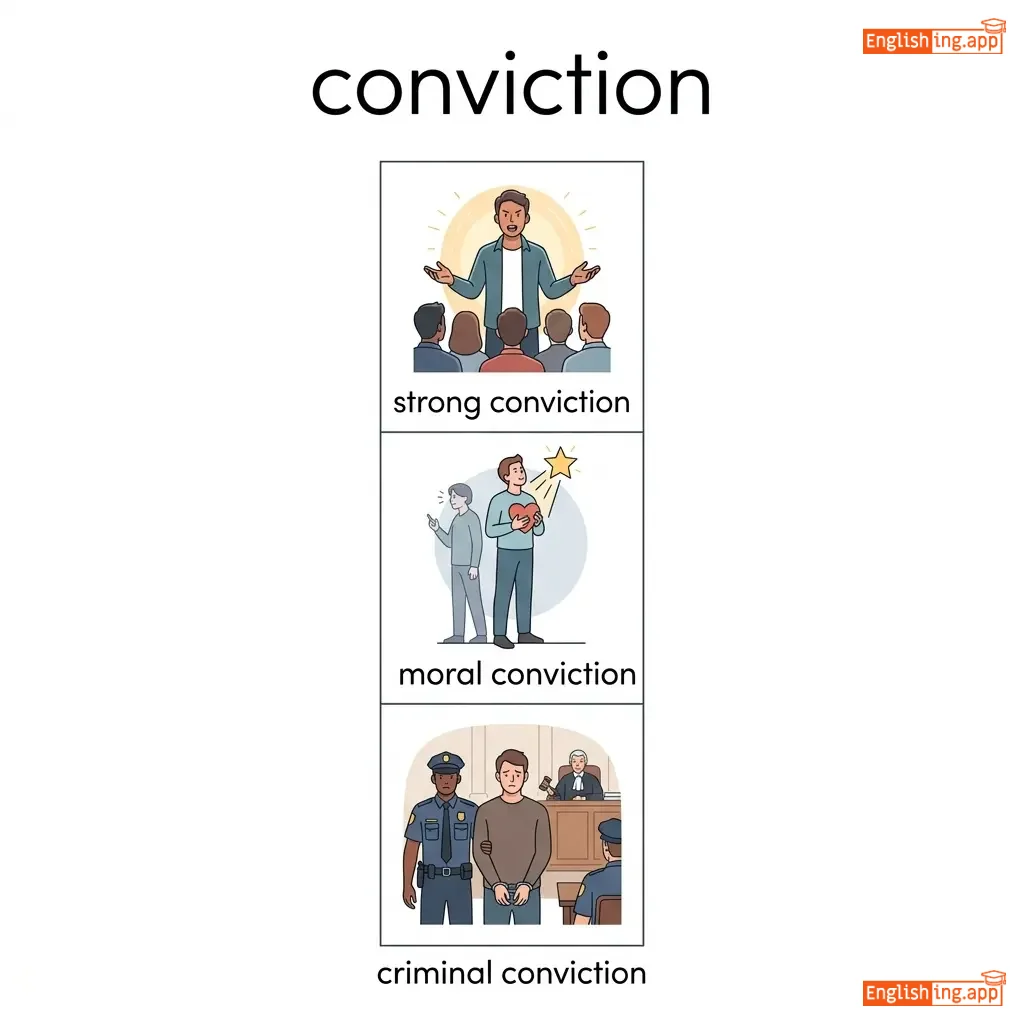
確固たる信念, 有罪判決
kakkotaru shinnen, yūzai hanketsu
••••••
|
- •••••• | - •••••• | - •••••• | - •••••• |
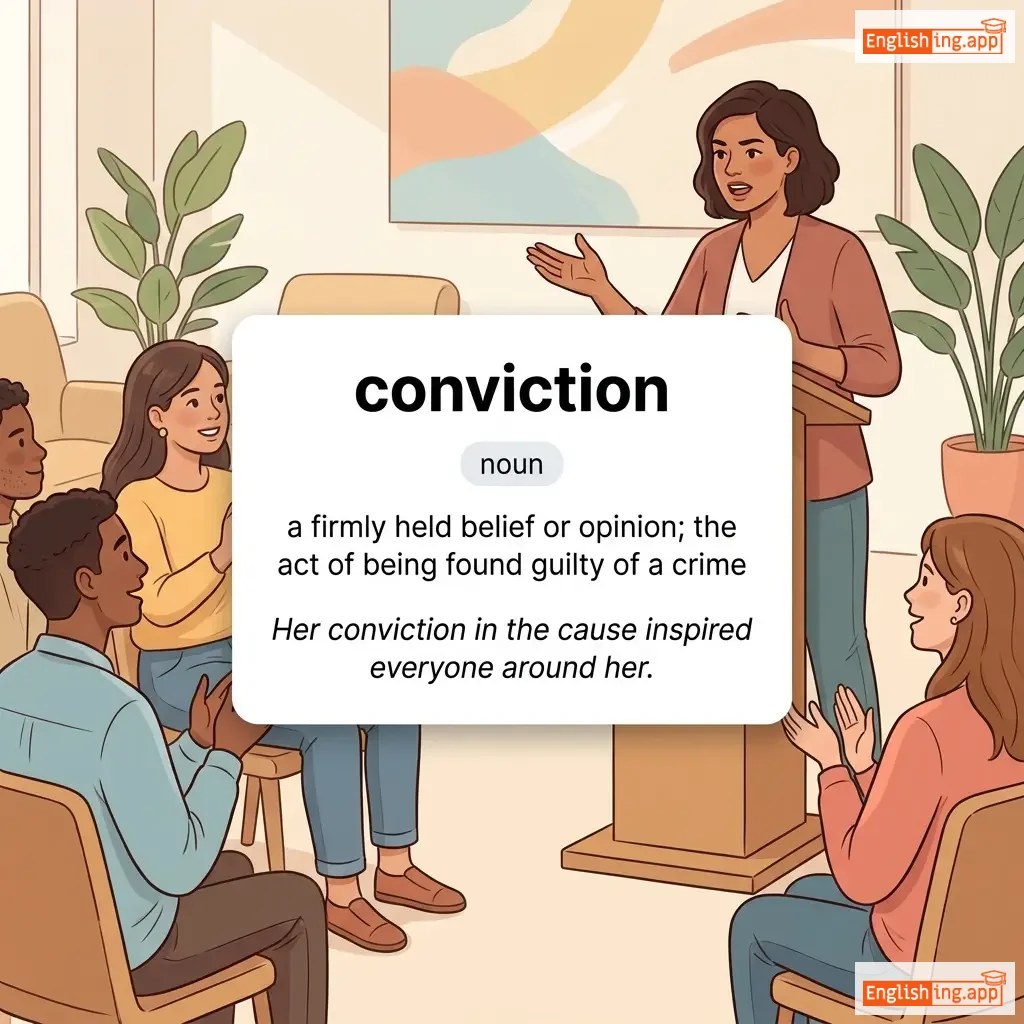
a firmly held belief or opinion; the act of being found guilty of a crime
••••••
|
Her conviction in the cause inspired everyone around her. |
彼女のその理由への確固たる信念は、周りの全ての人々に刺激を与えました。
Kanojo no sono riyū e no kakkotaru shinnen wa, mawari no subete no hitobito ni shigeki o ataemashita.
••••••
|
- •••••• | - •••••• | - •••••• |
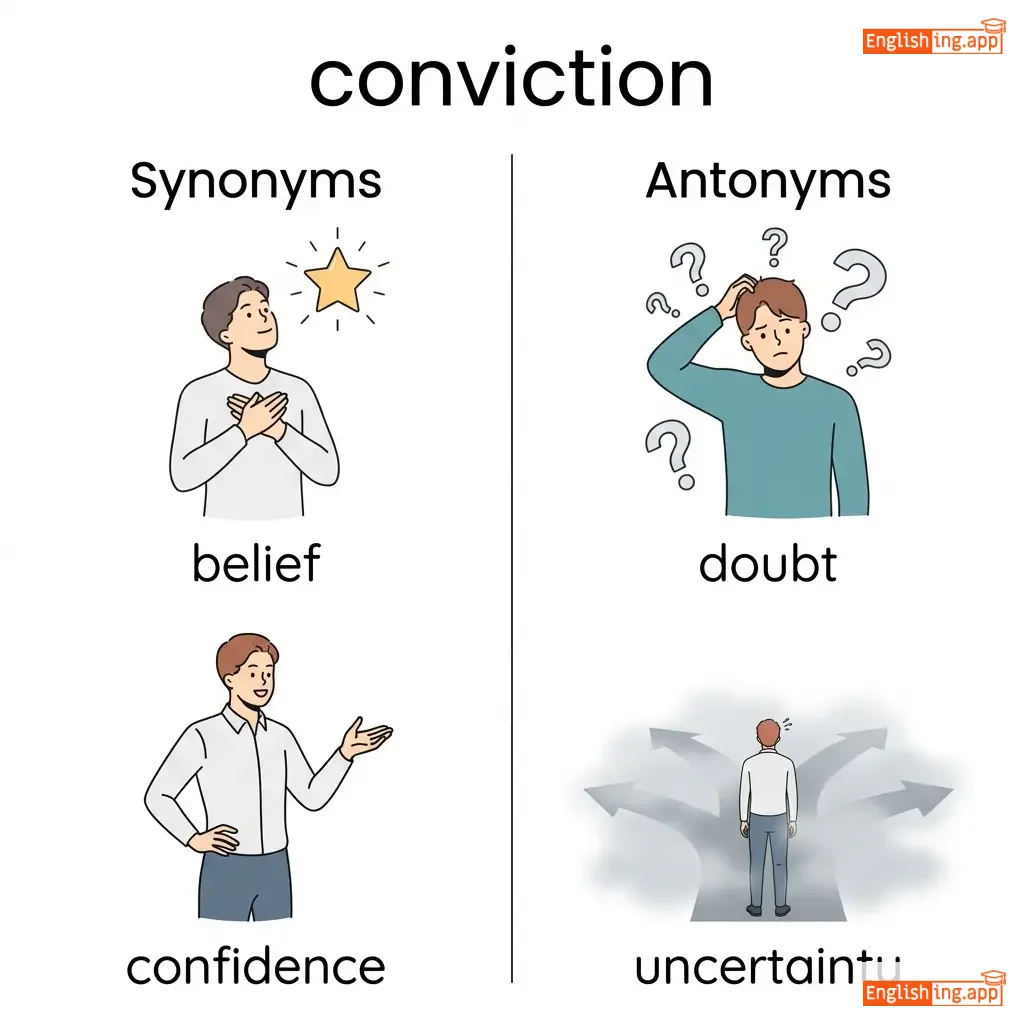
belief, confidence, certainty, faith
••••••
|
doubt, uncertainty, skepticism
••••••
|
strong conviction, moral conviction, criminal conviction
••••••
|
Convictionは確固たる信念、あなたのconvictionを持ち続けましょう
••••••
|
|
🗣️
••••••
|
/kənˈvɪns/
verb
(コンヴィンス)
••••••
|
- •••••• |
納得させる
nattoku saseru
••••••
|
convinced
コンヴィンスド
••••••
|
convinced
コンヴィンスド
••••••
|
convinces
コンヴィンスズ
••••••
|
convincing
コンヴィンシング
••••••
|
to make someone believe or feel certain about something
••••••
|
She convinced him to attend the meeting.
彼女は彼に会議に参加するように納得させた。
••••••
|
彼女は彼に会議に参加するように納得させた。
Kanojo wa kare ni kaigi ni sanka suru you ni nattoku saseta.
••••••
|
- •••••• | - •••••• | - •••••• |
persuade, assure, sway, influence
••••••
|
dissuade, discourage
••••••
|
convince someone, convince the jury, convince oneself, convince others
••••••
|
納得させる: 物事を納得させて会議に参加させよう
••••••
|
|
💪
••••••
|
/kənˈvɪnsɪŋ/
adjective
(コンビンシング)
••••••
|
- •••••• |
説得力のある; 信頼できる; 説得力のある; 誰かに何かを信じさせることができる
settokuryoku no aru
••••••
|
- •••••• | - •••••• | - •••••• | - •••••• |
believable; credible; persuasive; able to make someone believe something
••••••
|
His convincing argument won over the entire jury.
彼の説得力のある議論は陪審員全体を納得させました。
••••••
|
彼の説得力のある議論は全陪審員を納得させました。
Kare no settokuryoku no aru giron wa zen peishin'in o nattoku sasemashita.
••••••
|
- •••••• | - •••••• | - •••••• |
persuasive, compelling, believable, credible
••••••
|
unconvincing, doubtful, weak, implausible
••••••
|
convincing evidence, convincing performance, convincing argument
••••••
|
Convincing = 説得力のある (説得する力がある)
••••••
|
|
👩🍳
••••••
|
/kʊk/
verb
(kuku)
••••••
|
|
料理する
ryōri suru
••••••
|
cooked
kukkudo
••••••
|
cooked
kukkudo
••••••
|
cooks
kukkusu
••••••
|
cooking
kukkingu
••••••
|
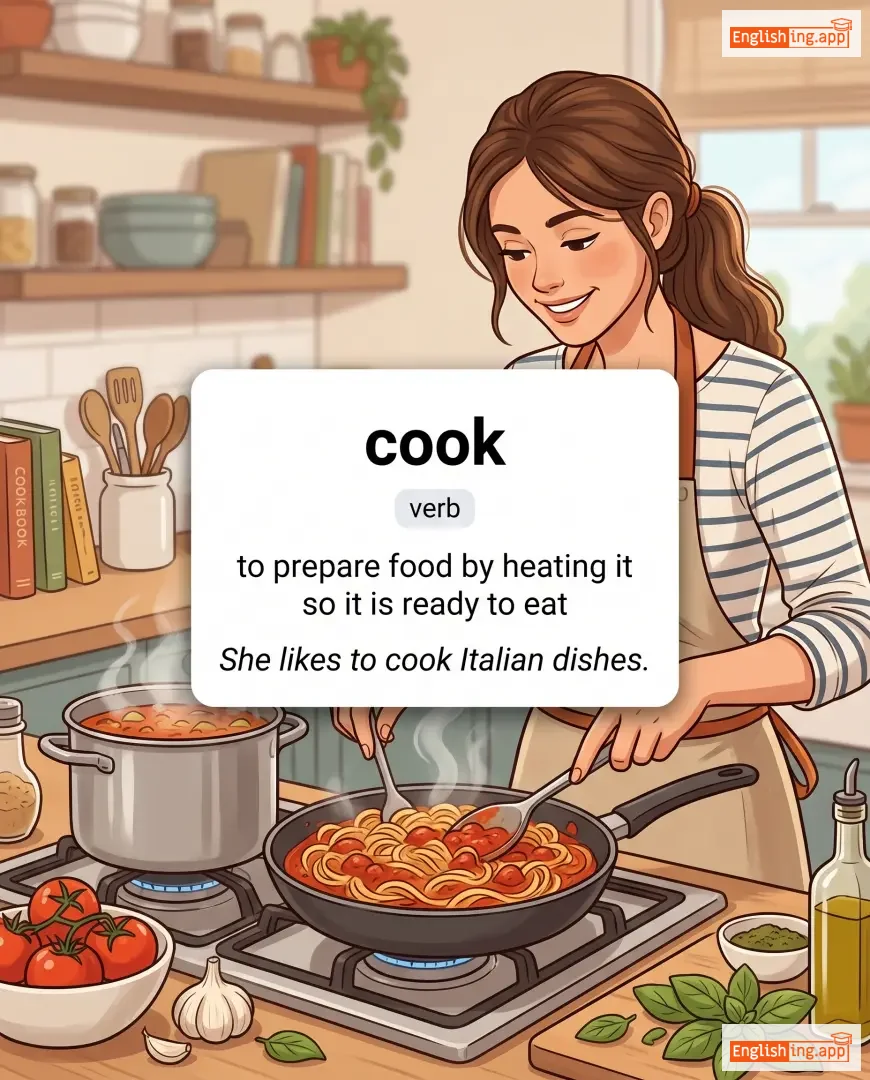
to prepare food by heating it so it is ready to eat
••••••
|
She likes to cook Italian dishes.
彼女はイタリア料理を作るのが好きです。
••••••
|
彼女はイタリア料理を作るのが好きです。
Kanojo wa Itaria ryōri o tsukuru no ga suki desu.
••••••
|
cook up a storm
大騒ぎで料理する
••••••
|
to prepare a lot of food enthusiastically
••••••
|
元気よくたくさんの料理を作る
genki yoku takusan no ryōri o tsukuru
••••••
|
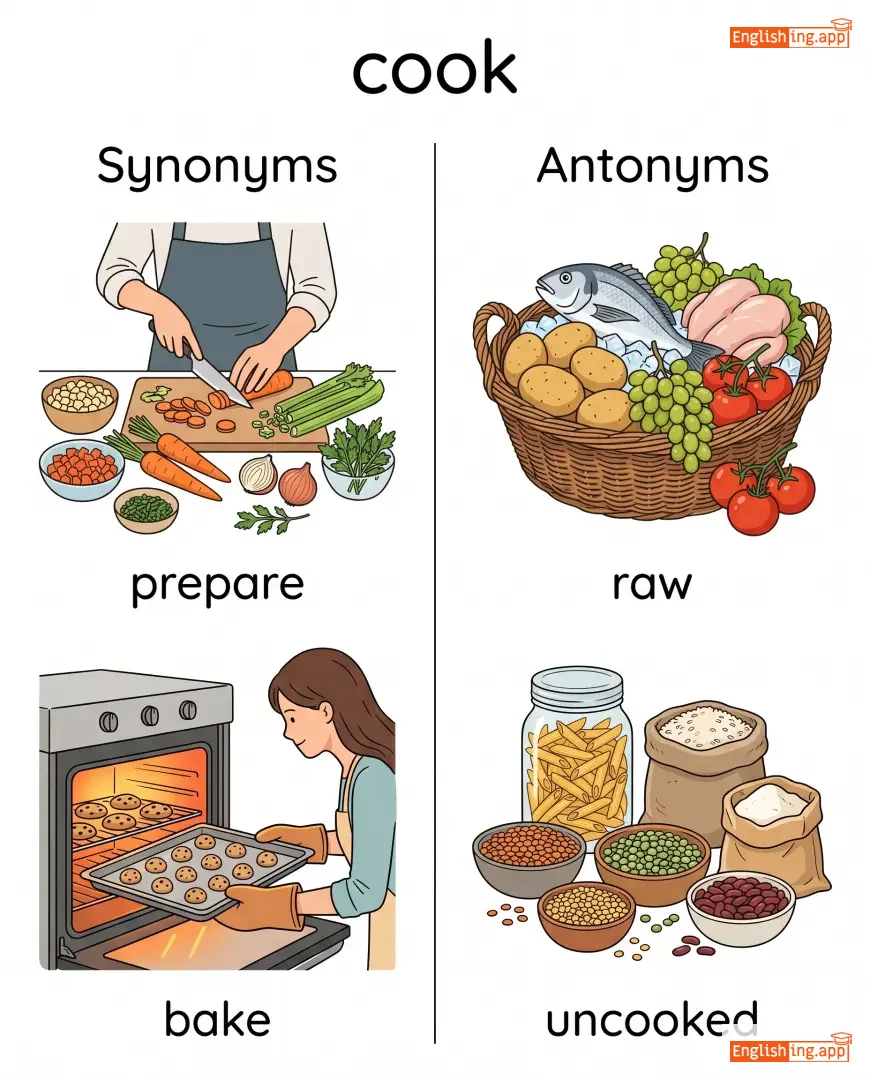
prepare, bake, fry, roast, grill
••••••
|
raw, uncooked, freeze
••••••
|
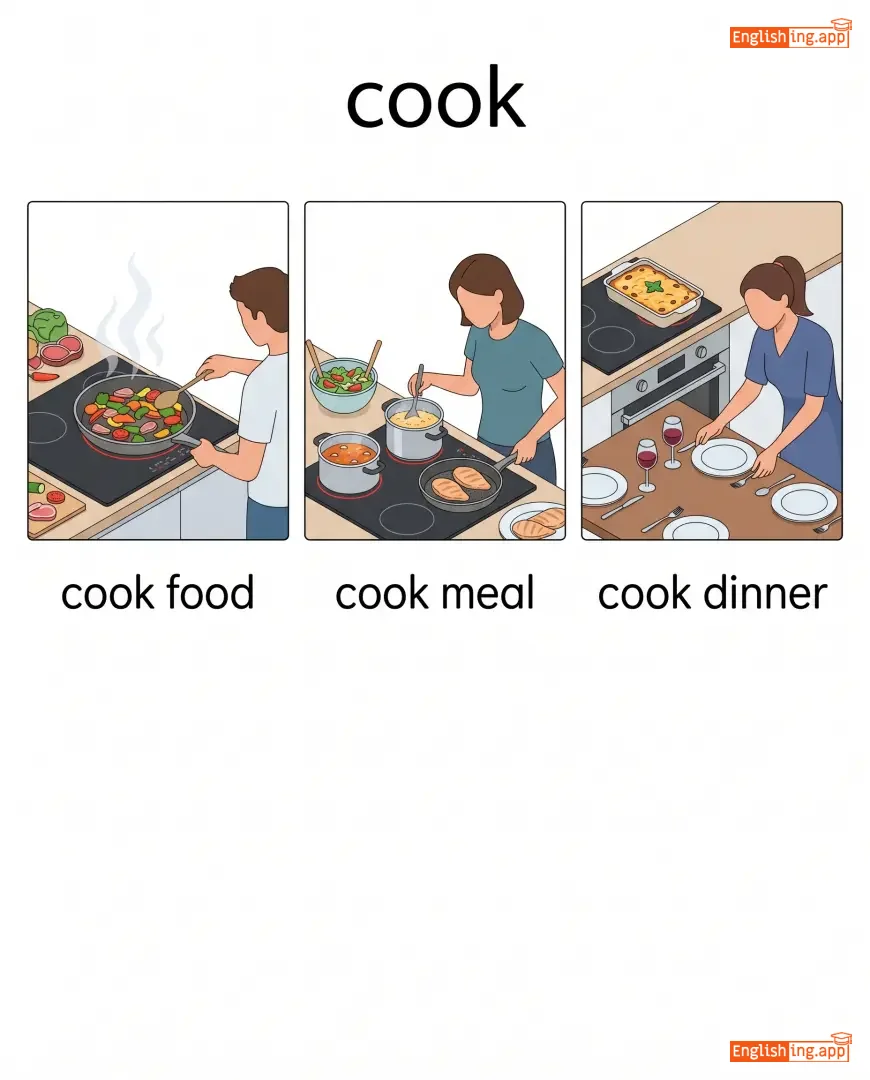
cook food, cook meal, cook dinner, cook rice
••••••
|
料理するのは食べるだけではなく、楽しいことだ!
••••••
|
|
🍲
••••••
|
/ˈkʊkər/
noun
(クッカー)
••••••
|
- •••••• |
調理器; 炊飯器
chouriki; suihanki
••••••
|
- •••••• | - •••••• | - •••••• | - •••••• |
a device or appliance used for cooking food; a person or thing that cooks
••••••
|
The rice cooker makes cooking meals much easier.
炊飯器は料理を簡単にします。
••••••
|
炊飯器は料理をとても簡単にします。
suihanki wa ryouri o totemo kantan ni shimasu
••••••
|
pressure cooker situation
プレッシャークッカーの状況
••••••
|
a situation that causes stress or tension because of pressure
••••••
|
プレッシャークッカーの状況
puresshaa kukkaa no joukyou
••••••
|
stove, oven, cooktop, boiler, appliance
••••••
|
freezer, cooler
••••••
|
rice cooker, pressure cooker, electric cooker, gas cooker, slow cooker
••••••
|
クッカーで料理—cookする道具
••••••
|
|
🍪
••••••
|
/ˈkʊki/
noun
(クッキー)
••••••
|
- •••••• |
クッキー
kukkī
••••••
|
- •••••• | - •••••• | - •••••• | - •••••• |
a small sweet baked food, usually with flour, sugar, and butter
••••••
|
She offered me a chocolate chip cookie. |
彼女は私にチョコチップクッキーをくれました。
Kanojo wa watashi ni choko chippu kukkī o kuremashita.
••••••
|
smart cookie |
a clever and intelligent person
••••••
|
賢い人
kashikoi hito
••••••
|
biscuit, sweet, snack, cracker, treat
••••••
|
meal, entree, main course
••••••
|
chocolate cookie, cookie jar, cookie dough, sugar cookie
••••••
|
クッキーは甘くて美味しい、賢い人も同じように賢い!
••••••
|
|
🍳
••••••
|
/ˈkʊkɪŋ/
noun/verb
(クッキング)
••••••
|
- •••••• |
料理
ryōri
••••••
|
- •••••• | - •••••• | - •••••• |
cooking
クッキング
••••••
|
the process of preparing food by heating it
••••••
|
Cooking is one of my favorite hobbies.
クッキングは私の好きな趣味の一つです。
••••••
|
料理は私の好きな趣味の一つです。
Ryōri wa watashi no sukina shumi no hitotsu desu.
••••••
|
what’s cooking?
何が起こっているの?
••••••
|
a way of asking what's happening or going on
••••••
|
何が起こっているの?
Nani ga okotte iru no?
••••••
|
preparing, baking, frying, roasting, making food
••••••
|
raw, uncooked, unprepared
••••••
|
cooking skills, cooking oil, cooking class, cooking style
••••••
|
Cookingとは、楽しい料理の時間です!
••••••
|
|
😎
••••••
|
/kuːl/
adjective
(クール)
••••••
|
- •••••• |
冷たい, 落ち着いた, 印象的
tsumetai, ochitsuita, inshōteki
••••••
|
- •••••• | - •••••• | - •••••• | - •••••• |
moderately cold; calm and composed; fashionable or impressive
••••••
|
She kept a cool head during the crisis.
彼女は危機の中で冷静を保った。
••••••
|
彼女は危機の中で冷静を保った。
Kanojo wa kiki no naka de reisei o tamotta.
••••••
|
cool as a cucumber
キュウリのようにクール
••••••
|
very calm and composed, especially in a difficult situation
••••••
|
キュウリのようにクール
Kyūri no yō ni kūru
••••••
|
chilly, calm, composed, trendy, stylish
••••••
|
hot, warm, agitated
••••••
|
cool breeze, cool attitude, cool look, cool drink
••••••
|
Coolは冷静でフレッシュ、キュウリのようです。
••••••
|
|
🤝
••••••
|
/kəʊˈɒpəreɪt/
verb
••••••
|
- •••••• | - •••••• |
cooperated
••••••
|
cooperated
••••••
|
cooperates
••••••
|
cooperating
••••••
|
to work together with others to achieve a common goal
••••••
|
The two companies agreed to cooperate on the new project. |
- •••••• |
cooperate with someone |
to work jointly or helpfully with a person or group
••••••
|
- •••••• |
collaborate, assist, work together, team up
••••••
|
compete, resist
••••••
|
cooperate fully, cooperate closely, cooperate with, refuse to cooperate
••••••
|
No •••••• |
|
🤝
••••••
|
/koʊˌɒpəˈreɪʃn/
noun
(コーポレーション)
••••••
|
|
協力
kyoryoku
••••••
|
- •••••• | - •••••• | - •••••• | - •••••• |
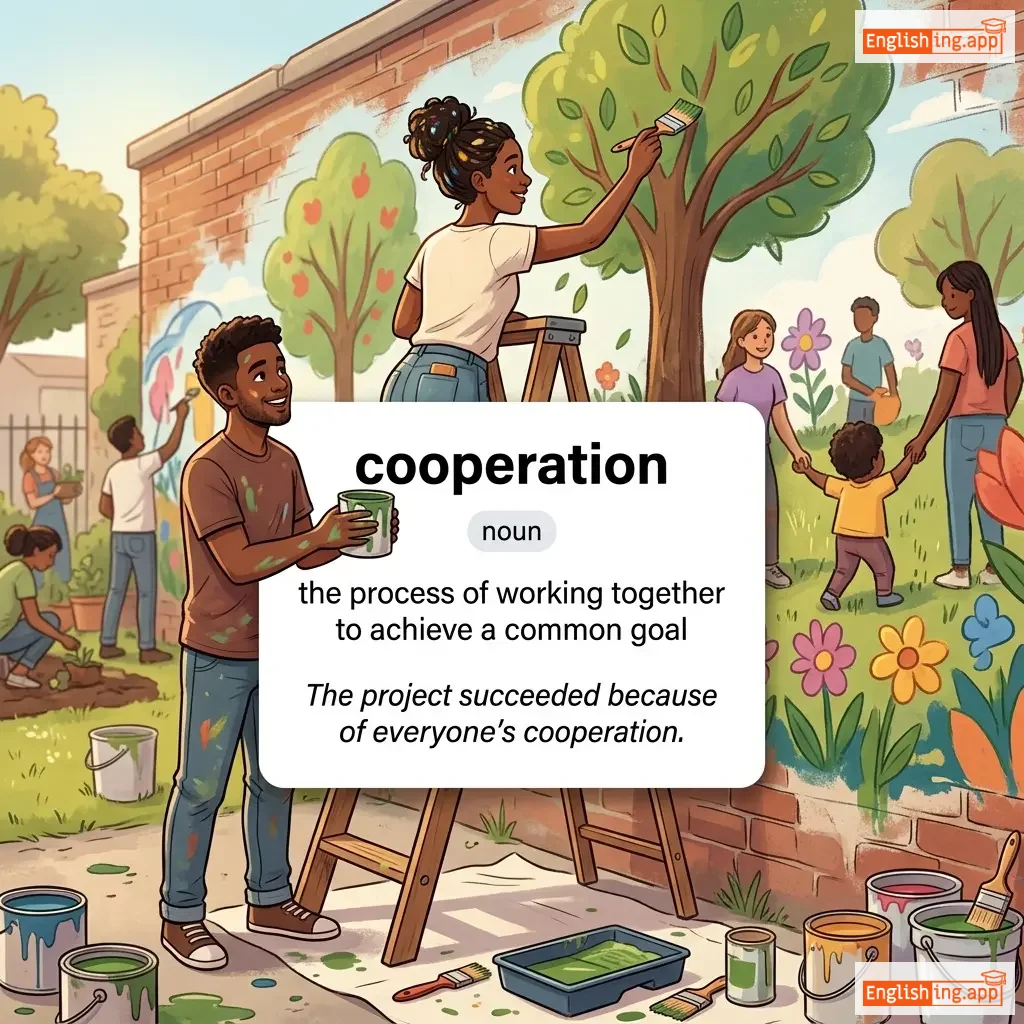
the process of working together to achieve a common goal
••••••
|
The project succeeded because of everyone’s cooperation. |
プロジェクトは全員の協力のおかげで成功しました。
purojekuto wa zen'in no kyouryoku no okage de seikou shimashita.
••••••
|
in cooperation with |
working together with someone or something
••••••
|
と協力して
to kyouryoku shite
••••••
|
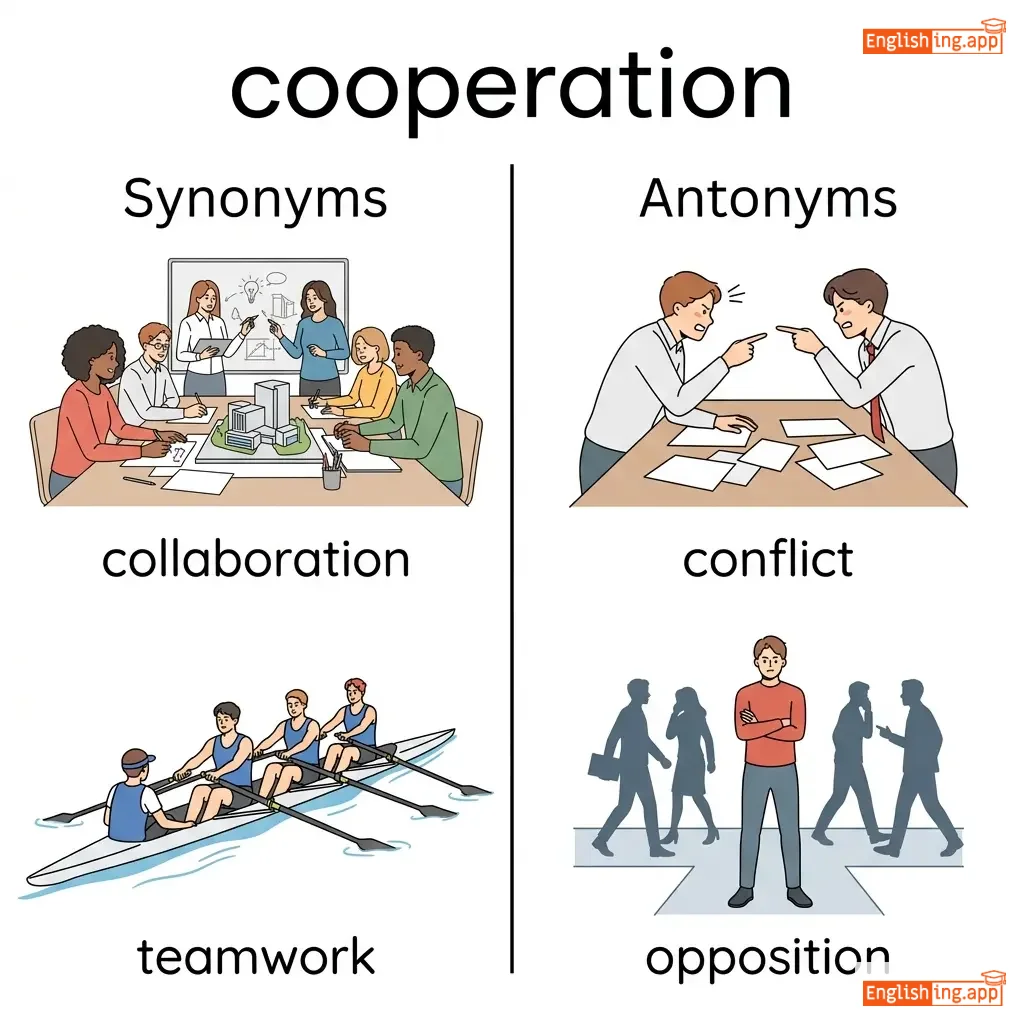
collaboration, teamwork, partnership, coordination, assistance
••••••
|
conflict, opposition, rivalry
••••••
|
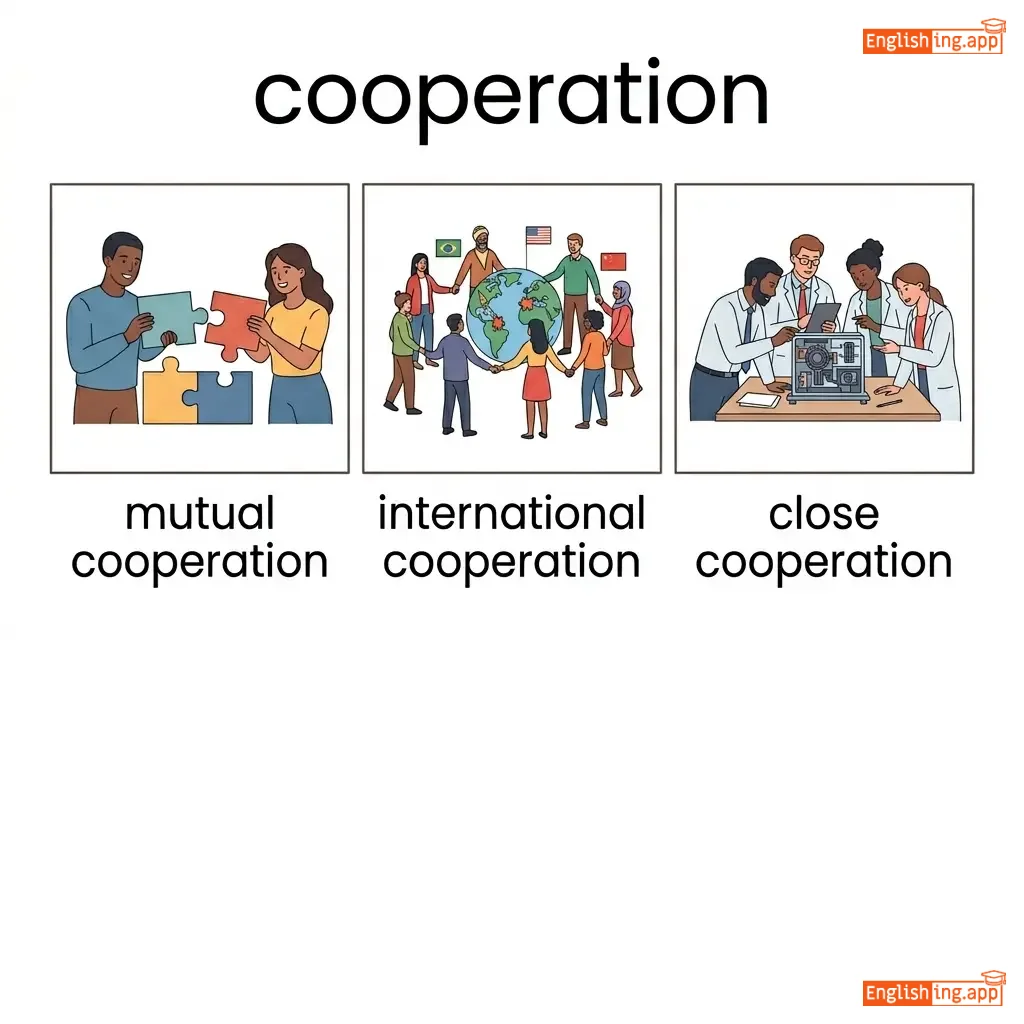
mutual cooperation, international cooperation, close cooperation, cooperation agreement
••••••
|
Co-operation は Co (一緒) + Operation (仕事) = 協力
••••••
|
|
🤗
••••••
|
/kəʊˈɒpərətɪv/
adjective
(コーポレーティブ)
••••••
|
- •••••• |
協力的
kyōryokuteki
••••••
|
- •••••• | - •••••• | - •••••• | - •••••• |
willing to work or act together with others for a common purpose
••••••
|
She was very cooperative during the interview process. |
彼女は面接の過程で非常に協力的でした。
Kanojo wa mensetsu no katei de hijō ni kyōryokuteki deshita.
••••••
|
cooperative attitude |
a helpful and willing approach to working with others
••••••
|
協力的な態度
kyōryokuteki na taido
••••••
|
helpful, collaborative, compliant, supportive
••••••
|
uncooperative, stubborn
••••••
|
cooperative behavior, cooperative society, be cooperative, highly cooperative
••••••
|
Cooperative とは co + operate で、一緒に働くことが協力的です!
••••••
|
|
🤝
••••••
|
/koʊˈɔːrdɪˌneɪt/
verb
(コオーディネート)
••••••
|
- •••••• |
調整する
chousei suru
••••••
|
coordinated
コオーディネイテッド
••••••
|
coordinated
コオーディネイテッド
••••••
|
coordinates
コオーディネイツ
••••••
|
coordinating
コオーディネイティング
••••••
|
to organize people or things so that they work together effectively
••••••
|
We need to coordinate our efforts to finish the project on time.
私たちはプロジェクトを時間通りに終わらせるために努力を調整する必要があります。
••••••
|
私たちはプロジェクトを時間通りに終わらせるために努力を調整する必要があります。
Watashitachi wa purojekuto o jikan doori ni owaraseru tame ni doryoku o chousei suru hitsuyou ga arimasu.
••••••
|
coordinate with someone
誰かと調整する
••••••
|
to work together with someone to achieve a common goal
••••••
|
誰かと調整する
Dareka to chousei suru
••••••
|
organize, arrange, harmonize, integrate, manage
••••••
|
disorganize, disrupt, confuse
••••••
|
coordinate activities, coordinate efforts, coordinate team, coordinate plan
••••••
|
Co + ordinate — みんなが一緒に仕事をするために調整する。🤝
••••••
|
|
🤝
••••••
|
/kəʊˌɔːdɪˈneɪʃən/
noun
(コーディネーション)
••••••
|
- •••••• |
調整
chōsei
••••••
|
- •••••• | - •••••• | - •••••• | - •••••• |
the process of organizing different elements to work together effectively
••••••
|
The coordination between the teams was flawless. |
チーム間の調整は完璧でした。
Chīmu kan no chōsei wa kanpeki deshita.
••••••
|
- •••••• | - •••••• | - •••••• |
organization, collaboration, synchronization, harmony
••••••
|
disorganization, chaos, confusion
••••••
|
team coordination, coordination efforts, effective coordination
••••••
|
Coordinationは要素を一緒に働かせること、'co'が一緒を意味するように
••••••
|
|
🧑💼
••••••
|
/koʊˈɔːrdɪˌneɪtər/
noun
(コーディネーター)
••••••
|
- •••••• |
コーディネーター
ko-dine-ta
••••••
|
- •••••• | - •••••• | - •••••• | - •••••• |
a person who organizes people or activities so that they work well together
••••••
|
The event coordinator managed everything perfectly. |
イベントのコーディネーターはすべてを完璧に管理しました。
Ibento no ko-dine-ta wa subete o kanpeki ni kanri shimashita.
••••••
|
- •••••• | - •••••• | - •••••• |
organizer, manager, planner, supervisor
••••••
|
disorganizer, participant
••••••
|
project coordinator, event coordinator, program coordinator, team coordinator
••••••
|
Coordinatorは‘調整する人’ — すべてをスムーズにする人 🧑💼
••••••
|
|
👮
••••••
|
/kɒp/
noun
(コップ)
••••••
|
- •••••• |
警官
keikan
••••••
|
- •••••• | - •••••• | - •••••• | - •••••• |
a police officer (informal)
••••••
|
The cop stopped the car for speeding. |
警官はスピード違反で車を止めました。
Keikan wa supīdo ihan de kuruma o tomemashita.
••••••
|
cop out |
to avoid doing something because of fear or lack of courage
••••••
|
責任を回避する
sekinin o kaihi suru
••••••
|
police officer, constable, patrolman, lawman, detective
••••••
|
criminal, offender, lawbreaker
••••••
|
cop car, traffic cop, undercover cop, beat cop
••••••
|
Cop 👮, 警官は街を守る!
••••••
|
|
💪
••••••
|
/koʊp/
verb
(コープ)
••••••
|
- •••••• |
対処する
taisho suru
••••••
|
coped
コップド
••••••
|
coped
コップド
••••••
|
copes
コープス
••••••
|
coping
コーピング
••••••
|
to deal effectively with something difficult
••••••
|
She had to cope with a lot of pressure at work.
彼女は仕事で大きなプレッシャーに対処しなければなりませんでした。
••••••
|
彼女は仕事で大きなプレッシャーに対処しなければなりませんでした。
Kanojo wa shigoto de ōkina purettoshā ni taisho shinakereba narimasen deshita.
••••••
|
cope with
対処する
••••••
|
to manage or handle a difficult situation
••••••
|
対処する
taisho suru
••••••
|
manage, handle, endure, survive
••••••
|
fail, collapse
••••••
|
cope with stress, cope with problems, cope alone
••••••
|
COPEは困難を対処することを意味します - cope = 対処する
••••••
|
|
🪙
••••••
|
/ˈkɒpə/
noun
(カッパー)
••••••
|
- •••••• |
銅
dou
••••••
|
- •••••• | - •••••• | - •••••• | - •••••• |
a reddish-brown metal used for electrical wiring, coins, and more
••••••
|
Copper is a good conductor of electricity. |
銅は良い電気導体です。
Dou wa yoi denki doutai desu.
••••••
|
- •••••• | - •••••• | - •••••• |
metal, bronze, alloy
••••••
|
plastic, rubber
••••••
|
copper wire, copper pipe, copper coins
••••••
|
銅(どう)は電気を流す金属、カッパーはそのままカタカナ
••••••
|
|
📄
••••••
|
/ˈkɒpi/
verb
(コピー)
••••••
|
|
コピー
kopī
••••••
|
copied
コピーしました
••••••
|
copied
コピーしました
••••••
|
copies
コピーします
••••••
|
copying
コピーしている
••••••
|
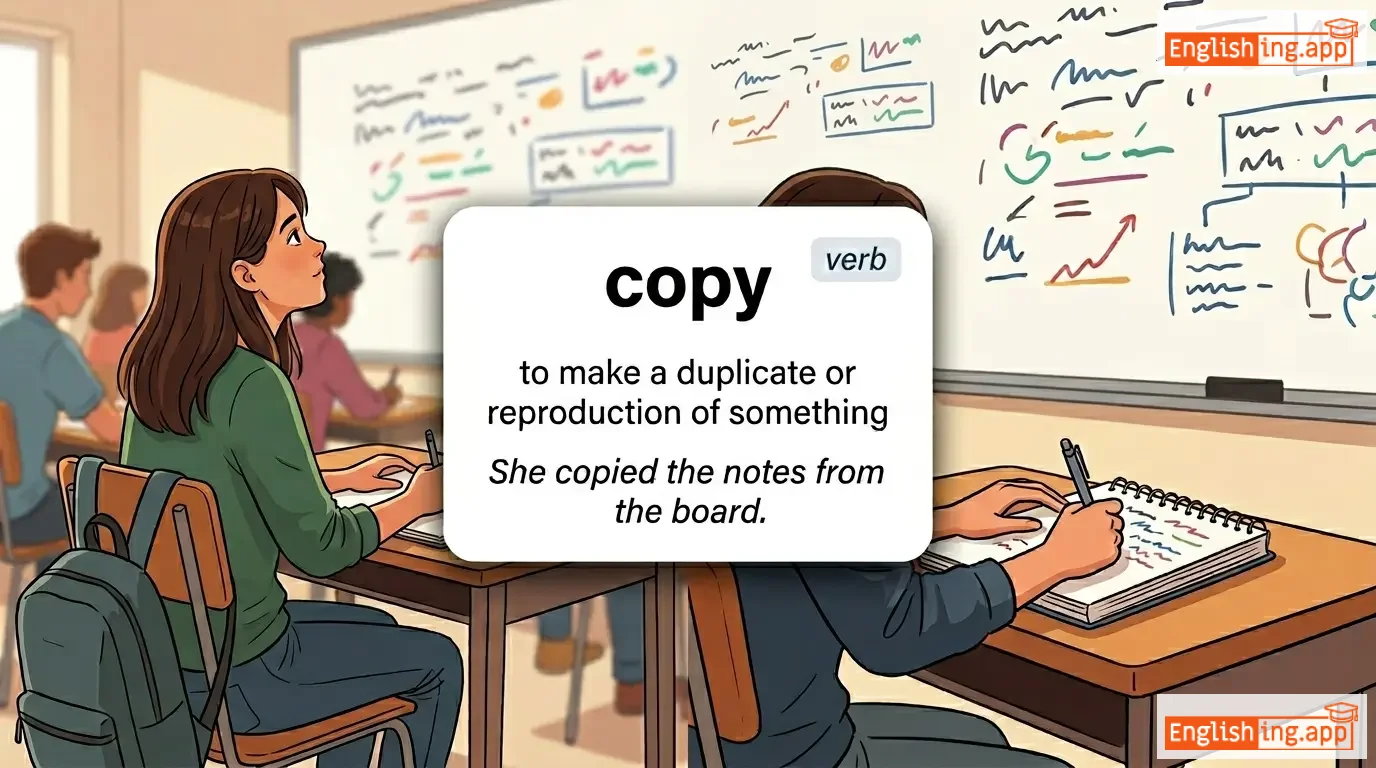
to make a duplicate or reproduction of something
••••••
|
She copied the notes from the board.
彼女はボードからノートをコピーしました。
••••••
|
彼女はボードからノートをコピーしました。
Kanojo wa bōdo kara nōto o kopī shimashita.
••••••
|
carbon copy
カーボンコピー
••••••
|
an exact duplicate of something
••••••
|
カーボンコピー
Kābon kopī
••••••
|
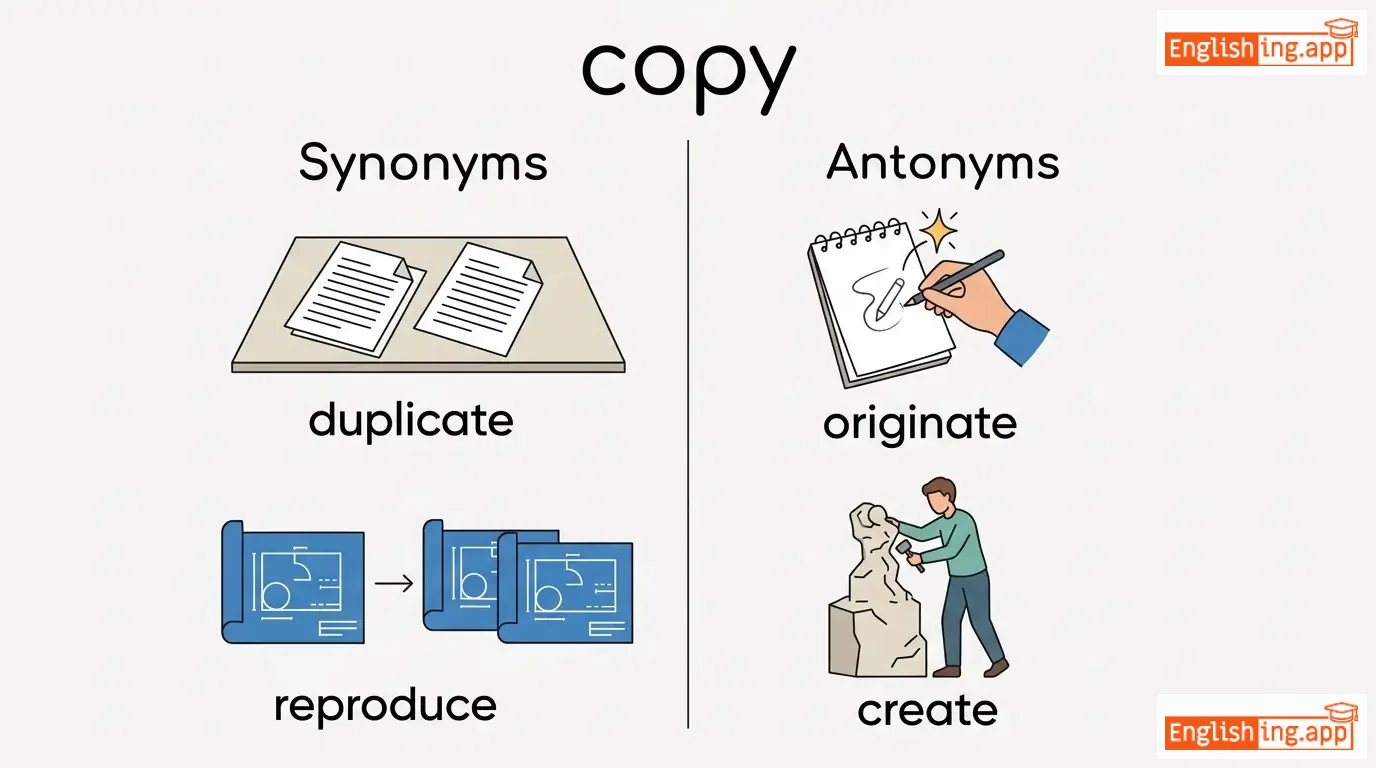
duplicate, reproduce, replicate, imitate, transcribe
••••••
|
originate, create, innovate
••••••
|
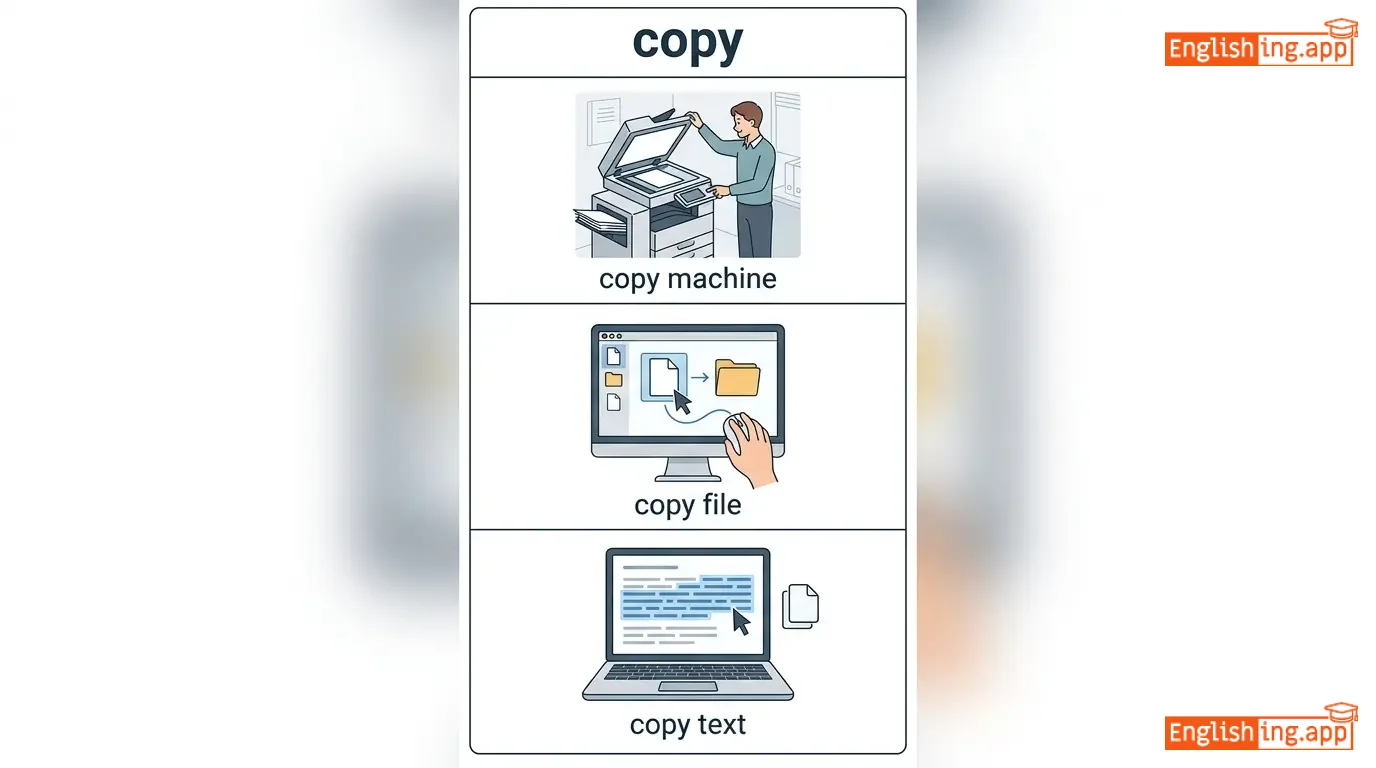
copy machine, copy file, copy text, make a copy
••••••
|
Copyはコピーするという意味で、ボードからノートをコピーするようなことです。
••••••
|
|
🪸
••••••
|
/ˈkɒrəl/
noun, adjective
(コーラル)
••••••
|
- •••••• |
珊瑚
sango
••••••
|
- •••••• | - •••••• | - •••••• | - •••••• |
a hard, rock-like marine organism formed by tiny sea animals; a pinkish-orange color resembling coral
••••••
|
The coral in the reef provides shelter for many sea creatures.
サンゴ礁のコーラルは多くの海の生き物を守ります。
••••••
|
珊瑚礁の珊瑚は多くの海の生き物を守ります。
sangoshou no sango wa ooku no umi no ikimono o mamorimasu
••••••
|
- •••••• | - •••••• | - •••••• |
coralline, reef coral, madreporian coral, pinkish
••••••
|
blue, green, colorless
••••••
|
coral reef, coral bleaching, coral island, coral color
••••••
|
サンゴ sango = coral reef の coral
••••••
|
|
🌍
••••••
|
/kɔːr/
noun
(コア)
••••••
|
- •••••• |
核
kaku
••••••
|
- •••••• | - •••••• | - •••••• | - •••••• |
the central or most important part of something
••••••
|
Honesty is at the core of their values. |
正直は彼らの価値観の核です。
Shoujiki wa karera no kachikan no kaku desu.
••••••
|
to the core |
completely and thoroughly
••••••
|
骨の髄まで
hone no zui made
••••••
|
center, nucleus, heart, essence, foundation
••••••
|
surface, exterior, outside
••••••
|
core values, core team, core issue, core principle
••••••
|
Core は核という意味です。例えば、リンゴの核のように。
••••••
|
|
🌽
••••••
|
/kɔːrn/
noun
(コーン)
••••••
|
- •••••• |
トウモロコシ
toumorokoshi
••••••
|
- •••••• | - •••••• | - •••••• | - •••••• |
a type of grain, often yellow, eaten as food
••••••
|
They harvested corn in the summer. |
彼らは夏にトウモロコシを収穫しました。
Karera wa natsu ni toumorokoshi o shūkaku shimashita.
••••••
|
ear of corn |
the part of a corn plant containing the kernels
••••••
|
トウモロコシの穂
toumorokoshi no ho
••••••
|
maize, grain, cereal, crop, kernel
••••••
|
meat, protein, animal food
••••••
|
corn field, corn bread, corn syrup, sweet corn
••••••
|
Corn 🌽 はトウモロコシ、穂に粒が詰まっているよ。
••••••
|
|
🔲
••••••
|
/ˈkɔːrnər/
noun
(kōnā)
••••••
|
- •••••• |
角
kado
••••••
|
- •••••• | - •••••• | - •••••• | - •••••• |
the place where two edges or sides meet
••••••
|
The store is just around the corner. |
店はちょうど角のところにあります。
Mise wa chōdo kado no tokoro ni arimasu.
••••••
|
cut corners |
to do something in the easiest or cheapest way
••••••
|
最も簡単または最も安い方法で物事を行う
mottomo kantan matawa mottomo yasui hōhō de monogoto o okonau
••••••
|
angle, intersection, junction, point, nook
••••••
|
center, middle
••••••
|
corner shop, corner of the room, turn the corner, corner lot
••••••
|
Corner は角のことです。道の角にある店のように。
••••••
|
|
🏢
••••••
|
/ˈkɔːrpərət/
adjective, noun
(コーポレート)
••••••
|
- •••••• |
企業/コーポレートに関連する
kigyo/corporate ni kanren suru
••••••
|
- •••••• | - •••••• | - •••••• | - •••••• |
relating to a corporation or large company; united as a single body
••••••
|
Corporate social responsibility is important for modern businesses.
企業の社会的責任は現代のビジネスにとって重要です。
••••••
|
企業の社会的責任は現代のビジネスにとって重要です。
Kigyo no shakaiteki sekinin wa gendai no bijinesu ni totte jūyō desu.
••••••
|
- •••••• | - •••••• | - •••••• |
business, company, collective, enterprise
••••••
|
individual, personal
••••••
|
corporate culture, corporate strategy, corporate governance, corporate identity
••••••
|
CORP は会社のこと。Corporate はビジネスに関するもの。
••••••
|
|
🏢
••••••
|
/ˌkɔːrpəˈreɪʃən/
noun
(コーポレーション)
••••••
|
- •••••• |
株式会社
kabushikigaisha
••••••
|
- •••••• | - •••••• | - •••••• | - •••••• |
A large company or group of companies that is legally recognized as a single entity.
••••••
|
The corporation invested heavily in renewable energy projects. |
そのコーポレーションは再生可能エネルギーのプロジェクトに多額の投資を行った。
Sono kōporēshon wa saiseikanō enerugī no purojekuto ni tagaku no tōshi o okonatta.
••••••
|
multinational corporation |
A corporation that operates in multiple countries.
••••••
|
多国籍企業
takokuseki kigyō
••••••
|
company, firm, business, enterprise, organization
••••••
|
individual, partnership
••••••
|
large corporation, multinational corporation, corporation tax, corporation law
••••••
|
コーポレーション=大きな会社、株式会社=日本の企業の象徴。
••••••
|
|
✔️
••••••
|
/kəˈrɛkt/
adjective
(コレクト)
••••••
|
- •••••• |
正しい
tadashii
••••••
|
- •••••• | - •••••• | - •••••• | - •••••• |
free from error; accurate
••••••
|
The answer she gave was correct. |
彼女が言った答えは正しかった。
Kanojo ga itta kotae wa tadashikatta.
••••••
|
politically correct |
language or behavior intended to avoid offense
••••••
|
政治的に正しい
seijiteki ni tadashii
••••••
|
accurate, right, exact, true
••••••
|
wrong, incorrect, false
••••••
|
correct answer, correct behavior, correct form
••••••
|
正しいはコレクトです ✔️ - 正しい答えが正しい
••••••
|
|
✍️
••••••
|
/kəˈrɛkʃən/
noun
(コレクション)
••••••
|
- •••••• |
訂正
teisei
••••••
|
- •••••• | - •••••• | - •••••• | - •••••• |
the action or process of correcting something
••••••
|
The teacher made a correction to the student's essay. |
教師は学生のエッセイに訂正を加えました。
Kyōshi wa gakusei no essei ni teisei o kuwaemashita.
••••••
|
- •••••• | - •••••• | - •••••• |
amendment, adjustment, change, modification
••••••
|
mistake, error
••••••
|
correctional facility, correction of errors, make a correction
••••••
|
'訂正' というのは '直す' という意味です
••••••
|
|
🔗
••••••
|
/ˈkɒrəleɪt/
verb
(コリレイト)
••••••
|
|
相関する
sōkan suru
••••••
|
correlated
コリレイテッド
••••••
|
correlated
コリレイテッド
••••••
|
correlates
コリレイツ
••••••
|
correlating
コリレイティング
••••••
|
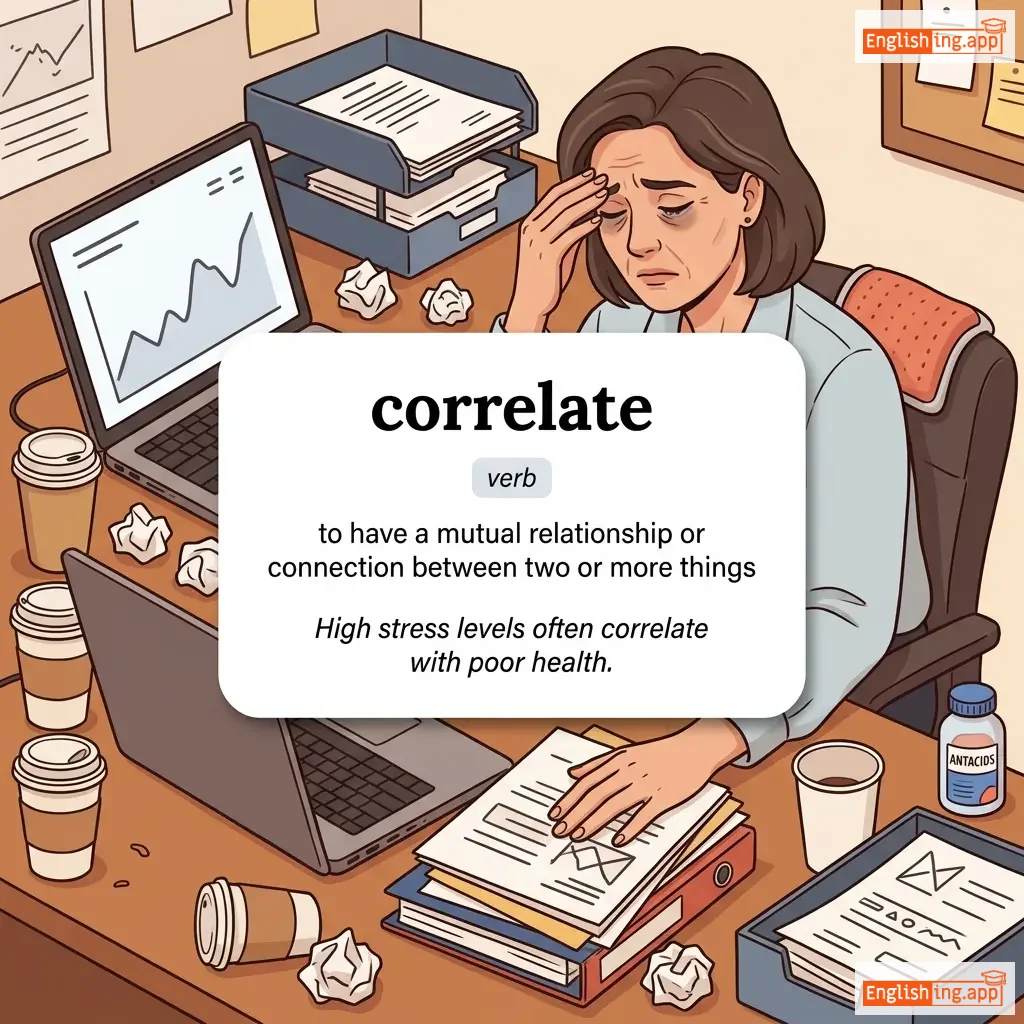
to have a mutual relationship or connection between two or more things
••••••
|
High stress levels often correlate with poor health.
高いストレスレベルは、しばしば健康の悪化と関連しています。
••••••
|
高いストレスレベルは、しばしば健康の悪化と関連しています。
Takai sutoresu reberu wa, shibashiba kenkō no akika to kanren shiteimasu.
••••••
|
- •••••• | - •••••• | - •••••• |
associate, connect, link, relate
••••••
|
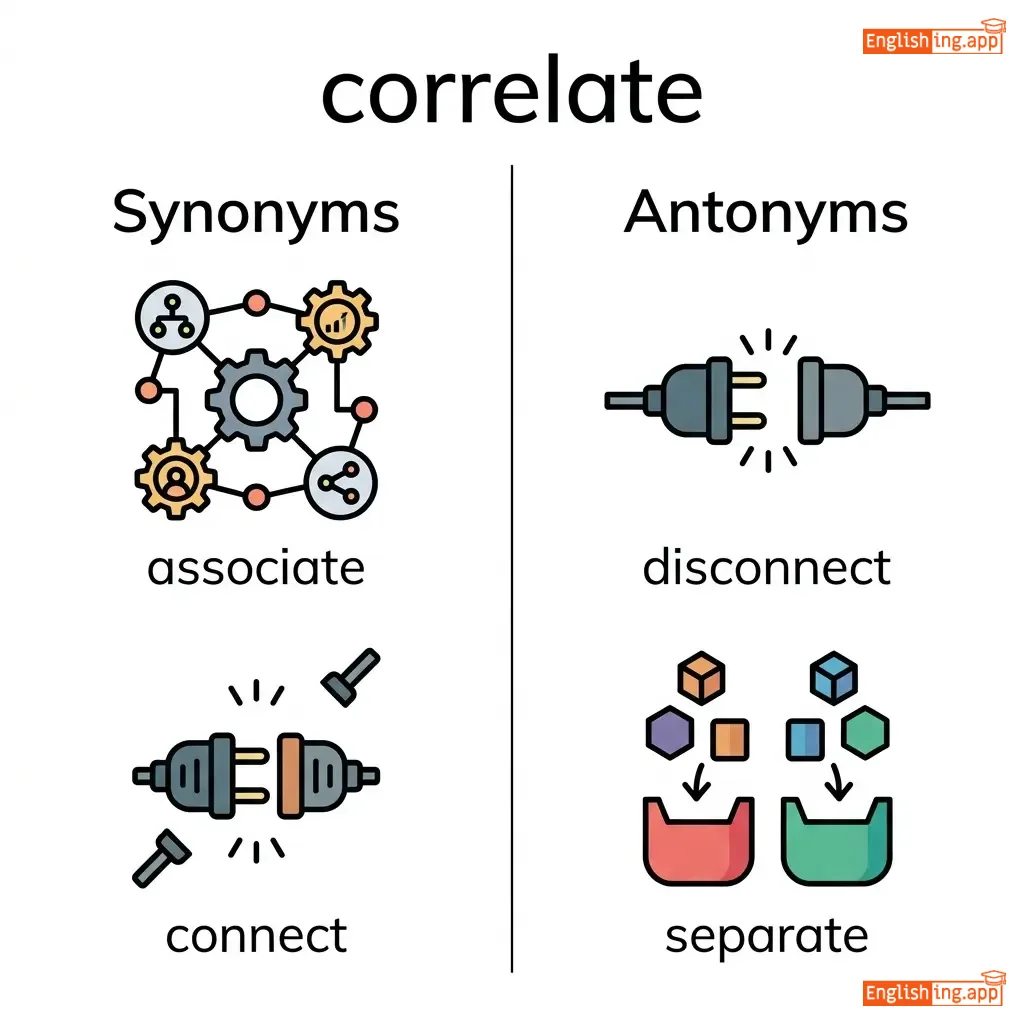
disconnect, separate, diverge
••••••
|
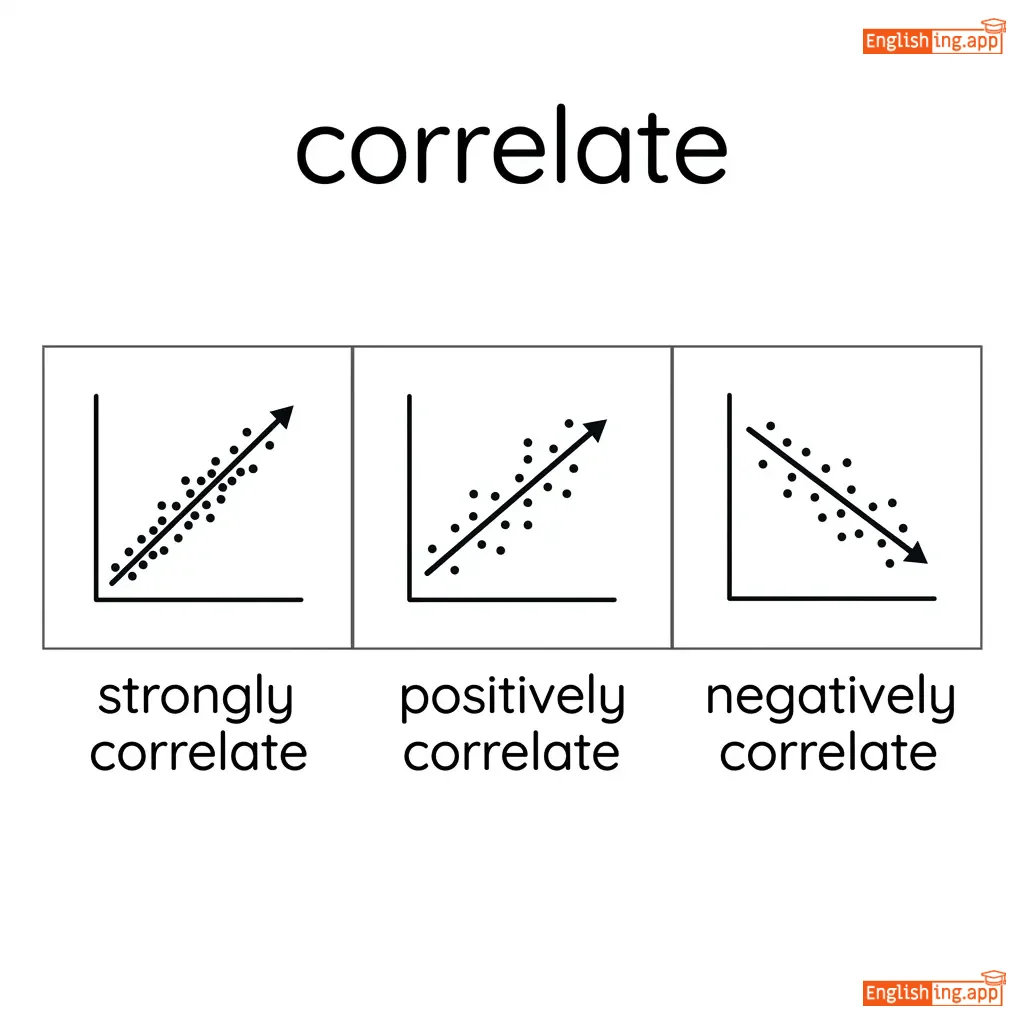
strongly correlate, positively correlate, negatively correlate, correlate closely
••••••
|
Stressは健康に相関しています。相関するとは二つ以上の事物を結びつけることです。
••••••
|
|
📊
••••••
|
/ˌkɒrəˈleɪʃən/
noun
(コレレーション)
••••••
|
- •••••• |
相関
sōkan
••••••
|
- •••••• | - •••••• | - •••••• | - •••••• |
a mutual relationship or connection between two or more things
••••••
|
Researchers found a strong correlation between diet and heart disease. |
研究者たちは、食事と心臓病との間に強い相関関係があることを発見しました。
Kenkyū-sha-tachi wa, shokuji to shinzōbyō to no aida ni tsuyoi sōkan kankei ga aru koto o hakken shimashita.
••••••
|
- •••••• | - •••••• | - •••••• |
connection, association, relationship, link
••••••
|
disconnection, independence
••••••
|
positive correlation, negative correlation, strong correlation, weak correlation
••••••
|
Correlationは接続を意味し、食事と心臓病の関係を覚えておいてください
••••••
|
|
💌
••••••
|
/kəˈrɛspɒnd/
verb
(コレスポンド)
••••••
|
- •••••• |
通信する
tsuushin suru
••••••
|
corresponded
コレスポンデッド
••••••
|
corresponded
コレスポンデッド
••••••
|
corresponds
コレスポンズ
••••••
|
corresponding
コレスポンディング
••••••
|
to communicate by exchanging letters or messages
••••••
|
I correspond regularly with my old friends.
私は定期的に古い友達と通信しています。
••••••
|
私は定期的に古い友達と通信しています。
Watashi wa teikitekini furui tomodachi to tsuushin shiteimasu.
••••••
|
- •••••• | - •••••• | - •••••• |
communicate, write, exchange, connect
••••••
|
disconnect, ignore
••••••
|
correspond with, correspond regularly, correspond by email
••••••
|
友達と手紙を書くことを'tsuushin'と覚えましょう。
••••••
|
|
📬
••••••
|
/ˌkɔr.əˈspɑn.dəns/
noun
(コレスポンデンス)
••••••
|
- •••••• |
通信; 類似または同等; 手紙の交換によるコミュニケーション
tsuushin; ruiji mata wa doutou; tegami no koukan ni yoru komyunikēshon
••••••
|
- •••••• | - •••••• | - •••••• | - •••••• |
letters sent or received; similarity or equivalence; communication by exchange of letters
••••••
|
The historical correspondence between the two famous writers was recently published. |
二人の有名な作家の間の歴史的な通信は最近発表されました。
Futari no yuumei na sakka no aida no rekishiteki na tsuushin wa saikin happyou saremashita.
••••••
|
- •••••• | - •••••• | - •••••• |
letters, communication, mail, similarity
••••••
|
silence, difference, dissimilarity
••••••
|
business correspondence, private correspondence, email correspondence
••••••
|
コレスポンデンスは、手紙を交換することによって情報をやり取りする方法です。
••••••
|
|
📰
••••••
|
/ˌkɒrəˈspɒndənt/
noun
(コレスポンデント)
••••••
|
- •••••• |
通信員
tsūshin'in
••••••
|
- •••••• | - •••••• | - •••••• | - •••••• |
A journalist who reports news from a particular place or on a particular subject.
••••••
|
The foreign correspondent reported live from Paris. |
外国の通信員がパリからライブで報告した。
Gaikoku no tsūshin'in ga Pari kara raibu de hōkoku shita.
••••••
|
war correspondent |
A journalist who reports from areas of armed conflict.
••••••
|
戦争通信員
sensō tsūshin'in
••••••
|
reporter, journalist, writer, newsman
••••••
|
audience, reader
••••••
|
foreign correspondent, special correspondent, chief correspondent
••••••
|
Correspondent はニュースを伝える人です — 通信は繋がりを意味します。
••••••
|
|
🔗
••••••
|
/kəˈrɛspɒndɪŋ/
adjective
(コレスポンディング)
••••••
|
- •••••• |
対応する
taiō suru
••••••
|
- •••••• | - •••••• | - •••••• | - •••••• |
matching or related to something
••••••
|
The corresponding page in the book explains the process in detail.
本の対応するページは、そのプロセスを詳細に説明しています。
••••••
|
本の対応するページは、そのプロセスを詳細に説明しています。
Hon no taiō suru pēji wa, sono purosesu o shōsai ni setsumei shiteimasu.
••••••
|
- •••••• | - •••••• | - •••••• |
matching, related, equivalent, parallel
••••••
|
unrelated, different
••••••
|
corresponding parts, corresponding details, corresponding figure
••••••
|
何かと'対応する'がうまく合うことを覚えておいてください。
••••••
|
|
🚪
••••••
|
/ˈkɔːrɪdɔːr/
noun
(コリドー)
••••••
|
- •••••• |
部屋に通じる長い通路
koridō
••••••
|
- •••••• | - •••••• | - •••••• | - •••••• |
a long passage in a building from which doors lead into rooms
••••••
|
The students waited quietly in the corridor. |
生徒たちは廊下で静かに待っていた。
Seito-tachi wa rōka de shizukani matte ita.
••••••
|
power corridor |
a place where influential decisions are made
••••••
|
権力の廊下
kenryoku no rōka
••••••
|
hallway, passage, hallway, aisle
••••••
|
room, chamber
••••••
|
school corridor, narrow corridor, long corridor, dark corridor
••••••
|
廊下は建物を繋ぐ通路です 🏢
••••••
|
|
💀
••••••
|
/kəˈrʌpt/
adjective/verb
(コラプト)
••••••
|
- •••••• |
腐敗
fuhai
••••••
|
corrupted
コラプテッド
••••••
|
corrupted
コラプテッド
••••••
|
corrupts
コラプツ
••••••
|
corrupting
コラプティング
••••••
|
dishonest or morally wrong; to make something impure or evil
••••••
|
The politician was accused of corrupt practices.
その政治家は腐敗行為で告発された。
••••••
|
その政治家は腐敗行為で告発された。
Sono seijika wa fuhai koui de kokuhatsu sareta.
••••••
|
- •••••• | - •••••• | - •••••• |
dishonest, immoral, depraved, unethical
••••••
|
honest, ethical, upright
••••••
|
corrupt leader, corrupt official, corrupt practices
••••••
|
その政治家は'腐敗'して不正な行為を行う。
••••••
|
|
💰🚫
••••••
|
/kəˈrʌp.ʃən/
noun
(コラプション)
••••••
|
- •••••• |
腐敗
fuhai
••••••
|
- •••••• | - •••••• | - •••••• | - •••••• |
dishonest or fraudulent conduct by those in power; the process of decay or decomposition
••••••
|
The government launched a campaign to fight corruption in public offices.
政府は公共のオフィスでの腐敗と戦うためのキャンペーンを開始しました。
••••••
|
政府は公共のオフィスでの腐敗と戦うためのキャンペーンを開始しました。
Seifu wa kōkyō no ofisu de no fuhai to tatakau tame no kyanpēn o kaishi shimashita.
••••••
|
- •••••• | - •••••• | - •••••• |
dishonesty, bribery, fraud, decay
••••••
|
honesty, integrity, purity, incorruptibility
••••••
|
government corruption, fight corruption, corruption scandal
••••••
|
腐敗は権力から始まり、社会を腐らせるものです。
••••••
|
|
💰
••••••
|
/kɒst/
noun, verb
(コスト)
••••••
|
|
コスト
kosuto
••••••
|
cost
コスト
••••••
|
cost
コスト
••••••
|
costs
コストス
••••••
|
costing
コスティング
••••••
|
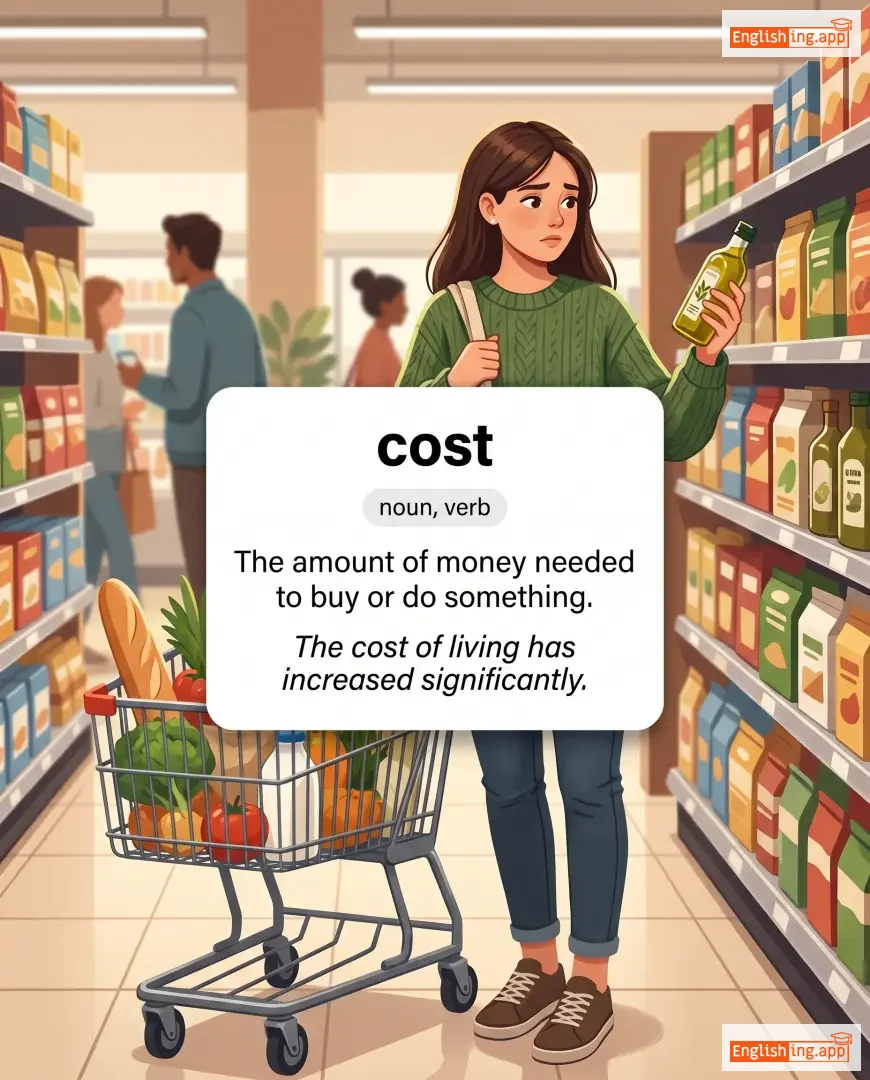
The amount of money needed to buy or do something.
••••••
|
The cost of living has increased significantly.
生活費が大幅に増加しました。
••••••
|
生活費が大幅に増加しました。
Seikatsuhi ga ōhaba ni zōka shimashita.
••••••
|
at all costs
あらゆるコストを払って
••••••
|
No matter what the expense or sacrifice.
••••••
|
あらゆるコストを払って
Arayuru kosuto o haratte
••••••
|
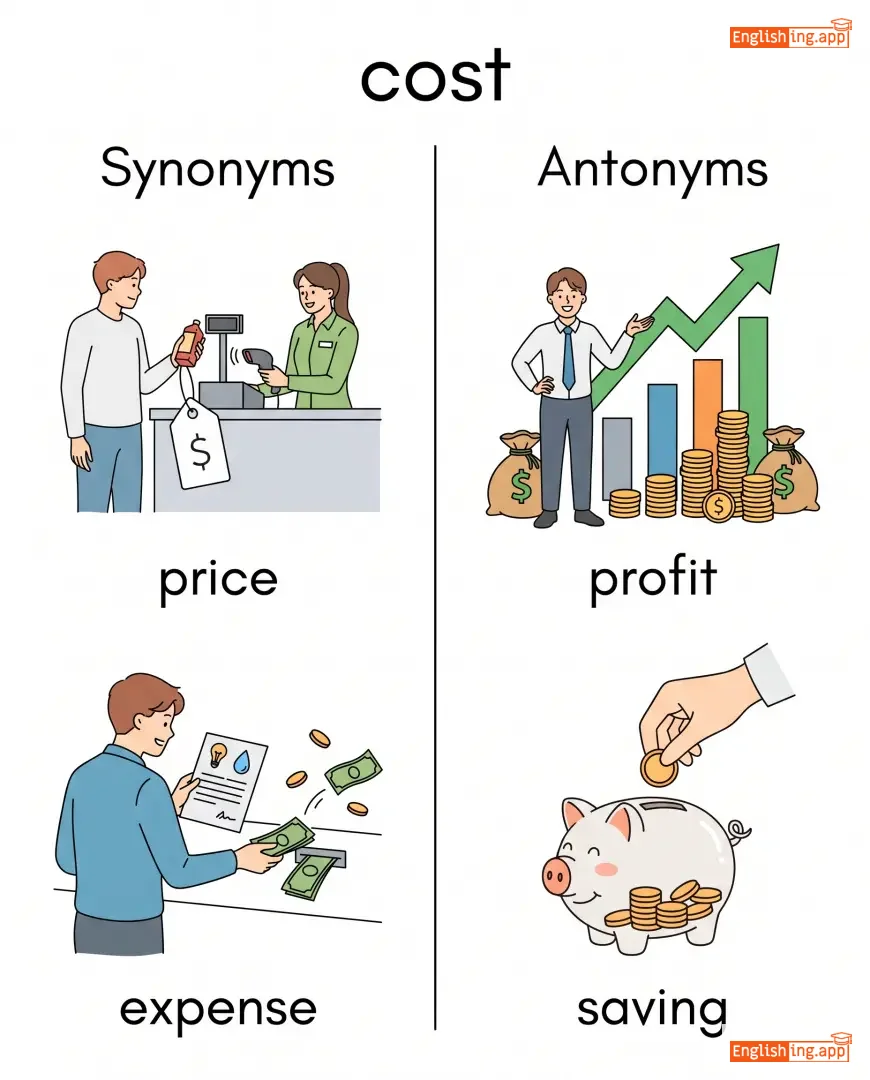
price, expense, charge, fee
••••••
|
profit, saving
••••••
|
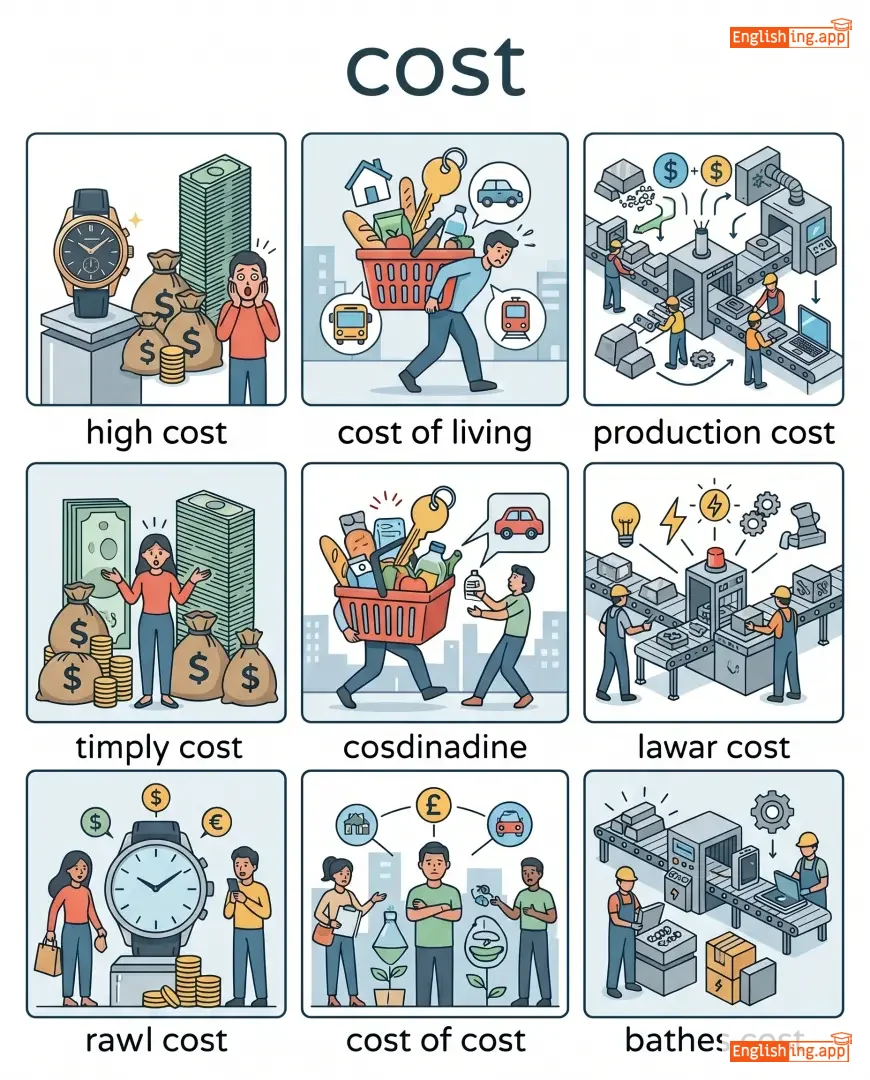
high cost, cost of living, production cost, cost savings
••••••
|
コスト = 支払うべきお金
••••••
|
|
💸
••••••
|
/ˈkɔːstli/
adjective
(コーストリー)
••••••
|
- •••••• |
高価
kōka
••••••
|
- •••••• | - •••••• | - •••••• | - •••••• |
expensive or causing a lot of money, time, or effort
••••••
|
Their mistake proved to be very costly for the company. |
彼らのミスは会社にとって非常に高価であることが証明されました。
Karera no misu wa kaisha ni totte hijō ni kōka de aru koto ga shōmei saremashita.
••••••
|
costly mistake |
an error that leads to serious loss or damage
••••••
|
高価なミス
kōka na misu
••••••
|
expensive, high-priced, lavish, valuable
••••••
|
cheap, inexpensive, economical
••••••
|
costly mistake, costly investment, costly decision, costly failure
••••••
|
Costlyは高価を意味し、英語のcostlyは日本語で高価💸
••••••
|
|
🏡
••••••
|
/ˈkɒtɪdʒ/
noun
(コテージ)
••••••
|
- •••••• |
小屋
koya
••••••
|
- •••••• | - •••••• | - •••••• | - •••••• |
a small simple house, typically in the countryside
••••••
|
They spent their vacation in a cozy cottage by the lake. |
彼らは湖のそばの快適な小屋で休暇を過ごしました。
Karera wa mizuumi no soba no kaiteki na koya de kyūka o sugoshimashita.
••••••
|
cottage industry |
a small-scale business operated from home
••••••
|
コテージ産業
koteeju sangyou
••••••
|
hut, cabin, lodge, bungalow, house
••••••
|
mansion, palace
••••••
|
small cottage, country cottage, stone cottage, lakeside cottage
••••••
|
Cottageは小屋を意味します—田舎で温かい小屋を思い出してみてください。
••••••
|
|
🌱
••••••
|
/ˈkɒtən/
noun
••••••
|
- •••••• |
幸せ
shiawase
••••••
|
- •••••• | - •••••• | - •••••• | - •••••• |
A soft white fibrous substance used to make cloth and thread.
••••••
|
This shirt is made of pure cotton. |
彼女は賞を受け取ったとき、自分の幸せを隠すことができませんでした。
Kanojo wa shō o uketotta toki, jibun no shiawase o kakusu koto ga dekimasen deshita.
••••••
|
cotton on |
To begin to understand or realize something.
••••••
|
幸せの追求
shiawase no tsuikyū
••••••
|
fabric, fiber, cloth, textile
••••••
|
synthetic, polyester
••••••
|
cotton fabric, cotton industry, cotton field, pure cotton
••••••
|
幸せ - 笑顔が広がる瞬間を思い描いて 🌸
••••••
|
|
🛋️
••••••
|
/kaʊtʃ/
noun
(カウチ)
••••••
|
- •••••• |
ソファ
sofa
••••••
|
- •••••• | - •••••• | - •••••• | - •••••• |
a comfortable seat for two or more people, typically upholstered
••••••
|
They sat on the couch and watched TV.
彼らはカウチに座ってテレビを見ていました。
••••••
|
彼らはソファに座ってテレビを見ていました。
Karera wa sofa ni suwatte terebi o mite imashita.
••••••
|
couch potato
カウチポテト
••••••
|
a person who spends a lot of time sitting and watching TV
••••••
|
テレビを見る人
terebi o miru hito
••••••
|
sofa, settee, divan, lounge
••••••
|
chair, stool
••••••
|
comfortable couch, leather couch, couch cushions
••••••
|
Couch 🛋️ はソファを意味する - Couch potato はテレビを見る人を意味する
••••••
|
|
🤧
••••••
|
/kɒf/
noun, verb
(コフ)
••••••
|
- •••••• |
咳
seki
••••••
|
coughed
コフド
••••••
|
coughed
コフド
••••••
|
coughs
コフズ
••••••
|
coughing
コフィング
••••••
|
a sudden noisy release of air from the lungs to clear the throat or airway; to expel air suddenly from the lungs with a cough
••••••
|
He has a bad cough and stayed home today.
ヒー ハズ ア バッド コフ アンド ステイド ホーム トゥデイ。
••••••
|
彼はひどい咳があるので、今日は家にいました。
kare wa hidoi seki ga aru node kyou wa ie ni imashita
••••••
|
cough it up
コフ イット アップ
••••••
|
to reluctantly give money, information, or something owed
••••••
|
しぶしぶ出す
shibushibu dasu
••••••
|
hack, wheeze, clear the throat, expectorate
••••••
|
inhale, breathe in
••••••
|
dry cough, persistent cough, cough syrup, coughing fit, cough drops
••••••
|
咳 seki = cough, のどがムズムズ
••••••
|
|
🤔
••••••
|
/kʊd/
modal verb
(kud)
••••••
|
- •••••• |
できた
dekita
••••••
|
- •••••• | - •••••• | - •••••• | - •••••• |
Used to indicate possibility, ability, or permission in the past or as a polite suggestion.
••••••
|
He could swim when he was a child. |
彼は子供の頃泳げた。
Kare wa kodomo no koro oyogeta.
••••••
|
could not care less |
Used to express total lack of interest.
••••••
|
全く気にしない
Mattaku ki ni shinai
••••••
|
might, would, should, may
••••••
|
cannot, must not
••••••
|
could be, could have, could not, could possibly
••••••
|
Couldはできたを意味します — 思い浮かべてください、もしあなたが試したなら、できたはずです (dekita)。
••••••
|
|
🏛️
••••••
|
/ˈkaʊn.səl/
noun
(kaun-sil)
••••••
|
- •••••• |
評議会
hyougikai
••••••
|
- •••••• | - •••••• | - •••••• | - •••••• |
an assembly of people chosen or elected to make decisions or advise on matters
••••••
|
The city council voted to improve public transportation. |
市議会は公共交通の改善のために投票しました。
Shigikai wa koukyou koutsuu no kaizen no tame ni touhyou shimashita.
••••••
|
council of war |
a meeting of military leaders to discuss strategy
••••••
|
戦争評議会
Sensou hyougikai
••••••
|
committee, board, panel, assembly, group
••••••
|
individual, autocrat
••••••
|
city council, council meeting, student council, council member
••••••
|
評議会は「評議会」を意味し、学校の生徒会のように決定を下す組織を想像してください。
••••••
|
|
🏛️
••••••
|
/ˈkaʊnsələr/
noun
(カウンシラー)
••••••
|
- •••••• |
議員
giin
••••••
|
- •••••• | - •••••• | - •••••• | - •••••• |
an elected member of a local council who helps make decisions and represent the community
••••••
|
The councillor spoke to residents about improving local roads.
市議会議員は地域の道路について話しました。
••••••
|
市議会議員は地域の道路について話しました。
shigikai giin wa chiiki no doro ni tsuite hanashimashita
••••••
|
city councillor
市議会議員
••••••
|
a member of a city-level governing council
••••••
|
市議会議員
shigikai giin
••••••
|
council member, alderman, representative, delegate, official
••••••
|
citizen, voter
••••••
|
local councillor, elected councillor, city councillor, council meeting
••••••
|
議員は議会で意見を言う人
••••••
|
|
🧠
••••••
|
/ˈkaʊn.səl.ɪŋ/
noun
(カウンセリング)
••••••
|
- •••••• |
カウンセリング
kaunseringu
••••••
|
- •••••• | - •••••• | - •••••• | - •••••• |
the process of giving professional guidance and support to help someone deal with personal, social, psychological, or career-related problems
••••••
|
She decided to seek counselling to manage stress and anxiety.
彼女はストレスを管理するためにカウンセリングを受けた。
••••••
|
彼女はストレスを管理するためにカウンセリングを受けた。
kanojo wa sutoresu o kanri suru tame ni kaunseringu o uketa
••••••
|
career counselling
キャリアカウンセリング
••••••
|
professional guidance to help someone choose or develop a career
••••••
|
キャリアカウンセリング
kyaria kaunseringu
••••••
|
therapy, guidance, advice, consultation, mentoring
••••••
|
neglect, disregard
••••••
|
professional counselling, psychological counselling, career counselling, marriage counselling, student counselling
••••••
|
カウンセリングは心をケアする counselling
••••••
|

