|
絵文字
|
単語 | Images | 翻訳 | 過去 | 過去分詞 | 三人称単数 | 動名詞 | 意味 | 例文 | 例文の翻訳 | 表現例 | 表現例の意味 | 表現例の翻訳 | 同義語 | 対義語 | コロケーション | ニーモニック |
|---|---|---|---|---|---|---|---|---|---|---|---|---|---|---|---|---|---|
|
🧑✈️
••••••
|
/ˈkæptɪn/
noun
(キャプテン)
••••••
|
- •••••• |
キャプテン
kyaputen
••••••
|
- •••••• | - •••••• | - •••••• | - •••••• |
the leader of a team, ship, or group
••••••
|
The captain led his team to victory. |
キャプテンはチームを勝利に導いた。
Kyaputen wa chiimu o shouri ni michibiita.
••••••
|
captain of industry |
a wealthy and powerful business leader
••••••
|
業界のキャプテン
gyoukai no kyaputen
••••••
|
commander, leader, chief, skipper
••••••
|
follower, subordinate
••••••
|
team captain, ship captain, army captain, captain of industry
••••••
|
キャプテンはチームを勝利に導く者、ビジネスでも同じだ!
••••••
|
|
📸
••••••
|
/ˈkæptʃər/
verb
(キャプチャ)
••••••
|
- •••••• |
キャプチャ
kyapuchā
••••••
|
captured
キャプチャード
••••••
|
captured
キャプチャード
••••••
|
captures
キャプチャーズ
••••••
|
capturing
キャプチャリング
••••••
|
to take control of something or someone by force
••••••
|
The soldiers managed to capture the enemy base.
兵士たちは敵の基地を占拠することに成功しました。
••••••
|
兵士たちは敵の基地を占拠することに成功しました。
Heishitachi wa teki no kichi o senkyo suru koto ni seikou shimashita.
••••••
|
capture the moment
その瞬間をキャプチャする
••••••
|
to preserve or record a special time or event
••••••
|
その瞬間をキャプチャする
sono shunkan wo kyapuchā suru
••••••
|
seize, arrest, apprehend, conquer, trap
••••••
|
release, free, liberate
••••••
|
capture the flag, capture attention, capture market, capture image
••••••
|
キャプチャーは、瞬間を写真で捉えること
••••••
|
|
🚗
••••••
|
/kɑːr/
noun
(カァ)
••••••
|
- •••••• |
車
kuruma
••••••
|
- •••••• | - •••••• | - •••••• | - •••••• |
a road vehicle with an engine, four wheels, and seats for passengers
••••••
|
She bought a new car last week. |
彼女は先週新しい車を買った。
Kanojo wa senshū atarashī kuruma o katta.
••••••
|
drive someone up the wall |
to annoy or irritate someone greatly
••••••
|
誰かをひどく怒らせる
dareka o hidoku okoraseru
••••••
|
automobile, vehicle, motorcar, ride
••••••
|
bicycle, pedestrian
••••••
|
car accident, car insurance, car seat, new car
••••••
|
車はcarと同じ、車が壊れると気が狂う
••••••
|
|
🌍
••••••
|
/ˈkɑːrbən/
noun
(カーボン)
••••••
|
|
炭素
tanso
••••••
|
- •••••• | - •••••• | - •••••• | - •••••• |
a chemical element found in all living things and used as fuel when combined with oxygen
••••••
|
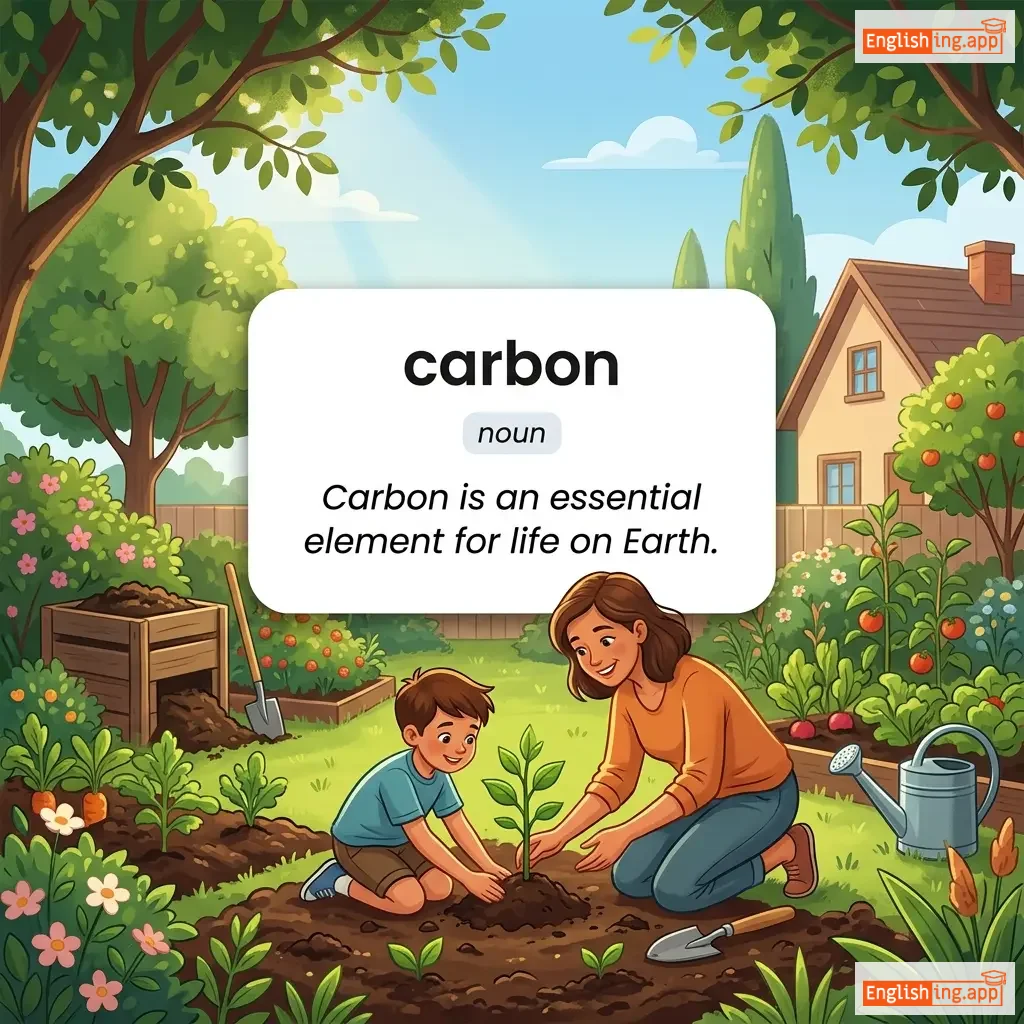
Carbon is an essential element for life on Earth. |
炭素は地球上の生命にとって不可欠な元素です。
tanso wa chikyuujou no seimei ni totte fukaketsu na gensu desu
••••••
|
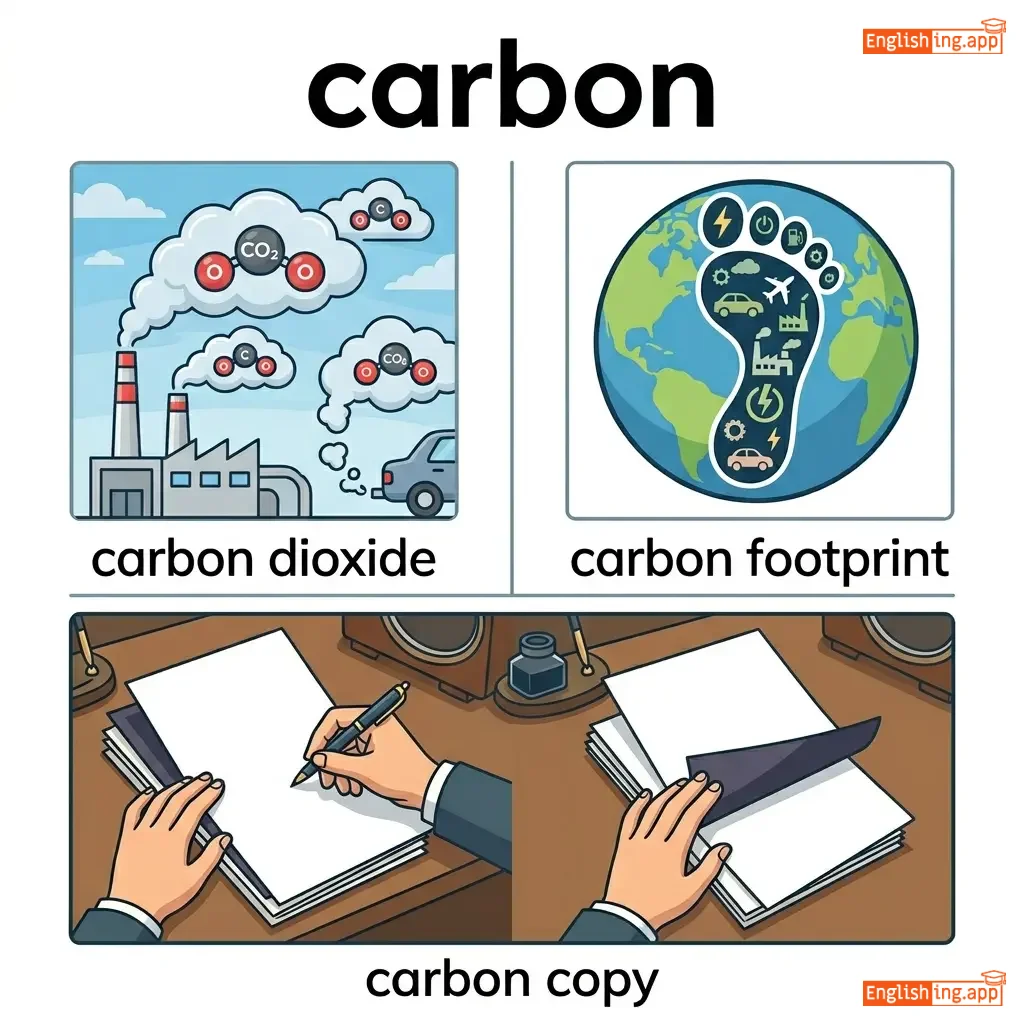
carbon footprint |
the amount of carbon dioxide emissions caused by a person, organization, or activity
••••••
|
カーボンフットプリント
kaabon futtopurinto
••••••
|
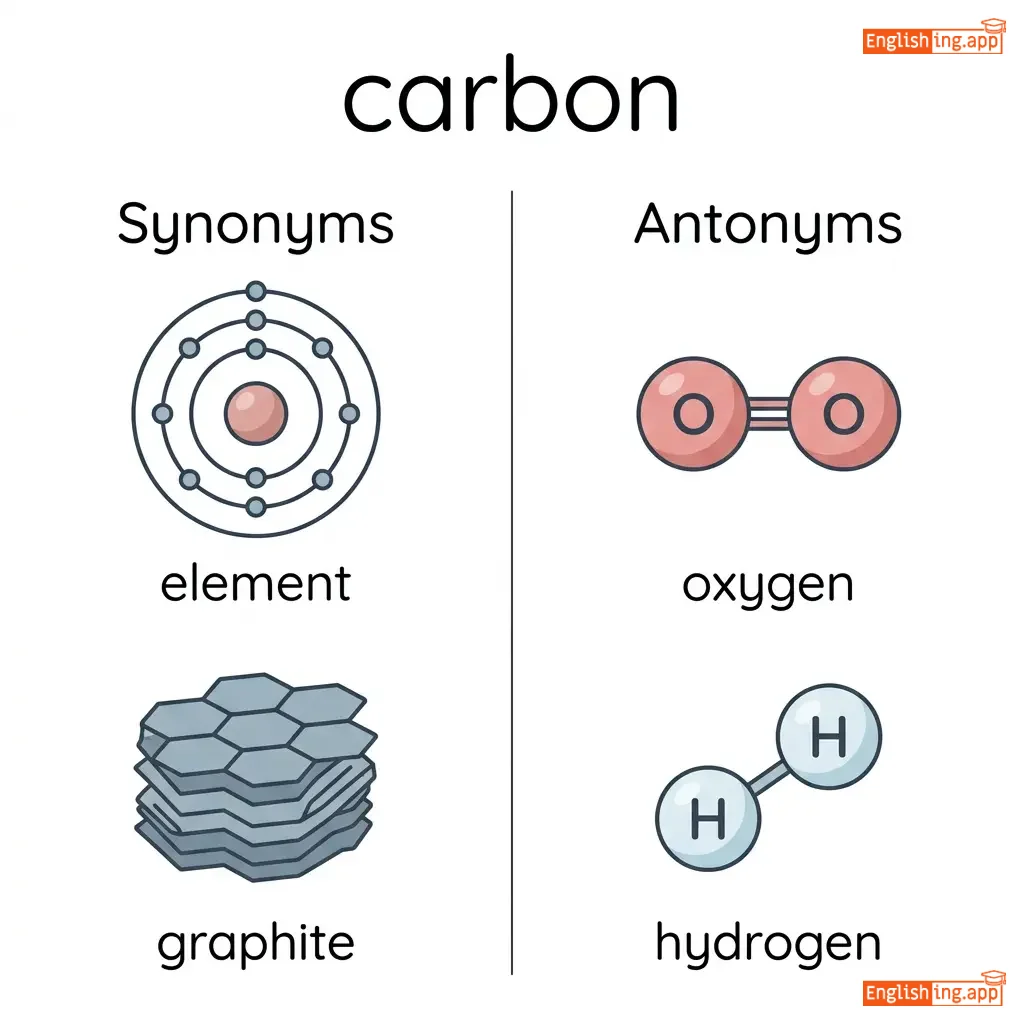
element, graphite, coal, diamond
••••••
|
oxygen, hydrogen
••••••
|
carbon dioxide, carbon footprint, carbon copy, carbon emission
••••••
|
炭素:生命の基盤、これがないと生命は存在できません!
••••••
|
|
💳
••••••
|
/kɑːrd/
noun
••••••
|
- •••••• | - •••••• | - •••••• | - •••••• | - •••••• | - •••••• |
A small, flat piece of stiff paper or thin cardboard used for various purposes, such as identification, greetings, or playing games.
••••••
|
She handed me her business card after the meeting. |
- •••••• |
play your cards right |
to act in a way that gives you an advantage or success
••••••
|
- •••••• |
ticket, pass, note, voucher, certificate
••••••
|
document, letter
••••••
|
credit card, business card, playing card, membership card
••••••
|
No •••••• |
|
❤️
••••••
|
/kɛr/
noun/verb
(ケア)
••••••
|
- •••••• |
ケア
kea
••••••
|
cared
ケアード
••••••
|
cared
ケアード
••••••
|
cares
ケアーズ
••••••
|
caring
ケアリング
••••••
|
The process of looking after someone or something; to be concerned or interested.
••••••
|
She took great care of her younger brother.
彼女は弟の世話をとてもよくしていました。
••••••
|
彼女は弟の世話をとてもよくしていました。
Kanojo wa otouto no sewa o totemo yoku shiteimashita.
••••••
|
take care
気をつけて
••••••
|
Used to tell someone to be cautious or to say goodbye kindly.
••••••
|
気をつけて
Ki wo tsukete
••••••
|
concern, attention, caution, supervision, protection
••••••
|
neglect, disregard, indifference
••••••
|
take care, health care, child care, care about, intensive care
••••••
|
Careはケア、母が言うように:気をつけて、元気でね。
••••••
|
|
💼
••••••
|
/kəˈrɪər/
noun, verb
(カリヤー)
••••••
|
- •••••• |
キャリア / 職業
kyaria / shokugyo
••••••
|
careered
カリヤード
••••••
|
careered
カリヤード
••••••
|
careers
カリヤーズ
••••••
|
careering
カリヤリング
••••••
|
As a noun: a person’s course of professional life; as a verb: to move swiftly and in an uncontrolled way.
••••••
|
She built a successful career in medicine.
彼女は医学の分野で成功したキャリアを築いた。
••••••
|
彼女は医学の分野で成功したキャリアを築いた。
Kanojo wa igaku no bunya de seikou shita kyaria wo kizuita.
••••••
|
career path
キャリアパス
••••••
|
The course of one's professional life or progress.
••••••
|
キャリアパス
kyaria pasu
••••••
|
profession, occupation, vocation, livelihood, calling
••••••
|
idleness, unemployment, joblessness
••••••
|
career development, career path, career opportunity, career growth
••••••
|
Careerは仕事を通して生きること → Carry your life through work = キャリア
••••••
|
|
⚠️
••••••
|
/ˈkɛr.fəl/
adjective
(ケアフル)
••••••
|
- •••••• |
慎重
shinchou
••••••
|
- •••••• | - •••••• | - •••••• | - •••••• |
Exercising caution or showing concern to avoid mistakes or harm.
••••••
|
He is always careful when crossing the road. |
彼は道路を渡る時、いつも慎重です。
Kare wa douro o wataru toki, itsumo shinchou desu.
••••••
|
be careful |
A warning to take caution.
••••••
|
気をつけて
ki o tsukete
••••••
|
cautious, vigilant, watchful, attentive, prudent
••••••
|
careless, reckless, negligent
••••••
|
be careful, careful planning, careful consideration, careful study
••••••
|
Careful = Care + Full → 慎重 = 失敗を防ぐために注意すること。
••••••
|
|
🤲
••••••
|
/ˈkɛərfəli/
adverb
(ケアフリー)
••••••
|
- •••••• |
慎重に
shinchou ni
••••••
|
- •••••• | - •••••• | - •••••• | - •••••• |
In a way that is done with attention to detail and caution to avoid mistakes or harm.
••••••
|
He carefully placed the glass on the table. |
彼は慎重にグラスをテーブルに置きました。
Kare wa shinchou ni gurasu wo teeburu ni okimashita.
••••••
|
handle with care |
used as an instruction to treat something delicately
••••••
|
慎重に取り扱う
shinchou ni toriatsukau
••••••
|
cautiously, attentively, gently, meticulously, thoroughly
••••••
|
carelessly, recklessly
••••••
|
listen carefully, handle carefully, plan carefully, watch carefully
••••••
|
慎重に = 心配しないで慎重に行動
••••••
|
|
🤷♂️😰
••••••
|
/ˈkeər.ləs/
adjective
(keāresu)
••••••
|
- •••••• |
不注意な; 無頓着な; 不注意な; おおざっぱな;
kearesu
••••••
|
- •••••• | - •••••• | - •••••• | - •••••• |
not giving sufficient attention or thought to avoiding harm or errors; negligent; inattentive
••••••
|
His careless driving caused a serious accident on the highway.
Hizu keāresu doraibingu kōzudo a seriousu akushidento on za haīwei.
••••••
|
彼の不注意な運転が高速道路で深刻な事故を引き起こしました。
Kare no fuchūina unten ga kōsoku dōro de shinkoku na jiko o hikiokoshimashita.
••••••
|
- •••••• | - •••••• | - •••••• |
negligent, reckless, inattentive, thoughtless
••••••
|
careful, cautious, attentive, thoughtful
••••••
|
careless mistake, careless driving, careless attitude
••••••
|
care (注意) + less (少) = 不注意
••••••
|
|
⚠️
••••••
|
/ˈkeərləsli/
adverb
(ケアレスリー)
••••••
|
- •••••• |
不注意に
fuuchuui ni
••••••
|
- •••••• | - •••••• | - •••••• | - •••••• |
without care or attention; in a negligent or reckless manner
••••••
|
He carelessly left the door unlocked.
ヒー ケアレスリー レフト ザ ドア アンロックト
••••••
|
彼は不注意にドアの鍵をかけ忘れた。
kare wa fuuchuui ni doa no kagi o kake wasureta
••••••
|
carelessly thrown together
ケアレスリー スローン トゥゲザー
••••••
|
done hastily without proper planning or care
••••••
|
いい加減に作られた
iikagen ni tsukurareta
••••••
|
negligently, recklessly, heedlessly, inattentively, casually
••••••
|
carefully, attentively, cautiously
••••••
|
carelessly made, carelessly handled, carelessly spoken, carelessly discarded
••••••
|
ケア(care)しない=ケアレスリー=不注意に
••••••
|
|
🚢
••••••
|
/ˈkɑːrɡoʊ/
noun
(カーゴ)
••••••
|
- •••••• |
貨物
kamotsu
••••••
|
- •••••• | - •••••• | - •••••• | - •••••• |
goods carried by a ship, plane, or other transport
••••••
|
The ship was loaded with valuable cargo. |
船は貴重な貨物で満載でした。
fune wa kichō na kamotsu de mansai deshita.
••••••
|
cargo ship |
a ship that carries goods rather than passengers
••••••
|
貨物船
kamotsu-sen
••••••
|
freight, shipment, load, consignment, goods
••••••
|
baggage, passenger
••••••
|
cargo ship, cargo plane, cargo hold, cargo transport
••••••
|
Cargo = 車 (kuruma) が貨物を運ぶ
••••••
|
|
🧶
••••••
|
/ˈkɑːrpɪt/
noun
(カーペット)
••••••
|
- •••••• |
カーペット
kaapetto
••••••
|
- •••••• | - •••••• | - •••••• | - •••••• |
a thick woven floor covering
••••••
|
They bought a red carpet for the living room. |
彼らはリビングルーム用に赤いカーペットを買いました。
Karera wa ribingu rūmu-yō ni akai kāpetto o kaimashita.
••••••
|
roll out the red carpet |
to give someone very special treatment
••••••
|
特別扱いをする
tokubetsu atsukai o suru
••••••
|
rug, mat, floorcloth, covering
••••••
|
bare floor, tiles
••••••
|
red carpet, carpet cleaner, carpet shop, wall-to-wall carpet
••••••
|
Carpet は車の pet — 車の下にカーペットがあります!
••••••
|
|
🚗
••••••
|
/ˈkærɪdʒ/
noun
(キャリッジ)
••••••
|
- •••••• |
馬車
basha
••••••
|
- •••••• | - •••••• | - •••••• | - •••••• |
a vehicle, typically a four-wheeled one, used for transporting goods or people, especially in the past
••••••
|
The royal family traveled in a beautiful carriage during parades. |
王族はパレードの間、美しい馬車で移動していました。
Ōzoku wa parēdo no aida, utsukushī basha de idō shite imashita.
••••••
|
- •••••• | - •••••• | - •••••• |
wagon, coach, cart, vehicle
••••••
|
foot, walk
••••••
|
horse-drawn carriage, royal carriage, carriage ride
••••••
|
A basha was the royal ride during parades 👑
••••••
|
|
🚚
••••••
|
/ˈkæriər/
noun
(キャリア)
••••••
|
- •••••• |
運送業者
unsou gyousha
••••••
|
- •••••• | - •••••• | - •••••• | - •••••• |
A person or thing that carries, transports, or conveys something; also an organization that provides transport services.
••••••
|
The airline is the largest carrier in the country. |
その航空会社は国で最も大きな運送業者です。
Sono koukō gaisha wa kuni de mottomo ōkina unsou gyousha desu.
••••••
|
- •••••• | - •••••• | - •••••• |
transporter, courier, hauler, deliverer
••••••
|
receiver, consumer
••••••
|
airline carrier, mail carrier, disease carrier, telecom carrier
••••••
|
Carrierは何かを運ぶ人や物。
••••••
|
|
🥕
••••••
|
/ˈkærət/
noun
(にんじん)
••••••
|
- •••••• |
にんじん
ninjin
••••••
|
- •••••• | - •••••• | - •••••• | - •••••• |
a long, tapering orange root eaten as a vegetable
••••••
|
She added chopped carrots to the soup. |
彼女はスープに切ったにんじんを加えました。
Kanojo wa suupu ni kitta ninjin o kuwaemashita.
••••••
|
carrot and stick |
a policy of offering a combination of rewards and punishment to induce behavior
••••••
|
ニンジンと棒
ninjin to bo
••••••
|
vegetable, root, produce, food, plant
••••••
|
fruit, meat
••••••
|
fresh carrot, carrot juice, carrot cake, carrot sticks
••••••
|
Car + root = にんじん (ninjin) — 車のように根を持つ野菜、それがにんじんです!
••••••
|
|
👜
••••••
|
/ˈkæri/
verb
(キャリー)
••••••
|
- •••••• |
運ぶ
hakobu
••••••
|
carried
キャリード
••••••
|
carried
キャリード
••••••
|
carries
キャリーズ
••••••
|
carrying
キャリーイング
••••••
|
To support and move something or someone from one place to another.
••••••
|
She carried the bag across the street.
彼女はバッグを通りの向こう側に運びました。
••••••
|
彼女はバッグを通りの向こう側に運びました。
Kanojo wa baggu o tōri no mukōgawa ni hakobimashita.
••••••
|
carry weight
重みを運ぶ
••••••
|
to have influence or importance
••••••
|
影響力を持つ
eikyōryoku o motsu
••••••
|
transport, convey, bear, haul, move
••••••
|
drop, abandon
••••••
|
carry out, carry forward, carry over, carry responsibility
••••••
|
Carryとは'運ぶ'という意味。物を一つの場所から他の場所に移動させることです。
••••••
|
|
🛒
••••••
|
/kɑːrt/
noun
(カート)
••••••
|
- •••••• |
カート
kaato
••••••
|
carted
カーテッド
••••••
|
carted
カーテッド
••••••
|
carts
カーツ
••••••
|
carting
カーティング
••••••
|
a vehicle with wheels that is pulled by a person or animal for carrying goods
••••••
|
The farmer loaded hay onto the cart.
農夫は干し草をカートに積み込んだ。
••••••
|
農夫は干し草をカートに積み込んだ。
Nōfu wa hoshi kusa o kāto ni tsumikonda.
••••••
|
put the cart before the horse
馬の前にカートを置く
••••••
|
to do things in the wrong order
••••••
|
物事を間違った順番で行う
Monogoto o machigatta junban de okonau
••••••
|
wagon, carriage, trolley, barrow, dray
••••••
|
car, truck
••••••
|
shopping cart, horse cart, wooden cart, hand cart
••••••
|
カート — 荷物を運ぶための車、特に農場で使われます。
••••••
|
|
🎨
••••••
|
/kɑːrˈtuːn/
noun
(カートゥーン)
••••••
|
- •••••• |
アニメーション
animēshon
••••••
|
- •••••• | - •••••• | - •••••• | - •••••• |
a humorous or animated drawing, especially one in newspapers or television
••••••
|
Children love watching cartoons on TV. |
子供たちはテレビでアニメを見るのが大好きです。
Kodomotachi wa terebi de animē o miru no ga daisuki desu.
••••••
|
- •••••• | - •••••• | - •••••• |
animation, comic, drawing, sketch, caricature
••••••
|
reality, live-action
••••••
|
cartoon show, cartoon character, cartoon series, funny cartoon
••••••
|
アニメーションはみんなをテレビで笑わせる絵だ!
••••••
|
|
📦
••••••
|
/keɪs/
noun
(ケイス)
••••••
|
- •••••• |
ケース / 状況
keesu / joukyou
••••••
|
- •••••• | - •••••• | - •••••• | - •••••• |
A particular situation, occurrence, or an instance of something; also a container or covering for something.
••••••
|
In this case, we should wait for further instructions.
この場合は、さらに指示を待つべきです。
••••••
|
この場合は、さらに指示を待つべきです。
Kono baai wa, sara ni shiji o matsu beki desu.
••••••
|
in any case
いずれにしても
••••••
|
whatever happens; regardless of the situation
••••••
|
いずれにしても
Izureni shitemo
••••••
|
instance, example, situation, container, box
••••••
|
whole, entirety
••••••
|
in case of, legal case, strong case, special case
••••••
|
Caseはケース、裁判のケースや携帯電話のケースのように使われます
••••••
|
|
💵
••••••
|
/kæʃ/
noun
(キャッシュ)
••••••
|
- •••••• |
現金
genkin
••••••
|
- •••••• | - •••••• | - •••••• | - •••••• |
money in the form of bills or coins, not checks or credit
••••••
|
She paid the bill in cash.
彼女は現金で支払いをしました。
••••••
|
彼女は現金で支払いをしました。
Kanojo wa genkin de shiharai o shimashita.
••••••
|
cash cow
キャッシュカウ
••••••
|
a business or product that generates steady profit
••••••
|
キャッシュカウ
kyassu kau
••••••
|
money, currency, funds, capital, notes
••••••
|
credit, debt
••••••
|
cash payment, cash flow, cash register, cash in hand
••••••
|
現金は素早く支払いができる、便利で即効的!
••••••
|
|
🎰
••••••
|
/kəˈsiːnoʊ/
noun
(カジノ)
••••••
|
- •••••• |
カジノ
kajino
••••••
|
- •••••• | - •••••• | - •••••• | - •••••• |
a place where people gamble and play games of chance
••••••
|
They spent the evening playing cards at the casino. |
彼らはカジノでカードをして夜を過ごしました。
Karera wa kajino de kādo o shite yoru o sugoshimashita.
••••••
|
- •••••• | - •••••• | - •••••• |
gambling house, gaming hall, club, betting place
••••••
|
temple, church
••••••
|
casino game, casino table, casino resort, online casino
••••••
|
カジノ - お金をかけて運試し、幸運を祈って!
••••••
|
|
🎭
••••••
|
/kæst/
verb/noun
(キャスト)
••••••
|
|
投げる、俳優陣
nageru, haiyūjin
••••••
|
cast
キャスト
••••••
|
cast
キャスト
••••••
|
casts
キャストス
••••••
|
casting
キャスティング
••••••
|
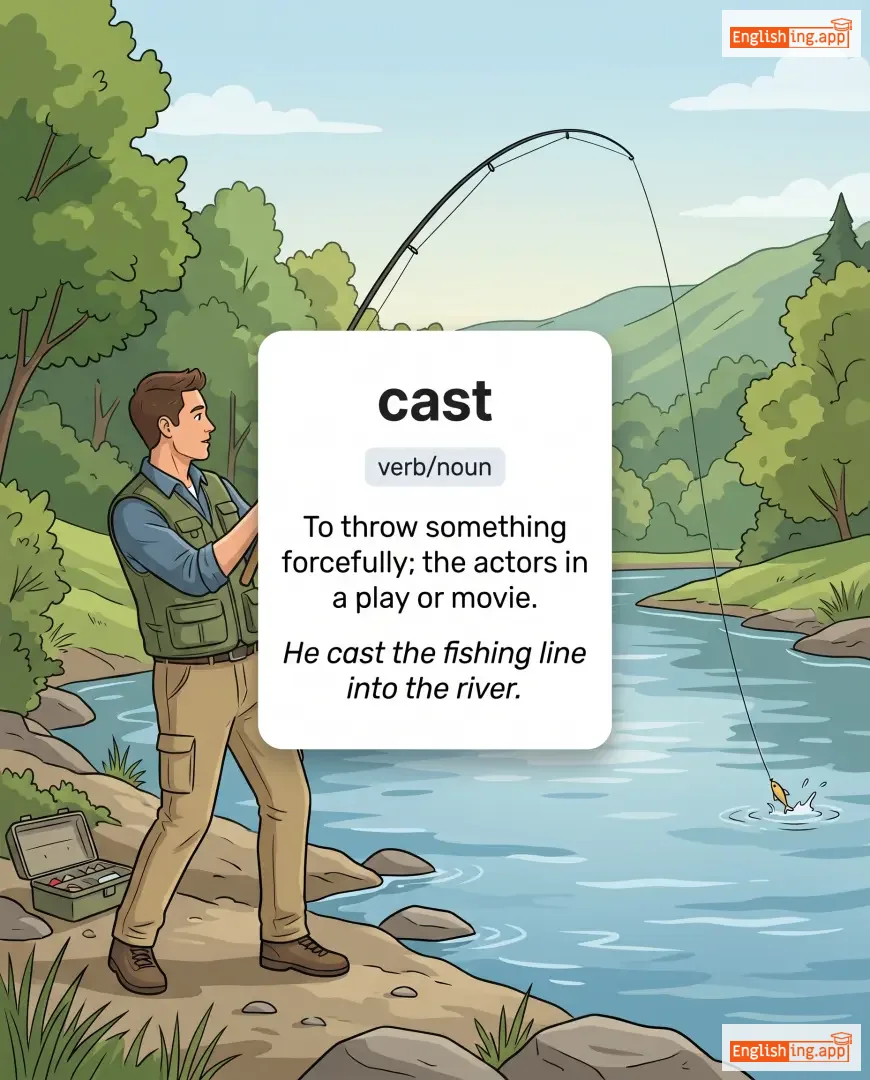
To throw something forcefully; the actors in a play or movie.
••••••
|
He cast the fishing line into the river.
彼は釣り糸を川に投げた。
••••••
|
彼は釣り糸を川に投げた。
Kare wa tsuri ito o kawa ni nageta.
••••••
|
cast a spell
呪文をかける
••••••
|
To use magic to influence someone or something.
••••••
|
呪文をかける
jumon o kakeru
••••••
|
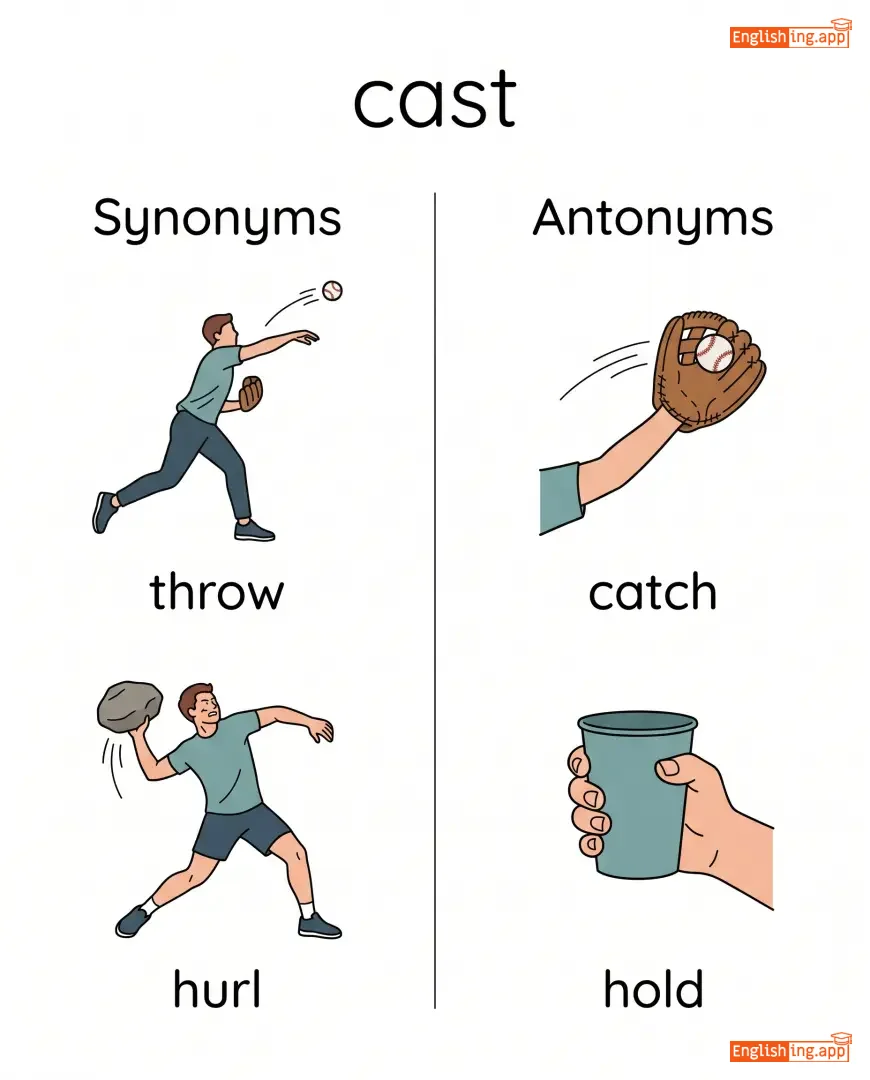
throw, hurl, fling, assign, shape
••••••
|
catch, hold, retain
••••••
|
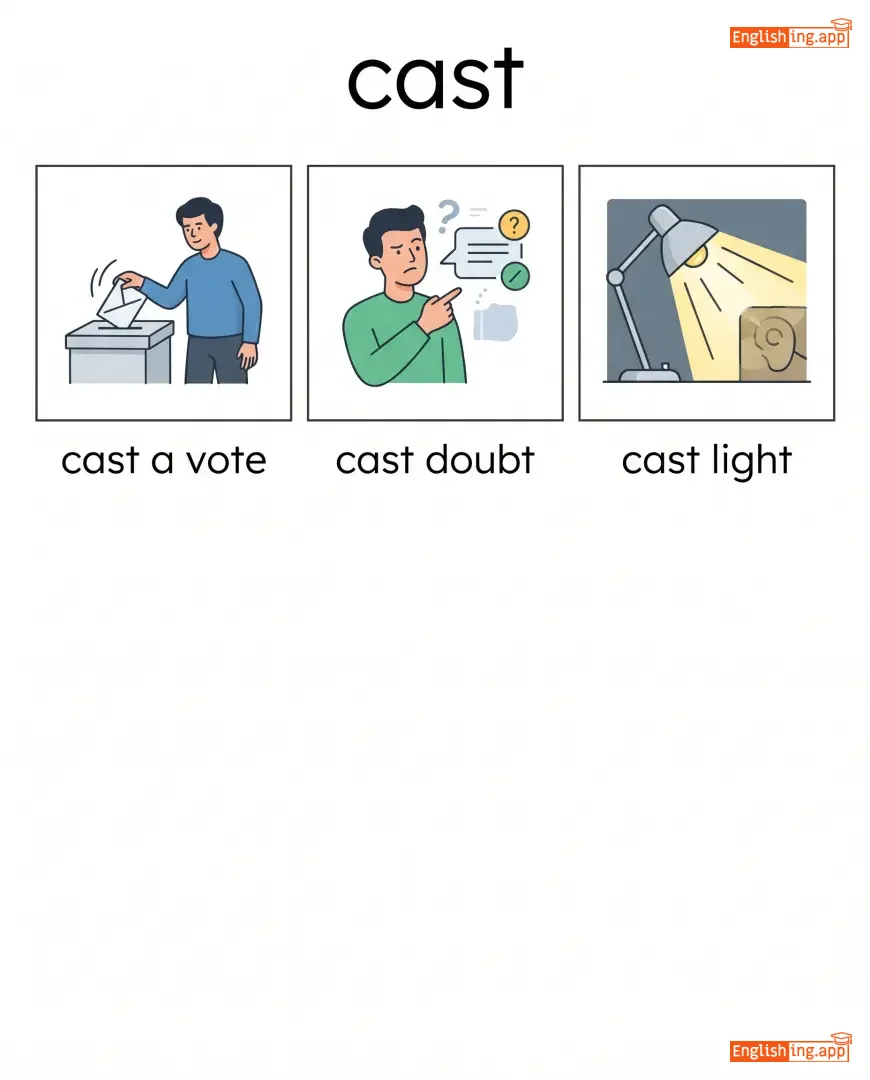
cast a vote, cast doubt, cast light, movie cast
••••••
|
Castとは、映画や劇で俳優を選ぶことや物を投げることです。
••••••
|
|
🏰
••••••
|
/ˈkæs.əl/
noun
(キャッスル)
••••••
|
- •••••• |
城; 宮殿;
shiro, kyūden
••••••
|
- •••••• | - •••••• | - •••••• | - •••••• |
a large fortified building or set of buildings; a fortress
••••••
|
The medieval castle stood majestically on top of the hill. |
中世の城は丘の頂上に堂々と立っていました。
Chūsei no shiro wa oka no chōjō ni dōdō to tatte imashita.
••••••
|
- •••••• | - •••••• | - •••••• |
fortress, stronghold, citadel, palace
••••••
|
hut, cottage, simple dwelling
••••••
|
medieval castle, ancient castle, castle walls
••••••
|
Imagine a 'shiro' on top of a hill.
••••••
|
|
👕
••••••
|
/ˈkæʒuəl/
adjective
(カジュアル)
••••••
|
- •••••• |
カジュアル
kajuaru
••••••
|
- •••••• | - •••••• | - •••••• | - •••••• |
Relaxed and informal in style, manner, or appearance.
••••••
|
He wore casual clothes to the informal gathering.
彼はカジュアルな服を着て、非公式な集まりに参加した。
••••••
|
彼はカジュアルな服を着て、非公式な集まりに参加した。
Kare wa kajuaru na fuku o kite, hikōshiki na atsumari ni sanka shita.
••••••
|
casual acquaintance
カジュアルな知り合い
••••••
|
A person you know but not very well.
••••••
|
カジュアルな知り合い
kajuaru na shiriai
••••••
|
informal, relaxed, easygoing, nonchalant, laid-back
••••••
|
formal, serious, strict
••••••
|
casual clothes, casual meeting, casual conversation, casual approach
••••••
|
カジュアルな服装はリラックスしたスタイルを意味する
••••••
|
|
🚑
••••••
|
/ˈkæʒ.u.əl.ti/
noun
(カジュアルティ)
••••••
|
- •••••• |
犠牲者; 負傷者; 損失
giseisha; fushousha; sonshitsu
••••••
|
- •••••• | - •••••• | - •••••• | - •••••• |
a person killed or injured in a war or accident; a victim of circumstances
••••••
|
The hospital treated many casualties from the car accident.
病院は車の事故からの多くの負傷者を治療しました。
••••••
|
病院は車の事故からの多くの負傷者を治療しました。
Byouin wa kuruma no jiko kara no ooku no fushousha wo chiryou shimashita.
••••••
|
- •••••• | - •••••• | - •••••• |
victim, fatality, injured person, loss
••••••
|
survivor, unharmed person
••••••
|
war casualty, traffic casualty, casualty count
••••••
|
事故の犠牲者は運命の犠牲者です
••••••
|
|
🐱
••••••
|
/kæt/
noun
(kat)
••••••
|
- •••••• |
猫
neko
••••••
|
- •••••• | - •••••• | - •••••• | - •••••• |
a small domesticated carnivorous mammal often kept as a pet
••••••
|
The cat is sleeping on the sofa. |
猫はソファで寝ています。
Neko wa sofa de neteimasu.
••••••
|
curiosity killed the cat |
being too inquisitive can lead to trouble
••••••
|
好奇心は猫を殺す
Koukishin wa neko o korosu
••••••
|
feline, kitten, pussy, tomcat
••••••
|
dog, hound
••••••
|
stray cat, pet cat, wild cat, black cat
••••••
|
Cat 🐱 とは猫、やっぱり気になる!
••••••
|
|
📚
••••••
|
/ˈkætəlɒɡ/
noun; verb
(カタログ)
••••••
|
- •••••• |
目録
mokuroku
••••••
|
catalogued
カタログド
••••••
|
catalogued
カタログド
••••••
|
catalogues
カタログズ
••••••
|
cataloguing
カタログイング
••••••
|
a complete list of items, typically one in alphabetical or systematic order; to make a systematic list of items
••••••
|
The library decided to catalogue all new books digitally.
ザ ライブラリー ディサイディド トゥ カタログ オール ニュー ブックス デジタリー。
••••••
|
図書館はすべての新しい本をデジタルで目録化することにした。
toshokan wa subete no atarashii hon o dejitaru de mokurokuka suru koto ni shita
••••••
|
- •••••• | - •••••• | - •••••• |
list, register, index, inventory, directory
••••••
|
disorder, chaos
••••••
|
product catalogue, library catalogue, online catalogue, catalogue items, catalogue system
••••••
|
カタログ=catalogue、商品一覧を思い出す
••••••
|
|
🤲
••••••
|
/kætʃ/
verb
••••••
|
|
- •••••• |
caught
••••••
|
caught
••••••
|
catches
••••••
|
catching
••••••
|
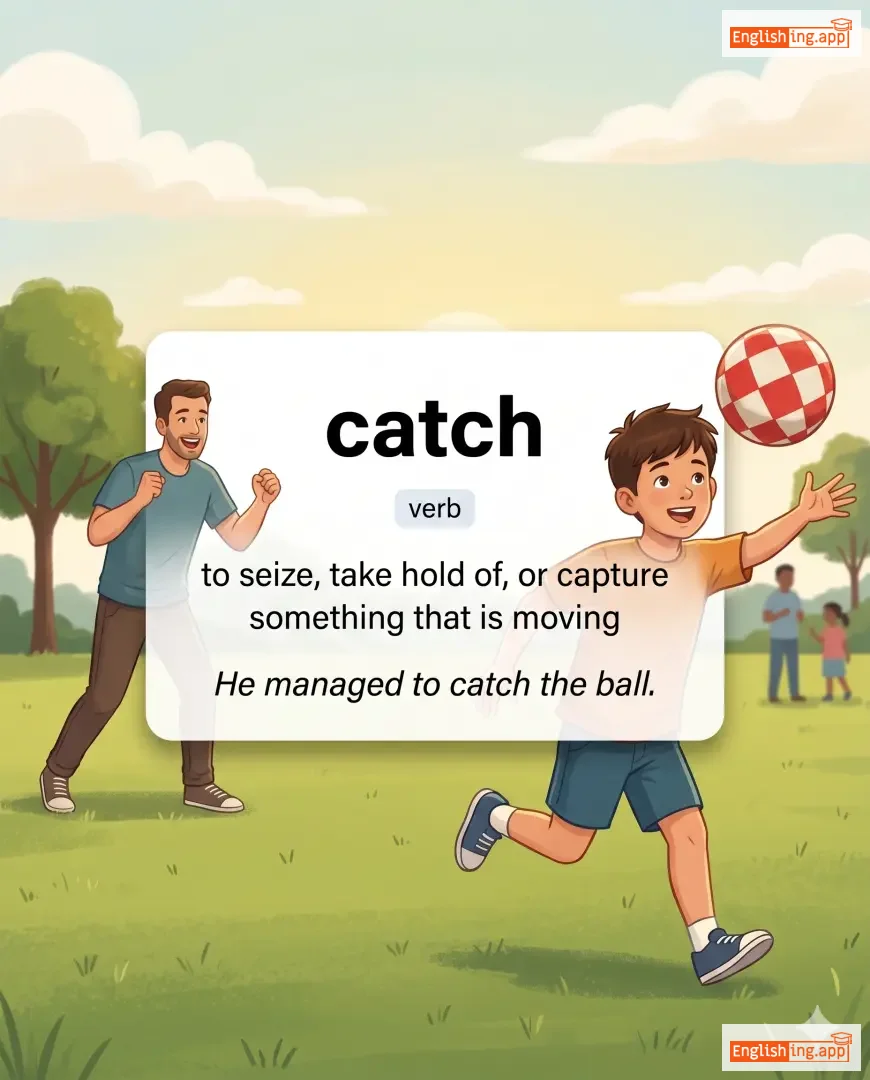
to seize, take hold of, or capture something that is moving
••••••
|
He managed to catch the ball. |
- •••••• |
catch someone's eye |
to attract someone's attention
••••••
|
- •••••• |
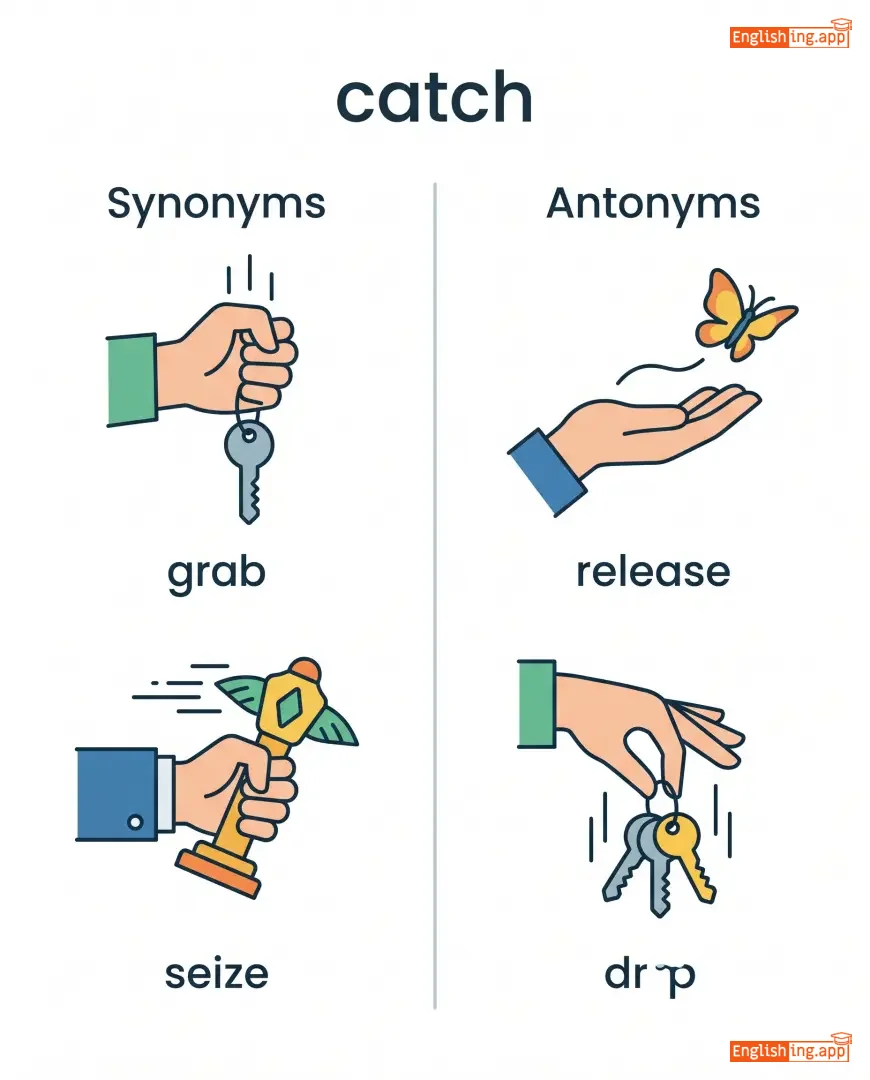
grab, seize, capture, grasp, snatch
••••••
|
release, drop, lose
••••••
|
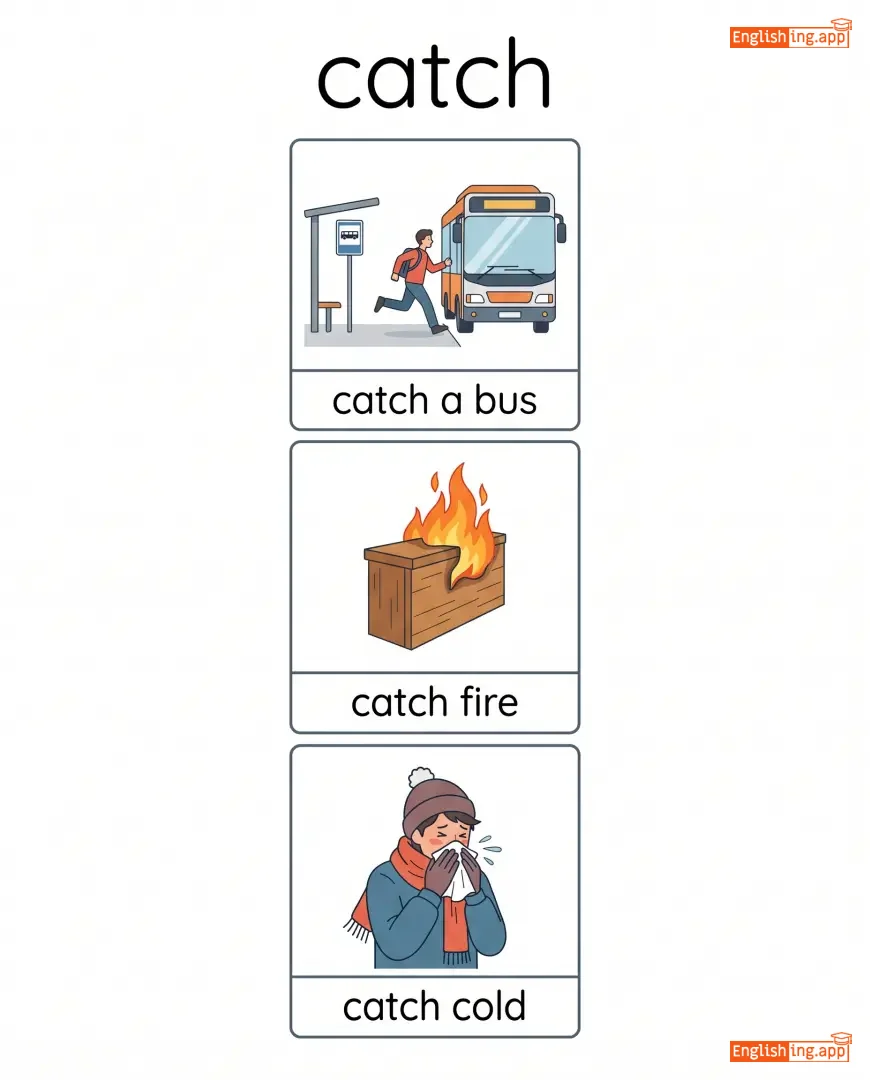
catch a bus, catch fire, catch cold, catch attention
••••••
|
No •••••• |
|
📂
••••••
|
/ˈkætəɡɔːri/
noun
(カテゴリー)
••••••
|
- •••••• |
カテゴリー
kategorii
••••••
|
- •••••• | - •••••• | - •••••• | - •••••• |
a class or division of things regarded as having particular shared characteristics
••••••
|
Books are arranged by category in the library. |
本は図書館でカテゴリーごとに整理されています。
Hon wa toshokan de kategorii goto ni seiri sareteimasu.
••••••
|
- •••••• | - •••••• | - •••••• |
class, group, type, division, section
••••••
|
individual, unit
••••••
|
product category, age category, main category, different category
••••••
|
Category = カテゴリー 📂 - 本はカテゴリーごとに整理される
••••••
|
|
🍽️
••••••
|
/ˈkeɪtər/
verb
••••••
|
- •••••• | - •••••• |
catered
••••••
|
catered
••••••
|
caters
••••••
|
catering
••••••
|
To provide food, drinks, or services, usually for an event or group.
••••••
|
The company catered the wedding reception. |
- •••••• |
cater to |
To provide what is wanted or needed by someone, often excessively.
••••••
|
- •••••• |
provide, supply, serve, furnish, deliver
••••••
|
neglect, ignore
••••••
|
cater for, cater to needs, catering services, cater events
••••••
|
No •••••• |
|
🐄
••••••
|
/ˈkætl/
noun
(ˈhæpinəs)
••••••
|
- •••••• |
幸せ
shiawase
••••••
|
- •••••• | - •••••• | - •••••• | - •••••• |
large domesticated animals such as cows and bulls that are kept on a farm for their milk, meat, or hides
••••••
|
The farmer owns a herd of cattle that graze near the river. |
彼女は賞を受け取ったとき、自分の幸せを隠せませんでした。
Kanojo wa shō o uketotta toki, jibun no shiawase o kakusemasendeshita.
••••••
|
like cattle |
used to describe people being treated as a group without individuality
••••••
|
幸せを追求する
shiawase o tsuikyū suru
••••••
|
livestock, herd, cows, oxen, bovine
••••••
|
wild animals, pets
••••••
|
herd of cattle, cattle farm, cattle ranch, cattle market
••••••
|
幸せは簡単に覚えられる、'しあわせ'!幸せでいることが一番大切!
••••••
|
|
⚡
••••••
|
/kɔːz/
noun/verb
(コーズ)
••••••
|
- •••••• |
原因 / 引き起こす
gen'in / hikiokosu
••••••
|
caused
コーズド
••••••
|
caused
コーズド
••••••
|
causes
コーズェス
••••••
|
causing
コージング
••••••
|
a person or thing that gives rise to an action, phenomenon, or condition; to make something happen
••••••
|
The heavy rain caused flooding in the city.
大雨が都市で洪水を引き起こしました。
••••••
|
大雨が都市で洪水を引き起こしました。
Oomizu ga toshi de kouzui wo hikiokoshimashita.
••••••
|
lost cause
失われた原因
••••••
|
a hopeless case; something doomed to fail
••••••
|
失われた原因
ushinawareta gen'in
••••••
|
reason, motive, source, trigger, origin
••••••
|
effect, result
••••••
|
cause of death, good cause, lost cause, social cause
••••••
|
Cause は原因 ⚡ – 大雨で洪水が発生、Cause = 原因
••••••
|
|
⚠️
••••••
|
/ˈkɔː.ʃən/
noun
(カウション)
••••••
|
|
警告; 注意
keikoku; chūi
••••••
|
- •••••• | - •••••• | - •••••• | - •••••• |
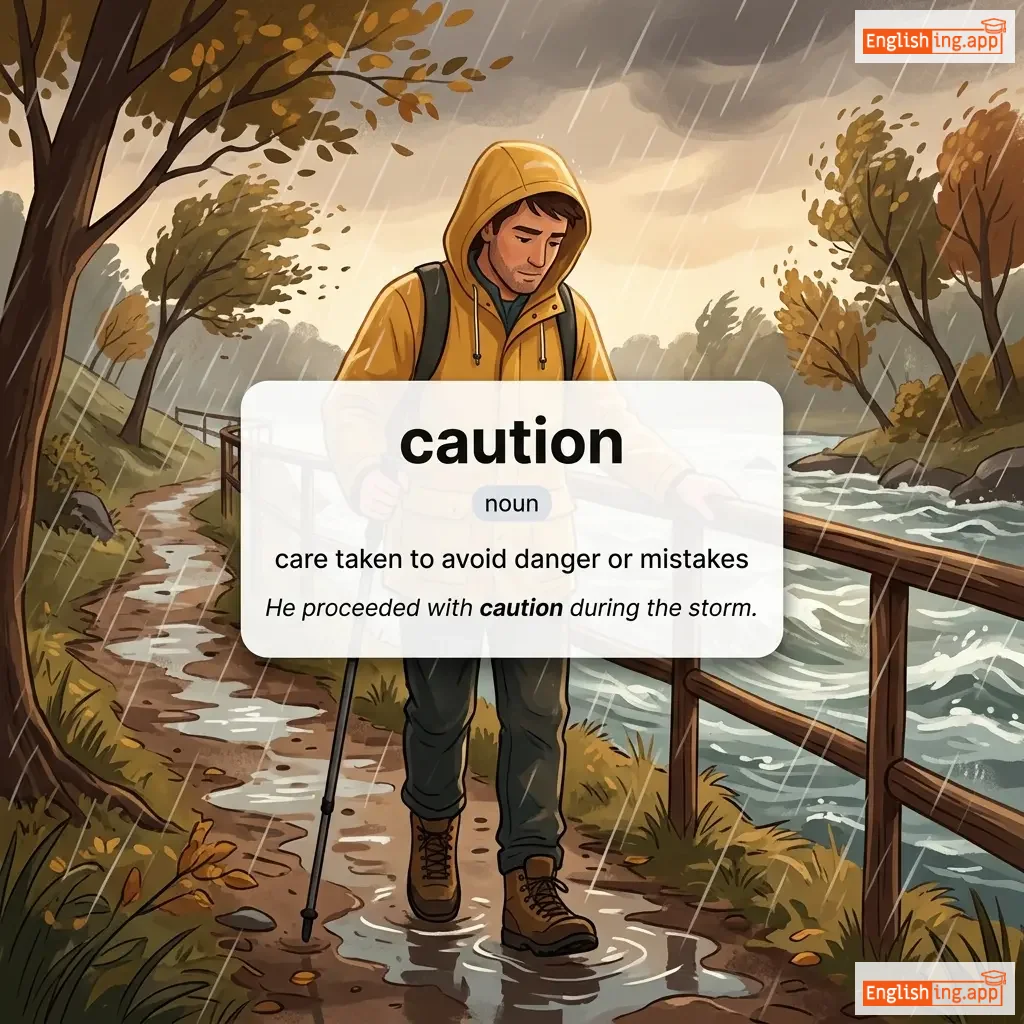
care taken to avoid danger or mistakes; a warning about possible danger or problems
••••••
|
The teacher gave a caution to students about the slippery stairs.
教師は滑りやすい階段について生徒に注意を与えた。
••••••
|
教師は滑りやすい階段について生徒に注意を与えた。
Kyōshi wa suberiyasui kaidan ni tsuite seito ni chūi o ataeta.
••••••
|
- •••••• | - •••••• | - •••••• |
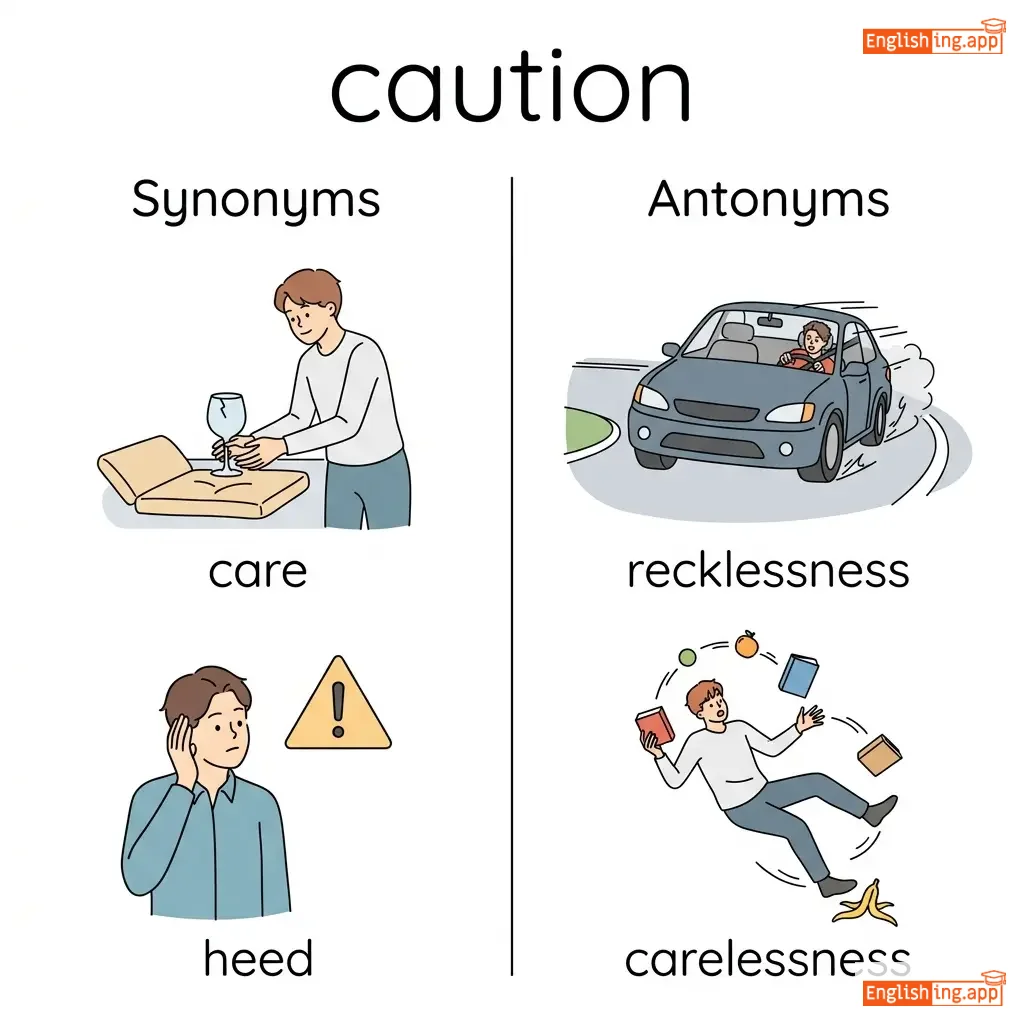
warning, care, prudence, vigilance
••••••
|
recklessness, carelessness, negligence
••••••
|
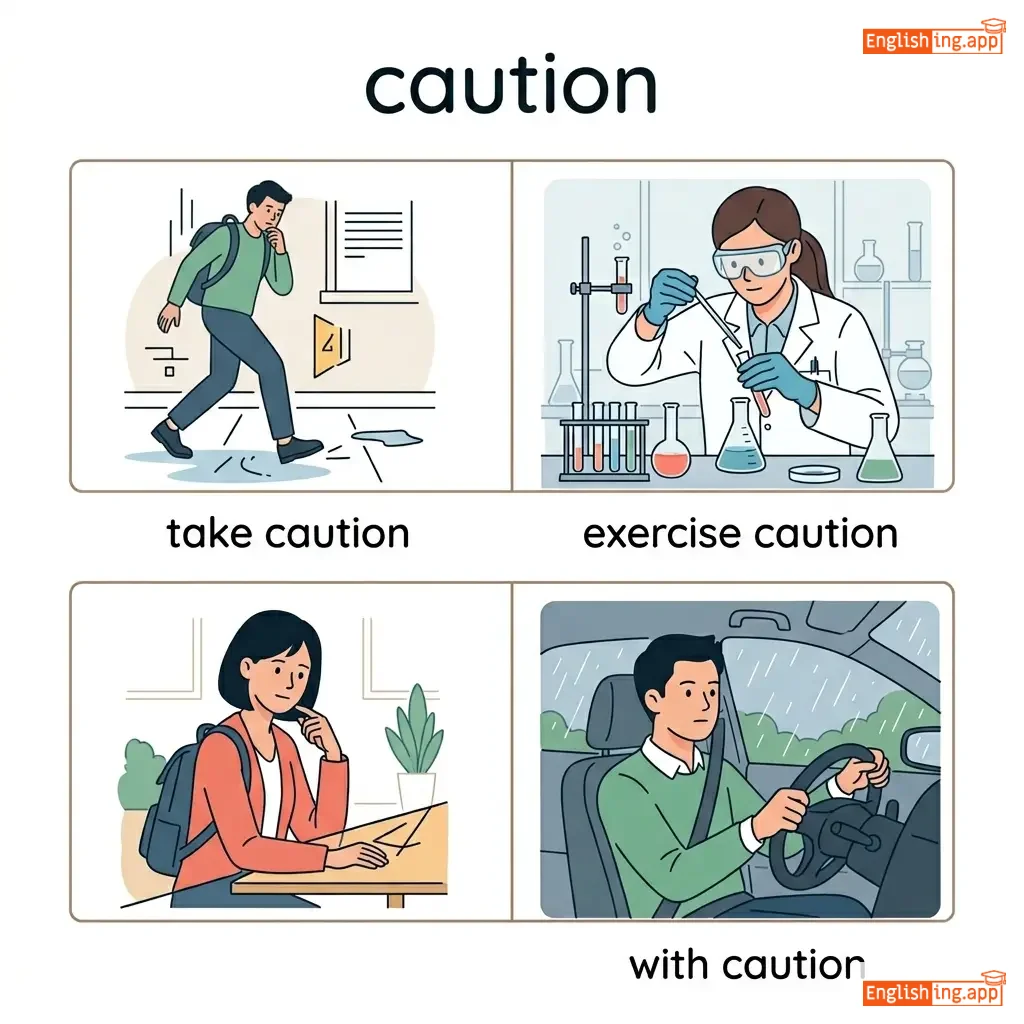
exercise caution, word of caution, proceed with caution
••••••
|
In Japanese, '注意' means caution, like the warning given by the teacher.
••••••
|
|
⚠️
••••••
|
/ˈkɔːʃənˌɛri/
adjective
(コーショナリー)
••••••
|
- •••••• |
警告的な
keikokuteki na
••••••
|
- •••••• | - •••••• | - •••••• | - •••••• |
serving as a warning; intended to prevent problems or mistakes by giving advice or examples
••••••
|
The report offers a cautionary message about unchecked spending.
ザ レポート オファーズ ア コーショナリー メッセージ アバウト アンチェックド スペンディング。
••••••
|
その報告書は無計画な支出について警告的なメッセージを示している。
Sono hokokusho wa mukeikakuna shishutsu ni tsuite keikokuteki na messeji o shimeshite iru
••••••
|
cautionary tale
コーショナリー テイル
••••••
|
a story used as a warning about potential dangers or mistakes
••••••
|
教訓的な話
kyokunteki na hanashi
••••••
|
warning, preventive, admonitory, forewarning, advisory
••••••
|
encouraging, reassuring, permissive
••••••
|
cautionary tale, cautionary advice, cautionary note, cautionary example
••••••
|
警告 keikoku = cautionary
••••••
|
|
🛑
••••••
|
/ˈkɔːʃəs/
adjective
(コーシャス)
••••••
|
- •••••• |
慎重
shinchou
••••••
|
- •••••• | - •••••• | - •••••• | - •••••• |
careful to avoid potential problems or dangers
••••••
|
She was cautious about trusting strangers. |
彼女は見知らぬ人を信頼することに慎重だった。
Kanojo wa mishiranu hito o shinrai suru koto ni shinchou datta.
••••••
|
- •••••• | - •••••• | - •••••• |
careful, prudent, wary, circumspect
••••••
|
reckless, careless
••••••
|
cautious approach, cautious attitude, be cautious
••••••
|
Cautious means 'careful' + 's' – being careful with strangers
••••••
|
|
🕳️
••••••
|
/keɪv/
noun
(ケイヴ)
••••••
|
- •••••• |
洞窟
doukutsu
••••••
|
- •••••• | - •••••• | - •••••• | - •••••• |
a large natural underground space in a hill or cliff
••••••
|
The explorers discovered paintings on the walls of the cave. |
探検者たちは洞窟の壁に絵を発見しました。
Tanken-sha-tachi wa doukutsu no kabe ni e o hakken shimashita.
••••••
|
cave in |
to collapse or give way under pressure
••••••
|
崩れ落ちる
kuzureochiru
••••••
|
cavern, grotto, hollow, den, tunnel
••••••
|
mountain, peak, hilltop
••••••
|
deep cave, dark cave, cave entrance, explore cave
••••••
|
Cave は洞窟 — 洞窟には恐ろしい秘密が隠されている!
••••••
|
|
🛑
••••••
|
/siːs/
verb
(シス)
••••••
|
- •••••• |
停止する
teishi suru
••••••
|
ceased
シスド
••••••
|
ceased
シスド
••••••
|
ceases
シセス
••••••
|
ceasing
シシング
••••••
|
to bring or come to an end; to stop doing something
••••••
|
The noise ceased as soon as the children went inside.
騒音は子供たちが中に入るとすぐに止まりました。
••••••
|
騒音は子供たちが中に入るとすぐに止まりました。
Sōon wa kodomotachi ga naka ni hairu to sugu ni tomarimashita.
••••••
|
ceasefire
停戦
••••••
|
an agreement to stop fighting temporarily
••••••
|
停戦
teisen
••••••
|
stop, halt, end, discontinue, terminate
••••••
|
continue, persist, proceed
••••••
|
cease operations, cease to exist, cease immediately, cease fire
••••••
|
Ceaseは停止する、英語の「シス」と同じように止める意味です。
••••••
|
|
♾️
••••••
|
/ˈsiːs.ləs/
adjective
(シスレス)
••••••
|
- •••••• |
途切れのない; 終わりのない
shisuresu
••••••
|
- •••••• | - •••••• | - •••••• | - •••••• |
continuing without pause or interruption; endless
••••••
|
The ceaseless rain lasted for three days. |
途切れのない雨は三日間続いた。
Togire no nai ame wa mikka kan tsuzuita.
••••••
|
- •••••• | - •••••• | - •••••• |
endless, continuous, perpetual
••••••
|
temporary, intermittent, sporadic
••••••
|
ceaseless effort, ceaseless noise, ceaseless activity
••••••
|
Japanese '途切れ' (no pause) + 'のない' (without)
••••••
|
|
🏠
••••••
|
/ˈsiːlɪŋ/
noun
(シーリング)
••••••
|
- •••••• |
天井
tenjō
••••••
|
- •••••• | - •••••• | - •••••• | - •••••• |
the upper interior surface of a room
••••••
|
The ceiling of the hall was painted beautifully. |
ホールの天井は美しく塗られていました。
Hōru no tenjō wa utsukushiku nurarete imashita.
••••••
|
hit the ceiling |
to become extremely angry
••••••
|
カンカンに怒る
kankan ni okoru
••••••
|
roof, overhead, canopy, cover
••••••
|
floor, ground
••••••
|
high ceiling, low ceiling, ceiling fan, ceiling light
••••••
|
天井は天井の意味です、ファンが天井にあると想像してください。
••••••
|
|
🎉
••••••
|
/ˈsɛlɪˌbreɪt/
verb
••••••
|
|
- •••••• |
celebrated
••••••
|
celebrated
••••••
|
celebrates
••••••
|
celebrating
••••••
|
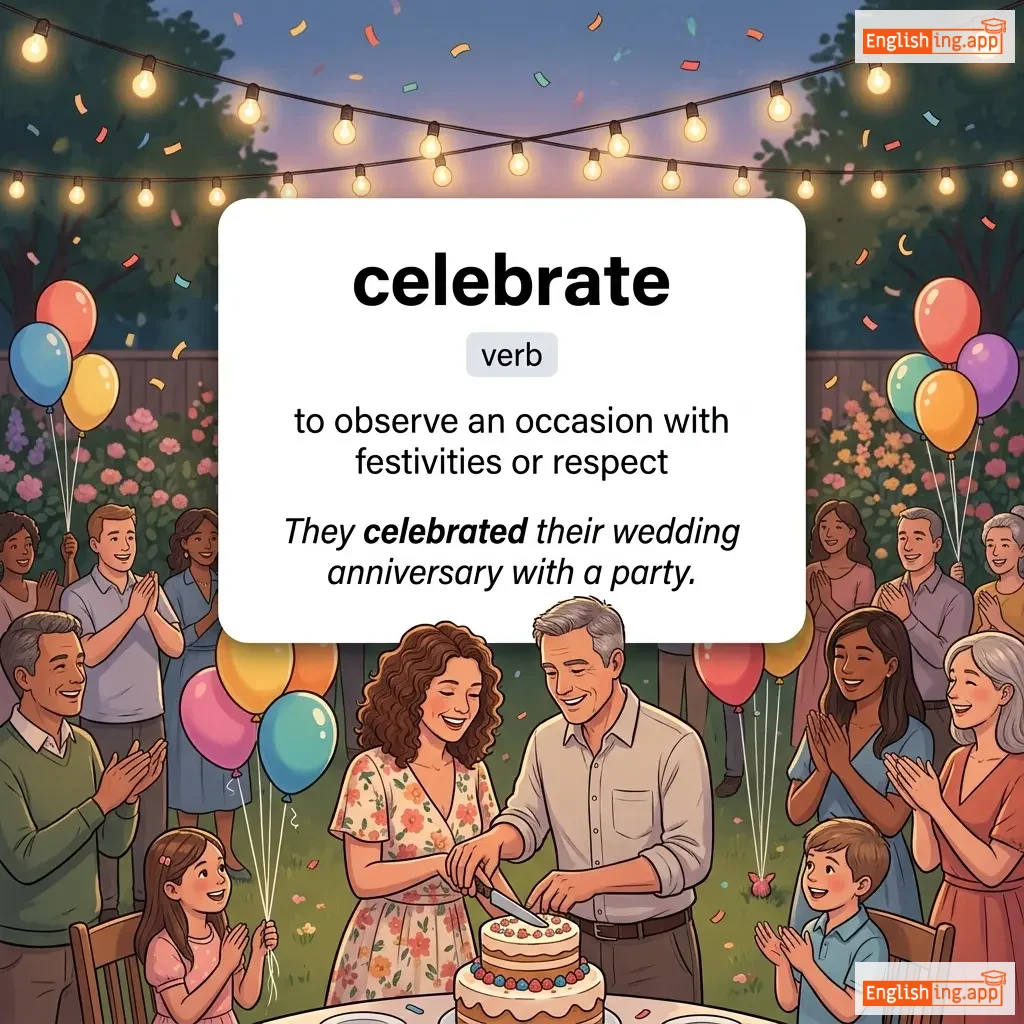
to observe an occasion with festivities or respect
••••••
|
They celebrated their wedding anniversary with a party. |
- •••••• |
celebrate in style |
to celebrate in an impressive or luxurious way
••••••
|
- •••••• |
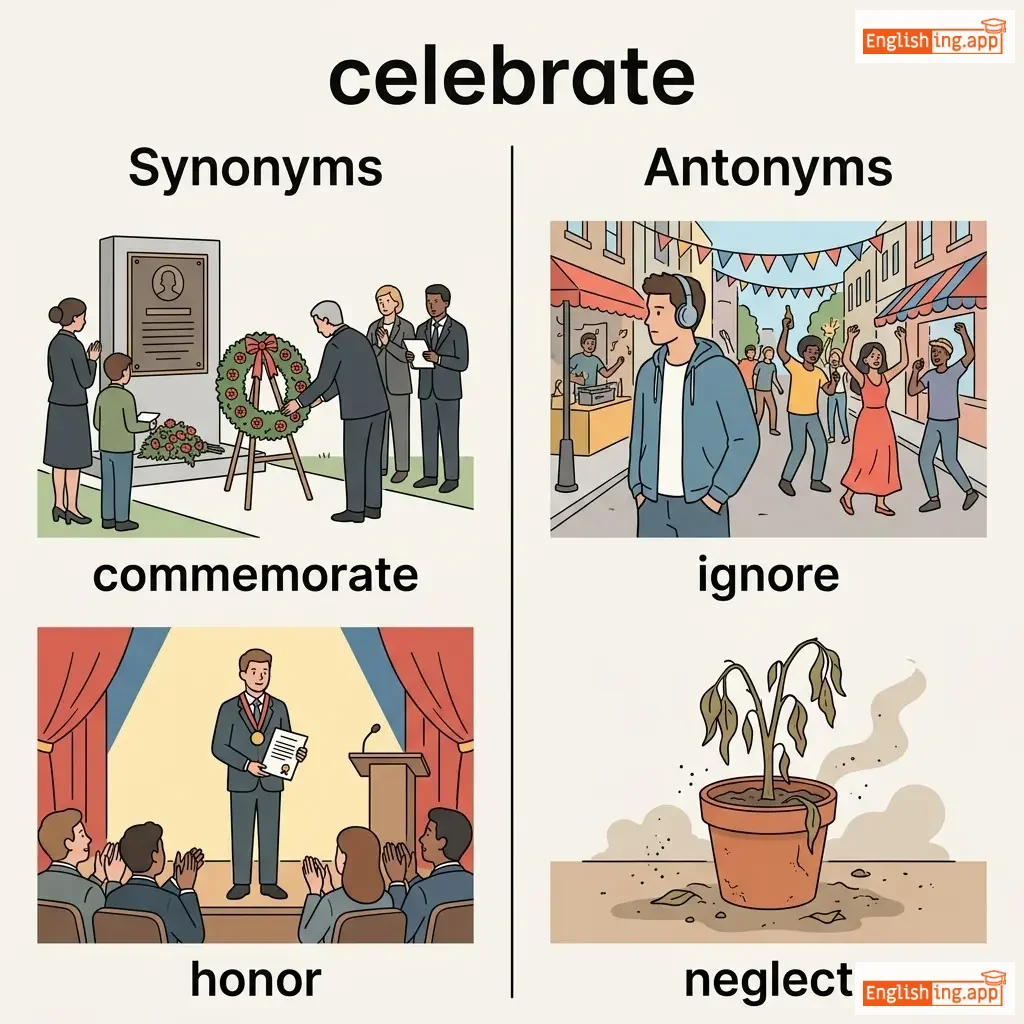
commemorate, honor, observe, rejoice
••••••
|
ignore, neglect
••••••
|
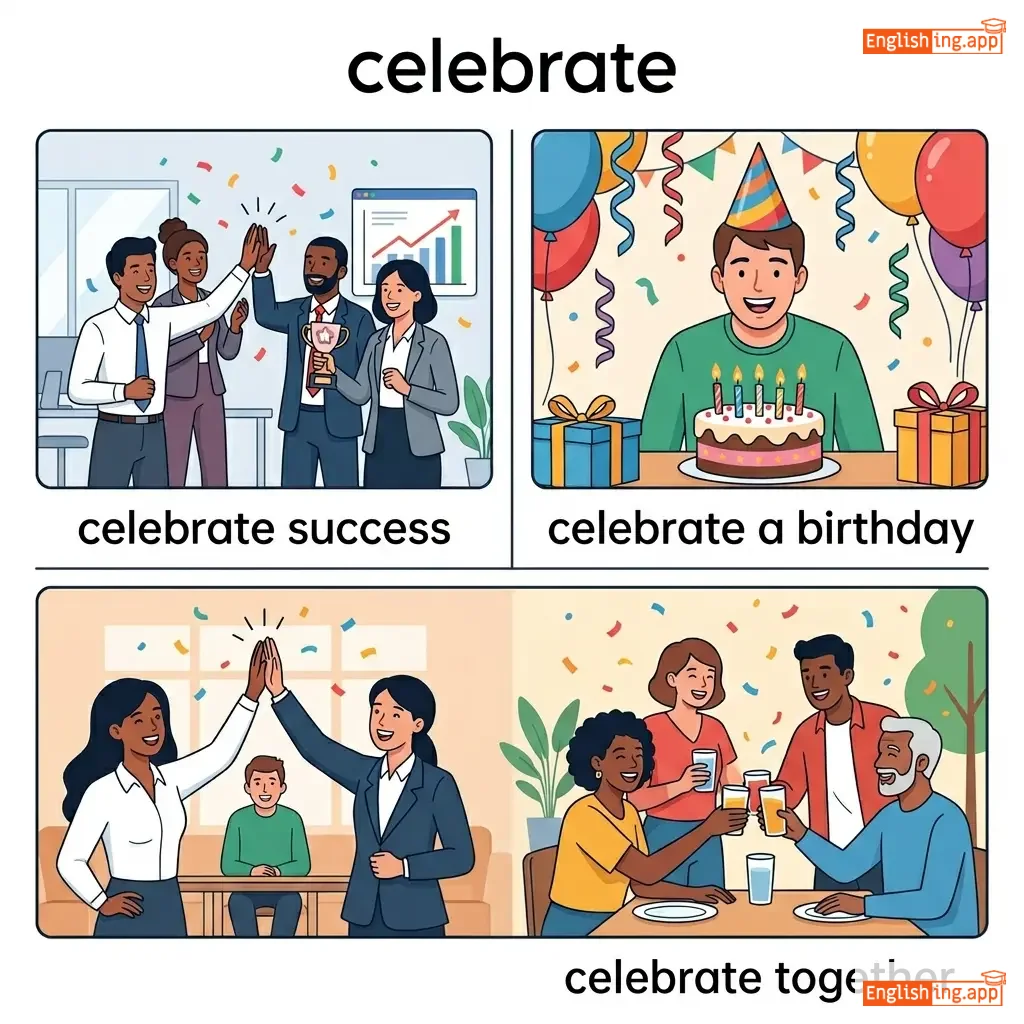
celebrate success, celebrate a birthday, celebrate together, celebrate in style
••••••
|
No •••••• |
|
🥳
••••••
|
/ˌsɛlɪˈbreɪʃən/
noun
(セレブレーション)
••••••
|
- •••••• |
祝典
shukuten
••••••
|
- •••••• | - •••••• | - •••••• | - •••••• |
a festive event or activity to honor an occasion
••••••
|
The city held a grand celebration on Independence Day. |
その都市は独立記念日に大規模な祝典を開催した。
Sono toshi wa dokuritsuki nenshi ni daikibo na shukuten o kaisai shita.
••••••
|
- •••••• | - •••••• | - •••••• |
festivity, party, event, ceremony, gathering
••••••
|
mourning, neglect
••••••
|
birthday celebration, wedding celebration, public celebration, celebration dinner
••••••
|
Celebrationは祝典、誕生日の祝典のように考えよう!
••••••
|
|
🌟
••••••
|
/səˈlɛbrɪti/
noun
(セレブリティ)
••••••
|
- •••••• |
有名人
yūmeijin
••••••
|
- •••••• | - •••••• | - •••••• | - •••••• |
a famous person, especially in entertainment or sports
••••••
|
The celebrity was surrounded by fans at the airport. |
その有名人は空港でファンに囲まれていた。
Sono yūmeijin wa kūkō de fan ni kakomarete ita.
••••••
|
celebrity status |
the condition of being widely known and admired
••••••
|
有名人の地位
yūmeijin no chii
••••••
|
star, idol, personality, VIP, notable
••••••
|
unknown, nobody
••••••
|
celebrity gossip, celebrity news, celebrity status, celebrity culture
••••••
|
Celebrity とはみんなが知っている有名な人!
••••••
|
|
🔋
••••••
|
/sɛl/
noun
(セル)
••••••
|
- •••••• |
細胞 / セル
saibou / seru
••••••
|
- •••••• | - •••••• | - •••••• | - •••••• |
a small basic unit of life; or a small enclosed space like a prison room
••••••
|
The prisoner was locked in a small cell. |
囚人は小さなセルに閉じ込められた。
Shuujin wa chiisana seru ni tojikomerareta.
••••••
|
cell phone |
a portable mobile phone
••••••
|
携帯電話
keitai denwa
••••••
|
unit, chamber, cubicle, compartment
••••••
|
open space, hall
••••••
|
prison cell, blood cell, cell phone, solar cell
••••••
|
Cellは細胞を意味し、携帯電話もセルフォンと言います。
••••••
|
|
📱
••••••
|
/ˈsɛlˌfoʊn/
noun
(セルフォン)
••••••
|
- •••••• |
携帯電話
keitai denwa
••••••
|
- •••••• | - •••••• | - •••••• | - •••••• |
a portable telephone that uses a cellular network for wireless communication
••••••
|
She forgot her cellphone at home and couldn’t call anyone.
シー フォーゴット ハー セルフォン アット ホーム アンド クドゥント コール エニワン。
••••••
|
彼女は家に携帯電話を忘れて、誰にも電話できなかった。
kanojo wa ie ni keitai denwa o wasurete dare ni mo denwa dekinakatta
••••••
|
- •••••• | - •••••• | - •••••• |
mobile phone, cell phone, smartphone, handset
••••••
|
landline, desk phone
••••••
|
cellphone battery, cellphone charger, cellphone screen, cellphone number
••••••
|
Cellphone=携帯電話、ポケットの友だち。
••••••
|
|
⚰️
••••••
|
/ˈsɛmɪˌtɛri/
noun
(セメタリー)
••••••
|
- •••••• |
墓地
bochi
••••••
|
- •••••• | - •••••• | - •••••• | - •••••• |
a place where dead people are buried
••••••
|
The old cemetery is located at the edge of the village. |
古い墓地は村の端にあります。
Furui bochi wa mura no hashi ni arimasu.
••••••
|
- •••••• | - •••••• | - •••••• |
graveyard, burial ground, necropolis, churchyard
••••••
|
living area, city center
••••••
|
old cemetery, village cemetery, family cemetery, war cemetery
••••••
|
セメタリー = Se-me-ta-ri, 死者の場所
••••••
|

