The Firefighter's Legacy
ハサンはダッカ消防署のfirefighterでした。彼は高層ビルからの救助のためのspecialized訓練を受けていました。彼は新しいシステムのconfigurationを学ぶのに苦労していました。Instructionalマニュアルは複雑で、processingには時間がかかりました。彼はすべての情報をconsolidateして、シンプルなガイドを作成することに決めました。しかし、古い方法と新しい方法の間に対立が生じたため、complicationが発生しました。ある日、大きな火事で彼はミスを犯しましたが、それは彼にとってembarrassmentでした。Unfortunately誰も怪我をしませんでしたが、彼は自分を責めました。彼のpredecessorとのcomparisonでは、彼の仕事のsimilarityは少ないように感じました。しかし、彼の知識はsufficientで、学び続けて前進することができました。Withdrawalは簡単だったかもしれませんが、resignationは彼の性格にはありませんでした。彼のpredecessorは決してpermanently諦めてはいけないと言っていました。Importantly彼は間違いから学ぶことが本当に重要だと理解しました。その後、彼はdifferently考え始めました。彼はシステムをautomatically更新する方法を手配しました。彼はdecision-makingにおいてより意識的になりました。一年後、彼は自分のチームをヒーローのように考えるように訓練しました。彼が作成したinstructionalガイドは現在、全国で使用されています。
|
絵文字
|
単語 | Images | 翻訳 | 過去 | 過去分詞 | 三人称単数 | 動名詞 | 意味 | 例文 | 例文の翻訳 | 表現例 | 表現例の意味 | 表現例の翻訳 | 同義語 | 対義語 | コロケーション | ニーモニック |
|---|---|---|---|---|---|---|---|---|---|---|---|---|---|---|---|---|---|
|
⚙️
••••••
|
/ˌɔːtəˈmætɪkli/
adverb
(オートマチックに)
••••••
|
- •••••• |
自動的に
jidouteki ni
••••••
|
- •••••• | - •••••• | - •••••• | - •••••• |
without human control or intervention; done by itself
••••••
|
The door closes automatically after you enter.
ドアは自動的に閉まります。
••••••
|
ドアは自動的に閉まります。
Doa wa jidouteki ni shimari masu.
••••••
|
- •••••• | - •••••• | - •••••• |
instinctively, mechanically, involuntarily, spontaneously, unconsciously
••••••
|
manually, deliberately
••••••
|
open automatically, shut automatically, update automatically, restart automatically
••••••
|
Autoは自分でという意味なので、自動的には何かが自分で起こるという意味です 🌀
••••••
|
|
🔍
••••••
|
/kəmˈpærɪsən/
noun
(コンパリソン)
••••••
|
- •••••• |
比較
hikaku
••••••
|
- •••••• | - •••••• | - •••••• | - •••••• |
The act or process of examining the similarities and differences between things.
••••••
|
A comparison of the two reports shows several inconsistencies.
ア コンパリソン オブ ザ トゥー レポーツ ショウズ セヴェラル インコンシステンシーズ。
••••••
|
2つの報告書を比較すると、いくつかの不一致が見られます。
futatsu no houkokusho o hikaku suru to ikutsuka no fuicchi ga mirarerumasu
••••••
|
draw a comparison
ドロー ア コンパリソン
••••••
|
To point out similarities or differences between two or more things
••••••
|
比較する
hikaku suru
••••••
|
contrast, evaluation, juxtaposition, measurement
••••••
|
isolation, separation
••••••
|
make a comparison, draw a comparison, comparison chart, comparison between
••••••
|
Comparison → 比較 (hikaku): ‘Hi’ like ‘he’, ‘kaku’ like ‘compare two’ – easy link!
••••••
|
|
⚠️
••••••
|
/ˌkɒmplɪˈkeɪʃən/
noun
(kompuri-ke-shon)
••••••
|
- •••••• |
合併症
gōheishō
••••••
|
- •••••• | - •••••• | - •••••• | - •••••• |
A problem or difficulty that makes a situation harder to deal with.
••••••
|
His illness led to serious complications after surgery. |
彼の病気は手術後に深刻な合併症を引き起こしました。
Kare no byōki wa shujutsugo ni shinkoku na gōheishō o hikiokoshimashita.
••••••
|
- •••••• | - •••••• | - •••••• |
difficulty, obstacle, setback, issue, hindrance
••••••
|
solution, advantage, benefit
••••••
|
medical complication, unexpected complication, serious complication, complication arises
••••••
|
合併症 = 物事を複雑にする問題。
••••••
|
|
🔧
••••••
|
/kənˌfɪɡəˈreɪʃən/
noun
(コンフィギュレーション)
••••••
|
- •••••• |
コンフィギュレーション
konfigyurēshon
••••••
|
- •••••• | - •••••• | - •••••• | - •••••• |
an arrangement of parts or elements in a particular form or structure
••••••
|
The configuration of the system needs to be adjusted for better performance.
システムのコンフィギュレーションは、パフォーマンス向上のために調整する必要があります。
••••••
|
システムのコンフィギュレーションは、パフォーマンス向上のために調整する必要があります。
Shisutemu no konfigyurēshon wa, pafōmansu kōjō no tame ni chōsei suru hitsuyō ga arimasu.
••••••
|
- •••••• | - •••••• | - •••••• |
arrangement, layout, setup, structure
••••••
|
disorder, chaos
••••••
|
system configuration, network configuration, device configuration
••••••
|
コンフィギュレーション = 部品の配置
••••••
|
|
🏢
••••••
|
/kənˈsɑːlɪdeɪt/
verb
(コンソリデート)
••••••
|
|
統合する
tōgō suru
••••••
|
consolidated
コンソリデーテッド
••••••
|
consolidated
コンソリデーテッド
••••••
|
consolidates
コンソリデーツ
••••••
|
consolidating
コンソリデイティング
••••••
|
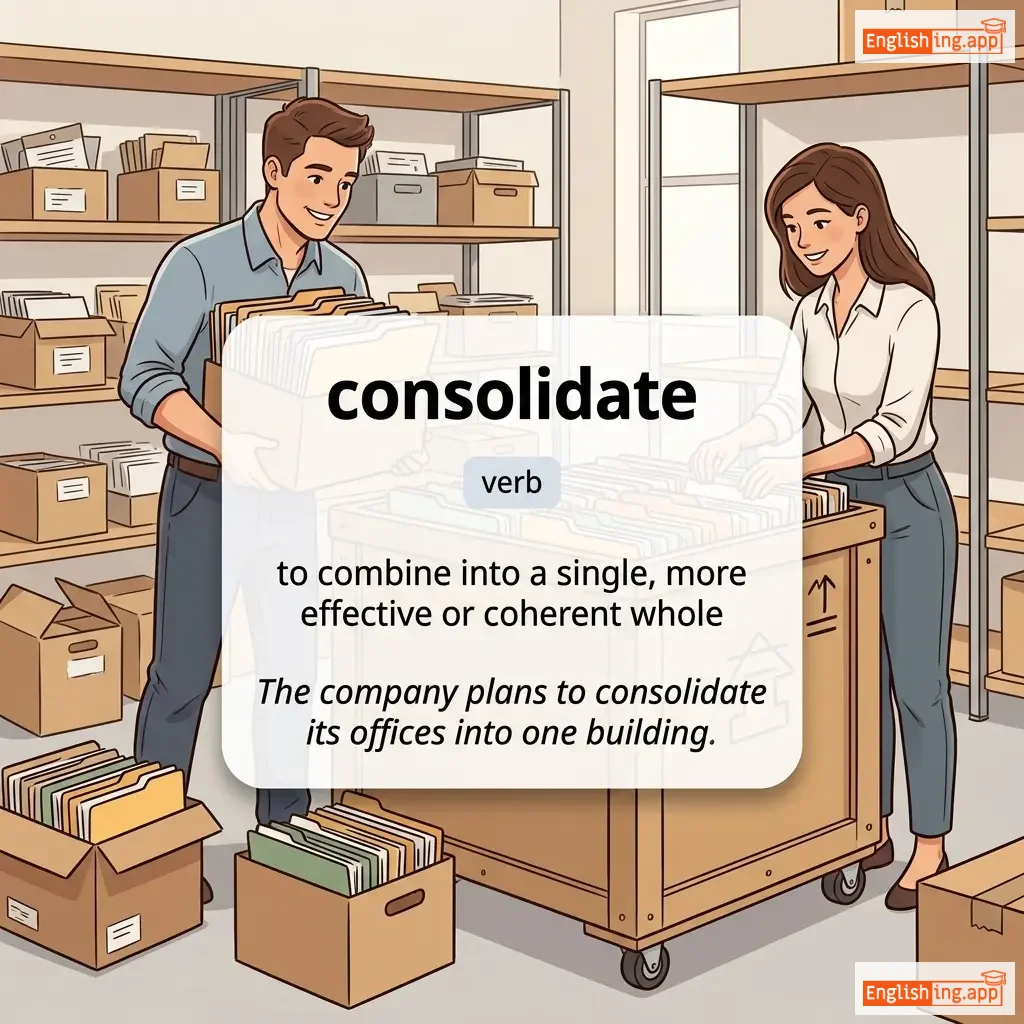
to combine into a single, more effective or coherent whole
••••••
|
The company plans to consolidate its offices into one building.
その会社はオフィスを1つの建物に統合する予定です。
••••••
|
その会社はオフィスを1つの建物に統合する予定です。
Sono kaisha wa ofisu o hitotsu no tatemono ni tōgō suru yotei desu.
••••••
|
- •••••• | - •••••• | - •••••• |
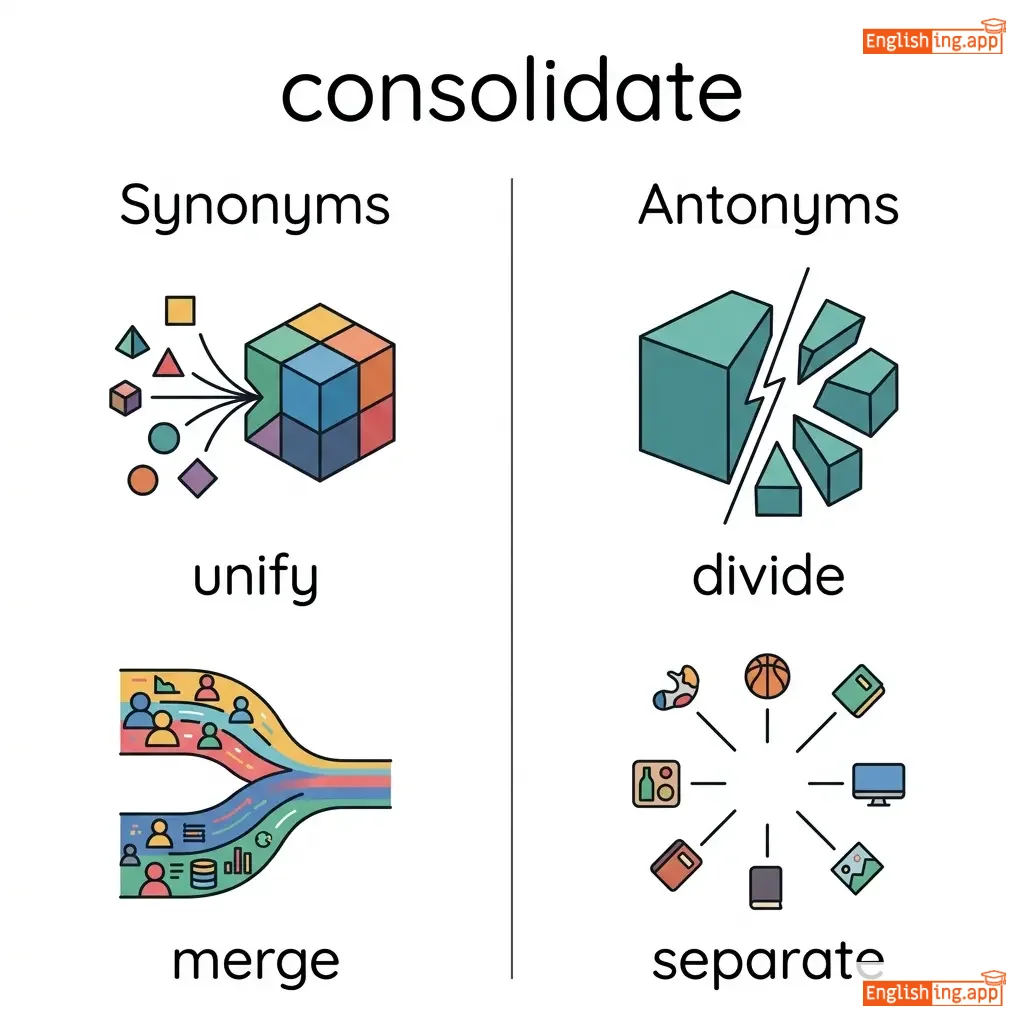
unify, merge, integrate, strengthen
••••••
|
divide, separate, scatter
••••••
|
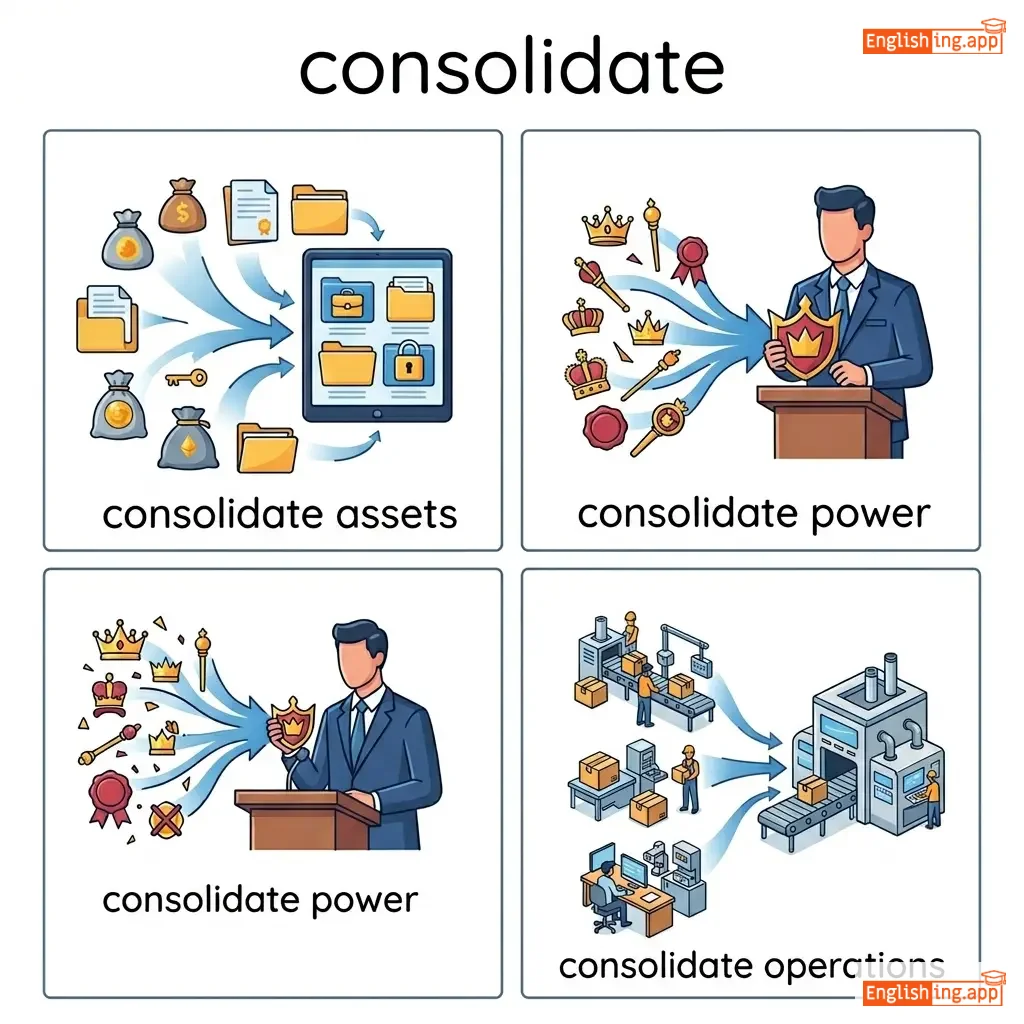
consolidate assets, consolidate power, consolidate operations
••••••
|
統合する = すべてを強固にまとめる
••••••
|
|
🧠
••••••
|
/dɪˈsɪʒənˌmeɪkɪŋ/
noun
(ディシジョン・メイキング)
••••••
|
- •••••• |
意思決定
ishikettei
••••••
|
- •••••• | - •••••• | - •••••• | - •••••• |
the process of making decisions, especially important or business-related decisions
••••••
|
The CEO's decision-making was crucial for the success of the company. |
CEOの意思決定は、会社の成功にとって重要でした。
CEO no ishikettei wa, kaisha no seikō ni totte jūyō deshita.
••••••
|
- •••••• | - •••••• | - •••••• |
judgment, choice, determination, resolution
••••••
|
indecision, hesitation, uncertainty
••••••
|
effective decision-making, business decision-making, decision-making process
••••••
|
Decision making is about **意思 (ishi)**, making the **決定 (kettei)** wisely.
••••••
|
|
🔄
••••••
|
/ˈdɪfərəntli/
adverb
(ディファレントリー)
••••••
|
- •••••• |
異なった方法で
kotonatta houhou de
••••••
|
- •••••• | - •••••• | - •••••• | - •••••• |
in a way that is not the same as another or as expected
••••••
|
She approached the problem differently than her colleagues. |
彼女は同僚たちと違った方法で問題に取り組みました。
Kanojo wa douryou-tachi to chigatta houhou de mondai ni torikumi mashita.
••••••
|
- •••••• | - •••••• | - •••••• |
otherwise, uniquely, unusually, distinctly
••••••
|
similarly, alike
••••••
|
think differently, act differently, look differently, behave differently
••••••
|
異なった方法でというのは、何かを違う方法でやることを意味しており、それが英語でいう differently です。
••••••
|
|
😳
••••••
|
/ɪmˈbærəsmənt/
noun
(エンバラズメント)
••••••
|
- •••••• |
恥ずかしさ
hazukashisa
••••••
|
- •••••• | - •••••• | - •••••• | - •••••• |
a feeling of self-consciousness, shame, or awkwardness
••••••
|
Her face turned red with embarrassment after the mistake. |
彼女は間違いを犯した後、恥ずかしさで顔が赤くなった。
Kanojo wa machigai o okashita ato, hazukashisa de kao ga akaku natta.
••••••
|
- •••••• | - •••••• | - •••••• |
shame, awkwardness, discomfort, humiliation
••••••
|
pride, confidence, composure
••••••
|
public embarrassment, social embarrassment, cause embarrassment
••••••
|
『恥ずかしさ』を覚えて『エンバラズメント』 - 恥ずかしさは間違いの後に!
••••••
|
|
👨🚒
••••••
|
/ˈfaɪəˌfaɪtə/
noun
(ファイヤーファイター)
••••••
|
- •••••• |
消防士
shōbōshi
••••••
|
- •••••• | - •••••• | - •••••• | - •••••• |
a person whose job is to put out fires
••••••
|
The firefighter saved the family from the burning building. |
消防士は燃える建物から家族を救いました。
Shōbōshi wa moeru tatemono kara kazoku o sukūmashita.
••••••
|
- •••••• | - •••••• | - •••••• |
fireman, firewoman, rescuer, emergency worker
••••••
|
arsonist, incendiary
••••••
|
brave firefighter, firefighter gear, firefighter training
••••••
|
消防士は火と戦わなければならない - Firefighter has to fight fire!
••••••
|
|
⚡
••••••
|
/ɪmˈpɔːtəntli/
adverb
(インポータントリー)
••••••
|
- •••••• |
重要な方法で
jūyōna hōhō de
••••••
|
- •••••• | - •••••• | - •••••• | - •••••• |
in a way that is of great significance or value
••••••
|
Importantly, the report highlights the need for immediate action. |
重要な方法で、報告書は即時の行動の必要性を強調しました。
Jūyōna hōhō de, hōkokusho wa sokujitsu no kōdō no hitsuyō-sei o kyōchō shimashita.
••••••
|
- •••••• | - •••••• | - •••••• |
significantly, notably, crucially, essentially, vitally
••••••
|
insignificantly, trivially, unimportantly
••••••
|
importantly, more importantly, very importantly, most importantly
••••••
|
Importantlyという言葉は、重要な方法で何かを強調するときに使います。
••••••
|
|
🎓
••••••
|
/ɪnˈstrʌkʃənəl/
adjective
(インストラクショナル)
••••••
|
- •••••• |
教育的な
kyouikutekina
••••••
|
- •••••• | - •••••• | - •••••• | - •••••• |
providing knowledge or information; intended to teach
••••••
|
The website offers many instructional videos for beginners. |
このウェブサイトは初心者向けに多くの教育的なビデオを提供しています。
Kono webusaito wa shoshinsha muke ni ooku no kyouikutekina bideo wo teikyoushiteimasu.
••••••
|
- •••••• | - •••••• | - •••••• |
educational, informative, didactic, teaching, training
••••••
|
noneducational, misleading, confusing
••••••
|
instructional material, instructional design, instructional video, instructional guide
••••••
|
Instructionalは教育的な意味、例えば教育的なビデオで何かを教える!
••••••
|
|
🔒
••••••
|
/ˈpɜː.mə.nənt.li/
adverb
(パーマネントリー)
••••••
|
- •••••• |
永続的に
eizokuteki ni
••••••
|
- •••••• | - •••••• | - •••••• | - •••••• |
in a way that lasts or remains unchanged for a long time or forever
••••••
|
She moved to the city permanently after finishing her studies. |
彼女は学業を終えた後、永続的にその街に引っ越しました。
Kanojo wa gakugyou o oeta ato, eizokuteki ni sono machi ni hikkoshimashita.
••••••
|
- •••••• | - •••••• | - •••••• |
forever, eternally, indefinitely, for good
••••••
|
temporarily, briefly
••••••
|
permanently closed, permanently removed, permanently settled
••••••
|
永続的に - 変わらずに同じ場所に留まる
••••••
|
|
👤
••••••
|
/ˈpred.ə.ses.ər/
noun
(プレデセッサー)
••••••
|
- •••••• |
前任者
zenjinsha
••••••
|
- •••••• | - •••••• | - •••••• | - •••••• |
a person who held a job or office before the current holder; something that came before another thing
••••••
|
The new manager learned from his predecessor's mistakes. |
新しいマネージャーは前任者のミスから学びました。
atarashī manējā wa zenjinsha no misu kara manabimashita.
••••••
|
- •••••• | - •••••• | - •••••• |
forerunner, antecedent, previous holder, former
••••••
|
successor, follower, descendant
••••••
|
immediate predecessor, worthy predecessor, predecessor company, predecessor's legacy
••••••
|
前任者: 以前の人、あなたの昔の先生のように。
••••••
|
|
⚙️
••••••
|
/ˈprəʊsesɪŋ/
noun
(プロセッシング)
••••••
|
- •••••• |
処理
shori
••••••
|
- •••••• | - •••••• | - •••••• |
processing
プロセッシング
••••••
|
the series of actions or steps taken to achieve a particular end, especially in data or food handling
••••••
|
Data processing takes place in the server.
データ処理はサーバーで行われます。
••••••
|
データ処理はサーバーで行われます。
Dēta shori wa sābā de okonawaremasu.
••••••
|
- •••••• | - •••••• | - •••••• |
handling, treatment, operation, computation, execution
••••••
|
neglect, ignoring
••••••
|
data processing, food processing, image processing, information processing
••••••
|
Processingは段階的に仕事を終わらせることを意味します — 'すべて処理して完了する'.
••••••
|
|
📄
••••••
|
/ˌrɛzɪɡˈneɪʃən/
noun
(rezignēshon)
••••••
|

|
辞職
jishoku
••••••
|
- •••••• | - •••••• | - •••••• | - •••••• |
The act of giving up a job or position; acceptance of something undesirable but inevitable.
••••••
|
The CEO submitted his resignation yesterday. |
CEOは昨日辞職を提出しました。
CEO wa kinō jishoku o teishutsu shimashita.
••••••
|
with resignation |
Accepting something unpleasant without protest.
••••••
|
辞職をもって
jishoku o motte
••••••
|
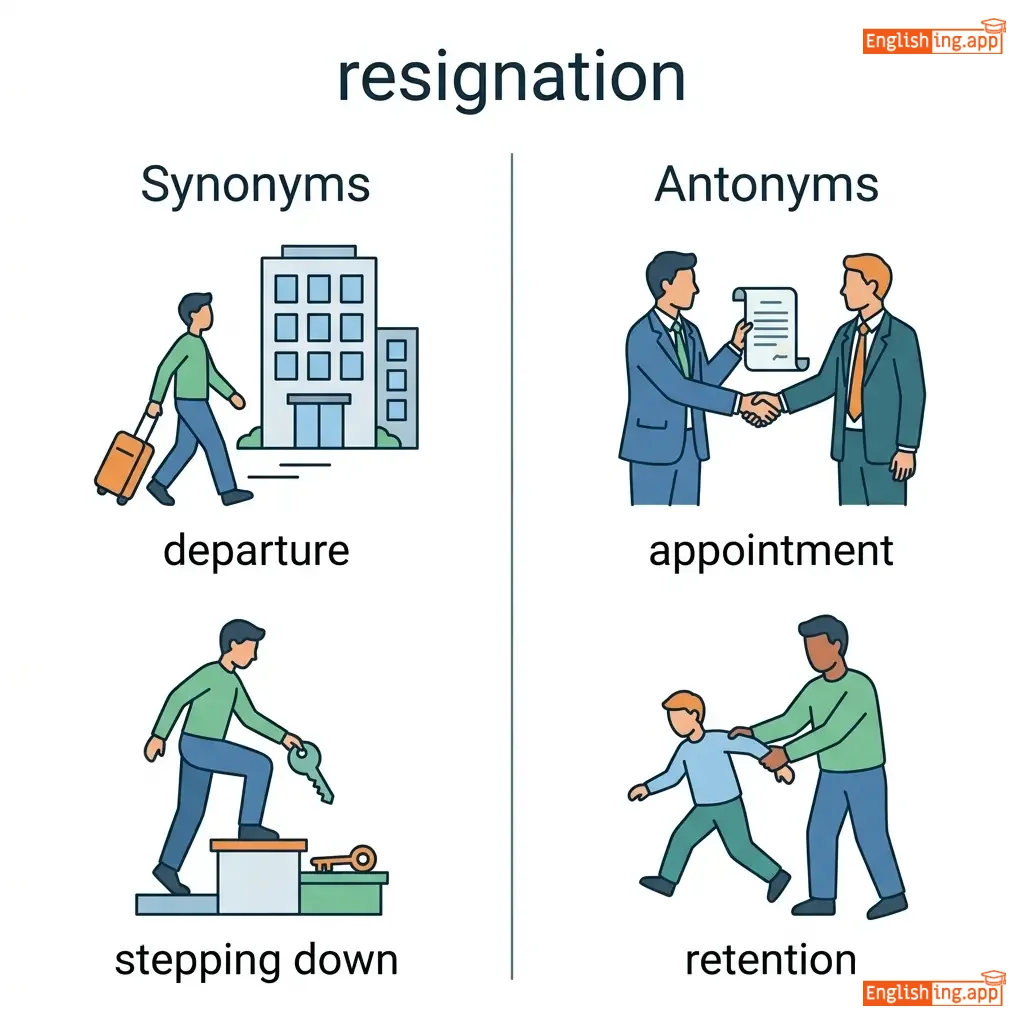
departure, stepping down, surrender, acceptance, renunciation
••••••
|
appointment, retention
••••••
|
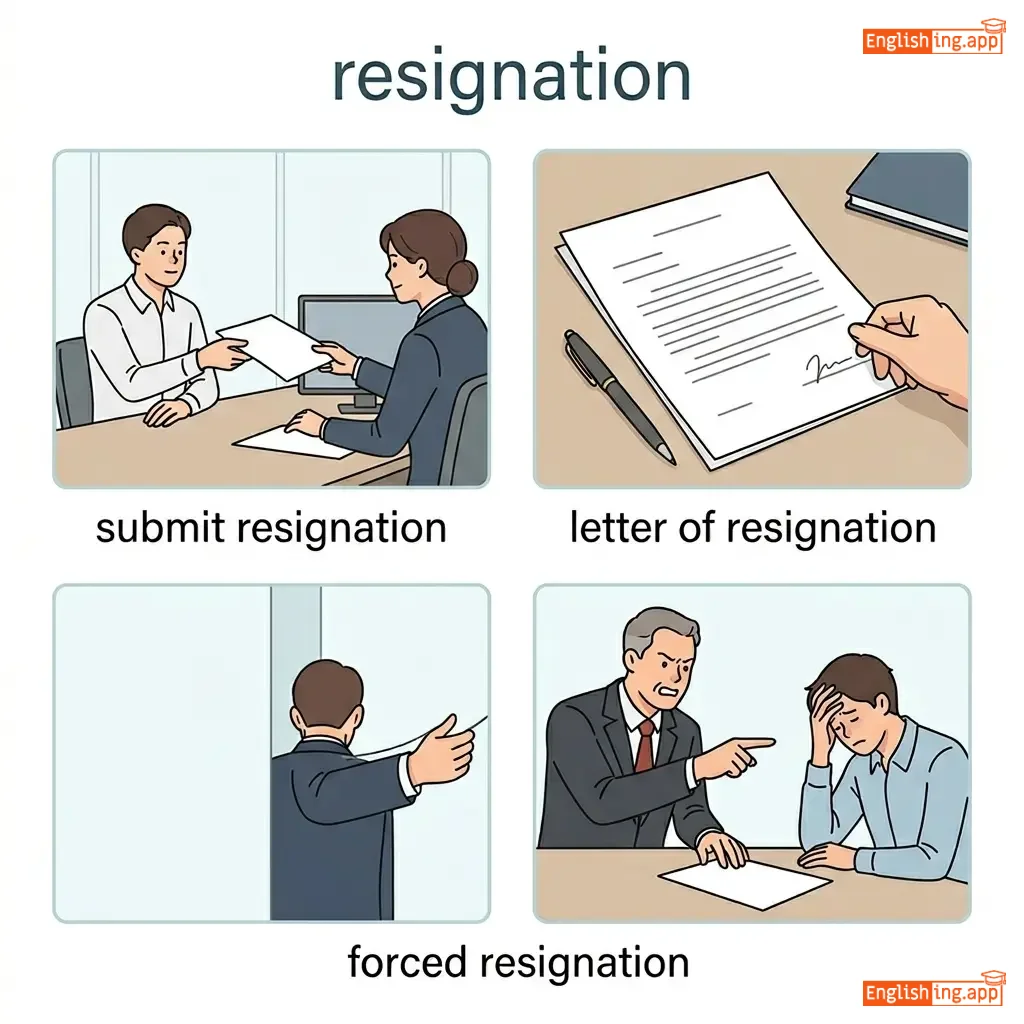
submit resignation, letter of resignation, forced resignation, resignation speech
••••••
|
辞職はResignation、辞表を思い出すときに使おう!
••••••
|
|
🔁
••••••
|
/ˌsɪmɪˈlærəti/
noun
(シミラリティ)
••••••
|
- •••••• |
類似
ruiji
••••••
|
- •••••• | - •••••• | - •••••• | - •••••• |
the state of being alike or having characteristics in common
••••••
|
There is a strong similarity between the two paintings. |
2枚の絵の間には強い類似性があります。
2-mai no e no aida ni wa tsuyoi ruijisei ga arimasu.
••••••
|
family similarity |
resemblance among family members
••••••
|
家族の類似性
kazoku no ruijisei
••••••
|
likeness, resemblance, correspondence, equivalence, analogy
••••••
|
difference, dissimilarity, contrast
••••••
|
striking similarity, close similarity, family similarity, similarity score
••••••
|
Similarity → ruiji; 覚えておいて:‘similar faces’ は似た顔という意味です
••••••
|
|
🔧
••••••
|
/ˈspɛʃəˌlaɪzd/
adjective
(スぺシャライズド)
••••••
|
- •••••• |
専門的な
senmon-teki na
••••••
|
- •••••• | - •••••• | - •••••• | - •••••• |
designed or developed for a particular purpose or function
••••••
|
He has a specialized knowledge of ancient civilizations.
彼は古代文明に関する専門的な知識を持っています。
••••••
|
彼は古代文明に関する専門的な知識を持っています。
Kare wa kodai bunmei ni kansuru senmon-teki na chishiki o motteimasu.
••••••
|
- •••••• | - •••••• | - •••••• |
specialist, specific, expert
••••••
|
general, broad
••••••
|
specialized knowledge, specialized equipment, specialized skills
••••••
|
Specialized とは、特定の目的 (mokuteki) のために作られたことを意味します。
••••••
|
|
✔️
••••••
|
/səˈfɪʃənt/
adjective
(サフィシエント)
••••••
|
- •••••• |
十分な
jūbun na
••••••
|
- •••••• | - •••••• | - •••••• | - •••••• |
enough; adequate for a purpose
••••••
|
She had sufficient money to buy the dress. |
彼女はドレスを買うために十分なお金を持っていました。
Kanojo wa doresu o kau tame ni jūbun na okane o motte imashita.
••••••
|
sufficient unto the day |
today's troubles are enough without worrying about the future
••••••
|
今日のためには十分な
kyō no tame ni wa jūbun na
••••••
|
enough, adequate, ample, satisfactory
••••••
|
insufficient, inadequate, lacking
••••••
|
sufficient money, sufficient evidence, sufficient reason
••••••
|
Jūbun na は十分な意味 ✔️ – 完璧なパーティーを想像してみてください
••••••
|
|
😔
••••••
|
/ʌnˈfɔːrtʃənətli/
adverb
(アンフォーチュンリー)
••••••
|
- •••••• |
残念ながら
unfortunately
••••••
|
- •••••• | - •••••• | - •••••• | - •••••• |
used to express regret or disappointment about something
••••••
|
Unfortunately, the weather was bad for our picnic.
残念ながら、私たちのピクニックには天気が悪かった。
••••••
|
残念ながら、私たちのピクニックには天気が悪かった。
Zannen nagara watashitachi no pikunikku ni wa tenki ga warukatta
••••••
|
- •••••• | - •••••• | - •••••• |
sadly, regrettably, unluckily, unhappily
••••••
|
fortunately, luckily, happily
••••••
|
unfortunately true, unfortunately common, unfortunately necessary
••••••
|
アンフォーチュンリー = unlucky fortune, so when luck runs out you say 残念ながら
••••••
|
|
🏦
••••••
|
/wɪðˈdrɔːəl/
noun
(ウィズドロール)
••••••
|
- •••••• |
引き出し
hikidashi
••••••
|
- •••••• | - •••••• | - •••••• | - •••••• |
the act of taking something back or removing oneself from a situation
••••••
|
He made a withdrawal of $500 from his bank account. |
彼は銀行口座から500ドルを引き出しました。
Kare wa ginkō kōza kara 500 doru o hikidashimashita.
••••••
|
withdrawal symptoms |
physical or mental effects after stopping a habit, like smoking or drugs
••••••
|
禁断症状
kindan shōjō
••••••
|
removal, retreat, retraction, extraction, pullback
••••••
|
deposit, participation
••••••
|
bank withdrawal, cash withdrawal, troop withdrawal, withdrawal symptoms
••••••
|
ATMでお金を引き出す、'引き出し' — 'withdrawal' みたい!
••••••
|

