The Border of Hope
カリムは移民弁護士でした。グローバル化の時代、多くの人々が新しい生活を求めて国境を越えたがっていました。しかし、各国の主権を守ることも重要でした。多くの家族が官僚主義の複雑さに悩まされていました。カリムはかつてスポンサーシップの案件に取り組んでいました。ある家族が子供を連れてこようとしていましたが、失望が続きました。政府の干渉がプロセスをさらに複雑にしていました。カリムはこれに対して正当な理由がないと感じました。オフィスでは政策についての対立がありました。法律には彼が指摘した矛盾がありました。これはその国の長年の問題でした。政治的なイデオロギーの違いにより、解決策は見つかりませんでした。皆が人口動態の変化を心配していました。カリムは誰もが自分の場所を持つ統合された社会を望んでいました。パーセントに基づき、多くの人々がこの改革から利益を得ることができたでしょう。成功を重ねた後、カリムは有名になりました。彼の自信は連続的な成功で高まりました。比較的短期間で彼は変化をもたらしました。報告によると、政府は新しい政策を発表する予定です。カリムは明確に人間性が最大の法則だと述べました。その日、多くの家族が再び希望を見ました。
|
絵文字
|
単語 | Images | 翻訳 | 意味 | 例文 | 例文の翻訳 | 表現例 | 表現例の意味 | 表現例の翻訳 | 同義語 | 対義語 | コロケーション | ニーモニック |
|---|---|---|---|---|---|---|---|---|---|---|---|---|---|
|
📑
••••••
|
/bjʊˈrɒkrəsi/
noun
(ビューロクラシー)
••••••
|
|
官僚制
kanryōsei
••••••
|
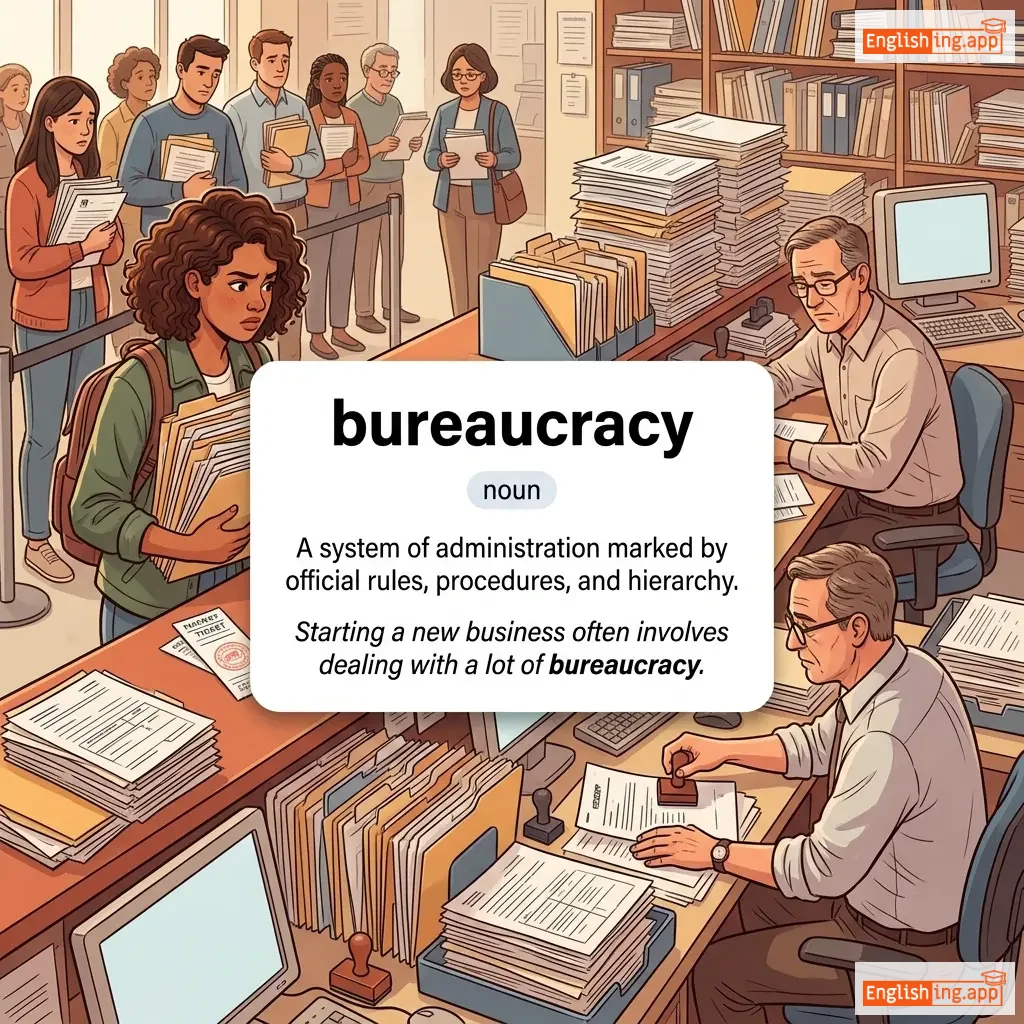
A system of administration marked by official rules, procedures, and hierarchy.
••••••
|
Starting a new business often involves dealing with a lot of bureaucracy. |
新しいビジネスを始めるには、多くの官僚制に対処する必要があります。
Atarashī bijinesu o hajimeru ni wa, ōku no kanryōsei ni taisho suru hitsuyō ga arimasu.
••••••
|
red tape |
Excessive rules and formalities in bureaucracy.
••••••
|
赤テープ
akateepu
••••••
|
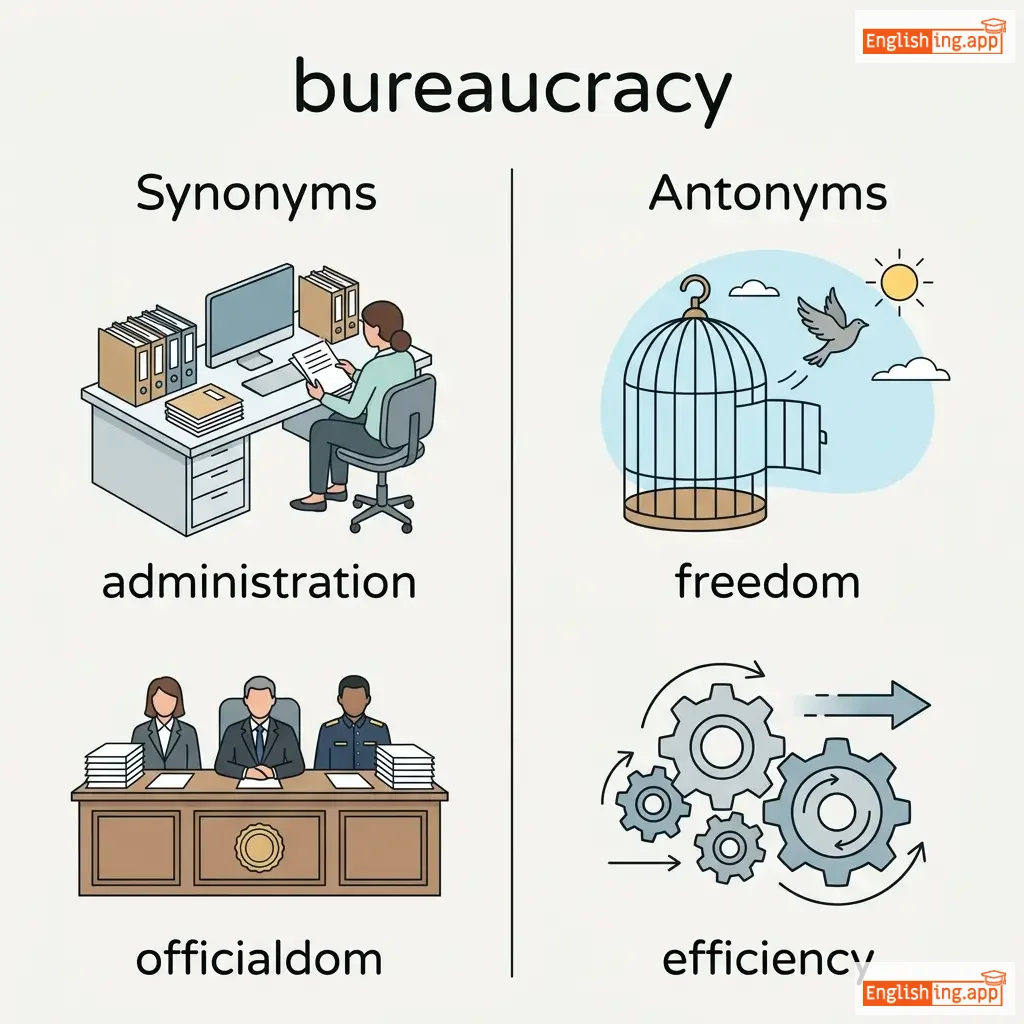
administration, officialdom, authority, government
••••••
|
freedom, efficiency
••••••
|
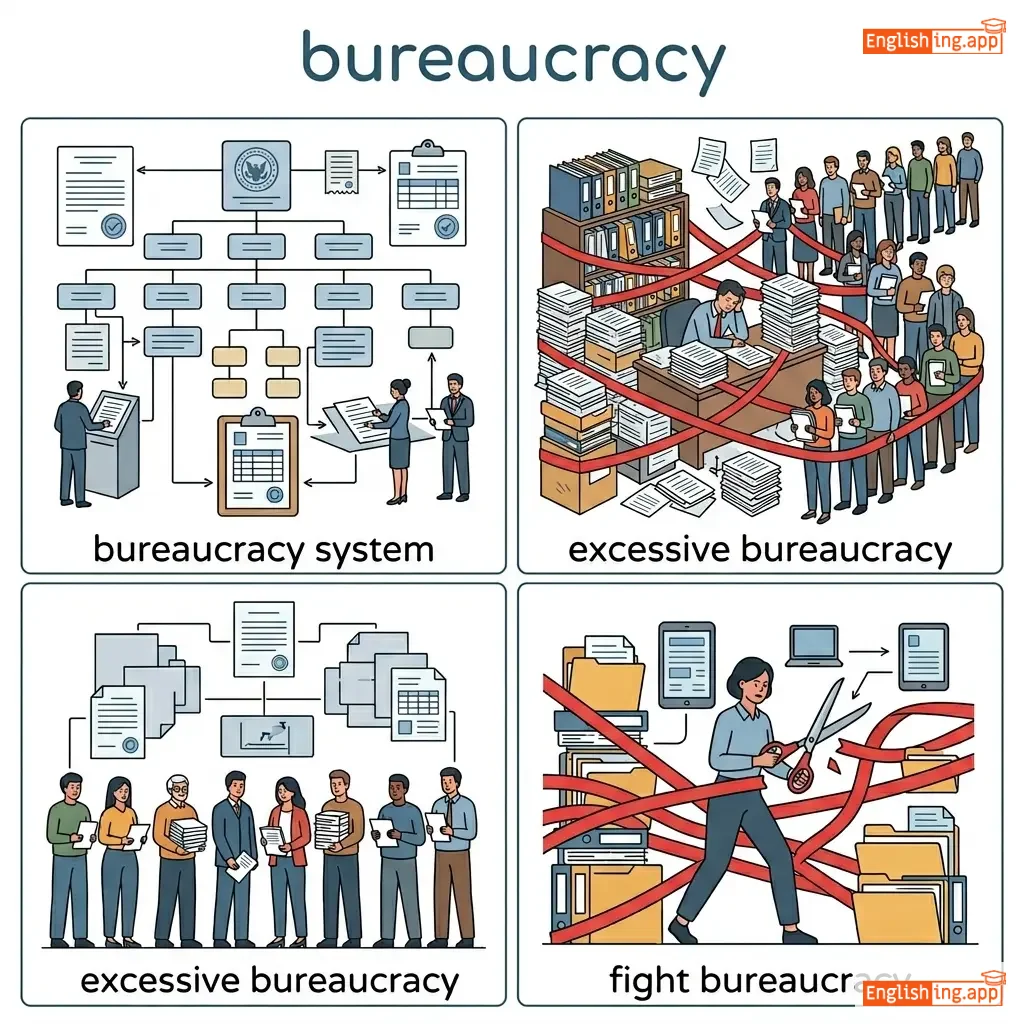
bureaucracy system, excessive bureaucracy, fight bureaucracy
••••••
|
ビューロクラシーとは、赤テープに囲まれた面倒なものです。
••••••
|
|
⚔️
••••••
|
/ˌkɑn.frənˈteɪ.ʃən/
noun
(kənˈfrɒn.teɪ.ʃən)
••••••
|
- •••••• |
対立
tairitsu
••••••
|
a hostile or argumentative meeting or situation between opposing parties; direct challenge or opposition
••••••
|
The confrontation between the two leaders ended without any agreement.
二人のリーダー間の対立は合意なく終わった。
••••••
|
二人のリーダー間の対立は合意なく終わった。
Futari no rīdā-kan no tairitsu wa gōi naku owatta.
••••••
|
- •••••• | - •••••• | - •••••• |
conflict, clash, dispute, face-off
••••••
|
agreement, cooperation, harmony, peace
••••••
|
avoid confrontation, violent confrontation, direct confrontation
••••••
|
対立 - 二つの意見がぶつかる瞬間。
••••••
|
|
⚡
••••••
|
/ˌkɑn.trəˈdɪk.ʃən/
noun
(コントラディクション)
••••••
|
- •••••• |
矛盾; 不一致
mōdun, fuicchi
••••••
|
a combination of statements, ideas, or features which are opposed to one another; inconsistency
••••••
|
There was a clear contradiction between his words and his actions. |
彼の言葉と行動の間には明確な矛盾がありました。
Kare no kotoba to kōdō no aida ni wa meikaku na mōdun ga arimashita.
••••••
|
- •••••• | - •••••• | - •••••• |
inconsistency, conflict, opposition, paradox
••••••
|
consistency, agreement, harmony, accord
••••••
|
direct contradiction, logical contradiction, contradiction in terms
••••••
|
Contradiction in Japanese = '矛盾' = opposition of thoughts
••••••
|
|
📊
••••••
|
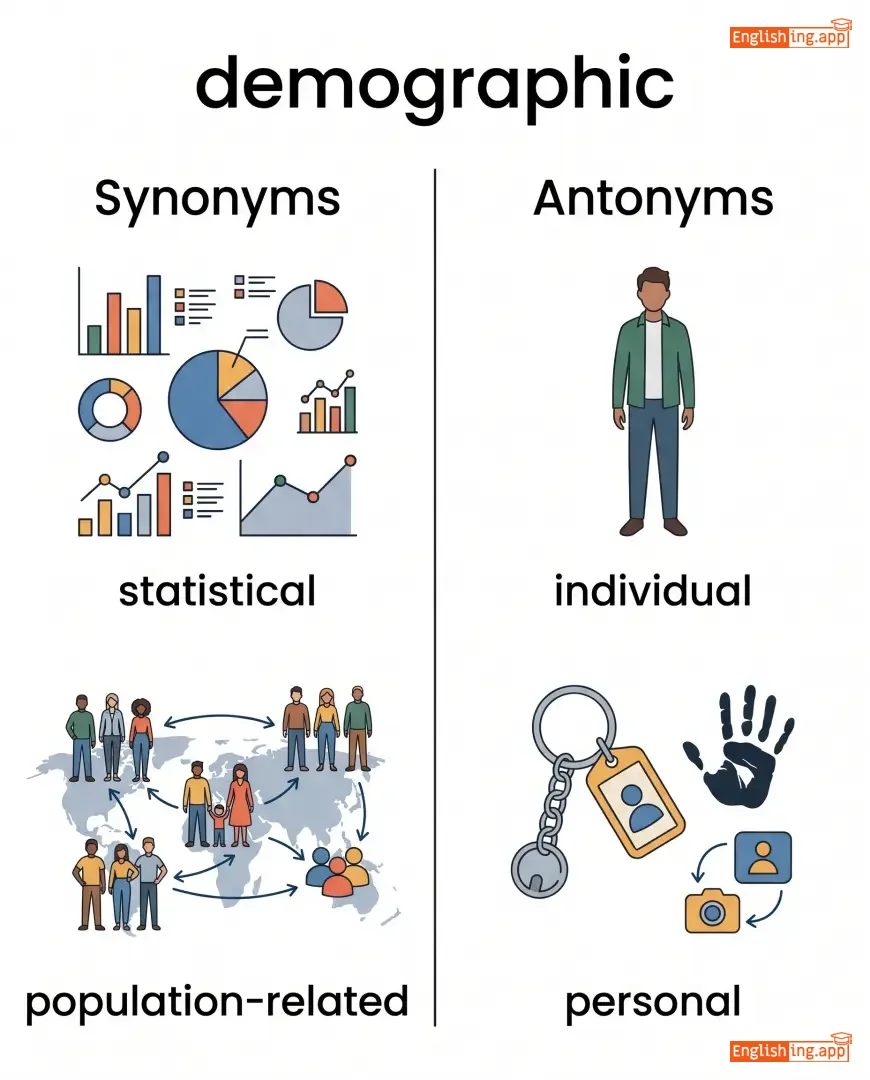
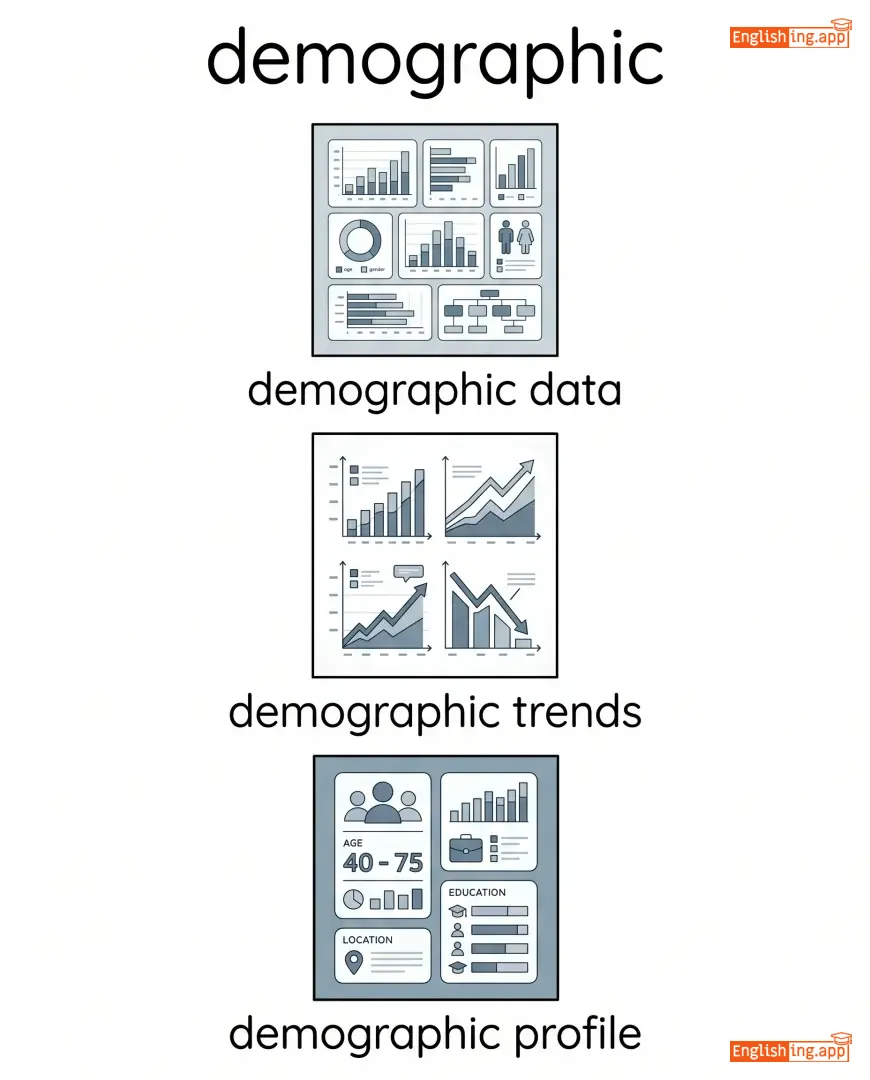
/ˌdɛməˈɡræfɪk/
adjective
(デモグラフィック)
••••••
|
|
人口統計学的
jinkou toukeigakuteki
••••••
|
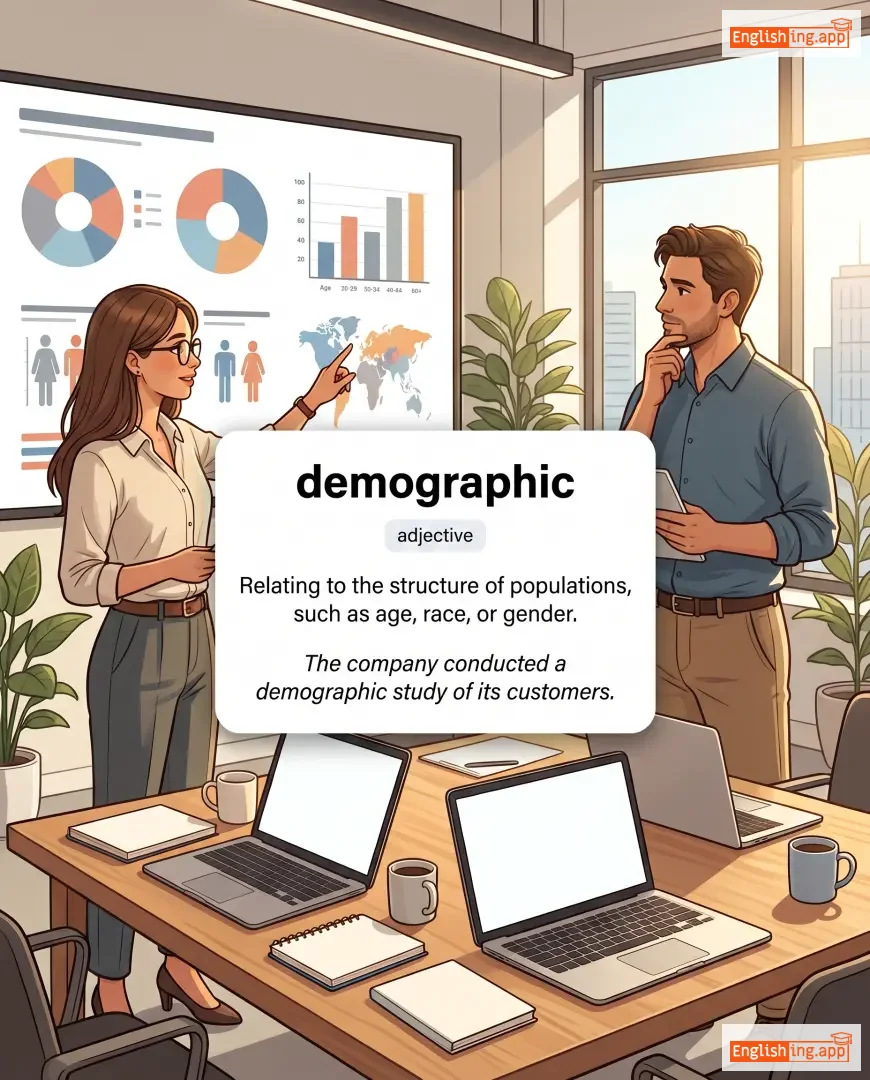
Relating to the structure of populations, such as age, race, or gender.
••••••
|
The company conducted a demographic study of its customers. |
その会社は顧客に対して人口統計学的な調査を行いました。
Sono kaisha wa kokyaku ni taishite jinkou toukeigakuteki na chousa wo okonaimashita.
••••••
|
demographic shift |
a change in the structure of a population
••••••
|
人口統計学的変化
jinkou toukeigakuteki henka
••••••
|
statistical, population-related, social, census-based
••••••
|
individual, personal
••••••
|
demographic data, demographic trends, demographic profile, demographic change
••••••
|
Demo+Graphic—Demoは人々を意味し、Graphicは画像を意味します。人々の画像が人口統計学的です。
••••••
|
|
😞
••••••
|
/ˌdɪsəˈpɔɪntmənt/
noun
(ディサポイントメント)
••••••
|
- •••••• |
失望
shitsubou
••••••
|
the feeling of sadness or displeasure caused by the non-fulfillment of one's hopes or expectations
••••••
|
Her face showed deep disappointment after hearing the results.
結果を聞いた後、彼女の顔には深い失望が表れていた。
••••••
|
結果を聞いた後、彼女の顔には深い失望が表れていた。
Kekka wo kiita ato, kanojo no kao ni wa fukai shitsubou ga arawarete ita.
••••••
|
to one's disappointment
誰かの失望に
••••••
|
to express that something happened in a way that caused disappointment
••••••
|
誰かの失望に
Dareka no shitsubou ni
••••••
|
frustration, letdown, sadness, regret, dismay
••••••
|
satisfaction, joy, delight
••••••
|
great disappointment, bitter disappointment, express disappointment, feel disappointment
••••••
|
Dis + appointment = 失望, 期待が外れるときの感情
••••••
|
|
🔍
••••••
|
/ɪkˈsplɪsɪtli/
adverb
(イクスプリスィトリー)
••••••
|
- •••••• |
明確に
meikaku ni
••••••
|
in a clear and detailed manner, leaving no room for confusion or doubt
••••••
|
The instructions were explicitly written to avoid any confusion. |
指示は明確に書かれており、混乱を避けるためです。
Shiji wa meikaku ni kakarete ori, konran o sakeru tame desu.
••••••
|
- •••••• | - •••••• | - •••••• |
clearly, directly, plainly, unmistakably
••••••
|
implicitly, vaguely
••••••
|
explicitly stated, explicitly mentioned, explicitly clear, explicitly forbidden
••••••
|
Explicitly は‘明確に’と言う意味です、曖昧さはありません
••••••
|
|
🌍
••••••
|
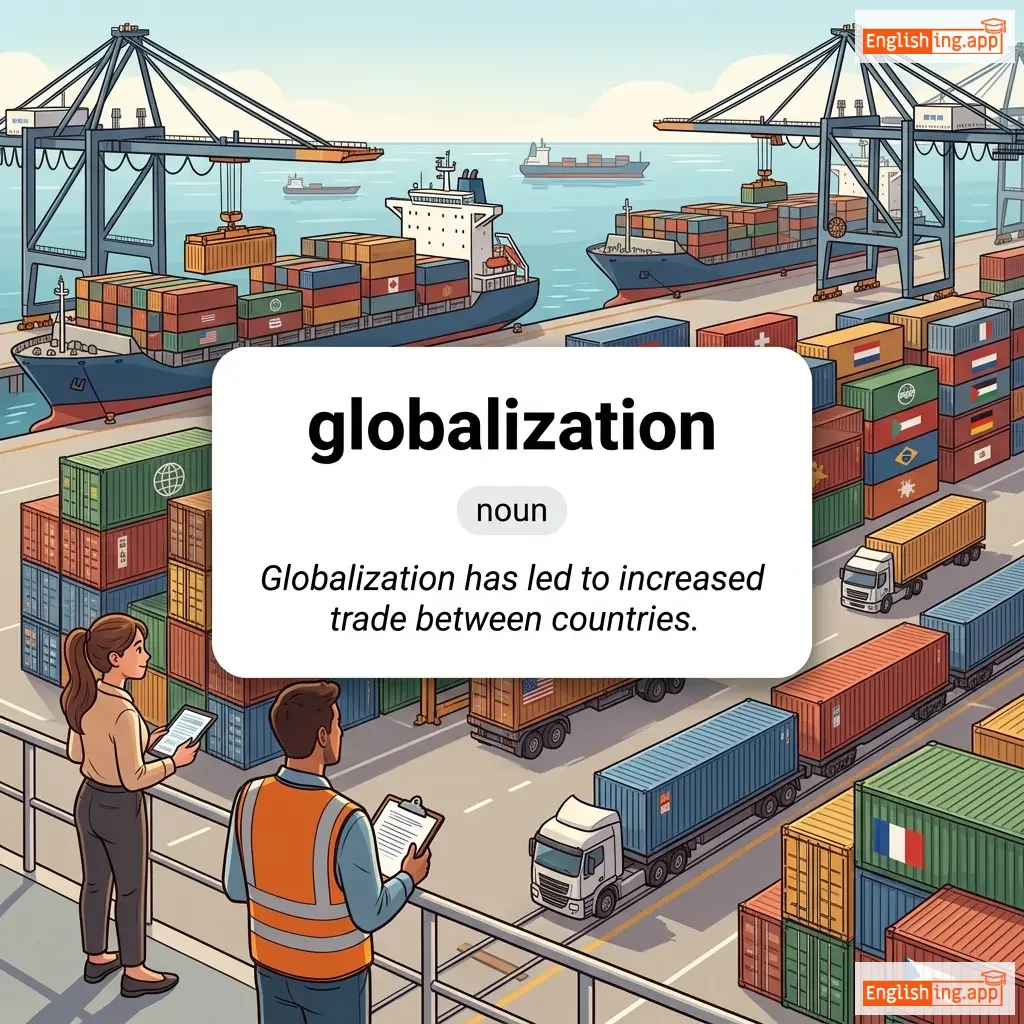
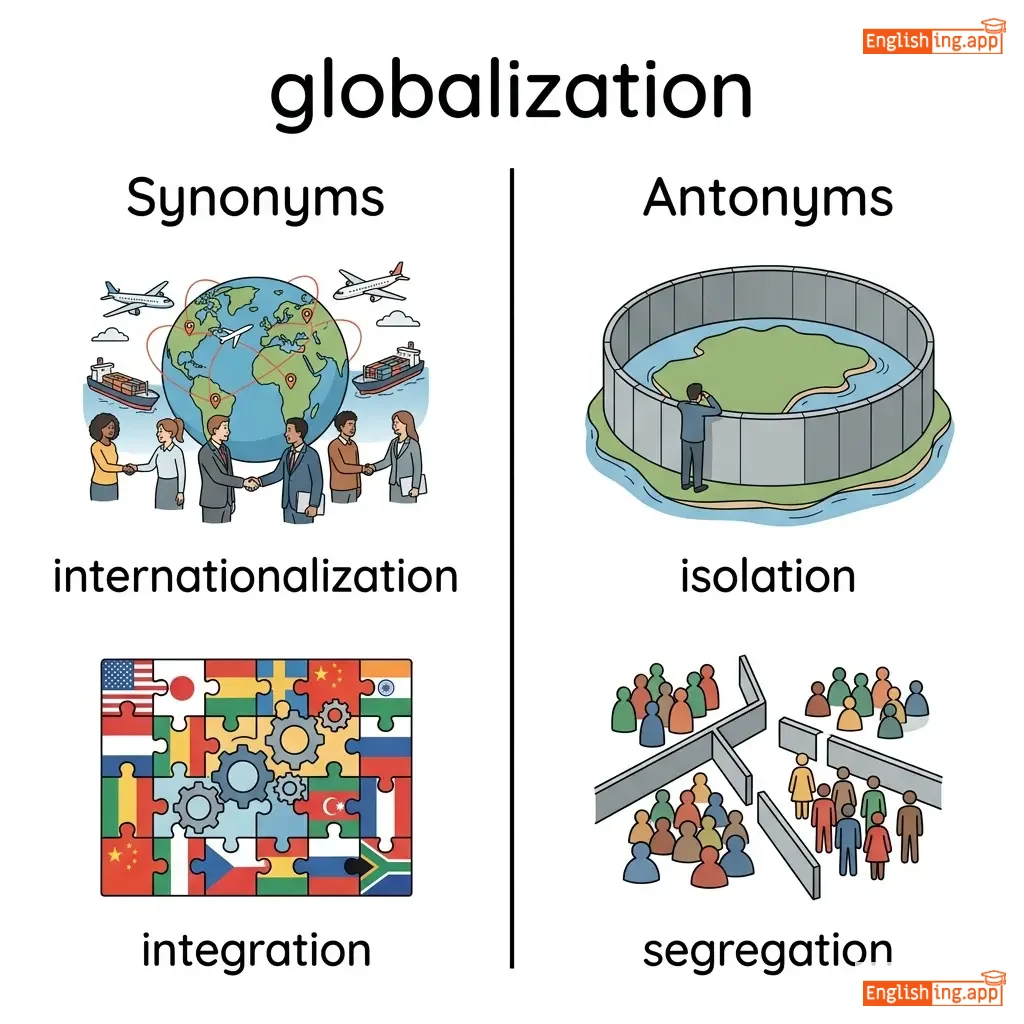
/ˌɡloʊbəlaɪˈzeɪʃən/
noun
(グローバリゼーション)
••••••
|
|
グローバリゼーション
gurobarizēshon
••••••
|
the process by which businesses or other organizations develop international influence or start operating on an international scale
••••••
|
Globalization has led to increased trade between countries.
グローバリゼーションは国々間の貿易の増加をもたらしました。
••••••
|
グローバリゼーションは国々間の貿易の増加をもたらしました。
Gurōbarizēshon wa kuniguni kan no bōeki no zōka o motarashimashita.
••••••
|
- •••••• | - •••••• | - •••••• |
internationalization, integration, worldwide expansion, global reach
••••••
|
isolation, segregation, nationalism
••••••
|
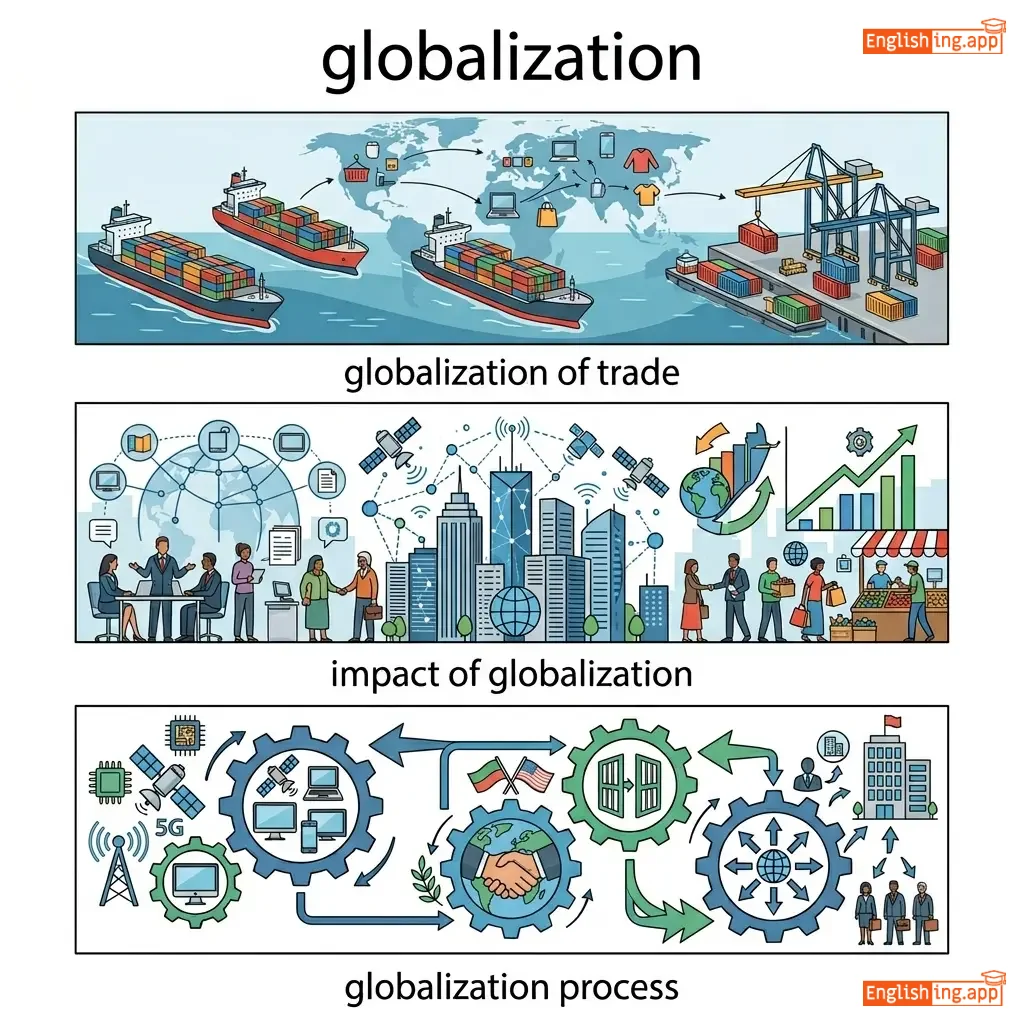
globalization of trade, impact of globalization, globalization process
••••••
|
Globalization connects everyone around the world, just like 'global' does.
••••••
|
|
📚
••••••
|
/ˌaɪ.di.əˈlɒdʒ.ɪ.kəl/
adjective
(アイディオロジカル)
••••••
|
- •••••• |
イデオロギー的
ideorogī-teki
••••••
|
Relating to or based on a system of ideas or beliefs.
••••••
|
The two parties are divided by deep ideological differences. |
二つの党は深いイデオロギー的な違いによって分裂している。
Futatsu no tō wa fukai ideorogī-teki na chigai ni yotte bunretsu shite iru.
••••••
|
- •••••• | - •••••• | - •••••• |
philosophical, doctrinal, theoretical, political
••••••
|
practical, realistic
••••••
|
ideological debate, ideological conflict, ideological differences
••••••
|
Ideology から ideorogī-teki – 思想や信念に関連
••••••
|
|
🛂
••••••
|
/ˌɪmɪˈɡreɪʃən/
noun
(イミグレーション)
••••••
|
- •••••• |
移民
imin
••••••
|
the action of coming to live permanently in a foreign country
••••••
|
Immigration policies vary from country to country.
移民政策は国によって異なります。
••••••
|
移民政策は国によって異なります。
Imin seisaku wa kuni ni yotte kotonari masu.
••••••
|
illegal immigration
不法移民
••••••
|
the act of entering a country without legal permission
••••••
|
不法移民
fuhō imin
••••••
|
migration, settlement, relocation, entry
••••••
|
emigration, deportation
••••••
|
immigration policy, immigration law, illegal immigration, mass immigration
••••••
|
移民は「移」+「民」- 他の国に移住すること
••••••
|
|
🔗
••••••
|
/ˈɪntɪɡreɪtɪd/
adjective
(インテグレイテッド)
••••••
|

|
統合された
tōgō sareta
••••••
|
combined or united to form a whole; including all parts or people equally
••••••
|
The company offers an integrated system for managing all business operations. |
その会社は、すべてのビジネス操作を管理するための統合システムを提供しています。
Sono kaisha wa, subete no bijinesu sōsa o kanri suru tame no tōgō shisutemu o teikyō shiteimasu.
••••••
|
- •••••• | - •••••• | - •••••• |
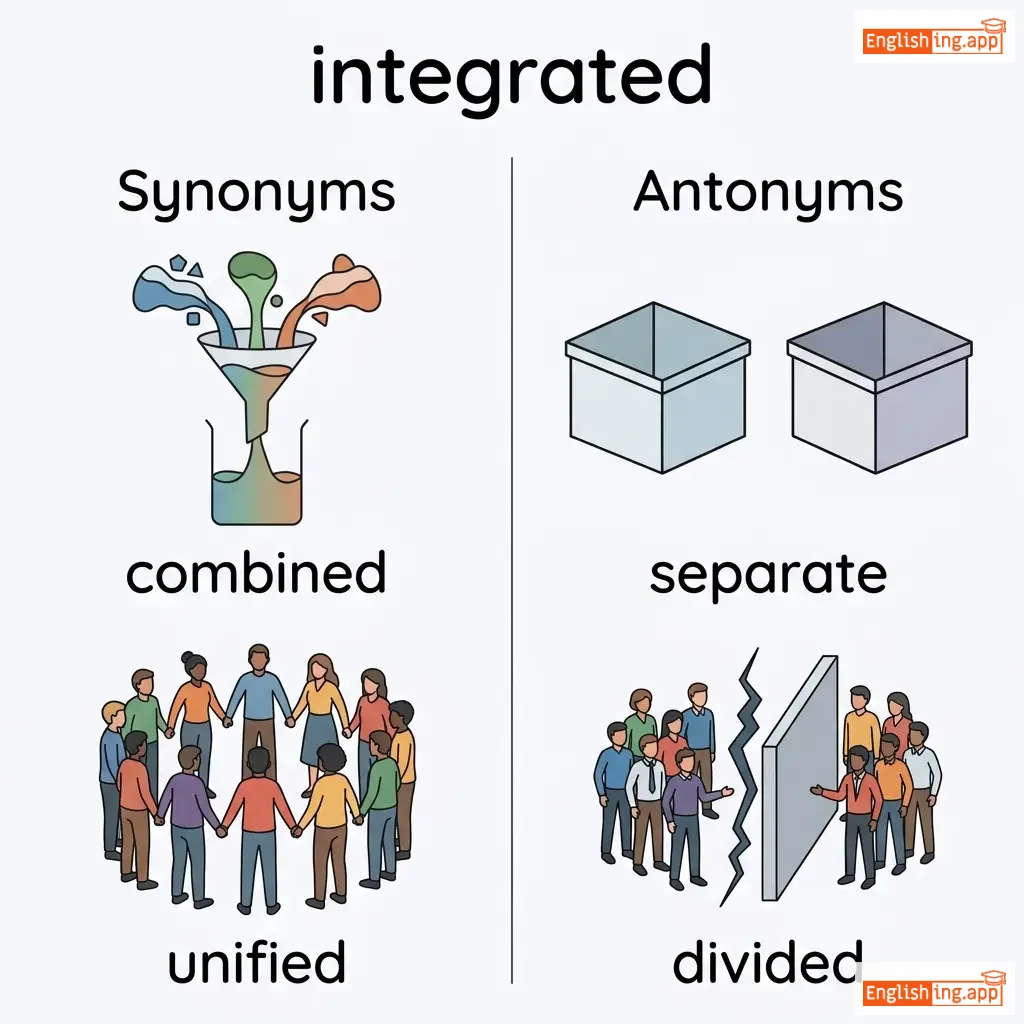
combined, unified, merged, cohesive, connected
••••••
|
separate, divided, isolated
••••••
|
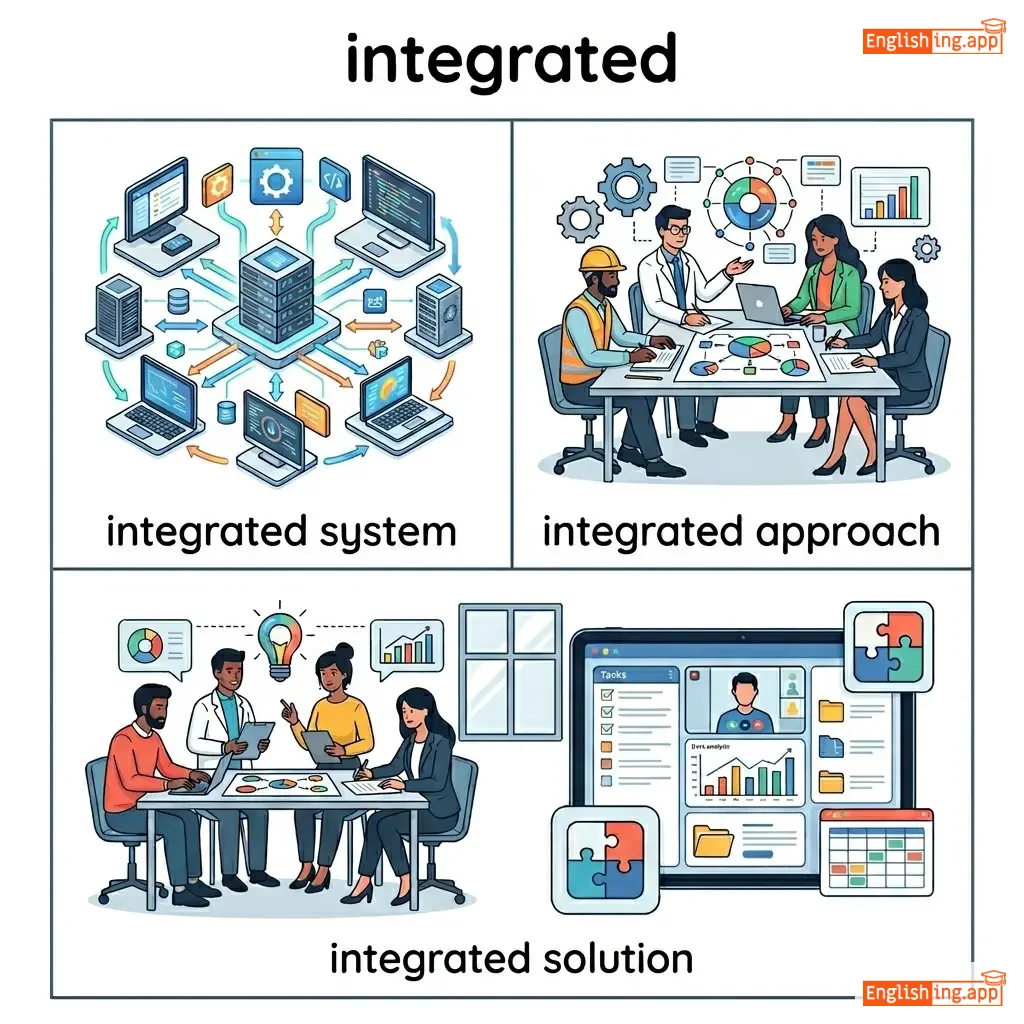
integrated system, integrated approach, integrated solution, fully integrated
••••••
|
統合されたは、すべてを一緒にしてひとつのシステムを作り上げることを意味します。
••••••
|
|
📡
••••••
|
/ˌɪntərˈfɪərəns/
noun
(インターフェレンス)
••••••
|
- •••••• |
干渉
kanshō
••••••
|
the action of interfering with something
••••••
|
The radio signal was disrupted due to interference from nearby electronics. |
近くの電子機器からの干渉で、ラジオ信号が途絶えました。
Chikaku no denshi kiki kara no kanshō de, rajio shingō ga tozaemashita.
••••••
|
- •••••• | - •••••• | - •••••• |
disruption, obstruction, hindrance, disturbance
••••••
|
assistance, help, support
••••••
|
radio interference, signal interference, electronic interference, interference pattern
••••••
|
干渉は、何かが通過するのを妨げることで、通信を中断させることです。
••••••
|
|
📝
••••••
|
/ˌdʒʌstɪfɪˈkeɪʃən/
noun
(ジャスティフィケーション)
••••••
|
- •••••• |
正当化
seitōka
••••••
|
a reason, explanation, or excuse that shows something is right or reasonable
••••••
|
There is no justification for such rude behavior. |
そのような失礼な行動には正当化の余地はない。
sono yōna shitsurei na kōdō ni wa seitōka no yochi wa nai
••••••
|
- •••••• | - •••••• | - •••••• |
reason, excuse, defense, explanation, rationale
••••••
|
accusation, blame
••••••
|
provide justification, lack of justification, justification for action
••••••
|
Justificationは正当化のこと、何かを正当化するには正当化が必要です。
••••••
|
|
⌛
••••••
|
/ˈlɒŋ ˈstændɪŋ/
adjective
(ロング・スタンディング)
••••••
|
- •••••• |
長期的な
choukiteki na
••••••
|
having existed or continued for a long period of time
••••••
|
They have a long-standing relationship with their suppliers. |
彼らは供給業者との長期的な関係を持っています。
Karera wa kyoukyuu gyousha to no choukiteki na kankei wo motteimasu.
••••••
|
- •••••• | - •••••• | - •••••• |
enduring, lasting, persistent, perpetual
••••••
|
temporary, fleeting
••••••
|
long-standing tradition, long-standing relationship, long-standing issue
••••••
|
長期的な関係は時間とともに強くなる。
••••••
|
|
📊
••••••
|
/pərˈsɛntɪdʒ/
noun
(パーセンテージ)
••••••
|
- •••••• |
パーセント
pāsento
••••••
|
a proportion or share in relation to a whole
••••••
|
The percentage of students who passed the exam was high. |
試験に合格した学生のパーセントは高かった。
Shiken ni gokaku shita gakusei no pāsento wa takakatta.
••••••
|
- •••••• | - •••••• | - •••••• |
ratio, proportion, share, fraction
••••••
|
whole, entirety
••••••
|
percentage of, high percentage, percentage point
••••••
|
Percentage is the PĀ (パ) of the whole.
••••••
|
|
⚖️
••••••
|
/ˈrel.ə.tɪv.li/
adverb
(相対的に)
••••••
|
- •••••• |
相対的に
soutaiteki ni
••••••
|
in comparison to something else; quite; fairly
••••••
|
The weather is relatively warm today.
今日の天気は相対的に暖かい。
••••••
|
今日の天気は相対的に暖かい。
Kyou no tenki wa soutaiteki ni atatakai.
••••••
|
- •••••• | - •••••• | - •••••• |
comparatively, fairly, reasonably
••••••
|
absolutely, extremely, completely
••••••
|
relatively simple, relatively new, relatively small
••••••
|
相対的に = 'Soutaiteki ni' (Relative comparison)
••••••
|
|
📰
••••••
|
/rɪˈpɔːtɪdli/
adverb
(リポーテッドリー)
••••••
|
- •••••• |
報告によると
hōkoku ni yoru to
••••••
|
according to what is said or believed, although not confirmed
••••••
|
The company has reportedly agreed to the new terms.
その会社はreportedly新しい条件に同意しました。
••••••
|
その会社はreportedly新しい条件に同意しました。
Sono kaisha wa reportedly atarashī jōken ni dōi shimashita.
••••••
|
- •••••• | - •••••• | - •••••• |
allegedly, supposedly, apparently, seemingly, purportedly
••••••
|
certainly, definitely, surely
••••••
|
reportedly said, reportedly involved, reportedly missing, reportedly agreed
••••••
|
Reportedlyは報告によるとという意味です — 'Reportedly he won' は報告によると彼は勝ったという意味です。
••••••
|
|
👑
••••••
|
/ˈsɒvrənti/
noun
(ソブリンティ)
••••••
|
|
主権
shuken
••••••
|
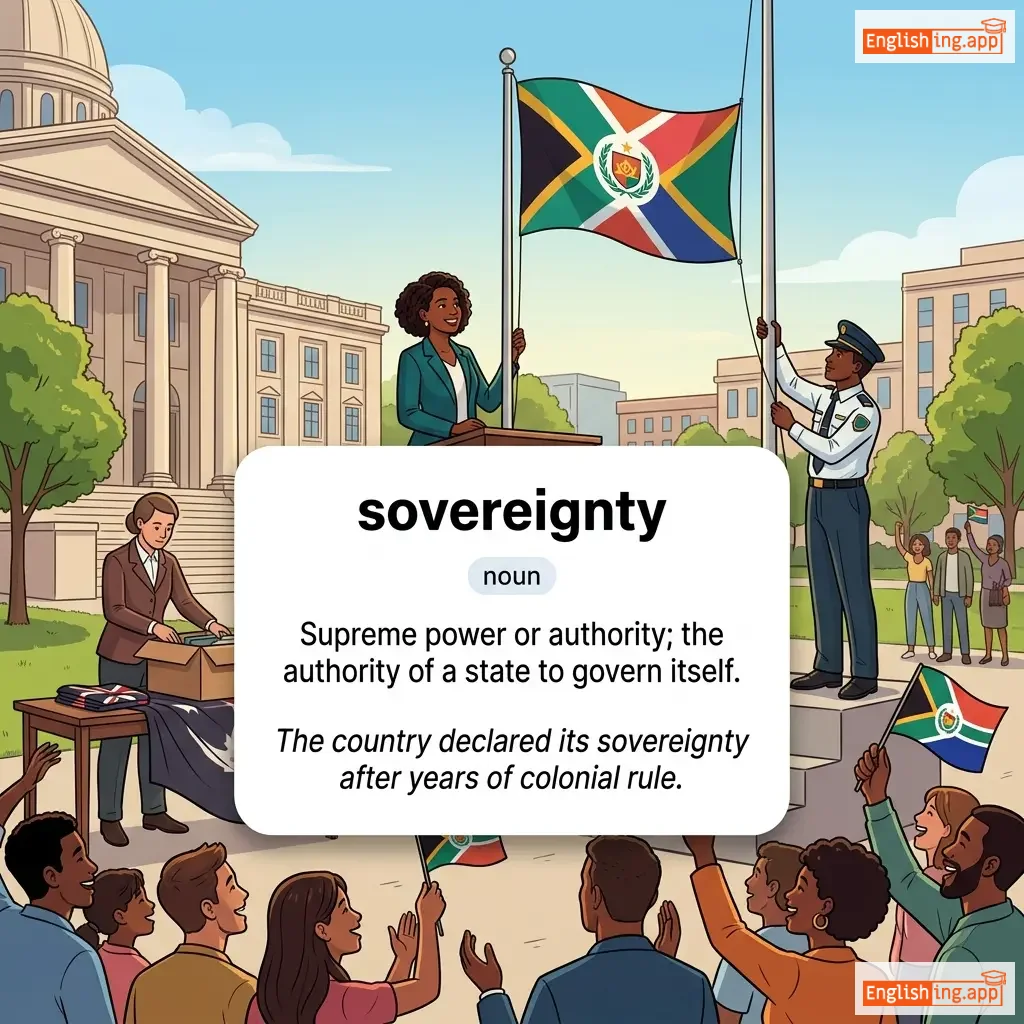
Supreme power or authority; the authority of a state to govern itself.
••••••
|
The country declared its sovereignty after years of colonial rule. |
その国は植民地支配の後、主権を宣言した。
Sono kuni wa shokuminchi shihai no ato, shuken o sengen shita.
••••••
|
sovereignty of the people |
The principle that political power ultimately resides with the people.
••••••
|
人民の主権
jinmin no shuken
••••••
|
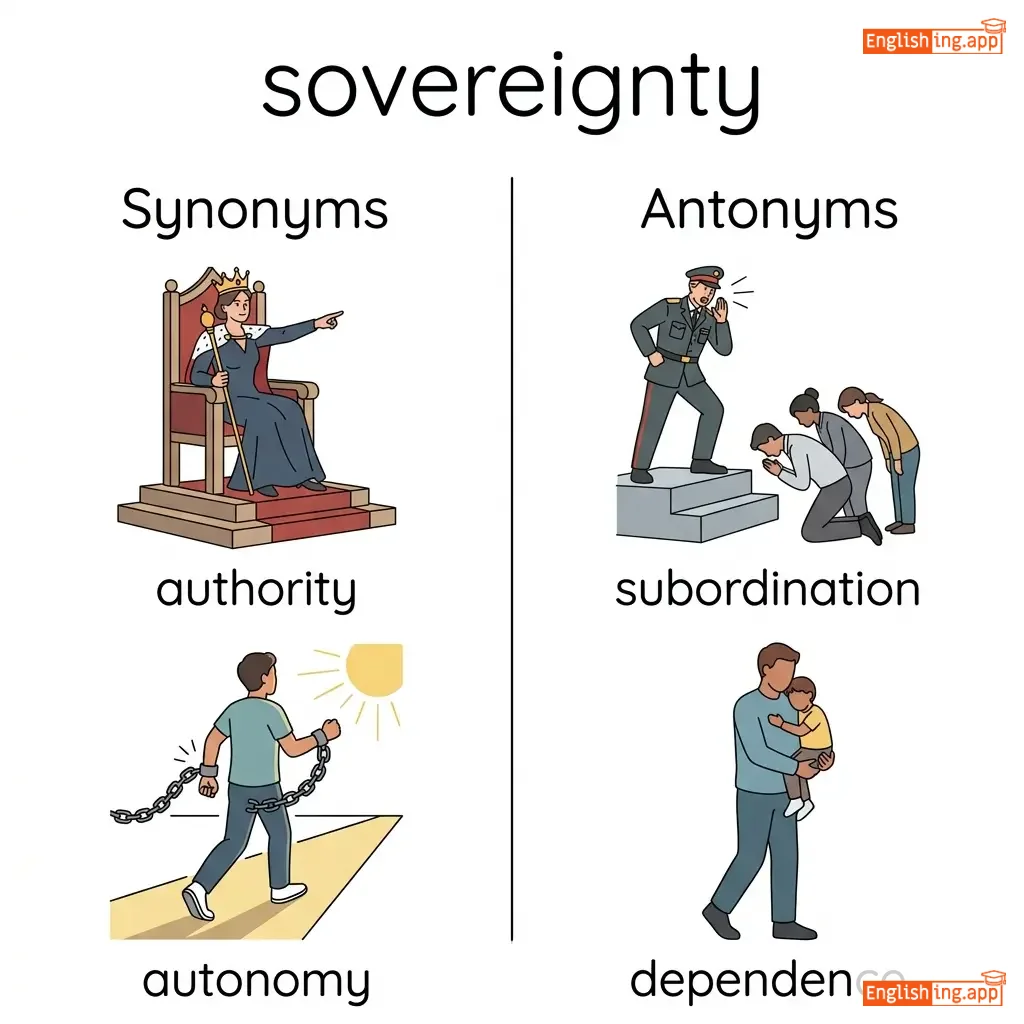
authority, autonomy, independence, self-rule, dominion
••••••
|
subordination, dependence, submission
••••••
|
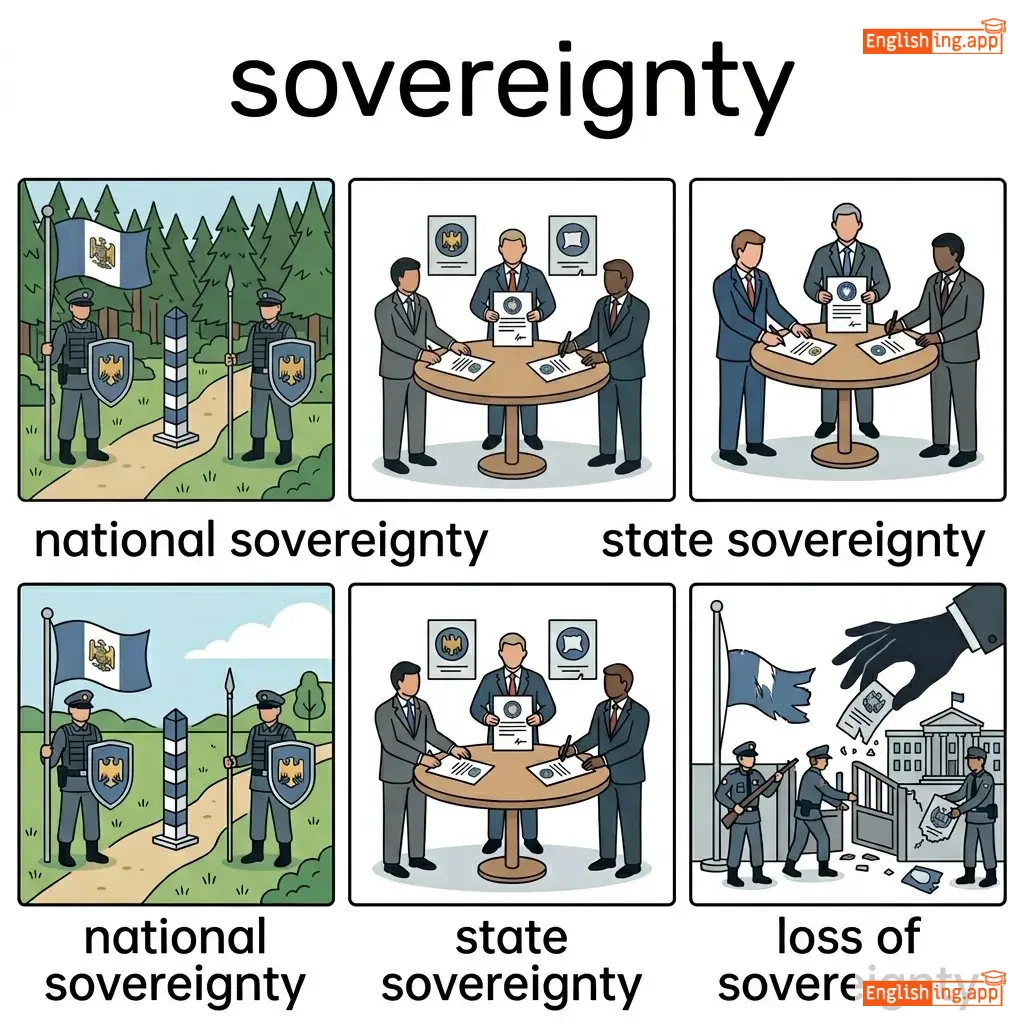
national sovereignty, state sovereignty, loss of sovereignty, sovereignty rights
••••••
|
主権 = 最高の権利 – 日本の主権を示す言葉。
••••••
|
|
💼
••••••
|
/ˈspɒnsəʃɪp/
noun
(スポンサーシップ)
••••••
|
- •••••• |
後援
kouen
••••••
|
the act of supporting an event, activity, person, or organization financially or through other resources
••••••
|
The event was made possible due to the sponsorship of several big companies.
イベントは、いくつかの大企業のスポンサーシップのおかげで実現しました。
••••••
|
イベントは、いくつかの大企業の後援のおかげで実現しました。
Ibento wa, ikutsuka no daikigyou no kouen no okage de jitsugen shimashita.
••••••
|
- •••••• | - •••••• | - •••••• |
patronage, backing, funding, support
••••••
|
neglect, withdrawal
••••••
|
event sponsorship, corporate sponsorship, sponsorship deal, sponsorship agreement
••••••
|
Sponsorship は、大企業による支援です!
••••••
|
|
👑
••••••
|
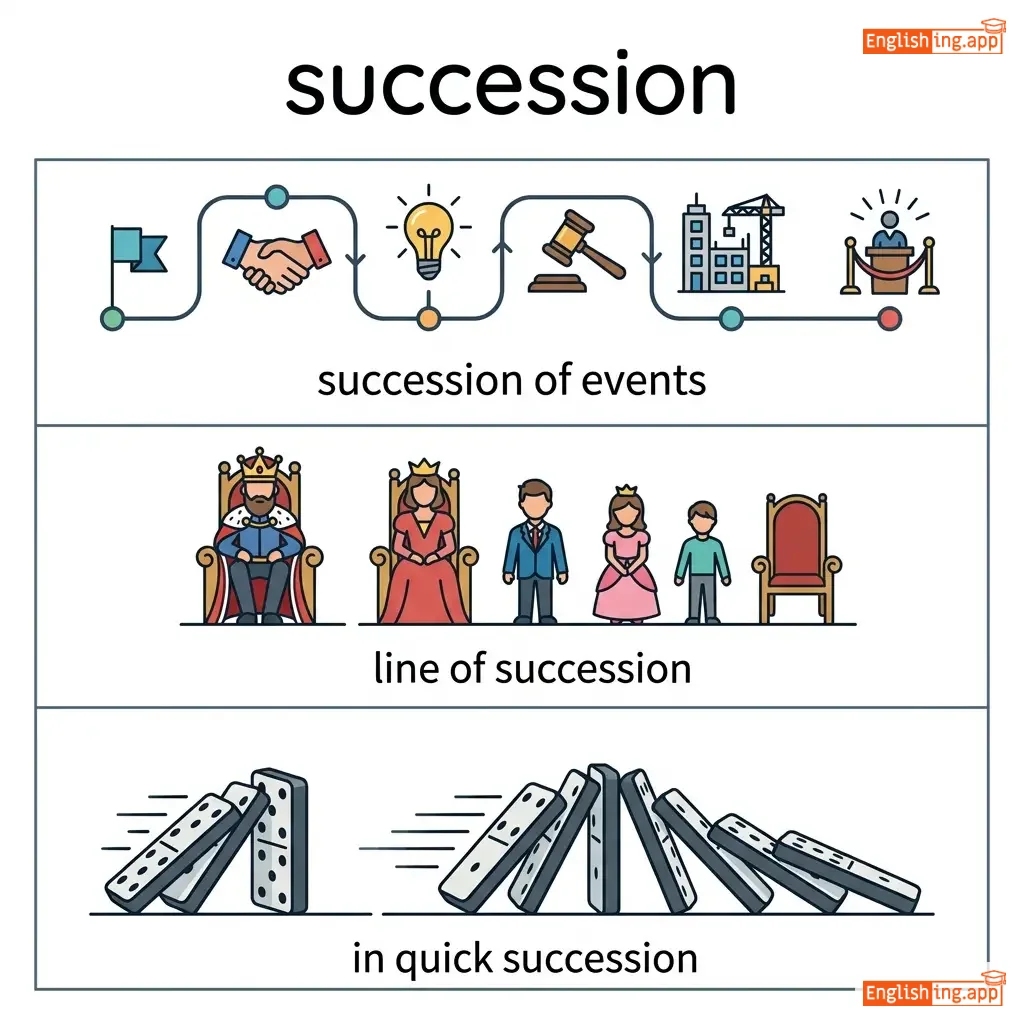
/səkˈseʃ.ən/
noun
(səkˈseʃən)
••••••
|
|
継承
keishou
••••••
|
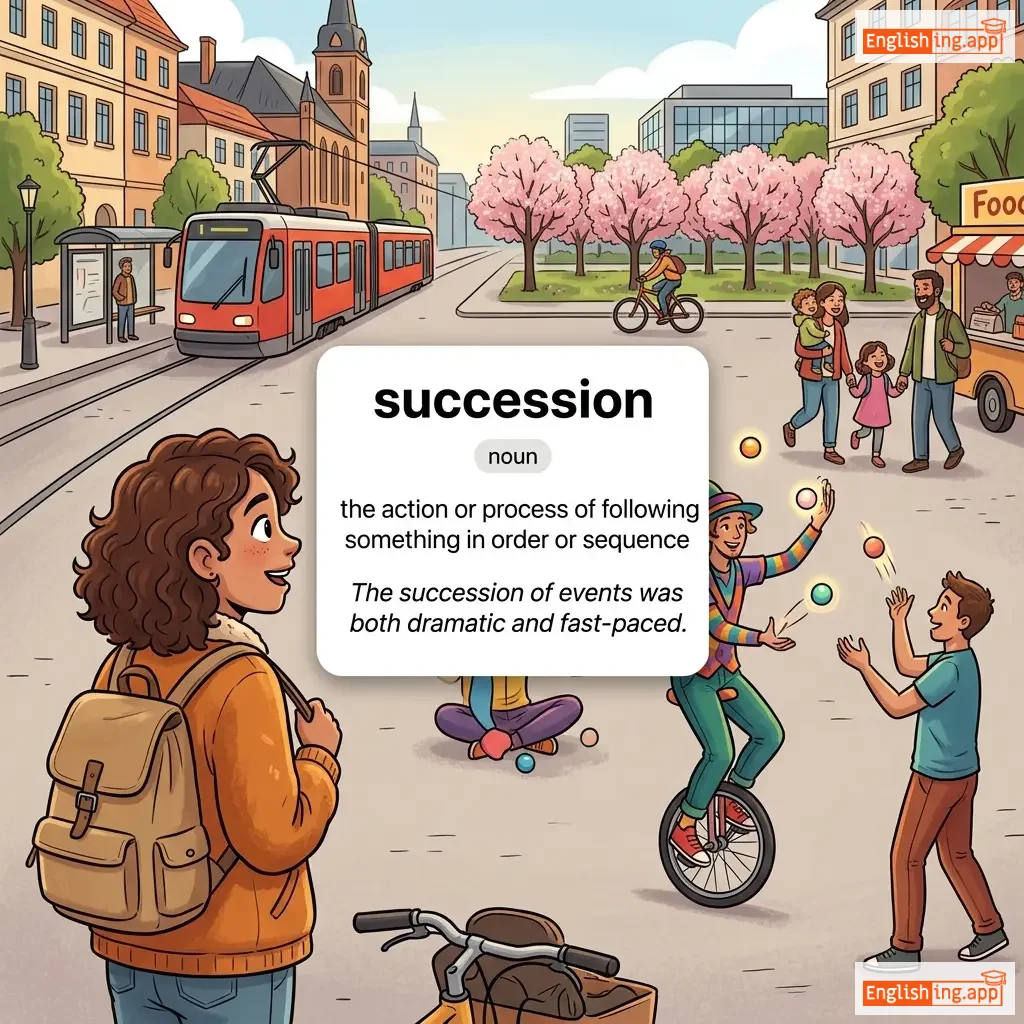
a series of people or things following one after another; the process of inheriting a title or position
••••••
|
The succession of kings in that dynasty lasted for over 300 years. |
その王朝の王位継承は300年以上続いた。
sono ouchou no oui keishou wa 300 nen ijou tsuzuita
••••••
|
- •••••• | - •••••• | - •••••• |
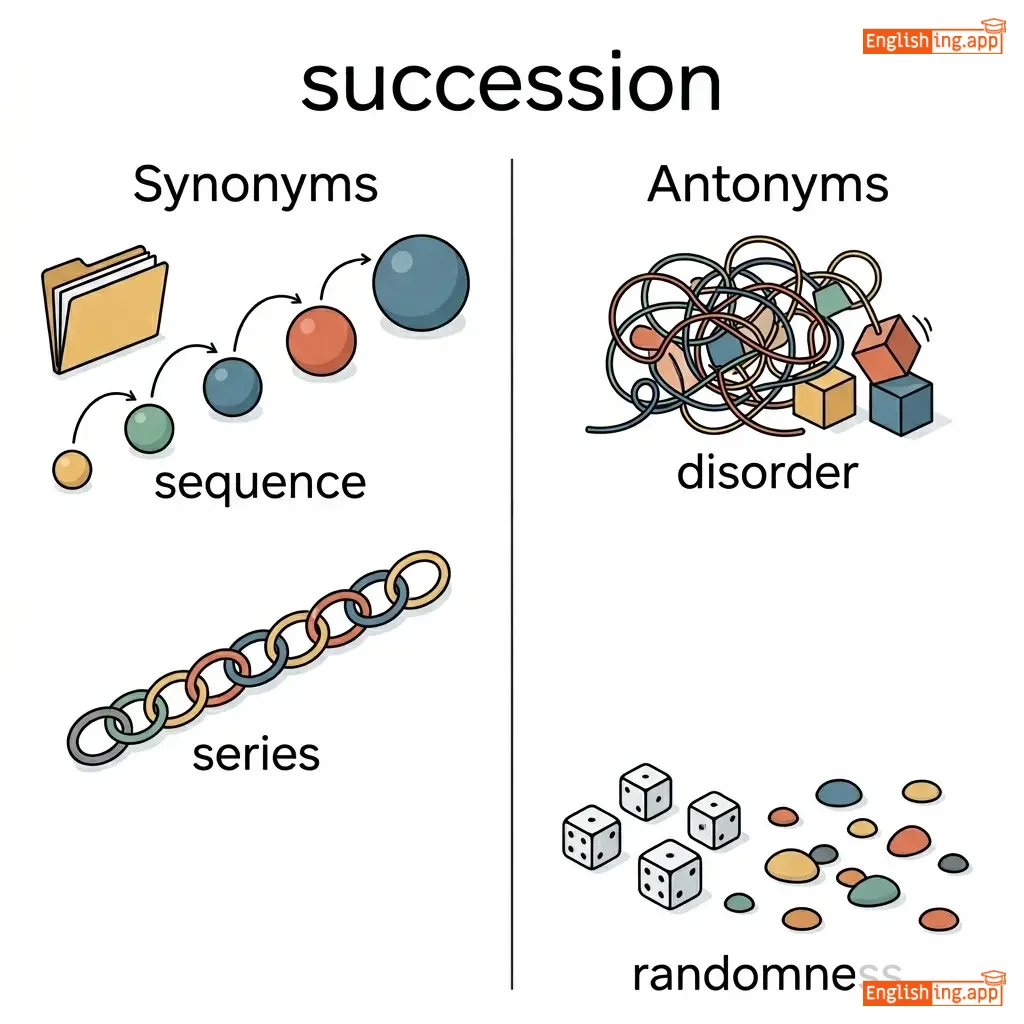
sequence, series, inheritance, lineage
••••••
|
interruption, discontinuation
••••••
|
royal succession, succession planning, line of succession, succession crisis
••••••
|
継承は時間の流れのように続く王位の交代を示しています。
••••••
|
|
🔢
••••••
|
/səkˈsɛsɪv/
adjective
(suksesiv)
••••••
|
- •••••• |
連続的な; 連続した
renzokuteki na; renzoku shita
••••••
|
following one after the other in order; consecutive
••••••
|
The team won three successive matches. |
チームは三回連続して試合に勝ちました。
Chīmu wa san-kai renzoku shite shiai ni kachimashita.
••••••
|
- •••••• | - •••••• | - •••••• |
consecutive, sequential, continuous, following
••••••
|
intermittent, interrupted, discontinuous
••••••
|
successive days, successive generations, successive victories
••••••
|
Successive is like consecutive events happening one after another, such as consecutive wins!
••••••
|

