The Factory That Changed Lives
ラフマン氏は成功した産業企業家で、電子の生産を始めたいと考えていました。彼の期待は、このビジネスが国の電力 消費を削減し、地域の生産を増加させることでした。彼は工場の設計と仕様を監督する請負業者を雇いました。任命後、確認があり、その工場は約6ヶ月で完成することになりました。資源の割り当ては慎重に行われ、運営コストを低く保ちながら、プロセッサーが効率的に動作するようにしました。原材料の調達のための流通システムが作成されました。データの収集から、利益の蓄積が予想通りのペースで進行していることが示されました。ラフマン氏は従業員に良い報酬を提供し、彼らをやる気にさせました。彼の工場は産業分野に革命をもたらし、何千人もの人々に雇用を提供しました。流通ネットワークは非常に良く、約彼らの製品は全国に広がりました。ラフマン氏のビジョンは、効率的に管理された産業企業が国の発展に重要な役割を果たすことを証明しました。
|
絵文字
|
単語 | Images | 翻訳 | 意味 | 例文 | 例文の翻訳 | 表現例 | 表現例の意味 | 表現例の翻訳 | 同義語 | 対義語 | コロケーション | ニーモニック |
|---|---|---|---|---|---|---|---|---|---|---|---|---|---|
|
📚
••••••
|
/əˌkjuːmjʊˈleɪʃən/
noun
(アキュムレーション)
••••••
|
|
蓄積
chikuseki
••••••
|
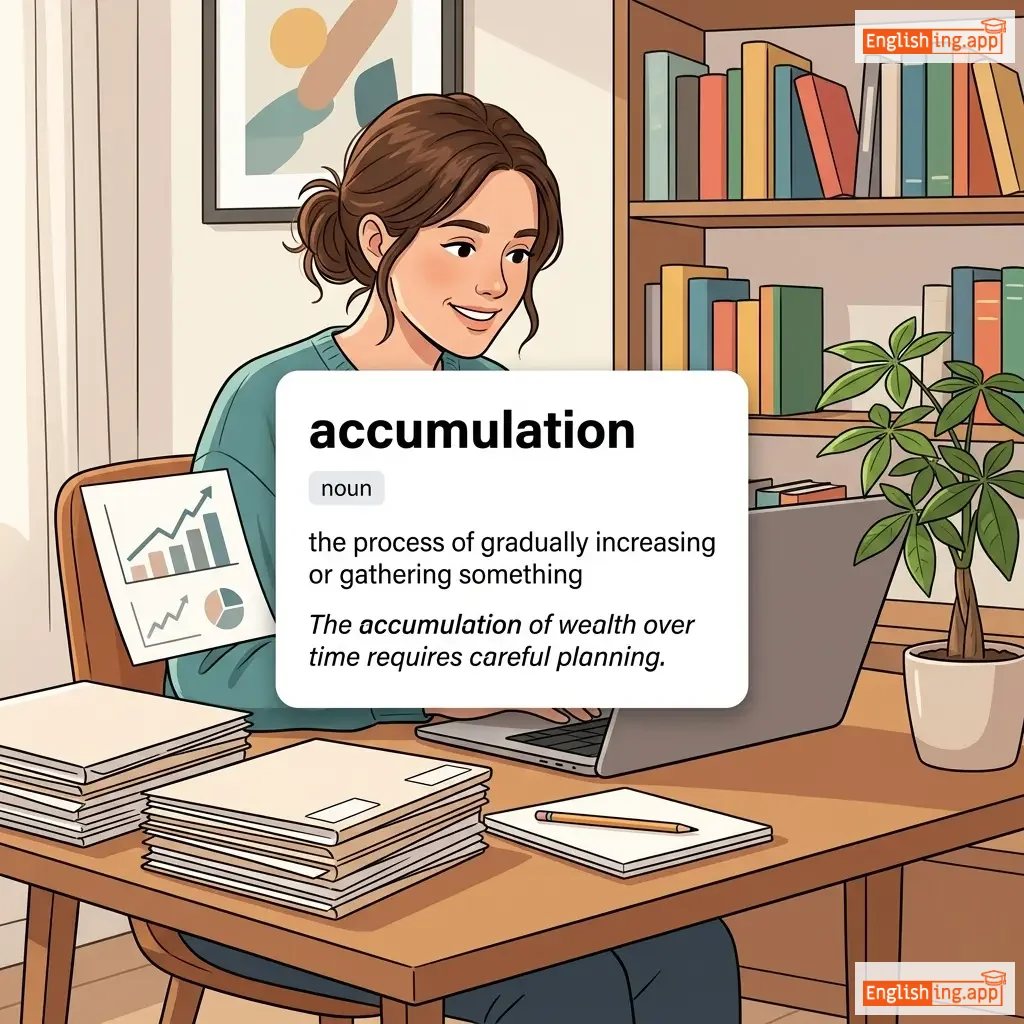
the process of gradually increasing or gathering something
••••••
|
The accumulation of wealth over time requires careful planning.
時間の経過とともに富の蓄積には慎重な計画が必要です。
••••••
|
時間の経過とともに富の蓄積には慎重な計画が必要です。
Jikan no keika to tomo ni tomi no chikuseki ni wa shinchou na keikaku ga hitsuyou desu.
••••••
|
- •••••• | - •••••• | - •••••• |
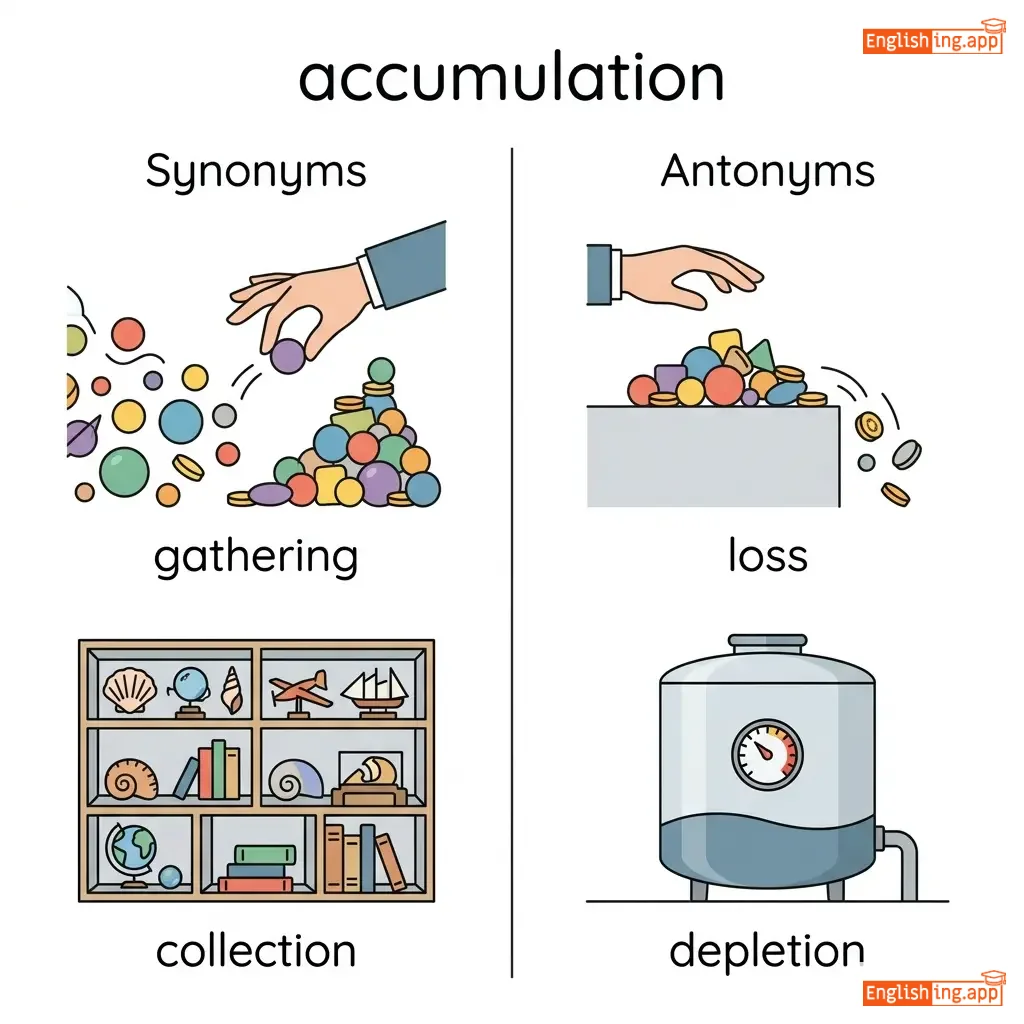
gathering, collection, buildup
••••••
|
loss, depletion
••••••
|
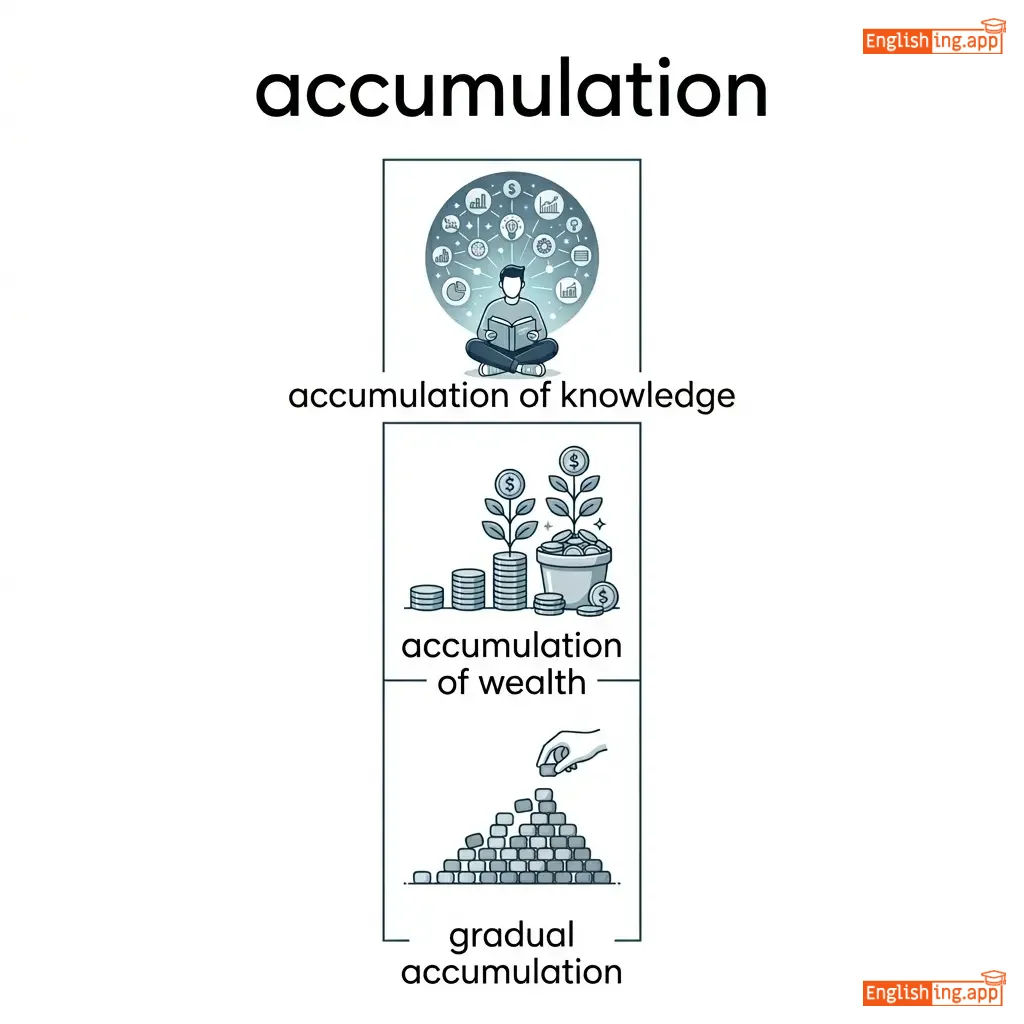
accumulation of knowledge, accumulation of wealth, gradual accumulation
••••••
|
蓄積 - 少しずつ集める。
••••••
|
|
🏢
••••••
|
/ˌækwɪˈzɪʃən/
noun
••••••
|

|
- •••••• |
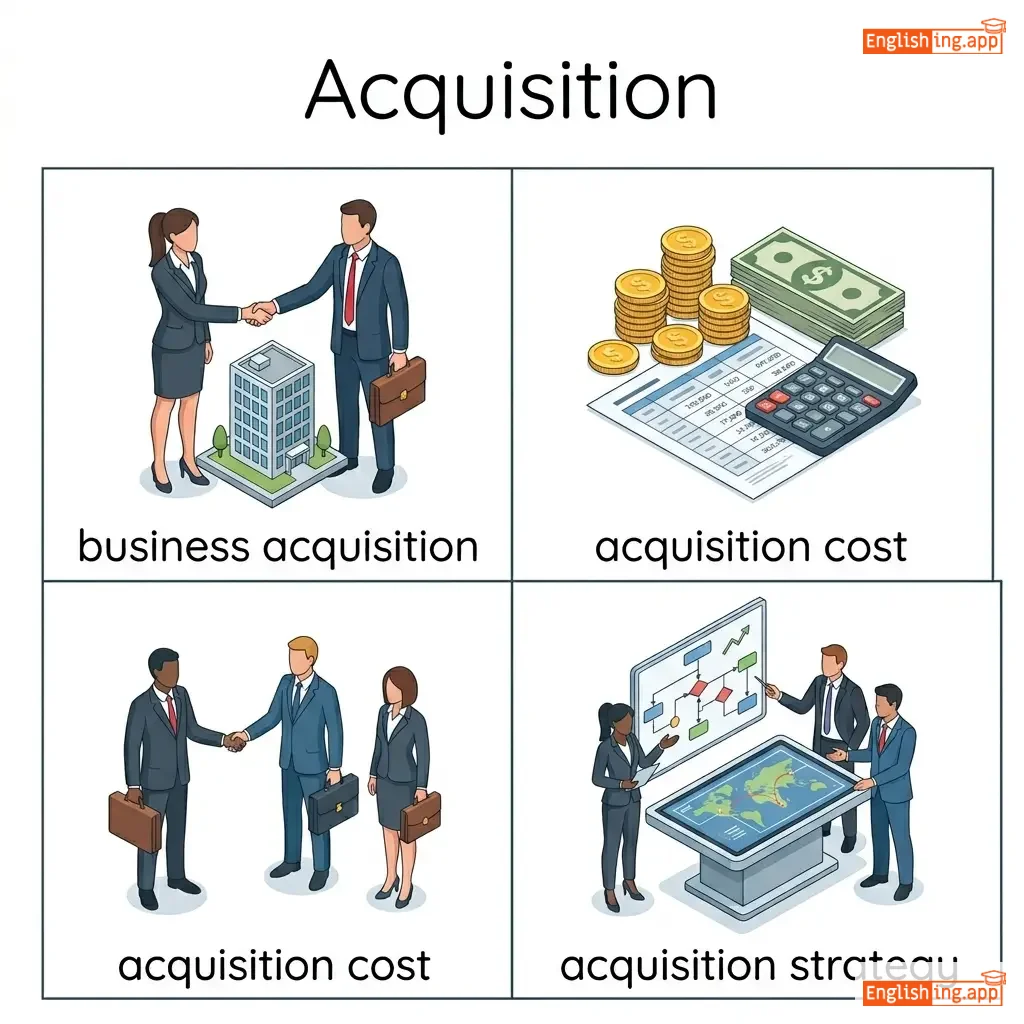
the act of obtaining or gaining something, often knowledge, skills, or property
••••••
|
The company announced the acquisition of a smaller competitor. |
- •••••• |
language acquisition |
the process of learning a language naturally
••••••
|
- •••••• |
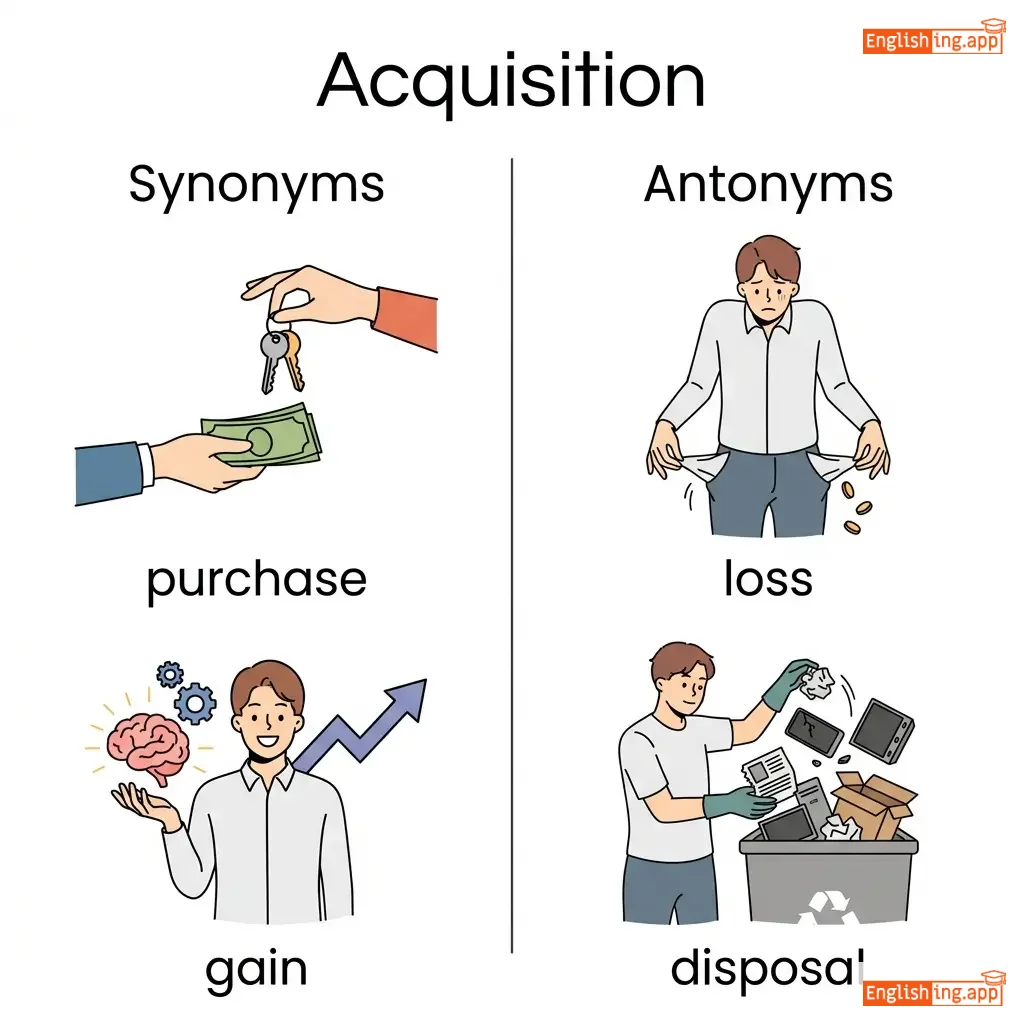
purchase, gain, procurement, attainment
••••••
|
loss, disposal, forfeit
••••••
|
business acquisition, acquisition cost, acquisition strategy, language acquisition
••••••
|
No •••••• |
|
💰
••••••
|
/ˌæləˈkeɪʃən/
noun
(アロケーション)
••••••
|
|
配分
haibun
••••••
|
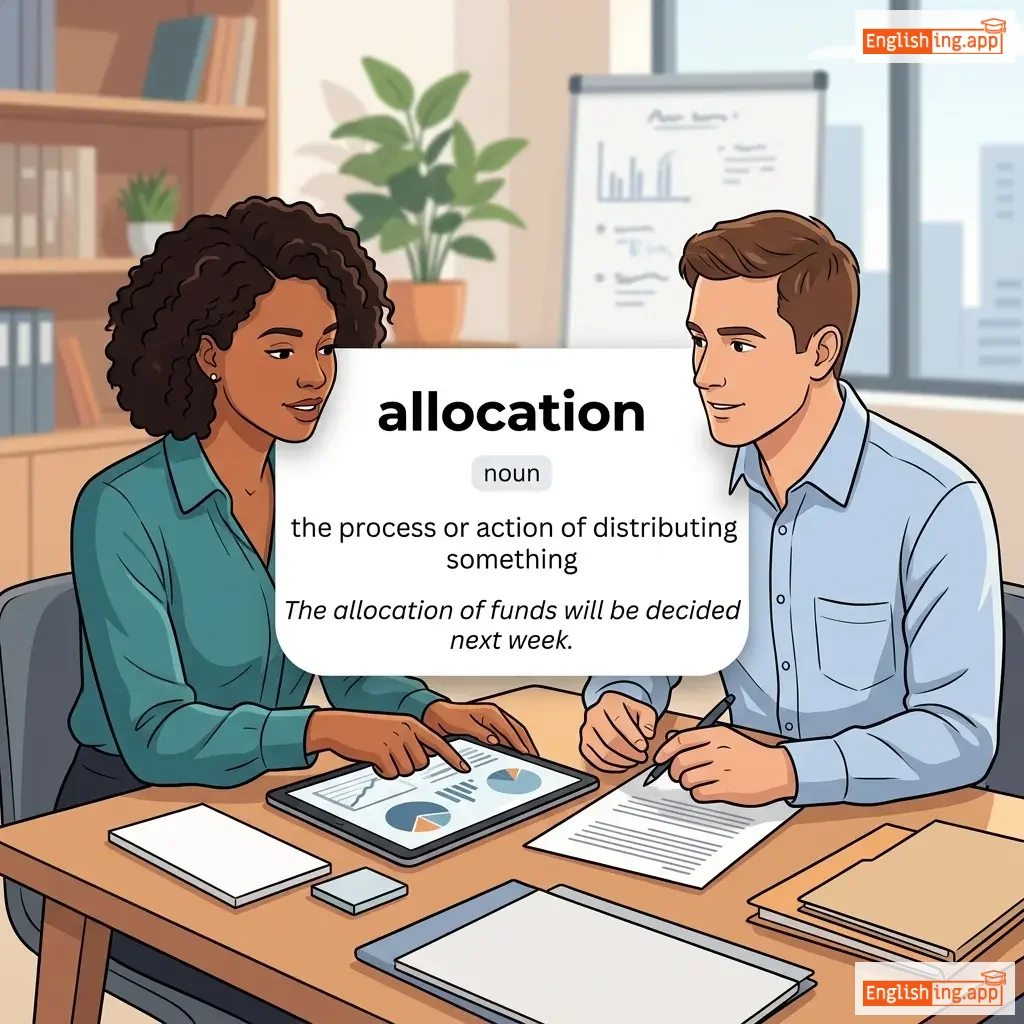
the process or action of distributing something
••••••
|
The allocation of funds will be decided next week. |
資金の配分は来週決定されます。
Shikin no haibun wa raishuu kettei saremasu.
••••••
|
- •••••• | - •••••• | - •••••• |
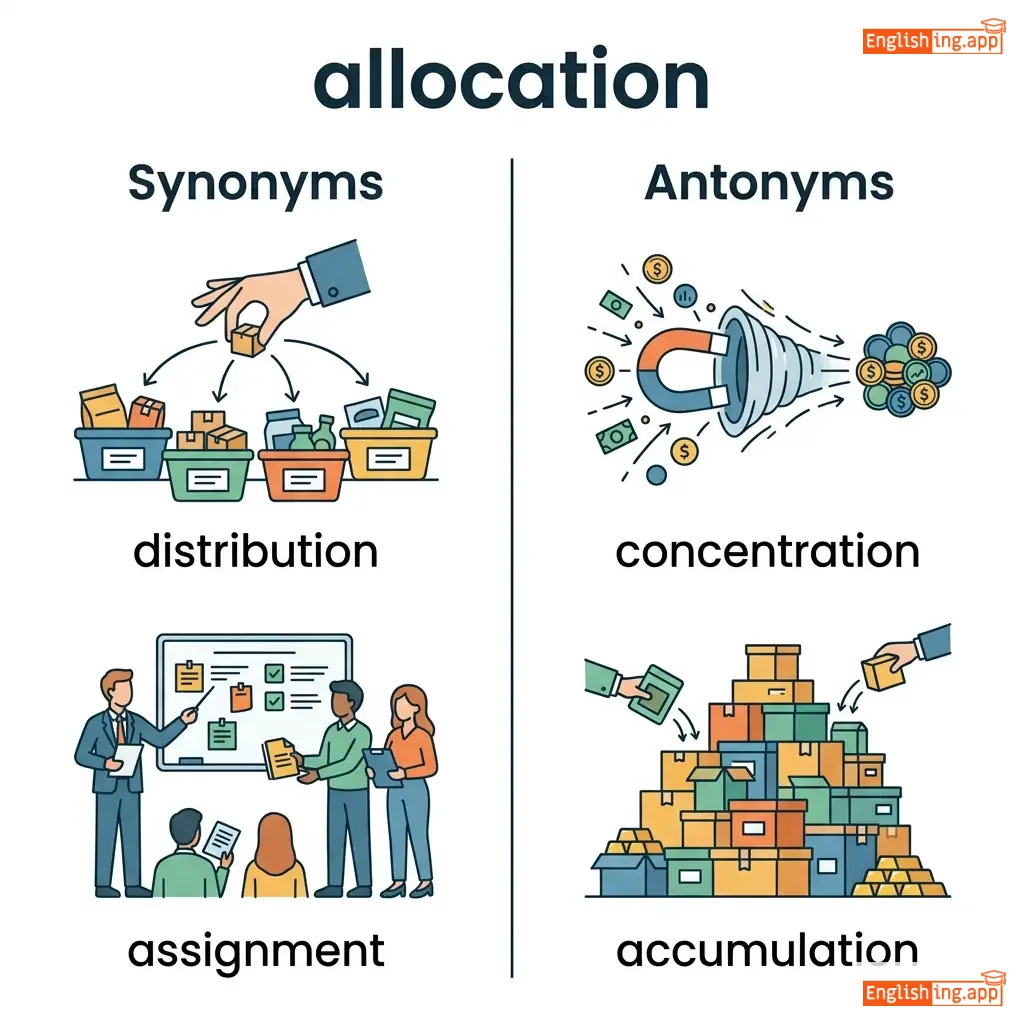
distribution, assignment, allotment, apportionment
••••••
|
concentration, accumulation
••••••
|
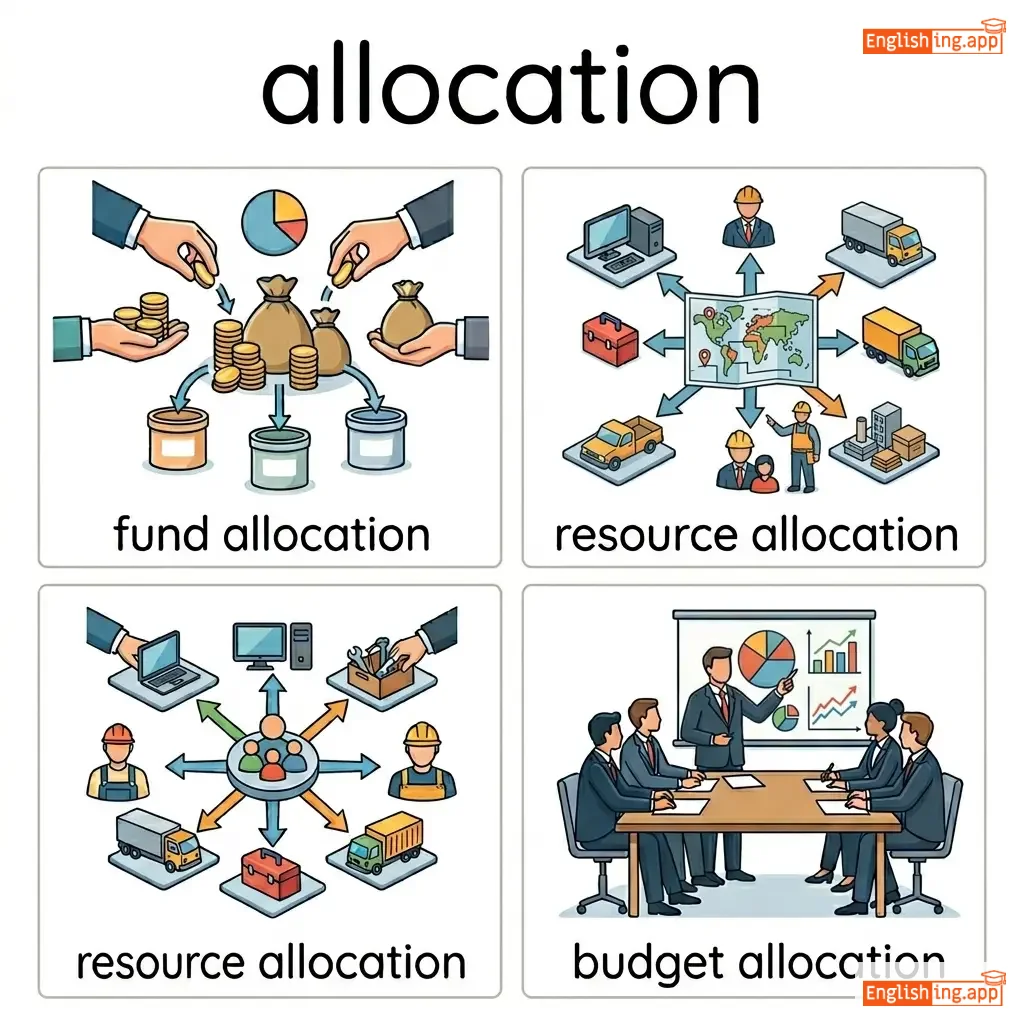
fund allocation, resource allocation, budget allocation
••••••
|
配分はリソースを分けること (haibun wa risōsu o wakeru koto)
••••••
|
|
📅
••••••
|
/əˈpɔɪntmənt/
noun
(アポイントメント)
••••••
|
- •••••• |
予約
yoyaku
••••••
|
an arrangement to meet someone at a particular time
••••••
|
I have a doctor's appointment tomorrow. |
明日、医者の予約があります。
Ashita, isha no yoyaku ga arimasu.
••••••
|
keep an appointment |
to attend an arranged meeting
••••••
|
予約を守る
yoyaku o mamoru
••••••
|
meeting, arrangement, date, schedule, reservation
••••••
|
cancellation, absence
••••••
|
make an appointment, cancel an appointment, keep an appointment, appointment time
••••••
|
Appointmentは予約 — 時間を守って!
••••••
|
|
➗
••••••
|
/əˈprɒk.sɪ.mət.li/
adverb
(アプロクシメートリー)
••••••
|
- •••••• |
おおよそ
oyoso
••••••
|
used to show that something is almost, but not completely, accurate or exact
••••••
|
The journey takes approximately three hours. |
旅行はおおよそ3時間かかります。
Ryokou wa oyoso san jikan kakarimasu.
••••••
|
- •••••• | - •••••• | - •••••• |
about, roughly, around, nearly, close to
••••••
|
exactly, precisely, accurately
••••••
|
approximately equal, approximately the same, approximately three hours
••••••
|
Approximately とはおおよそのこと—'おおよそ'はほぼ正確な予測だ。
••••••
|
|
📚
••••••
|
/kəˈlɛkʃən/
noun
(コレクション)
••••••
|
- •••••• |
コレクション
korekushon
••••••
|
a group of things gathered together
••••••
|
She has a large collection of rare books.
彼女は珍しい本の大きなコレクションを持っています。
••••••
|
彼女は珍しい本の大きなコレクションを持っています。
Kanojo wa mezurashī hon no ōkina korekushon o motteimasu.
••••••
|
debt collection
借金回収
••••••
|
the act of recovering money owed
••••••
|
借金回収
shakkin kaishū
••••••
|
group, set, assortment, accumulation, compilation
••••••
|
scattering, dispersal
••••••
|
collection of books, stamp collection, art collection, debt collection
••••••
|
Collectionはコレクション 📚 - 物を集めてコレクションを作る。
••••••
|
|
💰
••••••
|
/ˌkɒmpənˈseɪʃən/
noun
(kəmˌpɛnsəˈɪʃən)
••••••
|
- •••••• |
補償
hoshō
••••••
|
something, typically money, given to make up for loss, injury, or work done
••••••
|
She received financial compensation for the accident. |
彼女は事故のために金銭的補償を受けました。
Kanojo wa jiko no tame ni kinseiteki hoshō o ukemashita.
••••••
|
seek compensation |
to request payment or restitution for loss or damage
••••••
|
補償を求める
hoshō o motomeru
••••••
|
reimbursement, repayment, indemnity, recompense, restitution
••••••
|
penalty, loss, damage
••••••
|
compensation package, compensation claim, compensation for loss, financial compensation
••••••
|
補償 = 損失や怪我を補うお金!
••••••
|
|
✔️
••••••
|
/kənˌfɜːˈmeɪʃən/
noun
(コンファーメーション)
••••••
|
- •••••• |
確認
kakunin
••••••
|
the action of confirming something or the state of being confirmed
••••••
|
She received a confirmation email for her appointment.
彼女は彼女の予約の確認メールを受け取りました。
••••••
|
彼女は彼女の予約の確認メールを受け取りました。
Kanojo wa kanojo no yoyaku no kakunin mēru o ukemashita.
••••••
|
- •••••• | - •••••• | - •••••• |
verification, affirmation, validation, endorsement
••••••
|
denial, rejection, disapproval
••••••
|
confirmation email, confirmation number, confirmation letter
••••••
|
Confirm your phone number to get the confirmation of your appointment.
••••••
|
|
⚡
••••••
|
/kənˈsʌmpʃən/
noun
(コンシュンプション)
••••••
|
|
消費
shōhi
••••••
|
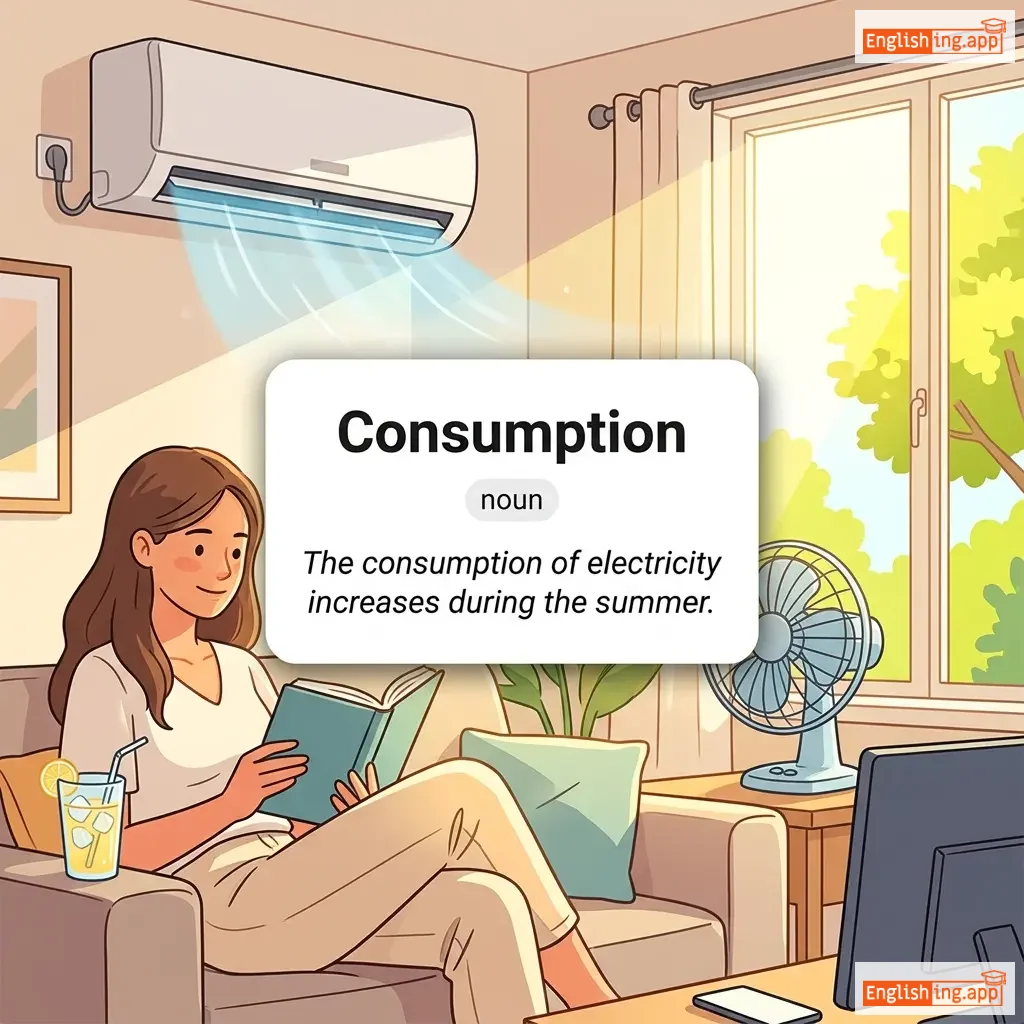
The act of using up resources, goods, or energy; also refers to the eating or drinking of something.
••••••
|
The consumption of electricity increases during the summer. |
夏の間、電力の消費が増加します。
Natsu no aida, denryoku no shōhi ga zōka shimasu.
••••••
|
consumption tax |
A tax placed on goods and services purchased by consumers.
••••••
|
消費税
shōhizei
••••••
|
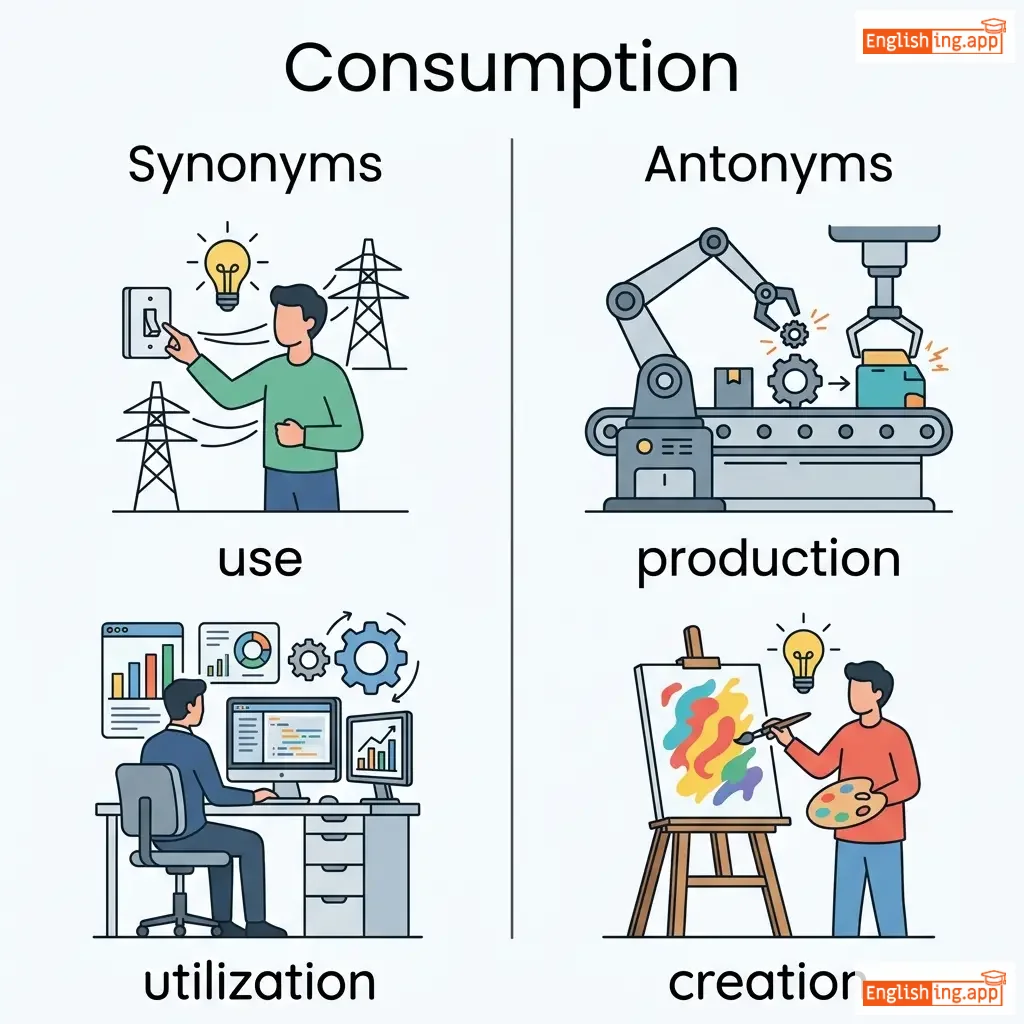
use, utilization, expenditure, intake, absorption
••••••
|
production, creation, conservation
••••••
|
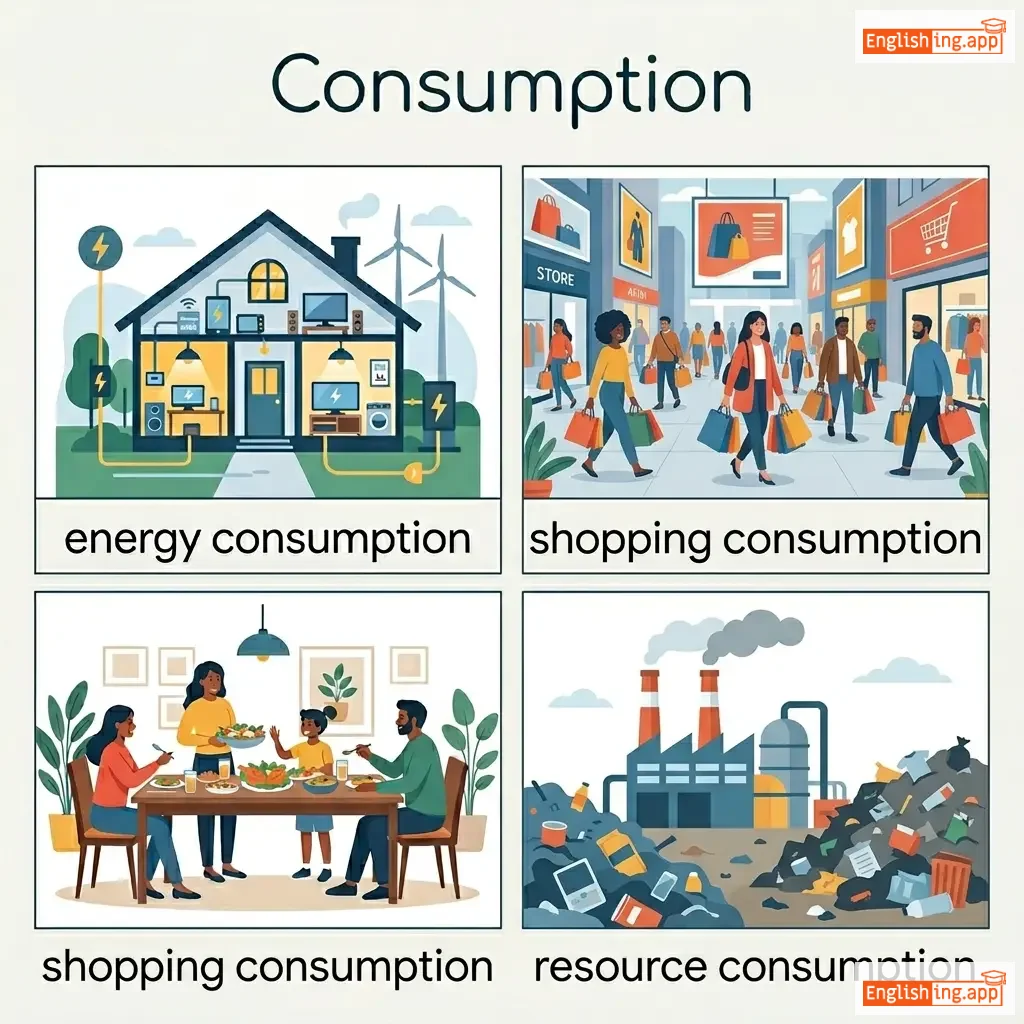
energy consumption, food consumption, mass consumption, over consumption
••••••
|
消費は使うと食べること—電力の消費も夏に増える。
••••••
|
|
🏗️
••••••
|
/ˈkɒntræktər/
noun
(コントラクター)
••••••
|
- •••••• |
請負業者
ukeoi gyōsha
••••••
|
a person or company that agrees to provide materials or labor to perform a service or do a job
••••••
|
The contractor completed the building project on time. |
請負業者は建設プロジェクトを期限内に完了しました。
Ukeoi gyōsha wa ken'etsu purojekuto o kigen-nai ni kanryō shimashita.
••••••
|
general contractor |
a person or company responsible for overseeing a construction project
••••••
|
元請業者
moto ukeoi gyōsha
••••••
|
builder, supplier, provider, constructor, vendor
••••••
|
client, employee
••••••
|
building contractor, general contractor, independent contractor, government contractor
••••••
|
請負業者は契約を結んで仕事をする人—'contractor'を覚えておこう。
••••••
|
|
📦
••••••
|
/ˌdɪstrɪˈbjuːʃən/
noun
(ディストリビューション)
••••••
|
- •••••• |
配布
haibu
••••••
|
the act of sharing or delivering something to multiple people or places
••••••
|
The company manages the distribution of food supplies to rural areas. |
その会社は農村地域への食品供給の配布を管理しています。
Sono kaisha wa nōson chiiki e no shokuhin kyōkyū no haibu o kanri shiteimasu.
••••••
|
- •••••• | - •••••• | - •••••• |
delivery, allocation, supply, circulation
••••••
|
collection, concentration
••••••
|
distribution system, distribution network, distribution channel, fair distribution
••••••
|
Distribution は分けるという意味で、日本語では ‘配布’ です。
••••••
|
|
⚡
••••••
|
/ɪˈfɪʃəntli/
adverb
(エフィシェントリー)
••••••
|
- •••••• |
効率的に
kouritsuteki ni
••••••
|
in a way that achieves maximum productivity with minimum wasted effort or expense
••••••
|
She managed to complete the task efficiently within the deadline. |
彼女は締め切り内に効率的にタスクを完了させました。
Kanojo wa shimekiri nai ni kouritsuteki ni tasuku wo kanryou sasemashita.
••••••
|
- •••••• | - •••••• | - •••••• |
effectively, productively, competently, resourcefully
••••••
|
inefficiently, ineffectively
••••••
|
work efficiently, run efficiently, manage efficiently
••••••
|
Efficient work saves energy—just like a smoothly running engine!
••••••
|
|
🔌
••••••
|
/ɪˌlɛkˈtrɪsɪti/
noun
(エレクトリシティ)
••••••
|
- •••••• |
電気
denki
••••••
|
A form of energy resulting from the existence of charged particles.
••••••
|
The storm caused a power cut and we had no electricity. |
嵐で停電し、電気がありませんでした。
Arashi de teiden shi, denki ga arimasen deshita.
••••••
|
generate electricity |
To produce electrical power.
••••••
|
電気を発生させる
Denki o hassei saseru
••••••
|
power, energy, current, charge
••••••
|
darkness, powerlessness
••••••
|
electricity supply, electricity bill, electricity generation, electricity consumption
••••••
|
電気はエネルギーを意味し、照明やファンには電気が必要です。
••••••
|
|
💻
••••••
|
/ɪˌlɛkˈtrɒnɪks/
noun
(エレクトロニクス)
••••••
|
- •••••• |
エレクトロニクス
erekutoronikusu
••••••
|
the branch of physics and technology dealing with circuits and devices using transistors, microchips, and other components
••••••
|
He studied electronics at university. |
彼は大学でエレクトロニクスを学びました。
Kare wa daigaku de erekutoronikusu o manabimashita.
••••••
|
- •••••• | - •••••• | - •••••• |
tech, circuitry, electrotechnology, computing
••••••
|
mechanics, manual systems
••••••
|
electronics engineer, consumer electronics, electronics lab, electronics industry
••••••
|
エレクトロニクスはガジェットの世界 — テレビ、携帯電話、コンピューター、すべてが一緒に!
••••••
|
|
🎯
••••••
|
/ˌɛkspɛkˈteɪʃən/
noun
(エクスペクテーション)
••••••
|
- •••••• |
期待
kitai
••••••
|
a strong belief that something will happen or be the case
••••••
|
The students had high expectations for their exam results. |
学生たちは試験結果に高い期待を持っていました。
Gakusei-tachi wa shiken kekka ni takai kitai o motte imashita.
••••••
|
beyond expectations |
better or greater than what was anticipated
••••••
|
期待以上
kitai ijō
••••••
|
anticipation, hope, belief, outlook, assumption
••••••
|
doubt, disbelief, hopelessness
••••••
|
high expectation, meet expectation, raise expectation, beyond expectation
••••••
|
期待は期待していることを意味します、例えば試験結果に対する高い期待のように。
••••••
|
|
🏭
••••••
|
/ɪnˈdʌstriəl/
adjective
(インダストリアル)
••••••
|
|
産業の
sangyo no
••••••
|
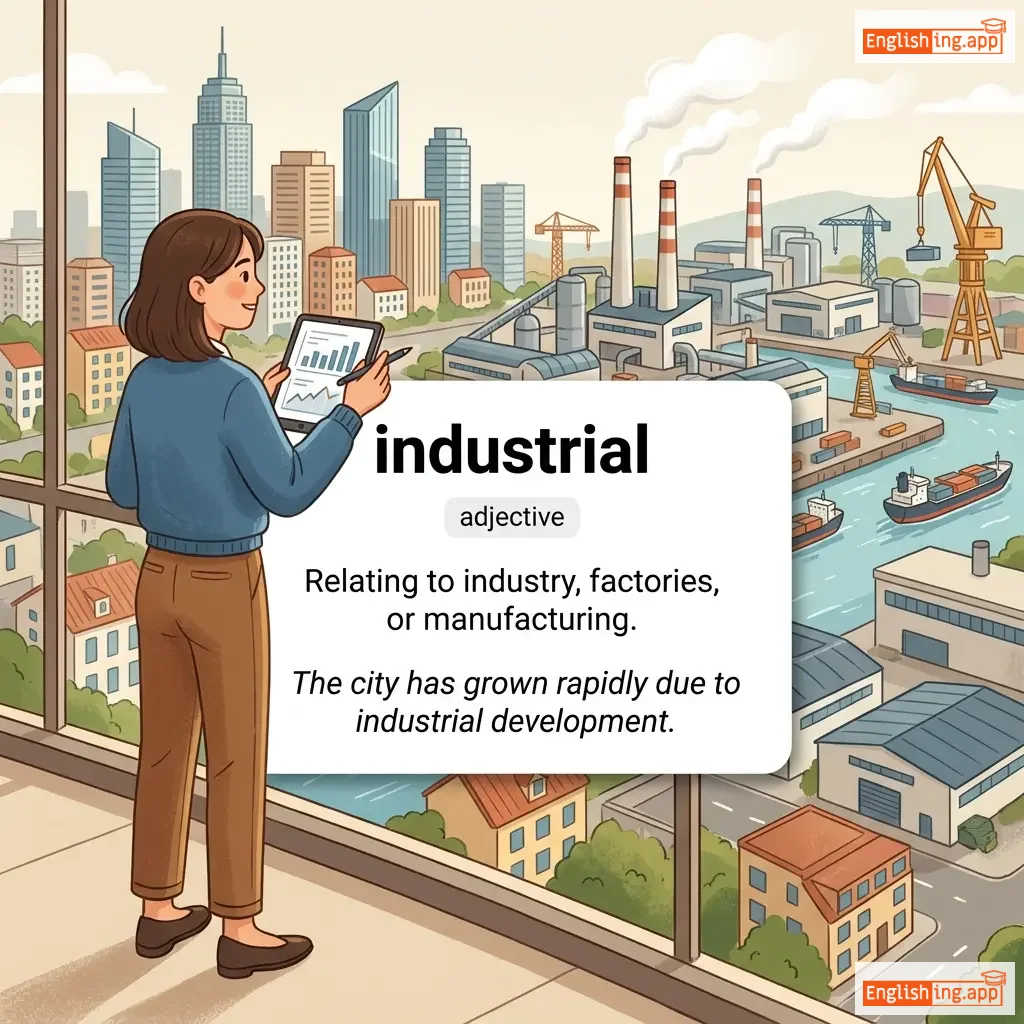
Relating to industry, factories, or manufacturing.
••••••
|
The city has grown rapidly due to industrial development.
その都市は産業の発展により急速に成長しました。
••••••
|
その都市は産業の発展により急速に成長しました。
Sono toshi wa sangyo no haten ni yori kyusoku ni seichou shimashita.
••••••
|
industrial revolution
産業革命
••••••
|
A period of major industrialization and innovation.
••••••
|
産業革命
Sangyo kakumei
••••••
|
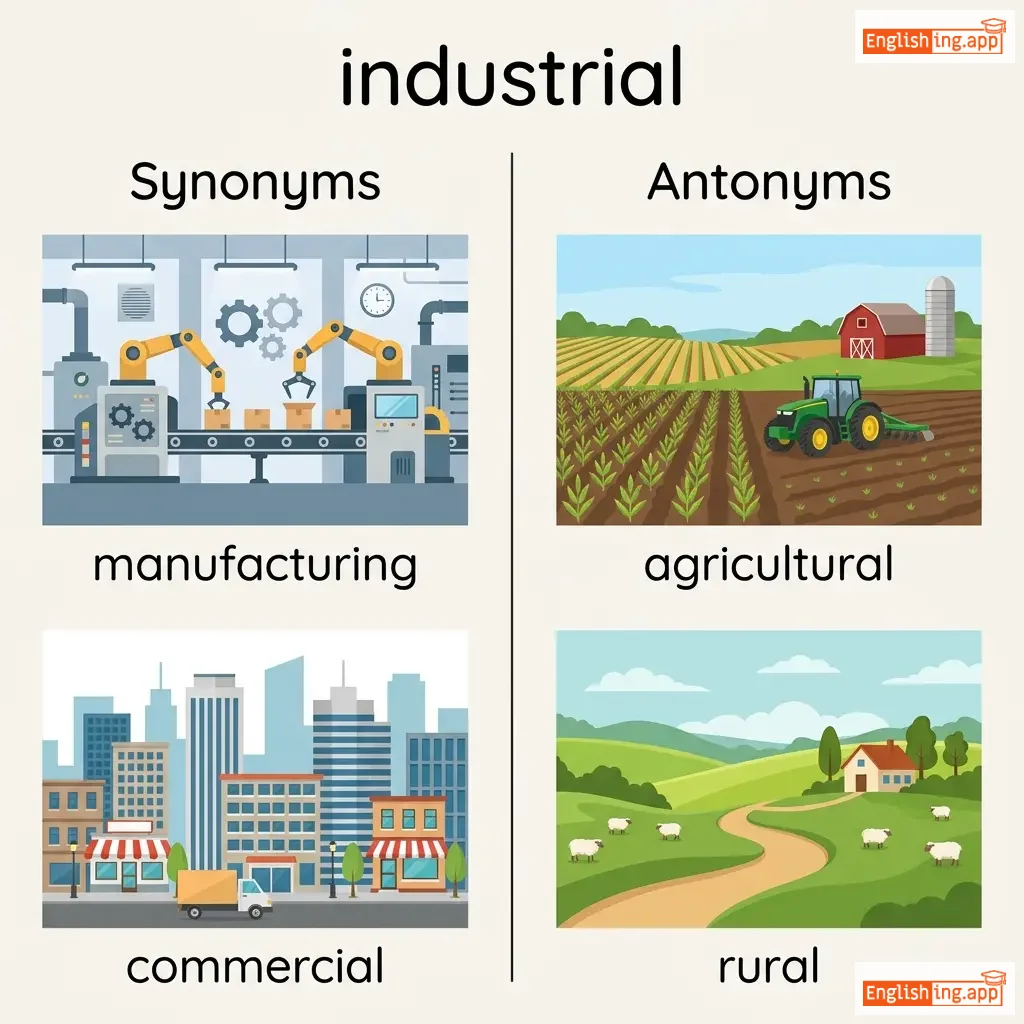
manufacturing, commercial, mechanical, factory-based
••••••
|
agricultural, rural
••••••
|
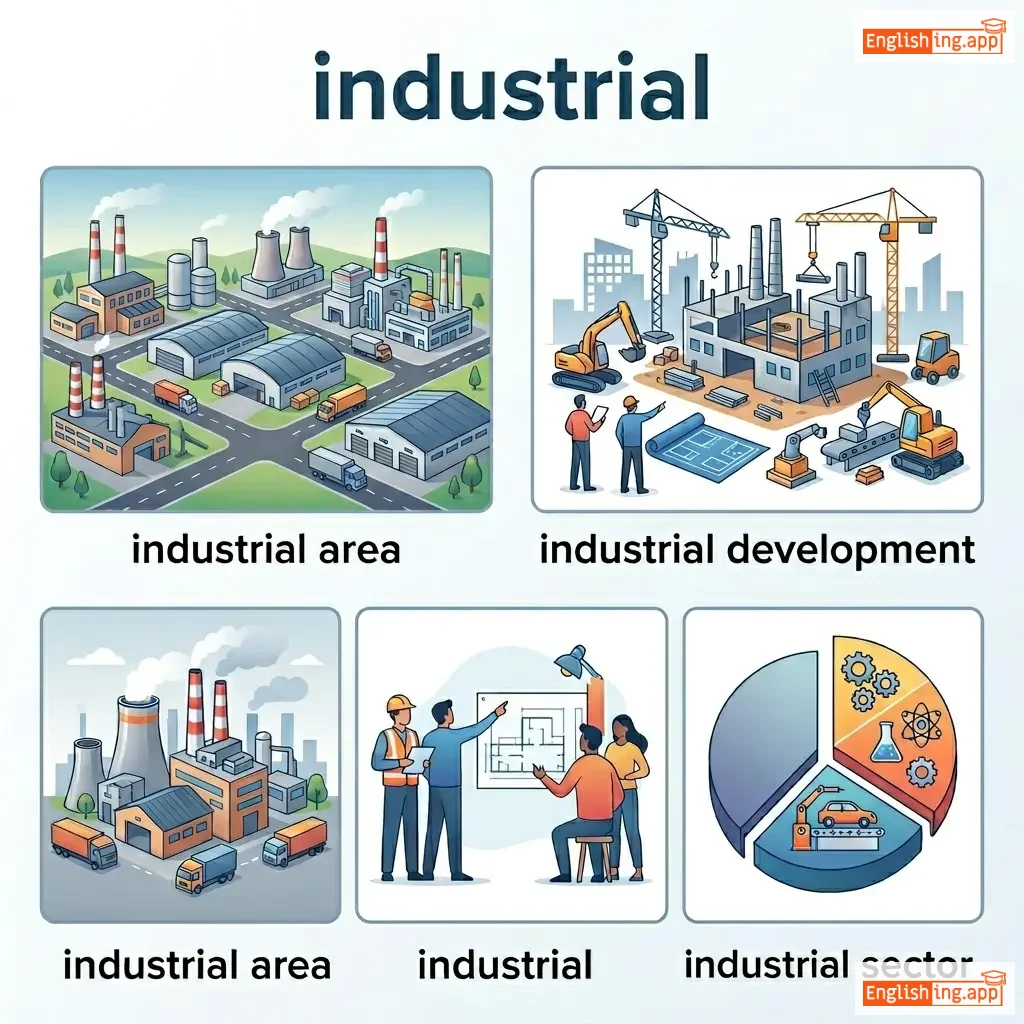
industrial area, industrial development, industrial sector, industrial growth
••••••
|
Industrialは産業の意味です - 工場🏭覚えやすい。
••••••
|
|
⚙️
••••••
|
/ˌɒpəˈreɪʃənl/
adjective
(オペレーショナル)
••••••
|
|
オペレーショナル
operational
••••••
|
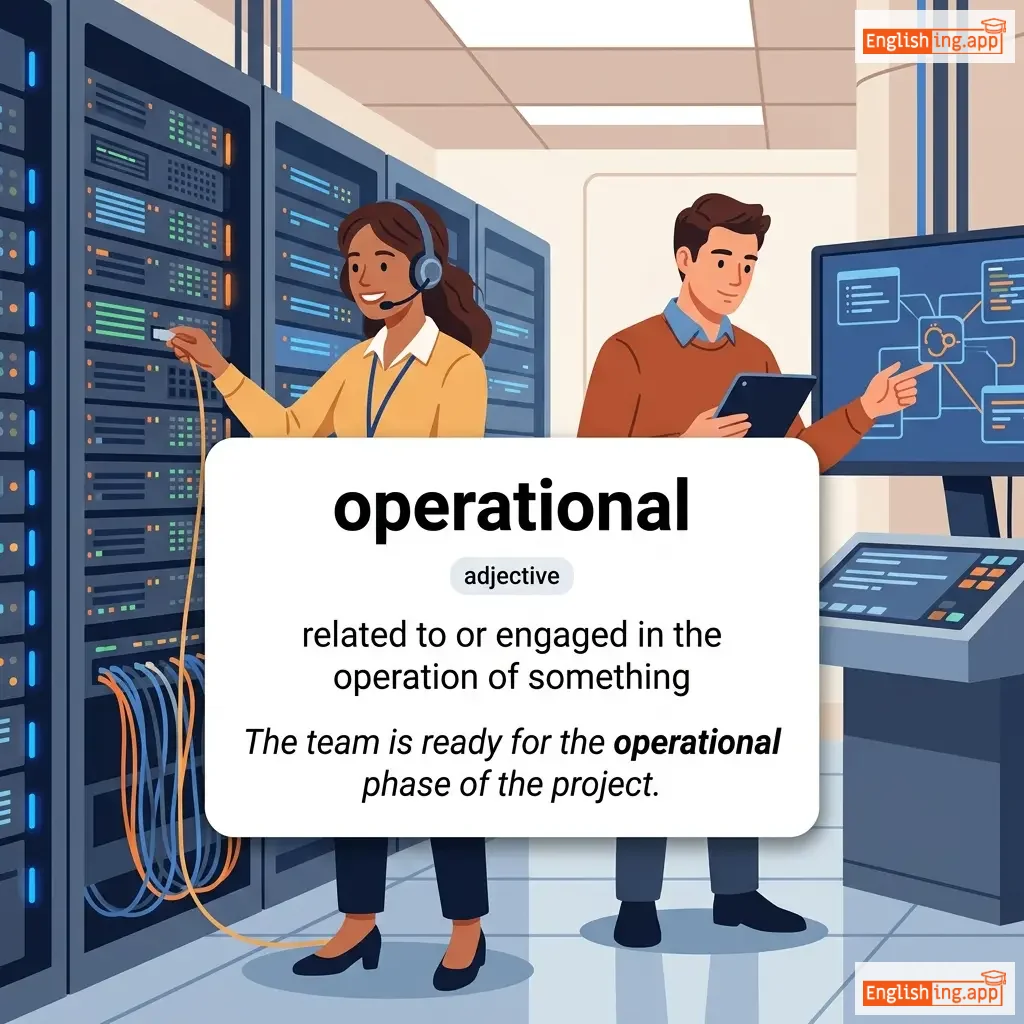
related to or engaged in the operation of something
••••••
|
The team is ready for the operational phase of the project. |
チームはプロジェクトのオペレーショナルフェーズの準備ができています。
Chīmu wa purojekuto no operēshonaru fēzu no junbi ga dekiteimasu.
••••••
|
- •••••• | - •••••• | - •••••• |
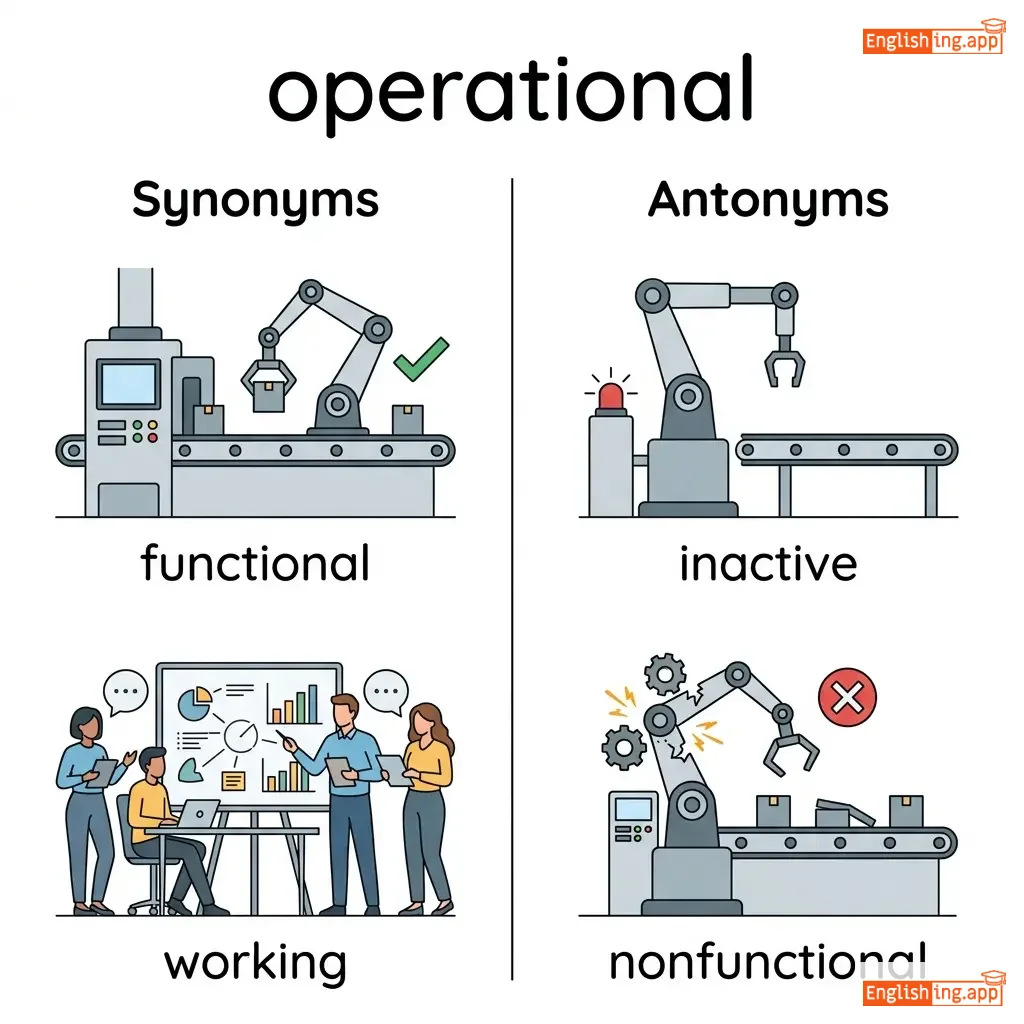
functional, working, active, in operation
••••••
|
inactive, nonfunctional, idle
••••••
|
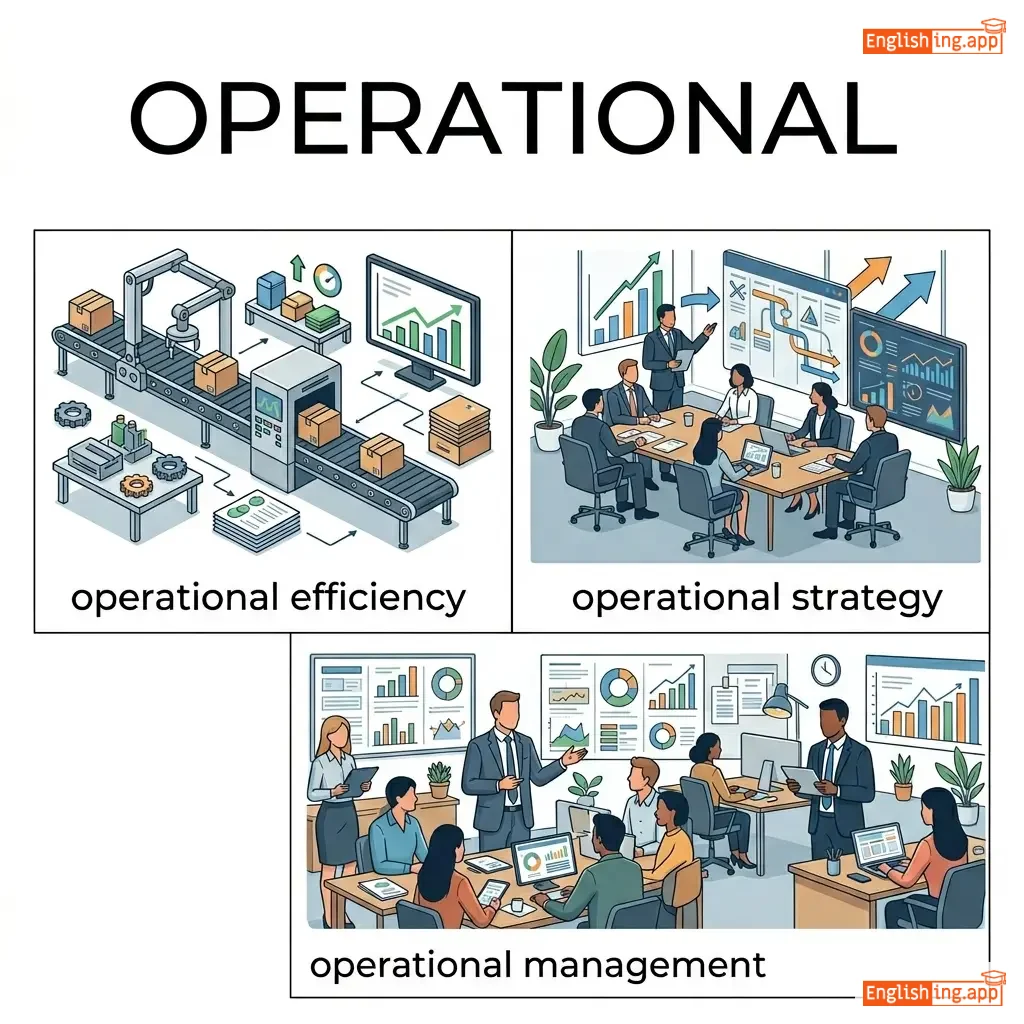
operational efficiency, operational strategy, operational management
••••••
|
オペレーショナルは作業に関連していることを意味します。プロセスを実行するなど。
••••••
|
|
💻
••••••
|
/ˈprəʊsesə/
noun
(プロセッサ)
••••••
|
- •••••• |
プロセッサ
purosessa
••••••
|
a machine or device that processes something, especially a computer's central processing unit (CPU)
••••••
|
The new laptop has a faster processor. |
新しいノートパソコンにはより高速なプロセッサがあります。
Atarashī nōtopasokon ni wa yori kōsoku na purosessa ga arimasu.
••••••
|
- •••••• | - •••••• | - •••••• |
CPU, microchip, computer chip, handler
••••••
|
manual operator
••••••
|
central processor, data processor, image processor, food processor
••••••
|
プロセッサはデータを処理する — まるで CPU がデータを処理するかのように。 'プロセッサはデータを素早く処理する。'
••••••
|
|
🏭
••••••
|
/prəˈdʌkʃən/
noun
(プロダクション)
••••••
|
- •••••• |
制作
seisaku
••••••
|
the process of manufacturing or creating something
••••••
|
The production of this film took over a year. |
この映画の制作には1年以上かかりました。
Kono eiga no seisaku niwa ichinen ijou kakarimashita.
••••••
|
- •••••• | - •••••• | - •••••• |
manufacture, creation, development, fabrication
••••••
|
consumption, destruction
••••••
|
mass production, large-scale production, production line, production cost
••••••
|
Production = 作る (作成) 映画を作る時間
••••••
|
|
📑
••••••
|
/ˌspɛsɪfɪˈkeɪʃən/
noun
(スペシフィケーション)
••••••
|
- •••••• |
仕様書
shiyōsho
••••••
|
a detailed description or assessment of something
••••••
|
The product specification includes all the necessary details. |
製品の仕様書にはすべての必要な詳細が含まれています。
Seihin no shiyōsho ni wa subete no hitsuyō na shōsai ga fukumareteimasu.
••••••
|
- •••••• | - •••••• | - •••••• |
requirement, description, outline, standard
••••••
|
ambiguity, vagueness
••••••
|
technical specification, product specification, detailed specification
••••••
|
仕様書はスペシャル説明(special description)のようなものです。
••••••
|

