The Detective Who Stopped a Robbery
サルマ警部はretiredした刑事だったが、特別な事件のために戻ってきた。都市の金融quarterでrobberyが発生し、警察は彼女の専門知識を求めた。彼女のpurposeは明確だった ― 犯人を見つけ、盗まれた物を取り戻すこと。サルマは時間が重要だと判断し、quickly調査を開始した。彼女の直感は並外れたqualityを持っていた。最初の手がかりは金庫で見つかった化学物質のresidueだった。サルマはそれを分析し、爆発物にrelatedしていることを発見した。犯人たちは賢く、quietly動いて明白な痕跡を残さなかった。しかしサルマは、どんな犯罪者でもミスを犯すことを知っていた。彼女のpursuitは容赦なかった。目撃者はrollingスーツケースを見たと証言した。これが重要な手がかりとなった。サルマは、ギャングのリーダーがローンを拒否した銀行にrevengeを企てていたことを突き止めた。彼の動機は金だけでなく、個人的な復讐でもあった。警察は証拠をrequiredし、サルマは体系的に集めていった。コーヒーをノートにこぼしてしまい、助手がquickly助けたという面白い出来事もあった。ギャングは次の強盗を計画していたが、サルマのチームは準備万端だった。彼らは罠を仕掛け、犯人たちは気づかなかった。ギャングが警報を作動させた後にretreatしようとしたとき、警察が彼らを包囲した。サルマはquietly自信を持って、正義が実現すると確信していた。ギャングのメンバーは逮捕され、盗まれた金は回収された。いくつかの貴重品のremovalは防がれた。銀行は古いセキュリティシステムをreplaceすることを決定した。市議会はサルマを称える式典を計画したが、彼女はquietly背景にとどまることを好んだ。彼女の仕事は名誉のためではなく、正義のためだった。警察の士気のrevivalが起こり、市民は再び安心感を得た。サルマは、経験と献身があればどんな事件も複雑すぎることはないと証明した。彼女のreserveされた知識とスキルは非常に貴重だった。彼女の遺したremainsは、正義には常にrequires忍耐と粘り強さが必要だということだった。サルマの復帰は一時的だったが、その影響は永続的だった。彼女は決して犯罪者にprovokeされて軽率な判断を下すことはなく、それが彼女の最大の強さだった。
|
絵文字
|
単語 | Images | 翻訳 | 過去 | 過去分詞 | 三人称単数 | 動名詞 | 意味 | 例文 | 例文の翻訳 | 表現例 | 表現例の意味 | 表現例の翻訳 | 同義語 | 対義語 | コロケーション | ニーモニック |
|---|---|---|---|---|---|---|---|---|---|---|---|---|---|---|---|---|---|
|
😡
••••••
|
/prəˈvoʊk/
verb
(挑発する)
••••••
|
- •••••• |
挑発する
chouhatsu suru
••••••
|
provoked
挑発した
••••••
|
provoked
挑発した
••••••
|
provokes
挑発する
••••••
|
provoking
挑発している
••••••
|
To cause someone to become angry or to cause a reaction.
••••••
|
His words provoked a heated argument.
彼の言葉は激しい議論を引き起こした。
••••••
|
彼の言葉は激しい議論を引き起こした。
Kare no kotoba wa hageshii giron wo hikiokoshita.
••••••
|
provoke anger
怒りを挑発する
••••••
|
to make someone angry
••••••
|
怒りを挑発する
ikari wo chouhatsu suru
••••••
|
incite, irritate, enrage, agitate, stir
••••••
|
soothe, calm, comfort
••••••
|
provoke anger, provoke conflict, provoke a response, provoke a fight
••••••
|
Provokeは'挑発する'の意味 – Proは'怒りを挑発する'のように考えよう。
••••••
|
|
🎯
••••••
|
/ˈpɜːpəs/
noun
(パーパス)
••••••
|
- •••••• |
目的
mokuteki
••••••
|
- •••••• | - •••••• | - •••••• | - •••••• |
the reason for which something is done or created
••••••
|
The purpose of this meeting is to discuss the new project.
この会議の目的は新しいプロジェクトについて議論することです。
••••••
|
この会議の目的は新しいプロジェクトについて議論することです。
Kono kaigi no mokuteki wa atarashii purojekuto ni tsuite giron suru koto desu.
••••••
|
on purpose
わざと
••••••
|
intentionally; by design
••••••
|
意図的に
itoteki ni
••••••
|
goal, aim, objective, intention
••••••
|
accident, mistake
••••••
|
life purpose, purpose-driven, purpose-built, higher purpose
••••••
|
Purpose - 目標を見つけて、それを達成しよう
••••••
|
|
🏃♂️
••••••
|
/pəˈsjuːt/
noun
(パースート)
••••••
|
- •••••• |
追求, 探求
tsuikyū, tankyū
••••••
|
- •••••• | - •••••• | - •••••• | - •••••• |
the act of chasing or trying to achieve something
••••••
|
He dedicated his life to the pursuit of happiness. |
彼は幸福を追い求めることに人生を捧げた。
Kare wa kōfuku o oimotomeru koto ni jinsei o sasageta.
••••••
|
in hot pursuit |
closely chasing someone or something
••••••
|
熱心に追いかける
nesshin ni oikakeru
••••••
|
quest, chase, search, aim, endeavor
••••••
|
retreat, surrender, inaction
••••••
|
pursuit of happiness, pursuit of knowledge, in pursuit, career pursuit
••••••
|
Pursuitは、目標を追い求めることです。
••••••
|
|
⭐
••••••
|
/ˈkwɒl.ɪ.ti/
noun
(クオリティ)
••••••
|
|
品質
hinshitsu
••••••
|
- •••••• | - •••••• | - •••••• | - •••••• |
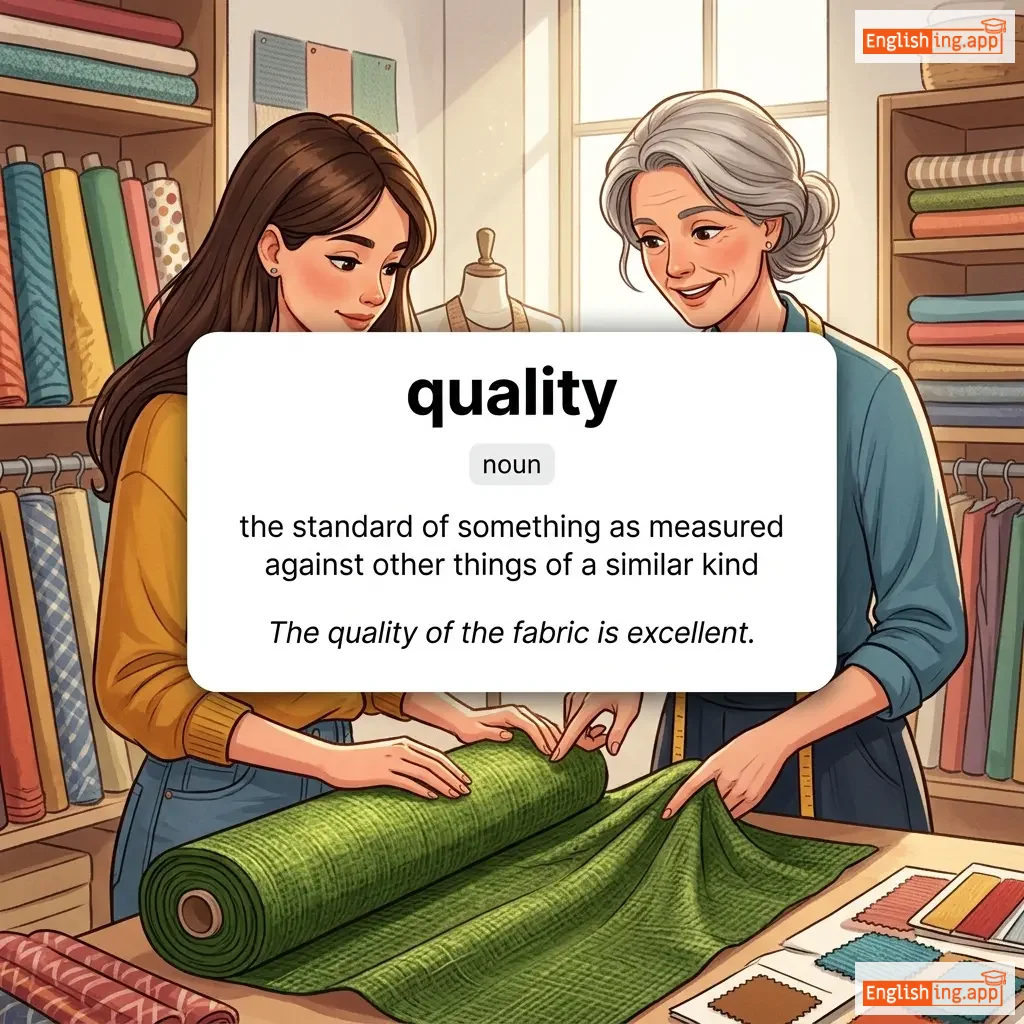
the standard of something when compared to other things; characteristic or feature
••••••
|
This restaurant is known for the high quality of its food. |
このレストランはその高い品質の食べ物で知られています。
Kono resutoran wa sono takai hinshitsu no tabemono de shirareteimasu.
••••••
|
- •••••• | - •••••• | - •••••• |
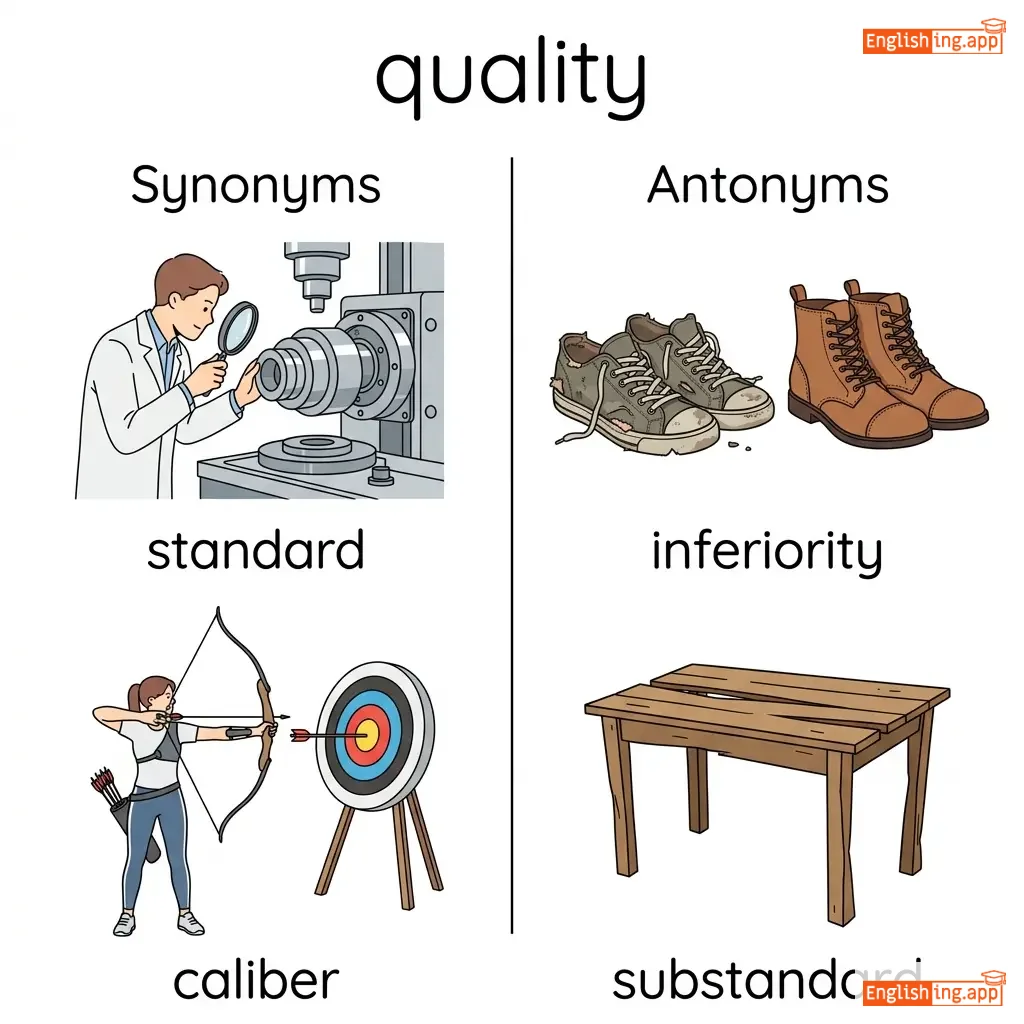
standard, grade, characteristic, attribute
••••••
|
inferiority, defect, flaw
••••••
|
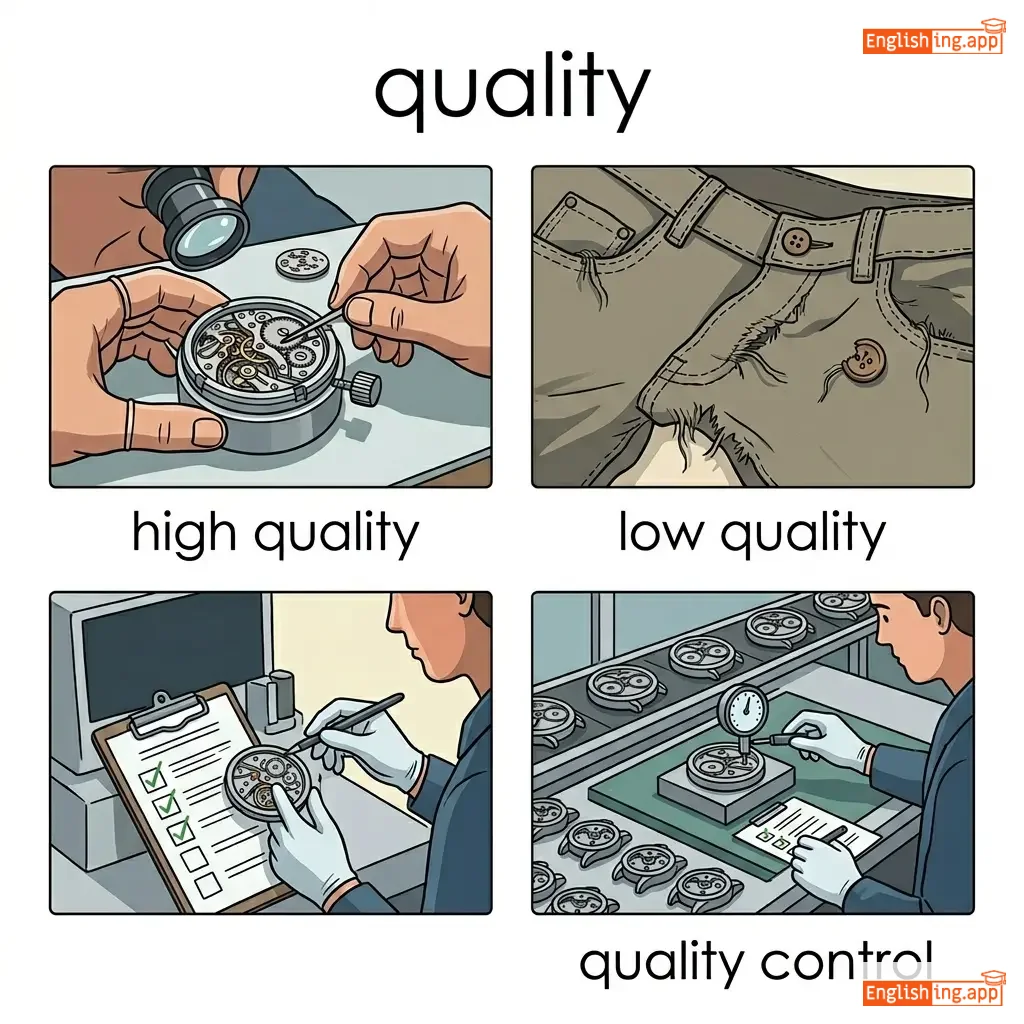
high quality, poor quality, quality control
••••••
|
品質は他の物と比べたときにその価値を示す
••••••
|
|
🟦
••••••
|
/ˈkwɔː.tər/
noun/verb
(クォーター)
••••••
|
- •••••• |
四分の一
shibu no ichi
••••••
|
quartered
クォーターズ
••••••
|
quartered
クォーターズ
••••••
|
quarters
クォーターズ
••••••
|
quartering
クォーターリング
••••••
|
One-fourth part of something; also used for housing or accommodating.
••••••
|
She paid a quarter of the total bill.
シー ペイド ア クォーター オブ ザ トータル ビル。
••••••
|
彼女は総額の四分の一を支払った。
Kanojo wa sōgaku no shibu no ichi o shiharatta.
••••••
|
quarter to
クォーター トゥ
••••••
|
Used to indicate 15 minutes before the hour in time.
••••••
|
クォーター トゥ
Kuōtā tu
••••••
|
fourth, segment, section, division
••••••
|
whole, entirety
••••••
|
a quarter of, quarter century, quarter hour, residential quarters
••••••
|
四分の一は1/4です。四分の一のピザを思い浮かべてください。
••••••
|
|
⚡
••••••
|
/ˈkwɪk.li/
adverb
(kwɪkli)
••••••
|
- •••••• |
速く; 急速に
hayaku; kyūsokuni
••••••
|
- •••••• | - •••••• | - •••••• | - •••••• |
at a fast speed; with little delay; rapidly
••••••
|
He quickly finished his homework.
彼はすぐに宿題を終えました。
••••••
|
彼はすぐに宿題を終えました。
Kare wa sugu ni shukudai o oemashita.
••••••
|
- •••••• | - •••••• | - •••••• |
rapidly, fast, speedily, swiftly
••••••
|
slowly, gradually, leisurely, tardily
••••••
|
move quickly, work quickly, respond quickly, learn quickly
••••••
|
速さを感じるためにすぐに何かを終わらせるイメージ。
••••••
|
|
🤫
••••••
|
/ˈkwaɪ.ət.li/
adverb
(クワイエトリー)
••••••
|
- •••••• |
静かに; 落ち着いて
shizukani; ochitsuite
••••••
|
- •••••• | - •••••• | - •••••• | - •••••• |
without making much noise; silently; in a calm manner
••••••
|
She spoke quietly so she wouldn't wake the baby. |
彼女は赤ちゃんを起こさないように静かに話した。
Kanojo wa akachan o okosanai yō ni shizukani hanashita.
••••••
|
- •••••• | - •••••• | - •••••• |
silently, softly, peacefully, calmly
••••••
|
loudly, noisily, boisterously, raucously
••••••
|
speak quietly, walk quietly, work quietly, sit quietly
••••••
|
In Japanese, '静か' means quiet!
••••••
|
|
🔗
••••••
|
/rɪˈleɪtɪd/
adjective
(rireitedo)
••••••
|
- •••••• |
関連
kanren
••••••
|
- •••••• | - •••••• | - •••••• | - •••••• |
connected or associated with something else
••••••
|
The documents are all related to the same project.
文書はすべて同じプロジェクトに関連しています。
••••••
|
文書はすべて同じプロジェクトに関連しています。
Bunsho wa subete onaji purojekuto ni kanren shiteimasu.
••••••
|
related to
関連している
••••••
|
connected with or concerning something
••••••
|
関連している
kanren shiteiru
••••••
|
connected, associated, linked, relevant, correlated
••••••
|
unrelated, separate
••••••
|
related issue, related topic, closely related, directly related
••••••
|
'Re + late' を聞いて覚えてください — 何かが遅れて発生すると、それらは関連しています 🔗
••••••
|
|
💀
••••••
|
/rɪˈmeɪnz/
noun
(rimensu)
••••••
|
- •••••• |
遺物
iwotsu
••••••
|
- •••••• | - •••••• | - •••••• | - •••••• |
the parts, pieces, or substances that are left after the rest has been used or removed
••••••
|
The remains of the meal were left on the table. |
食事の残り物はテーブルに残されていた。
Shokuji no nokorimono wa tēburu ni nokosarete ita.
••••••
|
- •••••• | - •••••• | - •••••• |
leftovers, debris, remnants, fragments
••••••
|
whole, entirety, whole thing
••••••
|
remains of food, human remains, remains of the day
••••••
|
Remains are like 'remain' (iwotsu) left after a meal.
••••••
|
|
🚮
••••••
|
/rɪˈmuːvəl/
noun
(リムーバル)
••••••
|
- •••••• |
取り除き
torinozoki
••••••
|
- •••••• | - •••••• | - •••••• | - •••••• |
the act of taking something or someone away or out of a place
••••••
|
The removal of old furniture made the room look spacious.
古い家具の取り除きが部屋を広く見せた。
••••••
|
古い家具の取り除きが部屋を広く見せた。
Furui kagu no torinozoki ga heya o hiroku miseta.
••••••
|
stain removal
汚れ除去
••••••
|
the process of getting rid of a mark or dirt
••••••
|
汚れ除去
yogore jokyo
••••••
|
elimination, extraction, withdrawal, deletion, dismissal
••••••
|
addition, insertion, inclusion
••••••
|
waste removal, hair removal, removal process, removal service
••••••
|
取り除き=remove、物を取り除いて空間を広げよう!
••••••
|
|
🔄
••••••
|
/rɪˈpleɪs/
verb
(リプレイス)
••••••
|
- •••••• |
交換する
koukan suru
••••••
|
replaced
リプレイスド
••••••
|
replaced
リプレイスド
••••••
|
replaces
リプレイセス
••••••
|
replacing
リプレイシング
••••••
|
to take the place of something or someone; to put something new in place of something old
••••••
|
He decided to replace the broken lamp with a new one.
彼は壊れたランプを新しいものと交換することに決めました。
••••••
|
彼は壊れたランプを新しいものと交換することに決めました。
Kare wa kowareta ranpu o atarashī mono to kōkan suru koto ni kimemashita.
••••••
|
- •••••• | - •••••• | - •••••• |
substitute, exchange, swap, change
••••••
|
keep, retain
••••••
|
replace with, replace the old, replace a part
••••••
|
ランプを交換する (lamp wo kōkan suru)!
••••••
|
|
📋
••••••
|
/rɪˈkwaɪər/
verb
(リクワイア)
••••••
|
- •••••• |
必要とする
hitsuyou to suru
••••••
|
required
リクワイアード
••••••
|
required
リクワイアード
••••••
|
requires
リクワイアーズ
••••••
|
requiring
リクワイアリング
••••••
|
to need something; to demand or insist on
••••••
|
This job requires excellent communication skills.
この仕事には優れたコミュニケーションスキルが必要です。
••••••
|
この仕事には優れたコミュニケーションスキルが必要です。
Kono shigoto ni wa sugureta komyunikeeshon sukiru ga hitsuyou desu.
••••••
|
- •••••• | - •••••• | - •••••• |
need, demand, necessitate, call for
••••••
|
provide, give, offer
••••••
|
require attention, require permission, require effort, strictly require
••••••
|
No •••••• |
|
📌
••••••
|
/rɪˈzɜːrv/
verb
(リザーブ)
••••••
|
|
予約する
yoyaku suru
••••••
|
reserved
リザーブド
••••••
|
reserved
リザーブド
••••••
|
reserves
リザーブス
••••••
|
reserving
リザーブイング
••••••
|
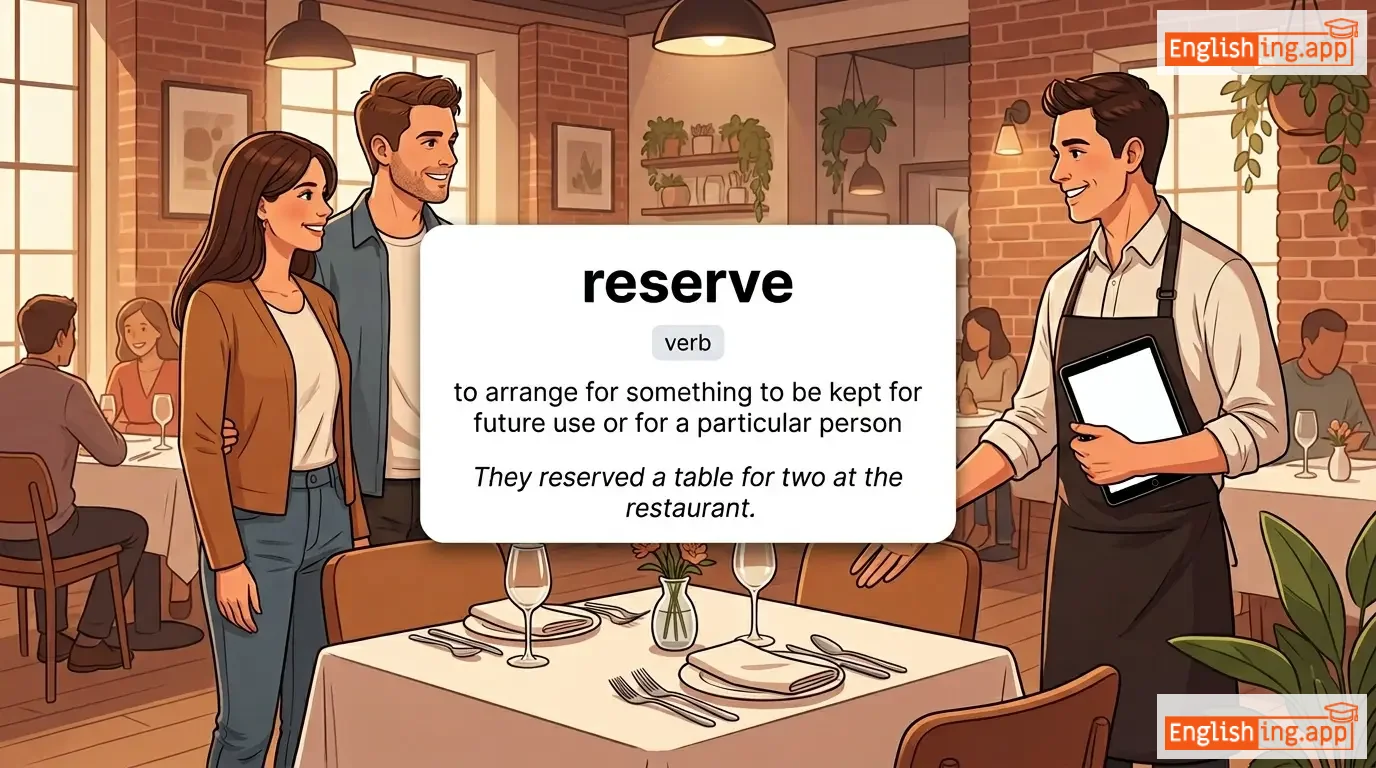
to arrange for something to be kept for future use or for a particular person
••••••
|
They reserved a table for two at the restaurant.
彼らはレストランで2人分のテーブルを予約した。
••••••
|
彼らはレストランで2人分のテーブルを予約した。
Karera wa resutoran de futari bun no tēburu o yoyaku shita.
••••••
|
reserve judgment
判断を保留する
••••••
|
to not make a decision or give an opinion until later
••••••
|
判断を保留する
handan o horyū suru
••••••
|
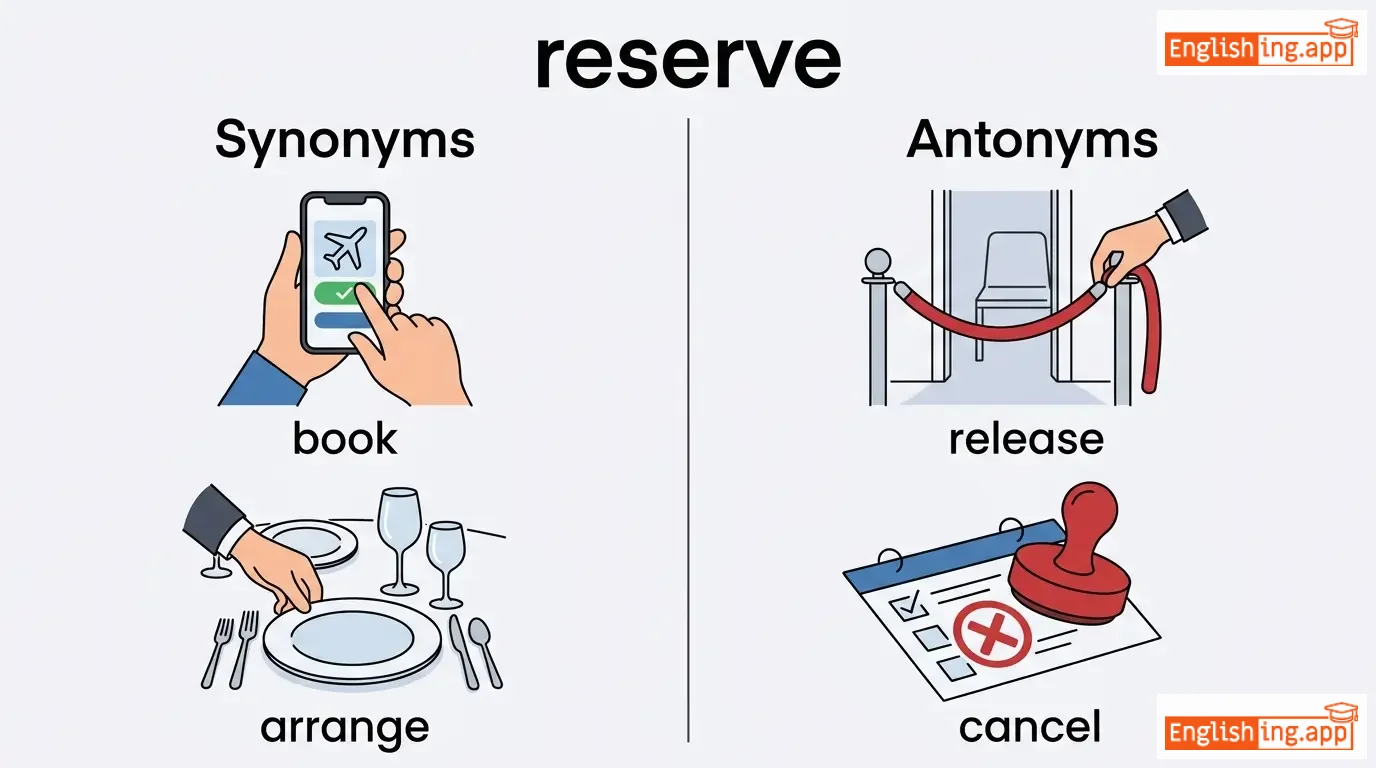
book, arrange, set aside, retain
••••••
|
release, cancel, give up
••••••
|
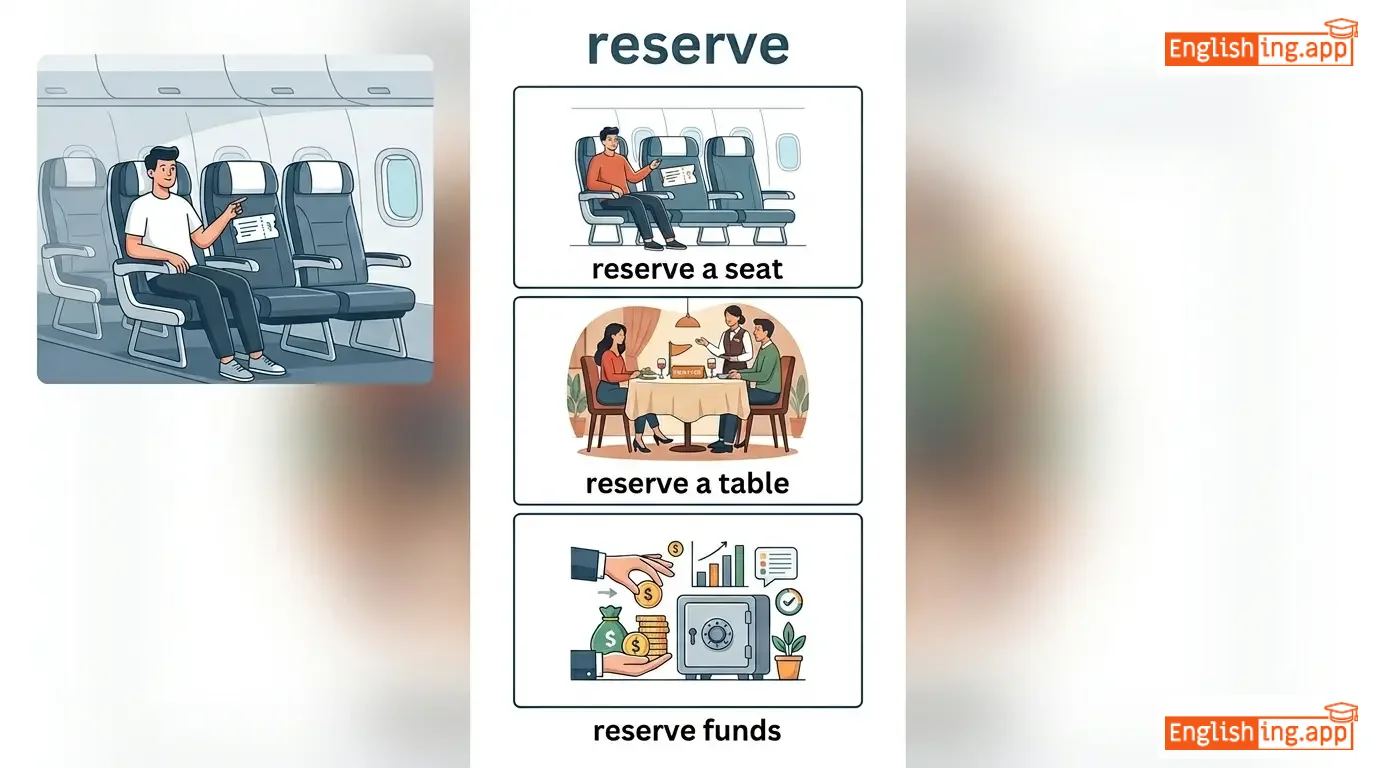
reserve a seat, reserve a table, reserve funds, reserve rights
••••••
|
予約は後で使うために空けておくこと、レストランのテーブルを予約するのと同じように。
••••••
|
|
🧪
••••••
|
/ˈrɛzɪdjuː/
noun
(レジデュー)
••••••
|
|
残留物
zanryūbutsu
••••••
|
- •••••• | - •••••• | - •••••• | - •••••• |
A small amount of something that remains after the main part has been removed or used.
••••••
|
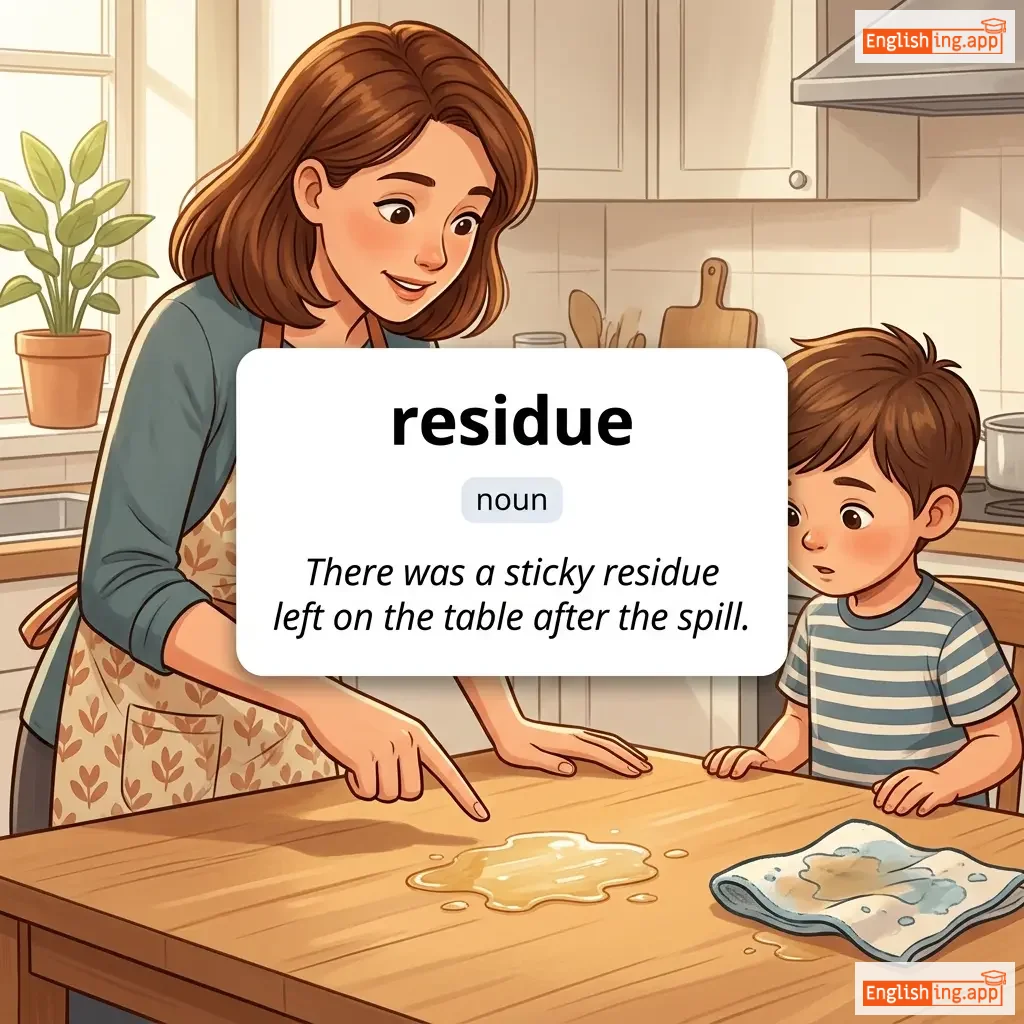
There was a sticky residue left on the table after the spill. |
こぼれた後、テーブルに粘着性の残留物が残っていた。
Koboreta ato, tēburu ni nenchakusei no zanryūbutsu ga nokotte ita.
••••••
|
chemical residue |
Small amounts of chemicals that remain after a process.
••••••
|
化学的残留物
kagakuteki zanryūbutsu
••••••
|
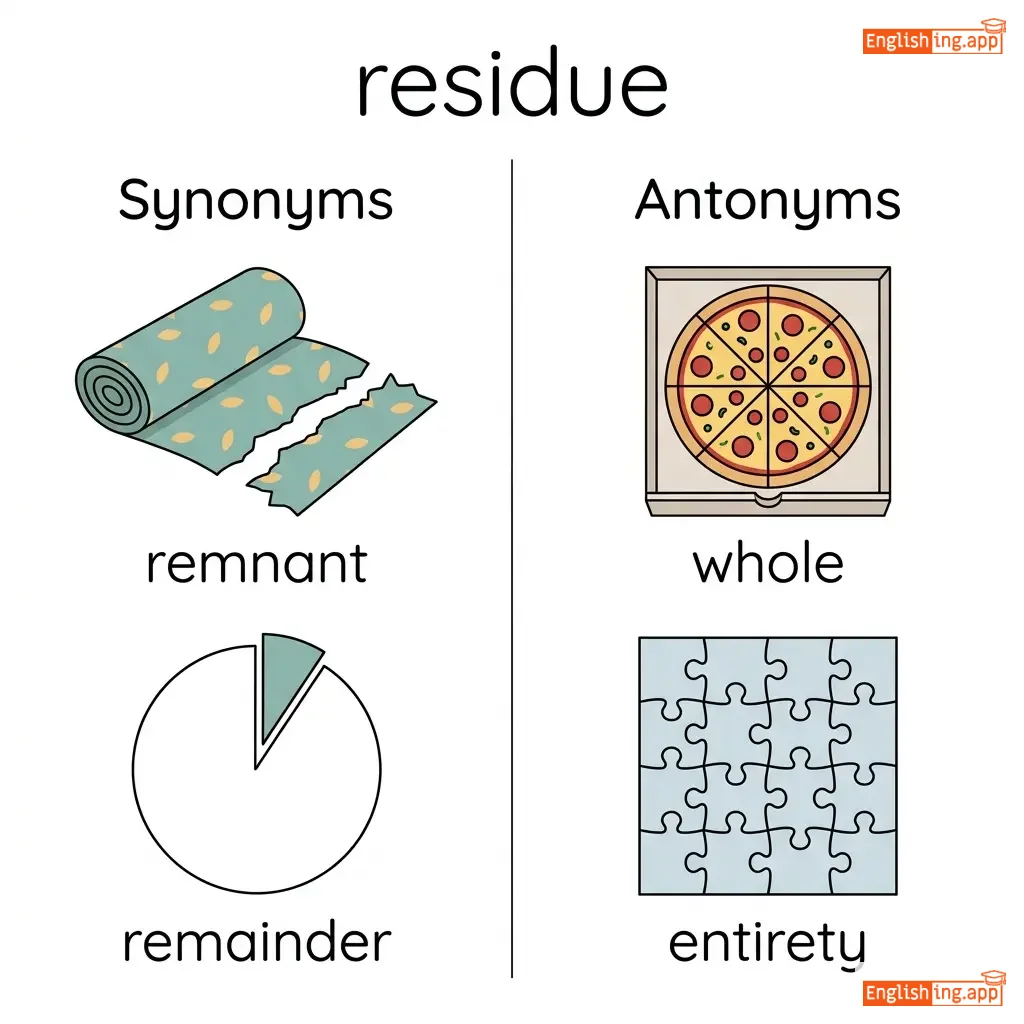
remnant, remainder, deposit, leftover, trace
••••••
|
whole, entirety
••••••
|
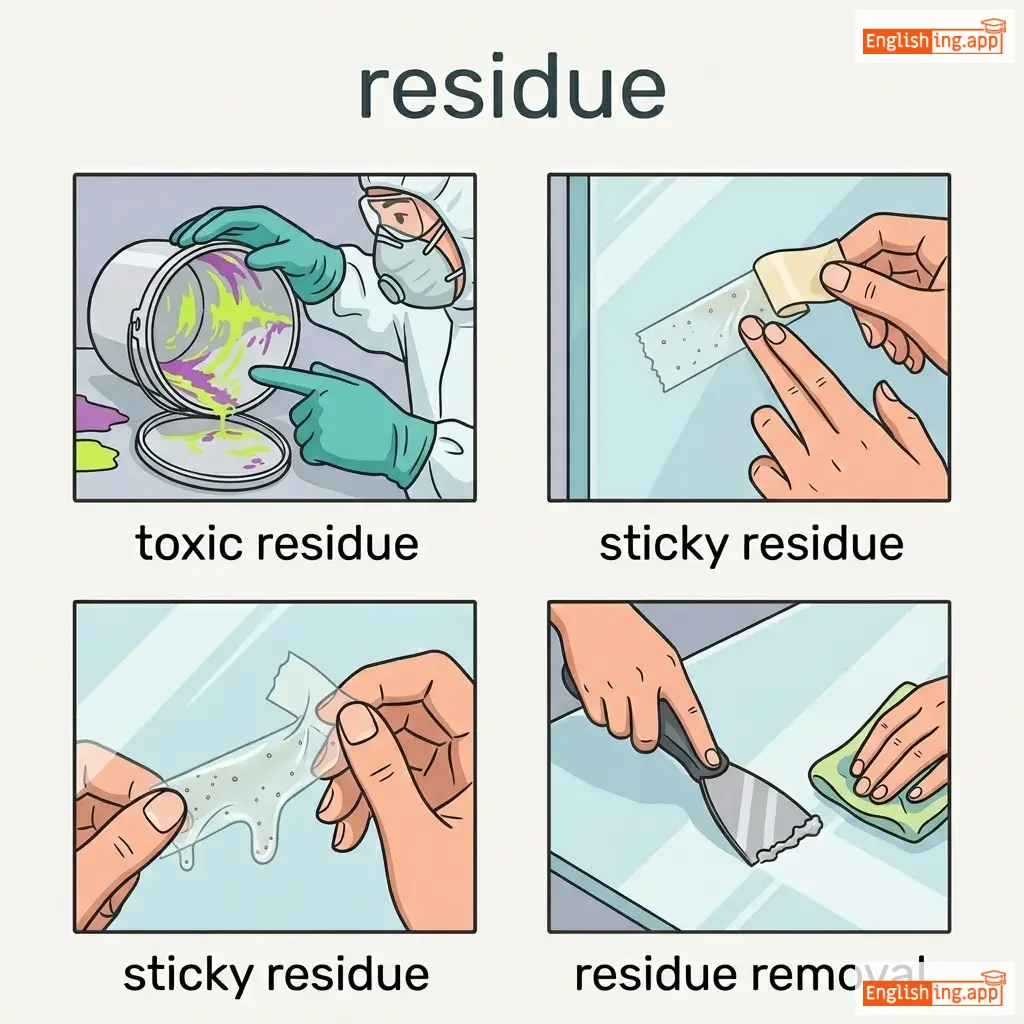
toxic residue, sticky residue, residue removal, chemical residue
••••••
|
Residueとは、こぼれた後にテーブルに残る粘り気のある物です。
••••••
|
|
👴
••••••
|
/rɪˈtaɪərd/
adjective
(リタイアド)
••••••
|
- •••••• |
引退した
intai shita
••••••
|
- •••••• | - •••••• | - •••••• | - •••••• |
no longer working at one's job, typically because of having reached a certain age
••••••
|
My grandfather is a retired teacher who now enjoys gardening.
私の祖父は退職した教師で、今は園芸を楽しんでいます。
••••••
|
私の祖父は引退した教師で、今は園芸を楽しんでいます。
Watashi no sofu wa intai shita kyōshi de, ima wa engei o tanoshindeimasu.
••••••
|
retired life
リタイア生活
••••••
|
the period of life after one stops working permanently
••••••
|
引退生活
intai seikatsu
••••••
|
pensioned, inactive, elderly, ex-employed, withdrawn
••••••
|
working, employed, active
••••••
|
retired teacher, retired army officer, retired life, retired couple
••••••
|
引退したら、休息と楽しみの時間が始まります。
••••••
|
|
🏕️
••••••
|
/rɪˈtriːt/
verb
(リトリート)
••••••
|
- •••••• |
撤退する
tettai suru
••••••
|
retreated
リトリーテッド
••••••
|
retreated
リトリーテッド
••••••
|
retreats
リトリーツ
••••••
|
retreating
リトリーティング
••••••
|
to move back or withdraw from a position or situation
••••••
|
The soldiers had to retreat after losing the battle.
兵士たちは戦いに負けた後、撤退しなければならなかった。
••••••
|
兵士たちは戦いに負けた後、撤退しなければならなかった。
Heishitachi wa tatakai ni maketa ato, tettai shinakereba naranakatta.
••••••
|
beat a retreat
撤退する
••••••
|
to withdraw or run away from a situation quickly
••••••
|
撤退する
tettai suru
••••••
|
withdraw, back off, pull back, recoil, recede
••••••
|
advance, attack, proceed
••••••
|
military retreat, forced retreat, strategic retreat, retreat center
••••••
|
Retreat → 撤退 → 後ろに下がる
••••••
|
|
⚔️
••••••
|
/rɪˈvɛndʒ/
noun, verb
(リベンジ)
••••••
|
- •••••• |
復讐
fukushū
••••••
|
revenged
••••••
|
revenged
••••••
|
revenges
••••••
|
revenging
••••••
|
The action of inflicting harm on someone as punishment for a wrong suffered.
••••••
|
She sought revenge for the betrayal of her trust. |
彼女は信頼を裏切られたことで復讐を求めた。
Kanojo wa shinrai o uragirareta koto de fukushū o motometa.
••••••
|
revenge is sweet |
It feels satisfying to get back at someone who wronged you.
••••••
|
復讐は甘い
Fukushū wa amai
••••••
|
retaliation, vengeance, retribution, payback, reprisal
••••••
|
forgiveness, pardon, mercy
••••••
|
seek revenge, take revenge, exact revenge, sweet revenge
••••••
|
Revengeは‘re-復讐’のように聞こえる – 復讐は戻って報復することを意味します。
••••••
|
|
🌱
••••••
|
/rɪˈvaɪ.vəl/
noun
(リバイバル)
••••••
|
- •••••• |
復活
fukkatsu
••••••
|
- •••••• | - •••••• | - •••••• | - •••••• |
an improvement in the condition or strength of something; renewed interest in or attention to something
••••••
|
There has been a revival of interest in traditional crafts.
ゼア ハズ ビーン ア リバイバル オブ インタレスト イン トラディショナル クラフツ。
••••••
|
伝統的な工芸への関心が復活しました。
Dentō-teki na kōgei e no kanshin ga fukkatsu shimashita.
••••••
|
- •••••• | - •••••• | - •••••• |
renewal, resurgence, renaissance, rebirth
••••••
|
decline, deterioration, downfall, demise
••••••
|
economic revival, cultural revival, revival meeting, revival of fortunes
••••••
|
復活 = 何かを再び生き返らせる
••••••
|
|
💣
••••••
|
/ˈrɒbəɹi/
noun
(ロバリー)
••••••
|
- •••••• |
強盗
gōtō
••••••
|
- •••••• | - •••••• | - •••••• | - •••••• |
the crime of stealing from someone or somewhere using force or threat
••••••
|
The police are investigating the robbery at the local store. |
警察は地元の店での強盗事件を調査しています。
Keisatsu wa jimoto no mise de no gōtō jiken o chōsa shiteimasu.
••••••
|
- •••••• | - •••••• | - •••••• |
theft, burglary, heist, mugging
••••••
|
donation, charity
••••••
|
armed robbery, robbery attempt, robbery suspect
••••••
|
Robbers commit robbery—'G' is for '強盗' in Japanese.
••••••
|
|
🔄
••••••
|
/ˈroʊlɪŋ/
adjective
(ローリング)
••••••
|
- •••••• |
転がる
korogaru
••••••
|
- •••••• | - •••••• | - •••••• | - •••••• |
moving in gentle undulations; moving forward by turning over and over
••••••
|
They drove through the rolling hills of the countryside. |
彼らは田舎の転がる丘を通り抜けました。
Karera wa inaka no korogaru oka o toorinukemashita.
••••••
|
rolling in money |
to be very wealthy
••••••
|
お金が転がる
okane ga korogaru
••••••
|
undulating, flowing, turning, revolving, moving
••••••
|
still, static, motionless
••••••
|
rolling hills, rolling eyes, rolling stone, rolling start
••••••
|
転がるようにお金が転がっていく
••••••
|

