The Detective Who Stopped a Robbery
萨尔玛警探是一位retired的侦探,她为了一个特别案件而回归。城市金融quarter发生了一起robbery,警方需要她的专业知识。她的purpose很明确——找到罪犯并追回被盗物品。萨尔玛quickly展开调查,因为时间至关重要。她的直觉具有非凡的quality。第一个线索是一种在金库中发现的化学residue。萨尔玛分析后发现它与爆炸物related。罪犯很聪明——他们行动得非常quietly,没有留下明显痕迹。但萨尔玛知道,每个罪犯都会犯错。她的pursuit毫不松懈。一名目击者提到看到一个rolling手提箱。这是一个关键线索。萨尔玛发现,团伙头目想对拒绝给他贷款的银行进行revenge。他的动机不仅是金钱,还有个人仇恨。警方required证据,萨尔玛系统地收集线索。有趣的是,她不小心把咖啡洒在笔记上,她的助手quickly帮忙清理。该团伙正计划另一次抢劫,但萨尔玛的团队早已准备就绪。他们设下陷阱,罪犯毫无察觉。当团伙在触发警报后试图retreat时,警方将他们包围。萨尔玛quietly地确信正义将得到伸张。团伙成员被捕,赃款被追回。一些贵重物品的removal被阻止。银行决定replace旧的安全系统。市议会计划为萨尔玛举行表彰仪式,但她选择quietly待在幕后。她的工作不是为了荣誉,而是为了正义。警察部队的士气得到了revival,市民再次感到安全。萨尔玛证明,只要有经验和奉献精神,没有案件太复杂。她的reserve知识与技能无价。她的remains遗产是:正义总是requires耐心与坚持。萨尔玛的回归是暂时的,但她的影响是持久的。她从不让罪犯provoke她做出冲动决定,而这正是她最大的力量。
|
表情符号
|
单词 | Images | 翻译 | 过去时 | 过去分词 | 第三人称单数 | 动名词 | 含义 | 例句 | 例句翻译 | 示例表达 | 示例表达含义 | 示例表达翻译 | 同义词 | 反义词 | 搭配词 | 助记符 |
|---|---|---|---|---|---|---|---|---|---|---|---|---|---|---|---|---|---|
|
😡
••••••
|
/prəˈvoʊk/
verb
(挑衅)
••••••
|
- •••••• |
挑衅
tiaoxin
••••••
|
provoked
挑衅了
••••••
|
provoked
挑衅过
••••••
|
provokes
挑衅
••••••
|
provoking
挑衅中
••••••
|
To cause someone to become angry or to cause a reaction.
••••••
|
His words provoked a heated argument.
他的话引发了一场激烈的争论。
••••••
|
他的话引发了一场激烈的争论。
Ta de hua yinfa le yi chang jilie de zhenglun.
••••••
|
provoke anger
挑衅愤怒
••••••
|
to make someone angry
••••••
|
挑衅愤怒
tiaoxin fennu
••••••
|
incite, irritate, enrage, agitate, stir
••••••
|
soothe, calm, comfort
••••••
|
provoke anger, provoke conflict, provoke a response, provoke a fight
••••••
|
Provoke意味着'挑衅' – Pro就像'挑衅愤怒'。
••••••
|
|
🎯
••••••
|
/ˈpɜːpəs/
noun
(pǒpǔs)
••••••
|
- •••••• |
目的
mudi
••••••
|
- •••••• | - •••••• | - •••••• | - •••••• |
the reason for which something is done or created
••••••
|
The purpose of this meeting is to discuss the new project.
这个会议的目的就是讨论新项目。
••••••
|
这个会议的目的就是讨论新项目。
Zhege huiyi de mudi jiushi taolun xin xiangmu.
••••••
|
on purpose
故意
••••••
|
intentionally; by design
••••••
|
故意
guyi
••••••
|
goal, aim, objective, intention
••••••
|
accident, mistake
••••••
|
life purpose, purpose-driven, purpose-built, higher purpose
••••••
|
Purpose - 找到你的目标,完成它
••••••
|
|
🏃♂️
••••••
|
/pəˈsjuːt/
noun
(pǔsūtu)
••••••
|
- •••••• |
追求, 寻求
zhuīqiú, xúnqiú
••••••
|
- •••••• | - •••••• | - •••••• | - •••••• |
the act of chasing or trying to achieve something
••••••
|
He dedicated his life to the pursuit of happiness. |
他将一生奉献给了追求幸福。
Tā jiāng yīshēng fèngxiàn gěi le zhuīqiú xìngfú.
••••••
|
in hot pursuit |
closely chasing someone or something
••••••
|
紧追不舍
jǐn zhuī bù shě
••••••
|
quest, chase, search, aim, endeavor
••••••
|
retreat, surrender, inaction
••••••
|
pursuit of happiness, pursuit of knowledge, in pursuit, career pursuit
••••••
|
Pursuit 就是追求目标,像在追赶某事一样。
••••••
|
|
⭐
••••••
|
/ˈkwɒl.ɪ.ti/
noun
(质量)
••••••
|
|
质量
zhìliàng
••••••
|
- •••••• | - •••••• | - •••••• | - •••••• |
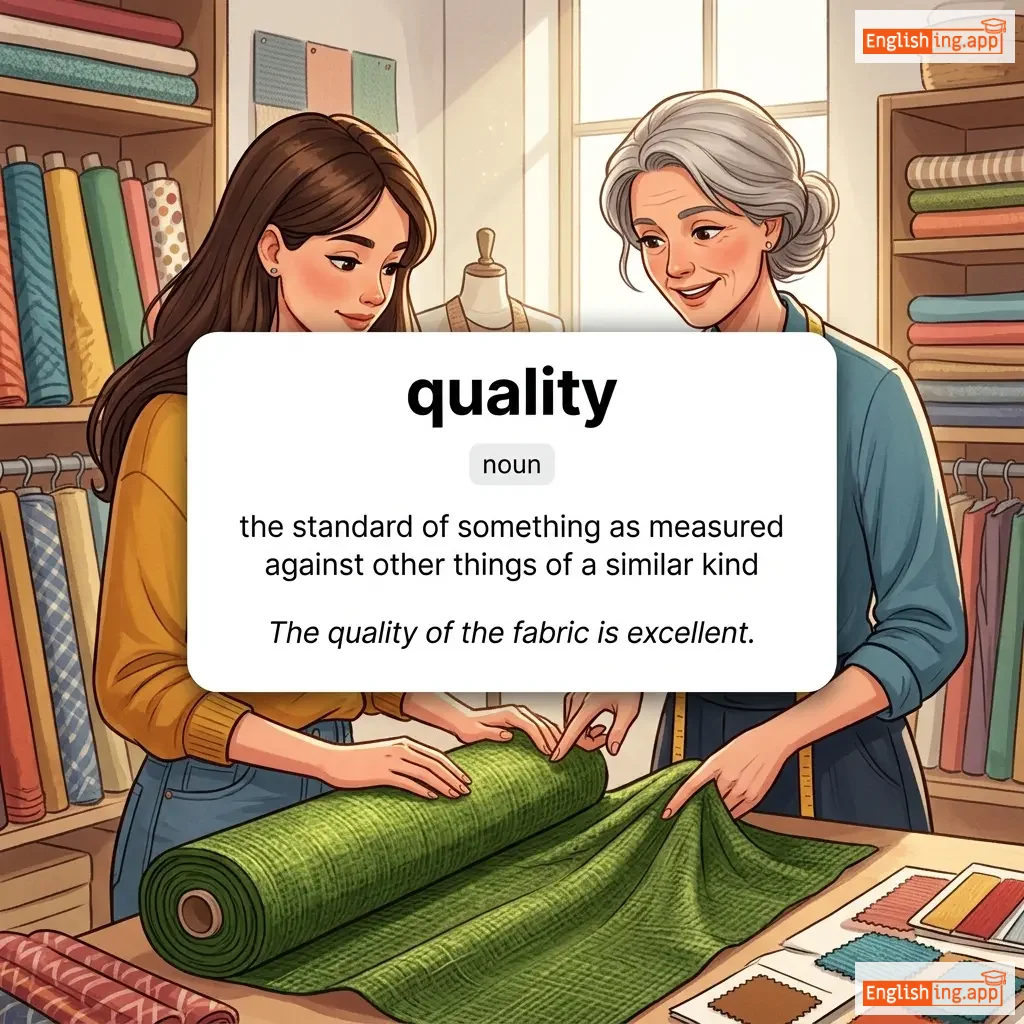
the standard of something when compared to other things; characteristic or feature
••••••
|
This restaurant is known for the high quality of its food. |
这家餐厅以其高质量的食物而闻名。
Zhè jiā cāntīng yǐ qí gāo zhìliàng de shíwù ér wénmíng.
••••••
|
- •••••• | - •••••• | - •••••• |
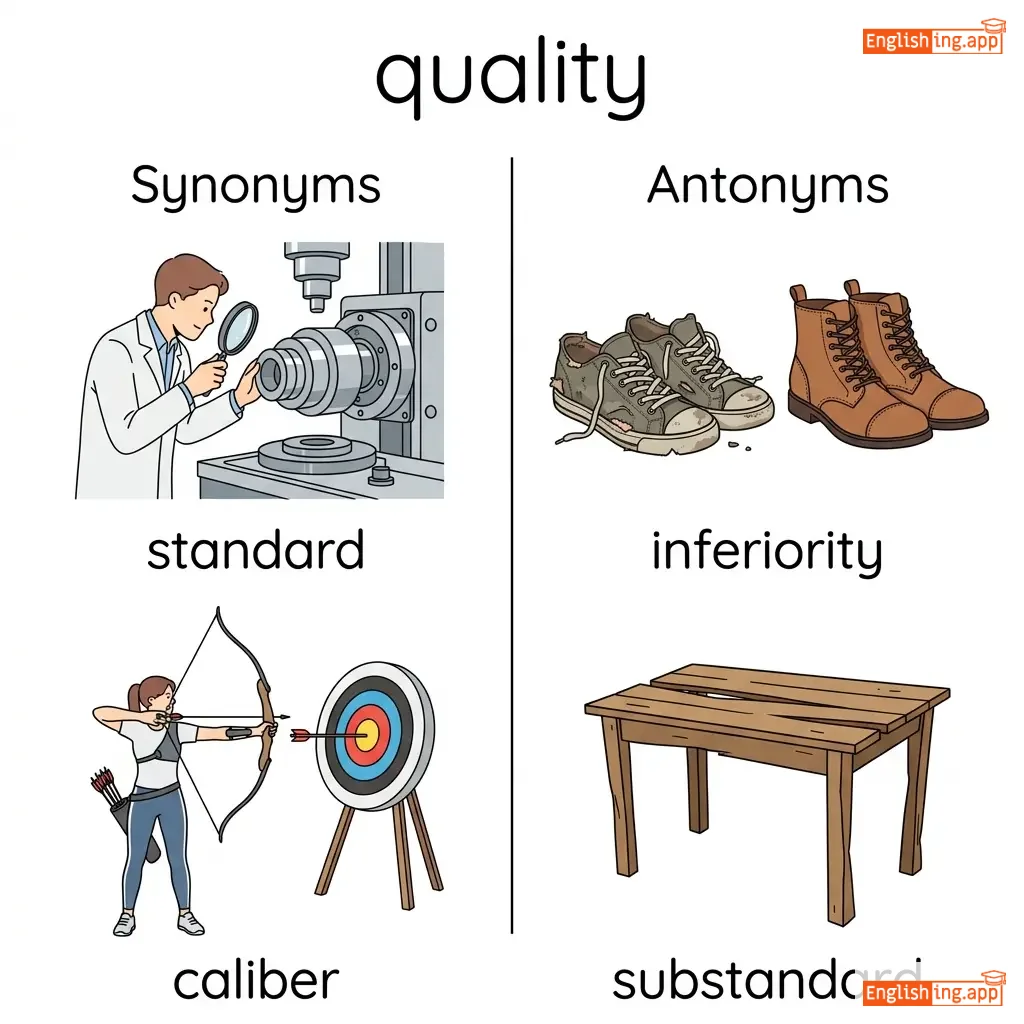
standard, grade, characteristic, attribute
••••••
|
inferiority, defect, flaw
••••••
|
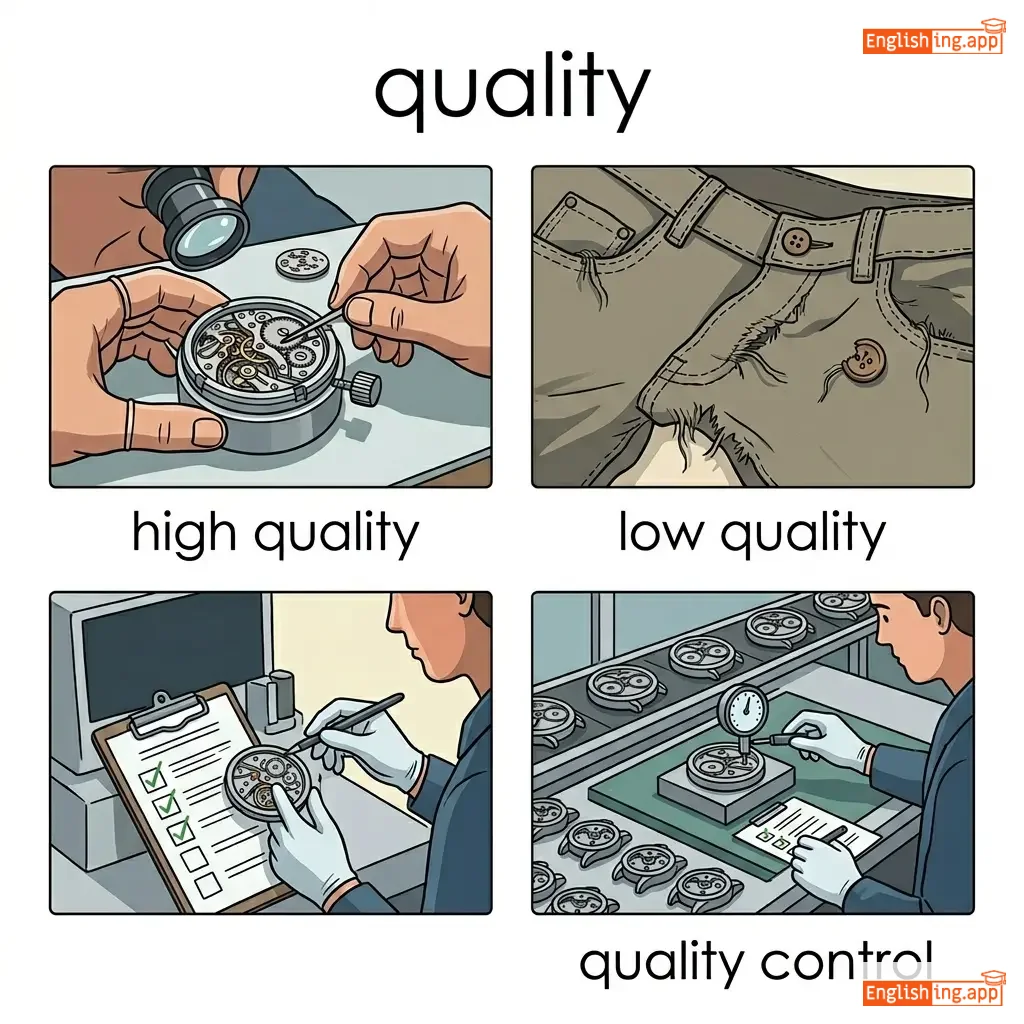
high quality, poor quality, quality control
••••••
|
质量是评价一个事物优劣的标准
••••••
|
|
🟦
••••••
|
/ˈkwɔː.tər/
noun/verb
(kwɔːr.tər)
••••••
|
- •••••• |
四分之一
si fen zhi yi
••••••
|
quartered
kwɔːr.təd
••••••
|
quartered
kwɔːr.təd
••••••
|
quarters
kwɔːr.tərs
••••••
|
quartering
kwɔːr.tərɪŋ
••••••
|
One-fourth part of something; also used for housing or accommodating.
••••••
|
She paid a quarter of the total bill.
shi peɪd ə kwɔːr.tər ʌv ðə təʊ.təl bɪl.
••••••
|
她支付了总账单的四分之一。
Tā zhīfùle zǒng zhàngdān de sì fēn zhī yī.
••••••
|
quarter to
kwɔːr.tər tu
••••••
|
Used to indicate 15 minutes before the hour in time.
••••••
|
差十五分钟
Chà shíwǔ fēnzhōng
••••••
|
fourth, segment, section, division
••••••
|
whole, entirety
••••••
|
a quarter of, quarter century, quarter hour, residential quarters
••••••
|
四分之一就是1/4,就像四分之一块蛋糕一样。
••••••
|
|
⚡
••••••
|
/ˈkwɪk.li/
adverb
(kwɪkli)
••••••
|
- •••••• |
迅速; 快速
xùnsù; kuàisù
••••••
|
- •••••• | - •••••• | - •••••• | - •••••• |
at a fast speed; with little delay; rapidly
••••••
|
He quickly finished his homework.
他迅速完成了他的作业。
••••••
|
他迅速完成了他的作业。
Tā xùnsù wánchéngle tā de zuòyè.
••••••
|
- •••••• | - •••••• | - •••••• |
rapidly, fast, speedily, swiftly
••••••
|
slowly, gradually, leisurely, tardily
••••••
|
move quickly, work quickly, respond quickly, learn quickly
••••••
|
想象你很快完成了一件事,就像闪电一样快速。
••••••
|
|
🤫
••••••
|
/ˈkwaɪ.ət.li/
adverb
(kwaiètli)
••••••
|
- •••••• |
安静地; 平静地
anjing de; pingjing de
••••••
|
- •••••• | - •••••• | - •••••• | - •••••• |
without making much noise; silently; in a calm manner
••••••
|
She spoke quietly so she wouldn't wake the baby. |
她小声说话,生怕吵醒婴儿。
Ta xiaosheng shuohua, shengpa chaoxing ying'er.
••••••
|
- •••••• | - •••••• | - •••••• |
silently, softly, peacefully, calmly
••••••
|
loudly, noisily, boisterously, raucously
••••••
|
speak quietly, walk quietly, work quietly, sit quietly
••••••
|
In Chinese, '安静' means quiet!
••••••
|
|
🔗
••••••
|
/rɪˈleɪtɪd/
adjective
(rìlèitèd)
••••••
|
- •••••• |
相关
xiāngguān
••••••
|
- •••••• | - •••••• | - •••••• | - •••••• |
connected or associated with something else
••••••
|
The documents are all related to the same project.
文件都与同一个项目相关。
••••••
|
文件都与同一个项目相关。
Wénjiàn dōu yǔ tóng yī gè xiàngmù xiāngguān.
••••••
|
related to
与...相关
••••••
|
connected with or concerning something
••••••
|
与...相关
yǔ...xiāngguān
••••••
|
connected, associated, linked, relevant, correlated
••••••
|
unrelated, separate
••••••
|
related issue, related topic, closely related, directly related
••••••
|
'Re + late' 听来记住 — 当事情发生得晚时,它们相关 🔗
••••••
|
|
💀
••••••
|
/rɪˈmeɪnz/
noun
(rìménsī)
••••••
|
- •••••• |
残留物
cánliúwù
••••••
|
- •••••• | - •••••• | - •••••• | - •••••• |
the parts, pieces, or substances that are left after the rest has been used or removed
••••••
|
The remains of the meal were left on the table. |
餐后剩余的食物被留在桌上。
Cānhòu shèngyú de shíwù bèi liú zài zhuō shàng.
••••••
|
- •••••• | - •••••• | - •••••• |
leftovers, debris, remnants, fragments
••••••
|
whole, entirety, whole thing
••••••
|
remains of food, human remains, remains of the day
••••••
|
Remains are like 'remain' (cánliúwù) left after a meal.
••••••
|
|
🚮
••••••
|
/rɪˈmuːvəl/
noun
(rìmúwǎ)
••••••
|
- •••••• |
移除
yíchú
••••••
|
- •••••• | - •••••• | - •••••• | - •••••• |
the act of taking something or someone away or out of a place
••••••
|
The removal of old furniture made the room look spacious.
移除旧家具使房间看起来更宽敞。
••••••
|
移除旧家具使房间看起来更宽敞。
Yíchú jiù jiājù shǐ fángjiān kàn qǐlái gèng kuānchǎng.
••••••
|
stain removal
去污
••••••
|
the process of getting rid of a mark or dirt
••••••
|
去污
qùwū
••••••
|
elimination, extraction, withdrawal, deletion, dismissal
••••••
|
addition, insertion, inclusion
••••••
|
waste removal, hair removal, removal process, removal service
••••••
|
移除就像拿掉,记住,移除是为了让空间更大!
••••••
|
|
🔄
••••••
|
/rɪˈpleɪs/
verb
(rèbùlèi sī)
••••••
|
- •••••• |
替换
tihuàn
••••••
|
replaced
rèbùlèi sīd
••••••
|
replaced
rèbùlèi sīd
••••••
|
replaces
rèbùlèi sīs
••••••
|
replacing
rèbùlèi sīng
••••••
|
to take the place of something or someone; to put something new in place of something old
••••••
|
He decided to replace the broken lamp with a new one.
他决定用一盏新的替代坏掉的灯。
••••••
|
他决定用一盏新的替代坏掉的灯。
Tā juédìng yòng yī zhǎn xīn de tìdài huài diào de dēng.
••••••
|
- •••••• | - •••••• | - •••••• |
substitute, exchange, swap, change
••••••
|
keep, retain
••••••
|
replace with, replace the old, replace a part
••••••
|
换灯泡,简单的任务!
••••••
|
|
📋
••••••
|
/rɪˈkwaɪər/
verb
(要求)
••••••
|
- •••••• |
需要
xūyào
••••••
|
required
要求过
••••••
|
required
已要求
••••••
|
requires
要求
••••••
|
requiring
要求着
••••••
|
to need something; to demand or insist on
••••••
|
This job requires excellent communication skills.
这份工作要求出色的沟通技巧。
••••••
|
这份工作要求出色的沟通技巧。
Zhè fèn gōngzuò yāoqiú chūsè de gōutōng jìqiǎo.
••••••
|
- •••••• | - •••••• | - •••••• |
need, demand, necessitate, call for
••••••
|
provide, give, offer
••••••
|
require attention, require permission, require effort, strictly require
••••••
|
No •••••• |
|
📌
••••••
|
/rɪˈzɜːrv/
verb
(rɪˈzɜːrv)
••••••
|
|
预定
yùdìng
••••••
|
reserved
rɪˈzɛrvd
••••••
|
reserved
rɪˈzɛrvd
••••••
|
reserves
rɪˈzɛrvz
••••••
|
reserving
rɪˈzɛrvɪŋ
••••••
|
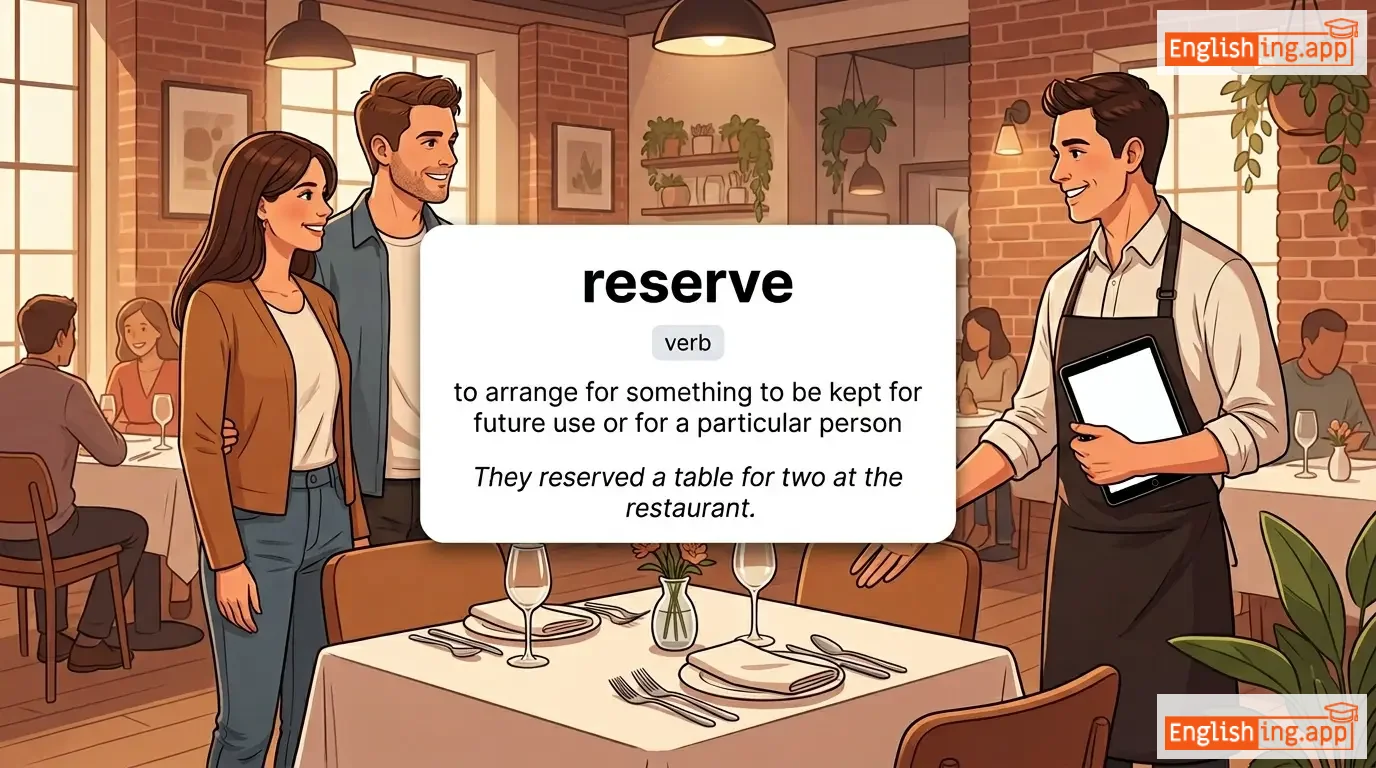
to arrange for something to be kept for future use or for a particular person
••••••
|
They reserved a table for two at the restaurant.
他们在餐厅为两个人预订了一张桌子。
••••••
|
他们在餐厅为两个人预定了一张桌子。
Tāmen zài cāntīng wèi liǎng gèrén yùdìngle yī zhāng zhuōzi.
••••••
|
reserve judgment
保留判断
••••••
|
to not make a decision or give an opinion until later
••••••
|
保留判断
bǎoliú pànduàn
••••••
|
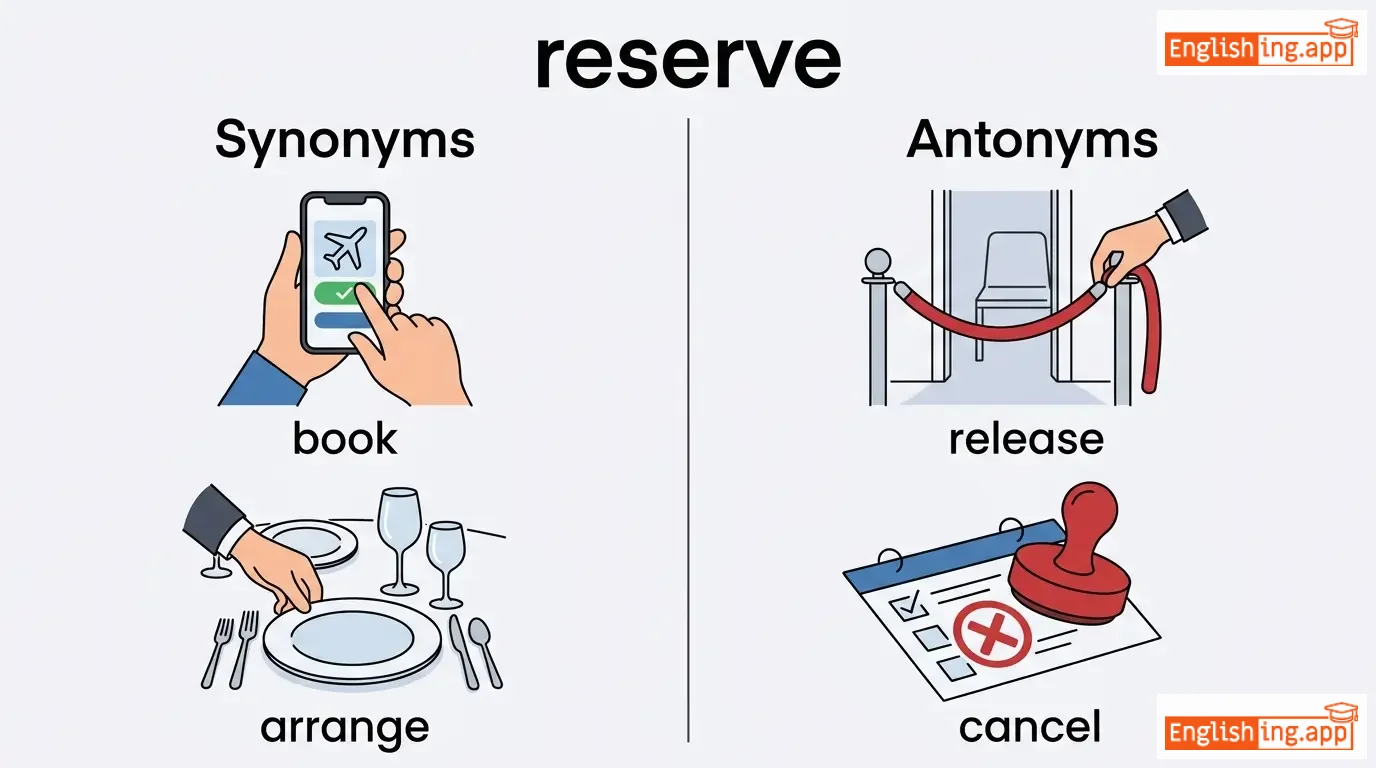
book, arrange, set aside, retain
••••••
|
release, cancel, give up
••••••
|
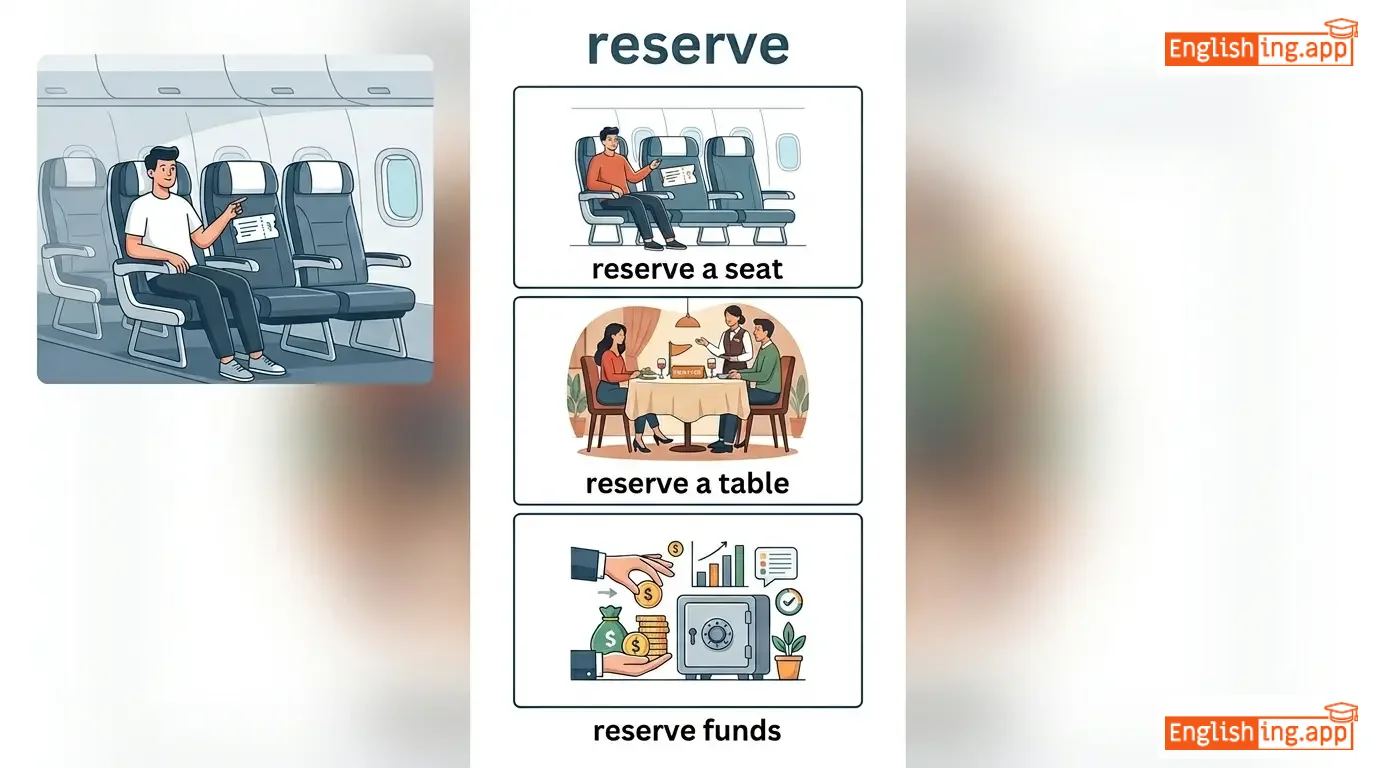
reserve a seat, reserve a table, reserve funds, reserve rights
••••••
|
预定就是为将来留出空位,就像预定餐位一样。
••••••
|
|
🧪
••••••
|
/ˈrɛzɪdjuː/
noun
(ré sī dū)
••••••
|
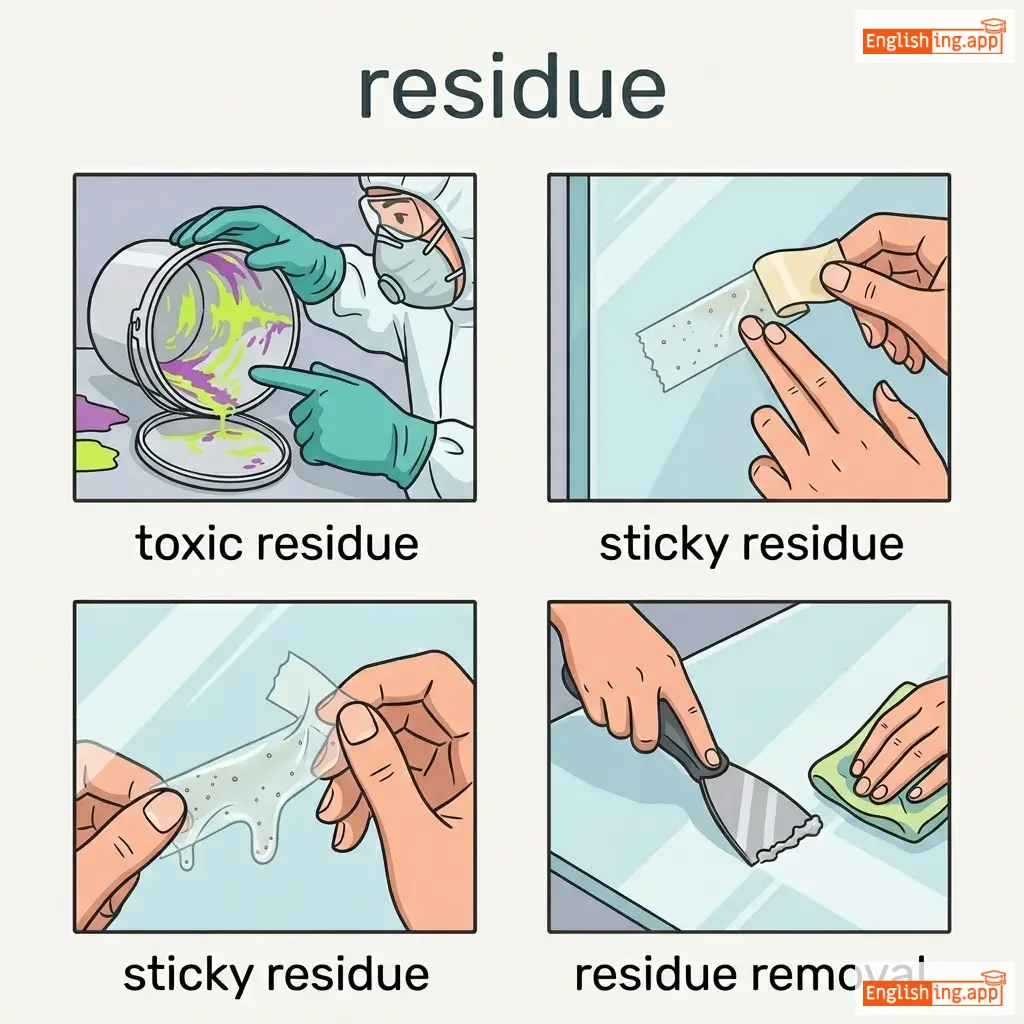
|
残留物
can liu wu
••••••
|
- •••••• | - •••••• | - •••••• | - •••••• |
A small amount of something that remains after the main part has been removed or used.
••••••
|
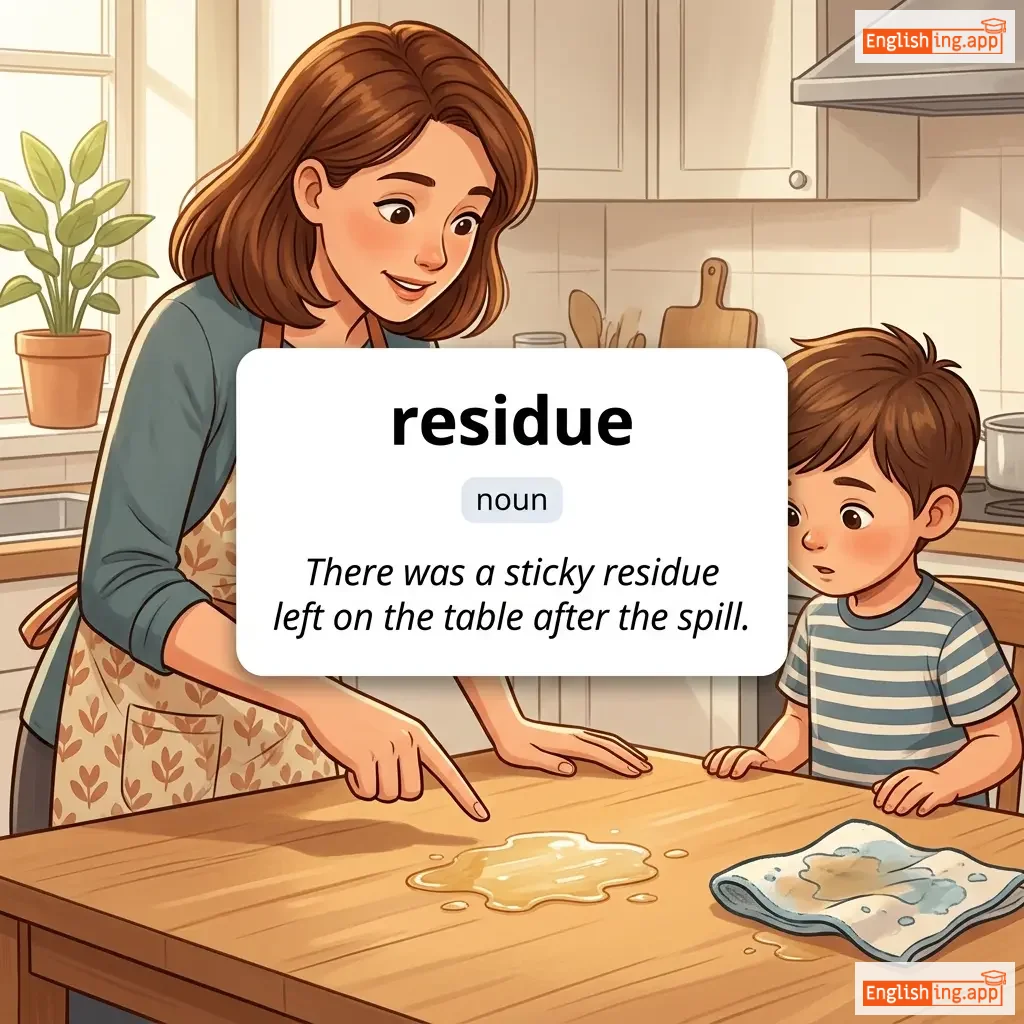
There was a sticky residue left on the table after the spill. |
溢出后,桌子上留下了粘性的残留物。
Yichu hou, zhuozi shang liuxia le nianxing de can liu wu.
••••••
|
chemical residue |
Small amounts of chemicals that remain after a process.
••••••
|
化学残留物
hua xue can liu wu
••••••
|
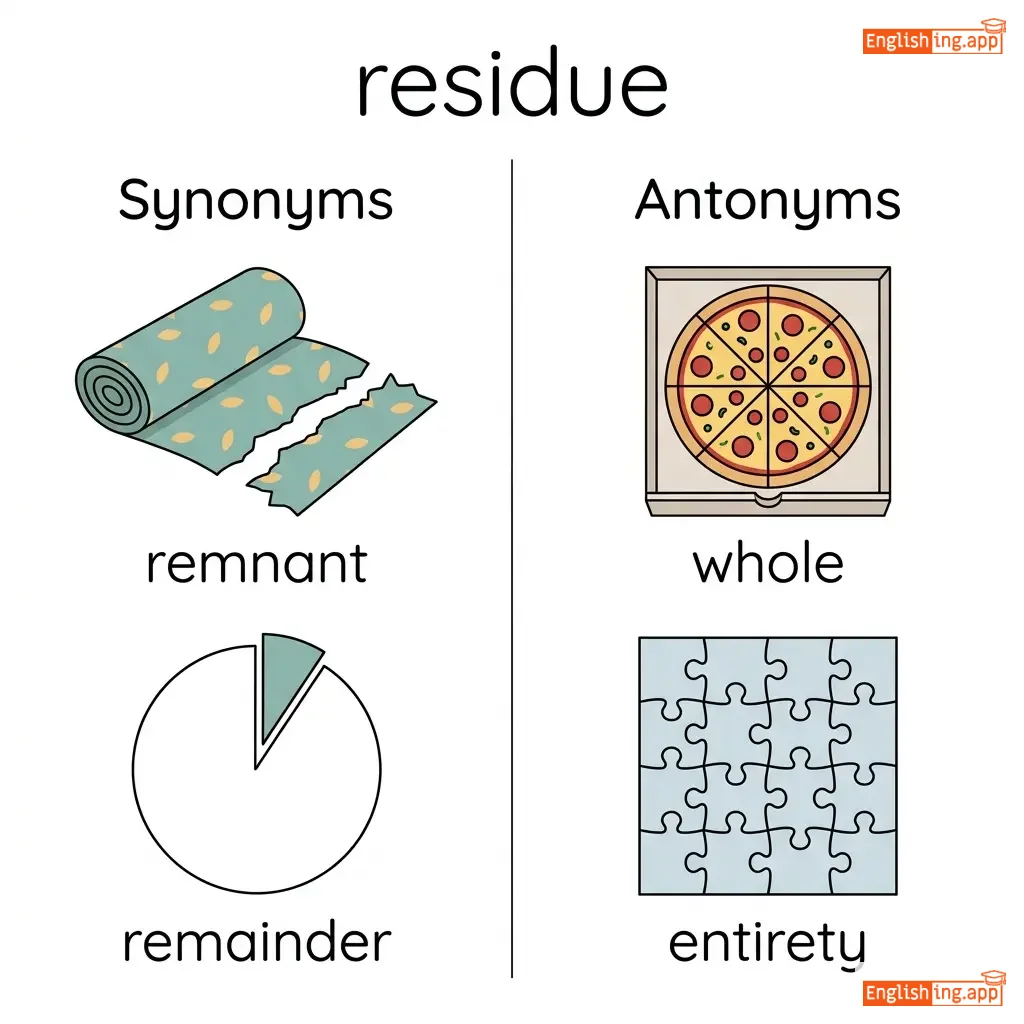
remnant, remainder, deposit, leftover, trace
••••••
|
whole, entirety
••••••
|
toxic residue, sticky residue, residue removal, chemical residue
••••••
|
Residue 是指溢出后桌子上留下的粘乎乎的东西。
••••••
|
|
👴
••••••
|
/rɪˈtaɪərd/
adjective
(瑞泰德)
••••••
|
- •••••• |
退休
tuìxiū
••••••
|
- •••••• | - •••••• | - •••••• | - •••••• |
no longer working at one's job, typically because of having reached a certain age
••••••
|
My grandfather is a retired teacher who now enjoys gardening.
我的祖父是一位退休教师,现在享受园艺。
••••••
|
我的祖父是一位退休教师,现在享受园艺。
Wǒ de zǔfù shì yī wèi tuìxiū jiàoshī, xiànzài xiǎngshòu yuányì.
••••••
|
retired life
退休生活
••••••
|
the period of life after one stops working permanently
••••••
|
退休生活
tuìxiū shēnghuó
••••••
|
pensioned, inactive, elderly, ex-employed, withdrawn
••••••
|
working, employed, active
••••••
|
retired teacher, retired army officer, retired life, retired couple
••••••
|
退休是享受人生的时光,放松休息的开始!
••••••
|
|
🏕️
••••••
|
/rɪˈtriːt/
verb
(rɪˈtrit)
••••••
|
- •••••• |
撤退
chè tuì
••••••
|
retreated
rɪˈtrited
••••••
|
retreated
rɪˈtrited
••••••
|
retreats
rɪˈtrits
••••••
|
retreating
rɪˈtrɪtɪŋ
••••••
|
to move back or withdraw from a position or situation
••••••
|
The soldiers had to retreat after losing the battle.
士兵们在失去战斗后不得不撤退。
••••••
|
士兵们在失去战斗后不得不撤退。
Shì bīng men zài shī qù zhàn dòu hòu bù dé bù chè tuì.
••••••
|
beat a retreat
进行撤退
••••••
|
to withdraw or run away from a situation quickly
••••••
|
进行撤退
jìnxíng chè tuì
••••••
|
withdraw, back off, pull back, recoil, recede
••••••
|
advance, attack, proceed
••••••
|
military retreat, forced retreat, strategic retreat, retreat center
••••••
|
Retreat → 撤退 → 向后退
••••••
|
|
⚔️
••••••
|
/rɪˈvɛndʒ/
noun, verb
(rìwénjī)
••••••
|
- •••••• |
复仇
fùchóu
••••••
|
revenged
••••••
|
revenged
••••••
|
revenges
••••••
|
revenging
••••••
|
The action of inflicting harm on someone as punishment for a wrong suffered.
••••••
|
She sought revenge for the betrayal of her trust. |
她为了自己信任的背叛而寻求复仇。
Tā wèile zìjǐ xìnrèn de bèipàn ér xúnqiú fùchóu.
••••••
|
revenge is sweet |
It feels satisfying to get back at someone who wronged you.
••••••
|
复仇是甜美的
Fùchóu shì tiánměi de
••••••
|
retaliation, vengeance, retribution, payback, reprisal
••••••
|
forgiveness, pardon, mercy
••••••
|
seek revenge, take revenge, exact revenge, sweet revenge
••••••
|
Revenge听起来像‘re-复仇’–复仇意味着回击。
••••••
|
|
🌱
••••••
|
/rɪˈvaɪ.vəl/
noun
(revival)
••••••
|
- •••••• |
复兴
fùxīng
••••••
|
- •••••• | - •••••• | - •••••• | - •••••• |
an improvement in the condition or strength of something; renewed interest in or attention to something
••••••
|
There has been a revival of interest in traditional crafts.
ðɛr hæz bīn ə rɪˈvaɪvəl ʌv ˈɪntrɛst ɪn trædɪˈʃənl kræfts.
••••••
|
传统手工艺的兴趣得到了复兴。
Chuántǒng shǒugōng yì de xìngqù dédàole fùxīng.
••••••
|
- •••••• | - •••••• | - •••••• |
renewal, resurgence, renaissance, rebirth
••••••
|
decline, deterioration, downfall, demise
••••••
|
economic revival, cultural revival, revival meeting, revival of fortunes
••••••
|
复兴 = 使事物重新焕发活力
••••••
|
|
💣
••••••
|
/ˈrɒbəɹi/
noun
(rɔbəri)
••••••
|
- •••••• |
抢劫
qiǎngjié
••••••
|
- •••••• | - •••••• | - •••••• | - •••••• |
the crime of stealing from someone or somewhere using force or threat
••••••
|
The police are investigating the robbery at the local store. |
警方正在调查当地商店的抢劫事件。
Jǐngfāng zhèngzài diàochá dāngdì shāngdiàn de qiǎngjié shìjiàn.
••••••
|
- •••••• | - •••••• | - •••••• |
theft, burglary, heist, mugging
••••••
|
donation, charity
••••••
|
armed robbery, robbery attempt, robbery suspect
••••••
|
Robbers commit robbery—'Q' is for '抢劫' in Chinese.
••••••
|
|
🔄
••••••
|
/ˈroʊlɪŋ/
adjective
(罗林)
••••••
|
- •••••• |
滚动
gundong
••••••
|
- •••••• | - •••••• | - •••••• | - •••••• |
moving in gentle undulations; moving forward by turning over and over
••••••
|
They drove through the rolling hills of the countryside. |
他们开车穿过乡村的滚动山丘。
Tamen kaiche chuanguo xiangcun de gundong shanqu.
••••••
|
rolling in money |
to be very wealthy
••••••
|
滚钱
gun qian
••••••
|
undulating, flowing, turning, revolving, moving
••••••
|
still, static, motionless
••••••
|
rolling hills, rolling eyes, rolling stone, rolling start
••••••
|
滚动,像钱一样滚来滚去
••••••
|

