The Doctor Who Healed Himself
ラヒム医師は strict な心臓専門医で、thirty 年間この職業に従事していました。彼の病院での tenure は印象的で、多くの患者を strokes から回復させました。しかしある日、suddenly、彼は throat に痛みを感じ、stress レベルが大幅に上昇しました。自分自身も suffering していることに気づきました。tender で思いやりのある妻は、この問題を真剣に tackle する必要があると彼に伝えました。ラヒムは静かな suburb の timber 家に住んでいました。tenant から tennis をすることが良い運動になると聞きました。Though 最初は stupid な考えだと思いましたが、妻は surely 彼に試すよう説得しました。ラヒムは生活習慣を変え始め、徐々に自分自身が stroke になることへの terror が減少しました。家族の支援に thanks を述べました。医学の thesis では予防の重要性について書いており、今ではその原則を実践しています。ラヒムは、医師も患者だけでなく自分自身をケアする必要があることを理解しました。stress 管理のために瞑想と運動を始めました。最終的に、ラヒムはより健康で幸せな人となり、今では患者により良い手本を示すことができます。
|
絵文字
|
単語 | Images | 翻訳 | 過去 | 過去分詞 | 三人称単数 | 動名詞 | 意味 | 例文 | 例文の翻訳 | 表現例 | 表現例の意味 | 表現例の翻訳 | 同義語 | 対義語 | コロケーション | ニーモニック |
|---|---|---|---|---|---|---|---|---|---|---|---|---|---|---|---|---|---|
|
😰
••••••
|
/strɛs/
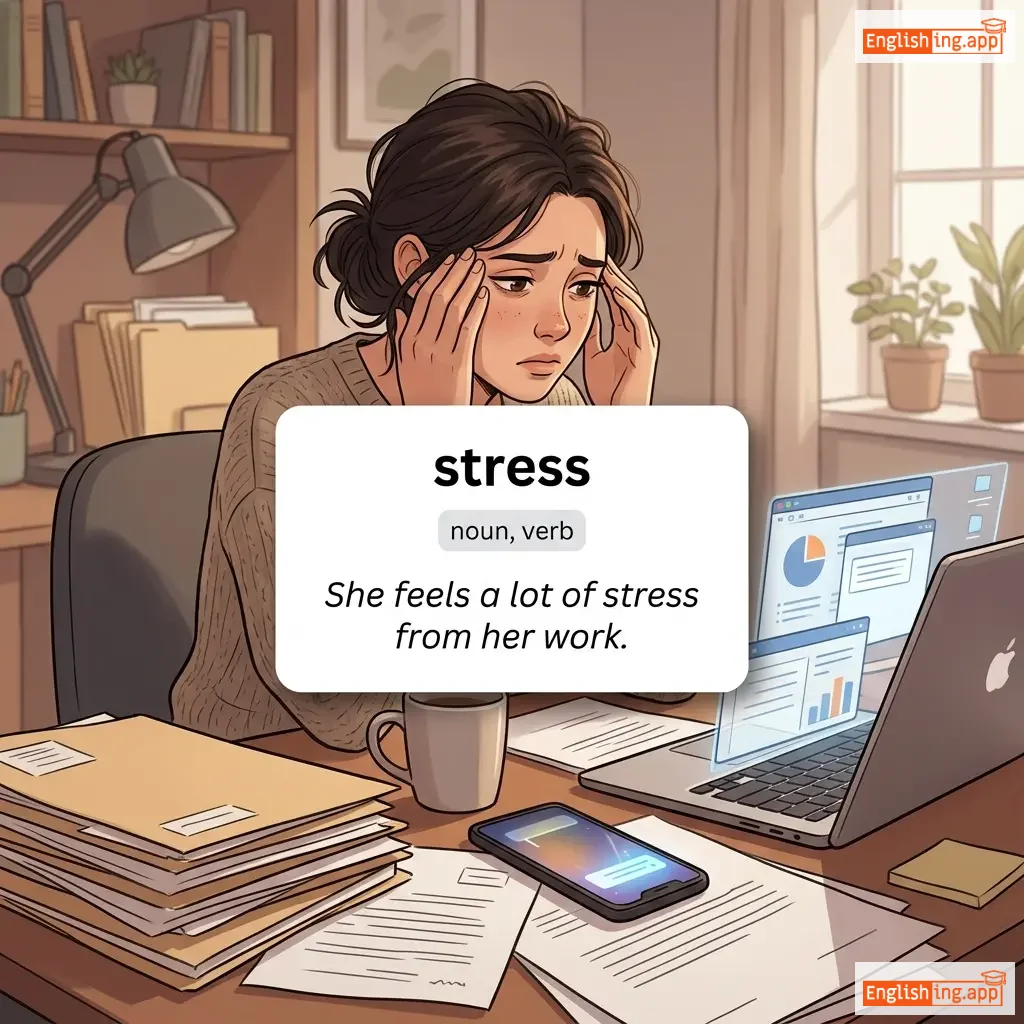
noun, verb
(ストレス)
••••••
|
|
ストレス
sutoresu
••••••
|
stressed
ストレスを感じた
••••••
|
stressed
ストレスを感じた
••••••
|
stresses
ストレスを感じる
••••••
|
stressing
ストレスを感じている
••••••
|
to give particular emphasis or importance to something; mental or emotional strain
••••••
|
She feels a lot of stress from her work.
彼女は仕事から多くのストレスを感じている。
••••••
|
彼女は仕事から多くのストレスを感じている。
Kanojo wa shigoto kara ooku no sutoresu wo kanjiteiru.
••••••
|
stress out
ストレスを感じる
••••••
|
to become anxious or overwhelmed
••••••
|
ストレスを感じる
Sutoresu wo kanjiru
••••••
|
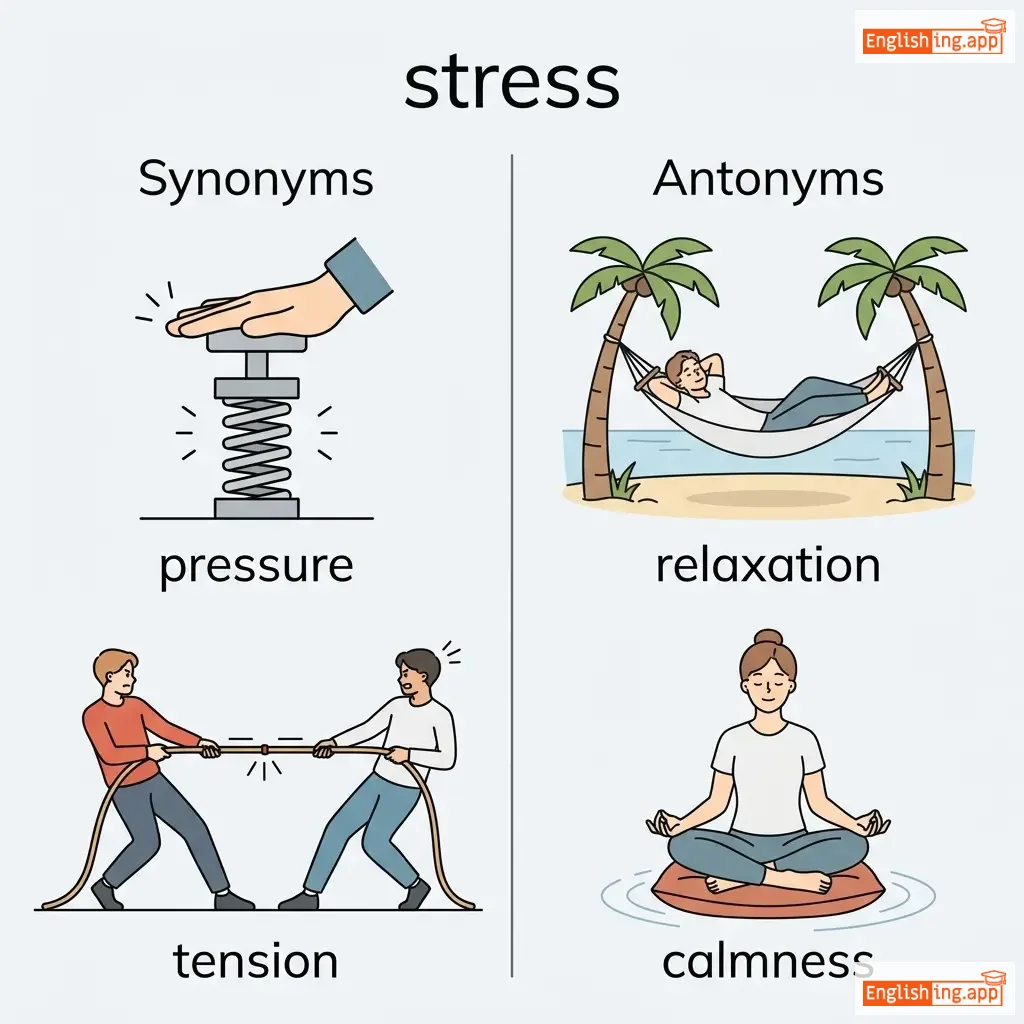
pressure, tension, anxiety, strain
••••••
|
relaxation, calmness
••••••
|
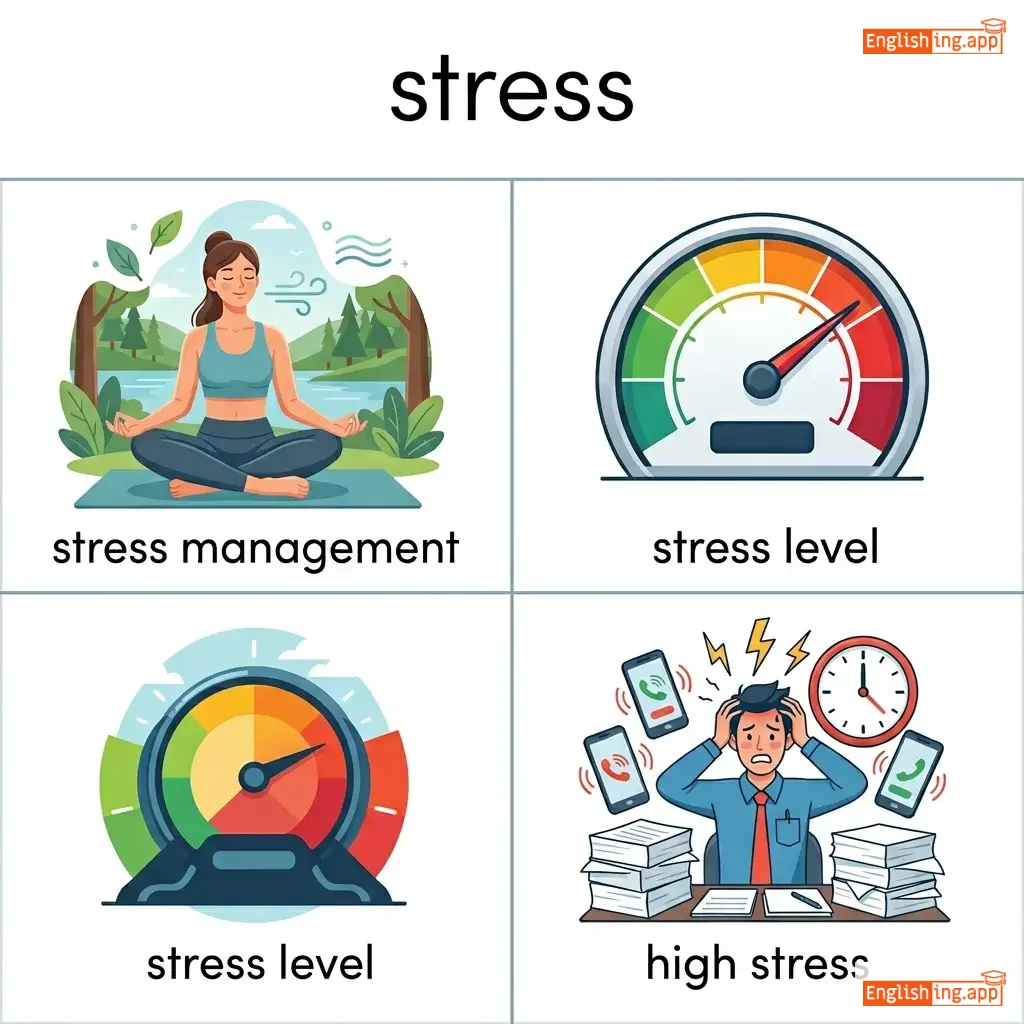
stress management, stress level, high stress, relieve stress
••••••
|
ストレス (sutoresu) は圧力から来る。
••••••
|
|
⚖️
••••••
|
/strɪkt/
adjective
(sutorikuto)
••••••
|
- •••••• |
厳格
genkaku
••••••
|
- •••••• | - •••••• | - •••••• | - •••••• |
Demanding that rules be obeyed and observed closely.
••••••
|
The teacher is very strict about punctuality. |
先生は時間厳守にとても厳格です。
Sensei wa jikan genshu ni totemo genkaku desu.
••••••
|
strict rules |
Rules that must be followed without flexibility
••••••
|
厳格な規則
genkaku na kisoku
••••••
|
rigid, severe, stern, uncompromising
••••••
|
lenient, flexible, permissive
••••••
|
strict rules, strict teacher, strict policy
••••••
|
Strictは厳格な規則、厳しい先生のように!
••••••
|
|
✋
••••••
|
/stroʊk/
verb
(sutorōku)
••••••
|
|
なでる
naderu
••••••
|
stroked
sutorōkudo
••••••
|
stroked
sutorōkudo
••••••
|
strokes
sutorōkusu
••••••
|
stroking
sutorōkingu
••••••
|
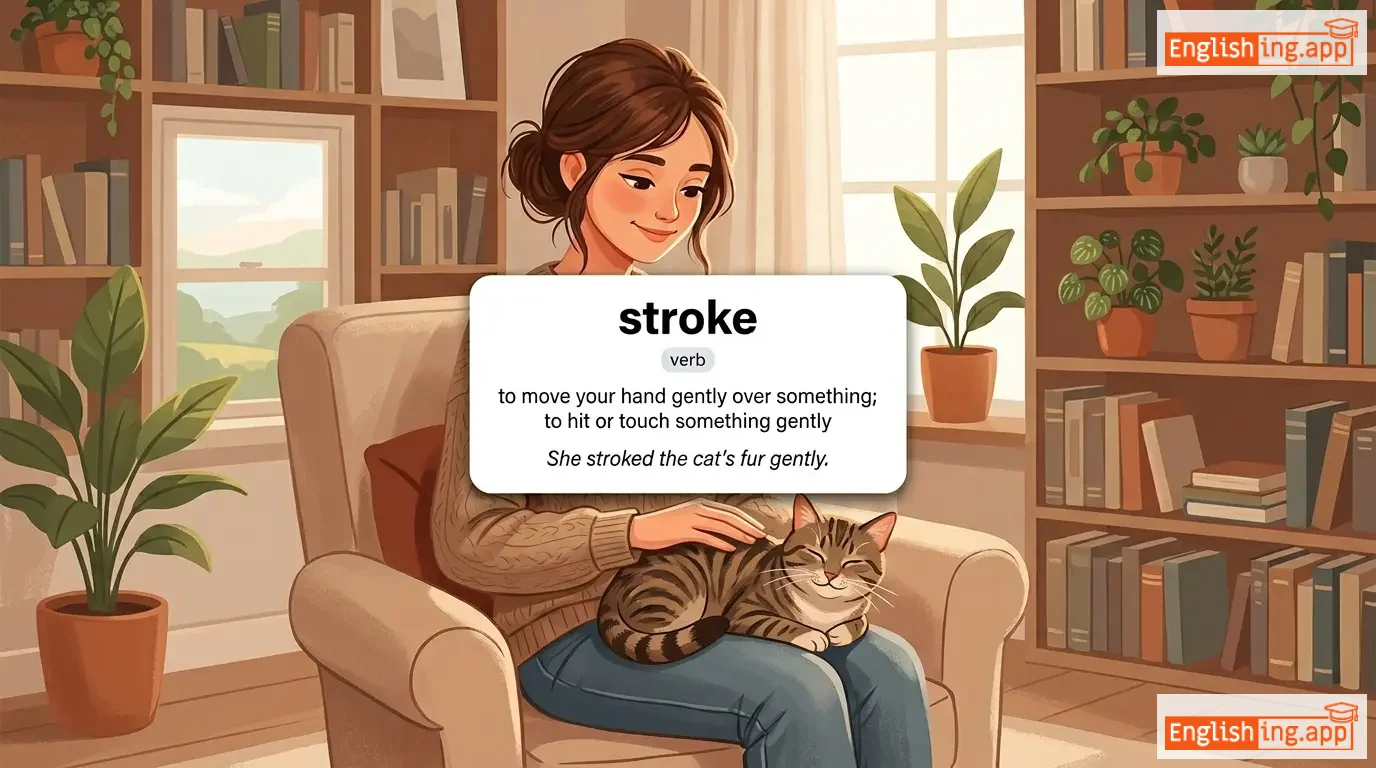
to move your hand gently over something; to hit or touch something gently
••••••
|
She stroked the cat's fur gently.
彼女は猫の毛を優しくなでました。
••••••
|
彼女は猫の毛を優しくなでました。
Kanojo wa neko no ke o yasashiku nademashita.
••••••
|
- •••••• | - •••••• | - •••••• |
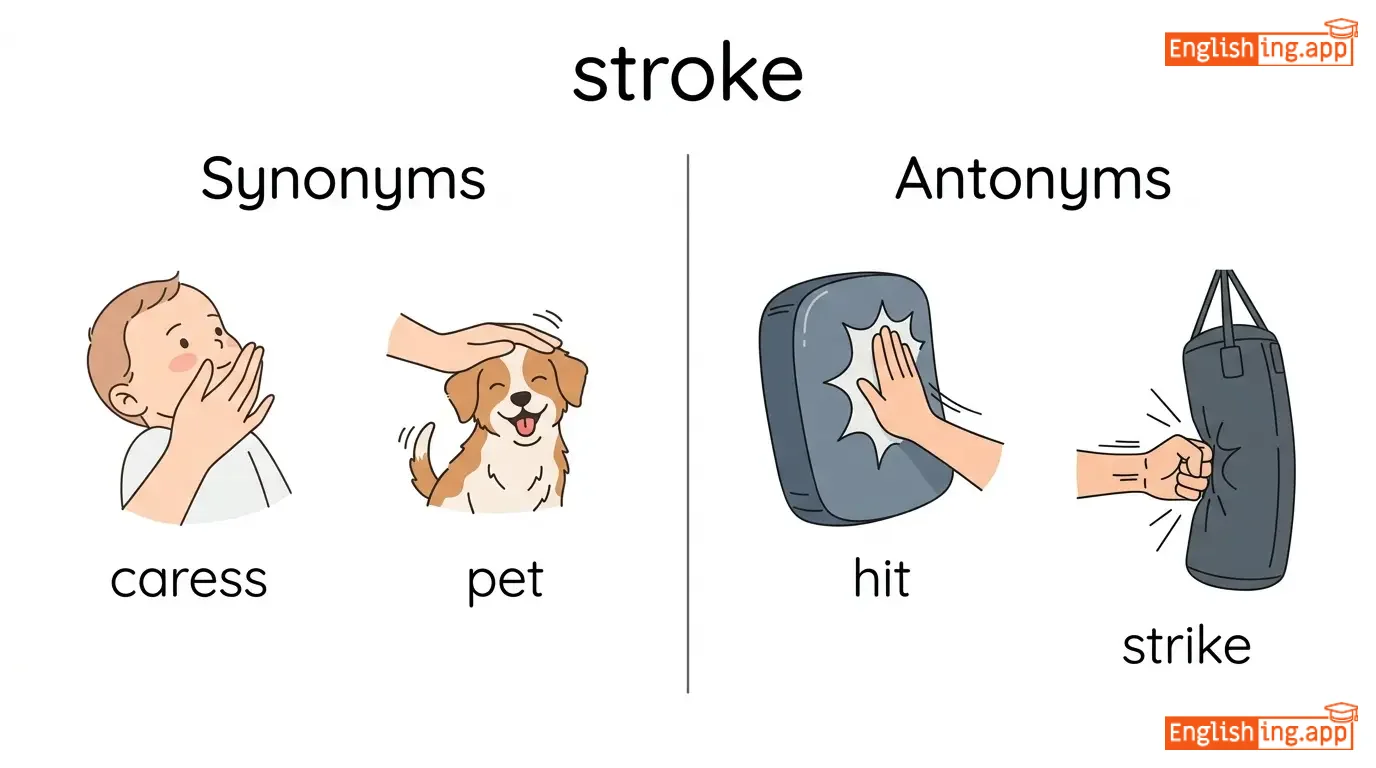
caress, pet, touch, brush
••••••
|
hit, strike, slap
••••••
|
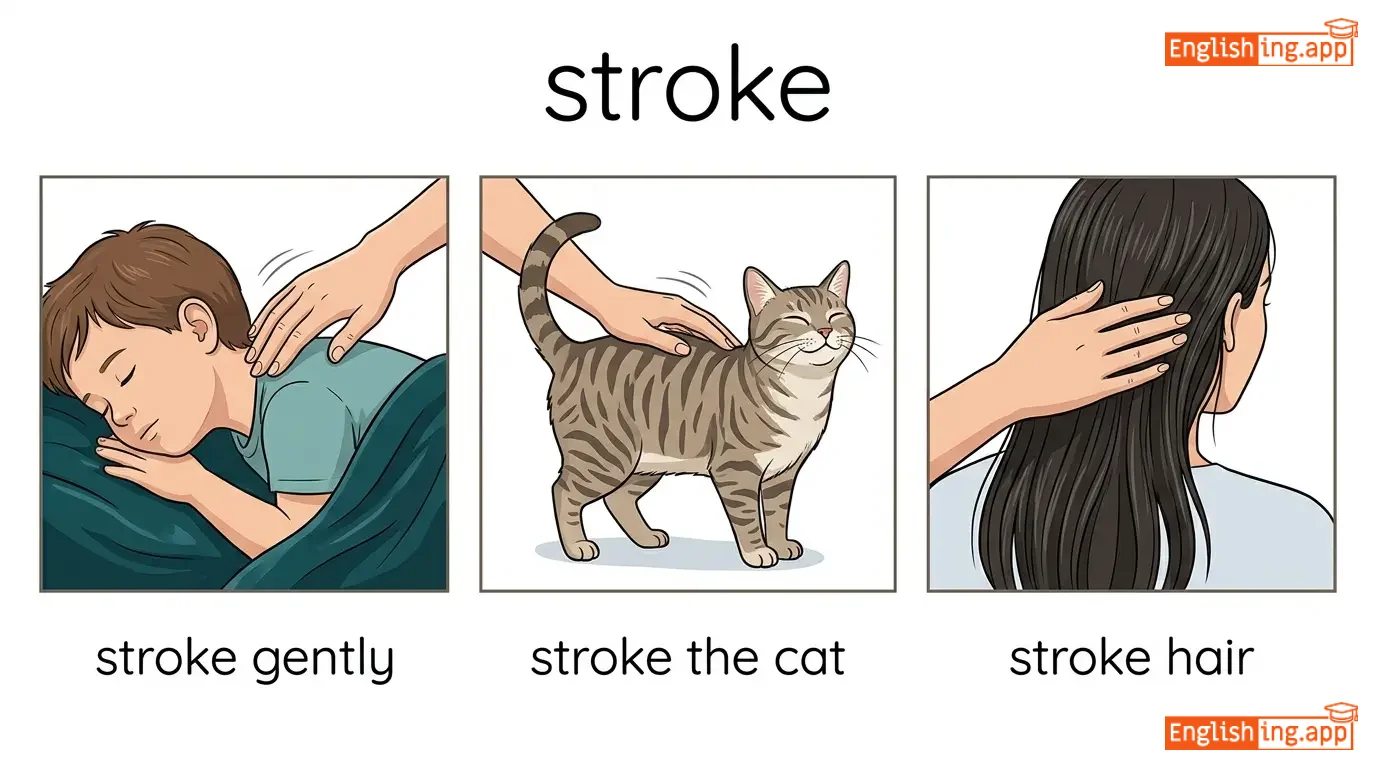
stroke gently, stroke the cat, stroke hair, swimming stroke, suffer a stroke
••••••
|
Think of gently stroking a soft cat's fur, relaxing and comforting it.
••••••
|
|
🤦
••••••
|
/ˈstjuːpɪd/
adjective
••••••
|
- •••••• | - •••••• | - •••••• | - •••••• | - •••••• | - •••••• |
lacking intelligence or common sense
••••••
|
It was a stupid mistake to leave the keys inside the car. |
- •••••• |
play stupid |
to pretend not to know something
••••••
|
- •••••• |
foolish, silly, idiotic, dumb
••••••
|
wise, intelligent, smart
••••••
|
stupid idea, stupid mistake, act stupid, feel stupid
••••••
|
No •••••• |
|
🏘️
••••••
|
/ˈsʌbɜːb/
noun
(サバーブ)
••••••
|
- •••••• |
郊外
kougai
••••••
|
- •••••• | - •••••• | - •••••• | - •••••• |
an area outside the center of a city, often residential
••••••
|
They bought a new house in a quiet suburb. |
彼らは静かな郊外に新しい家を買いました。
Karera wa shizukana kōgai ni atarashī ie o kaimashita.
••••••
|
in the suburbs |
living in a residential area outside the city center
••••••
|
郊外で
kōgai de
••••••
|
residential area, outskirts, neighborhood, district
••••••
|
downtown, city center
••••••
|
quiet suburb, suburban area, live in the suburbs, suburb of Dhaka
••••••
|
Sub+urb は郊外、都市の外!
••••••
|
|
⚡
••••••
|
/ˈsʌdən/
adjective
(サドン)
••••••
|
- •••••• |
突然の; 急な; 思いがけない;
totsuzen no; kyū na; omoigakenai
••••••
|
- •••••• | - •••••• | - •••••• | - •••••• |
happening or done quickly and unexpectedly; abrupt
••••••
|
There was a sudden change in the weather. |
天気に突然の変化がありました。
tenki ni totsuzen no henka ga arimashita.
••••••
|
- •••••• | - •••••• | - •••••• |
abrupt, unexpected, rapid, swift
••••••
|
gradual, slow, expected, planned
••••••
|
sudden change, sudden death, sudden movement
••••••
|
No •••••• |
|
😞
••••••
|
/ˈsʌfər/
verb
(サファー)
••••••
|
- •••••• |
苦しむ
kurushimu
••••••
|
suffered
サファード
••••••
|
suffered
サファード
••••••
|
suffers
サファーズ
••••••
|
suffering
サファリング
••••••
|
to experience pain, distress, or hardship
••••••
|
She suffered from a severe headache all day.
彼女は一日中ひどい頭痛に苦しんでいました。
••••••
|
彼女は一日中ひどい頭痛に苦しんでいました。
Kanojo wa ichinichijuu hidoi zutsuu ni kurushinde imashita.
••••••
|
- •••••• | - •••••• | - •••••• |
endure, undergo, experience, bear
••••••
|
enjoy, delight, thrive
••••••
|
suffer from, suffer greatly, suffer in silence
••••••
|
Suffer - ソファで苦しむ
••••••
|
|
✅
••••••
|
/ˈʃʊə.li/
adverb
(shur-lee)
••••••
|
- •••••• |
確かに
tashika ni
••••••
|
- •••••• | - •••••• | - •••••• | - •••••• |
without doubt; certainly
••••••
|
You will surely pass the exam if you study hard. |
もし一生懸命勉強すれば、確かに試験に合格します。
Moshi isshōkenmei benkyō sureba, tashika ni shiken ni gōkaku shimasu.
••••••
|
- •••••• | - •••••• | - •••••• |
certainly, definitely, undoubtedly
••••••
|
doubtfully, uncertainly, maybe
••••••
|
surely enough, surely not, most surely
••••••
|
Visualize confidently saying '確かに' while nodding your head for sure success in Japanese!
••••••
|
|
⚡
••••••
|
/ˈtæk.əl/
verb, noun
••••••
|
- •••••• | - •••••• |
tackled
••••••
|
tackled
••••••
|
tackles
••••••
|
tackling
••••••
|
to try to deal with or solve a difficult problem; to physically stop someone in sports by knocking them down
••••••
|
The coach taught the players how to tackle properly. |
- •••••• |
tackle a problem |
to deal with or try to solve a problem
••••••
|
- •••••• |
confront, address, handle, seize, wrestle
••••••
|
avoid, ignore, neglect
••••••
|
tackle a challenge, tackle crime, tackle poverty, tackle an issue
••••••
|
No •••••• |
|
👤
••••••
|
/ˈtɛnənt/
noun
(テナント)
••••••
|
- •••••• |
テナント
tenanto
••••••
|
- •••••• | - •••••• | - •••••• | - •••••• |
A person who occupies land or property rented from a landlord.
••••••
|
The tenant paid the rent on time every month. |
テナントは毎月時間通りに家賃を支払った
Tenanto wa maitsuki jikan dōri ni yachin o shiharatta
••••••
|
sitting tenant |
A tenant who is currently living in a rented property.
••••••
|
現住テナント
genjū tenanto
••••••
|
occupant, renter, lodger, leaseholder, dweller
••••••
|
landlord, owner
••••••
|
tenant rights, tenant protection, tenant eviction, sitting tenant
••••••
|
Tenant = テナント、家賃を払う人
••••••
|
|
🌸
••••••
|
/ˈtɛndər/
verb, noun, adjective
(テンダー)
••••••
|
- •••••• |
提案 / 優しい
teian / yasashii
••••••
|
tendered
テンダード
••••••
|
tendered
テンダード
••••••
|
tenders
テンダーズ
••••••
|
tendering
テンダリング
••••••
|
to offer formally; soft and delicate in texture or character; a formal offer or proposal
••••••
|
The company tendered its resignation to the board.
会社は取締役会に辞表を提出しました。
••••••
|
会社は取締役会に辞表を提出しました。
Kaisha wa torishimariyakukai ni jihyō o teishutsu shimashita.
••••••
|
tender loving care
優しいケア
••••••
|
gentle, nurturing care
••••••
|
優しい看護
yasashii kango
••••••
|
offer, submit, delicate, fragile, proposal
••••••
|
withdraw, reject, harsh
••••••
|
tender offer, tender document, tender heart, tender age
••••••
|
Tenderは柔らかく、心を込めて提供すること、まるで優しい抱擁のようです。
••••••
|
|
🎾
••••••
|
/ˈtɛnɪs/
noun
(テニス)
••••••
|
- •••••• |
テニス
tenisu
••••••
|
- •••••• | - •••••• | - •••••• | - •••••• |
a sport played with rackets and a ball on a rectangular court
••••••
|
He enjoys playing tennis with his friends on the weekends. |
彼は週末に友達とテニスをするのが好きです。
Kare wa shūmatsu ni tomodachi to tenisu o suru no ga suki desu.
••••••
|
- •••••• | - •••••• | - •••••• |
racket sport, sport, game
••••••
|
chess, board games
••••••
|
play tennis, tennis match, tennis court, tennis player
••••••
|
テニスは反射神経とスタミナを高めるスポーツ - Tenisu wa hansha shinkei to sutamina o takameru supōtsu
••••••
|
|
📜
••••••
|
/ˈtɛnjər/
noun
(テニュア)
••••••
|
- •••••• |
任期
ninki
••••••
|
- •••••• | - •••••• | - •••••• | - •••••• |
The period of time during which someone holds a position, office, or land.
••••••
|
His tenure as president lasted for five years. |
彼の大統領としての任期は5年間続きました。
Kare no daitōryō toshite no ninki wa 5-nenkan tsuzukimashita.
••••••
|
secure tenure |
Guaranteed possession of a position or land.
••••••
|
安定した任期
antei shita ninki
••••••
|
term, occupancy, incumbency, holding
••••••
|
unemployment, dispossession, vacancy
••••••
|
tenure track, fixed tenure, tenure of office, land tenure
••••••
|
Tenureは 'ten years' のように、職位に留まる期間です。
••••••
|
|
👻
••••••
|
/ˈtɛrər/
noun
(テラー)
••••••
|
- •••••• |
恐怖
kyōfu
••••••
|
- •••••• | - •••••• | - •••••• | - •••••• |
Extreme fear or dread.
••••••
|
The villagers fled in terror during the attack. |
村人たちは攻撃の際に恐怖におののいて逃げた。
Mura hitotachi wa kōgeki no sai ni kyōfu ni ononoi te nigeta.
••••••
|
reign of terror |
A period during which fear and violence prevail.
••••••
|
恐怖の支配
Kyōfu no shihai
••••••
|
fear, dread, horror, panic, fright
••••••
|
calm, peace, comfort
••••••
|
state of terror, sheer terror, live in terror
••••••
|
Terror は日本語で恐怖、強い恐れを意味します。
••••••
|
|
🙏
••••••
|
/θæŋks/
noun
(θæŋks)
••••••
|
- •••••• |
ありがとう
arigatou
••••••
|
- •••••• | - •••••• | - •••••• | - •••••• |
an expression of gratitude
••••••
|
Thanks for helping me with the project. |
プロジェクトを手伝ってくれてありがとう。
Purojekuto wo tetsudatte kurete arigatou.
••••••
|
- •••••• | - •••••• | - •••••• |
gratitude, appreciation, recognition, thanks-giving
••••••
|
ingratitude, ungratefulness
••••••
|
say thanks, give thanks, express thanks
••••••
|
ありがとうは‘thanks’の日本語版
••••••
|
|
📚
••••••
|
/ˈθiːsɪs/
noun
(テーシス)
••••••
|
- •••••• |
テーシス
teshisu
••••••
|
- •••••• | - •••••• | - •••••• | - •••••• |
A long piece of writing on a particular subject, usually for a degree at a university.
••••••
|
She spent two years writing her doctoral thesis. |
彼女は博士論文を書くのに2年を費やしました。
Kanojo wa hakase ronbun o kaku no ni 2-nen o tsuiyashimashita.
••••••
|
antithesis |
The direct opposite of something; a contrasting idea.
••••••
|
対立命題
Tairitsu meidai
••••••
|
dissertation, paper, essay, study, research
••••••
|
fact, proof
••••••
|
doctoral thesis, master's thesis, write a thesis, defend a thesis
••••••
|
テーシスは大学の学位を得るために書くべき📚大きな本です。
••••••
|
|
3️⃣0️⃣
••••••
|
/ˈθɜrti/
adjective
(サーティ)
••••••
|
- •••••• |
三十
san-ju
••••••
|
- •••••• | - •••••• | - •••••• | - •••••• |
equivalent to the number 30
••••••
|
He is thirty years old. |
彼は三十歳です。
Kare wa san-ju sai desu.
••••••
|
- •••••• | - •••••• | - •••••• |
thirtieth
••••••
|
twenty, forty
••••••
|
thirty years old, thirty days, thirty minutes
••••••
|
To remember 'thirty', think of the number 30 (3️⃣0️⃣).
••••••
|
|
🌧️
••••••
|
/ðoʊ/
conjunction
(zō)
••••••
|
- •••••• |
それでも
soredemo
••••••
|
- •••••• | - •••••• | - •••••• | - •••••• |
used to introduce a fact that makes the main statement of the sentence seem surprising or unexpected
••••••
|
Though it was raining, they still went outside. |
雨が降っていたにもかかわらず、彼らは外に出た。
Ame ga futte ita ni mo kakawarazu, karera wa soto ni deta.
••••••
|
- •••••• | - •••••• | - •••••• |
although, however, but
••••••
|
because, since
••••••
|
though difficult, though tired, though happy
••••••
|
'それでも' (soredemo) 雨が降っていても外に出る
••••••
|
|
🗣️
••••••
|
/θroʊt/
noun
(θroʊt)
••••••
|
- •••••• |
喉
koro
••••••
|
- •••••• | - •••••• | - •••••• | - •••••• |
the front part of the neck, containing the pharynx and larynx
••••••
|
He felt a lump in his throat while speaking. |
彼は話しているときに喉にしこりを感じました。
Kare wa hanashite iru toki ni nodo ni shikori o kanjimashita.
••••••
|
- •••••• | - •••••• | - •••••• |
neck, gullet
••••••
|
none
••••••
|
sore throat, clear your throat
••••••
|
Throat = nodo, 声と音の源。
••••••
|
|
🌲
••••••
|
/ˈtɪmbər/
noun
(ティンバー)
••••••
|
- •••••• |
木材
mokuzai
••••••
|
- •••••• | - •••••• | - •••••• | - •••••• |
wood prepared for use in building and carpentry
••••••
|
The house was built entirely from local timber. |
その家は完全に地元の木材で作られていました。
Sono ie wa kanzen ni jimoto no mokuzai de tsukurarete imashita.
••••••
|
shiver me timbers |
an expression of surprise or astonishment
••••••
|
驚きやびっくりの表現
odoroki ya bikkuri no hyōgen
••••••
|
wood, lumber, logs, planks, beam
••••••
|
metal, concrete
••••••
|
timber industry, timber house, cut timber, timber supply
••••••
|
Timberは木材を意味します 🌲 — ‘Timber house’ は木の家を意味します。
••••••
|

