The Doctor Who Healed Himself
Доктор Рахим был strict кардиологом, который работал в профессии thirty лет. Его tenure в больнице был впечатляющим, и он помог многим пациентам восстановиться после strokes. Но однажды, suddenly, он почувствовал боль в throat, и его уровень stress значительно повысился. Он понял, что сам suffering, игнорируя собственные советы. Его жена, которая была tender и заботливой, сказала ему, что нужно серьезно tackle эту проблему. Рахим жил в тихом suburb, в timber доме, который был спокойным. Он услышал от tenant о том, что играть в tennis может быть полезным упражнением. Though сначала он считал это stupid идеей, его жена surely убедила его попробовать. Рахим начал менять образ жизни, и постепенно его terror перед возможным stroke уменьшился. Он сказал thanks своей семье за поддержку. В своей медицинской thesis он писал о важности профилактики, и теперь он применял эти принципы. Рахим понял, что врачи должны заботиться о себе, а не только о пациентах. Он начал медитацию и упражнения для управления своим stress. В конце концов, Рахим стал более здоровым и счастливым человеком и теперь может подавать лучший пример своим пациентам.
Получите неограниченный доступ ко всем словам с подпиской Pro
Обновить до ProПолучите неограниченный доступ ко всем предложениям с подпиской Pro
Обновить до Pro|
Эмодзи
|
Слово | Images | Перевод | Прошедшее | Причастие прошедшего времени | Третье лицо единственного числа | Герундий | Значение | Пример предложения | Перевод примера предложения | Пример выражения | Значение примера выражения | Перевод примера выражения | Синонимы | Антонимы | Коллокации | Мнемоника |
|---|---|---|---|---|---|---|---|---|---|---|---|---|---|---|---|---|---|
|
😰
••••••
|
/strɛs/
noun, verb
(стресс)
••••••
|

|
стресс
stress
••••••
|
stressed
стрессованный
••••••
|
stressed
стрессованный
••••••
|
stresses
стрессует
••••••
|
stressing
стрессующий
••••••
|
to give particular emphasis or importance to something; mental or emotional strain
••••••
|
She feels a lot of stress from her work.
Она чувствует много стресса от своей работы.
••••••
|
Она чувствует много стресса от своей работы.
Ona chuvstvuet mnogo stressa ot svoey raboty.
••••••
|
stress out
стрессоваться
••••••
|
to become anxious or overwhelmed
••••••
|
стрессовать
stressovat'
••••••
|
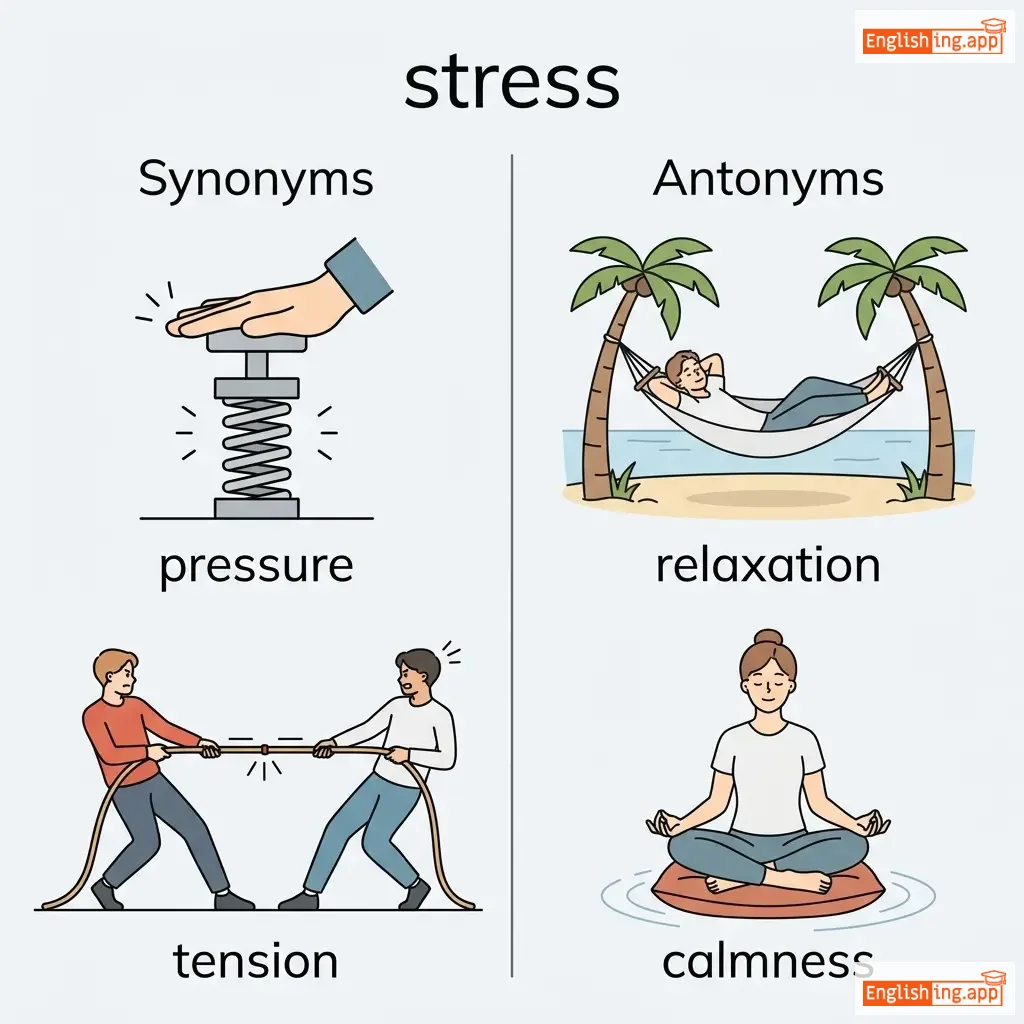
pressure, tension, anxiety, strain
••••••
|
relaxation, calmness
••••••
|
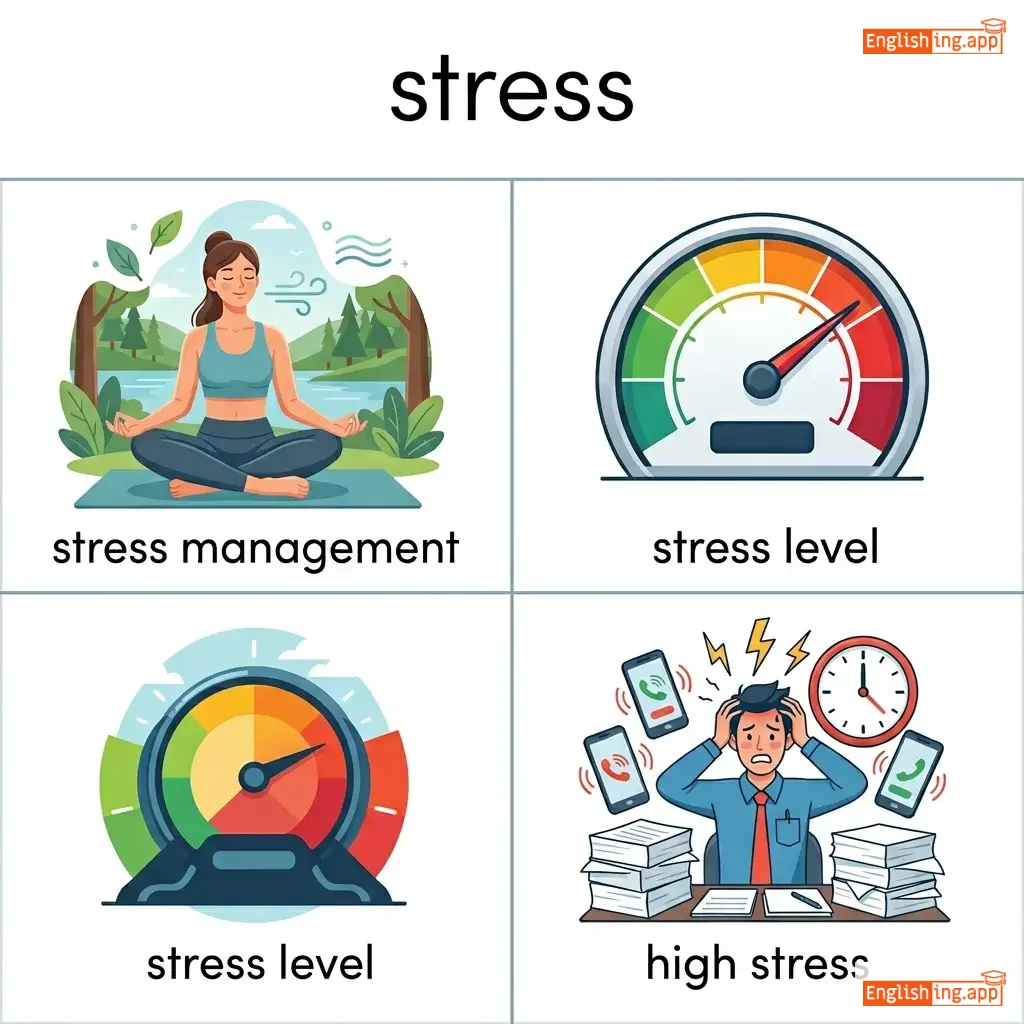
stress management, stress level, high stress, relieve stress
••••••
|
Стресс (stress) — это напряжение.
••••••
|
|
⚖️
••••••
|
/strɪkt/
adjective
(strikt)
••••••
|
- •••••• |
строгий
stroh-giy
••••••
|
- •••••• | - •••••• | - •••••• | - •••••• |
Demanding that rules be obeyed and observed closely.
••••••
|
The teacher is very strict about punctuality. |
Учитель очень строг по отношению к пунктуальности.
Uchitel' ochen' stroh-giy po otnosheniyu k punktual'nosti.
••••••
|
strict rules |
Rules that must be followed without flexibility
••••••
|
строгие правила
stroh-giye pravila
••••••
|
rigid, severe, stern, uncompromising
••••••
|
lenient, flexible, permissive
••••••
|
strict rules, strict teacher, strict policy
••••••
|
Strict значит строгий — как строгий учитель!
••••••
|
|
✋
••••••
|
/stroʊk/
verb
(strohk)
••••••
|
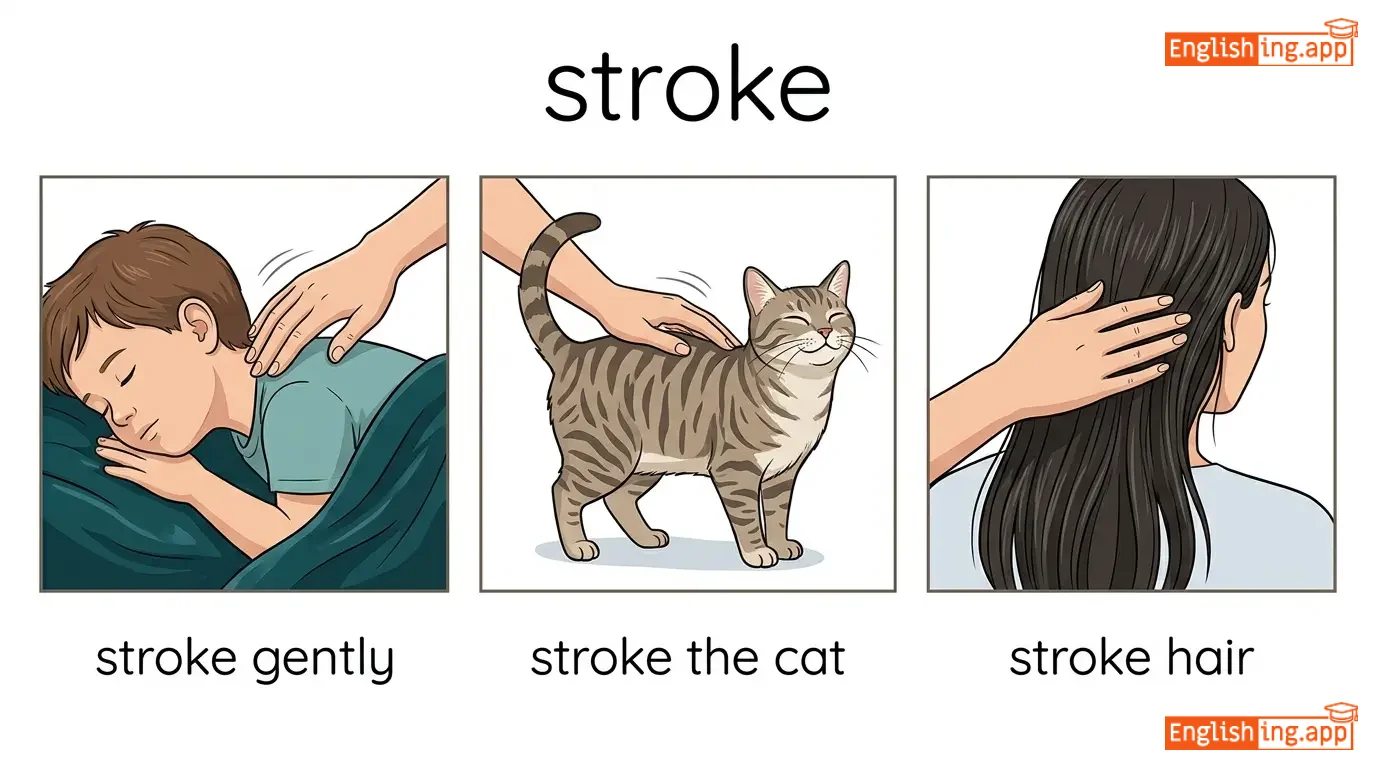
|
гладить
gladit
••••••
|
stroked
strokt
••••••
|
stroked
strokt
••••••
|
strokes
stroks
••••••
|
stroking
stroking
••••••
|
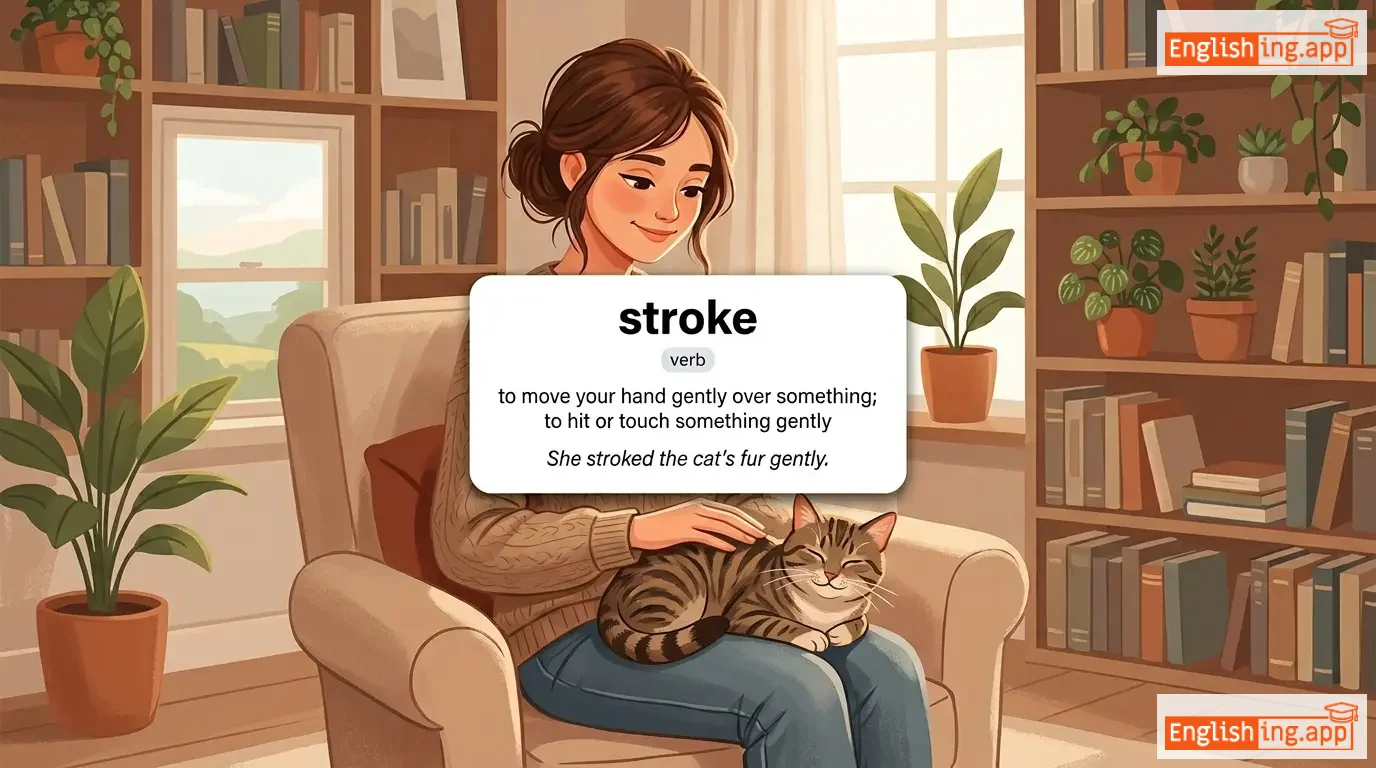
to move your hand gently over something; to hit or touch something gently
••••••
|
She stroked the cat's fur gently.
Она мягко погладила кошку.
••••••
|
Она мягко погладила кошку.
Ona myagko pogladila koshku.
••••••
|
- •••••• | - •••••• | - •••••• |
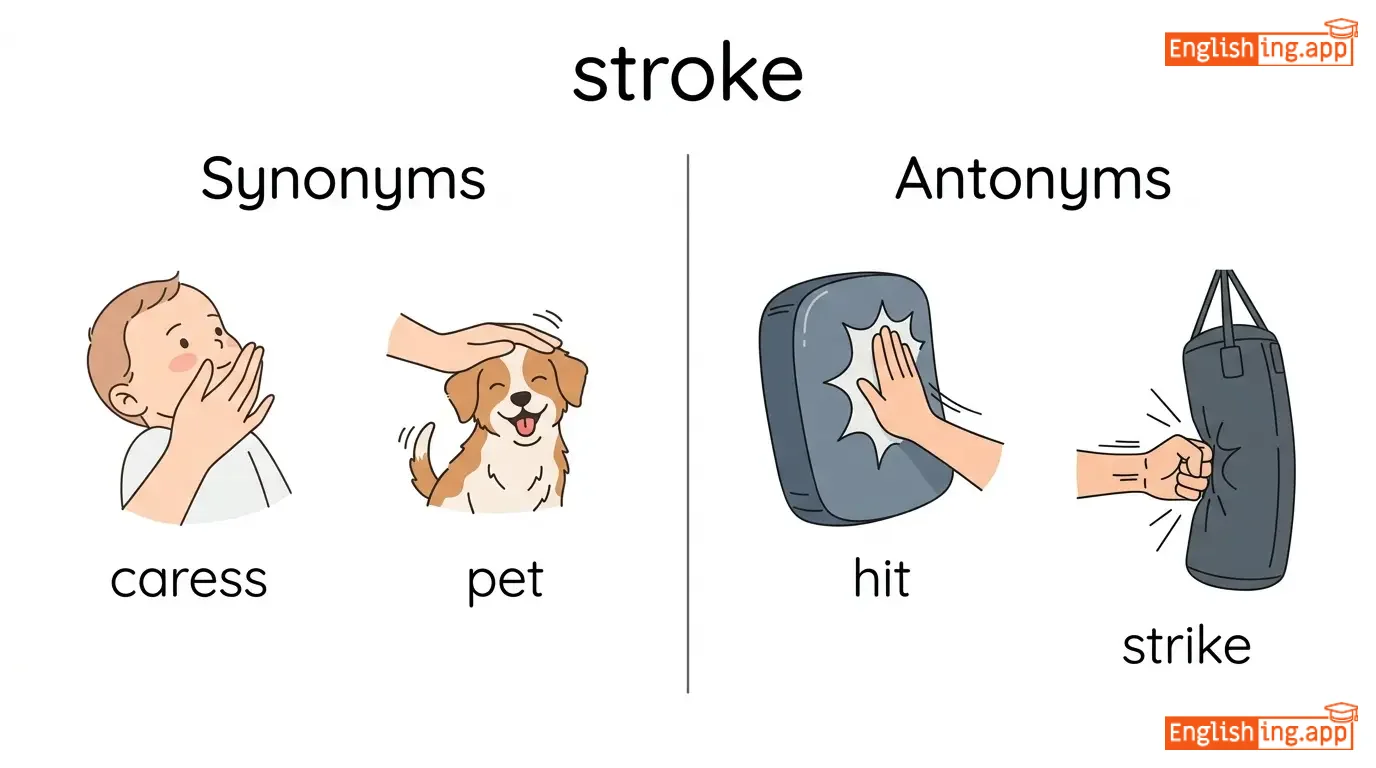
caress, pet, touch, brush
••••••
|
hit, strike, slap
••••••
|
stroke gently, stroke the cat, stroke hair, swimming stroke, suffer a stroke
••••••
|
Think of gently stroking the fur of a cat in a loving and calming way.
••••••
|
|
🤦
••••••
|
/ˈstjuːpɪd/
adjective
••••••
|
- •••••• | - •••••• | - •••••• | - •••••• | - •••••• | - •••••• |
lacking intelligence or common sense
••••••
|
It was a stupid mistake to leave the keys inside the car. |
- •••••• |
play stupid |
to pretend not to know something
••••••
|
- •••••• |
foolish, silly, idiotic, dumb
••••••
|
wise, intelligent, smart
••••••
|
stupid idea, stupid mistake, act stupid, feel stupid
••••••
|
No •••••• |
|
🏘️
••••••
|
/ˈsʌbɜːb/
noun
(субёрб)
••••••
|
- •••••• |
пригород
prigorod
••••••
|
- •••••• | - •••••• | - •••••• | - •••••• |
an area outside the center of a city, often residential
••••••
|
They bought a new house in a quiet suburb. |
Они купили новый дом в тихом пригороде.
Oni kupili novyi dom v tikhom prigorode.
••••••
|
in the suburbs |
living in a residential area outside the city center
••••••
|
в пригородах
v prigorodakh
••••••
|
residential area, outskirts, neighborhood, district
••••••
|
downtown, city center
••••••
|
quiet suburb, suburban area, live in the suburbs, suburb of Dhaka
••••••
|
Sub+городы — пригород!
••••••
|
|
⚡
••••••
|
/ˈsʌdən/
adjective
(саден)
••••••
|
- •••••• |
внезапный; резкий; неожиданный;
vnezapny; rezky; neozhidannyy
••••••
|
- •••••• | - •••••• | - •••••• | - •••••• |
happening or done quickly and unexpectedly; abrupt
••••••
|
There was a sudden change in the weather. |
В погоде произошли внезапные изменения.
V pogode proizoshli vnezapnye izmeneniya.
••••••
|
- •••••• | - •••••• | - •••••• |
abrupt, unexpected, rapid, swift
••••••
|
gradual, slow, expected, planned
••••••
|
sudden change, sudden death, sudden movement
••••••
|
No •••••• |
|
😞
••••••
|
/ˈsʌfər/
verb
(сафер)
••••••
|
- •••••• |
страдать
stradat'
••••••
|
suffered
саферт
••••••
|
suffered
саферт
••••••
|
suffers
саферс
••••••
|
suffering
сафферинг
••••••
|
to experience pain, distress, or hardship
••••••
|
She suffered from a severe headache all day.
Она страдала от сильной головной боли весь день.
••••••
|
Она страдала от сильной головной боли весь день.
Ona stradala ot sil'noy golovnoy boli ves' den'.
••••••
|
- •••••• | - •••••• | - •••••• |
endure, undergo, experience, bear
••••••
|
enjoy, delight, thrive
••••••
|
suffer from, suffer greatly, suffer in silence
••••••
|
Suffer - На диване ты страдаешь от боли.
••••••
|
|
✅
••••••
|
/ˈʃʊə.li/
adverb
(shur-lee)
••••••
|
- •••••• |
несомненно
nesomnenno
••••••
|
- •••••• | - •••••• | - •••••• | - •••••• |
without doubt; certainly
••••••
|
You will surely pass the exam if you study hard. |
Ты несомненно сдашь экзамен, если будешь усердно учиться.
Ty nesomnenno sdash ekzamen, esli budesh usyerdno uchitsya.
••••••
|
- •••••• | - •••••• | - •••••• |
certainly, definitely, undoubtedly
••••••
|
doubtfully, uncertainly, maybe
••••••
|
surely enough, surely not, most surely
••••••
|
Imagine a Russian confidently saying 'nesomnienno' for 'surely'!
••••••
|
|
⚡
••••••
|
/ˈtæk.əl/
verb, noun
••••••
|
- •••••• | - •••••• |
tackled
••••••
|
tackled
••••••
|
tackles
••••••
|
tackling
••••••
|
to try to deal with or solve a difficult problem; to physically stop someone in sports by knocking them down
••••••
|
The coach taught the players how to tackle properly. |
- •••••• |
tackle a problem |
to deal with or try to solve a problem
••••••
|
- •••••• |
confront, address, handle, seize, wrestle
••••••
|
avoid, ignore, neglect
••••••
|
tackle a challenge, tackle crime, tackle poverty, tackle an issue
••••••
|
No •••••• |
|
👤
••••••
|
/ˈtɛnənt/
noun
(тэнэнт)
••••••
|
- •••••• |
арендатор
arendator
••••••
|
- •••••• | - •••••• | - •••••• | - •••••• |
A person who occupies land or property rented from a landlord.
••••••
|
The tenant paid the rent on time every month. |
Арендатор платил аренду вовремя каждый месяц
Arendator platil arendu vovremja kazhdyj mesjac
••••••
|
sitting tenant |
A tenant who is currently living in a rented property.
••••••
|
текущий арендатор
tekushhij arendator
••••••
|
occupant, renter, lodger, leaseholder, dweller
••••••
|
landlord, owner
••••••
|
tenant rights, tenant protection, tenant eviction, sitting tenant
••••••
|
Tenant = Арендатор, тот кто платит аренду
••••••
|
|
🌸
••••••
|
/ˈtɛndər/
verb, noun, adjective
(тендер)
••••••
|
- •••••• |
предложение / нежный
predlozhenie / nezhnyy
••••••
|
tendered
тендерд
••••••
|
tendered
тендерд
••••••
|
tenders
тендерс
••••••
|
tendering
тендеринг
••••••
|
to offer formally; soft and delicate in texture or character; a formal offer or proposal
••••••
|
The company tendered its resignation to the board.
Компания подала свою отставку в совет директоров.
••••••
|
Компания подала свою отставку в совет директоров.
Kompaniya podala svoiu otstavku v sovet direktorov.
••••••
|
tender loving care
нежная забота
••••••
|
gentle, nurturing care
••••••
|
нежная забота
nezhnyaya zabota
••••••
|
offer, submit, delicate, fragile, proposal
••••••
|
withdraw, reject, harsh
••••••
|
tender offer, tender document, tender heart, tender age
••••••
|
Tender означает мягкость и нежность, как теплое объятие.
••••••
|
|
🎾
••••••
|
/ˈtɛnɪs/
noun
(теннис)
••••••
|
- •••••• |
теннис
tennis
••••••
|
- •••••• | - •••••• | - •••••• | - •••••• |
a sport played with rackets and a ball on a rectangular court
••••••
|
He enjoys playing tennis with his friends on the weekends. |
Он любит играть в теннис с друзьями на выходных.
On lyubit igrat' v tennis s druz'yami na vykhodnykh.
••••••
|
- •••••• | - •••••• | - •••••• |
racket sport, sport, game
••••••
|
chess, board games
••••••
|
play tennis, tennis match, tennis court, tennis player
••••••
|
Теннис улучшает твою координацию и выносливость - Tennis uluchshaet tvoyu koordinatsiyu i vynoslivost'
••••••
|
|
📜
••••••
|
/ˈtɛnjər/
noun
(tenyur)
••••••
|
- •••••• |
срок полномочий
srok polnomochiy
••••••
|
- •••••• | - •••••• | - •••••• | - •••••• |
The period of time during which someone holds a position, office, or land.
••••••
|
His tenure as president lasted for five years. |
Его срок полномочий в качестве президента длился пять лет.
Ego srok polnomochiy v kachestve presidenta dlylsya pyat let.
••••••
|
secure tenure |
Guaranteed possession of a position or land.
••••••
|
гарантированное владение
garantirovannoe vladenie
••••••
|
term, occupancy, incumbency, holding
••••••
|
unemployment, dispossession, vacancy
••••••
|
tenure track, fixed tenure, tenure of office, land tenure
••••••
|
Tenure звучит как 'десять лет', время, которое человек удерживает позицию.
••••••
|
|
👻
••••••
|
/ˈtɛrər/
noun
(террор)
••••••
|
- •••••• |
террор
terror
••••••
|
- •••••• | - •••••• | - •••••• | - •••••• |
Extreme fear or dread.
••••••
|
The villagers fled in terror during the attack. |
Жители деревни бежали в ужасе во время нападения.
Zhiteli derevni bezhali v uzhasye vo vremya napadeniya.
••••••
|
reign of terror |
A period during which fear and violence prevail.
••••••
|
царствование террора
tsarstvovaniye terrora
••••••
|
fear, dread, horror, panic, fright
••••••
|
calm, peace, comfort
••••••
|
state of terror, sheer terror, live in terror
••••••
|
Terror на русском – это ужас, страшное состояние.
••••••
|
|
🙏
••••••
|
/θæŋks/
noun
(θæŋks)
••••••
|
- •••••• |
спасибо
spasibo
••••••
|
- •••••• | - •••••• | - •••••• | - •••••• |
an expression of gratitude
••••••
|
Thanks for helping me with the project. |
Спасибо за помощь с проектом.
Spasibo za pomoshch' s proyektom.
••••••
|
- •••••• | - •••••• | - •••••• |
gratitude, appreciation, recognition, thanks-giving
••••••
|
ingratitude, ungratefulness
••••••
|
say thanks, give thanks, express thanks
••••••
|
Спасибо как ‘thanks’ на русском.
••••••
|
|
📚
••••••
|
/ˈθiːsɪs/
noun
(тезис)
••••••
|
- •••••• |
тезис
tezis
••••••
|
- •••••• | - •••••• | - •••••• | - •••••• |
A long piece of writing on a particular subject, usually for a degree at a university.
••••••
|
She spent two years writing her doctoral thesis. |
Она потратила два года на написание своей докторской диссертации.
Ona potratila dva goda na napisanie svoey doktorskoy dissertatsii.
••••••
|
antithesis |
The direct opposite of something; a contrasting idea.
••••••
|
антитеза
antiteza
••••••
|
dissertation, paper, essay, study, research
••••••
|
fact, proof
••••••
|
doctoral thesis, master's thesis, write a thesis, defend a thesis
••••••
|
Тезис — это 📚 большая работа для получения диплома.
••••••
|
|
3️⃣0️⃣
••••••
|
/ˈθɜrti/
adjective
(тёрти)
••••••
|
- •••••• |
тридцать
tridtsat
••••••
|
- •••••• | - •••••• | - •••••• | - •••••• |
equivalent to the number 30
••••••
|
He is thirty years old. |
Ему тридцать лет.
Yemu tridtsat let.
••••••
|
- •••••• | - •••••• | - •••••• |
thirtieth
••••••
|
twenty, forty
••••••
|
thirty years old, thirty days, thirty minutes
••••••
|
To remember 'thirty', think of the number 30 (3️⃣0️⃣).
••••••
|
|
🌧️
••••••
|
/ðoʊ/
conjunction
(zho)
••••••
|
- •••••• |
хотя
khotya
••••••
|
- •••••• | - •••••• | - •••••• | - •••••• |
used to introduce a fact that makes the main statement of the sentence seem surprising or unexpected
••••••
|
Though it was raining, they still went outside. |
Хотя шёл дождь, они всё равно вышли на улицу.
Khotya shol dozhd', oni vsyo ravno vyshli na ulitsu.
••••••
|
- •••••• | - •••••• | - •••••• |
although, however, but
••••••
|
because, since
••••••
|
though difficult, though tired, though happy
••••••
|
'хотя' (khotya) несмотря на дождь выходить наружу
••••••
|
|
🗣️
••••••
|
/θroʊt/
noun
(троут)
••••••
|
- •••••• |
горло
gorlo
••••••
|
- •••••• | - •••••• | - •••••• | - •••••• |
the front part of the neck, containing the pharynx and larynx
••••••
|
He felt a lump in his throat while speaking. |
Он почувствовал комок в горле, когда говорил.
On pochuvstvoval komok v gorle, kogda govoril.
••••••
|
- •••••• | - •••••• | - •••••• |
neck, gullet
••••••
|
none
••••••
|
sore throat, clear your throat
••••••
|
Throat = gorlo, источник звука и голоса.
••••••
|
|
🌲
••••••
|
/ˈtɪmbər/
noun
(тимбер)
••••••
|
- •••••• |
дерево
derevo
••••••
|
- •••••• | - •••••• | - •••••• | - •••••• |
wood prepared for use in building and carpentry
••••••
|
The house was built entirely from local timber. |
Дом был построен полностью из местного дерева.
Dom byl postroen polnost'yu iz mestnogo dereva.
••••••
|
shiver me timbers |
an expression of surprise or astonishment
••••••
|
выражение удивления или изумления
vyrazhenie udivleniya ili izumleniya
••••••
|
wood, lumber, logs, planks, beam
••••••
|
metal, concrete
••••••
|
timber industry, timber house, cut timber, timber supply
••••••
|
Timber означает дерево 🌲 — помни ‘Timber house’ означает дом из дерева.
••••••
|

