The Girl Who Crossed the Cliff
リナは小さな村に住んでいました。彼女は次の村に行くために山のcliffを越えたいと思っていました。しかし道はとてもharshでした。
祖母はよく言っていました。「あのcliffは危ない。denseな森がある。giantな熊が住んでいると言う人もいる。ghosts hauntしているとも言われる」
「でも私にはgivenられた勇気がある」とリナは言いました。「私はhuman。できる」
彼女は準備をしました。knifeを持ちました。旅の間にbreadを作るためのflourを袋に詰めました。彼女は一番のdressを着ました—派手ではないが丈夫なもの。そして登るための厚いglovesを持ちました。
「Hello」と彼女は旅を始めるとき山に言いました。「あなたをcrossします」
初日は大丈夫でした。狭い道を辿りました。しかし二日目、森はdenseになりました。木々が密集していて、ほとんど光が差し込みませんでした。
「この場所は私をhauntsする」と彼女は囁きました。影はghostsのように見え、音はgiantsが歩くように聞こえました。
しかし彼女は続けました。彼女は道に迷わないようにknifeで木に印をつけました。glovesで手を守りながら枝を切り進みました。
三日目、彼女はcliffの縁に到達しました。下には広大なdepth—何千フィートもの落下がありました。木のfenceがありましたが、いたるところで壊れていました。
「どうやって渡るの?」と彼女は考えました。Cliffは飛び越えられるほど狭くはありません。下りてまた登るにはあまりにharshです。
すると古い綱の橋を見つけました。しかしそれは危険に見えました。綱が岩にgrindingしていました。いつ切れてもおかしくありませんでした。
「私は勇気をgraspしなければ」と彼女は自分に言い聞かせました。
一歩一歩、彼女は橋を渡りました。風が吹くたびに橋は揺れました。彼女は綱をしっかり握り、glovedな手で切り傷を防ぎました。
途中で綱が一本切れました。橋は傾き、リナの心臓は止まるようでした。
「私はhumanだ」と彼女は自分に言い聞かせました。「私は生き延びられる」
彼女はバランスを取り直しました。速く、しかし慎重に動きました。ついに彼女は反対側にたどり着きました。
しかしそのとき、fleetの足音が聞こえました。それはgiant?ghost?
いいえ。それは野生のhorseでした—美しく自由な。
「Hello」とリナは静かに言いました。Horseは止まりました。恐怖ではなく好奇心で彼女を見ました。
リナはゆっくり近づきました。彼女は少しのflourを取り出しました—水と混ぜて小さなケーキを作っていました。それをhorseに差し出しました。
Horseは食べました。そしてお辞儀をするように頭を下げ、リナが乗れることを示しました。
「ありがとう」とリナは囁きました。彼女はhorseに乗りました。二人でdenseな森を抜け、急な道を越えました。
何年も後、リナがガイドになったとき、若い旅行者たちに語りました:
「その旅は多くのことを教えてくれた。Cliffsは不可能に見えるが、いつも道はある。Denseな森は果てしなく見えるが、忍耐が通り抜けさせてくれる。Harshな状況はあなたを試すが、あなたを定義しない」
「ghostsやgiantsはどう?」と誰かが尋ねました。
「それらは私の恐れだった」とリナは微笑んだ。「私をhauntedしたのは本物のghostsではなく、自分自身の疑いだった。Giantsに見えたものは影に過ぎなかった。Humanとして、私たちの最大の敵はしばしば自分自身の心だ」
「ではhorseは?」
「自然はそれにhelloと言えるほど勇敢な人を助ける」とリナは説明しました。「あの日、私は勇気だけでなく仲間をgivenされた。Hence、私は学んだ—harshな荒野では優しさが重要だ。Flourの小さな差し入れが信頼を生んだ」
「Cliffを渡った話をして」と別の者が頼みました。
「Cliffは私にdepthを教えた—物理的だけでなく精神的なものも」とリナは言いました。「もしあなたが縁に立ち、下のdepthを見下ろすなら、あなたは勇気をgraspしなければならない。Glovesは手を守るが、心を守るのは何か?それは決意だ」
「Fenceは壊れていた」と彼女は続けました。「人生では安全網がいつもあるわけではない。あなたは自分自身の安全にならなければならない。綱の橋はgrindingし、擦り減っていた—挑戦が私たちを擦り減らすように。しかしもし動き続け、恐怖でfreezeしなければ、渡れる」
「私は守りのためにknifeを持っていた」とリナは付け加えました。「しかしそれを生き物に使うことはなかった。道を示すためや障害を切り開くために使った。道具は問題を解くためのもので、作るためのものではない」
「あなたのdress—」と誰かが気づきました。「なぜそれをfancyではないと言ったの?」
「Fancyはharshな状況で役に立たないから」とリナは笑った。「実用的であることが重要だ。美しいdressはdenseな森で裂ける。丈夫でシンプルな服が生き残る。人生は見た目ではなく、準備にある」
「そしてhauntedと感じたときは?」
「私は自分がhumanであることを思い出した」とリナは真剣に言った。「私たちはfeel恐れを持つ。それは自然だ。しかし私たちには理性、勇気、決意もある。Ghosts hauntするのはあなたが許すときだけだ。Giantsが怖いのは、あなたが彼らを無敵だと信じるときだけ。実際、ほとんどの恐れは私たちの想像力がpowerを与えた影にすぎない」
「Hence、教訓は?」と旅行者たちが尋ねました。
リナは微笑んだ。「Hence、教訓はこうだ—denseな森を抜け、cliffの縁を越え、試練のdepthを通るharshな旅は、超人であることを要求しない。あなたがgraspすべきはあなたの人間性だ。あなたにgivenされた道具—勇気、親切、実用的な思考。挑戦にhelloを言うこと、逃げないこと。大切なものを守るgloves。問題を解くknife。つながりを生むシンプルなflour。Fancyな見た目ではなく、強いdress。そして何よりも—恐れをhauntさせないhumanの心、影をgiantsと見ない心、fenceが壊れてもgrindingし続ける心、depthを恐れず敬う心」
若い旅行者たちは学びました—冒険に必要なのは魔法ではなくhumanの勇気だ。Cliffsはただfleetな足で越えられるのではなく、graspingの決意で越えられる。時にはharshな旅が教師になり、仲良くなった野生のhorseが必要な友になり、かつて恐れていたdenseな森があなたが習得した道になる—すべてはあなたが挑戦にhelloと言い、givenられた勇気を受け入れ、あなたのhumanな強さを信じたからだ。
|
絵文字
|
単語 | Images | 翻訳 | 過去 | 過去分詞 | 三人称単数 | 動名詞 | 意味 | 例文 | 例文の翻訳 | 表現例 | 表現例の意味 | 表現例の翻訳 | 同義語 | 対義語 | コロケーション | ニーモニック |
|---|---|---|---|---|---|---|---|---|---|---|---|---|---|---|---|---|---|
|
⛰️
••••••
|
/klɪf/
noun
(クリフ)
••••••
|
- •••••• |
崖
gake
••••••
|
- •••••• | - •••••• | - •••••• | - •••••• |
a high, steep face of rock or earth
••••••
|
The waves crashed against the bottom of the cliff. |
波は崖の底にぶつかりました。
Nami wa gake no soko ni butsukarimashita.
••••••
|
on the edge of a cliff |
in a very dangerous or risky situation
••••••
|
非常に危険なまたはリスクのある状況にいること
Hijō ni kiken na matawa risuku no aru jōkyō ni iru koto
••••••
|
precipice, bluff, escarpment, rock face
••••••
|
valley, plain
••••••
|
high cliff, sea cliff, steep cliff, rocky cliff
••••••
|
崖は、崖を意味します。もし崖から落ちたら、'人生'が危険にさらされる!
••••••
|
|
🌲
••••••
|
/dɛns/
adjective
(デンス)
••••••
|
- •••••• |
密な
mitsuna
••••••
|
- •••••• | - •••••• | - •••••• | - •••••• |
Closely compacted in substance; having parts crowded together.
••••••
|
The forest was so dense that little sunlight reached the ground. |
森はとても密で、ほとんど太陽の光が地面に届かなかった。
Mori wa totemo mitsu de, hotondo taiyō no hikari ga jimen ni todokakanakatta.
••••••
|
dense fog |
Thick fog that reduces visibility.
••••••
|
濃霧
nōmu
••••••
|
thick, compact, crowded, heavy, solid
••••••
|
thin, sparse, light
••••••
|
dense forest, dense fog, dense population, dense crowd
••••••
|
Denseは密なという意味 - dense forestは密な森の意味です。
••••••
|
|
🌊
••••••
|
/dɛpθ/
noun
(デプス)
••••••
|
- •••••• |
深さ
fukasa
••••••
|
- •••••• | - •••••• | - •••••• | - •••••• |
The distance from the top to the bottom of something; the intensity or complexity of a subject.
••••••
|
The diver measured the depth of the ocean trench. |
ダイバーは海洋の溝の深さを測定した。
Daibā wa kaiyō no mizu no fukasa o sokutei shita.
••••••
|
in depth |
In great detail or thoroughly.
••••••
|
深く
fukaku
••••••
|
deepness, intensity, profoundness, extent, complexity
••••••
|
shallowness, surface, height
••••••
|
great depth, depth of knowledge, emotional depth, depth perception
••••••
|
Depth = 深さ = 深いところへ進む。
••••••
|
|
👗
••••••
|
/drɛs/
noun/verb
(happiness)
••••••
|
- •••••• |
幸せ
shiawase
••••••
|
dressed
••••••
|
dressed
••••••
|
dresses
••••••
|
dressing
••••••
|
a one-piece garment for women or girls; to put on clothes
••••••
|
She wore a beautiful red dress to the party. |
彼女は賞を受け取ったとき、自分の幸せを隠せなかった。
Kanojo wa shou wo uketotta toki, jibun no shiawase wo kakusenakatta.
••••••
|
dressed to kill |
wearing clothes that are intended to impress others
••••••
|
幸せを求めて
shiawase wo motomete
••••••
|
outfit, attire, garment, clothing
••••••
|
undress, nakedness
••••••
|
wear a dress, long dress, summer dress, dress code
••••••
|
幸せは、心から笑顔になれる時に感じるものです。
••••••
|
|
🚧
••••••
|
/fɛns/
noun/verb
(fens)
••••••
|
- •••••• |
フェンス
fensu
••••••
|
fenced
fenced
••••••
|
fenced
fenced
••••••
|
fences
fences
••••••
|
fencing
fencing
••••••
|
a barrier, usually made of wood or wire, that surrounds an area; to enclose with a barrier
••••••
|
They built a fence around the garden.
彼らは庭の周りにフェンスを作った。
••••••
|
彼らは庭の周りにフェンスを作った。
Karera wa niwa no mawari ni fensu o tsukutta.
••••••
|
sit on the fence
フェンスに座る
••••••
|
to avoid making a decision or choosing a side
••••••
|
決定を避ける
kettei o sakeru
••••••
|
barrier, wall, enclosure, hedge
••••••
|
opening, gap
••••••
|
wooden fence, garden fence, high fence, electric fence
••••••
|
フェンスは境界線、エリアを囲む壁のようなものです。
••••••
|
|
🚢
••••••
|
/fliːt/
noun
(fureeto)
••••••
|
- •••••• |
艦隊
kantai
••••••
|
- •••••• | - •••••• | - •••••• | - •••••• |
a group of ships, vehicles, or aircraft operating together under one command
••••••
|
The navy deployed its entire fleet for the exercise. |
海軍は演習のためにその全艦隊を展開した。
Kaigun wa enshū no tame ni sono zen kantai o tenkai shita.
••••••
|
a fleet of foot |
very fast and agile in movement
••••••
|
風のように速い
kaze no yō ni hayai
••••••
|
armada, squadron, convoy, flotilla, group
••••••
|
individual, single
••••••
|
naval fleet, fishing fleet, fleet of cars, merchant fleet
••••••
|
Fleet は '艦隊'、複数の船が一緒に進むような感じです。
••••••
|
|
🥖
••••••
|
/ˈflaʊ.ər/
noun
(フラワー)
••••••
|
- •••••• |
小麦粉
komugiko
••••••
|
- •••••• | - •••••• | - •••••• | - •••••• |
a powder made by grinding grains, used for making bread, cakes, etc.
••••••
|
She bought a bag of flour to bake a cake. |
彼女はケーキを焼くために小麦粉を一袋買いました。
Kanojo wa keeki wo yaku tame ni komugiko wo hitofukuro kaimashita.
••••••
|
- •••••• | - •••••• | - •••••• |
meal, powder, starch, grain, ingredient
••••••
|
none, null
••••••
|
wheat flour, rice flour, all-purpose flour, cake flour
••••••
|
FlourとFlowerは似ているけれど、ケーキを作るにはFlourが必要で、花は必要ない!
••••••
|
|
👻
••••••
|
/ɡoʊst/
noun
(ゴースト)
••••••
|
- •••••• |
おばけ
obake
••••••
|
- •••••• | - •••••• | - •••••• | - •••••• |
the spirit of a dead person that is believed to appear to the living
••••••
|
She felt as if a ghost was watching her in the dark hallway. |
彼女は暗い廊下でおばけが彼女を見ているように感じた。
Kanojo wa kurai rōka de obake ga kanojo o mite iru yō ni kanjita.
••••••
|
give up the ghost |
to die or to stop working
••••••
|
死ぬか、動かなくなる
shinu ka, ugokanakunaru
••••••
|
spirit, phantom, specter, apparition, soul
••••••
|
body, reality
••••••
|
ghost story, ghost house, ghost town, ghost sighting
••••••
|
おばけとghost - 闇夜にひっそりと現れる亡霊の影。
••••••
|
|
🗿
••••••
|
/ˈdʒaɪənt/
noun
(ジャイアント)
••••••
|
- •••••• |
巨人
kyojin
••••••
|
- •••••• | - •••••• | - •••••• | - •••••• |
an extremely large and powerful being or a very large person or thing
••••••
|
The company grew into a giant in the tech industry. |
その会社はテクノロジー業界で巨人になった。
Sono kaisha wa tekunorojī gyōkai de kyojin ni natta.
••••••
|
gentle giant |
a person who is very large but kind and gentle
••••••
|
優しい巨人
yasashī kyojin
••••••
|
colossus, titan, behemoth, mammoth
••••••
|
dwarf, tiny
••••••
|
giant company, giant step, giant leap, giant figure
••••••
|
ジャイアント = 巨大な存在
••••••
|
|
✅
••••••
|
/ˈɡɪvən/
adjective
(ギヴン)
••••••
|
- •••••• |
既定
kitei
••••••
|
- •••••• | - •••••• | - •••••• | - •••••• |
Specified or stated; already decided or certain.
••••••
|
It is a given fact that hard work leads to success. |
努力は成功に導くというのは既定の事実です。
Doryoku wa seikou ni michibiku to iu no wa kitei no jijitsu desu.
••••••
|
take for granted |
To assume something as true or certain without questioning.
••••••
|
当たり前とみなす
atarimae to minasu
••••••
|
certain, established, fixed, determined
••••••
|
uncertain, doubtful
••••••
|
given situation, given fact, given conditions, given time
••••••
|
‘Given’はすでに決まっている、または確定しているものです。
••••••
|
|
🧤
••••••
|
/ɡlʌv/
noun
(グローブ)
••••••
|
- •••••• |
手袋
tebukuro
••••••
|
- •••••• | - •••••• | - •••••• | - •••••• |
A covering for the hand with separate parts for the fingers and thumb.
••••••
|
She wore gloves to protect her hands from the cold. |
彼女は寒さから手を守るために手袋をしました。
Kanojo wa samusa kara te o mamoru tame ni tebukuro o shimashita.
••••••
|
fit like a glove |
To fit perfectly.
••••••
|
手袋のようにぴったり
Tebukuro no yō ni pittari
••••••
|
mitt, mitten, handwear, covering
••••••
|
barehand, uncovered
••••••
|
wear gloves, leather gloves, boxing gloves, winter gloves
••••••
|
手袋は寒さから守る手の愛。
••••••
|
|
✊
••••••
|
/ɡrɑːsp/
verb
(グラスプ)
••••••
|
|
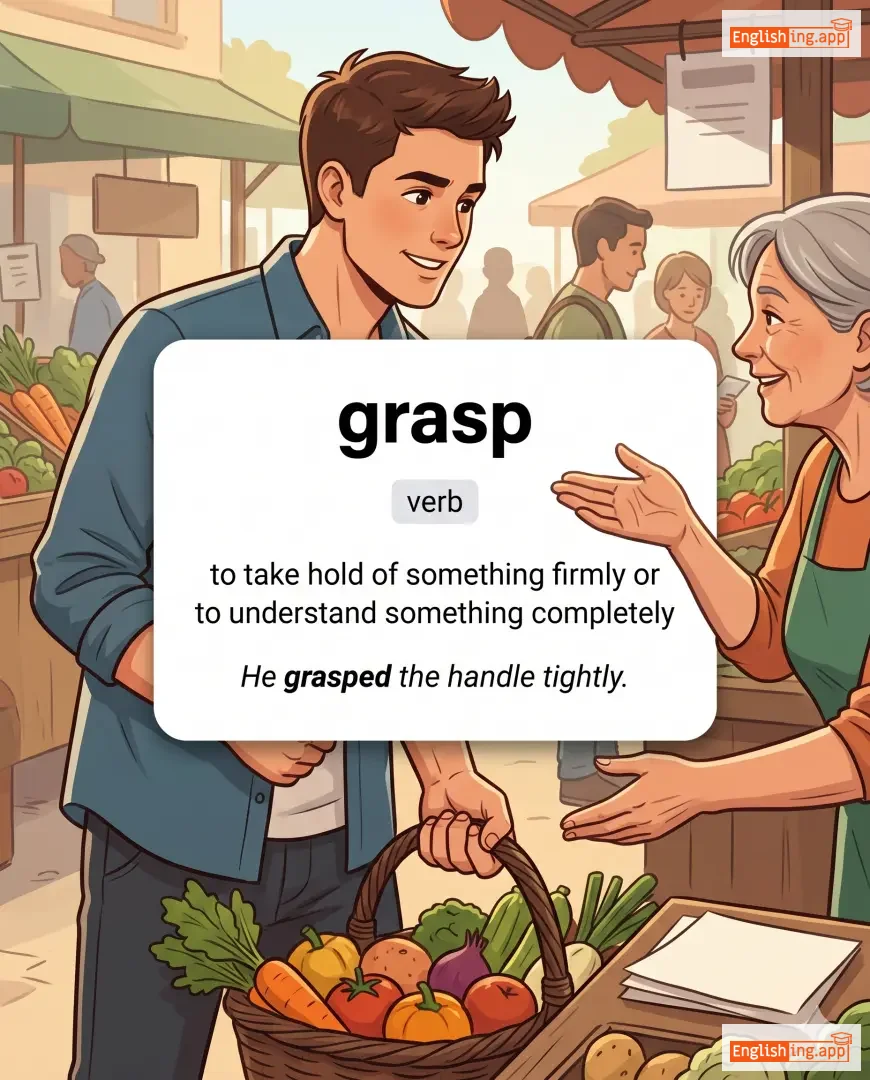
しっかりとつかむまたは完全に理解する
shikkari to tsukamu matawa kanzen ni rikai suru
••••••
|
grasped
グラスプド
••••••
|
grasped
グラスプド
••••••
|
grasps
グラスプス
••••••
|
grasping
グラスピング
••••••
|
to take hold of something firmly or to understand something completely
••••••
|
He grasped the handle tightly.
彼はハンドルをしっかり握った。
••••••
|
彼はハンドルをしっかり握った。
Kare wa handoru o shikkari nigitta.
••••••
|
grasp the nettle
イラクサを掴む
••••••
|
to deal with a difficult situation with courage
••••••
|
困難な状況に勇気を持って対処する
Konnan na joukyou ni yuuki o motte taisho suru
••••••
|
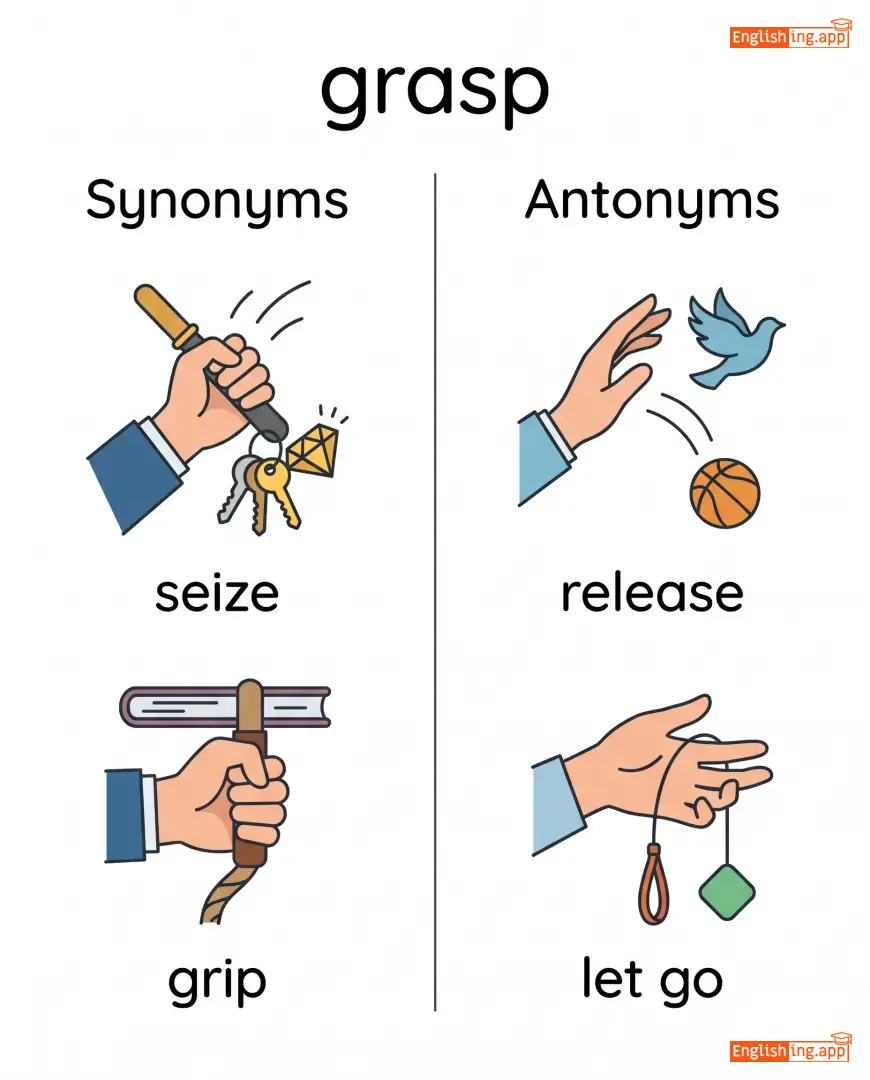
seize, grip, clutch, understand, comprehend
••••••
|
release, let go, misunderstand
••••••
|
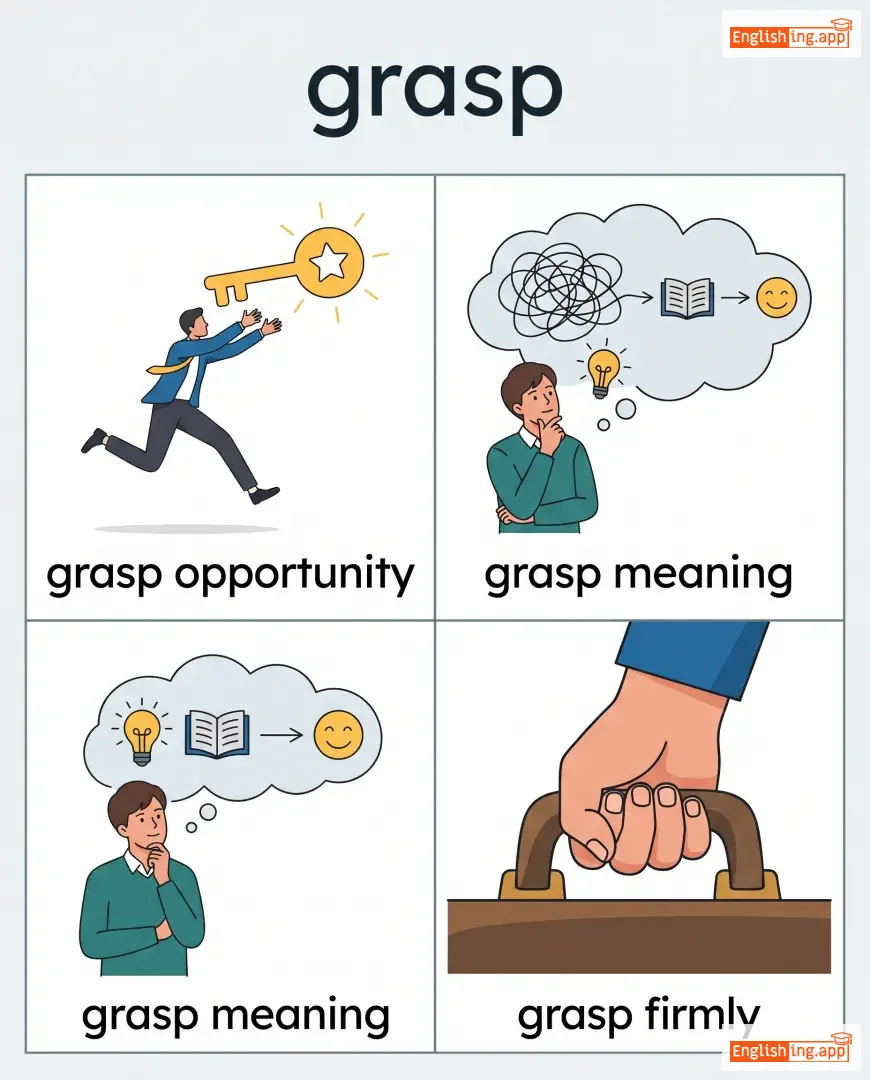
grasp opportunity, grasp meaning, grasp firmly, grasp concept
••••••
|
Grasp: しっかり握って理解しよう!
••••••
|
|
⚙️
••••••
|
/ɡraɪnd/
verb
(guraindo)
••••••
|
|
挽く
hiku
••••••
|
ground
guraundo
••••••
|
ground
guraundo
••••••
|
grinds
guraindosu
••••••
|
grinding
guraindingu
••••••
|
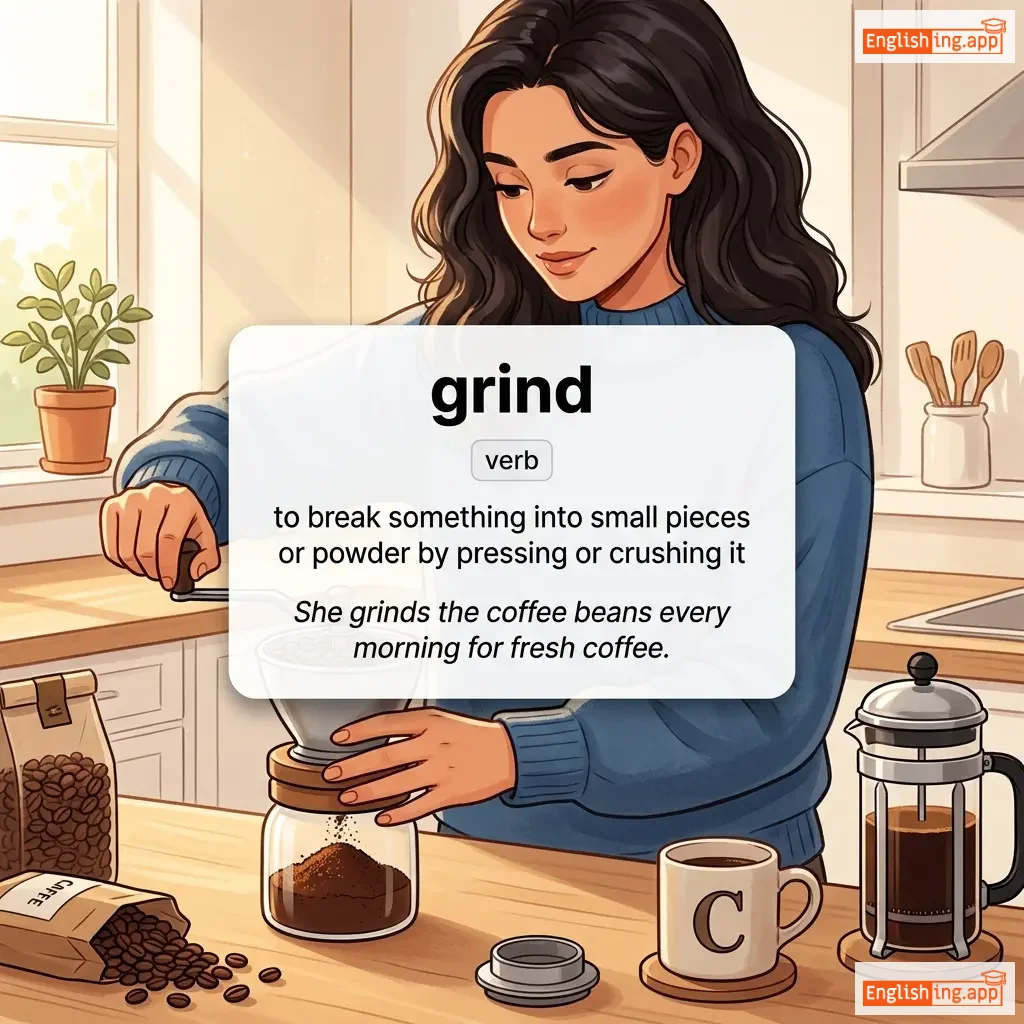
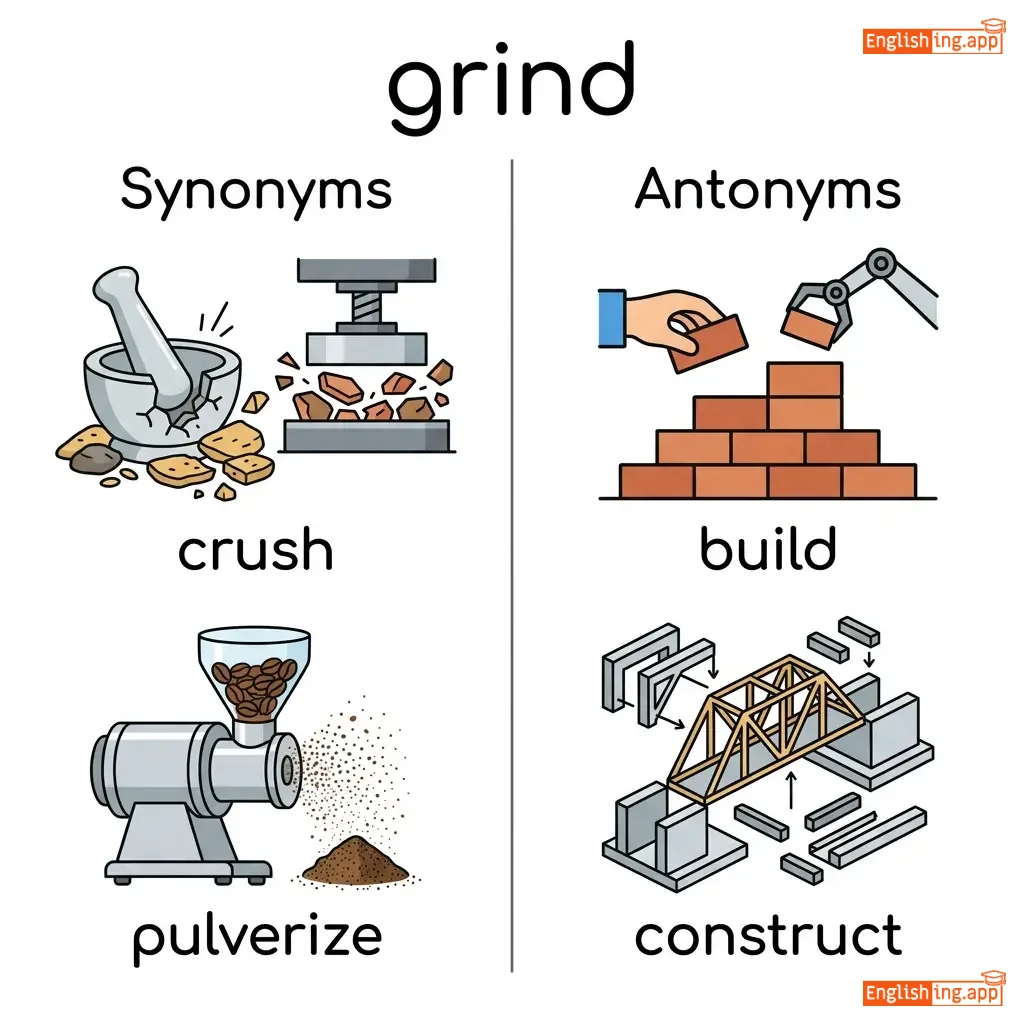
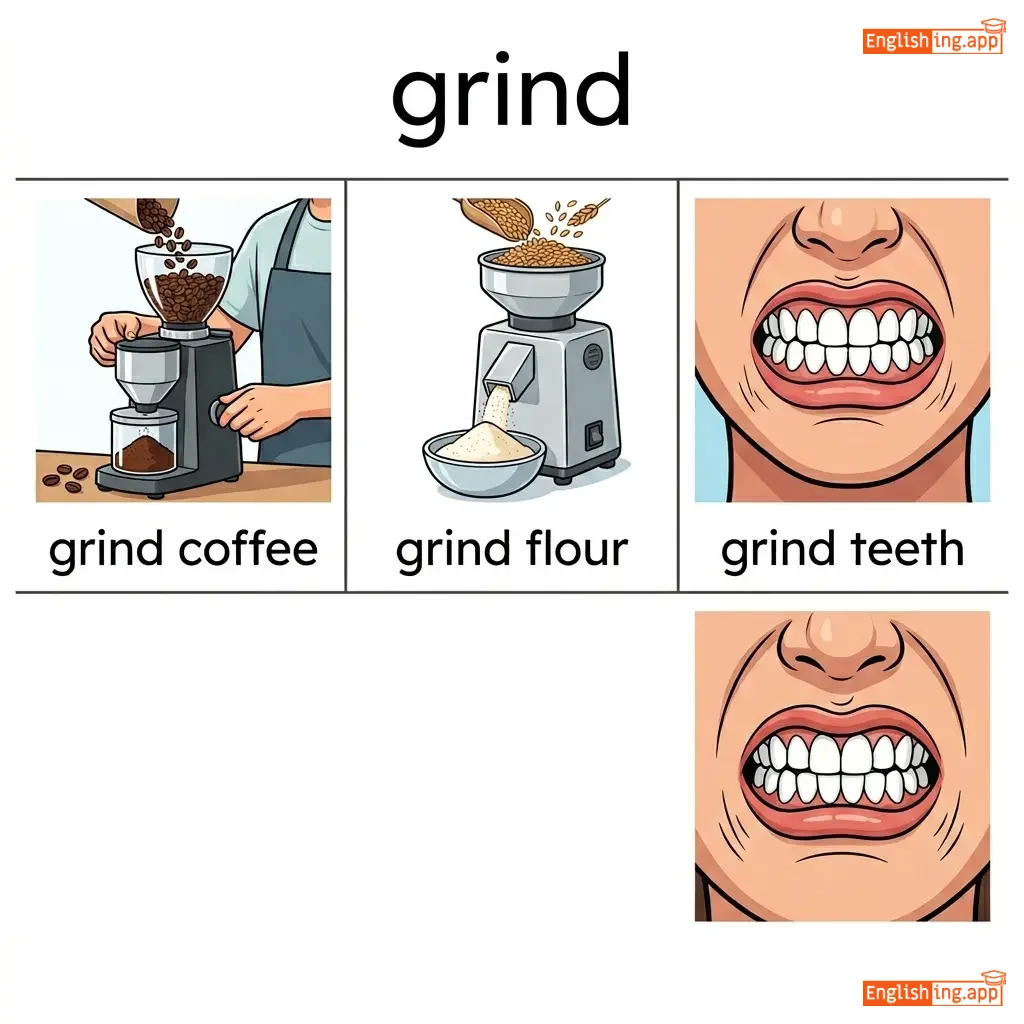
to crush into small particles; to work hard
••••••
|
She grinds coffee beans every morning.
彼女は毎朝コーヒー豆を挽く。
••••••
|
彼女は毎朝コーヒー豆を挽く。
Kanojo wa mai asa kōhī mame o hiku.
••••••
|
- •••••• | - •••••• | - •••••• |
crush, mill, pulverize, work hard
••••••
|
assemble, construct, relax, rest
••••••
|
grind coffee, grind slowly, grind finely, grind daily, grind fresh
••••••
|
コーヒーを挽く、毎日がんばろう!
••••••
|
|
❄️
••••••
|
/hɑːrʃ/
adjective
(ハーシュ)
••••••
|
- •••••• |
厳しい
kibishii
••••••
|
- •••••• | - •••••• | - •••••• | - •••••• |
Unpleasantly rough or severe in sound, taste, conditions, or treatment.
••••••
|
The teacher's harsh tone frightened the students. |
先生の厳しい口調が生徒たちを驚かせた。
Sensei no kibishii kuchou ga seitotachi wo odokaseta.
••••••
|
harsh reality |
The unpleasant truth of a situation.
••••••
|
厳しい現実
Kibishii genjitsu
••••••
|
severe, stern, rough, cruel, brutal
••••••
|
gentle, mild, soft
••••••
|
harsh criticism, harsh reality, harsh conditions, harsh treatment
••••••
|
厳しい (kibishii) 冬の冷たさのような現実。
••••••
|
|
👻
••••••
|
/hɔːnt/
verb
••••••
|
|
- •••••• |
haunted
••••••
|
haunted
••••••
|
haunts
••••••
|
haunting
••••••
|
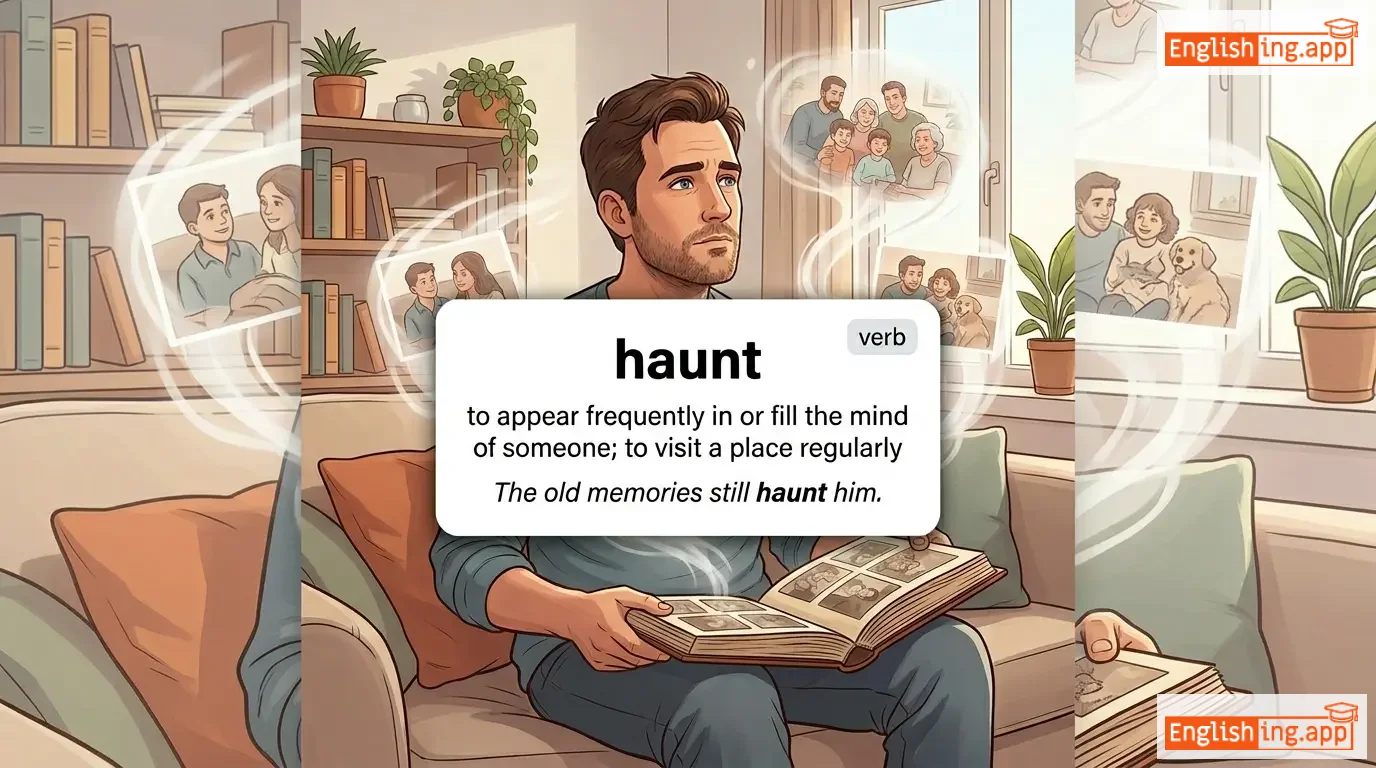
to appear frequently in or fill the mind of someone; to visit a place regularly
••••••
|
The old memories still haunt him. |
- •••••• |
haunt one's dreams |
to repeatedly trouble or disturb someone mentally
••••••
|
- •••••• |
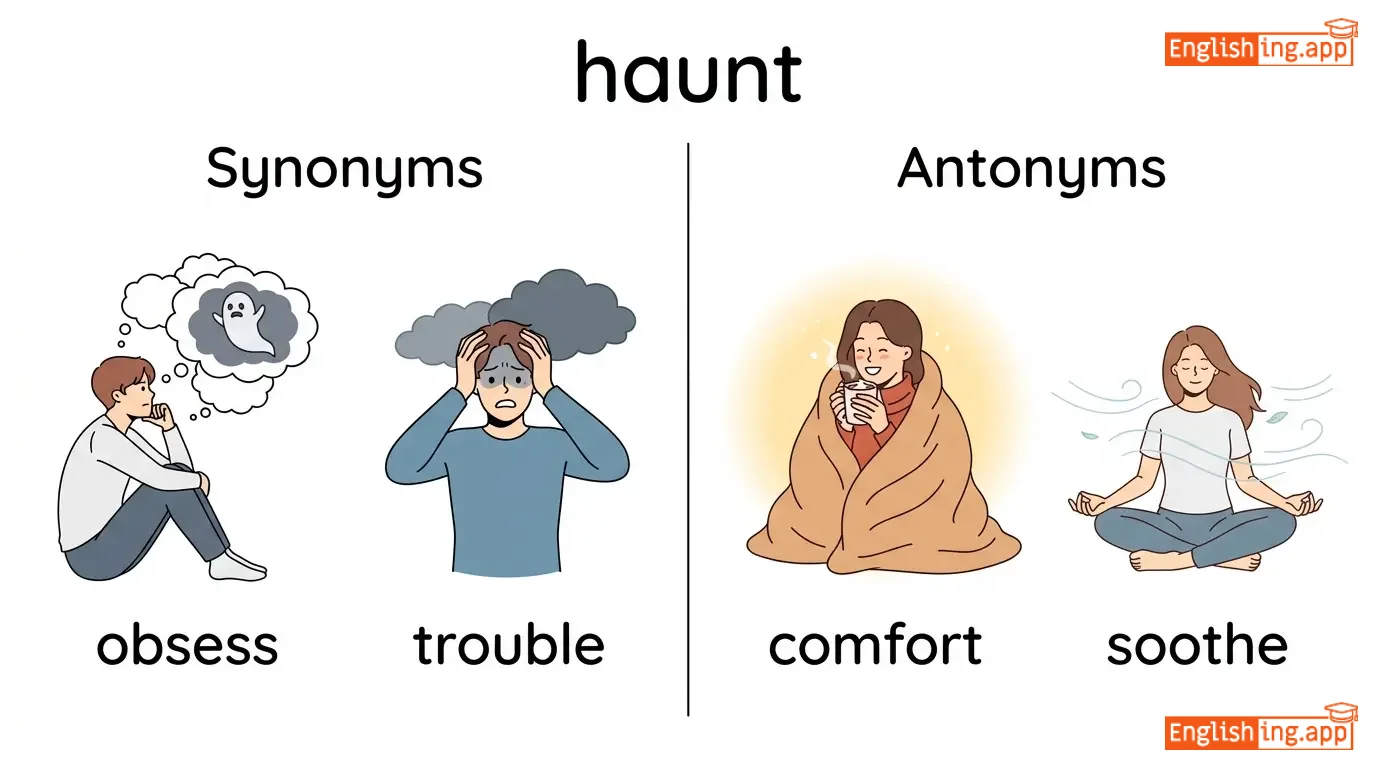
obsess, trouble, torment, visit, linger
••••••
|
comfort, soothe, forget
••••••
|
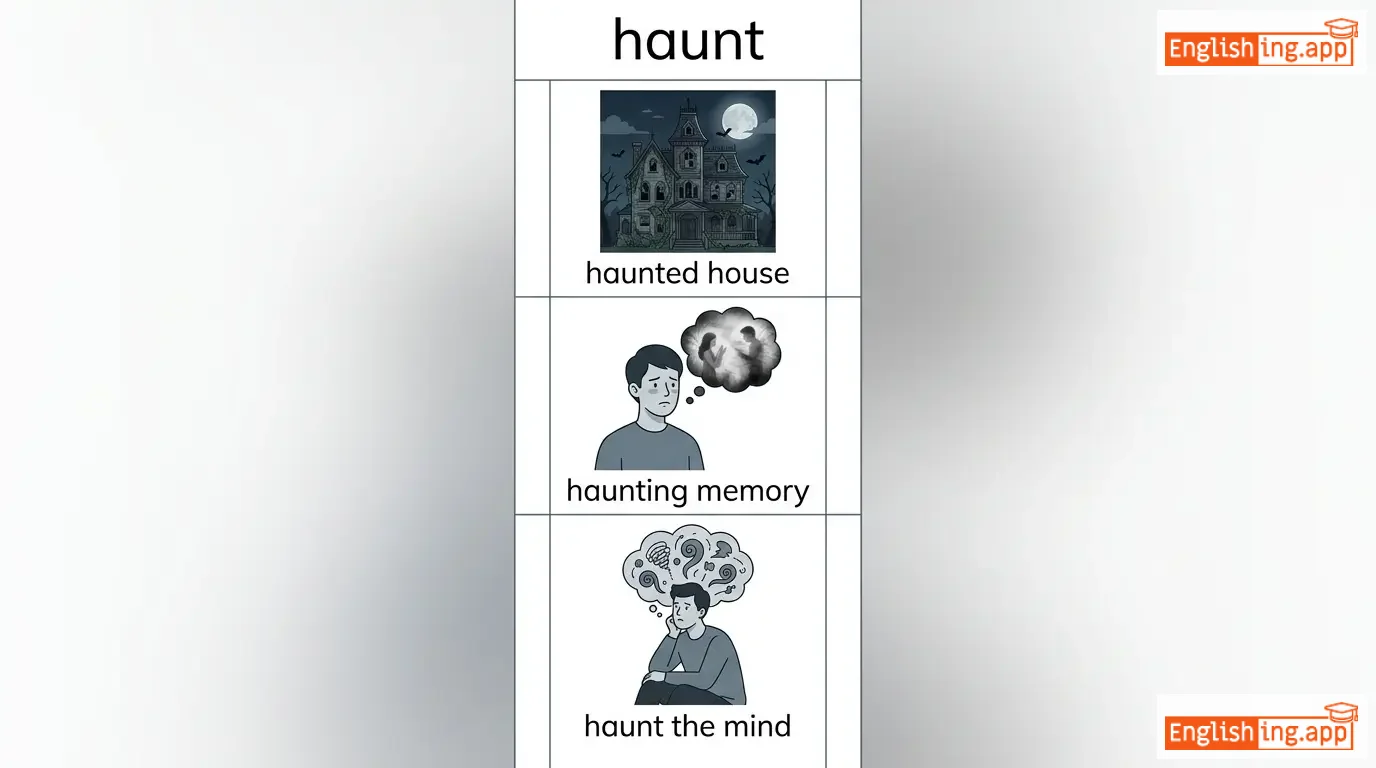
haunted house, haunting memory, haunt the mind, old haunt
••••••
|
No •••••• |
|
👋
••••••
|
/həˈloʊ/
interjection
(ハロー)
••••••
|
- •••••• |
ハロー
harō
••••••
|
- •••••• | - •••••• | - •••••• | - •••••• |
a greeting or expression used when meeting someone or starting a conversation
••••••
|
She answered the phone with a cheerful hello.
彼女は電話を取って、元気にハローと言った。
••••••
|
彼女は電話を取って、元気にハローと言った。
Kanojo wa denwa o totte, genki ni harō to itta.
••••••
|
say hello to
誰かにハローを言う
••••••
|
to greet someone
••••••
|
誰かにハローを言う
dareka ni harō o iu
••••••
|
hi, greetings, hey, howdy, welcome
••••••
|
goodbye, farewell
••••••
|
say hello, hello there, big hello, hello everyone
••••••
|
日本語では'ハロー'と言います、英語の'hello'と同じように。
••••••
|
|
➡️
••••••
|
/hɛns/
adverb
(ヘンス)
••••••
|
- •••••• |
それゆえ
soreyue
••••••
|
- •••••• | - •••••• | - •••••• | - •••••• |
for this reason; as a result
••••••
|
She was the best candidate, hence she was chosen for the job.
彼女は最良の候補者であったため、仕事のために選ばれました。
••••••
|
彼女は最良の候補者であったため、仕事のために選ばれました。
Kanojo wa sairyō no kōhosha de atta tame, shigoto no tame ni erabaremashita.
••••••
|
hence the reason
そのための理由
••••••
|
used to introduce the explanation for something
••••••
|
そのための理由
sono tame no riyū
••••••
|
therefore, thus, consequently, accordingly
••••••
|
however, nevertheless
••••••
|
hence why, hence the need, hence the importance
••••••
|
Hence – それゆえ、結果または理由を示す ➡️
••••••
|
|
🐎
••••••
|
/hɔːrs/
noun
(ホース)
••••••
|
- •••••• |
馬
uma
••••••
|
- •••••• | - •••••• | - •••••• | - •••••• |
a large, strong animal used for riding, racing, or carrying loads
••••••
|
The horse ran across the field.
ホースランアクロスフィールド
••••••
|
馬は野原を駆け抜けました。
Uma wa nohara o kakenukemashita.
••••••
|
hold your horses
hold your horses
••••••
|
wait or be patient
••••••
|
ちょっと待って
Chotto matte
••••••
|
stallion, mare, pony, steed, nag
••••••
|
donkey, mule
••••••
|
ride a horse, wild horse, horse racing
••••••
|
馬: 馬に乗って草原を駆け抜ける姿を思い浮かべてください。
••••••
|
|
🧑
••••••
|
/ˈhjuːmən/
noun, adjective
(ヒューマン)
••••••
|
|
人間
ningen
••••••
|
- •••••• | - •••••• | - •••••• | - •••••• |
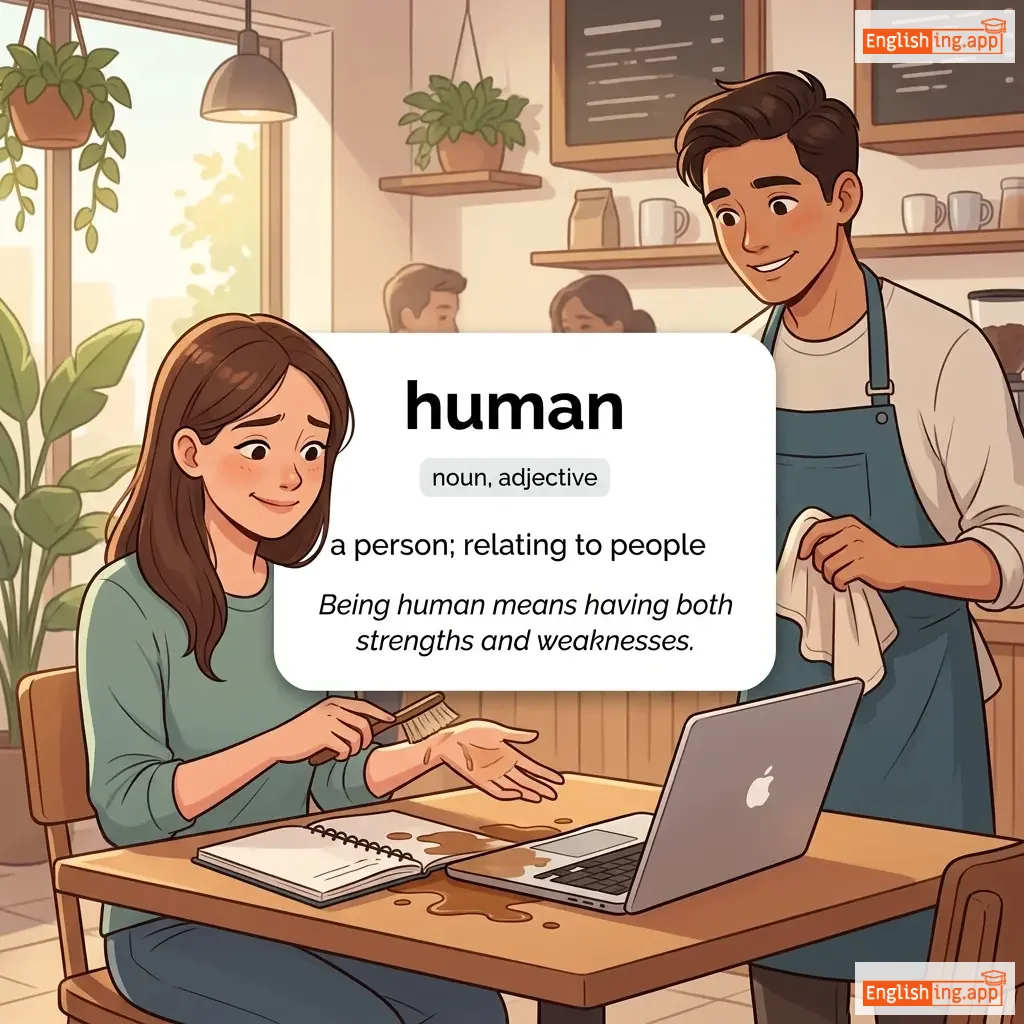
a person; relating to people
••••••
|
Being human means having both strengths and weaknesses. |
人間であることは、強さと弱さの両方を持つことを意味します。
Ningen de aru koto wa, tsuyo-sa to yowa-sa no ryōhō o motsu koto o imi shimasu.
••••••
|
to err is human |
making mistakes is a natural part of being human
••••••
|
過ちは人間の本性
ayamani wa ningen no honshō
••••••
|
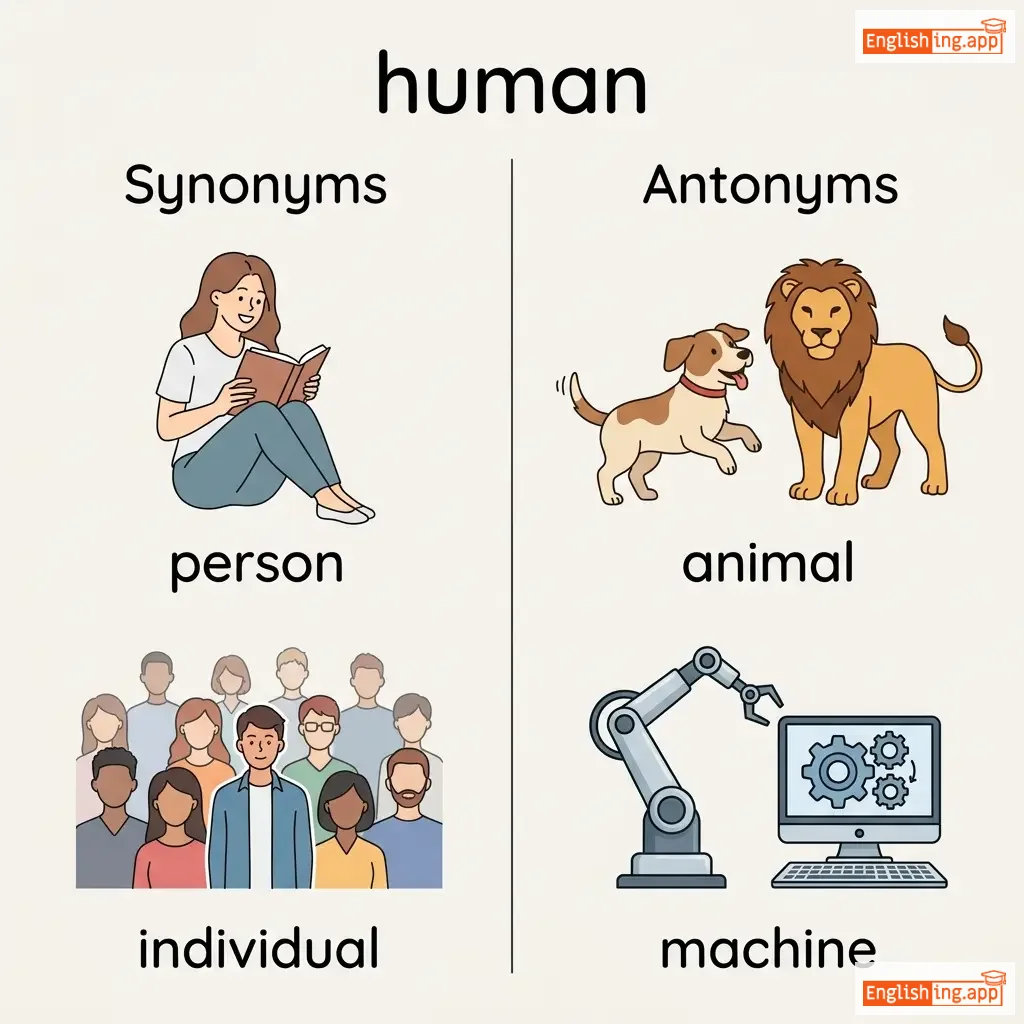
person, individual, mortal, man, woman
••••••
|
animal, machine, robot
••••••
|
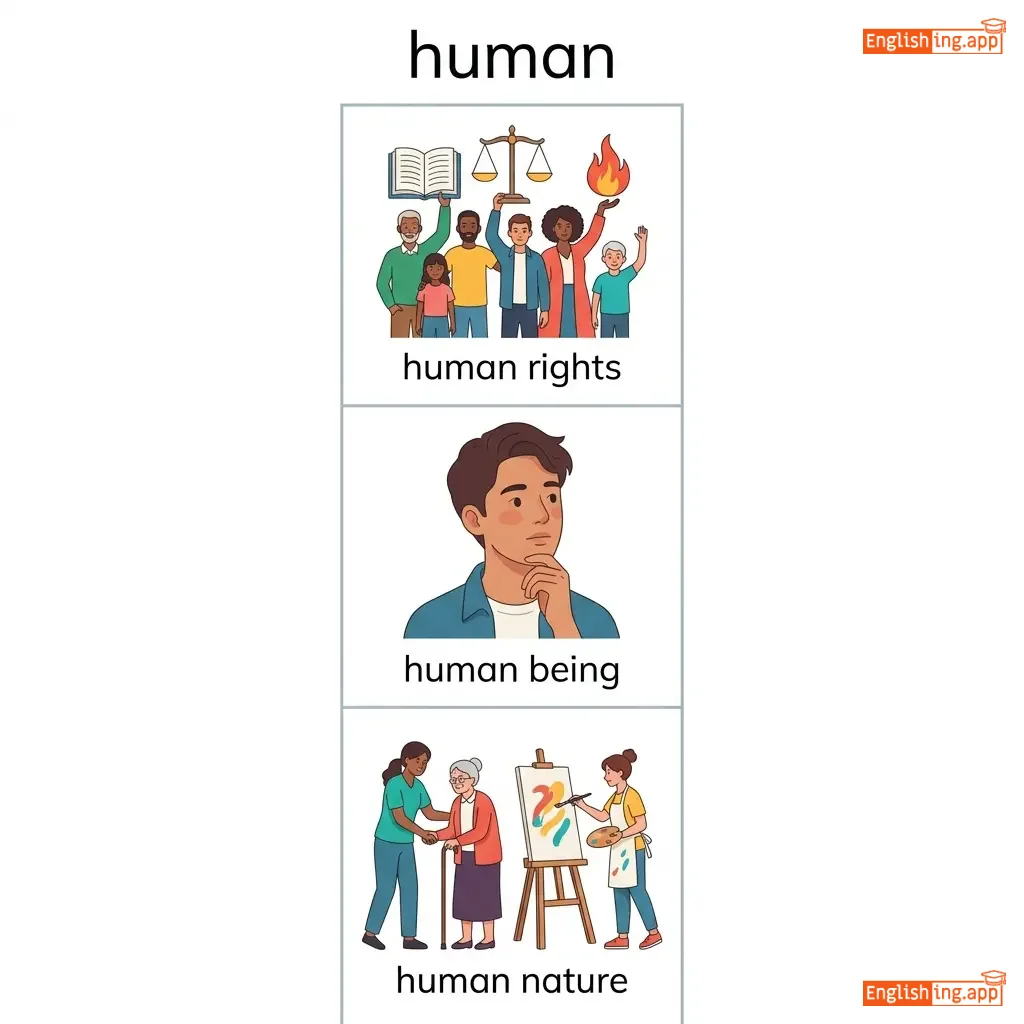
human rights, human being, human nature, human body
••••••
|
Human = 'ningen' (人間) → それは人間が持つ特性です。
••••••
|
|
🔪
••••••
|
/naɪf/
noun
(ハピネス)
••••••
|
- •••••• |
幸福
kōfuku
••••••
|
- •••••• | - •••••• | - •••••• | - •••••• |
a tool or weapon with a blade and a handle, used for cutting
••••••
|
He used a sharp knife to cut the vegetables. |
彼女は賞を受け取ったとき、喜びを隠すことができませんでした。
Kanojo wa shō o uketotta toki, yorokobi o kakusu koto ga dekimasen deshita.
••••••
|
at knife's edge |
in a very tense or dangerous situation
••••••
|
幸せの追求
Shiawase no tsuikyū
••••••
|
blade, cutter, dagger, utensil, scalpel
••••••
|
spoon, fork
••••••
|
sharp knife, kitchen knife, knife blade, knife attack
••••••
|
幸福は喜び、簡単に覚えられる。
••••••
|

