The Girl Who Crossed the Cliff
莉娜住在一个小村庄。她想穿过山间的cliff(峭壁)去到下一个村庄。但那条路非常harsh。
她的祖母会说:“那座cliff很危险。那里有一片dense的森林。有人说住着giant熊。有人说ghosts haunt那里。”
“但我被given了勇气,”莉娜说。“我是human。我可以做到。”
她做了准备。带了一把knife。在包里装了flour——路上用来做bread。她穿上最好的一件dress——不华丽,但结实。还带了厚实的gloves——用于攀爬。
“Hello,”她开始旅程时对山说。“我会cross过你。”
第一天还好。她沿着狭窄的小路走。但第二天,森林变得dense。树木如此茂密,几乎没有光透进来。
“这个地方haunts我,”她低声说。影子看起来像ghosts。声音听起来像giants在行走。
但她继续前行。她用knife在树上做记号——以免迷路。她的手被gloves保护着,划开了灌木。
第三天,她到达了cliff的边缘。下面是一片巨大的depth——数千英尺的落差。有一段木制的fence,但很多地方已经坏了。
“我要怎么过去?”她想。Cliff太宽,不能跳过去。下去再爬上去又太harsh。
然后她发现了一座旧的绳索桥。但它看起来很危险。绳索在岩石上grinding。随时可能断裂。
“我必须grasp我的勇气,”她对自己说。
一步一步,她走过了桥。每当风吹时,桥便摇晃。她紧抓绳索,用gloved的手防止被割伤。
过半时,一根绳子断了。桥倾斜了。莉娜的心顿时停止。
“我是human,”她提醒自己。“我可以活下来。”
她调整了平衡。她又快又小心地移动。最终,她到达了另一侧。
但随后她听到脚步声——fleet的脚步。是giant吗?是ghost?
不是。是一匹野生的horse——美丽而自由。
“Hello,”莉娜轻声说。Horse停下了。它看着她——不是恐惧,而是好奇。
莉娜慢慢靠近。她拿出一些flour——她把面粉和水混合,做成小饼。她把饼喂给horse。
Horse吃了。然后它鞠了一躬——仿佛示意莉娜可以骑上它。
“谢谢,”莉娜低语。她爬上了horse。他们一起穿过dense的森林,越过陡峭的山路。
多年以后,当莉娜成为一名向导时,她会告诉年轻的旅行者:
“那次旅程教会了我很多。Cliffs看似不可能,但总有办法。Dense的森林看似无尽,但耐心会带你走过去。Harsh的环境会考验你,但不会定义你。”
“那ghosts和giants呢?”有人问。
“那些是我的恐惧,”莉娜笑着说。“困扰我的并非真实的ghosts——而是我自己的怀疑。看起来像giants的只是影子。作为human,我们最大的敌人常常是我们自己的心智。”
“那匹horse呢?”
“自然会帮助那些有勇气向它说hello的人,”莉娜解释道。“那天我不仅被given勇气——还得到了一个伙伴。Hence,我学到——在harsh的荒野中,善意很重要。一点flour饼就能建立信任。”
“告诉我们关于越过cliff的事,”另一个人问。
“Cliff教会了我depth——不仅是身体上的,还有心理上的,”莉娜说。“当你站在边缘,望向下面的depth时,你必须grasp你的勇气。你的gloves保护你的手,但是什么保护你的心?是你的决心。”
“那fence是破的,”她继续说。“在人生中,安全网并不总是存在。你必须成为你自己的安全。绳桥在grinding,逐渐磨损——就像挑战磨损我们一样。但如果你继续前进,如果你不在恐惧中freeze,你就会过来。”
“我带着knife以防万一,”莉娜补充道。“但我从未用它对付任何生物。我用它标记路途,切开障碍。工具是用来解决问题的,不是制造问题。”
“你的dress——”有人注意到。“你为什么说它不fancy?”
“因为fancy在harsh的环境里无用,”莉娜笑道。“实用有用。漂亮的dress会在dense的森林里撕裂。结实、简单的衣物才经得住。生活不是为了好看,而是为了准备好。”
“当你感到haunted时呢?”
“我记得我还是human,”莉娜认真地说。“我们会feel害怕。这很自然。但我们也有理智、勇气、决心。Ghosts haunt只有在你允许时才存在。Giants只会吓你,如果你相信它们不可战胜。实际上,大多数恐惧只是被我们的想象赋予了power的影子。”
“Hence,教训是什么?”旅行者们问。
莉娜微笑着说:“Hence,教训是——穿越dense森林、越过cliff边缘、面对挑战的depth的harsh旅程,不要求你是超人。它们要求你grasp你的为人。你被given的工具——勇气、善良、务实的思维。你向挑战说hello,而不是逃跑。你的gloves保护重要的东西。你的knife解决问题。你简单的flour建立联系。你结实的dress,而不是fancy的外表。最重要的是——你那颗human的心,不让恐惧haunt你,不把影子当作giants,即便fence断裂也继续grinding前行,不惧怕depth而尊重它。”
年轻的旅行者们明白了——冒险不需要魔法,而需要human的勇气。Cliffs的跨越不只是靠fleet的双脚,而是靠grasping的决心。有时,harsh的旅程就是老师,而你结交的那匹野horse成为了你所需的朋友,曾经让你害怕的dense森林变成你掌握的道路——这一切因为你向挑战说了hello,接受了被given的勇气,并信任了自己的human力量。
|
表情符号
|
单词 | Images | 翻译 | 过去时 | 过去分词 | 第三人称单数 | 动名词 | 含义 | 例句 | 例句翻译 | 示例表达 | 示例表达含义 | 示例表达翻译 | 同义词 | 反义词 | 搭配词 | 助记符 |
|---|---|---|---|---|---|---|---|---|---|---|---|---|---|---|---|---|---|
|
⛰️
••••••
|
/klɪf/
noun
(klɪf)
••••••
|
- •••••• |
悬崖
xuán yá
••••••
|
- •••••• | - •••••• | - •••••• | - •••••• |
a high, steep face of rock or earth
••••••
|
The waves crashed against the bottom of the cliff. |
波浪撞击悬崖底部。
Bōlàng zhuàngjí xuányá dǐbù.
••••••
|
on the edge of a cliff |
in a very dangerous or risky situation
••••••
|
处于非常危险或冒险的境地
chǔ yú fēicháng wēixiǎn huò màoxiǎn de jìngdì
••••••
|
precipice, bluff, escarpment, rock face
••••••
|
valley, plain
••••••
|
high cliff, sea cliff, steep cliff, rocky cliff
••••••
|
悬崖意味着悬崖,想象如果你从悬崖掉下去,'生命'就结束了!
••••••
|
|
🌲
••••••
|
/dɛns/
adjective
(dēnsī)
••••••
|
- •••••• |
密集的
mìjí de
••••••
|
- •••••• | - •••••• | - •••••• | - •••••• |
Closely compacted in substance; having parts crowded together.
••••••
|
The forest was so dense that little sunlight reached the ground. |
森林是如此密集,以至于只有很少的阳光照射到地面。
Sēnlín shì rúcǐ mìjí, yǐzhì zhǐ yǒu hěn shǎo de yángguāng zhàoshè dào dìmiàn.
••••••
|
dense fog |
Thick fog that reduces visibility.
••••••
|
浓雾
nóng wù
••••••
|
thick, compact, crowded, heavy, solid
••••••
|
thin, sparse, light
••••••
|
dense forest, dense fog, dense population, dense crowd
••••••
|
Dense 意味着密集 - 记住 dense forest 意味着密集森林。
••••••
|
|
🌊
••••••
|
/dɛpθ/
noun
(深度)
••••••
|
- •••••• |
深度
shendu
••••••
|
- •••••• | - •••••• | - •••••• | - •••••• |
The distance from the top to the bottom of something; the intensity or complexity of a subject.
••••••
|
The diver measured the depth of the ocean trench. |
潜水员测量了海洋沟壑的深度。
Qiánshuǐyuán cèliàngle hǎiyáng gōu hè de shēndù.
••••••
|
in depth |
In great detail or thoroughly.
••••••
|
深入
shēnrù
••••••
|
deepness, intensity, profoundness, extent, complexity
••••••
|
shallowness, surface, height
••••••
|
great depth, depth of knowledge, emotional depth, depth perception
••••••
|
Depth = 深度 = 去更深的地方。
••••••
|
|
👗
••••••
|
/drɛs/
noun/verb
(happiness)
••••••
|
- •••••• |
幸福
xìng fú
••••••
|
dressed
••••••
|
dressed
••••••
|
dresses
••••••
|
dressing
••••••
|
a one-piece garment for women or girls; to put on clothes
••••••
|
She wore a beautiful red dress to the party. |
她收到奖项时无法掩饰她的幸福。
Tā shōu dào jiǎng xiàng shí wú fǎ yǎn shì tā de xìng fú.
••••••
|
dressed to kill |
wearing clothes that are intended to impress others
••••••
|
追求幸福
zhuī qiú xìng fú
••••••
|
outfit, attire, garment, clothing
••••••
|
undress, nakedness
••••••
|
wear a dress, long dress, summer dress, dress code
••••••
|
幸福的感觉就是快乐的味道。
••••••
|
|
🚧
••••••
|
/fɛns/
noun/verb
(fens)
••••••
|
- •••••• |
篱笆
lí bā
••••••
|
fenced
fenced
••••••
|
fenced
fenced
••••••
|
fences
fences
••••••
|
fencing
fencing
••••••
|
a barrier, usually made of wood or wire, that surrounds an area; to enclose with a barrier
••••••
|
They built a fence around the garden.
他们在花园周围建了一道篱笆。
••••••
|
他们在花园周围建了一道篱笆。
Tāmen zài huāyuán zhōuwéi jiànle yī dào lí bā.
••••••
|
sit on the fence
坐在篱笆上
••••••
|
to avoid making a decision or choosing a side
••••••
|
避免做决定
bì miǎn zuò juédìng
••••••
|
barrier, wall, enclosure, hedge
••••••
|
opening, gap
••••••
|
wooden fence, garden fence, high fence, electric fence
••••••
|
篱笆是一种界限,围绕着某个区域,像保护圈一样。
••••••
|
|
🚢
••••••
|
/fliːt/
noun
(flit)
••••••
|
- •••••• |
舰队
jiànduì
••••••
|
- •••••• | - •••••• | - •••••• | - •••••• |
a group of ships, vehicles, or aircraft operating together under one command
••••••
|
The navy deployed its entire fleet for the exercise. |
海军为演习部署了整个舰队。
Hǎijūn wèi yǎnxí bùshǔle zhěnggè jiànduì.
••••••
|
a fleet of foot |
very fast and agile in movement
••••••
|
飞快如风
fēikuài rú fēng
••••••
|
armada, squadron, convoy, flotilla, group
••••••
|
individual, single
••••••
|
naval fleet, fishing fleet, fleet of cars, merchant fleet
••••••
|
Fleet 意味着 '舰队',像一群船只一起前进。
••••••
|
|
🥖
••••••
|
/ˈflaʊ.ər/
noun
(fúluò'ěr)
••••••
|
- •••••• |
面粉
mianfen
••••••
|
- •••••• | - •••••• | - •••••• | - •••••• |
a powder made by grinding grains, used for making bread, cakes, etc.
••••••
|
She bought a bag of flour to bake a cake. |
她买了一袋面粉来做蛋糕。
Ta mai le yi dai mianfen lai zuo dangao.
••••••
|
- •••••• | - •••••• | - •••••• |
meal, powder, starch, grain, ingredient
••••••
|
none, null
••••••
|
wheat flour, rice flour, all-purpose flour, cake flour
••••••
|
Flour 和 Flower 听起来相似,但制作蛋糕需要 Flour,而不是花!
••••••
|
|
👻
••••••
|
/ɡoʊst/
noun
(ɡəʊst)
••••••
|
- •••••• |
鬼魂
guihun
••••••
|
- •••••• | - •••••• | - •••••• | - •••••• |
the spirit of a dead person that is believed to appear to the living
••••••
|
She felt as if a ghost was watching her in the dark hallway. |
她感觉好像有个鬼魂在黑暗的走廊里看着她。
Tā gǎnjué hǎoxiàng yǒu gè guǐhún zài hēi'àn de zǒuláng lǐ kànzhe tā.
••••••
|
give up the ghost |
to die or to stop working
••••••
|
死去或停止工作
sǐqù huò tíngzhǐ gōngzuò
••••••
|
spirit, phantom, specter, apparition, soul
••••••
|
body, reality
••••••
|
ghost story, ghost house, ghost town, ghost sighting
••••••
|
鬼魂和ghost - 夜晚的阴影,悄悄地在黑暗中徘徊。
••••••
|
|
🗿
••••••
|
/ˈdʒaɪənt/
noun
(大巨人)
••••••
|
- •••••• |
巨人
jùrén
••••••
|
- •••••• | - •••••• | - •••••• | - •••••• |
an extremely large and powerful being or a very large person or thing
••••••
|
The company grew into a giant in the tech industry. |
公司在科技行业变成了巨人。
Gōngsī zài kējì hángyè biàn chéngle jùrén.
••••••
|
gentle giant |
a person who is very large but kind and gentle
••••••
|
温柔的巨人
wēnróu de jùrén
••••••
|
colossus, titan, behemoth, mammoth
••••••
|
dwarf, tiny
••••••
|
giant company, giant step, giant leap, giant figure
••••••
|
巨人 = giant,庞大的存在
••••••
|
|
✅
••••••
|
/ˈɡɪvən/
adjective
(吉文)
••••••
|
- •••••• |
已知的
yǐ zhī de
••••••
|
- •••••• | - •••••• | - •••••• | - •••••• |
Specified or stated; already decided or certain.
••••••
|
It is a given fact that hard work leads to success. |
这是一个已知的事实,努力工作通向成功。
Zhè shì yī gè yǐ zhī de shì shí, nǔ lì gōng zuò tōng xiàng chéng gōng.
••••••
|
take for granted |
To assume something as true or certain without questioning.
••••••
|
视为理所当然
shì wéi lǐ suǒ dāng rán
••••••
|
certain, established, fixed, determined
••••••
|
uncertain, doubtful
••••••
|
given situation, given fact, given conditions, given time
••••••
|
‘Given’是已经决定或者确定的,就像是事实已经是确定的。
••••••
|
|
🧤
••••••
|
/ɡlʌv/
noun
(ɡlʌv)
••••••
|
- •••••• |
手套
shǒutào
••••••
|
- •••••• | - •••••• | - •••••• | - •••••• |
A covering for the hand with separate parts for the fingers and thumb.
••••••
|
She wore gloves to protect her hands from the cold. |
她戴上手套保护双手免受寒冷。
Tā dàishàng shǒutào bǎohù shuāngshǒu miǎn shòu hánlěng.
••••••
|
fit like a glove |
To fit perfectly.
••••••
|
像手套一样合适
Xiàng shǒutào yīyàng héshì
••••••
|
mitt, mitten, handwear, covering
••••••
|
barehand, uncovered
••••••
|
wear gloves, leather gloves, boxing gloves, winter gloves
••••••
|
手套保暖,手上穿戴如温暖的爱。
••••••
|
|
✊
••••••
|
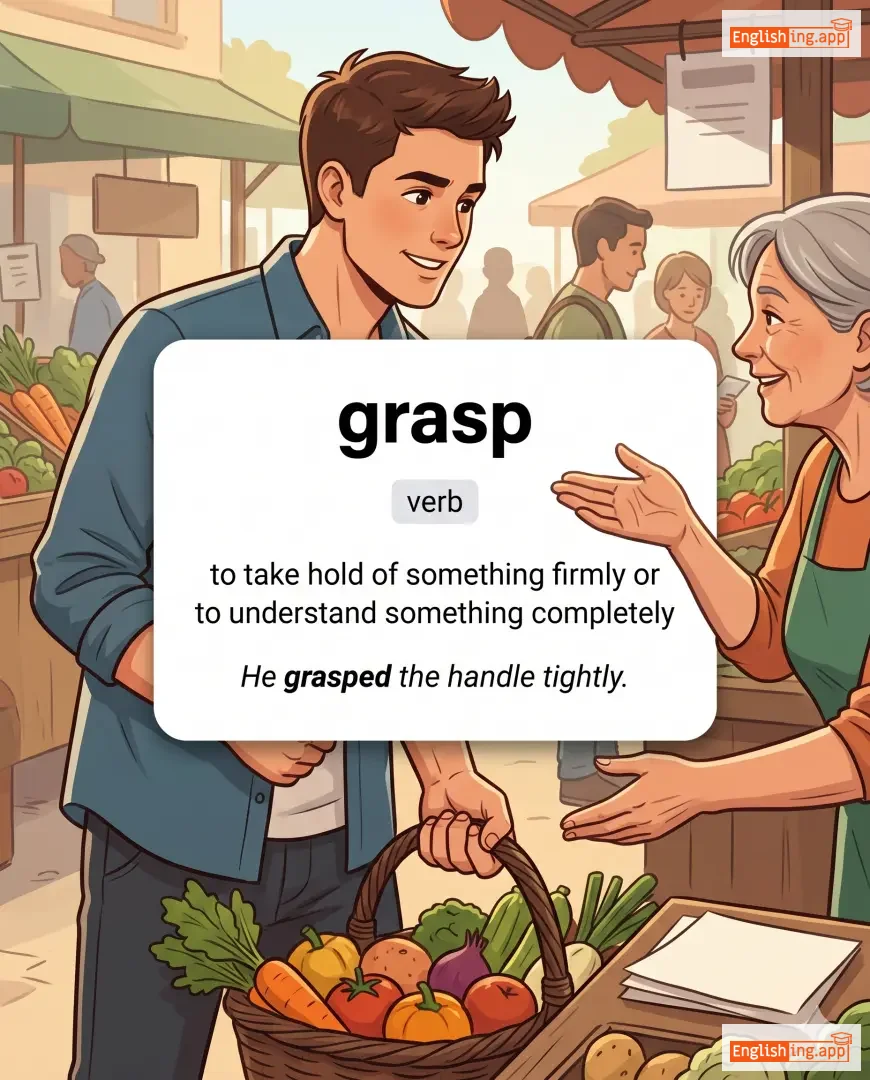
/ɡrɑːsp/
verb
(grasp)
••••••
|
|
牢牢抓住或完全理解
lao lao zhua zhu huo wan quan li jie
••••••
|
grasped
grasped
••••••
|
grasped
grasped
••••••
|
grasps
grasps
••••••
|
grasping
grasping
••••••
|
to take hold of something firmly or to understand something completely
••••••
|
He grasped the handle tightly.
他紧紧抓住了把手。
••••••
|
他紧紧抓住了把手。
Ta jin jin zhua zhu le ba shou.
••••••
|
grasp the nettle
抓住荨麻
••••••
|
to deal with a difficult situation with courage
••••••
|
勇敢地应对困难局面
Yong gan di ying dui kun nan ju mian
••••••
|
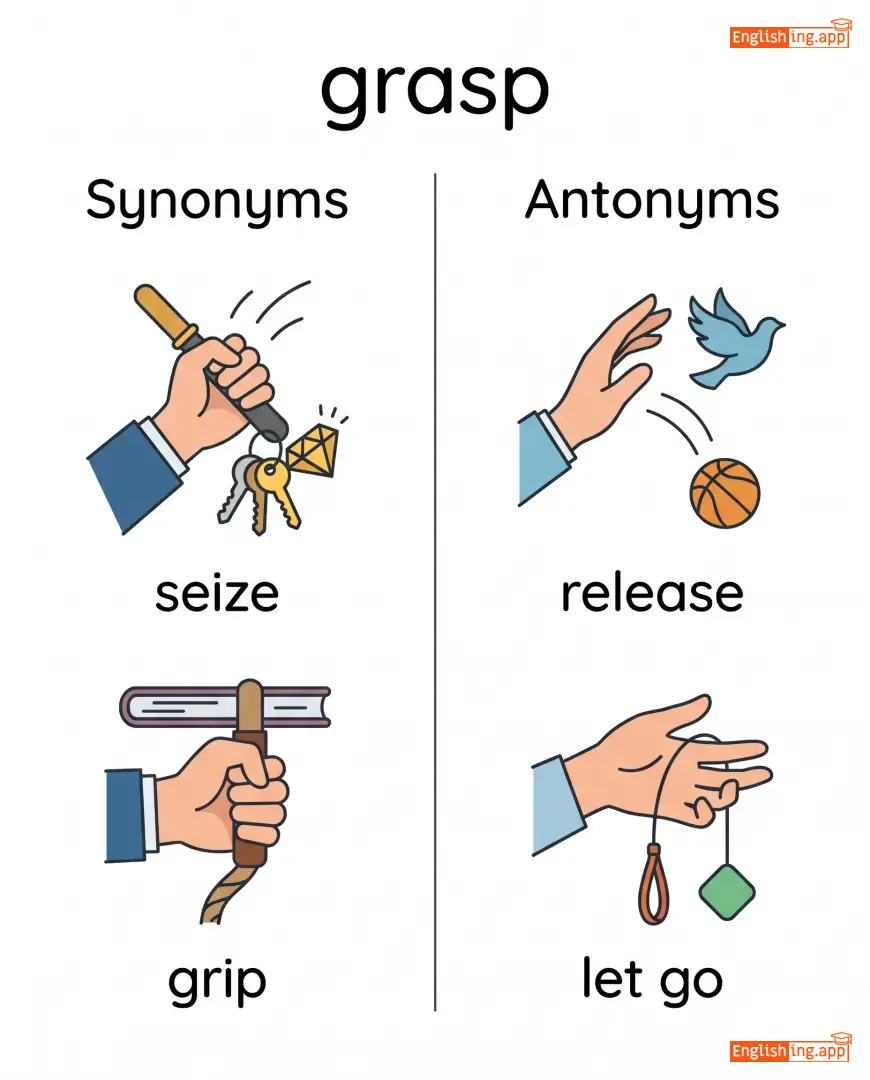
seize, grip, clutch, understand, comprehend
••••••
|
release, let go, misunderstand
••••••
|
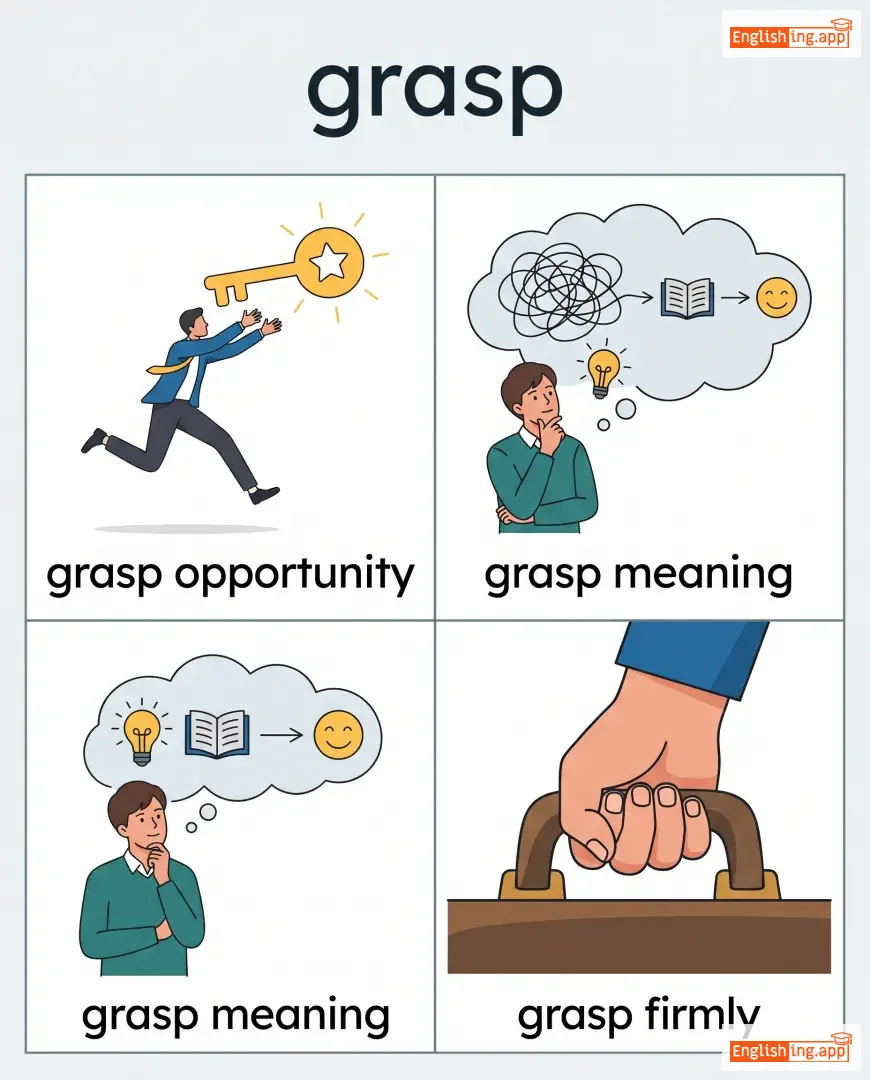
grasp opportunity, grasp meaning, grasp firmly, grasp concept
••••••
|
Grasp: 紧紧抓住或完全理解!
••••••
|
|
⚙️
••••••
|
/ɡraɪnd/
verb
(gū lěi)
••••••
|
|
磨碎
mó suì
••••••
|
ground
gū lěi
••••••
|
ground
gū lěi
••••••
|
grinds
gū lěi
••••••
|
grinding
gū lěi
••••••
|
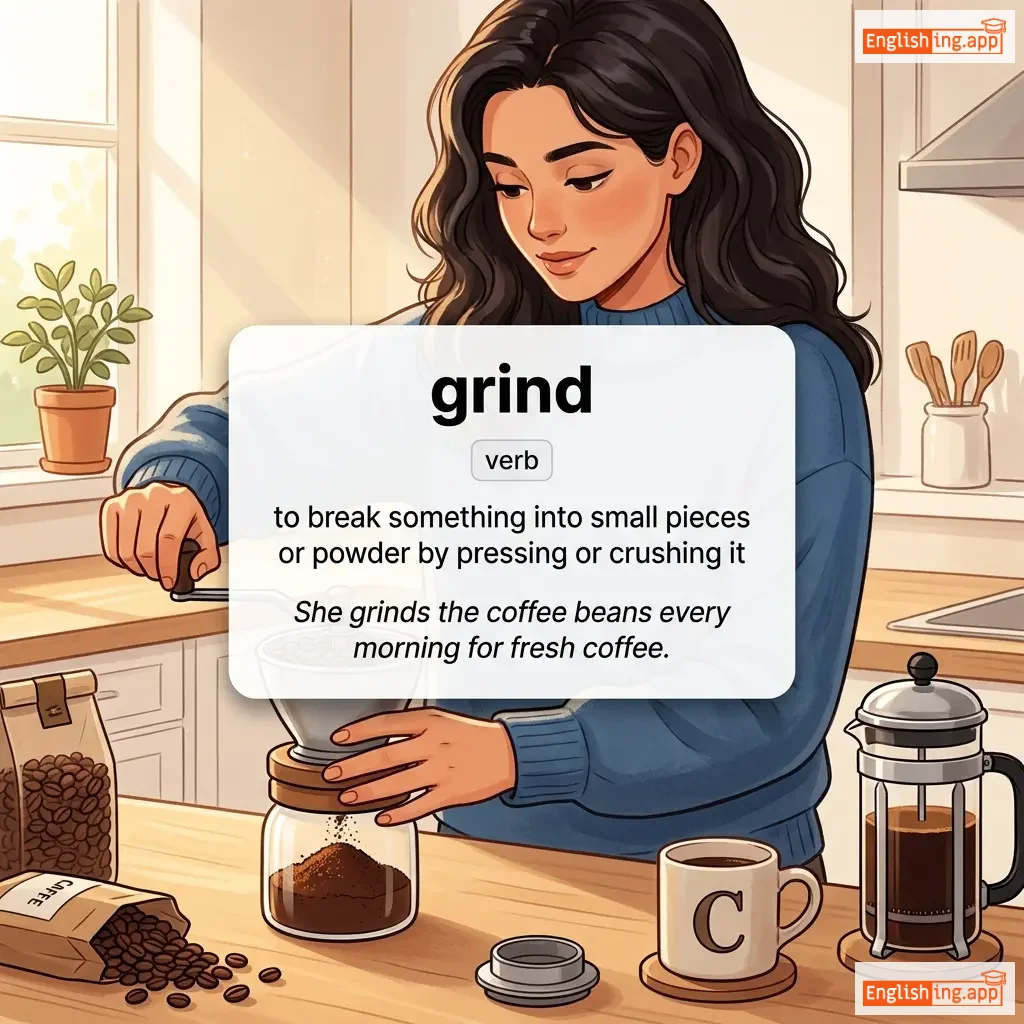
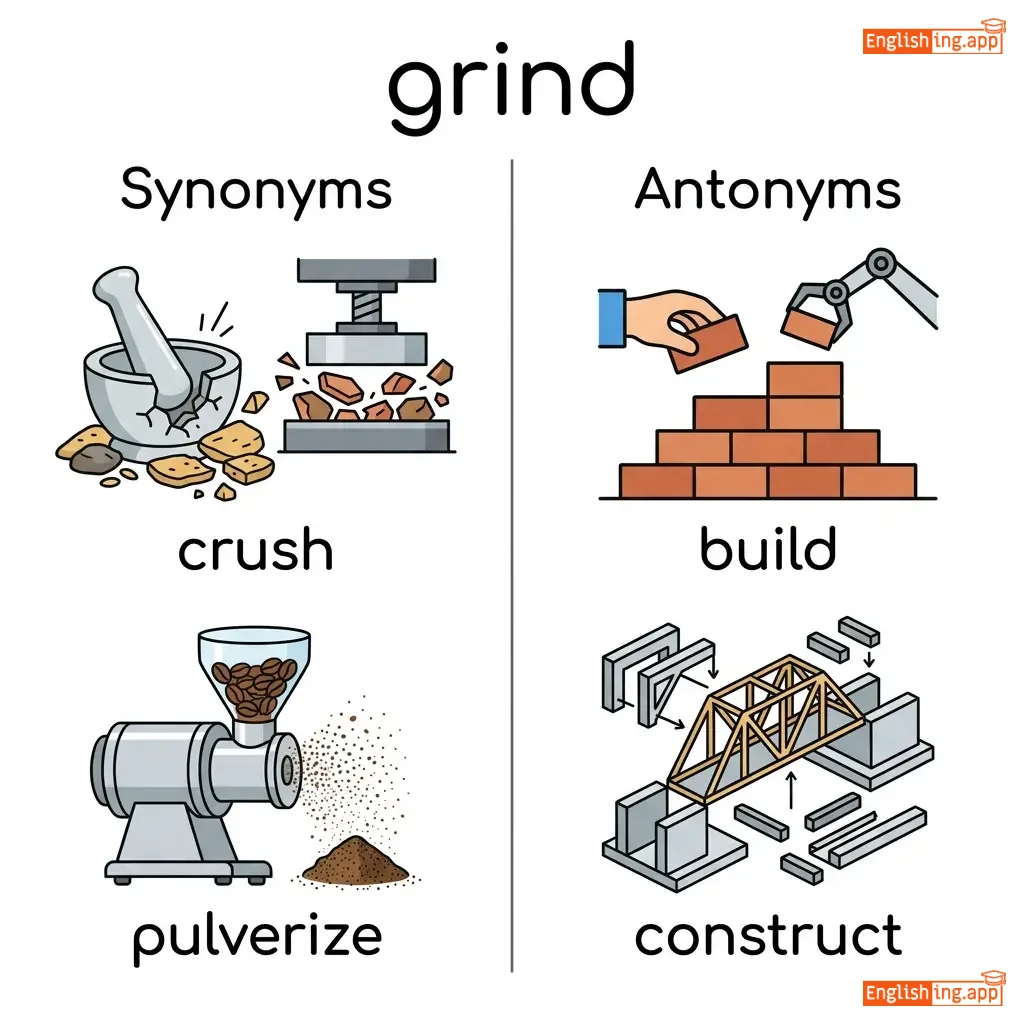
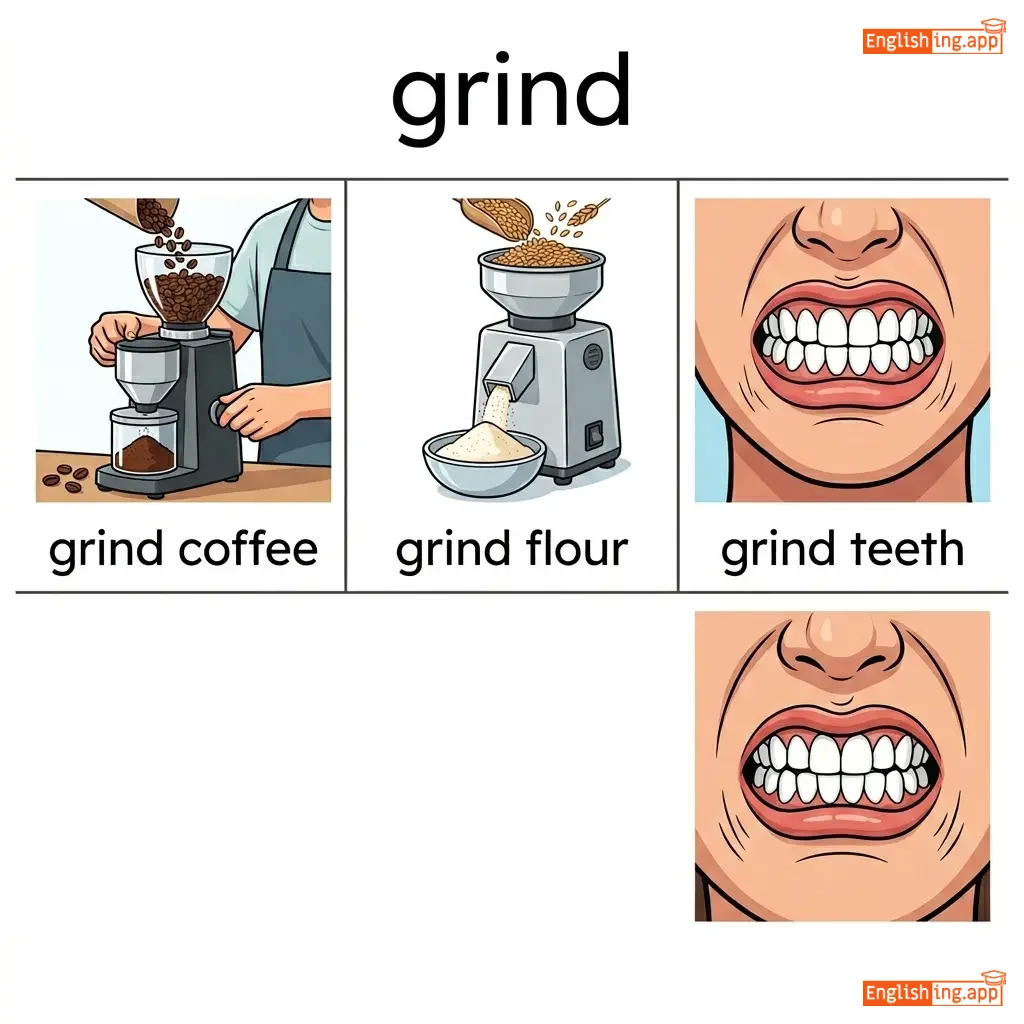
to crush into small particles; to work hard
••••••
|
She grinds coffee beans every morning.
她每天早晨磨咖啡豆。
••••••
|
她每天早晨磨咖啡豆。
Tā měitiān zǎochén mó kāfēi dòu.
••••••
|
- •••••• | - •••••• | - •••••• |
crush, mill, pulverize, work hard
••••••
|
assemble, construct, relax, rest
••••••
|
grind coffee, grind slowly, grind finely, grind daily, grind fresh
••••••
|
每天磨豆,直到磨成完美的咖啡!
••••••
|
|
❄️
••••••
|
/hɑːrʃ/
adjective
(哈什)
••••••
|
- •••••• |
严厉
yanli
••••••
|
- •••••• | - •••••• | - •••••• | - •••••• |
Unpleasantly rough or severe in sound, taste, conditions, or treatment.
••••••
|
The teacher's harsh tone frightened the students. |
老师严厉的语气吓到了学生。
Laoshi yanli de yuqi xiadao le xuesheng.
••••••
|
harsh reality |
The unpleasant truth of a situation.
••••••
|
严酷的现实
yanku de xianshi
••••••
|
severe, stern, rough, cruel, brutal
••••••
|
gentle, mild, soft
••••••
|
harsh criticism, harsh reality, harsh conditions, harsh treatment
••••••
|
严厉 (yanli) 冬天的严酷像一场暴风雪。
••••••
|
|
👻
••••••
|
/hɔːnt/
verb
••••••
|

|
- •••••• |
haunted
••••••
|
haunted
••••••
|
haunts
••••••
|
haunting
••••••
|
to appear frequently in or fill the mind of someone; to visit a place regularly
••••••
|
The old memories still haunt him. |
- •••••• |
haunt one's dreams |
to repeatedly trouble or disturb someone mentally
••••••
|
- •••••• |
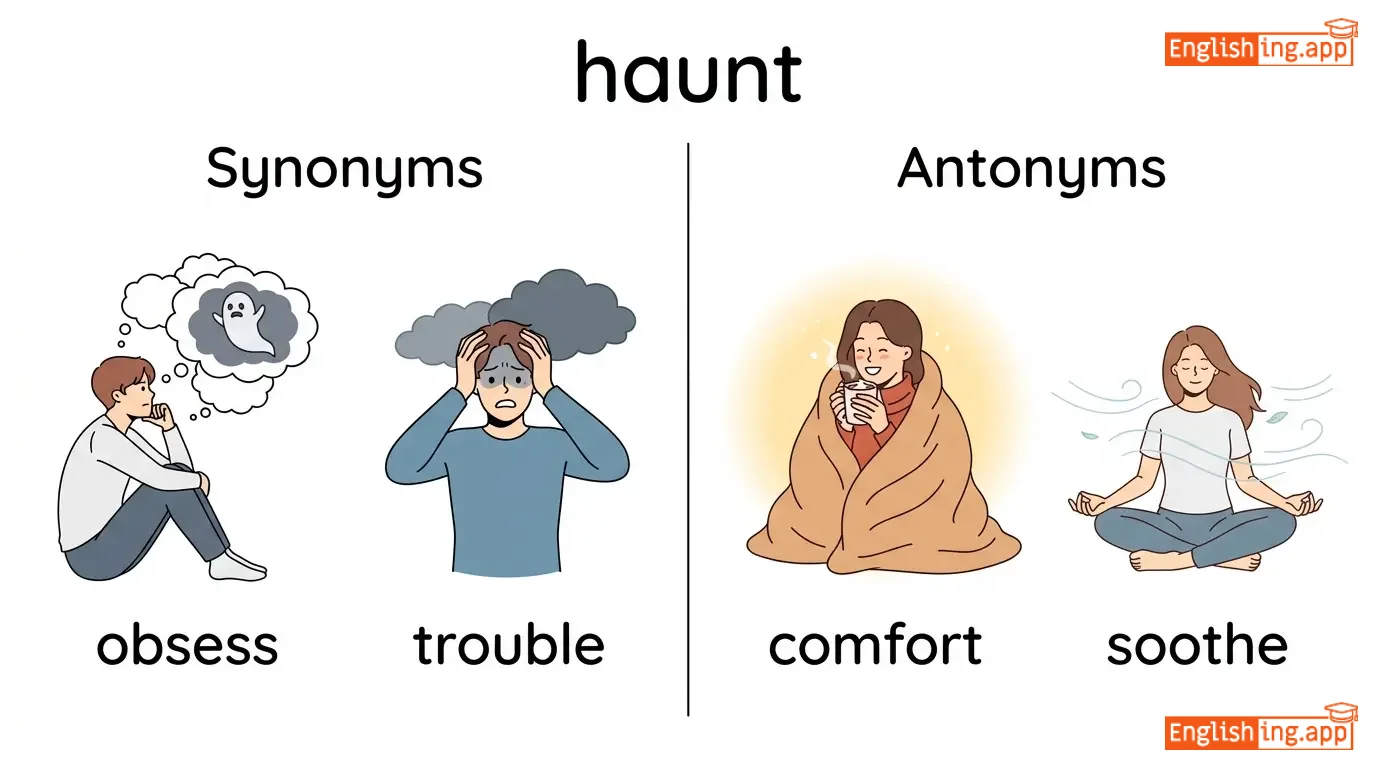
obsess, trouble, torment, visit, linger
••••••
|
comfort, soothe, forget
••••••
|
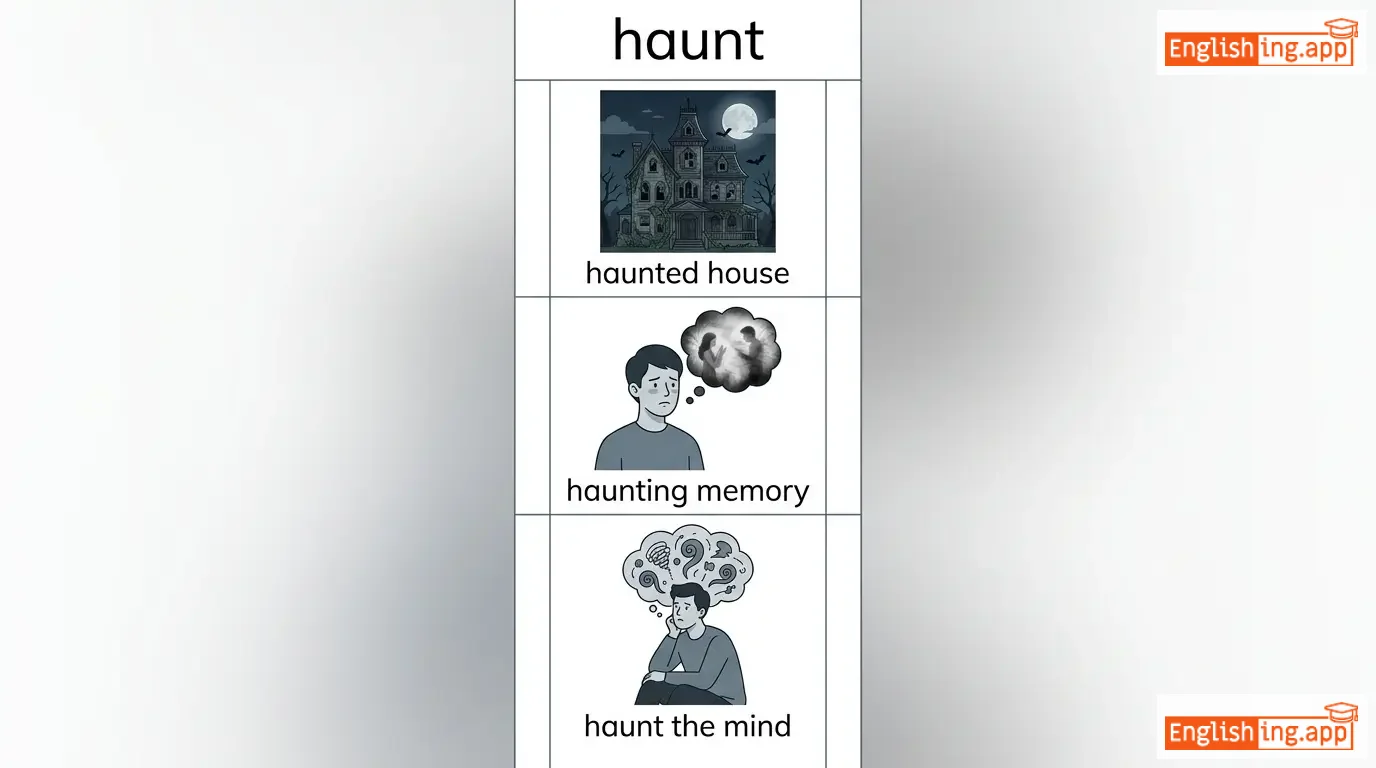
haunted house, haunting memory, haunt the mind, old haunt
••••••
|
No •••••• |
|
👋
••••••
|
/həˈloʊ/
interjection
(哈啰)
••••••
|
- •••••• |
哈啰
hā luō
••••••
|
- •••••• | - •••••• | - •••••• | - •••••• |
a greeting or expression used when meeting someone or starting a conversation
••••••
|
She answered the phone with a cheerful hello.
她高兴地接起电话说了声哈啰。
••••••
|
她高兴地接起电话说了声哈啰。
Tā gāo xìng de jiē qǐ diànhuà shuō le shēng hā luō.
••••••
|
say hello to
向某人打招呼
••••••
|
to greet someone
••••••
|
向某人打招呼
xiàng mǒu rén dǎ zhāo hū
••••••
|
hi, greetings, hey, howdy, welcome
••••••
|
goodbye, farewell
••••••
|
say hello, hello there, big hello, hello everyone
••••••
|
在中文中我们说'哈啰',就像英文中的'hello'。
••••••
|
|
➡️
••••••
|
/hɛns/
adverb
(亨斯)
••••••
|
- •••••• |
因此
yīncǐ
••••••
|
- •••••• | - •••••• | - •••••• | - •••••• |
for this reason; as a result
••••••
|
She was the best candidate, hence she was chosen for the job.
她是最优秀的候选人,因此她被选中担任这份工作。
••••••
|
她是最优秀的候选人,因此她被选中担任这份工作。
Tā shì zuì yōuxiù de hòuxuǎn rén, yīncǐ tā bèi xuǎnzhòng dānrèn zhè fèn gōngzuò.
••••••
|
hence the reason
因此的原因
••••••
|
used to introduce the explanation for something
••••••
|
因此的原因
yīncǐ de yuányīn
••••••
|
therefore, thus, consequently, accordingly
••••••
|
however, nevertheless
••••••
|
hence why, hence the need, hence the importance
••••••
|
Hence – 因此,指示结果或原因 ➡️
••••••
|
|
🐎
••••••
|
/hɔːrs/
noun
(hɔːrs)
••••••
|
- •••••• |
马
ma
••••••
|
- •••••• | - •••••• | - •••••• | - •••••• |
a large, strong animal used for riding, racing, or carrying loads
••••••
|
The horse ran across the field.
dā hɔːrs rǎn ài kèruò le fēi'ěrdù
••••••
|
马跑过了田野。
mǎ pǎo guò le tián yě.
••••••
|
hold your horses
hold your horses
••••••
|
wait or be patient
••••••
|
耐心等一下
nàixīn děng yīxià
••••••
|
stallion, mare, pony, steed, nag
••••••
|
donkey, mule
••••••
|
ride a horse, wild horse, horse racing
••••••
|
马:想象你骑马,马在草地上奔跑。
••••••
|
|
🧑
••••••
|
/ˈhjuːmən/
noun, adjective
(hūmàn)
••••••
|
|
人类
renlei
••••••
|
- •••••• | - •••••• | - •••••• | - •••••• |
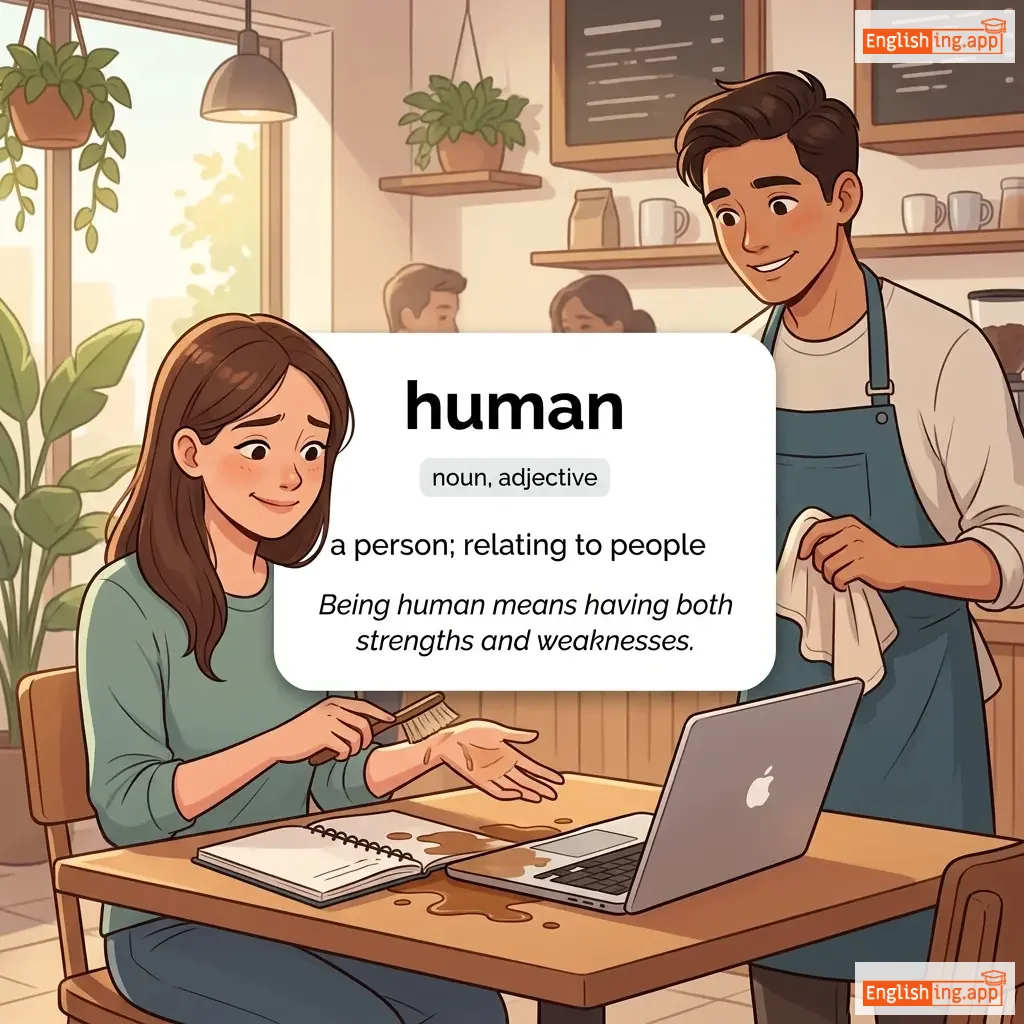
a person; relating to people
••••••
|
Being human means having both strengths and weaknesses. |
成为人类意味着拥有强项和弱点。
Chéngwéi rénlèi yìwèi zhe yǒngyǒu qiángxiàng hé ruòdiǎn.
••••••
|
to err is human |
making mistakes is a natural part of being human
••••••
|
犯错是人类的特征
fàn cuò shì rénlèi de tèzhēng
••••••
|
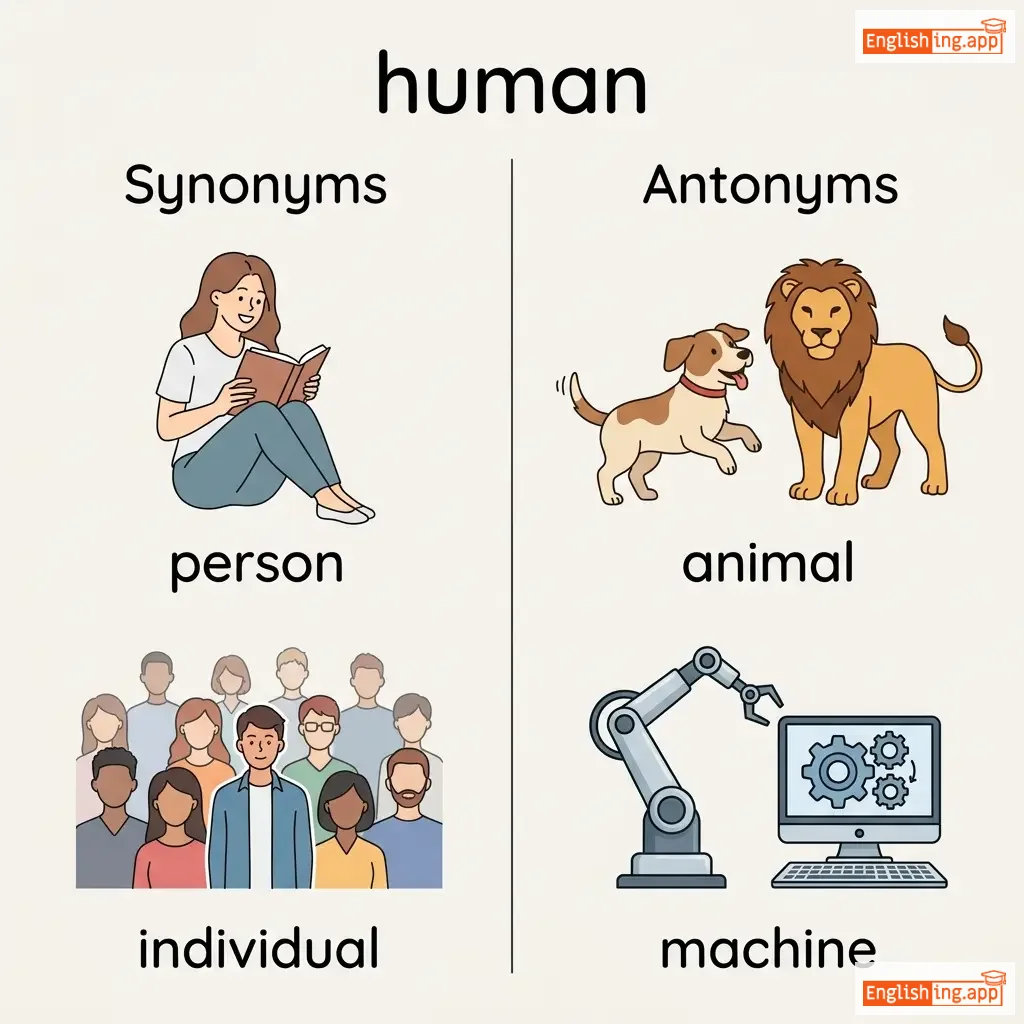
person, individual, mortal, man, woman
••••••
|
animal, machine, robot
••••••
|
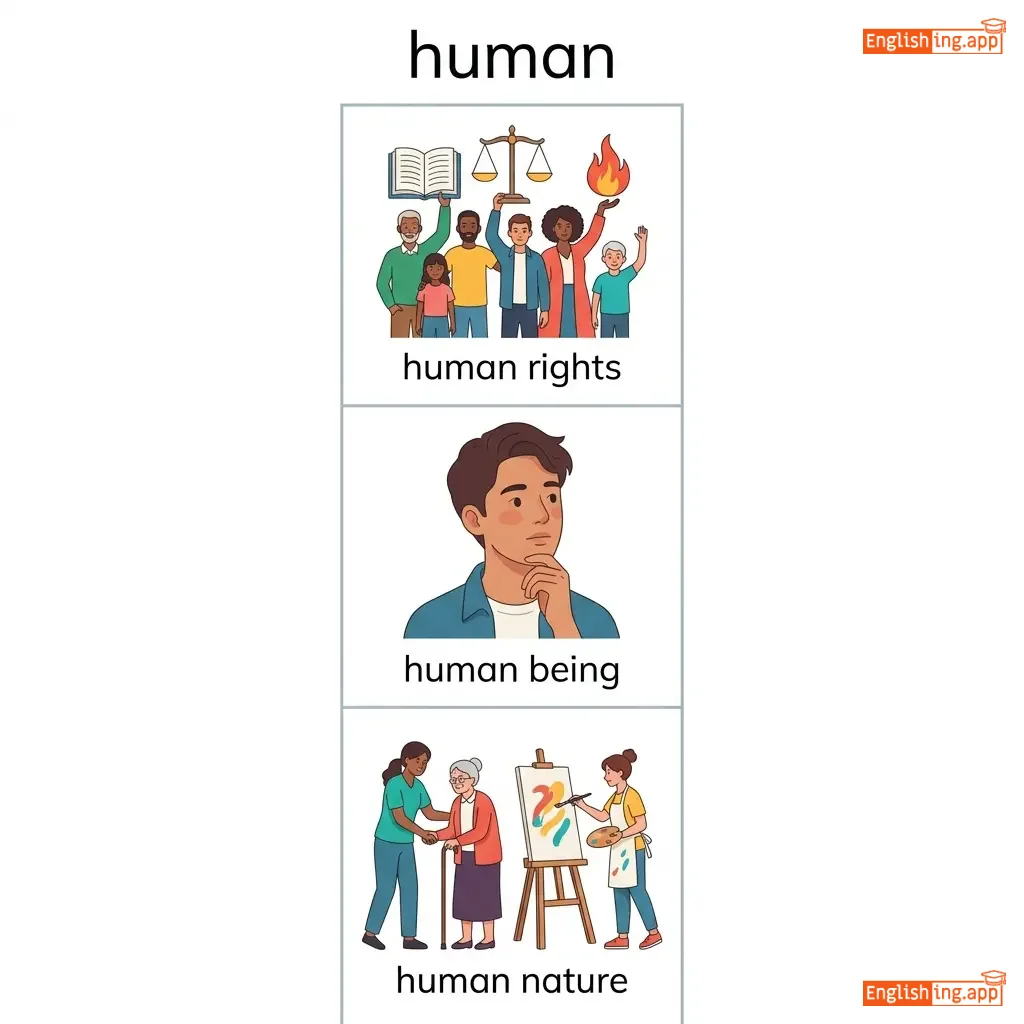
human rights, human being, human nature, human body
••••••
|
Human = 'rén' (人) + 'lèi' (类) → 人类是具有力量和弱点的生物。
••••••
|
|
🔪
••••••
|
/naɪf/
noun
(海皮尼斯)
••••••
|
- •••••• |
幸福
xingfu
••••••
|
- •••••• | - •••••• | - •••••• | - •••••• |
a tool or weapon with a blade and a handle, used for cutting
••••••
|
He used a sharp knife to cut the vegetables. |
她收到奖项时,无法隐藏她的幸福。
Tā shōudào jiǎngxiàng shí, wúfǎ yǐncáng tā de xìngfú.
••••••
|
at knife's edge |
in a very tense or dangerous situation
••••••
|
追求幸福
zhuīqiú xìngfú
••••••
|
blade, cutter, dagger, utensil, scalpel
••••••
|
spoon, fork
••••••
|
sharp knife, kitchen knife, knife blade, knife attack
••••••
|
幸福就是快乐,容易记住。
••••••
|

