Ribbons on the Old Rail
古い railroad 線の一部が持ち上げられ、錆びた rails がきれいに掃除されました。私たちはその地域を共同 garden に変える予定でした。すべての member は胸に小さな tag をつけていました。作業は計画された sequence に従って進みましたが、雨の occurrence があるたびに土壌が柔らかくなりました。誰も weakness を見せませんでした; 私たちはお互いに依存し、みんなが depend できる根を植えました。“これは装飾以上のものです—それは valuable 思い出です,”エリーナは言いました。ヌール、私たちの organizational リーダーは vocal になりました:“この garden が繁栄するまで、私たちは止まりません。”数ヶ月の中断後、この取り組みは今週ついに resume されました。ボランティアのルナは新しい ribbon を苗木に結びつけました—それは静かな fascinating 光景でした。以前の労働者たちは思い出しました:“この rail 線は私たちの生活の sequence を変えました。”毎年 year 、人々は今でもここに集まり、これらの旅を再体験しています; 今夜はもう一度の再会のように感じました。音楽が高まり、群衆は overwhelming に感動していました。私たちは、すべての人が団結することで、プロジェクトがどれほど substantial になるかを実感しました。“時間の侵食に defy するためには、私たちには集団の決意が必要です,”ヌールは言いました。私たちは coming 数ヶ月間、この勢いを維持することを誓いました。
|
絵文字
|
単語 | Images | 翻訳 | 過去 | 過去分詞 | 三人称単数 | 動名詞 | 意味 | 例文 | 例文の翻訳 | 表現例 | 表現例の意味 | 表現例の翻訳 | 同義語 | 対義語 | コロケーション | ニーモニック |
|---|---|---|---|---|---|---|---|---|---|---|---|---|---|---|---|---|---|
|
📅
••••••
|
/ˈkʌmɪŋ/
adjective
(カミング)
••••••
|
- •••••• |
来る
kuru
••••••
|
- •••••• | - •••••• | - •••••• | - •••••• |
approaching or happening soon
••••••
|
We are preparing for the coming festival. |
私たちは来る祭りの準備をしています。
Watashitachi wa kuru matsuri no junbi o shiteimasu.
••••••
|
coming soon |
something that will happen in the near future
••••••
|
間もなく来る
manonaku kuru
••••••
|
approaching, upcoming, impending, near, imminent
••••••
|
past, gone, finished
••••••
|
coming event, coming year, coming week, coming season
••••••
|
Comingは '来る'という意味 — 例えば、来るイベント
••••••
|
|
✊
••••••
|
/dɪˈfaɪ/
verb
••••••
|
|
- •••••• |
defied
••••••
|
defied
••••••
|
defies
••••••
|
defying
••••••
|
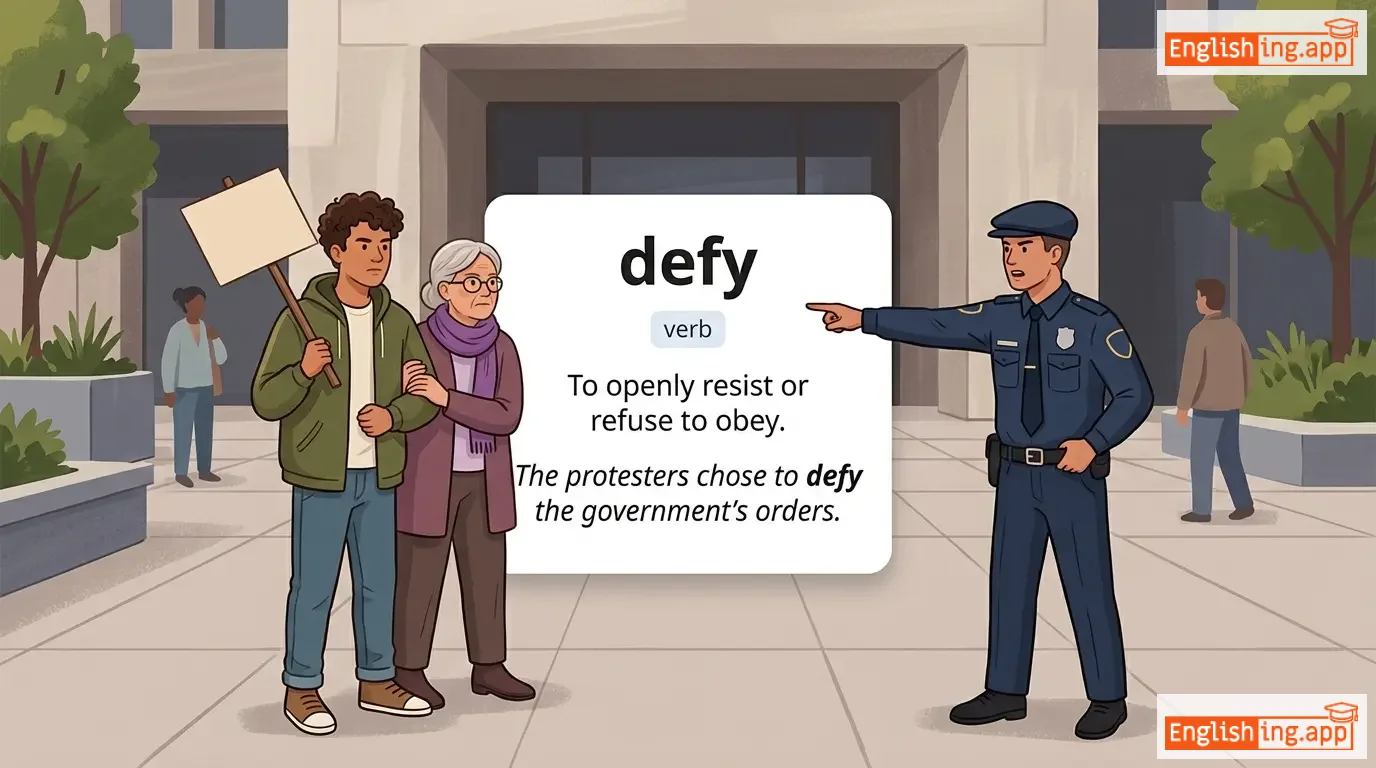
To openly resist or refuse to obey.
••••••
|
The protesters chose to defy the government's orders. |
- •••••• |
defy the odds |
To succeed despite being very unlikely or facing great difficulties.
••••••
|
- •••••• |
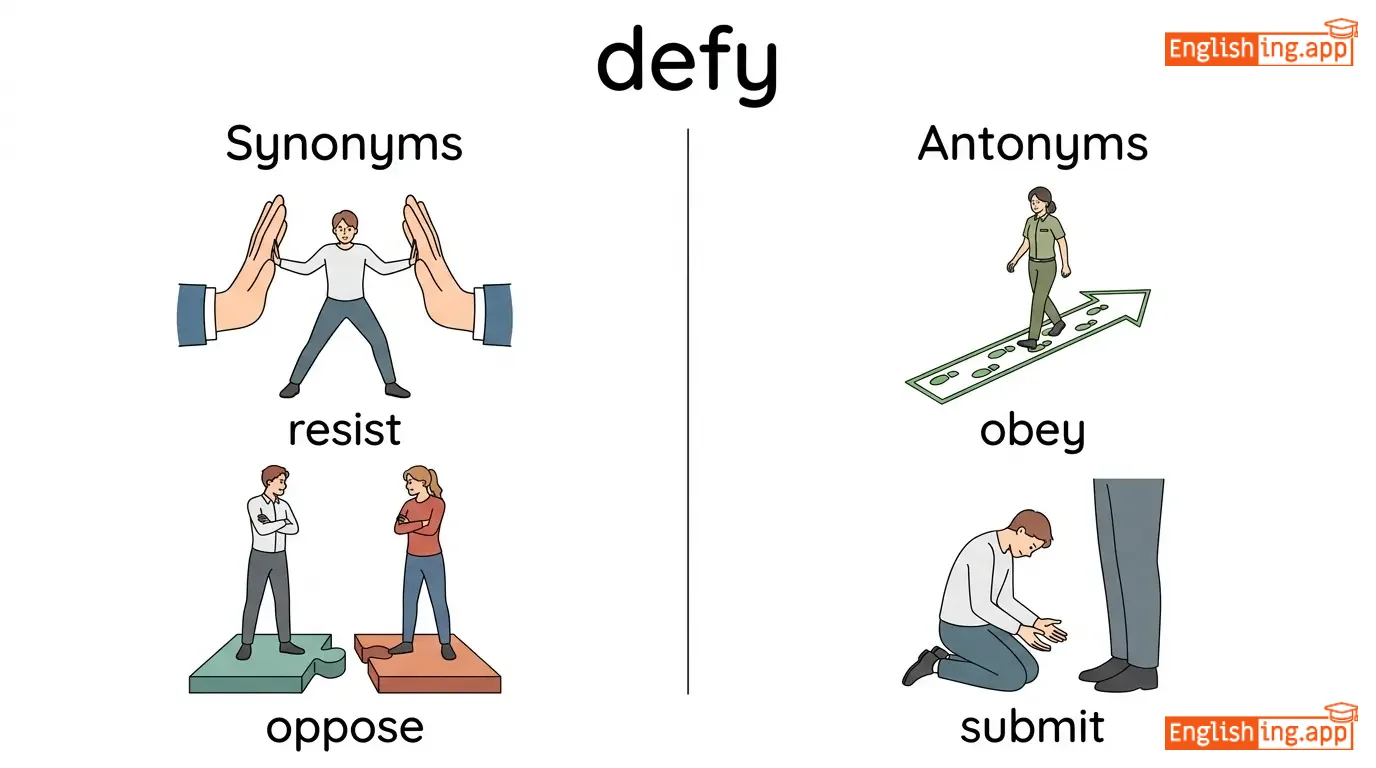
resist, oppose, confront, challenge
••••••
|
obey, submit, yield
••••••
|
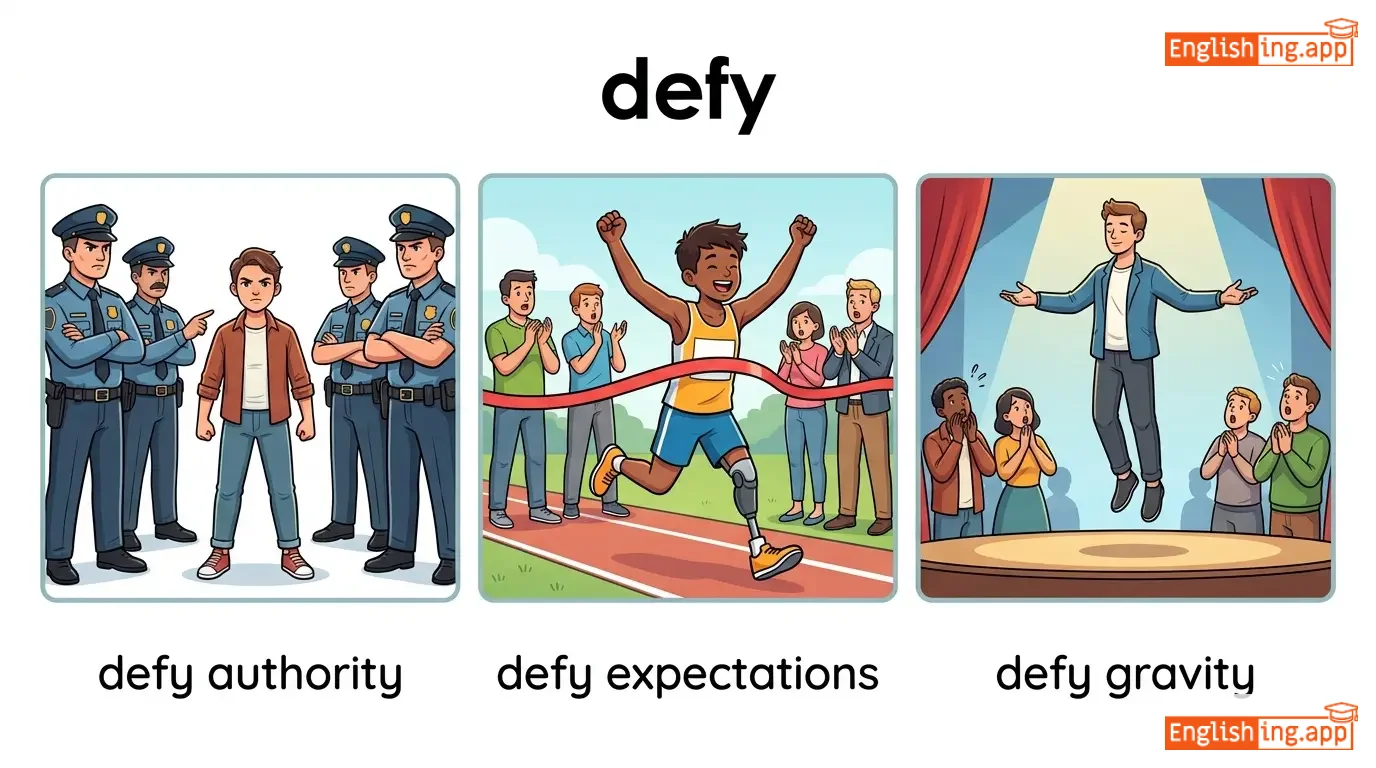
defy authority, defy expectations, defy gravity
••••••
|
No •••••• |
|
🤲
••••••
|
/dɪˈpɛnd/
verb
(デペンド)
••••••
|
|
依存する
izon suru
••••••
|
depended
••••••
|
depended
••••••
|
depends
••••••
|
depending
••••••
|
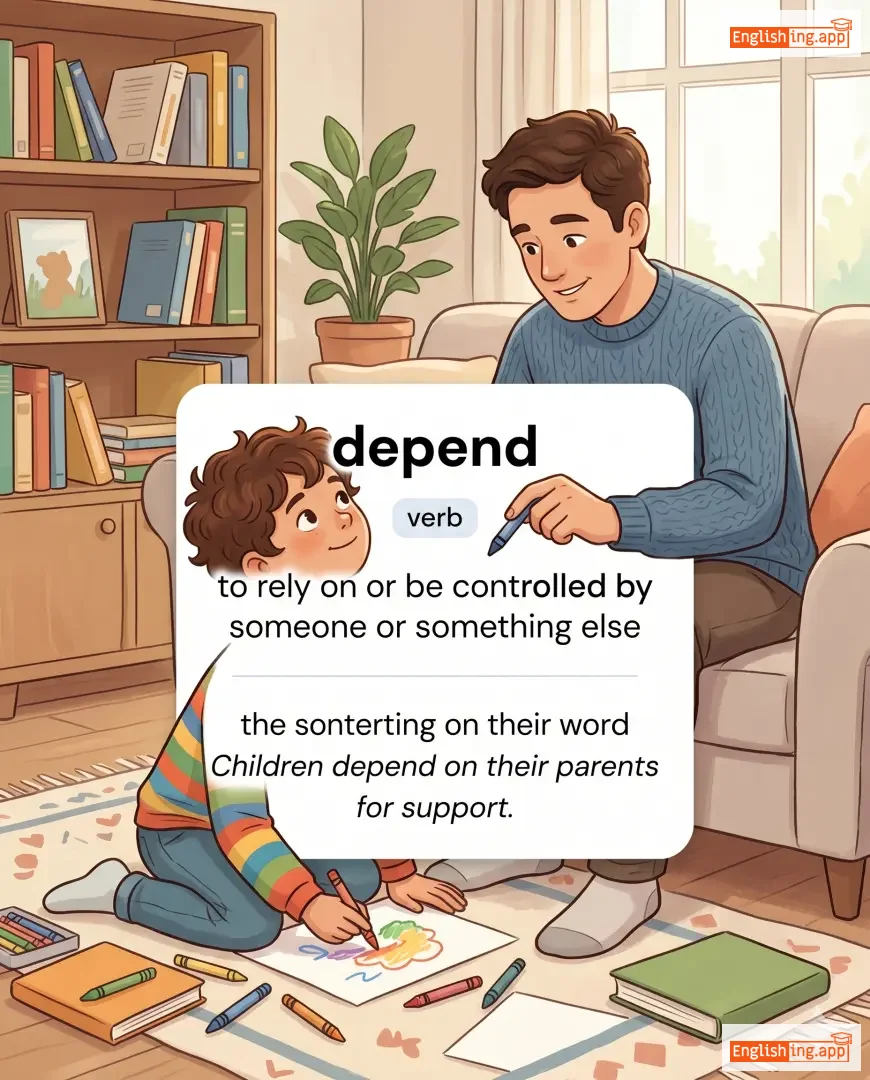
to rely on or be controlled by someone or something else
••••••
|
Children depend on their parents for support.
子供たちは支援のために親に依存しています。
••••••
|
子供たちは支援のために親に依存しています。
Kodomo-tachi wa shien no tame ni oya ni izon shiteimasu.
••••••
|
depend on
依存する
••••••
|
to rely on someone or something
••••••
|
依存する
izon suru
••••••
|
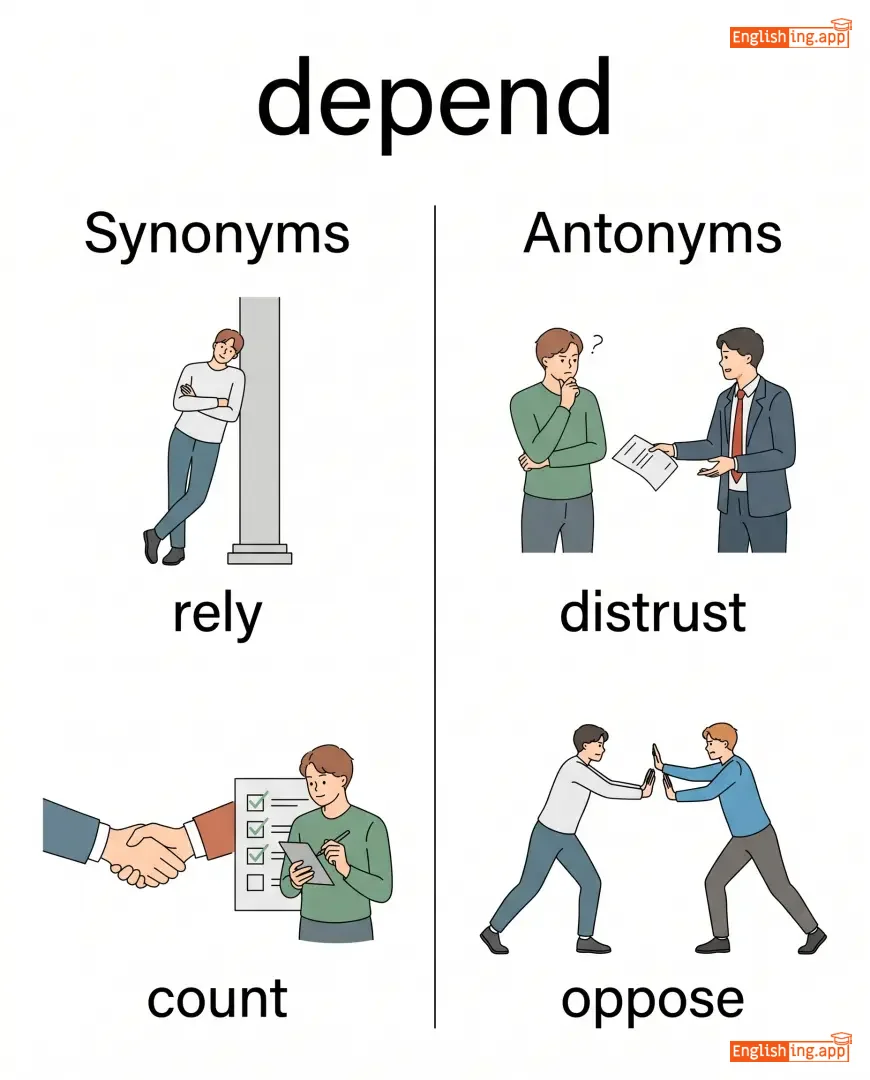
rely, count, trust, hinge
••••••
|
distrust, oppose
••••••
|
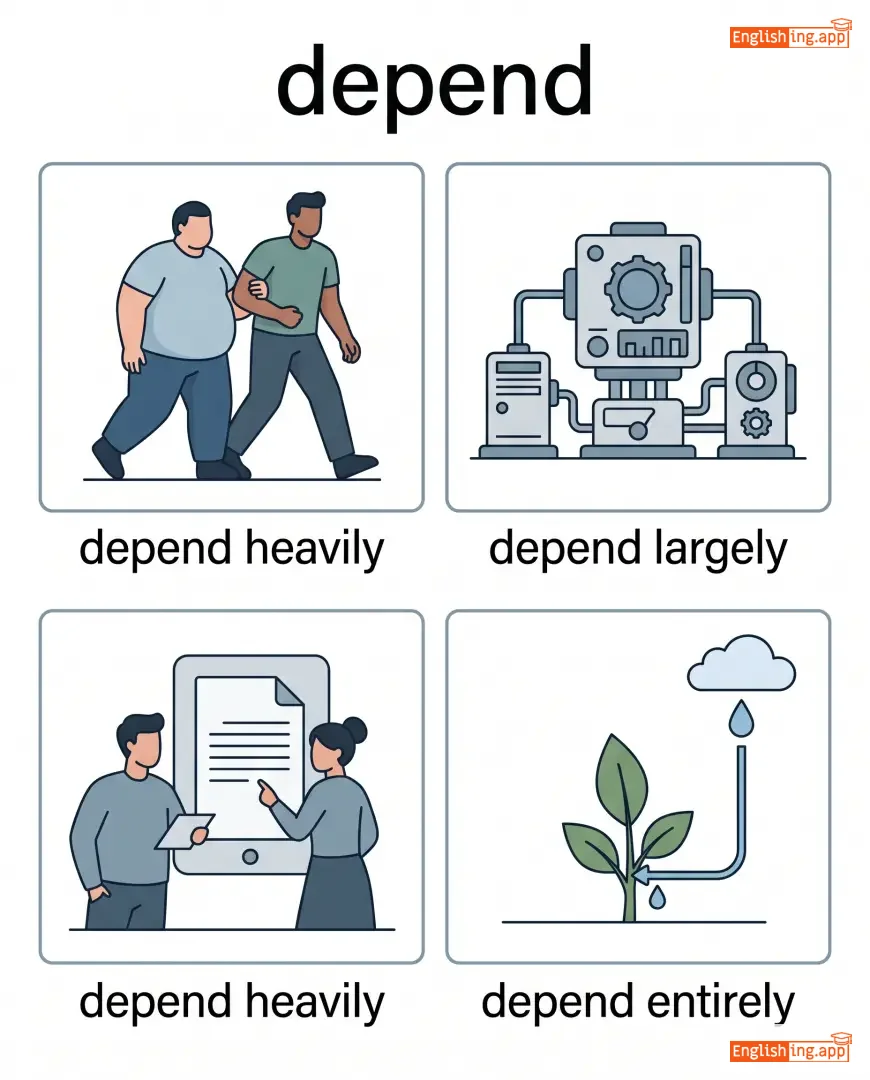
depend heavily, depend largely, depend entirely, depend directly
••••••
|
Depend = De (デ) + pend (ペンド) → あなたに依存しています。
••••••
|
|
✨
••••••
|
/ˈfæsɪneɪtɪŋ/
adjective
(ファシネイティング)
••••••
|
- •••••• |
魅力的
miryokuteki
••••••
|
- •••••• | - •••••• | - •••••• | - •••••• |
extremely interesting; captivating; enchanting
••••••
|
The documentary about ocean life was fascinating.
海の生命に関するドキュメンタリーは魅力的だった。
••••••
|
海の生命に関するドキュメンタリーは魅力的だった。
Umi no seimei ni kansuru dokyumentarī wa miryokuteki datta.
••••••
|
- •••••• | - •••••• | - •••••• |
captivating, intriguing, enchanting
••••••
|
boring, dull, uninteresting
••••••
|
fascinating story, fascinating character, fascinating discovery
••••••
|
魅了する海の深さ。
••••••
|
|
🌱
••••••
|
/ˈɡɑːrdn/
noun
(ガーデン)
••••••
|
- •••••• |
庭
niwa
••••••
|
- •••••• | - •••••• | - •••••• | - •••••• |
A piece of ground where flowers, vegetables, or plants are grown.
••••••
|
She grows roses in her garden. |
彼女は自分の庭でバラを育てています。
Kanojo wa jibun no niwa de bara o sodateteimasu.
••••••
|
lead someone up the garden path |
To deceive or mislead someone.
••••••
|
誰かを庭道に誘う
Dareka o niwadori ni sasou
••••••
|
yard, lawn, park, orchard
••••••
|
wasteland, desert
••••••
|
botanical garden, back garden, flower garden, vegetable garden
••••••
|
庭で花を育てる場所 – ガーデンから庭へ。
••••••
|
|
👥
••••••
|
/ˈmembər/
noun
(メンバー)
••••••
|
- •••••• |
メンバー
menbā
••••••
|
- •••••• | - •••••• | - •••••• | - •••••• |
a person or thing that belongs to a group or organization
••••••
|
She is a member of the local sports club. |
彼女は地元のスポーツクラブのメンバーです。
Kanojo wa jimoto no supōtsu kurabu no menbā desu.
••••••
|
active member |
a person who participates regularly in the activities of a group
••••••
|
アクティブメンバー
akutibu menbā
••••••
|
participant, affiliate, associate, enrollee
••••••
|
outsider, nonmember
••••••
|
club member, family member, group member, board member
••••••
|
メンバーはmemberに似ていて、チームの一員。
••••••
|
|
⚡
••••••
|
/əˈkɜr.əns/
noun
(okurensu)
••••••
|
- •••••• |
出来事
dekigoto
••••••
|
- •••••• | - •••••• | - •••••• | - •••••• |
an instance or event of something happening; the fact of occurring
••••••
|
The occurrence of earthquakes is common in this region. |
この地域では地震の出来事が一般的です。
Kono chiiki dewa jishin no dekigoto ga ippanteki desu.
••••••
|
- •••••• | - •••••• | - •••••• |
event, incident, happening, instance
••••••
|
absence, non-occurrence, prevention
••••••
|
rare occurrence, frequent occurrence, natural occurrence
••••••
|
出来事 (dekigoto) = occurrence
••••••
|
|
🏢
••••••
|
/ˌɔːɡənaɪˈzeɪʃənəl/
adjective
(オーガニゼーショナル)
••••••
|
- •••••• |
組織的
soshitekina
••••••
|
- •••••• | - •••••• | - •••••• | - •••••• |
relating to the structure or arrangement of a company or group
••••••
|
He works on improving the organizational structure of the company. |
彼は会社の組織構造を改善するために働いています。
Kare wa kaisha no soshikikōzō o kaizen suru tame ni hataraiteimasu.
••••••
|
- •••••• | - •••••• | - •••••• |
administrative, structural, managerial, corporate
••••••
|
disorganized, chaotic
••••••
|
organizational skills, organizational structure, organizational change, organizational behavior
••••••
|
Organizationは構造を意味し、組織的はその構造に関連していることを意味します。
••••••
|
|
🌊
••••••
|
/ˌəʊvəˈwelmɪŋ/
adjective
(オーバーウェルミング)
••••••
|
|
圧倒的, 手に負えない
attōteki, te ni oenai
••••••
|
- •••••• | - •••••• | - •••••• | - •••••• |
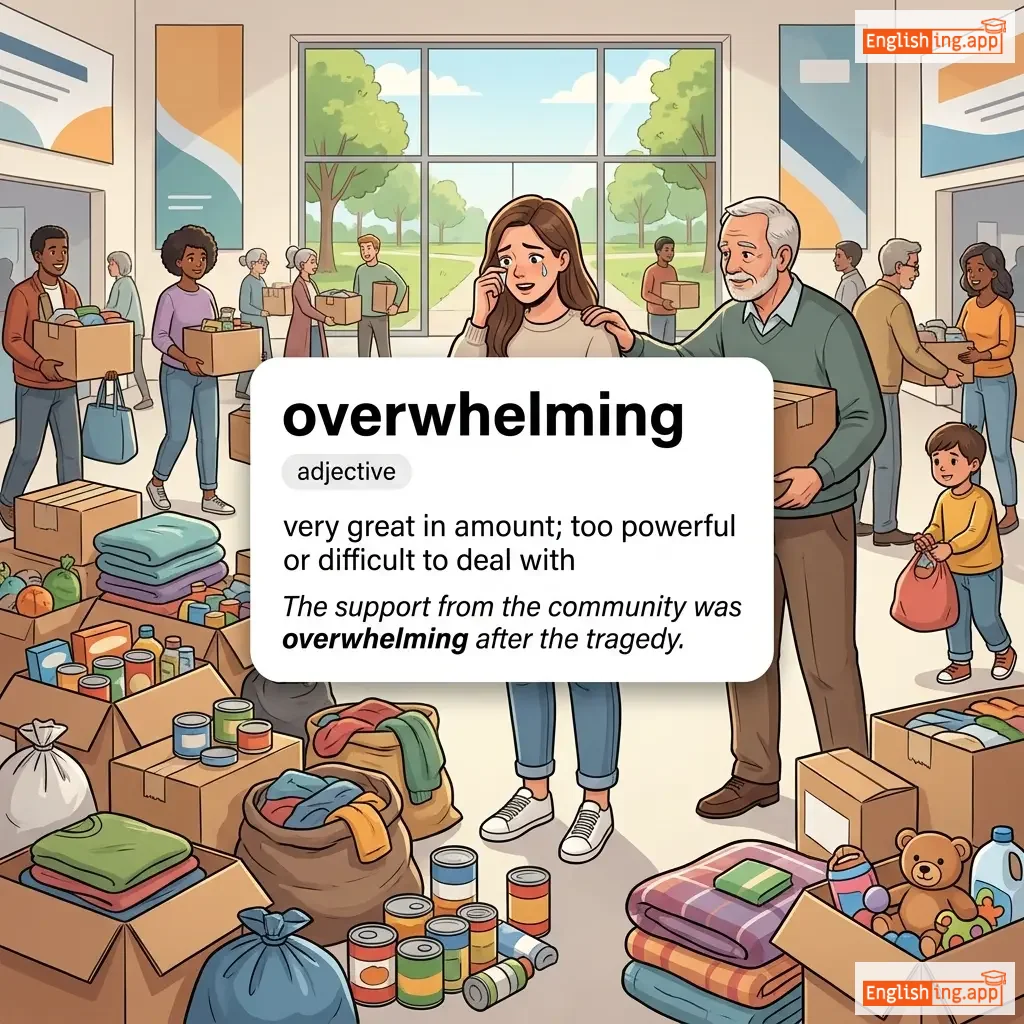
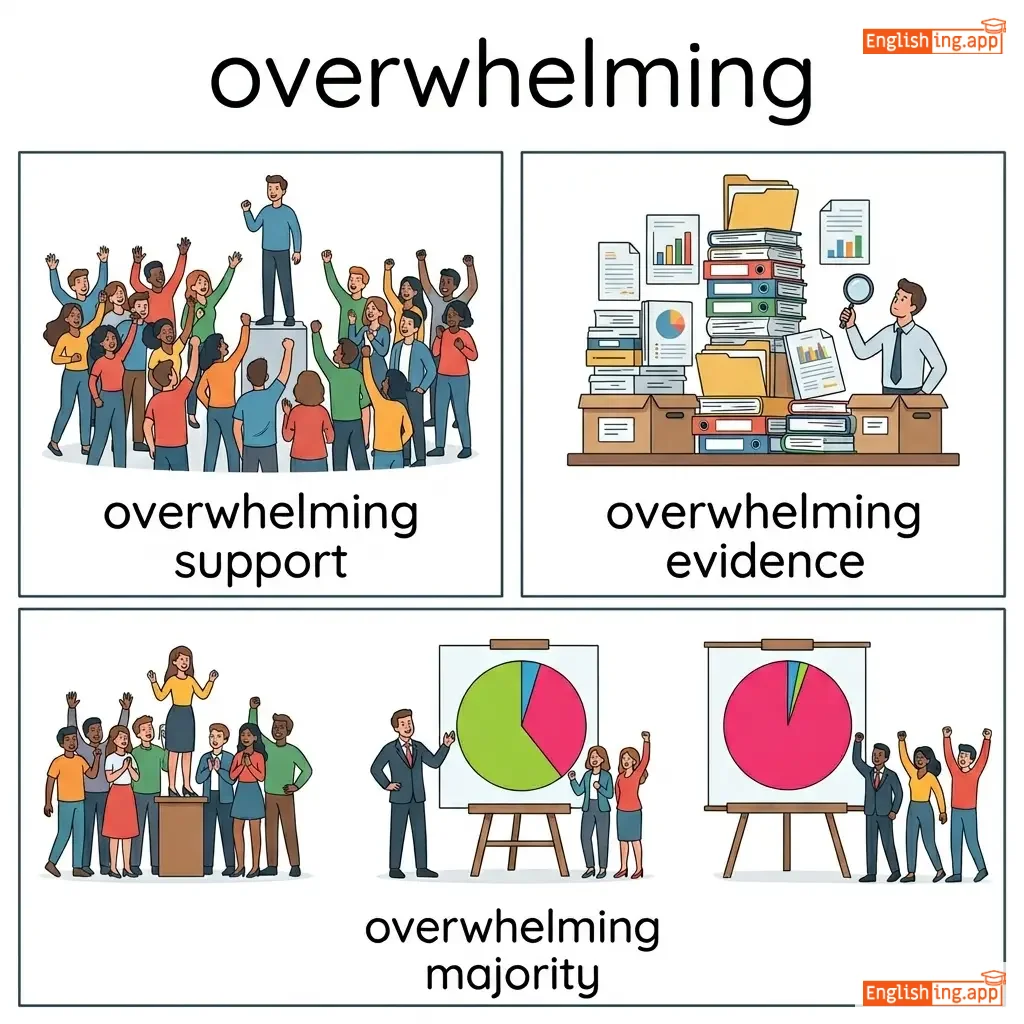
very great in amount; too powerful or difficult to deal with
••••••
|
The support from the community was overwhelming after the tragedy. |
悲劇の後、コミュニティからの支援は圧倒的でした。
higeki no ato, komyuniti kara no shien wa attōteki deshita.
••••••
|
overwhelming majority |
a very large majority
••••••
|
圧倒的多数
attōteki tasū
••••••
|
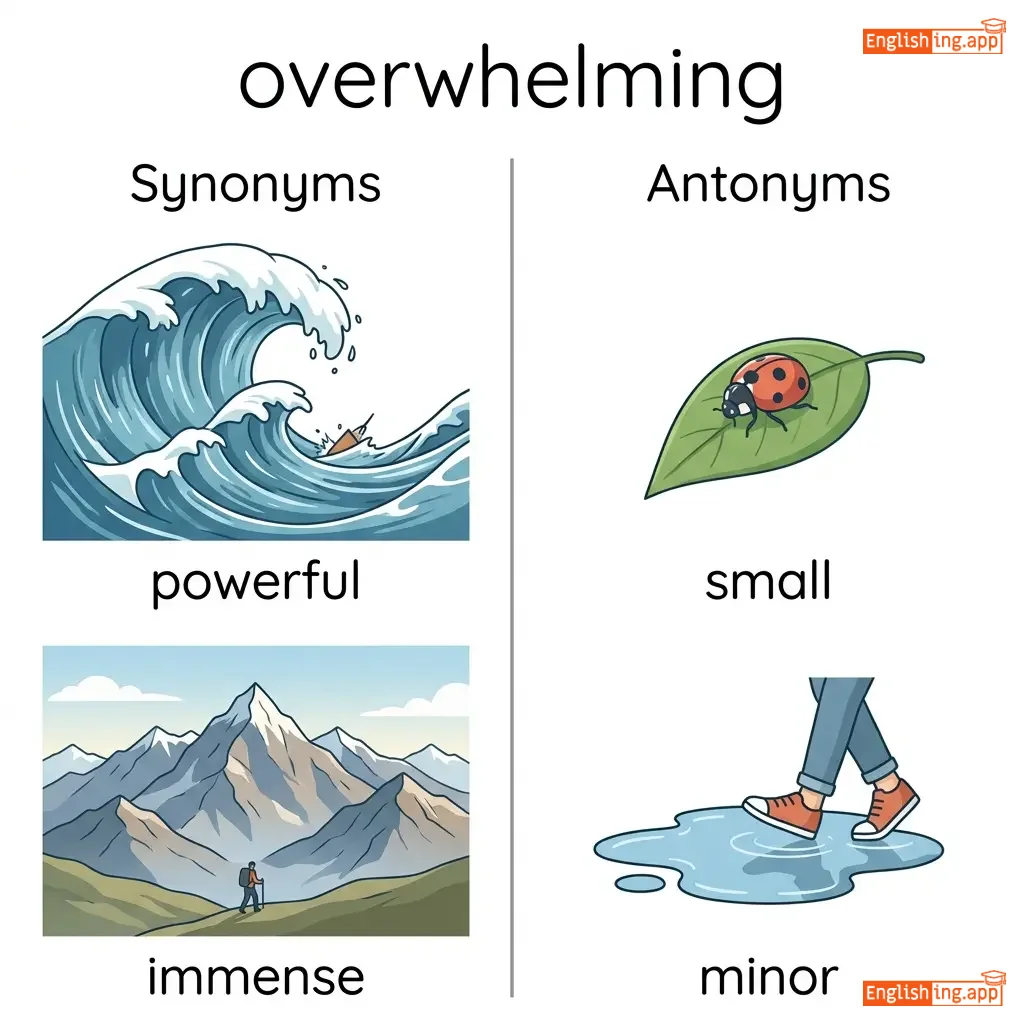
powerful, immense, enormous, intense, vast
••••••
|
small, minor, weak
••••••
|
overwhelming support, overwhelming evidence, overwhelming majority, overwhelming feeling
••••••
|
Over + Whelm = 波に呑まれる 🌊 — 意味は圧倒的な影響
••••••
|
|
📢
••••••
|
/reɪl/
verb
(レイル)
••••••
|
- •••••• |
抗議する
kougi suru
••••••
|
railed
レイルド
••••••
|
railed
レイルド
••••••
|
rails
レイルズ
••••••
|
railing
レイリング
••••••
|
to complain or protest strongly about something
••••••
|
He railed against the unfair decision.
彼は不公平な決定に対して強く抗議した。
••••••
|
彼は不公平な決定に対して強く抗議した。
Kare wa fukouhei na kettei ni taishite tsuyoku kougi shita.
••••••
|
rail against
抗議する
••••••
|
to strongly criticize or protest
••••••
|
抗議する
kougi suru
••••••
|
protest, complain, denounce, criticize
••••••
|
praise, accept, support
••••••
|
rail against injustice, rail at fate, rail bitterly
••••••
|
抗議することは鉄道のレールの上に立つようなものです! 🚂
••••••
|
|
🚂
••••••
|
/ˈreɪlˌroʊd/
noun
(レールロード)
••••••
|
- •••••• |
鉄道
tetsudou
••••••
|
- •••••• | - •••••• | - •••••• | - •••••• |
a track or system of tracks made of steel rails along which trains run
••••••
|
The railroad connects the city to several nearby towns. |
鉄道は都市といくつかの近くの町を結びつけています。
Tetsudou wa toshi to ikutsu ka no chikaku no machi o musubitsuketeimasu.
••••••
|
off the rails |
to behave in a strange or uncontrolled way
••••••
|
制御を失う
seigyo o ushinau
••••••
|
railway, track, line, train route, metro
••••••
|
road, highway, street
••••••
|
railroad track, railroad company, railroad station, build a railroad
••••••
|
鉄道 = 列車が走る道 🚂
••••••
|
|
📄
••••••
|
/rɪˈzjuːm/ (verb), /ˈrɛzjʊmeɪ/ (noun)
verb, noun
(リズーム)
••••••
|

|
再開する / 履歴書
saikai suru / rirekisho
••••••
|
resumed
リズームド
••••••
|
resumed
リズームド
••••••
|
resumes
リズームス
••••••
|
resuming
リズーミング
••••••
|
to begin again after a pause; or a summary of one’s qualifications and work experience
••••••
|
She resumed her studies after a two-year break.
彼女は2年の休止後に勉強を再開しました。
••••••
|
彼女は2年の休止後に勉強を再開しました。
Kanojo wa 2-nen no kyūshi-go ni benkyō o saikai shimashita.
••••••
|
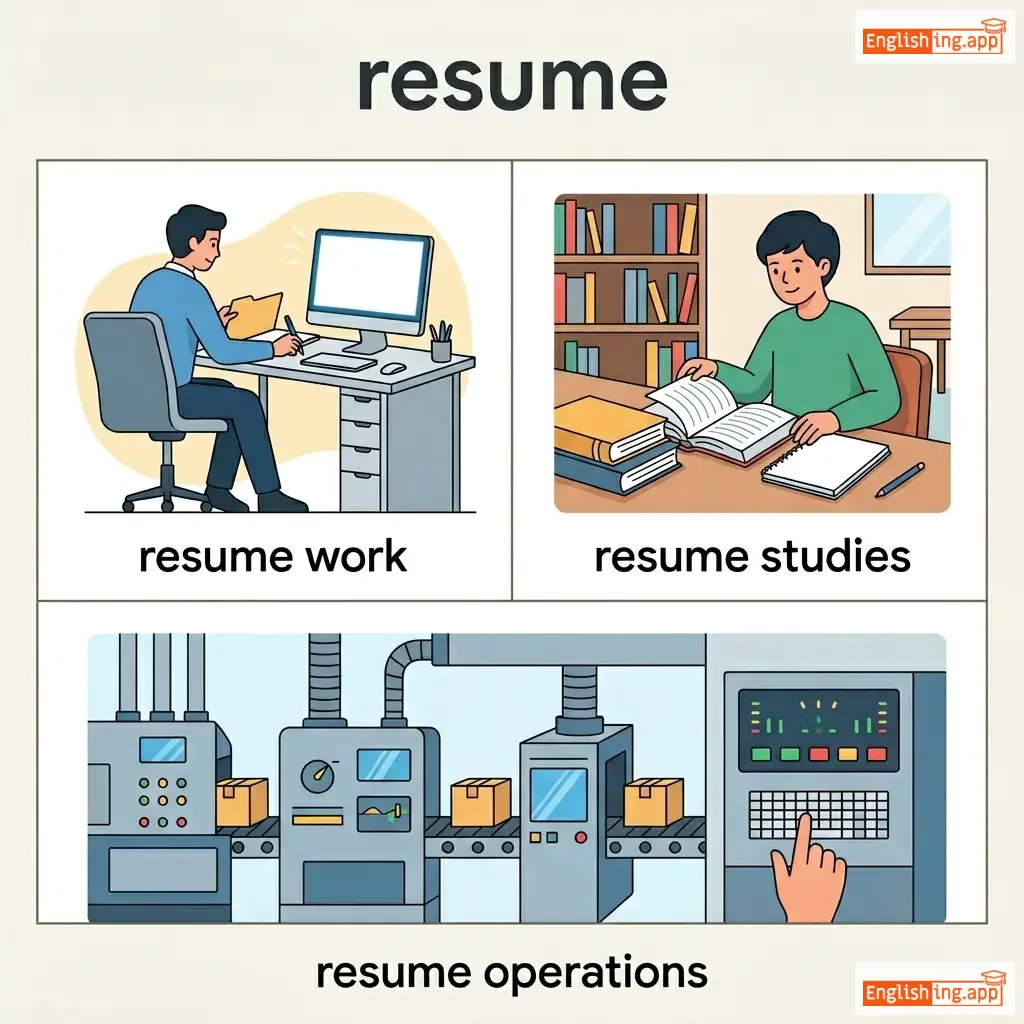
resume work
仕事を再開する
••••••
|
to start working again after a pause
••••••
|
仕事を再開する
shigoto o saikai suru
••••••
|
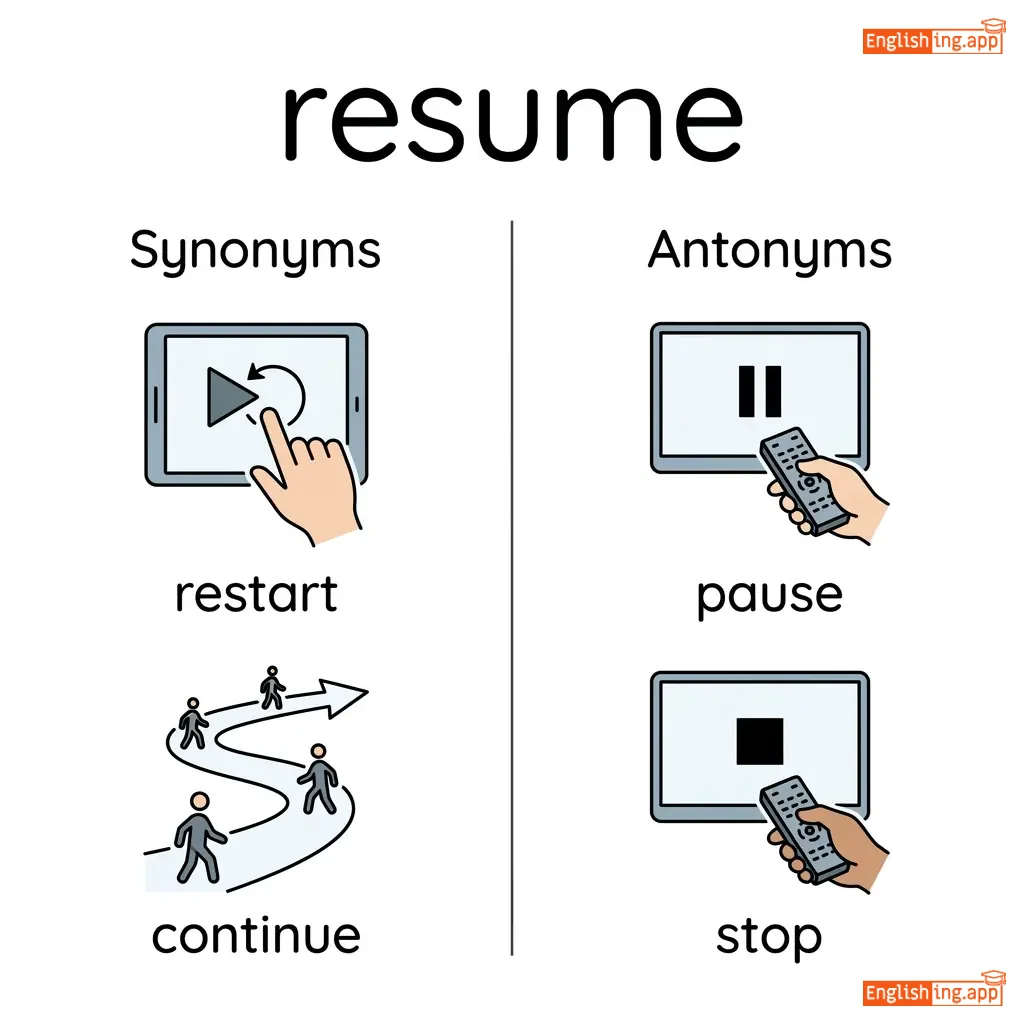
restart, continue, proceed, recommence
••••••
|
pause, stop, suspend
••••••
|
resume work, resume studies, resume operations, submit resume
••••••
|
Resume は休止後に再び始めること。仕事を再開する
••••••
|
|
🎀
••••••
|
/ˈrɪb.ən/
noun
(リボン)
••••••
|
- •••••• |
リボン
ribon
••••••
|
- •••••• | - •••••• | - •••••• | - •••••• |
a long, narrow strip of fabric used for tying or decoration
••••••
|
She tied her hair with a red ribbon. |
彼女は赤いリボンで髪を結びました。
Kanojo wa akai ribon de kami o musubimashita.
••••••
|
cut the ribbon |
to officially open a new building or event
••••••
|
リボンを切る
ribon o kiru
••••••
|
band, strip, tape, lace, cord
••••••
|
rope, chain
••••••
|
red ribbon, blue ribbon, ribbon cutting, silk ribbon
••••••
|
リボン – 女の子が髪に結んで可愛く見える 🎀
••••••
|
|
🔢
••••••
|
/ˈsiːkwəns/
noun
(シークエンス)
••••••
|
- •••••• |
順番
junban
••••••
|
- •••••• | - •••••• | - •••••• | - •••••• |
A particular order in which related things follow each other.
••••••
|
The magician asked us to remember the sequence of cards.
魔法使いは私たちにカードのシークエンスを覚えておくように頼んだ。
••••••
|
魔法使いは私たちにカードの順番を覚えておくように頼んだ。
Mahōtsukai wa watashitachi ni kādo no junban o oboete oku yō ni tanonda.
••••••
|
in sequence
シークエンスで
••••••
|
in the correct or logical order
••••••
|
順番で
Junban de
••••••
|
order, arrangement, series, progression, succession
••••••
|
chaos, disorder, randomness
••••••
|
logical sequence, sequence of events, number sequence, genetic sequence
••••••
|
順番 = 映画のシーンのように、出来事が順番に起こる。
••••••
|
|
📏
••••••
|
/səbˈstæn.ʃəl/
adjective
(サブスタンシャル)
••••••
|
- •••••• |
実質的; かなりの; 重要な
jisshitsuteki; kanari no; jūyōna
••••••
|
- •••••• | - •••••• | - •••••• | - •••••• |
large in size, amount, or importance; considerable; significant
••••••
|
There was a substantial increase in sales this quarter. |
この四半期に売上は実質的に増加しました。
Kono shihanki ni uriage wa jisshitsuteki ni zōka shimashita.
••••••
|
- •••••• | - •••••• | - •••••• |
considerable, significant, large, major, sizeable
••••••
|
insignificant, minor, small, negligible, trivial
••••••
|
substantial amount, substantial increase, substantial evidence, substantial progress
••••••
|
日本語で'実質的'と言うと、それは大きな意味や影響を持つことを意味します。
••••••
|
|
🏷️
••••••
|
/tæɡ/
noun, verb
••••••
|
- •••••• | - •••••• |
tagged
••••••
|
tagged
••••••
|
tags
••••••
|
tagging
••••••
|
a label attached to something for identification or information; or to attach such a label
••••••
|
She tagged her luggage before boarding the plane. |
- •••••• |
tag along |
to go somewhere with someone, often without being invited
••••••
|
- •••••• |
label, marker, ticket, sticker, mark
••••••
|
remove, detach
••••••
|
price tag, luggage tag, tag along, tag a photo
••••••
|
No •••••• |
|
💎
••••••
|
/ˈvæljʊəbl/
adjective
(ˈvæljʊəbl)
••••••
|
- •••••• |
価値がある; 重要な
kachi ga aru; jūyōna
••••••
|
- •••••• | - •••••• | - •••••• | - •••••• |
worth a great deal of money; extremely useful or important
••••••
|
The painting is very valuable and worth millions.
その絵画は非常に価値があり、何百万ドルもの価値がある。
••••••
|
その絵画は非常に価値があり、何百万ドルもの価値がある。
Sono kaiga wa hijō ni kachi ga ari, nanbyakuman doru mono kachi ga aru.
••••••
|
- •••••• | - •••••• | - •••••• |
precious, expensive, costly, priceless
••••••
|
worthless, cheap, valueless, insignificant
••••••
|
valuable asset, valuable experience, valuable time, valuable information
••••••
|
V – 価値がある (kachi ga aru) ものは重要です
••••••
|
|
🎤
••••••
|
/ˈvoʊkəl/
adjective
(ボーカル)
••••••
|
- •••••• |
発声
hatsusei
••••••
|
- •••••• | - •••••• | - •••••• | - •••••• |
expressing opinions or feelings freely and loudly; relating to the voice
••••••
|
She was very vocal about her dissatisfaction.
彼女は自分の不満について非常にボーカルでした。
••••••
|
彼女は自分の不満について非常に発声していました。
Kanojo wa jibun no fuman ni tsuite hijou ni hatsusei shite imashita.
••••••
|
vocal supporter
ボーカル支持者
••••••
|
a person who strongly and openly supports something
••••••
|
発声支持者
hatsusei shijisha
••••••
|
outspoken, expressive, loud, verbal, articulate
••••••
|
silent, quiet
••••••
|
vocal cords, vocal expression, vocal critic, vocal supporter
••••••
|
Vocalは声を出すこと — 発声する支持者!
••••••
|
|
💧
••••••
|
/ˈwiːknəs/
noun
(ウィークネス)
••••••
|
- •••••• |
弱点
jakuten
••••••
|
- •••••• | - •••••• | - •••••• | - •••••• |
a state of being weak; a flaw or shortcoming in character or structure
••••••
|
His main weakness is his lack of patience. |
彼の最大の弱点は忍耐力の欠如です。
Kare no saidai no jakuten wa nintairyoku no ketsujo desu.
••••••
|
achilles' heel |
a person's principal weakness or vulnerability
••••••
|
- •••••• |
frailty, flaw, vulnerability, defect, shortcoming
••••••
|
strength, power, resilience
••••••
|
mental weakness, show weakness, personal weakness, weakness for sweets
••••••
|
Weakは弱い、weaknessは弱点、‘ness’で状態を表す。
••••••
|
|
📅
••••••
|
/jɪə/
noun
(イヤー)
••••••
|
- •••••• |
年
nen
••••••
|
- •••••• | - •••••• | - •••••• | - •••••• |
a period of 365 or 366 days, divided into 12 months
••••••
|
This year, we are planning a trip to the mountains.
今年、私たちは山への旅行を計画しています。
••••••
|
今年、私たちは山への旅行を計画しています。
Kotoshi, watashitachi wa yama e no ryokou wo keikaku shiteimasu.
••••••
|
- •••••• | - •••••• | - •••••• |
annum, twelve months, calendar year
••••••
|
day, week
••••••
|
next year, this year, every year, year-long
••••••
|
Year = 年 (nen) – 一年を通して新しい経験が待っている!
••••••
|

