ভোকাবুলারিসমূহ

ইংরেজি শব্দের বাংলা অর্থ | English to Bangla Word Meaning Dictionary

noun
/ˈkɛmɪstri/
রসায়ন (rosayon)

the branch of science that studies substances and their interactions; also the emotional connection between people

"They have great chemistry and work well together."

"তাদের মধ্যে দুর্দান্ত বোঝাপড়া আছে এবং তারা একসাথে ভালো কাজ করে।" (Tader moddhe durdanto bojhapora ache ebong tara eksathe bhalo kaj kore.)
adjective
/ˈtʃɛkərd/
বিচিত্র (bichitra)

Having a pattern of squares, or marked by varied and contrasting experiences or periods.

"He had a chequered career with both great successes and failures."

"তার একটি বিচিত্র কর্মজীবন ছিল যেখানে সাফল্য এবং ব্যর্থতা দুই-ই ছিল।" (Tar ekti bichitra kormojibon chilo jekhane safollo ebong byorthota dui-i chilo.)
verb
/ˈtʃɛrɪʃ/
সযত্নে রাখা (sojotne rakha)

To hold something dear, to love and protect, or to keep a hope or memory alive.

"She cherishes the memories of her childhood home."

"সে তার শৈশবের বাড়ির স্মৃতিগুলো সযত্নে রাখে।" (Se tar shoishober barir smritigulo sojotne rakhe.)
noun
/ˈtʃer.i/
চেরি (cheri)

a small round red or black fruit with a hard seed inside

"She picked fresh cherries from the tree in her garden."

"সে তার বাগানের গাছ থেকে তাজা চেরি তুলেছে।" (she tar baganer gach theke taja cheri tuleche)
noun
/ˈtʃer.i ˌblɒs.əm/
চেরি ফুল (cheri phul)

the pink or white flowers of a cherry tree that bloom in spring

"The cherry blossoms bloom beautifully in April."

"চেরি ফুল এপ্রিল মাসে সুন্দরভাবে ফোটে।" (cheri phul april mashe shundorbhabe phote.)
adjective
/tʃəˈruːbɪk/
দেবদূতের মতো (debdooter moto)

Innocent, sweet, and angelic, like a cherub.

"The baby had a cherubic smile that melted everyone’s heart."

"শিশুটির মুখে ছিল দেবদূতের মতো হাসি যা সবার মন জয় করেছিল।" (Shishutir mukhe chilo debdooter moto hasi ja sabar mon joy korechilo.)
noun
/tʃɛst/
বুক (buk)

the front part of the human body between the neck and the stomach

"He felt a pain in his chest after running."

"দৌড়ানোর পর তার বুকে ব্যথা অনুভূত হয়েছিল।" (Dourano-r por tar buke byatha onubhut hoyechilo.)
noun
/ˈʃɛvrən/
ভি-আকৃতির চিহ্ন (vi-akritir chinho)

A V-shaped pattern, often used in military insignia or design.

"The sergeant’s uniform displayed three chevrons on the sleeve."

"সার্জেন্টের পোশাকে হাতায় তিনটি শেভরন চিহ্ন ছিল।" (Sarjenter poshake hatay tinti shevron chinho chilo.)
verb
/tʃuː/
চিবানো (chibano)

to bite food into smaller pieces with your teeth before swallowing it

"You should chew your food properly to help with digestion."

"তোমার খাবার হজমে সাহায্য করতে ভালোভাবে চিবিয়ে খাওয়া উচিত।" (Tomar khabar hojome sahajyo korte bhalobhabe chibiye khaoya uchit.)
noun
/kiˌɑːrəˈskjʊəroʊ/
আলো-অন্ধকারের বৈপরীত্য (alo-ondhokarer boiporitto)

The use of strong contrasts between light and dark in art or literature to create a dramatic effect.

"The artist's painting used chiaroscuro to highlight the figure's face."

"শিল্পীর ছবিতে মুখকে উজ্জ্বল করার জন্য কিয়ারোস্কুরো ব্যবহার করা হয়েছিল।" (shilpir chobite mukhke ujjol korar jonno kiyaroskuro byabohar kora hoyechilo.)
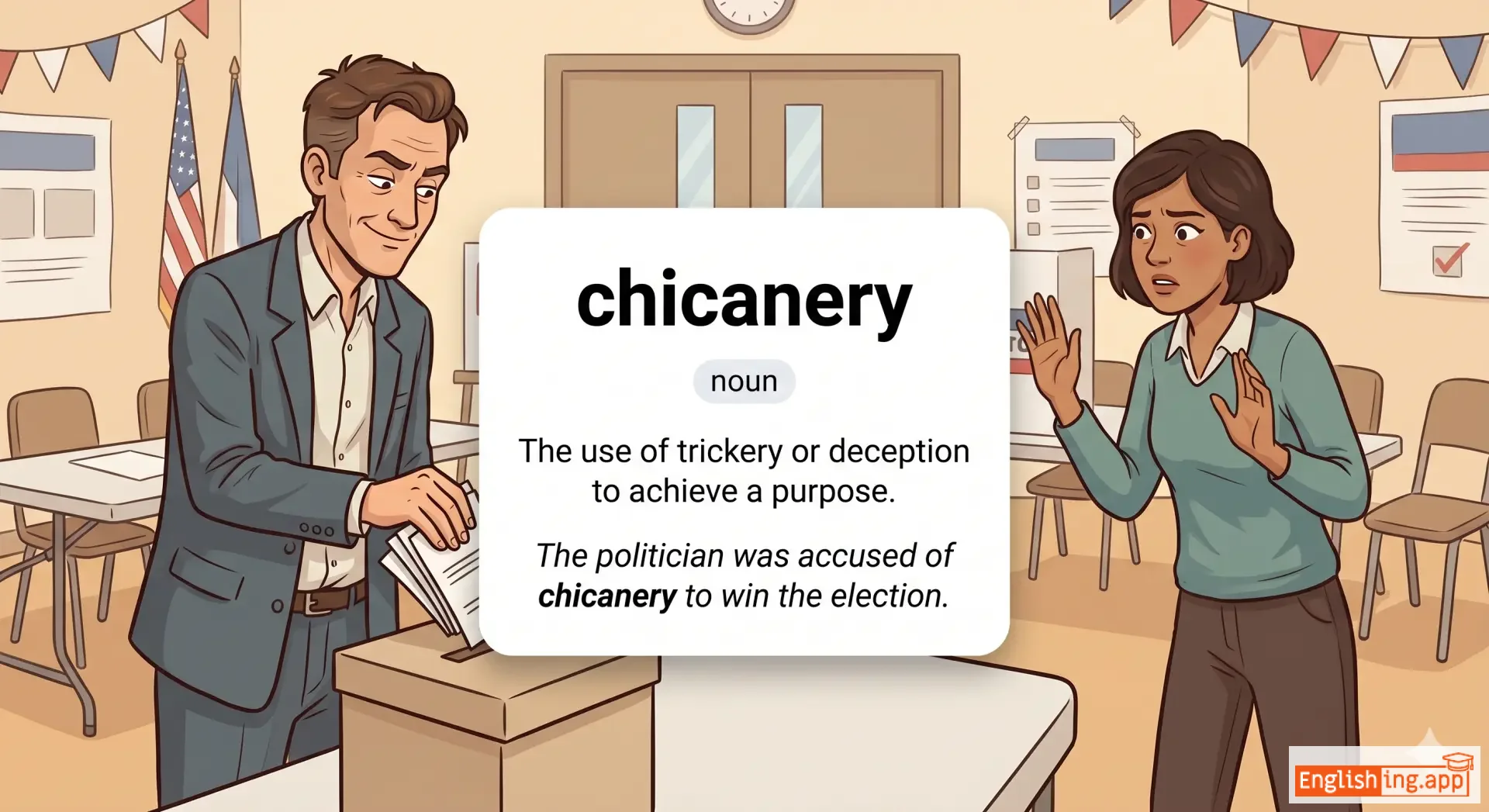
chicanery definition card — visual illustration of the meaning
noun
/ʃɪˈkeɪnəri/
প্রতারণা (protarona)

The use of trickery or deception to achieve a purpose.

"The politician was accused of chicanery to win the election."

"নির্বাচন জিততে রাজনীতিককে প্রতারণার অভিযোগ আনা হয়েছিল।" (nirbachon jitte rajnitike protaronar obhijog ana hoyechilo.)
noun
/ˈtʃɪk piː/
ছোলা (chhola)

round beige legume; protein-rich pulse used in various dishes

"Soak the chick peas overnight before cooking them for better digestion."

"হজমের জন্য ছোলা রান্না করার আগে সারারাত ভিজিয়ে রাখুন।" (hojomer jonno chhola ranna korar age sharaarat bhijiye rakhun.)
noun
/ˈtʃɪkɪn/
মুরগি (murgi)

a domestic bird kept for its eggs or meat

"We had fried chicken for dinner."

"আমরা রাতের খাবারে ভাজা মুরগি খেয়েছিলাম।" (Amra rater khabare vaja murgi kheyechhilam.)
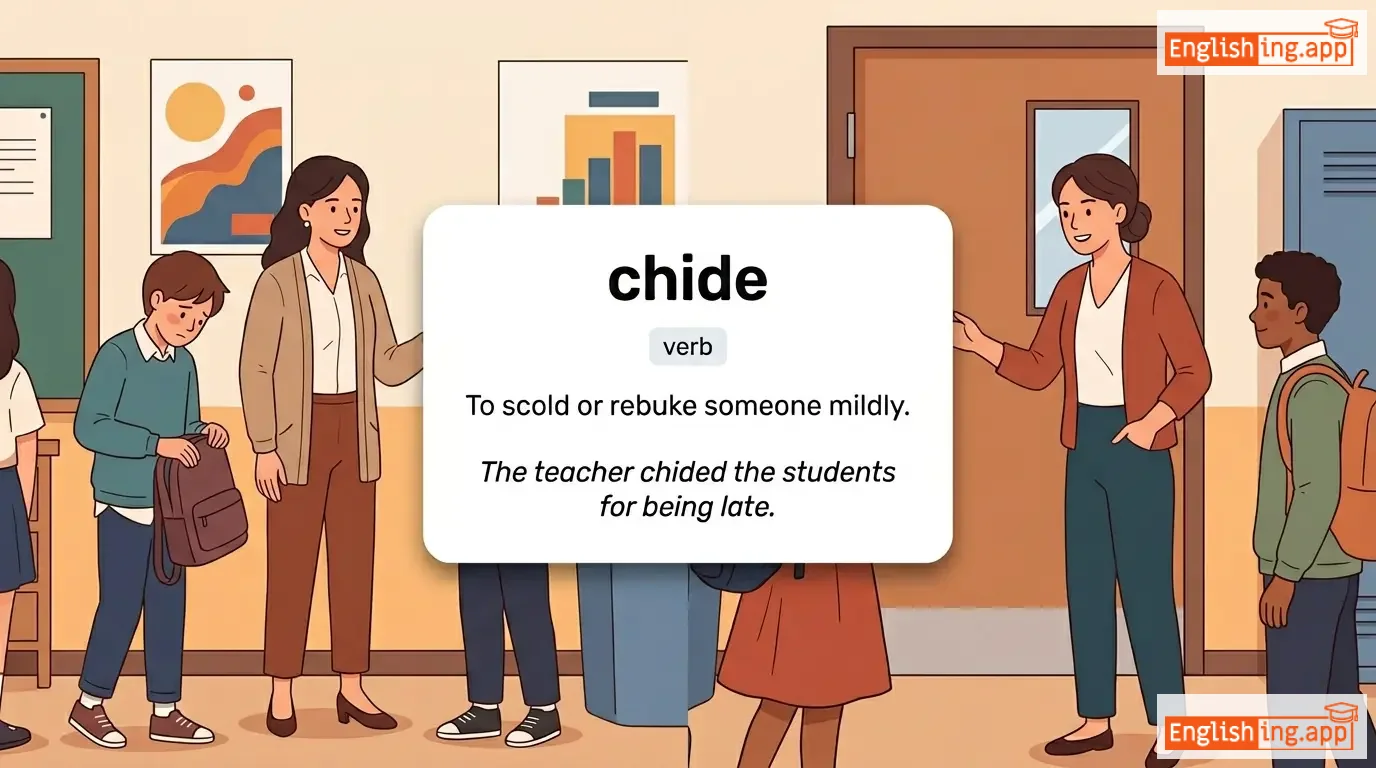
chide definition card — visual illustration of the meaning
verb
/tʃaɪd/
ধমকানো (dhamkano)

To scold or rebuke someone mildly.

"The teacher chided the students for being late."

"শিক্ষক দেরি করার জন্য ছাত্রদের ধমক দিলেন।" (shikkhok deri korar jonno chatroder dhamok dilen.)
noun
/tʃiːf/
প্রধান (prodhan)

a leader or person in charge of a group or organization

"The chief of the village made an important decision."

"গ্রামের প্রধান একটি গুরুত্বপূর্ণ সিদ্ধান্ত নিয়েছিলেন।" (Gramer prodhan ekti guruttopurno siddhanto niyechhilen.)
adverb
/ˈtʃiːfli/
প্রধানত (pradhanoto)

mainly; primarily

"The festival is celebrated chiefly by young people."

"উৎসবটি প্রধানত তরুণদের দ্বারা উদযাপিত হয়।" (Utsobti pradhanoto torunder dvara udjapito hoy.)
noun
/ʃɪˈfɒn/
শিফন কাপড় (shifon kapor)

A lightweight, sheer fabric often used in dresses or scarves.

"She wore a beautiful chiffon dress at the party."

"সে পার্টিতে একটি সুন্দর শিফন ড্রেস পরেছিল।" (se partyte ekti sundor shifon dress porechilo.)
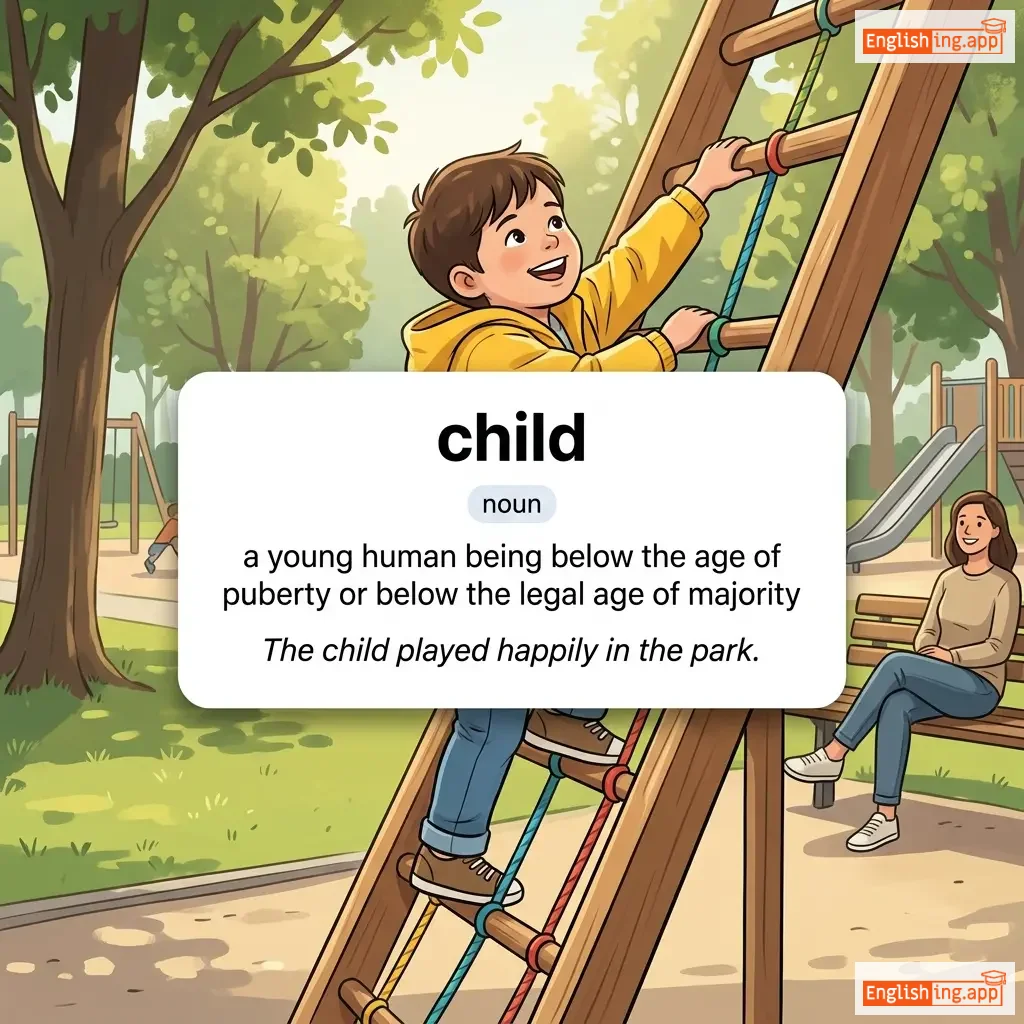
child definition card — visual illustration of the meaning
noun
/tʃaɪld/
শিশু (shishu)

a young human being below the age of puberty or below the legal age of majority

"The child played happily in the park."

"শিশুটি আনন্দের সাথে পার্কে খেলছিল।" (shishuti anonder sathe parke khelchhilo.)
noun
/ˈtʃaɪldhʊd/
শৈশব (shoishob)

the period of being a child

"She spent her childhood in a small village."

"সে তার শৈশব একটি ছোট গ্রামে কাটিয়েছে।" (se tar shoishob ekti chhoto grame katiyechhe.)
adjective
/ˈtʃaɪl.dɪʃ/
শিশুসুলভ; শিশুর ন্যায় নির্দোষী; (shishusulvo)

immature and silly; behaving in a way that is typical of a child but inappropriate for an adult

"His childish behavior during the meeting was quite embarrassing."

"মিটিংয়ের সময় তার শিশুসুলভ আচরণ বেশ লজ্জাজনক ছিল।" (meetinger shomoy tar shishusulvo achoran besh lojjajonok chhilo.)
adjective
/ˈtʃaɪld.laɪk/
শিশুর মত সরল; নির্ভেজাল; নির্দোষী; (shishur moto shorol)

innocent and trusting like a child; having the good qualities of a child; pure and simple

"She maintained a childlike wonder about the world around her."

"তিনি তার চারপাশের জগৎ সম্পর্কে শিশুর মতো বিস্ময় বজায় রেখেছিলেন।" (tini tar charpassher jogot shomporke shishur moto bishoy bojay rekhechhilen.)
verb
/tʃɪl/
ঠান্ডা করা / বিশ্রাম নেওয়া (thanda kora / bishram neowa)

to make something cold or to relax and take it easy

"We decided to chill at home after a long day."

"একটি দীর্ঘ দিনের পর আমরা বাড়িতে বিশ্রাম নেওয়ার সিদ্ধান্ত নিলাম।" (Ekti dirgho diner por amra barite bishram neowar siddhanto nilam.)
noun
/ˈtʃɪl.i ˈpaʊ.dər/
মরিচ গুঁড়া (morich gura)

a spice made from ground dried chili peppers, used to add heat and flavor to food

"Add two teaspoons of chilli powder to make the dish spicier."

"খাবারটি আরও ঝাল করতে দুই চা চামচ মরিচ গুঁড়া যোগ করুন।" (khabarti aro jhal korte dui cha chamoch morich gura jog korun)
adjective
/ˈtʃɪli/
শীতল (shital)

uncomfortably or unpleasantly cold

"It was a chilly morning in December."

"ডিসেম্বরে এটি একটি শীতল সকাল ছিল।" (Disembre eti ekti shital sokal chilo.)
noun
/ˈtʃɪl.i/
ঠান্ডা; ঝাল মরিচ; (thanda, jhal morich)

noticeably cold; a hot-tasting pod of a variety of capsicum, used as a spice

"The chef added red chilli to make the curry spicier."

"রাঁধুনি তরকারিটি আরো ঝাল করার জন্য লাল মরিচ যোগ করেছিলেন।" (randhuni torkariti aro jhal korar jonno lal morich jog korechhilen.)
noun
/kaɪˈmɪərə/
কল্পিত দানব / মায়া (kolpito danob / maya)

A mythical creature with parts from different animals; also used to mean a fanciful illusion or unattainable dream.

"The idea of a perfect society is often a chimera."

"একটি নিখুঁত সমাজের ধারণা প্রায়শই একটি কল্পনা মাত্র।" (ekti nikhut somajer dharana prayoshoi ekti kolpona matro.)
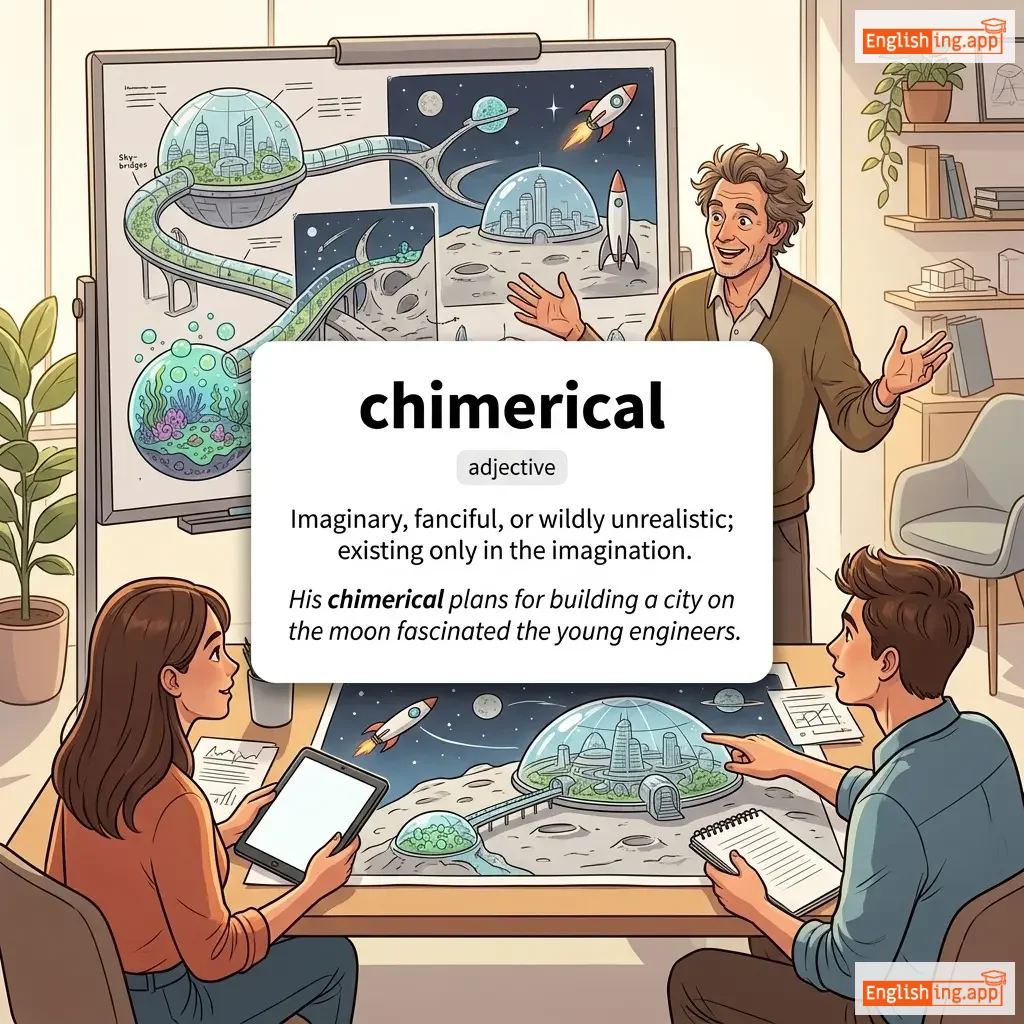
chimerical definition card — visual illustration of the meaning
adjective
/kaɪˈmɛrɪkəl/
অবাস্তব (obastob)

Imaginary, fanciful, or wildly unrealistic; existing only in the imagination.

"His chimerical plans for building a city on the moon fascinated the young engineers."

"চাঁদে একটি শহর গড়ার তার অবাস্তব পরিকল্পনা তরুণ প্রকৌশলীদের মুগ্ধ করেছিল।" (Chade ekti shohor gorar tar obastob porikolpona torun prokousholider mugdho korechilo.)
noun
/tʃɪn/
থুতনি (thutoni)

the part of the face below the mouth

"He rested his chin on his hand while thinking."

"সে চিন্তাভাবনার সময় তার থুতনিটা হাতে ভর দিয়েছিল।" (Se chintabhavnay tar thutoni hate vhor diyechhilo.)
noun
/ˈtʃaɪ.nə bɑːks/
কামিনী (kamini)

a small evergreen shrub with tiny white fragrant flowers

"The China box plant produced clusters of small white flowers."

"কামিনী গাছ ছোট সাদা ফুলের গুচ্ছ তৈরি করেছিল।" (Kamini gach choto shada phuler guchho toiri korechilo.)
noun
/ˈtʃaɪ.nə roʊz/
জবা (jaba)

a tropical flowering plant with large, showy flowers in various colors

"The bright red China-rose flowers decorated the entrance of the house."

"উজ্জ্বল লাল জবা ফুল বাড়ির প্রবেশদ্বার সাজিয়েছিল।" (Ujjol lal jaba phul barir probeshwar shajiyechilo.)
noun
/ˈtʃaɪ.nə.weər/
চীনামাটির বাসন (chinmatir bashon)

dishes, plates, cups, and other tableware made of porcelain or fine ceramic

"The expensive china-ware was displayed in the cabinet."

"দামি চীনামাটির বাসনটি আলমারিতে প্রদর্শিত হয়েছিল।" (dami chinmatir bashonti alamarite prodorshito hoyechilo)
adjective, noun
/tʃaɪˈniːz/
চীনা (china)

relating to China, its people, or its language

"We went to a Chinese restaurant last night."

"আমরা গত রাতে একটি চাইনিজ রেস্টুরেন্টে গিয়েছিলাম।" (amra got rate ekti chainiz restaurant e giyechhilam.)
noun, verb
/tʃɪp/
টুকরা / ভাঙা অংশ (tukra / bhanga angsho)

A small piece broken off from something; or to cut or break a small piece from something.

"He accidentally chipped the edge of the table."

"সে দুর্ঘটনাবশত টেবিলের ধার থেকে একটি অংশ ভেঙে ফেলল।" (Se durghotonabosoto tebiler dhar theke ekti angsho venge fello.)
noun
/ˈkaɪrəˌmænsi/
হাত দেখে ভাগ্য গণনা (hat dekhe vaggo gonona)

The practice of predicting the future by interpreting the lines on the palms of hands; palmistry.

"The old woman practiced chiromancy and told fortunes for travelers."

"বৃদ্ধা হাত দেখে ভাগ্য গণনা করতেন এবং ভ্রমণকারীদের ভবিষ্যৎ বলতেন।" (Briddha hat dekhe vaggo gonona korten ebong vromonkarider vobishshot bolten.)
noun
/kɪˈrɒpədɪst/
পায়ের ডাক্তার (payer daktar)

A healthcare professional who diagnoses and treats foot problems.

"The chiropodist treated her painful corns and calluses."

"কিরোপডিস্ট তার ব্যথাযুক্ত ফোড়া ও কড়া চিকিৎসা করেছিলেন।" (Chiropodist tar bethajukto phora o kora chikitsa korechilen.)
noun, verb
/ˈtʃɪzəl/
খোদাই করার হাতিয়ার (khodai korar hatiar)

A tool with a sharp edge used for cutting or shaping hard materials; or to cut or carve with such a tool.

"The sculptor chiseled the marble into a beautiful statue."

"ভাস্কর মার্বেল খোদাই করে একটি সুন্দর মূর্তি বানালেন।" (Bhaskar marbel khodai kore ekti sundor murti banalen.)
noun
/tʃɪt/
হাতে চিঠি; চিরকুট; (hate chithi, chirkut)

a short note, typically a brief informal letter; a voucher for a sum owed

"She left a chit on the table asking him to call her back."

"তিনি টেবিলে একটি চিরকুট রেখে গেলেন যেখানে তাকে ফোন করতে বলা হয়েছিল।" (tini tebile ekti chirkut rekhe gelen jekhane take phone korte bola hoyechhilo.)
adjective
/ˈʃɪvəlrəs/
ভদ্র ও সাহসী (bhodro o sahosi)

Behaving in a courteous, gallant, and honorable way, especially toward women.

"He was chivalrous, always opening doors for others."

"সে ভদ্র ছিল, সবসময় অন্যদের জন্য দরজা খুলত।" (Se bhodro chilo, sobsomoy onnoder jonno dorja khulto.)
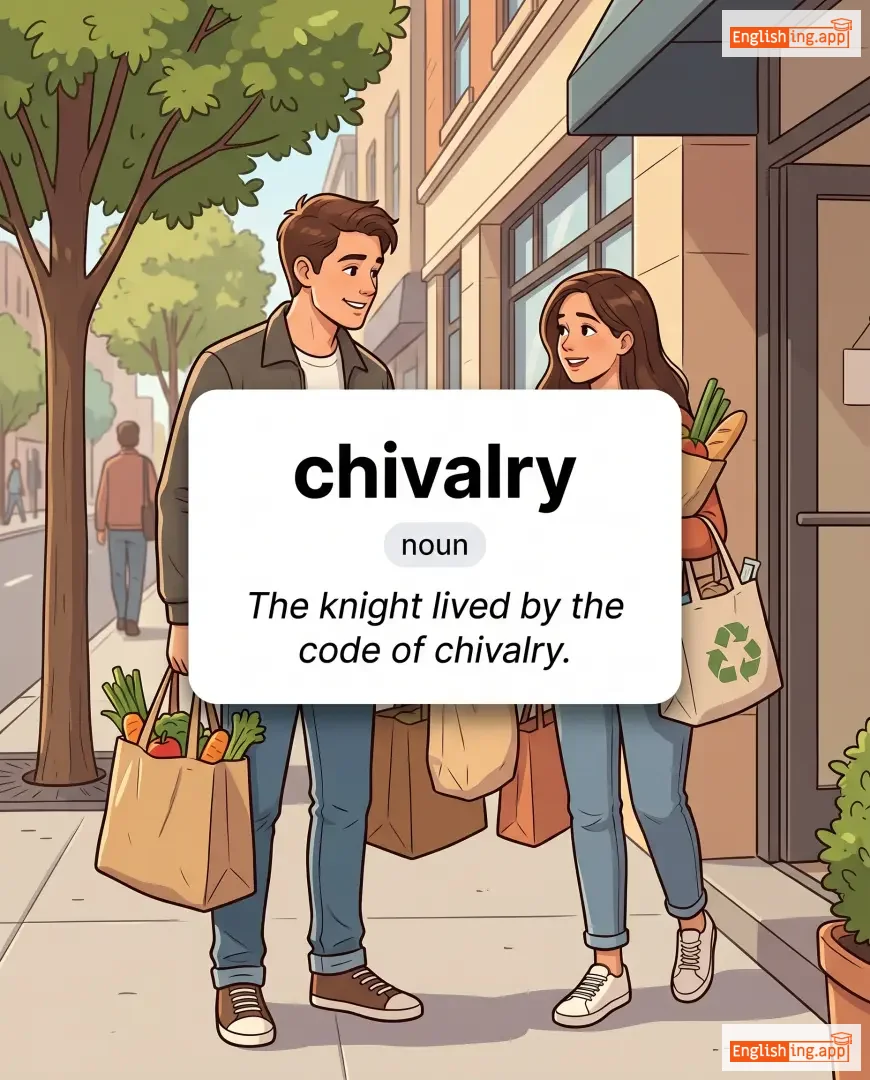
chivalry definition card — visual illustration of the meaning
noun
/ˈʃɪvəlri/
নাইটদের ভদ্রতা (naitder bhodrota)

The medieval knightly system with its moral, social, and religious code; courteous behavior, especially toward women.

"The knight lived by the code of chivalry."

"নাইট শিভালরির নিয়ম মেনে চলত।" (Nait shivalrir niyom mene cholto.)
noun
/ˈtʃɒklət/
চকলেট (choklet)

a sweet, brown food made from roasted cocoa beans

"She bought a bar of chocolate from the store."

"সে দোকান থেকে একটি চকলেট কিনেছিল।" (se dokan theke ekti choklet kinyechhilo.)
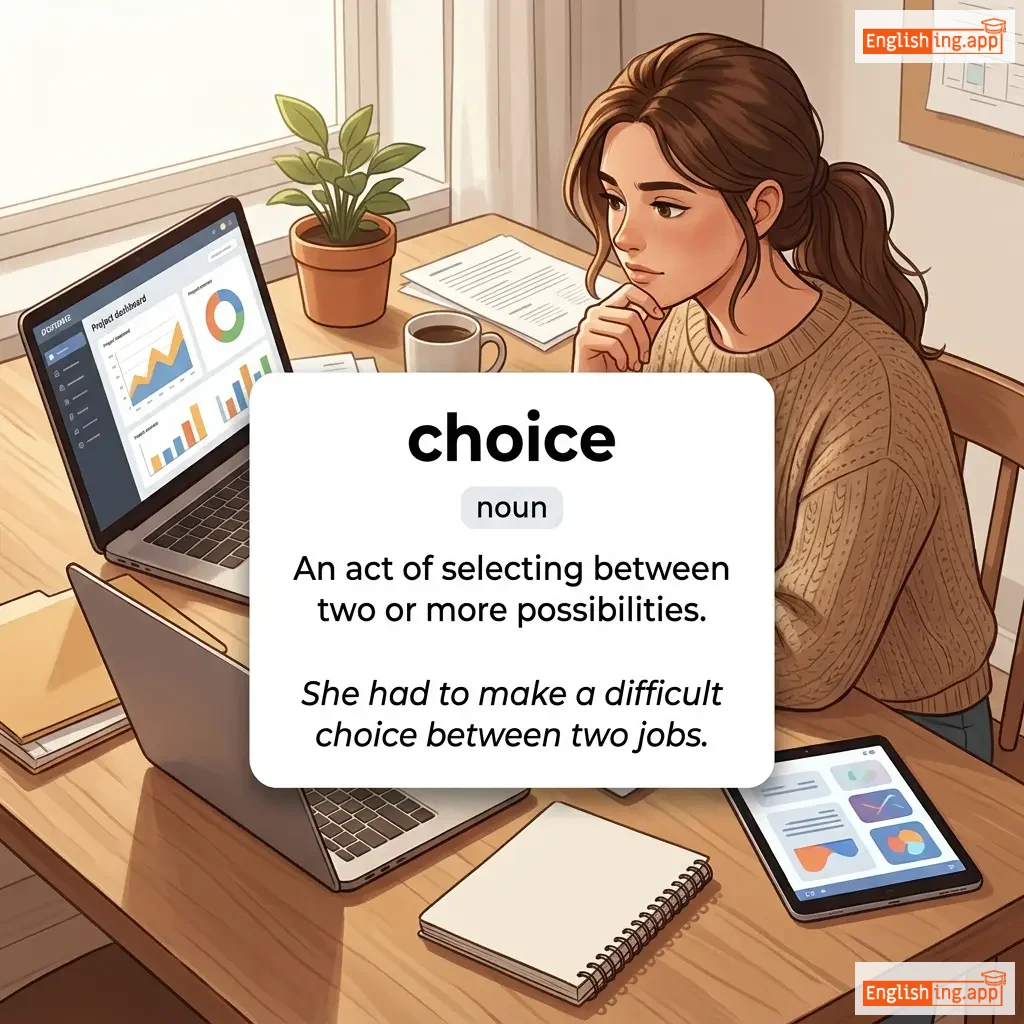
choice definition card — visual illustration of the meaning
noun
/tʃɔɪs/
পছন্দ (pochondo)

An act of selecting between two or more possibilities.

"She had to make a difficult choice between two jobs."

"তার দুই চাকরির মধ্যে কঠিন একটি পছন্দ করতে হয়েছিল।" (Tar dui chakrir modhye kothin ekti pochondo korte hoyechilo.)
noun
/ˈkwaɪər/
গায়ক দল (gayok dol)

An organized group of singers, typically performing in church services or concerts.

"The choir sang beautifully during the ceremony."

"অনুষ্ঠানে কোয়ারটি সুন্দরভাবে গান গেয়েছিল।" (Onushthane koyarti sundorbhabe gan geyechilo.)
noun
/ˈkɒlərə/
কলেরা (kolera)

An infectious disease of the small intestine causing severe vomiting and diarrhea.

"The village suffered an outbreak of cholera after the flood."

"বন্যার পর গ্রামে কলেরার প্রাদুর্ভাব দেখা দিয়েছিল।" (Bonyar por grame kolerar pradurbhab dekha diyechilo.)
adjective
/ˈkɒlərɪk/
খিটখিটে মেজাজের (khitkhite mejajer)

Easily angered; irritable and hot-tempered.

"His choleric nature often got him into arguments."

"তার খিটখিটে স্বভাব তাকে প্রায়ই ঝগড়ায় জড়িয়ে ফেলত।" (tar khitkhite swabhav take prayoi jhograe jorie phelto.)
noun
/kəˈlɛstərɒl/
কোলেস্টেরল (kolesterol)

a fatty substance found in the blood, high levels of which can cause health problems

"High cholesterol can increase the risk of heart disease."

"উচ্চ কোলেস্টেরল হৃদরোগের ঝুঁকি বাড়াতে পারে।" (uccho kolesterol hridrog er jhuki barate pare.)
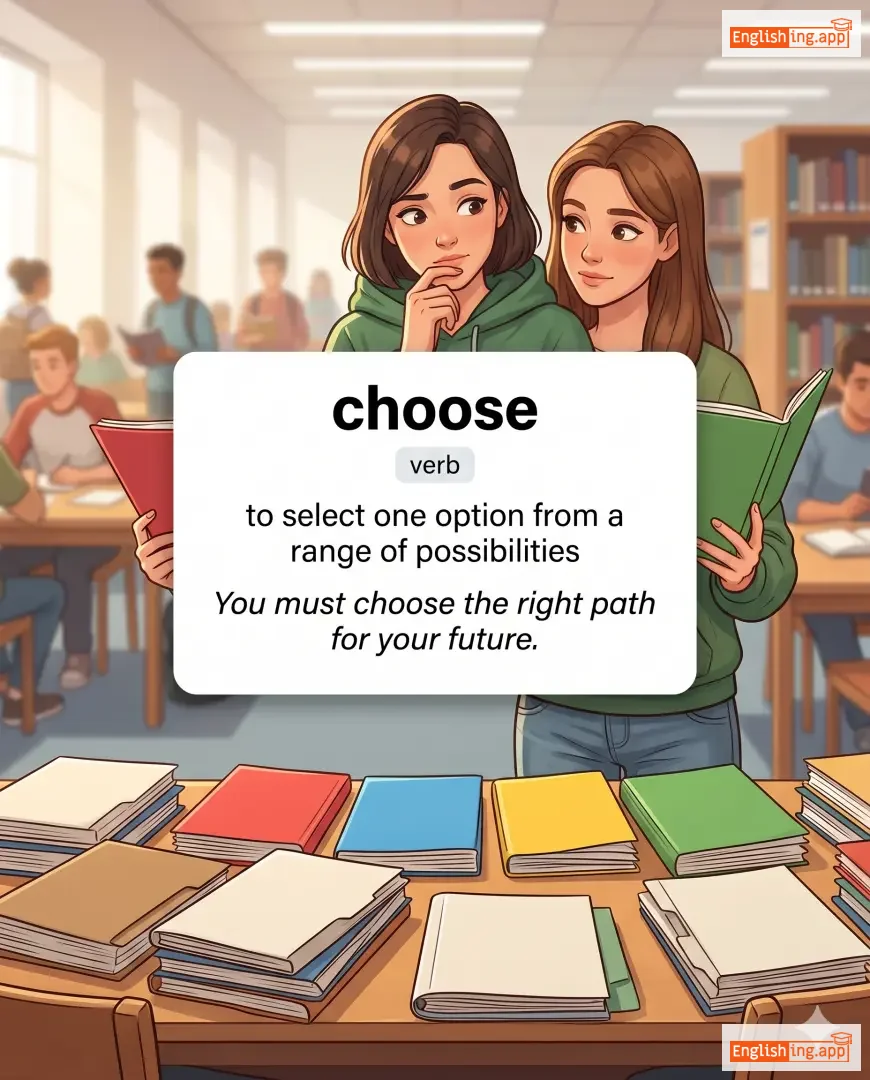
choose definition card — visual illustration of the meaning
verb
/tʃuːz/
বেছে নেওয়া (beche newa)

to select one option from a range of possibilities

"You must choose the right path for your future."

"তোমাকে তোমার ভবিষ্যতের জন্য সঠিক পথ বেছে নিতে হবে।" (Tomake tomar vobissoter jonno sothik poth beche nite hobe.)
adjective
/ˈtʃuː.zi/
খুঁতখুঁতে; সবকিছু পছন্দ হয় না এমন; (khutkhute)

very careful in choosing; selective; particular about what one likes or accepts

"He's very choosy about the restaurants where he eats."

"তিনি যে রেস্তোরাঁগুলিতে খান সেগুলি সম্পর্কে খুব খুঁতখুঁতে।" (tini je restorangulite khan seguli shomporke khub khutkhute.)
adjective
/ˈtʃuːzi/
খুঁতখুঁতে (khutkhute)

very careful in choosing; selective

"She is very choosy about the clothes she wears."

"সে তার পরিধেয় পোশাকের ব্যাপারে খুব খুঁতখুঁতে।" (Se tar poridhey poshaker byapare khub khutkhute.)
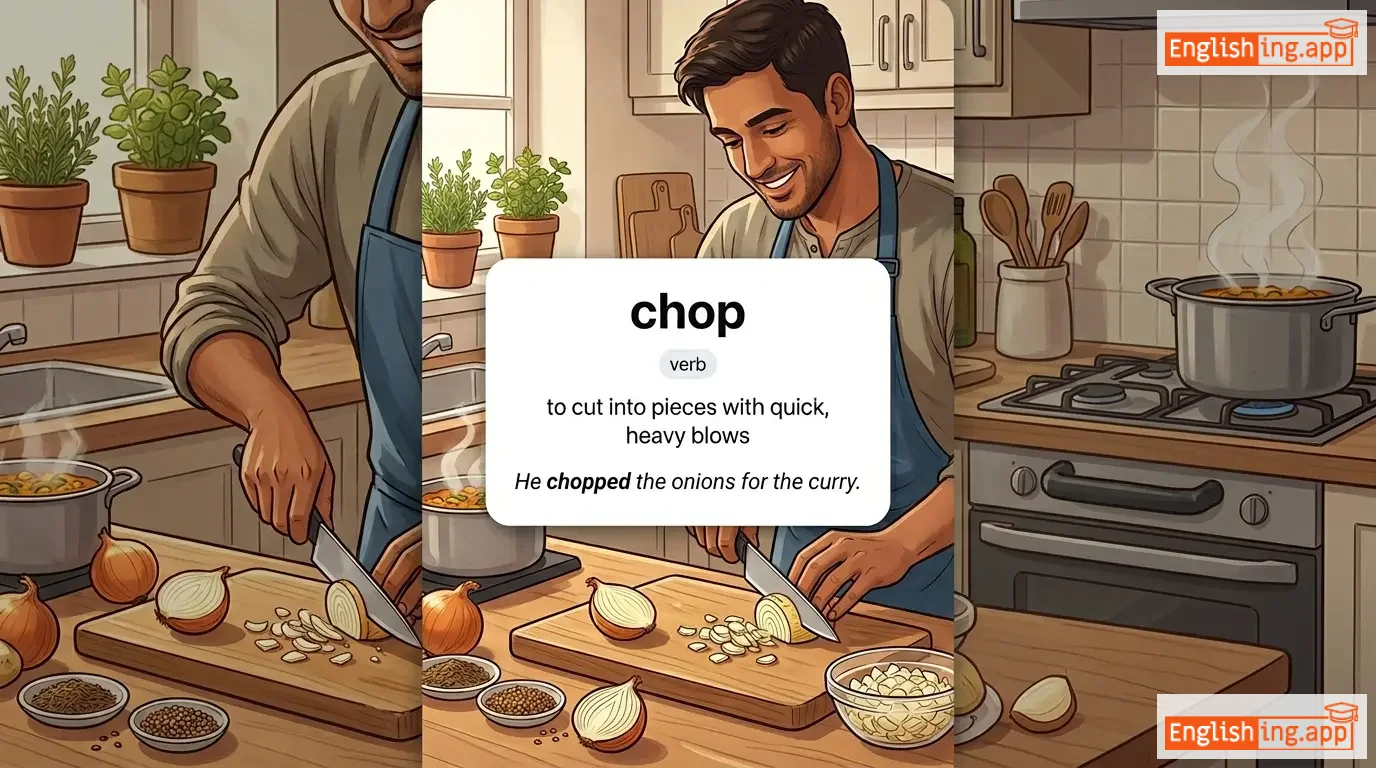
chop definition card — visual illustration of the meaning
verb
/tʃɒp/
কেটে ফেলা (kate fela)

to cut into pieces with quick, heavy blows

"He chopped the onions for the curry."

"সে তরকারির জন্য পেঁয়াজ কেটে ফেলল।" (Se torkarir jonno peyaaj kate felo.)
noun
/ˈtʃɒp.ər/
কুড়াল (kural)

a tool with a heavy blade for chopping wood; a helicopter

"The lumberjack swung the chopper to cut down the tree."

"কাঠুরে গাছ কাটার জন্য কুড়াল দিয়ে আঘাত করেছিল।" (kathure gach katar jonno kural diye aghat korechilo.)