ভোকাবুলারিসমূহ

ইংরেজি শব্দের বাংলা অর্থ | English to Bangla Word Meaning Dictionary

verb
/ˈtɛrəˌfaɪ/
ভয় দেখানো (voy dekhano)

To cause someone to feel extreme fear.

"The loud thunder terrified the children."

"ভয়ঙ্কর বজ্রপাত শিশুদের ভয় পাইয়ে দিল।" (Voyonkor bojorpot shishuder voy paiye dilo.)
adjective
/ˌtɛrɪˈtɔːriəl/
সীমান্ত সংক্রান্ত (simanto songkranto)

Relating to the ownership or control of land or territory.

"The two countries had a territorial dispute over the island."

"দুই দেশের দ্বীপ নিয়ে সীমান্ত সংক্রান্ত বিরোধ ছিল।" (Dui desher dip niye simanto songkranto birodh chilo.)
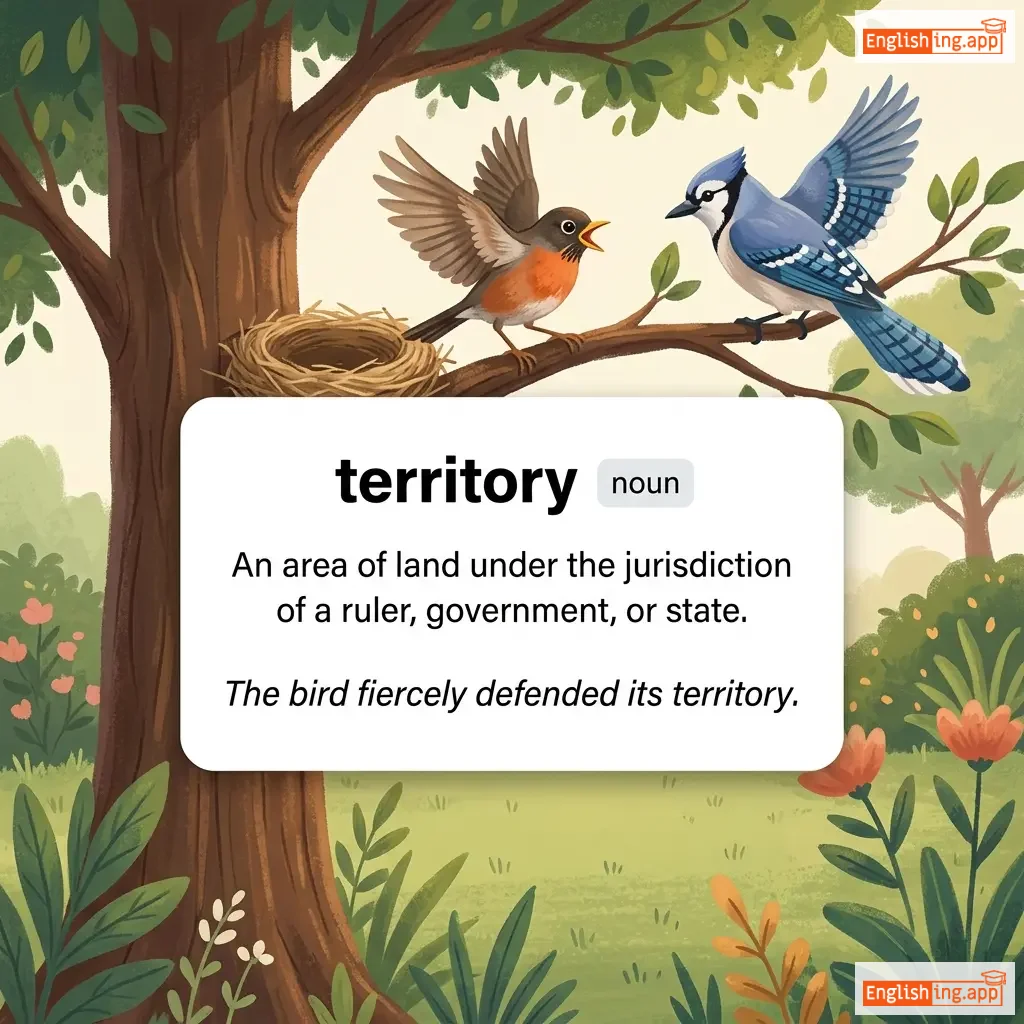
territory definition card — visual illustration of the meaning
noun
/ˈtɛrɪˌtɔːri/
অঞ্চল (onchol)

An area of land under the jurisdiction of a ruler, government, or state.

"The bird fiercely defended its territory."

"পাখিটি তার এলাকা তীব্রভাবে রক্ষা করছিল।" (Pakhiti tar elaka tibrobhabe rokha korchhilo.)
noun
/ˈtɛrər/
ভয় (voy)

Extreme fear or dread.

"The villagers fled in terror during the attack."

"গ্রামবাসীরা আক্রমণের সময় আতঙ্কে পালিয়ে গিয়েছিল।" (Grambasira akromoner somoy atonke paliye giyechhilo.)
noun
/ˈtɛrərɪzəm/
সন্ত্রাসবাদ (sontrashbad)

the use of violence or threats to intimidate or coerce, especially for political purposes

"Terrorism is a serious threat to global peace and security."

"সন্ত্রাসবাদ হল বৈশ্বিক শান্তি এবং নিরাপত্তার জন্য একটি গুরুতর হুমকি।" (Sontrashbad holo boishwik shanti ebong nirapottar jonno akti gurutor humki.)
noun
/ˈtɛrərɪst/
সন্ত্রাসী (sontrashi)

a person who uses violence or threats to intimidate or coerce, especially for political purposes

"The terrorist was arrested by the police after the attack."

"সন্ত্রাসী আক্রমণের পর পুলিশ দ্বারা গ্রেপ্তার হয়েছিল।" (Sontrashi akromoner por pulish dvara greptar hoyechilo.)
adjective
/tɜːrs/
সংক্ষিপ্ত (songkhipto)

brief and to the point; sparing in the use of words

"His reply was terse and ended the conversation quickly."

"তার উত্তরটি ছিল সংক্ষিপ্ত এবং দ্রুত কথোপকথন শেষ করে দেয়।" (tar uttorti chilo songkhipto ebong druto kothopokothon shesh kore deya.)
adjective
/ˈtɜːrʃieri/
তৃতীয় স্তর (tritiyo star)

third in order, rank, or level

"He is pursuing his tertiary education at the university."

"সে বিশ্ববিদ্যালয়ে তার তৃতীয় স্তরের শিক্ষা অর্জন করছে।" (se bishwobidyaloye tar tritiyo starer shikkha arjon korche.)
adjective
/ˈtɛsəleɪtɪd/
জ্যামিতিক নকশাযুক্ত (jyamitik nokshayukto)

arranged in a pattern of repeated shapes fitting together without gaps

"The tessellated floor was made of colorful tiles arranged in perfect symmetry."

"টেসেলেটেড মেঝে রঙিন টাইলস দিয়ে নিখুঁতভাবে সাজানো ছিল।" (tessellated mejhe rongin tiles diye nikhutvabe sajano chilo.)
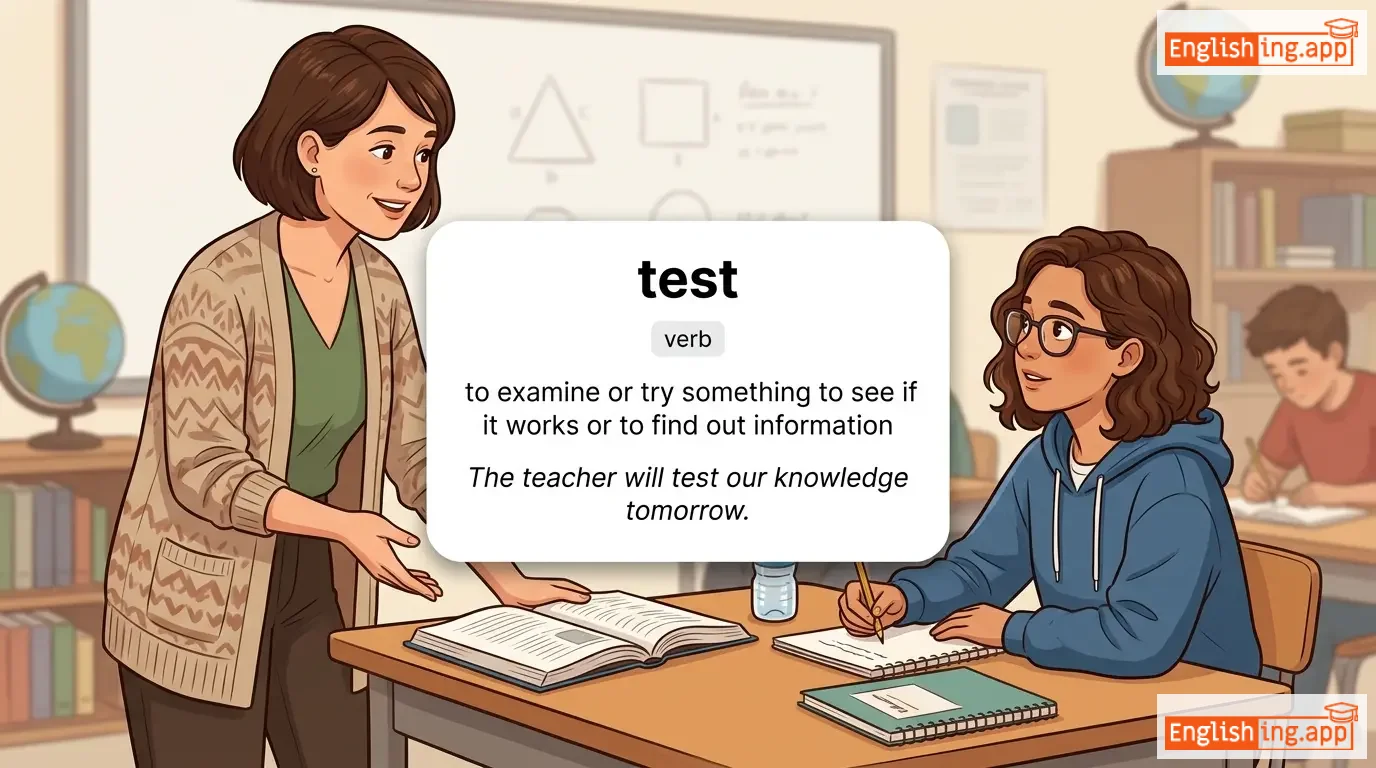
test definition card — visual illustration of the meaning
noun
/tɛst/
পরীক্ষা (porikkha)

a procedure intended to establish the quality, performance, or reliability of something

"The test results will determine whether the treatment is effective."

"পরীক্ষার ফলাফল নির্ধারণ করবে যে চিকিৎসাটি কার্যকর কিনা।" (Porikkhar folafol nirdharon korbe je chikitsati karyokor kina.)
noun
/ˈtɛstəmənt/
উইল / প্রমাণ (wil / proman)

a person's will; or strong evidence of something

"His success is a testament to his hard work and dedication."

"তার সাফল্য তার কঠোর পরিশ্রম এবং নিষ্ঠার প্রমাণ।" (tar safollo tar kothor porishrom ebong nisthar proman.)
noun
/ˈtɛsteɪtər/
উইলদাতা (wildaata)

a person who has made a will

"The lawyer read the will of the deceased testator."

"আইনজীবী মৃত উইলদাতার উইল পড়ে শোনালেন।" (ainjibi mrityo wildatar wil pore shonalenn.)
verb
/ˈtɛstəfaɪ/
সাক্ষ্য প্রদান করা (sakhyo prodan kora)

to make a statement or declaration under oath or to give evidence

"She was called to testify in court about the accident."

"সে আদালতে দুর্ঘটনা সম্পর্কে সাক্ষ্য দেওয়ার জন্য ডাকা হয়েছিল।" (Se adalote durghotona somporke sakhyo deowar jonyo daka hoyechilo.)
noun
/ˌtɛstɪˈmoʊniəl/
প্রশংসাপত্র (proshongshapatro)

A formal statement testifying to someone's character, qualifications, or the quality of a product or service.

"The company shared a glowing testimonial from a satisfied customer."

"কোম্পানিটি একজন সন্তুষ্ট গ্রাহকের কাছ থেকে একটি প্রশংসাপত্র শেয়ার করেছে।" (Companyti ekjon shontushto grahoker kach theke ekti proshongshapatro share koreche.)
testimonials definition card — visual illustration of the meaning
noun
/ˌtɛstɪˈməʊnɪəlz/
প্রশংসাপত্র, অভিজ্ঞতার বিবরণ (proshongshapotra, obhiggotar biboron)

Written or spoken statements of praise or recommendation from clients or customers.

"Positive testimonials can enhance a company's reputation."

"ইতিবাচক টেস্টিমোনিয়ালগুলি একটি কোম্পানির খ্যাতি বাড়াতে সাহায্য করতে পারে।" (Itibachok testimonialgulik ekti companir khyati barate shahajyo korte pare.)
noun
/ˈtɛstəˌmoʊni/
সাক্ষ্য (sakkha)

A formal statement given in a court of law or evidence supporting a fact.

"Her testimony in court helped convict the criminal."

"তার সাক্ষ্য আদালতে অপরাধীকে দোষী সাব্যস্ত করতে সাহায্য করেছে।" (Tar sakkha adalote oprodheke doshi sabbosto korte sahajyo koreche.)
noun
/ˈtɛstɪŋ/
পরীক্ষা (porikkha)

the process of assessing or evaluating something, often by trying it out

"The testing of the new software is still ongoing."

"নতুন সফটওয়্যারটির পরীক্ষণ এখনও চলমান।" (Notun software-tir porikkha ekhono choloman.)
adjective
/ˈtɛsti/
রাগী (ragi)

Easily irritated or annoyed.

"He became testy when asked the same question repeatedly."

"তাকে একই প্রশ্ন বারবার জিজ্ঞেস করলে তিনি রাগী হয়ে উঠলেন।" (Take eki proshno bar bar jiggesh korle tini ragi hoye uthlen.)
verb
/ˈtɛðər/
বেঁধে রাখা (bende rakha)

To tie an animal with a rope or chain so it cannot move far.

"The farmer tethered the goat to a post."

"কৃষক ছাগলটিকে খুঁটিতে বেঁধে রেখেছিল।" (Krishok chagoltike khuti te bende rekhechilo.)
noun
/tɛkst/
লেখা (lekha)

a written or printed work or passage, especially a book or document

"The teacher asked us to read the text on page 50."

"শিক্ষক আমাদের পৃষ্ঠা ৫০-এ টেক্সটটি পড়তে বলেছিলেন।" (Shikkhok amader pusta 50-e teksti porte bolechhilen.)
noun
/ˈtɛkstbʊk/
পাঠ্যপুস্তক (pathyopustok)

a book used for studying a subject in school or college

"She bought a new biology textbook for her class."

"সে তার ক্লাসের জন্য একটি নতুন জীববিজ্ঞানের পাঠ্যপুস্তক কিনেছিল।" (Se tar class er jonno ekti notun jibbigganer pathyopustok kinchhilo.)
noun
/ˈtek.staɪl/
বস্ত্র (bostro)

a type of cloth or woven fabric made by knitting or weaving fibers

"Bangladesh is famous for its high-quality textile industry."

"বাংলাদেশ তার উচ্চমানের বস্ত্র শিল্পের জন্য বিখ্যাত।" (Bangladesh tar uchchomaner bostro shilper jonno bikhyato.)
noun
/ˈtɛkstʃər/
বুনন বা স্পর্শগুণ (bunan ba sporshagun)

the way something feels when you touch it; the quality of a surface or substance

"The fabric has a soft and smooth texture."

"কাপড়টির একটি নরম ও মসৃণ বুনন রয়েছে।" (Kaporti ekta norom o mosrin bunan royeche.)
conjunction
/ðæn/
এর চেয়ে (er cheye)

used to introduce the second element in a comparison

"She is taller than her brother."

"সে তার ভাইয়ের চেয়ে লম্বা।" (Se tar bhaiyer cheye lomba.)
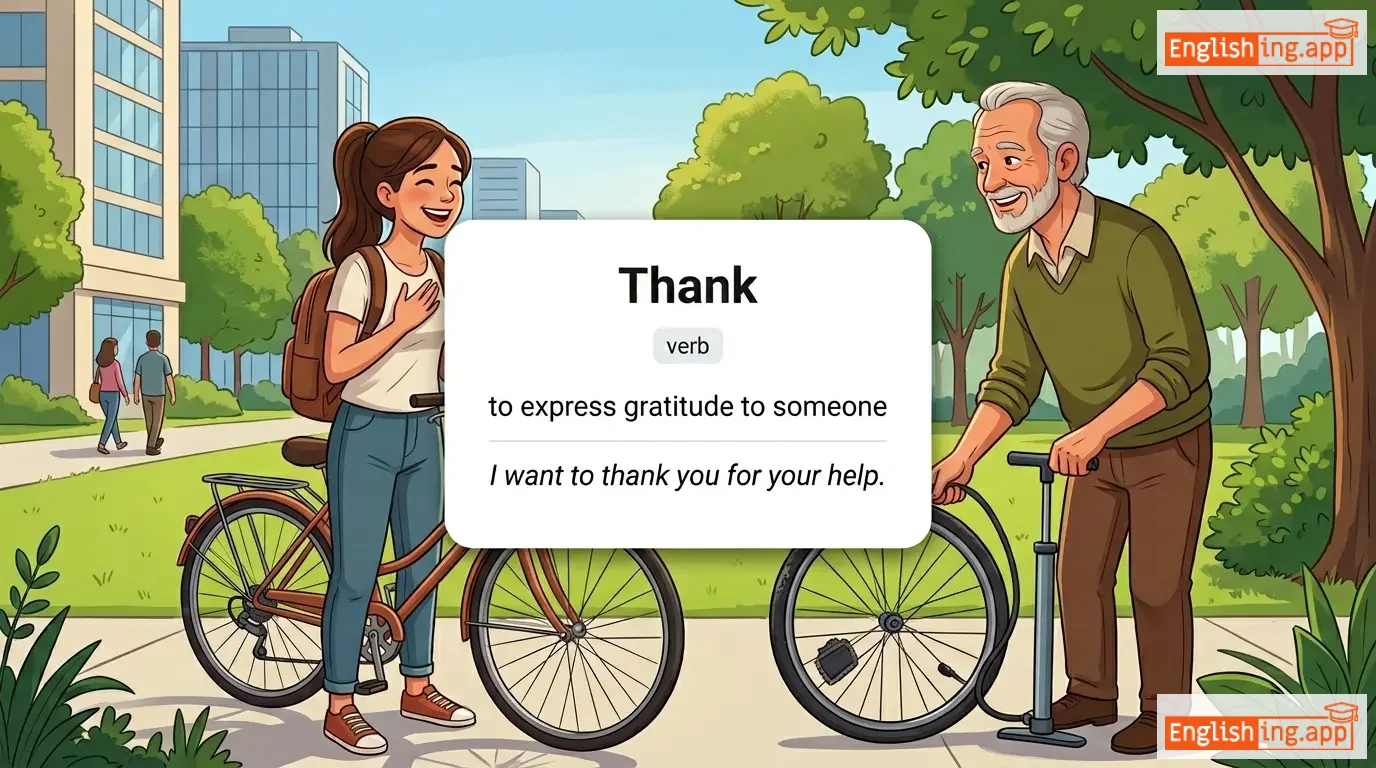
Thank definition card — visual illustration of the meaning
verb
/θæŋk/
ধন্যবাদ বলা (dhonnobad bola)

to express gratitude to someone

"I want to thank you for your help."

"আমি তোমার সাহায্যের জন্য ধন্যবাদ জানাতে চাই।" (Ami tomar sahajyer jonno dhonnobad janate chai.)
adjective
/ˈθæŋk.fəl/
কৃতজ্ঞ; কৃতজ্ঞতাপূর্ণ; (kritoggo; kritoggotapurno)

pleased and relieved; expressing gratitude; appreciative

"I am thankful for all your help and support."

"আপনার সব সাহায্য এবং সমর্থনের জন্য আমি কৃতজ্ঞ।" (apnar shob shahajyo ebong shomorthoner jonno ami kritoggo.)
adverb
/ˈθæŋkfəli/
ধন্যবাদ সহকারে (dhonnobad sohokare)

used to express relief or gratitude

"Thankfully, she arrived just in time for the meeting."

"ধন্যবাদ সহকারে, সে মিটিংএর জন্য সময়মতো পৌঁছেছিল।" (Dhonnobad sohokare, se meeting-er jonyo somoymoto pouchhechhilo.)
noun
/θæŋks/
ধন্যবাদ (dhonnobad)

an expression of gratitude

"Thanks for helping me with the project."

"প্রকল্পে সহায়তার জন্য ধন্যবাদ।" (Prokolpe sohayotar jonno dhonnobad.)
noun
/ˈθæŋksˌɡɪvɪŋ/
ধন্যবাদ উৎসব (dhonnobad utshob)

an annual holiday in the US for giving thanks, celebrated with a meal

"We spent Thanksgiving dinner with our family."

"আমরা পরিবারসহ থ্যাঙ্কসগিভিং ডিনারে অংশ নিয়েছিলাম।" (Amra poribarsho Thanks-giving dinner e angsho niechhilam.)
pronoun
/ðæt/
এটা (eta)

used to identify a specific person or thing observed or heard

"That is my book on the table."

"এটা আমার বই টেবিলের উপর।" (Eta amar boi tebil-er upor.)
noun
/ˈθɔːməˌtɜrdʒɪst/
যাদুকর (jadukar)

A worker of miracles or magician.

"The thaumaturgist amazed the audience with his tricks."

"যাদুকর তার কৌশল দিয়ে দর্শকদের মুগ্ধ করলেন।" (Jadukar tar koushol diye dorshokder mugdho korlen.)
verb
/θɔː/
গলানো (golano)

to melt or cause to melt after being frozen

"The ice began to thaw in the sun."

"বরফ রোদে গলতে শুরু করল।" (Borof rode golte shuru korlo.)
article
/ðə/
এটি (eti)

used to specify a noun as something already mentioned or known

"The sun rises in the east."

"সূর্য পূর্ব দিকে ওঠে।" (Surjo purbo dike othe.)
noun
/ˈθiː.ɑːr.ki/
দেবশাসিত সরকার (debashashito sarkar)

Rule or government by the gods; divine sovereignty.

"In ancient cultures, some societies believed in thearchy where gods directly guided human affairs."

"প্রাচীন সংস্কৃতিতে কিছু সমাজ বিশ্বাস করত যে দেবশাসিত সরকারে দেবতারা মানুষের কার্য পরিচালনা করতেন।" (prachin songskritite kichu somaj bishwas korto je debashashito sarkare debtara manusher kaj porichalona korten.)
noun
/ˈθiːətər/
নাট্যশালা (natyashala)

a building or area for dramatic performances

"We are going to the theater tonight."

"আমরা আজ রাতে থিয়েটারে যাচ্ছি।" (Amra aaj raat-e theater-e jacchi.)
adjective
/θiˈætrɪkl/
নাটকীয় (natokiyo)

Relating to the theater or exaggerated and dramatic in behavior or style.

"Her theatrical performance won the audience's applause."

"তার নাটকীয় অভিনয় দর্শকদের হাততালি কুড়িয়েছিল।" (tar natokiyo abhinoy dorskoder hattali kuriechhilo.)
noun
/θɛft/
চুরি (churi)

the action or crime of stealing

"The theft of his wallet was reported to the police."

"তার ওয়ালেট চুরির ঘটনা পুলিশে রিপোর্ট করা হয়েছে।" (Tar wallet churir ghotona police-e report kora hoyeche.)
👨‍👩‍👧‍👦

their (থেয়ার)

pronoun
/ðɛər/
তাদের (tader)

belonging to or associated with the people or things previously mentioned

"Their house is on the corner."

"তাদের বাড়ি কোণের পাশে।" (Tader bari koner pashe.)
pronoun
/ðɛərz/
তাদের (tader)

belonging to them; that which is theirs

"This book is theirs, not ours."

"এই বইটি তাদের, আমাদের নয়।" (ei boiti tader, amader noy.)
noun
/ˈθiːɪzəm/
ঈশ্বরবিশ্বাস (ishwarbishwas)

Belief in the existence of a god or gods, especially a creator who intervenes in the universe.

"Theism is central to many world religions."

"ঈশ্বরবিশ্বাস অনেক বিশ্ব ধর্মের মূল অংশ।" (ishwarbishwas onek bishwo dhormer mul angsho.)
pronoun
/ðɛm/
তাদের (tader)

used to refer to people or things previously mentioned or easily identified

"I saw them at the park yesterday."

"আমি তাদের গতকাল পার্কে দেখেছিলাম।" (Ami tader gotokal parke dekhechhilam.)
adjective
/θiːˈmætɪk/
বিষয়ভিত্তিক (bishoyvittik)

Relating to or based on a theme.

"The book is organized into thematic chapters."

"বইটি বিষয়ভিত্তিক অধ্যায়ে বিভক্ত করা হয়েছে।" (boiti bishoyvittik oddhaye bivokto kora hoyeche.)
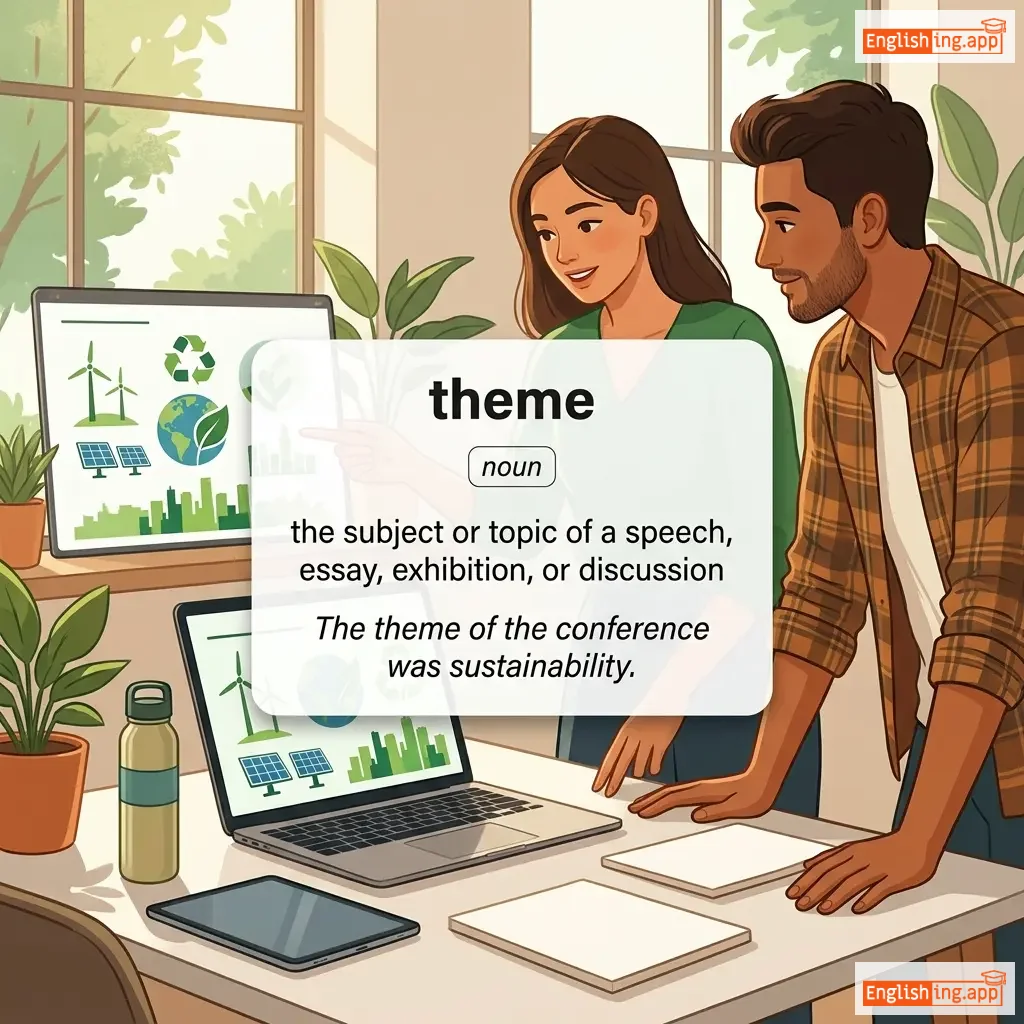
theme definition card — visual illustration of the meaning
noun
/θiːm/
থিম (thim)

the subject or topic of a speech, essay, exhibition, or discussion

"The theme of the conference was sustainability."

"কনফারেন্সের থিম ছিল টেকসইতা।" (Konferencer thim chhilo tekshuita.)
pronoun
/ðəmˈsɛlvz/
নিজেরা (nijera)

used to emphasize the subject of the sentence or to refer to the subject doing something to itself

"They fixed the problem themselves."

"তারা নিজেরাই সমস্যা সমাধান করেছিল।" (Tara nijerai samasya somadhan korechhilo.)
adverb
/ðɛn/
তাহলে (thale)

at that time; next in order of time or place

"We went to the park, and then we had lunch."

"আমরা পার্কে গেলাম, তারপর আমরা লাঞ্চ করলাম।" (Amra parke gelam, tarpor amra lunch korlam.)
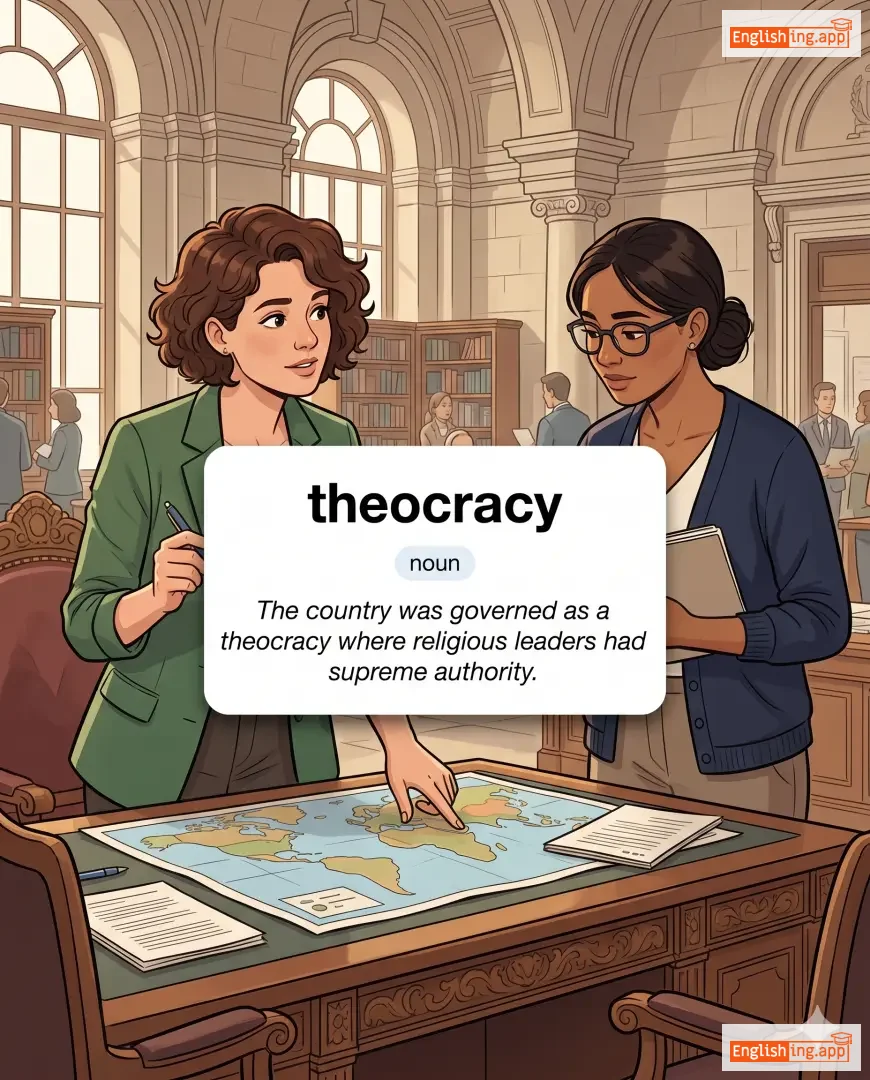
theocracy definition card — visual illustration of the meaning
noun
/θiˈɒkrəsi/
ধর্মতন্ত্র (dhormotrontra)

A system of government in which priests or religious leaders rule in the name of God or a deity.

"The country was governed as a theocracy where religious leaders had supreme authority."

"দেশটি একটি ধর্মতন্ত্র হিসেবে শাসিত ছিল যেখানে ধর্মীয় নেতাদের সর্বোচ্চ ক্ষমতা ছিল।" (deshti ekti dhormotrontra hisebe shashito chilo jekhane dhormiyo netader sorbocho khomota chilo.)
noun
/θiˈɒkrəsi/
ধর্মীয় শাসন (dhormiyo shason)

Government or rule by religious leaders or clergy.

"Theocrasy often merges religious authority with political power."

"থিওক্রাসি প্রায়ই ধর্মীয় কর্তৃত্বকে রাজনৈতিক ক্ষমতার সাথে মিশিয়ে দেয়।" (theocrasy prayoi dhormiyo kortitto ke rajnaitik khomotar sathe mishe die.)
noun
/ˌθiːəˈloʊdʒən/
ধর্মতত্ত্ববিদ (dhormotottobid)

A person who studies or is an expert in theology.

"Theologians often debate complex questions of faith and morality."

"ধর্মতত্ত্ববিদরা প্রায়শই বিশ্বাস ও নৈতিকতার জটিল প্রশ্ন নিয়ে বিতর্ক করেন।" (dhormotottobidra prayoi bishash o norikotar jotil proshno niye bitorko koren.)
adjective
/ˌθiːəˈlɒdʒɪkl/
ধর্মতাত্ত্বিক (dhormotattwik)

Relating to the study of theology or religious belief.

"He wrote a theological paper on the concept of divine justice."

"তিনি divine justice নিয়ে একটি ধর্মতাত্ত্বিক প্রবন্ধ লিখেছেন।" (tini divine justice niye ekti dhormotattwik probondho likhechen.)
noun
/θiˈɒlədʒi/
ধর্মতত্ত্ব (dhormototto)

The study of the nature of God and religious beliefs.

"She is pursuing a degree in theology at the university."

"তিনি বিশ্ববিদ্যালয়ে ধর্মতত্ত্বে একটি ডিগ্রি করছেন।" (tini bishwabidyaloye dhormototto ekti degree korchen.)