ভোকাবুলারিসমূহ

ইংরেজি শব্দের বাংলা অর্থ | English to Bangla Word Meaning Dictionary

noun
/stæns/
অবস্থান বা মনোভাব (obosthan ba monobhav)

a person's attitude, opinion, or position on an issue

"The company took a strong stance on environmental protection."

"কোম্পানিটি পরিবেশ সুরক্ষায় দৃঢ় অবস্থান নিয়েছিল।" (Companyti poribesh surakhay drirho obosthan niechhilo.)
verb
/stɑːntʃ/
রক্তপাত বন্ধ করা (roktopat bondho kora)

to stop the flow of blood or liquid from a wound or source

"The nurse quickly stanched the bleeding from the cut."

"নার্স দ্রুত কাটার রক্তপাত বন্ধ করলেন।" (Nars druto katar roktopat bondho korlen.)
noun
/ˈstænʃən/
সমর্থন খুঁটি (somorthon khuti)

a strong upright bar or post used as support or to control movement

"The red rope was attached to the stanchions to guide the crowd."

"লাল দড়িটি জনতাকে নিয়ন্ত্রণ করতে স্ট্যানশানে বাঁধা ছিল।" (Lal doriti jonatake niyontron korte stanshane bandha chilo.)
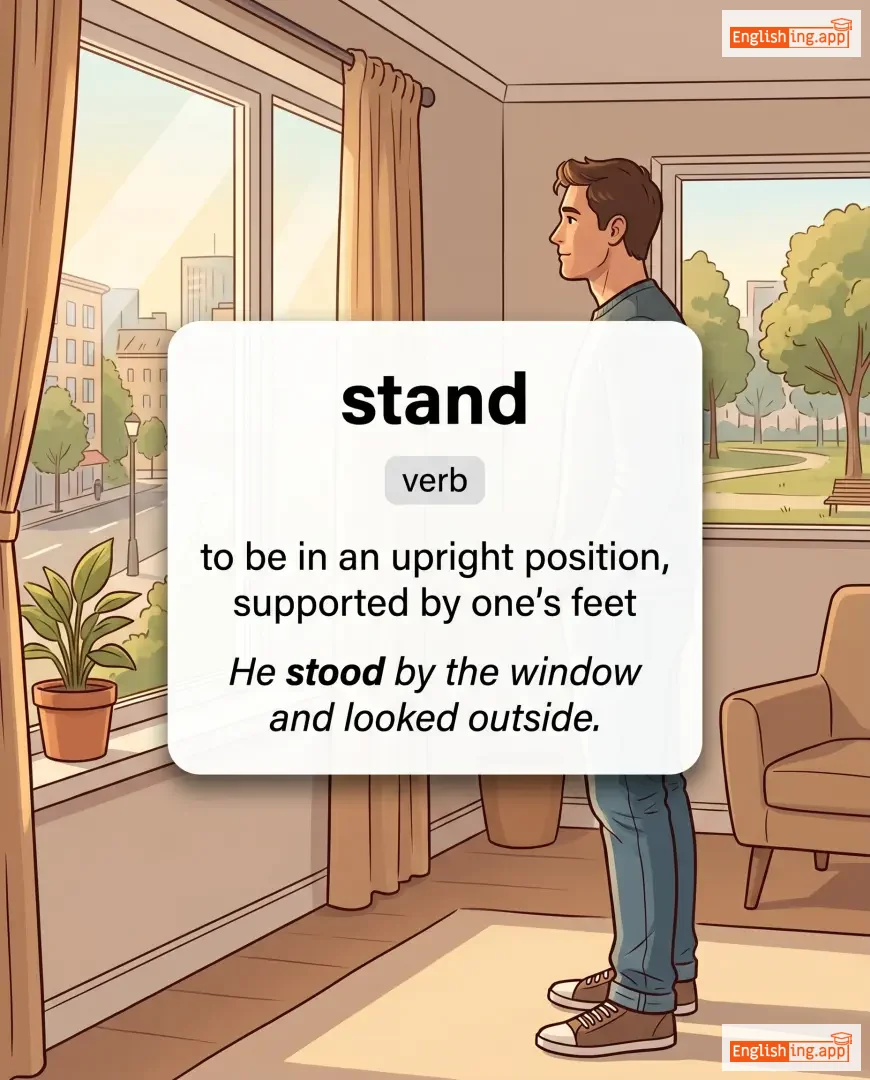
stand definition card — visual illustration of the meaning
verb
/stænd/
দাঁড়ানো (daṛano)

to be in an upright position, supported by one's feet

"He stood by the window and looked outside."

"সে জানালার পাশে দাঁড়িয়ে বাইরের দিকে দেখছিল।" (Se janalar pashe daṛiye bairey dikhe dekhchhilo.)
noun
/ˈstændərd/
মান (man)

a level of quality or achievement, or a measure of comparison

"This car meets all the safety standards."

"এই গাড়িটি সমস্ত সুরক্ষা স্ট্যান্ডার্ড পূর্ণ করেছে।" (Ei gariṭi samosto suraksha standard purnno koreche.)
standards definition card — visual illustration of the meaning
noun
ˈstæn.dədz
মান (man)

A level of quality or attainment.

"Institutions must meet international standards."

"প্রতিষ্ঠানগুলোকে আন্তর্জাতিক মান পূরণ করতে হবে।" (Protishthanguloke antorjatik man puron korte hobe.)
noun/adjective
/ˈstændɪŋ/
মর্যাদা / অবস্থান (morjada / obosthan)

status, reputation, or position; also the act of being upright on the feet

"He has high standing in the community for his charity work."

"তার দাতব্য কাজের জন্য সমাজে তার উচ্চ মর্যাদা আছে।" (Tar datto kazer jonno somaje tar uccho morjada ache.)
noun
/ˈstændˌstɪl/
অচলাবস্থা (ocholobostha)

a situation in which all movement or activity stops

"The traffic came to a standstill after the accident."

"দুর্ঘটনার পর যানজট অচলাবস্থায় পৌঁছায়।" (Durghotonar por janjot ocholobosthay pouchay.)
noun
/ˈstænzə/
কবিতার স্তবক (kobitar stabok)

a group of lines forming a unit in a poem or song

"The poem begins with a stanza describing nature."

"কবিতাটি একটি প্রকৃতিকে বর্ণনা করা স্তবক দিয়ে শুরু হয়।" (Kobitati ekti prokritike borno kora stabok diye shuru hoy.)
noun
/stɑːr/
তারকা (tārkā)

a luminous point in the night sky, a famous person

"The movie star smiled for the cameras."

"মুভি স্টার ক্যামেরার জন্য হেসে উঠলেন।" (Mubi star kamerar jonno hese uthlen.)
noun
/stɑːr ˈæn.ɪs/
চক্রফুল (chokkrophul)

star-shaped spice pod with a licorice-like flavor used in cooking

"She added star anise to the soup for aromatic flavor."

"তিনি সুগন্ধি স্বাদের জন্য স্যুপে চক্রফুল যোগ করেছেন।" (tini shugondhi shader jonno syupe chokkrophul jog korechhen.)
noun
/stɑːr fɪʃ/
তারামাছ (taramach)

a marine echinoderm with five or more radiating arms, typically found on the sea floor

"The starfish slowly moved across the ocean floor searching for food."

"তারামাছ ধীরে ধীরে সমুদ্রের তলদেশে খাবারের সন্ধানে চলাচল করে।" (taramach dhire dhire somuddrer toldeshe khabaer sonddhane cholaachol kore)
noun
/stɑːr fruːts/
কমরাঙ্গা (komaranga)

yellow tropical fruits that form a star shape when sliced crosswise; tangy and crisp taste

"When you slice star fruits, they look like beautiful yellow stars on your plate."

"যখন আপনি কমরাঙ্গা কাটেন, তখন সেগুলো আপনার প্লেটে সুন্দর হলুদ তারার মতো দেখায়।" (jokhon apni komaranga katen, tokhon segulo apnar plete shundor holud tarar moto dekhay.)
verb
/stɛə/
তাকানো (tākāno)

to look at something with a fixed gaze

"She stared at the painting for hours."

"সে ঘন্টার পর ঘন্টা চিত্রকর্মটির দিকে তাকিয়ে ছিল।" (Se ghoṇṭār por ghoṇṭā chitrokormoṭir dike tākiye chhilo.)
adjective
/stɑːrk/
তীব্র, কঠোর (tibro, kothor)

Severe, sharp, or clearly defined; plain and without any decoration.

"The stark contrast between poverty and wealth was evident in the city."

"শহরে দারিদ্র্য এবং সম্পদের মধ্যে তীব্র পার্থক্য স্পষ্ট ছিল।" (Shohore daridryo ebong sompoder modhye tibro parthokko sposto chilo.)
adjective
/ˈstɑː.ri/
তারাযুক্ত; উজ্জ্বল; (stari)

full of stars; shining like stars; relating to stars

"We enjoyed the starry night sky while camping in the mountains."

"পাহাড়ে ক্যাম্পিং করার সময় আমরা তারাভরা রাতের আকাশ উপভোগ করেছিলাম।" (pahare kyamping korar somoy amra tarabhra rater akash upabhog korechhilam.)
start definition card — visual illustration of the meaning
verb
/stɑːrt/
শুরু করা (shuru kora)

To begin doing something; to commence.

"They will start the meeting at 10 a.m."

"তারা সকাল ১০টায় সভা শুরু করবে।" (Tara shokal 10tay shova shuru korbe.)
noun
/ˈstɑːrtər/
শুরুকারী বা প্রথম পদ (shurukari ba prothom pod)

a person or thing that starts something; the first course of a meal

"The starter of the meal was a fresh salad."

"খাবারের প্রথম পদ ছিল একটি তাজা সালাদ।" (Khabarer prothom pod chhilo ekti taza salad.)
verb
/ˈstɑːtɪŋ/
শুরু করা (shuru kora)

beginning to do or experience something

"She is starting a new job next week."

"সে আগামী সপ্তাহে একটি নতুন চাকরি শুরু করছে।" (Se agami soptah ekti notun chakri shuru korche.)
verb
/ˈstɑːrtl/
আতঙ্কিত বা চমকে দেওয়া (atankito ba chomke deowa)

To surprise or frighten someone suddenly.

"The loud noise startled the children."

"জোরে আওয়াজে বাচ্চারা চমকে উঠল।" (Jore awaje bachara chomke uthlo.)
adjective
/ˈstɑːrtəld/
আচমকা বিস্মিত (achmoka bismito)

suddenly shocked or surprised by something unexpected

"She was startled by the loud noise outside."

"সে বাইরে জোর আওয়াজে চমকে উঠল।" (Se baire jor awaje chomke uthlo.)
startup definition card — visual illustration of the meaning
noun
ˈstɑːtʌp
নতুন কোম্পানি, ব্যবসায়িক উদ্যোগ (notun company, bebshayik uddog)

New company, business venture.

"The startup grew into a global brand."

"এই স্টার্টআপ একটি বৈশ্বিক ব্র্যান্ডে পরিণত হয়েছে।" (Ei startup ekti boishbik brande porinoto hoyeche.)
noun
/stɑːˈveɪ.ʃən/
অনাহার; না খেয়ে থাকা; (onahar; na kheye thaka)

suffering or death caused by lack of food; extreme hunger

"Many people died of starvation during the famine."

"দুর্ভিক্ষের সময় অনেক মানুষ অনাহারে মারা গিয়েছিল।" (durvokhyer shomoey onek manush onahare mara giyechilo।)
verb
/stɑːv/
ক্ষুধায় মারা যাওয়া (kshudhaye mara jaoya)

to suffer or die from lack of food

"He was left to starve in the desert."

"সে মরুভূমিতে ক্ষুধায় মারা যাওয়ার জন্য ফেলে রাখা হয়েছিল।" (Se morubhumite kshudhaye mara jaoyar jonyo felo rakha hoyechhilo.)
noun
/ˈsteɪsɪs/ or /ˈstæsɪs/
অচলাবস্থা (ocholabostha)

A state of inactivity or equilibrium; a situation where nothing changes.

"The negotiations reached a state of stasis with no progress made."

"আলোচনা অচলাবস্থায় পৌঁছেছিল, কোনো অগ্রগতি হয়নি।" (Alochona ocholabosthay pouchhchhilo, kono ogrogoti hoyni.)
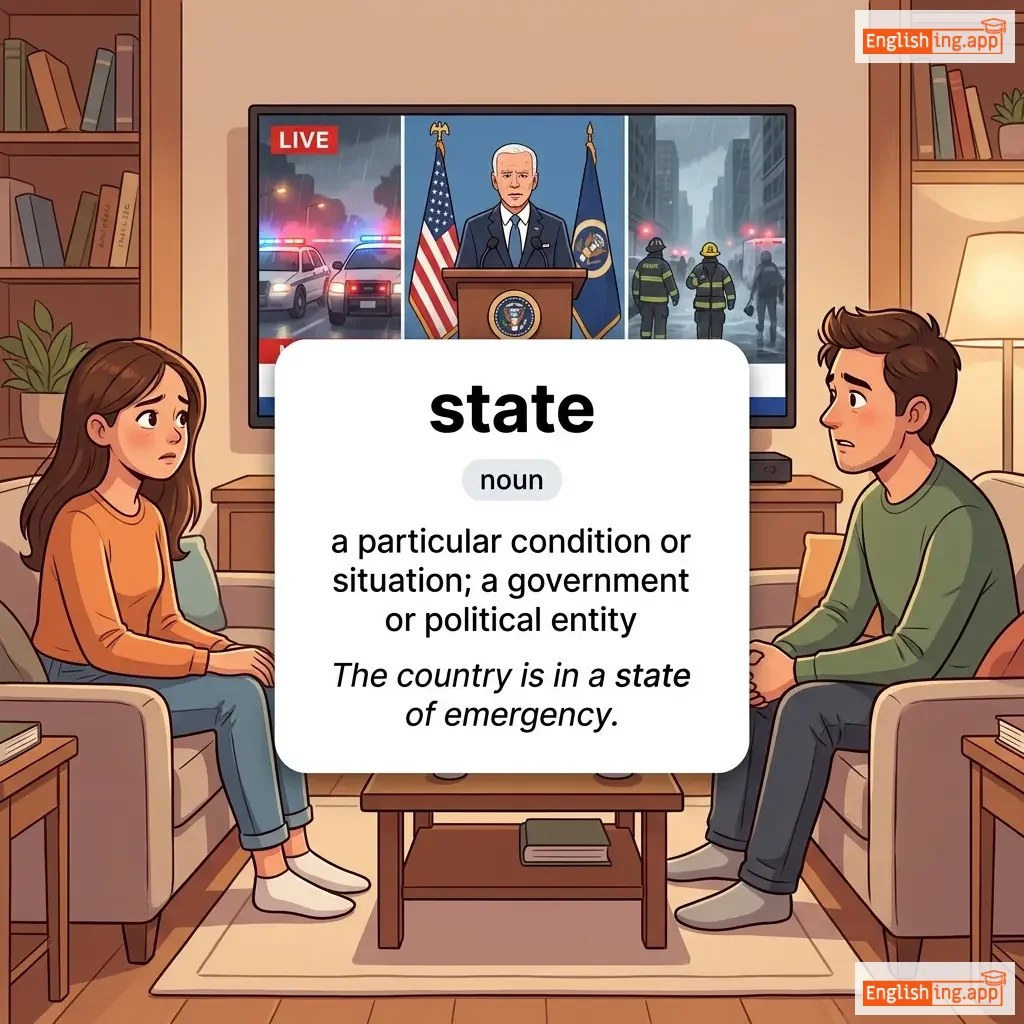
state definition card — visual illustration of the meaning
noun
/steɪt/
রাষ্ট্র (rāṣṭrō)

a particular condition or situation; a government or political entity

"The country is in a state of emergency."

"দেশটি জরুরি অবস্থায় রয়েছে।" (Deśṭi joruri obosthay royeche.)
noun
/ˈsteɪtkraft/
রাষ্ট্রপরিচালনার দক্ষতা (rashtraporialonar dokkhota)

The art of governing and managing state affairs effectively.

"The leader was praised for his exceptional statecraft in handling international relations."

"আন্তর্জাতিক সম্পর্ক পরিচালনায় তার অসাধারণ রাষ্ট্রপরিচালনার দক্ষতার জন্য নেতাকে প্রশংসা করা হয়েছিল।" (Antorjatik somporko porichalonay tar osadharon rashtraporialonar dokkhotar jonno netake proshongsha kora hoyechhilo.)
adjective
/ˈsteɪtli/
গম্ভীর ও মহিমান্বিত (gombhir o mohimanbito)

Having a dignified, majestic, and impressive appearance or manner.

"The stately mansion stood at the end of the long driveway."

"গম্ভীর প্রাসাদটি লম্বা ড্রাইভওয়ের শেষে দাঁড়িয়ে ছিল।" (Gombhir prasadti lomba drivewayr sheshe darie chhilo.)
noun
/ˈsteɪtmənt/
বক্তব্য (baktabyo)

a clear expression of something in speech or writing

"She made a statement about the company's new policies."

"সে কোম্পানির নতুন নীতিমালার বিষয়ে একটি বক্তব্য দিয়েছে।" (Se companyr notun nitimalar bishoye ekta baktabyo diyechhe.)
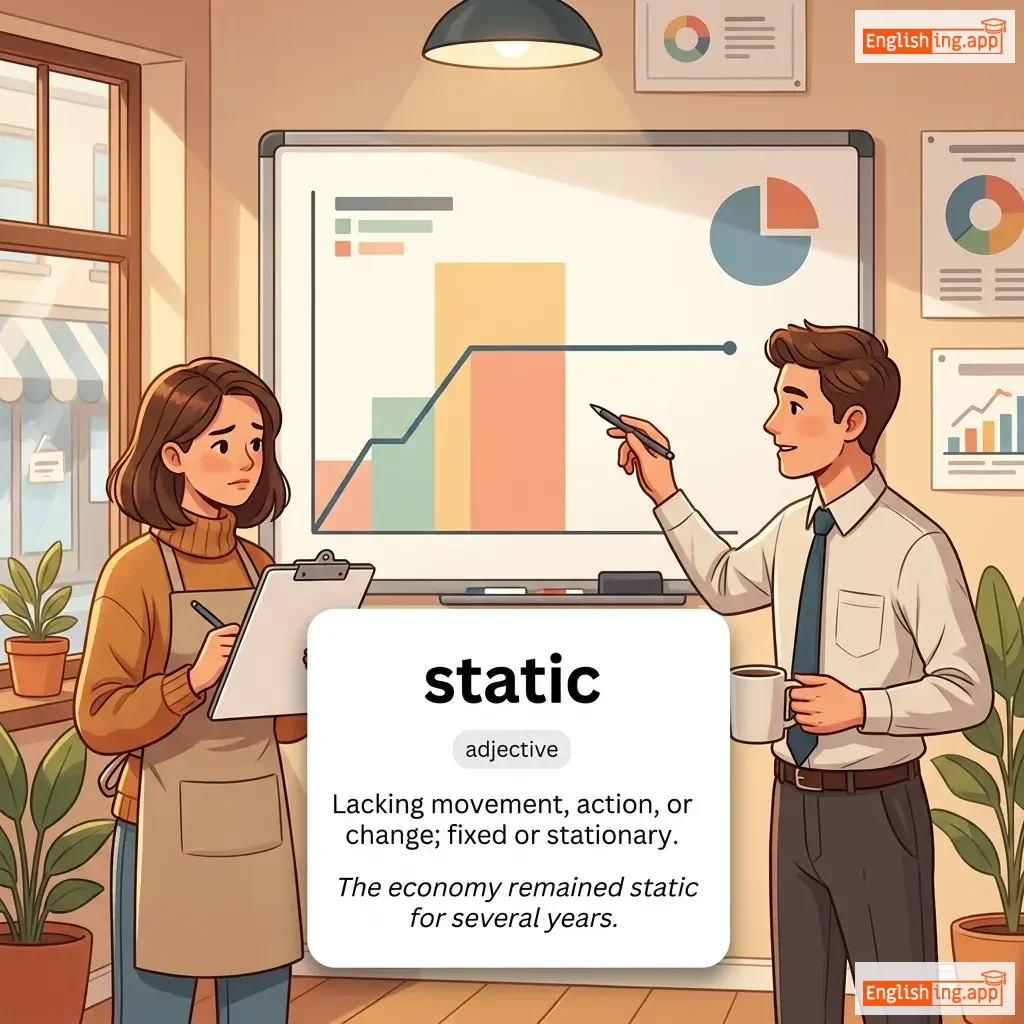
static definition card — visual illustration of the meaning
adjective
/ˈstætɪk/
স্থির (sthir)

Lacking movement, action, or change; fixed or stationary.

"The economy remained static for several years."

"অর্থনীতি কয়েক বছর ধরে স্থির ছিল।" (Arthonomi koyek bochor dhore sthir chhilo.)
noun
/ˈstætɪks/
স্থিরবিজ্ঞান (sthirbiggan)

The branch of mechanics dealing with bodies at rest and forces in equilibrium.

"She is studying statics as part of her engineering course."

"সে তার ইঞ্জিনিয়ারিং কোর্সের অংশ হিসেবে স্থিরবিজ্ঞান পড়ছে।" (Se tar engineering course er angsho hisebe sthirbiggan porchhe.)
noun
/ˈsteɪʃən/
স্টেশন (sṭeśan)

a place where a particular service is provided, especially for transportation

"We arrived at the station just in time for the train."

"আমরা ট্রেন ধরার জন্য স্টেশনে সময়মতো পৌঁছেছিলাম।" (Amra train dhorar jonno sṭeśane samaymoto pouchhechhilam.)
adjective
/ˈsteɪʃəˌneri/
স্থির (sthir)

Not moving or not intended to be moved.

"The car remained stationary at the red light."

"গাড়িটি লাল বাতিতে স্থির ছিল।" (Gariti lal batite sthir chhilo.)
noun
/ˈsteɪ.ʃən.ər/
স্টেশনারি বিক্রেতা (stationery bikreta)

a person who sells paper, pens, pencils, and other office supplies

"The stationer recommended the best pens for writing exams."

"স্টেশনারি বিক্রেতা পরীক্ষার জন্য সবচেয়ে ভালো কলম সুপারিশ করেছিল।" (stationery bikreta poriksha-r jonno shobcheye bhalo kolom suparish korechilo)
adjective
/stəˈtɪstɪkəl/
পরিসংখ্যানগত (porisonkhyanogoto)

relating to the use or analysis of numerical data

"The report provides statistical data about population growth."

"রিপোর্টটি জনসংখ্যা বৃদ্ধির পরিসংখ্যানগত তথ্য প্রদান করে।" (Reportti jonoshonkha bridhar porisonkhyanogoto tothyo prodan kore.)
noun
/ˌstætɪˈstɪʃən/
পরিসংখ্যানবিদ (porisongkhanbid)

A person who specializes in collecting, analyzing, and interpreting numerical data.

"The statistician presented the survey results with great clarity."

"পরিসংখ্যানবিদ জরিপের ফলাফল স্পষ্টভাবে উপস্থাপন করেছিলেন।" (Porisongkhanbid joriper folafol sposthobabe uposthapon korechhilen.)
noun
/stəˈtɪstɪks/
পরিসংখ্যান (porisonkhyān)

the practice or science of collecting and analyzing numerical data

"The statistics showed an increase in the number of users last year."

"স্ট্যাটিস্টিক্সগুলি গত বছরে ব্যবহারকারীদের সংখ্যা বৃদ্ধি দেখিয়েছে।" (Sṭeṭisṭikxguli gotobochore byaboharkarider songkha briddhi dekhiyechhe.)
noun
/ˈstætʃuː/
মূর্তি (murti)

a carved or cast figure of a person or animal, especially one that is life-size or larger

"They built a statue of the national hero in the city square."

"তারা শহরের চত্বরে জাতীয় বীরের একটি মূর্তি নির্মাণ করেছে।" (Tara shohorer chottore jatiyo birer ekti murti nirman koreche.)
adjective
/ˌstætʃuˈɛsk/
ভাস্কর্যসদৃশ (bhaskarjo sadrish)

Having the grace, beauty, or dignity of a statue; tall and attractively proportioned.

"She had a statuesque figure that turned heads wherever she went."

"তার ভাস্কর্যসদৃশ দেহযশ সবাইকে মুগ্ধ করেছিল।" (tar bhaskarjo sadrish dehojosh sobaike mugdho korechhilo.)
noun
/ˌstætʃuˈɛt/
ক্ষুদ্র মূর্তি (khudro murti)

A small statue, usually decorative or artistic.

"The artist won a gold statuette for his work."

"শিল্পী তাঁর কাজের জন্য একটি সোনার ক্ষুদ্র মূর্তি জিতেছিলেন।" (shilpi tar kajer jonno ekti sonar khudro murti jitichhilen.)
noun
/ˈstætʃər/
খ্যাতি, মর্যাদা (khyati, moryada)

A person's natural height or their reputation and importance.

"Her intellectual stature made her a respected figure in academia."

"তাঁর বুদ্ধিবৃত্তিক মর্যাদা তাঁকে একাডেমিয়ায় সম্মানিত করেছে।" (tar buddhibrttik moryada take akademiay sommanito koreche.)
noun
/ˈsteɪtəs/
অবস্থা (obostha)

the social or professional position or condition of someone or something

"His social status improved after the promotion."

"তার সামাজিক অবস্থা পদোন্নতির পর উন্নতি করেছে।" (Tar samajik obostha podonnotir por unnati korechhe.)
noun
/ˈsteɪtəs kwoʊ/
বর্তমান অবস্থা (bortoman obostha)

The existing state of affairs, especially regarding social or political issues.

"The government decided to maintain the status quo until further review."

"সরকার সিদ্ধান্ত নিয়েছে পরবর্তী পর্যালোচনা পর্যন্ত বর্তমান অবস্থা বজায় রাখা হবে।" (sorkar siddhanto niyechhe poroborti porjalochona porjonto bortoman obostha bojay rakha hobe.)
noun
/ˈstætʃuːt/
আইন (ain)

A written law passed by a legislative body.

"The new statute protects workers' rights."

"নতুন আইন শ্রমিকদের অধিকার রক্ষা করে।" (notun ain shromikder odhikar rokkha kore.)
adjective
/ˈstætʃətɔːri/
আইনানুগ (ainanug)

Required, permitted, or enacted by law.

"The company must comply with all statutory regulations."

"কোম্পানিকে সব আইনানুগ বিধিমালা মেনে চলতে হবে।" (Companike shob ainanug bidhimala mene cholte hobe.)
adjective
/stɔːntʃ/
অটল, বিশ্বস্ত (otol, bishwosto)

Loyal, committed, and firm in support.

"She is a staunch supporter of environmental protection."

"সে পরিবেশ সুরক্ষার একজন অটল সমর্থক।" (Se poribesh surakkhar ekjon otol somorthok.)
stay definition card — visual illustration of the meaning
verb
/steɪ/
থাকা (thaka)

to remain in a particular place or state

"We decided to stay at home during the storm."

"আমরা ঝড়ের সময় বাড়িতে থাকার সিদ্ধান্ত নিয়েছিলাম।" (Amra jhorder somoy barite thakar siddhanto niechhilam.)
adjective
/ˈstɛdfæst/
অটল, দৃঢ় (otol, drirho)

Firm, loyal, and unwavering in purpose or support.

"He remained steadfast in his determination to succeed."

"সে সফল হওয়ার সংকল্পে অটল ছিল।" (Se sofol howar sonkolpe otol chilo.)
adverb
/ˈstɛdɪli/
নিয়মিতভাবে (niyomitvabe)

in a regular and continuous way; without stopping or changing

"The company's profits have been increasing steadily."

"কোম্পানির মুনাফা নিয়মিতভাবে বাড়ছে।" (Companyr munafa niyomitvabe barche.)
adjective
/ˈstɛdi/
স্থিতিশীল (sthitishil)

firm, stable, and not likely to change suddenly

"He kept his hand steady while painting the picture."

"সে ছবি আঁকার সময় তার হাত স্থির রেখেছিল।" (Se chhobi ankar somoy tar hat sthir rekhechhilo.)