ভোকাবুলারিসমূহ

ইংরেজি শব্দের বাংলা অর্থ | English to Bangla Word Meaning Dictionary

noun, verb
/rɪər/
পেছন / লালনপালন করা (pechon / lalonpalon kora)

the back part of something; to bring up or raise children or animals

"The mother cat reared her kittens in a quiet corner."

"মা বিড়ালটি শান্ত কোণে তার বাচ্চাগুলোকে লালন করেছিল।" (Ma biralti shanto kone tar bachchagulo ke lalon korechhilo.)
verb
/ˌriːəˈreɪndʒ/
পুনর্বিন্যাস করা (punorbinash kora)

to change the order or position of something

"She decided to rearrange the furniture in her living room."

"সে তার বসার ঘরে আসবাবপত্র পুনর্বিন্যাস করার সিদ্ধান্ত নিল।" (Se tar bosar ghore asbabpotro punorbinash korar siddhanto nilo.)
noun, verb
/ˈriːzən/
কারণ, যুক্তি (karon, jukti)

A cause, explanation, or justification for an action or event; to think or argue logically.

"There is no reason to be upset."

"উদ্বিগ্ন হওয়ার কোনো কারণ নেই।" (Udbigno howar kono karon nei.)
adjective
/ˈriːzənəbl/
যৌক্তিক (jouktik)

Fair and sensible; having sound judgment; not extreme or excessive.

"The price of the meal was quite reasonable."

"খাবারের দামটি বেশ যৌক্তিক ছিল।" (Khabarer damti besh jouktik chilo.)
adverb
/ˈriːzənəbli/
যুক্তিসঙ্গতভাবে (juktisongothabhabe)

in a fair, sensible, or logical manner

"The price was reasonably low compared to other products."

"দাম অন্যান্য পণ্যের তুলনায় রিজনেবলি কম ছিল।" (Dam onno ponner tulonay reasonably kom chhilo.)
noun
/ˈriːzənɪŋ/
যুক্তি (jukti)

the process of thinking about something in a logical way in order to form a conclusion or judgment

"Her reasoning for leaving was clear and logical."

"তার চলে যাওয়ার যুক্তি পরিষ্কার এবং যৌক্তিক ছিল।" (Tar chole jawar jukti porishkar ebong jouktik chhilo.)
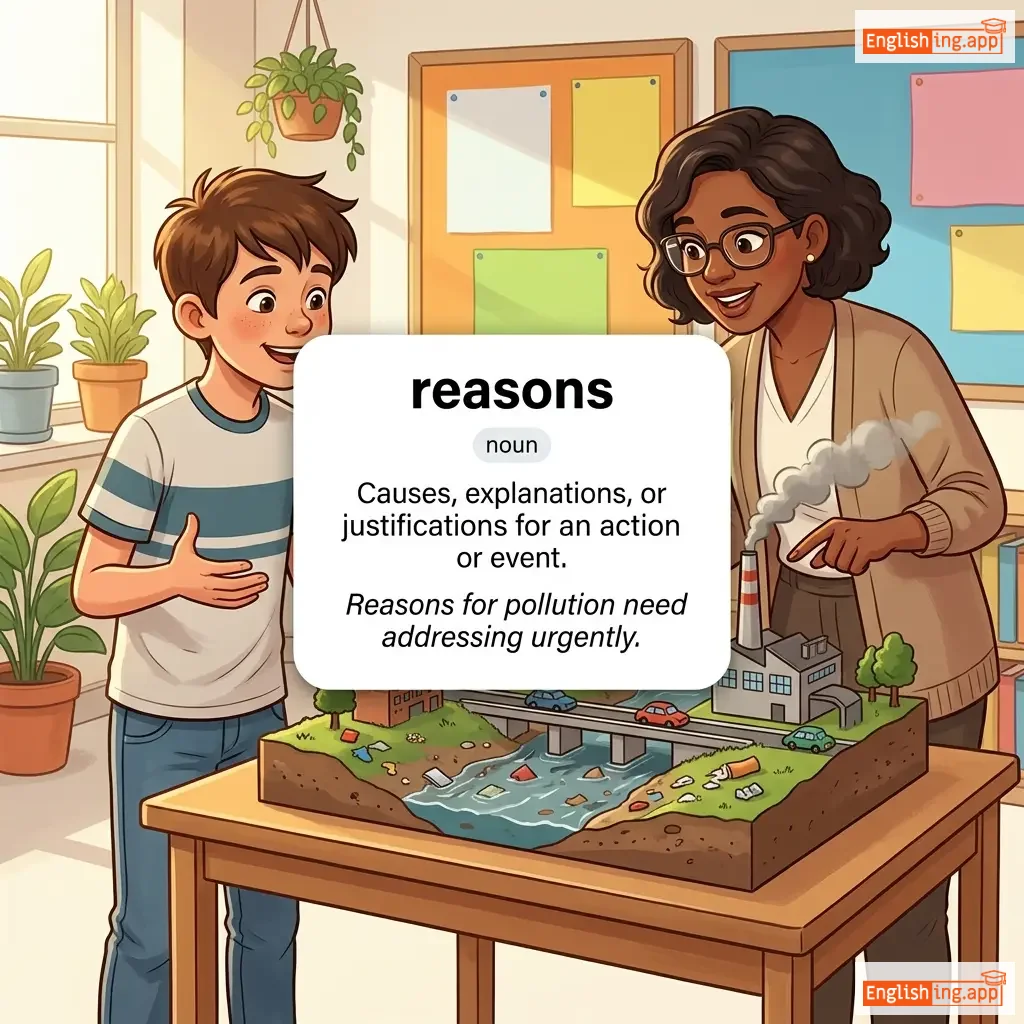
reasons definition card — visual illustration of the meaning
noun
/ˈriː.zənz/
কারণ (karon)

Causes, explanations, or justifications for an action or event.

"Reasons for pollution need addressing urgently."

"দূষণের কারণগুলো জরুরি ভাবে সমাধান করা দরকার।" (Dushdoner karongulo joruri bhabe samdhan kora dorkar.)
noun
/ˌriː.əˈʃʊr.əns/
আশ্বাসবাণী; পুনঃ নিশ্চয়তা; আশ্বস্তকরণ; (ashashbani)

comfort or confidence given to someone to remove their fears or doubts

"She needed reassurance that everything would be okay."

"তার আশ্বাস প্রয়োজন ছিল যে সবকিছু ঠিক হয়ে যাবে।" (tar ashash proyojon chhilo je shobkichhu thik hoye jabe.)
verb
/ˌriːəˈʃʊr/
আশ্বস্ত করা (ashbosto kora)

to say or do something to remove someone's doubts or fears

"The teacher reassured the students before the exam."

"শিক্ষক পরীক্ষার আগে শিক্ষার্থীদের আশ্বস্ত করলেন।" (Shikkhok porikkhar age shikkharthider ashbosto korlen.)
noun
/ˈriːbeɪt/
ছাড়/ফেরত টাকা (char/ferot taka)

a partial refund given to someone who has paid too much money for something

"The store offered a rebate on bulk purchases."

"দোকানটি বড় পরিমাণ কেনাকাটায় রিবেট অফার করল।" (Dokan ti boro poriman kenakatai rebate offer korlo.)
noun, verb
/ˈreb.əl/
বিদ্রোহী / বিদ্রোহ করা (bidrohi / bidroho kora)

a person who resists authority or control; to resist or fight against authority

"The students rebelled against the new dress code."

"ছাত্ররা নতুন পোশাকবিধির বিরুদ্ধে বিদ্রোহ করেছিল।" (Chatrora notun poshakbidhir biruddhe bidroho korechhilo.)
noun
/rɪˈbɛljən/
বিদ্রোহ (bidroh)

an act of violent or open resistance to an established government or ruler

"The rebellion was crushed by the army after a few months."

"বিদ্রোহটি কয়েক মাস পরে সেনাবাহিনী দ্বারা দমন করা হয়েছিল।" (Bidroho ti koyek mash pore senabahini dara domon kora hoyechilo.)
adjective
/rɪˈbɛljəs/
বিদ্রোহী (bidrohi)

resisting authority or control; showing a desire to rebel

"The rebellious teenager refused to follow the school rules."

"বিদ্রোহী কিশোর স্কুলের নিয়ম মানতে অস্বীকার করল।" (Bidrohi kishor skuler niyom mante aswikar korlo.)
verb
/rɪˈbʌf/
প্রত্যাখ্যান করা (protyakhyan kora)

to reject or refuse in a sharp or abrupt way

"She rebuffed his invitation to dinner."

"সে তার রাতের খাবারের আমন্ত্রণ প্রত্যাখ্যান করল।" (Se tar rater khabarer amontron protyakhyan korlo.)
verb
/ˌriːˈbɪld/
পুনর্নির্মাণ করা (punornirman kora)

to build something again after it has been damaged or destroyed

"The villagers worked together to rebuild the bridge after the flood."

"বন্যার পর গ্রামবাসীরা একসাথে সেতুটি পুনর্নির্মাণ করল।" (Bonyar por grambashira eksathe setuti punornirman korlo.)
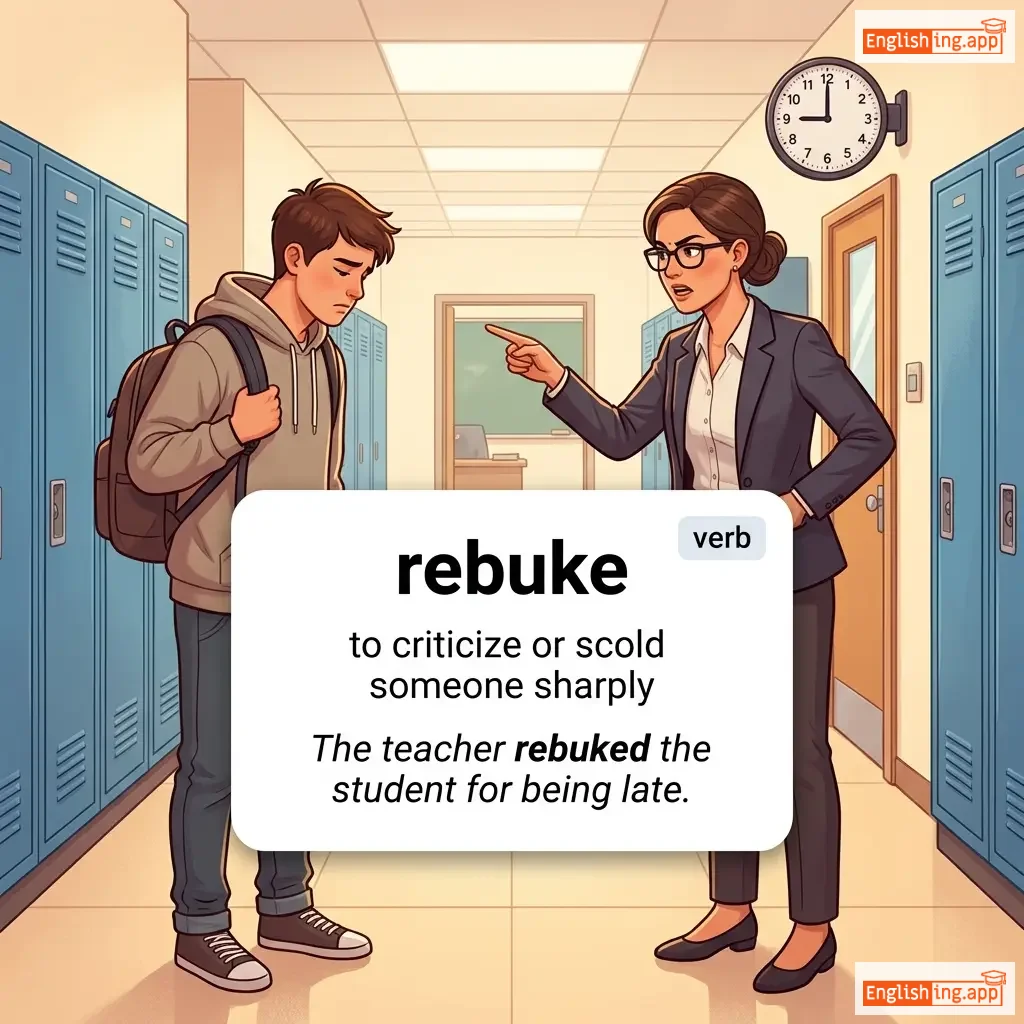
rebuke definition card — visual illustration of the meaning
verb
/rɪˈbjuːk/
তীব্র ভর্ত্সনা করা (tibro bhortsona kora)

to criticize or scold someone sharply

"The teacher rebuked the student for being late."

"শিক্ষক দেরি করার জন্য ছাত্রকে ভর্ত্সনা করলেন।" (Shikkhok deri korar jonno chatrake bhortsona korlen.)
noun
/ˈriːbəs/
ধাঁধা (dhadha)

a puzzle in which words are represented by pictures, symbols, or letters

"The children enjoyed solving the rebus puzzles in the magazine."

"শিশুরা ম্যাগাজিনে রিবাস ধাঁধা সমাধান করতে আনন্দ পেয়েছিল।" (Shishura magazinee rebus dhadha somadhan korte anondo peyechilo.)
verb
/rɪˈbʌt/
খণ্ডন করা (khondon kora)

to argue against or prove wrong; to refute

"The lawyer rebutted the false accusations with strong evidence."

"আইনজীবী শক্তিশালী প্রমাণ দিয়ে মিথ্যা অভিযোগ খণ্ডন করেছিলেন।" (Ainjibi shoktishali proman diye mithya abhijog khondon korechilen.)
noun
/rɪˈbʌtəl/
খণ্ডন (khondon)

a statement or argument made to oppose or disprove another

"Her rebuttal was clear and convincing."

"তার খণ্ডন স্পষ্ট এবং বিশ্বাসযোগ্য ছিল।" (Tar khondon sposto ebong bishwastoggo chilo.)
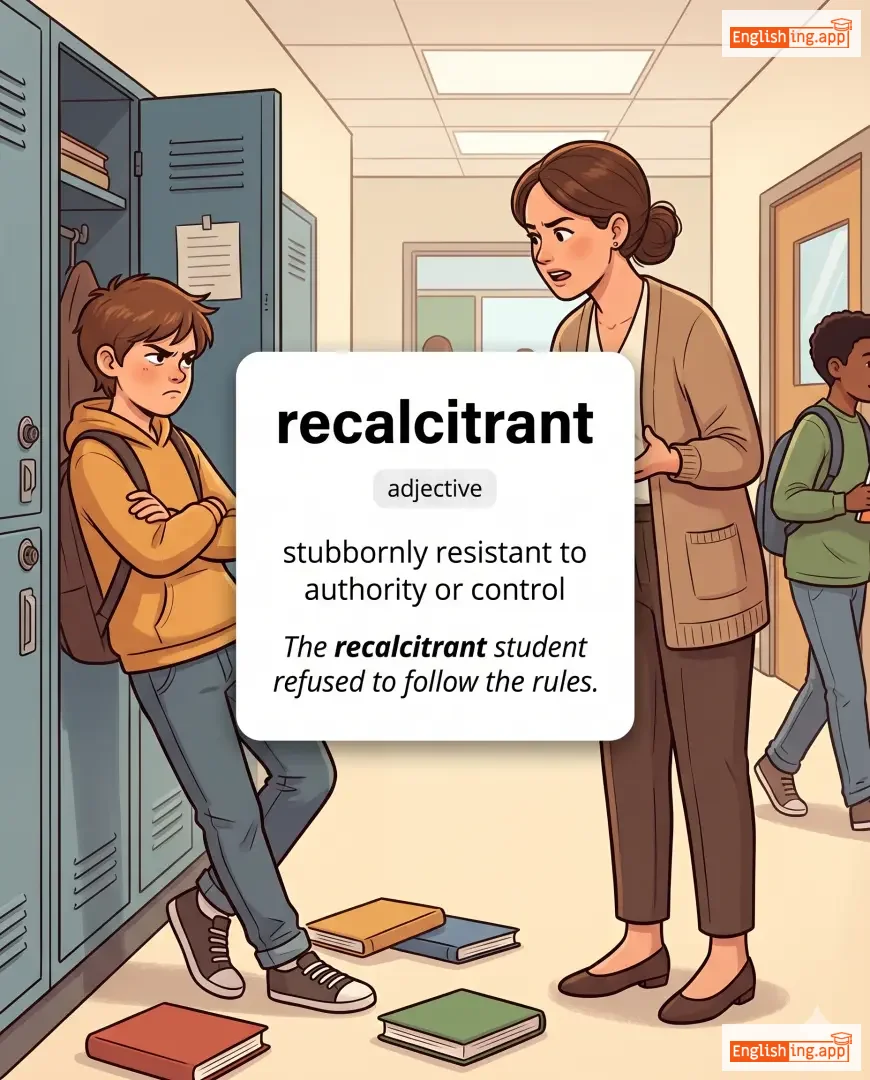
recalcitrant definition card — visual illustration of the meaning
adjective
/rɪˈkælsɪtrənt/
অবাধ্য (obaddho)

stubbornly resistant to authority or control

"The recalcitrant student refused to follow the rules."

"অবাধ্য ছাত্রটি নিয়ম মানতে অস্বীকার করল।" (Obaddho chatroti niyom mante aswikar korlo.)
recalibrate definition card — visual illustration of the meaning
verb
ˌriːˈkæl.ɪ.breɪt
পুনরায় সামঞ্জস্য করা বা পুনর্বিন্যাস করা (punoray shamanjoshyo kora ba punorbinnash kora)

To adjust or modify according to a new standard or plan; to reassess and realign.

"He had to recalibrate his strategy after the market crash."

"বাজার ধ্বংসের পর তাকে তার কৌশল পুনরায় সামঞ্জস্য করতে হয়েছিল।" (Bajar dhongsher por take tar koushal punoray shamanjoshyo korte hoyechhilo.)
verb
/rɪˈkɔːl/
স্মরণ করা (smoron kora)

to bring (a memory, fact, or situation) back into one's mind

"I can't recall the last time we met."

"আমি মনে করতে পারছি না শেষবার আমরা কখন দেখা করেছিলাম।" (Ami mone korte parchi na sheshbar amra kokhon dekha korechhilam.)
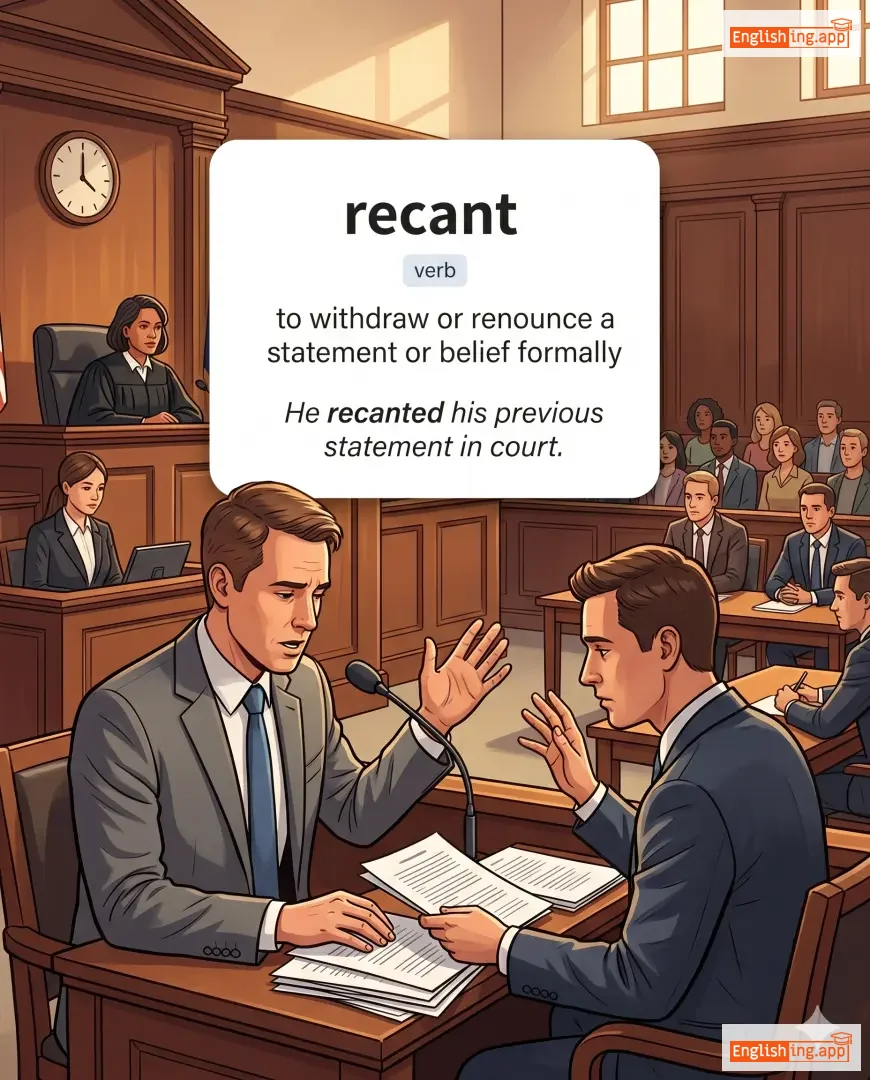
recant definition card — visual illustration of the meaning
verb
/rɪˈkænt/
প্রত্যাহার করা (protyahar kora)

to withdraw or renounce a statement or belief formally

"He recanted his previous statement in court."

"সে আদালতে তার আগের বক্তব্য প্রত্যাহার করল।" (Se adalote tar ager boktobbo protyahar korlo.)
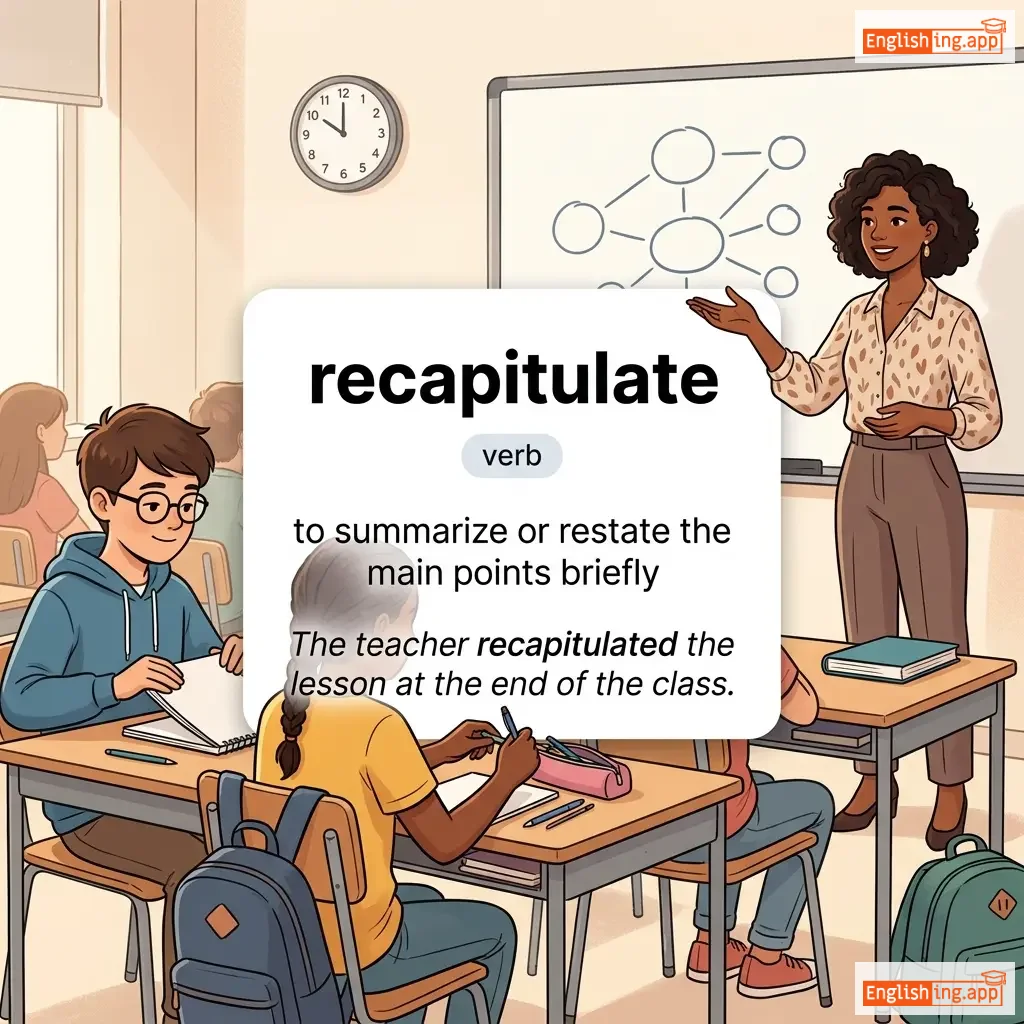
recapitulate definition card — visual illustration of the meaning
verb
/ˌriːkəˈpɪtjʊleɪt/
সংক্ষেপে পুনরাবৃত্তি করা (songkhep e punorabritti kora)

to summarize or restate the main points briefly

"The teacher recapitulated the lesson at the end of the class."

"শিক্ষক ক্লাসের শেষে পাঠটি সংক্ষেপে পুনরাবৃত্তি করলেন।" (Shikkhok classer sheshe pathoti songkhep e punorabritti korlen.)
noun
/ˌriːkəˌpɪtjʊˈleɪʃən/
সারসংক্ষেপ (saranshangkhep)

The act of summarizing or repeating the main points of something.

"The professor gave a brief recapitulation of the lecture before ending the class."

"ক্লাস শেষ করার আগে প্রফেসর লেকচারের একটি সংক্ষিপ্ত সারসংক্ষেপ দিলেন।" (Class shesh korar age professor lekchar er ekti sankhipto saranshangkhep dilen.)
verb
/riːˈkæptʃər/
পুনর্দখল করা (punordokhol kora)

To take back or regain possession of something.

"The army managed to recapture the lost territory."

"সেনারা হারানো ভূখণ্ড পুনর্দখল করতে সক্ষম হয়েছিল।" (Senara harano bhukhondo punordokhol korte sokkhom hoyechilo.)
verb
/ˌriːˈkæst/
পুনর্নির্ধারণ (punornirdharon)

To present or change something in a different form or style.

"The director decided to recast the role with a younger actor."

"পরিচালক ভূমিকাটি একজন তরুণ অভিনেতার সাথে পুনর্নির্ধারণ করার সিদ্ধান্ত নিলেন।" (Porichalok bhumikati ekti torun obhinetar sathe punornirdharon korar siddhanto nilen.)
verb
/rɪˈsiːd/
পিছনে সরে যাওয়া (pichone sore jaoya)

To move back or further away from a previous position.

"The floodwaters began to recede after the heavy rain stopped."

"ভারী বৃষ্টি থামার পর বন্যার পানি সরে যেতে শুরু করল।" (Bari brishti thamar por bonnar pani sore jete shuru korlo.)
adjective, noun
/rɪˈsiːvəbl/
আদায়যোগ্য (adayjoggya)

Money that is owed to a company and is expected to be paid.

"The company's receivables increased significantly this quarter."

"এই কোয়ার্টারে কোম্পানির আদায়যোগ্য অর্থ উল্লেখযোগ্যভাবে বৃদ্ধি পেয়েছে।" (Ei quarter e companyr adayjoggya ortho ullekjoggo vabe bridddhi peyechhe.)
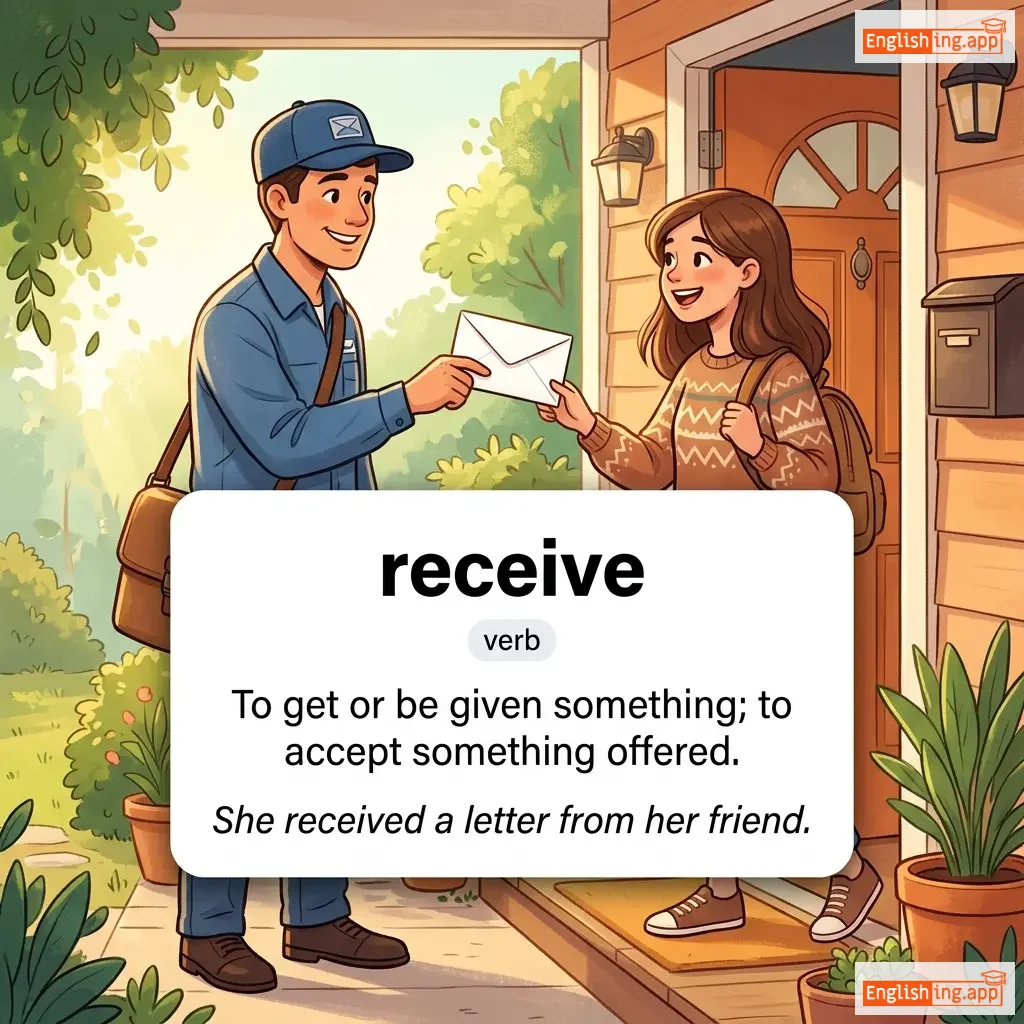
receive definition card — visual illustration of the meaning
verb
/rɪˈsiːv/
গ্রহণ করা (grohon kora)

To get or be given something; to accept something offered.

"She received a letter from her friend."

"সে তার বন্ধুর কাছ থেকে একটি চিঠি পেয়েছিল।" (Se tar bondhur kach theke ekti chithi peyechilo.)
noun
/rɪˈsiːvər/
গ্রাহক / গ্রহণযন্ত্র (grahok / grohonjontra)

a person or device that receives something such as a signal, message, or object

"The radio receiver picks up signals from distant stations."

"রেডিও রিসিভার দূরের স্টেশন থেকে সিগন্যাল গ্রহণ করে।" (Radio receiver durrer station theke signal grohon kore.)
adjective
/ˈriːsənt/
সাম্প্রতিক (sampratik)

having happened or started only a short time ago

"The recent developments have been quite exciting."

"সাম্প্রতিক ঘটনাগুলি বেশ উত্তেজনাপূর্ণ ছিল।" (Sampratik ghotonaguli besh uttejonapurṇo chhilo.)
adverb
/ˈriːsəntli/
সম্প্রতি (somproti)

in the recent past; not long ago

"I recently visited the museum."

"আমি সম্প্রতি মিউজিয়ামটি পরিদর্শন করেছি।" (Ami somproti mujiymti poridorshon korechi.)
noun
/rɪˈsepʃən/
অভ্যর্থনা / সংবর্ধনা (obhyorthona / songbordhona)

the act of receiving something or someone; a formal social gathering

"We attended a wedding reception at the hotel."

"আমরা হোটেলে একটি বিয়ের সংবর্ধনায় অংশ নিয়েছিলাম।" (Amra hotele ekti biyer songbordhonay angsho niechhilam.)
adjective
/rɪˈsɛptɪv/
গ্রহণযোগ্য (grohonjoggo)

Willing to listen to or accept new ideas, suggestions, or experiences.

"She was receptive to feedback from her colleagues."

"সে তার সহকর্মীদের প্রতিক্রিয়া গ্রহণ করতে ইচ্ছুক ছিল।" (Se tar sohkoromider protikria grohon korte ichhuk chilo.)
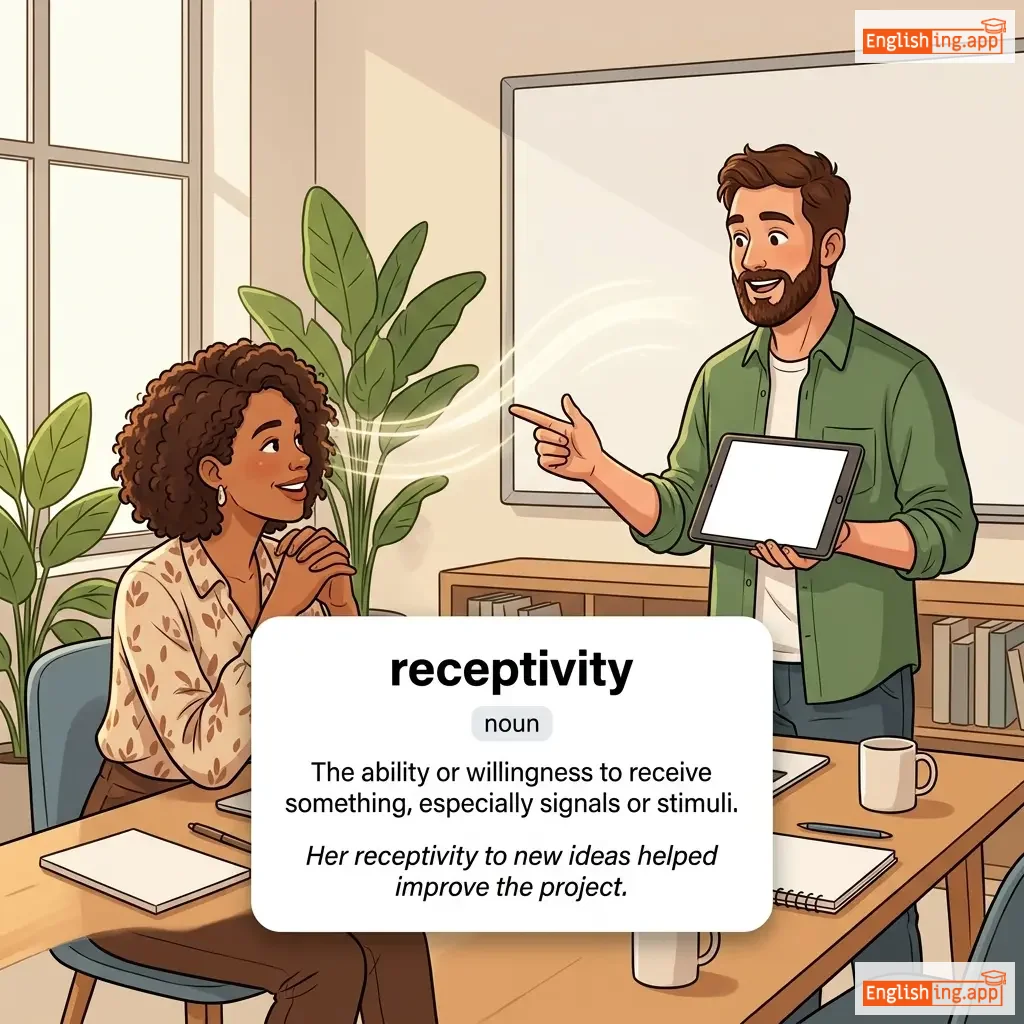
receptivity definition card — visual illustration of the meaning
noun
/rɪˌsɛptɪˈvɪti/
গ্রহণক্ষমতা (grohonokkhomnota)

The ability or willingness to receive something, especially signals or stimuli.

"Her receptivity to new ideas helped improve the project."

"নতুন ধারণাগুলির প্রতি তার গ্রহণক্ষমতা প্রকল্পটিকে উন্নত করতে সাহায্য করেছে।" (Notun dharonagulir proti tar grohonokkhomnota prokolptike unnoto korte sahajjo koreche.)
noun
/rɪˈsɛs/
বিরতি (birati)

A short break from work or school; also a small space set back in a wall.

"The children played outside during recess."

"শিশুরা বিরতির সময় বাইরে খেলেছিল।" (Shishura biratir somoy baire khelichilo.)
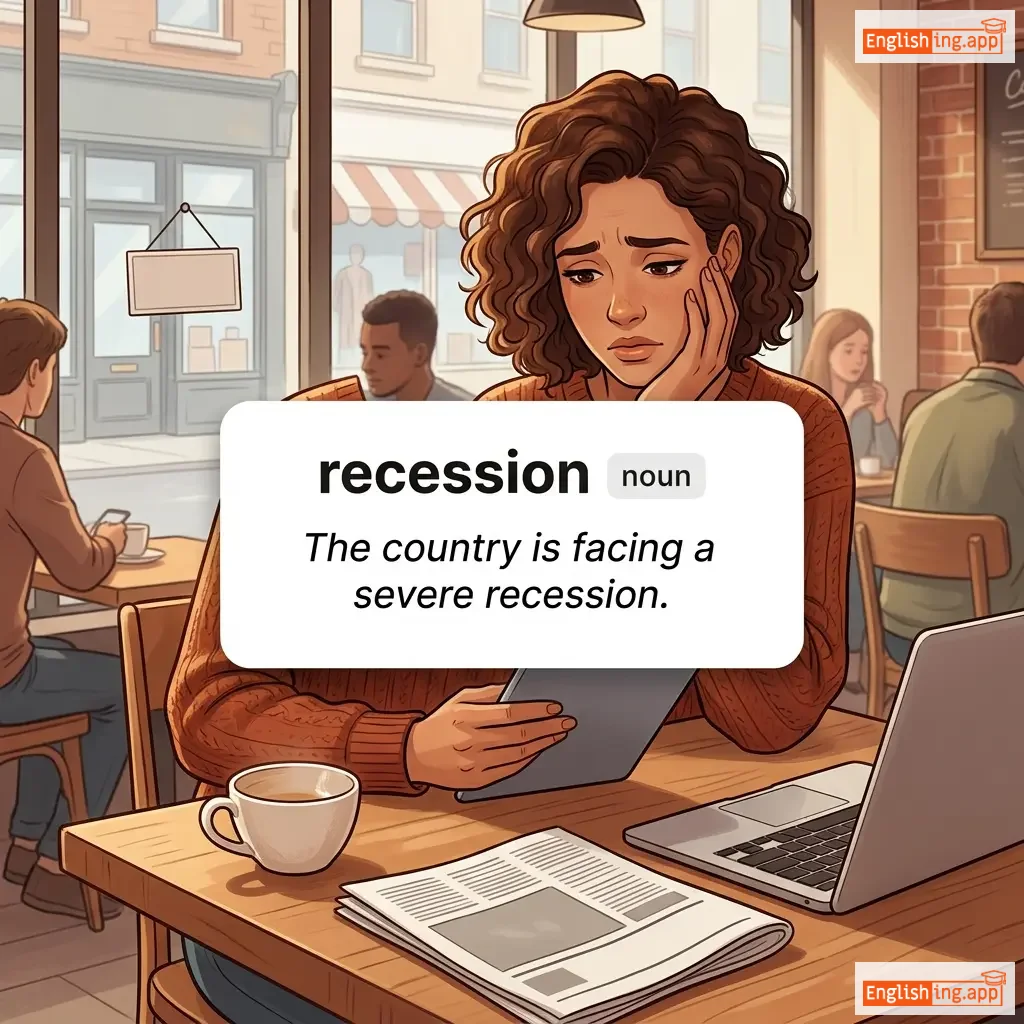
recession definition card — visual illustration of the meaning
noun
/rɪˈsɛʃən/
মন্দা (monda)

A period of temporary economic decline during which trade and industrial activity are reduced.

"The country is facing a severe recession."

"দেশটি একটি মারাত্মক অর্থনৈতিক মন্দার মুখোমুখি।" (Deshti ekti maratmak orthonaitik mondar mukhomukhi.)
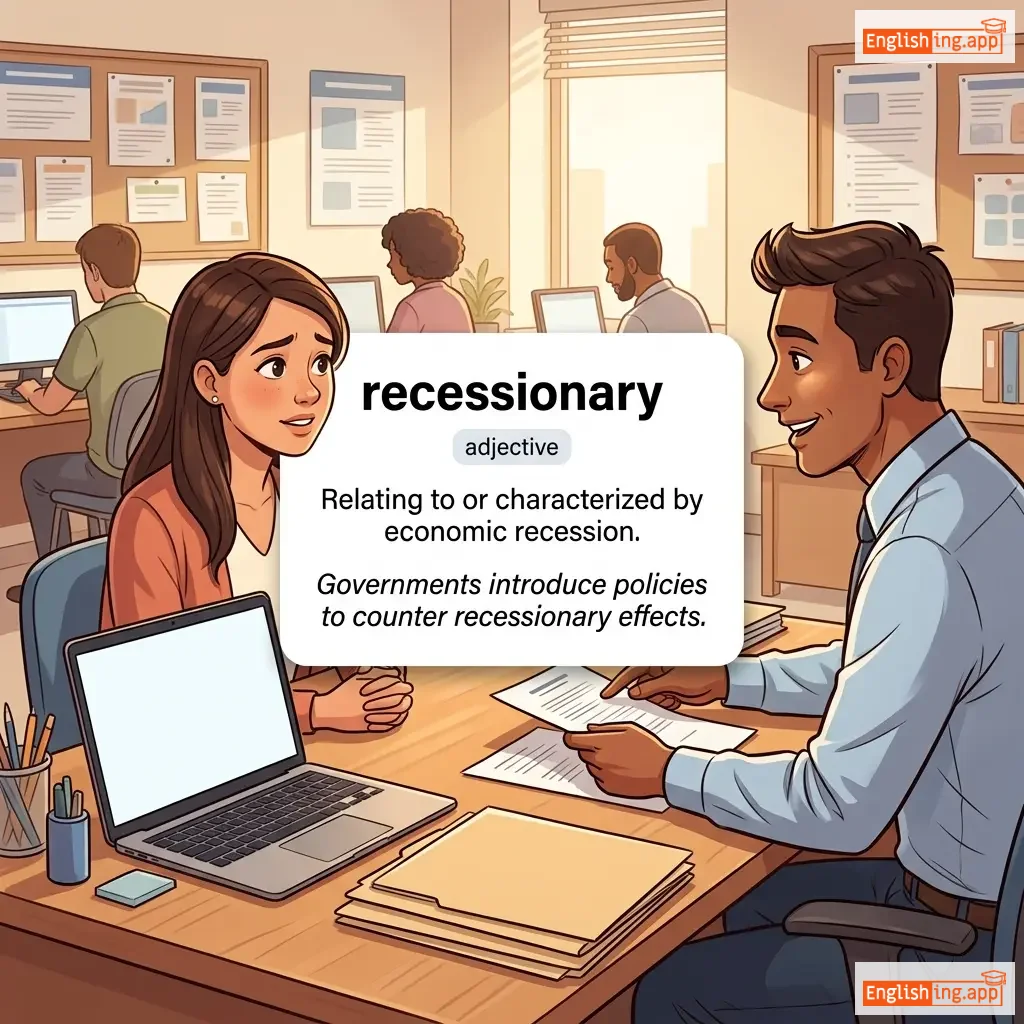
recessionary definition card — visual illustration of the meaning
adjective
rɪˈsɛʃ.ən.er.i
মন্দাসংক্রান্ত (mondashongkranto)

Relating to or characterized by economic recession.

"Governments introduce policies to counter recessionary effects."

"সরকার মন্দার প্রভাব মোকাবিলায় নীতি গ্রহণ করে।" (Shorkar mondar probhab mokabilay neeti grohen kore.)
adjective
/rɪˈsɛsɪv/
প্রত্যাবৃত্ত (protyabritto)

In genetics, relating to a trait that is expressed only when two copies of the gene are present.

"Blue eye color is often a recessive trait."

"নীল চোখের রঙ প্রায়শই একটি প্রত্যাবৃত্ত বৈশিষ্ট্য।" (Nil choker rong prayoshoi ekti protyabritto boishishto.)
adjective
/rəˈʃɛrʃ/
অদ্ভুত (odbhut)

Rare, exotic, or obscure, often in a sophisticated or refined way.

"The gallery displayed many recherche artworks from unknown artists."

"গ্যালারিটি অজানা শিল্পীদের অনেক অদ্ভুত শিল্পকর্ম প্রদর্শন করেছিল।" (Galaryti ojana shilpider onek odbhuto shilpokorm prodorshon korechilo.)
noun
/rɪˈsɪdɪˌvɪzəm/
পুনরায় অপরাধে জড়ানো (punoray oprodhe jorano)

The tendency of a convicted criminal to reoffend or relapse into criminal behavior.

"The government introduced new programs to reduce recidivism among former inmates."

"সরকার প্রাক্তন বন্দীদের মধ্যে পুনরায় অপরাধ কমাতে নতুন কর্মসূচি চালু করেছে।" (Sorkar prokton bondider moddhe punoray oprodho komate notun kormosuchi chalu koreche.)
noun
/rɪˈsɪdɪvɪst/
পুনঃঅপরাধী (punoh-oprodhi)

A person who repeatedly commits crimes, especially after having been punished.

"The police identified him as a recidivist who had been arrested several times before."

"পুলিশ তাকে একজন পুনঃঅপরাধী হিসেবে চিহ্নিত করেছে যাকে আগে বহুবার গ্রেফতার করা হয়েছে।" (Police take ekjon punoh-oprodhi hisebe chihnito koreche jake age bohubar greftar kora hoyeche.)
noun
/ˈrɛsɪpi/
রেসিপি (resipi)

a set of instructions for preparing a particular dish, including a list of the ingredients required

"I found a great recipe for chocolate cake."

"আমি চকলেট কেকের জন্য একটি চমত্কার রেসিপি খুঁজে পেয়েছি।" (Ami chocolate kek er jonyo ekti chomtkar resipi khuje peyechi.)
noun
/rɪˈsɪpiənt/
গ্রহণকারী (grohonkari)

A person who receives something, such as an award, gift, or message.

"She was the recipient of the award for best performance."

"সে সেরা পারফরম্যান্সের জন্য পুরস্কারের গ্রহীতা ছিল।" (Se sera performance-er jonno puraskarer grohita chilo.)
adjective
/rɪˈsɪprəkəl/
পারস্পরিক (parosporik)

Given, felt, or done in return; mutual.

"Their relationship is based on reciprocal respect and trust."

"তাদের সম্পর্ক পারস্পরিক শ্রদ্ধা ও বিশ্বাসের উপর ভিত্তি করে।" (Tader somporko parosporik sroddha o bishwasher upor vitti kore.)
verb
/rɪˈsɪprəˌkeɪt/
প্রতিদান দেওয়া (protidaan deowa)

To respond to an action or gesture by making a corresponding one.

"She smiled at him, and he reciprocated with a warm hug."

"সে তার দিকে হাসলো, আর সে প্রতিদানে উষ্ণ আলিঙ্গন দিল।" (Se tar dike haslo, ar se protidane usno alingon dilo.)
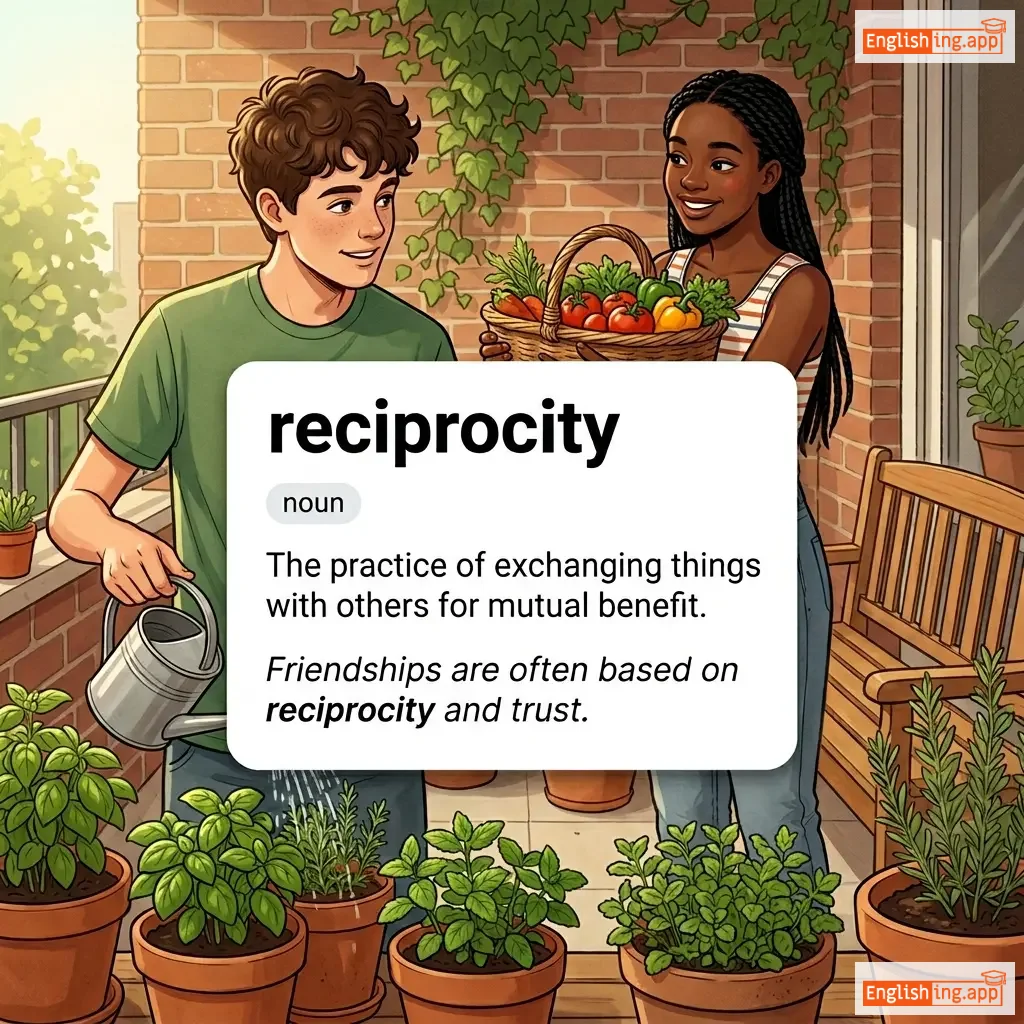
reciprocity definition card — visual illustration of the meaning
noun
/ˌrɛsɪˈprɒsɪti/
পারস্পরিকতা (parosporikota)

The practice of exchanging things with others for mutual benefit.

"Friendships are often based on reciprocity and trust."

"বন্ধুত্ব প্রায়শই পারস্পরিকতা এবং বিশ্বাসের উপর ভিত্তি করে।" (Bondhutto prayoshchoi parosporikota ebong bishwasher upor vitti kore.)
noun
/rɪˈsaɪtl/
সঙ্গীতানুষ্ঠান (sangeetanushtan)

A performance of music, dance, or poetry, usually by a soloist.

"She gave a piano recital at the concert hall."

"সে কনসার্ট হলে একটি পিয়ানো রিসাইটাল করেছিল।" (Se concert hole ekti piano recital korechilo.)
noun
/ˌrɛsɪˈteɪʃən/
পাঠ (path)

The act of reading or repeating something aloud, especially poetry or passages.

"The student won the prize for her poetry recitation."

"ছাত্রী তার কবিতা আবৃত্তির জন্য পুরস্কার জিতেছিল।" (Chatri tar kobita abrittir jonno puraskar jitechilo.)