ভোকাবুলারিসমূহ

ইংরেজি শব্দের বাংলা অর্থ | English to Bangla Word Meaning Dictionary

noun, verb, adjective
/ˈpeɪtənt/ or /ˈpætənt/
পেটেন্ট (petent)

a government license granting exclusive rights to an inventor; also to obtain such rights

"He patented his new invention to protect it from being copied."

"সে তার নতুন আবিষ্কারকে কপি হওয়া থেকে রক্ষা করতে পেটেন্ট করেছিল।" (Se tar notun abiskarke copy howa theke rokha korte petent korechhilo.)
adjective
/pəˈtɜːrnəl/
পিতৃসুলভ (pitrisulobh)

Relating to or characteristic of a father.

"He took a paternal interest in the boy’s education."

"সে ছেলেটির শিক্ষায় পিতৃসুলভ আগ্রহ নিয়েছিল।" (Se cheleter shikhay pitrisulobh agroho niyechhilo.)
noun
/pəˈtɜːrnəti/
পিতৃত্ব (pitrittwo)

The state of being someone's father.

"He demanded a paternity test to confirm his relationship with the child."

"সে সন্তানের সাথে সম্পর্ক নিশ্চিত করতে একটি পিতৃত্ব পরীক্ষা দাবি করেছিল।" (Se shontaner sathe somporko nischit korte ekti pitrittwo porikkha dabi korechhilo.)
noun
/pæθ/
পথ (path)

a way or track laid down for walking or made by continual treading

"She walked along the narrow path through the forest."

"সে বনভূমির মধ্য দিয়ে সংকীর্ণ পথ ধরে হেঁটেছিল।" (se bonbhumir moddhe diye sonkirno poth dhore hyechhilo.)
adjective
/pəˈθɛtɪk/
করুণ (korun)

Causing feelings of pity, sadness, or sometimes contempt.

"The team’s performance in the match was simply pathetic."

"দলের ম্যাচে পারফরম্যান্স ছিল সম্পূর্ণ করুণ।" (Doler matche performance chhilo shompurno korun.)
adjective
/ˌpæθəˈdʒɛnɪk/
রোগসৃষ্টিকারী (rogsristikari)

Capable of causing disease.

"Some bacteria are harmless, while others are highly pathogenic."

"কিছু ব্যাকটেরিয়া ক্ষতিকারক নয়, তবে কিছু অত্যন্ত রোগসৃষ্টিকারী।" (Kichu bacteria kshotikarak noy, tobe kichu ottonto rogsristikari.)
pathological definition card — visual illustration of the meaning
adjective
/ˌpæθəˈlɑːdʒɪkəl/
অসুস্থতাজনিত, রোগজনিত (osusthatojonito, rogjonito)

Relating to disease; extreme or obsessive in a way that is abnormal.

"He has a pathological fear of failure."

"তার ব্যর্থতার প্রতি একটি রোগজনিত ভয় রয়েছে।" (Tar byorthatar proti ekti rogjonito bhoy royechhe.)
noun
/pəˈθɒlədʒi/
রোগতত্ত্ব (rogottotto)

the scientific study of diseases, their causes, processes, and effects on the body

"Advances in pathology helped the doctors identify the rare infection quickly."

"প্যাথোলজির উন্নতি চিকিৎসকদের দ্রুত বিরল সংক্রমণটি শনাক্ত করতে সাহায্য করেছে।" (pathologyr unnati chikitsokder druto birol songkromonti shonakt korte sahajyo koreche.)
noun
/ˈpeɪθɒs/
মর্মস্পর্শিতা (mormosporshita)

a quality in speech, writing, or events that evokes pity or deep emotion

"The documentary balanced pathos with hope, making the audience both weep and think."

"ডকুমেন্টারিটি আশার সাথে মর্মস্পর্শিতা মিলিয়ে দর্শকদের কাঁদিয়েও ভাবতে বাধ্য করেছে।" (documentariti ashar sathe mormosporshita miliye dorshokder kandieo bhabte badhyo koreche.)
noun
/ˈpæθweɪ/
পথ (poth)

a route or course along which something travels or progresses

"The narrow pathway led to the hidden garden."

"সঙ্কীর্ণ পাথওয়ে লুকানো বাগান পর্যন্ত নিয়ে গিয়েছিল।" (Sankirno pathway lukano bagan porjonto niye giyechhilo.)
patience definition card — visual illustration of the meaning
noun
/ˈpeɪ.ʃəns/
ধৈর্য (dhorjo)

the ability to wait calmly without getting angry or upset

"Good teachers need a lot of patience."

"ভালো শিক্ষকদের অনেক ধৈর্যের প্রয়োজন।" (Bhalo shikkhokder onek dhorjer proyojon.)
adjective
/ˈpeɪʃənt/
ধৈর্যশীল (dhairjoshil)

able to accept or tolerate delays, problems, or suffering without becoming annoyed or anxious

"She remained patient despite the long wait."

"সে দীর্ঘ অপেক্ষা সত্ত্বেও ধৈর্যশীল ছিল।" (se dirgho opekkha sattweo dhairjoshil chhilo.)
noun
/pəˈtiːnə/
সবুজ/ধূসর আবরণ (sobuj dhusar abarôn)

a surface film or sheen on metal, stone, or wood due to age or use; also, a superficial appearance

"The bronze statue developed a green patina after years in the sea air."

"সমুদ্রের হাওয়ায় বহু বছর থাকার পর ব্রোঞ্জের মূর্তিটিতে সবুজ আবরণ পড়ে গেছে।" (somudrer haway bohu bochor thakar por bronjer murtitite sobuj abarôn pore geche.)
noun
/ˈpætwɑː/
আঞ্চলিক উপভাষা (ancholik upobhasha)

a regional or social dialect, especially one considered nonstandard or informal

"The guide slipped into local patois when chatting with the fishermen."

"জেলেদের সঙ্গে গল্প করতে করতে গাইড স্থানীয় উপভাষায় কথা বলে ফেলল।" (jeleder sathe golpo korte korte guide sthanio upobhashay kotha bole fellô.)
noun
/ˈpeɪtriɑːrk/
পরিবারপ্রধান পুরুষ (poribarprothan purush)

a male head of a family or tribe; an older respected man who leads a group

"As the family patriarch, he mediated disputes and kept long traditions alive."

"পরিবারের প্রধান হিসেবে তিনি বিরোধ মীমাংসা করতেন এবং পুরনো ঐতিহ্য টিকিয়ে রাখতেন।" (poribarer prodhan hisebe tini birodh mimangsa korten ebong purono oitijho tikiye rakhteen.)
noun, adjective
/pəˈtrɪʃən/
অভিজাত (obhijat)

A person of noble rank or high social standing; relating to aristocracy.

"The patrician families of Rome wielded great power in politics."

"রোমের অভিজাত পরিবারগুলো রাজনীতিতে বিশাল ক্ষমতা ধারণ করত।" (Romer obhijat poribar-gulo rajnitite bishal khomota dharon korto.)
noun
/ˈpætrɪsaɪd/
পিতৃহত্যা (pitrihotya)

The act of killing one's own father.

"The ancient myth describes a son committing patricide to take the throne."

"প্রাচীন মিথে বলা হয়েছে একজন ছেলে সিংহাসন দখল করার জন্য পিতৃহত্যা করেছিল।" (Prachin mithe bola hoyeche ekjon chele singhashon dokhol korar jonno pitrihotya korechhilo.)
noun
/ˈpætrɪˌmoʊni/
পিতৃসম্পত্তি (pitri-sompotti)

Property or inheritance passed down from one's father or ancestors.

"The castle was part of his patrimony from his noble ancestors."

"দুর্গটি তার অভিজাত পূর্বপুরুষদের থেকে প্রাপ্ত পিতৃসম্পত্তির অংশ ছিল।" (Durgoti tar obhijat purbopurusheder theke prapto pitri-sompottir angsho chhilo.)
noun
/ˈpeɪtriət/
দেশপ্রেমিক (deshpremik)

A person who loves and strongly supports their country.

"The patriot stood proudly under the national flag."

"দেশপ্রেমিক জাতীয় পতাকার নিচে গর্বের সাথে দাঁড়িয়েছিল।" (Deshpremik jatio potakar niche gorber sathe dariyechhilo.)
adjective
/ˌpeɪ.triˈɑː.tɪk/
দেশপ্রেমিক; দেশপ্রেমশীল; দেশমাতৃভূমি; (petriotik)

showing love for one's country

"The patriotic citizens celebrated Independence Day with great enthusiasm."

"দেশপ্রেমিক নাগরিকরা অত্যুৎসাহের সাথে স্বাধীনতা দিবস উদযাপন করেছিলেন।" (deshpremik nagorikora otyutsaher sathe swadhinota dibosh udjapon korechhilen)
patriotism definition card — visual illustration of the meaning
noun
/ˈpeɪtriətɪzəm/
দেশপ্রেম (deshprem)

Love for and devotion to one's country.

"His patriotism was evident when he volunteered for military service."

"তার দেশপ্রেম প্রকাশ পেয়েছিল যখন তিনি সামরিক সেবার জন্য স্বেচ্ছাসেবক হয়েছিলেন।" (Tar deshprem prokash peyechhilo jokhon tini samorik sebar jonno soyechhasebok hoyechhilen.)
verb
/pəˈtroʊl/
টহল দেওয়া (tohol deowa)

to move around an area to watch or guard it

"The police patrol the streets at night to ensure safety."

"পুলিশরা রাতে নিরাপত্তা নিশ্চিত করতে রাস্তায় টহল দেয়।" (Polisira rate nirapotta nishchit korte rastay tohol dey.)
noun
/ˈpeɪtrən/
সহায়ক ব্যক্তি (shohayok bekti)

a person who gives financial or other support to a person, organization, or cause

"The library is supported by generous patrons."

"লাইব্রেরিটি উদার সহায়কদের দ্বারা সমর্থিত।" (Libraryti udar shohayokder dvara somorthito.)
patronize definition card — visual illustration of the meaning
verb
/ˈpeɪtrənaɪz/
সমর্থন করা / তুচ্ছভাবে আচরণ করা / নিয়মিত ক্রেতা হওয়া (somorthon kora / tuchchhobabe acharon kora / niyomito kreta howa)

to support or sponsor; to treat someone with apparent kindness that betrays a sense of superiority; to be a regular customer of a business

"She promised to patronize local businesses during the holiday season."

"সে প্রতিশ্রুতি দিয়েছিল ছুটির মৌসুমে স্থানীয় ব্যবসায় সমর্থন দেবে।" (Se protishruti diyechilo chhutir mousume sthanio byabshay somorthon debe.)
adjective
/ˈpeɪtrənaɪzɪŋ/
তুচ্ছভাবে সহানুভূতিশীল (tuchchhobabe sohanubhutisshil)

showing kindness that is perceived as condescending or superior

"His patronizing tone offended the audience."

"তার তুচ্ছতাপূর্ণ ভঙ্গি শ্রোতাদের কষ্ট দিয়েছিল।" (Tar tuchchhotapurno bhongi shrotader koshto diyechilo.)
noun
/ˌpætrəˈnɪmɪk/
পিতৃনামজাত নাম (pitronamojat nam)

a name derived from the name of a father or ancestor

"In many cultures, surnames are patronymic in origin."

"অনেক সংস্কৃতিতে পদবী পিতৃনাম থেকে উদ্ভূত।" (Onek songskritite podobi pitronam theke udbhut.)
verb
/ˈpætər/
টুপটাপ শব্দ করা / যান্ত্রিকভাবে দ্রুত কথা বলা (tuptap shobdo kora / jantrikbhabe druto kotha bola)

to make a repeated light tapping sound; to talk quickly in a rehearsed or mechanical way

"Rain pattered softly on the window."

"বৃষ্টির টুপটাপ শব্দ জানালায় হচ্ছিল।" (Brishtir tuptap shobdo janalay hochhilo.)
/ˈpæt.ən/
নকশা / ধারা (noksha / dhara)

A repeated decorative design or a regular way in which something happens or is done.

"The dress had a beautiful floral pattern."

"ড্রেসটিতে একটি সুন্দর ফুলেল নকশা ছিল।" (Drestite ekti sundor phulel noksha chhilo.)
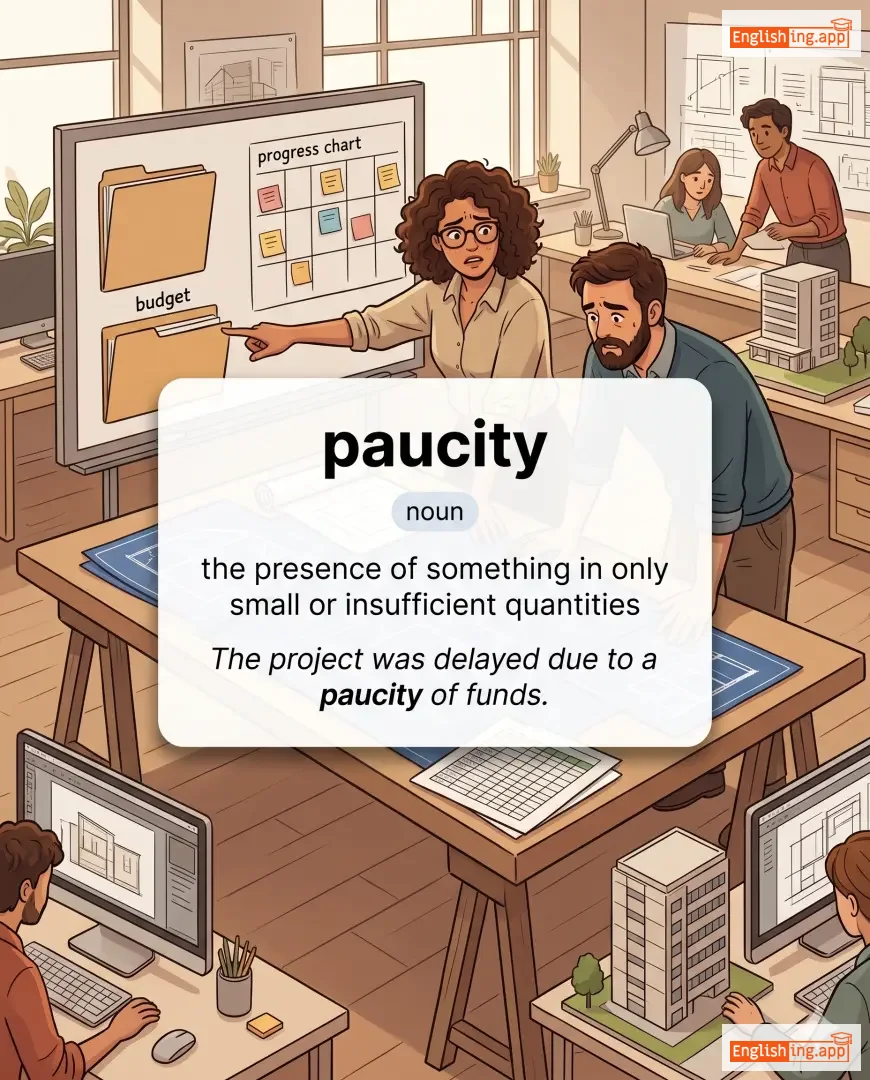
paucity definition card — visual illustration of the meaning
noun
/ˈpɔːsɪti/
অভাব / ঘাটতি (obhav / ghatiti)

the presence of something in only small or insufficient quantities

"The project was delayed due to a paucity of funds."

"অর্থের অভাবে প্রকল্পটি বিলম্বিত হয়েছিল।" (Arther obhave prokolpti bilombito hoyechhilo.)
adjective
/ˈpɔːntʃi/
পেটওয়ালা (petowala)

Having a large or protruding belly.

"The paunchy man struggled to button his shirt."

"পেটওয়ালা লোকটি তার শার্টের বোতাম লাগাতে কষ্ট পাচ্ছিল।" (Petowala lokti tar sharter botam lagate koshto pachchhilo.)
noun
/ˈpɔːpər/
ভিখারী (bhikhari)

A very poor person.

"The pauper begged for food on the street corner."

"ভিখারী রাস্তার মোড়ে খাবারের জন্য ভিক্ষা চাইছিল।" (Bhikhari rastar more khabarer jonno bhikkha chaichhilo.)
noun
/ˈpɔːpərɪzəm/
দারিদ্র্য (daridryo)

The state of being extremely poor.

"The country struggled with rising pauperism in the 19th century."

"দেশটি উনিশ শতকে ক্রমবর্ধমান দারিদ্র্যের সাথে সংগ্রাম করছিল।" (Deshti unish shotoke krombordhoman daridryer sathe songram korchhilo.)
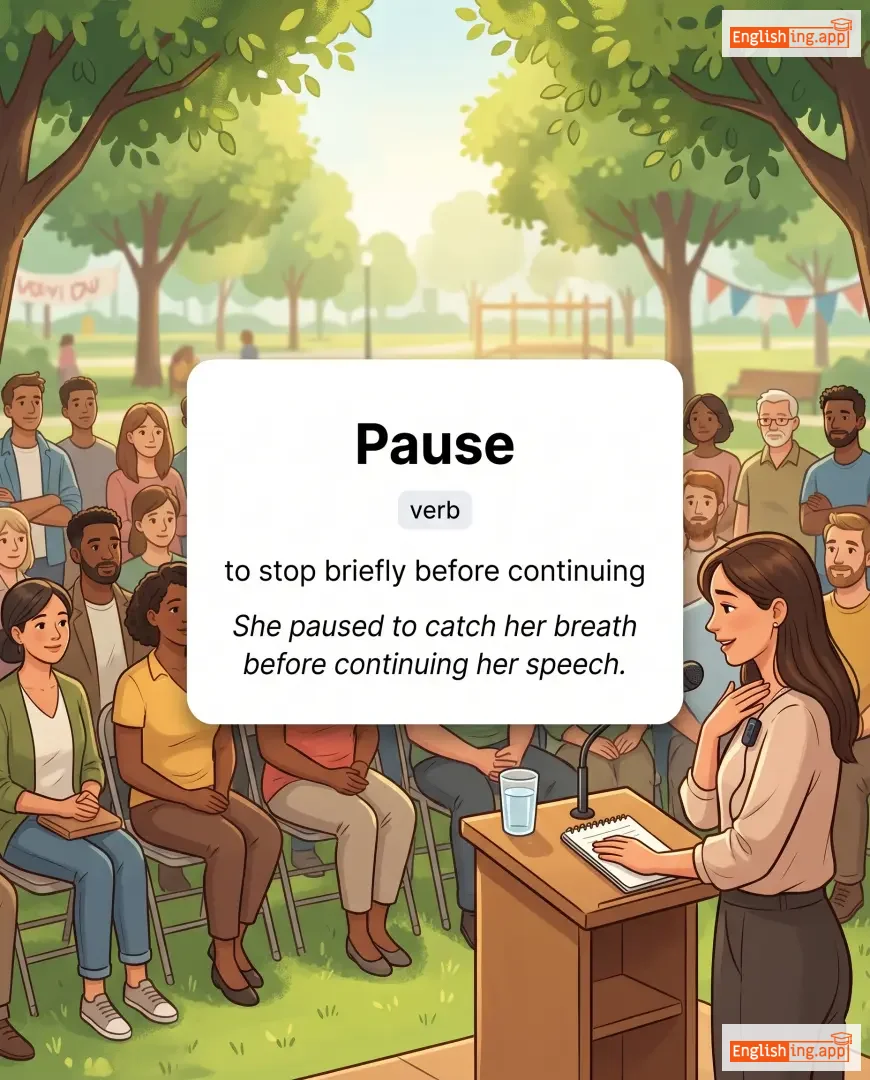
Pause definition card — visual illustration of the meaning
verb
/pɔːz/
বিরতি নেওয়া (birti newa)

to stop briefly before continuing

"She paused to catch her breath before continuing her speech."

"সে তার শ্বাস নিতে কিছুক্ষণের জন্য বিরতি নিয়েছিল।" (se tar shwash nite kichu khoner jonno birti niyechhilo.)
noun
/ˈpeɪvmənt/
পাকা রাস্তা (paka rasta)

a hard paved surface such as a road or sidewalk; the act or result of paving

"She walked along the pavement to reach the bus stop."

"সে বাস স্টপে পৌঁছাতে পাকা রাস্তা ধরে হাঁটল।" (se bus stope pouchhate paka rasta dhore hatlo)
noun
/pəˈvɪliən/
মণ্ডপ (mondop)

A large tent or temporary building, often used for events or exhibitions.

"The wedding reception was held in a decorated pavilion."

"বিয়ের সংবর্ধনা একটি সাজানো মণ্ডপে অনুষ্ঠিত হয়েছিল।" (Biyer songbordhona ekti sajano mondope onusthito hoyechhilo.)
pay definition card — visual illustration of the meaning
verb
/peɪ/
পেমেন্ট করা (payment kora)

to give money in exchange for goods or services

"I need to pay for the groceries."

"আমি গ্রোসারি জন্য পেমেন্ট করতে হবে।" (Ami grocery jonno payment korte hobe.)
adjective
/ˈpeɪ.ə.bəl/
দেয়া প্রাপ্য; প্রদেয়; (peyebol)

required to be paid; owed as a debt

"The amount is payable within thirty days of the invoice date."

"চালানের তারিখের ত্রিশ দিনের মধ্যে এই পরিমাণ প্রদেয় হবে।" (chalaner tarikhyer trish diner modhye ei poriman prodeyo hobe)
noun
/peɪˈiː/
প্রাপক (prapok)

A person to whom money is paid or is to be paid.

"The payee must sign the check before cashing it."

"চেক নগদ করার আগে প্রাপককে চেকে সই করতে হবে।" (Chek nogod korar age prapokke cheke soi korte hobe.)
noun
/ˈpeɪmənt/
পেমেন্ট (payment)

the action or process of paying money for something

"The payment for the order was received yesterday."

"অর্ডারের পেমেন্ট গতকাল পাওয়া গিয়েছিল।" (Orderer payment gathakal pawa giyechilo.)
noun
/ˈpiːˈsi/
পার্সোনাল কম্পিউটার (personal computer)

abbreviation for 'personal computer', a machine for performing digital operations

"I just bought a new PC for work."

"আমি কাজের জন্য নতুন একটি পিসি কিনেছি।" (Ami kajer jonno notun ekti pc kinechi.)
noun
/piː/
মটরশুঁটি (motor-shuti)

a small round green seed eaten as a vegetable

"The children enjoyed eating sweet peas with dinner."

"বাচ্চারা রাতের খাবারের সাথে মিষ্টি মটরশুঁটি খেয়ে আনন্দ পেল।" (bacchara rater khabar-er sathe mishti motor-shuti kheye anondo pelo)
noun
/piːs/
শান্তি (shanti)

a state of tranquility or quiet, freedom from disturbance

"They hope for peace in the region."

"তারা অঞ্চলে শান্তি আশা করে।" (Tara onchole shanti asha kore.)
adjective
/ˈpiːsəbl/
শান্তিপ্রিয় (shantipriyo)

inclined to avoid conflict; friendly and non-violent in nature

"She is a peaceable neighbor who never quarrels with anyone."

"তিনি একজন শান্তিপ্রিয় প্রতিবেশী যিনি কখনো কারো সাথে ঝগড়া করেন না।" (Tini ekjon shantipriyo protibeshi jini kokhono karo sathe jhogra koren na.)
adjective
/ˈpiːsfl/
শান্তিপূর্ণ (shantipurno)

free from disturbance; calm and tranquil

"The village remained peaceful even during the festival."

"উৎসব চলাকালেও গ্রামটি শান্তিপূর্ণ ছিল।" (Utsob cholakaleo gramti shantipurno chhilo.)
noun
/piːtʃ/
পিচ (pich)

a soft round fruit with fuzzy skin, sweet flesh, and a large pit in the center

"The peach was perfectly ripe and juicy when I bit into it."

"পিচটি পুরোপুরি পাকা এবং রসালো ছিল যখন আমি তাতে কামড় দিলাম।" (pichti puropuri paka ebong rosalo chilo jokhon ami tate kamor dilam.)
noun
/ˈpiː.kɒk/
ময়ূর (moyur)

a large bird with beautiful colorful tail feathers that can spread out like a fan

"The magnificent peacock displayed its colorful feathers to attract attention."

"দুর্দান্ত ময়ূরটি মনোযোগ আকর্ষণের জন্য তার রঙিন পালক প্রদর্শন করল।" (durdanto moyurti monojog akorshoner jonno tar rongin palok prodorshon korlo.)
noun
/ˈpiː.kɒk ˈflaʊ.ər/
কৃষ্ণচূড়া (krishnochura)

a tropical tree with bright orange and red flowers that resemble a peacock's tail

"The peacock flower tree blooms with stunning orange flowers in summer."

"কৃষ্ণচূড়া গাছ গ্রীষ্মে অসাধারণ কমলা ফুল ফোটায়।" (krishnochura gach grishme oshadharon komola phul photay)
noun
/ˈpiː.hən/
ময়ূরী (moyuri)

female peacock

"The peahen is less colorful than the male peacock."

"ময়ূরী পুরুষ ময়ূরের চেয়ে কম রঙিন।" (moyuri purush moyurer cheye kom rongin)
noun
/piːk/
শীর্ষ (shirsho)

the pointed top of a mountain or hill, or the highest point of something

"They reached the peak of the mountain after hours of hiking."

"তারা ঘণ্টার পর ঘণ্টা হাঁটার পর পর্বতের শীর্ষে পৌঁছেছিল।" (Tara ghontar por ghonta hatar por paharer shirsho pochhechilo.)
noun
/ˈpiːnʌt/
চিনাবাদাম (chinabadam)

a small seed with a thin shell, eaten as a snack or used to make oil and butter

"He loves eating roasted peanuts during the evening."

"সে সন্ধ্যায় ভাজা চিনাবাদাম খেতে ভালোবাসে।" (Se sondhay vaja chinabadam khete bhalobashe.)