ভোকাবুলারিসমূহ

ইংরেজি শব্দের বাংলা অর্থ | English to Bangla Word Meaning Dictionary

adjective
/ˌpoʊstˈwɔːr/
যুদ্ধ-পরবর্তী (juddho-poroborti)

relating to the period after a war has ended

"The country experienced rapid economic growth in the post-war years."

"যুদ্ধ-পরবর্তী বছরগুলোতে দেশটি দ্রুত অর্থনৈতিক উন্নতি লাভ করে।" (juddho-poroborti bochorgulote deshti druto orthonoitik unnati labh kore)
verb
/ˌpoʊstˈdeɪt/
পরে তারিখ লেখা (pore tarikh lekha)

To assign a date later than the actual date to a document or event.

"She postdated the check to next month."

"সে চেকটিতে পরের মাসের তারিখ লিখেছিল।" (Se chektite porer maser tarikh likhechhilo.)
noun
/ˈpoʊstər/
পোস্টার (postar)

a large printed picture or notice that is put on a wall for decoration or to advertise something

"They put up a movie poster outside the theater."

"তারা সিনেমা হলের বাইরে একটি মুভির পোস্টার টাঙিয়েছিল।" (Tara cinema holer baire ekti mover postar tangiyechhilo.)
adjective
/pɒˈstɪəriər/
পশ্চাৎ (poshchat)

Situated at or toward the back; later in time.

"The posterior part of the brain controls vision."

"মস্তিষ্কের পশ্চাৎ অংশ দৃষ্টি নিয়ন্ত্রণ করে।" (Mostishker poshchat angsho drishti niyontron kore.)
noun
/pɒˈstɛrɪti/
ভবিষ্যৎ প্রজন্ম (vobishshot projonom)

All future generations of people.

"The monument was built for the benefit of posterity."

"স্মৃতিস্তম্ভটি ভবিষ্যৎ প্রজন্মের কল্যাণে নির্মিত হয়েছিল।" (SritistombhoTi vobishshot projonomer kollane nirmito hoyechilo.)
noun, adjective
/ˌpəʊstˈɡrædʒuət/
স্নাতকোত্তর ছাত্র (snatokottor chatro)

A student who has completed a first degree and is studying for a further degree.

"She is doing postgraduate research in physics."

"সে পদার্থবিজ্ঞানে স্নাতকোত্তর গবেষণা করছে।" (Se podartho biggane snatokottor gobeshona korche.)
adjective
/ˈpɒstjʊməs/
মরণোত্তর (moronottor)

Occurring, awarded, or appearing after the death of the originator.

"He received a posthumous award for his bravery."

"তিনি তার সাহসিকতার জন্য মরণোত্তর পুরস্কার পেয়েছিলেন।" (Tini tar sahosikotar jonno moronottor puraskar peyechilen.)
noun, adjective
/ˌpəʊstˈmɔːtəm/
ময়নাতদন্ত (moynatodonto)

An examination of a dead body to determine the cause of death.

"The doctor carried out a postmortem on the body."

"ডাক্তার মৃতদেহে ময়নাতদন্ত করেছিলেন।" (Daktar mrityodehe moynatodonto korechilen.)
verb
/pəʊs(t)ˈpəʊn/
পোস্টপোন করা (postpone kora)

to delay something to a later time

"The meeting was postponed until next week."

"সভার তারিখ পরবর্তী সপ্তাহের জন্য পোস্টপোন করা হয়েছে।" (Sobar tarikh poroborti shoptaher jonno postpone kora hoyechhe.)
adjective
/ˌpəʊstˈprændɪəl/
ভোজনোত্তর (bhojonottor)

Occurring after a meal.

"He went for a postprandial walk after dinner."

"সে রাতের খাবারের পর ভোজনোত্তর হাঁটতে গিয়েছিল।" (Se rater khabarer por bhojonottor hatte giechhilo.)
noun
/ˈpəʊstˌskrɪpt/
পরিশিষ্ট (porishishto)

an additional remark at the end of a letter or text, after the signature

"She added a brief postscript to thank him again."

"সে আবার ধন্যবাদ জানাতে একটি ছোট পরিশিষ্ট যোগ করেছিল।" (Se abar dhonnobad janate ekti choto porishishto jog korechilo.)
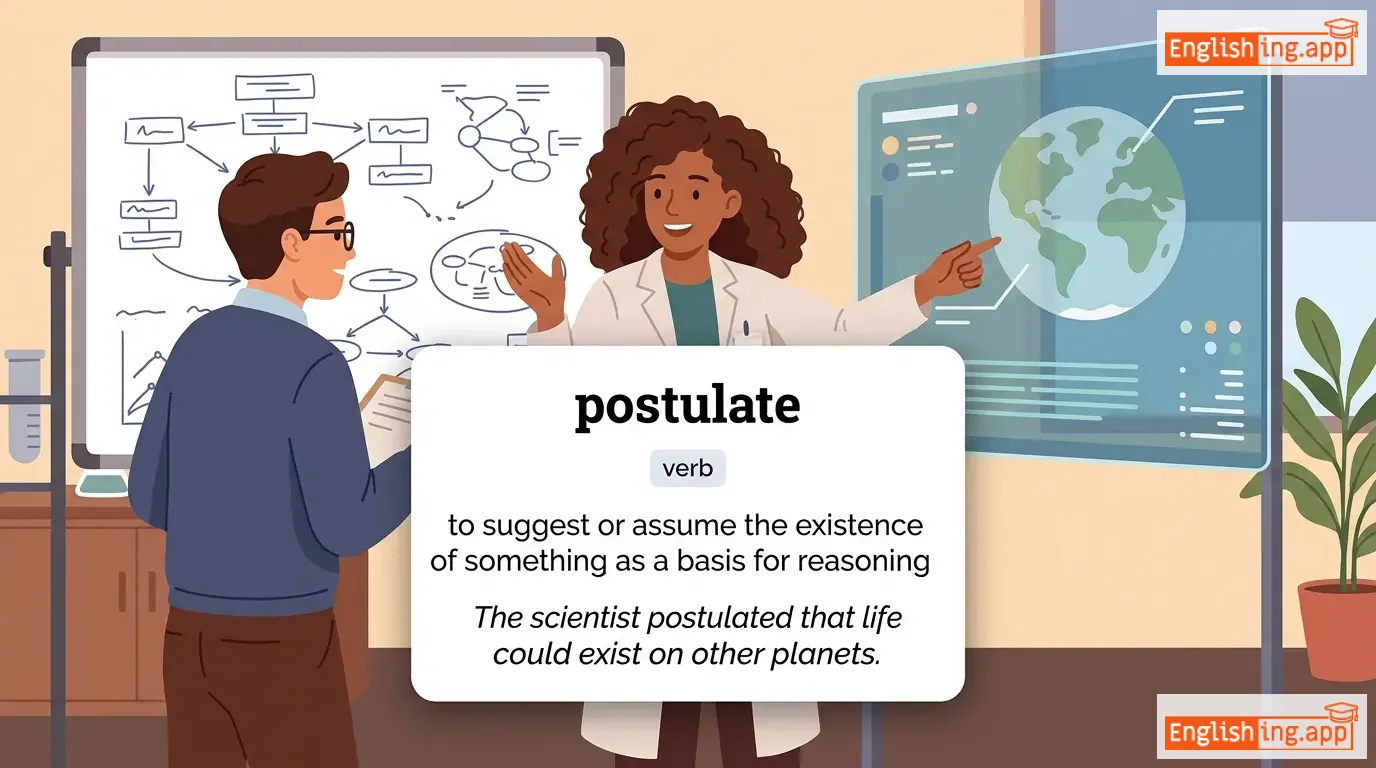
postulate definition card — visual illustration of the meaning
verb
/ˈpɒstjʊˌleɪt/
অনুমান করা (onuman kora)

to suggest or assume the existence of something as a basis for reasoning

"The scientist postulated that life could exist on other planets."

"বিজ্ঞানী অনুমান করেছিলেন যে অন্যান্য গ্রহে জীবন থাকতে পারে।" (Biggani onuman korechilen je onnanno grohe jibon thakte pare.)
noun
/ˈpɒstʃə/
অঙ্গবিন্যাস (ongobinash)

the position in which someone holds their body; an attitude or approach

"Good posture helps prevent back pain."

"সঠিক অঙ্গবিন্যাস পিঠের ব্যথা প্রতিরোধে সাহায্য করে।" (Shothik ongobinash pither byatha protiridhe sahajyo kore.)
adjective
/ˈpəʊstwɔːr/
যুদ্ধপরবর্তী (juddho poroborti)

occurring or existing after a war

"The postwar period saw significant economic growth."

"পোস্টওয়ার সময়কালে উল্লেখযোগ্য অর্থনৈতিক বৃদ্ধি দেখা গেছে।" (Postwar somoykale ullikhito orthonaitik briddhi dekha gechhe.)
noun
/pɒt/
পট (pot)

a container, typically round and deep, used for cooking or holding plants

"She put the soup in a pot and set it on the stove."

"সে স্যুপটি একটি পটে রেখেছিল এবং চুলায় সেট করেছিল।" (Se soupṭi ekti pote rekhechilo ebong chulāẏ set korechilo.)
adjective
/ˈpəʊtəbl/
পানযোগ্য (panojoggo)

safe to drink; drinkable

"The villagers did not have access to potable water."

"গ্রামবাসীর পানযোগ্য পানির কোনো প্রবেশাধিকার ছিল না।" (Grambashir panojoggo panir kono probeshadhikar chilo na.)
noun
/pəˈteɪtoʊ/
আলু (alu)

a starchy plant tuber that is a staple food around the world

"We had mashed potato with our dinner."

"আমরা আমাদের রাতের খাবারের সাথে মাশ পটেটো খেয়েছি।" (Amra amader rater khabarer sathe mash potato kheyechi.)
noun
/ˈpɒtˌbɔɪlə/
সস্তা সাহিত্যকর্ম (sosta sahityokormo)

a book, play, or film produced quickly to make money rather than for artistic value

"The novel was dismissed by critics as a mere potboiler."

"সমালোচকরা উপন্যাসটিকে একটি সস্তা সাহিত্যকর্ম হিসেবে খারিজ করেছিলেন।" (Somalochokra uponyastike ekti sosta sahityokormo hisebe kharij korechilen.)
noun
/ˈpoʊtənsi/
ক্ষমতা (khomota)

The power or ability of something to affect or influence; strength or effectiveness.

"The potency of the new medicine amazed the doctors."

"নতুন ওষুধের ক্ষমতা ডাক্তারদের বিস্মিত করেছিল।" (Notun oshudher khomota daktarder bismito korechilo.)
adjective
/ˈpoʊtənt/
শক্তিশালী (shoktishali)

Having great power, influence, or effect.

"This is a very potent drug that should be used carefully."

"এটি একটি খুব শক্তিশালী ওষুধ যা সতর্কভাবে ব্যবহার করা উচিত।" (Eti ekti khub shoktishali oshudh ja sotorkhobabe byabohar kora uchit.)
noun
/ˈpoʊtənˌteɪt/
শাসক (shashok)

A monarch or ruler, especially one with absolute power.

"The ancient land was ruled by a powerful potentate."

"প্রাচীন ভূমি একটি শক্তিশালী শাসক দ্বারা শাসিত ছিল।" (Prachin bhumi ekti shoktishali shashok dvara shashito chilo.)
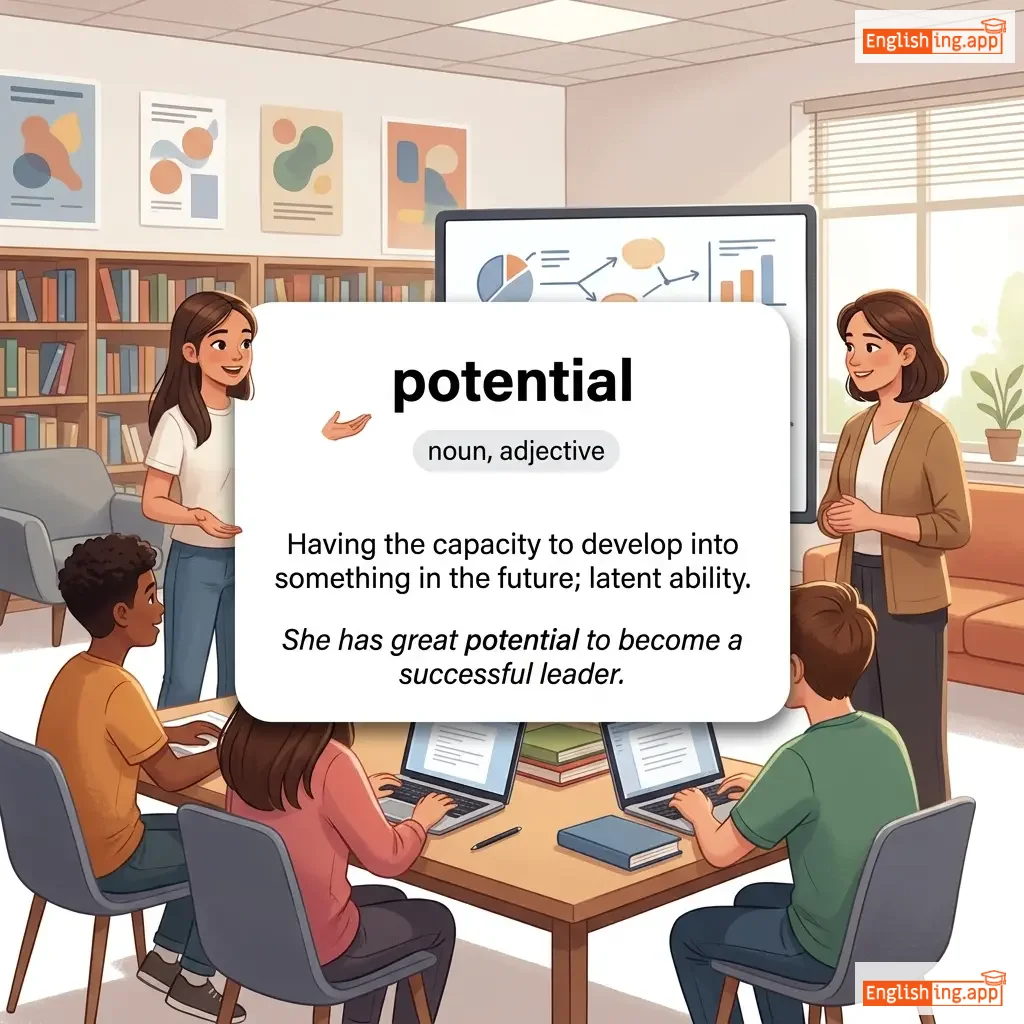
potential definition card — visual illustration of the meaning
noun, adjective
/pəˈtɛnʃəl/
সম্ভাবনা (sombhabona)

Having the capacity to develop into something in the future; latent ability.

"She has great potential to become a successful leader."

"তার সফল নেতা হওয়ার অসাধারণ সম্ভাবনা আছে।" (Tar sofol neta howar osadharon sombhabona ache.)
adverb
/pəˈtɛnʃəli/
সম্ভাব্যভাবে (shombabbhobabe)

with the possibility of becoming something in the future

"This project is potentially a huge success."

"এই প্রকল্পটি পটেনশালি একটি বিশাল সাফল্য হতে পারে।" (Ei prokolpoti potentially ekti bishal safollo hote pare.)
verb
/poʊˈtɛnʃiˌeɪt/
ক্ষমতা বৃদ্ধি করা (khomota briddhi kora)

To increase the power, effect, or likelihood of something.

"Caffeine can potentiate the effects of some medicines."

"ক্যাফেইন কিছু ওষুধের প্রভাব বাড়াতে পারে।" (Caffeine kichu oshudher prabhav barate pare.)
noun
/ˈpoʊʃən/
ঔষধি পানীয় (aushodhi paniyo)

a liquid with healing, magical, or poisonous properties

"The witch gave the hero a healing potion."

"ডাইনী নায়ককে একটি আরোগ্য পোশন দিয়েছিল।" (Daini nayokke ekti aroggo potion diyechhilo.)
noun
/ˌpoʊpʊˈriː/
শুকনো ফুলের মিশ্রণ (shukno fuler mishron)

a mixture of dried flowers and spices kept in a bowl to perfume a room; a miscellaneous collection

"The living room was filled with the scent of potpourri."

"লিভিং রুমটি পটপুরির সুগন্ধে ভরে গিয়েছিল।" (Living roomti potpurir sugondhe bhore giyechhilo.)
noun
/ˈpɑː.tər/
কুমোর (kumor)

a person who makes pottery

"The potter shaped clay on the spinning wheel."

"কুমোর ঘূর্ণায়মান চাকায় মাটিকে আকার দিয়েছিল।" (kumor ghurnayman chakay matike akar diyechilo)
noun
/paʊtʃ/
থলি (tholi)

a small bag or pocket, often used to carry small items

"She kept her coins in a small leather pouch."

"সে তার কয়েনগুলো একটি ছোট চামড়ার থলিতে রেখেছিল।" (Se tar koingulo ekti choto chamrar tholite rekhechhilo.)
noun
/ˈpoʊltɪs/
গরম ভেষজ পট্টি (gorom veshaj potti)

a soft, moist mass of material applied to the body to relieve soreness and inflammation

"The nurse applied a warm poultice to his injured leg."

"নার্স তার আহত পায়ে একটি গরম পোলটিস লাগাল।" (Nars tar ahoto paye ekti gorom poultice lagalo.)
noun, verb
/paʊnd/
পাউন্ড (pound)

a unit of weight equal to 16 ounces or a unit of currency

"The price of the book is five pounds."

"বইটির দাম পাঁচ পাউন্ড।" (Boitir dam pach pound.)
verb
/pɔːr/
পোড়ানো (porano)

to cause a liquid to flow from a container

"She poured the tea into the cup."

"সে চায়ের মধ্যে কাপটিতে পোর করল।" (She chaier modhe kapti te por korlo.)
verb
/paʊt/
ঠোঁট ফুলানো (thont fulano)

to push one's lips forward as an expression of annoyance or sulkiness

"The child began to pout when he didn’t get the toy."

"বাচ্চাটি খেলনা না পেয়ে ঠোঁট ফুলিয়ে দিল।" (Bachchati khelona na peye thont fuliye dilo.)
noun
/ˈpɒvəti/
দারিদ্র্য (daridro)

the state of being extremely poor

"Poverty is a major issue in many countries."

"পভারটি অনেক দেশের একটি প্রধান সমস্যা।" (Poverty onek desher ekti prodhan shomossha.)
noun
/ˈpaʊdər/
গুঁড়ো (guro)

a fine, dry substance made of very tiny particles

"She sprinkled some powder on the cake."

"সে কেকের উপরে কিছু পাউডার ছড়িয়ে দিল।" (Se keker upore kichu powder choriye dil.)
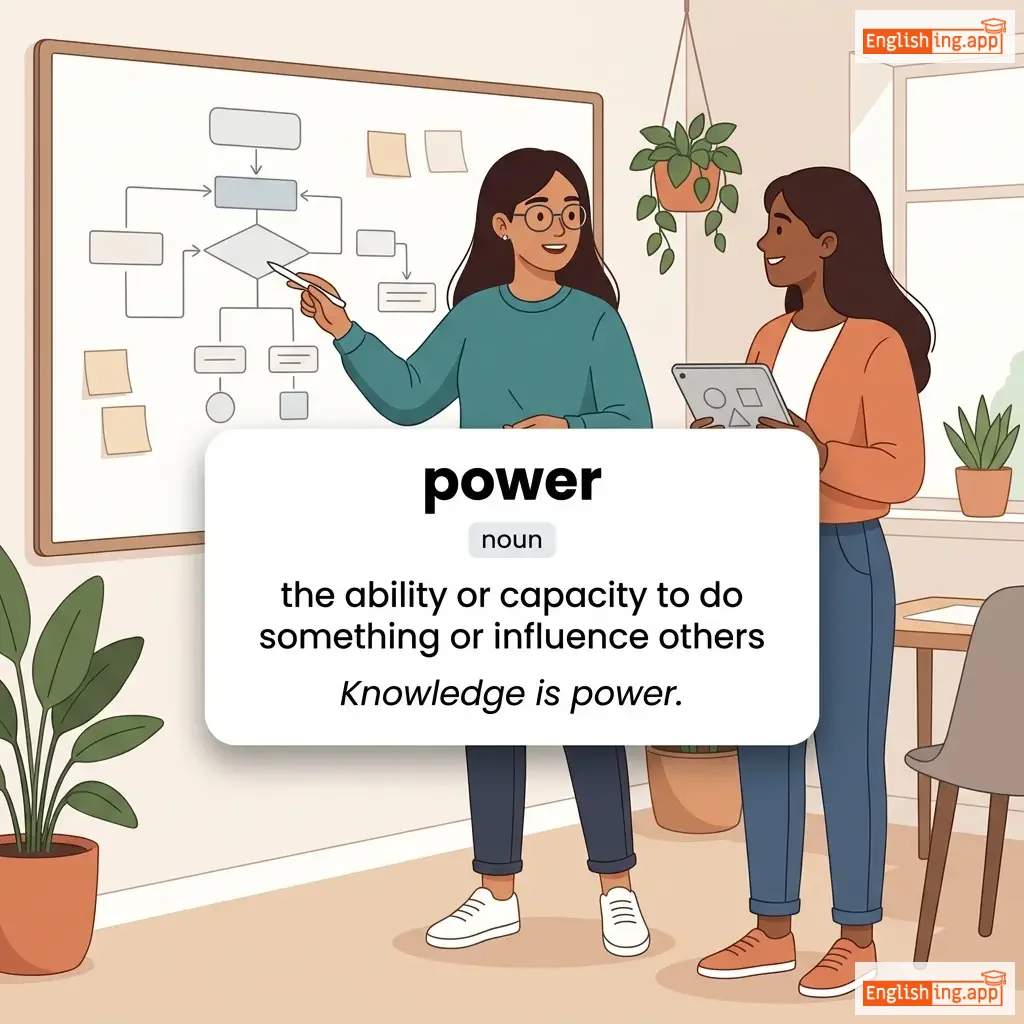
power definition card — visual illustration of the meaning
noun
/ˈpaʊər/
ক্ষমতা (khomota)

the ability or capacity to do something or influence others

"Knowledge is power."

"জ্ঞানই শক্তি।" (Jnan i shokti.)
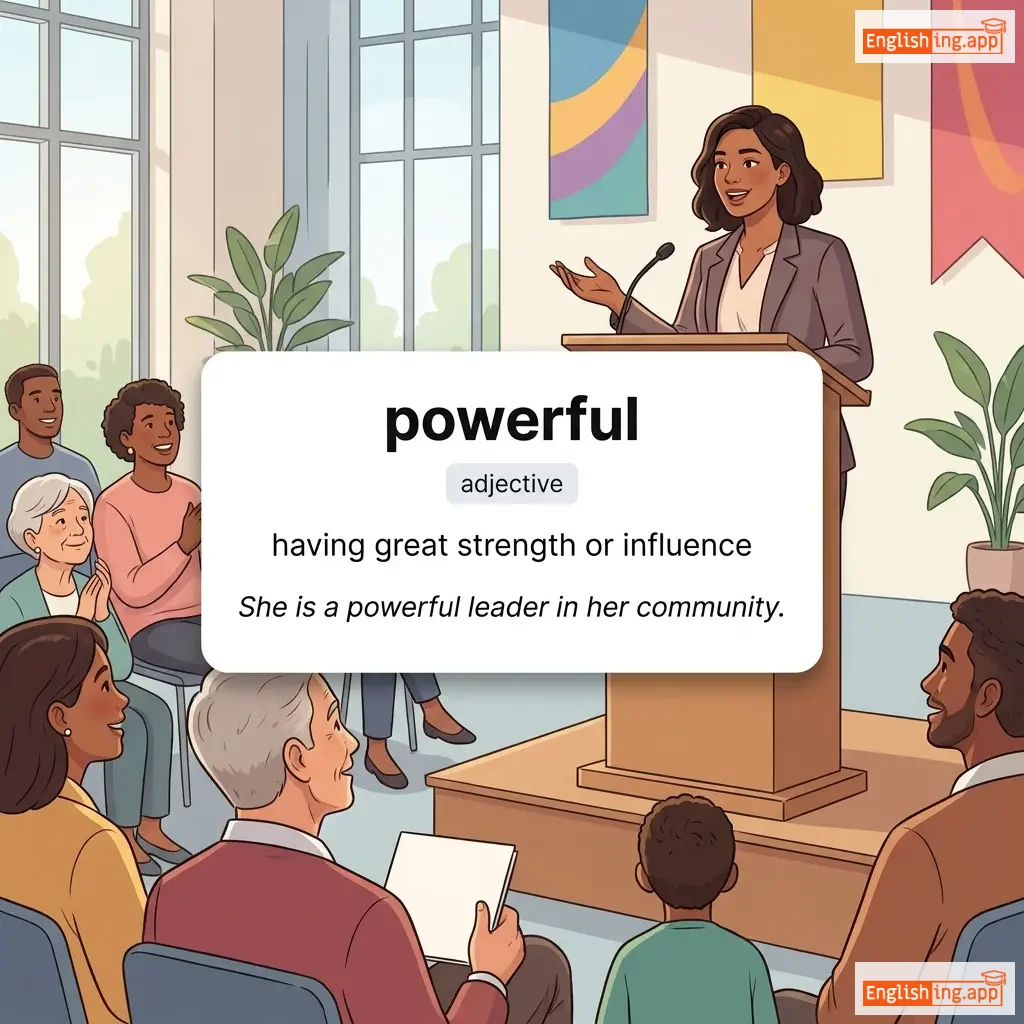
powerful definition card — visual illustration of the meaning
adjective
/ˈpaʊərfəl/
শক্তিশালী (shoktishali)

having great strength or influence

"She is a powerful leader in her community."

"সে তার সম্প্রদায়ের একটি শক্তিশালী নেতা।" (Se tar somprodayer ekti shoktishali neta.)
adjective
/ˈpaʊərləs/
অসহায় (oshahai)

without ability, influence, or strength

"She felt powerless against the unfair system."

"সে অন্যায় ব্যবস্থার বিরুদ্ধে অসহায় অনুভব করছিল।" (Se onnyay byabosthar biruddhe oshohai onuvhob korchhilo.)
noun
/ˈpaʊ.waʊ/
আলোচনা সভা (alochona sobha)

an informal meeting or conference to discuss something

"The team held a quick powwow before the presentation."

"টিমটি উপস্থাপনার আগে একটি দ্রুত আলোচনা সভা করেছিল।" (Timti uposthapanar age ekti druto alochona sobha korechilo.)
adjective
/ˈpræk.tɪ.kə.bəl/
কার্যকর (karyokor)

able to be done or put into practice successfully

"The plan is not practicable without more resources."

"অতিরিক্ত সম্পদ ছাড়া পরিকল্পনাটি কার্যকর নয়।" (Otirikto sompod chhara porikolpanati karyokor noy.)
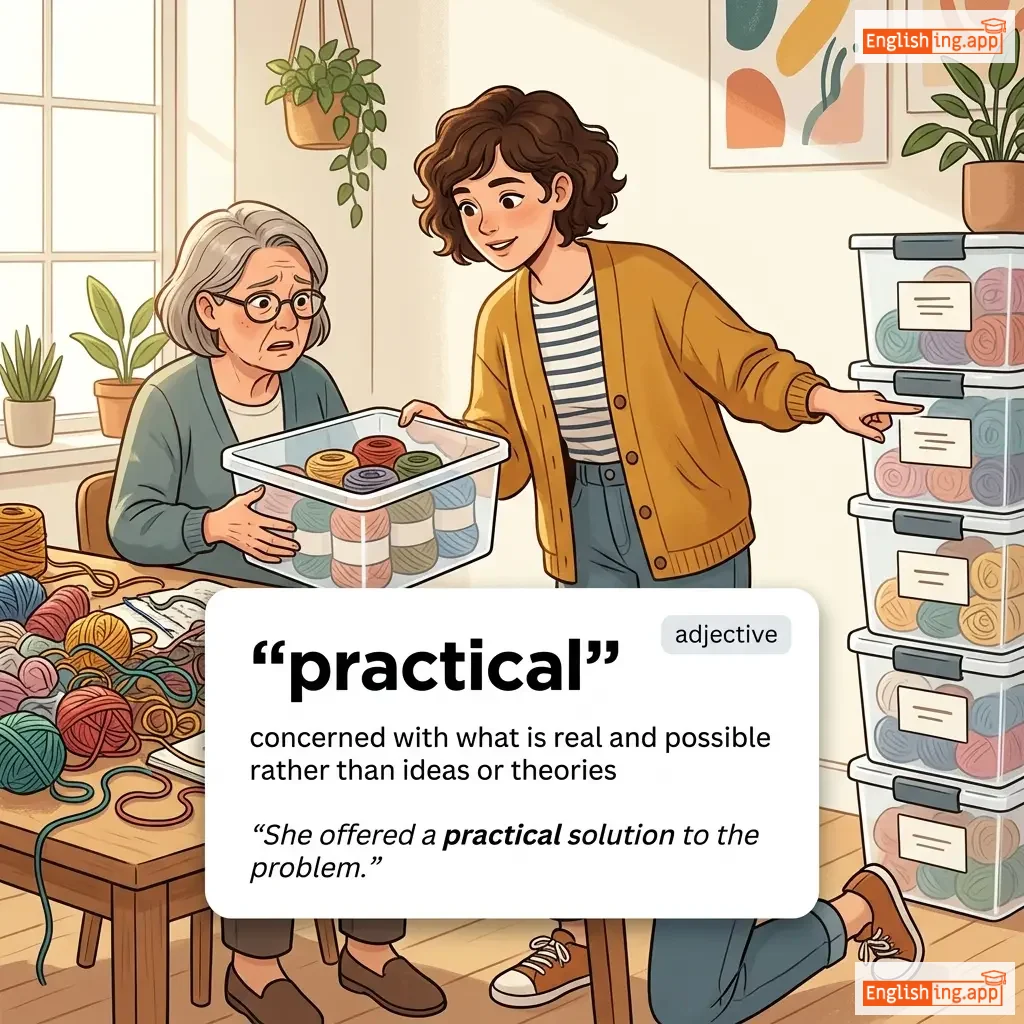
practical definition card — visual illustration of the meaning
adjective
/ˈpræk.tɪ.kəl/
ব্যবহারিক (baboharik)

concerned with what is real and possible rather than ideas or theories

"She offered a practical solution to the problem."

"সে সমস্যার একটি ব্যবহারিক সমাধান দিয়েছিল।" (Se somossar ekti baboharik somadhan diyechilo.)
adverb
/ˈpræktɪkli/
প্রায় (praye)

in a way that is almost or nearly; in a realistic or functional manner

"The movie theater was practically empty."

"সিনেমা হলটি প্রায় ফাঁকা ছিল।" (Cinema holti praye faka chhilo.)
practice definition card — visual illustration of the meaning
noun/verb
/ˈpræk.tɪs/
চর্চা / অনুশীলন (chorcha / onushilon)

the act of doing something repeatedly to improve skill, or the actual application of an idea

"He practices the piano every day."

"সে প্রতিদিন পিয়ানো অনুশীলন করে।" (Se protidin piano onushilon kore.)
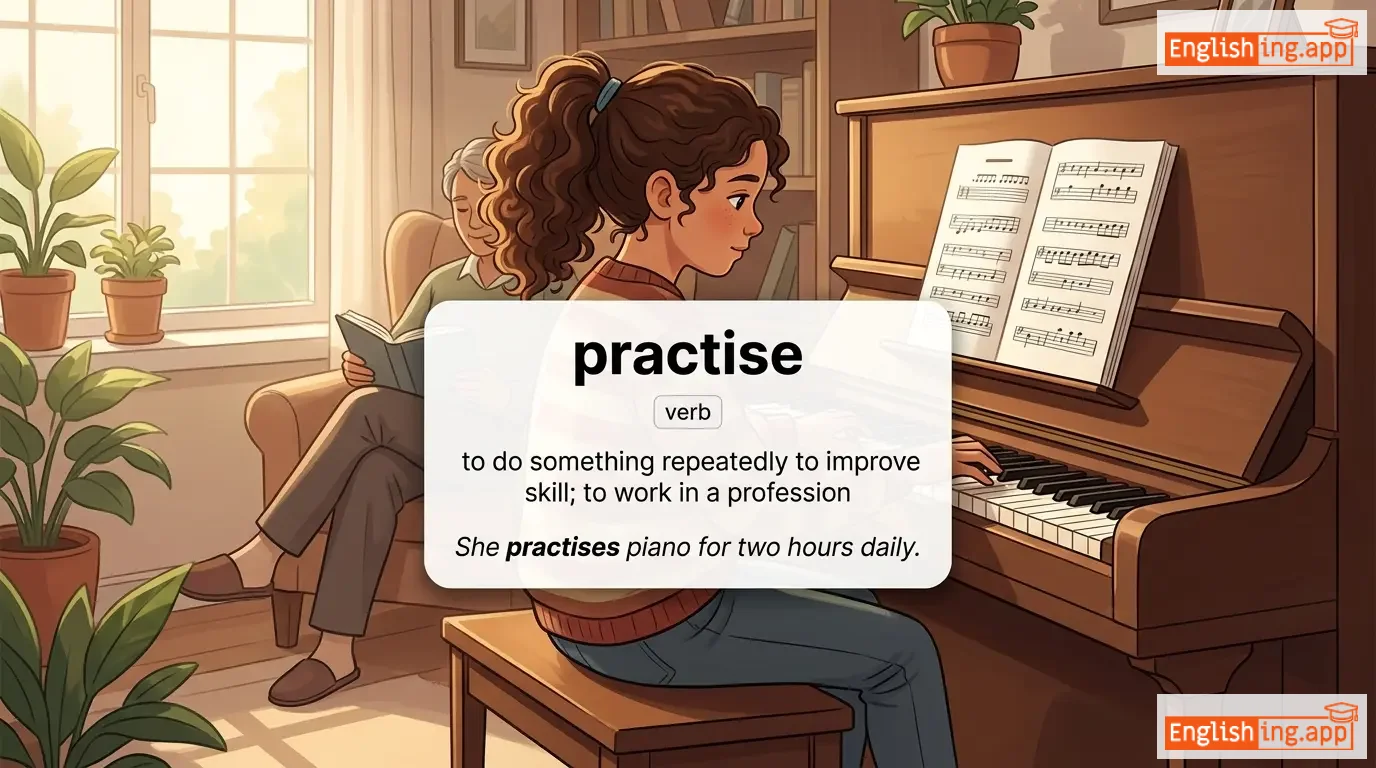
practise definition card — visual illustration of the meaning
verb
/ˈpræktɪs/
অনুশীলন করা (onushilon kora)

to do something repeatedly to improve skill; to work in a profession

"She practises piano for two hours daily."

"সে প্রতিদিন দুই ঘন্টা পিয়ানো অনুশীলন করে।" (Se protidin dui ghonta piano onushilon kore.)
noun
/prækˈtɪʃ.ən.ər/
পেশাজীবী (peshajibi)

a person actively engaged in a profession, especially medicine or law

"She is a skilled medical practitioner."

"সে একজন দক্ষ চিকিৎসক।" (Se ekjon dokkho chikitsok.)
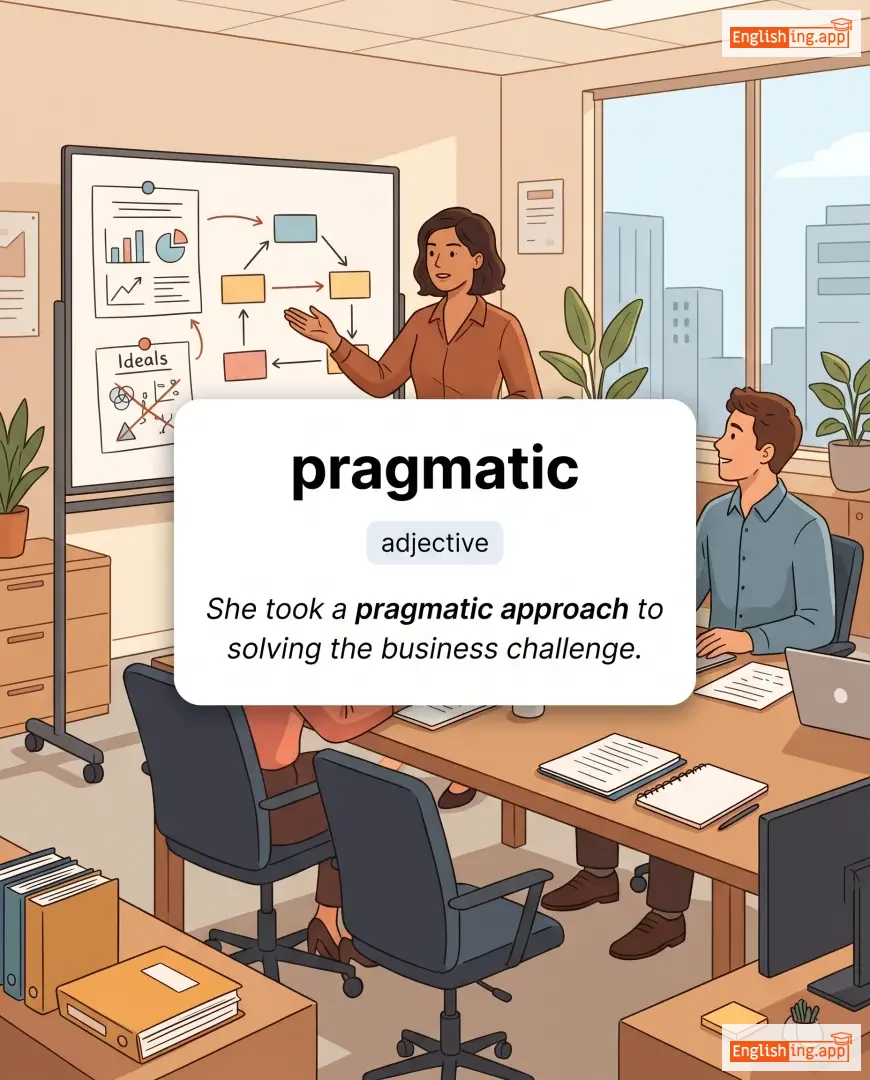
pragmatic definition card — visual illustration of the meaning
adjective
/præɡˈmætɪk/
বাস্তবভিত্তিক (bastobbhittik)

Dealing with problems in a practical and sensible way rather than depending on theories or ideals.

"She took a pragmatic approach to solving the business challenge."

"সে ব্যবসার চ্যালেঞ্জ সমাধানে একটি বাস্তবভিত্তিক দৃষ্টিভঙ্গি গ্রহণ করেছিল।" (Se byabshar challenge somadhane ekti bastobbhittik drishtivongi grohon korechilo.)
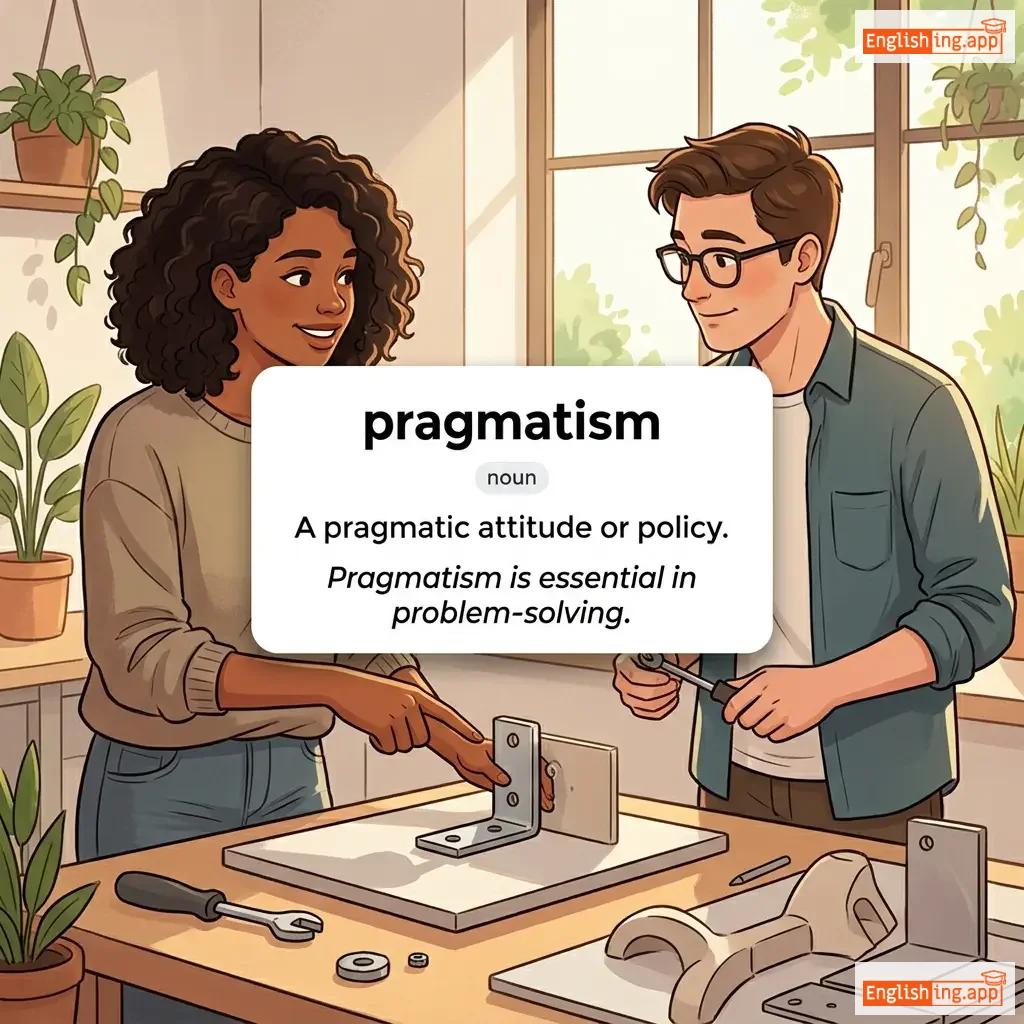
pragmatism definition card — visual illustration of the meaning
noun
/ˈpræɡ.mə.tɪ.zəm/
বাস্তববাদী চিন্তাধারা, কার্যকর পন্থা, বাস্তবিক দৃষ্টিভঙ্গি (bastobadi chintadhara, karjokor pontha, bastobik drishtibhongi)

A pragmatic attitude or policy.

"Pragmatism is essential in problem-solving."

"সমস্যা সমাধানে বাস্তববাদী দৃষ্টিভঙ্গি অপরিহার্য।" (Shomossha shomadhane bastobadi drishtibhongi oporiharto.)
noun
/ˈpræɡmətɪst/
বাস্তববাদী (bastobbadi)

A person who deals with things in a practical and realistic way.

"He is a true pragmatist who values results over ideals."

"সে একজন সত্যিকারের বাস্তববাদী, যে আদর্শের চেয়ে ফলাফলের মূল্য দেয়।" (Se ekti shotikorer bastobbadi, je adorsher cheye folafoler mullo dey.)
noun
/ˈprɛəri/
তৃণভূমি (trinhbhumi)

A large open area of grassland, especially in North America.

"The bison roamed freely across the prairie."

"বাইসনরা তৃণভূমি জুড়ে অবাধে বিচরণ করত।" (Bisonra trinhbhumi jure obadhe bichoron korto.)
Praise definition card — visual illustration of the meaning
verb
/preɪz/
প্রশংসা করা (proshongsha kora)

to express approval or admiration for someone or something

"The teacher praised the student for her hard work."

"শিক্ষক তার কঠোর পরিশ্রমের জন্য ছাত্রীর প্রশংসা করেছেন।" (Shikkhok tar kothor porishromer jonno chatrir proshongsha korechhen.)
adjective
/ˈpreɪz.wɜː.ði/
প্রশংসনীয়; প্রণমযোগ্য; (preijowardi)

deserving praise; commendable; admirable

"Her charitable work is truly praiseworthy."

"তার দাতব্য কাজ সত্যিই প্রশংসনীয়।" (tar datobbo kaj shotyi-i proshongshoniyo.)