ভোকাবুলারিসমূহ

ইংরেজি শব্দের বাংলা অর্থ | English to Bangla Word Meaning Dictionary

adjective
/ˈplaɪəbəl/
নমনীয় (nomonio)

easily bent or flexible; adaptable

"The metal is pliable enough to be shaped into jewelry."

"ধাতুটি যথেষ্ট নমনীয় যাতে গহনা তৈরিতে আকার দেওয়া যায়।" (Dhatuti jothesto nomonio jate gohona toyrite akar deowa jay.)
adjective
/ˈplaɪənt/
নমনীয়, সহজে মানিয়ে নেওয়া (nomonio, sohoje maniye newa)

flexible; easily influenced or adaptable

"She has a pliant personality that adapts well to new situations."

"তার একটি নমনীয় ব্যক্তিত্ব আছে যা নতুন পরিস্থিতিতে সহজে মানিয়ে নেয়।" (Tar ekti nomonio bektitto ache ja notun poristhitite sohoje maniye ney.)
noun
/plaɪt/
দুর্দশা, বিপদ (durdosha, bipod)

a difficult or dangerous situation

"The refugees described their plight during the war."

"শরণার্থীরা যুদ্ধের সময় তাদের দুর্দশা বর্ণনা করেছিল।" (Shoronarthira juddher somoy tader durdosha bornona korechilo.)
verb
/plɒd/
ধীরে কঠোর পরিশ্রম করা (dhire kothor porishrom kora)

to work slowly and steadily, often with effort or difficulty

"He plodded through his homework despite feeling tired."

"সে ক্লান্ত লাগলেও হোমওয়ার্ক ধীরে কঠোর পরিশ্রম করে শেষ করলো।" (Se klanto lagleo homework dhire kothor porishrom kore shesh korlo.)
adjective
/ˈplɒd.ɪŋ/
ধীর ও একঘেয়ে (dhir o ekhoye)

slow-moving and unexciting; showing steady effort

"The movie was entertaining but a bit plodding in the middle."

"মুভিটি মজাদার ছিল কিন্তু মাঝখানে একটু ধীর ও একঘেয়ে মনে হলো।" (Movie-ti mojadar chilo kintu majkhane ektu dhir o ekhoye mone holo.)
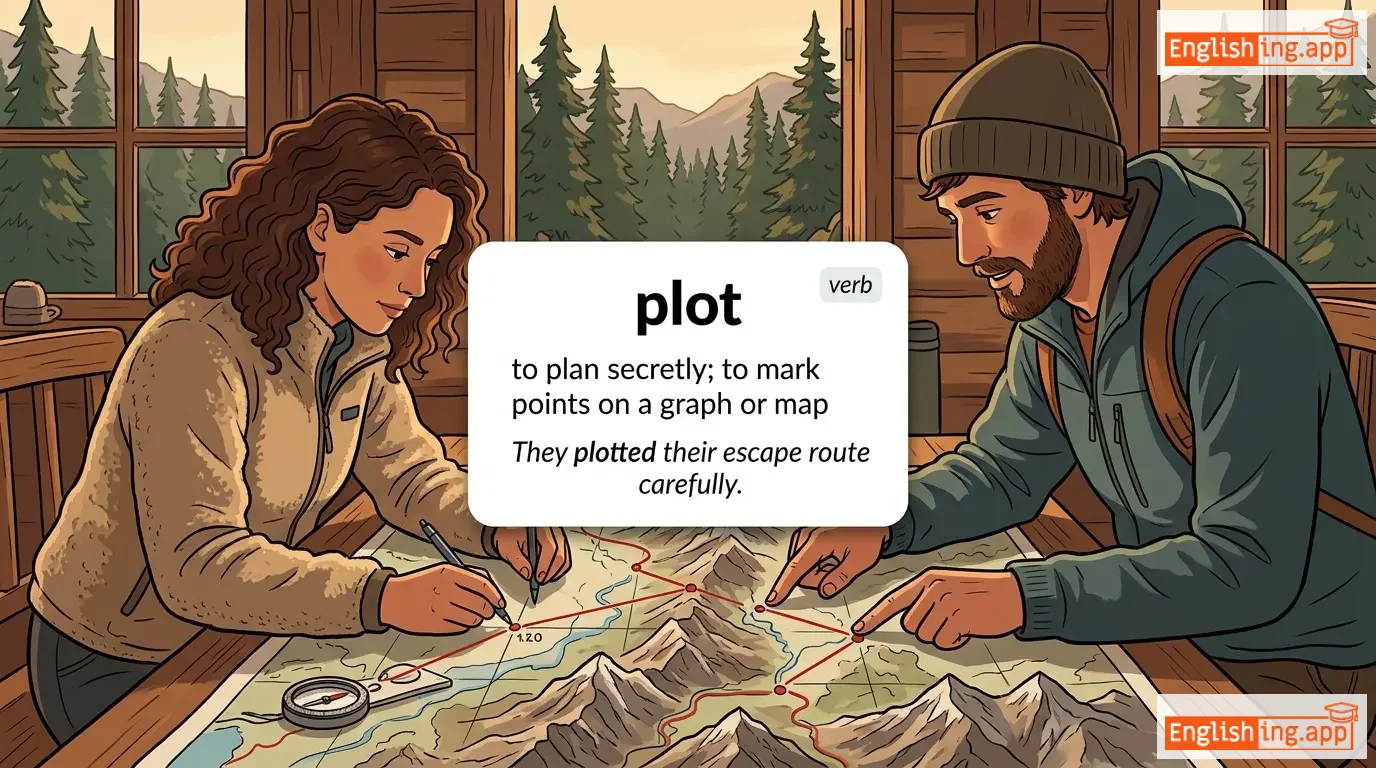
plot definition card — visual illustration of the meaning
noun
/plɒt/
চক্রান্ত (chakranto)

a secret plan or scheme, often with bad intentions

"The villain made a plot to steal the treasure."

"ভিলেনটি ধনসম্পদ চুরি করার জন্য একটি চক্রান্ত করেছিল।" (Vhilenti dhonshampad churi korar jonno ekti chakranto korechhilo.)
plough definition card — visual illustration of the meaning
noun
/plaʊ/
লাঙ্গল (langol)

a large farming tool used to break up and turn over soil before planting crops

"The oxen pulled the heavy plough across the field."

"বলদগুলো ভারী লাঙ্গল টেনে মাঠ জুড়ে নিয়ে গেল।" (boldgulo bhari langol tene math jure niye gelo.)
noun
/plɔɪ/
চতুর পরিকল্পনা (chotur porikolpona)

a clever plan or action designed to gain an advantage

"She used a clever ploy to win the debate."

"তিনি বিতর্ক জিততে একটি চতুর পরিকল্পনা ব্যবহার করলেন।" (Tini bitorko jit-te ekti chotur porikolpona byabohar korlen.)
verb
/plʌk/
উঠিয়ে নেওয়া, সাহস জোগানো (uthiye neowa, sahos jogano)

to take hold of and quickly remove; to gather courage or determination

"She plucked a flower from the garden."

"তিনি বাগান থেকে একটি ফুল উঠিয়ে নিলেন।" (Tini bagan theke ekti phool uthiye nilen.)
adjective
/ˈplʌk.i/
সাহসী (sahosi)

having or showing courage and determination

"The plucky child rescued the kitten from the tree."

"সাহসী শিশু গাছ থেকে বিড়ালছানাকে রক্ষা করলো।" (Sahosi shishu gach theke biralchhanake rokha korlo.)
noun
/plʌɡ/
প্লাগ (plug)

a device used to connect or block an opening

"She inserted the plug into the socket."

"তিনি সকেটে প্লাগ ঢোকালেন।" (Tini sokete plug dhokalen.)
noun
/plʌm/
বরই (boroi)

a small round fruit with smooth red or purple skin, sweet flesh, and a single large seed

"The purple plum was juicy and delicious."

"বেগুনি বরইটি রসালো এবং সুস্বাদু ছিল।" (beguni boroiti roshalo ebong shushshadu chhilo)
noun
/ˈpluː.mɪdʒ/
পাখির পালকসমূহ (pakhir palkosomuho)

the feathers covering a bird's body

"The peacock's plumage was vibrant and eye-catching."

"ময়ূরের পালকগুলো উজ্জ্বল এবং চোখে পড়ার মতো ছিল।" (Moyurer palkogulo ujjol ebong chokhe porar moto chhilo.)
verb
/plʌm/
গভীরতা পরিমাপ করা বা তদন্ত করা (govirta porimap kora ba tontod kora)

to measure the depth of water or examine closely

"They used a line to plumb the depth of the lake."

"তারা লেকের গভীরতা মাপার জন্য একটি দড়ি ব্যবহার করেছিল।" (Tara leker govirta mapar jonno ekti dori byabohar korechhilo.)
noun
/ˈplʌm.ər/
প্লামার বা জলপাইপ মেরামতকারী (plamar ba jalpaip meramotkari)

a person who installs or repairs water pipes

"The plumber fixed the leaking pipe in the kitchen."

"প্লামার রান্নাঘরের লিক হওয়া পাইপটি মেরামত করেছিল।" (Plamar rannaghorer lik hoa paipti meramot korechhilo.)
noun
/pluːm/
বড় নরম পালক বা পালকের মতো কিছু (boro norm palk ba palker moto kichu)

a large, soft feather or something resembling a feather

"The soldier wore a red plume on his helmet."

"সেনাটি তার হেলমেটে একটি লাল পালক পরেছিল।" (Senati tar helmet e ekti lal palk porchhilo.)
plummet definition card — visual illustration of the meaning
verb
/ˈplʌm.ɪt/
উচ্চ গতিতে সোজা নিচে পড়া (uccho gati te soja niche pora)

to fall straight down at high speed

"Stock prices plummeted after the sudden market crash."

"হঠাৎ বাজার পতনের পরে স্টকের দাম হঠাৎই নিচে পড়ে গিয়েছিল।" (Hotat bajar potoner pore stock er dam hotati niche pore giyechhilo.)
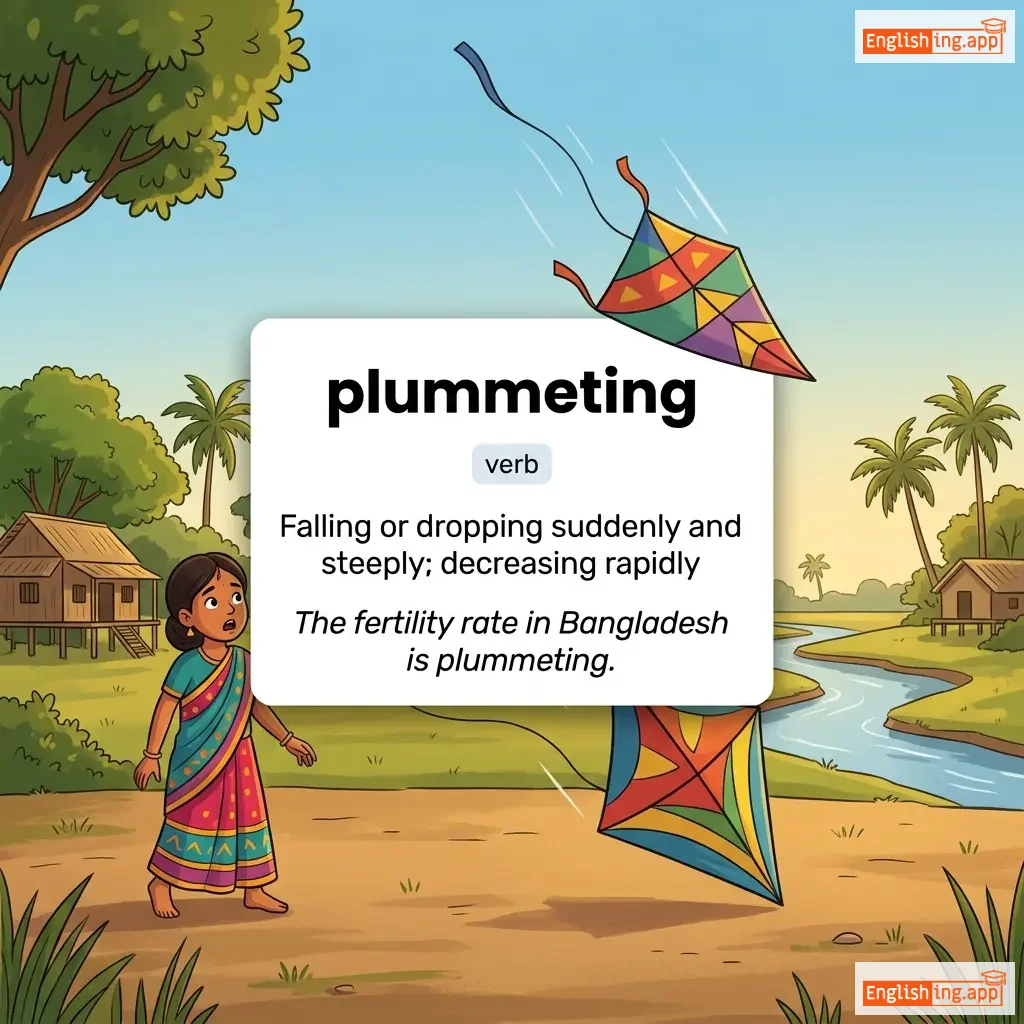
plummeting definition card — visual illustration of the meaning
verb
ˈplʌmɪtɪŋ
দ্রুত হ্রাস পাওয়া (druto hrash pawa)

Falling or dropping suddenly and steeply; decreasing rapidly

"The fertility rate in Bangladesh is plummeting."

"বাংলাদেশের প্রজনন হার দ্রুত হ্রাস পাচ্ছে।" (Bangladesher projonon har druto hrash pachce.)
adjective
/plʌmp/
চওড়া বা মোটা (chora ba mota)

having a full, rounded shape; pleasantly fat

"The cat was plump and well-fed."

"বিড়ালটি মোটা এবং সুস্থভাবে খাওয়া হয়েছে।" (Biralti mota ebong susthavabe khaoa hoyeche.)
noun
/ˈplʌn.dər.ər/
লুটেরা; ডাকাত; (lutera)

a person who steals goods, especially during war or civil disorder

"The plunderers ransacked the village after the battle."

"যুদ্ধের পর লুটেরারা গ্রামটি লুটপাট করেছিল।" (Juddher por luterara grasmti lutpat korechhilo.)
verb
/plʌndʒ/
ডুব দেওয়া বা হঠাৎ নেমে যাওয়া (dub deoa ba hotat neme jaoa)

to jump or dive quickly; to fall sharply

"She plunged into the swimming pool."

"সে সাঁতার কূপে ডুব দেয়।" (Se santar kupe dub deya.)
adjective
/ˌpluːˈpɜːrfɪkt/
সর্বাধিক অতীত কাল (sorbadhik otit kal)

a verb tense expressing an action completed before another past action

"By the time she arrived, he had finished his homework, showing the pluperfect tense."

"সে পৌঁছানোর সময়, সে তার হোমওয়ার্ক শেষ করেছিল, প্লুপারফেক্ট টেন্স দেখাচ্ছিল।" (Se pouchanor somoy, se tar homework sesh korechilo, pluperfect tense dekhachhilo.)
adjective
/ˈplʊrəl/
বহুবচন (bohubochon)

denoting more than one person or thing

"The word 'cats' is the plural of 'cat'."

"'cats' শব্দটি 'cat' এর বহুবচন।" ('cats' shobdo ti 'cat' er bohubochon.)
noun
/plʊəˈrælɪti/
বহুমত বা সংখ্যাধিক্য (bohumot ba sonkhadhikyo)

the state of being multiple; the greater part or majority

"In the election, she won by a plurality of votes."

"নির্বাচনে, সে ভোটের সংখ্যাধিক্য দিয়ে জিতেছে।" (Nirbachone, se voter sonkhadhikyo diye jitese.)
preposition/conjunction/noun/adjective
/plʌs/
যোগ/সুবিধা (jog/subidha)

in addition to; a positive aspect or advantage

"She received an A plus on her exam."

"সে তার পরীক্ষায় এ প্লাস পেয়েছে।" (Se tar porikkhay A plus peyese.)
noun
/pluːˈtɒkrəsi/
ধনীশাসিত সরকার (dhonishasit sarkar)

a system of government where the wealthy hold power

"The country was ruled as a plutocracy."

"দেশটি ধনীদের শাসিত ছিল।" (Desh ti dhonider shasit chilo.)
noun
/piːˈɛm/
পিএম (PM)

abbreviation for post meridiem; after midday

"The meeting is scheduled at 3 pm."

"মিটিংটি ৩ পিএম-এ নির্ধারিত।" (Meetingti 3 PM-e nirdharito.)
adjective
/njuːˈmætɪk/
বায়ু-চালিত (bayu-chalito)

operated by air or gas under pressure

"The factory uses pneumatic tools for assembly."

"কারখানায় অ্যাসেম্বলির জন্য বায়ু-চালিত সরঞ্জাম ব্যবহার করা হয়।" (Karkhanay assemblyr jonno bayu-chalito soronjam byabohar kora hoy.)
noun
/ˈpɒkɪt/
পকেট (pocket)

a small, enclosed space in clothing for carrying items

"He put his phone in his pocket."

"সে তার ফোনটি পকেটে রাখল।" (Se tar phone-ti pocket-e rakhlo.)
podcasts definition card — visual illustration of the meaning
noun
ˈpɒdkɑːsts
পডকাস্ট (podcast)

A digital audio or video file or recording, usually part of a themed series, that can be downloaded from a website to a media player or computer.

"Podcasts are great for improving listening."

"শ্রবণ দক্ষতা বাড়ানোর জন্য পডকাস্ট দারুণ।" (Shrobon dokkhata baranoar jonno podcast darun.)
noun
/ˈpoʊdiətrɪst/
পা চিকিৎসক (pa chikitsok)

a doctor specializing in foot care

"I have an appointment with the podiatrist for my ankle pain."

"আমার গোড়ালির ব্যথার জন্য আমি একজন পা চিকিৎসকের সঙ্গে দেখা করব।" (Amar goralir byathar jonno ami ekjon pa chikitsoker songe dekha korbo.)
noun
/ˈpoʊdiəm/
উচ্চ মঞ্চ/প্ল্যাটফর্ম (uchcho manch/platform)

a small platform on which a person stands to speak or conduct an orchestra

"The speaker stepped onto the podium to deliver the speech."

"বক্তা বক্তৃতা দেওয়ার জন্য মঞ্চে উঠলেন।" (Bokta boktrita deowar jonno manche uthlen.)
noun
/ˈpoʊɪm/
কবিতা (kobita)

a piece of writing that expresses ideas, feelings, or tells a story in a distinct form, often using rhyme or meter

"She wrote a beautiful poem for her mother."

"সে তার মায়ের জন্য একটি সুন্দর কবিতা লিখেছিল।" (Se tar ma-er jonno ekti sundor kobita likhechilo.)
noun
/ˈpoʊ.ə.si/
কবিতা বা ছন্দশিল্প (kobita ba chhandoshilpo)

poetry; the art or composition of poems

"The anthology was filled with romantic poesy."

"অ্যান্থোলজিটি রোমান্টিক কবিতায় পূর্ণ ছিল।" (Anthologyti romantic kobitay purno chhilo.)
noun
/ˈpoʊɪt/
কবি (kobi)

a person who writes poems

"The poet wrote about love and nature."

"কবি প্রেম এবং প্রকৃতি নিয়ে লিখেছিলেন।" (Kobi prem ebong prokriti niye likhechilen.)
noun
/ˈpoʊ.ɪˌtæs.tər/
অপমানজনক বা খারাপ কবি (opomanjonok ba kharap kabi)

an inferior or trivial poet

"He was mocked as a poetaster by the literary critics."

"তিনি সাহিত্য সমালোচকদের দ্বারা খারাপ কবি হিসেবে উপহাস করা হয়েছিল।" (Tini sahitya samalochokder dvara kharap kabi hisebe upohas kora hoyechhilo.)
adjective
/poʊˈɛt.ɪk/
কবিতার মতো, কল্পনাপ্রসূত (kobitar moto, kalpanaprosut)

having qualities of poetry; expressive, beautiful, or imaginative

"Her speech had a poetic rhythm that captivated the audience."

"তার বক্তৃতায় এমন একটি কবিতার ছন্দ ছিল যা শ্রোতাদের মোহিত করেছিল।" (Tar boktritay emon ekti kobitar chhondo chhilo ja srotdader mohit korechhilo.)
noun
/poʊˈɛt.ɪks/
কবিতাশাস্ত্র, কবিতার তত্ত্ব (kobitashastro, kobitar tattwo)

the study or theory of poetry and its principles

"He wrote a book on poetics explaining the art of verse."

"তিনি কবিতাশাস্ত্র নিয়ে একটি বই লিখেছেন যা ছন্দের শিল্প ব্যাখ্যা করছে।" (Tini kobitashastro niye ekti boi likhechhen ja chhonder shilpo byakhya korchhe.)
noun
/ˈpoʊɪtri/
কবিতা (kobita)

a literary form that uses rhythmic and metaphorical language to express emotions or ideas

"She loves reading poetry in her free time."

"সে তার ফ্রি সময়ে কবিতা পড়তে ভালোবাসে।" (Se tar free somoye kobita porte bhalobashe.)
noun
/ˈpɔɪ.nən.si/
ব্যথা, বেদনাপূর্ণতা (byatha, bedanapurno-ta)

the quality of evoking a keen sense of sadness or regret; emotionally touching

"The poignancy of the farewell brought tears to everyone's eyes."

"বিদায়ের বেদনাপূর্ণতা সকলের চোখে অশ্রু নিয়ে এল।" (Bidayer bedanapurno-ta sokoler chokhe oshru niye elo.)
adjective
/ˈpɔɪ.njənt/
স্পর্শকাতর, মন ছুঁয়ে যাওয়া (sparshokator, mon chue jaoya)

evoking a keen sense of sadness or regret; deeply touching

"The movie's ending was so poignant that many in the audience were moved to tears."

"চলচ্চিত্রের শেষ অংশ এতটা স্পর্শকাতর ছিল যে দর্শকদের অনেকের চোখে জল চলে আসে।" (Cholochitro shesh angsho etota sparshokator chhilo je darsokder oneker chokhe jol chole ase.)
noun
/pɔɪnt/
বিন্দু (bindu)

a particular spot, location, or position in space

"The mountain peak is the highest point in the region."

"পর্বতের শিখর হল অঞ্চলের সর্বোচ্চ পয়েন্ট।" (Porboter shikhor hol anchol er shorboccho point.)
adjective
/ˈpɔɪn.tɪd/
তীক্ষ্ণ; উত্তুঙ্গ; (tikhsho)

having a sharp end; direct and unambiguous

"She made a pointed remark about his behavior."

"সে তার আচরণ সম্পর্কে একটি তীক্ষ্ণ মন্তব্য করেছিল।" (she tar acharon shomporke ekti tikhsho montobyo korechilo)
poise definition card — visual illustration of the meaning
noun
/pɔɪz/
সৌম্যতা, ধৈর্য, শিষ্টাচার (soumyota, dhairjyo, shistachar)

graceful and elegant bearing in a person; composure under stress

"She maintained her poise even under intense questioning."

"সে কঠোর প্রশ্নের সময়ও তার ধৈর্য এবং সৌম্যতা ধরে রেখেছিল।" (Se kothor proshner somoyo tar dhairjyo ebong soumyota dhore rekhechhilo.)
noun
/ˈpɔɪ.zən/
বিষ; (bish)

a substance that is capable of causing death or illness

"The snake's bite contains deadly poison."

"সাপের কামড়ে মারাত্মক বিষ রয়েছে।" (Shaper kamore maratmok bish royechhe.)
adjective
/ˈpɔɪzənəs/
বিষাক্ত (bishakto)

Containing poison; capable of causing illness or death.

"Some mushrooms are highly poisonous."

"কিছু মাশরুম অত্যন্ত বিষাক্ত।" (Kichu mushroom otonto bishakto.)
verb
/poʊk/
গুঁতো মারা (guto mara)

to push something with a finger or a pointed object

"He poked the fire with a stick."

"সে একটি লাঠি দিয়ে আগুনে গুঁতো মেরেছিল।" (Se ekti lathi diye agune guto merechhilo.)
adjective
/ˈpoʊ.lər/
ধ্রুবীয়, মেরু সংক্রান্ত (dhrubiy, meru songkranto)

relating to the North or South Pole; opposite in nature or character

"Penguins live in polar regions of the Earth."

"পেঙ্গুইনরা পৃথিবীর ধ্রুবীয় অঞ্চলে বাস করে।" (Penguinra prithibir dhrubiy ongkole bas kore.)
noun
/ˈpoʊ.lər beər/
শ্বেত ভালুক (shwet bhaluk)

a large white bear that lives in the Arctic regions

"The polar bear swims in the icy Arctic waters."

"শ্বেত ভালুকটি বরফঠান্ডা আর্কটিক জলে সাঁতার কাটে।" (shwet bhalukti borofoṭhaṇḍa arkṭik jole sãtar kaṭe.)
noun
/poʊˈlær.ɪ.ti/
বিপরীতধর্মিতা, বিপর্যয় (biporitdhormita, biporyoy)

the state of having two opposite or contradictory tendencies, opinions, or aspects

"The polarity between the two political parties is growing stronger."

"দুই রাজনৈতিক দলের মধ্যে বৈপরীত্য আরও দৃঢ় হচ্ছে।" (Dui rajnaitik daler modhye boiporittyo aro drirh hocche.)