ভোকাবুলারিসমূহ

ইংরেজি শব্দের বাংলা অর্থ | English to Bangla Word Meaning Dictionary

noun
/hɒˈstɪləti/
শত্রুতা (shatruota)

hostile behavior; unfriendliness or opposition

"The negotiations ended in an atmosphere of hostility."

"আলোচনা শত্রুতার পরিবেশে শেষ হয়েছিল।" (Alochona shatruotar poribese shesh hoyechhilo.)
adjective
/hɒt/
গরম (gorom)

Having a high degree of heat or a high temperature.

"The soup is too hot to eat right now."

"স্যুপটি এখন খাওয়ার জন্য খুব গরম।" (Supti ekhon khawar jonno khub gorom.)
noun
/hɒt drɪŋk/
গরম জাতীয় পানীয় (gorom jatiyo paniyo)

a warm or heated beverage consumed for refreshment or comfort

"I prefer a hot drink like tea or coffee in the morning."

"আমি সকালে চা বা কফির মতো গরম পানীয় পছন্দ করি।" (ami sokale cha ba kofir moto gorom paniyo pochhondo kori)
noun
/hɒtʃ pɒtʃ/
খিচুড়ি (khichuri)

A mixed dish; a hodgepodge of ingredients cooked together

"She made a delicious hotch potch with rice, lentils, and vegetables."

"সে চাল, ডাল এবং সবজি দিয়ে একটি সুস্বাদু খিচুড়ি তৈরি করেছে।" (she chal, dal ebong shobji diye ekti shushadu khichuri toiri koreche.)
noun
/ˈhɑːtʃ.pɑːtʃ/
জগাখিচুড়ি; বিশৃঙ্খলা; (jogakhichuri, bishrinkhola)

a confused mixture; a jumbled assortment of things

"The room was a hotchpotch of old furniture, books, and random decorations."

"ঘরটি ছিল পুরাতন আসবাবপত্র, বই এবং এলোমেলো সাজসজ্জার একটি জগাখিচুড়ি।" (ghorti chhilo puraton ashabpotro, boi ebong elomelo shajshojjar ekti jogakhichuri.)
noun
/hoʊˈtɛl/
হোটেল (hotel)

A building where people pay to stay and sleep, usually for short periods.

"We stayed at a hotel near the beach."

"আমরা সমুদ্র সৈকতের কাছে একটি হোটেলে থেকেছিলাম।" (Amra somudro soikoter kache ekti hotele thekechilam.)
noun
/ˈhɒthɛd/
উগ্রস্বভাবের মানুষ (ugrosvabher manush)

a person who acts quickly and without thinking when angry

"He is such a hothead that he often starts arguments."

"সে এতটাই উগ্রস্বভাবের যে প্রায়ই ঝগড়া শুরু করে।" (Se etotai ugrosvabher je prayoi jhogra shuru kore.)
adverb
/ˈhɒtli/
রাগান্বিতভাবে (raganvitovabe)

in an intense, angry, or passionate way

"She hotly denied the accusations."

"সে রাগান্বিতভাবে অভিযোগ অস্বীকার করেছিল।" (Se raganvitovabe ojog oswikar korechhilo.)
verb
/haʊnd/
উত্যক্ত করা (uttyokto kora)

to pursue or harass someone persistently

"Reporters hounded the actor for comments."

"রিপোর্টাররা অভিনেতাকে মন্তব্যের জন্য উত্যক্ত করেছিল।" (Reporterra abhinetako montober jonno uttyokto korechhilo.)
noun
/ˈaʊər/
ঘণ্টা (ghonta)

A period of time equal to 60 minutes.

"The meeting lasted for two hours."

"মিটিংটি দুই ঘণ্টা স্থায়ী হয়েছিল।" (Meetingti dui ghonta sthayi hoyechilo.)
adverb
/ˈaʊər.li/
প্রতি ঘন্টায়; একঘণ্টা অন্তর; ক্রমাগতভাবে; (pro-ti ghon-tay)

every hour; happening or done each hour; continuously

"The weather report is updated hourly."

"আবহাওয়ার রিপোর্ট প্রতি ঘন্টায় আপডেট করা হয়।" (ab-ha-war ri-port pro-ti ghon-tay ap-det ko-ra hoy.)
noun
/haʊs/
বাড়ি (bari)

A building for people to live in, usually with rooms and a roof.

"They bought a new house in the city."

"তারা শহরে একটি নতুন বাড়ি কিনেছে।" (Tara shohore ekti notun bari kineshe.)
noun
/ˈhaʊs boʊt/
বড়া (haush bot)

a boat that has been designed or modified to be used primarily as a home

"They spent their vacation on a beautiful house boat in the lake."

"তারা হ্রদে একটি সুন্দর হাউস বোটে তাদের ছুটি কাটিয়েছে।" (tara hhrode ekti shundor haush bote tader chhuti katiyechhe)
noun
/ˈhaʊsˌbreɪkɪŋ/
গৃহভঙ্গ (grihobhong)

the crime of breaking into a house with intent to steal

"The thief was arrested for housebreaking."

"চোরকে গৃহভঙ্গের জন্য গ্রেফতার করা হয়েছিল।" (Chorke grihobhanger jonno greftar kora hoyechilo.)
noun
/ˈhaʊshoʊld/
গৃহস্থালী (grihosthali)

All the people living together in one house, considered as a unit.

"There are five people in our household."

"আমাদের গৃহস্থালীতে পাঁচজন মানুষ আছে।" (Amader grihosthalite panchjon manush ache.)
noun
/ˈhaʊswaɪf/
গৃহিণী (grihini)

a married woman who manages a household and whose main occupation is caring for her family and home

"She chose to work as a housewife while raising her children."

"তিনি সন্তানদের বড় করতে গিয়ে গৃহিণী হিসেবে থাকার সিদ্ধান্ত নেন।" (tini shontander boro korte giye grihini hisebe thakar siddhanto nen)
noun
/ˈhaʊzɪŋ/
আবাসন (abashon)

buildings or structures where people live; accommodation

"The government is working to provide affordable housing for everyone."

"সরকার সবাইকে সাশ্রয়ী আবাসন দিতে কাজ করছে।" (Sorkar sobaike sashroyi abashon dite kaj korche.)
noun
/ˈhʌvəl/
জীর্ণ কুটির (jirno kutir)

a small, poorly built, and dirty house

"The refugees lived in a makeshift hovel."

"শরণার্থীরা একটি অস্থায়ী জীর্ণ কুটিরে বাস করছিল।" (Shoronarthira ekti osthai jirno kutire bas korchhilo.)
verb
/ˈhʌvər/
ভাসমান থাকা (vashman thaka)

to remain in the air in one place without moving forward or backward

"The helicopter hovered over the city."

"হেলিকপ্টারটি শহরের উপরে ভাসমান ছিল।" (Helicopterti shohorer upore vashman chilo.)
adverb
/haʊ/
কিভাবে (kibhabe)

in what way or manner; by what means

"How do you solve this problem?"

"তুমি এই সমস্যা কিভাবে সমাধান করবে?" (Tumi ei somossa kibhabe somadhan korbe?)
adverb, conjunction
/haʊˈɛvər/
তবে (tobe)

used to introduce a statement that contrasts with or seems to contradict something previously said

"The journey was long; however, it was enjoyable."

"ভ্রমণ দীর্ঘ ছিল; তবে এটি উপভোগ্য ছিল।" (Vromon dirgho chilo; tobe eti upobhoggo chilo.)
noun
/ˈhɔɪdən/
দুষ্টু মেয়ে (dushtu meye)

a boisterous or tomboyish girl

"The hoyden preferred climbing trees to playing with dolls."

"দুষ্টু মেয়েটি পুতুল নিয়ে খেলার চেয়ে গাছে উঠতে বেশি পছন্দ করত।" (Dushtu meyeti putul niye khelar cheye gache uthte beshi pochhondo korto.)
noun
/hʌb/
কেন্দ্র (kendra)

the central part of a place or activity where things converge

"The city is the hub of the country's trade network."

"শহরটি দেশের বাণিজ্য নেটওয়ার্কের কেন্দ্র।" (Shohorti desher banijjo networker kendra.)
noun
/ˈhʌbʌb/
কোলাহল (kolahol)

a loud noise caused by a crowd of people talking or shouting

"There was a hubbub in the market as the sale began."

"বাজারে বিক্রি শুরু হতেই কোলাহল শুরু হলো।" (Bajare bikri shuru hotey kolahol shuru holo.)
noun
/ˈhjuːbrɪs/
অহংকার (ohongkar)

excessive pride or self-confidence

"His hubris led to his downfall."

"তার অহংকার তার পতনের কারণ হয়েছিল।" (Tar ohongkar tar potoner karon hoyechilo.)
noun
/ˈhʌk.stər/
ফেরিওয়ালা (feriwala)

A person who sells small items aggressively, often in a showy or dishonest way.

"The huckster loudly promoted his goods in the busy marketplace."

"ফেরিওয়ালা ব্যস্ত বাজারে জোরে তার পণ্য প্রচার করছিল।" (Feriwala byosto bajare jore tar ponno prochar korchilo.)
noun
/hjuː/
রং (rong)

A color or shade.

"The artist chose a soft blue hue for the background."

"শিল্পী পটভূমির জন্য নরম নীল রঙ বেছে নিয়েছিলেন।" (Shilpi potobhumi jonno norom nil rong beche niyechilen.)
noun phrase
/ˌhjuː ən ˈkraɪ/
চিৎকার-প্রতিবাদ (chitkar-protibad)

A loud public outcry or protest, often demanding action.

"There was a hue and cry over the new policy changes."

"নতুন নীতি পরিবর্তন নিয়ে চিৎকার-প্রতিবাদ হয়েছিল।" (Notun niti poriborton niye chitkar-protibad hoyechhilo.)
verb
/hʌɡ/
আলিঙ্গন করা (alingon kora)

to hold someone tightly in your arms to show affection or comfort

"She hugged her friend before leaving for the airport."

"সে বিমানবন্দরে যাওয়ার আগে তার বন্ধুকে আলিঙ্গন করেছিল।" (Se bimanbondore jawar age tar bondhuke alingon korechhilo.)
adjective
/hjuːdʒ/
বিশাল (bishal)

extremely large in size or amount

"The stadium was filled with a huge crowd."

"স্টেডিয়ামটি একটি বিশাল জনসমাগমে পূর্ণ ছিল।" (Stadiumti ekti bishal jonosomagome purno chilo.)
interjection
/hʌ/
কি বললে? (ki bolle?)

used to express confusion, surprise, or that you did not hear something

"Huh? What did you say?"

"হা? তুমি কী বললে?" (Ha? Tumi ki bolle?)
noun
/hʌl/
জাহাজের কাঠামো / বীজের খোল (jahajer kathamo / bijer khol)

The outer covering of a seed or fruit; also the main body of a ship.

"The sailors inspected the ship’s hull for any damage."

"নাবিকরা জাহাজের হাল ক্ষতির জন্য পরীক্ষা করেছিল।" (Nabikra jahajer hal khotir jonno porikkha korechhilo.)
noun
/hʌm/
ভনভন; গুনগুন; (bhonbhon, gungun)

a low continuous sound; to make a low continuous droning sound

"The constant hum of the air conditioner helped her fall asleep peacefully."

"এয়ার কন্ডিশনারের অবিরাম গুনগুন শব্দ তাকে শান্তিতে ঘুমিয়ে পড়তে সাহায্য করেছিল।" (air conditioner er obiram gungun shobdo take shantite ghumiye porte shahajyo korechhilo.)
human definition card — visual illustration of the meaning
noun, adjective
/ˈhjuːmən/
মানব (manob)

a person; relating to people

"Being human means having both strengths and weaknesses."

"মানুষ হওয়ার অর্থ হলো শক্তি এবং দুর্বলতা উভয়ই থাকা।" (Manush howar ortho holo shokti ebong durbolota ubhoy thaka.)
human rights definition card — visual illustration of the meaning
noun
ˌhjuː.mən ˈraɪts
হিউম্যান রাইটস। মানবাধিকার। (human rights. manobaddhikar.)

A right that is believed to belong justifiably to every person.

"Human rights protect individual freedoms."

"মানবাধিকার ব্যক্তিগত স্বাধীনতা রক্ষা করে।" (Manobaddhikar byoktigoto shadhinota rokkha kore.)
adjective
/hjuːˈmeɪn/
মানবিক (manobik)

Showing compassion or benevolence.

"The doctor provided humane treatment to the injured animals."

"ডাক্তার আহত প্রাণীদের মানবিক চিকিৎসা প্রদান করেছিলেন।" (Daktar ahoto pranider manobik chikitsa prodan korechhilen.)
noun, adjective
/hjuːˌmænɪˈtɛəriən/
মানবতাবাদী (manobotabadi)

A person who seeks to promote human welfare, or something relating to human welfare and compassion.

"The organization provides humanitarian aid to disaster victims."

"সংগঠনটি দুর্যোগের শিকারদের মানবিক সাহায্য প্রদান করে।" (Songothonti durjoger shikarder manobik sahajjo prodan kore.)
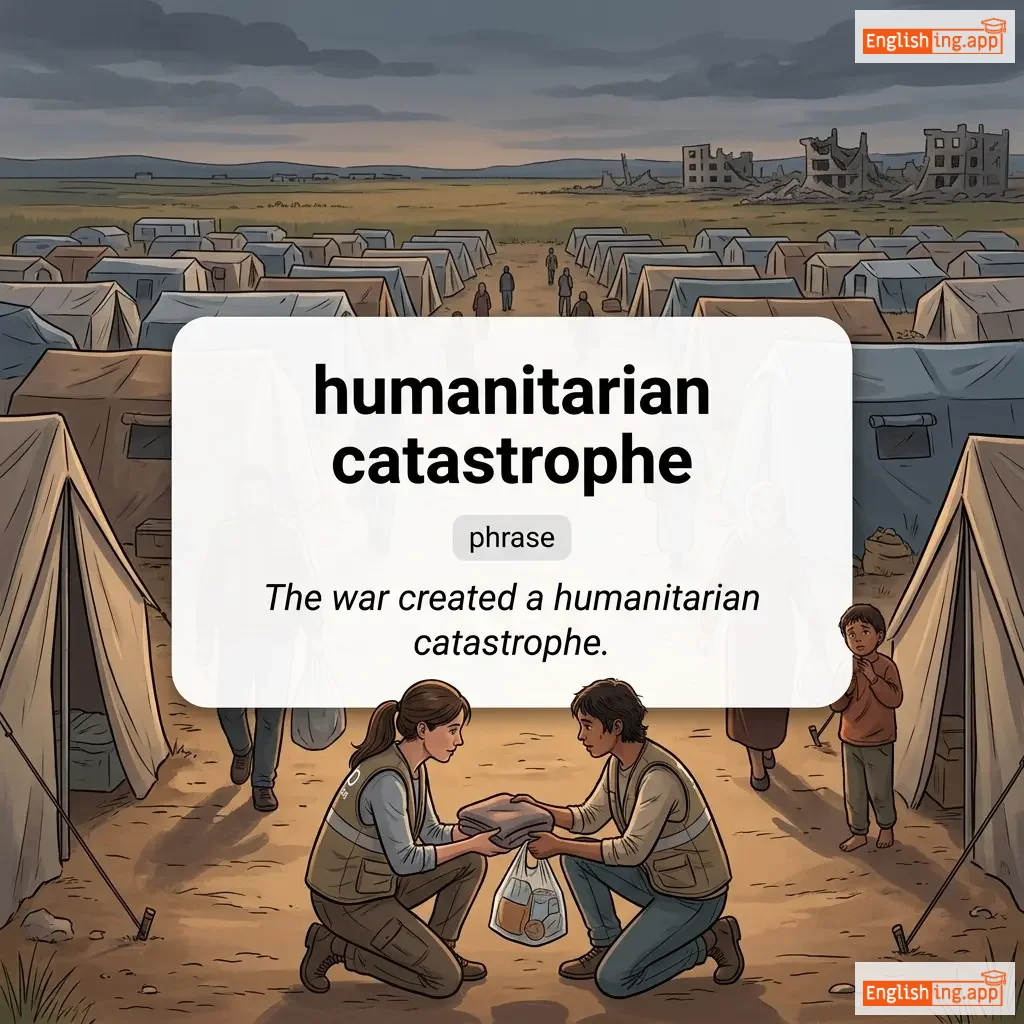
humanitarian catastrophe definition card — visual illustration of the meaning
phrase
ˌhjuː.məˈnɪt.ər.i.kəˈtæs.trə.fi
মানবিক বিপর্যয় (manobik biporjoy)

A widespread disaster affecting human life, health, and well-being on a large scale.

"The war created a humanitarian catastrophe."

"যুদ্ধ একটি মানবিক বিপর্যয় সৃষ্টি করেছে।" (Juddho ekti manobik biporjoy srishti koreche.)
noun
/hjuːˈmænɪti/
মানবতা (manobota)

the quality of being human; kindness or compassion towards others; all human beings collectively

"Kindness is one of the greatest expressions of humanity."

"দয়া মানবতার অন্যতম সুন্দর প্রকাশ।" (Doya manobatar ontottom sundor prokas.)
verb
/ˈhjuːmənaɪz/
মানবিক করা (manobik kora)

To make something more humane, kind, or relatable.

"The teacher tried to humanize the lesson with personal stories."

"শিক্ষক ব্যক্তিগত গল্প দিয়ে পাঠটিকে মানবিক করার চেষ্টা করেছিলেন।" (Shikkhok bektigoto golpo diye pathotike manobik korar cheshta korechilen.)
adjective, verb
/ˈhʌmbəl/
বিনয়ী (binoyi)

Having or showing a modest view of one's importance; to lower pride or status.

"Despite his success, he remained humble."

"তার সাফল্য সত্ত্বেও তিনি বিনয়ী রইলেন।" (Tar safollo sotteo tini binoyi roilen.)
noun
/ˈhʌmbʌɡ/
প্রতারণা, বাজে কথা (protarona, baje kotha)

Deceptive or false talk or behavior; nonsense.

"He dismissed the idea as humbug."

"সে ধারণাটিকে বাজে কথা বলে উড়িয়ে দিল।" (Se dharonatike baje kotha bole uriye dilo.)
adjective
/ˈhʌmdrʌm/
নীরস (niros)

Lacking excitement or variety; dull and monotonous.

"She grew tired of the humdrum routine of office life."

"সে অফিস জীবনের একঘেয়ে রুটিনে বিরক্ত হয়ে পড়েছিল।" (Se office jiboner ekghoye routine e birokt hoye porechhilo.)
adjective
/ˈhjuː.mɪd/
আর্দ্র (ardro)

Having a high amount of water vapor in the air; damp or moist.

"The weather was hot and humid during the summer."

"গ্রীষ্মকালে আবহাওয়া ছিল গরম এবং আর্দ্র।" (Grishmokale abohawa chilo gorom ebong ardro.)
noun
/ˌhjuː.mɪ.fɪˈkeɪ.ʃən/
জৈব পদার্থের পচন (joibo podarthor pochon)

The process of organic matter decomposition to form humus in soil.

"Humification enhances soil structure and fertility."

"জৈব পদার্থের পচন মাটির গঠন ও উর্বরতা বৃদ্ধি করে।" (Joibo podarthor pochon matir gothon o urborata briddhi kore.)
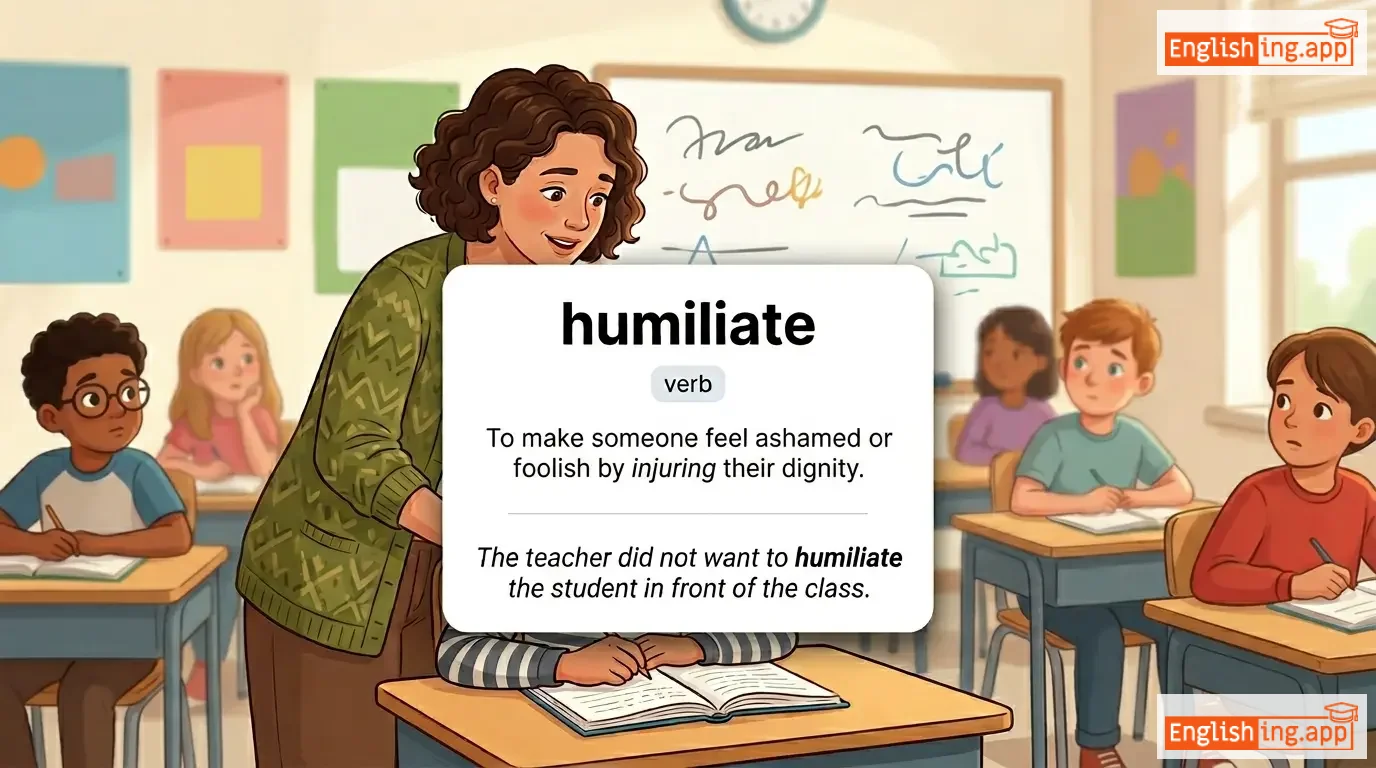
humiliate definition card — visual illustration of the meaning
verb
/hjuːˈmɪl.i.eɪt/
অপমান করা (opoman kora)

To make someone feel ashamed or foolish by injuring their dignity.

"The teacher did not want to humiliate the student in front of the class."

"শিক্ষক ছাত্রকে শ্রেণির সামনে অপমান করতে চাননি।" (Shikkhok chatroke shrenir samne opoman korte chaan ni.)
noun
/hjuːˈmɪl.ɪ.ti/
বিনয় (binoy)

The quality of having a modest or low view of one's importance.

"She accepted the award with grace and humility."

"সে সৌজন্য ও বিনয়ের সাথে পুরস্কার গ্রহণ করেছিল।" (Se soujonno o binoyer sathe puraskar grohon korechilo.)
noun
/ˈhʌm.ək/
টিলা (tila)

A small hill, mound, or ridge of earth or ice.

"The hikers rested on a grassy hummock by the river."

"হাইকাররা নদীর ধারে একটি ঘাসে ভরা টিলায় বিশ্রাম নিল।" (Haikarra nodir dhare ekti ghase vora tilay bishram nilo.)
noun
/ˈhjuː.mər/
রসিকতা (rosikota)

The quality of being amusing or entertaining.

"His sense of humor always lightens the mood."

"তার রসিকতা সবসময় পরিবেশকে হালকা করে।" (Tar rosikota sobsomoy poribeshke halka kore.)
adjective
/ˈhjuː.mər.əs/
চৌধুর্যপূর্ণ; হাস্যরসাত্মক; রসাত্মক; (hasyorosaatmok)

funny; amusing; causing laughter;

"His humorous stories always make everyone laugh."

"তার হাস্যরসাত্মক গল্পগুলি সবসময় সবাইকে হাসায়।" (tar hasyorosaatmok golpoguli shobshomoy shobaike hasay)