ভোকাবুলারিসমূহ

ইংরেজি শব্দের বাংলা অর্থ | English to Bangla Word Meaning Dictionary

adjective
/ɡɑːrˈɡæntʃuən/
অতীব বিশাল (otib bishal)

Extremely large; enormous.

"They served a gargantuan meal at the feast."

"তারা ভোজে এক বিশাল ভোজ পরিবেশন করেছিল।" (Tara bhoje ek bishal bhoj poribeshon korechhilo.)
noun
/ˈɡɑːrɡɔɪl/
পাথরের মূর্তি (অদ্ভুত আকৃতির) (pathorer murti (odbhut akritir))

A carved stone figure, often of a grotesque creature, on a building, typically used as a spout to carry water away.

"The ancient cathedral had gargoyles on every corner."

"প্রাচীন ক্যাথেড্রালের প্রতিটি কোণায় গারগয়েল ছিল।" (Prachin cathedraler protiti konay gargoyle chhilo.)
adjective
/ˈɡɛə.rɪʃ/
অতিরিক্ত চটকদার (otirikto chotkadar)

Excessively bright and showy, often in a tasteless or unattractive way.

"The room was decorated with garish neon lights."

"ঘরটি অতিরিক্ত চটকদার নিয়ন আলো দিয়ে সাজানো ছিল।" (Ghorti otirikto chotkadar neon alo diye sajano chhilo.)
noun
/ˈɡɑːr.lənd/
মালা; মান; বিজয়ের মালা; (mala, man, bijoyer mala)

a wreath of flowers and leaves, worn on the head or hung as decoration

"The bride wore a beautiful floral garland during the traditional ceremony."

"বধূ ঐতিহ্যবাহী অনুষ্ঠানের সময় একটি সুন্দর ফুলের মালা পরেছিলেন।" (bodhu oitihybahi onushtaner shomoy ekti shundor phuler mala porechhilen.)
noun
/ˈɡɑːrlɪk/
রসুন (rosun)

A strong-smelling plant used as a seasoning in cooking.

"She added garlic to the curry."

"সে কারিতে রসুন যোগ করল।" (Se karite rosun jog korlo.)
noun
/ˈɡɑː.mənt/
পোশাক (poshak)

An item of clothing.

"She bought a new garment for the party."

"সে পার্টির জন্য একটি নতুন পোশাক কিনেছিল।" (Se party-r jonno ekti notun poshak kinechhilo.)
verb
/ˈɡɑː.nər/
সংগ্রহ করা (songroho kora)

To gather or collect, especially information, support, or approval.

"The politician garnered support from young voters."

"রাজনীতিবিদ তরুণ ভোটারদের কাছ থেকে সমর্থন সংগ্রহ করেছিলেন।" (Rajnietibid torun votarder kach theke somorthon songroho korechhilen.)
verb
/ˈɡɑː.nɪʃ/
সাজানো (sajano)

To decorate food with small items for added flavor or visual appeal.

"She garnished the dish with fresh coriander leaves."

"সে খাবারটি তাজা ধনেপাতা দিয়ে সাজিয়েছিল।" (Se khabarti taza dhonepata diye sajiechhilo.)
noun
/ˈɡær.ɪ.sən/
সেনাদল (senadol)

A body of troops stationed in a particular location, usually to defend it.

"The garrison defended the fortress against the invaders."

"গ্যারিসনটি আক্রমণকারীদের বিরুদ্ধে দুর্গ রক্ষা করেছিল।" (Garrison-ti akramonkarider biruddhe durgo rokkha korechhilo.)
noun, verb
/ɡəˈrɒt/
গলা টিপে হত্যা (gola tipe hotya)

A method of execution by strangulation, or to strangle someone with a cord or wire.

"The assassin attempted to garrote his target in the alley."

"ঘাতকটি গলিতে তার লক্ষ্যকে গলা টিপে হত্যার চেষ্টা করেছিল।" (Ghatokti golite tar lokkho ke gola tipe hotyar cheshta korechhilo.)
noun
/ɡəˈruːlɪti/
অতিরিক্ত বাচালতা (otirikto bachalata)

Excessive talkativeness, especially about trivial matters.

"His garrulity made it hard to focus during the meeting."

"তার অতিরিক্ত বাচালতার কারণে সভায় মনোযোগ দেওয়া কঠিন হয়ে গিয়েছিল।" (Tar otirikto bachalatar karone shovay monojog deowa kothin hoye giyechhilo.)
Garrulous definition card — visual illustration of the meaning
adjective
/ˈɡærələs/
বাচাল, অতিরিক্ত কথাবার্তাপ্রিয় (bachal, otirikto kothabarta priya)

Excessively talkative, especially on trivial matters.

"The garrulous neighbor kept everyone awake with his stories."

"বাচাল প্রতিবেশী তার গল্প দিয়ে সবাইকে জাগিয়ে রেখেছিল।" (Bachal protibeshi tar golpo diye shobaike jagiye rekhechhilo.)
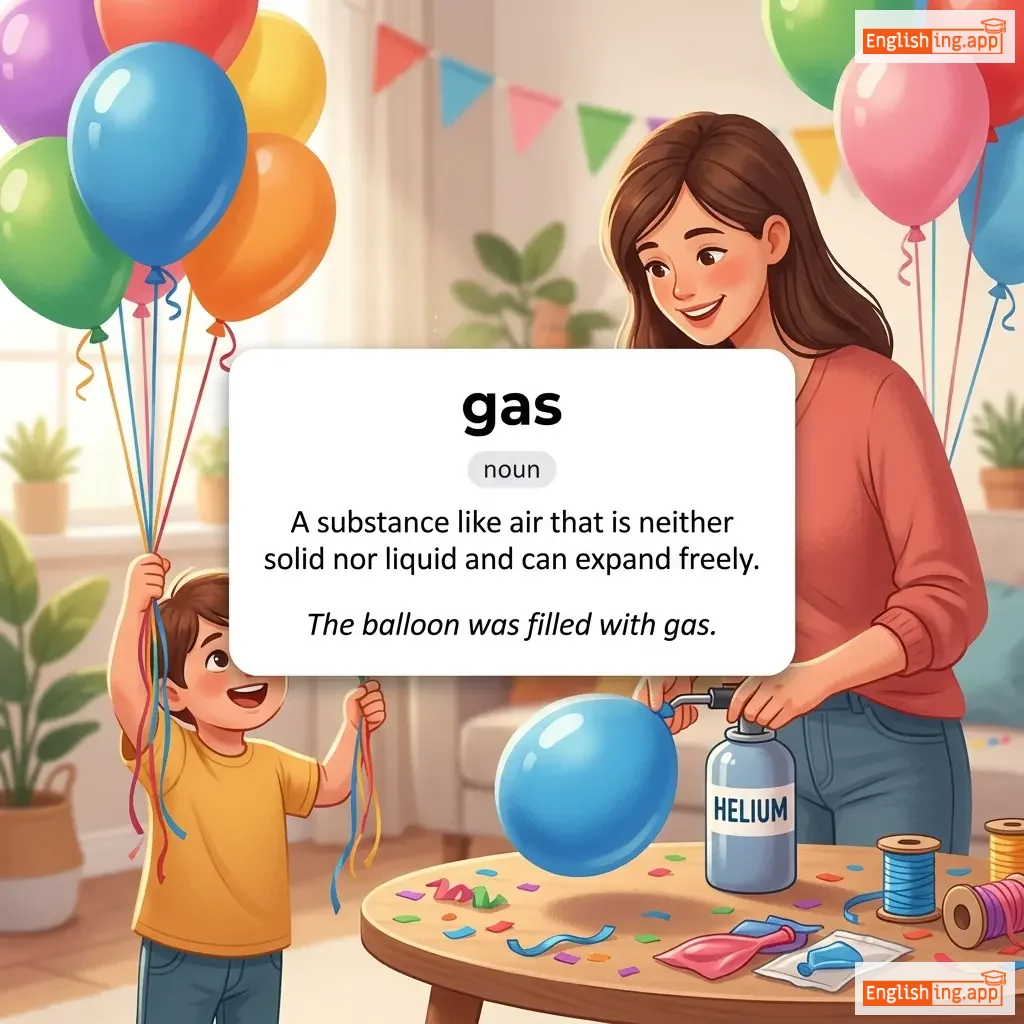
gas definition card — visual illustration of the meaning
noun
/ɡæs/
গ্যাস (gyas)

A substance like air that is neither solid nor liquid and can expand freely.

"The balloon was filled with gas."

"বেলুনটি গ্যাসে ভরা ছিল।" (Belunti gyase bhora chilo.)
noun
/ˌɡæskəˈneɪd/
বড়াই, দাম্ভিকতা (borai, dambhikota)

Extravagant boasting or bragging.

"His endless gasconade made him unpopular among his peers."

"তার অন্তহীন বড়াই তাকে সহপাঠীদের মধ্যে অজনপ্রিয় করেছিল।" (Tar ontohin borai take shopathider modhye ojonopriyo korechhilo.)
adjective
/ˈɡæsiəs/
গ্যাসীয় (gasiyo)

Relating to or having the form of gas.

"Carbon dioxide is a gaseous substance."

"কার্বন ডাইঅক্সাইড একটি গ্যাসীয় পদার্থ।" (Carbon dioxide ekti gasiyo podartho.)
noun/verb
/ɡæʃ/
গভীর কাটা (gobhir kata)

A long, deep cut or wound; to cut deeply or violently.

"He had a deep gash on his leg after the accident."

"দুর্ঘটনার পর তার পায়ে গভীর কাটা ছিল।" (Durghotonar por tar peye gobhir kata chhilo.)
noun
/ˌɡæsɪfɪˈkeɪʃən/
গ্যাসে রূপান্তর (gase rupantor)

The process of converting solid or liquid fuel into gas.

"Gasification is widely used to produce fuel gas from coal."

"কয়লা থেকে জ্বালানি গ্যাস উৎপাদনে গ্যাসিফিকেশন ব্যাপকভাবে ব্যবহৃত হয়।" (Koila theke jbalani gas utpadone gasification byapakvabe byabohrito hoy.)
noun
/ˈɡæsəˌliːn/
গ্যাসোলিন (gasolin)

a liquid fuel made from petroleum, used mainly to power engines in vehicles

"The price of gasoline has increased significantly this month."

"এই মাসে গ্যাসোলিনের দাম উল্লেখযোগ্যভাবে বেড়েছে।" (Ei mashe gasoliner dam ullekhjogyo vabe bereche.)
adjective
/ˈɡæstrɪk/
গ্যাস্ট্রিক / পেটের সমস্যা (gastric / peter somossa)

Relating to the stomach.

"She was prescribed medicine for her gastric problems."

"তার গ্যাস্ট্রিক সমস্যার জন্য তাকে ওষুধ দেওয়া হয়েছিল।" (Tar gastric somossar jonno take oshudh deowa hoyechilo.)
noun
/ɡæsˈtraɪtɪs/
পাকস্থলীর প্রদাহ (pakstholir prodah)

Inflammation of the lining of the stomach.

"The doctor diagnosed him with gastritis after his endoscopy."

"এন্ডোস্কপির পর ডাক্তার তাকে গ্যাস্ট্রাইটিস ধরা পড়ে।" (Endoscopyr por daktar take gastritis dhora pore.)
gastrointestinal definition card — visual illustration of the meaning
adjective
ˌɡæs.troʊ.ɪnˈtes.tɪ.nəl
পাকস্থলী ও অন্ত্র সম্পর্কিত (pakstholee o ontro shomporkit)

Relating to the stomach and intestines.

"Spicy food can cause gastrointestinal issues."

"ঝাল খাবার পাকস্থলী সংক্রান্ত সমস্যা সৃষ্টি করতে পারে।" (Jhal khabar pakstholee shongkranto shomoshya srishti korte pare.)
noun
/ɡæsˈtrɒnəmi/
খাদ্যশিল্প (khaddo shilpo)

The art or science of good eating and fine cuisine.

"Paris is famous for its rich tradition of gastronomy."

"প্যারিস তার সমৃদ্ধ খাদ্যশিল্পের ঐতিহ্যের জন্য বিখ্যাত।" (Paris tar somriddho khaddo shilper oitihyer jonno bikhato.)
noun
/ɡeɪt/
ফটক (fotok)

A movable barrier that opens and closes to allow or prevent entry through an opening.

"She closed the gate behind her as she left the garden."

"সে যখন বাগান থেকে বের হলো, তখন গেট বন্ধ করলো।" (Se jokhon bagan theke ber holo, tokhon get bondho korlo.)
noun
/ˈɡeɪt.weɪ/
প্রবেশদ্বার; তোরণ; সদর দরজা; (probeshhdwar, toron, shodor dorja)

an entrance or opening that provides access to a place; a means of achieving a particular state or condition

"The ancient stone gateway served as the entrance to the magnificent palace."

"প্রাচীন পাথরের তোরণটি দুর্দান্ত প্রাসাদের প্রবেশদ্বার হিসেবে কাজ করত।" (prachin patherer toronti durdanto prasader probeshhdwar hishebe kaj korot.)
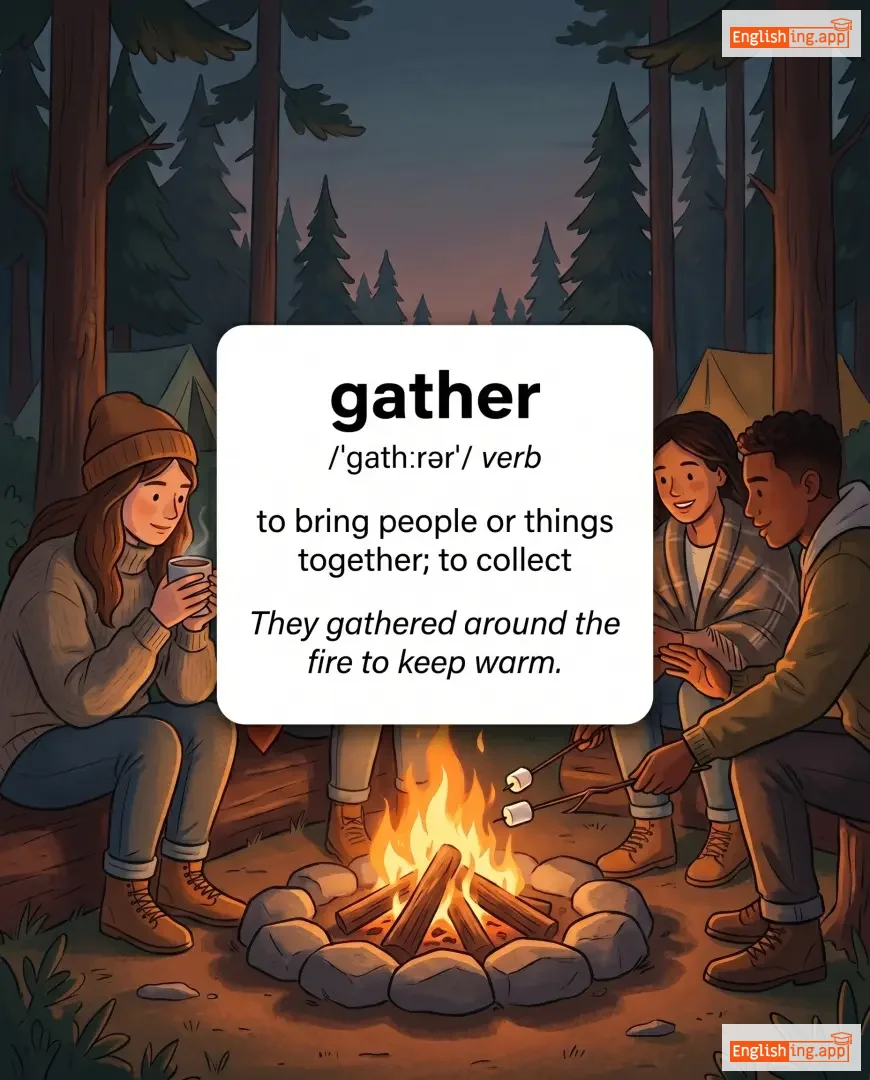
gather definition card — visual illustration of the meaning
verb
/ˈɡæðər/
একত্রিত করা (ekatrito kora)

to bring people or things together; to collect

"They gathered around the fire to keep warm."

"তারা উষ্ণ থাকার জন্য আগুনের চারপাশে একত্রিত হয়েছিল।" (Tara usno thakar jonne aguner charpashe ekatrito hoyechilo.)
noun
/ˈɡæðərɪŋ/
সমাবেশ (somabesh)

a meeting or assembly of people for a particular purpose

"We attended a family gathering last weekend."

"আমরা গত সপ্তাহান্তে একটি পারিবারিক সমাবেশে অংশ নিয়েছিলাম।" (Amra goto soptahante ekti paribarik somabeshe ongsho niechilam.)
gauche definition card — visual illustration of the meaning
adjective
/ɡoʊʃ/
অভদ্র (obhodro)

lacking social grace, sensitivity, or tact; awkward

"His gauche remarks embarrassed everyone at the dinner party."

"তার অভদ্র মন্তব্য ডিনার পার্টিতে সবাইকে বিব্রত করেছিল।" (tar obhodro montobbo dinner partite sobaike bibroto korechilo.)
adjective
/ˈɡɔːdi/
অতিরিক্ত চাকচিক্যময় (otirikto chakchikmoy)

excessively showy or flashy, often in a tasteless way

"She wore a gaudy necklace that clashed with her elegant dress."

"সে একটি অতিরিক্ত চাকচিক্যময় নেকলেস পরেছিল যা তার আভিজাত্যপূর্ণ পোশাকের সাথে বেমানান ছিল।" (se ekti otirikto chakchikmoy necklace porechilo ja tar abhijatjopurno poshaker sathe bemanan chilo.)
verb
/ɡeɪdʒ/
পরিমাপ করা (porimap kora)

to measure, estimate, or determine the magnitude, amount, or capacity of something

"The mechanic gauged the pressure in the car tires."

"মেকানিক গাড়ির টায়ারের চাপ পরিমাপ করল।" (mechanic garir tayerer chap porimap korlo.)
adjective
/ɡɔːnt/
কঙ্কালসার (konkalsar)

extremely thin, bony, and haggard in appearance, often due to hunger or illness

"After weeks of illness, he looked pale and gaunt."

"সপ্তাহব্যাপী অসুস্থতার পর তিনি ফ্যাকাশে ও কঙ্কালসার দেখাচ্ছিলেন।" (soptahbyapi osusthotar por tini fakashe o konkalsar dekhachchilen.)
noun
/ˈɡɔːntlɪt/
দস্তানা / চ্যালেঞ্জ (dostana / challenge)

a protective glove; a challenge or trial; to 'throw down the gauntlet' means to issue a challenge

"The knight threw down his gauntlet as a sign of challenge."

"অশ্বারোহী যোদ্ধা চ্যালেঞ্জের নিদর্শন হিসেবে তার দস্তানা ছুঁড়ে ফেলল।" (ashbarohi joddha challenger nidorshon hisebe tar dostana chure felllo.)
noun
/ˈɡævəl/
আদালতের হাতুড়ি (adaloter hatudi)

A small ceremonial mallet used by a judge or an auctioneer to signal attention or mark a decision.

"The judge struck the gavel to call the court to order."

"বিচারক আদালত শুরু করতে হাতুড়ি ব্যবহার করলেন।" (Bicharok adalot shuru korte hatudi byabohar korlen.)
verb
/ɡɔːk/
হা করে তাকানো (ha kore takano)

To stare openly and rudely.

"Tourists gawked at the celebrity walking down the street."

"পর্যটকরা সেলিব্রিটির দিকে হা করে তাকাল।" (Porjotokra celebrityr dike ha kore takalo.)
adjective
/ˈɡɔːki/
অপটু (optu)

Awkward and clumsy in appearance or behavior.

"The teenager felt gawky in his oversized suit."

"কিশোরটি তার বড় স্যুটে অদক্ষ বোধ করছিল।" (Kishorti tar boro suite odokkho bodh korchilo.)
🏳️‍🌈

gay (গে)

adjective
/ɡeɪ/
সমকামী (somokami)

sexually attracted to people of the same sex; also used to mean cheerful or lively

"He came out as gay during college."

"সে কলেজে পড়াকালীন সময়ে সমকামী হিসেবে প্রকাশ করেছিল।" (Se college e porakaline somoye somokami hisebe prokash korechilo.)
verb
/ɡeɪz/
তাকানো (takano)

To look steadily and intently at something, usually with admiration, surprise, or thought.

"He gazed at the stars in wonder."

"সে বিস্ময়ে তারা দিকে তাকিয়ে ছিল।" (Se bismoye tara dike takiye chilo.)
noun
/ɡəˈzɛt/
সরকারি পত্রিকা (sorkari potrika)

An official journal, newspaper, or publication, especially one issued by a government.

"The law was published in the government gazette."

"আইনটি সরকারি গেজেটে প্রকাশিত হয়েছিল।" (Ainti sorkari gazette prokashito hoyechilo.)
noun
/ɡɪə(r)/
যন্ত্রপাতি / সরঞ্জাম (jantrapati / soronjam)

Equipment or apparatus for a particular purpose; also a toothed wheel in machinery.

"The climber packed all his gear before starting the journey."

"আরোহী যাত্রা শুরু করার আগে সব সরঞ্জাম গুছিয়ে নিল।" (Arohi jatra shuru korar age shob soronjam guchiye nilo.)
noun
/dʒem/
রত্ন (rotno)

a precious or semi-precious stone, especially when cut and polished or engraved

"She wore a beautiful gem necklace to the party."

"সে পার্টিতে একটি সুন্দর রত্নের হার পরেছিল।" (she partiey ekti shundor rotner haar porechilo)
noun
/ˈʒɑːndɑːrm/
ফরাসি পুলিশ (forashi police)

A French police officer, especially a member of a military-style police force.

"The gendarme stopped the car for a routine check."

"জেন্ডার্ম গাড়িটি রুটিন চেকের জন্য থামাল।" (Jendarme gariti routine cheker jonno thamalo.)
noun
/ˈdʒɛndər/
লিঙ্গ (lingo)

The state of being male, female, or another identity as recognized socially or culturally.

"The survey asked about participants' age and gender."

"জরিপে অংশগ্রহণকারীদের বয়স ও লিঙ্গ সম্পর্কে জিজ্ঞাসা করা হয়েছিল।" (Joripe onshogrohonkarider boyosh o lingo somporke jigyasha kora hoyechilo.)
noun
/dʒiːn/
জিন (jin)

A unit of heredity in living organisms, transferred from parent to offspring, determining traits.

"Eye color is influenced by genes inherited from parents."

"চোখের রঙ বাবা-মায়ের কাছ থেকে পাওয়া জিন দ্বারা প্রভাবিত হয়।" (Chokher rong baba-mayer kach theke paoa jin dara probhabit hoy.)
noun
/ˌdʒiːniˈælədʒɪst/
বংশতত্ত্ববিদ (bongshotottobid)

A person who studies or traces the history of families and their lineages.

"The genealogist uncovered records dating back to the 18th century."

"জিনিয়োলজিস্ট ১৮ শতকের রেকর্ড খুঁজে পেয়েছিলেন।" (Genealogist 18 shatoker record khuje peyechilen.)
noun
/ˌdʒiːniˈælədʒi/
বংশতত্ত্ব (bongshototto)

The study and tracing of lines of descent or family history.

"She spent years researching her family's genealogy."

"সে তার পরিবারের বংশতত্ত্ব গবেষণায় বহু বছর কাটিয়েছে।" (Se tar paribarer bongshototto gobeshonay bohu bochor katiyeche.)
adjective
/ˈdʒɛnərəl/
সাধারণ (sadharon)

Relating to all or most people, things, or situations; not specific.

"He made a general comment about the project."

"সে প্রকল্প সম্পর্কে একটি সাধারণ মন্তব্য করেছিল।" (Se projokto somporke ekti sadharon momtobbo korechilo.)
noun
/ˌdʒenəˈræləti/
সাধারণতা (sadharonota)

A vague, non-specific statement or principle that applies broadly.

"The speech was full of generalities and lacked concrete details."

"ভাষণটি সাধারণ কথায় ভরা ছিল এবং নির্দিষ্ট তথ্যের অভাব ছিল।" (Bhashonti sadharon kathay vora chilo ebong nirdishto tothor obhab chilo.)
verb
/ˈdʒenərəlaɪz/
সাধারণীকরণ করা (sadharonikoron kora)

To make a broad statement by inferring from specific cases.

"It is wrong to generalize based on a few experiences."

"কয়েকটি অভিজ্ঞতার ভিত্তিতে সাধারণীকরণ করা ভুল।" (Koyekti obhiggotar vitti te sadharonikoron kora bhul.)
adverb
/ˈdʒɛnərəli/
সাধারণভাবে (sadharano vabe)

in most cases; usually; as a rule

"He generally arrives at work before 9 a.m."

"সে সাধারণত সকাল ৯টার আগে কাজে পৌঁছায়।" (Se sadharonoto shokal 9tar age kaje pouchhay.)
verb
/ˈdʒɛnəreɪt/
উৎপন্ন করা (utponno kora)

to produce or create something

"The machine generates electricity."

"মেশিনটি বিদ্যুৎ উৎপন্ন করে।" (Mesinti bidyut utponno kore.)
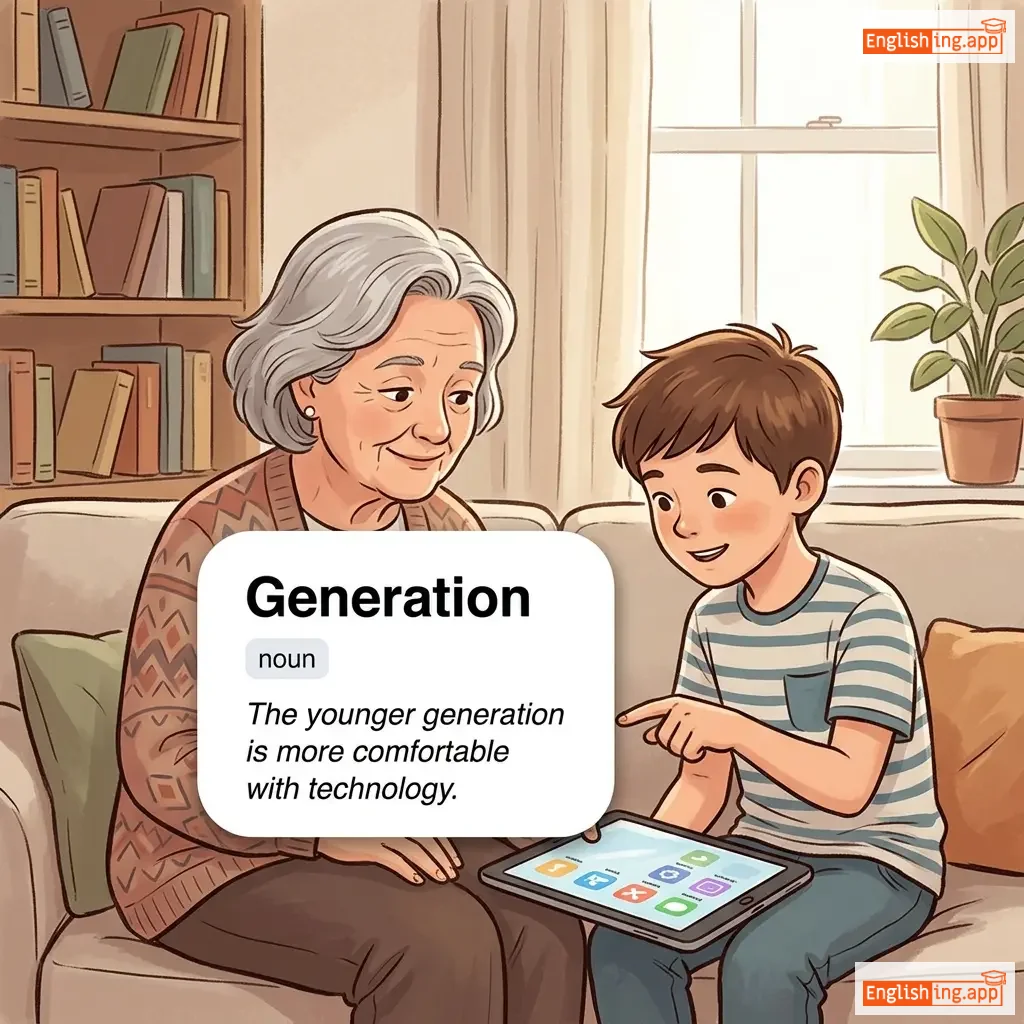
Generation definition card — visual illustration of the meaning
noun
/ˌdʒɛnəˈreɪʃən/
প্রজন্ম (projonmo)

all the people born and living at about the same time; the process of producing something

"The younger generation is more comfortable with technology."

"কনিষ্ঠ প্রজন্ম প্রযুক্তির সাথে বেশি স্বাচ্ছন্দ্যবোধ করে।" (konistho projonmo projukti-r sathe besi swachhandobodh kore.)